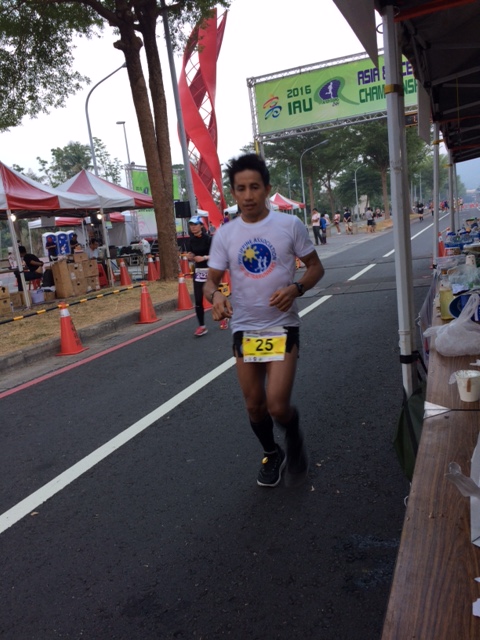
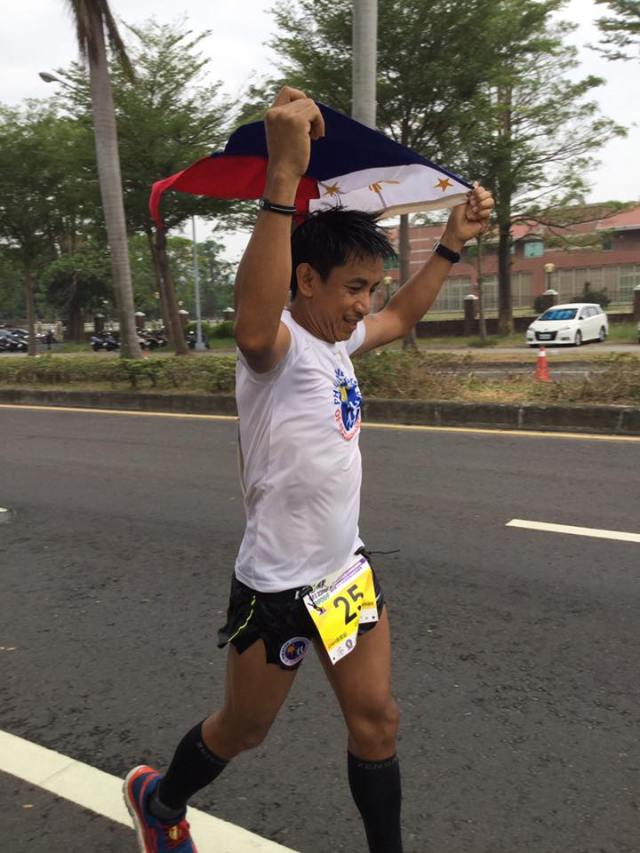
Thomas Combisen, the lone representative of the Philippines, finished and set a National Course Record at the 2016 IAU Asia & Oceania 24-Hour Endurance Run held in Kaohsiung, Taiwan last November 19-20, 2016. He officially represented the Philippine Association of Ultrarunners (PAU), the National Federation on Ultrarunning, and was invited by the International Association of Ultrarunners (IAU) to join this yearly event. He ranked #8 among the 27 International Runners with a total distance of 203.45 Kilometers covered during the duration of 24 hours of continuous running. The international runners represented the following countries: Australia, New Zealand, Japan, South Korea, Mongolia, Chinese Taiwan, and the Philippines.
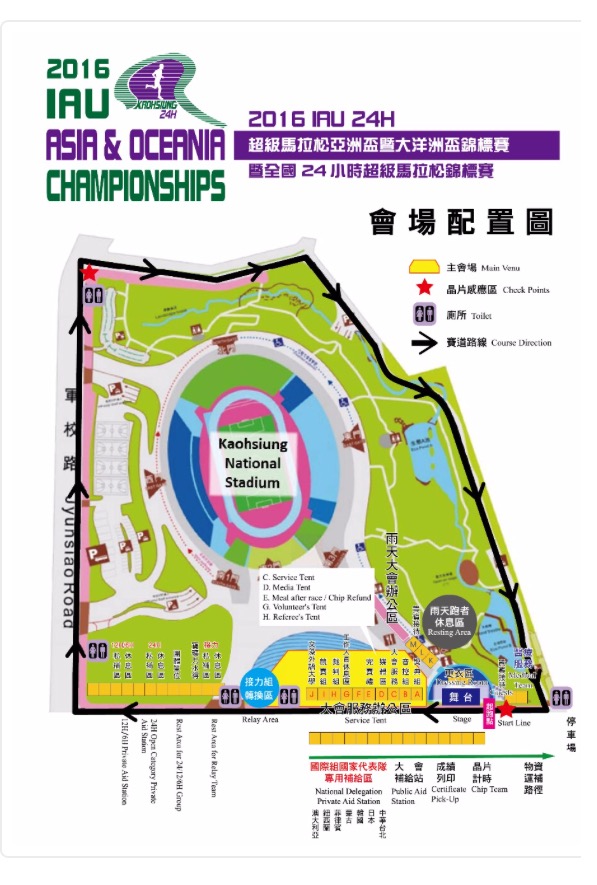
Loop Course of 1.75 Kilometers Around The Kaohsiung National Stadium (World Games Arena)
Thomas Combisen qualified to join this prestigious running event for being a consistent Champion and Podium Finisher in PAU Races for the past years. He won in all the 200-Km+ distance races; set the Course Record for the Manila To Baguio 250K Race in 38:59:53 hours; and about to be awarded as one of the three candidates for the PAU 200K Grand Slam Award and to be considered as the Champion in this 4-event race as he won the past three races, namely, West To East 280K Run, Manila To Baguio 250K Run, and the North Coast 200-Mile Race.
Thomas Combisen is a native of Sagada, Mountain Province and works as a Civil Engineer in one of the Land Developers in Metro Manila and suburbs. He had been an active member of the Philippine Association of Ultrarunners for the past three years.
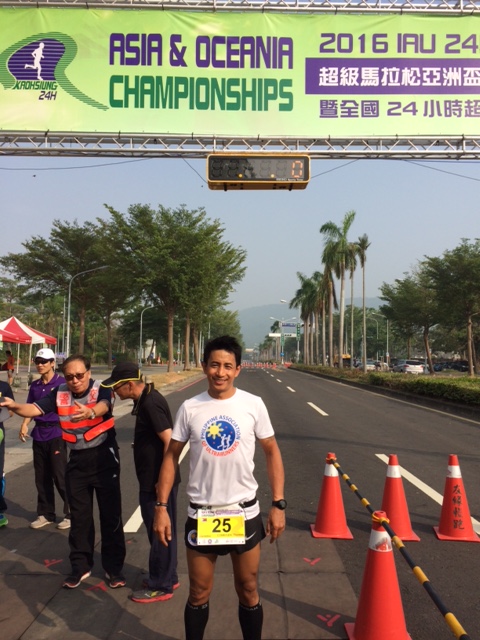
Thomas Combisen @ The Starting Area
The Letter of Invitation from the IAU and the Chinese Taipei Ultramarathon Federation, as the Host and Race Organizer was officially received by the PAU last August of this year and Thomas Combisen was chosen and informed that he will represent the country in this international ultra marathon event with three (3) months of focused training. Major General Jovenal Narcise AFP (Retired), President of the PAU met with Thomas as soon as the Invitation was received and he informed him of the details of the race, how he will train and prepare for the race, and for him not to worry of the expenses for the travel, accommodation in Taiwan, and other logistics needs for him to join the race. He was advised to prepare his travel papers (passport) and PAU will support for his visa application for Taiwan. On a weekly basis, Thomas was advised to report on the progress of his training to the President of PAU.
The 2016 IAU Asia & Oceania 24-Hour Championship Endurance Run was held on November 19-20, 2016 at the World Games Stadium Area in Kaohsiung, Taiwan with 27 International Runners from IAU-sanctioned National Federations and 450 Local & Foreign Runners under the Open Category. The race started at 3:00 PM of Saturday and ended at 3:00 PM on the following day, Sunday. Runners had to run a loop course with a distance of 1.75 kilometers. The loop course has two RFID timing mats placed at the Start/Finish and at the midway of the loop course that would record the time of the runner, the number of loops and distance the runner has covered during the event. The loop course has two Aid Stations and other amenities that the runner could use during the event. Pacers were not allowed and competing runners were not allowed to pace each other for the duration of two loops. Such violation would result to immediate disqualification of the runners.
Our main goal in this race was for Thomas to finish at least 200 kilometers during the duration of 24 hours just for him to gain experience.
First 12 Hours of Running
On the first two loops, Thomas was leading the race with a comfortable pace of 8:30+ minutes per loop and he told me that he felt easy on the pace and I advised him to just maintain the said pace and make sure to hydrate as often as possible. On the third loop, most of the international runners (IAU-sanctioned runners) started to speed up their pace until Thomas landed on the 4th place on the 5th hour of the race since it started. During the nighttime running, he maintained the ranking of #6. He finished 100 kilometres in 10 hours and 40 minutes and I advised him that our main goal of reaching 200 is doable.
Last 10 Minutes Of The Race
Thomas crossed the Start/Finish RFID mat with 200 kilometers covered with one hour before 3:00 PM and I advised him to just have his recovery run until the horn was sounded to officially end the event. As the event ended with sound of horn and gun fired, Thomas was able to officially register a distance of 203.45 kilometres and placed overall #8 among the 27 International Runners.
As a result, Thomas Combisen had officially set a National Record for a Filipino Runner with a distance of 203.453 kilometres with a pace of 7:05 minutes per kilometre for a 24-Hour Endurance Run.
The following is the Official Result on the Podium Finishers (Top 3 runners) among the IAU-sanctioned International Runner with their respective pace:
For the Male Category:
Barry Loveday (Australia)——235.868 kilometers (6:05 min/km)
Takayoshi Shigemi (Japan) ——230.868 kilometers (6:14 min/km)
John Pearson (Australia) ——224.849 kilometers (6:24 min/km)
Thomas Combisen’s performance on his first international exposure in IAU-sanctioned Championship Races is considered as a success and excellent performance on his part and whole RP Team. Our participation to these kind of events will continue despite the lack of corporate sponsors and financial support coming from the Government.
From the words of Thomas Combisen, he said, “Sir, if not for you, my dream to join an international running event would remain as a dream and I will remember this experience throughout the rest of my life as this is something very special to me and priceless that money could never, never ever buy!” I just smiled and replied to him, “This is just the beginning of your international exposure as more races will come in the future. Keep your feet on the ground and keep on improving on your training as I have plans already for you to join the 2017 edition of this race!”
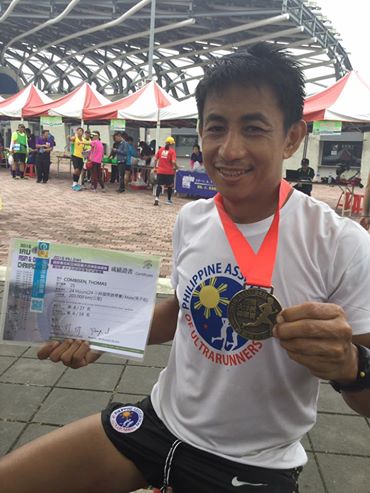
Thomas Displaying His Finisher’s Certificate & Finisher’s Medal
After I finished the first edition of this race last year, I promised to myself that I would join every edition of this race as long as I am still strong to run an ultra distance event. I would make this race as my evaluation run as part of my training for my future ultra races here and abroad.
Three months ago, I have started my training for this race but instead of doing it on the trails and places where there are considerable elevation gain and/or loss, I have to do my training on the paved streets. I have to follow the usual training program and daily mileage which I have followed for the past three years of ultra running training. However, these street running workouts had to last for about two months before I had to go back to trail running.
The only difference with my training this time as compared for the past 3 years, is my desire to be faster as I grow older. I placed more emphasis on the conduct of “strides” during my daily runs and do at least two times of “tempo” runs during the week. Weekends would be devoted to long runs up to 18 miles with a faster average pace.
On the third month, I did a lot of hikes in the mountains on weekends which would last up to 6-7 hours and on weekdays, I would do 8-9-mile runs on trails with an elevation gain/loss of at least 2,000 feet every workout. This is where I would train myself on my hydration and nutrition with only water as my fluid intake. I tapered for about two weeks which consisted of hikes and easy runs in my “playground”.
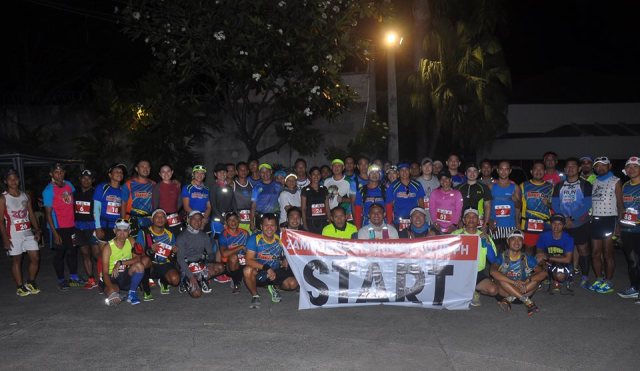
The Mandatory START Group Picture
What is good with this race is that the Hotel (Palmeras De Zamboanga) where I stayed is the Starting and Finish Line of the event. I went out of my room 20 minutes before the start with enough time to greet and have “photo-ops” with the other runners. Before I went out of the Hotel, I was greeted with free sandwich and hot coffee at the end of the hallway and was able to take advantage of this offer as part of my stay in the hotel. I knew that the coffee and the sandwich would be enough for my food intake before I reach the first Aid Station at Km #8.
The race started promptly at 5:00 AM after a short prayer and 57 starters left the starting line. It was still dark when we were running along the street leading to the Pasonanca Park but the streetlights were enough to light up our way. Knowing that the first kilometre is flat, I made an easy pace and just followed the runners in front me. At Km #3, a runner started a conversation with me and I asked if my prevailing running pace would be maintained up to the finish line and replied him, “Yes”. And then asked permission if he would be allowed to pace with me during the duration of the race. And I said, “Yes”! We would be running side by side from this point up to the Finish Line. At that time, we were on a speed of 4 miles per hour as gleaned from my Suunto Watch.
It was my intention to maintain the said speed throughout the race. As I had predicted before the race, I have announced on Facebook that I intend to improve my ranking of #17 and finish time of 8:34+ hours from the result last year. Actually, my target goal was to finish the race below the 8-hour time and maintain the speed of 4 mph up to the Finish Line.
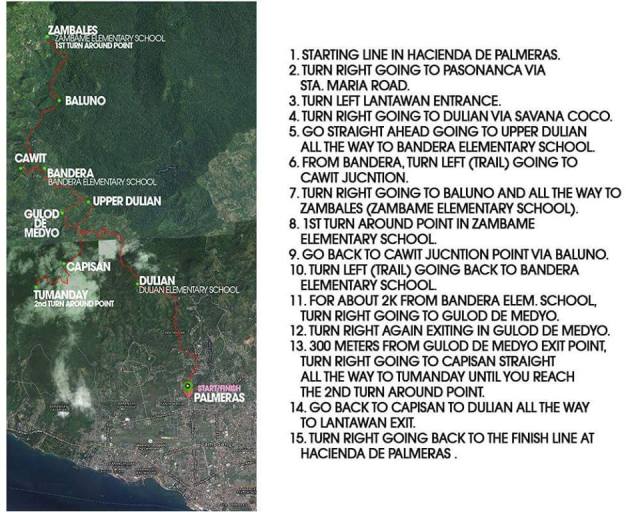
Route Map & Description
We reached the 1st Aid Station (Km #7) without any problem and tried my best to run through those ascents without any brief walks or hikes. I took me less than 2 minutes to refill my bottles with ice cold water and eat some suman. From the Aid Station, we had to follow the paved road as the route became a “roller-coaster” and it started to be warm. After about 4-5 kilometers, we reached the 2nd Aid Station in front of an Elementary School. I had to refill my hydration bottle with ice-cold water, douse some ice-water on my head and face as the day was starting to be hot. I ate two ripe bananas and I was back on the way. From this Aid Station, it was the start of a single-track technical trail which has some rocks, mud, and flowing water.
Course’ Elevation Profile
As I tried to speed up my pace on the descending portion of the trail which was muddy and slippery, I started to feel some “cramp” on my left calf and I asked the runners behind me to pass while trying to walk my way down the trail. I was still running downhill but I made sure to slow down my pace. I brought out some of salt tablets and ingest some and kept it to my mind to regularly ingest some every hour during the run. After a few seconds and minutes, I was able to regain my pace and it was just a matter of time before we would reach the first Turn-Around point which happens to be the Zambales Elementary School.
Marvin Sicat, My Running Partner During The Race
At the start of a newly cemented road inside a thickly vegetated area in the course, we met the two leading runners. This is where I started to hike the ascending parts and run the flat portions and descending parts of the route and kept on drinking my water in my handheld bottle during my hikes. As we got nearer to the Turn-Around point, we had to meet those runners who just left the 3rd Aid Station at the Turn-Around Point which happens to be in a School. As I count the number of runner that I and my companion-runner would meet, I was ranked as #12 runner with my partner as #11.
In last year’s edition, I stayed in this Aid Station (Km #16) for a longer time as I tried to ingest more food and drink lots of water and craved for sweeter drinks. I even had more pictures taken with the other runners whom I was able to catch up in the said Aid Station. For this year, I was surprised to see a Zamboanga local runner who was still sitting and trying to cool off in the Aid Station when I arrived. “Chabby” is a very fast and strong ultrarunner and he beat me last year by almost one hour. I had to ask him his situation and he said that he was ok. But, I was brief in my stay by having my bottles refilled with water and then take in a mouthful of spicy noodles which gave me a little “jolt” and in less than 5 minutes, I was out of the Aid Station with my “partner” in tow.
It is a continuous uphill climb from the Aid Station and after about 1 kilometre, we started to meet the other runners behind us who were on their way to the Aid Station at Km #16. After passing the newly-paved road inside the thick forest, we were back again to the single-track trail before reaching the next Aid Station. Unknowingly, Chabby was few seconds behind us and we were together at the said Aid Station. However, he opted to stay behind as he changed his attire and wanted to rest for awhile. After refilling my bottles and eating some fruits, hard-boiled eggs, and rice delicacy, we were out of the Aid Station. The dreaded “Gulod De Medio” was already in my mind as I left the Aid Station! However, we passed another runner after about a kilometre away from the Aid Station. That makes me #11 and my partner as #10 as we battle the next ascent and the heat of the sun!
Steepest Climb @ Gulod De Medyo
As my running “partner” and I were about to climb the “Gulod De Medio”, we saw a runner clad in black attire (with 2XU tights) in front of us within a distance of 20 meters. I made my pace faster with the intention to close the gap with between us with the runner in front of us. As we were in the steep ascent of the “Gulod De Medyo”, the runner saw us trying to get nearer to him but as soon as he reached the peak, he started to run faster! At the middle of the steep ascent, I started to slow down due to fatigue and the heat of the sun but I had to exert more effort but slowed my pace just to be able to reach the peak. I knew that as soon as I passed the peak, it was a gradual descent to the next Aid Station.
I took some Ice Cold Coke and native rice delicacy at the Aid Station and after refilling my water bottle, we left in a hurry! I knew that the course/route to the next Aid Station was a generally downhill. However, the heat of the sun was the one which prevented us from increasing our pace. At this point, it was our last 18 kilometres and in a matter of time, we would be able to reach the next Aid Station.
Finally, we reached the Aid Station and the lady volunteers were excited to see me that they asked me to have some pictures with them! Since I needed time to rest and ingest more food, I allowed them whatever pictures they could take while I was there. I guess, this is the Aid Station that I rested the longest time on the course because of the heat of the sun and the fact that the course will be uphill from this point to the next/last Aid Station. I ate drank a lot of Coke while ingesting two pieces of their local Suman with Latik which are bare (without any banana wrap). I thanked the lady volunteers for being there and for being able to serve us with the foods we needed. This one of the very reasons why I keep coming back in this race——very happy, very encouraging , and very helpful and beautiful lady volunteers!!!
Fighting It Out With The Heat Of The Sun
I consider the next segment of the race as the hardest as one has to go uphill to the last Aid Station. It is not about the steepness of the segment but it is the continuous and gradual ascent that will force the runners to hike on the exposed portions of the road from the heat of the sun. This is where we could see again those who are trying to catch us from behind and from the distance we had made as a “buffer”, we can safely say that we will be able to maintain our rankings up to the finish line!
Reaching the last Aid Station was a relief as from this point, it is the last 7 kilometres of the course which is all downhill. We did not stay long in the Aid Station after we refilled our hydration bottles and ate some bananas. I carried a “Sakto” Bottle of Coke and my Handheld Bottle filled with water and I was confident that my liquid/water was enough for me up to the Finish Line but I was wrong! My running partner had to share some of his water and the Race Organizer had to place another Aid Station in about 3-4 kilometres from the Finish Line because of the heat of the sun. The descending portions of the course was steep and some are still rough with gravel and small rocks but the concrete pavement was too much for my knees but my legs were surprisingly prepared for the beating and pounding of my feet. My strides were short but quick and I was able to increase my pace as I took advantage of the gravity. It was the heat of the sun that really gave some problems to my body. However, I was prepared for it as I brought a lot of salt tablets and “coffee” candies; and really focused on my hydration strategy. The Aid Station at the last 3-4 kilometres was very helpful to everybody and I was able to regain my strength and keep my pace up to the finish line.
Lots Of Ice @ The Aid Stations & Emergency Aid Stations
On the last 1.5 kilometres to the Finish Line, my running partner begged off that he should stop and slow down for awhile because of leg cramps and I replied to him that we should finish together. But he started to walk while I was maintaining my running pace. I guess, he was very courteous and respectful enough to offer the 10th place to me as a guest and a Senior Citizen! At the Finish Line, I found out the complete name of my running-partner, Marvin Sicat, who happens to be a close friend of one of my “pioneer” runners in the Bataan Death March 102 Ultra Marathon Race.
Finally, I crossed the Finish Line in 8:04:30 hours even if my plan was to finish in sub-8 hours with a ranking of 10th finisher. I was able to improve my time for almost 30 minutes and my overall ranking by 7 slots and I attribute my improvement to my quick turn-around at the Aid Stations; having a running partner/“pacer”; training with more “strides” and tempo runs on paved roads on the first two months; and later on the last month prior to the race on my hikes to mountains with higher altitude. My focused nutrition and hydration were also followed where I had to drink water regularly, eat solid foods in the Aid Stations, ingest my salt tablets regularly every hour, and regularly placing some coffee candies in my mouth.
Crossing The Finish Line
The Zamboanga Runner’s Club and their Race Sponsors did an outstanding job for this race to be a successful one. I highly recommended this race to all my readers to this blog, most specially to those who are ultra runners, local or foreigners. It is worth the trip to Zamboanga City. Next year, I will be back!
If you are an average runner, “middle or back of the pack” runner or Social Media runner, running will make you poorer but there are intangible benefits that you can get from it.
The following reasons why running will make you poorer:
Running is Addictive——Running is like a “drug” for the mind and the body that the more you are comfortable with it, the more you would challenge yourself to be faster or run longer. Having said that, there are “rippling effects” to such addiction and the next reasons will validate my theory. (Note: Running is an addiction that will NOT lead you to kill, steal, or rape somebody!)
Indecision Which Running Shoes’ Brand You Will Be Loyal To ——Most of running friends are attracted to the color combination and physical appearance of the shoes. Some also would think that the more expensive the shoes are, the better for them to brag to their running friends. There are also runners that would prefer to buy shoes that are being used by International Champions whether they are road marathon elite runners or mountain ultra trail runners. You will be wondering why average/middle of the pack and back of the pack runners are using the brands like Salomon, HOKA ONE ONE, and expensive models of ALTRA or ASICS. It is a “bragging right” to have these shoes in the social media because they are very expensive. Result? You pay and spend more even if a cheap NIKE or New Balance or Merrell or Skechers can do the job you need in a running event.
Looking Good In Ones Running Apparel——I don’t understand why most of the runners are fond of using running tights in running events. I know that these running tights are comfortably used for colder environment and not in my country, Philippines. To some, runners would use “triathlon suits” in a marathon or half-marathon running events and I really admire them to be preparing for their Ironman Race in Kona, Hawaii. And come to think of these apparels, they are more expensive than the ordinary running shorts and running shirts. Aside from being expensive, they are heavier than the regular running apparel and if you are a sweaty guy, they tend to be heavier as they absorb most of ones perspiration.
Compression Accessories Are Expensive——I am not the “compression-runner” type but I sometimes use them in races and in my training. However, after an ultra race, I try to use them for recovery while resting or sleeping after the race. Well, for the other runners, I really don’t know if they get some advantage in terms in muscle cramping prevention during the race or being in fashion with the rest of their running friends. For me, they are just added weight to what I am carrying during an ultra race but one thing that calf sleeves are very useful is that when they absorbed the perspiration coming from my body preventing my socks to be wet in the early part of the race, most specially when the prevailing temperature is warm or hot.
Lots of Hydration Bottles and Systems To Choose From——You might have observed the international elite runners to only carry one hand-held bottles and some would wear a backpack with bottles in front and another bladder full of water on the back. Depending on the weather of the place of the event, the mandatory gears required in the race, and the rate of sweat loss of an individual runner, the runner can decide what to choose from these hydration systems. Most of them are expensive but very functional not unless you settle for a commercial bottled water bought at 7-11 Stores as you recycled hydration bottle.
Nutrition and Sports Fuel Are Also Expensive——If you are an mountain trail or road ultra runner, you know what I really mean. And if you have a support crew, your expenses are multiplied depending the number of support crew or pacer you will need for you to successfully finish the race.
Don’t Join My Races If You Complain About Registration Fees——Yes, Registration Fees are very expensive nowadays. So, if you want to save your money for an A-Race which you think that will increase you value in terms of reputation, prestige, and self-satisfaction, just concentrate on your training——do your LSDs, do some Strength Training, do your Tempo and Intervals Runs to improve your Speed, and improve on your weaknesses, whether on your nutrition or mental attitude during the race.
Ultra Marathon Races Are Expensive, Too!——There are local ultra marathon races that offer lower registration fees than the other races but if these races are tainted with suspicion of cheating, the money you paid for your registration fee and the “swags” you received from finishing the race are worthless!
Joining International Races Is A Fortune——I remember an ultra runner who regularly joins my ultra races who said that he will never join any 100-mile/160K ultra marathon race if there is NO Finisher’s Buckle to be awarded to him even if the registration fee is lower than my races. After so many years, the same guy in now planning to gather and earn points for his UTMB participation in Chamonix, France. UTMB 166K Race (more than 100 miles) does NOT award a Finisher’s Buckle but the mere fact that you are going to Europe means a lot of financial resources needed to be saved and spent.
Accessories In Running Add Up To More Expenses——Cellphones/Camera; GoPro; “Selfie” Sticks; Sunglasses; Buffs; Water Repellant Jacket; Trekking Poles; Emergency First Aid Kit; Medicines; GPS Watches with HR Monitor; & Trucker Caps.
Coaching Services——I know that there are Local Running Coaches who are willing and able to help and guide you to an enjoyable and injury-free running life. I am not sure if they are offering free services but it is your responsibility to pay back something to your coach. If you research in the Internet, there are lots of websites who are offering Coaching Services to any body with a certain fee. Just be ready with your Credit Card.
Gym Membership & Regular Massage——I am one of the few “first” members of a well-known franchise of Gym which is very popular in the world but after 3-4 years, I have to give up such membership because it is becoming more expensive and I just do my own strengthening exercises in the comfort of my house. Sometimes, I would visit a not-so well-known Gym and pay on a daily basis. If you have Gym Membership, then this your Annual/Monthly Fees add up to your expenses. In the same manner that if you need to relax your muscles, a regular massage to your professional muscle therapist will add also to your expenses.
Medical Check-Ups——It is expensive to acquire a Medical Certificate or Clearance if you don’t know any Doctor as most of the more popular local races now require the submission of such before you are considered as a participant. If you are long-time or veteran runner, there is no need for you to go to a Doctor to check on your muscle pains or running-related injury, just simply rest and relax and let your body heal by itself.
But there are bigger benefits if you maintain running despite all these expenses you have to incur. There is a saying that goes like this: “Poor People Invest In Money; But Rich People Invest In Time”. In the end, if you keep on running, you are that “Rich People” who are investing in time——for you to live longer, more healthy, and more happy than anybody else and maybe, still running at the age of 80 or beyond.
Through running, I have been “investing in time” so that I could enjoy my retirement and the pension I am receiving from the government and the “golden eggs” from my investments.
So, you may be broke while you have the love and passion in running but in the end, you will be enjoying a longer life and a healthy lifestyle (free from medical bills and maintenance medicines).
In my early years of joining running events, which is about 40 years ago, runners then were not particular with their pictures before, during, and after finishing a race. What was important to them was to finish the race, get their Certificate of Finish and hoping that the race result will be published in the daily newspapers. It was only the Top Male & Female picture that would be featured in the next day’s newspapers, if the race is a Marathon distance. It was only the Marathon Races that award Finisher’s Medal to the runners!
Now that we are in the Age of the Internet and Social Media, the tendency is that you need an evidence that you are participating in a running event by posting a picture of yourself in the Internet/Social Media showing that you are really in the said event. Added to this is a “bragging right” to your friends that you are really a legitimate endurance athlete. No evidence, no “bragging rights”! And the more your pictures is being SHARED and have LIKES, the better for you that your feat is being recognized.
Let me define what I mean by “selfies” or a “selfie” picture. “Selfies” are those pictures taken by ones digital camera or cellphone’s camera where you click the shutter button by yourself with your face or body and the surroundings as a product/result in the said picture. Sometimes, I can consider “selfie” pictures when I see runners stopping by the trail or road to take a picture of the scenery or the surroundings. I don’t consider “selfie” pictures taken by official photographers as well as pictures taken by the support crew or pacer of a runner.
Let me then tell you the reasons why I hate “selfies” in running events and they are the following:
Runners taking “selfies” with another runner on the background or taking a “selfie” behind another runner don’t ask permission to take a picture of you as the background. Most of the time on these “selfies”, they would show that I was walking or having some “low/down moments” when these pictures are taken while the one taking the “selfie” is smiling or laughing happily behind my back or in front of me. Just imagine what the picture would depict if it is posted in the social media.
It slows me and breaks my racing momentum in races. Ok, I admit that I am a very positive person and I don’t say “No” to the requests of other runners to have a “selfie” during a race. But for God’s sake, please don’t ask for a “selfie” with me at the peak of a mountain in a trail race if I am about to continue my run to proceed on the descending/downhill part of the course. As a rule, never ask another runner for a “selfie” during the race. Every runner has their goal to finish the race as fast as they can and that is the simple essence of race!
“Selfies” or pictures taken at the Turn-Around Points in trail runs are also annoying as it delays the momentum of a runner. Simply have the Race Marshal on these points/locations to take note or write the Bib Number and time of arrival of the runner and don’t delay the runner from finishing the race. Just imagine if you are in a group of 4-6 runners in that turn-around point and each runner would wait for his/her turn for him to pose a picture showing that he/she actually reached or passed the said place!
In the Aid Stations, Race Marshals and Volunteers should not take “selfies” with the runners while they are being helped with their food and while refilling their hydration bottles or packs. These requests for “selfies” would alter or disturb the runner’s focus on what he decides to do in the Aid Station at the fastest time possible. Once a runner’s focus is unnecessarily disturbed, his or her temper would spike most specially if his target time to reach that Aid Station/Checkpoint is not met. To be safe, never ask a “selfie” to those who are fast and runners who are focused to improve their finish time/s in a race. Moreso, if they are elite international runners or “good-looking” lady international runners.
Let it be known that even if I am already 64 years old, I am still a competitive runner. Having said this, I have target pace, speed, and finish time in all the races that I join. I would be happy and contented to race with the younger runners in road and in trail races, whether they are non-ultra or ultra distance events. So, a simple delay for a “selfie” would be a reason for my targets to be altered, resulting to slow performance or sometimes, bad temper!
I am already tired!
So, what is my advise on “selfies” or taking of pictures during the race?
If you want to improve your PR in a certain race, leave your cellphone/camera behind. Aside from being a distraction (of taking selfies/pictures), carrying a cellphone or camera adds weight to your body.
If you have a blog or planning to document your races and need to have some pictures of scenery or places along the race route, do a recon run along the route and you can have all the time to take pictures along the route. On race day, your only goal is to focus to finish the race without any distractions.
If you are a fast runner, you have all the time to take your pictures but do not distract or interrupt other runners and request them to take your picture or ask them to have “selfies” with you. In one of my trail races, a runner in front of me suddenly stopped along a single-track descending part of the route and requested me to take a picture of him that I wanted to deny his request. But I just smiled and did the favour to take a picture of him…not once but three times!
In international races, don’t be stoked to world-class/elite runners by asking them to have “selfies” with them during the race. You can have “selfies” with them during the Race Briefing (a day before the race) or after the Race. These international elite ultra runners are kind and easy to talk with as they would accommodate a “photo-ops” with them once you request them to have one. I never had any problem talking to these people before and after the race.
In races where one of the mandatory gears is a cellphone, the cellphone is a gear that is very vital for your survival just in case of any emergency/accident or serious injury that will happen to you. Bringing out ones cellphone to take pictures of the scenery and “selfies” adds up to the extra time spent in the course, most specially if you are “cut-off time beater” like me. If you successfully finished the race within the prescribed cut-off time, you can register again for the next year’s edition if you intend to run it faster and have a chance to take selfies during the race.
You must be warned also with runners who intentionally request you to have “selfie” with them must specially if you running ahead of them. This kind of runner will destroy or impede your momentum in the race and after taking a “selfie” and making some time to pack or stow your cellphone or camera in your pocket, the one who requested you to have a “selfie” with your will just leave you without even saying “thank you”. Just when you realised that you have been tricked by this runner for stopping, you would see him almost one hundred yards ahead of you with a blistering pace.
“Selfies” are already a “norm” in most of the Social Media outlets and platforms and they are already part of being a runner and as an avid outdoor adventurer. But if you don’t have any time to beat, it is fun and self-satisfying because it creates memories to your activities or events.
With or without “selfies” running is still fun but don’t do it to me when I am racing.
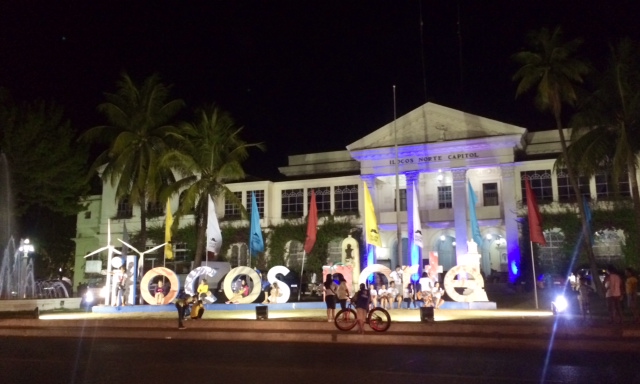
The race starts on Midnight of May 10, 2017 in front of the Provincial Capitol of Ilocos Norte which is located along Rizal Street in Laoag City.
Ilocos Norte Provincial Capitol
From Rizal Street, runners will go on easterly direction until they reach the second street intersection and then TURN LEFT along the so-called BACARRA Road. The Bacarra Road goes on a northerly direction towards the town of Bacarra. After passing the Bacarra Bridge, the runner follows the Highway towards the town of Pasuquin and by-passes the Poblacion of Bacarra.
The runners will pass the town of Pasuquin as he/she proceeds to the town of Burgos. The Kilometer #50 Checkpoint will be located in front of the Burgos Municipal Hall.
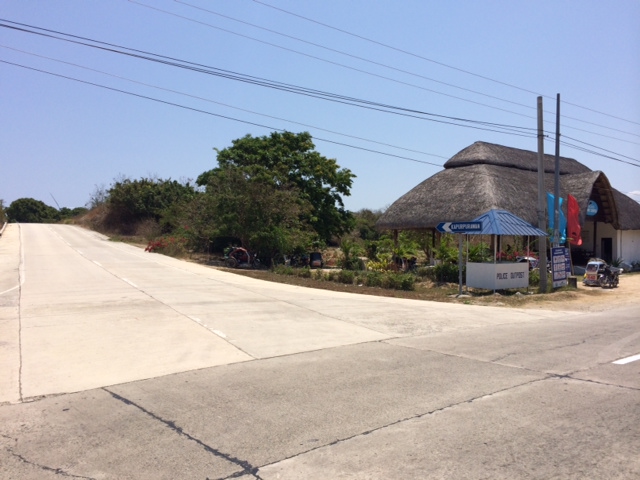
Kapurpurawan Rock Junction Before Poblacion of BurgosIn Front Of The Burgos Municipal Hall
After passing the Windmills in Burgos and Bangui, the runners will be on their way to the Boundary of Pagudpud. Once they reach the intersection/junction going to the Poblacion of Pagudpud and towards the Province of Cagayan, runners would have covered a distance of 72 Kilometers.
Pagudpud To Cagayan Junction (Kilometer 72)
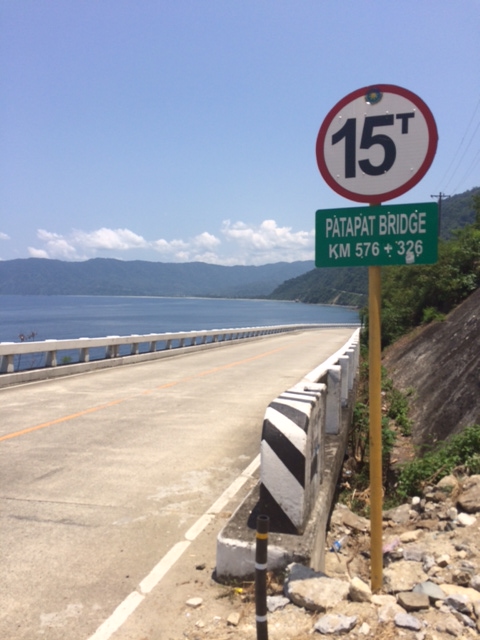
After 18 kilometers, runners will reach the famous Patapat Bridge and hopefully, the last runner will pass this place while there is still daylight. Patapat Bridge is Kilometer #90
Patapat Bridge (Kilometer #90)
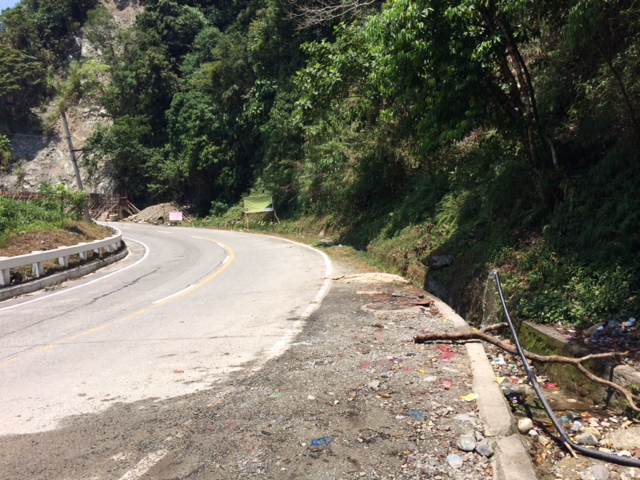
After 10 kilometres, there is a flowing water from a hose from the side of the mountain which is very near to a road repair construction due to mountain slides. This is the Kilometer 100 mark of the route.
Free-Flowing Water on the Right Side of the Road Near a Landslide Repair/Construction
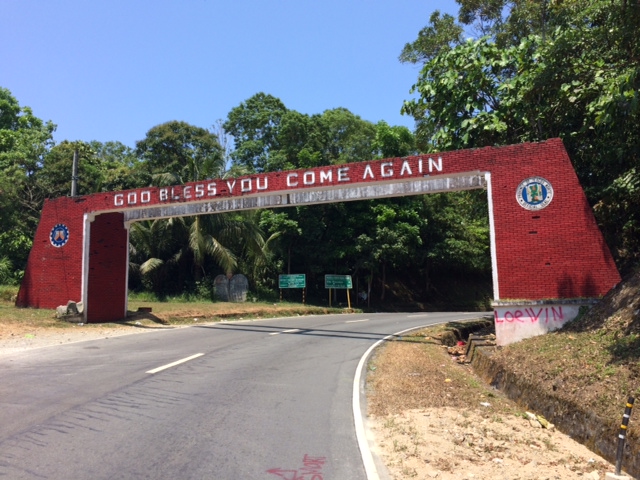
After 2 kilometres, the runners will reach the Ilocos Northe-Cagayan Boundary Arc (Kilometer 102).
Ilocos Norte-Cagayan Highway Boundary Arc
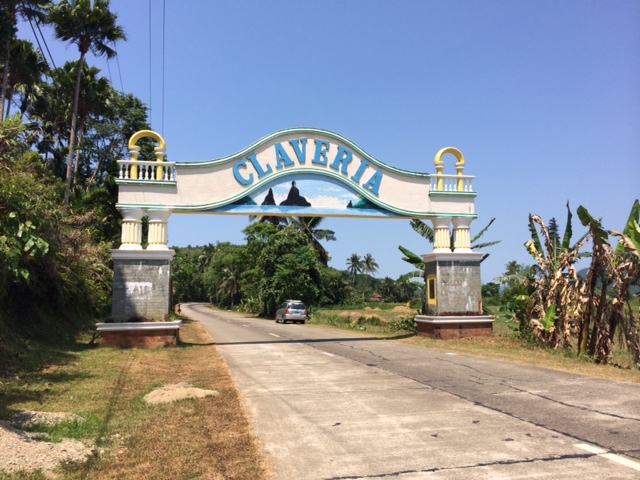
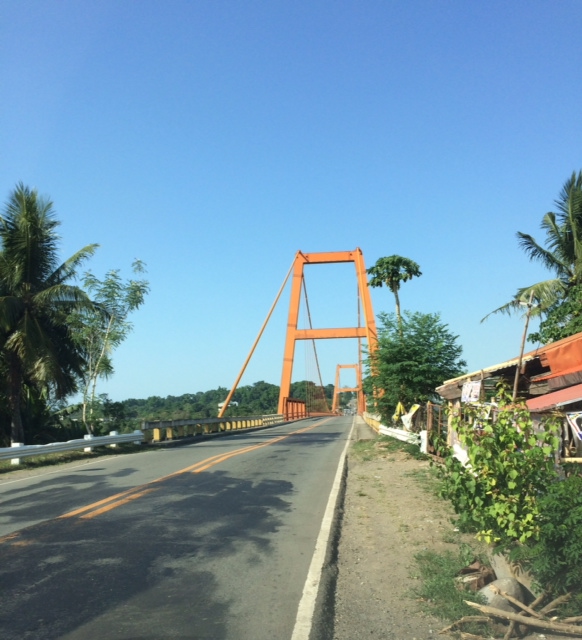
From this point, runners will be going downhill towards the town of Santa Praxedes and to the plains of Claveria, Pamplona, and Abulog until they reach the famous Magapit Bridge, the Longest Suspension Bridge in the country.
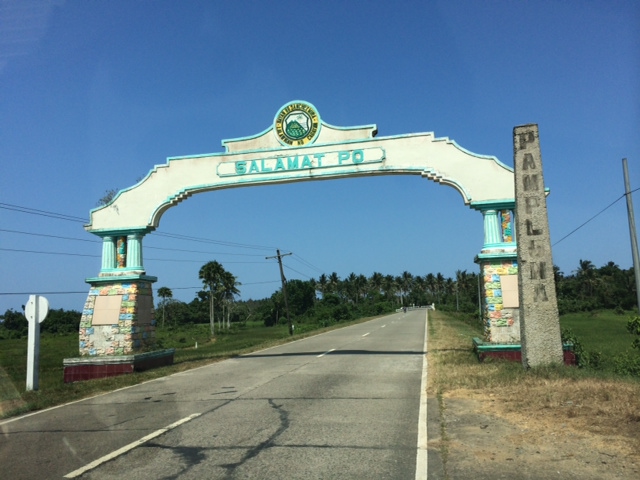
Claveria ArcPamplona Welcome Arc
The Pamplona Welcome Arc is Kilometer #150 and the Pamplona Poblacion is Kilometer #160.
Eight Kilometers before the town of Allacapan is marked as Kilometer #200.
Upon reaching the Magapit Bridge, the runners would have reached Kilometer #226.
Magapit Bridge
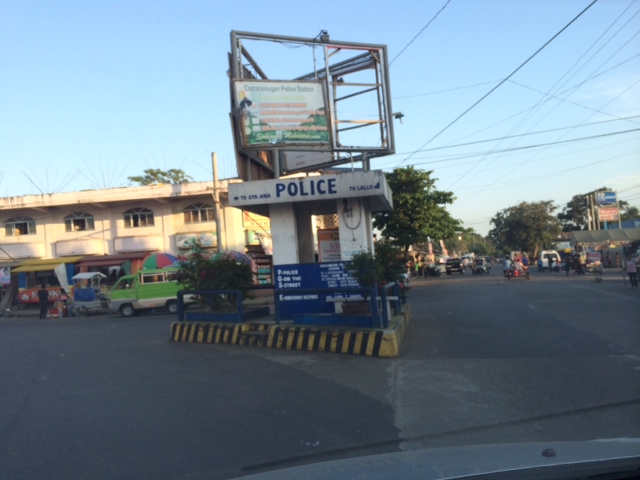
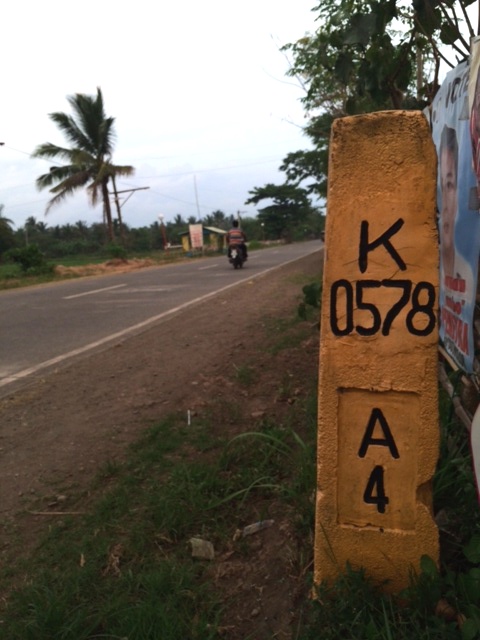
After crossing the Magapit Bridge, runners will TURN LEFT towards the town of Lal-lo, Cagayan and proceed to Aparri, Cagayan. The runners will pass the DUGO Intersection (Dugo, Camalaniugan) on their way to the direction of Aparri until they will reach Km Post 0578 which is 4 Kilometers before reaching the town of Aparri. At this Kilometer Post, runners will TURN-AROUND back to the DUGO Intersection and then TURN LEFT towards Santa Ana, Cagayan.
The DUGO (Camalaniugan) Intersection is Kilometer #244.5 and the Km Post 0578 which is the TURN-AROUND point is Km #251. Upon reaching back to DUGO after coming from the TURN-AROUND Point, the runners should have covered a distance of 258 Kilometers.
DUGO (Camalaniugan) IntersectionTURN-AROUND Point Before Aparri, Cagayan
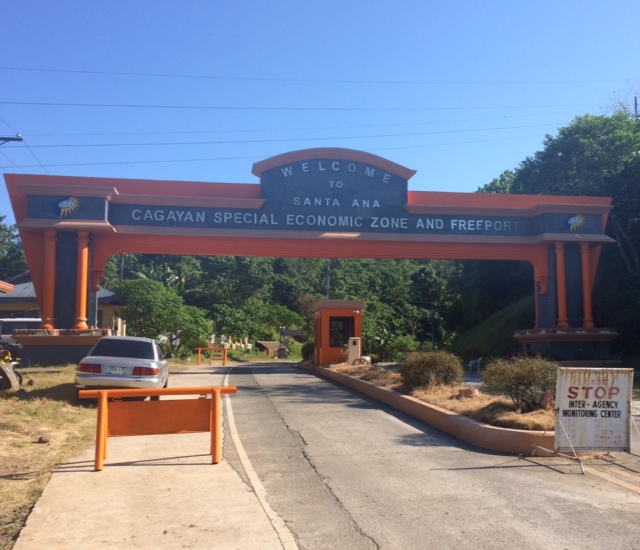
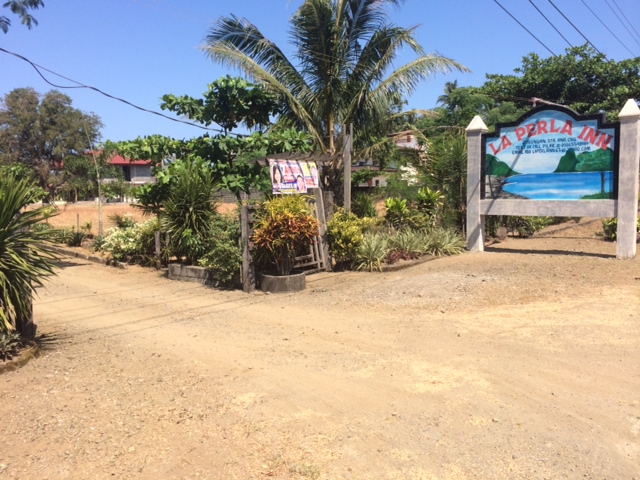
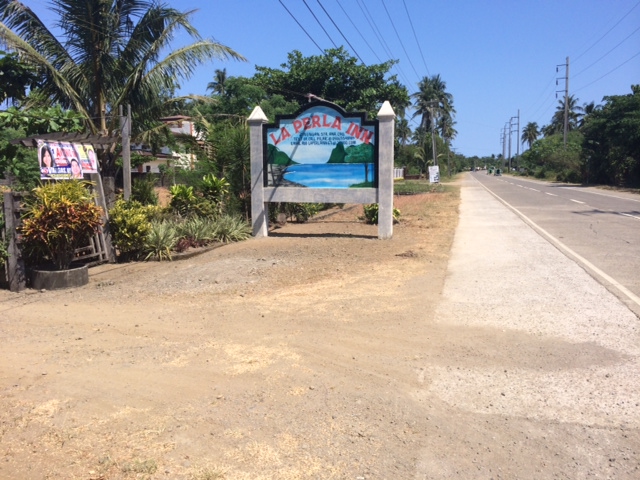
From the DUGO Intersection to the Finish Line in Santa Ana, Cagayan will be a long-stretch of flat road of about 62+ Kilometers. The Finish Line will be at the LA PERLA INN which is 10 Kilometers away after passing the Santa Ana Welcome Arc.
Santa Ana, Cagayan Welcome Arc (Last 10 Kilometers To The Finish Line)La Perla Inn EntranceLa Perla Inn Marker & Road To Santa Ana’s Centro
In about one month, I will turn to a 64-year old mountain trail runner and I have accepted the reality that I am getting old and about to retire from ultra mountain trail running with the hope to leave some legacy to the next generation of runners, most especially to the local ultra runners. I also accepted the fact that I am becoming the “cut-off time chaser” in all my past international ultra races. But for the past months, I improved on my nutrition strategy; more rest and recovery in my training; and getting smarter during races. And because of these reasons, I became more confident to finish the ultra races that I intended or scheduled to join this year. I guess, I might not retire in the near future after all.
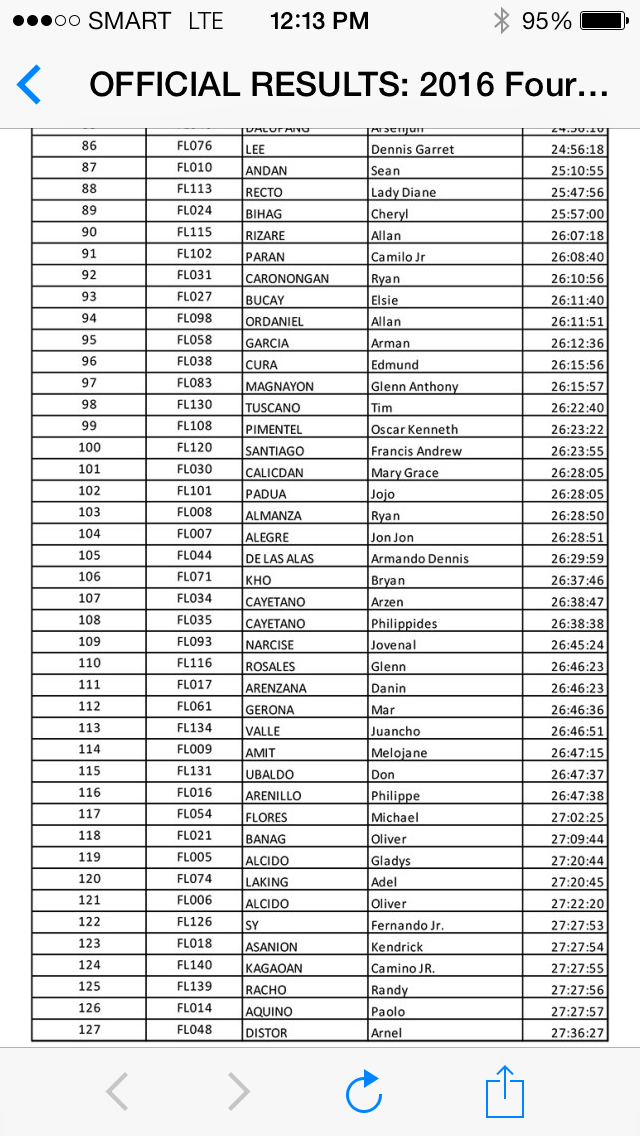
I was surprised with my performance in last month’s Translantau 100K in Hongkong even if I was stopped at Km 90 due to severe weather conditions in the mountains. If only the race was not stopped by the Race Organizer, I would have improved my previous finish time last year by one hour or more. Instead of earning 3 UTMB Points, all of us who were stopped along the course were considered as Official Finishers and were given 2 UTMB Points. Due to this setback to earn 9 UTMB Points in 3 Ultra Races, I decided to join the 2016 KOTM’s Four Lakes 100K (FL 100) Trail Run and earn 3 UTMB Points from it.
Here are the reasons why I did good in this race:
More Time To Recover & Rest—-The Translantau 90K that I’ve finished 2 weeks before the FL 100, became my “peak LSD” in preparation for the said race. And the last 50K LSD “heat training” that I did one week before the race was my taper run. Within those two weeks, I did two sessions of leg workouts and the rest were devoted to rest and more sleep. However, before the Translantau 100, I finished the Condura Skyway Marathon (42K) and my Fort Magsaysay To Dingalan 65K Ultra Marathon Race.
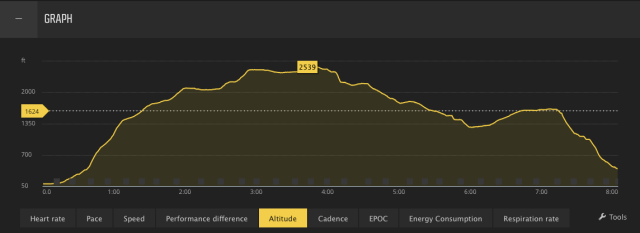
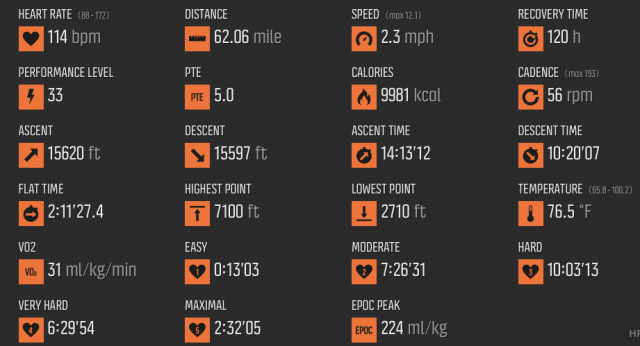
Total Elevation Gain——As a mountain trail runner, this is the most important factor to consider in one’s training and looking at the data gathered and recorded by my Suunto Ambit 3 Peak GPS Watch, I was able to satisfy the suggested Total Elevation Gain that I have to attain within a certain distance. For example, if the 100K trail course has a total elevation gain of 15,000 feet, one must be able to train in a course that has at least, a total elevation gain of 1.500 feet within a distance of 10 Kilometers, 3,000 feet in 20 Kilometers, and so on. My playground offers a Total Elevation Gain of 2,100 feet within a distance of 8 kilometers and if I extend it to 22 kilometers, I would attain a total elevation gain of 4,250 feet! This explains why I have the endurance to go up to the peak of any mountain during races.
Four Lakes 100 Elevation Profile From SUUNTO Ambit 3 Peak GPS Watch
Nutrition & Hydration Strategy——Don’t wait till you feel you are hungry or thirsty that you start ingesting your food or drink your water/hydration mix. To be safe, once my GPS Watch beeps to register that I have completed ONE MILE (1.6 Kilometers), it usually reminds that I have to eat a bite food or drink my hydration mix. If I have an average speed of 3 miles per hour, then I would hear 3 beeps within the hour which means that I ingest any solid food and drink my water 3 times within the hour. Drinking and Eating are done while on the move which I usually do during my training runs.
Train Heavy, Race Light——I usually bring a lot of water during my training runs but in my races, I only carry enough water to sustain me in between the Aid Stations. But I carry my CarboPro mix packs which I programmed to sustain me for the whole course in my pack. For this race, I carried 12 packs (1 pack/serving in every two hours of running/hiking) but in the end, I only used 7 packs for the whole course. The pack that I carried during the which consisted of the mandatory kits and extra solid foods which was lighter in weight than the pack that I carry in my training runs.
Running Kit——The ASICS Running Shorts that I’ve been using in my ultra trail races since last year’s CM50 is becoming my favourite and my best running shorts so far. The ALTRA Superior 2.0 which I used in Translantau 100 is becoming my favourite choice for my 100K trail races, too! My Salomon 5-liter Advance Skin 3 Pack with its accessible pockets had been also helpful that I could easily reach for my bite foods and candies while on the move. My reliable PETZL Tikka XP which is very light gave me more confidence to run during nighttime.
Reduction of Stop Time in the Aid Stations——It would have been smarter not to stay long in the Aid Stations but I committed some mistakes in having unnecessary “long breaks” in between Aid Stations to sit and eat my food. My experience in the FL 100 taught me some lessons and with the hope to improve on them in my next races.
SUUNTO Ambit 3 Peak Data
Looking at the data that had been recorded by my SUUNTO Ambit 3 Peak GPS Watch, I will have to improve on my average pace by eliminating some of the mistakes that I’ve committed in this race. I think I brought so many CarboPro Packs and bite foods in my pack. My lack of knowledge on the route from East Market Proper to Dayap made me slower during the race. I think I was also overdressed when the heat of the sun was at its strongest along this part of the route. Hopefully, I will be able to correct all these mistakes on my next race!
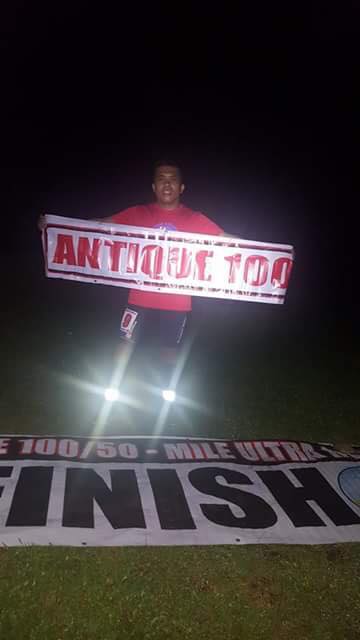
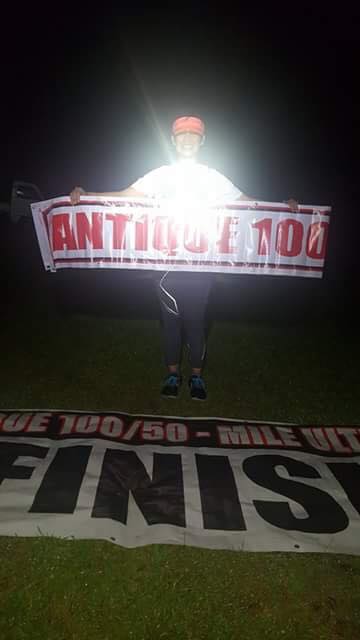
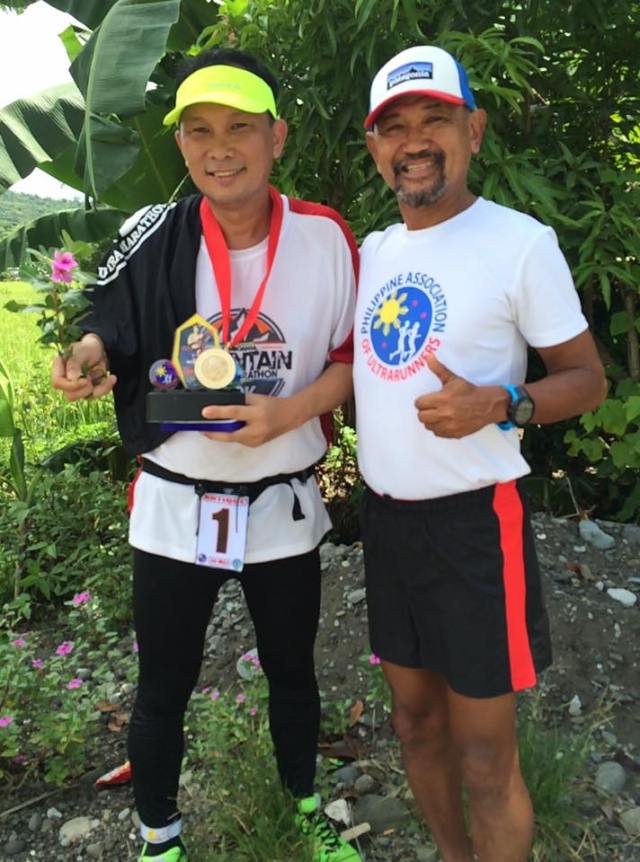
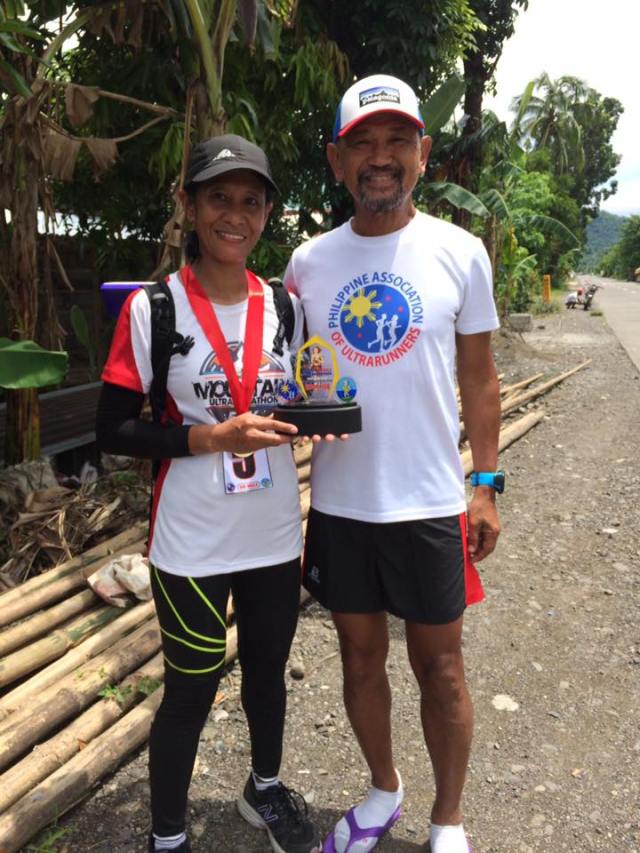
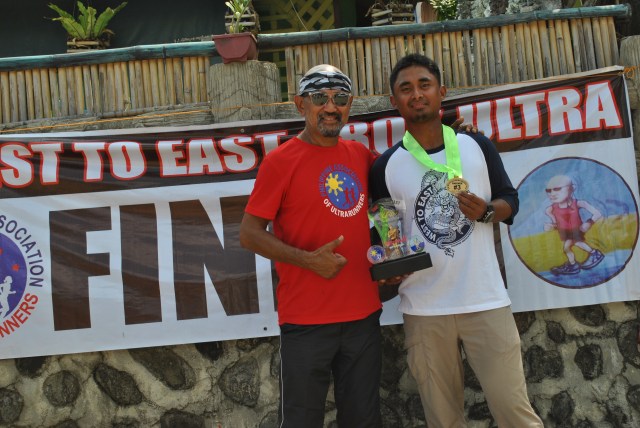
Overall Champion & Course Record Holder Thomas CombisenOverall 1st Runner-Up & Course Record Holder Eden PagsolinganOverall 2nd Runner-Up Mhel BiscarraFirst Female Champion & Female Finisher Joselle LañasFinishers Doing The Last Ritual Of The Event






 Bald Runner
You must be logged in to post a comment.