Journal Of “Team Thomas” @ 2020 HK4TUC (Second Day)


Journal Of “Team Thomas” @ 2020 HK4TUC (Second Day)

Thomas started the 2nd Leg of the event at Wilson Trail at 16:25 Hours, which was 1:25 AM of January 26, 2020, Sunday Morning. Ahead of him was a 78-kilometer distance during a cold and rainy night. Thomas was feeling cold at the start but having eaten a lot of food and keeping himself on the move, he will surely regain his pace and tempo during the run. After Thomas left, we immediately fixed our things, packed the used clothes/attire of Thomas and threw the trash at the Trash Bins at the Starting Area. We immediately took the Taxi which was waiting for us to bring us back to the place where we are staying. As we arrived in our place, we immediately checked the Racemap Application to find out if Thomas was on the right track. We were glad that Thomas was on the right track and we immediately rested for the day at 3:00 AM on the second day. Last year, after 1-2 kilometers from the Starting point, Thomas got lost and we had a sleepless on the first night at that time when more additional “lost moments” had to be corrected.

I woke up at 8:00 AM on the second day and immediately checked on the tracker of Thomas and he was doing fine without any “lost moments” as compared to his experience last year. Our monitoring team advised Thomas to call us once he reaches the MTR Station at Lam Tin and once he crosses the Quarry Bay and reaches the MTR Station at Tai Koo on the Hongkong Island side. From these calls, we would be able to estimate the time we would meet Thomas at the Finish Line of the Wilson Trail Leg. But with the lagging time as depicted by Thomas tracker, we decided to give an ample buffer time to wait at the said place before Thomas arrives.

We arrived at the end of the Wilson Trail Leg at the Tai Tam Country Park in Stanley Gap Road at 5:00 PM with the hope that Thomas would be arriving in 30-45 minutes. In a few seconds, we witnessed the arrival of the 4th Runner Abimanyu from Singapore and since Thomas was ranked as the 8th or 9th runner as seen on the tracker, we prepared ourselves to wait for some more time in the said place.
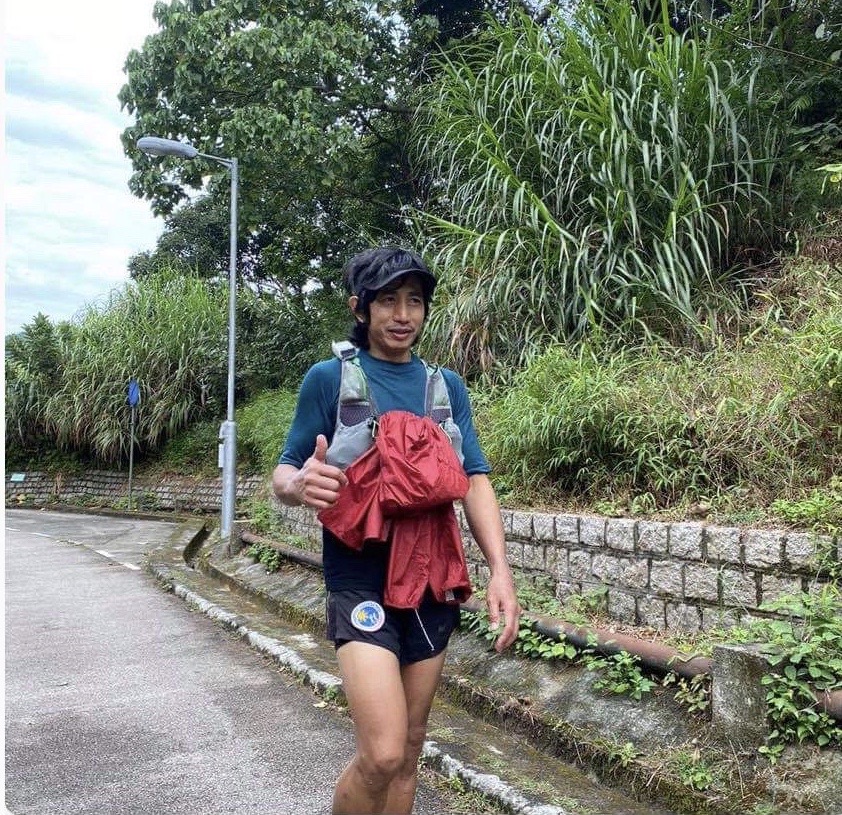
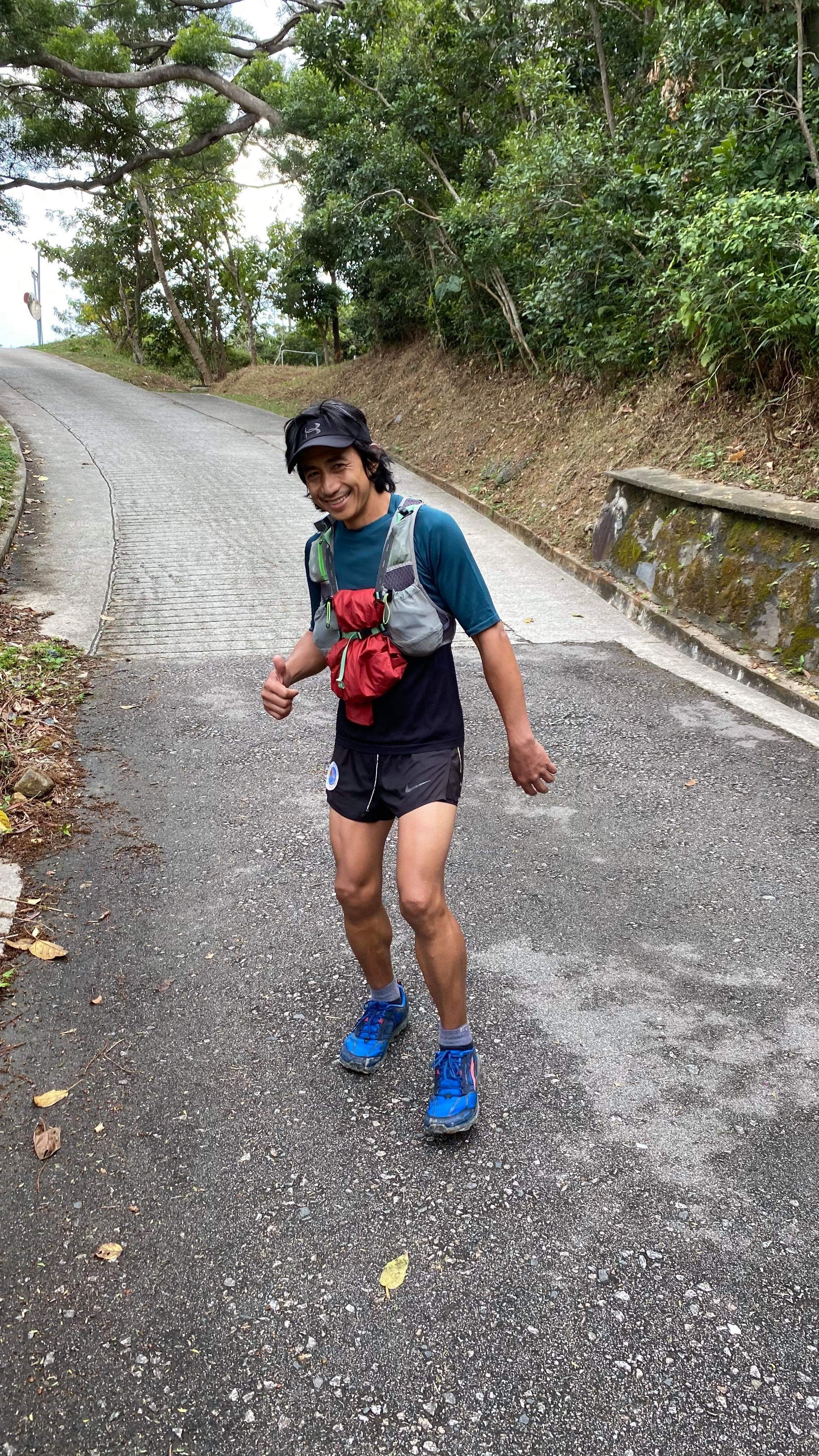
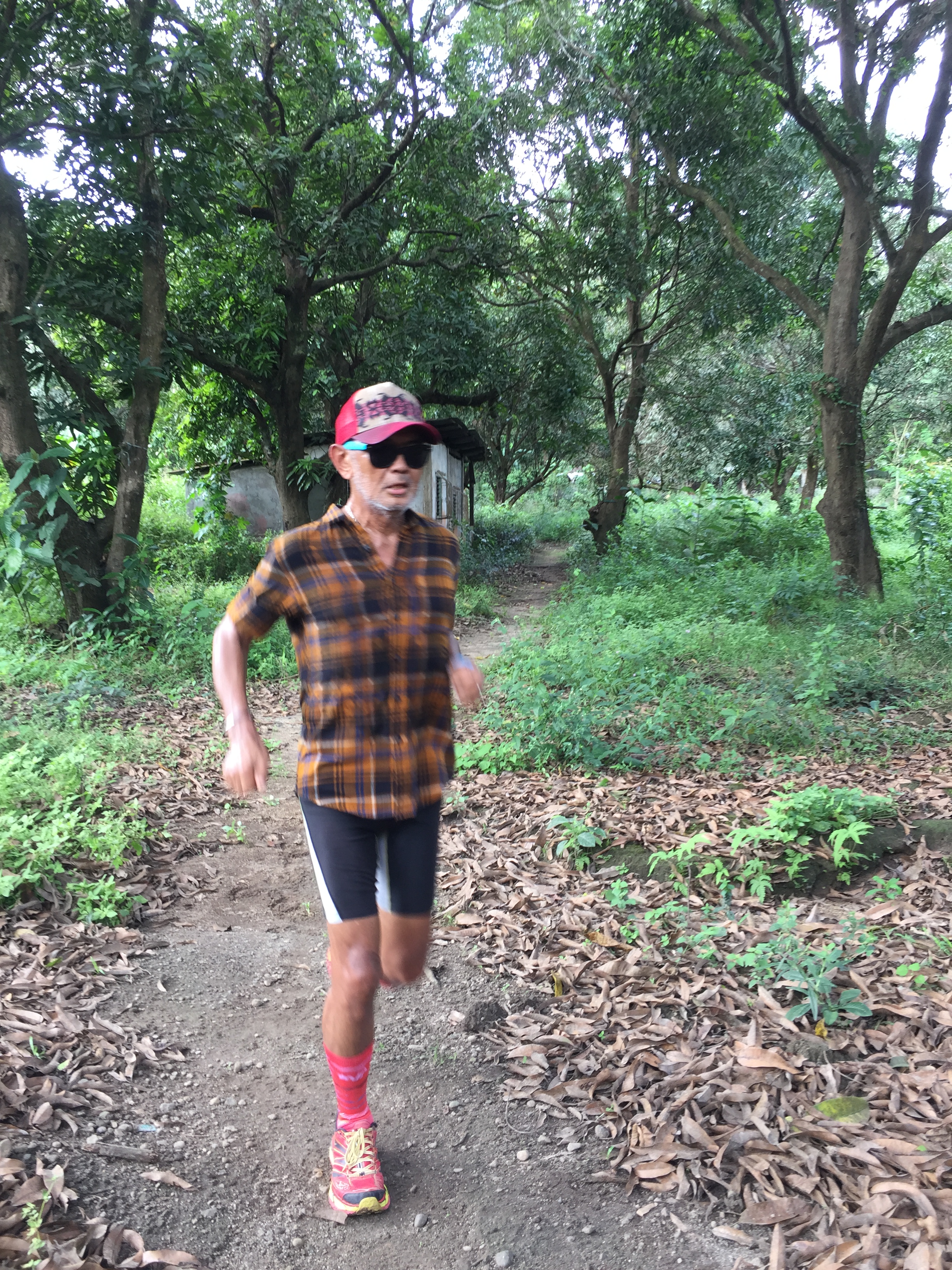
Thomas Along The Wilson Trail (Photo From Facebook)

The cold wind from the sea was blowing on our faces as we waited for Thomas but our Team was entertained by two Pinay runners who are working in Hongkong with their stories about the race and what they have prepared in terms of food for Thomas and to the rest of the Pinoy Runners. They even mentioned to me that Christian Villoria from Pangasinan, also a worker in Hongkong, is waiting at the Bus Station at Shek O Road for more food and drinks for the Pinoy Runners. We had a lot conversations with Tha Na and Josephine and they entertained us while waiting for Thomas. I decided later to hike the 1,000+ steps or the last 600 meters of the trail and tried to wait for the arrival of Thomas. Instead, the #5 Runner Chiang from South Korea came out from the vegetated portion of the trail and he was running at an easy pace going downhill. I greeted and congratulated and told him that he is only 500 meters to the end of the trail.

Thomas After Crossing Victoria Bay (Photo By Lloyd Belcher)

After almost 3 hours of waiting, the #9 Runner Karen from Hongkong, the leading Lady Runner of the event, arrived at the Finish Line and we knew that in a few minutes, Thomas will be arriving next. Finally, Thomas arrived at the Finish Line of the Wilson Trail Leg at exactly 8:00 PM of Sunday, January 26, 2020 with a time of 18:30 Hours to finish the whole Wilson Trail.
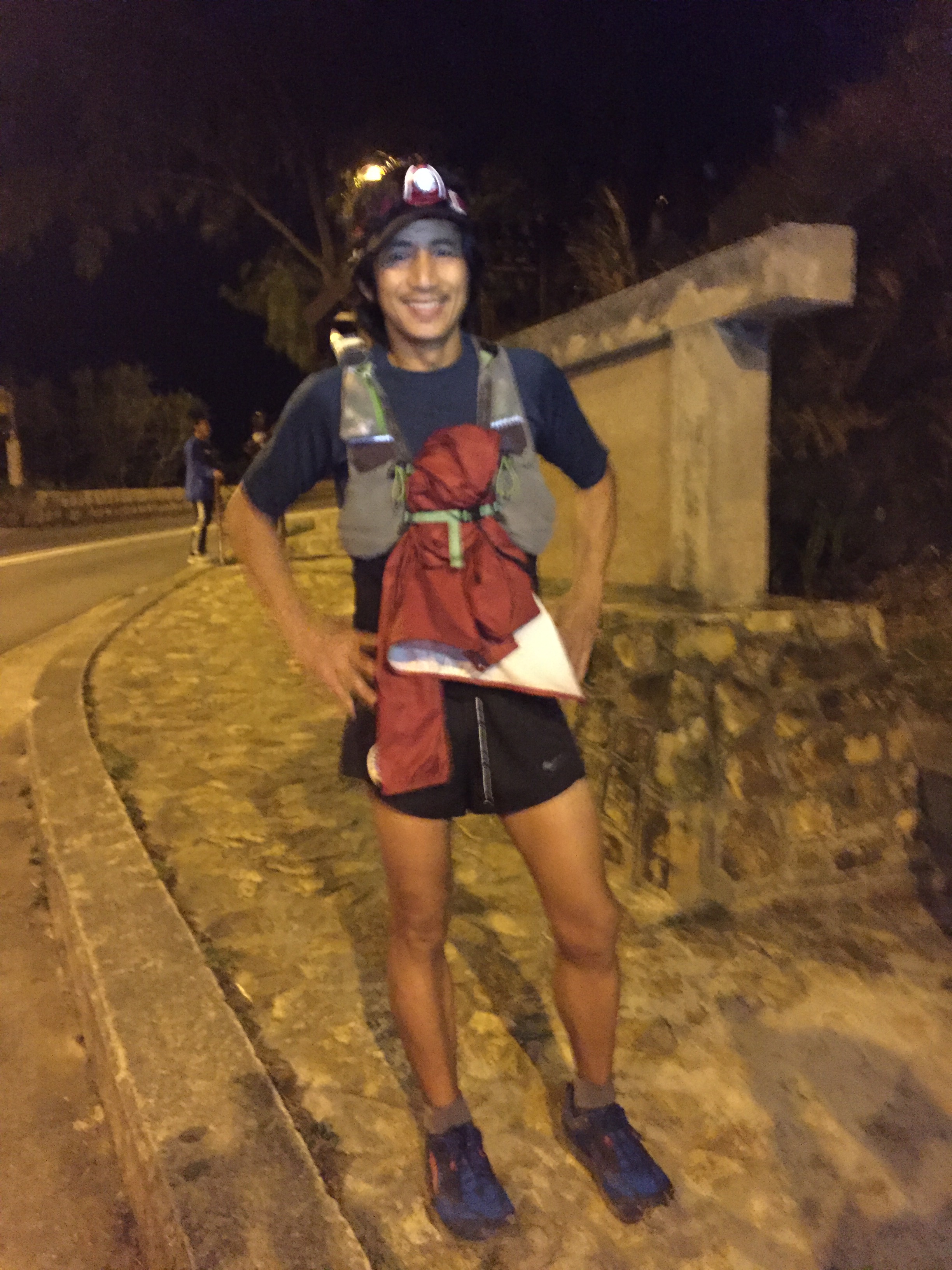
Thomas Finishing The Wilson Trail

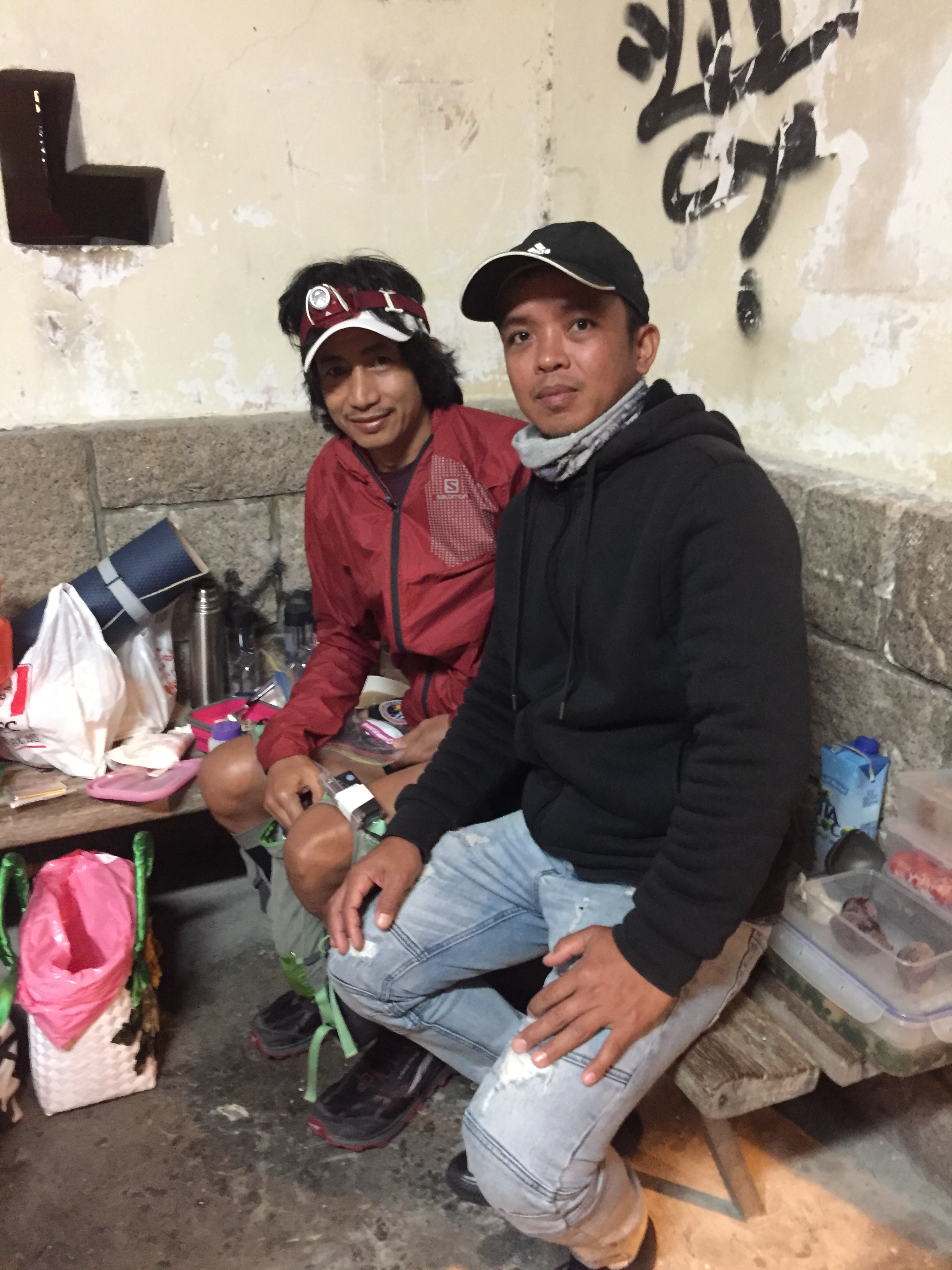
At 8:10 PM, we left immediately the end of Wilson Trail to the Shek O Road for Thomas to start the Hongkong Trail Third Leg. It took us a 22-minute ride on a Taxi to the Bus Stop at Shek O Road which is officially the Starting Area of the Hongkong Trail. Upon arrival, Thomas checked-in with Andre Blumberg and we set-up for the “pit stop” for Thomas. Thomas ate his dinner with the food we cooked for him and the food brought by Christian Villoria. Christian was there to meet us once we alighted from our Taxi ride. The NHK Japanese TV Network guys were also there to meet us with their Video Camera and Lights. They even interviewed Thomas while he was eating his dinner and focused their video camera on the food prepared for him. They were interested to see Fried Tuyo (fried salted sardines), Pork Adobo, and Sinigang Salmon Head (Sour Soup with Salmon Head) as Thomas food for dinner.
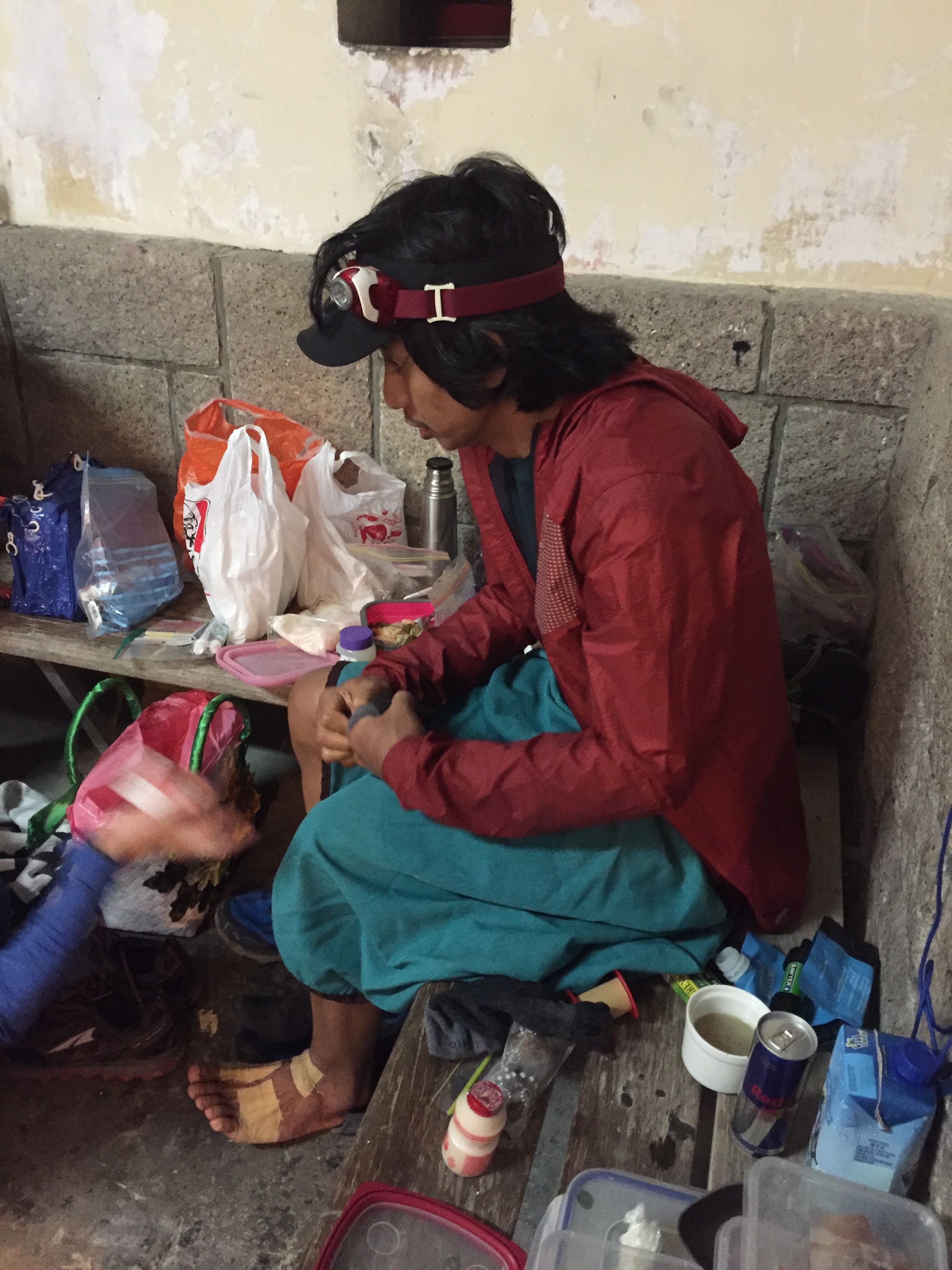
Thomas At The “Pit Stop”
Thomas With Christian Viloria

After eating, refilling his hydration vest with water and food, and changing his socks and attire, Thomas was ready to start the Hongkong Trail which has a distance of 50 kilometers. Before he left the starting point, Tomokazu “Tomo” Ihara, a sub-60 Finisher in last year’s HK4TUC and also a classmate of Thomas in last year’s event, advised Thomas that he is in the halfway (in terms of time elapsed) of the event and he needs to complete the remaining 120 kilometers in less than 24 hours to be able to be declared as a Finisher of the Event. Tomo said that it will be an easy task for Thomas to take the 7:00 AM Ferry trip to Lantau Island and be able to finish the Lantau Trail before the 60-hour cut-off time. Tomo was surprised to see how Thomas improved on his performance this time as compared to last year. In a conversation with Tomo, I told him about Thomas “lost moments” on the beaches of MacLehose Trail, lots of intersections at the Wilson Trail & mistake of going to the MacLehose Trail, and delays for looking the right MRT Platforms at the Lam Tin and Tai Koo Stations. 

Thomas left the Shek O Road at 9:05 PM of Sunday, January 26, 2020 and we expect him to finish the Hongkong Trail in 8 hours or at 5:00 AM of Monday January 27, 2020.
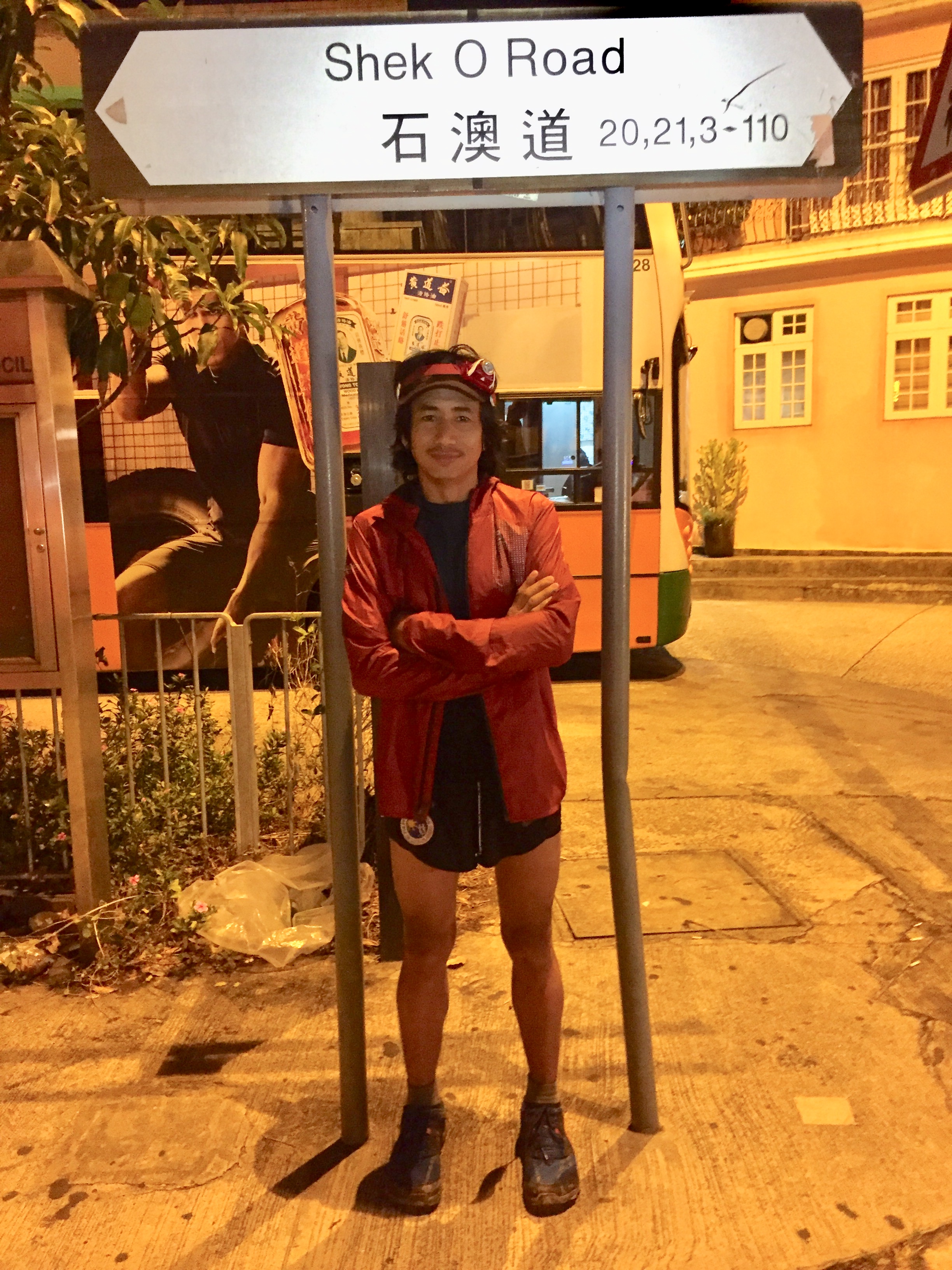
Thomas At The Start Of The Hongkong Trail

To be continued.

The “Tricks” That I Do During Running


The “Tricks” That I Do During Running

I just want to review the things that I do when I am running in my training and races. Most of these things are known already by runners but sometimes they forget when fatigue and pain come into play at the middle of the run. I usually do these “tricks” to focus or bring back my mind into running as we tend to be distracted by some factors, whether they are external or internal to one’s body. So, these are the tricks that I do:

1. Strides: This trick is described as quick increase in pace or speed for a short distance or time followed with an interval of slow pace. Most of the time, the time elapsed during a particular stride should be the same period with the slow pace. I am usually asked by my Coach to do some “strides” during or at the end of my Warm-Ups and during my Cool Down. However, at the middle of my Races and training workouts, I usually apply these “strides”. Usually, I adopt the “30-second” duration of “strides” which I estimate 30 counts whenever my right of left foot hit the ground.

2. “30-30”-Second Run: Actually, this is the same with “strides” and it was popularized by Kilian Jornet’s technique in running trail events. The first 30 seconds consist fast run and the next 30-seconds in easy run. This cycle is repeated throughout the run or race. Just the same with the strides, I usually count my right or left feet landing/hitting the ground from count one to thirty on fast pace and then shift to an easy pace with the same number of counts. If one can do this consistently, a runner can run as far as he can. This is what I adopt in my running, whether I am on the trail or road. This is my favorite drill during my endurance trail runs and during my road runs.

3. “30-20-10”-Second Run: This drill run is done by doing first a 30-second easy run, then followed with a faster 20-second run, and finish with a 10-second “sprint” to complete the cycle. You can repeat this cycle drill as long as you want. I usually do this drill in 4-5 cycles in the middle of my workout. As you progress, a runner can increase the number of cycles at least one cycle per week until comfortable to do 8 cycles in a single running workout.

4. “Fartlek” Run: Simply look for an object far in front of your running path and then “sprint” towards the said object. Take an easy and relaxed run after the sprint and then repeat the sprint if you feel you have already rested/recovered. Repeat the process as long as you want. You can walk as your rest/recovery in between sprints. You can start with 4 repetitions in a single workout and then steady increasing the number of repetitions within the middle part of your running workout. This workout is done once or twice a week.

5. Counting Steps or Strides: In the middle of my runs, I usually count my strides, whether they are easy or fast, from one to 90. In my estimate, 90 strides is equivalent to one minute which in turn would estimate me running a stride rate of 180 steps per minute. I usually do this drill when I would force myself to jog or to have an easy run instead of walking on the downhills or flat roads. 

Most of these tricks were taken from the experiences shared by other runners. Some were taken from running books and articles from running magazines with the proper studies made by Sports scientists and sports physiologists. You can adopt one trick or you can combine all of these tricks in a single workout. It is up for the runner to choose which one is fitted for their prevailing running condition and purpose or objective while running. 

Applying My “Tricks” In My Playground

The State of Ultra Running 2020


This study was made by RunRepeat.com and the International Association of Ultrarunner (IAU). This is an excerpts from the said study. You can read the whole article here.

In this study, we explore the trends in ultra running over the last 23 years. We have analyzed 5,010,730 results from 15,451 ultra running events, making this the largest study ever done on the sport. 

Key results

  • Female ultra runners are faster than male ultra runners at distances over 195 miles. The longer the distance the shorter the gender pace gap. In 5Ks men run 17.9% faster than women, at marathon distance the difference is just 11.1%, 100-mile races see the difference shrink to just .25%, and above 195 miles, women are actually 0.6% faster than men.
  • Participation has increased by 1676% in the last 23 years from 34,401 to 611,098 yearly participations and 345% in the last 10 years from 137,234 to 611,098. There have never been more ultra runners.
  • More ultra runners are competing in multiple events per year. In 1996, only 14% of runners participated in multiple races a year, now 41% of participants run more than one event per year. There is also a significant increase in the % of people who run 2 races a year, 17.2% (from 7.7% to 24.9%) and 3 races, 6.7% (from 2.8% to 9.5%). 
  • There have never been more women in ultrarunning. 23% of participants are female, compared to just 14% 23 years ago. 
  • Ultra runners have never been slower across distance, gender and age group. The average pace in 1996 was 11:35 min/mile, currently, it is 13:16 min/mile. The average runner has added 1:41 min/mile to their average pace, which is a slowdown of 15% since 1996. We don’t believe that individual runners have become slower, but that these distances are attracting less prepared runners now because the sport is more mainstream.
  • Runners improve their pace in their first 20 races, and then their pace stabilizes. From their first to their second race runners improve by 0:17 min/mile (2%) on average. But by their 20th they improve by 1:45 min/mile (12.3%).
  • The fastest ultra running nations are South Africa (average pace 10:36 min/mile), Sweden (11:56 min/mile), and Germany (12:01 min/mile). 
  • A record amount of people travel abroad for ultra running events. 10.3% of people travel abroad to run an ultra, for 5Ks this percentage is just 0.2%.
  • Runners in the longer distances have a better pace than the runners in the shorter distances for each age group. 
  • All age groups have a similar pace, around 14:40 min/mile. Which is unusual compared to the past and to other distances. 
  • The average age of ultra runners has decreased by 1 year in the last 10 years. It has changed from 43.3 years to 42.3 years. 
  • Ultra runners are getting more engaged – the average number of ultras per year has increased from 1.3 to 1.7 over the last 23 years.

Based from the “Key Results” of this study, I would like state my opinion and observations on the following:

  1. Participation has increased by 1,676% in the last 23 years from 34,401 to 611,098 yearly participation and 345%in the last 10 years from 137,234 to 611,098: Within this period in 2009, the Philippines had its contribution of an event in the ultramarathon community with the introduction of the First Edition of the Bataan Death March 102K Ultramarathon Race. I can safely say that this was the first Ultramarathon Race in the country in the 21st century (from the year 2000 and beyond). It is also the First “Point-to-Point” Ultramarathon Event in Asia. Through the Philippine Association of Ultrarunners (PAU) and endorsement of PATAFA in 2010, the Philippines was the 6th ASIAN country to be accepted and sanctioned with the International Association of Ultrarunners (IAU). PAU is also considered as the FIRST ASEAN Ultramarathon Federation to be a member of the IAU. The BDM 102 Ultra had “sparked” the popularity trend of ultramarathon events in the country as more events were organized by individual persons in almost all regions in the country in the coming years. Trail Ultras had also expanded in the country with runners trying to get ITRA points for possible entry to the UTMB Races. However, in this report/study, I can only see Malaysia as the only South East Asian country that is included among the Top 20 countries that has the most number of ultra marathon runners. I wonder why? With Malaysia’s population of 32.7 Million against the Philippines’ population of 109 Million? With more Ultra Races here in the Philippines than Malaysia? Maybe, this is a good start for somebody in the country to document and collate all the ultramarathon events and number of participants in every event in the country. I am not saying that we should be included in the Top 20 countries of Ultra Marathoners but we have the potential to be a future contender in the said list if we just cooperate and be united among ourselves.
  2. Local Ultra Marathon Runners Have The Tendency To Run More Ultra Races Every Year: With more Ultra Race Organizers “sprouting” all over the country, runners are enticed to join these races and taste what it is like to finish an ultramarathon race. But what I’ve have observed is the loose consideration and “comfort-oriented” prescribed cut-off times of these races. In Japan, the average cut-off time for their 100K Road Ultra is 14 hours and 8 hours for the 50K. For the BDM 102K, due to the heat and prevailing weather, the cut-off time is 18 hours and for my 50K PAU Events is 9 hours. For the PAU 100-Mile Road Races, it is pegged at 32 Hours. For longer distances, a PAU runner must be able to cover an average distance of 5 kilometers every hour. All these Cut-Off Times for my races are way below and slower than the cut-off times of Japan’s Road Race’s COTs. I can not speak well about the other Road Races in the country and their respective COTs. (Note: In almost all my Races at PAU and BR’s Events, I use myself as the “gauge” to determine a decent COT for the distance as I run my events first before making it as an Ultra Marathon Event for the Public)
  3. More of our Local Ultra Marathon Runners Are Satisfied With Just Finishing: This is the reason why our Average and Competitive Ultra Marathon Runners could barely finish the Races in International Events. This is a question of having so many Ultra Races but not having Quality Finishers with the goal to level-up or be at par in International Standards in Ultra Marathon. I consider myself as one of the “back-packers” and one of the last runners to finish within the COT in International Races but considering my age of almost 68 years old, I still consider myself as a good quality Ultra Marathon Runner. I have yet to see a Filipino Ultra Marathon Runner who will land as Podium Finisher in the Badwater 145-Mile Endurance Race (with due respect to those Pinoys who have finished this tough race); a Silver Buckle Awardee in the WSER 100-Mile; a Podium Finisher in the Spartathlon; Podium Finisher in the Leadville 100 & Hardrock 100, and a Top 10 in the UTMB.
  4. Fastest Countries In Average Pace: South Africa in 10:36 minutes per mile is the fastest; Sweden is second in 11:56 minutes per mile; Germany is third in 12:01 minutes per mile; and Malaysia in 20th rank in 15:55 minutes per mile. Based from the yearly results of the BDM 102K Ultra, I can safely say that the Average Finish Time is between 16-17 hours (with a COT of 18 hours). Using this as a baseline, an Average Local Runner who finished the BDM 102 is just a few seconds slower than the Malaysians. Positively speaking, we could be in the 21st or 22nd rank! (I can only speak for my PAU Races as I know that most of the other races have slower COTs).

For the meantime, these are the only observations and conclusions/opinions that I can think of as related to this study. I hope that in the next period of study (within 5 or 10 years), the Philippines will be in the List of Top 20 Countries in the Ultra Marathon Community. Let us strive more to be positive. And let us unite our efforts in this sports.

Official Logos Of PAU & IAU


2020 Schedule Of BR’s/PAU Events


2020 Schedule of BR’s/PAU Events
January 11-12, 2020—12th Bataan Death March 102K Ultramarathon Race
February 22-23, 2020—10th Bataan Death March 160K Ultramarathon Race
March 26-28, 2020—6th Manila To Baguio 250K Ultramarathon Race
April 25-26, 2020—- 2nd PAU 6-Hour & 12-Hour Endurance Runs (Iloilo City)
May 3, 2020—Tagaytay To Nasugbu 50K Ultramarathon Race
June 26-28, 2020—8th WEST COAST 200K Ultramarathon Race
October 3-4, 2020—6th Zamboanga Mountain Ultramarathon (80K/50K/25K)
October 21-24, 2020—-PAU 4th NORTH COAST 200-Mile Ultramarathon Race
November 29-December 5, 2020—2nd Manila To Pagudpud 580K Ultramarathon Race
*There will be 6-Hour & 12-Hour Endurance Races at the Headquarters Philippine Army, Fort Bonifacio as requested by the runners. These events will be FREE.
*PAU GrandSlam Award Races For 2020:
  1. 6th Manila To Baguio 250K Ultramarathon Race
  2. 4th North Coast 200-Mile Ultramarathon Race
  3. 2nd Manila To Pagudpud 580K Ultramarathon Race
  4. 8th West Coast 200K Ultramarathon Race
Note: 2020 PAU GrandSlam Awardees Will Receive SEIKO 5 Watch Each
Official Logos Of PAU & IAU


Running Predictions For The Year 2020


Running Predictions For 2020

Based from what I have been reading on Social Media and other written articles about running for the past days since the start of the year 2020, I have the following personal predictions about running in the local setting in the country as well as in International Running Events:

  1. Running Events will steadily increase in numbers: With the positive results of the 30th ASEAN Games where the country became the Host and the Overall Champion in the Medal Tally Results, running as a basic sports will be embraced by the citizenry as a form of exercise; as an endurance sports; as a part of training for other sports discipline; and as a part of a healthy style of living. Almost all the weekends of the year will be filled with scheduled “fun runs”; long distance running events, such as half-marathon, marathon, and ultramarathon races. Short and Middle distance races like 5K and 10K races will always be there and it is predicted that more “newbies” will join such races.
  2. Trail Running Events will increase throughout the country: As per my observation with the scheduled races at the Facebook Group “Trail Running In The Philippines” (TRIP), trail running events, whether they are short in distance or ultras, have increased in numbers and I think for 2020, more events will be staged in almost all the regions/provinces in the country where there are mountain trails. However, trail runners will tend to choose which one to join due to financial constraints or depending on what would be their goal in this selected sports. Some competitive trail runners will be joining the Local Trail Running Events with ITRA points for them to qualify in International Trail Running Events. With more of trail running events for this year, the “old” trail running events will have a decrease in participants not unless the same people who have finished the event will continuously support the said event.
  3. MILO Marathon & MILO Regional Qualifying Races are still the Number ONE Running Events In The Country: Aside from its stature as the Most Prestigious Running Events In The Country, it rewards our Local Elite Runners with Cash Incentives and Travel Expenses support for the MILO Finals Marathon Race. MILO/NESTLE as a MultiNational/Foreign Corporation in the country had been promoting Running as a Sports for the longest time for the local populace. Nobody from our Local Business/Corporate Brands or Institutions had the courage to dig deep from their “pockets” to provide a constant and continuous goal to promote healthy lifestyle through running to the local populace. MILO Runners will also increase in  number despite the fact that schools are required to bring their students to join the shorter races. For the competitive and average runners, there will be an increase in the number of runners who would like to qualify for the MILO Finals as it is becoming a symbol status for runners to be a part of the said event. Qualified for the MILO Finals had been a “bragging rights” for the average and competitive runners in the country.
  4. With more Running Events, Runners Will Remain With Slow Finish Times: With the advent of the Social Media, runners will be satisfied in joining and finishing the race event that they have joined. Pictures of runners with their Finisher’s Medal will be the usual post/status on Facebook without mentioning their Finish Time. Actually, this practice had been with us through the years and more “newbie” runners will follow this practice.
  5. Slow Finish Time Runners Will Compose Most Of The Runners In International Marathon Events: It is common in my observation that Slow Finish Runners (Sub-5-Hour & Sub-6-Hour Runners) in Marathon Races will consist most of our Runners who will be joining the World Marathon Majors Events. Their reason could be “Bragging Rights” to have joined these events as they would post their Finisher’s Medals on Facebook and other Social Media platforms. I could not understand why these average and slower runners are the luckiest persons in Race Lotteries in World Major Marathon Races. This prediction is the main reason why the Runners from the Philippines remain as one of the slowest finishers in Marathon Races as compared with other nations.
  6. But More Average and Competitive Runners Will Try To Qualify For The Boston Marathon: It can not be denied that the Most Prestigious Marathon Race In The World is the Boston Marathon and its qualifying times had been faster than before and there is a number of minutes as buffer time if a runner just qualified for his time, to make sure that he is in for the race. Hopefully, more of our Local Elite Runners will be able to qualify for the said race. For those slower runners who are active in the Social Media, they will take the window of opportunity to get in to the event as Charity Runner/s as they have the money and influence to raise for the funds needed.
  7. UTMB Races Will Remain As The Goal Of Local Trail Runners: Through the past years, the number of Pinoy Runner (Local and Foreign-based) Applicants for the UTMB Lotteries had been increasing and as a result, more Filipinos are joining the UTMB Races. The creation of Trail Running Events in the country with ITRA points had considerably increased the number of qualified Trail Runners for the UTMB. It is predicted that more Trail Running Organizers/Race Directors will advertise their races with ITRA Points as a “come-on” for those runners who plan to join the UTMB Races, as well, in other International Races. However, with financial and logistics constraints, there will still be qualified applicants to the UTMB Races who would not be able to join such events.
  8. More “Copycat” Ultramarathon Races Will Be Created: There is a tendency of Local Ultra Race Director/s to copy or outdo other RDs Routes for Road Ultramarathon Events. What is worse is when they do a “Reverse” version of what other RD had adopted as his route in his events. This bad practice will continue showing disrespect to the other Race Director/Organizer. Some RDs will also conduct farther distances for their Ultra Events with the purpose to outdo the performance of other ultra athletes. With the popularity of “Fake News”, there will also be “Fake RDs and Fake ROs” who will spend money for advertisement, send Personal Messages to invite their FB Friends, promise Prizes, Raffles, and other Incentives for the Podium Winners, attract runners with Commercial Sponsors and give “Free Kits” to Runner-Influencers.
  9. Ultramarathon Races and Popular Running “Trends” Will Continue To Be Copied By Local Race Organizers: I think I am the Race Director that started the famous “Beer Mile” in the country and since then, it was copied by others as a “fun run” and it did not prosper to come up with a some sort of National Course Record among the runners. A Fat Ass Road Run was introduced every January and it became popular for runners and I guess, there will no more of this event this year. I also introduced Fat Ass For Trail for a single edition and I was not able to get more participants that I have stop the concept. As the Backyard Ultra in the US is becoming popular, some Local Organizers had conducted their own version of this event. Hopefully, this event will thrive and grow within this year. As for the IAU concept of “loop runs” to establish Record Runs in 24 Hours and other Running Timed Events, these races are not palatable to the liking and taste of Local Runners as compared to other Asian Countries and if we have some races of this kind, I predict that we could not be able to compete and be at par with these countries.
  10. More Ultra Race Organizers and Race Directors Will Be Dreaming That Running Events Are Lucrative Business: This is “self-explanatory”.
  11. Lastly, there will always be a “Cheater” in Every Race! 
One Of The Famous Logos Of BaldRunner

Official Result: 12th Edition Bataan Death March 102K Ultramarathon Race (BDM 102/Original Route)


2020/12th Edition Bataan Death March 102K Ultramarathon Race (BDM 102/Original Route)

Start Time & Place: 10:00 PM  January 11, 2020 @ Bataan Death March Shrine/Park, Mariveles, Bataan

Finish Time & Place: 4:00 PM January 12, 2020 @ Old Railway Station, Barangay Sto. Niño, San Fernando City (Pampanga)

Course Cut-Off Time: 18 Hours

Number Of Starters: 68 Runners

Number Of Finishers: 55 Runners

Percentage Of Finish: 80.88%

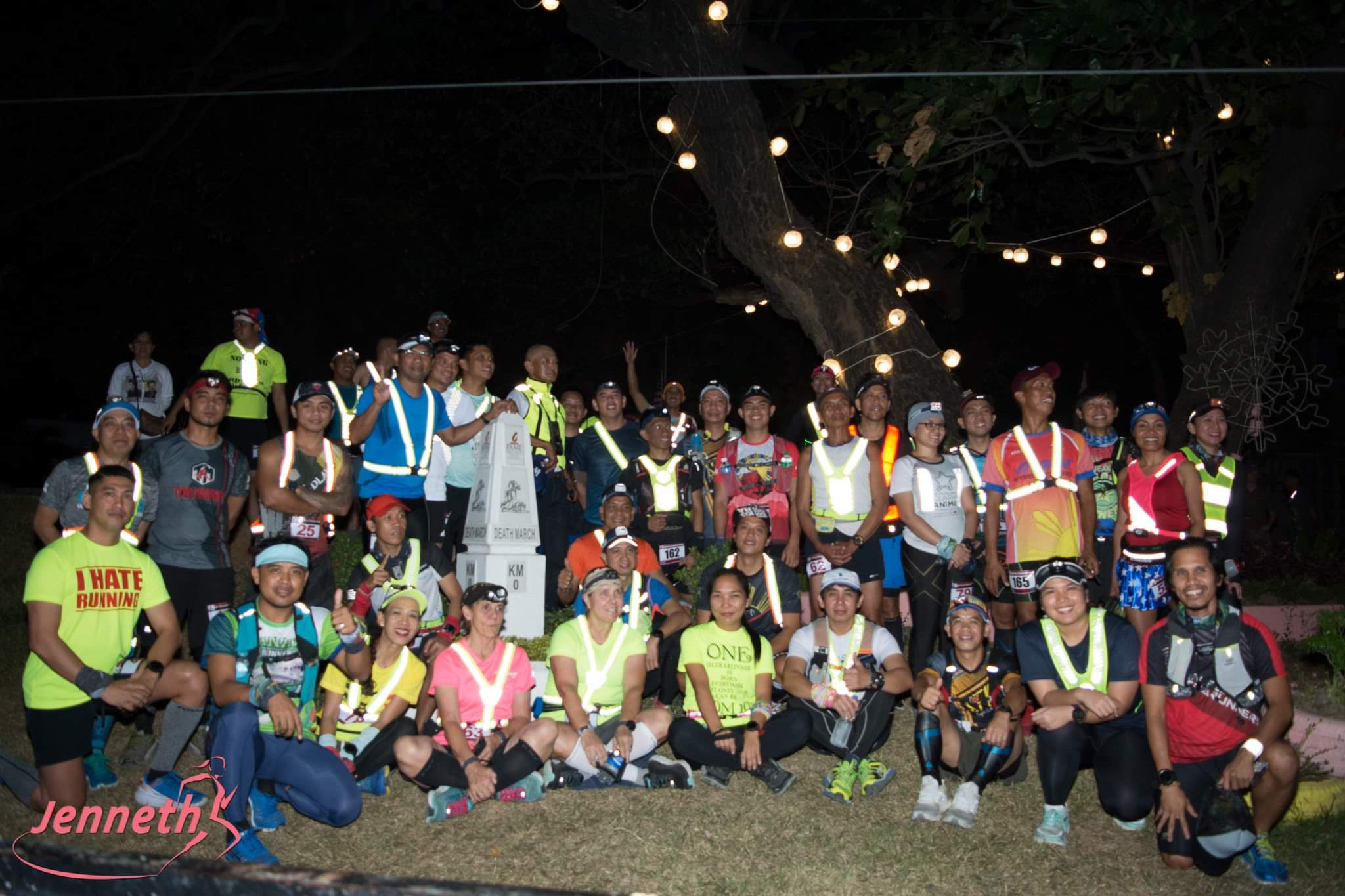
2020 BDM 102K Group Picture @ BDM Km 0

RANK      NAME                TIME (Hrs)

  1. Thomas Combisen (Overall Champion)—10:40:18
  2. Jubert Castor (1st Runner-Up, Overall)—12:15:12
  3. Jon Sierra (2nd Runner-Up, Overall)—13:45:34
  4. Roberto Andrada—13:58:00
  5. Allan Camas—14:23:40
  6. Jaime Cabalunan—14:24:26
  7. Marjorie Ellen Jore (Female Champion)—14:28:07
  8. Khristoffer Pobre—14:30:34
  9. Paolo Mesina—14:33:43
  10. Criselda Baucas (1st Runner-Up, Female)—14:34:15
  11. Gibo Malvar—14:49:02
  12. Jason Tabudlo—15:05:50
  13. Felicisimo Gura, Jr—15:13:56
  14. Johnzel Irlandez—15:19:27
  15. Dixie Sagusay (2nd Runner-Up, Female)—15:20;30
  16. Mychael Vicencion—15:34:43
  17. Candido Cayanan—15:46:59
  18. Laico Tolentino—15:51:58
  19. Jay-Ar Del Rosario—15:52:52
  20. Allan Macaraig—15:56:45
  21. Ludgino Quitay—16:02:14
  22. Frederick Palma—16:13:44
  23. Clarito Clarito—16:16:35
  24. Robert Nomorosa—16:34:54
  25. John Hilario—16:35:38
  26. Rogelio Palma, Jr—16:36:05
  27. Elditha Alvarez (Female)—16:36:18
  28. Eric Olleta—16:43:45
  29. Javier De Luna, Jr—16:46:38
  30. Carlo Ladores—16:47:50
  31. Sab Placiente (Female)—16:50:44
  32. Rex Esquirre—16:51:00
  33. Reque Angway—16:51:38
  34. Aldrin Lacse—17:01:08
  35. Raymond Kenneth Dionisio—17:08:02
  36. Jose Karlo Dollaga—17:08:11
  37. Orlie Fabia—17:08:41
  38. Maremy Jacinto (Female)—17:08:56
  39. Chester Lee Robite—17:14:43
  40. Niño Alejandro—17:15:20
  41. Joel Holgado—17:18:04
  42. Anna Odessa Albaracin (Female)—17:18:20
  43. Khristian Caleon—17:18:42
  44. Frank Flora—17:19:00
  45. Victor Rodriguez—17:20:28
  46. Rickly Francisco—17:22:15
  47. Efren Olpindo—17:24:46
  48. Erika Batac (Female)—17:26:28
  49. Paul Delos Reyes—17:27:00
  50. Jimmy Famaranco—17:34:20
  51. Michael Torres—17:36:34
  52. Kevin Carl Relox—17:38:35
  53. Emery Torre—17:51:30
  54. Rodolfo Lantin—17:55:07
  55. Kim Travella (Female)—17:58:28
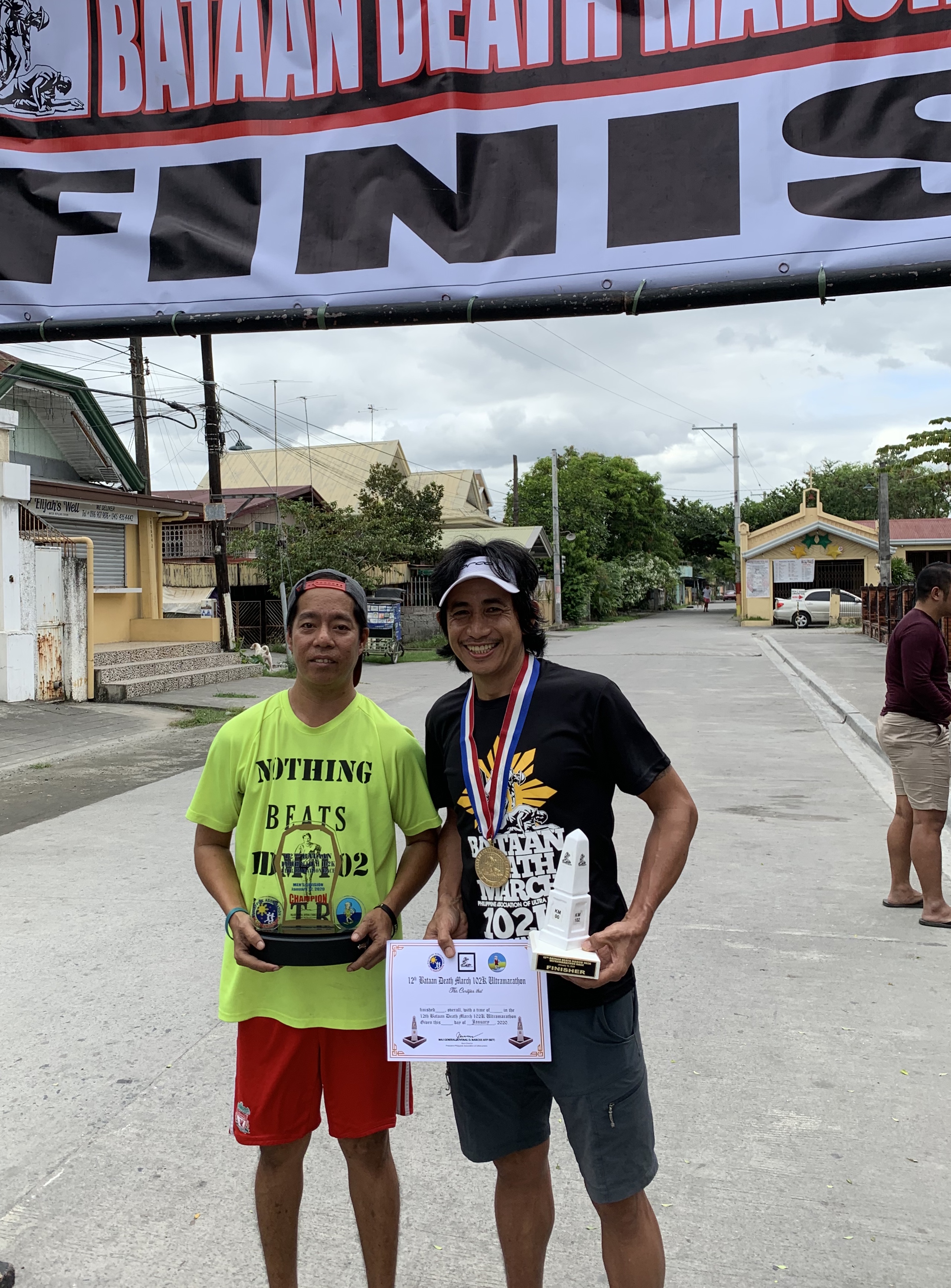
2020 BDM 102K Overall Champion Thomas Combisen
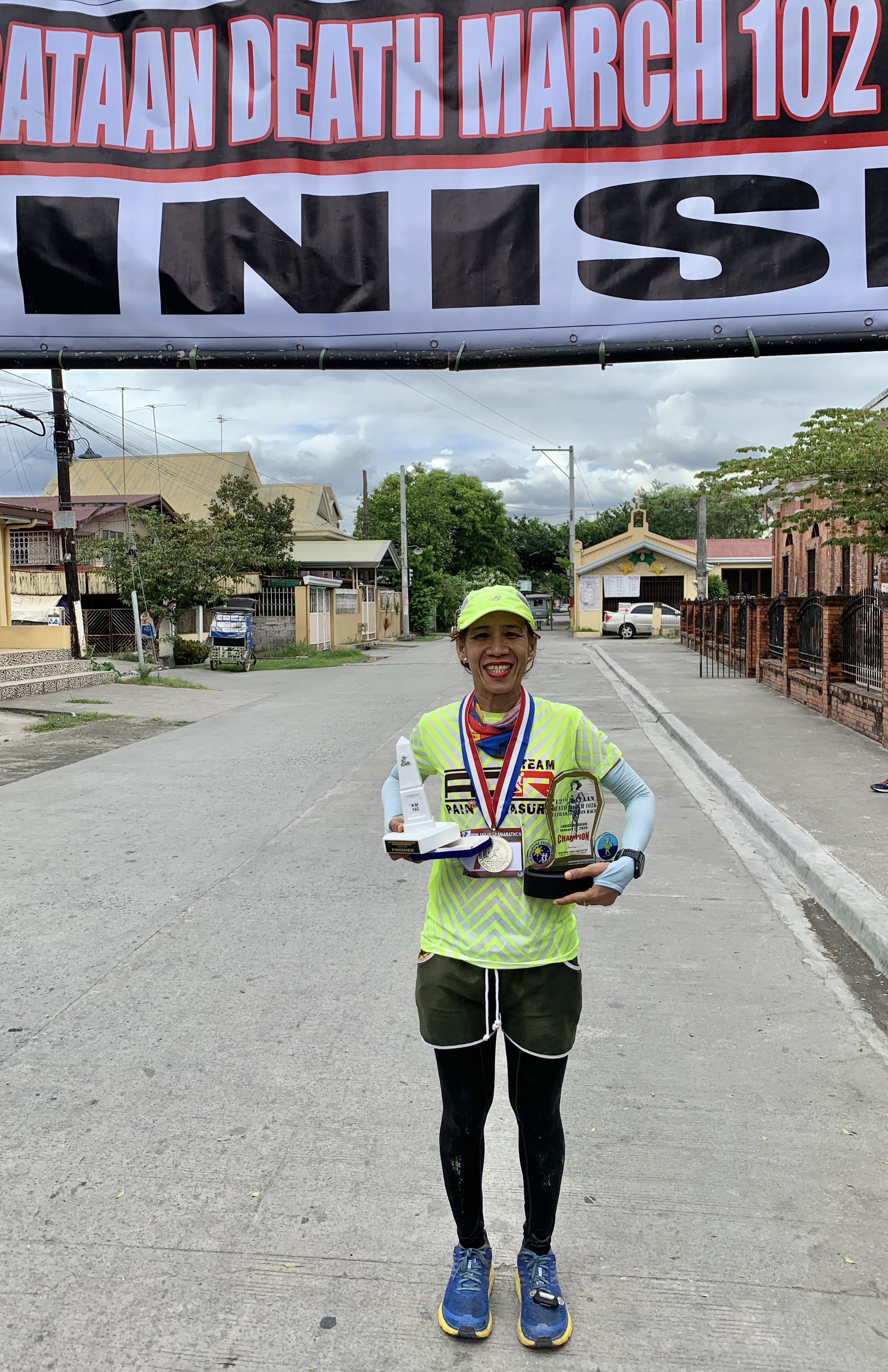
2020 BDM 102K female Champion Marjorie Ellen Jore

Congratulations To All The Finishers!

Refused!


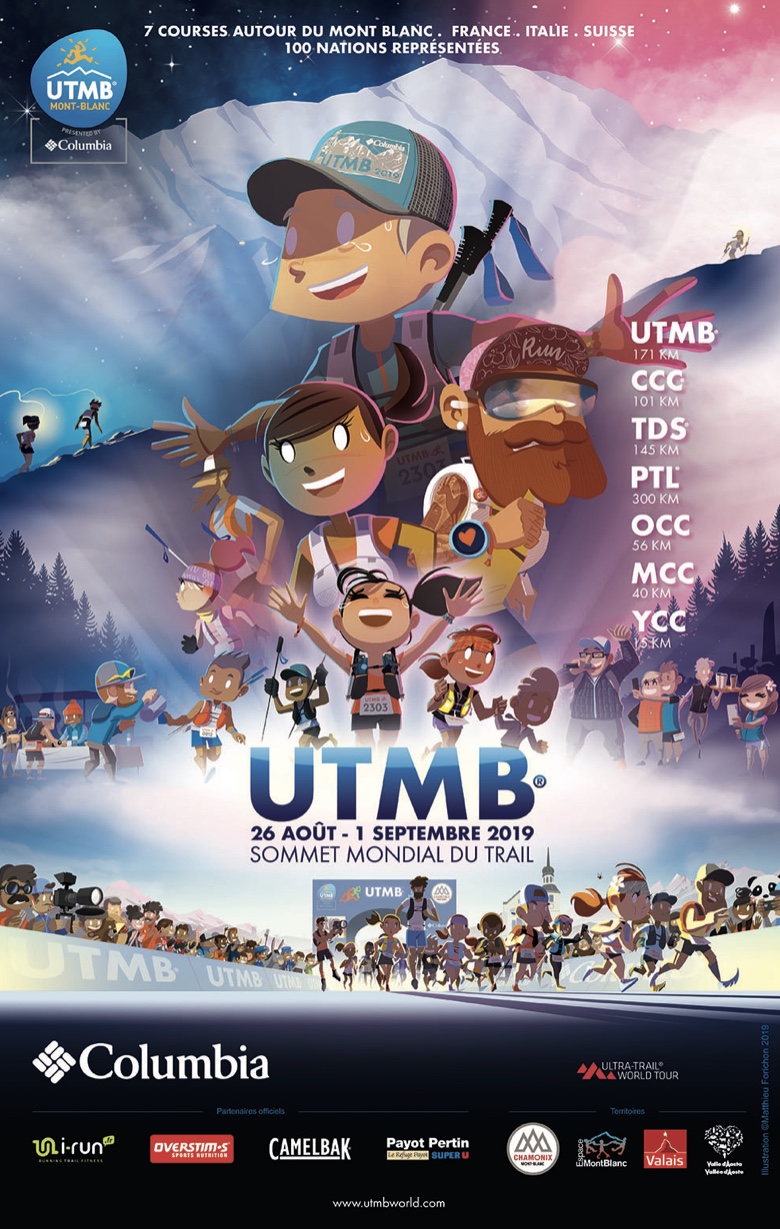
For the third time, I was refused to join in one of the UTMB Races for the year 2020. I pre-registered for the CCC (101K) Race where my prevailing earned ITRA points for the past two years are qualified. After looking for the list of accepted/registered runners from the Philippines at the UTMB Website, I found out that there are 14 Runners for the UTMB (out of 50 applicants); 6 Runners for the TDS (out of 7 applicants); 4 Runners (out of 15 applicants); and 1 runner (out of 5 applicants) who will finally join the UTMB Races for this year. I am one of those 11 applicants who were not lucky enough to be included among the CCC participants.

In the formal notice that I have received from the UTMB Race Organizers which was sent to my e-mail address, they have stated that they have implemented an updated entry process for the year 2020. The bottomline is that I have to apply again for the year 2021 with a bigger chances to be included in the list of participants. There is also another option where I could join without going through the lottery if I can finish the 100-mile or 100-kilometer races in their UT Races in China (actually, 2 races in China), Spain, and Oman. Since these UT races are qualifiers for the longer UTMB race, they will not be part of my option as I want to join the CCC in the near future, if qualified and accepted. But for now, Chamonix is gone in my mind as I have to wait for the pre-registration for the 2021 UTMB Races this coming December 2020.

My plan for 2020 is to make CCC as my A-race and the rest of the trail races that I have scheduled and planning to join are part of my ITRA points accumulation; preparation/training for CCC; and a way to visit other places where I have never been. As they say, “If Plan A did not materialize, there are still remaining 25 letters in the Alphabet!”

As a teaser, I have already registered to three (3) International Trail Running Events for the year 2020 and these races will be revealed as my blogging progresses from day to day. Of course, there are also Local Trail Running Events that I am planning to join as part of my training/preparation for these International Events. My non-acceptance to the CCC Race had given me a lot of options to travel to other countries and places that I have never been before. Hopefully, Chamonix will be good for me in the year 2021, if I still have the strength at the age of 69 years old.

For those Pinoy Runners who are accepted for the 2020 UTMB Races, congratulations and wishing you the best of luck. Train properly. Enjoy the journey!

2020 Ultra Trail Mont Blanc (UTMB) Poster

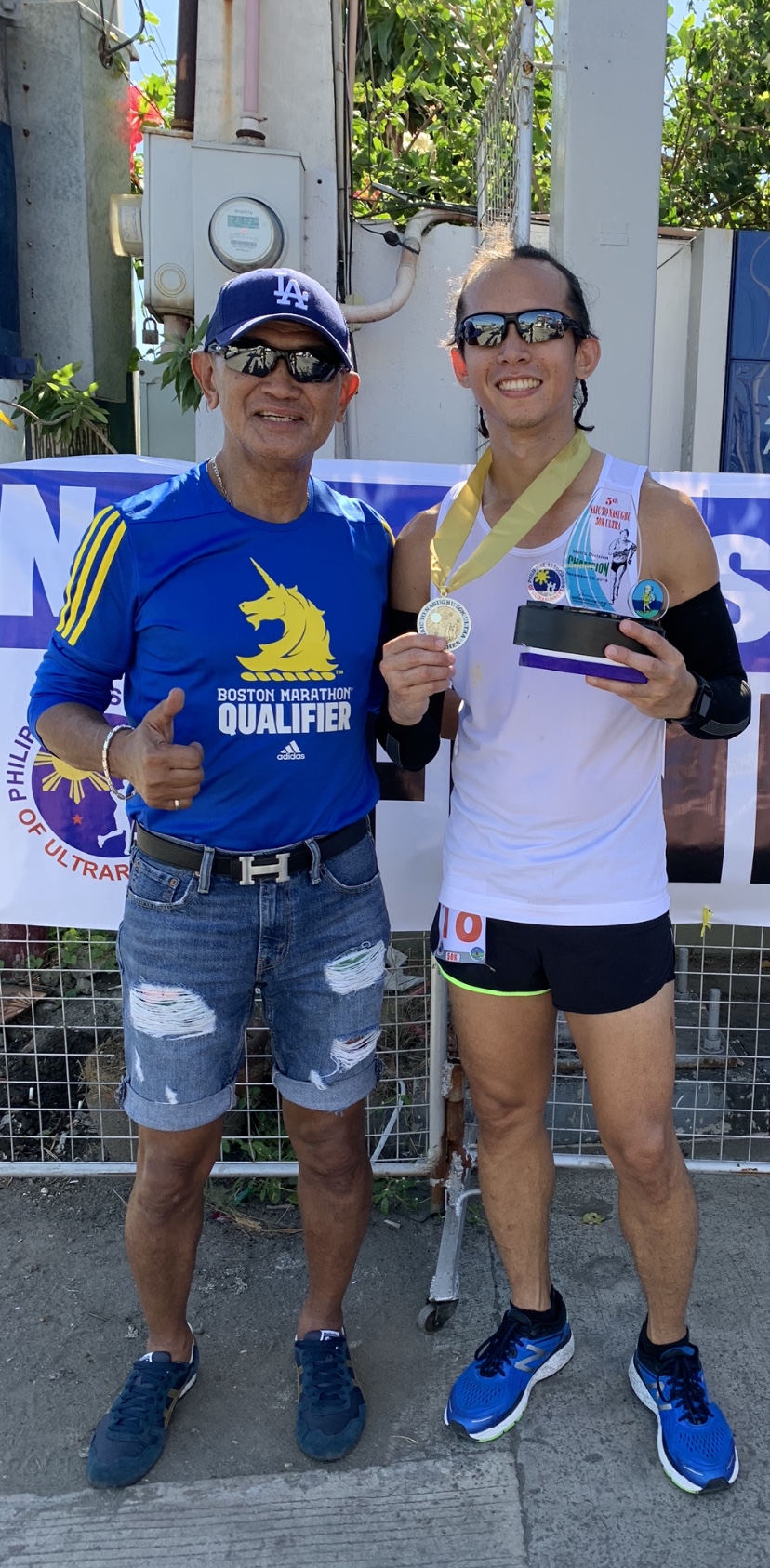
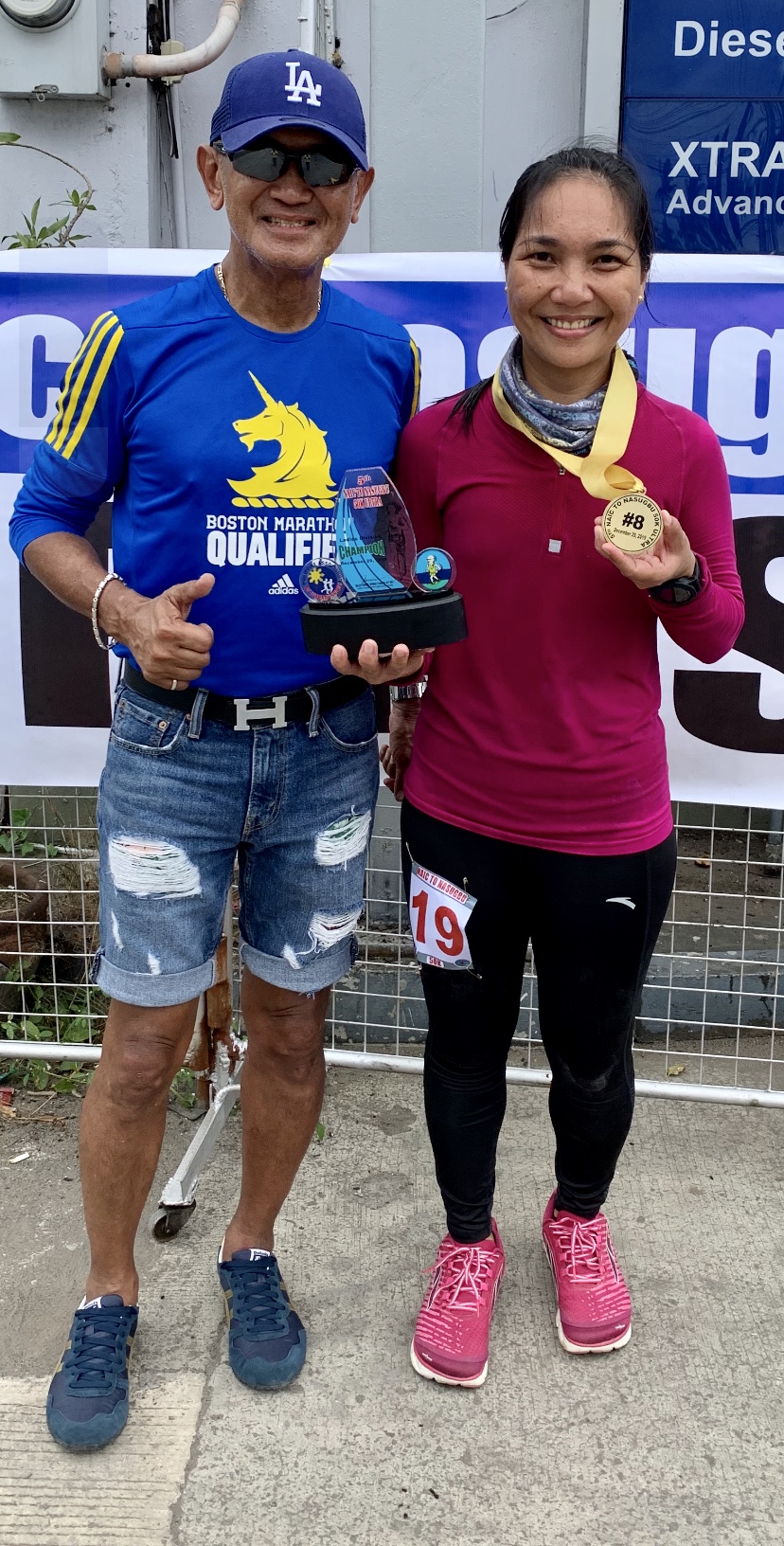
Official Result: 5th NAIC To NASUGBU 50K Ultramarathon Race


5th Naic To Nasugbu 50K Ultramarathon Race

Assembly & Starting Area: Public Plaza/Covered Court near Naic Catholic Church, Naic, Cavite

Assembly Time: 3:00 AM December 29, 2019, Sunday

Start Time: 4:00 AM December 29, 2019, Sunday

Finish Area: PETRON Gasoline Station, Nasugbu, Batangas (Owned By Lt General Rudy Obaniana, AFP (Ret.)

Cut-Off Time: 10 Hours (2:00 PM December 29, 2019)

Number Of Starters: 23 Runners

Number Of Finishers: 21 Runners

Percentage Of Finish: 91.3%

RANK          NAME               TIME (Hrs)

  1. Kit Feliciano (Overall Champion)—5:49:11
  2. Sherwin Bargos (1st Runner-Up, Overall)—6:48:50
  3. Carlito Don Rudas (2nd Runner-Up, Overall)—7:16:11
  4. Armando Olan—7:19:52
  5. Graciano Santos—7:34:00
  6. Khristian Caleon—7:46:30
  7. Efren Olpindo—7:59:10
  8. Dixie Sagusay (Female Champion)—8:09:28
  9. Carlito Montemayor—8:36:20
  10. Eric Lim—8:36:22
  11. Alen Alban—8:50:00
  12. Ian Torres—8:52:00
  13. Vicente Zapanta, Jr—8:52:02
  14. Margie Pailaga (1st Runner-Up, Female)—9:00:20
  15. Laico Tolentino—9:00:57
  16. Jonas Olandria—9:00:59
  17. Bien Alcala—9:10:13
  18. Michael Torres—9:24:54
  19. Erica Batac (2nd Runner-Up, Female)—9:31:05
  20. Gibo Malvar—9:41:43
  21. Janice Reyes (Female)—9:41:46
Overall Champion Kit Feliciano
Female Champion Dixie Sagusay

Congratulations To All The Finishers!


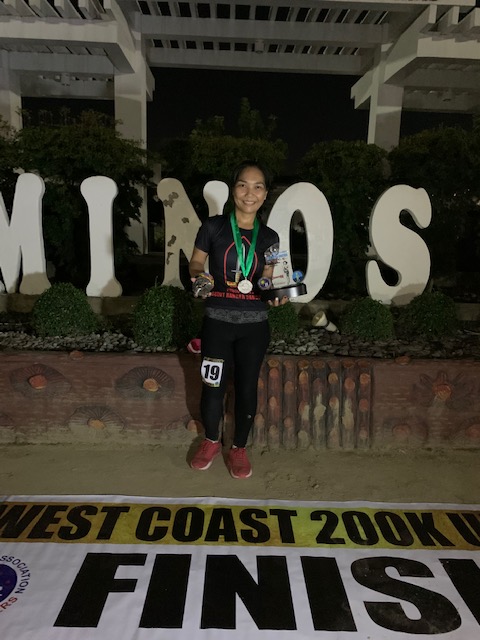
Official Result: 7th WEST COAST 200K Ultramarathon Race


7th WEST COAST 200K Ultramarathon Race (2019)

4:00 AM October 11 To 4:00 AM October 13, 2019 (Cut-Off Time: 48 Hours)

Subic Freeport, Olongapo City To Barangay Lucap, Alaminos City

Number Of Starters: 9 Runners

Number Of Finishers: 8 Finishers

Percentage Of Finish: 88.8%

2019 (7th) West Coast 200K Ultramarathon Starters

RANK      NAME       TIME (Hrs)

  1. Carlito Don Rudas (Overall Champion)—38:32:02
  2. Laico Tolentino (1st Runner-Up, Overall)—39:39:00
  3. Ralph Louie Jacinto (2nd Runner-Up, Overall)—43:35:38
  4. Dixie Sagusay (Female Champion)—44:21:02
  5. Barney Mamaril—46:25:54
  6. Jonas Olandria—46:35:18
  7. Christian Torres—47:02:48
  8. Khristian Caleon—47:49:10
Overall Champion Carlito Don Rudas
Overall Female Champion Dixie Sagusay

Congratulations To All The Finishers!

Oldest Finishers Of Famous Ultra Races


Through my research on the Internet, I have the following data on the Oldest Finisher of the famous Ultrarunning Races in the World:

At the Leadville 100-Mile Endurance Race in Colorado, USA, Charles Williams holds the record of the oldest man to ever complete the race, which he did at the age of 70 in 1999. He was featured in the August 1999 issue of GQ magazine, which compared his training for the race to that of a professional football player. The race has a cut-off time of 30 hours. (Wikipedia)

At the Badwater 135-Mile Ultramarathon Race which is considered as the “Toughest Footrace In The World” in California, USA, the oldest male finisher ever was Jack Denness, at the age of 75 years old and he is from United Kingdom. He finished the said race in the 2010 edition of Badwater 135. The race has a cut-off time of 48 hours. (Wikipedia)

Christophe Geiger of Switzerland, the Oldest UTMB Finisher

“Battling a 46:30 cutoff, 73-year-old Christophe Geiger of Switzerland crossed the finish line with just five minutes to spare. It was his fourth consecutive—but first successful—attempt at completing the race. The only participant in the Veterans 4 division, he became the oldest finisher of UTMB in its 13 years of existence, and was arguably the most admired and beloved person in the Chamonix valley this week.” (Runners World Magazine)

Nick Bassett, 73, finish before the 30-hour overall cut off at the 2018 edition of the Western States 100-Mile Endurance Run, he became the oldest finisher of the iconic 100 miler, crossing the finish line in Auburn, California, in 29:09:42 hours. Ray Piva set the previous Western States 100-Mile record back in 1998 at the age of 71. (Runners World Magazine)

Nick Bassett @ The 2018 Western States 100-Mile Endurance Race

Looking on the above mentioned data/information on the Oldest Finishers of famous Ultrarunning Events in the World, it is observed that all of them are at the age bracket of 70 years old and above. Obviously, the background of these runners are very impressive being myself as a marathon and ultramarathon runner. They are better, stronger and faster than me during their peak days and years as compared to my capability when I was younger. However, with the proper training and preparation, I could also have the goal to finish some of these races, maybe, one or two of them before I finally end my career in running. God permits.

I will let these ultra runners as my inspirations in my future endeavors in ultra running, whether on the road or trail. I am now 67 years old and I hope to run more years and be able to reach the 70s. It is time to be more healthy, more smart in training, improve on my nutrition, and consistent in my workouts. It will be a tall order to follow the footsteps of these Old Finishers but I know I can do what they have done. The process will be long, hard and challenging but it takes some guts to start and do something to attain such goal. I expect that there will be some failures and lessons to be learned from them but the goal to finish these races will be a priority. You will read my progress in this blog.