1) 2nd Edition of BDM 102—Better administration and conduct of the event with lesser manpower; more runner-participants; slowly getting exposure and awareness in the running community; runners from overseas increased; and finally dubbed as the “longest solo running event in the country today”.
2) Jeju & Soochow Ultramarathon Events—Exposure of our local elite athletes to IAU-sanctioned events proved to be beneficial. As a Race Organizer, more information and technology had been absorbed, studied and applied. Meeting and talking to the “Gods” of Ultrarunning in these events was one of the best experiences! Continue reading “BR’s “Best” In Running For 2010″→
A day after the Soochow International Ultramarathon 24-Hour Endurance Run, I randomly bought two daily newspapers in one of the 7-11 Stores in Taipei, Taiwan in order to find out how the media in this country treat a running event in their newspapers.
I don’t know how to read and understand what were printed in such newspapers but by looking at the pictures, the newspapers depict how the media treats this yearly international running event. Continue reading “Running In Newspapers”→
The longest time of my life to be running and walking continuously was when I finished the 1st edition of the Bataan Death March 102K Ultramarathon Race last April 4-5, 2009 where I finished in 15+ hours. Now, I could not imagine how these 30+ elite ultramarathon runners to be running around a 400-meter oval track for the duration of 24 hours. One-half of these runners are the world’s best in this kind of endurance event and it was a learning experience for me in terms of the organizational, administrative, and the technical aspects.
The Soochow International Ultramarathon 24-Hour Endurance Race is in its 10th edition where world records for such event had been established by no less than the best of the best of running. This simply means that Taiwan and other countries in our neighbours in the Asia region had been ahead of us in terms of awareness and participation to ultramarathon events. Continue reading “24-Hour Run: Soochow Ultramarathon”→
For the past three years, my Elite Team and I had developed a very good relationship with the Team Jaycees of Legazpi City through Yves Yu, the Race Director of the Mt Mayon Trail Run (MTR). Yves is also a runner-blogger who is called the “Be Cool Runner” and one of the avid followers of this blog. It is always a “must” for the Elite Team Bald Runner to join this running event in Legazpi as a part of their City Fiesta and Ibalon Festival.
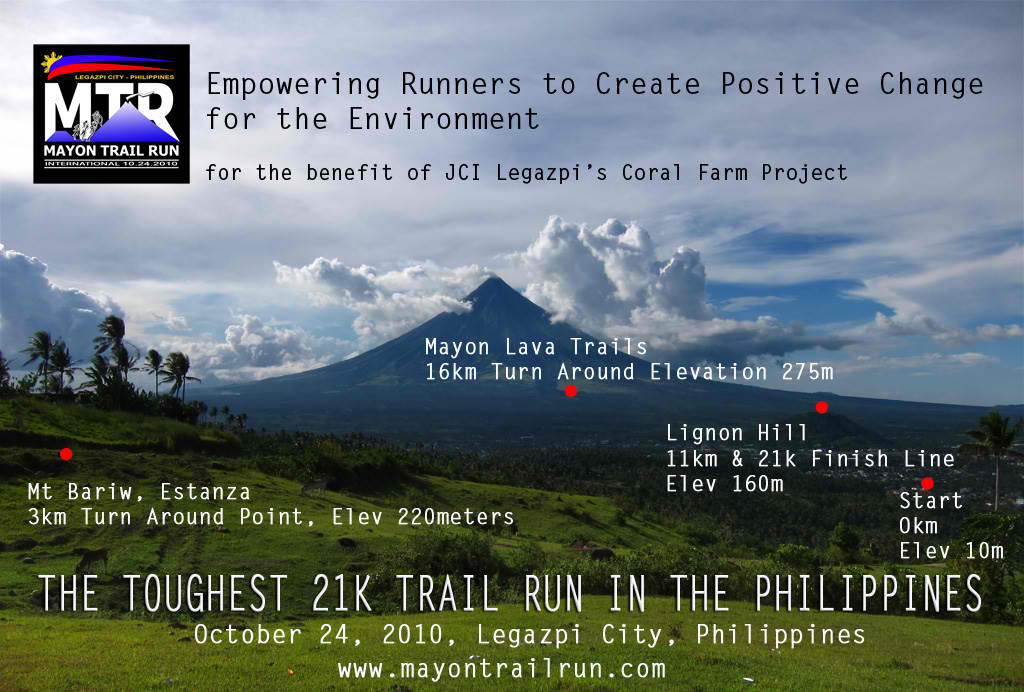
Mayon Trail Run Ads
The Elite Team Bald Runner and I joined the 1st edition of this event in 2008 and I had already a feeling that this trail running event will have its potentials to be a famous one in the Bicol Region. The 1st edition was very challenging despite the fact that it lacked the distance for a half-marathon distance as the race was short by 4-5 kilometers. However, the second edition came out with a vengeance, so to speak, as the Race Organizers had added more challenging route to make the race as a half-marathon distance. I did not run the 2nd edition but my elite athletes had nice stories about the race and description of the added places where the runners would pass through. But the Race Organizer is not yet contented for this year’s edition as they added more “surprises” for the runners. I will explain this matter later.
The Elite Team Bald Runner had been consistently dubbed as the “King of MTR” for the past two editions of the race and it is for this reason that the team has to defend its title by joining in this year’s edition. It is also for the same reason that we believe in the advocacy of Yves Yu to promote running and tourism for the Mt Mayon Volcano and its city of Legazpi. MTR is our way of supporting running events being held outside Metro Manila.
Toughest 21K Run In The Philippines
1. The 3rd MTR had attained its highest record of runners for the 21K to 240+ runners from about 80+ runners in 2008 and another 160+ in 2009. The registration fee is very cheap, P 500, and the Cash Prizes are very enticing to every elite runner. For this year, the Race Organizers had to split the past $2,000 Overall Winner’s Top Prize into $1,000 for the Top Male and another $1,000 for the Top Female. And as usual, the top 50 overall finishers receive some cash prizes. It was not “tough” to register in this race as a short call to Yves gave us reserved slots for the team.
2. Travelling and going out to Legazpi City with my staff and my elite team entail a lot of logistics and expenses. But with the help and support of friends and my former subordinate officers when I was still in the active service, we were able to minimize our expenses. This is one of the reasons why this race is a “tough” one to attend to—you have to save some money or program this activity so that you can anticipate and plan for the expenses to be incurred. During the first edition, we spent a lot of our resources as we stayed in one of the hotels for 2-3 days without any support from from any sponsor. On the second edition, a big help from one of our running friends, Mesh Villanueva, who is from Daraga, Albay provided us the much-needed accommodation for the team during its stay in the place.
3. For this year’s edition, the team stayed inside Camp Simeon Ola where the 5th RCDG of the Philippine Army is located. The Commander, Colonel Nestor Porlucas, had been one of my Battallion Commanders when I was the Division Commander in the Visayas and he offered his place/office as our “transient facility”. The place is nice and conducive for us to cook our own food and at the same time enjoy a secured and free from noise pollution place.
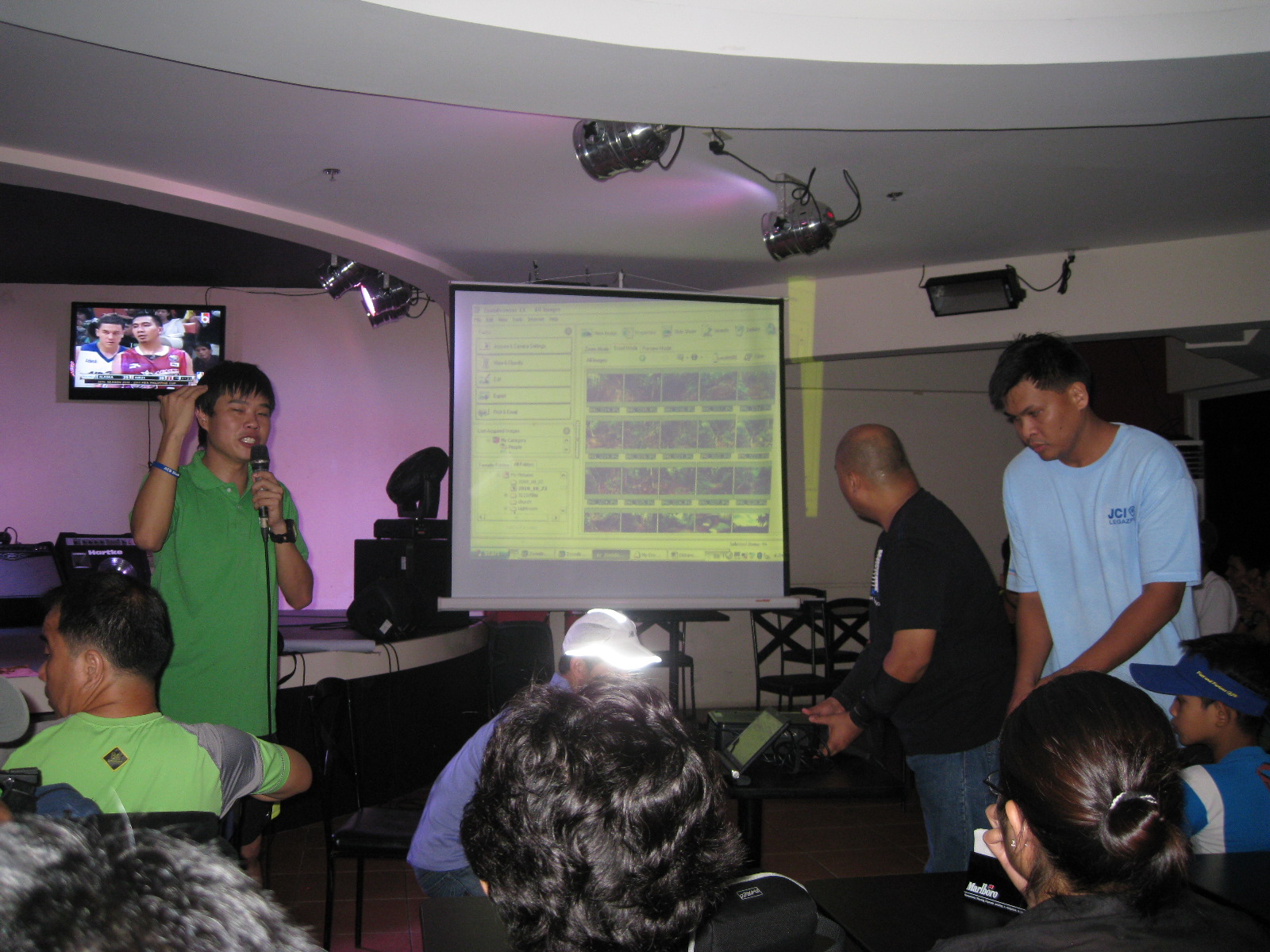
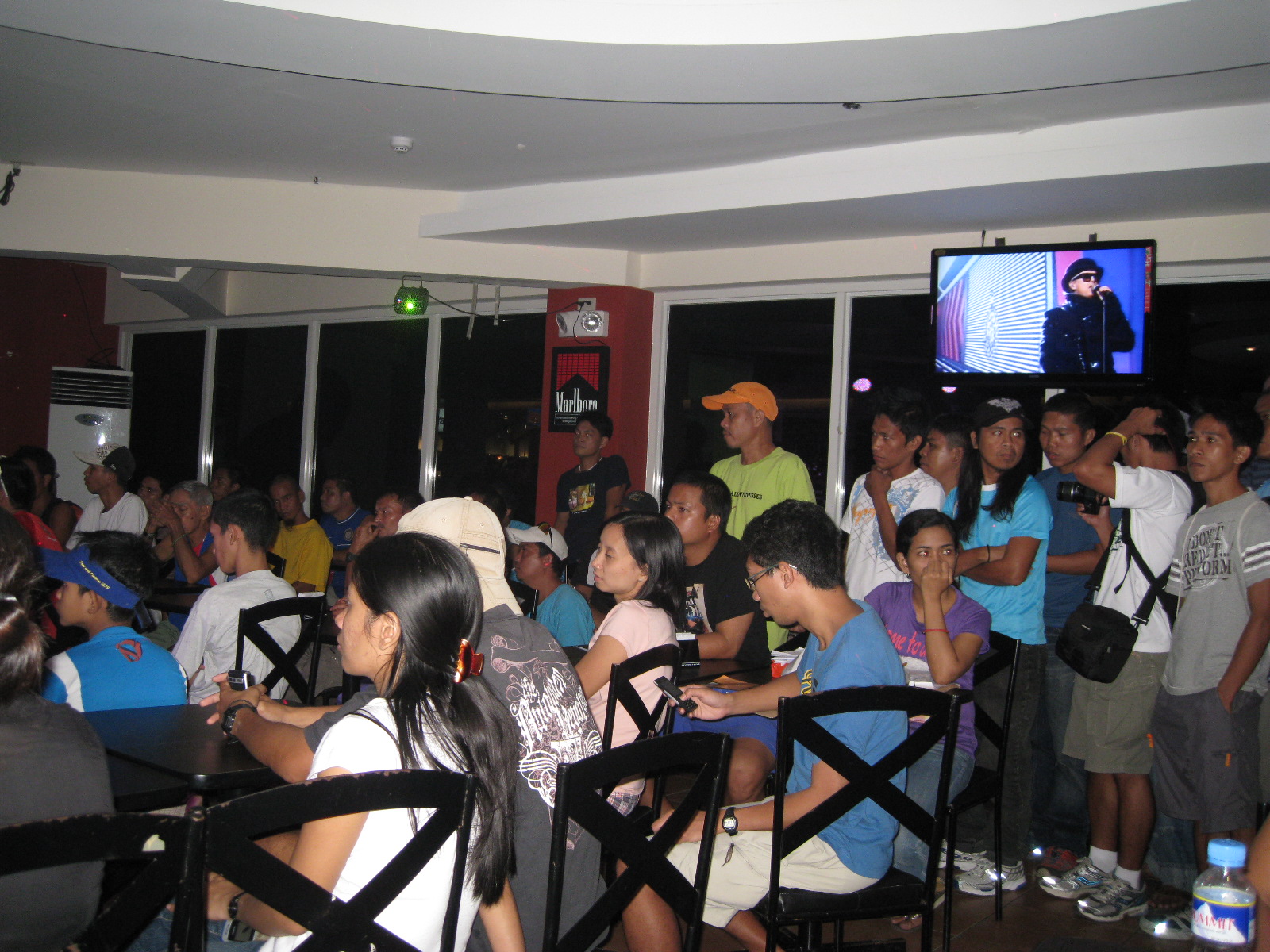
4. The hospitality of the people and the Race Organizers was overwhelming. All the runners were treated with a FREE Carboloading Party with lots of “Bicol Express” during the Race Briefing which was held at the famous Embarcadero, the latest mall/commercial establishment along the Legazpi Port. Yves Yu was able to present a detailed briefing about the race and the description of the route. The pictures presented were “scary” for runners who are “newbies” to this trail race as muddy and slippery trails, caves, rocks to climb, stairs, lahar (sand), lava rocks, river, wet trails, and almost 90 degrees trail, and freshly-made single track trails inside a forest were presented. Hydration/Aid Stations were evenly distributed along the route. In summary, there are four (4) peaks/summits to reach in order to finish the race.
Briefing & CLP @ Padi's Point, Embarcadero, Legazpi CityExcited Crowd During The Briefing & CLP
Details of the Race
I have to describe the details of this race (as seen with my own eyes and through my personal experience) for the benefit of those runners who would like to experience what is like to finish the “toughest half-marathon race in the country” in its future editions. Let this be a “guide” and “journal” for everybody. This will be a very detailed account of my run last Sunday.
Penaranda Park
Penaranda Park had been always the Starting Area of the MTR. It is bounded by the City Hall of Legazpi City; Provincial Capitol of Albay; and the Cathedral of Albay. The place has a Grandstand/Elevated Stage; some concrete bleachers; comfort rooms; and an ample space for joggers and walkers.
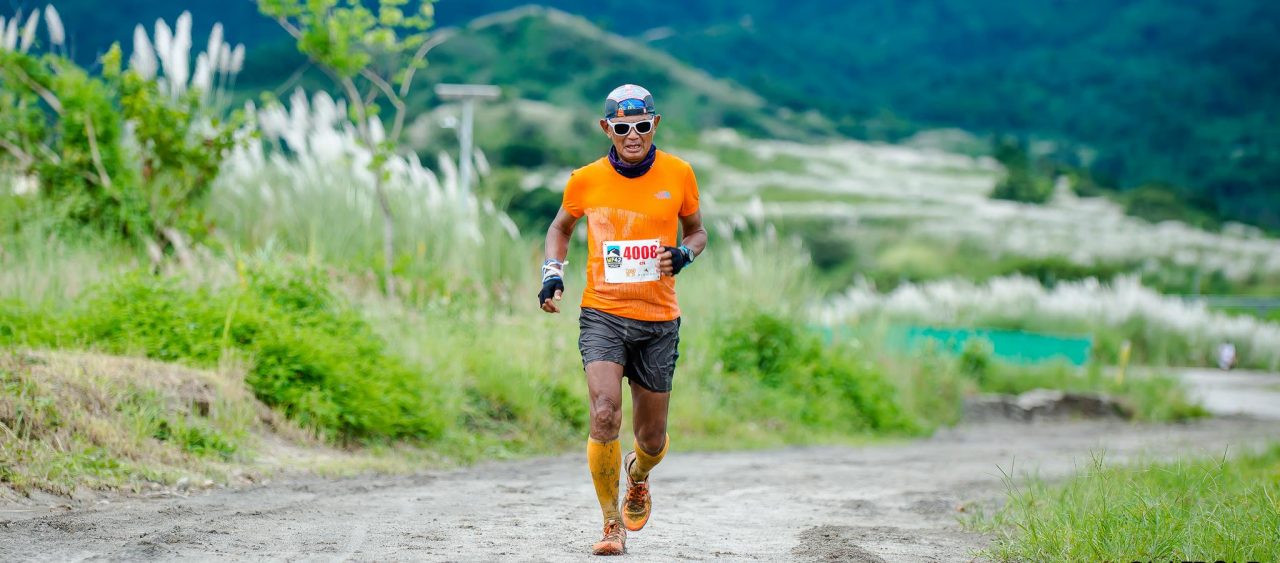
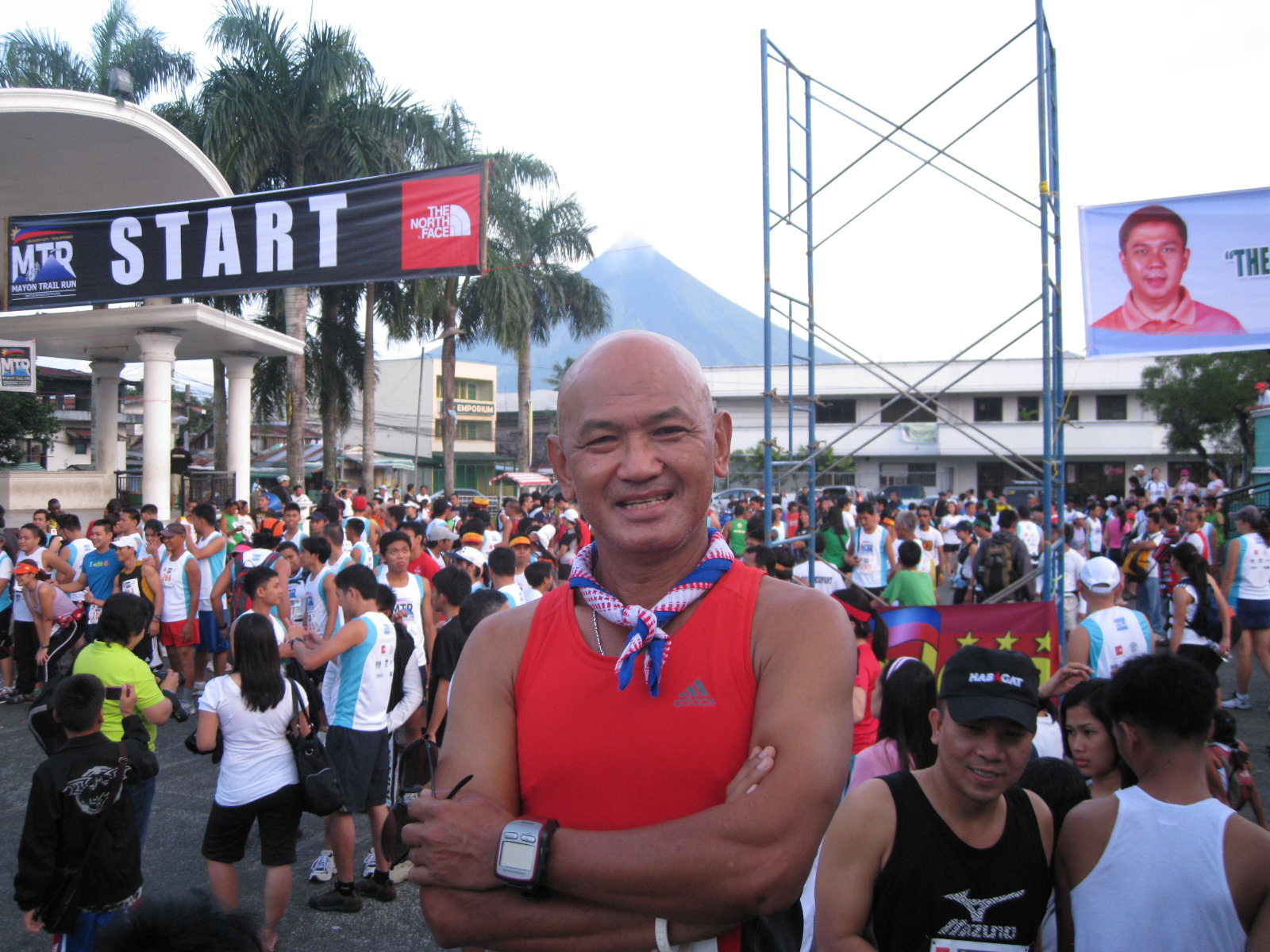
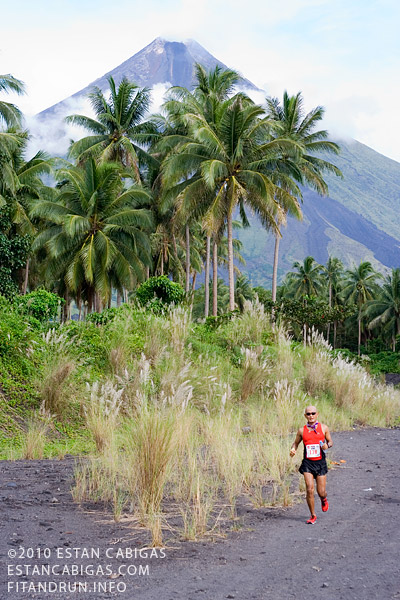
My elite team and I arrived at the Penaranda Park at 5:15 AM and I was able to observe that there are already runners doing their stretching and warm-up exercises around the park. The weather was fine and there were no clouds in the sky. Mt Mayon Volcano was very clear from any clouds and its form and shape was majestic. The weather was cooperative for another nice staging of the yearly Mt Mayon Trail Run. In a few minutes, more runners arrived at the place and I saw familiar faces among the crowd. As I did my warm-up jogs, I was able to see more elite local runners coming from Manila, my loyal friends and runners of my PAU races, the top “Lady Warriors” of BDM 102 and BDM veterans, FB friends, avid readers & visitors of this blog, Kenyan runners, and some runners from other Western countries. I was impressed with the crowd as the number of runners to this yearly event is growing in numbers. I am not surprised if the 240+ runners who joined this year’s edition will be doubled by next year.
The start of the race was reset to 6:00 AM from the stated 5:30 AM start on the event’s ads and it was a good decision on the part of the Race Organizers as some parts of the route were not fully visible with an earlier start. I could feel the excitement of every runner as the starting time got nearer. While waiting for the race to start, I had the time to talk to some of the runners and have photo-ops with them. Talking/Chatting with the runners is one way to relax oneself before the start of the race. Basically, I thought of being conservative in this race and just play along or take my time to have fun and enjoy the race. I did not have any targets or goals for this race. I just wanted to evaluate my performance and need to know if my training for my future races is on track. However, the bigger picture is for me to see the performance of my elite team and at the same time be seen by them along the route.
It is common that the main reason why the start of every event is delayed is due to the fact that the arrival of the Guest of Honor is always late, most especially if he/she is a politician. The Guest of Honor is the one who will fire the Starting Gun! It is customary that the local executive, City Mayor, is the one who should be firing the gun. However, it was already 6:00 AM when the word arrived at the Starting Line that the City Mayor will be no longer coming. Instead of standing along with the other runners at the corral, I decided to sit down on the concrete bleacher at the side of the corral while waiting for the race to start. A simple program started with a prayer, and it was followed with a welcome remarks from the Chairman of the MTR, Councilor Celoy Chan. Brief additional instructions were delivered by Yves Yu, Race Director and the race was ready to go. After a countdown from 10 to 0, the race started and we were off. It was my first time to experience starting a race from a sitting position, instead of the usual standing position with the rest of the runners. It was the most relaxing experience to start a race.
At The Penaranda Park Before The Start Of The Race
Km 0 to Km 1
The front runners darted to the National Road and turned right towards the Cathedral. As they approached the Cathedral, the runners were led to a paved road as they turned left from the National Highway. This paved road will lead all the runners to the peak of Mt Bariw at Barangay Estanza. I started at the middle of the pack with a very slow pace as I saw most of the runners speeding up in front as if they are going to race a 5K run. I was smiling as I saw most of the runners did a sprint from the starting line. I maintained my slow pace as I was trying to warm-up for the race and stayed on the left edge of the road with much space around me. Suddenly, a lady runner stopped in front of me and tied her shoelaces! WTF! It was good I was quick to evade her. It was a near accident which could hurt her or hurt me if I collided with her. I just kept my cool and maintained my stride. It made me think that this lady runner made a mistake of choosing the 21K as her race. This is a sign of a “newbie” runner. In one of the Rules of Running, it states that “a runner should remember to “double knot” his/her shoelaces before the start of the race”.
The first kilometer is paved and very flat. This enticed most of the runners to be fast as we were released from the starting line. After a few turns, the route started to be more interesting and the first kilometer was history.
Km 1 to Km 3
This is where the signature of the race as the “toughest 21K Run” started. This part of the route started to go uphill gradually. The next two kilometers up to the peak of Mt Bariw made most of the front runners to slow down as most of them were already slowly jogging or walking. I maintained my slow pace while “shuffling” but I consistently run up to the peak of the mountain as the road was winding and there are small parts which are flat. This part of the route was the place where I was able to overtake most of the runners who darted fast from the Starting Line. I think a hundred of them were overtaken on the first uphill climb. This part of the course separated the competitive ones from the recreational runners. At Km 2, I was able to see the back of Cesar Abarientos and slowly kept in pace with him up to the peak of the mountain. As Cesar and I reached the peak of the mountain, we were able to reach an elevation of 220 meters. This is the turn-around point where each runner would receive his/her 1st straw necklace.
Km 3 to Km 5
After receiving the 1st straw necklace which is color-coded, the runner was led to a single track trail on the side of the mountain which was all downhill. At first, you could see grasses and then follow a single track trail that appears to be made by the flow of rainfall or flow of water from the peak of the mountain. The trail was slippery but my Adidas Adizero Adios (with much caution!) was able to pass the test of running along a slippery and muddy single track trail. The trail track was more direct/straight towards the foot of the mountain than the winding & uphill paved road towards the peak. There were lots of foot brakes as I managed to run a steeper downhill terrain without falling on my knees or butt. The trail led us to the backyards of some houses on the side of the mountain and finally reached the foot of the mountain where it led us to a paved road that connects to more houses. This is where people made “high fives” and cheer us as we passed them. Cesar was nowhere to be seen as he overtook me once we went downhill from the turn-around point. I think 3-4 runners overtook me on the downhill portion of this mountain. However, I was able to catch up with them and tailed them once we reached the populated area. As we reached the flatter section, the street led us back to the Penaranda Park. As I passed the Capitol Building of the province, the first 5 kilometers of the race is done. From the start up to this point, I was carrying a small bottle filled with water as my hydration system.
Km 5 to Km 7
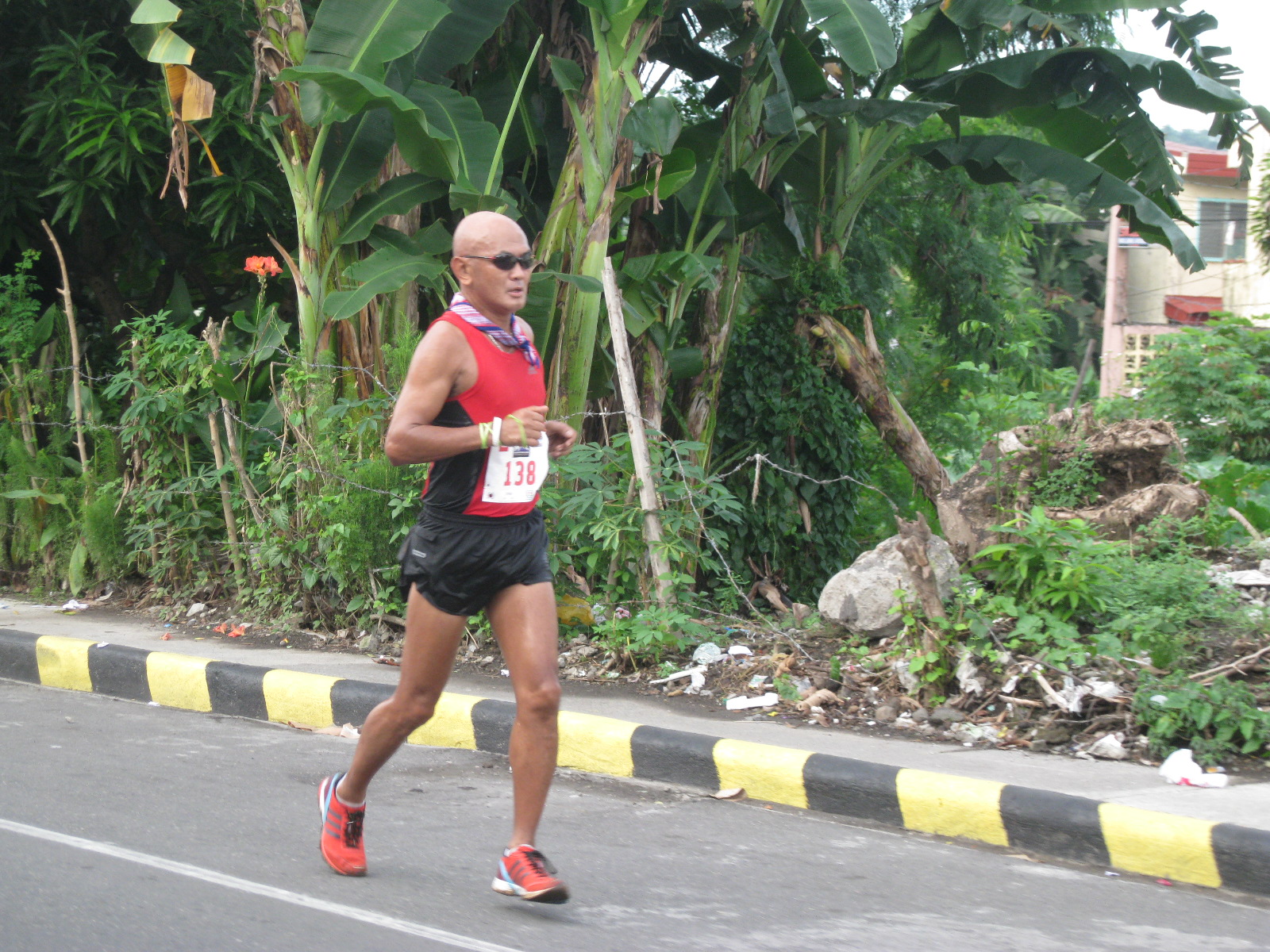
This part of the route is a paved road and very flat. I placed my small bottle of water on my back tighly tucked with my Racing Ready Running Shorts. The pockets of my shorts were filled with one sports bar and one sports gels ( I took one sports gel before the start of the race!). With my hands free from the bottle, I started to swing my arms with faster frequency and I was able to run at a faster pace. On this flat part of the route, I was able to overtake another three runners but after a kilometer, I was overtaken by a smaller and younger runner. Before I reached the vicinity of Legazpi Airport, I was able to overtake Cesar as he started to slow down. From the Airport, I could see more of the slower 5K runners approaching another hill which is the dreaded Lingnon Hill but I was already running alone with the rest of the 21K runners. After a few turns, I passed by the 5th FSU Compound of the Philippine Army and with another left turn, I was on my way to the foot of Lingnon Hill. This is where the RACE and fun starts as this hill is another signature that this race is the “toughest” to finish.
Approaching Legazpi Airport On Cruise Mode
Km 7 to Km 10
From afar, you may think that Lingnon Hill is just a hill to be easily reached at its peak, you have to think twice as the body starts to be exhausted after finishing the first 7 kilometers of the race. I could say that this is the hardest and trickiest part of the race. After a slightly uphill paved road as you enter the foot of the hill, the 21K runners were led to a trail that consists of ascending steps/stairs. What makes these steps unique and different is that these ascending steps have a height as high as above your knees in between steps. You have to plant your leading foot firmly to the higher step and propel your body upwards with the help of your foot behind you. This is repeated as you manage to go to the highest step of the trail. Once you overcome the first trail on this hill, you are being led to an uphill climb along the paved road towards the peak of the hill. But this is not the easy way to the peak. As soon as you overcome the first uphill part of the road, you are being led to another trail that goes to a cave! The cave is called the Japanese Cave and you have to bend down as you enter the cave/tunnel. Actually, I crouched and nearly crawled just to be sure I will not scratch my head on the sharp rocks that surround the cave. It was a short 20-30 meters of bending and crouching but I admit I was practically crawling as I went out from the exit of the cave. It was a great relief to be out and crawling from the cave.
Another trail led us to the paved road and after a short jog, each runner was led to an improvised ladder. This part of the route will test how strong your upper body and arms are. In order to propel yourself upward towards this ladder, you have to hold the next step and pull yourself up while you push your leading foot. This is done repeatedly after a height of 20 meters. It is better for you to look straight forward and be focused where the steps of the ladder would lead you. Never look behind you! Always be focused to what is in front of you. After this ladder, another type of ladder will test your balance as you up to the ladder. At this point, the race is becoming an obstacle course but this is the part of the course where you could take a brief rest/pause from running.
Now, for the last obstacle, the Kapit Tuko Rock. There are no steps or crevices or cracks of the rock where you could plant your leading foot which you could use as the one which will propel you on top of the rock. When I first joined this race, there was a rope which you could hold and do a short rappelling technique but for this time, we were depending on a vine that hangs on the side of the rock. By slowly holding the vine firmly and propelling the body upward towards the top of the rock is the safest thing to do. There is no point to be fast on these obstacles, more caution and slower tempo is needed to overcome these obstacles. If you are on top of the Kapit Tuko Rock, the peak of Lingnon Hill is a few meters ahead. As I got nearer to the next Water Station, I slowly jogged and had a brief walk. I got some water cups to clean my hands from mud and soil that got stuck and at this point, I was at the peak of the hill and I’ve covered a distance of 10 kilometers. You must have to receive your 2nd string necklace before leaving this place.
Km 10 to Km 15.5
At this point, you will think that “what comes up, must come down” as you need to go down at the northern side of Lingnon Hill to reach the Lava Wall of Mt Mayon which is the next turn-around point. I took out my sports bar and put it in my mouth and chewed it as I approached the steep descending part of the trail. This descending part of the hill is not a “walk in the park” thing! The elevation of the hill is 160 meters but going down is another signature that this race is the toughest. The descending part is too steep that I have to slow down as I stepped from one level to another level of the steps of the trail in going down. It is a short 100 meters long but an extra care in going down was needed. I had to go down on side wards just to be able to apply brake with my leading foot. This was done on the most part of the descending part of this trail. I was already imagining how to climb this trail on my way back to the finish line at this will be part of the last kilometer of the route!
After almost 100 meters of the steep descending trail, the trail became more gradual as I was led to the bank of the Yawa River. It was time to drink some water from my bottled water in order to swallow the sports bar that I was chewing. As I got nearer to the bank of the river, I increased my momentum and crossed the river while I was brisk walking. The river was knee-deep and the current was moderate. The river was about 25 meters wide and as soon I crossed the river, it was the start of a gradual climb towards the Lava Wall near Mt Mayon Volcano.
It was a relief to the tired feet when I crossed the river and along the way, more trails covered with flowing water gave some cooling effect to the tired feet. I maintained my “shuffling” towards the turn-around point making sure that I would not take any “walking breaks” before I reach the Lava Wall. I said to myself to take some rest while slowly walking on top of the Lava Wall as nobody would dare to run on those sharp rocks.
After running for about one kilometer, I met the two Kenyans who were leading the race and after another 100 meters, I met the 3rd runner who is another Kenyan. The first Filipino runner whom I saw trailing at the back of the last Kenyan was Cris Sabal. I cheered him to catch the Kenyans. After a few seconds, Gerald Sabal was approaching followed by Alquin Bolivar, Alley Quisay, and later Frank Indapan. My Elite Team Bald Runner were trying to catch up with the leading Kenyan runners. I was hoping that they could make some “surprises” on the last kilometer of the course as they are more familiar with the course than the foreigners.
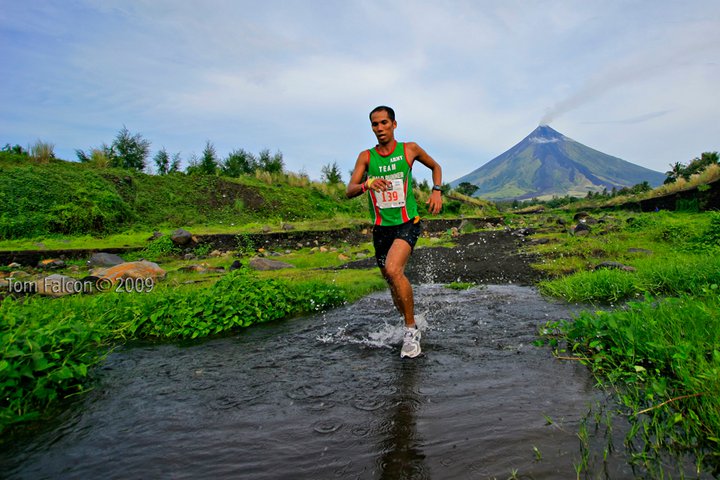
Alley Quisay In Action (Photo Courtesy of Tom c/o WOW Legazpi Website)
At this point, I was able to overtake some runners as I’ve seen them tired and slowing down due to the heat of the lahar and the sun. At this stretch of the route, I was able to overtake at least 12-14 runners by consistently “shuffling” and never stopping to cross those stream of water along the way. I knew the terrain of this place and a consistent “shuffling” will push me towards the turn-around point. I had to take advantage of the water stations along this part of the route as I used the water placed in ice candy plastics to douse my head. This repeated dousing of water to my head in every Water Station made me more relaxed and focused while going uphill towards the turn-around point.
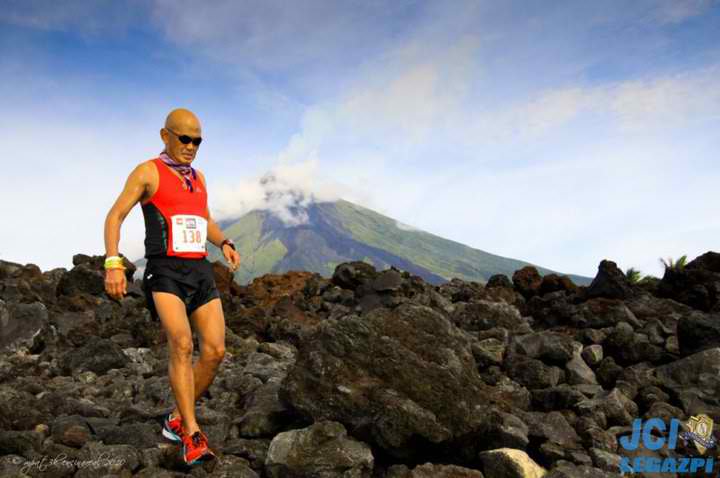
As I met the other runners that have reached the turn-around point and are on their way to the finish line, they would tell me how far the turn-around point is. I just smiled and thanked them for their information. From afar, I saw the Water Station at the foot of the Lava Wall and I started to increase my pace. I took a bottle of water and drank the whole of it before I climbed the Lava Wall. The climbing towards the helipad at the turn-around point was my rest period plus the walking on top of those lava rocks. I had a brief pause just to see the whole Mt Mayon before going back to the trail where I came from. As I came down from the Lava Wall and started my run back to Lingnon Hill, 15.5 kilometers was done and the last 6 kilometers was ahead of me.
That was a good gradual uphill climb with an elevation of 275 meters from the Yawa River to the Helipad on top of the Lava Flow. Phew! That was hard and tough! Two hours had elapsed already when I was about leave at this point. You make sure you receive your 3rd and last straw necklace at this point.
Priceless!! At The Mt Mayon Volcano's Lava Wall (Photo Courtesy of JCI Legazpi)
Km 15.5 to Km 20.5
This part of the route was the start of going back to the Finish Line—on top of Lignon Hill again! I took advantage of the downhill terrain and the gravity of my body in order to increase my pace. I was trying to do a tempo run on those lahar sand but ultimately had to slow down when I started to hit those rocks and flowing streams along the route. I commend the Race Organizers for deploying more Race Marshals on this part of the route and the red-colored arrow signs painted on the black rocks along the route made me focused to follow the direct route towards the Yawa River. At this point, I was already alone and could hardly see anyone in front and at the back of me. It is just a matter of time that I would be able to reach the river.
As you run downhill from the Lava Wall, you meet most of the middle pack runners and there were so many greetings that I received from them. I have to cheer them when I see them walking and encourage them that the turn-around point is already near. However, I could see on their faces the hardship, pain and suffering they are experiencing. This is the challenge that the Mt Mayon Trail Run has to offer which is too different from other half-marathon trail runs in the country. However, the Mt Pinatubo 50K Trail Challenge is, I think, so far, the toughest ultra trail run in the country.
After a lot of skips, jumps, water crossing, shuffling, and downhill running, I could see that Yawa River is getting nearer. Before I reached the bank of the river, two of my elites approached me and offered me water and sports drinks. I was still strong at this point that I was able to do a “brisk walking” while crossing the river. After I crossed the river, I knew that the last “toughest” part of the race was in front of me! It’s the last kilometer of the race!
Another "Priceless" Picture Courtesy of Estan Cabigas!
Km 20.5 to Km 21.5/Finish Line
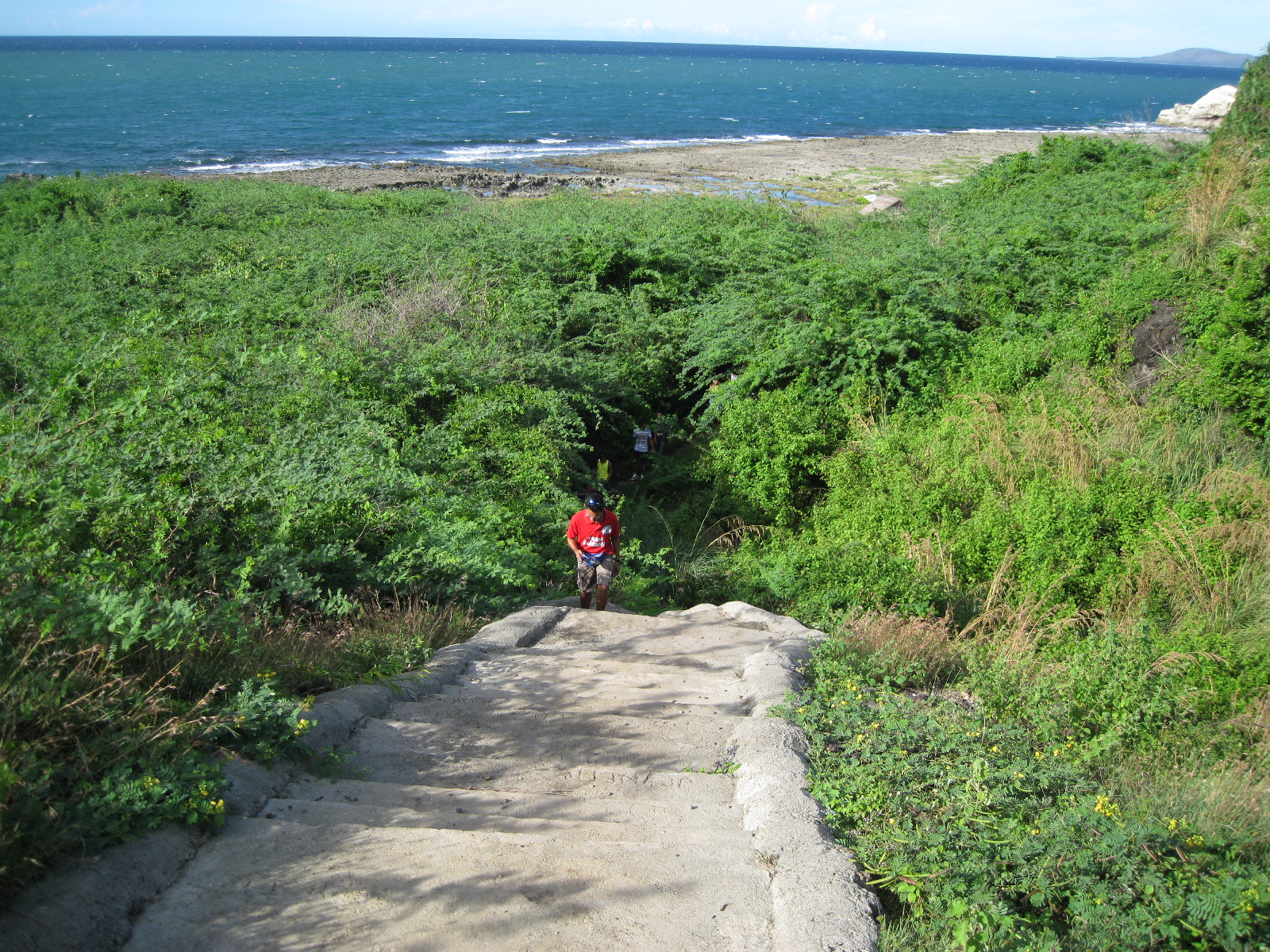
This is where you curse the Race Organizers! The uphill climb consists of ascending trail steps that has an inclination of almost 80 degrees! The stair/steps on the last ascent to Lignon Hill are the dreaded “killer” of this race. I have to place my hands just above my knees and hold them firmly to push my body in going to the steps. The steps are also too high for the tired legs to overcome. I have to take a brief rest every time I finished scaling at least 10 steps! I was already tired and exhausted that I forgot my plan to count the number of steps on this part of the trail. I thought I could finish this race in sub-3 hours as I still have 4 minutes to overcome the last 50-60 meters up to the peak of the hill. I was wrong!
As I pushed my arms & hands on my upper legs and drive them upwards to those steps, I felt my legs are getting weaker. How I wished that the height of the steps would be lowered and an improvised railing on the side would be available to make this part of the route with lesser difficulty and safer to the runners. It is just a recommendation though. This short distance made me tired, the same way that I experienced on the 1st edition of this race.
As I reached the peak, I was directed by a Race Marshal to follow a downhill route which was a newly-made trail that goes towards the forested part of the hill. I was again “cursing” everybody to the point that I was not focused to my footing placements. Then, my legs just became weaker until my feet could no longer hold on those descending steps. Then the worse happened, I fell down with my butt sliding down a few steps of the trail!!! It was my first time to fall (on my butt!) in a trail run! I was glad it was not the other way around as I could be landing on those cliffs of the hill.
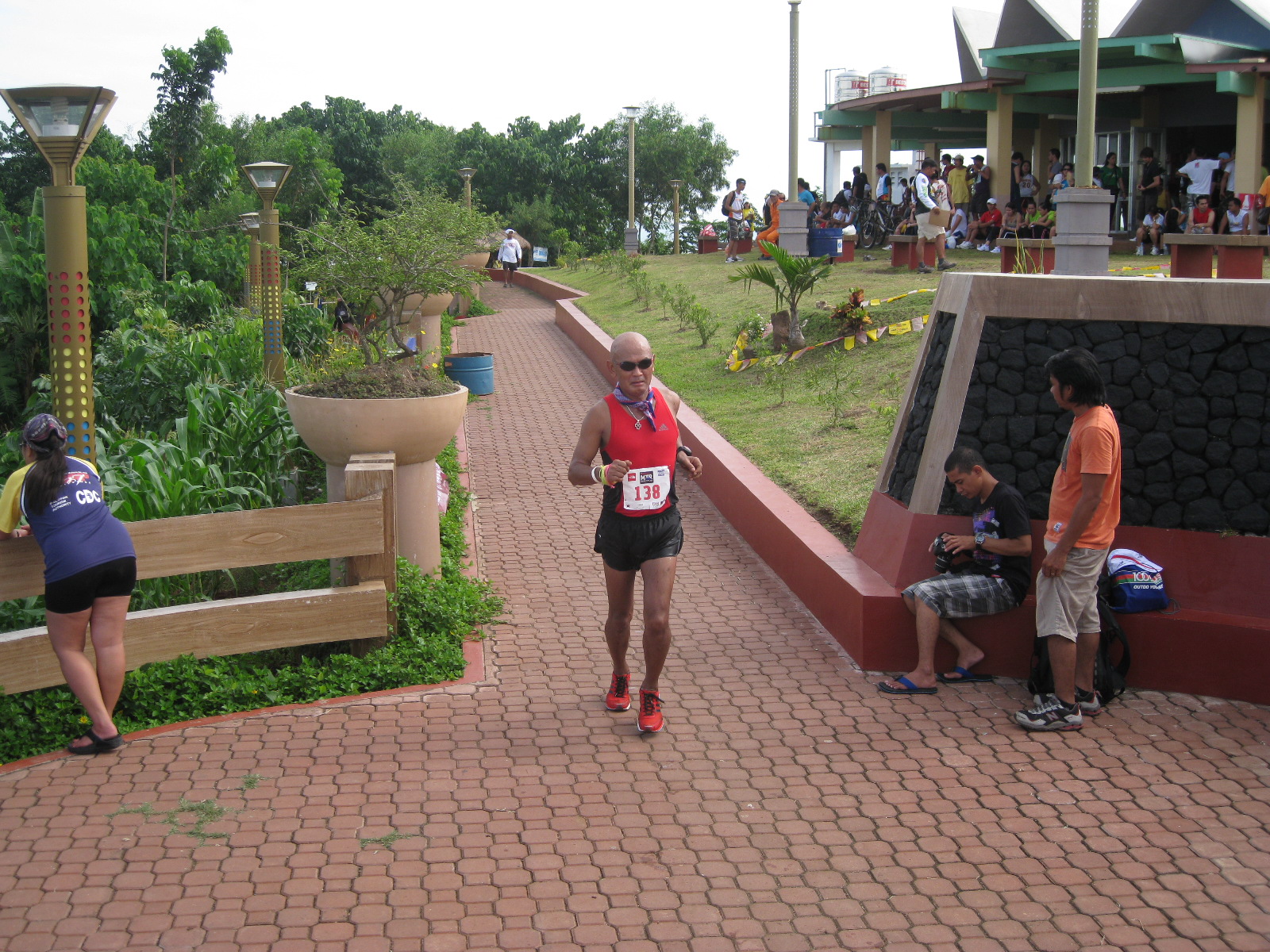
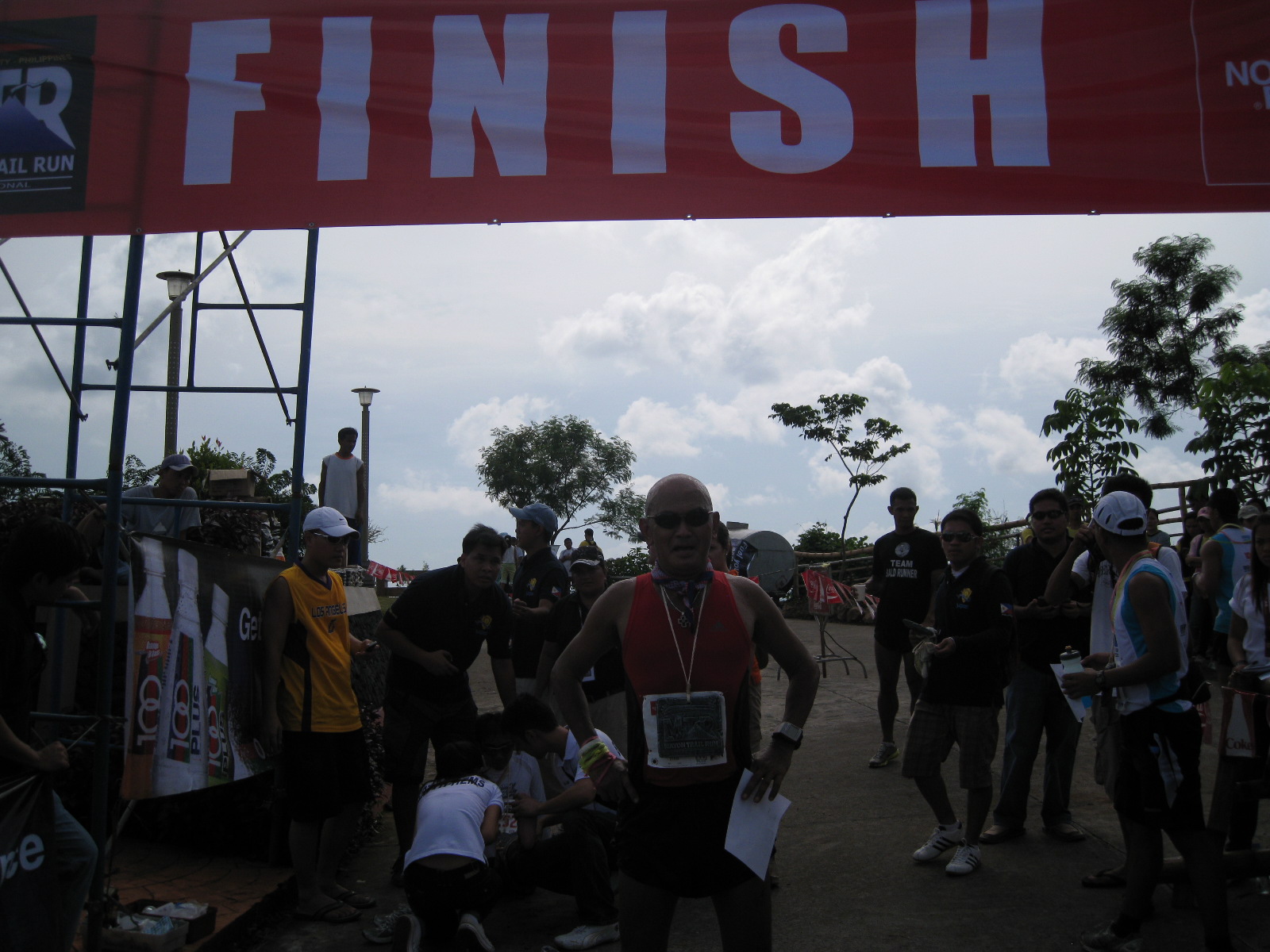
On my last ascent, about 10 meters, to the peak (again) of the hill, I was already laughing and cursing telling to my elite runners who were on my back that this race is no longer a trail run but a “mountaineering” event! I allowed one runner to pass me along this point as he is much very young compared to me. As I reached the peak, I could see already the Finish Line & Banner but Councilor Celoy Chan, the Chairman of MTR, met me and jogged with me for the last 50-meter run around the peak of the hill, passing through its paved walks. Finally, I crossed the Finish Line with an unofficial time of 3:01:40 hours based from my GF 305. I was awarded with the “heaviest and biggest” Finisher’s Medal in a running event and my Finisher’s Certificate. (Note: I will be back to improve my finish time to sub-3 hours!)
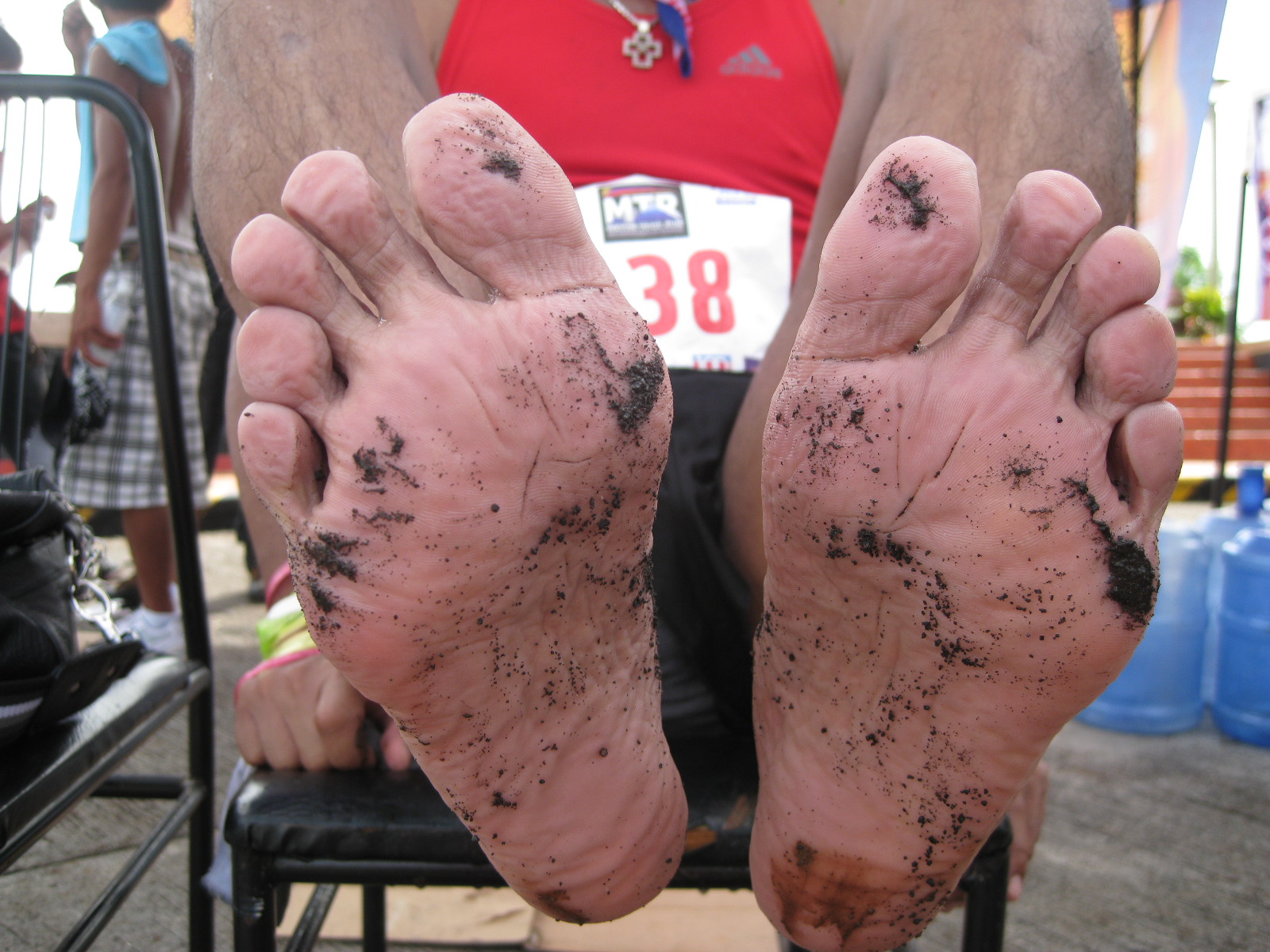
Approaching The Finish Line!3rd Mt Mayon Trail Run...Done!Lahar On My Feet But No Blisters. Dry Max Works All The Time!
Post-Race Activities
It was time to socialize and talk to the Race Organizers, JCI Legazpi members, other Finishers and runners after I finished changing my wet running kit with dry clothes. I was able to meet old and new friends. I was able to congratulate Yves Yu for the successful conduct of the said race and I also told him about my recommendations on how to improve the conduct of the race. I hope Yves would be able to accept my suggestions in a positive manner. To the JCI Legazpi, Councilor Celoy Chan, Yves Yu, and to the Volunteers, you have done a splendid job in this race. Congratulations to everybody!
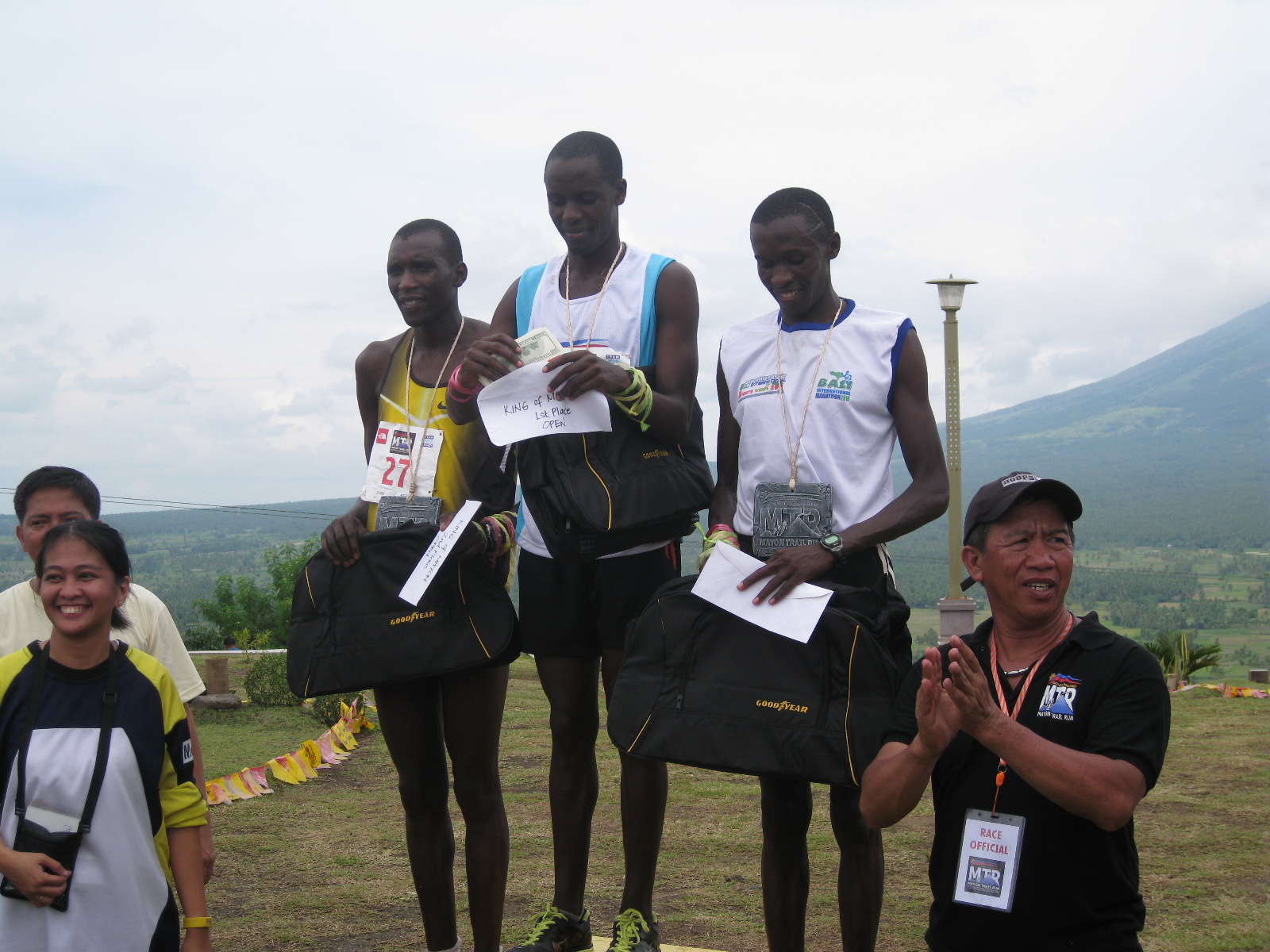
Well, the Kenyans were able to dethrone my elite team as the “King of MTR” for this year but we will be back with a vengeance! What is good is that the record time of Finish in last year’s edition made by Alquin Bolivar with a time of 1:28+ hours was not erased. All the members of my elite team who ran the 21K race placed on the top 10 ranking of the race and won some cash as consolation prizes. On the 5K Race, Rey De Los Reyes of my elite team placed 3rd Overall, winning a Cash Prize, too!
What is good in this race is that the Race Organizers give a consolation cash prize for the top 50 runners! I was surprised to be called by the Emcee as I placed # 49 finisher out of the 240+ runners that started the race! I received an envelope with a cash prize of P 250! Not bad, it was good for a Jollibee meal after the race!
Maybe in the next editions to come, I would be able to grab the “Oldest Runner Award” with a Cash Prize of P 5,000!
Once again, MTR has proven that it is the toughest 21K run in the country today. I am highly recommending this race for the PAU loyal fans & members; BDM 102 veterans; and “hardcore/warrior” runners. The experience is good for your “running record” and be able to see the beauty of our own Mt Mayon Volcano.
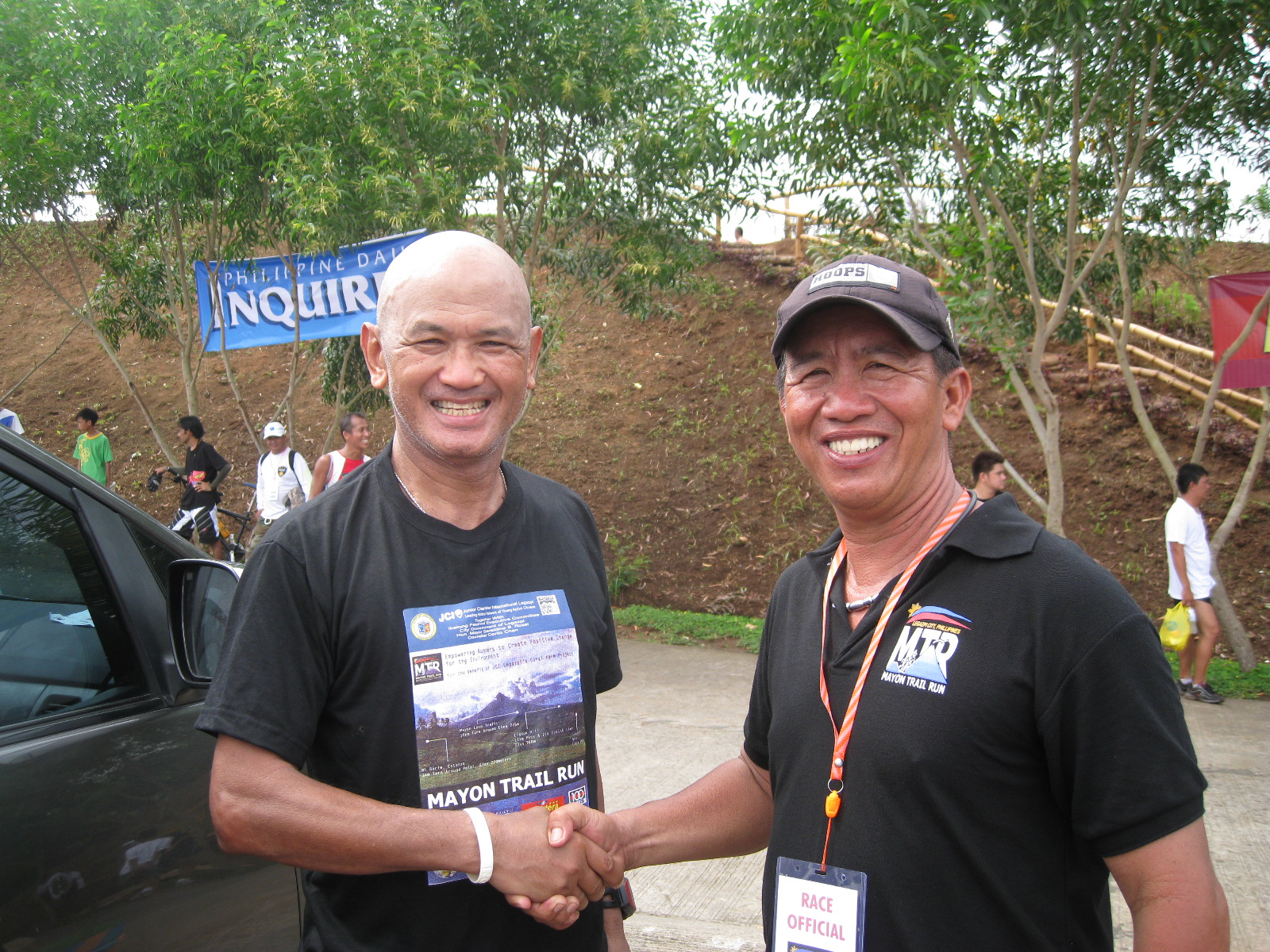
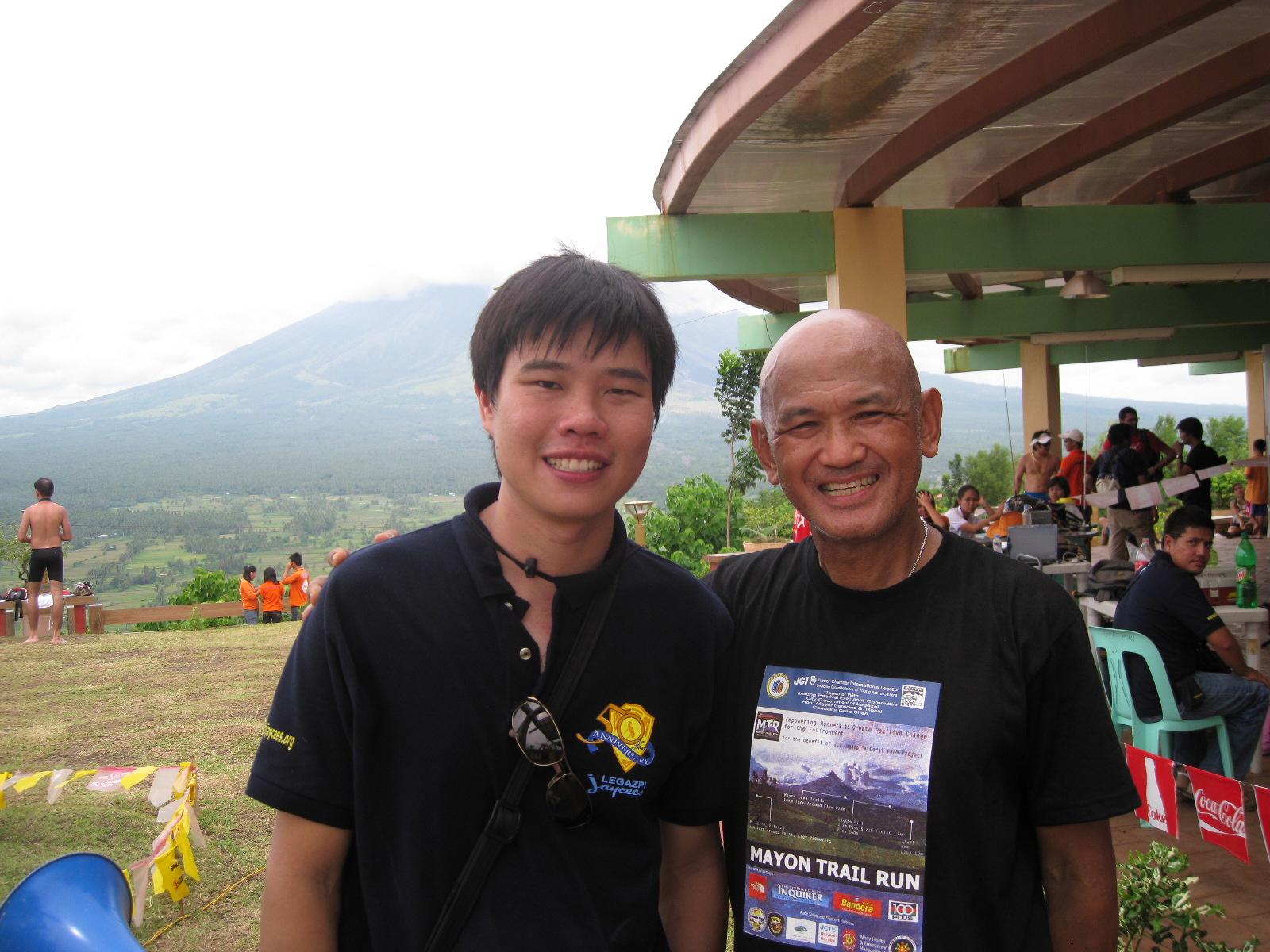
Councilor Celoy Chan, Chairman of MTR & Administrator of Lignon Hill ParkTeam Kenya as the 2010 "King of MTR"Yves Yu, MTR Race Director & BR
See you at the Mt Mayon’s Lava Wall and Lignon Hill next year!
Note: For more “pictures in action” on the MTR, please visit Estan Cabigas website at www.estancabigas.com.
1. All runners are advised to review the final instructions for the 1st PAU 50K Run which was held in Barangay Sampaloc, Tanay, Rizal. The same rules and regulations will be implimented in this race.
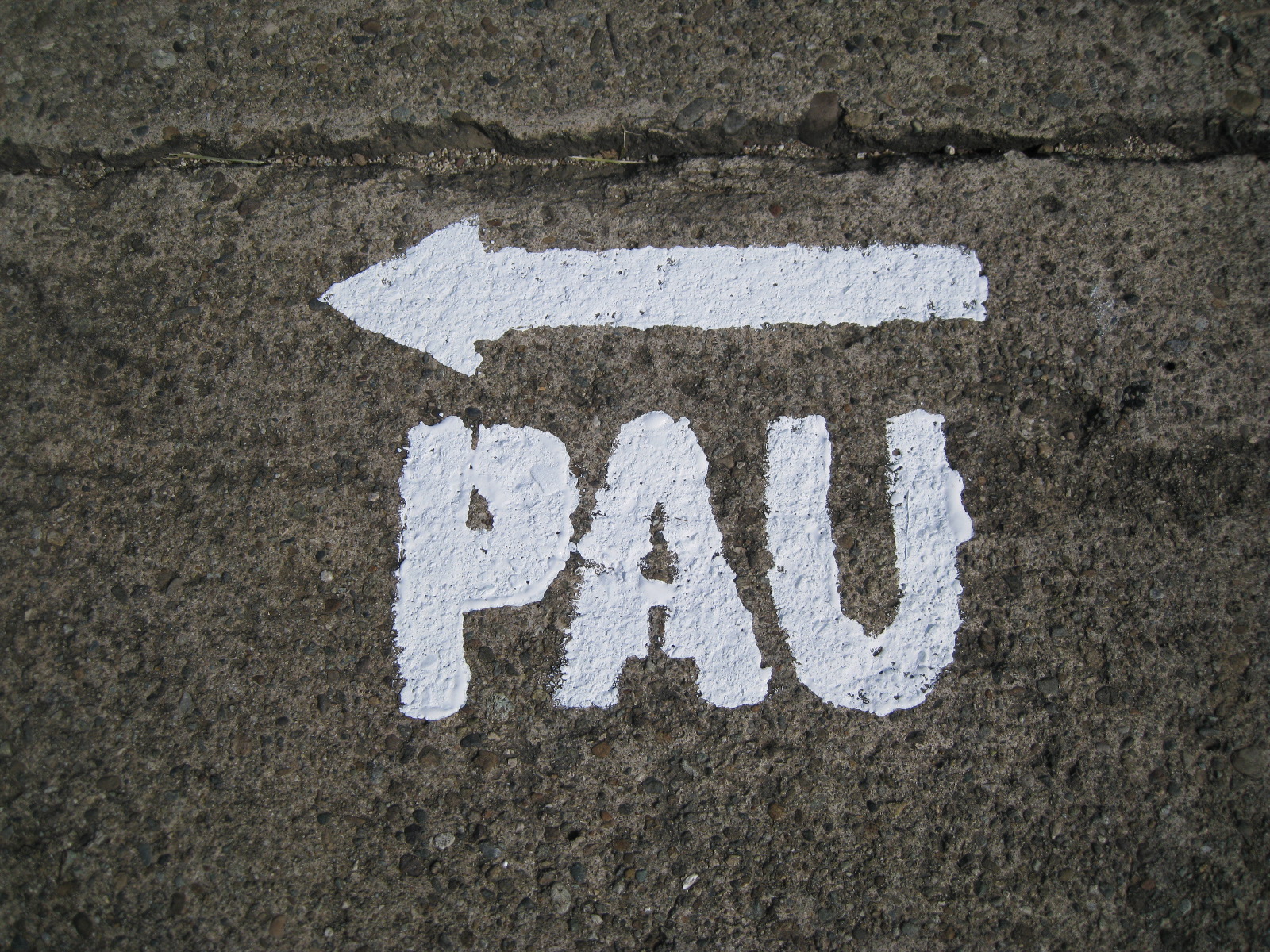
2. Instead of Race Marshals along the route, there will be painted signs in white on the paved road to direct the runners. They are located either on the right or left edge of the road which will indicate the directions the runners will follow. These are printed with waterproof paint.
Watchout For This Sign
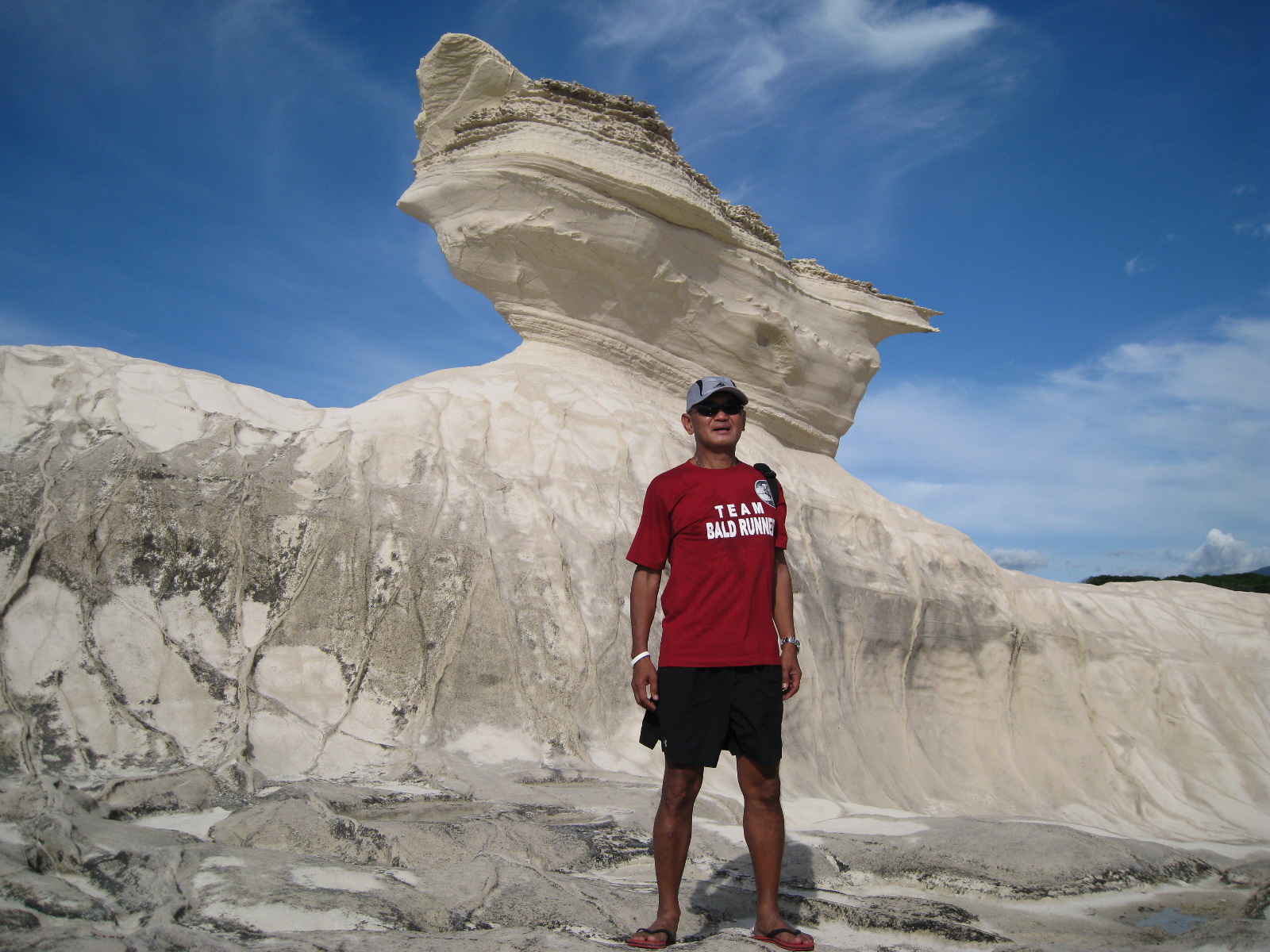
3. Runners are advised to take extra precaution in approaching the Kapurpurawan Rock formation. It would be wise to just walk along the sharp rocks & corals before reaching the turn-around point where one of my staff will be handing the 2nd string-necklace. Be safe on this portion and take time to select your footing on these flat but sharp-edge rocks. Runners can climb up to the white rock formation for their photo-ops.
Stairs Leading To The Kapurpurawan RocksRecommended Place For Photo-Ops
4. There are no fees to pay when entering each of these tourist spots along the route.
5. There will be no Aid Station at the Parking Area/Turn-Around point of the Burgos Lighthouse. Instead, the Aid Station will be positioned at the Km #20 point. One of my staff/Marshals will be positioned at the Parking Area to hand each runner the 1st string-necklace.
6. For those who have not yet redeemed or received their Race Packets, my staff will be at the La Elliana Hotel in Laoag City from 1:30 PM to 3:30 PM to give your Race Packet or settle your reserved slots. We would like to settle all administrative concerns and clarifications from the runners at this period. On D-Day before the race, we will simply start the race.
7. As in previous races, we would like to be consistent on the start of the race. We will start on or before 5:00 AM on Sunday in front of the Pasuquin Municipal Hall. There will be no VIP to grace the occassion. The VIPs are the brave runners at the Starting Line of this race!
8. The distance of the race is expected not to be accurate. All runners are warned that the race distance might reach up to 68-69 kilometers. After passing the Pagudpud Boundary Arch, prepare for a winding uphill climb up to the Poblacion of Pagudpud and the last 3-4 kilometers to the finish line will be flat.
9. Have a safe trip and good luck to all the runners and their support crew.
No Need To Explain. Enjoy the pictures. Enjoy your Long Runs This Weekend.
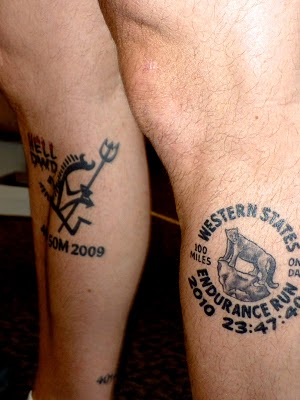
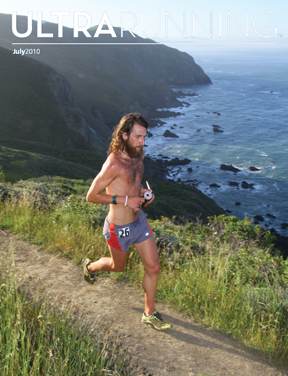
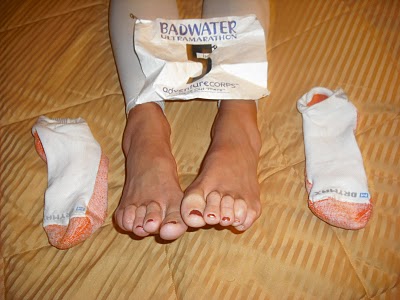
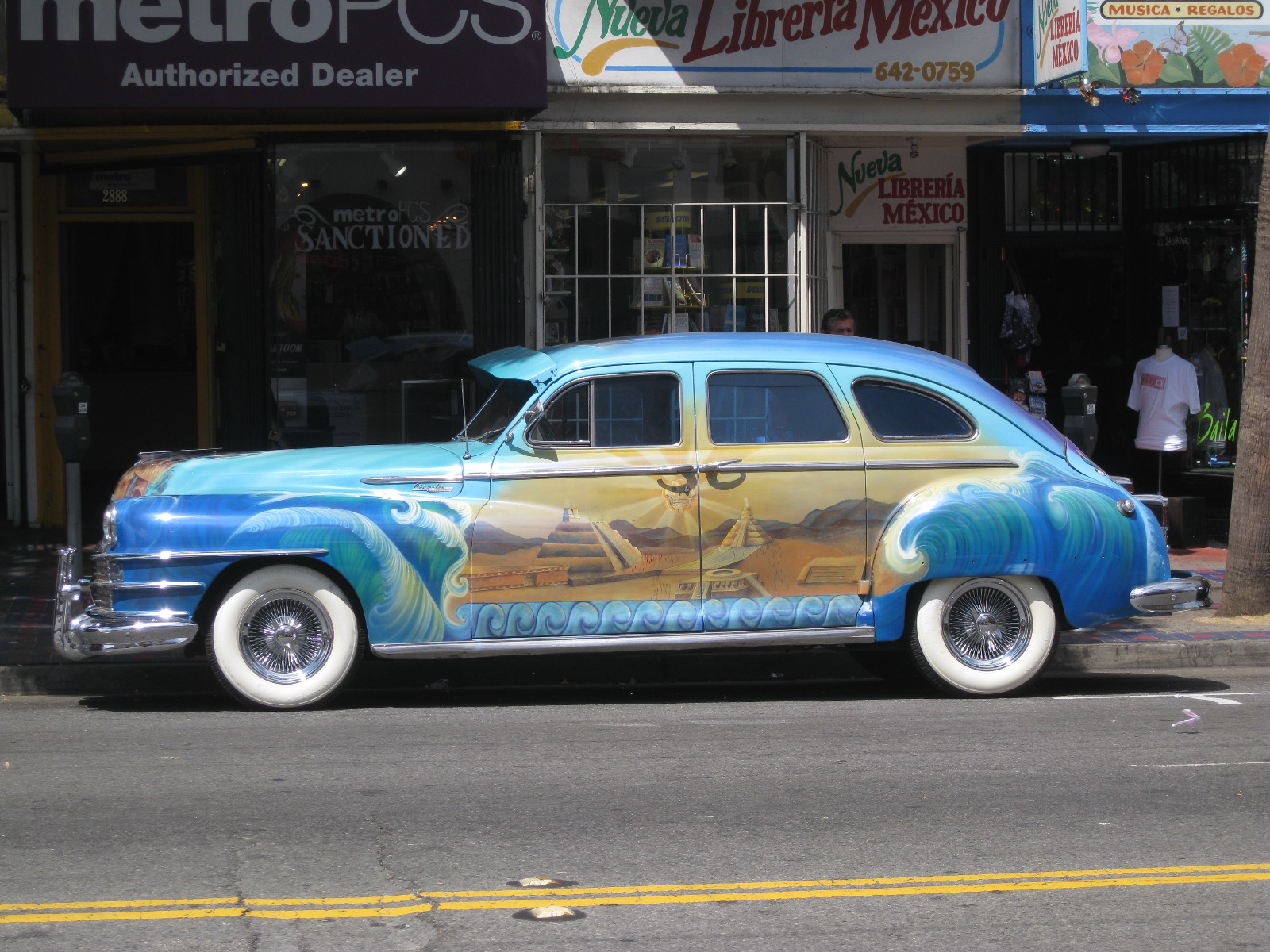
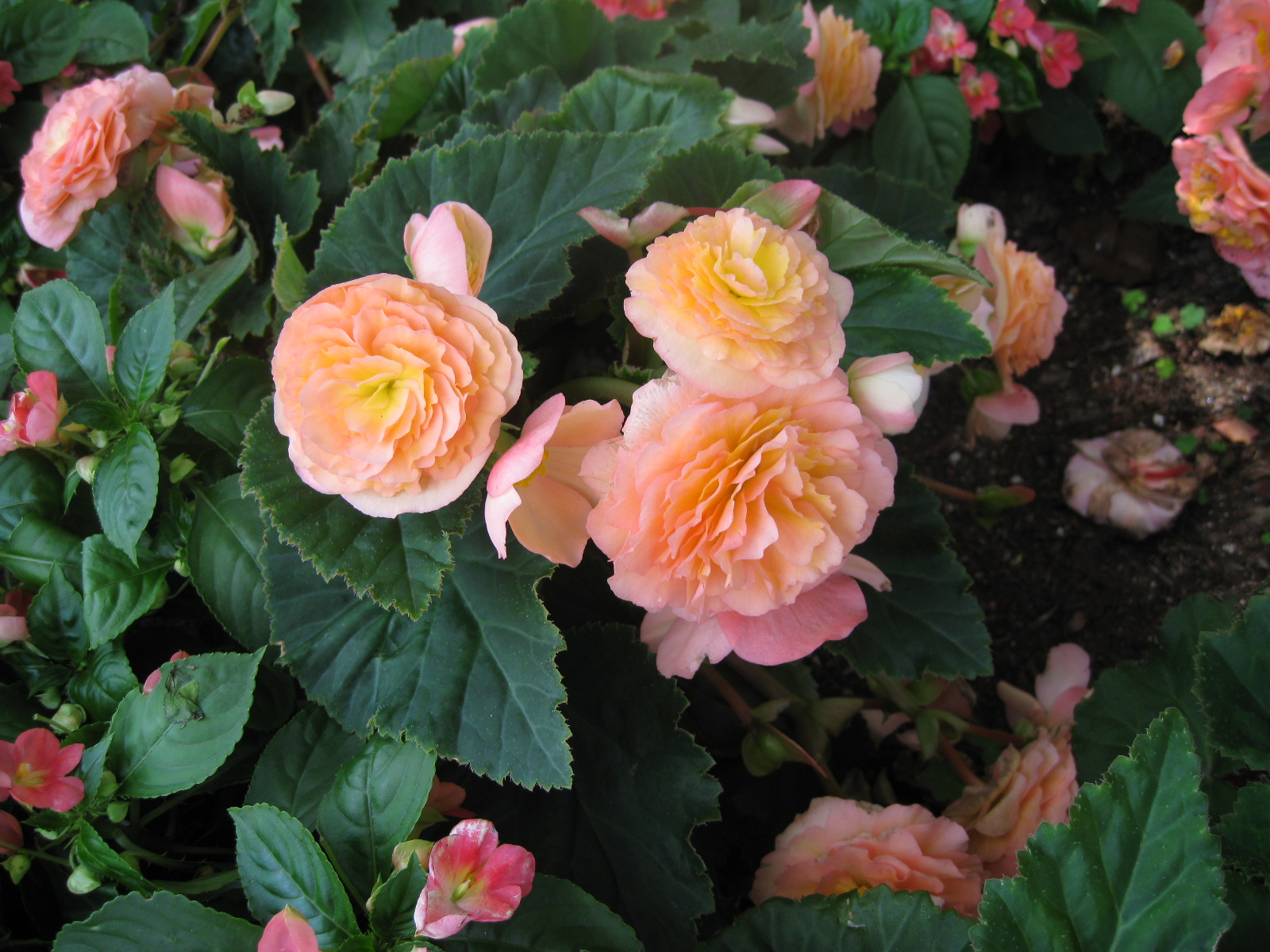
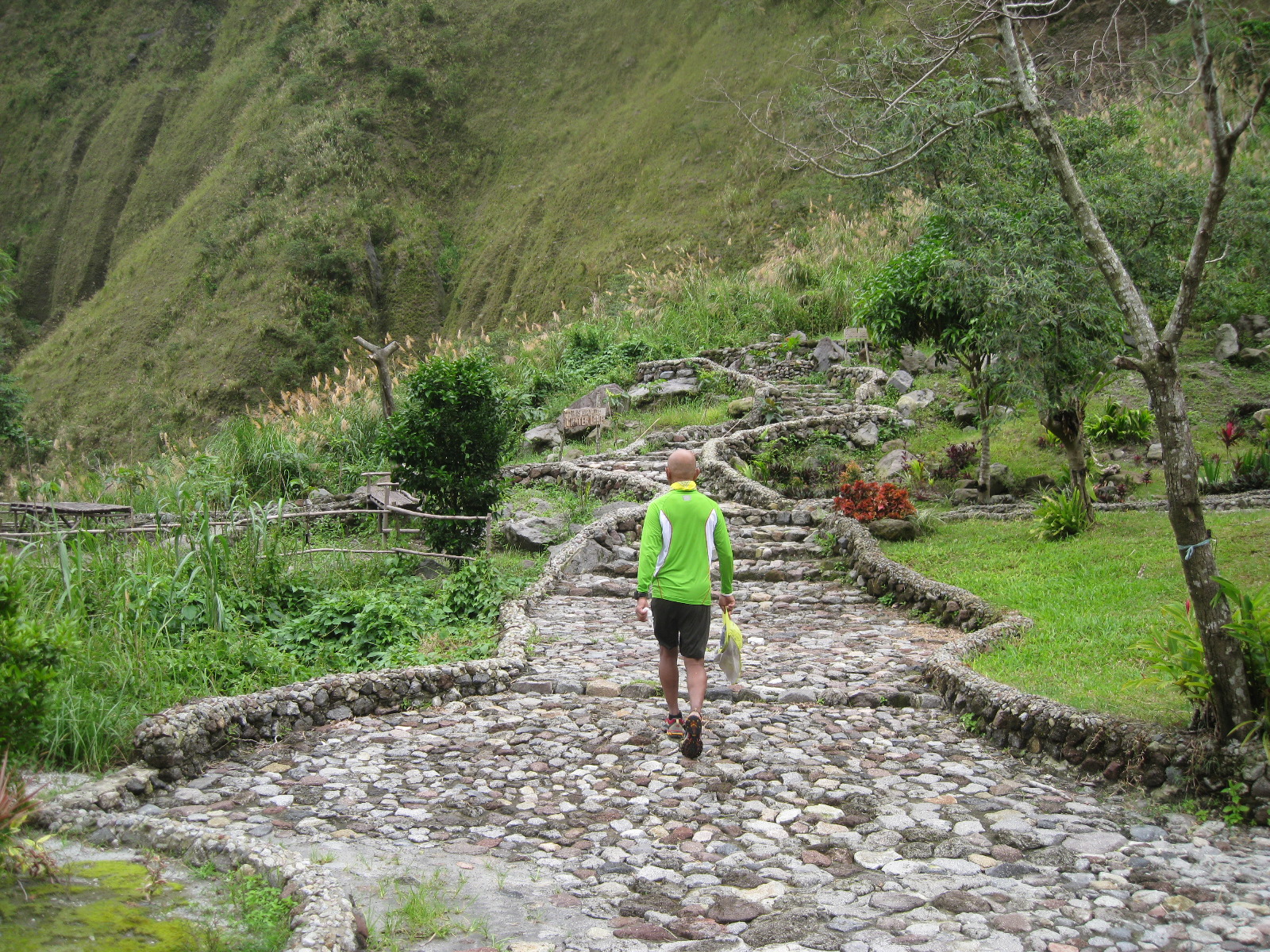
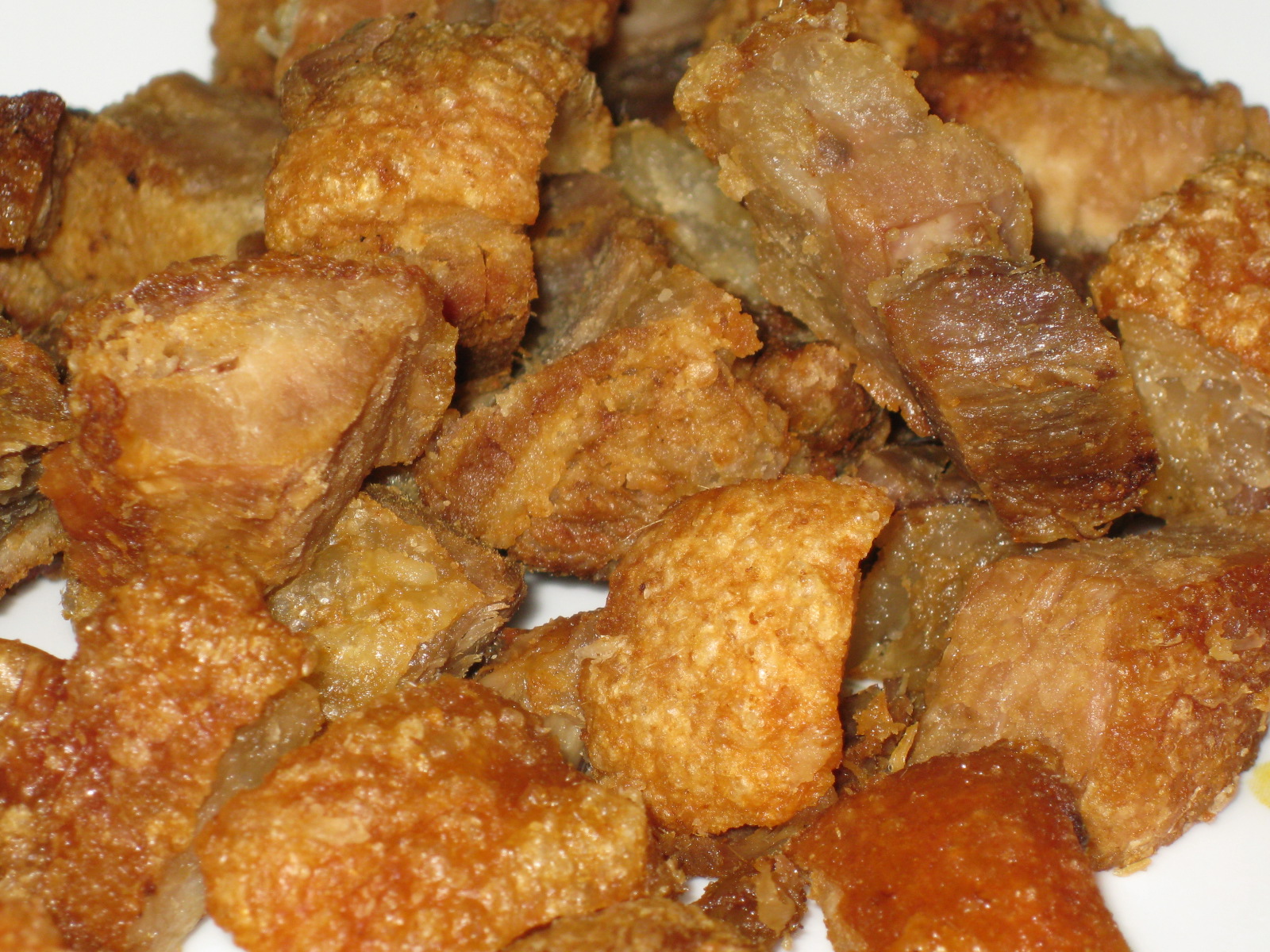
Photo Taken From Scott Dunlap's Blog @ http://www.runtrails.blogspot.comUltrarunning Magazine Cover With Anton Krupicka's win at the 2010 MIWOK 100KJamie Donaldson's Feet After Another PR at the 2010 Badwater Ultra Using Dry Max SocksNice Old Car!Take It Slow On The Road & Smell The Flowers (or Take Some Pictures of Them) Run To Mt Pinatubo Crater LakeZach Gingrich, 2010 Badwater Ultramarathon ChampionZach Gingrich in the Famous Movie, "The Hangover"Laoag Chicharon (Bagnet) Waiting For "P2P 65K" RunnersThe WS 100 Logo......And The Silver Buckle...
This is a personal story of Gerald Moore, a friend of July Oconer, on his 3-day stay in the Philippines.
I have some photos and a story now- hope you enjoy!
I checked out of one of the nicest hotels I’ve ever stayed in the Shangri-la – after a buffet breakfast so wide in scope it could easily have covered lunch, dinner, barbecue, gourmet, France, Italy, Hong Kong, Mexico and of course, Manila!
July and I got our last minute supplies in a big supermarket next door, cases of water and boxes of granola bars. I bought a couple ‘Coach’ designer shirts – for about $10 each! Every salesperson called out to me SIR, SIR (sounds like ‘sah’) Almost everyone speaks English well.
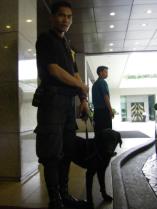
Manila is sprawling and impromptu. The central city is clean and pretty Security is everywhere, rifles, dogs and Xray machines. The people don’t seem to care and they don’t know of any threat – that’s just the way it is.
Decorated and sparkling WWII “Jeepneys” and motorcycle sidecar taxis are everywhere. And they have Shakey’s Pizza – haven’t seen that since I was 11 years old. I rode through Bataan Death March country in the back seat of July’s well-customized turquoise Honda Civic northward out of the city of 10 Million bound for Mount Pinatubo.
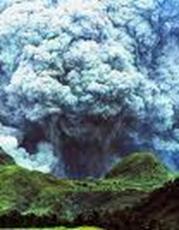
In 1991, Mt Pinatubo exploded in a climactic strato-eruption that lasted 12 days hours, during that time it ejected enough ash, smoke and sulphur to decrease the entire earth’s atmosphere by 1/2 a degree Fahrenheit. On the same day, Typhoon Yunya struck the island, passing about 75 km north of the volcano. The most violent phase of the eruption, lasted about three hours. Typhoon rains mixed with the ash deposits and caused massive lahars. For 3 years ash circled the globe. If not for close geological monitoring and widespread warning, tens of thousands would have perished. This eruption forced the closure of Clark Air Force Base which had operated continuously as a beneficial, respected and locally valued United States military station since World War II.
On the straight, flat roads around July’s hometown people walk perilously close to speeding traffic late at night, motorcycle sidecar taxis are the primary transportation. Signs say ‘vulcanizing’ (tire re-treading) and ‘Junk Shop open 24 hours’. Beyond the row of buildings and houses that line the road endlessly are soaking wet rice fields.
July found me a comfortable country inn while He and his Fiancé went further into the country to visit and stay with his parents.
We left for Mt Pinatubo at 130am and met people at a couple places along the way traveling through the dark straight roads with flashers on as a convoy of ultramarathoners.
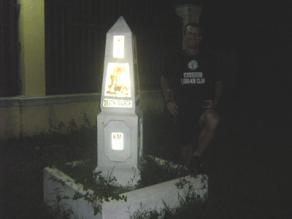
As we neared the starting point we passed the concentration camp where 11000 US and Philippine soldiers were killed at the hands of the Japanese, and at every kilometer along the way, a stone marker memorializing those killed on the march. To this day they find gravesites amongst the rice fields. All these ultramarathoners devote their effort and struggle to the soldiers killed here in many ways. That I knew of the march, had met survivors and ran the Death March at White Sands Missile Range made me an instant family member: Sir Gerald.
The starting point was a small village schoolyard’s covered bandstand with bare light bulbs hanging. Our little convoy filled the yard and runners were getting their gear together on the stage there. The 3 Toyota Landcruisers arrived driven by the Pinatubo Guides and parked facing out. Supplies were being stacked inside – bags and ice chests. I added my case of water to the community chest.
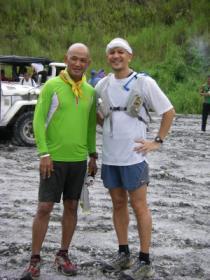
Then the Great Baldheaded Runner arrived in shiny Prius to a round of applause. This is Retired General Jovie Narcise of the Philippine Army whose base includes the area we’d be running in. He’s has nice gear, and is very fit and totally bald. Jonel, the race director, participant and magazine publisher (also bald) gave some cut-off times and last minute advice and then said a very short prayer. Everyone crossed themselves before and after, twice.
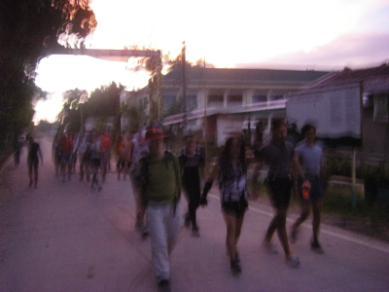
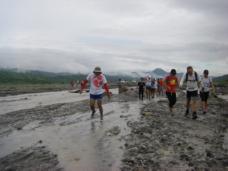
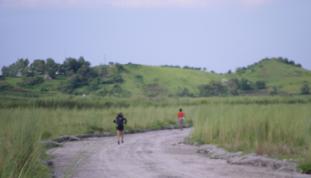
We take off walking as the dawn begins to break and the little group of 35 or so streams out of the school yard and up the main road. The road immediately goes into innumerable creek crossings and every single runners’ feet are totally wet throughout the entire 55K. The course is one continuous lahar – a valley that had been filled in by the eroded ash and cinder rock moved by water ejected from the cooling volcano. All the water is warm, a murky tan-grey and running fast in wide shallow sheets. Some of the rocks are so light they actually float with the current.
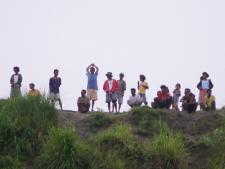
Most of the surfaces were very similar to running in Calabacillas or Los Montoyas arroyo, except the whole thing is wet and well compacted. We pass poor farmers bringing banana blossoms to market on their ox-drawn carts. For all their squalor they sit their animals nobly and from them they spectate with interest. As we ascend into the lahar, we stop to regroup one last time with the guides to re-supply before going past 20K, because the Land Cruisers can no longer keep up with the runners. The area looks like a barren moonscape inlaid on an emerald forest. Aborigines from a local village gather on the edge of the lahar to wave and shout as we run below them.
The gap in green narrows and becomes deeper and more rocky but we keep a steady brisk pace. The grade becomes steeper and at about 25K, we arrive a several thatched huts, the water flow slows down to a trickle and the trail becomes a narrow cut through dense bush thick with green vines and covered completely in places by umbrella trees joining branches overhead.
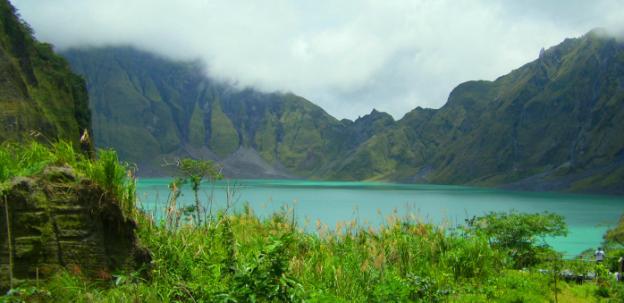
Finally we reach a summit and the walls of the lahar open to the tremendous open maw of the crater, steep, jagged and green all around and a great lake fills the bowl with turquoise water – a mile across. Transfixed by the vista, July and I stand in awe – then we quickly descend to the edge of lake and start removing sweat-drenched shoes, shirts, water bags and swim in the warm copper-rich lake. Some of the other runners start showing up and doing the same. We rinse rocks out our shoes.
Rejuvenated and cleansed, we begin the descent, meeting our support crew at the summit. They had come the long way around in Jeeps for re-supply and photos. We split up again as the lahar again becomes mostly water and the runners pick up the pace on the descent. At 42K the sun comes out and we meet our support convoy again – everyone needs water, shade and fuel for the final 13K. We quit praying for sun and start praying for rain. A flood of mixed emotions wells up in me. I’m thoroughly fatigued, constantly measuring the remaining distance and yet elated and energized and wishing it would never end.
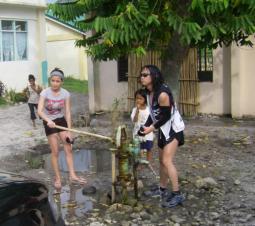
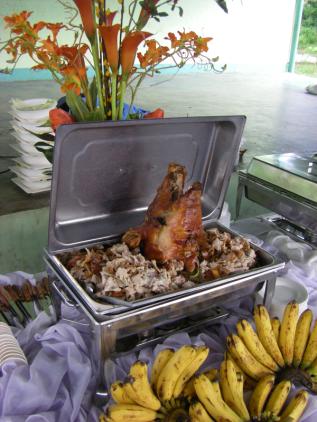
At the finish we’re treated to a cold, hand-pumped shower (after which I smell slightly like sulphur – an improvement!) and a regal buffet – in honor of July’s August 1, 40th Birthday. The Philipino Barbecue spread traverses the stage and is crowned by a bouquet of flowers, bananas and Roast Pork replete with the pig’s head, hearty beef skewers, school fish, spinach, lovely rice, halved tomatoes with salted eggs and shrimp paste. Also a special beef stew with rich broth and Oso Buco-style chunks of meat and marrow!
I’m honored to be seated between July and the General and by watching them I learn the technique for eating the stew. For dessert the General brings us each a tree-ripe banana which we peel and eat with a fork.
Getting late, it rains and people start saying goodbye. I grab my gear and again am treated to a seat of honor, riding shotgun in Jonel’s Montero with 4 squished into the back seat. I’m dropped off again in Manila at the foyer of another stunning beautiful and welcoming Hotel.
I’m still feeling good! In fact I’m still on a runner’s high!
Also wondering how to appropriately thank all the people at this special and challenging event.
Do not travel along the SCTEX (Subic-Clark-Tarlac Expressway) from Subic to Clark or vice-versa during nighttime. There are unidentified persons along the expressway who throw stones at your car. If your car’s windshield or one of your window panels is broken, it creates shock and panic to the driver and to the passengers! The breaking of a glass of a car at a speed of 80-100 KPH is a horrible experience. It seems that somebody had shot you with a gun or a rifle. And the burst of those tiny glass fragments inside the car landing on your body seems that you were hit with shotgun pellets!
But what is worst is when you are shocked and get panic, it is either you suddenly stop your car or bump your car along the side railings of the expressway. Either way, you will end up as a casualty. There were reports that these unidentified persons who threw stones to passing vehicles are members of a “hold-up” syndicate. Once you stop your car at the shoulder of the highway, this is a chance for these persons to approach your vehicle and divest you with your things. In a few seconds, they could escape along the fields and trails leading to the hills beside the highway under the cover of darkness.
Last week, I was a victim of these “stone-throwers” but I did not stop along the expressway even if I was in the company of Mr Sig Sauer. It was 7:30 in the evening when I heard a loud explosion of a broken glass and knowing that my windshield was untouched, I continued driving until I reached the Clark Exit to NLEX. I found out that the quarter panel glass on the side of my car was broken and there was a trace that a stone had hit it. I am glad the stone did not hit my windshield or my window glass panels.
After the broken glass was replaced by the car company’s repair service, I went back to the place where I believe the incident happened. It is the place in between Dinalupihan & Floridablanca Exits. This was the very same place of the first 10K of last year’s Subic International Marathon! One of these days, I’ll have that hut/nipa house situated on a hill and the rock-crushing facility inspected by the soldiers during nighttime.
So, if you have plans of travelling along the SCTEX from Clark to Subic or vice-versa, do not do it during nighttime! Stay safe!
1. On April 6-8, 2010, I was in Laoag City to celebrate the 85th Birthday of my Mom. I had a chance to run at the Laoag City Oval Track and meet the local runners & friends. I told them of my plan of coming up with an ultramarathon road race from Laoag City to Pagudpud in the future. Everybody was surprised as most of them have never tried running beyond the marathon distance. They told me that the estimated distance is 80-85 kilometers. Anyway, I told them to train and prepare as I will bring more ultrarunners from Metro Manila to run in the province.
Bangui's (Ilocos Norte) Windmills
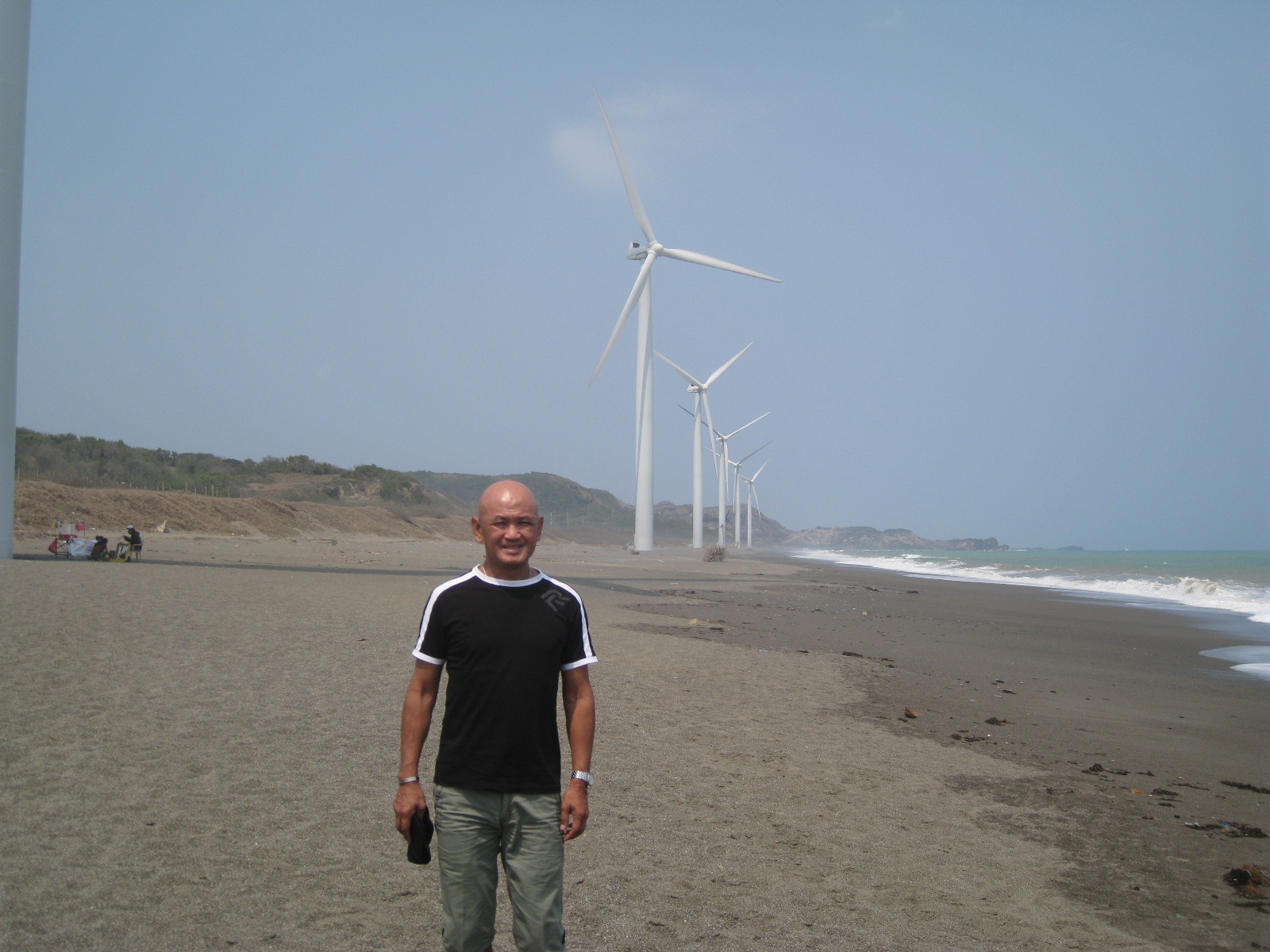
2. On my last day in Laoag City, I asked one of my nephews to drive me to Pagudpud to initially measure the route with the use of my GF 305. The measurement of distance started infront of the Provincial Capitol in Laoag City and we took the Bacarra Road, going North to Pagudpud. As soon as we reached the town of Burgos, Ilocos Norte, my GF 305 registered a distance of more than 50K and I have yet to reach the Municipality of Bangui. Based from the Kilometer Posts, I need to travel another 30K to reach the town of Pagudpud! Instead of going to Pagudpud, I decided to visit the Bangui Windmill Project Site and the Burgos Lighthouse.
3. Through my calculation and assessment of the route, it would be nice to start the race at the Municipal Hall of Pasuquin where the runners would start to have a glance on the seashore! Laoag City to Pasuquin is 18-19 kilometers. The route will take the runners to pass along the Bangui Windmill Project (on the beach) and then back to the Highway. They will also have the chance to run uphill towards the Parking Area of the Burgos Lighthouse and then back to the Highway. The uphill climb is nothing compared to the uphill climbs in Tanay. The Finish Line will be at the Saud Beach in Pagudpud! Hopefully, a distance of 65K will be measured for this run.
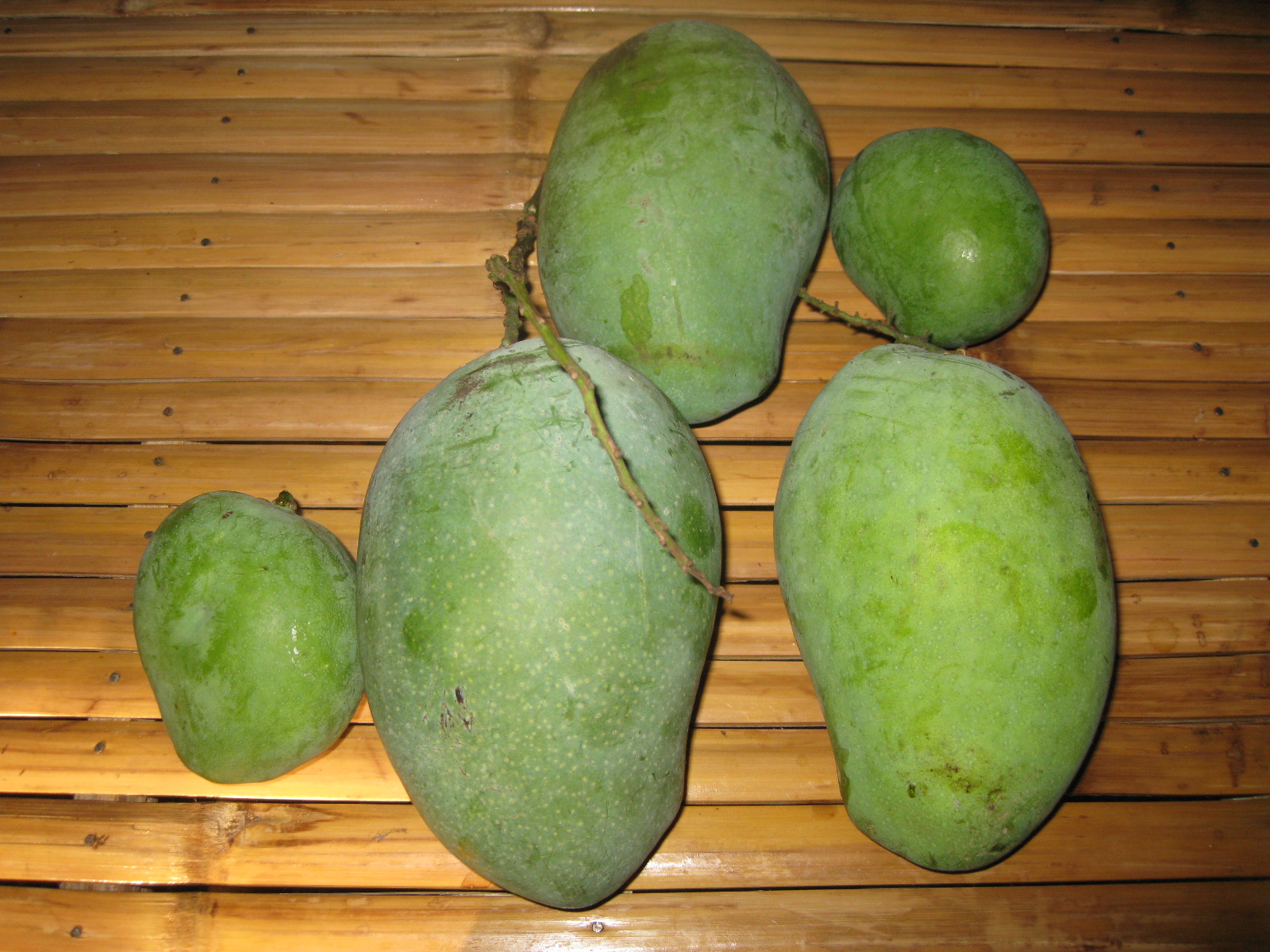
Big Mangoes!!!
4. These could be the biggest mangoes I’ve seen in the country or in the whole world! The smaller mangoes are the Indian mango variety and they look like “dwarfs”. These mangoes are not available in Ilocos Norte! The biggest of them would weigh 3 kilos each! The biggest one in the picture weighs 1.5 kilos! The mango when it is ripe tastes like a papaya! They are sweet and juicy! They are good to eat after finishing a 20K easy run!





 Bald Runner
You must be logged in to post a comment.