How Many Kilometers?


How much is enough? How many kilometers are recommended for me to run in every week in order for me to perform better from my last race? If you are not logging on the distance you have ran for the past week and instead prefer the number of hours, you could ask yourself, what is the number of hours I should run in a week in order to perform better in my road races?

You could only answer this question if you are methodical and thorough in maintaining your runner’s dairy. It should be a Runner’s Diary with Integrity (I hope you know what I mean). Based from your weekly total number of kilometers or hours that you ran, you could analyze if the past mileage for the week had given you more strength, power, and stamina for the next week’s running workout. It means that you could compare between your body feelings from finishing an 80 km per week from 90 km per week or 100 km per week. You should be able to know how it feels to finish an 80, 90, 100, or 110 km per week run.

Am I talking from Mars? In my preparation for a 100K Mountain Trail Run in May next year, as early as now, I am trying to find out if I can still improve my running performance with my prevailing age of 58 years old by “steadily” increasing my weekly mileage with a minimum of 100 kilometers per week. And try to find out how much more can my body endure and sustain by adding more kilometers to my baseline of 100 kilometers.

Two weeks ago, I was able to run 100 kilometers and I felt good. With all the raining since last Monday, I was able to run a total of 26 kilometers and decided to make Wednesday as my rest day. We will see if I can still maintain or sustain to finish a total mileage of 100 kilometers for this week. However, with the continuous rains brought about the tail-end of Super Typhoon “Juan”, I was able to run a total of 70 kilometers to include my run in yesterday’s Mt Mayon 21K Trail Run.

By the way, my average pace for the past weeks was 5:40 minutes per kilometer in my Easy Runs; 5:05 minutes per kilometer in my Tempo Runs and my average Interval training time for my 400-meter lap runs is 1:36 minutes. This is what I call “Intensity Training with Higher Mileage”!

So far, my body is adapting to the stress and I could recover well while adopting the Easy-Hard Principle of training with at least one hour of sleep during daytime and another 7-8 hours during night time. I have at least 2 massage sessions every week.  Nutrition is well-maintained making sure that I eat my replenishment food at least 30 minutes after every workout. I maintain a 40-40-20 diet and drink lots of water.

I will keep you posted with regards as to how much will I be able to maximize my weekly mileage and what is the feeling what is like to be running such mileage.

You can visit my http://www.dailymile.com account for the details.

Maximalist vs. Minimalist


These are the two general philosophies of training volume in running.  By the words alone, they connote opposing description to one another. Minimalist is best described by doing the minimum amount of training in order to achieve one’s objective or goal. While the maximalist would be best described by doing as much volume or amount of training as the body could absorb and sustain in order to improve or attain your goal.

In the late 70s and early 80s, I was greatly influenced by the teachings of Arthur Lydiard which was the proponent for maximalist training philosophy. In my preparation for my 1st marathon race, I exposed myself to endurance runs with a daily menu of 10 kilometers and sometimes “double” the same distance for the day. In my weekend runs, my minimum distance then was 20 kilometers and a maximum run of 30 kilometers.  Seldom did I do interval runs at the Oval Track but I improvised some running “burst” or fartlek sessions in my daily runs. Being young at the age of 30s gave me the strength to recover very fast in my running workouts. With this observation, the maximalist philosophy is more adept to the younger runners and this approach to training has a lot of potentials for the runner to improve greatly in his/her performance.

In the mid and late 90s, articles and personal experiences of older runners (40 years old and above) made way to the different runner’s magazines advocating that there is no need for too many kilometers/miles of running preparation in order to perform well in a road race. Experiments and studies had been made to elite runners as well as to the masters runners. Such studies resulted to almost the same results of performance for the athletes who are exposed to maximalist training philosophy. The minimalist practitioners had made their training more race-specific and with higher intensity of training as they have strictly followed some parameters or time/pace guidelines for a certain kind of running workout. This is where speed training and faster pace of workouts had been incorporated in their weekly training schedules. This kind of approach in training brought the importance of recovery to every runner. In my personal observation, this kind of training approach is highly recommended to runners or athletes who had been exposed to road races and intense training for a minimum of two years as running experience.

At my age of 58+ years old, I could hardly follow the teachings of the maximalist approach to training due to obvious reasons even though I have the time to run almost everyday. But I am still trying my best to find out the maximum of mileage I could do every week most especially now that I am preparing for another ultra mountain trail run next year. On the other hand, minimalist approach with higher intensity of training had given me positive results in my past marathon & ultramarathon races but I still have the feeling that I could still improve from my best PR times that I registered for the past 3 years. I know I could still improve in my future races using this training philosophy. 

Considering “running as an experiment of one”, I could not recommend which one is fitted to your attitude/personality and personal lifestyle if you want to develop your potentials in running. However, you must possess the following qualities in order to improve in your running—discipline, patience, focus, and “warrior” attitude. Your training plans and programs are useless if you do not have these basic qualities.

Minimalist or Maximalist? It’s your choice!

1st FREE Fun Run Report


1. I thought of this idea to conduct FREE Fun Runs for the benefit of the new runners who have the patience to learn the “basics” of running. And at the same time remove from them the burden of paying any registration fee in order to enjoy the benefits of running. It was through this blog that this running event was known as I decided not to request from my good friend, Jinoe & Quennie of takbo.ph, to post this in the List of Races. However, on the day before the event, a certain “boy kuripot” at www.boykuripot.blogspot.com reposted my blog about the FREE Fun Run. Thanks, Boy!

2. Despite having 5-6 scheduled road races in Metro Manila and another Milo Qualifying Race in Batangas City, I decided not to postpone the activity as it was my way of trying to find out the response of my readers to this event. Even with the impending approach of the super-typhoon “Juan”, I made it a point not to be deterred with such development about the weather as I knew the course of the typhoon will not greatly affect Metro Manila on Sunday. I’ve been consistent with my events—it was always been RAIN or SHINE and no posponement/cancellation of event

3. At 5:00 AM of Sunday, a group of cyclists from the AFP, led by the Chief of Staff, AFP, were having their warm-up exercises for their regular “Bike For Peace” activity. This is a physical activity of the Officers and Men of the AFP based in Camp Aguinaldo which is composed of cyclists and they conduct their workout around Metro Manila with the slogan, “Bike For Peace”. After these cyclists left the GHQ Grandstand at 5:40 AM, it was our time to conduct the activities for the FREE Fun Run.

Group of 32 Runners Attended The 1st FREE Fun Run

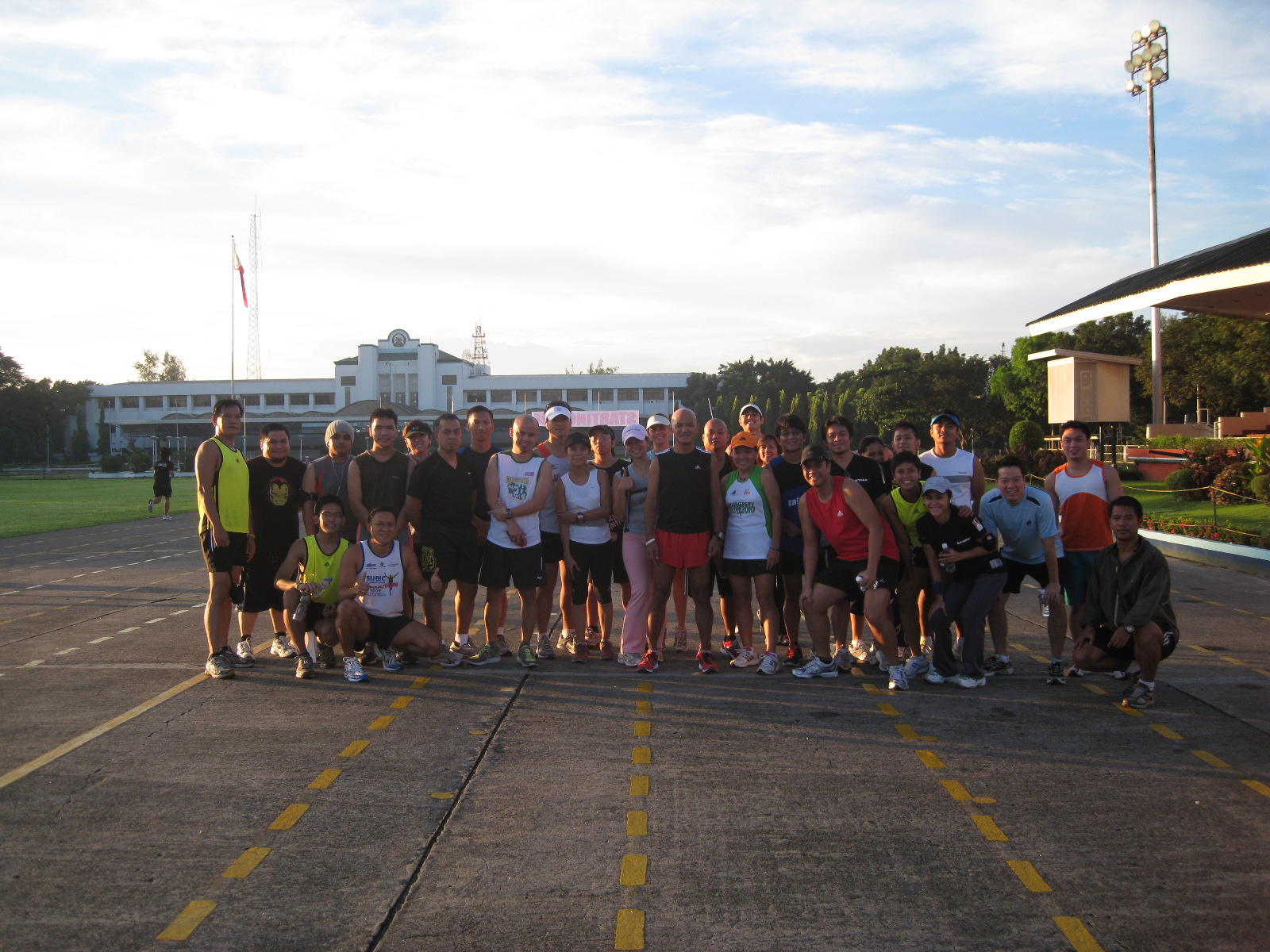
4. A group of 32 runners joined the 1st FREE Fun Run. It was a combination of runners coming from the ST Microelectronics Running Club from Los Banos, Laguna; AFP Officers and their dependents; some takbo.ph members; new runners; ex-PMA cadets; and “first timers” in Camp Aguinaldo whom I had a chance to talk to. After a short welcome remarks, I led the stretching exercises and we were off on the road for our 8K Fun Run.

5. For the faster runners, it was a tempo run for them. For the “first timers” in Camp Aguinaldo, it was a tour experience for them as they were able to see the different structures and buildings inside the camp. The hilly portion at the back of the camp was a challenge to the new runners. In less than one hour, all the runners were back at the Grandstand and they were given bottled water and their copy of their Certificate of Finish for the run. Everyone had their own post-stretching exercises after they crossed the finish line. A digital clock was displayed at the Grandstand for the runners to see as soon as they cross the Finish Line.

6. I conducted a post-briefing for everybody as I accounted for all the runners. I announced that all FREE Fun Runs will be conducted at Camp Aguinaldo as my request for the use of the Philippine Army’s Grandstand & Parade Ground was disapproved due to activities being held in the said place on Sundays. Well, the “decision makers” at the Philippine Army did not see my “vision” for conducting FREE Fun Runs in their “turf” as I wanted more of their dependents and the involvement of the civilian sector in exposing the youths in 3K or shorter distance runs. I really wanted these runs at Fort Bonifacio to be short, quick, and fast as the whole activity should be finished within an hour. If the runs start at 6:00 AM, the activity should be finished before 7:00 AM.

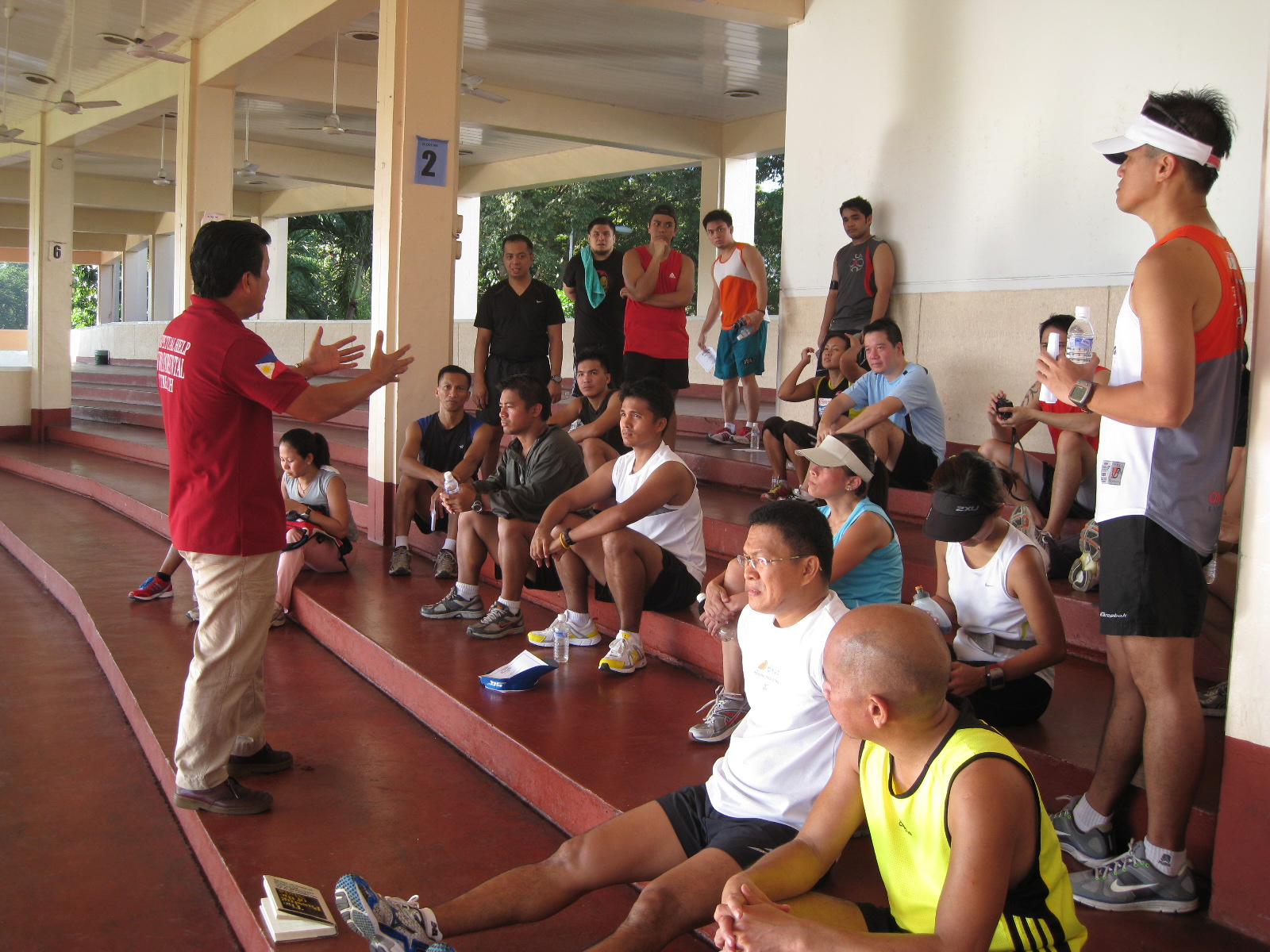
Jeff Tamayo of POC Delivering A Short Lecture

7. The runners were fortunate to have my friend, Mr Jeff Tamayo, the ASIAN President of the Soft Tennis Sports Federation and member-officer of the Philippine Olympic Committee, who was a part of the Disaster Readiness Display activity in preparation for the incoming Super Typhoon “Juan” being held at the GHQ Parade Ground. He conducted a short lecture to all the runners on Sports Nutrition. The brief and concise lecture of Mr Tamayo was very constructive and helpful to all the runners. Thanks, Jeff for that “on the spot” lecture!  

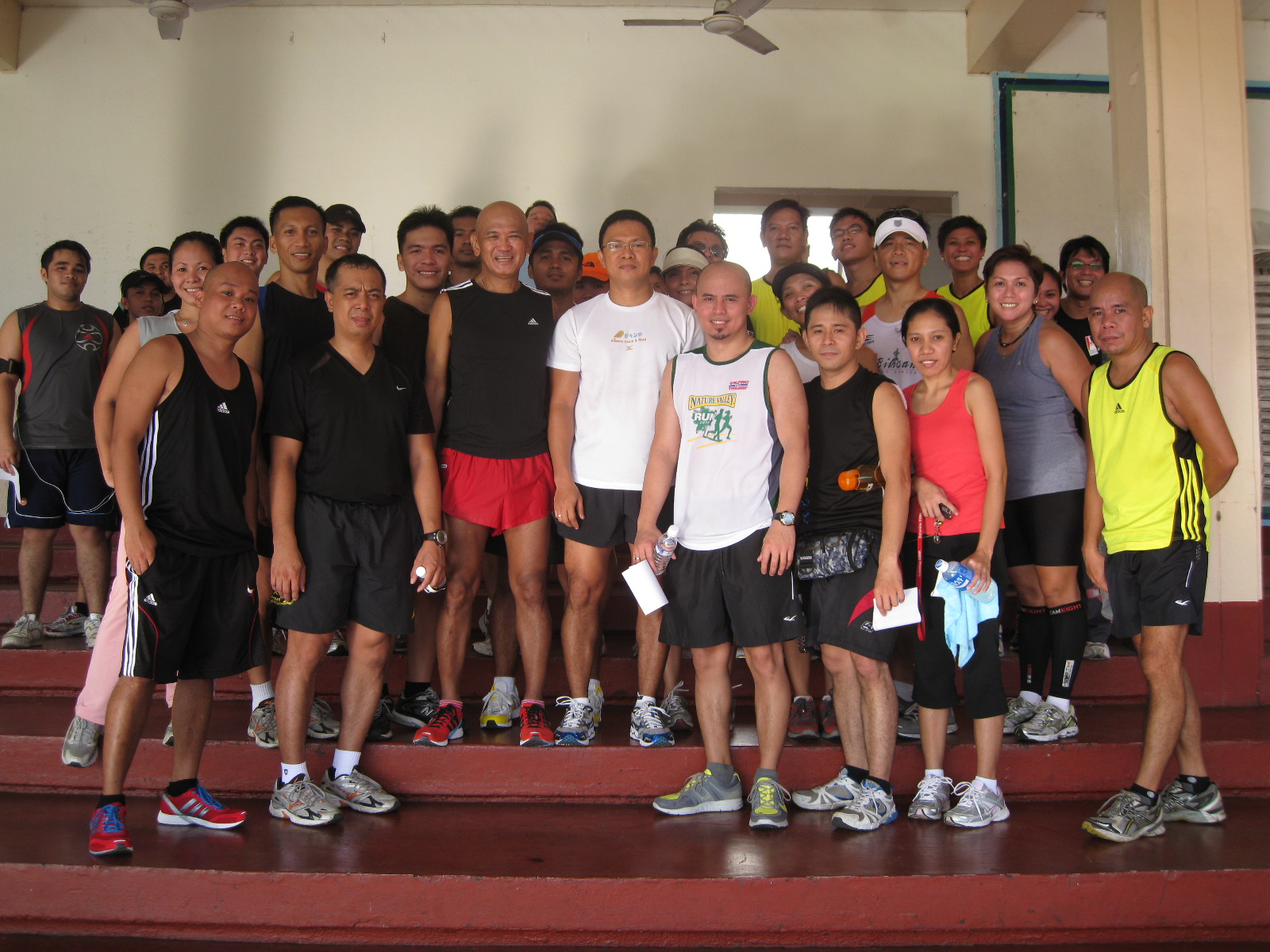
8. Before 8:00 AM, the activity was terminated after some photo-ops with the runners. To all the runners and supporters, thank you very much and I hope more of our new runners will join these FREE Fun Runs.

Group Picture After The Event

BDM 102 Lecture #2


“Experience is the best teacher”

The second session of the 2011 BDM 102K Ultramarathon Race Lecture will be held this coming Friday, October 22, 2010 in one of the Function Rooms of the Philippine Army Officers’ Clubhouse, Headquarters Philippine Army, Fort Bonifacio. The lecture will start at 6:00 PM and ends at 7:00 PM.

I have invited two distinguished guest lecturers whom I consider as well-experienced in the field of ultramarathon events since the start of the BDM 102 and other PAU Races for the past two years. The first lecturer is Gene Olvis who had been consistently joining the BDM 102 and PAU races. He will impart to the audience about his training and preparation for the BDM 102 races as well as his experiences during the race. On the other hand, I have invited Bea Hernandez, the wife of ultramarathoner Mark, who will discuss her tips and experiences on being a Support Crew to his husband to the recent BDM 102 and PAU Races.

All “first-timers” for the BDM 102 and those who are still waiting for their invitation are highly encouraged to listen and be a part of this lecture. BDM 102 “veterans” who are qualified for the 1st BDM 151 are also encouraged to join this lecture.

(Note: The Secretariat of the 2011 BDM 102 event will be present during the lecture and applicants for the BDM 102 who have not yet received their “invitation” can coordinate with them. The Secretariat will also be there to receive and process registration for the 4th PAU 50K Run/”T2N”)

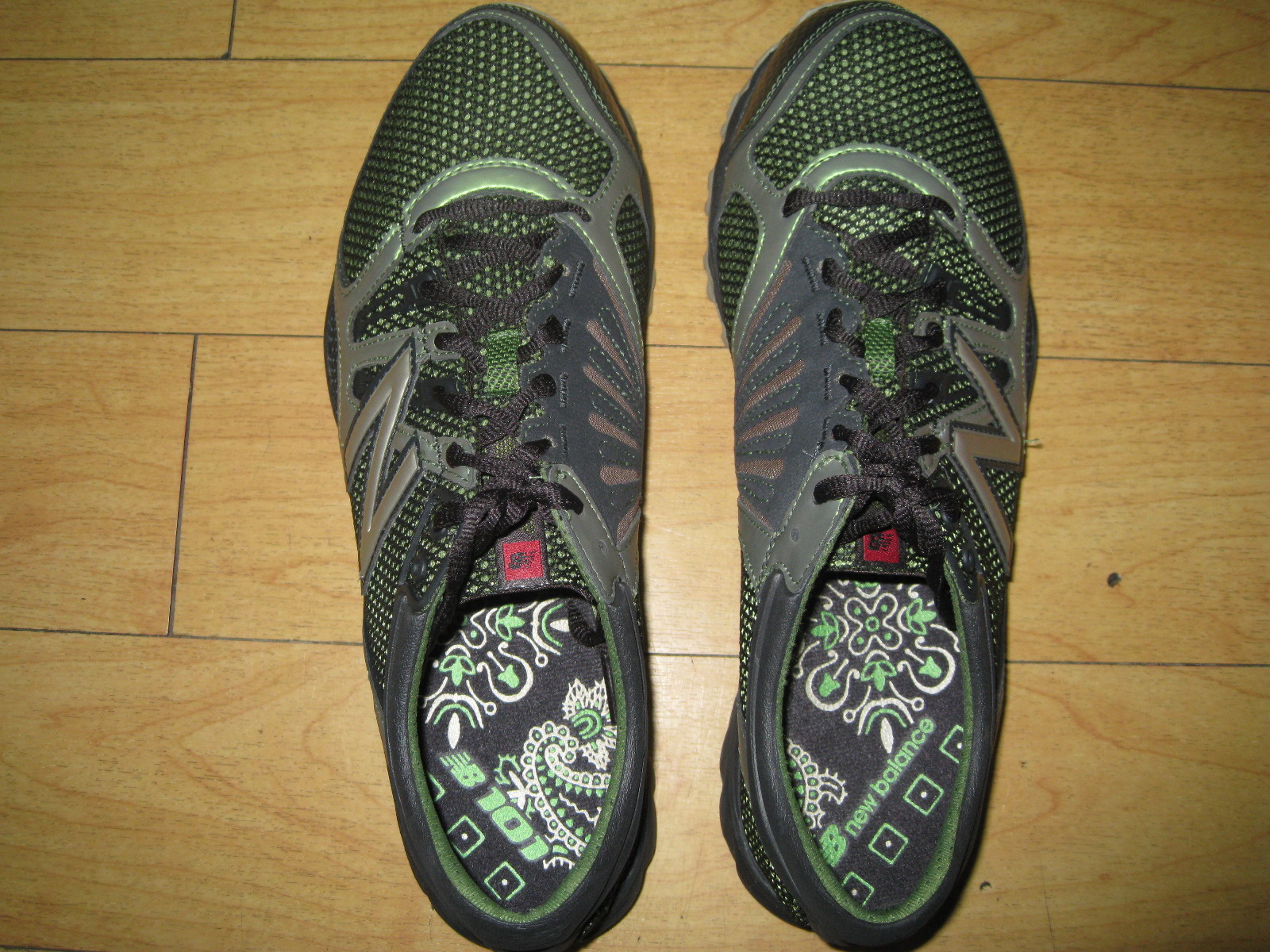
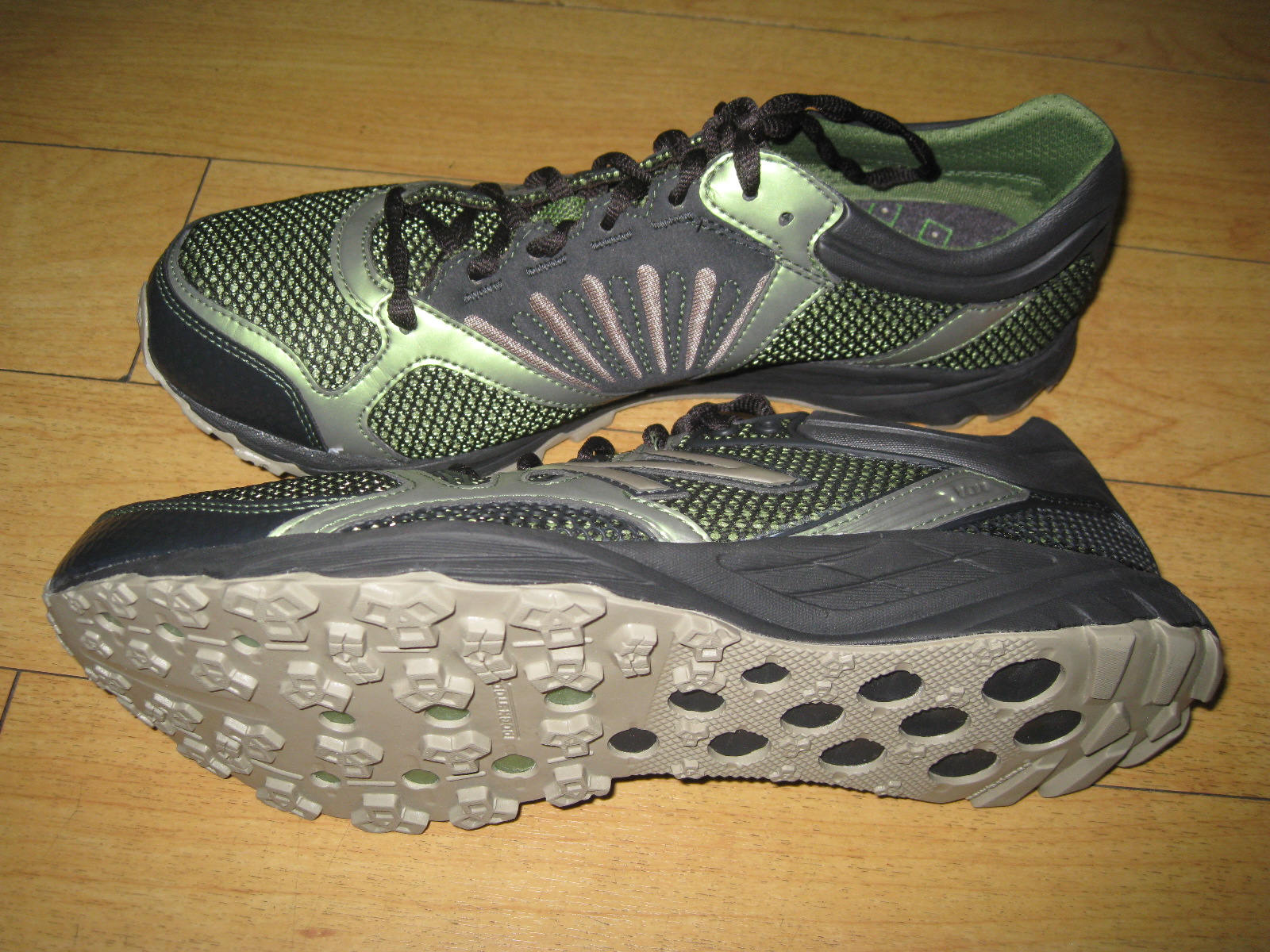
New “Toy”: New Balance MT 101


Two years ago, I donated my New Balance 902 thinking that it was the cause of my Achilles tendon pains not knowing that I was already attacked with gout. Since then, I never bought New Balance as my running shoes. Instead, I used ASICS for my training and competitive road races. 

In almost two years, I’ve started reading the blogs of famous trail ultra runners and I shifted slowly to trail running. I started to buy trail shoes and apparel from The North Face/Patagonia and I was satisfied with their performance. I have two Arnuvas; one Hedgehog; one Single Track; and one new Sentinel (courtesy of July Oconer). However, in almost all my trail runs to the “Brown Mountain”, I’ve been using the lightweight Adidas Osweego and Adizeros (Mana & Adios) and I did not have any problems with them on their traction and thin soles. Using these lightweight Adidas Adizeros for the past months gave me the confidence to try more “minimalist” trail shoes.

Top View

I had the chance to buy the popular New Balance MT 100 from Zombie Runner when I ran the Headlands 50 last July 2010 but I hesitated due to the fact that I suspected that a newer version is coming out soon. Reading from the blog of Anton Krupicka, he mentioned that he was invited and made a trip to the Corporate Office of New Balance for a meeting with their Research & Development Division and I suspected that there must be a significant importance to such meeting. 

Side View With The "N" (Narcise) Letter

 I personally guess that this new version or improvement of the New Balance MT 100 (trail shoes used by Anton Krupicka in his Miwok 100 and WS 100 this year) is the product of such meeting or for a more “minimalist” shoes to be released soon.

Well, I could not compare between the NB MT 100 from the latest NB MT 101 as I have not seen intently and used the MT 100. But I am sure that this is the improved version of the “minimalist” trail shoes that is available from New Balance. This could also be the answer of New Balance to the popularity of shoes that mimics barefoot running which is becoming popular for the past two years.

Another Side View Showing The Thin Sole

 Anyway, I am still trying to find a place where I could “break-in” this new toy. Definitely, it will be a choice between the Bataan/Mariveles or the Sierra Madre Mountain Ranges. We will see how these shoes will perform in our mountain trails.

Another Side View With The Sole Traction

For those who are interested to purchase this trail shoes, you can visit the website of Zombie Runner or wait for early next year for its availability in our local New Balance Stores. At www.zombierunner.com, all the things you need to “play” and run in mountain trails are called “toys”.

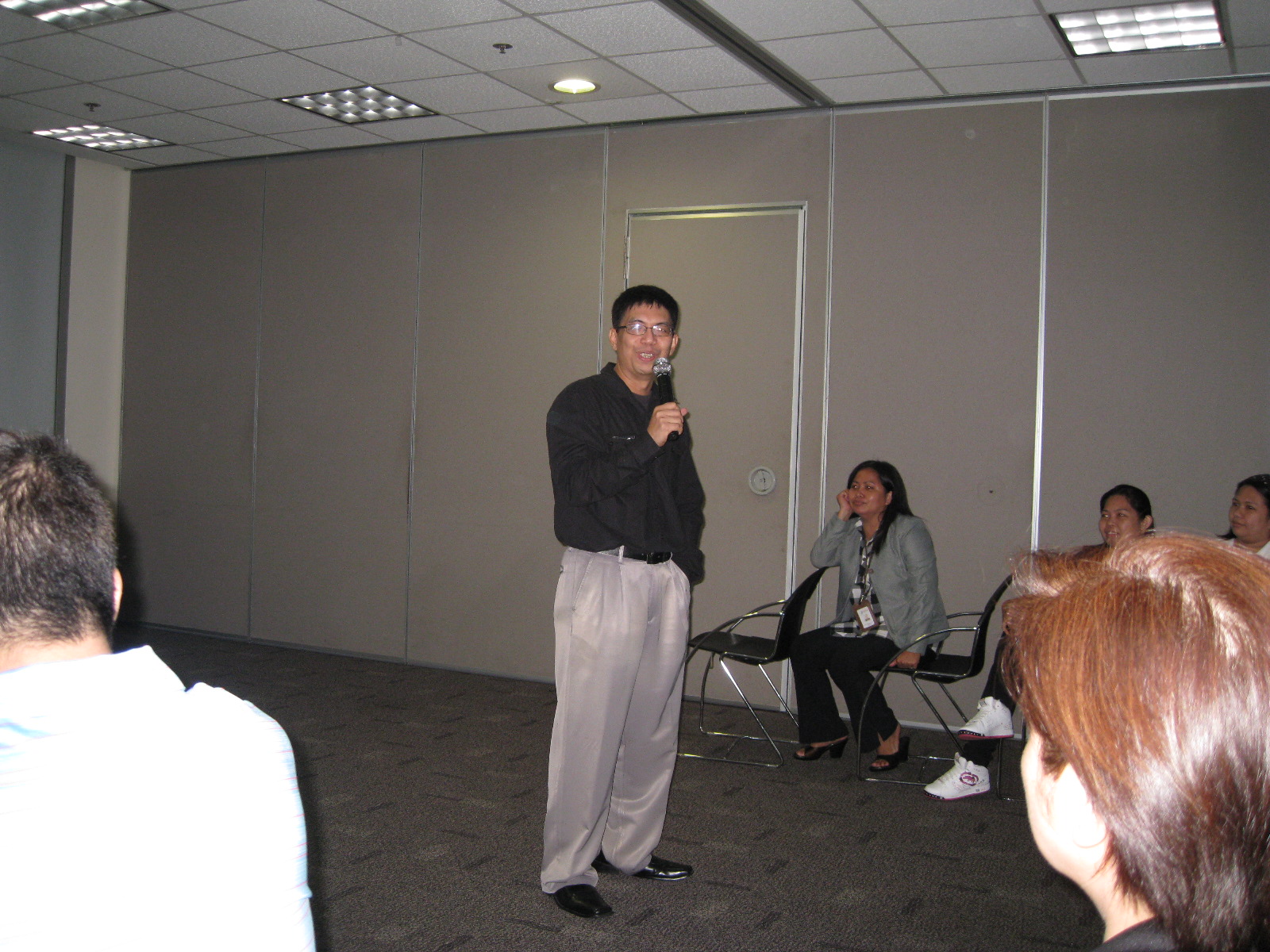
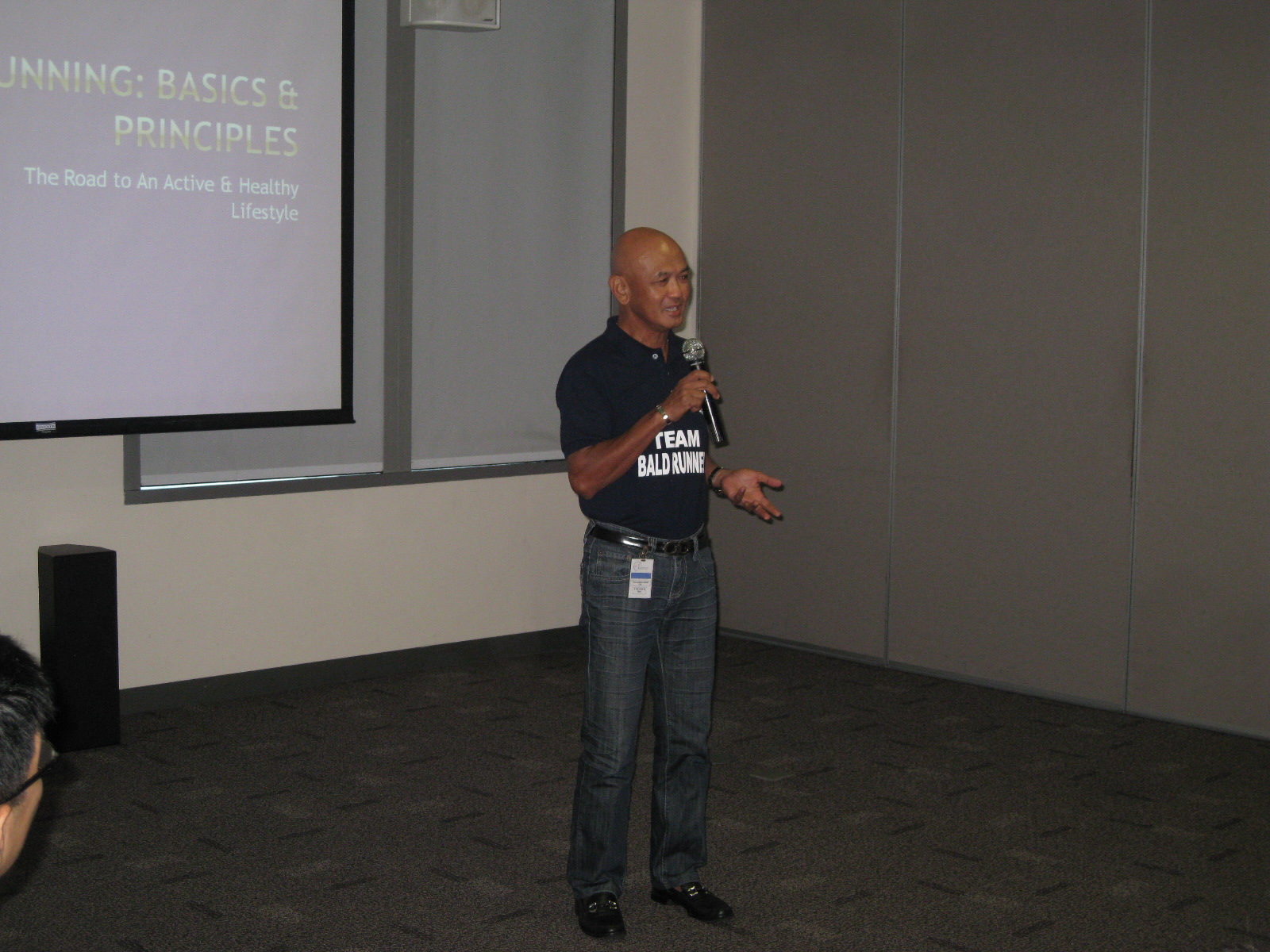
Running Lecture @ WRIGLEY Phils., Inc.


Mike Panlaqui, a passionate runner, is the HR Head of Wrigley Philippines, Inc and he is a regular visitor of this blog. If I can still remember right, he posted his first comment to this blogsite and sent me an e-mail when I was asking for journals and documents that will attest and support the claims of past multi-day runners of running along the different islands of the country. He revealed to me that he was once a part of the Planning Group of the GOMBURZA which was a group of priests and laymen who did those multi-day running events in the country.

It is unfortunate that he does not know if GOMBURZA had a daily journal on those multi-day runs. What he knew were the schedules and arrangements made for the runners before they started their multi-day runs from Manila.

In one of our exchanges of e-mails, he invited me to conduct a running lecture and clinic to the personnel of Wrigley Philippines’ Corporate Office which is located at the Bonifacio Global City. The running lecture and clinic was conducted o/a 4:00 PM on September 22, 2010. Mike’s overall objective in this lecture is for him to organize their corporate office’s running club and for its officers, staff, and personnel to adhere to a healthy and active lifestyle through running. 

Mike Panlaqui's Introduction to the Running Lecture
"George Sheehan" of the Philippines?

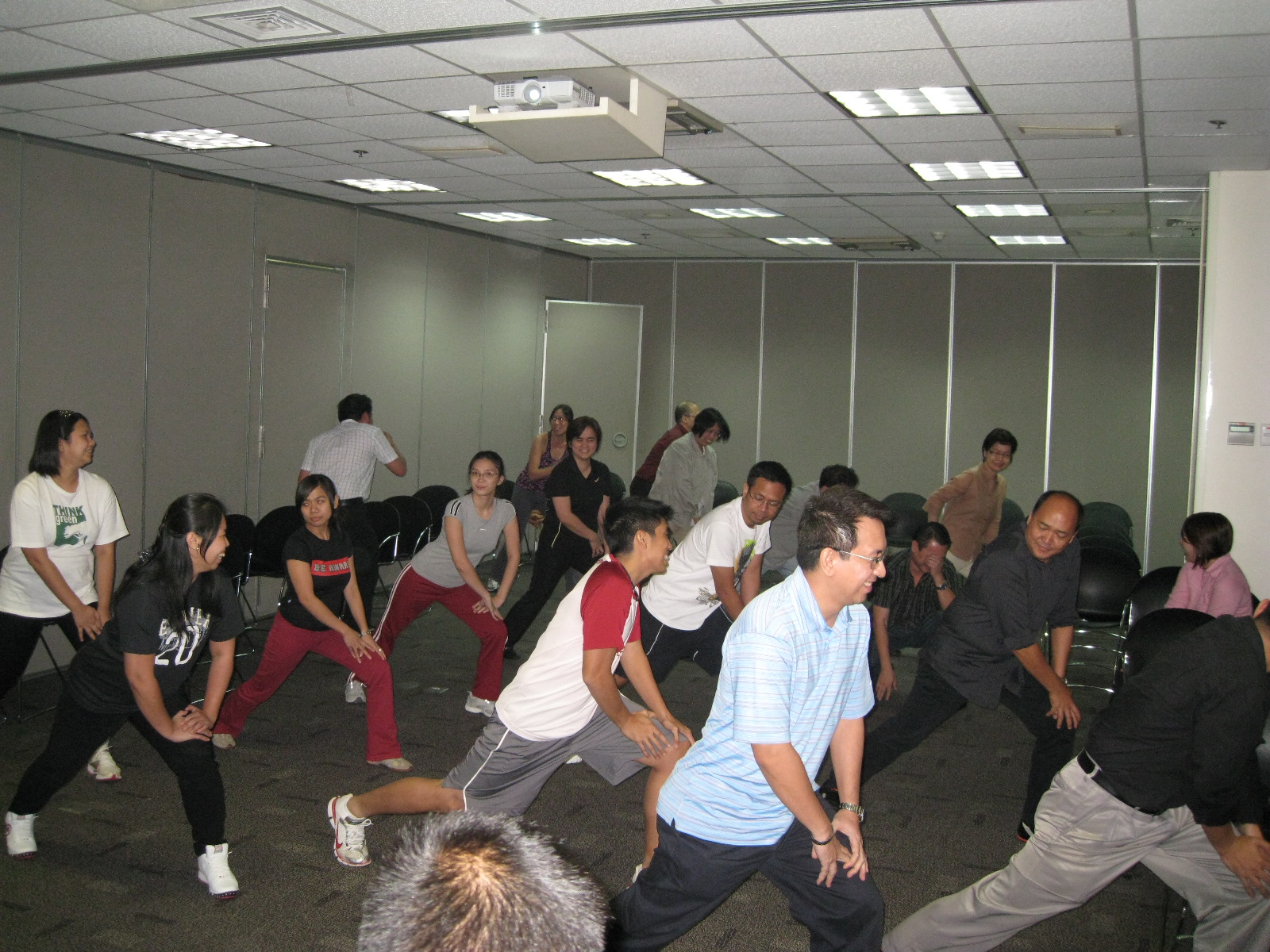
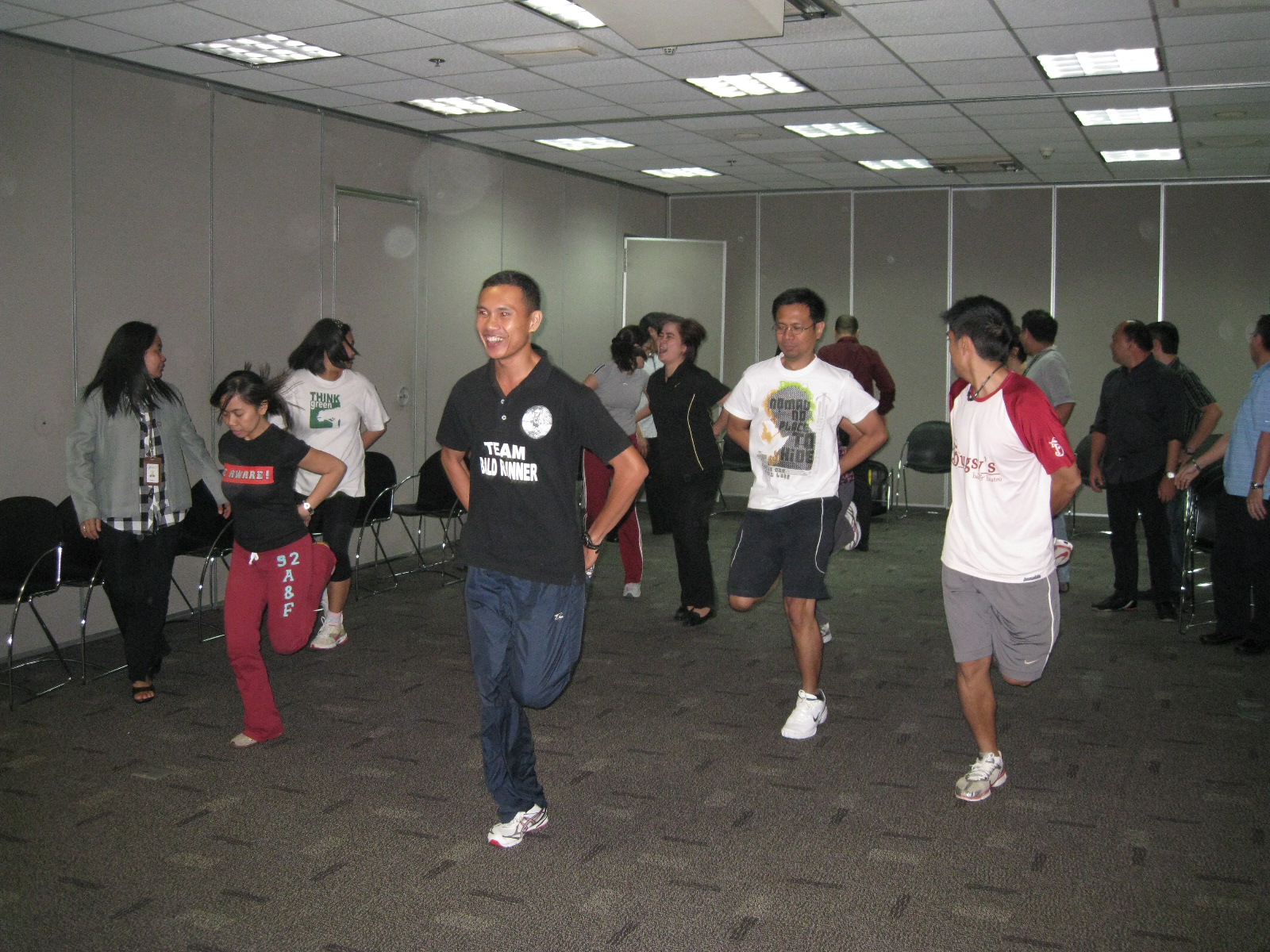
After the running lecture, the participants were encouraged to perform the different stretching exercises which we advised them to do before and after their running workout. The members of the Elite Team Bald Runner led and demonstrated the different stretching exercises.

Stretching Exercises After The Lecture

Aside from the stretching exercises, we also demonstrated to the participants important running “drills” which they could do before they do some “speed” training workouts at he Oval Track or during their running workouts. The lecture room was very spacious for the said “drills”.

Running "Drills" Inside The Lecture Room

What is good about the timing and scheduling of this corporate’s running lecture is that, Mike made it a point to conduct this activity during the company’s quarterly celebration of the employee’s birthday for the 3rd quarter of the year. It means that we were able to partake of the food and drinks for the party.

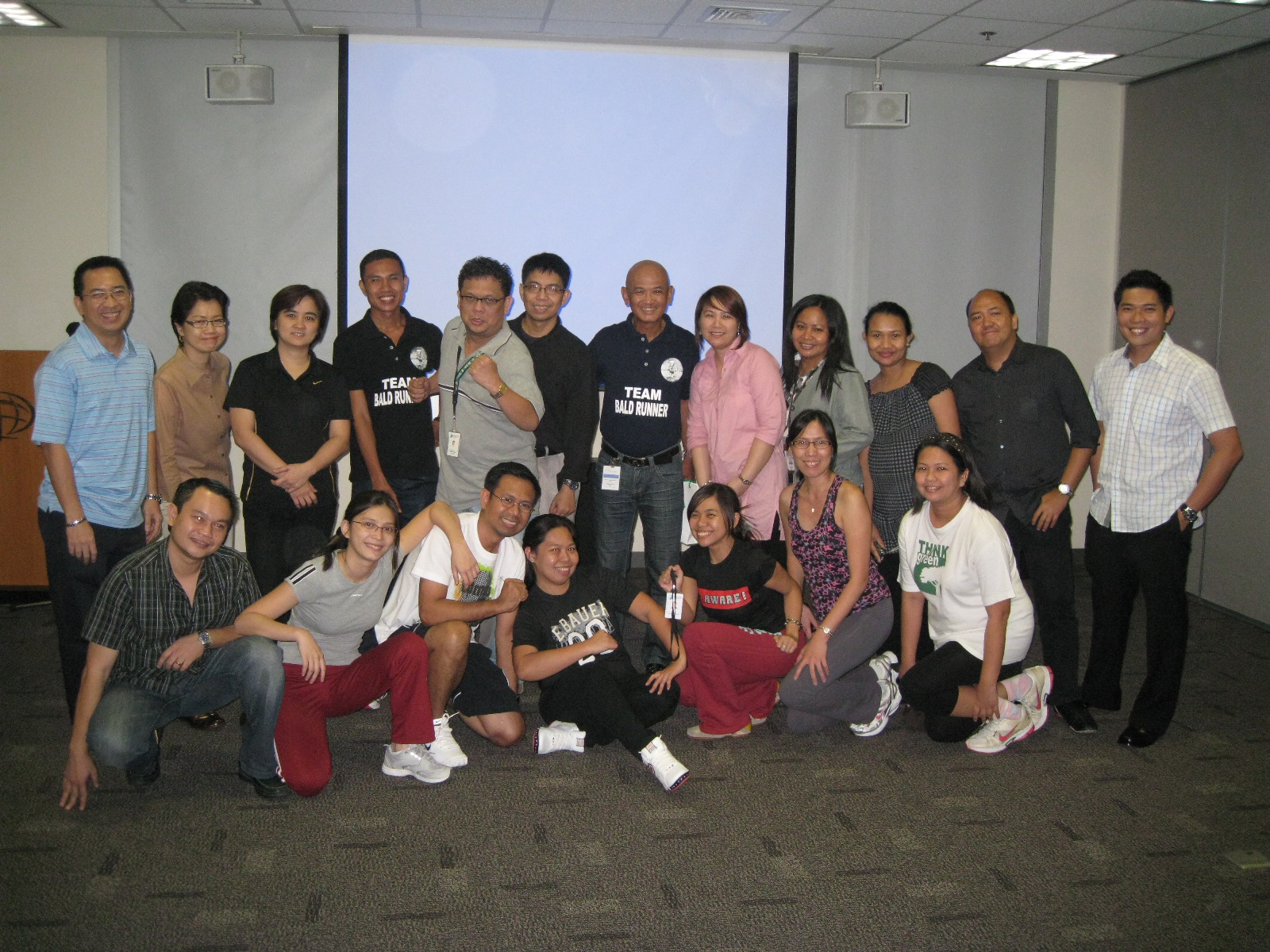
Group Picture For The Future "Wrigley's Running Club"

To conclude the event, Mike and the rest of the staff of the company had a group picture, presented to us some “gifts” and support to my Elite Team BR, and be a part of their quarterly birthday party celebration.

To Mike and Wrigley Phils, Inc, thank you very much for the warm reception and interest in spreading the benefits of running to your officers, staff and employees. Please continue supporting our elite athletes in long distance running.

“Heat Can Kill” by George Sheehan


The following article was written by George Sheehan in his book, “Running To Win”. I purposely wanted this article to be reposted in this blog in order to remind and emphasize to the runners about the danger of heatstroke in running. Many have died due to heatstroke and it is upon the individual runner to take extra precaution on this. On the other hand, it also encouraged that Race Organizers should employ Medical Teams which are trained to deal with heatstroke and better yet, if they are trained as runners also as this article would show that “immediate response and ON-SITE treatment” of heatstroke will make difference on the survival of a victim.

The following is the article as copied from the book. Enjoy reading it. (Note: BDM 102/151 runners should take note on this article)

Heat Can Kill

Despite all we have learned in recent years about heatstroke, runners continue to die from the destruction it wreaks on the human body. These deaths are due to two factors: first, the failure to take the necessary precautions to avoid heatstroke; and second, incorrect management when it occurs.

Precautions against heatstroke are the responsibility of the runner. The protocol to prepare for heat stress, especially encountered in competition, is well established. It includes training in hot weather, carbo-loading, hydrating with fluids, and running at an appropriate pace. During the race, water should be taken at regular intervals as well as splashed or sprayed over the body.

When I run, I wear a painter’s cap in which I place a bag of ice cubes, and I continually soak the cap with water. I never pass a water station without stopping to drink two full glasses and pour one over my head. Wherever there is a hose, I run through the spray, and I carry a cup in the hope that I can fill it with water. And I purposely run 15 to 30 seconds per mile slower than my usual time.

These practices have become so common among runners that the number of heat injuries sustained in races declines each year. Nevertheless, there are always some runners who push too hard, don’t take time to stop for water, or cut corners in other ways. These are mainly highly motivated recreational runners or newcomers to the sport, not veterans. And they are the ones who collapse with heatstroke. Typical symptoms include dry skin, dizziness, headache, thirst, nausea, muscular cramps, and elevated body temperature.

Heatstroke can be a catastrophe, but it need not be. Despite the seriousness of the situation—it’s potentially fatal—correct medical care can and will save the day. And by correct care, I mean the type provided by disaster teams at two of the biggest races in the world run in high heat stress conditions—the Sydney City-to-Surf Race in Australia and the Atlanta Peachtree Run in Georgia, held in July.

While we continue to see random reports of people succumbing to heatstroke, the Sydney medical team has supervised 200,000 runners without a death from heatstroke. In a nine-year period, only two patients were even hospitalized.

There is good reason for this—immediate treatment. Dr. Rowland Richards thinks his Sydney group has arrived at the correct way to treat heatstroke and the correct place to do it: at the race site. Getting a heatstroke victim to a hospital wastes precious time, risking delay in diagnosis and treatment. John R. Sutton, M.D., professor of medicine at the McMaster University in Hamilton, Ontario, Canada, agrees: “Hospitalization may be the very worst approach, especially with subjects whose vital organs are cooking at 107 to 109 degrees Fahrenheit.

That, in a nutshell, is the problem. Fatal heat injury is the result of prolonged exposure to high temperatures. The Sydney physicians are able to reduce initial core body temperatures, taken rectally, of 107 to 109 degrees Fahrenheit down to 100 degrees Fahrenheit in as little as 50 minutes, on the average. This is achieved by applying instant cold packs over the neck, armpits, and groin, along with rapid intravenous rehydration, in every runner with a core temperature of over 100 degrees Fahrenheit. If low blood sugar is suspected, 50 cc’s of 50% glucose is given intravenously. “Failure to follow this routine,” says Dr. Richards, “could result in serious consequences, including death.”

Fortunately, in the one instance in which a heatstroke victim was not given this therapy (a misdirected ambulance was 40 minutes late, then took him to the hospital), the runner did survive.

The Atlanta medical team works on much the same principle. Again, the emphasis is on cooling. Joe Wilson, M.D., the physician in charge, stresses the urgency of bringing down the temperature as quickly as possible. Often this is all that need to be done. Within 30 minutes, patients are usually alert, no longer nauseated, and able to take fluids. If not, intravenous fluids are started. And as in Sydney, no runner has ever died from heatstroke at the Atlanta race.

After reading Dr. Richards and talking with Dr. Wilson, I realized that preventive measures are important, but nowhere near as important as adhering to a tried-and-true protocol aimed at rapidly reducing core body temperature. A heatstroke is a heatstroke. A runner can do everything right and still push himself or herself into a heatstroke as severe as one incurred by an untrained, unacclimatized beginner. At that point, the runner’s life may depend on on-the-spot treatment by an experienced disaster team.

“What is required,” says Dr. Sutton, “is an immediate diagnosis, followed by rapid cooling at the site of the race. Each moment’s delay may worsen the outcome. It is no longer acceptable to have some amateur “ad hoc” arrangement.”

The facts bear that statement out. When we have amateurs running in hot-weather races, we should not have amateurs treating them.

Even the presence of the best professional  on-site disaster team should not keep you from doing your homework, however.

Official Result: 1st Mt Pinatubo 50K Trail Challenge


The following is the Official Result of the 1st Mt Pinatubo Challenge (MPC) 50K Trail Run.

I would like to specifically mention that the Northern Luzon Command (NOLCOM) of the Armed Forces of the Philippines gave me the “GO” signal to push through with the trail run as the Balikatan Exercise (Proper) is scheduled to start yet on October 14, 2010 with the AFP components and the US Armed Forces Counterpart. I did not want that the race would be cancelled, re-scheduled, or terminated when most of the runners are still on the trail. I have the impression that the Philippine Air Force scheduled a practice run on the events/activities that they will be performing during the said military exercise with our US counterparts on the prescribed scheduled dates.

However, the top runners who were fast and strong were not affected with the practice runs of our Philippine Air Force and I have decided that their Finish Times will be upheld as the prevailing record for a solo run finish time from Sta. Juliana, Capas, Tarlac up to the Crater Lake of Mt Pinatubo and back. As I could not determine the exact elapsed time for each runner who were directed to stop in one of the Aid Stations due to the helicopter-airborne firing from a MG helicopter, the finish times reflected below will be considered as the official time. Guys, you will have your chance to redeem yourselves and improve your finish times on the next edition of this trail race!

Due to this predicament, I decided to remove the prescribed cut-off time of 10 hours and allowed everybody to finish and awarded each one who crossed the finish line with their “finisher’s trophy” and Finisher’s T-shirt.

My congratulations to all who started and finished the race. You have finished what I consider as the “hardest and most challenging 50K trail race” in the country.  

1st PAU Mt. Pinatubo 50K Trail Challenge
October 09, 2010
       
       
              NAME TIME  
       
1 Hermogines Olvis 6:33:36 Champion (Male)
2 Jonel Mendoza 6:45:56 1st Runner-up (Male)
3 Moses Moreno 6:46:18 2nd Runner-up (Male)
4 Chito Vegim 7:05:13  
5 Graciano Santos 7:10:13  
6 Noel Hernandez 7:43:20  
7 Marcos Lontoc 7:47:13  
8 George Dolores 7:47:57  
9 Mon Marchan 7:57:20  
10 Dindo Diaz 8:34:47  
11 Camilla Brooks 8:37:46 Champion (Ladies)
12 Rufino Morimonte 8:37:58  
13 Melvin Pangan 8:38:06  
14 Don Ubaldo 8:49:21  
15 Earl Warren Navor 8:50:54  
16 Christian Oting 8:53:45  
17 Ian Colendra 8:54:53  
18 Allan Bandiola 8:55:52  
19 Christian Neil Pioquinto 8:55:52  
20 Paolo Osmeña 8:55:52  
21 Saturnino Camamongan 8:57:51  
22 Gil Brazil 9:01:41  
23 Mark Adrian Hernandez 9:04:39  
24 Simon Pavel Miranda 9:06:35  
25 Dennis Ravanzo 9:22:05  
26 Vicky Ras 9:22:05 1st Runner-up (Ladies)
27 Grimaldo Anecito 9:26:10  
28 Marie Anne Constantino 9:29:29 2nd Runner-up (Ladies)
29 Joey Baladad 9:30:54  
30 Ronnel Go 10:52:09  
31 Raul Tapia 10:57:27  
32 Allen Gaspar 11:01:05  
33 Jose Lorenzo Mina 11:03:55  
34 Marcelino Tomas 11:04:19  
35 Bong Bernadez 11:04:54  
36 Ed Yonzon 11:05:09  
37 John Jeffrey Avellanosa 11:05:15  
38 Precy Hernandez 11:08:42  
39 Emma Alvarez 11:14:39  
40 Kian Vicera 11:05:08  
41 Wellington Yao 11:05:10  
42 Carlos Nobleza 11:18:44  
43 Christian Paul Forbes 11:18:48  
44 Roberto delos Santos, Jr 11:18:52  
45 Greg Mana-ay 11:24:32  
46 Sherwin Tommy Botabara 11:25:02  
47 Vans Camanong 11:27:59  
48 Leigh Arnel Biscarra 11:34:15  
49 Larry Daliwag 11:38:18  
50 John Allan Maigue 11:51:20  
51 Ian Ferrer 12:20:50  
52 Mark Fer Castillo 13:06:59  
53 Ruben Acebelo 13:10:52  
54 Jinkee Guerrero 13:10:52  
55 Norberto Mortel 13:14:58  
56 Marco Christopher Montaos 13:15:06  

BDM 102 Lecture #1: History & Honesty


Bataan Death March Logo

The 1st Lecture for the 2011 BDM 102 was conducted last October 1, 2010 in one of the Function Rooms of the Philippine Army’s Officers’ Clubhouse. It started on time at 6:00 PM in the presence of 15 runner-participants & applicants.

I personally conducted the lecture with the topics, History & Honesty. The following is the summary of the lecture:

History

Based from my readings in history books and personal accounts of survivors of the Bataan Death March of 1942, I discussed to the attendants about the history of the event that happened from April 9-24, 1942 which resulted to the killing and death of an estimated 20,000 POWs during the March and ultimately, during the POWs stay in their Concentration Camp at Camp O’Donnell, Tarlac. These POWs during the March was a combination of Filipinos, Americans, Chinese-Filipinos, and civilians. Literally, these POWs were made to “march” for a distance of 102 kilometers from Mariveles, Bataan to San Fernando, Pampanga; transported by train from San Fernando, Pampanga to Capas, Tarlac; alighted from the Railway Station; and then marched/walked for another 11 kilometers from Capas Poblacion to Camp O’Donnell.

This unfortunate event during the World War II was considered as the most barbaric act in violation of the treatment of POWs as provided by Geneva Act. The people responsible for this dastardly acts during the Bataan Death March were tried by Military Tribunal/Court after the war and they were executed to their death. However, this event in history will be always remembered and commemorated.

The history of the BDM 102K Ultramarathon Event was also discussed with the emphasis that the commemoration of this important event should be done in the very place where the event happened. Some countries had been using BDM as the title of their running events but they are done in their respective countries. It is for this reason that we should continue commemorating this event in the most practical way which is through running an ultramarathon event. It was initially was a dream but through persistence and patience, this event became a reality with the support of runners who believe that it is worth doing in memory of our dead heroes and living survivors of the infamous Bataan Death March.

Honesty

For the past editions of the BDM 102, I always emphasized the “honor system” in a running event. I told to my audience about my personal observations on the actuations of some of the runners and the reports I received from my marshals and staff with regards to honesty in running this event. My past journals/posts about the 1st BDM 102 would explain more about such incidents of breach of honesty during the event.

The 102K distance is daunting and running under the heat of the sun is very challenging. Such distance and challenge would tempt every runner to be honest or not, just to be able to finish the race within the prescribed cut-off time of 18 hours. Finishing an ultramarathon distance is a “mind game” and each of the runner must be able to prepare and train physically and mentally.

We made some adjustments on our protocol in order to monitor our runners along the route but these are not enough to make sure that runners with bad intentions would be detected by our staff/marshals. It is in this view that our outfit would be able to encourage and prepare all interested runners to run along the actual route through “test runs” before the scheduled race day. 

After a brief open forum, the lecture was terminated after one hour.

The next BDM 102 Lecture will be held on October 22, 2010 at the same time and place. One of the top runners in this year’s BDM 102 will be invited as the resource speaker and another resource speaker will be discussing on her experience and “tips” as a Support Crew to her runner-husband.

To all BDM 102 runners, train well and keep strong!

Intensity


Few days after the 1st CAMSUR Marathon, I had a conversation with one of the Finishers who finished the race in sub-four hours. The runner had been running his past Marathon Races in 3:35 to 3:50 hours but he would like to be consistent and cross the barrier of less than 3:30 hours. He simply meant that it is hard to master and predict your finish time in a Marathon Race if you are training and running the race here in the country. That’s true!

At the back of the mind of this runner, I could only analyze that he wants to set a record in his PR best time in his Marathon Race. Through my experience in running and being exposed to races here and abroad, I told him that the prevailing weather/climate in the country is the number one factor that prevents us from coming up with our PR best time. It is best to train hard here in the country and then choose/plan for a race in one of the temperate countries like China, Japan, South Korea, Taiwan, Australia, New Zealand, or to the United States. Running a race in a perfect and cool temperature makes wonder to the racing/running body. Aside from a better quality of air and running environment, I never had any problems with muscle cramps on my legs and problems on hydration.

 The second most important factor is the intensity of one’s training. If you want a detailed explanation of this factor, you have to refer to the book, “Jack Daniels’ Running Formula” where you will encounter Vo2Max, VDot, and the different range of average pace depending on the intensity of your workout. Your average pace is categorized into the following types of workout intensity—EASY, Threshold, Marathon, Race, and Interval Paces. Based on your predicted time to finish a certain distance, you have to follow each recommended pace depending on the intensity of your running workout. In my case, I have to maintain an average pace of 5:45 minutes per kilometer in my EASY runs to be able to finish my predicted time of 3:45 hours in a Marathon Race. You can just imagine how I need to be consistent with my training if you will know my average paces in my Threshold, Marathon, Race, and Interval workouts. The bottom line is that, I want you to get hold of the book by Jack Daniels and learn the details from it. Remember that the “devil” is always at the details.

The last thing that I could recommend to people who would want to establish their best PR time is to be able to value the word, RECOVERY. In between these workouts with intensity, you must be able to find time to have your body recover from the stress of such workouts. You must have to follow a standard weekly schedule for your running workouts. In the many journals, books and reading materials, I found out that the best competitive runners follow a 7-day a week schedule that is generally presented like this:

Monday—Easy and Recovery Run

Tuesday—Speed Training/Intervals

Wednesday—Moderate to Easy Run

Thursday—Moderate to Easy Run

Friday—Speed Training/Tempo/Intervals

Saturday—Easy to Moderate Run (minimum of 1 ½ hours)

Sunday—Long Steady Long Run (minimum of 2 ½ hours Easy Run)

You could see in this basic weekly schedule that the body would be able to recover after your Speed Training days and after your weekend/Sunday LSD runs. You could also lessen the intensity of your weekly average runs after 3 weeks, making at least one week as recovery week within a month’s of training schedule.