After finishing the 2020 Borneo Ultra Trail Marathon (BUTM) 106K Race in Kota Kinabalu, Sabah, Malaysia on March 15, 2020, the Philippines was put on strict Lockdown due to Covid-19 upon my arrival in Manila in the early morning of March 17, 2020. From the Manila International Airport, I immediately went directly to my Playground, driving my personal vehicle, in the Province of Bataan which is 110 kilometers away northwest of Metro Manila. This is the place where I spent those “Lockdown” period/days as imposed by the Government due to the pandemic brought about by Covid-19.
Having surrounded with hills and mountains in my Playground and with a “Backyard Loop” once I step out of the door of the house, I maintained my daily training with the hope that the races where I registered would still be held as scheduled.
Sacrifice Valley Ridge Trail
A new ultra trail race of KOTM (King of the Mountains) series in the Cordillera Region, Pulag 100K Ultra Trail Race, would be in its first edition on April 18-19, 2020, was supposed to be my next race for the year. But because of the prevailing situation in the country, the Race Director deemed it to be cancelled for safety reasons. Despite this situation, I did a “virtual run” on the date of the event in my Backyard Loop where I finished 50K in 11 hours and some minutes!
For the month of May, I was supposed to go to California, USA and join the 2020 Western States 100-Mile Memorial Day Training Runs for the said weekend. I made already my accommodation reservation and I was glad I was not charged for it. Also, I was glad that my travel reservations were not scheduled before the Lockdown was imposed.
By the end of this June, I was supposed to go to Europe as I was accepted in a lottery to join the 2020 Mont Blanc Du Marathon 42K Race in Chamonix, France but it was cancelled by the Race Organizer/s. I guess, I opted to have my registration on a “roll-over” for the 2021 edition.
Before the end of May, I was able to request for the refund of my registration fee for the Eiger Ultra Trail Race 51K as the Race Organizers announced on the earlier part of May that this event is also cancelled. It was supposed to be my second time to visit the Jungfrau-Interlaken-Grindelwald Region in Switzerland.
So far, those are the four Trail Races/Events which are cancelled due to the Covid-19 situation. I was fortunate that I did not plan ahead and spend some money in advance for my travel arrangements.
The following were the reasons why I joined this trail race: (1) This race is my first trail running event for the Season 2020 and my second trail running event after I renewed my subscription as a CTS athlete since the middle of November last year; (2) This is supposed to be a part of my training in preparation for my 2020 TransLantau 50K participation in Hong Kong as my last Long Run (whether I finish the race or not); and lastly, (3) To confirm and validate my training which was given as a part of my weekly workout—the use of weighted backpack for hiking for at least once a week.
Since the RD of the event is a friend of mine, I sent him a message of my intention of joining the race being the first edition of this event. He was glad that I would be attending this race. In the later days before the race, I asked him of the directions going to the venue as I am not familiar of the other side (eastern) of Itogon, Benguet. Two days before the event, I was able to trace the route going to venue, coming from Baguio City. With the help of a local living in Sitio Dalupirip and working as the Municipal Nurse of Itogon, Benguet, she guided me all the way to the end of the cemented road leading to the populated area of the Sitio. Having seen the overall location of the event, I knew already that the terrain will be challenging as well as the prevailing weather in the area. The place is surrounded with higher mountains and not so much of vegetations on the mountains we will be running, I expect that we will be fighting with the so-called “canyon heat” while we will be running under the heat of the sun.
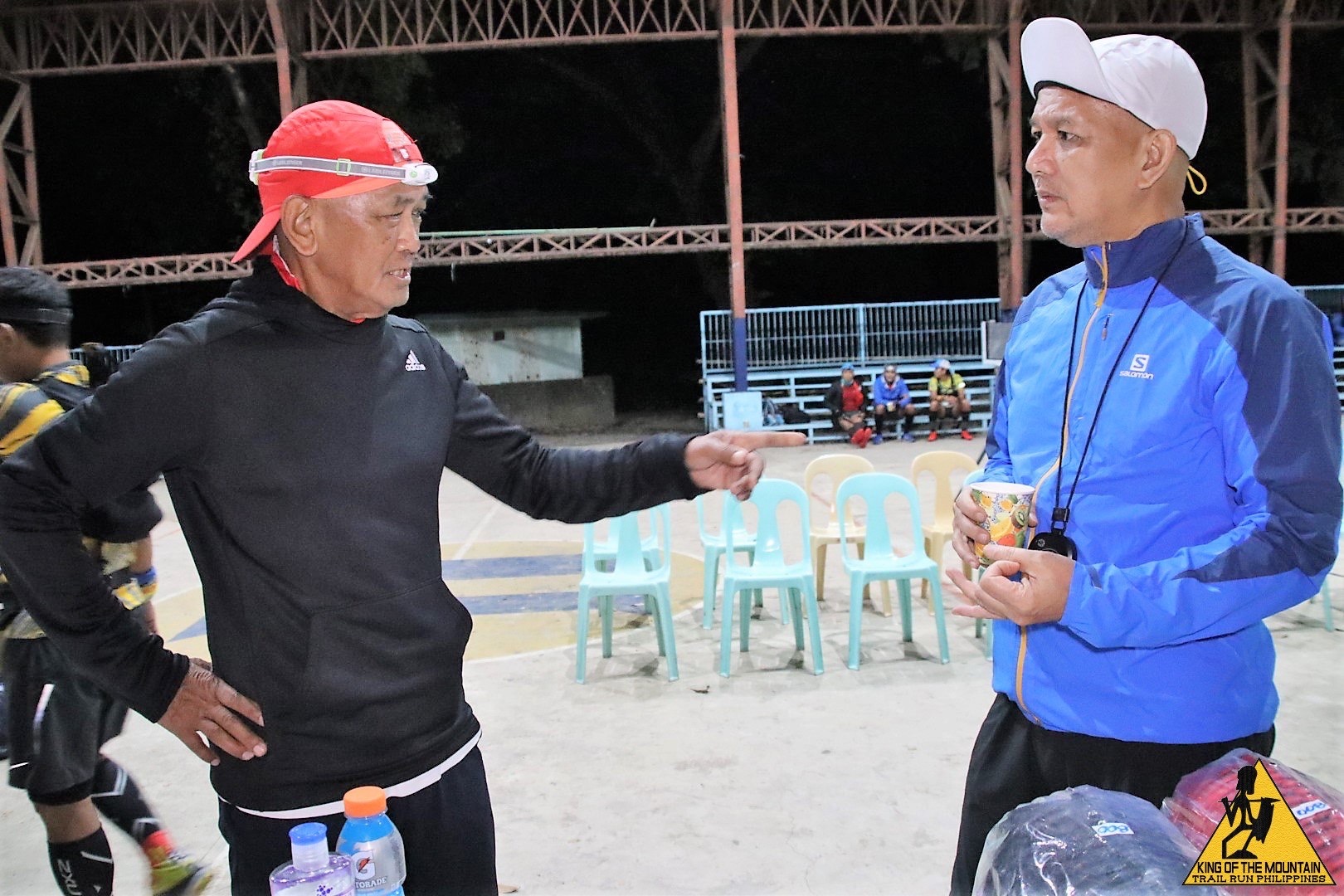
Conversation With RD Jonel Mendoza Before The Start
From The Podium Hotel where I usually stay in Baguio City, it took me at least One Hour drive to Dalupirip, arriving at 2:30 AM of Sunday (Race Day). From the end of the paved road up to the Start/Finish venue (Covered Court), it is a good one-kilometer distance, crossing the river on a cable suspension bridge which is only good for motorcycles and pedestrians with a wide cemented footpath leading to the Covered Court surrounded with rice fields.
After I registered and checked-in with the RD and staff, I went back to my vehicle to prepare my things. At 3:30 AM, I was back at the Covered Court just in time for the start of the briefing by the RD.
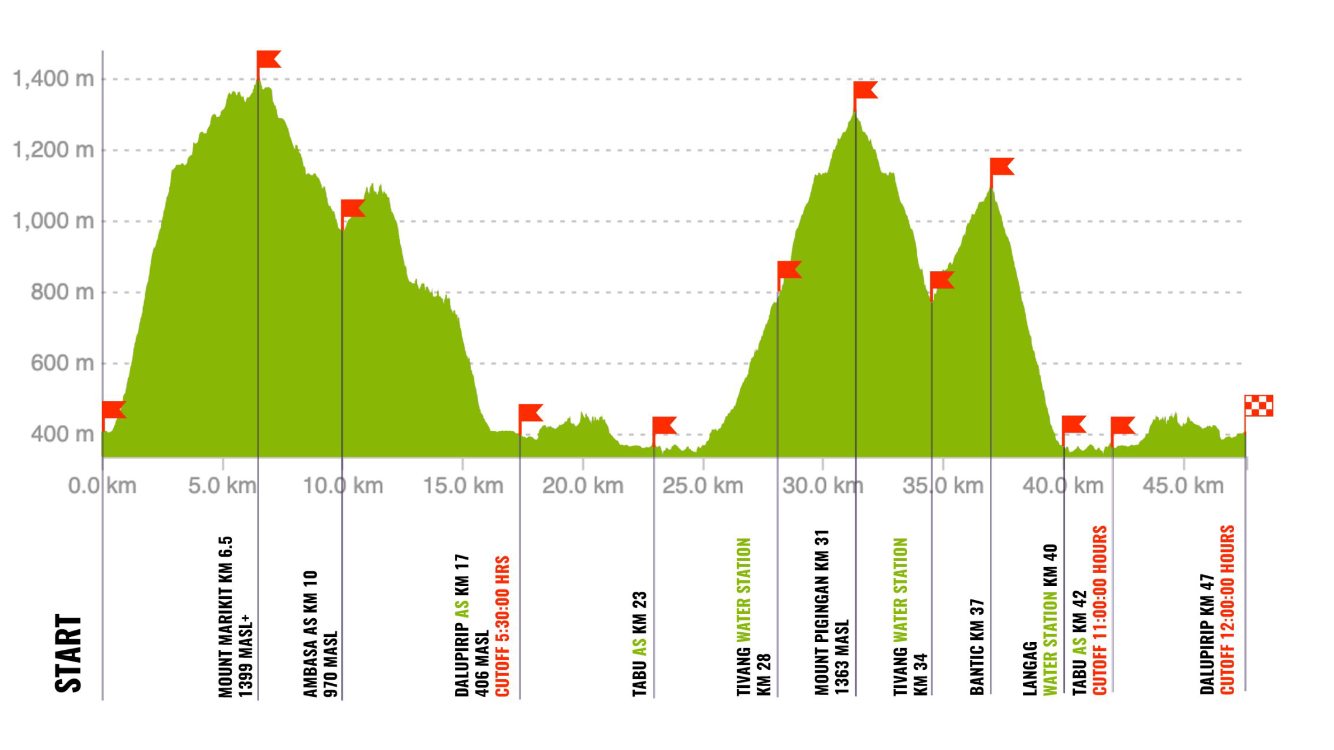
2020 Marikit-Pigingan 47K Trail Run Elevation Profile
Race Proper/First Loop
The race started at exactly 4:00 AM and it was still dark and my new Neo Headlamp was on. I positioned myself at the back of the pack, as usual, with the thought to just follow the runner in front of me. The plan was to enjoy the route/event; pass as many as runners along the route and finish within the prescribed cut-off time of 12 hours. On thefirst kilometer we passed by in-between houses within the Sitio of Dalupirip along a cemented pathway until we reached the road that leads to the Starting Area from the place where I parked my vehicle. We turned right into a paved path and the ascent started and the runners formed a “Conga Line”, a single-file formation going up to the mountain. I think I was able to pass 3 runners at this section and then suddenly the runners in front of me stopped, trying to look for ribbons/markers. The runners argued if we were in the right track or not and some of us “backtracked” to find the last ribbon along the route. At this point, we heard shouts from the Marshals below us and loud sounds from horns of motorcycles indicating that we were in a wrong directions. We were advised to return to the Start Line and follow the proper route on the first 1-2 kilometers as advised by the RD. As I passed the Starting Line (again!), the RD advised me and the other runners that the cut-off time will be 13 hours due to the delay we encountered. As I glanced my watch, almost40 minutes had elapsed already and I was confident that I could finish this race in less than the new cut-off time.
I was joined by a runner who knows the route and we were together for the first two kilometers until I went ahead of him. Since it was still dark, I hiked slowly in between rice fields until I reached a trail that ascends towards the first mountain of the course. The trail was very steep that I was forced to use my trekking poles. I just contented myself to just follow the lights in front of me and at the middle of the steep trail to the peak of the mountain, I started to pass more runners who went ahead of me. Through consistency and patience in steady hiking with the aid of my trekking poles, I was able to reach the peak of the mountain and it was already early in the morning as the sun rises in the east. I was amazed by the beauty of the mountains around and the river that flows at the feet of the mountains. It was a relief to hike and run on the flatter portions of the mountain until I reached the first Aid Station. I refilled my water bottles and ate a bite of sandwich and I was joined by two runners, Elle Alvarez and a guy, in the said Aid Station. Loiue Ganayan told me that I am ranked #30 runner to reach the said Aid Station. I left the Aid Station ahead of the two runners and I observed that the trail follows a water canal until I descended in the said mountain. However, in one of steep descents, Elle Alvarez was behind me calling me “General” and asked if she can pass me so that she can have some time to pee at the bottom of the mountain. It was the last time I saw her. In about one hour from the Ambasa Aid Station (Km 10), I was already on my way back to the starting area to complete the first loop/mountain which is called Mt Marikit.
Going Down From The Peak Of Mt Marikit Before Completing The 1st Loop
Second Loop
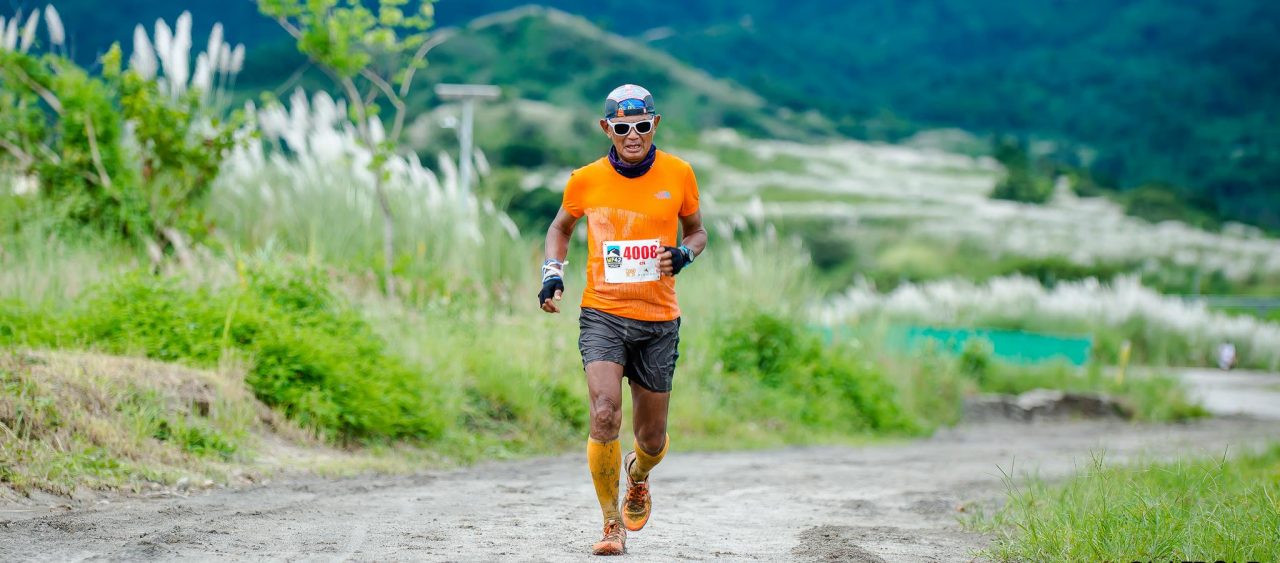
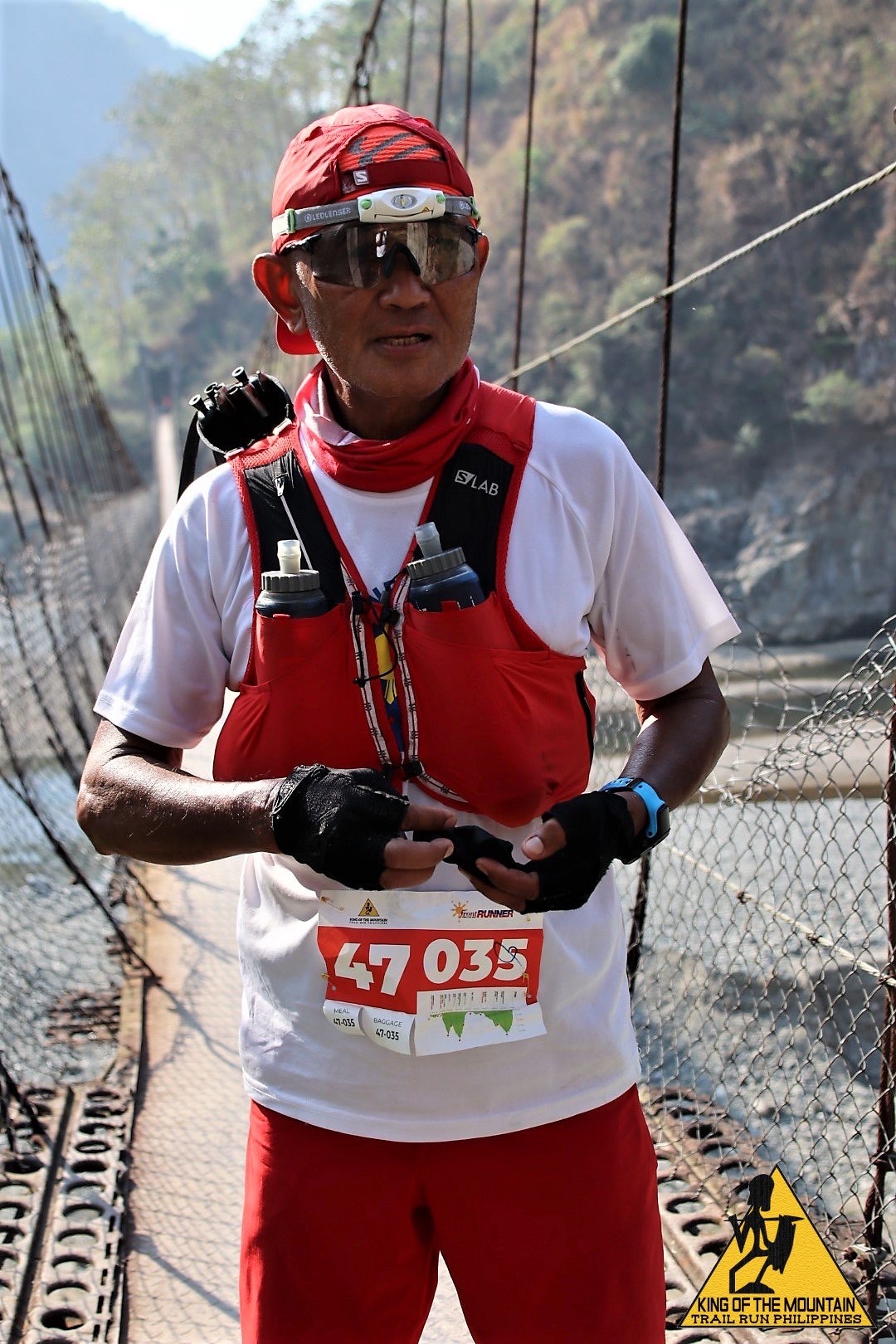
I think I was ahead of more than one hour with the prescribed cut-off time at this point. At the Dalupirip AS/Start/Finish area (Km 17), I refilled my hydration bottles and immediately left the area. I started to hike and run as the first 2 kilometers was flat until I reached a long hanging cable bridge. I brought out my sunglasses from my pack as I could feel that the sunlight was getting brighter and the air was becoming warmer. My friend Bong Bernadez was at the cable bridge as he was taking pictures to all the runners crossing the said bridge.
My Official Attire For My 2020 Trail Races (Photo By Bong Bernadez)
The road was still concrete as I followed the path in between rice fields and some populated areas along the route. As I left the populated area and the rice fields, I just followed a concrete road until I reached another end of a long cable bridge on the side of Dalupirip which looks very new and more modern and I was at the Tabu Aid Station. I refilled my hydration bottles, drank a glass of Coke,and ate two slices of rice cake before leaving the place. After crossing the cable bridge, the route became a wide dirt road which have slight ups and downs and at this point I was following a lady runner who was steadily hiking with her trekking poles. After two kilometers, the ascent was continuous and started to feel the heat in the said place. It was good there were small pipes and strips of bamboo connected to the side of the mountain where potable water was flowing. I took some time to douse my head with the cold water but after a few meters of hike and run, I would feel again the heat on my body.
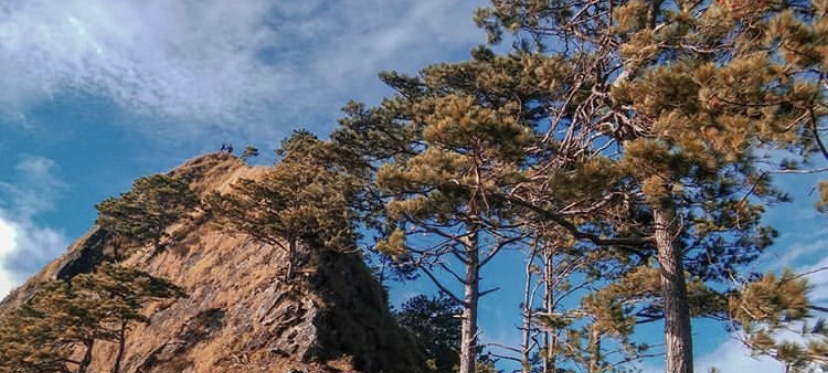
Finally, I reached the Tivang Water Station (Km 28). I stopped, refilled my bottles with water, and ordered some Coke, Eggs,and Boiled Banana from the local peddlers thereat. I guess, I took a lot of time for the first time to rest and eat at this point. I took some time to rest andhave stayed here for almost 25 minutes. With enough water, I left Tivang and slowly passed some runners ahead of me. It was a relentless 3-kilometer distance of climbing from Tivang to the Peak of Mt Pigingan (Km 31). My trekking poles were helpful at this point. The Peak of Mt Pigingan looks like an “arrowhead” that it took me 10 minutes to reach it from the its base which has only a distance of 10-15 meters.
Single Track Technical Trail To The Peak Of Mt Pigingan From Its Base (Photo From Internet)
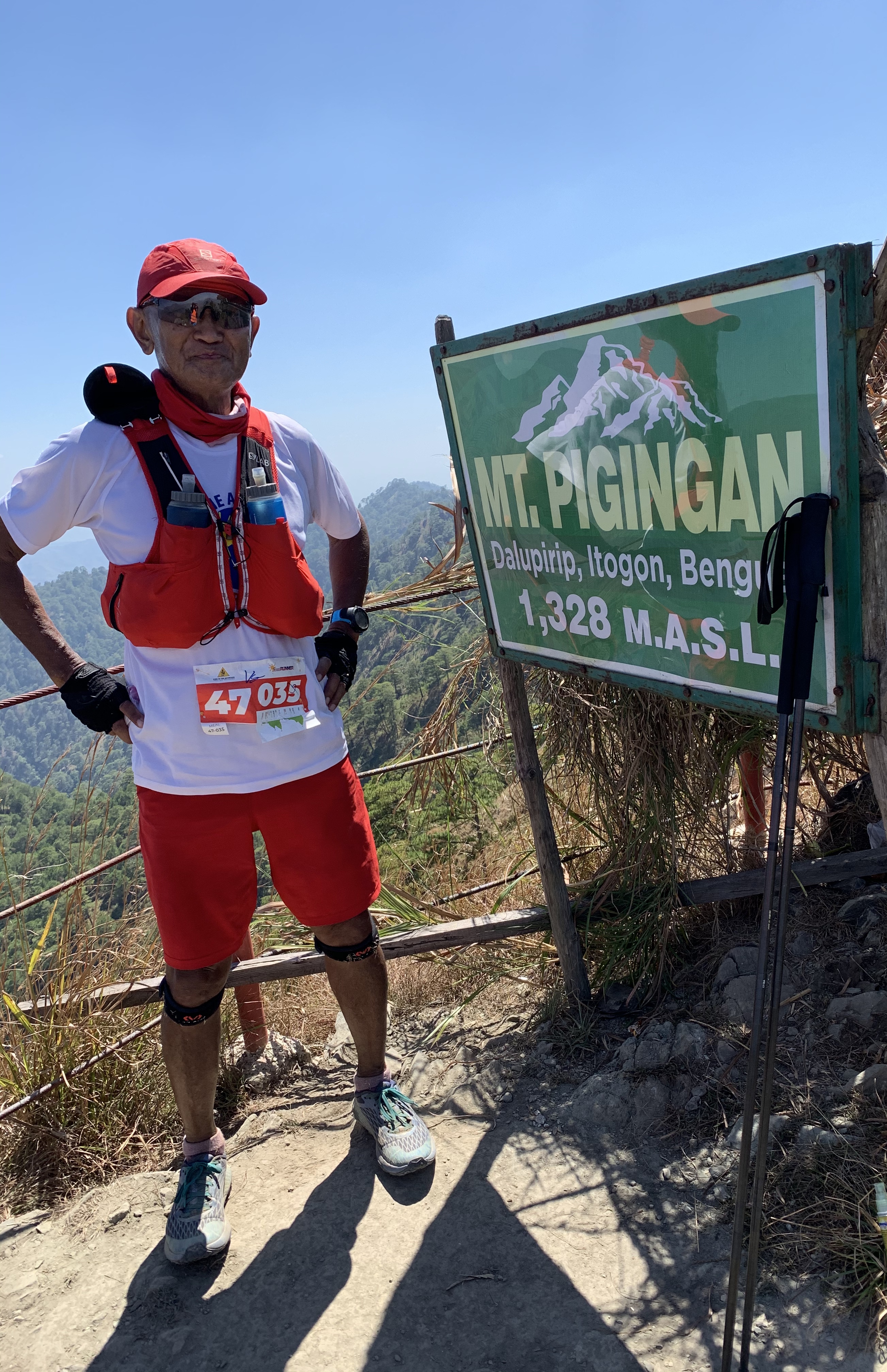
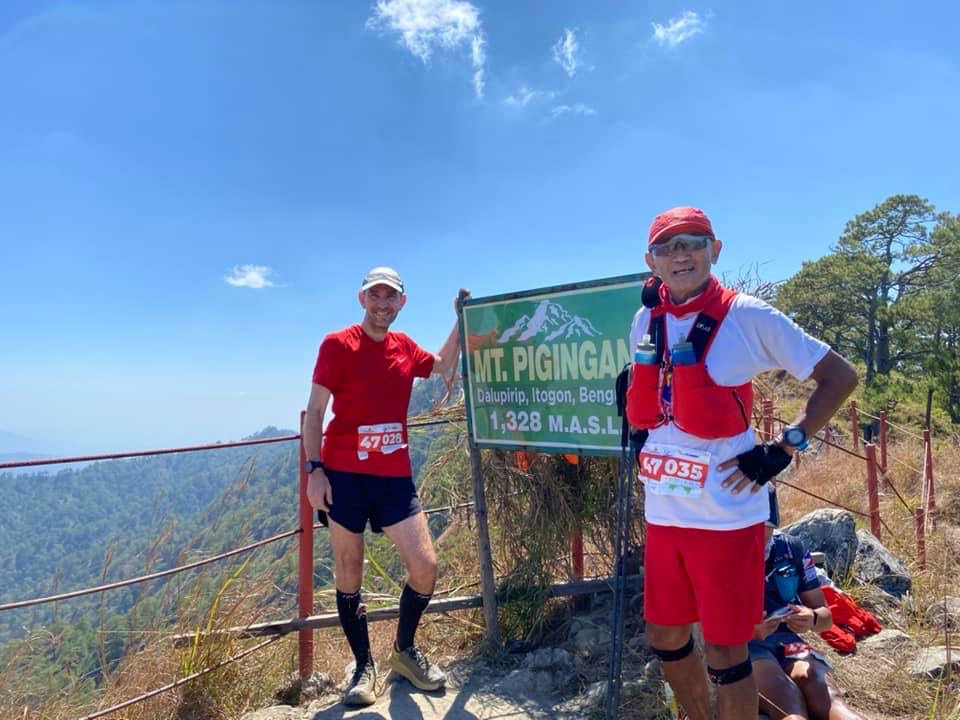
To give justice for all the hardship, pain and heat to reach the Peak of Mt Pigingan, I asked the Marshal to take a picture of me with the marker as the background. I had a chance also to have a picture of Bob/Robert, a British trail runner, who arrived ahead of me in the said peak. I did not take a few more minutes to stay in the place and slowly made my way down to the base of the peak. As I moved going down from the mountain, I met a lot of runners who were asking me how far was the peak. I have to answer them through some estimates which was nearer in distance than the real thing. I really did not want them to be frustratedif I told them the truth.
At The Peak Of Mt Pigingan (Arrowhead Peak)
Finally, I reached Tivang Water Station (Km 34) and I ordered the same food that I have eaten before I went out towards the peak of Mt Pigingan. I stayed here for another almost 25 minutes and brought with two pieces of Ice Candy. I thought we were going to follow the route for the 32K runners from Tivang but only to find out that we have another mountain peak to reach which is Bantic (Km 37). It is another relentless uphill climb for 3 kilometers under the heat of the sun. The Ice Candies I had with me were very comforting but with the steepness of the climb, it gave more toll to my tired knees and legs. But through patience and lots of 10-seconds rests along the exposed route, I was able to reach the peak and hoped to have a faster downhill trek towards the next Aid Station.
Picture With Robert/Bob @ The Peak Of Mt Pigingan
I guess, I was wrong! The winding single track downhill route was so tricky and steep that I could not increase my speed at this point. Some portions were covered with dried leaves and some have loose tiny rocks which would cause my trail shoes to slide even if they have aggressive studs on their soles. The descent is another 3-kilometer distance which most of the sections are very steep. At this point, I was thinking that I could no longer reach the Tabu Bridge Aid Station within the cut-off time of 12 hours. As I reached the base of the mountain at the Langag Water Station (Km 40), I refilled my hydration bottles and immediately left the said AS. I finally crossed the bridge and reached Tabu Aid Station (Km 42) with barely 2 minutes before the cut-off time.
Shit Happens
At the Tabu Aid Station, I entertained the idea of eating a glass of Halo-Halo (concoction of sweet fruits, milk, sugar, and crushed ice) but after eating it, I started to have an “acid reflux” (aka throwing up the fluids and foods I have ingested in the said Aid Station). The marshals and some of the runners offered help by giving me some medications and ginger tea to ease my stomach problem. I was asked by the Marshal if I would declare myself as DNF at the said AS since I have only 35 minutes to spare before the cut-off time of 13 hours but I replied that I would try my luck to just run and hike up to the Finish Line.
Five kilometers in 35 minutes? In the end, I was able to cover a distance of 4 kilometers only when my watch registered a time of 13 hours. After this, I just simply hiked until I reached the Finish Line. I found out later at the Finish Line from the RD that there were more than 20 runners behind me who were declared as DNF at the Tabu Aid Station.
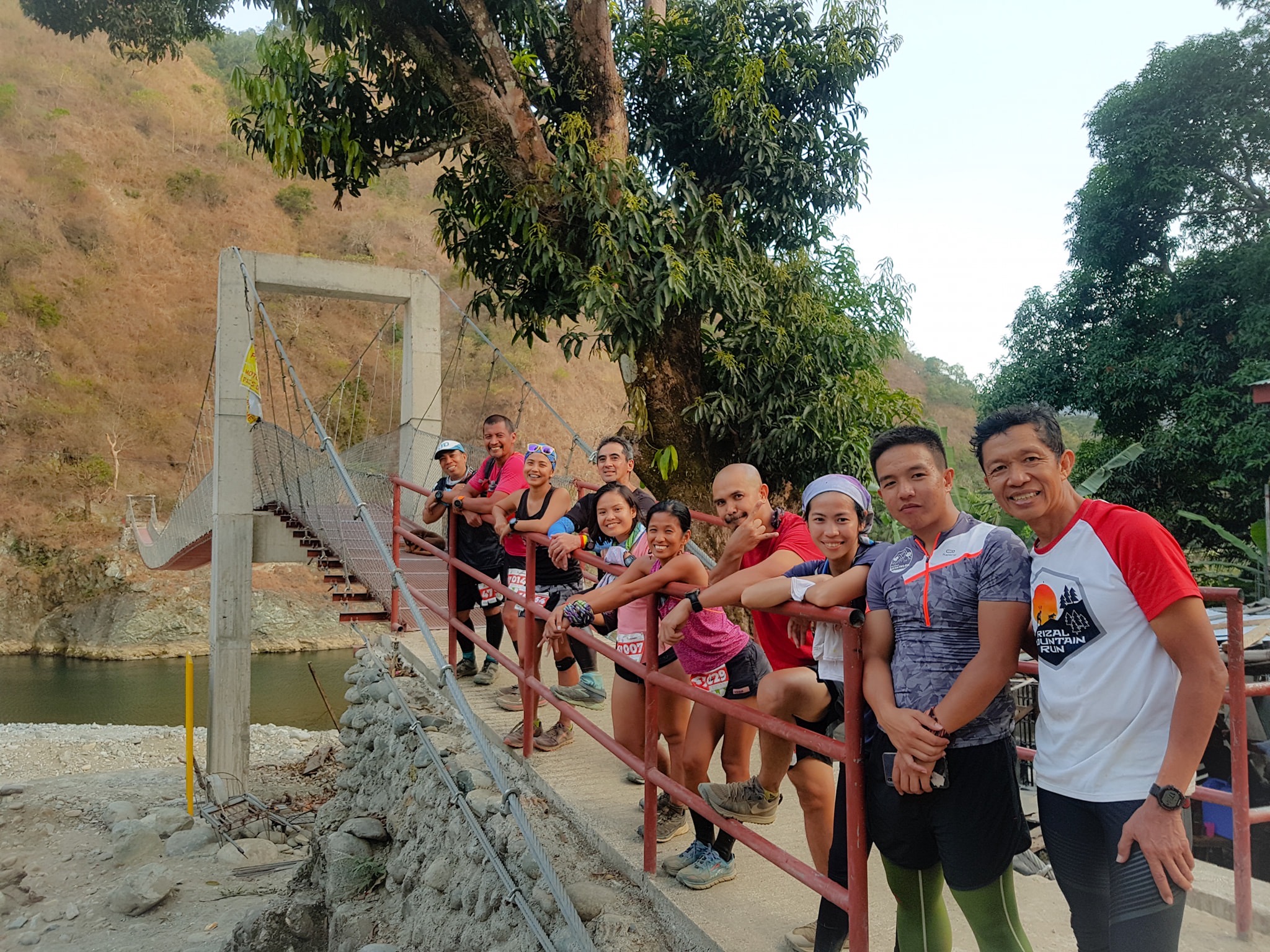
Group Picture Of Some Of The Runners Behind Me @ Tabu AS/Bridge (Photo From Facebook)
Post Race Assessment
I am still happy that I was able to finish the race even if my time was longer than the prescribed cut-off time of 13 hours. My training using my “weighted backpack” gave me confidence to hike relentlessly on steep uphill climbs. The heat experience I got from this race was just part of my training for my future races but I need more of these type of races for me to adjust to hotter environment. I need to fix my problem on the occurrence of “acid reflux” during my ultra races and better learn how my body would prevent this from happening. I stayed and spent so much time at the Tivang Aid Stations (going to the peak and back) and at the Tabu Aid Station on my way to the Finish Line. Lastly, in KOTM races, expect the published distance to have an additional bonus distance of either 1-2 kilometers.
Post Data From My GPS Watch On The Event
Overall, I am happy with my performance in this race.
This is the most sensitive part of my story about Thomas participation in the 2020 Hong Kong Four Trails Ultra Challenge. Most of the Local Runners who are joining International Running Events never post or mention how much they have spent to join a particular event. To give justice to what Thomas had accomplished in this year’s HK4TUC event, it is proper for the Team to be transparent with our finances with the following reasons: (1) to provide future participants the information on the financial aspect of the said event for planning and preparation purposes; (2) to account for everything that the Team had spent before, during , and after the event; (3) to give the impression to my readers that the Team was NOT sponsored by any individual, corporate brand, or the government, and as such, the whole Team did its share to contribute on this matter with the money coming from our pockets. We did not ask for funds from the other runners or conducted any fund raising activities in relation to Thomas attendance or participation in this event.
Amount Of Pocket Money:
At the exchange rate of P 7.00 per HK$ 1.00, I bought the equivalent of P 50,000.00 as the Support Team’s “baon” for the duration of our stay in Hong Kong. However, I still have an amount of 1,000.00 US Dollars as a “reserve” cash to be converted to HK Dollars just in case we will be lacking with our financial resources. My LANBANK Debit Cards will be our “Last Line Of Defense” for any Contingency.
Coming from Thomas’ pocket, on the other hand, he bought HK Dollars at the Airport’s Exchange Facility amounting to P 50,000.00.
Cathay Pacific Fares:
Thomas paid his own RT Fare amounting to P 9,500.00 which included the usual Travel Tax. I paid my RT Fare with two others who composed the Team as members of Thomas Support Team. It costs me P 28,500.00 (Travel Tax included) for three passengers. Our Taxi Fares and Expenses for our Early Breakfast at the Terminal 3, NAIA can be estimated to about P 2,000, of which I paid for it. An additional cost of “Pasalubong” of about P 1,500 was paid in one of the Souvenir Shops at Terminal 3 as our gift to the RD’s wife, being a close friend since I started blogging. This brings to a total of P 41,500.00 for the Team Thomas expenses before leaving Manila.
Upon Arrival @ Hong Kong Airport
Thomas bought a Local Sim Card for almost HK$ 200 and loaded HK$ 300 into his Octopus Card. The money he used came from his personal fund. I bought a Local SIM Card on my own for the same price (HK$ 200) with that of Thomas, and loaded HK$200 into my Octopus Card and loaded HK$100 to each of the two members of the Support Team.
Total Expenses Upon Arrival:
Thomas——HK$500;
BR——HK$600
Chari Sevilla, a Filipino working in Hong Kong, offered her Apartment for the Team Thomas as a place to stay during the duration of the Event. This was a big savings for the Team, instead, of paying for our accommodation in the hotel where we usually stay during our visits in Hongkong. (Note: A “savings” for us estimated to be the equivalent to P 20,000.00)
Estimated Expenses For Our Two-Day Recon Runs (Transportation Fares Were Deducted From Our Octopus Cards):
The following estimated expenses for our Food and Drinks along the Trails (MacLehose & Wilson) and in Sai Kung Town.
Thomas——HK$200
BR——HK$200
Initial Groceries/Food For The Team Expenses (To include Logistics for the Event): HK$2,000.00
Additional Expenses For Groceries/Food To Be Cooked During The Duration Of Our Stay In Hongkong: HK$2,000.00
Additional Expenses For Food Spent In Restaurants: HK$1,000.00
Additional Loads To Our Octopus Cards: HK$ 500.00
Total Transportation Expenses During The Event: TAXI Fares To Ferry Thomas From One Trail To Another & TAXI Fares In Going Home To Chari’s Apartment:
BR——HK$ 1,600.00
Chari——HK$ 1,600.00
Team Thomas was treated to a Chinese New Year’s Eve Dinner & CarboLoading Party for Thomas the night before the event by the sister and nephew of Thomas who came all the way from Canada to cheer for Thomas.
Before we left to the Hong Kong Airport on our way back to Manila, Team Thomas was treated to a lunch by the Family of Jurg, Irene, and Ida Montemayor as a celebration for Thomas “finish” in the 2020 HK4TUC.
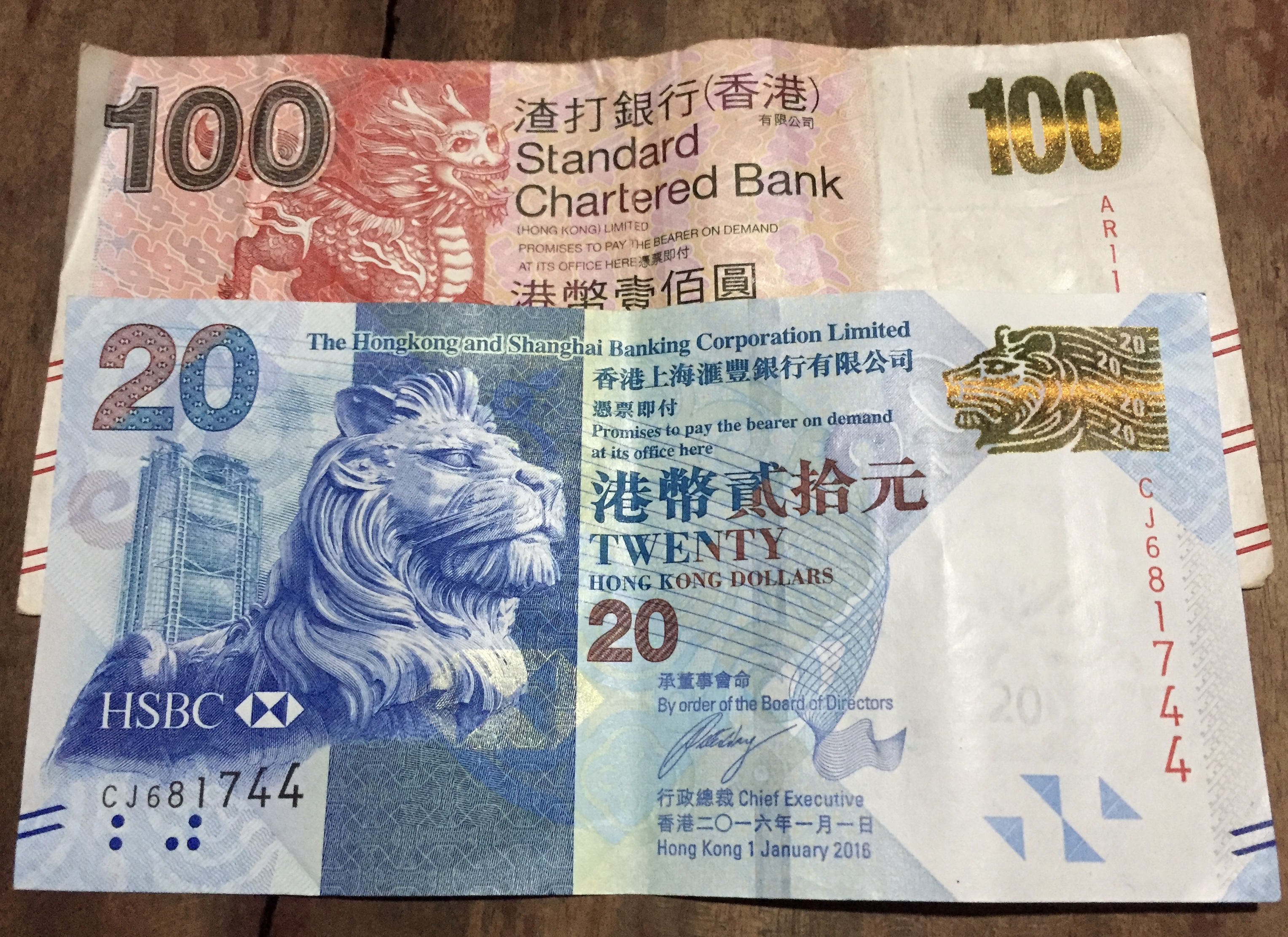
Hong Kong Dollars: What Was Left With Our Pocket Money
Bottomline:
The amount of P 50,000.00 that I exchanged for HK$ currency was all gone except for the remaining HK currency in the picture. To include our RT Tickets and other miscellaneous expenses spent in Manila and Hong Kong, I spent a total of P 100,000.00
I am not privy to what happened to the P 50,000.00 that Thomas had exchanged to HK Dollars at the NAIA before leaving Manila but I would guess/estimate that he was able to spend 2/3 of the said amount for his expenses in connection with his participation in the said event.
With this detailed accounting of our expenses, we will be able to plan and prepare for the next year’s event. Thanks to Chari for her hospitality in allowing us to stay in her Apartment with the hope that she will offer again her place for the Team in next year’s edition and for those emergency financial needs in support to Thomas success in this event. Thanks also to Team PAU for cooking the food for Thomas; preparing and packing the logistics/needs for each Leg of the event and for washing the dirty clothes of Thomas.
My personal thanks go to Jurg, Irene and Ida Montemayor, the Original Team Thomas Support, for their unwavering support and concern to Thomas’ welfare throughout the event. Jurg’s presence in Lantau to cheer and wait for the finish of Thomas means a lot to the Team. Thank you also to the sister of Thomas, Marina and nephew John for being with Thomas during the event.
Let me also take this opportunity to thank Tha Na and Josephine Austria for their company and support (food & drinks) at the Stanley Gap Road as we waited for the arrival of Thomas at the end of the Wilson Trail. Thank you also to Christian Viloria, an OFW in Hong Kong and a fast/strong trail runner, who prepared a lot of Filipino Food at the Shek O Road Bus Stop and for his support to Team Thomas.
There are still untold stories about our experience in terms of finances and logistics in supporting Thomas’ finish in this year’s Hong Kong Four Trails Ultra Challenge. The other half of the story is with Thomas. In due time, if time permits, I will be able to have more time talking to Thomas and relate his personal story in this blog.
Thomas Combisen: The First Local Pinoy To “Survive” @ 2020 Hong Kong Four Trails Ultra Challenge (HK4TUC)
Thomas Combisen, the top ultrarunner of the Philippine Association of Ultrarunners (PAU) finished as a “Survivor” in the 9th Edition of the Hongkong Four Trails Ultra Challenge, simply known as HK4TUC, with a time of 68:50 hours. This is his second time to join this race event where he declared himself as “retired” after running 228 kilometers on the third day in last year’s event. He missed his target time to board the Ferry Boat ride to Lantau Island for him to have the chance to finish the course in 72 hours for the last 70 kilometers of the event.
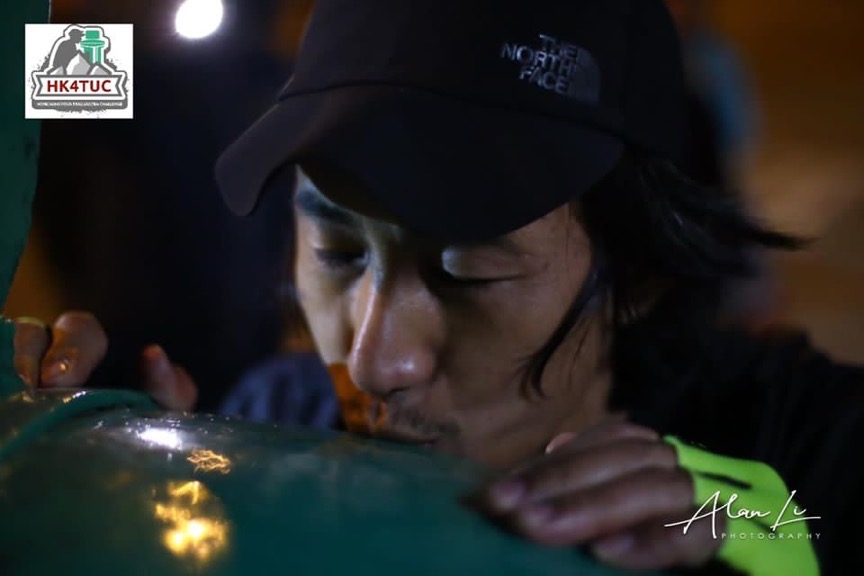
Hongkong Four Trails Ultra Challenge was created by Andre Blumberg, an accomplished ultrarunner who works as an Executive in one of the key Corporate Offices in Hongkong; a US Grand Slam of Ultrarunning “Eagle” Awardee; and a 2-time finisher of the famous and prestigious Western States 100-Mile Endurance Run and Hardrock 100-Mile Endurance Race in the US. The rule of the event is to be able to finish the total distance of 298 kilometers covering the famous Four Trails of Hongkong starting with MacLehose Trail (100 Kilometers); Wilson Trail (78 Kilometers); Hong Kong Trail (50 Kilometers); and Lantau Trail (70 Kilometers) in the said order but with each trail to be ran on the reverse course. To make it more challenging, each runner is “self-support” while on the trail and the only time that he can be supported is when he finishes a trail or before he starts the next trail. Each runner can be supported and transported by their respective Support Team while they are in transit from one trail to another. There are no Marshals, No Medical Responders, No Aid Stations, and No Whining in this event. There is No Registration Fees for the Runners and No Awards for the Survivors and Finishers. A Runner is declared as a “Finisher” if he finishes the event within the cut-off time of 60 hours. However, if a runner finishes the course within the cut-off time of 72 hours, he is declared as “Survivor”. All of them are required to kiss the Mui Wo (Green) Mail Post in Lantau to declare that they have finished the event. And for those who could not make it, they are declared as “Retired”.
But for this year, Thomas has transformed to a stronger, faster, and smarter participant of this event. Determined to join again and improve his performance last year, he applied last July 2019 but he was placed in the Waiting List until he was finally accepted in October of the same year. Thomas focused on his training as he visited Hong Kong for a Recon Run in Lantau Island last August 2019 for two days. Due to his limited time to stay longer in Hong Kong because of his work in the Philippines and family to attend to, he decided to arrive earlier on the week of the event to review the places where he experienced “lost moments” that cost him a lot of hours of delay, most specially in the MacLehose and Wilson Trails.
Having an experience from his previous year’s participation, doing some “recon runs”, and correcting his past mistakes with his race strategy and nutrition, Thomas was determined to finish the event, whether he could be a “Finisher” or a “Survivor”. What is important is for him to finish the event within 72 hours.
Thirty-three (33) participants selected by the RD/RO coming from different countries throughout the world started the race at 9:00 AM January 25, 2020, the Lunar Chinese New Year’s Day, for the 9th edition of the event at the starting area for the MacLehose Trail. Two other Filipino runners were also with Thomas in this event as they applied and qualified to join this race. Thomas started the race at the back of the pack and we, his Support Team to include his close family members from the Philippines and Canada, cheered him and later, monitored his movement through his Tracker on Racemap Application on the Internet. At Kilometer 50, Thomas was among the Top 3 on the trail and maintained his steady pace of 7 kilometers per hour. It was still too early for us to be happy that Thomas will target the sub-60 hour finish. However, he was in the right track for him to finish the MacLehose Trail in 15 Hours as planned. He slowed down on the last 15 kilometers as it was already nighttime plus the fact that it started to rain and he reported some tightness in his quads. Despite his situation, he was expected to finish this leg much faster than the time he registered last year with almost 2.5 hours. Finally, Thomas arrived at the Sai Kung Country Park as the 5th Runner with a time of 15:04 hours! It was a huge improvement from his time of 17:40 hours last year!
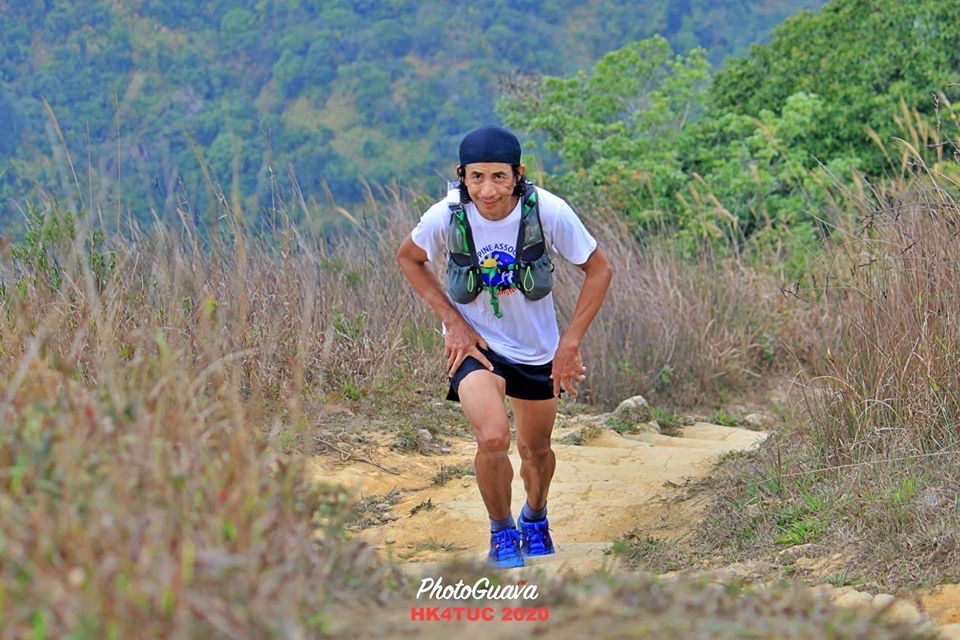
Thomas @ MacLehose Trail (Picture By Photo Guava)
In 10 minutes of eating and changing his clothes at the Park, we were on our way aboard a Taxi to the start of the Wilson Trail which is a good 45-minute ride but the Taxi driver had to refill some gasoline which added, at least 5 minutes of the travel time. However, Thomas had a good sleep, which he badly needed, during our trip to the start of the next leg. Once we arrived at the Waiting Shed near the Nam Chung Public Toilet, we set-up our “pit stop” assistance to Thomas——food, water, clothes, and running accessories were packed and placed in Thomas Hydration Vest while Thomas was eating. In a short time, Thomas started his run on the Wilson Trail with much encouragement for him to keep on moving, eat & hydrate when he can, and bring out & wear his reserve “wind-breaker” inside his water-proof jacket to make him warm as it was raining hard and colder temperature awaited him in the mountain peaks of the 78-kilometer long Wilson Trail. He started his run at 1:25 AM of the second day, January 26 which is again another improvement from his time last year. At this time, we were confident that he will not get lost and spend so much time when he will cross the Victoria Bay from the MTR Lam Tin Station to the MTR Tai Koo Station in Hongkong Island.
At the start of the Wilson Trail, looking at the Racemap App, the two other Filipino runners (Rolando Espina is a two-time finisher of the SpartathlonRace in Greece and Ronnel Valero had just finished the 2019 UTMB 166K in Chamonix, France), had been declared as “Retired” which simply means that they declared themselves as “DNF” (Did Not Finish). Five other runners were also “Retired”, making it a total of seven (7) “retired” runners at the end of the first day. We did not try to find out the real reason/s why these runners “retired” on the first day. However, in a news report from the article of the South China Morning Post, they said that they could not stand and endure running on the “stairs” and on the concrete/cemented trails of Hong Kong. Some of the runners told to the reporter/s that the rain had brought them cold and freezing temperature which their body was not prepared to take.
On the second day, we were glad that Thomas was on the track without any “lost moments” and be able to finish the Wilson Trail on the said day. Our Support Team was at the Finish Line of the Wilson Trail at 5:00 PM January 26, 2020 with the hope that Thomas would finish within one hour. However, we waited for almost 3 hours for Thomas to arrive still smiling, happy and strong as he was ranked as the 9th runner at this point. Thomas arrived at 8:06 PM on the second day of the event. He finished the Wilson Trail in 18:30 hours.
Thomas arrival at the end of Wilson Trail (@ Stanley Gap Road) was very remarkable and surprising as he improved his time by 13+ hours as compared to last year. We immediately boarded a waiting Taxi for the 20-minute ride to the Bus Station on Shek O Road as the starting line of the 50-kilometer Hong Kong Trail. We “forced” Thomas again to sleep during the duration of our Taxi ride which he did. At the Shek O Road, we were met by Paper, the wife of Andre; Andre; Tomokazu Ihara; and Christian Viloria, a Pinoy OFW in Hongkong. We immediately set-up our “pit stop” for Thomas for him to re-charge his nutrition/hydration; rest; and change his running attire for more layering to fight the coldness in the mountains. At this point, the NHK TV Reporter and crew took a video of Thomas while he was eating and resting. The TV reporter was interested on the food prepared by his support team. Christian’s fried “tuyo” (dried sardines) and our Pork Adobo and Sinigang Na Ulo Ng Salmon were the “center of attraction” on Thomas’ food in the video and interview. Finally, Thomas left the Shek O Road at 9:05 PM after much encouragement and motivation from us and Tomokazu as he was his “classmate” in last year’s edition.
Thomas Before The Finish Line @ Hong Kong Trail
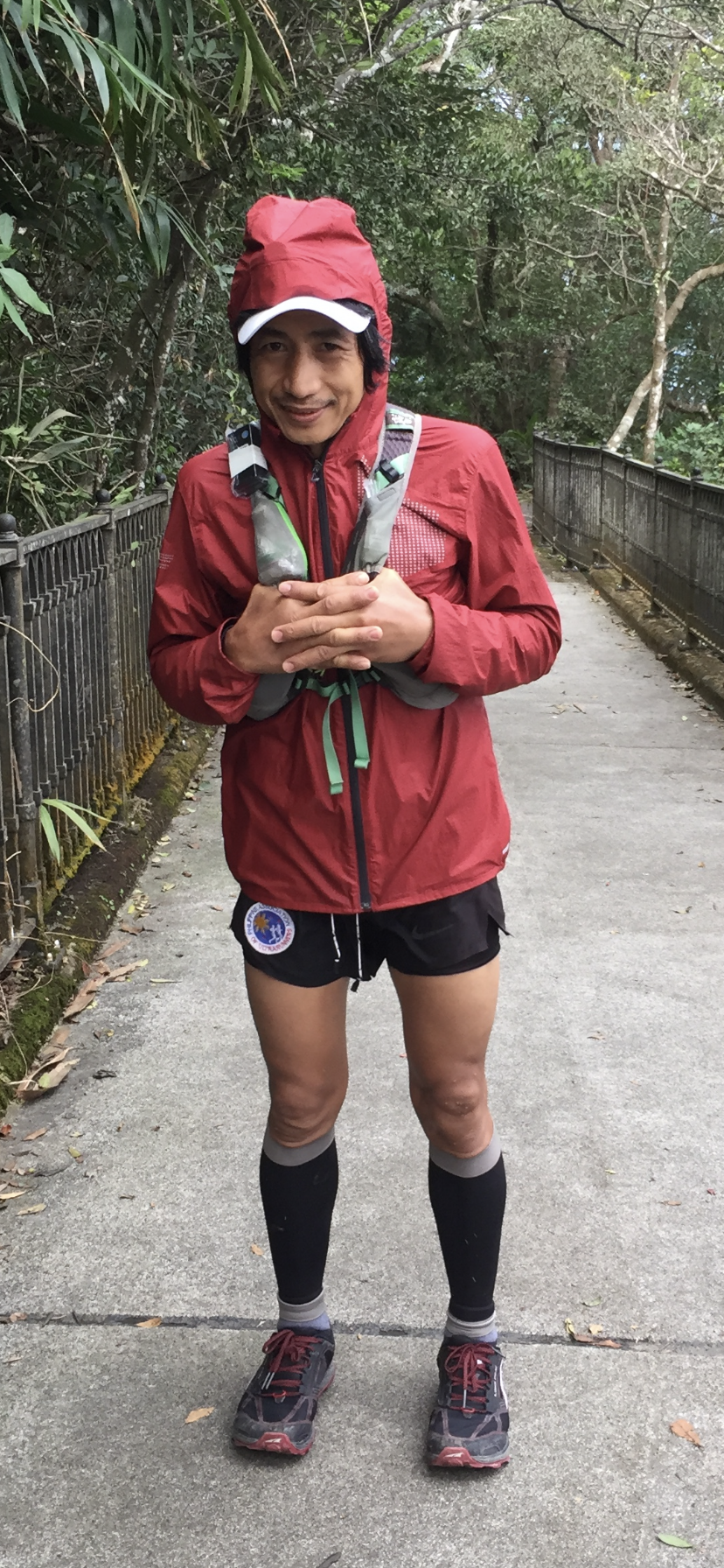
Based from Thomas performance last year, we estimated that he could finish the Hong Kong Trail in less than 9 hours and that we will be able to catch-up and ride the 7:00 AM Ferry Boat ride from the Central Pier to Lantau Island. But by looking on his Tracker, we estimated that he would arrive at the end of the Hong Kong Trail at 8:00 AM on the third day. We arrived at the Victoria Peak at 7:30 AM and the place was windy and cold. It seems that we were experiencing a freezing temperature being exposed outside the building and standing in the open/exposed park/space at The Peak. I decided to jog the last one or two kilometers before the Finish Line to meet Thomas and at the same time warn the members of his Support Team that he was arriving in a few minutes. At 1.6 kilometers from the Finish Line, Thomas was approaching, hiking and looked very cold but still in good spirits to finish the race. He had his fingers on both hands locked with one another with his palms pressed against his chest. He was trying to keep his body warm even if he was wearing his Salomon Waterproof Jacket. I jogged ahead of him by 50 meters and finally led him to the waiting Taxi with our Support Team. Finally, Thomas reached the Finish Line of the Hong Kong Trail at 8:42 AM on the third day, January 27. Thomas finished the Hong Kong Trail (50K) in 11:30+hours which is 3 hours slower than his time last year. He told me that the freezing wind temperature, sleep deprivation, the darkness along the trail and a bout of “acid reflux” had slowed him. He even had experience of “hallucination moments” with the rocks along the trail as talking tortoises only to realize that he was talking to the rocks around.
Within the short 15-minute Taxi ride From Victoria Peak to the Central Pier, Thomas was able to eat “Lugaw” (Rice Porridge With Chicken) and Drink Hot Coffee and then took a nap. Five minutes before the Ferry Boat would depart for Lantau, we were running to board the boat and was able to ride in it. As the boat started leaving the Pier, Thomas was already sleeping for the 50-minute ride to the last leg of the event, the Lantau 70K Trail. We took the 9:00 AM Ferry Boat ride which was the slow one but the longer trip gave much time for Thomas to sleep. The fare was half the price of the faster craft but we did not complain as we estimated that Thomas would not be able to finish the event within the cut-off time of 60 hours.
Thomas @ The “Pit Stop” Before Lantau Trail
After the slow Ferry Boat ride, we established our “pit stop” under a tree near the McDonalds which is surrounded with steel seats. We bought Hamburger and Coffee which Thomas requested to eat and drink before starting the Lantau Trail. We refilled his hydration pack with water and food and he changed his attire and loaded some extra windbreaker and shirt in his pack. When he was ready, I accompanied him to the trailhead which is about 300 meters away from the Pier. Photo Guava, one of the Official Photographers of the Event, was also there to take pictures of Thomas and wished him “Good Luck”. Thomas started the Lantau Trail Leg at 10:25 AM of January 27, on the third day of the event. We estimated that he could finish the Lantau Trail at 1:00 AM on the fourth day, January 28,which is about 15 hours of elapsed time. We returned to Hongkong where we were staying and monitored the movement of Thomas through the RaceMap App.
We returned to Lantau Island aboard the last Ferry Boat trip at 10:20 PM to wait for the arrival of Thomas as a “Survivor” of the event. We boarded the Fast Ferry Boat and we arrived at 11:00 PM and tried to stay at the Silver Mine Bay Pier in Mui Wo to protect us from the freezing wind coming from the sea and the mountains. We looked for seats in the area and tried to get inside the telephone booths for a warmer air. Sometimes, we would go to the Public Rest Room for a warmer air and later went inside the 7-11 Store for food and drinks and we were allowed to stay at the 2nd floor of the store. Lastly, we were invited to stay at the heated Lantau Basecamp Sports Store where we monitored the movement of Thomas through the Racemap App. Jurg, the husband of Irene Montemayor, tried to join us at the finish line at the Hongkong Trail as he was our Main Support during Thomas first attempt last year but he was not able to catch-up with us at the Victoria Peak. He told us that he will be joining us in our Ferry Ride back to Lantau and cheer for the arrival of Thomas. At 1:00 AM, we were confident that Thomas will be arriving as the 9th Runner and the 2nd “Survivor” to arrive at the Finish Line.
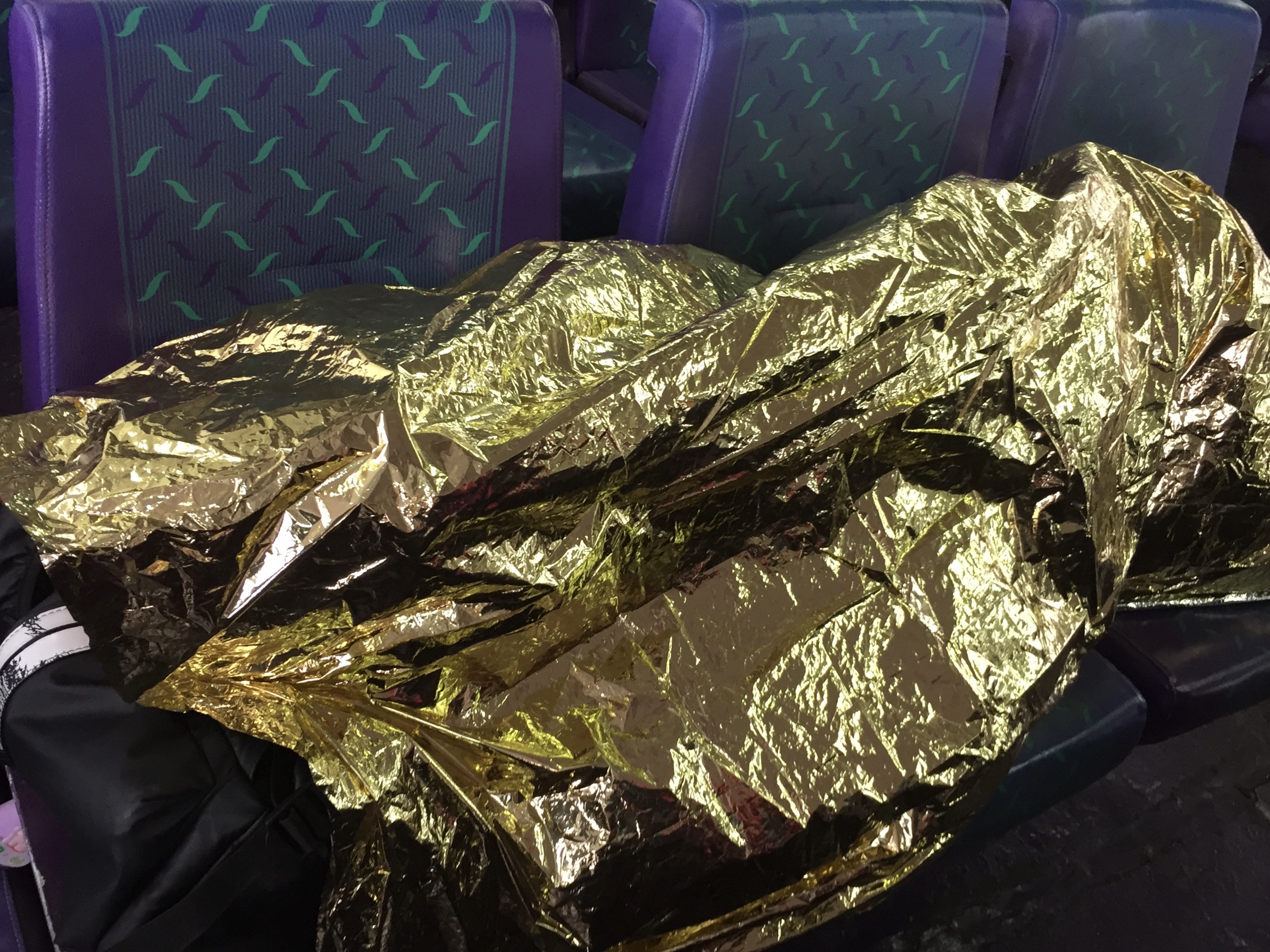
After cresting the highest peak of the trail, Lantau Peak, on the last 15 kilometers, Thomas was passed by Lady Runner Virginie while he was sleeping in one of the Pagodas/Rest Areas. Virginie tried to help Thomas by giving him her “space blanket” to wrap his head and she even called the RD about the situation of Thomas. Thomas was freezing due to the strong cold winds at the Lantau Peak and after the peak, he took a brief nap while he was sitting with his back leaned on one of the posts of the Pagoda but he was surprised to wake up lying on the floor when he heard the voice of Virginie calling the RD on the phone. Virginie and Thomas had been running together before the Lantau Peak but Thomas went ahead of her until he was seen as sleeping on the floor of the Pagoda. Jurg and I tried to locate Thomas by boarding a Taxi to check on him on the said Pagoda after we received the recorded voice call of Virginie from the RD. However, when we saw that Thomas had moved on the Racemap App, we turned around and went back to the Finish Line. In a few minutes, Virginie reached the Finish Line at 5:30 AM on the fourth day and we were confident that Thomas would be the next runner to finish.
RD Andre, Tomo, and I were waiting for Thomas at the roundabout as we could see him going down the road on his last 100 meters to the Finish Line. After a few minutes of conversation, Andre and Tomo walked on the uphill road to locate Thomas and Tomo was shouting his name! After few minutes, RD Andre and Tomo shouted to us that Thomas was coming. Thomas reached the Green Mail Post at Mui Wo at 5:50 AM on the fourth day, January 28 as the 10th runner overall and the 3rd “Survivor” of the Event. Thomas finished the Lantau Trail in 17:25 hours. In total, Thomas finished the 9th Hong Kong Four Trails Ultra Challenge in 68:50 hours and declared as a “Survivor”.
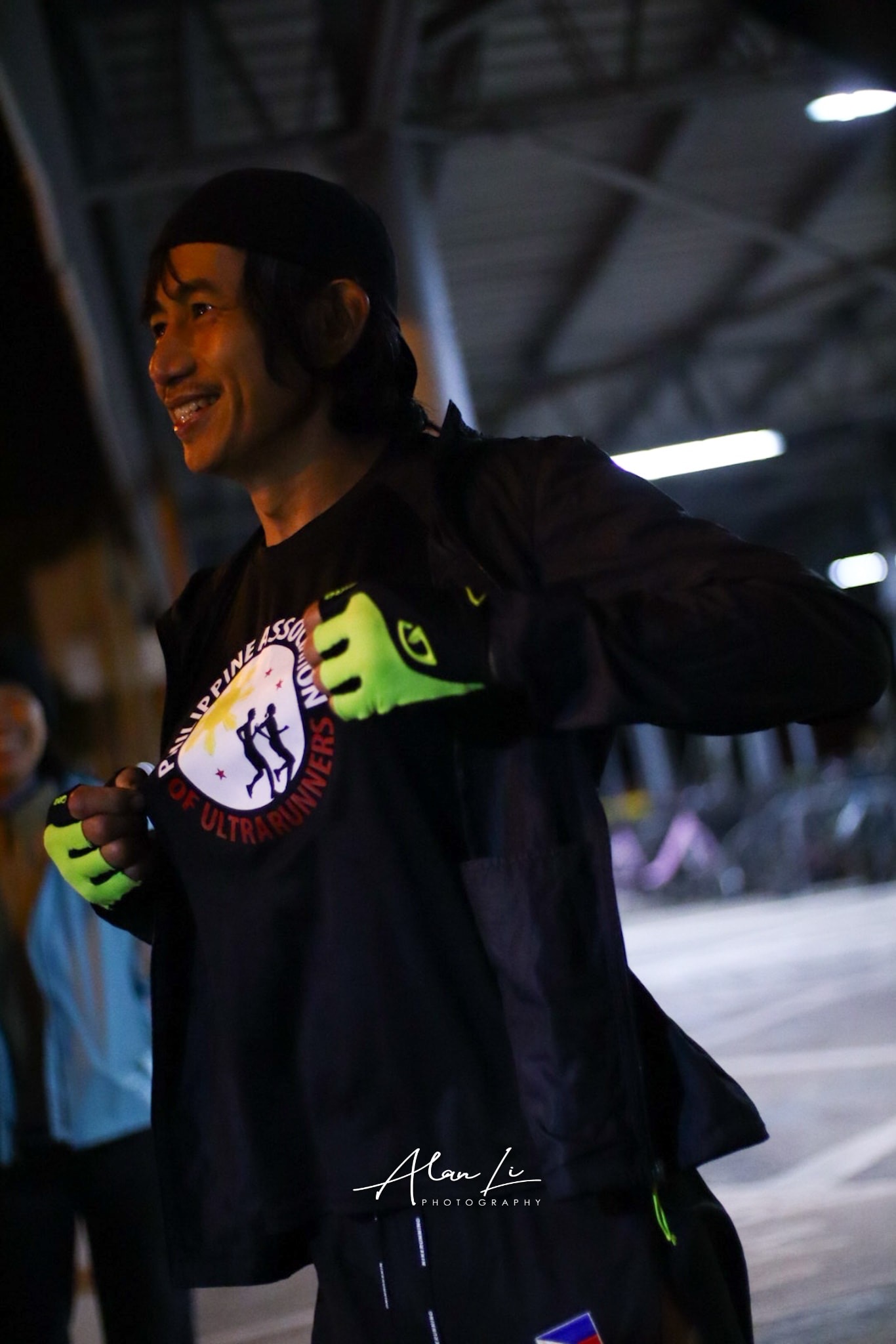
Thomas Showing His PAU Shirt @ Finish Line (Picture By Alan Li)
In summary, Thomas finished the following Hong Kong Trails with these times:
MacLehose Trail (100K)—15:04 Hours (Cut-Off Time of 18 Hours)
Wilson Trail (78K)—18:30 Hours
Hong Kong Trail (50 Kilometers)—11:30+Hours
Lantau Trail (70 Kilometers)—17:25 Hours
Almost 9 hours were spent in his transitions from one trail to another and his rests along the trails.
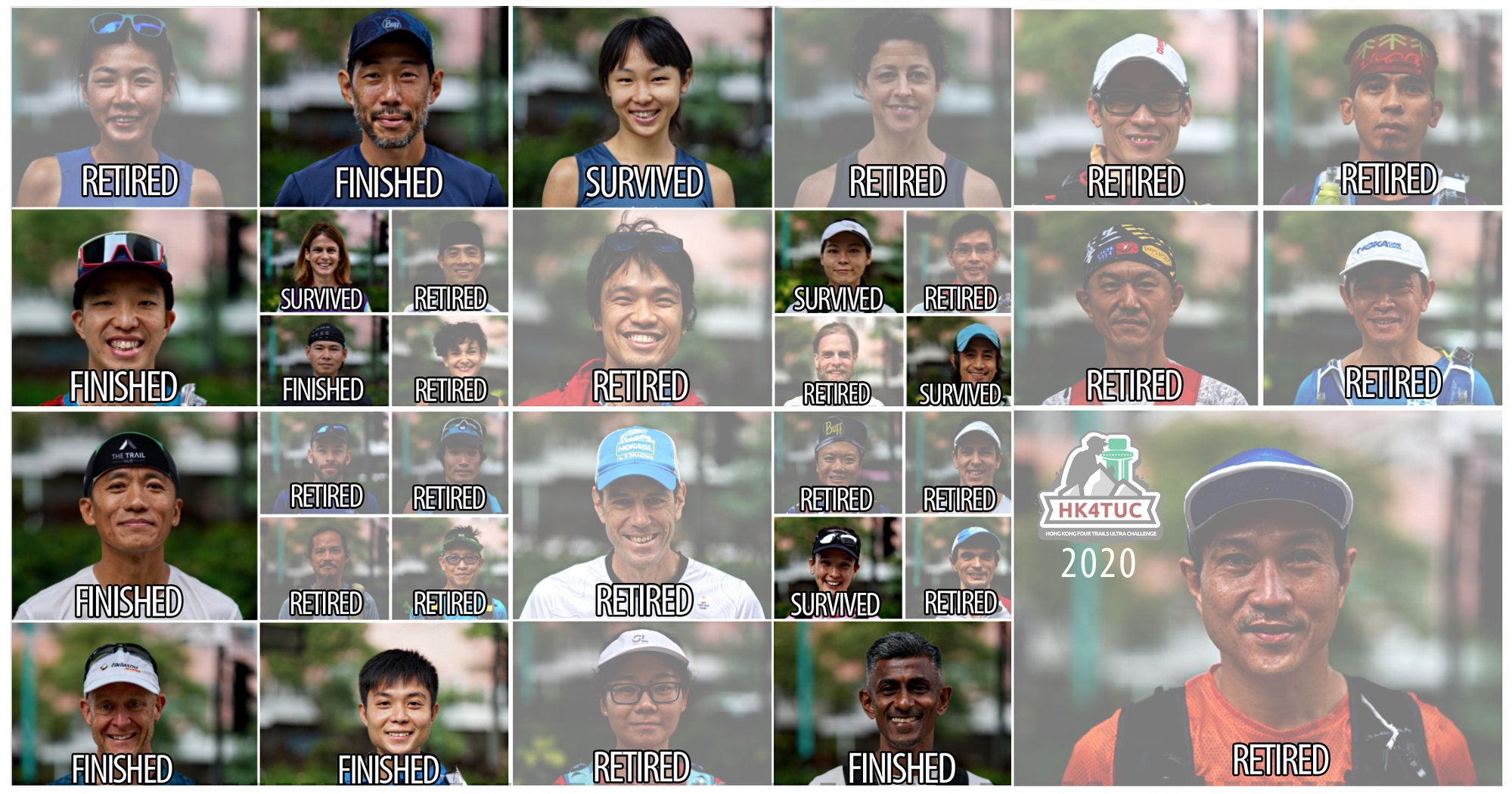
Out of the 33 Participants, 7 were declared as Finishers, 5 were declared as Survivors and 21 were declared as Retirees. Thomas is now one of the 49 Finishers & Survivors of this event since its birth nine years ago.
Journal Of “Team Thomas” @ 2020 HK4TUC (Third & Last Day)
There is a big difference between Thomas performance last year and this year’s HK4TUC. Last year, Thomas started the Hongkong Trail at about 9:30 AM on the third day of the event. This year, Thomas started Hongkong Trail at 9:05 PM on the second day, a big 12-hour difference earlier than last year.
After Thomas left Shek O Road, we went back to the place we are staying to monitor his movement through the Racemap App. After one hour, Thomas called us to confirm if he was following the correct track along the Hongkong Trail and we confirmed that he is in the right track. As compared from last year, Thomas did not have any problems in locating or seeing the Trail Markers because it was daylight. Compounded with the colder temperature and darkness along the trail, Thomas took time to confirm the location of the said Markers. After midnight, we went to bed as we were confident that Thomas will finish the Hongkong Trail and be able to catch up the 7:00 AM Ferry ride to Lantau Island the following day.
We expected Thomas to be approaching the end of Hongkong Trail at 5:00 AM and set our alarm clock at 4:00 AM. Before leaving our place at 5:00 AM, we called Thomas to confirm his position and we found out that he had “acid reflux” and he had to rest and take some sleep for his stomach to settle. He slowed down due his stomach condition and the cold temperature during the night and early morning. We estimated that he could not make it on the 5:00 AM Ferry trip and adjusted our schedule to leave our place. We expected that an early arrival at Victoria Peak/Finish Line of the Hongkong Trail will expose us to the cold wind in the early morning. We estimated that Thomas could not make it in the 5:00 AM Ferry trip and delayed our ride towards the Finish Line of the Hongkong Trail.
Thomas At The Finish Line Of Hongkong Trail
We finally left our place at 8:00 AM to the Victoria Peak. The wind was cold when we arrived at the said place and they were few people around as the business establishments were still closed. We entered a small enclosed space at an entrance in one of the buildings in the area to prevents us from the cold winds. I decided to jog and walk along the Hongkong Trail to meet Thomas along the way. After running for 1.6 kilometers, I saw Thomas walking. I called him, took a picture and turned around, jogged ahead of Thomas of about 20-meter distance towards the Finish Line. I immediately called my companion to warn them that Thomas has only 1.5 kilometers to the Finish Line. In a few minutes, Thomas crossed the Finish Line at the end of the Hongkong Trail at 8:42 AM, almost 48 hours after the Start of the Event. We immediately boarded Thomas to our waiting Taxi for our short trip to the Central Pier to catch our 9:00 AM Ferry trip to Lantau Island. During our 13-minute ride in the Taxi, Thomas was able to eat the Rice Porridge with Chicken we prepared and drink some Hot Ginger Tea.
Thomas Sleeping Inside The Ferry Boat To Lantau
After a lot of Red Light Stops along the way, we were able to board the Ferry at 8:55 AM, barely 5 minutes before the departure time. Once we settled and locate some seats for a space to let Thomas sleep and lie on his back, the Ferry Boat left the Pier. Thomas went immediately to sleep even with the loud noise of the boat’s engine and the loud conversation of a group of Filipino Ladies seated near us.
After 50 minutes of Ferry Boat ride, we arrived at the Lantau Island’s Silvermine Beach Ferry Pier in Moi Wu. We established our “pit stop” under a tree near the McDonalds and immediately prepared to resupply him and change his attire. He again ate a Hamburger from McDonalds and drink a hot coffee before leaving the place.
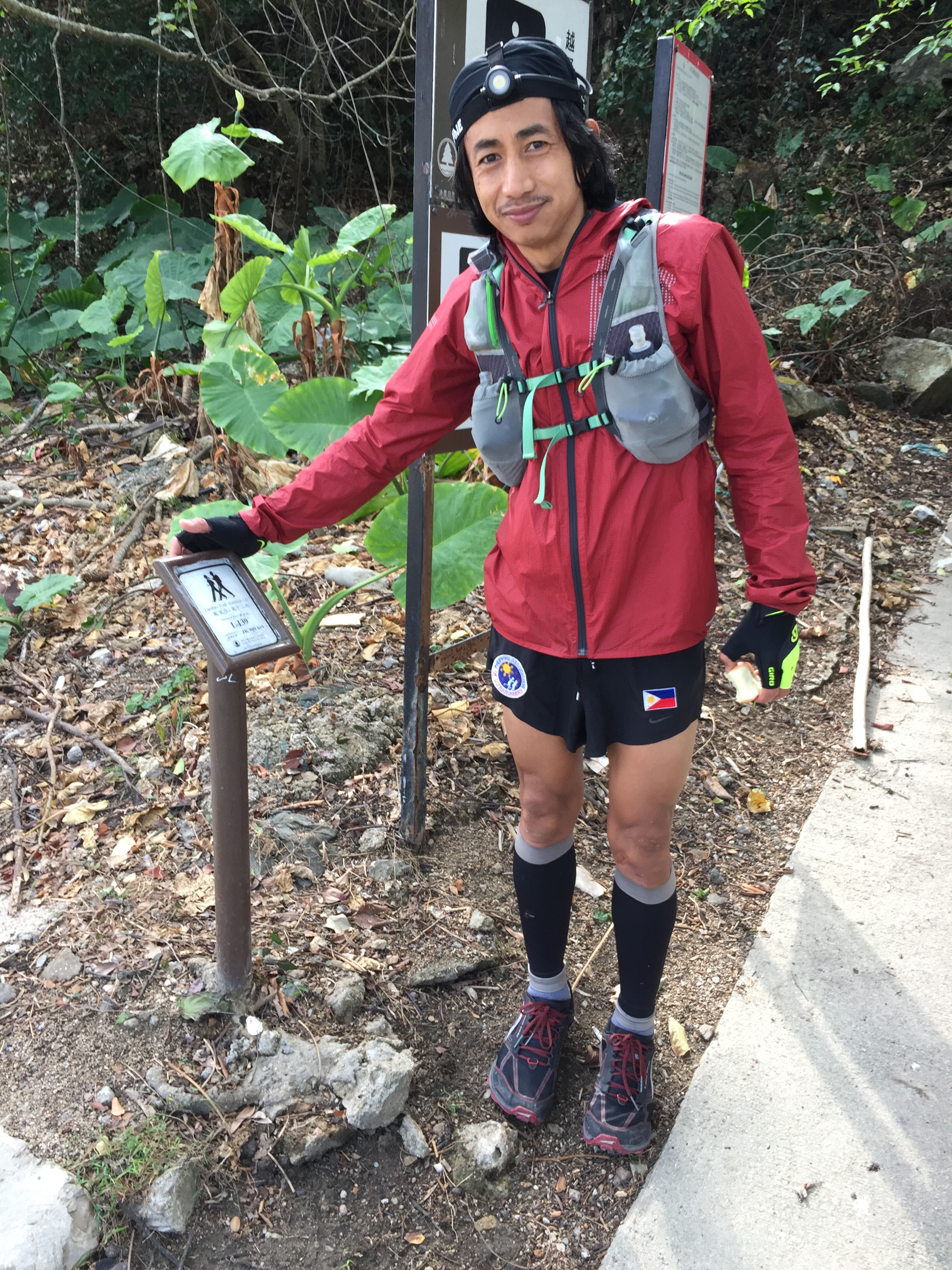
Thomas was able to recover immediately from his brief sleep during the Ferry Boat ride and the food/drink he ingested during his “pit stop”. Some of the local runners and volunteers approached Thomas offering him a Hot Bath and some Massage at the Lantau Base CampStore but he declined such offers as he was decided to leave the place immediately. Photo Guava of Hongkong, one of the Official Photographers of the Event, took a lot of pictures of Thomas en route to the Start of the Lantau Trail. He even asked me to take a picture of Thomas and him during the short hike to the Trail. At 10:25 AM Monday, January 27, 2020, Thomas started his run at the Lantau Trail Marker #139.
Thomas At The Start Of The Lantau Trail
Thomas finished the Hongkong Trail in 11:36 hours which is too slow as compared to his Finish Time last year of 8:30 hours which was considered as the 2nd fastest time to finish the said leg. If not for the “acid reflux”, darkness along the route, and the extreme cold temperature during the night, Thomas could have finished a faster time or equaled his time last year.
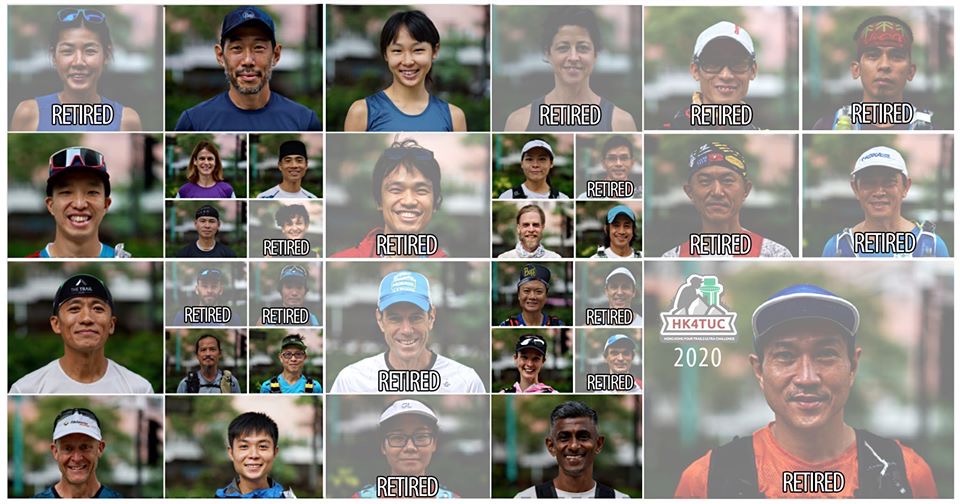
2020 HK4TUC “Retired” Runners
During the day, more runners were declared as “Retired” or in simple runner’s term as “DNF” (Did Not Finish). After a total of 15 runners who were “retired” on the 1st and 2nd day, another 5 runners “retired” on the third day. At present, a total of 20 runners were declared as “Retired” in the afternoon of the Third Day and only 13 runners remain along the Lantau Trail with the hope that some of them will be declared as “Finishers” and the others as “Survivors”.
As we left our place to ride the Ferry Boat to Lantau, 7 runners have already finished as “Finishers”, with a time of sub-60 hours. It is just a waiting game on what time will Thomas reach and kiss the Mui Wo Mail Post and be declared as “Survivor”.
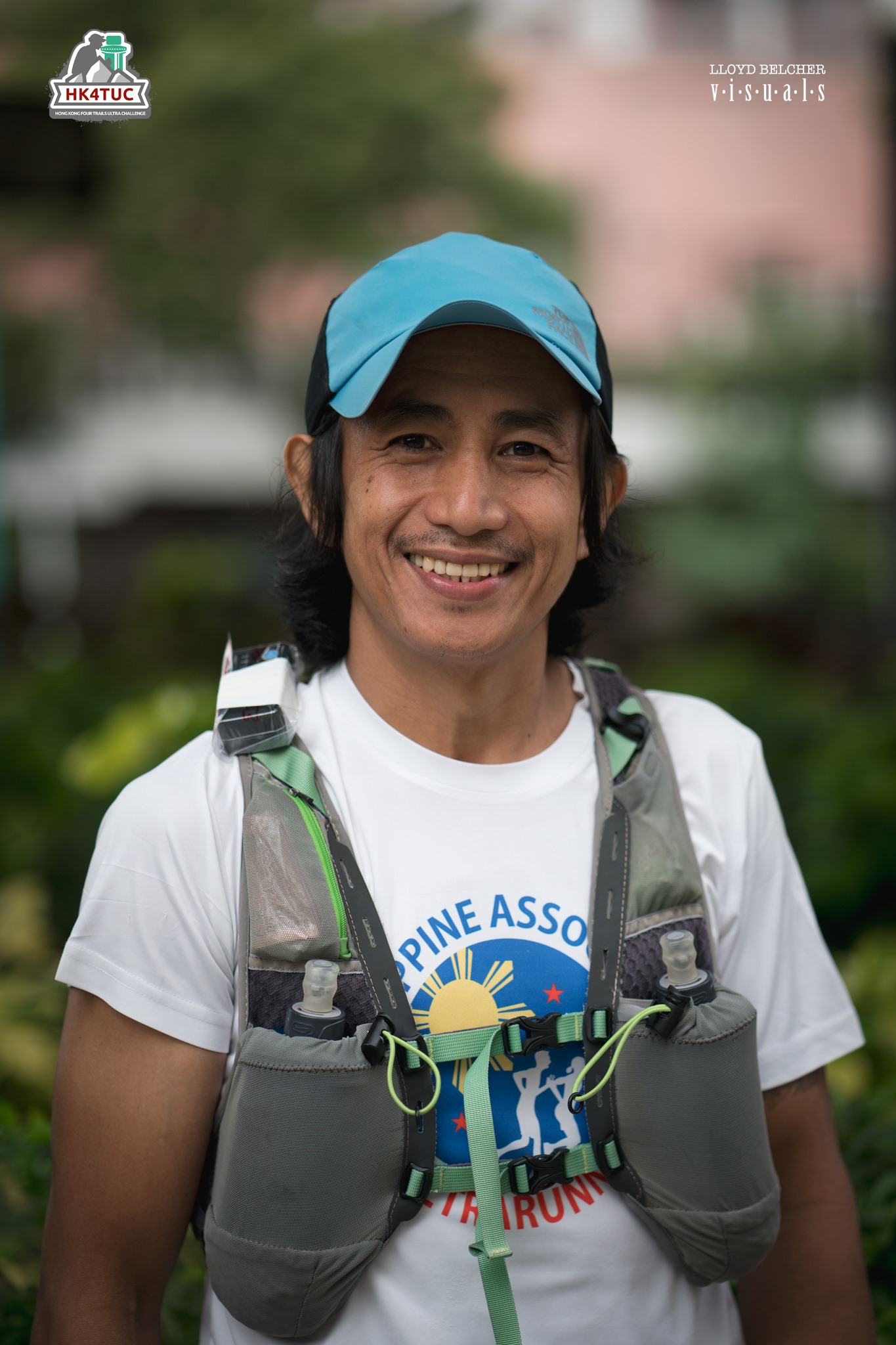
Official Mugshot Of Thomas (Picture From HK4TUC FB Page)
We met Jurg, our original member of Team Thomas and husband of Irene from the Philippines whose family resides in Hongkong, at the Central Pier and joined us for the final push, support and cheer to Thomas. We arrived at Mui Wo’s Silvermine Beach Ferry Pier in Lantau at 11:00 PM with the expectation that Thomas would arrive at 1:00 AM on the fourth day, Tuesday, January 28, 2020. We initially stayed at the Pier and within the vicinity of the Mui Wo Green Mail Post due to the cold winds. We finally settled at China Bear Resto/Pub near the Pier where we comfortably waited as the place was heated. After the establishment closed at 1:00 AM, we transferred to the 7-11 Store where we were accommodated by the Cashier who is a Senior Citizen. We bought food and drinks while waiting for Thomas. Wealso stayed at the Base Camp Sports Store to monitor the progress through the Racemap Application of Thomas’ movement towards the Finish Line.
Kissing The Mui Wo Mail Post (Picture From HK4TUC Facebook Page)
Our waiting time was too fast that in a few hours, Thomas was already on his last 2.5 kilometers to the Finish Line. Finally at 5:50 AM on the 4th day, January 28, 2020, Tuesday, Thomas kissed the Mui Wo Mail Post at 68:50 hours and he was declared as the “3rd Survivor” for this year’s edition of the HK4TUC. Andre Blumberg, the RD/RO of the event, congratulated Thomas and he was impressed on the transformation on the performance of Thomas as compared last year. After the traditional Champagne shower on Thomas, and as a parting statement, Andre Blumberg announced his personal invitation for Thomas to join the 10th Edition of the HK4TUC next year which Thomas immediately accepted.
Training for Thomas for the 2021 HK4TUC will start next week!
I just want to review the things that I do when I am running in my training and races. Most of these things are known already by runners but sometimes they forget when fatigue and pain come into play at the middle of the run. I usually do these “tricks” to focus or bring back my mind into running as we tend to be distracted by some factors, whether they are external or internal to one’s body. So, these are the tricks that I do:
1. Strides: This trick is described as quick increase in pace or speed for a short distance or time followed with an interval of slow pace. Most of the time, the time elapsed during a particular stride should be the same period with the slow pace. I am usually asked by my Coach to do some “strides” during or at the end of my Warm-Ups and during my Cool Down. However, at the middle of my Races and training workouts, I usually apply these “strides”. Usually, I adopt the “30-second” duration of “strides” which I estimate 30 counts whenever my right of left foot hit the ground.
2. “30-30”-Second Run: Actually, this is the same with “strides” and it was popularized by Kilian Jornet’s technique in running trail events. The first 30 seconds consist fast run and the next 30-seconds in easy run. This cycle is repeated throughout the run or race. Just the same with the strides, I usually count my right or left feet landing/hitting the ground from count one to thirty on fast pace and then shift to an easy pace with the same number of counts. If one can do this consistently, a runner can run as far as he can. This is what I adopt in my running, whether I am on the trail or road. This is my favorite drill during my endurance trail runs and during my road runs.
3. “30-20-10”-Second Run: This drill run is done by doing first a 30-second easy run, then followed with a faster 20-second run, and finish with a 10-second “sprint” to complete the cycle. You can repeat this cycle drill as long as you want. I usually do this drill in 4-5 cycles in the middle of my workout. As you progress, a runner can increase the number of cycles at least one cycle per week until comfortable to do 8 cycles in a single running workout.
4. “Fartlek” Run: Simply look for an object far in front of your running path and then “sprint” towards the said object. Take an easy and relaxed run after the sprint and then repeat the sprint if you feel you have already rested/recovered. Repeat the process as long as you want. You can walk as your rest/recovery in between sprints. You can start with 4 repetitions in a single workout and then steady increasing the number of repetitions within the middle part of your running workout. This workout is done once or twice a week.
5. Counting Steps or Strides: In the middle of my runs, I usually count my strides, whether they are easy or fast, from one to 90. In my estimate, 90 strides is equivalent to one minute which in turn would estimate me running a stride rate of 180 steps per minute. I usually do this drill when I would force myself to jog or to have an easy run instead of walking on the downhills or flat roads.
Most of these tricks were taken from the experiences shared by other runners. Some were taken from running books and articles from running magazines with the proper studies made by Sports scientists and sports physiologists. You can adopt one trick or you can combine all of these tricks in a single workout. It is up for the runner to choose which one is fitted for their prevailing running condition and purpose or objective while running.
This study was made by RunRepeat.com and the International Association of Ultrarunner (IAU). This is an excerpts from the said study. You can read the whole article here.
In this study, we explore the trends in ultra running over the last 23 years. We have analyzed 5,010,730 results from 15,451 ultra running events, making this the largest study ever done on the sport.
Key results
Female ultra runners are faster than male ultra runners at distances over 195 miles. The longer the distance the shorter the gender pace gap. In 5Ks men run 17.9% faster than women, at marathon distance the difference is just 11.1%, 100-mile races see the difference shrink to just .25%, and above 195 miles, women are actually 0.6% faster than men.
Participation has increased by 1676% in the last 23 years from 34,401 to 611,098 yearly participations and 345% in the last 10 years from 137,234 to 611,098. There have never been more ultra runners.
More ultra runners are competing in multiple events per year. In 1996, only 14% of runners participated in multiple races a year, now 41% of participants run more than one event per year. There is also a significant increase in the % of people who run 2 races a year, 17.2% (from 7.7% to 24.9%) and 3 races, 6.7% (from 2.8% to 9.5%).
There have never been more women in ultrarunning. 23% of participants are female, compared to just 14% 23 years ago.
Ultra runners have never been slower across distance, gender and age group. The average pace in 1996 was 11:35 min/mile, currently, it is 13:16 min/mile. The average runner has added 1:41 min/mile to their average pace, which is a slowdown of 15% since 1996. We don’t believe that individual runners have become slower, but that these distances are attracting less prepared runners now because the sport is more mainstream.
Runners improve their pace in their first 20 races, and then their pace stabilizes. From their first to their second race runners improve by 0:17 min/mile (2%) on average. But by their 20th they improve by 1:45 min/mile (12.3%).
The fastest ultra running nations are South Africa (average pace 10:36 min/mile), Sweden (11:56 min/mile), and Germany (12:01 min/mile).
A record amount of people travel abroad for ultra running events. 10.3% of people travel abroad to run an ultra, for 5Ks this percentage is just 0.2%.
Runners in the longer distances have a better pace than the runners in the shorter distances for each age group.
All age groups have a similar pace, around 14:40 min/mile. Which is unusual compared to the past and to other distances.
The average age of ultra runners has decreased by 1 year in the last 10 years. It has changed from 43.3 years to 42.3 years.
Ultra runners are getting more engaged – the average number of ultras per year has increased from 1.3 to 1.7 over the last 23 years.
Based from the “Key Results” of this study, I would like state my opinion and observations on the following:
Participation has increased by 1,676% in the last 23 years from 34,401 to 611,098 yearly participation and 345%in the last 10 years from 137,234 to 611,098: Within this period in 2009, the Philippines had its contribution of an event in the ultramarathon community with the introduction of the First Edition of the Bataan Death March 102K Ultramarathon Race. I can safely say that this was the first Ultramarathon Race in the country in the 21st century (from the year 2000 and beyond). It is also the First “Point-to-Point” Ultramarathon Event in Asia. Through the Philippine Association of Ultrarunners (PAU) and endorsement of PATAFA in 2010, the Philippines was the 6th ASIAN country to be accepted and sanctioned with the International Association of Ultrarunners (IAU). PAU is also considered as the FIRST ASEAN Ultramarathon Federation to be a member of the IAU. The BDM 102 Ultra had “sparked” the popularity trend of ultramarathon events in the country as more events were organized by individual persons in almost all regions in the country in the coming years. Trail Ultras had also expanded in the country with runners trying to get ITRA points for possible entry to the UTMB Races. However, in this report/study, I can only see Malaysia as the only South East Asian country that is included among the Top 20 countries that has the most number of ultra marathon runners. I wonder why? With Malaysia’s population of 32.7 Million against the Philippines’ population of 109 Million? With more Ultra Races here in the Philippines than Malaysia? Maybe, this is a good start for somebody in the country to document and collate all the ultramarathon events and number of participants in every event in the country. I am not saying that we should be included in the Top 20 countries of Ultra Marathoners but we have the potential to be a future contender in the said list if we just cooperate and be united among ourselves.
Local Ultra Marathon Runners Have The Tendency To Run More Ultra Races Every Year: With more Ultra Race Organizers “sprouting” all over the country, runners are enticed to join these races and taste what it is like to finish an ultramarathon race. But what I’ve have observed is the loose consideration and “comfort-oriented” prescribed cut-off times of these races. In Japan, the average cut-off time for their 100K Road Ultra is 14 hours and 8 hours for the 50K. For the BDM 102K, due to the heat and prevailing weather, the cut-off time is 18 hours and for my 50K PAU Events is 9 hours. For the PAU 100-Mile Road Races, it is pegged at 32 Hours. For longer distances, a PAU runner must be able to cover an average distance of 5 kilometers every hour. All these Cut-Off Times for my races are way below and slower than the cut-off times of Japan’s Road Race’s COTs. I can not speak well about the other Road Races in the country and their respective COTs. (Note: In almost all my Races at PAU and BR’s Events, I use myself as the “gauge” to determine a decent COT for the distance as I run my events first before making it as an Ultra Marathon Event for the Public)
More of our Local Ultra Marathon Runners Are Satisfied With Just Finishing: This is the reason why our Average and Competitive Ultra Marathon Runners could barely finish the Races in International Events. This is a question of having so many Ultra Races but not having Quality Finishers with the goal to level-up or be at par in International Standards in Ultra Marathon. I consider myself as one of the “back-packers” and one of the last runners to finish within the COT in International Races but considering my age of almost 68 years old, I still consider myself as a good quality Ultra Marathon Runner. I have yet to see a Filipino Ultra Marathon Runner who will land as Podium Finisher in the Badwater 145-Mile Endurance Race (with due respect to those Pinoys who have finished this tough race); a Silver Buckle Awardee in the WSER 100-Mile; a Podium Finisher in the Spartathlon; Podium Finisher in the Leadville 100 & Hardrock 100, and a Top 10 in the UTMB.
Fastest Countries In Average Pace: South Africa in 10:36 minutes per mile is the fastest; Sweden is second in 11:56 minutes per mile; Germany is third in 12:01 minutes per mile; and Malaysia in 20th rank in 15:55 minutes per mile. Based from the yearly results of the BDM 102K Ultra, I can safely say that the Average Finish Time is between 16-17 hours (with a COT of 18 hours). Using this as a baseline, an Average Local Runner who finished the BDM 102 is just a few seconds slower than the Malaysians. Positively speaking, we could be in the 21st or 22nd rank! (I can only speak for my PAU Races as I know that most of the other races have slower COTs).
For the meantime, these are the only observations and conclusions/opinions that I can think of as related to this study. I hope that in the next period of study (within 5 or 10 years), the Philippines will be in the List of Top 20 Countries in the Ultra Marathon Community. Let us strive more to be positive. And let us unite our efforts in this sports.
Based from what I have been reading on Social Media and other written articles about running for the past days since the start of the year 2020, I have the following personal predictions about running in the local setting in the country as well as in International Running Events:
Running Events will steadily increase in numbers: With the positive results of the 30th ASEAN Games where the country became the Host and the Overall Champion in the Medal Tally Results, running as a basic sports will be embraced by the citizenry as a form of exercise; as an endurance sports; as a part of training for other sports discipline; and as a part of a healthy style of living. Almost all the weekends of the year will be filled with scheduled “fun runs”; long distance running events, such as half-marathon, marathon, and ultramarathon races. Short and Middle distance races like 5K and 10K races will always be there and it is predicted that more “newbies” will join such races.
Trail Running Events will increase throughout the country: As per my observation with the scheduled races at the Facebook Group “Trail Running In The Philippines” (TRIP), trail running events, whether they are short in distance or ultras, have increased in numbers and I think for 2020, more events will be staged in almost all the regions/provinces in the country where there are mountain trails. However, trail runners will tend to choose which one to join due to financial constraints or depending on what would be their goal in this selected sports. Some competitive trail runners will be joining the Local Trail Running Events with ITRA points for them to qualify in International Trail Running Events. With more of trail running events for this year, the “old” trail running events will have a decrease in participants not unless the same people who have finished the event will continuously support the said event.
MILO Marathon & MILO Regional Qualifying Races are still the Number ONE Running Events In The Country: Aside from its stature as the Most Prestigious Running Events In The Country, it rewards our Local Elite Runners with Cash Incentives and Travel Expenses support for the MILO Finals Marathon Race. MILO/NESTLE as a MultiNational/Foreign Corporation in the country had been promoting Running as a Sports for the longest time for the local populace. Nobody from our Local Business/Corporate Brands or Institutions had the courage to dig deep from their “pockets” to provide a constant and continuous goal to promote healthy lifestyle through running to the local populace. MILO Runners will also increase innumber despite the fact that schools are required to bring their students to join the shorter races. For the competitive and average runners, there will be an increase in the number of runners who would like to qualify for the MILO Finals as it is becoming a symbol status for runners to be a part of the said event. Qualified for the MILO Finals had been a “bragging rights” for the average and competitive runners in the country.
With more Running Events, Runners Will Remain With Slow Finish Times: With the advent of the Social Media, runners will be satisfied in joining and finishing the race event that they have joined. Pictures of runners with their Finisher’s Medal will be the usual post/status on Facebook without mentioning their Finish Time. Actually, this practice had been with us through the years and more “newbie” runners will follow this practice.
Slow Finish Time Runners Will Compose Most Of The Runners In International Marathon Events: It is common in my observation that Slow Finish Runners (Sub-5-Hour & Sub-6-Hour Runners) in Marathon Races will consist most of our Runners who will be joining the World Marathon Majors Events. Their reason could be “Bragging Rights” to have joined these events as they would post their Finisher’s Medals on Facebook and other Social Media platforms. I could not understand why these average and slower runners are the luckiest persons in Race Lotteries in World Major Marathon Races. This prediction is the main reason why the Runners from the Philippines remain as one of the slowest finishers in Marathon Races as compared with other nations.
But More Average and Competitive Runners Will Try To Qualify For The Boston Marathon: It can not be denied that the Most Prestigious Marathon Race In The World is the Boston Marathon and its qualifying times had been faster than before and there is a number of minutes as buffer time if a runner just qualified for his time, to make sure that he is in for the race. Hopefully, more of our Local Elite Runners will be able to qualify for the said race. For those slower runners who are active in the Social Media, they will take the window of opportunity to get in to the event as Charity Runner/s as they have the money and influence to raise for the funds needed.
UTMB Races Will Remain As The Goal Of Local Trail Runners: Through the past years, the number of Pinoy Runner (Local and Foreign-based) Applicants for the UTMB Lotteries had been increasing and as a result, more Filipinos are joining the UTMB Races. The creation of Trail Running Events in the country with ITRA points had considerably increased the number of qualified Trail Runners for the UTMB. It is predicted that more Trail Running Organizers/Race Directors will advertise their races with ITRA Points as a “come-on” for those runners who plan to join the UTMB Races, as well, in other International Races. However, with financial and logistics constraints, there will still be qualified applicants to the UTMB Races who would not be able to join such events.
More “Copycat” Ultramarathon Races Will Be Created: There is a tendency of Local Ultra Race Director/s to copy or outdo other RDs Routes for Road Ultramarathon Events. What is worse is when they do a “Reverse” version of what other RD had adopted as his route in his events. This bad practice will continue showing disrespect to the other Race Director/Organizer. Some RDs will also conduct farther distances for their Ultra Events with the purpose to outdo the performance of other ultra athletes. With the popularity of “Fake News”, there will also be “Fake RDs and Fake ROs” who will spend money for advertisement, send Personal Messages to invite their FB Friends, promise Prizes, Raffles, and other Incentives for the Podium Winners, attract runners with Commercial Sponsors and give “Free Kits” to Runner-Influencers.
Ultramarathon Races and Popular Running “Trends” Will Continue To Be Copied By Local Race Organizers: I think I am the Race Director that started the famous “Beer Mile” in the country and since then, it was copied by others as a “fun run” and it did not prosper to come up with a some sort of National Course Record among the runners. A Fat Ass Road Run was introduced every January and it became popular for runners and I guess, there will no more of this event this year. I also introduced Fat Ass For Trail for a single edition and I was not able to get more participants that I have stop the concept. As the Backyard Ultra in the US is becoming popular, some Local Organizers had conducted their own version of this event. Hopefully, this event will thrive and grow within this year. As for the IAU concept of “loop runs” to establish Record Runs in 24 Hours and other Running Timed Events, these races are not palatable to the liking and taste of Local Runners as compared to other Asian Countries and if we have some races of this kind, I predict that we could not be able to compete and be at par with these countries.
More Ultra Race Organizers and Race Directors Will Be Dreaming That Running Events Are Lucrative Business: This is “self-explanatory”.
Lastly, there will always be a “Cheater” in Every Race!






 Bald Runner
You must be logged in to post a comment.