The 1st Lecture for the 2011 BDM 102 was conducted last October 1, 2010 in one of the Function Rooms of the Philippine Army’s Officers’ Clubhouse. It started on time at 6:00 PM in the presence of 15 runner-participants & applicants.
I personally conducted the lecture with the topics, History & Honesty. The following is the summary of the lecture:
History
Based from my readings in history books and personal accounts of survivors of the Bataan Death March of 1942, I discussed to the attendants about the history of the event that happened from April 9-24, 1942 which resulted to the killing and death of an estimated 20,000 POWs during the March and ultimately, during the POWs stay in their Concentration Camp at Camp O’Donnell, Tarlac. These POWs during the March was a combination of Filipinos, Americans, Chinese-Filipinos, and civilians. Literally, these POWs were made to “march” for a distance of 102 kilometers from Mariveles, Bataan to San Fernando, Pampanga; transported by train from San Fernando, Pampanga to Capas, Tarlac; alighted from the Railway Station; and then marched/walked for another 11 kilometers from Capas Poblacion to Camp O’Donnell.
This unfortunate event during the World War II was considered as the most barbaric act in violation of the treatment of POWs as provided by Geneva Act. The people responsible for this dastardly acts during the Bataan Death March were tried by Military Tribunal/Court after the war and they were executed to their death. However, this event in history will be always remembered and commemorated.
The history of the BDM 102K Ultramarathon Event was also discussed with the emphasis that the commemoration of this important event should be done in the very place where the event happened. Some countries had been using BDM as the title of their running events but they are done in their respective countries. It is for this reason that we should continue commemorating this event in the most practical way which is through running an ultramarathon event. It was initially was a dream but through persistence and patience, this event became a reality with the support of runners who believe that it is worth doing in memory of our dead heroes and living survivors of the infamous Bataan Death March.
Honesty
For the past editions of the BDM 102, I always emphasized the “honor system” in a running event. I told to my audience about my personal observations on the actuations of some of the runners and the reports I received from my marshals and staff with regards to honesty in running this event. My past journals/posts about the 1st BDM 102 would explain more about such incidents of breach of honesty during the event.
The 102K distance is daunting and running under the heat of the sun is very challenging. Such distance and challenge would tempt every runner to be honest or not, just to be able to finish the race within the prescribed cut-off time of 18 hours. Finishing an ultramarathon distance is a “mind game” and each of the runner must be able to prepare and train physically and mentally.
We made some adjustments on our protocol in order to monitor our runners along the route but these are not enough to make sure that runners with bad intentions would be detected by our staff/marshals. It is in this view that our outfit would be able to encourage and prepare all interested runners to run along the actual route through “test runs” before the scheduled race day.
After a brief open forum, the lecture was terminated after one hour.
The next BDM 102 Lecture will be held on October 22, 2010 at the same time and place. One of the top runners in this year’s BDM 102 will be invited as the resource speaker and another resource speaker will be discussing on her experience and “tips” as a Support Crew to her runner-husband.
To all BDM 102 runners, train well and keep strong!
Two weeks before this story was published at the Philippine Daily Inquirer’s (PDI) Sunday Inquirer Magazine, I received an SMS from Eric Caruncho introducing himself as a writer for PDI asking me for an interview in relation with his assigned job to come up with a story on extreme sports. He specifically mentioned about the Bataan Death March 102K Ultramarathon Race.
I told him that I don’t want “e-mail interviews” as I prefer to have a “face-to-face” interview with him and other journalists. I could be the conservative type on matters like this but I know that this is the proper way for a writer to actually feel and get a full knowledge about the topic from his source. I would like again to experience those “eye-to-eye” contact while talking to a journalist as I have experienced when I was still in the active military service.
I asked Mr Eric Caruncho to send me “guide questions” through e-mail so that I could prepare for our meeting/interview. I was glad he sent me a list of questions immediately and we set for a meeting a few days after.
So, the meeting was set and Eric arrived ahead of schedule but I was there already at our meeting place before he arrived. I was happy to see him carrying a tape recorder, writing pad, and a ball pen. Great! I have the impression that I am dealing with a real and professional journalist. Over a cup of coffee and a simple Filipino breakfast in one of the Military Golf Courses in Manila, the following story was the result of our meeting-interview.
Thanks, Eric for the nice story! I hope you will regain your love for running with his story.
THERE are marathons. There are ultra-marathons. And then, there’s the Bataan Death March.
Quickly gaining a reputation as the toughest race in the Philippines, the aptly-named Bataan Death March (BDM) is an annual 102-kilometer slog that retraces the route of the infamous World War II debacle from Ground Zero in Mariveles, Bataan to San Fernando, Pampanga.
Now on its third year, BDM promises to be an even greater challenge for “the few, the proud, the brave” next year. The race organizers plan to extend it to 151 kilometers, retracing the final journey of the original survivors of the death march to the Japanese concentration camp in Camp O’Donnell in Capas, Tarlac.
If you have to ask “why,” you’re obviously not ready. But if your question is “why not,” then perhaps you have the makings of an ultra-runner, for whom the full marathon distance of 42 kilometers is just the starting point.
The Bataan Death March is the brainchild of retired Major General Jovenal D. Narcise, better known to the local running community as the Bald Runner through his blog “Bald Runner” (www.baldrunner.com).
“We wanted a nice gesture to remember our Filipino heroes,” says Narcise, who at 58 has a blood pressure of 110/70, a resting pulse rate of 50 to 60 beats per minute, and the same 29-inch waistline he had when he was a cadet at the Philippine Military Academy – all thanks to his high-mileage, clean living lifestyle.
“In the States, they have been holding the Bataan Death March Memorial Marathon in White Sands, New Mexico for the past 20 years, to honor veterans from the state. It has become internationally popular, and they have a ‘heavy’ category where runners run with a 35-pound backpack.”
Back home, local runners had been competing in the Araw ng Kagitingan ultramarathon relay on the anniversary of the Fall of Bataan.
“With the advent of ultramarathons worldwide, I thought, why not an ultramarathon?” says Narcise. “To make it more competitive, I thought of making it a 100-kilometer run.”
Under the International Association of Ultra Runners, the federation that regulates ultramarathon events, the standard ultramarathon distances are 50 kilometers, 100 kilometers and 100 miles. Narcise had had a bit of experience organizing races as an army commander, when he was in charge of the AFP’s Gintong Pangarap marathon. With his own funds (taken out of his retirement benefits), Narcise organized the first Bataan Death March in 2009.
“The standard cut-off time for a 100-kilometer race is 15 hours,” he says. “We decided to make it 18 hours for the BDM.”
To avoid the hottest part of the day, the race started before midnight. Out of 85 runners, 82 managed to make it to the finish line, with the fastest runner finishing in a little over 9 hours.
The second BDM held last April had even more participants, with 120 finishers, including 13 international competitors from the US, Singapore, Japan and France – all of whom heard about the BDM and signed up for it through Narcise’s blog. Despite the absence of any corporate sponsorship, the BDM is shaping up to be one of the premier annual events on local runners’ calendars.
Narcise isn’t just dreaming, however. He has organized local endurance athletes into the Philippine Association of Ultra Runners (PAU), which is federated with the International Association of Ultra Runners based in Morocco, a group that includes 40 member countries. Under its auspices, he has organized monthly ultramarathon events. He even sponsors his own Team Bald Runner, a core group of 15 elite athletes.
“My cause is just to promote the sport and raise funds for my athletes in Team Bald Runner,” he says. “I have 15 elite athletes I’ve been training for events. I support their registration fees, some subsistence, some out of town trips. They have been consistent in the top 3, top 5 in road races here. I brought two of them to South Korea last month for a 100-kilometer race. One of them placed sixth in the Jeju International 100K Run, setting a national record of 9 hours and six minutes. This is a good start.”
Through his blog, Narcise has become a pied piper of sorts for local endurance athletes and enthusiasts alike, providing training advice, anecdotes from his own experiences, commentary on local races, and miscellaneous information on diet, nutrition and training.
Originally from Laoag, Ilocos Norte, Narcise’s own running path started in 1968, when he was a pre-med student in Baguio dreaming of entering the Philippine Military Academy.
“The university doctor examined me and found that I had weak lungs and a heart murmur,” he recalls. “He advised me to start running. My original motivation was to pass the physical exam so I could enter the PMA.”
The running seemed to help his constitution, and he continued to run as a cadet.
“In the PMA, I had no talent for sports, just running,” he says. “I placed in the top 20 in a 20- kilometer race, out of 80 cadets.”
His running was interrupted, however, when he was assigned to Mindanao as a fledgling army officer, right in the middle of the MNLF rebellion in the mid-1970s. By the time he returned to Manila three years later, the first running boom was in full swing.
“I was running only 30 minutes a day when I entered a race from Camp Allen in Baguio to Fort Del Pilar in 1980,” he recalls. “I placed in the mid-pack but my brother, a sprinter, placed in the top 6. I asked him how he trained and he said he ran from his house in Diliman to Fort Bonifacio every day. I went and bought several back issues of ‘Runner’s World’ magazine, and that’s how I learned about scientific training for long distance running.”
He paid particular attention to the work of Arthur Lydiard, the legendary New Zealand coach who basically wrote the book on training for long distance running.
The following year, he placed second in the same race. “I began to appreciate the scientific approach to training – you have to develop endurance first, then speed.”
His career path took him through various commands in the military, but physical training became a constant in his life.
“When I became an army commander, I decided to set the example. Soldiers drink, smoke and indulge in other vices, but once you introduce running to them, they become disciplined. But for them to do that, you have to set the example. Clean living was the reputation I had among the soldiers.”
Narcise ran his first full marathon in 1980, and from then, there was no looking back. He continued to run local and some international marathons until his retirement three years ago, when he discovered the wonderful world of blogging. He started Bald Runner in 2007 as a way to share information and experiences about training. It has since become one of the more popular sites for local runners, especially on ultra distance events.
“In an ultramarathon, you are trying to find your limits physically, mentally and psychologically,” he says.
Obviously, a 100-kilometer run isn’t for everybody, but for those who are willing to put in the necessary training mileage, ultramarathons can often be easier than the marathon.
“In a marathon, you’re trying to finish the race within a set time,” he says. “In an ultramarathon, it’s different. You need somebody to talk to. You share food. You socialize. You develop camaraderie. The atmosphere is less competitive. You compete with yourself, the route and the elements, not against the other runners.”
In ultramarathons, it is also necessary to eat during the race to replenish the body’s nutrients, to hydrate, and to take walking breaks in between running. The Bataan Death March provides typical Filipino fare, including boiled bananas, boiled sweet potatoes, and a bowl of steaming mami or arroz caldo at the 50-kilometer mark, although many runners also bring carbohydrate gels, power bars and sports drinks.
All of these make ultramarathons less of a grim and determined death race and more of a shared bonding experience. Be that as it may, Narcise says prospective ultramarathoners should build up their weekly mileage to at least 50 kilometers a week, slowly building up to 80 to 100 kilometers a week as they near the event.
“I encourage my runners to have back to back long runs on weekends, ideally 15 to 20 kilometers on Saturday and a longer run of 30 kilometers on Sunday, or vice versa.”
“My vision for the sport is that maybe in eight years, the ultramarathon will be a regular Olympic event. By that time, maybe we can develop good ultramarathon runners. The Japanese are now the number one ultramarathon runners in the world. Why not Filipinos?”
That would be sweet revenge indeed for the original Bataan Death March. •
1. Weeks and days before last year’s BDM 102 (1st edition), I included a warning in my rules and regulation that “cheaters” will be disqualified. Some of the runners made a comment why I have to include such instructions in their race packets as according to them this warning was not necessary. I just smiled and did not answer their comments. However, on race day, I was a witness of so many cases of “cheating” among the runners. Did I approach them and tell them on their faces that I saw them cheating during the race? NO! But I remembered their names and faces. In my RD’s Report, I admitted that there were cheating as I personally observed plus the fact that I received also information from my marshals, staff, and from the other runners and their respective support crew. Most of my marshals then were the members of my Elite Team Bald Runner and I really believed in their reports. Their reports were collaborated with the information coming from other runners and their respective support crew. I did not expose them but they know that I know that they cheated. It is for this reason that I declared the Results of the 1st BDM 102 as Unofficial. Case closed.
2. This year’s BDM 102 was a perfect race because there were no reported cheating or making some “shortcuts” of the route as we implimented time stations/checkpoints along the way where each runner were listed with their elapsed time/split time as they passed in many points along the route. Those who were reported to have allegedly cheated on the 1st edition were able to redeem themselves in this year’s BDM 102 by registering a much-improved finish times as compared in last years edition. Did I congratulate them for redeeming themselves in this year’s race? NO!
3. In the 1st PAU 50K Run in Tanay, Rizal last May 9, 2010, one of my marshals reported that one of the runners rode a vehicle with the intention of declaring himself as DNF but he alighted from the vehicle after riding a considerable distance and resumed his race until he reached the finish line. I removed the name of this runner from the Official List of Finishers in the said race and banned him from my road races. This runner contacted me and questioned my decision why I had to remove his name from the list. I stand on my decision based from the reports of my marshals and collaborated by other runners. The runner did not insist to defend himself and I told him that he is banned from my races. Case closed. Most of the finishers in this race knew his name and one of his running friends tried to defend the culprit but I just listened to his reasons and appeal. Did I expose his name? NO, but I kept on informing in my blog and in my race instructions that “cheaters are disqualified in my races and they forever banned in my future races”.
4. After the “P2P” PAU 70K Run in Ilocos Norte, I received reports from my marshals that some of the runners did not pass in one of the checkpoints where each runner must get a string necklace. To be specific, some runners did not pass along the trail road that goes to the Bangui Windmill Project and my marshals potively identified the runners. In another incident, one of my marshals reported also that one runner was seen alighting from a “jeep/multicab” some hundred yards away from the Finish Line. This runner was seen by tricycle drivers in the locality coming out from the vehicle and my marshal overheard some unsavory comments from them due to the incident that they have seen. My marshal positively identified the runner from the pictures I’ve taken at the Finish Line. Before I left Laoag City, I started receiving reports, stories, and observations from the finishers/runners and such reports supported the observations/reports of my Race Marshals. These additional information collaborated with the reports coming from my race marshals.
5. Do I have to call the attention of these reported “cheaters” and let them explain? NO. The reports of my race marshals are enough to pin down these people as I have delegated to them the authority to make sure that the race is conducted honestly and with its integrity intact. These marshals are members of my Elite Team Bald Runner and they know the “do’s and dont’s” in conducting road races. These are the very same people who have been my staff in my road races for the past two & half years and I personally know them since the time I was designated as the Project Director of the DND-AFP Gintong Pangarap for Marathon six years ago! These elite runners do not make-up or create stories of cheating. For what purpose? Bottomline, I trust my elite athletes and they did their job well in my races.
6. Now, ask me how do I feel with these reports of cheating in my races? I am already fed-up and angry about such acts. For the past two years, I am frustrated that there are still reports of cheating in my races (except for 2nd BDM 102) and this is an act of disrespect to the sports, to the Race Director and its staff/marshals, and to the rest of the runners competing in my races. Let us not be legalistic on this matter. But if these runners want to challenge the reports of my marshals, then the burden of proof rest on the shoulders of those who think that they should be innocent or not guilty of cheating.
7. My exposure of ultrarunning events in South Korea and United States as a runner-participant gave me the confidence to conduct more ultra road races in the country. In those countries, I’ve observed that the Race Organizers do not deploy race marshals along the route and there are no reports of cheating among the runners. It is my objective to reach this kind of situation and level of perfection in the conduct of ultra races where every runner should be honest and responsible for their actions. But somewhere towards this goal, a “wake-up” call is needed to remind the runners that I am serious in seeing to it that the integrity of a race should always be intact.
8. If you think I am gaining from these road races financially and for popularity, you are wrong! The registration fees we are collecting from each race are not enough to support the race. We are bringing our logistics from Manila to Bataan, Pampanga, Rizal, and Ilocos Norte and the effort we give just to ensure that each event is successful is not personally rewarding to us as the Race Organizer. The planning, preparation, coordination, bus trips, stress, and discussions among my staff and marshals were all very tiring as if we are also preparing as runners for the race. As you know, our PAU Races are not supported by corporate names or government sports institutions and most of our additional support come from the donations of the runners themselves and good friends who believe in my advocacies. So, I am appealing to everybody that each of the runners of my races should always maintain the integrity of the race and should give respect to us as the Race Organizer and to the other runners. Always remember that we organize these ultrarunning races because we simply have the love and passion to promote the sports. On the other hand, popularity for what end? None! I am already contented as a runner-blogger and enjoying my retirement with a plan to run more miles/kilometers here and to other countries. My blog serves as my one and only marketing tool for my races. At wala kayong makikitang product ads sa blog ko!
9. Now, if you are banned from my races, then that is my decision and I will stick to the reports of my marshals. I really don’t care the implication and result of my decision. My staff and I will continue promoting ultrarunning in this country and spreading the “good news” about running to include honesty in races. Going back to what I always said when I started the BDM 102—“It is better to conduct a race with only 10 participants who are honest than getting as much as thousands of runners in a race which is tainted with dishonest runners”. Lastly, our races define what you are made of, in terms of your attitude, character, personality, and physical and mental capabilities.
10. This “issue” boils down to Integrity, Respect and Obedience. All my races are covered with Rules and Regulations/Instruction and all runners who join my races abide by these rules and instructions. A runner in my races submits himself/herself to these rules from the starting line up to the time he/she crosses the finish line of the race. However, if he/she commits infraction or violation of any of my rules & instructions during the race, then I have the authority to decide to disqualify such runner even without informing the runner in question. It is harsh but, in simple terms, that is the Bald Runner’s Rule!
The Pasuquin to Pagudpud (P2P) Run was planned together with the 1st PAU 50K Run in Tanay, Rizal due to the following reasons & factors as stated in this story. In addition with the reasons as stated in the story, I thought of promoting the province of Ilocos Norte as a sports tourism destination even without the involvement of the local government in the planning stage as this race was conceived during the campaign period in the last May elections.
One month before the race, I made my final implimentation of my race plan by paying my courtesy calls to the different local government units’ executives from the Governor of Ilocos Norte to the Municipal Mayors of Pasuquin, Burgos, Bangui and Pagudpud. Unfortunately, I was not able to personally meet the Governor and the rest of the Municipal Mayors but I was entertained by their staff/secretary as they received my formal letter of intention/request to conduct an ultramarathon event in the province, passing along their respective municipalities.
I was happy and satisfied about the preparation on the security aspect as I was able to personally talk and coordinate with the PNP Provincial Director of Ilocos Norte. Being a PMA Cavalier and underclass, he immediately approved my request with additional support. Local friends involved in local sports with the likes of Dr Chester Puno, one of the participants & finishers of the race, Faivo Bartolome (a Race Organizer/triathlete & Finisher), and the Luis Family of the 5 Sisters Emporium were available during my visits in Laoag City and that they greatly helped in the realization and provision of the much-needed logistics and medical services for the run.
I actually made three trips by bus from Manila to Laoag to bring our logistics requirements and to recon the whole route. Those were tiring trips but I was satisfied with my personal coordination with the local friends who were there on the background to help and make the event a success. On hindsight, my planning and coordination were all worth plus the fact thatI was able to bring the whole staff and elite athletes of Team Bald Runner on those tourist attractions/spots for the first time!
A Briefing and CLP was done to inform and warn the runners that the course will be passing along tourist spots in Ilocos Norted with the exact points and distance along the route. But the main message for the participants was to expect some surprises and challenges during the run. However, I always emphasized the runners of their personal safety and observation of their surroundings while they are on the run. I even informed the group that my staff will wait for the last finisher even beyond the announced cut-off time for the race.
The Elite Team Bald Runner and my staff left Manila for Laoag City on the evening of Wednesday in order to have ample time to orient my staff and thresh out final coordination for the race. Final Briefing among my staff was done on Thursday on site and each of the members of the team was given their respective job desription for the race.
With proper timing and scheduling, we were abe to start the race before the scheduled time (my signature in all my races!). In conclusion, I think the conduct of the race went successfully well and there had been no major problems with the runners. However, I admit that there are still “kinks” and “lapses” to be solved and attented to in order for me to improve in my next PAU races.
Let me share you my thoughts about running in marathon and ultramarathon races.
I’ve been running for almost 40 years and I had also been running competitively with the same number of years. I’ve started finishing Marathon Races here and abroad since in the early 80s and I could not count anymore the exact number of Marathon Races I’ve finished since then. And two years ago, I got hooked to ultramarathon running and this is the reason why I came up with the Bataan Death March 102K Ultramarathon Race, simply dubbed as “BDM 102”. Later, I created and organized a distinct Sports Federation for Ultrarunning which is now called as “PAU” (Philippine Association of Ultrarunners) with the main objective of promoting the sports and be able to represent the country in international ultrarunning competitions under the auspices of the International Association of Ultrarunners (IAU).
With my experience, I would know the “suffering and pain” that each runner would feel and encounter during a race. I would also know the anxiety of each runner within days or few minutes before the start of each race. And I would also know the feeling of joy and jubilation when a runner crosses the Finish Line in every race. Physically, I would know how a runner would look like when he/she finishes a road race because I could identify with them—the sweat/perspiration, the breathing, sunburned & shiny skin, body aches, chafings, blisters, severe pain on the running legs, limping while walking after crossing the finish, and sometimes “disorientation”.
There are two (2) important things that are common in all my participation to running events: (1) I always finish my race and never had any record of DNF (Did Not Finish) and (2) I never “cheated” or made a “shortcut” of the race route. In all the races that I have organized and directed, I always tell the runner-participants to FINISH the race and maintain the INTEGRITY of the race. Each of the runner should be able to finish the race with their own effort and don’t think that they could “cheat” because nobody would ever see them. Running is supposed to be a noble sports! And if a runner cheats in a race, he/she is cheating himself/herself!
After a thorough investigation, I admit (as the Race Director/Organizer) that some runners “cheated” during the P2P 70K Run last August 29, 2010. We have already identified them and they are no longer allowed to run in our future Bald Runner’s Events and PAU Races. These “cheaters” have destroyed the integrity of the race and they showed disrespect to a race where we invested so much time, money and effort. Without this incident, P2P PAU 70K Run would have been a “perfect” race.
Never cheat in running events, sooner or later, the truth will naturally come out!
7:00 AM July 17, 2010 @ Marin Headlands, Golden Gate Recreation Area, San Francisco, California
Having experienced finishing a 50K Trail Run at Bulldog 50K two years ago, I was already planning to experience a 50-mile run or 100K trail run in any of the trail races in California. Mt Disappointment 50-Mile or Lake Tahoe 50-Mile Runs were my choices but they did not materialize due to schedule problems. After this year’s BDM 102, I decided to train for the 34th MILO Marathon Manila Elimination and plan to immediately proceed to the US to use my newly renewed US Visa which is good for another 10 years. So, the choice was to register for the PCTR Headlands 50-Mile Run, barely two weeks after the July 4th MILO Marathon. Lake Tahoe 50-Mile Run’s registration was already closed as early as March this year. I paid Eighty Dollars ($80.00) for the said run and my participation was sealed!
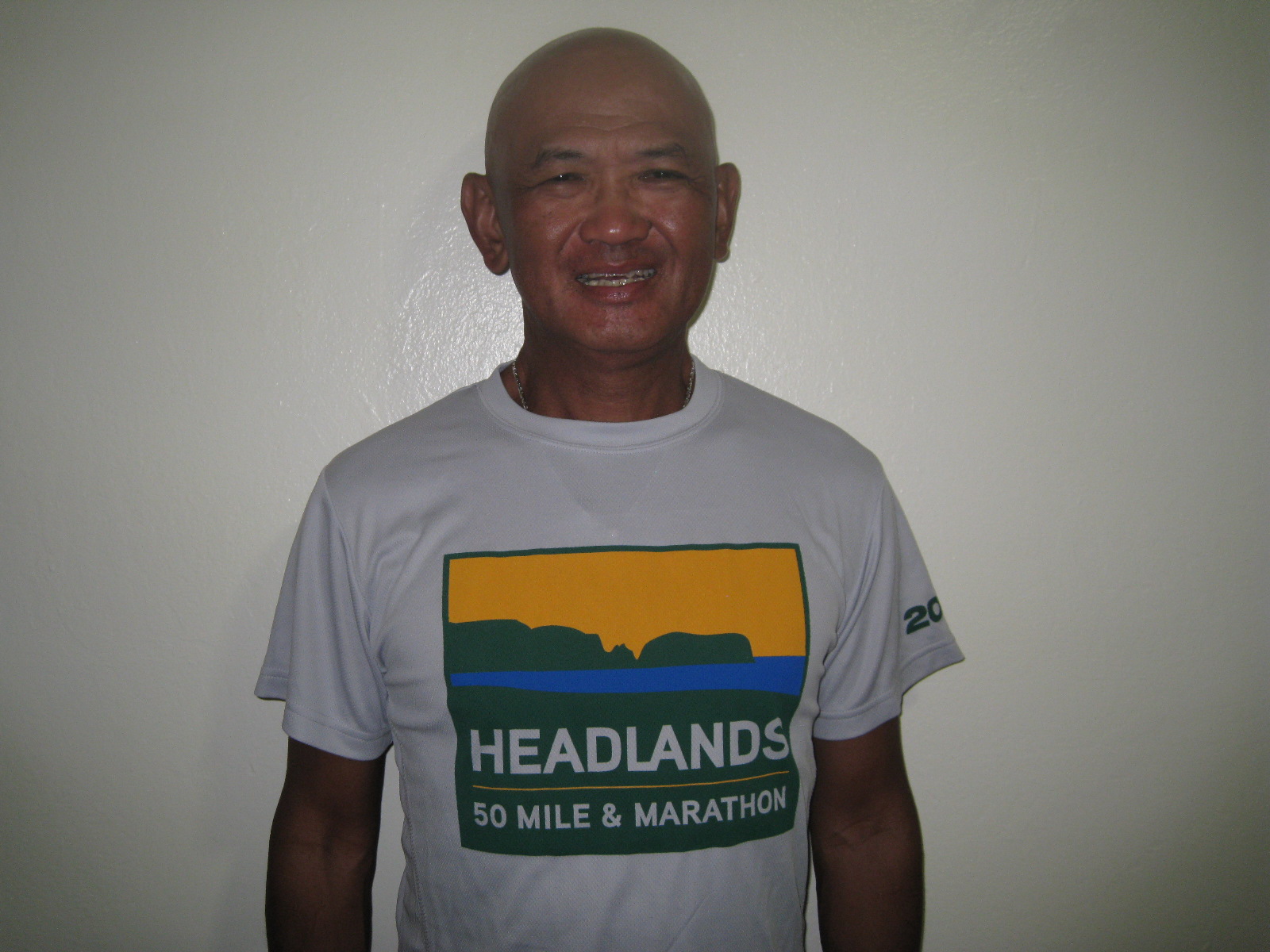
PCTR Headlands 50-Mile + Marathon Logo By Rick Gaston
Plan & Objective
The plan is to be able to build-up ultra distance runs in the United States in the 50K, 50-mile, and 100K runs for record purposes so as to be able to qualify to join a 100-mile mountain trail runs in the future. I guess, Boston Marathon Qualifying plans is put on hold while I am trying my best to focus on ultra trail runs and make a 100-mile run as one of the most important items in my “bucket list”. It is like saying that for a President of the Philippine Association of Ultrarunners (PAU) to be credible and example to its members, he should be able to, at least, finish a 100-mile mountain trail race. Unlike those “clowns” who head our sports federations who could not even practice their sports they are leading. How can you expect these “clowns” to lead and win for us some medals in the Olympics if they could not even feel how our elite athletes train with their blood, sweat, and tears? I rest my case!
Training
Basically, my preparation for this race was geared towards my training for the 34th MILO Marathon Manila Eliminations. But two months before the marathon race, I tried to start training towards the “Brown Mountain” and looked for trails to run into. It started with once a week routine until I was able to do twice and then three times a week. I was satisfied how my legs adjusted to the rigors of mountain trail running for those months. Such trail running made me stronger and faster as validated during my oval track interval runs two weeks before the marathon race day where I was able to register an average pace in my Yasso 800s workout at 3:45 mins which could be translated to 3:45 hours in a marathon race. But the environmental condition with severe hot temperature and humid condition on race day derailed my plans and target time to finish the marathon race within the finish time I desired . But knowing that I will be running in a colder place with an average temperature of 12-14 degrees Centigrade or 54-60 degrees Fahrenheit, I know my training for the marathon and for the 50-mile run was still intact. My MILO Marathon became as my tempo run for this 50-miler run!
Pre-Race Preparations
The most basic thing to do in a ultra trail run is to recon the actual route by running into it. So, two days after my arrival in the US, I went to the Marin Headlands for the first time and tried to trace the route with a piece of paper where I wrote the description and directions of the race. I was alone running on those rocky, hard & sun-baked, and dusty trails until I was able to run a distance of almost 16 miles/25 kilometers. However, I realized I was lost but I was glad I was able to cover such distance and have a feel of the environment and my bearing in the said area. After reaching the Tennessee Valley Trailhead, I went into the Miwok Trail instead of turning left, running along an asphalt road towards the Tennessee Valley Beach. I went on a reverse mode of the race until I reached the asphalt road of Tennessee Valley Road after coming down from the Coyote Ridge Trail and the Coastal Dirt Trail. From there, I saw a single track trail which was full of bushes that goes to a steep uphill directly towards the Wolfe Ridge Trail and from here I was back to the Coastal Trail and back where I started at the Parking Lot of Rodeo Beach. I enjoyed bushwhacking along that steep one-track trail but I had to stop once in awhile to see the different colors of flowers from the wild plants along the trail.
On this recon run, I was using my TNF Hedgehog BOA shoes which was very good in my downhill runs in steep and rocky portions of the trails but they are heavier and bulkier than my TNF Arnuva 50 BOA. Aside from using my white long-sleeved Patagonia Shirt, I was also wearing my Jeju Ultramarathon windbreaker as my outside garment. I was wearing my 9-Trail Patagonia Shorts where I stocked 3 Natural Valley Crunch Bars and 3 GUs inside its zippered pockets. It was windy and cold during my first recon run. It took me more time to brisk walk and take pictures as I was astounded and impressed on the scenery of the place whenever I was on top and along the ridges of the mountains!
1st Recon Run
It took me 4 hours to finish this recon run and familiarization of the place. I was surprised that only my shirt and bandanas were damped with my sweat and had never reached my shorts and my legs. I was surprised also that I did not feel any sore or pain on my legs for those immediate adjustments on the running surface I was used to. It appears that the weather condition plays a lot in determining the outcome of the race to evey runner.
After some recovery runs and the usual road runs to maintain my fitness level for about 4 days, I was back again at the Marin Headlands for another recon run with the objective to run the remaining trails where the race will go through. Actually, I was successful in tracing all the trails until I completed the whole loop of the original 25-mile route of the race which I completed in almost 6 hours to include those pit stops, photo-ops, and brisk walking. I finished at the Rodeo Beach Bridge instead of coming back from where I started. Instead of wearing a windbreaker, I decided to wear a long-sleeved technical shirt and my TNF running shorts which are thin and light. At this point, I knew I have acclimatized already with the weather condition of the place.
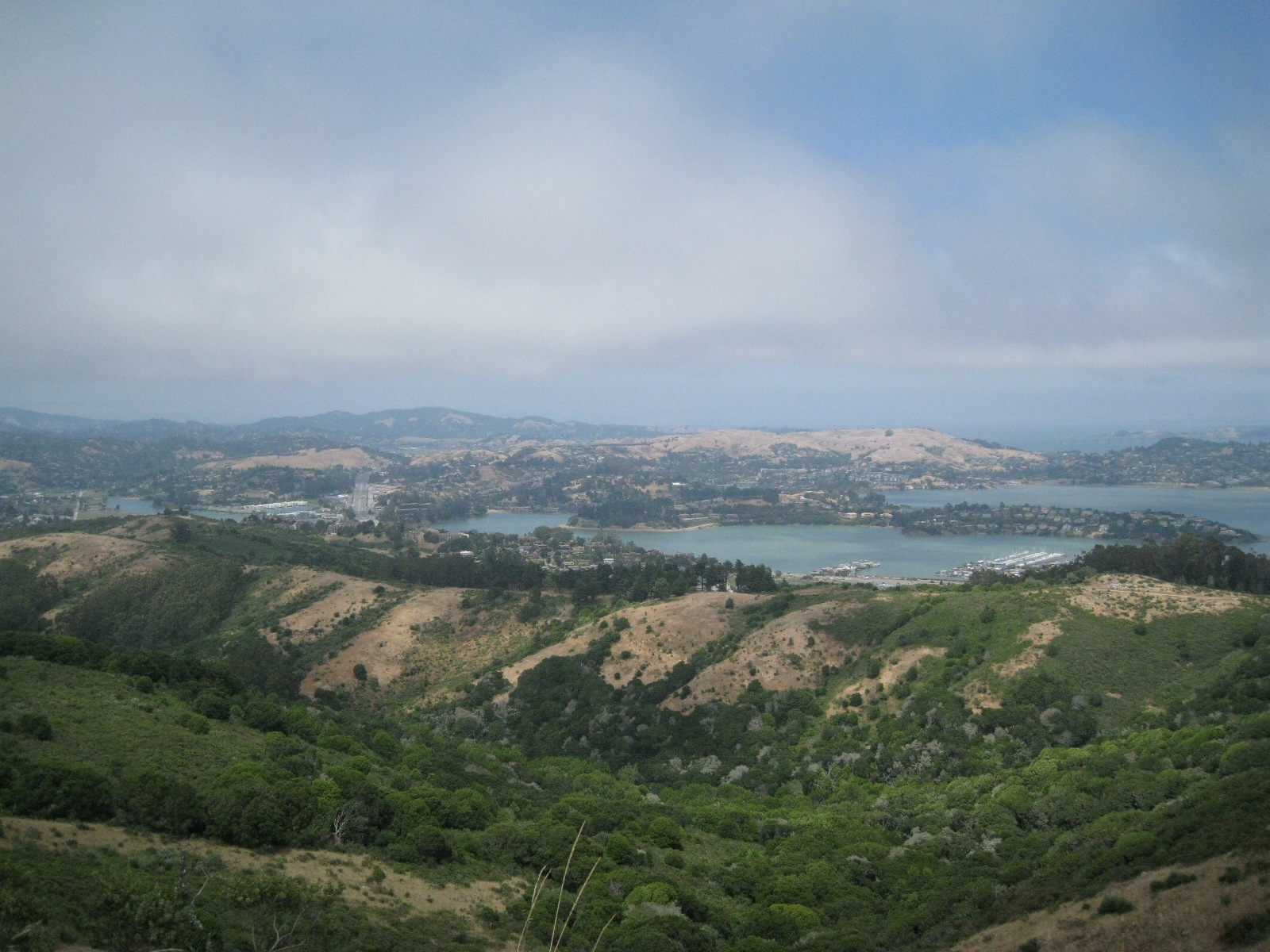
On this 2nd recon run, I took some easy time to see the scenery most especially when I was at the peak of the Marincello Trail. The views are amazing to behold and they are priceless! Once I reached the SCA Trail, the views of the Golden Gate, Vista Point and the whole of San Francisco Bay was also nice that it took me some time to freeze and look around the views all around me! However, the wind coming from the sea was so strong that I tried my best to go against it as I passed along the SCA Trail. After the Rodeo Valley Trail, it was another “bushswacking” experience when I finally ran along the single-track of Conzelman Trail until I reached the Bunker Road and went into the Lagoon Trail up to the sands of Rodeo Beach. I was able to run the whole one loop of the old course which is equivalent to 25 miles!
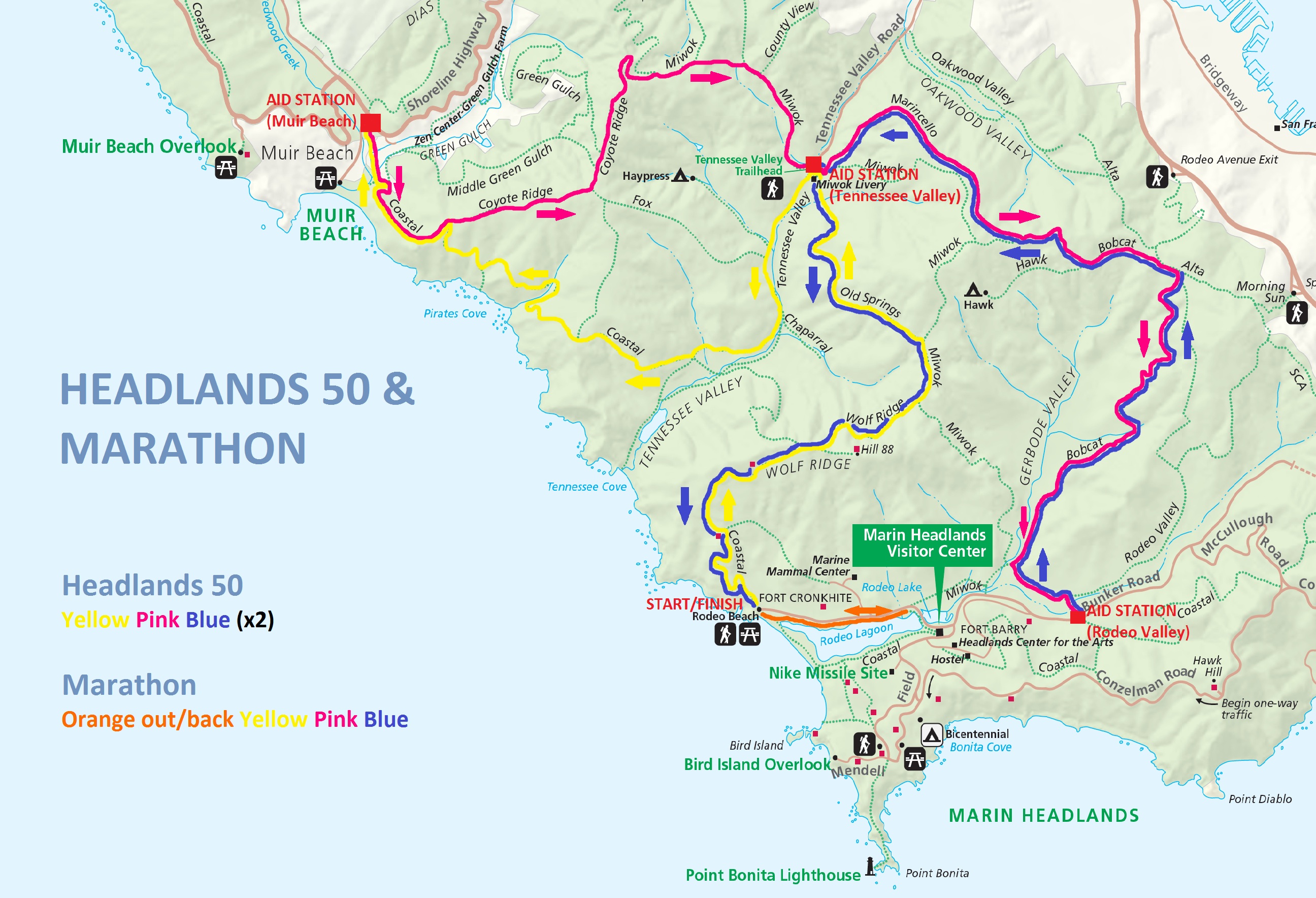
Race Route (2 Loops For The 50-Mile Run)
Few days before D-Day, I received an e-mail from the Race Organizer about the change of the race route and I wonder why the route did not reach the end at the Rodea Beach passing along the SCA and Conzelman Trails. I wonder where the rest of the trails will pass through after these trails were not available and indicated at the new map directions. But I was confident that the race route will finally end up with the correct distance of 50 miles. (Note: Runners who were equipped with Garmin watch would say after the race that the actual distance covered by all the 50-mile runners was 52.3 miles!)
Race Day
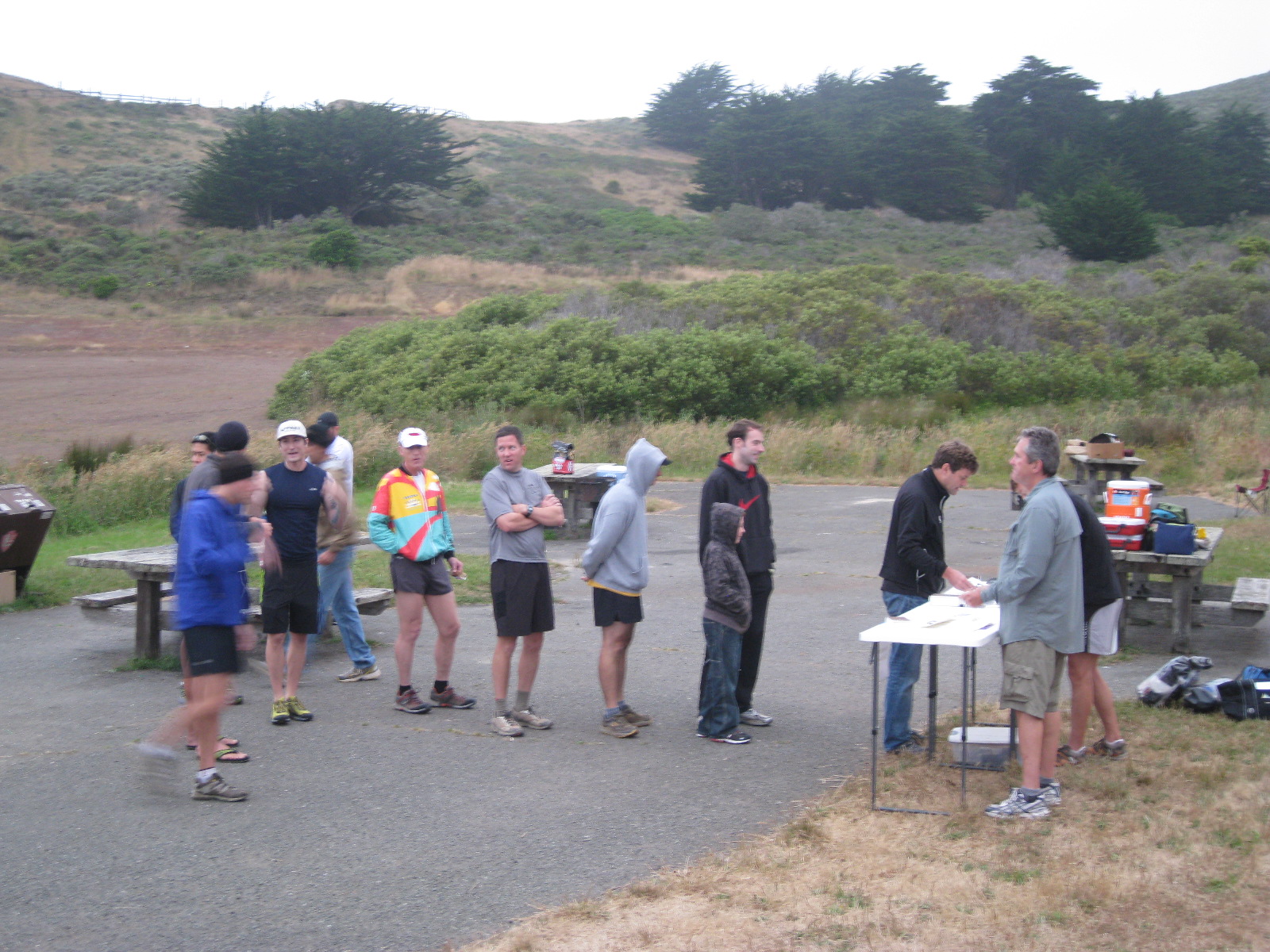
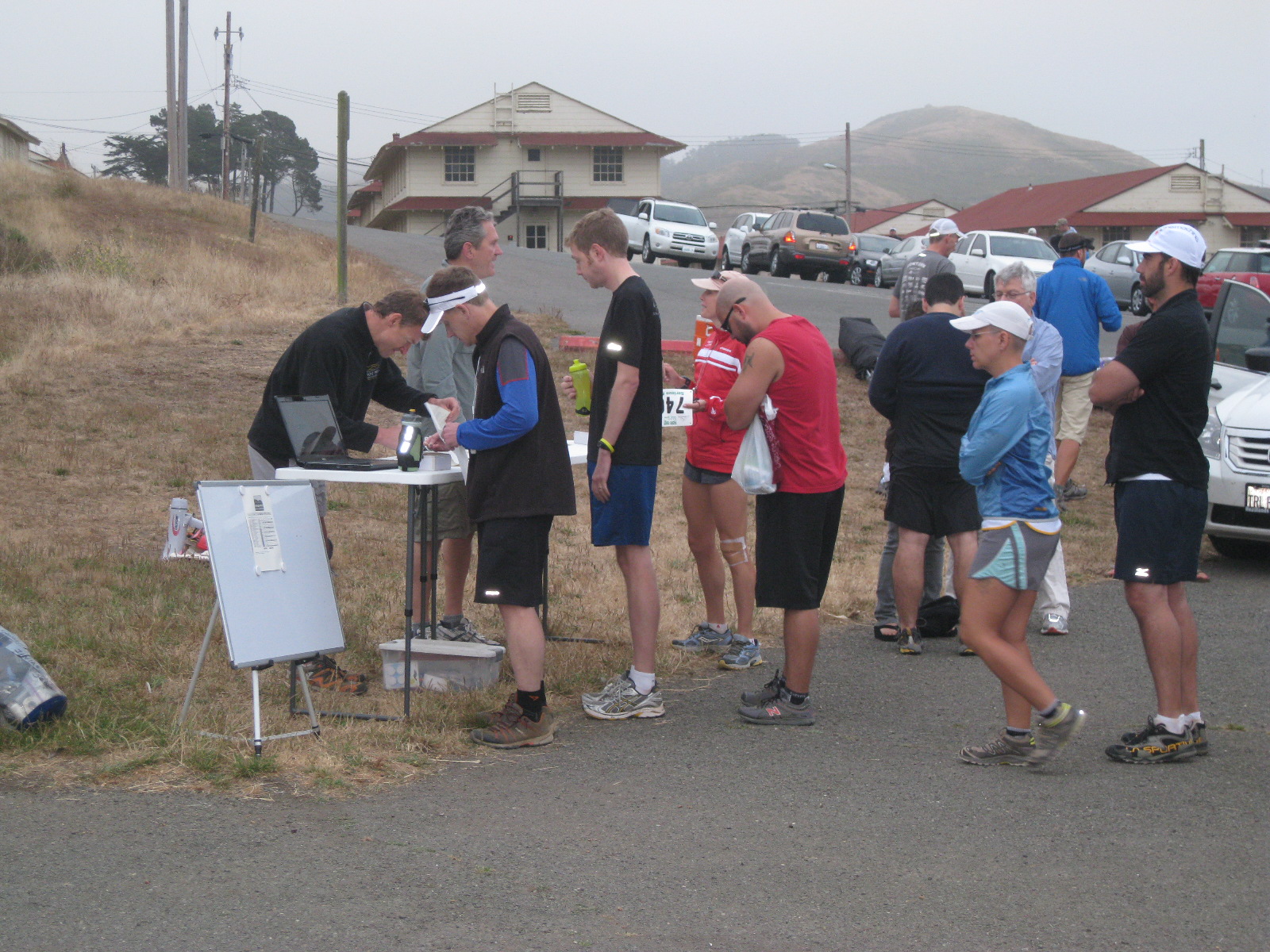
I was at the Starting Area at least one hour before the scheduled start at 7:00 AM. The Rodeo Beach was windy and cold and I saw a number of runners lining up in two lines to get their race bibs. One line is for the 50-miler and the other one was for the marathon trail distance run. The processing of runners at the assembly area/starting line was very simple and you don’t see see any signages or tarpaulins that indicate that there is a race to be held at the Marin Headlands. All you have to do is give your name, the staff look for your name in a master list where your race number is listed and then give your race number and then pick at least 4 pieces of safety pin in a small box placed on top of the table and you are done! No envelops, no race singlet, no piece of paper for instructions/maps/rules & regulations, and nothing fancy! Very simple but efficient.
Lining Up For Our Race BibsSimple But Efficient
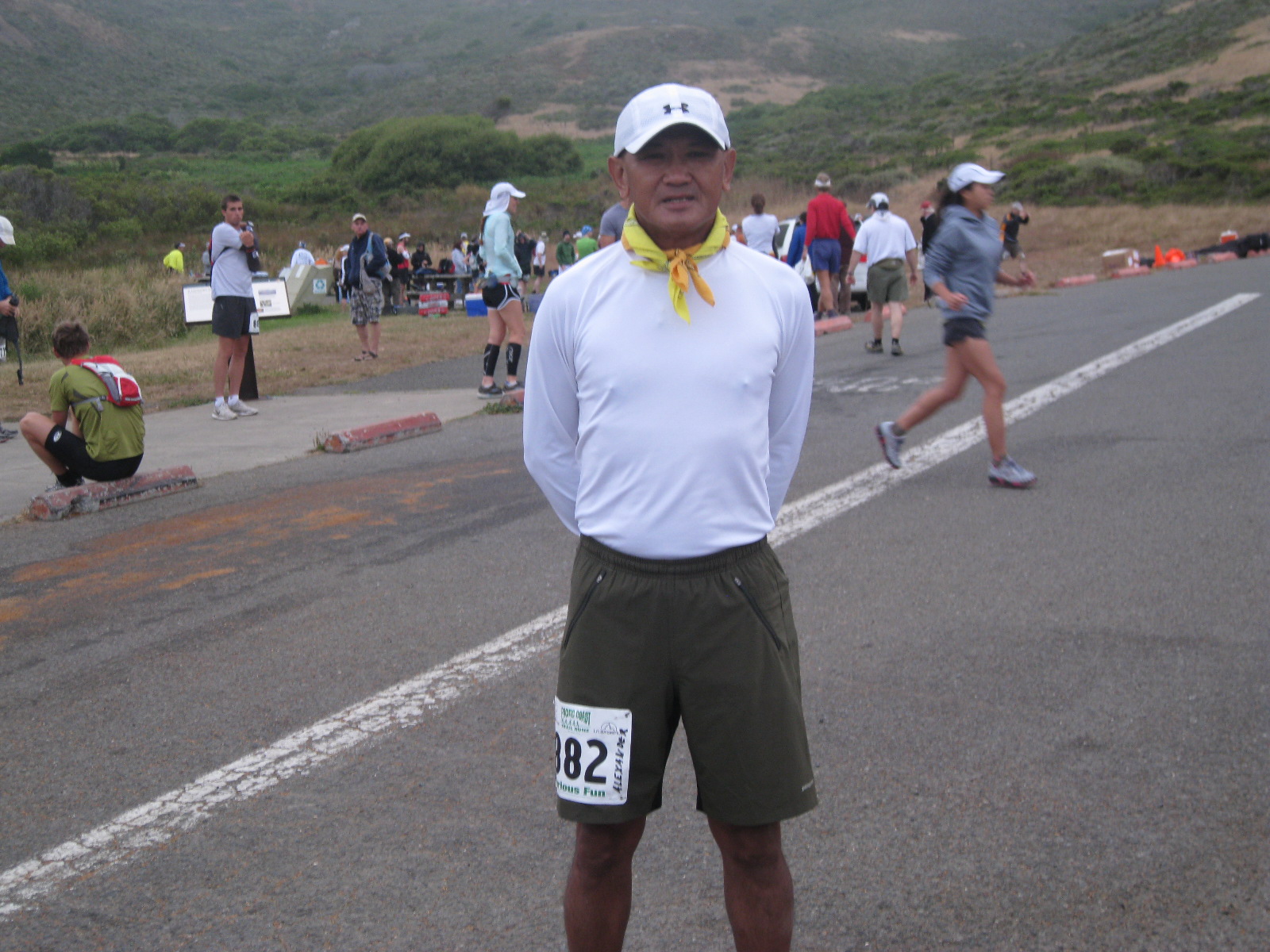
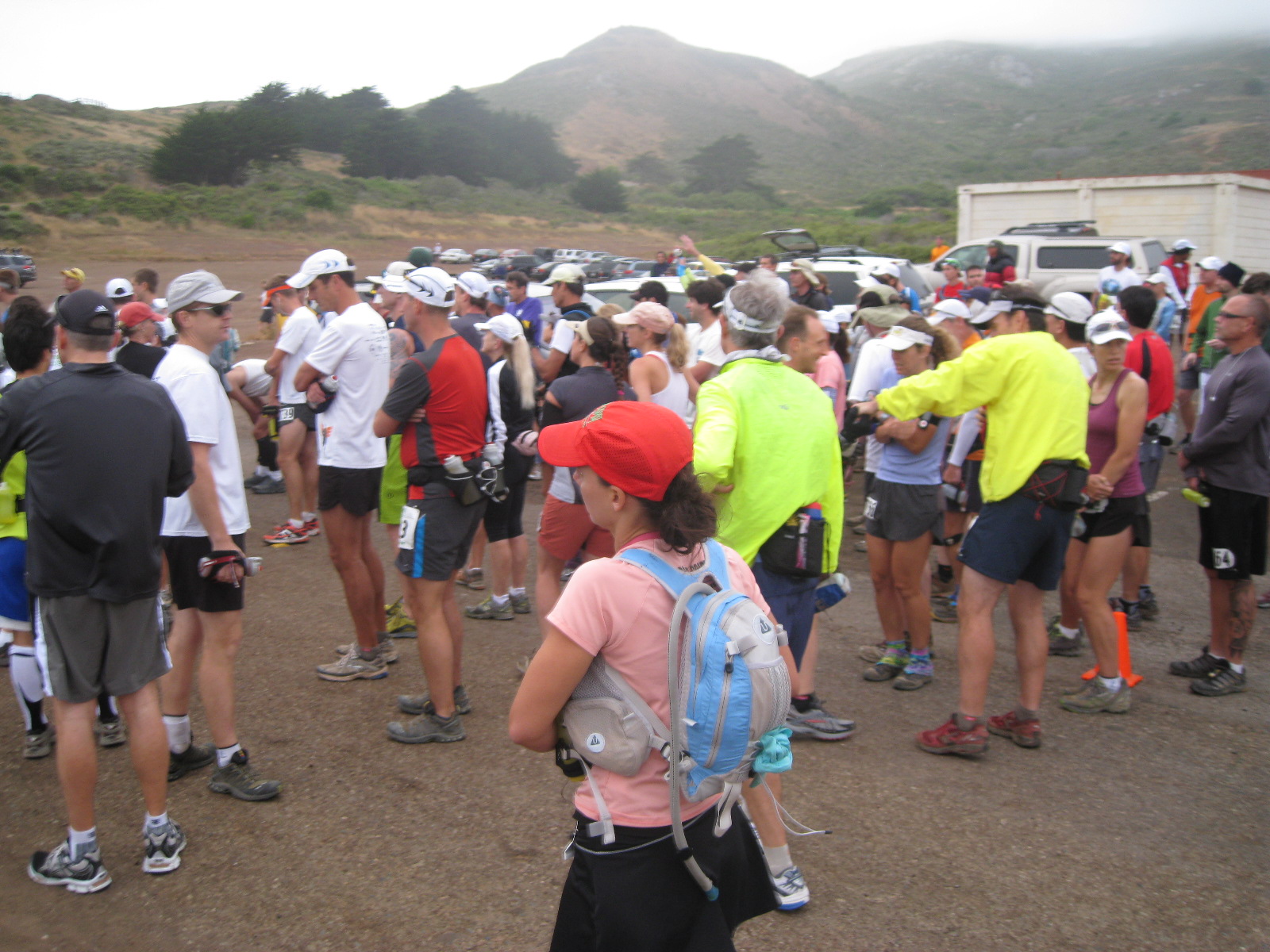
After fixing my things and pinning my race bib on my trail shorts, I had some photo-ops with the rest of the runners lining up and busy doing their own things and the happenings at the assembly area. I was expecting to see some Filipino faces among the crowd but I could see some Chinese, Latino-looking ladies, and most are “whites”. What I see as very common to everybody are the smiles on the faces of each runner and they seem to be relaxed and composed. You don’t hear any loud conversation or thrash talks except for the loud sounds coming from the waves of the sea! I did not see anybody who was doing their warm-up jog or stretching. After some photo-ops, I opted to get inside the car to prevent myself from freezing from the cold wind coming from the sea.
Taking It Easy Before The Start Of The Race
Starting Area
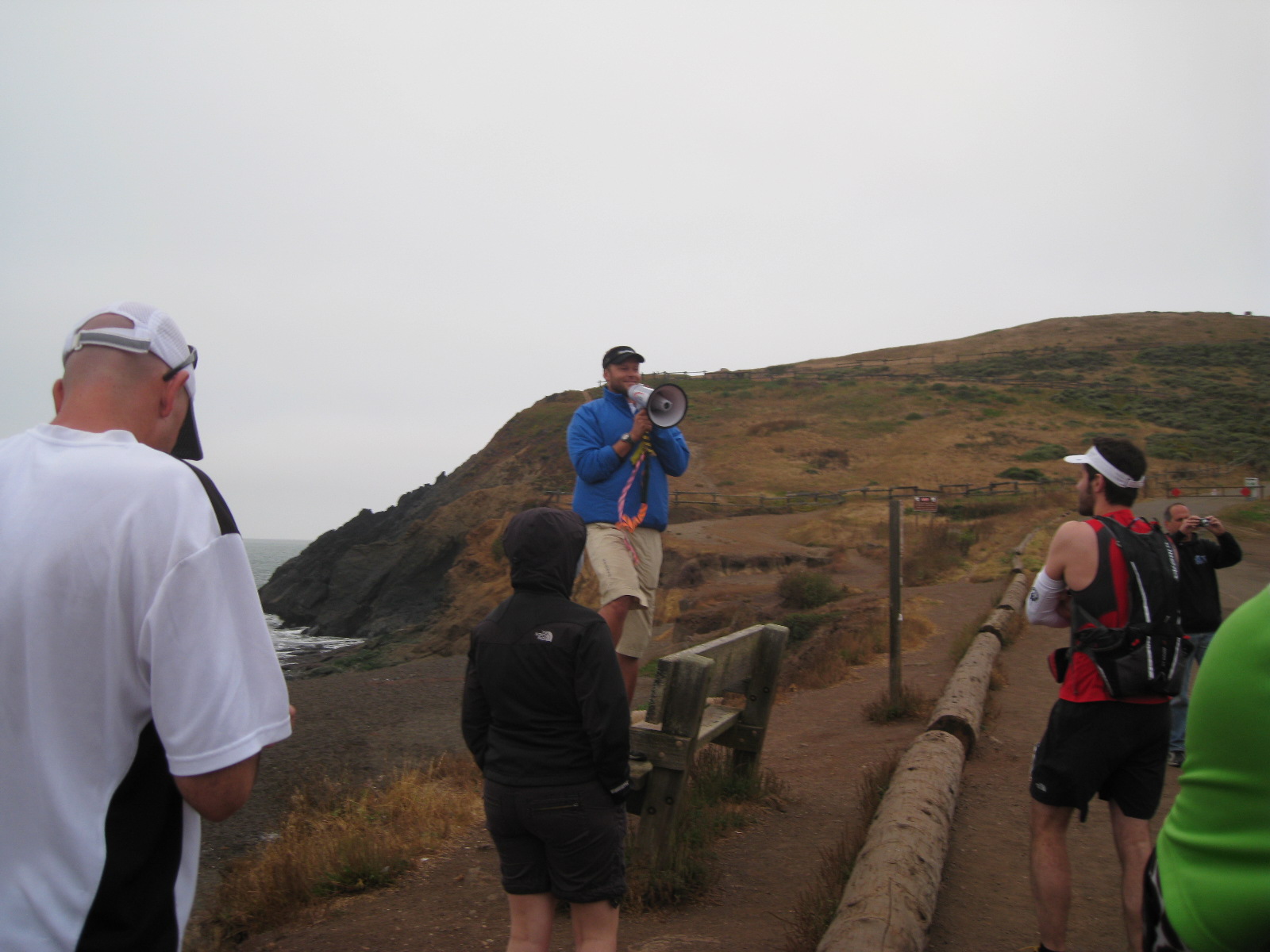
In a short notice the Race Director holding a bullhorn announced to the crowd that the race will start in ten minutes and he asked all the runners to gather at the starting line which was indicated with only two orange cones placed on each side of the road. Immediately the RD explained the route and gave some reasons why the race route will not be passing and ending along the Rodeo Beach because of some constructions along the trails and asphalted roads at the area. The marathon distance runners would first run along the asphalted roads of Marin Headlands before going up towards the Coastal Trail and will do only one loop of the course. But for us on the 50-mile run, we will be going directly to the Coastal Trail but have to do two loops of the course.
Race Director In ActionRunners At The Starting Line
Coastal Trail
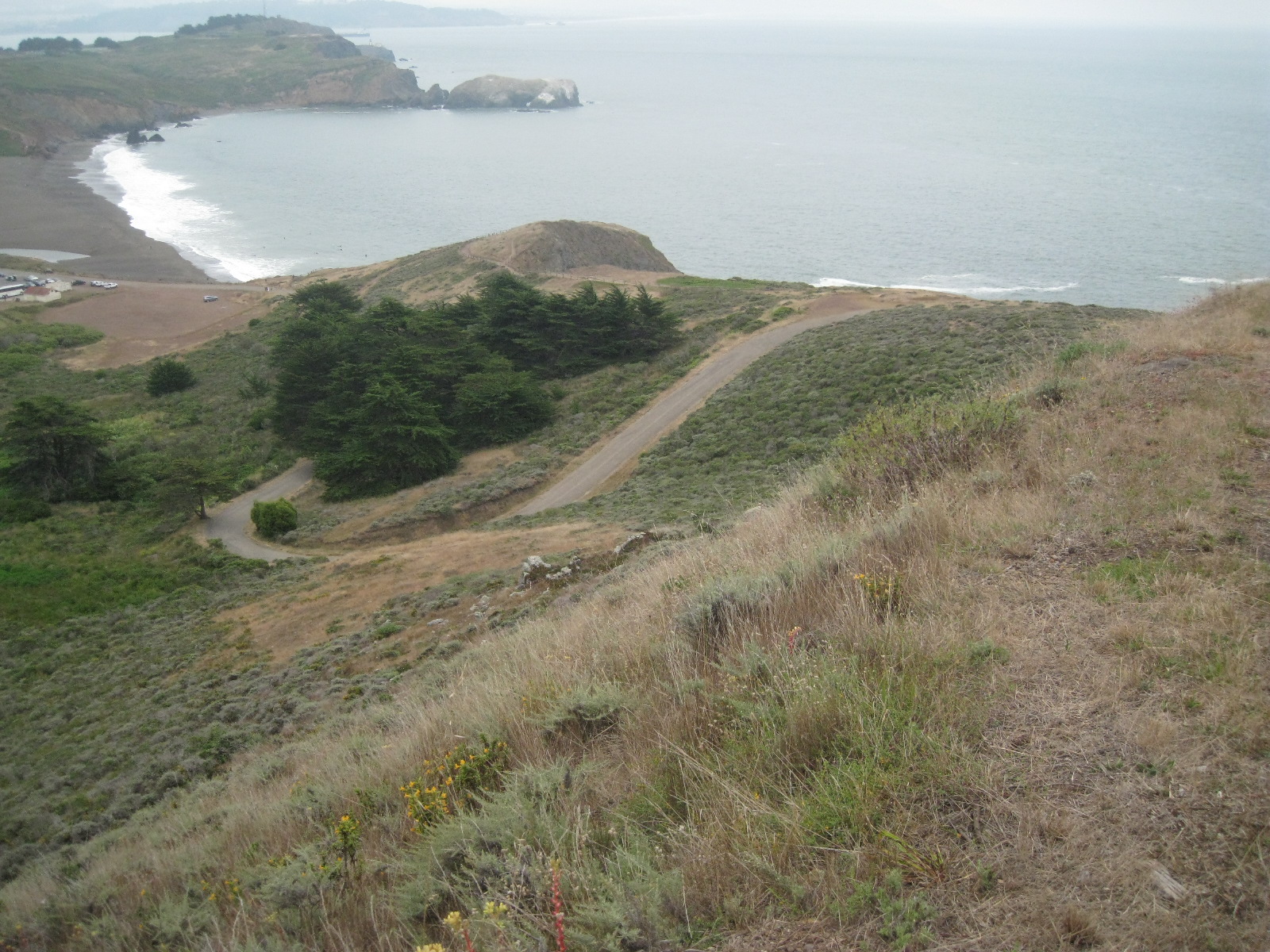
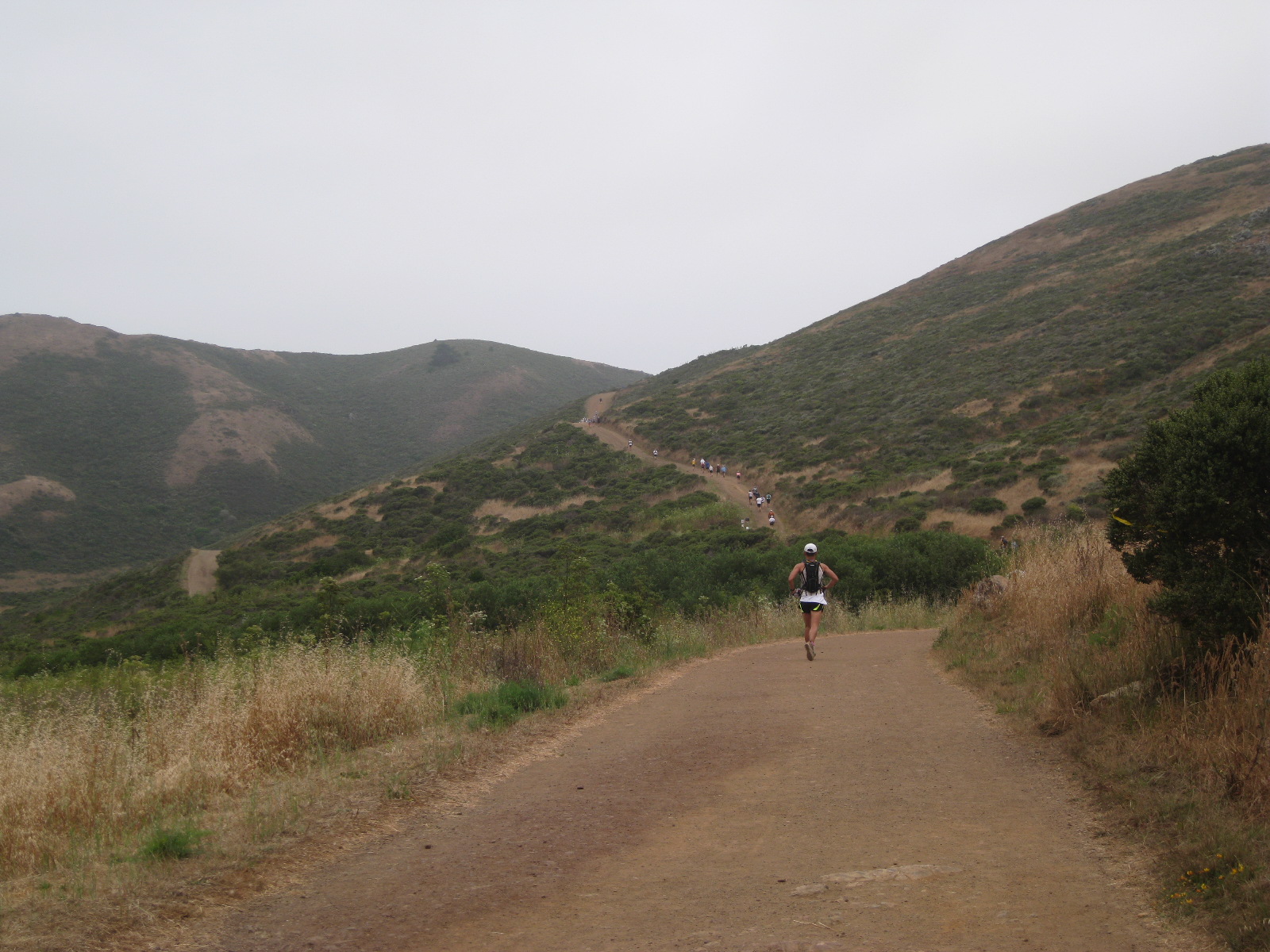
The first trail that you hit once your run from the Starting Line is the Coastail Trail where it is a mixture of asphalt road, single trail road, and winding stairs of big rocks and wood/small logs. It has a distance of almost 3.2 kilometers and it ascends to about 900-1,000 feet at its peak. This is the first trail that will test the early effort of the runner whether he wants to be sucked up with the pace of the stronger runners or be conservative to brisk walk up to the peak. The flats are limited to the bunkers at Battery Townsley and its dark tunnel which is about 100 yards!
Coastal Trail From Rodeo Beach
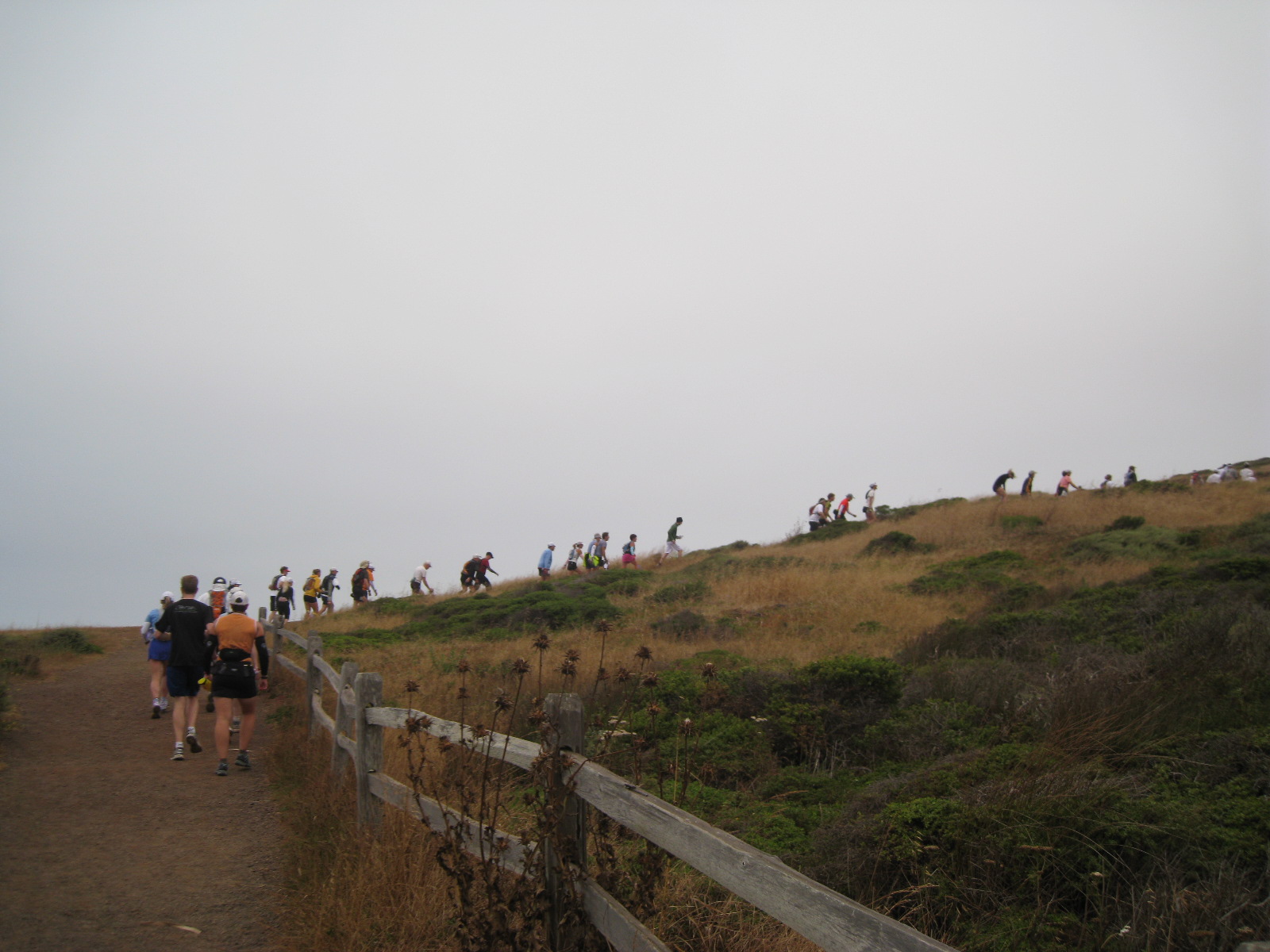
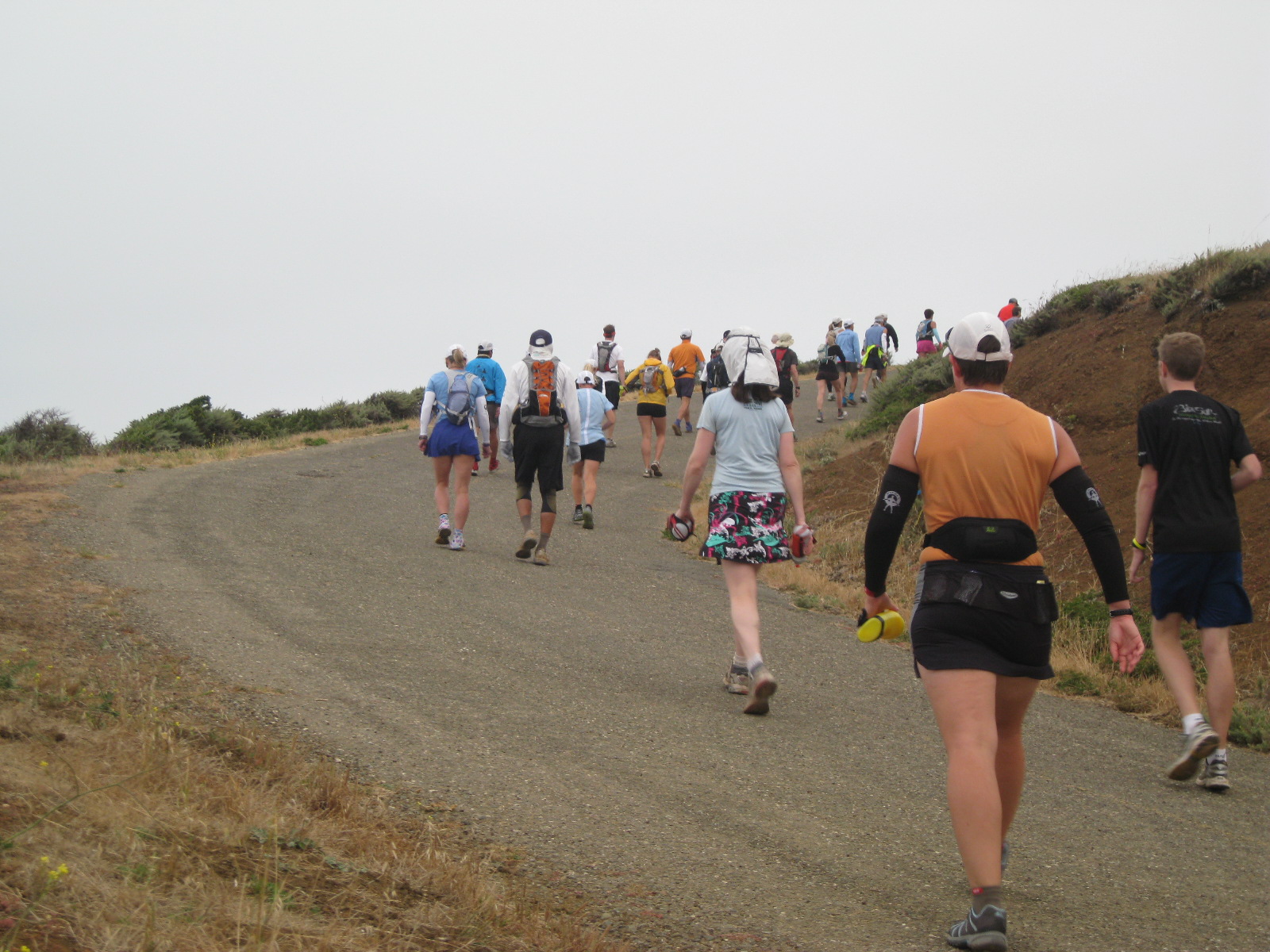
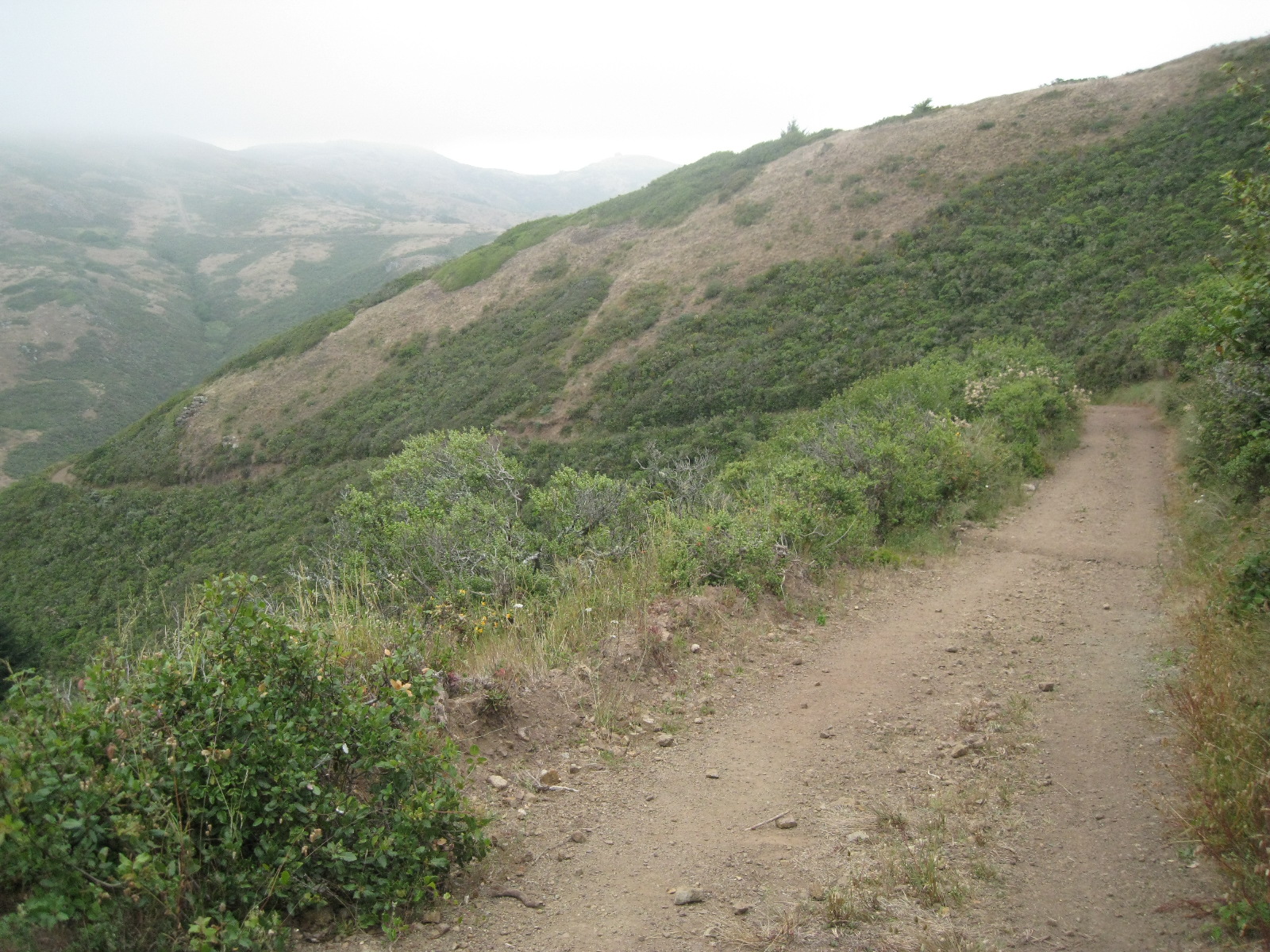
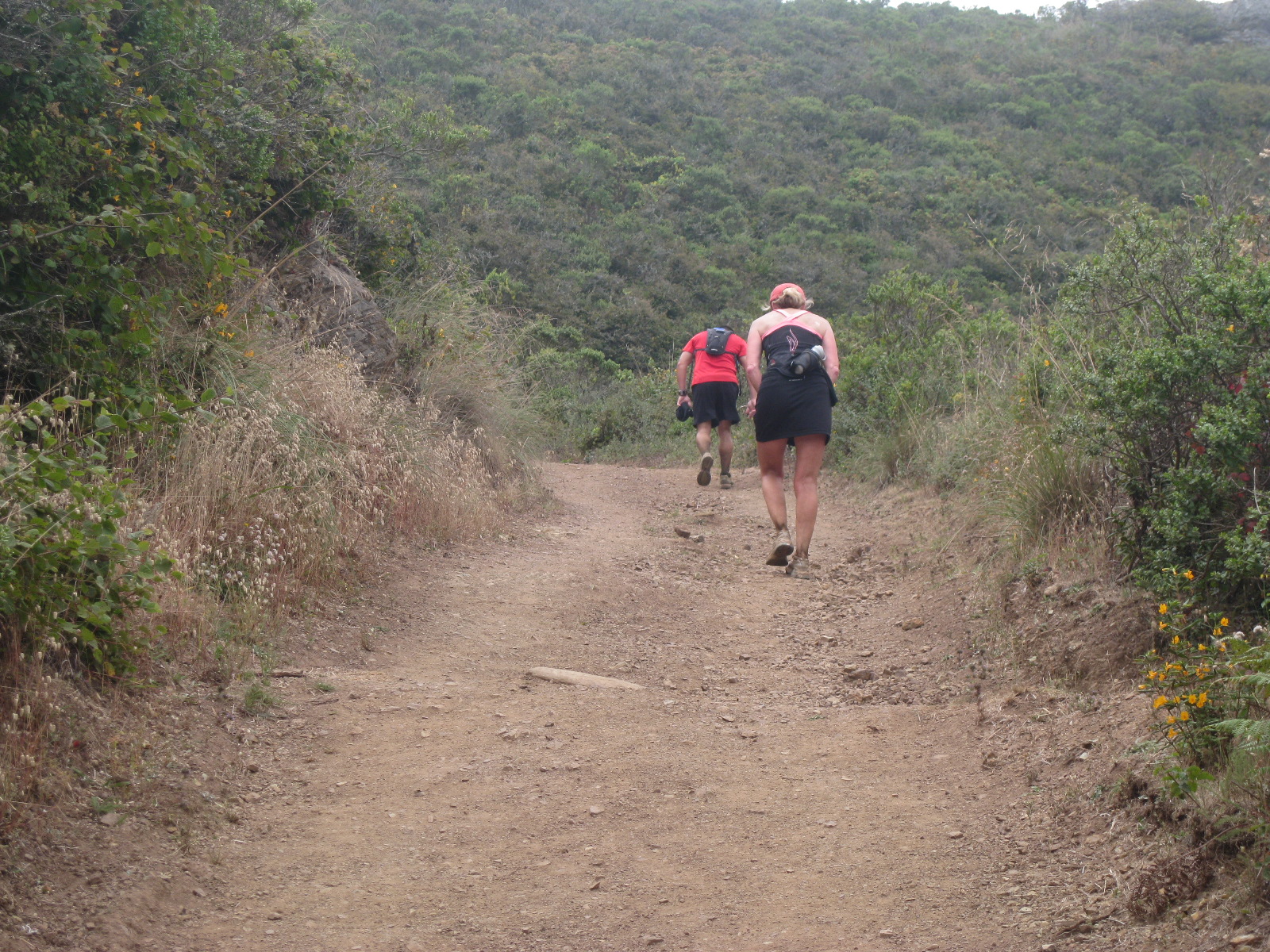
The race started at exactly 7:00 AM with a simple countdown from 10 to zero and a command of “GO”. From where I was standing at the back of the runners, I started to brisk walk while the faster runners started to jog and run up to the peak of the first mountain of the Coastal Trail. As I looked on my back, I could see that I was one of the few who were lagging behind. The race strategy was to brisk walk on the steep uphill portions and slowly jog or run on the peak flats and downhill parts of the route. Runners formed a single-file along the rocky one-track trails and along the winding wooden stairs of Coastal Trail. Once I reached the peak of Coastal Trail, the runners created some distance with one another. The route goes to the Wolfe Ridge Trail which is a descending route made of hard/sun-baked trail and some portions of loose soil mixed with small rocks. I was using my TNF Arnuva 50 BOA which I know it has the traction that could hold me from getting any slide or fall on the dowhill run. The descending Wolfe Ridge Trail has a distance of 1.2 kilometers and it seems to be short but on your way back to the Coastal Trail, this part of the route is often considered as “hardest and killer” part before you finish one loop or finish the race.
Uphill Climb at Coastal TrailI Was Walking With This Group Towards The Coastal Trail
Wolfe Ridge Trail & Old Springs Trail
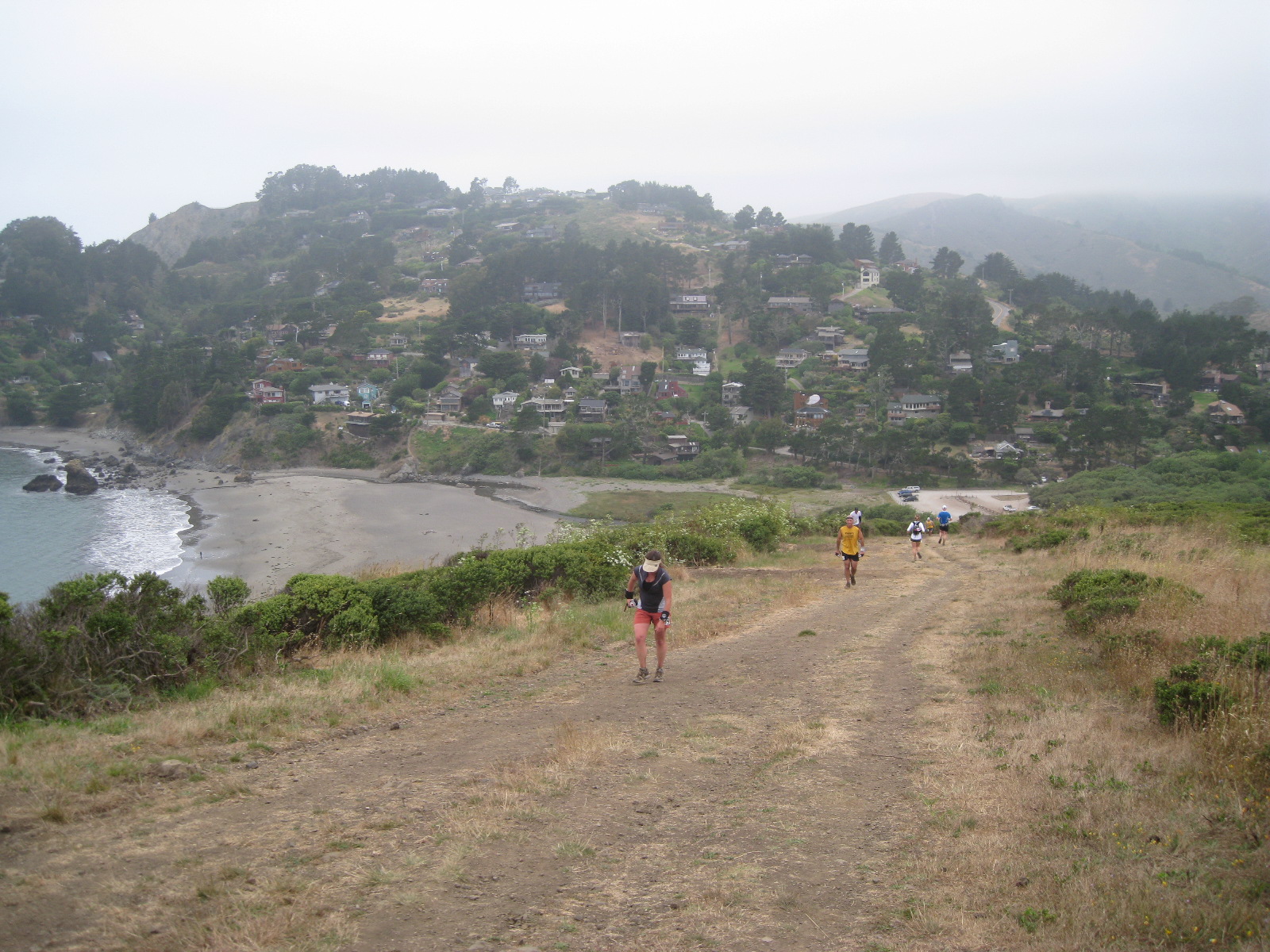
Wolfe Ridge Trail is a descending trail from the peak of the Coastal Trail. Some parts of it are too steep that you should control your footing as you might slide from the steep nature of the trail. However, on our way back to complete one loop, this part is the hardest part of the course. If you are good in downhill running this part is where you could gain some speed to even up your brisk walking towards the peak. The trail is about 1.2 kilometers before entering to a small portion of Miwok Trail. The small portion of Miwok Trail is relatively flat until it reaches the intersection towards the Old Springs Trail.
Downhill View of The Wolfe Ridge TrailUphill View Of The Wolfe Ridge Trail
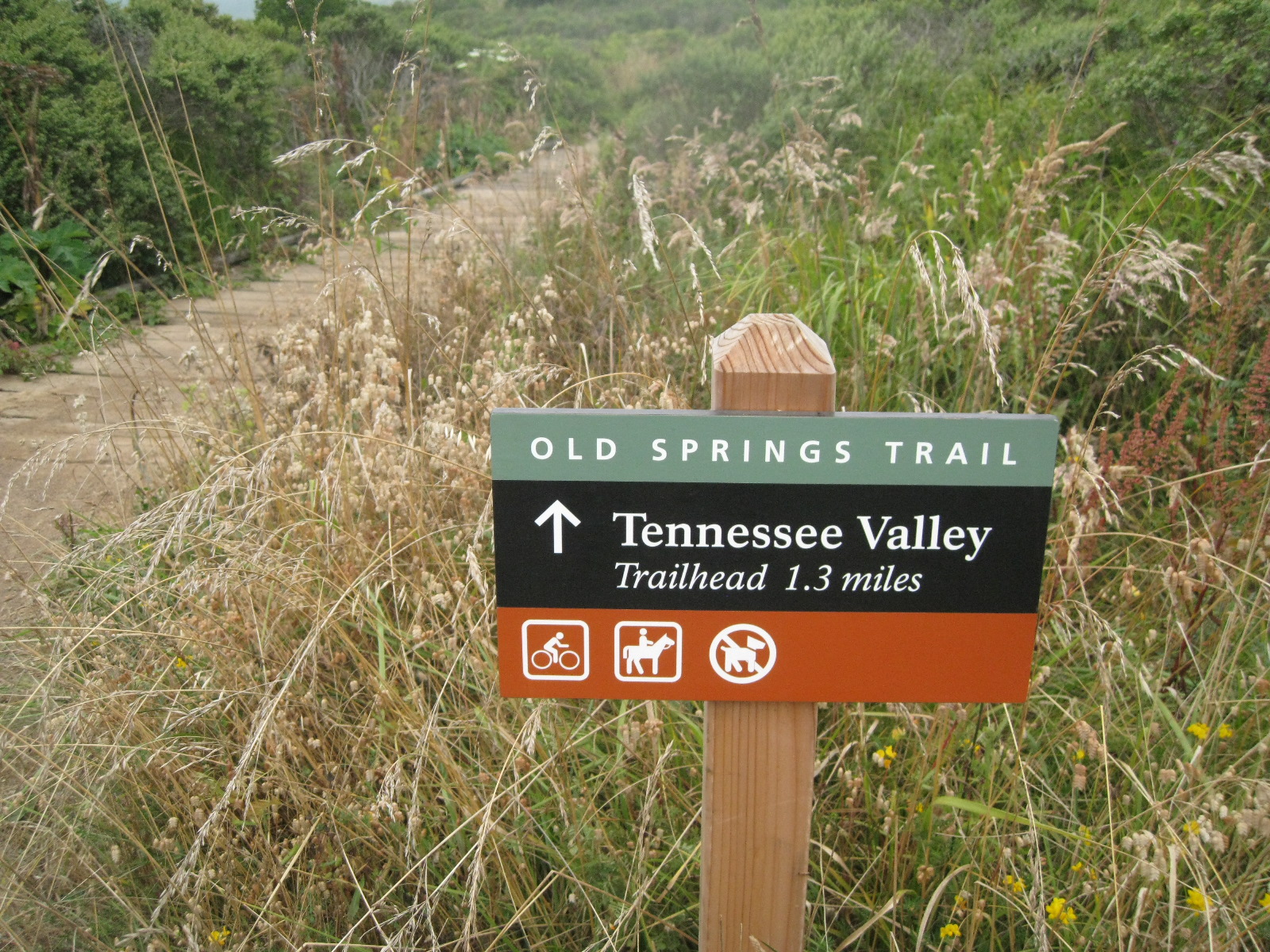
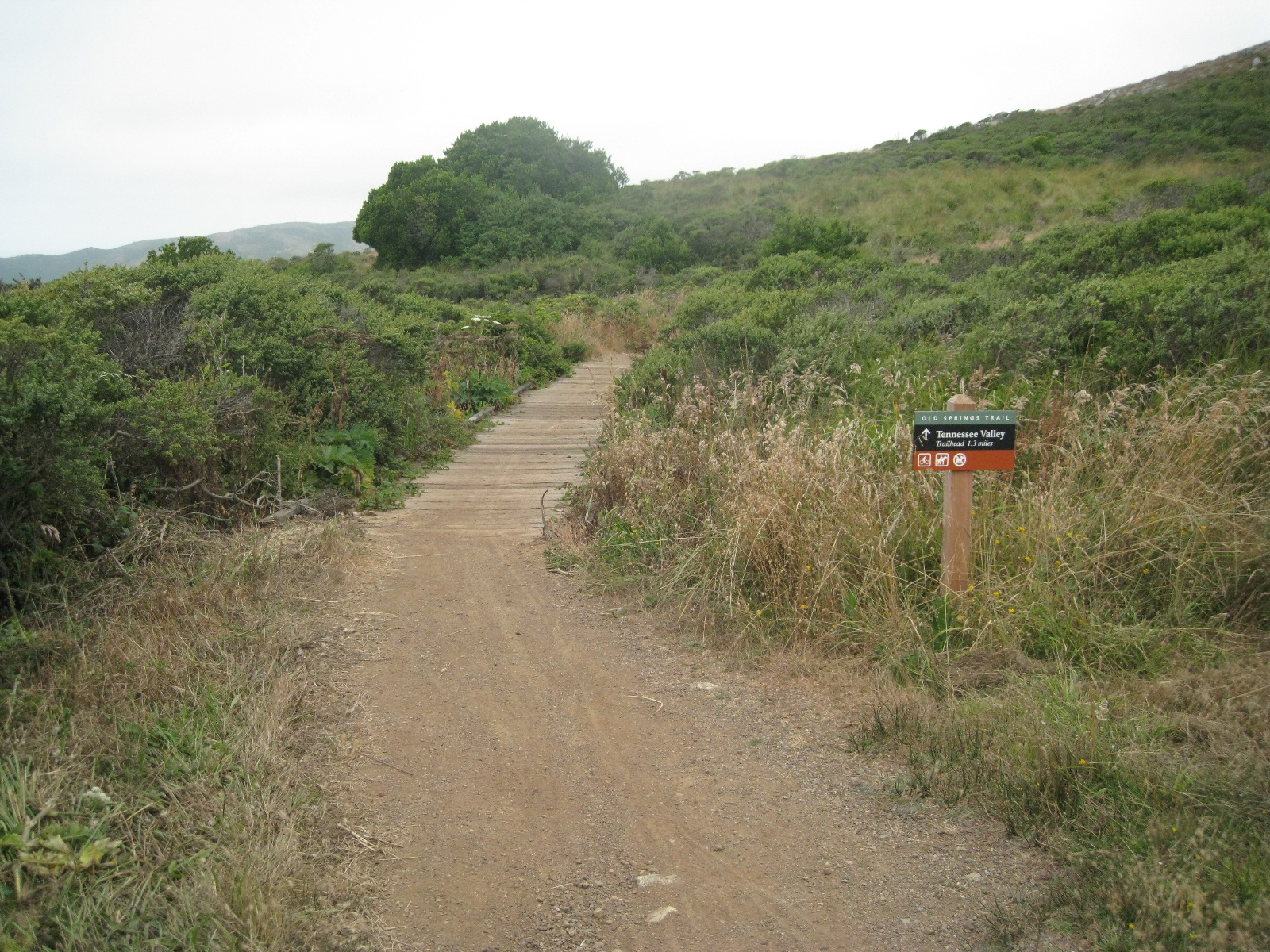
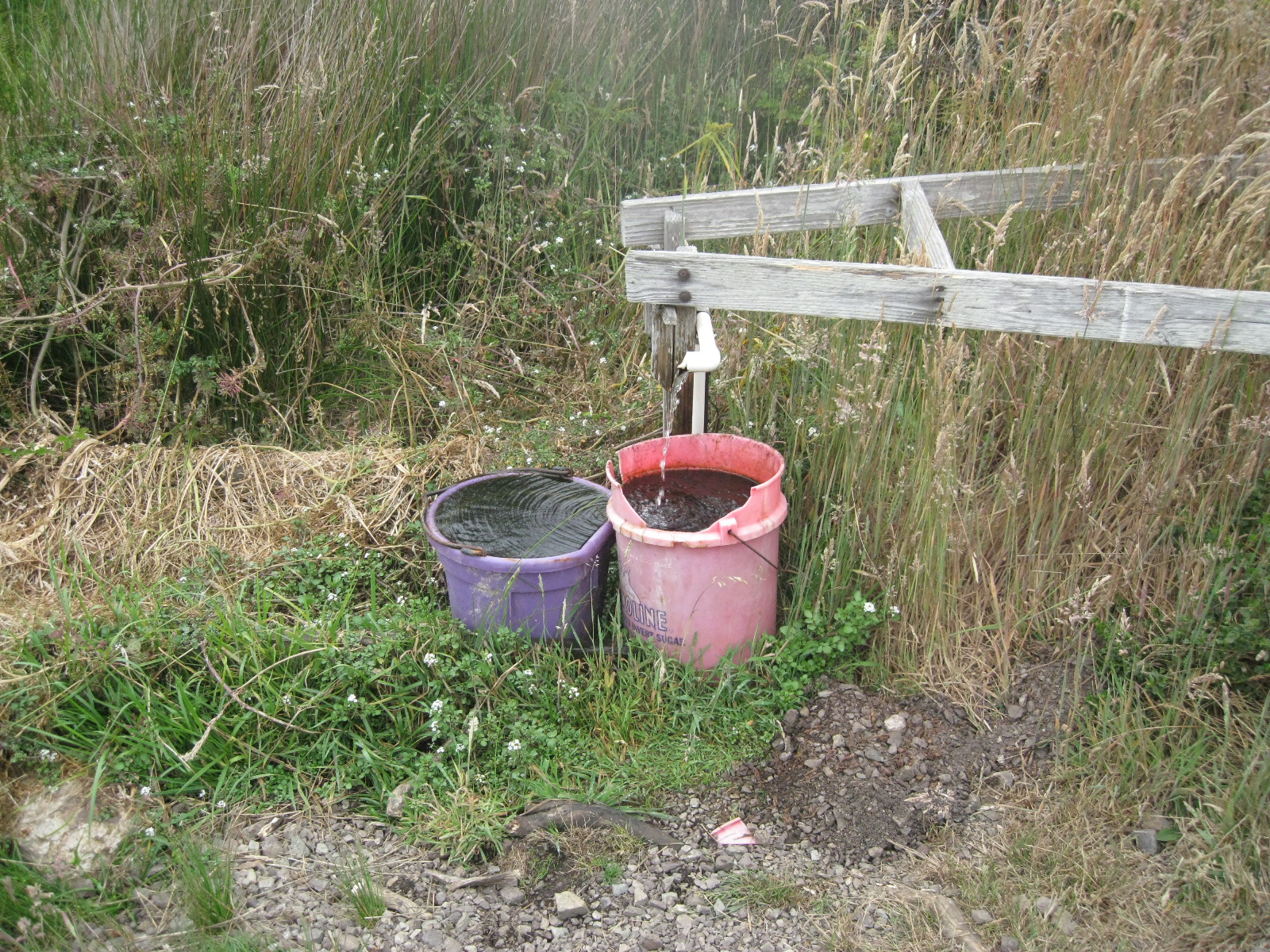
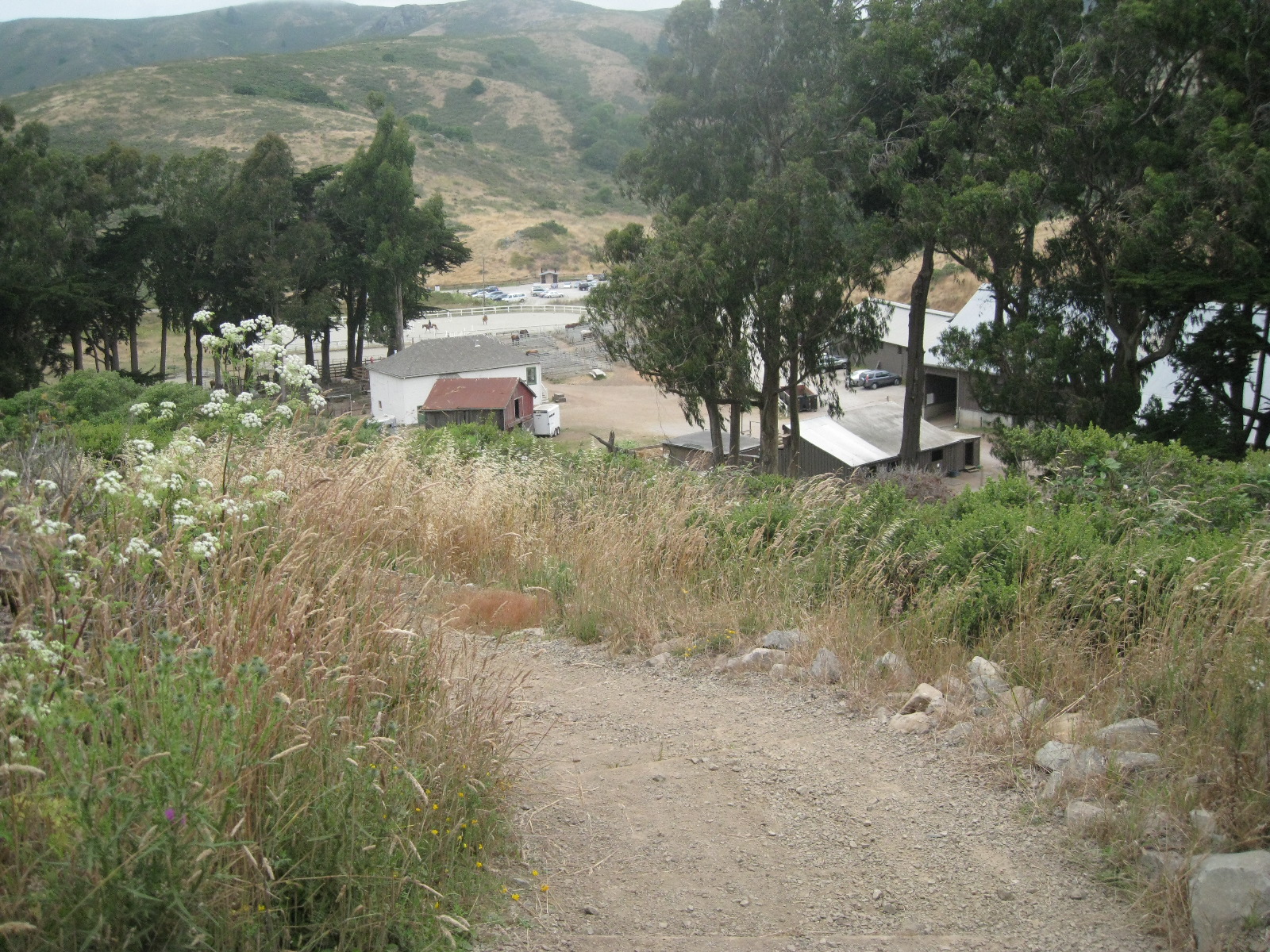
The Old Springs Trail is memorable with only two things that I observed along the route—the wooden bridges or wooden planks along the trail and there is a part where there is a continuous flow of water from a small pipe with two plastic pales full of water. The trail has some switchbacks and has a general flat course until it goes downhill towards the Miwok Livery where horses could be rented for horseback riding along the differet trails of Marin Headlands. The trail ends at the Tennessee Valley Trailhead where the 1st Aid Station is located. This AS will be the busiest AS for the whole race as each of the 50-mile runners has to pass it for six (6) times! I reached the Tennessee Valley Trail Head AS in 52:30 minutes. I had my Nathan bottle refilled with sports drinks and grabbed some cuts of beef jerky and went to the Rest Room to pee.
Old Springs Trail & Wooden BridgesWood Planks/Bridges On The Old Springs TrailDripping Water @ Old Springs TrailA View of the Tennessee Valley Aid Station Area/Miwok Livery from the Old Springs Trail
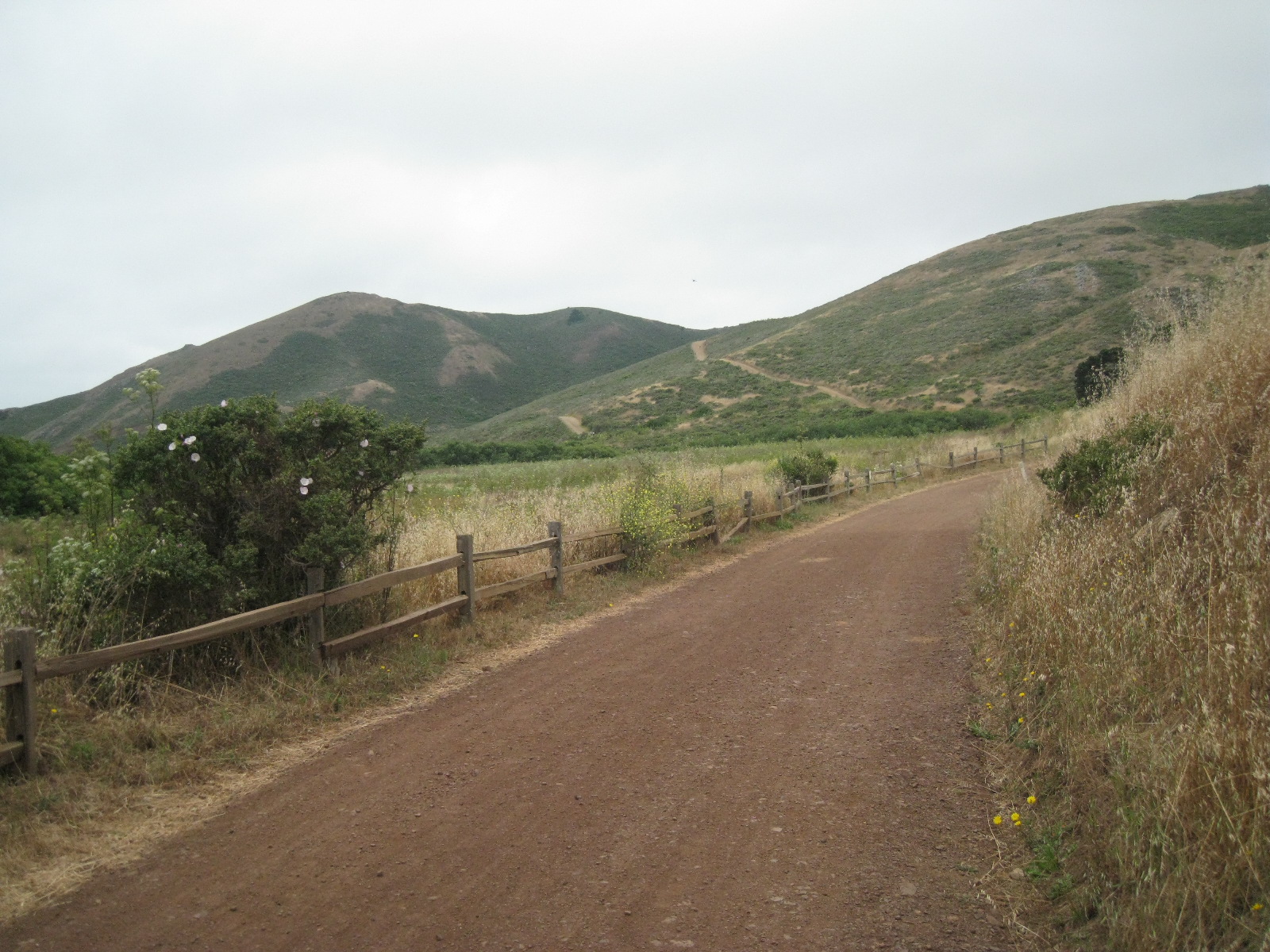
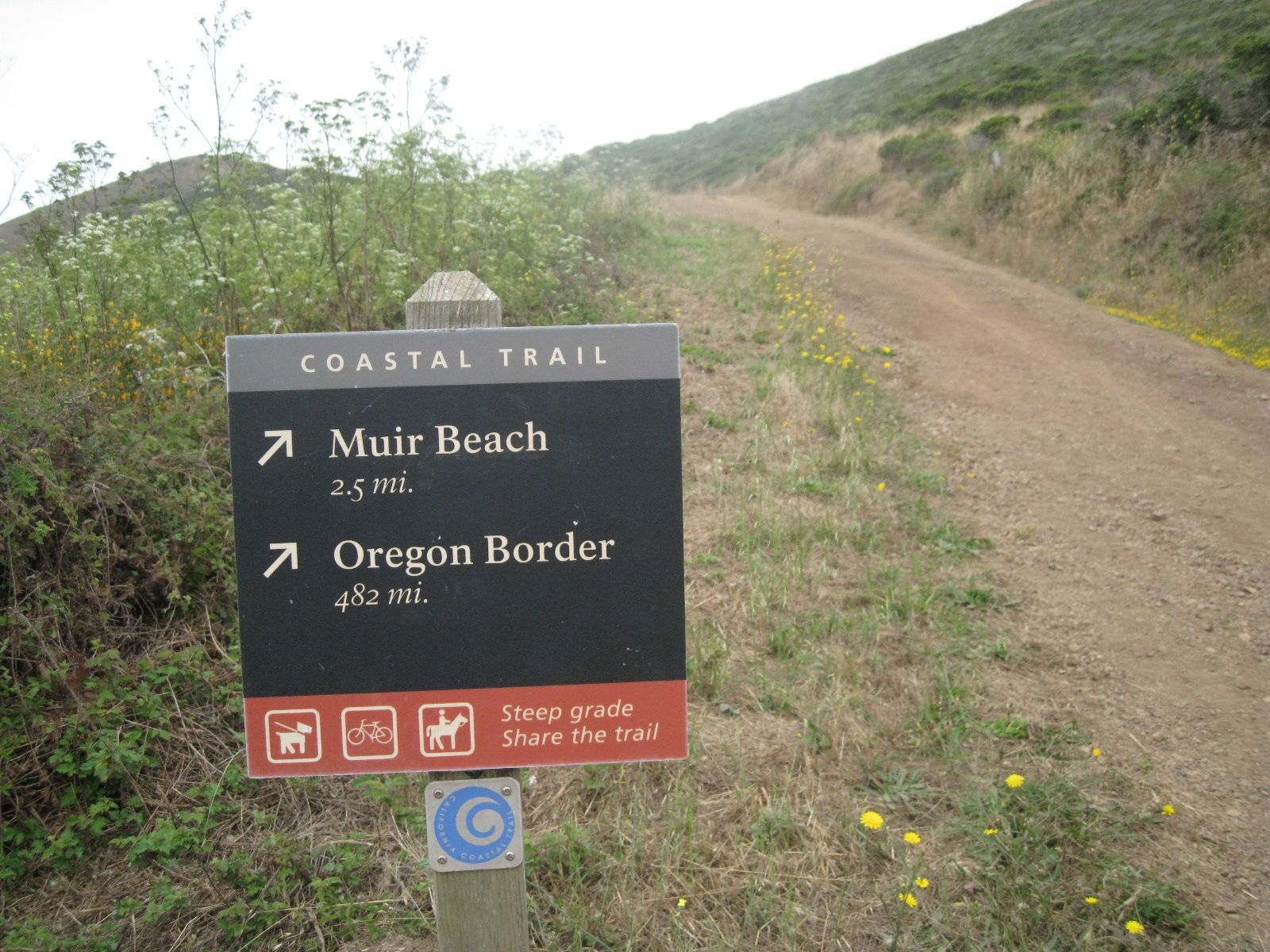
In about 3 minutes, I was back on the road, running along the asphalted road of Tennessee Valley Road going to the beach. I popped out my 1st GU and started to eat one bar of Nature Valley Crunch Bar. After almost 2 kilometers, I turned right towards the Coastal Dirt Road and run for another kilometer before it splits to the Pirates Cove Trail. This part is another uphill climb where I could see the tougher runners still running towards the peak of a trail. As we reached the peak of the Pirates Cove Trail, we started to descend towards another short stairs that has woods as stoppers and later leveled up into a one-track trail where all the runners started to “bushswhack” those shrubs and grasses that cover the trail. I learned that I was already running along the Coastal Dirt Trail which is already a part of the Pacific Coast Trail that connects up to the boundary of Oregon for another 480+ miles. We descended towards the Muir Beach Fire Gate where the 2nd Aid Station was located. At this point, I was at the 7.9-mile point of the race and had my Nathan Bottle refilled with sports drinks. After eating some slice of beer jerky and stashing another cut in my pocket, I started to run back uphill to the Coastal Dirt Trail which finally connects to the Coyote Ridge Trail.
Coastal Dirt Road from Tennessee Valley Asphalt RoadTo Muir Beach Fire Gate & PC Trail Towards The Boundary of Oregon StateUphill Climb at Coastal Dirt RoadDownhill To Muir Beach Fire Gate & 2nd Aid Station & Turn-around PointCoyote Ridge TrailAwesome!!! (Picture Taken During My 2nd Recon Run @ Coyote Ridge Trail)
At every Aid Station I made sure to eat some slices of beer jerky because I know it is a source of protein and salt. A slice of beef jerky would stay long in my mouth as if it is a “bubble gum’ and use my sports drinks to wash it away from my mouth to my throat. Before reaching the peak of the Coyote Ridge Trail, I was at the back, about 3 feet away, from two runners and I was able to hear what they were talking about. One runner is from Texas who is a triathlete and the other one is from one of the cities of California. We were brisk walking and they were asking each other what is the cut-off time and then suddenly both of them turned their heads on me. I told them that the cut-off time is 15 hours and I later joined their conversation. We introduced each other and found out that we are all first-timers for the 50-mile race! One of our conversations went this way:
Tall Guy (From California): Are you from San Francisco?
Bald Runner: No, I am from the Philippines!
Short Guy (From Texas): Did you come here for this race?
BR: No, I have a business deal here in California to negotiate. (Liar!)
Tall Guy: I am….. ( forgot the name and the Texan guy also gave his name)…What is your name?
BR: Just call me the Bald Runner. In my country, the runners there call me BR…Bald Runner!
In unison the two guys removed their running caps from their heads to show that they are also bald!
Tall Guy: We are the Bald Runner Trio!!!
And all of us laughed. But these guys are younger than me by at least 15 years!
We ran together on the wide portions of Coyote Ridge Trail and ran on a single file along the Miwok Trail Cut-Off until we were back to the Tennessee Valley Aid Station. I separated from them as I went to the Rest Room to pee (for the 2nd time). When I went out of the Rest Room, as I approached the Aid Station, I saw Rick Gaston and shouted his name and he was surprised to see me. While talking to him and having some photo-ops, I had my bottle refilled with sports drinks. I had another chance to eat some melon and water melon dipped with salt and stashed some beef jerky into my pockets. After refilling my bottle, it was time to go again and left Rick at the AS.
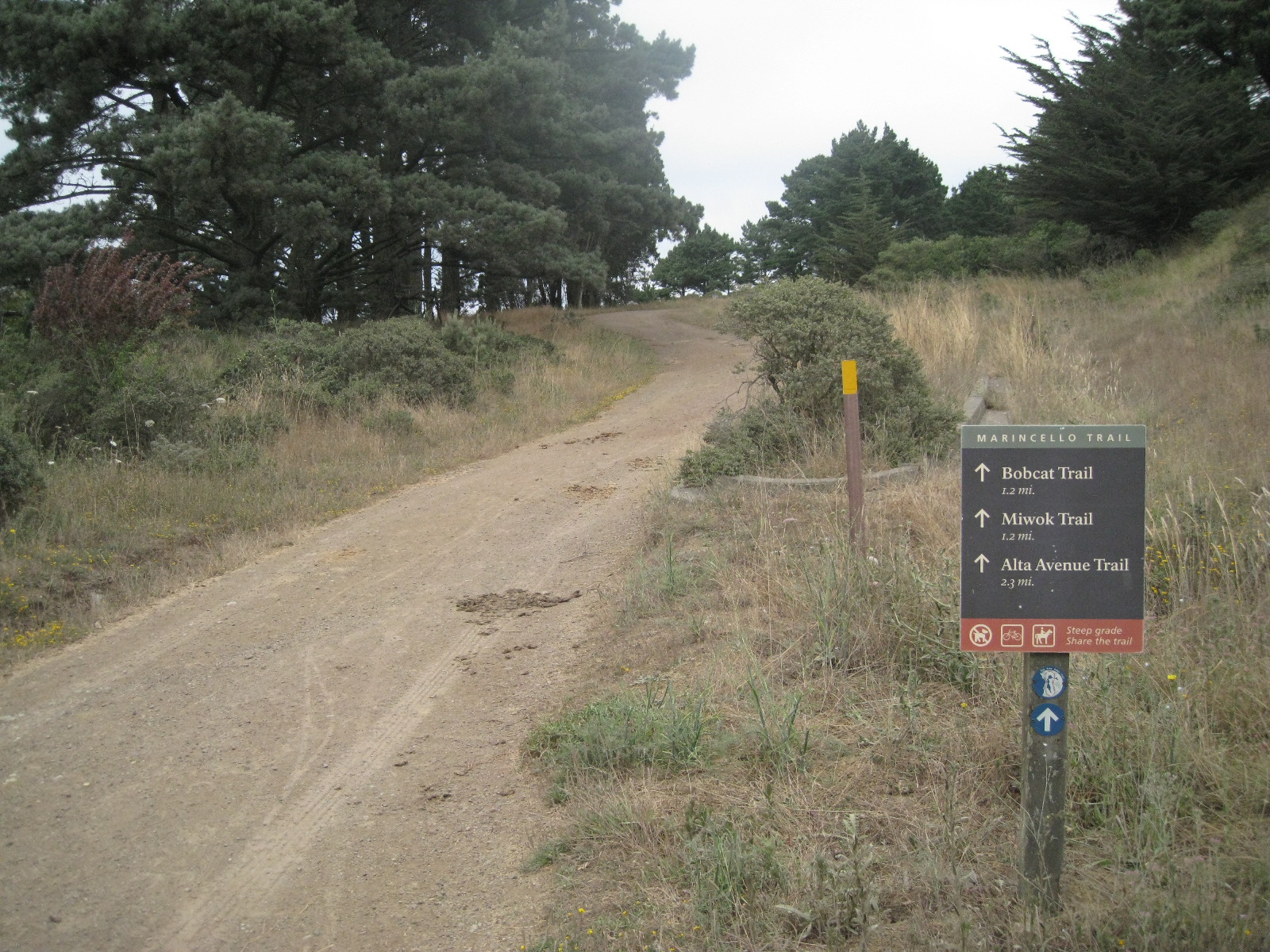
The Tall & Short Guys were left behind at the AS as I went to run on the next trail which is Marincello Trail. I started to brisk walk for the entire trail which has a distance of 2.3 kilometers and has a total ascent of almost 900 feet. Halfway along this trail, I joined a lady runner who is about my age as she was jogging uphill while I was brisk walking.
Lady Runner: Look at the incoming runner, he is the one leadig the race. ( We were meeting the top runners on their downhill run towards AS #1)
BR: Wow! He’s fast and very young!
Lady Runner: Are you running the 50-miler?
BR: Yes
Lady Runner: You are crazy!
BR: Yes, I am crazy, the same with the other 50-mile runners. How about you?
Lady Runner: I am running the marathon and after one loop and I am done. You are fast in your walking.
BR: Ok..Thanks..good luck! (I was able to pass her as she started to brisk walk)
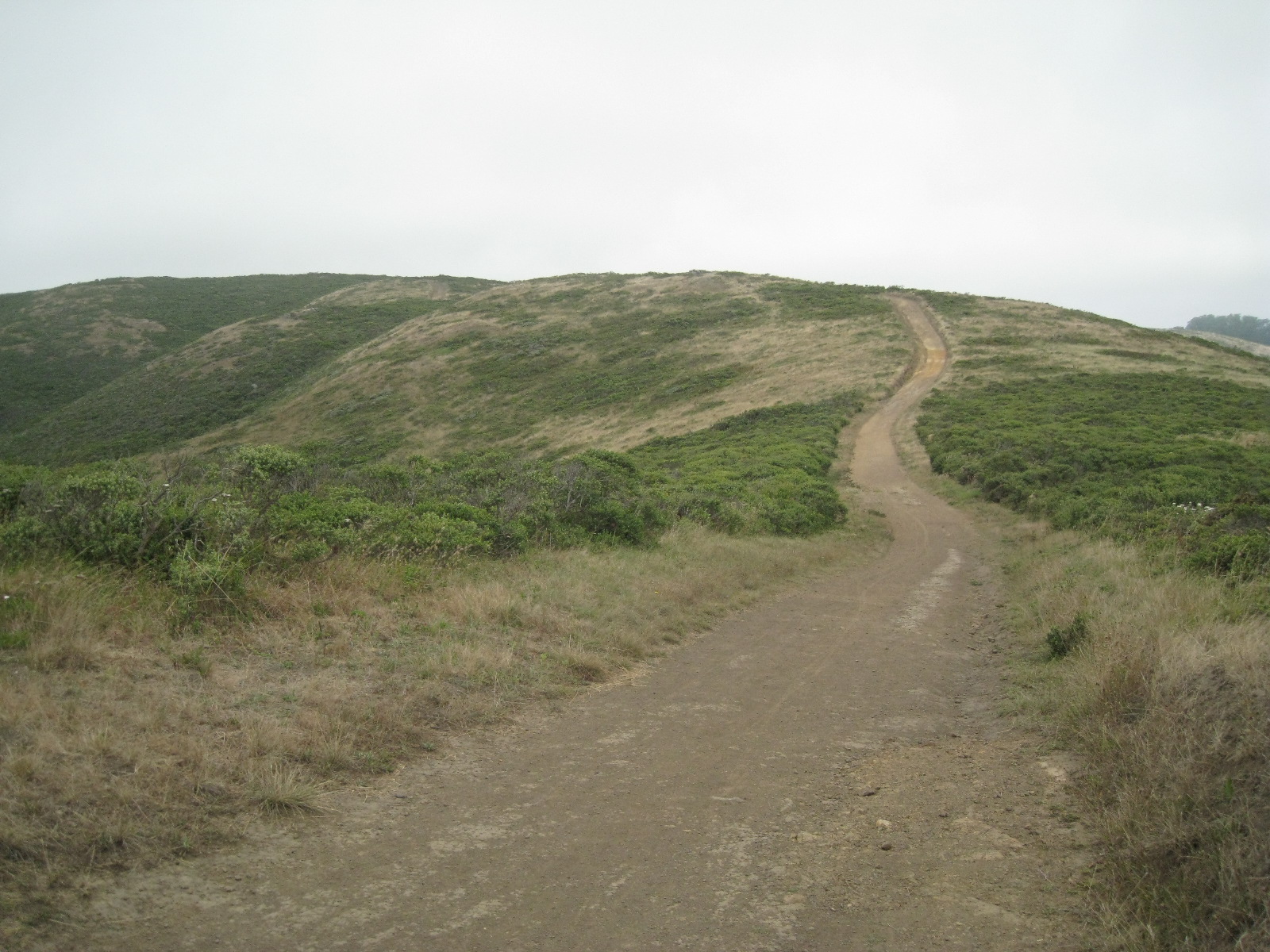
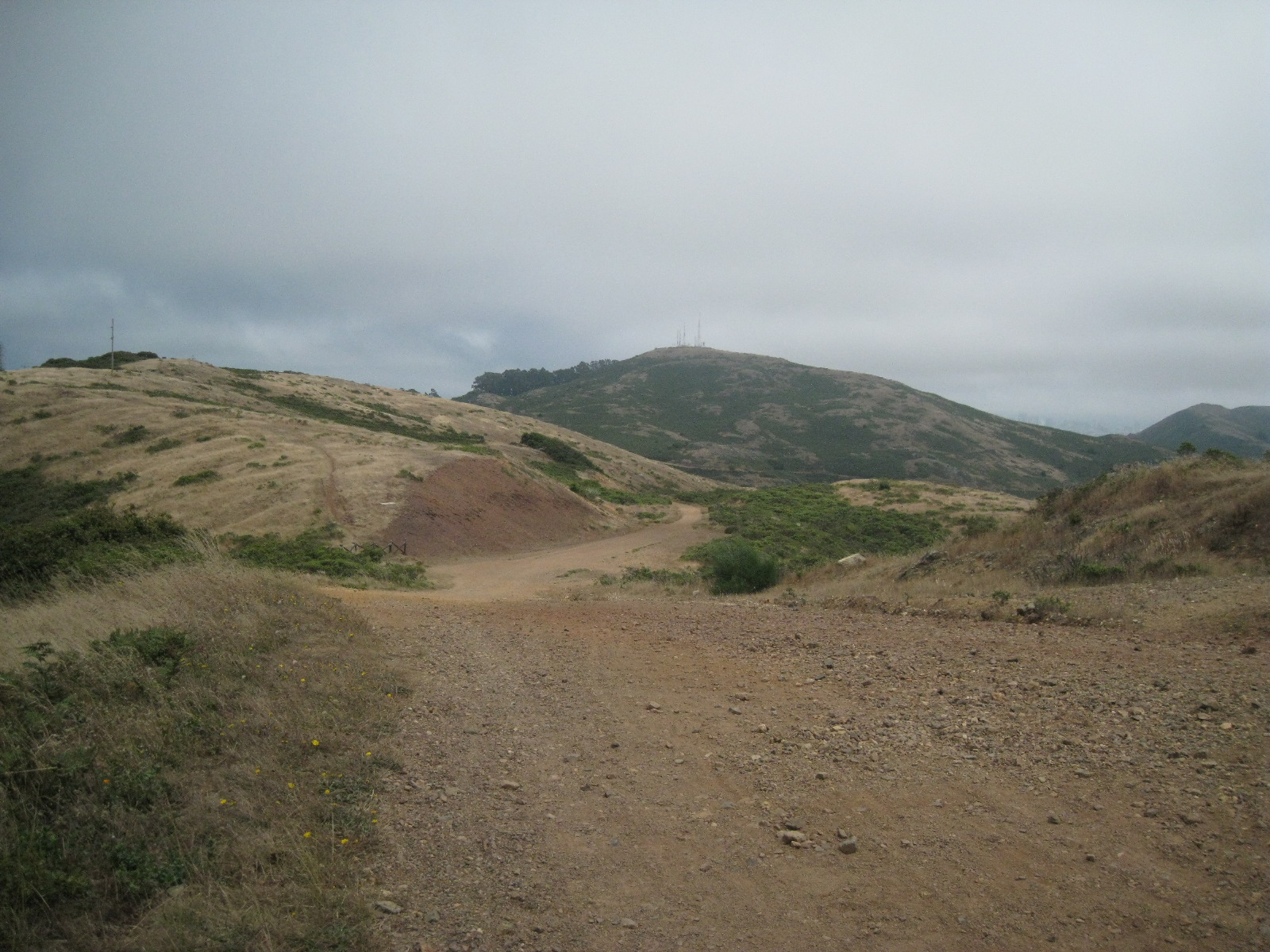
Uphill View of Marincello TrailNice View On Top Of Marincello TrailDownhill View of Bobcat Trail
And I went ahead of her by making my brisk walk faster. In a few minutes of continous brisk walking, I reached the peak of Marincello Trail and in a few meters, it meets Bobcat Trail. I started to run again as soon as it flattened at Marincello Trail and all the way along the Bobcat Trail which is almost a steady and gradual downhill towards the Rodeo Valley Trail. As I turned left at the Rodeo Valley Trail, the trail was still flat until I veered right as I crossed a small wooden bridge towards the 3rd Aid Station. It was another chance to refill my bottle with sports drinks and popped out my 2nd GU. The 3rd AS was the turn-around point and it was time to go uphill to Bobcat Trail. I had more time to brisk walk along Bobcat Trail until I reached the peak of Marincello Trail. It was a fast run downhill along Marincello Trail until I reached the Tennessee Valley Aid Station for the 3rd time. At this point I am supposed to have run 21 miles and I still have 4 miles to go to reach the starting area for my first loop.
There was no problem running along the ascending portions of the Old Springs Trail and the flatter portions of Miwok Trail but the challenge was to reach the top of the Wolfe Ridge Trail as it is the steepest portion of my way back to the Coastal Trail and Hill #88. From the peak of the Coastal Trail everything was downhill and I was able to complete my first loop in 5:38+ hours.
At the starting area I ate one serving of oatmeal, boiled egg, fried slice of SPAM, one piece of Choc-Nut, and drank ice-cold Gatorade. I refilled my stash of GU Gels in my pockets to include my supply of Crunch Bars. I changed my Dry Max socks with another type of running socks with the same brand. I spent almost 10 minutes in the process and I feel that I can finish another loop for a sub-12-hour finish.
Second Loop
I left the Starting Line for my second loop with a prevailing elapsed time of 5:48+. I made a plan to finish the whole race in less than 12 hours and try to be faster in brisk walking in uphill climbs and faster running in the downhill parts of the course. I was already alone in going up to the Coastal Trail and made some steady progress in reaching its peak. Running along the descending parts of Wolfe Ridge Trail had been easy and comfortable and soon enough, I was able to reach the Old Springs Trail.
I had to stop at the Tenessee Valley Trailhead for another pit stop at its Aid Station before going to the Coastal Dirt Trail. As I ran along the asphalted road of Tennessee Valley Trail, I was able to pass one of male runner who was busy eating some food while he was brisk walking. As I turned right to the Coastal Dirt Trail Road, I was greeted by a family of four who were hiking down the trail and I greeted them with a hand wave, a smile, and a greetings of “Good Afternoon”. As I went up the Coyote Ridge Trail towards the Muir Beach, I joined an old ultrarunner whom they call as “Buzz” and a young runner who was wearing cotton shorts and shirts. The two “white” runners were talking about some topics related to the Western States 100-Mile Run and I listened to them intently. It appeared that the older runner were giving some advise to the younger runner on how to finish the WS 100 Race. I was able to pick up some good advises while I was listening to their conversation. I also joined in their conversation by telling them that I have plans of training for the WS 100 in the future and I told them that I need more exposure in ultrarunning events in the USA.
Along the Coastal Dirt Trail, two tall “white” runners tried to overtake us and we let them pass us. However, as we reached the downhill part that goes to the Muir Beach Fire Gate and AS #2, I increased my pace and left “Buzz” and the younger runner and later, was able to overtake the two tall guys whom we gave some room for them to pass us at the single-track trails of Coastal Dirt Trail. As soon as I reached the AS #2, I requested the volunteers to have my bottle filled up with sports drinks; picked-up some melon cuts and dipped them to a plate of salt; and drank some cups of Coke! I did not spend so much time at the AS and left the place immediately. While I was going up towards the Coyote Ridge Trail, I met “Buzz”, the young cotton-dressed runner, and the two tall guys who were going to AS #2.
I maintained my brisk walking on the steep portions of the Coyote Ridge Trail until it levelled off towards the Miwok Trail Cut-Off. From here, I was already alone where I could not see anybody infront and not minding who is trailing me on my back. As I was about to finish running along the Miwok Trail, I saw two ladies infront of me. I recharged at the Tenessee Valley Trailhead AS with Seven-Up with slice of melon dipped in salt and refilled my bottle.
As I charged to the uphill climb of Marincello Trail, the two ladies were ahead of me by 5 meters. I tried to increase my pace in brisk walking but I was surprised that I could not gain some distance to get nearer to them and try to engage some conversation with them. I was thinking if my pace in brisk walking was too slow as I tried my best to increase the turn-over of my feet on the ground. The truth is that, these two ladies gained another 5 meters distance from me. Before we reached the peak of Marincello Trail, the two ladies were already leading me with about 10 meters!
I made my move and ran the downhill part of Bobcat Trail and passed the two ladies and gained a distance from them. I was able to overtake one or two runners along the Bobcat Trail but more runners were already going back to the finish line as I met them going up along Bobcat Trail. Before reaching the Rodeo Valley Trail, I stopped by on the side of the road and looked for some cover for me to pee. While relieving myself, I saw a guy who passed me and he was looking at me. He must be trailing me and making me as his “target”!
After relieving myself, I immediately resumed my running and tried to overtake the guy. I finally caught him while he was eating and refilling his bottles at the AS #3. I did my “rituals” at the AS and immediately left the place after asking the volunteers on the remaining distance before we could reach the finish line. The old lady at the AS told me that I still have 8 miles to go—4 miles up to the Tennessee Valley Trailhead AS and another 4 miles towards the Finish Line.
I mentally computed my target time of arrival or finish as I had 9:45+ hour elapsed time when I reached the AS #3. I told to myself that I can finish 8 miles (12+kilometers) in two hours and I was confident that I could finish the race in less than 12 hours. I told to myself also to keep on moving but I had to slow down once I feel any pain on my legs. Having made my goal to finish the remaining miles in the race in two hours, I immediately left the AS ahead of the guy who passed me while I was relieving myself.
I really ran hard on the uphill climb of Bobcat Trail but have to revert back to brisk walking on the steeper portions of the said trail. As soon as I reached the peak of Marincello Trail, I saw a lady runner about 500 meters slowly running down the trail. I increased my pace on my downhill surge and was able to overtake her and made a considerable distance from her. But I need to refill my bottles with sports drinks that I decided to visit the Tennessee Valley Trailhead AS for the last time.
It was a quick stop but when I was running towards the uphill portion of the Old Springs Trail, the lady runner whom I overtook at the downhill part of Marincello Trail was already ahead of me by 10 meters. From the Old Springs Trail and Wolfe Ridge Trail, it was “cat and mouse” run between the two of us as I trailed her on those trails. The guy who overtook me while I was peeing at the Bobcat Trail was also on my tail trying to gain distance over me about 500 meters behind me at the Old Springs Trail. The lady runner ahead of me was “pressured” and I think she got tired while I tried to “push” her pace on the difficult parts of the Wolfe Ridge Trail.
Before I reached the highest peak of the Coastal Trail, the lady runner, made a hand signal to pass her and another group of three runners allowed me to pass them, too! I was still strong and my legs did not give me any problems as I reached the highest peak of the Coastal Trail and the last problem is to be able to run those winding wooden stairs and rocky one-track trail without any fall or misstep before reaching the Battery Townsley tunnels and the downhill asphalted road towards the finish line.
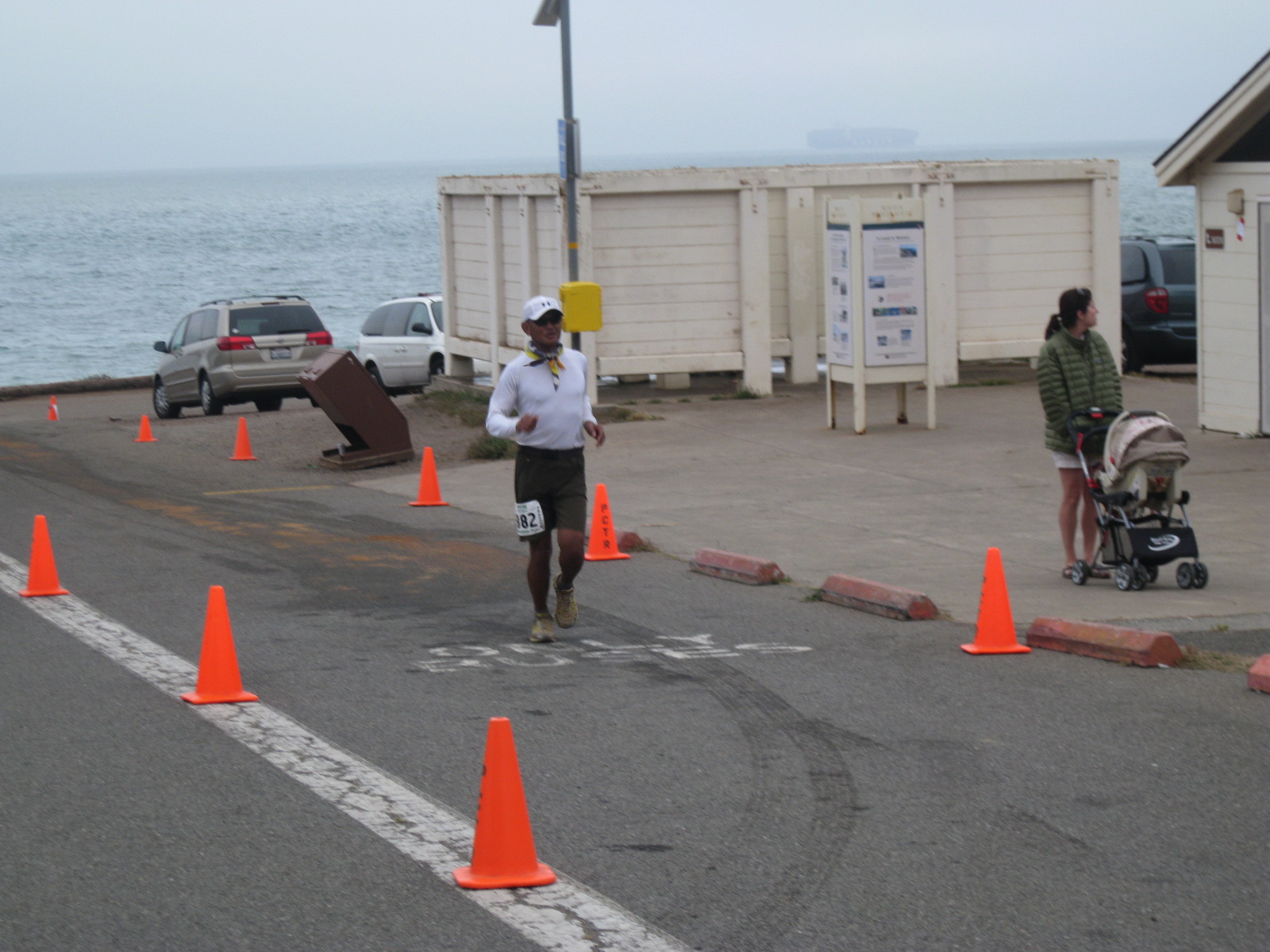
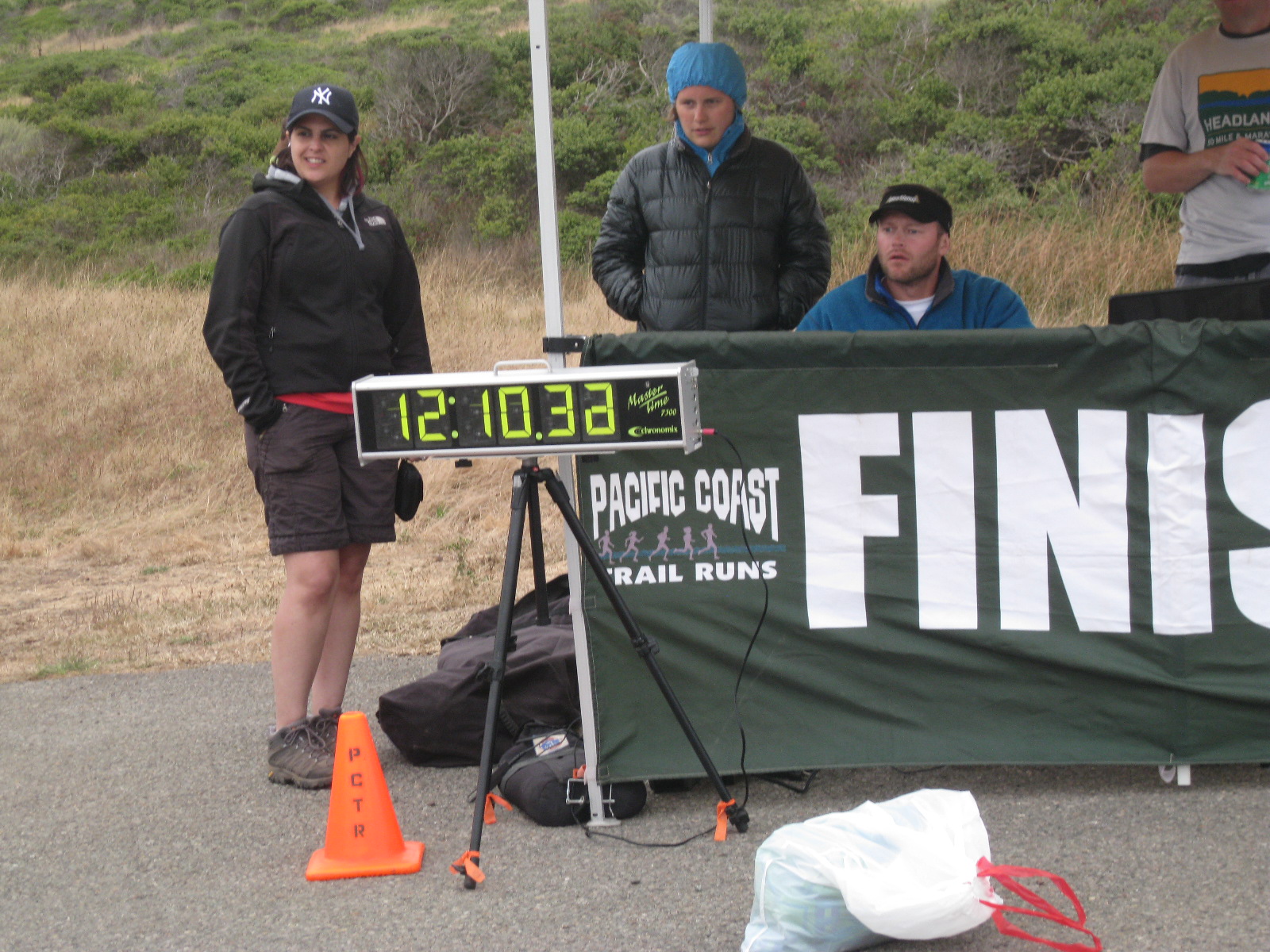
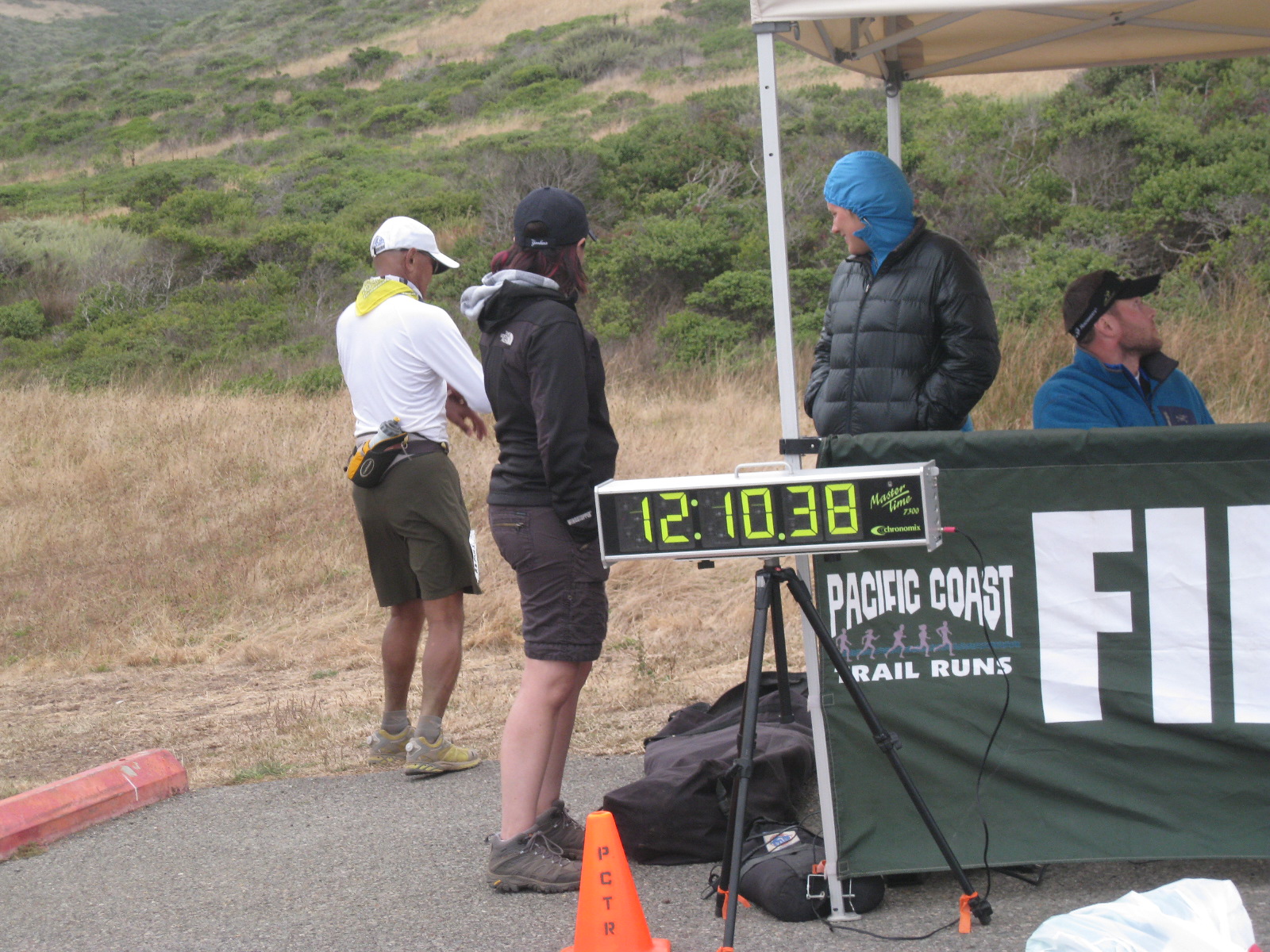
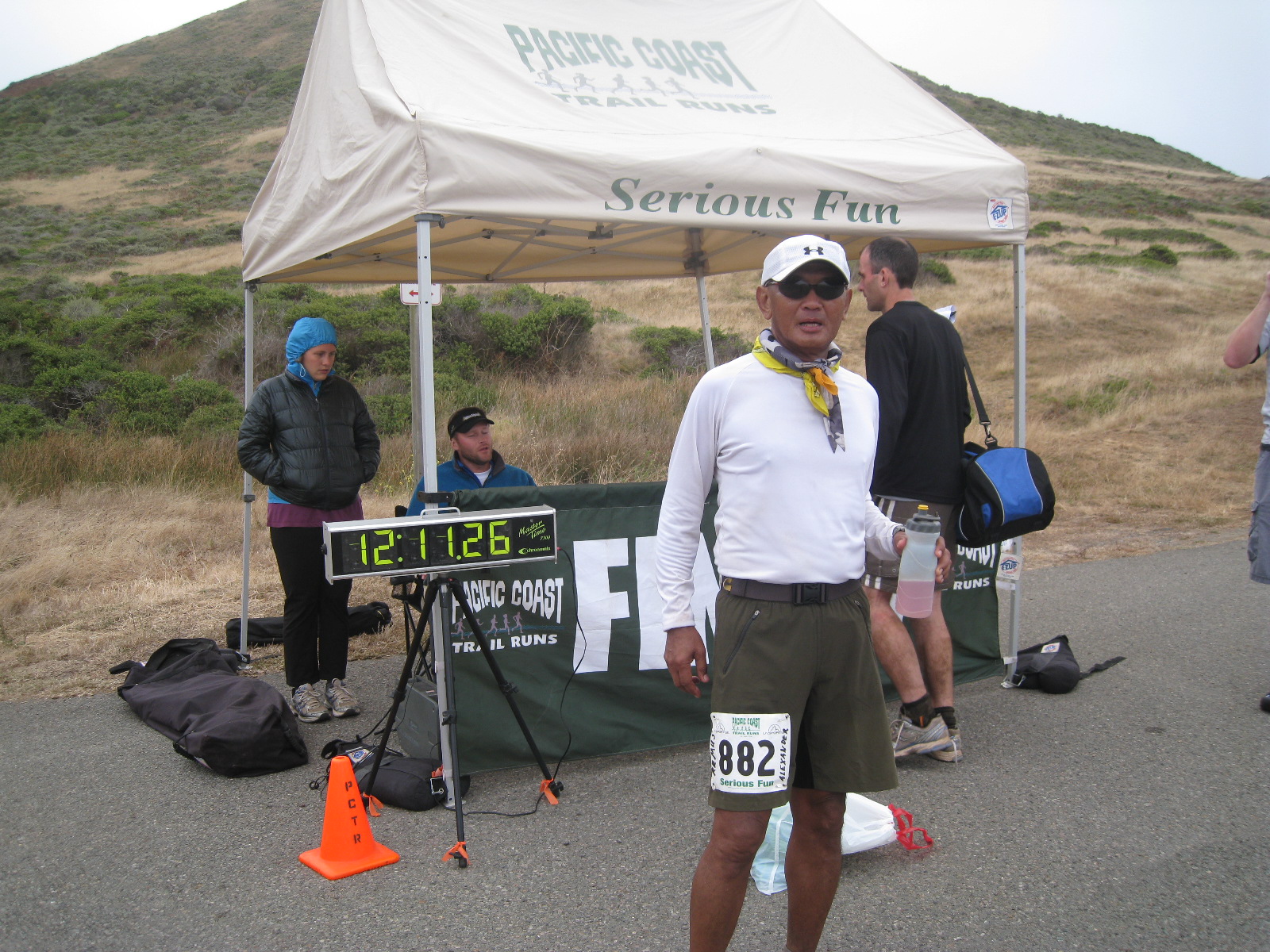
While running down the asphalted road of the Coastal Trail, nobody was trailing me and made an easy run towards the Finish Line. I crossed the finish line in 12:10:36 hours and I was happy to finish the race. I ranked #56 among the 90 finishers from the 126 starters. I was ranked #6 in my age category and I was very happy to have finished the race without any “issues” during the race and any injury! I was not able to attain my objective of finishing the race in less than 12 hours but I was happy and contented on the overall result of my capability to run such a challenging mountain trail run.
A Few Yards To The Finish LinePCT Run Staff & Race Director Looking At Me Before Reaching the Finish LinePassing The Finish LineThe Only Tent/Booth At The Race Start/Finish Area
I can only say that I had fun and good memories in this run. There is really a different kind of enjoyment and satisfaction that I felt during and after finishing the race. Even though the race was long, hard, and very challenging, there is something in ultra mountain trail running that keeps you coming back for more in order to test your ability in endurance and find out what you are made of. This is the feeling that I could not get from finishing marathon and lesser-distance races along the roads. I could not express the feelings and the emotions that I have gone through with my runs along the mountain trails of Marin Headlands.
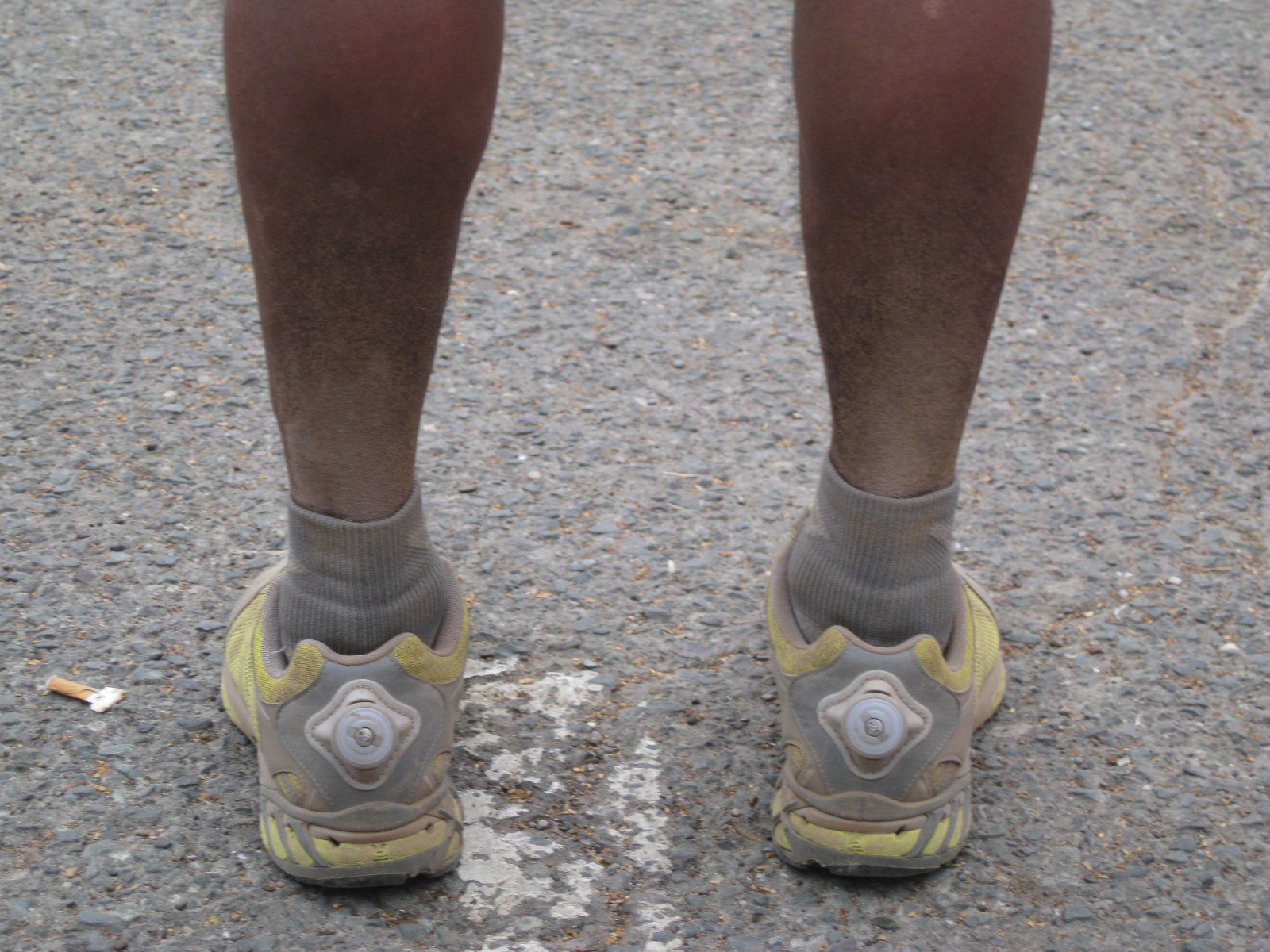
Dusty Legs & Dirty ShoesMemorable Prize...Headlands 50 Finisher's Shirt
I guess, I need to prepare and train some more and experience the good feelings and experience in mountain trail running. Hopefully, 2011 MIWOK 100K would be the next one.
(Note: If you reached this part and read the whole Race Report, you have finished one of my “ultra posts” in this blog. It is just fair that you finished reading this post in 15 minutes or more while it took me 12+ hours to finish the race and another 10 days to write and edit this post. I hope you enjoyed my story on the said race.)
1. A “real” runner. There is no such thing as a “real” runner, you are simply called a “runner” if you have finished any road race where you registered, period!
2. Your “personal coach”. I am your “guide” and try to “walk the talk” about running, so to speak.
3. Your “PR or advertiser”. I don’t advertise any road race except for the BDM 102/151 and PAU Races. Let the takbo.ph do it’s job. I don’t also advertise any particular brand of running shoes and apparel. I only write about what I am using and wearing during my training and races.
4. A perfect Race Organizer/Race Director. I still have to learn a lot by participating in international running events.
5. A “running expert” who completed formal studies in sports science, medicine, and physiology. But having completed such studies does not mean that you are an “expert’ in running even if you have not experienced finishing a marathon race. After almost 40 years of running, I am still learning from my experiences in my training and races. Lots of marathon and ultra distance finishes still don’t make me as a “running expert”.
6. Against high cost of registration fees. Nobody is forcing you to join the races anyway. This is a democratic country. Pay your registration fees, run & enjoy the race, get your award/certificate/medal, and don’t “whine” about fees. Finishing a race is not for “bragging rights” or FB status purposes. Did anybody of you complain when you paid your registrations fees for your NYC Marathon or SC Hongkong/Singapore Marathon?
7. Against Race Organizers. There is a big difference between a “reponsible” Race Organizer from a “profit-oriented” one. But there is a big possibility that both could combine. “Responsible” Race Organizers are the ones who are seasoned runners who can relate to the hardships of a runner to finish the race. These ROs are the ones who can anticipate the needs of the runners and make sure that the last runner reaches the finish line. The “profit-oriented” ones, aside for obvious reasons, could be identified by their body-built—-they are fat, have protruding bellys and sometimes, old (like me!) and young alike, and you have not seen them run in a road race! And if you see them run in road races, they are not for their personal PRs but they simply want to finish the race within the cut-off time. They could have been the most experienced ROs/RDs that the country could offer but they usually commit mistakes/lapses in every race that they conduct.
8. Against Corporate Sponsors. You can donate, in kind or in cash, or do some services if you want to sponsor or support my races. But please, don’t tell me what to do about my race.
9. For Awards and Recognition. You can have the distinction of being the most visited blog or recipient of a Blog Award or the most popular runner in the country and I think you deserve such recognition. I just want to simply go on with my advocacy to inform everybody that running is healthy and it is a way of life.
10. A politician or make my runs for political, social, and economic causes. You have a lot of government, semi-government and private entities whose job is to help solve poverty, give opportunities to other people and cure diseases. If you want to run because you want to construct a school or library, I don’t believe you! This is the job of the Departments of Education and Local Governments and they have the budget to implement it. This is the same to other causes and fund-raising benefits where your “cause” is the specific function of a particular Department of the government.
11. Selective in my running blogs or topics. If there is something wrong about the race like deaths, casualties, cheating, and mistakes/lapses of Race Organizers/Race Directors, I will not hesitate to publish them in this blog as long as I am a participant in the said race in question. This is the best way to provide feedback and evaluate each race with the end-view of improving future races.
12. Lastly, I am not impressed on the quantity/number of runners joining our road races when the Race Organizer could not provide a good quality support services. I could not understand why there seems to be a “contest” on the number of participants in every road race. One says, they have 28,000 runners, another says that they are planning to have 110,000 runners. What is their objective? Is it to impress other countries, for the Guinnes World of Records, for profit, or for publication purposes? We should remember that our streets/roads are too narrow and runners compete with other vehicles for space. If what I’ve heard is correct, our main roads can only accommodate at least 8, 000 runners and if the ROs/RDs know this information, they should not push their luck in coming up with a bigger number of runners than the required volume/capacity of our roads.
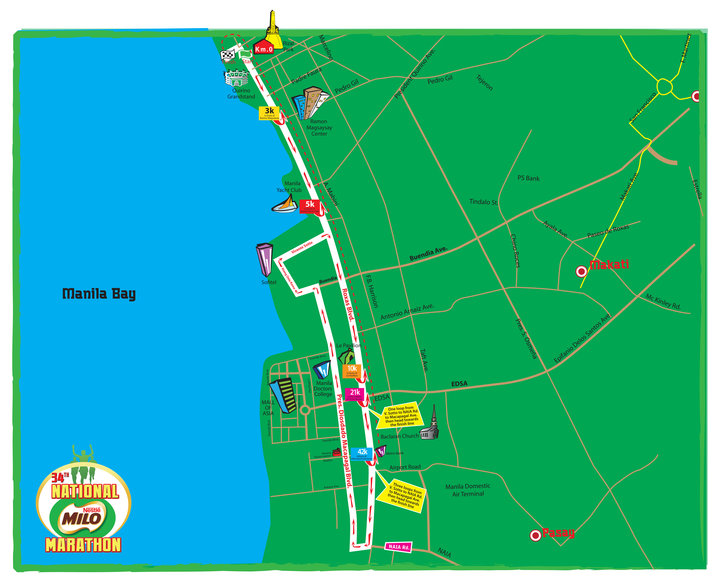
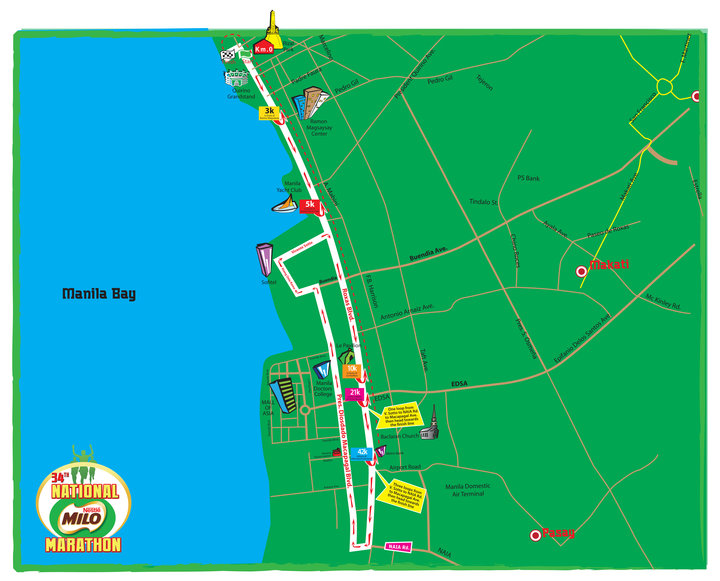
After I found out that the 34th MILO Marathon Elimination Route was changed into a different route where the 42K runners will have to undergo a 3-loop run within the course, I planned to recon the place, most especially that portion of the race route.
At 7:30 AM, last Sunday, I started my run at a certain point within the loop course which have a direct access to the MOA grounds and located along the Pres. Macapagal Avenue. From this point, I went westward towards the PICC Complex by turning left going to the old and abandoned Film Academy Building; turning right towards infront of the Philippine Plaza Hotel and went all the way to the Folk Arts Theater before turning right towards Roxas Boulevard.
I turned right at Roxas Blvd and did not dare to run along the flyovers at Gil Puyat/Buendia Blvd and EDSA but instead ran along the flat road of Roxas Blvd. Running along Roxas Blvd gives you the tendency to run fast while inhaling the smoke from all forms of vehicle passing the area; smell of garbage & drainage; and the dust of the road. I turned right at the Aguinaldo Blvd (Airport Road) before finally turning right at the Pres. Macapagal Avenue and ending my run where I started along the said road.
My GF 305 registered a distance of 10.4 kilometers with an elapsed time of 1:01:32 hours and an average pace of 5:55 mpk!
I have nothing to complain about the 3 loops every runner for the 42K race would undertake as long as it will result to an accurate distance for the 42.195K race. The relatively flat terrain of the course where the Flyovers will be considered as “speed bumps” (on flat streets) will be an advantage for the runners. For those who will be supported with their own family/friends’ Aid Stations, they could select a place where they could wait for their runner to pass without having the problem of following or “leap-frogging” with their runner. This loop system will also a nice way to keep an “eye contact” or good sighting to your “target” for this race due to the straight direction of the key roads of the route. I’ll be glad that runners within my age range will also use me as their “target”! But for the younger runners, I’ll be happy to see them way in front of me because they will be qualifying for a faster time!
MILO Marathon Elimination Race Route
In my race strategy for this event, I’ll have to visualize that I’ll be running along the oval track with each lap measuring to 11-12 kilometers per lap, instead of 400 meters. I should be able to complete each loop in 1:10 hours or less and finish the remaining kilometers in 40 minutes or less in order to be able to qualify for the MILO Marathon Finals and register a Finish Time of 4:10 hours or less. This could be my most conservative strategy for the race but depending on the actual situation, my body condition, and external factors, I could go for a faster time. Having prepared for this race since the last week of March 2010 and my training in the mountains had given me the confidence of a nice result for this race.
Despite my long runs had been within the range of 25-30 kilometers, I tried to compensate the need for longer LSDs by training along the mountain trails and “sharpen” my training through hill workouts. Another bold experiment that I’ve done for the past months is the ability to sustain my pace without drinking any water or sports drinks on my 10K or less distance workouts. I tested and evaluated this experiment when I participated in the latest NB Trail Adventure 15K Run at Nuvali, Sta. Rosa, Laguna last June 20, 2010. It did not affect me whether the Water Stations were not consistently positioned along the route.
I’ll be using the MILO singlet provided for this race; running shorts (“RMWRS!”); DryMax Socks; ASICS Gel-Tarther Shoes; Oakley Sunglass; and my Bandanas!
Always remember, when you run the MILO Marathon Race, you have to give justice to this event as the “most prestigious marathon race” in the country. Do your best and prove to yourself and to everybody that you are a “RUNNER”!
See you this Sunday! Good luck!
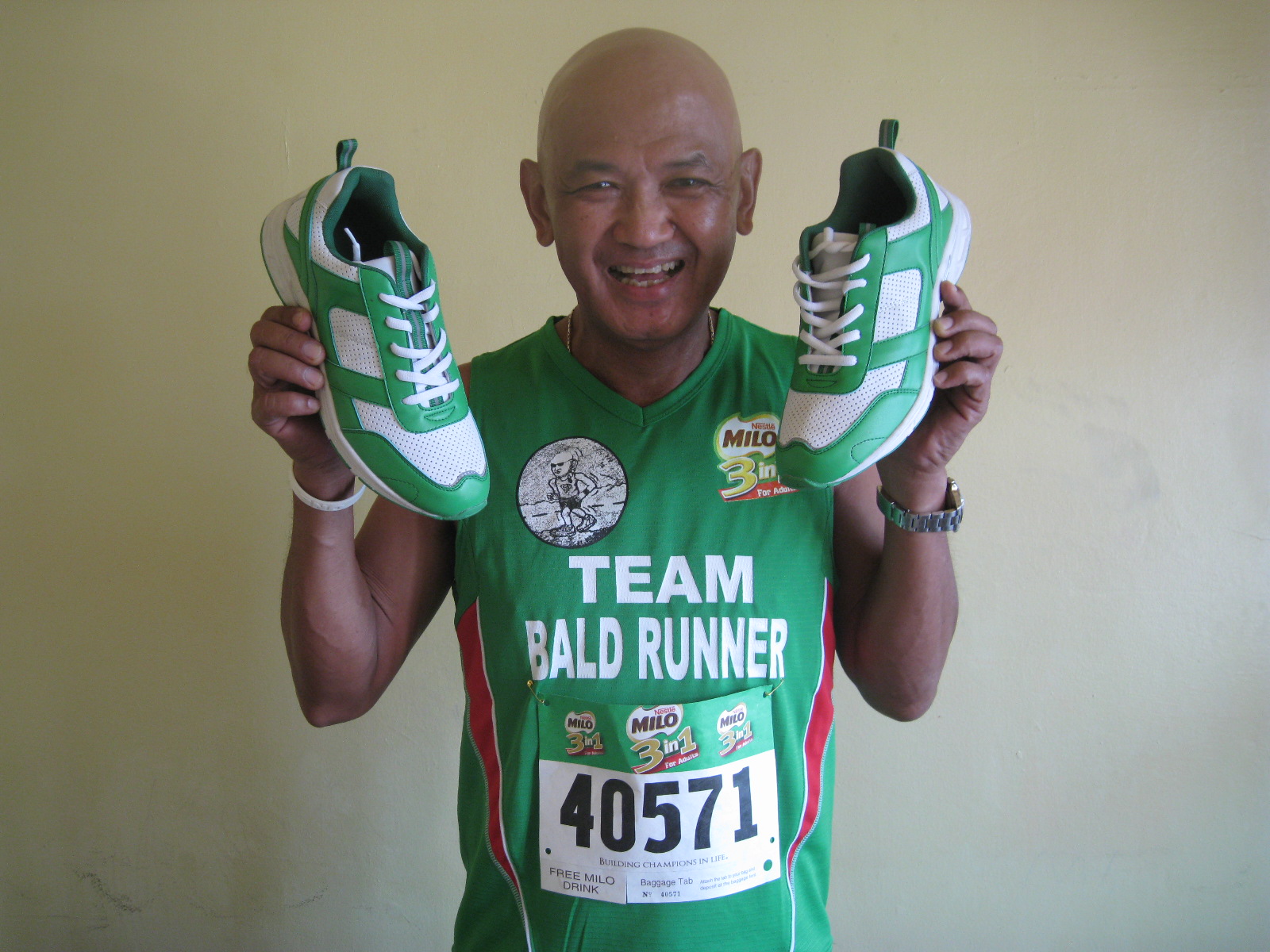
I'll Be Donating These Shoes! My Race Singlet On D-DayYou Will Never Miss Me During The Race!
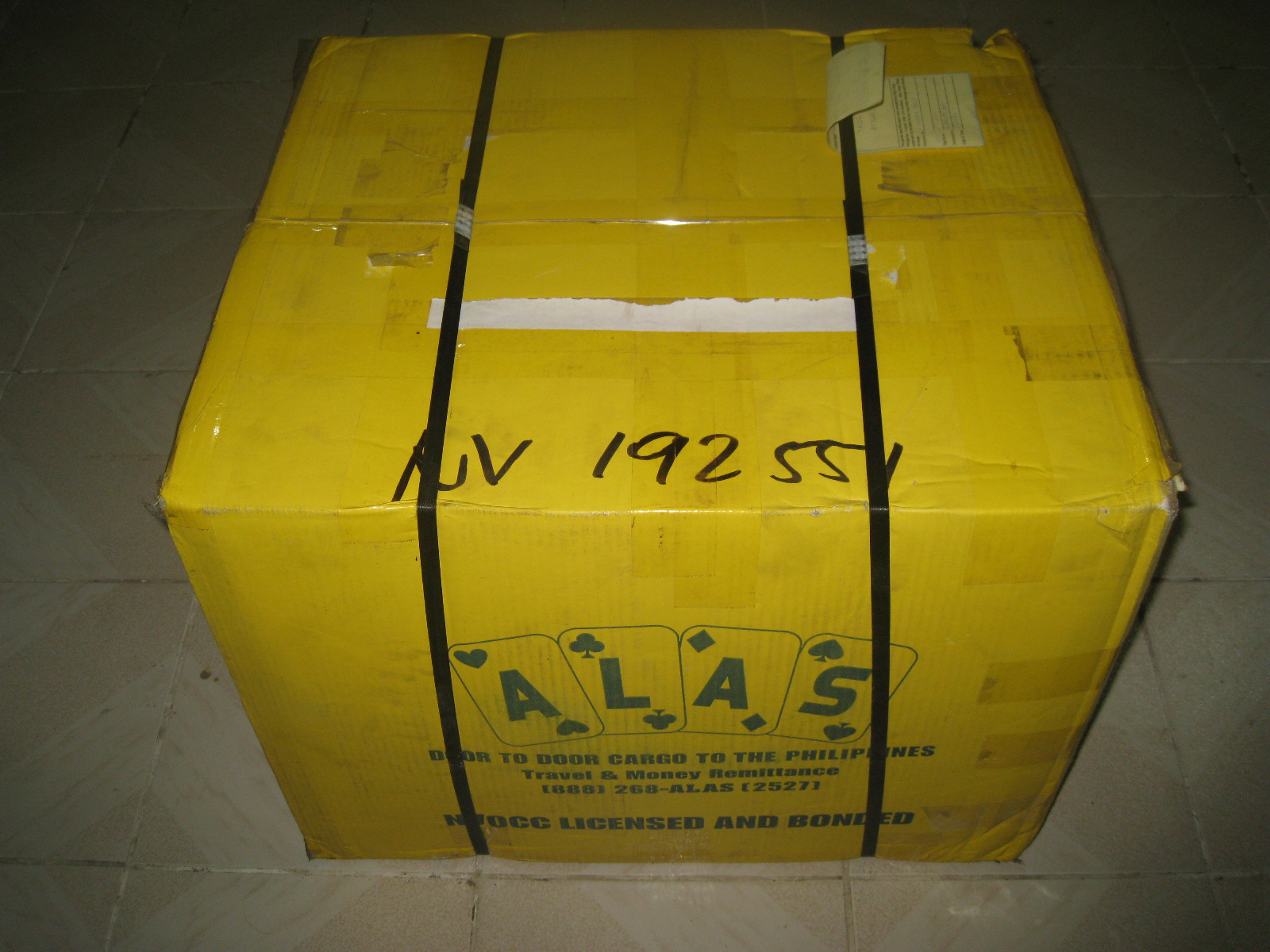
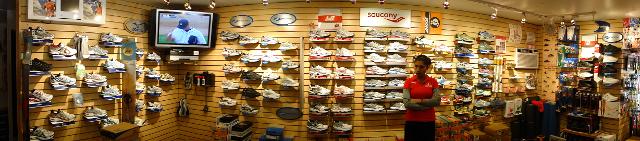
Joe Matias, the owner of A Runner’s Circle Running Shop, is a native of Legazpi City (Albay) and now resides in Los Angeles, California. His shop is located near Griffith Park, a nice place to run, and his store’s staff are elite runners and champions of road races in Los Angeles. Joe had been a consistent source of my Project Donate A Shoe by sending to me Balikbayan Boxes (BB) filled with slightly used shoes donated by his customers and friends.
Balikbayan Box From Joe Matias Of "A Runner's Circle" Running Shop
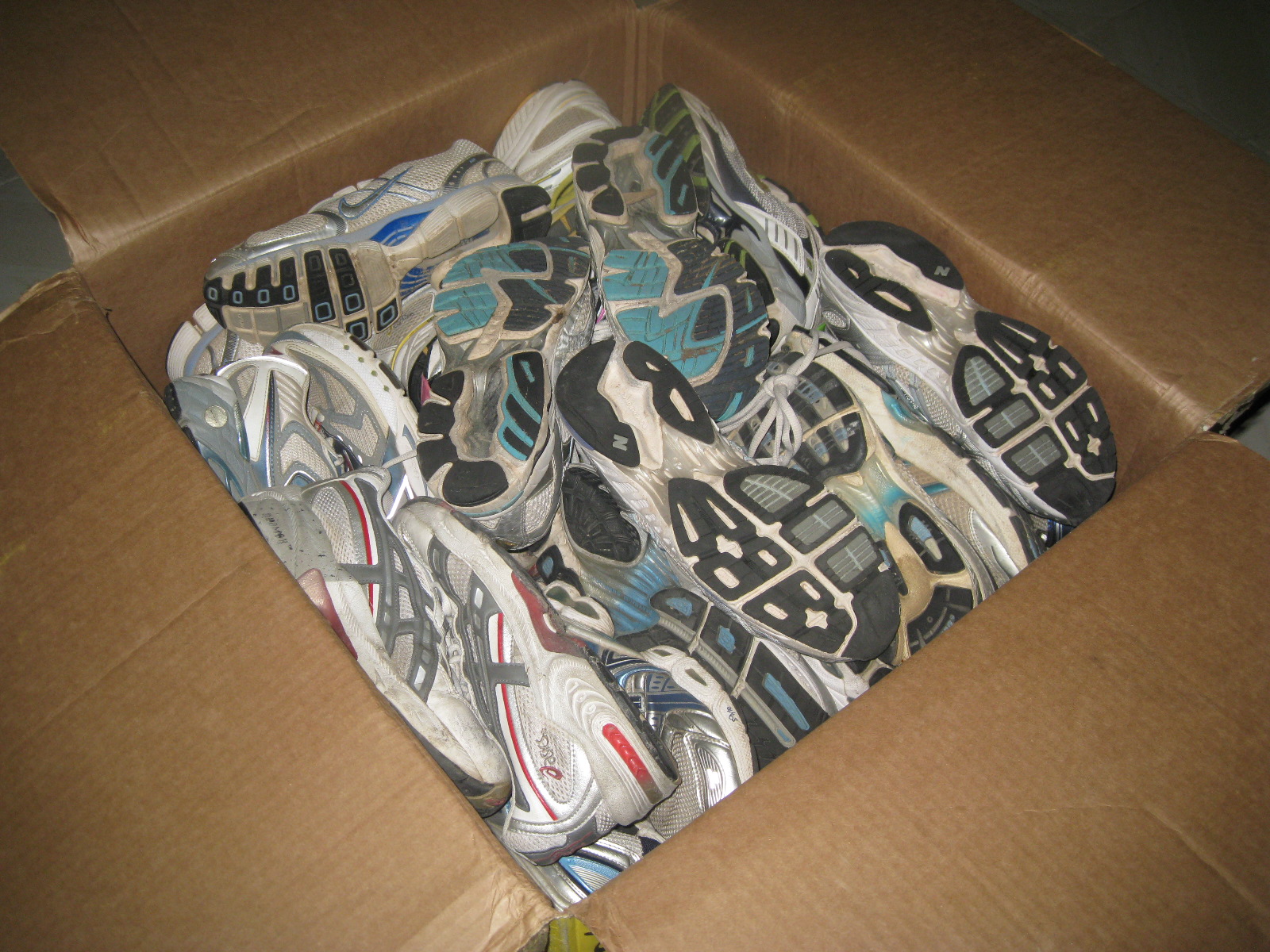
Last week, a BB was delivered to our office filled with shoes which we intend to donate to other runners who can not afford to replace their old shoes. A quick inspection of the shoes showed that they are slightly used and there is a need to wash them first before we display or donate them to other runners. I have yet to find out the exact number of pairs inside the box but I am sure this effort from Joe is very much commendable. Thank you very much, Joe!
Slightly Used Shoes & Have Never Counted The Number of Pairs
Let me take this opportunity to mention some of the community services or “gimmicks” that Joe’s Running Shop had been sharing to the runners in Los Angeles. Aside from accepting Donated Shoes from runners, he conducts “fun runs” at Griffith Park and Silverlake Park on Tuesdays & Thursdays (afternoon) from 4:00-6:00 PM with a hydration booth with free candies & water. In these “fun runs”, he gives a brand-new running shoes to a lucky participant through raffle. He maintains an Elite Team of Runners who are his store staff. Lately, he has organized a Triathlon Club that carries the name of the shop.
If you are a runner in the Philippines, the color “green” signifies the MILO Marathon Race!
Last Thursday noon, June 24, 2010, I was one of the few “runner-bloggers” who were invited by MILO/Nestle, Phils to attend the media launching of the 34th MILO Marathon for this year. I think only four of us were there who were outnumbered by the newspaper/print publications, radio, and TV media personnel & reporters—Kikay Runner, Bugobugo85 aka frontRunner, The Bull Runner and I. It was really an honor and privilege to be a part of this memorable event.
The event started with some personal chat and greetings with the members of the TEAM MILO under the leadership of Mr Afnan Ahsan, the new Senior Vice-President, Beverages Business Unit of NESTLE Philippines. Lunch was served immediately at noon time.
As soon as the attendees had their lunch, the formal presentation of the media launching of the event started. What impressed me most is the presentation of the TV commercial film, “The Gift” for MILO’s project HELP GIVE SHOES. I can relate with this new advocacy of MILO because I’ve been a witness of runners in marathon races who are still using “old and tattered” running shoes and I was able to do something, at least, to solve the problem. My personal observation led me to come up with my “Project Donate A Shoe” which I started by donating four (4) pairs of my slightly used running shoes. Little did I know that my readers have the same observations too that they started donating their used shoes to my project. So far, I have received and distributed a total of almost 1,000 pairs of used running shoes coming from my friends in the country & abroad and my readers residing in Great Britain, United States, China, Japan, and the Middle East!
Team MILO/Nestle, Phils During The Media Launching
After the prepared presentation about the 34th MILO Marathon Event, the key members of Team MILO were presented to everybody and they emphasized the importance of their advocacy by sticking “footprints” on the wall. Key figures in Philippine Sports (PSC & POC), Race Organizer, and MILO Executives were seated in front of the audience as each of them were asked some questions and clarification and the Press Interview/Open Forum started.
When a reporter who is not a runner ask a question, most likely, the question is a dumb and stupid one. They don’t read the written Press Release given to them once they enter the venue before they ask a question because the answer is already on those printed pages. Almost all their questions start with the word “Why?” However, I was impressed when a recreational runner-reporter asked the question, “Why MILO thought of such advocacy (Help Give Shoes) now, after 33 years of conducting a nation-wide running events?” Well, the Team MILO answered that they have the same observation as I have expressed in this blog.
Team MILO Marathon with TBR & BR!!!
This year’s 34th MILO Marathon Elimination is totally different from the past yearly event because of their “Help Give Shoes” advocacy for the underprivileged children; the introduction of qualifying times according to one’s age category; increase in registration fees but with better quality of race singlet, finisher’s t-shirt & finisher’s medal; better support services to runners in terms of safety, hydration (water & Gatorade), food replenishments (fruits & sports gels); increase in cash prizes for the winners; accurate timing with the use of the RFID Champion Chip; and a new race course (which I will discuss in my incoming posts).
“Green” means the Environment! “Green” means MILO! “Green” means GO! Run the MILO Marathon!
4:00-6:00 PM May 26, 2010 @ IDS Compound, Bagumbayan, Quezon City
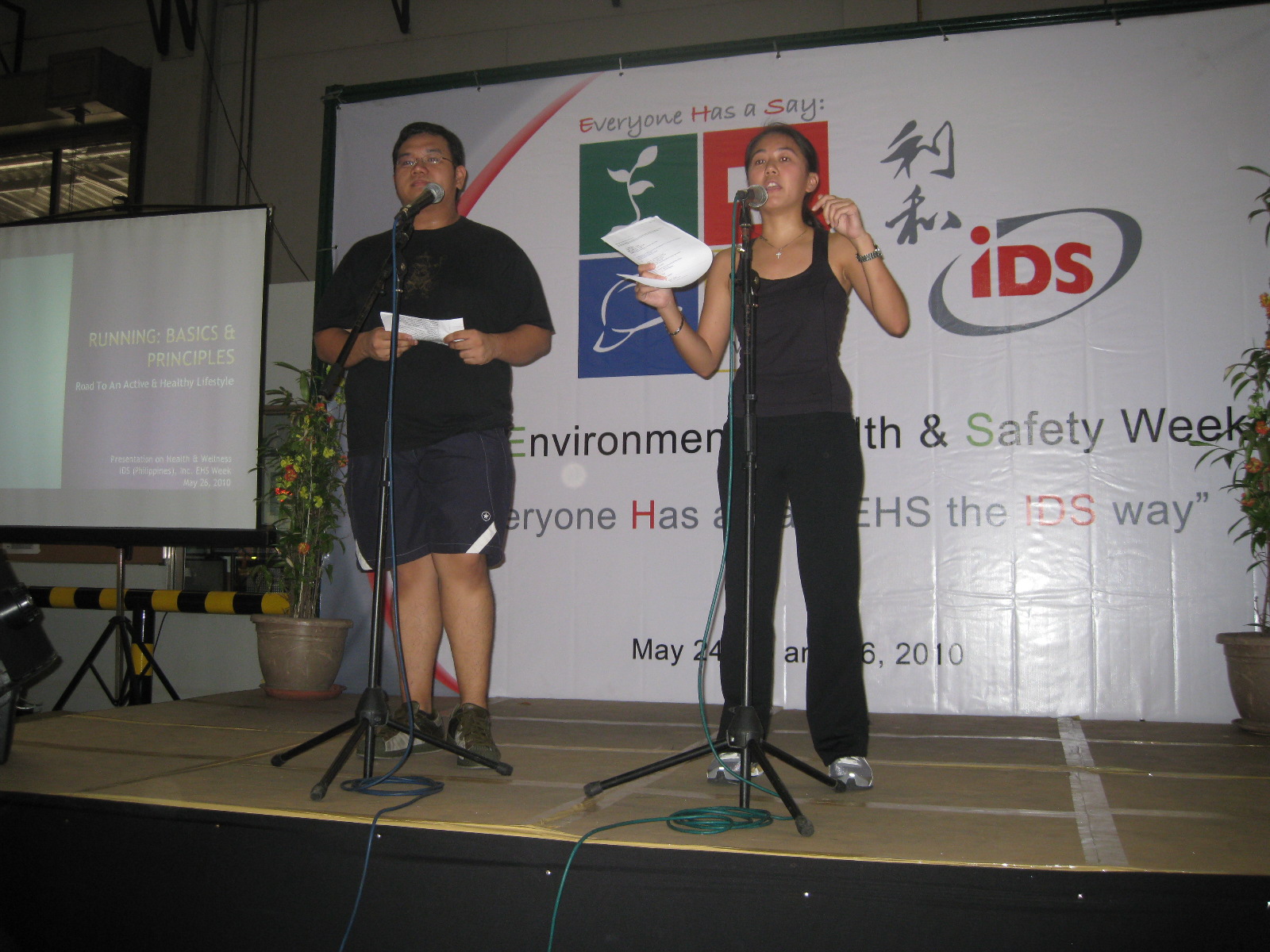
It could be a simple telephone call, a comment in my blog, a text message, an e-mail, or a conversation, I am always willing to give a Running Lecture & Clinic to any corporate office or group of runners anywhere in Metro Manila and its suburbs. But this time, it’s different because the request came from a runner-blogger who is a close friend. Bards aka Banana Running sent me a text message and it led to the realization of a Running Lecture & Clinic among the staff and employees of IDS (Integrated Distribution System) which is based in Bagumbayan, Quezon City.
Introductory Part of the Program
The Running Lecture & Clinic was integrated as part of the company’s health and wellness seminar program for its employees. I am also glad that the Bald Runner and its Elite Athletes were there to be a part of this program. Through Ms Tess Baltazar of IDS, the running lecture & clinic was fully coordinated and my team was received properly upon our entry to the compound.
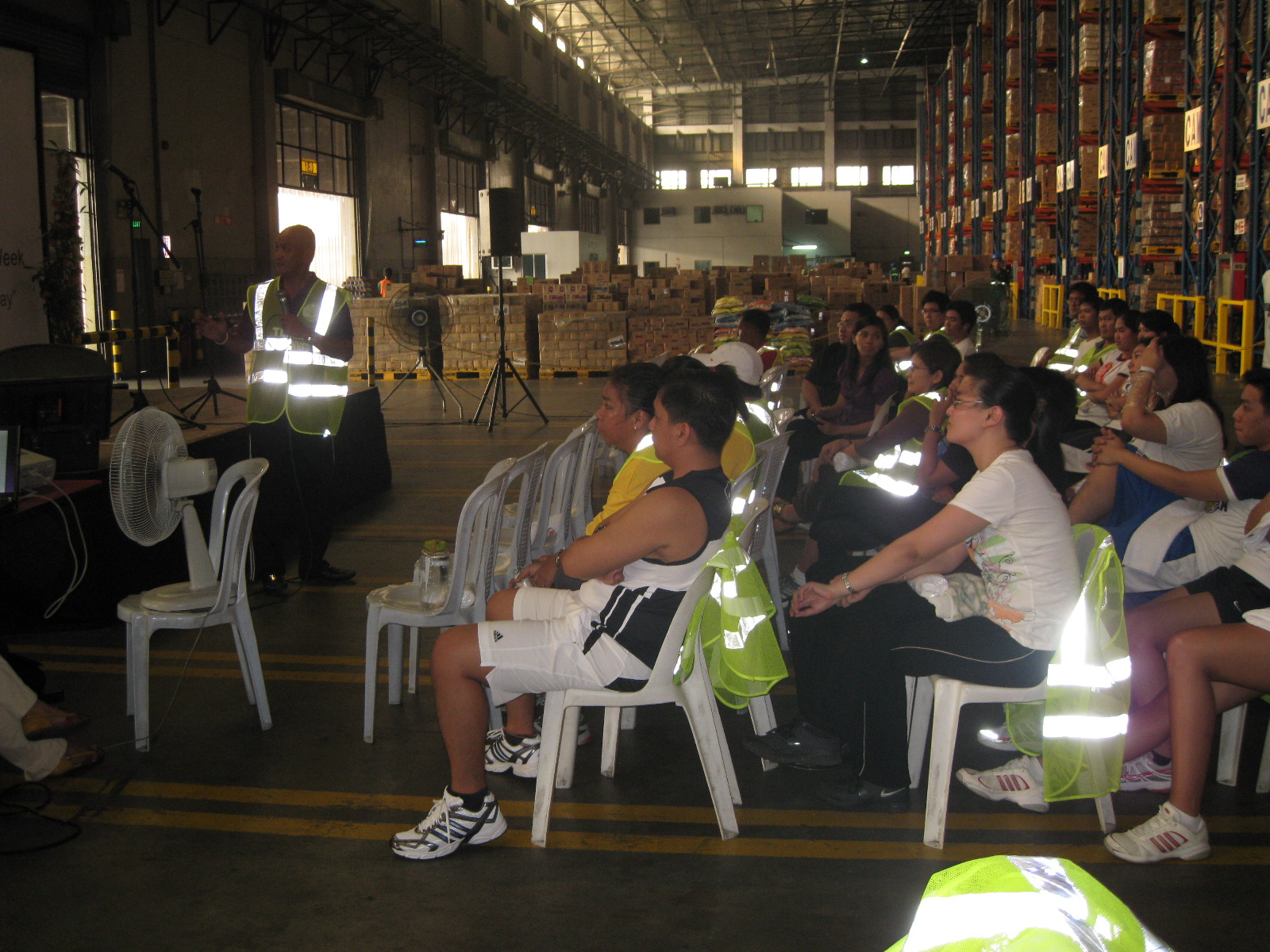
Lecture Was Done Inside One of the Warehouses
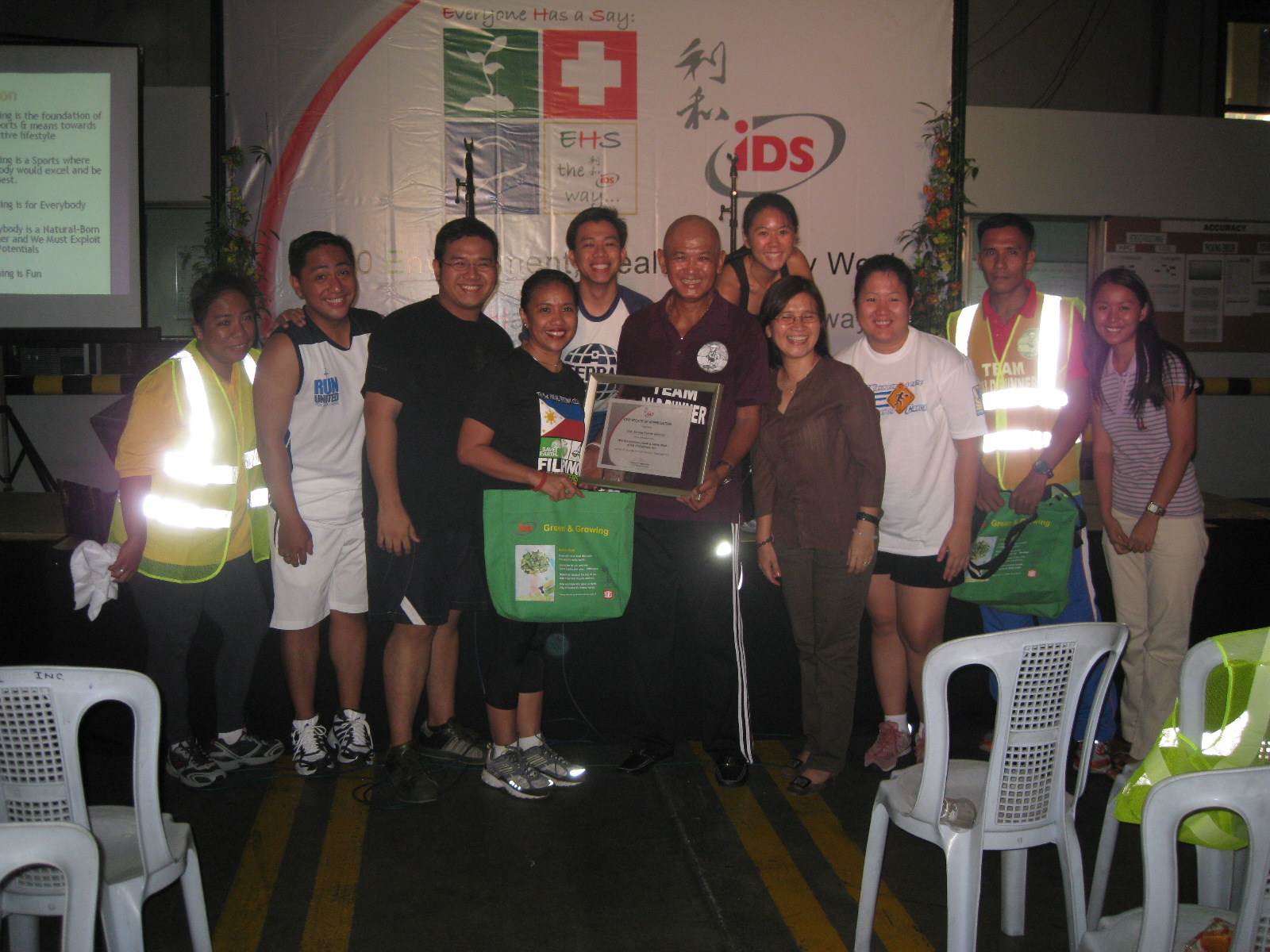
The lecture and clinic were limited to only 2 hours as the window of opportunity for the whole program/seminar. The lecture started on time at 4:00 PM of May 26, 2010, Wednesday in one of the big warehouses of the company. After a short introduction, I delivered my lecture with the aid of the usual Powerpoint presentation which I delivered within one hour. After giving me a surprise award and cash (that goes to the training & support to the Elite Team Bald Runner), my team and host brought the participants at the parking area of the company.
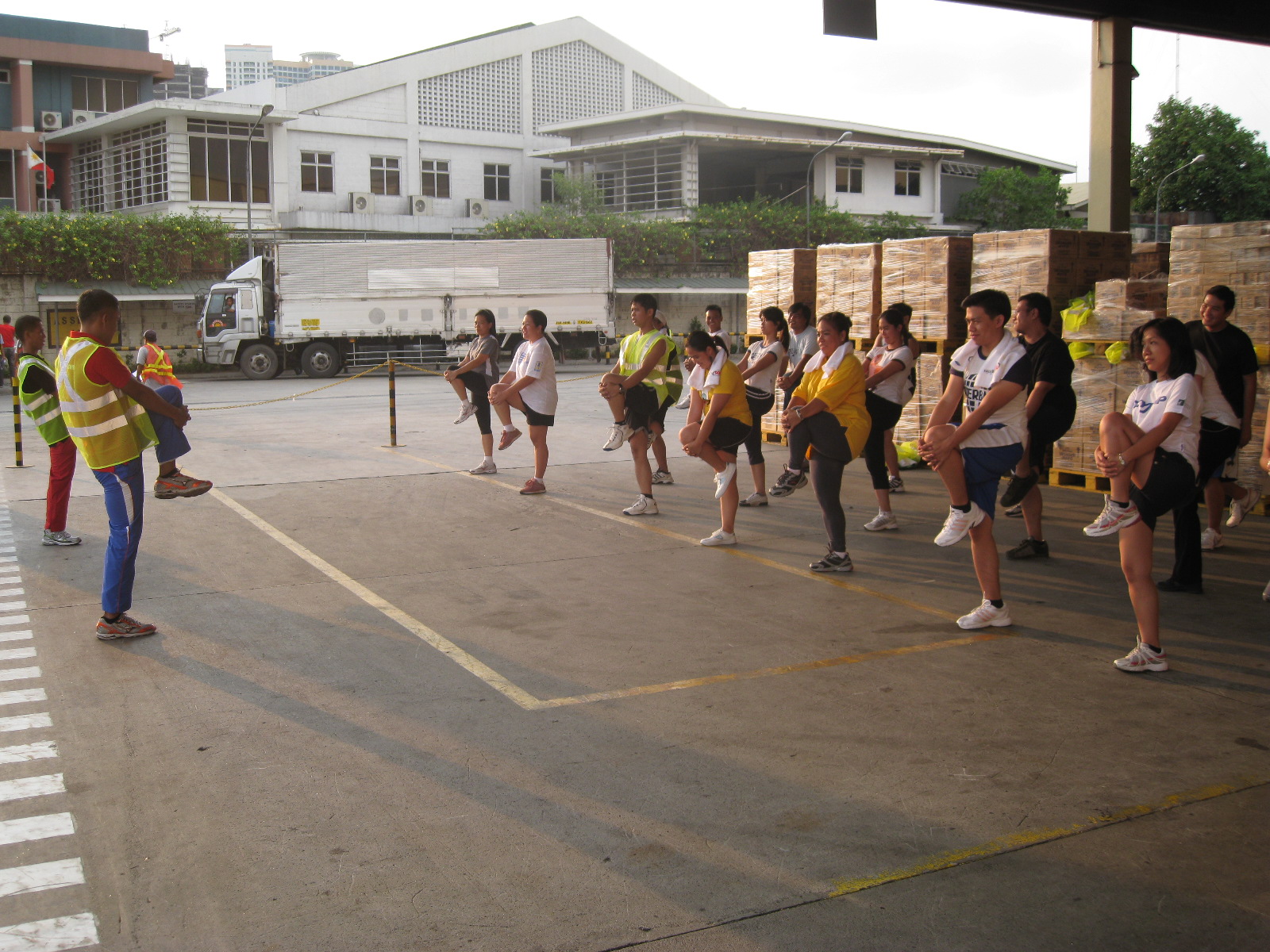
Group Picture With The Staff of IDS After The LectureThe Basic Running Clinic Was Conducted By The Elite Runners
The running clinic started with stretching exercises, then running “drills”, demonstration of running form, and the whole group did some group running at the parking area. The clinic was new to everybody and it was fun for the participants. The group was happy to experience the activity. I hope the running lecture and clinic were enough to “spark” the employees’ interest in running and ultimately, adhere to running as a way to embrace an active healthy lifestyle.
The running community welcomes the IDS Running Club! See you on the road!



 Bald Runner
You must be logged in to post a comment.