This project was conceived to help and guide the runners who applied to participate in the 2011 Bataan Death March 102K (BDM 102) Ultramarathon Race. The lectures consisted of experiences and tips of past Finishers of the race to include their Support Crew. These lectures were conducted twice a month at the Philippine Army Officers Clubhouse on Friday evenings, from 6:30 to 7:30.
First Lecture: History of BDM & History of the Race
The first lecture was conducted last October 1, 2010 at the Philippine Army Officers Clubhouse by the Race Director/Bald Runner with emphasis on the appreciation of the history and significance of the Bataan Death March as one of the infamous events in the history of warfare, specifically, the Second World War. It is in this event that human lives paid a heavy price on the dastardly acts perpetrated by the conquerors/invaders to the defeated defenders of Bataan. A total of almost 20,000 Filipino soldiers, militias, and American soldiers died on the said Death March from Mariveles, Bataan to San Fernando, Pampanga; “jampacked” like sardines in box carts on a train from San Fernando, Pampanga to Capas, Tarlac; and then ultimately marched/walked for another 11 kilometers until they reached the Camp O’Donnell as their Prisoner’s Concentration Camp. The march and the train trip covered an approximate distance of 151 kilometers. In three weeks, all the surrendered combined forces of the Philippines and the United States were finally brought to their final destination, Prisoners Concentration Camp at Camp O’Donnell.
In the advent on the popularity of ultramarathon races in other countries, I conceived the idea of transforming the Bataan Death March as an ultramarathon race where runners would compete with each other in order to commemorate the heroic deeds and the sacrifices offered by the casualties and survivors in the Bataan Death March in the name of patriotism and defence of the country from invaders. “Bataan Death March” is being used in other countries in marathon and ultramarathon races to commemorate the survivors of such countries but they are done not in the original place where history happened. While the Philippines is not commemorating such historical event as a competitive running event, an opportunity was established and created. Thus, BDM 102 was born as a sacred event to commemorate our past heroes and at the same time, a way to test one’s endurance and explore one’s physical and mental limits through running.
Second Lecture: Experience & “Tips” From A Top Finisher & Support Crew
Gene Olvis, 4th Place Finisher in the 2010 BDM 102 & 31st Finisher in the 2009 BDM 102, shared his training and preparation in his two editions of BDM 102. He shared also his experiences during these two editions of the race. He admitted that he was not 100% prepared on the first edition as he was not aware of any training program for an ultramarathon distance. Everything was an experiment for him to gain experience on the first edition. However, with the advice from a Filipino ultrarunner living in the US, Ben Gaetos, he was able to train properly for the second edition. In his preparation for the second edition, he started “hard” training at least 6 months before race with emphasis on “back-to-back” LSD runs during weekends. He also incorporated his hydration and nutrition strategies on these LSD runs which he followed strictly during race day. His commitment to his training program earned him a 4th Place in this year’s BDM 102. He also advised the audience to eat solid foods during the race which had been tested and eaten during his “back-to-back” LSD runs.
Bea Hernandez, wife of Mark Hernandez (a finisher of 2nd BDM 102) and consistent Support crew to his husband in PAU races, shared her experiences and suggestions on what the support crew has to do to ensure a successful finish to her runner and the runners to be supported. Planning and Preparation are the keys to a coordinated action between the support crew and the runner. Hydration and Nutrition Needs of the runner should be well-organized and properly marked as to what point/Km post these are handed to the runner. At least, two ice chests/coolers are needed for each runner—-one cooler for the hydration needs and one cooler for purely ice cubes/blocks. PATIENCE is the basic and most important virtue of a support crew. In order to fight BOREDOM while waiting for the runner to arrive at the pre-designated point/s, find time to enjoy the company of other support crew and to enjoy the scenery of the route. A digital camera to record/document the views around and the company of friends is a MUST. Lastly, a support crew must be, at least, a runner so that she/he knows the pain and/or “sufferings” of his/her runner. Above all, a good communication between the support crew and the runner produces a successful result in such ultra road race.
Third Lecture: Experiences & “Tips” From A BDM “Veteran” On Apparel & Others; Strengthening Exercises For Ultramarathon Runners.
Jonel Mendoza, a “veteran” of BDM 102 and PAU Races, gave a tip on the apparel highly recommended for the BDM 102. He discussed the necessity of wearing a runner’s cap with an extended cape to cover the nape; loose long-sleeved technical shirt; loose running shorts; running socks; and shoes. Highly suggested color of apparel is white as it reflects the heat from the sun, rather than absorb it as all the runners will be exposed to the heat of the sun on extended period, if not, the whole day. Appropriate pictures of runners taken during the BDM Races were presented as examples. What is commendable in Jonel’s presentation is his step-by-step “first-aid” solution for foot blisters and also preventive measures to take to avoid such “problems” during the race. In Jonel’s experience for the past 2 editions of BDM 102, he made a comparison of what had happened during his first finish and his successful and better performance on the 2nd edition. In short, he learned a lot of lessons on his first experience and corrected them with a better preparation and training on the second edition.
Enrico Tocol is also a “veteran” of two BDM 102 Races and being a Professional Physical Trainer of Gold’s Gym, he presented a scientific approach on strengthening program which could highly assist the runner to finish a rigorous ultramarathon race. It is a MUST for an ultrarunner to strengthen his legs, arms, back and core with appropriate exercises with the aid of free weights and weight machines. He even discussed the number of repetitions, number of sets and suggested weight for a runner to lift and do. What I remembered from his lecture was the ability for a runner to lift lighter weights with higher repetitions just enough to strengthen the muscles and not to make them bigger and more “buffed”. He also mentioned the importance of periodization where the ultimate goal is to finish an important race with good results, whether a marathon or ultramarathon race, with the rest of the road races leading to your goal should be used as evaluation/assessment if your training is in the right direction.
Fourth Lecture: Experiences & “Tips” From Me as a Runner and Rules & Regulations of the Race
My lecture was a detailed presentation of my training; experiences & “tips”; nutrition & hydration strategy; and apparel during the 1st BDM 102. My race strategy was to maintain an even pace of 6:30-7:30 minutes per kilometer and incorporate walking breaks when I feel my leg muscles are in pain or about to have muscle cramps. Mental attitude (to finish the race) and positive thinking play a very important role to keep on pushing oneself towards the finish line. The “warrior” attitude came into play for me to finish the race to be considered as a credible “Founder and Race Director” of this ultramarathon race. Most of these detailed experiences were fully documented in my post in this blog after I finished the 1st BDM 102 last April 5, 2009. Rules and Regulations are the same with that of the previous editions, however, I emphasized again on the strict adherence to the Integrity of the Race.
Fifth & Last Lecture: Experiences & “Tips” From Atty Jon Lacanlale On His BDM 102 Races & Successful Finish at The Great North Walk (GNW) 100-Mile Endurance Run in Sydney, Australia last November 13-14, 2010.
The 5th and last BDM 102 lecture will be held this coming Friday (tomorrow), December 3, 2010 at the Philippine Army Officers Clubhouse at 6:30 PM. Applicants & Invited Runners to the BDM 102 and other Ultrarunners are invited to attend this lecture.
1. Six weeks before I retired from the military service, I visited the exact place where former President Ramon Magsaysay’s plane crashed on the early morning of March 17, 1957. If you don’t know your history, you can search “Mt Manunggal” in my blog and read my story about this visit to the said place.
2. Being the Bald Runner after retirement from the service, I had plans of visiting again to this place and thought of coming up with road/trail race to commemorate the death of our former President Magsaysay as I wanted my runs to be connected with the history of our country. In one of our conversations with my friend Jonel Mendoza, he asked me a place where a good ultra run route in Cebu which can be used in the future and I answered him that Mt Manunggal Crash Site would be highly recommended because of its significance in our history. And the rest is history.
Starting Area of the Race
3. Since I don’t announce in my blog where my next race is, the Race Organizers were surprised to see me in Cebu/Ayala Center on the night before the race. I was given the opportunity by Jonel aka FrontRunner Magazine to speak before the runners on their magazine’s running clinic. It was a nice experience seeing a lot of runners from Cebu City during the said clinic. It really shows that the running community in cities outside Metro Manila is growing in numbers by “leaps and bounds”.
4. Most of the runners in the 1st Cebu Ultramarathon Race were already at the assembly area at 4:00 AM as most of them “camped” in the area. I could see different moods on the faces of the runners which is very common among runners who are about to experience their first ultramarathon run. I was able to see some of the “usual suspects” in ultra runs in Luzon and I had a brief chat with them. I know, most of them came here to challenge the route. However, I came here to test and evaluate my training.
5. After a short program and photo-ops at the “bust monument” of President Magsaysay, the race started at 5:52 AM with 180+ starters. The faster and “excited” runners went ahead from the rest of the group as they forced themselves to attack the uphill climbs and downhill parts of the route that goes to the National Highway. I think I was on the last half of the whole group of starters on the first 3 kilometers of the run.
6. In a very challenging route which has steep uphills and fast downhills, the race strategy in an ultra run (50K and above) is to be able to apply “brisk walking” on the uphills, fast recovery run on the downhills, and steady run on the plain parts of the route. So, in most parts of the route, I consistently applied this strategy making sure that I hydrate myself regularly (every 2-3K) and eat solid foods every 5 -7 kilometers. My solid foods consisted of Nature Valley Sports Bar, fresh banana, fresh apple, Cloud 9 Chocolate Bites, and boiled sweet corn (bought along the way). I think most of the runners that I passed on the uphills were able to see me with my “brisk walking” form! I am highly recommending that “form” as I learned it from my experience at the Marin Headlands 50-Mile Trail Run.
Looking Good or Feeling The Pain & Suffering?
7. The last 20K of the race was a “battle of will and determination” as the heat of the sun was upon us and I’ve been running and brisk walking for almost 4 hours. The more that I have to bring out those “tips” and lessons learned that I gathered in my past ultraruns. At this point, everything was a “mind game” and consistency of doing what I planned for during my training was the focus in this race. I did not veered away from my race strategy most especially on my hydration/nutrition. On my last 15K, I started to take “salt tablets” and drowned them in my throat with ice cold Mountain Dew or Classic Coke. This gave me more strength and consistency with my pacing in my runs and brisk walking!
Few Steps Before The Finish Line
8. I finally reached the Finish Line, in front of the Cebu Provincial Capitol Building, with a time of 6:42:20 hours (Official Time). I finished with a ranking of #38 out of the 162 finishers. Based from my GF 305 data, the total distance is 50.23K; an average pace was 8:00 minutes per kilometer; a total ascent of 1,860 meters and a total descent of 2,695 meters.
9. I consider this race as a mountain trail run because of the profile/elevation of the whole course. I am satisfied with the result of my training since I finished the 1st CAMSUR Marathon wherein I started to incorporate more intensity to my training runs and making my selected weekend races as my performance evaluation/test runs. In conclusion, I was able to attain what I have aimed for in this ultra run.
10. And talking about going “hardcore” and going up to a higher level of ultrarunning, I advise that for those who have future plans in joining ultra trail runs in the “WEST”, I highly recommend you to follow and train for the following finishing times in the following ultra distances races:
50K—-sub-7 hours
50 miles/80K—-sub-11 hours
100K—–sub-14 hours
100 miles/160K—-sub-30 hours
11. Thanks, Jonel, FrontRunner Magazine, CERC & Cebu Runners, Volunteers, and the CENTCOM, AFP Officers & Staff for the experience and hospitality. Congratulations to all the Finishers and Race Organizers for a job well done!
(Note: Thanks for those who posted the above pictures at Facebook)
1. This is my first official 32K Run. I treated this run as my Evaluation Run after trying to put more intensity to my training runs since after a slow finish at the 1st CAMSUR Marathon. The plan was to run an average pace of not slower than 5:30 mins per kilometer for the whole race. With this plan in mind, I should be able to finish the race in exactly 3 hours with some cushion of 4 minutes for the uphills and slower pace in approaching the Aid/Water Stations.
2. I memorized the target split times for my 10K and half-marathon which I would like to attain during the course of race. I should be able reach the Km #10 mark in 55:56 minutes and then 1:57:59 hours at the half-marathon point (Km #21). I started at a slow pace at 5:45 to 5:49 mins per km on the first 2 kilometers until I was able to pass the Km #3 mark. From there I slowly increased my pace up to 5:35 mpk. I was happy to glance at my watch as I crossed the Km #10 mark in 56 minutes—4 seconds slower from the target split time!
On My Way Back To The Finish Line (Photo Courtesy of Bea Hernandez)
3. Running from Km #10 up to Km #21 was so insignificant that I was not focused to what I’ve been passing along the way. This is the tendency if you are running on a familiar ground for the past 3 years where you are only concerned on your time and on your running form. Translation: Running at the Fort-Kalayaan-Lawton-Bayani is already boring!!! I reached the half-marathon point at 1:56:18 hours and I was almost 2 minutes faster than my target split time for the said distance. From this point, I knew already that I could finish the race better than what I have planned for. I just have to maintain an average pace of 5:30 mpk for the remaining 11 kilometers to have a sub-3-hour finish.
4. From Km 21 point onwards, my watch was registering an average pace of 5:20-5:23 mpk and I felt I was still strong. However, I had to make a 10-second “brisk” walk as I approached the Water Station on my last 2 kilometers before the Finish Line due to an impending “cramps” on my left calf muscle. I was a good decision as the pain slowly disappeared when I started to walk. I regained my running form as I continued my run but I knew I had slowed down a little as I tried to manage the coming of my leg “cramps”. I had to drink lots of sports drinks as I passed on the last few Water Stations.
Near The Finish Line (Photo Courtesy of John Jeffrey Avellanosa)
5. Finally, I was able to cross the Finish Line in 2:53:38 hours (based from my GF 305) and was able to register an average pace of 5:25 minutes per kilometer! Mission accomplished! I was satisfied with my performance and I’ve started to bring back my speed in my road races after following the Jack Daniel’s Running Formula. My MILO’s Half-Marathon performance last November 7 with a time of 1:47:45 hours (average pace of 5:07 mpk) would also attest that I am on the right training.
6. My fast time was due to the great improvements of Coach Rio’s Race Management in decongesting of runners in narrow parts of the route; efficient marshals & good traffic management; long tables and lots of water cups; bananas; and sports drinks for the runners. Familiarity of the route is also a big factor for a faster time. Above all, the early start of the race, cooler temperature, and the overcast sky contributed much on my better performance in this race. Congrats, Coach Rio for a perfect race!
I really don’t know if you have seen the Billboard wishing our National Athletes to the on-going ASIAN Games displayed along the NLEX Viaduct (south bound). It has a banner that states, “Quest For Glory”. How I wish that the said Billboard could have been displayed along EDSA. At present, we have garnered two (2) gold medals for Billiards and Bowling. With Athletics Events to start tomorrow, I hope our team Philippines would be able to add more gold medals on the track and field events.
Is it true that our National Dragon Boat Team was not allowed to join the Team Philippines in the ASIAN Games because of an allegation of a top POC official that our team is using sports-banned substances or doping? I wonder if our athletes were clinically tested to determine if the allegation is true. Our boys, being consistently winning world competitions, missed an opportunity to win Gold Medals for the Dragon Boat events as it went to the Indonesian Dragon Boat Team. I hope this is not a case of the so-called, “crab mentality” among us. “Sayang yong tatlong Gold Medals!” Continue reading “Thinking Aloud”→
Congratulations to the Winners and Finishers! And to all the Support Crew who were the “movers/pushers & inspiration” of the runners to cross the Finish Line! To those who finished their first ultra run, PAU welcomes you to the ultrarunning community.
This is a solo race. The race will start at 5:00 AM of Sunday, November 14, 2010 in front of the People’s Park in Tagaytay City. The Finish Line of the race is INSIDE Plaza De Roxas in Nasugbu, Bataan. Plaza De Roxas is the Municipal Public Park located in front of the Nasugbu Municipal Hall. (Note: Runners have to pass in front of the Jollibee and then turn right at the next street and then enter at the Gate of Plaza De Roxas.)
Runners are allowed to have their support vehicle & crew but they are not allowed to have pacers. (Note: Pacers should be registered runners). Support Vehicle should “leap-frog” from their runner/s and “shadowing” the runner is strictly not allowed. There is no prescribed number of runners to be supported for each support vehicle.
Runners’ Bib should be pinned and displayed in front of the runner’s apparel.
Runners are highly encouraged to bring and wear with them their respective hydration system/belt during the race. We have a limited number of water stations/aid stations along the route.
The Water/Aid Station are located at the Km #20 and Km #40. These stations will also serve as the runners’ drop bag stations. Runners without support vehicles are encouraged to prepare their drop bags and they will be brought to these Aid Stations. Drop Bags should be properly marked with the name of the runner, race bib #, and Km # point where the bags will be “dropped”. (Note: As the race will progress, we will also place water stations at Km # 15, #30, & 45)
Cut-off time is eight (8) hours.
Runners are encouraged to stay on the left side of the road, facing the incoming traffic. Some parts of the route are narrow and runners should always be attentive and vigilant of vehicles, in front and at their back.
Runners are also encouraged to run in single file as the road will be busy with the traffic of vehicles.
Ipods, MP3s, and “wires” are allowed. However, users should be attentive with their surroundings.
As in the past PAU races, every finisher will receive individual memento/trophy, certificate of finish, and Finisher’s T-Shirt. Results of this race will be included in the rating/ranking among PAU runners for 2010.
Integrity of the Race shall be upheld and respected.
The spirit of ultra running is highly encouraged. Finish the race, encourage/help one another, develop friendship before, during & after the race, and have an ULTRA FUN!
I got qualified for the MILO Marathon FINALS to be held on December 12, 2010.
I registered for the MILO Provincial Qualifying Half-Marathon Race in Tarlac City which was scheduled yesterday, Sunday, November 7, 2010. My plan was to use the MILO Half-Marathon as my Performance Evaluation Test for the training adjustments I’ve made after my 4:39+ hours Marathon Finish at the CAMSUR Marathon last September 24th.
Training Adjustments
After comparing my past marathon times for the past years, I was able to make some conclusions and observations about some flaws in my training since I’ve started doing ultramarathon races. I decided to return to my training workouts during the year 2008 and strictly followed Jack Daniels Running Formula. One of the salient points in my adjustments is to make sure that my “Easy Runs” should have an average pace of 5:45 minutes per kilometer and gradually decreasing it by 3-5 minutes every week until I was able to reach 5:12 mins/km pace few days before race day. Obviously, my tempo runs’ and interval training average paces had been adjusted, too! My tempo runs would average to 4:55-5:10 mins/km pace through my regular 5K tempo run repeats.
Results
After six weeks of consistent training and being focused to my average pace in my workouts, I was able to finish the MILO Half-Marathon in 1:47:47 hours (unofficial) with an average pace of 5:07 mins/km. I still have 12:13 minutes to spare within my qualifying time of 2 hours for the said distance. I think I am in the right track again with my training to become faster and stronger in my future races. I was satisfied with the result of my Performance Evaluation Test on this race.
Hands On
I was surprised to see that there were a lot of runners in the Tarlac City MILO Qualifying Leg. My ultra running friends were also there to include some of the BDM 102 “veterans”. But what made me amazed and impressed was the presence of MILO/Nestle, Phils Executives/Managers who were directly manning the Start/Finish Area making sure that control and orderliness were being followed. MILO’s Andrew Neri and RACE’s Rudy Biscocho were there to see to it that the schedule of activities was being followed on the dot. At the turn-around point (10.5K), I saw MILO’s Pat Goc-ong who was personally handing out ice-cold Gatorade drinks to every runner that approached him. He even cheered each runner! I could not believe my eyes seeing these top executives of MILO/Nestle, Phils., doing such stuffs to the runners! To MILO/Nestle, Phils., my congratulations for another successful MILO event!
Finally
I have to admit that this is my first time to be a “legitimate” MILO Marathon FINALS qualifier. In the past, I failed to qualify as I joined the Full Marathon Qualifying Races and failed also when I tried to qualify in the Half-Marathon which was held in my hometown, Laoag City in 2008. It was an accomplishment to be finally qualified to the most prestigious marathon race in the country.
Congratulations to all the Qualifiers!
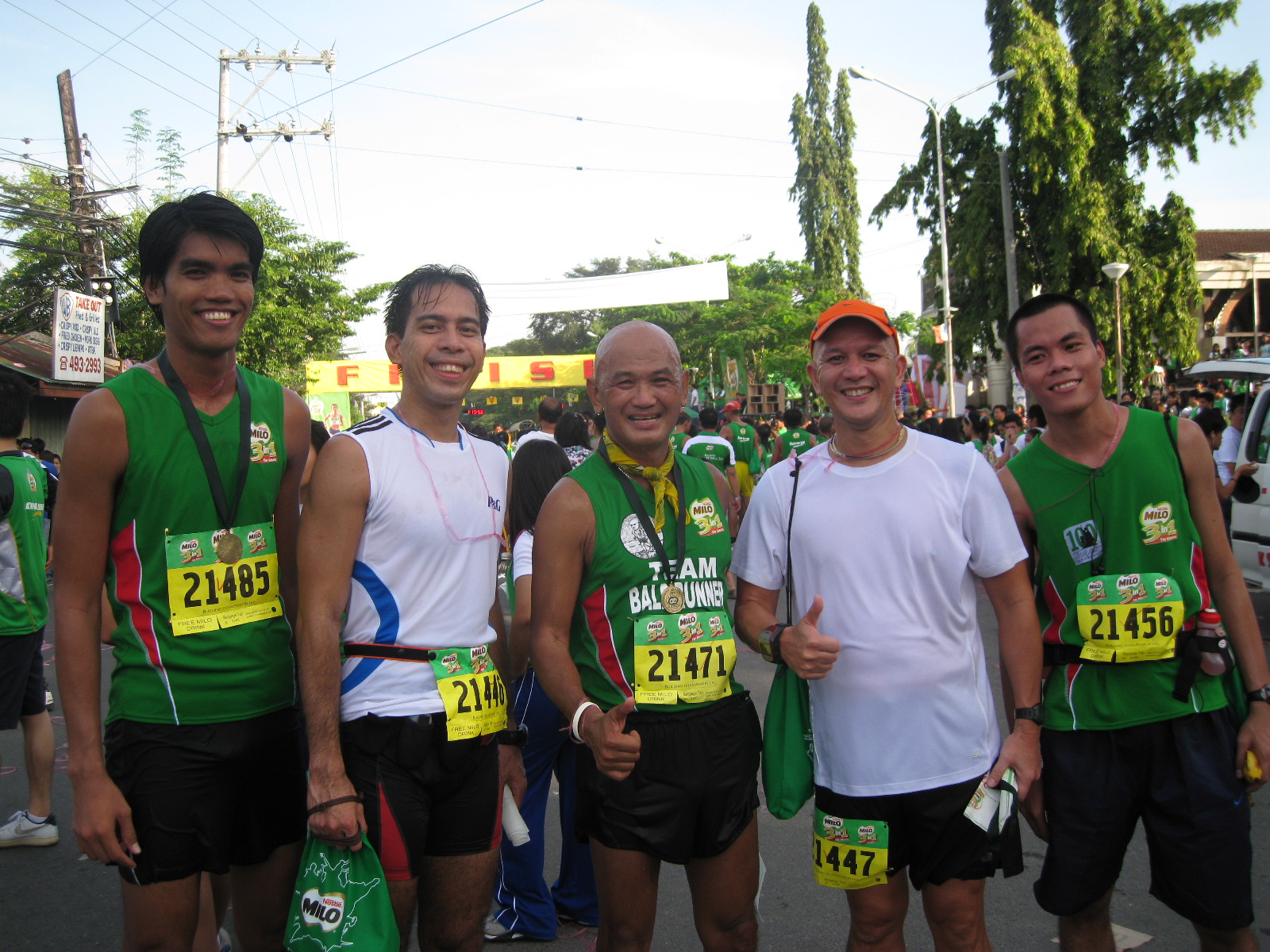
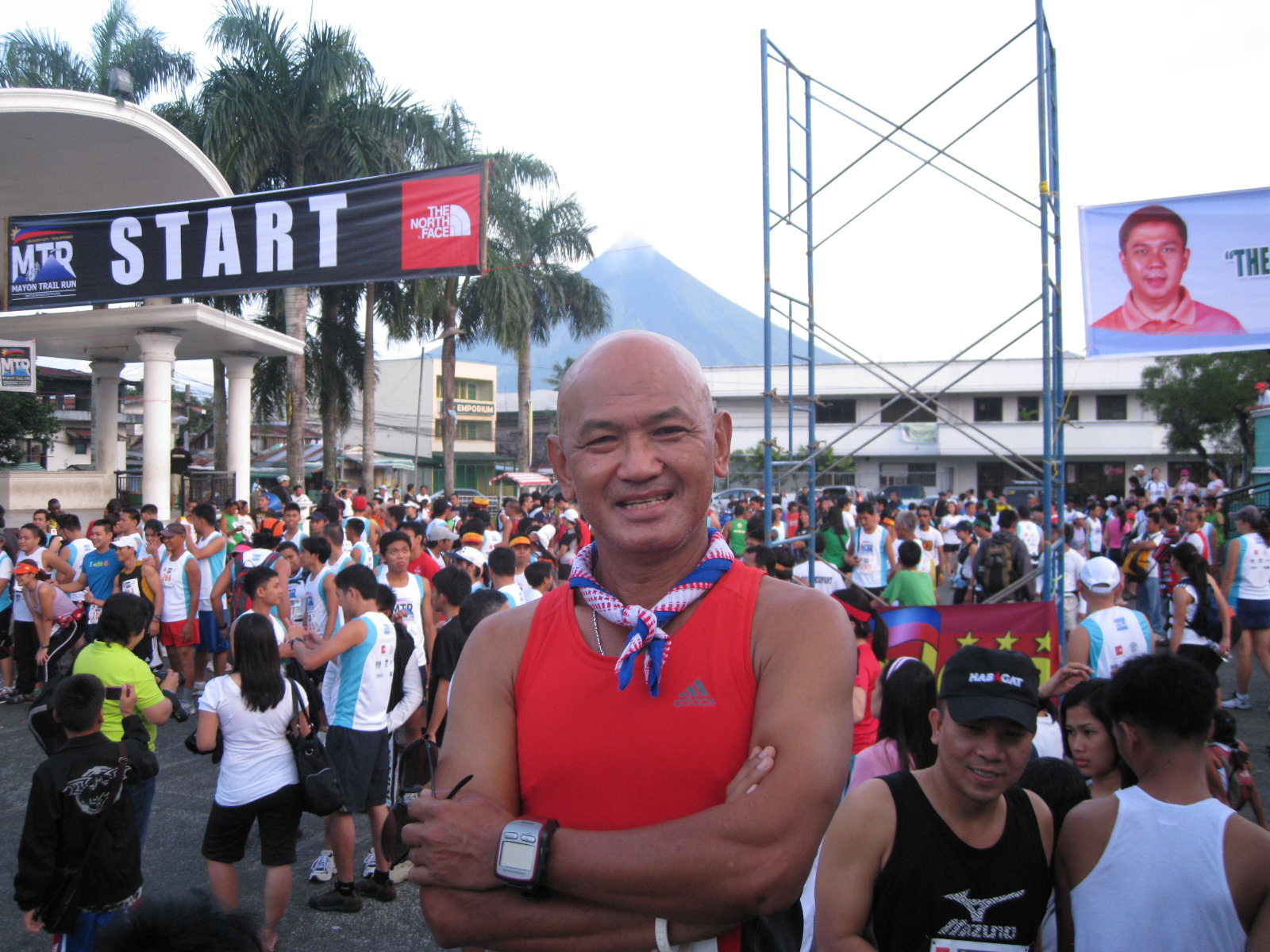
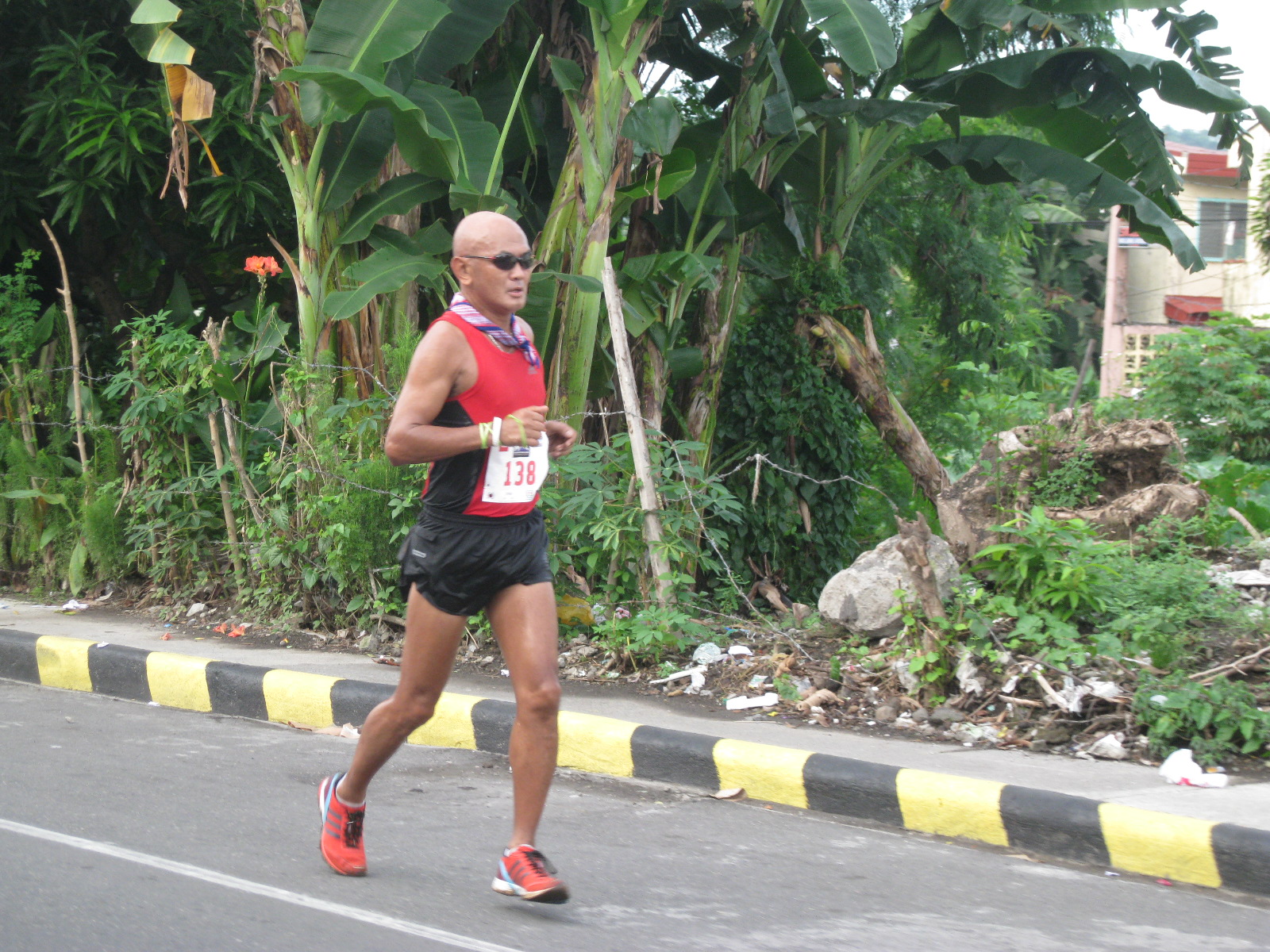
Before The Race With MILO/BR SingletBefore Reaching The Finish LineThe "Usual Suspects" (The Young & Old Ones)
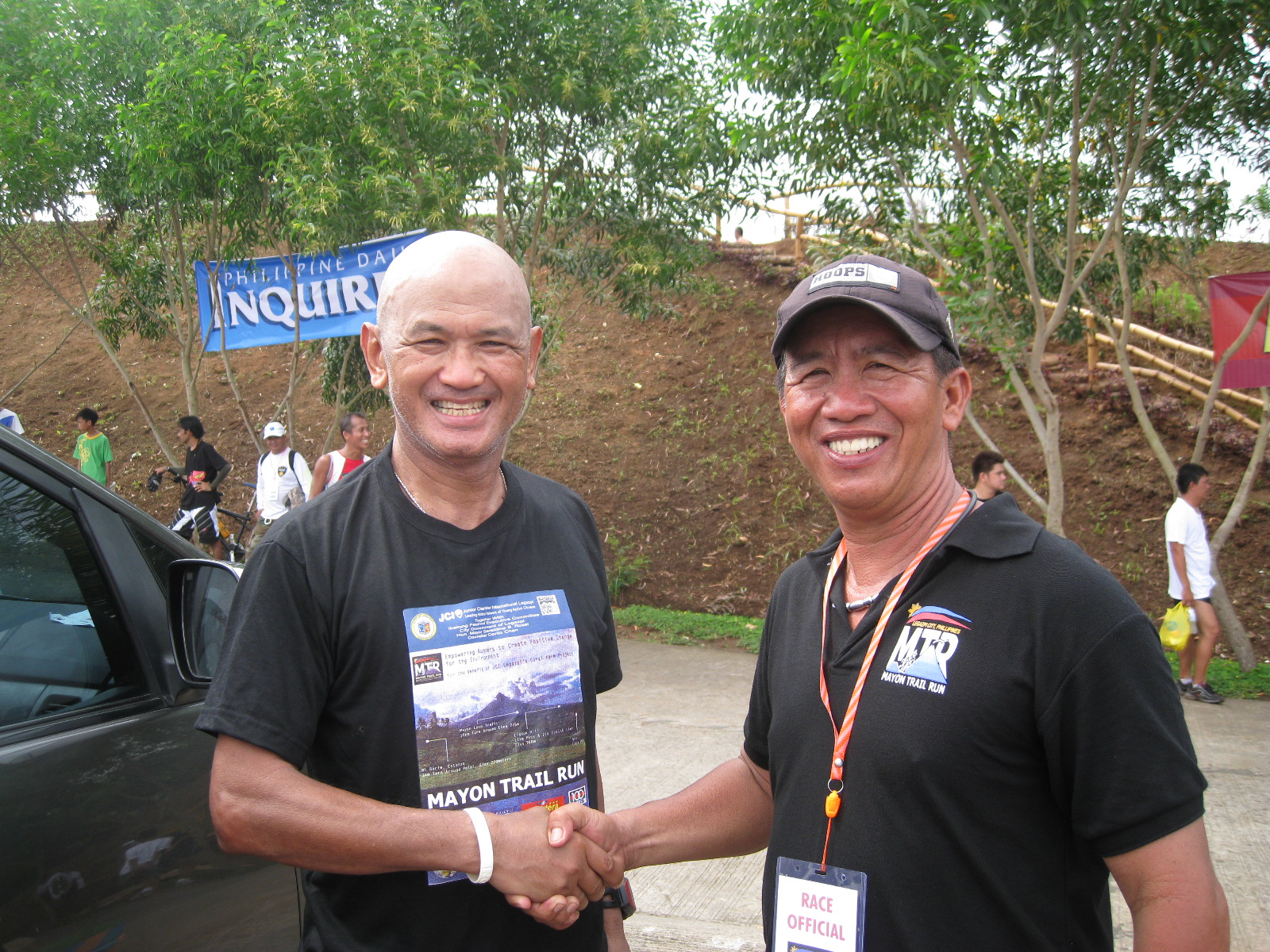
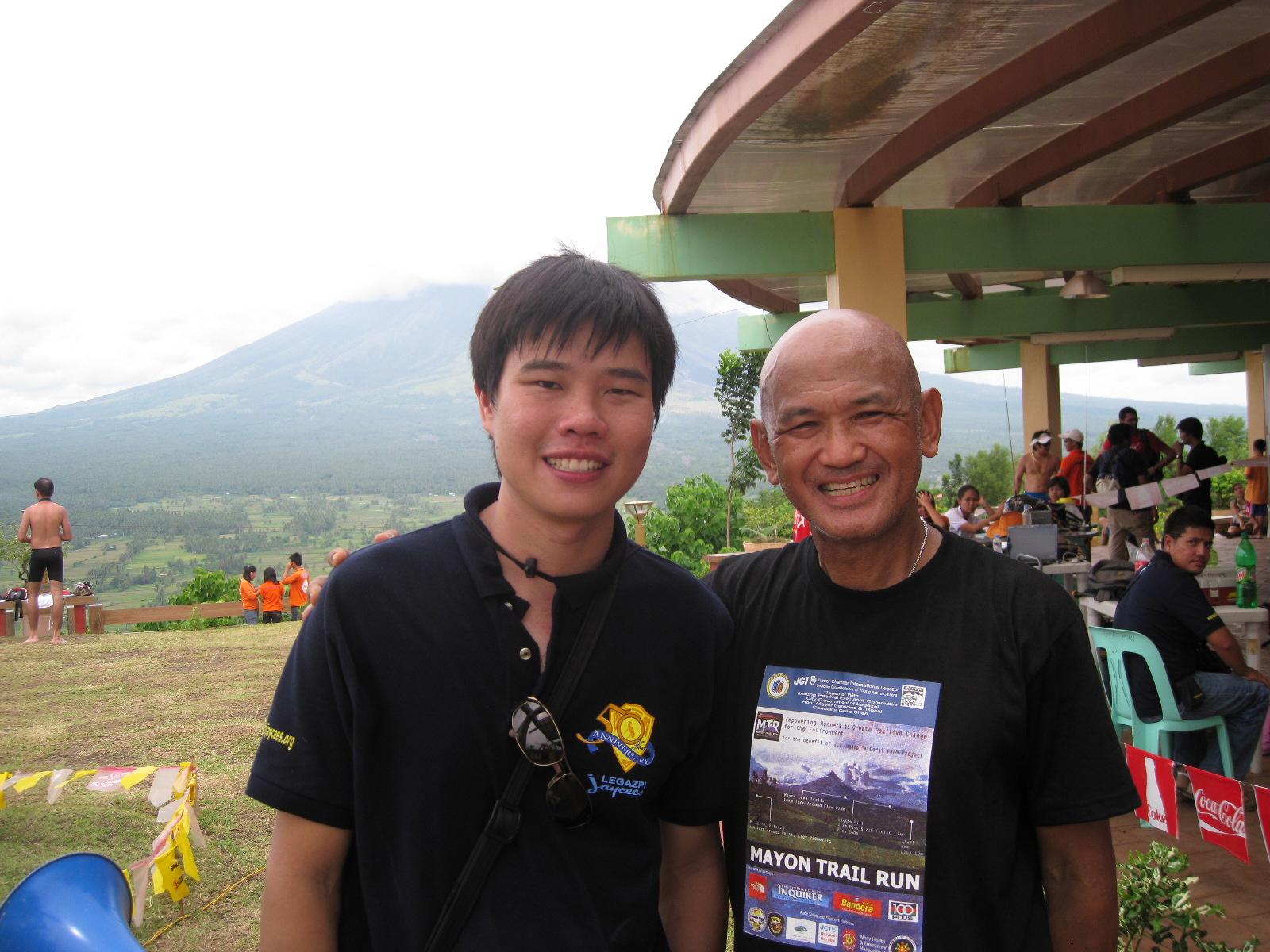
For the past three years, my Elite Team and I had developed a very good relationship with the Team Jaycees of Legazpi City through Yves Yu, the Race Director of the Mt Mayon Trail Run (MTR). Yves is also a runner-blogger who is called the “Be Cool Runner” and one of the avid followers of this blog. It is always a “must” for the Elite Team Bald Runner to join this running event in Legazpi as a part of their City Fiesta and Ibalon Festival.
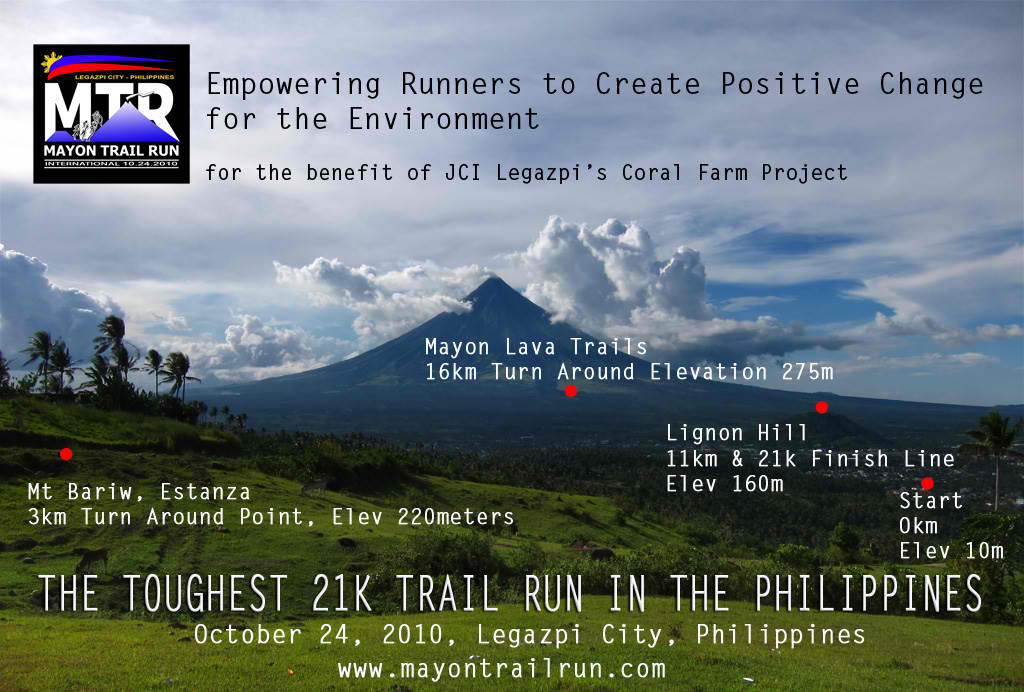
Mayon Trail Run Ads
The Elite Team Bald Runner and I joined the 1st edition of this event in 2008 and I had already a feeling that this trail running event will have its potentials to be a famous one in the Bicol Region. The 1st edition was very challenging despite the fact that it lacked the distance for a half-marathon distance as the race was short by 4-5 kilometers. However, the second edition came out with a vengeance, so to speak, as the Race Organizers had added more challenging route to make the race as a half-marathon distance. I did not run the 2nd edition but my elite athletes had nice stories about the race and description of the added places where the runners would pass through. But the Race Organizer is not yet contented for this year’s edition as they added more “surprises” for the runners. I will explain this matter later.
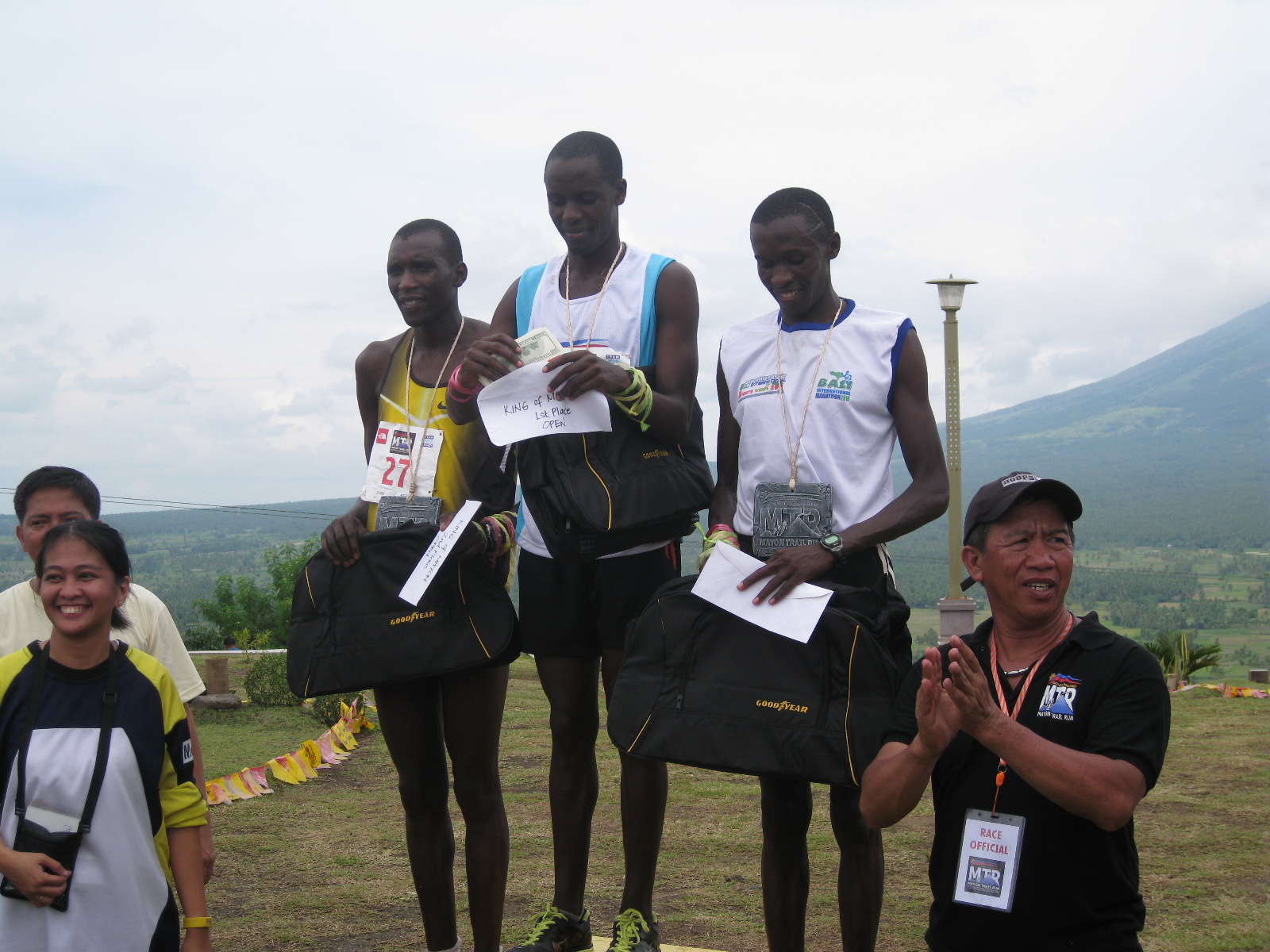
The Elite Team Bald Runner had been consistently dubbed as the “King of MTR” for the past two editions of the race and it is for this reason that the team has to defend its title by joining in this year’s edition. It is also for the same reason that we believe in the advocacy of Yves Yu to promote running and tourism for the Mt Mayon Volcano and its city of Legazpi. MTR is our way of supporting running events being held outside Metro Manila.
Toughest 21K Run In The Philippines
1. The 3rd MTR had attained its highest record of runners for the 21K to 240+ runners from about 80+ runners in 2008 and another 160+ in 2009. The registration fee is very cheap, P 500, and the Cash Prizes are very enticing to every elite runner. For this year, the Race Organizers had to split the past $2,000 Overall Winner’s Top Prize into $1,000 for the Top Male and another $1,000 for the Top Female. And as usual, the top 50 overall finishers receive some cash prizes. It was not “tough” to register in this race as a short call to Yves gave us reserved slots for the team.
2. Travelling and going out to Legazpi City with my staff and my elite team entail a lot of logistics and expenses. But with the help and support of friends and my former subordinate officers when I was still in the active service, we were able to minimize our expenses. This is one of the reasons why this race is a “tough” one to attend to—you have to save some money or program this activity so that you can anticipate and plan for the expenses to be incurred. During the first edition, we spent a lot of our resources as we stayed in one of the hotels for 2-3 days without any support from from any sponsor. On the second edition, a big help from one of our running friends, Mesh Villanueva, who is from Daraga, Albay provided us the much-needed accommodation for the team during its stay in the place.
3. For this year’s edition, the team stayed inside Camp Simeon Ola where the 5th RCDG of the Philippine Army is located. The Commander, Colonel Nestor Porlucas, had been one of my Battallion Commanders when I was the Division Commander in the Visayas and he offered his place/office as our “transient facility”. The place is nice and conducive for us to cook our own food and at the same time enjoy a secured and free from noise pollution place.
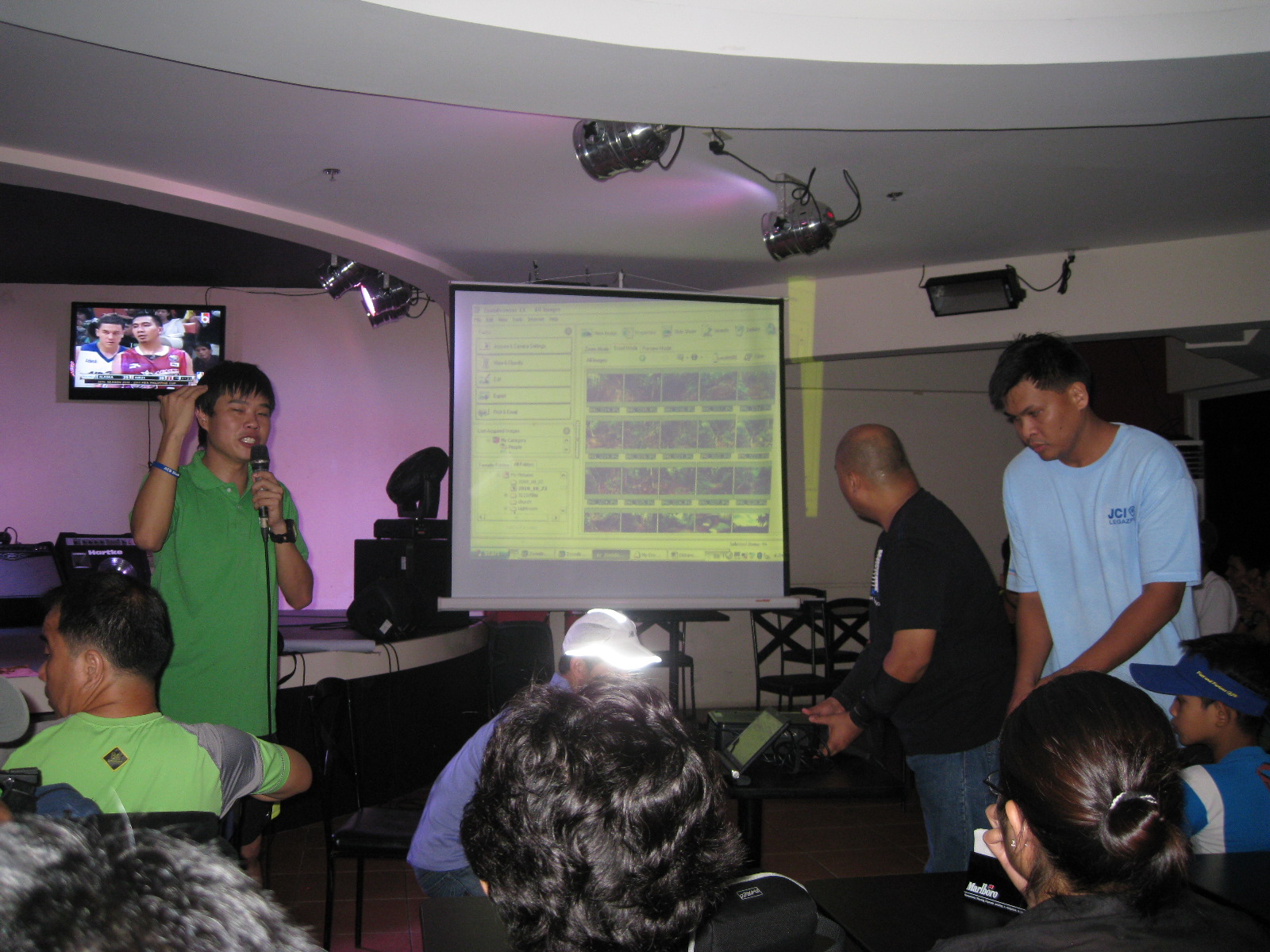
4. The hospitality of the people and the Race Organizers was overwhelming. All the runners were treated with a FREE Carboloading Party with lots of “Bicol Express” during the Race Briefing which was held at the famous Embarcadero, the latest mall/commercial establishment along the Legazpi Port. Yves Yu was able to present a detailed briefing about the race and the description of the route. The pictures presented were “scary” for runners who are “newbies” to this trail race as muddy and slippery trails, caves, rocks to climb, stairs, lahar (sand), lava rocks, river, wet trails, and almost 90 degrees trail, and freshly-made single track trails inside a forest were presented. Hydration/Aid Stations were evenly distributed along the route. In summary, there are four (4) peaks/summits to reach in order to finish the race.
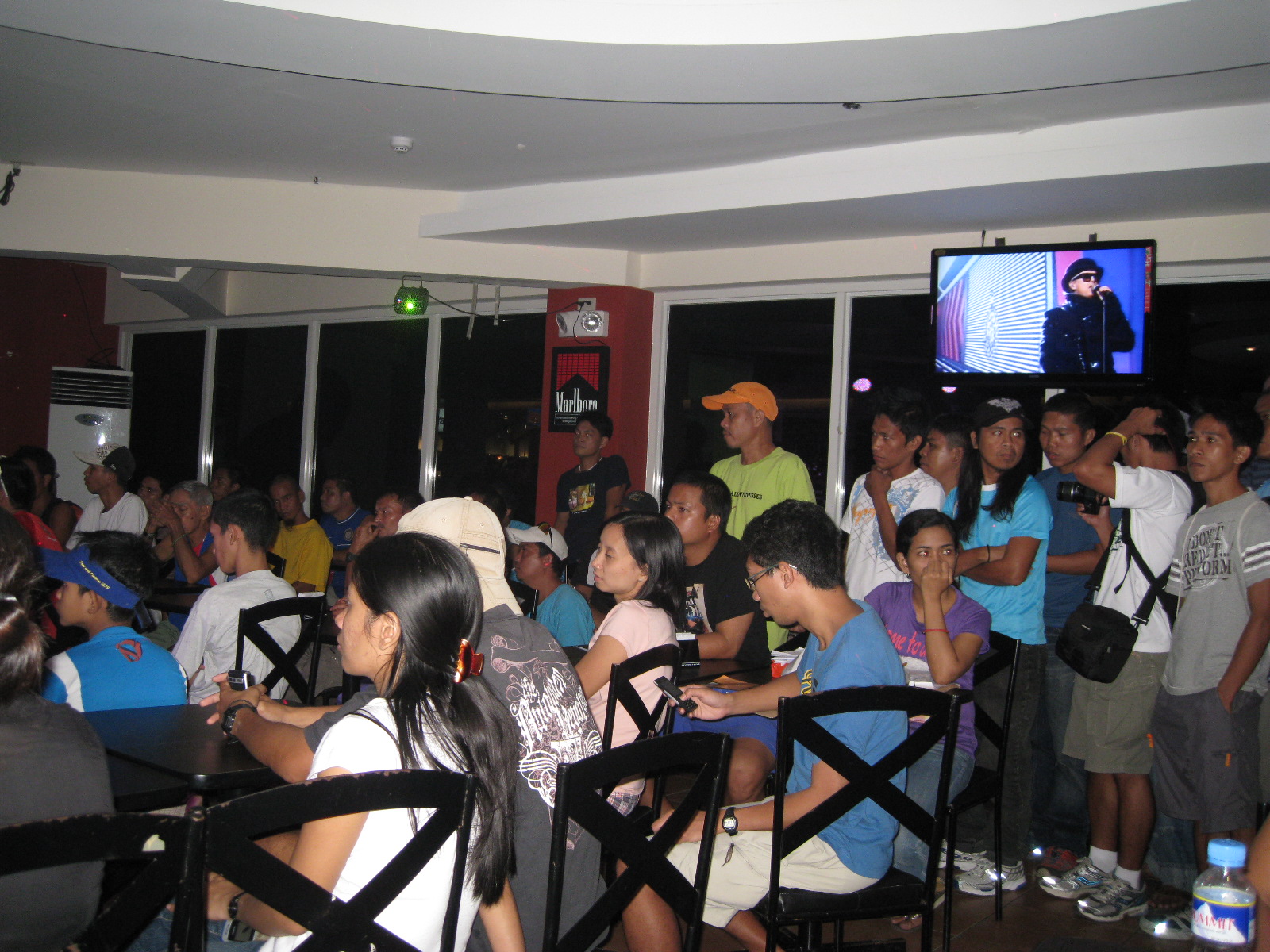
Briefing & CLP @ Padi's Point, Embarcadero, Legazpi CityExcited Crowd During The Briefing & CLP
Details of the Race
I have to describe the details of this race (as seen with my own eyes and through my personal experience) for the benefit of those runners who would like to experience what is like to finish the “toughest half-marathon race in the country” in its future editions. Let this be a “guide” and “journal” for everybody. This will be a very detailed account of my run last Sunday.
Penaranda Park
Penaranda Park had been always the Starting Area of the MTR. It is bounded by the City Hall of Legazpi City; Provincial Capitol of Albay; and the Cathedral of Albay. The place has a Grandstand/Elevated Stage; some concrete bleachers; comfort rooms; and an ample space for joggers and walkers.
My elite team and I arrived at the Penaranda Park at 5:15 AM and I was able to observe that there are already runners doing their stretching and warm-up exercises around the park. The weather was fine and there were no clouds in the sky. Mt Mayon Volcano was very clear from any clouds and its form and shape was majestic. The weather was cooperative for another nice staging of the yearly Mt Mayon Trail Run. In a few minutes, more runners arrived at the place and I saw familiar faces among the crowd. As I did my warm-up jogs, I was able to see more elite local runners coming from Manila, my loyal friends and runners of my PAU races, the top “Lady Warriors” of BDM 102 and BDM veterans, FB friends, avid readers & visitors of this blog, Kenyan runners, and some runners from other Western countries. I was impressed with the crowd as the number of runners to this yearly event is growing in numbers. I am not surprised if the 240+ runners who joined this year’s edition will be doubled by next year.
The start of the race was reset to 6:00 AM from the stated 5:30 AM start on the event’s ads and it was a good decision on the part of the Race Organizers as some parts of the route were not fully visible with an earlier start. I could feel the excitement of every runner as the starting time got nearer. While waiting for the race to start, I had the time to talk to some of the runners and have photo-ops with them. Talking/Chatting with the runners is one way to relax oneself before the start of the race. Basically, I thought of being conservative in this race and just play along or take my time to have fun and enjoy the race. I did not have any targets or goals for this race. I just wanted to evaluate my performance and need to know if my training for my future races is on track. However, the bigger picture is for me to see the performance of my elite team and at the same time be seen by them along the route.
It is common that the main reason why the start of every event is delayed is due to the fact that the arrival of the Guest of Honor is always late, most especially if he/she is a politician. The Guest of Honor is the one who will fire the Starting Gun! It is customary that the local executive, City Mayor, is the one who should be firing the gun. However, it was already 6:00 AM when the word arrived at the Starting Line that the City Mayor will be no longer coming. Instead of standing along with the other runners at the corral, I decided to sit down on the concrete bleacher at the side of the corral while waiting for the race to start. A simple program started with a prayer, and it was followed with a welcome remarks from the Chairman of the MTR, Councilor Celoy Chan. Brief additional instructions were delivered by Yves Yu, Race Director and the race was ready to go. After a countdown from 10 to 0, the race started and we were off. It was my first time to experience starting a race from a sitting position, instead of the usual standing position with the rest of the runners. It was the most relaxing experience to start a race.
At The Penaranda Park Before The Start Of The Race
Km 0 to Km 1
The front runners darted to the National Road and turned right towards the Cathedral. As they approached the Cathedral, the runners were led to a paved road as they turned left from the National Highway. This paved road will lead all the runners to the peak of Mt Bariw at Barangay Estanza. I started at the middle of the pack with a very slow pace as I saw most of the runners speeding up in front as if they are going to race a 5K run. I was smiling as I saw most of the runners did a sprint from the starting line. I maintained my slow pace as I was trying to warm-up for the race and stayed on the left edge of the road with much space around me. Suddenly, a lady runner stopped in front of me and tied her shoelaces! WTF! It was good I was quick to evade her. It was a near accident which could hurt her or hurt me if I collided with her. I just kept my cool and maintained my stride. It made me think that this lady runner made a mistake of choosing the 21K as her race. This is a sign of a “newbie” runner. In one of the Rules of Running, it states that “a runner should remember to “double knot” his/her shoelaces before the start of the race”.
The first kilometer is paved and very flat. This enticed most of the runners to be fast as we were released from the starting line. After a few turns, the route started to be more interesting and the first kilometer was history.
Km 1 to Km 3
This is where the signature of the race as the “toughest 21K Run” started. This part of the route started to go uphill gradually. The next two kilometers up to the peak of Mt Bariw made most of the front runners to slow down as most of them were already slowly jogging or walking. I maintained my slow pace while “shuffling” but I consistently run up to the peak of the mountain as the road was winding and there are small parts which are flat. This part of the route was the place where I was able to overtake most of the runners who darted fast from the Starting Line. I think a hundred of them were overtaken on the first uphill climb. This part of the course separated the competitive ones from the recreational runners. At Km 2, I was able to see the back of Cesar Abarientos and slowly kept in pace with him up to the peak of the mountain. As Cesar and I reached the peak of the mountain, we were able to reach an elevation of 220 meters. This is the turn-around point where each runner would receive his/her 1st straw necklace.
Km 3 to Km 5
After receiving the 1st straw necklace which is color-coded, the runner was led to a single track trail on the side of the mountain which was all downhill. At first, you could see grasses and then follow a single track trail that appears to be made by the flow of rainfall or flow of water from the peak of the mountain. The trail was slippery but my Adidas Adizero Adios (with much caution!) was able to pass the test of running along a slippery and muddy single track trail. The trail track was more direct/straight towards the foot of the mountain than the winding & uphill paved road towards the peak. There were lots of foot brakes as I managed to run a steeper downhill terrain without falling on my knees or butt. The trail led us to the backyards of some houses on the side of the mountain and finally reached the foot of the mountain where it led us to a paved road that connects to more houses. This is where people made “high fives” and cheer us as we passed them. Cesar was nowhere to be seen as he overtook me once we went downhill from the turn-around point. I think 3-4 runners overtook me on the downhill portion of this mountain. However, I was able to catch up with them and tailed them once we reached the populated area. As we reached the flatter section, the street led us back to the Penaranda Park. As I passed the Capitol Building of the province, the first 5 kilometers of the race is done. From the start up to this point, I was carrying a small bottle filled with water as my hydration system.
Km 5 to Km 7
This part of the route is a paved road and very flat. I placed my small bottle of water on my back tighly tucked with my Racing Ready Running Shorts. The pockets of my shorts were filled with one sports bar and one sports gels ( I took one sports gel before the start of the race!). With my hands free from the bottle, I started to swing my arms with faster frequency and I was able to run at a faster pace. On this flat part of the route, I was able to overtake another three runners but after a kilometer, I was overtaken by a smaller and younger runner. Before I reached the vicinity of Legazpi Airport, I was able to overtake Cesar as he started to slow down. From the Airport, I could see more of the slower 5K runners approaching another hill which is the dreaded Lingnon Hill but I was already running alone with the rest of the 21K runners. After a few turns, I passed by the 5th FSU Compound of the Philippine Army and with another left turn, I was on my way to the foot of Lingnon Hill. This is where the RACE and fun starts as this hill is another signature that this race is the “toughest” to finish.
Approaching Legazpi Airport On Cruise Mode
Km 7 to Km 10
From afar, you may think that Lingnon Hill is just a hill to be easily reached at its peak, you have to think twice as the body starts to be exhausted after finishing the first 7 kilometers of the race. I could say that this is the hardest and trickiest part of the race. After a slightly uphill paved road as you enter the foot of the hill, the 21K runners were led to a trail that consists of ascending steps/stairs. What makes these steps unique and different is that these ascending steps have a height as high as above your knees in between steps. You have to plant your leading foot firmly to the higher step and propel your body upwards with the help of your foot behind you. This is repeated as you manage to go to the highest step of the trail. Once you overcome the first trail on this hill, you are being led to an uphill climb along the paved road towards the peak of the hill. But this is not the easy way to the peak. As soon as you overcome the first uphill part of the road, you are being led to another trail that goes to a cave! The cave is called the Japanese Cave and you have to bend down as you enter the cave/tunnel. Actually, I crouched and nearly crawled just to be sure I will not scratch my head on the sharp rocks that surround the cave. It was a short 20-30 meters of bending and crouching but I admit I was practically crawling as I went out from the exit of the cave. It was a great relief to be out and crawling from the cave.
Another trail led us to the paved road and after a short jog, each runner was led to an improvised ladder. This part of the route will test how strong your upper body and arms are. In order to propel yourself upward towards this ladder, you have to hold the next step and pull yourself up while you push your leading foot. This is done repeatedly after a height of 20 meters. It is better for you to look straight forward and be focused where the steps of the ladder would lead you. Never look behind you! Always be focused to what is in front of you. After this ladder, another type of ladder will test your balance as you up to the ladder. At this point, the race is becoming an obstacle course but this is the part of the course where you could take a brief rest/pause from running.
Now, for the last obstacle, the Kapit Tuko Rock. There are no steps or crevices or cracks of the rock where you could plant your leading foot which you could use as the one which will propel you on top of the rock. When I first joined this race, there was a rope which you could hold and do a short rappelling technique but for this time, we were depending on a vine that hangs on the side of the rock. By slowly holding the vine firmly and propelling the body upward towards the top of the rock is the safest thing to do. There is no point to be fast on these obstacles, more caution and slower tempo is needed to overcome these obstacles. If you are on top of the Kapit Tuko Rock, the peak of Lingnon Hill is a few meters ahead. As I got nearer to the next Water Station, I slowly jogged and had a brief walk. I got some water cups to clean my hands from mud and soil that got stuck and at this point, I was at the peak of the hill and I’ve covered a distance of 10 kilometers. You must have to receive your 2nd string necklace before leaving this place.
Km 10 to Km 15.5
At this point, you will think that “what comes up, must come down” as you need to go down at the northern side of Lingnon Hill to reach the Lava Wall of Mt Mayon which is the next turn-around point. I took out my sports bar and put it in my mouth and chewed it as I approached the steep descending part of the trail. This descending part of the hill is not a “walk in the park” thing! The elevation of the hill is 160 meters but going down is another signature that this race is the toughest. The descending part is too steep that I have to slow down as I stepped from one level to another level of the steps of the trail in going down. It is a short 100 meters long but an extra care in going down was needed. I had to go down on side wards just to be able to apply brake with my leading foot. This was done on the most part of the descending part of this trail. I was already imagining how to climb this trail on my way back to the finish line at this will be part of the last kilometer of the route!
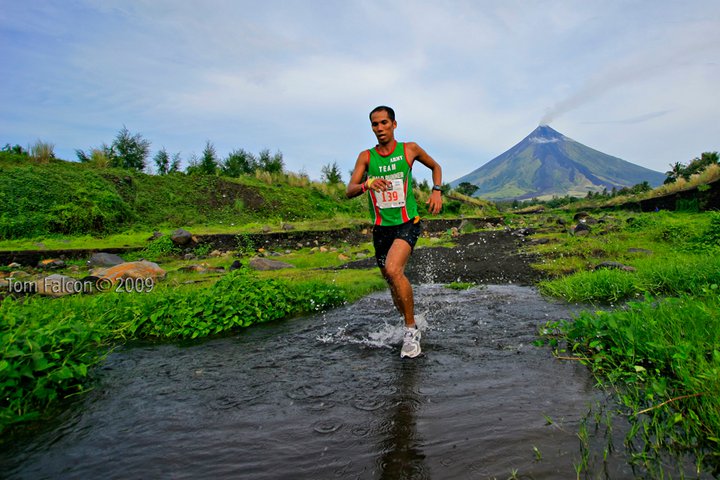
After almost 100 meters of the steep descending trail, the trail became more gradual as I was led to the bank of the Yawa River. It was time to drink some water from my bottled water in order to swallow the sports bar that I was chewing. As I got nearer to the bank of the river, I increased my momentum and crossed the river while I was brisk walking. The river was knee-deep and the current was moderate. The river was about 25 meters wide and as soon I crossed the river, it was the start of a gradual climb towards the Lava Wall near Mt Mayon Volcano.
It was a relief to the tired feet when I crossed the river and along the way, more trails covered with flowing water gave some cooling effect to the tired feet. I maintained my “shuffling” towards the turn-around point making sure that I would not take any “walking breaks” before I reach the Lava Wall. I said to myself to take some rest while slowly walking on top of the Lava Wall as nobody would dare to run on those sharp rocks.
After running for about one kilometer, I met the two Kenyans who were leading the race and after another 100 meters, I met the 3rd runner who is another Kenyan. The first Filipino runner whom I saw trailing at the back of the last Kenyan was Cris Sabal. I cheered him to catch the Kenyans. After a few seconds, Gerald Sabal was approaching followed by Alquin Bolivar, Alley Quisay, and later Frank Indapan. My Elite Team Bald Runner were trying to catch up with the leading Kenyan runners. I was hoping that they could make some “surprises” on the last kilometer of the course as they are more familiar with the course than the foreigners.
Alley Quisay In Action (Photo Courtesy of Tom c/o WOW Legazpi Website)
At this point, I was able to overtake some runners as I’ve seen them tired and slowing down due to the heat of the lahar and the sun. At this stretch of the route, I was able to overtake at least 12-14 runners by consistently “shuffling” and never stopping to cross those stream of water along the way. I knew the terrain of this place and a consistent “shuffling” will push me towards the turn-around point. I had to take advantage of the water stations along this part of the route as I used the water placed in ice candy plastics to douse my head. This repeated dousing of water to my head in every Water Station made me more relaxed and focused while going uphill towards the turn-around point.
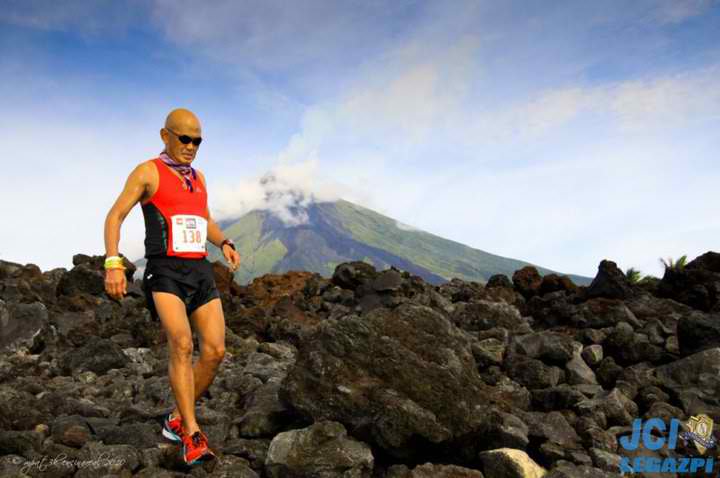
As I met the other runners that have reached the turn-around point and are on their way to the finish line, they would tell me how far the turn-around point is. I just smiled and thanked them for their information. From afar, I saw the Water Station at the foot of the Lava Wall and I started to increase my pace. I took a bottle of water and drank the whole of it before I climbed the Lava Wall. The climbing towards the helipad at the turn-around point was my rest period plus the walking on top of those lava rocks. I had a brief pause just to see the whole Mt Mayon before going back to the trail where I came from. As I came down from the Lava Wall and started my run back to Lingnon Hill, 15.5 kilometers was done and the last 6 kilometers was ahead of me.
That was a good gradual uphill climb with an elevation of 275 meters from the Yawa River to the Helipad on top of the Lava Flow. Phew! That was hard and tough! Two hours had elapsed already when I was about leave at this point. You make sure you receive your 3rd and last straw necklace at this point.
Priceless!! At The Mt Mayon Volcano's Lava Wall (Photo Courtesy of JCI Legazpi)
Km 15.5 to Km 20.5
This part of the route was the start of going back to the Finish Line—on top of Lignon Hill again! I took advantage of the downhill terrain and the gravity of my body in order to increase my pace. I was trying to do a tempo run on those lahar sand but ultimately had to slow down when I started to hit those rocks and flowing streams along the route. I commend the Race Organizers for deploying more Race Marshals on this part of the route and the red-colored arrow signs painted on the black rocks along the route made me focused to follow the direct route towards the Yawa River. At this point, I was already alone and could hardly see anyone in front and at the back of me. It is just a matter of time that I would be able to reach the river.
As you run downhill from the Lava Wall, you meet most of the middle pack runners and there were so many greetings that I received from them. I have to cheer them when I see them walking and encourage them that the turn-around point is already near. However, I could see on their faces the hardship, pain and suffering they are experiencing. This is the challenge that the Mt Mayon Trail Run has to offer which is too different from other half-marathon trail runs in the country. However, the Mt Pinatubo 50K Trail Challenge is, I think, so far, the toughest ultra trail run in the country.
After a lot of skips, jumps, water crossing, shuffling, and downhill running, I could see that Yawa River is getting nearer. Before I reached the bank of the river, two of my elites approached me and offered me water and sports drinks. I was still strong at this point that I was able to do a “brisk walking” while crossing the river. After I crossed the river, I knew that the last “toughest” part of the race was in front of me! It’s the last kilometer of the race!
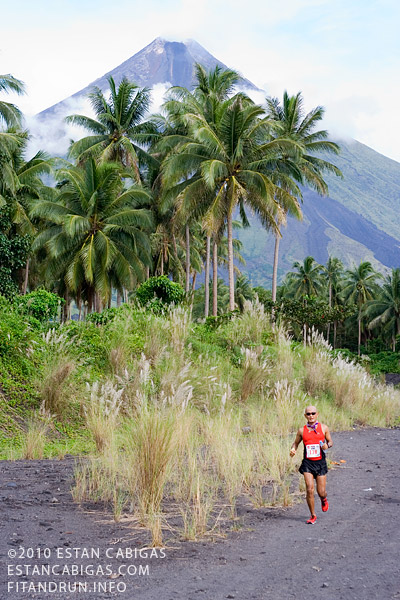
Another "Priceless" Picture Courtesy of Estan Cabigas!
Km 20.5 to Km 21.5/Finish Line
This is where you curse the Race Organizers! The uphill climb consists of ascending trail steps that has an inclination of almost 80 degrees! The stair/steps on the last ascent to Lignon Hill are the dreaded “killer” of this race. I have to place my hands just above my knees and hold them firmly to push my body in going to the steps. The steps are also too high for the tired legs to overcome. I have to take a brief rest every time I finished scaling at least 10 steps! I was already tired and exhausted that I forgot my plan to count the number of steps on this part of the trail. I thought I could finish this race in sub-3 hours as I still have 4 minutes to overcome the last 50-60 meters up to the peak of the hill. I was wrong!
As I pushed my arms & hands on my upper legs and drive them upwards to those steps, I felt my legs are getting weaker. How I wished that the height of the steps would be lowered and an improvised railing on the side would be available to make this part of the route with lesser difficulty and safer to the runners. It is just a recommendation though. This short distance made me tired, the same way that I experienced on the 1st edition of this race.
As I reached the peak, I was directed by a Race Marshal to follow a downhill route which was a newly-made trail that goes towards the forested part of the hill. I was again “cursing” everybody to the point that I was not focused to my footing placements. Then, my legs just became weaker until my feet could no longer hold on those descending steps. Then the worse happened, I fell down with my butt sliding down a few steps of the trail!!! It was my first time to fall (on my butt!) in a trail run! I was glad it was not the other way around as I could be landing on those cliffs of the hill.
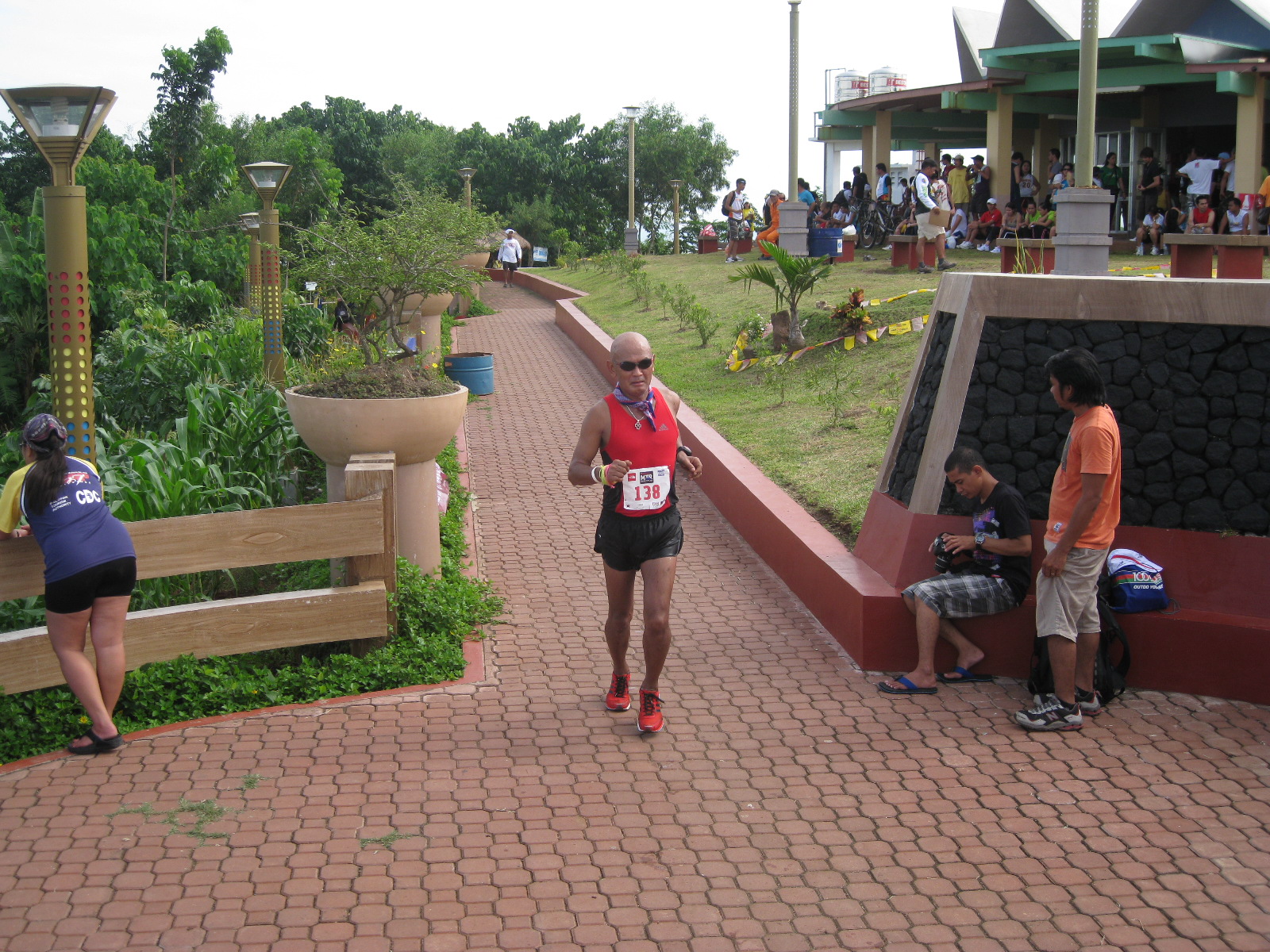
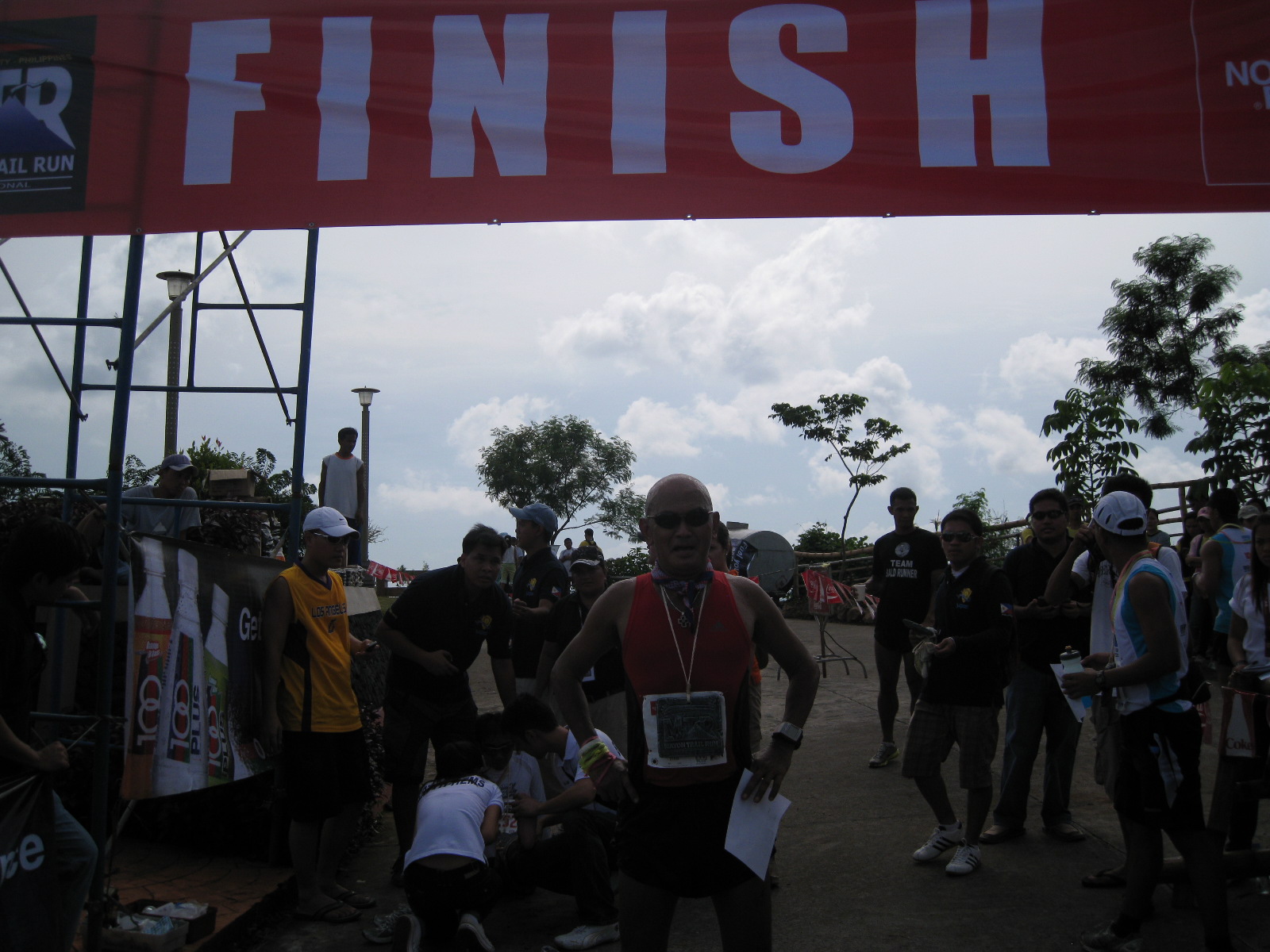
On my last ascent, about 10 meters, to the peak (again) of the hill, I was already laughing and cursing telling to my elite runners who were on my back that this race is no longer a trail run but a “mountaineering” event! I allowed one runner to pass me along this point as he is much very young compared to me. As I reached the peak, I could see already the Finish Line & Banner but Councilor Celoy Chan, the Chairman of MTR, met me and jogged with me for the last 50-meter run around the peak of the hill, passing through its paved walks. Finally, I crossed the Finish Line with an unofficial time of 3:01:40 hours based from my GF 305. I was awarded with the “heaviest and biggest” Finisher’s Medal in a running event and my Finisher’s Certificate. (Note: I will be back to improve my finish time to sub-3 hours!)
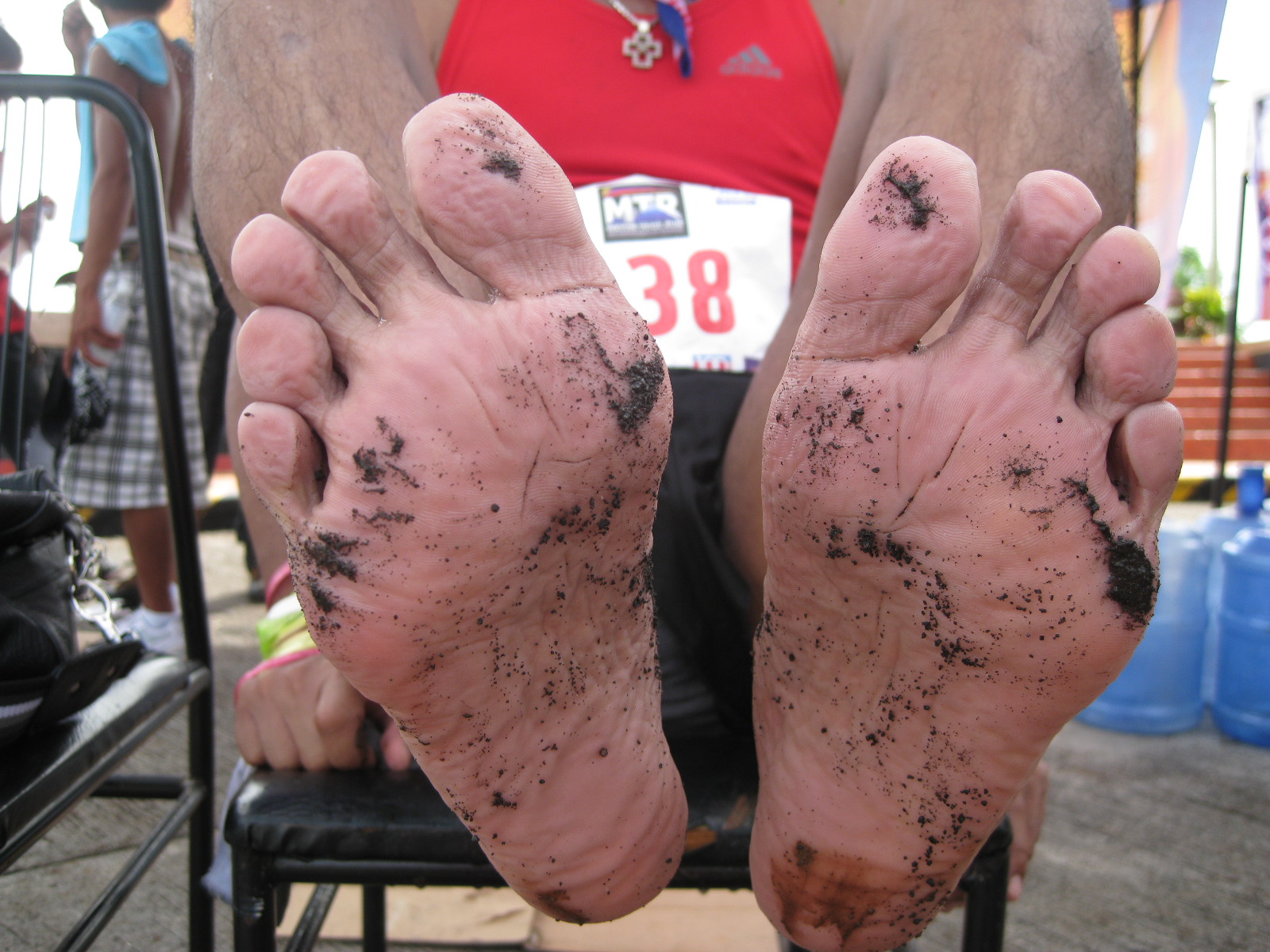
Approaching The Finish Line!3rd Mt Mayon Trail Run...Done!Lahar On My Feet But No Blisters. Dry Max Works All The Time!
Post-Race Activities
It was time to socialize and talk to the Race Organizers, JCI Legazpi members, other Finishers and runners after I finished changing my wet running kit with dry clothes. I was able to meet old and new friends. I was able to congratulate Yves Yu for the successful conduct of the said race and I also told him about my recommendations on how to improve the conduct of the race. I hope Yves would be able to accept my suggestions in a positive manner. To the JCI Legazpi, Councilor Celoy Chan, Yves Yu, and to the Volunteers, you have done a splendid job in this race. Congratulations to everybody!
Well, the Kenyans were able to dethrone my elite team as the “King of MTR” for this year but we will be back with a vengeance! What is good is that the record time of Finish in last year’s edition made by Alquin Bolivar with a time of 1:28+ hours was not erased. All the members of my elite team who ran the 21K race placed on the top 10 ranking of the race and won some cash as consolation prizes. On the 5K Race, Rey De Los Reyes of my elite team placed 3rd Overall, winning a Cash Prize, too!
What is good in this race is that the Race Organizers give a consolation cash prize for the top 50 runners! I was surprised to be called by the Emcee as I placed # 49 finisher out of the 240+ runners that started the race! I received an envelope with a cash prize of P 250! Not bad, it was good for a Jollibee meal after the race!
Maybe in the next editions to come, I would be able to grab the “Oldest Runner Award” with a Cash Prize of P 5,000!
Once again, MTR has proven that it is the toughest 21K run in the country today. I am highly recommending this race for the PAU loyal fans & members; BDM 102 veterans; and “hardcore/warrior” runners. The experience is good for your “running record” and be able to see the beauty of our own Mt Mayon Volcano.
Councilor Celoy Chan, Chairman of MTR & Administrator of Lignon Hill ParkTeam Kenya as the 2010 "King of MTR"Yves Yu, MTR Race Director & BR
See you at the Mt Mayon’s Lava Wall and Lignon Hill next year!
Note: For more “pictures in action” on the MTR, please visit Estan Cabigas website at www.estancabigas.com.
The following is the Official Result of the 1st Mt Pinatubo Challenge (MPC) 50K Trail Run.
I would like to specifically mention that the Northern Luzon Command (NOLCOM) of the Armed Forces of the Philippines gave me the “GO” signal to push through with the trail run as the Balikatan Exercise (Proper) is scheduled to start yet on October 14, 2010 with the AFP components and the US Armed Forces Counterpart. I did not want that the race would be cancelled, re-scheduled, or terminated when most of the runners are still on the trail. I have the impression that the Philippine Air Force scheduled a practice run on the events/activities that they will be performing during the said military exercise with our US counterparts on the prescribed scheduled dates.
However, the top runners who were fast and strong were not affected with the practice runs of our Philippine Air Force and I have decided that their Finish Times will be upheld as the prevailing record for a solo run finish time from Sta. Juliana, Capas, Tarlac up to the Crater Lake of Mt Pinatubo and back. As I could not determine the exact elapsed time for each runner who were directed to stop in one of the Aid Stations due to the helicopter-airborne firing from a MG helicopter, the finish times reflected below will be considered as the official time. Guys, you will have your chance to redeem yourselves and improve your finish times on the next edition of this trail race!
Due to this predicament, I decided to remove the prescribed cut-off time of 10 hours and allowed everybody to finish and awarded each one who crossed the finish line with their “finisher’s trophy” and Finisher’s T-shirt.
My congratulations to all who started and finished the race. You have finished what I consider as the “hardest and most challenging 50K trail race” in the country.
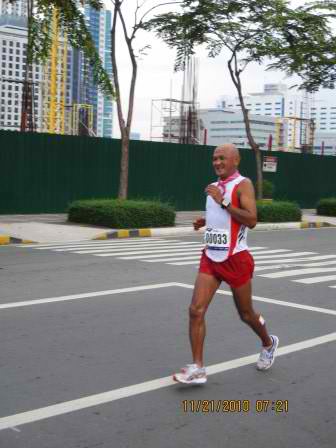
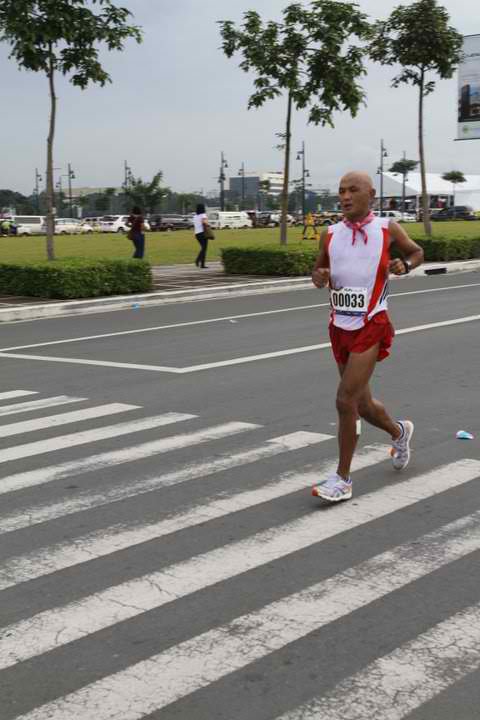
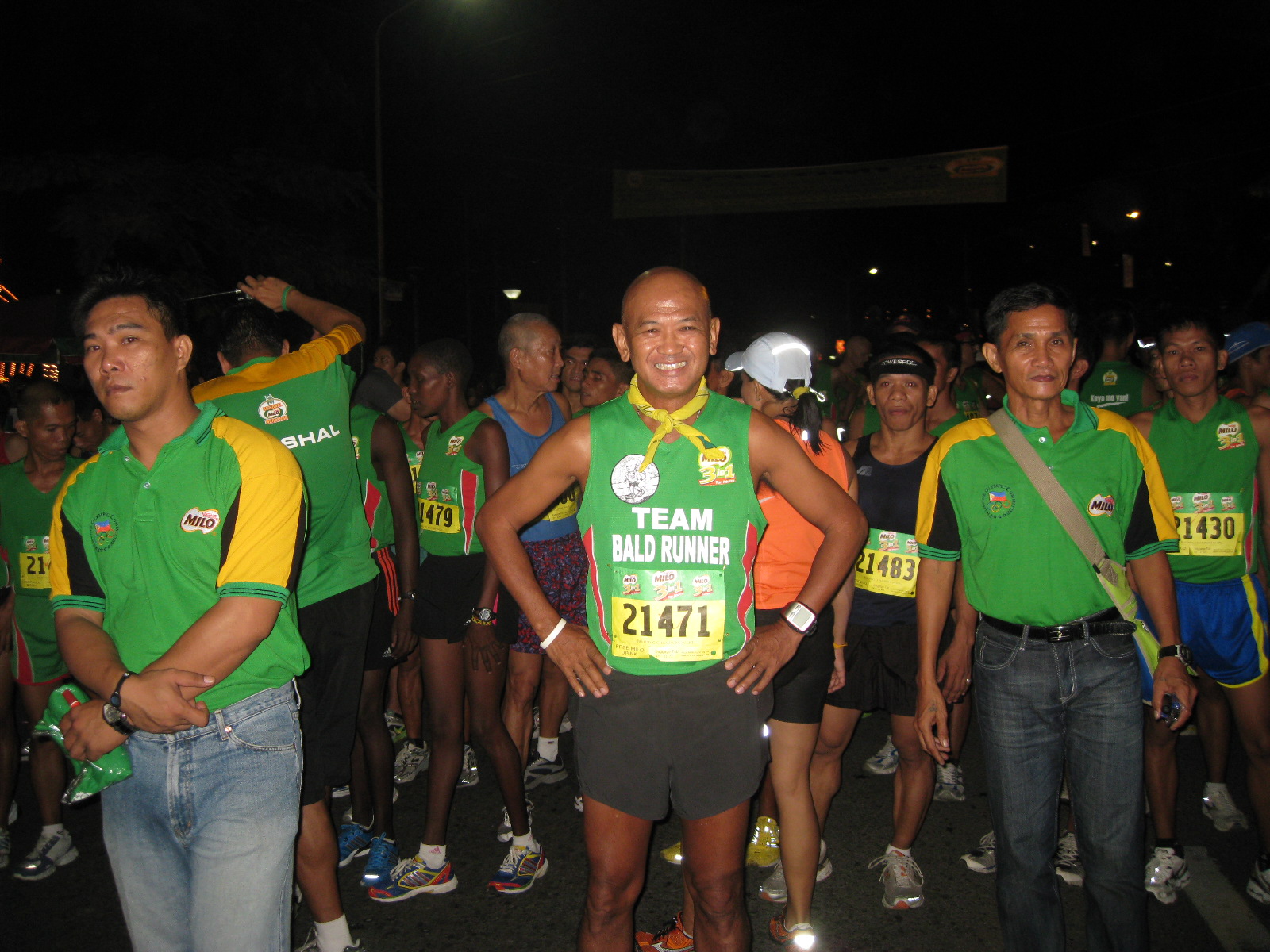
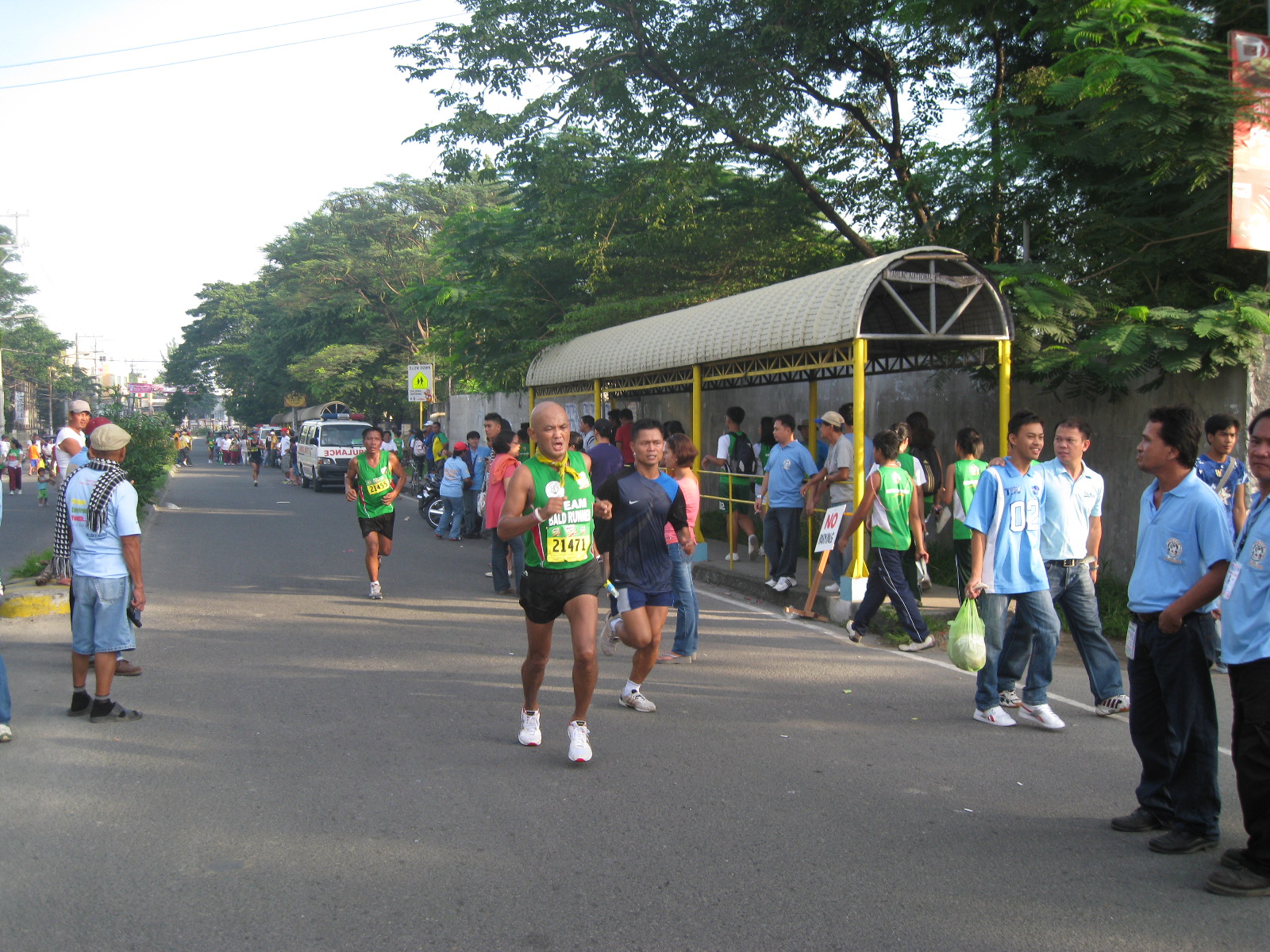
 Bald Runner
You must be logged in to post a comment.