Lessons Learned and Insights/Observations In The Headlands 50-Mile Trail Run
1. Finish The Race—The main objective in participating an ultra trail run is to be able to finish the race. Yes, finish within the cut-off time of the race. In order to finish the race, you must be able to have a positive attitude and apply your race strategy. Aside from having a positive attitude and full resolution to finish the race, there is a need to be patient by not forcing your body on the early stages of the race. It is best to experience the run by trying to enjoy the scenery and looking how the other runners react to the different terrain of the route. If I need to finish the race with a lesser time, it is mandatory that I have to train harder and increase my mileage.
2. Training & Preparation—Two months before this ultra trail run, I shifted my training by running towards the “Brown Mountain” (BM) and tried to strengthen my legs and cope up with the challenges of mountain trail running. However, I found out that my “trips” to “BM” were not enough. There is a need to do more quality mountain repeats, not hill repeats! In my trips to “BM”, I tried to force myself by running on the incline portions of the trails and resting on the downhill and flat portions. With this thing repeated during my training, I became very conservative in my running effort during the race. I have made so many observations on the “tougher” runners on how they attack the inclines and the downhill portions of the course and I’ll try to mention them in my observations and things to improve in trail running.
3. Race Strategy—In my training, I adopted the race strategy of brisk walking on the uphill climbs and resuming my running on the flats and downhill portions. I was able to do this strictly during the race. However, after the race, I found out that I still have enough strength left. I have a feeling that I ran the course very conservatively and did not have the effort to force my body from my “comfort zone”—being afraid of having muscle cramps at the Km #40 point. On my hydration, I trained myself by bringing my Nathan Belt Bottle (on my small on the back) and a Nathan Hand-held on my left hand/palm. The bottle on my belt was filled with Gatorade while the hand-held bottle was filled with water. I had to drink water and Gatorade alternately every 2-3 kilometers and I could only finish one-half of the content of each bottle within a distance of 10-12 kilometers. During the race, I finally decided to bring only the Nathan Bottle on my belt and opted not to bring the hand-held bottle. I also decided to drink only Gatorade/Sports Drinks during the race. It worked fine with me to be having one bottle during the race and drinking only Sports Drinks since the drinks served during the race did not have any taste of a Sports Drinks. I am still wondering what is the brand of sports drinks that they served during the race. On the food, I took the regular GU Sports Gel every 10 kilometers, ate 3 bars of Nature Valley, lots of beef jerky cuts, and sliced melon & water melon dipped on salt which I picked up in every Aid Station! I took also 2 capsules of Salt Stick, one capsule in every loop! However, after the 1st loop, I ate one serving of oatmeal, fruits, SPAM slices, hard-boiled eggs, and drank one bottle of Gatorade.
Old Logo Of PCTR
4. Acclimatize and “Feel” The Route—My two (2) recon runs on the race course was a way to familiarize myself with the weather condition and the terrain of the area. I concentrated more on the beauty of the scenery and how to trace the route as seen and described on the map and on the route description. Running almost one loop of the course during my second recon run gave me confidence to be able to finish the course. And I decided to be conservative on the 1st loop during race day and try to run faster on the 2nd loop. But the results would show that I ran the 1st loop faster than the 2nd loop on race day! It shows that I was not able to determine on what parts of the route where I could be faster or slower. I just kept on following what was set in my mind—to brisk walk on the uphill and running comfortably on the declines. It was only on the last 8 miles where I was concerned about my pace and time to be able to reach the Finish Line. As to the acclimatization to the weather, I found out that after two weeks of stay in the area, I was able to bear the cold temperature even if the sky was overcast and the mountain environment was foggy. Three days after the race, I returned to Marin Headlands and ran another 20 miles and “attacked” the uphill climbs by continuously running on them, instead of brisk walking and running fast on the downhills, instead of comfortably running in a slow pace! At the uphill portions of Coastal Trail and downhill portions of Wolfe Ridge and Old Springs towards Tennessee Valley AS, I was able reduce my time by more than 6 minutes. I also ran on the uphill climbs of Marincello Trail and Bobcat Trail and with a faster pace on the downhill of these trails which resulted to a faster time on these portions by a cumulative time of 16 minutes!
Headlands 50- Mile Run Elevation (Clockwise)
If given another chance to run again in the Marin Headlands, I am sure I will be able to improve my time and have more confidence to attack the uphill and the downhill.
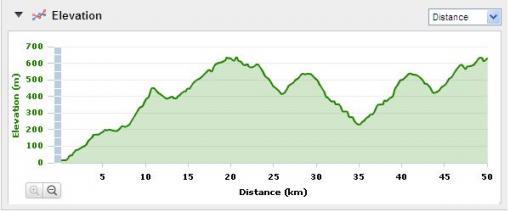
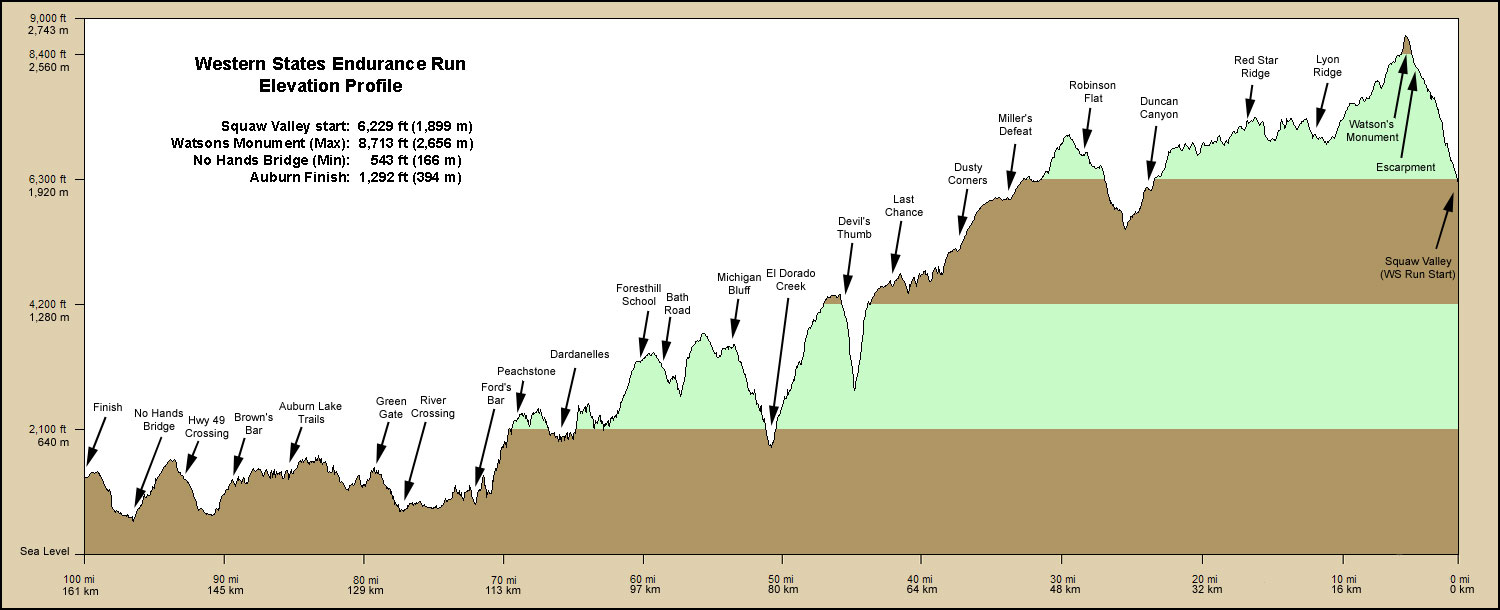
5. Specificity of Training—If you are preparing for a mountain trail run for a distance of 50 kilometers and above in the US, you have to train to a terrain that resembles to the course profile and race route condition. Comparing the course profiles of the Headlands 50-Mile Run and the 1st PAU 50K Run in Tanay, Rizal, there is a big difference aside from the fact that the weather is also different from one race to the other. Tanay’s elevation is higher but the inclines and declines are gradual than the Headlands 50-Mile Run. With this comparison, Tanay’s mountain trails would be a nice training ground for mountain trail runs in the US. I hope Tanay’s mountains would be able to resemble at least the last half of the Western States 100-Mile Endurance Run.
1st PAU 50K Race-Tanay Course Elevation (Courtesy of Mark Hernandez)Western States 100-Mile Run Elevation Profile (From WS100 Website)
6. Staying Longer at the Aid Station & Refueling After 1st Loop—Changing my socks, eating some food, and posing for my pictures after the 1st loop took at least 10-11 minutes of my time. If only I could make such stop for only 5 minutes, it would have shaved off some of my time. Shaving another 30-seconds in my stops in every Aid Station means another 4 minutes deducted from my time. Waiting in line at the Comfort Rooms for almost 2 times during the race also added few minutes of my time. I should have just “peed” more along the side of the road to shave off some seconds of my time. I will be smarter next time whenever I need to stay longer or not in every Aid Station.
7. Observations on the Conduct of Headlands 50-Mile Run
a) No Marshals Along The Route—There are no marshals positioned on the intersections of trails. You only see colored ribbons and small flags towards the direction of the route and along the route. If you don’t see any ribbons or small flags on the route, that means you are lost. You have to retrace your route and go to where you have last seen the ribbons. You only see volunteers on the Aid Stations.
b) Everything Is Simple—There are no race singlets as part of your registration fee. There is no loot bag after you finish the race. You simply receive your Finisher’s T-Shirt and the rest of the souvenirs and the items promised to be given to each of the runner will be sent to your home address through post mail. There are no “distractions” or “circus” mood at the Start/Finish Area. You are lucky if somebody along the trail will give applause or cheer at you. The only people who will cheer and greet you with “Good Job”, “Looking Good”, or “Good Morning/Good Afternoon” are the other runners in the race whom you meet, you pass, or those who are about to pass you.
c) Everybody is HONEST—Nobody cheats on the race course even if there are so many chances when a runner could easily make a “shortcut” as there is nobody who is checking the time or arrival of each runner in every Aid Station or critical point along the course. Each runner does not receive any band or string/straw necklace after he/she finishes a loop. There are no timing chips!
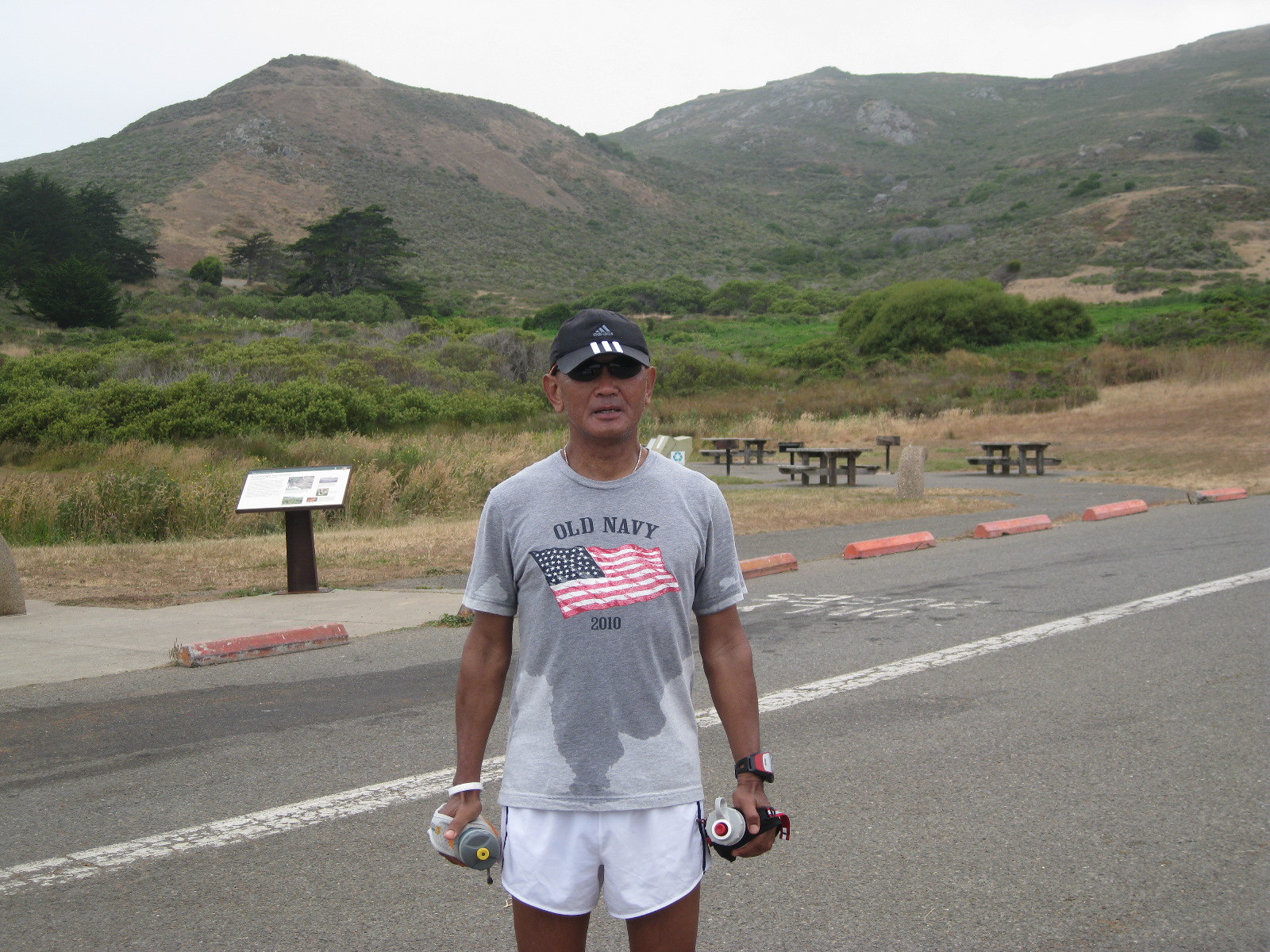
After My 2 1/2-Hour Run On The Course (3 Days After The Race)
d) Runners Are Having Fun–Runners in ultramarathon races are friendly. They do not compete with the other runners but they compete with themselves and the course. Ultra runners help each other to survive and finish the course within the prescribed cut-off time. You can start a conversation to anybody and you can keep on pace with somebody, too. This is where friendship starts. Through constant conversation of any topic while running or brisk walking, you will find out that those steep inclines just looked to be easy to have been passed along the way. You feel relaxed while running in pace with somebody. Sometimes, you are fully motivated to increase your pace not to be able to be left behind by your running companion.
e) Top Runner Are Really “Tough”—I did not see these guys walking except when they approach the Aid Stations to refill their bottles or bladders in their Camelbaks. They simply run hard on the uphill and run fastest on the downhill. I’ve been trying to copy them and unfortunately, it resulted to a bad fall during my latest trail run to Mt Pinatubo. I need to practice some more towards the “Brown Mountain” soon and practice the technique I’ve seen with these “tough” guys in trail running!
It’s time to go back to the mountains again for more training! See you at “P2P 65K Run” in Ilocos Norte!
7:00 AM July 17, 2010 @ Marin Headlands, Golden Gate Recreation Area, San Francisco, California
Having experienced finishing a 50K Trail Run at Bulldog 50K two years ago, I was already planning to experience a 50-mile run or 100K trail run in any of the trail races in California. Mt Disappointment 50-Mile or Lake Tahoe 50-Mile Runs were my choices but they did not materialize due to schedule problems. After this year’s BDM 102, I decided to train for the 34th MILO Marathon Manila Elimination and plan to immediately proceed to the US to use my newly renewed US Visa which is good for another 10 years. So, the choice was to register for the PCTR Headlands 50-Mile Run, barely two weeks after the July 4th MILO Marathon. Lake Tahoe 50-Mile Run’s registration was already closed as early as March this year. I paid Eighty Dollars ($80.00) for the said run and my participation was sealed!
PCTR Headlands 50-Mile + Marathon Logo By Rick Gaston
Plan & Objective
The plan is to be able to build-up ultra distance runs in the United States in the 50K, 50-mile, and 100K runs for record purposes so as to be able to qualify to join a 100-mile mountain trail runs in the future. I guess, Boston Marathon Qualifying plans is put on hold while I am trying my best to focus on ultra trail runs and make a 100-mile run as one of the most important items in my “bucket list”. It is like saying that for a President of the Philippine Association of Ultrarunners (PAU) to be credible and example to its members, he should be able to, at least, finish a 100-mile mountain trail race. Unlike those “clowns” who head our sports federations who could not even practice their sports they are leading. How can you expect these “clowns” to lead and win for us some medals in the Olympics if they could not even feel how our elite athletes train with their blood, sweat, and tears? I rest my case!
Training
Basically, my preparation for this race was geared towards my training for the 34th MILO Marathon Manila Eliminations. But two months before the marathon race, I tried to start training towards the “Brown Mountain” and looked for trails to run into. It started with once a week routine until I was able to do twice and then three times a week. I was satisfied how my legs adjusted to the rigors of mountain trail running for those months. Such trail running made me stronger and faster as validated during my oval track interval runs two weeks before the marathon race day where I was able to register an average pace in my Yasso 800s workout at 3:45 mins which could be translated to 3:45 hours in a marathon race. But the environmental condition with severe hot temperature and humid condition on race day derailed my plans and target time to finish the marathon race within the finish time I desired . But knowing that I will be running in a colder place with an average temperature of 12-14 degrees Centigrade or 54-60 degrees Fahrenheit, I know my training for the marathon and for the 50-mile run was still intact. My MILO Marathon became as my tempo run for this 50-miler run!
Pre-Race Preparations
The most basic thing to do in a ultra trail run is to recon the actual route by running into it. So, two days after my arrival in the US, I went to the Marin Headlands for the first time and tried to trace the route with a piece of paper where I wrote the description and directions of the race. I was alone running on those rocky, hard & sun-baked, and dusty trails until I was able to run a distance of almost 16 miles/25 kilometers. However, I realized I was lost but I was glad I was able to cover such distance and have a feel of the environment and my bearing in the said area. After reaching the Tennessee Valley Trailhead, I went into the Miwok Trail instead of turning left, running along an asphalt road towards the Tennessee Valley Beach. I went on a reverse mode of the race until I reached the asphalt road of Tennessee Valley Road after coming down from the Coyote Ridge Trail and the Coastal Dirt Trail. From there, I saw a single track trail which was full of bushes that goes to a steep uphill directly towards the Wolfe Ridge Trail and from here I was back to the Coastal Trail and back where I started at the Parking Lot of Rodeo Beach. I enjoyed bushwhacking along that steep one-track trail but I had to stop once in awhile to see the different colors of flowers from the wild plants along the trail.
On this recon run, I was using my TNF Hedgehog BOA shoes which was very good in my downhill runs in steep and rocky portions of the trails but they are heavier and bulkier than my TNF Arnuva 50 BOA. Aside from using my white long-sleeved Patagonia Shirt, I was also wearing my Jeju Ultramarathon windbreaker as my outside garment. I was wearing my 9-Trail Patagonia Shorts where I stocked 3 Natural Valley Crunch Bars and 3 GUs inside its zippered pockets. It was windy and cold during my first recon run. It took me more time to brisk walk and take pictures as I was astounded and impressed on the scenery of the place whenever I was on top and along the ridges of the mountains!
1st Recon Run
It took me 4 hours to finish this recon run and familiarization of the place. I was surprised that only my shirt and bandanas were damped with my sweat and had never reached my shorts and my legs. I was surprised also that I did not feel any sore or pain on my legs for those immediate adjustments on the running surface I was used to. It appears that the weather condition plays a lot in determining the outcome of the race to evey runner.
After some recovery runs and the usual road runs to maintain my fitness level for about 4 days, I was back again at the Marin Headlands for another recon run with the objective to run the remaining trails where the race will go through. Actually, I was successful in tracing all the trails until I completed the whole loop of the original 25-mile route of the race which I completed in almost 6 hours to include those pit stops, photo-ops, and brisk walking. I finished at the Rodeo Beach Bridge instead of coming back from where I started. Instead of wearing a windbreaker, I decided to wear a long-sleeved technical shirt and my TNF running shorts which are thin and light. At this point, I knew I have acclimatized already with the weather condition of the place.
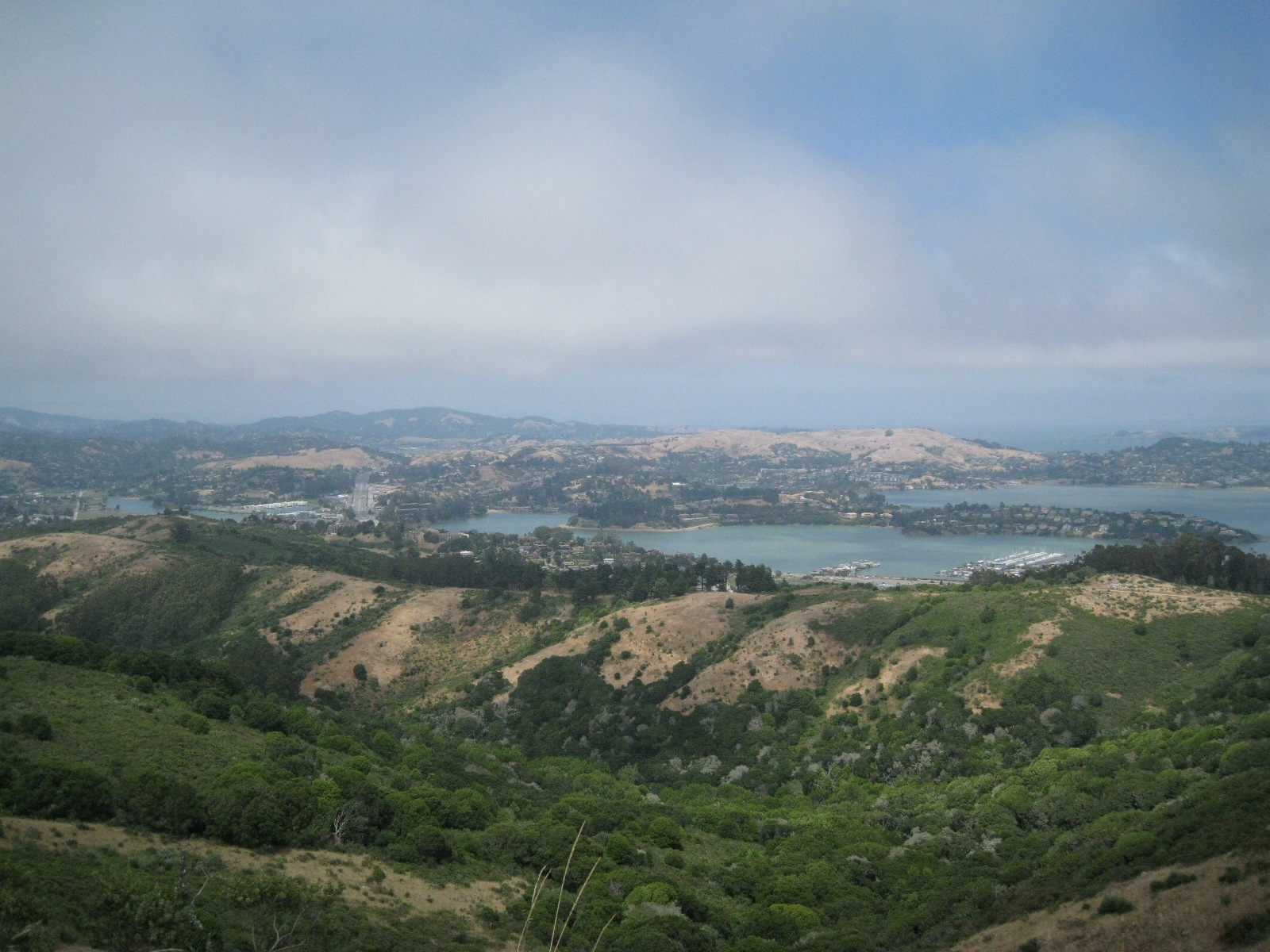
On this 2nd recon run, I took some easy time to see the scenery most especially when I was at the peak of the Marincello Trail. The views are amazing to behold and they are priceless! Once I reached the SCA Trail, the views of the Golden Gate, Vista Point and the whole of San Francisco Bay was also nice that it took me some time to freeze and look around the views all around me! However, the wind coming from the sea was so strong that I tried my best to go against it as I passed along the SCA Trail. After the Rodeo Valley Trail, it was another “bushswacking” experience when I finally ran along the single-track of Conzelman Trail until I reached the Bunker Road and went into the Lagoon Trail up to the sands of Rodeo Beach. I was able to run the whole one loop of the old course which is equivalent to 25 miles!
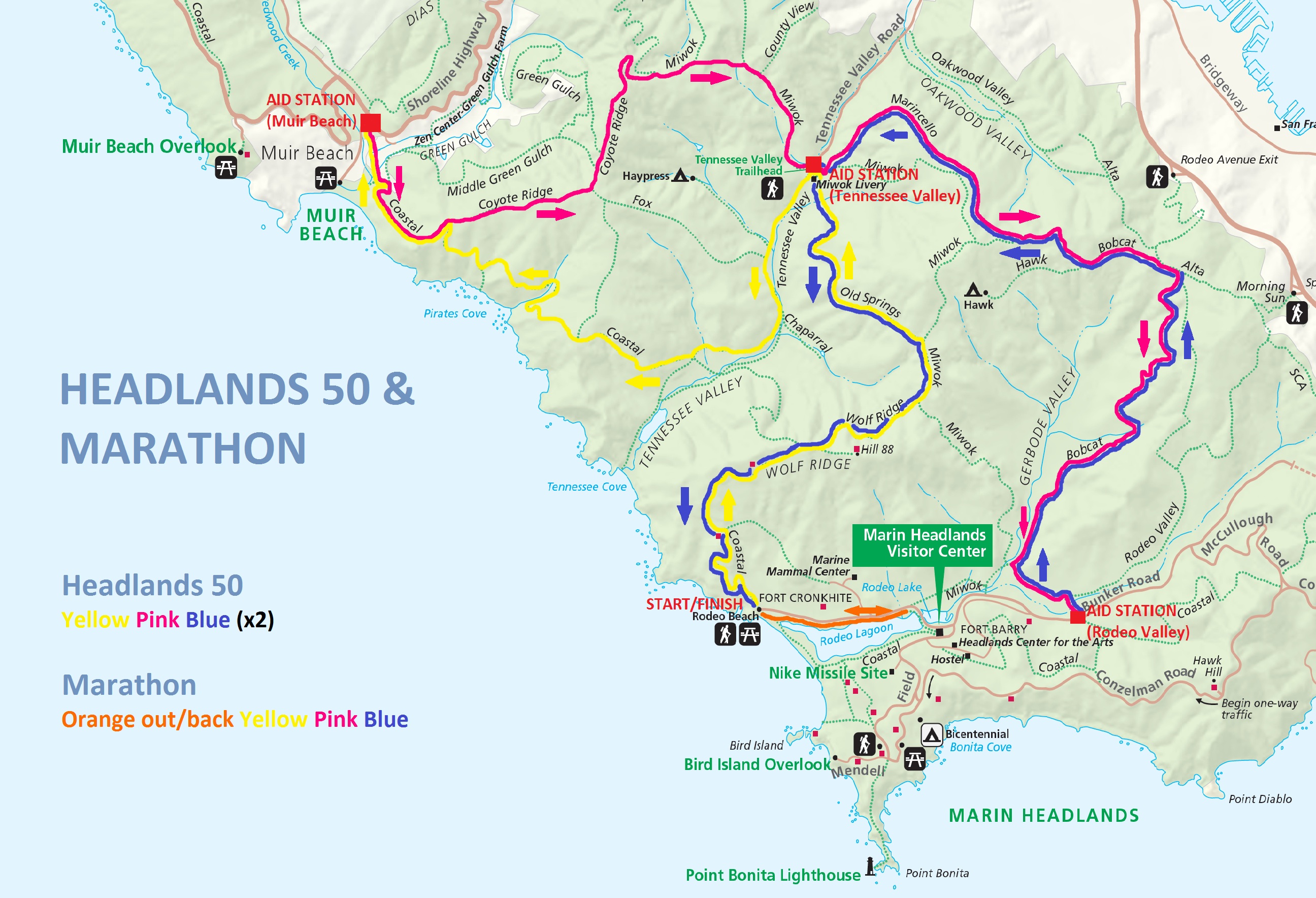
Race Route (2 Loops For The 50-Mile Run)
Few days before D-Day, I received an e-mail from the Race Organizer about the change of the race route and I wonder why the route did not reach the end at the Rodea Beach passing along the SCA and Conzelman Trails. I wonder where the rest of the trails will pass through after these trails were not available and indicated at the new map directions. But I was confident that the race route will finally end up with the correct distance of 50 miles. (Note: Runners who were equipped with Garmin watch would say after the race that the actual distance covered by all the 50-mile runners was 52.3 miles!)
Race Day
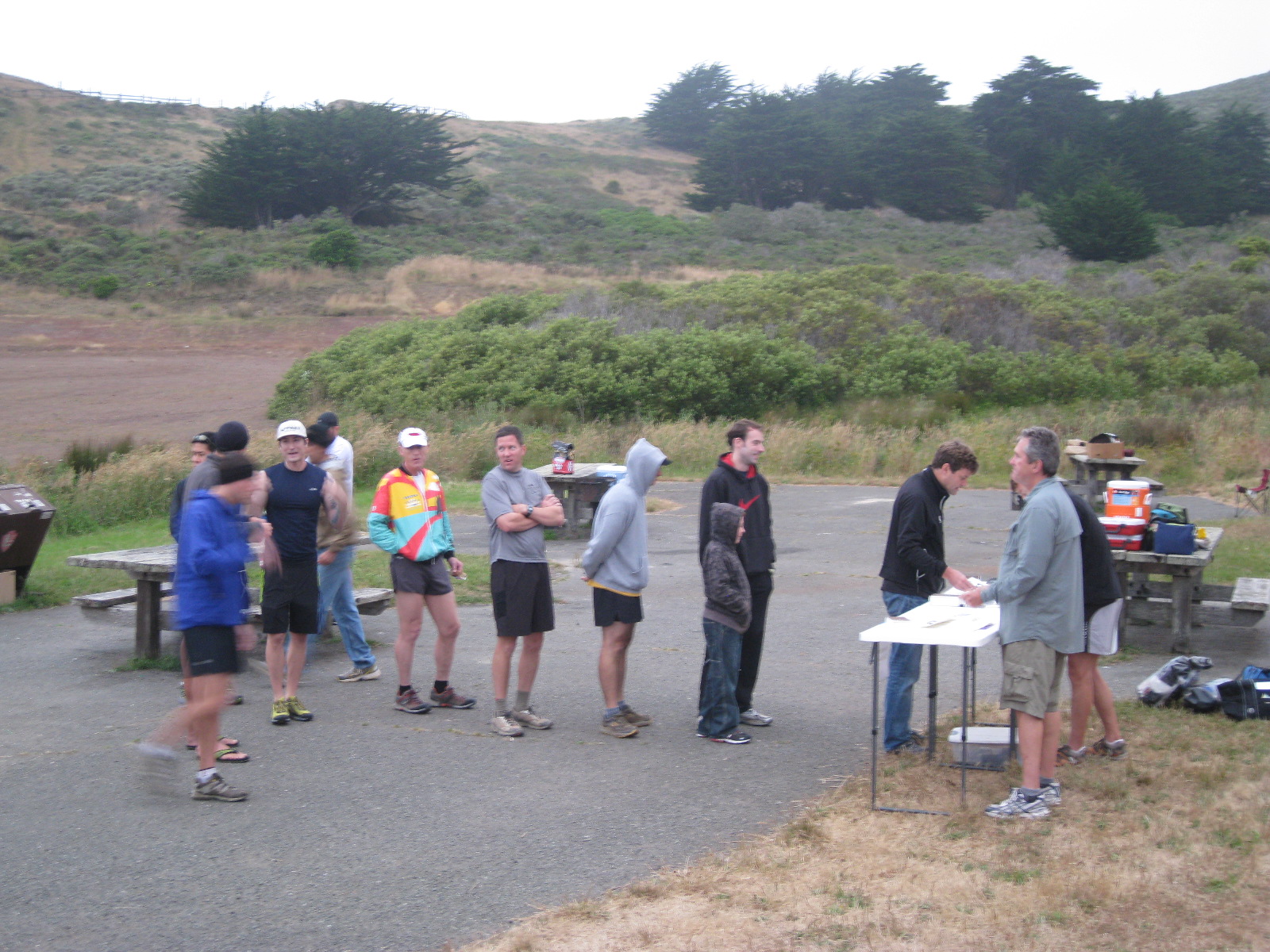
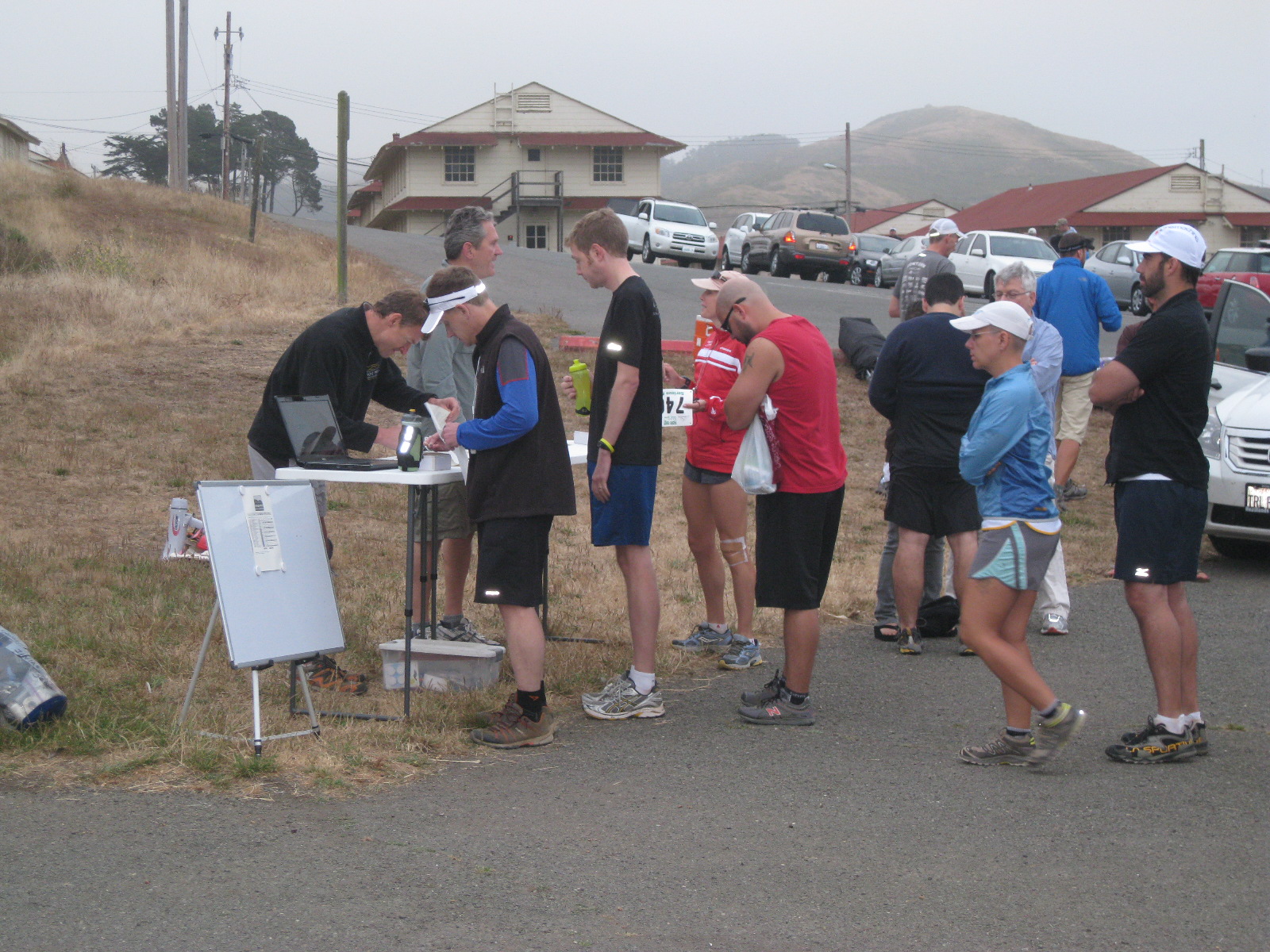
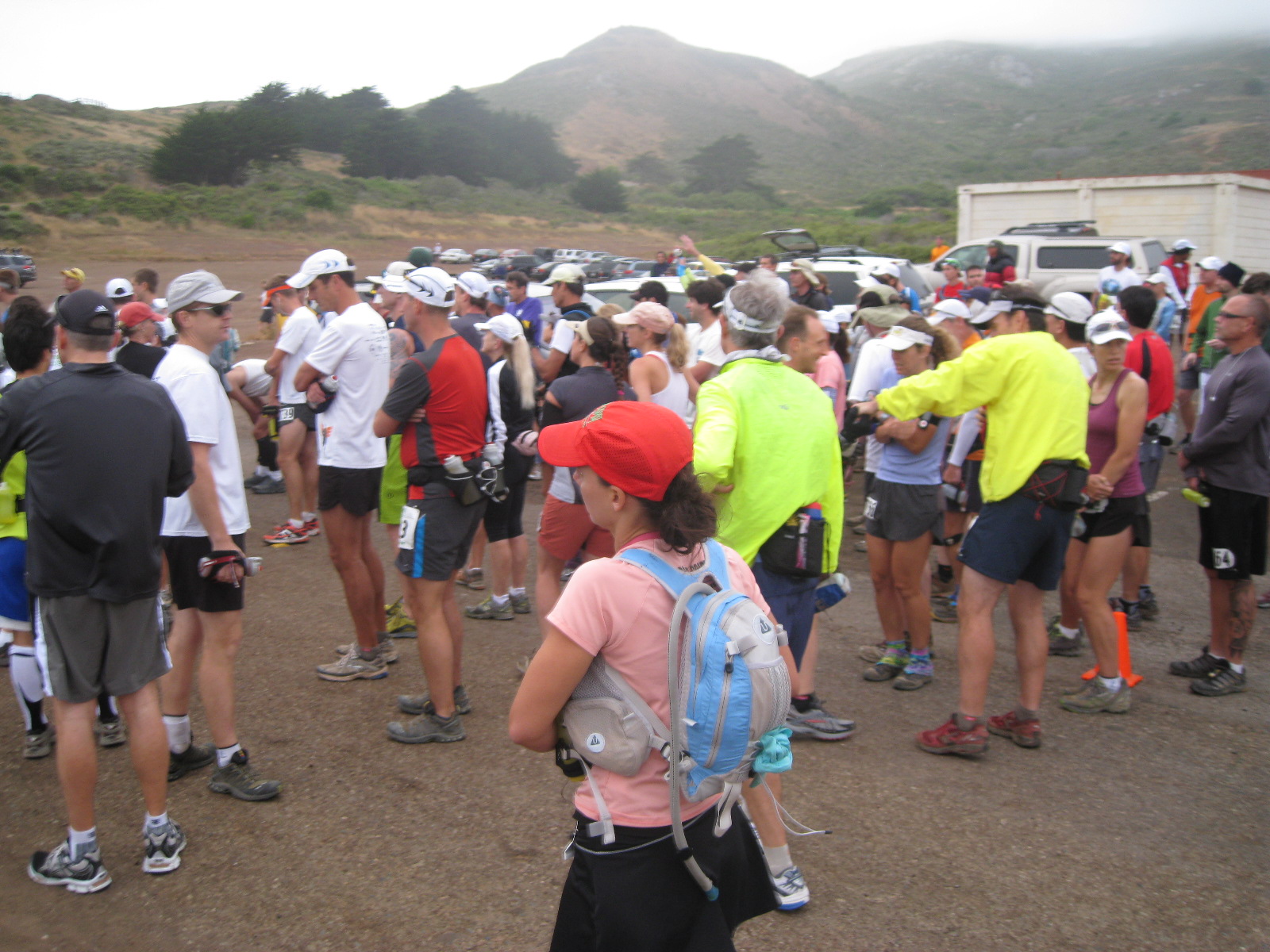
I was at the Starting Area at least one hour before the scheduled start at 7:00 AM. The Rodeo Beach was windy and cold and I saw a number of runners lining up in two lines to get their race bibs. One line is for the 50-miler and the other one was for the marathon trail distance run. The processing of runners at the assembly area/starting line was very simple and you don’t see see any signages or tarpaulins that indicate that there is a race to be held at the Marin Headlands. All you have to do is give your name, the staff look for your name in a master list where your race number is listed and then give your race number and then pick at least 4 pieces of safety pin in a small box placed on top of the table and you are done! No envelops, no race singlet, no piece of paper for instructions/maps/rules & regulations, and nothing fancy! Very simple but efficient.
Lining Up For Our Race BibsSimple But Efficient
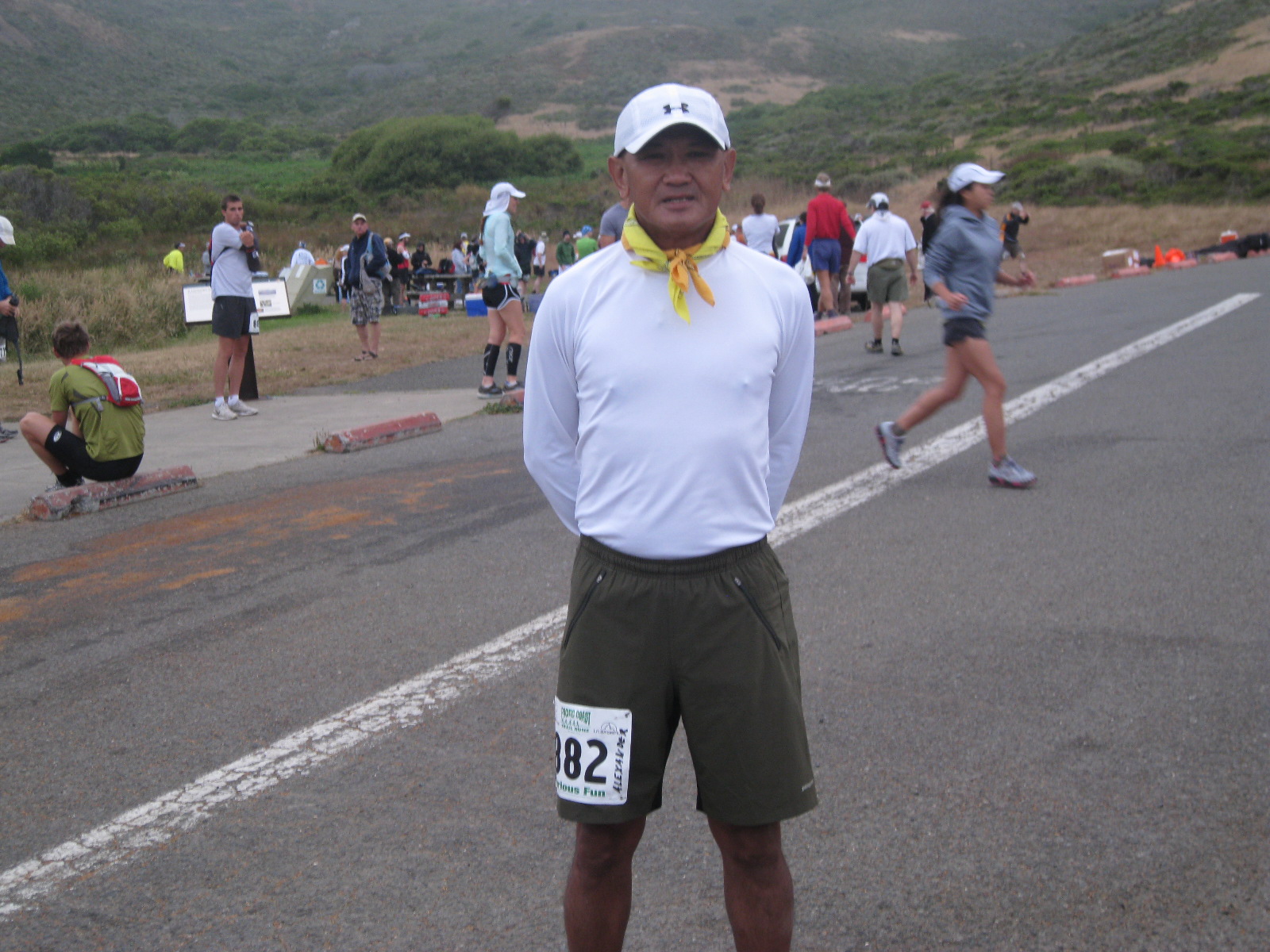
After fixing my things and pinning my race bib on my trail shorts, I had some photo-ops with the rest of the runners lining up and busy doing their own things and the happenings at the assembly area. I was expecting to see some Filipino faces among the crowd but I could see some Chinese, Latino-looking ladies, and most are “whites”. What I see as very common to everybody are the smiles on the faces of each runner and they seem to be relaxed and composed. You don’t hear any loud conversation or thrash talks except for the loud sounds coming from the waves of the sea! I did not see anybody who was doing their warm-up jog or stretching. After some photo-ops, I opted to get inside the car to prevent myself from freezing from the cold wind coming from the sea.
Taking It Easy Before The Start Of The Race
Starting Area
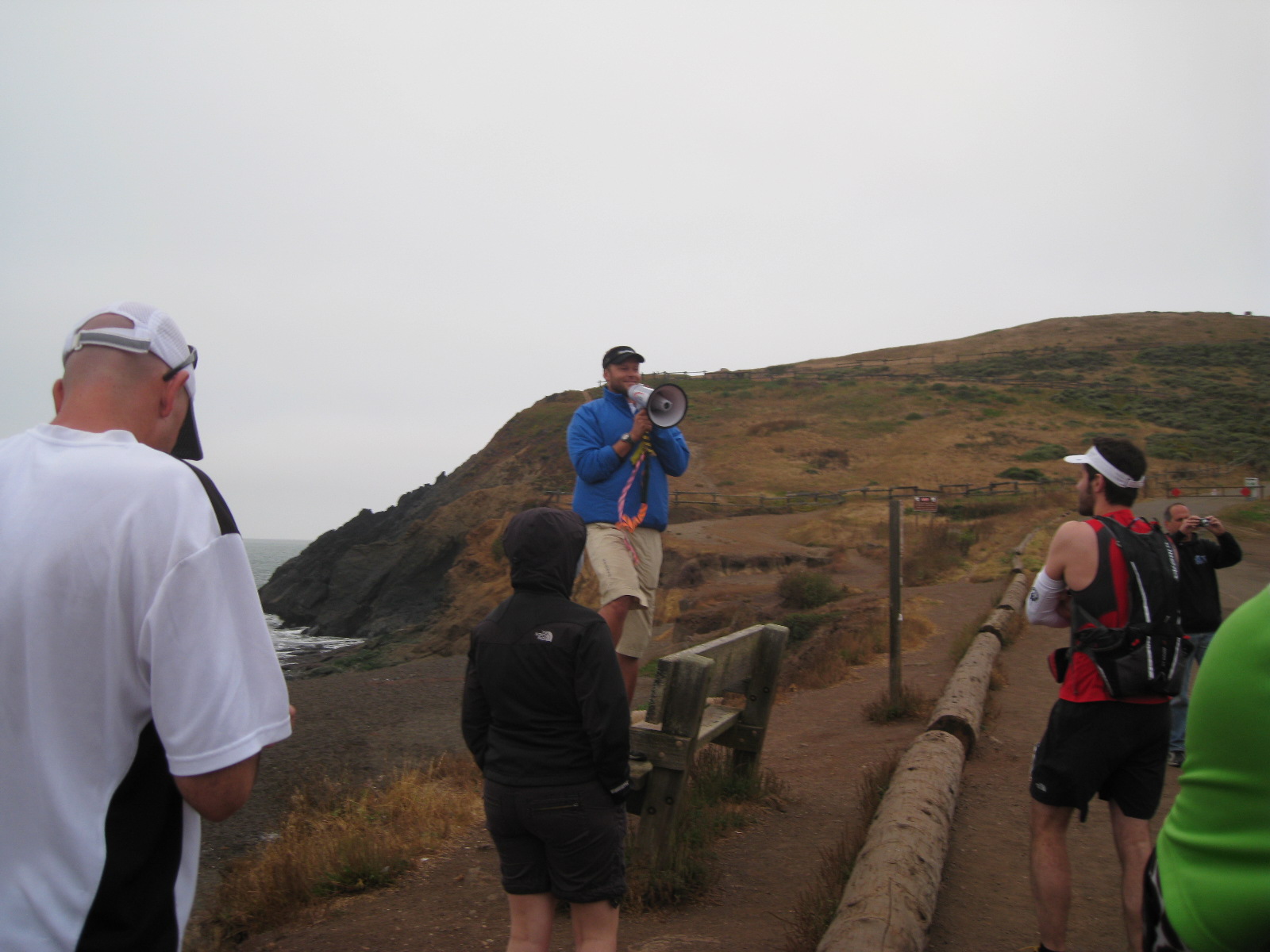
In a short notice the Race Director holding a bullhorn announced to the crowd that the race will start in ten minutes and he asked all the runners to gather at the starting line which was indicated with only two orange cones placed on each side of the road. Immediately the RD explained the route and gave some reasons why the race route will not be passing and ending along the Rodeo Beach because of some constructions along the trails and asphalted roads at the area. The marathon distance runners would first run along the asphalted roads of Marin Headlands before going up towards the Coastal Trail and will do only one loop of the course. But for us on the 50-mile run, we will be going directly to the Coastal Trail but have to do two loops of the course.
Race Director In ActionRunners At The Starting Line
Coastal Trail
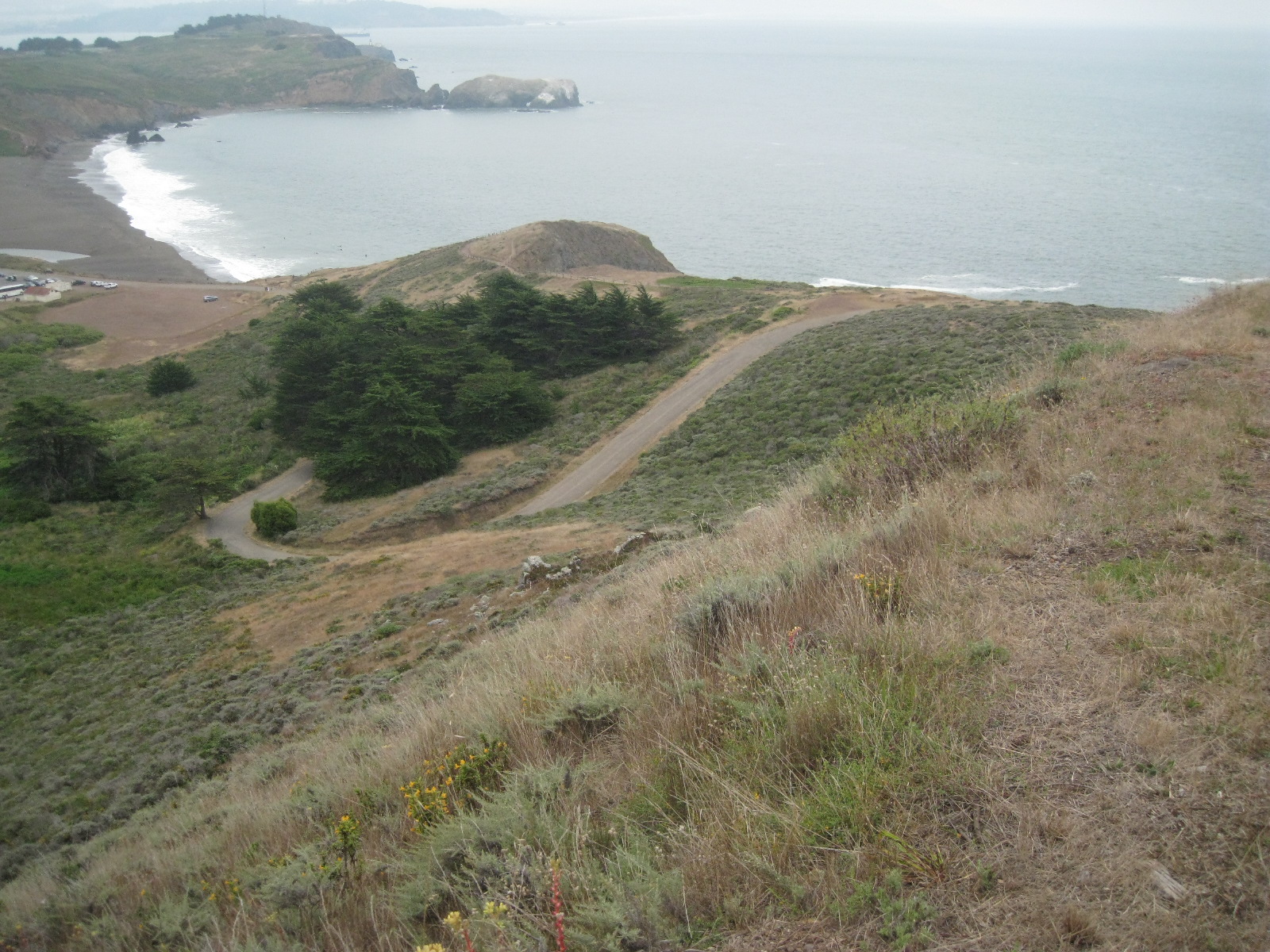
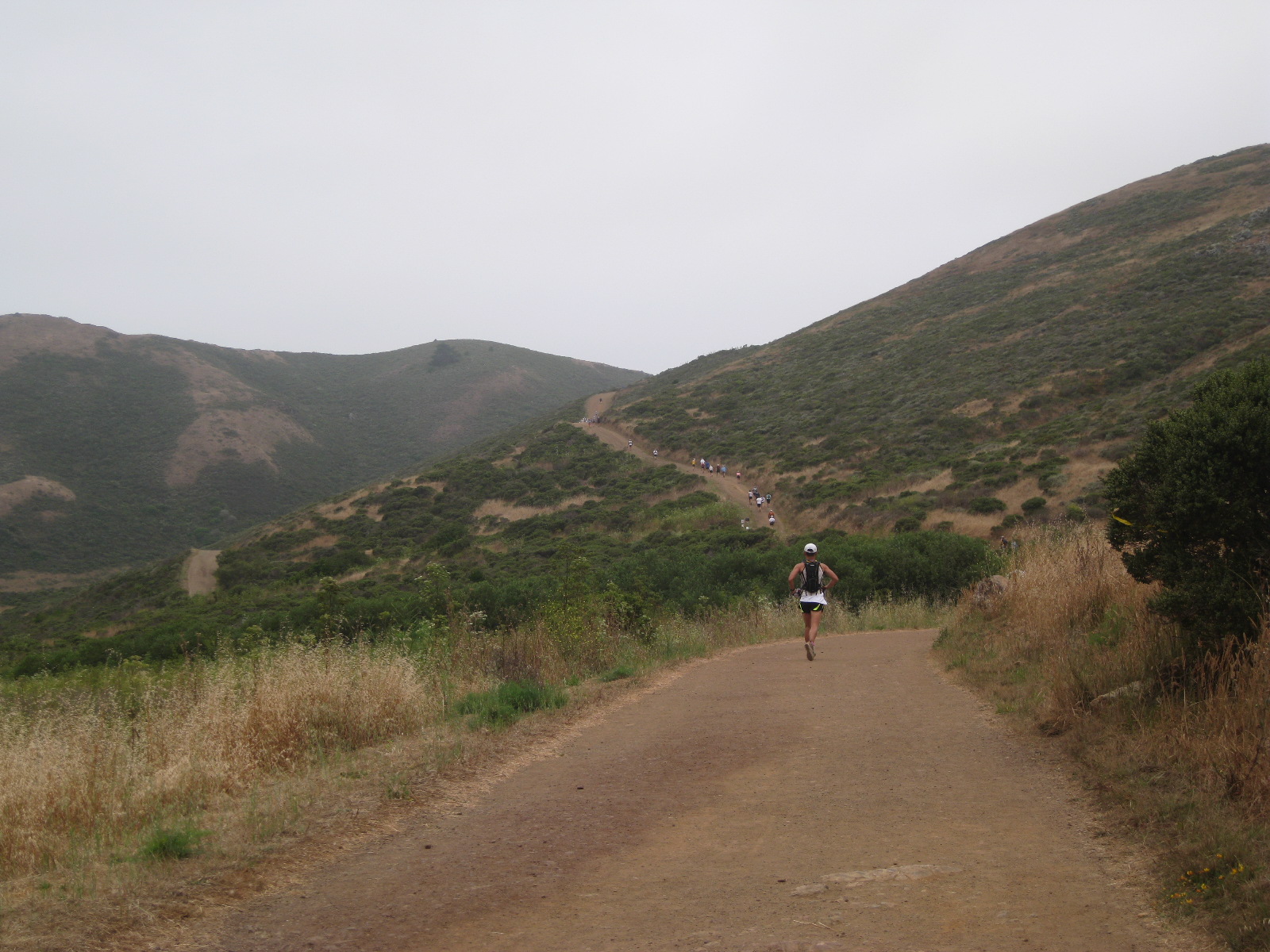
The first trail that you hit once your run from the Starting Line is the Coastail Trail where it is a mixture of asphalt road, single trail road, and winding stairs of big rocks and wood/small logs. It has a distance of almost 3.2 kilometers and it ascends to about 900-1,000 feet at its peak. This is the first trail that will test the early effort of the runner whether he wants to be sucked up with the pace of the stronger runners or be conservative to brisk walk up to the peak. The flats are limited to the bunkers at Battery Townsley and its dark tunnel which is about 100 yards!
Coastal Trail From Rodeo Beach
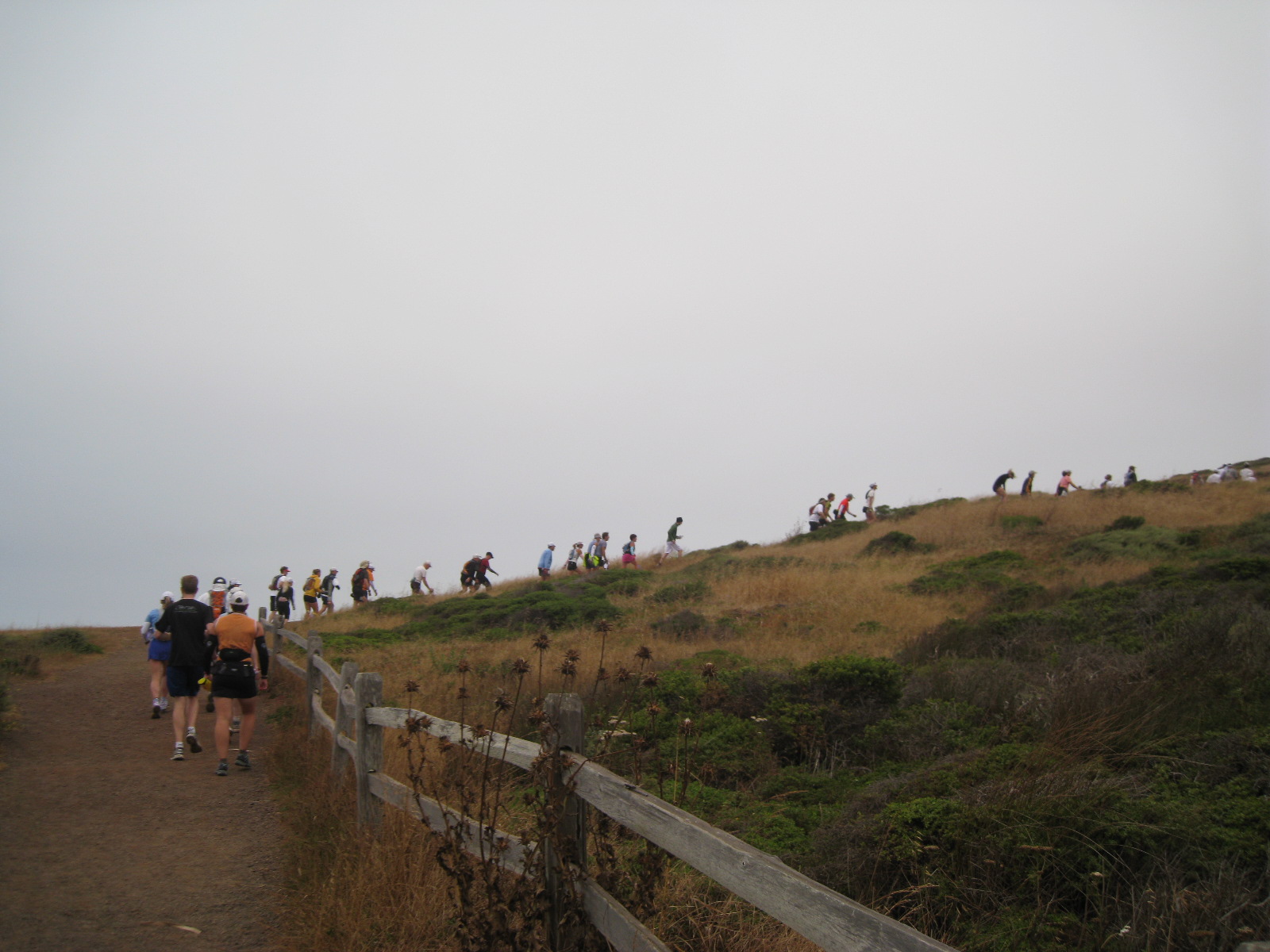
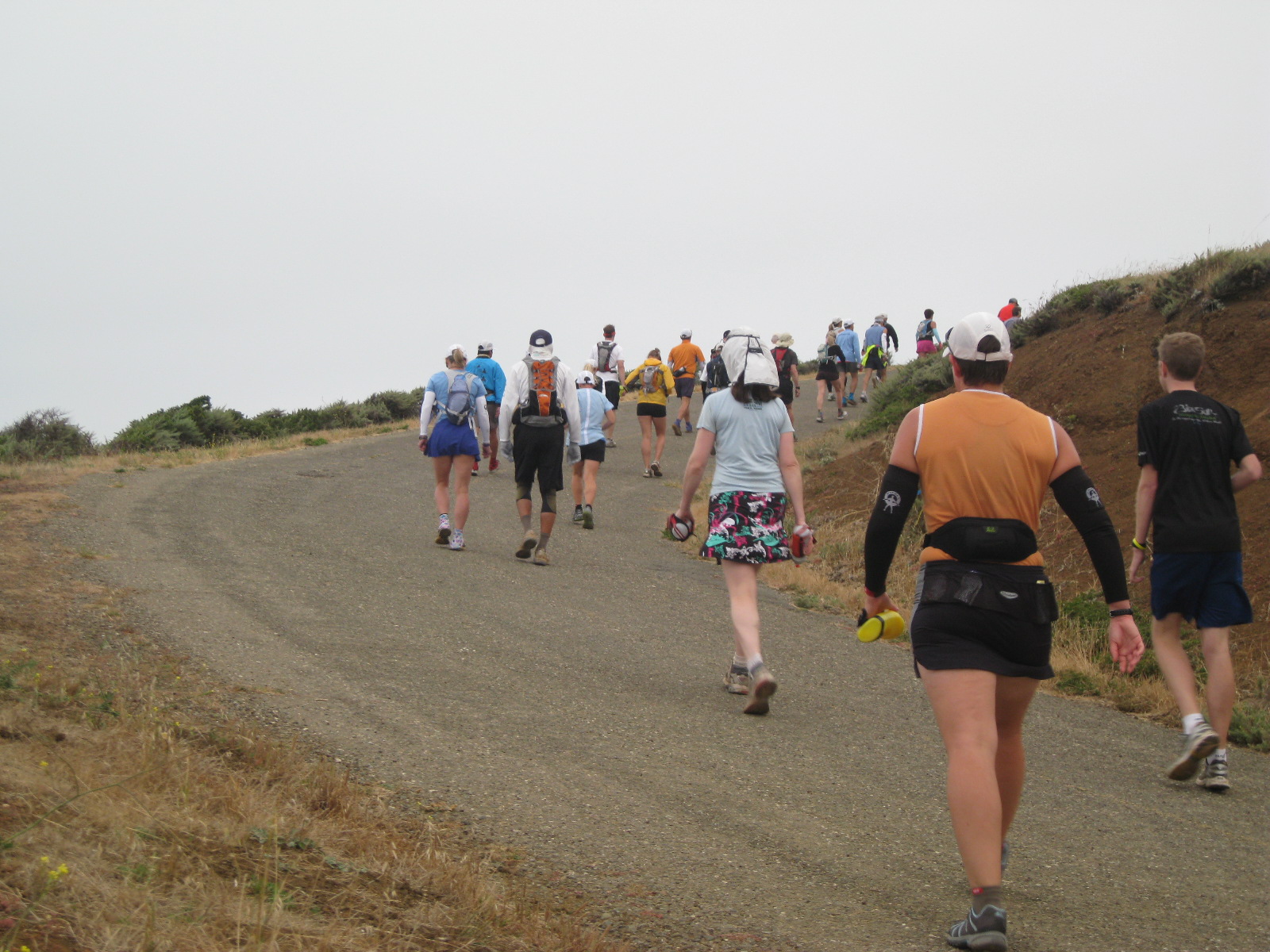
The race started at exactly 7:00 AM with a simple countdown from 10 to zero and a command of “GO”. From where I was standing at the back of the runners, I started to brisk walk while the faster runners started to jog and run up to the peak of the first mountain of the Coastal Trail. As I looked on my back, I could see that I was one of the few who were lagging behind. The race strategy was to brisk walk on the steep uphill portions and slowly jog or run on the peak flats and downhill parts of the route. Runners formed a single-file along the rocky one-track trails and along the winding wooden stairs of Coastal Trail. Once I reached the peak of Coastal Trail, the runners created some distance with one another. The route goes to the Wolfe Ridge Trail which is a descending route made of hard/sun-baked trail and some portions of loose soil mixed with small rocks. I was using my TNF Arnuva 50 BOA which I know it has the traction that could hold me from getting any slide or fall on the dowhill run. The descending Wolfe Ridge Trail has a distance of 1.2 kilometers and it seems to be short but on your way back to the Coastal Trail, this part of the route is often considered as “hardest and killer” part before you finish one loop or finish the race.
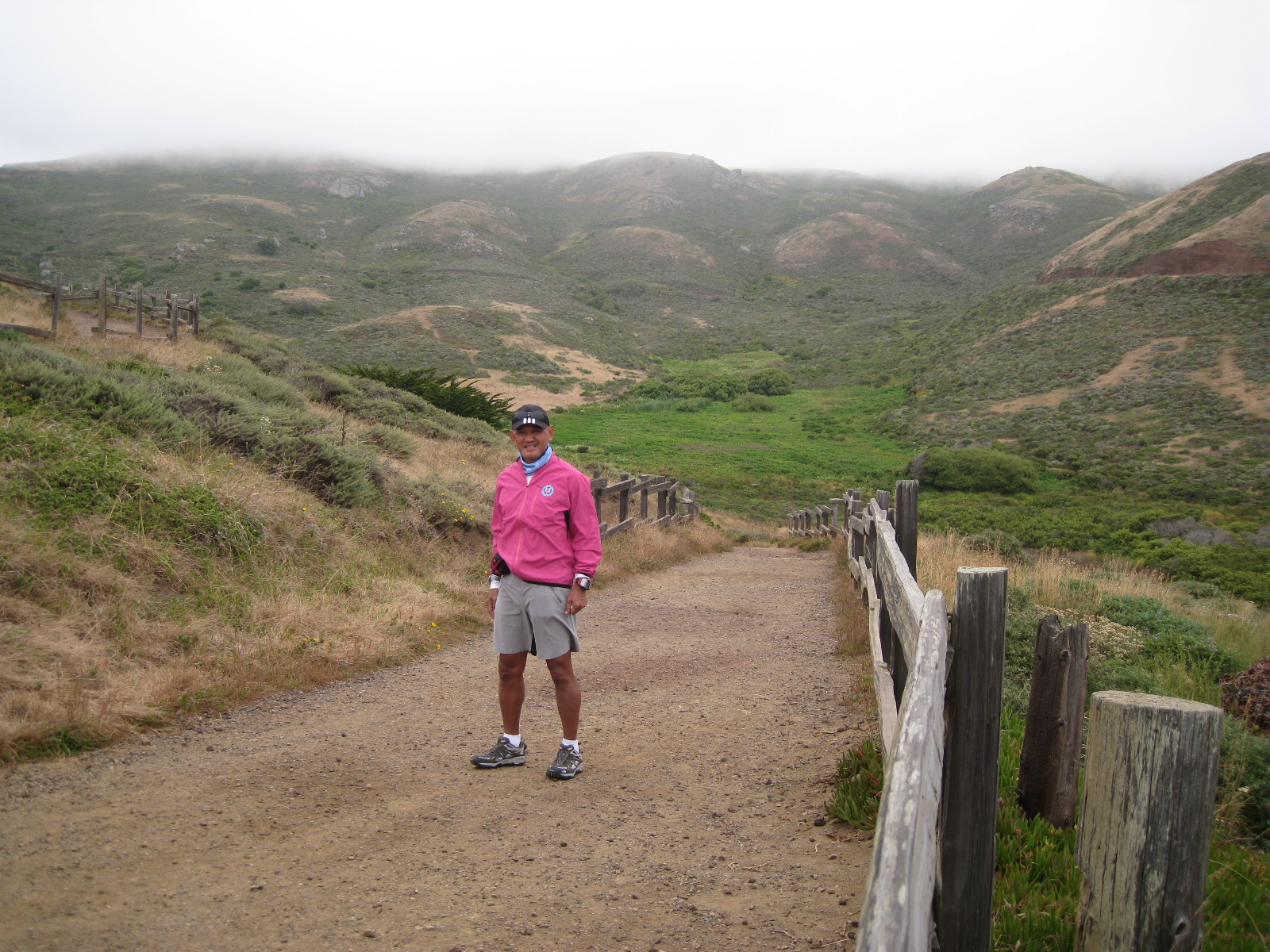
Uphill Climb at Coastal TrailI Was Walking With This Group Towards The Coastal Trail
Wolfe Ridge Trail & Old Springs Trail
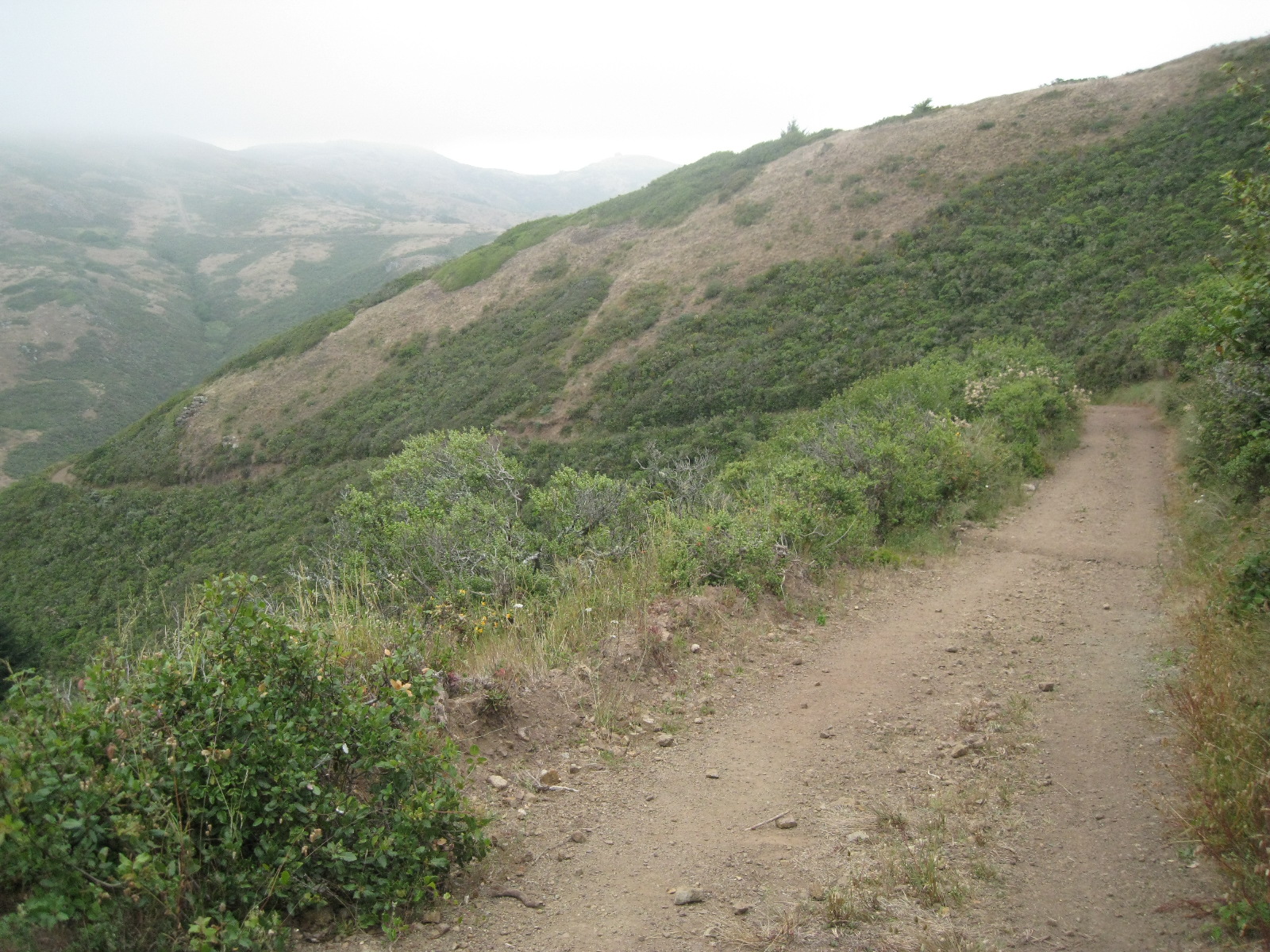
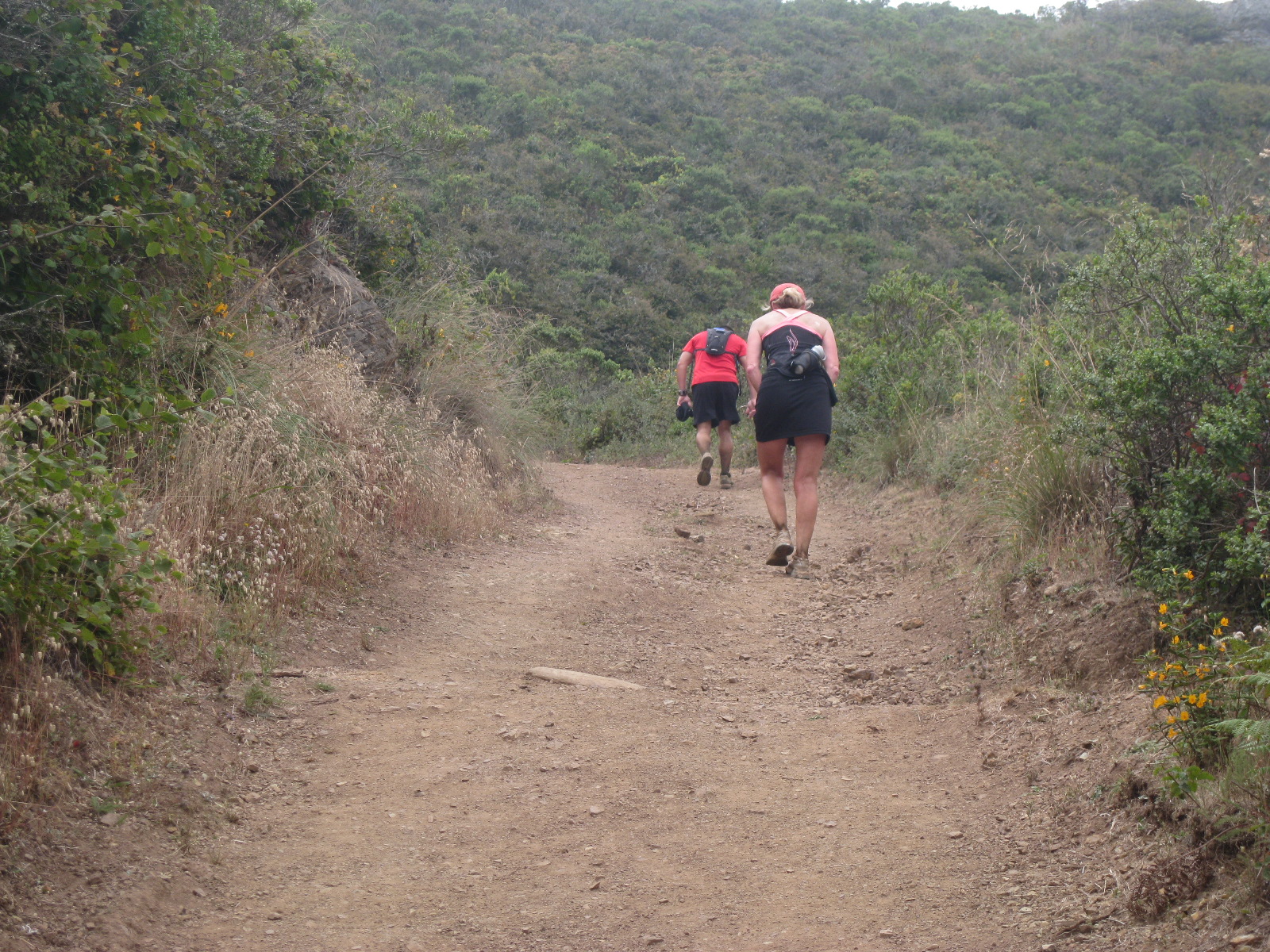
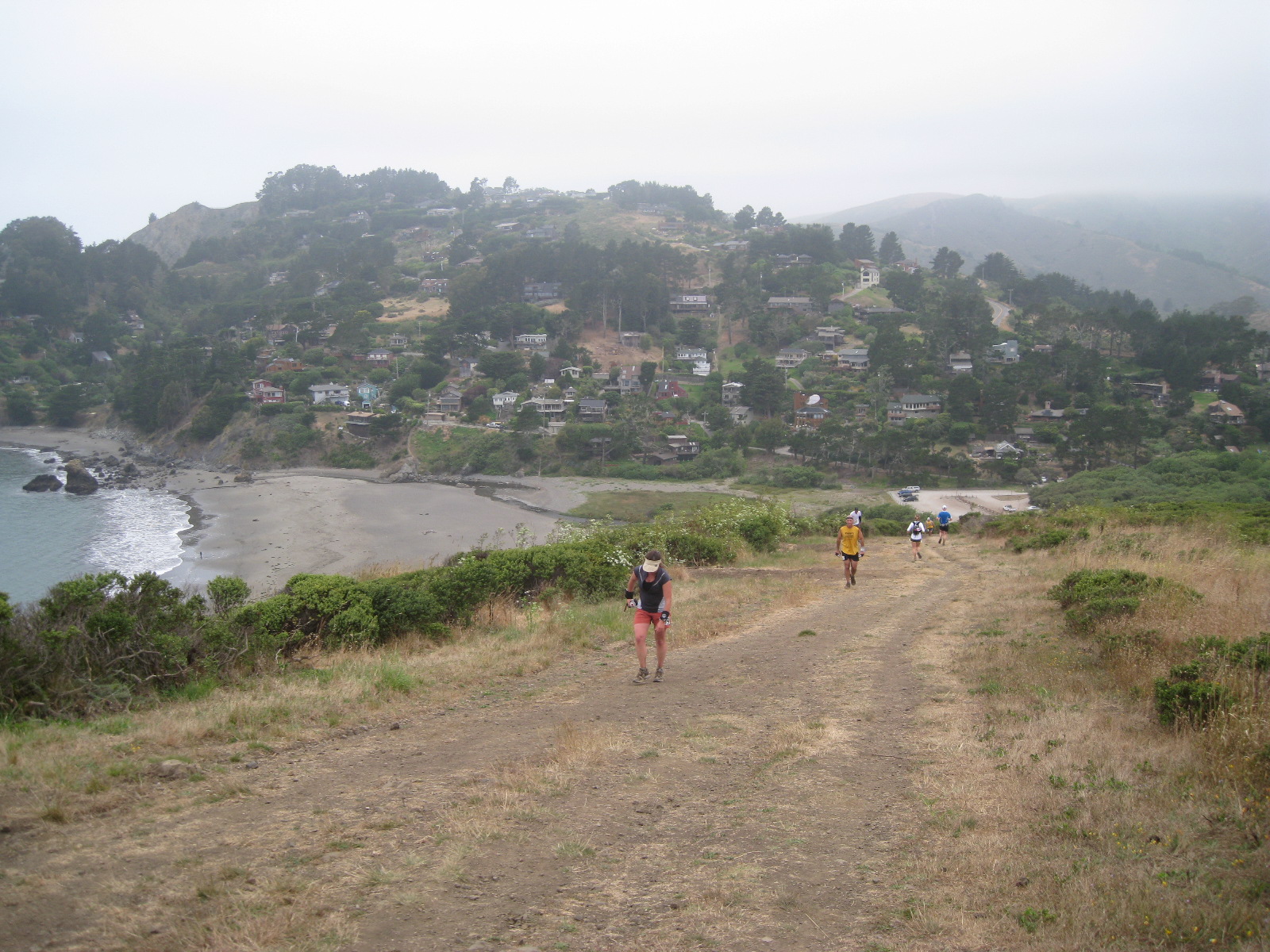
Wolfe Ridge Trail is a descending trail from the peak of the Coastal Trail. Some parts of it are too steep that you should control your footing as you might slide from the steep nature of the trail. However, on our way back to complete one loop, this part is the hardest part of the course. If you are good in downhill running this part is where you could gain some speed to even up your brisk walking towards the peak. The trail is about 1.2 kilometers before entering to a small portion of Miwok Trail. The small portion of Miwok Trail is relatively flat until it reaches the intersection towards the Old Springs Trail.
Downhill View of The Wolfe Ridge TrailUphill View Of The Wolfe Ridge Trail
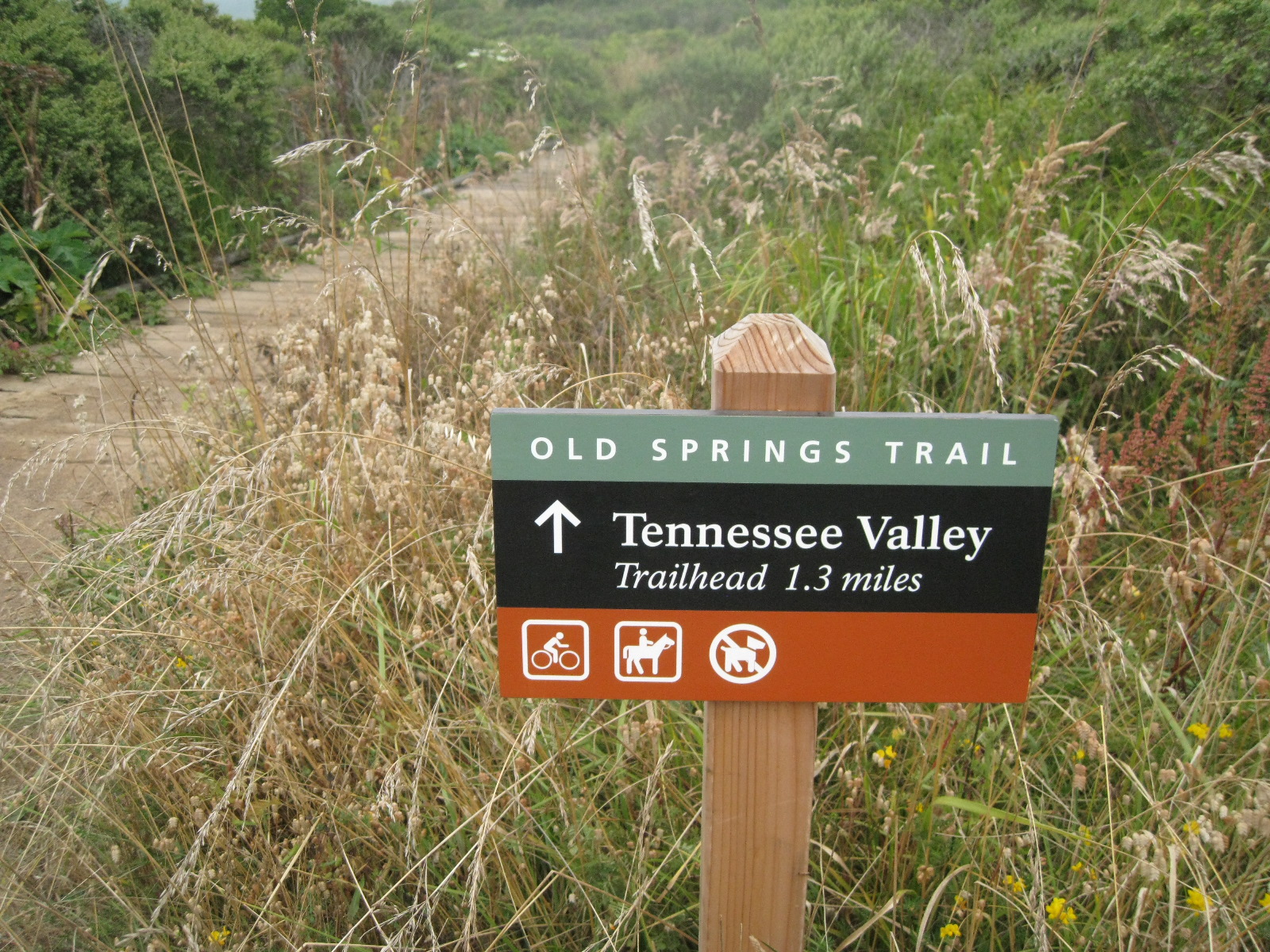
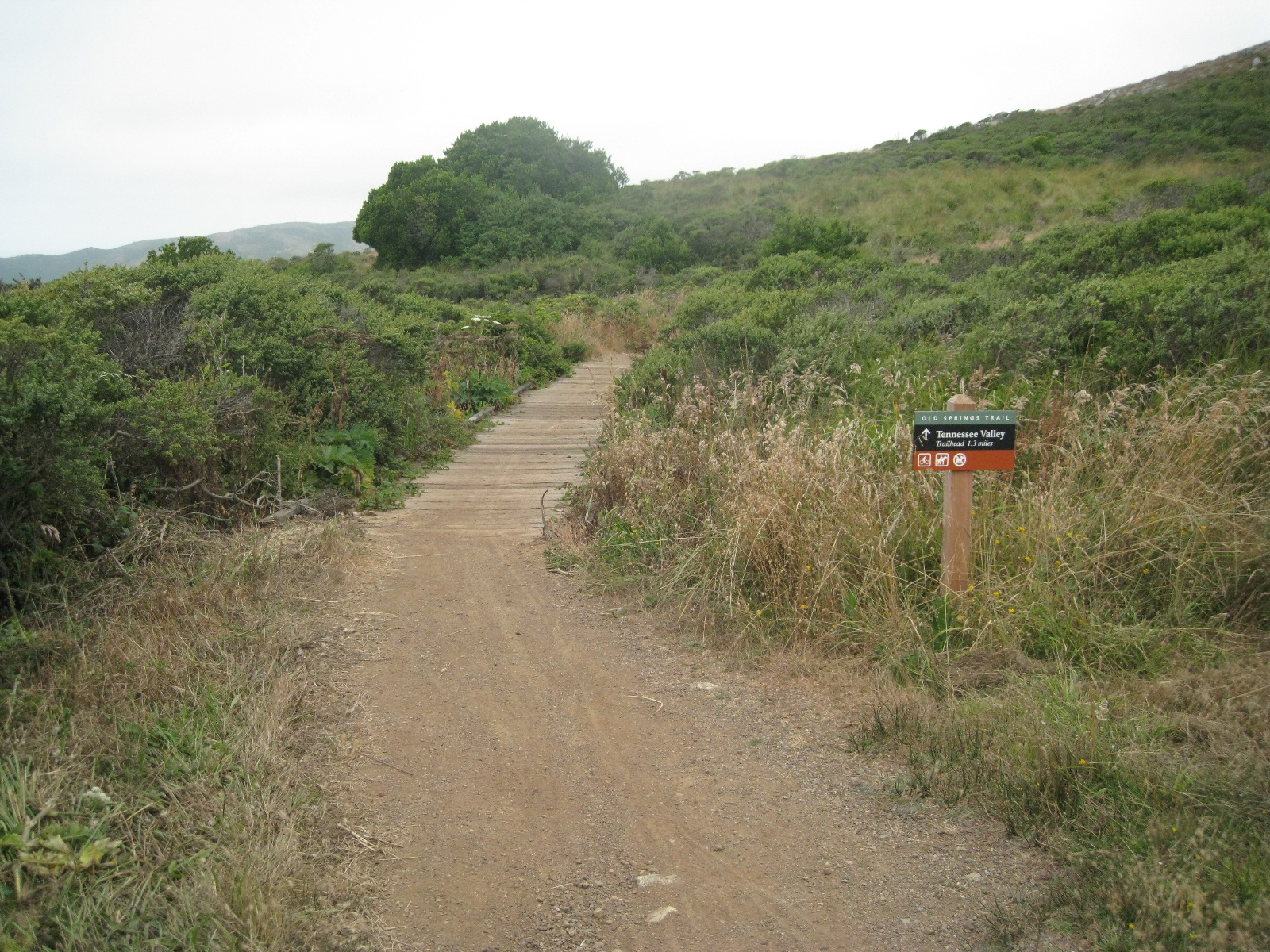
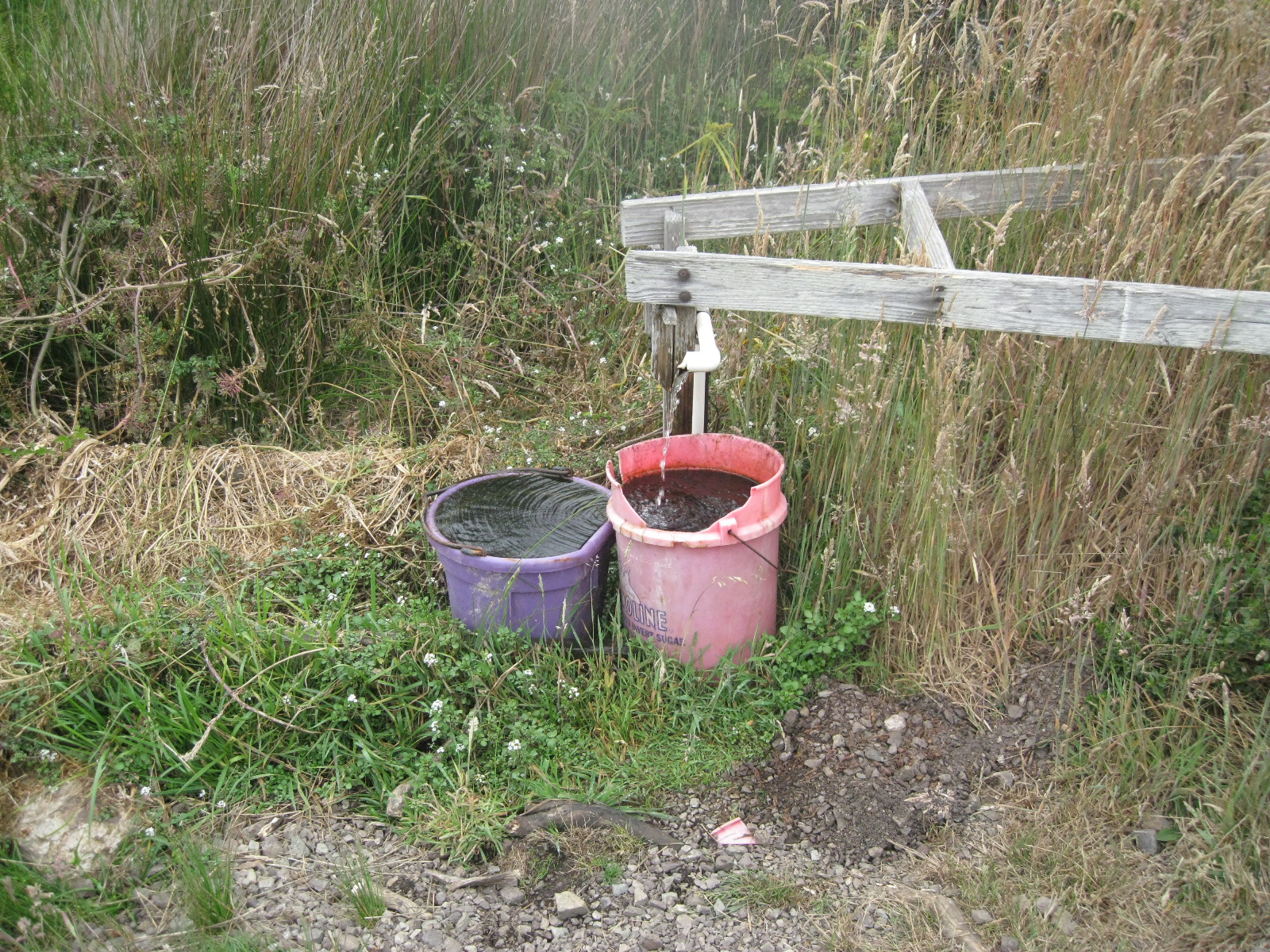
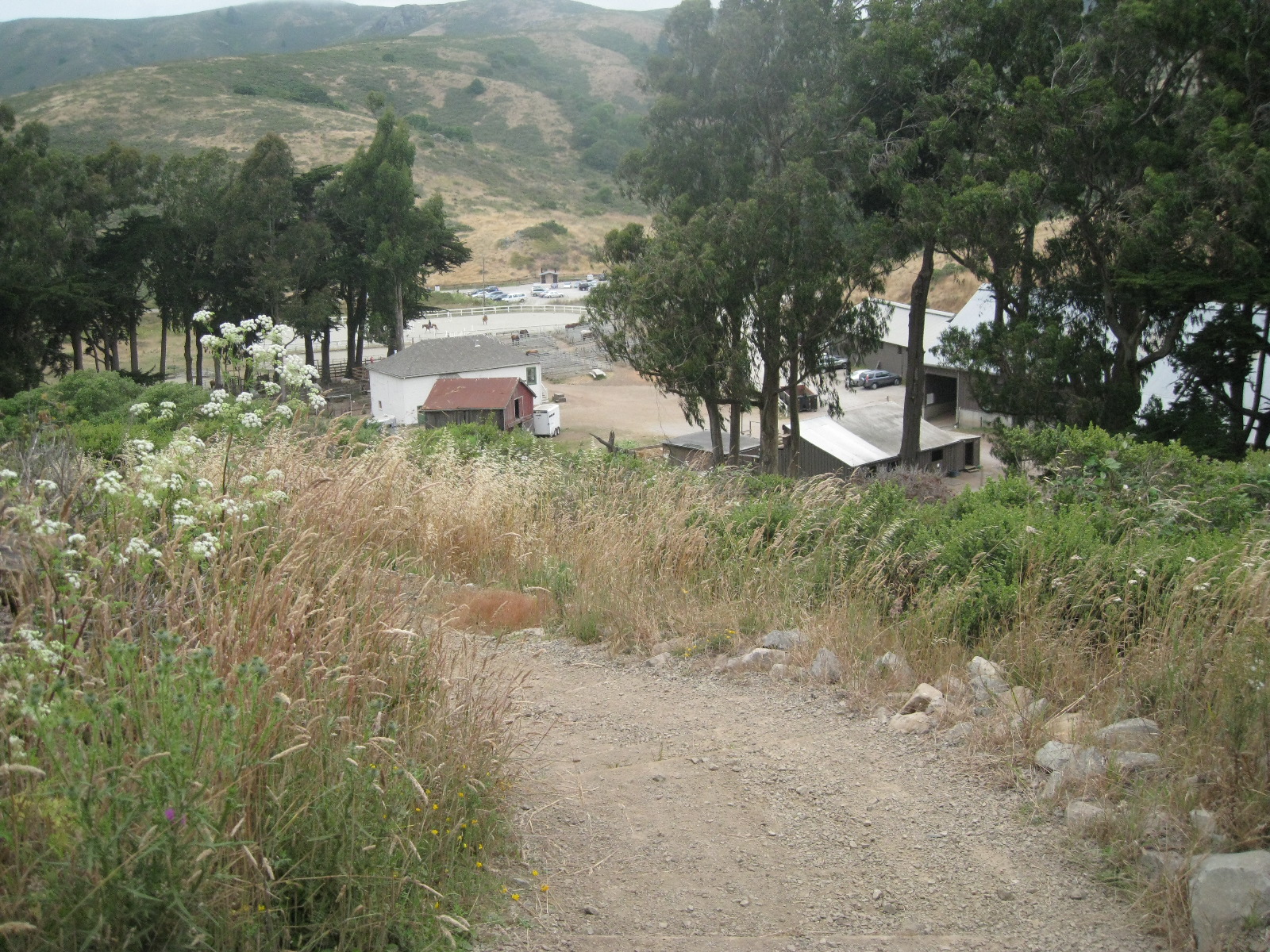
The Old Springs Trail is memorable with only two things that I observed along the route—the wooden bridges or wooden planks along the trail and there is a part where there is a continuous flow of water from a small pipe with two plastic pales full of water. The trail has some switchbacks and has a general flat course until it goes downhill towards the Miwok Livery where horses could be rented for horseback riding along the differet trails of Marin Headlands. The trail ends at the Tennessee Valley Trailhead where the 1st Aid Station is located. This AS will be the busiest AS for the whole race as each of the 50-mile runners has to pass it for six (6) times! I reached the Tennessee Valley Trail Head AS in 52:30 minutes. I had my Nathan bottle refilled with sports drinks and grabbed some cuts of beef jerky and went to the Rest Room to pee.
Old Springs Trail & Wooden BridgesWood Planks/Bridges On The Old Springs TrailDripping Water @ Old Springs TrailA View of the Tennessee Valley Aid Station Area/Miwok Livery from the Old Springs Trail
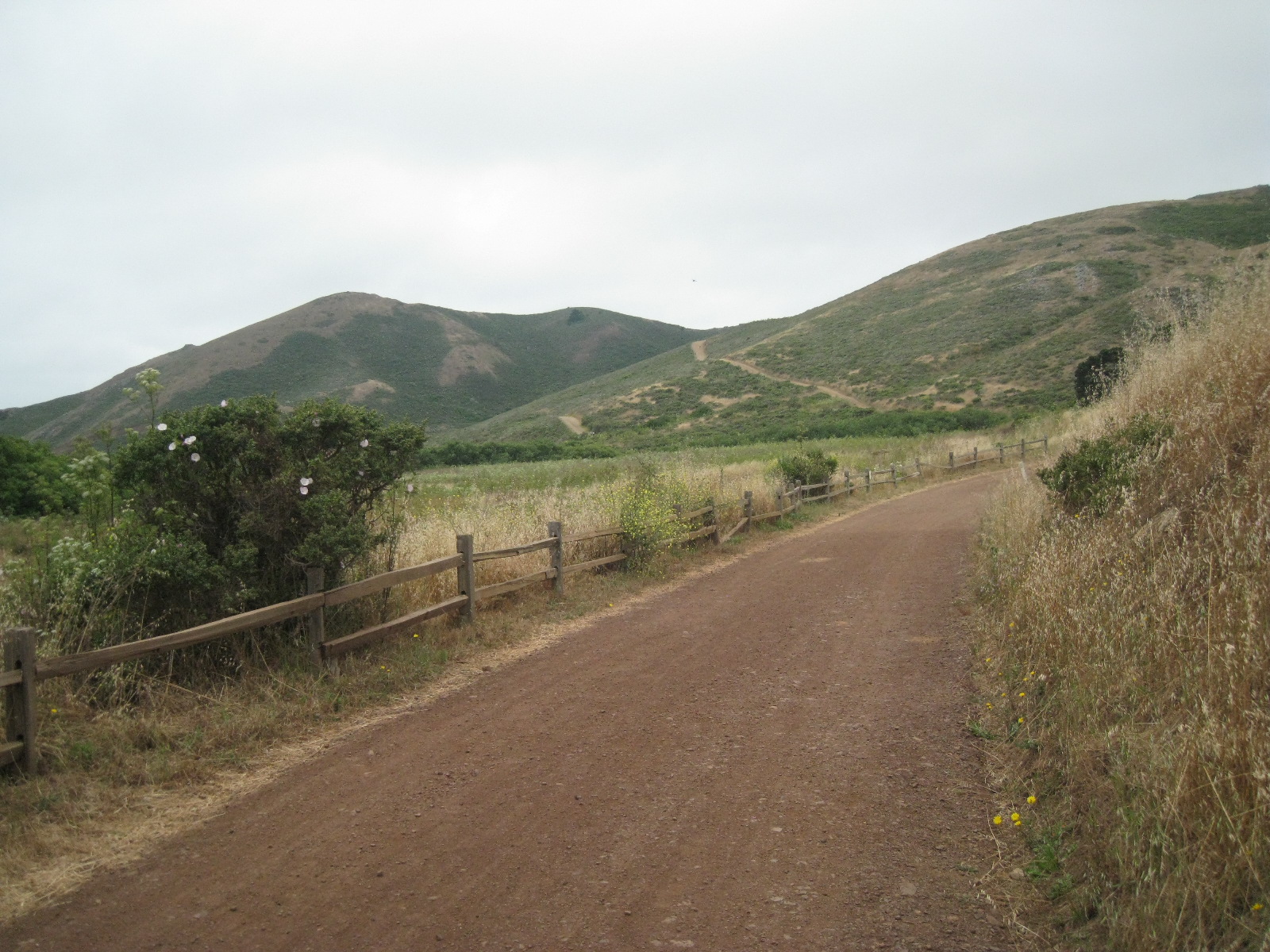
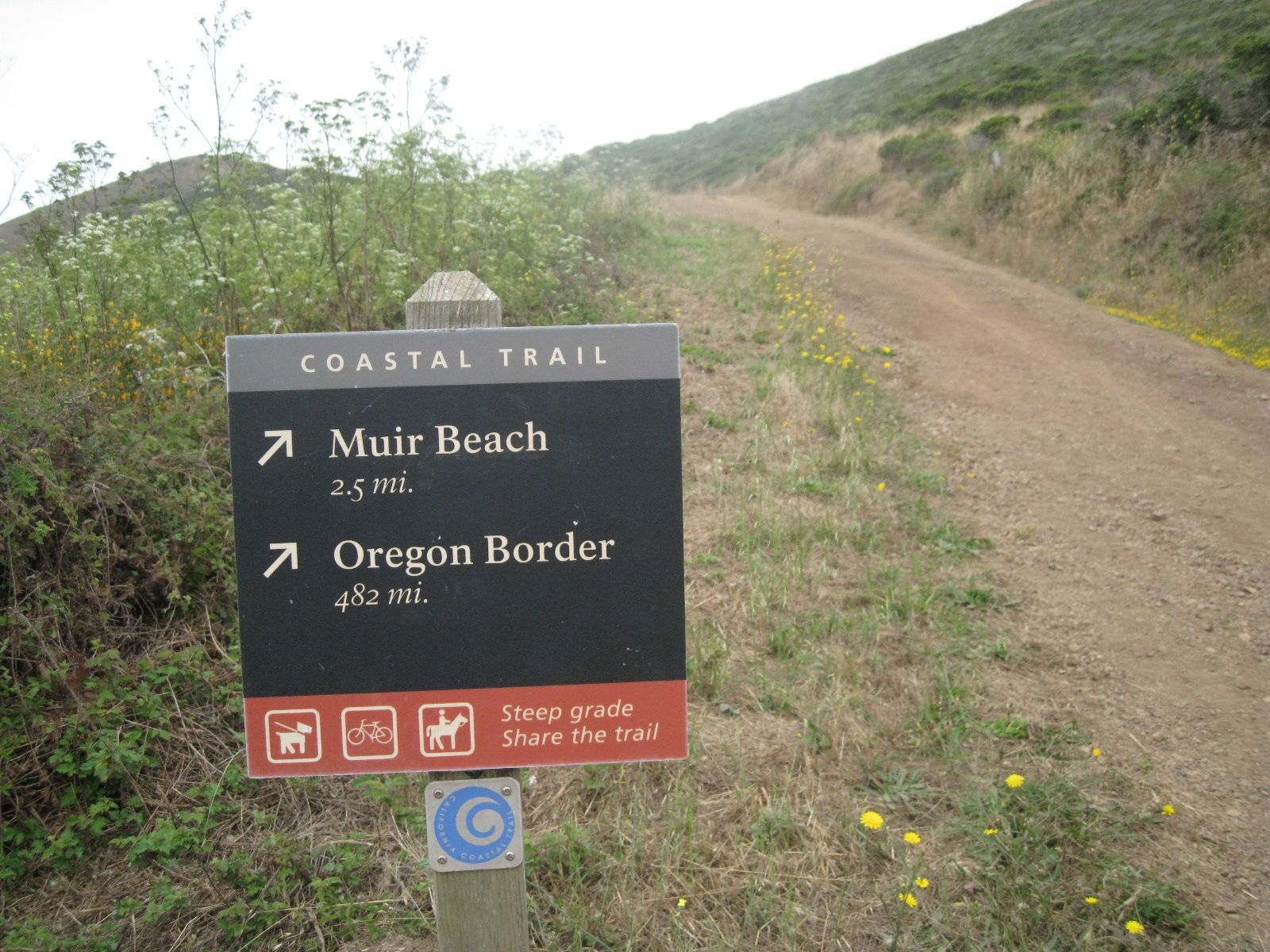
In about 3 minutes, I was back on the road, running along the asphalted road of Tennessee Valley Road going to the beach. I popped out my 1st GU and started to eat one bar of Nature Valley Crunch Bar. After almost 2 kilometers, I turned right towards the Coastal Dirt Road and run for another kilometer before it splits to the Pirates Cove Trail. This part is another uphill climb where I could see the tougher runners still running towards the peak of a trail. As we reached the peak of the Pirates Cove Trail, we started to descend towards another short stairs that has woods as stoppers and later leveled up into a one-track trail where all the runners started to “bushswhack” those shrubs and grasses that cover the trail. I learned that I was already running along the Coastal Dirt Trail which is already a part of the Pacific Coast Trail that connects up to the boundary of Oregon for another 480+ miles. We descended towards the Muir Beach Fire Gate where the 2nd Aid Station was located. At this point, I was at the 7.9-mile point of the race and had my Nathan Bottle refilled with sports drinks. After eating some slice of beer jerky and stashing another cut in my pocket, I started to run back uphill to the Coastal Dirt Trail which finally connects to the Coyote Ridge Trail.
Coastal Dirt Road from Tennessee Valley Asphalt RoadTo Muir Beach Fire Gate & PC Trail Towards The Boundary of Oregon StateUphill Climb at Coastal Dirt RoadDownhill To Muir Beach Fire Gate & 2nd Aid Station & Turn-around PointCoyote Ridge TrailAwesome!!! (Picture Taken During My 2nd Recon Run @ Coyote Ridge Trail)
At every Aid Station I made sure to eat some slices of beer jerky because I know it is a source of protein and salt. A slice of beef jerky would stay long in my mouth as if it is a “bubble gum’ and use my sports drinks to wash it away from my mouth to my throat. Before reaching the peak of the Coyote Ridge Trail, I was at the back, about 3 feet away, from two runners and I was able to hear what they were talking about. One runner is from Texas who is a triathlete and the other one is from one of the cities of California. We were brisk walking and they were asking each other what is the cut-off time and then suddenly both of them turned their heads on me. I told them that the cut-off time is 15 hours and I later joined their conversation. We introduced each other and found out that we are all first-timers for the 50-mile race! One of our conversations went this way:
Tall Guy (From California): Are you from San Francisco?
Bald Runner: No, I am from the Philippines!
Short Guy (From Texas): Did you come here for this race?
BR: No, I have a business deal here in California to negotiate. (Liar!)
Tall Guy: I am….. ( forgot the name and the Texan guy also gave his name)…What is your name?
BR: Just call me the Bald Runner. In my country, the runners there call me BR…Bald Runner!
In unison the two guys removed their running caps from their heads to show that they are also bald!
Tall Guy: We are the Bald Runner Trio!!!
And all of us laughed. But these guys are younger than me by at least 15 years!
We ran together on the wide portions of Coyote Ridge Trail and ran on a single file along the Miwok Trail Cut-Off until we were back to the Tennessee Valley Aid Station. I separated from them as I went to the Rest Room to pee (for the 2nd time). When I went out of the Rest Room, as I approached the Aid Station, I saw Rick Gaston and shouted his name and he was surprised to see me. While talking to him and having some photo-ops, I had my bottle refilled with sports drinks. I had another chance to eat some melon and water melon dipped with salt and stashed some beef jerky into my pockets. After refilling my bottle, it was time to go again and left Rick at the AS.
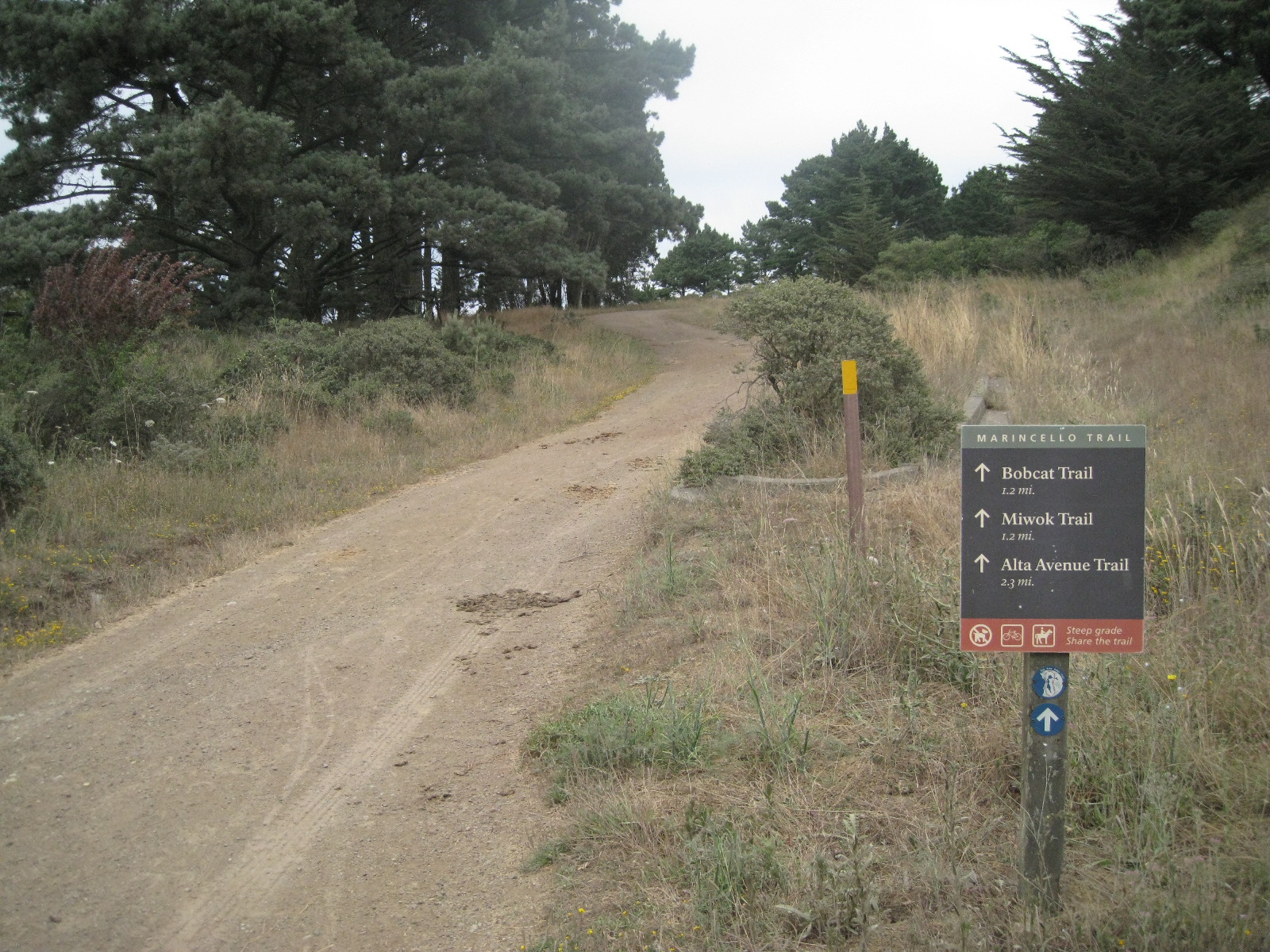
The Tall & Short Guys were left behind at the AS as I went to run on the next trail which is Marincello Trail. I started to brisk walk for the entire trail which has a distance of 2.3 kilometers and has a total ascent of almost 900 feet. Halfway along this trail, I joined a lady runner who is about my age as she was jogging uphill while I was brisk walking.
Lady Runner: Look at the incoming runner, he is the one leadig the race. ( We were meeting the top runners on their downhill run towards AS #1)
BR: Wow! He’s fast and very young!
Lady Runner: Are you running the 50-miler?
BR: Yes
Lady Runner: You are crazy!
BR: Yes, I am crazy, the same with the other 50-mile runners. How about you?
Lady Runner: I am running the marathon and after one loop and I am done. You are fast in your walking.
BR: Ok..Thanks..good luck! (I was able to pass her as she started to brisk walk)
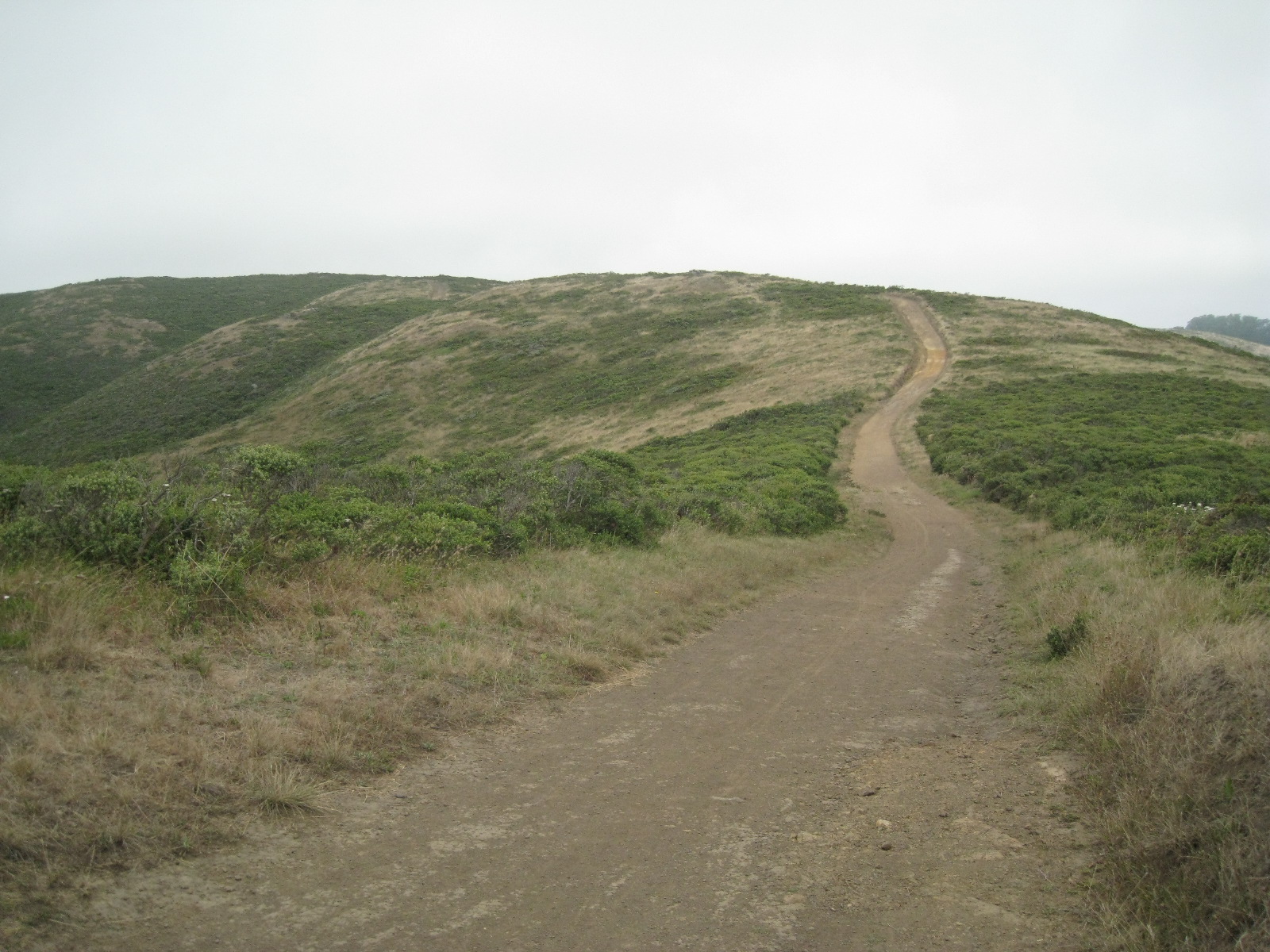
Uphill View of Marincello TrailNice View On Top Of Marincello TrailDownhill View of Bobcat Trail
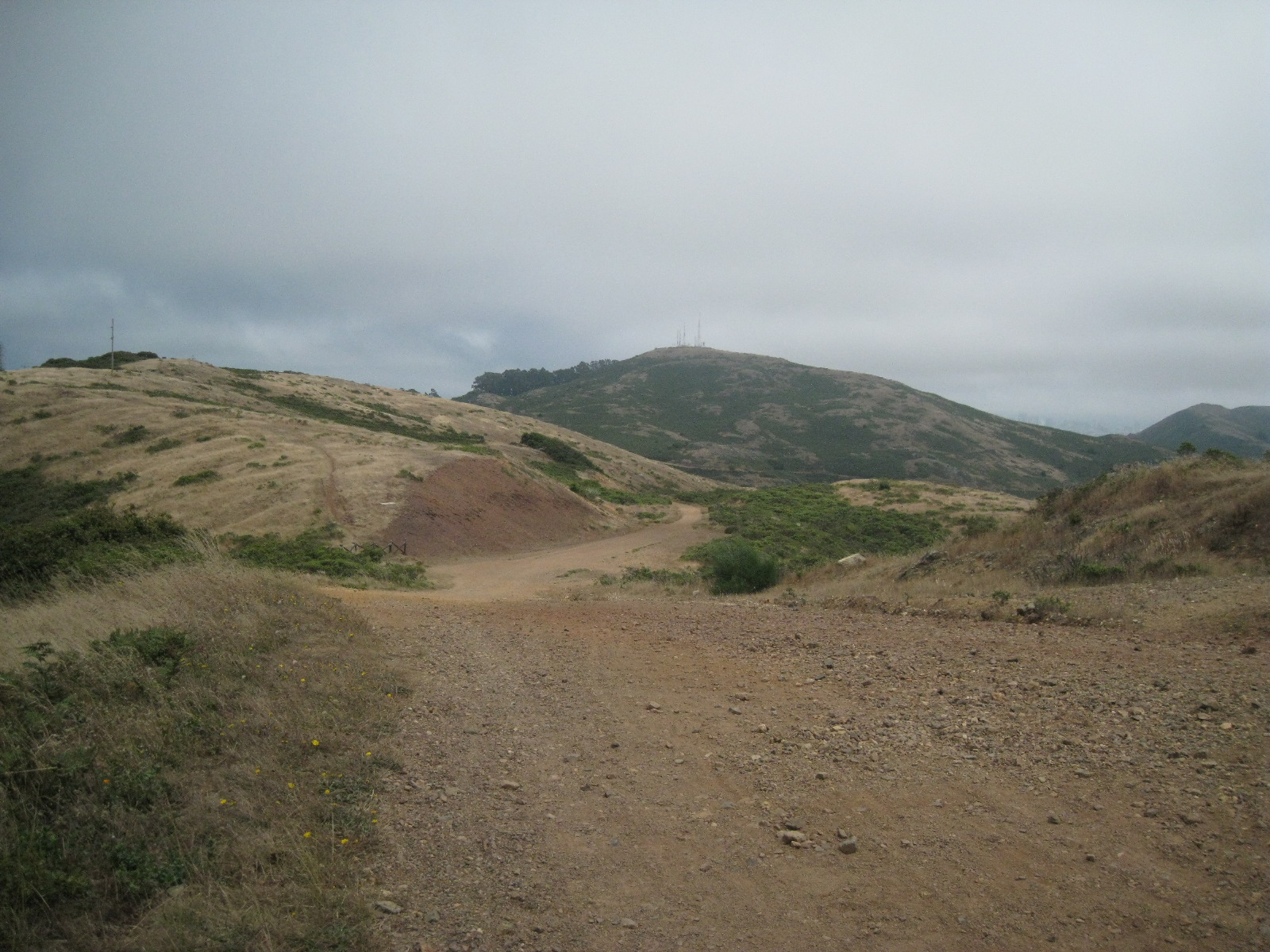
And I went ahead of her by making my brisk walk faster. In a few minutes of continous brisk walking, I reached the peak of Marincello Trail and in a few meters, it meets Bobcat Trail. I started to run again as soon as it flattened at Marincello Trail and all the way along the Bobcat Trail which is almost a steady and gradual downhill towards the Rodeo Valley Trail. As I turned left at the Rodeo Valley Trail, the trail was still flat until I veered right as I crossed a small wooden bridge towards the 3rd Aid Station. It was another chance to refill my bottle with sports drinks and popped out my 2nd GU. The 3rd AS was the turn-around point and it was time to go uphill to Bobcat Trail. I had more time to brisk walk along Bobcat Trail until I reached the peak of Marincello Trail. It was a fast run downhill along Marincello Trail until I reached the Tennessee Valley Aid Station for the 3rd time. At this point I am supposed to have run 21 miles and I still have 4 miles to go to reach the starting area for my first loop.
There was no problem running along the ascending portions of the Old Springs Trail and the flatter portions of Miwok Trail but the challenge was to reach the top of the Wolfe Ridge Trail as it is the steepest portion of my way back to the Coastal Trail and Hill #88. From the peak of the Coastal Trail everything was downhill and I was able to complete my first loop in 5:38+ hours.
At the starting area I ate one serving of oatmeal, boiled egg, fried slice of SPAM, one piece of Choc-Nut, and drank ice-cold Gatorade. I refilled my stash of GU Gels in my pockets to include my supply of Crunch Bars. I changed my Dry Max socks with another type of running socks with the same brand. I spent almost 10 minutes in the process and I feel that I can finish another loop for a sub-12-hour finish.
Second Loop
I left the Starting Line for my second loop with a prevailing elapsed time of 5:48+. I made a plan to finish the whole race in less than 12 hours and try to be faster in brisk walking in uphill climbs and faster running in the downhill parts of the course. I was already alone in going up to the Coastal Trail and made some steady progress in reaching its peak. Running along the descending parts of Wolfe Ridge Trail had been easy and comfortable and soon enough, I was able to reach the Old Springs Trail.
I had to stop at the Tenessee Valley Trailhead for another pit stop at its Aid Station before going to the Coastal Dirt Trail. As I ran along the asphalted road of Tennessee Valley Trail, I was able to pass one of male runner who was busy eating some food while he was brisk walking. As I turned right to the Coastal Dirt Trail Road, I was greeted by a family of four who were hiking down the trail and I greeted them with a hand wave, a smile, and a greetings of “Good Afternoon”. As I went up the Coyote Ridge Trail towards the Muir Beach, I joined an old ultrarunner whom they call as “Buzz” and a young runner who was wearing cotton shorts and shirts. The two “white” runners were talking about some topics related to the Western States 100-Mile Run and I listened to them intently. It appeared that the older runner were giving some advise to the younger runner on how to finish the WS 100 Race. I was able to pick up some good advises while I was listening to their conversation. I also joined in their conversation by telling them that I have plans of training for the WS 100 in the future and I told them that I need more exposure in ultrarunning events in the USA.
Along the Coastal Dirt Trail, two tall “white” runners tried to overtake us and we let them pass us. However, as we reached the downhill part that goes to the Muir Beach Fire Gate and AS #2, I increased my pace and left “Buzz” and the younger runner and later, was able to overtake the two tall guys whom we gave some room for them to pass us at the single-track trails of Coastal Dirt Trail. As soon as I reached the AS #2, I requested the volunteers to have my bottle filled up with sports drinks; picked-up some melon cuts and dipped them to a plate of salt; and drank some cups of Coke! I did not spend so much time at the AS and left the place immediately. While I was going up towards the Coyote Ridge Trail, I met “Buzz”, the young cotton-dressed runner, and the two tall guys who were going to AS #2.
I maintained my brisk walking on the steep portions of the Coyote Ridge Trail until it levelled off towards the Miwok Trail Cut-Off. From here, I was already alone where I could not see anybody infront and not minding who is trailing me on my back. As I was about to finish running along the Miwok Trail, I saw two ladies infront of me. I recharged at the Tenessee Valley Trailhead AS with Seven-Up with slice of melon dipped in salt and refilled my bottle.
As I charged to the uphill climb of Marincello Trail, the two ladies were ahead of me by 5 meters. I tried to increase my pace in brisk walking but I was surprised that I could not gain some distance to get nearer to them and try to engage some conversation with them. I was thinking if my pace in brisk walking was too slow as I tried my best to increase the turn-over of my feet on the ground. The truth is that, these two ladies gained another 5 meters distance from me. Before we reached the peak of Marincello Trail, the two ladies were already leading me with about 10 meters!
I made my move and ran the downhill part of Bobcat Trail and passed the two ladies and gained a distance from them. I was able to overtake one or two runners along the Bobcat Trail but more runners were already going back to the finish line as I met them going up along Bobcat Trail. Before reaching the Rodeo Valley Trail, I stopped by on the side of the road and looked for some cover for me to pee. While relieving myself, I saw a guy who passed me and he was looking at me. He must be trailing me and making me as his “target”!
After relieving myself, I immediately resumed my running and tried to overtake the guy. I finally caught him while he was eating and refilling his bottles at the AS #3. I did my “rituals” at the AS and immediately left the place after asking the volunteers on the remaining distance before we could reach the finish line. The old lady at the AS told me that I still have 8 miles to go—4 miles up to the Tennessee Valley Trailhead AS and another 4 miles towards the Finish Line.
I mentally computed my target time of arrival or finish as I had 9:45+ hour elapsed time when I reached the AS #3. I told to myself that I can finish 8 miles (12+kilometers) in two hours and I was confident that I could finish the race in less than 12 hours. I told to myself also to keep on moving but I had to slow down once I feel any pain on my legs. Having made my goal to finish the remaining miles in the race in two hours, I immediately left the AS ahead of the guy who passed me while I was relieving myself.
I really ran hard on the uphill climb of Bobcat Trail but have to revert back to brisk walking on the steeper portions of the said trail. As soon as I reached the peak of Marincello Trail, I saw a lady runner about 500 meters slowly running down the trail. I increased my pace on my downhill surge and was able to overtake her and made a considerable distance from her. But I need to refill my bottles with sports drinks that I decided to visit the Tennessee Valley Trailhead AS for the last time.
It was a quick stop but when I was running towards the uphill portion of the Old Springs Trail, the lady runner whom I overtook at the downhill part of Marincello Trail was already ahead of me by 10 meters. From the Old Springs Trail and Wolfe Ridge Trail, it was “cat and mouse” run between the two of us as I trailed her on those trails. The guy who overtook me while I was peeing at the Bobcat Trail was also on my tail trying to gain distance over me about 500 meters behind me at the Old Springs Trail. The lady runner ahead of me was “pressured” and I think she got tired while I tried to “push” her pace on the difficult parts of the Wolfe Ridge Trail.
Before I reached the highest peak of the Coastal Trail, the lady runner, made a hand signal to pass her and another group of three runners allowed me to pass them, too! I was still strong and my legs did not give me any problems as I reached the highest peak of the Coastal Trail and the last problem is to be able to run those winding wooden stairs and rocky one-track trail without any fall or misstep before reaching the Battery Townsley tunnels and the downhill asphalted road towards the finish line.
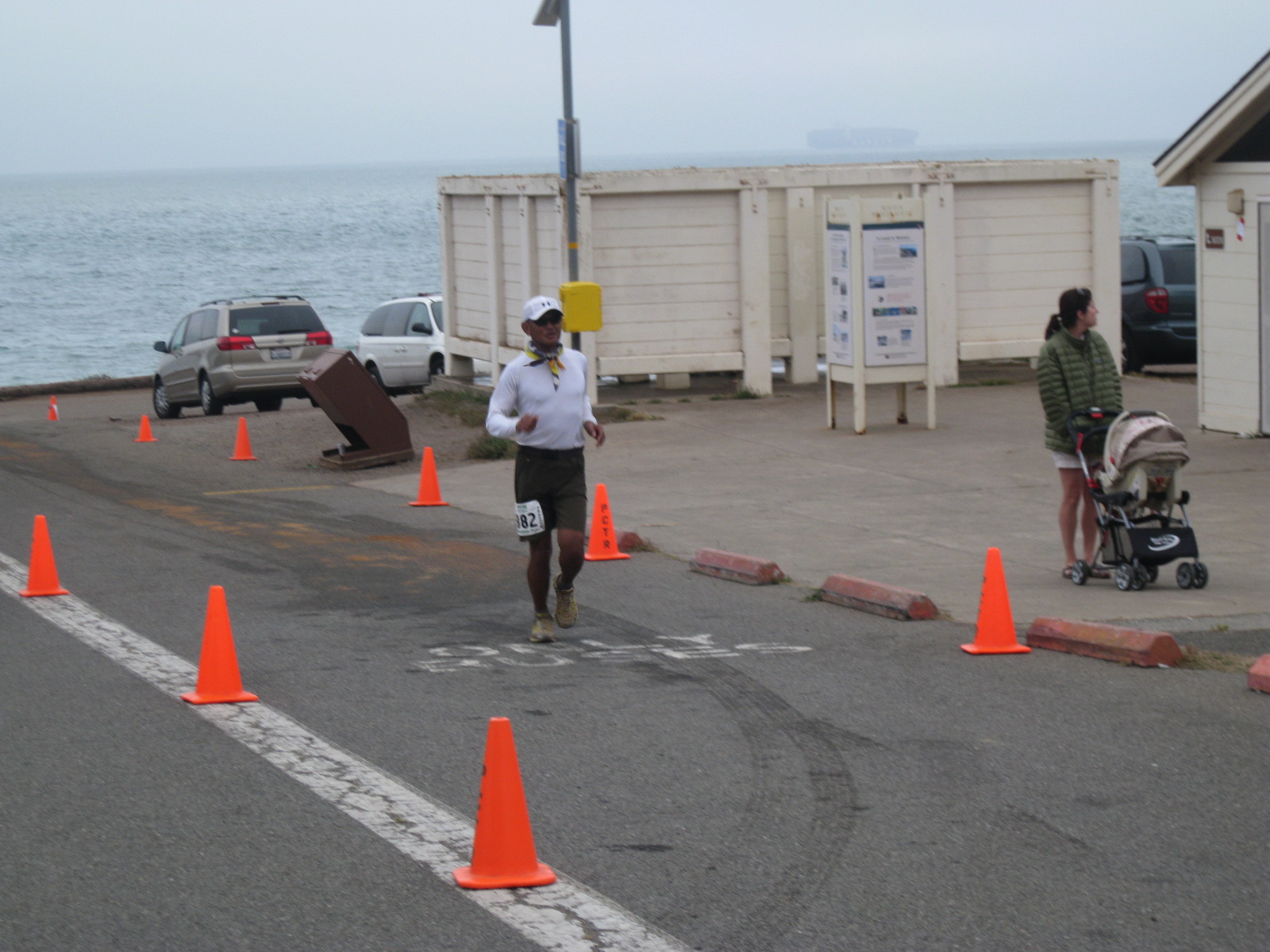
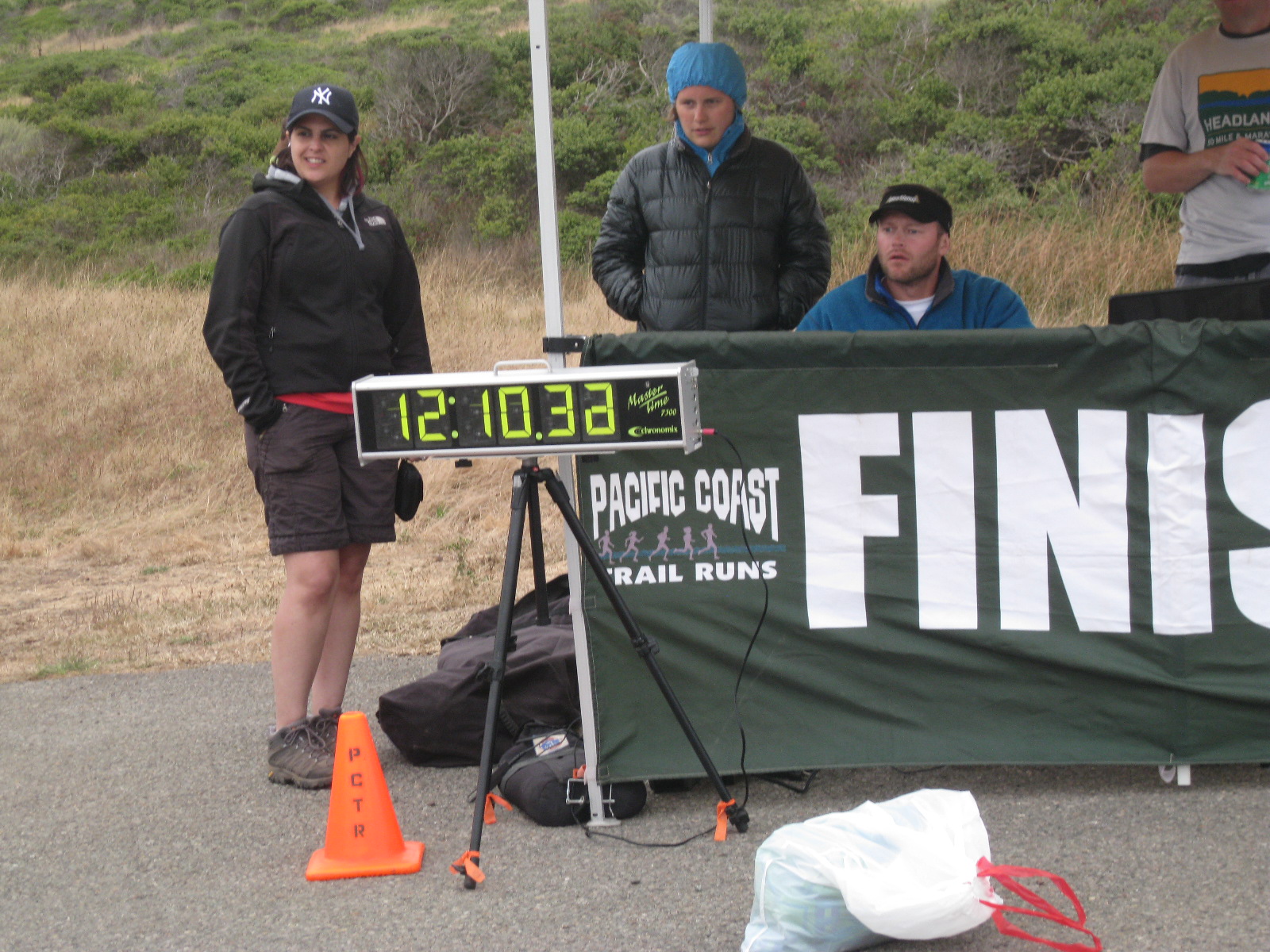
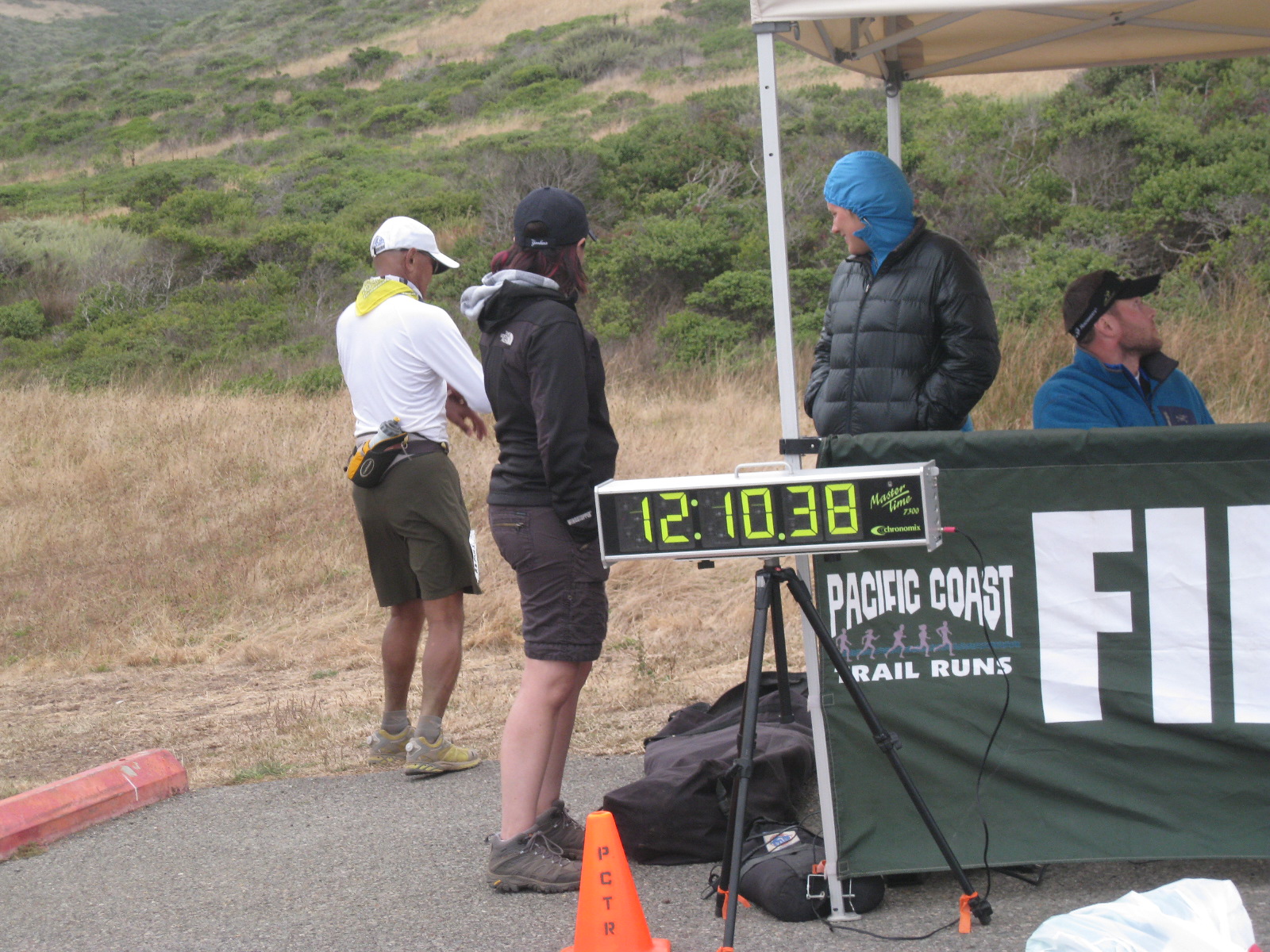
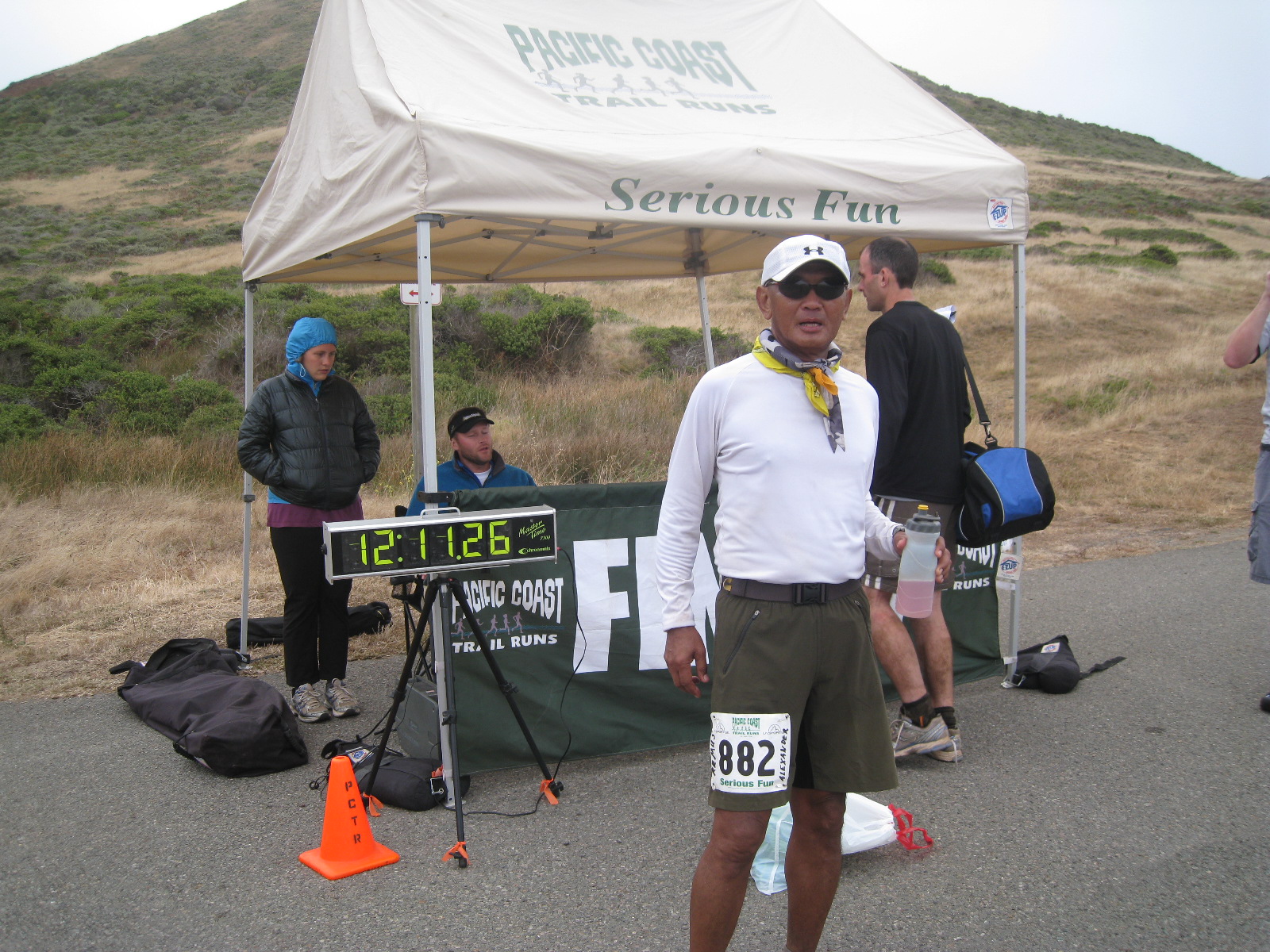
While running down the asphalted road of the Coastal Trail, nobody was trailing me and made an easy run towards the Finish Line. I crossed the finish line in 12:10:36 hours and I was happy to finish the race. I ranked #56 among the 90 finishers from the 126 starters. I was ranked #6 in my age category and I was very happy to have finished the race without any “issues” during the race and any injury! I was not able to attain my objective of finishing the race in less than 12 hours but I was happy and contented on the overall result of my capability to run such a challenging mountain trail run.
A Few Yards To The Finish LinePCT Run Staff & Race Director Looking At Me Before Reaching the Finish LinePassing The Finish LineThe Only Tent/Booth At The Race Start/Finish Area
I can only say that I had fun and good memories in this run. There is really a different kind of enjoyment and satisfaction that I felt during and after finishing the race. Even though the race was long, hard, and very challenging, there is something in ultra mountain trail running that keeps you coming back for more in order to test your ability in endurance and find out what you are made of. This is the feeling that I could not get from finishing marathon and lesser-distance races along the roads. I could not express the feelings and the emotions that I have gone through with my runs along the mountain trails of Marin Headlands.
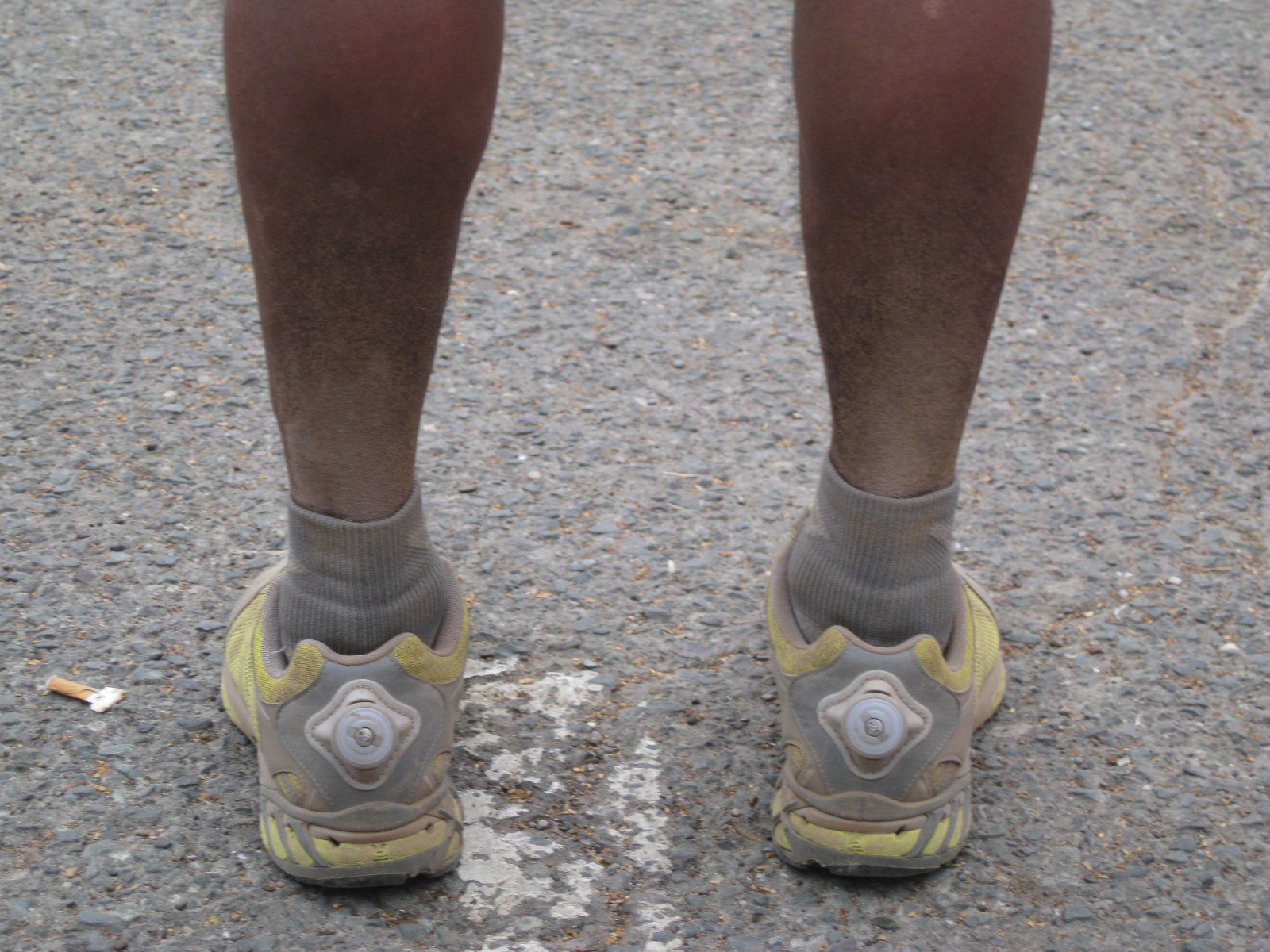
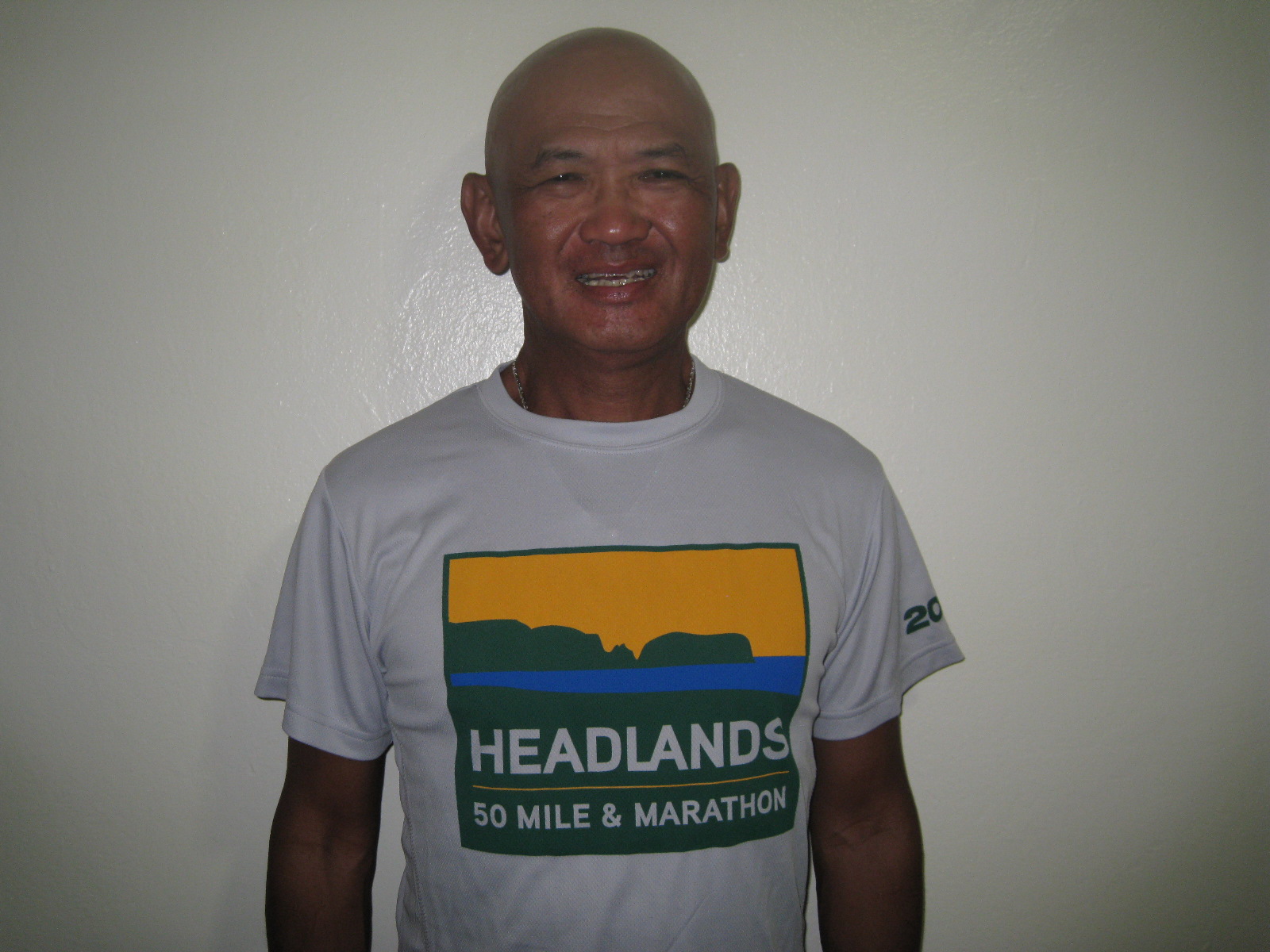
Dusty Legs & Dirty ShoesMemorable Prize...Headlands 50 Finisher's Shirt
I guess, I need to prepare and train some more and experience the good feelings and experience in mountain trail running. Hopefully, 2011 MIWOK 100K would be the next one.
(Note: If you reached this part and read the whole Race Report, you have finished one of my “ultra posts” in this blog. It is just fair that you finished reading this post in 15 minutes or more while it took me 12+ hours to finish the race and another 10 days to write and edit this post. I hope you enjoyed my story on the said race.)
The following pictures were taken from Frank’s Photos at PCT Trail Runs Website (www.pctrailruns.com) and Ingrid Taylar’s Photos at www.sanfrancisco.about.com @ Marin Headlands Trails Website.
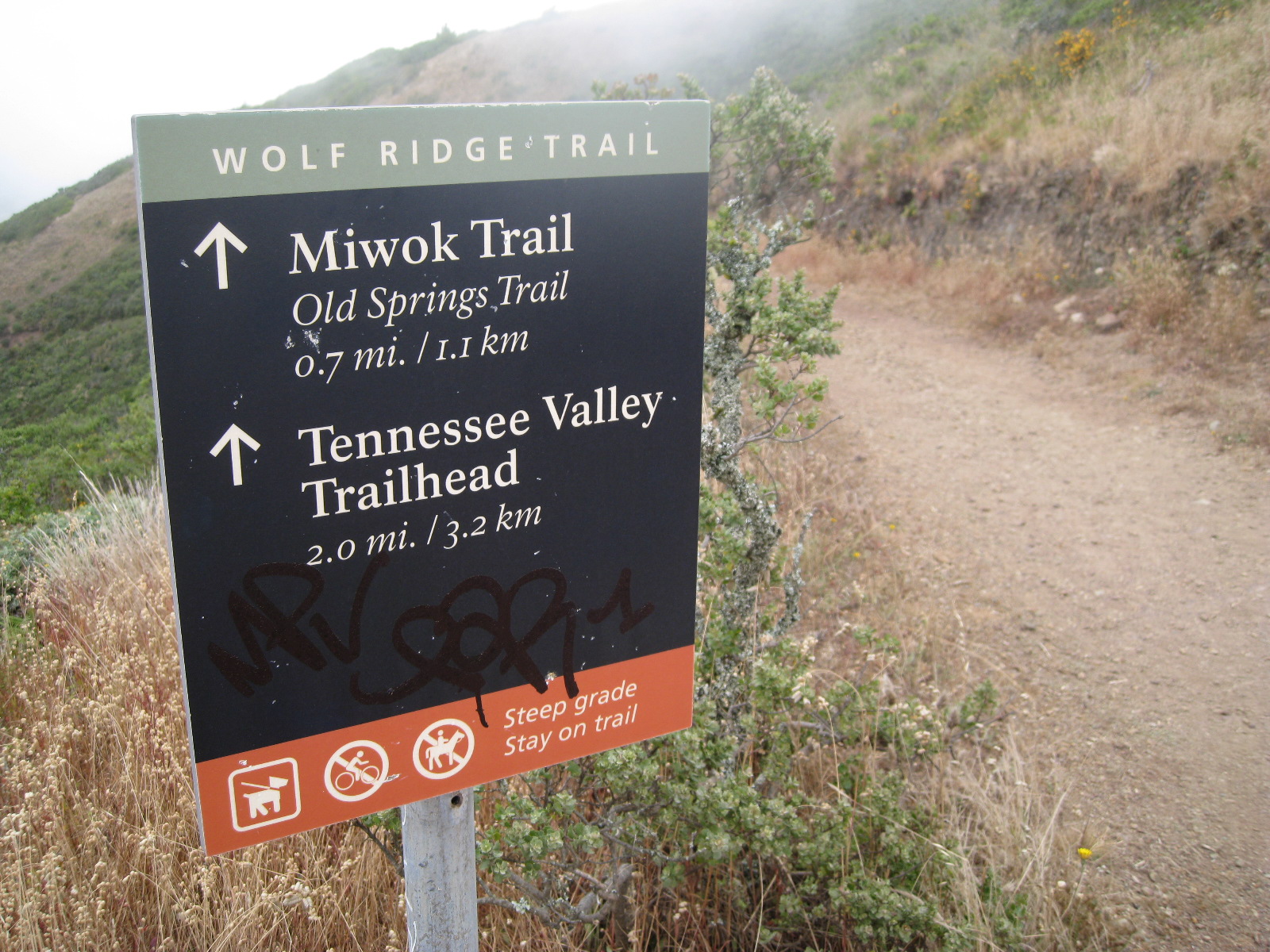
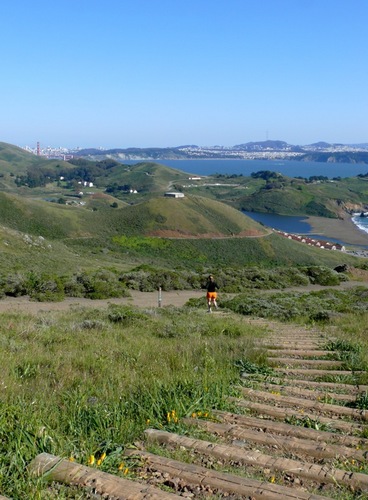
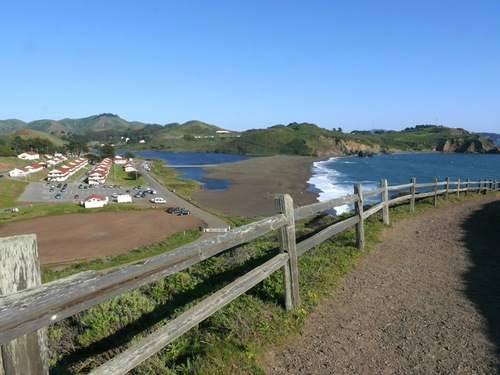
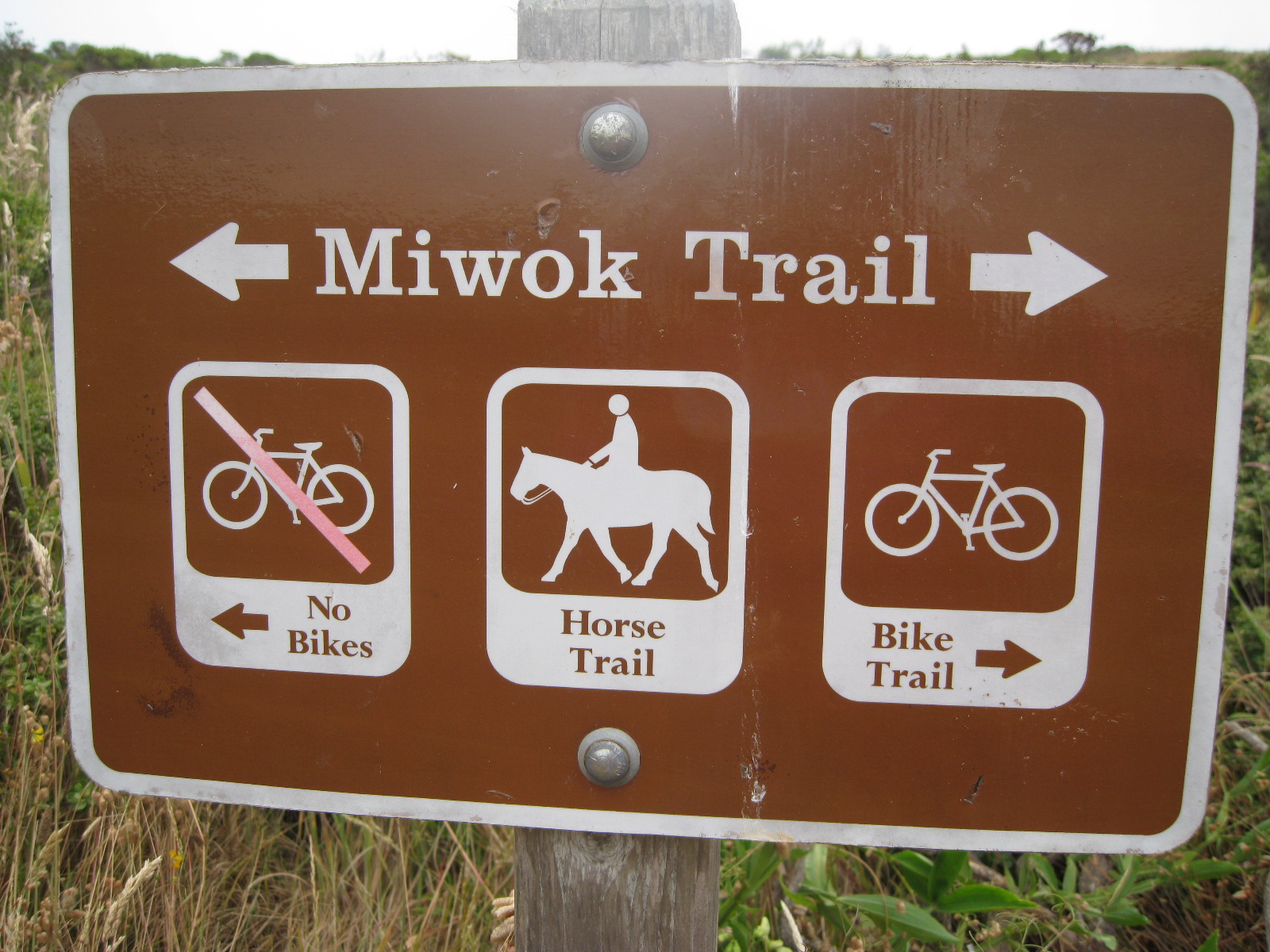
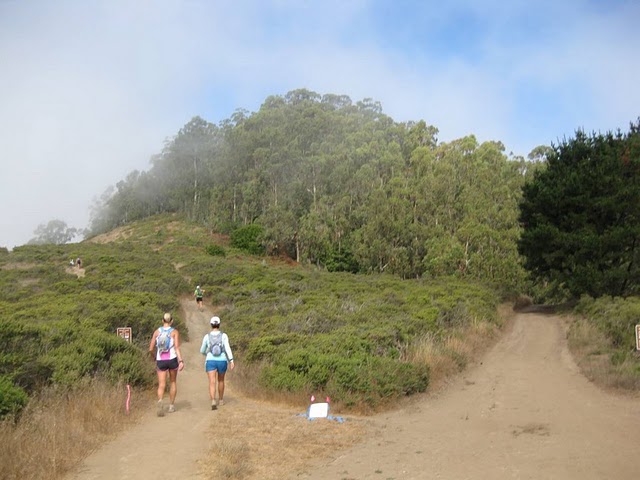
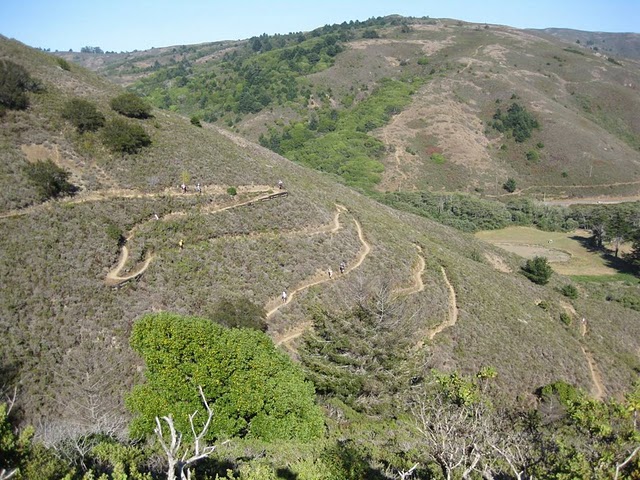
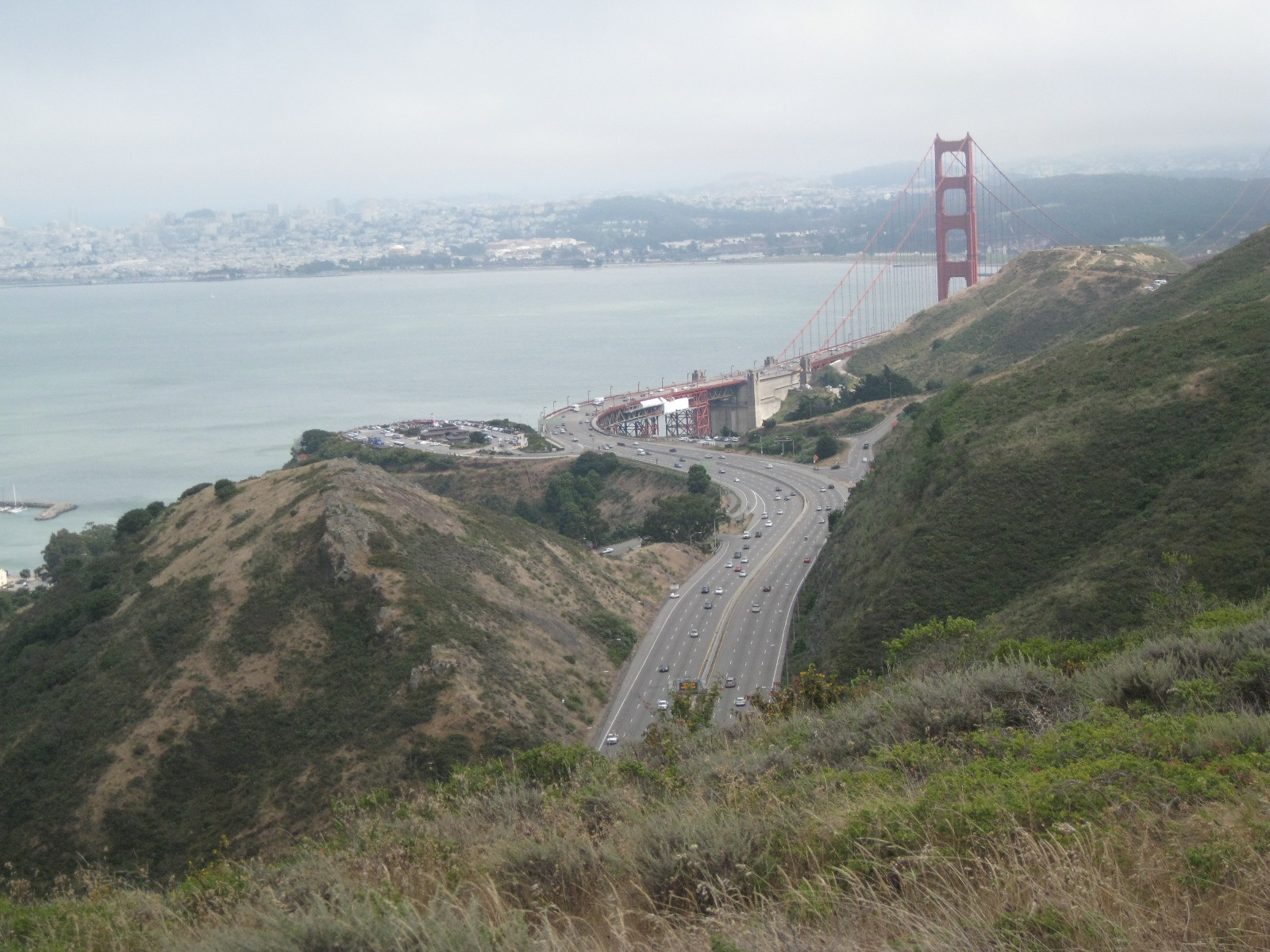
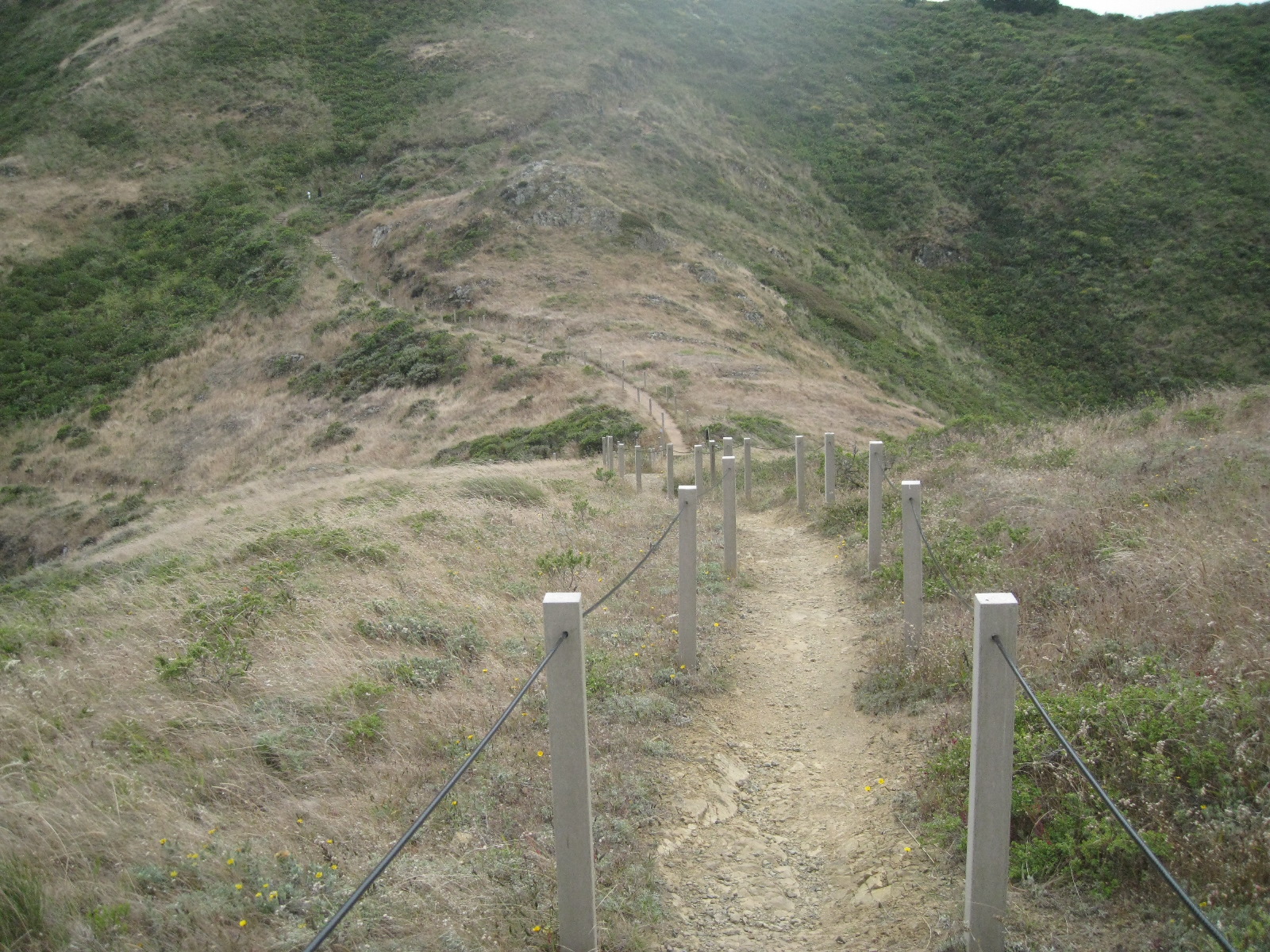
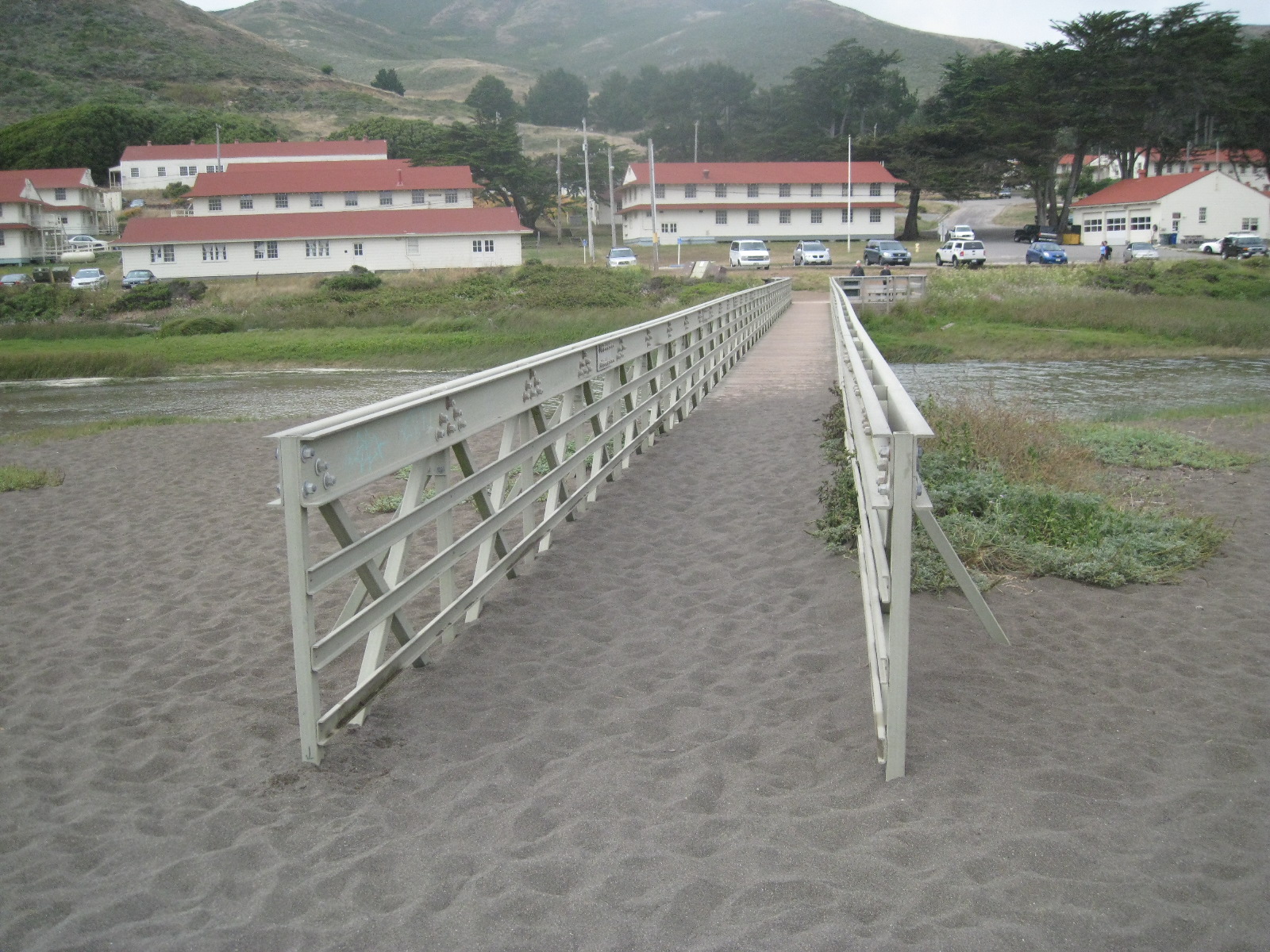
Wolf Ridge Trail(Rocky) Road Stairs Leading to Coastal TrailA View of the Start/Finish Area @ Vicinity Camp Cronkhite BarracksMiwok Trail SignageDon't Get Lost Here!Watch Your Front & Back!!!A View of the Vista Point & Golden Gate Bridge at SCA TrailCoastal Trail. Hold the Wires Or Else You Will Be Thrown By Strong Winds!"The Bridge" @ Rodeo Beach
The Miwok 100K and Headlands Hundred-Mile Runs are the most popular mountain trail ultra runs being done on these trails at the Golden Gate National Recreation Area. These are ultra trail races which are good entry-level for ultra trail runs that would qualify you for the next year’s Western States 100-Mile Endurance Run.
7:00 AM June 26, 2010/UP Vanguard, UP Diliman Campus
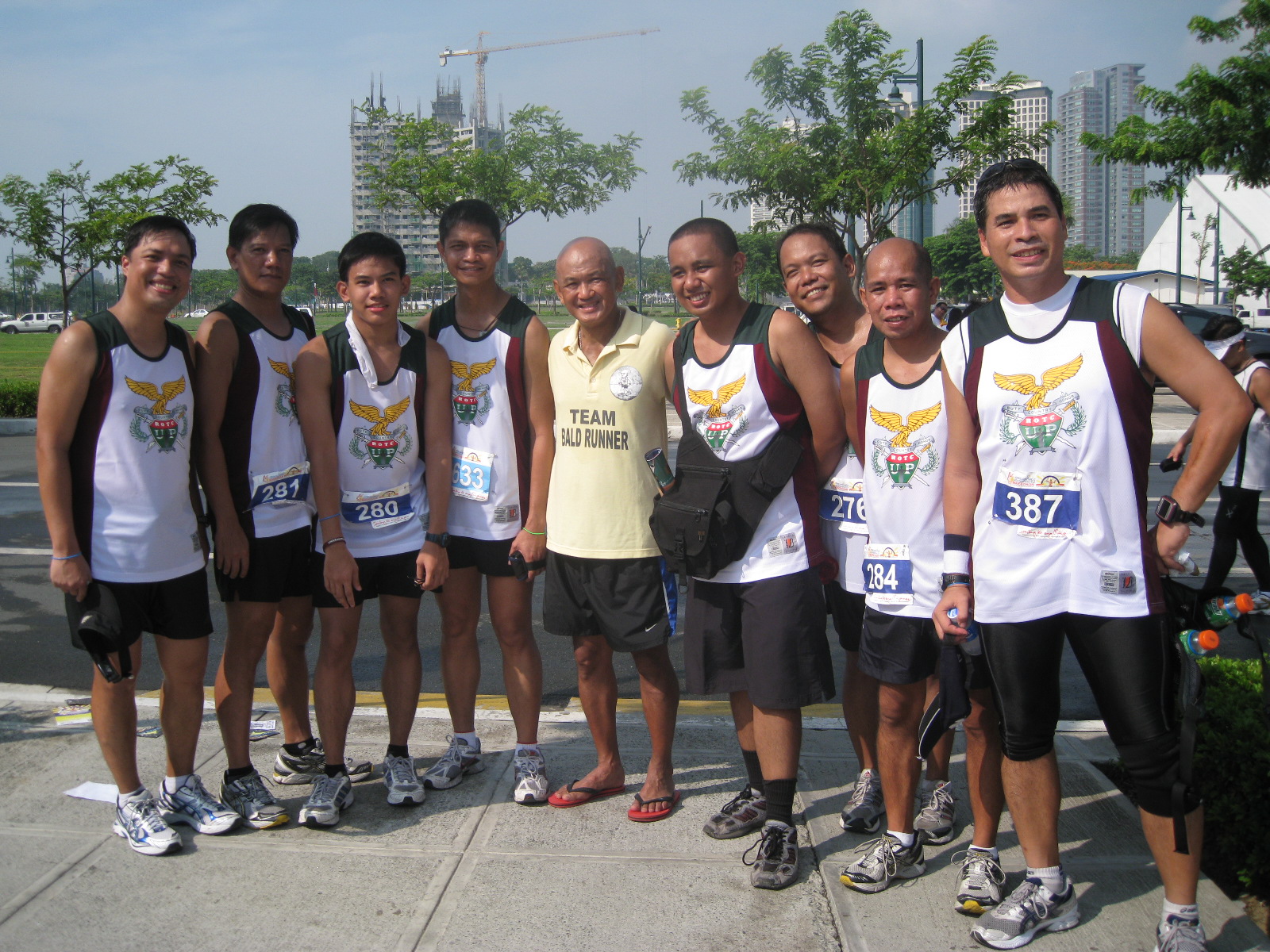
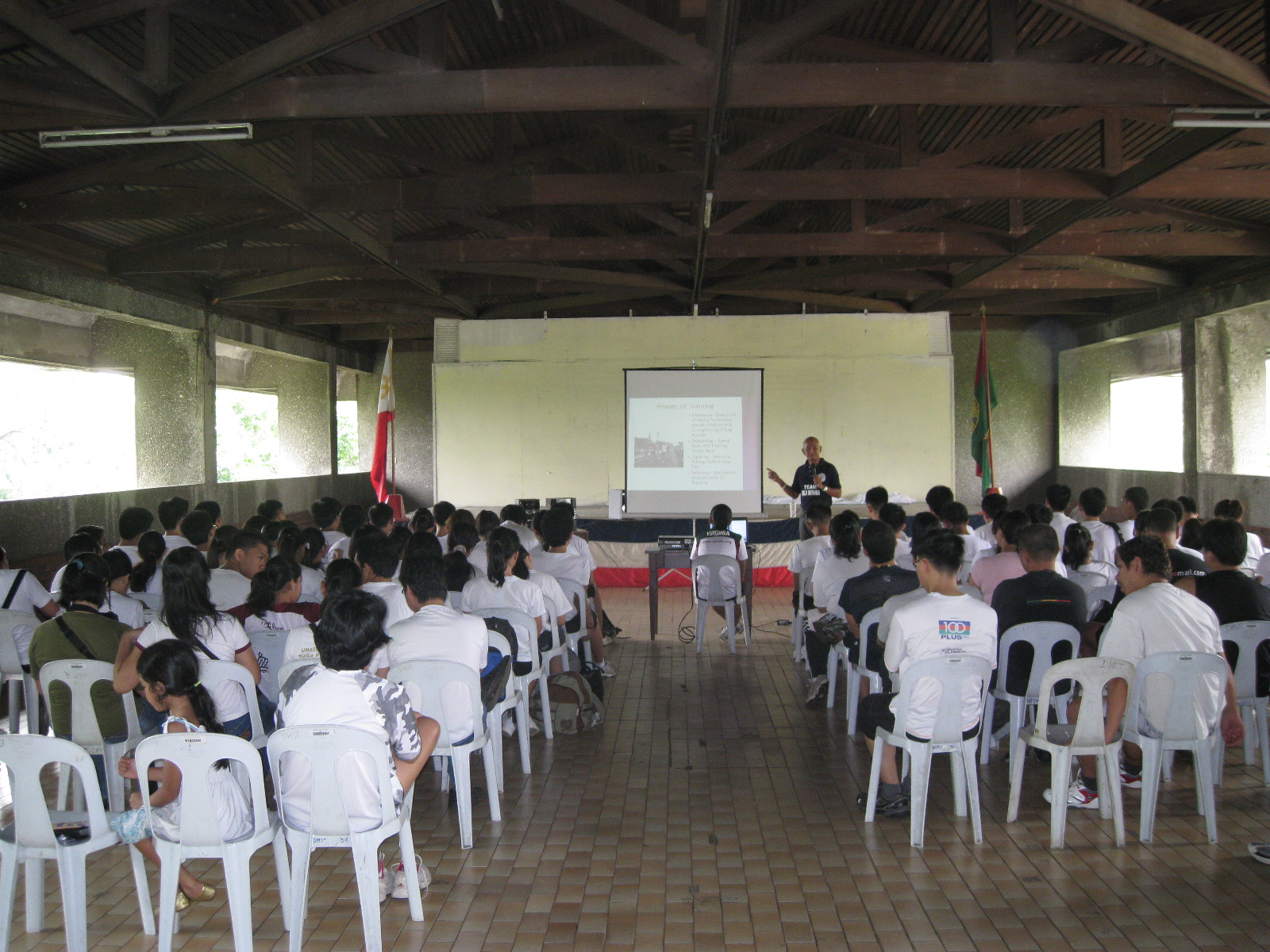
After the June 12 Independence Day Half-Marathon Race, I had the chance to chat and have some photo-ops with the members of the UP Vanguard Running Club where four (4) of its members are “veterans” of BDM 102. Lt Colonel Roland Rodil of the Philippine Army, Commandant of the UP Vanguard and one of the few senior officers who is a competitive runner, requested me to conduct a running lecture and clinic to his cadets and “reservists” at the UP Campus. I immediately approved his request and with a few exchanges of e-mails and text messages, the activity was finally scheduled last Saturday, June 26, 2010 at the UP Vanguard Building.
UP Vanguard Running Team
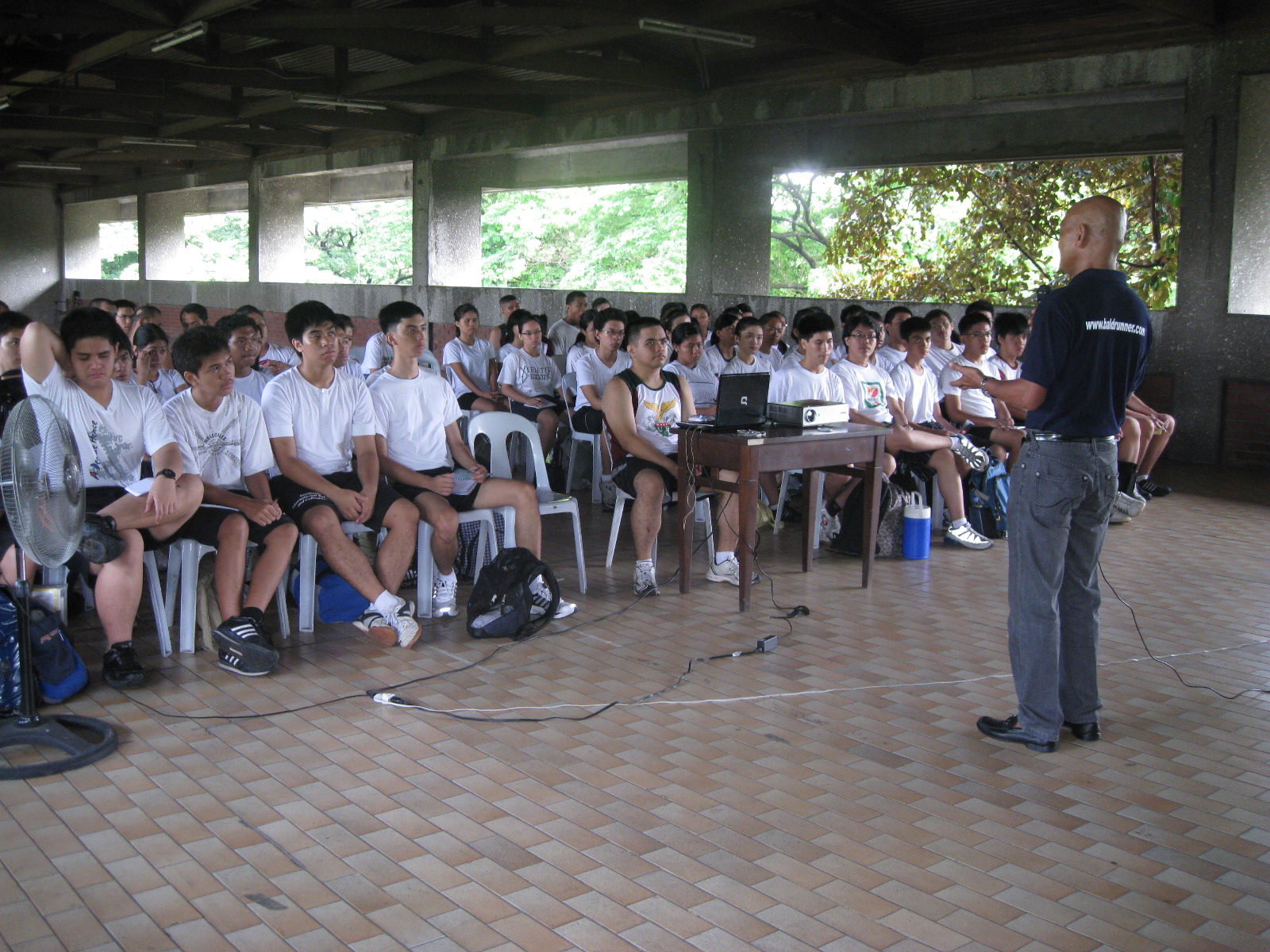
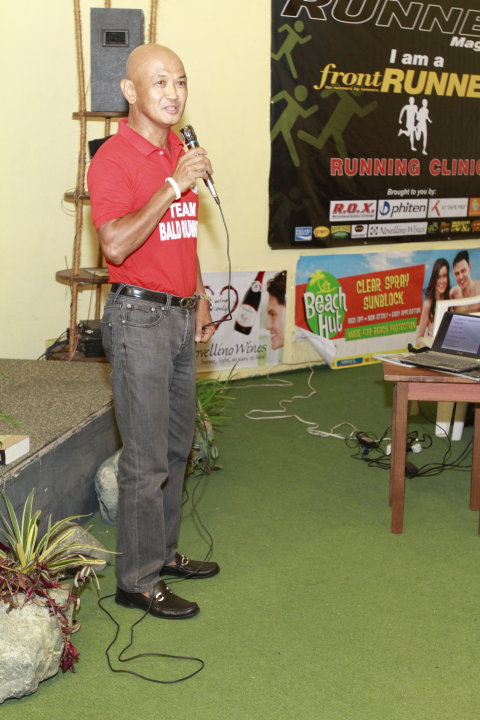
I was received at the UP Vanguard Campus by Lt Col Roland Rodil and his staff on the early morning of Saturday, June 26, 2010. After breakfast and chat with the staff of the UP Vanguard, I was led to the lecture hall which is the top floor of the UP Vanguard Building with more than a hundred of ROTC Cadets and PA Reservists waiting for the start of the activity.
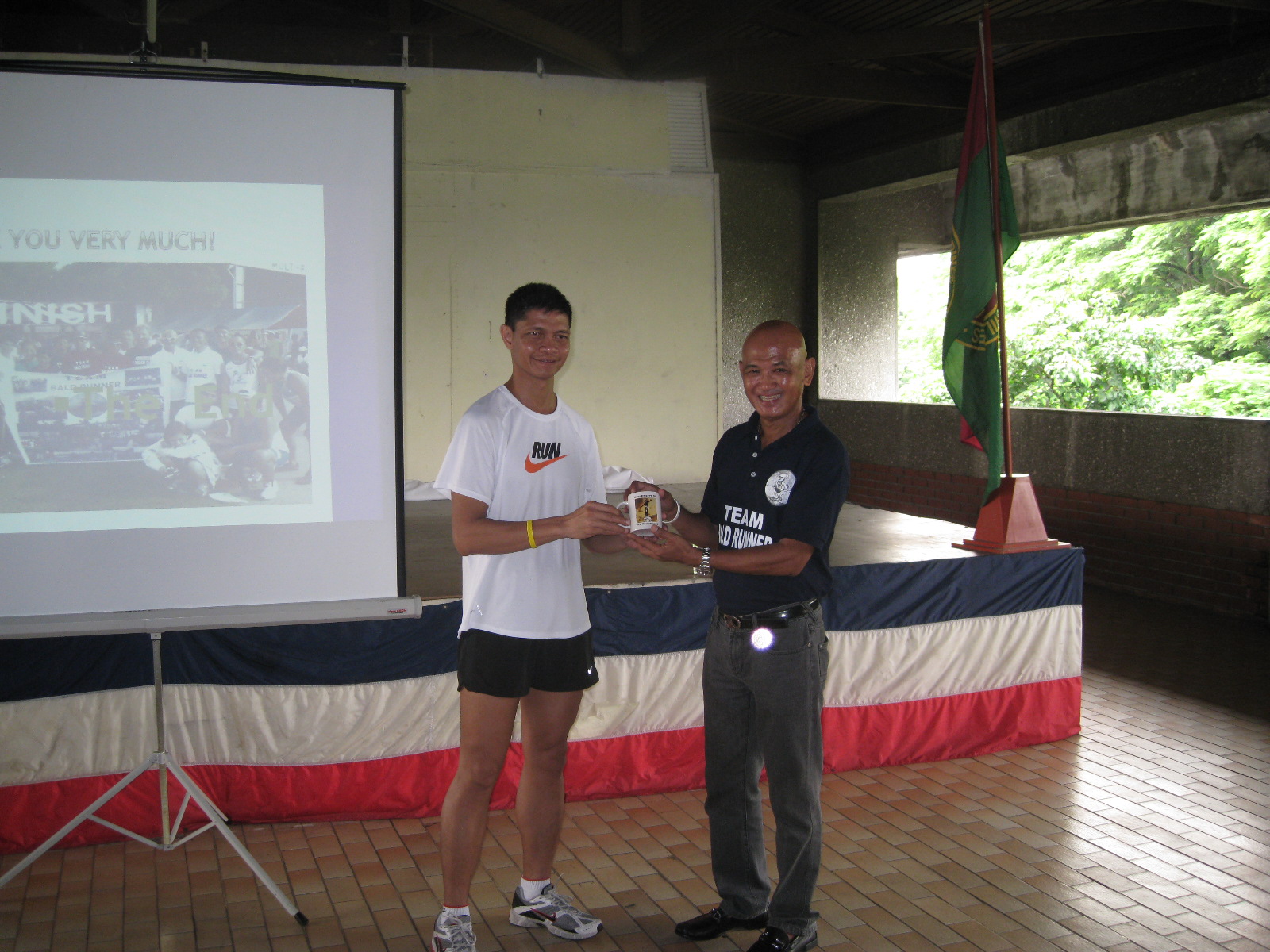
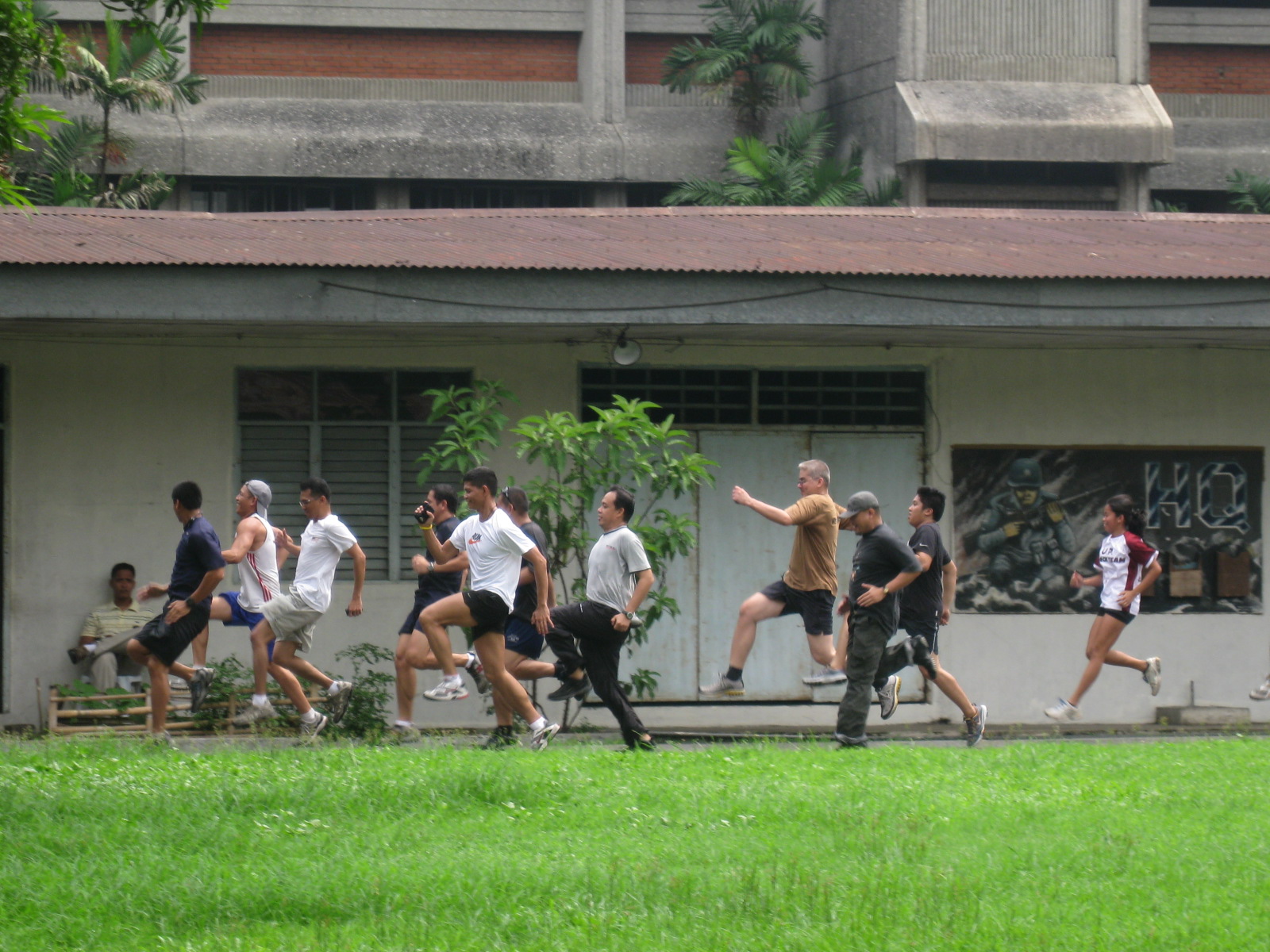
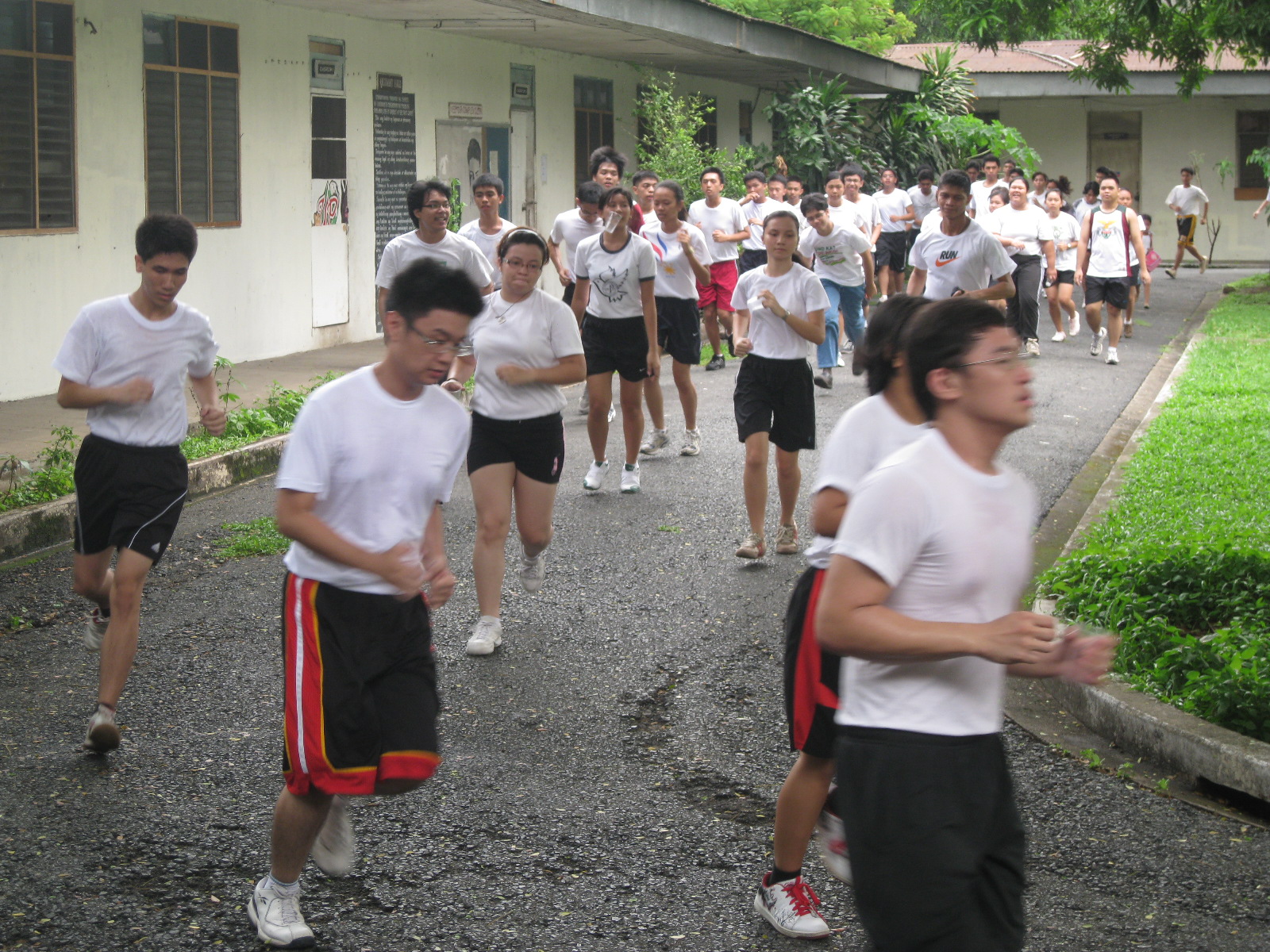
The lecture started at 7:30 AM with a brief message and introduction for me by Lt Col Roland Rodil. The lecture was too detailed for the younger audience to be aware of the basics and principles in running. After a two-hour lecture and Open Forum, the audience was led to the streets of the campus for the practical portion of the clinic.
Running Lecture With The ROTC Cadets of UP DilimanMore Than 100 Cadets & Reservists AttendedLt Col Roland Rodil, Commandant of UP Vanguard Presenting A Memento
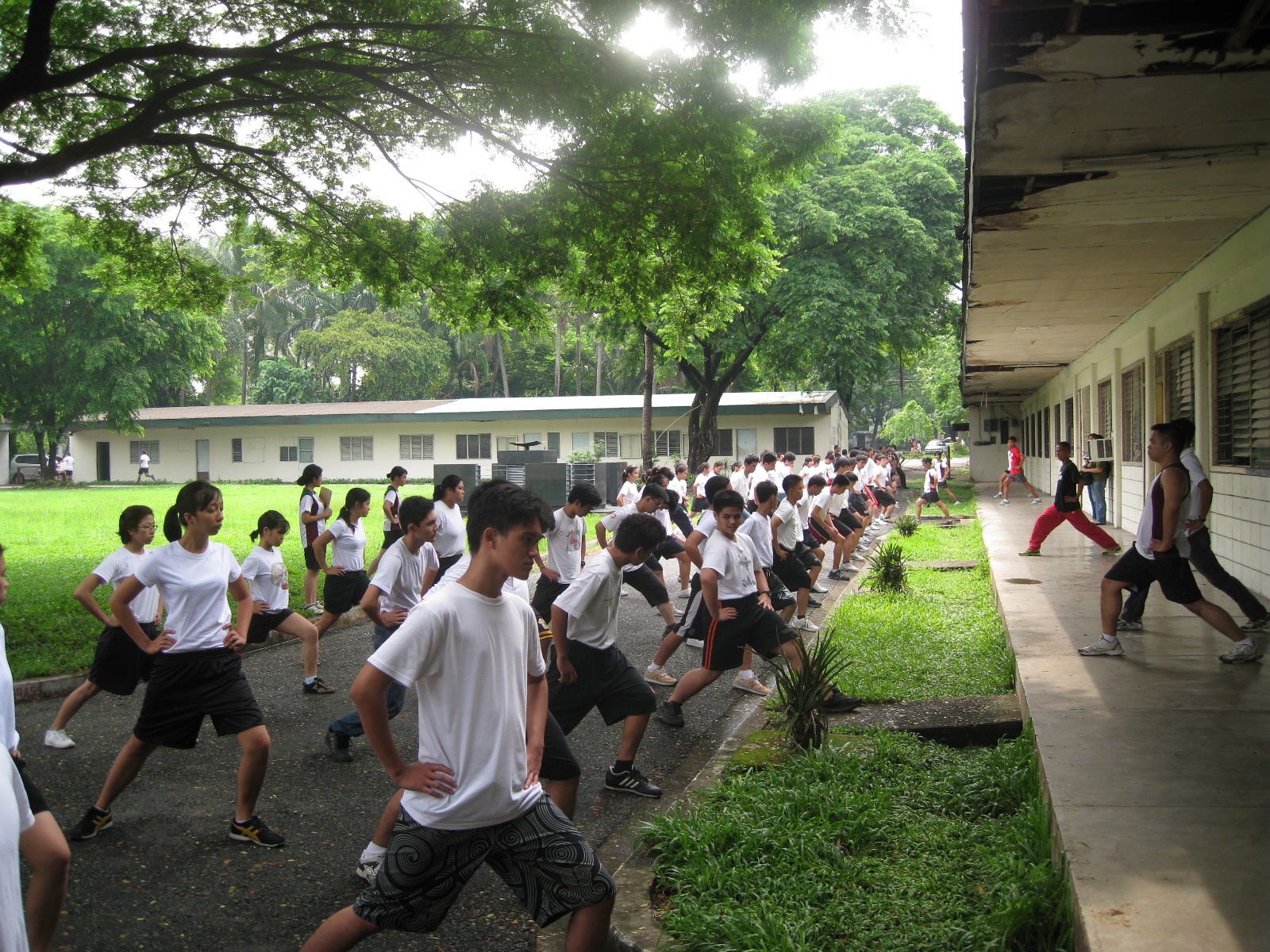
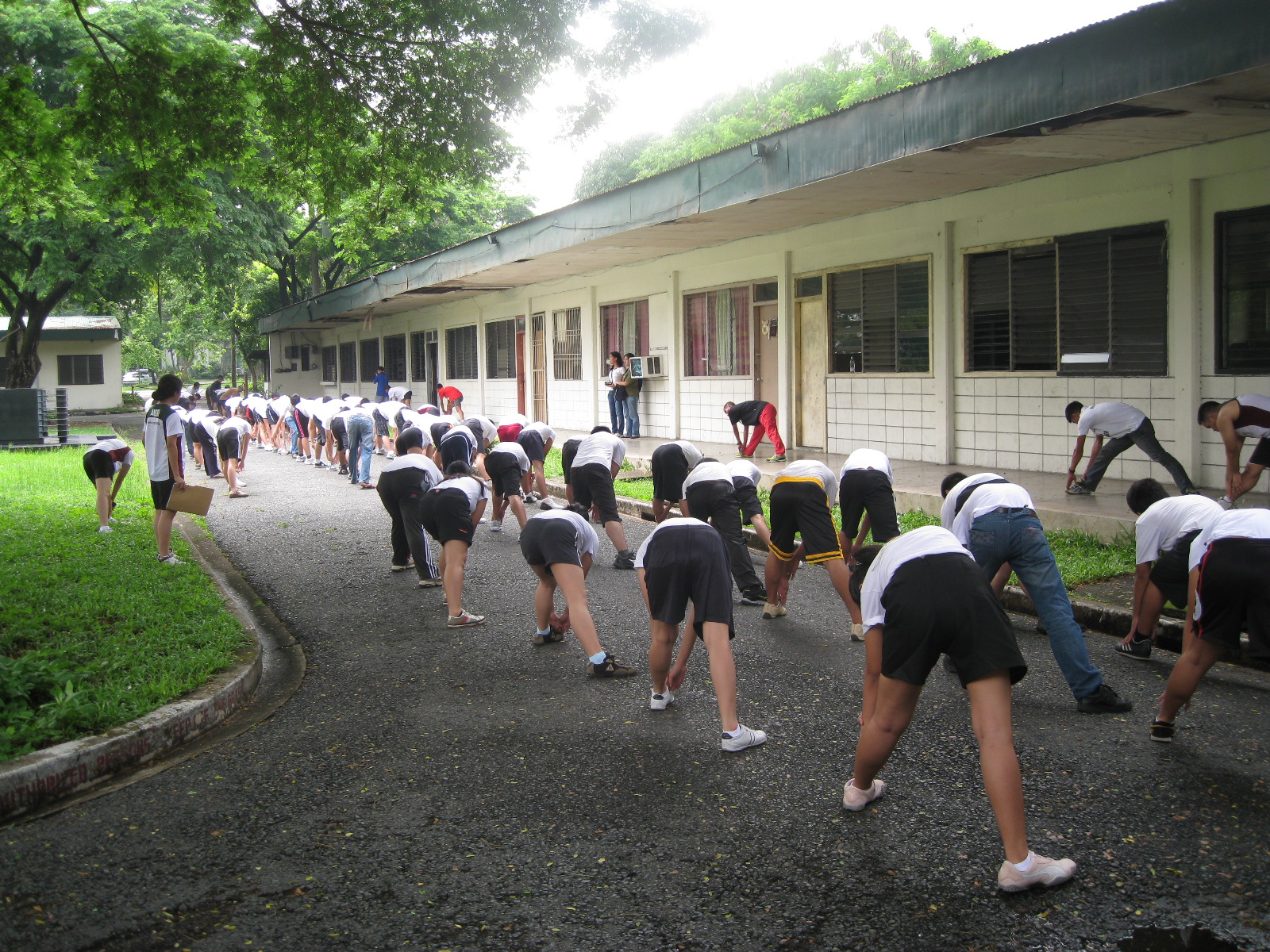
The practical and actual demonstration was led by the members of the Elite Team Bald Runner. The clinic started with the different stretching exercises, running “drills”, and a 2-Km easy run around the campus. Another 1 1/2 hours were devoted to this part of the event.
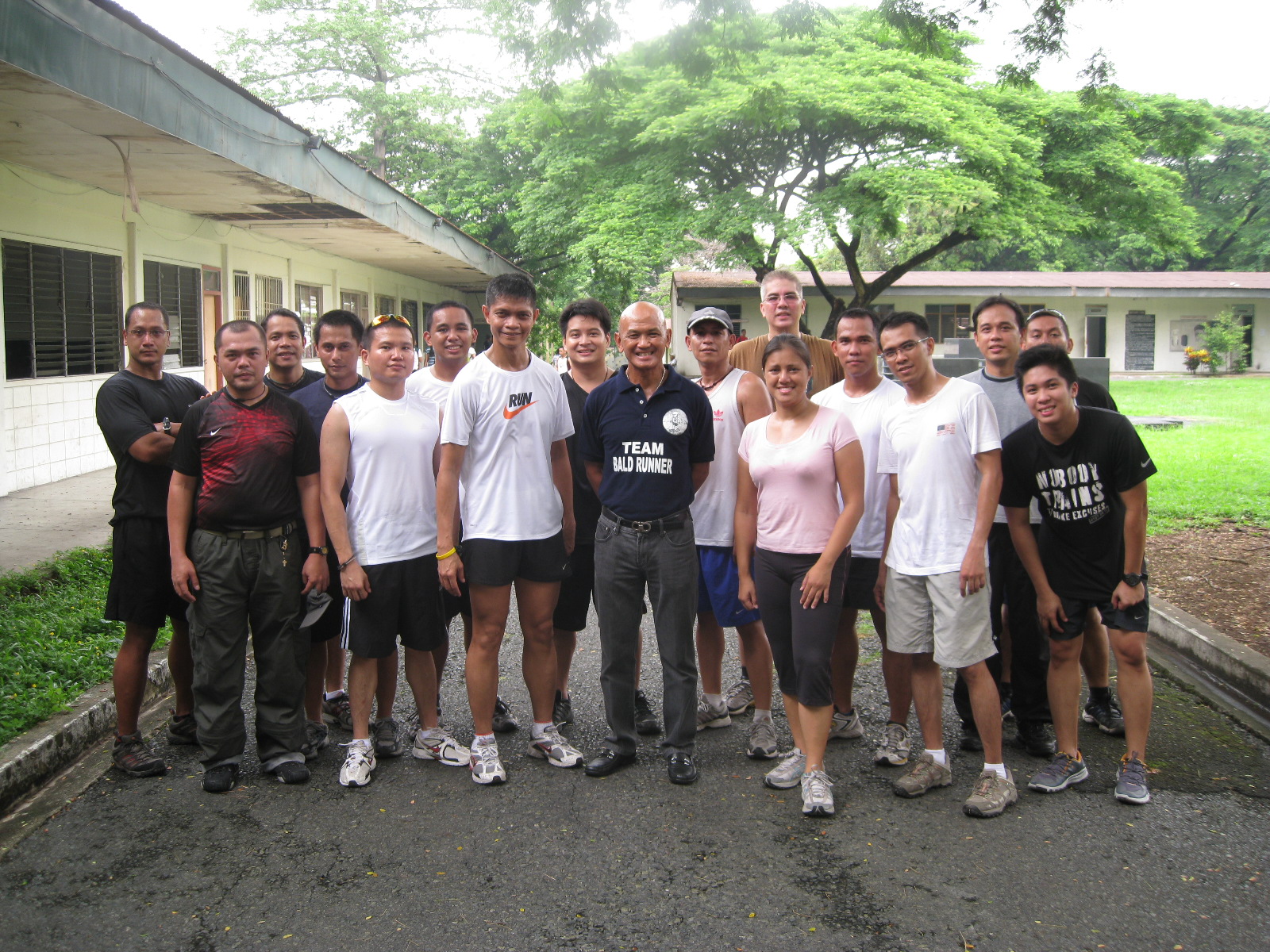
Stretching Exercises Done Properly With The Elite RunnersAnother View of the Stretching ExercisesRunning "Drills" Around the UP Vanguard Campus2K Non-Stop Run Before The End of the ClinicGroup Picture With UP Vanguard & Reservists After The Activity
Lt Col Rodil’s initiative in this activity is very commendable. Teaching these college students on the benefits of running is a good move to expose them on the benefits of adhering to an active and healthy lifestyle through running. I would be very much happy that at least 10-20 of these ROTC cadets will pursue running as part of their way of life.
Through the ROTC program and the Philippine Army’s Reserve Force Development, my advocacy to spread the basics of running had taken off in tandem with my running clinics with the corporate world. Hopefully, this will increase the number of runners who will be guided with proper basics and training principles.
Mabuhay kayo, Lt Col Rodil, UP Vanguard and PA Reservists!
Most of the people, friends, and other runners had the same observation of me when they saw me for the past few days. Most of the time for the past 2-3 months, I’ve been always going to the province outside Metro Manila and training with my elite team. Seldom my friends and other runners would see me in the usual places where runners would do their workouts in Metro Manila.
Last week, I weighed myself naked and I was surprised that the weighing scale registered 136 lbs! During the start of my training in preparation for the 34th MILO Marathon Eliminations on the last week of March, I had a weight of 143 lbs. It was my weight when I participated in the Jeju International 50K Ultramarathon Race. After this ultramarathon race, it marked the start of my training.
The reduction of my weight by 7 lbs could be attributed to my regular runs to the “Brown Mountain” (BM) and long steady distance (LSD) runs along a hilly paved road during weekends. I have also joined the elite runners in their training which included two running workouts a day—hard training in the morning and another recovery run in the afternoon. In between such workouts, it included at least 2 hours sleep after lunch.
Even if I slept 7-8 hours every night and eat a balance diet in my food intake, it appears that I consume more calories when I run and I was able to burn more of my body fats!
Having said that the ideal weight for a runner (male) competing in a particular race is equivalent to his height in inches multiplied by 2, it would be best to apply this formula to myself, 67 inches X 2, is equivalent to 134 lbs! It appears that I have to reduce another 2 lbs in order to meet my ideal weight for the MILO Marathon. Well, I think my present weight of 136 lbs is already enough for me.
Actually, I really don’t worry about the observation and comment of my friends about my being thinner this time as the MILO Marathon is fast approaching. I always think that this condition is only temporary. It is faster for me to gain weight than shaving off those unwanted fats from my body. I am looking forward already to my rest & recovery (one month) after the race before I start again for my training for the 34th MILO Marathon Finals scheduled on December 12, 2010 with the hope of finishing the elimination race in less than 4:10 hours.
Whether I am thinner or lighter, I hope this will be an “edge” for me to register a faster finish time in a marathon race this time.
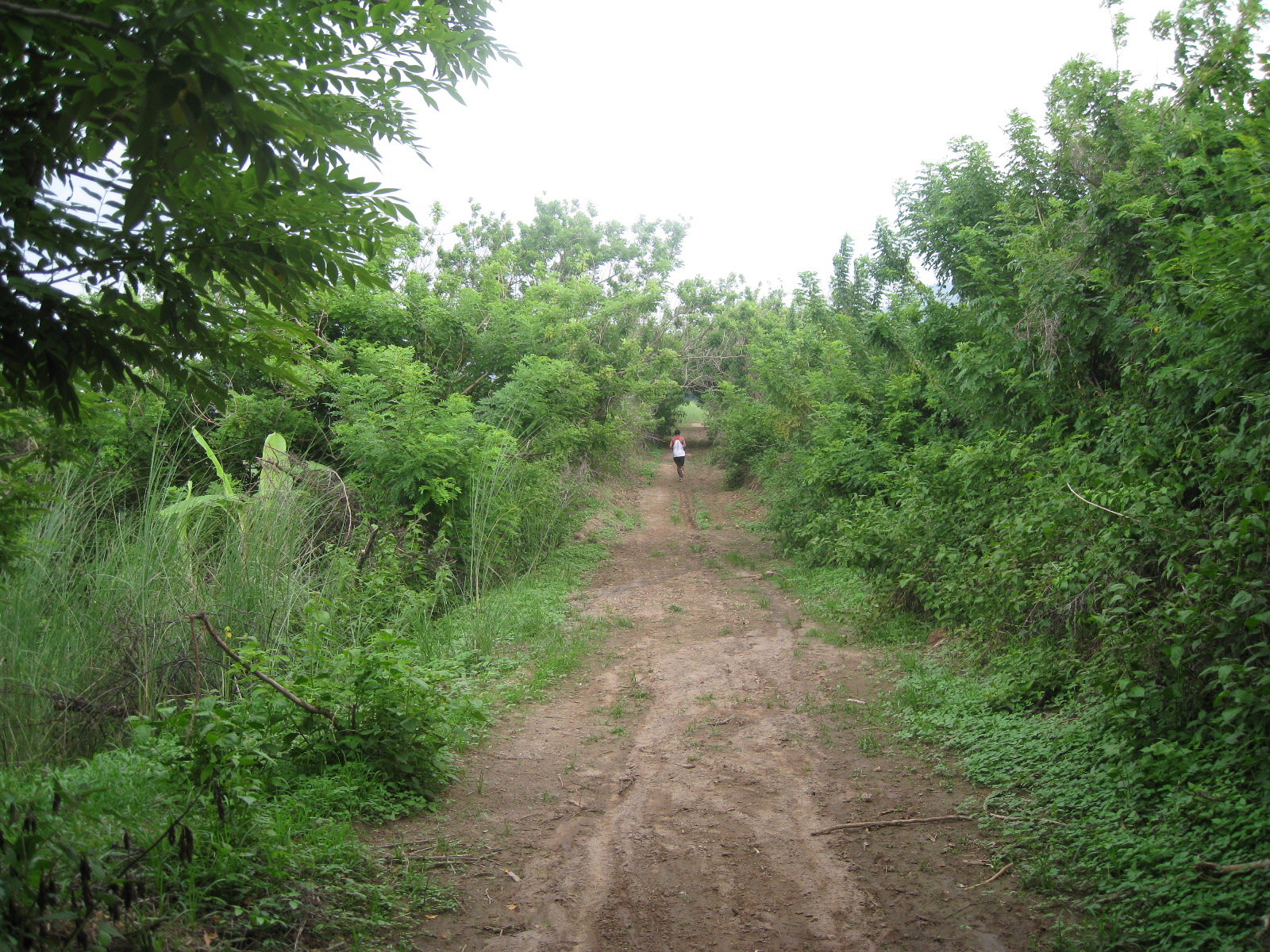
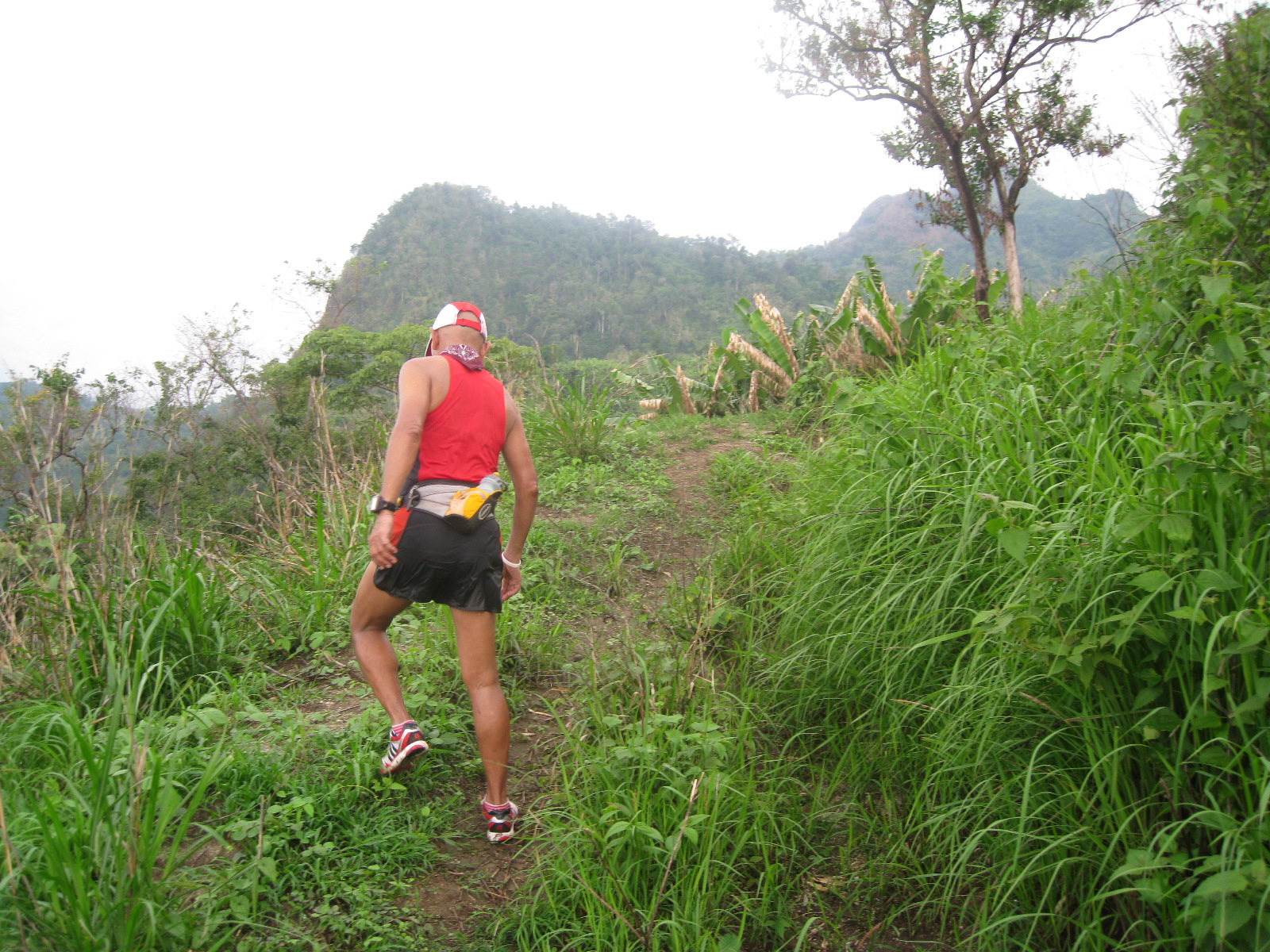
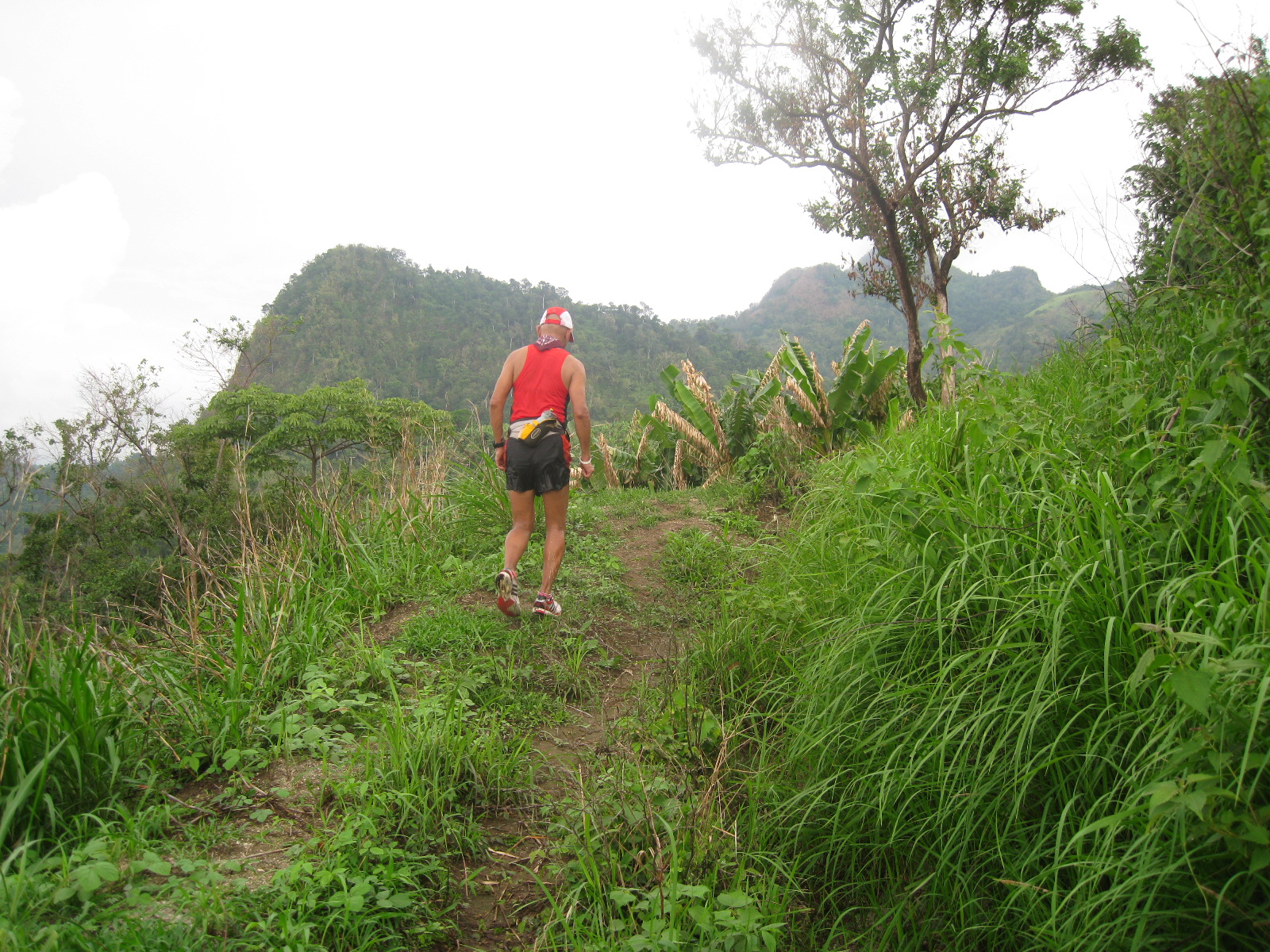
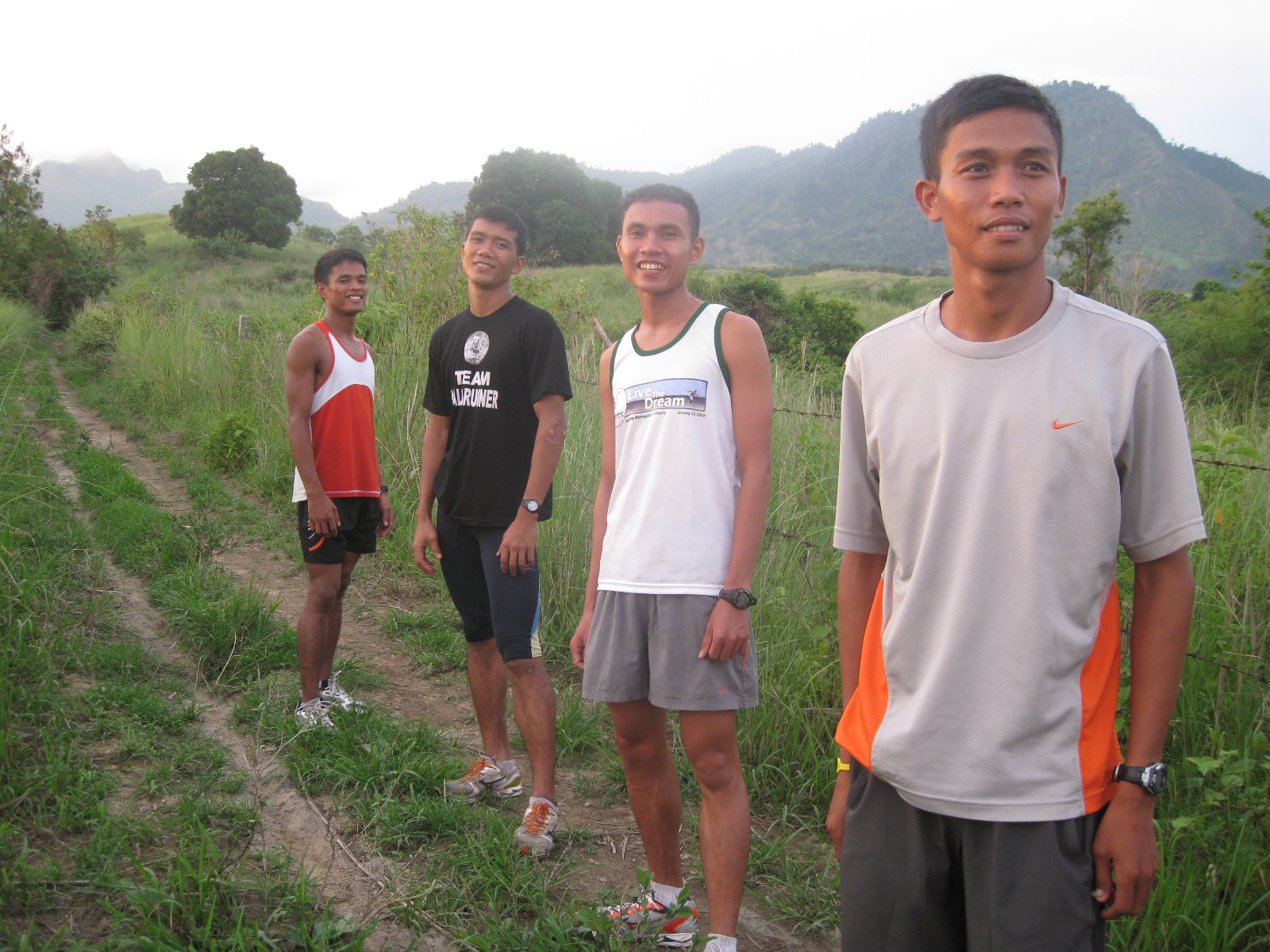
This was our 4th time to explore the trail of “Brown Mountain” and I wanted to extend our exploration farther than the last turn-around point in our last trail run. We started early at 2:30 PM as we took advantage of the cloudy environment with the hope that it will not rain heavily while we were in the mountain. We went up slowly on those inclines as we tried to preserve our strength for the farther distance we wanted to reach. In my mind, I was thinking that we could reach a distance of 15 kilometers (one way) for this exploration workout.
Trail Finally Dried Up After A Few Days of No Rains
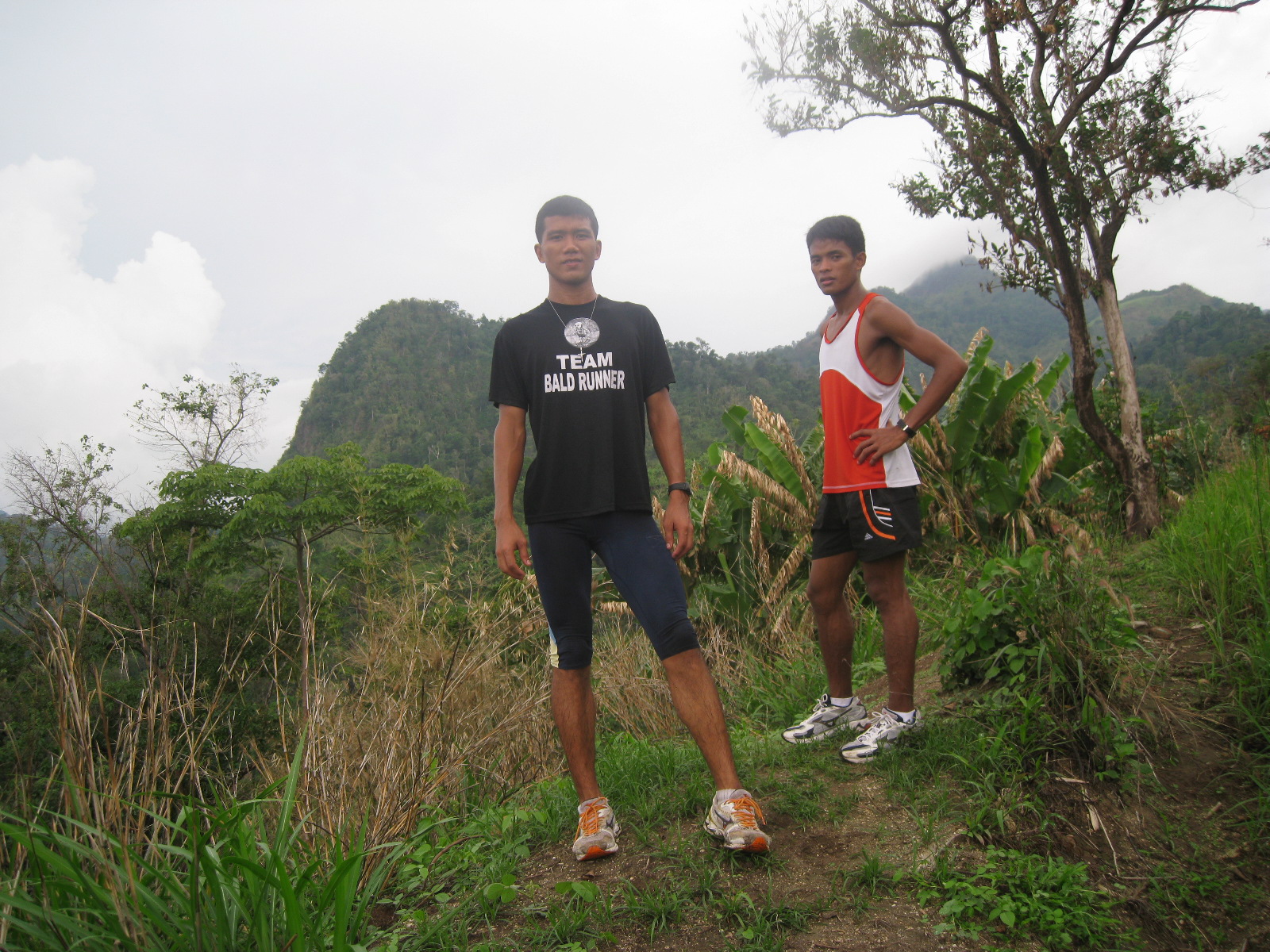
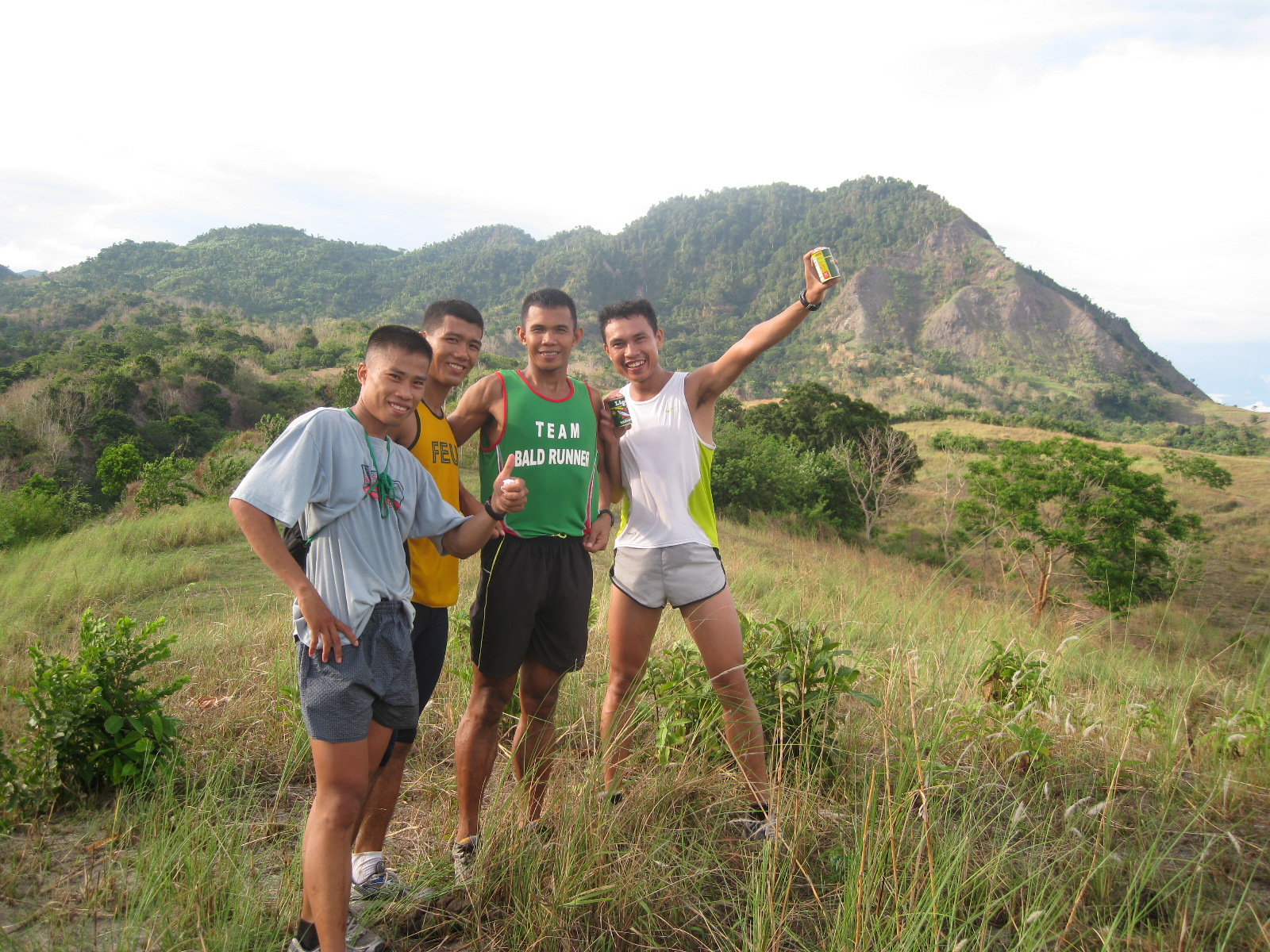
At Km 6.2, Django was sleeping in his nipa hut while his wife was on the side of the trail smoking her tobacco. We greeted the lady as we passed by their hut. No sardines this time! Elmer went ahead of us as we reached the Km. 3 but he was too fast that we did not see him anymore. As we were about to reach Km 7, we were only three and there are times that I led the group (three runners). However, most of the time Charlie (in black Team BR shirt) was the one infront, me at the middle, and Jack guarding my back.
Higher Elevation & More Steep Trail
We finally reached our first turn-around point where we cleaned the stream/spring water last week. We briefly stopped to drink some water using our palm and crossed the spring. The picture above is about 500 meters after we passed the turn-around point and the trail started to be steeper until we could not see any trace of the trail. We crossed the same spring for two times before we could continue again running along the trail.
The Farther. The Better
As we got farther and higher, the trail became narrower and later disappeared. We tried to trace the footprints of a horse and the newly cut bananas where we suspect Django could be the one who came earlier to harvest the flowers of the bananas. As we went up the mountain, the horse’s footprints and the cut banana trunks were nowhere in the area! We tried to look around for trace or signs of a trail but the vegetation was too thick. We immediately decided to turn-around as we were about 2 1/2 hours running, jogging and brisk walking in the mountain. My GF 305 registered a distance of 11.2 kilometers!
Charlie, My Trailblazer & Jack, My Back-up Guard
As we were tracing our way back to the place where we started, Jack complained that the soles of his running shoes got separated from the upper parts and he was practically running on his socks! Well, the running shoes is Mizuno but it is already old. Charlie’s shoes is Mizuno, too but it works well with him for the runs we had to the mountain.
When we reached the part of the spring that we cleaned, I told my companions that we’ll have a brief shower and washing of shoes and shorts. It could be that my legs were already tired and stiff on our way back that I experienced sliding on the soft trail with my butt pounding on the ground! I slipped for two times! My shorts were full of mud! These things happened when I was brisk walking on the downhill part of the trail. However, if I jog or run through such soft parts of the downhill trail, my foot/shoes would land on the ground without any sliding. With such observation, I maintained running or jogging throughout our trail run and I did not experience any sliding at all.
As we passed Django’s hut, Django was already infront of his hut and asked where we ended our exploration. I told him about our observation and the absence of trails where we ended. From his story, he was the one who harvested the banana blossoms earlier in the morning and he admitted that there is no more trail on top of the ridge where we turned-around. But admitted that the trail became thickly vegetated that it was hard to trace the existing trail.
Elmer & Frank as Our Support Crew
With 5 kilometers to go, Elmer and Frank met us on top of a hill with bread and water. Elmer finished his run earlier and used his motorcycle to go back and meet us along the trail. It was a relief for Charlie and Jack to eat and drink as they were tired already. I was tired, too! but I still have water from the spring in my Nathan hydration belt. Jack has to ride the motorcycle because of his torn shoes and Frank joined us for the remaining parts of the run.
Charlie and I finished the trail run in 4 hours to include a brief shower for 10 minutes at the spring. My GF 305 registered a distance of 22.4 kilometers. We were able to run farther, longer, higher and we finished our workout faster! I was tired on this run but a massage was scheduled for the evening from an expert.
Due to my commitment and purpose to establish trails in the forested parts of BM and its neighboring mountains, I have ordered two (2) Jungle Bolos from the Philippine Army which we’ll use to cut those plants that have grown on those trails. I recalled when I was the Chief of Staff of the Philippine Army that we ordered thousands of Jungle Bolos from Malaysia as a basic jungle equipment for our Scout Rangers and Special Forces. I know that somehow some of the jungle bolos are still available for lease. Luckily, after some coordination, my order will be delivered next week.
Trail running with a mixture of exploration (trailblazing) is fun!
6:30 AM June 2, 2010 Wednesday 20.5K 4:30 hrs Elevation: 1,500 meters (Adidas Osweego)
This is the third time that we went up to BM for another trail run and for us to extend our exploration on how far the trails would lead us. However, the target was to reach a distance of 10 kilometers from our starting area and then back for a total distance of 20 kilometers. We started at 6:30 AM and all of us were prepared for food—steamed rice packed in banana leaves; hard-boiled eggs; more sardines & bread and lots of water. I brought my old Camelbak with a 2-liter bladder and the rest had their own light backpacks & hydration belts/bottle. We are all conservative runners as we didn’t bring any sports gel, sports drinks, or any sports bar for the said outing.
My Camelbak was too heavy plus my Canon Digital Camera was strapped on its cross-belt. It was hard running uphill with filled-up Camelbak at first but I became accustomed to it as we went nearer to the mountain. Our pace was slow but we gained our loss of speed on the downhill. Finally, we approached the nipa hut of the family whom we were planning to use as “guide”. It was timely that the man in his 60s on a horseback was about to leave towards the forested area of the mountain.
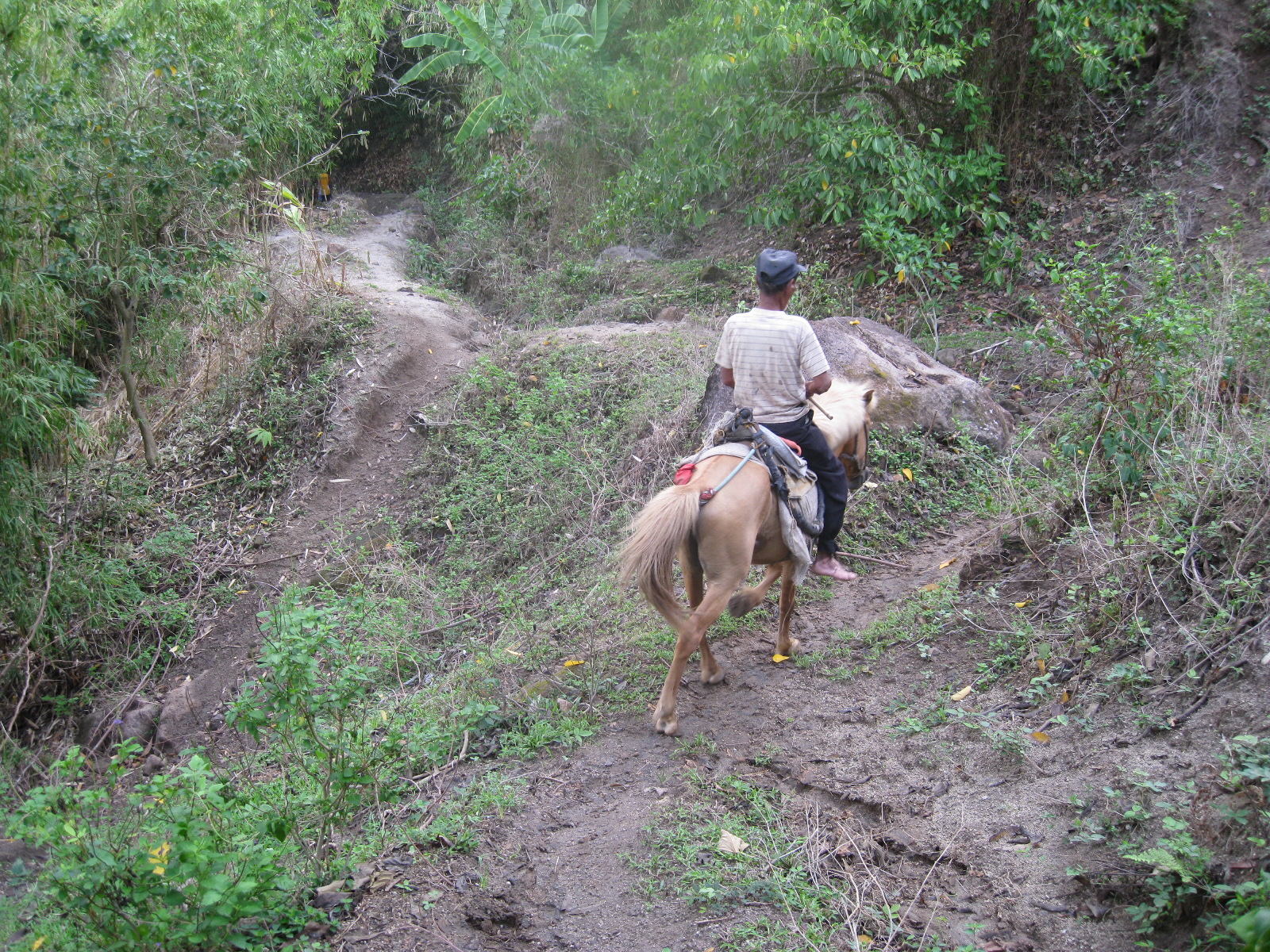
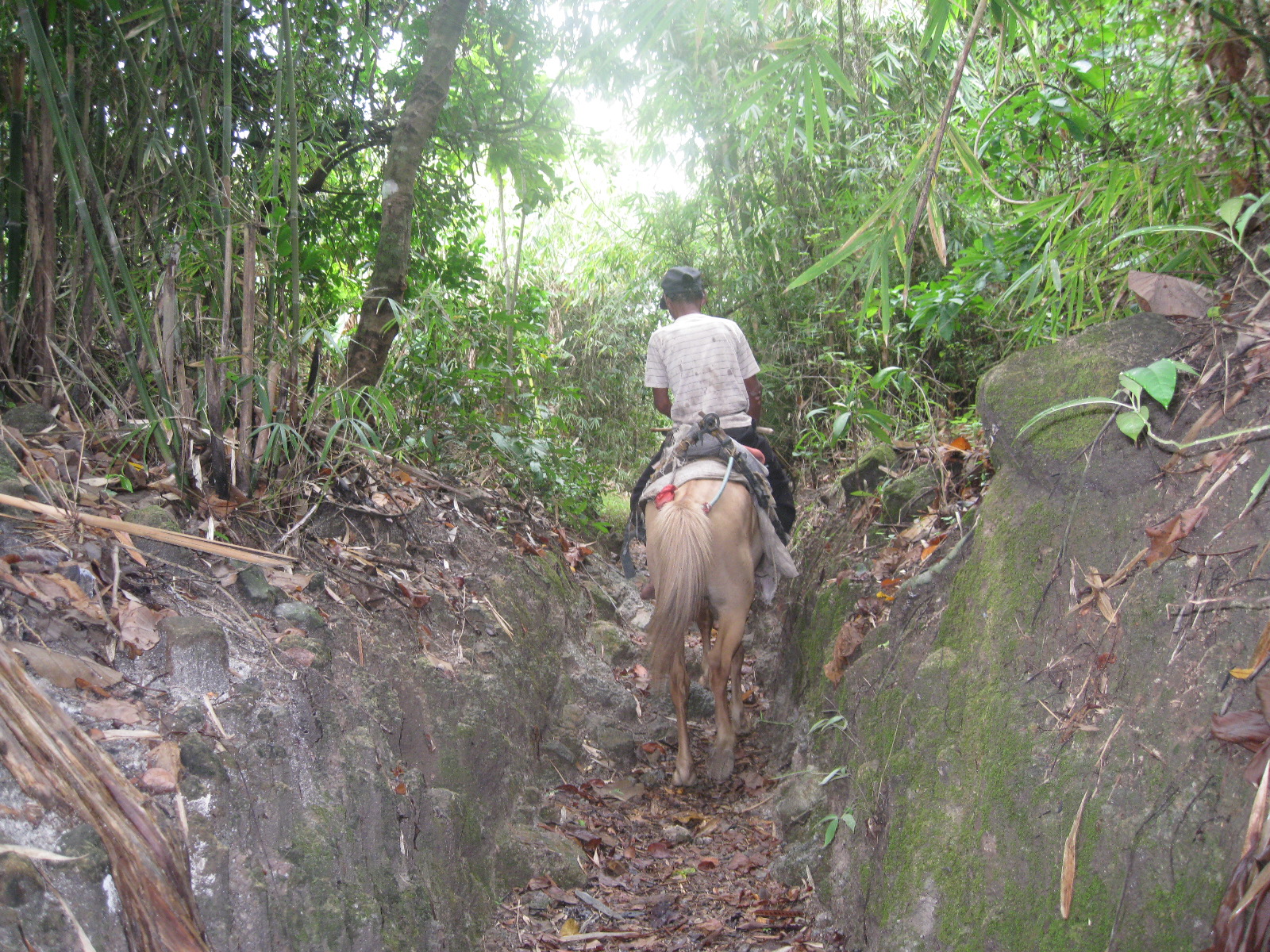
"Django" Leading Our Way Along The Mountain TrailA Trail Carved Out From Big Rocks?
I’ll call the guy as “Django” and he led us along the trail riding his horse. Our runs became jogs and brisk walks as the trail became more technical due to the presence of rocks, fallen trees & branches, and steep inclinations. We crossed and passed by springs along the route and Django told us that the water is clean and potable. Django would be talking while he was leading us. He was proud pointing to fruit-bearing trees, pineapple plants, bananas and others along the way and he gave the approval for us to eat or pick any fruits of these trees whenever we come here for our trail runs.
Looking For the Markings "JT" On The Rocks
As we passed along a wider spring, Django told me to look for an old marking with the letters “JT” on one of the rocks beside the flowing water. We stopped for awhile and tried to look for the said marking but we were unable to see them. Django would tell me later that the markings were there for many years and the story that there is a “hidden treasure” in those rocks and the story would be carried down from the elders who lived there to the younger ones. Django would tell me also that he had been hunting for buried treasure throughout his life but when I asked him if he found one, he said that he have not found one!
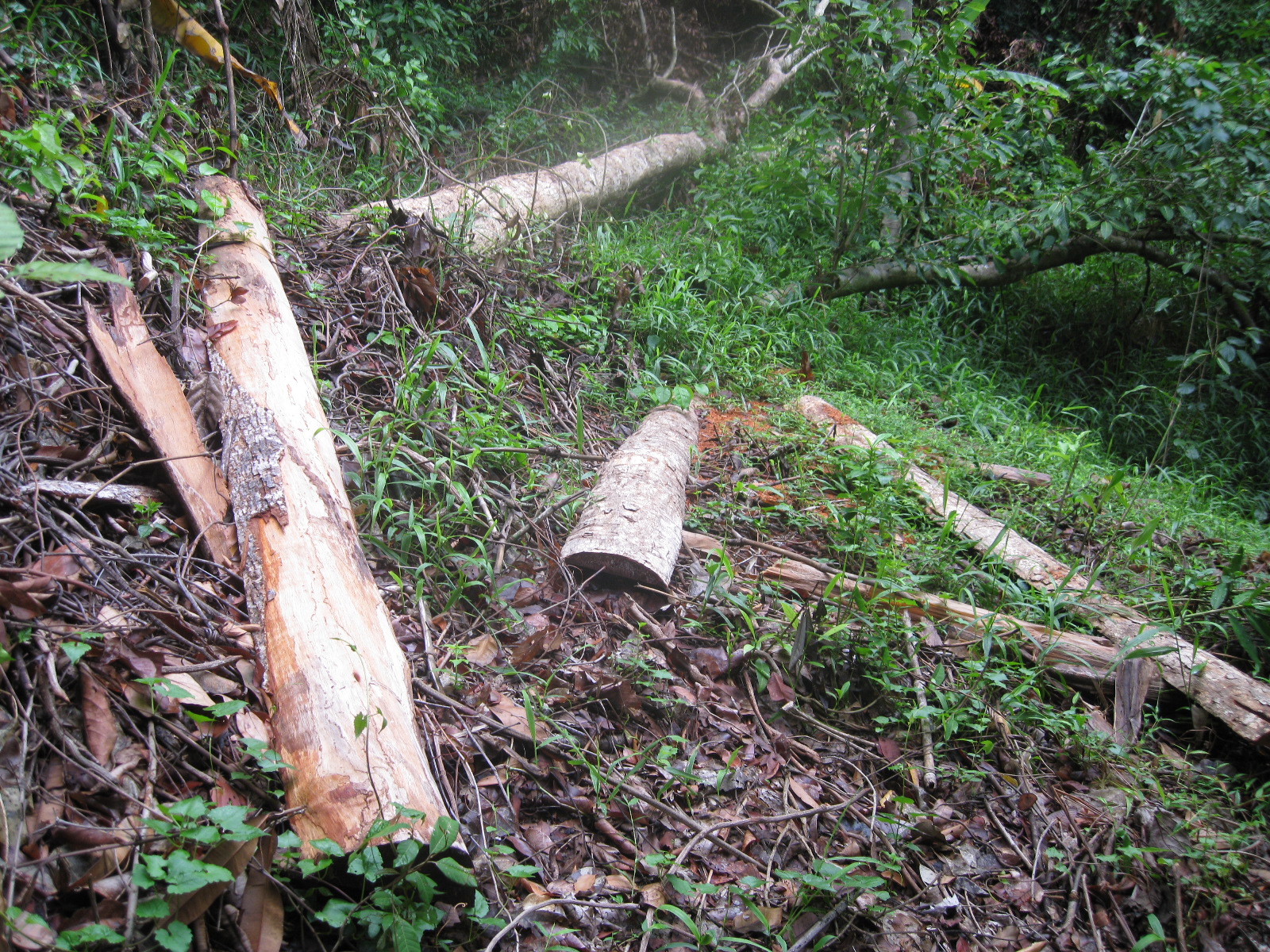
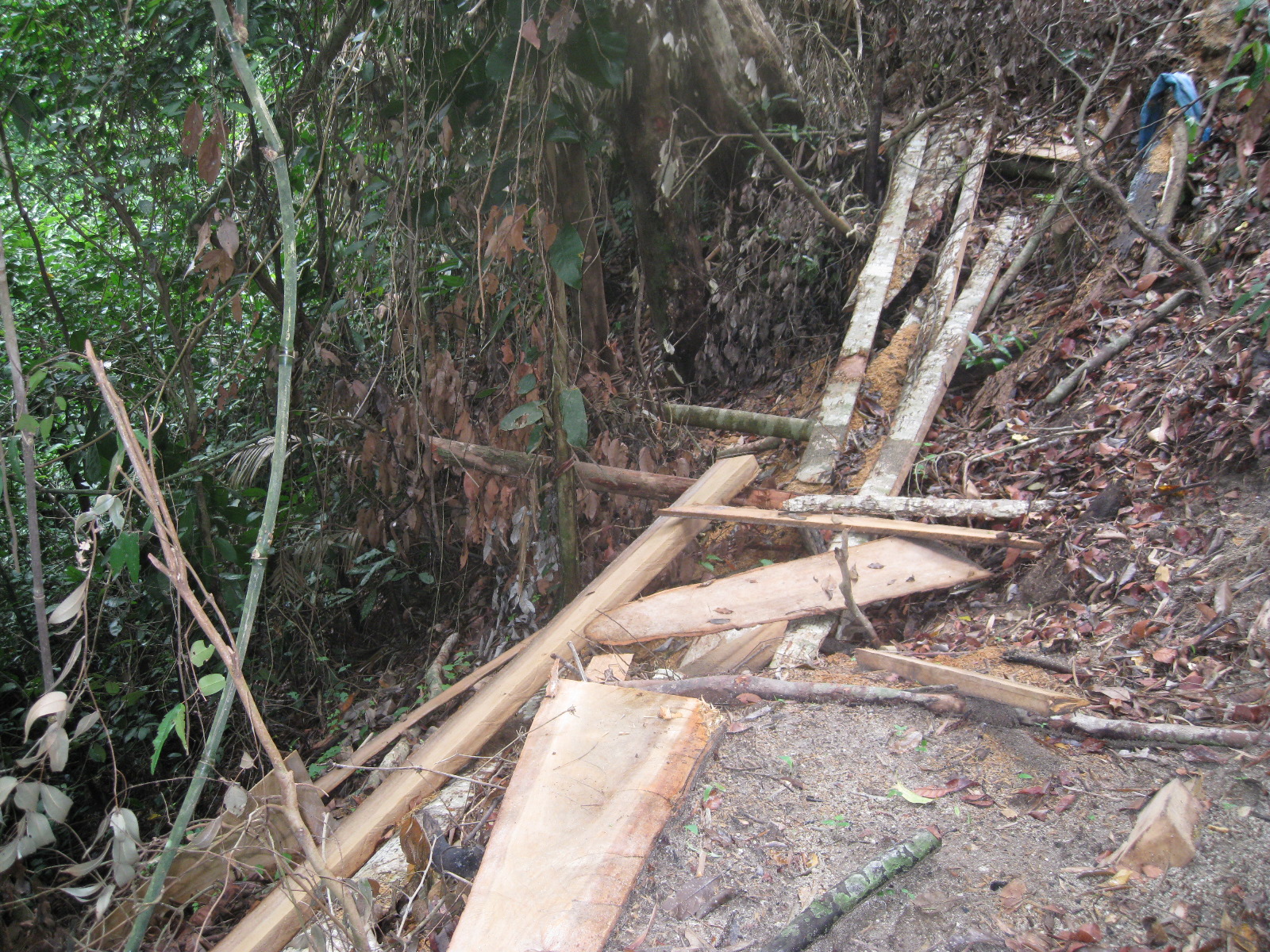
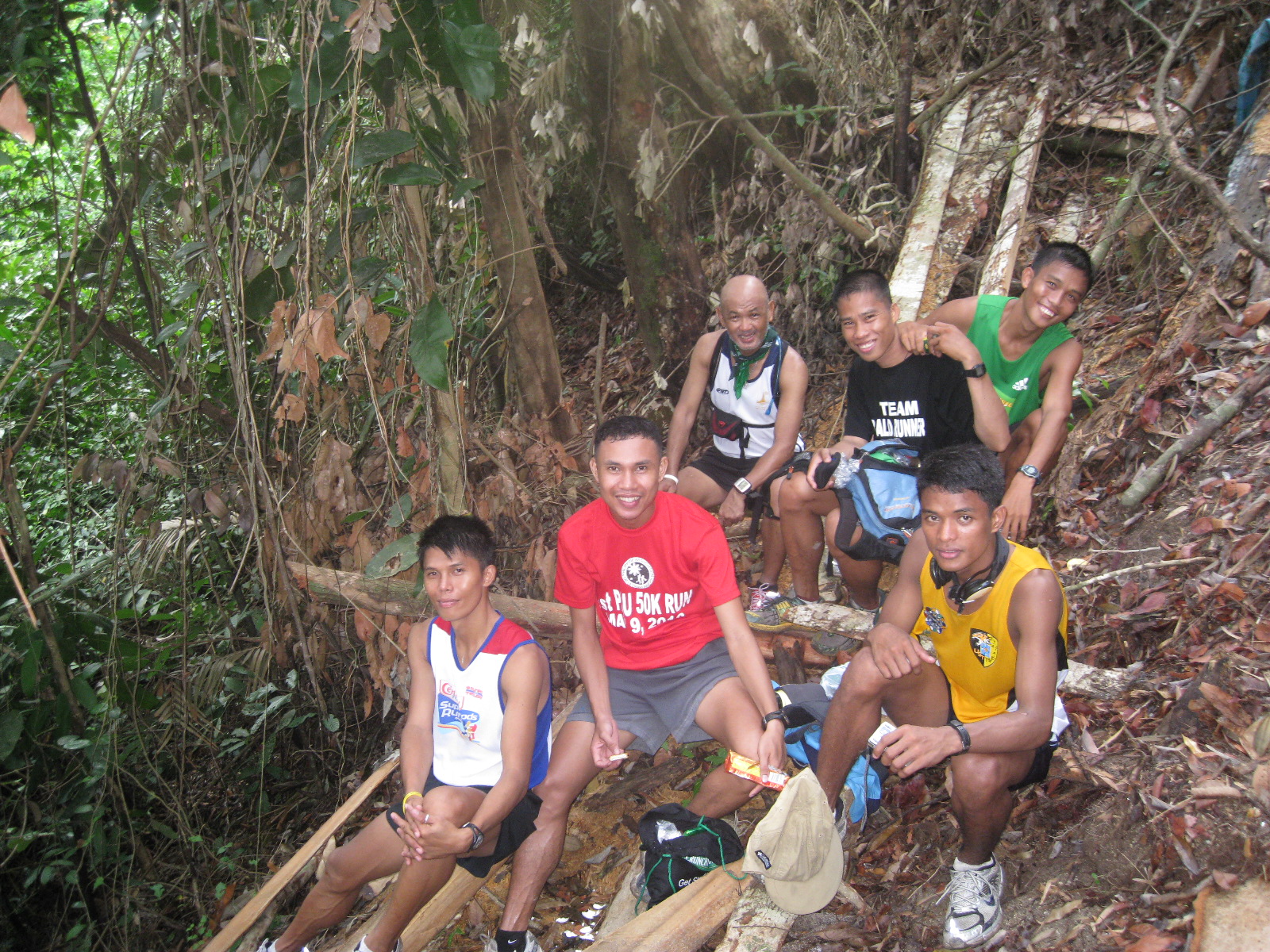
We reached the temporary hut of Django and he asked to stay thereat. We had been running & brisk walking for about 1 1/2 hours already and I took the lead to a trail which I believed to be a part of the established one. The trail led us to a higher elevation and it was very steep as we were stepping on loose soil and plants. As we reached the summit, I was surprised to see the end of the trail with trees cut and signs of the presence of “illegal logging” activity in the area. Since we were too tired to reach the peak, we decided to eat our food—steamed rice & hard-boiled eggs. The sardines were not eaten because nobody brought any spoon as our can opener! The sardines were given again to “Django” on our way back.
Signs of Illegal Logging In The AreaEnd Of The Road For The Steepest TrailHad A Picnic At This Place
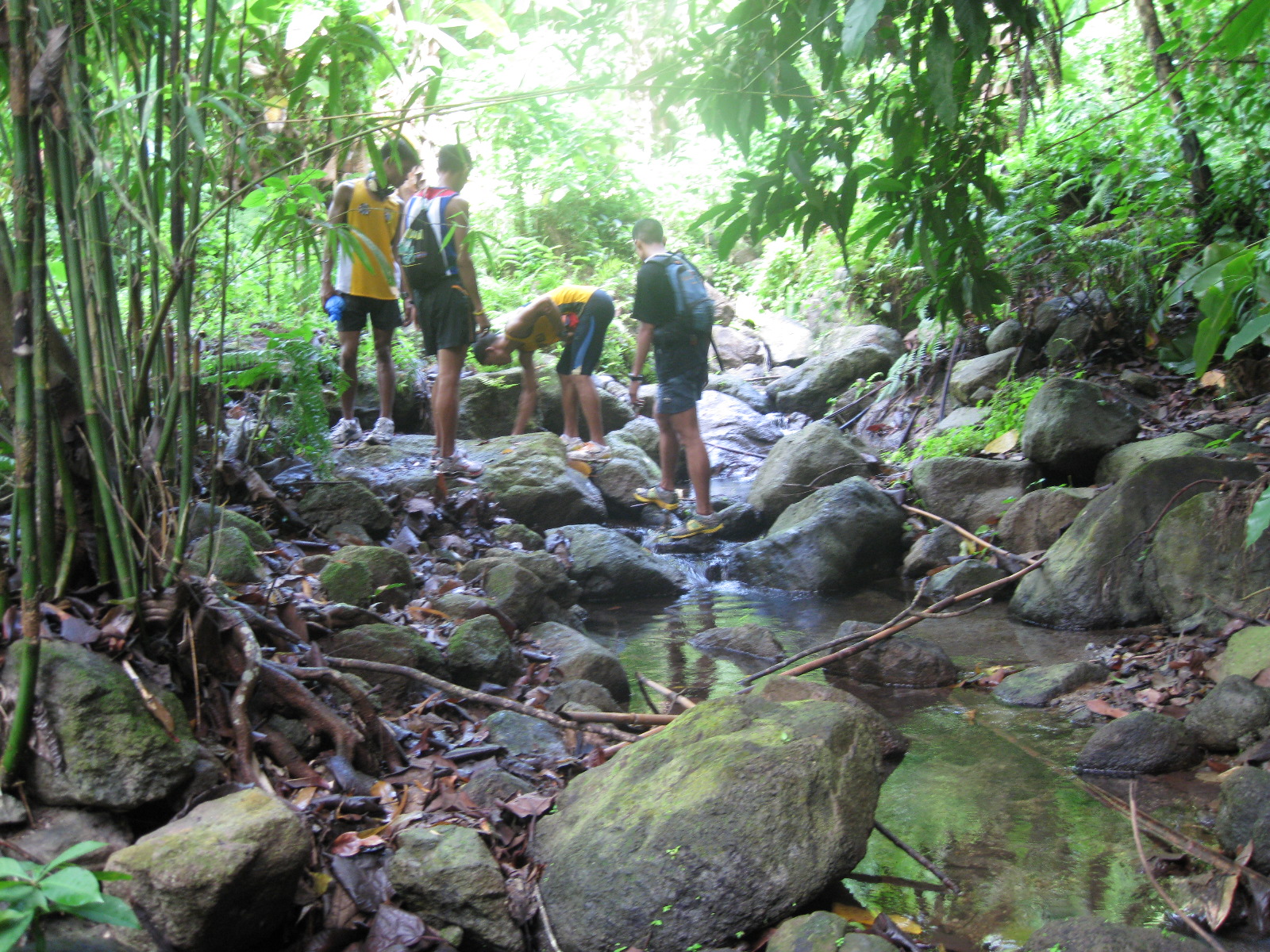
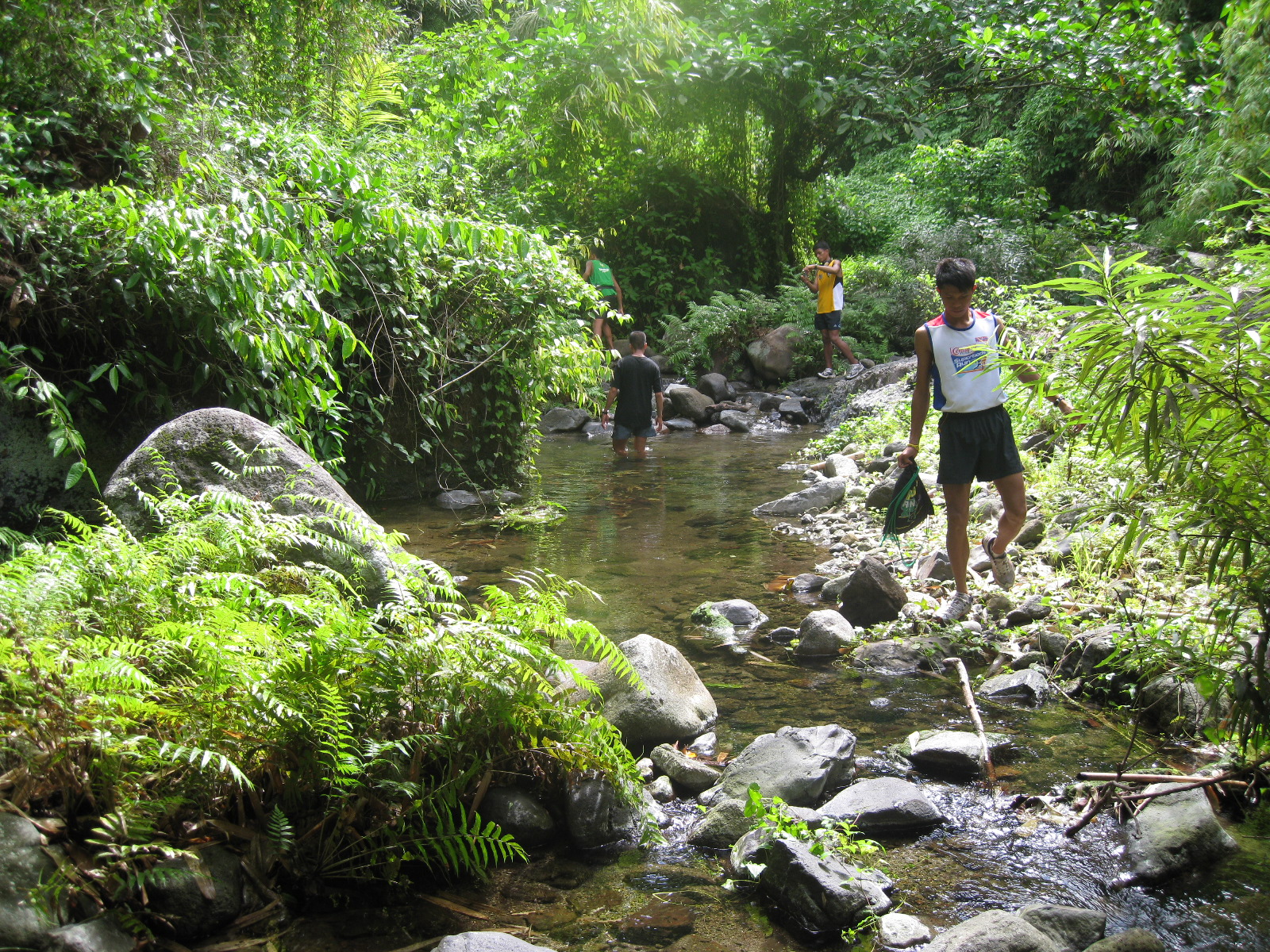
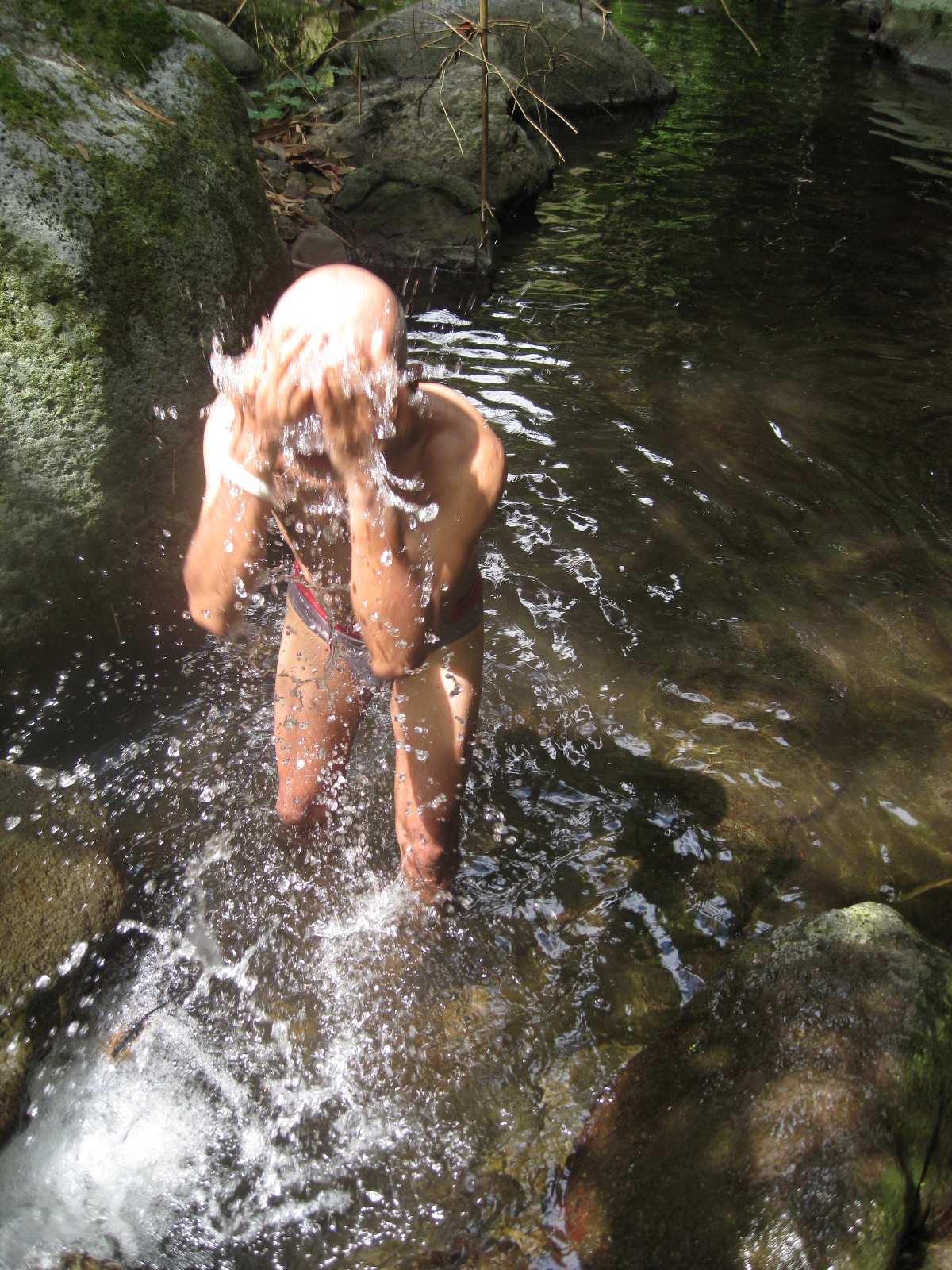
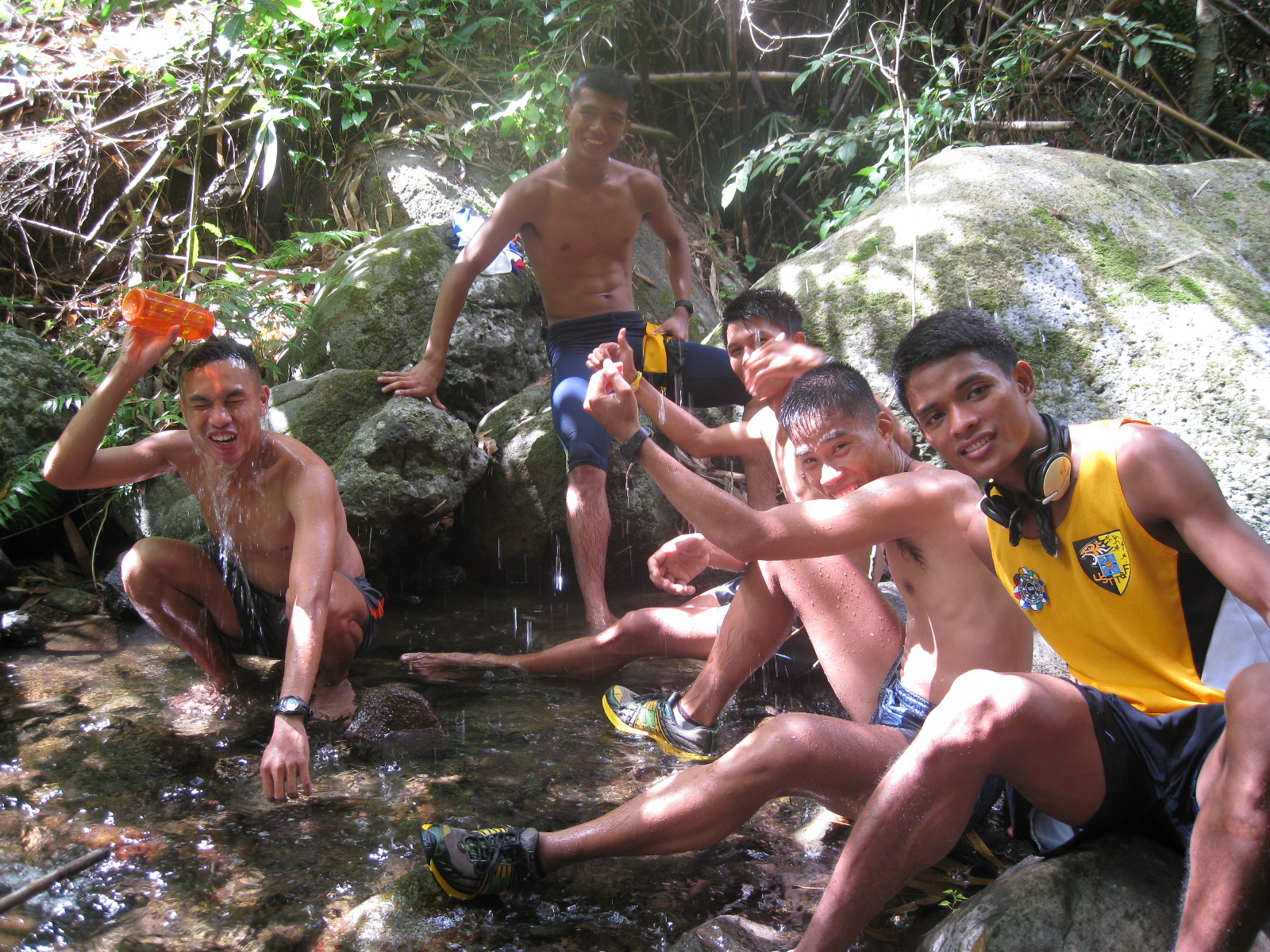
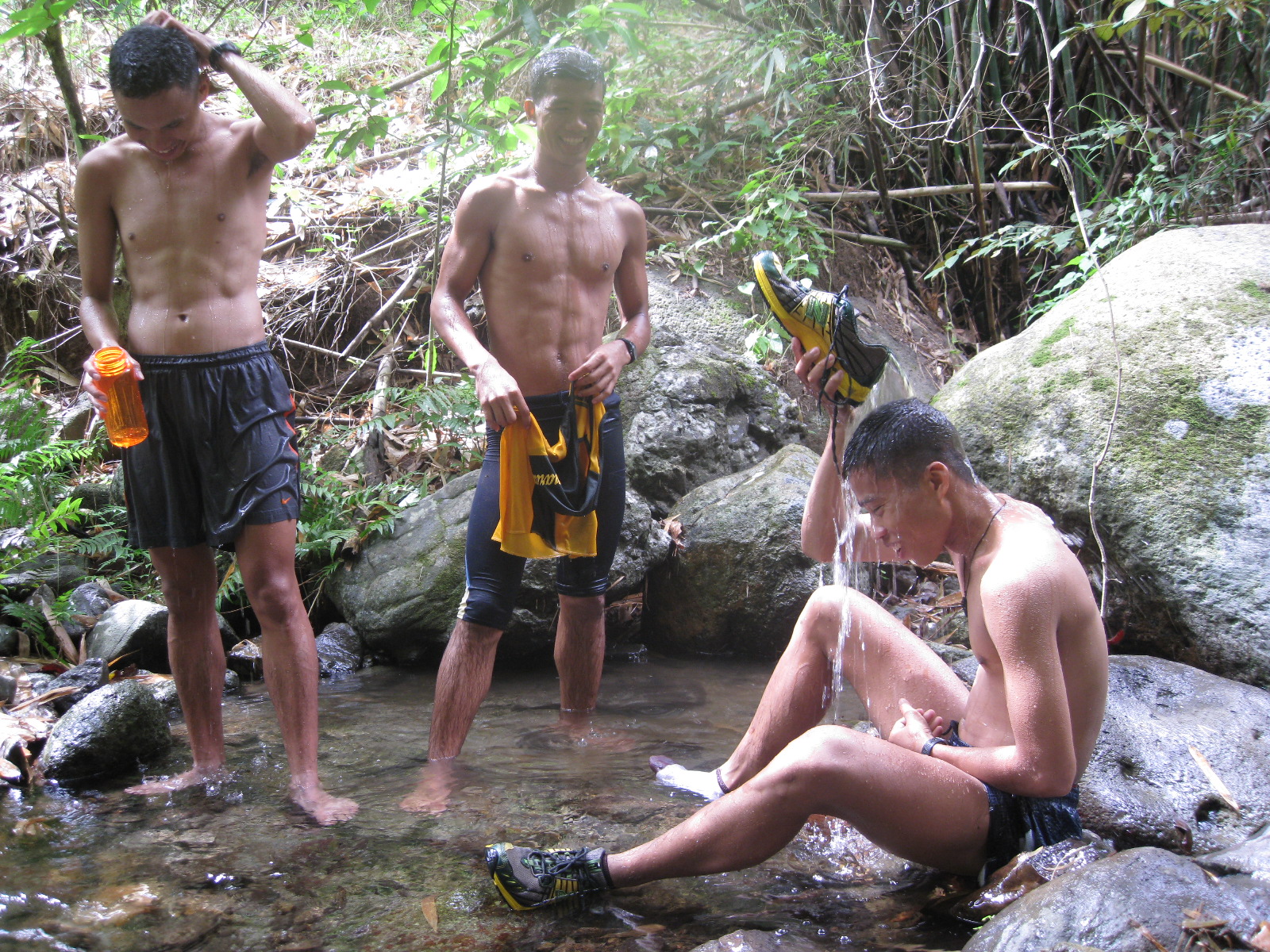
After our brief snacks & photo-ops, we returned to the established trail and started to jog & run. After 10 minutes, we reached another spring and I told the elites that I will be taking a shower! All of us started to remove our running shoes and shirts and enjoyed the cool water of the spring! The following pictures would describe how we enjoyed our brief rest at the said spring.
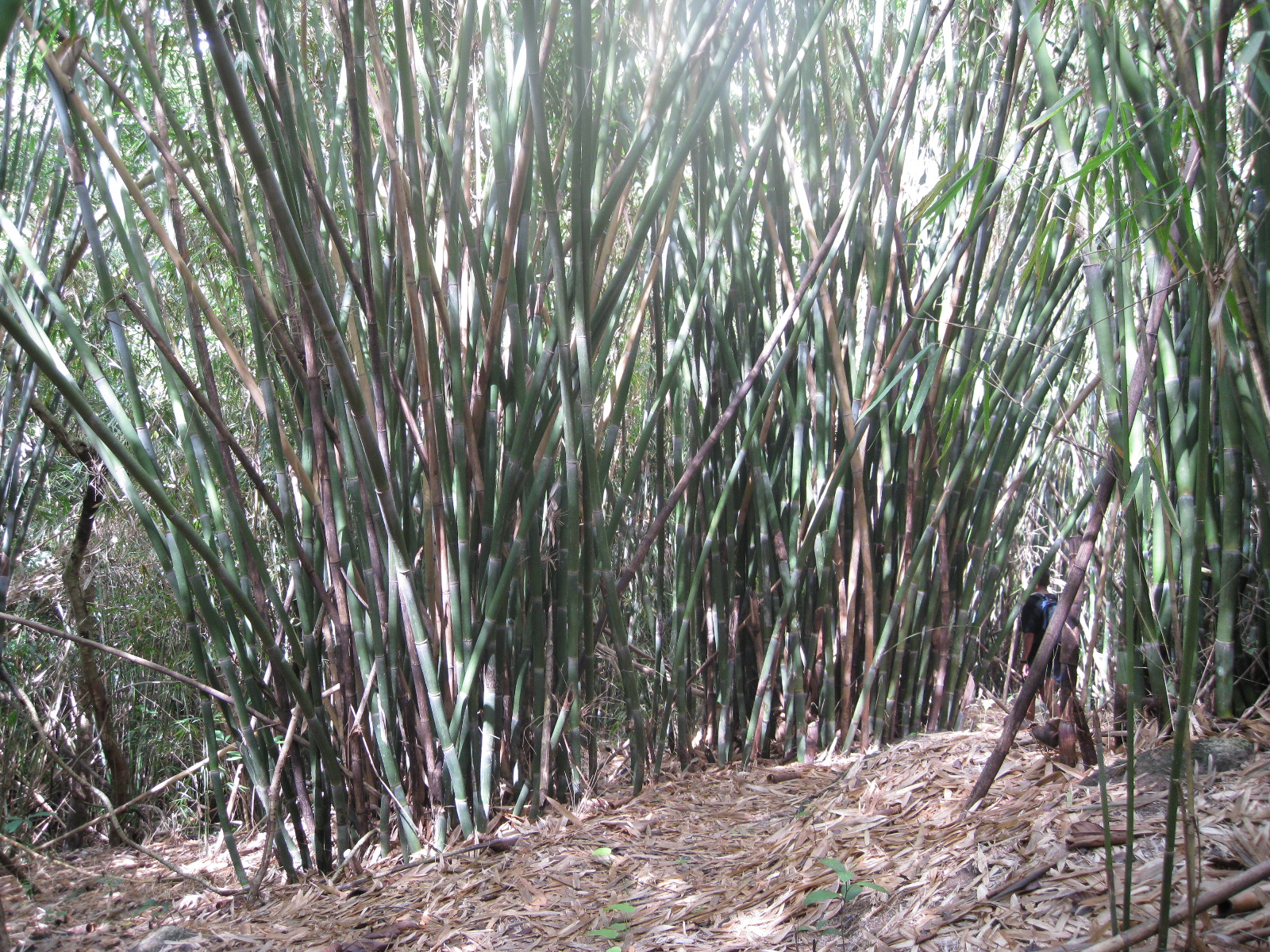
Bamboo Plants All Over The Trail Before Reaching the Turn-Around
We cleaned and made the pool at the spring deeper by re-arranging the rocks so that we can use the pool in our next visits. After our rest & shower, it started to rain hard. We resumed our run as we turned around back to where we started while it was raining. The rains made the trail more slippery and my body started to feel cold. We had to run and jog to make our body warm & perspire until we reached the nipa hut of Django.
A Big Spring at the 10K Turn-Around Point"The Bold Runner" Taking A ShowerEverybody Took A ShowerA Resourceful & Creative Runner
Django was already inside his hut and he was inviting us for a coffee break. But we declined as we were trying to reach the starting area as soon as possible. Instead, Django gave us a lot of banana flowers as part of his harvest. Each of the elites carried one and it served as our fresh vetable meal for dinner!
Elmer, one of the elite runners, would run ahead of us and stop whenever there is a duhat tree. He would pick its fruits and shared them to us. The fresh duhat fruits served as our food for the last 6K of our run. Finally, we reached our destination at 11:30 AM. We spent five (5) hours for our running adventure and we were able to run 20 kilometers. After shower and changing to dry clothes, we had our lunch and relaxed the whole afternoon. But the elites would again go out for their recovery run later in the afternoon.
What a day to spend when this day was considered a day when I have to avoid something out of my normal daily activities. But this is another story. Spending more time to run on this day in the mountain trails had finally erased my fears. June 2 is no longer a curse!
Lessons Learned During This Run and/or Observations:
1. Our mountains have a lot to offer—trails, spring water, lots of edible plants & fruit trees, and “hidden treasures (?)”.
2. There are still people who are involved in illegal logging in the heart of forested areas. Even if it was raining, we have observed that there are people who are cutting trees for charcoal purposes.
3. People in the mountain are friendly and generous, too! Django’s story about the legend of the “hidden treasure” was confirmed by other sources.
4. Running as a group enhances teamwork and better training.
5. Bringing solid foods in this kind of adventure run is better than ingesting sports gels & bars.
6. Running downhill when the steep trail is muddy and wet is dangerous!
Once again, I am featuring this article which I copied from www.running.competitor.com and posted it in my blog to make it a permanent reference to my readers.
If you want to run your best, you’ve got to do a variety of workouts. Here’s how.
There are eight basic types of runs that are practiced by runners of all levels everywhere. These formats evolved through a global trial-and-error process over many decades. They survived because they work. If you want to get the most out of the time you devote to training, you will need to learn and practice them too. You can add all kinds of wrinkles to these formats (for example by combining two of them within a single session), but even in their most basic form these workouts will take you far.
Recovery Run
A recovery run is a relatively short run performed at a steady, slow pace. Recovery runs serve to add a little mileage to a runner’s training without taking away from performance in the harder, more important workouts that precede and follow them. Recovery runs are best done as the next run after a hard workout such as an interval run. Do your recovery runs as slowly as necessary to feel relatively comfortable despite lingering fatigue from your previous run.
Example: 4 miles easy
Base Run
A base run is a relatively short to moderate-length run undertaken at a runner’s natural pace. While individual base runs are not meant to be challenging, they are meant to be done frequently, and in the aggregate they stimulate big improvements in aerobic capacity, endurance, and running economy.
Example: 6 miles at natural pace
Long Run
Generally, a long run is simply a base run that lasts long enough to leave a runner moderately to severely fatigued. The function of a long run is to increase raw endurance. The distance or duration required to achieve this effect depends, of course, on your current level of endurance. As a general rule, your longest run should be long enough to give you confidence that raw endurance will not limit you in races.
Example: 15 miles at natural pace
Progression Run
A progression run is a run that begins at a runner’s natural pace and ends with a faster segment at anywhere from marathon to 10K pace. These runs are generally intended to be moderately challenging—harder than base runs but easier than most threshold and interval runs.
Example: 5 miles at natural pace + 1 mile at half-marathon pace
Fartlek Run
A fartlek run is a base run sprinkled with short, fast intervals. You can think of a fartlek run as a gentle interval session. It’s a good way to begin the process of developing efficiency and fatigue resistance at faster speeds in the early phases of the training cycle, or to get a moderate dose of fast running later in the training cycle in addition to the larger doses provided by tempo/threshold and interval workouts.
Example: 6 miles at natural pace with 6 x 30 seconds at 5K race pace scattered throughout
Hill Repetitions
Hill repetitions are repeated short segments of hard uphill running. They increase aerobic power, high-intensity fatigue resistance, pain tolerance, and run-specific strength. The ideal hill on which to run hill repetitions features a steady, moderate gradient (4-6 percent). Hill repetitions are typically done at the end of the base-building period as a relatively safe way to introduce harder high-intensity training into the program.
Example: 2 miles of easy jogging (warm-up) + 10 x 1 minute uphill at roughly 1500m race effort with 2.5-minute jogging recoveries + 2 miles easy jogging (cool-down)
Tempo Run
A tempo run is a workout that features one or two sustained efforts somewhere in the range of lactate threshold intensity, which is the fastest pace that can be sustained for one hour in highly fit runners and the fastest pace that can be sustained for 20 minutes in less fit runners. Tempo/threshold runs serve to increase the speed you can sustain for a prolonged period of time and to increase the time you can sustain a relatively fast pace.
Example: 1 mile of easy jogging (warm-up) + 4 miles at lactate threshold pace + 1 mile of easy jogging (cool-down)
There is a special type of tempo run that is known as a marathon-pace run. A prolonged run at marathon pace is a good workout to perform at a very challenging level in the final weeks of preparation for a marathon, after you’ve established adequate raw endurance with long runs and longer progression runs featuring smaller amounts of marathon-pace running.
Example: 2 miles at natural pace + 13.1 miles at marathon pace
Intervals
Interval workouts consist of repeated shorter segments of fast running separated by slow jogging “recoveries”. This format enables a runner to pack more fast running into a single workout than he or she could with a single prolonged fast effort to exhaustion.
Interval workouts are typically subcategorized as short intervals and long intervals. Long intervals are 600-1200m segments run in the range of 5K race pace with easy jogging recoveries between them. They’re an excellent means of progressively developing efficiency and fatigue resistance at fast running speeds.
Example: 1 mile of easy jogging (warm-up) + 5 x 1 km at 5K race pace with 400m jogging recoveries + 1 mile of easy jogging (cool-down)
Shortintervals are 100-400m segments run at roughly 1,500m race pace or faster. They boost speed, running economy, fatigue resistance at fast speeds and pain tolerance. Distance runners typically use shorter, faster intervals earlier in the training cycle to increase their pure speed and then move to slightly longer, slower (but still very fast) speed intervals to add fatigue resistance to their speed.
Example: 1 mile of easy jogging (warm-up) + 10 x 300m at 800m race pace with 400m jogging recoveries + 1 mile of easy jogging (cool-down)
This was our second time to run towards the “Brown Mountain” and we started earlier at 4:00 PM. Having seen a nipa hut with a family staying at the Km-7 point of the trail, I directed my elite athletes to carry with them at least three (3) cans of sardines. In the Army, we call them as “M-203” as the size fits well like the ammunition of a M-203 Grenade Launcher. Sometimes, these sardines are called by their names as “Ligo” or “555”.
For the people living in the mountains, sardines are the most sought after food for them. It is a luxury food that you can exchange one can of sardine for a live native chicken raised by the mountain people! For the Army soldier, sardines is the most important ingredient for his ready-to-eat meal. He can make a gourmet or concoction of food taken from edible plants in the forest garnished with sardines.
Frank Indapan Was Holding A Can of Sardines!
The 3 cans of sardines were intended to be given to the only family that resides along the mountain trail as a “gift” as we intend to request from them to guide us along the trails of the mountain in our future adventure runs. As soon as we reached their hut, we gave them the sardines and asked them for some information about the mountains and the trails. The family appreciated our gesture and they started giving us important information about the mountain/s, the location of springs, and how long and far the trails are in the mountains.
From the nipa hut, we ran another 1.5 kilometers until we reached the first spring. I took some pictures and we tasted the water and it did not affect our stomach. This was our turn-around point and resumed our run back where we started.
Due to our early start, we arrived at the starting area with the sun about to set in the horizon. We finished the run in 2:17+ hours. My legs were stiff and hard but I was happy that we had gone farther from the point we reached the previous day.
Two consecutive days of mountain trail runs for the week were done and I plan to do more next week. My dead-tired legs and body were relieved with a 2-hour massage in the evening.
This was the first time that my elite athletes brought me to the periphery of BM. The elites usually do their runs to this mountain for their one hour to 1 1/2-hour workouts. We started our run at 5:00 PM. After a slow run for about 500 meters, we had our first uphill climb for about 200 meters of gravel road that ended to a left turn of about 10 meters of flat before another uphill climb of 100 meters. This pattern was repeated for about three times and I started to perspire. We started to experience a level road trail when we reached the 3K point. It was a hard slow uphill run but I kept on remembering to take short strides; lifting my knees higher; swing my arms more; and above all, keep my shoulders relaxed. For every 3-4 minutes during the run, I had to be reminded and always aware with my running form with my shoulders relaxed.
The gravel road slowly turned to a trail road with dust and I was comfortable with my Adidas Osweego which is lighter than the ASICS training shoes that I’ve been using in my road runs. We ran more uphill climbs along one-track trail with tall cogon grasses on both sides. There are also wild plants that keep on brushing on our legs as we trekked uphill. On this portion of the trail, the seven runners in us were lined up on a single file as we went upward towards the mountain.
More Mountains (at the Background) To Explore
As we went deeper to the vegetated part on the side of the mountain, a herd of cattles would immediately approach us and the elites would think that they were going to attack us. We had to run faster and tried to evade the cattles. I was laughing when I saw one of my elites removed his shirt and was seen running naked as his shirt was colored red. As we ran, I realized that I was also wearing a red Mizuno running shirt! Later, I told them that these cattles would approach us thinking that we were there to feed them and I laughed with my theory!
After running for 7K, we saw a hut at the side of the mountain and a family of Aeta resides in it. We stopped for awhile and talked to the family. After a few seconds, we resumed our run towards another uphill trail until we reached a place where my GF 305 registered a distance of 7.5K. It was already getting dark and we decided to turn-around to our starting line.
On our way back for another 7.5K to the starting line, it was a race to beat the coming of darkness on those single-track trails. Actually, it was already dark when we still had 3K more to go and we had to slow down because the trail was uneven. Once again, on the downhill run, I alternately took longer strides and shorter strides depending on the steepness of the trail but I always maintain my shoulders relaxed. It was almost 7:00 in the evening when we reached our starting area.
On our way up to the mountain, I averaged a pace of 7:40 mins/km while our fastest average pace in going down was 6:08 mins/km. These numbers would indicate a very slow pace but I am sure this visit to the BM will make me a faster and stronger runner in my incoming road and trail races.
Always remember to run with your shoulders relaxed. Let them drop and swing your arms naturally!

 Bald Runner
You must be logged in to post a comment.