24-Hour Run: Soochow Ultramarathon


Pre-Race Activities

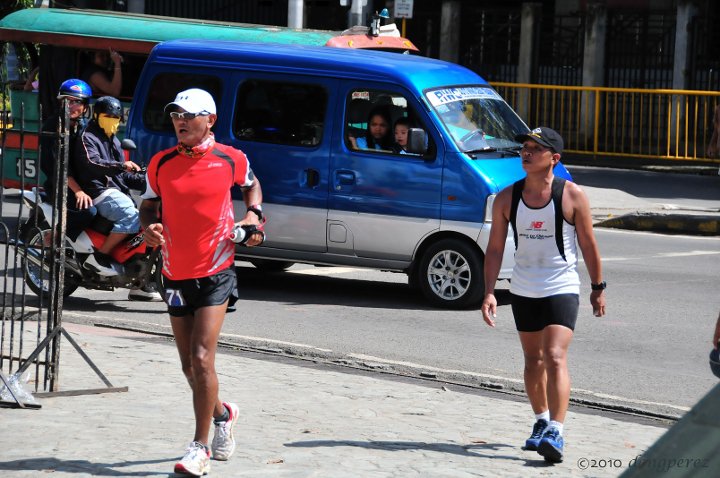
The longest time of my life to be running and walking continuously was when I finished the 1st edition of the Bataan Death March 102K Ultramarathon Race last April 4-5, 2009 where I finished in 15+ hours. Now, I could not imagine how these 30+ elite ultramarathon runners to be running around a 400-meter oval track for the duration of 24 hours. One-half of these runners are the world’s best in this kind of endurance event and it was a learning experience for me in terms of the organizational, administrative, and the technical aspects.

The Soochow International Ultramarathon 24-Hour Endurance Race is in its 10th edition where world records for such event had been established by no less than the best of the best of running. This simply means that Taiwan and other countries in our neighbours in the Asia region had been ahead of us in terms of awareness and participation to ultramarathon events. Continue reading “24-Hour Run: Soochow Ultramarathon”

“Good Morning, Taipei!”


At 9:00 AM this morning, Saturday, December 11, 2010, the 10th Annual Edition of the “IAU’s Silver Medal” Event in Taiwan which is called, “Soochow International Ultramarathon 24-Hour Endurance Race” shall start. The 24-Hour Endurance Race usually consists of only 36 elite runners in ultramarathon running where 18 runners are “the best” international runners and the other half are elite runners from Taiwan.

The Soochow University’s Oval Track had been the official venue of this event since its first staging in 1999. This ultramarathon/24-hour endurance race had been organized and directed by one of its University professors, Frank Kuo, who happens to be a passionate ultrarunner who had joined the Spartathlon and other multi-day running events in the world. Continue reading ““Good Morning, Taipei!””

BDM 102 Ultramarathon Lectures/Clinic


This project was conceived to help and guide the runners who applied to participate in the 2011 Bataan Death March 102K (BDM 102) Ultramarathon Race. The lectures consisted of experiences and tips of past Finishers of the race to include their Support Crew. These lectures were conducted twice a month at the Philippine Army Officers Clubhouse on Friday evenings, from 6:30 to 7:30.

First Lecture: History of BDM & History of the Race

The first lecture was conducted last October 1, 2010 at the Philippine Army Officers Clubhouse by the Race Director/Bald Runner with emphasis on the appreciation of the history and significance of the Bataan Death March as one of the infamous events in the history of warfare, specifically, the Second World War. It is in this event that human lives paid a heavy price on the dastardly acts perpetrated by the conquerors/invaders to the defeated defenders of Bataan. A total of almost 20,000 Filipino soldiers, militias, and American soldiers died on the said Death March from Mariveles, Bataan to San Fernando, Pampanga; “jampacked” like sardines in box carts on a train from San Fernando, Pampanga to Capas, Tarlac; and then ultimately marched/walked for another 11 kilometers until they reached the Camp O’Donnell as their Prisoner’s  Concentration Camp. The march and the train trip covered an approximate distance of 151 kilometers. In three weeks, all the surrendered combined forces of the Philippines and the United States were finally brought to their final destination, Prisoners Concentration Camp at Camp O’Donnell.

In the advent on the popularity of ultramarathon races in other countries, I conceived the idea of transforming the Bataan Death March as an ultramarathon race where runners would compete with each other in order to commemorate the heroic deeds and the sacrifices offered by the casualties and survivors in the Bataan Death March in the name of patriotism and defence of the country from invaders. “Bataan Death March” is being used in other countries in marathon and ultramarathon races to commemorate the survivors of such countries but they are done not in the original place where history happened. While the Philippines is not commemorating such historical event as a competitive running event, an opportunity was established and created. Thus, BDM 102 was born as a sacred event to commemorate our past heroes and at the same time, a way to test one’s endurance and explore one’s physical and mental limits through running.

Second Lecture: Experience & “Tips” From A Top Finisher & Support Crew

Gene Olvis, 4th Place Finisher in the 2010 BDM 102 & 31st Finisher in the 2009 BDM 102, shared his training and preparation in his two editions of BDM 102. He shared also his experiences during these two editions of the race. He admitted that he was not 100% prepared on the first edition as he was not aware of any training program for an ultramarathon distance. Everything was an experiment for him to gain experience on the first edition. However, with the advice from a Filipino ultrarunner living in the US, Ben Gaetos, he was able to train properly for the second edition. In his preparation for the second edition, he started “hard” training at least 6 months before race with emphasis on “back-to-back” LSD runs during weekends. He also incorporated his hydration and nutrition strategies on these LSD runs which he followed strictly during race day. His commitment to his training program earned him a 4th Place in this year’s BDM 102. He also advised the audience to eat solid foods during the race which had been tested and eaten during his “back-to-back” LSD runs.

Bea Hernandez, wife of Mark Hernandez (a finisher of 2nd BDM 102) and consistent Support crew to his husband in PAU races, shared her experiences and suggestions on what the support crew has to do to ensure a successful finish to her runner and the runners to be supported. Planning and Preparation are the keys to a coordinated action between the support crew and the runner. Hydration and Nutrition Needs of the runner should be well-organized and properly marked as to what point/Km post these are handed to the runner. At least, two ice chests/coolers are needed for each runner—-one cooler for the hydration needs and one cooler for purely ice cubes/blocks. PATIENCE is the basic and most important virtue of a support crew. In order to fight BOREDOM while waiting for the runner to arrive at the pre-designated point/s, find time to enjoy the company of other support crew and to enjoy the scenery of the route. A digital camera to record/document the views around and the company of friends is a MUST. Lastly, a support crew must be, at least, a runner so that she/he knows the pain and/or “sufferings” of his/her runner. Above all, a good communication between the support crew and the runner produces a successful result in such ultra road race.

Third Lecture: Experiences & “Tips” From A BDM “Veteran” On Apparel & Others; Strengthening Exercises For Ultramarathon Runners.

Jonel Mendoza, a “veteran” of BDM 102 and PAU Races, gave a tip on the apparel highly recommended for the BDM 102. He discussed the necessity of wearing a runner’s cap with an extended cape to cover the nape; loose long-sleeved technical shirt; loose running shorts; running socks; and shoes. Highly suggested color of apparel is white as it reflects the heat from the sun, rather than absorb it as all the runners will be exposed to the heat of the sun on extended period, if not, the whole day. Appropriate pictures of runners taken during the BDM Races were presented as examples. What is commendable in Jonel’s presentation is his step-by-step “first-aid” solution for foot blisters and also preventive measures to take to avoid such “problems” during the race. In Jonel’s experience for the past 2 editions of BDM 102, he made a comparison of what had happened during his first finish and his successful and better performance on the 2nd edition. In short, he learned a lot of lessons on his first experience and corrected them with a better preparation and training on the second edition.

Enrico Tocol is also a “veteran” of two BDM 102 Races and being a Professional Physical Trainer of Gold’s Gym, he presented a scientific approach on strengthening program which could highly assist the runner to finish a rigorous ultramarathon race. It is a MUST for an ultrarunner to strengthen his legs, arms, back and core with appropriate exercises with the aid of free weights and weight machines. He even discussed the number of repetitions, number of sets and suggested weight for a runner to lift and do. What I remembered from his lecture was the ability for a runner to lift lighter weights with higher repetitions just enough to strengthen the muscles and not to make them bigger and more “buffed”. He also mentioned the importance of periodization where the ultimate goal is to finish an important race with good results, whether a marathon or ultramarathon race, with the rest of the road races leading to your goal should be used as evaluation/assessment if your training is in the right direction.

 Fourth Lecture: Experiences & “Tips” From Me as a Runner and Rules & Regulations of the Race

My lecture was a detailed presentation of my training; experiences & “tips”; nutrition & hydration strategy; and apparel during the 1st BDM 102. My race strategy was to maintain an even pace of 6:30-7:30 minutes per kilometer and incorporate walking breaks when I feel my leg muscles are in pain or about to have muscle cramps. Mental attitude (to finish the race) and positive thinking play a very important role to keep on pushing oneself towards the finish line. The “warrior” attitude came into play for me to finish the race to be considered as a credible “Founder and Race Director” of this ultramarathon race. Most of these detailed experiences were fully documented in my post in this blog after I finished the 1st BDM 102 last April 5, 2009. Rules and Regulations are the same with that of the previous editions, however, I emphasized again on the strict adherence to the Integrity of the Race.

Fifth & Last Lecture: Experiences & “Tips” From Atty Jon Lacanlale On His BDM 102 Races & Successful Finish at The Great North Walk (GNW) 100-Mile Endurance Run in Sydney, Australia last November 13-14, 2010.

The 5th and last BDM 102 lecture will be held this coming Friday (tomorrow), December 3, 2010 at the Philippine Army Officers Clubhouse at 6:30 PM. Applicants & Invited Runners to the BDM 102 and other Ultrarunners are invited to attend this lecture.

See you and Good Luck On Your Training!
Reminders: Upcoming BR’s Events


December 30, 2010—RIZAL Day 32K Run in Camp Aguinaldo
January 15, 2011—1st “Test Run” for BDM 102 (Km Post #0-50) & PAU 50K Run
February 12, 2011—2nd “Test Run” for BDM 102 (Km Post #50-102) & PAU 52K Run
January 29, 2011—”Test Run” For BDM 160 (Km Post #102-160) & PAU 58K Run
February 26-27, 2011—1st BDM 160K Ultramarathon Race
March 5-6, 2011—3rd BDM 102K Ultramarathon Race

1st Cebu Ultramarathon Race


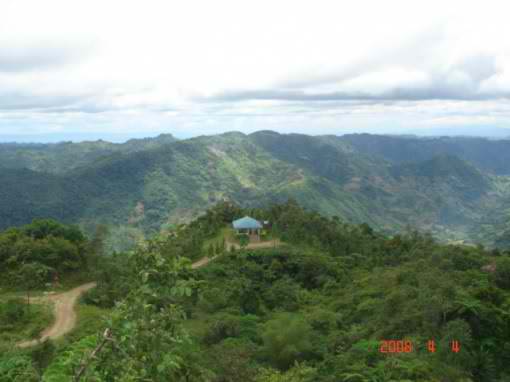
1. Six weeks before I retired from the military service, I visited the exact place where former President Ramon Magsaysay’s plane crashed on the early morning of March 17, 1957. If you don’t know your history, you can search “Mt Manunggal” in my blog and read my story about this visit to the said place.

2. Being the Bald Runner after retirement from the service, I had plans of visiting again to this place and thought of coming up with road/trail race to commemorate the death of our former President Magsaysay as I wanted my runs to be connected with the history of our country. In one of our conversations with my friend Jonel Mendoza, he asked me a place where a good ultra run route in Cebu which can be used in the future and I answered him that Mt Manunggal Crash Site would be highly recommended because of its significance in our history. And the rest is history.

Starting Area of the Race

3. Since I don’t announce in my blog where my next race is, the Race Organizers were surprised to see me in Cebu/Ayala Center on the night before the race. I was given the opportunity by Jonel aka FrontRunner Magazine to speak before the runners on their magazine’s running clinic. It was a nice experience seeing a lot of runners from Cebu City during the said clinic. It really shows that the running community in cities outside Metro Manila is growing in numbers by “leaps and bounds”.

4. Most of the runners in the 1st Cebu Ultramarathon Race were already at the assembly area at 4:00 AM as most of them “camped” in the area. I could see different moods on the faces of the runners which is very common among runners who are about to experience their first ultramarathon run. I was able to see some of the “usual suspects” in ultra runs in Luzon and I had a brief chat with them. I know, most of them came here to challenge the route. However, I came here to test and evaluate my training.

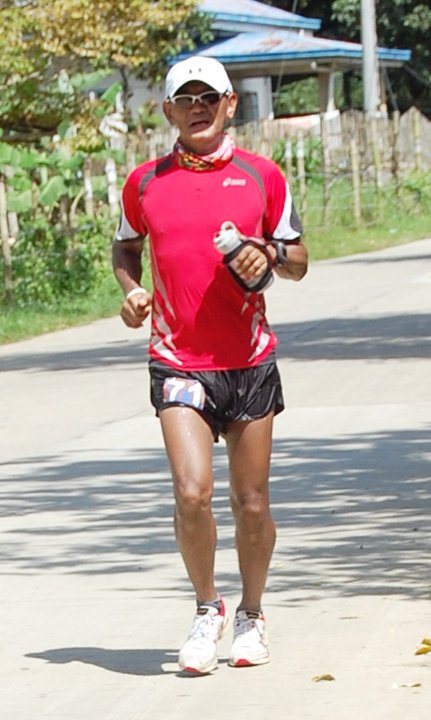
5. After a short program and photo-ops at the “bust monument” of President Magsaysay, the race started at 5:52 AM with 180+ starters. The faster and “excited” runners went ahead from the rest of the group as they forced themselves to attack the uphill climbs and downhill parts of the route that goes to the National Highway. I think I was on the last half of the whole group of starters on the first 3 kilometers of the run.

6. In a very challenging route which has steep uphills and fast downhills, the race strategy in an ultra run (50K and above) is to be able to apply “brisk walking” on the uphills, fast recovery run on the downhills, and steady run on the plain parts of the route. So, in most parts of the route, I consistently applied this strategy making sure that I hydrate myself regularly (every 2-3K) and eat solid foods every 5 -7 kilometers. My solid foods consisted of Nature Valley Sports Bar, fresh banana, fresh apple, Cloud 9 Chocolate Bites, and boiled sweet corn (bought along the way). I think most of the runners that I passed on the uphills were able to see me with my “brisk walking” form! I am highly recommending that “form” as I learned it from my experience at the Marin Headlands 50-Mile Trail Run.

Looking Good or Feeling The Pain & Suffering?

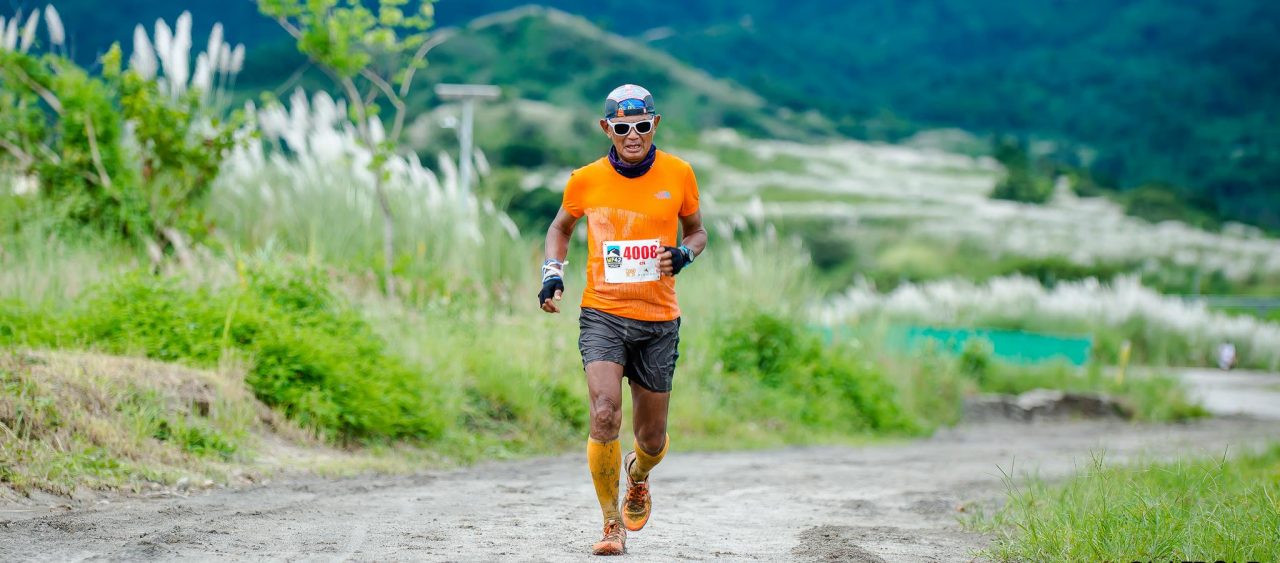
7. The last 20K of the race was a “battle of will and determination” as the heat of the sun was upon us and I’ve been running and brisk walking for almost 4 hours. The more that I have to bring out those “tips” and lessons learned that I gathered in my past ultraruns. At this point, everything was a “mind game” and consistency of doing what I planned for during my training was the focus in this race. I did not veered away from my race strategy most especially on my hydration/nutrition. On my last 15K, I started to take “salt tablets” and drowned them in my throat with ice cold Mountain Dew or Classic Coke. This gave me more strength and consistency with my pacing in my runs and brisk walking!

Few Steps Before The Finish Line

8. I finally reached the Finish Line, in front of the Cebu Provincial Capitol Building, with a time of 6:42:20 hours (Official Time). I finished with a ranking of #38 out of the 162 finishers. Based from my GF 305 data, the total distance is 50.23K; an average pace was 8:00 minutes per kilometer; a total ascent of 1,860 meters and a total descent of  2,695 meters.

9. I consider this race as a mountain trail run because of the profile/elevation of the whole course. I am satisfied with the result of my training since I finished the 1st CAMSUR Marathon wherein I started to incorporate more intensity to my training runs and making my selected weekend races as my performance evaluation/test runs. In conclusion, I was able to attain what I have aimed for in this ultra run.

10. And talking about going “hardcore” and going up to a higher level of ultrarunning, I advise that for those who have future plans in joining ultra trail runs in the “WEST”, I highly recommend you to follow and train for the following finishing times in the following ultra distances races:

50K—-sub-7 hours

50 miles/80K—-sub-11 hours

100K—–sub-14 hours

100 miles/160K—-sub-30 hours  

11. Thanks, Jonel, FrontRunner Magazine, CERC & Cebu Runners, Volunteers, and the CENTCOM, AFP Officers & Staff for the experience and hospitality. Congratulations to all the Finishers and Race Organizers for a job well done!

(Note: Thanks for those who posted the above pictures at Facebook)

Result: 4th PAU “T2N” 50K Run


Congratulations to the Winners and Finishers! And to all the Support Crew who were the “movers/pushers & inspiration” of the runners to cross the Finish Line! To those who finished their first ultra run, PAU welcomes you to the ultrarunning community.

4th PAU 50K Run
Tagaytay City – Nasugbu, Batangas
14-Nov-10
       
1 Hermogines Olvis 4:11:56 Champion (Male)
2 Sunday Ombrog  4:15:15 1st Runner-up (Male)
3 Christopher Iblan 4:25:28 2nd Runner-up (Male)
4 Alfredo Ocampo 4:32:22  
5 Arnold Dimasuhid 4:32:23  
6 Gregorio Ocampo 4:39:35  
7 Junrox Roque 4:44:15  
8 Rodel Gajol 4:51:25  
9 Wilnar Iglesia 4:57:34  
10 Manolito Anyaya 4:57:35  
11 Armand Fernando 5:01:25  
12 Marcos Lontoc 5:01:53  
13 Edison Tocson 5:08:18  
14 Eric Bullena 5:10:47  
15 Alfred Delos Reyes 5:14:18  
16 Edwin Gajol 5:14:43  
17 Dionisio Manzano 5:14:45  
18 Godfrey Gozo 5:21:00  
19 Jovani Hernandez 5:21:32  
20 Joel Korea 5:21:33  
21 Saturnino Camangonan 5:22:14  
22 Dindo Diaz 5:23:30  
23 Chito Vegim 5:24:50  
24 Jose Dueñas 5:26:58  
25 Vergelio Leona 5:28:08  
26 Francisco Lapira 5:28:15  
27 George Dolores 5:28:48  
28 Jerry Adriano 5:28:52  
29 Oscar Sañez 5:29:18  
30 Roel Olimba 5:32:05  
31 Vener Roldan 5:32:35  
32 Graciano Santos 5:34:24  
33 Cristina Narvaez   (F) 5:35:50 Champion  (Ladies)
34 Mark Adrian Hernandez 5:36:38  
35 Sandy Alentajan 5:38:32  
36 Celma Hitalia    (F) 5:39:02 1st Runner-up (Ladies)
37 Albert Henson 5:39:58  
38 Patrick Winceth Alcomendas 5:40:44  
39 Mark Anthony Rodica 5:40:46  
40 Karen Kate Pascual  (F) 5:41:04 2nd Runner-up (Ladies)
41 Ernesto Abas 5:42:14  
42 Jeremiah Isip 5:43:45  
43 Allan Bandiola 5:43:50  
44 Joey Baladad 5:44:35  
45 Christine Ferrera  (F) 5:45:15  
46 Christian Oting 5:49:02  
47 Bong Bernadez 5:49:03  
48 Ceasar Abarientos 5:51:20  
49 Roberto Delos Santos, Jr 5:51:54  
50 Roberto Reyes 5:52:00  
51 Jay Chavez 5:52:50  
52 Frederick Gabriel 5:53:15  
53 Allen Gaspar 5:54:45  
54 John Jeffrey Avellanosa 5:56:48  
55 Ramgel Marquez 5:57:13  
56 Ysmael Ilagan 5:58:13  
57 Russel Pata 5:58:49  
58 Mel Severino 5:58:52  
59 Ria Go Tian  (F) 6:00:54  
60 Ric Cabusao 6:00:55  
61 Moses Moreno 6:03:50  
62 Alexander Macalintal 6:04:18  
63 Jose Cando 6:08:05  
64 Rufino Morimonte 6:08:07  
65 Mark Salvador 6:12:48  
66 Gil Brazil 6:13:12  
67 Francis Andrew Santiago 6:16:22  
68 Edilberto Yonzon 6:17:26  
69 Jerome Cartailler 6:17:45  
70 Ian Colendra 6:17:50  
71 Victor Ting 6:21:34  
72 Michael Fabian 6:21:36  
73 Chito Carreon 6:23:10  
74 Enrico Tocol 6:24:40  
75 Odessa Coral  (F) 6:24:50  
76 Leo Tugade 6:26:10  
77 Michael Santos 6:26:11  
78 Paul Amerigo Pajo 6:28:40  
79 Junn Besana 6:28:48  
80 Vincent Ocampo 6:30:22  
81 Nelson Mallillin 6:32:04  
82 Jose Erickson Targa 6:32:15  
83 Ferdie Cabiling 6:32:24  
84 Joshua Suarez 6:32:30  
85 Reginald Santos 6:33:18  
86 Jael Wenceslao 6:33:48  
87 Jag Irasga 6:37:10  
88 Christian Paul Forbes 6:37:20  
89 Ian Lim 6:38:12  
90 Bob Castilla 6:39:06  
91 Andy Reyes 6:39:07  
92 Jonathan Sy 6:39:22  
93 Ernesto Jose 6:40:14  
94 Arlito Masamoc 6:41:02  
95 Macky Coronel 6:41:34  
96 Conrado Teodoro 6:41:56  
97 Joseph Baltazar 6:45:30  
98 Rodel Montejo 6:45:32  
99 Gil Ocampo 6:46:43  
100 Ronilo Nabong 6:48:52  
101 Andrew Llanes 6:50:50  
102 Emma Alvarez  (F) 6:52:18  
103 Crisanto Ubungen 6:52:19  
104 Xerxis Tan 6:53:30  
105 Raymund Renato Canta 6:55:56  
106 Raul Roco 6:59:02  
107 Grimaldo Anecito 6:59:03  
108 Vans Camannong 7:00:42  
109 Ma. Roxanne Catolos  (F) 7:02:45  
110 Joseph Soriao 7:03:25  
111 Ronald Perez 7:03:42  
112 Fernando Cabañero 7:03:43  
113 Benedict Meneses 7:05:22  
114 Emerson Go Tian 7:06:42  
115 Jojo Berug 7:08:55  
116 Junar Layug 7:09:09  
117 Blas Ople Tiangco 7:11:44  
118 David Buban 7:13:18  
119 Carlo Serrano 7:13:34  
120 Christopher Ng 7:15:34  
121 Paolo Lukban 7:15:35  
122 Wilfredo Aga, Jr 7:15:36  
123 Cristina Cunanan  (F) 7:15:42  
124 Victor Viola 7:16:26  
125 Raymund Suarez 7:17:34  
126 Wesley Noel Oraña 7:17:59  
127 Ronaldo Sulapas 7:19:59  
128 Philippe Arenillio 7:20:02  
129 Rosgar Apolinario 7:20:58  
130 Christopher Montaos 7:23:32  
131 Sherwin Tommy Botabara 7:24:26  
132 Edwin Rara 7:30:10  
133 Roselle Dadal  (F) 7:34:08  
134 Marlin Marilag 7:38:14  
135 Leynard Gripal 7:41:05  
136 Macky Delima 7:41:40  
137 Wayne Plymale 7:42:45  
138 Lorie Padua 7:43:34  
139 John Paul Bautista 7:46:45  
140 Vivencio Soriano 7:54:20  
141 Mark Anthony Alindada 7:57:20  
142 Ayette Padua  7:57:36  
143 Jimmy Ong 7:57:38  
144 Harold Lorette 7:59:18  
145 Carl Balagot 7:59:20  
146 Lemuel Narcise 8:00:20  
147 Emiliano Burgos 8:05:10  
148 Ellen Abegail Castillo  (F) 8:05:43  
149 Mark Fer Castillo 8:06:27  
150 Alfred Paul Paiso 8:06:28  
151 Samuel Narcise 8:10:18  
152 Eddie Yruma 8:23:00  
153 Aaron Anievas 8:38:04  
154 Angel Henson 8:38:05  
155 Kris Nuñez 8:49:20  
156 Roy Tan 8:50:42  
157 Norberto Mortel 9:30:05  
158 Arturo Virata 11:13:30  
159 Princess Duterte  (F) 11:13:32  

Guidelines For “T2N”


Guidelines For T2N (Tagaytay to Nasugbu) 50K Run

  1. This is a solo race. The race will start at 5:00 AM of Sunday, November 14, 2010 in front of the People’s Park in Tagaytay City. The Finish Line of the race is INSIDE Plaza De Roxas in Nasugbu, Bataan. Plaza De Roxas is the Municipal Public Park located in front of the Nasugbu Municipal Hall. (Note: Runners have to pass in front of the Jollibee and then turn right at the next street and then enter at the Gate of Plaza De Roxas.)
  2. Runners are allowed to have their support vehicle & crew but they are not allowed to have pacers. (Note: Pacers should be registered runners). Support Vehicle should “leap-frog” from their runner/s and “shadowing” the runner is strictly not allowed. There is no prescribed number of runners to be supported for each support vehicle.
  3. Runners’ Bib should be pinned and displayed in front of the runner’s apparel.
  4. Runners are highly encouraged to bring and wear with them their respective hydration system/belt during the race. We have a limited number of water stations/aid stations along the route.
  5. The Water/Aid Station are located at the Km #20 and Km #40. These stations will also serve as the runners’ drop bag stations. Runners without support vehicles are encouraged to prepare their drop bags and they will be brought to these Aid Stations. Drop Bags should be properly marked with the name of the runner, race bib #, and Km # point where the bags will be “dropped”. (Note: As the race will progress, we will also place water stations at Km # 15, #30, & 45)
  6. Cut-off time is eight (8) hours.
  7. Runners are encouraged to stay on the left side of the road, facing the incoming traffic. Some parts of the route are narrow and runners should always be attentive and vigilant of vehicles, in front and at their back.
  8. Runners are also encouraged to run in single file as the road will be busy with the traffic of vehicles.
  9. Ipods, MP3s, and “wires” are allowed. However, users should be attentive with their surroundings.
  10. As in the past PAU races, every finisher will receive individual memento/trophy, certificate of finish, and Finisher’s T-Shirt. Results of this race will be included in the rating/ranking among PAU runners for 2010.
  11. Integrity of the Race shall be upheld and respected.
  12. The spirit of ultra running is highly encouraged. Finish the race, encourage/help one another, develop friendship before, during & after the race, and have an ULTRA FUN!

Good luck!

BDM 102 Lecture #2


“Experience is the best teacher”

The second session of the 2011 BDM 102K Ultramarathon Race Lecture will be held this coming Friday, October 22, 2010 in one of the Function Rooms of the Philippine Army Officers’ Clubhouse, Headquarters Philippine Army, Fort Bonifacio. The lecture will start at 6:00 PM and ends at 7:00 PM.

I have invited two distinguished guest lecturers whom I consider as well-experienced in the field of ultramarathon events since the start of the BDM 102 and other PAU Races for the past two years. The first lecturer is Gene Olvis who had been consistently joining the BDM 102 and PAU races. He will impart to the audience about his training and preparation for the BDM 102 races as well as his experiences during the race. On the other hand, I have invited Bea Hernandez, the wife of ultramarathoner Mark, who will discuss her tips and experiences on being a Support Crew to his husband to the recent BDM 102 and PAU Races.

All “first-timers” for the BDM 102 and those who are still waiting for their invitation are highly encouraged to listen and be a part of this lecture. BDM 102 “veterans” who are qualified for the 1st BDM 151 are also encouraged to join this lecture.

(Note: The Secretariat of the 2011 BDM 102 event will be present during the lecture and applicants for the BDM 102 who have not yet received their “invitation” can coordinate with them. The Secretariat will also be there to receive and process registration for the 4th PAU 50K Run/”T2N”)

BDM 102 Lecture #1: History & Honesty


Bataan Death March Logo

The 1st Lecture for the 2011 BDM 102 was conducted last October 1, 2010 in one of the Function Rooms of the Philippine Army’s Officers’ Clubhouse. It started on time at 6:00 PM in the presence of 15 runner-participants & applicants.

I personally conducted the lecture with the topics, History & Honesty. The following is the summary of the lecture:

History

Based from my readings in history books and personal accounts of survivors of the Bataan Death March of 1942, I discussed to the attendants about the history of the event that happened from April 9-24, 1942 which resulted to the killing and death of an estimated 20,000 POWs during the March and ultimately, during the POWs stay in their Concentration Camp at Camp O’Donnell, Tarlac. These POWs during the March was a combination of Filipinos, Americans, Chinese-Filipinos, and civilians. Literally, these POWs were made to “march” for a distance of 102 kilometers from Mariveles, Bataan to San Fernando, Pampanga; transported by train from San Fernando, Pampanga to Capas, Tarlac; alighted from the Railway Station; and then marched/walked for another 11 kilometers from Capas Poblacion to Camp O’Donnell.

This unfortunate event during the World War II was considered as the most barbaric act in violation of the treatment of POWs as provided by Geneva Act. The people responsible for this dastardly acts during the Bataan Death March were tried by Military Tribunal/Court after the war and they were executed to their death. However, this event in history will be always remembered and commemorated.

The history of the BDM 102K Ultramarathon Event was also discussed with the emphasis that the commemoration of this important event should be done in the very place where the event happened. Some countries had been using BDM as the title of their running events but they are done in their respective countries. It is for this reason that we should continue commemorating this event in the most practical way which is through running an ultramarathon event. It was initially was a dream but through persistence and patience, this event became a reality with the support of runners who believe that it is worth doing in memory of our dead heroes and living survivors of the infamous Bataan Death March.

Honesty

For the past editions of the BDM 102, I always emphasized the “honor system” in a running event. I told to my audience about my personal observations on the actuations of some of the runners and the reports I received from my marshals and staff with regards to honesty in running this event. My past journals/posts about the 1st BDM 102 would explain more about such incidents of breach of honesty during the event.

The 102K distance is daunting and running under the heat of the sun is very challenging. Such distance and challenge would tempt every runner to be honest or not, just to be able to finish the race within the prescribed cut-off time of 18 hours. Finishing an ultramarathon distance is a “mind game” and each of the runner must be able to prepare and train physically and mentally.

We made some adjustments on our protocol in order to monitor our runners along the route but these are not enough to make sure that runners with bad intentions would be detected by our staff/marshals. It is in this view that our outfit would be able to encourage and prepare all interested runners to run along the actual route through “test runs” before the scheduled race day. 

After a brief open forum, the lecture was terminated after one hour.

The next BDM 102 Lecture will be held on October 22, 2010 at the same time and place. One of the top runners in this year’s BDM 102 will be invited as the resource speaker and another resource speaker will be discussing on her experience and “tips” as a Support Crew to her runner-husband.

To all BDM 102 runners, train well and keep strong!

BDM 102K Ultramarathon Clinic


In preparation for the 2011 Bataan Death March 102K Ultramarathon Run, the Bald Runner’s Events Management will conduct a FREE Ultramarathon Clinic starting on the month of October 2010. This clinic will consist of lectures on related topics about ultramarathon; “tips” and guides to finish the race and the conduct “test runs” on the actual route of the race. The following are the details of the clinic:

WHAT: FREE BDM 102K Ultramarathon Clinic

WHO: A “Must” for 1st time applicants for the event. A runner-participant must have finished a Marathon Race with at least 6 hours or better as finish time. BDM 102 “veterans” are not required to attend the lectures. However, they are encouraged to join the “test runs”.

WHEN: Every 1st & 3rd Friday of the month. From 6:00 PM-7:30 PM. The first clinic/lecture will be held on Friday, October 1, 2010.

WHERE: 1st Floor Lecture Room, Philippine Army Officer’s Club, Headquarters Philippine Army, Fort Bonifacio, Taguig City

ATTIRE: Casual/Athletic or Sports Attire

The lecture will start at exactly 6:00 PM.