This is the details of my 1st week of training for the year 2014. It officially started with my “Evaluation Run” on an Oval Track. Mondays are supposed to be my rest/recovery days but I’ve decided to have such “evaluation run” which is the popularly known as Balke Test.
Monday: “Evaluation Run” (Oval Track)
Distance: 5.5 Kilometers or 3.44 Miles Time: 30 Mins. Average Pace: 5:27 mins/K
Tuesday: Road Run With Dirt Road
Distance: 10 Kilometers or 6.2 Miles Time: 57:37 Mins. Average Pace: 5:45 mins/K
Wednesday: Road Run With Dirt Road
Distance: 11.21 Kilometers or 7 Miles Time: 1:07:18 Hrs Average Pace: 6:00 mins/K
Thursday: Pastolan Trails
Distance: 11.9 Kilometers or 7 Miles Time: 1:41:27 Hrs Average Pace: 8:35 mins/K
Friday: Oval Track/Tempo Run
Distance: 10 Kilometers or 6.2 Miles Time: 57:14 Mins Average Pace: 5:43 mins/K
Saturday: Easy Long Run (Road Run With Dirt Road)
Distance: 16.13 Kilometers or 10 Miles Time: 1:41:34 Hrs Average Pace: 6:17 mins/K
Sunday: Easy Long Run (Road Run With Dirt Road)
Distance: 20.1 Kilometers or 12 Miles Time: 2:17:06 Hrs Average Pace: 6:39 mins/K
Total Distance: 84.84 Kilometers or 53 Miles
Total Time: 9:12 Hours (approximate)
In my browsing on the Internet, I was able to visit the blog of Sage Canaday, a former elite runner of the Brooks Hansons Distance Project. Sage Canaday was the youngest athlete at the 2008 US Olympic Marathon Trials. He has the fastest American time at the Mt. Washington Road Race and has a course record at the White River 50. In one year and half as an ultra runner, he won 50K, 50-Mile, and 100K ultra trail races.
The following video was taken from his blog and he is here to discuss the importance of marathon speed training in ultra trail races. Enjoy the video.
After some researching on my running books and on the Internet, I found out that the evaluation run that my coach did to me prior to my speed training 4-5 years ago was the so-called “Balke Test”.
The Balke Test is a way to measure one’s VO2 Max. VO2 Max is the maximal rate at which oxygen can be brought in and used by the exercising muscle. It stands for ” Volume Of Oxygen Uptake” which is simply described as the body’s maximum capacity to transport and utilize oxygen while running. It is expressed in “milliliters of oxygen per kilogram of body weight per minute” If you have a higher number of VO2 Max, the better for you to run faster and more efficiently.
In order for a runner to undergo the Balke Test, he needs an oval track, a stopwatch and a calculator. The following are the steps in undergoing the test:
1. Go to an oval track. After a thorough warm-up, run as fast as you can for 15 minutes, covering a distance as much as possible. Be sure to run on the most inner lane of the oval track as it is measured as 400 meters.
2. Record the number of laps that you have covered plus the extra meters. Multiply the number of laps by 400 meters and then add the extra meters you covered after the last lap.
3. After having the number in meters, convert the number to meters per minutes by dividing it by 15. For example, if you covered 6 laps & one-half, multiply 6 laps by 400, then add 200. The distance covered in meters is 2,600 meters. Divide 2,600 meters by 15 minutes and the result is 173.3 meters per minutes.
4. From that 173.3 meters per minute, the first 150 meters/minute is equivalent to 33.3 ml/kg/min.
5. The remaining 23.3 is then multiplied by 0.178 and added to the base of 33.3. So, going back to our example, 23.3 X 0.178 = 4.14. If the base 33.3 is added to 4.14, the result is 37.44 ml/kg/min or VO2Max.
This means that your current aerobic fitness is 37.44 and it serves as your baseline VO2Max.
In the books “Hansons Marathon Method” & “Jack Daniel’s Speed Training”, you can find chart that would recommend ones target pace in Interval Training, Tempo/Threshold Runs, and Easy Run.
You can apply the Balke Test again on the middle of your training in order to check your progress in terms of your pace and speed to cover a certain distance.
You can also refer additional information on the Balke Test and the recommended paces on your speed training by browsing on Google.
So, lace up, go out of the door and run!
Balke Test On The Oval Track
(Source: Hansons Marathon Method by Like Humprey With Keith & Kevin Hanson)
In our trail runs in my “playground” with my training partner, Dannin, we always have something to do for the trail aside from running. It is either we pick-up plastic wrappers of candies or biscuits or cigarettes or any kind of trash; remove dried twigs or branches on the trail; cut grasses and branches that block one’s view of the trail; or clean the waterways in streams and rivers along the way.
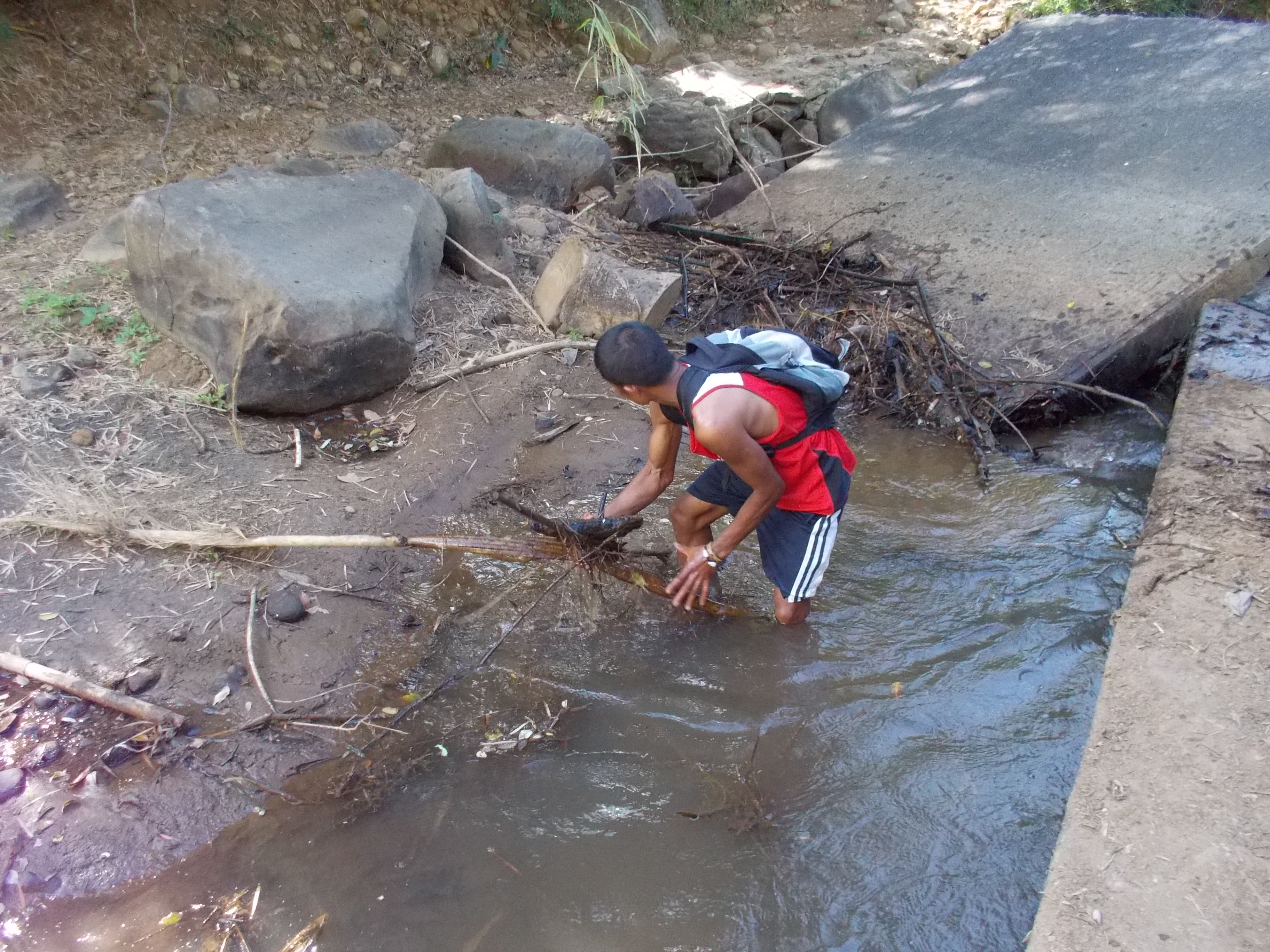
Dannin Removing Dried Twigs & Leaves On Waterways
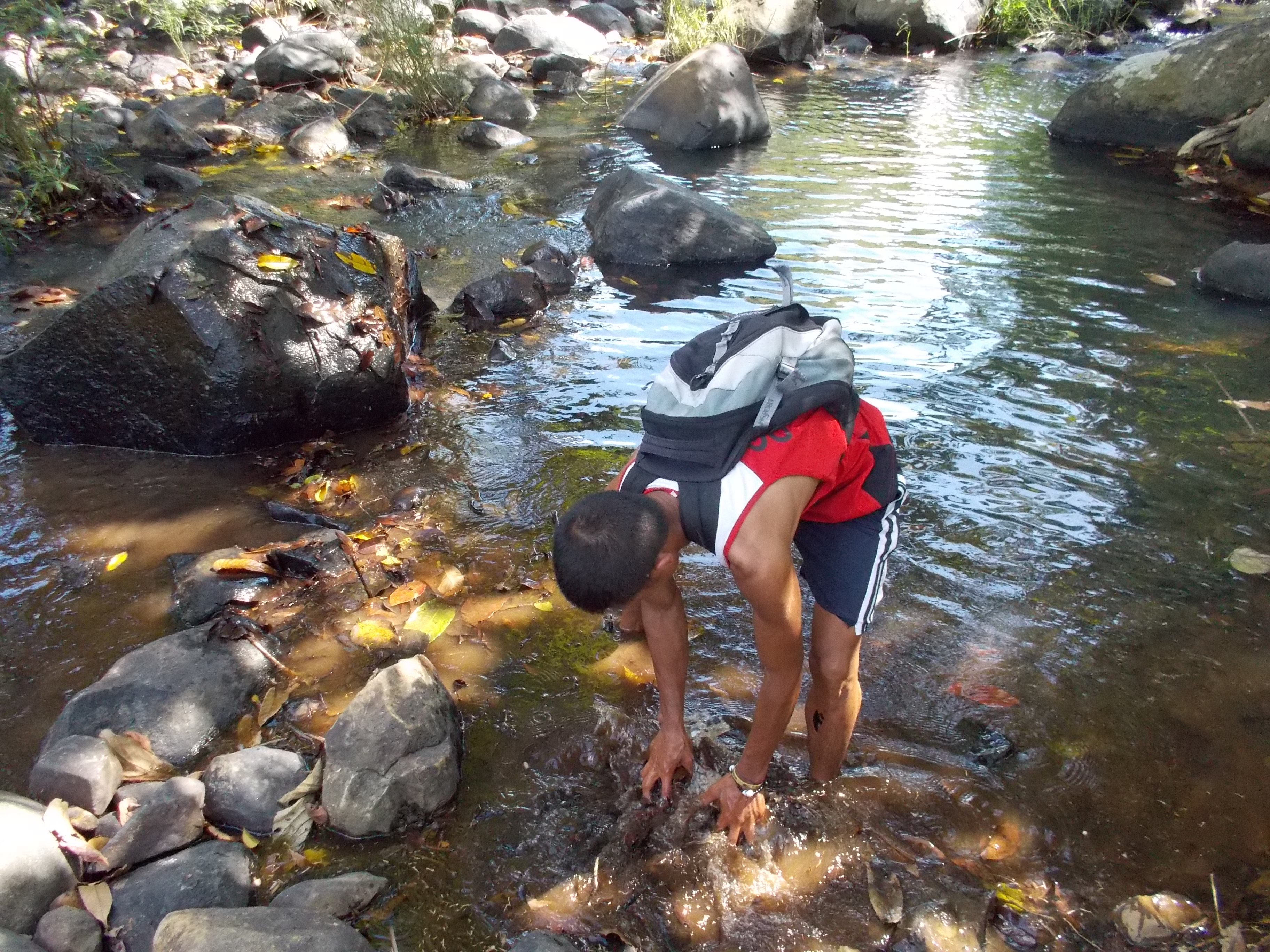
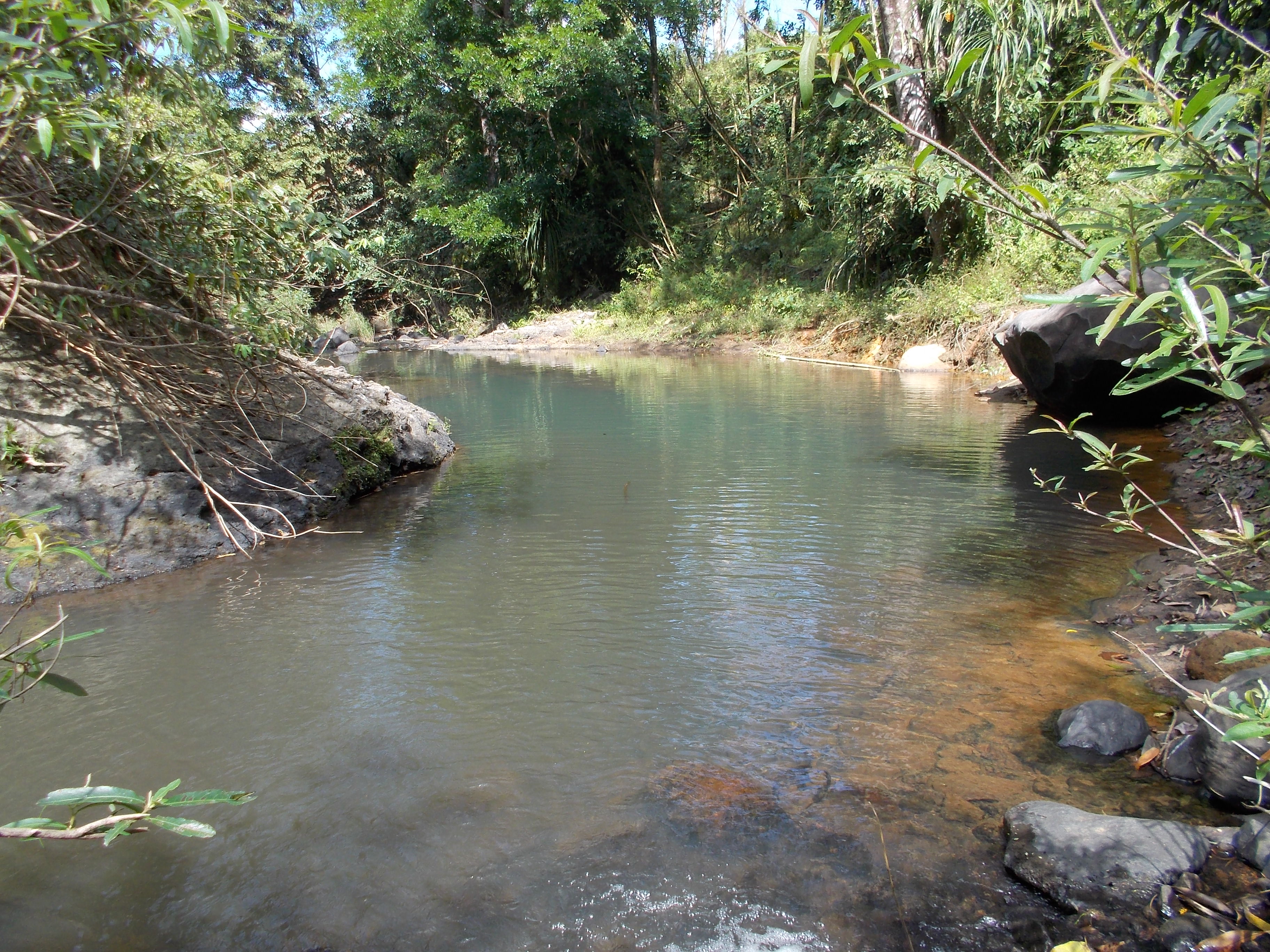
In our latest run, Dannin and I cleaned and removed the debris/dried leaves that were accumulated on the waterways of the rivers and streams where we usually cross or pass. There were two rivers which we cleaned and it improved the continuous flow of water from the higher ground to a bigger pool where anybody would take a dip or swim.
With the better and continuous flow of water of the river, we are preventing the presence of insects and mosquitoes where they could breed and multiply. It would also prevent the river from overflowing to its banks which would result to flooding in populated areas or for the river to create another waterway which would lead to more erosion of earth and movements of rocks.
Another Stream To Clean From Debris
It did not take us for ten minutes to clean each river but such simple and little act to nature would give more protection to the population in terms of preventing diseases (due to the presence of mosquitoes) and maintaining the natural flow of water to the lower grounds, thereby, preventing flooding and erosion.
Deeper, Cleaner Water Pool Where Everybody Would Swim Or Dip
If you happen to hike or run along the hills and mountain trails, find time to exert a little time and effort to help and conserve nature.
I remember those days when I was doing my speed training in preparation for my half-marathon & marathon races in 2009. I had a structured training program which was supervised by two running coaches of the Elite Team Bald Runner. Before I was given a speed training program, I was asked by my running coaches to have an evaluation run first. The evaluation run was done on an oval track.
I was made to run on the oval track for thirty (30) minutes with my best effort and from the result of the distance I could cover, my coach would be able to determine my target pace for an intense interval training, threshold/tempo run, and easy run in order to make me run faster in a marathon race.
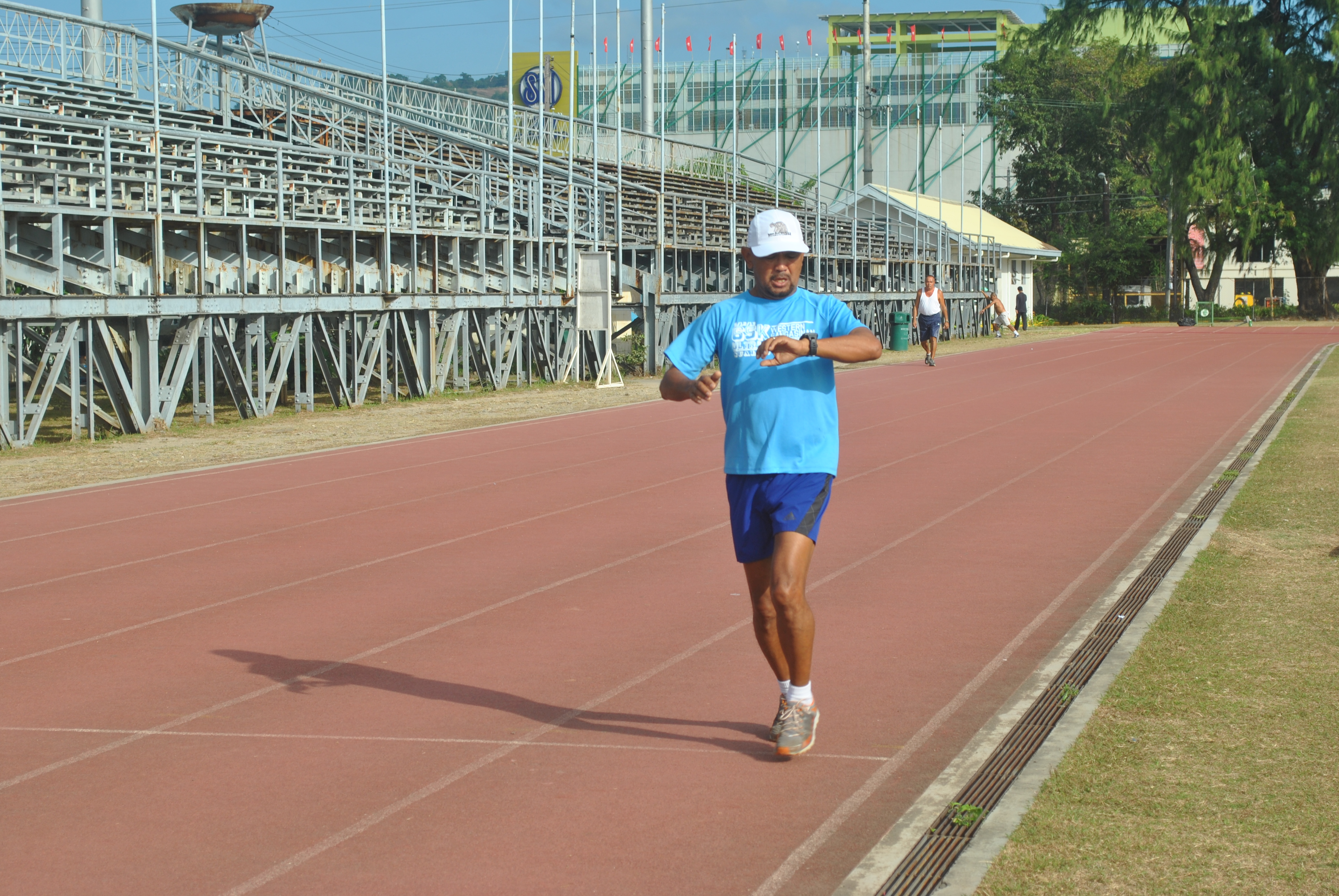
@ The Remy Field Oval Track, Subic Freeport
Last Monday, January 6, I did exactly what I did 4 years ago with the purpose of developing more lifts and number of cadence to my knees and feet. I started my run at 8:00 AM when the sun was already high above the horizon. The weather was cool with a moderate strong cold breeze coming from the west which is the location of the sea.
I used the lightest shoe from my arsenal of trail shoes, the Helios of La Sportiva. And running outfit were my regular running shirt and Adidas Running Shorts.
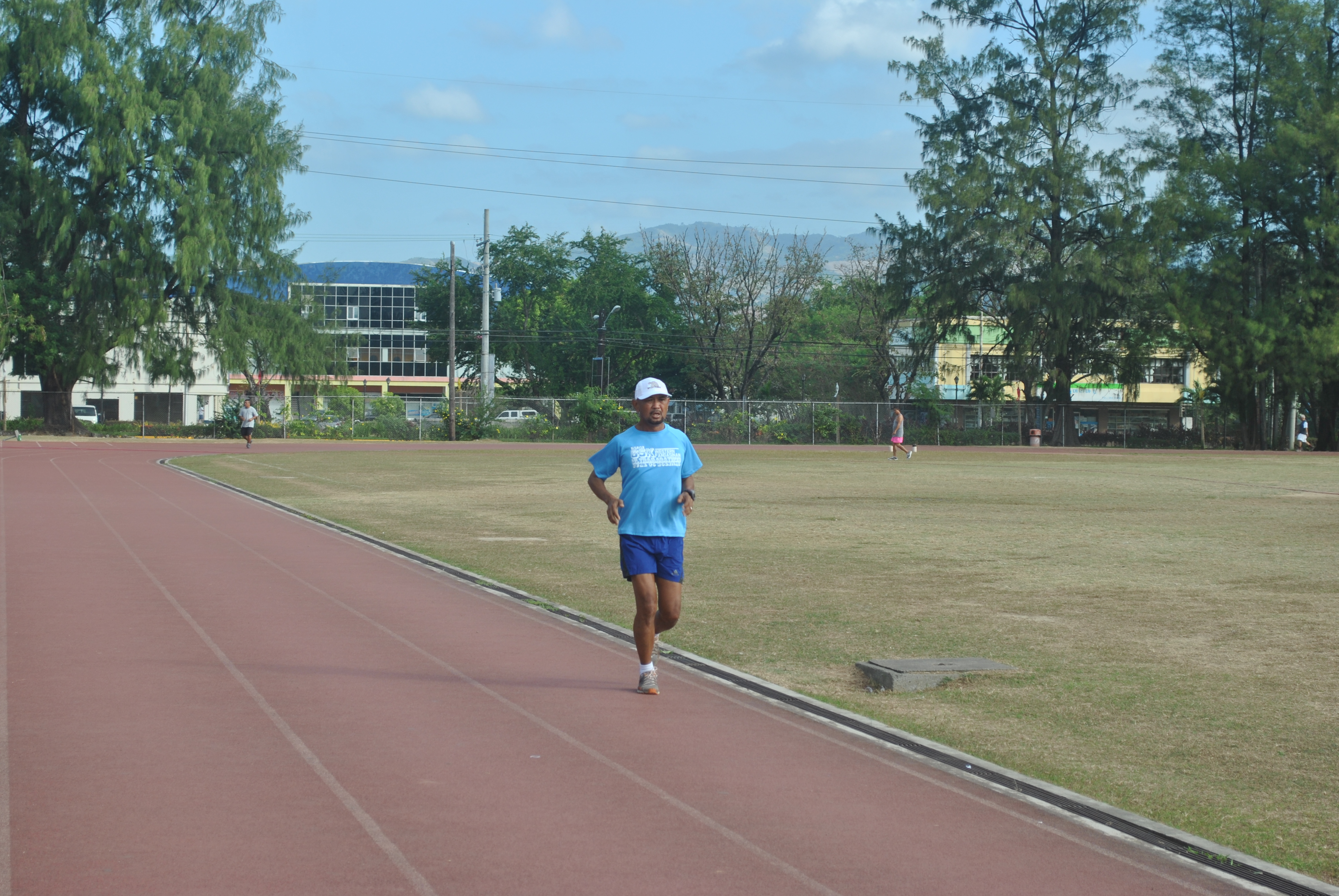
Without much fast runners on the oval track, I positioned myself on the most inner lane of the oval track. I finished my first lap in 2:10 minutes; second lap in 4:11 minutes; and after 4 laps (one mile/1,600 meters), I clocked a time of 8:43 minutes! Not bad!
I started to slow down after I finished 10 laps and fought the need to hydrate myself. At exactly 30 minutes of running, I was able to run 13 laps and 300 meters. I had to walk for another lap for my rest and recovery. The total distance that I was able to cover within 30 minutes was 5,500 meters or 5.5 kilometers. My Average Pace was 5:27 minutes per kilometer.
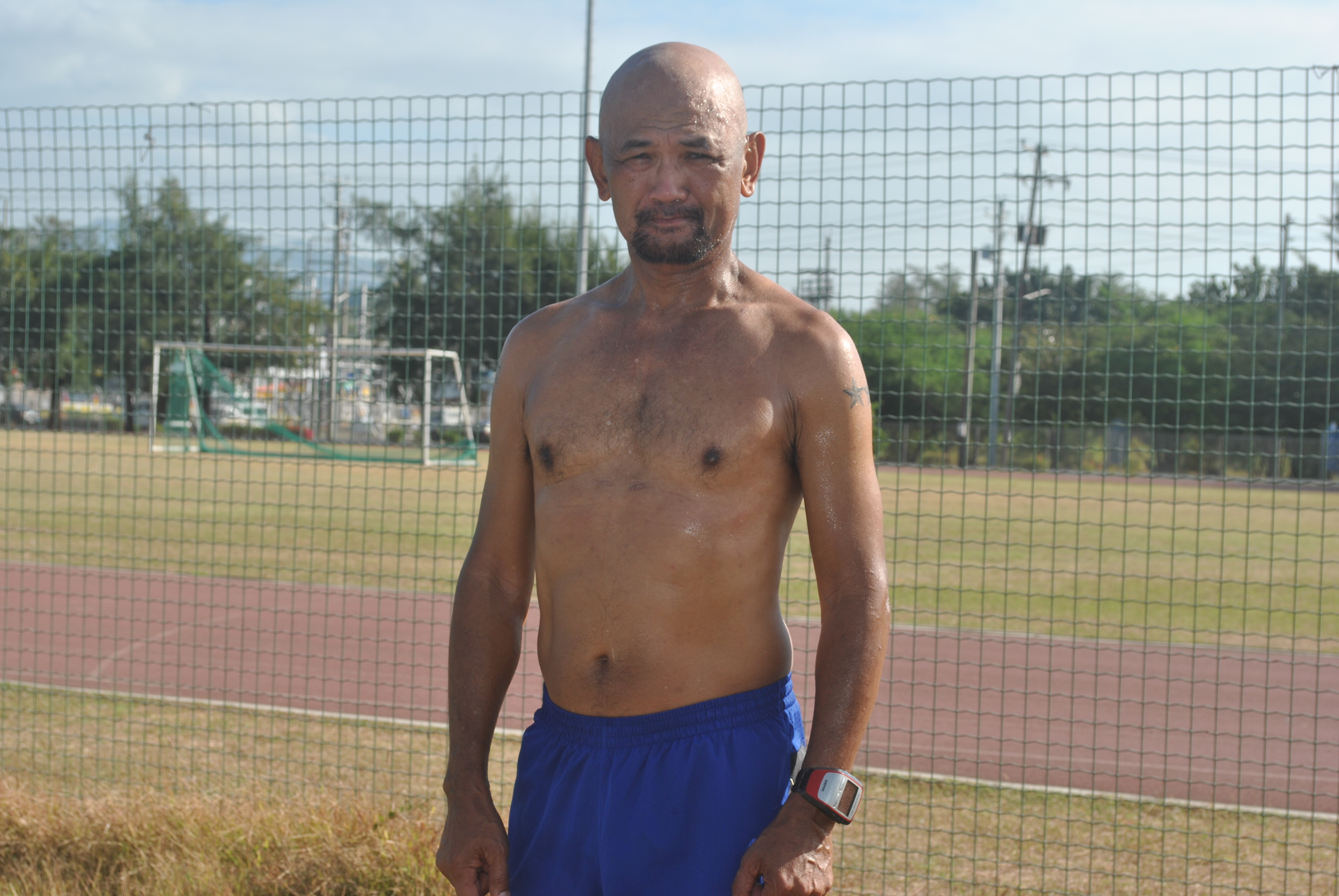
Still In Good Running Form
Four years ago, I could run 15 laps plus some change/extra meters. My older age (plus 4 years) had greatly diminished my speed/average pace plus the fact that I’ve concentrated so much in my ultra distance runs and trail running. It is my plan now to make myself to run faster this time by using the result of my evaluation run.
There is a need to incorporate more interval speed training and tempo runs in my ultra trail running. In the meantime, I will have to visit the oval track once a week and do my tempo runs on the trails of my playground. I hope I would be able to lower down my average pace to 5:10 minutes per kilometer in 4 weeks! Of course, I would also tell you what speed training I will do in order to improve my average pace in this blog.
My evaluation run last Monday officially started my training program for my 2014 Ultra Racing Season.
I suggest you can do this evaluation run if you want to know where you want to start to make yourself run faster, whether in trails or in road.
(Note: Thanks for reading and sharing my previous post, “Haters”, as it got 1,718 hits yesterday and shared for almost 300 times on Facebook and Twitter. Keep on reading my posts with the hope of being motivated and inspired to run.)
On the first day of the year 2014, I went out for my first trail run workout for the year. In the company of my running partner, Danin, we started our our run at 10:30 AM and it was hot and sunny but the quality of the air is very clean as there were no firecrackers in the mountains where I usually call my “playground”.
The trail was very dry because of no rains for the past weeks in the area. There are parts of the trail that have loose soil that made my run softer and comfortable to my legs and knees. As soon as we reached some higher grounds, I could feel a cold wind that blows behind and in front of us. We did not feel the heat of the sun on the exposed portions of the hills and mountains due to the colder breeze that is coming from the sea and the neighboring vegetated areas.
It was time also to visit the people who resides along the trails and greet them for the new year. Mang Mario, my friend who has a farm with mangoes and coconuts, was there in house and it is always the place where I would replenish my water supply and take a short rest or time to eat some of my trail foods.
As we left his house, it is the start of the more challenging inclines of the course where we have to reach three peaks which forced us to do brisk/power hike to reach each peak. Once we reach each peak, we continue to jog on vegetated trails and try to watch out for snakes crossing our way. Sometimes, we would see a group of monkeys as we reached the edge of the forest on the nearby higher mountain.
When we reached the highest point of the course, we had to eat our trail foods which consists of Chinese Tikoy and Croissant from Bread Talk. It was a brief break for us as we were trying to improve our running time to complete the course. Once we finished our snacks which served as our light lunch, we were on our way back to where we started.
It seems the decline and flatter portions of the trail were very easy but the heat of the sun was taking its toll on us. We have to hydrate some more and continue to slog it out with smaller strides but consistent pace.
Patience, Consistency in pace, Focus and Determination brought us back to the last stream/river we have to cross before we reached our Finish Line. After a few minutes, we reached the place where we started with an improved finish time. It was an improvement and faster by 5 minutes from the last recorded PR time that I had in this loop course and I was happy to have made an improvement and progress.
The loop course has a distance of 26.5 kilometers and we were able to finish it in 4:45 hours. A great improvement since we discovered this route in July last year where we were able to run, hike, and jog through it in 7 hours for the first time.
The conclusion is that I am getting faster and stronger in trail running!
Hater is simply defined as someone who hates someone.
It is the nature of a person or any living thing for that matter to love and hate for something or another person. A hater balances your life when you are loved and adored by other people. So, having said this, it is very normal to have “haters” in your life, whether in the family/close relatives, in groups, and in the community.
Seldom that I could see and any comments in this blog that show hatred to what I am doing and writing about my running and adventures. But I know that there are persons who would comment negatively or simply hate me for what I am doing. And if there is somebody who is brave enough to express their hatred, he or she would not tell his or her true identity. This brings me my first impression about them—They are simply cowards and hiding their true identity.
Let us go now to other Social Networks which are very popular and accessible to everybody. Facebook is becoming the “new blog” for everybody and this is where you could see haters on one’s account or Wall or they simply come up with their own personal account using another “name”, thereby, hiding their true identity.
I really don’t know what is the “end game” or “bottom-line” or “purpose” of these haters on Facebook. Do they want attention? Do they want to entertain their “friends”? Do they want to influence others so that “haters” will multiply a thousand fold? Are they applying “psychological operations”(“psy-ops”) to the one that they hate and to their readers? Do they benefit emotionally and financially on those unreliable information that they expose to their readers & followers? There are so many reasons why they do these things and I can name or mention some reasons for their behavior.
I am not a psychologist or a mind-reader but in my exposure to people during my “school days”, in my professional career, and now in my retirement days among: men and women, educated and uneducated, rich and poor, men in uniform and civilians; I have the following conclusions on these haters:
1. Haters simply ENVY you for what you are and for what you are doing in this part of the world.
2. Haters are simply LAZY. They complain/”whine” and criticize but they don’t have any suggestions or solutions to the things they criticize. Worse, they don’t act or do anything. “Talk is Cheap” is the appropriate reply to these haters.
3. Hater’s life is BORING. They are already comfortable on what they are doing in their daily lives and they are afraid to introduce something into their system. They don’t want change and they don’t have the courage (“balls”) to venture on risky and challenging situations or activities. They are 24/7 in front of the Internet/Androids/Cellphones in order to gather information on their “targets” so that they have something to express their hate on their FB Walls or blogs.
4. They are COWARDS. By simply hiding their true identity, you can immediately tell that they afraid of you once they are exposed.
(My 500-word article has already passed its limit!)
My strategy and action for these haters is to IGNORE them. And the best way to ignore them is to BLOCK them (on Facebook) so that you will never “meet” them again and ultimately, they don’t have access to your Wall/FB Account.
On the positive side, I have learned to love these haters as they give me MORE exposure in the Social Network sites. If they are trying to expose my “darker/worse side” of my life and activities, then their actions and their writings about me would give more “mystery” to what I am doing to the community. As the media would always do and adhere to—“the more controversy & exposure for a person, the better for one’s popularity ratings and memory recall”.
I had the chance to meet my orthopedic doctor when I requested a Medical Team and Ambulance for the conduct of the latest Tagaytay To Nasugbu 50K Ultra Run on the first week of December 2013, last month. I asked him to make an schedule of an appointment for medical check-up on my knees after my participation in the 3rd Taklang Damulag 100-Mile Endurance Run and after taking a break/leave from running during the Holiday Season. The doctor readily told me that I could see him either on the last day of the year (december 31) or on New Year’s Day.
Fast forward. After the TD 100 where I DNFd at Km 110, I have observed that there was swelling on the upper part of my right knee and felt some pain after I did a recovery hike and run for about two hours two days after the TD 100. It was a good reason to really force myself to go on a rest period on the following weeks & days before my appointment to my orthopedic doctor. So, from December 17 to December 31, I had only two “outings” on the trails which are mostly hiking in nature. But the swelling and pain were still there until before I finally met my doctor.
On the afternoon of December 31st, I went to my orthopedic doctor to have my knees for medical check-up. My meeting had also served as my maintenance check on the results of my bi-monthly rehabilitation on my injured knees on the early part of last year (2013). The doctor immediately made an ocular check on swelling part of my right knee and he recommended me to have my knees to be x-rayed.
I could say that one of the most important benefits of being a retired military officer and a Major General at that, is that I have lifetime free medical service from the Armed Forces of the Philippines. The Philippine Army’s Hospital & Medical Center has all the services and facilities that I need to support my passion in running. With a written slip/order from the doctor, I was brought to the Radiology Department and in 10-15 minutes, my X-Ray was done and the films were developed for the immediate analysis of my orthopedic doctor. Very fast and efficient as there was only ONE soldier-medical technician who did all the works.
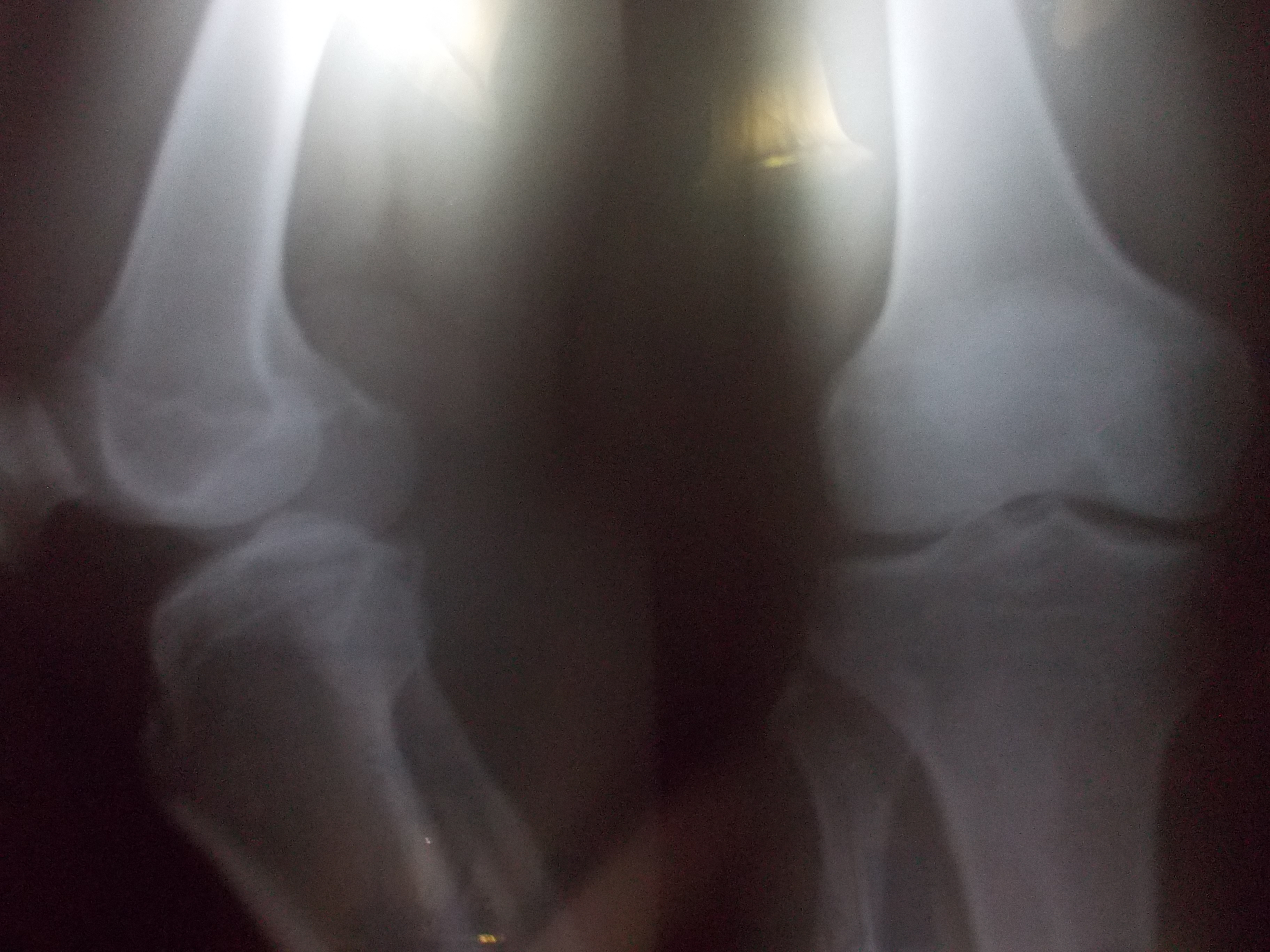
The doctor analyzed and read the films as he flashed the films on a lighted monitor. The following are the findings:
Left Knee: It is healthy, normal, and strong with minimal “spurs”.
Right Knee (Swelling One): There are “pointed spurs” which are causing the pain inside my knee and these “spurs” should be flattened immediately.
X-Ray Of My Right Knee
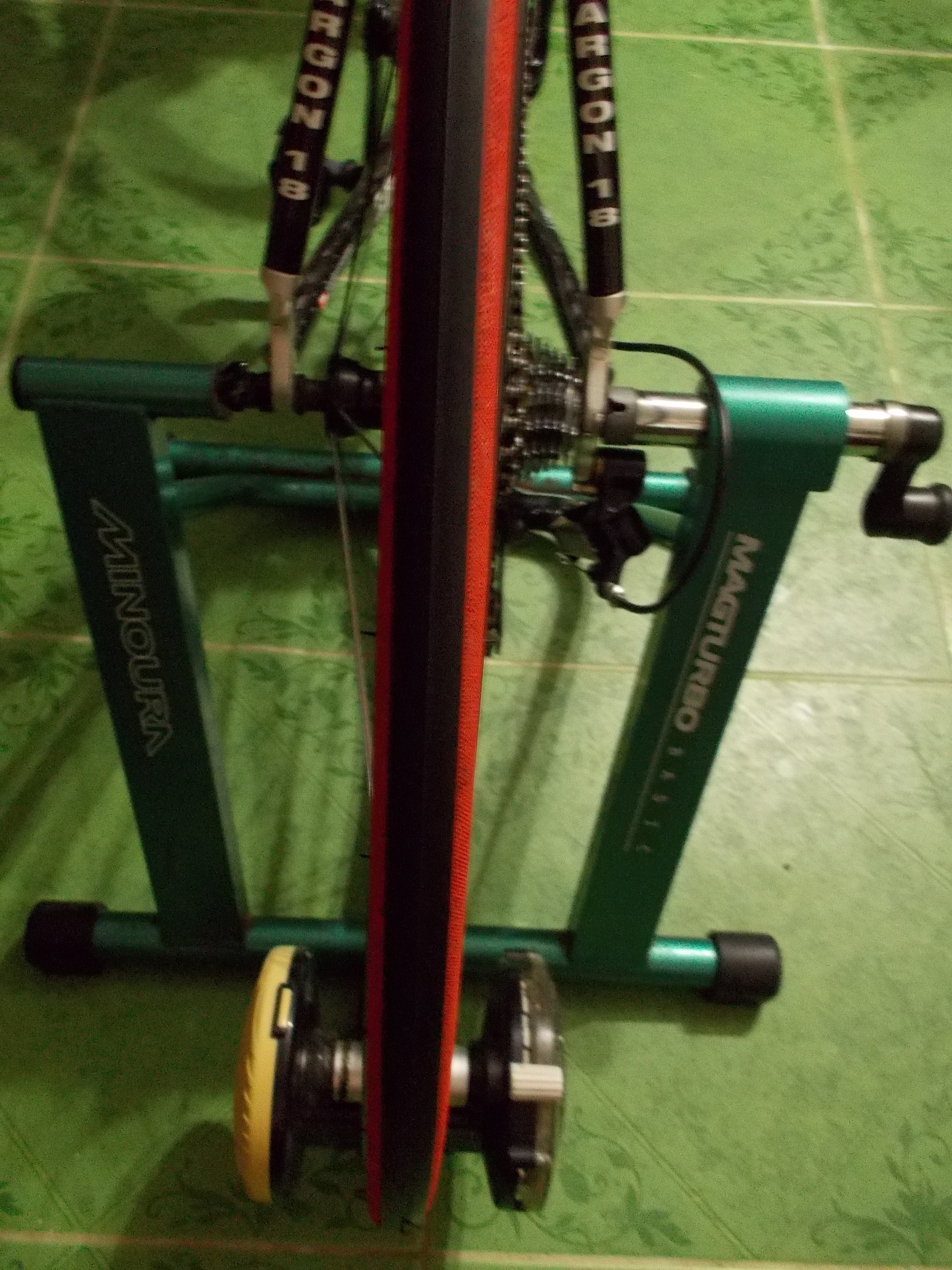
The doctor asked me if I have a stationary bike and I said, yes! He advised me to immediately include a stationary bike workout, at least, 30 minutes every day without any force or weight that would make my leg muscles exert any effort. He said that my legs should be made to move on a circular motion in order to maximize the full movement of my knees. It is due to my running, in quick and small strides, that the full motion of knees were restricted. He made a personal guarantee that the “pointed spurs” will be removed, if not, flattened, if I will do my stationary biking regularly.
On the night after I left the hospital, I was able to manage a 20-minute stationary cycling without any force but I have to cut short with my workout due to my butt being in pain as I am no longer used to using my bike.
Stationary Cycling Without Any Force/Weight
After 4 sessions of 30-minute stationary cycling, I was surprised that the swelling had greatly reduced and I could no longer feel any pain on my right knee.
The doctor’s advise is very good and my orthopedic doctor is the best doctor that I really admire! He deserves to have that wine which I gave him as a present for the Holiday Season.
This is a testimony that any runner, old or young, marathoner or ultra marathoner, needs to have a medical check-up to his/her knees and be able to expose themselves in cross training. As I am getting older and my the full range of motion of my body parts are being shortened and restricted, there is a need to do other forms of exercise which will serve as “cross training” to one’s main sports.

 Bald Runner
You must be logged in to post a comment.