Subic, Baguio, B2B Runs & Buckle


1. Last Wednesday, I was on top of some of the insignificant hills and mountains of Bataan looking for trails under the heat of the sun. I did not run but I walked a lot on those trails hoping that the area is not considered as “territory” of the insurgents. After an overnight stay in Bataan, I decided to have a long slow distance run inside the Subic Base/Export Processing Zone  on the morning of Thursday. I started my run at 6:30 AM and I took the route of the Subic Half-Marathon Race when I joined the said race on January 20, 2008.

2. While I was running my first 5 kilometers, I was anxious to reach the uphill portions of the route. Before I reached the Subic International Airport Terminal, the uphill climb started to meet me and I was surprised that I could sustain my average stride frequency of 170-180 steps per minute. Yes, I’ve been counting my steps since I started to be aware of my stride frequency two weeks ago. This was the very reason why I wanted to run a longer distance in order to test my legs if they could sustain an average stride frequency of 180 steps per minute.

3. More uphill climbs would meet me along the way and I was happy that I was comfortable with my pace. As compared when I first run this route, I felt that the two years of continous & consistent running would make the uphill climbs at the Subic Base as very easy and insignificant challenge to my running legs. I knew that I’ve improved a lot in terms of strengthening my legs and my aerobic capabilities for the past two years.

4. Instead of turning-around the usual 10.5K point, I extended my run up to the direction of the Morong Gate, running an additional 2-3 kilometers. As I turned-back, the first 2 kilometers was an uphill climb and I was able to maintain my stride frequency but with shorter strides. I have to count up to 100 stride cycles repeatedly until I could count 10 X of the hundreds plus a hundred cycles in order to cover a distance of one kilometer. I really enjoyed counting my steps in this run. I was able to cover a distance of 25 kilometers with a time of 2:49+ hours. The heat of the sun slowed me down on my last two kilometers. But I enjoyed my practice in counting the number of stride cycles during this kind of LSD run.

5. I intended to cheer for the 100K & 50K TNF runners at the starting line (Burnham Park, Baguio City) last Saturday morning but due to some miscommunication, instead of 3:00 AM start time, I got a wrong information that the race will start at 4:00 AM. I missed the runners by 45 minutes! So, I went back to the hotel and have some more sleep. At 7:00 AM, I was out of my hotel room for another long run with the intention of running all the way to Fort Del Pilar.

6. Another reason why I was in Baguio City was to look for a manufacturer of a Cowboy Belt Buckle for the Finishers of the BDM 151 to be held next year. I want to have a Silver Cowboy Buckle for these “crazy & hardcore” finishers of the 1st BDM 151. Having lived in Baguio City in the late 60s and up to mid-70s, I know that the best Silver-works manufacturers are in Baguio City. So, I have to locate and talk to the owners of the famous Manantan and Ibay Shops of Baguio City after I finished my scheduled long run in the morning of Saturday.

7. As I was approaching the Old Gate of Camp John Hay, a local runner joined me in my run and started asking about the route of the TNF 50 & 100K. Maybe, the local runner thought that I was a participant or pacer of the TNF race as I was sporting a TNF Runner’s Cap! The guy distracted my concentration as I answered him truthfully that I am not “in the loop” with the said race. The local runner told me that he was requested by his friend, a TNF race participant in the 50K run, to meet him at the Camp John Hay area. Instead of taking the road that goes to Fort Del Pilar, I turned towards the left road which is South Drive and went all the way to the Mines View Park.

8. On my way back, I went directly to the Gate of the Baguio Country Club and turned back to South Drive and went all the way to the Old Gate of Camp John Hay. Oh, how I missed playing golf when I passed by the Baguio Country Club’s Golf Course afte looking at those golfers walking towards the green. At the Old Gate of Camp John Hay, I was surprised that the Head Marshal of the TNF at that point greeted me! I realized that the road going to PMA was a part of the TNF route and I kept on running until I reached the Scout Barrio area. After I passed the Jeepney Stop area at the Scout Barrio, I noticed one of the marshals guarding one of the trail exit/entrance along the paved road and I asked permission from him to run along the trail.

9. The marshal permitted me to run on some of the trails with the purpose of taking some pictures for my running friends who happened to be finishing the 50K. The marshal told me that two leading runners had passed his position and that they are the 50K runners. While I was on the said trail, I was following a man riding a horse and he later took another dirt trail as we separated. It was easy to follow the trail route of the race as there were lots of stringed small TNF banners tied on trees along the trails and in intersections. After running for about 2 kilometers, I met the third place 50K runner and it was my first time to see his face. He must be a local runner from Baguio City or Benguet Province, the runner with some missing front teeth as seen when I started a conversation with him in the local dialect.

10. Before reaching the Loakan Airport, I ended my run & walk on those trails with much frustrations. I am frustrated on how those preserved forest areas being attacked and invaded by “squatters’ and land developers. I’ve been running along  these trails when the US Armed Forces were still the Lord of Camp John Hay and I could still remember the smell of those Pine Trees around. Now, running along these trails would be “hazardous” to your health and to your personal security. I made my turn-around and slowly jogged back to the hotel. I was able to run a distance of 23 kilometers with a slower time because of my jog & walk along the trails.

11. I was doubly frustrated when the two famous Silver Shops in Baguio City told me that they don’t accept Made-to-Order Silver Cowboy Belt Buckle. They told me that there is no way that they can make one for me! However, one of the shopowners was brave enough to tell me that he will make one for a price of Thirteen Thousand Pesos a piece! He must be crazy, too! (like my ultrarunning friends!). I might as well buy an LV Belt (Big Buckle & Belt) at Greenhills for the BDM 151 finishers instead of being “crazy” to order silver buckle from Baguio City with such price! Despite such frustration, I am still looking for somebody who would make that Cowboy Belt Buckle for my “crazy & hardcore” ultrarunning friends!

12. I was already back sleeping in Manila when the first TNF 100K runner reached the Finish Line at Burnham Park. In Manila, instead of observing and cheering the runners of the VSO Bahaginan’s Starting/Finish Line on the morning of Sunday, I was on the road again for another LSD. This was my first Back-to-Back (B2B) long run after my Jeju 50K Run. As I started my run, I saw a lot of running friends who were already going back to the Finish Line. Some of them are also having a good time with their respective LSDs for the weekend. The Lawton-Camp Villamor-NAIA 3-Lawton-Heritage Park/C5 and back at McKinley Hill route is already a worn-out LSD route for runners. I finished almost 15 kilometers for the day but I wanted more but due to the heat of summer, I decided to call it a day and rest my body for the next week’s training.

13. For the week, I was able to register a mileage of 67 kilometers (with a B2B weekend LSD) and two sessions of gym workout. Hopefully, I will be able to sustain my stride frequency, improve on this matter and prepare for my next Marathon Race.
Ranking For PAU Members


Yes, you are reading it right. There will be an annual ranking of PAU members starting this year. Although I got this idea from one of the Ultra Running Groups in Southern California, I deemed it necessary to apply this “ranking system” to the members of the PAU for whatever purpose the Sports Federation will decide later this year. I hope that the members will be happy to know about this development as they would be able to compare themselves with their co-ultrarunners and will serve as their source of motivation to improve some more and excel in ultrarunning.

The first race to be considered as part of the PAU’s ranking of members is the result of the 2010 BDM 102K Ultramarathon Race. The formula goes like this: Winner’s Finish Time Divided by the Individual’s Finish Time X 102. The higher your points is, the higher your rank is. So, Alvin Canada earns the highest total points of 102 because he is the Champion. Let us compute Jonel Mendoza’s points for the 2010 BDM 102 as he had a Finish Time of 14:47:25 hours. Since Alvin Canada’s Finish Time is 10:01:05 Hours, it is now divided by Jonel’s Time X 102, and the result is 69.08 points. All the Finishers of the 2010 BDM 102 will be ranked according to points based on the said formula.
The second race to be considered for PAU’s ranking will be the 1st PAU 50K Run at Tanay, Rizal on May 9, 2010. The third race will be the 2nd PAU 65K Run from Pasuquin, Ilocos Norte to Pagudpud, Ilocos Norte on August 29, 2010. The fourth race will be the 3rd PAU 50K Run  sometime on November 2010 from People’s Park, Tagaytay City to Nasugbo, Batangas.

And the 5th Race will be a 24-Hour Endurance Race in an Oval Track for the Top 30 Ranking PAU Members (taken from the 2010 BDM 102 + 1st PAU 50K Run + 2nd PAU 65K Run results) which will be held before the 3rd PAU 50K Run. In order to find out the ranking/points in the 24-Hour Race, the formula is, Runner’s Number of Kilometers Completed divided by Winner’s Kilometers Completed X 100.

A member of the PAU is considered to be in the ranking if he/she can finish at least four (4) PAU races before the end of the year.

I hope this ranking system will motivate you more to train for the ultras! Good luck!

1st PAU 50K Run: Ultrarun Challenge


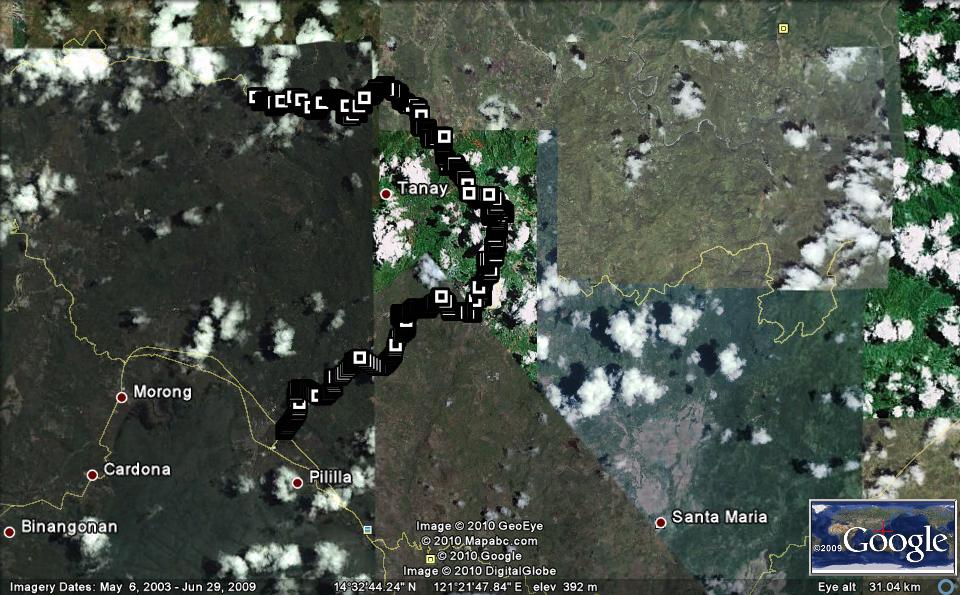
 Finally, I was able to save and download Google Earth to my blog after I’ve transfered most of my “files” from my “C” Drive to my Unused “D” Drive! Well, for being a “low-tech” blogger, it took me some time to experiment and try how the other bloggers post their runs by using the Google Earth.

From Crossing Tanay-Sampaloc to Sierra Madre Hotel

 The incoming PAU races are well-described as “fun runs” with a “guerrilla-type” conduct of the race (according to Marathon Foodie). There are no “distractions”; no “festive” atmosphere; and no corporate endorsements and tarpaulins. What is important is to be able to have an orderly start, conduct , and finish of the race where every runner would be able to enjoy the scenery and challenge his/her personal endurance limits. Thus, we try to be simple in our purpose…we provide each runner a nice & challenging venue/route and you join this race because you love to run!

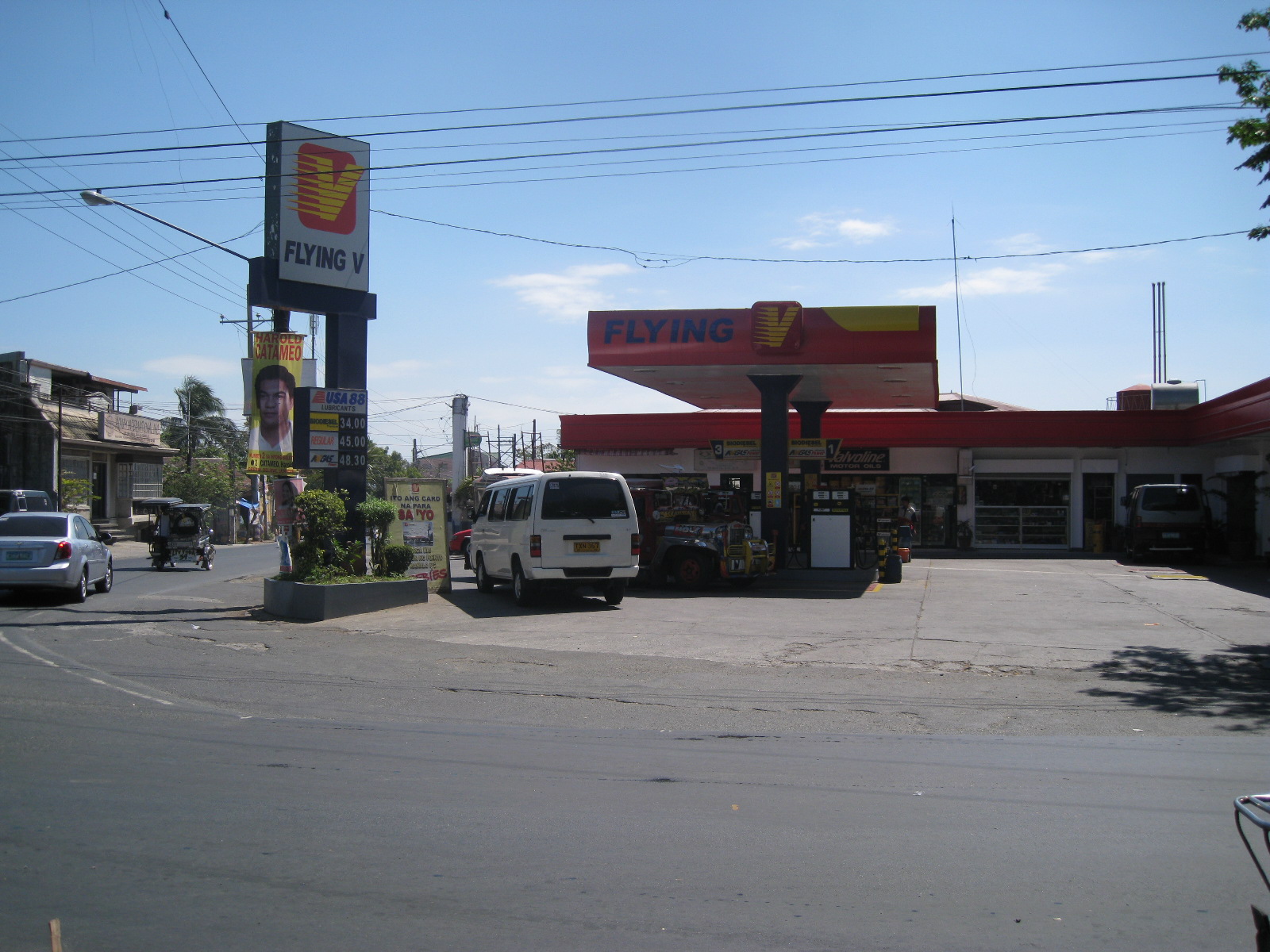
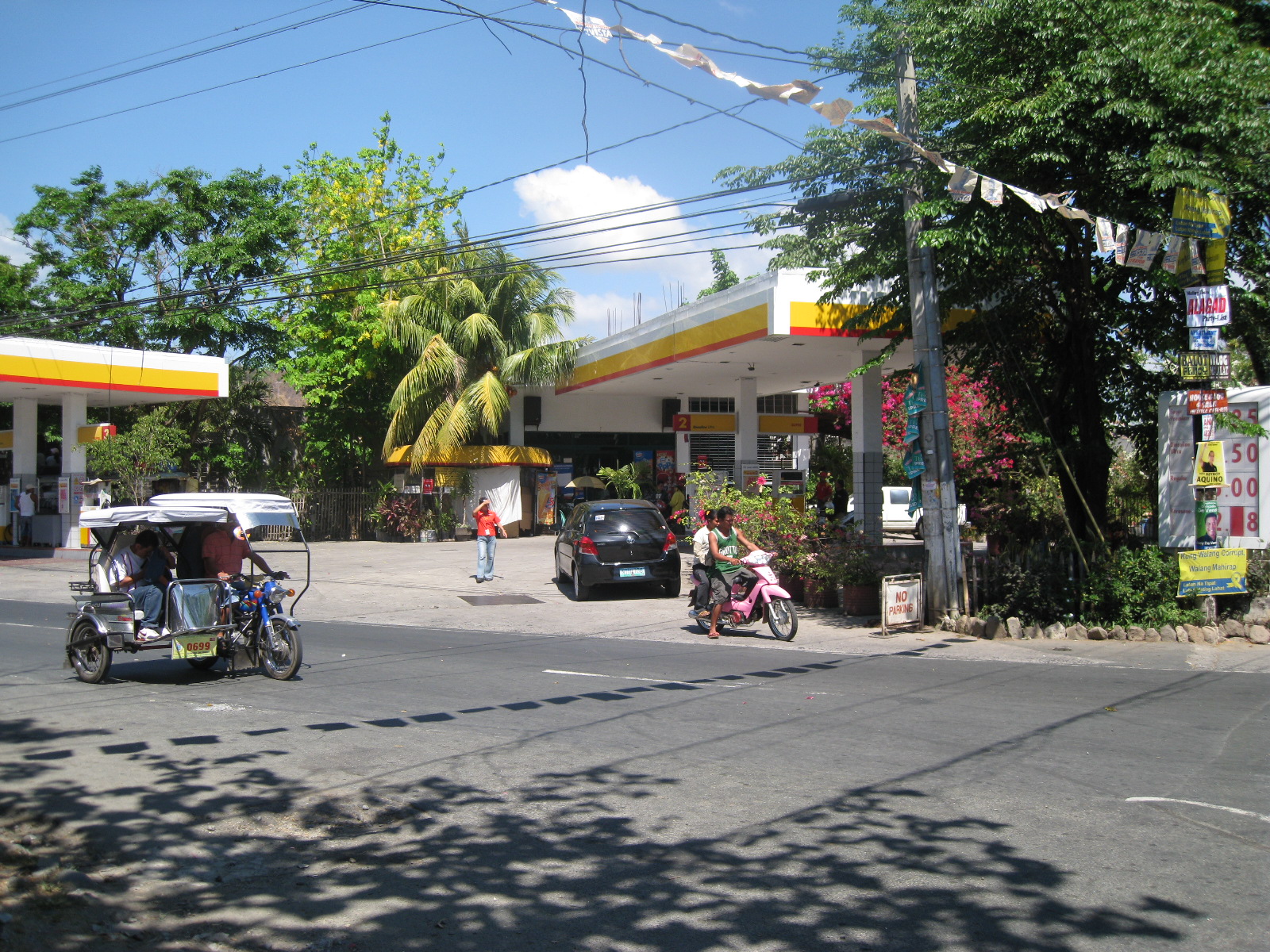
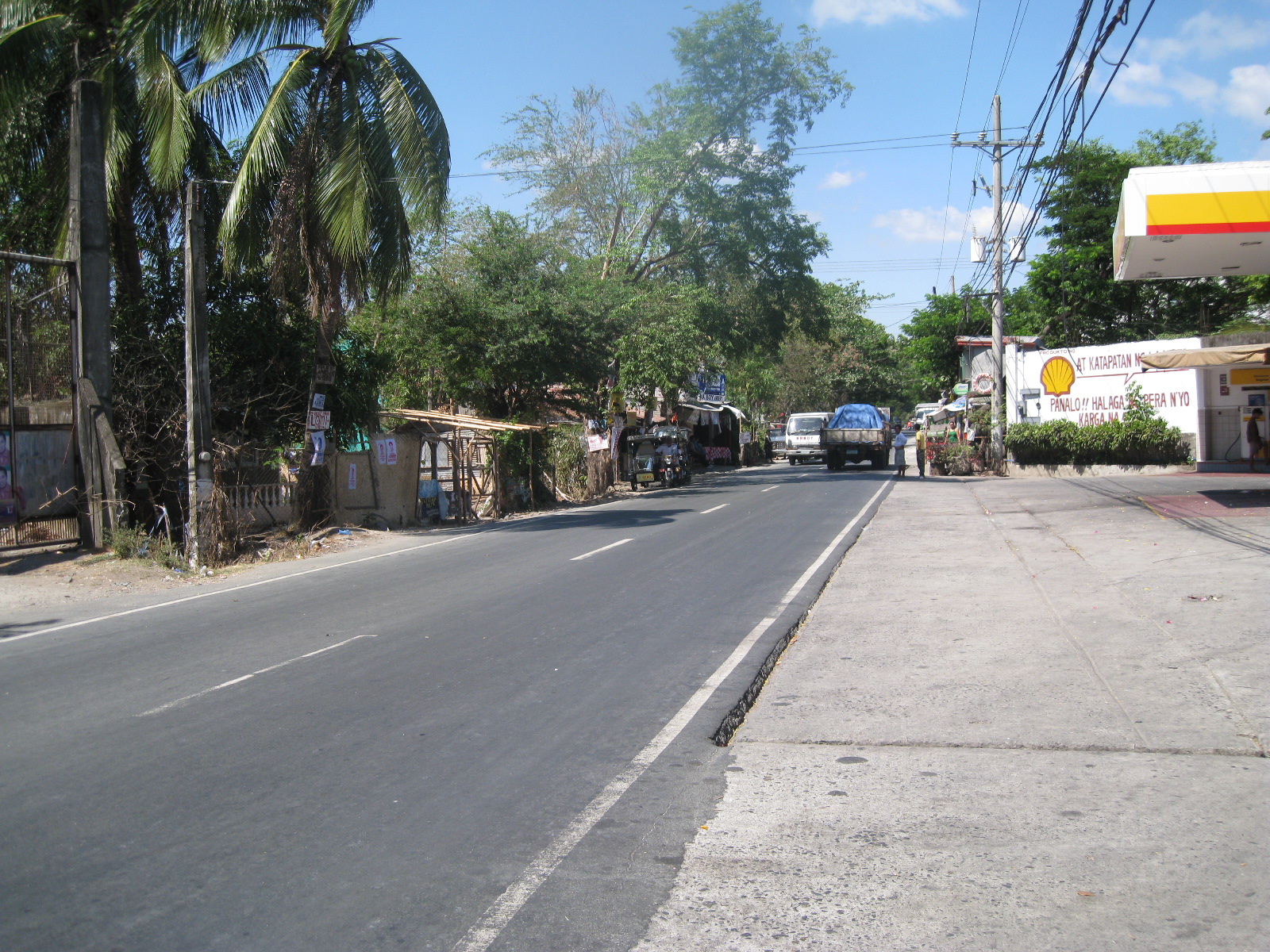
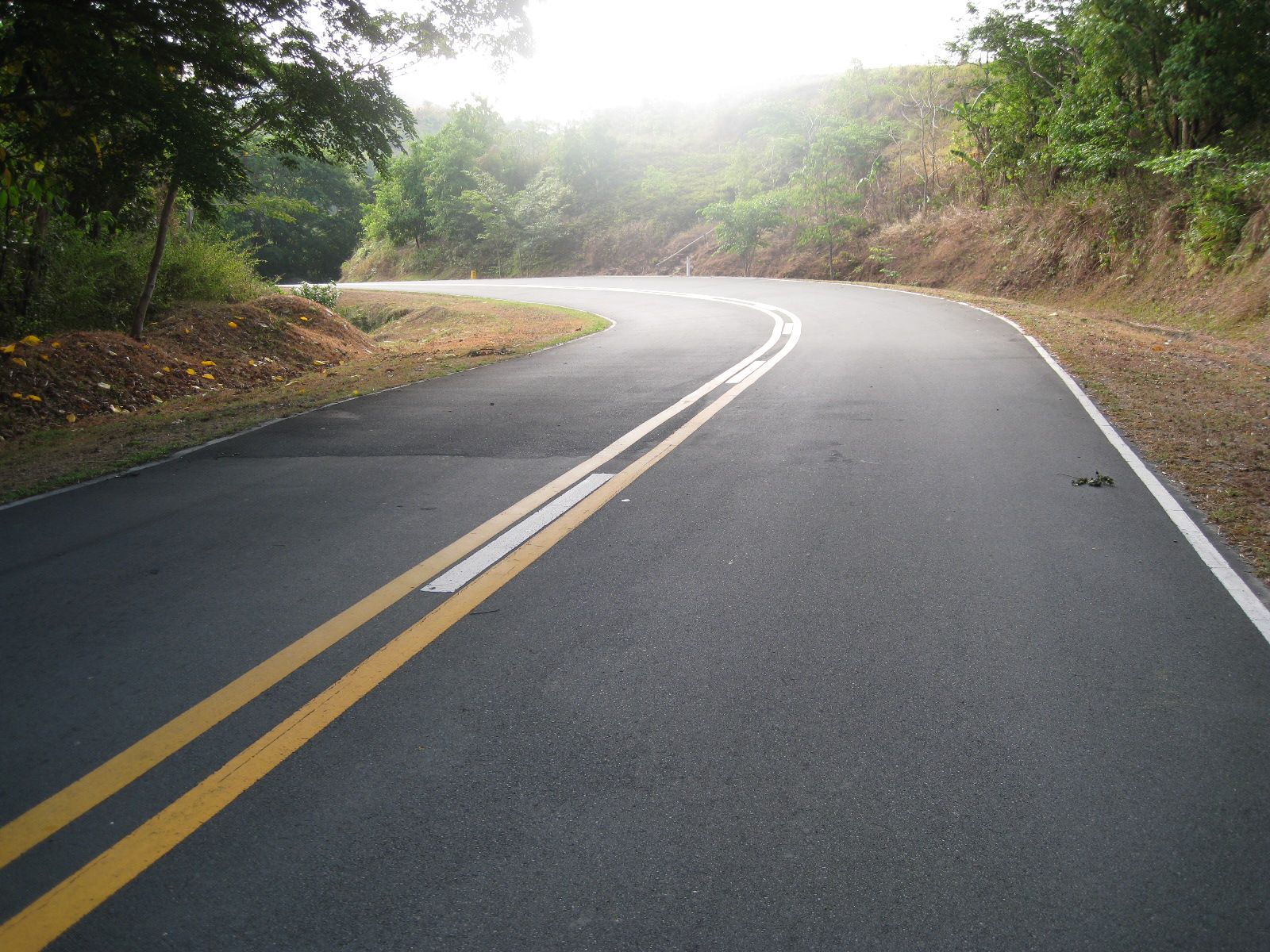
 The 1st PAU 50K Run will start at 5:00 AM of May 9, 2010 at the crossing of Tanay, Rizal and the road that goes to Barangay Sampaloc, Tanay, Rizal. Barangay Sampaloc is the location of Camp Capinpin, the Headquarters of the 2nd Infantry Division of the Philippine Army. Coming from Metro Manila, one has to take the Ortigas Avenue/Extension going East towards Antipolo. The National Road leads you to Morong and then to Tanay, Rizal. Once you see Kilometer Post #54 on the right side of the road, there is an intersection that goes to Tanay Proper (going right) and Barangay Sampaloc (going left). The intersection has Flying V Gasoline Station on the right side of the road and a Shell Gasoline Station on the left side of the road. The Shell Gasoline Station is the location of the Starting Line of the 50K Race. 

"Flying V" Gasoline Station On the Right Side of the Road
SHELL Gasoline Station On the Left Side of the Road
Sampaloc Road/Starting Area

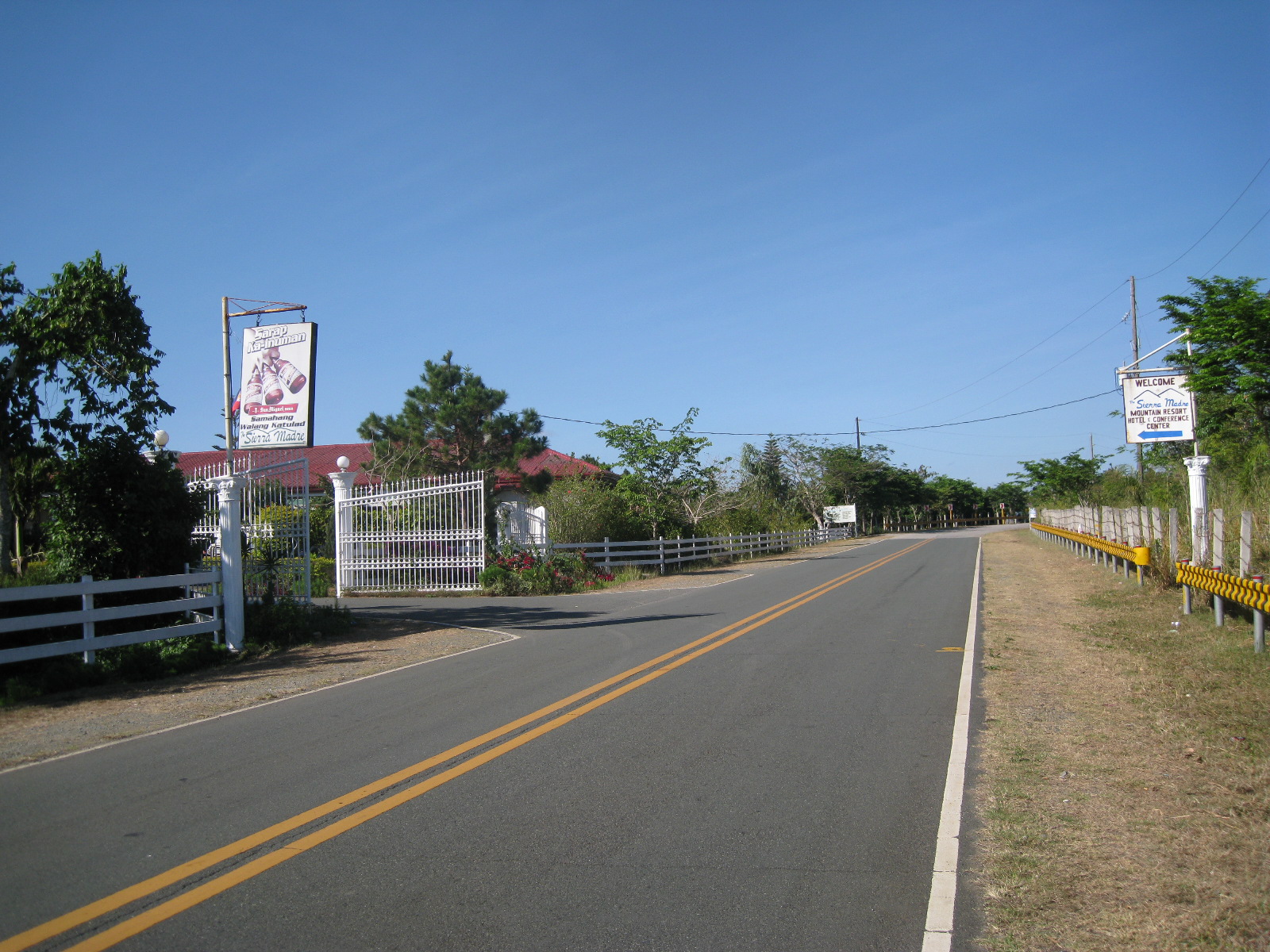
Runners would reach the center of Barangay Sampaloc after running an uphill climb of 13+ kilometers and they have to turn left at the crossroad/intersection, leading the runners to the Pranjetto Hills Resort. After 7 kilometers from the Intersection of Barangay Sampaloc, runners would be able to reach the Sierra Madre Hotel & Resort. From here, runners would run a roller-coaster hills for a distance of 15 kilometers. The runners would pass the entrance of the Palo Alto Subdivision and run another 2 kilometers from the said gate. At the turn-around, the runners have the last 15 kilometers to run before reaching the Gate of the Sierra Madre Hotel & Resort which is the Finish Line.

Gate of Sierra Madre Hotel & Resort/Finish Line

This race has a cut-off time of 8 hours. The race is planned to start at 5:00 AM as daybreak will be earlier due to the Summer session.

Runners are required to have with them their hydration belt or Camelbak during the race as there will be limited number of Water/Aid Stations.

Pollution-Free and Well-Paved Sierra Madre Road

For those who can afford to bring with them their support vehicle & support crew, they are allowed to bring them during the race. Also, runners can share their support vehicle with other runners. For those without any support vehicle, they will be provided with 4-5 plastic bags where they can place their water, sports drinks and food replenishment and will serve as their “drop bag” in every 10 kilometers.

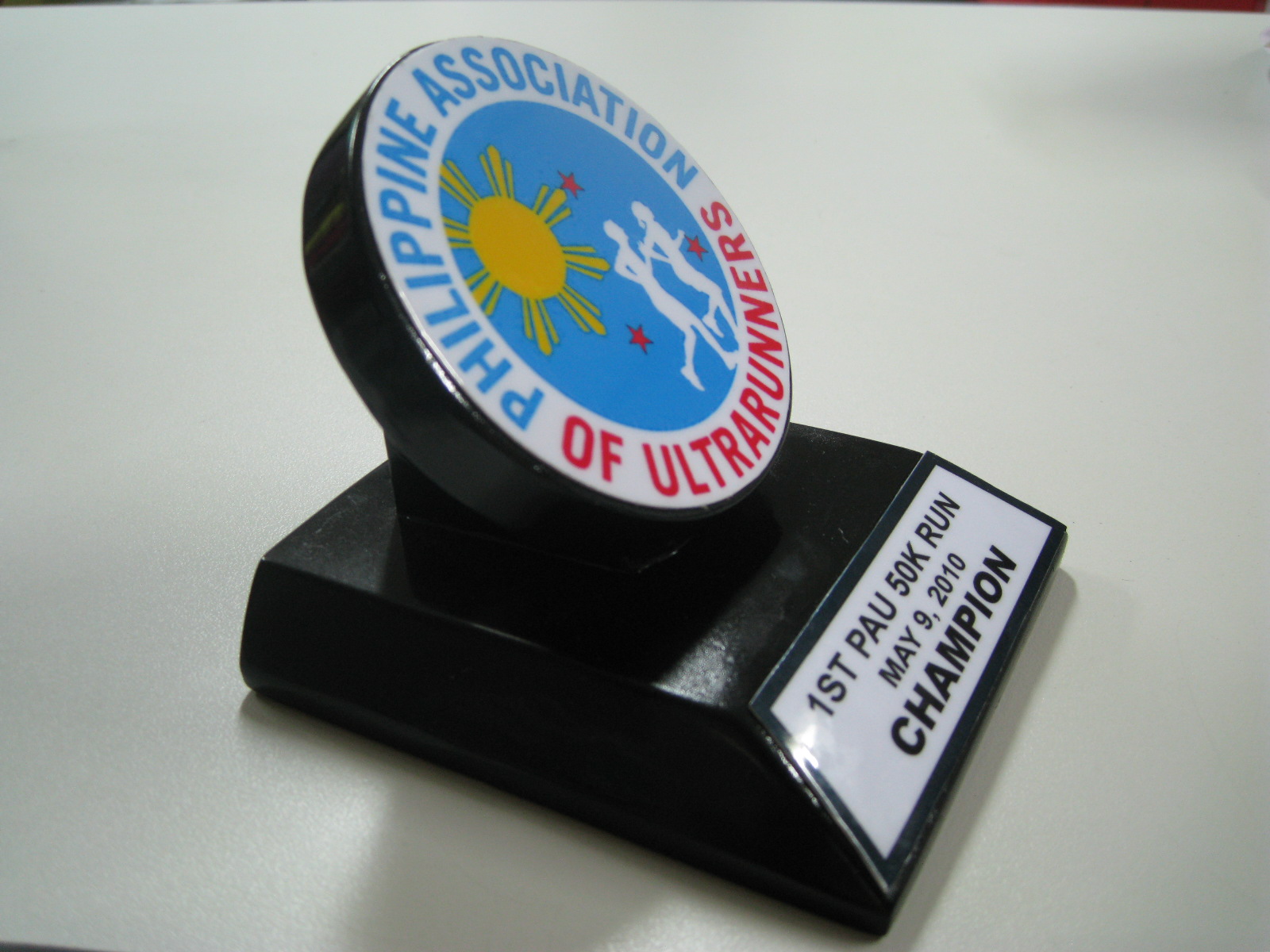
At the Finish Line, every runner will be awarded with Individual Trophy, Finisher’s Certificate and a Finisher’s T-Shirt. We are hoping that there will be good and generous Sponsors for Ice Cold Beer at the Finish Line.

Replica of the Finisher's Trophy

This race is limited to only 200 runners!

See you at the Starting Line!

Jeju Ultramarathon Experience


1. The invitation of the International Association of Ultrarunners (IAU) for the Philippine Association of Ultrarunners (PAU) to participate in the 1st Asian IAU 100K Ultramarathon Race was an opportunity to represent the country in the sports of ultrarunning in an international event and to make an impression among the Asian Ultrarunning Federations that PAU is a legitimate Sports Federation on Ultrarunning.

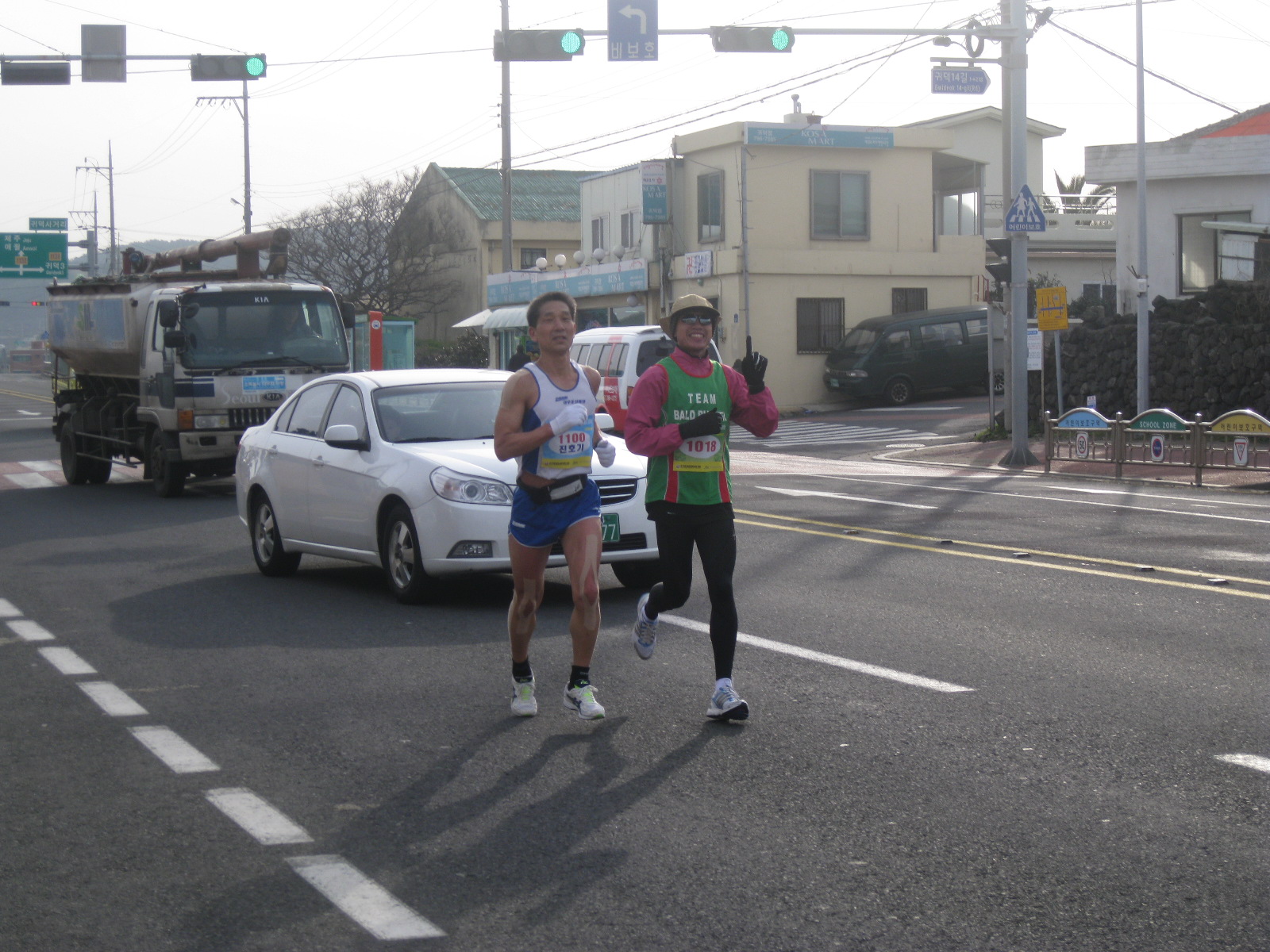
2. The Ultrarunning Federations of Japan, Taiwan, and South Korea maximized the number of runners per country-delegation into 6 athletes ( 3 men & 3 women). These countries had been into ultrarunning events for the past 10 years or more. Mongolia, the latest member of IAU, and the countries of Indonesia, India, and Hongkong were represented with only one male runner. While the Philippines, Vietnam, and Thailand were represented with two (2) runners. Among the delegation, I was the only Head/President of an Ultrarunning Federation who competed and ran in the 50K Ultramarathon Race.

3. Due to the unfamiliarity of the place and the lack of communication among the residents of Jeju (Jeju residents could hardly understand and speak in English), we were not able to recon the actual route but verbal explanation from the Race Director (the only member of the Korean Ultramarathon Federation who can speak with good English) was the only source for the description of the route.

4. Meeting the President of IAU, Dirk Strumane, IAU General Secretary Hilary Walker and the Asian Representative to IAU Souhei Kobayashi was an opportunity to meet the “top bosses” of IAU. These personalities were very close to our delegation because of our ability to communicate with them in English.

5. The Chairman of the Event, Mr Jun Sang Yu, is presently the President of four (4) Sports Federations in South Korea and a former 6-time elected Congressman in one of the Congressional Districts in South Korea, was the one responsible in raising the funds from the government and the private corporate world to support the conduct of this international ultramarathon event. He is also an ultrarunner who ran and finished the 100K distance last year in the said event within the cut-off time of 15 hours. (I really do not know if we could find a Congressman/Politician in our country who has that kind of passion of being athletic and has the “all-out” attitude to support an international event).

Sights & Scenery of Jeju Ultramarathon Race

6. The 1st Asian IAU 100K Championship Race was held as part of the 9th Annual Jeju International Ultramarathon Race which has the 50K, 100K, 148K Trail Run and a 200K Race. Out of the 585 participants, the 50K, 100K and 200K runners were equally divided with only 33 runners who joined the 148K Trail Run.

7. The race did not have any race marshals along the route as the runners followed the circumferential paved road of the island. A small printed white paint of “U200” with a small arrow on the paved road is seen few meters before any intersection. However, if there is no printed indicator on the paved road is seen, it means that the runner should go straight. (In the future editions of BDM 102/151, I hope that runners would not need any race marshal to follow the route of the event).

8. It was funny when the Head of the Japanese Team asked if the Race Organizer had placed Portalets along the route. The answer of the Race Organizer was there was none and instead, the runners have to use the toilets/CR of gasoline stations, parks along the sea, or knock on the doors of houses/commercial establishments along the way, or look for a big rock or tree or canal/ditch where the runner could do his/her thing. Silently, I was smiling when I heard this question during our technical meeting. I remember the experiences of the BDM 102 runners for the past two editions!

9. It appeared that the Koreans just ran the course on “automatic mode”—they were smiling, chatting with one another, and enjoying the scenery of the route. The Koreans are very strong runners and calm during the run. I did not see any of them “wired” with MP3 or Ipod during the run.

10. The Japanese ultrarunners have small strides but their “turn-over” or frequency of their strides was very quick. I could not believe what I’ve seen with these Japanese runners. Their strides were consistent from Km 0 up to the Finish Line! It shows their advance and dynamic knowledge on running as I saw them running with midfoot strike in an ultramarathon race!

11. The Taiwanese runners were also strong but they are more comfortable in their 24-Hour Endurance runs in their country. One of the male runners who was running the 100K race had passed me at the 43K mark and he was fast and strong. The first female Taiwanese runner who finished the 100K race was trailing me when I finished the 50K race.

12. The only Mongolian runner whose country is colder in climate than in South Korea had some issues on the second half of the race due to his blistering pace on the first half of the race. He was not able to manage his pace for the 100K race. I had to bring out my Salonpas spray for him to use when he was in pain due to leg cramps at the Km 65 point.

13. The first Aid Station was placed at Km 10 mark and after the first one, each Aid Station was placed in every 5 kilometers. Each Aid Station’s contents were simple. It has few cups for water, Pocari Sweat, Coke with sliced fresh bananas (Imported from the Philippines), sliced Oranges, and Chocolate Munchmallow. The volunteers serve water, Pocari Sweat and Coke from 2-liter bottles and each runner would ask for additional water from their cups. There is no need for a lot of lined-up cups of water/Pocari Sweat or Coke as a few runners would stop or pass along these Aid Station at a time. There is no excess or wastage on the liquid or food being served in the Aid Station as the fruits are only served if the runner would ask for them!

14. For those runners who don’t need the Aid Stations, these runners are given plastic bags where their race number is written with permanent Pentel Pen. These bags are used as their “drop bags” where the runner could place his/her drinks/special drinks and food and even running apparel which he/she can use to change. These “drop bags” are placed every 10-Km mark and they are collected from the runners before the race started. It is the duty of the Race Organizer to place these “drop bags” in every 10K mark along the route. The last “drop bag” at the Finish Line contains the clothes/apparel of the runner which he/she can use to change from his/her running attire. (I am planning to adopt this “drop bag” concept for the 1st PAU 50K Run in Tanay, Rizal in order to get rid of those Aid Stations but I am still allowing runners to have their Support Vehicles/Crew with them).

15. There are no Km Posts along the roads/highway in South Korea. There are no Kilometer Markings on the route of the race. The Aid Stations act as the Km marker in the race as they are placed every 5 kilometers after the Km 10 marking. The race route was measured by the Race Organizer/Director through GPS.

16. I’ve never seen any Ambulance during the race! Not even at the Starting & Finish Lines! This implies that the runners are well-trained and prepared for the event.

17. With the prevailing cold temperature at 8 degrees Celcius during the race, I observed that my quadricep muscles were the ones that started to feel tightness and “cramps” when I reached the Km 36 mark and before reaching the Km 40 mark, my groin muscles were also starting to have cramps. As compared when running in the country with hotter and humid weather, the calf muscles are always the ones that have the tendency to experience “cramps”. In Jeju, it was my first time to experience “cramps” on my quads & groin muscles! It could be the cold climate and elevation profile of the course that contributed to such experience.

18. What impressed me most is that all the runners/participants in this ultramarathon race were HONEST. Nobody cheated and most of the runners just run, have fun , and enjoy the scenery and the “journey” towards the Finish Line by themselves.

19. I am encouraging the ultrarunners here in the country to experience this event in their next edition. If you are a member of PAU, this race and experience is a MUST.

(Note: Please click the picture above)

BDM 102: On Generosity


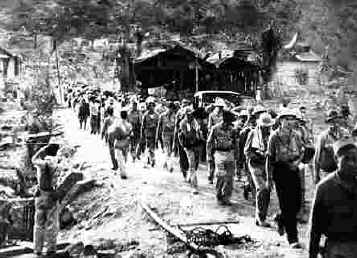
Bataan Death March (BDM) means heroism, sacrifice, love of country, determination, courage, and survival. BDM 102 means proper training, preparation, “heat” training, correct race strategy & hydration, “craziness”, endurance, cooperation & coordination among runners & support crew, discipline. and focus to finish the race within the cut-off time of 18 hours. 

Original Picture of the BDM in 1942

 On my part as the Race Organizer and Race Director, BDM means the fulfillment of a dream to commemorate this event into an ultramarathon race in order to create awareness on the history of this event that brought the death of almost 25,000 soldiers and militia where most of the victims were our countrymen. Let this awareness on this infamous event in the history of warfare and mankind be carried down from one generation to generation so that wars amongst nations will never happen again.

The BDM 102 in the eyes of the Race Director also means appreciation to the determination of some of the runners who braved to reach the Finish Line even if they knew that they could not make it before the cut-off time of 18 hours. I have to be generous to these runners who overcame the heat, dust, pollution, pains, and the challenge in order to finish the 102K distance.

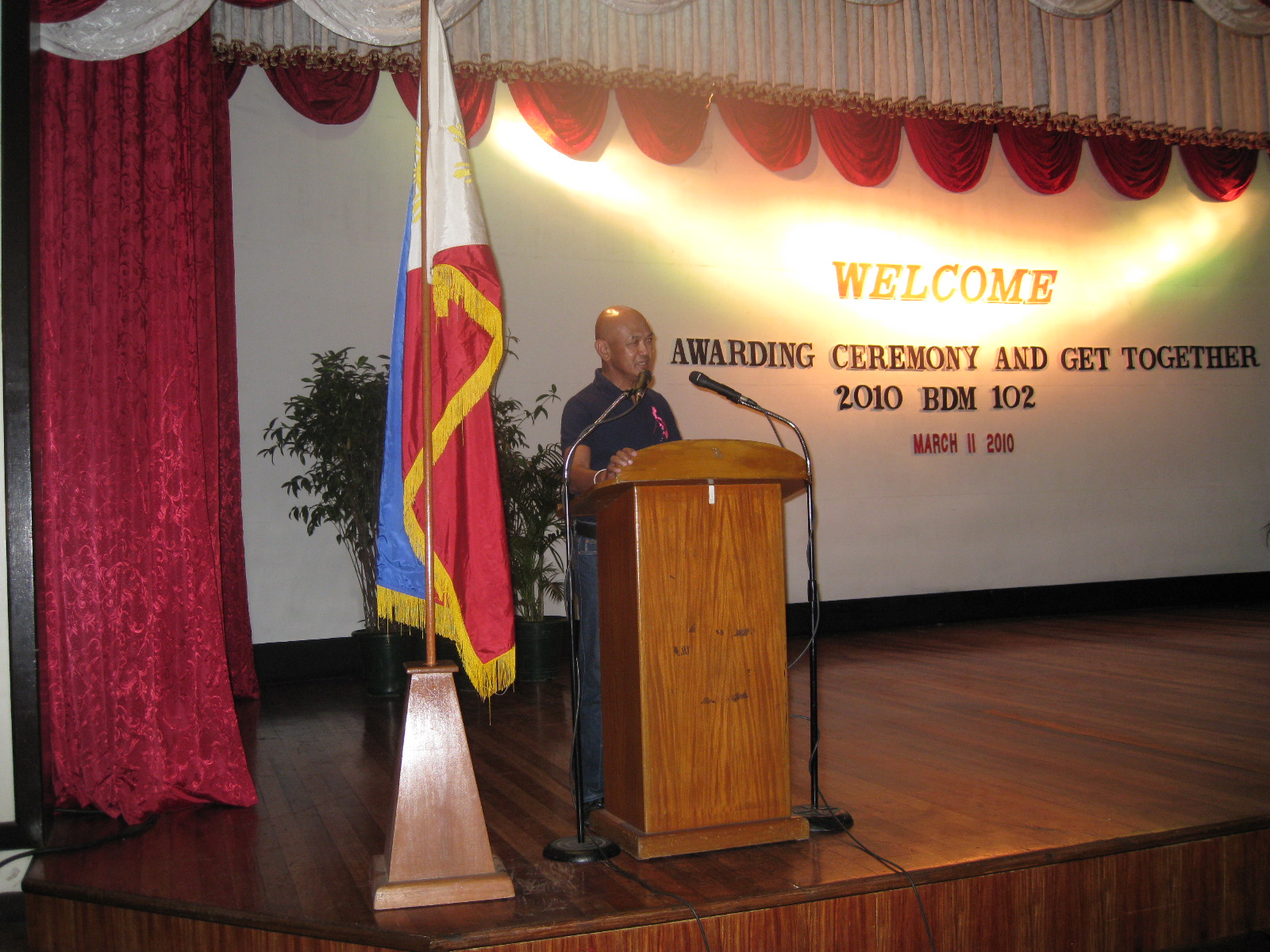
So, during the Get Together and Awarding Ceremony for the 2010 BDM 102 last March 11, 2010, as a surprise to everybody, I presented “special awards” for these runners who were determined to finish the race with their remaining strength and will power. Each of these runners were awarded with the BDM Individual Trophy, Finisher’s Medal (without any ranking), and a Finisher’s T-Shirt. Their names were not included in the Official List of Finishers.

The following runners were able to finish the 102K distance in less than 20 hours. They persisted and they were rewarded well.

1. Jerome Cartailler

2. Ariel Cortez

3. Eugene Porlucas

4. Benedict Meneses

5. Ivy Macainan

6. Kevin Viola

7. Major General Samuel Narcise AFP

8. Jonathan Gener

See you again in the 2011 BDM 102/151!!!

Race Director’s Report: 2010 BDM 102


I presented this report during the “Get Together & Awarding Ceremony” of the 2010 BDM 102K Ultramarathon Race last March 11, 2010 at the Tejeros Hall, AFP Officers Club in Camp Aguinaldo, Quezon City. This post then is for the benefit of my readers who were not part of the 2010 BDM 102 and who in the future would like to experience this ultrarunning event.

Top 10 List: What Is Unique About The BDM 102?

10. It commemorates the infamous Bataan Death March of World War II along the exact route where history happened. This is in honor of the 20,000 to 25,000 soldiers who died during the said March.

9. At present, the BDM 102 is the Longest Solo Road Race in the country.

8. Every Finisher within the cut-off time of 18 hours is awarded with a medal & individual trophy.

7. A Test of One’s Endurance Limit.

6. A Test of Teamwork between the runner & his/her support crew.

5. A Race where every runner helps each other to finish the course.

4. A Running Event where you can have a “fashion show” of your running apparel.

3. A venue where a runner can raise funds for his selected Charitable Institution.

2. A Running Event where a runner can take a shower & massage along the route.

1. The ONLY Road Race with an Awarding Ceremony & Get Together Party days after the event!!!

On Statistics:

1st BDM 102 2nd BDM 102
Date of Race: 4-5 April 2009 Date of Race: 6-7 March 2010
Runner-Applicants: 150 Runner-Applicants: 186
Registered Runners: 82 Registered Runners: 142
Race Starters: 82 Race Starters: 128
Finishers: 63 Finishers: 104
% of Finishers: 77% % of Finishers: 81.25%

On Comparison of the 1st BDM 102 with the 2nd BDM 102:

1st BDM 102:

1. The result that I published was UNOFFICIAL due to the following reasons: (a) there were “cheaters” and I personally observed cheating among the runner-participants; (b) the Actual Route was not followed as the leading runners did not pass “critical” kilometer posts along the way.

2. I was the Race Organizer and Race Director and also one of the Runner-Participants.

3. There were Aid Stations in every 20 kilometers plus a Breakfast Station at Km Post #50.

4. There were four (4) Checkpoints where I placed “secret marshals” who handed color-coded wrist bands.

5. There were Cash Prizes to the Overall Top 3 Male & Female Categories and Trophies to Top 3 in the Age Category for both Men & Women Categories.

6. There were seven (7) Foreign Runners but only five (5) finished. There were five (5 lady runners but only two (2) of them finished.

2nd BDM 102:

1. The result that I published a day after the event was OFFICIAL.

2. The prestige and integrity of the race were maintained as there were no reports of cheating among the runners.

3. The actual route of the BDM was followed.

4. I was the full-time Race Director of the event.

5. I removed all the Aid Stations, instead, each runner must have his/her Support Vehicle & Support Crew in order to compete in this event. The halfway Aid Station at Km Post #50 was maintained and it offered breakfast, foods & drinks to all the runners.

6. Submission of a Medical/Doctor’s Certificate for each runner is a MUST.

7. I have placed seven (7) Time Stations & Checkpoints that gave colored string necklace to every runner.

8. Final Briefing & CarboLoading Party were conducted two days before the Race Day. Administrative matters were done during this event.

9. No Cash Prizes. Awards/Trophies were given to the Top 3 Men’s & Ladies’ Categories.

10. There were eleven (11) Foreign Runners and all of them finished. There were thirteen (13) Lady Runners but only ten (10) finished.

2010 BDM 102 Winners

Men’s Category

Champion: Alvin Canada—10:01:5 hours

1st Runner-Up: Randy Bumahit—10:44:27 hours

2nd Runner-Up: Jonnifer Lacanlale—11:01:47 hours

Women’s Category

Champion: Whreachelle Cordova—16:00:07 hours

1st Runner-Up: Raiza Tulan—16:23:01 hours

2nd Runner-Up: Maria Myrna Emelyne Buenafe—16:38:48 hours

Observations:

1. The Last Day of Registration and Payment of Fees for Invited/Qualified Runners were scheduled six (6) weeks before Race Day.

2. The responsibility of logistics/support was given to the individual runner.

3. Some of the runners are still fond of last day submission of race requirements.

4. Administrative matters were done during the Final Briefing & CarboLoading Party which resulted to a shorter processing at the Starting/Assembly Area during Race Day.

5. For this year, the Race started earlier (11:30 PM of Saturday) and it was finished earlier, too!

6. Published Rules & Regulations were followed but some minor violations were observed.

7. Our Time Stations/Checkpoints were effective to pinpoint/deter cheaters. We deployed more checkpoints this time.

8. Support Vehicles were more responsive to the needs of the runners than placing stationary Aid Stations.

9. There was a tie in 4th Place. This thing will never happen again or else both runners will be disqualified for pacing with each other.

10. There were some runners who registered to have Support Vehicle but in reality, they were not supported by such vehicle. A stricter measure will be implemented in the next edition in order to monitor runners without any support vehicle.

11. Some runners lack “heat training” and the necessary training to finish an ultramarathon distance race. They understimated their supply of water & drinks needed for the road race.

12. There were cases of “bandit” runners. I had to warn Norio Tanaka from Runnex, a finisher in the 1st BDM 102, to stop running during the race as he was a “bandit” in the race. Another unidentified runner was also warned to stop “brisk walking” at Km Post #14.  Guys, if you want to “bandit” in my race, please don’t do it! If you want to experience running the BDM route, please don’t do it during my race day. You have the remaining days of the year to do it by yourself.

13. Some runners have two or more vehicles tagging along with their authorized support vehicle. I know that this race is a family affair among the participants but please limit the vehicles tagging along with the support vehicles.

14. We did not commit a mistake in our Finisher’s Medal. What you see in your Finisher’s Medal is the Official Seal of BDM 102 with the year 2009 as its founding year. I requested the finishers to have the date of the 2010 Bdm 102 engraved at the back. In next year’s edition, we will correct and place the engraved date at the back of the medal.

2010 BDM 102 Trivia:

1st Husband & Wife Finishers—Ria Go Tian & Emerson Go Tian

1st US/American Finisher—Charles Fletcher

1st Grandson-Finisher of a BDM 1942 Survivor—Jose Maria Galauran

Youngest Finisher—Mark Peralta, 19 years old

Oldest Finisher—Artemio Ladia, 54 years old.

1st Active General of the AFP To Finish The Race—Major General Samuel D Narcise AFP

1st Active PNP Officer Finisher—P/Supt Gregorio Torres

1st Father & Son Finishers—Major General Samuel D Narcise & Lemuel Narcise

Assessment:

1. 2010 BDM 102 was a successful event. Although we did not earn any profit or proceeds from this year’s edition, the support of the “Friends of the Bald Runner & Team BR-Professionals” covered the expenses/support for the additional logistics and activities to make this event a successful one. The BDM 102K Ultramarathon Race will remain to be a simple race devoid of unnecessary “distractions” and funfare.

2. Planning and Execution were almost perfect this time due to the experience from the 1st BDM 102. Our staff, volunteers, and marshals were fully briefed, rehearsed, focused and coordinated for the event.

3. The weather conditions were extreme but runners were able to adapt to the situation.

4. Teamwork & Unity were displayed among competing runners and support crew were responsive to the needs of the runners.

5. Lastly, this event would not be successful without the support & cooperation of the runners/support crew; sponsors & supporters; volunteers; and the Elite Team Bald Runner & Staff. Thank you very much!!!

See you on the 3rd BDM 102 & 1st BDM 151!!!

1st PAU 50K Run


The Philippine Association of Ultrarunners (PAU) will conduct a series of 50K races starting on May 9, 2010 with the objective of promoting ultramarathon running in the country.

My personal observations during our participation in the 1st Asian IAU 100K Championship Race in Jeju Island, South Korea made me conclude that our runners have the potential to be at par with the Japanese and South Korean ultramarathon runners. The Japanese and the Koreans had been years ahead of us in this field of running event. These countries have also ultrarunning events almost every weekend.

In order to identify, promote and train ultrarunners, there is a need to conduct regular ultra races in the country. The first series of 50K runs will be held on May 9, 2010 and to start at 6:00 AM in Sampaloc, Tanay, Rizal. The registration fee is P 750.oo. Each finisher will be awarded with Individual Trophy and Finisher’s T-Shirt.

This race will be done along the paved road and each runner is required to bring a hydration pack/belt system. The cut-off time is 8 hours.

Registration starts today, March 30, 2010. Registration Forms are available at the BR “Speed” Training/Clinic at the ULTRA Oval Track; at the Bald Runner’s Events Office at #115 M.H. Del Pilar corner E. Angeles Sts, Barangay Santo Tomas, Pasig City, Metro Manila; or at Sunday’s Road Races. For further inquiries, please contact Telephone Number: 497-6442 or e-mail us at bald.runner@yahoo.com.

Rules and Regulations/Protocol for this event will be published in this blog soon.

The next 50K run will be held from Laoag City to Pagudpud, Ilocos Norte on August 29, 2010.

Official Report: 1st Asian IAU 100K Championship Race


The following is the official report submitted by Hilary Walker, Secretary General of the IAU, as the Official Result of the 1st Asian IAU 100K Championship Race held in Jeju Island, South Korea on March 27, 2010.

Dong Mun and Mai win the Inaugural Asian 100km Championship   (Nadeem Khan, 29 Mar)
  Please find the attached report by Hilary Walker from the 100km Asian Championships held this weekend.Nadeem Khan

Director of Communications

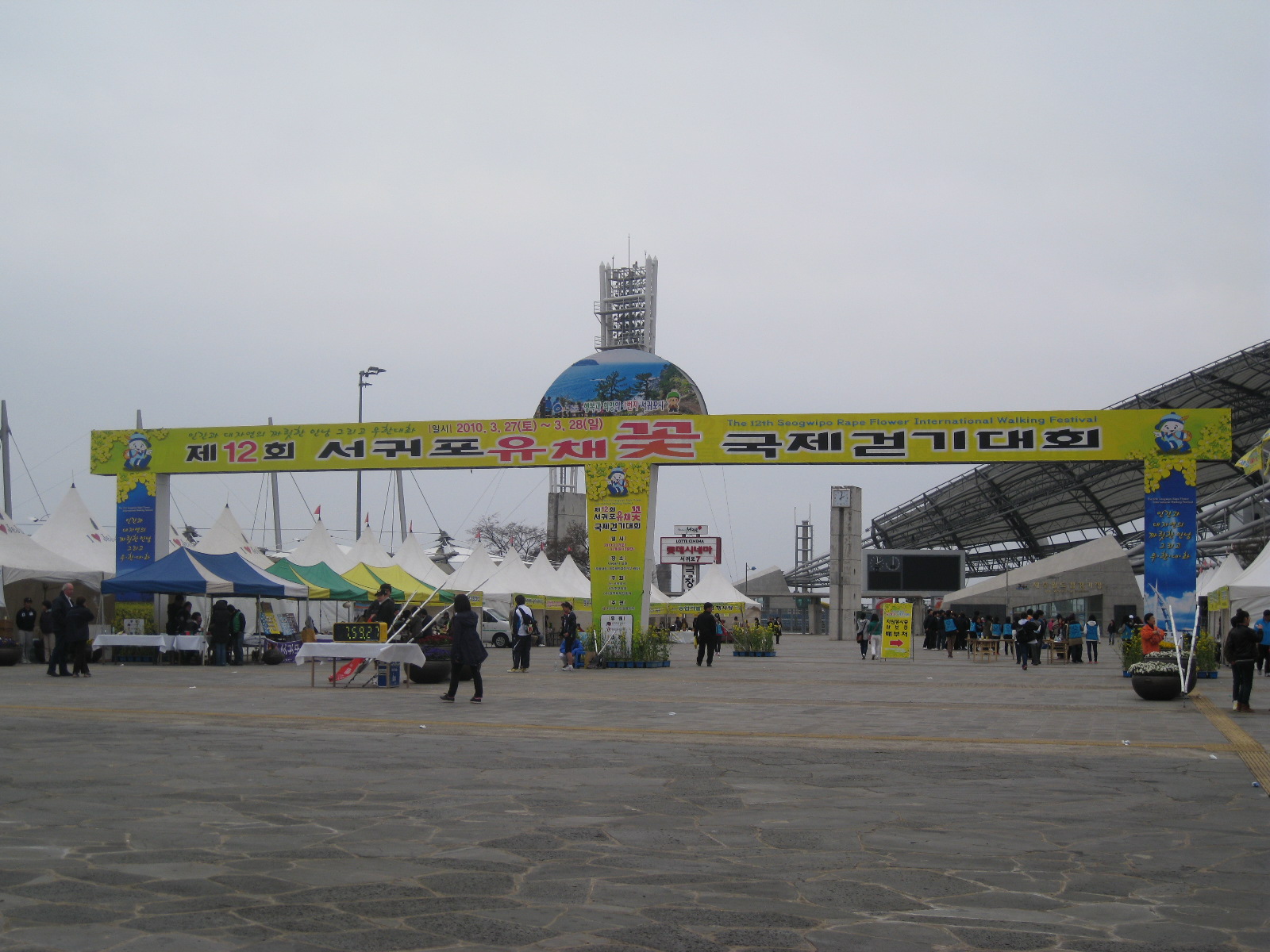
Early Saturday morning about 500 runners set off from the Tapdong Beach Stage in Jeju, a scenic island at the southern tip of South Korea.  The athletes were competing in a number of ultramarathon events ranging from 50K to 200K in distance together with a 148K tough trail event over the mountainous interior of the island.  There was a total of 143 runners from  23 countries around the world as well as the local Korean athletes.

Amongst these, an elite competition was being held for the inaugural IAU 100Km Championship. Athletes representing the IAU member countries of Japan, Korea, Mongolia, The Philippines and Chinese Taipei were taking part in the championship with other Asian countries, Indonesia, Thailand and Vietnam being represented in the open 100K race.

The 100K course was a scenic one, undulating around the west  coast to finish outside the Jeju World Cup Stadium in Seogwipo City on the south side of the island. The second half of the course would be tougher for the runners with some long inclines and descents.  The weather fortunately  was calm but cool.  This was a relief to the runners as previous days had been very windy which could have presented a harsh headwind around exposed areas of the course.

The pre-race favourite was Yasukazu Miyazato of Japan, the 2009 IAU 100Km World Cup champion with a personal best of 6:40:43  and so, not surprisingly,  he was part of the early leading pack of runners.  Also in the forefront was the leading Korean athlete Dong-Moon Lee whose personal best was 7:45:13.  The other members of the Japanese team, Yasutoshi Oshima and Toru Sakuta, and another Korean runner, Yong-bee Shin completed the leading group. 

Mai Fujisawa (JPN) showed early in the ladies event. She and her compatriot, Yoko Yamazawa had personal bests at 100K of 7:55:48 and 7:58:01 respectively so a close competition was expected.

After 20K  ( 1hr 28 min) Kwang-Yul Lee (KOR) had joined the leading group and Sodnompil Dondogdorj ( MGL) was close behind.  Alquin Bolivar from the Philippines was only 4 minutes adrift at this stage.   Fujisawa  had pulled away from her fellow Japanese runners passing this point in 1 hr 42 mins.  The next two ladies, Yamazawa (JPN), Takako Asano (JPN)  were running together about 4 minutes behind. Siou-Yu Da (TPE) was running with them

The leading pack had split apart slightly with Miyazato (JPN), and Dong Moon Lee( KOR) coming through the drinks station together in 2:52. Just behind were Shin (KOR) and Kwang-Yul Lee (KOR)  with Sakuta (JPN).  Oshima (JPN) was one minute adrift and Dondogdorj (MGL) and Bolivar (PHI) were a further minute behind.

There had been no change in the first few positions in the ladies’ race.  Fujisawa (JPN) had increased her lead to nine minutes passing through 40K in 3:12 with her Japanese colleagues and Da (TPE) still running together in second place ( 3:23).

At 70K, the hillier second half of the course had started to take its toll and the field was now split well apart. Dong-Moon Lee (KOR) and Miyazato (JPN) came through together in 4:57 but the Japanese runner was obviously struggling and retired before the next checkpoint. It was 10 minutes before the third runner Yasutoshi (JPN) appeared, followed two minutes later by his team mate Sakuta (JPN) with Kwang-Yul Lee (KOR). There was a further interval of 16 minutes before the next championship runner, Shin (KOR), passed 70k.  The leading lady Fujisawa (JPN) ran through comfortably in 5:31.

At the finish outside the World Cup stadium, there was a longer wait than might have been expected for the first runner to come into sight.  The last sections of the course had some testing climbs and descents which took further toll on the runners.  However , the wait was worth it for the local crowd as the first IAU 100K Asian Champion was the Korean Dong-Moon Lee who finished in 7:23:20, taking a massive 22 minutes off his personal best for the distance.  This was even more commendable considering the difficulty of the course. 

Closing the gap considerably by the finish, the silver medallist Yasutoshi Oshima (JPN)  crossed the line in 7:26:45 with his compatriot Toru Sakuta  finishing in third with 7.37.36. 

Mai Fujisawa (JPN) became the first IAU 100K Asian Ladies Champion with an excellent 8:01:32 performance, only 6 minutes outside her best.  Japan took a clean sweep of the medals with Takako Asano (JPN) and Yoko Yamazawa (JPN) taking silver and bronze in times of 8:44:59 and 8:53:11 respectively.

Of particular note in the concurrent open race was the performance of the Japanese  female runner Mami Kudo who finished as the first lady in the open event with a superb performance of 7:56:06.  In 2009, she had completed world beating performances  at longer ultradistances but hadn’t qualified for the Japanese team at 100k. 

 The leading performances are detailed below.

Hilary Walker

IAU General Secretary

Ist IAU 100K Asian Championships        
MEN        
1 Dong Mun Lee KOR 07:23:20
2 Yasutoshi Oshima JPN 07:26:20
3 Toru Sakuta JPN 07:37:36
4 Kwang Yul Lee KOR 07:43:03
5 Young Bee Shin KOR 08:30:36
6 Alquin Bolivar PHI 09:03:06
         
WOMEN        
1 Mai Fujisawa JPN 08:01:32
2 Takako Asano JPN 08:44:59
3 Yoko Yamazawa JPN 08:53:11
4 Siou-Yu Da TPE 09:41:59
5 Hee Kyoung Chung KOR 09:55:04
6 Na Rae Park KOR 10:01:00
7 Shu-Min Huang TPE 10.34.34
8 Yen-Ling Huang TPE 10:37:29
         
Open Race  Women        
1 Mami Kudo JPN 07:56:06
Open Race Men        
1  Joseph Thompson USA  09:06:00

Pictures @ Jeju Ultramarathon Race


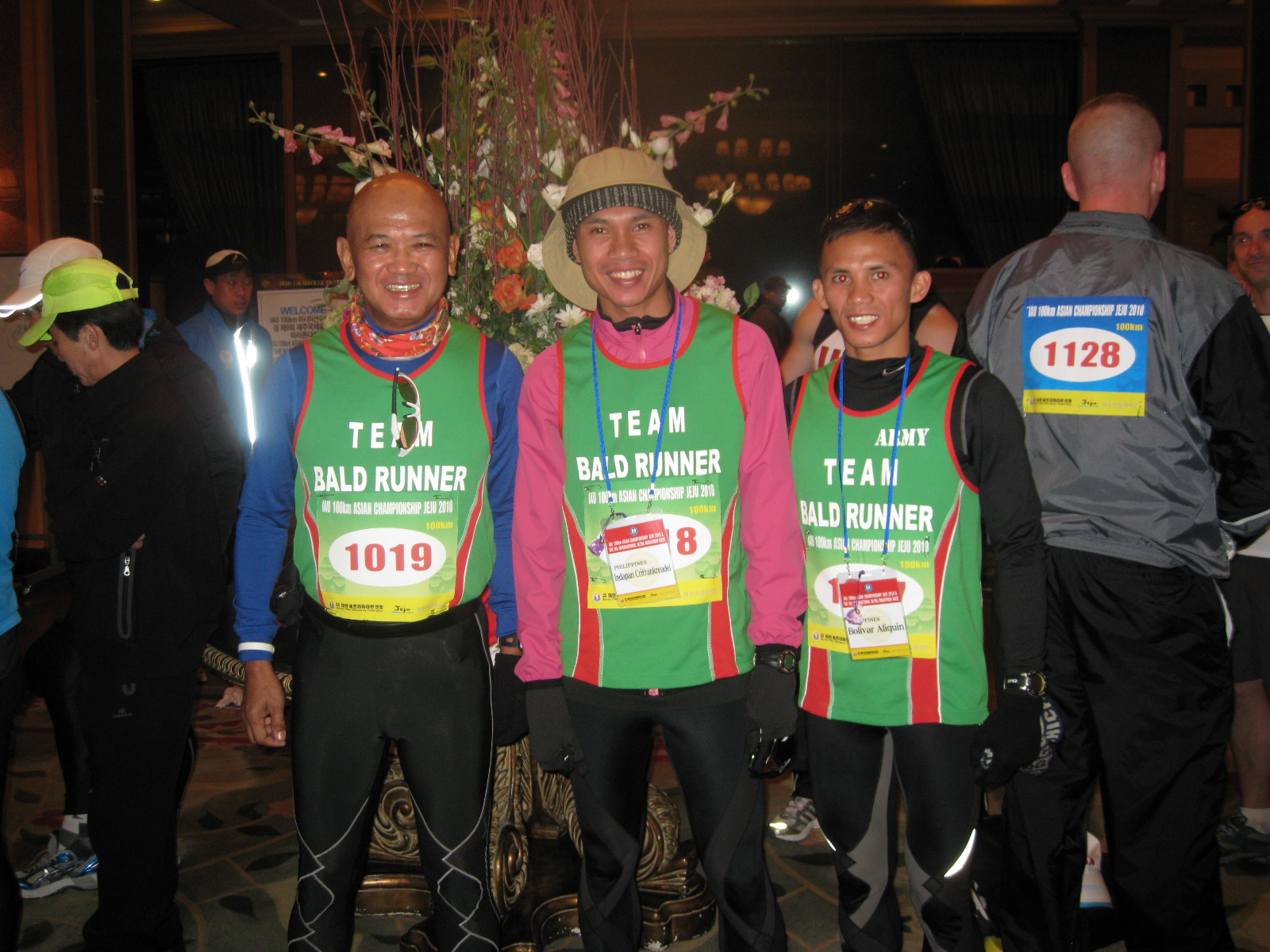
@ The Lobby of the Athletes Village (Jeju Oriental Hotel)
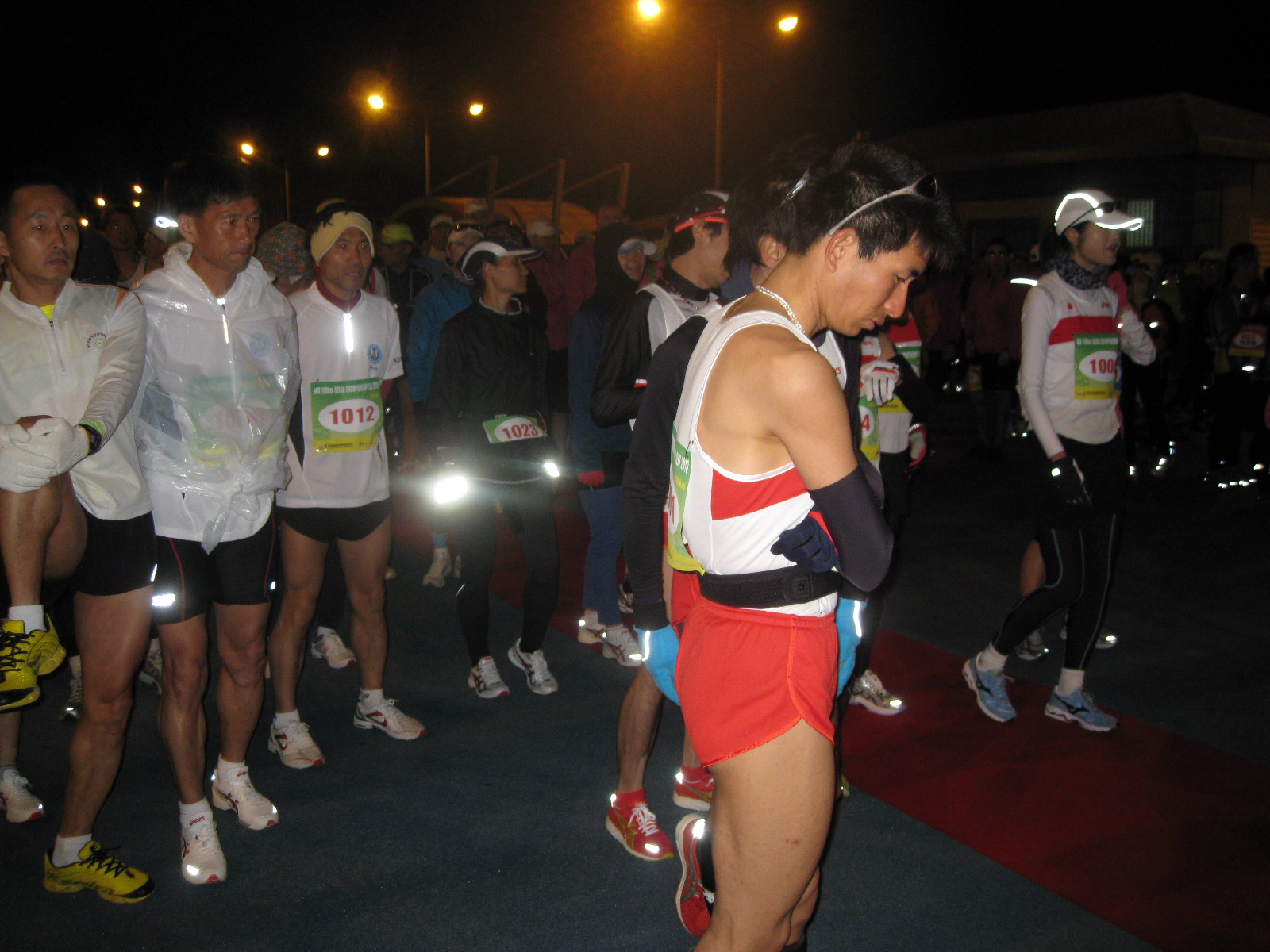
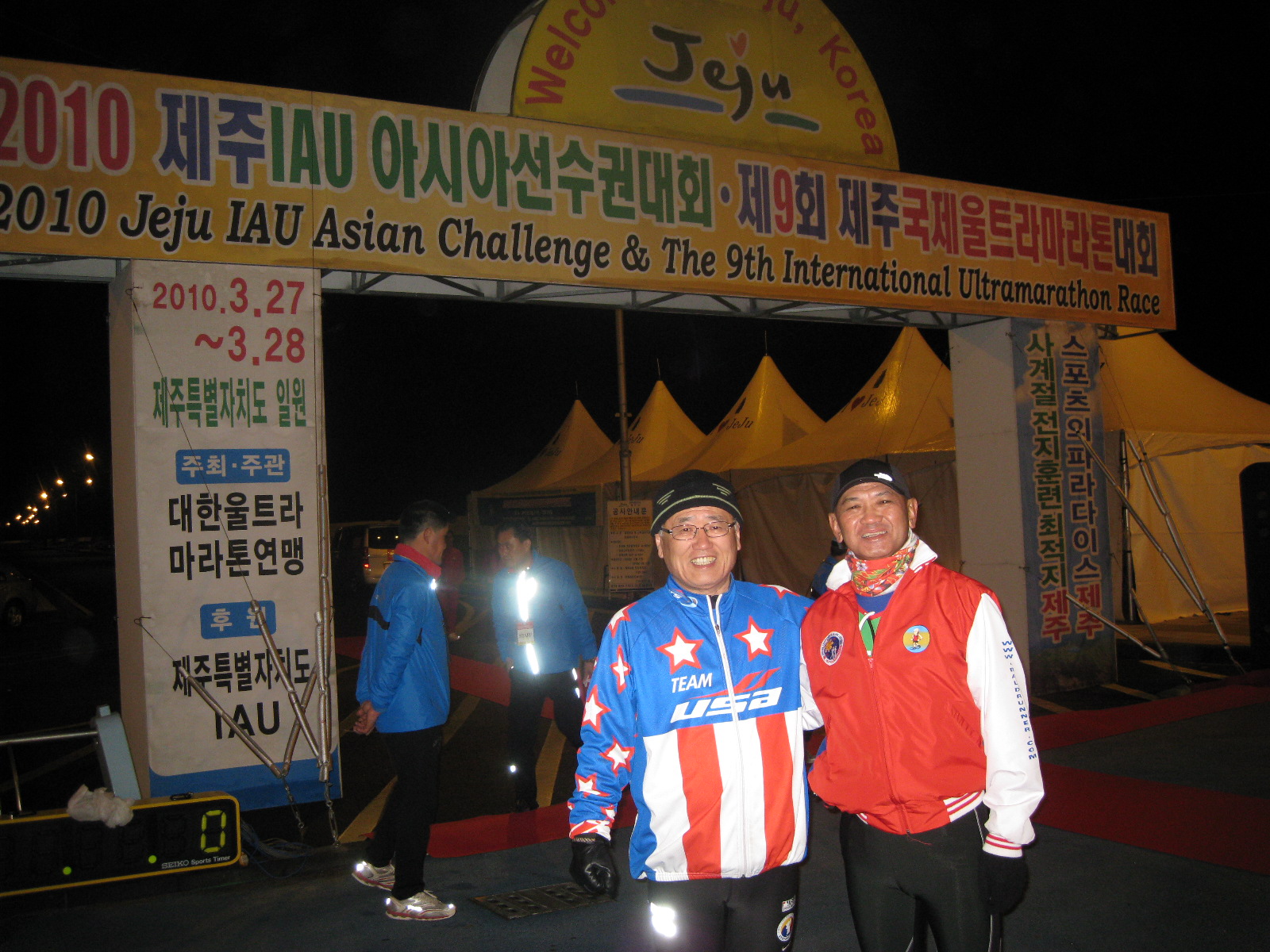
@The Starting Area
Hon. Jun Sang Yu, Chairman & Financier of the Event
Korean Runners In The 200K Race
Frank Indapan Pacing With A South Korean Ultrarunner
Alquin Bolivar Approaching 50K Mark in 3:26+hours
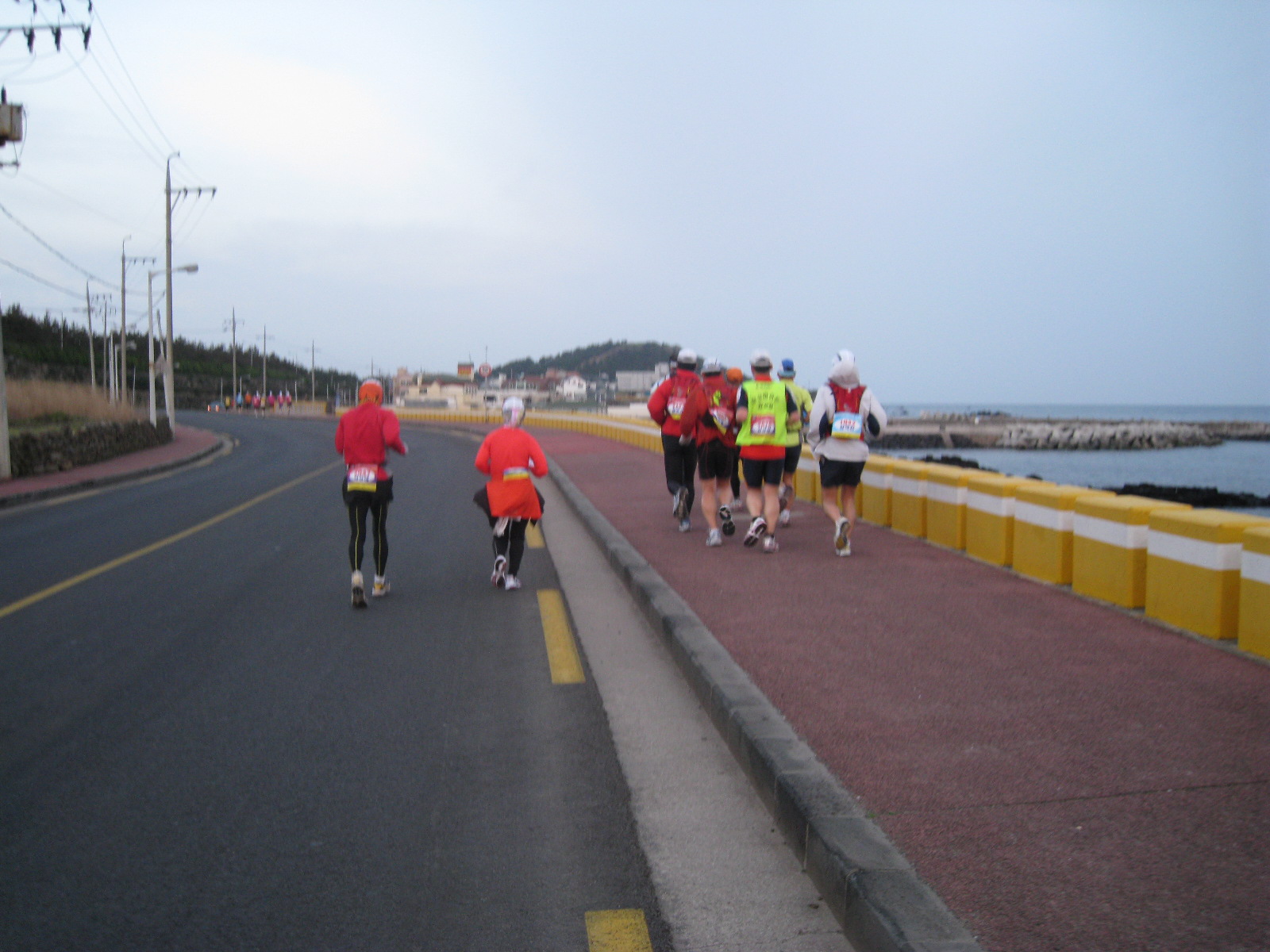
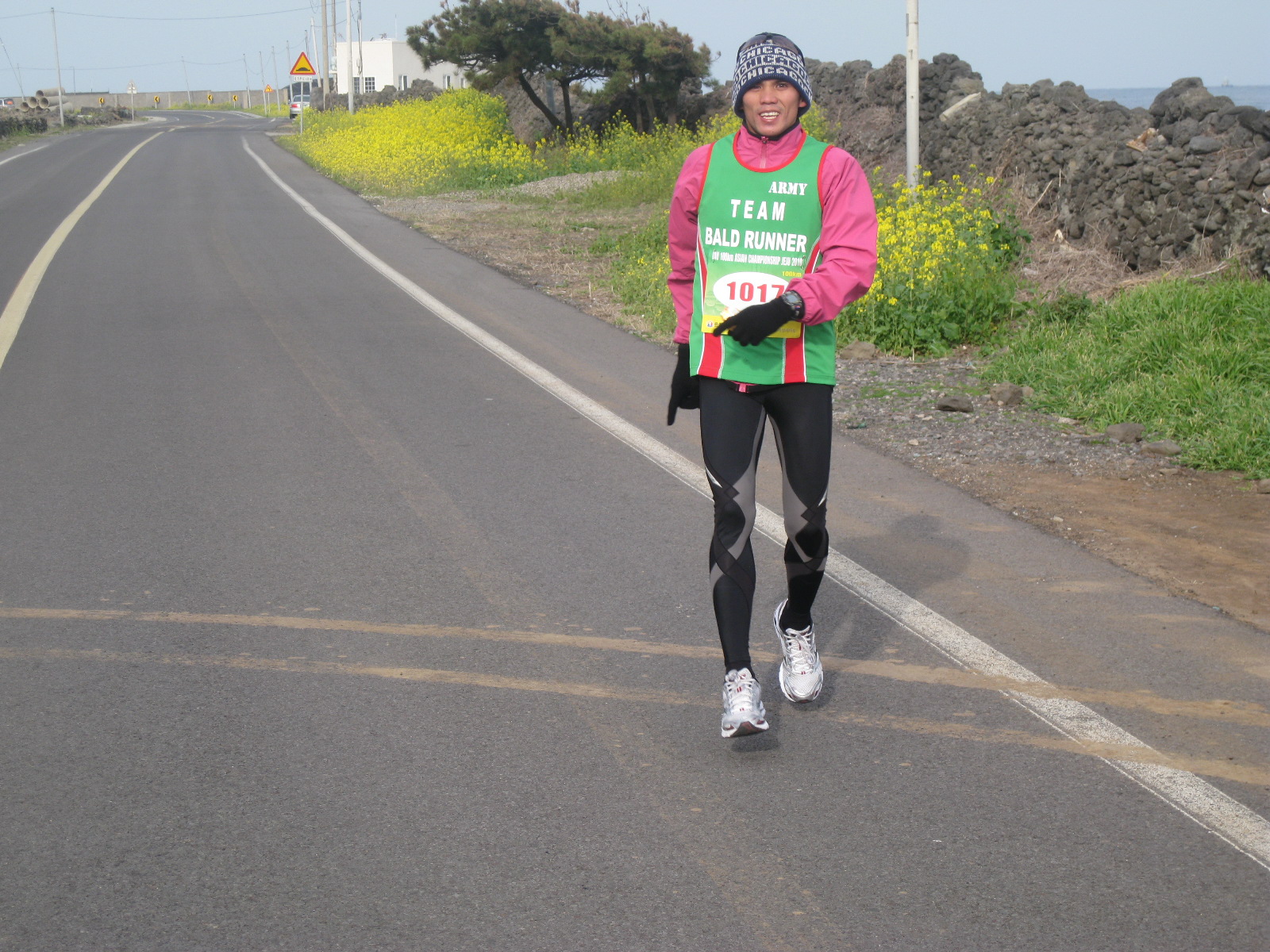
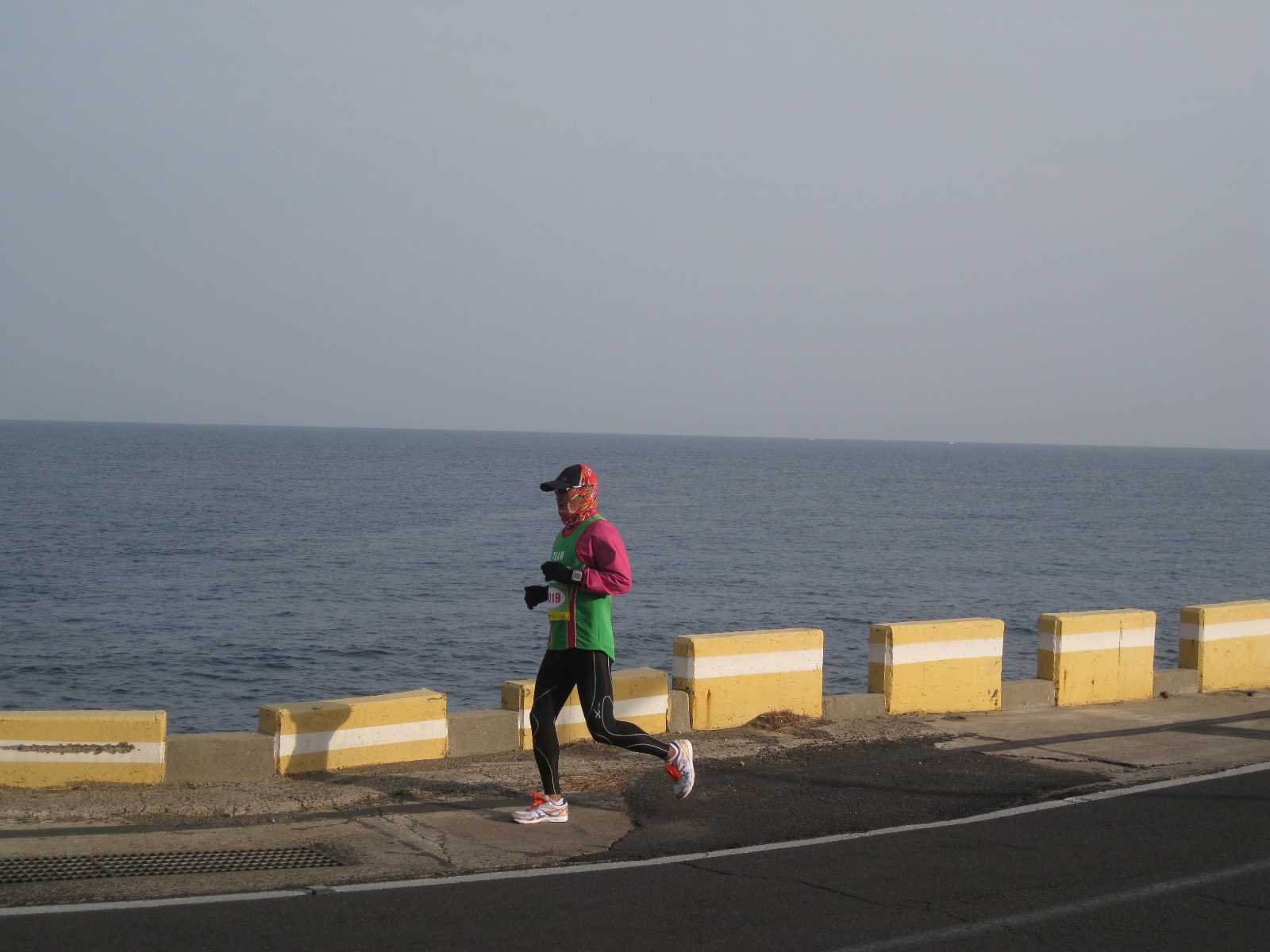
That's Me Running Along The Coast of Jeju Island
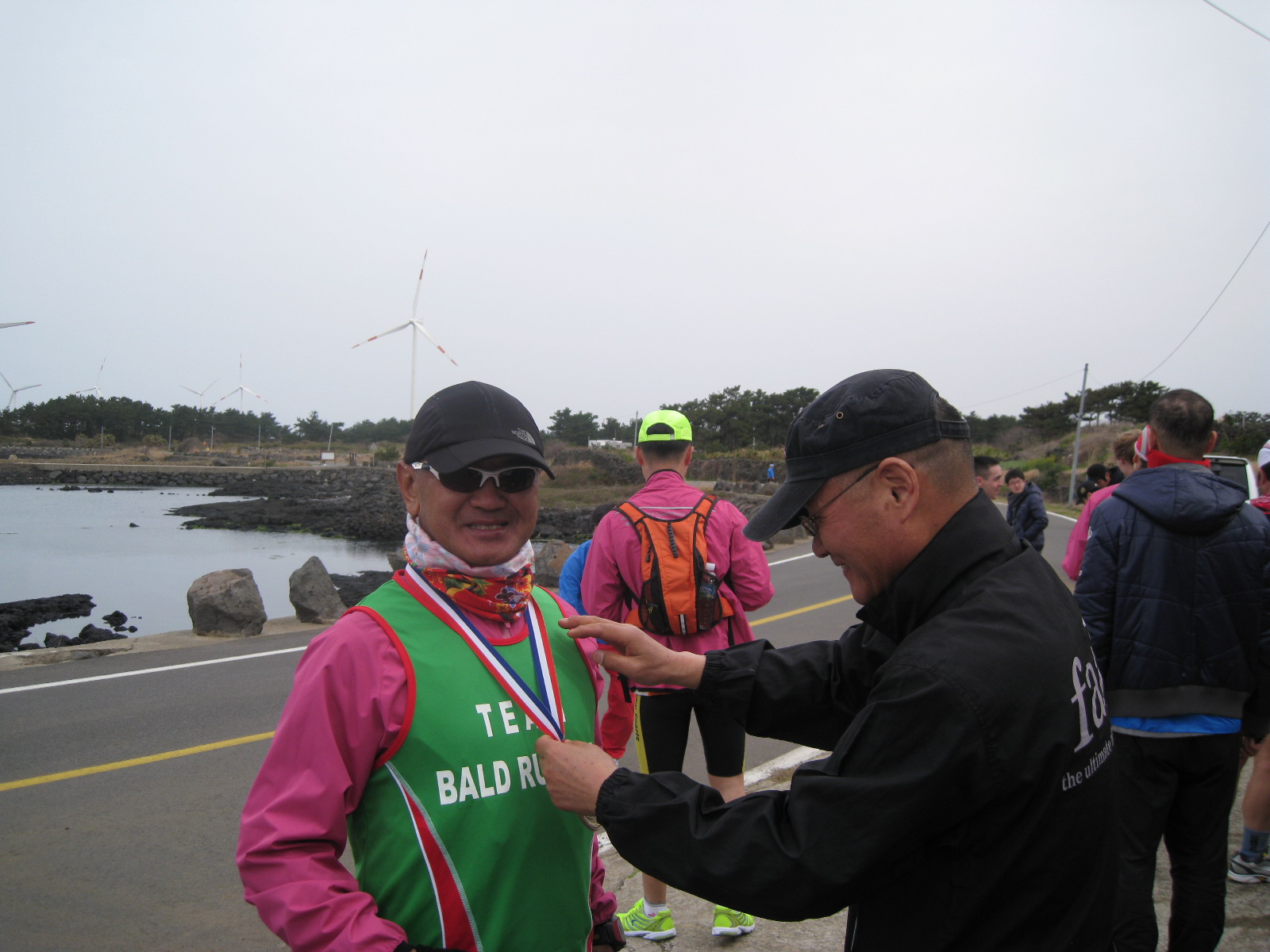
Awarded With 50K Finisher's Medal by the Race Director
100K Finish Line @ Jeju World Cup Stadium
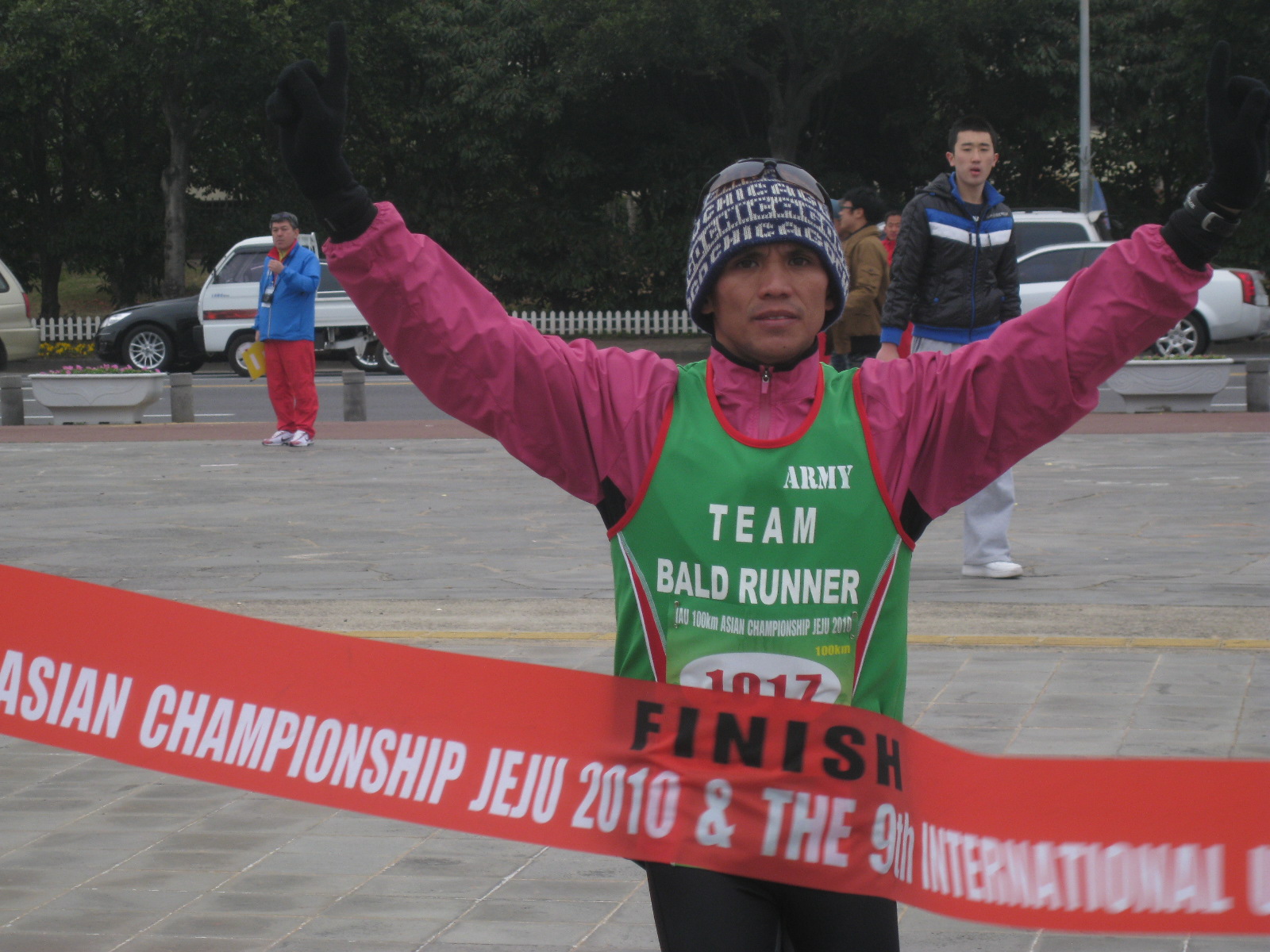
Alquin Bolivar Crossing The Finish Line in 9:03:06 Hours (Ranking: #6 IAU Member)
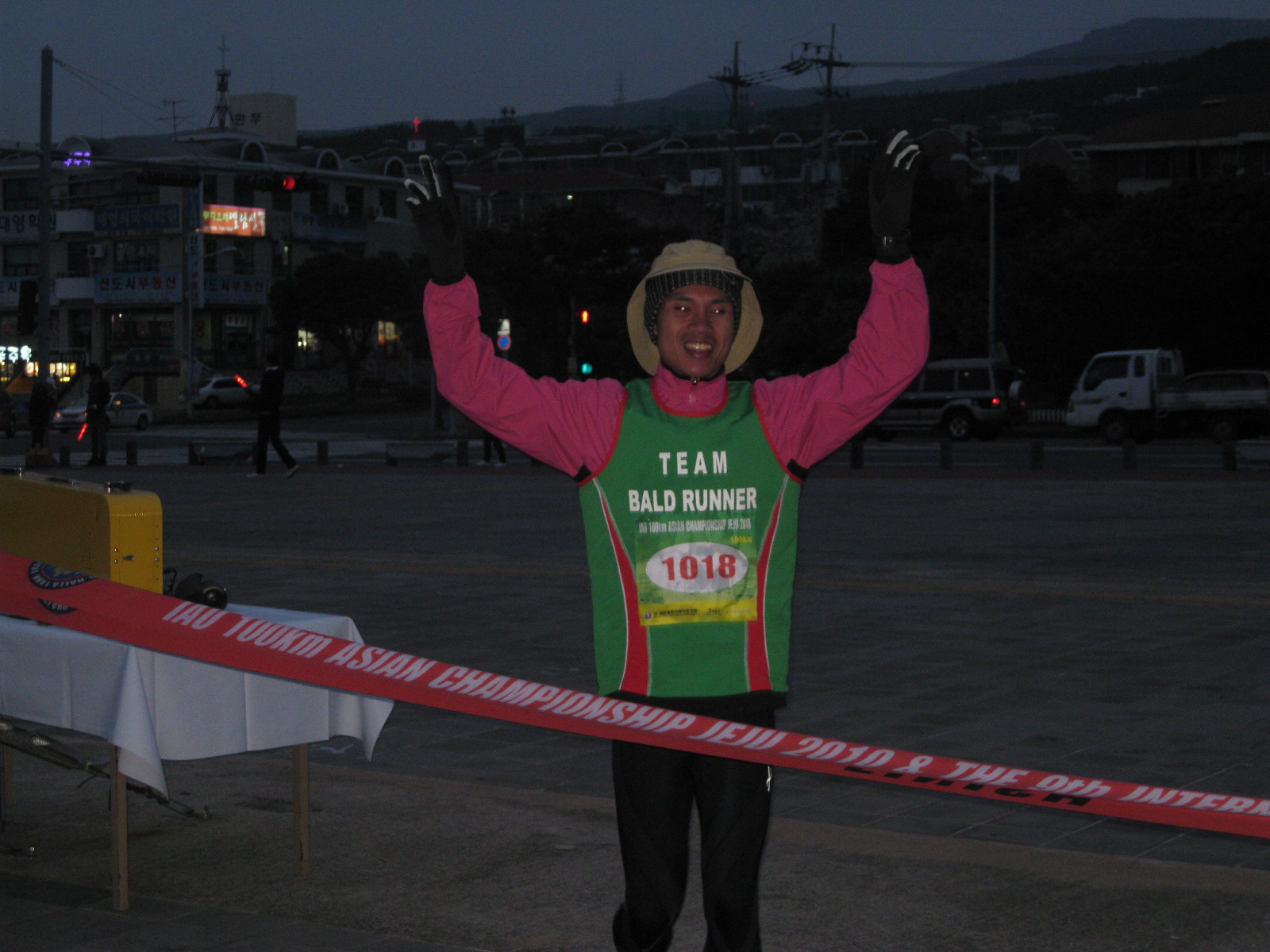
Frank Indapan Crossing The Finish Line In 12:48:40 Hours

“thanks for your support” (Jeju’s Trip)


Last October 2009, I received a formal letter from the International Association of Ultrarunners (IAU) informing me that the Philippines had been officially accepted as a member of IAU through the Philippine Association of Ultrarunners (PAU) which I created and organized. IAU officials informed me that the Philippines is the 6th ASIAN member and the 45th member worldwide. 

After two weeks, I received an invitation from the IAU for our country to be represented in the 1st Asian IAU 100K Championship Race to be held in Jeju Island, South Korea on March 27, 2010. Attached with the invitation are the protocol and requirements for participating in the said race. The Event Organizer, South Korea’s Ultrarunning Federation, invited 3 men & 3 women whose accommodation and food will be provided free for the duration of only two days. The participating runners are supposed to be the best and most qualified ultra runners that the country could offer.  

The desire to join in this competition was so strong on my part but the big problem was the logistics/financial support needed for the plane tickets of the athletes. As of November 2009, I met all the members of the Elite Team Bald Runner and asked them who would “volunteer” to train for the 1st Asian IAU 100K Championship Race. Alquin Bolivar & Frank Indapan came forward to accept the challenge and started to train from then on. 

Last year, I also thought of sending the top Male & Female Champions of this year’s BDM 102 to Jeju’s 100K Ultramarathon Race but the timing/schedule was not conducive for the best performance of our athletes as they are on their “recovery” mode barely weeks before the event after the BDM 102. 

Being a relatively new running sports, ultramarathon is “alien” to our government sports officials, moreso, to our friends in the government and corporate world. So, I did not want to be frustrated again to be begging to these “personalities” for some financial support for me to send our country’s representatives to this IAU-sanctioned international event. My experience with the government & corporate world in the 1st BDM 102 will never happen again. 

The only way to make this invitation to materialize and succeed was to ask help from the “Friends” of the Bald Runner and they came in full force to donate the needed amount for the visas, plane tickets, travel tax, and training/competition support to Alquin Bolivar & Frank Indapan. The following are  the “running angels” and their respective donation/s to the members of the Elite Team Bald Runner for Jeju Island: 

July Oconer 6,868.00
Kim 5,000.00
Bard’s Bathan 5,000.00
Armando Fernando 5,000.00
Mark Hernandez 5,000.00
Lester Chuayap 4,000.00
Ria & Emerson Go Tian 2,500.00
Oscar Sañez 2,000.00
Jael Wenceslao 2,000.00
Junrox Roque 2,000.00
Tin Ferrera 1,000.00
Mari Javier 1,000 + CWX
Jeremiah Isip 1,000.00 + CWX + Long Sleeve
Jerry Adriatico 1,000.00
Randy San Miguel 1,000.00
Macky Coronel 1,000.00
Carlo Coronel 1,000.00
Melvin Pangan 1,000.00
Mitchie Nafarete 1,000.00
Juanne Molina 1,000.00
Gin Estacio 1,000.00
Tere Gangan 1,000.00
Mark Salazar 500.00
Benette Jimenez 500.00
Bitmap

Randy San Miguel
5,000.00
Jerry Adriatico
Nickko Nolasco
2,600.00
Ralph Salvador
George Dolores
Jay Lee Cu Unjieng $100
Mesh Villanueva $100
Ben Gaetos $100
Jan 1box Hammer Gel + 1 box Gatorade Powder + Roll on Linement
   
Joshua Suarez  
Jerome Cartailler  

(Note: The names without any donation had made their pledge already) 

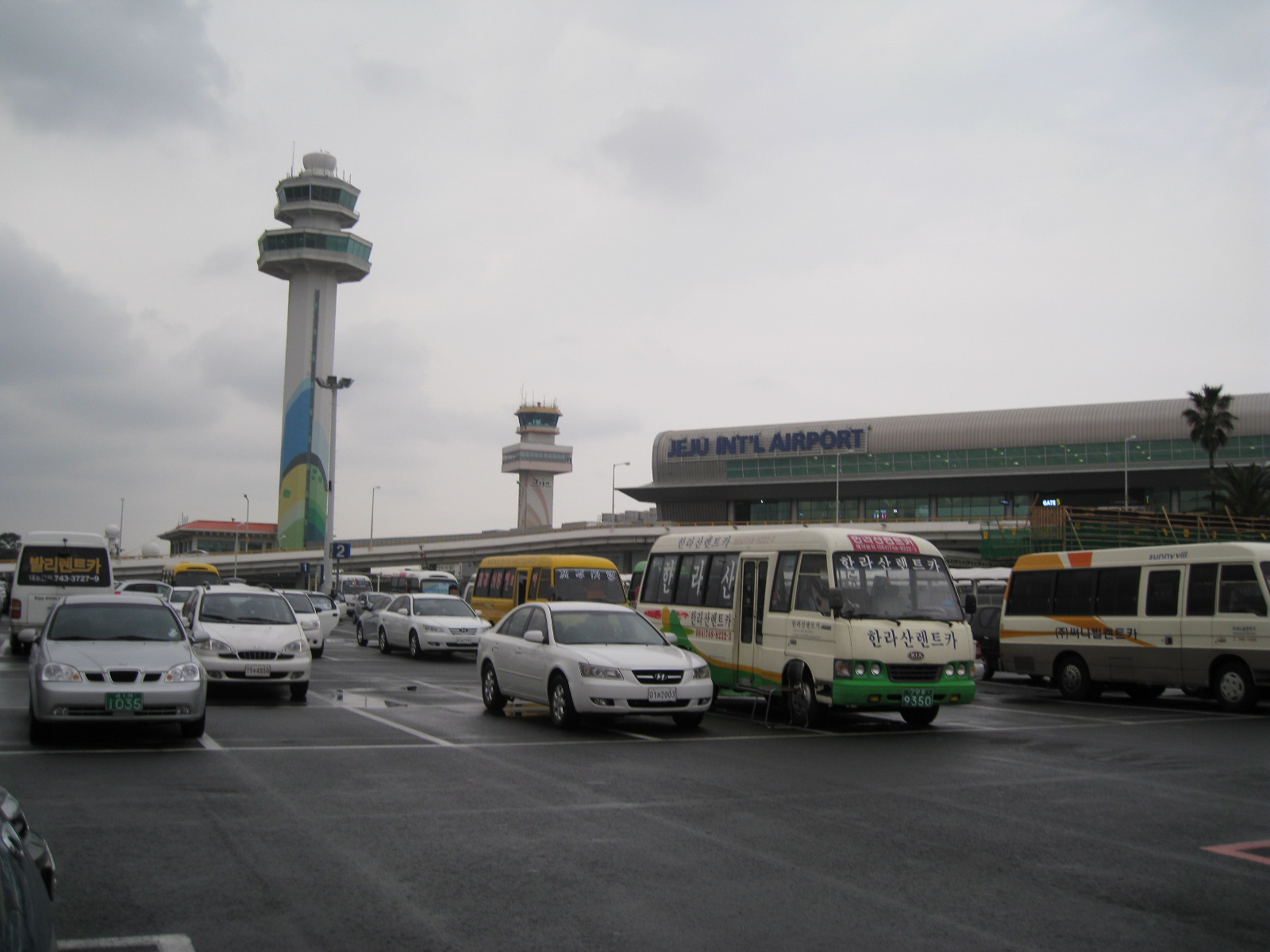
Jeju International Airport
Frank & Alquin Inside the Shuttle Van

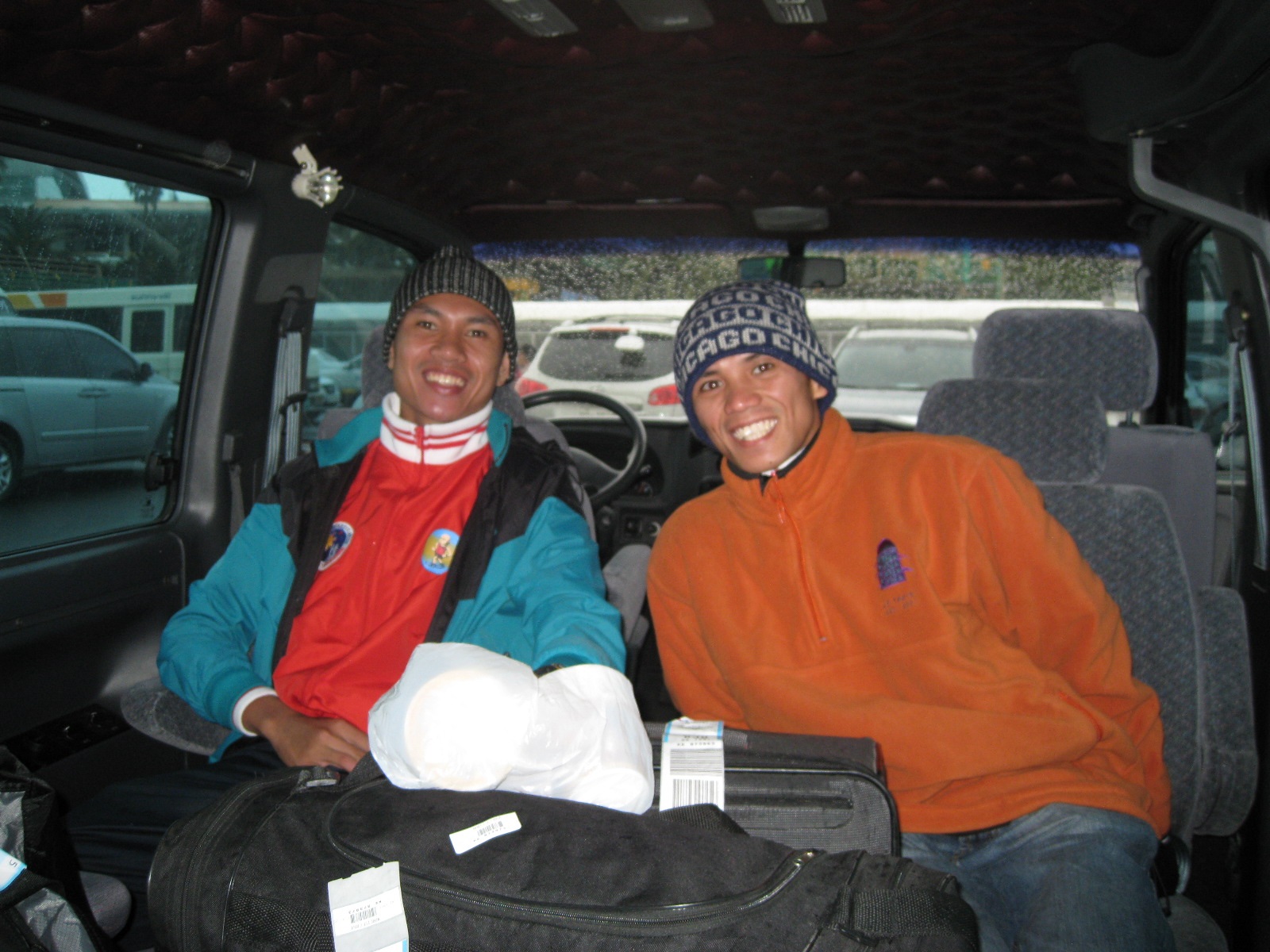
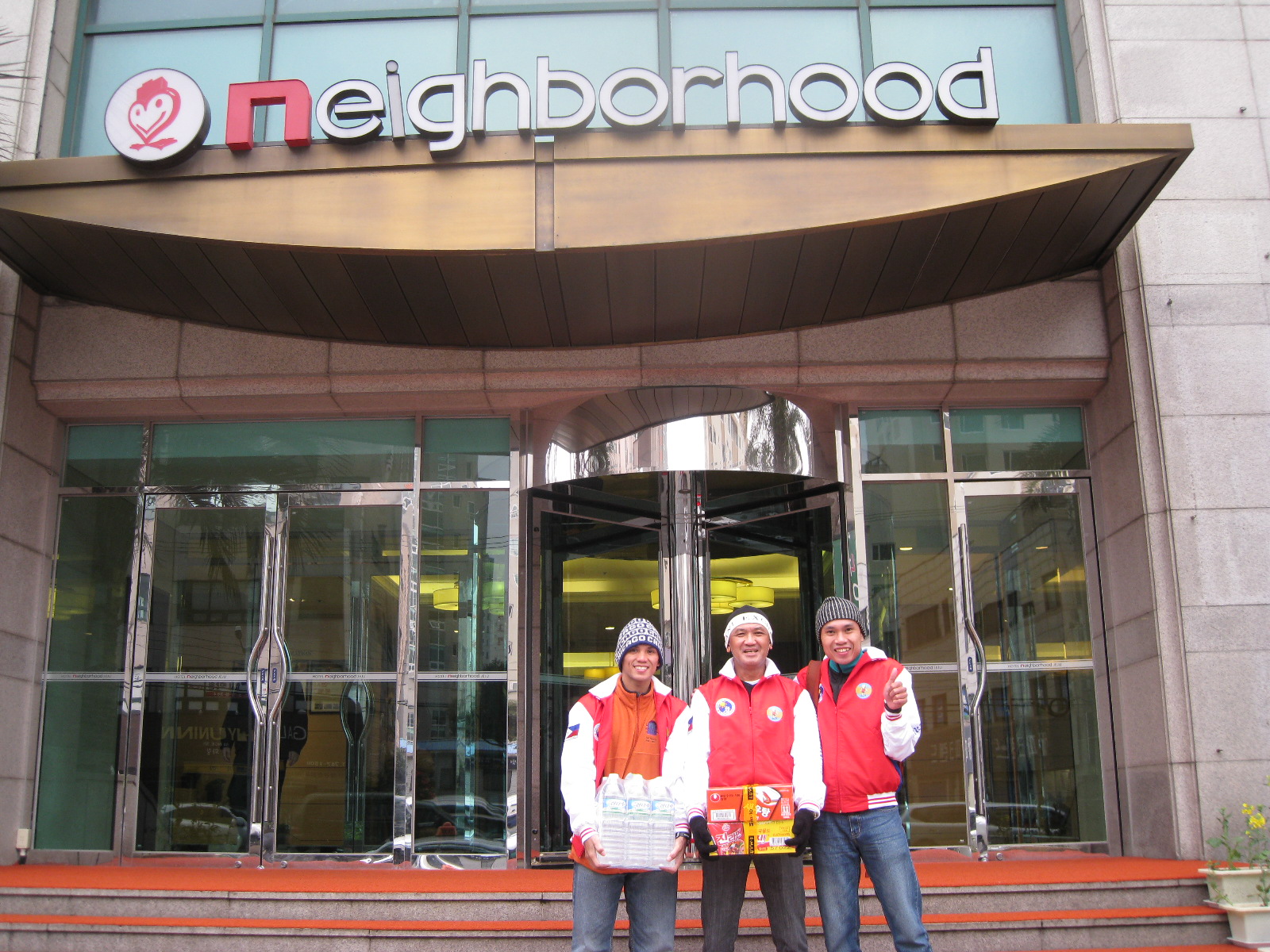
As of this morning, the Elite Team Bald Runner and PAU’s representatives to the 1st Asian IAU 100K Championship Race had arrived in Jeju Isalnd, South Korea. The place is nice, clean, orderly, cold and windy.  We were met at the airport by the representative of the Race Organizer and we were brought to our Hotel which is at the very center of Jeju City. 

It is very hard to find somebody here who could speak English! But by walking and jogging on the main streets of the city, we were able to find familiar fastfood establishments and shopping malls where to eat and buy much needed water, food and fruits. 

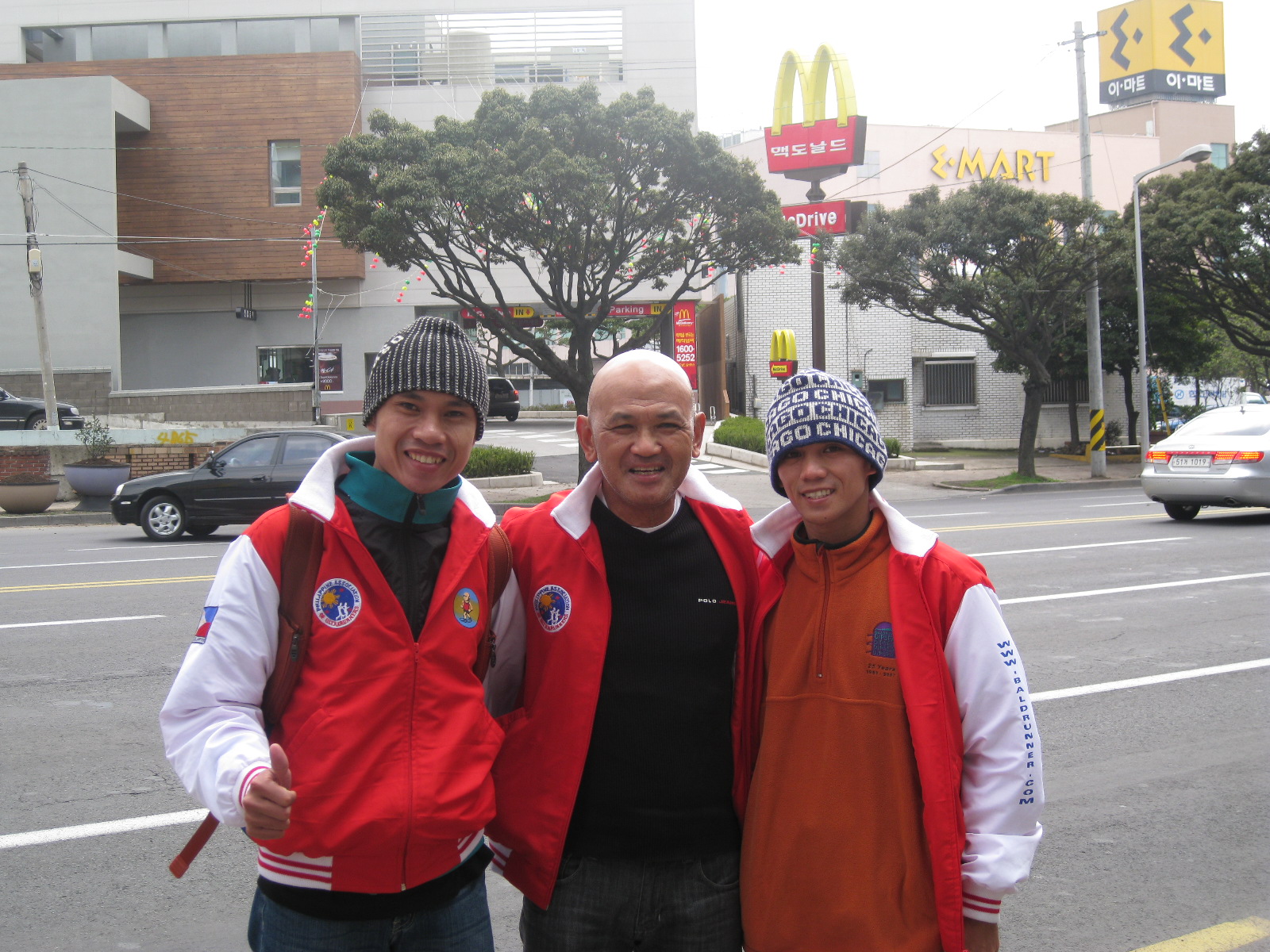
Korean Version of McDo ( We Did Not Eat There Yet!)

I found out later that this running event will also be the 9th Jeju International Ultramarathon Race and the Jeju International Cycling Race which will be held on the same day. The circumferential road of this island will definitely be dedicated to the ultra runners and cyclists on Saturday. 

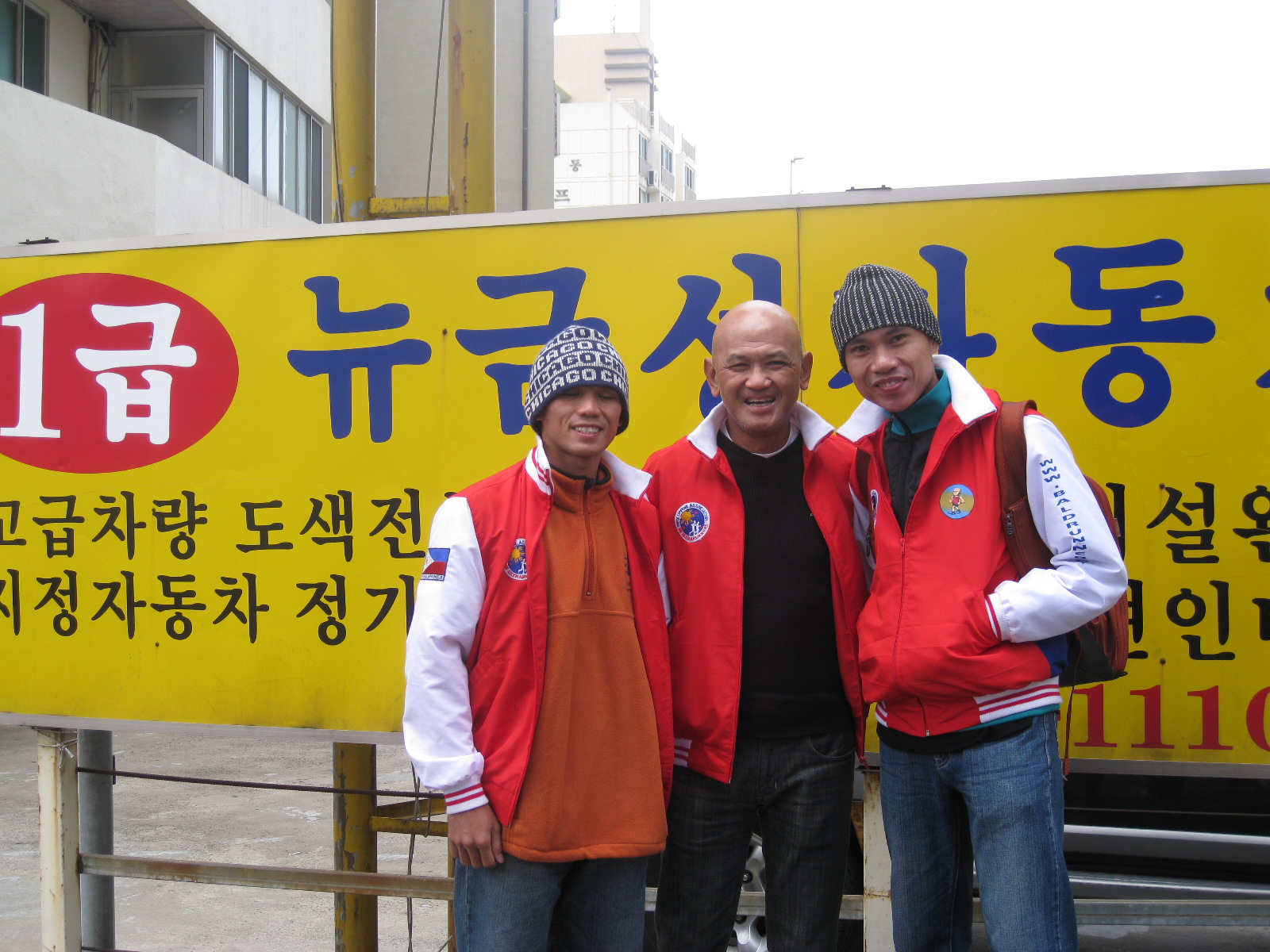
Infront of a Car Repair's Shop!!!
All International Runners Are Staying In This Hotel

Note: We are wearing the Official Jacket of the Philippine Association of Ultrarunners (PAU) 

Tomorrow will be another day to run and acclimatize with the weather ( rainy, cloudy & windy) of the island. A formal program, briefing, and carboloading party will be held tomorrow afternoon. It would be a nice time to meet other international elite runners and ultra running sports federations leaders/officials. 

Hopefully, the following goals/objectives will be attained in this race: 

1) The IAU 100K Championship Race (no cash prize for the winners, only medals will be awarded to the top 3 runners) will set the Philippine Record in 100K Ultramarathon Race in an IAU-sanctioned event. Winning this event is our ultimate goal but with Japan’s attendance/presence in this event, simply finishing and setting a National Record Time for the distance from our runners will be a great accomplishment already. 

2) The Philippines, through the Philippine Association of Ultrarunners (PAU), will be represented to an IAU-sanctioned ultra race for the first time. This will expose our country to other ultrarunning countries. 

3) The Elite Team Bald Runner goes International as we will be using our official uniform-singlet, courtesy of MILO/Nestle, Philippines. 

Once again, for those who supported and continued praying for us, thank you very much. God bless to everybody!