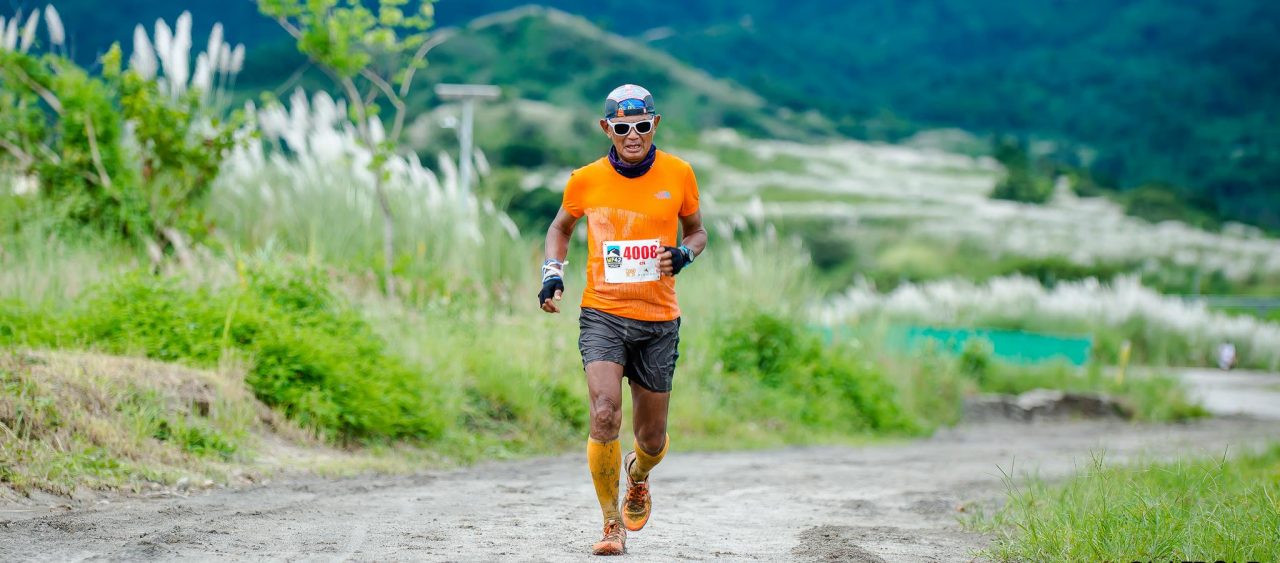
Pacific Crest Trail (PCT)


The Pacific Crest Trail is commonly known by its abbreviation, PCT and it is often designated as the Pacific Crest National Scenic Trail. The trail system is located on the Western Portion of the contiguous USA Mainland and it passes through the States of California, Oregon, and Washington. The trail covers a distance of 2,663 miles or 4,286 kilometers from South to North or vice-versa. It is one of the three most popular trail systems in the United States, the other two of which are the Appalachian Trail and Continental Divide Trail.

History on the creation of the trail states that the first proposal for the trail system connecting the States of California, Oregon, and Washington was made in 1926 which could be an exchange of mails and correspondence among early explorers in the area. The actual exploration started sometime in 1930 but there are no available evidence or journal to support this fact. However, in 1932, an oil magnate and explorer, Clinton C Clarke, started promoting the creation of the trail system as evidenced from his correspondence with John Muir and other explorer-environmentalist-outdoorsmen during those time.
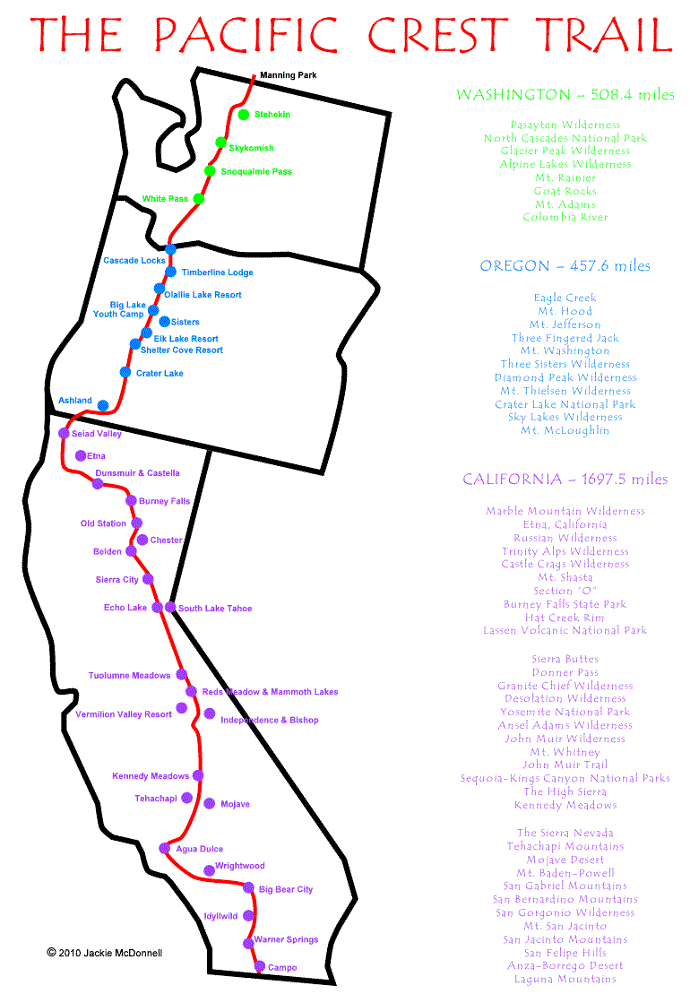
Pacific Crest Trail Route

In 1935, Clinton C Clarke organized and spearheaded the conduct of the first meeting among his friends and associates who believe in his vision and objectives. Thus, The Pacific Crest Trail System Conference was formed with the objective to formally establish the route/connect “all the dots”/establish a route map and to lobby or create awareness for the federal government of its existence and to protect the trail system. The Conference consisted of Clarke, the Boy Scouts of America, YMCA, John Muir, Ansel Adams (famous photographer-environmentalist), and other environmentalists. From 1935-1938, YMCA and the Boy Scouts of America did a splendid job of organizing a yearly “Boy Scout Relay” along the trail route where each of the team carried a Log/Journal. The objectives of the “Boy Scout Relays” were to provide an actual ground/activity to practice the skills of scouting; create awareness on the activities of the Boy Scouts; and as a proof that the trail concept of Clinton Clarke is doable. The dedication, passion and commitment of Clinton C Clarke to the Conference and its accomplishments earned him the title of “The Father Of The Pacific Crest Trail”.

In 1939, a year after, the Pacific Crest Trail system appeared on a federal government map for the first time. With the signing of the National Trails System Act by President Lyndon B Johnson in 1968, PCT was designated as one of the National Scenic Trails and protected by the federal government. The Pacific Crest Trail Conference became incorporated in 1977 and later merged with the Pacific Crest Trail Club in 1987.

The Pacific Crest Trail Conference changed its name as the Pacific Crest Trail Association which is the establishment that supervises, manages, and administers the Pacific Crest Trail. So, if you have plans of conducting a “thru-hiking” or “section hiking” along the PCT, it is best to visit their website for you to be guided in terms of permit, maps, schedules, and other details/announcements on the PCT. You can go to: www.pcta.org.

One Of The Trail Markings @ PCT

I became aware of the existence of the Pacific Crest Trail for the first time when I recon the route of the San Diego 100-Mile Endurance Run two years ago as some  portions of the first half of the ultra trail would course pass through the actual PCT. As I conquer and “peak bagged” some mountains in the San Gabriel Mountains and mountainous parts of Los Angeles area for the past 2 years, I’ve been seeing the PCT trail markings. However, I came through a published article about the exploits of Scott Williamson who was considered as the first “thru hiker” who did a “yo-yo” hike (South-North-South) on the PCT in a year and it gave me the resolve to read more about the people who were successful in their “thru-hikes” along the PCT!

This interest on the PCT led me to read more stories and journal about the hikers at the PCTA Website, most specially on the blogs of those “thru-hikers” who are on the route and at the same time blogging about their activities/experiences and pictorials on the trail. At this time, I have three (3) published books which I’ve been reading for the past weeks. I am not saying that I am already an expert on the details of the Pacific Crest Trail but it is worth knowing the experiences of those who successfully finished their “thru-hikes”.

In One Of My Trail Running @ PCT

It brings me back to a surprise conversation encounter with the Former President Ferdinand E Marcos during one of his annual Holy Week stay in soon-to-be Malacanang of the North at Paoay Lake, Ilocos Norte in 1979 with the then Commander of the Presidential Security Command (PSC) and Director-General of the National Intelligence and Security Authority (NISA), General Fabian C. Ver. In my recollection, the brief conversation went this way:

General Ver: Sir, this is Lt Narcise, our NISA Station Commander in Ilocos Norte.

President Marcos: Lieutenant, from where are you?

Me: I am a native of Laoag City, Sir!

President Marcos: How is the CPP/NPA situation here?

Me: There is not much of activity except for sightings along the Ilocos Norte-Cagayan boundary, Sir. They don’ t have any mass base or reported training camps in the province, Sir.

President Marcos: Try to locate the “Guerrilla Trail Route” that goes from North to South in the province all the way from Pagudpud to Pangasinan. I am sure the insurgents are using that route in their movements.

Me: Yes, Sir!

End of Conversation

In the late-80s when the CPP/NPA established their mass base and training camps/s in the eastern mountainous parts in the province, they used this trail system in their movements from Cagayan and Kalinga-Apayao to the province of Ilocos Norte and back. The information about the presence of this “Guerrilla Trail Route” in Ilocos Norte was shared to the Scout Rangers of the Philippine Army in their Test Mission Operations which eventually led to the crushing and destruction of the CPP/NPA Provincial Committee and its armed personnel/component. With this debacle on the part of the insurgents, Ilocos Norte was never been attempted as a “refuge” or training base for them.

In 1995 when I was a Battalion Commander of the 60th Infantry Battalion, Philippine Army where my area of operations would cover the province of Ilocos Norte, I deployed a platoon of soldiers to monitor the movements at the said trail system. In a few weeks, it resulted to a bloody armed encounter with the insurgents that cause to the death of three (4) insurgents and capture of numerous firearms and subversive documents. This armed encounter with the insurgents was recorded as the last armed fighting in the province up to the present. In a few months, the province was cleared and I was ordered to transfer my Battalion to the Province of Abra.

At present, it is my plan to revisit the Guerrilla Trail System in Ilocos Norte and formally establish a route map to be shared to everybody. I envision a trail system that would start at the northernmost part of Luzon in the province of Ilocos Norte to the its southernmost tip of the province of Sorsogon. It will be a daunting task and a grand undertaking for me to accomplish with the support of my ultra running friends and my former/active comrades in the Armed Forces of the Philippines and the Philippine National Police.

Initially, I will call this trail system as the “Luzon Ridge Trail” (LRT). The history and establishment of the famous and popular Pacific Crest Trail Association will be the template of this undertaking. The activities on the exploration of this “Luzon Ridge Trail” will be one of the topics of this blog in the days, weeks and months to come. The exploration will start this month in Pagudpud, Ilocos Norte.

However, there is also a plan to start another trail system in Sta. Ana, Cagayan where the route will pass along the Sierra Madre Mountain Range all the way to the southern tip of the province Sorsogon. I might temporarily call this route as the “Pacific Coast Trail”.

This a dream, a plan, and an undertaking that is worth dying for. I can only envision that this undertaking will benefit the whole country.

Wish me luck!
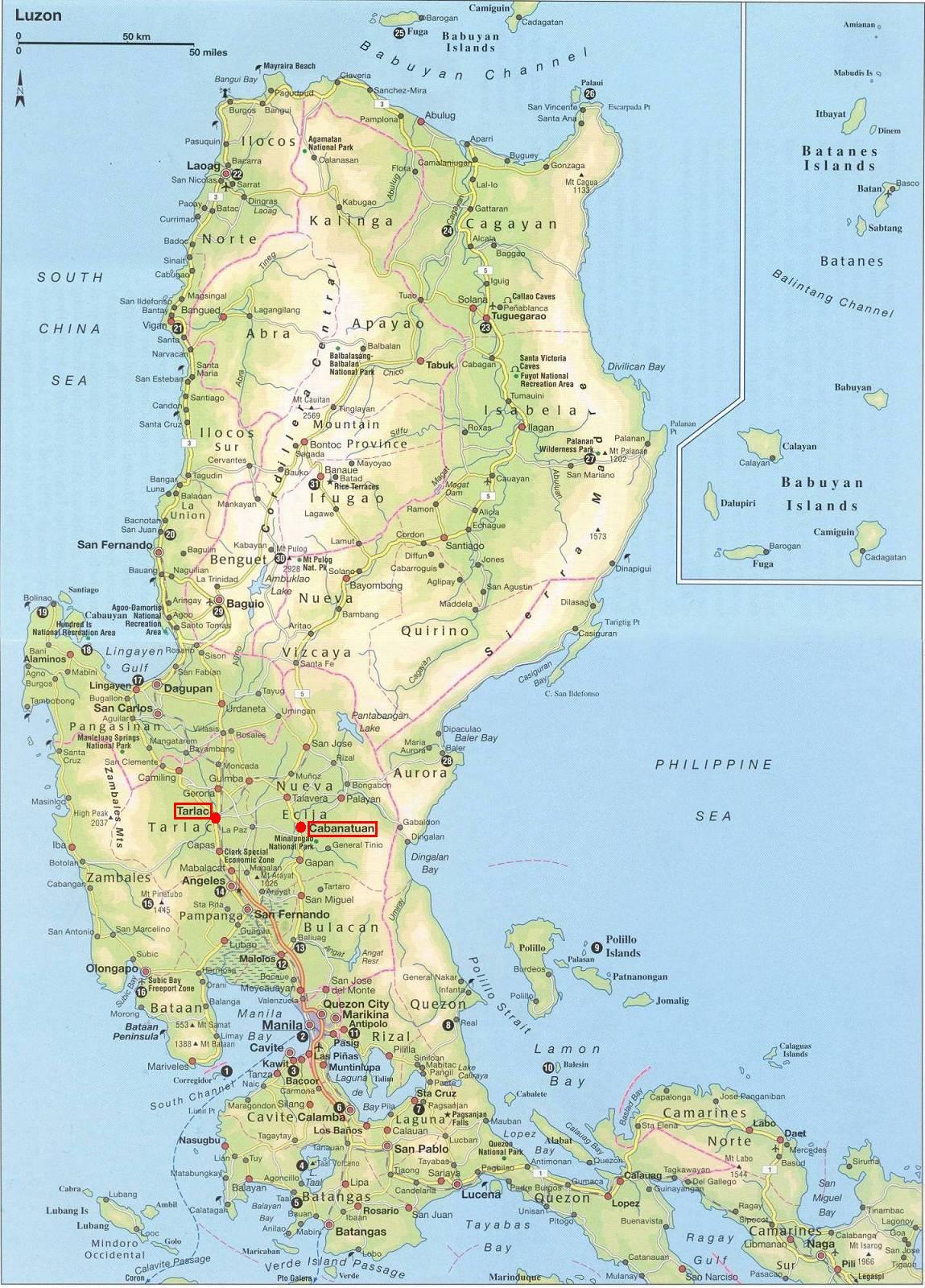
Map Of Luzon, Philippines

4th Fort Magsaysay To Dingalan 65K Ultra Run


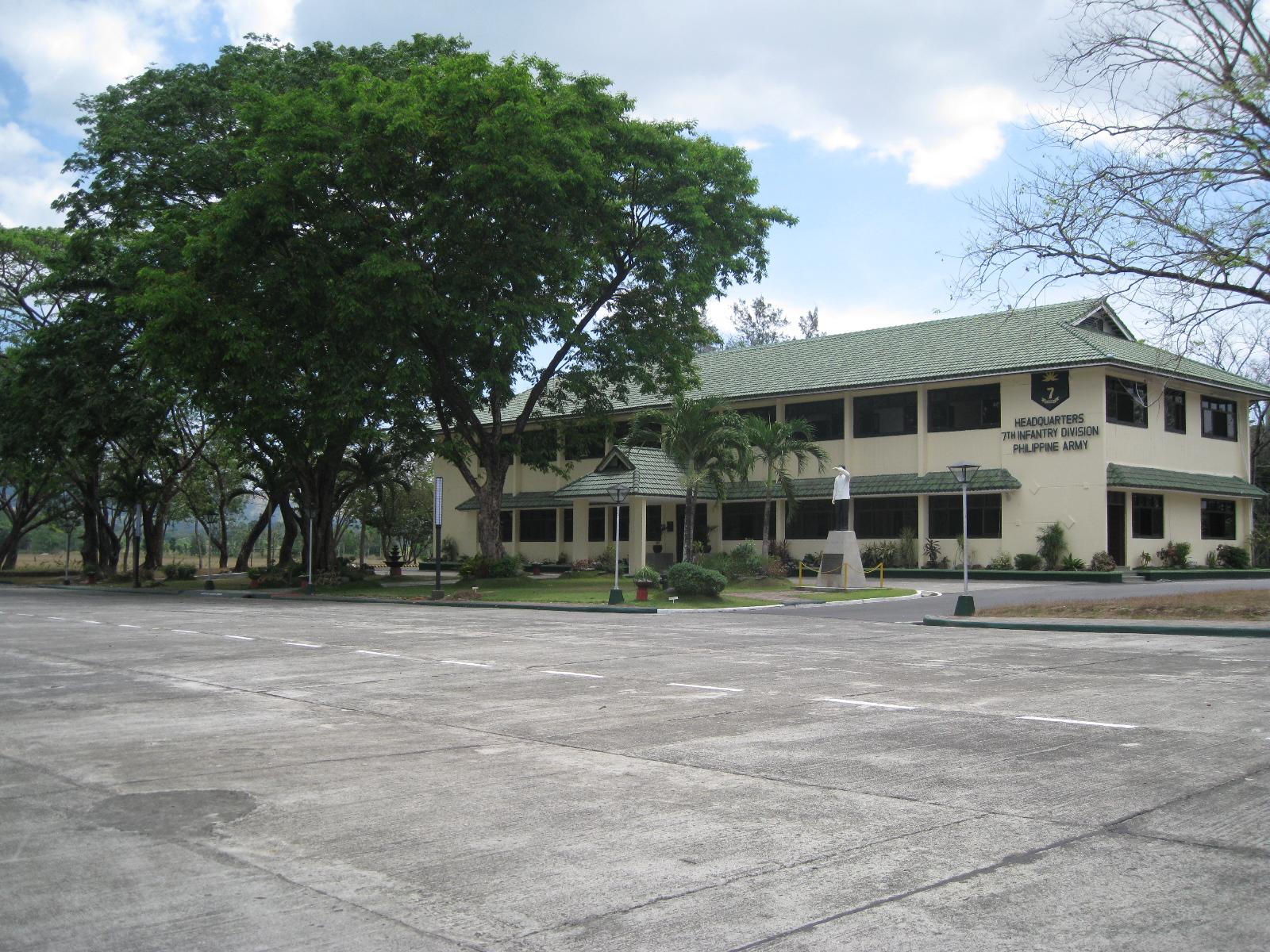
This is the Fourth Edition of this classic PAU Ultra Road Race which starts in front of the Headquarters of the 7th Infantry Division of the Philippine Army inside Fort Magsaysay, Palayan City (Nueva Ecija).

For the past 3 years/editions, the distance was 60 kilometers. However, for this year we will try to add more distance to the event so that the race will finish in one of the available spaces/areas along the coast of Dingalan, Aurora and the Pacific Ocean. Finishers/Runners and their Support Crew will have a chance to dip their tired bodies on the shore/Pacific Ocean. Hopefully, we will be able to complete the distance of 65 Kilometers. Foods will be served to all the Finishers.

Starting Area: Headquarters of the 7th Infantry Division, PA

The race will start at 4:00 AM of August 24, 2014, Sunday, whether there will be only 10 runners. The cut-off time will be 12 hours. Podium Finishers (Top Three For Men & Ladies) will receive individual trophies. All Finishers will receive a Finisher’s T-Shirt; Finisher’s Medal; and a Certificate. Assembly Time and Processing of Runners will start at 3:00 AM on Race Day.

I encourage that all participants should review the rules and regulations of the past editions of this event. Such rules and regulations will be applied to all Road Races being organized by the Bald Runner’s Events/PAU Races. Support Vehicle is not mandatory. Runners who will be on “self-support” mode will be able to take advantage of convenience stores along the route.

Fort Magsaysay-Laur Highway

If you are new in our races, you have to review the past posts in this blog. If you have any concern or clarification about the conduct or details of the event, you can post a status or comment on the Facebook Event Page of this Ultra Event.

The registration fee is One Thousand Eight Hundred Pesos (P 1,800) per runner. A runner can register by depositing the amount of money to the Bank of the Philippine Island Savings Account #0296-0673-22 in favor of Jovenal Narcise. Please send a photocopy of the Deposit Slip at e-mail address: jovie75@hotmail.com immediately and bring the said Deposit Slip at the Starting Area on Race Day. The Deposit Slip will be used to redeem your Race Packet. Registration is now open and it will end on August 22, 2014, Friday.

This road race is highly recommended to those ultra runners who will have their first taste and experience towards the 2015 Bataan Death March 102K Ultra Marathon Race (BDM 102).

Good luck and see you at the starting line!

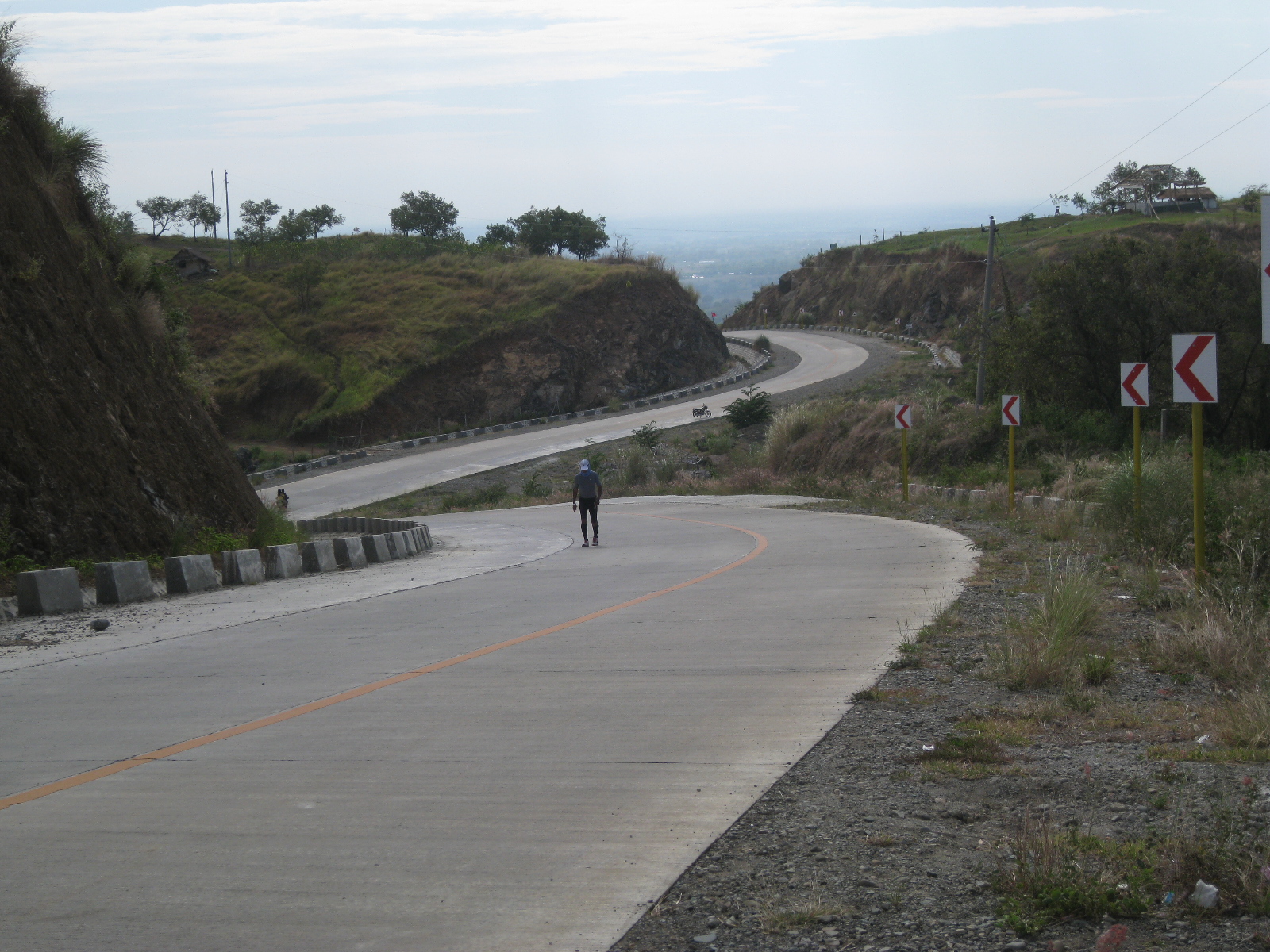
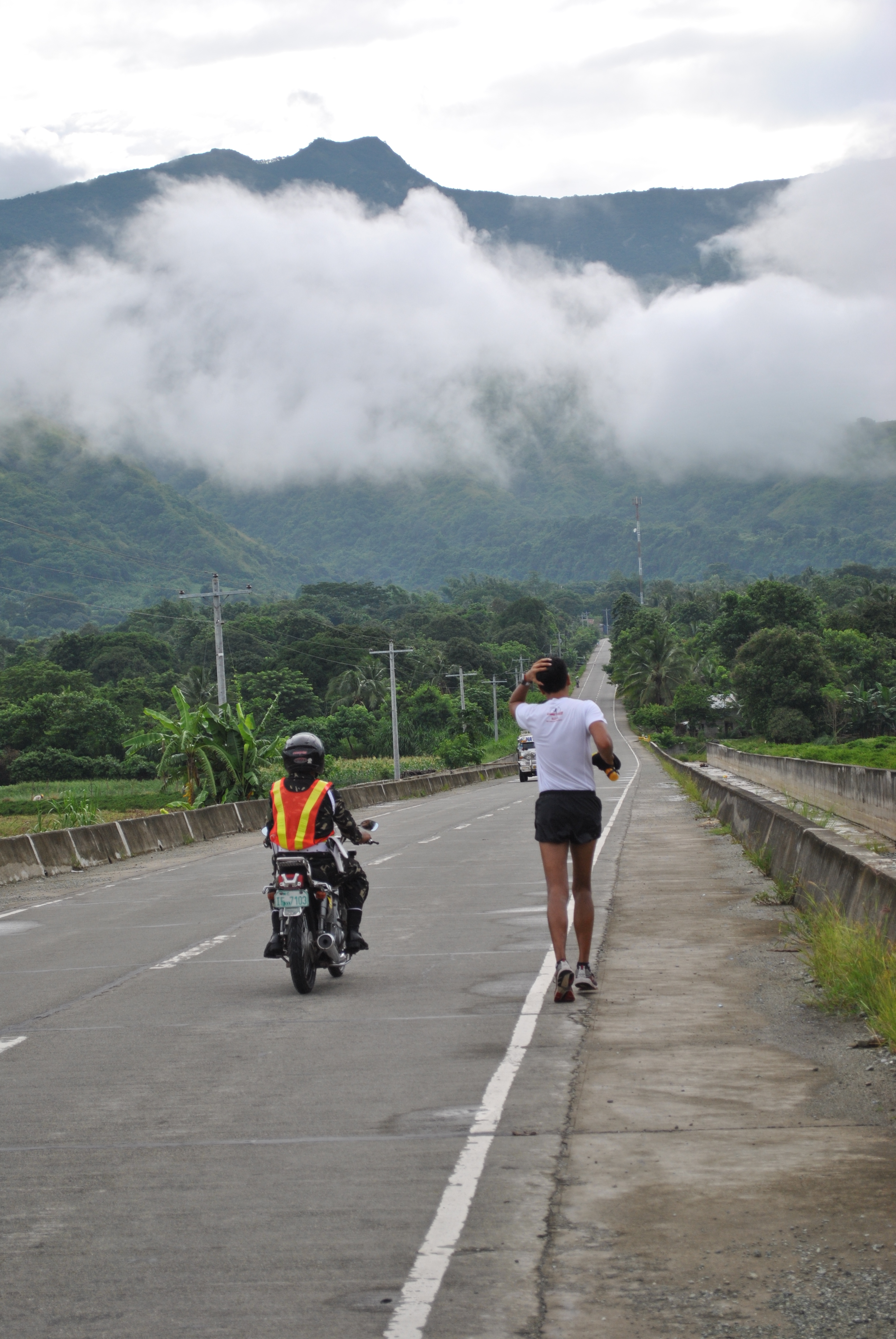
Laur To Gabaldon: To The Mountains
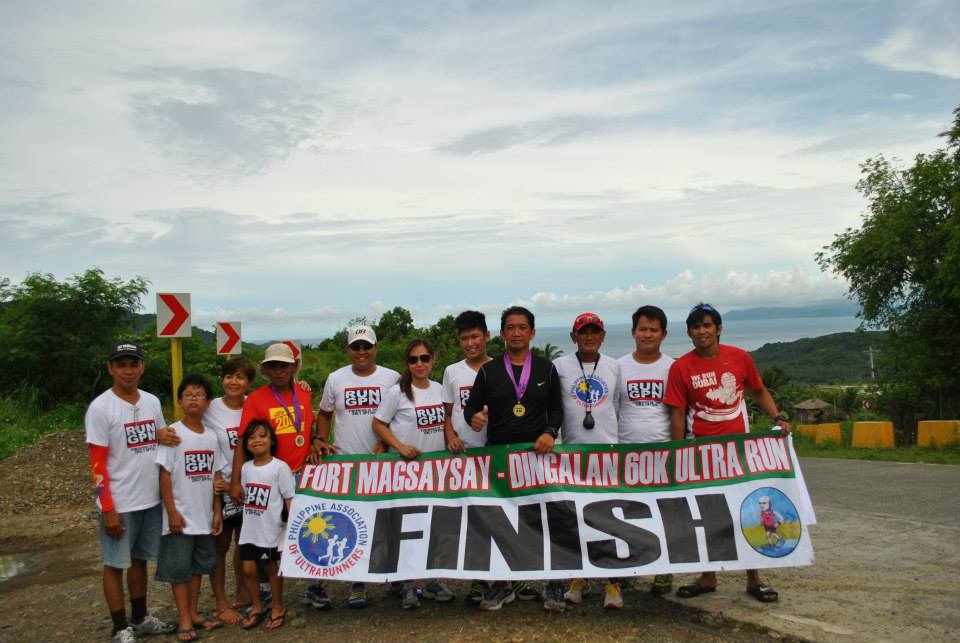
Finisher/s and their Support Crew/Team


Official Result: 4th TANAY 50K Ultra Marathon Race


4th TANAY 50K Ultra Marathon Race (Road Race)

5:00 AM June 15, 2014

Number of Starters: 39 Runners

Number of Finishers: 35 Runners

Cut-Off Time: 9 Hours

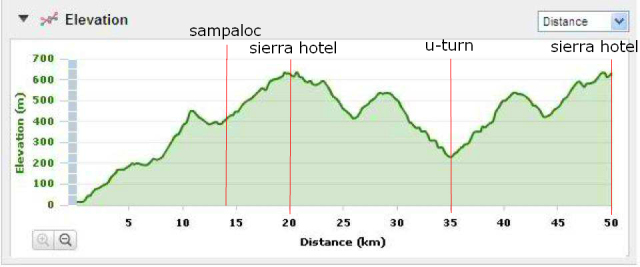
Elevation Profile
Elevation Profile

RANK NAME TIME (HRS)
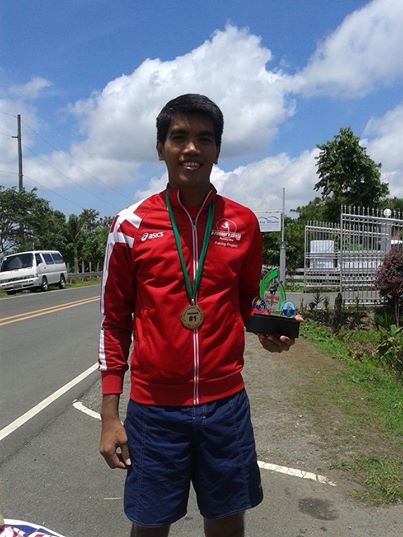
1 Alfred Delos Reyes (Champion, Overall) 6:03:42
2 Almar Danguilan (1st Runner-Up) 6:08:03
3 Jay Lamela (2nd Runner-Up) 6:16:52
4 Angelo Astrero 6:24:10
5 Severino Carillo, Jr 6:32:39
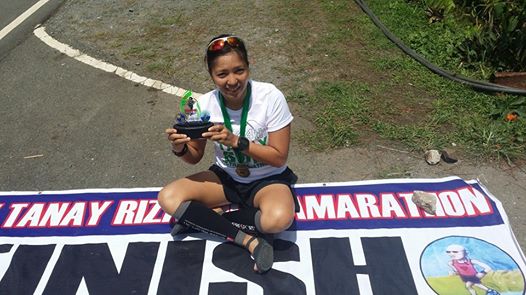
6 Tess Leono (Champion, Female) 6:32:50
7 Bong Alindada 6:33:25
8 Kian Llanda 6:35:50
9 Jammy Masdo 6:38:59
10 Kareem Patasaha 6:44:13
11 Beda Abugan Jr 6:47:19
12 Raffy Estavillo 6:49:48
13 Madison Trinidad 6:49:54
14 Kathleen Fresnido (1st Runner-Up, Female) 6:52:45
15 Jerry Peralta 6:58:35
16 Carlo Contemplacion 6:58:41
17 Loradel Hanopol (2nd Runner-Up, Female) 7:03:37
18 Ronnel Go 7:04:54
19 Janthen Asoy 7:12:07
20 Rona Saludes (Female) 7:15:37
21 Hermie Saludes 7:15:43
22 Jerdie Jurado 7:20:09
23 Nerisa Jane Golondrina (Female) 7:20:18
24 Jocelyn Lanas (Female) 7:28:26
25 Teodoro Alising 7:28:32
26 Mark Hernandez 7:29:01
27 Jon Borbon 7:48:55
28 Gerson Yuson 7:51:26
29 Joey Genecera 8:21:10
30 Jon Ogsimer 8:24:43
31 Joyce Anne Regalado (Female) 8:28:43
32 Mark Anthony Tibo-oc 8:38:03
33 Luzel Franco Tibo-oc (Female) 8:38:04
34 Lex Yumol 8:52:13
35 Januarius Padilla 8:52:36

Overall Champion Alfred Delos Reyes
Female Overall Champion Tess Leono

Congratulations To All The Finishers!


Pinoy Elite Long Distance Runner


Let me describe to you my observation and impression of a typical Pinoy Elite Long Distance Runner. First of all, I would like to define what I mean by a Pinoy Elite Long Distance Runner. He is a locally raised person with a raw talent and skill to be fast and strong in long distance running. He is considered as an Elite Runner if he can finish a 5K race/run (on the road or track) in less than 15 minutes; and he/she has a PR time in 10K run/race (on the road or track) in less than 32 minutes. If a long distance runner could not attain these PR times, then he/she is not considered as an elite runner.

A typical elite long distance runner is raised from a poor family, let me say, from a family who is residing in a barangay which is far from the center of population which is the municipality.  Most likely, their house is located in a mountainous area where one has to travel by foot to reach the basic services of the municipality. Since the primary education is free in the province and the head of the family has the desire to have his children take advantage of education, the children has to walk from the barangay to the center of the municipality in the early morning and walk again to go back to his house after classes. Those daily hikes up to the time he graduates from elementary would develop his endurance capability—physically and mentally.

The hiking will continue once he has the interest to enroll to the secondary school. As he goes up on the ladder of those four years of high school, he will be exposed to Physical Education, popularly known as P.E., one of the required Subjects every year in High School. Whether he is tall or not, he will be exposed to running as one of the “basics” in Physical Education classes. This is where he is discovered by the PE teacher that the “boy” from the far-flung barangay has the speed and endurance to finish a race, whether it is a 400-meter run or longer distance events.

Initially, he will be “coached” by the PE Teacher in the school and he will be given an instruction to do some training in preparation for the local running meet among the schools in the province. To make the story short, this “boy” will be a consistent winner in those annual/periodic meets or races among the schools in the province. Ultimately, he will be a part of a Team Delegation from their province for a much bigger Regional Athletic Meet. This is where he will be discovered by Coaches from the different Colleges and Universities located in Metro Manila. Once this “boy” graduates from High School, he is already ready for recruitment for a College/University Education Scholarship offer. As a result, he will be a member of the College or Varsity Team and will be able to contribute points in the annual competition among Colleges and Universities.

Due to strict and more disciplined way of coaching in College/University, the “boy” will become stronger and faster, gathering more skills and techniques, and most of all, will be exposed to other fast athletes coming from the other Colleges/Universities. Demanding Coaches will try to find the physical limits of these endurance athletes and at the same time making sure that their academic standings are also satisfactory. However, in my observation, most of these athletes recruited from the provinces have lower I.Q.s and most of them could hardly pass their academic requirements. If one is an “asset” or “top athlete” and has the potential to be included in the National Pool of Athletes, most likely his grades would be “manipulated” by his Coach or the Academic Staff. He finishes as an ordinary College Graduate but in reality, he has only acquired the skills and training to be a fast and strong long distance runner. It is very doubtful if he ever learned from the other Subjects offered as required in his curriculum while he was in College.

For those who are not fortunate enough to be discovered by College Coaches from Metro Manila and were not able to earn their way to a College education, their talent/skill in running would be discovered by relatives who are also passionate in long distance running. It could be a friend or a close relative who would influence this “boy” to be exposed to long distance running. From a simple training program copied from the Runner’s World Magazine, the relative/friend would give this training to the “boy” and most likely, it would result positively to his training. The “boy” would personally discover on how he would run faster and stronger through experience in his training. If he thinks he is ready for “fun runs” in the locality, he would join and find out if he can win the top prize with some cash to bring home. If he wins, then that is the start of more races for the local “boy”. This “local boy” would try to find out more “fun runs” with cash prize/s and dream to be living in a bigger city or Metro Manila for him to find a job and at the same time join weekly races.

Now, you have two distinct types of elite runners; a College-Graduate and a “Barangay” Runner. Most likely, the College Graduate runner will only run shorter distances like 3K and/or 5K and they do their training on the oval track. The “Barangay” Runner would be running the 10K and longer distance races and most of them are training/running on the roads and trails. Sometimes, their ambition in life is very simple. The College-Graduate would like to join the National Pool of Athletes and at the same time employed in an establishment that promotes sports. The “Barangay” Runner would like to be employed also in Service-related jobs but most of them would like to have a chance to be recruited in the Armed Services.

I had been exposed to both College Graduate and “Barangay” Runners. However, most of the College Graduate Runners that joined and left my Team started as “Barangay” Runners and transformed to run longer distance up to ultra marathon distances. Most of them now are with the Philippine Army and I am surprised that they don’t like to be included in the National Pool of Athletes. Some of the “Barangay” Runners who left my Team are still joining local races and ultra marathon races where they shine and always land on the podium finishes.

In the past, I have exposed some of my runners to International Competitions and most of them did fairly well. There were some problems and challenges that I have to deal with in bringing these athletes to international competition. But with the able support of some friends  from abroad and in the country and proceeds from ultra races that I have organized and directed, I was able to prove that these elite long distance runners can compete among the top ultra runners in Southeast Asia/Asia without any corporate brand as the Main Sponsor.

What made me to stop with this personal quest to bring our ultra runners to international competitions? The following reasons are very personal and I really don’t know what is the “other side of the coin” from the athletes’ point of view.

1. Loyalty-–Very simple word but very hard to follow and implement. It could be loyalty to the Country, Team, Association, or personal loyalty to the one who manages or coaches an elite runner. Loyalty is a very sacred commitment of a runner to the one who manages him. An elite runner who has a “big” dream could NOT have “two masters or more” at the same time! He must be able to FOCUS his mind and body to only ONE Master as the Master is the only one who could lead him to a right direction and future. (Note: I define a Master as the one who manages the elite athlete)

2. The “Master” Knows Best—The master knows what is best for the runner, period! A master should be a passionate long distance runner, too! Obviously, he would be able to understand the mind and actions of his elite runner. The body language of an elite runner shows whatever message that a master would like to know from him. Such body language could be seen from a constant communication between the master and the elite athlete. Above all, communication is the best tool and means to determine the overall attitude of his athlete.

3. Collaterals Are Not Included—I can support the training and other miscellaneous training expenses for an elite runner but I could not afford to extend the support to his family (either to his wife and children or relatives). An elite runner should be able to detach himself from his family during the peak of his training and he should be focused to excel on the event that he is preparing for. An elite runner could not maximize his training if his wife and family are with him always.

4. Think and Dream “BIG”—It is always the right formula for success and for media to get one’s attention when an athlete would first Win “BIG” (podium finisher or overall top ten) in a prestigious international ultra running event. In this age of social media through Facebook, Twitter, You Tube and blogs, a good performance of an athlete could be easily known on a “real-time” situation or immediately after an event. With the number of runners and ultra runners who have Social Media accounts, such exemplar deed could be viral and easily picked up by the media. And once the traditional media (TV, Radio and Newspapers) picks up ones outstanding deed, everything will follow. Who knows this will be the time that corporate brands will start supporting such elite athlete and not those local average ones who have yet to taste of landing on the podium finish or top ten overall award in international running events.

5. It’s All About Character and Reputation—Trust and Confidence between the Manager and the Elite Athlete is a must. These values are non-negotiable. The Manager is just a tool or a bridge for the elite runner to be exposed in international running events and the honor/prestige goes to the athlete himself and for the country as a whole. The athlete must be able to trust his Manager as the Manager would “move heaven and earth” to explore and use all the possible means to support the elite runner. In return, Honesty, Respect and Courtesy are the only things that matter for a Manager to receive from his elite runner.

In conclusion, no matter what you have done to expose our elite runners to international competitions, the cycle continues. People change. Loyalty changes from one person to another or from one institution to another. We look for shortcuts and easy ways to attain our goals and objectives. We don’t trust those “hands that feed us” and simply ignore them, and worse, try to bite them!

But worst of all, we try to make a living out of being an elite runner and by all means, be a coach and later as a Race Organizer and Director of a Running Event.

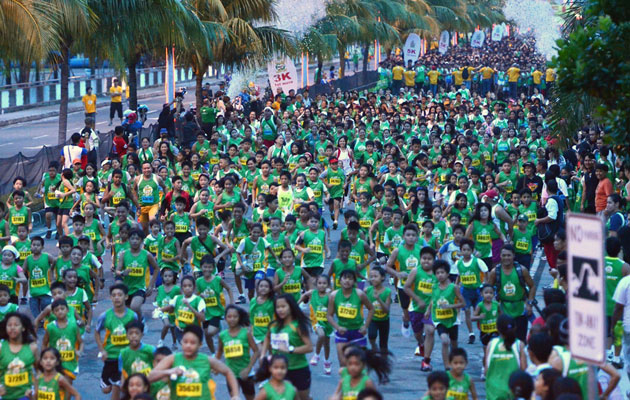
Yearly MILO Marathon
Yearly MILO Marathon (Photo From Google)

I might have stopped “looking and eyeing” for an elite long distance runner for ultra marathon races abroad but I am thinking positively that one or two of the corporate brands in the country will have the initiative to train, support, and finance a “loyal, intelligent and passionate” elite ultra runner to represent our country to the most prestigious ultra races in the world.

If You Want To Join And Finish A Trail Ultra


On the day of my 62nd birthday, US Navy Admiral (Four-Star General) William H. McRaven, Ninth Commander of the US Special Operations Command and a US Navy Seal, delivered a Commencement Speech to almost 8,000 graduating students of the University of Texas at Austin on May 17, 2014. He is an alumnus of the said University and a product of the school’s ROTC Program.

The following is the complete text of his Commencement Address to the Graduating Class of 2014. http://www.utexas.edu/news/2014/05/16/admiral-mcraven-commencement-speech/

Having been a product of military training and some special operations training with the Philippine Army, I fully appreciate what the Admiral had gone through in his US Navy Seal’s Training.

However, for the benefit of my readers, I would like to relate the ten (10) lessons that the good Admiral had learned from his US Navy Seal training to the sports that I dearly loved at the moment and that I would like to be shared and experienced by other runners, which is Ultra Trail Running.

1. If you want to join and finish a trail ultra, start off by “making your bed”. Start with the “basics” of trail running. Go to the nearest mountain ranges or hilly parts in your place or community and find a trail when you can walk, jog, or run. Try to observe how your body would react to the uphills, downhills, flatter portions of the trail, rocky portions, muddy parts, uneven level of the trail, and the presence of obstacles along your path. Start training for the shorter distance, say 5K of pure trails until you can easily progress to longer distances. In trail races, it is better to start with the shorter distance events and slowly progressing to longer events in matter of months or years, and not of weeks. If you are totally new in trail running, I suggest you have to put in a lot of time running on the trails, like one year, before you are ambitious enough to finish a trail marathon distance (42K). As one has to progress to longer distances, one has to be aware of one’s hydration and nutrition strategy in order to keep ones energy and strength to finish the race. Make sure that you invest on your trail running needs like shoes and hydration system. Ask for some advise from the “experts and masters” of ultra trail running through their blogs or personal meetings/conversations with them. These trail runners are very much willing to share such information to you.

2. If you want to join and finish a trail ultra, find someone to “help you paddle”. It is better to train in trail running with somebody who has the same interest with you. It is either a friend or a group of avid/passionate trail runners. If you are new in a mountain, try to locate the Barangay Hall or the Barangay Captain and tell him about your purpose in going to the mountain or community. You can ask for the services of a Trail Guide within the Barangay who knows the “ins and outs” of the trail systems within the mountain. The services of a Trail Guide is invaluable as it will give you exact and accurate information about water sources and other salient information about the locality/mountain trail system in the area. If you are very serious in trail running and you have the goal to excel in this kind of sports, you can get an exclusive Coach for you who will guide you in your training. Get a Coach who is reliable and friendly. Aside from your Coach, start developing friendly relationships with your future Pacer/s and Support Crew if you intend to join 50-miler or 100K and above trail ultras.

3. If you want to join and finish a trail ultra, measure a person by the size of their heart, not the size of their flippers. Not because you have the physical strength, well-built body, healthy and fool-proof training, you can have the assurance to finish an ultra trail race event. There are things and factors to consider like the reliability and effectiveness of your running equipment; the prevailing weather; accidents along the course; nutrition; injuries and problems with ones feet and hydration strategy. Most of the faster and consistent podium finishers in ultra trail races are smaller (in height and body composition) people. Just look around you in the Starting Line of Ultra Trail Events, most likely, the smaller guys are the ones who dash froward as if the race is a 5K or 10K road race. These guys are usually the persons who have the tenacity to endure pain and fatigue.

4. If you want to join and finish a trail ultra, get over being a sugar cookie and keep moving forward. I call these hardened ultra trail runners as “Dugyots” (Dirty Runners) and they don’t care if their shoes are wet and muddy. They don’t care if they slip and fall on their butts or fall on their faces if they slip along the trails. They don’t care of their unprotected legs are scratched by sharp blades of grasses or tripped by thorny branches of bushes along the trail. They don’t care if their shirts and shorts or compression tights are ripped off by some accidents along the trail. What is more disturbing to these runners when they don’t really care if they are bitten by leeches in the jungle and just allow the blood to flow out of the bites of these leeches. I know of some runners who pee on their running shorts or tights while running and they don’t really care what and how they smell after the race. In trail running, the dirtier you look as you cross the finish line, the better for your picture!

5. If you want to join and finish a trail ultra, don’t be afraid of the circuses. “Circuses” are translated to “DNFs” in ultra trail races. Even the elite runners have their DNFs. So, why would you be afraid to experience your first DNF? Even if you are properly prepared and trained to a certain ultra trail event, “shit happens”. There are things and factors that one don’t have a control or manage to have these things from happening. If you think that your body could no longer tolerate the pain or any incurring “issue” within your body system and it would jeopardize you for finishing the race, you have to decide immediately for you to DNF the race. There is no shame in a DNF and don’t be affected by what the other runners and friends would say in contrary to your decision. It is your body that you have to preserve and you and only you who would have the responsibility to take care of your body, not by other runners or your running friends. Just remember to use the DNF as your “weapon” in your future races.

6. If you want to join and finish a trail ultra, sometime you have to slide down the obstacle head first. There are times that you have to take the “risk” in ultra trail race that you have trained for. It is either on your Race Strategy or on the skills that you have acquired and learned in your training for you to have an edge over your competitors. You know what your body is capable of when something or a challenge is in front of you, it could be a steep uphill climb, or a steep descending part of the course or a very technical trail where one has to be careful in every step, it could be a river/stream crossing, or some kind of rock climbing, or the need to rappel up or down to a mountain peak. However, don’t take the “risk” of joining and expecting to finish an ultra trail event if you don’t have the training/preparation, you’ll be wasting your money and time on this event. Do not take the “risk” also of introducing some thing “new” during the race, most especially on your equipment, nutrition, and apparel.

7. If you want to join and finish a trail ultra, don’t back down from the sharks. What is best in Ultra Running is the attitude of the runners. Runners would help one another in times when one is in need of food, water, or medical attention. But if everything is ideal and equal among runners, each one of the runners are competing with each other! Whether you like or not, you have “friends” or personalities whom you want to beat, pass, or finish faster than them. In your mind, these are your “sharks” in your races—they are your friends but at the same time your competitors! This is true also in Race Directing/Race Organizing. There are “sharks” going around you but if they become offensive to you, you must give them the “worst and hardest shock” of their lives!

8. If you want to join and finish a trail ultra, you must be your very best in the darkest moment. As they say, ultras are exercise of problem solving and adjustments. Pain, Fatigue, Loss of Appetite, and Dehydration are the most common “issues” to ones body in Ultra Running. But the worst “issue” is Hard-headedness! Each of these “issues” has solution and if you apply such solution, you will be at your Best once you comeback to the race. A brief rest or sleep (if you have enough “buffer” time) is the best solution to these “issues”.

9. If you want to join and finish a trail ultra, start singing when you’re up to your neck in mud. As they say, it is the “brain” that takes over when the body is already weak. The fight to finish the race is within the confines of the space between your two ears. This is where your “running mantra” would come in and you should express loudly for you to hear it. Some would use their iPods and MP3s/headphones to hear music; some would “pep talk” themselves with phrases or mantra which are repeated endlessly; some would count their steps; some would pray loudly; some would sing loudly which would make them on a happy mood; or some would think of their inspiration. Hope and Think Positively!

10. If you want to join and finish a trail ultra, don’t ever, ever ring the bell. There is ONLY ONE BELL in my Ultra Races and I, being the Race Director, is the one holding it and the ONLY ONE that is authorized to ring it. At the Starting Line, when it rings, it tells you “Good Luck & Have Fun”. And once I see you approaching the Finish Line, I have to ring the bell that tells you, “Good Job and Congratulations”!

Good Luck and See You In Your Next Ultra Trail Race!

Bald Runner @ Mt Susongdalaga (Playground Charlie)

4th PAU’s TANAY 50K Ultra Run: Rules & Regulations/Instructions


4th PAU’s TANAY 50K Ultra Run

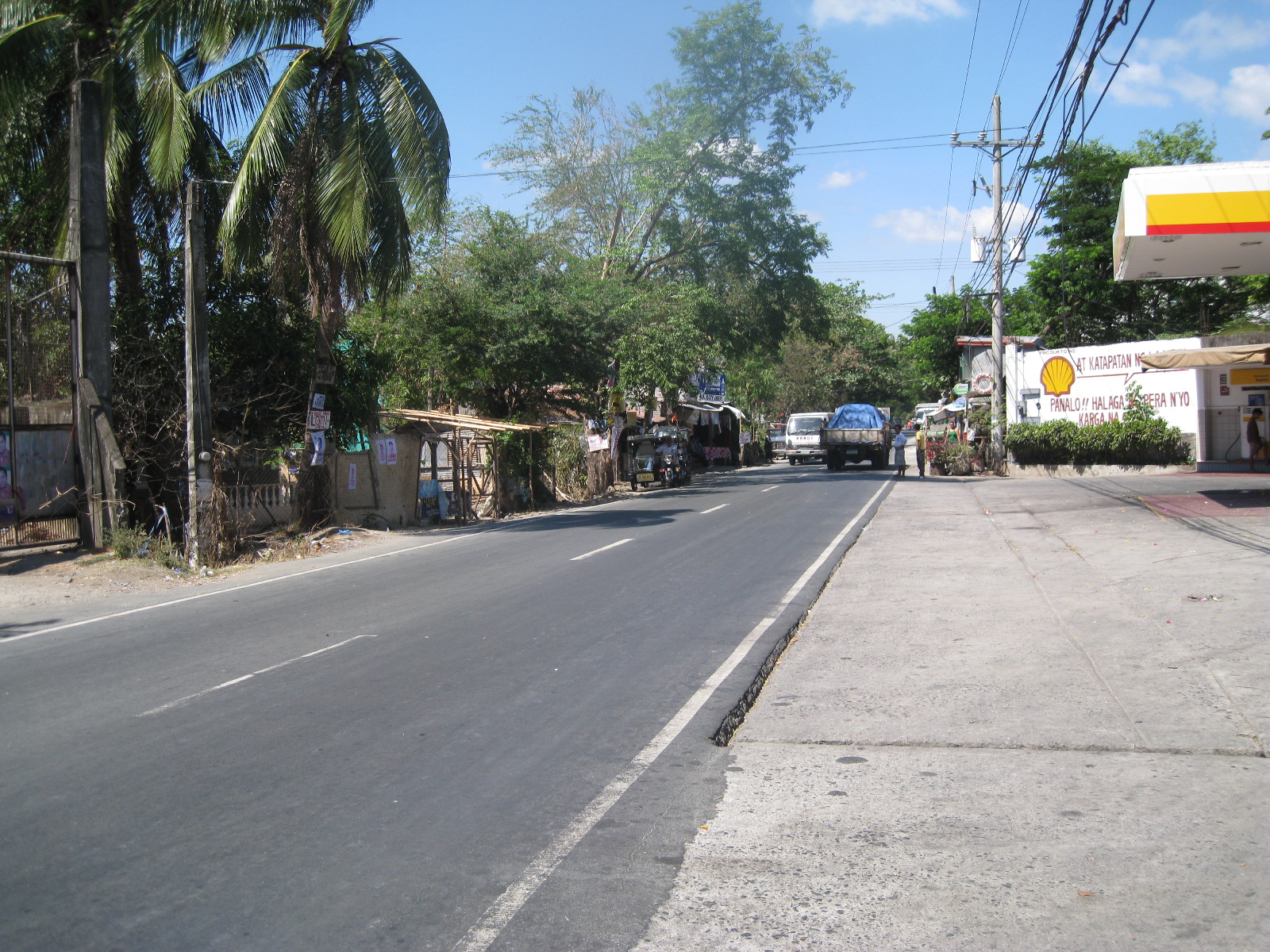
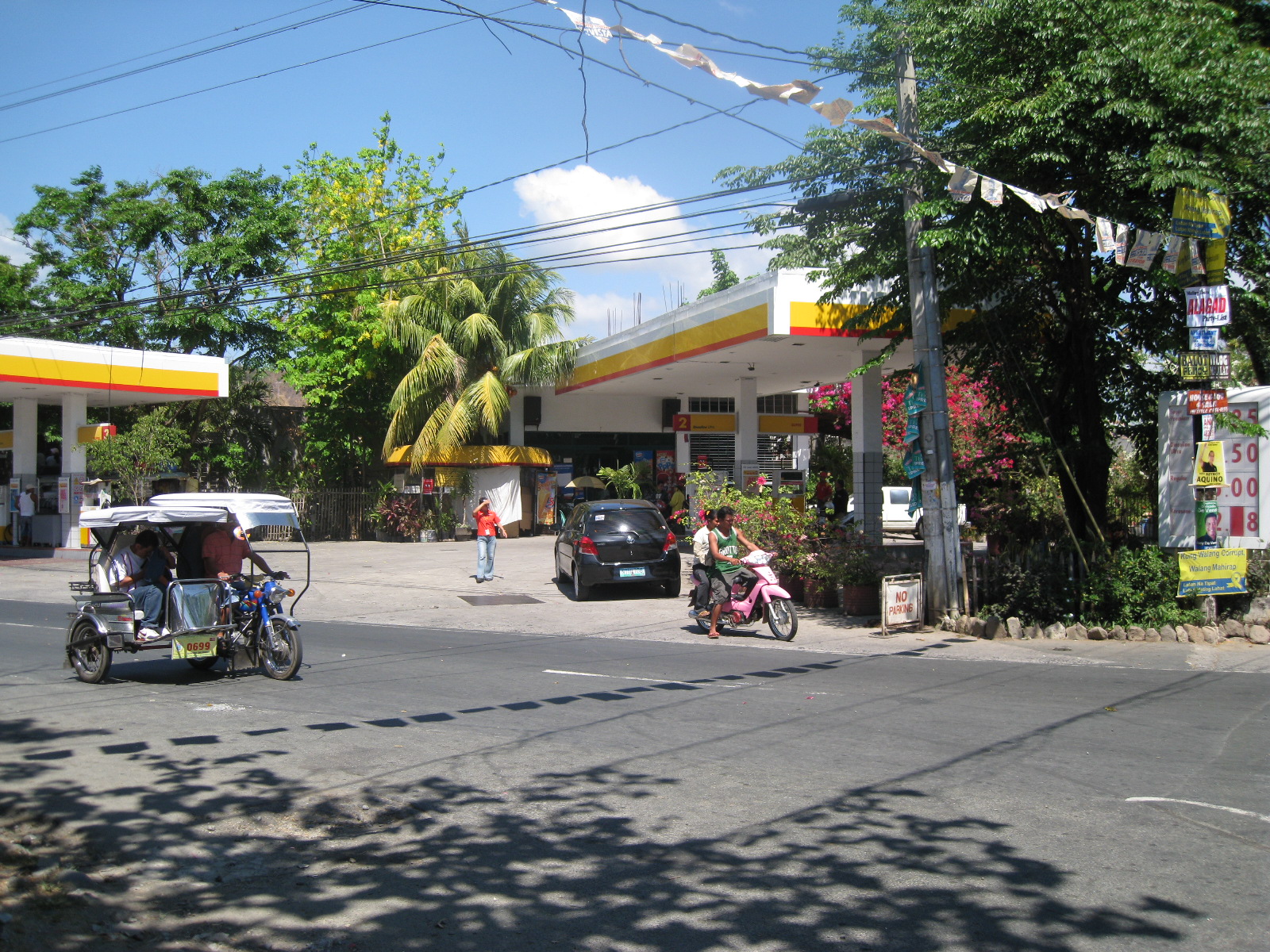
Starting Area: Tanay, Rizal (Intersection Manila East Road/Highway in Tanay & Sampaloc Road going to Sampaloc, Tanay. Look for the Shell Station)

Assembly Time: 3:00 AM June 15, 2014

Gun Start: 4:00 AM June 15, 2014

Note: This is a RAIN or SHINE Event!!!

SHELL Gas Station @ Sampaloc Road as The Starting Area
Another View of The SHELL Gas Station From the Manila East Highway
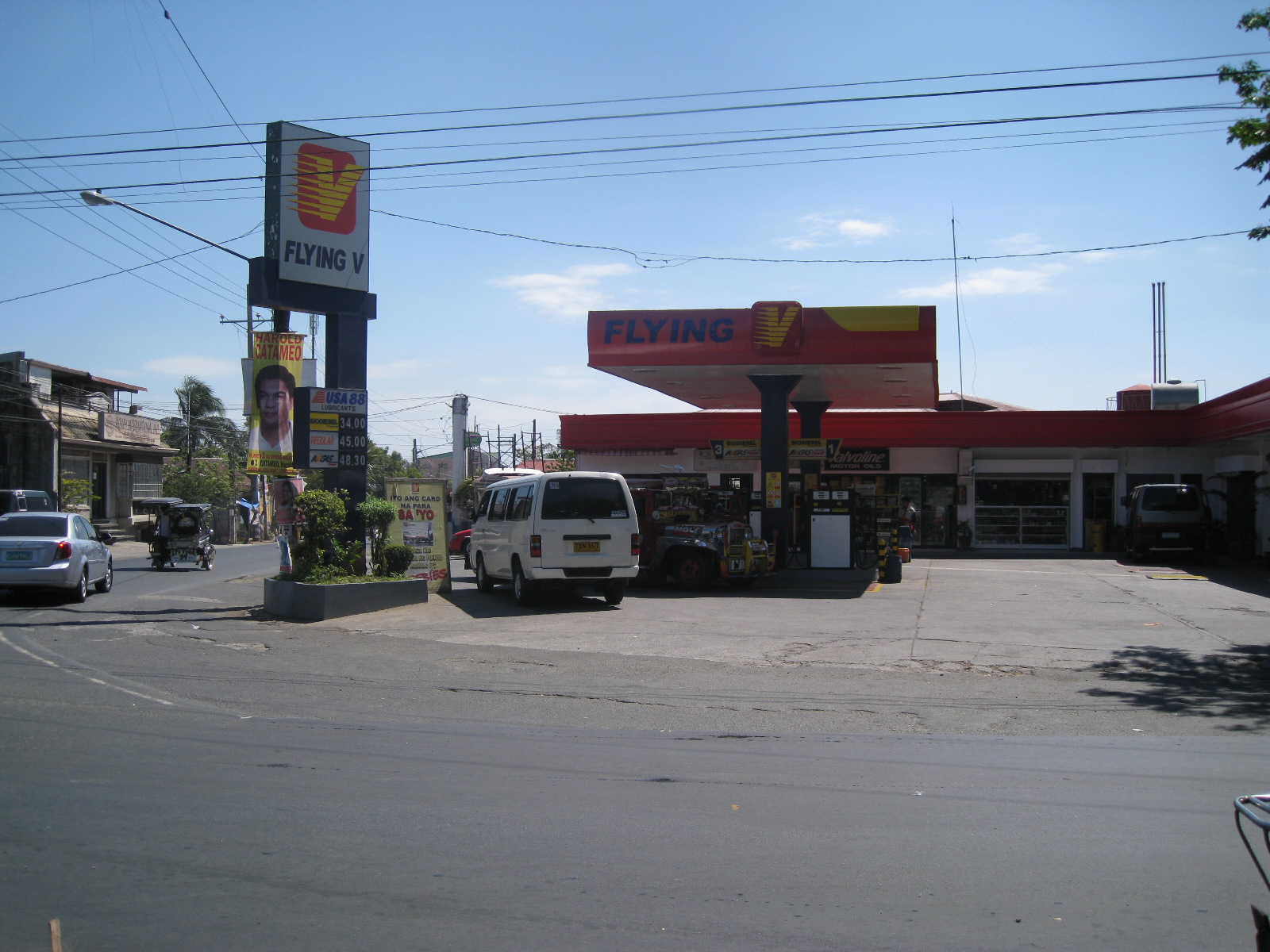
FLYING V Gas Station Across The SHELL Gas Station (Starting Area)

Rules & Regulations/Instructions:

  1. This is a 50K Road Race. Every runner must be able to maintain the Integrity of this Race. “Cheaters” are automatically disqualified and removed from the race.
  2. Support Vehicle is NOT mandatory for every runner. If a runner has the capability to have his/her support vehicle, he/she can bring a support vehicle. However, the support vehicle should “leap-frog” the runner. Support vehicle “shadowing” the runner is not allowed. Only four-wheeled support vehicles will be allowed. Motorcycles and Bicycles will NOT be allowed as support vehicles for the runners.
  3. Pacer is not allowed in this race. If a runner wants to have a pacer, he/she must register his/her pacer as one of the runner-competitors in the race.
  4. All runners are required to have their hydration belt or system with them while on the run. A participant can use the usual Hydration Belt, Camelbak Hydration System, or Hand-held water bottles. Every runner is advised to hydrate themselves based from their training/preparation for this race.
  5. Runners should always stay on the LEFT side of the road, facing the incoming traffic. Runner should be ready to run on the sidewalk/shoulder of the road if there is a fast incoming traffic. Runners are warned that the Route is a favorite route for fast Motorcyclists!
  6. Runners are highly encouraged not to wear headsets/earphones and MP3s & Ipods during the race. If runners think that such gadget would motivate them to run, it will be permitted, however, they should be aware and vigilant of their surroundings.
  7. There will be NO Drop Bags or Baggage Counters. Runners with baggage can ask the other runners with support vehicle to accommodate their baggage to the Finish Line. Ultra runners are kind, helpful, and supportive to other runners. All you need is to ask for their help & support.
  8. Race Bibs shall be displayed or pinned in front of the singlet or running shorts. Race bibs should always be visible to the Race Officials.
  9. There will be limited Road Marshals along the route. Runners will start at the vicinity of the SHELL Gas Station along the Sampaloc Road. It will be a 14K uphill climb to Sampaloc, Tanay from the Starting Area. Once a runner reaches the intersection in Sampaloc, turn LEFT towards the Pranjetto Hotel/Resort. It will be another uphill climb up to the said Resort. Continue going NORTH until you reach the Sierra Madre Hotel/Resort. Once you reach the Sierra Madre Hotel, it is the 20K mark for the race. Continue going NORTH until you reach Kilometer Post B #0 (Baras Zero) after passing Country Cottages and PALO ALTO. The Kilometer Post B #0 will be the TURN-AROUND point and runner will go back to the Sierra Madre Hotel/Resort where the FINISH Line is located. From the turn-around point, the distance will be 15 Kilometers to the Finish Line. (Note: Expect some BONUS/additional meters after 50K, those additional meters will make you stronger and more addicted to ultra races!)
    TURN-AROUND Point @ Km Post #42 (B #0)
    TURN-AROUND Point @ Km Post #42 (B #0)

    Last 15K To The Finish Line
    Last 15K To The Finish Line
  10. There will be no tie in the ranking of finishers in this race. Every runner must exert his effort and perform as a competitor. This event is a race to the finish line.
  11. Dispose your waste or litter properly. A runner will be disqualified for throwing their litter or waste on the road.
  12. The race will start at 4:00 AM or earlier. Runners are highly encouraged to be at the Starting Line at least one hour before the Start Time. There will be no Formal Program/Ceremony prior to the start of the race as this will be a “fun run” and at the same time a competitive race.
  13. Runners should meet the following requirements/qualifications:

-Should have finished a registered Marathon Race.

-Must be physically healthy and don’t have any heart-related ailments

-“Newbies” should be able to sign a Waiver during the Processing Period, one hour before Gun Start

14. There will be no Cash Prizes for the winners. Instead, Top Three (3) runners in the Men’s and Ladies Categories will receive Trophies.

15. Runners who will finish within the cut-off time of nine (9) hours will receive the PAU Finisher’s Medal, Certificate of Achievement (will be given on a later date), and a Finisher’s Dri-Fit T-Shirt.

16. Always “Listen To Your Body” during the race. If you experience some pain in your body, observe and slow down with your pace or better, start walking. If the pain persists and if you think that you are injured and could not finish the race, please contact Cell Phone # 918-965-9895  and state your name, race bib number, and condition whether you need an Ambulance/Medical team to attend to you.

17. The use of “pain killer” medication is not prohibited during the race. Bring your own salt tablets and glucolytes.

18. “Bandits” are not allowed to run or walk along the route during the conduct of the race.

19. For those who will run on self-support, there are lots of “sari-sari” stores along the route that sell bottled water, Gatorade, soft drinks, biscuits, ice/ice water and fresh fruits. There are also “pit stops” for motorcyclists which serve “hot & spicy” BULALO and cup noodles along the route. Bring CASH with you!

20. Although this Race is a competitive event, treat your co-competitors as your friend/partner during the race. Try to assist or ask a runner who stopped along the course about his condition or if he/she needs help/assistance. Who knows, this runner whom you helped in this race will be the one who will help you in case you need assistance in your future races.

21. Trekking/Hiking “poles” or “sticks” are not allowed in this race. Runners should finish the race unaided with any equipment.

22. Running “half-naked” is allowed in this race, provided, the race bib is visible in front of the runner. However, runners are warned that the weather along the race route is unpredictable.

23. There will be no portalets provided along the race route. Make sure to make the necessary adjustments on this matter. As for the ladies, they could ask the residents of houses situated along the road for them to use their toilet/s. Use you initiative.

24. The display of corporate logos of runners’ sponsors on tarpaulins is not authorized. Runners can display their sponsor’s logos on their running apparel only. Running Teams/Groups can display their tarps on their support vehicle/s.

25. Registration period is from May 14 to June 13, 2014. Deposit the amount of P 1,500 as Registration Fee at the Bank of the Philippine Islands (BPI) Savings Account # 0296-0673-22 in favor of Jovenal Narcise. There will be NO On-Site Registration. The Processing of Runners at the Starting Area will be QUICK & SIMPLE. Once all the registered runners will be accounted for, the Race will start IMMEDIATELY. (Note: Bring your BPI Deposit Slip to the Starting Line)

26. If you are planning to join the 2015 Bataan Death March 102/160 Ultra Marathon Race, this will serve as your “kick-off” start to assess yourself and start your training for the said event.

27. The decision of the Race Director is FINAL.

Good Luck To All The Participants & Support Crew!

Passing Country Cottages & Palo Alto Areas
"If BR Can Do It, I Can Do It"...Your Running Mantra!
“If BR Can Do It, I Can Do It”…Your Running Mantra!

Stay Safe & Finish The Race! (Note: Ignore Those Fast Riding Motorcyclists)

Official Result: 1st Tagaytay To Naic 100K Ultra Marathon Race (T2N100K)


1st Tagaytay To Naic 100K Ultra Marathon Race (Road)

1:00 AM May 11, 2014

Starting Line: Picnic Grove, Tagaytay City

Finish Line: Municipal Plaza, Barangay Poblacion, Naic, Cavite

Number Of Starters: 35

Number Of Finishers: 27

PAU LOGO
PAU LOGO

RANK NAME TIME (HRS)
1 Alfred Delos Reyes (Champion, Course Record) 13:25:01
2 Eric Cruz (1st Runner-Up, Overall) 13:48:31
3 Simon Pavel Miranda (2nd Runner-Up, Overall) 14:09:32
4 Aldrin Pallera 15:30:45
5 Michael Dauz 15:58:18
6 Laurencio Ogerio 16:12:01
7 Irrol Novenario 16:25:30
8 Lurvin Ocampo 16:27:28
9 Erwin Tolentino 16:44:40
10 Archie Tiu Gascon 16:45:50
11 Bing Baltazar Brillo 16:49:50
12 Benedict Meneses 17:02:34
13 Allan Sabado 17:30:16
14 Loradel Hanopol (Champion, Female) 17:32:57
15 Mel Severino 17:41:25
16 Herbert Puyat 17:53:27
17 Mary Grace Lao (1st Runner-Up, Female) 17:59:08
18 Jerome Paulo Castro 19:18:18
19 Inocencio Rosario, Jr 19:20:18
20 Carlos Sadalsund 19:20:19
21 Isabelo Estacion 19:20:30
22 Nap Ocampo 19:41:40
23 Merlito Mallari 20:21:25
24 Laurice Rogel (2nd Runner-Up, Female) 20:21:26
25 Ciriaco Manalansan 20:21:27
26 Joseph Balbino 20:21:28
27 Mark Capistrano 20:22:07

Congratulations To All The Finishers!

Pictures By Epoy Poblete: https://www.facebook.com/jeffrey.d.poblete/media_set?set=a.605950859501111.1073741851.100002586082721&type=1

Official Result: 7th Tagaytay To Nasugbu 50K Ultra Marathon Race (T2N50)


4:00 AM – 1:00 PM May 11, 2014

Starting Area: Picnic Grove, Tagaytay City

Finish Line: PETRON Gasoline Station, Nasugbu, Batangas

Number Of Starters: 118

Number Of Finishers: 113

Cut-Off Time: 9 Hours

This Is Where Ultra Marathon Running Addiction Starts!

RANK NAME TIME (HRS)
1 Lawrence Aninag (Champion, Overall) 5:01:35
2 Meliton Carag (1st Runner-Up, Overall) 5:16:40
3 Nina Ferando (2nd Runner-Up, Overall & Female Champion) 5:17:46
4 Rogelio Puzon 5:20:58
5 Sandy Alentajan 5:22:57
6 Fritz Adre Espinosa 5:27:33
7 Beda Abugan, Jr 5:32:10
8 Gia Estrella (1st Runner-Up, Female) 5:35:35
9 Raffy Estavillo 5:44:44
10 RJ Zamora 5:54:18
11 Adan Banday 5:56:36
12 Cholo Reynes 5:57:48
13 Cristopher Magdangal 5:58:09
14 Jonathan Bajaro 6:00:01
15 Rhina Sison (2nd Runner-Up, Female) 6:00:11
16 Oscar Velasco 6:01:11
17 Sean Andan 6:09:47
18 Jon Ogsimer 6:11:08
19 Earvin Joed Biason 6:13:15
20 Decerel Mendoza (F) 6:15:53
21 Jerdie Jurado 6:16:51
22 Manny Ydulzura 6:19:31
23 Adray Joseph Alvior 6:20:12
24 Frederick Tipon 6:20:45
25 Vicente Bubuan 6:21:49
26 Pamela Gatuz (F) 6:22:22
27 Allan Joseph Abenes 6:24:28
28 Tess Leono (F) 6:24:55
29 Gamaliel Tayao 6:25:34
30 Herbert Avila 6:34:31
31 Patrick James Ayo 6:35:08
32 Francis Panilla 6:35:09
33 Edrick Nicdao 6:35:59
34 Edwin Reyes 6:37:02
35 Janet Lozon Villanueva (F) 6:39:59
36 Allan Lanzon 6:42:51
37 Ivan Pena 6:42:52
38 Manny Ocampo 6:43:08
39 Joseph Pineda 6:44:38
40 Alex Araneta 6:46:18
41 Luz Tiuseco (F) 6:48:39
42 Karen Odessa Cabuyao (F) 6:48:47
43 Melcin Cruz 6:51:52
44 Daisy Visperas (F) 6:55:56
45 Rasette Pesuelo (F) 6:58:33
46 Sherwin Guansing 7:07:54
47 Rolan Cera 7:08:38
48 Joseph Nebrida 7:09:41
49 Jesus Anthony Dizon 7:12:07
50 Michael Manuel Tiuseco 7:14:28
51 Ellen Solosod (F) 7:15:27
52 Oliver Cavinta 7:16:25
53 Teresa Gangan (F) 7:17:31
54 Rodelyn Ventura (F) 7:19:25
55 Ruben Fajardo 7:21:12
56 Ernesto Badong 7:21:13
57 Soleil Navarro 7:23:18
58 Arwin Ng 7:23:19
59 Philip Gan 7:23:53
60 Ma. Cristina Aldaya (F) 7:27:22
61 Florencio Uy 7:29:52
62 Beni Steve Vilches 7:30:13
63 Victhor Tuazon 7:31:15
64 Leo Villarico 7:32:25
65 Efren Gregorio 7:34:02
66 Jeramy Blas 7:36:20
67 Mark Anthony Belaniso 7:37:34
68 Dhonabel Castillo (F) 7::40:02
69 Markchael Valdevieso 7:42:56
70 Melvin Tolentino 7:43:05
71 Kerwin Ng 7:43:31
72 Ruby Gan (F) 7:44:47
73 Kim Zamora 7:45:45
74 Paul La Rosa 7:48:54
75 Vangie Gregorio (F) 7:52:20
76 Gerly Santos (F) 7:52:21
77 Lourdes Maghuyop (F) 7:53:35
78 Mildred Tormes (F) 7:53:46
79 Stephenson Avanzado 7:53:53
80 Vincent Hilario 7:54:44
81 Alvin Jotojot 8:01:29
82 Disodado Reyes, Jr 8:01:33
83 Cherry Rose Betonio (F) 8:02:10
84 Cecilia Lalisan (F) 8:04:47
85 Ma. Naomi Mabasa (F) 8:07:06
86 Manuel Remandaban 8:07:39
87 Joey Genecera 8:08:43
88 Gloria Silvestre Tatad (F) 8:09:38
89 Vicente De Lima 8:10:04
90 Marl Dario 8:12:05
91 Georgianne Belaniso (F) 8:12:25
92 Mark Paunil 8:15:21
93 Orlando Fortiz 8:15:44
94 Bernardino Gangan 8:15:56
95 Gerardine Kun (F) 8:19:32
96 Guido Aleman 8:19:48
97 Peachy Tamayo (F) 8:21:05
98 Abigail Joy Castaneda (F) 8:21:15
99 Adam Radomes 8:21:16
100 Evelyn Ponce (F) 8:26:15
101 Lester Estrella 8:26:56
102 Nashir Caratao 8:27:35
103 Margie Reyes (F) 8:29:18
104 Maerxksol Ponce 8:29:19
105 Allenstein Co 8:29:29
106 Reiner Tatlonghari 8:34:48
107 Matthew Rodriguez 8:42:07
108 Elouise Jane Timbang (F) 8:42:15
109 Gladysma Jane Giron (F) 8:42:55
110 Joy Odronia (F) 8:42:56
111 Jose Mari Mercado 8:47:00
112 Lance Estrella 8:48:44
113 Leo Cadiz 8:50:51

Champion Lawrence Aninag, PMA Class 1995. Congratulations, Cavalier!

Congratulations To All The Finishers!

Welcome To The Ultra Running Community!

Race Report: 2014 TNF 100 Trail Run (Part 3)


AS #9 To AS #10 (Camp 6 To Loakan Airport)

As I started to leave the populated community of Camp 6 and following the TNF Markers in between houses in the area, I was with a group of 5 runners who crossed the hanging bridge that connects Kennon Road to the next uphill climb towards Fort Gregorio Del Pilar or PMA Grounds. As we leave the last house in Camp 6, we were faced with a steep trail on the side of the mountain overlloking Kennon Road and Mt Cabuyao. As we went higher on the trail, we could see the lights of the other runners coming down from AS #8 as these runners were able to pass the Checkpoint within the prescribed cut-off time at 1:00 AM.

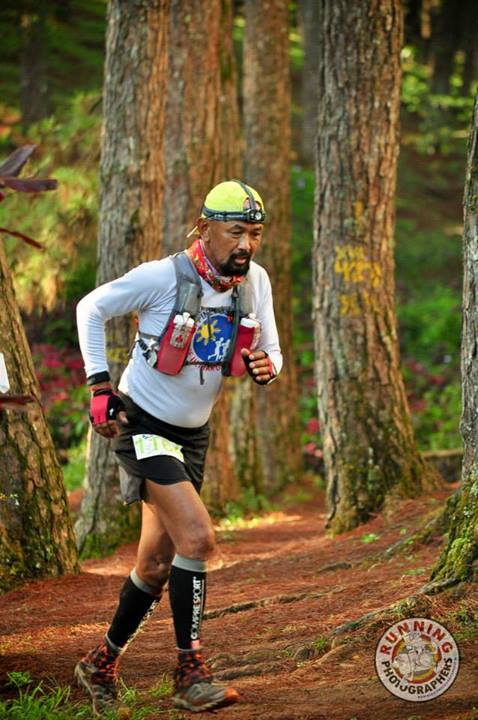
It was already 2:00 AM of Sunday when I left AS #9 with 4 other runners. I was asked to lead the assault on the mountain but I did it for a few steps and asked for the younger runners behind me to lead the group. At first, I was able to keep up with the pace but as we moved higher in elevation, I can feel that I was breathing heavily. I rested for awhile and let the other 3 runners to go ahead with their pace. The technique that I used in going up to Mt Santo Tomas was put to use again—counting 10-20 steps then rest for 5 seconds and then repeat the cycle again! With due patience and consistency, I reached a wide dirt road which is flat but I know that this is just a transition for a steeper approach to the grounds of PMA.

At one point along the steep section before reaching the perimeter of PMA, I was overtaken by three (3) big guys and I was amazed on their pace in going up along the slope. I thought to myself that they could be regular mountaineers and very strong on their legs. Even if they were power hiking, they were really fast for my pace.

Before I approached the perimeter grounds of PMA, Michael Lafuente, one of last year’s TNF 100 finishers and one of my training partners in last year’s TNF, joined me due to weak batteries of his headlight. We had to share some stories with each other about the TNF 100 last year and our training experiences and recon runs in preparation for the event. It was nice sharing the trails with him from Camp 6 to the Loakan Airport.

This Race Report would not be complete and accurate if I don’t mention what I did on the last 100 meters before reaching AS #10. I asked Michael and Danin, my training partner, to guard the trail for incoming runners so that I can “take my crap” beside a water source which is popularly known to Michael and some of our training partners last year. I could no longer tolerate the pain in my stomach that I need to release whatever wastes in my large intestines! I asked them to put off their lights; warn me of the presence of any incoming runner; and waited for me to whatever I need to do to relieve the pain in my stomach. In a few seconds, the job is done and the free-flowing water source was very convenient to clean everything, including the washing of my hands! What a relief! While I was washing my hands, a runner arrived at the place where Michael & Danin were waiting and Michael asked permission to go ahead with the runner.

We reached AS #10 with strong spirits to finish the race. Michael stopped by the Aid Station and I went ahead of the other runners who were resting, eating, and being checked by the Medical Staff. It was already 5:30 AM and it is already daybreak. A support crew of one of my training partners gave me some cola and Gatorade drinks. I also brought out from my backpack the sliced Korean Pear inside a plastic bag and held it with my right hand as I started to run. As I started with my run, a support crew shouted to me that I am already on my last 7 kilometers of the course!

AS #10 To The Finish Line

I knew that at this point that I can already “smell the barn” and try to run all the way to the finish line. Just follow the TNF markers hanging beside the fence of the airstrip, cross the airstrip of the Loakan Airport and then proceed on the streets of the houses near the vicinity of BEPZA and I will be in Barangay Scout Barrio, and ultimately enter the premises of Camp John Hay.

While running along the airport road, I started to eat the slices of Korean Pear that I brought out from my backpack and was able to consume it before I crossed the airstrip of the Loakan Airport. It was so easy and visible to follow the TNF Markers placed along the streets as I left the premises of the Airport. I noticed that a younger runner was tailing me as I entered a populated area. I could see also two runners in front of me walking up on an uphill road. The younger runner on my back had easily overtaken me because he had a faster pace. Once he passed me, I brought one of my Gu Gels and ingested it for my last 6K to the Finish Line. The younger runner who had overtaken me had come back and I was meeting him along the road. I asked him why he was coming back and he told me that there are no markings that he can see along the road. I told him to return back to his former direction as we were on the right road to the Finish Line. He believed me as I pointed out to him the markers ahead of us. He went ahead of me but I was able to overtake the two runners who were walking on the uphill road.

The last GU Gel that I have ingested had given me the much energy to run continuously as I passed the “three big guys” that passed me before I reached the PMA Perimeter/Grounds. From a distance I could see a group of runners who were walking along the trail and found out later that it was the group of Baguio Ultra Runners to include my friends, Jonel Mendoza, Nick Pasiken, Carlo Gonzales, and Ryan Jucutan. Instead of passing them, I joined them in their hike for the last 5 Kilometers before the Finish Line. By my personal estimation, if not for my decision to join them in their hike, I could have finished the race in 27:30+ hours. Our hike was delayed and was made slower when our group was able to meet the group of 22K runners which had started at 6:00 AM. We had to wait and stand beside the trail for the 22K runners to pass us. Well, what is 45 minutes or one hour of delay for the finish if you are with “loyal friends”  in the ultra running community and be able to share some good stories with them and their experiences during the race.

"I Can Smell The Barn!" @ Camp John Hay
“I Can Smell The Barn!” @ Camp John Hay

At the last 200 meters before the Finish Line, we have agreed the order of finish among us. Carlo Gonzales was first and I followed him because the two of us considered this run as our “redemption run” for having declared ourselves as DNF in last year’s race. The other three runners were behind us as they had been regular finishers in this event since it was held in Baguio City. We started to run towards the Finish Line and we knew that we will be met by a crowd of spectators!

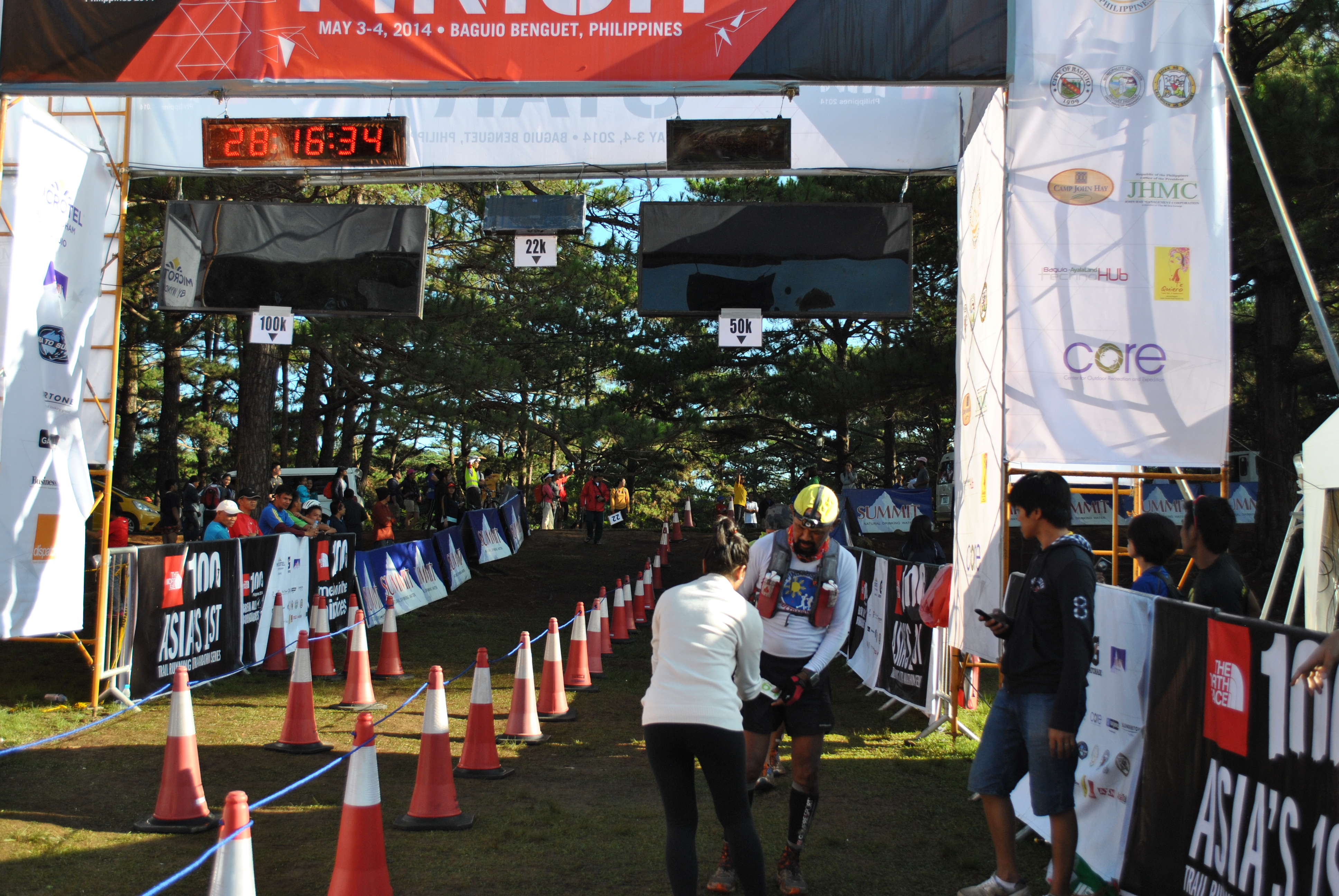
I crossed the finish line at 28:16:31 hours and I was awarded my first TNF 100 Finisher’s Medal as soon as I crossed the Finish Line. Officially, I was ranked as #107 out of 195 finishers from the almost 400 starters of the race. I may not had been successful in attaining what I have aimed for in this race, upper 50% of the finishers, but what is a few percent over the 50% (I am within the upper 54.8% of the finishers) if I was able to finish the race successfully without any injuries or any “issues”.

Official Result of the TNF 100K: http://www.thrillofthetrail.ph/wp-content/uploads/2014/05/TNF-100-2014-Overall-100k.pdf

Let me thank the Almighty Lord for giving me the strength to have this kind of ability at the age of 62. I may not be fast but with guidance and protection from Him, I was able to finish the race in healthy and safe conditions.

Let me thank also the Team Bald Runner for providing me the support in every key Aid Station along the route. They were instrumental in preparing what I needed every time I need resupply of my hydration and nutrition requirements.

I would also thank the younger runners for making them as my targets during the race. I am doubly happy when I see them resting in a place and then suddenly resuming their trek to the uphill climbs when they see me coming to their direction.

The Race Marshals, Medical Team, and Volunteers in the Aid Stations were very invaluable for the success of the race. I would like to thank them through this post/Race Report, although I know that I was the only runner who would usually say “Thank You…For Being Here” to them during the conduct of the race!

My appreciation goes also to my orthopedic doctor at the Philippine Army Medical Center in Fort Bonifacio, Taguig for seeing to it that a Retired General of the Philippine Army would be accorded free rehabilitation and physical therapy on his knees. He made sure that I would buy the prescribed VIARTRIL-S (Glucosamine Sulfate, 1,500 mg) Powder For Oral Solution which I took once I wake up in the morning for the past 3-4 months. It is a very expensive powder solution in a small sachet but with my Senior Citizen’s 20% discount, I was able to save some of my money.

I am not a “sponsored” athlete/ultra runner but it is worth mentioning the things that I’ve used during the race. Here is the list:

Trail Shoes—-La Sportiva Helios

Socks—-DRYMAX Trail Socks

Gaiters—-Dirty Girl Gaiters

Calf Sleeves—-COMPRESSPORTS ULTRA (Black)

Running Shorts—-PATAGONIA Trail Shorts

Anti-Chafing—-Body Glide

Belt Bag (For Cell Phone)—-NATHAN Belt Bag

Upper Shirt—-PAU Long-Sleeved Shirt By “A Simple White Shirt”

Nipple Protection—-Johnson & Johnson Band-Aid

Hydration Vest & Pack—-Ultimate Direction Anton Krupicka Signature Series (Small)

Hydration Bottles—-Simple Hydration Bottles

Watches—-GARMIN 310XT & TIMEX Expedition

Bandana—-BUFF

Head Bandana—-Mountain Hardwear

Running Cap—-The North Face Flite Series

Light Jacket—-UNIQLO Windbreaker with Hood

Body Oil—-Johnsons & Johnsons Baby Oil (Applied to exposed parts of the body before the start of the race to keep the body warm)

Gloves—-Specialized Cycling Gloves

Headlight—-Black Diamond’s Polar Headlamp

Flashlight—-FENIX Handheld Flashlight

NUTRITION/Hydration (Aside From Water):

12 pieces of GU Gels (regular) of 4 different flavors

Corn In A Cob (2 pieces)

Small Potatoes Boiled In Salted Water

Slices of Fried SPAM; Boiled Eggs; and Steamed Rice (Ampucao)

One Can of Century Tuna Paella

One Liter of RC Cola

One 12-oz bottle of Mountain Dew

Half-Bottle of Gatorade

Two Bottles of Coca-Cola (8-oz)

Chuckies & Bananas @ Aid Stations

Hot Noodles (2 cups)

Chinese Hopia (Sweet Bread)

Medicines/Drugs:

2 Capsules of Pharmaton (Multi-Vitamins & Minerals)

2 Capsules of Immodium (Anti-Diarrhea)

4 tablets of ALEVE (2 tablets every 12 hours as Pain Reliever to my Knees)

Advise; Suggestions; & Lessons Learned: 

1. Knowledge Of The Course—-It is not enough to know the technical description of the course. Seeing the elevation profile and the location of the Aid Stations/Checkpoints on the Course Map is not enough to have a full appreciation of the course. A runner must be able to recon the course if he/she wants to develop confidence to finish the course. Undoubtedly, this is the hardest TNF 100 course in Asia, harder than those TNF 50-Mile courses in the United States. Since I have a knowledge of the course during my recon runs and actual race last year, I was confident and ready on what to expect in every phase (in between Aid Stations) of the course.

2. Services of An Exemplar and Reputable Ultra Running Coach—-Get the services of a consistent Champion in all the Ultra Races that he joined in the past years (maybe for the past 10-15 years!) Some of his feats are still standing Course Records in 100-Mile Races. You might say that it is expensive to be paying such kind of ultra running coach but you will find out later that the investment is all worth it. Do not get a Coach who is an Average or Back of the Pack Ultra Runner, you are just wasting your time and money with him/her! “Get the BEST  TEACHER and YOU SHOULD DO THE REST”!

3. Specificity Of Training—-This is the “most abused” advise from Coaches, Podium Finishers, and Trail Running Friends. If the race course is in the mountains, go to the mountains for your training, period! There is where you test your gears and hydration/nutrition plan. This is where you test and evaluate your running skills, running form, tactics, and techniques. You have to concentrate more on what is best for you on your food intake during your long runs/hike in the mountains.

4. Follow A Structured Training Program—-Obviously, the Coach will ask you what particular event you are preparing for. Tell him your target and intermediate goals and he will give you a training program that is suited for your age and running history. Follow the program and be serious of attaining your goals. Don’t get the impression that the training program is good for a few weeks or one months before the race day. You can not “cram” or “fake” your training for a rigorous 100K ultra trail run even if you are a fast marathon runner. In the Philippines, TNF 100 Registration Period opens two months before Race Day. Do not start your training once you have registered if you have just shifted from road running to trail running. You can finish it but not with an impressive finish time.

5. Taper Properly—-Two weeks before the Race, I was already tapering my training mileage. One week before the race, I was getting more rest and sleep. I was also eating what I usually eat during my regular days of training leading to the Race Day. By tapering properly, my body was able to rest and recover from the stress that I put into it for the past months of going to the mountains. I was fully rested, recovered and relaxed when I toed the line at the Starting Area. And the rest is history!

Lastly, if you have plans of joining the next year’s edition of the TNF 100 Trail Run, you have to start your training NOW!

Congratulations To All The Finishers!

Crossing The Finish Line

Picture Of The Week #25


2014 TNF Phil 100
2014 TNF Phil 100