(Warning: This post is an advertisement on what razor/s I have been using for the past 30 years to shave my head and my beard, thus, consistently describing me as the Bald Runner!)
It was quite an experience to find the best razor in the market with such considerations like: affordability in price, easy to use, longevity on the sharpness of the blade/s, cheaper replacement blades/cartridges, and comfort or safety in using it. When I started to shave my head regularly for at least, twice a week, for the past 30 or more years, the most popular brand then was the Gilette where I started with their Mach 2 models, and then to Mach 3, up to the Fuzion and ProGlide Models where they have increased the number of blades in each cartridge from two to four and then to 5 blades. However, when I asked my son, John, to buy me a Razor Set at the Costco, he gave me a full set of the Schick Hydro 5 Sense Hydrate Razors with One Razor Handle and 17 Razor Blades/Cartridges @ $ 40.00 or less. I used this Razor Set for two years!
Using the Schick Hydro 5 Sense Razor was very comfortable, its blades are very sharp (5 blades in each cartridge), and easy to use. However, I could only extend the use of each cartridge for a maximum of one month or 8 times for shaving my head and beard which is considerably good. When I was about to use all the 17 pieces of replacement cartridges, I started to look for new cartridges at the Target Store and I found out that they are very expensive. The 8 cartridge pack price would be equivalent to buying the Original Schick Hydro 5 Set that my son John gave me. Despite its pricey cost, I bought One Pack of the Replacement Blades/Cartridges.
For the past years while I was using the Schick Hydro 5 Razor, I have been seeing advertisement of the Harry’s Razor on Fashion Magazines and in the Internet. I have tried to look for its history and how it is made and read almost all the positive testimonies and feedbacks of their users. So, in one of my trips to California, USA four years ago, I finally bought a set of Harry’s Razor. Because I still have few cartridges left in my Schick Hydro 5 Razor, I have alternated using these two razors in my regular shaving.
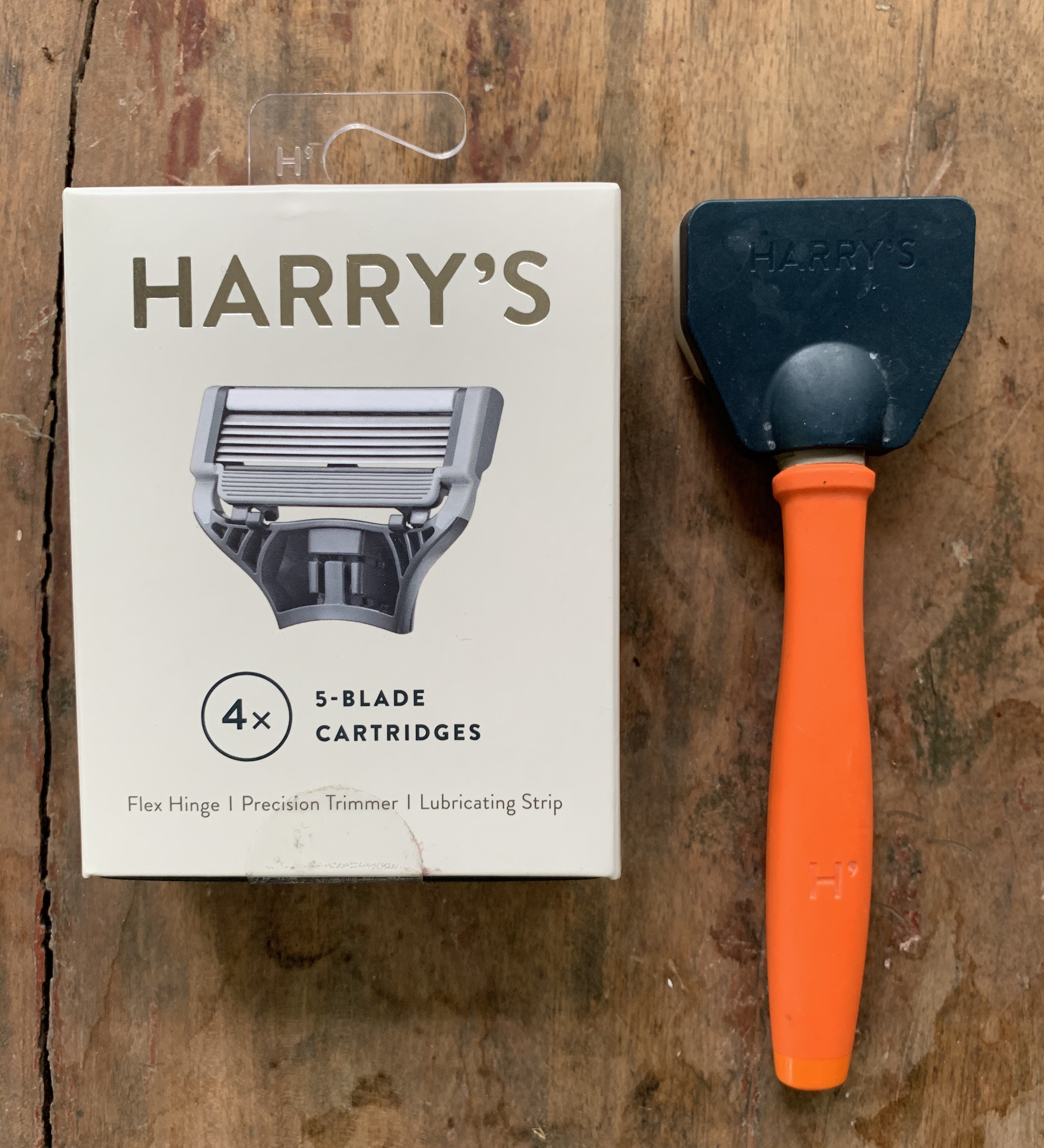
As a comparison, the Harry’s Razor (with the same number of 5 blades per cartridge) gives me a faster time in shaving my head and my face as compared to the Schick Razor. Shaving with the Harry’s Razor saves me at least, 5-10 minutes. Each catridge also lasts longer as I can extend the use of each cartridge to two months which is equivalent to 16 times using each cartridge. For the past four years, the Harry’s Razor had given me the best shave in my entire life and I am going to stick to it through the years to come. So far, I have used 12 cartridges already and last November 2019, I bought a 4-piece set cartridge which I intend to use until my next visit to California if things will normalize from the present travel restrictions due to the Covid-19.
Harry’s Men’s Orange Handle & Latest Cartridge Set
I highly recommend this product as compared to the other Razors in the market. They are a little more expensive but their reliability, durability, and comfort in using them is worth the price you are paying. Harry’s Razor is the best shaving razor in the market today!
Most of the stories I have posted in this blog for this year were blog or journal on the daily adventure of Thomas Combisen during the 2020 Hongkong Four Trails Ultra Challenge which was held during the Chinese New Year last January.
The conversation between Thomas and Andre Blumberg in this video validates and proves that Thomas will be going back for the iconic 10th Anniversary Edition next year of this event. Hopefully, we will be back to normal to travel to other countries in the next months. As of now, Thomas is back in his training for this event and be able to finish it in sub-60 hours.
At this moment, I am compiling all the posts and stories of Thomas Combisen from the time he joined my Running Events and his exposure to International Events under the International Association of Ultrarunners (IAU) and Trail Ultra Races sanctioned by ITRA. I hope I can come up and publish an Ebook about his adventures in Running.
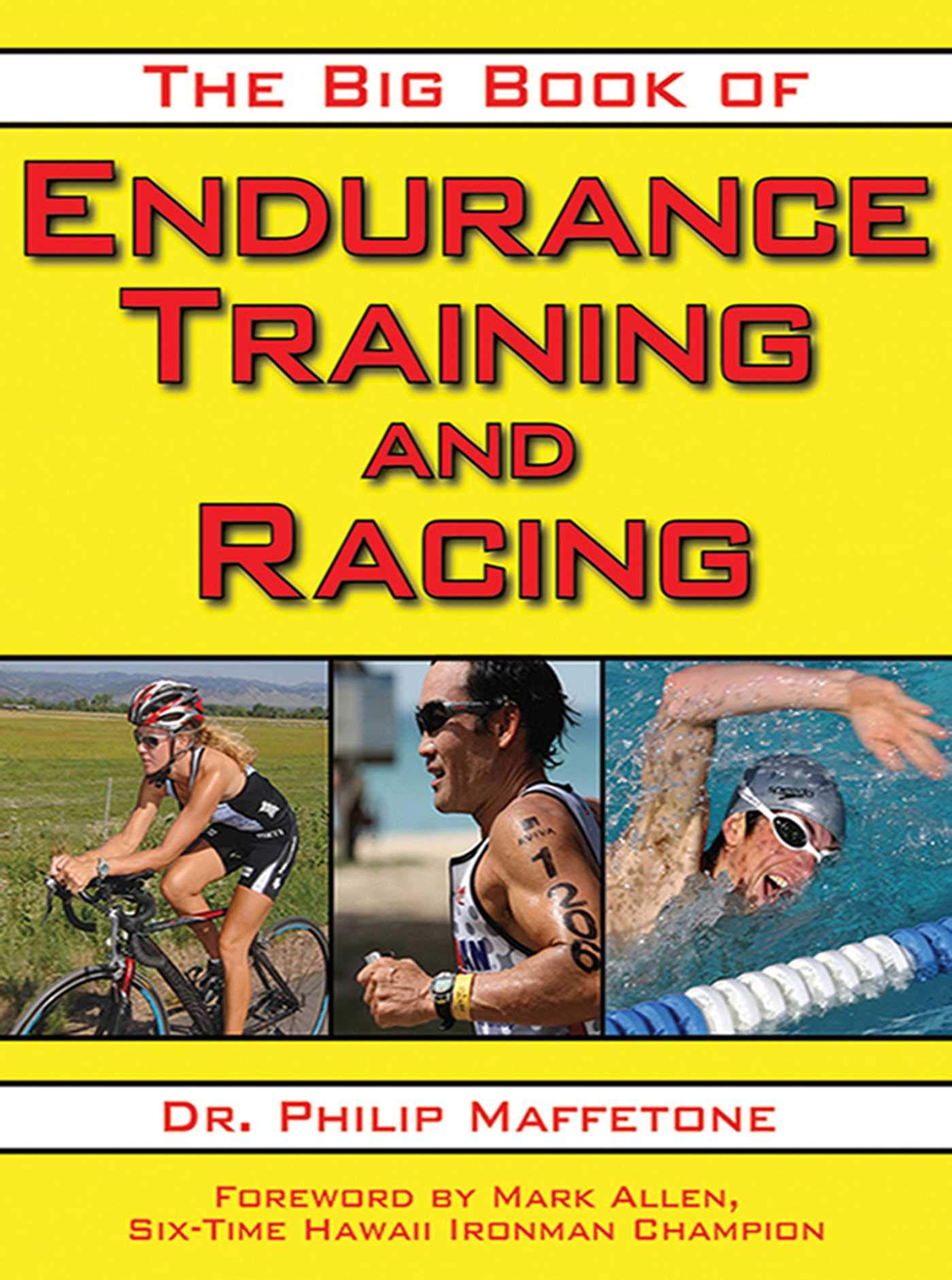
Sometime on the first week of August 2011, I have written on this blog about the Maffetone’s Training in Running and it was very effective then during my training days in preparation for my running races. For the whole month of August 2011, almost all my blogposts were devoted on my personal application of the MAF (Maximum Aerobic Function) Test and the Carbohydrate’s “Two-Week Test”. You can revisit and review these posts by clicking the links. All of these posts were my personal experience and application of such training method after buying the Kindle Edition of the book, Dr. Phil Maffetone’s “The Big Book On Endurance Training and Racing” which I bought then at Amazon.com.
Book Of Dr Phil Maffetone
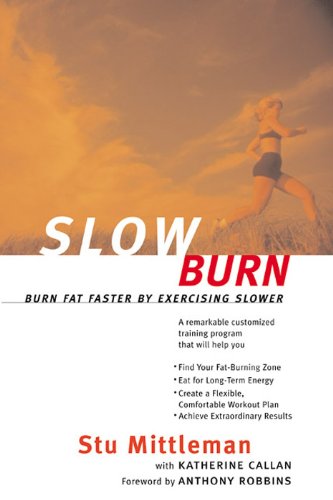
Fast Forward. Two weeks ago, I came across, by accident, a book by Stu Mittleman entitled “Slow Burn: Burn Fat By Exercising Slower” and I recalled my past posts about the Maffetone’s Training and reviewed them again together with the Kindle Edition of Dr Phil Maffetone’s Book. On the following day, I started applying the Stu Mittleman running method and after a few days, I realized that I have to go back to the Maffetone Training Method. And that is now what I have been doing for almost 3 weeks, as I am now on my third week.
I have been following the “180 Formula” which means that to come up with a Maximum Aerobic Function (MAF), my Hear Rate should be, 180 minus my age of 68 which is 112. But since I am more than 65 years old and had been regularly running (without any injuries) for the past years, I can add 10 beats per minute to 112, making my Maximum Heart Rate to 122 beats per minute using the MAF Method. I have been using my SUUNTO Ambit 3 Peak GPS Watch as my Heart Rate Monitor.
For the past weeks, I have been diligently following the MAF Heart Rate in my easy and recovery runs where my HR Average ranges from 111 to 117 beats per minute. However, what is very unique in my application of the MAF is that I am using it in my daily runs within my Backyard Loop. My Backyard Loop is 95% single track trail with uneven ground with some feet of elevation which has a distance of 480 meters in one loop. As compared when I was doing the MAF in 2011, my runs were done on paved roads and my monthly MAF Tests were done in an Oval Track (Remy Field in Subic Freeport). I was running faster then because the conditions of the road and oval track were very ideal.
On my third week since Monday, I have been registering an Average of 112 to 117 beats per minute in my daily runs within my Backyard Loop with an Average Speed of 3.6 to 3.8 miles per hour. On the paved road, with the same average of HR, I could get an Average Speed of 4.6-5.0 miles per hour or faster.
I plan to conduct my first MAF Test using my Backyard Loop as the venue next week (4th week) instead of going to the Oval Track. Another option would be to conduct the MAF Test along the paved road where I could determine a distance of One Mile. We will see if I would be able to do two sets of MAF Tests next week, one for trail and another for the road.
If you are interested to learn more about the Maffetone Training Method, you can simply buy the book or go to the website of Dr Phil Maffetone as you can download the MAF Method for FREE. You can also get many information about everything about Nutrition and Training.
If you have a YouTube account, please visit and subscribe to my YouTube Channel as I will be posting Videos about my training using the Maffetone Method.
A few weeks after I finished the 2017 Revel Canyon City Marathon Race, I received an e-mail telling me that my Official Pictures and Video are ready to be uploaded. I was surprised to receive such message, most especially, when such documentation service from the Race Organizer had provided such to all the Finishers for FREE! This is the beauty and advantage of the Revel Races being held in the US. Most of their races are downhill, lesser in number of participants, Boston Marathon Qualifier, cheap as compared to others, no lottery, and free pictures/videos. They have also high quality “swags” like Finisher’s T-Shirts and Medals. At one time, they gave a Free Pair of Goodr Sunglasses.
The following is the video of the Race and it is personalized for me as a souvenir for the race. It is unfortunate that the 2017 edition was the last edition of this Marathon Race in Azusa, California. The Race Organizer had transferred the venue to Big Bear, California and I missed to join it last year.
Thank you for watching this short video. And thank you for dropping by.
I am posting this video taken by my friend, Rowell Ramos, on the last few meters before the Finish Line of the 2017 Revel Canyon City Marathon Race. At the age of 65 years old, I have finally realized to qualify to join the “Holy Grail of Marathon Races” and the World’s Most Prestigious Marathon Race, The Boston Marathon Race. I got the First Place in the Age Category of 65-69 years old in this event with an Official Finish Time of 3:46:06 hours which is 16 minutes faster than my Age Qualifying Time.
Thank you, Rowell for taking the initiative of taking this video as it means a lot to me as a Runner. I will always be inspired to continue my daily runs as I watch this most important and memorable video in my life.
As for my readers and friends, I hope you will be inspired to qualify for the Boston Marathon. I have yet to write a post about my experience in joining and finishing the 2019 Boston Marathon in this website. It will be an epic adventure to read it, for sure!
My next post will be the Official Video sent by the Race Organizer of the Revel Canyon City Marathon Race.
Thank you for reading this short post and watching this video. Have a good day!
As I was browsing on my past posts/stories in this blog yesterday, I came across with this “insight” which I have written on February 14, 2014 (Valentine’s Day) and never was able to publish it in this blog. I was wondering what could be the reason why I was not able to post this as this post answers the BIG “WHY” I have been to ultramarathon and thus, creating an iconic Ultramarathon Event in the country which is the “Bataan Death March 102K Ultramarathon Race”. And this is my insight as an ultra marathoner (road and trail) and a Race Director and Organizer of Ultra Running Events which up to now is still true and applicable up to the present.
It is almost SIX years when I started to float the idea of conducting an ultra marathon race in the country and in this year of 2014, it will be the 6th edition of the Bataan Death March 102K Ultra Marathon Race. On hindsight, I have been thinking why I organized this kind of road running event and slowly made it as something to be proud of among runners in the country.
It all started when I saw a website of a marathon event that is named after the Bataan Death March which is being held in the desert of White Sands, New Mexico, USA. I saw this website when I was still in the active service in 1999. After a year, I implemented the same concept of the race among the units of the Philippine Army and made it as a Team Competition to include the US Army & Marines contingent based in the country. Although the race covered only 25 kilometers of the Bataan Death March Route, it became a success even if we did not ask for any Registration Fees from the Team Participants. It was simply sponsored by the Philippine Army, through my Office as the Deputy Chief of Staff for Training and Education, G-8. In simple terms, I was the Chief Trainor & Educator of the Philippine Army nationwide!
If I can still remember it right, I only gave Trophies to the Top Three Teams and there were NO Finisher’s Medals and Finisher’s T-Shirts. Our office and my staff gave packed lunch to all the participants and we parted ways as happy competitors and runners. In the same manner, our civilian guest runners were just treated with the said packed lunch at the finish area.
Sadly, when I got transferred to Mindanao for a Combat Commander position, my BDM efforts just died and forgotten.
Fast Forward. Retirement and the Freedom to Run in any place and time of the day gave me a more focused attention to the Ultra Races that I’ve organized in the past. Of course, my being a Retired Major General of the Armed Services had also helped me in my coordination with the AFP, PNP, and the Local Governments. And whenever any of my ultra races is being concluded with all the finishers enjoying their triumph and victory, I always get a heart-warming feedback of “Congratulations For a Successful Event!” from the other runners, friends from Facebook, and from the thousands of followers of my blog.
It is a very humbling feeling when I get such feedback and it is already enough “compensation” for the preparation, coordination, risk, sleepless and tiring moments just to be able to monitor the safety of the runners and the progress of the race.
Personally, success to me in every race, is NOT in the number of registered runners. I would be happier if I have lesser in the number of runners whom I personally know and who would stick to follow my Race’s Rules & Regulations. Furthermore, I would be happiest when I hear stories among my runners on how they help each other in order to finish the race. These ultra runners whom I usually call “the usual suspects” are aware that the registration fee that they have paid to join the event is NOT enough to pay for my “Talent Fee” for seeing to it that they are safe and secured during the event.
But, most of the reasons for a Successful Event is attributed to the Competing Runner himself/herself. In ultra races, a runner can not “fake’ his performance backed with lackluster training and preparation. It takes a lot of pounding on the ground, discipline, determination, positive attitude, and critical problem solving if an ultra runner wants a decent finish in a race without any injury or “issues”. So, if a runner registers a Course Record Time for the event, it becomes a motivation for the others to work harder in their next training & preparation. Success for a runner is being able to overcome one’s inner demons, pain , suffering, and other personal challenges!
Success does not mean profit or money that a Race Organizer would earn from each event. Since I am not being backed up or sponsored by any Corporate Entity, a runner’s registration fee would be spent for the Podium Finisher’s Trophies, Finisher’s Medals, Finisher’s Shirts, Certificates, Race Bibs, Tarpaulins, Payment For Marshals & Event’s Staff, Ambulance/Medical Team Services, Planning & Coordination, Timing Services, Food For Runners at the Finish Line, and Travel Expenses. Sad to say, I am not being paid for being the Race Director!
To tell you the truth, I am getting richer from my “tax-free” monthly pension and “tax-free” interests of my investments and rentals to my properties. Even without organizing or directing ultra races, I will be happy and contended sitting on my rocking chair while listening my music from my Bose Sound System and scrolling/reading your Facebook status on my MacBook Air and Apple iPhone!
Success, therefore, to me in races is developing friendships and maintaining those friendship so that in every race, a runner would learn something for him/her to be a better person. Better would mean stronger, healthier, more matured, more friendly, and have a better outlook in life.
The highest level of success is when ones experience as a Runner and Race Director/Organizer is being shared to others and such experience becomes an inspiration to emulate. And this blog has that main objective to share my experience to everybody.
Success Is Being Healthy At The Age Of 62
Thank you for reading this article. I hope you enjoyed it and have the motivation to challenge yourself to run and adhere the outdoors for the greater good of a healthy lifestyle. Please subscribe to this blog for more updates and stories. Thank you!
I was taught by my Mom how to cook simple home meals when I was in the Elementary Grades. We were lucky within my siblings that we were taught by our Mom how to cook simple home meals in our early age. Our Dad also taught us how to cook but more importantly, how to butcher live animals and dress them properly into cooking pieces. My brother and two sisters are fine cooks with Pinoy Recipes up to this date! The efforts of our parents to teach us on how to cook were not in vain!
When the Covid-19 Lockdown started in March 16 of this year, I was prepared for the food requirements for the days and weeks ahead. My freezer was full of meat/poultry and my pantry was with a considerable number of canned goods, cooking ingredients, noodles, and RICE! As the days and weeks had passed, we were allowed to buy our fresh food and groceries on a scheduled days of the week in Public Markets and Grocery Stores. However, we were fortunate enough to have a Fresh Option Meat Store located a few minutes walk from our house.
Yes! I have to cook simple food meals from the Recipes taught to me by my Mom and Dad during the Lockdown. And here are my Top 5 Favorite Pinoy Meal Recipes During The Covid-19 Lockdown:
1. Pork or Chicken Adobo: One can cook Adobo Recipe separately as Only Pork or Only Chicken or a Combination of Pork and Chicken. Pork and Chicken are cut into bite pieces cooked with the combination of Soy Sauce, little of Vinegar, Garlic, Black Pepper (Ground or Full Kernel), and little of Sugar. Combine all the ingredients in the pot and let it simmer until the meat or chicken cuts are tender. It is better for the fat from the meat to be the only liquid to be left at the bottom of the pot before it is being served as a meal. The oily fat is the best part of an Adobo dish!
Pork Adobo
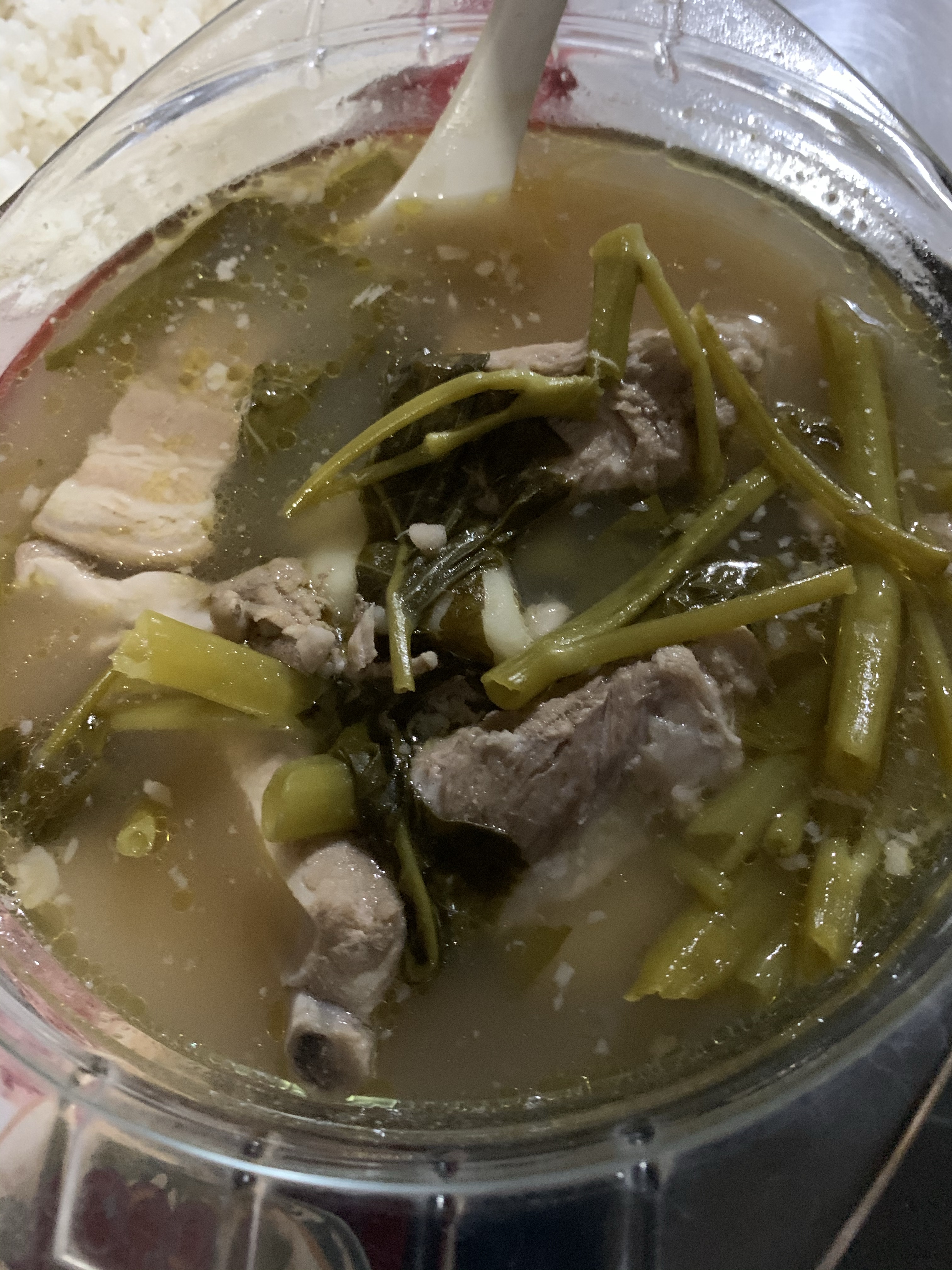
2. Pork or Fish Sinigang (Sour-Soup Based Pork or Fish): Pork and Fish should be cooked separately in this kind of Pinoy Recipe. Pork has a longer time to be cooked than the fish. Cut the Pork or Fish in sizes. Prepare the following ingredients: Onions, Ginger, Salt, Tomatoes, and Mama Sita’s Tamarind or Guava Sinigang Mix Pack. Boil the ingredients in a considerable amount of water in the pot until they bring out their aroma to the soup. Put the Pork or Fish until they are tender and then add some leaves of Kangkong or Pechay leaves before being served! The sour taste of the hot soup should jolt you from your seat!
Pork Ribs & Belly Sinigang
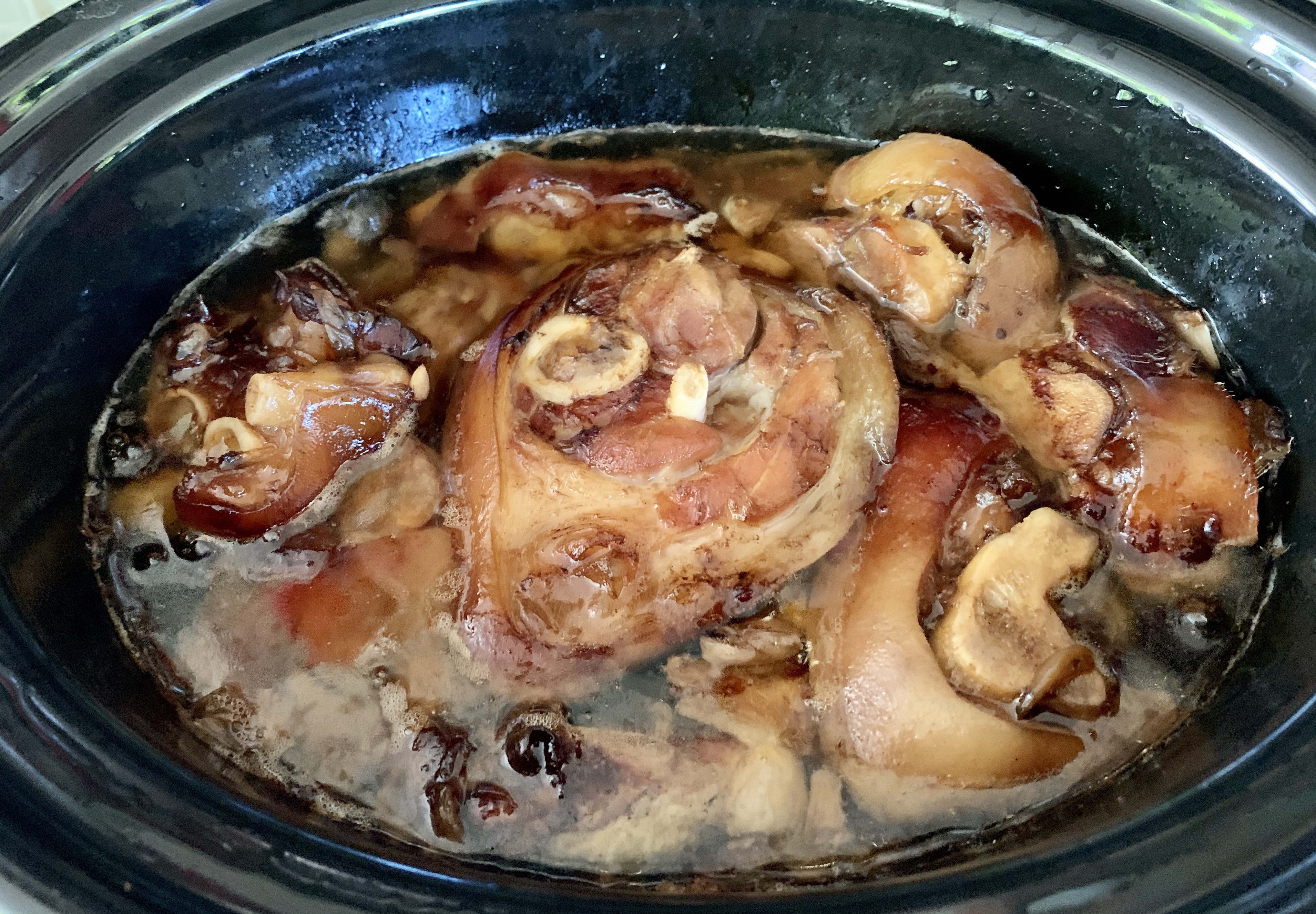
3. Pork Leg Humba: The Fresh Option Store near my place has a lot of Pork Legs in their stock and I was always tempted to buy 3-4 pieces each time I visit the store. I have each piece of the leg cut into cooking pieces and have each leg in a separate bag. This would make me easier to thaw one leg every time I cook this recipe. The ingredients are the same with Pork Adobo but I add some pineapple juice and more brown sugar to the meat. I tend to cook the meat without adding any amount of water as I use my Slow Cooker, put all the ingredients at the same time and have it cooked for overnight with the adjustment on High. Once I wake up in the morning and have my morning running workout done, the meal is ready to be served with rice.
Pork Leg Humba
4. Two-Pieces of Soft-Boiled Eggs With Avocado: I have been eating two-pieces of soft-boiled eggs with a cup of rice for breakfast for the past 30 years! Sometimes, I have to add one more piece of egg if the size is small. During the Lockdown period, I have tried eating three pieces of eggs since the available eggs in the market are too small from the regular size that I’ve been buying from the grocery store. In a pot of tap water and the eggs, they are placed on the stove for two minutes and then removed from the boiling water to a container with tap water. This sudden shift from hot to cold water for the eggs would result to a better way to scoop the contents of the eggs from their shells with a spoon. Such eggs are now ready to be mixed from one piece of Avocado, cut into bite pieces. I add a sprinkle of Pink Himalayan Salt and the food is served!
Soft-Boiled Eggs With Slices Of Avocado
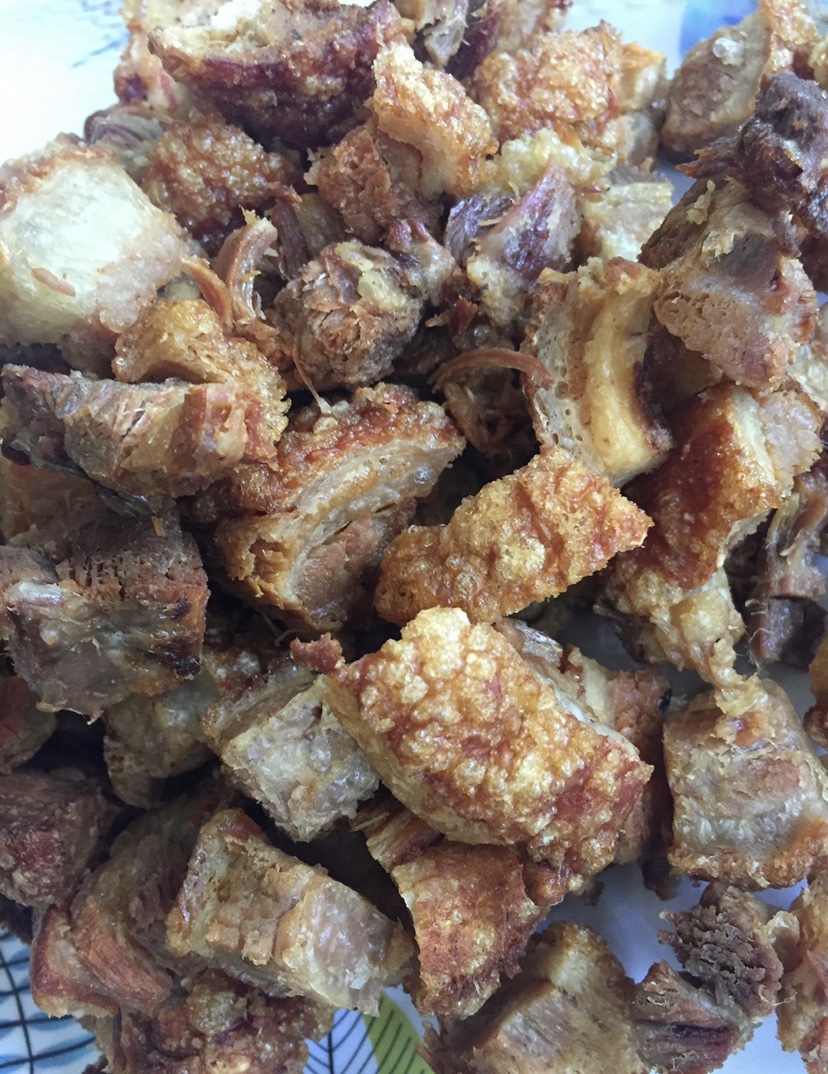
5. Crispy Fried Bagnet & Fried Longaniza: I have a lot of stock of Bagnet (Fried Pork) and Longaniza (Local Sausage) from Ilocos Norte in my freezer which I ordered and given by my Nephew Duckie whenever he visits me in Manila. Bagnet is a Fried Slab of Pork from the Belly and I have to cut it into bite pieces and have to fry them in a hot frying oil until everything is crispy. The longaniza is cooked with a small amount of water in a frying pan until its fat serves as the frying oil as the water dries up from the cooking pan. It is cooked and ready to be served when the skin of the longaniza turns to dark brown. Fried Bagnet is served with Bagoong (Salted Anchovy Paste) Sauce with sliced tomatoes and the Fried Longaniza is best served with Vinegar.
Fried Crispy Bagnet
Side Dish: Sautéed Kangkong or Pechay. This is a “quick” Adobo dish for the said vegetables, cut into 1-2 inches long, cooked in oil, garlic, onions, and soy sauce. This dish should be served with the crispiness of the stalks and leaves of the vegetables in order to maintain its freshness.
Sautéed Kangkong
Having practiced Intermittent Fasting with the ratio, 16:8 hours, I only eat two meals a day. With a regular brunch of Soft-Boiled Eggs, with or without Avocado, I can choose any of these Top Recipes for my Dinner Meal. In between these meals, I would have simple sandwich of Liver Spread and/or Butter or Boiled Sweet Potatoes or Banana or Corn In Cob as my snacks. But most of the time, I don’t really eat snacks in between meals.
So, there you have my Top 5 Favorite Pinoy Recipes which I really cooked and prepared during the Covid-19 Lockdown. How about you? Did you have other food recipes to suggest?
Thank you for reading. Please subscribe and comment on this post for your suggestions.
It was accidental when I saw a post on Facebook of a certain runner with a quotation from a person with the name “Stu Mittleman“ that intrigued and caught my attention while I was drinking my hot coffee in one of the mornings last week. I immediately “googled” the name of Stu Mittleman and I was shocked to find out his feats and accomplishments in the world of Ultrarunning or Ultra Marathon.
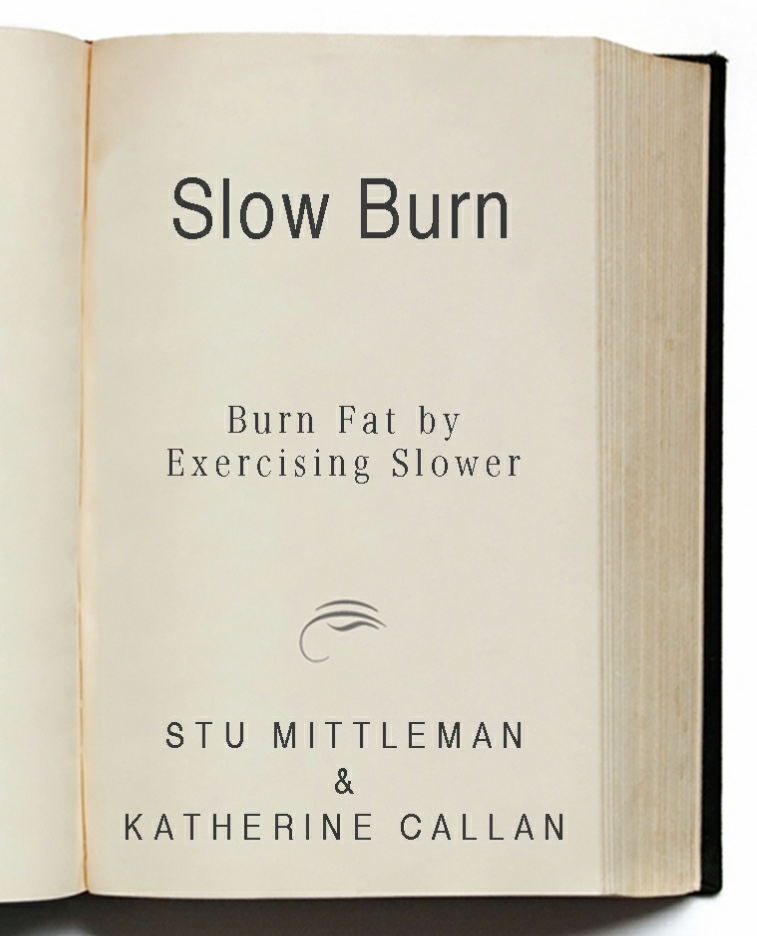
During his popularity in Ultra Marathon, he set world records in single stage and multi-day running events. He even set a Official Record in Running Across America during his days. But what got my focus and interest in him is his book which he had written and entitled: “Slow Burn: Burn Fat By Exercising Slower”. I immediately browsed on Amazon about the availability of the said book and after reading its Sample feature, I bought its Kindle Edition for $6.99 and read every chapter of the book.
Title Of The Book and Its Authors
Since last week, I have been applying his training principle and techniques in my Long Runs, Tempo Runs, and Recovery Runs. His training principle is anchored on ones Heart Rate as expressed in Beats Per Minute (bpm). His Upper Limit of Heart Rate is computed as 220-Age X 0.85 and the Lower Limit of Heart Rate is computed as 220-Age X 0.70. Your Easy/Recovery Runs should be below your Lower Limit of HR; Endurance Runs should be in between the Lower and Higher Limits; and Speed/Interval/Anaerobic Runs should be above your Upper Limit.
At my age of 68, my Upper Limit is 130 bpm and my Lower Limit is 107 bpm. However, I have adjusted my Lower Limit to 112 bpm and my Upper Limit to 125 bpm after I have been following this principle for the duration of one week. For a typical one hour running workout, I would jog for the first 20 minutes within my Lower Limit of bpm; next 20 minutes is done in between my Lower and Upper Limits of bpm; and the last 20 minutes will be within the Lower Limit of bpm. One can adjust the period of time for each phase of the workout by shortening the first and last 20 minutes to come up with a longer duration for the 2nd phase of workout.
As a result by following this training principle and technique, my recovery in between my daily workouts were faster and my runs were more relaxing and comfortable. My breathing is easier, most specially, if I am running outside my backyard using my Buff as my mask. I could also focus more on listening to my body and have the pleasure of looking around my environment most specially when I am running along the highway.
On the nutrition side, I would start my runs without any fluid and food intake in the mornings and could last up to 2-3 hours without food intake and with regular intake of water every 15-20 minutes during the run. The fats stored in my body would be the source of my energy throughout the workout. However, once I finish my workout, I would immediately have my food consisting of lesser carbohydrates but more on protein and fats. I think my waist size had reduced from Size 29 to Size 28 because of diligently following Stu’s training principle/technique!
I am highly recommending this book for those who love and passionate on ultramarathon races and timed/endurance events. This is also good for those who would like to start in walking, jogging, and running to improve one’s health and immune system.
Thank you for reading and please subscribe to this blog for more stories and updates!
After finishing the 2020 Borneo Ultra Trail Marathon (BUTM) 106K Race in Kota Kinabalu, Sabah, Malaysia on March 15, 2020, the Philippines was put on strict Lockdown due to Covid-19 upon my arrival in Manila in the early morning of March 17, 2020. From the Manila International Airport, I immediately went directly to my Playground, driving my personal vehicle, in the Province of Bataan which is 110 kilometers away northwest of Metro Manila. This is the place where I spent those “Lockdown” period/days as imposed by the Government due to the pandemic brought about by Covid-19.
Having surrounded with hills and mountains in my Playground and with a “Backyard Loop” once I step out of the door of the house, I maintained my daily training with the hope that the races where I registered would still be held as scheduled.
Sacrifice Valley Ridge Trail
A new ultra trail race of KOTM (King of the Mountains) series in the Cordillera Region, Pulag 100K Ultra Trail Race, would be in its first edition on April 18-19, 2020, was supposed to be my next race for the year. But because of the prevailing situation in the country, the Race Director deemed it to be cancelled for safety reasons. Despite this situation, I did a “virtual run” on the date of the event in my Backyard Loop where I finished 50K in 11 hours and some minutes!
For the month of May, I was supposed to go to California, USA and join the 2020 Western States 100-Mile Memorial Day Training Runs for the said weekend. I made already my accommodation reservation and I was glad I was not charged for it. Also, I was glad that my travel reservations were not scheduled before the Lockdown was imposed.
By the end of this June, I was supposed to go to Europe as I was accepted in a lottery to join the 2020 Mont Blanc Du Marathon 42K Race in Chamonix, France but it was cancelled by the Race Organizer/s. I guess, I opted to have my registration on a “roll-over” for the 2021 edition.
Before the end of May, I was able to request for the refund of my registration fee for the Eiger Ultra Trail Race 51K as the Race Organizers announced on the earlier part of May that this event is also cancelled. It was supposed to be my second time to visit the Jungfrau-Interlaken-Grindelwald Region in Switzerland.
So far, those are the four Trail Races/Events which are cancelled due to the Covid-19 situation. I was fortunate that I did not plan ahead and spend some money in advance for my travel arrangements.
The following were the reasons why I joined this trail race: (1) This race is my first trail running event for the Season 2020 and my second trail running event after I renewed my subscription as a CTS athlete since the middle of November last year; (2) This is supposed to be a part of my training in preparation for my 2020 TransLantau 50K participation in Hong Kong as my last Long Run (whether I finish the race or not); and lastly, (3) To confirm and validate my training which was given as a part of my weekly workout—the use of weighted backpack for hiking for at least once a week.
Since the RD of the event is a friend of mine, I sent him a message of my intention of joining the race being the first edition of this event. He was glad that I would be attending this race. In the later days before the race, I asked him of the directions going to the venue as I am not familiar of the other side (eastern) of Itogon, Benguet. Two days before the event, I was able to trace the route going to venue, coming from Baguio City. With the help of a local living in Sitio Dalupirip and working as the Municipal Nurse of Itogon, Benguet, she guided me all the way to the end of the cemented road leading to the populated area of the Sitio. Having seen the overall location of the event, I knew already that the terrain will be challenging as well as the prevailing weather in the area. The place is surrounded with higher mountains and not so much of vegetations on the mountains we will be running, I expect that we will be fighting with the so-called “canyon heat” while we will be running under the heat of the sun.
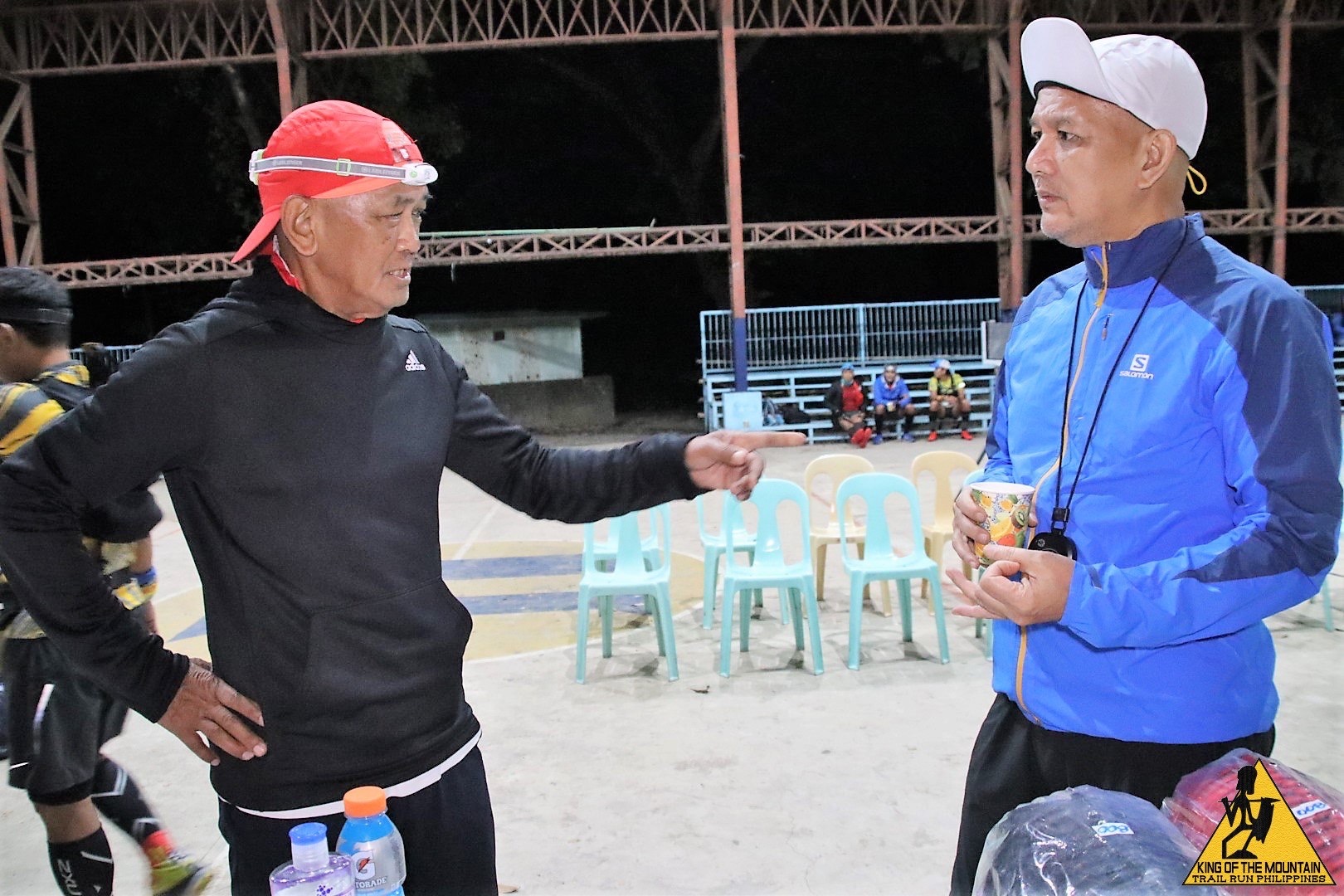
Conversation With RD Jonel Mendoza Before The Start
From The Podium Hotel where I usually stay in Baguio City, it took me at least One Hour drive to Dalupirip, arriving at 2:30 AM of Sunday (Race Day). From the end of the paved road up to the Start/Finish venue (Covered Court), it is a good one-kilometer distance, crossing the river on a cable suspension bridge which is only good for motorcycles and pedestrians with a wide cemented footpath leading to the Covered Court surrounded with rice fields.
After I registered and checked-in with the RD and staff, I went back to my vehicle to prepare my things. At 3:30 AM, I was back at the Covered Court just in time for the start of the briefing by the RD.
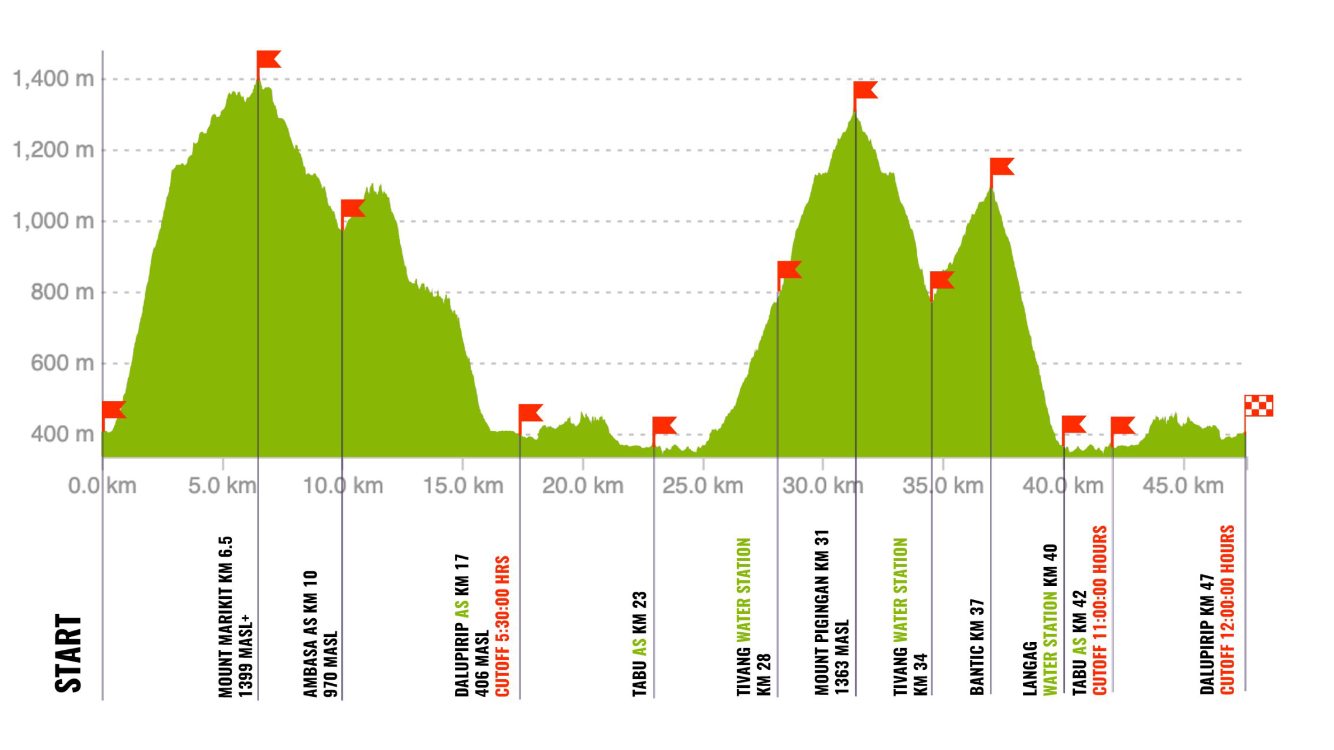
2020 Marikit-Pigingan 47K Trail Run Elevation Profile
Race Proper/First Loop
The race started at exactly 4:00 AM and it was still dark and my new Neo Headlamp was on. I positioned myself at the back of the pack, as usual, with the thought to just follow the runner in front of me. The plan was to enjoy the route/event; pass as many as runners along the route and finish within the prescribed cut-off time of 12 hours. On thefirst kilometer we passed by in-between houses within the Sitio of Dalupirip along a cemented pathway until we reached the road that leads to the Starting Area from the place where I parked my vehicle. We turned right into a paved path and the ascent started and the runners formed a “Conga Line”, a single-file formation going up to the mountain. I think I was able to pass 3 runners at this section and then suddenly the runners in front of me stopped, trying to look for ribbons/markers. The runners argued if we were in the right track or not and some of us “backtracked” to find the last ribbon along the route. At this point, we heard shouts from the Marshals below us and loud sounds from horns of motorcycles indicating that we were in a wrong directions. We were advised to return to the Start Line and follow the proper route on the first 1-2 kilometers as advised by the RD. As I passed the Starting Line (again!), the RD advised me and the other runners that the cut-off time will be 13 hours due to the delay we encountered. As I glanced my watch, almost40 minutes had elapsed already and I was confident that I could finish this race in less than the new cut-off time.
I was joined by a runner who knows the route and we were together for the first two kilometers until I went ahead of him. Since it was still dark, I hiked slowly in between rice fields until I reached a trail that ascends towards the first mountain of the course. The trail was very steep that I was forced to use my trekking poles. I just contented myself to just follow the lights in front of me and at the middle of the steep trail to the peak of the mountain, I started to pass more runners who went ahead of me. Through consistency and patience in steady hiking with the aid of my trekking poles, I was able to reach the peak of the mountain and it was already early in the morning as the sun rises in the east. I was amazed by the beauty of the mountains around and the river that flows at the feet of the mountains. It was a relief to hike and run on the flatter portions of the mountain until I reached the first Aid Station. I refilled my water bottles and ate a bite of sandwich and I was joined by two runners, Elle Alvarez and a guy, in the said Aid Station. Loiue Ganayan told me that I am ranked #30 runner to reach the said Aid Station. I left the Aid Station ahead of the two runners and I observed that the trail follows a water canal until I descended in the said mountain. However, in one of steep descents, Elle Alvarez was behind me calling me “General” and asked if she can pass me so that she can have some time to pee at the bottom of the mountain. It was the last time I saw her. In about one hour from the Ambasa Aid Station (Km 10), I was already on my way back to the starting area to complete the first loop/mountain which is called Mt Marikit.
Going Down From The Peak Of Mt Marikit Before Completing The 1st Loop
Second Loop
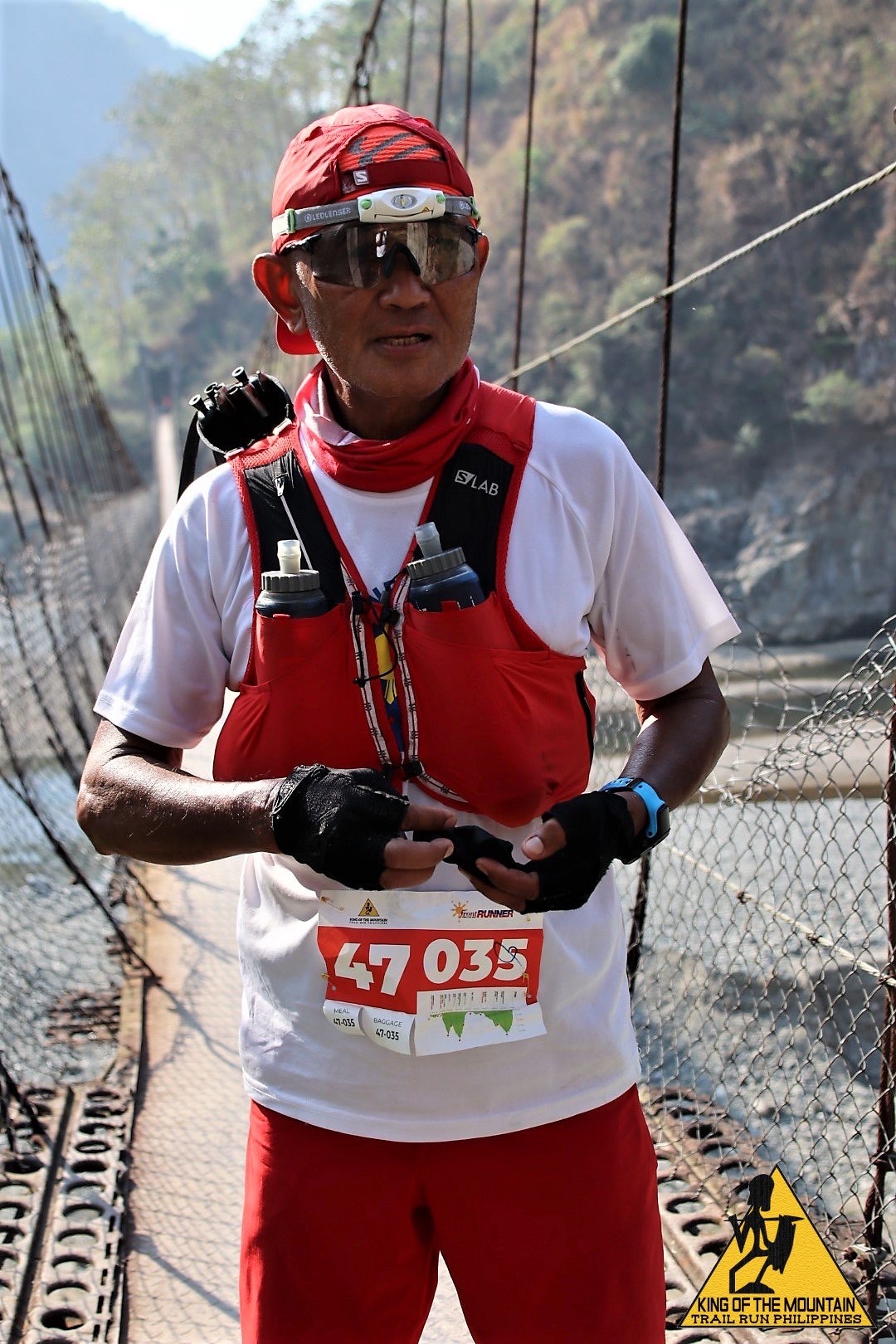
I think I was ahead of more than one hour with the prescribed cut-off time at this point. At the Dalupirip AS/Start/Finish area (Km 17), I refilled my hydration bottles and immediately left the area. I started to hike and run as the first 2 kilometers was flat until I reached a long hanging cable bridge. I brought out my sunglasses from my pack as I could feel that the sunlight was getting brighter and the air was becoming warmer. My friend Bong Bernadez was at the cable bridge as he was taking pictures to all the runners crossing the said bridge.
My Official Attire For My 2020 Trail Races (Photo By Bong Bernadez)
The road was still concrete as I followed the path in between rice fields and some populated areas along the route. As I left the populated area and the rice fields, I just followed a concrete road until I reached another end of a long cable bridge on the side of Dalupirip which looks very new and more modern and I was at the Tabu Aid Station. I refilled my hydration bottles, drank a glass of Coke,and ate two slices of rice cake before leaving the place. After crossing the cable bridge, the route became a wide dirt road which have slight ups and downs and at this point I was following a lady runner who was steadily hiking with her trekking poles. After two kilometers, the ascent was continuous and started to feel the heat in the said place. It was good there were small pipes and strips of bamboo connected to the side of the mountain where potable water was flowing. I took some time to douse my head with the cold water but after a few meters of hike and run, I would feel again the heat on my body.
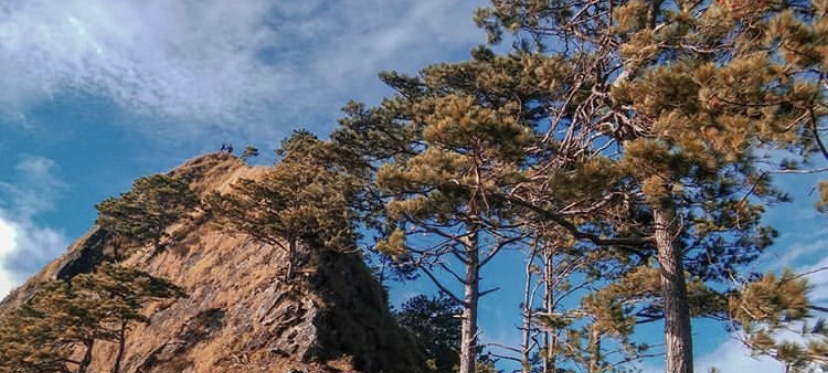
Finally, I reached the Tivang Water Station (Km 28). I stopped, refilled my bottles with water, and ordered some Coke, Eggs,and Boiled Banana from the local peddlers thereat. I guess, I took a lot of time for the first time to rest and eat at this point. I took some time to rest andhave stayed here for almost 25 minutes. With enough water, I left Tivang and slowly passed some runners ahead of me. It was a relentless 3-kilometer distance of climbing from Tivang to the Peak of Mt Pigingan (Km 31). My trekking poles were helpful at this point. The Peak of Mt Pigingan looks like an “arrowhead” that it took me 10 minutes to reach it from the its base which has only a distance of 10-15 meters.
Single Track Technical Trail To The Peak Of Mt Pigingan From Its Base (Photo From Internet)
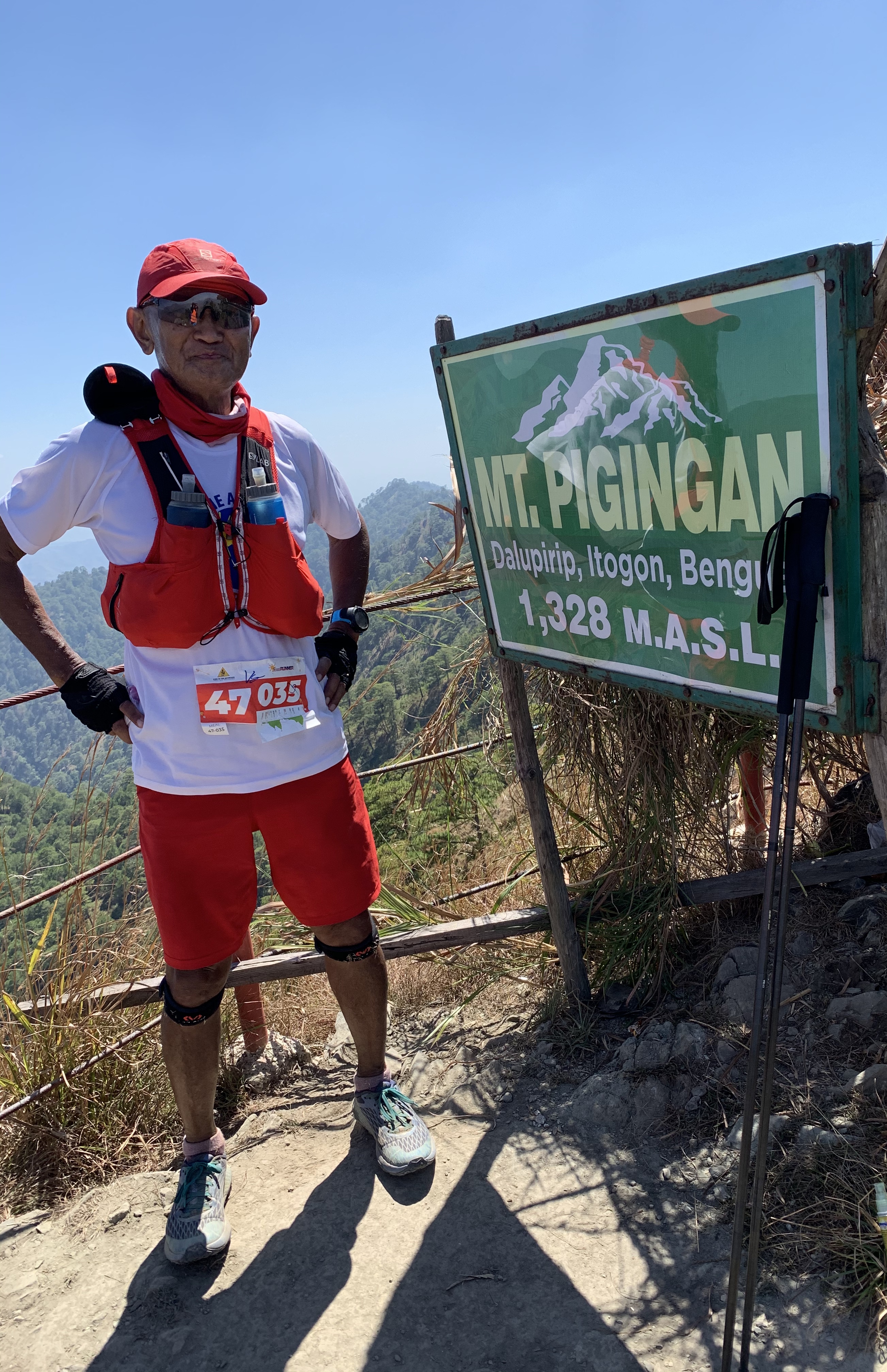
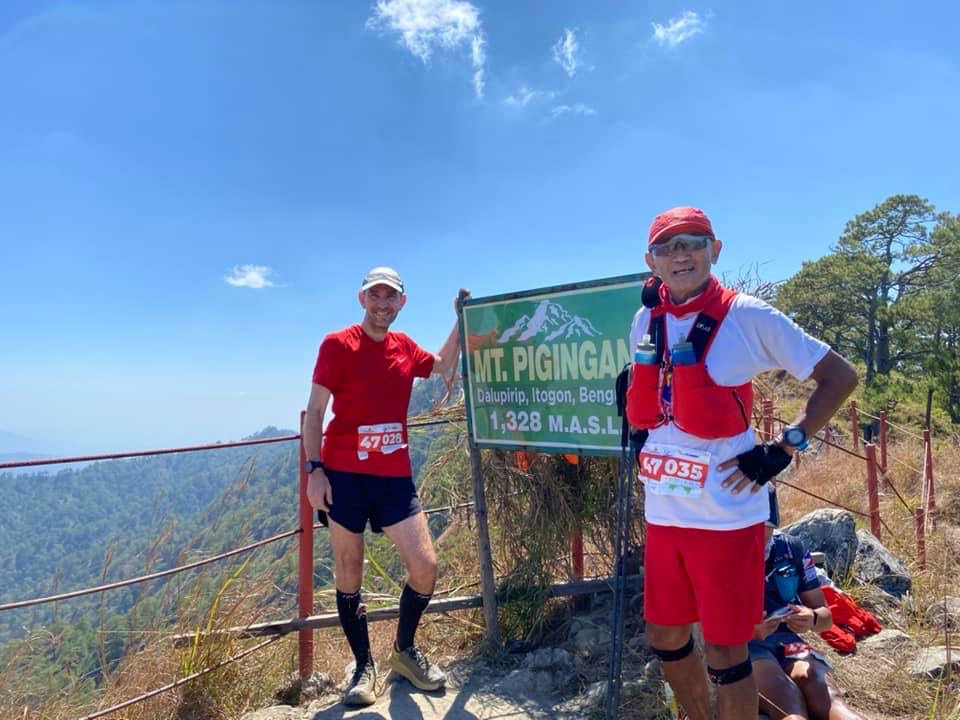
To give justice for all the hardship, pain and heat to reach the Peak of Mt Pigingan, I asked the Marshal to take a picture of me with the marker as the background. I had a chance also to have a picture of Bob/Robert, a British trail runner, who arrived ahead of me in the said peak. I did not take a few more minutes to stay in the place and slowly made my way down to the base of the peak. As I moved going down from the mountain, I met a lot of runners who were asking me how far was the peak. I have to answer them through some estimates which was nearer in distance than the real thing. I really did not want them to be frustratedif I told them the truth.
At The Peak Of Mt Pigingan (Arrowhead Peak)
Finally, I reached Tivang Water Station (Km 34) and I ordered the same food that I have eaten before I went out towards the peak of Mt Pigingan. I stayed here for another almost 25 minutes and brought with two pieces of Ice Candy. I thought we were going to follow the route for the 32K runners from Tivang but only to find out that we have another mountain peak to reach which is Bantic (Km 37). It is another relentless uphill climb for 3 kilometers under the heat of the sun. The Ice Candies I had with me were very comforting but with the steepness of the climb, it gave more toll to my tired knees and legs. But through patience and lots of 10-seconds rests along the exposed route, I was able to reach the peak and hoped to have a faster downhill trek towards the next Aid Station.
Picture With Robert/Bob @ The Peak Of Mt Pigingan
I guess, I was wrong! The winding single track downhill route was so tricky and steep that I could not increase my speed at this point. Some portions were covered with dried leaves and some have loose tiny rocks which would cause my trail shoes to slide even if they have aggressive studs on their soles. The descent is another 3-kilometer distance which most of the sections are very steep. At this point, I was thinking that I could no longer reach the Tabu Bridge Aid Station within the cut-off time of 12 hours. As I reached the base of the mountain at the Langag Water Station (Km 40), I refilled my hydration bottles and immediately left the said AS. I finally crossed the bridge and reached Tabu Aid Station (Km 42) with barely 2 minutes before the cut-off time.
Shit Happens
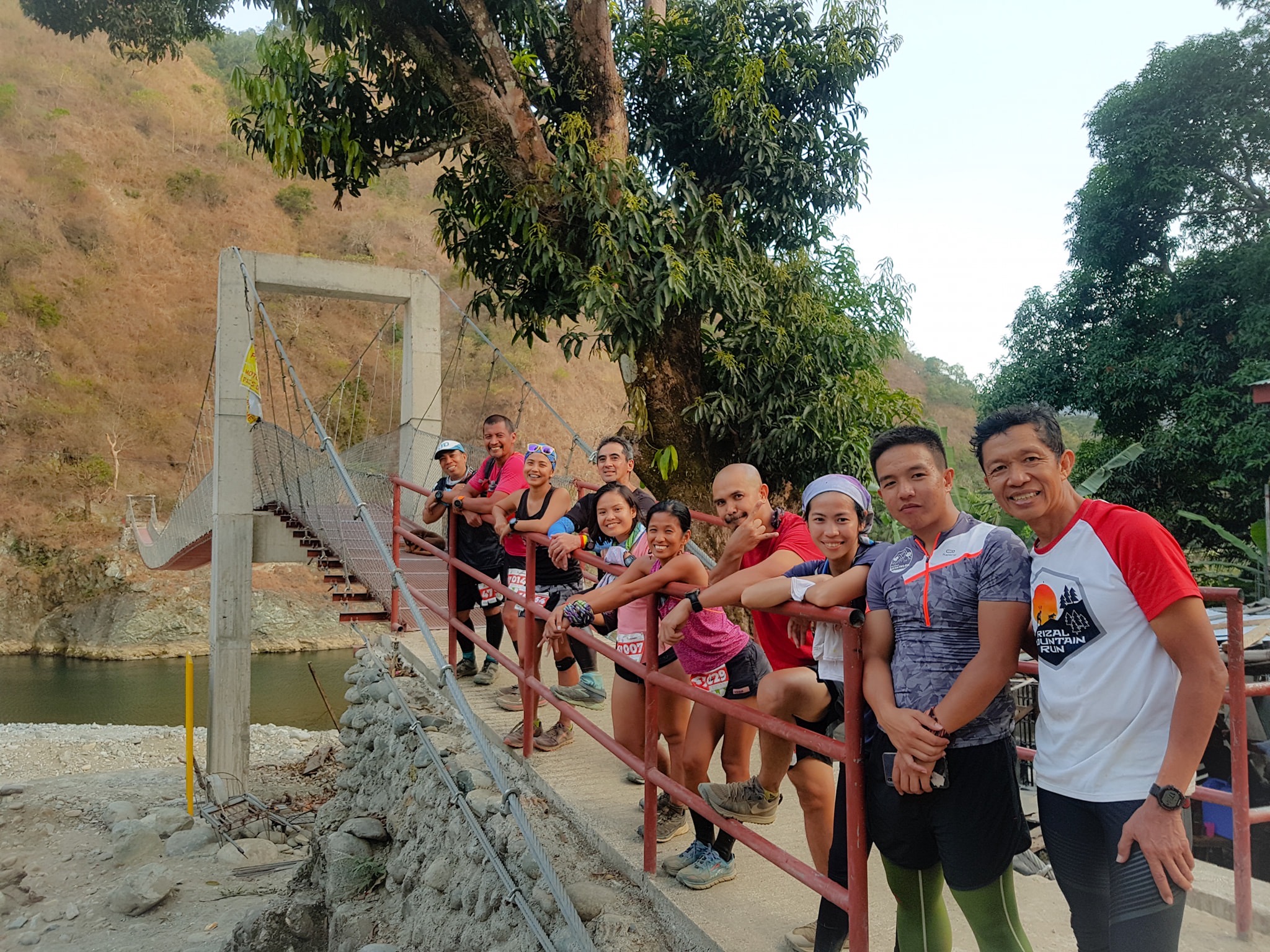
At the Tabu Aid Station, I entertained the idea of eating a glass of Halo-Halo (concoction of sweet fruits, milk, sugar, and crushed ice) but after eating it, I started to have an “acid reflux” (aka throwing up the fluids and foods I have ingested in the said Aid Station). The marshals and some of the runners offered help by giving me some medications and ginger tea to ease my stomach problem. I was asked by the Marshal if I would declare myself as DNF at the said AS since I have only 35 minutes to spare before the cut-off time of 13 hours but I replied that I would try my luck to just run and hike up to the Finish Line.
Five kilometers in 35 minutes? In the end, I was able to cover a distance of 4 kilometers only when my watch registered a time of 13 hours. After this, I just simply hiked until I reached the Finish Line. I found out later at the Finish Line from the RD that there were more than 20 runners behind me who were declared as DNF at the Tabu Aid Station.
Group Picture Of Some Of The Runners Behind Me @ Tabu AS/Bridge (Photo From Facebook)
Post Race Assessment
I am still happy that I was able to finish the race even if my time was longer than the prescribed cut-off time of 13 hours. My training using my “weighted backpack” gave me confidence to hike relentlessly on steep uphill climbs. The heat experience I got from this race was just part of my training for my future races but I need more of these type of races for me to adjust to hotter environment. I need to fix my problem on the occurrence of “acid reflux” during my ultra races and better learn how my body would prevent this from happening. I stayed and spent so much time at the Tivang Aid Stations (going to the peak and back) and at the Tabu Aid Station on my way to the Finish Line. Lastly, in KOTM races, expect the published distance to have an additional bonus distance of either 1-2 kilometers.
Post Data From My GPS Watch On The Event
Overall, I am happy with my performance in this race.







 Bald Runner
You must be logged in to post a comment.