The following article is a repost from what Jason Koop, Head Coach of CTS Ultrarunning, had published in their CTS website and shared in the Social Media outlets. I have received a copy of this article in my e-mail as one of the CTS Athletes for the past two years. (Note: I am on rest and recovery up to the end of this year). I hope this article will be of help to future trail ultra runners who have plans of joining this iconic race.
Repost: Top 3 Hot Takes from the 2019 UTMB, CCC and TDS Races
As has been the case for the last few years, I spent the better part of a weekend following athletes around the (newly revamped) Sur les Traces des Ducs de Savoie (TDS), Courmayeur – Champex – Chamonix (CCC), and Ultra-Trail du Mont-Blanc (UTMB) races. The races were packed with drama, success, failure and everything in between. From the front of the field through the final finishers, the mountain teaches us common lessons – sometimes the hard way – about how to prepare for and execute a great race.
Lesson #1- To win the race, you can be reasonably bold or just grind it out.
UTMB winners Pau Capel and Courtney Dauwalter days played out in seemingly opposing fashion, yet both ended up taking the top step of the podium. Pau took the lead early and never relinquished it, looking spry and springy all the way around the 170-kilometer course. Courtney on the other hand, quite frankly looked terrible the whole way. Normally a smiling and happy runner, she muddled, grunted and grinded her way to a 24 hour and 34 min winning time (which from a historical perspective is quite good).
As a quick comparison, go take a quick look at Update #8 and Update #9 from the final climb to Tête Aux Vents here- https://utmbmontblanc.com/en/live/utmb. It’s an easy compare and contrast of the styles from the winners of both races on the exact same climb.
What all runners can learn from this: There are several different pathways to the exact same result. If you are having a good day, take it and roll. Don’t get greedy with your race plan, but at the same time, if you are having a good day enjoy it and ride out the goodness, hopefully all the way to the finish line. On the other hand, if you are not having the best day and you have built up enough good fitness (as Courtney had), you should have enough resources to simply grind and tough it out. The day might not be all you hoped of, but you can still reach the finish line (and maybe surprise yourself along the way).
Lesson #2- Everyone has a bad day. The harder the race, the more the bad day is exacerbated.
Many of the top runners in the UTMB, CCC and TDS races did not have their days go to plan. Some of these runners ended up dropping out, while some ended up forging on for a respectable finish. Similarly, many of the mid- and back-of-the-pack runners we work with, and several I witnessed out on the course, were simply not having their best days. Although there is no easy ultra, the UTMB race in particular presents a wider variety of issues to contend with. The difficulty is compounded by the event’s length, starting at 6:00PM, running through the entire night right from the get go, copious amount of elevation gain, and the sheer energy of the Chamonix valley that drains the runners in advance of the starting gun. Generally speaking, athletes who got themselves into trouble in this race simply had a harder time bouncing back than those in the shorter (but still ridiculously hard) TDS and CCC.
What all runners can learn from this: If you are in a ridiculously hard race, do yourself a favor and play some defense early on. Aside from entering the race fit and ready, runners can do themselves a favor by running conservatively, taking some additional time at aid stations, having a good attitude, and – if there are any weather conditions – making sure you have enough gear to stay comfortable. All of these will give you a bit of downside protection for races where the penalty for failure is high!
Lesson #3- Multiple mistakes have compounding effects
Every runner wants to have a perfect race. Sorry to tell you, but those are rare. In a lifetime of running if you are able to scrape together a small handful of perfect races, consider yourself lucky. More often, ultramarathons are a series of problem solving exercises. Encounter some bad weather, move through it. Then, you will have a big, quad thrashing descent. After the descent, maybe your legs are giving you trouble. Your legs feel a bit better, then you have a monster climb ahead of you. Most runners can take each individual battle head-on in sequence by solving one problem and then moving to the next.
When issues pile on top of issues, the effect is greater than the sum of all the individual parts. I saw this unfold at the Beaufort (91.7 K) aid station during TDS. Nearly every runner from the front to the back of the field was tired at this point. CTS coach and eventual 2nd place finisher Hillary Allen (coached by Adam St. Pierre) even had the 1000-yard stare as she entered the aid station. As the day transpired, the runners arriving at the aid station complaining of one singular thing (I can’t eat, for example) would move in and move out quickly to tackle the next climb. The runners with a laundry list of issues (I can’t eat and my feet hurt and my quads are shot) took at least four times longer in the aid station and were moving at half the speed, regardless of where they were in the field. In this way, the runner who can’t eat but deals with it, then has their feet hurting and deals with that, and then has shot quads and deals with that, will finish far faster than the runner dealing with all three issues at once.
What all runners can learn from this: Dealing with issues during ultrarunning is inevitable. They are long and hard enough to present a host of problem solving opportunities. When these ‘opportunities’ creep up, don’t compound the problem by creating another one or not addressing the first. Address each issue as it comes up, when it comes up. ADAPT when necessary and slow down if you need to. It is far better to take a bit more time as issues creep up than continue to plow forward and create compounding issues.
I have always relished the opportunity to attend races as a coach, fan and support crew. These opportunities have always been ‘learning by observing’. The UTMB, CCC and TDS races were no exception. If you are reading, I hope you enjoyed the wonderful coverage of the event and some of these on the ground takeaways.
After I arrived from the United States to join the 123rd Boston Marathon this year, I immediately created a dirt, single track trail inside my Playground Lot which has a total area of about One Hectare. With the help of an assistant to cut/clear the path from weeds, roots, and protruding stones and rocks; and an engineer’s distance measuring cycle which I asked my friend, Rowell Ramos, to buy from Amazon, I was able to measure a distance of 400 meters for one loop. It is not as perfect as an Oval Track in shape but it suits the purpose of a single track trail path.
Since then, I’ve been running along this loop on a regular basis . I always change the direction of my run every time I finish One Mile, which is equivalent to 4 loops. Sometimes, I would change the direction of run after Two Miles or sometimes, I consider the elapsed time like changing the direction after running for 30 minutes. You can say that running in a loop is boring but I make sure to make some speed drills or “strides” in some of the sections. However, hearing my music playlist solves everything in terms of maintaining my pace, rhythm, and trying to be more focused on my leg speed/turn-over on the trail.
Ground Distance Measurement With My Dog Anton
The loop is not completely a flat one. It has some minimal ascents and descents which are short in distance but I could play or vary my pace and speed depending on what type of workout that I would do for the day. During my easy runs, I would register an average speed of 3.5-3.8 miles per hour with an initial one or two loops of hiking as my warm-up. During my tempo runs, I would try to reach my average speed from 3.8-4.2 miles per hour after doing some drills and stretching exercises. Lately, I would combine easy running on the first half of my workout and then do a tempo run on the last half. If my workout calls for a two-hour run, I would run the first hour with an easy average speed of 3.5 miles per hour and then the last hour with a tempo average speed of 4.2 miles per hour. My last one mile (4 loops) would be my cool-down jog.
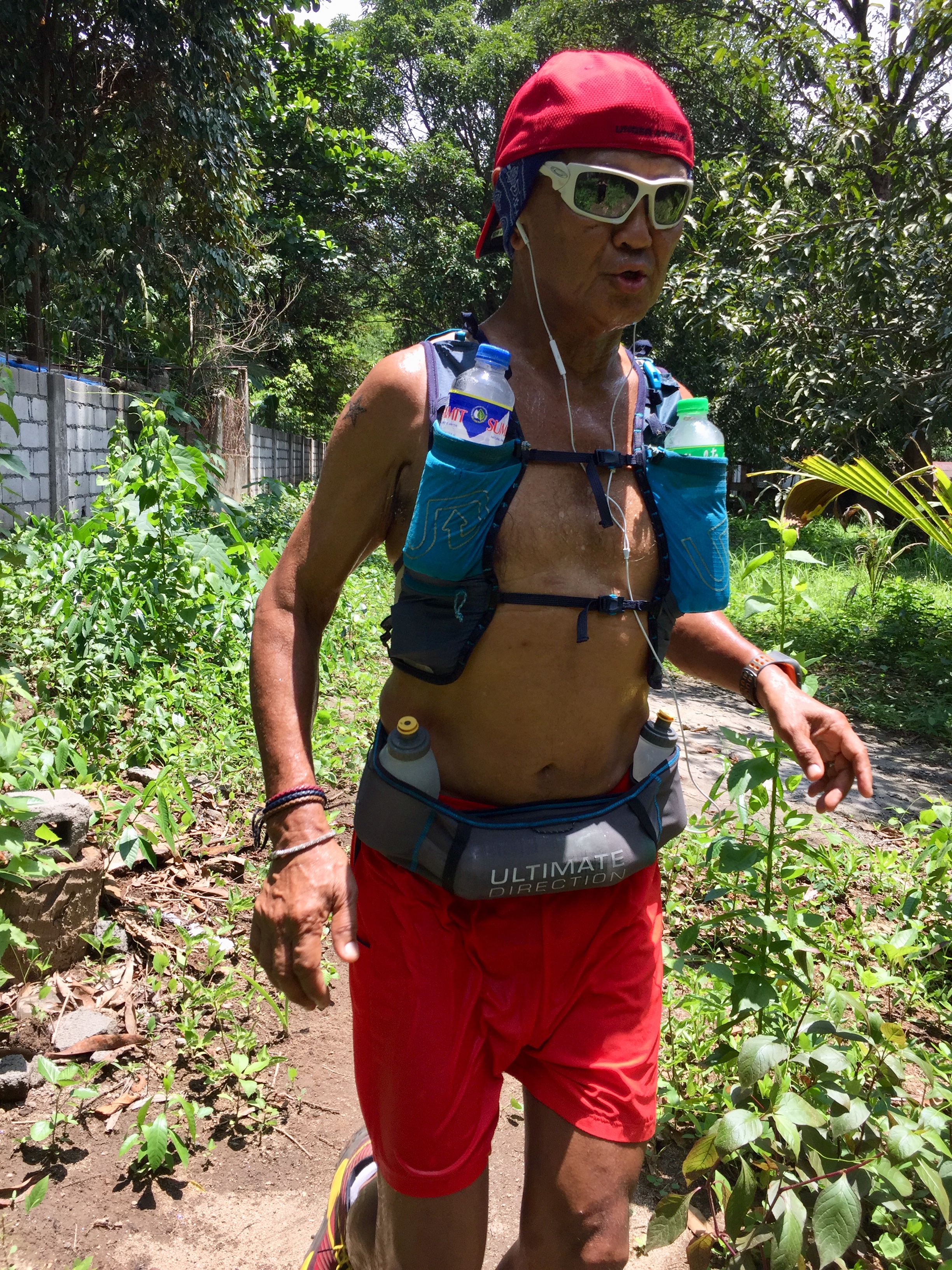
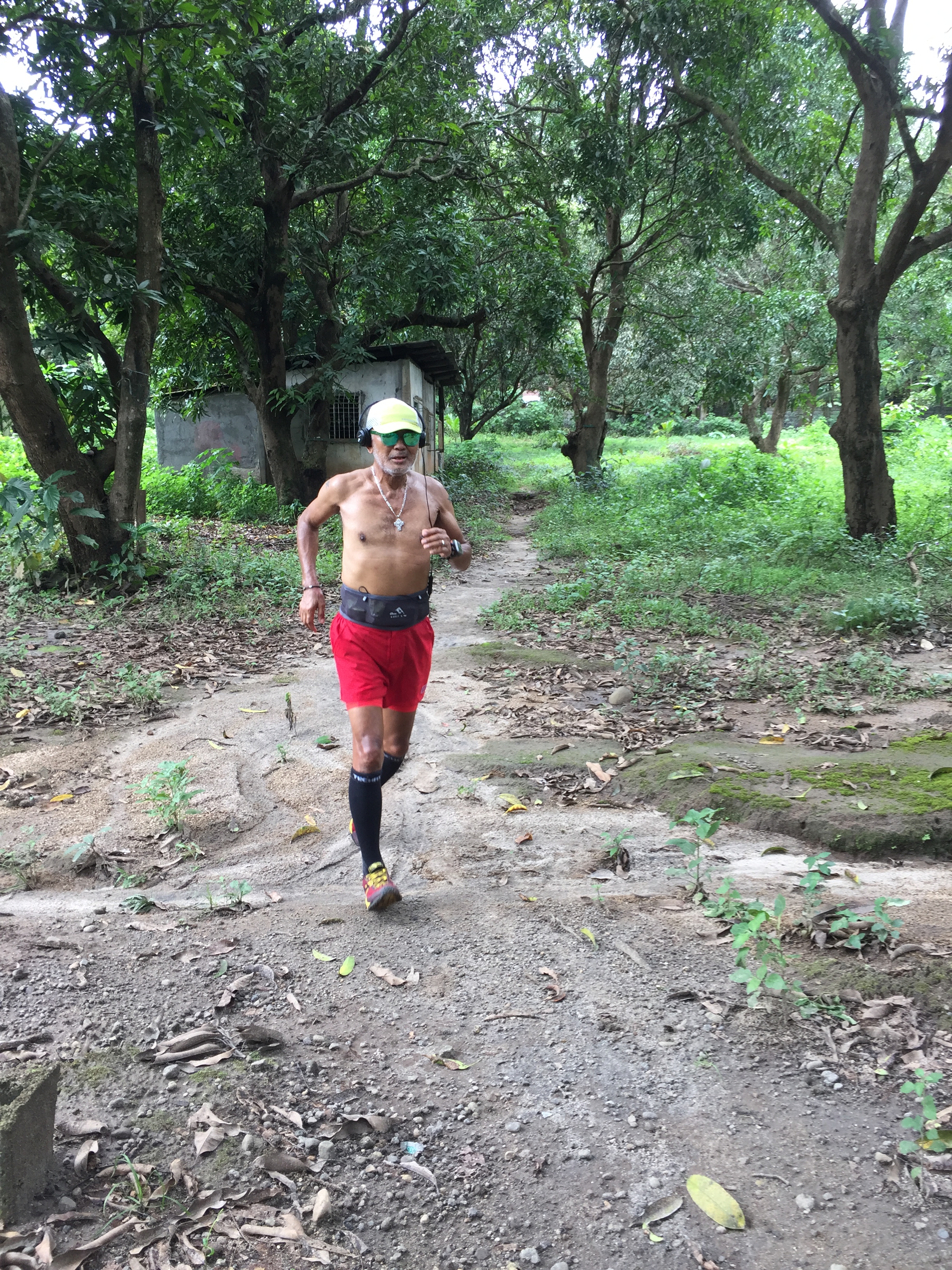
With this Playground Loop, I could do my runs anytime of the day. I could also run half-naked if the weather is hot or if I do my runs in the middle of the day. Most sections of the loop are covered with fruit trees (mangoes), coconuts, and ornamental plants and I don’t worry about the heat of the sun as I have a shade throughout the course. I also run during nighttime to test my headlamps if they are still working and trying to improve my pace and speed during night running. Most of all, I pre-position two water stations along the loop and take in some of my nutrition and hydration depending on the time or distance I have covered. I have been experimenting which one is more effective; taking in my food and hydration by the number of minutes or by the distance I have covered. Lately, I have concentrated my nutrition and hydration frequency by the number of miles I have covered. The alarm from my Garmin GPS Watch once I cover one mile, warns me to take in a bite of my food (rice cake, fruit, power bars, or biscuits) followed with 1/4 water from my 20 oz water bottle. And this practice is repeated every mile along the course. I have observed that I have maintained my speed through this method. However, in the end, I would still be lighter in weight by 2-3 pounds once I step into the weighing scale after my workout. Hopefully, I would be able to solve this situation in my future runs.
Hydration Vest & Belt Filled With Frozen WaterAnother Hydration Vest Used To Fill My Frozen Water
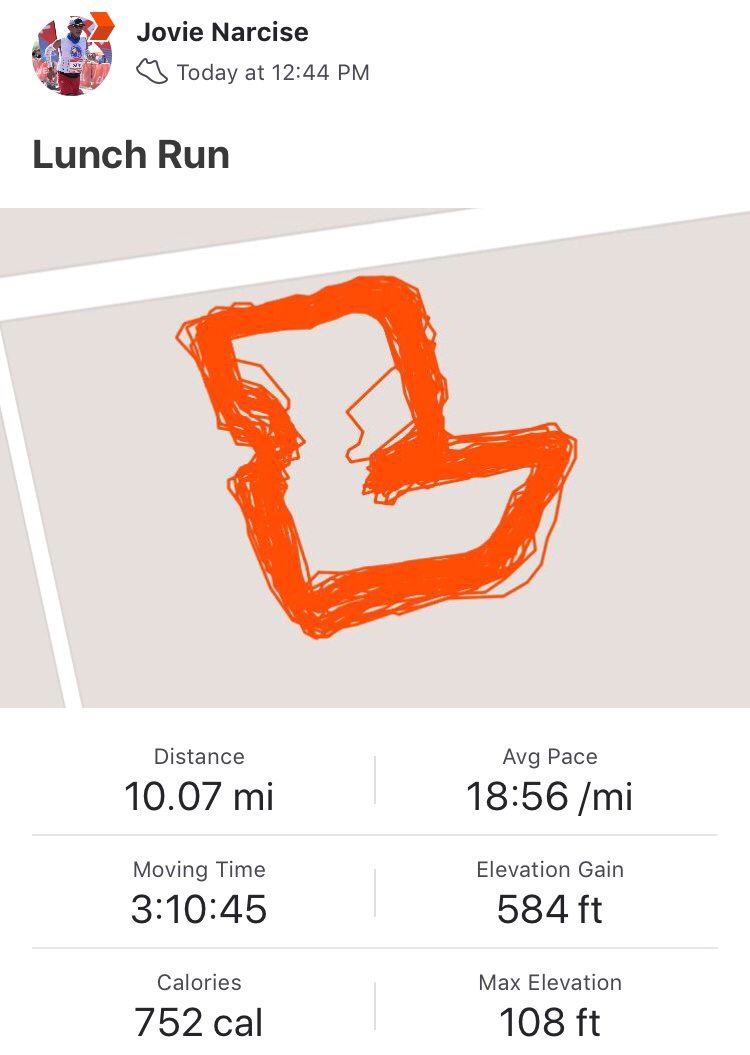
After months of running in this loop, I have observed that my Garmin GPS Watch would register a longer distance from what I have measured through the engineer’s distance cycle meter. I think the vegetation and the trees that cover the trail would impede the accurate reading of the GPS satellites with my Watch. The GPS distance would be longer by 30-50 meters depending on the time of the day and the prevailing weather. The GPS distance is longer in the later afternoon, evening, and when it is cloudy. Sometimes, my Strava distance would be shorter than what is registered in my Garmin GPS Watch.
Sample Of My Strava Data In My Playground Loop
When I prepared for an ultra trail event like the Cortina 48K Trail Race in Italy this summer, almost all my running workouts were done on this loop without my trekking poles but I would carry 20 pounds of frozen water in my hydration bottles with my hydration vest. Whether I would hike or jog during day or night, I would be slogging it out along this loop up to three hours or more. I could only count with my fingers on how many times did I peak and “double-traverse” Mt Roosevelt (highest mountain in my neighborhood) by slowly hiking up on the ascents and “power hiking” on the descents with 20 pounds of water and food in my vest and belt at the middle of the day. Combined with these hikes in the mountain and runs along my Playground Loop, I was able to finish the said race even though I was the last runner to arrive within the prescribed cut-off time of twelve hours.
The Joy Of Running Alone
Since I have been training alone in my runs, I feel safe and secured within the confines of my Playground Loop anytime of the day. I can do whatever I want. I could make a video of my runs. I could dance after my runs. I could shout. I could sing with my Playlist. I could think clearly while running. I could wear any running outfit that I like. And simply enjoy running alone in my Playground. At this time, my Playground Loop is still not ready to receive some visitors, even if they are my running friends. I will keep this place as sacred and private.
Shoe Review: Kalenji “Run Support” Running Shoes White & Black
It took for my Running Friend Jon Las Bruce of Decathlon to post a picture of the said running shoes (White Model) for me to be attracted to the shoes. Maybe it was because of the color White or maybe I need a reason to visit the Decathlon Store for the first time after months that this Sports Store (From France) has landed in the country. But most importantly, it was the price of the said shoes that really nailed the coffin, so to speak, to get a pair of this shoes. With a simple Private Message to JLB, he was able to reserve one pair for my size of 9.5 (US). Once I was in Manila, my priority was to get and buy the said shoes.
After about one week of running and testing the White Model in my training for the 2019 Boston Marathon which was two weeks before the event, I was surprised on its cushioning, fit for comfort, and lightweight of the shoes. The cushioning is better than the average feeling that I get from my other road shoes. The fit was perfect because the uppers are very light and there are holes or spaces that provide better ventilation for my feet as I can feel air would flow inside the shoes through these spaces. The upper mesh provided maximum comfort because it is stretchable and it has minimal seams. It feels also that I thought I was running with my lighter racing shoes as the shoes weighs 263+ grams for my size of 9.5.
My White Kalenji Run Support Shoes
Later, I found out that there is a Black version of the said shoes and I immediately contacted JLB of Decathlon to reserve one pair of the said color which I will get as soon as I visit Metro Manila. Who would be happy to have two pairs of this particular model of Kalenji Running Shoes when the price is equivalent to 1/3 of the price of the other popular brands of running shoes? Yes, I became a sucker for this particular shoe model of Kalenji. Cheap, durable, comfortable, light, with much cushion and a 2-year warranty of the shoes are enough reasons for me to have these shoes in my Running Arsenal. The price of One Thousand Nine Hundred Ninety Pesos for a pair is a stunner!
Well-Grooved and Sturdy Soles
I am not much of a technical person for me to mention to you the materialsused in the composition of the uppers, sole, linings, shoe laces, width of the forefoot/toe box, and stack height (difference on the thickness of the heeland forefoot parts of the shoes). I have a feeling that the stack height of this particular model is 8-10 mm which is very good for my old feet. I had been bothered by my Achilles Tendinitis on my right foot when I run long distances on the road and I found out that the higher stack height would relieve the pain during my runs. That is one of bonuses or advantage of this shoes as compared to my other running shoes. The bottom line is that this Kalenji Running Shoes is a WINNER!
Reflectorized Kalenji Logo and Strip on The Shoe Tongue
Wait! Before I forget, these shoes have also reflectorized strips on the back/heel portion and front of the uppers. The Kalenji Logo with a strip on the tongue of the shoes would glow when a light is being directed to the shoes, the same with reflectorized strips at the back of the shoes. With these strips, you can be visible during your night running and thus, gives safety for the user from incoming faster moving vehicles at your front or behind you.
Up to this date, I have already ran more than 200 Kilometers for each of these shoes. Sometimes, I would combine the shoes, White on my right /left feet and the other Black on the other feet while running in my Playground! Yes, I usually use them also in my Trail Loop in my Playground and they give me much comfort and support to my old knees! By doing this combination of colored shoes in my running workouts, I would give them what they deserve on equal basis. After almost five (5) months of running with these shoes, I could barely see any wear and tear on their soles as compared to my Hoka One One “road to trail” shoes. Lately, during my running “stunt” at this year’s MILO Marathon, I used the Black Model of this particular shoes when I finished the MILO Half-Marathon running with a suit and tie.
My Black Kalenji Run Support (I am Size 43!)
It is a regret on my part not being able to decide to buy the RED model of this shoes when I saw it in the Decathlon Store in Mongkok, Hongkong. Maybe, I would buy this particular shoes in the future but how I wish I could buy and try their KIPRUN Trail shoes, too!
I highly recommend this shoes for daily running workouts, as well as, in short distance races. They are my GO running shoes when I decide to hit the paved roads when I do my tempo runs in preparation for my ultra tail events.
Why not? Running With the Kalenji Run Support Shoes White & Black At The Same Time
(Note: Buying my first Black Kalenji “Run Support” Shoes was my first visit to a Decathlon Store in the Philippines and since then I have been going back to the same store at Tiendesitas, Pasig City and when I go abroad, the first thing that I would ask “Google” is the location of the Decathlon Store in the city! Since then, I would buy some of my running attire from Decathlon. They are very cheap and you can get the best quality in terms of durability and comfort. Wow! Thanks to Jon Las Bruce and to the rest of the running staff of the said store for their immediate assistance whenever I visit the place. Of course, I paid for these Kalenji Shoes and I never had thought of getting FREE items in the store for my reviews. And one more thing, all the Decathlon Stores have a customers lounge where one could sit and relax, and also enjoy their Free Wi-Fi. Whenever I visit Hongkong, the Decathlon Store in Mongkok is my favorite “meet-up” place for those Pinoy runners.)
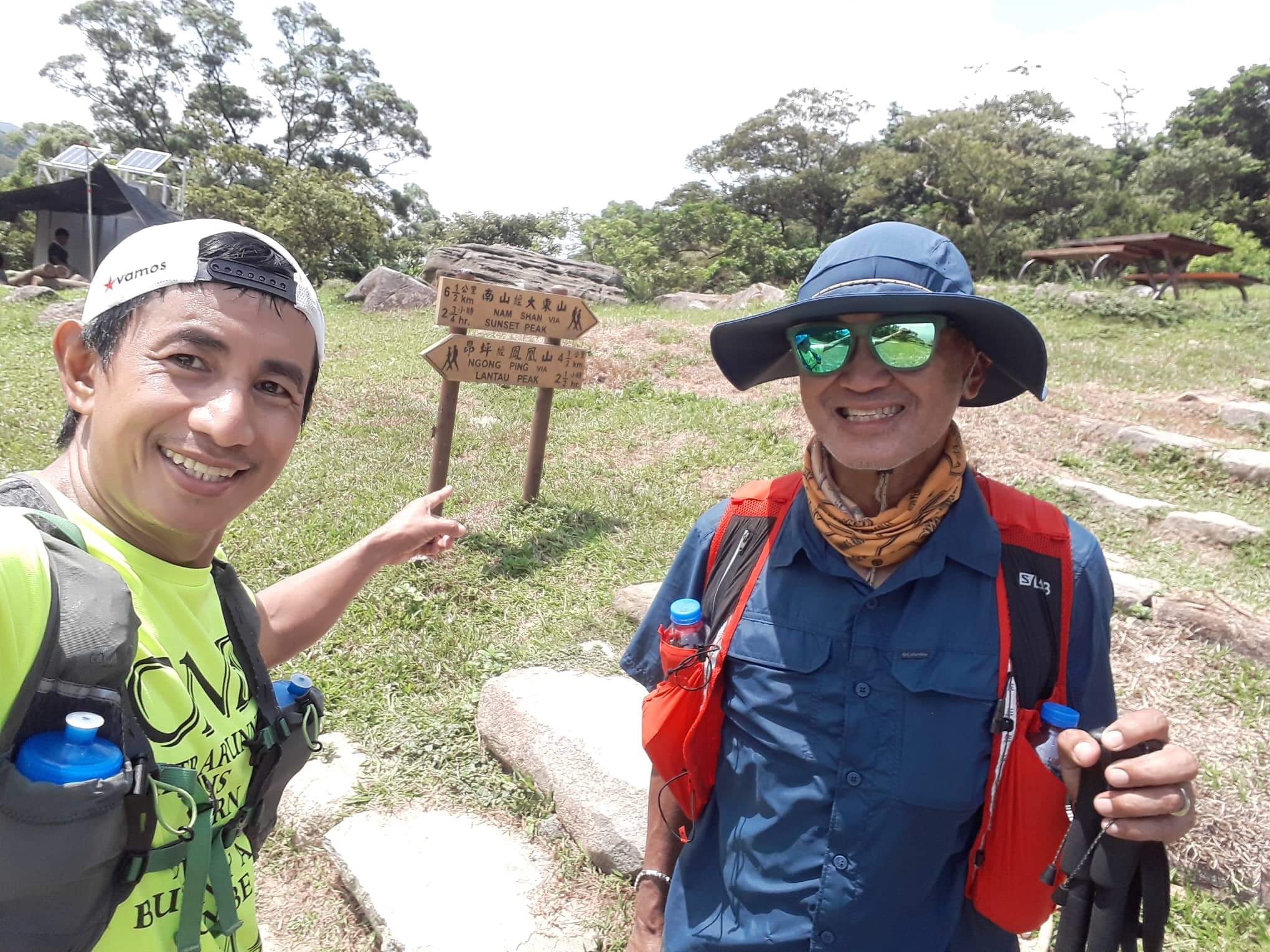
Despite the protests and demonstrations in Hongkong during my trip last week, we enjoyed our two-day “back to back” runs in Lantau Island in Hongkong. We were not affected by the situation thereat as the Transportation Facilities (MRT/Subway and the Ferry Ride) were providing normal operations to the Public. Although the fare to and from the island is quite expensive which is about One Hundred Hongkong Dollars for each of us to include our food and water before and after our workout, the experience is priceless as we did not have to pay any Permits, Guide Fees, or any related fees in using the Lantau Trail. As compared to the trails in the Philippines, there are so many expenses or fees one has to incur in going to popular trail destinations near or outside Metro Manila.
Thomas was able to completely had an insight and orientation of the Lantau Trail knowing that he will be on this trail on the early evening of the second day of the event. Due to this recon run, he told me that he is confident to run the whole trail during nighttime. On the first day, he estimates that he was able to run and hike a distance of almost 25 kilometers. On the second day, he was able to run almost 30 kilometers. Those missing sections which he was not able to reach are the sections of Lantau Peak, Ngong Ping, and those flat areas in Tai Po.
As for me, on the first day, I was able to cover 11 kilometers with an elevation gain of almost 3,000 feet and on the second day, about 15 kilometers with an elevation gain of almost 1,800 feet. I am satisfied with my workout despite the heat and humidity; and the lack of training. Actually, I did more hiking in the ascents and descents, and tried to jog on the flat sections of the trail.
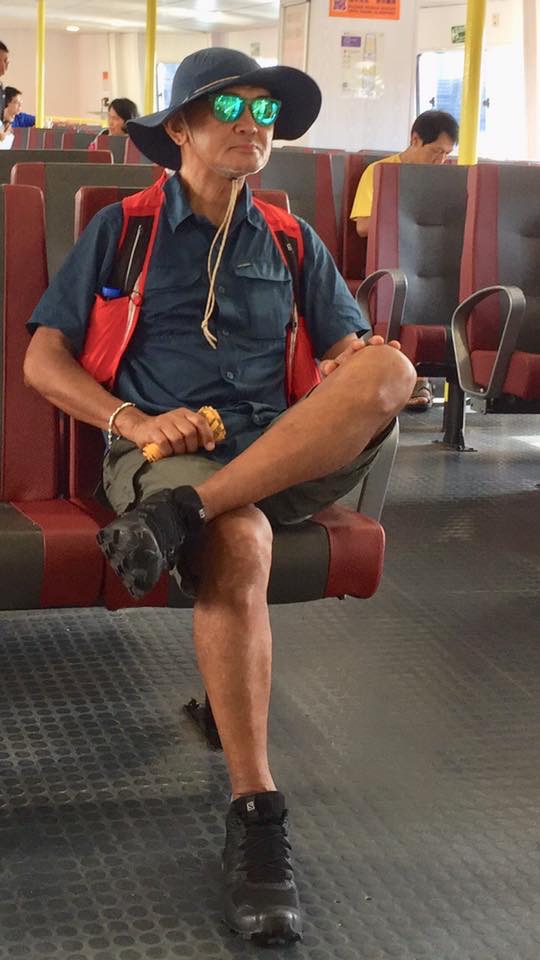
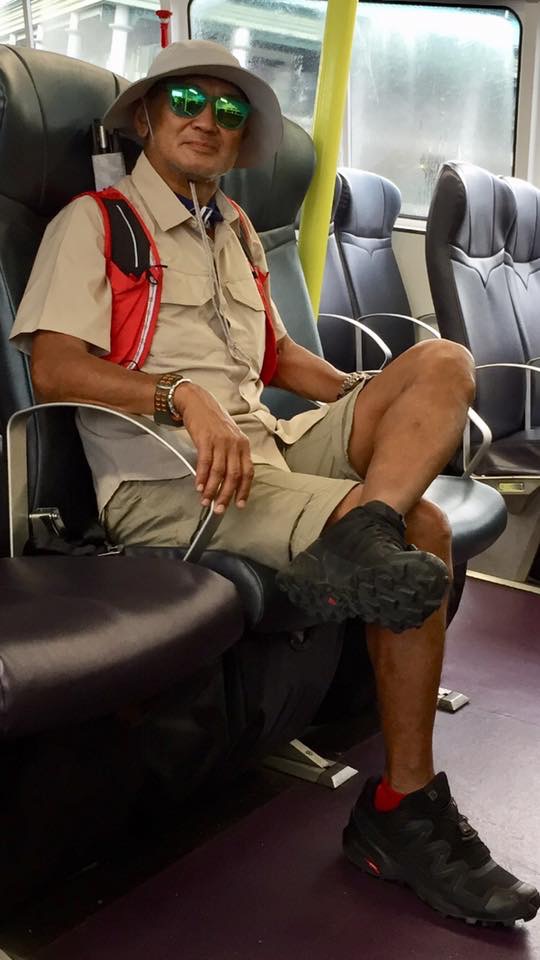
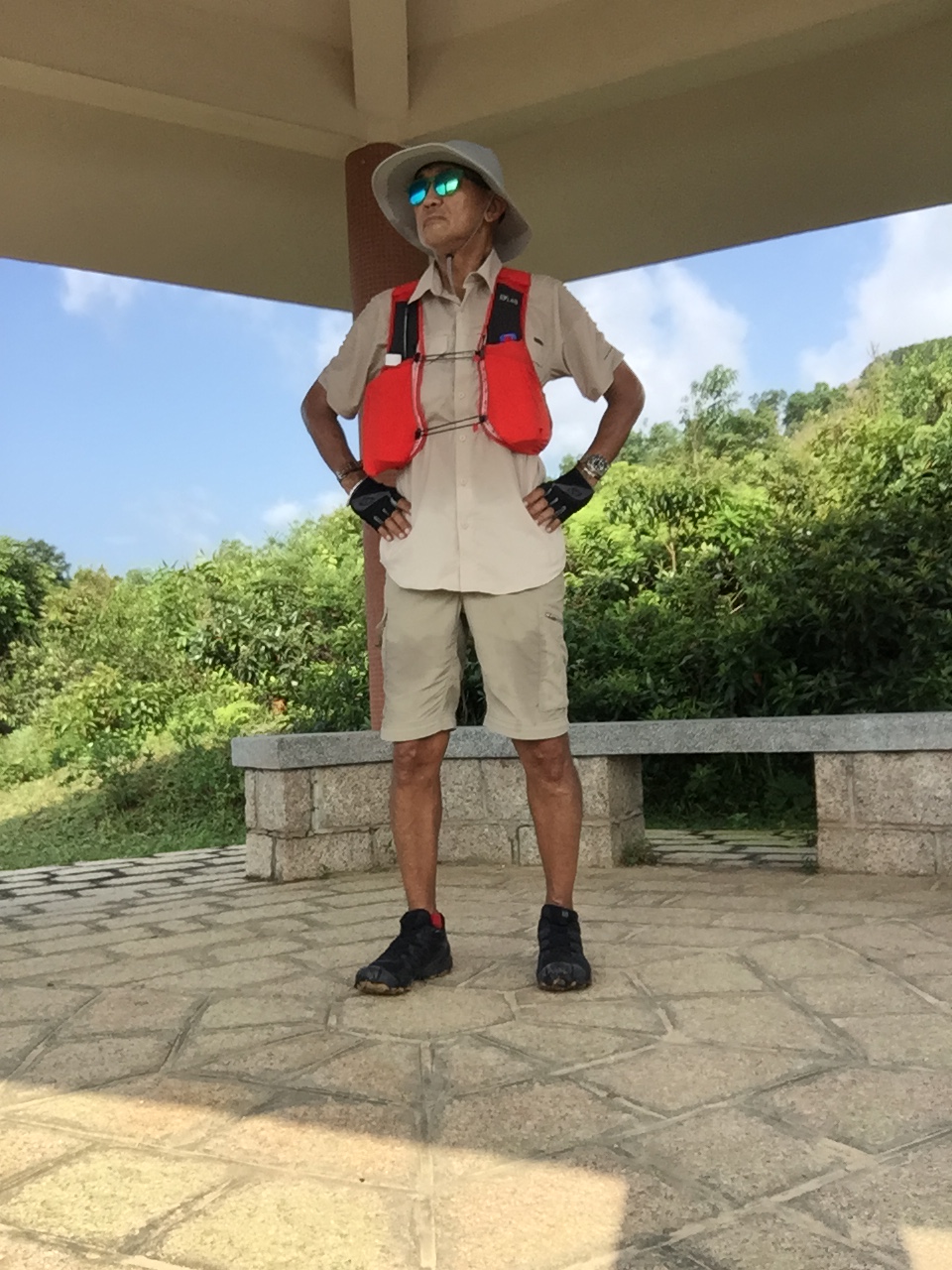
For two days, I have been using hiking attire except for the trail shoes. My shirt and shorts are from Columbia which are popular to hikers and mountaineers. My “Tilley” Hats that I used were bought at DecathlonHongkong and I find them to be comfortable and could easily dry when wet with my sweat or when I douse my head with cool water from the water spring/streams along the trail. My trail shoes is the Salomon Speedcross 5 which I found out to have a wider forefoot but I have problem with its insoles as they have the tendency to fold on my descents. It was suggested by Thomas that I have to glue the insoles inside the shoes to make them permanently immovable. I was using the Gipron Trekking Poles and they gave me the necessary aid and balance support in the ascents and descents. My hydration vest is the 8-liter Salomon SLAB Sense Pack where I stashed my money/Octopus Card, cellphone, space blanket, hydration bottles, dry clothes, light jacket, and power bars. It was my first time to use my Goodr Sunglasses (Green Lens) which I bought in A Runners Circle (ARC) Store in Los Angeles, California, USA two years ago. The socks that I used were newly-bought from the Decathlon Store in Mongkok, Hongkong.
This recon run will be helpful to me as I am registered for the 2020 Translantau 50K Trail Ultra which is scheduled on March 1, 2020. Hopefully, by that time, I will be well-prepared as in my past finishes in the Translantau 100K.
If I have a chance to return to Hongkong before the end of this year, I would gladly go back again to Lantau Trail and MacLehose Trail if time permits.
While Thomas and I were on our way back to Central after our first recon day in Lantau, I asked him if he wants to return on the following day to trace the reverse route of the trail from Lantau Trail Post 140, going to Lantau Trail Pos 000. Thomas answered affirmatively to my question. Immediately, I have to google the route of the Lantau Trail and I was able to locate the end of the trail. (Note: I could no longer remember the route when I ran the Translantau 100 in the past editions)
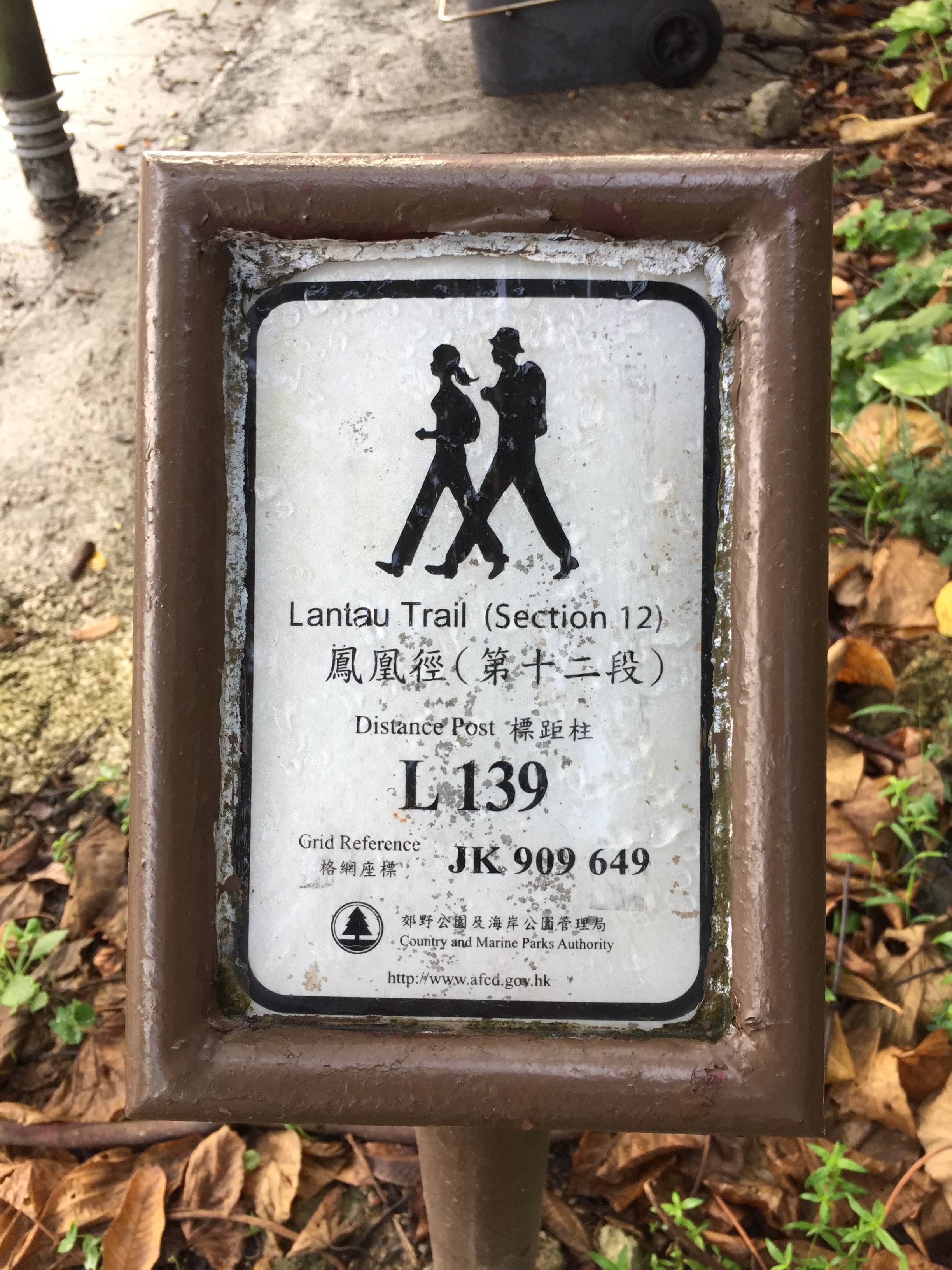
We adjusted our schedule the following day and we had to wake up earlier than the previous day in order to take advantage with a cooler temperature in the early morning. We left our hostel at 6:00 AM, took our Congee breakfast, and then proceeded to the MRT for our Ferry Trip at Central. The ferry trip that we took was the more expensive one with Air-Con and faster speed. In a 30-minute ride, we arrived at Mui Wo at 8:30 AM and immediately proceeded at the back of the business buildings near the Pier until we reached the entry/exit of the Lantau Trail where the Post Marker 139 is located.
Lantau Trail Post 139 Located At The End Of Lantau Trail
The climb was easier than the first kilometers we had the previous day. The trail route was covered with vegetation and with the absence of rock stairs. Thomas went ahead of me with the same agreement/arrangement we had the previous day. I told him to maximize the number of mileage he can cover for the day and he can easily meet me in some of the camping areas or barbecue grill parks along the route.
After 3 kilometers, I saw a resting fixture and I was enticed to take some pictures around the place and some “selfies”. I took comfort of my easy pace while hiking as the air was cooler and the trail ground was damp with some mud. I could see the trail shoe marks/footprints of Thomas along the trail. My next stop was the next 3 kilometers but there is only one water stream that I passed along the way.
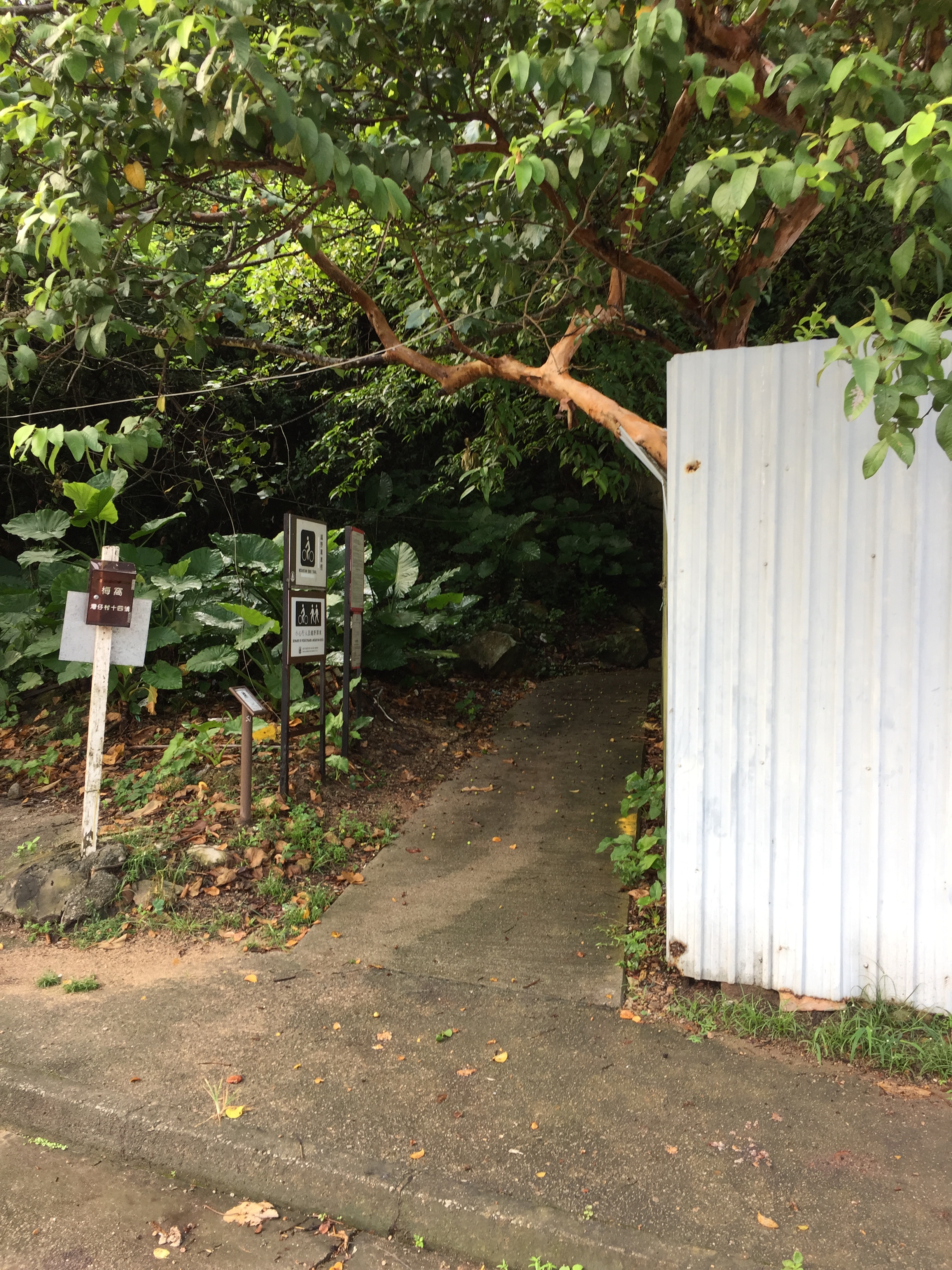
Entry To The Trail (Reverse Route)
This last portion of the Lantau Trail was flatter as compared to the first section of the trail. Although the next trail camp from the start of the reverse route is longer in distance than the original route ( from the trailhead), most of the sections of the trail are covered with vegetation and trees and due to its flatter elevation profile, I could jog or run on these sections. There is also a portion where the road is paved due to the fact that the route runs alongside a concrete drainage canal where the water comes from a dam with gates that control the flow of water to the drainage canal. There are also Barbecue Grill Camps where there are concrete tables and benches, and comfort rooms. The cemented flat road beside the drainage canal has a distance of at least 9 kilometers.
I would rest, hydrate and take in some of my power bars and SkyFlakes biscuits in these Barbecue Camps. When I was out of water, I just refilled my bottles from the flowing water of streams coming from the side of the mountain.
I think I was able to hike and jog for a distance of 12 kilometers. It is worthy to note that the first village that I reached along this route was at Pui O. This village is along the coast line where I could see modern houses and apartments where I could see white people living in them and most of the private cars parked are made in Europe, At one time, I was able to meet a group of young students being led by their teacher with camping gears and food. I would also see men who are with their swimming trunks and goggles coming out of the seashore. I have the conclusion that this place is a swimming area and a camping area.
“Selfie” While Resting
About 50 meters before reaching the National Road/Tun Chung Road, I saw a convenience store with a bench and a wide umbrella and I decided to stop and bought some water and bottles of Pocari Sweat. Because of the heat, I was able to drink half gallon of water and two bottles of Pocari Sweat. I think I took about 15-20 minutes sitting in front of this store.
As I reached the National Road, a yellow painted markings in wood points me to turn left along the National Road. After about 70 meters, I could see already another yellow directional sign at the other side of the road. I followed the sign and I was back again to the trail with softer footing because I transitioned again to wet ground. After a few Lantau Trail Posts, I reached a Cemented Biking Path which is near Barbecue Grill Camps. i tried to jog and power hike on this cemented portion of the trail which is beside a concrete drainage canal.
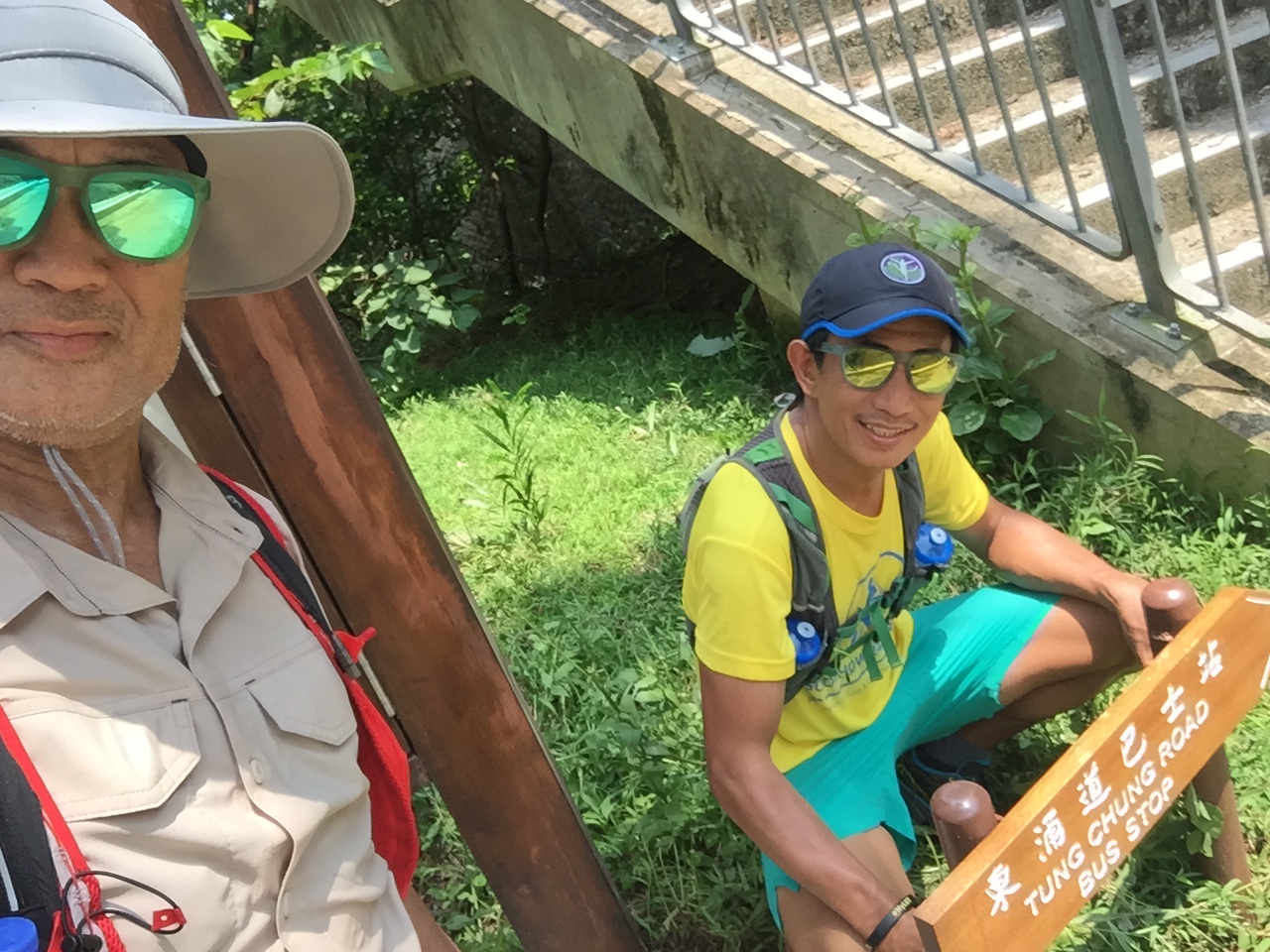
After drinking and eating my food, I decided to rest in one of the benches and I really don’t know how many minutes I have dozed off when finally Thomas arrived at the Barbecue Camp. He told me that the next Bus Station is located a few meters ahead and to our surprise, it was the same Bus Stop that we got our Bus ride back to Moi Wo the day before.
On Top Of Us Is The Bus Stop
After few minutes of waiting at the Bus Stop, we finally had our ride and we decided to change our clothes at the Public Comfort Room and then proceed to the Pier to catch our Ferry ride back to Central. We found out later that we were not able to catch our trip and we decided to have our light snacks and Coke drinks at the MacDonald’s while waiting for our scheduled Ferry ride.
We were back in our hostel at 4:00 PM, earlier than we had yesterday, and we did not know that there was a protest which was about to start at 5:00 PM a few kilometers from our place. We took our shower and changed immediately to our casual wear as we have a scheduled meeting with a Pinoy resident in Hongkong who is also an endurance athlete and who promised me to bring me to where I could buy the cheapest Seiko Watches in Hongkong.
My meeting with this Pinoy resident in Hongkong deserves another story in this blog.
Trip To Hongkong (2nd Trip For 2019) August 12-15, 2019
This is my second trip to Hongkong for this year (2019). I was in Hongkong during this year’s Chinese New Year to support the participation of Thomas Combisen in the Hongkong 4 Trails Ultra Challenge on the second week of February. Unfortunately, Thomas was not able to make the cut-off time for him to reach the last leg of the Lantau Trail during the race. I promised to Thomas to bring him back to Hongkong purposely to run the Lantau Trail which has a distance of 70 kilometers.
Weeks prior to our trip this month, news had been around about the Protests and Demonstrations that had been occuring in the different parts of Hongkong. Sine we have purchased and made our reservations for our accommodation weeks ahead, we decided to take the risk and continue with our scheduled plan for this trip.
It was supposed to be a trip for four trail runners, including myself, but two of our companions were not able to make it due to personal circumstances. The overall plan for the trip was to recon the Lantau Trail starting from Original Trailhead and from the End of the Trail going on a reverse route. We planned to do this in one day and the rest of the days will be devoted to food trip, shopping, and side trip to Macau.
We left Manila at 5:50 AM of Monday, August 12 and arrived in Hongkong at 8:00 AM. After loading some money into our Octopus Cards, we took the regular bus to Mongkok, where our regular hostel is located. We had been a regular client/customer in the said hostel since I have started joining trail running events in Hongkong. Although I have stayed in more expensive hotels in Tsim Tsai Tsui, Kennedy Town, and Jordan, I always prefer to stay in Mongkok for the authentic Chinese cuisine which are very cheap and lots of shopping in the nearby streets and Nathan Road.
Another interesting reason for this trip to Hongkong is for my new hobby of Seiko Watch Limited Edition Collection! Before this trip, I have been asking some of my FB friends who are residing in Hongkong as to where to buy these Seiko Watches and they gave me some tips. Earlier this year, I was fond of the Onitsuka Tiger sneakers and I had to look and buy a particular model in Causeway Bay. I am done already with the OT sneakers and now I am crazy with Seiko Limited Edition Watches!
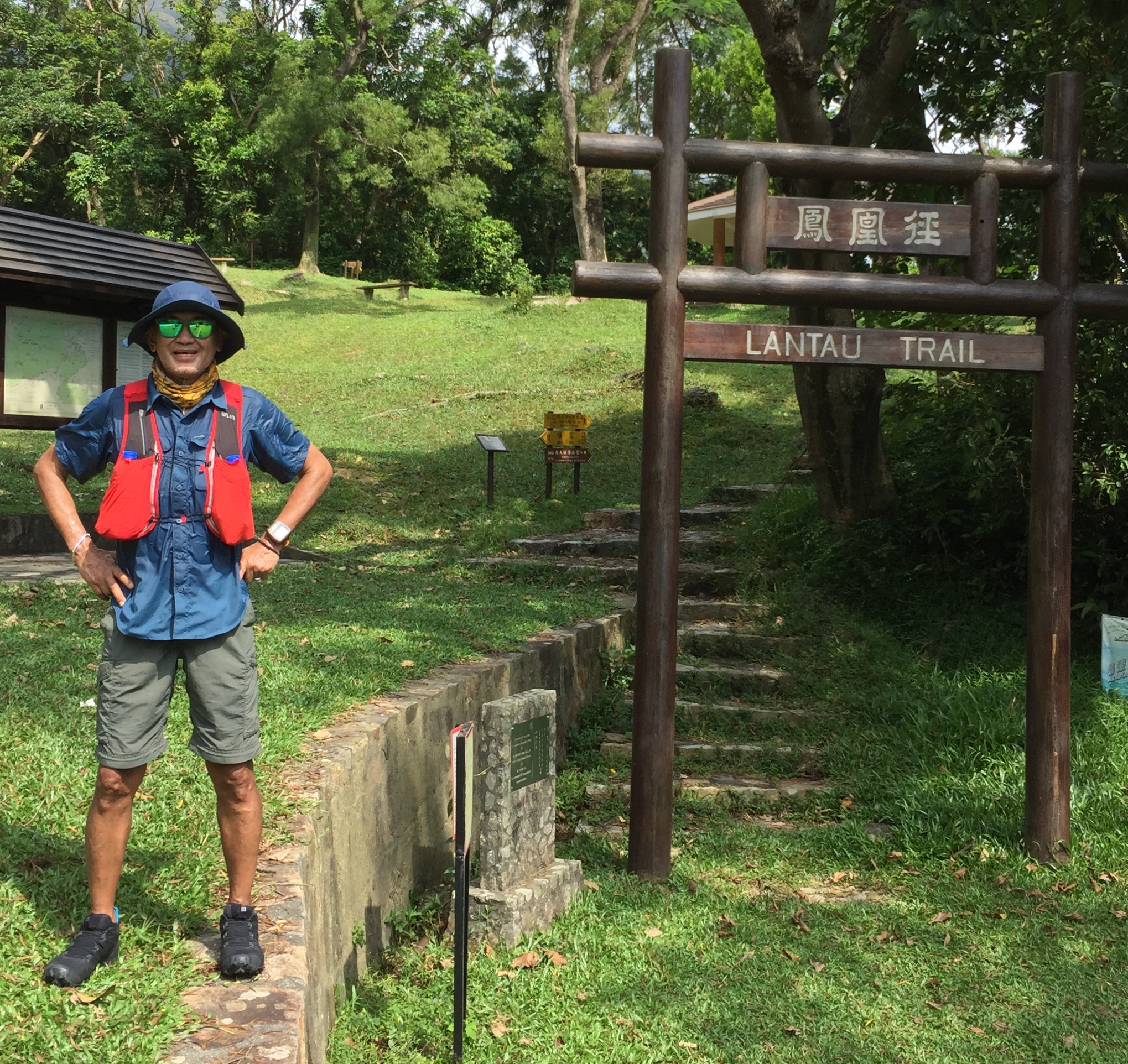
Starting At The Trailhead LT Post 001
On Tuesday morning, Thomas and I took the MRT from Mongkok to Central and then walked to the Ferry Terminal Port #6 for our trip to Lantau. After one hour and half, we were at Mui Wo and walked along the Tun Chung Road going to the Trailhead of the Lantau Trail and it was already 9:30 AM. The distance from the Mui Wo Bus Terminal to the Trailhead is about 2 kilometers which is an uphill road. As we reached the trailhead, we were already sweating because of the hot/warm weather in the area. Thomas and I made an agreement for him to proceed and run the trail as fast as he can while I would hike and jog to the next trail camp and try to follow him. If in case he would determine if his target mileage for the day is done, he can just backtrack along the trail and try to find me. From there we could take the bus in going either to Tun Chung or back to Moi Wo Bus Terminal.
So, that was what we had done. From the trailhead, it was an uphill climb to Sunset Peak and then descend to the next trail camp/rest area and then cross the National Road in going to Lantau Peak. It was a very hard hike for me because of the heat and lack of training. I had to rest for three times before reaching the Sunset Peak and stopped every flowing stream to douse some cold water to my head and body. There is also a water reservoir where there was a faucet on its side that gave me lots of water to fill up my bottles and rehydrate myself. A white guy in trail shorts and shirt passed me on the first 2 kilometers of my ascent; I met two white guys and a lady going down from Sunset Peak; three white guys with big backpacks on my descent from Sunset Peak which I found later that they are from California, USA for some Para-Sailing activity in the area; and two local young guys who were taking selfies on my way down near the trail camp/rest area.
Descending From Sunset Peak
I attempted to start hiking the first kilometers towards Lantau Peak but I could no longer endure the heat of the sun and I was already exhausted due to lack of training. I went back to the waiting shed at the trail camp and wait for Thomas to arrive.
I really don’t know how many minutes I was able to doze off when Thomas arrived. Thomas was also complaining of the heat and humidity but he was happy to recon the place. He was longing for an ice cold Coke that we decided to walk towards the next village along the National Road. But to our surprise, the village was still too far that we decided to stop our hike in a Bus Stop and waited for our Bus Ride to Mui Wo.
In a few minutes, we took our Bus ride and immediately changed to dry clothes at the last row of seats inside the said bus. We went directly to the McDonalds at Mui Wofor our first meal of the day with a Large Ice Cold Coke and Double Cheeseburger!
After our McDo meal, we waited for our ferry ride back to Central. This time, the Ferry was an Air- Conditioned with higher fare BUT with NO Wi-Fi as compared with the slower one, cheap with Wi-Fi which we rode on our way to Lantau.
Thomas and I @ The First Resting Camp
It was good to be back to Lantau Island to run and hike after finishing the Translantau 100K for two times in the past. Well, I was then a younger and a stronger trail runner then!
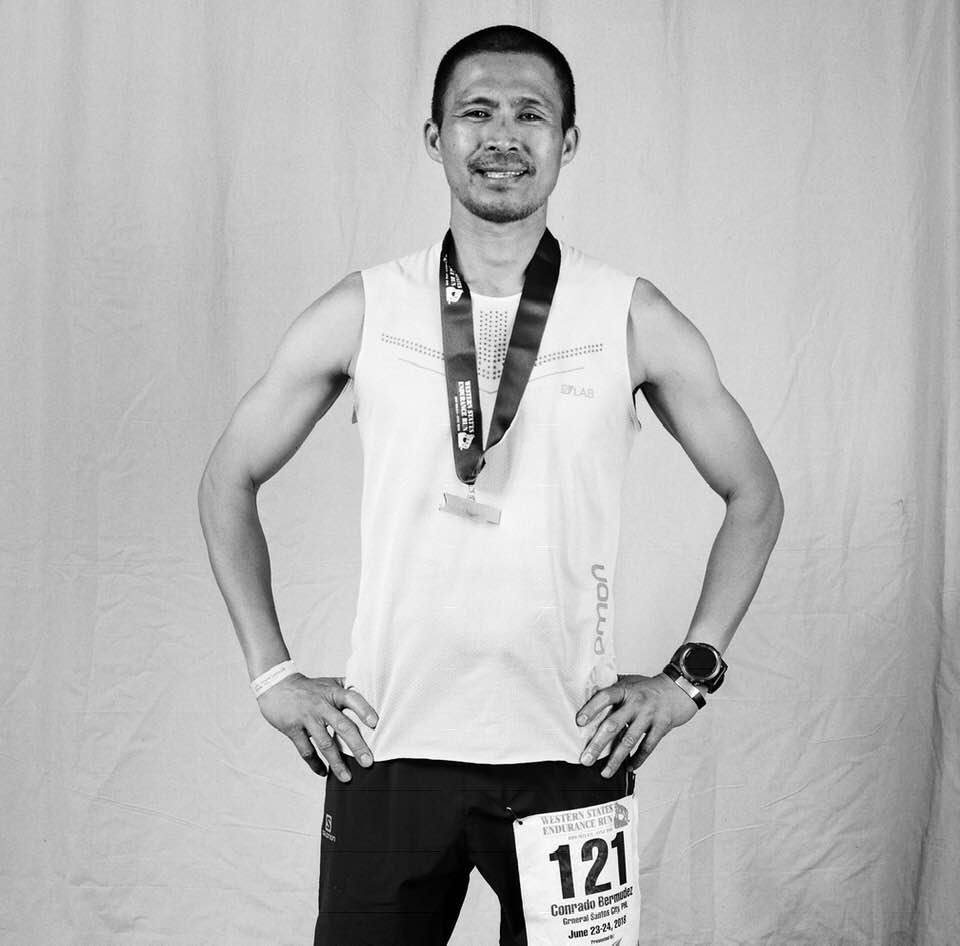
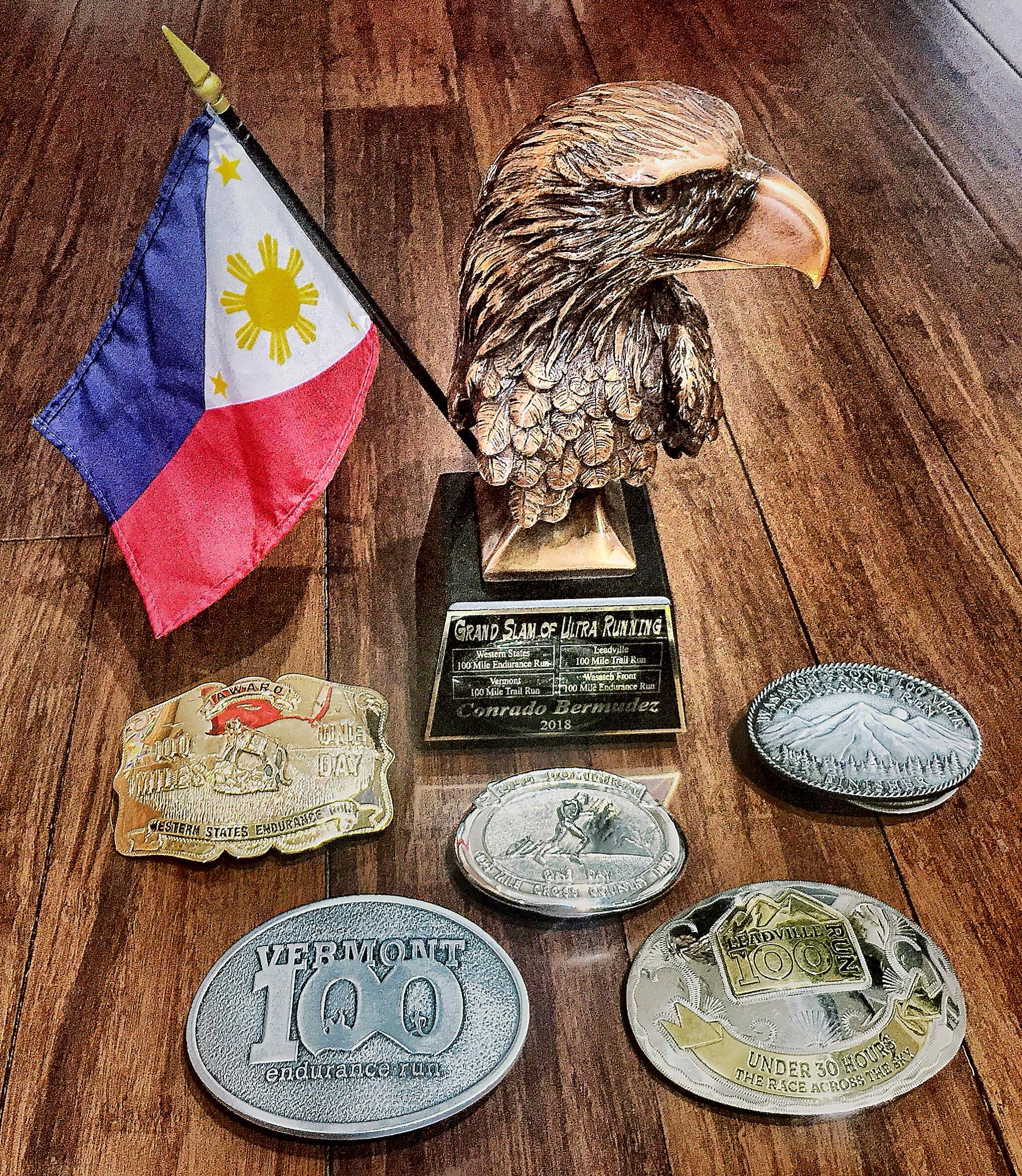
Sometime in August 2015, I featured Conrado “Jun” Bermudez, Jr in this blog as the First Filipino Runner/Ultrarunner to have finished a 200-Mile Mountain Trail Single-Stage Endurance Race at the Bigfoot 200-Mile Endurance Race in Washington State, USA. It was in the post in this blog where I wrote about his background and running accomplishments since he became a passionate runner. For this year, 2018, he finished the Ultimate Award in Ultrarunning in the United States which is the “Grand Slam of Ultrarunning” Eagle Award and I was able to send him an e-mail to congratulate him on this inspiring feat which is considered as a “dream” to be accomplished among the best ultarrunners in the world. I also sent him some questions to answer of which I am now publishing his answers in this blog.
BR: Congratulations on your 2018 US Grand Slam of Ultrarunning finish! That’s a huge accomplishment and biggest pride for being the First Filipino to receive the Eagle Award in Ultrarunning. You are now Finisher #354 out of the 363 Finishers of the GSU since this award was created in 1986.
As usual, hoping that you will have the time, I am sending you some questions for you to answer which I will publish in my blog. There is no deadline though as I know you are still resting and recovering.
Jun:Thank you for this opportunity to be included on your blog, sir. Thank you also for mentoring me when I started my ultrarunning way back in 2013. As a Filipino citizen, it is a great pleasure and honor to represent our country in this sporting event. My heartfelt gratitude to all the support!
As a 45 year-old runner, joining the Grand Slam was a no-brainer. There was no shadow of doubt not to join. It was a once-in-a-lifetime opportunity and this chance may not be available to me in the future. If it is going to happen by that time, I may not be physically that capable anymore for the challenge due to old age.
Jun Bermudez Western States 100 Picture
BR: What is your feeling now that you have finished the US Grand Slam of Ultraruning with an impressive time of 106:52:09 hours and the First Filipino to have received the prestigious Eagle Award in Ultrarunning?
Jun: I am deeply delighted and humbled to be part of this 32nd year of the Grand Slam of Ultrarunning, a special historical event in ultrarunning world. It still feels surreal that I was able to finish them and trace the footprints of the first finisher, Thomas Green, in 1986 and the grandfathers of the five 100 milers. These races are the oldest 100 milers in the US or probably in the world with the Old Dominion 100-Mille Cross Country Run for 40 years, Western States 100-Mile Endurance Run for 41 years (the oldest in the world), Vermont 100-Mile Endurance Run for 30 years, Leadville Trail 100 Run for 35 years, and the Wasatch Front 100-Mile Endurance Run for 38 years. Just to be entered in the Grand Slam of Ultrarunning events, itself, is a privilege. It takes a lot of luck in the lotteries (Western States 100, Leadville 100, Wasatch 100) to get entered in the same year. All of the races, except Wasatch 100, do not give provisional entry anymore. For non-lottery events, the Vermont 100 is a first-come-first-served basis and the registration sold out in less than 15 minutes when it opened, and the Old Dominion 100 got filled up weeks before the event date which normally did not happen in previous years. My success was not possible without the support of my friends and, of course, the encouragement, the love and understanding of my wife and my daughter.
BR: You are one of the few Eagle awardees who finished and completed the FIVE Races in a span of three months, what was your recovery in between these races?
Jun: The Grand Slam is arduous to complete. The three to four weeks of minimal time for recovery between races and the cumulative fatigue put so much toll on our body.
I ran two road marathons in April (Boston and New Jersey) prior to the Old Dominion 100 (02 June). I started my taper three weeks before the race day so my body could fully recover. In between races, my first week of recovery consisted of moderate stretching and no running, which were slow hiking and light spinning workout. For the first two days after the race, I was doing ice therapy on my feet to remove the inflammation. And mostly during the period, I was doing a dynamic compression of my legs to flush out waste and hasten muscular recovery. Also, I am sleeping with my legs elevated almost every night even when I am not on training because I spend so much time on my feet at work with the load (tactical gear) on my body. I was taking Essential Amino Acids (EAA’s) complex to include Branched Chain Amino Acids (BCAA’s) to stop muscle tissue breakdown and reduce muscle soreness. It would take three to four days after the race for my legs to feel fresh and pain-free again. I was also consistent with my bodyweight strength workouts all throughout the Grand Slam.
In the second week and onwards, my recovery usually started with 30 minutes of easy running then alternated the next days with spinning and short tempo or intervals (controlled pace) on the treadmill.
A week before race day, I spent most of the days resting and sleeping. My routine was
taking two nights of having eight to ten hours of sleep two to three nights before the event so I would regain my energy and not be sleepy during the race. Although my recovery plan was not perfectly executed, I was still able to prevent injury and was able bounce back to be prepared for another adventure, and nailed them one by one to enjoy the experience.
Below is the illustration of events with their respective dates:
Old Dominion (02 June, Saturday) > 3 weeks >
Western States (23 June, Saturday) > 4 weeks >
Vermont (21 July, Saturday) > 4 weeks >
Leadville (18 August, Saturday) > 3 weeks
Wasatch (07 September, Friday)
BR: It seems that you did not have any “issues or concerns/injury” in every race, how did you manage to fight the “demons” (heat, exhaustion, muscle cramps, if any, GI issues, altitude, and “bonking”) during these races? What was the “hardest race” in this series of race?
Jun: My body held up very well. I do not have injuries since I started running ultras in 2013 except for my sprained ankle that I twisted during the HURT 100-Mile training in early December last year. I think my training on incline trainer/treadmill has preserved my legs to be stressed and injury-free. With my work schedule, at least 85% of my training was conducted indoor.
100 miles is a long journey but a manageable distance. For that long, I experienced nausea, vomiting, GI issue, and cramping during races. But I embraced them as my “normal”. I approached these races in a simple way, to control them by avoiding mistakes. As my spiritual endeavor, I ran the five races solo (no pacer, no crew) and dug myself deeper and fighting the adversities alone. One key to success is I put my heart and soul in this endeavor.
In my training, I focused on the elements that could eventually hit me during races. Since these are summer series, heat is the biggest factor. The US west coast has a dry heat with extremely high temperatures while the east coast has high humidity that brings to higher heat index. Twice or Thrice a week I was doing heat training on my incline trainer from one hour to a maximum of five hours wearing a double layer of thermal gear and raising our room temperature to make it hotter. To complement my heat training, I was wearing my armored vest at work for the whole day even during the hottest days. During the race, I was wearing a hat, bandana, and arm sleeves where I placed ice cubes in them. All of these help to neutralize my body temperature. So, for heat, I was really prepared and it did not bother me during the races.
Another element that is quite difficult to prepare is altitude. It is the most dominant factor that resulted to a huge number of DNF (Did Not Finish). Shown are the high altitude races of the Grand Slam with their corresponding highest elevation: Western States 100 (8,750 ft/2,667 masl), Leadville 100 (12,600 ft/3,840 masl), and Wasatch 100 (10,467 ft/3,190 masl). There are also significant sections of the courses that are above tree line. This is my weak point as a sea level flatlander. I incorporated speed work on my training since running on altitude is ran at slower pace. Although it does not really contribute on acclimation, it is still beneficial to run the race faster in order to have enough buffer from the cutoff and finish it with less pressure.
Among the Grand Slam events, the Old Dominion 100 and Vermont 100 have the fastest courses with 66.27% and 79% finish rate, respectively. Old Dominion has a cutoff of 28 hours. They are a runner’s race since the climbs are not long and steep. But the Old Dominion could be surprising. The Sherman Gap section is a steep technical climb. These two courses are on low elevation but with high humidity. In Western States 100, I suffered a lot of cramping in most parts of my legs starting at the early miles until halfway. The second half was even worse when I had a stomach issue. The course is point to point mountainous terrain but it got easier in the second half with the course going more downhill than uphill. I felt that among these races, my body was beaten up the most here. Despite the heat, it has 81% of finish rate. In Leadville 100, cramping was not that significant but I was nauseous the whole time. I did not have solid food intake all throughout the race. Every solid I took just went out. I went to Colorado 13 days before the race. But even with acclimation, breathing during a long climb in Hope Pass was a struggle. The air is just so thin that I could not push hard. The cutoff of 30 hours also made the race harder. The high altitude and fast cutoff contributed to a low finish rate of 57.9%.
The most difficult event for me is the Wasatch 100. It has a 62% finish rate. After four races, my body was not primed to run anymore, especially that my legs felt sluggish. The nausea hit me after a quarter of the race and I could not take solid food again. The course has more climbing and it is on high elevation. It was also the second hottest temperature in the history of the race. This year a significant number of bees were scattered in different sections of the course, which was difficult to avoid. Some got stung 14 times. Fortunately, I was only hit twice. Although this is the most technical course of the Grand Slam, this also has the most beautiful scenery. During this race as I was to retrospect the past four races, and the long journey of trials and tribulations, I was feeling highly and spiritually rejuvenated since it is already the finale of my Grand Slam journey.
I have some friends and compatriots who shared the trails with me and it lifted my spirit and energy. Thanks to Casey Fisher (Old Dominion, Western States, Leadville), Jovencio Luspian (Western States), Tim Aquino (Leadville), Kian Vicera(Leadville), Philip Pagdanganan (Leadville and Wasatch), and Ryan Espulgar (Wasatch) for friendship. The memories we have will be forever etched in my heart.
BR: What would you recommend or advise to Filipino Ultrarunners who would plan to complete or join this series of Ultrarunning Races?
Jun: The new system of the Grand Slam (started two years ago), which includes four of the five events with Wasatch 100 as a mandatory race, has given more opportunities for runners to join without undergoing through the virtually impossible selection process of the Western States 100.
The Grand Slam events per se involves time and money. As a starter, if a runner can afford the financial and logistical burden, and manage the time schedule, non-running-wise, he is ready to tackle the series. We just live once anyway. Taking the Grand Slam challenge is a priceless opportunity and a big milestone.
In the Grand Slam, a runner can choose what series he wants to attempt. A total of 18 finished this year from 28 starters. These are the variations with the corresponding number of finishers:
1) original version: Old Dominion, Western States, Leadville, Wasatch Front. None (except the two who did five races)
2) pre 2017 version: Western States, Vermont, Leadville, Wasatch Front. Seven
3) Old Dominion, Western States, Vermont, Wasatch Front. Six
4) Old Dominion, Vermont, Leadville, Wasatch Front. Three
5) Old Dominion, Western States, Vermont, Leadville, Wasatch Front. Two
In my personal point of view, the core of the Grand Slam are the Western States and the Leadville, aside from Wasatch Front which is mandatory. Missing either one of them could mean not a “complete” satisfaction for me. Leadville is known for being a grandslam-killer. And these two races are icons in the annals of the 100-mile races worldwide, especially the Grand Slam series.
Another step is to find a Western States 100 qualifying race that has more climbing and elevation in order to get used to the mountainous course. Applying for lottery every year gets a runner more chance to be picked.
In Leadville 100, there’s a 50% chance to be selected in the lottery. In the essay part of the application/registration, a runner has to indicate his willingness to be entered into the Grand Slam and make a convincing story of his running journey to get a better chance to be selected. Although it is a lottery, I still believe that the race organizer gives considerations to this special request.
Wasatch Front 100 is the mandatory and final race of the Grand Slam. It is also a lottery and the chance of getting in is high. If in case a GS entrant will not get picked in the lottery, the race organizer gives a provisional entry, meaning the entrant has a chance to run Wasatch if he is successful on his third race.
Another aspect to consider is the physical and mental readiness of the runner. Experience is a huge factor. So, doing back to back races that have difficult terrain is a good test. This is also to develop the physical stamina as well as to harden the mental fortitude of the runner. Most of the time, it is the indomitable spirit that brings the runner to the finish line.
US Grand Slam Of Ultrarunning Eagle Award & Finisher’s Buckles
BR: Having closely followed your Ultrarunning feats and accomplishments, you have only 2 DNFs, Barkley Marathons and UTMB. You redeem yourself in the 2017 UTMB and you finished in one of the coldest UTMB race. Do you have plans of going back to Barkley? What are your future races?
Jun: The Barkley is not in my thoughts right now. Being out there knowing the difficulty of the course, that five loops is an impossible feat. It is arguably the toughest race I ever experienced. I gave my all and had managed to finish one loop. I do not have a definite race for next year except for the Boston Marathon. I threw my name for lotteries in Hardrock 100 (5th year application) and Western States 100 (1st year application after getting in this year). There are some interesting races that I want to do in the future, maybe another mountain 200 miler and road ultramarathon. Some of the races that I did are also worth coming back. I love the electrifying spirit of UTMB, Leadville, and Western States, and also the old traditional and small community feel of the Old Dominion.
BR: Lastly, Did you get the services of a Professional Coach in preparation for this year’s events and what shoes did you use in your Grand Slam Races?
Jun: I did not get the services of a Professional Coach and I did my training on my own. I used the Hoka One One Mafate Speed 2 for Old Dominion and Western States and Hoka One One Mafate EVO for Vermont, Leadville and Wasatch Front.
Thank you, Jun for answering my questions. Your answers are considered as “Gold Mine” for those ultra runners, Filipinos or Non-Filipinos, dreaming to be a Finisher of the US Grand Slam of Ultrarunning. Keep inspiring us and good luck on your future runs/races.
Being a CTS athlete, I regularly receive in my e-mail articles written by CTS Coaches of articles related to the Sports of Ultrarunning and other Endurance Sports. The following article is very timely for those athletes and runners who will joining ultra marathon events in the months of July up to the later part of October in the United States as most of these events happen during extreme heat temperatures.Personally, this had been my problem through the years on why I failed to finish 100-mile trail races in California, Utah and Nevada in the past years. However, with my Support Crew and Pacing experience in last month’s Badwater 135-Mile Ultramarathon, I was able to solve my problem on my hydration and heat prevention. Through the help of my CTS Coach John Fitzgerald, I was able to correct my electrolyte imbalance whenever I run in an environment that is too hot during my training in my Playground in the Philippines. For the past three months, I had been weighing my body before and after my runs in order to determine my body sweat loss within a period of time of running. As a result, I would determine how much liters of water and electrolytes I would carry depending on how many hours I would be out for my run, whether in the early morning or late in the afternoon.
As I continue to write and post my 2018 Badwater 135-Mile Ultramarathon, I will mention something on the later part of my blog on how I was able to manage the extreme heat during the time that I paced Tess Leono for almost 32 miles (50 kilometers) under the heat of the sun.
Without much further ado, I am now reposting this article and I hope that those who are planning to do ultramarathon races in hot environment will learn a lot and be able to apply the preventive measures stated in this article. Let this be a reference to all ultra runners out there.
Heat Illness and Endurance Athletes: The Science of Staying Safe When It Gets Hot
By Corrine Malcolm CTS Coach and Exercise Physiologist
Human beings are inherently inefficient. Only a fraction of the work athletes do ends up propelling them down the road, up the mountain or through the water. The rest just of that work generates heat, which has to go somewhere. Normally, the body is reasonably good at dissipating heat, until the environment is also hot and/or humid. Heat illnesses develop when you can’t adequately dissipate heat to the environment, and involves an incredibly complex relationship between your thermal physiology (all that heat you are producing), environmental heat strain, and your clothing (2). Many experienced endurance athletes are well versed in hydration and cooling strategies, but as a community it is crucial for all athletes to understand the signs and symptoms of heat illness, how to prevent it, and how to help athletes suffering from it.
Heat illness doesn’t care how much you know about hydration and cooling. Despite all the right preparations, even experts and experienced athletes can end up with heat illness when things go wrong during training or competition.
There are two main types of heat illness: classic and exertional. Classic heat illness is directly related to the environment and how the environment is effecting one’s ability to dissipate heat. These factors include high temperature and humidity, strong direct sun exposure, and still air. Exertional heat illness on the other hand is primarily caused by your own heat production, which is why exertional heat illness can occur in all types of weather (3). It should be noted that the treatment and identification does not change between classic and exertional heat illness, but illustrates the fact athletes should be aware of the signs of heat illness even in cooler and less humid environments.
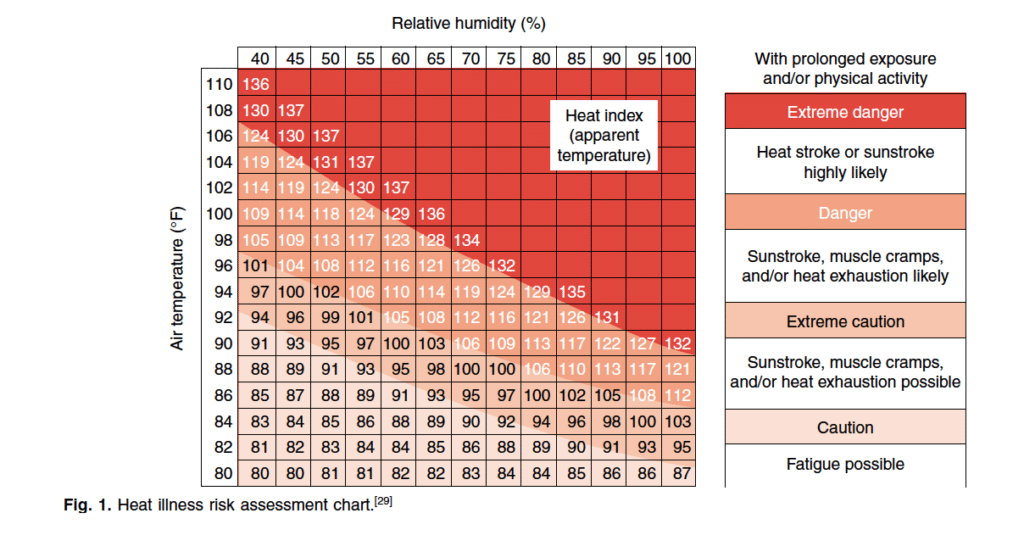
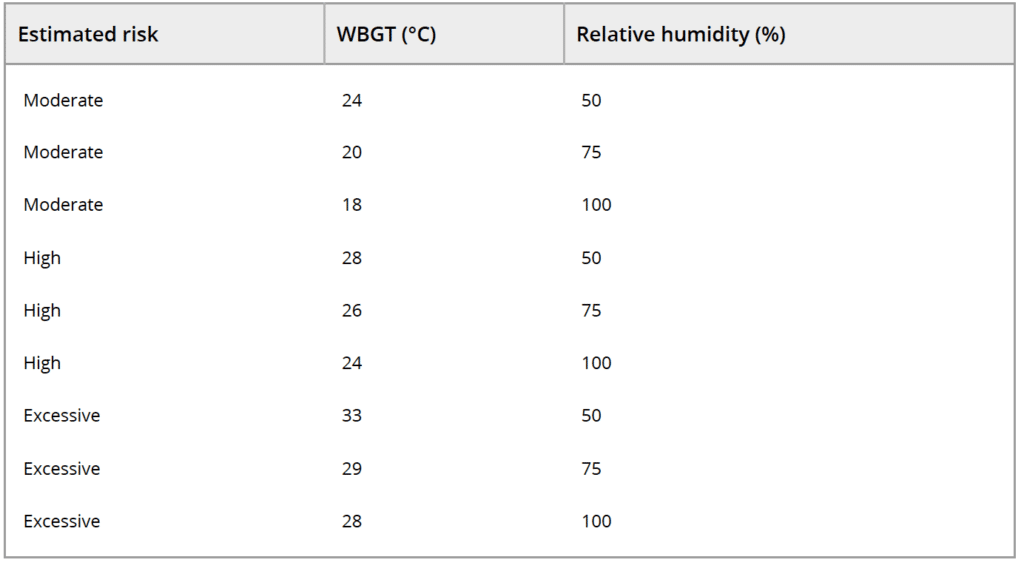
UNDERSTANDING YOUR ENVIRONMENTAL RISK BEFORE A RUN, RIDE, OR RACE CAN BE CRITICAL FOR SUCCESS AND YOUR HEALTH (4).
Body’s Response to Heat Exposure
Although 98.6 F (37 C) is generally accepted norm for human body temperature, it is normal for core temperature to fluctuate within a small range of 97-99 F (36.1-37.2 C). When your body increases much above or below this “set” temperature you can experience hyperthermia or hypothermia as your body tries valiantly to bring your body back to homeostasis. When you get too hot your one of the best way your body can cool itself down is to shift more blood flow to the capillaries that lie immediately underneath your skin. What this allows your body to offload some of the heat into the environment and in turn send cooled blood back deep into your body. The second way your body combats the likely rise in core body temperature is by increasing your sweat rate. This allows you to utilize evaporative cooling, which cools the body by creating a temperature gradient as sweat (or other water) evaporates from your skin surface into the air. The neat thing about the increase in your sweat rate per hour during the heat is that your sweat becomes more dilute than usual which makes it even easier for your sweat to evaporate from your skin into the air.
Additionally, there are three environmental mechanisms that can both prevent your core body temperature from increasing and also increase your core body temperature. Those mechanisms are radiation, convection, and conduction. All three rely on temperature gradients where the heat goes from the warmer environment to the cooler environment. In an ideal world that means your body is the hot environment and you are able to dissipate heat into the surrounding environment (5). While you exercise and race your body relies on these thermoregulatory adjustments because during exercise you produce 15-20 times more heat than you do at rest. Without these crucial adjustments, either physiological, environmental, or behavioral changes, your core body temperature will rise 1.8 F (1C) for every 5 minutes of exercise (3).
Levels of Heat Illness
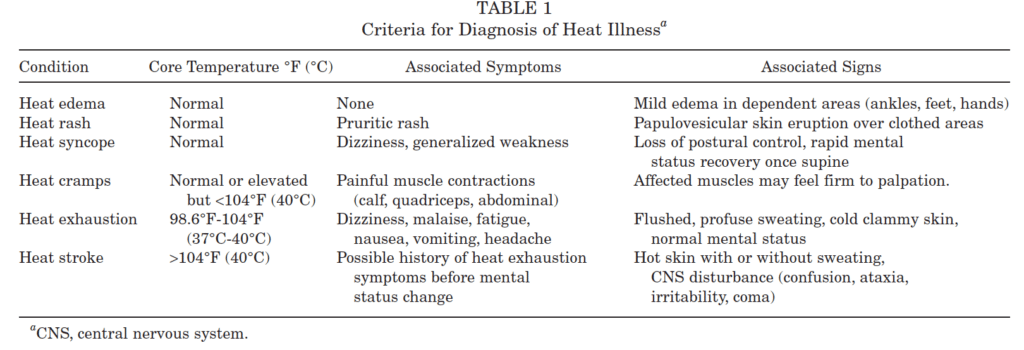
Heat-related illnesses start out mildly uncomfortable and progress all the way to life threatening. The conditions are, from least serious to most serious: heat edema, heat rash, heat syncope, heat cramps, heat exhaustion, and heat stroke (3,4).
Heat Edema and Heat Rash
Heat edema and heat rash are both the mildest forms of heat illness you might experience. Heat edema can occur as your body tries to dissipate heat by vasodilation and a shift of blood flow to your skin. This most commonly happens in the lower extremities as fluid creates inflammation in your feet and ankles. Heat rash (also called prickly heat or miliaria rubra) is a pinpoint red rash that forms on the skin that was covered by clothing. This generally happens in areas that have a higher concentration of heat glands, like your trunk and groin, and is caused by the increase in sweat saturating the clothing and your skin surface clogging sweat ducts.
Heat Syncope
Heat syncope, or fainting caused by heat, may happen during heat exposure because blood is being shunted to your skin and extremities. Rapid changes in body position (commonly sitting to standing, or bending over and standing back up) can lead to a temporary change in blood pressure that causes a person to faint. Most athletes recover quickly once laid flat, which allows blood flow to normalize. That being said, falling due to a rapid loss of consciousness could lead to a concussion, and an athlete who faints due to heat should be evaluated before being allowed to continue training or competing.
Heat Cramps
Heat cramps or muscle spasms have been notoriously linked with dehydration and electrolyte imbalances over the year. However, we now know exercise associated muscle cramps are more commonly associated with a wider range of variables such as fatigue and muscular imbalances. Although harmful to performance, exercise associated muscle cramps are generally harmless to your health and most commonly occur on one side of your body (i.e. your left quad or your right calf). If you are experiencing bilateral, or both sides, cramping or full body cramping, this is often linked to a more serious condition such as extreme dehydration or hyponatremia (depleted electrolytes from excessive water consumption) and should be immediately addressed by your physician or the medical team at your event.
Heat Exhaustion
As we move up the scale in severity we come to heat exhaustion. Heat exhaustion should be taken seriously and treated quickly, as it can advance to more serious and potentially life-threatening conditions like heat stroke. Heat exhaustion generally presents with fatigue, dizziness, heavy sweating, nausea, vomiting, headache, fainting, weakness, and cold clammy skin. A person with exhaustion typically still has normal cognitive and neurological function. They should be able to answer questions about their condition, where they are, who they are, etc.
Heat Stroke
Heat stroke is characterized by a core body temperature greater than 104 F and altered central nervous system function, including irritability, confusion, combativeness, or even worse, loss of consciousness. Hot and dry skin is a sign of heat stroke, but it is important to realize a person can be sweating and still have heat stroke. Altered central nervous system function is the hallmark difference between heat exhaustion and heat stroke, but when in doubt, treat the situation as if the athlete has heat stroke. Athletes showing signs of heat stroke need to be treated by medical professionals as soon as possible. It should be stressed that heat stroke is incredibly serious and can lead to death if not treated quickly.
THE CONTINUUM OF HEAT ILLNESS (3).
Risk factors for developing heat illness
The most recent estimate is that heat related illnesses cause 695 deaths per year in the United States, but they are the 3rd highest cause of death amongst athletes. There are two main categories of risk factors: environmental (external) factors and physiological (internal) factors.
Environmental factors include how hard you are working, clothing choices, insufficient shade during activity, lack of access to water, ambient air temperature, and humidity. Internal factors include age (people under the age of 15 or over the age of 65 are more susceptible to heat illness), recent alcohol consumption, acute or chronic dehydration, history of heat-related illness, medication or supplement interactions, recent illness that included a fever, recent head injury, sunburn, skin conditions (eczema or psoriasis), or insufficient heat acclimation (3).
Treatment of Heat Illness
As with many medical emergencies, time is an extremely important factor in treatment of heat-related illnesses. The goal is to get core body temperature down to an acceptable level (below 38C or 100.4 F) as quickly as possible. It’s important to note that although fevers generally present at similar temperatures to what we call hyperthermia (temperatures above 100.9 F) the underlying mechanism is different. In general, our thermal max is a narrow range from 106.8 -107.6 F. Sustained core temperature at this level for anywhere from 45 minutes to 8 hours can be lethal, and one of the factors for predicting the outcome for a person with heat stroke is how long they are hyperthermic. Body temperature of 106.8 – 107.6 F may seem awfully high, but when you are exerting yourself in hot conditions, it is not uncommon for body temperature to reach 102-103 F for short periods of time. Adverse conditions, either internal or external, can cause core body temperature to stay elevated or rise to higher, more dangerous, levels.
The key takeaway from research institutes, such as the Korey Stringer Institute, that focus on heat-related illnesses is to cool the athlete down as quickly as possible to protect the athlete’s brain and vital organs. To do that, the critical first step is to recognize you or another athlete is in trouble. This step is often missed, which allows heat illness to progress to dangerous levels. Get out of direct sunlight and into a shaded, cooler environment. Finally, use whatever you have to cool off. This can include dousing with cold water from a hose or shower, wrapping in cold towels, applying ice packs or immersion in an ice bath, and having them ingest cold fluids. Athletes experiencing heat stroke need medical care immediately, with the goal of lowering body temperature to below 104 F within 30 minutes.
Preventing Heat Illness
The best ways for athletes to avoid heat-related illness are to heat acclimatize before training hard or racing in a hot environment, monitor and manage your hydration needs, and utilize cooling techniques to help manage your core body temperature. Doing these three things well will reduce the physiological strain of training and racing in the heat and optimize performance.
Heat Acclimation
The most important of these three is heat acclimatization because it not only improves thermal comfort, or your psychological tolerance to the heat, but also it improves your physiological thermal tolerance, which is your body’s ability to tolerate heat exposure for an extended period of time. The physiological benefits of heat acclimatization include increased skin blood flow and increased sweat rate, both of which help to dissipate heat quickly and efficiently. During heat acclimation you also have an increase in your blood plasma volume, which allows you to better sustain your blood pressure and work capacity (1). These adaptations take roughly 7-14 days to fully manifest. Because of this, it is important to monitor your level of exertion as your body makes these adaptations. During this time you will naturally have a change in threshold pace, power output, and both maximal and submaximal heart rate. Don’t force it.
Hydration
Dehydration is one of the key precursors to developing a heat-related illness. Although dehydration generally occurs from an inadequate intake of fluids, it can be made worse by an excessive amount of fluid loss through sweating, putting you in a state of hypohydration (Howe et al). Regardless of whether you’re putting too little in the tank or losing to much from sweating, from an athletic standpoint it has been shown that your heart rate will rise 3-5 beats/min for every 1% of bodyweight loss due to dehydration (Coris et al). When dehydration occurs your blood plasma volume shrinks, which not only effects your heart’s ability to do its job, but also decreases blood flow to the skin and sweat rate. As a result, performance declines and the chances of developing heat illness increase.
What this means is that you should monitor not only your during-activity hydration but also your pre-exercise and post-exercise hydration when temperatures begin to rise. It is recommended that you start your exercise or race euhydrated, which just means starting at a normal level of hydration and not getting to the start line dehydrated or hyperhydrated. Adjusting your day-to-day hydration status takes some time, and guzzling fluid isn’t helpful. Rather, try the WUT method and make appropriate adjustments to daily fluid intake.
When it comes to hydration during exercise the idea is to minimize losses in total body water mass. During strenuous exercise in the heat, sweat rates can reach 1.5 liters per hour, and sometimes higher. General recommendations are to consume 16 – 24 ounces of fluid an hour, but endurance athletes in hot environments often need to consume 2-3 times that much. You can figure out your approximate sweat rate by weighing yourself pre- and post-workout. When it comes to post race or activity hydration the old staple was to try and replace 150% of body mass losses during the first hour of your exercise stopping (6). For many athletes this simply wasn’t practical and caused some GI discomfort, and because of this the most realistic guideline is to try and replace 100-120% of body mass lost in the first hour after you stop exercising (1) and continue consuming fluids in the hours after that. CTS has long recommended athletes aim to consume 150% of fluid losses within 4 hours after exercise.
Cooling Practices
The final components to avoiding heat-related illnesses are the little things you can do to work with your environment and not set yourself up for failure. You can choose to wear light colored and loose fitting clothes. Additionally, you can utilize two different methods of managing heat exposure by either continuous cooling methods or pre-cooling techniques. Continuous cooling methods utilize both external and internal cooling methods. Some external cooling methods include the application of iced/cooled down clothing, towels, water immersion or dousing, or packing ice onto athlete via ice bandanas, ice socks, or into clothing and hydration vests. Internal cooling methods generally rely on the ingestion of cold fluids or ice slurries to try to maintain a lower core body temperature. When it comes to endurance activity in particular, pre-cooling methods have been shown to be effective in both improving performance and delaying the inevitable rise in the core body temperature. What this means is that an athlete getting ready to compete in a warm environment can benefit from starting their event with a lower core body temperature. This can be accomplished by ingesting cold ice slurries, or now the use of a commercial ice vest (or more simply cold iced down towels around your trunk and shoulders) during your warmup. It’s been shown that these crucial minutes of cooling down before you hit the start line or the start button on your watch can prolong your body’s ability to maintain a lower core body temperature (1).
When it comes to exercising and racing in the heat, prepare yourself for the demands of the environment, manage your fluids, and utilize physical methods of cooling yourself off. Taking a moment to cool off now might slow you down temporarily but cannot only save your race or workout in the long run, but also your life.
ASSESS YOUR RISK BEFORE YOU GO. (1)
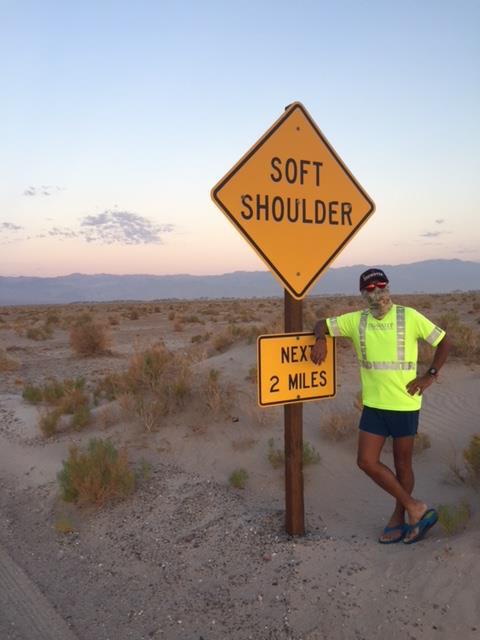
Waiting For My Runner @ Mesquite Dunes In Death Valley Park
National Flag of the Philippines: I have observed that there is NO National Flag of the Philippines displayed at the upper walls of the Ice Olympic Stadium despite the fact that there had been four (4) Filipino Runners who have finished the race or for the the fact that our country was always represented in this event for the past four (4) years. If there is a way, I will ask one of the future runners for this event to bring one flag of our country and I will buy one for this purpose. The flag should be given to the Race Director/Organizer to be displayed at the Expo and Start & Finish Area.
Local Bus Schedule: It is highly advisable to know the schedule of the local Dolomiti Bus through their website or through the Schedule of Trips posted at the Town’s Bus Terminal. An iPhone or Google Application can be downloaded to one’s cellphone to find out their daily trip schedule and buy a ticket Online or simply go to the Bus Terminal to buy ones ticket at the counter.
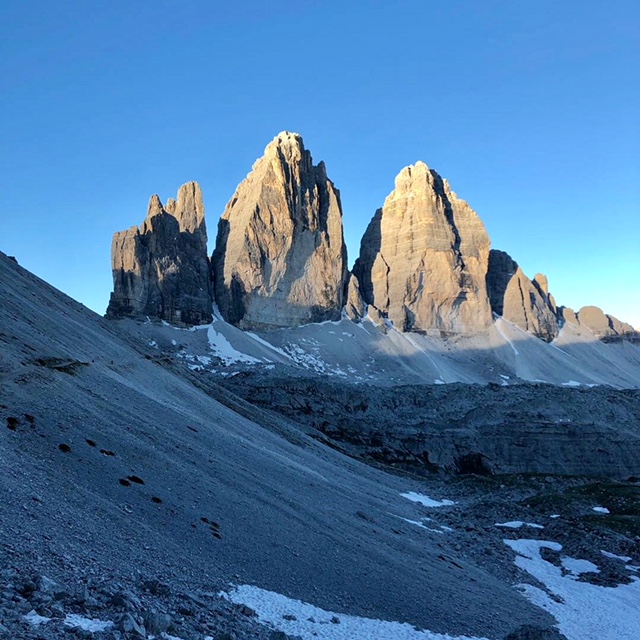
Visit Tri Cime Di Lavaredo: The bus that leaves to the popular destination in the Dolomites leaves the city early in the morning (usually 7:00 to 7:30 AM) to be able to return back to the city in the afternoon. Prepare 20 Euros for the Ticket to enter the Park at Tri Cime Di Lavaredo (separate from your Bus Ticket/Fare). It is highly recommended to visit this place if a runner has the time.
Lavaredo’s Tri Cime (Photo From Facebook)
Hotel Accommodation: I highly recommend the Dependance Hotel Corona, the place where I stayed, as Stefano, the Hotel’s Manager and its Staff are very friendly and accommodating. Most of the runners stayed in this Hotel. You only have to make your reservation ahead of time, preferably, once you are picked in the lottery and have paid your registration fee.
Carry Some Rice From The Philippines: If ever I would go back to Cortina and run the Lavaredo, I would bring my Camping Cooking Gear and and maybe, 1-2 Kilos of Rice in my Check-In Luggage. I have observed that “Rice Balls” as my main source of Nutrition is very appropriate in this event. I can not live without Rice as part of my meal even if I brought with me lots of Lucky Me Instant Noodles to Italy. For 12 days of my stay in Italy, I was eating bread, pasta, spaghetti, and fruits but nothing beats Rice as my main source of Carbohydrate. I was able to reduce my weight despite my daily Breakfast Buffet at the Hotel to about 5 pounds which is maintained up to this day.
Flight Carrier: I have been traveling to Europe, since last year, through Qatar Airways. The fare is cheap as compared to the other Airlines if you buy your tickets ahead of time. The trip to the Marco Polo International Airport in Venice, Italy would take a maximum of 22-23 hours with a stop-over at the Hamad International Airport in Doha, Qatar. The round-trip ticket costs me P 35,000.00 more or less. (Note: Do not depart from the Clark International Airport, it collects a Terminal Fee which is supposed to be FREE or had been paid once you buy your airline flight ticket fare).
Qatar Airways
Bus Transfer From Marco Polo Airport To Cortina & Back: There are so many Buses to choose from as posted in the Event’s Website. You can book and buy ticket through Online at Cortina Express; FLIX Bus; or ATVO. I booked and bought my ticket through FLIX Bus in going to Cortina but I ended riding the Cortina Express. On my way back from Cortina to Venice, I took the ATVO Bus. Always remember that there is only One Trip in the morning and One Trip in the late afternoon in going to Cortina; and the same trip from Cortina to Venice. I suggest that you should buy your tickets On Line as early as possible. Each Bus ticket (One Way) costs from 14-18 Euros.
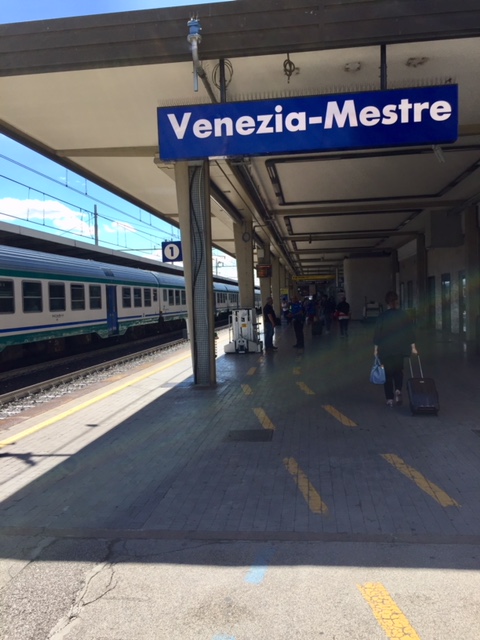
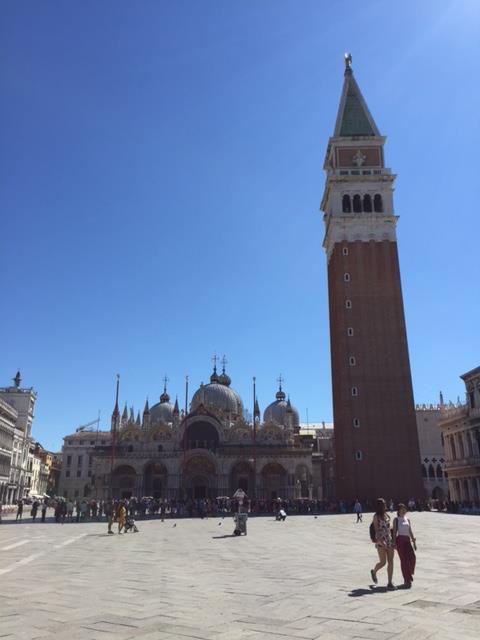
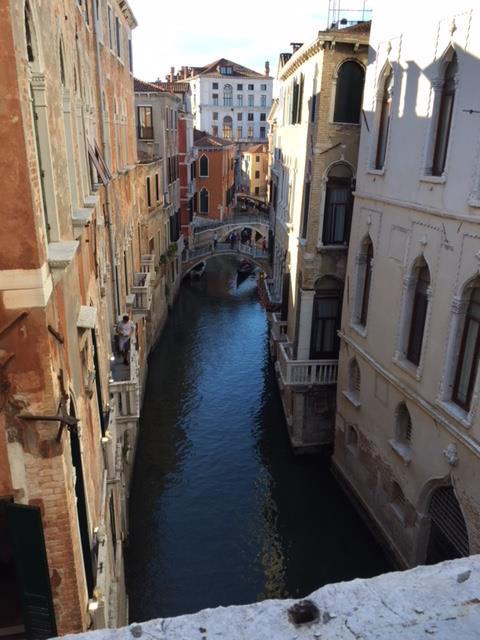
Tourist In Venice: If you intend to spend a day or two in Venice after the event and walk around at St Mark Square (San Marco Park), there is NO need to book for your Hotel accommodation within the vicinity of the said place. Simply, book a Hotel in Mestre, the railway and bus hub/terminal in Venice (about one hour travel to San Marco Park), and take the train to Santa Lucia (2.30 Euros) and from Santa Lucia Port, take the Public Boat to San Marco (about 6-7 Euros), and you can tour/walk (recovery) around the place and be back to your Hotel in the evening. Tickets are available in vending machines scattered in the Bus/Trail Stations and Sea Port Terminal. (Note: Looking for your Hotel Accommodation within the vicinity of St Mark Park is very hard and tricky. GPS signal is a failure if you are in between big buildings and structures in the Canals of Venice!)
Train Station @ MestreSan Marco Square, Venice
Venice Canal
Food & Accommodation In Cortina: Because I have a Free Breakfast Buffet in the Hotel, I only eat one meal outside of the Hotel for my early Dinner which would cost me, at least, 6 Euros (Panini) or 9-11 Euros (Hamburger without French Fries) or 9-11 Euros (Whole 8-inch Pizza). Extra food intake would be some fruits (bought from the grocery); Instant Noodles I brought from Manila; 3-in-1 Instant Coffee and SkyFlakes from Manila.
Shopping For Running Gear/s: You can buy some of the Mandatory Gear at the Expo after your Race Packet Pick-Up at the Ice Olympic Stadium. Always ask for discount from the Sales Person. I was able to buy my Salomon Bonatti Waterproof Pants with a 50% discount! After the event, there are sports brands and Sports Stores that are very popular in Europe but unknown in Asia and USA which are on Sale for 20% discount on most of their products. If you look closely on their material and quality of work, they are much better than the popular brands. I must admit, I bought some of these unpopular brands and be able to use them in my next year’s adventures in Europe.
Engage With The Locals & Other Runners: I always make it a point to smile and start a conversation with the people at the Hotel while having my breakfast or while relaxing at the Lobby or at the Porch/Terrace of the Hotel. You may never know that the one beside you had travelled a lot of countries and had joined a lot of ultra trail ultras in the past. They are very good source of A-1 experiences in these events. During the race, it is nice also to talk to a runner which is the same pace with you in the course. It starts with a simple smile and a greetings or a positive remarks. It is already a bonus if they have a Facebook account. (They will gladly give you their FB account if you ask while giving yours to them). Always remember that you are not competing with your fellow runner BUT you are in the event to compete with the course/nature and most of all, to YOURSELF! So, enjoy the company of the other runners, get to know about the capabilities of your body (strengths & weaknesses) and have fun with your journey. (Note: I will devote a separate post for those persons I’ve met in Cortina in this blog)
Training & Preparation: Trail runners who would try to participate in this kind of event must have the necessary ITRA points, which means, that a runner should have the experience to run in mountain trail events. I prepared for this event for 6 months through the Coaching Services of the CTS and I am satisfied of what my body is capable of. My old age is taking its toll to my overall performance as compared in my past running events where I have participated but I feel like I am healthier and more rested this time. As my Coach would say, the races that I’ve selected to join for this year are not the “EASY” ones but they are categorized as one of the hardest ones in the international ultra trail events and this is one of the reasons why such races are considered as part of the “Ultra Trail World Tour” Series. However, it would had been different if I’ve done these races when I was ten years younger. It is through perseverance, patience, discipline, and dedication that in the future, I will be able to finish these races.
Carmichael Training System Coaching Services
Whether I have DNFd or had succeeded to finish this event, this is just a part of the process of becoming a better and healthy mountain trail runner (which I may never know would prepare me to a more challenging trail running event). I travel to other countries to experience their trail races and be able to enjoy life to the fullest! But in the end, it gives me the best satisfaction if I could share these information and tips to those who are planning to experience joining these trail races outside of the country in the future. As what I’ve been saying, “If BR can do it, you can do it, too!” The experience is really priceless!
Keep on running!!! Thank you for reading my 2018 TNF Lavaredo experience. God’s willing, I will be back to Lavaredo!







 Bald Runner
You must be logged in to post a comment.