Tuesday May 25, 2010


AM: ULTRA/5.6K @ 29 mins/Average Pace: 5:08 mpk (Adidas Adizero Mana)

It was a hot day as I decided to start the week with a short run at the ULTRA/Philsport Oval Track at 8:00 AM of this day. I purposely had the day before, Monday, as my rest day after running back-to-back last Saturday & Sunday. I ran 10.1 K in the morning of Saturday at the MOA-PICC-Cultural Center-MOA Route and another 10.2K run in the evening at the The Fort. Last Sunday, I was about to run in the morning at the MOA Grounds but instead, I just stayed on the sidelines to watch the San Mig Coffee Run. However, at 7:30 PM, I returned to the MOA Complex to run another 12.1K before the start of the Call Center’s Night Fun Run.

I really needed those easy long runs on weekends for my endurance in order to back up my body strength in preparation for my speed runs during the week.

On this day, even if it was too hot, I did my usual warm-up run  for 4 laps at Lane #8. My GF 305 registered a distance of 2.33K with a time of 11:50 minutes; average pace of 5:04 mpk. After a brief water break, I did 2 X 400 at Lane #1 with an interval rest of  1 minute. My first rep was timed at 1:43 mins with an average pace of 4:08 mpk. My 2nd rep was timed at 1:41 mins with an average pace of 4:00 mpk. I could hardly breath after doing two reps because of the heat of the sun. It was too hot that I had to take water break in-between my speed reps. Finally, I decided to stop my 400 meter runs and ended doing an easy run for another 4 laps at Lane #8. I had a time of 12:49 minutes and my legs became heavier as I ended my last 2 laps.

PM: ULTRA/8.8K @ 44 mins/Average Pace: 5:00 mpk (Adidas Adizero Mana)

I joined the BR Speed Training at the ULTRA Oval Track at 6:30 PM with the rest of my elite athletes and the Professionals. I ran the usual 4 laps at the outer lane of the oval track as my warm-up before I did my stretching exercises, brief drills, and core workout. After my water break, I did 4 X 1,600 with an interval rest recovery of 2-3 minutes. The following were the data taken from the GF 305:

1st rep: 7:46 mins; average pace of 4:42 mpk

2nd rep: 7:45 mins; average pace of 4:38 mpk

3rd rep: 7:45 mins; average pace of 4:39 mpk

4th rep: 8:10 mins; average pace of 4:50 mpk

I finished my workout with another easy and relaxing 4 laps at the oval track for my cool down run/jog before doing my post stretching exercises. My body and legs are in shape as I did not feel any pain or issues during my workout. The only problem was the heat and humidity plus the number of runners & walkers using the Oval Track during Tuesday evenings. How I wish the Coaches teaching and supervising the different running clinics at the Oval Track should teach their students on the proper use/etiquette to be observed while running or walking at the oval track. 

After the workout, it was nice to hear the stories and experiences of the Team BR Professionals who participated in the latest “The Bull Runner Dream Marathon” held in the early morning of Saturday. You did great, guys! It was nice also to congratulate Mari Javier of Team BR Professionals who got the Champion Award for the RUNNEX 1oK Run held last Sunday morning at the UP Campus and another Champion Award for the Call Center’s 10K Night Fun Run held in the evening of the same day at the MOA Complex.

The BR Speed Training Staff & Elites are really proud of you! Congratulations!!!

Sun Tzu’s “The Art of War” In Running


When I was in the military service, this was my “Bible” and had read this book for a hundred times. This compilation of essays written by Sun Tzu (a Chinese General & Philosopher) was translated by Samuel B Griffith in 1960 and they were written more than 2,400 years ago. It is considered as the oldest writings on the conduct of warfare. In all my military trainings, from a young officer to the generalship, the treatise in this book had been repeatedly discussed and explained to us. Being a former Commander of different units in the Philippine Army, from the squad-level (leading 9-men team) up to a Division-size Command (with almost 10,000 soldiers under me), the “treatise” of this book had been very effective in leadership; winning the “hearts & minds” of the people and at the same time in subduing the enemy.

The Book: Sun Tzu: The Art Of War

Lately, there had been books that were published in adopting the different treatise of Sun Tzu’s “The Art of War”  in relation to Business and Politics but I have yet to read these books.

I have the assumption that some selected “treatise” of the book, “Sun Tzu: The Art Of War” are very useful to all the runners. My favorite passage in this book is the following:

“Know the enemy and know yourself; in a hundred battles you will never be in peril.

When you are ignorant of the enemy but know yourself, your chances of winning or losing are equal.

If ignorant both of your enemy and yourself, you are certain in every battle to be in peril.”

Translating these passages into running, it would be like this:

“Know the race route and train yourself properly; in a hundred races you will always finish the race.

When you are ignorant of the race route but you trained yourself properly, your chances of finishing the race or DNF are equal.

If ignorant both of the race route and proper training, you are certain that in every race you are DNF.”

On a grand scale, of which could be directed and understood by our Sports leaders and authorities in our quest for Sports Excellence and our First Olympic Gold Medal, my favorite passage of Sun Tzu’s “The Art Of War” would be very relevant and appropriate. I guess, there is no need for further explanation on this.

It is no wonder that the Chinese today are on top of the Olympic Medal Standing in the latest 2008 Summer Olympic Games!

Coke, Salt, Ice Water, Etc.


How I wish I could be a part among the “volunteers” in The Bull Runner’s Dream Marathon this coming weekend. Due to my scheduled meeting with people outside Metro Manila which is connected with my recon activities for my next “adventure run” and incoming PAU road races, I could not be a part of the said event. However, I am coming up with the following suggestions and tips for the runners who will be experiencing their first Full Marathon:

1. Ice Cold Coke—It does not matter if it is Coca-Cola, Pepsi, RC Cola, or Sarsi, you need to drink at least one can, one bottle up to one liter of Coke if you feel exhausted or before you think you are at the verge of hitting your “wall”. You will be surprised that this sweet ice cold drink will give you the much needed “kick” on your last few kilometers. In all my road races that I’ve organized, there is always a Coke in every Aid Station, to include the usual water and Gatorade drinks!

2. Salt—It could be the ordinary table salt, rock salt or iodized salt or if there are available commercial salt tablets, you have to bring some in your packet or in one of the zippered pockets of your hydration belt. If you are going to finish the full marathon in 4 hours or more, you have to take some salt or salt tablets to maintain the sodium level of your blood. For the ultrarunners, they mix salt and ice cold coke for their hydration intake in the last 10-20K of their ultra races.

3. Ice Water with Sponge—If the heat of the sun is too much to bear on your skin or body, you need a sponge soaked in an ice-cooled water to use in rubbing the parts of your body being exposed to sunlight. You can also douse some of the absorbed ice water on the sponge to your head. Ice cold water poured on your head  and back gives refreshing sensation to your body.

4. Immodium—Don’t forget to take immodium capsule or diatab tablets at least one hour before the start of the race. This will give you the confidence to run without any GI issues even if you eat some foods or drink a lot of water/drinks during the race. However, it is advised that you should have your pre-race “bowel movement” before taking this medication.

5. Massage—Be sure to have your last body massage at least two days before the race/event. Don’t have your massage a day before the race as your body muscles will not have enough time to rest & recover before the race.

6. Alaxan FR, Pain-Killer Medications, & others—I know of some “hardcore and competitive” runners who take Alaxan FR with Immodium before the start of the Full Marathon for obvious reasons. The Alaxan FR will anticipate the “arrival” of pain to your leg muscles and joints during the race. Other runners would say that Viagra make them stronger, faster, and can extend their endurance limit in long distance running events but there is a need for advise from your physician. My elite athletes will always remind me to take Pharmaton tablets at least 3 days before the marathon run.

7. Candies—Most of the ultra runners crave for candies during the second-half of the race as they are sweet. It is worth trying with a candy in your mouth while you are running. Be careful not to experience being “choked” when you swallow your saliva with the sweet extracted from the candy while you are breathing with your mouth! In my road races which I organize, runners are always served with Cloud 9 bite size chocolate candies in every Aid Station.

8. Kinesio Tapes—I have a lot of Kinesio Gold Tapes (Black in Color) For Sale and I only used them once when I had an injury on my lower left leg and it gave me some comfort in my recovery runs. When I participated in the Jeju International Ultramarathon Race last March, I’ve seen a lot of the Korean, Japanese, Taiwanese and US runners using this kind of tape on their legs. Michelle Estuar, the Lady Champion in the 1st PAU 50K Race, was sporting a lot of Kinesio tapes during the race. The way I looked at her during the run, she looked like a running “Robocop”!

Good luck to the TBR Dream Marathon Runners!

Running Under The Sun


1. Last week, I had a 10K easy run at the Ultra Oval Track wherein I started my run at 8:00 AM. It was too hot already and I could feel the heat of the sun while preparing myself under the shade of a tree. Nevertheless, I started my run as I was the only “crazy” runner along the track. Well, there were other people under the heat of the sun at the same time at the Oval Track but they were not running, they were there for a location-shooting. Actually, there were two groups complete with their cameras, equipments and props. From a distance, I saw Ben Chan of Photovendo, Jaymie-The Bull Runner, and Kim busy doing their shooting. At the other end of the Oval Track, I saw Lester Castillo of Nestle, Phils/MILO with another group of photographers. I did not ask what they were doing as I concentrated with my running.

2. I felt good running under the heat of the sun at the Oval Track. I have to drink water every time I finish 3 kilometers. Since I sweat a lot, I could feel that I need to hydrate some more and eat some food. After running for about 6 kilometers, I went to my car and brought out a bottle of Gatorade and 3 pieces of banana. As the heat of the sun became hotter, I hydrated myself every two kilometers, instead of 3 kilometers and ate the food I had with me. I seldom use sports gels in my running workouts as I prefer to eat something solid. However, I use them only during marathon & ultramarathon races.

3. After running for about 8 kilometers, a guy entered the oval and started his run, too! He is heavy-built and I guess he was there to shed some fats from his body. Later, two runners started to run also but after one lap, the older runner stopped while the younger one continued with his run. There were at least 4 “crazy” runners at the Oval Track, running between 9:00 and 10:00 AM. I completed 25 laps but I felt I was still strong to run some more laps.

4. I talked to the guy who stopped after running one lap. I introduced myself and his name is “Joey”. He told me that he can not withstand the heat of the sun. Our conversation led to something more fruitful—he is inviting me for a FREE Running Lecture & Clinic with his officemates. I had also some time to talk to Lester after my run and to some of his crew. Of course, I was able to talk to Jaymie, Ben Chan and Kim before they left the Oval Track.

5. This morning, I ran 30 kilometers in 3:41+hours along a rolling terrain under the heat of the sun. It was a slow and easy run but the heat was too much that I had to buy some cold bottled water along the way to pour to my head and body. This run is nothing if compared to what the runners of last weekend’s Laguna Lake 200K Ultramarathon Relay had gone through, to include the lady runners. I salute these runners and participants even if some of them were told that they could not make it within the cut-off time for the 2nd day. I could only blame the Race Organizers who are not runners themselves who gave “conflicting” instructions to the Race Marshals. The race was commendable but the presence of “ignorant” Race Organizers made things harder for the runners. I consider the runners & participants of this ultramarathon relay race as “road warriors”—the “purist and hardcore” runners, most especially to the non-elites.

6. I was frustrated to see a lot of litter along the road where I ran today. There were lots of empty sports gel plastic containers/packs and empty water & Gatorade/Powerade bottles littered along the side of the road. I really do not know who were responsible with such irresponsible littering of wastes. However, I am sure that they could be runners and cyclists passing through the same road where I’ve ran. It is about time to disqualify cyclists and runners in a race who litter their wastes along the road. It should be also the responsibility of the Race Director and Race Organizers to inspect the route after the conduct of the race in order to find out if there are litter/wastes along the road and it’s their duty to clean and dispose them properly.

 If you hate running under the heat of the sun, then go out and run in the evening! Bring lots of water and sports drinks and remember to hydrate!

Runner’s Blues?


Do you experience the feeling what they call “Runner’s Blues”? This is the feeling when you lose your motivation to run and at the same time lack the needed focus and concentration in your ability to continue with your training program towards a certain goal. Sometimes, after finishing a marathon or an ultramarathon race, there is a feeling after the race that you seem to lack the motivation to start training for another race. No matter how you force yourself to train for a specific race after a “big race”, there seems to be some laziness, lack of drive and motivation, and sometimes not being able to continue your programmed running workout for the day.

I am sure most of the runners out there whom I considered as “purists & hardcore” have experienced this “runner’s blues”. I also observe that my elite members of Team Bald Runner are also experiencing the “runner’s blues” and I have to deal with this situation and challenge them to train some more and be the best that they can be.

After browsing on the Internet, reading some journals about running and based from my running experiences, I hope the following suggestions will solve your respective “runner’s blues”: 

1. Take the initiative to be one of the Volunteers in a Race. There is a lot of Race Directors and Organizers around and you could contact them through e-mail or phone and be a part of their Volunteer Group. You can act as their Marshal or Aid Station Personnel. In the BDM 102, you could apply as a Support Crew of one of the competing runners.

2. Look around for a new route. Get out of Metro Manila and look for a mountain. I am sure there are trails towards the peak of the said mountain. Make sure to ask for a “guide” from the Barangay Captain. In the mountain, you can run through a forest or vegetation or in a creek or river. Take some time to walk and enjoy the scenery.

3. Join a Running Club or Run with Somebody. Ask your friend or relative to run with you. If somebody wants a “date” with you, invite him in a 5K or 10K run. Or join one of the running clubs in Metro Manila as they have activities every time they have their running workouts.

4. Leave your Car at Home. Try to run from your house to your office and back without your car. You’ll be surprised that there is no traffic on the sidewalk!

5. Leave your Watch at Home. Try to run without any pressure and just enjoy the scenery of your route.

6. Run an Errand. It’s the same with leaving your car when you buy something at the grocery or buy a “food to go” at the fastfood at the corner of the street or buy bread at the bakery (Pugon De Manila).

7. End your running workout with “drills”. You can do some lunges, high-knee jogging, skipping, bounding, jumping and strides after your run.

8. Do some “fartleks” along the route. Sudden “bursts” of speed along the road will make your run more challenging and interesting.

9. Run in the Dark. When I had my “Manila-Baguio” Adventure Run last February, I enjoyed running in the dark listening to my footsteps and the sound of trucks, buses, and vehicles approaching and passing me on those nights I’ve been running on the road. I’ve learned to distinguished the sound of a transport bus, a cargo truck, and a fast car!!!

10. Run In The Rain. Running in the rain is something that every runner should experience whether you are on the road, at the Oval Track, or on the mountain trails. Running with a wet shoes or thick mud on the soles is a funny experience, too!

11. Treat a Race as a Fun Run or Weekend Workout. Sometimes, you need to slow down with your pace and find time to greet and engage in a conversation with the other runners during the race or after the race.

12. Bring your digital camera with you during your run. When you are tired, bring out your camera and choose anything you want to record or shoot. There are things that are seen and viewed once in a lifetime and seizing such momemt through your digital camera will bring memories/story to your running workout.

13. Look for the “Taho Guy”. Don’t you know that “taho” (bean curd) bought from the streets is a pure source of protein for your aching muscles? The sweetener and the “sago” are also good source of carbohydrates.

14. Take advantage to Rest & Recover. If you are still feeling the “runner’s blues”, it is a sign that you need more time to rest and recover. Write something about your running experiences or read some books about the personal experiences of runners. Eat your complete diet and sleep at least 8 hours a day.

15. Get into Cross-Training Activities. You can go to the Gym, ride on your bike, swim, attend some yoga or Pilates sessions.

16. Go On Shopping! A new set of running apparel and shoes will motivate you to go out and feel you are  a “new and reborn” runner!

Good Luck to Everybody and Have Fun In This Weekend’s Road Races!!!

Subic, Baguio, B2B Runs & Buckle


1. Last Wednesday, I was on top of some of the insignificant hills and mountains of Bataan looking for trails under the heat of the sun. I did not run but I walked a lot on those trails hoping that the area is not considered as “territory” of the insurgents. After an overnight stay in Bataan, I decided to have a long slow distance run inside the Subic Base/Export Processing Zone  on the morning of Thursday. I started my run at 6:30 AM and I took the route of the Subic Half-Marathon Race when I joined the said race on January 20, 2008.

2. While I was running my first 5 kilometers, I was anxious to reach the uphill portions of the route. Before I reached the Subic International Airport Terminal, the uphill climb started to meet me and I was surprised that I could sustain my average stride frequency of 170-180 steps per minute. Yes, I’ve been counting my steps since I started to be aware of my stride frequency two weeks ago. This was the very reason why I wanted to run a longer distance in order to test my legs if they could sustain an average stride frequency of 180 steps per minute.

3. More uphill climbs would meet me along the way and I was happy that I was comfortable with my pace. As compared when I first run this route, I felt that the two years of continous & consistent running would make the uphill climbs at the Subic Base as very easy and insignificant challenge to my running legs. I knew that I’ve improved a lot in terms of strengthening my legs and my aerobic capabilities for the past two years.

4. Instead of turning-around the usual 10.5K point, I extended my run up to the direction of the Morong Gate, running an additional 2-3 kilometers. As I turned-back, the first 2 kilometers was an uphill climb and I was able to maintain my stride frequency but with shorter strides. I have to count up to 100 stride cycles repeatedly until I could count 10 X of the hundreds plus a hundred cycles in order to cover a distance of one kilometer. I really enjoyed counting my steps in this run. I was able to cover a distance of 25 kilometers with a time of 2:49+ hours. The heat of the sun slowed me down on my last two kilometers. But I enjoyed my practice in counting the number of stride cycles during this kind of LSD run.

5. I intended to cheer for the 100K & 50K TNF runners at the starting line (Burnham Park, Baguio City) last Saturday morning but due to some miscommunication, instead of 3:00 AM start time, I got a wrong information that the race will start at 4:00 AM. I missed the runners by 45 minutes! So, I went back to the hotel and have some more sleep. At 7:00 AM, I was out of my hotel room for another long run with the intention of running all the way to Fort Del Pilar.

6. Another reason why I was in Baguio City was to look for a manufacturer of a Cowboy Belt Buckle for the Finishers of the BDM 151 to be held next year. I want to have a Silver Cowboy Buckle for these “crazy & hardcore” finishers of the 1st BDM 151. Having lived in Baguio City in the late 60s and up to mid-70s, I know that the best Silver-works manufacturers are in Baguio City. So, I have to locate and talk to the owners of the famous Manantan and Ibay Shops of Baguio City after I finished my scheduled long run in the morning of Saturday.

7. As I was approaching the Old Gate of Camp John Hay, a local runner joined me in my run and started asking about the route of the TNF 50 & 100K. Maybe, the local runner thought that I was a participant or pacer of the TNF race as I was sporting a TNF Runner’s Cap! The guy distracted my concentration as I answered him truthfully that I am not “in the loop” with the said race. The local runner told me that he was requested by his friend, a TNF race participant in the 50K run, to meet him at the Camp John Hay area. Instead of taking the road that goes to Fort Del Pilar, I turned towards the left road which is South Drive and went all the way to the Mines View Park.

8. On my way back, I went directly to the Gate of the Baguio Country Club and turned back to South Drive and went all the way to the Old Gate of Camp John Hay. Oh, how I missed playing golf when I passed by the Baguio Country Club’s Golf Course afte looking at those golfers walking towards the green. At the Old Gate of Camp John Hay, I was surprised that the Head Marshal of the TNF at that point greeted me! I realized that the road going to PMA was a part of the TNF route and I kept on running until I reached the Scout Barrio area. After I passed the Jeepney Stop area at the Scout Barrio, I noticed one of the marshals guarding one of the trail exit/entrance along the paved road and I asked permission from him to run along the trail.

9. The marshal permitted me to run on some of the trails with the purpose of taking some pictures for my running friends who happened to be finishing the 50K. The marshal told me that two leading runners had passed his position and that they are the 50K runners. While I was on the said trail, I was following a man riding a horse and he later took another dirt trail as we separated. It was easy to follow the trail route of the race as there were lots of stringed small TNF banners tied on trees along the trails and in intersections. After running for about 2 kilometers, I met the third place 50K runner and it was my first time to see his face. He must be a local runner from Baguio City or Benguet Province, the runner with some missing front teeth as seen when I started a conversation with him in the local dialect.

10. Before reaching the Loakan Airport, I ended my run & walk on those trails with much frustrations. I am frustrated on how those preserved forest areas being attacked and invaded by “squatters’ and land developers. I’ve been running along  these trails when the US Armed Forces were still the Lord of Camp John Hay and I could still remember the smell of those Pine Trees around. Now, running along these trails would be “hazardous” to your health and to your personal security. I made my turn-around and slowly jogged back to the hotel. I was able to run a distance of 23 kilometers with a slower time because of my jog & walk along the trails.

11. I was doubly frustrated when the two famous Silver Shops in Baguio City told me that they don’t accept Made-to-Order Silver Cowboy Belt Buckle. They told me that there is no way that they can make one for me! However, one of the shopowners was brave enough to tell me that he will make one for a price of Thirteen Thousand Pesos a piece! He must be crazy, too! (like my ultrarunning friends!). I might as well buy an LV Belt (Big Buckle & Belt) at Greenhills for the BDM 151 finishers instead of being “crazy” to order silver buckle from Baguio City with such price! Despite such frustration, I am still looking for somebody who would make that Cowboy Belt Buckle for my “crazy & hardcore” ultrarunning friends!

12. I was already back sleeping in Manila when the first TNF 100K runner reached the Finish Line at Burnham Park. In Manila, instead of observing and cheering the runners of the VSO Bahaginan’s Starting/Finish Line on the morning of Sunday, I was on the road again for another LSD. This was my first Back-to-Back (B2B) long run after my Jeju 50K Run. As I started my run, I saw a lot of running friends who were already going back to the Finish Line. Some of them are also having a good time with their respective LSDs for the weekend. The Lawton-Camp Villamor-NAIA 3-Lawton-Heritage Park/C5 and back at McKinley Hill route is already a worn-out LSD route for runners. I finished almost 15 kilometers for the day but I wanted more but due to the heat of summer, I decided to call it a day and rest my body for the next week’s training.

13. For the week, I was able to register a mileage of 67 kilometers (with a B2B weekend LSD) and two sessions of gym workout. Hopefully, I will be able to sustain my stride frequency, improve on this matter and prepare for my next Marathon Race.

Stride Is Everything!


Have you ever tried counting the number of strides/steps or stride cycles to complete one lap on the Oval Track at Lane #1? Or have you counted the number of steps or stride cycle for you to cover a distance of one kilometer? or up to the distance of 3, 5, or 10 kilometers? 

I have never tried counting my stride cycle on Lane #1 at the Oval Track but I’ve tried counting my stride cycle on Lane #8. I was able to count 240 “stride cycles” on my first try, counting every time my left foot strikes the ground. (Note: Stride Cycle is equivalent to two (2) strides/steps). But for my 2nd try, I was able to lessen the number of stride cycle to 210 until I was able to decrease it to 204 on my 3rd up to 5th repetitions.  This means that at my fastest pace, I was able to count 408 steps/strides to complete one lap on the Oval Track at Lane #8.

The problem was that I was not able to get my exact time to finish one lap of the oval track! I can only assume (through my feelings) that I was able to finish one lap at 2:15-2:20 minutes at Lane #8. With this assumption in time, I can say that my stride frequency or leg turn-over on that particular workout was 180-182 strides per minute! Surprised? Of course, I was surprised also because elite runners would generate an average of 180 to 190 strides per minute according to scientific studies based on the performance of elite runners and Olympic Champions. But the problem was that I was not as fast as the world elite runners. It is due to the fact that a have a short stride length, which is the distance between the tip of my rear foot to the tip of my front foot.

I did this workout two weeks ago and since then I was observant on the number of strides or “stride cycles” I can generate in running a particular distance, whether I am in the Oval Track or on the road.

Experts would say that for you to generate a faster pace or faster finish time, a runner must be able to increase his/her stride length and at the same time increase his/her stride frequency or leg turn-over. It is easy to say and comprehend this theory or rule but the implimentation would take a lot of patience, hardwork, & determination. Being an old runner, there is no way I can increase my stride length as I have the tendency to “shuffle” with my feet/legs when I am running. I barely lift my knees when I run and I am more comfortable in letting my feet graze a few inches from the ground as if I am sliding my feet, one foot at a time, barely hitting the ground. This “shuffling” technique had protected my knees for the years that I’ve been running. I never had any injuries or pain in my knees!

The only way I could generate a faster pace and finish time is to be able to increase my stride frequency or stride cycle. I must be able to consistenly count 180 strides per minute or count 90 stride cycles every minute. In counting stride cycle, I count every time my right of left foot touches the ground. Although I’ve been doing this technique in my past races, I only think of doing this technique when I want to sustain my strength in the last kilometers of the race. The counting of the stride cycles becomes my “mantra” when I need more push and extra effort to maintain my average pace in a race.

Last Monday, I tried running at the Oval Track at Lane #1 and I was able to register the following number of stride cycles, time and average pace:

Rep #1—167 stride cycles—1:47 minutes—4:20 mins per km

Rep #2—173 stride cycles—1:53 minutes—4:32 mins per km

Rep #3—173 stride cycles—1:49 minutes—4:25 mins per km

Rep #4—166 stride cycles—1:45 minutes—4:11 mins per km

Rep #5—172 stride cycles—1:48 minutes—4:18 mins per km

In this workout, I was able to generate an average of 170 stride cycles or 340 steps; with an average time of 1:48 minutes; and with an average pace of 4:21 minutes per kilometer. By looking at the results of my experimentation, I can safely say that I can generate a stride frequency of 180 steps or more per minute but the problem is how to sustain such frequency in a half-marathon or marathon distance race. For me to improve on my time in my next marathon race, I should be able to sustain my stride frequency of 180 steps per minute for the whole race.

After my workout at the Oval Track last Monday, I asked one of my elite runners on how to sustain my stride frequency during a race. He answered that I need to do a lot of “drills and plyo” exercises. He also suggested some of the drills I have to do regularly.

This issue on sustaining my stride frequency led me to make some research on the Internet. I was able to browse on an article made by Tony Benson who was the Australian Coach behind our successes in Athletics through Governor Michael Keon’s Project Gintong Alay in the 70s and 80s about a list of “guide” (based from his experience) to maximize ones potential in running by counting the number of strides/steps to cover a certain distance. The following is his “guide” on the number of steps a runner expects to generate depending on his/her average pace:

  • 8 minute kilometre pace (48 seconds per 100m) = 122 to 127 steps per 100m (~1250 per kilometre)
  • 7 minute kilometre pace (42 seconds per 100m) = 109 to 111 steps per 100m (~1100 per kilometre)
  • 6 minute kilometre pace (36 seconds per 100m) = 98 to 102 steps per 100m (~1000 per kilometre)
  • 5 minute kilometre pace (30 seconds per 100m) = 83 to 86 steps per 100m (~850 per kilometre)
  • 4 minute kilometre pace (24 seconds per 100m) = 64 to 67 steps per 100m (~650 per kilometre)
  • 3 minute kilometre pace (18 seconds per 100m) = 55 to 57 steps per 100m (~560 per kilometre)
  • From this “guide”, you can conclude that if you run at a slow pace, the tendency is to run with a shorter stride length. However, if you have a faster pace/average pace, the tendency is to run with a longer stride length. This is due to the fact that a runner with a faster pace has the tendency to generate a bounce/jump that propels the runner to take a longer stride. In my experience, I could only generate an average of 75 to 80 centimeters of stride length during my LSD or easy run but if I am doing my speed and/or tempo runs at the Oval Track, I could generate an average of 115 to 117 centimeters. Yes, I went to the extent of measuring my stride length just to be able to improve on my running.

    In the book, “Brain Training For Runners” by Matt Fitzgerald, I found out that the “drills and plyo” exercises recommended by my elite athlete is a small portion of the whole solution in the pursuit of stride development. The author, for obvious reasons, recommends the “Brain Training Approach”. The first approach is Emulation. I am not saying that I should emulate or try to run like Haile and the other world-class elite runners/Olympic Champions in the Marathon Race as seen on tapes, DVDs, You Tube, and other recordings.

    Observing my elite athletes do their workouts at the Oval Track, I could not find a running form that resembles my style. They have very long stride lengths and faster stride frequency. But, what impressed me most was my observation (with my own eyes) on how the Japanese ultrarunners performed in the Jeju International Ultramarathon 100K Race, that is to include the women runners. They have short strides but their stride frequency was very fast. They land their feet on midfoot and they quickly lift their feet once they get in contact with the ground. Their foot contact with the ground was very quick and light. You could hardly see them lift their thighs so high and see them lift their feet on the backward motion. It was amazing to see their feet “shuffling” and grazing a minimum height from the ground!

    Since Monday of last week, I’ve been counting the number of steps or stride cycle every time I run, trying to emulate those Japanese ultrarunners. I know it will take a lot of practice and patience to count every time I run but I could feel some improvements with my average pace.

    Right now, I am looking for that inexpensive watch with a metronome beat of 180-190 beats per minute which will be my “partner” in my running workout until such time that my body system will be used to the beat. At least, that will save me from counting every step I make in my run. 

    To be continued…

    (References: BENSON’s EPS Step With The Best To Success & “Brain Training For Runners by Matt Fitzgerald)

    Lesser Weekend Races


    My last weekend race (in Manila) was way back in February 28 during the DZMM’s Takbo Para Sa Kalikasan 10K Run and since then I never ran a single road race except for the Jeju International Ultramarathon Race where I finished the 50K Run.

    I knew that my fininished times in the Century Tuna Half-Marathon Race on February 21 and the DZMM’s 10K Takbo Para Sa Kalikasan were my gauge and measurement that I still have the proficiency in competitive running within my age classification.

    With my regular long runs after these local races, I was able to finish the 50K Run at the Jeju International Ultramarathon Race last March 27 with a PR time of 5:25:38 hours.  

    I missed the Mizuno Infinity Run; Earth Run’s 21K Run; TNF and other trail runs; and other races on the past weeks. This means that I was able to save some money for my registration fees. And I had more time to plan and prepare for the incoming races of PAU.

    I really don’t know with the other runners if they really know the true meaning of recovery period. Recovery period for me is trying to relax my running workouts by lessening the number of kilometers I’ve been doing for the past days and lessening the intensity of of my runs. Most of the time, I’ve been running not more than 10 kilometers for every workout; having my regular massage; eating my regular diet; sleeping more hours to include naps in the afternoon; sometimes, running every other day and the intensity or pace of the runs are very relaxed, easy and slow.

    However, after those recovery weeks, I’ve been doing some running workouts again in preparation for the 2010 MILO Marathon Eliminations on July 4, 2010. Barely eleven (11) weeks to go, based from my training program, I should be doing at least 25-26 kilometers during my LSD runs on weekends.

    Last weekend, I just did “back-to-back” 15.5K & 20K at UP Diliman Loop and The Fort-McKinley Hill-Lawton-C5, respectively. I did not have any problems with these long run workouts except for the hot & humid conditions. I need to adjust the start of my long runs earlier in the morning for a cooler temperature.

    Since Monday of last week, I’ve started to visit the gym again. My gym workouts are generally concentrated on my upper body, core muscles, and legs. I hope to have more strength to finish at least 25-26 kilometers in my long runs this weekend.

    After the MILO Marathon Elimination, Camarines Sur Marathon will be the next!

    Top 10 Training Mistakes By Sasha


    The following is an article that is worth reading for those who are preraring for their first or next marathon race or their first ultramarathon race which I copied from www.fastrunningblog.com.

    Enjoy the weekend!!!

    Top 10 Training Mistakes By Sasha Pachev

    Below is a list of the training mistakes I have collected from the training entries at the Fast Running Blog:

    • Doing anaerobic speed work without proper aerobic base conditioning. If you are running less than 8 miles a day and/or less than 6 days a week, your extra energy should go into increasing the daily mileage and the number of training days per week rather than speed work. If you feel you have to reduce your aerobic mileage on the speed day or the day after, this also shows that anaerobic speed work is not something you need at the time.
    • Randomly skipping training days for odd reasons. Do not do it. Active recovery is more effective than passive recovery even if you are very tired and sore. Sure, one missed day does not hurt, but it creates a precedent that will make you miss enough days to make a difference.
    • Making up for a skipped day with additional mileage or intensity. This catches your body by surprise and gives it a jolt that it may not be ready to take often resulting in an injury. Additionally, a habit of doing so makes it easier to rationalize skipping days thinking you can make up. You cannot, the train is gone. If you missed a day or more, come to grips with the setback and start the recovery. If you’ve missed too much, you may need to resume with a significantly lower mileage or intensity to avoid injury and/or overtraining.
    • Running longer in the long run than you have the fitness for. A long run as a rule should not exceed 3 times your regular daily mileage. Otherwise, the long run will likely beat you up beyond your ability to recover, and you will be wondering why you hit the wall so soon even though you’ve gone 20+ miles in the long run on a number of occasions. Increase your daily mileage before you increase your long run. If you can feel the effects of your Saturday long run Monday morning, you have gone too long.
    • Neglect for recovery. Many runners mistakingly believe that they get faster from training. Think about this for a moment. Are you faster before a hard 10 mile run, or immediately after? Of course, before. So what did the run do to you? It made you slower! When do you actually get faster then? During the times you do not run! What you do when you are not running is absolutely critical to your growth. You must get enough quality nutrition, as well as enough sleep. You must learn to control your emotions and deal with potentially stressful situations in a calm and graceful manner. If you allow yourself to experience any kind of emotional stress, it greatly reduces the effectiveness of your recovery window.
    • Failure to adjust the training volume and intensity in response to reduced recovery. Perfect recovery regime is difficult to achieve even for a professional runner, and practically impossible for somebody with a full-time job, family to take care of, community or church service, etc. You may have to work longer hours than you planned, a sick child may keep you awake in the middle of the night, or your boss may insult you in a particular way that just gets under your skin. Your recovery potential is reduced, and so must your training stress. You should first seek to reduce the intensity of the workout, and only then cut the mileage if you feel that was not enough.
    • Cutting a run short due to not feeling energetic at the start. When you first increase the training volume, you will often find yourself tired in the morning. If so, your body does need to relax and recover. However, active recovery is much better than passive recovery. You can continue to build your general aerobic fitness almost just the same while recovering from a harder workout a day earlier. Just run at a pace that feels right even though in may be much slower than you think you should be going, and cover the distance you originally planned to run. A lot of times it is not so much the fatigue of the body, as the inertia of the nervous system. When training harder, the nervous system often goes into a deeper rest mode, and takes longer to get activated. Some days, it takes me as long as 4 miles before I start feeling good in my runs.
    • Pushing the pace on the easy runs. There is no pace that is too slow for an easy aerobic building run. If your body wants to go slow, that is fine, do not force it to go fast. In fact, I often recommend finding a slower training partner for those runs, running with him, and making sure he stays conversational. If you start feeling feisty, maybe you should be doing a tempo run instead that day. Pick it up to the fastest pace you can hold while still in control, and try to hold it. One of the two things will happen after about 10 minutes of that – if you are truly ready for a tempo run, your body will tell you to keep going. If not, it will tell you to stop, and your pace will slow down to a true recovery pace for the rest of the run. You may also try doing 10-15 second strides in place of a tempo run.
    • Increasing the mileage or intensity too fast for your fitness. This is perhaps the most common cause of injuries. Your body can be trained to handle a lot of stress eventually through a gradual increase of the training load. However, any kind of a sudden stress is bad. How fast should the training load be increased, and how fast is too fast? The answer depends on your body a lot. There is a standard 10% rule, which is a good rule of thumb, but does not always apply. Forget the rule. Listen to your body instead. Generally, if you are venturing into the levels of training load you have never done before, or recently, you should be very cautious. In some cases, it may be a good idea to keep the load the same for months or even years. If you have trained at a certain training load recently, you can return to it a lot faster than the 10% rule would dictate. If your current load gives you soreness or makes you feel you are on the verge of injury, do not increase at all. If your current training makes you feel undertrained in every way – e.g an hour after the run you would have had no idea you’ve run just from the body signals and without the actual memory of having done it, you can increase it fairly fast. If you are going from sporadic training (2-3 days a week) to consistent (6 days a week) you can in most cases go ahead and nearly double your mileage by running the same daily volume with greater frequency. If that is too much, then cut the daily volume as appropriate, usually 20-30% cut will do. Similar principle if going from single runs to training twice a day – keep the first run the same, and add some easy jogging for the second run.
    • Using the popular heart rate guidelines as the primary guide to determine training intensity. Why can this be bad? Your heart rate monitor could be malfunctioning. Your maximum heart rate may be not what you think. Your anaerobic threshold percentage as well as the easy run threshold percentage may not be what the charts would recommend.  The air temperature and the humidity could vary affecting your heart rate. The primary guide of the training intensity should be the way you feel. For an easy run threshold, you should feel very comfortable carrying on a conversation (although for some people this is not a good guideline, they might be very fit but still will not pass this test even sitting down). For a tempo run, the thought of having to run like that for an hour should not scare you. Heart rate can still be used effectively, but the focus should be on the observation rather than guidance/pace decision making. Sometimes it is fun to play a game of keeping your heart rate below a certain limit while trying to run no slower than a certain pace. This game is good for easy run, and mild tempo runs. When running hard or racing, use your perception of effort as the primary guide and your heart rate only for observation/second opinion.

    Running Clinic @ Aboitiz (Times Square)


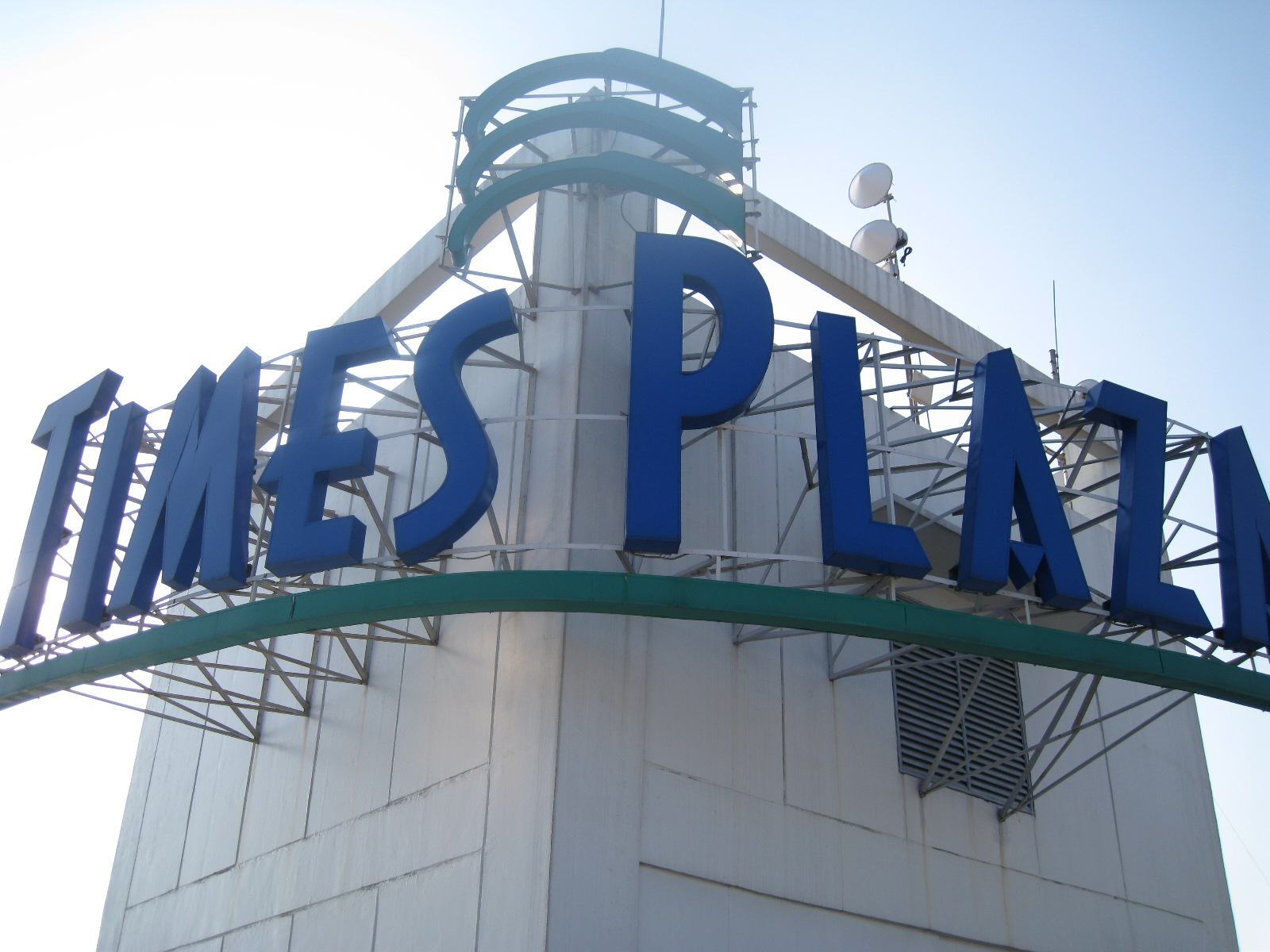
    For two consecutive running clinics within a span of one week, the Elite Team Bald Runner conducted another running clinic to the personnel of Aboitiz Company whose offices are located at the Times Plaza Building at Taft Avenue corner United Nations Avenue in Manila last February 24, 2010. The running lecture started at 2:00 PM 

    As an introduction, Jerome Sese, the Chief HR of Aboitiz Company emphasized to the personnel the need to adhere to an active and physical lifestyle due to the prevalence of lifestyle sicknesses among its staff and personnel. In a briefing, he presented a graph on the percentage of illnesses of the people working with the company. Such illnesses include hypertension/high blood, arthritis, high BMI, asthma, and others. He stressed that it is highly recommended that each personnel of the company should engage themselves in physical activities like walking and jogging, and later to running with the goal to be healthy and reduce the “numbers” in their statistics. 

    Hopefully, with the conduct of such running clinics from the Team Bald Runner, Jerome stated that the company will formally organize its company’s running club where its members will be able to compete and participate in weekly road races in Metro Manila.

    More than 50 personnel attended

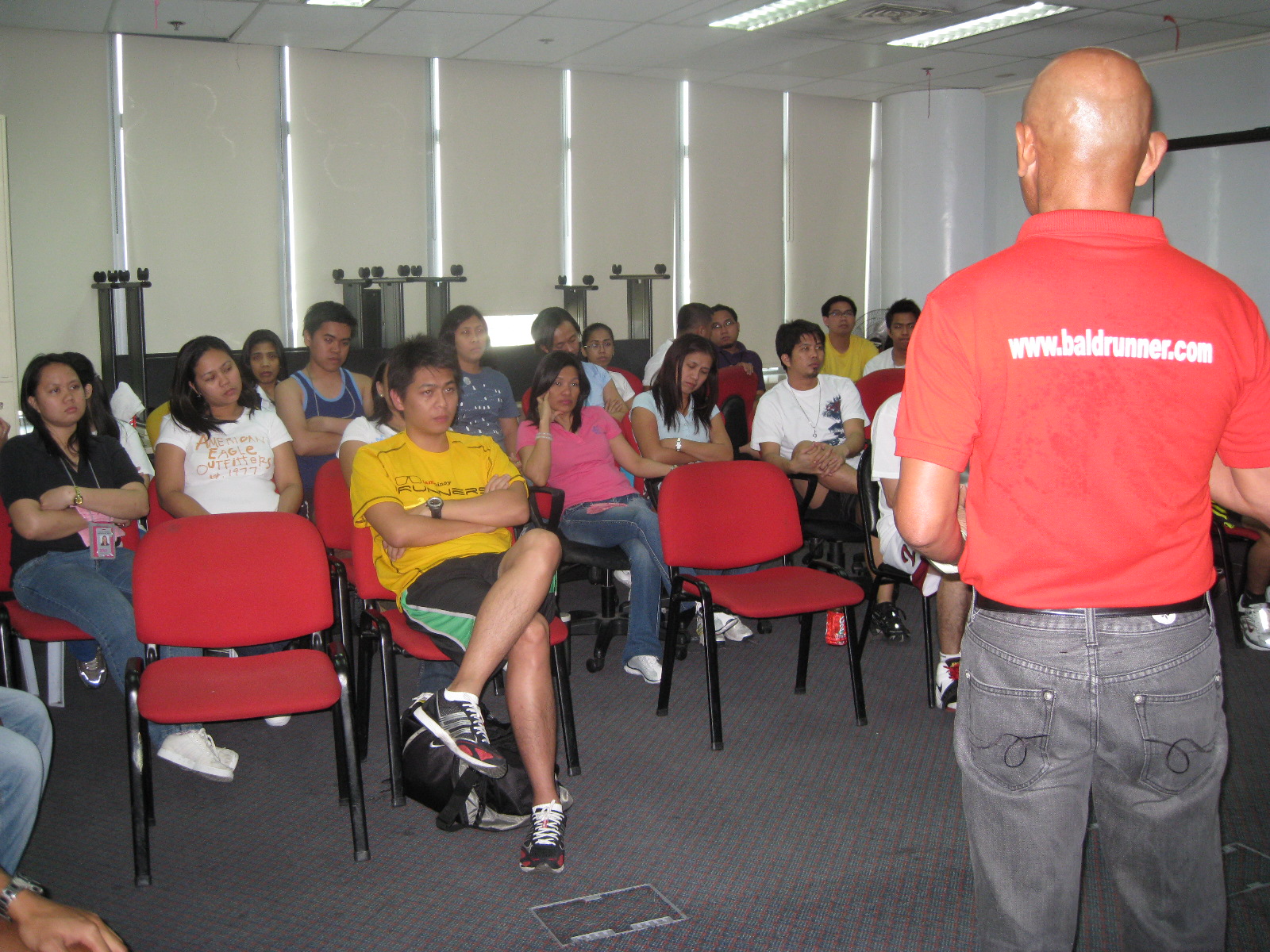
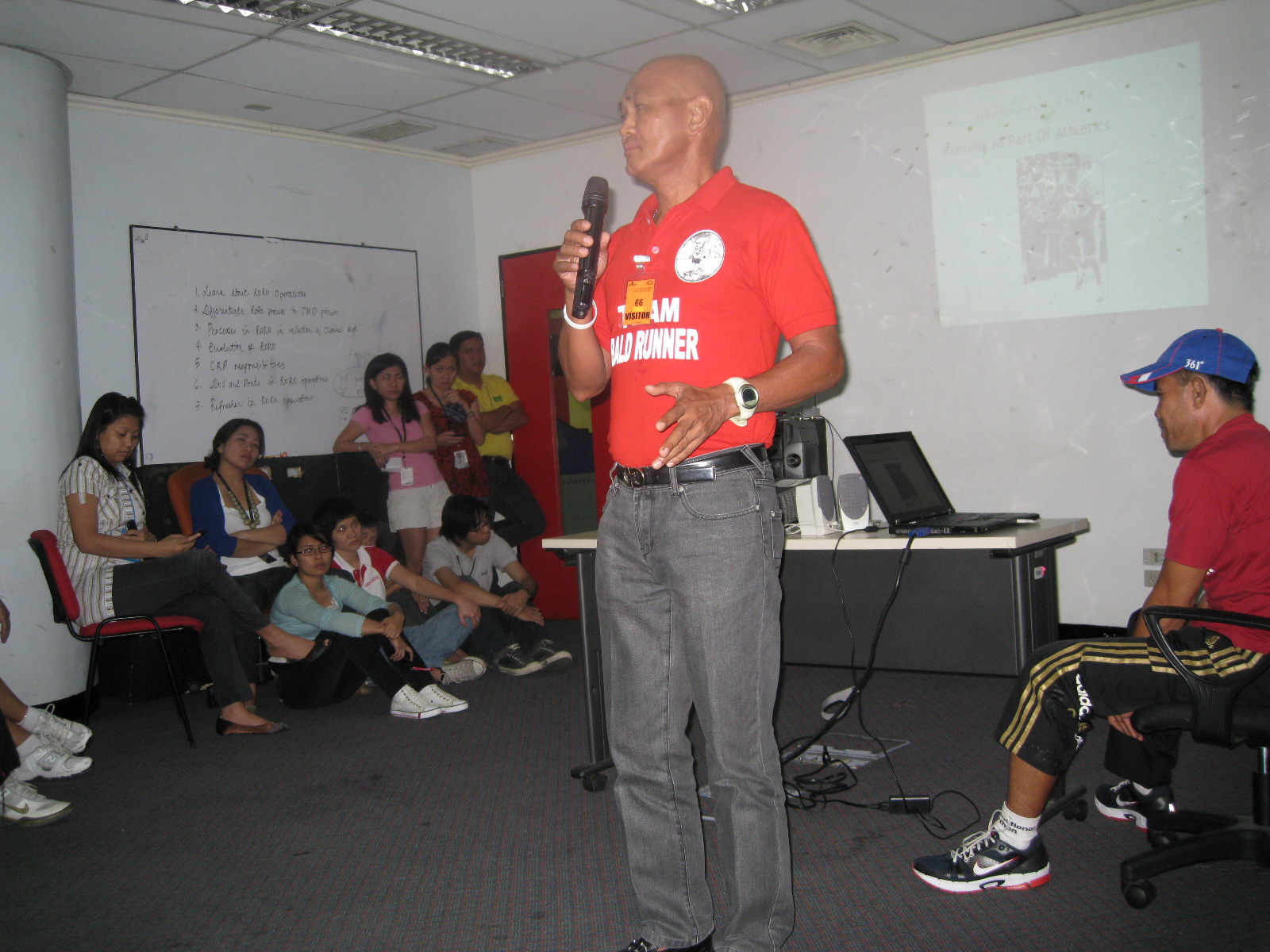
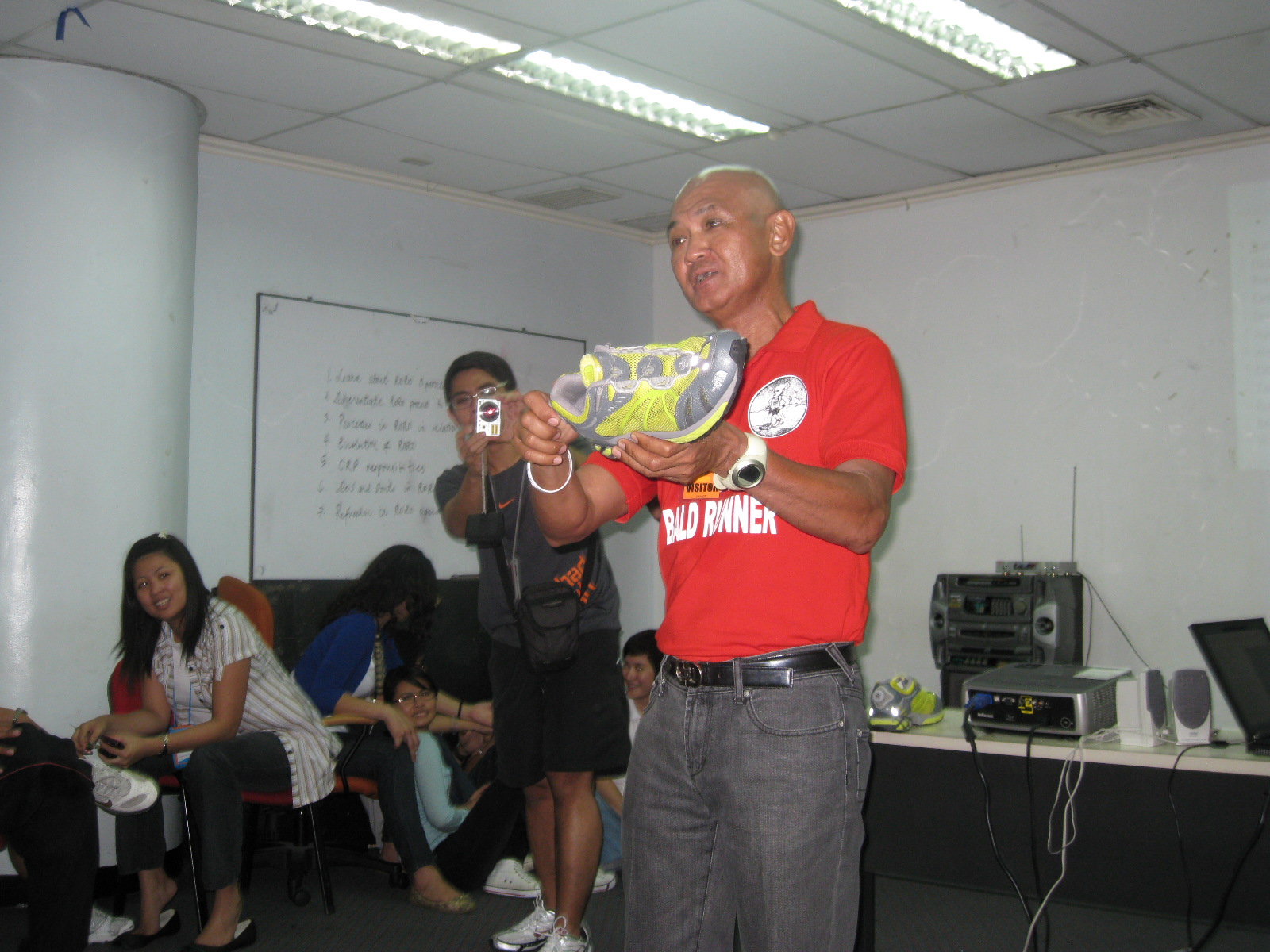
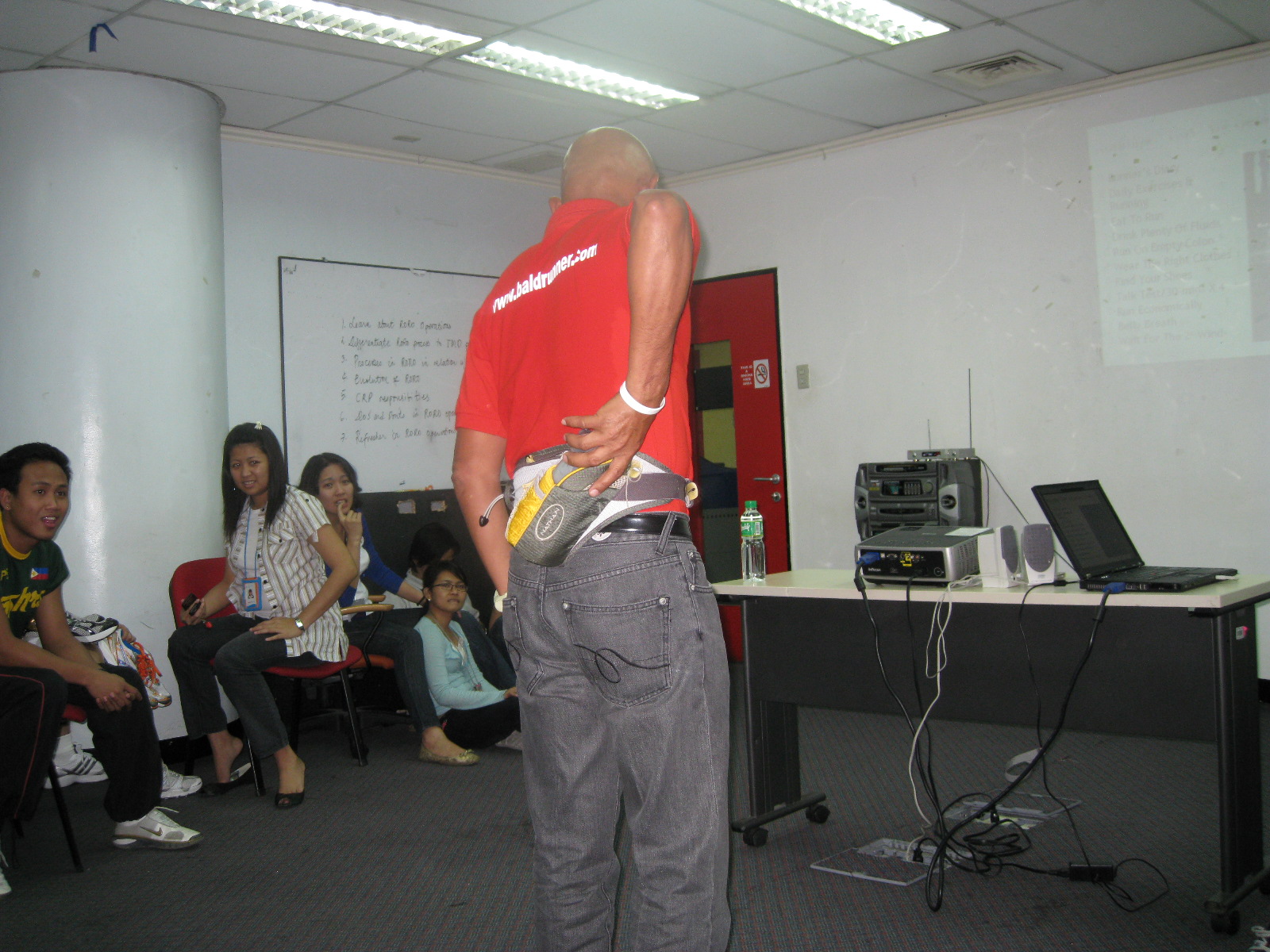
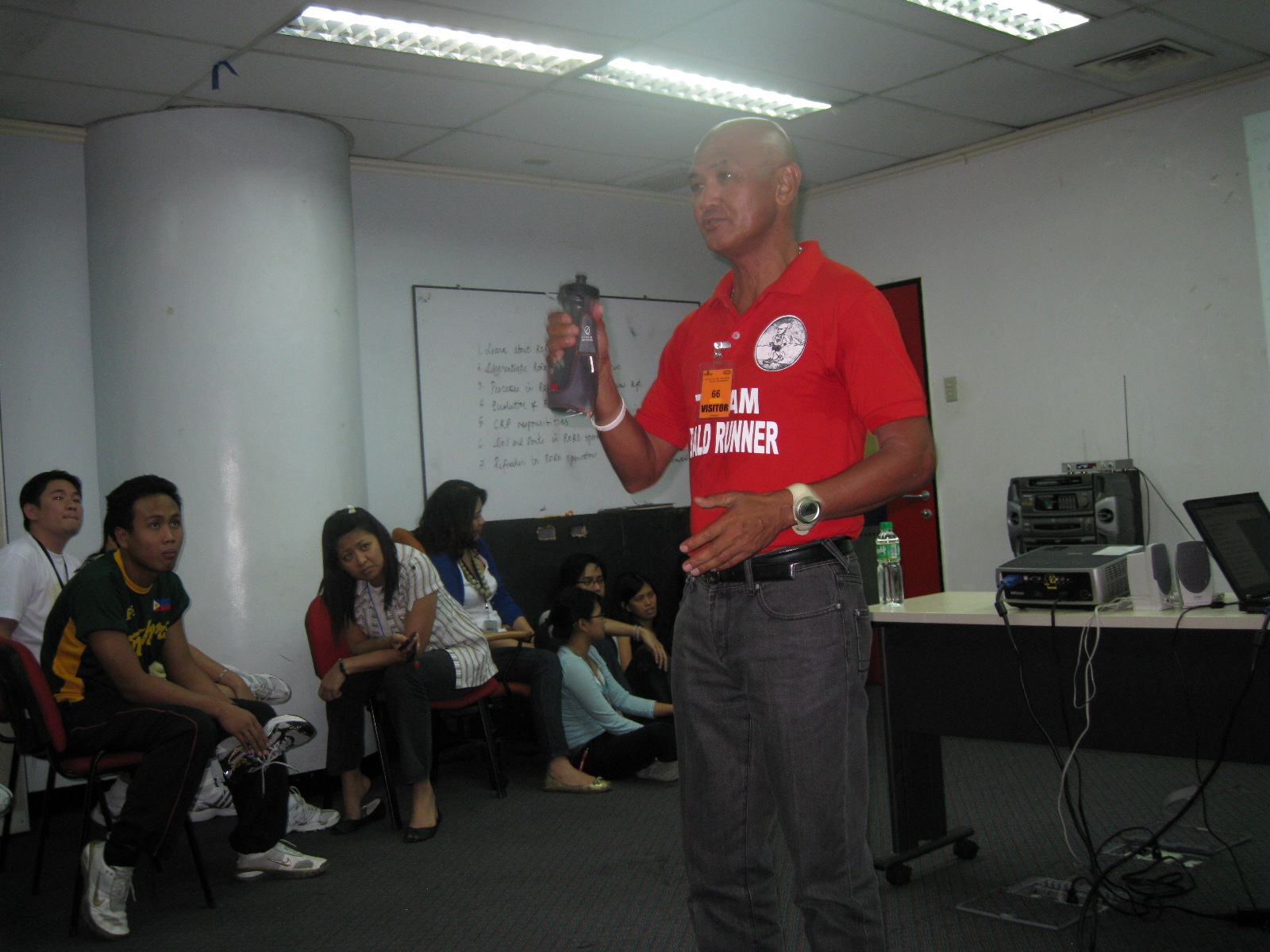
     After the briefing of Jerome, he introduced me to the participants which was reported to be more than 50 personnel of the company. As usual, I presented a lecture with a presentation which lasted for one hour and thirty minutes. I brought with me some of my running shoes—from my trainers, racing flats, and my trail running shoes. I even showed to the participants samples of hydration system that I’ve been using in my training and road races for the past two years.

    Some were sitting on the floor
    Showing some running shoes
    Example of Hydration Belt
    Hand-held Hydration Bottle
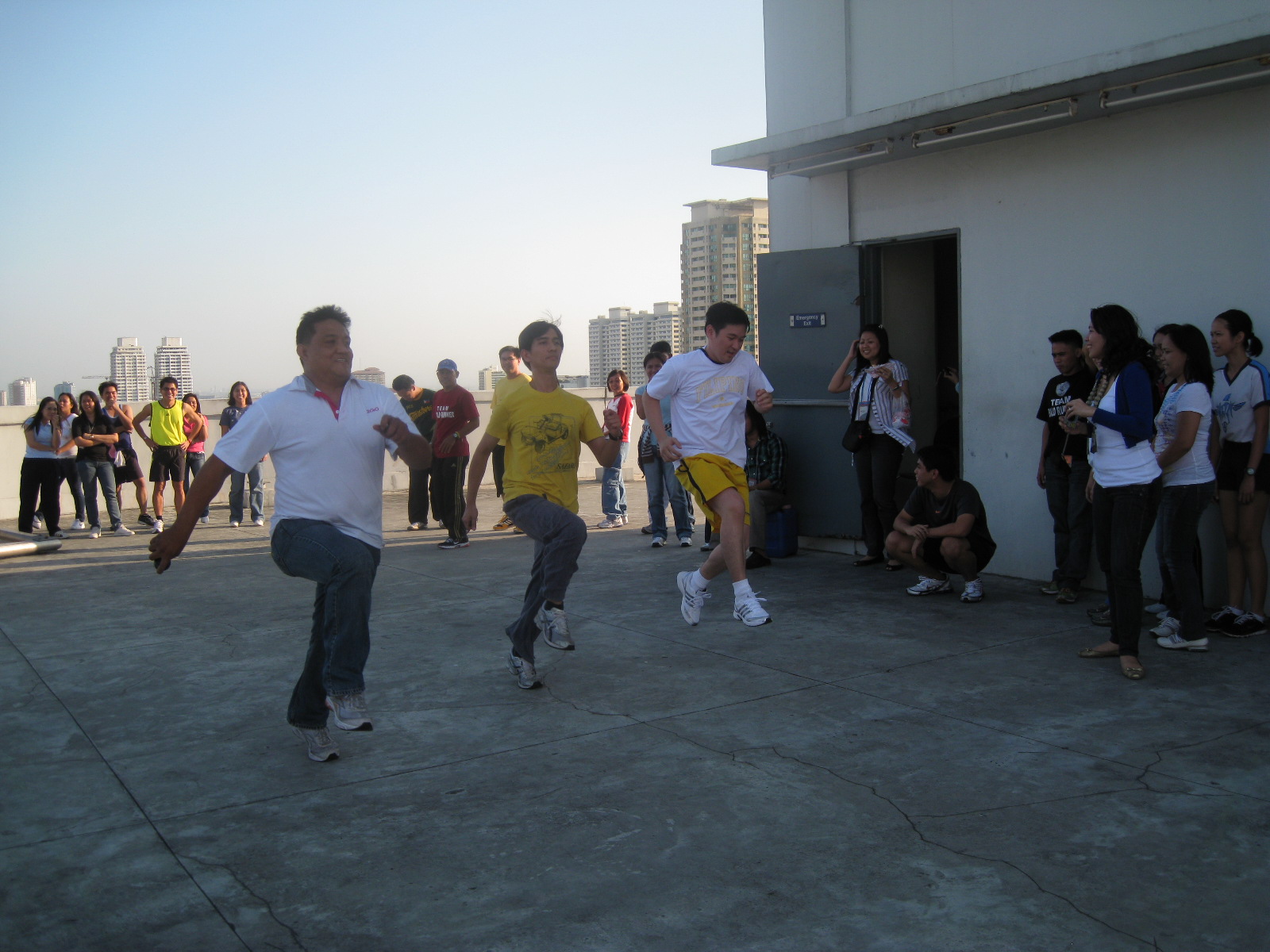
    Practical Demonstration & Clinic were done at the Roof Top

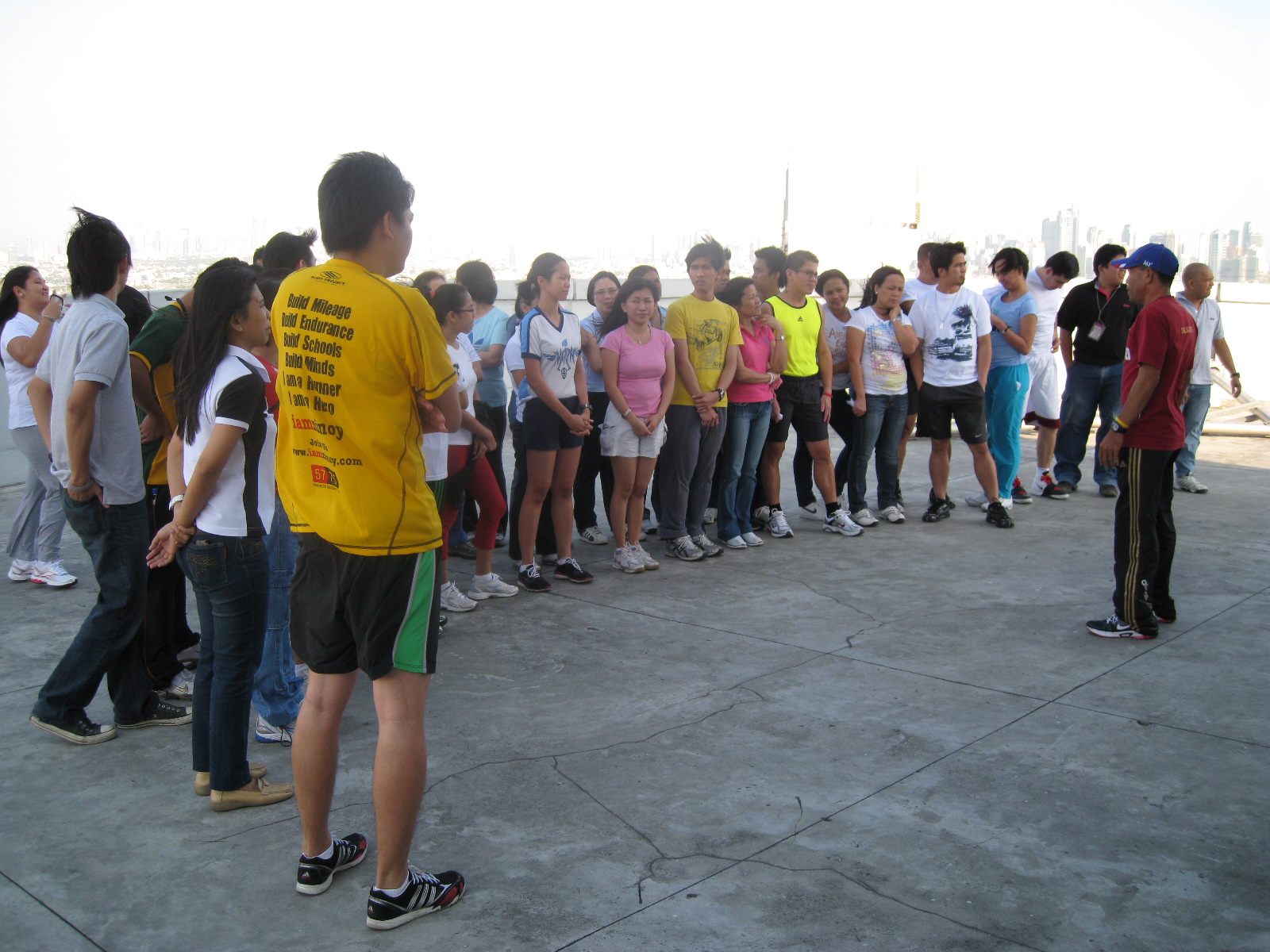
    After the lecture and open forum, the whole team and participants were led to the roof top of the Times Plaza Building for the Actual Demonstration and Practical Exercises/Running Demonstration. 

    Coach Titus Salazar's Turn To Demonstrate Proper Running Warm-up & Form

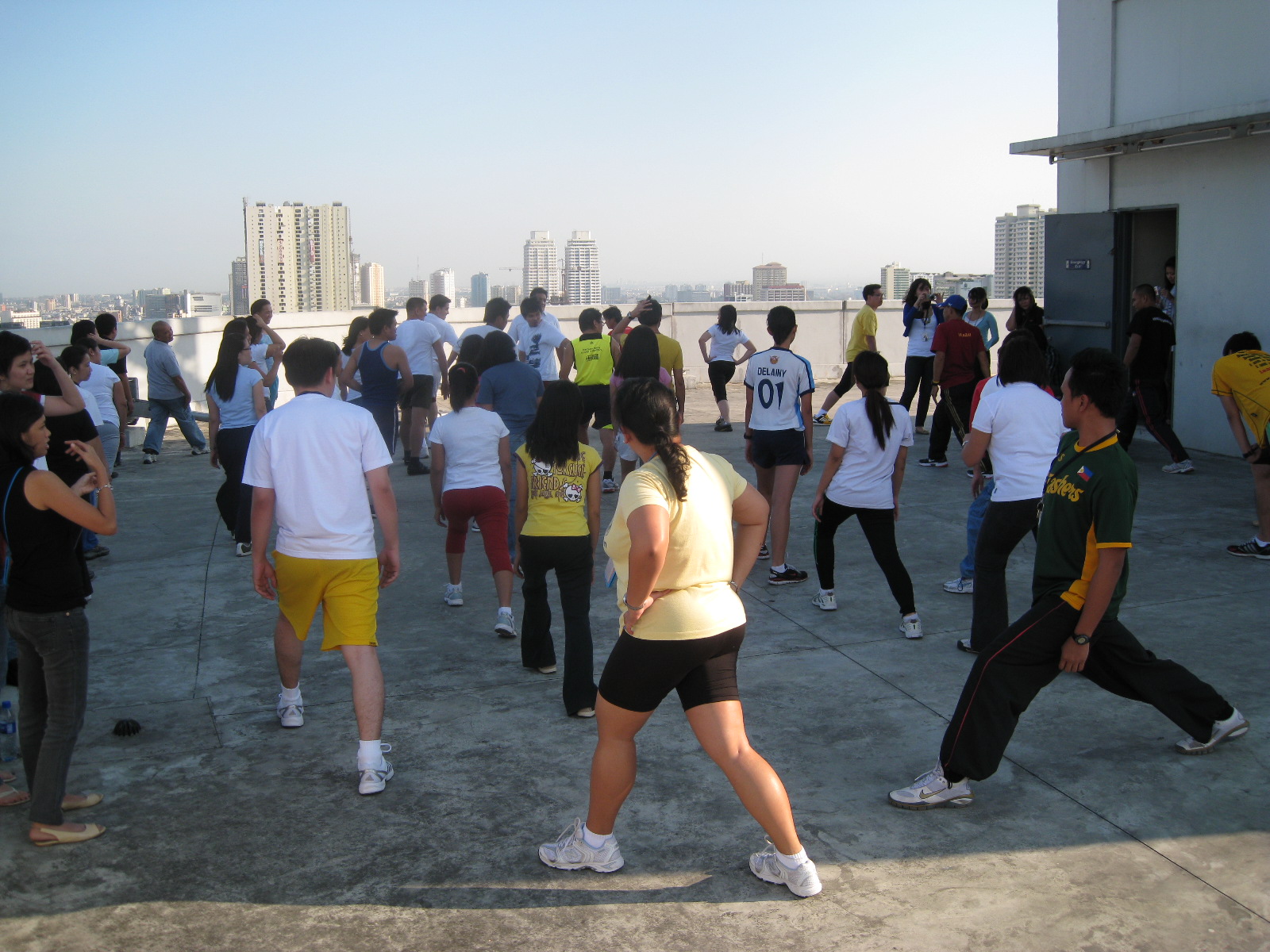
     Coach Titus Salazar of Team Blad Runner explained and demonstrated to the participants the technical aspects of running from the proper stretching, running drills, running form & strides, up to the cool down exercises. All the participants were encouraged to do what the Coach was demonstrating to the crowd. The Elite Team Bald Runner athletes were there to demonstrate the proper way to do the running drills and perform the correct running form.

    Proper Stretching Before Running
    Running Drills...
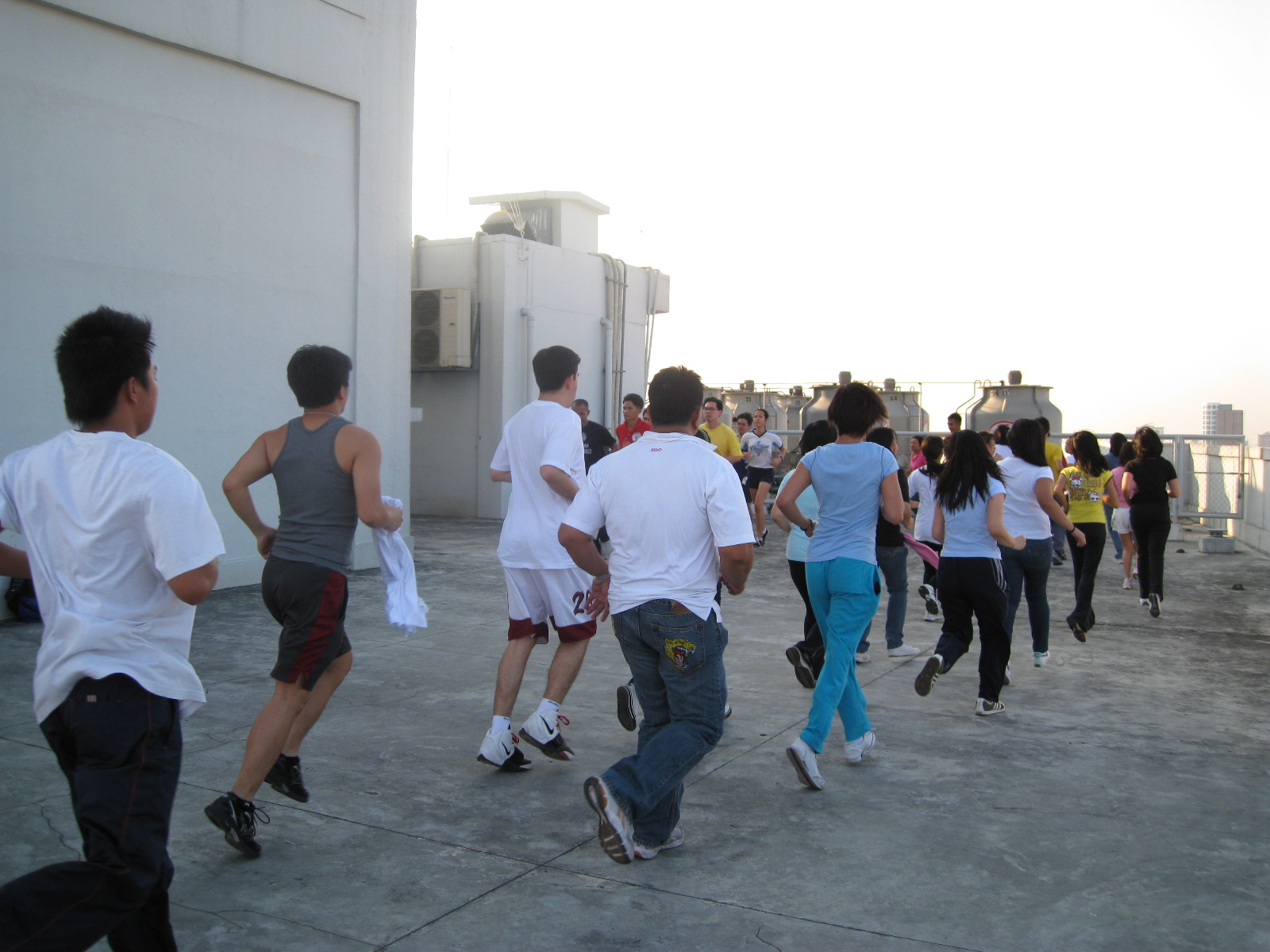
    Running On The Roof Top of the Building
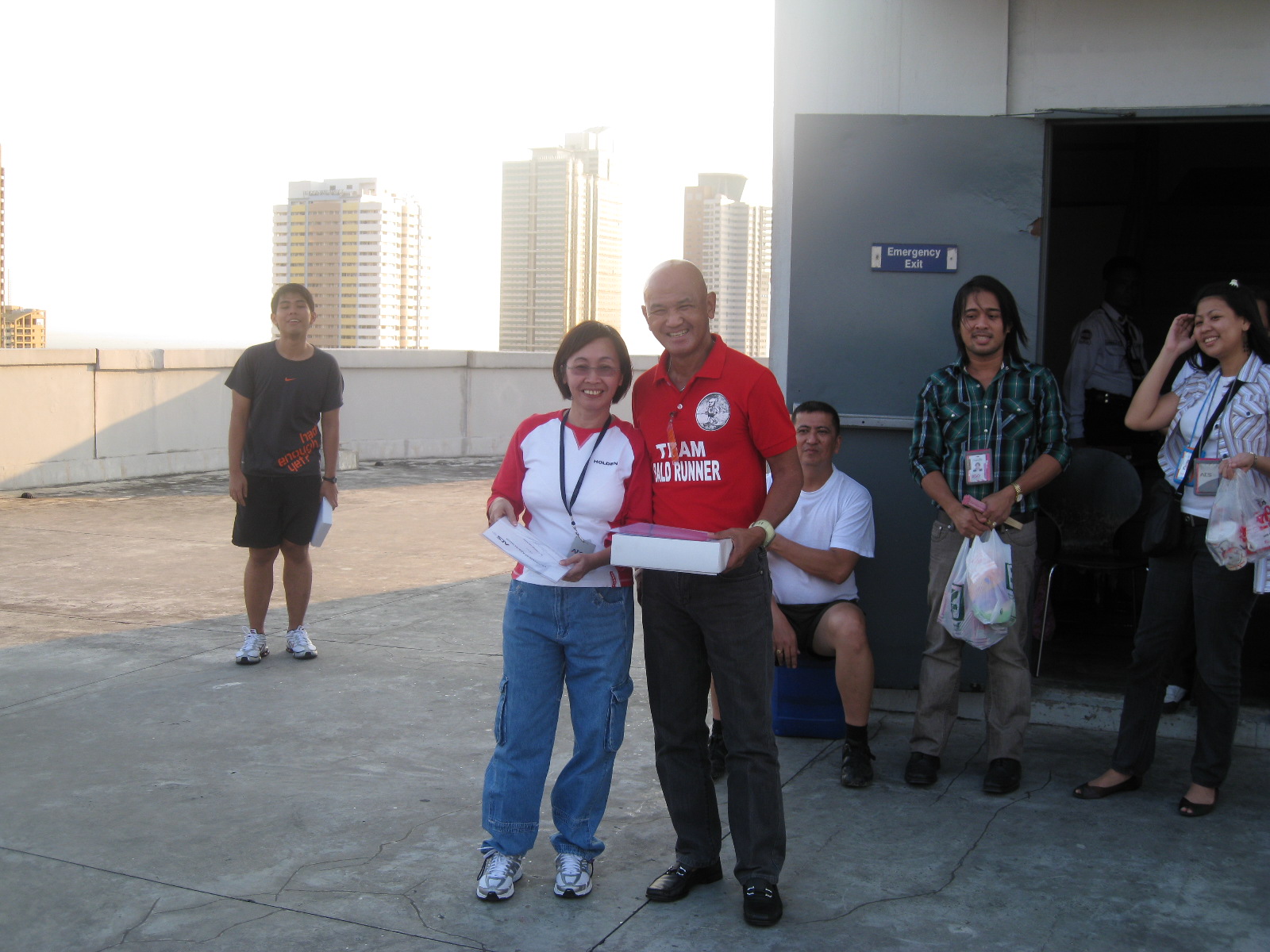
    Award & Gift-giving after the Clinic
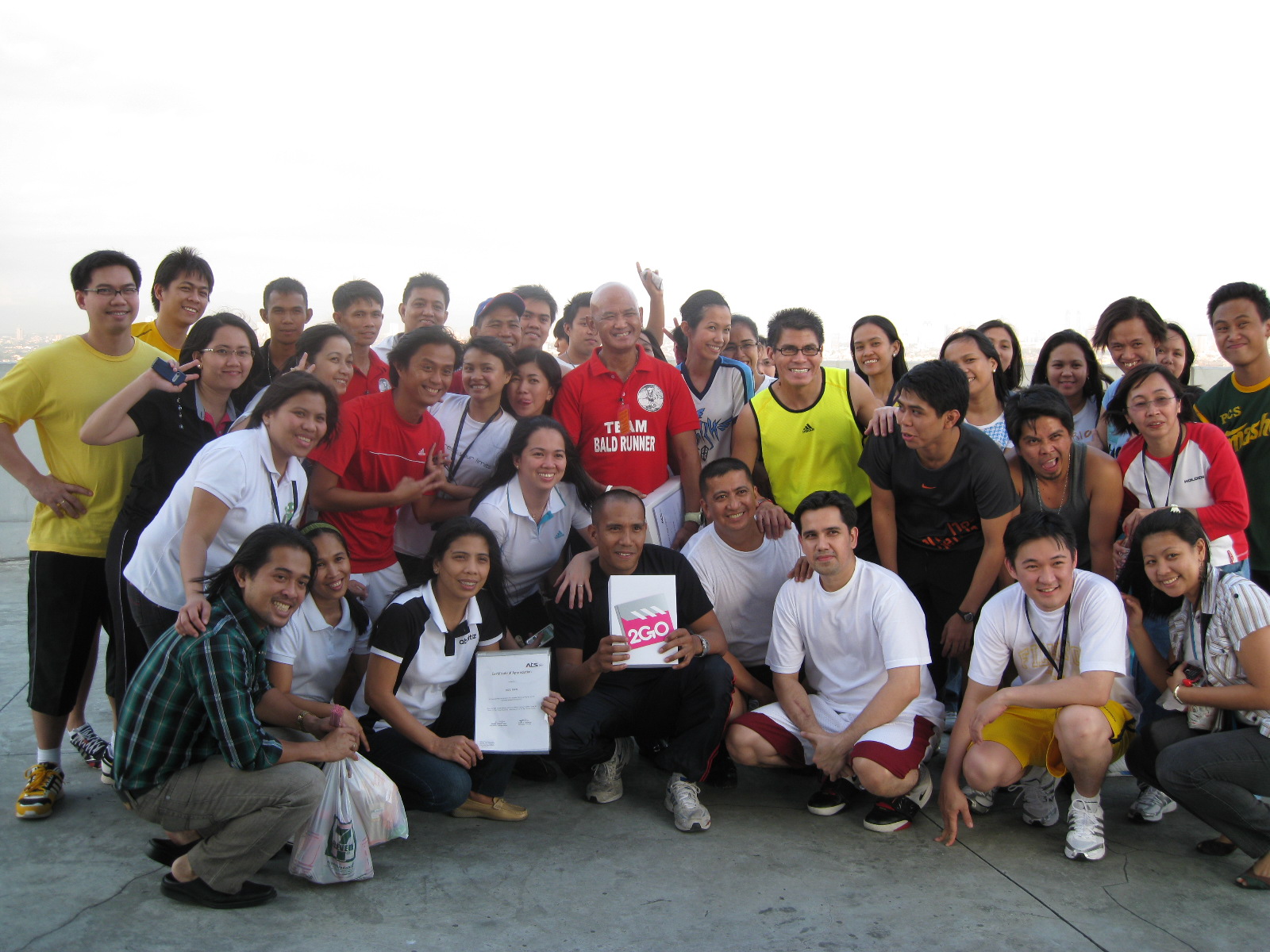
    Class Picture after the Running Clinic

    After about one hour and thirty minutes, the participants were able to learn how to stretch properly before and after their running workout. Running drills were fun to everybody. And running around the space the rooftop of the building can offer for about 15 to 20 minutes brought some perspiration to the runners even if the place was windy. After a short guidance and parting words from the Coach and from myself, my team was awarded with certificates and gifts from Aboitiz. Thanks, Aboitiz. We hope to be of service to your company and may your Running Team prosper and its members be good examples and models to your company.

    The Elite Team Bald Runner is also scheduled to conduct another Running Clinic to another branch of the company and set of “newbie” runners in the future.