BDM 102 Lecture #2


“Experience is the best teacher”

The second session of the 2011 BDM 102K Ultramarathon Race Lecture will be held this coming Friday, October 22, 2010 in one of the Function Rooms of the Philippine Army Officers’ Clubhouse, Headquarters Philippine Army, Fort Bonifacio. The lecture will start at 6:00 PM and ends at 7:00 PM.

I have invited two distinguished guest lecturers whom I consider as well-experienced in the field of ultramarathon events since the start of the BDM 102 and other PAU Races for the past two years. The first lecturer is Gene Olvis who had been consistently joining the BDM 102 and PAU races. He will impart to the audience about his training and preparation for the BDM 102 races as well as his experiences during the race. On the other hand, I have invited Bea Hernandez, the wife of ultramarathoner Mark, who will discuss her tips and experiences on being a Support Crew to his husband to the recent BDM 102 and PAU Races.

All “first-timers” for the BDM 102 and those who are still waiting for their invitation are highly encouraged to listen and be a part of this lecture. BDM 102 “veterans” who are qualified for the 1st BDM 151 are also encouraged to join this lecture.

(Note: The Secretariat of the 2011 BDM 102 event will be present during the lecture and applicants for the BDM 102 who have not yet received their “invitation” can coordinate with them. The Secretariat will also be there to receive and process registration for the 4th PAU 50K Run/”T2N”)

Running Lecture @ WRIGLEY Phils., Inc.


Mike Panlaqui, a passionate runner, is the HR Head of Wrigley Philippines, Inc and he is a regular visitor of this blog. If I can still remember right, he posted his first comment to this blogsite and sent me an e-mail when I was asking for journals and documents that will attest and support the claims of past multi-day runners of running along the different islands of the country. He revealed to me that he was once a part of the Planning Group of the GOMBURZA which was a group of priests and laymen who did those multi-day running events in the country.

It is unfortunate that he does not know if GOMBURZA had a daily journal on those multi-day runs. What he knew were the schedules and arrangements made for the runners before they started their multi-day runs from Manila.

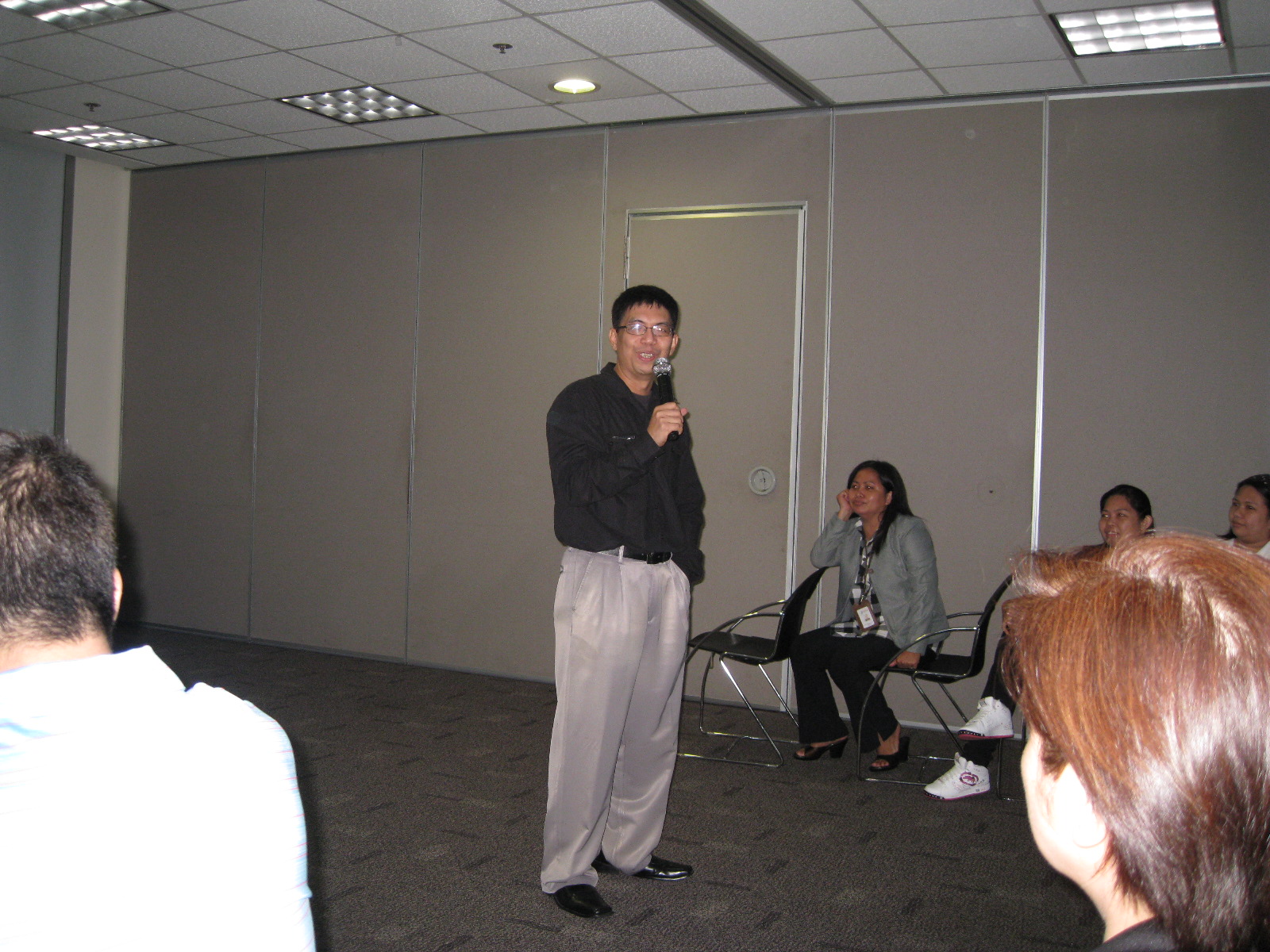
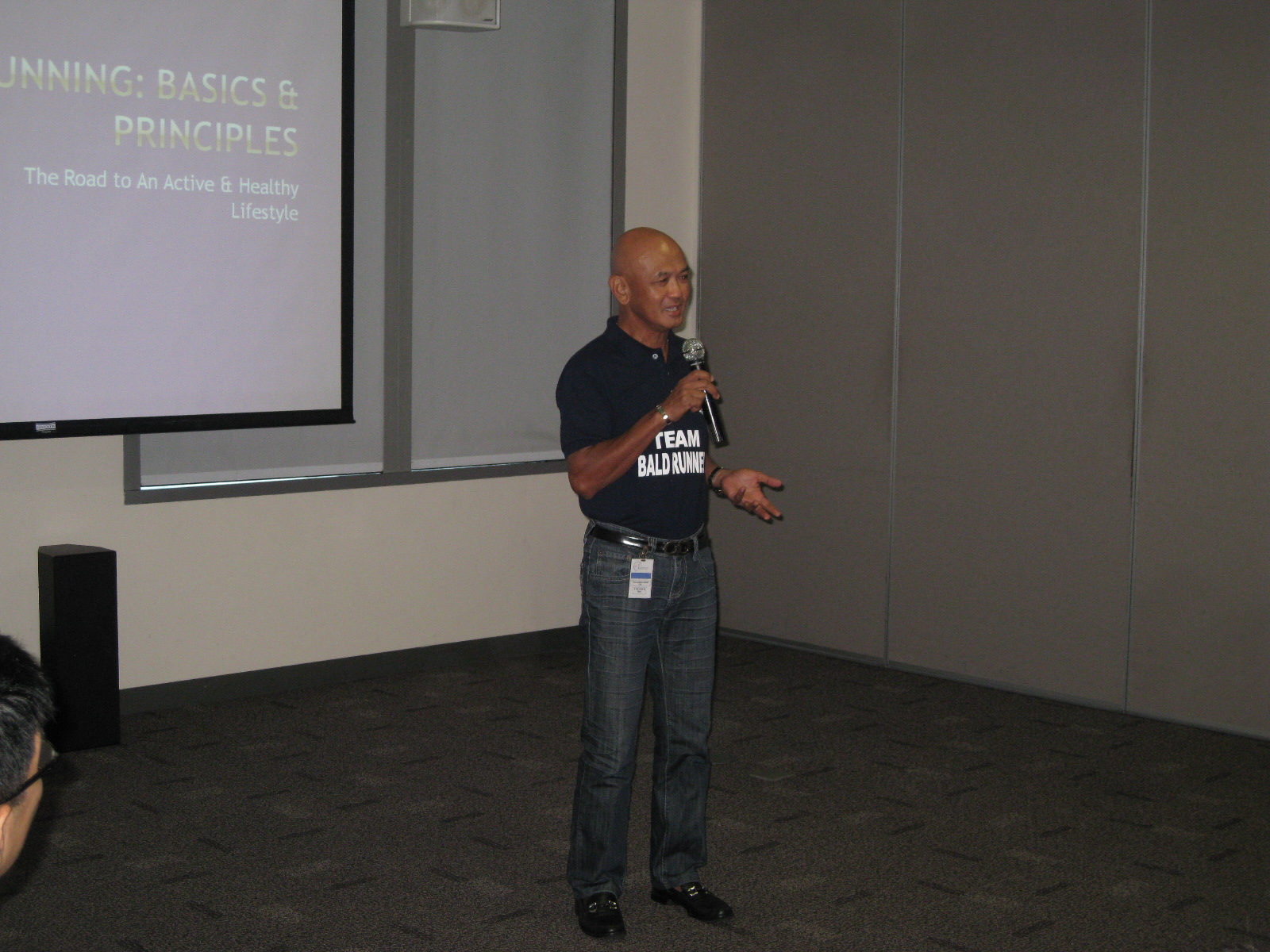
In one of our exchanges of e-mails, he invited me to conduct a running lecture and clinic to the personnel of Wrigley Philippines’ Corporate Office which is located at the Bonifacio Global City. The running lecture and clinic was conducted o/a 4:00 PM on September 22, 2010. Mike’s overall objective in this lecture is for him to organize their corporate office’s running club and for its officers, staff, and personnel to adhere to a healthy and active lifestyle through running. 

Mike Panlaqui's Introduction to the Running Lecture
"George Sheehan" of the Philippines?

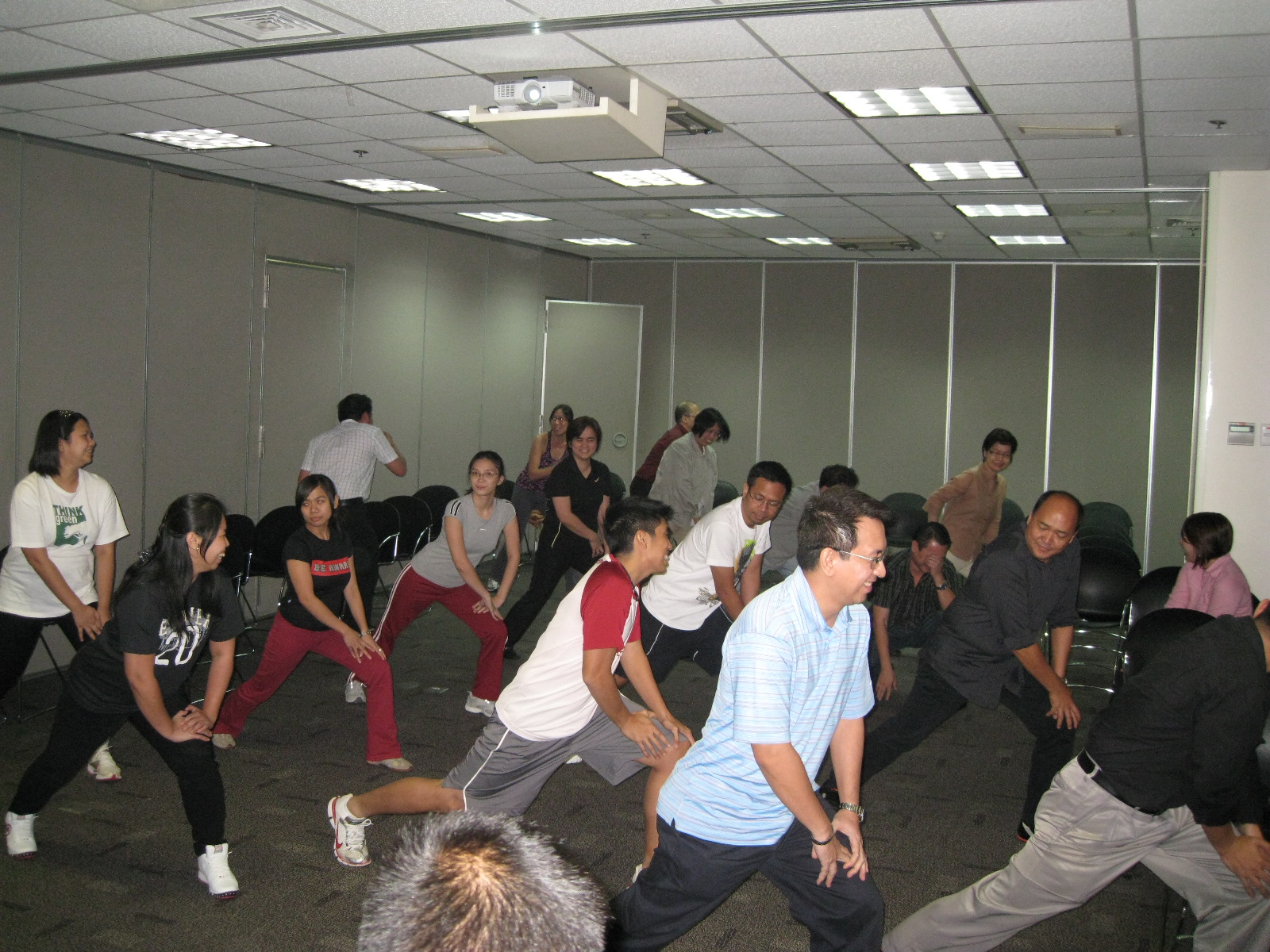
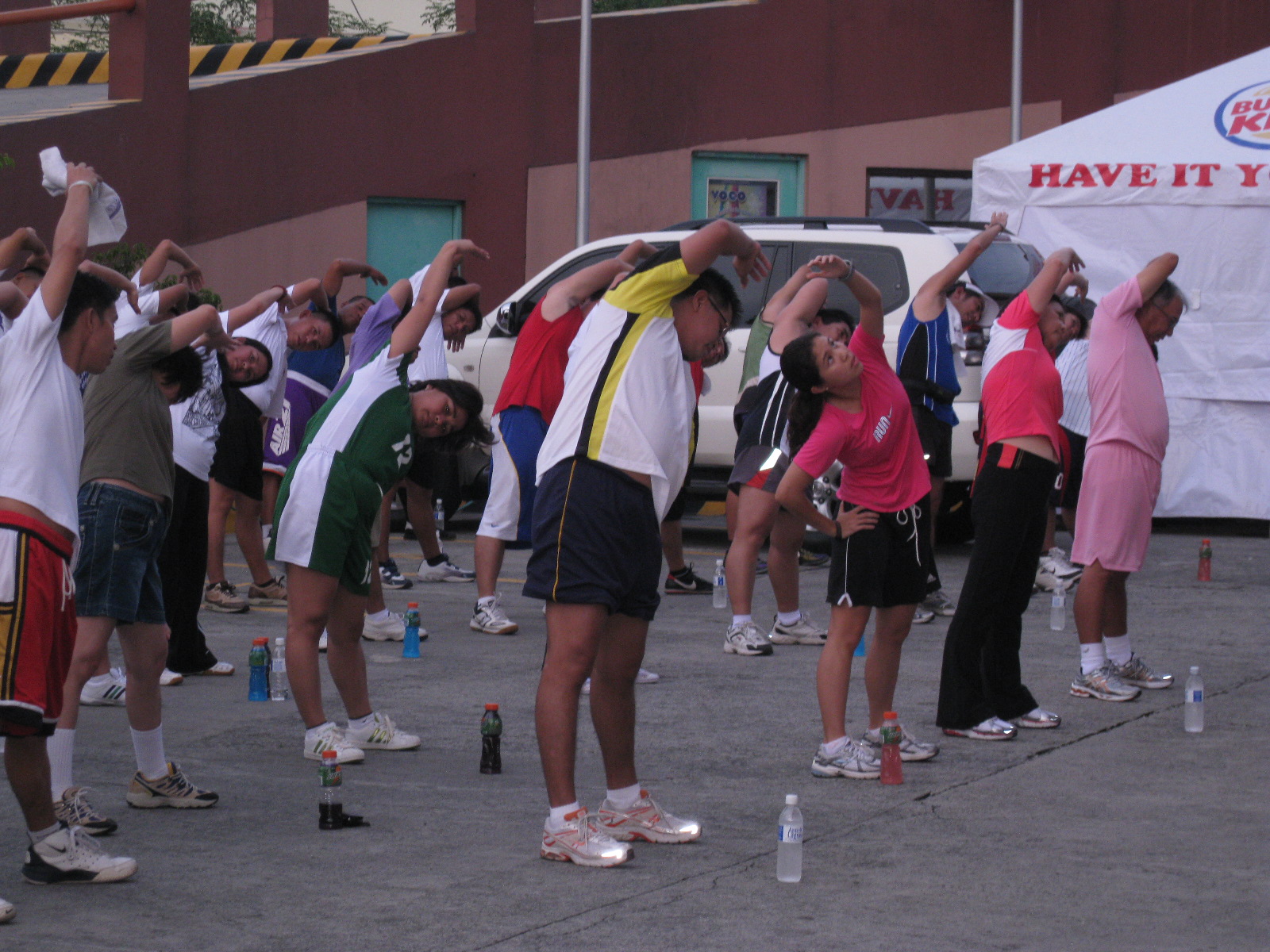
After the running lecture, the participants were encouraged to perform the different stretching exercises which we advised them to do before and after their running workout. The members of the Elite Team Bald Runner led and demonstrated the different stretching exercises.

Stretching Exercises After The Lecture

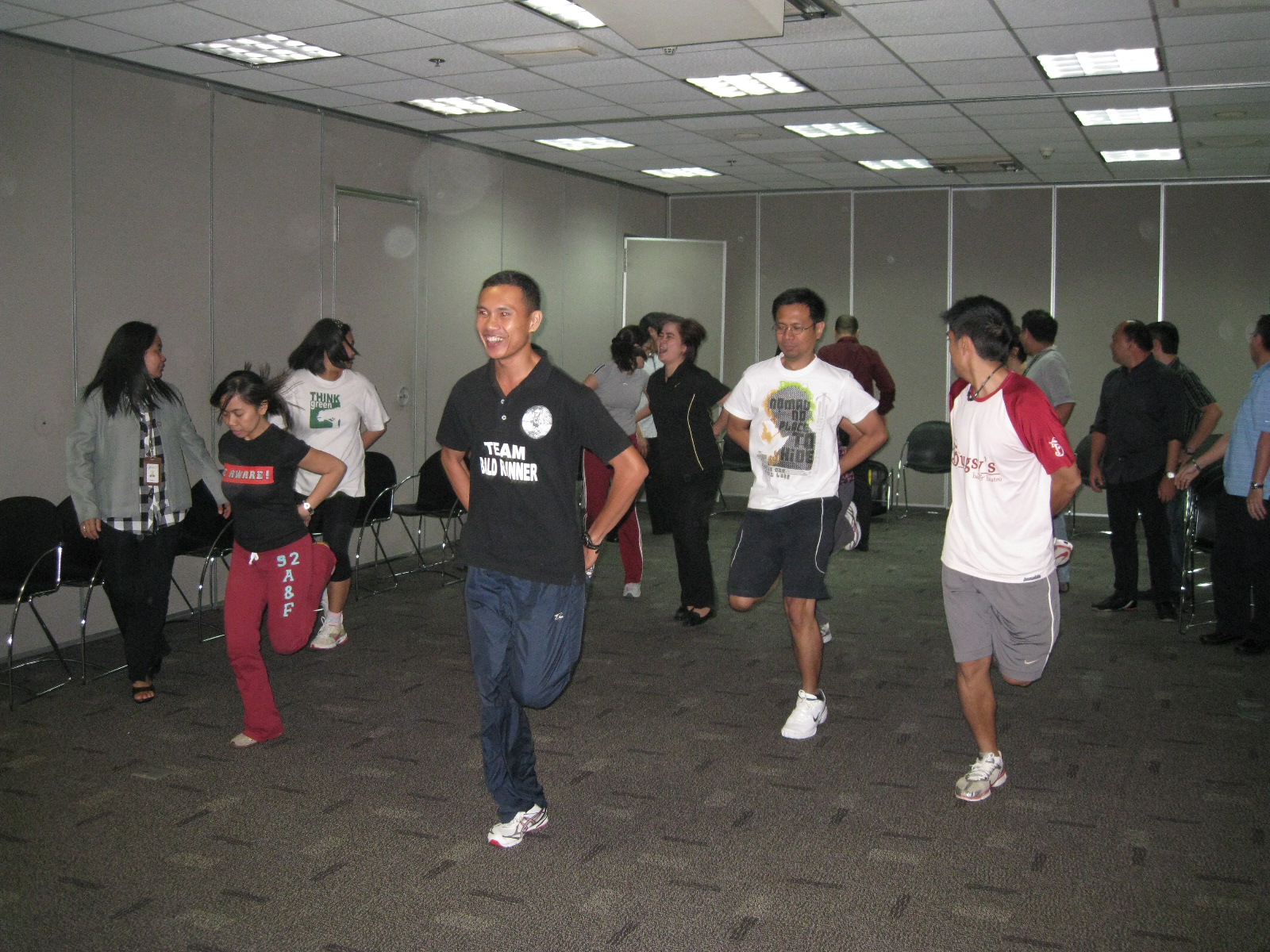
Aside from the stretching exercises, we also demonstrated to the participants important running “drills” which they could do before they do some “speed” training workouts at he Oval Track or during their running workouts. The lecture room was very spacious for the said “drills”.

Running "Drills" Inside The Lecture Room

What is good about the timing and scheduling of this corporate’s running lecture is that, Mike made it a point to conduct this activity during the company’s quarterly celebration of the employee’s birthday for the 3rd quarter of the year. It means that we were able to partake of the food and drinks for the party.

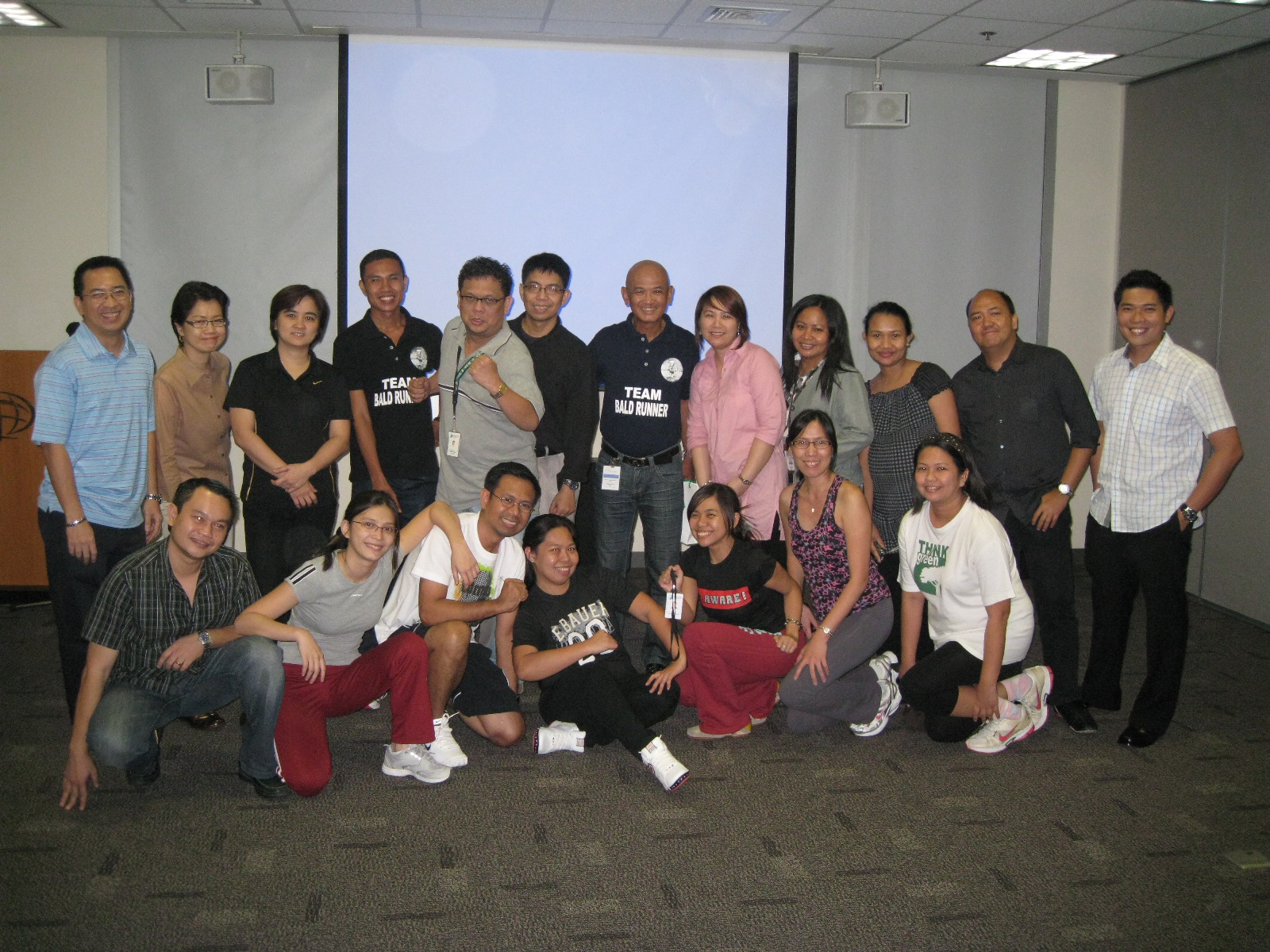
Group Picture For The Future "Wrigley's Running Club"

To conclude the event, Mike and the rest of the staff of the company had a group picture, presented to us some “gifts” and support to my Elite Team BR, and be a part of their quarterly birthday party celebration.

To Mike and Wrigley Phils, Inc, thank you very much for the warm reception and interest in spreading the benefits of running to your officers, staff and employees. Please continue supporting our elite athletes in long distance running.

“Heat Can Kill” by George Sheehan


The following article was written by George Sheehan in his book, “Running To Win”. I purposely wanted this article to be reposted in this blog in order to remind and emphasize to the runners about the danger of heatstroke in running. Many have died due to heatstroke and it is upon the individual runner to take extra precaution on this. On the other hand, it also encouraged that Race Organizers should employ Medical Teams which are trained to deal with heatstroke and better yet, if they are trained as runners also as this article would show that “immediate response and ON-SITE treatment” of heatstroke will make difference on the survival of a victim.

The following is the article as copied from the book. Enjoy reading it. (Note: BDM 102/151 runners should take note on this article)

Heat Can Kill

Despite all we have learned in recent years about heatstroke, runners continue to die from the destruction it wreaks on the human body. These deaths are due to two factors: first, the failure to take the necessary precautions to avoid heatstroke; and second, incorrect management when it occurs.

Precautions against heatstroke are the responsibility of the runner. The protocol to prepare for heat stress, especially encountered in competition, is well established. It includes training in hot weather, carbo-loading, hydrating with fluids, and running at an appropriate pace. During the race, water should be taken at regular intervals as well as splashed or sprayed over the body.

When I run, I wear a painter’s cap in which I place a bag of ice cubes, and I continually soak the cap with water. I never pass a water station without stopping to drink two full glasses and pour one over my head. Wherever there is a hose, I run through the spray, and I carry a cup in the hope that I can fill it with water. And I purposely run 15 to 30 seconds per mile slower than my usual time.

These practices have become so common among runners that the number of heat injuries sustained in races declines each year. Nevertheless, there are always some runners who push too hard, don’t take time to stop for water, or cut corners in other ways. These are mainly highly motivated recreational runners or newcomers to the sport, not veterans. And they are the ones who collapse with heatstroke. Typical symptoms include dry skin, dizziness, headache, thirst, nausea, muscular cramps, and elevated body temperature.

Heatstroke can be a catastrophe, but it need not be. Despite the seriousness of the situation—it’s potentially fatal—correct medical care can and will save the day. And by correct care, I mean the type provided by disaster teams at two of the biggest races in the world run in high heat stress conditions—the Sydney City-to-Surf Race in Australia and the Atlanta Peachtree Run in Georgia, held in July.

While we continue to see random reports of people succumbing to heatstroke, the Sydney medical team has supervised 200,000 runners without a death from heatstroke. In a nine-year period, only two patients were even hospitalized.

There is good reason for this—immediate treatment. Dr. Rowland Richards thinks his Sydney group has arrived at the correct way to treat heatstroke and the correct place to do it: at the race site. Getting a heatstroke victim to a hospital wastes precious time, risking delay in diagnosis and treatment. John R. Sutton, M.D., professor of medicine at the McMaster University in Hamilton, Ontario, Canada, agrees: “Hospitalization may be the very worst approach, especially with subjects whose vital organs are cooking at 107 to 109 degrees Fahrenheit.

That, in a nutshell, is the problem. Fatal heat injury is the result of prolonged exposure to high temperatures. The Sydney physicians are able to reduce initial core body temperatures, taken rectally, of 107 to 109 degrees Fahrenheit down to 100 degrees Fahrenheit in as little as 50 minutes, on the average. This is achieved by applying instant cold packs over the neck, armpits, and groin, along with rapid intravenous rehydration, in every runner with a core temperature of over 100 degrees Fahrenheit. If low blood sugar is suspected, 50 cc’s of 50% glucose is given intravenously. “Failure to follow this routine,” says Dr. Richards, “could result in serious consequences, including death.”

Fortunately, in the one instance in which a heatstroke victim was not given this therapy (a misdirected ambulance was 40 minutes late, then took him to the hospital), the runner did survive.

The Atlanta medical team works on much the same principle. Again, the emphasis is on cooling. Joe Wilson, M.D., the physician in charge, stresses the urgency of bringing down the temperature as quickly as possible. Often this is all that need to be done. Within 30 minutes, patients are usually alert, no longer nauseated, and able to take fluids. If not, intravenous fluids are started. And as in Sydney, no runner has ever died from heatstroke at the Atlanta race.

After reading Dr. Richards and talking with Dr. Wilson, I realized that preventive measures are important, but nowhere near as important as adhering to a tried-and-true protocol aimed at rapidly reducing core body temperature. A heatstroke is a heatstroke. A runner can do everything right and still push himself or herself into a heatstroke as severe as one incurred by an untrained, unacclimatized beginner. At that point, the runner’s life may depend on on-the-spot treatment by an experienced disaster team.

“What is required,” says Dr. Sutton, “is an immediate diagnosis, followed by rapid cooling at the site of the race. Each moment’s delay may worsen the outcome. It is no longer acceptable to have some amateur “ad hoc” arrangement.”

The facts bear that statement out. When we have amateurs running in hot-weather races, we should not have amateurs treating them.

Even the presence of the best professional  on-site disaster team should not keep you from doing your homework, however.

BDM 102 Lecture #1: History & Honesty


Bataan Death March Logo

The 1st Lecture for the 2011 BDM 102 was conducted last October 1, 2010 in one of the Function Rooms of the Philippine Army’s Officers’ Clubhouse. It started on time at 6:00 PM in the presence of 15 runner-participants & applicants.

I personally conducted the lecture with the topics, History & Honesty. The following is the summary of the lecture:

History

Based from my readings in history books and personal accounts of survivors of the Bataan Death March of 1942, I discussed to the attendants about the history of the event that happened from April 9-24, 1942 which resulted to the killing and death of an estimated 20,000 POWs during the March and ultimately, during the POWs stay in their Concentration Camp at Camp O’Donnell, Tarlac. These POWs during the March was a combination of Filipinos, Americans, Chinese-Filipinos, and civilians. Literally, these POWs were made to “march” for a distance of 102 kilometers from Mariveles, Bataan to San Fernando, Pampanga; transported by train from San Fernando, Pampanga to Capas, Tarlac; alighted from the Railway Station; and then marched/walked for another 11 kilometers from Capas Poblacion to Camp O’Donnell.

This unfortunate event during the World War II was considered as the most barbaric act in violation of the treatment of POWs as provided by Geneva Act. The people responsible for this dastardly acts during the Bataan Death March were tried by Military Tribunal/Court after the war and they were executed to their death. However, this event in history will be always remembered and commemorated.

The history of the BDM 102K Ultramarathon Event was also discussed with the emphasis that the commemoration of this important event should be done in the very place where the event happened. Some countries had been using BDM as the title of their running events but they are done in their respective countries. It is for this reason that we should continue commemorating this event in the most practical way which is through running an ultramarathon event. It was initially was a dream but through persistence and patience, this event became a reality with the support of runners who believe that it is worth doing in memory of our dead heroes and living survivors of the infamous Bataan Death March.

Honesty

For the past editions of the BDM 102, I always emphasized the “honor system” in a running event. I told to my audience about my personal observations on the actuations of some of the runners and the reports I received from my marshals and staff with regards to honesty in running this event. My past journals/posts about the 1st BDM 102 would explain more about such incidents of breach of honesty during the event.

The 102K distance is daunting and running under the heat of the sun is very challenging. Such distance and challenge would tempt every runner to be honest or not, just to be able to finish the race within the prescribed cut-off time of 18 hours. Finishing an ultramarathon distance is a “mind game” and each of the runner must be able to prepare and train physically and mentally.

We made some adjustments on our protocol in order to monitor our runners along the route but these are not enough to make sure that runners with bad intentions would be detected by our staff/marshals. It is in this view that our outfit would be able to encourage and prepare all interested runners to run along the actual route through “test runs” before the scheduled race day. 

After a brief open forum, the lecture was terminated after one hour.

The next BDM 102 Lecture will be held on October 22, 2010 at the same time and place. One of the top runners in this year’s BDM 102 will be invited as the resource speaker and another resource speaker will be discussing on her experience and “tips” as a Support Crew to her runner-husband.

To all BDM 102 runners, train well and keep strong!

Intensity


Few days after the 1st CAMSUR Marathon, I had a conversation with one of the Finishers who finished the race in sub-four hours. The runner had been running his past Marathon Races in 3:35 to 3:50 hours but he would like to be consistent and cross the barrier of less than 3:30 hours. He simply meant that it is hard to master and predict your finish time in a Marathon Race if you are training and running the race here in the country. That’s true!

At the back of the mind of this runner, I could only analyze that he wants to set a record in his PR best time in his Marathon Race. Through my experience in running and being exposed to races here and abroad, I told him that the prevailing weather/climate in the country is the number one factor that prevents us from coming up with our PR best time. It is best to train hard here in the country and then choose/plan for a race in one of the temperate countries like China, Japan, South Korea, Taiwan, Australia, New Zealand, or to the United States. Running a race in a perfect and cool temperature makes wonder to the racing/running body. Aside from a better quality of air and running environment, I never had any problems with muscle cramps on my legs and problems on hydration.

 The second most important factor is the intensity of one’s training. If you want a detailed explanation of this factor, you have to refer to the book, “Jack Daniels’ Running Formula” where you will encounter Vo2Max, VDot, and the different range of average pace depending on the intensity of your workout. Your average pace is categorized into the following types of workout intensity—EASY, Threshold, Marathon, Race, and Interval Paces. Based on your predicted time to finish a certain distance, you have to follow each recommended pace depending on the intensity of your running workout. In my case, I have to maintain an average pace of 5:45 minutes per kilometer in my EASY runs to be able to finish my predicted time of 3:45 hours in a Marathon Race. You can just imagine how I need to be consistent with my training if you will know my average paces in my Threshold, Marathon, Race, and Interval workouts. The bottom line is that, I want you to get hold of the book by Jack Daniels and learn the details from it. Remember that the “devil” is always at the details.

The last thing that I could recommend to people who would want to establish their best PR time is to be able to value the word, RECOVERY. In between these workouts with intensity, you must be able to find time to have your body recover from the stress of such workouts. You must have to follow a standard weekly schedule for your running workouts. In the many journals, books and reading materials, I found out that the best competitive runners follow a 7-day a week schedule that is generally presented like this:

Monday—Easy and Recovery Run

Tuesday—Speed Training/Intervals

Wednesday—Moderate to Easy Run

Thursday—Moderate to Easy Run

Friday—Speed Training/Tempo/Intervals

Saturday—Easy to Moderate Run (minimum of 1 ½ hours)

Sunday—Long Steady Long Run (minimum of 2 ½ hours Easy Run)

You could see in this basic weekly schedule that the body would be able to recover after your Speed Training days and after your weekend/Sunday LSD runs. You could also lessen the intensity of your weekly average runs after 3 weeks, making at least one week as recovery week within a month’s of training schedule.

BDM 102K Ultramarathon Clinic


In preparation for the 2011 Bataan Death March 102K Ultramarathon Run, the Bald Runner’s Events Management will conduct a FREE Ultramarathon Clinic starting on the month of October 2010. This clinic will consist of lectures on related topics about ultramarathon; “tips” and guides to finish the race and the conduct “test runs” on the actual route of the race. The following are the details of the clinic:

WHAT: FREE BDM 102K Ultramarathon Clinic

WHO: A “Must” for 1st time applicants for the event. A runner-participant must have finished a Marathon Race with at least 6 hours or better as finish time. BDM 102 “veterans” are not required to attend the lectures. However, they are encouraged to join the “test runs”.

WHEN: Every 1st & 3rd Friday of the month. From 6:00 PM-7:30 PM. The first clinic/lecture will be held on Friday, October 1, 2010.

WHERE: 1st Floor Lecture Room, Philippine Army Officer’s Club, Headquarters Philippine Army, Fort Bonifacio, Taguig City

ATTIRE: Casual/Athletic or Sports Attire

The lecture will start at exactly 6:00 PM.

Running Clinic @ AIR 21


 Days before the conduct of the PAU’s P2P 70K Run in Ilocos Norte, Frederick Gabriel and Vic Viola of takbo.ph approached me with the request for their company to conduct a running lecture and clinic to their staff and employees numbering to about 200. It was only during these conversations that I have found out that these two ultra runners and consistent PAU runners are connected with the company called AIR 21. Their request was very noble that it was worth making it as a priority because of the number of participants plus the interest they put into the importance of running as part of the company’s sports program and the company’s program to look for the welfare of their subordinates through running as part of their active lifestyle. 

In addition, one of the objectives of the running lecture and clinic at AIR 21 is for everybody at the said company to know the basic and scientific way of training in running. It is a part of the company’s training and preparation for their participation in this year’s October 10 A Run For Pasig River. I was informed that almost all the staff and employees will be joining the said running event. Days before the conduct of the lecture & clinic, I have already the impression that the owners are sports-minded and health buffs. (Note: Mr Lina is a golf player while his wife has progressively finished her first 5K run) 

The lecture and clinic was decided to be conducted on the Company’s Health & Medical Expo Day which was held on the Birthday of Mrs Sylvia Lina, co-owner of the company and wife of Mr Alberto Lina, President & Owner of the Company. The lecture and the first session of actual running was conducted at 3:00 PM of September 6, 2010 at the Company’s Cargohaus near the NAIA Airport Complex. 

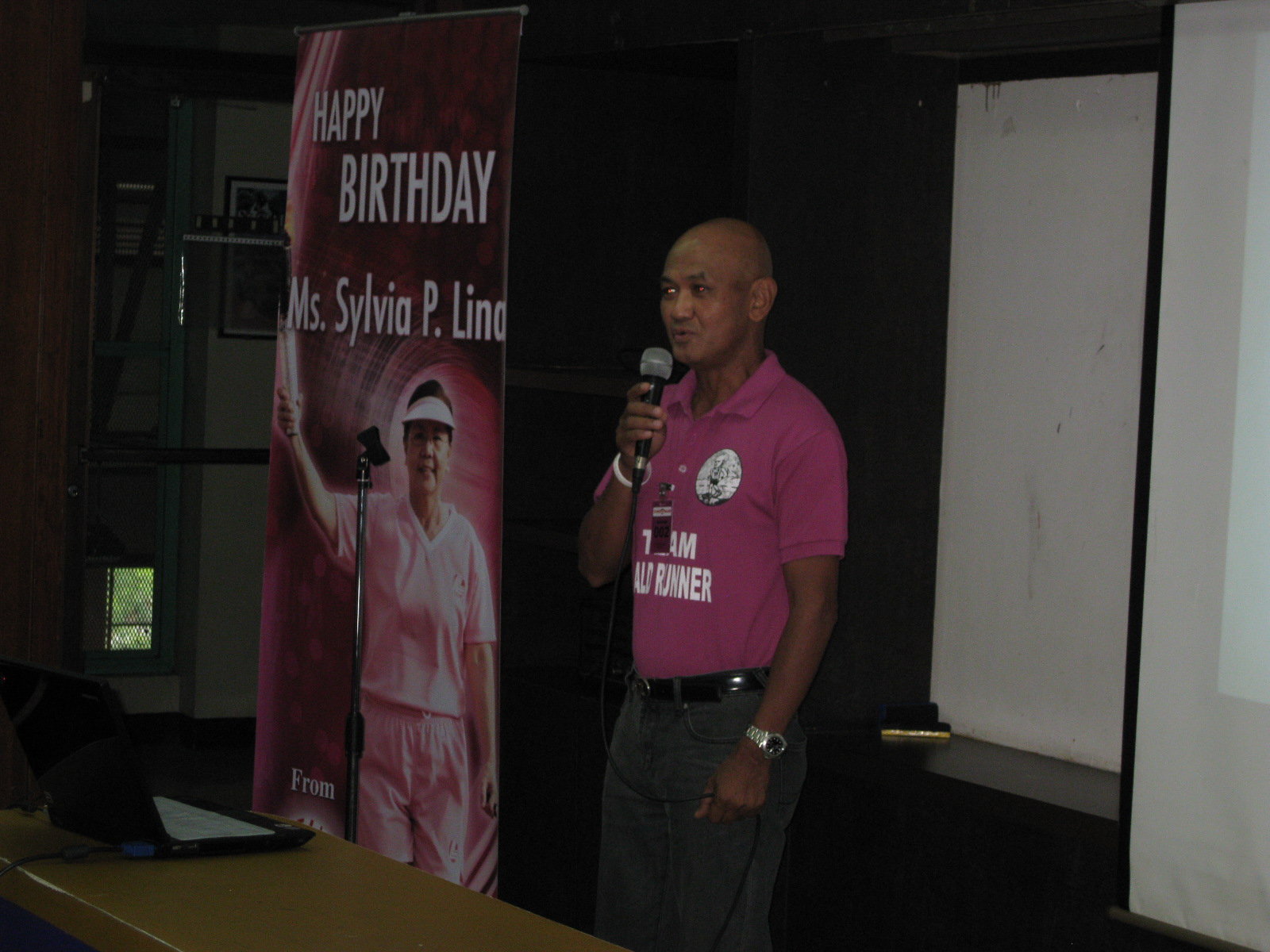
Birthday of the 1st Lady of the Company

 I was impressed that the owners of the company, Mr & Mrs Lina and their two daughters attended the lecture and the practical part and actual demonstration of the stretching exercises, running drills, and a 30-minute run. 

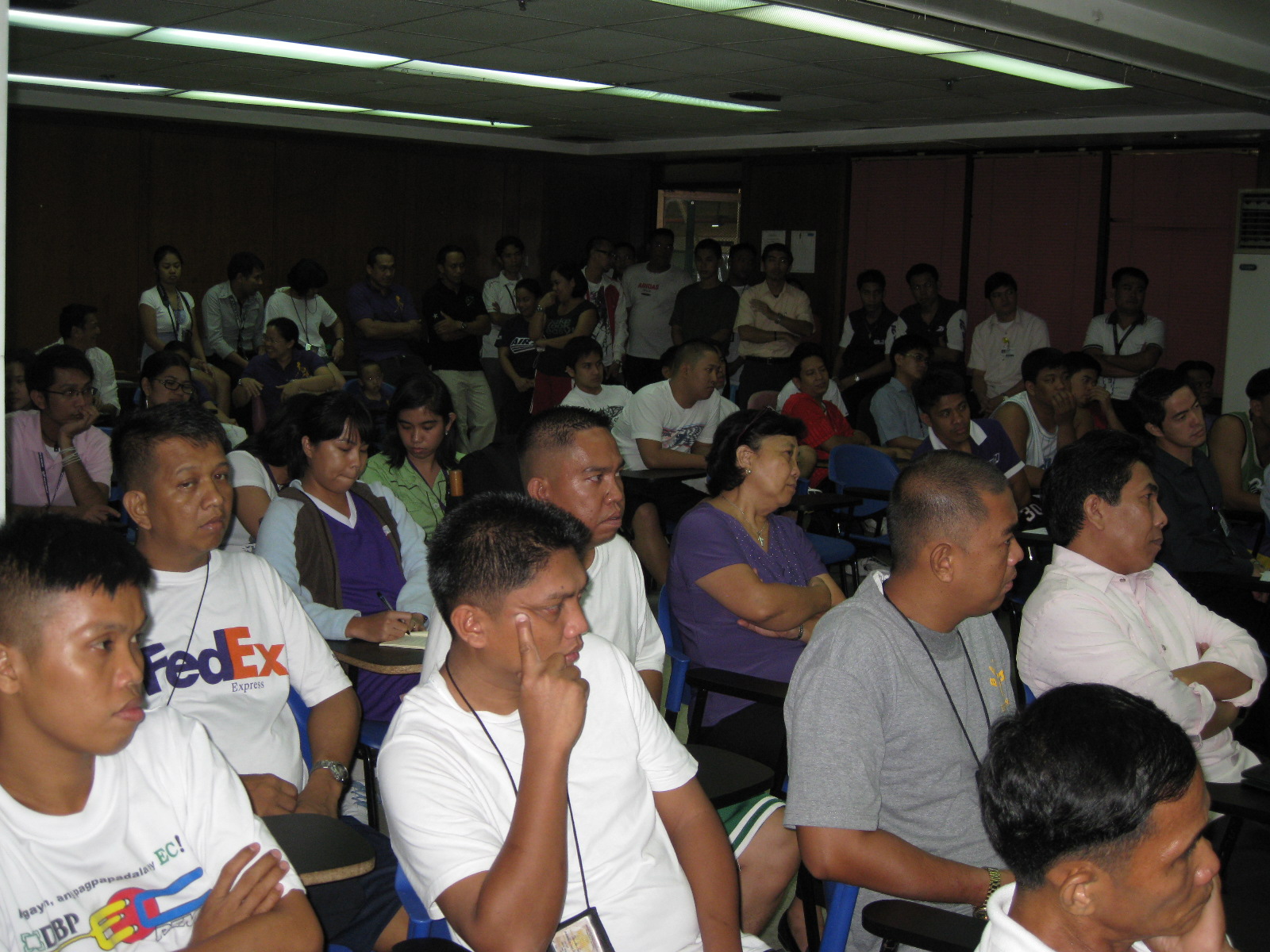
Lecture Room Filled With Staff & Employees

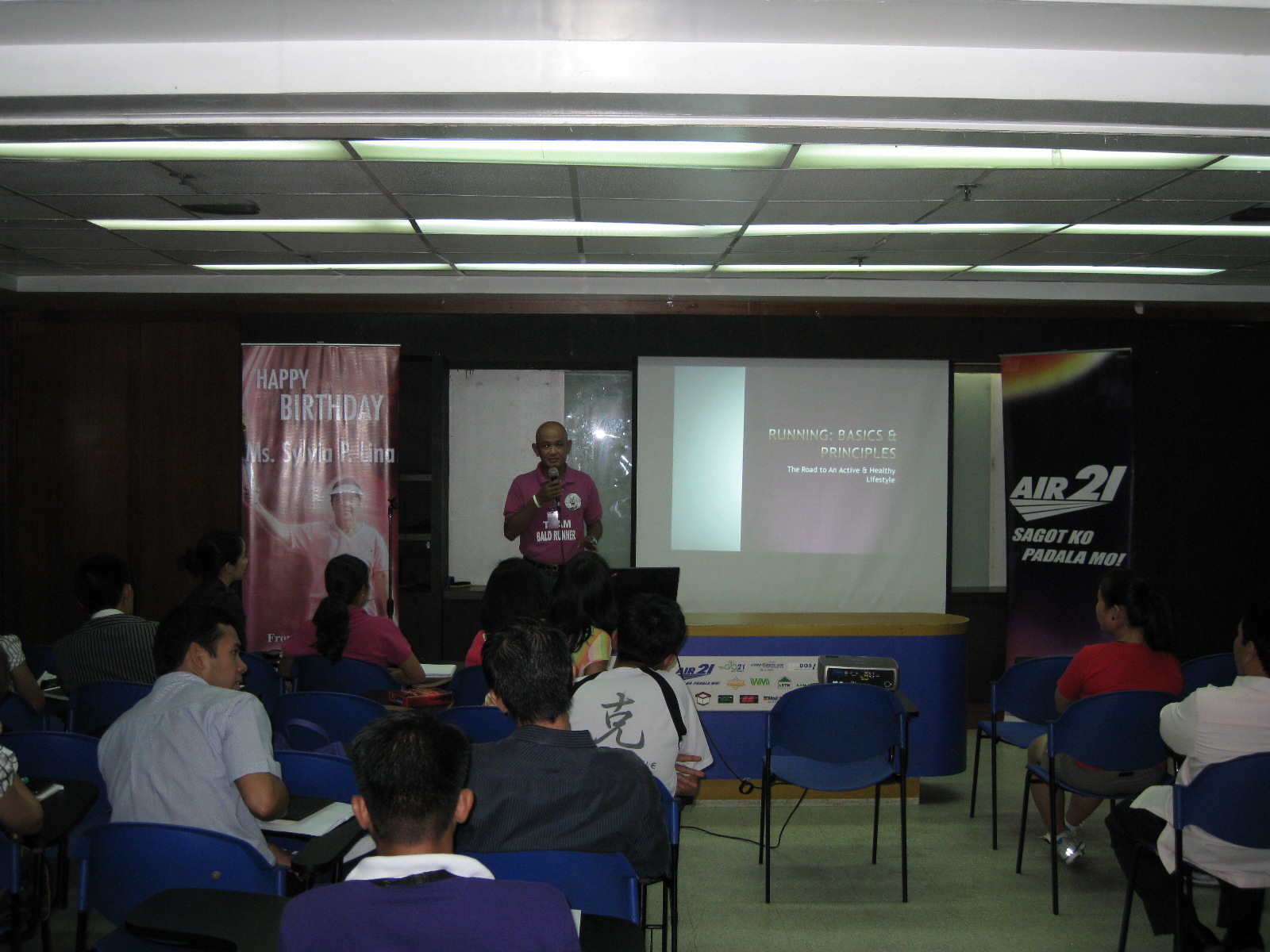
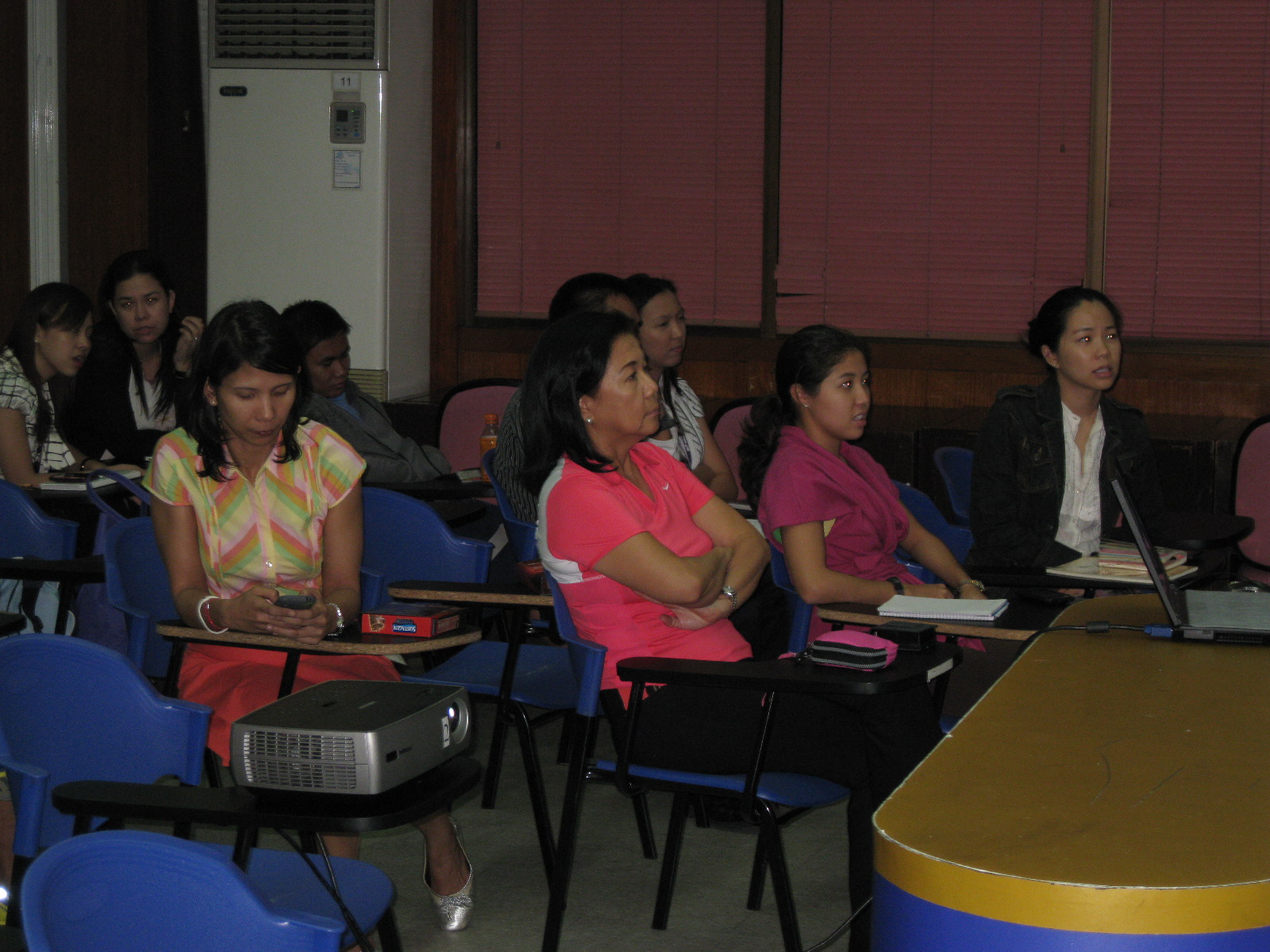
 The lecture room was “jampacked” with the staff and employees of the company that most of them remained standing during the 1 1/2 hours of lecture and open forum. Basically, the lecture covered the “Why’s” of Running, Steps To Follow, Laws of Training in Running, Practical Tips In Running, Phases of Training, and lastly, Etiquette In Running. Some concerns and apprehensions from the participants were answered during the Open Forum. 

Lecture On Running Basics & Principles

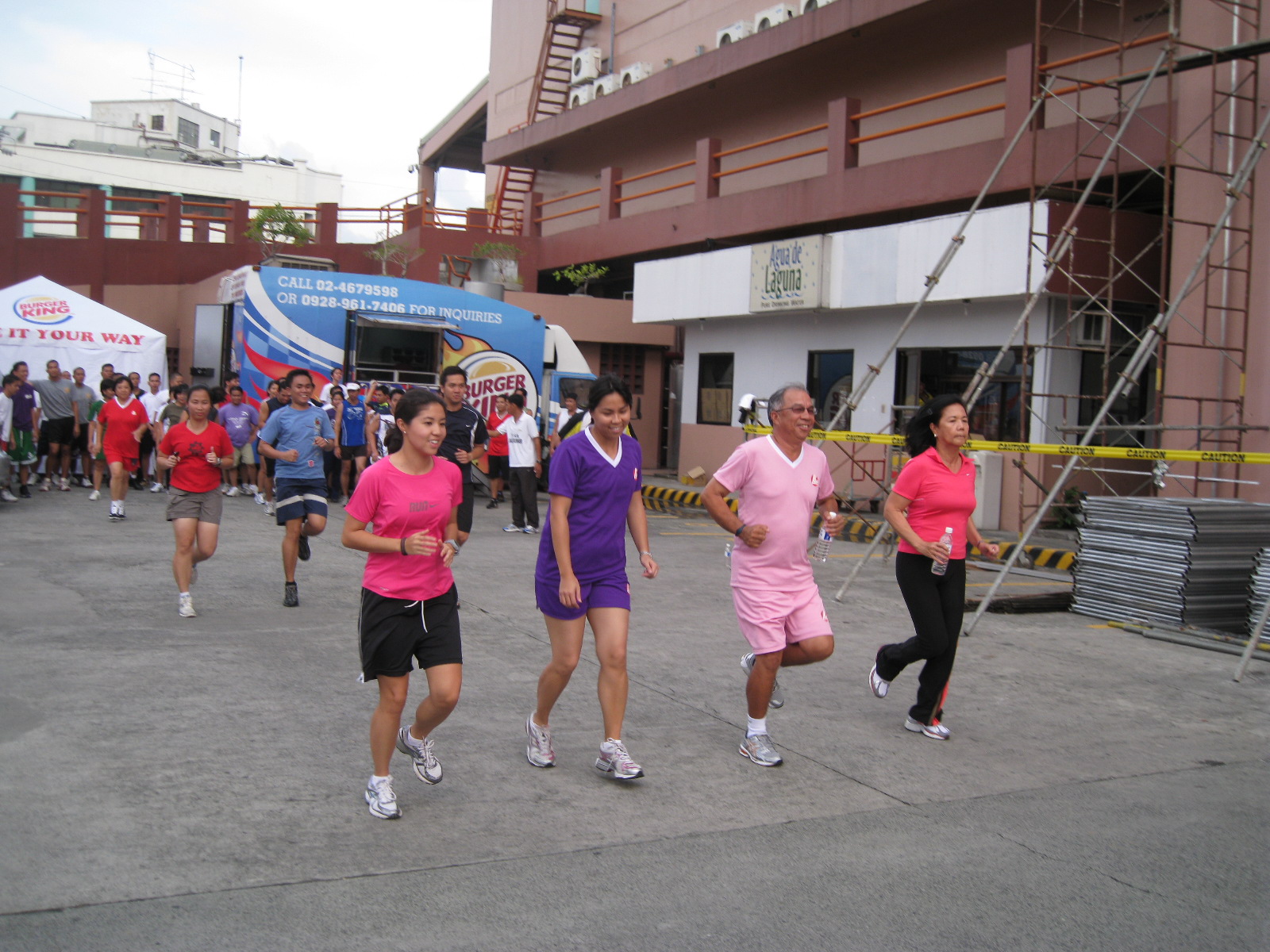
 The lectured was followed with actual involvement of the participants in the conduct of stretching exercises, running drills, and a 30-minute steady run. The clinic is scheduled to be conducted every Monday afternoon up to October 10 with the hope that every participant will be able to finish the scheduled 3K and 5K runs on race day.

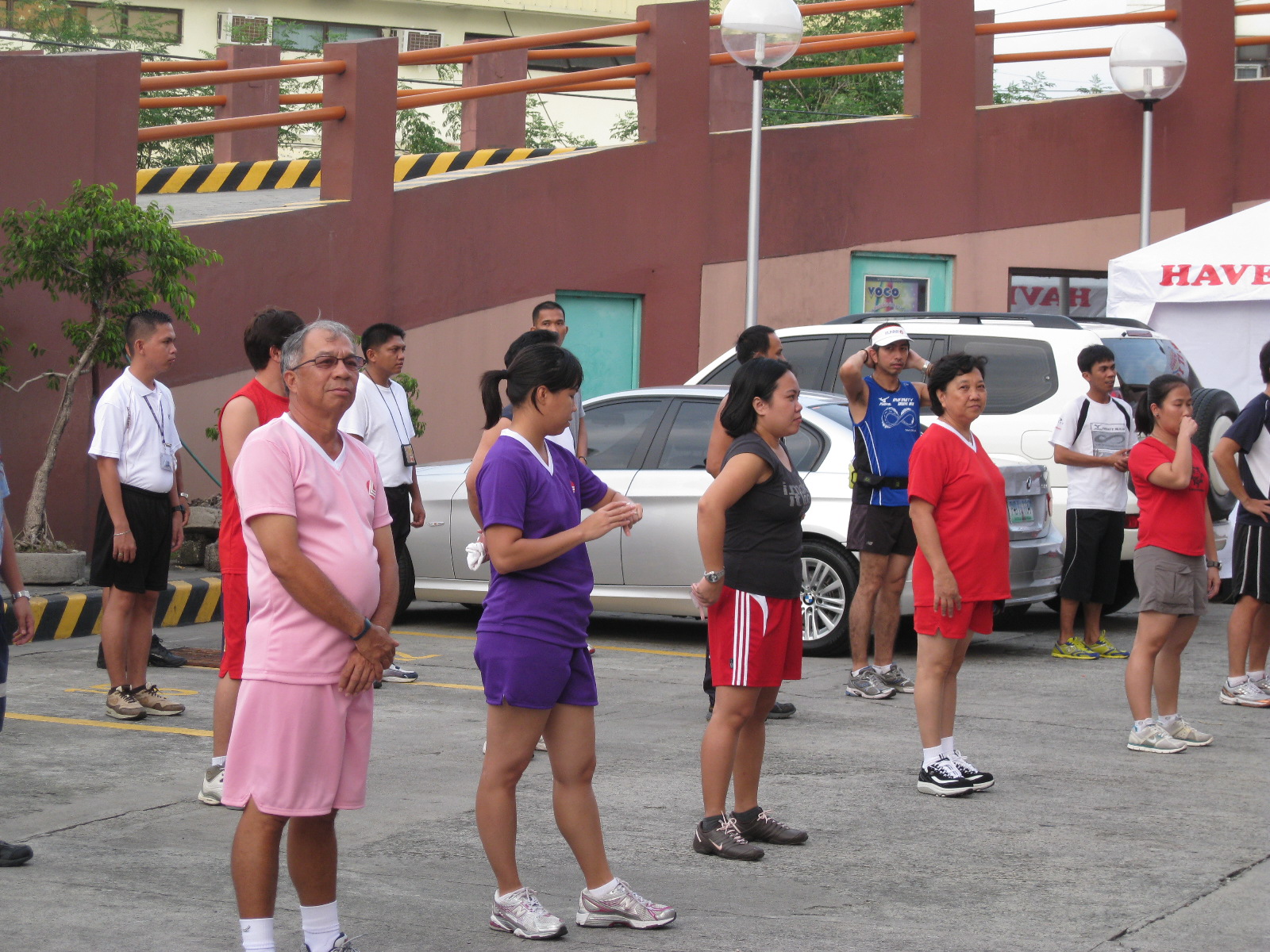
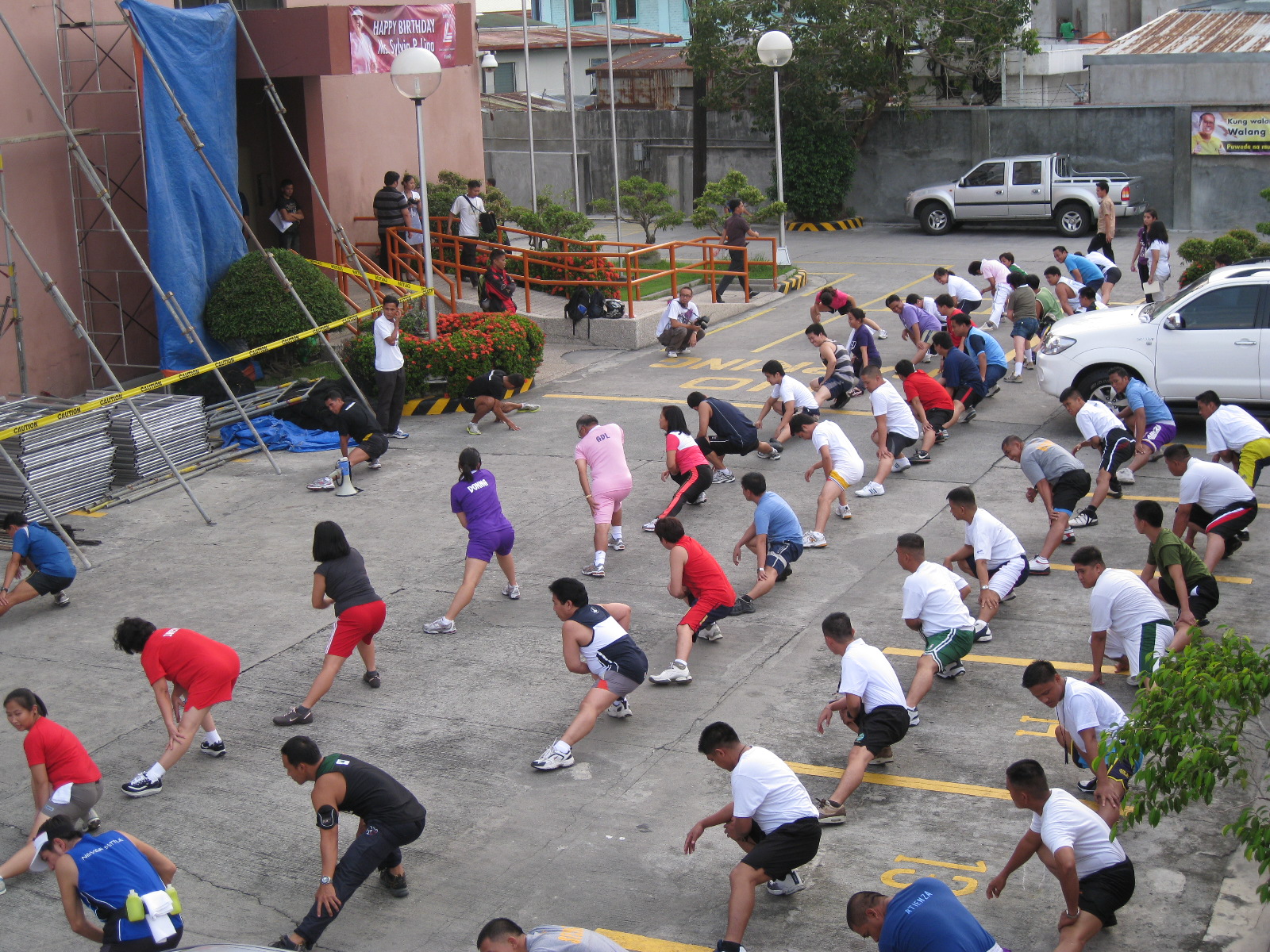
The following pictures will best describe the activity on September 6 with Mr Alberto Lina; Mrs Sylvia Lina; their daughters and the rest of the staff and employees of AIR 21.

Mrs Sylvia Lina & Children Listening To The Lecture
Mr Lina & Daughters Preparting For the Stretching Exercises
Almost 100 Staff & Employees Joined The Clinic
Leadership By Example Is The Key To A Healthy & Progressive Company
Cool-Down Exercises After A 30-Minute Steady Run

For a related story about the AIR 21 Running Lecture and Clinic and more pictures of the event, please visit www.lina-group.com.

FREE Fun Runs


Why PAY if you can run at “race pace” for FREE?

The Bald Runner’s Events Management, in cooperation of the Armed Forces of the Philippines, will be offering FREE Fun Runs to everybody! Yes, these fun runs will be free—no race bibs, no singlets, no printed race results, no Finisher’s Shirts and no registration fees. But there will be a digital clock or chronograph watch at the Start/Finish Line and it will be the responsibility of each runner to see, hear, and remember his/her finish time. All you need to bring are your running shoes and your running attire. Runners could bring also their respective hydration system/bottles during the race, however, there will be minimal number of water stations along the race route.

Interested runner-participants just simply assemble at the Starting Line before 6:00 AM of the scheduled date of event and the start of the fun run is set at exactly 6:00 AM. Runners will be guided by the members of the Elite Team Bald Runner during the runs. There will be no marshals as the route will be easy to follow through directional signs and kilometer markings.

For documentation purposes, each finisher will receive a Finisher’s Certificate for FREE!

These fun runs will be a good training runs for “newbies” and the youth (18 years old & below) who would simulate a road race and for them to develop confidence in paid road races. As for the competitive runners who would not like to spend their hard-earned money in road races, they can do their “race pace” or “tempo run” workouts in these fun runs.

 These fun runs are conceived to be conducted at least twice a month on Sunday mornings. The first Fun Run will  be a 5-mile or 8-kilometer run inside the roads of Camp Aguinaldo and the 2nd Fun Run will be a 2-mile run or 3.2K run at the Philippine Army Grandstand & Parade Ground. The fun runs will start promptly at 6:00 AM during Sundays. In Camp Aguinaldo, the start/finish area is infront of the Grandstand at the GHQ Parade Ground. These places have ample free parking spaces for the vehicles of the runners.

After each fun run, there will be a brief lecture and open forum for 30 minutes to interested runners. These fun runs should be terminated within the period of two hours.

The first Fun Run will be held at Camp Aguinaldo o/a 6:00 AM of October 17, 2010. There will be no limit in the number of runners in this fun run. However, all runners should be at the starting area at least 30 minutes before the start time. The 2nd Fun Run will be a 3K/5K run at the Philippine Army Grandstand o/a 6:00 AM of October 24, 2010.  Schedule of future Fun Runs will be announced in this blog.

If plans will materialize, future Fun Runs will be conducted at The Fort/Global City, MOA Grounds, and Roxas/Macapagal Boulevard.

These Fun Runs will reach a maximum distance of 10 miles or 16 kilometers and with a minimum distance of 3 kilometers.

Running should be made simple and free! Running should be FUN!

Running is for EVERYBODY!

(Note: Race Walkers & Brisk Walkers are also invited to join these Fun Runs)

Mountain Trail Run @ Porac


Early this week I received an e-mail message from Atty Jon Lacanlale of Team Clark inviting me to join their group for a mountain trail run in Porac, Pampanga. I was specifically mentioned in the invitation by the host of the event, Jerry Guiao, a BDM 102K veteran, to join the said run. I immediately confirmed my attendance to this trail run as my training ground is near the place. I was actually invited also for another run to the peak of Mt Arayat in Magalang, Pampanga on the day after the run in Porac. But, I begged off not to join the run to Mt Arayat as I have another commitment for another long run at the Subic Freeport on the following day with Team Bald Runner-Professionals.

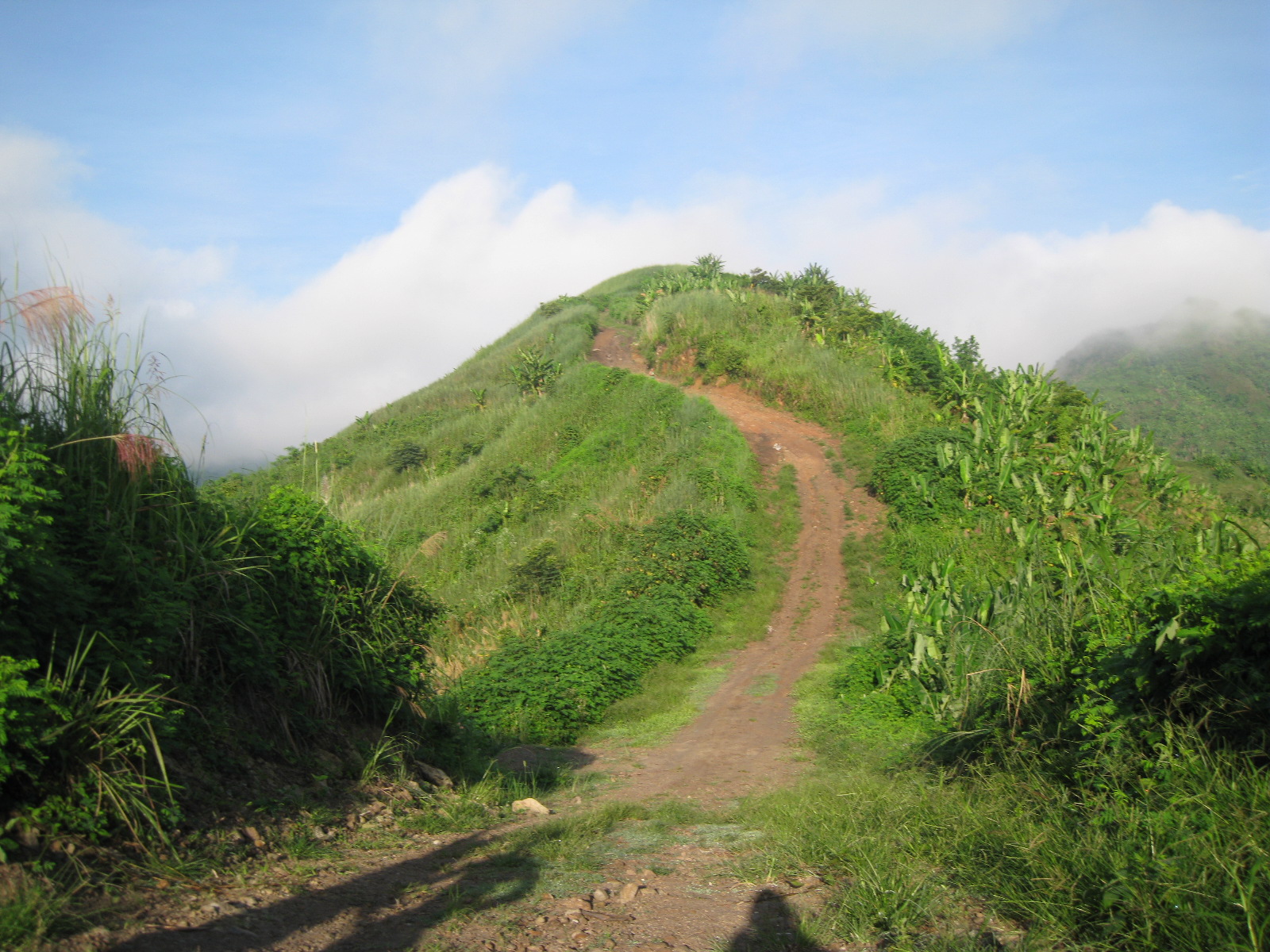
One Of The Uphill Climbs

 The Team Clark was already waiting for me at the Porac Exit of SCTEX as arrived thereat at 5:00 AM. I was a part of a 4-vehicle convoy to a 2-3-kilometer distance from the SCTEX as we proceeded to the center of Barangay Sapang Uwak of Porac where the start of the run is located. After a short trip, we parked our vehicles and started to check and wear our respective hydration system.

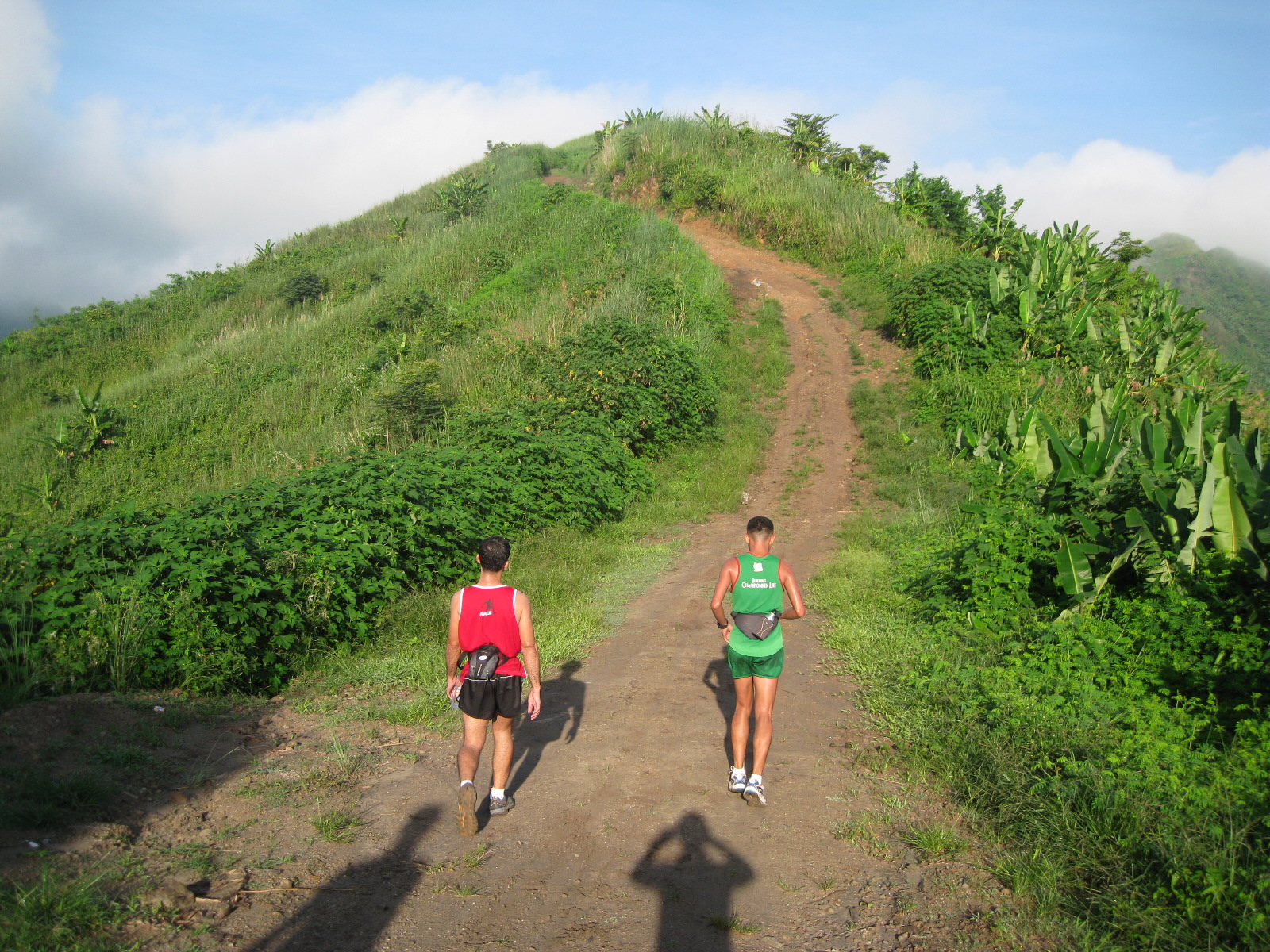
Our run started at 5:40 AM and the visibility was already clear. The running group consisted of Atty Jon, Jerry, BR, and two elite runners of Team Bald Runner. The rest of the Team Clark served as our support crew. We started with slow jog, then to slow run until we reached the first uphill climb. The first uphill climb was so steep but we tried our best to slowly jog up to the crest but after a few meters, we were met again with another climb.

Jerry & Frank Attacking The Uphill

I could no longer count the number of uphill climbs we encountered during the run. I could say that this route is more challenging than the route that I considered as my training ground in the “Brown Mountain”. Admittedly, this place is more scenic and the air is cooler and more refreshing. 

Jerry prepared for this run as he prepositioned our water station with a 5-gallon water container at the 5-Km mark a day before our run. With a cooler temperature early in the run, I only consumed one-half of the water in my Nathan Bottle and had it refilled in anticipation for more uphill climbs and hot temperature later in the day. As informed by Atty Jon in his invitation, our one-way trip of 10K  with take us 2 hours and there is a side trip also to a waterfalls near the turn-around point. He was right as we reached the 5K point in one hour of run and brisk walking.

As if we were running a trail race, we have to brisk walk on steep uphill climbs and then run on the level parts and run faster on the downhill parts of the route. Atty Jon and I had a lot conversation while running as we exchanged tips in ultra trail running training and races. It seems we have the same insights and race strategy in ultra trail running and I am confident that he will make good in his next ultra races here and abroad.

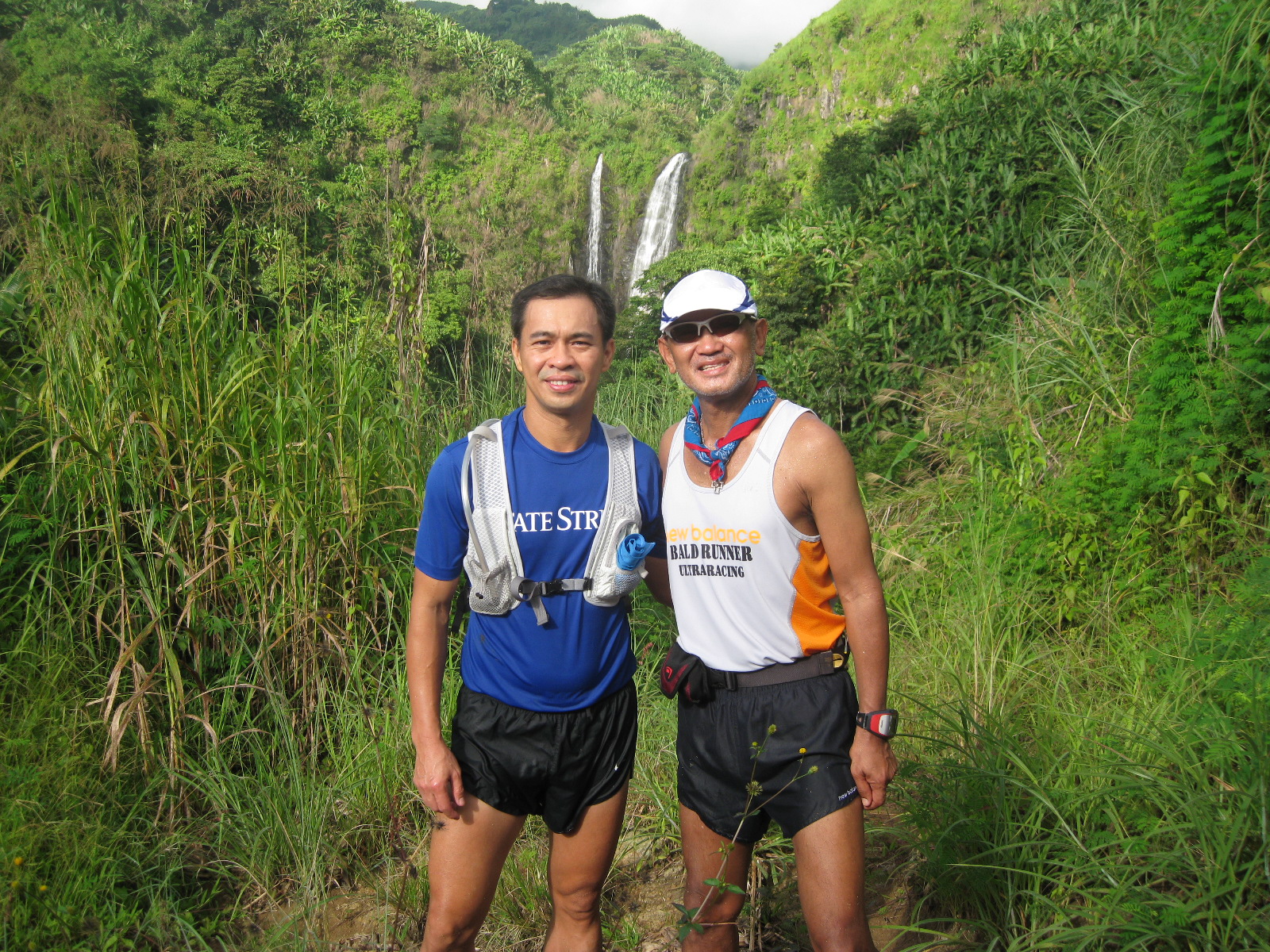
Atty Jon of Team Clark & BR @ Few Meters From The Waterfalls

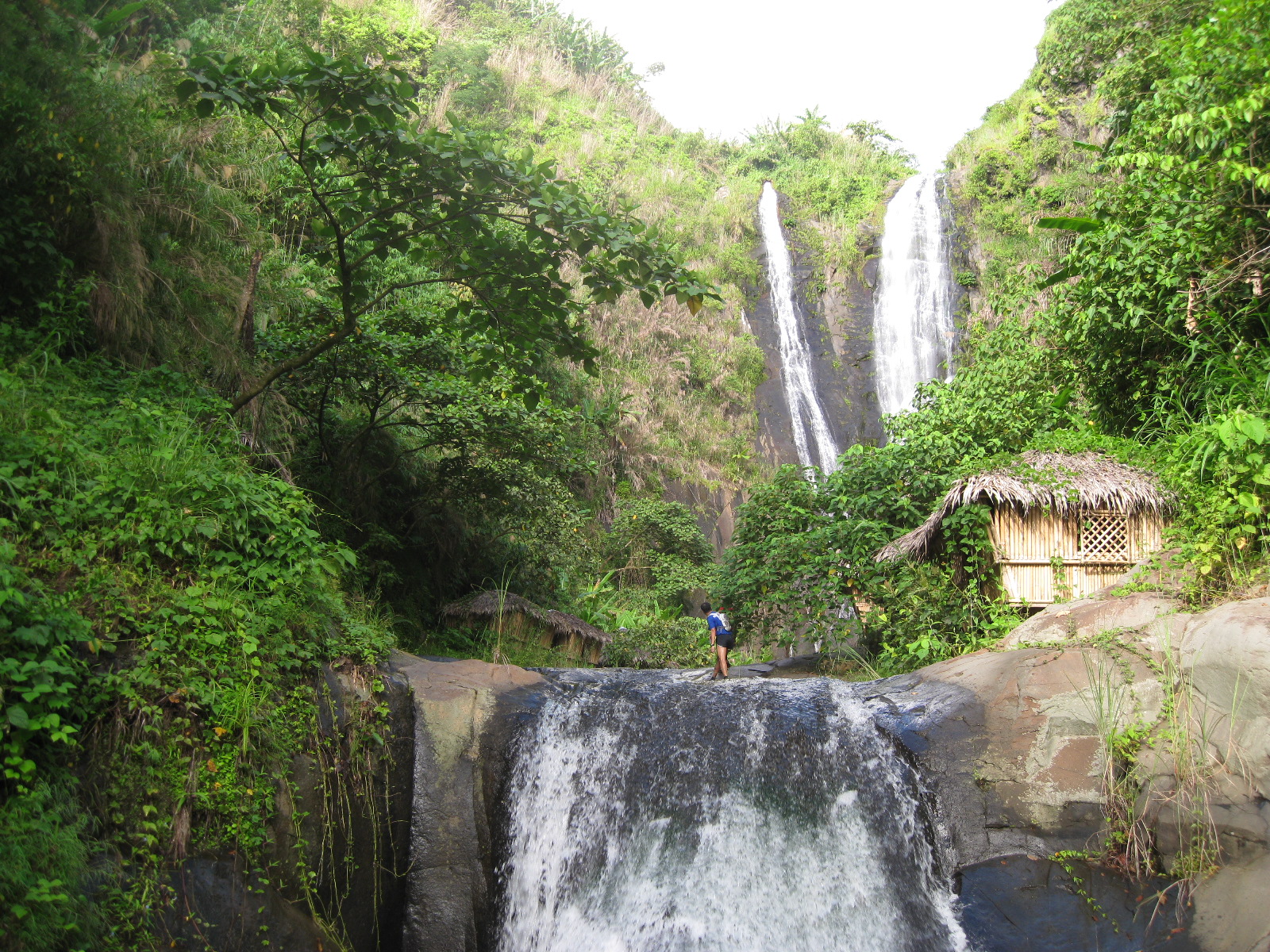
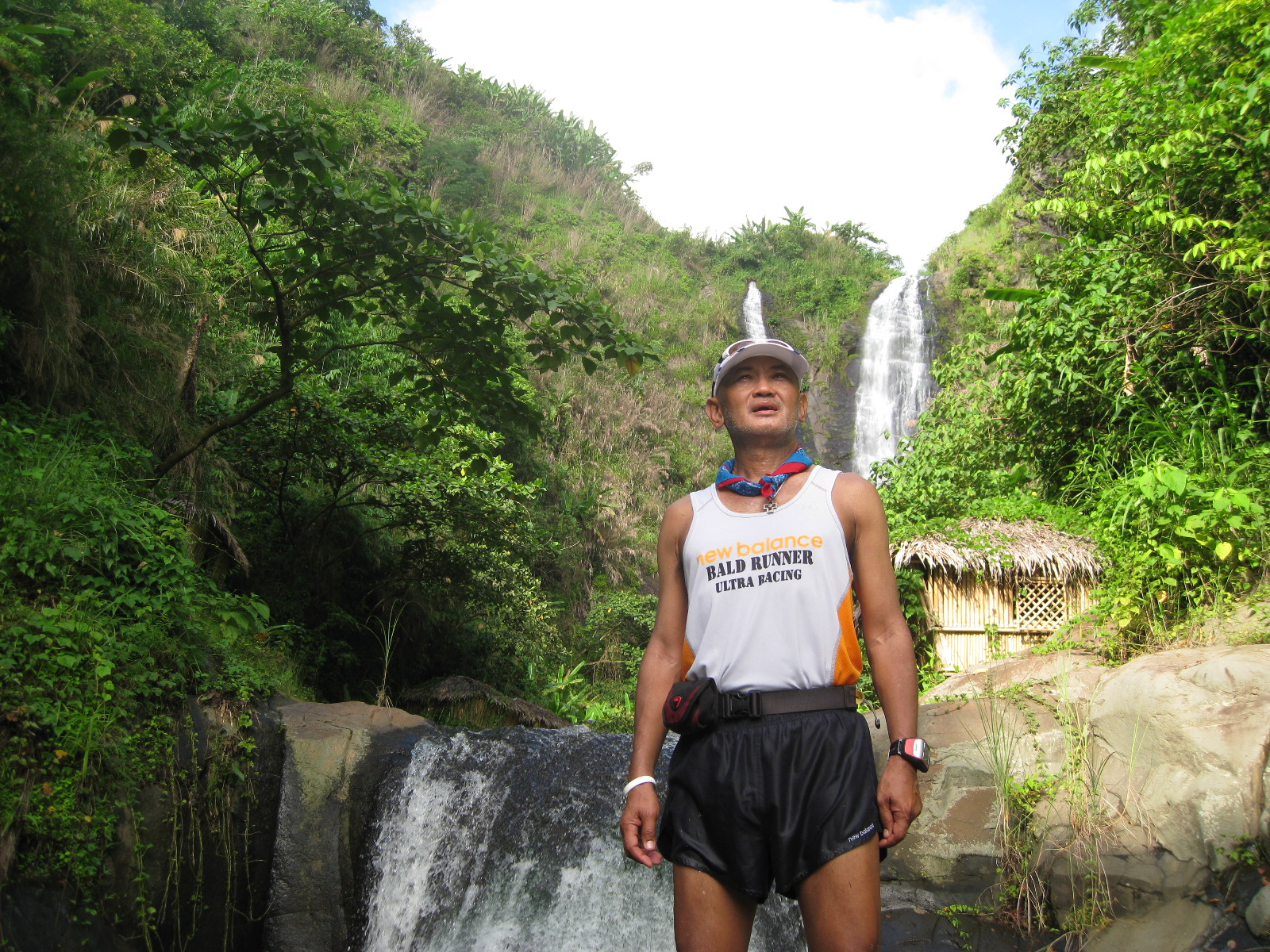
 After walking and running for almost 2 hours and after my GF 305 registered a distance of 10.5K, we turned left to a single-track trail which is covered with grass and wild plants. From this point, it was time to “bushswack” for a distance of 1.5 kilometers down to the waterfalls. Practically, we were walking along a cliff but the sound of the waterfalls made us more excited to reach the place.

Waterfalls In The Mountains of Brgy Sapang Uwak, Porac, Pampanga

 I was amazed with the beauty of the waterfalls. After my picture was taken, I immediately removed my singlet, shoes, socks and my watch and submerged my core and legs into the cold water of the lagoon. The feeling was relaxing and soothing to my tired legs. We stayed in the area for about 30 minutes and prepared for our run back to where we started.

More Trail Runs In The Future

Our run back to the center of the barangay was a challenging one as the heat of the sun was on us. I had only half-filled water bottle for the next 5 kilometers and I made sure that my water was enough before reaching our water station. As I reached our water station, I was able to drink one-half liter to recover the loss of water due to perspiration.

After the 22-kilometer run in 4 hours and 20 minutes, we had our late breakfast with stewed native chicken and steamed rice wrapped/cooked with banana leaves, fresh ripe banana and ice-cooled Gatorade. The food was perfect for runners!

I was informed later by Jerry that the trail will be finally connected to Mt Pinatubo by next year. The construction of another 4-kilometer distance of dirt road from our turn-around point to the base of Mt Pinatubo will start before the end of the year. Atty Jon and I were already discussing for a possibility of a trail run from Brgy Sta Juliana, Capas, Tarlac to Brgy Sapang Uwak, Porac, Pampanga and back or vice-versa. This trail run experience will be exciting for ultra trail runners.

My sincerest thanks to Jerry as our host, Atty Jon and Team Clark for a wonderful and exciting trail run and visit to the beautiful waterfalls in the area. I promised to myself that I will be back to the place for more trail runs and relaxing moments at the lagoon of the waterfalls.

(Note: I am sorry I could not download the pictures sent by the members of Team Clark and have them posted in my blog. My laptop must have some problems. However, I hope Atty Jon would be able to post the remaining pictures in his blog).

Food Calories


The devil is in the details. I never discussed or wrote anything about the number of calories from the foods I’ve been eating and this is the same with everybody else. You don’t have the time recalling or counting the number of calories from the foods you are eating. We eat because we want to satisfy our need to eat because the food we eat is the source of our energy to run and do the things on a daily basis. In short, there is no time for us to be computing those detailed numbers before we eat our food. We simply don’t want to be hungry!

I found some data from two books I bought two years ago. One book is entitled “Training Plans For Multisport Athletes” by Gale Bernhardt and the othee book is entitled “Joy of Cooking” by Irma Rombauer and Marion Rombauer Becker. 

For my average weight of 140 pounds, to determine the number of daily caloric intake neded to maintain my body weight is to multiply 30 calories per kilogram of my body weight. To find my weight in kilograms, I have to divide my weight in pounds by 2.2 and the result is 63.6 or 64 kilograms. So, multiply this with 30, the resut is 1,920 calories as my daily calorie intake. However, if I want to run an average of one hour every day, I need to add 770 to 780 calories ( the average of calories I burn when I run as based from the data gathered from my GF 305). In summary, I need 2,800 calories everyday! The question now is where will I get those numbers and what food will I eat for the whole day?

The following is the list of my food I take on a certain day with the corresponding calories based from the book, “Joy of Cooking”.

Breakfast

2 Fried Eggs with Cooking Oil—210 calories

4 Slices of White Bread—250 calories

 1 cup of coffee with cream—60 calories

1 Ripe Banana—100 calories

Morning Snack

Fried Banana with Oil & Sugar + Water—-200 calories

Lunch

2 cups of Boiled White Rice—400 calories

Fried Milkfish (Bangus)—200 calories

Sauteed Vegetable with Pork—300 calories

Afternoon Snack

Fried Sweet Potato with Sugar + Water—200 calories

Dinner

2 cups of rice—400 calories

Pork Adobo—300 calories

1 Ripe Banana—100 calories

The total number of calories on these foods is 2,720 calories! I could say, it approximates the number of daily calories needed for my body in order to maintain my weight in 140 pounds.

Basically, my food intake is very simple and without those “fastfood” meals and “sweet & fancy”snacks. If I take such meals, I have to burn more calories by running more than one hour.

If you think you are gaining weight and feel heavy, the reason could be is that you have eaten more food which means more calories had been ingested and stored in your body system. Don’t wait this thing to happen, you need to burn those calories by running or doing some physical activities.

Happy eating!