Despite the protests and demonstrations in Hongkong during my trip last week, we enjoyed our two-day “back to back” runs in Lantau Island in Hongkong. We were not affected by the situation thereat as the Transportation Facilities (MRT/Subway and the Ferry Ride) were providing normal operations to the Public. Although the fare to and from the island is quite expensive which is about One Hundred Hongkong Dollars for each of us to include our food and water before and after our workout, the experience is priceless as we did not have to pay any Permits, Guide Fees, or any related fees in using the Lantau Trail. As compared to the trails in the Philippines, there are so many expenses or fees one has to incur in going to popular trail destinations near or outside Metro Manila.
Thomas was able to completely had an insight and orientation of the Lantau Trail knowing that he will be on this trail on the early evening of the second day of the event. Due to this recon run, he told me that he is confident to run the whole trail during nighttime. On the first day, he estimates that he was able to run and hike a distance of almost 25 kilometers. On the second day, he was able to run almost 30 kilometers. Those missing sections which he was not able to reach are the sections of Lantau Peak, Ngong Ping, and those flat areas in Tai Po.
As for me, on the first day, I was able to cover 11 kilometers with an elevation gain of almost 3,000 feet and on the second day, about 15 kilometers with an elevation gain of almost 1,800 feet. I am satisfied with my workout despite the heat and humidity; and the lack of training. Actually, I did more hiking in the ascents and descents, and tried to jog on the flat sections of the trail.
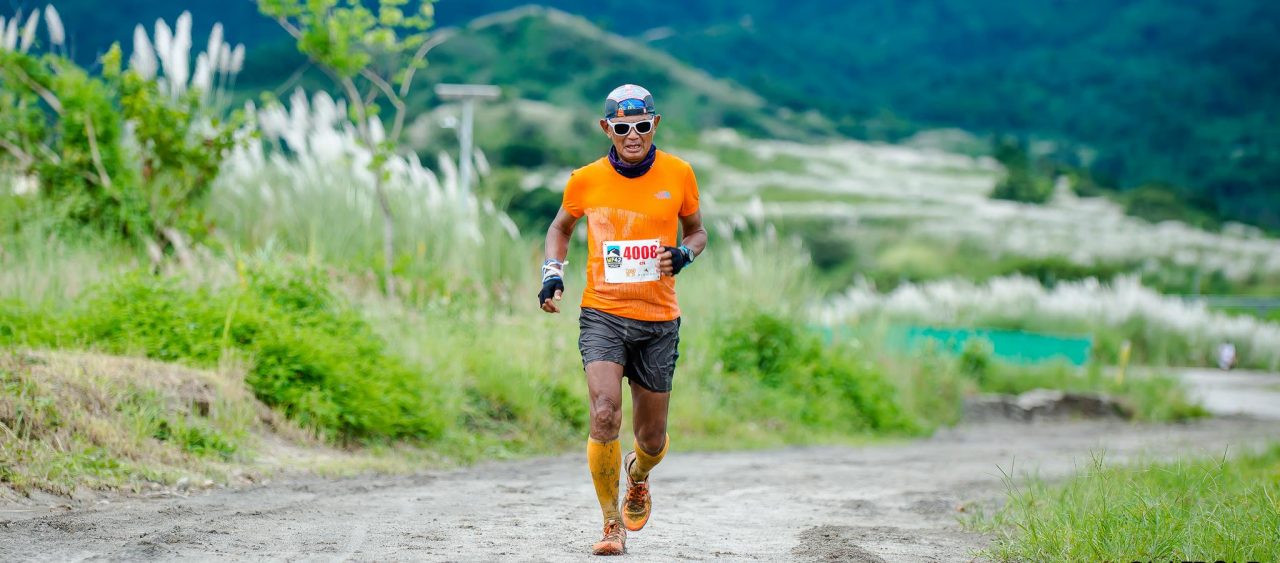
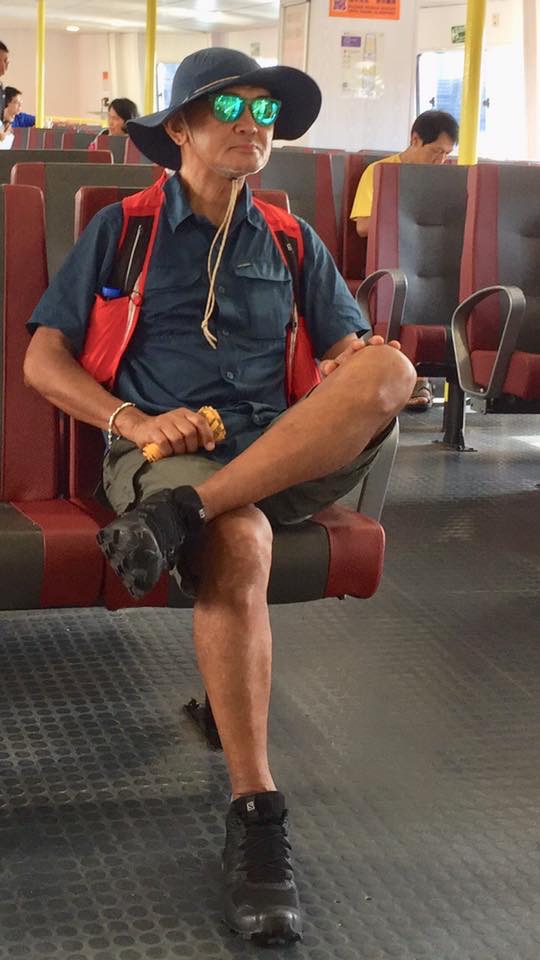
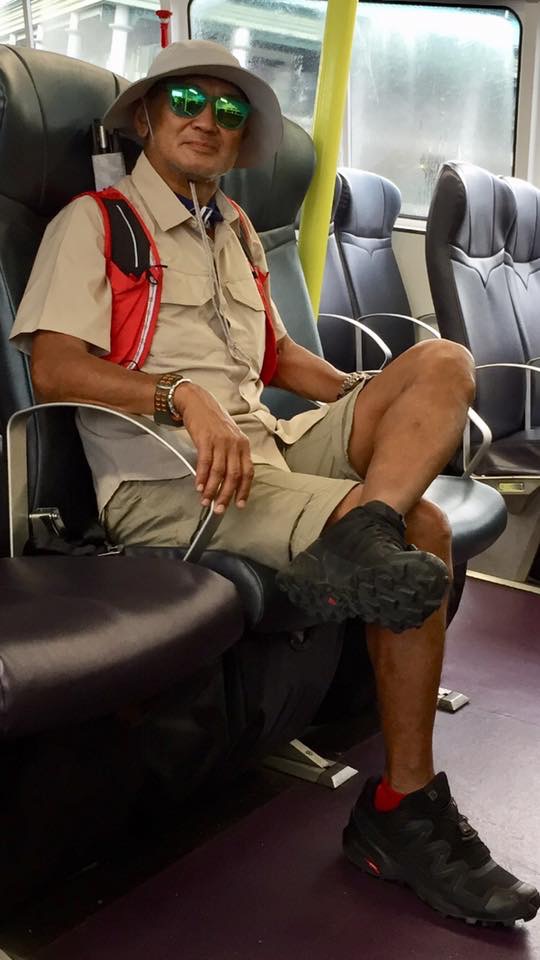
For two days, I have been using hiking attire except for the trail shoes. My shirt and shorts are from Columbia which are popular to hikers and mountaineers. My “Tilley” Hats that I used were bought at DecathlonHongkong and I find them to be comfortable and could easily dry when wet with my sweat or when I douse my head with cool water from the water spring/streams along the trail. My trail shoes is the Salomon Speedcross 5 which I found out to have a wider forefoot but I have problem with its insoles as they have the tendency to fold on my descents. It was suggested by Thomas that I have to glue the insoles inside the shoes to make them permanently immovable. I was using the Gipron Trekking Poles and they gave me the necessary aid and balance support in the ascents and descents. My hydration vest is the 8-liter Salomon SLAB Sense Pack where I stashed my money/Octopus Card, cellphone, space blanket, hydration bottles, dry clothes, light jacket, and power bars. It was my first time to use my Goodr Sunglasses (Green Lens) which I bought in A Runners Circle (ARC) Store in Los Angeles, California, USA two years ago. The socks that I used were newly-bought from the Decathlon Store in Mongkok, Hongkong.
This recon run will be helpful to me as I am registered for the 2020 Translantau 50K Trail Ultra which is scheduled on March 1, 2020. Hopefully, by that time, I will be well-prepared as in my past finishes in the Translantau 100K.
If I have a chance to return to Hongkong before the end of this year, I would gladly go back again to Lantau Trail and MacLehose Trail if time permits.
While Thomas and I were on our way back to Central after our first recon day in Lantau, I asked him if he wants to return on the following day to trace the reverse route of the trail from Lantau Trail Post 140, going to Lantau Trail Pos 000. Thomas answered affirmatively to my question. Immediately, I have to google the route of the Lantau Trail and I was able to locate the end of the trail. (Note: I could no longer remember the route when I ran the Translantau 100 in the past editions)
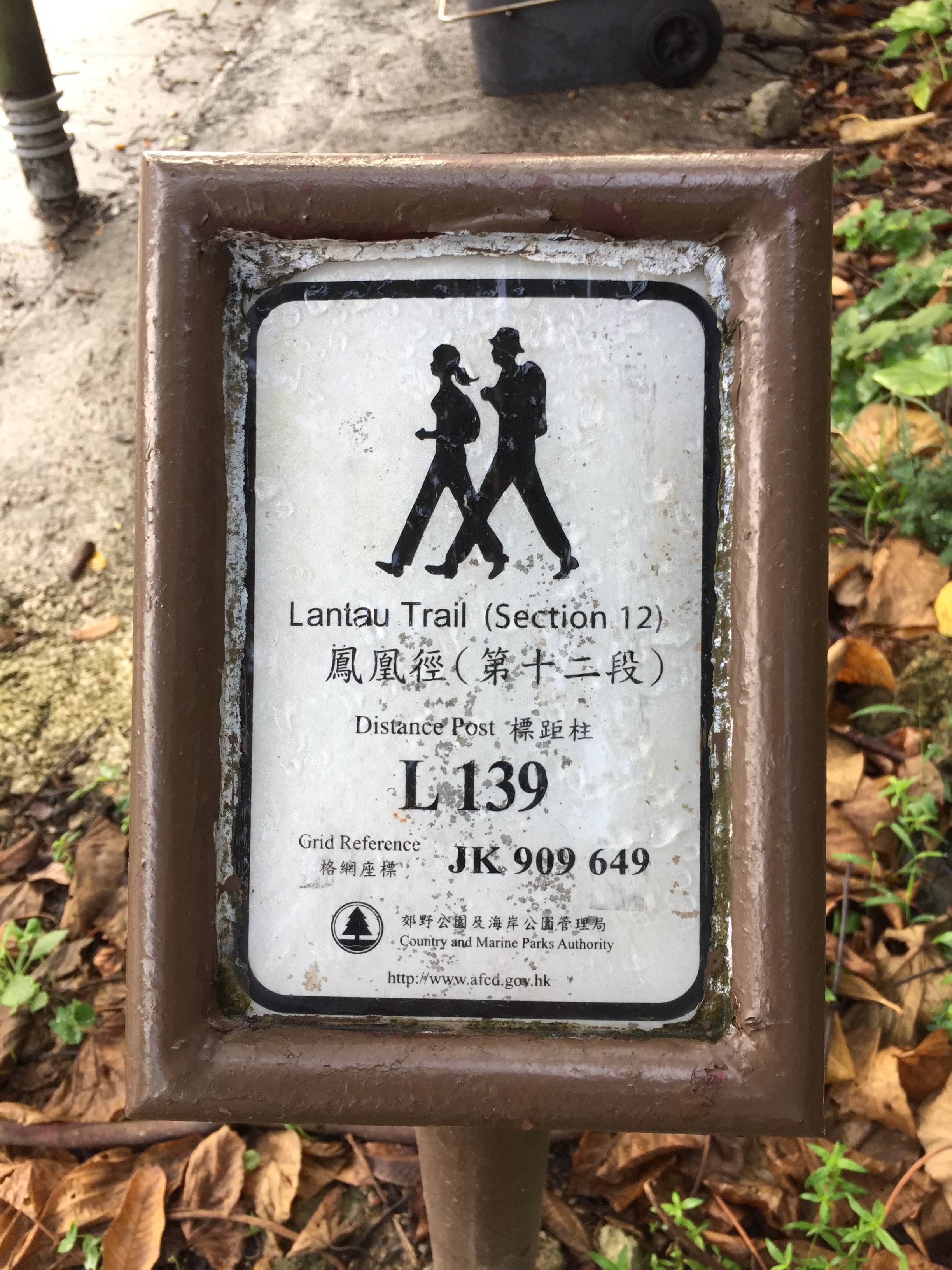
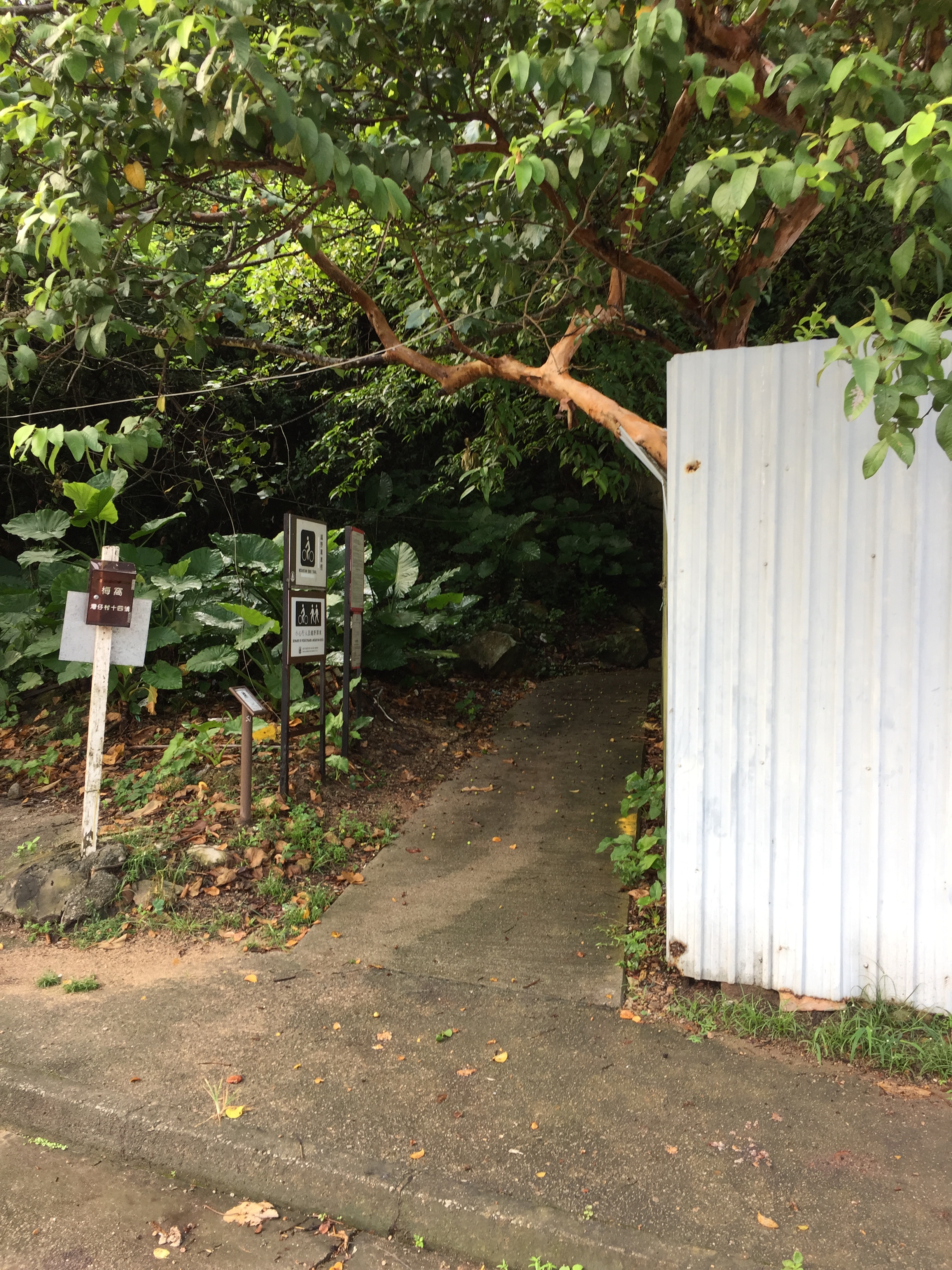
We adjusted our schedule the following day and we had to wake up earlier than the previous day in order to take advantage with a cooler temperature in the early morning. We left our hostel at 6:00 AM, took our Congee breakfast, and then proceeded to the MRT for our Ferry Trip at Central. The ferry trip that we took was the more expensive one with Air-Con and faster speed. In a 30-minute ride, we arrived at Mui Wo at 8:30 AM and immediately proceeded at the back of the business buildings near the Pier until we reached the entry/exit of the Lantau Trail where the Post Marker 139 is located.
Lantau Trail Post 139 Located At The End Of Lantau Trail
The climb was easier than the first kilometers we had the previous day. The trail route was covered with vegetation and with the absence of rock stairs. Thomas went ahead of me with the same agreement/arrangement we had the previous day. I told him to maximize the number of mileage he can cover for the day and he can easily meet me in some of the camping areas or barbecue grill parks along the route.
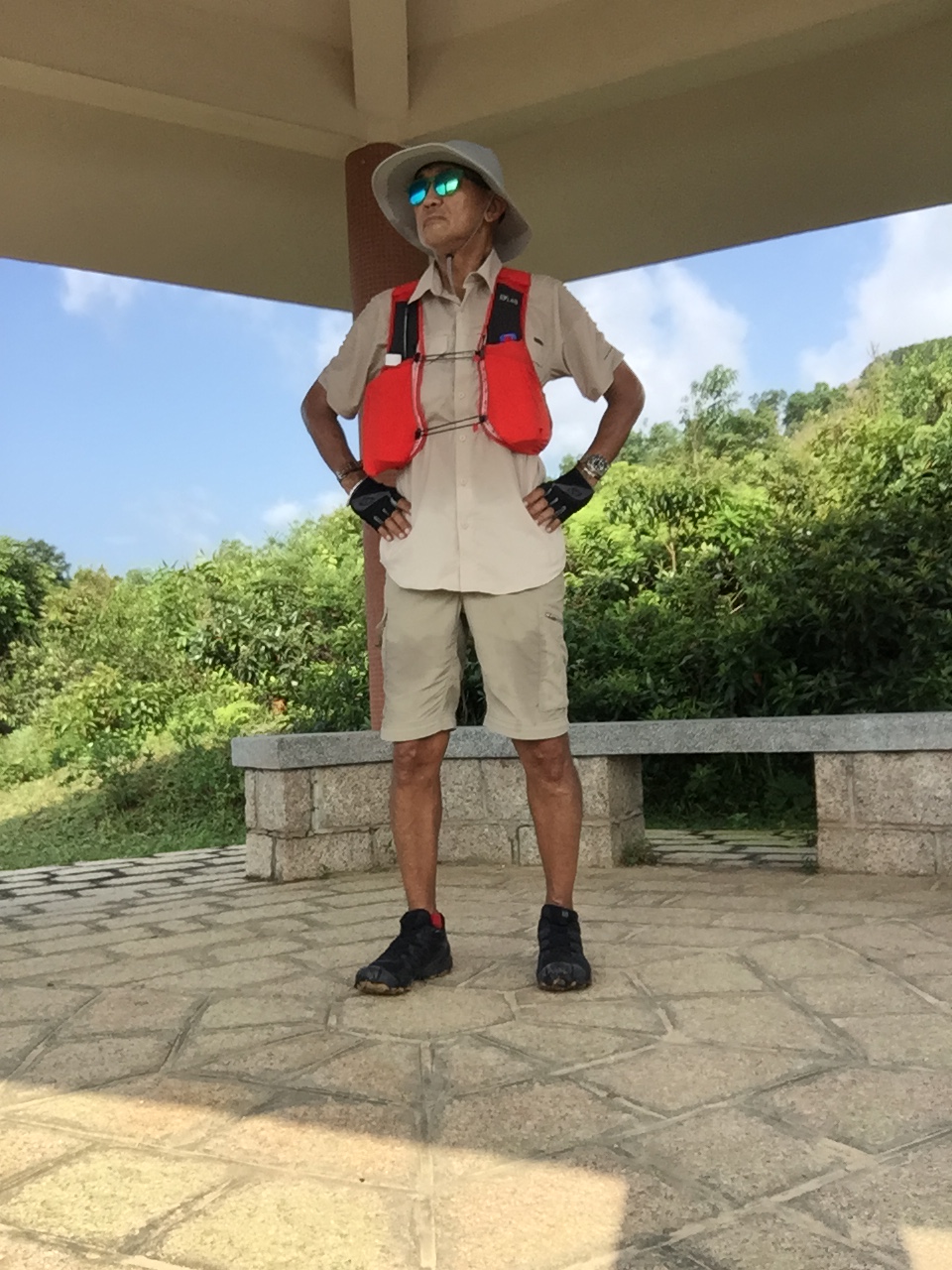
After 3 kilometers, I saw a resting fixture and I was enticed to take some pictures around the place and some “selfies”. I took comfort of my easy pace while hiking as the air was cooler and the trail ground was damp with some mud. I could see the trail shoe marks/footprints of Thomas along the trail. My next stop was the next 3 kilometers but there is only one water stream that I passed along the way.
Entry To The Trail (Reverse Route)
This last portion of the Lantau Trail was flatter as compared to the first section of the trail. Although the next trail camp from the start of the reverse route is longer in distance than the original route ( from the trailhead), most of the sections of the trail are covered with vegetation and trees and due to its flatter elevation profile, I could jog or run on these sections. There is also a portion where the road is paved due to the fact that the route runs alongside a concrete drainage canal where the water comes from a dam with gates that control the flow of water to the drainage canal. There are also Barbecue Grill Camps where there are concrete tables and benches, and comfort rooms. The cemented flat road beside the drainage canal has a distance of at least 9 kilometers.
I would rest, hydrate and take in some of my power bars and SkyFlakes biscuits in these Barbecue Camps. When I was out of water, I just refilled my bottles from the flowing water of streams coming from the side of the mountain.
I think I was able to hike and jog for a distance of 12 kilometers. It is worthy to note that the first village that I reached along this route was at Pui O. This village is along the coast line where I could see modern houses and apartments where I could see white people living in them and most of the private cars parked are made in Europe, At one time, I was able to meet a group of young students being led by their teacher with camping gears and food. I would also see men who are with their swimming trunks and goggles coming out of the seashore. I have the conclusion that this place is a swimming area and a camping area.
“Selfie” While Resting
About 50 meters before reaching the National Road/Tun Chung Road, I saw a convenience store with a bench and a wide umbrella and I decided to stop and bought some water and bottles of Pocari Sweat. Because of the heat, I was able to drink half gallon of water and two bottles of Pocari Sweat. I think I took about 15-20 minutes sitting in front of this store.
As I reached the National Road, a yellow painted markings in wood points me to turn left along the National Road. After about 70 meters, I could see already another yellow directional sign at the other side of the road. I followed the sign and I was back again to the trail with softer footing because I transitioned again to wet ground. After a few Lantau Trail Posts, I reached a Cemented Biking Path which is near Barbecue Grill Camps. i tried to jog and power hike on this cemented portion of the trail which is beside a concrete drainage canal.
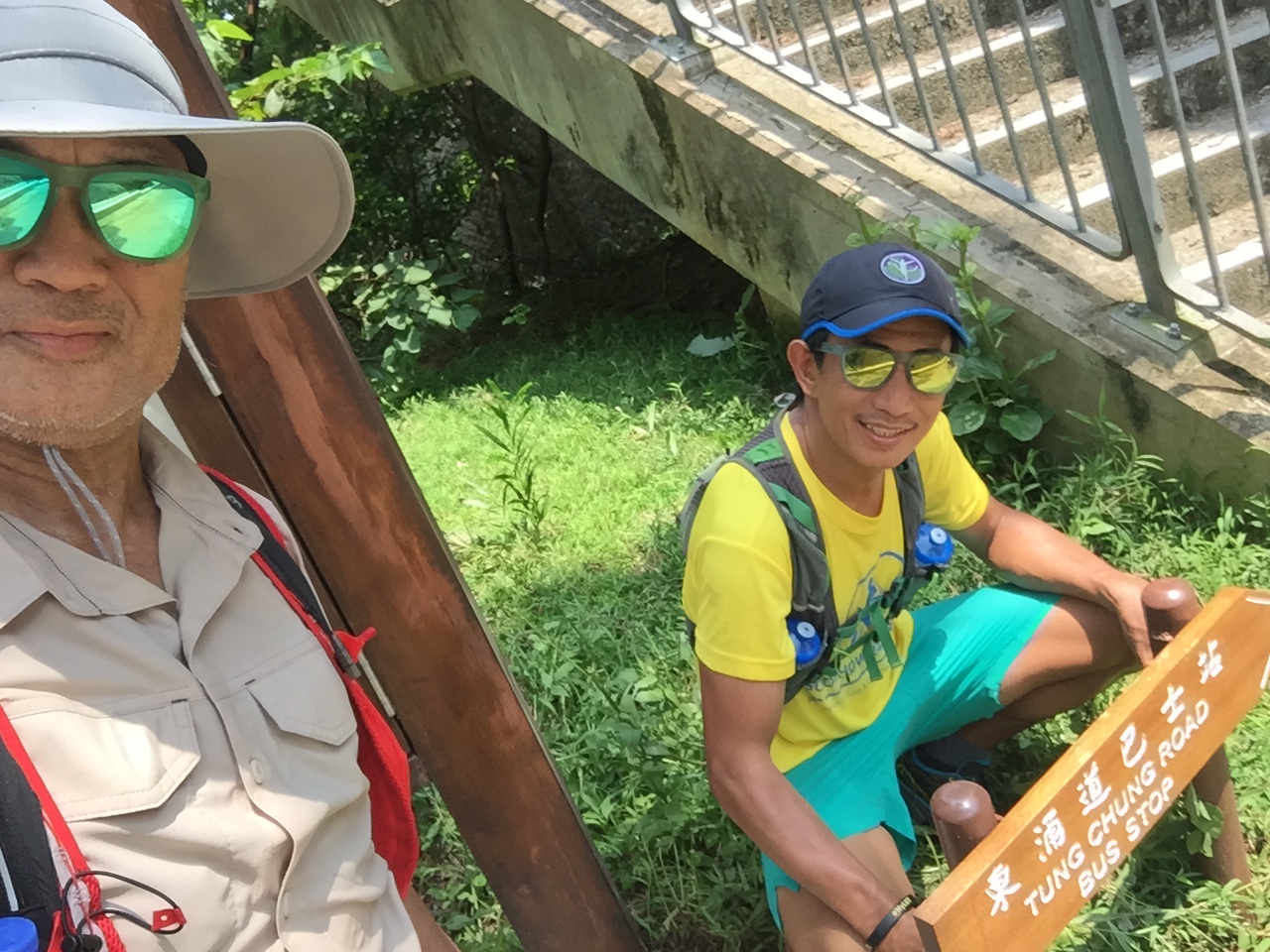
After drinking and eating my food, I decided to rest in one of the benches and I really don’t know how many minutes I have dozed off when finally Thomas arrived at the Barbecue Camp. He told me that the next Bus Station is located a few meters ahead and to our surprise, it was the same Bus Stop that we got our Bus ride back to Moi Wo the day before.
On Top Of Us Is The Bus Stop
After few minutes of waiting at the Bus Stop, we finally had our ride and we decided to change our clothes at the Public Comfort Room and then proceed to the Pier to catch our Ferry ride back to Central. We found out later that we were not able to catch our trip and we decided to have our light snacks and Coke drinks at the MacDonald’s while waiting for our scheduled Ferry ride.
We were back in our hostel at 4:00 PM, earlier than we had yesterday, and we did not know that there was a protest which was about to start at 5:00 PM a few kilometers from our place. We took our shower and changed immediately to our casual wear as we have a scheduled meeting with a Pinoy resident in Hongkong who is also an endurance athlete and who promised me to bring me to where I could buy the cheapest Seiko Watches in Hongkong.
My meeting with this Pinoy resident in Hongkong deserves another story in this blog.
Trip To Hongkong (2nd Trip For 2019) August 12-15, 2019
This is my second trip to Hongkong for this year (2019). I was in Hongkong during this year’s Chinese New Year to support the participation of Thomas Combisen in the Hongkong 4 Trails Ultra Challenge on the second week of February. Unfortunately, Thomas was not able to make the cut-off time for him to reach the last leg of the Lantau Trail during the race. I promised to Thomas to bring him back to Hongkong purposely to run the Lantau Trail which has a distance of 70 kilometers.
Weeks prior to our trip this month, news had been around about the Protests and Demonstrations that had been occuring in the different parts of Hongkong. Sine we have purchased and made our reservations for our accommodation weeks ahead, we decided to take the risk and continue with our scheduled plan for this trip.
It was supposed to be a trip for four trail runners, including myself, but two of our companions were not able to make it due to personal circumstances. The overall plan for the trip was to recon the Lantau Trail starting from Original Trailhead and from the End of the Trail going on a reverse route. We planned to do this in one day and the rest of the days will be devoted to food trip, shopping, and side trip to Macau.
We left Manila at 5:50 AM of Monday, August 12 and arrived in Hongkong at 8:00 AM. After loading some money into our Octopus Cards, we took the regular bus to Mongkok, where our regular hostel is located. We had been a regular client/customer in the said hostel since I have started joining trail running events in Hongkong. Although I have stayed in more expensive hotels in Tsim Tsai Tsui, Kennedy Town, and Jordan, I always prefer to stay in Mongkok for the authentic Chinese cuisine which are very cheap and lots of shopping in the nearby streets and Nathan Road.
Another interesting reason for this trip to Hongkong is for my new hobby of Seiko Watch Limited Edition Collection! Before this trip, I have been asking some of my FB friends who are residing in Hongkong as to where to buy these Seiko Watches and they gave me some tips. Earlier this year, I was fond of the Onitsuka Tiger sneakers and I had to look and buy a particular model in Causeway Bay. I am done already with the OT sneakers and now I am crazy with Seiko Limited Edition Watches!
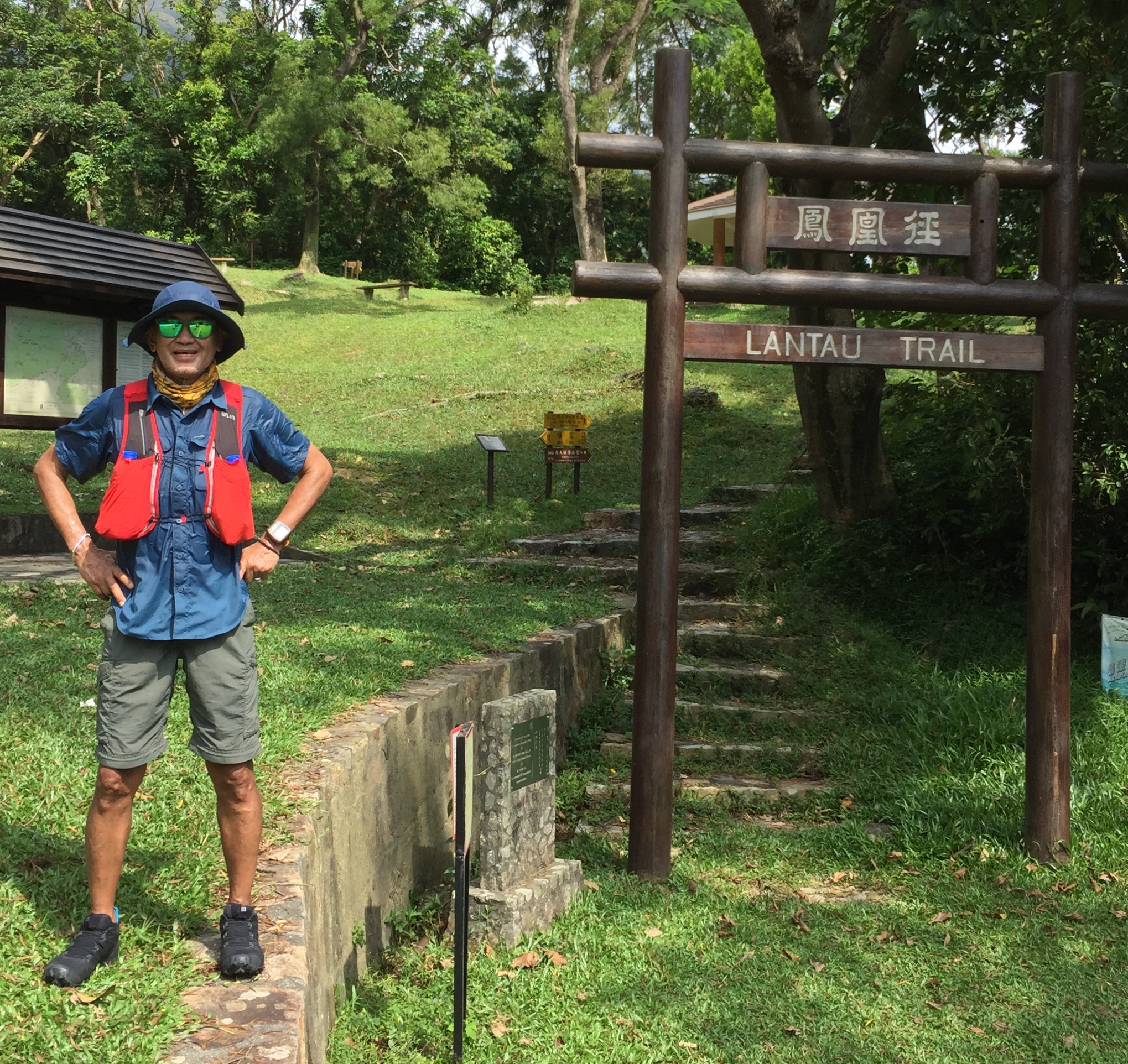
Starting At The Trailhead LT Post 001
On Tuesday morning, Thomas and I took the MRT from Mongkok to Central and then walked to the Ferry Terminal Port #6 for our trip to Lantau. After one hour and half, we were at Mui Wo and walked along the Tun Chung Road going to the Trailhead of the Lantau Trail and it was already 9:30 AM. The distance from the Mui Wo Bus Terminal to the Trailhead is about 2 kilometers which is an uphill road. As we reached the trailhead, we were already sweating because of the hot/warm weather in the area. Thomas and I made an agreement for him to proceed and run the trail as fast as he can while I would hike and jog to the next trail camp and try to follow him. If in case he would determine if his target mileage for the day is done, he can just backtrack along the trail and try to find me. From there we could take the bus in going either to Tun Chung or back to Moi Wo Bus Terminal.
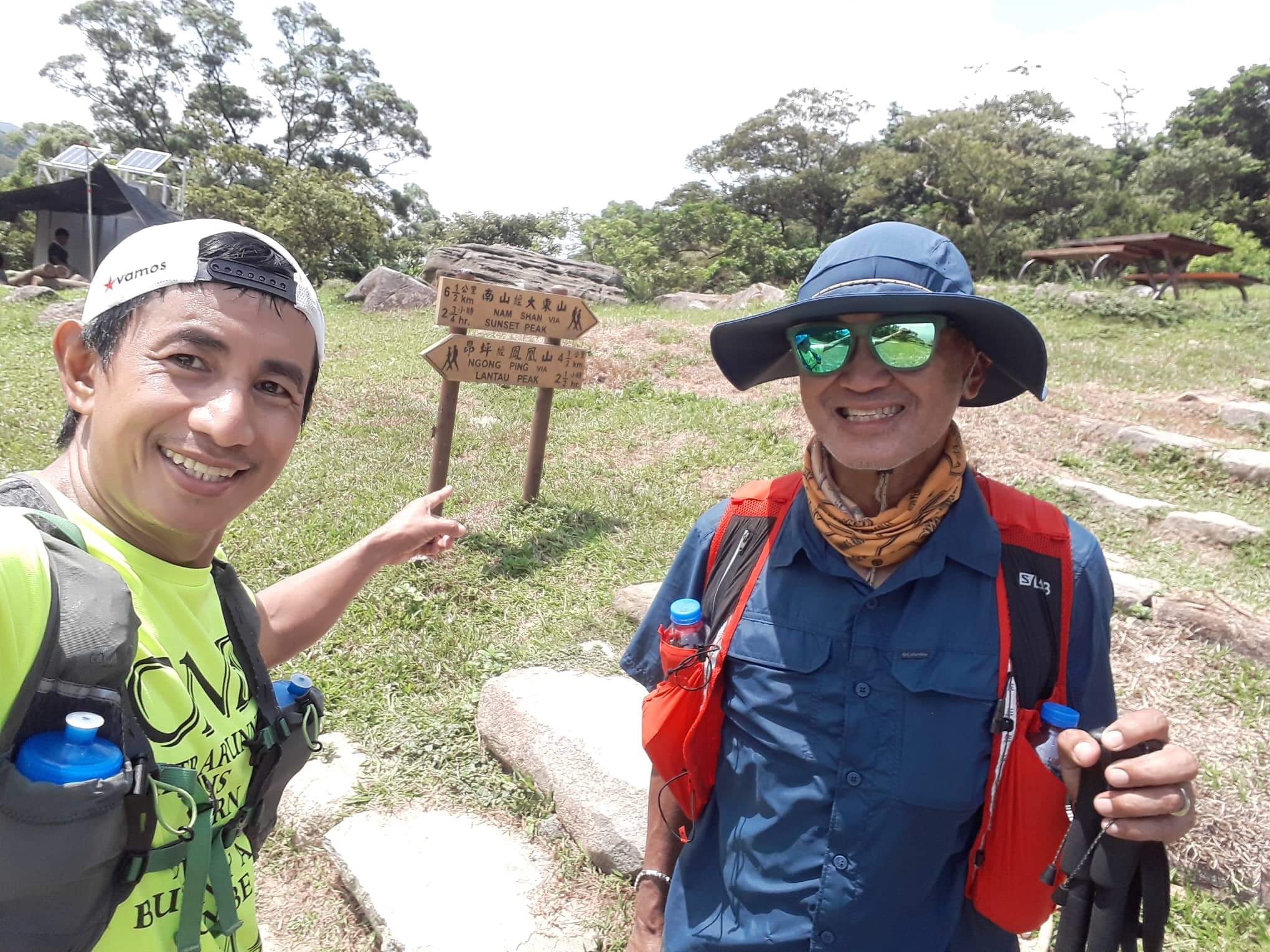
So, that was what we had done. From the trailhead, it was an uphill climb to Sunset Peak and then descend to the next trail camp/rest area and then cross the National Road in going to Lantau Peak. It was a very hard hike for me because of the heat and lack of training. I had to rest for three times before reaching the Sunset Peak and stopped every flowing stream to douse some cold water to my head and body. There is also a water reservoir where there was a faucet on its side that gave me lots of water to fill up my bottles and rehydrate myself. A white guy in trail shorts and shirt passed me on the first 2 kilometers of my ascent; I met two white guys and a lady going down from Sunset Peak; three white guys with big backpacks on my descent from Sunset Peak which I found later that they are from California, USA for some Para-Sailing activity in the area; and two local young guys who were taking selfies on my way down near the trail camp/rest area.
Descending From Sunset Peak
I attempted to start hiking the first kilometers towards Lantau Peak but I could no longer endure the heat of the sun and I was already exhausted due to lack of training. I went back to the waiting shed at the trail camp and wait for Thomas to arrive.
I really don’t know how many minutes I was able to doze off when Thomas arrived. Thomas was also complaining of the heat and humidity but he was happy to recon the place. He was longing for an ice cold Coke that we decided to walk towards the next village along the National Road. But to our surprise, the village was still too far that we decided to stop our hike in a Bus Stop and waited for our Bus Ride to Mui Wo.
In a few minutes, we took our Bus ride and immediately changed to dry clothes at the last row of seats inside the said bus. We went directly to the McDonalds at Mui Wofor our first meal of the day with a Large Ice Cold Coke and Double Cheeseburger!
After our McDo meal, we waited for our ferry ride back to Central. This time, the Ferry was an Air- Conditioned with higher fare BUT with NO Wi-Fi as compared with the slower one, cheap with Wi-Fi which we rode on our way to Lantau.
Thomas and I @ The First Resting Camp
It was good to be back to Lantau Island to run and hike after finishing the Translantau 100K for two times in the past. Well, I was then a younger and a stronger trail runner then!
Registration & Acceptance To The 2019 Boston Marathon
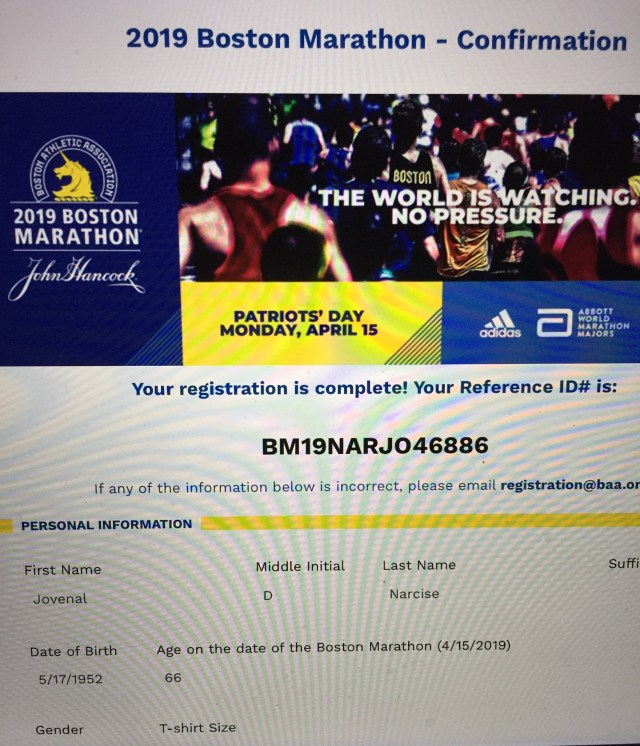
On the first hour of the scheduled registration day for runners who are faster than 20 minutes or more on their qualifying time for the Boston Marathon, I filled up my Registration Form for the 2019 Boston Marathon on or about 10:00 PM September 10, 2018, Monday (Manila Time) and sent it immediately. I immediately received a reply letter via e-mail that my Registration Form had been accepted and I had to wait for the confirmation or acceptance to the said event. I immediately checked the balance of my Debit Card and I found out that I was deducted the Peso equivalent amount for the $250 US registration fee for International Runners which I positively consider as a good sign that I will be accepted to join this event.
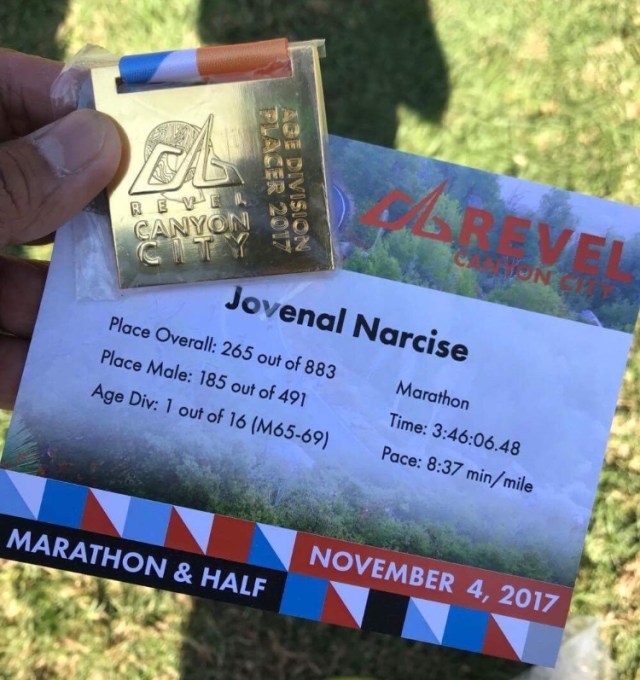
I was able to qualify to join the 123rd Edition Boston Marathon when I finished the 2017 Revel Canyon City Marathon Race held on November 4, 2017 in Azusa, California. I did not expect to finish the race in sub-4 hours and it was my goal to finish the race within my qualifying time of 4:10 hours. Since the first half of the marathon distance was downhill, I took the risk to let the weight of my body and my leg turn-over to dictate my pace and when I saw an opportunity for me to finish in sub-4 hours, I just maintained my pace and made sure that I would never have any muscle cramps which would slow down my pace. For the record, I was able to cross the finish line in 3:46:06, which is 23:54 minutes faster than my qualifying time of 4:10 hours. And as a bonus, I was the First Place Runner for the Age Category of 65-69 years old.
It took me a lot of years and marathon races to qualify for the Boston Marathon and I finally made it when it was time that I did not expect it. For a passionate runner, being able to qualify and join the Boston Marathon is, I think, the pinnacle of Road Racing. Boston Marathon is the Holy Grail of Road Marathon Racing for being the oldest Marathon Race in the USA and most prestigious Marathon In The World! This makes me a Legitimate Qualifier of the event and not as a Corporate Sponsored or Charity Runner.
After two days since I registered for the race, I finally received a Confirmation Letter that I will be joining the race on April 15, 2019 through e-mail and I was advised to wait for the Formal Letter of Acceptance to join the race through the Post Mail.
I have already bought my Round Trip Plane Ticket from Los Angeles to Boston and back and had already arranged for my accommodation during my stay in Boston. My Round Trip Plane Ticket from Manila to Los Angeles and back will be purchased before the end of this year.
I have already started my training on the very first day of this month of September. It will be through this blog that I will be posting my thoughts, training and preparation for the 2019 Boston Marathon.
I will keep you posted on my daily training and activities even if I have some local and international road and trail races that will be part of my training prior to the said event. Join me in this journey.
After I have finished the 4th & last Marathon Race of the BR’s Quad Marathon, I did not run for two days, Tuesday & Wednesday, to give rest to my tired body. I simply ate and slept for these two days with some stretching to my legs and body. These two days officially started my training for the Mt Fuji Mountain Race which will be held on July 28, 2017.
Starting on this week, I started to shift/change my training using the time duration of my workout as my goal/objective for every workout, instead of planning to run a certain distance. For the past training cycles, I have been concentrating on the number of miles I have covered every week and it is worth a try to be counting on the number of hours as the priority data for my workouts. Mileage will be secondary data to be considered and recorded.
On Thursday, I had a one hour recovery run on a flat paved road with an Average Pace of 12:09 minutes per mile. My GPS Watch registered a distance of 5.02 miles. It was a very relaxing pace where I would be running and talking with one of my former elite athletes with Team Bald Runner who happens to be a runner-soldier of the Philippine Army. I thought it was an easy and relaxing one hour run but the data in my GPS Watch registered otherwise. It appeared that I was exerting so much effort on the last half of my workout.
On Friday, I made sure to have a slower and more relaxing one hour recovery run where I registered a distance of 4.95 miles and with a slower Average Pace of 12:23 minutes per mile but the workout was done on the streets surrounding Fort Bonifacio with lots of rolling hills. The total elevation gain was 1,816 feet and was able to register an Average BPM of 132. I guess, I was too fast in this workout as a result of my deep-tissue massage the night before this workout.
On Saturday, the schedule was to run 1:30:00 hours on the trails. I had my run in my backyard/Playground’s Loop #1 which is an “out and back” route up to the distance where my GPS Watch registered a time of 46 minutes! This was my first trail run since I’ve finished my Quad Marathons. I call this workout as an “Endurance Run” which I am training for as my regular pace in all my trail running races/events. Having said that, these Endurance Runs will be the “bread and butter” in all my weekly workouts. I was able to finish a distance of 6.43 miles with an Average Pace of 14:14 minutes per mile. The total elevation gain is 2,011 feet with an elevation loss of 1,880 feet. My Average BPM is 150 with a Maximum of 161. I think I was running with a faster pace considering that the course has lots of steep hills.
Saturday Run @ Backyard’s Loop #1
In the afternoon of Saturday, I had some strengthening exercises which I finished in 30 minutes which are geared towards my core!
On Sunday, I was invited by a friend to recon the proposed course of a new trail route where the event will be held later this year. It was supposed to be a 2-3-hour trail run but we finished the run in 5:05:07 hours covering a distance of 10.7 miles with a total elevation gain of 7,336 feet and a elevation loss of 7,247 feet. We were running the first half of the course until we hiked towards the peak of Mt Mapait which has an elevation of 1,137 feet and power hiked the last half of the course. Due to the exposed nature of the trail from the heat of the sun, we were exhausted and had to make a lot of stops on flowing streams to cool off our bodies. The Average Pace in this workout was 28:26 minutes per mile (to include rests) with an Average BPM of 129.
Sunday’s Recon Run & Hike In Palayan City/Fort Magsaysay
For four days, I was able to register 8 hours and 39 minutes duration of run, covering a distance of 27.1 miles. The total elevation gain is 11,176 feet. Which means that for every mile that I covered, I was able to get an elevation of 412 feet!
Week #1 Summary:
Number Of Hours: 8:39 hours
Distance: 27.1 miles
Total Elevation Gain: 11,176 feet
Elevation Gain Per Mile: 412 feet
This is just the beginning of my training cycle and I am happy that I am having fun without any “niggles” or extreme pain on my legs or body. I am hoping that I will be stronger and faster next week!
I have discovered the use of trekking poles in my readings in the Internet about 5 years ago where it was used to aid older people in their walking and hiking on the road and on the trails. As we know, these trekking poles or first popularly known as ski poles which were always being seen in every event in the Winter Olympics and other skiing sports in temperate countries. Some writers would say that the origin of these trekking poles came from the European countries where trekkers, hikers, and trail runners (during the Summer Season and drier months) would use them for balance as well as to preserve their leg strengths for the long haul and also aid them in steep ascents and descents.
For the past few years, almost in all the European Trail Running Events as well as Ultra Trail Running Events you would see almost all the participants carrying with them trekking poles during the race. I would have the impression that the routes of these events have very steep ascents and descents that one would need these trekking poles.
When I first used these trekking poles on the paved road, I received some laughs and negative comments from cyclists who would pass me along the road to the point that they would ask me where is the SNOW and my SKI? But a few months after such incident, I would see Marshall Ullrich using these trekking poles on his successful USA Trans-Continental Run few years ago. If only these cyclists would see the video and read the book of this famous ultra runner, they would be convinced that trekking poles are also used in ultra running.
Using Trekking Poles In My Adventure Runs
Lately, I’ve seen that some of the Ultra Trail Running Events in the United States have already allowed the use of these trekking poles as compared when it was then a “no-no” for runners to use these poles. Some would say that one is having an undue advantage from the other runners who would not use these poles. Some would say that it is a form of cheating in ultra trail races. But whatever it is worth, I have a personal experience in using these trekking poles on the road and on the trails.
Let me first give some suggestions on the use of trekking poles with the following enumerated observations:
1. Do not use trekking poles for the first time in a trail running race without having used them extensively in your training. It follows the over-used advice in racing of not using something new during race day.
2. If the trail running event is a marathon distance or 50K, do not bother to bring or use these trekking poles if the total elevation gain is less than 3,000 feet or in a relatively flat course.
3. If the number of runners is more than 300 runners where the course is 100% single-track trail with less than a marathon distance (42K), don’t bother to use trekking poles as it will slow you down, slow down the runners behind you, or you might hurt somebody else in front or behind you. Use good judgement in using trekking poles on a single-trail trail, most specially in a most populated trail running event.
4. It is highly recommended to buy those trekking poles which could be folded in 3 parts as they could be easily stashed and held by the hands as if one is holding a baton while running. Since they are light, their weight is insignificant and they could be easily brought back to their intended lengths in a few seconds. There are hydration packs that have strings or elastic bands that could hold these poles or stashed/held by the pack while they are folded. Make some practice in removing or stashing the poles to and from the hydration pack during your training runs.
5. If you carry the trekking poles with your hands, while running, on its expanded length, make sure that there is no one behind you as you might poke the tip of the trekking pole to the runner while swinging your arms. If there is somebody behind you, make sure you don’t excessively swing your arms to the point that you might hit the runner behind you. You can have the option to carry the trekking poles with only one hand and be able to control that arm from excessive swinging or you can simply fold the poles and stashed them in your hydration pack or hold them with your hands.
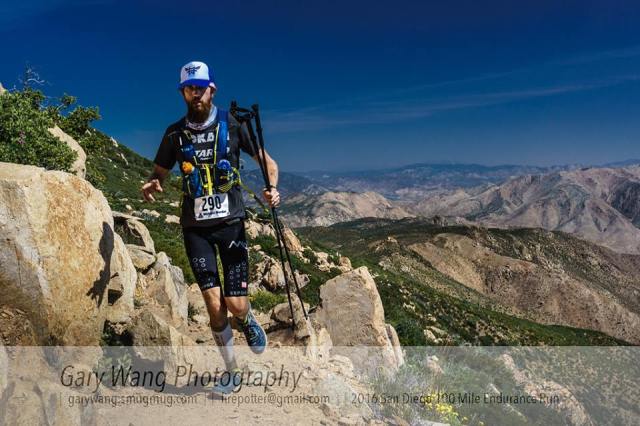
Michael Wardian At San Diego 100 Carrying Trekking Poles
6. If you intend to use the trekking poles with their extended length and if you are a slow runner or if you intend to power hike the first half of a 100K or 100-mile run, I suggest you start behind the runners and not mingle with the faster runners behind the starting line. However, if you are a fast runner and intend to be in the podium finish, you can have you folded trekking poles stashed with your hydration pack or just simply hold them with your hands.
7. In my experience of using trekking poles and seeing the faster runners using effectively these poles, I highly recommended buying a longer length from the suggested size or length that is based on your height. Three years ago, I bought a Black Diamond Ultra Distance Z-Poles with the length of 120 cms and I found it to be useful in my training runs as well as in my races. Last year, I bought another Black Diamond Ultra Distance Carbon Z-Poles with the length of 110 cms thinking that they are lighter and which are specifically recommended for my height. But I would find them to be the same weight with my 120-cm poles and I found them a little short for my height. In my ultra races in Hongkong, I found out that most of the trail runners have longer trekking poles than what their recommended size for their height and I tried one of my friends’ trekking poles which are 130-cm in size and I found them to be more adapted to my hiking/running style. Hopefully, I would be able to buy them soon!
Having stated my experiences and observation in the use trekking poles in running events, the following are their advantages and disadvantages:
Advantages:
1. If used in 50-milers, 100Ks and 100-milers and other longer trail runs, these poles will preserve ones leg power and strength for the long haul.
In a technical route and with lots of stream/water crossings, the poles with provide an extra “leg” for balance and stability for the body, instead, of falling or injuring oneself along the route.
2. For safety and protection from wild animals and “creatures” along the route. The poles can be used to ward off snakes and other creatures in the forest/mountain that have the tendency to attack you. I once used my poles to “whack” or strike on the head of an attacking and barking dog in one of the populated areas in the mountains. My swing with the poles to the dog was so strong that it tumbled down as if the dog was knocked out by a baseball bat!
3. For contigency purposes, the poles can be used as a support to ease the pain or body imbalance just in case one has rolled an ankle, or in cases when a runner is injured. In cases of extreme accidents where there is fracture to the runner, I guess, these poles could be used as emergency splints!
4. I’ve seen a runner during the Translantau 100K where he was holding a very long trekking pole and I’ve seen him using the poles as “pole vault” as he jumped along the sides of a single-track trail while overtaking a group six runners on a single file! He did it while we were descending on the said trail. The runner was so fast that I was not able to see his back even if I was able to pass these six runners after him.
5. In this year’s Translantau 100, the winds on the second night was too strong that my body would not be able to stand on my own. But having my trekking poles as extra “anchor” to the ground as I was ascending on the last two mountains of the course, I would have stopped or crawled along the slope up to the peak of the mountain avoiding to be knocked down by the strong winds with almost zero visibility due to thick fog. I was glad that I had my trekking poles with me while trying to keep my sight on the couple of runner in front of me.
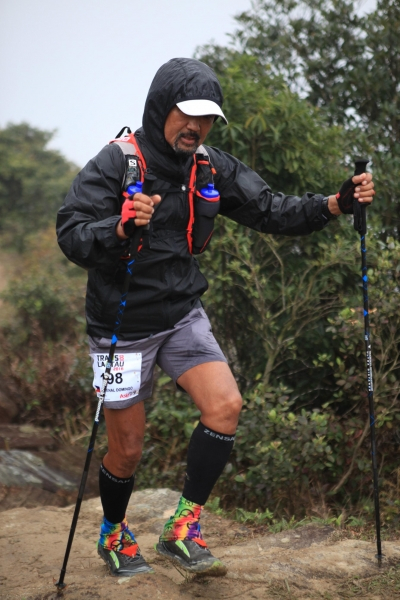
2016 TransLantau 100K With Trekking Poles
6. One time when I first joined the TNF Philippines 100, the trail was blocked by two water buffalos/carabaos and I with the rest of the runners behind me could hardly drive them away from the trail. By using the trekking poles as extension of my arms and raising them into the air, the carabaos thought that I was a BIG figure to contend with and slowly I was able to drive them away from the trail. But that incident and delay wasted a lot of my time and I eventually DNFd after one kilometre away from the place of incident. The trail was supposed to be the start of an ascending trail route towards Mt Santo Tomas which considered as the most challenging part of the course.
Disadvantages:
1. Obviously, it is an additional gear to be carried by the runner which means additional weight. Even if the trekking poles has a total weight of 280 grams, carrying it or holding it on a 50-mile, 100K or 100-mile or within a duration of 30 hours would be taxing to the body and you may end up carrying a total of about ten kilos or 5 pounds on the course. Additionally, it will delay you for some seconds in unfolding and folding them while you are running. If you add these few seconds within the distance of 100 miles, they will add up to minutes of maybe half an hour! Without proper training and technique on how to effectively use these trekking poles would mean a delay in finishing ones race.
2. In my three-year successive finishes of the Clark Miyamit 50-Mile Run (CM50), I have never used my trekking poles. I was then 61 years old when I had my first finish in this race and I would outpace and pass younger and stronger runners on my way up to the highest elevation of the course which happens to be the turning point of the race back to the Start/Finish Line. Simply put, if you have the proper training and preparation, there is no need to use those trekking poles in a 50-mile race. If you are less than 50 years old and I see you using a trekking pole while we are competing in the same race, my smile to you would mean that you are a “weak & newbie” trail runner!
3. In some of the international races, they allow runners to carry trekking poles but if the route is a “single-track” trail, they advise you not to use them, most specially if you have runners in front or behind you who are one or two steps away from you. There are also ultra races that require the runners not to use their trekking poles at the first 20-25 miles as most of the runners are running near to each other. Make sure that to ask from the Race Organizer/Face Director if the use of trekking poles are allowed in the race if their use is not stated in its rules and regulations.
4. Do not use trekking poles for the first time in a race you are going to compete. You will be saving the strength of your legs but your shoulder and arms muscles will take a lot of beating that you might no longer move your arms during the later part of the race or after the race.
At my present age of 64 years old, the trekking poles are my “necessities” and mandatory gear in my training and future races. I will be using them more often as I have already bought the proper size for me.
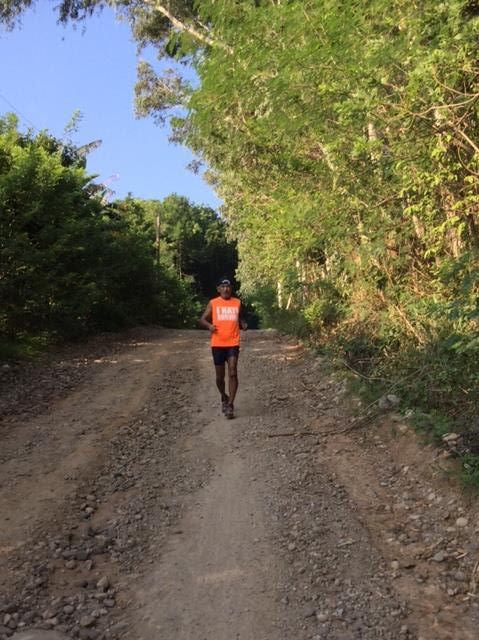
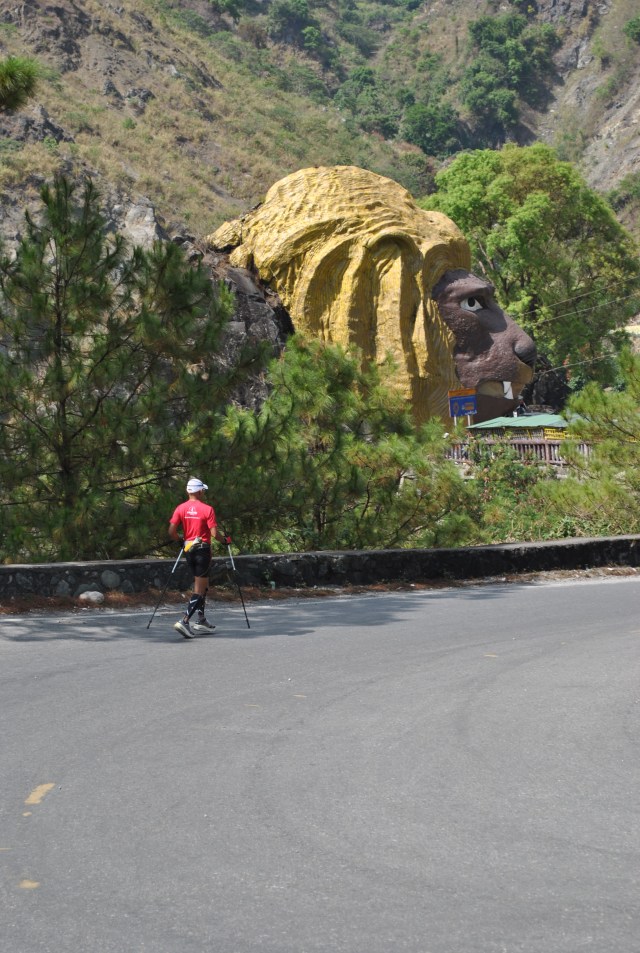
Training With Trekking Poles Has Started
I have one year to train with them in preparation for my plan to join the @CCC in Chamonix, France next year, hoping that I will be in the race after the lottery.
Starting with this post I am back again with my blogging.
Thinking back almost nine (9) years ago, I started this blog to document or journalize my daily running activities; write Race Reports in my running events (whether I am a participant or a Race Director); try to remember and document my previous running experiences; and re-post whatever running resources or information I have read in the books that I’ve purchased and read and what I’ve read in the Internet. Sometimes, I would post my personal opinion on what has transpired in the running world, whether it is within the local or in the country and in the international arena.
So, I am going back to what I know about blogging——sharing and letting my readers know what is happening to me in my running workouts, activities, and adventures. From time to time, I would also share things that are important or worth knowing in the field of running (specially on ultra running).
However, this blog will remain as the main source of information on the Ultra Races that I organise and direct.
I will not be competing with my Facebook account but in essence this blog will be “What is on my mind…about running”.
1. Started late in the afternoon and it became dark where I had to use my headlight on the 2nd half of the run. My run became slower when it was dark already.
2. It was slightly raining and I had to use my Eddie Bauer Waterproof Jacket with Hood during the duration of the run.
3. Brought two (2) bottles of 20 oz. each capacity; 4 pieces of GU Gels; 3 pieces of Power Bars; one piece of Honey Stinger Chews; Pocket Camera; iPhone; and Thermal Blanket. I purposely brought all these items in my pack to put more weight and have my body accustomed to the food/nutrition needs and required/mandatory items that I will carry with me during the race.
4. I used my INOV-8 X-Talon Trail Shoe and it was responsive on the wet condition of the trail and rocks along the route.
5. How I wished I could go higher in elevation in the mountain but due to the thick growth of grasses along the trail which need to be cleaned and cut, I decided to turn-around at 1,150 feet elevation.
6. The Eddie Bauer Jacket which I bought 5 years ago was very effective in preventing the rain from getting inside my body. However, my body sweat made the lining of the jacket to be damp and wet which made the Jacket to be heavier as I finished my run.
Running Under The Rain
7. My legs and knees started to become painful as I descended on the downhill portions of the route as I went back to where I started. I have observed that my leg muscles became tighter as I went downhill but I persevered by taking shorter strides and lighter with my footing along the trail.
8. I had a “deep-tissue” massage after my dinner and the soreness and pain disappeared as I went to bed.
Wednesday/December 10:
Rest. I am scheduled to have a 6-mile run but I decided to have a rest after being late to my place of training after a trip to another venue of one of my races where I am the Race Organizer/Race Director.
Instead, I did some body squats and lunges to find out if I still have pain and soreness to my legs. The “deep-tissue” massage the night before “fixed” my issues about my legs. I slept early in the night…eight hours of sleep!
1. The run was done in the morning and the weather was with clear sky and slightly cold weather in the mountain. My water/hydration system was the same with that of the Tuesday Run, consuming 40 oz. of water during the run. I added two (2) pieces of VFuel Gels in my pack and I was able to ingest one piece of Gel on my second half of the run.
2. I felt lighter without the Jacket and I was comfortable with my pack with the same content that I had during the Tuesday Run.
3. I used my ALTRA Lone Peak 1.5 Shoes and they are responsive to the trail and rocks.
4. The highest elevation of 1,575 feet was reached at 3.1 Mile but I decided to have my turn-around at this point due to the thick bushes and grasses along the unused trail towards the peak of the mountain. In my estimate there is a need to clean the trail for a distance of about 2 miles until I reach the peak of the mountain. If the highest elevation of this mountain will reach 2,100+ feet in less than 6-Mile distance, this could be my ideal training ground for my TransLantau 100 Race.
At The Turn-Around Point
5. The massage that I got last Tuesday evening and Full Rest Day on Wednesday gave me a better performance for today. I did not feel any pain or soreness or tightness on my leg muscles and knees on my downhill runs back to Starting Area. It resulted to a faster Average Speed in my workout.
Friday/December 12:
Rest. I had a trip to Fort Magsaysay to attend a Coordinating Conference regarding my race thereat to be held on the weekend.
Taklang Damulag
Saturday/December 13 @ Hill Taklang Damulag, Fort Magsaysay, Palayan City:
1. While supervising my race as the Race Director, I thought of running the course from Fernandez Hill View Deck to the Peak of Taklang Damulag (Hill) trying to find out how many “hill repeats” that I can do until I am tired. However, my training program called for a 10-mile run and any distance after that would be a bonus.
2. The weather was cooler in the early part of the morning but it became hotter on my third climb to the peak. I was carrying my TNF Hand-held Bottle which is just enough for my hydration need for one trip.
3. I had to rest for about 2-3 minutes just enough to make refill on my water bottle and eat something, most specially before I started my third climb.
4. I used my ALTRA Lone Peak 1.5 which was very responsive on the slippery trail and rocks along the route. However, the shoes became heavier as it became wet/damp from the sweat going to my socks and full body.
5. I did not have any problems or soreness on my legs during the duration of the run. If only not for the heat of the sun, I could have attempted a 4th climb to the peak.
6. I will make a point to visit Fort Magsaysay at least once a month and try to break my personal record on how many times I could climb the peak of Taklang Damulag in one day or 12 hours!
7. I was averaging 1:11+ hours per “hill repeat” which is a big improvement on my performance in climbing the hill two years ago.
Sunday/December 14 @ Hill Taklang Damulag, Fort Magsaysay, Palayan City
1. I felt I was not wasted from yesterday’s triple trip to Taklang Damulag. For today, I did two “hill repeats” which I expected to have a distance of 7 miles but my running effort was satisfactory.
2. I used my INOV-8 X-Talon Trail Shoes and they were very light and was able to have a very nice leg turn-over during the duration of the workout. I might be slower this time but I feel strong to finish another repeat after completing my scheduled distance for the day.
3. Just the same with yesterday’s run, I was using my TNF Hand-held bottle. I had my breakfast before I started the run and it gave me the energy throughout the workout.
3X “Hill Repeats” @ Taklang Damulag
Summary:
Total Distance: 31.16 Miles or 49.85 Kilometers
Total Time: 10:30 Hours
Total Ascent: 7,607 Feet (152.14 Feet Elevation Gain Per Kilometer)
I made a post about the cut-off times of running events in my post in this blog on May 17, 2011. Until this time, I don’t see any reason why Race Organizers/Directors had to impose cut-off times in their events. For the Marathon Races where most of the city roads are closed from vehicular traffic, six (6) hours is a decent time as a cut-off time in order to relieve the riding public of the inconvenience it would bring if the race is extended up to nine or ten or twelve hours. But on second thought, the cut-off time being imposed is not for the safety of the runners of the event but for the convenience of everybody.
In my post, I made mention of some of the popular ultra races in the world with their prescribed cut-off times. It is obvious that Road Ultras have a shorter cut-off times than those mountain trail races, except for the Badwater Ultra Marathon Race. UTMB’s 166K has a cut-off time of 46 hours; Hardrock 100 which is dubbed as the hardest mountain trail ultra in the USA has a cut-off time of 48 hours; Barkley Marathon has a cut-off time of 60 hours where each loop of 20 miles has a cut-off time of 12 hours; and the most prestigious Western States 100-Mile Endurance Race has a cut-off time of 30 hours.
Each of these ultra races has their reason why the Race Organizer/RD have to impose cut-off times. Moreover, there are intermediate cut-off time in every checkpoint along the route which forces the runner to meet such times, or else, he/she would be disqualified. Such intermediate cut-off times are being strictly enforced as race marshals would strip each runner of their race bib or tag and advised not to be allowed to continue the race.
I would surmise also that such cut-off times are being imposed by the Bureau of Parks and Wildlife which manages or administers safety in these wilderness parks as one of the conditions for the issuance of event permits.
Without any reference on these cut-off times, I would conclude that the Race Directors, who are former ultra runners during their prime age, would be able to “test run” the course by themselves and come up with an arbitrary cut-off time based from their personal capability or finish time results. Or maybe, they invited some of their ultra friends to “test run” the course and get the “mean/average” time of the finishers.
When I thought of organizing the Bataan Death March 102 Ultra Marathon Race, it was a challenge for me to come up with a decent cut-off time for the whole race. After conducting some “50K test runs” with my ultra running friends, I was able to come up with the 18-hour cut-off time, where an average well-trained marathon runner would be able to finish a distance of 50K in 9 hours, which way beyond the 6-hour cut-off time for a marathon (42K) race. This is the reason why one of the qualifications of a BDM 102 participant is a Marathon Finisher.
As for the BDM 160, I just added another 9 hours and another 3 hours for the remaining distance of 58 kilometers where I considered the heat and humidity in the country as the main challenge to finish this event.
When I thought of coming with the first trail ultra marathon race in the country, I would conduct by myself a “test run” on the course by dividing the whole distance of 162 kilometers into two parts. Thus, I came up with 32 hours as the cut-off time for the 1st Taklang Damulag 100-Mile Endurance Race which was maintained for the past 3 years/editions.
As I ran through roads and trails in the country, I made sure that I would “test run” any course/route that I would like to be transformed into an ultra running event for the runners.
I never changed on how I would come up with the “cut-off” time for my races. I would “test run” the course and whatever time I would register as my finish time, such time will be considered as the official cut-off time for the ultra event. Considering my present age to run through the course, I think it would be fair that my finish time will be the target time for the younger runners.
It should be noted that Intermediate Cut-Off Time is the time that a runner would leave the Checkpoint.
So, what is my message in this post? It simply means that a well-trained ultra runner could easily finish my ultra races within the prescribed cut-off times. These cut-off times (intermediate and whole course) will be one’s measurement or gauge if proper training and preparation had been made prior to the event. If one could not meet such cut-off times, it simply means that one lacks the proper training for the event.
At The Finish Line: “Test Run” For The 1st ANTELOOP 100K Trail Run
Let us stop bragging ourselves to have finished a race even if you have finished way beyond the cut-off time. Let us stop giving any “finisher’s loot” for these kind of finishers. A TRUE & OFFICIAL FINISHER is one who finishes the race within the prescribed cut-off time for the event.
Few weeks ago, I was able to read the Opinion Editorial in one of the daily newspapers. I don’t usually read the newspapers but with a brief stop to eat my breakfast in one of the Fastfood Restos along the NLEX, I got a free issue of the newspaper. What caught my attention in the newspapers is the Editorial about EDSA and the problem of traffic in the metropolis.
Few days ago, there is another “news” whose video became viral in the Internet which showed a fat guy in lavander-colored shirt slapping a MMDA traffic enforcer. I am not sure what made the guy got out from his car and showed outrage towards the traffic enforcer. I have the impression that it was a result of the traffic situation in the metropolis.
The bottomline and the BIGGER Picture in the Opinion Editorial and the “slapping” incident is the fact that for the past years and administrations, there is NO SOLUTION that is good in easing up the daily traffic in EDSA in particular and in Metro Manila in general. Not even the MMDA or the Office of the President could think of an idea and/or implement a measure that would sove the problem of traffic in Metro Manila.
(Note: I hope most of the people would have understood the SONA if the President should have included in his speech on how he woud solve the problem of traffic at EDSA, not about DREAMS and HOPES for the future!)
The volume of traffic had been growing in an unprecedented manner while the number of roads and mobility access have not increased and improved. Not even with the introduction of the Light Railway Transport (LRT/MRT) and increase in the number of traffic enforcers had improved the traffic condition of the city.
What could be the problem? What could be the solution?
If you observe, there are lots of transport buses and jeeps plying within EDSA and other main streets in the city. This is to include the Provincial Buses going and coming from the Northern & Southern Provinces. Maybe, reducing the number of buses and jeeps in the city would ease up the traffic in the city.
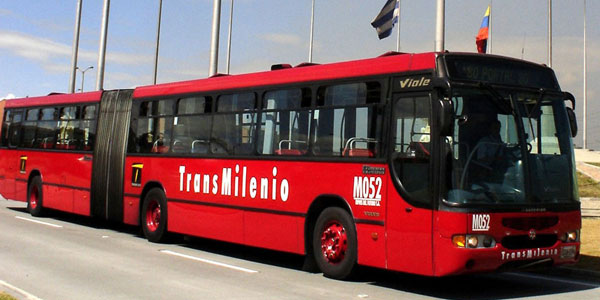
Do you still remember those “LOVE BUS” before? Why don’t we bring back those LOVE BUS and adhere to its time-tested system of having only ONE transport system for the BUSES in the city, not what we see as a “free for all” transport franchises for any corporate that has the capability to acquire a fleet of buses here and abroad. I would not deal on the details as I want to suggest an overall concept with regards of reducing the number of buses in the city. Simply put, stick to ONE transport company, private or government-controlled, with the best and excellent transport service to the public. (Note: It is worthy to note what the TransMilenio in Bogota, Colombia had solved the traffic congestion of in the said city since December 2000.)
TransMilenio Bus (Photo From Colombia Travel Blog By Marcela)
You might be wondering why I am trying to analyze the traffic situation in Metro Manila and trying to suggest some solutions to this perpetual problem of ours. It’s because there are solutions to be considered from the point of view from a runner/hiker/athlete and from me who gathered ideas from other sources.
Of course, as an athlete/runner/hiker, I would suggest that people would go back to what we would naturally do during the Early Ages—walk, jog, or run to reach from Point A to Point B. Let us not argue about the pros and cons about this suggestions. In the end, this suggestion has more advantages than disadvantages.
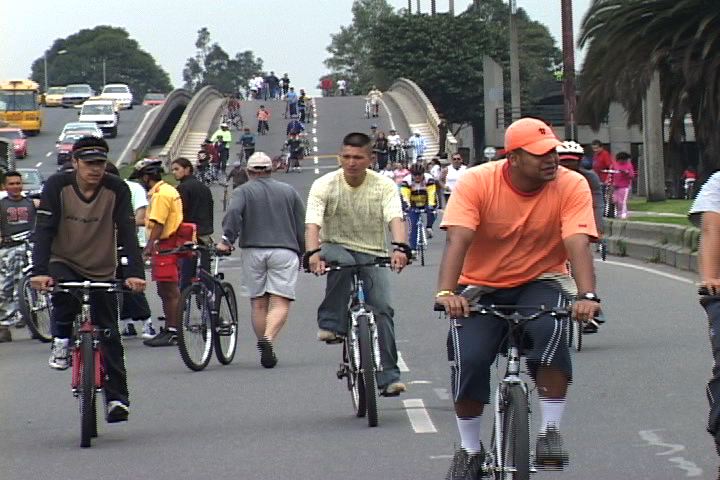
If you can’t walk, jog, or run and would like to have a faster time to reach Point B from Point A, you can ride on a bicycle. Of course, riding on a bicycle has also pros and cons but I am sure it has more advantages. (Note: It is worthy to note also what Mayor Enrique Penalosa of Bogota, Colombia had introduced like the Ciclovia and the First “Car-Free” Day to the world in 2001)
Ciclovia In Bogota On Sundays (Photo Taken From The Oil Drum: Local)
Have you heard about the carpool system that other countries use to ease up the volume of traffic in their streets? This system is applicable to corporate offices as well as government offices. One person in one office can share a ride for another 3-4 persons employed in the same office, provided they come from same origin or the person who drives can pick-up the remaining passengers where the route passes towards their destination.
Another option is for anybody or for you to try riding the bus/jeepney/UV Express in going to your office and going back to your home, at least, 1-2 times a week and leaving your car in your house.
These abovementioned suggestions are only effective if coupled with discipline, positive attitude, and commitment. But they are far more effective if we have some rewards or incentives if we commit ourselves to such suggestions. This is where leadership and management level would enter and be part of the soultion to our traffic problems.
Yes, incentives or rewards are the “carrot” that we need. The government could easily enact laws, ordinances, decrees, and rules and regulation but such “stick” woud not be effective if it is not implimented or enforced strictly.
A person who goes to his office by walking/jogging or running should receive some incentives from the management. It could be some cash enough to motivate him to maintain his running. Maybe, the cost of a brand-new running shoes can be collected by him every 3 months; a weekly registration fee for 10K to half-marathon race of his choice; or additional support for nutrition and hydration which is given on a monthly basis; or a new running kit (apparel) every 3 months!
For the cyclists, the same incentive as the runner is appropriate. It could be cash incentive or anything that he could use for his safety while riding his bicycle.
For the carpooler, he could be given some incentive in terms of additional allowance for the gasoline; repairs; and maintenance servicing of his personal vehicle. Better yet if the management could provide an all-expense trip for a family weekend vacation in any part of the country.
If you take the bus or public transport instead of your personal car, the management should double your daily fare and receive the incentive at the end of every two weeks. If you spend P50 a day for your fare, the management should be able to give you P100 as your daily incentive or maybe more.
You might ask me where will management get the money for the incentives. Well, I would assume that personnel would be healthier if they are more active by adhering to my suggestions. The management will be saving money for the medical and hospitalization of their employees, to include payments for medical and dental insurances. So, in effect, the management will be “front-loading” their savings for the medical expenses for their personnel in the form of incentives. It is easier to say than done but it is possible.
Now, it is for the government and private developers to come up with the needed infrastructure in order to impliment safety in running, walking, and cycling from Point A to Point B.
What could be more revealing is the fact that Colombia won 8 Olympic Medals in the latest London Olympics with Gold and Bronze Medals in BMX Cycling; Silver Medals in Road Cycling and Women’s Triple Jump and other individual sports. I wonder if there is a direct connection with how Bogota, Colombia solved its traffic problems and the encouragement for the people to have access to paved roads which are transformed into parks during the week.
Just maybe, this is a good model for us to emulate if we want to encourage more of our citizen to engage in endurance sports.
As they say, “you may never know”. What is needed is for us to TRY.

 It took me a lot of years and marathon races to qualify for the Boston Marathon and I finally made it when it was time that I did not expect it. For a passionate runner, being able to qualify and join the Boston Marathon is, I think, the pinnacle of Road Racing. Boston Marathon is the Holy Grail of Road Marathon Racing for being the oldest Marathon Race in the USA and most prestigious Marathon In The World! This makes me a Legitimate Qualifier of the event and not as a Corporate Sponsored or Charity Runner.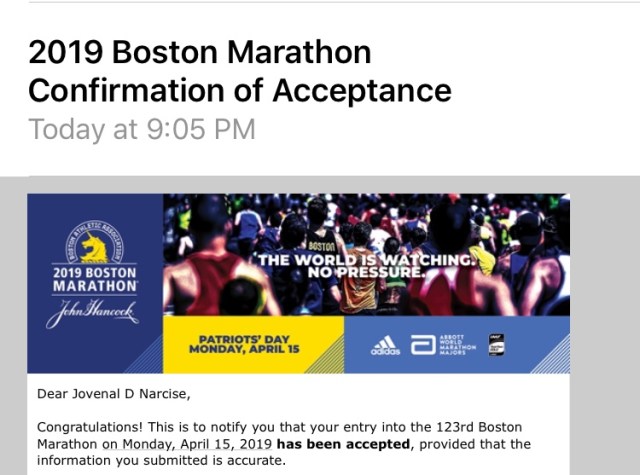


 Bald Runner
You must be logged in to post a comment.