Final Instructions: RIZAL DAY RUN

1. Assembly Time is 5:00 AM and the Gun Start is 5:30 AM. Assembly Area is at the Grandstand of Camp Aguinaldo.

2. There will be two Aid Stations along the 7K-loop, at the vicinity 3K & 6K. Aid Stations will serve Water & Gatorade. Bite Foods like Cookies, Crackers, Choco Bites, and Fresh Fruits will be served starting on the 3rd Loop. Please do not throw your litter along the route. There will be trash bags/cans placed within the vicinity of each Water Station.

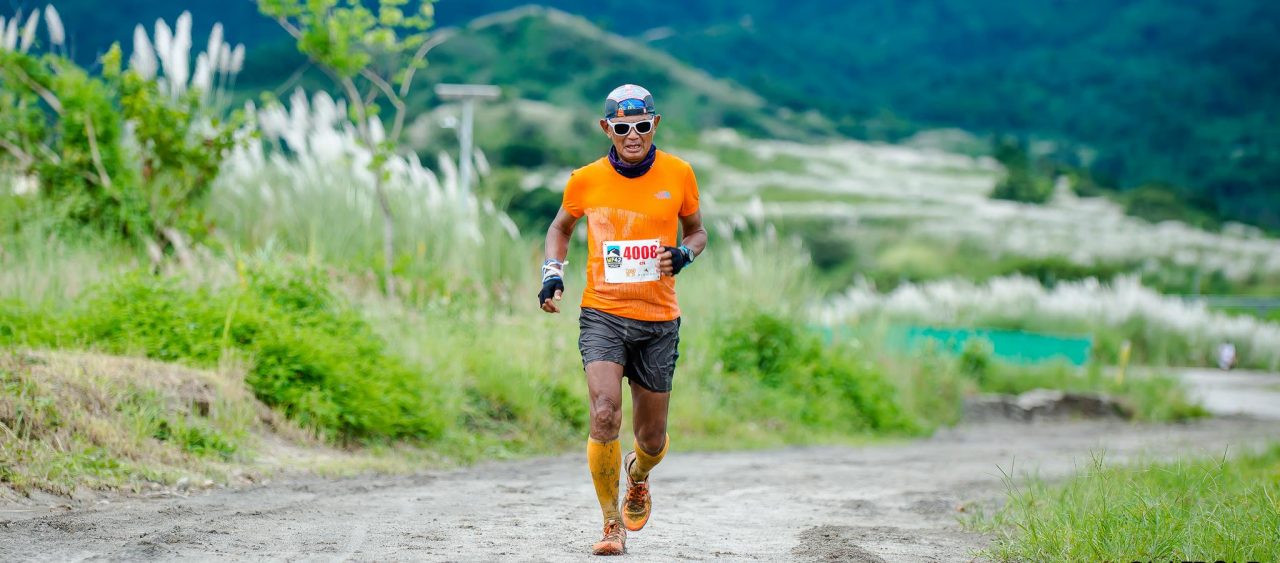
3. Members of the Elite Team Bald Runner will act as PACERS for the leading runner/s. Elmer Sabal will be the PACER for the leading Male Runner/s while Reynaldo De Los Reyes will be the PACER for the leading Female Runner/s.

3. There will be marshals/BR elite athletes who will be giving wrist bands to every runner along the route. Every finisher must have four (4) wrist bands visibly seen or worn on their arm as he/she crosses the finish line. Any runner with the lacking number of wrist bands will not be entitled to be given a Finisher’s Medal & Certificate.

4. Parking Areas are available at the sides of the Grandstand; infront & vicinity of the AFPCOC (Officers Club); and at the St Ignatius Cathedral. Make sure that your valuables are not displayed in your car. Secure your things and make sure that your car is locked. There had been no reports of “bukas-kotse” inside Camp Aguinaldo in the past but there is always the possibility of “first time”! Remember that suspects in “bukas-kotse” in past races are also runners!

5. If you are arriving at Camp Aguinaldo before 5:00 AM, you must enter at Gate #1 along Santolan/Boni Serrano Avenue as it is the only gate open 24 hours. Gate #3 along EDSA and other gates open at 5:00 AM. Just tell the MP Guards that you are participating the RIZAL DAY Run organized by General Narcise (Retired). (Note: The MP guards do not know the Bald Runner!!!)

6. Comfort Rooms are available at the back of the Grandstand and at the Daza Park, in-between Km #3 & Km #4.

7. The 32K route will entail 4 loops of the course (7K-loop) plus 2/3 of the 5th loop. Road Marshals will be positioned on critical crossroads to make sure that each runner will not get lost on the 5th loop. It is guaranteed that the distance will entail 32K + 500-600 meters. I personally measured the whole course with my GF 305.

8. Baggage Counter will be available at the Public Address System Booth located at the Grandstand.

9. Be vigilant during your run as the road is shared with vehicles. Although the traffic of vehicles inside the camp early in the morning and during holidays is very light, always look on your sides before crossing the road. Stay away from dogs at the EMs Barrio!

10. My staff, athletes and I are overwhelmed with the support and attendance of runners to this race. This race was intended for serious runners left behind in Manila during the Holiday vacation and who will be joining the Cebu Marathon, Condura Marathon and the 2nd BDM 102 as we planned for a maximum of 150 runners. As of this writing, we have already accepted 350 runner-participants. Thanks to all those who registered for this run.

11. There are only 168 Finisher’s Medals made by “Bernal Engravers” before their workers went on vacation for the holidays. So, for those who will not get their Finisher’s Medal after the race, they will get their respective medal during the first road race of January 2010. 

12. If I will not have any chance to thank those “runners & friends” who supported this race, let me take this opportunity to thank the following: Bugobugo85 & Team Hardcore; HINGS Running Club; Reinier Pacific; Tintin aka Timothy/Right Sources; Carrey; Eugene & Isko; Jinoe, Quennie & takbo.ph peeps; Brig Gen Felipe Tabas Jr & GHQ & HSC/Camp Aguinaldo; volunteers; and the members of the Elite Team Bald Runner.

13. See you at the Starting Line. Take it easy and have fun! Happy New Year to Everybody!
“Back To The Slope” #3 (2nd Week)

1. This is my second week of my training cycle. I am still with my base training after slowly recovering from a chronic muscle tear injury on my peroneus-calf muscle (left leg).

2. After experimenting on using Adidas’ Climacool & Adizero Racing Shoes in my past Marathon Races (MILO Finals, SIM, & Pasig River), I am going back to my dependable and more stable ASICS Gel Shoes. Since I started this training cycle, I’ve been using my ASICS Kayano-14 and Kanbarra-4. For my light and recovery runs at the oval track, I use my NIKE Lunaracer. The ASICS provide me with better stability and comfort during my base training.                                                                                                                          

ASICS Gel-Kanbarra 4
ASICS Gel-Kayano 14

3. I was able to run a total of 61 kilometers for the week. The following was my daily workout for the 2nd week:

Dec 21 (Monday)—-8K easy run at the ULTRA Oval Track with an average pace of 6:48 mins per km
Dec 22 (Tuesday)—-8.5K easy run with 100-meter faster pace every lap at the oval track at an average pace of 6:23 mins per km
Dec 23 (Wednesday)—-10K easy run at the BHS Loop with an average pace of 7:22 mins per km
Dec 24 (Thursday)—-8.5K easy run at The Fort with an average pace of 6:47 mins per km
Dec 25 (Friday)—-13K easy run at The Fort & McKinley Hill with an average pace of 6:28 mins per km
Dec 26 (Saturday)—-13K easy run at the UP Diliman Loop with an average pace of 6:22 mins per km
Dec 27 (Sunday)—-Rest
4. I made sure to do my warm-up/cool-down and stretching exercises before and after my runs. All of these daily workouts were done early in the morning (starting at 5:30 AM and ending at 7:30 AM or 8:00 AM). For this week, I did a lot of “high-knees”, bounding steps, and faster stair runs for my strengthening drills. For my daily nutrition after workout, I have to eat within 30 minutes to one hour. My meal consists of steamed rice & two pieces of fried egss, lots of fresh ripe bananas, and one serving of hot MILO “3-in-1 For Adults” Drinks!
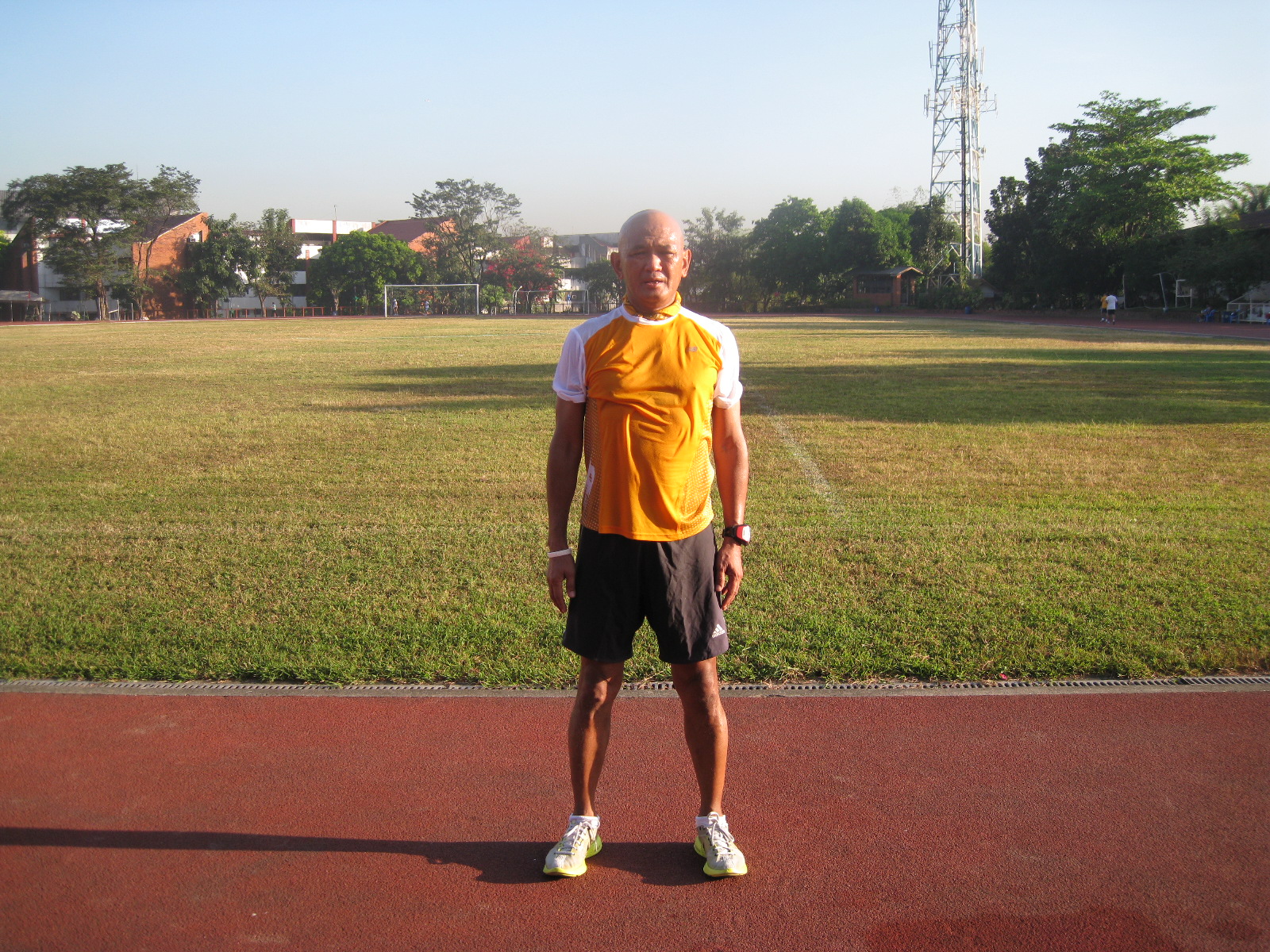
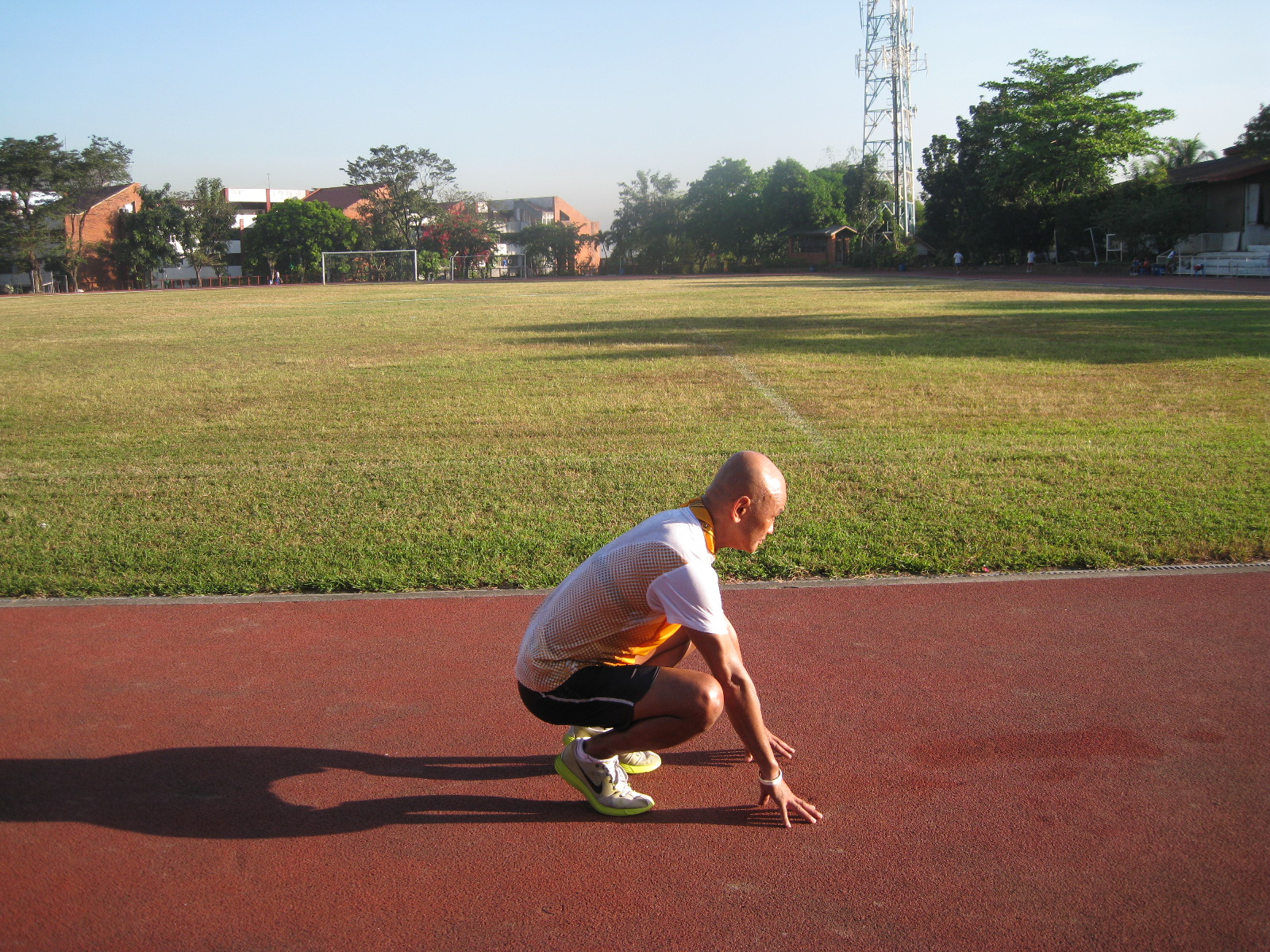
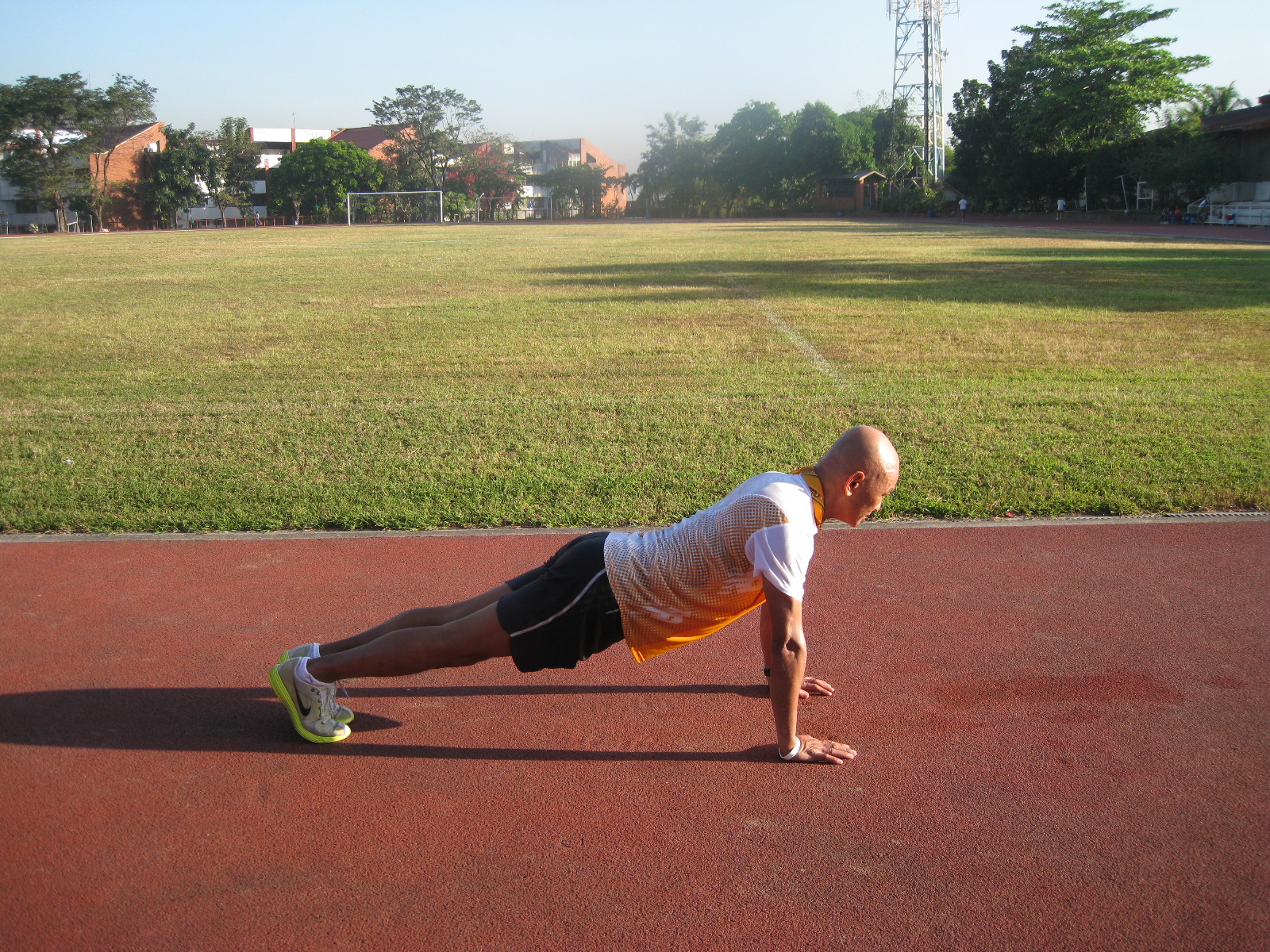
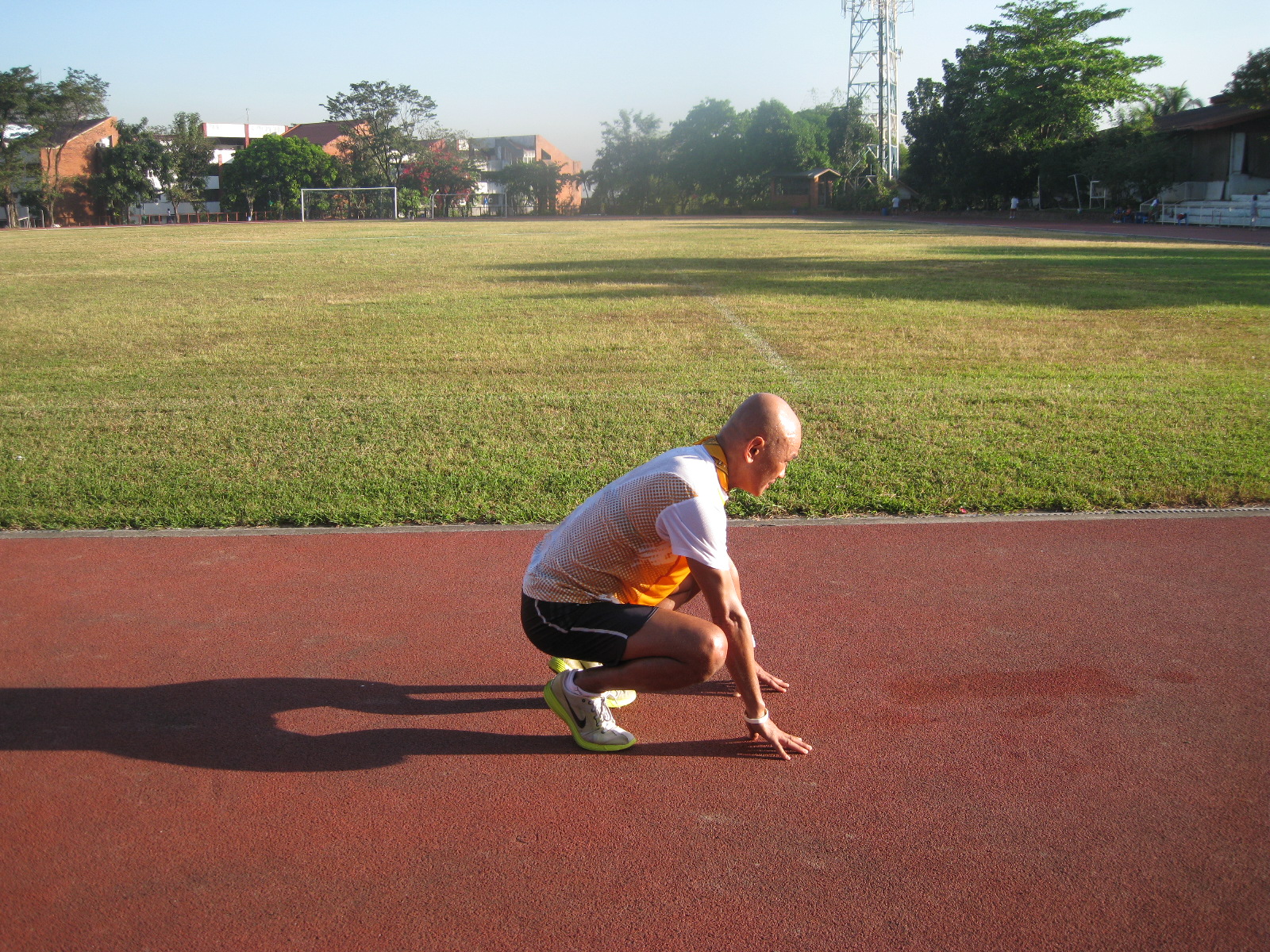
5. One drill that I introduced for this week is what athletes call as “burpees” or in the military, it is called “squat thrust”. It is an exercise that combines “squats” and “push-ups”. I did 20 repetitions. It can be shown on the following pictures, step-by-step:
First, Stand Erect with Feet Apart or Together
Bring Down the Whole Body & Place Hands Infront of Your Feet
Thrust Your Legs Backwards & Do Push-Up
Thrust Your Legs Forward & Stand Erect To Complete 1 Repetition

There are so many variants of this exercise. However, the steps I’ve mentioned (squat thrust + push-up) is the basic “burpee” exercise. You can jump upwards or leap forward once you bring your body back to the starting position for a higher intensity drill.

Lesson #3: Rule of Thumb In Increasing Mileage—10% of your previous week’s total mileage. Abruptly increasing your weekly mileage to more than 10% of your previous week’s mileage will result to overtraining and/or the possibility of a running-related injury.

Note: If you are a beginner or serious runner, you have to maintain a Runner’s Diary or Log where you can write your distance, time, heart’s pulse rate, weight, and other data related to your running workout. I suggest also that you try to sign in with www.dailymile.com and try to be motivated with your friends who have registered in the said site.

Top 10 List: Reasons Why You Have To Run The RIZAL DAY 32K

10. Commemorate the 113th Death Anniversary of our National Hero, Dr Jose Rizal. He was 35 years old when he was executed.

9.  Recall the life of our National Her and the story/plot of Rizal’s famous novels, “Noli Me Tangere” and “El Filibusterismo”

8. Nothing had changed from the attitudes of the characters in the novels from what we see today in our society. You can see these “characters” also in our weekend Road Races!

7. Rizal was never a runner, but he could had been a “runner-blogger” if he is alive today.

6. In the 70s & 80s, there was a RIZAL DAY Run with a distance of 30K every Dec 30 of the year. The race was organized by the government.

5. Bald Runner is the Race Organizer & Race Director. He is not fond of “distractions” or “frills” in road races, he wants everybody to simply run and have fun!

4. It is the first 32K Road Run in the country. The second Road Race done during a declared Public Holiday. The first Road Race to be held on Wednesday or middle of the week. A Road Race without the support/endorsement from any private corporation or from the national government.

3. Running inside Camp Aguinaldo for almost 5X will test the mental toughness of runners.

2. The 32K distance is a perfect LSD run for Cebu Marathon, Condura Marathon & 2010 BDM 102. There is no cut-off time for this run!

1. Burn those calories accumulated for attending Christmas Parties and a reason to eat & drink some more on New Year’s Eve!!!

M E R R Y  C H R I S T M A S   &   H A P P Y  N E W  Y E A R ! ! !

Picture Clipping: BDM 102

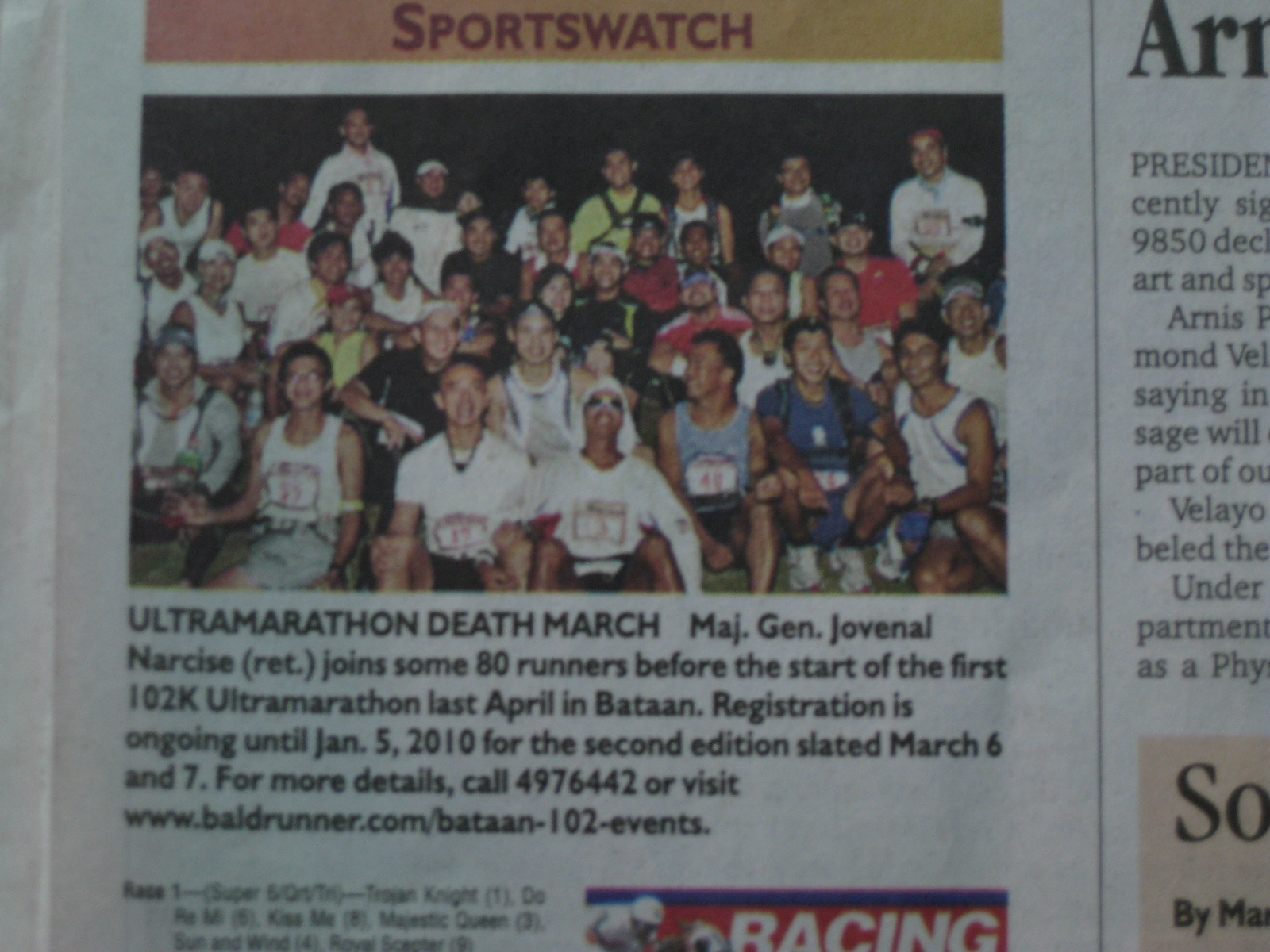
In last Sunday’s edition of the Philippine Daily Inquirer (Dec 20, 2009), the runner-participants in the 1st Bataan Death March 102K Ultramarathon Race who posed in a picture taken before the race were featured in a picture posted at the “Sportswatch” section of the said newspaper.

The picture below consists of the 82 “new brave warriors” who started the race from Km #0 in Mariveles, Bataan last April 5, 2009 and finished at Km #102 in San Fernando, Pampanga. Out of the 82 starters (with 8 foreign runners), 63 runners finished the race within the cut-off time of 18 hours.

News Picture Clip on the 2009 BDM 102

 As of today, there are 167 runner-applicants for the 2nd edition of the BDM 102 which will be held on 6-7 March 2010. In addition, I have reserved 40 slots for the AFP-PNP runners who will join the race.

For the details of registration and rules & regulations for the 2nd edition, please visit www.bataan102.blogspot.com. Applicants for this race should leave a comment at the Bataan 102 Page of this blog by stating their name, age, date of birth, e-mail address, contact number, and last marathon race finished. Last day of application is January 5, 2010.

To the runner-applicants, good luck on your training!

GO BEYOND YOUR LIMITS !!!

“Back To The Slope” #2 (1st Week)

1. “Back To The Slope” simply means “Back To Basics”. After a forced rest & recovery due to a chronic muscle tear on my Peronues muscle for six (6) weeks, I am starting from base training again. This “Back To Slope” thing will be a series of “tips and lessons” for beginners as well as competitive runners.

2. For the 1st week of my training cycle, I was able to run a total of 55 kilometers as seen on the following log of my runs:

14 Dec (Monday)—10K in 1:09+ hours at an average pace of 6:55 mins per km

15 Dec (Tuesday)—6K in 45+ minutes at an average pace of 7:04 mins per km

16 Dec (Wednesday)—8K in 48+ minutes at an average pace of 5:57 mins per km

17 Dec (Thursday)—8K in 1:00+ hours at an average pace of 7:29 mins per km

18 Dec (Friday)—10K in 1:02+ hours at an average pace of 6:13 mins per km

19 Dec (Saturday)—13K in 1:35+ hours at an average pace of 7:27 mins per km

20 Dec (Sunday)—Rest/30-min Active Recovery Run

3. As gleaned from my log workout for this week, I’ve been strictly following the 2nd training principle which I want my readers to know and follow. It is the principle of “hard-easy” method. If the workout intensity is hard for today, the following day’s workout should be easy. By following this principle, the body would be able to rest and recover for the following day’s workout. This is one way of preventing a running-related injury.

4. There will be no road races on Sundays for my base training phase. I am giving a day for my body to rest & recover for the week’s running workouts after doing a 30-minute slow active recovery run (at 7:30-8:00 mpk pace). However, I strictly made more stretching and selected Pilates exercises before and after my daily workouts.

5. The following are the suggested “drills” and stretching/Pilates workouts for core strengthening:

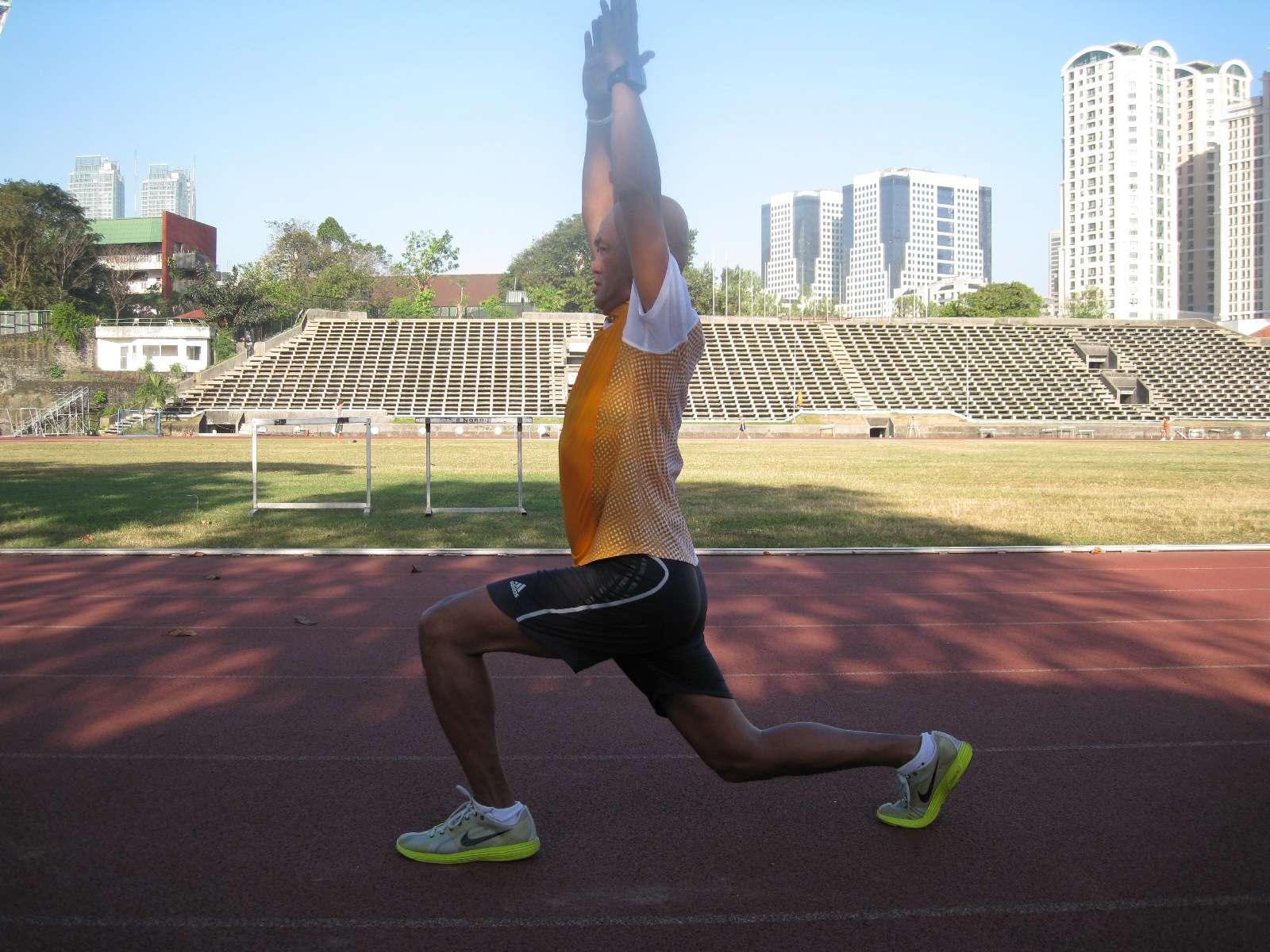
Forward or Walk Lunges

 Lunge one foot forward as far as you can and bring the body down while bringing both arms up in the air. Do 10 lunges per foot/leg.

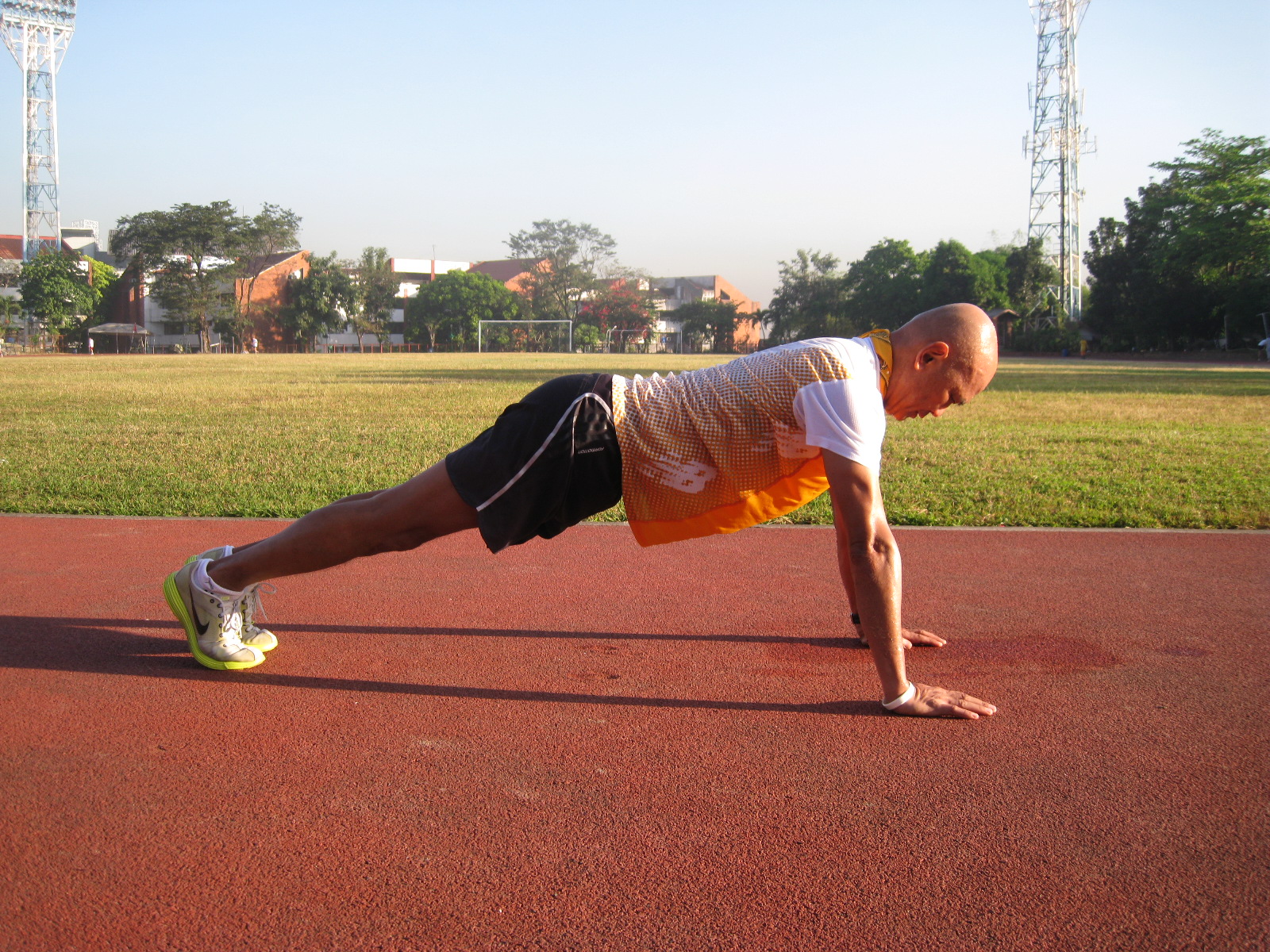
Push-Up (Starting Position & Up Position)

 I always try to do 20 repetitions of push-up properly after my workouts. Be sure that your upper arms are aligned with your back when you are on “down” position. Your palms’/hands’ distance should be your shoulders’ width.

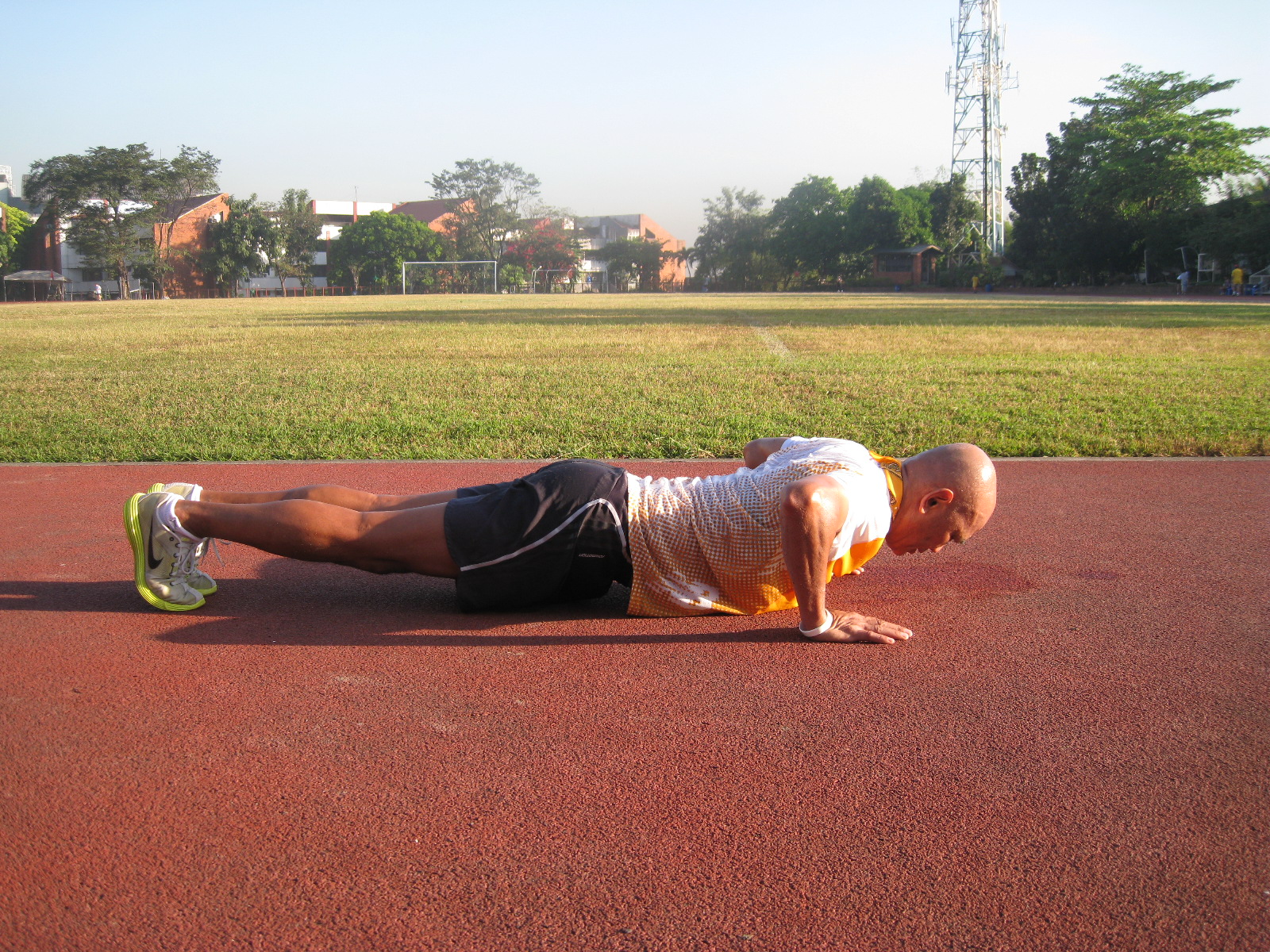
Push-Up (Down Position)

 Try to keep your feet together and the whole body should form a straight line while doing your repetitions. Inhale as you push your body up and exhale while you put your body down.

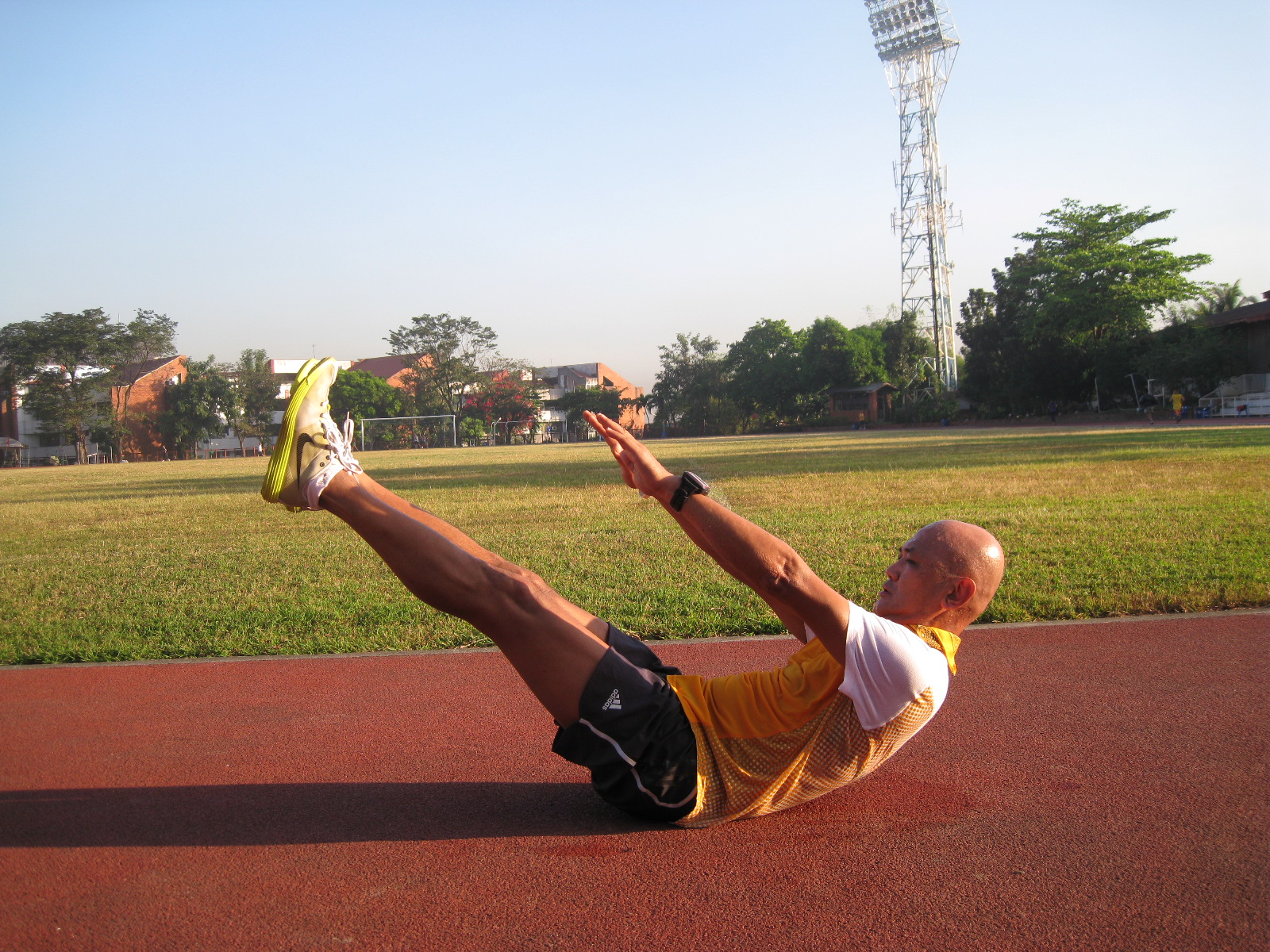
Leg & Upper Torso Lift

 Try to hold your body in this position from 30 seconds to one minute while maintaining your regular breathing. You will be surprised what part of the body will be strenghtened!

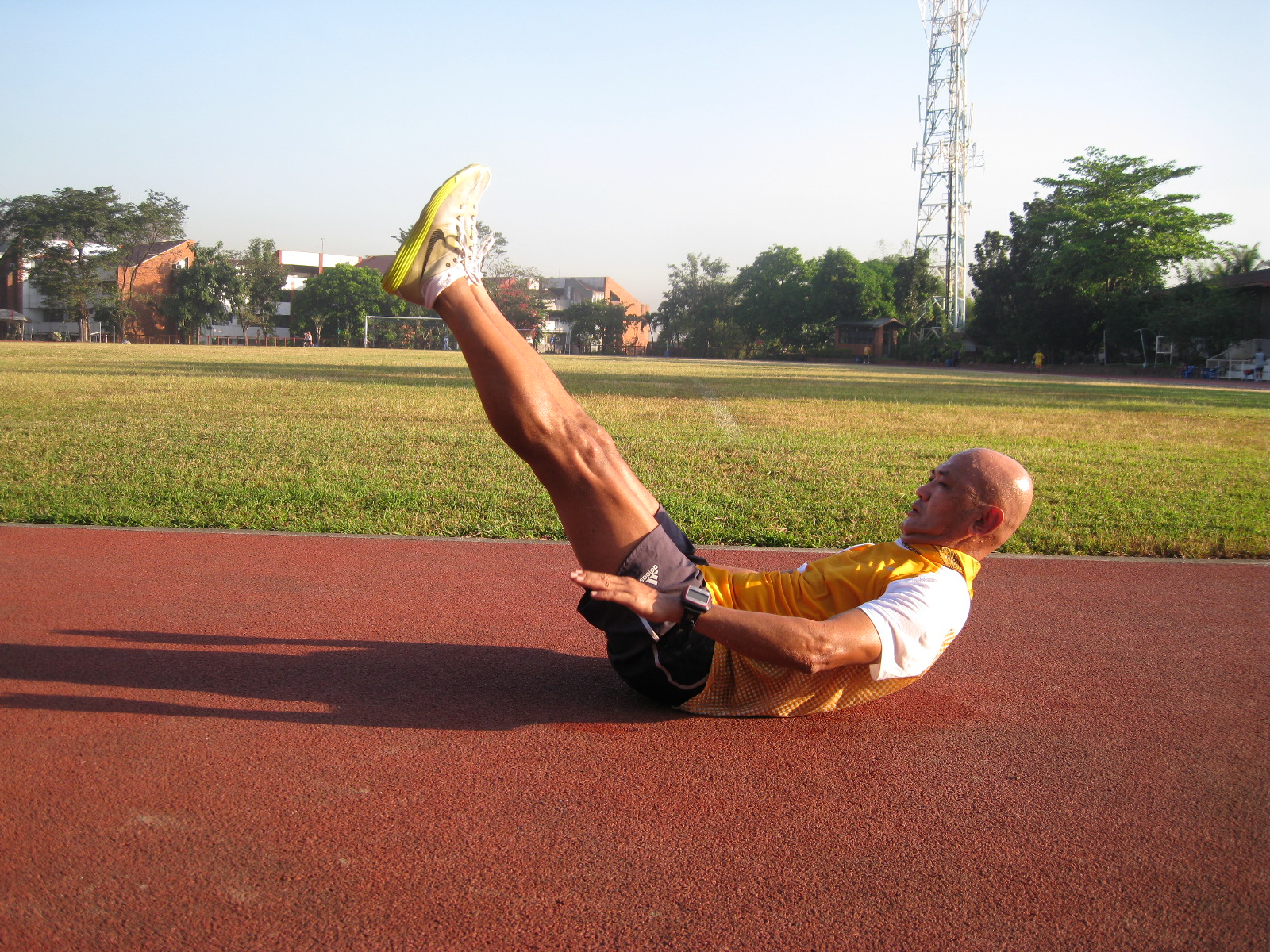
The Hundred

 They call this as “The Hundred” because you have to pump your arms 100X while maintaining this pose and regualr breathing.

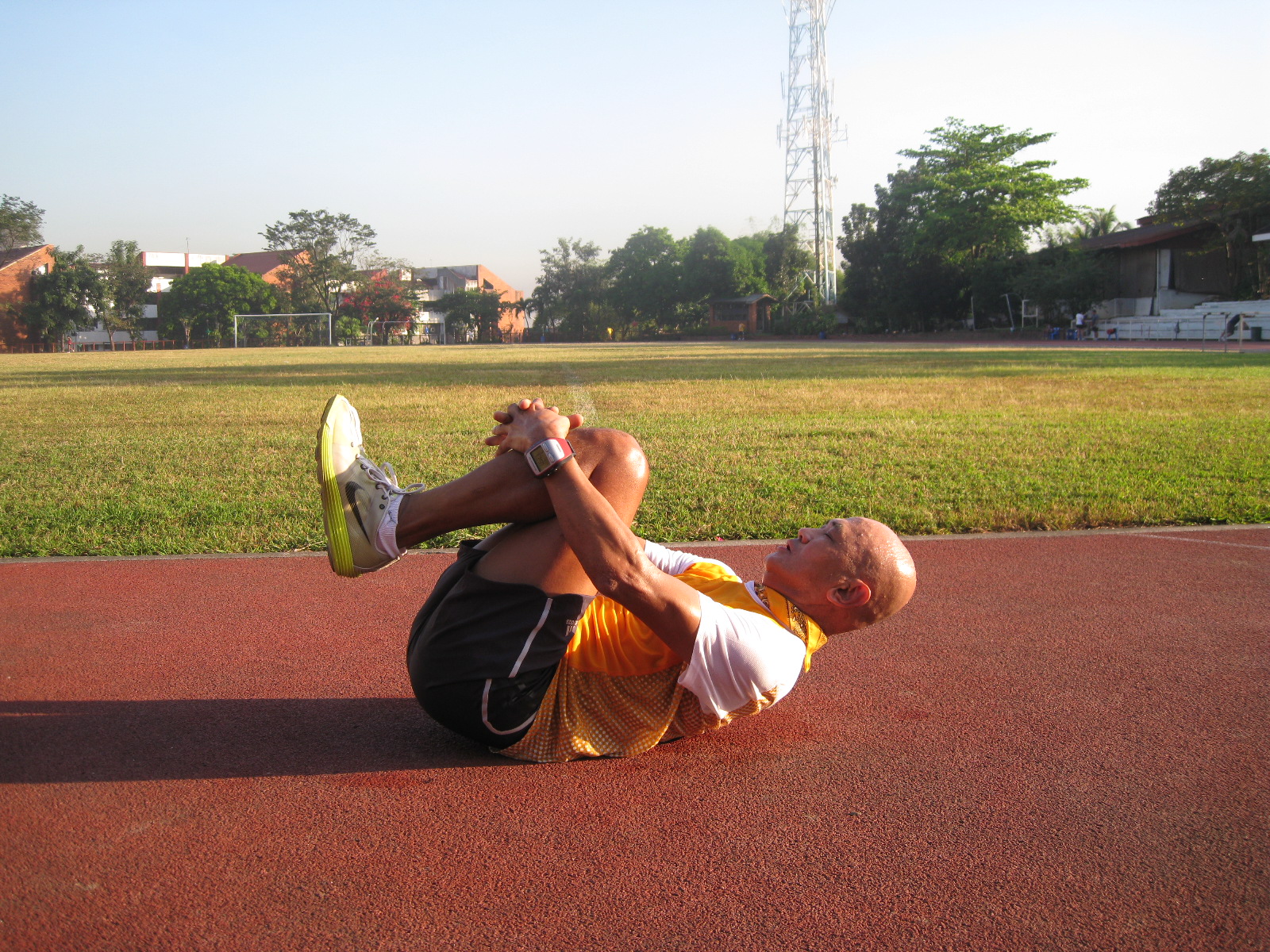
Roll Like An Egg On The Spine

 This rolling exercise will strengthen your spine and your back muscles.

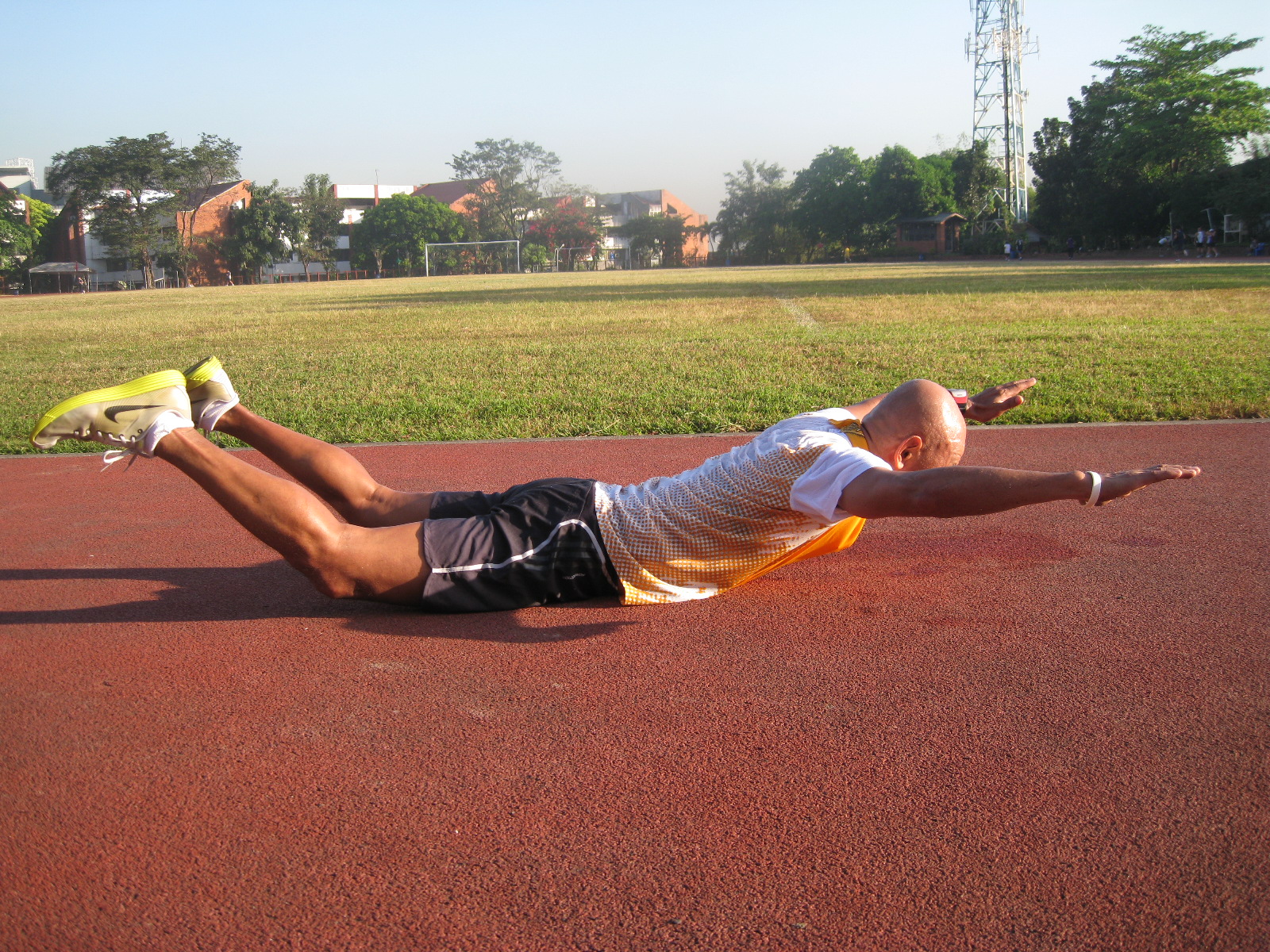
Swimming

Lift your legs and upper torso with arms straigthen forward and hold this position for 10 seconds. Repeat 4X. Maintain regular breathing.

Lesson #2: Follow the “Hard-Easy” method of training.

“Back To The Slope!”

1. When I was a cadet at the Philippine Military Academy, I always hear this statement or command from my Tactical Officers if they want the cadets to repeat a practice on our Parades and Ceremonies after doing one or two rounds. The start area of our parade and drills is a sloping/downhill road towards the Borromeo Field, the Parade Ground of the Academy. Figuratively, if this phrase or statement is uttered, it means that you have to repeat from the start what you have done in order to correct a mistake or error.

2. After five weeks of rest & recovery due to an injury, I am going “back to the slope!” and have started to follow a training program as a guide for my future marathon and ultramarathon races for the year 2010 and beyond.

3. The first step in my training program is to abide and recall the most basic principle in training for a running event—base training. I always say in my running clinic lectures that preparing for a running event is like constructing a building or a house where you need to have a durable and stable base/foundation. In running, base training  means building a base of aerobic endurance.

4. So, early this morning, I had my first “base training” at the ULTRA Oval Track completing a distance of 10 kilometers, running along the outer lane. I did my stretching exercises before and after the run. In addition, I did some running-related “drills” during and after the run. I finished my 10-K run in 1:09:13 hours with an average pace of 6:55 minutes per kilometer. I was so happy that I was able to breach the 7:00-minute per kilometer pace. Slowly, but surely, I could run within my base training pace.

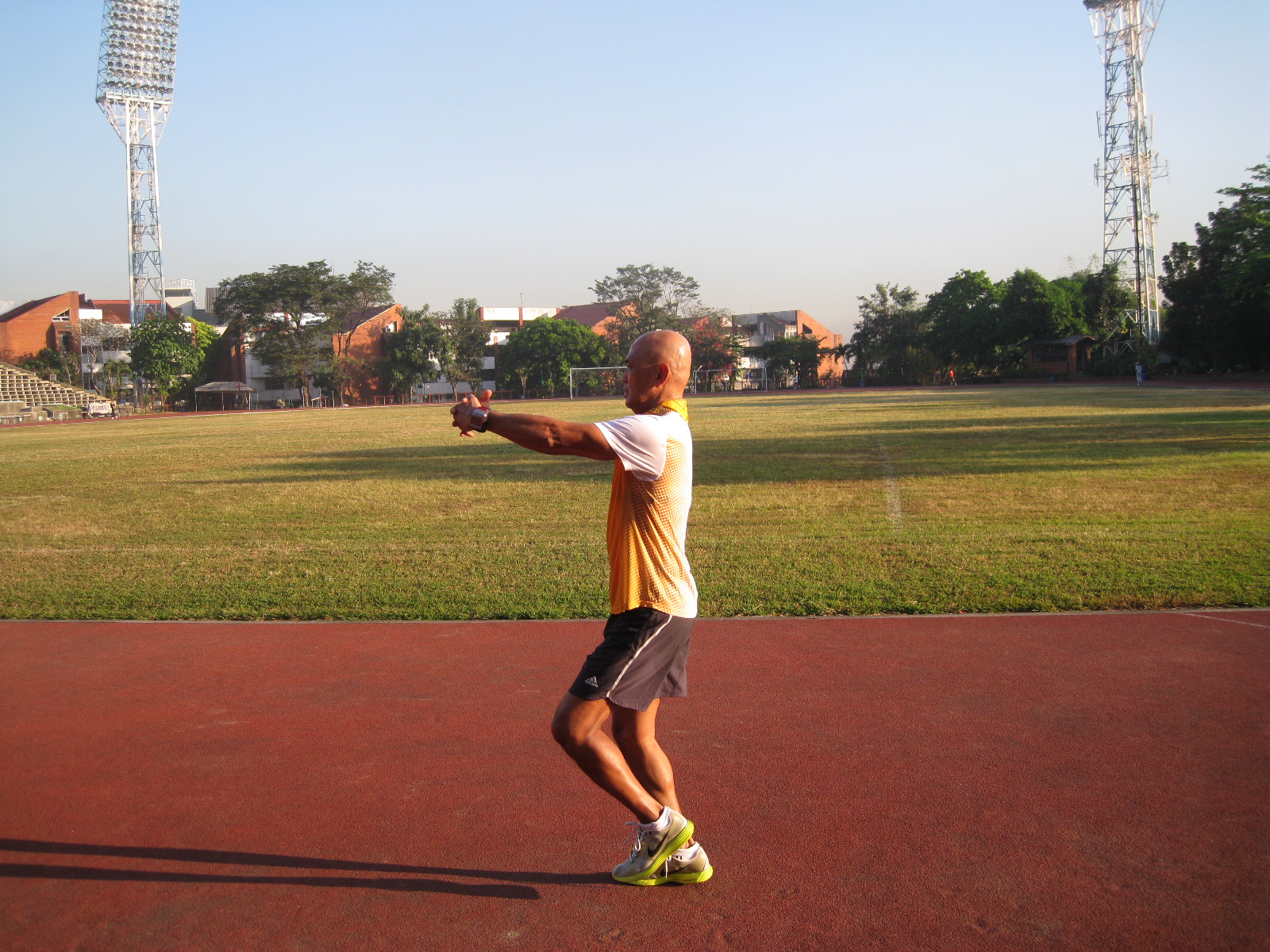
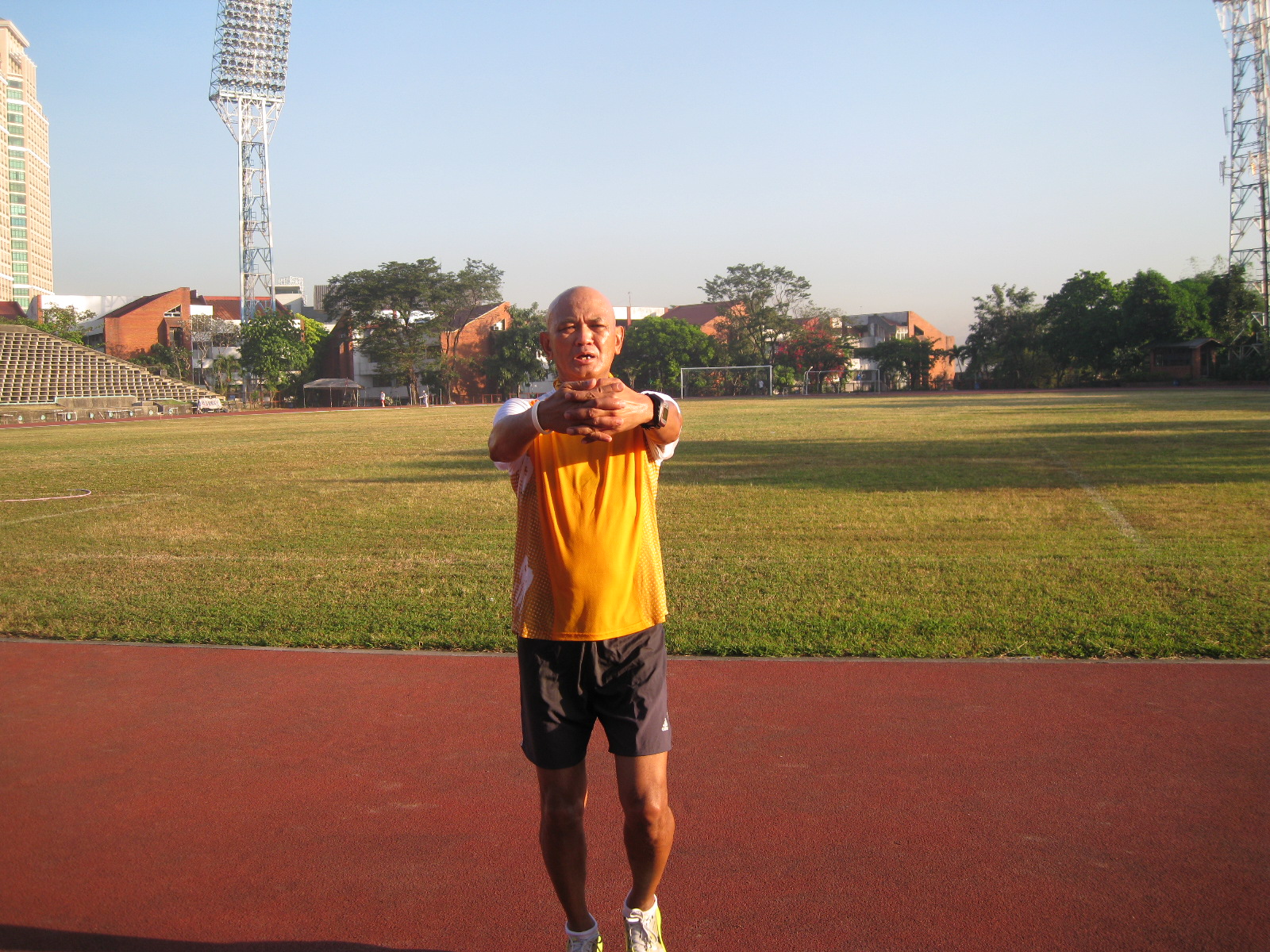
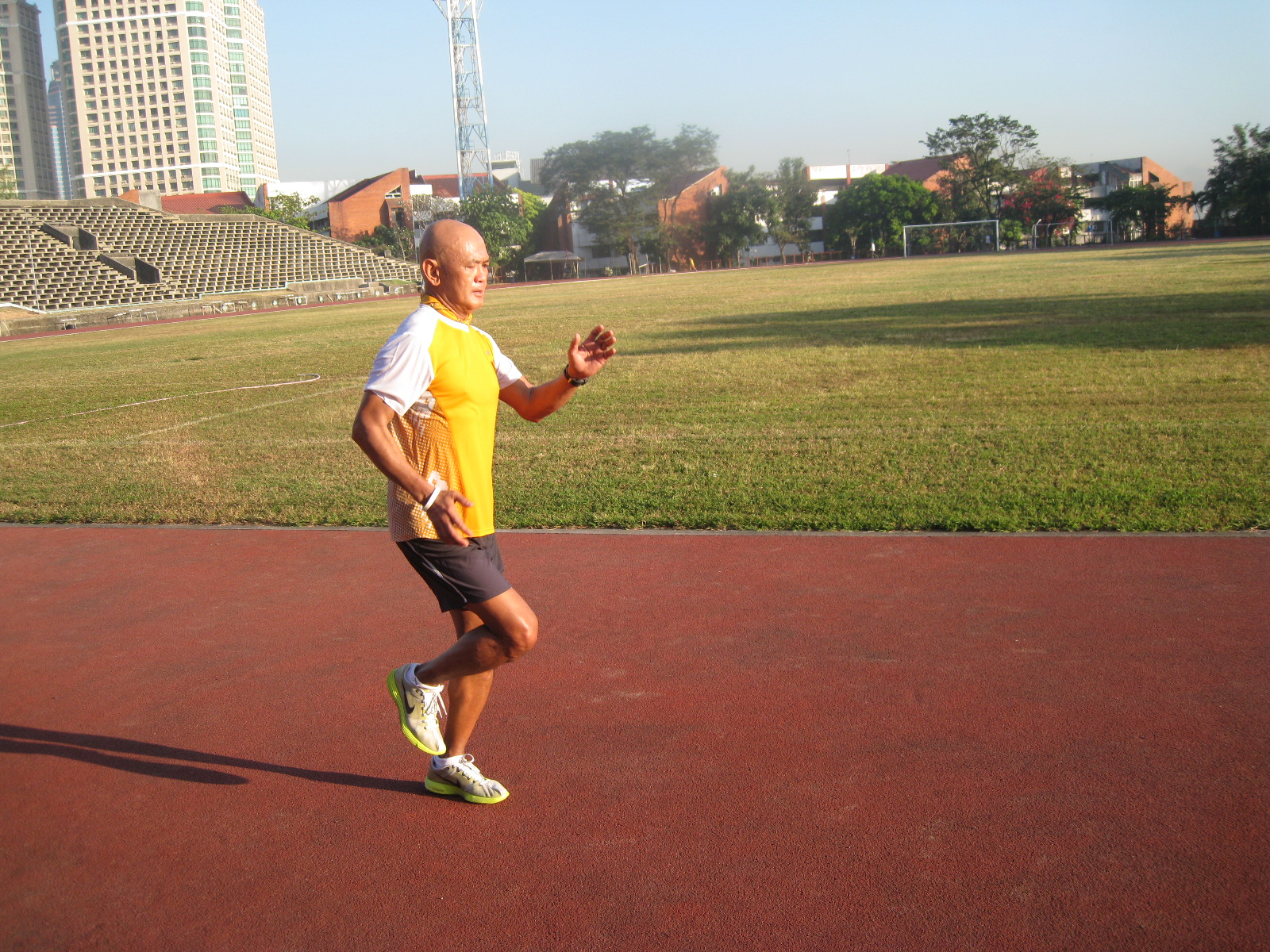
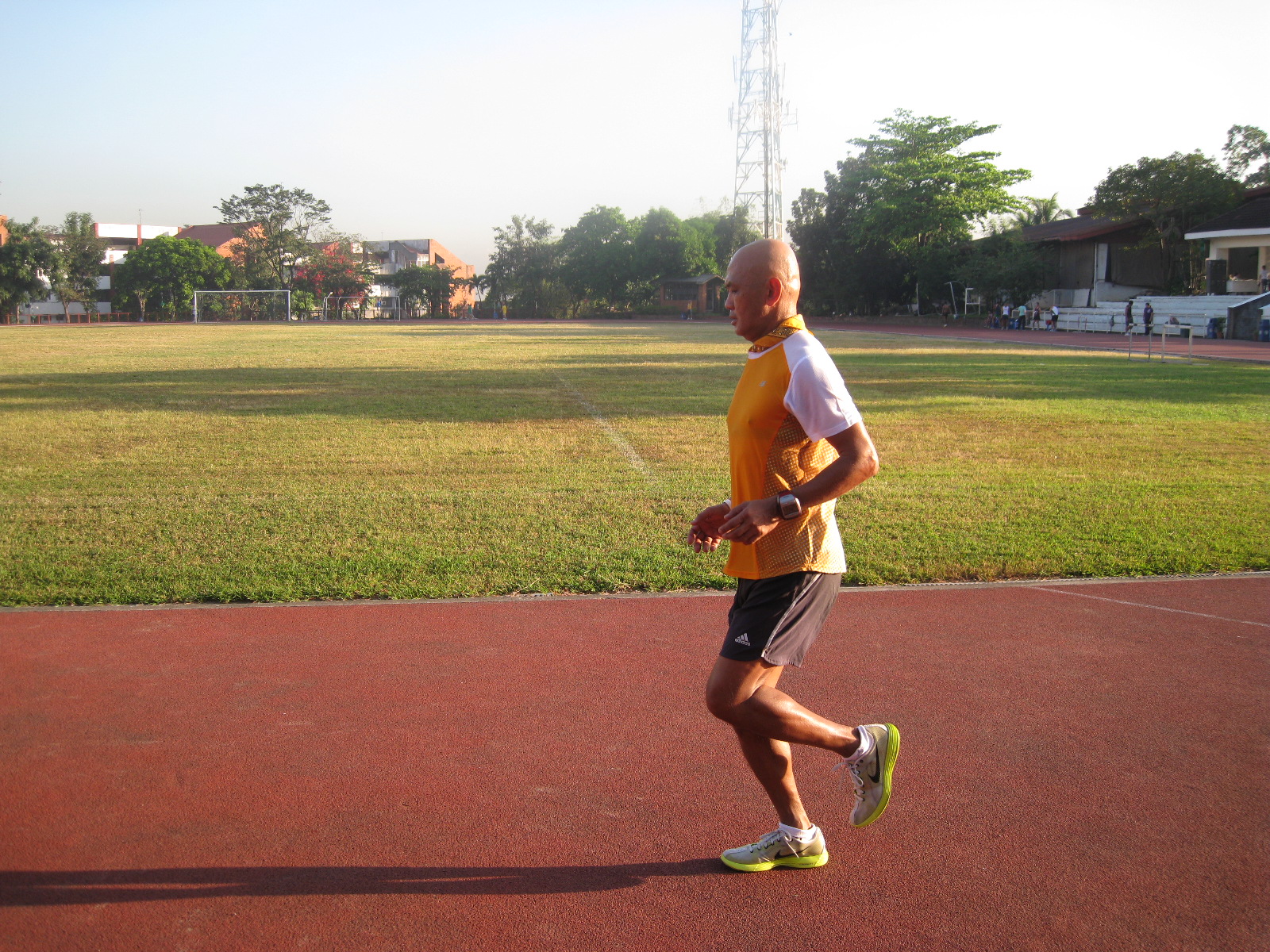
5. To give a full description of the drills I’ve done during/after my run, I am posting the following pictures with the hope that other runners would also adopt them to make them stronger and faster.

"Running No Arms"
Front View of "Running No Arms"

To do this drill, a runner must lace his fingers and form a big circle with his arms at shoulder level. Run 100 yards at moderate fast pace with arms in this position. Return to your running form after 100 yards and repeat after running another 100 yards. I did 10 times of this drill while I was running around the track.

This drill forces my inner abdominal muscles to maintain an upright posture and activates such muscles while running. It also eliminates unnecessary swaying or rotation of my shoulders from my waist while running.

"One-Leg Hop"
One-Leg At A Time

To do this drill, one has to run as fast as possible with one leg for 20 seconds or approximately 20 leaps/bounce or more. This drill will increase one’s push-off power of the feet and will enhance the stability of the hips, pelvis, lower spine and knees on impact of the foot to the ground by forcing the muscles to stabilize the joints for a short period of time.

Lesson #1: In a training cycle, first phase is to develop your aerobic endurance base.

(Source/Reference: “Brain Training For Runners” by Matt Fitzgerald)

Finally, I am Back!

1. Exactly one month after the PIM Pasig River Marathon, I was back running at the ULTRA Oval Track yesterday afternoon. I did 1-Kilometer slow run at the soccer field, another 5K at the oval track, and finished my workout with another 1K at the soccer field and 1K at the oval track. My average pace of 7:30+minutes per kilometer was enough to bring myself back to (competitive) running. An 8K run at the oval track was “heaven”!

2. Actually, I had my first attempt to run/jog last Thursday when I took pictures of the future site of the Ultra Trail Run that I am planning to implement. I was able to run/walk/jog a distance of 8.5 kilometers but I was still in pain but after this run and a deliberate and very long session of “deep-tissue” massage, all the pain was gone!

3. I had another 6K Run at the Rizal High School Oval Track last Saturday afternoon and it was a workout where I was able to run continously without any walking breaks. Even if my average pace was 8:30-9:30 minutes per km, I was happy that I could run again.

4. From the book of Tim Noakes’ “Lore of Running”, I found out that my injury is called “Chronic Muscle Tear”. “He concludes that this kind of muscle injury occurs in various muscles at specific sites that, for reasons unknown, develop eccentric muscle weakness. This weakness is exposed during faster running. When the eccentric loading exceeds the muscle’s eccentric strength, a small section of the muscle is strained and develops an inflammatory response. This initial tear is too small to cause discomfort. However, once the initial tear has occurred, a cycle of repair and reinjury and reinflammation develops that leads ultimately to the large tender knot.”

5. For the specific treatment, Tim Noakes stated “The only treatment that works is a physiotherapeutic manuever known as cross-frictions. A better term would be “crucifixions” because this is the most painful treatment a runner would experience. In simple terms, this is what I call “deep-tissue massage” or “hilot”. Ask Coach Titus Salazar of Team Bald Runner how this procedure is properly done!

6. You will see me more at the ULTRA Oval Track during the Team Bald Runner’s “Speed” Training on Tuesday, Wednesday, and Friday afternoon from 5:30 PM to 9:00 PM.

Finding The Cure

1. Simply Rest—This is the first thing that I did after the PIM Pasig River Marathon.  For one week, I ate foods rich in carbohydrates and protein, drink a lot of water, and had full-time 8-hour sleep during nighttime. I tried to walk slowly with a limp around the house. It was a painful experience walking for the first week after the race.

2. Massage—Coach Salazar’s deep-tissue massage was finally introduced to my affected muscle on the 2nd week. I think I had 2-3 sessions with him for the duration of 3 weeks. My stiff Peroneus muscles slowly loosened up but there was still some inflammation and pain to other muscle strands located in between the peroneus and calf muscle. Coach Salazar taught me how to stretch my Peroneus muscles.

3. “Water Treatment”—My regular weekly visits to the Laguna Hot Spring in Calamba, Laguna had greatly improved and maintained my endurance level of fitness without much pounding on my legs. During these visits and immersion in the hot sulphuric water for a maximum of 6-7 hours, I did “water jogging”, leg kicking, leg flipping, and then later, swimming. I’ve been to this place for four times already and my stay here were fruitful as I came to meet more people and get more “insights” from the different sectors of the society.

4. Pain Reliever, Ointment & More Protein Drinks—On the third week, I started to take Alaxan FR before going to bed. Charlie Chua, one of the BR Runners with the Professional Group, suggested an ointment, Fastum Gel (Ketoprofen), for inflammed muscles which I’ve been using for the past two weeks. I also maintained drinking milk, Ensure and MILO’s 3-in1 For Adults (2x a day). All of these contributed to my recovery.

5. Join Road Races as Photographer & Cheerer—Watching the runners at the Start and Finish Lines during Road Races and taking their pictures while cheering them gave me the feeling and urge to recover immediately. I believe that positive thinking has a lot to do when someone needs to recover at a faster rate from any setback.

6. “Brisk” Walking & “Slow” Jogging—Last Thursday, I forced myself to an 8.5-Km distance “brisk” walking and jogging even if I felt pain on my affected leg. I was able to finish the distance in almost 1 1/2 hours. My workout was done in the mountains, 70 kilometers east of Metro Manila!

7. Deep-Tissue Massage (More Deliberate)—Aside from Coach Salazar, I have another staff who had been trained as “masseur” by the members of my Elite Team. He gave me a 1 1/2-hour massage after my 8.5-Km workout and I was crying and shouting in pain. The inflammation of my Peroneus muscle had gone but there is a tiny strand of muscle beneath the Peroneus muscle which needs to be loosened and my staff just patiently did the right thing. After an overnight sleep, the pain on my left lower leg is entirely gone!

8. Rest Some More & Start With a Training Plan—My injury is a blessing in disguise as I was able to rest from the grinds of training and joining in the past marathon & half-marathon races. However, I need more time to rest and do strengthening exercises through Pilates, Yoga, and Weight Training before finally hitting the road, track and trails. I will start a training plan for a 100-Mile Run soon!

Finding The Culprit

1. On December 8, it will be one month sice I finished the PIM Pasig River Marathon where I had an injury. “Purists & Hardcores” in running are not supposed to be talking or discussing much about their injuries related to running but for the benifit of the “newbies”/beginners who are reading this blog, I don’t want them to experience what I am going through right now. The way I look at it, it will take weeks for me to rest and recover to give ample time for my muscle strain to heal.

2. Age—At my present age of 57, I consider myself as a strong and seasoned runner but my age is trying to catch up with reality. Various studies indicate that those runners who remain highly fit and avoid serious injury or illness will average at least 0.5 percent decline in performance per year from age 35 to 60 years old. After the age of 60, performance dropoff tends to increase. I think this is the reason why running-related injury is starting to show up. I hope that through my running, I would be able to slow down the aging process.

3. Ample Time For Rest & Recovery—I have to re-evaluate my road races in the coming months as I need more time to rest and recover in between road races. At least, one ultramarathon race and two marathon races per year would be a good quota for a year.

4. More Stretching & Warm-Up—Before my races for the months of October and November, I shortened my stretching “rituals” and warm-up exercises. I was too confident that the early kilometers of the race with a slow pace would “warm-up” my running legs but I was wrong! I should have made some extended warm-up jogging and stretching exercises before finally going to the coral in the starting area. At least, I would be able to sweat a little before the start of the race. It would be more effective if I did some “drills” before the race. The older you get, you need more time to warm-up and stretch before a major road race.

5. Supplementary Training/Weight Training—For almost six months, I stopped going to the gym for my supplementary weight training and concentrated more with my tempo, interval and long runs in preparation for the MILO Finals, QCIM Half-Marathon, SIM and PIM Pasig Marathon. I was wrong! Some of those tiny muscle groups in my legs were not strengthened by just running only. I still believe that there is a need for strength training to complement one’s running workouts. Pilates and Yoga are also recommended as additional supplementary training for older runners like me.

6. Deep-Muscle Massage With More Time To Heal—I always find time to have a regular deep-muscle massage before and after marathon races. After a satisfactory performance in the Subic International Marathon, I had a massage because of the occurrence of a muscle cramps on my left lower leg on the last kilometer before the Finish Line. I did not wait for my muscles to recover and immediately had a long run a day after the race. After the run, this was where I started to feel a muscle strain on my calf muscle. Instead of resting, I went out again to do my long runs. More massage was done on my legs but I was not able to have my affected muscle to heal for a longer time until I joined the PIM Pasig River Marathon. It is then advisable not to run a distance of a marathon race when there is a pain (even a slight pain!) that recurs whenever you have your running workouts at least two weeks before the actual race. 

7. Combination of Everything—The way I look at what had happened, the cause of my injury is a combination of what I’ve stated above—old age (ha! ha! ha!), more time to heal & recover after major races, more time for pain to heal after massage, and lack of supplementary weight training & warm-up/stretching.

(Note: Next post will be “Finding The Cure”)

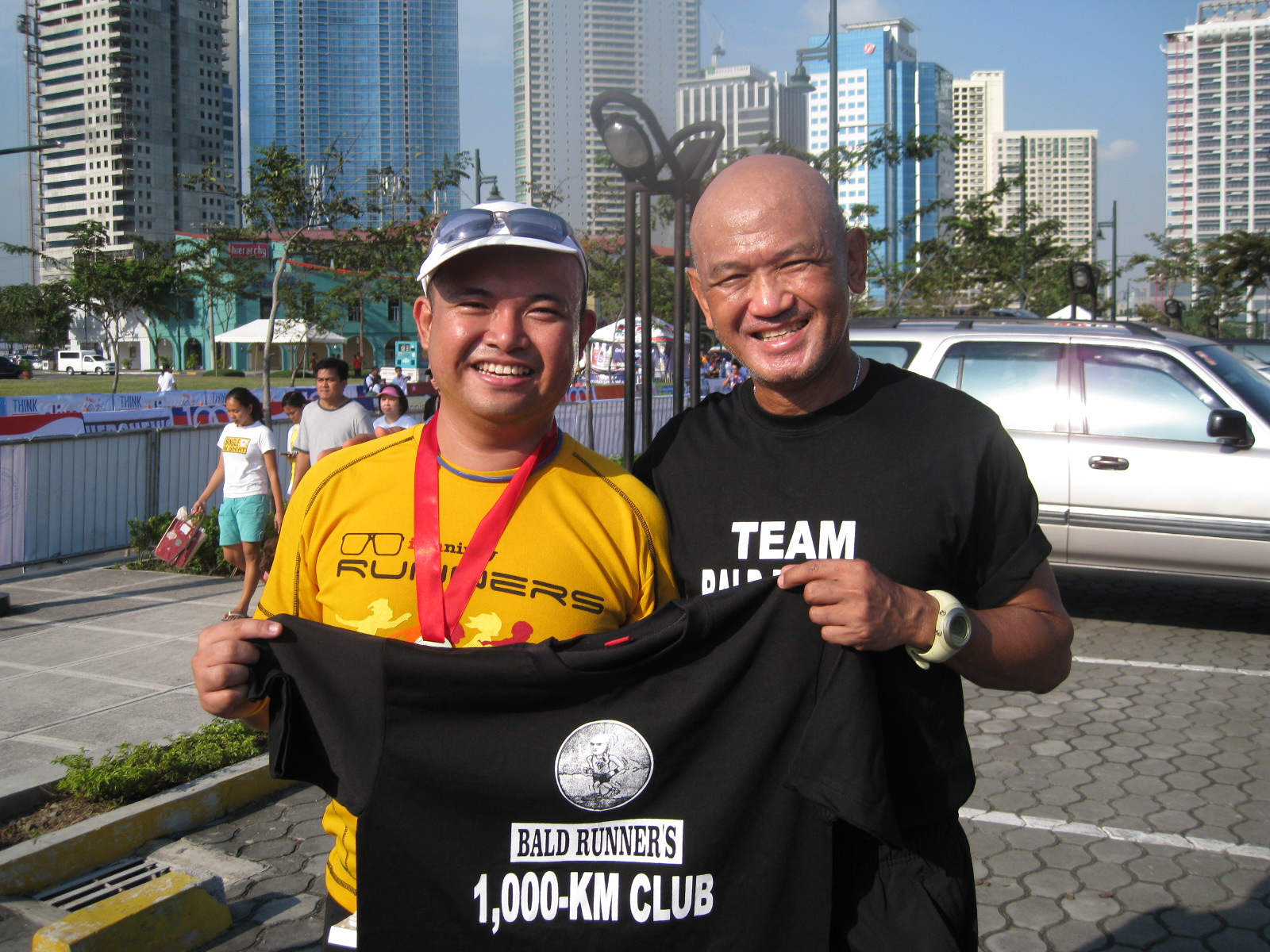
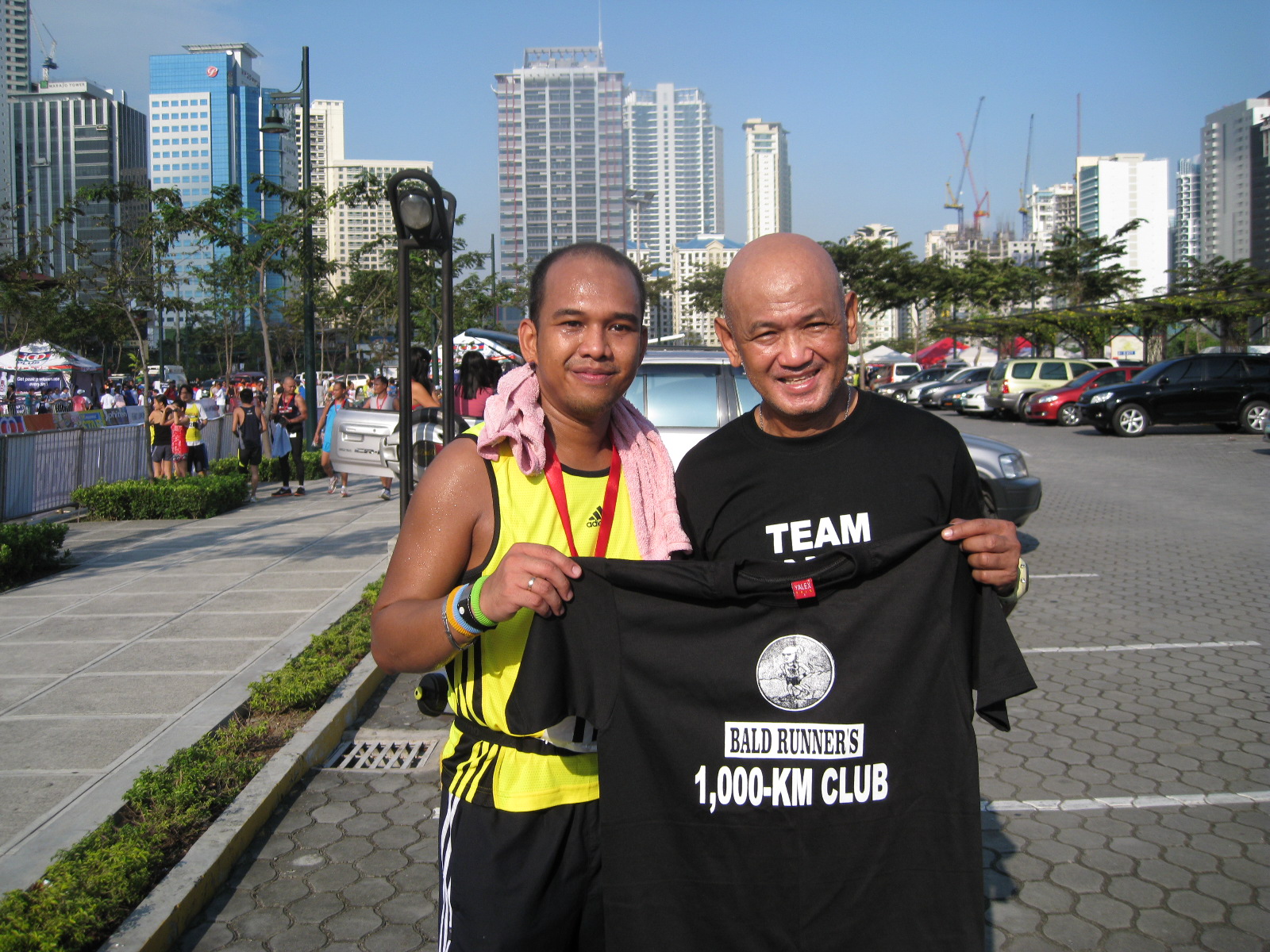
“1,000-Km Club” Finishers

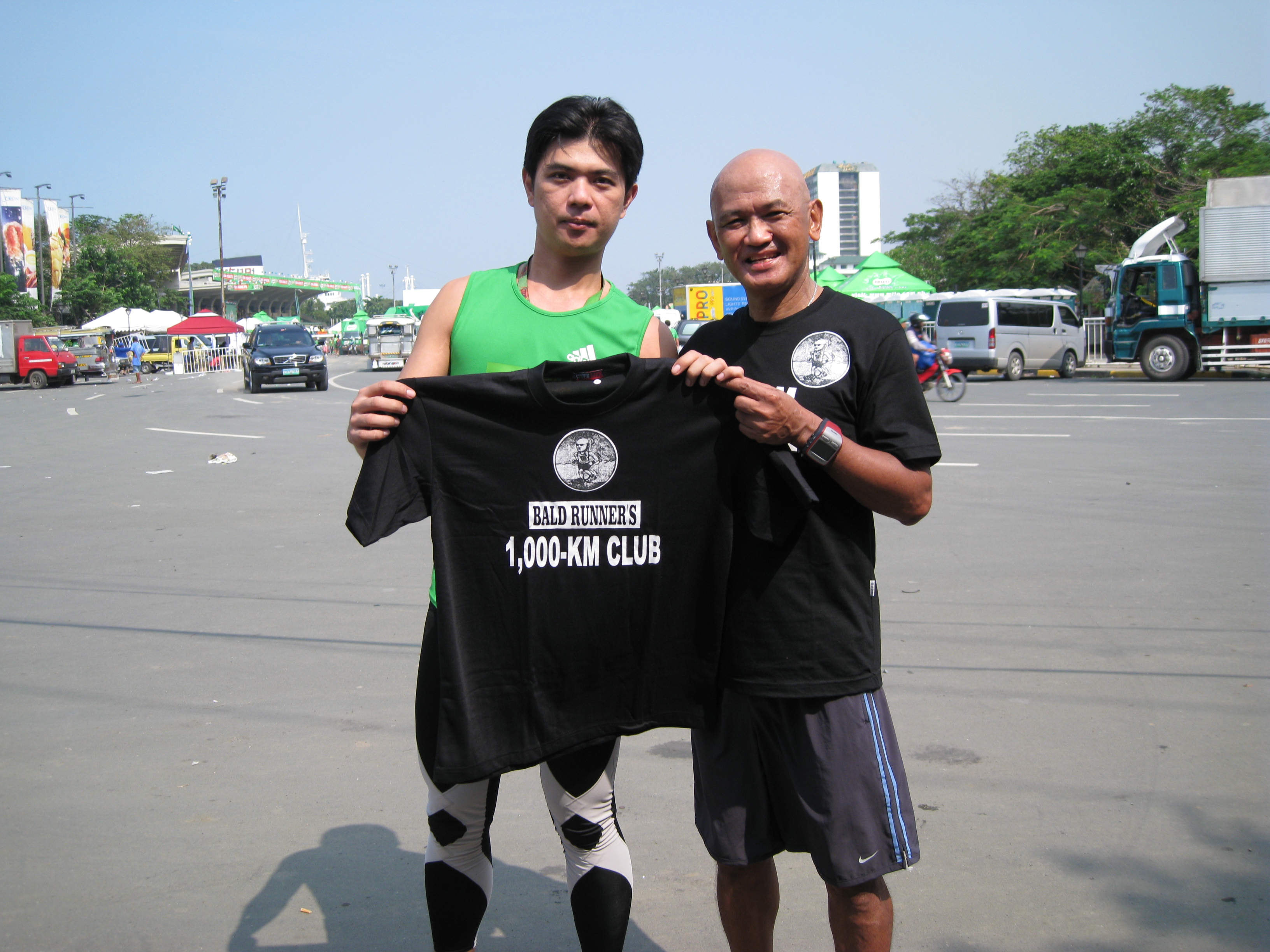
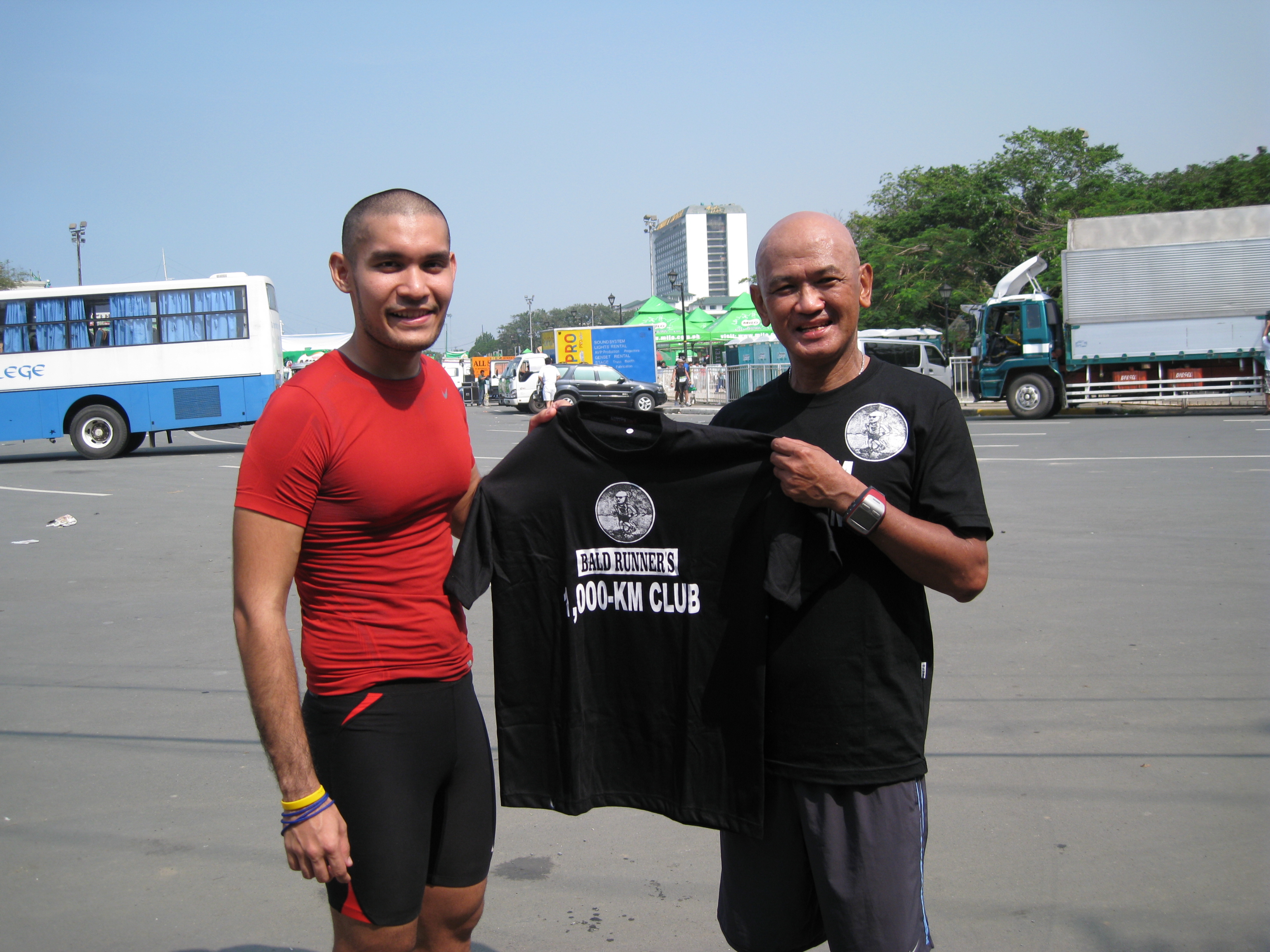
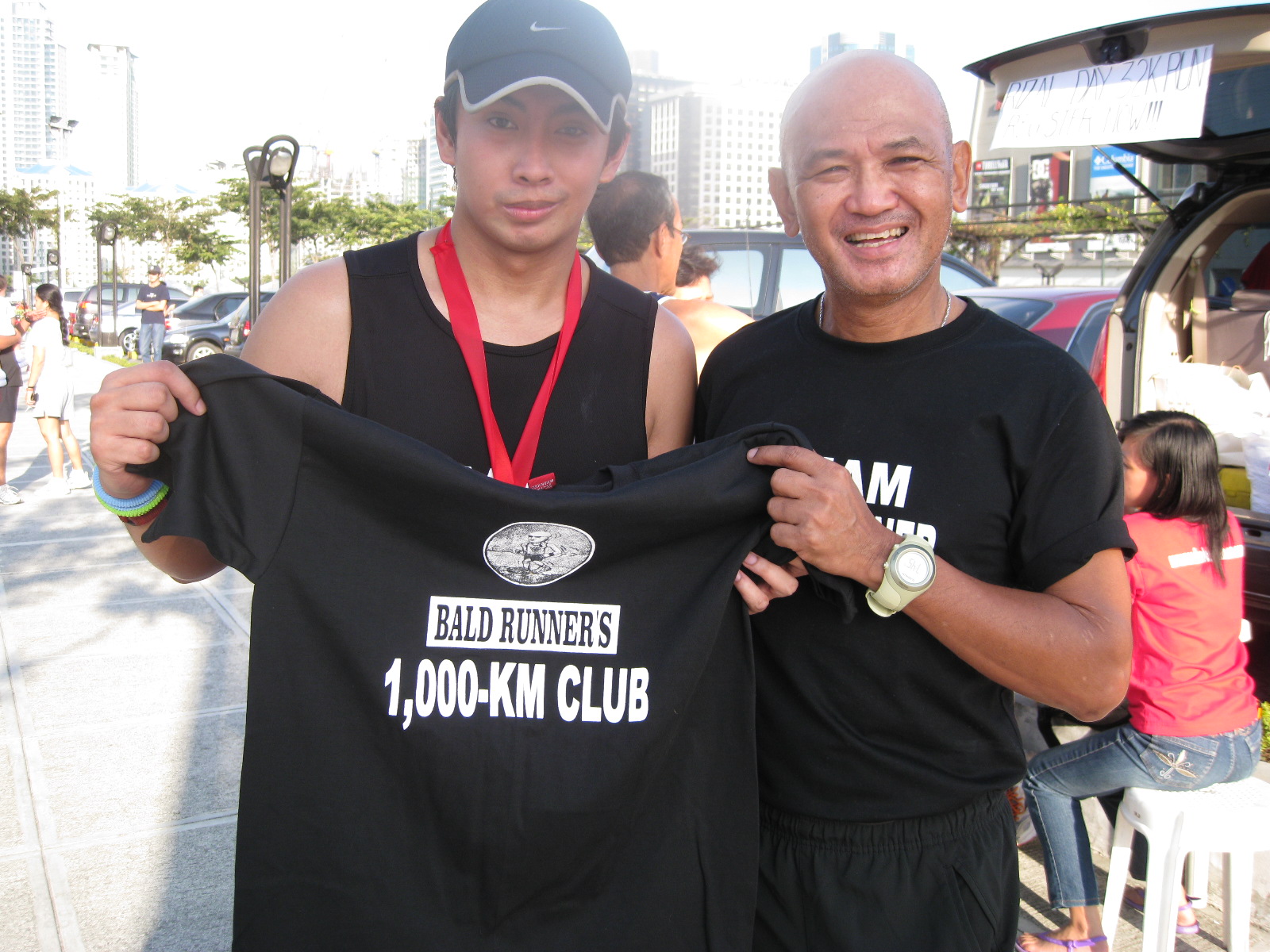
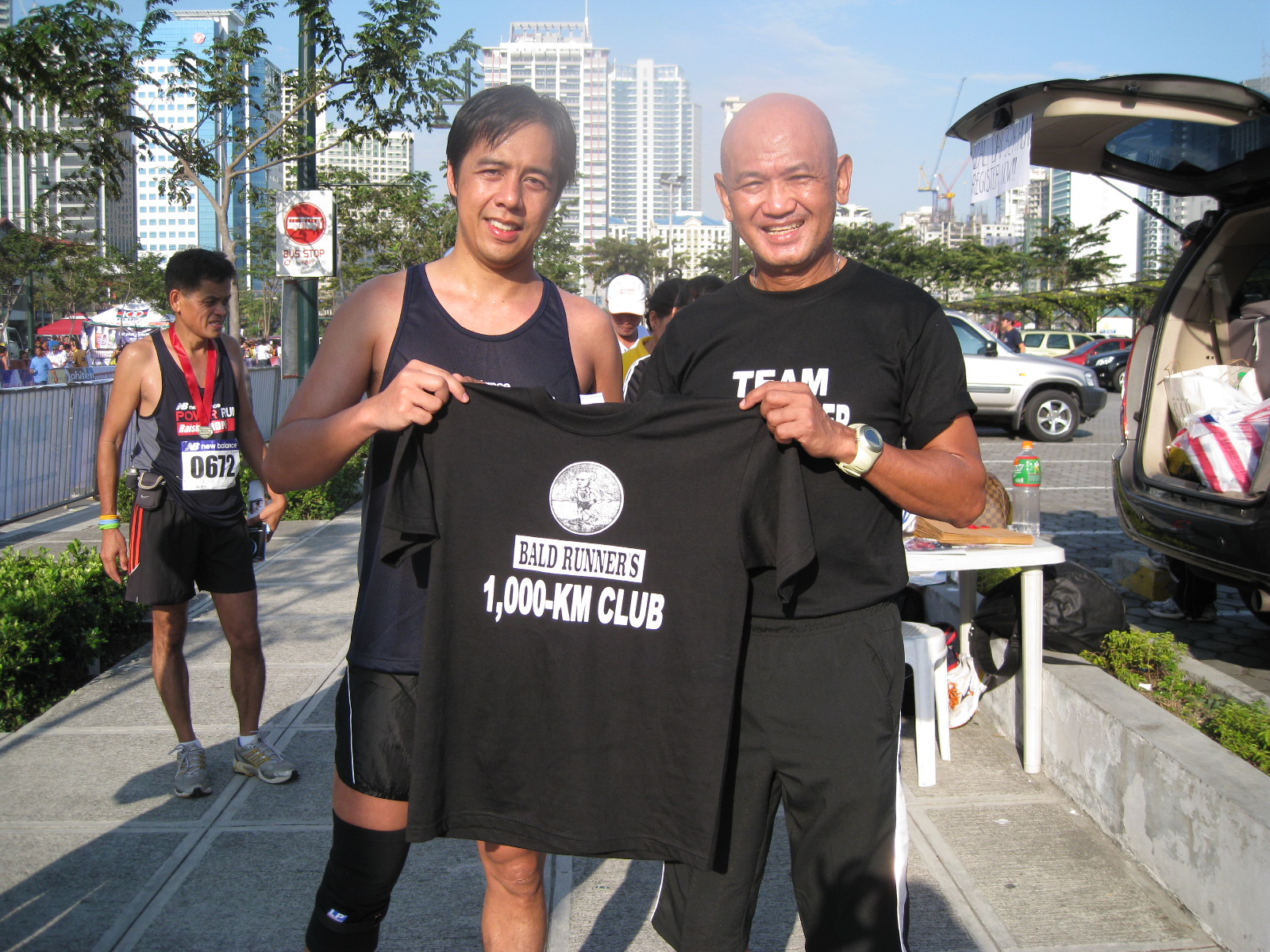
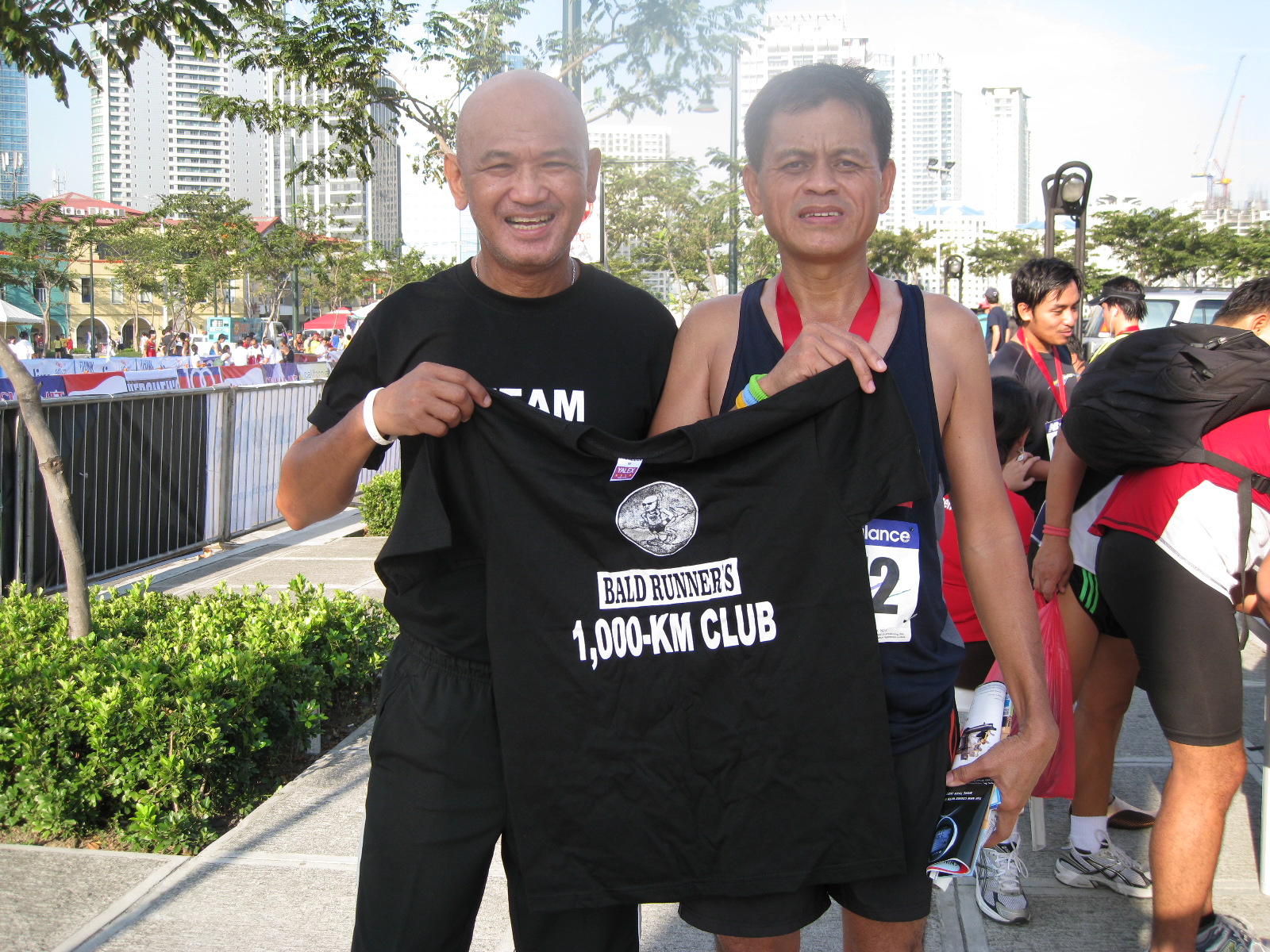
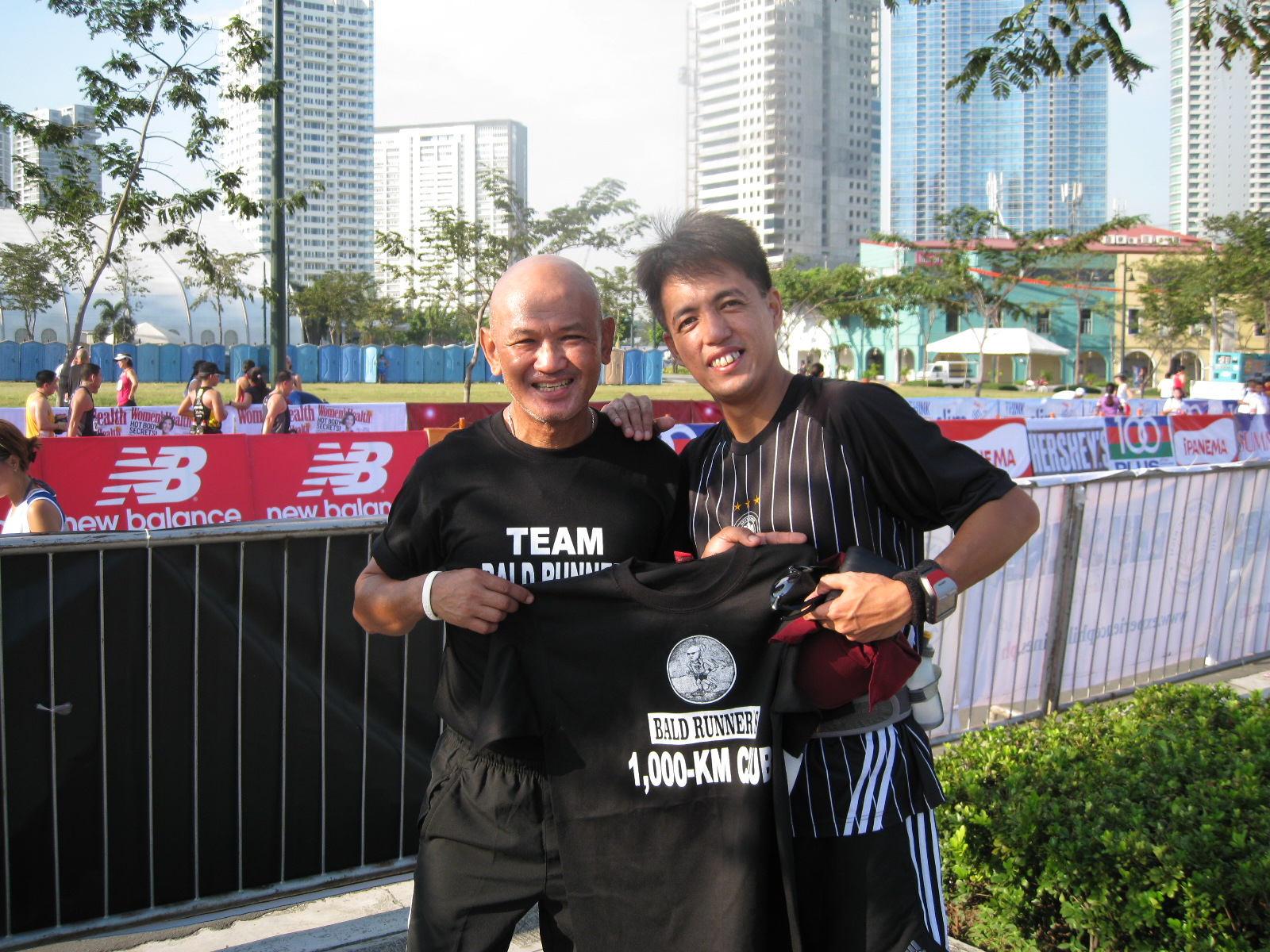
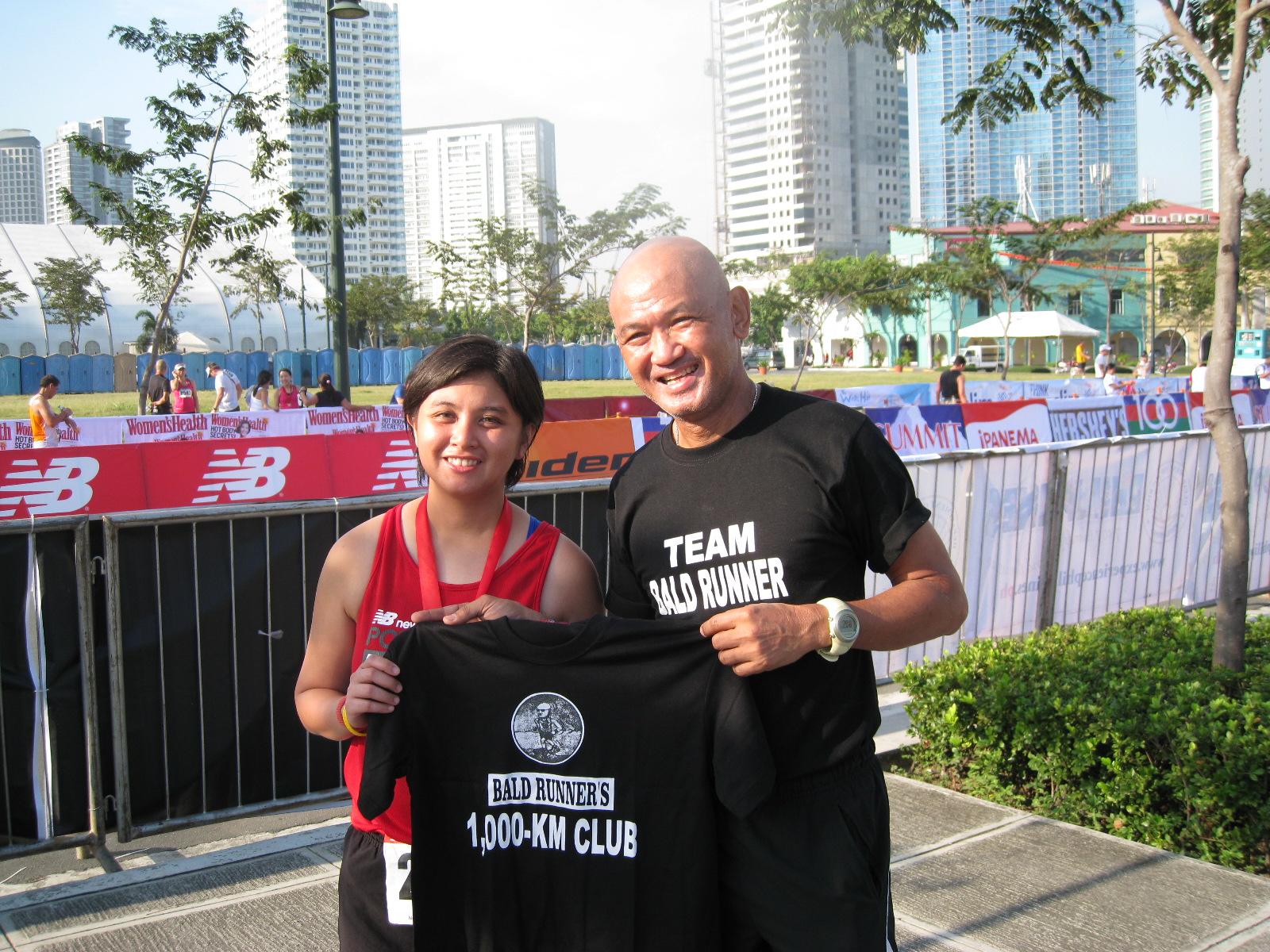
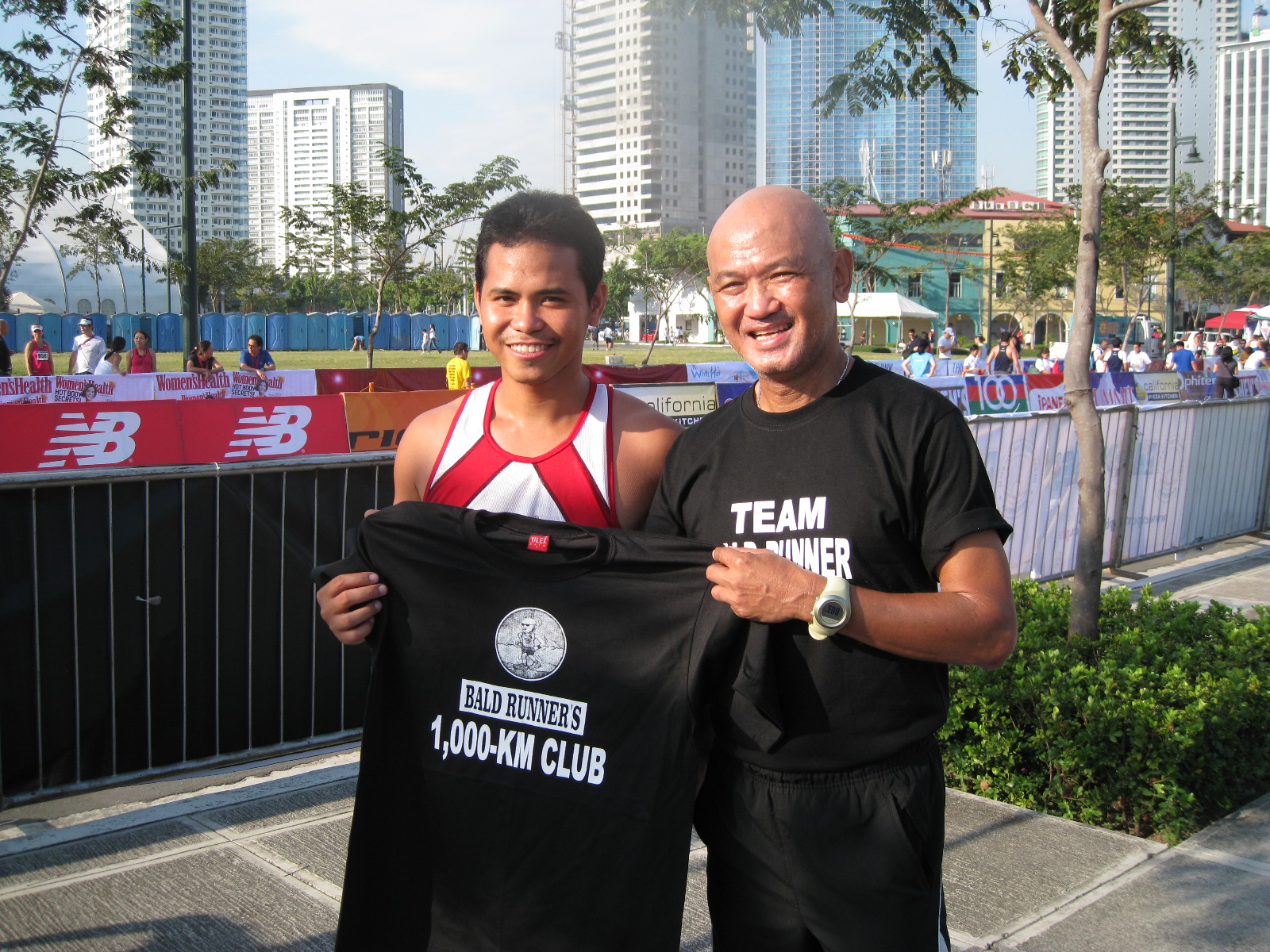
The following runners are the latest finishers/awardees of the Bald Runner’s “1,000-Km Club”. Congratulations!!! 

Ultrarunner George aka The Talkative Runner
Ultrarunner Ralph
Ultrarunner Luis aka The Gingerbread Running
Nolan Llanora
Supt. Gregorio Torres PNP
Macky Chamorro aka Gleeman
Carly Dizon
Rodel Cuaton aka Argonaut
Jet Paiso
Paul Paranal