2017 MILO Half-Marathon (21K) Qualifying Race In Tarlac City/August 13, 2017
I was supposed to have an scheduled 5-hour LSD/Hike in the mountain trails on this day but I asked my Coach if I could join and qualify for the MILO Marathon Race to be held this coming December 2017 in a Half-Marathon Race to be held on a Sunday. My Coach gave his approval with the condition that I have the option to continue my hike later in the afternoon to complete the 5-hour LSD/Hike for the day. However, after the race, I decided to completely rest.
My OnLine Registration 10 days before the race did not push through as the Local Race Organizer could not open the e-mail that I sent to them. However, I was given the assurance that I would be allowed to join the race as long as I will be early at the Race Packet Pick-Up Booth on Race Day. Two hours before the start of the race, I was already at the site making some effort to be included in the list of qualifiers for the race. The local race organizer was very helpful to arrange with the MILO staff/personnel coming from Manila to have me included in the 21K race after accomplishing my registration form and submitting the required Medical/Doctor’s Certificate and MILO Pack.
Thirty minutes before the start of the race, I was already at the Runner’s Corral and behind all the runners as some runners would request for Photo-Ops with me. In between those requests, I would do some quick stretching on my legs and arms. Some runners whom I’ve known and joined in some of my PAU/BR’s Events’ Races would greet me and wish them luck in the race, in return.
The race started at exactly 4:30 AM after a short program—Singing of the National Anthem; A Prayer; A Greetings to all the Runners; and a Good Video on the Reminders for the Runners For Us to have an organized and problem-free race. As soon as the Starting Gun went-off, I started to brisk walk and positioned myself at the back of the pack. As soon as the road became more spacious for me, I started to run and tried to keep pace with those runners on my sides and on my front.
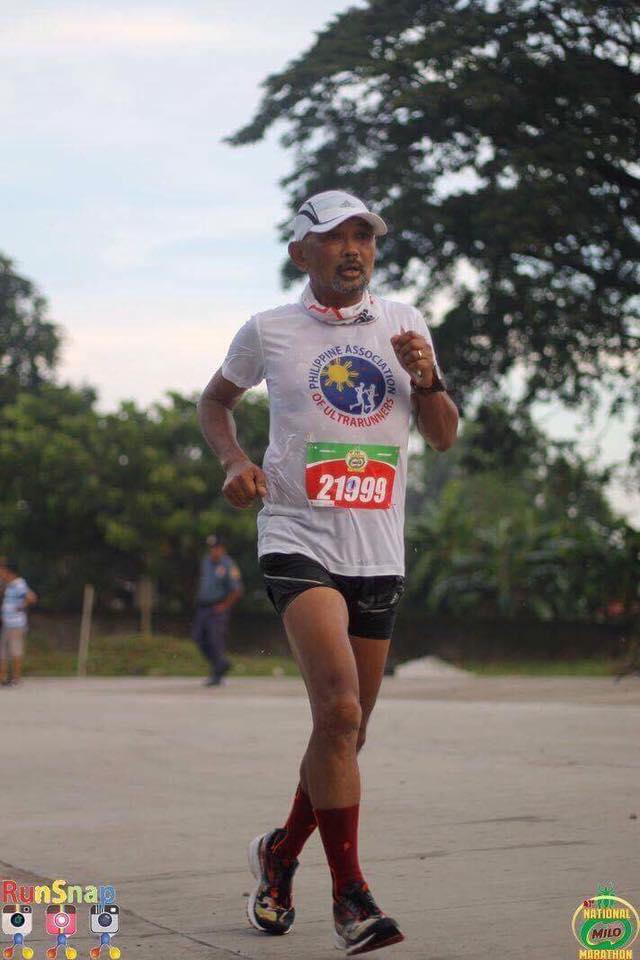
Focused & Determined To Qualify
I really wanted to run this race while observing my effort as based from my breathing and how high were my knees while I was running. The harder I could breath and the higher my knees are would indicate that I was forcing my pace really hard and with more speed. However, based from my training, I made my first 20 minutes of my run as my warm-up run which is I think within the Range of 6-7 effort with 10 as the Maximum Effort. After 20 minutes had lapsed, I started to have my tempo run which would last for 10 minutes (Effort Rate at 8-9) and then recover for 2-3 minutes at a Range of 6-7 effort. This kind of tempo run was repeated all throughout the race until I reached the turn-around point at 10.5K. I was surprised that my time was below one hour!
On my way back to the Finish Line, I started to run faster and tried 5-minute “strides” with 2-minute “recovery” run and then later reduced to 40-second “strides” with 20-second “recovery” run. I was happy that my time was sub-1:55-hour when I reached the 20-Km mark but suddenly, I felt a “cramping” sensation on my right calf that prevented me from maintaining my pace and be able to finish the race in less than 2 hours. The more I would keep my pace, the cramps would become more severe and painful that I could hardly lift my right leg. I decided to run slowly and walked later for a few meters and waited until the muscle/calf tightening was over. On the last kilometer to the finish line, I had my slowest pace in the race that almost all of the runners that I’ve passed in the last 2 kilometers had overtaken me.
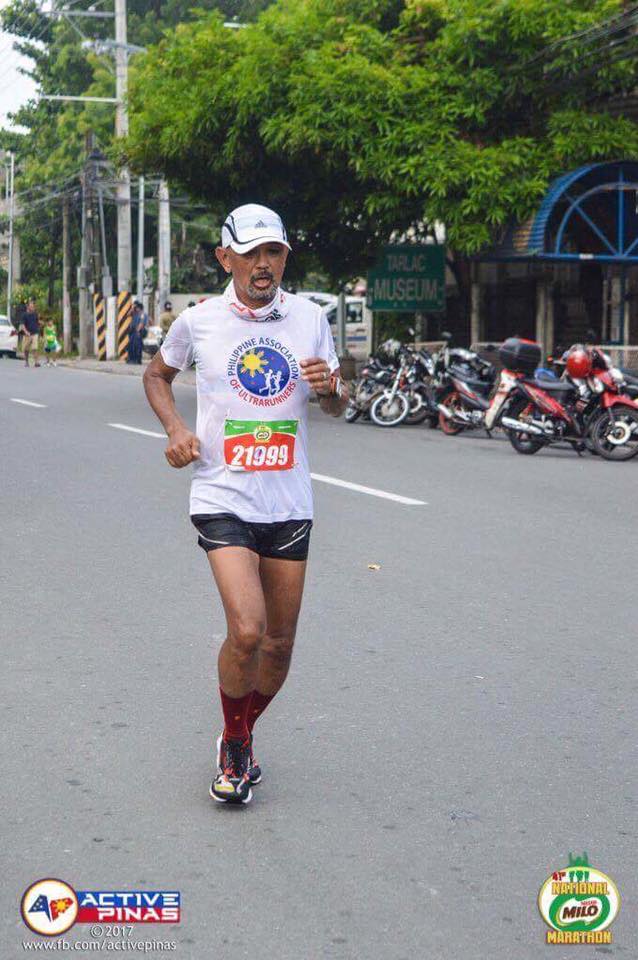
Easy Pace On The Last 200 Meters To The Finish Line
No worries. I finished the race in 2:00:33 hours which is almost 15 minutes faster than my qualifying time for the age of 65-69 years old. Oh, well, my name is not listed in the published list of qualifiers in the MILO Tarlac City Leg but I know this will be corrected soon by the Race Organizer.
As a point of comparison and analysis of my performance in this race, I tried to look for my split times in last March’s Los Angeles Marathon where I registered a split time of 2:04:30 hours at Km 20 point and comparing it with my split time now of 1:54:++hours, it is clear that I’ve improved in my pace and speed for about 10 minutes for the said distance. Hopefully and at last, I will be able to attain my dream to try and find a race for me to qualify for the Boston Marathon. God willing!
On a personal note, this is the only race (for the past years) where I did not use a compression socks or calf sleeves. I’ve been running ultras with calf sleeves/compression socks and I never experienced any cramps on my calves and I personally believe that I should have used them on this race. With this experience, whether it will be a short race or an ultra running event, I will be using these compression socks and/or calf sleeves in my future races!
I will be happy to visit Cebu City this coming December 2017 to join in the 2017 MILO Marathon Finals.
Nutrition: One Power/Energy Bar Before The Race; One GU Gel on the last 4K; Water In Every Aid Station
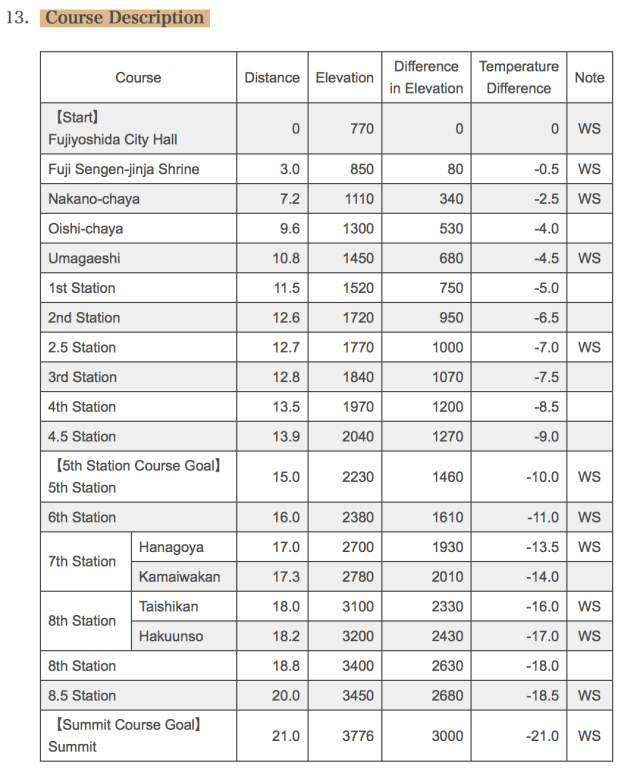
Celebrating its 70th running this year, the Fuji Mountain Race took place on Friday, July 28. As in past years, the first 10.8 km from Fujiyoshida City Hall at 770 m elevation to Umagaeshi at 1450 m was a gentle climb on paved roads. From Umageshi runners enter trails, and for the kilometer from Hanagoya at the 7th Station all the way to the 8th Station it becomes a very difficult 40-degree incline climb. After that runners pass through an area of rough volcanic rocks as they approach Mt. Fuji’s summit. Peaking out with a net elevation difference of 3000 m, the 21 km Summit Course continues to gain a reputation as Japan’s premier mountain race. Last year bad weather forced the race to be stopped at Mt. Fuji’s 5th Station, meaning that this year’s race would be the first time in two years that runners would finish at the peak.
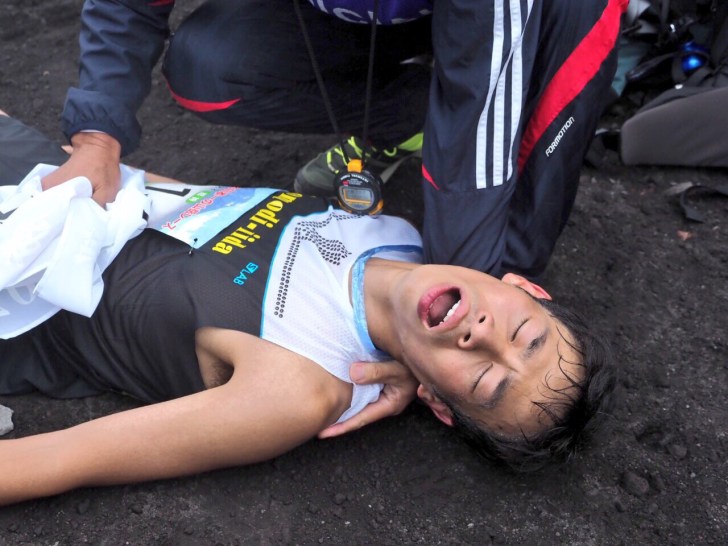
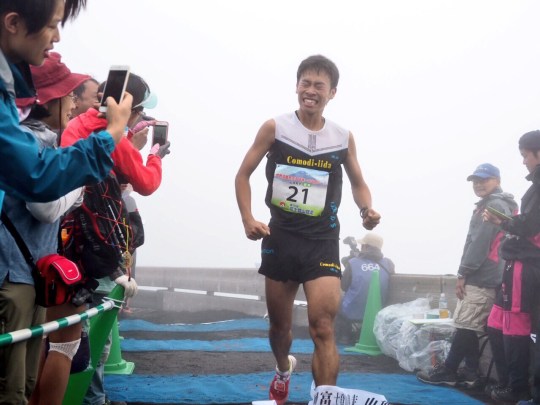
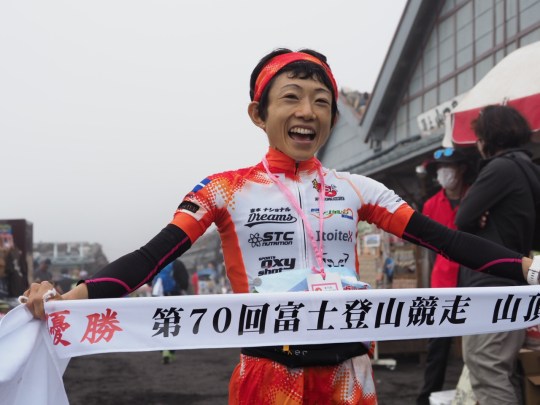
In this year’s 70th running, former Hakone Ekiden uphill Fifth Stage standout Shun Gorotani (Comody Iida) won in 2:31:34, an excellent time just 3:53 off the course record. In the women’s race, world-class Sky Running Vertical Kilometer runner Yuri Yoshizumi won in 3:01:17, the fastest women’s winning time since 1988. Both won in their first attempts at the Summit Course.
Men’s winner Gorotani is just 24. As part of Toyo University‘s ekiden team he ran the Hakone Ekiden twice, finishing an outstanding 3rd on the uphill Fifth Stage in 2016 behind stage winner Daichi Kamino (Aoyama Gakuin University). Gorotani now runs for the Comody Iida corporate ekiden team. Last year he won the Fuji Mountain Race 5th Station short course, breaking the course record by a wide margin. Having qualified for the Summit Course, Gorotani returned to live up to expectations with another superlative win. Taking control of the race early, Gorotani opened up a lead of 14 minutes over 2nd-placer Satoshi Kato, yet another runner-up finish for Kato. Gorotani was misdirected by course marshals very early in the race, but officials judged the error to have had no impact on his result.
Women’s winner Yoshizumi began running as an amateur after she began working full-time, winning the 2013 Hokkaido Marathon in a PB 2:37:56. Changing her focus to trail running in 2015, Yoshizumi won the 2016 Sky Running Japan Series’ Vertical Kilometer Series title. In December last year she won the Sky Running Asian Championships MSIG Lantau Vertical Kilometer, and in May this year she won the Vertical Kilometer World Circuit’s Transvulcania Vertical Kilometer against Europe’s best athletes. Outside of the Vertical Kilometer, she finished 13th in last year’s IAU Trail World Championships Trans Peneda Geres 85 km, competing at the world level from her home base in Osaka. Like Gorotani, she won the Fuji Mountain Race 5th Station Course last year before coming back to win the Summit Course this year, finishing 9th overall.
Rules & Regulations: Bataan Death March 102K & 160K Ultra Marathon Races
Starting this month, I will be writing and publishing on this blog about the Rules and Regulations of the Bataan Death March 102K & 160K Ultra Marathon Races for the appreciation of those who will be joining the 2018 edition. These rules and regulations had been published on this blog but for better appreciation and awareness to all the runners, I will post each rule/regulation for each post so that I can make some stories of our observations on some of the violations or tell to everybody the reason/s why we impose such.
I admit that these rules and regulations, as a start, had been copied from well-known and prestigious International Ultra Marathon Races in other countries. And through the years, we made some adjustments and revisions of these rules/regulations as a result of our experiences in the past editions of these races, whether they are good or bad!
It should be noted that these rules and regulations are there for the safety of the runners, which is the paramount objective of its presence and implementation. The second reason is that we would like to maintain the prestige of the race and the history that goes with it. And the third and last reason is for easier, efficient and effective management of these races.
So, from time to time, I enjoin everybody to find time to visit this blog for these rules and regulations. It is the responsibility of the runner-participant to know and remember these rules and regulations. It is also their responsibility to disseminate these rules to the Driver of their Support Vehicle and their respective Support Crew. Ignorance of these rules and regulation will NOT excuse any violators of these rules/regulations as they are very easy to understand or comprehend.
Good luck to all the participants of the 2018/10th Edition of the Bataan Death March 102K Ultra Marathon Race and 8th Edition of the Bataan Death March 160K Ultra Marathon Race.
In my nine years as a Race Organizer and Race Director of Ultrarunning events in the Philippines, I have observed two distinct “mortal sins” of our local ultrarunners. I have mentioned these sins/concerns in my Race Reports as I am also guilty on these in my previous races, whether they are road or trail races.
First “mortal sin” is starting too fast on the course. Most of the runners are too excited to start the race and due to such excitement, the race strategy that one had prepared to be followed is completely lost and gone from the mind of the runner. Aside from the excitement, the fact that you are still running as a group among the starters adds the idea that you are better and faster than the runners in front of you! Your mind thinks that the race is just another 10K or a half-marathon distance or a marathon distance where you can easily finish the race without hiking or walking along the course.
A fast start on a race makes the runner to be uncontrollable even if his/her support crew would advise him/her to slow down. The sight of another runner, whether he is located in front or behind, gives a feeling of insecurity to the runner. Most of the time, it is that “macho” attitude that you can easily pass the runner in front of you to the point that you would observe every movement of the runner trying to find signs if the runner is slowing down. On the other hand, you have also that “fear” that you would be passed by the other runner behind you, knowing that the runner is weaker than you from your past running events with him. As much as possible, you would not like to be overtaken by that runner.
There is also the thinking or misconception that you are trying to be fast at the beginning or early phase of the race so that you have enough “buffer” or “miles on the bank” as spare if ever you will be walking or hiking on the later stage of the race. Most often, such “buffer” could be easily squandered or wasted by the second “mortal sin”.
Second and most abused “mortal sin” is staying too long for rest and “refueling” in a “pit stop”. Which means that if, in event that a Road Ultrarunner sees his/her Support Vehicle, the tendency of the runner is to stop the run (still far from the Vehicle) and then walk for a few meters to reach the Support Vehicle. Once the runner reaches the Support Vehicle, he/she can not decide which one to do first: drink, refill the bottles, or eat some food. More often, runners would forget to refill their bottles even if they stayed too long in their “pit stop”. Sometimes, they would simply sit if there is a chair being offered by their Support Crew. Even if their bottles are still filled with water and there is no need to stop, the mere sight of their Support Vehicle gives an excuse for the runner to stop and approach the vehicle. Even if they have still food stashed in their hydration pack, the runner would still ask for some food from their Support Crew.
In road or trail ultras, there are runners who would not like to sleep in the Aid Stations or near their Support Vehicle. Others would take it easy, compute their “buffer” time, and then simply take a nap or sleep. There is nothing wrong with sleeping or taking a nap during the event but this habit takes a lot of wasted time for the runners. If you have properly trained yourself for the expected night runs and did your assignment, then there is no need for you to have an extended sleep during the night run. I know of seasoned ultra runners who have trained for their night runs and made used of their training during the actual event. The result is that they have better finish times!
To some, their rest is coupled or combined with unnecessary change of outfits, change of shoes, and/or change of socks! In most of my ultra races where I’ve joined, the outfit that I have on the start of the race is the same outfit that I have once I cross the finish line. I am very fortunate that I’ve never experienced any blisters on my feet or chaffing on any part of my body during my races. I sweat a lot during races but I don’t change my outfit when they are wet even if I have extra dry outfit in my drop bags waiting at the Aid Stations!
There are some runners who would take a shower while the event is on-going. I have observed a lot of runners in my BDM Races who find time to have their shower at the halfway mark! I am not sure if they are doing this ritual when they are training for it. It is fine with me as long as they finish the race within the cut-off time of the event.
When the runner reaches and crosses the finish line, he/she is very happy and emotional that he/she had finished the race. However, once the Official Result is posted and published, the runner would scan on the list of finishers and look for the ranking of the other runners. Most of the time, the runner could not believe that another runner had a faster time than what he made in the event. That’s the only time that he/she would think of those times squandered or wasted because of these two “mortal sins” of every ultra runner had experienced.
The challenge now is to have a better time for the next edition! And this is the “third mortal sin” of every ultra runner! However, there are so many ways to avoid this “third mortal sin”. If you have a problem of controlling your pace or speed once the race starts, you have to relax and remember those training days you have put in preparation for this race. Start slow to warm-up your muscles and then slowly increasing your pace during the run. Listen to your body and gauge your pace on the effort you are exerting during the run. That is only half of the story. The other half is to be able to maintain your hydration and nutrition strategy to fuel up your body as you increase your pace. Whether it is a road or trail ultra race, I always start behind the pack of runners and slowly inching my way to the middle pack or among the upper 50% of the runners or sometimes finishing on the upper 20% of the runners.
With regards to being “hard-headed” in expecting comfort from the sight of your Support Vehicle or the location of the Aid Station, there are so many things that you should remember. First, do not stop and refill your bottles with water if you haven’t consumed anything from your bottles or hydration pack. If you want to eat, consume first the food you have stashed in your hydration pockets before you get refills from your Support Crew. Second, if you intend to refill your bottles and get some foods, make it fast and systematic! You should be back on the road and continue your run in less than 1-2 minutes! Third, for those would like to take a “nap”, make it short and ask your Support Crew to force you to wake up after the agreed number of minutes of “nap” time! Fourth, there is no need for showers, change of outfit, change of shoes and socks, and “selfies” during the race. Everybody smells the same once a runner is drenched by his/her sweat! As for the outfit, whatever worked comfortably with you during your LSDs in your training, use them! Fifth, train your self to eat and drink while you are power-hiking as this would minimize your time in the Aid Stations. Sixth, whether it is road or trail ultra, organize your needs in plastic containers with markings on what point or Kilometer point where you need such items stored inside them (placed inside the Support Vehicle in Road Ultras). In ultra trail races, make sure you know the items you placed inside your Drop Bags or better yet, have a list with you in your pocket as to which items you have in those Drop Bags.
If you commit these “mortal sins” repeatedly or had committed them and you want to improve on your performance, practice my advise during your runs as they are not hard to follow.
June 19, Monday, was a well-deserved REST Day for me after my weekend “back-to-back” training runs which culminated in a 10.5 mile recon run in Palayan City, Nueva Ecija & Fort Magsaysay. The heat of the sun on those exposed single-track trail put a lot of exhaustion and fatigue to my body system. I usually have a complete rest on this day by eating and having more time to sleep on Sunday and Monday evenings.
This week will be my first full week of training from Monday up to Sunday. On Tuesday, the training schedule was for me to do a 1:30-hour Endurance Run on a trail and I selected my Backyard’s Loop #2 Trail as my course. This course is what I fondly called as the “Brown Mountain” course which is a wide-dirt road and eventually turns into a single-track trail to the foot/peak of Mt Quadrante and Mt Tambong/Mt Maniwalan. I was able to cover a distance of 7.17 miles for 1:31+hours with an average speed of 12:42 minutes per mile. I observed that my run was very comfortable because of the cooler air as I started my run very early in the morning, before the sun rises.
On Wednesday, I had my first “hill repeats” or Interval Training workout. The total time for this workout, to include the warm-up run; hill repeats & rest between interval; and the cool-down run, would result to 1:30 hours. I did my “hill repeats” in a place where the housing subdivision was discontinued and the place was all mine in the early morning as there were no people in the area. It was my first time to feel the shortness of breath and the feeling of being dizzy as if I am going to have a “heart stroke” after I did my 4th repetition. I have to adjust my pace but I tried my best to push harder as I reach the highest elevation/end of my hill repeats in every repetition. I have to bring up my knees higher; swing my arms faster and wider; and breath as hard as I can. The total distance that I covered was 6.78 miles but I felt that I was able to force my heart and lungs to a higher level of exertion than I had before!
Endurance Runs @ Backyard’s Loop #2 (Mt Tambo/Maniwalan At The Background)
On Thursday, I had my Recovery Run/Easy Run for one hour where I covered a distance of 5.20 miles. This was done on a paved road where the first half was slightly going uphill and then back to where I started.
On Friday, it was another 1:30-hour Endurance Run which I decided to have at the same course that I did last Tuesday (at my Backyard’s Loop #2). The same as of Tuesday’s run, I have to run up to the mountain for 45-46 minutes and then turn-around towards the starting line for the second-half of my workout. To my surprise, I was ahead or faster by 2:30 minutes when I reached the turn-around point during my run last Tuesday and I just continued my run for more elevation gain for the rest of my time before turning around for my last 45 minutes back to where I started. I was able to cover a distance of 7.63 miles on this workout!
On Saturday, I had my second “hill repeats” session, the same session/workout that I had last Wednesday but the total number of hours for this workout is 2:30 hours. Since it was the schedule of one of my PAU races (Mariveles To Bagac 50K Ultra Run), I have to think of a way where I can insert my training workout while I am supervising this race. Instead of “hill repeats” of going up the hill and then back down the hill, I improvised my “hill repeats” by continuously going up towards the peak or highest point of the course. So, I brought my vehicle to the highest point of the course, parked it, and then I started my warm-up run by going down the mountain for 40 minutes on an easy pace. From the point where I made my turn-around, I returned up to the mountain doing my “hill repeats”. After 1:20 hours, I continued my run and tried to catch up with the runners of my race. After 2:30 hours I was able to cover a distance of 13 miles. Since the road was not as steep as my “hill repeats” on Wednesday, I felt I did not push too hard and felt that I was still strong after the desired number of hours of my workout for the day had elapsed.
On Sunday, the goal was to practice running and hiking on a higher elevation gain for 4 hours which is a good equivalent of “double-traverse” to my Backyard’s Loop #3 (Mt Roosevelt Traverse). It was also a workout to train for my hydration and nutritional needs in longer runs with more elevation gain. I was in the company of PAU runners who just finished in the previous day’s 50K run! We had some rests and “pit stops” along the route but we were able to make it in 5 hours for a total distance of 13.3 miles. It was nice to be back on this course which I missed for the past 4 weeks. We had some delays on our uphill climb due to the growing tall grasses and plants that partly cover the trail. On our way back for our 2nd traverse, the sun was already hot as most of the trail is exposed to the sun. We slowed down due to the heat and I had to submerge myself to a flowing stream, 3 miles before the finish line! We ingested some solid foods and soda drinks at the turn-around point (Mile 6.6).
At The Peak Of Mt Roosevelt With PAU Runners
Everyday, I have to force myself to sleep 8-9 hours every night and after my “hill repeats” sessions, I had to take a nap in the afternoon for some rest. My nutrition intake for the week consists of ordinary Filipino foods and fruits.
The first time that I knew about this iconic Running Event held in Japan was when a group of Filipino runners joined this event 3-4 years ago and it did not create any “noise” or “trending” on the Internet. If I am not mistaken, this is a running event which popular among “Skyrunners” or maybe, among “mountaineers”. I am not even sure if these runners were able to reach the Finish Line (Summit of Mt Fuji) within the prescribed cut-off time of 4:30 hours. To add mystery to this event, nobody is “bragging” or let me say, saying that they have joined or finished this event. It could be that they are not my friends on Facebook or subscribers or readers of this blogsite.
After I have finished the Tarawera 100K Ultramarathon Race in Rotoura, New Zealand, I’ve read a story or article about a New Zealander/Kiwi Runner who won this event who happens to be a Olympic Gold Medalist in middle distance running. The said Olympian also won in one of the past editions of the Jungfrau Marathon Race in Interlaken, Switzerland. Through this Kiwi Runner, I was inspired to have a try on these two running events.
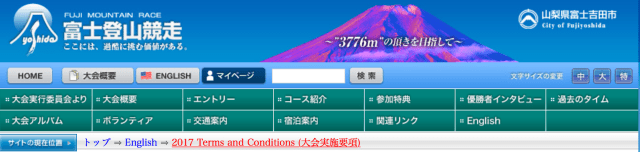
Photo Of The Official Website Of The Event
Through its Website, I was able to find out the details of this race. This year, 2017, it will be the 70th edition of this race which means that this running event was born 2 years after the defeat of Japan during the World War II. It was a period when the US Armed Forces had ruled over the whole country of Japan. I believe that the US had no influence on the creation or birth of this iconic running event. However, I strongly believe that the Japanese people came up with an activity/event that will boost their morale, thus, a running event to unify the Japanese people to the peak of the highest mountain in their country which they consider as their nation’s symbol & sacred place in addition to the the “rising sun” in their national color.
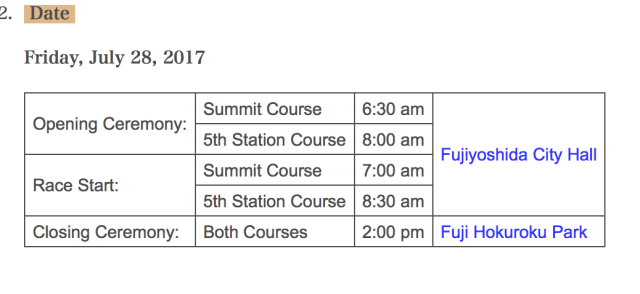
This running event will be held on July 28, 2017 (Friday) and I really don’t understand why this iconic event is being held on a working day and not on a weekend. There is no point in asking such question or concern to the Race Organizer, which is the Mayor of Fujiyoshida, Japan. There must be a good reason for the Japanese why this race is being held on a Friday.
It is specifically mentioned in the Website as to when will be the opening of the Registration Period which is March 21, 2017 at 9:00 PM (Japan Standard Time) up to March 23, 2017 at 9:00 PM (JST). The registration period closes after the desired number of participants is attained but only fifty (50) foreigners are allowed to join this event.
There are two (2) races: The Summit Course which is a 21K race from the City Hall of Fujiyoshida to the Peak of Mt Fuji; and The Fifth Station Course which is a 5K race from Umagaeshi (Km #10) up to the Fifth Station (Km #15) along Mt Fuji’s slope. The Summit Course has a registration fee of 15,000 Yen while the shorter course has a registration fee of 10,000 Yen.
Schedule Of Races
The race starts in an elevation of 770 meters and finishes at an elevation of 3,776 meters which is the elevation of of the peak of Mt Fuji. The cut-off time at the Fifth Station (Km #15) is 2:15 hours and the cut-off time at the Finish Line (Peak) is 4:30 hours.
What is the award if one finishes the Summit Course? A Finisher’s Shirt Only! This is a Finisher’s Shirt that is worth preserving in a nice picture frame!!!
Cut-Off Times For The Two Events/Courses
Not so fast on thinking that I would be able to finish this race! But first, one has to be quick and fast also in making sure that you are registered to this event!
I was in the United States when the registration period started and I have to wake up at 4:00 AM on March 21, 2017 (JST is +15 hours from the PST) and ring my alarm just to be sure that I would be awake before the opening time and then register immediately once the registration button turns on! At exactly 5:00 AM (PST), the registration button turned on and I immediately registered to the Summit Course Race. It was problematic at first in paying the Registration Fee because all Foreign Runners had to pay through Pay Pal. Since I don’t have any previous Pay Pal account, I had to create one on the spot! After almost 30 minutes creating a Pay Pall account and answering and filling-up some questions online, I was able to get in as one of the participants from the limited number of 50 foreign runners!
I went back to sleep after I have received a confirmation message in my e-mail that I have registered and while I was having my breakfast at 8:00 AM, I was surprised to see that the Registration for the two races was already CLOSED! The registration was supposed to be in 3 days but it closed after 3 hours of registration! I found out later that the Race Organizer usually cap this race up to 5,000 runners to include the 50 foreigners!
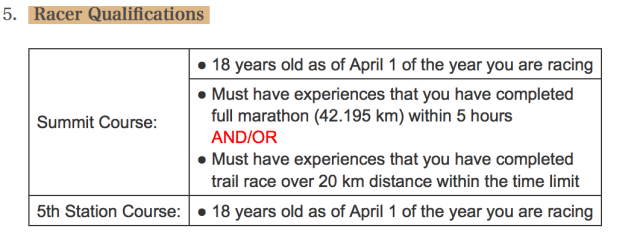
The most significant question that was asked on the registration form is my last 3 Marathon Races with finish times below the 5-hour limit. I mentioned my sub-4 hours MILO Marathon finish; Condura Skyway Marathon Finish (sub-5 hours); and my latest 2017 Los Angeles Marathon (4:24+ hour) a week before.
Qualifications To Join This Event
I was happy that I was able to get in among the 50 foreigners to join this race. And from that day, I started to browse on the Internet on posted stories and blogs of runners who joined this race for the past years. From these of stories of DNFs and successful finishes, I was able to gather some data and information on what to expect during the race. I would gather also suggestions and advise on the things on what to do during training/preparation and the things needed in order to meet the challenges the mountain have to offer to each of the runners.
Looking at the tabulated course of the event, I could not imagine how I would be able to finish this event! The only way to find out is to take the challenge and make the necessary training and preparation.
Course Description: Mt Fuji Mountain Race
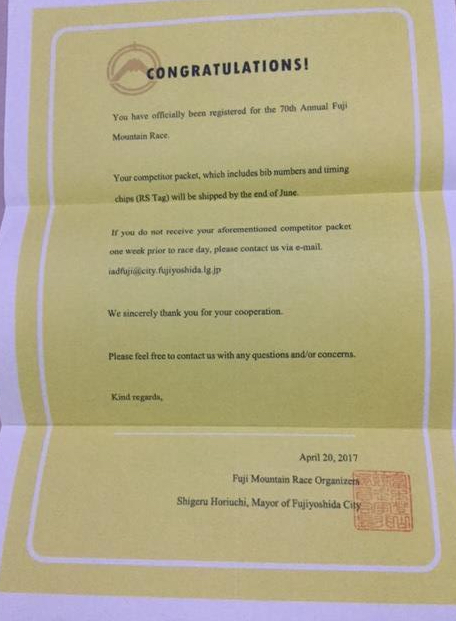
Last week, I was able to receive a Congratulatory Letter from the City Mayor Fujiyoshida for being one of the 50 foreign runners and participants in the 70th edition of the Mt Fuji Mountain Race. The letter was sent through the mail which the Race Organizer started sending to all the participants since last April 2017.
Letter Of The City Mayor Of Fujiyoshida
I am on my third week of focused training and I am very positive that I am becoming a stronger and faster mountain runner! Wish me luck!



 Bald Runner
You must be logged in to post a comment.