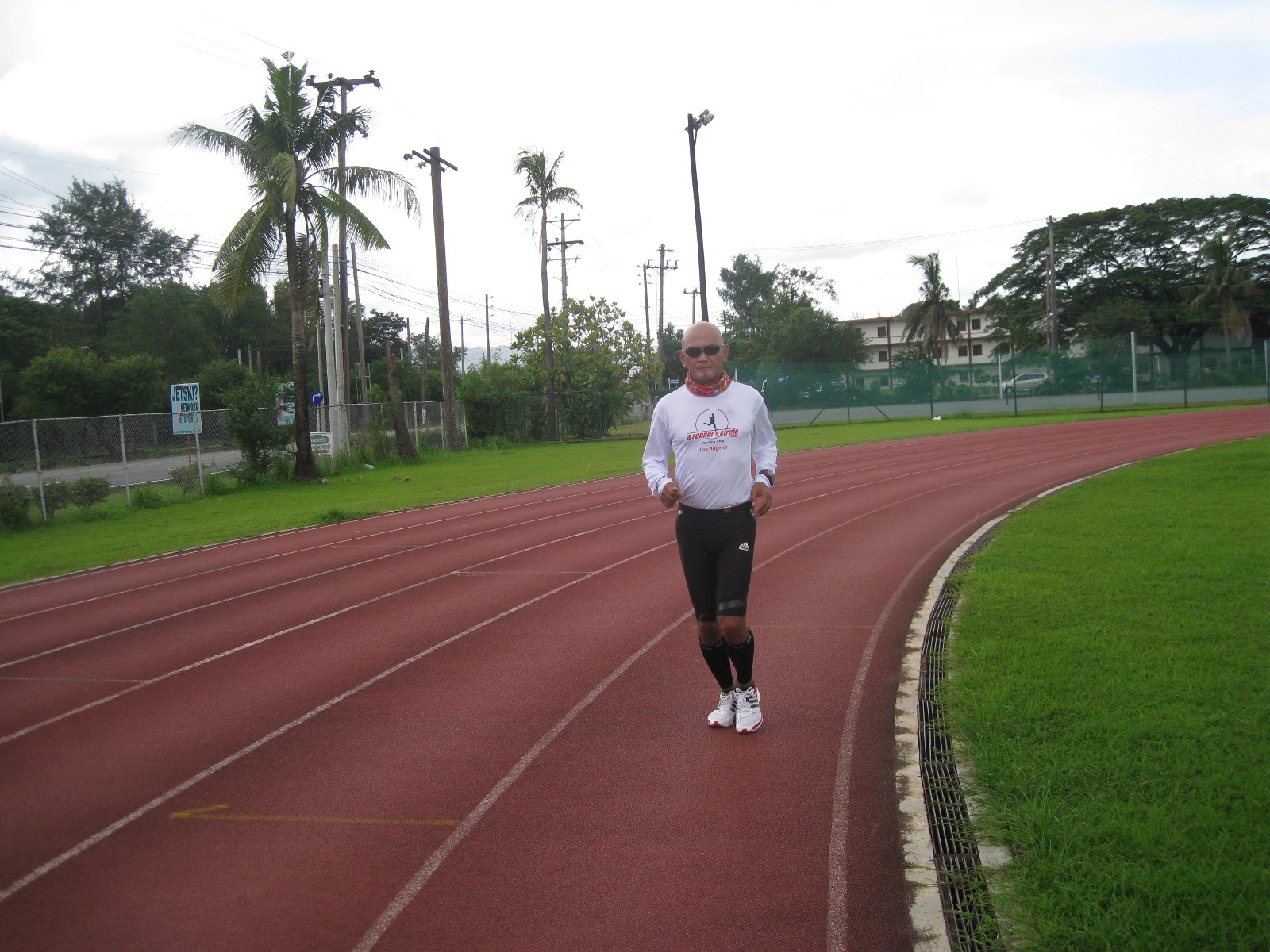
At 10:00 AM today, September 21, 2011, I started my Adventure Run (for the 2nd time!)—from Remy Field Oval Track to Alaminos, Pangasinan. I have to repeat what I’ve started last week (September 14) when I had to stop this run after I was bitten by a dog at Km #41 in Poblacion, San Narciso, Zambales.
As I post this update, I am one kilometer away from the exact place where I was bitten by a dog. I just finished my dinner in one of the carinderias along the Olongapo-Bugallon Highway.
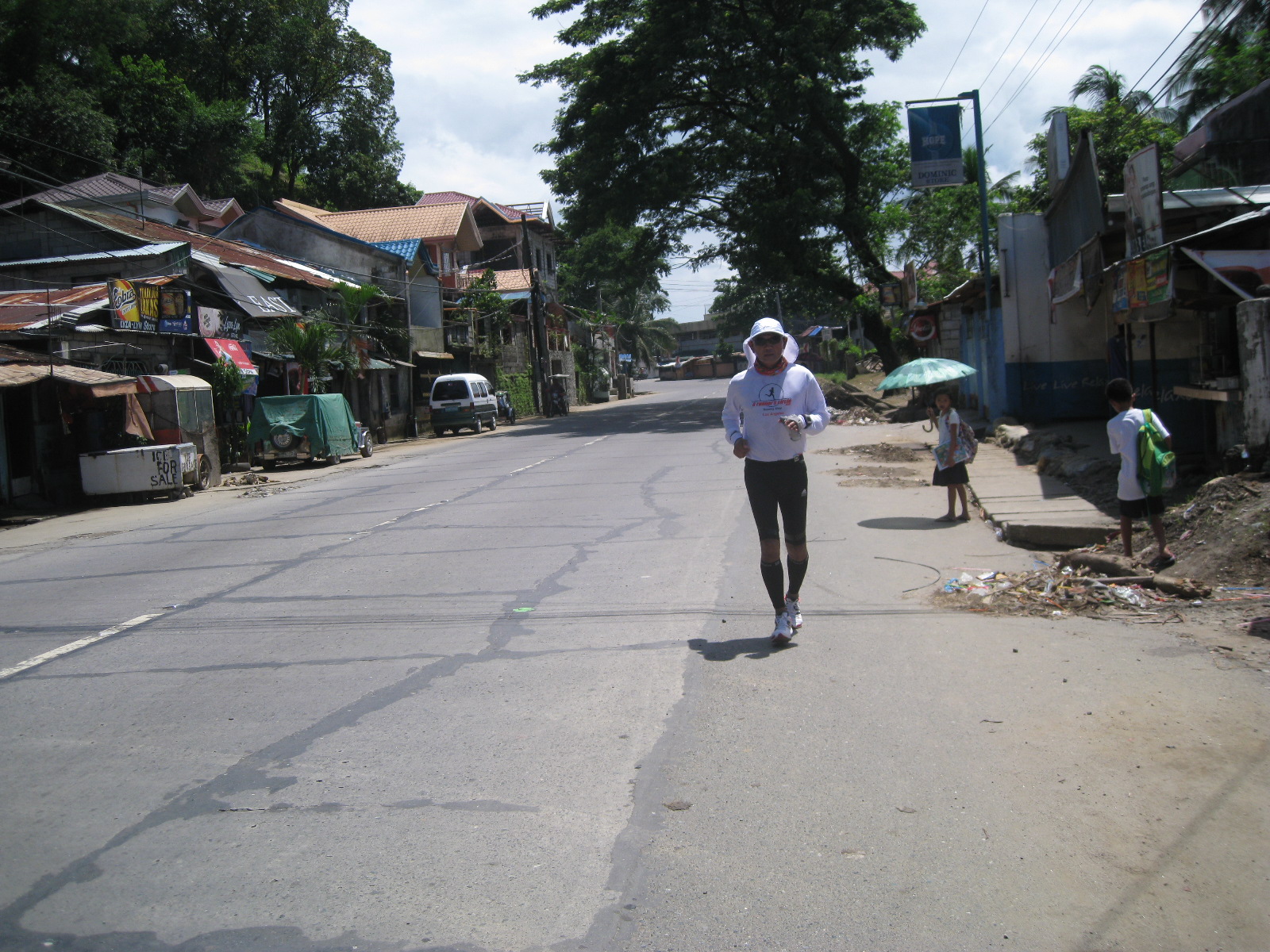
My latest “adventure run” started at 11:20 AM of September 13, 2011 inside the Remy Field Oval Track at Subic Freeport. The following pictures were taken by my support crew during my run:
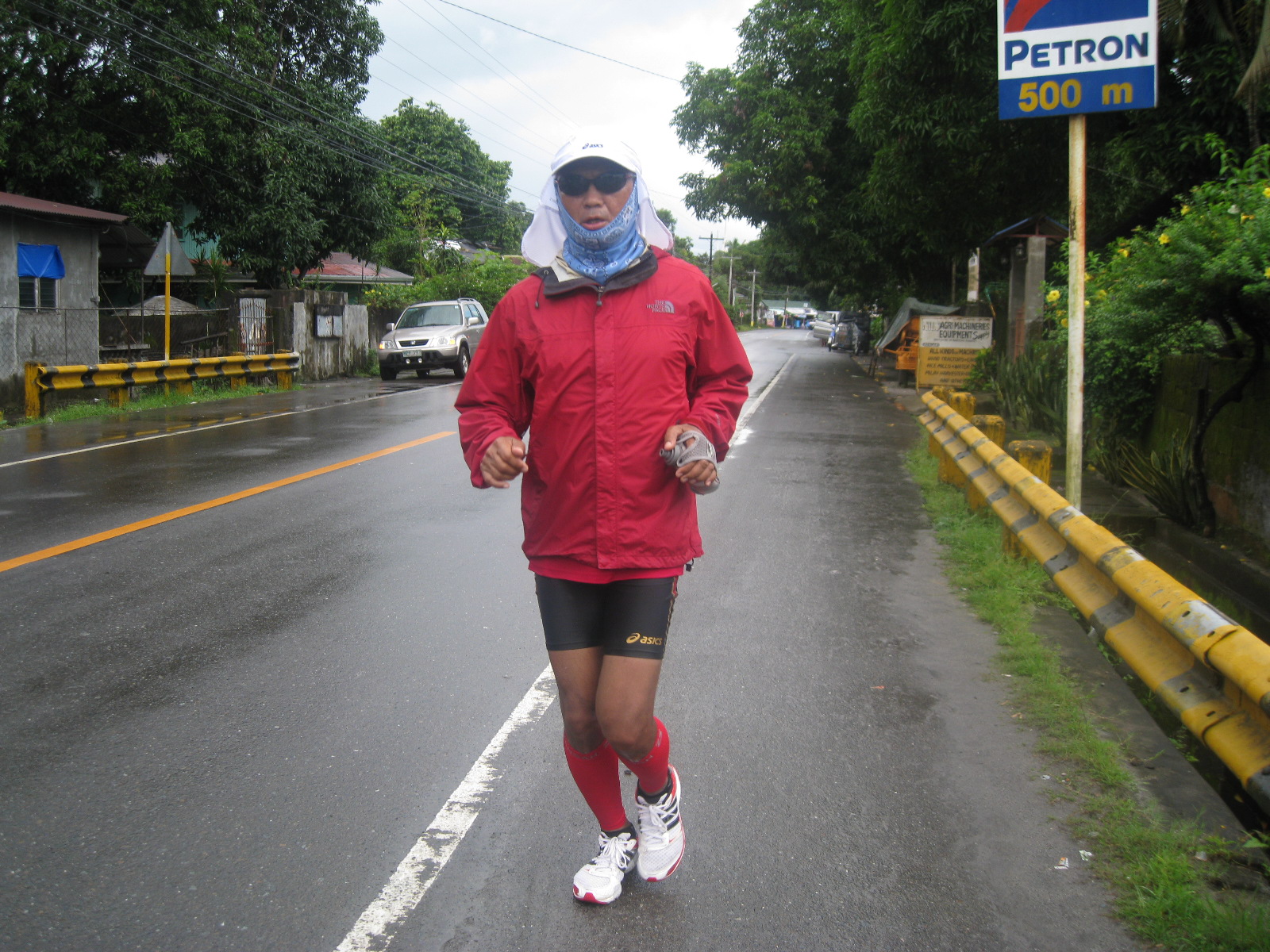
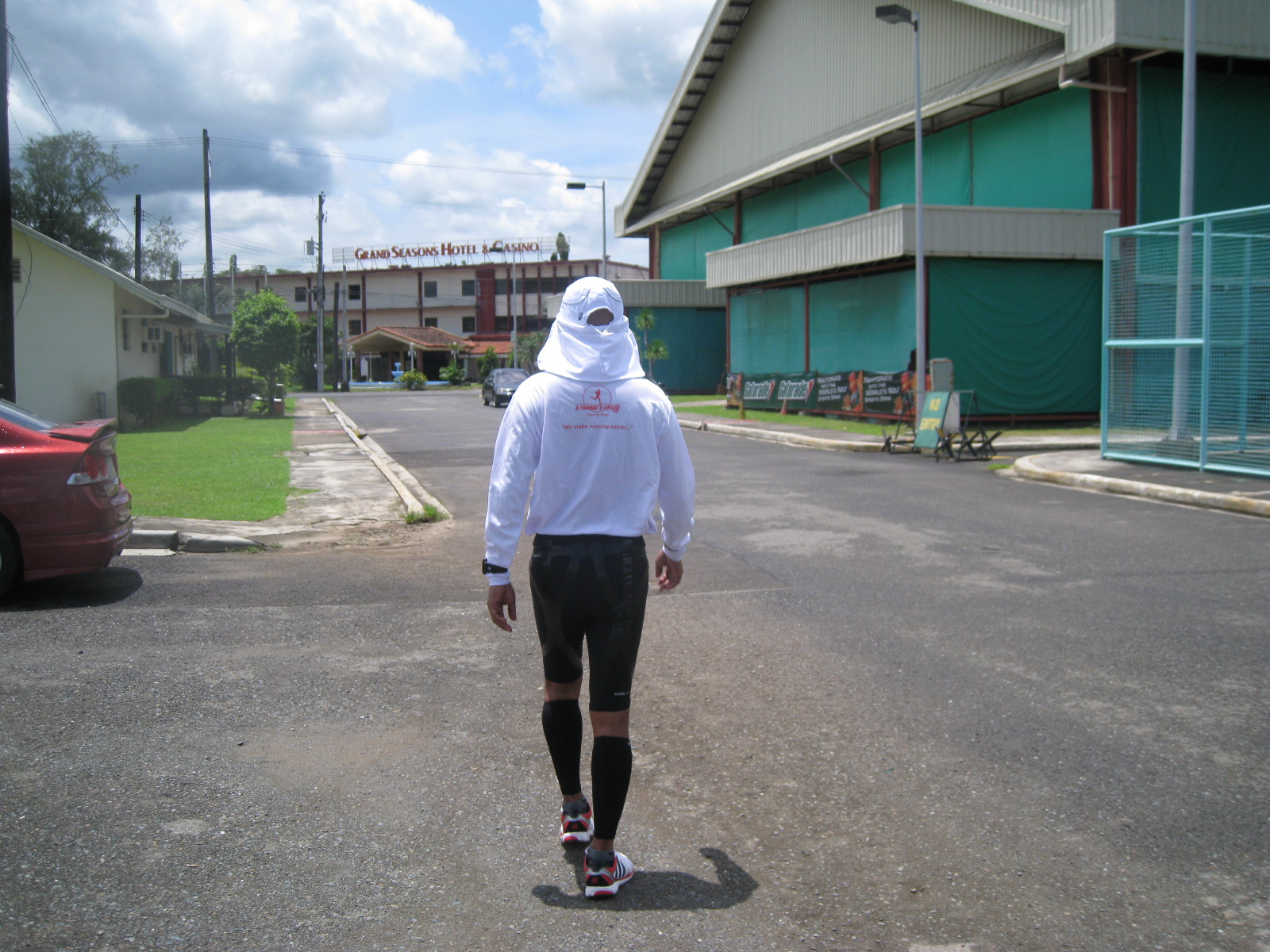
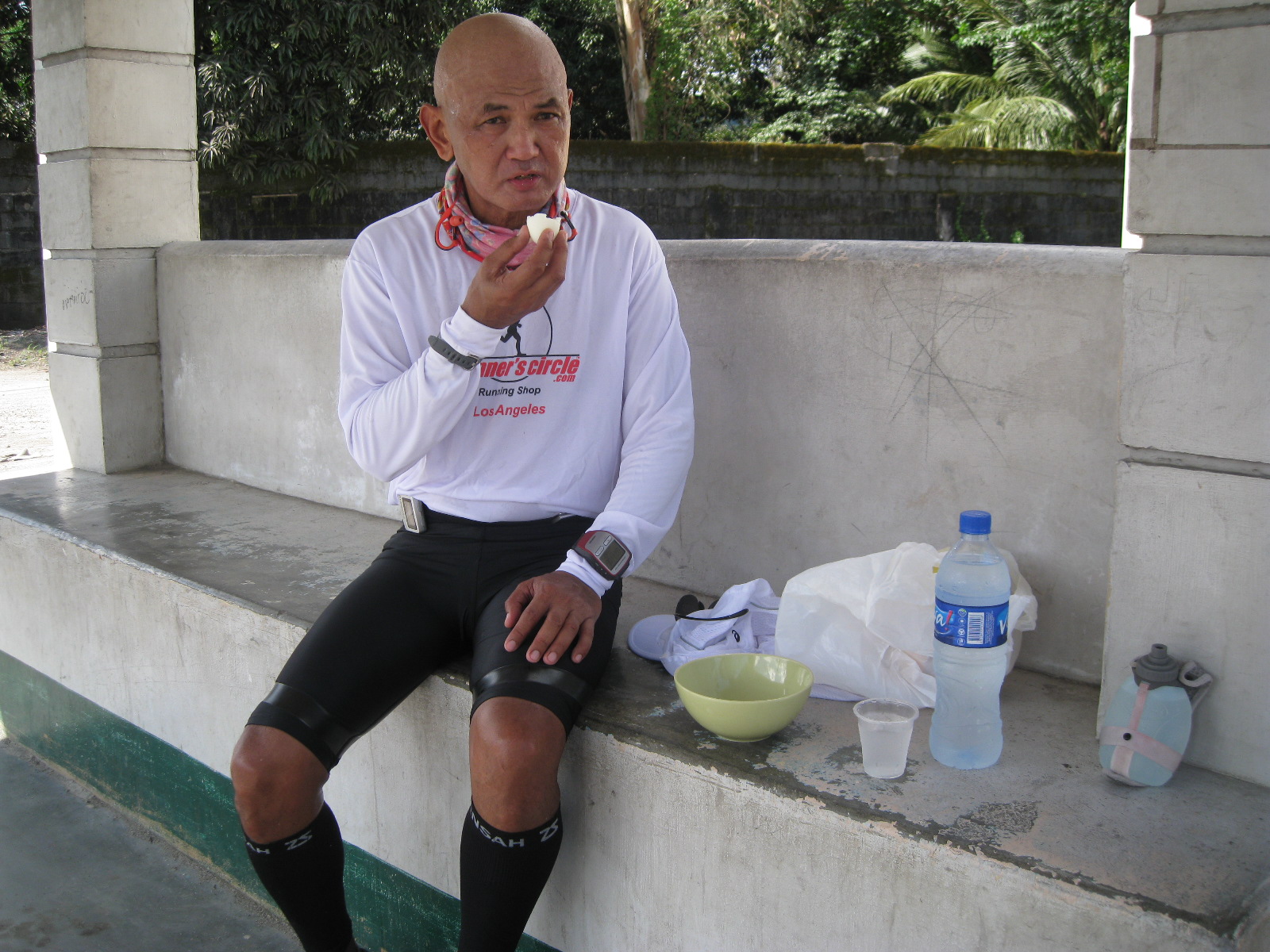
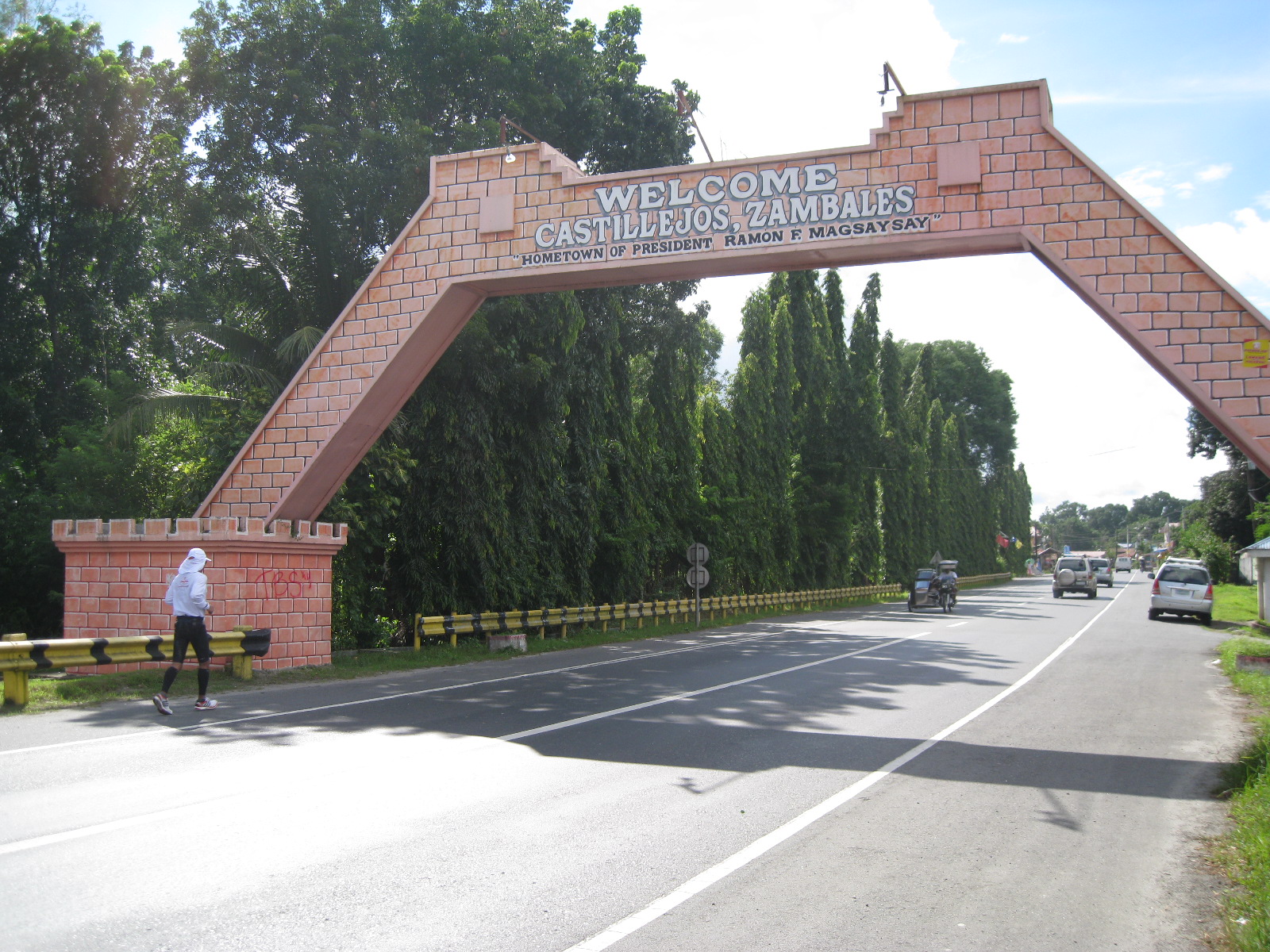
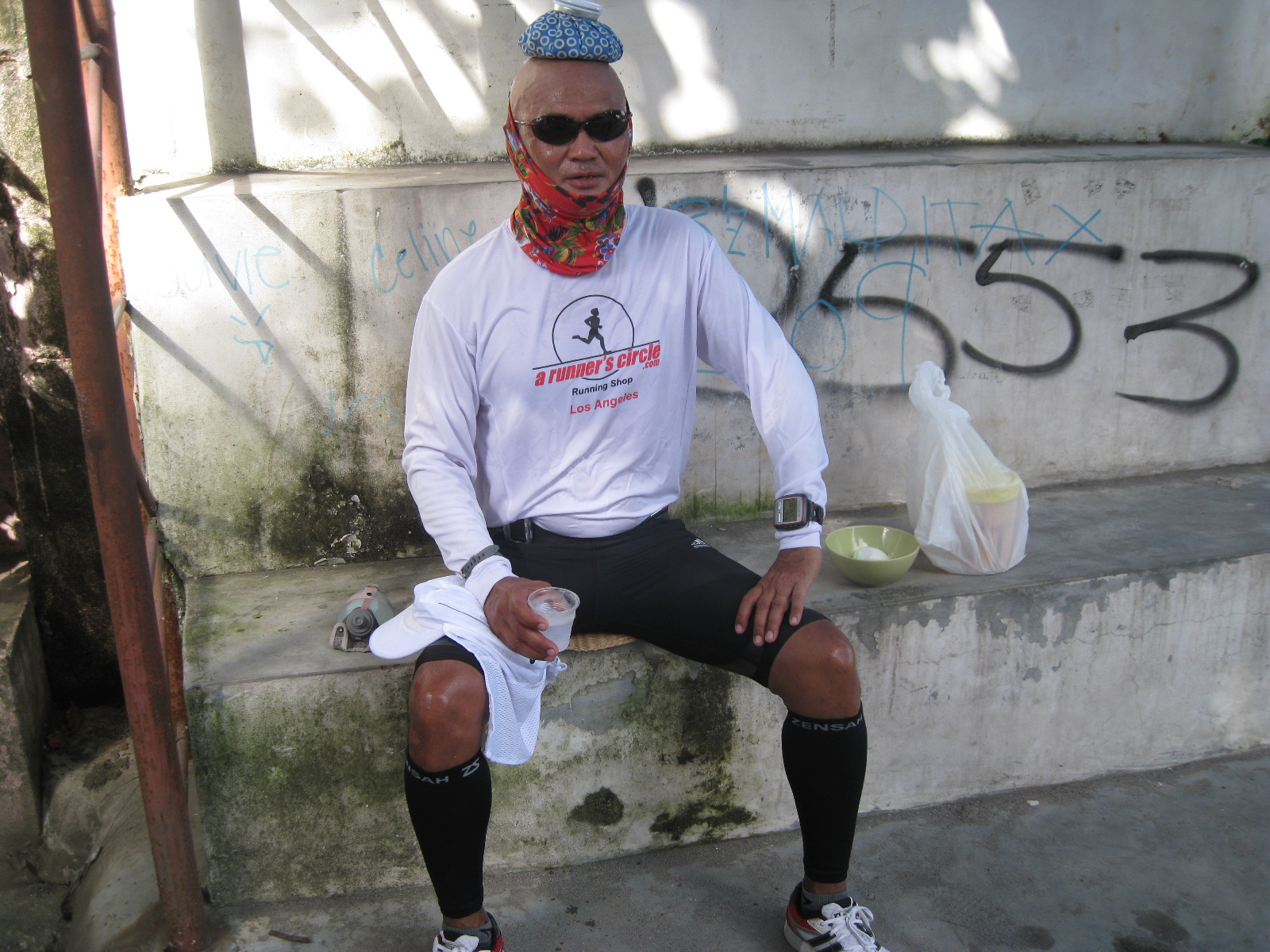
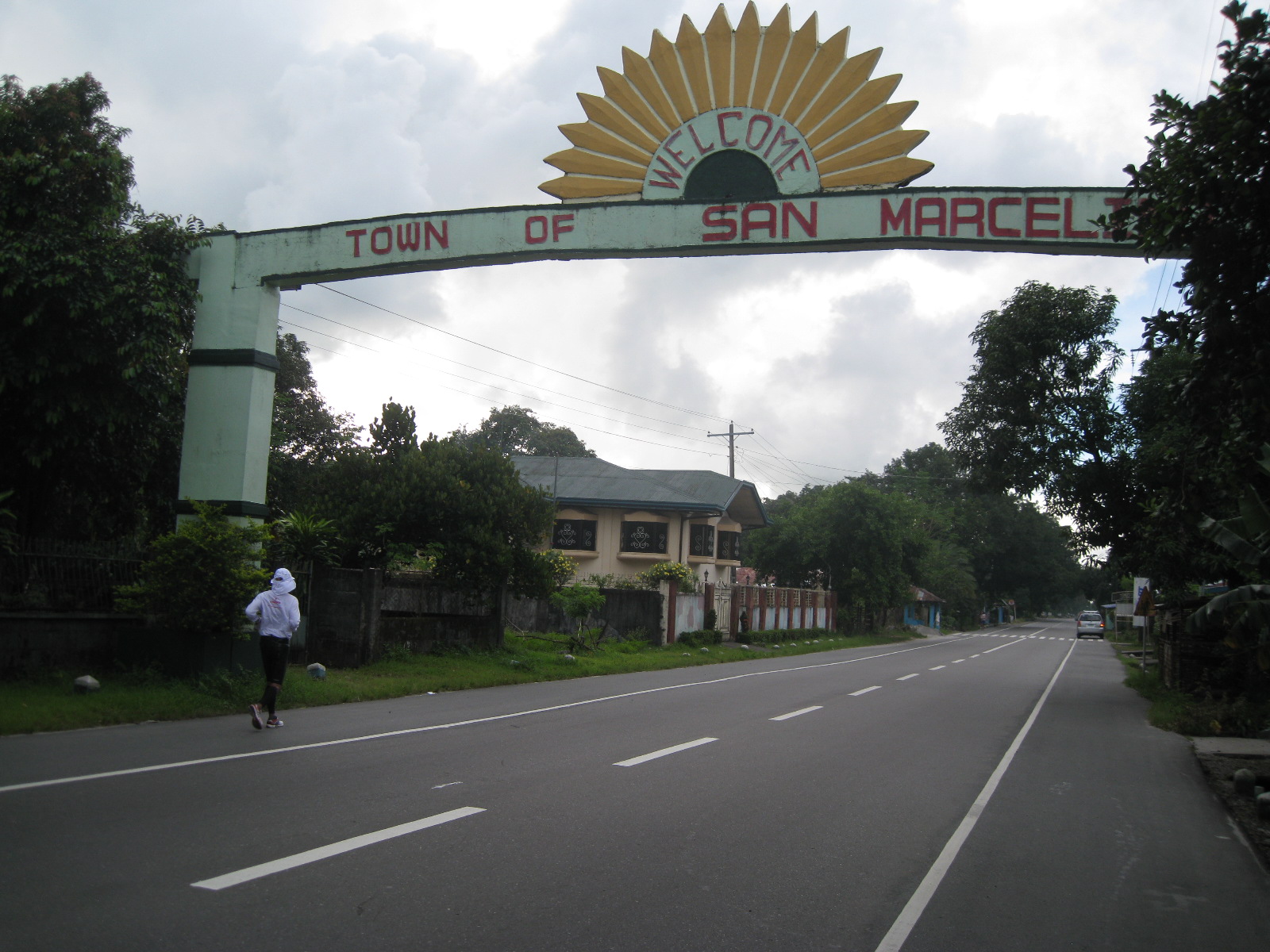
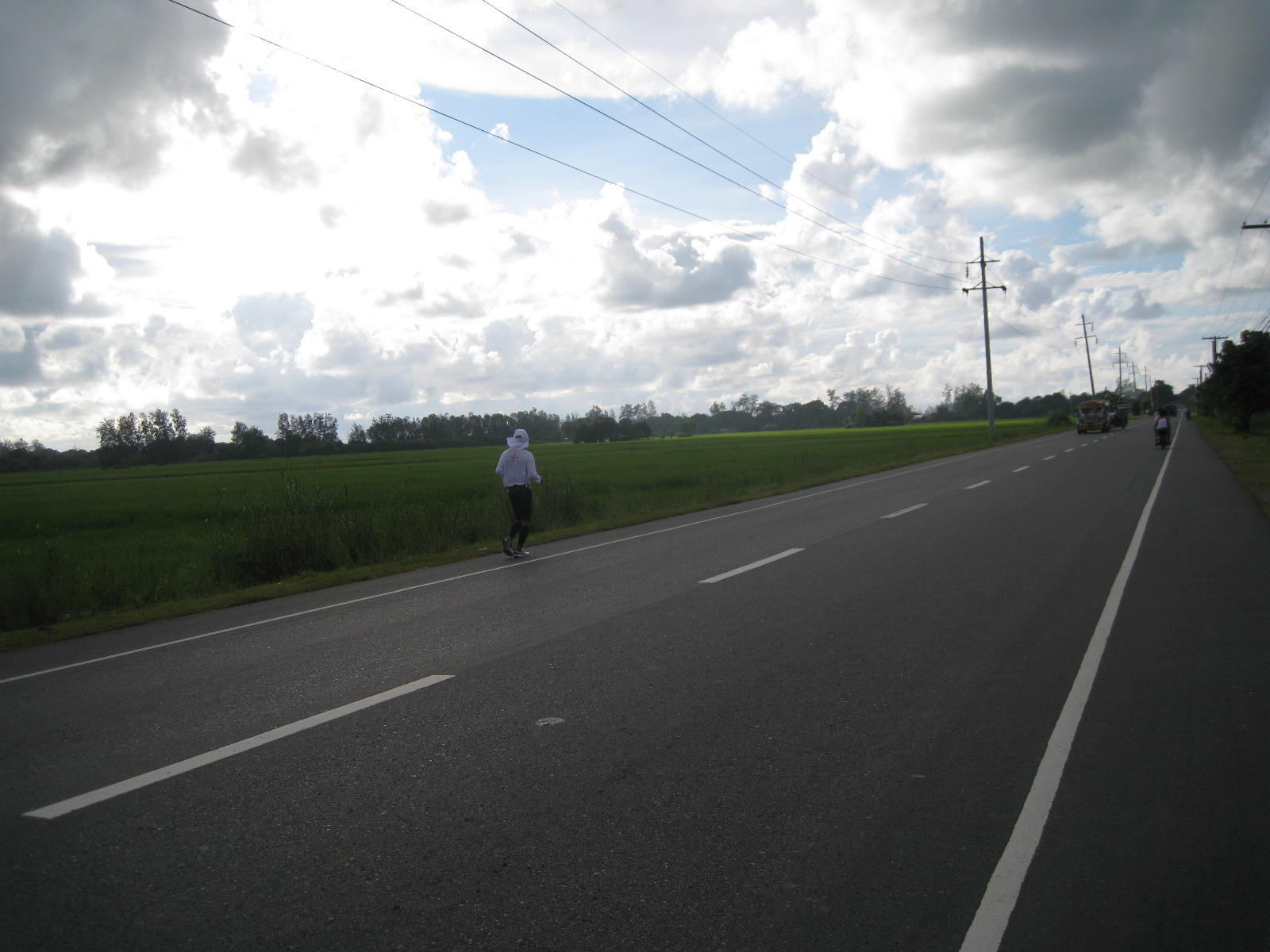
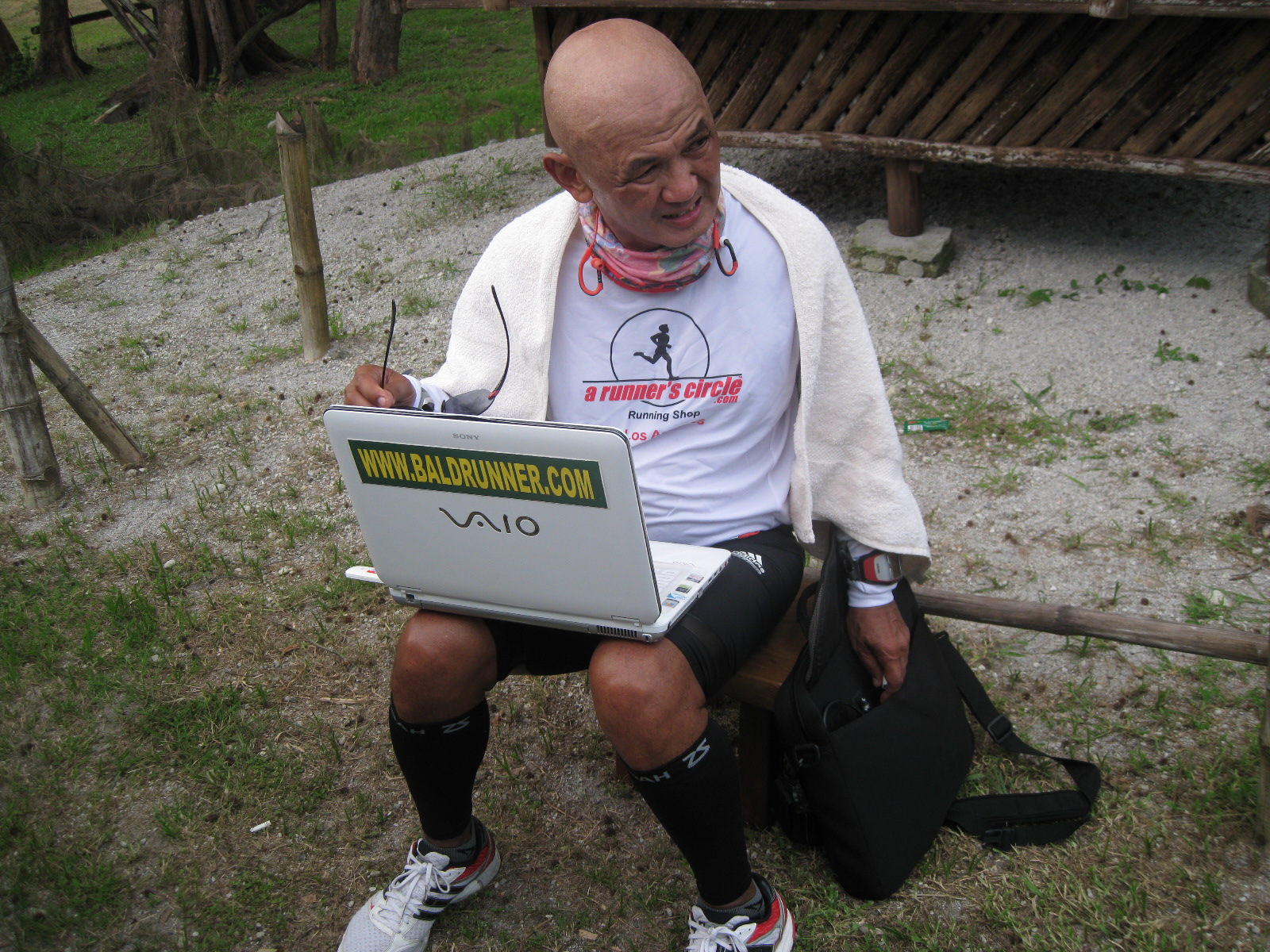
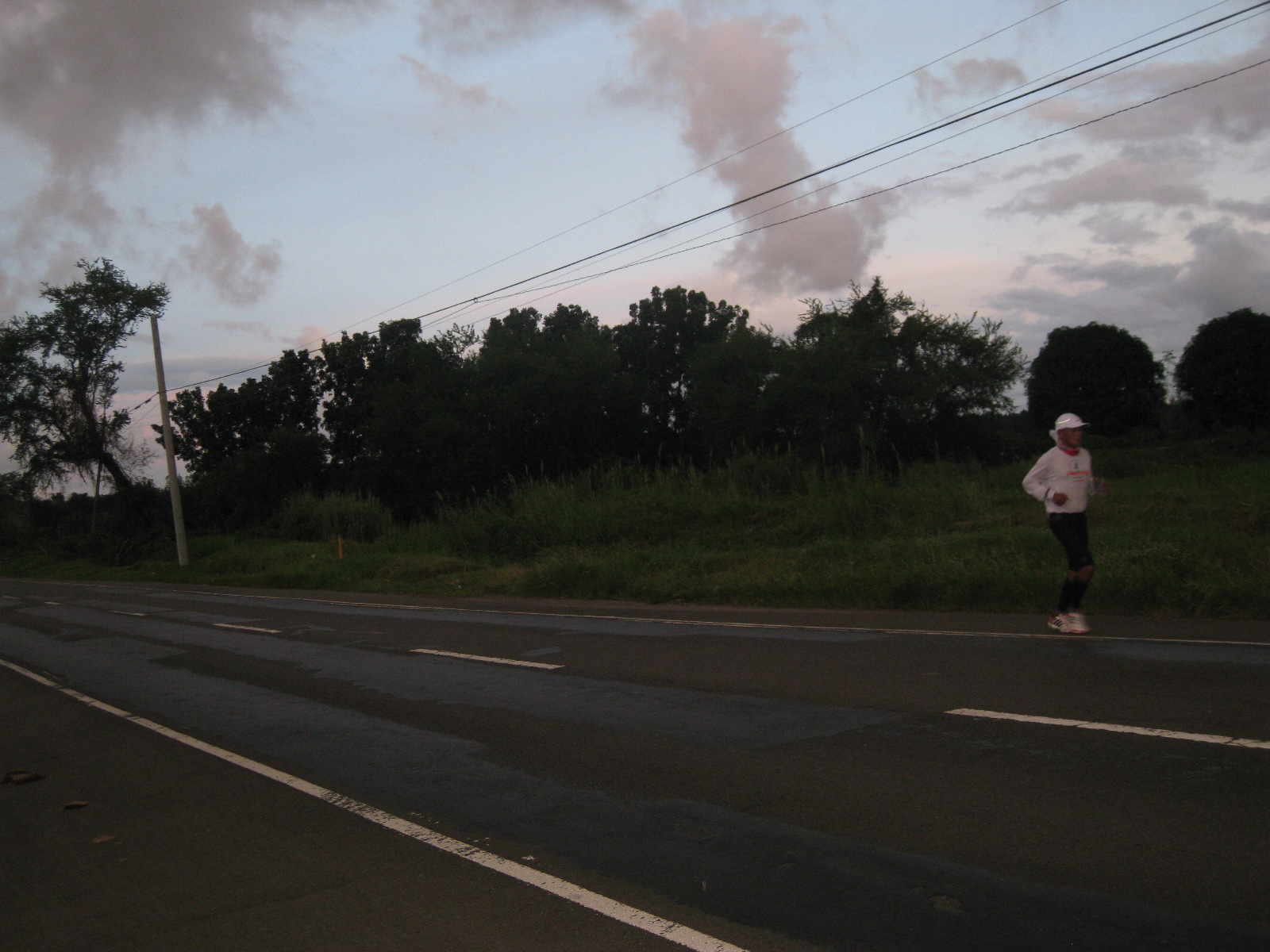
Walking While Leaving Remy Field @ Subic FreeportApproaching The Town Of Subic, Olongapo"Pit Stop" @ Subic, Olongapo; Eating Hard-Boiled Egg with SaltEntering The Town of Castillejos, Zambales; Birthplace of President Ramon MagsaysayCooling It Off In One of My Pit StopsEntering The Town of San Marcelino, ZambalesFlat & Straight Road in San Marcelino, ZambalesUpdating My Run @ Facebook...You Can Do This, Too!Entering the Town of San Narciso, Zambales
A popular journalist/columnist would say that if a man is bitten by a dog, it is not a NEWS. But if a man bites a dog, it’s a good NEWS.
Well, I was bitten by an astray dog while doing my “adventure run” and it’s not considered as a NEWS but for the sake of the runners out there, there are lessons to be learned from my experience.
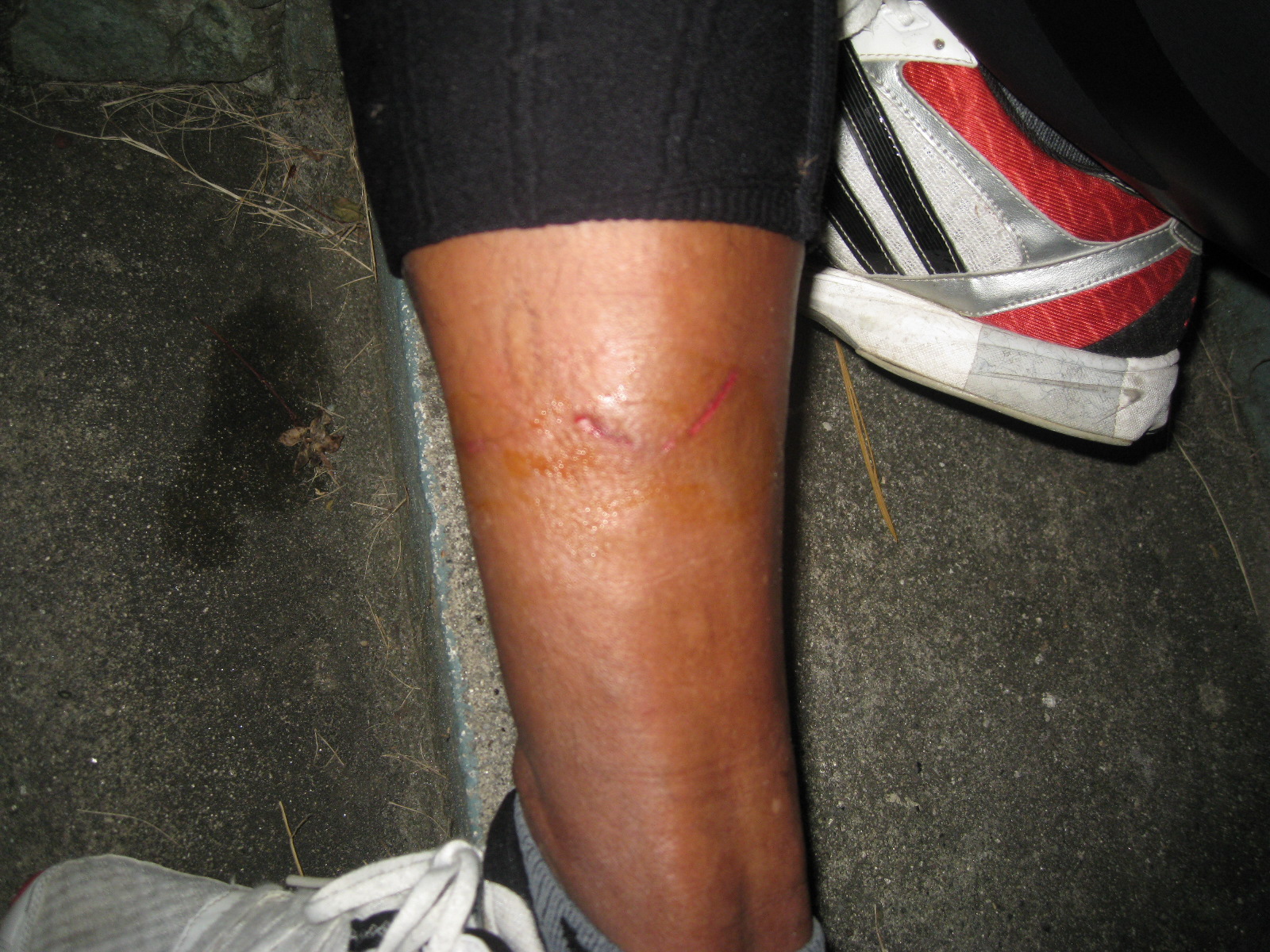
At 8:40 PM, I was regaining my pace after I had my dinner in one of the “carinderias” with almost 500 meters away from the Municipal Hall of San Narciso, Zambales when two dogs suddenly emerged from one of the frontyards of the houses along the road which was not lighted. It was so fast that I was not able to react on the attack of the two dogs. I knew I was bitten when I felt there was a pain on my lower left leg.
I had to stop my run and assess the wound brought about by the bite of the dog. The calf sleeve (Zhenza) I was using protected my leg muscle from being punctured by the sharp teeth of the dog. If not for the sleeve, I would have a deeper wound.
My wound was a “shallow” scratch but it started to bleed when I cleaned the wound. It was time to decide whether I was going to continue my run or not.
I called at least three doctors who are also runners from my cell phone for their recommendations/suggestions about my condition. After hearing them, I immediately decided to stop the run and changed to drier clothes and I was on my way back to Manila aboard my support vehicle. I was advised to provide treatment to the wound within 24 hours!
So far, I was able to cover 41 kilometers in 7:45+ hours from the Remy Field Oval Track in Subic Freeport to the Municipal Plaza of San Narciso, Zambales with an average HR of 135 bpm. The time elapsed on my run includes the “pit stops” along the way to include the time updating my run through Facebook by using my laptop and/or cell phone.
Letter "V" Wound by a Dog Bite
With regards to my wound, I was given the best and immediate treatment by the Philippine Army Medical Center. The Commander of the Facility made sure that I would be treated with outmost priority. The protocol for the treatment of dog bites had been explained to me by the doctors on duty as well as doctors whom I consider as “hardcore” ultrarunners. Thanks for your input and advise.
The following are the advise and lessons learned from this incident:
1. Be aware and alert. If you see dogs on the direction of your run, try to avoid them. You can stop your run by walking or by transfering to the other side of the road.
2. Day Running vs. Night Running. Running at night is totally different from day time running. The visibility is very low and most parts of the road are not lighted. Runners are advised to carry with them flashlight to improve their visibility of their surroundings. In day running, you could easily see where the dogs are coming from or you could see them at a distance and have time to avoid them.
3. Complacency and Getting Older. I admit my reaction time to dog attacks had slowed down due to age. I’ve been complacent also that I could outrun the attack of street dogs. When dogs try to attack me, I usually stop my run and turn around to face the attacking dog by trying to attempt to pick up a stone from the ground. This quick reaction had been effective through the years that I’ve been running. But with the faster attack from the dogs and low visibility, I was not able to apply what worked all the time.
4. Use of Ipod/MP3 during a Run Impairs One’s Perception. It was only few months ago when I started training with the use of a Heart Monitor. This training encourages the use of music during a long and steady run. With this adventure run, I was wearing an Ipod Shuffle to keep me awake during the night. But it was a mistake as I was not able to actually assess the exact distance of the attacking dogs from me. The sound/music coming from my Ipod Shuffle impaired my depth of perception on the the barking of the dogs. I thought the sounds of the barking dogs were still far from me but I was not aware that they were already few inches away from my legs!
5. Calf Sleeve Rocks! Calf sleeves are used primarily to compress the calf muscles to prevent them from cramping and I used them for such purpose on this run. I did not realize that my calf sleeve protected my leg muscles from getting a deeper wound from the sharp teeth of the street dog. The Zhenza calf sleeve which I bought at A Runner Circle Store in Manila had been a good investment and protection from dog bites. I did not see any torn part of the calf sleeve brough about by the dog bite.
6. Cure/Treatment For Dog Bites is Expensive. One shot of anti-rabies costs P 1,629.50 (from selected Mercury Drug Store outlets) and I need 5 shots for the whole treatment which is administered within 28-day period. This is excluding the antibiotics and anti-inflammatory medicines I have to take within a 7-day period.
This incident is just a temporary setback on my desire to finish my adventure run. In the next few days, I will continue what I’ve started and be more careful in dealing with the street dogs. I will consider not using my Ipod Shuffle during my next runs.
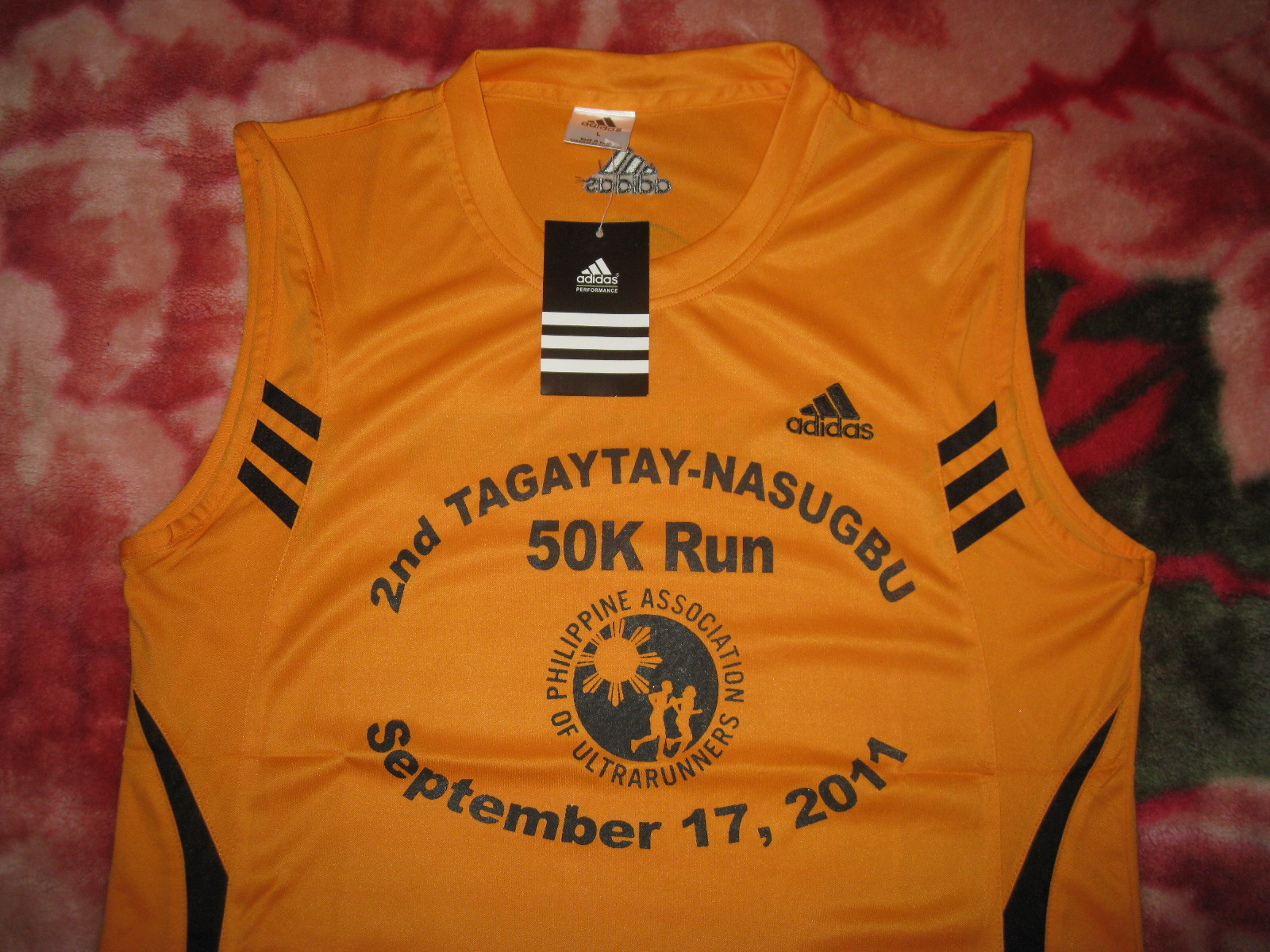
Guidelines For 2011 T2N (Tagaytay to Nasugbu) 50K Run: Second Edition
1. This is a solo race. The race will start at 5:00 AM of Saturday, September 17 in front of the Picnic Grove (near the Development Academy of the Philippines) in Tagaytay City. The Finish Line of the race is INSIDE Plaza De Roxas in Nasugbu, Bataan. Plaza De Roxas is the Municipal Public Park located in front of the Nasugbu Municipal Hall. (Note: Runners have to pass in front of the Jollibee and then turn right at the next street and then enter at the Gate of Plaza De Roxas.)
2. Runners are allowed to have their support vehicle & crew but they are not allowed to have pacers. (Note: Pacers should be registered runners). Support Vehicle should “leap-frog” from their runner/s and “shadowing” the runner is strictly not allowed. There is no prescribed number of runners to be supported for each support vehicle.
3. Runners’ Bib should be pinned and displayed in front of the runner’s apparel. Bandits will not be tolerated during the run.
4. Runners are highly encouraged to bring and wear with them their respective hydration system/belt during the race. There will be No Aid Station along the route.
5. Cut-off time is nine (9) hours.
6. Runners are encouraged to stay on the left side of the road, facing the incoming traffic. Some parts of the route are narrow and runners should always be attentive and vigilant of vehicles, in front and at their back.
7. Runners are also encouraged to run in single file as the road will be busy with the traffic of vehicles.
8. Ipods, MP3s, and “wires” are allowed. However, users should be attentive with their surroundings.
9. As in the past PAU races, every finisher will receive PAU Finisher’s Medal and Finisher’s T-Shirt. Finishers/Runners will be served with pack lunch at the Finish Area. Results of this race will be included in the rating/ranking among PAU runners for 2011.
Finisher's Shirt
10. Integrity of the Race shall be upheld and respected.
11. Corporate Logos will not be allowed to be displayed on support vehicles. However, tarpaulins of running teams/groups are allowed WITHOUT corporate logos.
12. The spirit of ultra running is highly encouraged. Finish the race, encourage/help one another, develop friendship before, during & after the race, and have an ULTRA FUN during the run!
Good luck and See You at the Starting Line!
(Note: The race will start before the scheduled time. Runners who deposited their registration fee through Landbank should bring their deposit slip. There will be NO onsite registration.)
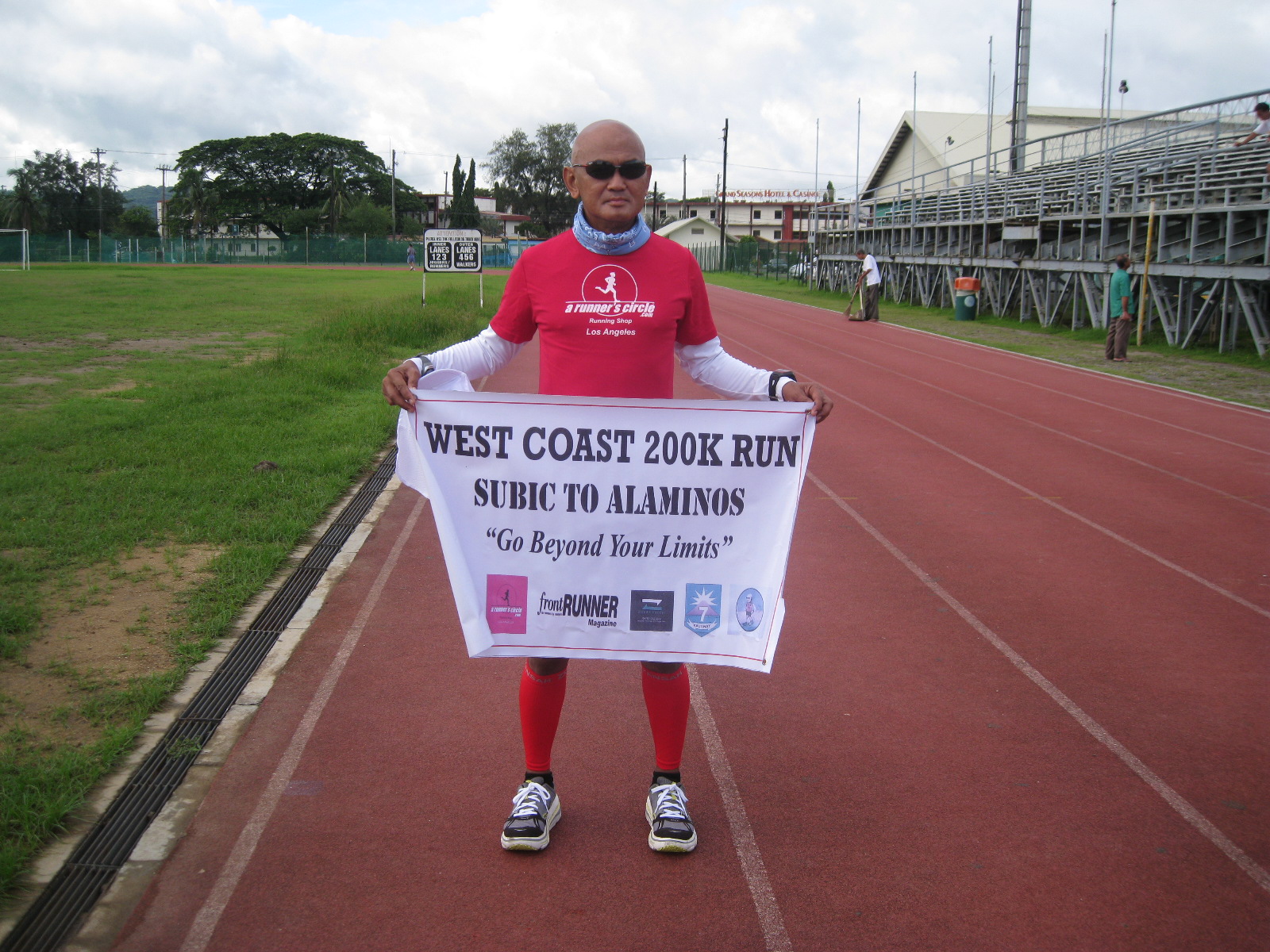
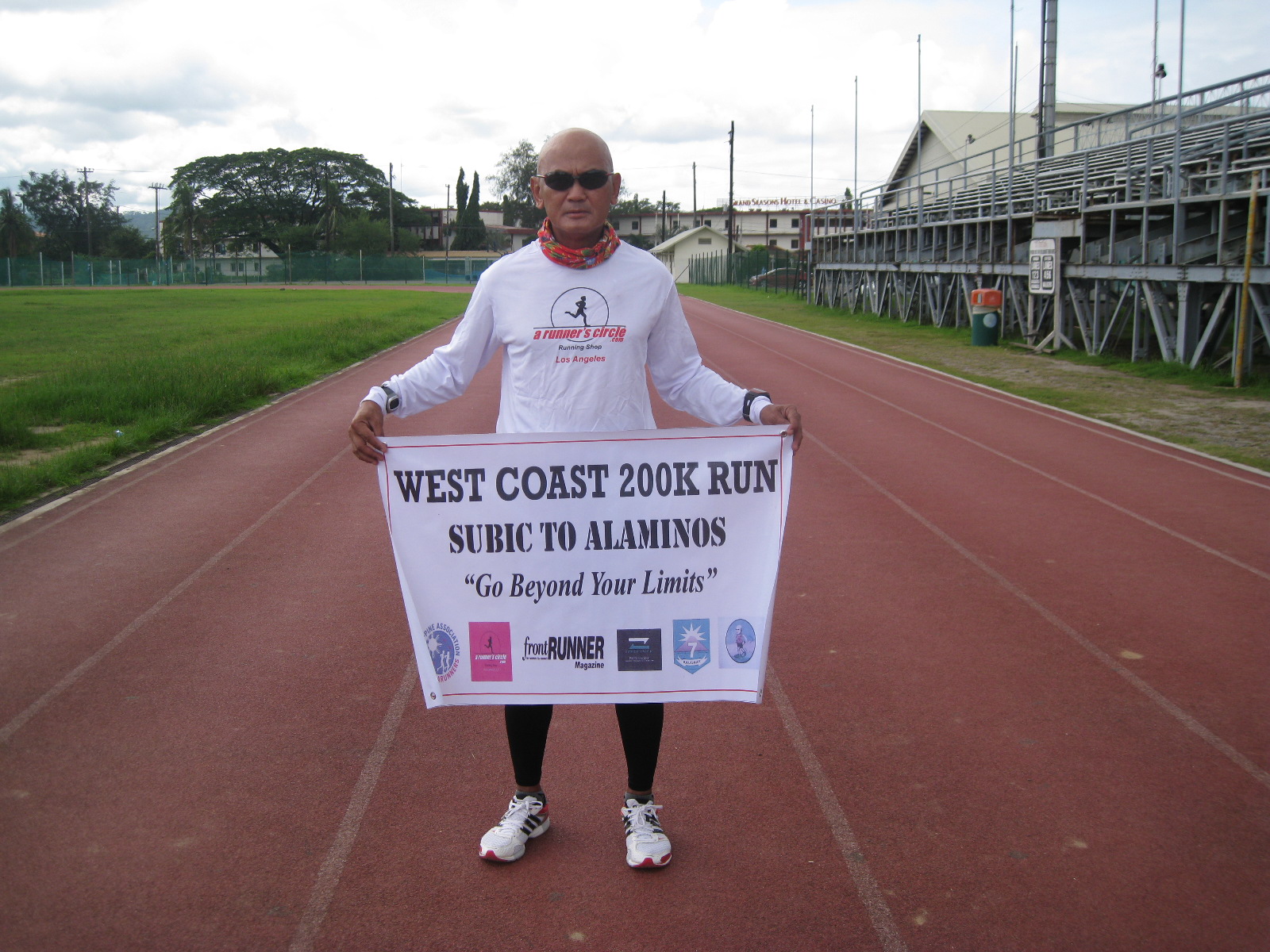
Single-Stage Solo Run from Remy Field Oval Track, Subic Freeport up to Barangay Lucap, Alaminos, Pangasinan and back to the City Hall of Alaminos as the Finish Area. The route will be along the Olongapo-Bugallon, Pangasinan Highway, passing through the cities and municipalities of Zambales and some of the western towns of Pangasinan.
No “fancy” stuff or any kind of advocacy on this run. This is a test of human endurance to be able to promote ultra running in the country. This route is envisioned to be the future “Badwater Ultramarathon” of the Philippines.
My special thanks to those who supported this event. No need to mention their names as their respective company/organization’s logo is depicted in the picture above. Thanks for your generosity and continuing support to the running community in the country.
Updates on “near real-time” will be published on this blog soon.
Start Time: 11:20 AM, September 13, 2011.
@Remy Field Oval Track/ 11:00 AMOne Lap Around The Oval To Start The Adventure Run
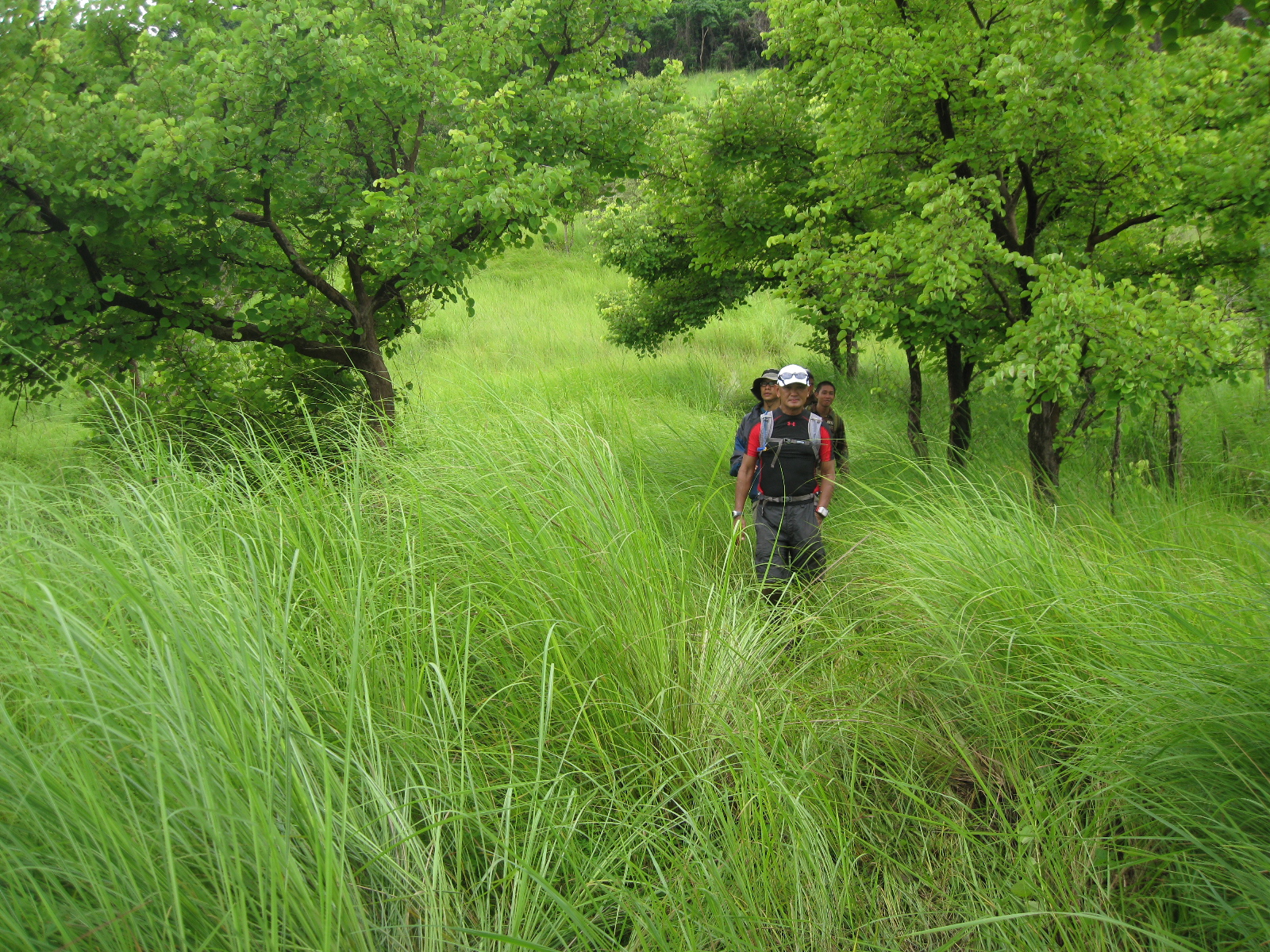
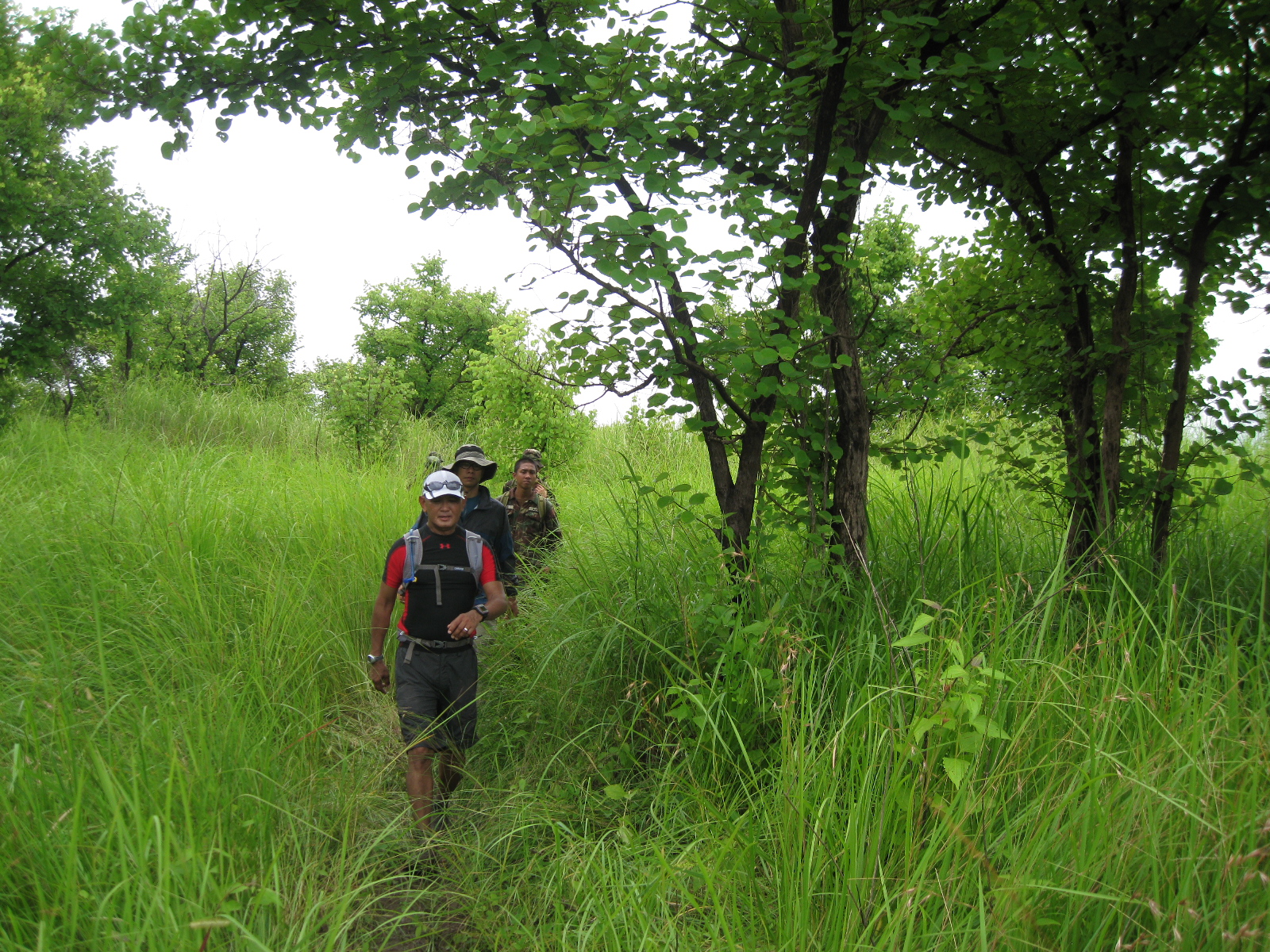
On the last week of July, I went to Fort Magsaysay and make a recon on the trail route surrounding the Taklang Damulag Mountain. I mentioned in one of my previous posts about my trek towards the peak of the said mountain where I timed 52:37 minutes to reach its peak from Fernandez Hill, a distance of 2.7 kilometers. The trek to the peak was only a part of the 25-kilometer distance that I run & walked/hiked during that day and the trail loop towards the mountain peak from Fernandez Hill and around as it covers a distance of 13 kilometers. It took us 5+ hours to cover the distance (25K) as most of were hiking and brisk walking. If we tried to jog and run the flat portions of the route, we could have made it in 3+ hours. This part of the Taklang Damulag 100-mile run consists of the “inner loop” of the course.
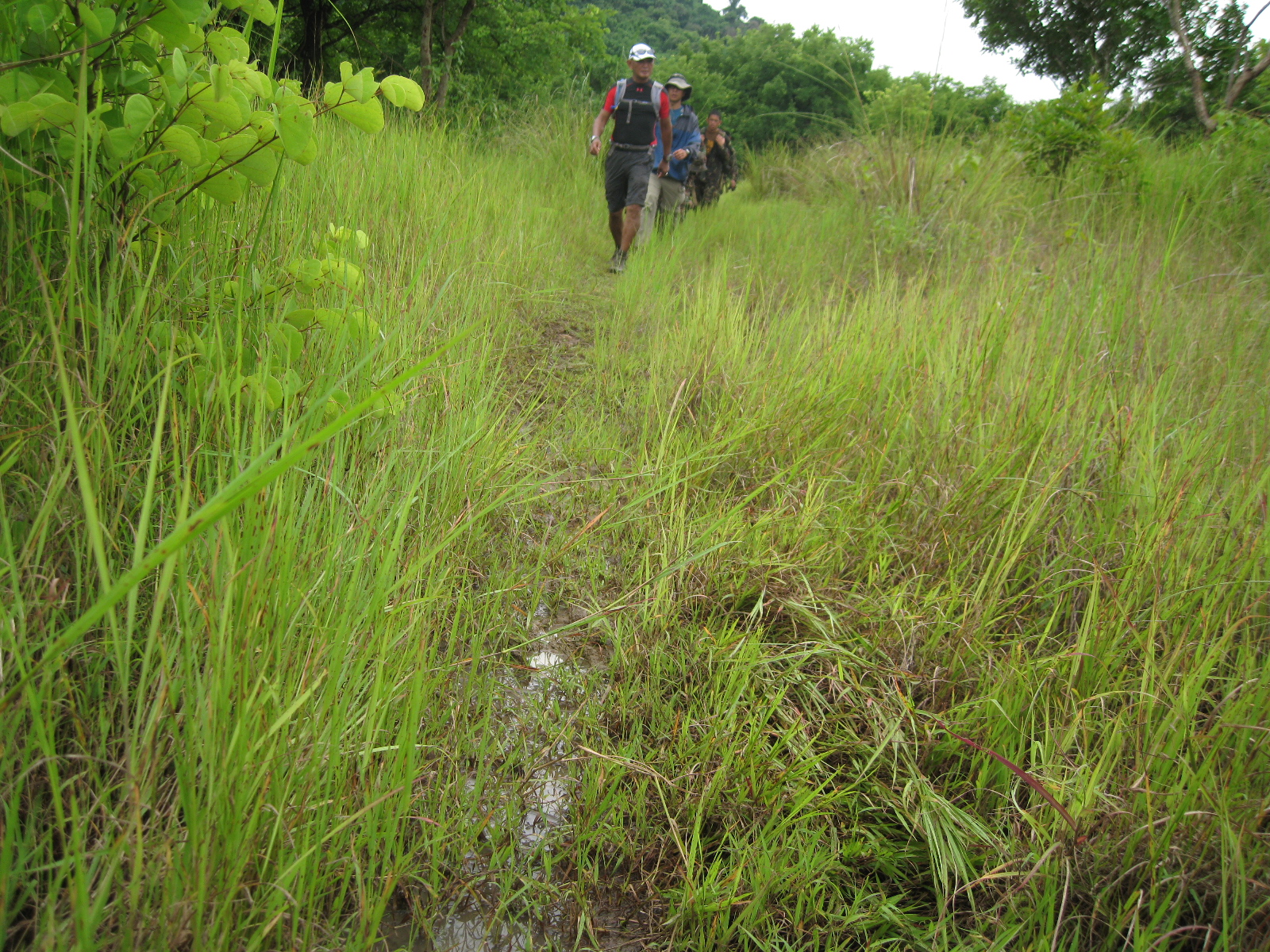
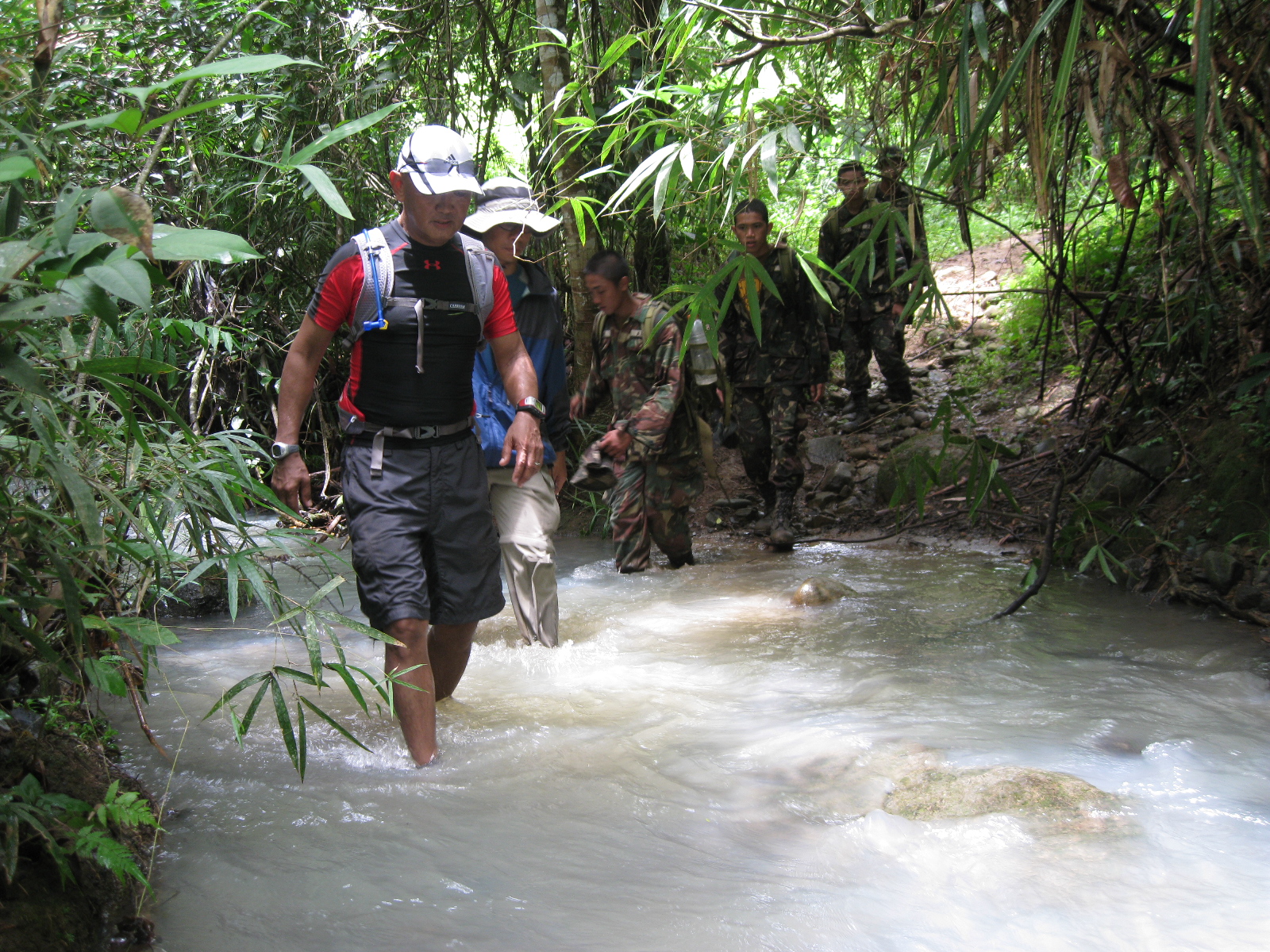
The following were the pictures taken during my recon run at the “inner loop” on the last week of July:
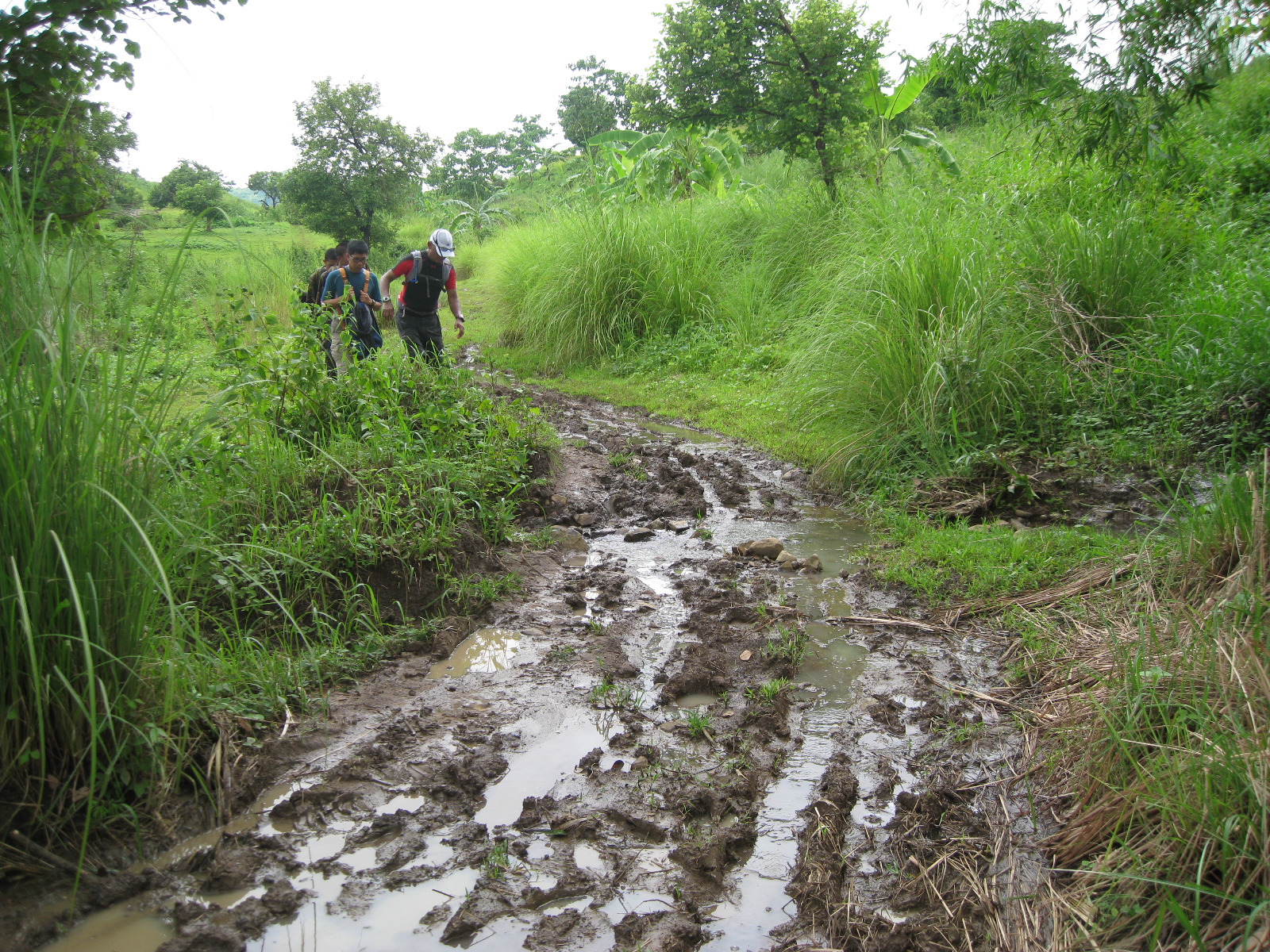
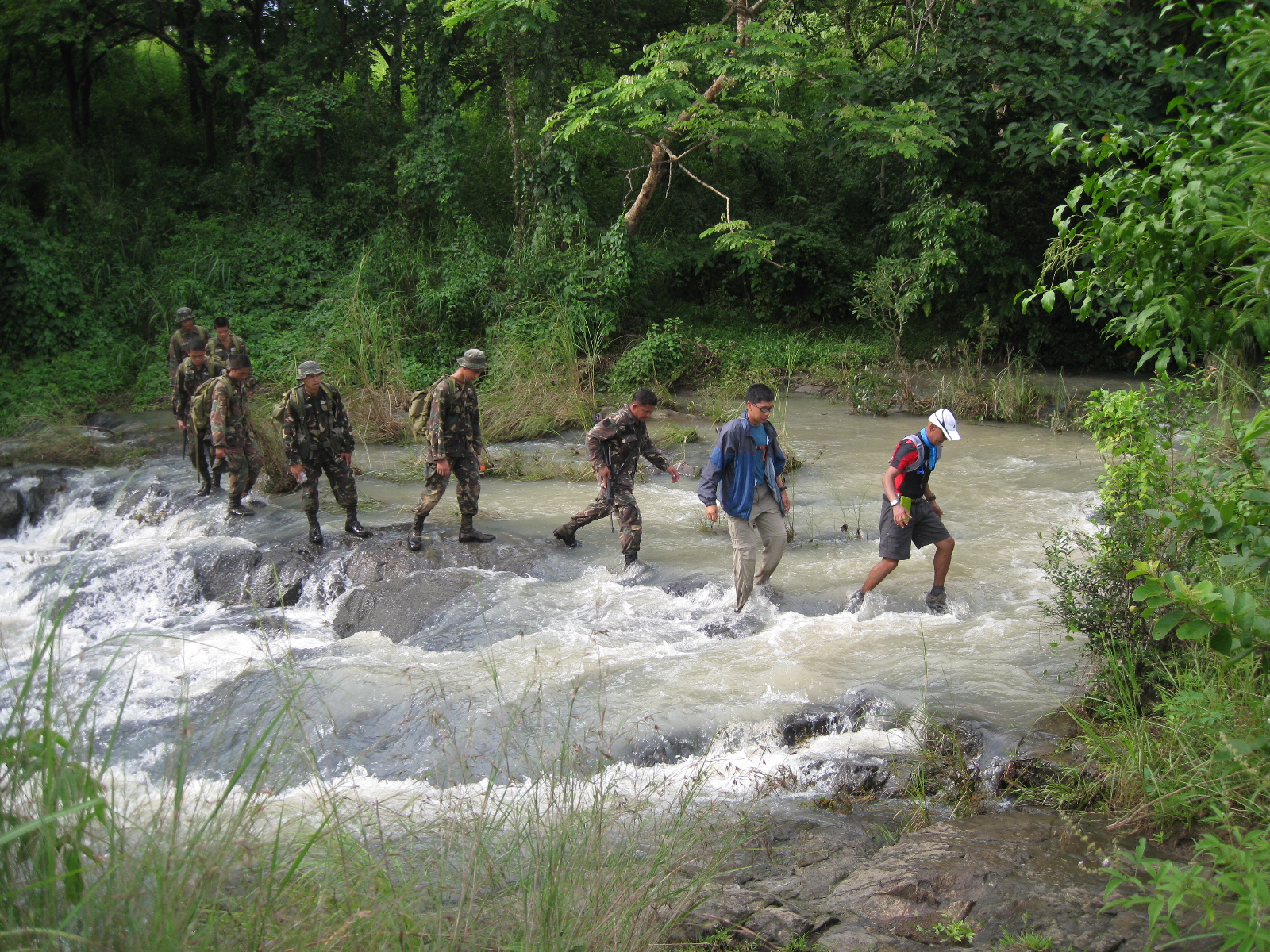
Descending From The Peak Of Mt Taklang DamulagLots of Single-Track Trail Around Mt Taklang DamulagMuddy & Slippery TrailLots of Stream Crossings!More Muddy Trail....and Wider Streams To Cross!!
Last Thursday afternoon, together with one of my elite athletes, Jack Espana, I went to Fort Magsaysay and slept overnight in one of the transient facilities. We were already in bed at 9:30 PM and woke up at 4:30 AM of Friday. At 5:30 AM, we started our run from the Starting Area of the Race by hiking the first 2 kilometers as our warm-up. The purpose of the run is to recon the first 40K distance of the route which is considered as the “outer loop” of the TD 100 route. The trail route is located outside the cantonment area of Fort Magsaysay passing through Barangays Pag-asa, Dona Josefa, Bacao, Langka 1 & 2, Palale, Cattle Stock Farm, and Nazareth.
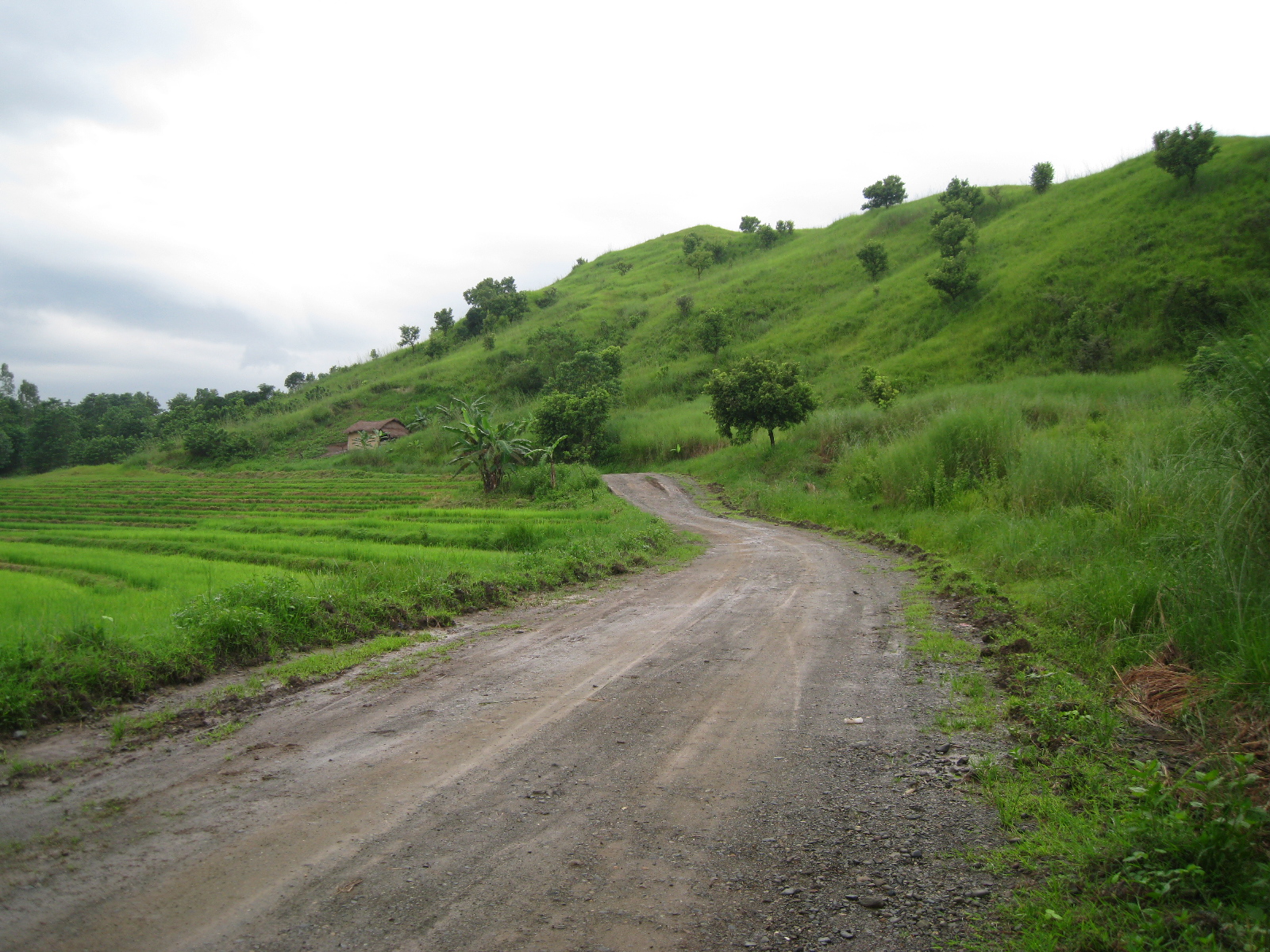
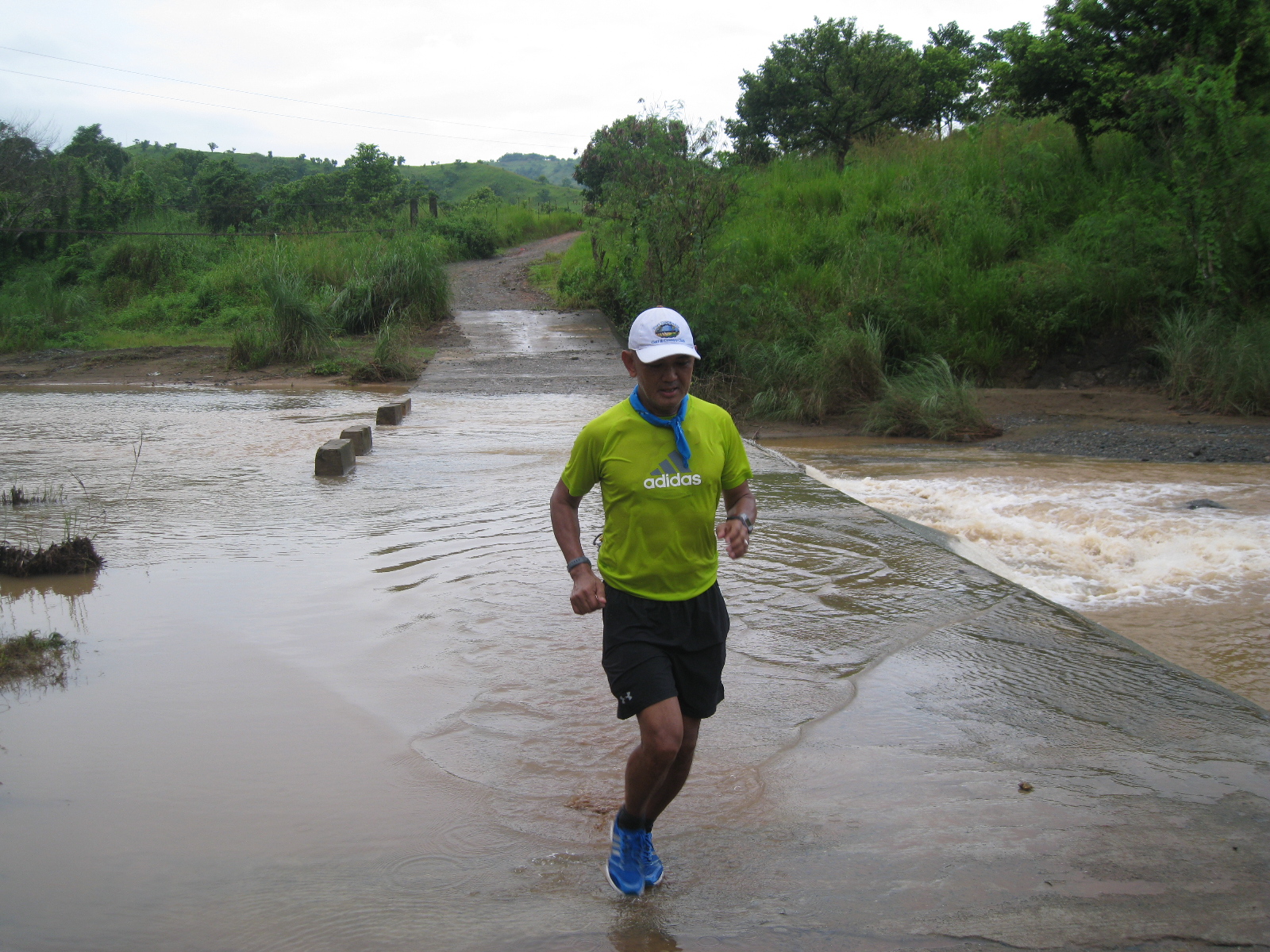
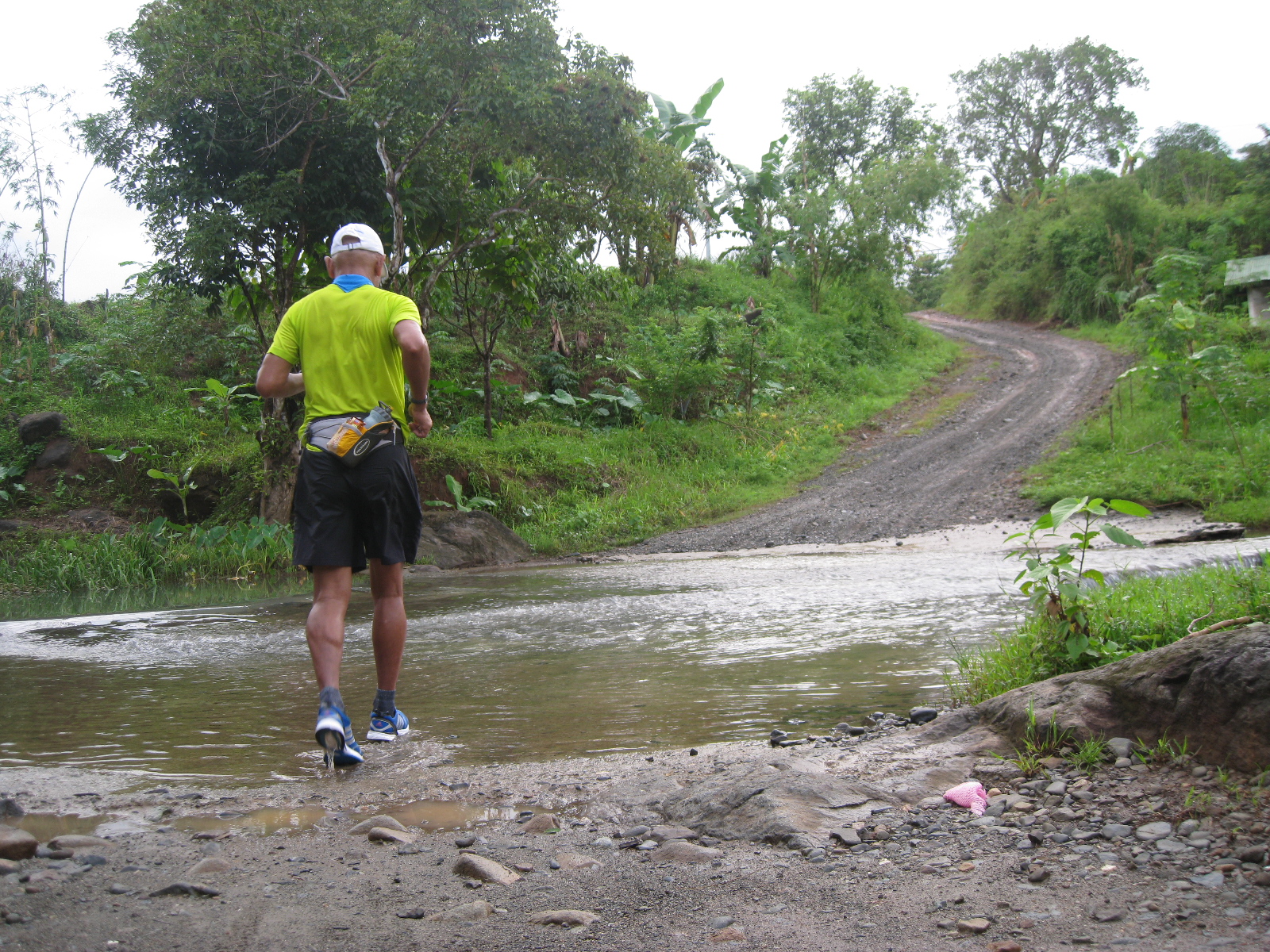
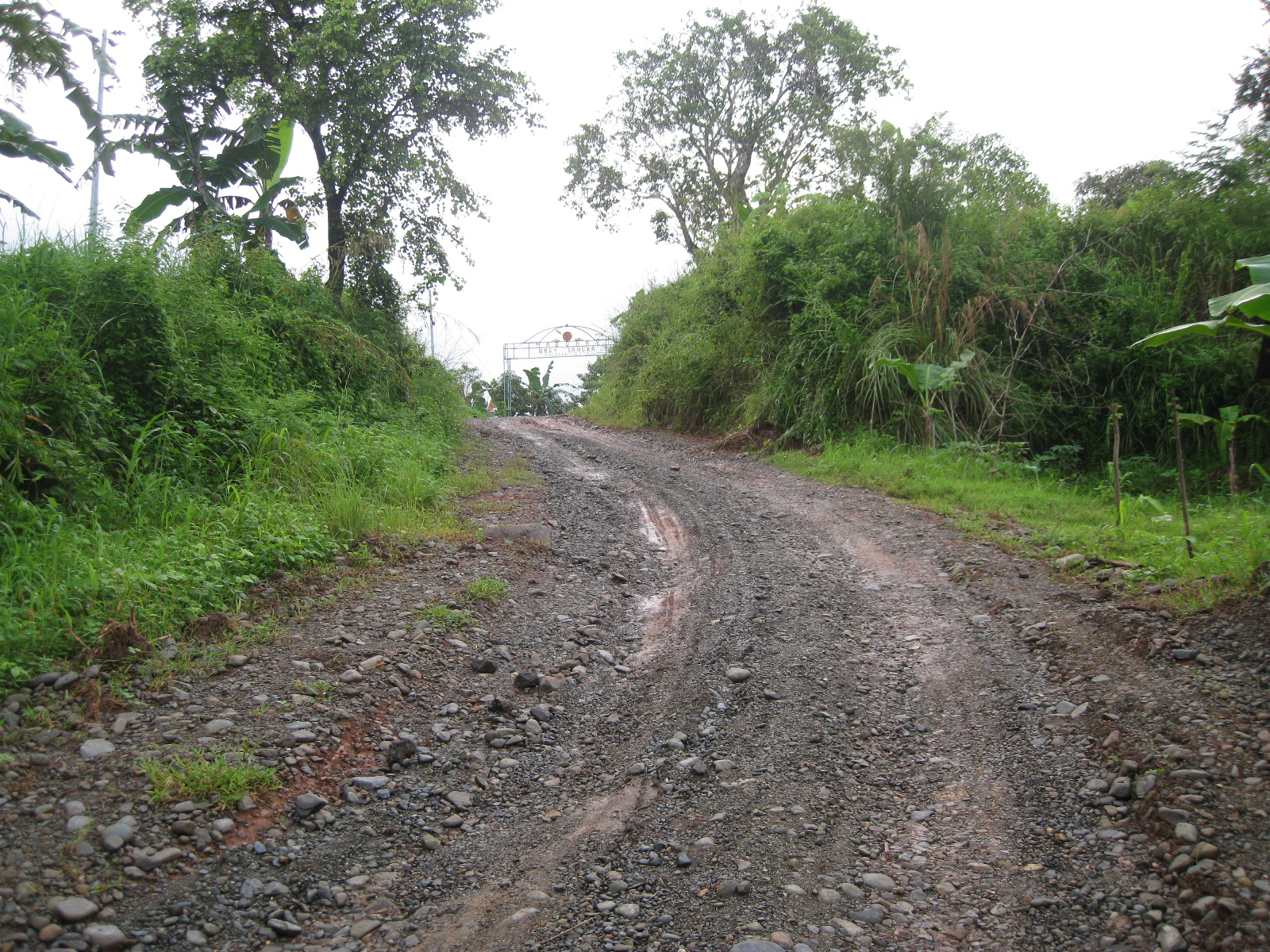
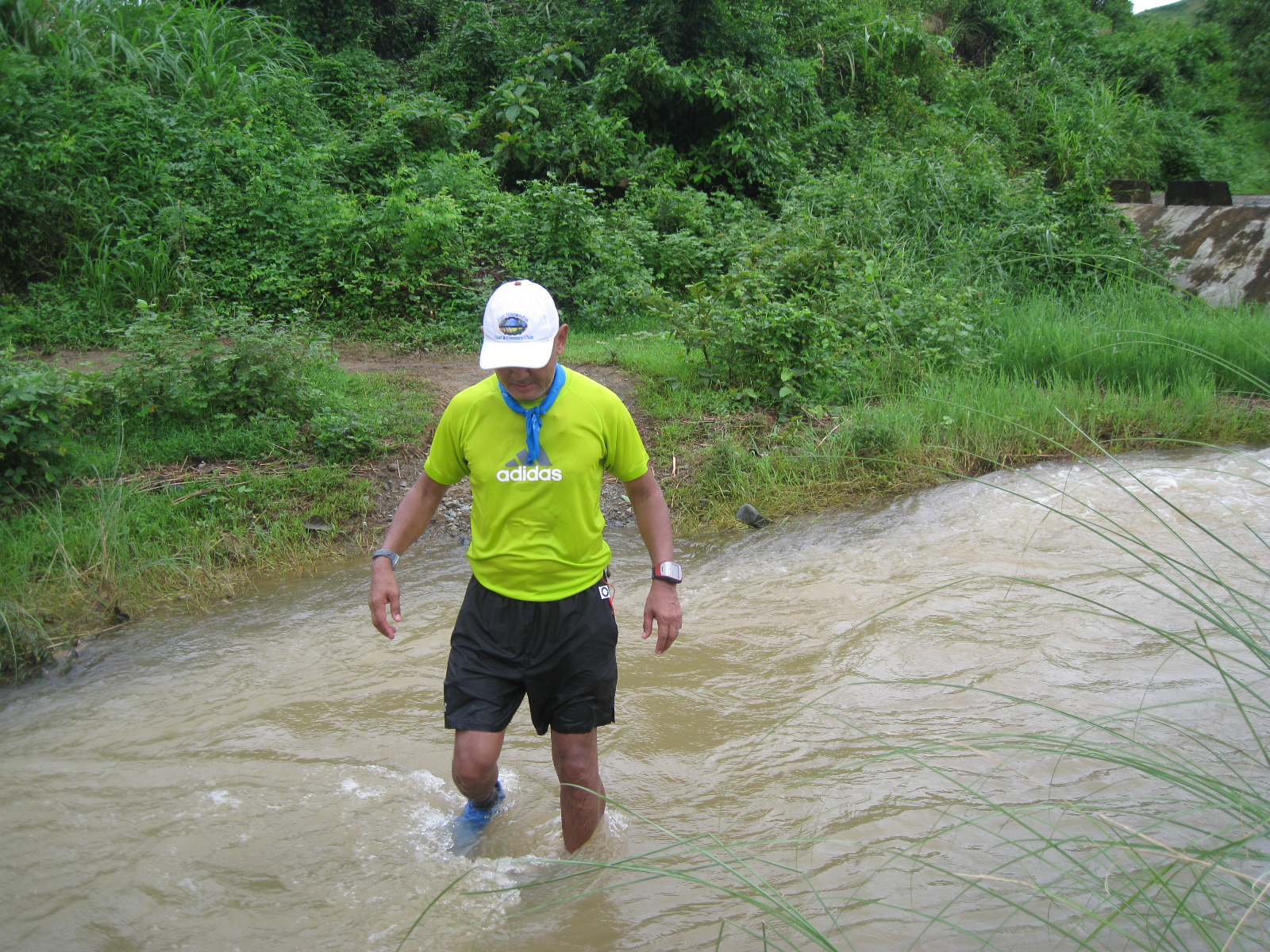
@ Km #6 in Barangay Dona JosefaFirst of So Many Spillways To CrossAm I Floating Above the Water?Detailed "Looks" of the Trail RouteOne of the Paths Towards The Peak of a MountainOne of The River CrossingsJack Was Infront Of Me Trying To Look For A TrailNice REMINDER Along The Route!Typical Condition of the Route @ Cattle Stock Farm (Km #30)Another Nice Reminder Along The Cattle Stock FarmWatchout For This AlongThe Route!!! It's The Real "Taklang Damulag"!!!
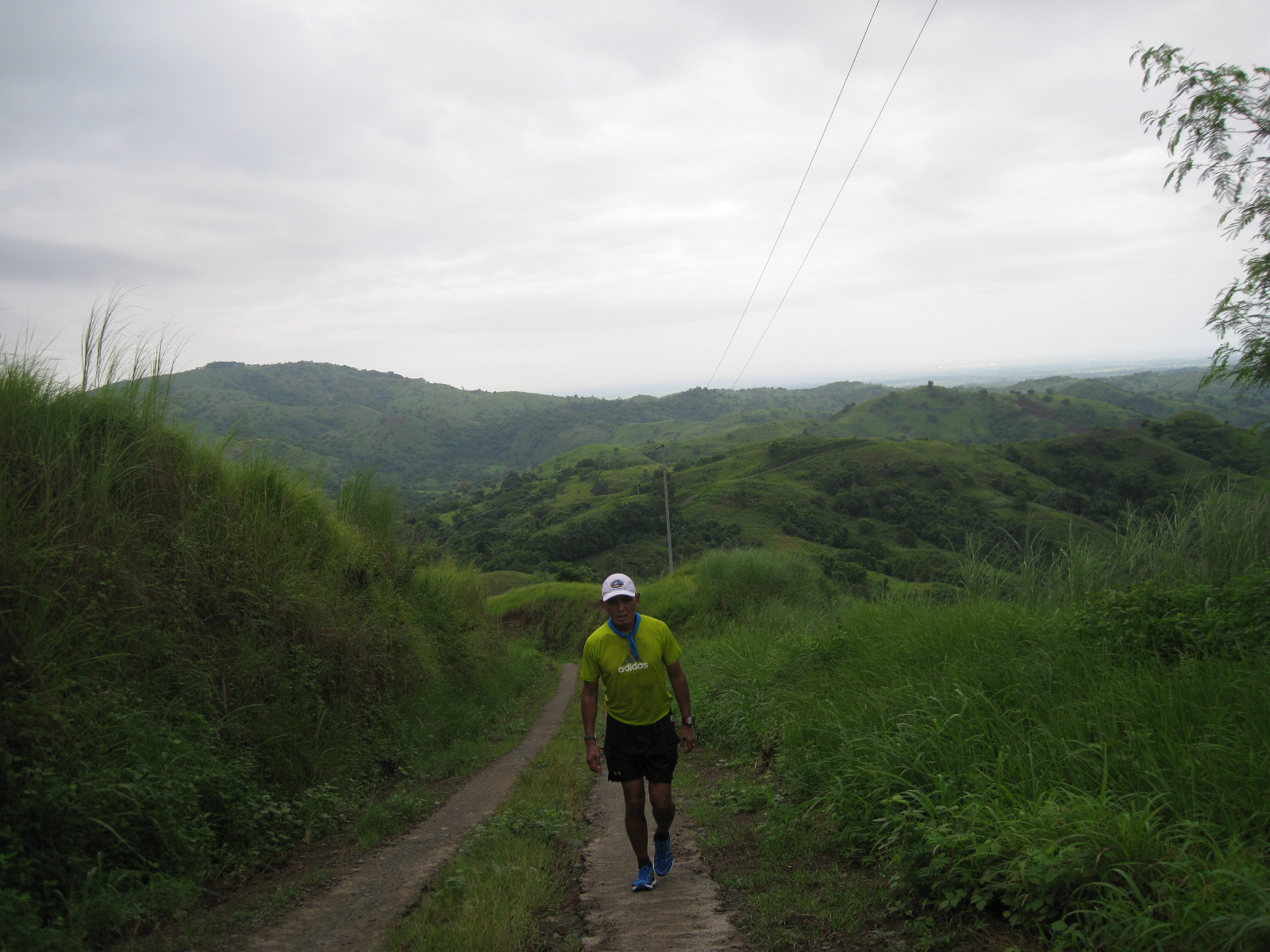
Practically, we left on the northern side of the camp and run through the trails on the eastern side of the camp and then re-entered the camp from the south direction. The route traverses through rolling hills and mountains with maximum elevation of 375 meters with lots of stream crossings through spillways and river crossings. What made the run very relaxing was the scenery, clean air, overcast sky, rain & showers on mid-day, and some conversations with the residents along the route.
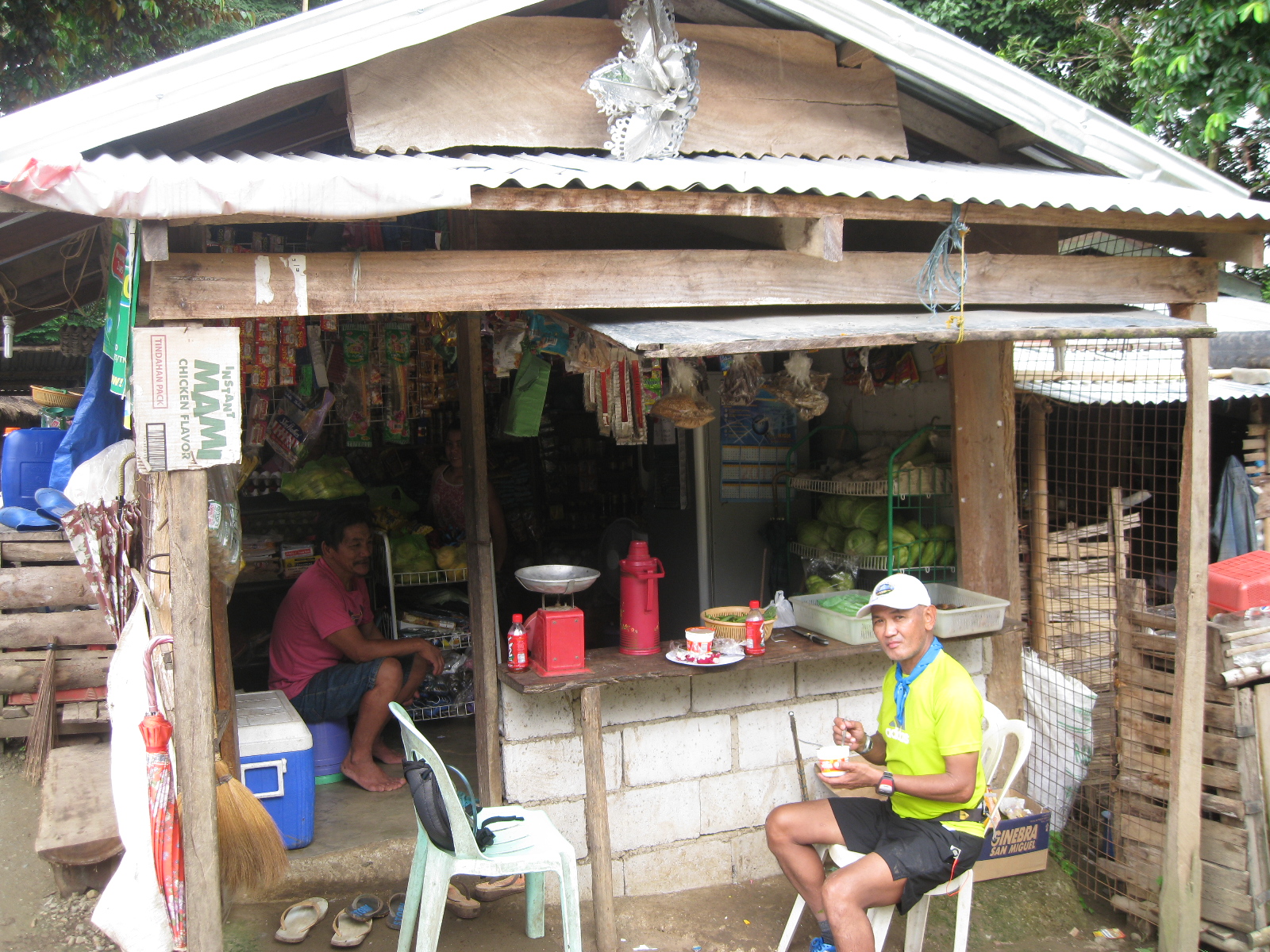
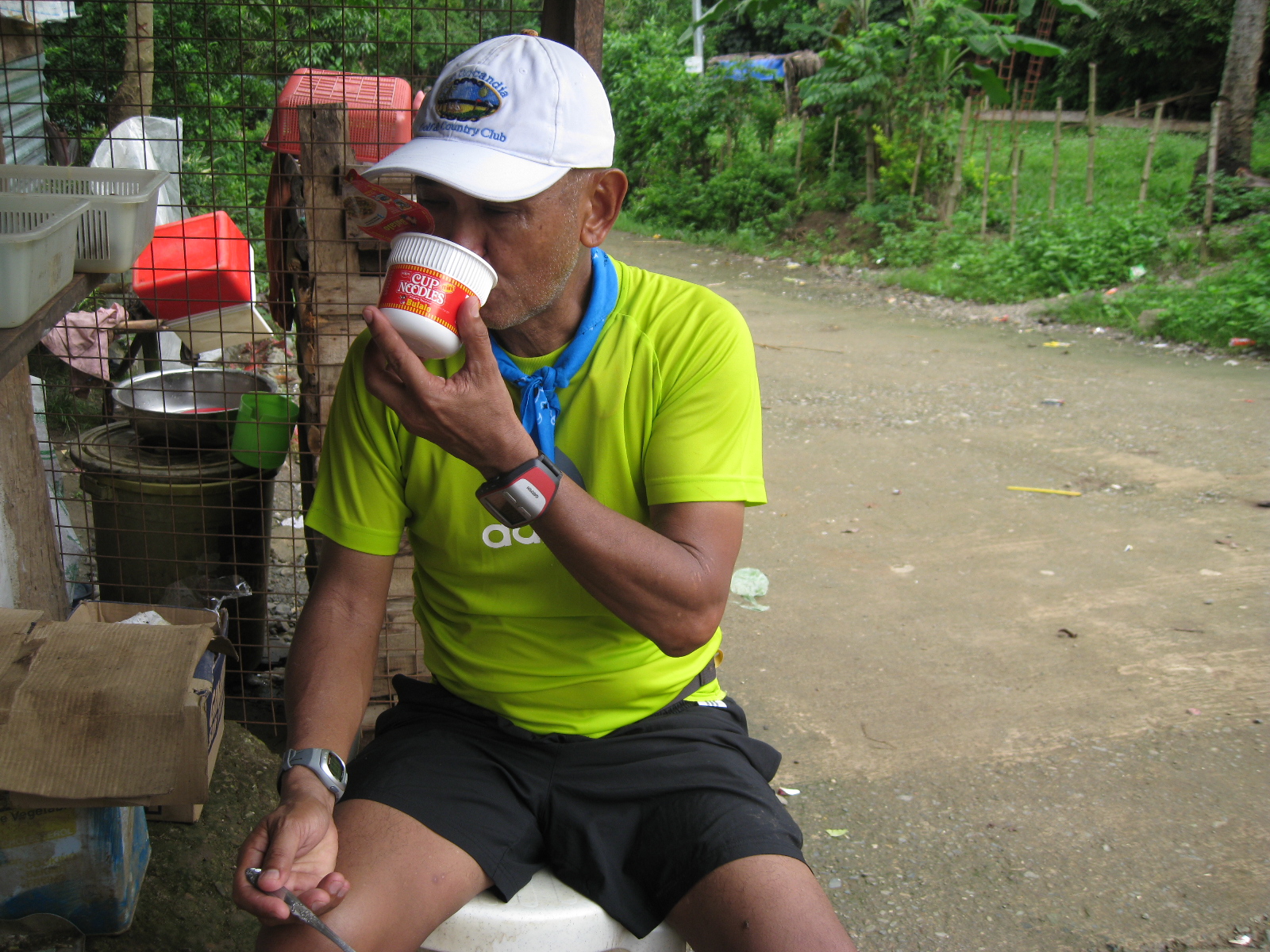
We had two “pit stops” along the route. These “pit stops” are sari-sari stores that sell anything from assorted bread & chips to drinks. We took some time to eat solid foods on these stores and were able to talk to the owners. The people were surprised as they always asked us where are our bicycles as we tell them where we came from. Bicycles? What bicycles are they talking about? They told us that a group of cyclists on mountain bikes would usually pass along the said route. Well, we told them that we were running, jogging and walking along the said route. It appeared that we were the first ones whom they see (as outsiders/visitors) to be running & hiking the said route.
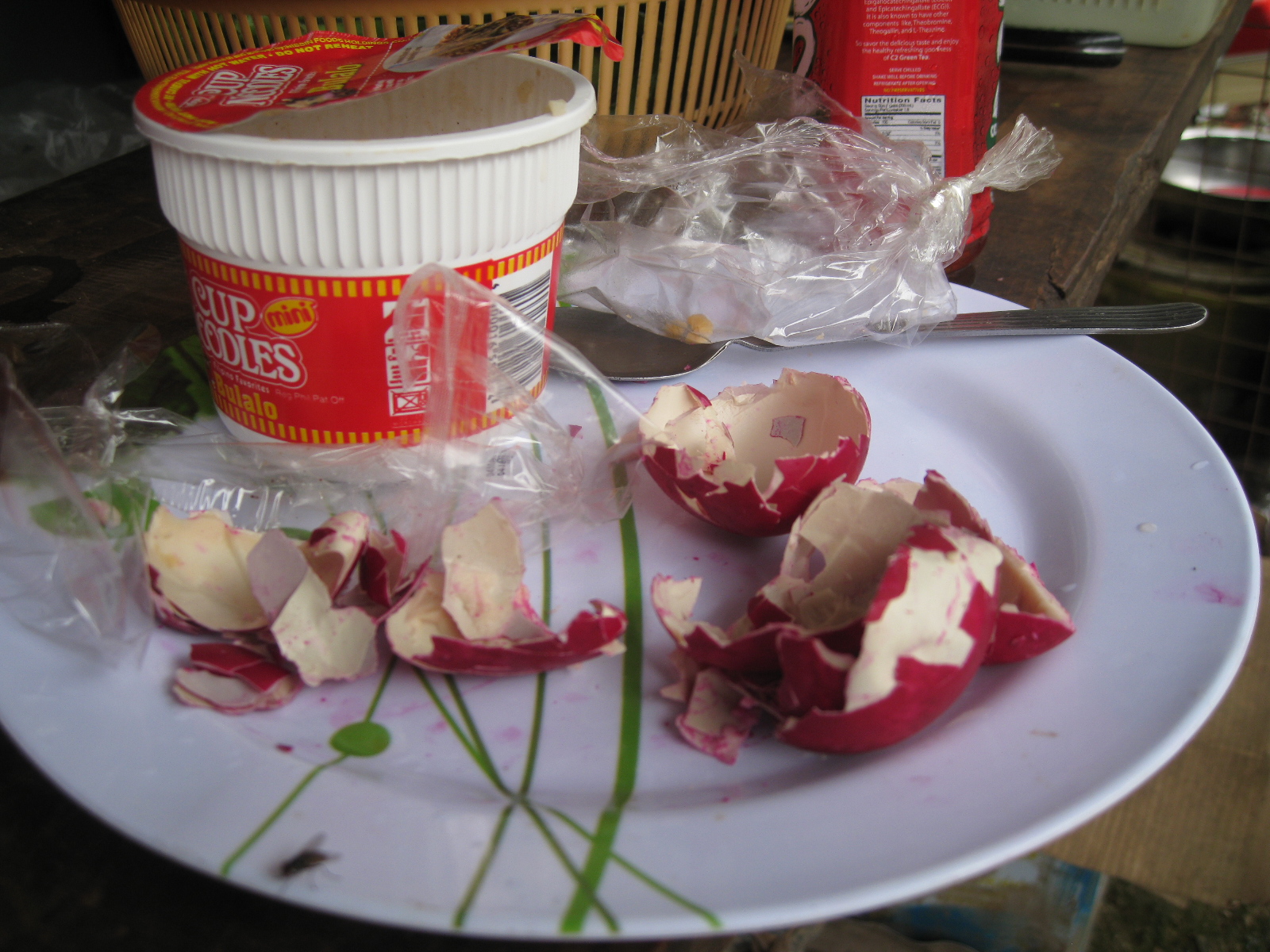
Our "Pit Stop" @ Barangay Palale. Km #26The People Does Not Know "Mami", They Call It "Noodles"Our "Brunch" For The Day To Include Bread/Pandesal
We finished our recon run before 3:00 PM as we reached our Starting Area. After a quick shower, we were out of Fort Magsaysay as we headed towards Eva’s Restaurant near the boundary of Zaragoza, Nueva Ecija and La Paz, Tarlac where the best and very hot Bulalo is being served.
Getting back from the result of our recon run on the TD 100 route. So far, I have run through a distance of 65 kilometers from the 80K-loop of the trail route with an aggregate total time of 13+ hours. And since the remaining 15K route is on an easy rolling and flat terrain, it could be covered in another 2.5 hours. Adding these times would total to 15-16 hours to cover one loop of the course! However, my recon runs had averaged a pace of 12-15 minutes per kilometer which was basically a “hiking” pace! So, from these data, an average ultra runner could finish one loop in less than 15 hours.
The actual measurement of the course is done! The next thing to do is to finalize the administrative and operational needs for the race!
Guys, I only need 25 “brave and hardcore” runners for this another historic FIRST 100-mile trail endurance running event in the country. Let us help one another in putting our country in the world’s map of ultra trail running.
A total of 66 trail runners started the race with 9 participants declared as DNF. Congratulations to everybody for having the courage to join this trail running event. The stories and experiences of the runners will prove that this event is considered as the “toughest and most challenging” trail run in the country today. That is why it will remain as a CHALLENGE to everybody.
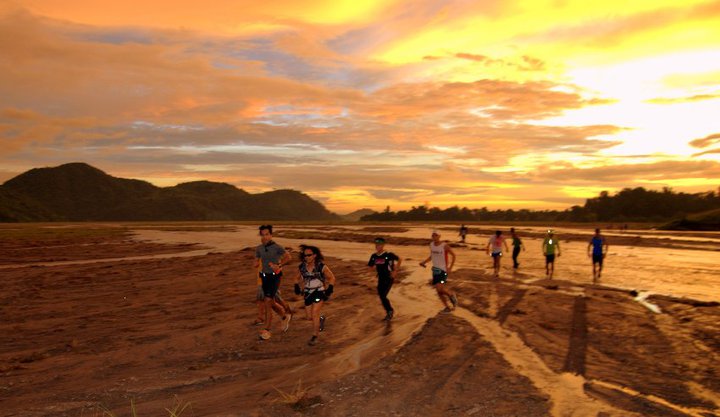
Congratulations to the Podium Finishers and to all the runners who braved the “sudden landslides” of lahar mountains; scorching heat of the sun in the early morning; heat from the lahar sand at mid-noon and early afternoon; more number of water crossings from wider rivers with flowing sands; strong downpour of rain in the afternoon; bigger and slippery rocks along the route; quicksands; and “flush flood” from the rivers.
For those who DNFed and got “temporarily lost” during the race, you still have a chance to redeem and improve your times for the next edition of the race.
Last Tuesday, August 30, 2011, my blog registered its 1,000,000th-hit, for a duration of 3 years and 10 months of consistently writing about running. I emphasized the word “consistent” because it’s the most important description for a person to improve in his running or in his/her pursuit to improve in any kind of endurance sports. It is also best described on my ability to share my journal, experiences, training, and readings about running through regular posting in this blog.
I could not quantitatively measure the impact and contribution of this blog to the present “running boom” in the country but I am sure that this blog has a group of avid followers that are inspired to go out of their way to experience what is like to be running on the road, oval track and on the trails. I hope these readers would be able to share this blog to “newbies” and spread the “good news” about running.
This blog will continue to be simple and void of any commercialism of any brand or corporate endorsement. I will continue to feature my running needs and equipment which I think would make my running more enjoyable and fun.
In addition to running events up to marathon distance, this blog will consistently promote ultra marathon or ultra running through the BDM Races and PAU Events whether on paved roads or trails.
To all my readers, thank you very much for having your time to read and browse on whatever things I want to write on this blog.
The Bald Runner will remain to be your “partner & companion” in running! Onward to my 2,000,000th-hit!
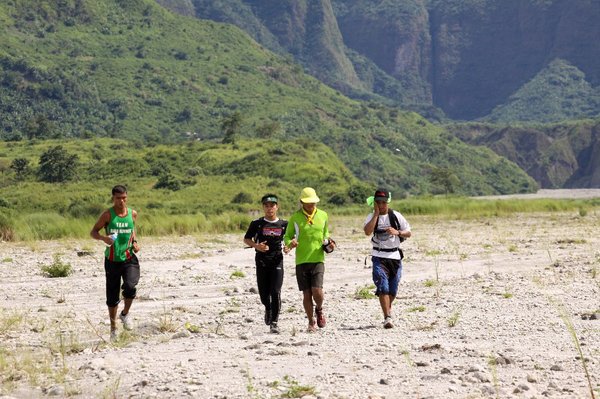
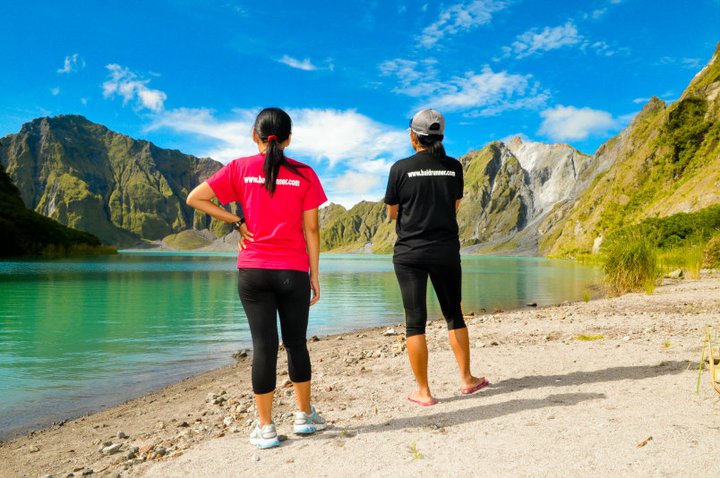
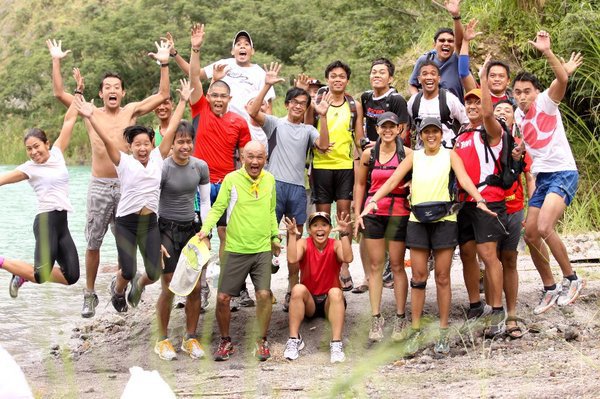
Note: The pictures above were taken last July 31, 2010 during the Birthday Run of July Oconer to Mount Pinatubo.
Rules and Regulations: 2nd Mt Pinatubo 50K Trail Challenge
The race starts at 5:00 AM of September 4, 2011 (Sunday) at the vicinity of the Barangay Hall of Sta. Juliana, Capas, Tarlac.
This race is a solo run and the distance is 50 kilometers. The distance from the Starting Line to the Mt Pinatubo Crater Lake (turn-around) is 25 kilometers. From the turn-around point, the runner has to go back to the Starting Line which will serve also as the Finish Line. Pacers are not allowed.
The cut-off time for the race is twelve (12) hours. Runners must be able to reach the turn-around point in 5:30 hours. Runners who will reach the turn-around point in more than 5:30 hours will be advised to ride on the available 4X4 vehicle in going back to the Starting Line. Such runners will be declared as DNF.
Each runner must be able to have their respective hydration system/belt. The runner’s hydration system must be able to carry liquid/water needed to cover a distance of at least 15 kilometers. There will be Aid Station at Km#8-9 & Km#16-17 and these same Aid Stations will serve as Stations at Km# 33-34 and Km # 42-43 (on the way back). These Aid Stations will be 4X4 vehicles manned by Race Marshals. Be sure to carry some food for you to eat at the Crater/turn-around point (Km #25). The park at the Crater has faucets where you can fill water for your hydration system.
The Aid Stations will have water, cola drinks and limited food supply. The foods served will be chocolate bites, salted biscuits, boiled eggs, and boiled bananas.
Runners are encouraged to prepare their own “drop bags” which will be carried/transported by the 4X4 Vehicle-Aid Stations. Drop Bags should be properly marked with the runner’s name, race number, and Aid Station Number/Km Point where it will be available.
Runner has the option to provide his/her own support vehicle from the 4X4 vehicles for rent available through the Barangay Officials at the Barangay Hall of Sta Juliana. The rent/cost of one vehicle is P 2,500.00 (last year’s price). The fee for a guide is P 500.00 (optional for the runner to get one). However, such individual support vehicle should not “shadow” the runner. It is advisable that support vehicles must “leap-frog” from the runner.
The exact turn-around point is at the edge of the Crater Lake. Runners should go down the stairs as each runner must be able to register to the marshal-recorder upon his/her arrival thereat. Runners shall be properly “marked” at the turn-around point by the Race Marshal thereat.
Runners are advised not to ride on their respective support vehicle even for a short distance or while crossing the river. Riding on the vehicle is tantamount to “cheating” during the race.
Since most of the route towards the Mt Pinatubo has no established or designated trail or path due to changing landscape as a result water & earth movements, the runner can improvise or have his/her own personal choice in establishing his/her direction towards the crater. The rule of thumb for the direction towards the crater is ALWAYS STAY ON THE LEFT PART OF THE EXPOSED AREA going southerly direction.
It is advisable to run with somebody or with a group with the same pace. If not, each runner must be able to have a sight on the runner in front and runner at his back.
This is a trail run which is considered as a RACE. However, it is advisable to help each other on matters of emergency and occurrence of accidents along the route. Any casualty or runner who needs medical attention should be brought to the nearest Aid Station.
Each runner must carry with them basic First Aid Kit. This is a MUST and it is a ground for Disqualification if a runner is without this basic requirement. The First Aid Kit should consist enough cotton, sanitary gauze, medical adhesive tape, betadyne/iodine, and anti-biotic ointment.
Runners must be extra careful in stepping those big rocks along the route. Most of the rocks are slippery and some are not stable. It is safer to walk rather than run on these rocks. Always think safety when you encounter rocks along the way.
There will be a lot of river crossing. Find time to be deliberate in crossing such flowing rivers, most especially where there are a lot of rocks. There are some places where the current of the river are strong, take time in establishing a firm and balance footing as you cross such rivers.
Basically, you will have damp/wet running shoes throughout the run. It is advisable for each runner to apply petroleum jelly to their feet before the run to prevent blisters.
Walking sticks or Trekking Poles are allowed on this run.
At the Crater Lake, if you are not a swimmer, please do not attempt to swim at the lake. We don’t have any Lifeguards for this race.
If in case there will be typhoon or continuous raining on race day, the event will be cancelled and it will be postponed to a later date when weather is favorable for the safety of the participants. Please check on the recent race updates on the Event Page on my Wall at Facebook.
Top 3 Overall and Ladies will receive trophies. Every Finisher will receive Individual PAU’s Finisher’s Medal; Finisher’s T-Shirt; and a Certificate of Achievement (to be given later). This trail run is included in the Ranking of PAU Runners for the Year.
Parking Areas will be available on one side of the Road at Barangay Sta Juliana and at the area near the banks of the river (500 meters from the Barangay Hall). Barangay Tanods will serve as the security/”look-out” to your parked vehicles. Be prepared to pay P 50.00 as Parking Fee for each vehicle to the Barangay Tanods.
The RD and Race Marshals will be conducting random checks on each runner’s hydration system and the mandatory First Aid Kit along the route. It is mandatory for each runner to show their First Aid Kit as he/she checks-in at the Starting Area.
Lastly, please maintain the Integrity of this Race.
For those who paid/deposited their registration fee at LANDBANK, please bring your deposit slip/receipt at the Starting Line for verification.
No bandits to be allowed on this event. Insisting to be a Bandit? Go ahead, make our day!!!
Good luck and Have FUN!!!!
Mt Pinatubo 50K Trail Challenge Elevation Profile (Courtesy of Mark Hernandez)
Last Friday, I started my anaerobic training after more than 3 months of my MAF training. The purpose of the anaerobic training/speed running workout was to find out my Maximum Heart Rate (Max HR). This activity was done at the ULTRA Oval Track on the early evening of Friday.
After 4 laps of brisk walking, I did five (5) repetitons of 800-meter run or Yasso 800 where I averaged 3:54 minutes. Each repetition was followed with one lap of slow jog. My Average HR for the workout was 168 beats per minute with a MAX HR registered at 178 beats per minute. After the Yasso 800 workout, I did 4 laps of brisk walking as my cool-down workout until my HR registered to 112 beats per minute.
As suggested by Dr Maffetone, there are two ways to find out one’s MAX HR. One is to run at one’s best effort within 3-4 minutes and record one’s highest HR. The other one is to use the suggested formula—208 minus the result of one’s Age multiplied by 0.7.
Based from my first anaerobic workout, I registered a Max HR of 178 beats per minute while my supposed to be Max HR by following the suggested formula is approximately 167 bpm. There is a difference of 11 beats per minute. I hope I’ll be able to adjust my desired Max HR as I do more of my anaerobic workouts.
What was notably good after my first anaerobic workout was that I did not feel any soreness or pain on my legs despite my practice of not doing any stretching or speed drills before my Yasso 800 repeats! I simply do my 10-minute squats after my workout. The 2nd advantage of such workout is that it was quick and short. After 1 1/2 hours, I was out of the ULTRA Oval Track.
There is a need of more anaerobic workouts to really find out my Max HR. One way to do this is to join a 10K run this morning! To prepare for the 10K run, I completely rested the whole day of Saturday.
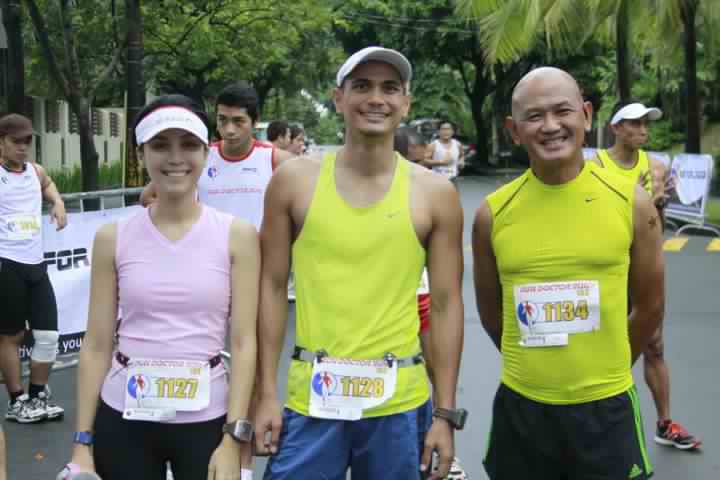
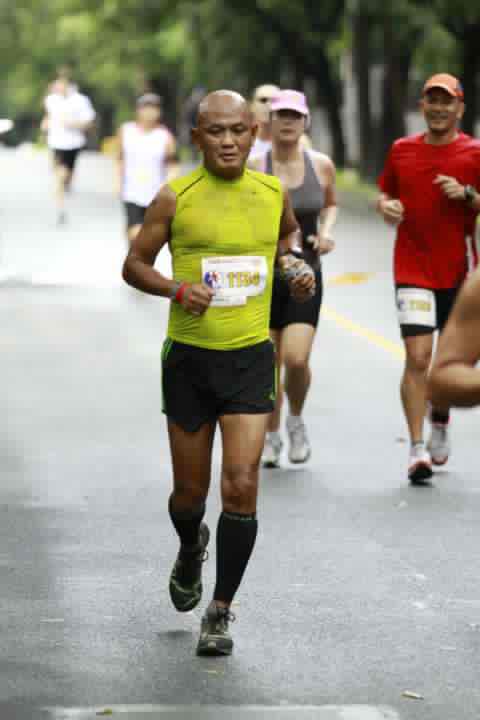
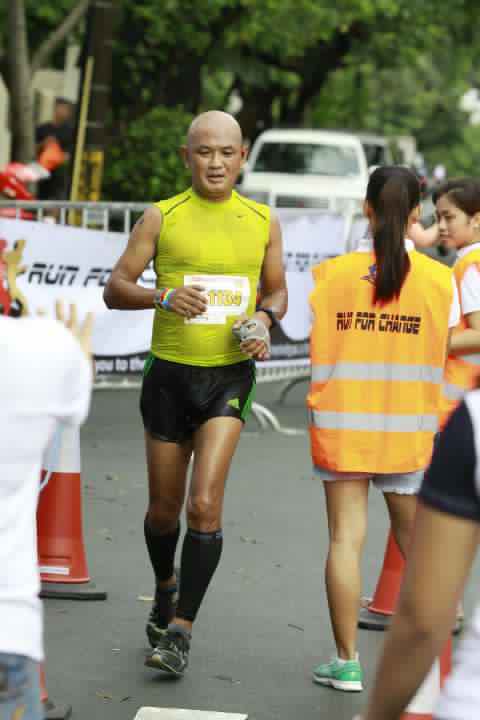
I joined the Run Doctor Run 10K which was organized by my good friend Eric Pasion of Run For Change. It was a simple race which was held inside the Dasmarinas Village. The last time that I went inside this place was in the mid-90s when I was still active in cycling. The streets are wide and there is no traffic plus they are shaded with tall trees on both sides.
Hanging Out With BDM "Veterans" Mark & Bea Before The Start of the Race
The race started at 6:30 AM with the 10K run being released ahead of the shorter races. I started a very conservative pace of 5:45+ minutes per kilometer making sure that my HR will steadily and gradually increase. It started at 121 bpm until it reached at 160 bpm after running for 3 kilometers. I started to increase my pace for the next 3 kilometers where my Max HR registered at 178 bpm. At the 7th Kilometer, my HR went down to 170 until it peaked again to 175-177 from Kilometer 8 all the way to the Finish Line.
Look Who's Smiling At My Back (Thanks, Jonel for the Accommodation!)
All the amenities you need in a road race were all there. Eric has already perfected the conduct of a road racing event. Everything was perfect, to include the weather!
I finished the race in 55:27 minutes with an average pace of 5:39 mins per kilometer. My HR Monitor registered an average HR of 168 bpm and a Max HR of 178 bpm which is consistent to what I’ve recorded on my first anaerobic workout last Friday at the Oval Track. It seems that I am starting all over again and trying to regain my speed through more aerobic workouts/LSD runs.
Smiling As I Crossed The Finish Line
I know it will take weeks and months and even years for me to improve my performance using the HR monitor as a form of biofeedback on the intensity of my training and running workouts. I am no longer young to do all those high mileage of training but I am still guided with the basic principles of training for endurance sports—consistency, specificity of training, rest & recovery, and extended goals. My primary goal now is to prevent myself from being injured and have fun in all my running adventures.
Finally, I am back to my regular training!
Thanks to John Avellanosa for the pictures and Jonel of FrontRUNNER Magazine & Eric Pasion for the accommodation.
It was hard for me to adjust to the Maffetone Training by following 180 Formula during the 1st week of my training. I had mentioned in my previous posts that I “cheated” on strictly following the 180 Formula where my Maximum Aerobic Function’s (MAF) Heart Rate shoud be 121 beats per minute. I started with 142-145 beats per minute for the first 2-3 days until I was able to adjust to 138 beats per minute. After a few days, I was comfortably running, slow jogging and walking at 132 beats per minute.
After another 2-3 days, I was able to bring down my maximum aerobic heart rate to 121 beats per minute. After 3 weeks of running and walking within my MAF of 121 beats per minute based from my 180 Formula, I did my first MAF Test. As suggested by Dr. Phil Maffetone, a runner must first warm-up by gradually increasing the heart rate from a resting rate to a range of maximum aerobic rate, from the lowest range of 111 beats per minute to my maximum rate of 121 beats per minute. Warm-up is being done by slow walking up to brisk walking for almost 15-16 minutes which is equivalent to 4 laps at the oval track. It is notable in my running workouts that I don’t perform any stretching exercises before and after my runs. However, a 10-minute squat after my running workout had been a “must” and later became a habit.
Once my max aerobic rate range of 111-121 bpm is reached, I start jogging/running and complete 4 laps on the oval track which is equivalent to one mile. The time is recorded and written on a paper. After a short recovery by walking of at least 30 seconds, I do my second set of one mile run until I complete five repetitions of one mile run. The time of each mile repetition is being recorded. After the 5th mile, I have to cool-down by walking another 4 laps until my heart beat rate would gradually go down to the rate that was registered before I started my workout. After 3-4 weeks, another MAF Test has to be done.
So far, I just completed my 3rd MAF Test last week. The results are shown in a tabulation below:
JUNE
JULY
AUGUST
16:50
16:27
16:10
17:32
17:18
16:56
18:10
17:41
17:27
18:55
18:39
17:35
19:28
19:08
17:52
The tabulation would show that I am gaining my “aerobic speed” which means that I am getting faster with a constant HR of 121 beats per minute. When I started to strictly follow the 180 Formula, the distance (as registered by GF 305) I could cover for a hour was 5.6 kilometers. After one week of max HR of 121 bpm, I could cover 5.66 kilometers per hour. After 3 months of 180 Formula/MAF training, my distance covered for one hour is 5.88 kilometers per hour!
Sometimes I vary my method of determining my improvement. I would run/jog for a distance of 8 kilometers (5 miles) continouosly at the oval track by maintaining an average HR of 119-121 beats per minute and try to record the time elapsed to cover the distance. On my first try, I registered a time of 1:31:20 hours. After a few days, I registered a time of 1:30:04 hours. At present, I was able to register my fastest time in 1:25:48 hours for the said distance.
My typical weekly workout would consist of “doubles” during the day—1.5 hours in the morning and another 1.5 hours in the late afternoon. Such workout would include 15 minutes of warm-up, 15 minutes of cool-down, and running for one hour at an average HR of 121 bpm. On the next day, I do 2.5 hours with 2 hours of actual running and the rest for my warm-up and cool down. I do this kind of workout in the morning only which is also considered as my “heat training” under the sun as I start my workout at 8:00 or 9:00 AM. On the next day, I go back to my daily “doubles”. And the cycle continues throughout the week. My long runs during weekends would last up to 3 hours of running & walking, making sure that my average HR would not be more than 121 bpm. The last MILO Elimination Run was my longest LSD for almost 6 hours, covering a distance of 32 kilometers.
It is very evident that I measure my running workouts by the TIME that my feet are on the ground! The distance covered during these timed workouts is just a data that provides a good feedback and evaluation of my improvement in this kind of training. At least, the minimum of hours per week in my training is 12 hours.
It is worthy to note that within this 3-month of strictly following the max aerobic HR of 121 bpm, I was able to try and complete my “Two-Week Test” to determine my carbohydrate intolerance, a situation when the body has more carbohydrates stored in the body system. This “Test” greatly improved my resting HR, lowering and sustaining my MAF’s max aerobic HR to 121 bpm during my workouts, reduced my weight to 135 pounds, and no longer have sleepy feeling after lunch or after a heavy meal. The best result is that I can control my urge to eat foods rich in carbohydrates.
I hope there would be good results in my endurance capabilities as soon I start my anaerobic/speed training in the weeks to come.




 Bald Runner
You must be logged in to post a comment.