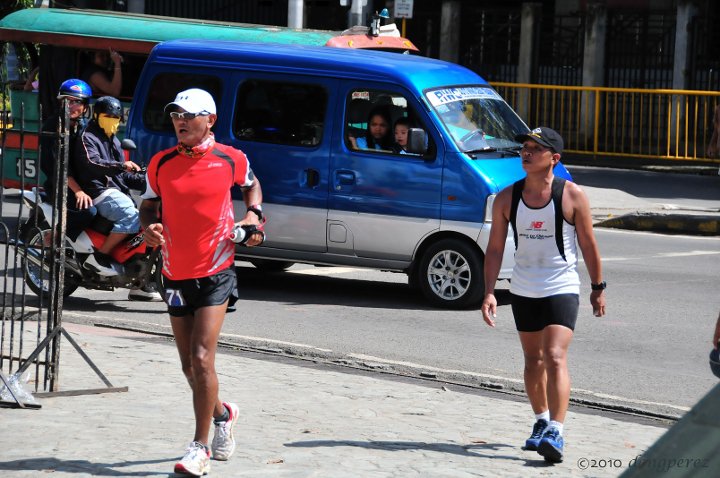
24-Hour Run: Soochow Ultramarathon


Pre-Race Activities

The longest time of my life to be running and walking continuously was when I finished the 1st edition of the Bataan Death March 102K Ultramarathon Race last April 4-5, 2009 where I finished in 15+ hours. Now, I could not imagine how these 30+ elite ultramarathon runners to be running around a 400-meter oval track for the duration of 24 hours. One-half of these runners are the world’s best in this kind of endurance event and it was a learning experience for me in terms of the organizational, administrative, and the technical aspects.

The Soochow International Ultramarathon 24-Hour Endurance Race is in its 10th edition where world records for such event had been established by no less than the best of the best of running. This simply means that Taiwan and other countries in our neighbours in the Asia region had been ahead of us in terms of awareness and participation to ultramarathon events. Continue reading “24-Hour Run: Soochow Ultramarathon”

“Good Morning, Taipei!”


At 9:00 AM this morning, Saturday, December 11, 2010, the 10th Annual Edition of the “IAU’s Silver Medal” Event in Taiwan which is called, “Soochow International Ultramarathon 24-Hour Endurance Race” shall start. The 24-Hour Endurance Race usually consists of only 36 elite runners in ultramarathon running where 18 runners are “the best” international runners and the other half are elite runners from Taiwan.

The Soochow University’s Oval Track had been the official venue of this event since its first staging in 1999. This ultramarathon/24-hour endurance race had been organized and directed by one of its University professors, Frank Kuo, who happens to be a passionate ultrarunner who had joined the Spartathlon and other multi-day running events in the world. Continue reading ““Good Morning, Taipei!””

“AFP Challenge” & Fun Run


When I was in the active service, we have a sports competition event which was called “AFP Olympics” which was a competition among the Major Services of the Armed Forces of the Philippines (AFP), to include the Philippine National Police. This is one of the Sports Programs of the AFP to help the country hone its talents towards Sports Excellence. Most of our elite athletes in our Sports’ National Pool are enlisted as soldiers and this a way where their training is supported through their Pay & Allowances coming from the AFP. But they also perform duties as soldiers and sometimes assigned outside the Metro Manila area. Thus, these soldiers/elite athletes are not concentrated/focused on their training to be the “best of the best”! Continue reading ““AFP Challenge” & Fun Run”

What To Do After An Ultramarathon Race


For this year’s PCTR Headlands 50-Mile Ultra Trail Run and 1st Cebu 50K Ultramarathon Run, I experienced what they call “DOMS” (Delayed Onset Muscle Soreness) where you could barely walk because of muscle soreness and stiffness on my legs. This experience is very natural if I finish an ultra distance run.

In my own experience, after I cross the Finish Line, I usually rehydrate myself with any available fluids like, water, sports drinks and Cola. I stop drinking these fluids once my perspiration stops and that is the time I change to my dry clothes. While drinking these fluids, I see to it that I start to stretch my leg muscles like when after I do my regular running workouts. Continue reading “What To Do After An Ultramarathon Race”

2nd Quezon City International Marathon


4:30 AM December 5, 2010/2nd QC International Marathon

Last year, I ran the Half-Marathon of this event with my daughter, Jovelle, and I was on a pacer-crew mode. This was my last long run before I tapered off for the 2009 Subic International Marathon where I finished in sub-4 hours. The route was totally different then as most of the runners would run towards the Trinoma Mall area before reaching the Finish Line inside the Quezon Memorial Circle. Continue reading “2nd Quezon City International Marathon”

“You Can’t Buy Speed…And Endurance”


In an ultramarathon race, your pricey “high-tech” apparel and equipment do not make you faster and stronger runner but they can make your run more enjoyable and with better looks on your photo album!

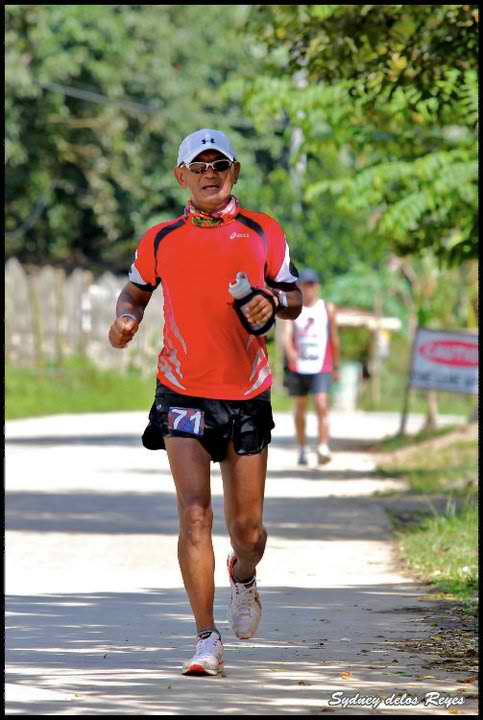
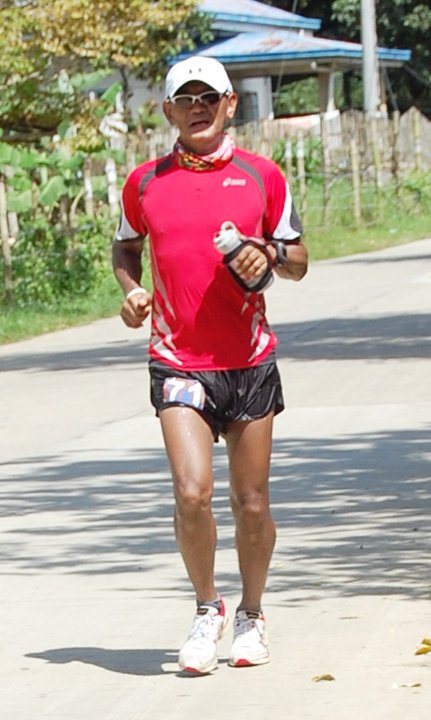
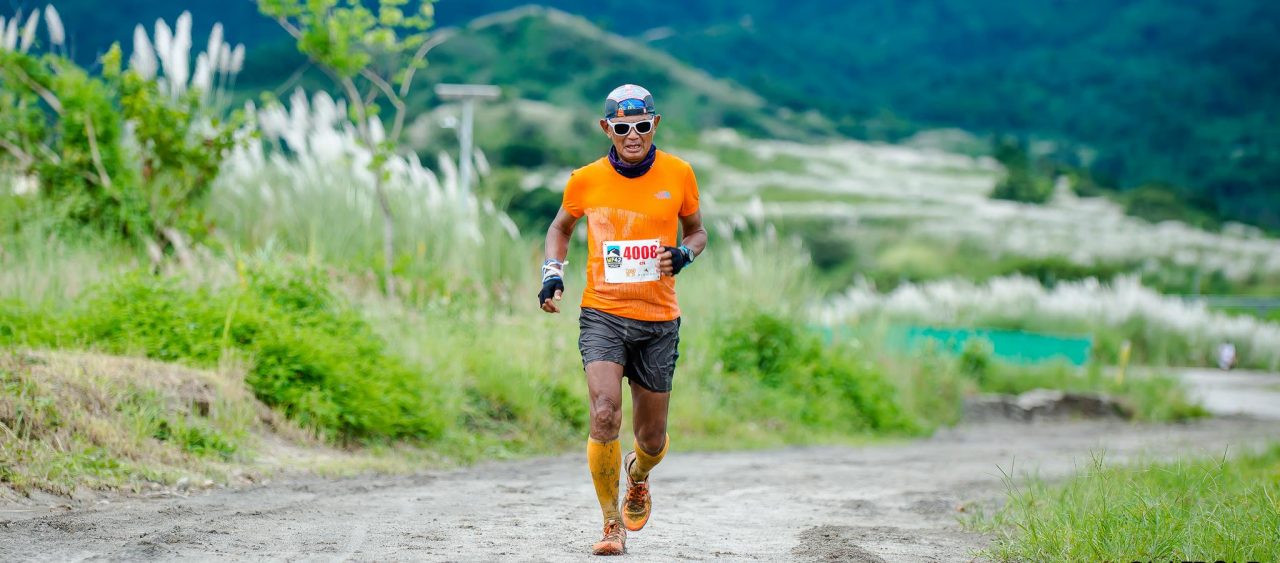
Having "FUN & PAIN" @ the 1st Cebu 50K Ultra Run

But looking at this picture, I’ve concluded that all the things that I was wearing on this run were bought outside the country!

Runner’s Cap by Under Armour

Oakley Sports Sunglass (Asian Fit) Bought & Ordered by my daughter, Jovelle

Neck Bandana by Buff

ASICS Technical Shirt bought in Jeju Island, South Korea

Race Ready Shorts From Zombie Runner

Hand-held Racing Bottle by Ultimate Direction from Zombie Runner

“ONE” White Wristband

GARMIN Forerunner 305

Running Socks by DryMax

ASICS Gel-Tarther Shoes bought in Jeju Island, South Korea.

In my estimate, the whole attire and stuff on me is worth $800.00! That’s a lot of money for looking “good” while running in a race. However, the pain, experience, feeling of successfully crossing the finish line, meeting friends, and being strong and healthy is PRICELESS!

Running is the cheapest sports but if you want to look good in your pictures, then by all means, you can buy stuffs that you can see in “glossy” sports magazines and feel that you are an elite athlete also. But in the end, you can’t buy speed, endurance, and “mental toughness” (from Dr Chester Puno) as they are developed and acquired with years & years of patience, commitment, discipline, determination, and passion for the sports.

See you at the Starting Line!

(Note: Photo Courtesy of Sydney delos Reyes at the 1st Cebu 50K Ultramarathon Run)

BDM 102 Ultramarathon Lectures/Clinic


This project was conceived to help and guide the runners who applied to participate in the 2011 Bataan Death March 102K (BDM 102) Ultramarathon Race. The lectures consisted of experiences and tips of past Finishers of the race to include their Support Crew. These lectures were conducted twice a month at the Philippine Army Officers Clubhouse on Friday evenings, from 6:30 to 7:30.

First Lecture: History of BDM & History of the Race

The first lecture was conducted last October 1, 2010 at the Philippine Army Officers Clubhouse by the Race Director/Bald Runner with emphasis on the appreciation of the history and significance of the Bataan Death March as one of the infamous events in the history of warfare, specifically, the Second World War. It is in this event that human lives paid a heavy price on the dastardly acts perpetrated by the conquerors/invaders to the defeated defenders of Bataan. A total of almost 20,000 Filipino soldiers, militias, and American soldiers died on the said Death March from Mariveles, Bataan to San Fernando, Pampanga; “jampacked” like sardines in box carts on a train from San Fernando, Pampanga to Capas, Tarlac; and then ultimately marched/walked for another 11 kilometers until they reached the Camp O’Donnell as their Prisoner’s  Concentration Camp. The march and the train trip covered an approximate distance of 151 kilometers. In three weeks, all the surrendered combined forces of the Philippines and the United States were finally brought to their final destination, Prisoners Concentration Camp at Camp O’Donnell.

In the advent on the popularity of ultramarathon races in other countries, I conceived the idea of transforming the Bataan Death March as an ultramarathon race where runners would compete with each other in order to commemorate the heroic deeds and the sacrifices offered by the casualties and survivors in the Bataan Death March in the name of patriotism and defence of the country from invaders. “Bataan Death March” is being used in other countries in marathon and ultramarathon races to commemorate the survivors of such countries but they are done not in the original place where history happened. While the Philippines is not commemorating such historical event as a competitive running event, an opportunity was established and created. Thus, BDM 102 was born as a sacred event to commemorate our past heroes and at the same time, a way to test one’s endurance and explore one’s physical and mental limits through running.

Second Lecture: Experience & “Tips” From A Top Finisher & Support Crew

Gene Olvis, 4th Place Finisher in the 2010 BDM 102 & 31st Finisher in the 2009 BDM 102, shared his training and preparation in his two editions of BDM 102. He shared also his experiences during these two editions of the race. He admitted that he was not 100% prepared on the first edition as he was not aware of any training program for an ultramarathon distance. Everything was an experiment for him to gain experience on the first edition. However, with the advice from a Filipino ultrarunner living in the US, Ben Gaetos, he was able to train properly for the second edition. In his preparation for the second edition, he started “hard” training at least 6 months before race with emphasis on “back-to-back” LSD runs during weekends. He also incorporated his hydration and nutrition strategies on these LSD runs which he followed strictly during race day. His commitment to his training program earned him a 4th Place in this year’s BDM 102. He also advised the audience to eat solid foods during the race which had been tested and eaten during his “back-to-back” LSD runs.

Bea Hernandez, wife of Mark Hernandez (a finisher of 2nd BDM 102) and consistent Support crew to his husband in PAU races, shared her experiences and suggestions on what the support crew has to do to ensure a successful finish to her runner and the runners to be supported. Planning and Preparation are the keys to a coordinated action between the support crew and the runner. Hydration and Nutrition Needs of the runner should be well-organized and properly marked as to what point/Km post these are handed to the runner. At least, two ice chests/coolers are needed for each runner—-one cooler for the hydration needs and one cooler for purely ice cubes/blocks. PATIENCE is the basic and most important virtue of a support crew. In order to fight BOREDOM while waiting for the runner to arrive at the pre-designated point/s, find time to enjoy the company of other support crew and to enjoy the scenery of the route. A digital camera to record/document the views around and the company of friends is a MUST. Lastly, a support crew must be, at least, a runner so that she/he knows the pain and/or “sufferings” of his/her runner. Above all, a good communication between the support crew and the runner produces a successful result in such ultra road race.

Third Lecture: Experiences & “Tips” From A BDM “Veteran” On Apparel & Others; Strengthening Exercises For Ultramarathon Runners.

Jonel Mendoza, a “veteran” of BDM 102 and PAU Races, gave a tip on the apparel highly recommended for the BDM 102. He discussed the necessity of wearing a runner’s cap with an extended cape to cover the nape; loose long-sleeved technical shirt; loose running shorts; running socks; and shoes. Highly suggested color of apparel is white as it reflects the heat from the sun, rather than absorb it as all the runners will be exposed to the heat of the sun on extended period, if not, the whole day. Appropriate pictures of runners taken during the BDM Races were presented as examples. What is commendable in Jonel’s presentation is his step-by-step “first-aid” solution for foot blisters and also preventive measures to take to avoid such “problems” during the race. In Jonel’s experience for the past 2 editions of BDM 102, he made a comparison of what had happened during his first finish and his successful and better performance on the 2nd edition. In short, he learned a lot of lessons on his first experience and corrected them with a better preparation and training on the second edition.

Enrico Tocol is also a “veteran” of two BDM 102 Races and being a Professional Physical Trainer of Gold’s Gym, he presented a scientific approach on strengthening program which could highly assist the runner to finish a rigorous ultramarathon race. It is a MUST for an ultrarunner to strengthen his legs, arms, back and core with appropriate exercises with the aid of free weights and weight machines. He even discussed the number of repetitions, number of sets and suggested weight for a runner to lift and do. What I remembered from his lecture was the ability for a runner to lift lighter weights with higher repetitions just enough to strengthen the muscles and not to make them bigger and more “buffed”. He also mentioned the importance of periodization where the ultimate goal is to finish an important race with good results, whether a marathon or ultramarathon race, with the rest of the road races leading to your goal should be used as evaluation/assessment if your training is in the right direction.

 Fourth Lecture: Experiences & “Tips” From Me as a Runner and Rules & Regulations of the Race

My lecture was a detailed presentation of my training; experiences & “tips”; nutrition & hydration strategy; and apparel during the 1st BDM 102. My race strategy was to maintain an even pace of 6:30-7:30 minutes per kilometer and incorporate walking breaks when I feel my leg muscles are in pain or about to have muscle cramps. Mental attitude (to finish the race) and positive thinking play a very important role to keep on pushing oneself towards the finish line. The “warrior” attitude came into play for me to finish the race to be considered as a credible “Founder and Race Director” of this ultramarathon race. Most of these detailed experiences were fully documented in my post in this blog after I finished the 1st BDM 102 last April 5, 2009. Rules and Regulations are the same with that of the previous editions, however, I emphasized again on the strict adherence to the Integrity of the Race.

Fifth & Last Lecture: Experiences & “Tips” From Atty Jon Lacanlale On His BDM 102 Races & Successful Finish at The Great North Walk (GNW) 100-Mile Endurance Run in Sydney, Australia last November 13-14, 2010.

The 5th and last BDM 102 lecture will be held this coming Friday (tomorrow), December 3, 2010 at the Philippine Army Officers Clubhouse at 6:30 PM. Applicants & Invited Runners to the BDM 102 and other Ultrarunners are invited to attend this lecture.

See you and Good Luck On Your Training!
Reminders: Upcoming BR’s Events


December 30, 2010—RIZAL Day 32K Run in Camp Aguinaldo
January 15, 2011—1st “Test Run” for BDM 102 (Km Post #0-50) & PAU 50K Run
February 12, 2011—2nd “Test Run” for BDM 102 (Km Post #50-102) & PAU 52K Run
January 29, 2011—”Test Run” For BDM 160 (Km Post #102-160) & PAU 58K Run
February 26-27, 2011—1st BDM 160K Ultramarathon Race
March 5-6, 2011—3rd BDM 102K Ultramarathon Race

Running Lecture @ Wyeth, Phils.


Chito Carreon, a passionate ultrarunner and “veteran” of BDM 102K Ultramarathon Race and one of the executives of Wyeth, Philippines, invited me for a Running Lecture/Clinic to interested officers, staff and employees of the company on the first week of October 2010 at their corporate office in Makati City.

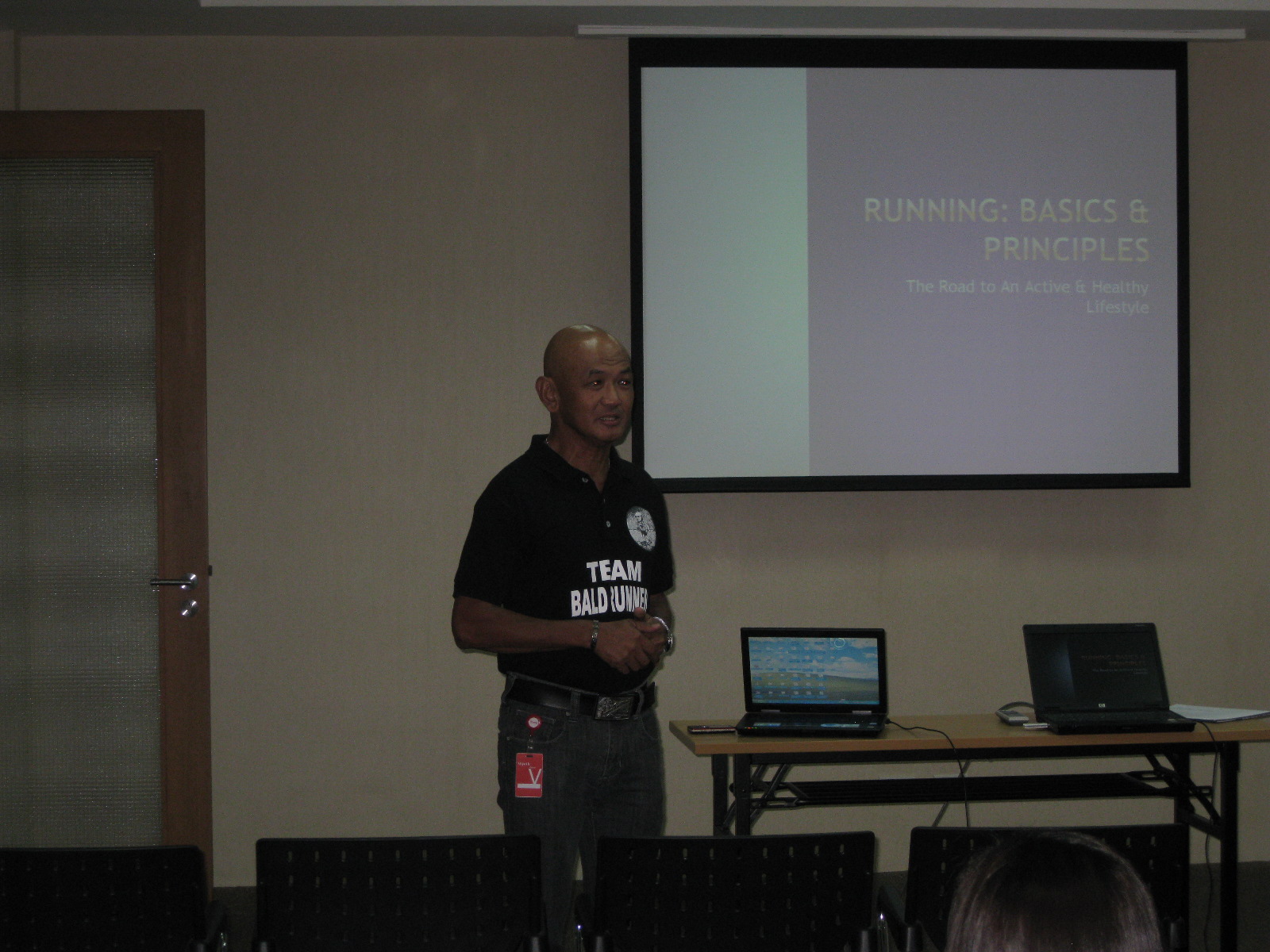
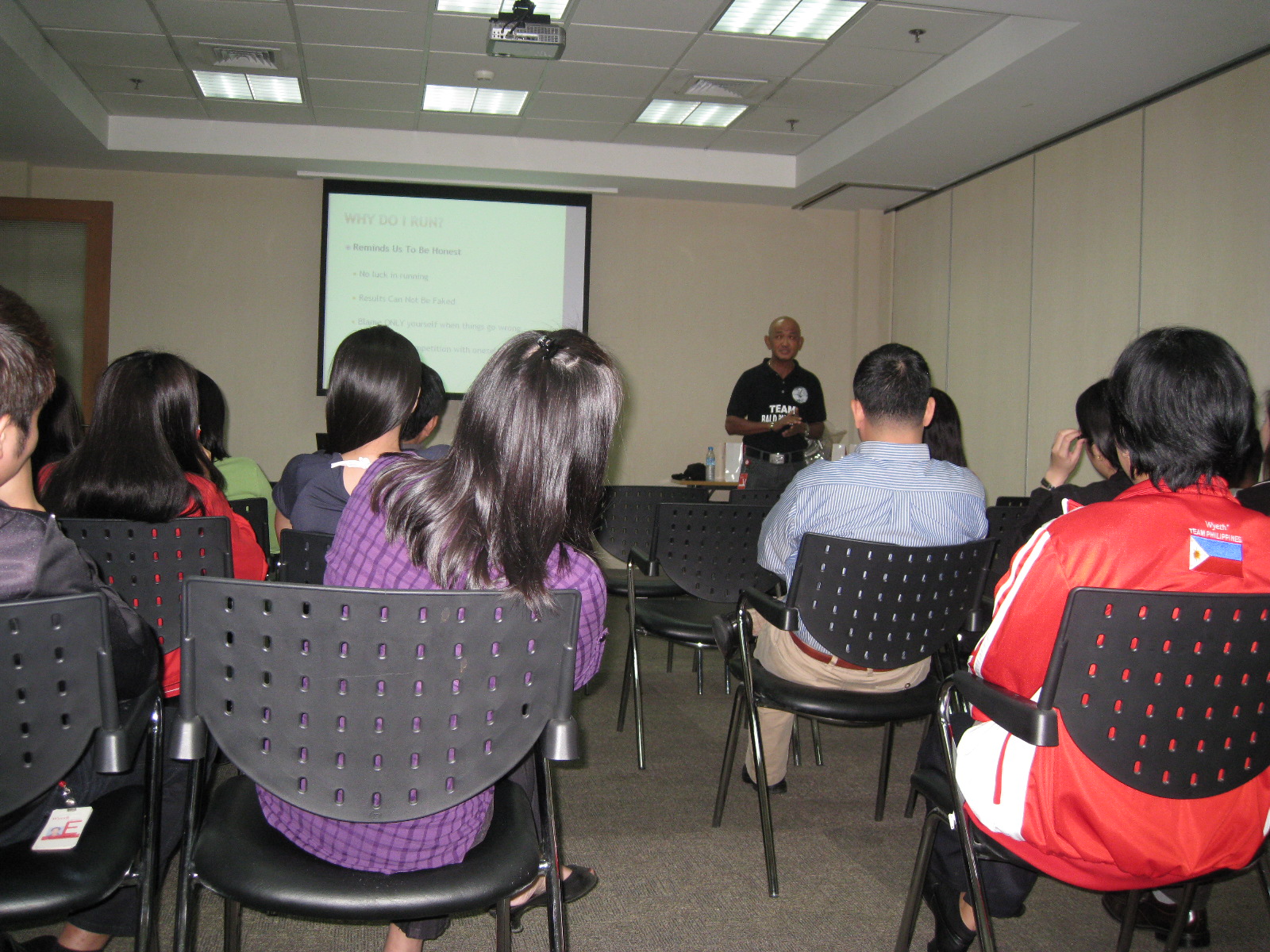
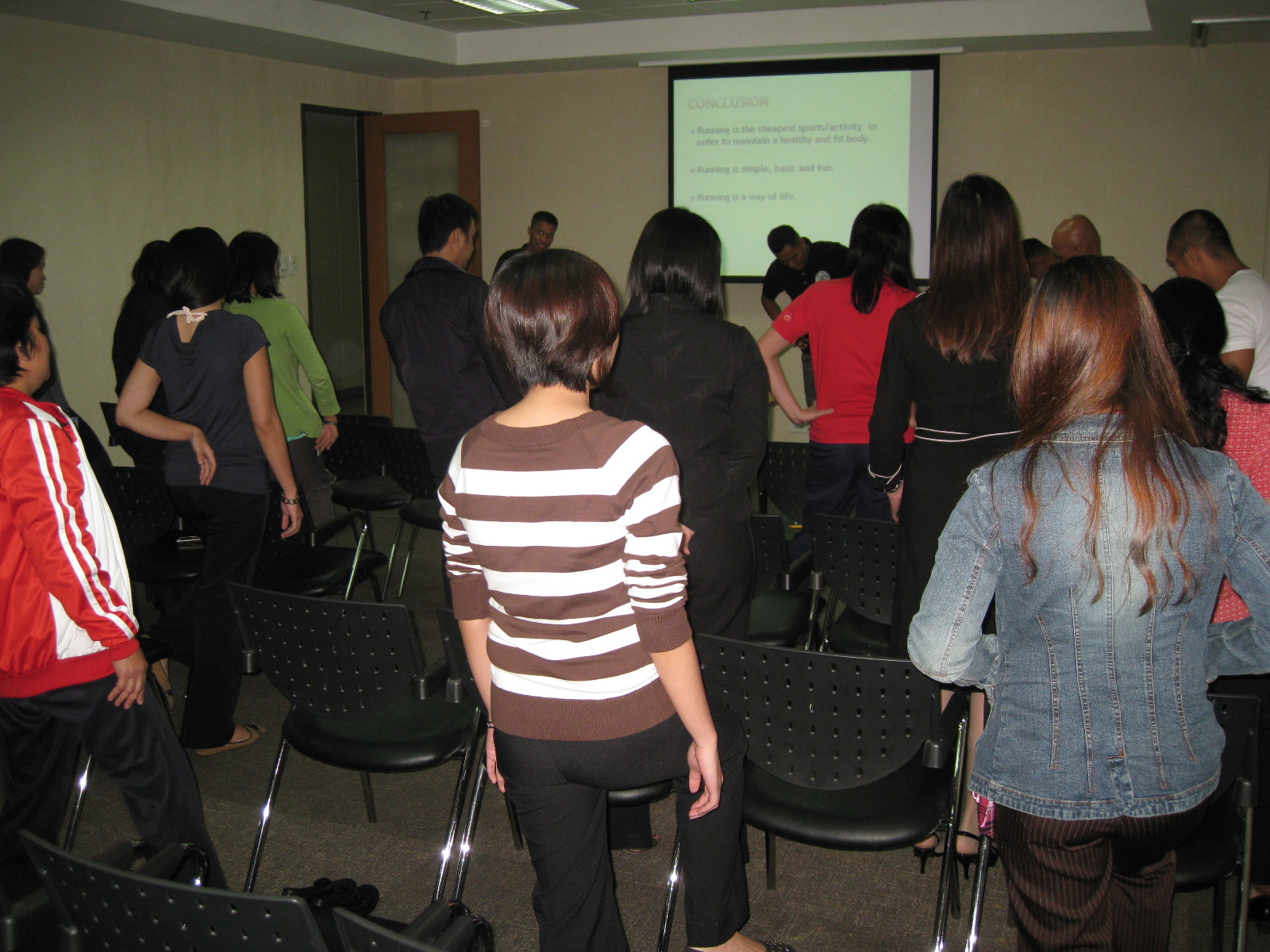
The lecture was conducted at 3:30 PM to 5:30 PM in the presence of almost 30 participants. The activity started with a lecture on the Basics and Principles of Running. After the lecture presentation, the participants were encouraged to join the members of the Elite Team Bald Runner on the practical side of running. Demonstration on the warm-up and stretching exercises which are done before and after running workouts were done by the participants. After the demonstrations, “running drills” were also performed by everybody. An Open Forum was conducted to answer the questions/concerns of the participants.

Mr Carreon was kind and generous to present to the members of the team with gifts, running shoes for my Project Donate A Shoe, vitamins and other products of the company, certificates and “giveaways” before we finally ended the activity. Thanks to Chito Carreon and to Wyeth, Philippines. Such gifts are in the “need-list” of my elite athletes.

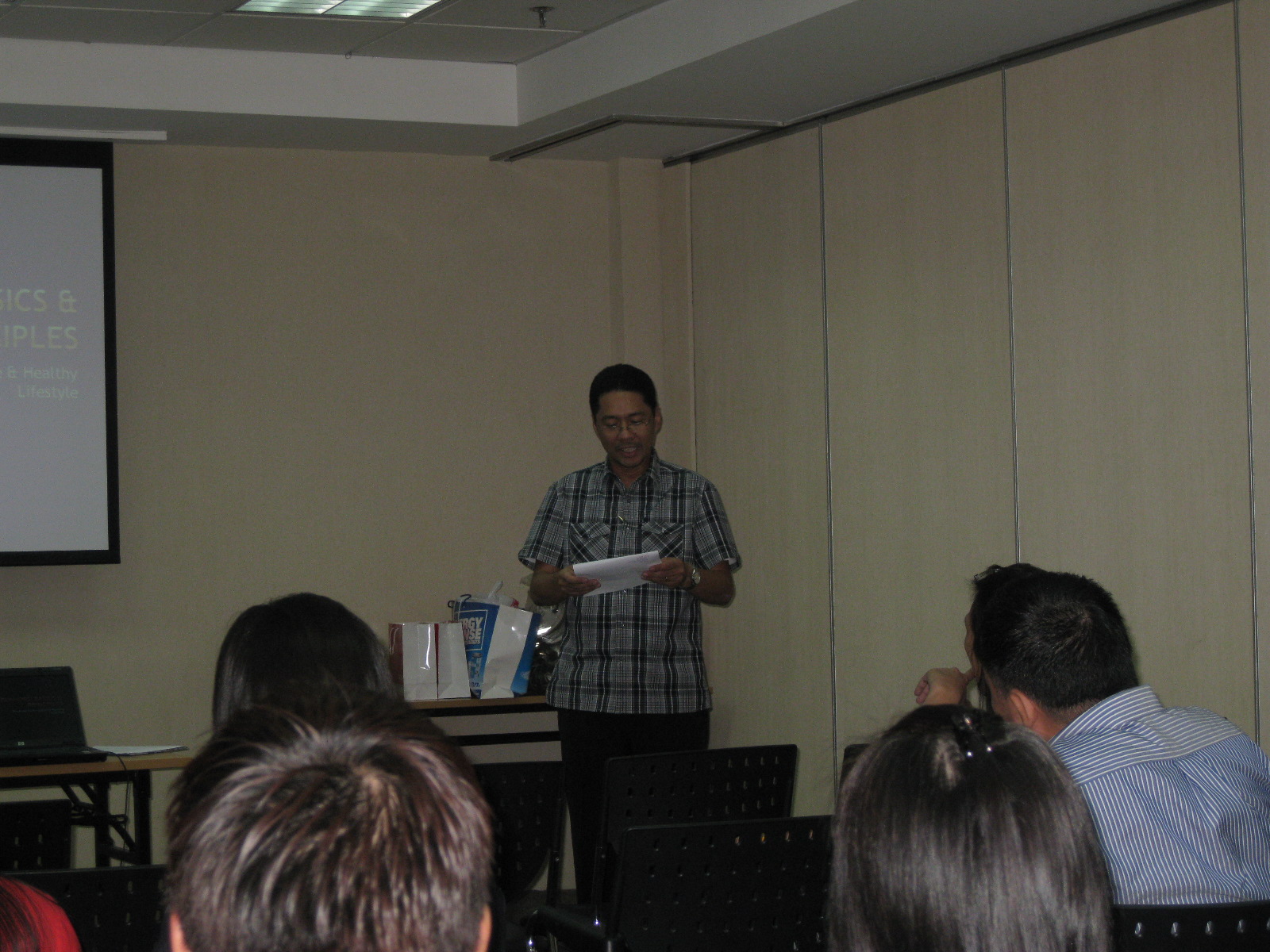
Lecture Introduction From Ultrarunner Chito Carreon
BR's Lecture On Running Basics & Principles
"Future" Members of the Wyeth Running Club
Practical Demonstration Of Stretching Exercises
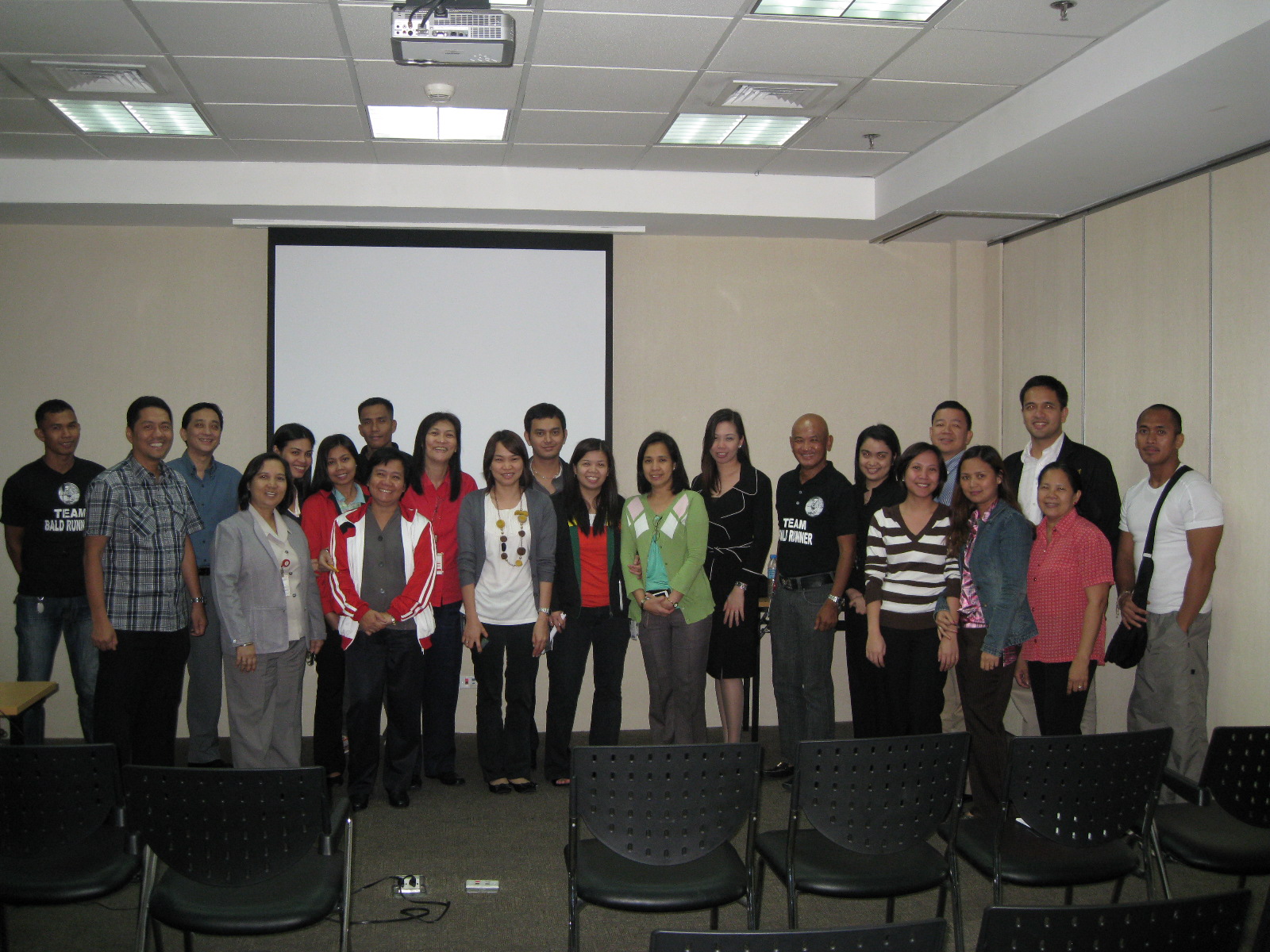
Group Picture After The Lecture/Clinic

1st Cebu Ultramarathon Race


1. Six weeks before I retired from the military service, I visited the exact place where former President Ramon Magsaysay’s plane crashed on the early morning of March 17, 1957. If you don’t know your history, you can search “Mt Manunggal” in my blog and read my story about this visit to the said place.

2. Being the Bald Runner after retirement from the service, I had plans of visiting again to this place and thought of coming up with road/trail race to commemorate the death of our former President Magsaysay as I wanted my runs to be connected with the history of our country. In one of our conversations with my friend Jonel Mendoza, he asked me a place where a good ultra run route in Cebu which can be used in the future and I answered him that Mt Manunggal Crash Site would be highly recommended because of its significance in our history. And the rest is history.

Starting Area of the Race

3. Since I don’t announce in my blog where my next race is, the Race Organizers were surprised to see me in Cebu/Ayala Center on the night before the race. I was given the opportunity by Jonel aka FrontRunner Magazine to speak before the runners on their magazine’s running clinic. It was a nice experience seeing a lot of runners from Cebu City during the said clinic. It really shows that the running community in cities outside Metro Manila is growing in numbers by “leaps and bounds”.

4. Most of the runners in the 1st Cebu Ultramarathon Race were already at the assembly area at 4:00 AM as most of them “camped” in the area. I could see different moods on the faces of the runners which is very common among runners who are about to experience their first ultramarathon run. I was able to see some of the “usual suspects” in ultra runs in Luzon and I had a brief chat with them. I know, most of them came here to challenge the route. However, I came here to test and evaluate my training.

5. After a short program and photo-ops at the “bust monument” of President Magsaysay, the race started at 5:52 AM with 180+ starters. The faster and “excited” runners went ahead from the rest of the group as they forced themselves to attack the uphill climbs and downhill parts of the route that goes to the National Highway. I think I was on the last half of the whole group of starters on the first 3 kilometers of the run.

6. In a very challenging route which has steep uphills and fast downhills, the race strategy in an ultra run (50K and above) is to be able to apply “brisk walking” on the uphills, fast recovery run on the downhills, and steady run on the plain parts of the route. So, in most parts of the route, I consistently applied this strategy making sure that I hydrate myself regularly (every 2-3K) and eat solid foods every 5 -7 kilometers. My solid foods consisted of Nature Valley Sports Bar, fresh banana, fresh apple, Cloud 9 Chocolate Bites, and boiled sweet corn (bought along the way). I think most of the runners that I passed on the uphills were able to see me with my “brisk walking” form! I am highly recommending that “form” as I learned it from my experience at the Marin Headlands 50-Mile Trail Run.

Looking Good or Feeling The Pain & Suffering?

7. The last 20K of the race was a “battle of will and determination” as the heat of the sun was upon us and I’ve been running and brisk walking for almost 4 hours. The more that I have to bring out those “tips” and lessons learned that I gathered in my past ultraruns. At this point, everything was a “mind game” and consistency of doing what I planned for during my training was the focus in this race. I did not veered away from my race strategy most especially on my hydration/nutrition. On my last 15K, I started to take “salt tablets” and drowned them in my throat with ice cold Mountain Dew or Classic Coke. This gave me more strength and consistency with my pacing in my runs and brisk walking!

Few Steps Before The Finish Line

8. I finally reached the Finish Line, in front of the Cebu Provincial Capitol Building, with a time of 6:42:20 hours (Official Time). I finished with a ranking of #38 out of the 162 finishers. Based from my GF 305 data, the total distance is 50.23K; an average pace was 8:00 minutes per kilometer; a total ascent of 1,860 meters and a total descent of  2,695 meters.

9. I consider this race as a mountain trail run because of the profile/elevation of the whole course. I am satisfied with the result of my training since I finished the 1st CAMSUR Marathon wherein I started to incorporate more intensity to my training runs and making my selected weekend races as my performance evaluation/test runs. In conclusion, I was able to attain what I have aimed for in this ultra run.

10. And talking about going “hardcore” and going up to a higher level of ultrarunning, I advise that for those who have future plans in joining ultra trail runs in the “WEST”, I highly recommend you to follow and train for the following finishing times in the following ultra distances races:

50K—-sub-7 hours

50 miles/80K—-sub-11 hours

100K—–sub-14 hours

100 miles/160K—-sub-30 hours  

11. Thanks, Jonel, FrontRunner Magazine, CERC & Cebu Runners, Volunteers, and the CENTCOM, AFP Officers & Staff for the experience and hospitality. Congratulations to all the Finishers and Race Organizers for a job well done!

(Note: Thanks for those who posted the above pictures at Facebook)