Have you heard or read about this term in running? If not, then you were not born yet in the 70s and 80s or you were not yet into running during those times.
“Collapse Point” is the point along the marathon race where you hit your “Wall”. This term was made famous by Dr John Wagner of the Honolulu Marathon Association during the 70s where he led the Honolulu Marathon Training Clinic to runners who would like to finish the Honolulu Marathon. Through this Running Clinic, it resulted to a high percentage of finishers in the said Marathon Race.
According to Dr. John Wagner, the following is the simple test to determine your “collapse point”:
1) Calculate/Determine your total mileage (in miles or in kilometers) for Sixty (60) Days prior to Marathon Day.
2) Divide the total by the figure 20.
3) Result gives your approximate “collapse point”.
Examples:
If you have a weekly mileage of 70 kilometers (10K per day), your total mileage for 60 days is 600. Divide 600K with 20, the result is 30K, which is approximately your “collapse point” in a marathon race.
If you have a weekly mileage of 105 kilometers (15K per day), your total mileage for 60 days is 900. Divide 900 with 20, the result is 45K as your “collapse point” which is more than the marathon race distance.
Good luck to those who will be running their first marathon race this coming October and before the year ends!
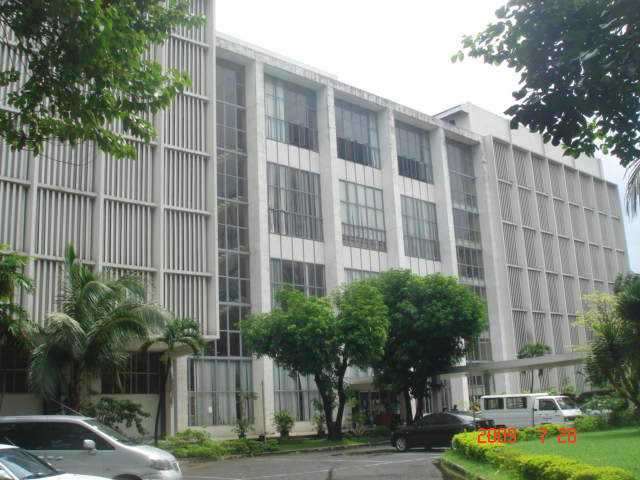
I went to the National Library on the morning of rainy Tuesday but I was not able to get in those research halls/rooms after I lacked the necessay requirements. Anybody who would visit and make a research in the National Library should have a valid Identification Card, one (1) ID Photo, and Fifty Pesos (P 50.00). A Cashier in the Library needs to confirm your Identity through your ID Card and then receives your Fifty Pesos. In return, the Cashier gives you a blank Library Card and an Official Receipt of the money you gave. You should paste your ID Photo to the blank Library Card and write your name on the said card.
The National Library/My 1st time to enter the building
Then, proceed to one of the desktop computers in the lobby and register your Library Card Number, Name, Password, Address, and E-mail address and then click Save. Your Library Card Number which is printed on the back of your Library Card is your Username. From here, you can now proceed to the research areas located at the 2nd-4th Floor of the building. The whole building is not air-conditioned and be prepared to sit yourself where wall electric fans are located.
First, I used the computer to track down if there are any books or publications about local Athletics and Running in the Directory of the National Libray. The result? None!!!
Second option was to find out the old newspapers in the Directory. I was surprised that I was made to proceed to the 4th Floor of the building and I was able to see the sorry/sad state of those book-bound newspapers stacked on open racks and cabinets. Most of them are dusty and not properly arranged by months and years. I thought I would be looking on “microforms” or “microfiches” of newspapers but I was actually reading the actual old copy of newspapers bound by month.
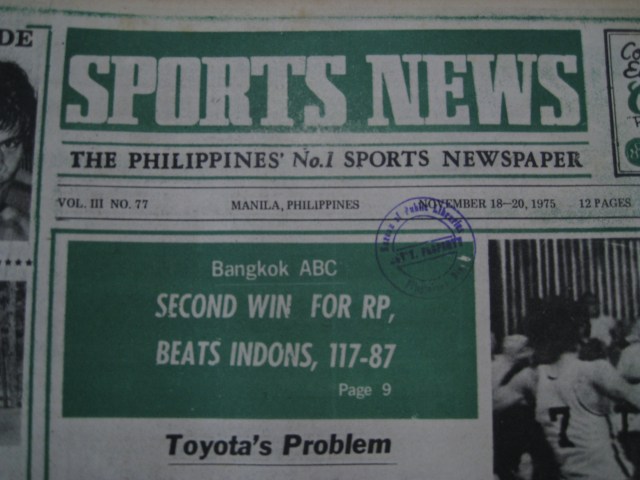
After looking on the different rows of newspaper racks for about 30 minutes, I came upon book-bound copies of “Sports News” which is a weekly broadsheet newspaper on Sports and the following were my discoveries:
1) There was an annual event called “YMCA Walkathon Race Event” which was well-attended by almost 300 walkers and had a Cash Prize of P 200.00 for the winner/champion. In my mind, I recalled a regular group of walkers called “United Nations Walkers Club”.
2) The first provincial annual marathon race was called Negros Marathon which was held in Negros Occidental as sponsored by Governor Roberto Benedicto. It was organized by Monico Puentebella (who is now a Congressman). The most popular runners team in Negros Island was headed by Art Valdez (brother of singer-runner Leo Valdez) and it was called BM-AMC.
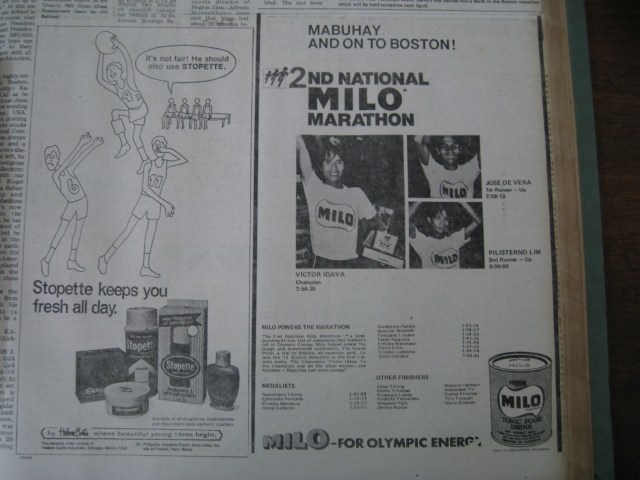
But what gave my full attention during my research was the news coverage of the 2nd MILO Marathon and its elimination race and I have the following information based from the news accounts of “Sports News”:
1) The first MILO Marathon was held in 1974 and the first Champion was Numeriano Titong, a golf caddy. I heard that he is still a golf caddy at the Valley Golf & Country Club.
2) The 2nd MILO Marathon Race Elimination Race was held on November 9, 1975 with the participants coming from all over the country. Registration was made and submitted in the local branches of Manila Bank with the following requirements:
a) Runner should be an amateur.
b) Must not be less than 19 years old.
c) Must be able to submit Medical Certificate from any Physician
d) Submit One (1) Passport size or ID Photo attached to the Registration Form
e) Registration Fee: Two Pesos Only (P 2.00)
The Elimination Race is a 20-kilometer road race that starts at 12:00 Noon along Gen. Aguinaldo Street, infront of the Fiesta Carnival, Cubao, Quezon City and finishes at Luneta Park. The first thirty (30) finishers in this race are qualified to participate in the 2nd MILO Marathon Final Run.
The Marathon Finals is held the next Sunday after the Elimination Race. The Finals starts and ends at the Luneta Park. It starts at 12 Noon from Luneta Park-towards Quiapo-Espana-Quezon Boulevard-turn right at EDSA-towards Cubao-right at Aurora Blvd-Magsaysay Blvd-Legarda-back to Luneta Park.
The Marathon Finals top prize for the Champion is a chance to compete in the Boston Marathon if the finish time is 2:30 hours or less. No Cash Prizes were given to the winners that time.
The Race Organizer was Jun Castro of Intergames Inc. The race was also sponsored by PATAFA.
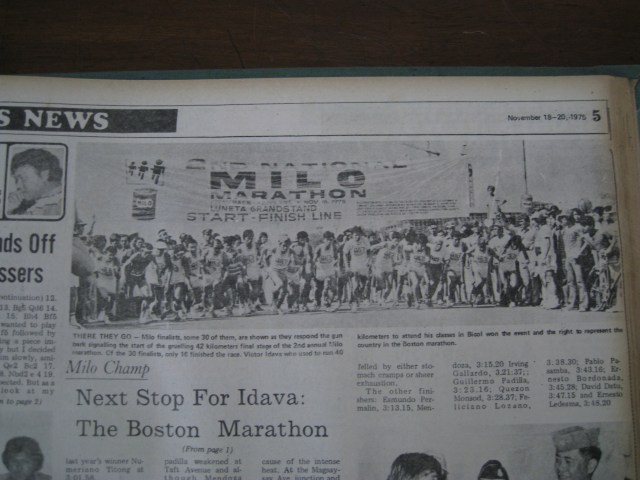
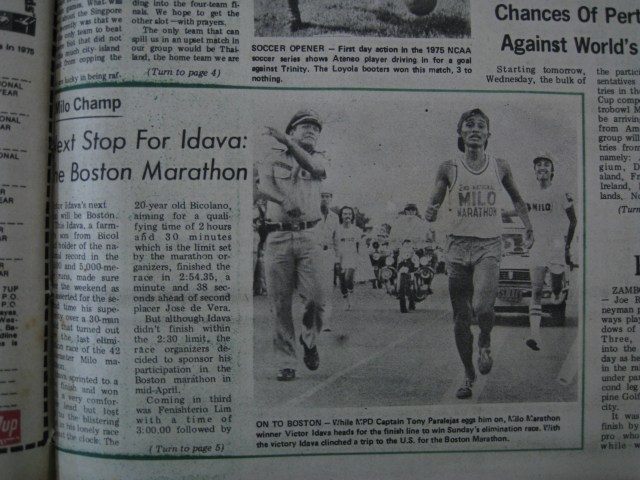
2nd MILO Run Start PictureVictor Idava Near The Finish Line
In the 2nd MILO Finals, Victor Idava, 20 years old & farmer’s son from Bicol and a national record holder then in 1,500 & 5,000-meter runs, won First Place/Champion with a time of 2:54:35 hours. He did not qualify the 2:30 hour or less finish time but MILO sent him to participate in the 1976 Boston Marathon. Out of the 30 qualifiers who started the race, 16 finished the race.
MILO Run Finisher's Ads
The following were the results of the 2nd MILO Run:
2nd Place—Jose De Vera—2:56:13 hours
3rd Place—Finishterio Lim—3:00:00 hours
4th Place—Numeriano Titong—3:01:58 hours
"Sports News" Newspaper
I am going back to the National Library soon! I will try to find out information about the Pilipinas International Marathon, PAL Manila International Marathon, and the Alay Sa Pangulo Marathon Race.
Did you know that there were two famous Race Organizers then in the persons of Mr Jose “Jun” Castro, Jr and Minister Elpidio Doroteo of MYSD?
Did you know that there was a National Corporate Competition in Long Distance Running Event where every government and/or corporate offices’ running teams would compete? The winners were sent to Stanford University in Palo Alto, California for the International Corporate Athletics Competition.
By the way, I was a new graduate from the Philippine Military Academy and I was then fighting it out with the MNLF in Maguindanao-Cotabato as a 2nd Lieutenant of the Philippine Army and a Platoon Leader when the 2nd MILO Run was held in Manila.
(Note: Newspaper Pictures Taken From “Sports News”)
The Bataan Death March 102K Ultramarathon Race (BDM 102) is now officially scheduled as one of the International Ultra Running Events at the Ultrarunning Magazine’s Online edition.
In addition, I am hoping that the Race Report I’ve submitted to the said magazine on the conduct of the 1st Edition this year will be published soon.
My congratulations and thanks go to the participants, sponsors, running friends/supporters, and staff of the Bald Runner for making this “dream” a “reality”.
Finally, my sincerest appreciation and thanks go to Rick Gaston & Ben Gaetos, my ultrarunner friends in California, for their support and inspiring words.
This had been my third marathon race for the year and and I joined this race five weeks after participating in the 2009 Los Angeles Marathon. I did not expect a good finish time for this race ( sub-4 hours) as I knew I was not yet fully rested and recovered from my past marathon races and one ultramarathon race (BDM 102) since April of this year.
On hindsight, I could see the following lesson learned which I kept on violating whenever there are major races and there are also good observations that I could maintain as a result of the race:
1) Easy Long Runs—Marathon race is an endurance running sports. A runner must be able to run a minimum of 32 kilometers in his/her long runs. Better yet if he/she could run the full distance of 26 miles/42 kilometers at least 3 weeks before marathon race day. I never had any long run (32K) as far as the said distance 2-3 weeks before the marathon as I concentrated in shorter distance and hill workouts. Those runs were not enough to develop the endurance capability of my leg muscles and this was the reason why I was already having “muscle cramps” before reaching the half-marathon point. As an advise, let your legs experience what it takes to run the distance (42K) no matter what is your pace is, the more time you keep your feet running on the ground, the better for you to survive in a marathon race. Remember, in a marathon race, the race starts on your last 10 kilometers before the finish line!
2) “All Running Shoes Are The Same”—There had been a lot of arguments about the appropriate shoes you should use in running for training and/or racing in a road race. For the “newbies”, they have to take advantage of the running specialty stores that we have right now in Metro Manila which have those “high-tech” stuffs that determine your own gait/stride/foot strike analysis. But for me as an “old” runner, I’ve been a consistent ASICS and New Balance Shoes user. Lately, I’ve been using the lighter racing shoes in my full marathon races and I did not have any problems.
3) Weather Affects One’s Performance—I have observed that running in colder countries improves one’s running performance. If you have plans of running a marathon in colder countries like United States, it is highly recommended to train in our country and allow some time to acclimatize at least one week or few days before race day on the locaton of the race. I am sure you will have a better marathon finish time if you run your race in colder countries.
4) Rest & Recovery—In the book, “Lore of Running” by Dr Tim Noakes, he is recommending to all serious runners to run at least one or two marathon races a year or one marathon race and one ultramarathon race per year which are spaced in between with rest and recovery before training. I guess, I have already violated this recommendation for this year. He also stated in the book that “the more you race frequently, you will never achieve the fastest time your body is capable of”.
5) Finally, I’ve accepted that my best in the marathon race is already past—I would never attain my best time of 3:30+hours when I was in my early 30s. However, my training preparation for my next marathon is geared towards a finish time of 3:45 hours or less. I hope I could make it to the Boston Marathon.
Monday—Had a “runabout” along the streets of Metro Manila for three (3) hours covering a distance of 26 kilometers in the early morning. It was a slow run with an average pace of 6:30-7:00 mpk. I ran continously for the first 15 kilometers and later alternately, running and brisk walking for the remaining distance of my route.
Tuesday—Another 1:45 hours run in the morning along the streets of Metro Manila covering a distance of 17 kilometers.
Wednesday—Speed Training at the ULTRA Oval Track—6 X 400 meters @ 1:38 minutes with 1-minute rest interval. Had 4 laps before and after as warm-up and cool-down run, respectively. After 5-minute rest, I had another 30-minute slow steady run after speed workout. I covered an estimate distance of 12 kilometers.
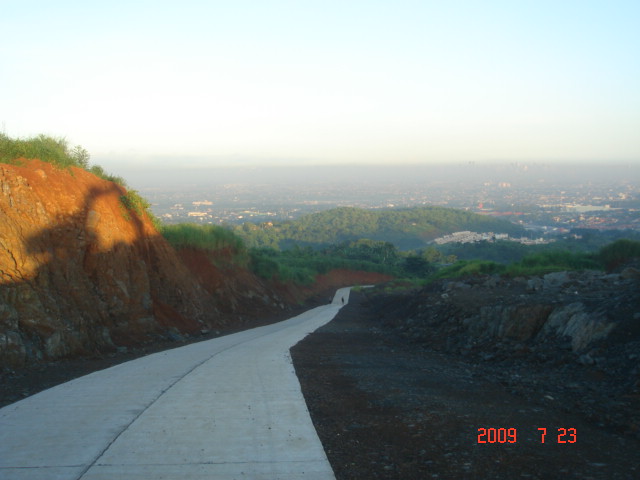
From Antipolo Overlooking Metro Manila
Thursday—Hill Workout in Antipolo in the early morning covering a period of 2 hours, a “group” run with Elite Team Bald Runner. Estimated distance: 16 kilometers
Friday—Tempo Run at ULTRA Oval Track. 20-minute slow run; 30-minute at race pace; and finished with a 20-minute slow run in the afternoon. Distance Covered: 12K
Saturday—Easy long run with a distance of 16K along the streets of Metro Manila in the morning.
Sunday—Run For M.E. 5K Race @ Ateneo de Manila University Campus. It was followed with an easy 5K run.
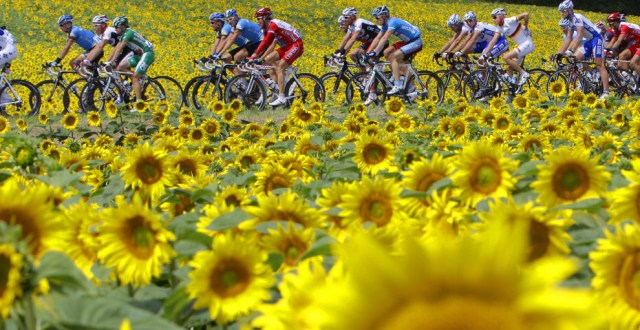
The 2009 Tour De France started last 4 July and ended last Sunday, 26 July 2009. It is considered as the world’s most famous and prestigious cycling event of the year. I will not bother to tell you about the results as you already know them from the news stories. I will not also bother to tread on my personal analysis about the performance of Lance Armstrong and about his future as an athlete or his possibility of winning in future cycling events.
For the past three weeks, I’ve been regularly watching the Live Telecast of the daily stages through the Eurosport Channel. The following were my observations and insights about the said event:
1) Scenery of the Route—By watching the Live Telecast, you seem to be a part of the cycling tour. You seem to be a “tourist” also as you got to see the cities/communities where the route would pass through. I’ve been observing a lot of details along the route like the architecture of the houses and buildings as most of the structures are made of concrete & rocks. The structures made during the Middle Ages and castles were preserved and maintained in their original structure. Even the roads are well paved with asphalt with the proper paint-markings and almost all the roads are very clean and well-manicured. I’ve never seen a single trash or even a trash bin along the roads even if they are inside the towns or cities. The scenery of the mountains and their forests were very refreshing. Watching the Tour on the TV was an experience of being a “tourist” in France, Italy, Spain, and other countries where the event was conducted.
Scenery of the Route Was Awesome!
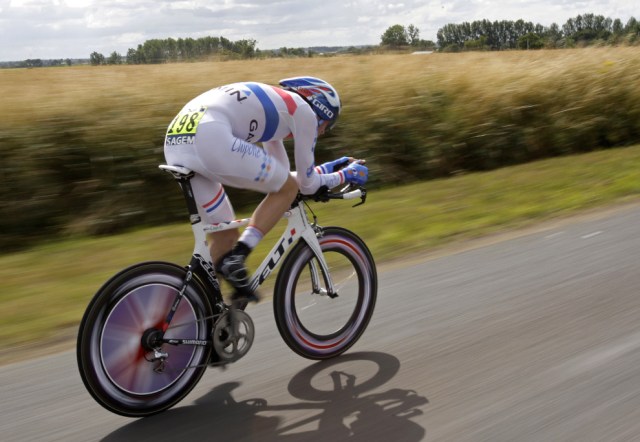
2) Cycling Apparel/Uniforms & Technology—If you want to see the latest in cycling technology and cycling apparel, the Tour is the best place to see them. I was impressed on the uniform of each team which is well color-coordinated with the other accessories like sunglass, helmet, shoes, gloves, socks and even the color of their bikes! I wonder how many set of jersey cycling uniforms each participant has for the 3-week event. In order to gain speed, the bikes to include the helmets, had become lighter and air-resistance-proof. Even their “cycling form” and jerseys are very unique in their Team Time Trial and Individual Time Trial in order to shave off few seconds from their time and fight air-resistance. What made me laugh was an observation made by one of my runners in my team when he said that there are no “not so good-looking” cyclists in the Tour! Lahat daw ay puro guwapo!!! hahaha!
Cycling & Technology
3) Excellence In Endurance and Logistics—These endurance athletes are really good in their sports and they really trained well for the event. I remember when I was in my younger years, the Tour was a competition of the best cyclist in each country being invited by the Race Organizer and the pride of the said country was at stake. However, the competition later transformed into corporate team competition and I could see how millions of resources/funds had been used to finance each team and their support/logistics that follow each cyclist. In the last Individual Time Trial, I saw Lance Armstrong threw his $ 300 worth Oakley sunglass while trying to gain more speed as the frame of the sunglass was obstructing his sight. Cyclists would threw their plastic water bottles on the side of the road after there is no water left in them! If there is a flat tire, a support vehicle & mechanic are ready to respond to the problem in few seconds. If a worse problem is ever present to a bike, the whole bike of the cyclist is immediately replaced! In the ITT, each cyclist was provided with a support car with bikes stacked on its top rack. Everything was so perfect that you could see how the logistics people do their job efficiently. I wonder how much is the registration fee for each team to participate in this Tour.
Excellence In Endurance & Logistics
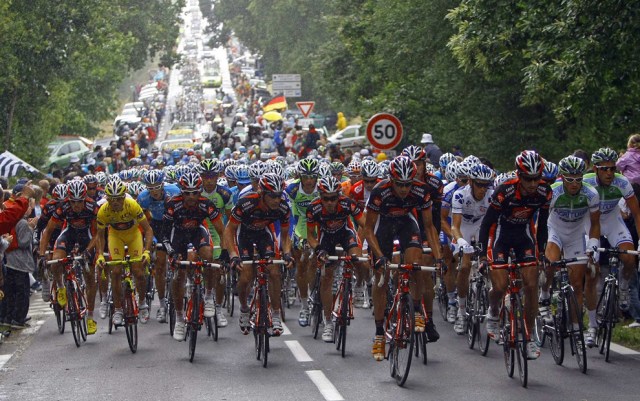
4) Discipline & Applause Of The Audience—All the spectators were in support to the cyclists as you see them shouting, cheering and clapping their hands as the cyclists and “peloton” pass them. You don’t see anybody from the spectators throwing a pail of water to the cyclists or offering some food along the way. Of course, you see some of those spectators running with the cyclists in the mountain stages but they don’t distract the route and it is already a part of the practice of encouraging the cyclists to push some more! The cars of the spectators were all parked away from the street or road where the Tour passes. Even the Starting and Finish Lines are free from spectators. However, you can not avoid some accidents or “lapses” during the Tour as some of the spectators would be involved in accidents which even resulted to death. Last July 18th stage, one of the spectators was killed by a speeding Police Motorcycle Marshal when he immediately crossed the road where the Tour was passing through.
How I wish these personal insights and observations about The Tour will be translated or applied to Running in Road Races in the Philippines.
The following are the latest comments sent to me by the Moderator/Administrator of BDM 102 website (www.bataan102.com), Eric Pasion aka Run For Change as a result of the conduct of the 1st BDM 102K Ultramarathon Race:
All of you great athletes have much to be proud of and a job well done to all of you. Last year, April 8-9 2008, myself and my good friend Ariel Lesap from Panay Island marched this same route which took us 2 days. The heat and sun was relentless and how happy we were to put our hands on the 102 km. marker! So it astounds me to see your website ! Not only did you run it, you ran it in hours ! I am 50, but some of your ages are unbelievable ! Younger generations will be inspired by your run ! Thank you for bringing much needed awareness to Bataan and the infamous Death March where so many brave souls perished and still sleep beneath the hallowed ground of Bataan. God Bless you all,….Paul Dillon
Hi,
I am very thrilled to know that there is some kind of a memorial marathon for the Bataan Death March. I would however would like to make a couple of suggestion:
1. Make it a two day walk with a campout somewhere inbetween the start and the finish.
2. Create a foundation to honor the Bataan Death March participants in the Bataan such as erecting some kind of a monument and museum.
My father was a survivor and even before he passed away two years ago, could not discuss the details of the ‘death march’.
If this was made into a two day walk and advertised in the Philippines and the U.S., I’m sure that you will receive quite a number of applicants, including me and my family. I would like to walk my father’s walk and do it in his memory as well as his grandchildren. This can also help the economy of Bataan for it will need hotels and restaurants and maybe tour guides.
This is not to commercialize the horrific experience of those that walked to their death and those that survived but to let us, the living experience what they went through and how they dedicated their lives for Freedom, and what it stands for.
Run For M.E. @ Ateneo De Manila Campus; 6:34 AM 26 July 2009
Almost 5 weeks before this race, Sir Amado aka Reinier 6666 called me through the phone asking me my approval for him to finance the registration fees and uniforms of my Elite Team Bald Runner to join and compete the 5K Team Run at the RUN FOR M.E. I immediately accepted the offer and gave him the personal data of the team members for their registration. Coach Salazar was able to organize two (2) teams of 5K runners and the members prepared for the race.
I was a member of the Team Bald Runner (Reinier) and Mr Amado Castro, Jr was a member of the Team Bald Runner (Pacific). Some of the elite members of Team Bald Runner ran the 10K distance. Actually, I had some reservations for me to run the said distance as I never ran a 5K road race race since I started this blog.
Days before the race, we received the team’s race packets and uniforms. The aim of the team was to get the first place despite the fact that the college and university’s varsity track & field teams will field their respective runners. The pressure was on us to make sure that we are fielding our best runners for each of our team.
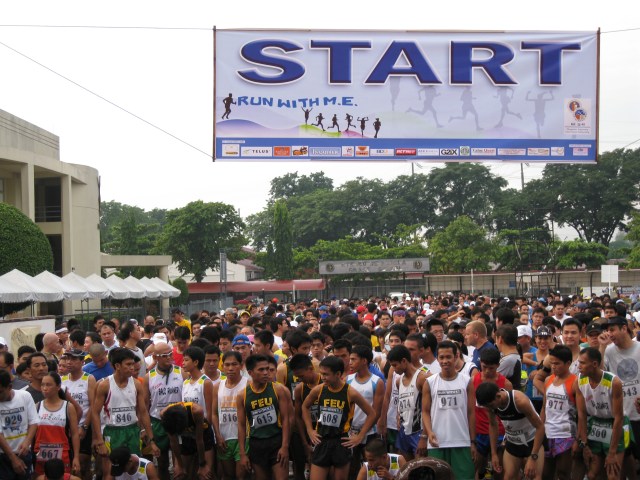
The teams were already at the starting area one hour before the start of the race and had their respective warm-up and stretching exercises. It was also a time to meet friends and other runners while waiting for the signal to assemble at the starting line. The 5K Team Run was scheduled to start 5 minutes ahead of the 10K and 3K Run Run. And after a brief explanation of the race, the race started as scheduled.
Knowing that the race will cover the roads inside the Ateneo Campus, I did not bother to ask or look for the route of the race. I knew that the 5K distance will take one loop of the different roads inside the campus. I was also confident that the Race Director of this run knew how to properly manage the said race. The race strategy for me was to just follow the faster runner infront of me and maintain an even pace as fast as I could.
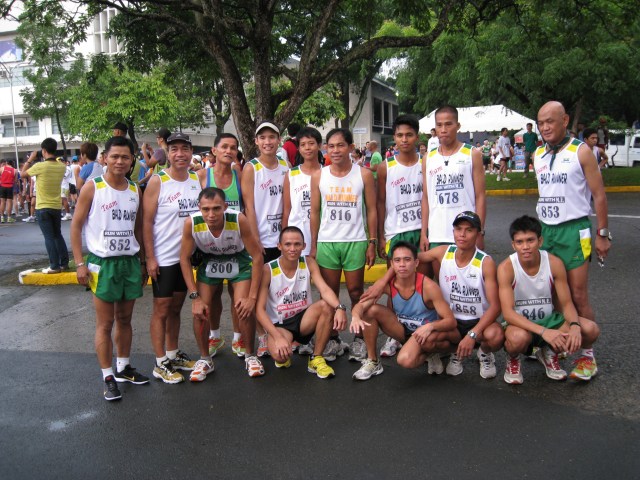
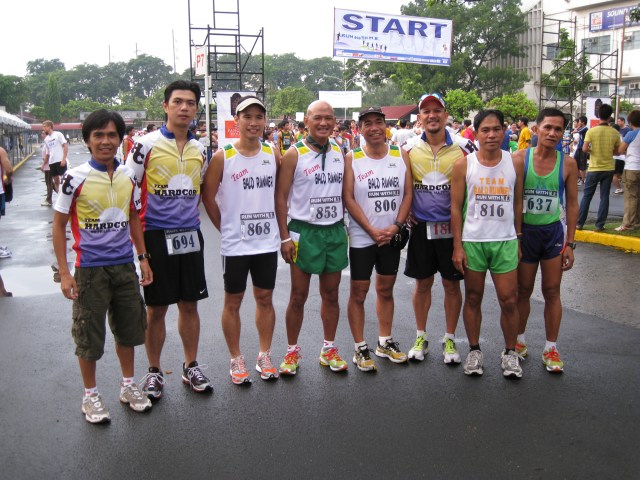
Teams Bald Runner Before The Race With Reinier6666 (2nd From Left)Hardcores & Reinier 6666 (On my Left side)At The Starting Line With The 5K Runners
The first 3 1/2 kilometers consisted of rolling uphill & downhill roads; a flat run along the campus’ grassy oval track; and the remaining flat roads towards the finish line. There was only one problem along the course—slippery roads most especially on the first two kilometers of the route. I had to shorten my strides as the lugs protruding on the front sole of my Newton shoes had the tendency to be slippery on the wet roads. I saw two of my running friends who were victims of those slippery wet roads along the course trying to finish the 10K race despite their wounds and painful rashes.
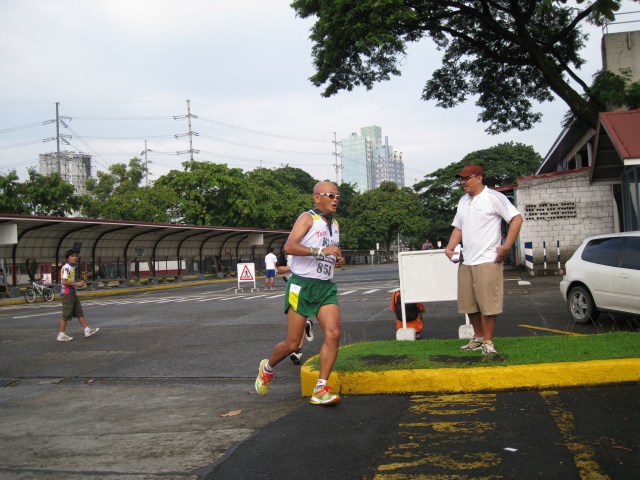
I can recall that I was able to pass runners along the rolling hills; along the oval track; and later on the last 800 meters to the finish line. I finished the 5K run in 22:57 minutes (based from my GF 305) with an average pace of 4:47 minutes per kilometer. I placed #41 among the 5K runners and I was entitled to receive a T-Shirt for the first 50 runners in the 5K race.
Few Meters From The Finish Line
The Far Eastern University Track & Field Team won the First Place and received a Trophy and a Cash Prize of P 10,000. The Team Bald Runner (Reinier) where I belong, won the 2nd Place and it received a Trophy and a Cash prize of P 7,000. The Team Bald Runner (Pacific) was awarded the Third Place Trophy and a Cash prize of P 5,ooo. However, after some time, it was found out that the Race Organizer and Race Officials admitted that they committed some “lapses” as there were other runners from other teams whose finish times were not properly recorded and included in the master list of finishers. It turned out that a running team from Marikina City registered a faster aggregate time than the Team Bald Runner (Pacific). Even if the Trophy and Cash prize were already awarded during the ceremonies, Coach Salazar and I immediately brought back the Trophy and Cash Prize to the Race Organizer/Officials so that these award & prize would be awarded to the deserving winners. Our other team landed in fourth place without any prize. The Race Organizer of the Race would call us “The Gentlemen & Honest Runners” Team.
In the 10K race, Alcuin Bolivar and Marecil Maquilan, won 4th Overall (Men) and 2nd Overall (Women), respectively.
After resting for 5 minutes after I finished the 5K race, I ran another round of the 5K course for my easy run with an average pace of 6:30 minutes per kilometer.
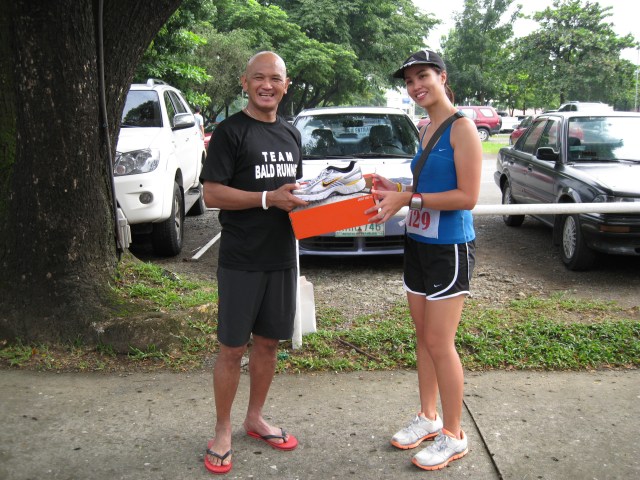
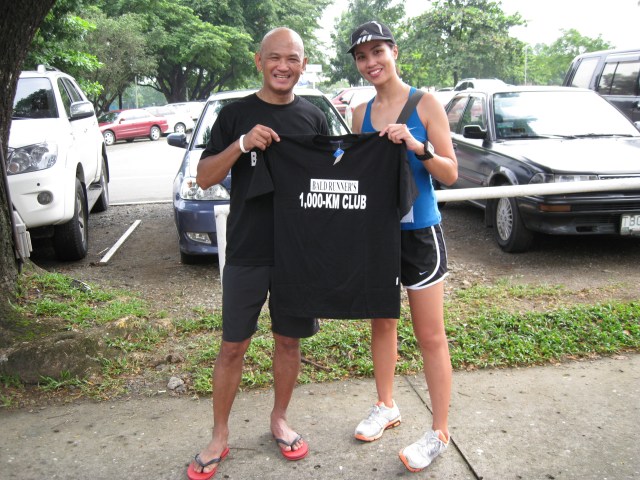
After changing to my dry shirt and shorts, I had a chance to meet and talk to other runner-bloggers and awarded the BR’s “1,000-Km Club” Finisher’s T-shirts. Finally, the best part of the day was the moment I received my prize for winning a pair of NIKE Zoom Structure Triax+ for my comment on The Bull Runner Magazine from The Bull Runner herself! Thanks, Jaymie!
Receiving My Prize From Jaymie (The Bull Runner)TBR Receiving BR's "1,000-Km Club" Finisher's Shirt
This race was memorable because of three reasons:
(1) For the first time, my team was fully supported through the initiative of a Corporate Head, in the person of Mr Amado Castro, Jr aka Reinier666 of Reinier Pacific. I hope more Corporate Heads would also involve themselves in supporting our elite long distance runners. Who’s next?
(2) My first time to enter the Ateneo de Manila University Campus and get to have a tour inside through a 5K run.
(3) My second 5K road race since 1984 (after 25 years) and my first 5K road race since I started this blog.
Overall, the conduct of the race was satisfactory.
Who among the “corporate heads” who have the “heart” and initiative to help the elite athletes in their plight to give honor to the country in international competitions? I know there are corporate heads who are helping elite athletes in other sports but I am not sure of those who are presently helping our elite athletes in long distance running.
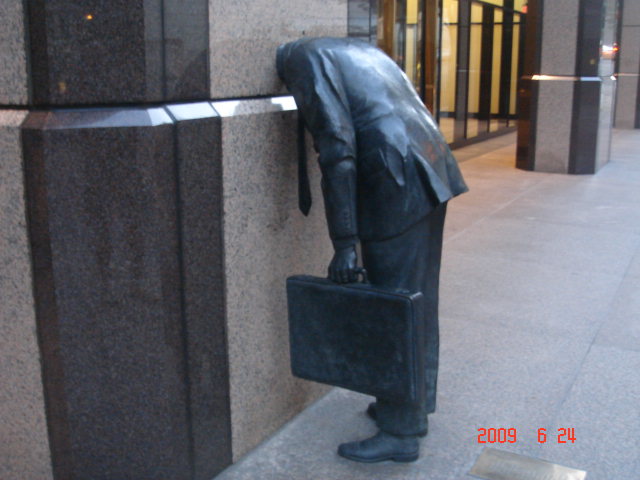
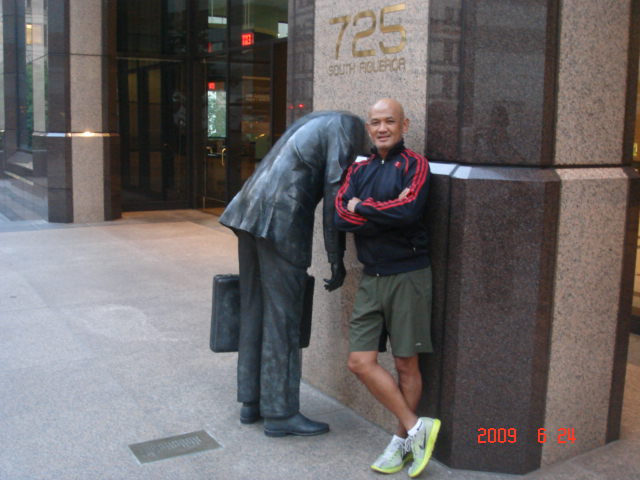
"Corporate Head" @ Fig+7th Building in LABR & "Corporate Head"
The statue above is located at the Fig+7th Building along Figueroa & 7th Streets in Downtown Los Angeles. It is called the “Corporate Head” which depicts an “executive” guy whose head is stucked to the building. I really don’t know if our Corporate Heads are like this guy who really have their heads stucked permanently to those high-rise buildings whose offices have the “best” view of the whole city. How I wish they would also embrace an active & healthy lifestyle and be able to help/support promote the sports they love and at the same time help our elite athletes. A small help/support from them means a lot to our elite athletes.
I have an answer to my question in the person of Mr Amado Castro, Jr who is the President & Owner of Reinier Pacific and fondly called as Reinier6666 among runner-bloggers. Aside from being a passionate racewalker and runner who had already exposure in international racewalking competitions and international marathons, he is silently helping and supporting our elite athletes. And he had done a lot in helping our athletes for the past months.
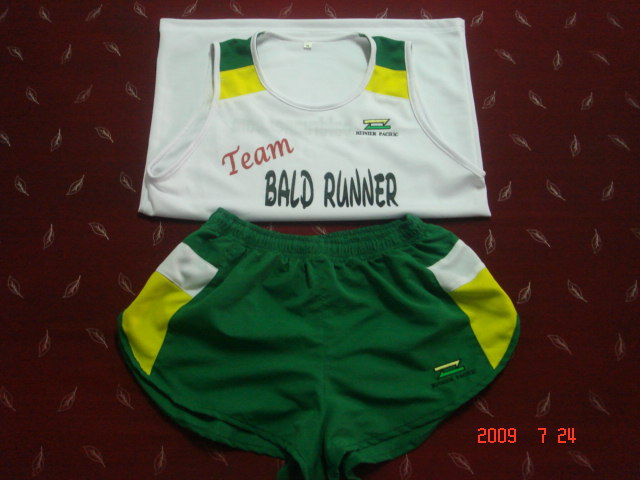
Surprisingly, he came up with an initiative to finance the registration fees of two (2) teams for the RUN FOR M.E. 5-Km Team Run this coming Sunday consisting of our Elite Team Baldrunner. He also came up with the idea of designing and financing for the teams’ running uniforms. And yesterday, I was able to receive the teams’ race bibs and running uniforms. They are nice and they have the color of “green”!
What else can I say? This “Corporate Head” is somebody who has the passion and dedication to help and try to alleviate the plight of our elite athletes. Such deed shows what “Leaders” are made of. Mabuhay ka, Mang Amado!
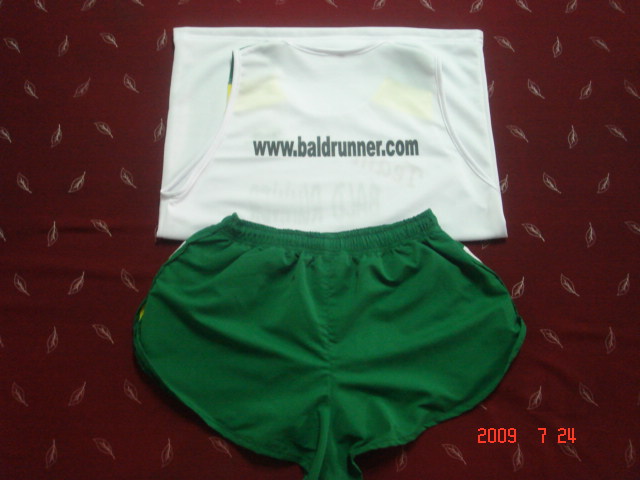
The following are the pictures of the new Team BR running uniform:
Nice Uniform For Team BRPrinted My Web Address At The Back
Thank you, Sir Amado! So far, you are the “best” sponsor to our elite long distance runners and future racewalkers! God bless and may you have more blessings to come!
This is the 7th Running Clinic that the Team Bald Runner had conducted since it started this program. And we have maintained it to be FREE.
This time, the running clinic was done at CITIBANK’s Main Office in Makati City. The coordination was made by Owen King, one of the staff, through an e-mail he sent me. The e-mail which I received while I was still in United States started the “ball rolling” and final coordination had been made in a few days.
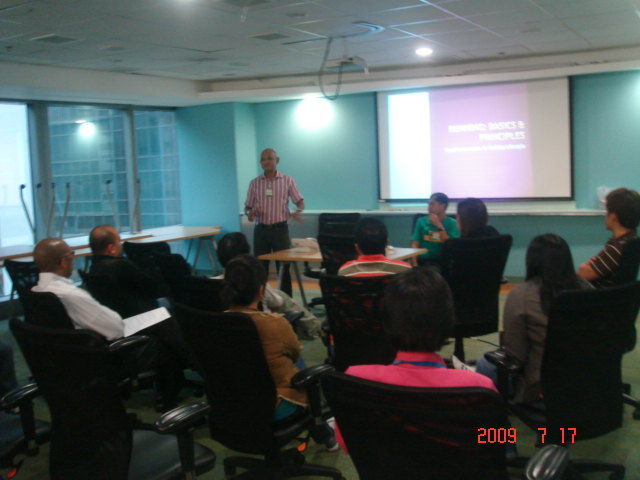
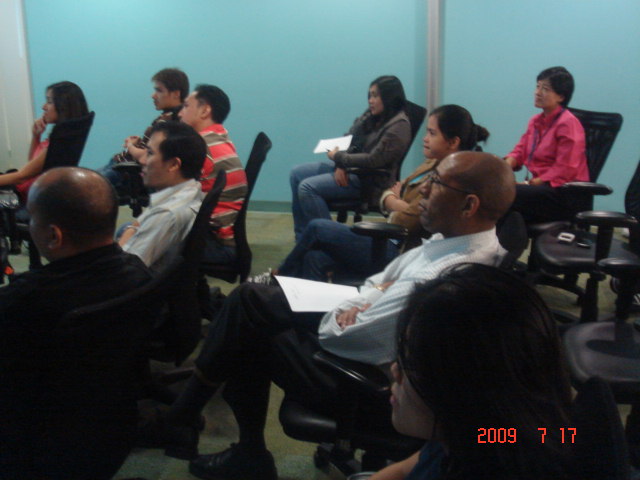
Finally, the Team Bald Runner conducted the 1st phase of the Running Clinic at the CITIBANK Tower in Makati City o/a 5:00 PM last Friday, 17 July 2009. The lecture was attended by 20 participants which consisted of officers, staff and employees of the bank. The lecture and open forum lasted for about 2 hours in one of the lecture/seminar rooms of the building.
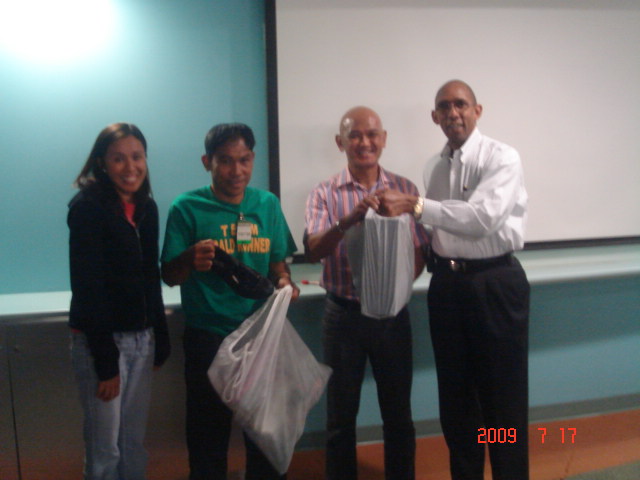
The Best Seminar/Lecture Hall I've SeenParticipants Listening Attentively During The LectureReceived Used Shoes For My Project Donate A Shoe
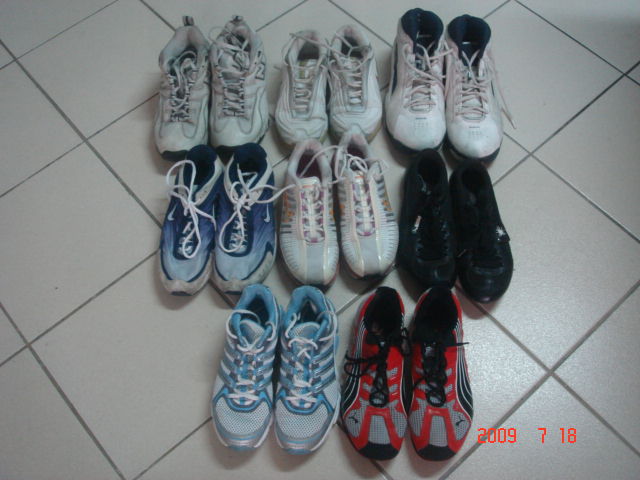
After the conduct of the lecture, Nigel Romano, CFO of Citigroup Philippines and Owen formally had given to us the used shoes they have collected from the participants as contribution to my Project Donate A Shoe. Thank you very much!
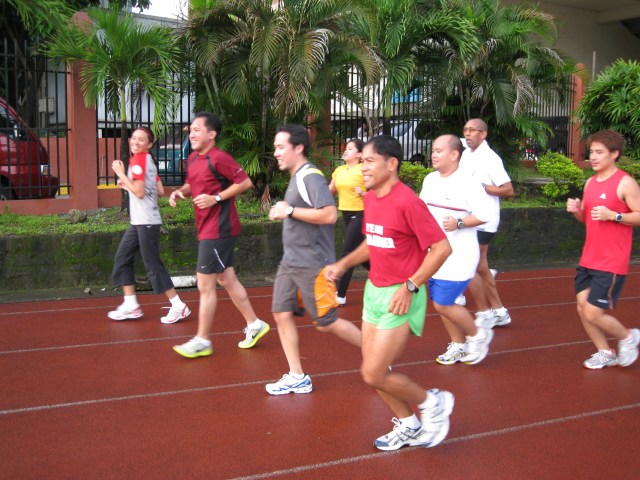
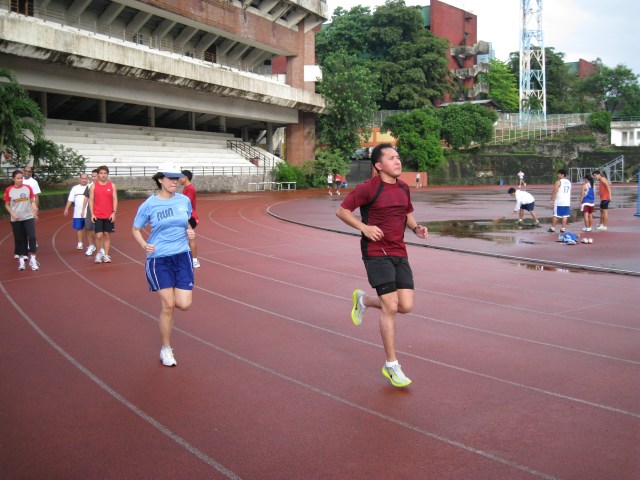
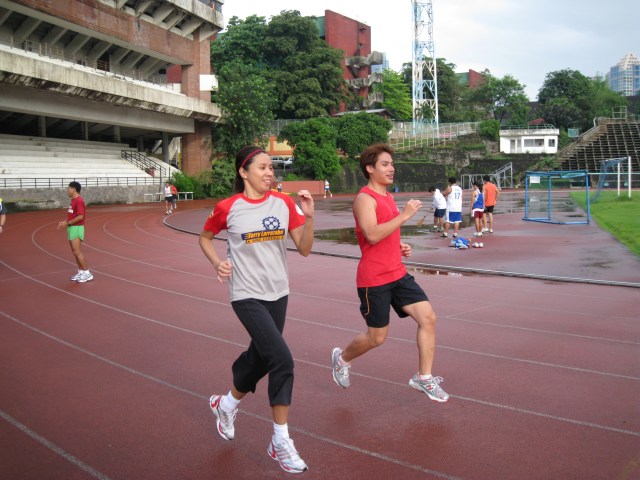
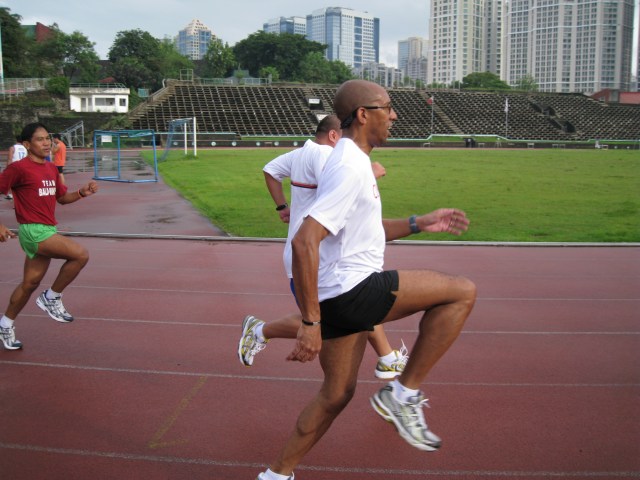
At 6:30 AM, the following the day, Saturday, July 18, 2009, the CITIBANK running group started their practical demonstration and exercises at the ULTRA Oval Track. Coach Titus Salazar and the Sabal Brothers (Elmer & Gerald) of the Elite Team Bald Runner conducted the practical demonstration and exercises. Coach Titus demonstrated the proper running form, footstrike, and other important “basics” in running, to include stretching exercises, drills, and techniques. The session lasted for two hours.
Warm-Up Run Around The Oval TrackDrills & Strides (Cathy Sy Doing The Drills)Every Participant Was Required To Do The Drills (Owen King at the Front)Nigel Romano From Trinidad-Tobago Doing The "High-Knee" DrillsDisplay of Donated Shoes
It was nice to see almost all the participants in the Running Clinic during the conduct of last Sunday’s GLOBE Run For Home at The Fort. I hope that the Running Club/Group of CITIBANK will grow in the number of members and will soon come up with their own corporate-sponsored road race.
 Bald Runner
You must be logged in to post a comment.