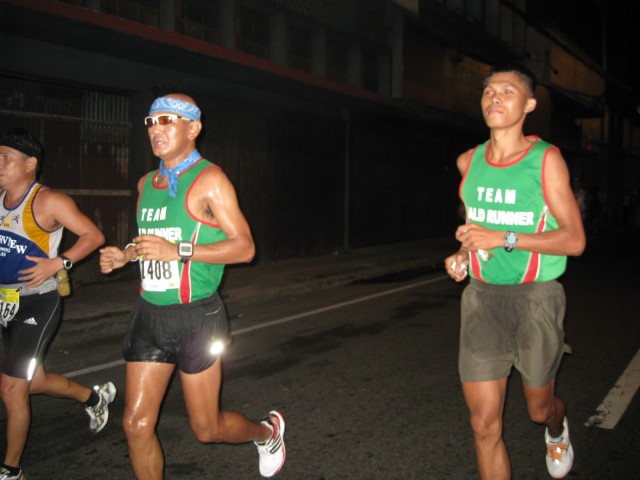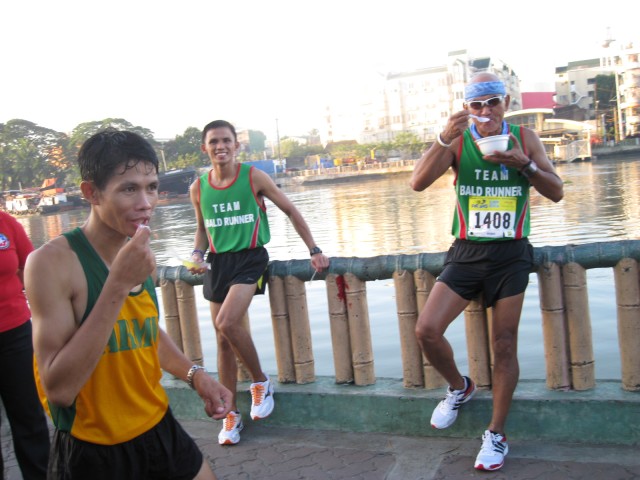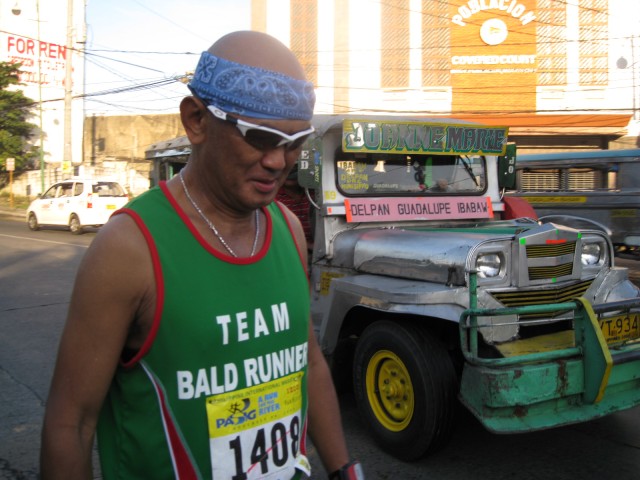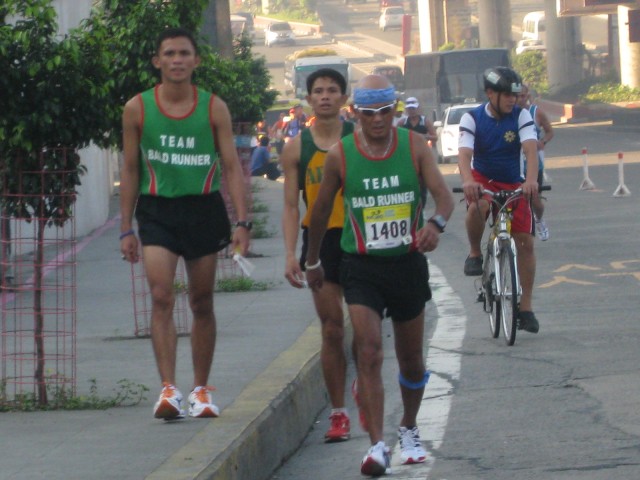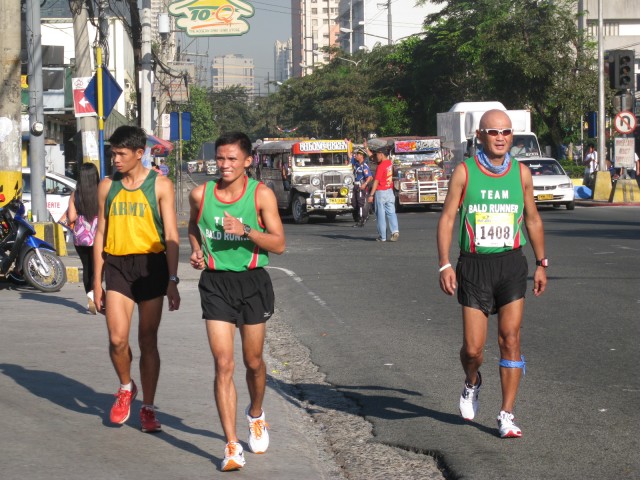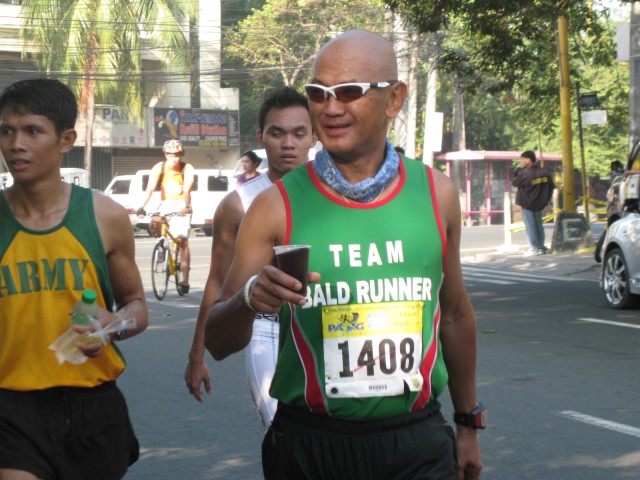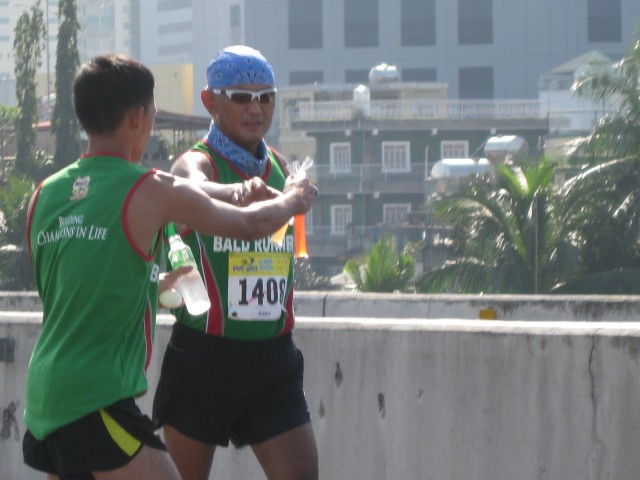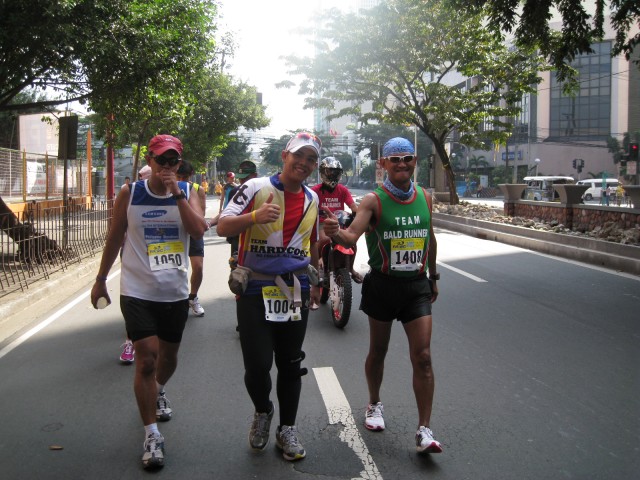
“If You Can’t Change The System, Create One”


The Birth of the Philippine Association of Ultrarunners (PAU); Our National Sports Federation On Ultrarunning

Since I started this blogsite two years ago, I was wondering what PATAFA had been doing about the sports on running, most especially on road racing. It took me some time to observe and ask people who are connected with our Athletics Sports Federation on what could PATAFA do in order to have a “control and supervision” on the conduct of road races in the country. It was during the past two years that there were so many complaints from the runners about how road races were being conducted month after month with the same complaints.

Last year, I had the opportunity to pay a courtesy call to the President of PATAFA, Mr Go Teng Kok, who had been in this position for the past 18 years. I briefed him on my observations on the conduct of road races in the country and told him that PATAFA should come into the picture as Road Racing is one of the principal components of the Athletics Sports Federation. He did not forget our conversation.

On January of this year, Mr Go Teng Kok invited me to attend the Elections of Officers of the PATAFA. I was an observer of that elections but I was frustrated on how the process of elections was done. It was not an election but it was a simple designation of officers. Mr Go Teng Kok easily got the President’s position and he will be in that position up to the end of 2012. However, it was on that “designation” day that I was designated as the Director For Road Races which, in addition to my duties, has now the power to vote for the next group of officers for PATAFA after the 2012 London Olympics. Will it take me to wait this long to become the President of PATAFA?

I am not proud of being designated as the PATAFA’s Director For Road Races because I don’t have any powers to command & decide as I could only recommend to the President of the things that I would observe in the conduct of the road races. And my duty ends there! Through this blog I was able to observe and took note of the good and bad points of the different road races in Metro Manila. However, there should be stricter measures to follow so that PATAFA’s influence be felt in road races.

In the course of preparing for the conduct of the 1st Bataan Death March 102K Ultramarathon Race (BDM 102), I discovered that there is such an international sports federation on ultrarunning called the “International Association of Ultrarunners” (IAU)  which is under the IAAF and I conceived a plan and course of action to undertake to come up with a National Sports Federation for the country in the Sports of Ultrarunning or Ultramarathon. This plan was laid and put to action after the conduct of the 1st BDM 102 last April of this year.

IAU Logo

I created the Philippine Association of Ultrarunners, Inc (PAU) with some of the Finishers of the 1st BDM 102 and have this registered at the Securities Exchange Commission (SEC) and it was approved on May 18 of this year. Immediately, I sent a letter of application for membership to the IAU through the Asian Representative of the IAU’s Executive Council in the person of Mr Lee Yongsik of South Korea and he provided me with the procedure to follow and requirements to produce in order that the bid for membership of PAU will be elevated to the Executive Council of the IAU for Approval. Mr Lee gave me a positive note and encouragement that the Philippines will be the 6th country in ASIA to be a member federation in the IAU.

I have to get an endorsement and accreditation from PATAFA and fill-up some forms from the Executive Council of the IAU and they were sent to the IAU immediately. No less than the President of the IAU who was sending me things that need to be submitted for the country to be represented to the international body. PATAFA and I even wrote some letters to the Executive Director of IAAF, Mr Peter Weize to show that PAU is an accredited organization under the PATAFA.

After deliberations, I finally received a letter from the Executive Director of IAU, Hilary Walker, that the Philippines through the Philippine Association of Ultrarunners (PAU) is now a voting member for the election of the incoming Asian Representative for the Executive Council of IAU and my vote should reach their Headquarters not later than November 22! In the said letter, I was informed that I should check on the latest E-publications of the IAU on its website on the announcement that the Philippines bid for membership to the IAU was accepted and approved. It showed that our membership to the IAU was approved last July this year and published in their October’s E-Publications (Welcome Members), the Philippines/PAU is the 47th member-federation/nation of the IAU and the 6th Asian member! As of the present, there are only 48 member-federations/nations of the IAU.

Ms Walker’s letter also gave me an advance information that the IAU will be sending a formal invitation for the Philippines/PAU to send our best ultrarunners to the 1st IAU Asian 100K Championship which will be held on March 2010. The place of competition might be in Japan or South Korea.

Since I created the Philippine Association of Ultrarunners (PAU), I am automatically designating myself as the President of this Sports Federation for Ultrarunning for the country. Are there any objections? I hope the sports of ultrarunning/ultramarathon will be developed and enhanced among the members of the running community through this Federation with the end-view of sending our best ultrarunners to international competitions sponsored and sanctioned by the International Association of Ultrarunners. With the plan to introduce the 50K or 100K Ultramarathon Race as “demonstration sports” in the 2012 London Olympic Games, I can positively say that the Philippines would be able to produce its Olympic Athletes to compete in this event in the next Olympic Games and later to the 2016 Rio De Janeiro’s Olympic Games.

There is no need to become the President of PATAFA afterall!!! However, in the end, I still need the support and unity of the runners for us to give pride to our country to be among the world’s best in ultrarunning/ultramarathon, if not, the best!

Now, for starters, I need somebody to design the Official Logo of the PAU. Whoever will submit the selected one, he/she will be awarded a 5-Year Free Membership to PAU. (Note: Please send your entries at my e-mail address at jovie75@hotmail.com)

PAU’s blogsite is at www.philippineassociationofultrarunners.blogspot.com.

The Good, The Bad, and The Ugly (2009)


Critique on the 2009 Philippine International Marathon: A Run For The River/ November 8, 2009

This was titile of my post on my critique on the conduct of the 2008 Pasig River Heritage Marathon. And I am going to use it again to express my views about the conduct of the said race under the administration by the ABS-CBN Foundation. However, this critique will be limited to the conduct of the Marathon Race.

The Good

After being delayed for 9 months, the first good point in this race is that its 9th edition (since 2000) was conducted before the year 2009 ended. The Pasig River Heritage Marathon, as stipulated in an Executive Order, is supposed to be conducted every last Sunday of the month of February. The second good point is that the race is spearheaded by the largest TV broadcast media of the country and its foundation, ABS-CBN Foundation. The third good point is that the race course almost covered all the known and historical bridges that cross the Pasig River and it also followed almost 80% of the original route of the past marathon editions. And the fourth good point is that the Race Director is Mr Rudy Biscocho, who had honed his expertise in road racing organizing since the early 80s.

Although ABS-CBN Foundation through Ms Gina Lopez of Bantay Kalikasan has spearheaded the program “Kapit Bisig Para Sa Ilog Pasig”, I am still confused if the Foundation is doing its part as one of the key members of the Pasig River Rehabilitation Commission under the Chairmanship of the DENR Secretary, Hon. Lito Atienza or the Foundation is doing the (marathon) project on their own without any accountability with the said Commission.

The Pasig River Heritage Marathon has always been a very challenging course and its point-to-point course concept is very commendable as it showcases the different communities and cities in Metro Manila and at the same time relive the history of urban development from the old Walled City of Intramuros to the most modern structures of The Fort.

The Bad

The registration and giving of race packets from the Race Organizer to the runners was the number one “bad” point of the Road Race. Second, I got the “worst” singlet for a major race this year! The fabric used was too heavy and it did not have any logo of the race. Third, the Marathon Race Logo was copied from another Road Race in the United States. Fourth, the Marathon Race Finishers were not awarded with any Finisher’s Medal. Even if you have a well-renowned and veteran Race Director/Organizer and runners who are employed with the ABS-CBN Foundation who could influence the Major Sponsor that a Finisher’s Medal is a MUST in a Marathon Race, it doesn not mean that they could influence their Major Sponsors who are not seasoned/competitive runners in order to make this race a perfect one! Maybe, a “copied logo” would not be wise to be inscripted in a Finisher’s Logo or else the Foundation could be sued for copyright infringement. It could be a good reason why they did not give any Finisher’s Medal. Fifth, my basic standards on water station (distance in between stations; length of table; and quantity of cups) were not met. Sixth, the accuracy of the distance was not met and it was lacking for about 800 meters. Since the 2004 edition of the race, the original course (Intramuros to The Fort) was certified by IAAF and AIMS. I hope the Race Organizer will ask the same international bodies to certify this race course.

The Ugly

First, the ugly part of the Marathon Race is the silent treatment my staff and other runners got from the ABS-CBN Foundation and Race Organizer/Director with regards to the Prizes for the Top Runners a few days before race day. What is worst is that the Cash Prizes and Cash Certificates were not given during the Awarding Ceremony or immediately after the Race. Instead, the winners were promised to receive their prizes after 5 days! I heard that one of the Kenyan runners who left Manila last Tuesday for Kuala Lumpur came back on Friday to receive his winning prize! My Elite Team Bald Runner won 1st Runner-Up in the 20-Man Relay Team Race but they were promised to receive their Prize after 5 days, Friday to be exact.

Second, I could not understand why is it that the biggest TV network in the country could not “frontload” its resources for the operational and technical needs of the runners to include cash prizes, better registration system, better quality of singlets, and better support to the runners. Basing from their media releases after the race, this road race was attended by 22,000 runners which is a record-breaking data for a running event in the country. However, if you convert this in monetary terms, this figure will translate to P 5.5 Million (Pesos) earnings from registration fees alone! This is not to include the support coming from the other sponsors of the race. With said amount of money, the ABS-CBN Foundation would have been “transparent” in terms of prizes and “giveaways” for the elite and other runners/finishers. How I wished that they would be transparent also in telling to the public, through their media releases, how much did the race/event earned for the Pasig River Project.

Lastly, the Pasig River is still ugly, in sight and smell, with all the “illegal settlers”, sewerage and waste disposal of the communities from its banks. Hopefully, the seven (7) years that the ABS-CBN Foundation had promised to serve as the “spearhead” organization to clean the Pasig River will show a significant development. The following is the visionary depiction of the Pasig River:

Pasig River Rehab
Vision For The Pasig River

The Ugliest

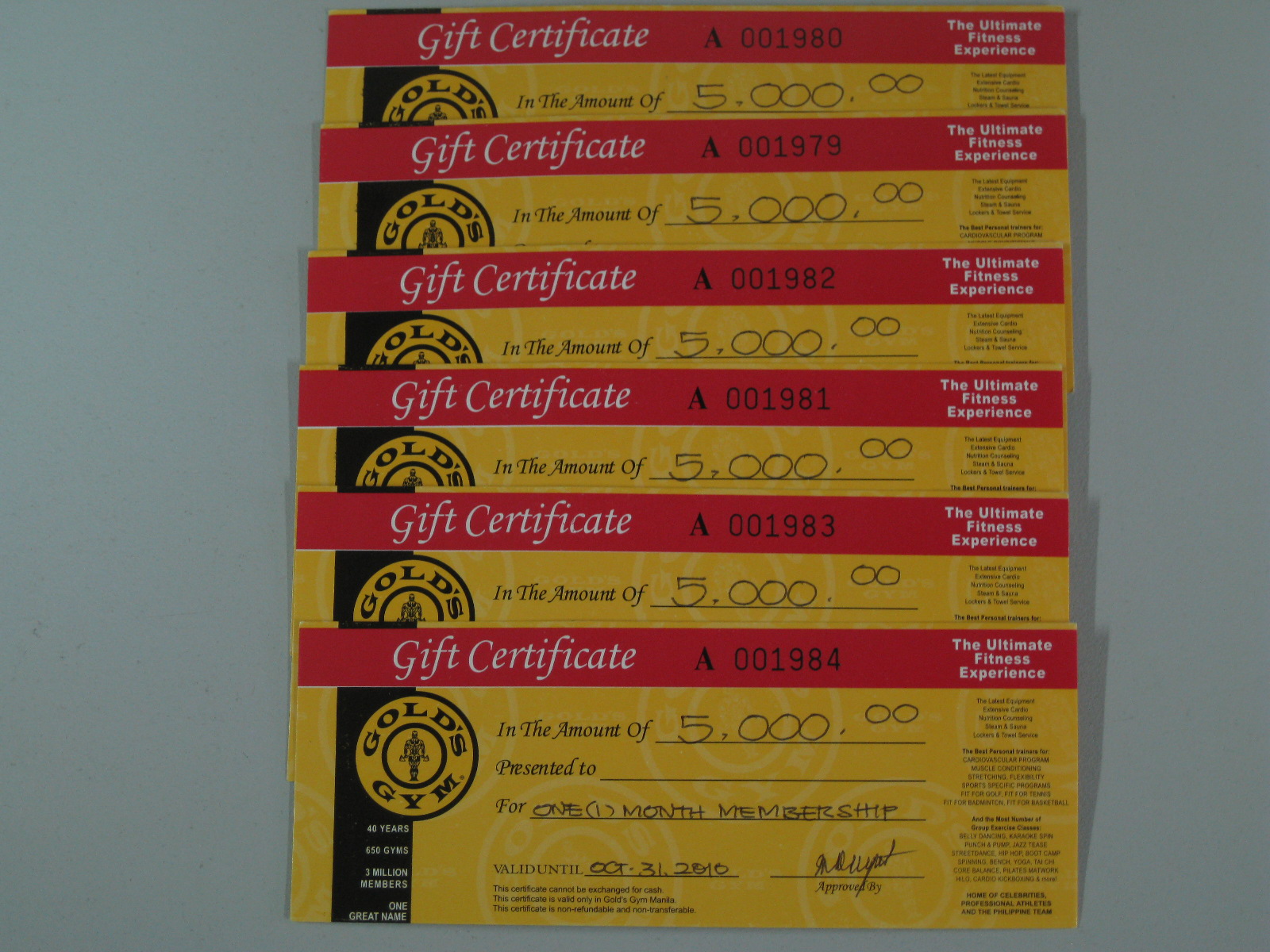
After 5 days of waiting, the members of my Elite Team Bald Runner were able to receive their Prize from the ABS-CBN Foundation as the team placed 1st Runner-Up in the 20-Man Relay Team. The members were surprised to receive P 30,000 worth of Gift Certificates from Gold’s Gym. Each Gift Certificate is worth P 5,000 for a One Month Entry & Use of the Gold’s Gym Facilities. The athletes were frustrated to receive such GCs because they don’t need to go to the Gym in order to improve their Finish Times. Or are they trying to fool the athletes that a one month use of the gym is worth P 5,000? I could be mistaken but I am a VIP member of the said Gym and I know that I only pay less than one-half of the said amount every month! However, after contacting some members and Personal Trainers of Gold’s Gym, I found out that each GC is sold at P 2,000 each.

I heard that one of the Coaches of one of the winning teams tore the Gift Certificates into pieces after receiving them as he expected Cash Prize of P 50,000 to be given and not Gift Certificates.  I can sympathize with these coach & athletes as they need CASH from their winnings. They need the money to sustain their training for food, sports drinks, vitamins, running shoes and expenses for registration fees in incoming races! I really don’t know if ABS-CBN Foundation is guilty of DECEPTION in the publication of their Prizes. However, I am sure that the ABS-CBN Foundation is guilty of deceiving my athletes and the other runners for placing the value of each GC to P 5,000, instead of P 2,000!!!

Gold's Gym GCs @ P 5,000 each Per Month

I hope that there will be “takers” of these GCs from Gold’s Gym if they will be sold at P 2,000 each. The money from the sale of these GCs would mean a lot for the support of my elite athletes.

In summary, I will not expect the ABS-CBN Foundation to issue an Official Statement to answer this Critique because all Major Sponsors of all past Road Races has expressed the same statement and I predict that the Foundation will issue the said statement as shown below: 

“ABS-CBN Foundation is New In Running & It Promises To Improve On the Conduct of the Next PIM Edition”

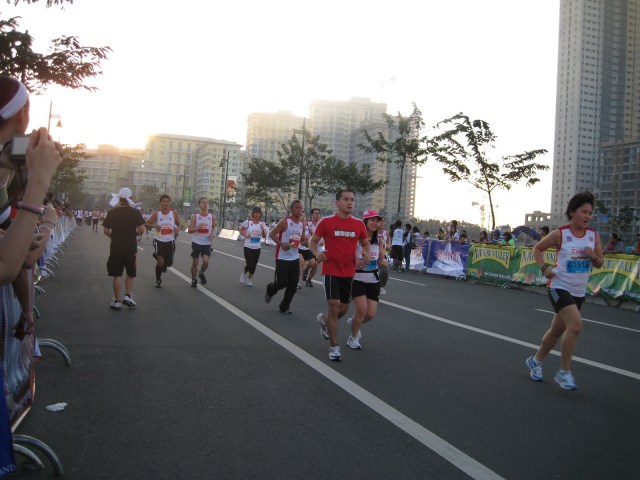
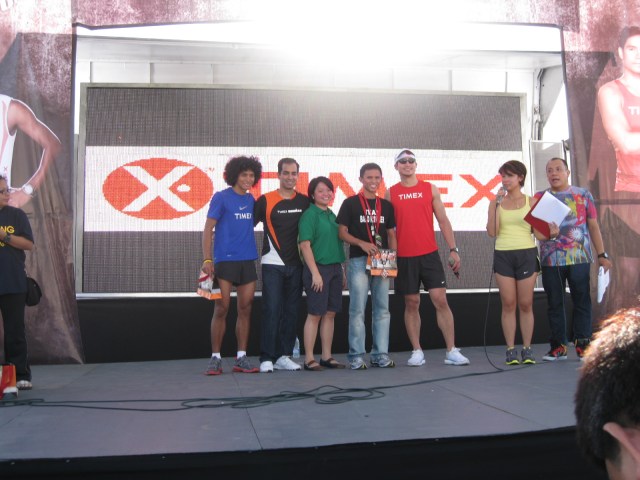
Pictures @ TIMEX Run


With or without my present injury, I was decided not to join this race because of the following reasons: (1) The registration fee for the 21K is too expensive (P 700.00); (2) The Cash Prize of P 6,000 is not commensurate with the Registration Fee being paid by each runner and the number of sponsors supporting this event; (3) The course is too familiar and overused; and (4) I am not a fan of Piolo!

Instead, I came to the race to cheer for my two elite runners, Alquin Bolivar who ran the 10K distance and Crifrankreadel Indapan who ran the 21K distance. The other members of the Elite Team Bald Runner were distributed to other races in Metro Manila being held on the same day.

IMG_2937
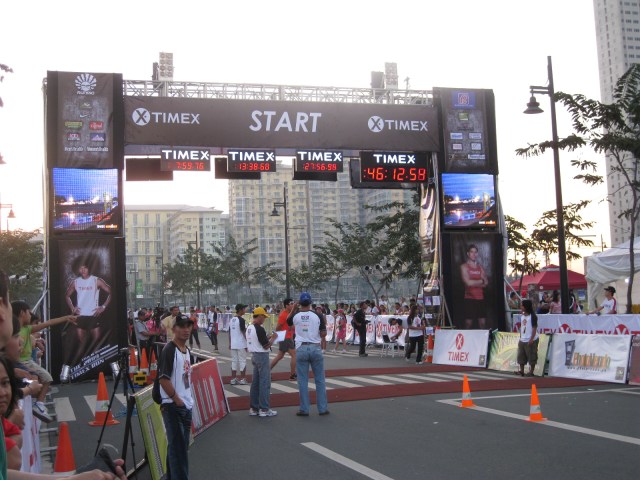
At The Starting/Finish Line

The set-up of the Starting/Finishing Area was properly prepared and I could see that these are “signs” of improvements in road racing. I was impressed with those new portalets lined up at the vicinity of the Assembly Area. I was able to see also a long tables of water aid stations for the 3K & 5K runners. Well, it is about time that such basic support services should be given to the runners. I’ve been complaining of short tables of water aid stations and the lack of water and water cups for more than one year of blogging and I am glad our Race Organizers are reacting to the observations of runners and bloggers.

IMG_2939
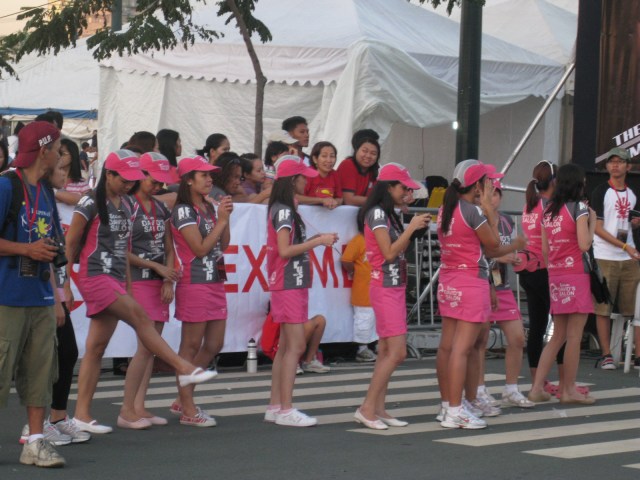
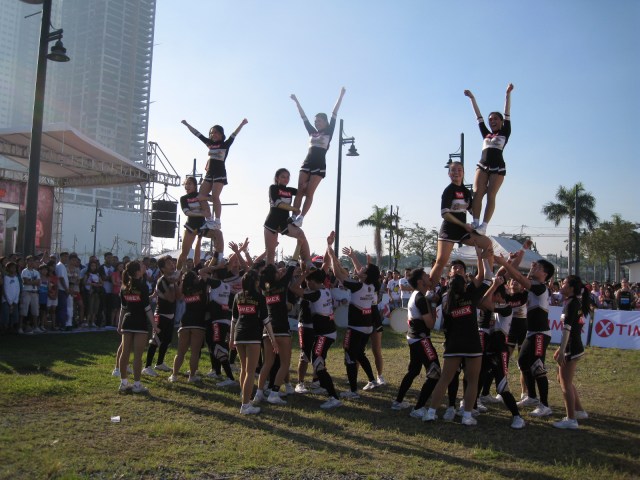
Robinson's Cheering Girls @ The Finish Line
IMG_2940
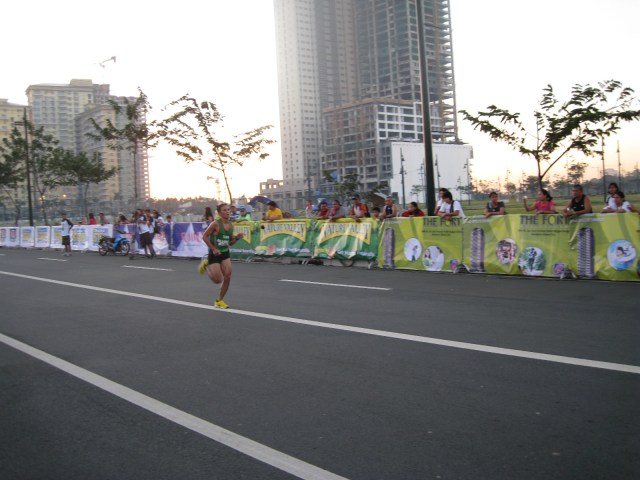
Alquin Bolivar Arriving 2nd In the 10K Race

Piolo is a competitive runner afterall. He finished the 10K race in 47+ minutes which is an impressive time for a new runner with only one month of training under Coach Rio. I hope he could run the next edition of the Philippine International Marathon: Pasig River Run 42K Race  so that ABS-CBN Foundation would be able to improve its race most especially on their Prizes for the Winners.

My elite team runners informed me that the ABS-CBN Foundation awarded Gold’s Gym Gift Certificates to the winners/members of the Team Relay Race worth P 5,000 for each runner. To the dismay & frustration of the athletes, they tore their GCs after receiving them.  I think those runners who are employed and working under the ABS-CBN Foundation should advise their boss, Ms Gina Lopez, that our athletes need MONEY for their subsistence needs. Runners do not have time to go to the gym and they don’t need to have bulky muscles!

IMG_2943
3K & 5K Runners Near The Finish Line
IMG_2952
TIMEX Cheering Team or UP Maroons Cheering Team?
IMG_2955
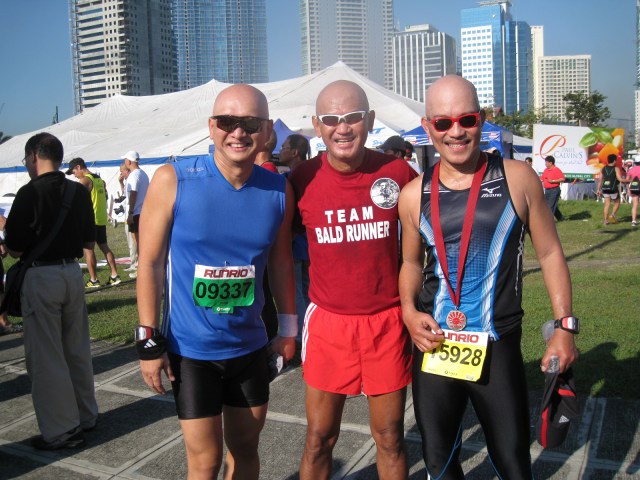
The "Bald Runners" (Mart Miranda & Leo Valdez)
IMG_2960
Alquin Bolivar's 10K 1st Runner-Up Podium Finish

 Congratulations to all the finishers of this race and to Coach Rio and Finish Line for raising the bar in our road races!

And the best photo of the day…

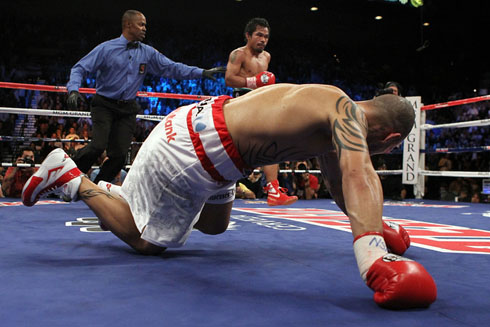
89129254MW057_Manny_Pacquia
Pacquiao as the New WBO Welterweight Champion (Photo Courtesy of http://www.yahoo.com/sports)

 Congratulations to Manny Pacquiao. Amazing Performance and the Greatest Fight of the Year!  


“Water Therapy” @ Laguna Hot Spring


This is not the kind of treatment wherein you have to drink a number of glasses of water after you wake up in the morning; before eating your meals; after eating your food; and before going to bed almost everyday.

After I had the strength to stand up and slowly walk on my own, I requested my staff to bring me to Brgy Bucal in Los Banos, Laguna as I remember having visited this place with the invitation of my classmates from the Philippine Constabulary/Philippine National Police when I was still a Major in the active service in one of the hot spring establishments in the area. Although the place where I was invited was an exclusive place, I found out that there are places where it is cheap and affordable. A former classmate of mine in Elementary & High School also owns a house with pool in this area. In the end, I decided to look for a cheap place where there is no reservation procedure is involved.

IMG_2908
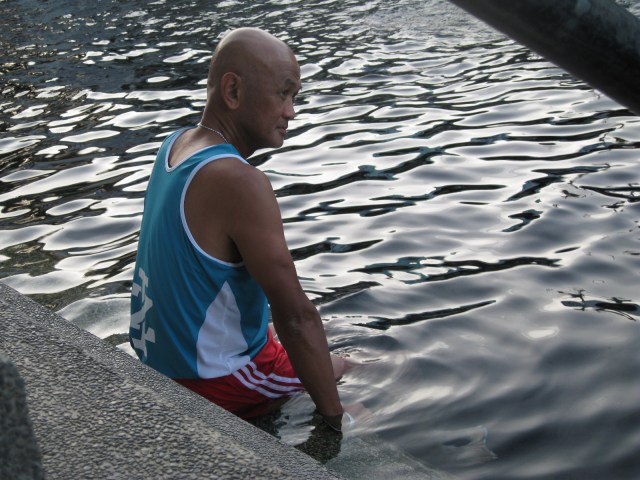
Soaking My Legs In Sulphuric Water

After lunch last Tuesday, I went to Los Banos, Laguna with the intention of soaking my legs in the hot spring water of the numerous in the said place. I wanted my leg muscles to relax and get the warmth of the sulphuric water. From 1:30 PM to 7:30 PM, my legs and whole body were soaked in the sulphuric water of the old & renowned Laguna Hot Spring which was established in the year 1949. It took me straight 6 hours to soak myself in this therapeutic waters of Los Banos. Surprisingly, after 2-3 hours in the water, I could see that I was sweating and had some snack “breaks” as I felt so hungry due to the effect of the heat from the water.

Staying on the hottest portion of the pool for 6 hours seemed to be so short because of the people who shared the area with me. There was this European guy who was in his late 60’s who was looking silently to me and to other two Filipino guys who were talking in Tagalog. All of a sudden, the European guy joined the conversation in a fluent Tagalog, too! This guy had been a constant visitor of the place. A Filipino guy in his late 30s approached me and asked if I am joining marathons/road races in Manila (he might have seen my singlet in the TV news about PIM) and we started our conversation about running until it reached about topics on politics/presidential election candidates. His purpose in going to this hot spring facility is that he has “gout”! What? A guy so young with “gout”? Unbelievable!

And then there were two “senior” couples who happened to be “Balikbayans” from Cerritos, California. The topic they were discussing was about the bad image of the country’s peace and order situation as gleaned from the TV broadcasts they see abroad. I did not join their conversation but just listened to what they were talking. Later, the conversation went to Tyhoon Ondoy and the distribution of relief goods and the accountability of the money received by ABS-CBN Foundation from the local and foreign donors. Later, it went to the pros and cons of the political figures planning to run for Presidency of the country. Well, what they said were valid and some are the usual “opinionated” remarks. Hearing all their conversations were very entertaining! 

IMG_2920
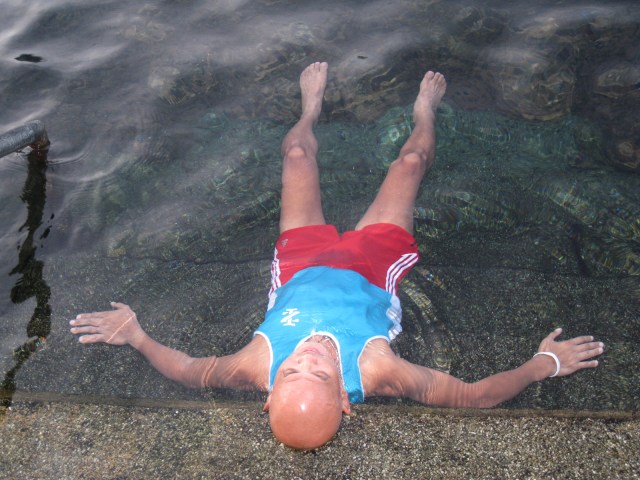
Whole Body Soaked In Water

 After 3 hours in the water, I started to move my left leg by kicking it underwater and doing some leg curl exercises. After 15 minutes of leg kicking and leg curling, I started to jog slowly. I was surprised that I did not feel any pain while doing the slow jogging inside the water. The depth of the pool is 6 feet and it was very comfortable to be curling my legs under the hot water of the spring. I did a 30-minute “water jogging” and it was a nice workout that I had to sweat!

After a brief snacks/break for about 20 minutes, I returned to the “hottest” spot and did again some leg exercises—leg curls and leg scissors! A guy suddenly started talking about the therapeutic benefits of the sulphuric water where he said that he had been a constant visitor and user of the place for the past 20 years! According to him, the benifits from the water are better absorbed by the body if you do some exercises or body movements while you are soaked in the water. Well, I silently said to myself that, that was exactly what I was doing for the past 3-4 hours!  

The Laguna Hot Spring in Brgy Bucal, Los Banos is one-hour ride from Taguig City. The admission fee during daytime is P 60.00 only per person. The toll fee from Taguig City to Calamba Exit at the SLEX is only P 87.00, one way. So, if you have the time and want to experience a relaxing moment to soak your running legs and tired bodies to the sulphuric water of Los Banos, a trip to this place is highly recommended. A canteen/store is located inside the establishment where anybody could order cooked food. However, you can also bring your own food and drinks inside the place without any extra charge.

After a full night rest, my legs, most especially to my left, has slowly already regained its strength.

History of “Clean & Green Foundation”


While massaging my injured calf muscle, I came upon a blog about the history of the Clean & Green Foundation which is the main sponsor of the past 8 editions of the Pasig River Heritage International Marathon. Before coming up with my critique with the last Sunday’s Philippine International Marathon: A Run For The River, I think my readers and those “newbies” in this Marathon Race should know the history of the Clean & Green Foundation that started the Pasig River Marathon Race and its advocacy.

I hope that the ABS-CBN Foundation would be transparent enough to inform the public if they received some assets or funds from the defunct Clean & Green Foundation or open their “books” since the Foundation took the responsibility of cleaning the Pasig River.

Enjoy reading the following article.

Clean & Green Foundation
Logo of C&GFI

(Source: C&GFI Blogsite @ www.cleanandgreenfoundation.wordpress.com)

THE CLEAN & GREEN FOUNDATION INC. CLOSING DOWN????  

FACTSHEET

On the Labor and Organizational Problems

Presently besetting the Clean & Green Foundation, Incorporated

Prepared by the Clean & Green Foundation Incorporated Employees Union

02 April  2008
In January 1994, the Clean & Green Foundation was created with then first lady Amelita M. Ramos as founder and chairperson.  The board of trustees were initially composed of industry leaders and famous persons to be personally close to her.  Joining Mrs Ramos in the board were then Fort Bonifacio Development Corporation bigwig Ricardo S. Pascua, Aurora Arnaez of the Social Security System, Jaime Paredes of Apo Hiking Society, Doris Teresa Magsaysay-Ho of Magsaysay Shipping, among others.  The board was later to be joined by Angel Ramos-Jones and Ms Boots Anson-Roa.  Ms Roa would later resign from the Board.  First gentleman Attorney Jose Miguel Arroyo was a one-time honorary chairperson.

In its incorporation papers filed before the Securities and Exchange Commission (Numbered ANO94-000388), the Foundation declared that its first objective is to “Formulate, initiate, undertake, promote, sponsor, assist, finance projects, programs, activities to cleanse, improve, rehabilitate and develop the environment, and to maintain the environment in a clean, healthy and sanitary state.” It also declared that “The Term for which the Foundation is to exist is 50 years…”

The Foundation’s first project was The Orchidarium, a garden in Rizal Park.  In an agreement with the National Parks Development Committee, an underdeveloped hectare was loaned at no cost to the organization to develop and operate as an orchid garden.  It then became a private garden where visitors have to buy tickets to enter.  Functions such as wedding receptions are charged P30,000 for use of the garden.  Grants from private companies were used to enhance the garden.

In March 1995, the River Rehabilitation Secretariat of the Department of Environment and Natural Resources gave the Foundation a one million peso seed money to operate Piso Para sa Pasig.  PPP was originally a project of the RRS-DENR.  Its first objective was to raise fifty million pesos as trust fund for succeeding Pasig River rehabilitation advocacy projects.

Through high profile income-generating projects and activities such as vanity car plates, concerts, grants, collection cans, among others, PPP was able to raise forty million pesos in cash and about ten million pesos worth of donations in kind (oil paintings, Persian rugs, vehicles, free office space, and many others.)  The proceeds were deposited into two trust funds (a peso and a dollar fund account) with then Far East Bank and Trust Company and later was transferred to the Bank of Philippine Islands when the latter took over the former.  It was originally planned that only their interests and incomes were to be used as operation and project funds of the CGFI.

No doubt, Mrs Ramos’ status as first lady was instrumental in the fund-generating PPP project.  Even without being asked, some companies would call up the CGFI office to inform the secretariat that checks were ready for pick up.  But it can not be denied that humble Filipinos, school children, common pedestrians, professionals, workers, the faithful in various churches, and many others contributed to the fund through the many ubiquitous donation cans distributed everywhere.  They all believed their monies would be properly spent for the rehabilitation of the Pasig River.  C&GFI never disabused the public of this belief.  Even Foundation employees believed this pitch.

From 1997, when the PPP fund-raising period ended, to 2005, the Foundation indeed spent its incomes, the interests from the funds and parts of the principal amounts to various river rehabilitation advocacy programs.  Among these were a Pasig River painting contest, an essay and cartooning contest with student publications, an annual concert, an annual symposium attended by various stakeholders, the Pasig River Heritage Marathon which was first in 2000 and later later became the International Philippine for the Pasig River, among many others. 

But breaking from its declared modus operandi, the Foundation used part of the funds to buy two solid waste collecting boats that easily cost 15 million pesos in all.  The boats have been turned over the MMDA but is now gathering rust behind Malacañang Palace because the government does not have funds to operate them.  The Foundation also spent for the enhancement of Roxas Boulevard in time for the APEC Meeting in the country during President Fidel Ramos’ term.  CGFI also spent for the enhancement of at least two bridges spanning the Pasig as part of its Project Bridges that benefitted nine of the existing 13 bridges of the river.

Mainly because corporate sponsorships have dried up after the Ramos administration, money was harder to come by starting from 1998.  In 2005, CGFI president Ricardo Pascua said that C&GFI’s may only have another five years if belts were not tightened and expenses far outweigh the income generated. Mrs Ramos then recommended a retiree from International School to join C&GFI as Finance and Administration Manager—Estrella Villegas – primarily, as Mrs Ramos said, “to fix the figures.”  Curiously, the “fixer” was allowed to collect more monetary benefits that if computed along with her basic salary are more than what the executive directors received.  More employees were also hired to assist Ms Villegas.  Their inclusions among the employees were therefore not  belt-tightening measures.

In the years 2004 to 2006, CGFI failed to properly report its finances to the SEC and was adjudged “delinquent” by the Commission. 

Still, CGFI was losing money from its various projects such as the marathon, The Orchidarium, and the National Ecolabelling Program-Green Choice Philippines-which it is implementing in behalf of the DENR and the Department of Trade and Industry.

Mainly through the efforts of former executive director Imelda P. Sarmiento, grants were approved to turn around the organization’s financial bleeding.  From Nokia, the Orchidarium was given 5.33 million pesos.  From Mitsui Company of Japan, CGFI’s Trees4Life program would receive a total of 18 million pesos—7.8 million pesos of which was already received.  From Cemex Corporation, Green Choice received 1.5 million pesos.  Around the same amount was separately received from Unilever Philippines and Pride Detergents for Green Choice.  Four million was received from Samsung for the marathon.  Three hundred thousand pesos was received from Ford Motors for Trees4Life.  Another million was received from the DTI for Green Choice and another three million is expected.

In June 2004, Senator Ramon Magsaysay pledged 1.5 million pesos for the Orchidarium from his PDAF.  Because the end-beneficiary was an NGO, the fund was coursed through the City Government of Manila.  In November 2005, the full amount was given to CGFI.  Ms Villegas spent a few hundred thousand pesos to repair leaky roofs at the Orchidarium but majority of the amount was invested in the money market.

In July 2007, Mr Pascua unceremoniously fired Ms Sarmiento as executive director.  Ms Sarmiento is contesting the move as illegal dismissal.  CGFI offered to settle for practically twice the amount of her original separation pay but Ms Sarmiento turned it down, insisting on a public apology from the board as part of the deal.

In the period between July 2007 to January 2008, Ms Villegas, as officer in charge of the CGFI secretariat caused the dismissal of orchid consultant Jun Golamco, project director Norby Bautista, project director Raymund Villanueva and other rank and file employees, all of whom she perceive to be loyal to Ms Sarmiento.  Ms Villegas also threatened to decrease the wages and benefits of the rank and file employees befitting their status as gardeners, security guards and messengers.  All of the employees thus threatened were vocally loyal to Ms Sarmiento who believe her dismissal was unjust.

On 3 November 2007 the rank and file employees organized the Clean & Green Foundation Incorporated Employees Association as a reaction to Ms Villegas and Mr Pascua’s decisions regarding their rights and employment.  It was promptly federated with the Association of Democratic Labor Unions-Kilusang Mayo Uno and registered with the Department of Labor and Employment.  The union also promptly asked Mrs Ramos and the rest of the board for a meeting.  They were turned down and ignored each time by Mrs Ramos, Ms Ho and Mr Pascua.

On 25 January 2008, dismissed project director Raymund Villanueva filed an illegal dismissal case against Mrs Ramos and Mr Pascua before the National Labor Relations Commission.

On 9 January 2008, the new executive director, presumably acting in behalf of the board and Ms Villegas, categorically stated that the only way CGFI would be prevented from closing down is for the union to dissolve itself.  Various forms of harassments to apply pressure on the union to do just this to no avail, led by the likes of project director June M. Alvarez and others.

On 21 January 2008, Mrs Ramos resigned as chairperson and member of the board.

On 26 February 2008, Mr Pascua informed DOLE of the board’s intention to dissolve CGFI because of Mrs Ramos’ resignation from the Clean and Green Foundation, Inc.  Effective date was 31 March 2008.

On 7 March 2008, the union filed a union busting case against the board before the National Conciliation and Mediation Board of the DOLE.  They believe that the reason cited by Mr Pascua was “in bad faith” and that the real reason was to bust the union.  They said that the foundation does not cease to exist with the resignation of a board member. There have been three hearings so far.

On 31 March 2008 the Clean and Green Foundation is already effective close to the public and other transactions.

Outstanding issues:
For CGFI to close shop after it learned of the formation of the union and after failing to influence it to dissolve itself is clearly union busting;

The CGFI board of directors are eminent persons in Philippine society while they are violating the most basic rights of humble persons such as clerks, gardeners, drivers, messengers and guards;

CGFI can not just close shop without accounting for the public funds awarded to it by the government, such as the River Rehabilitation Secretation seed money, the Ecolabelling budget from the DTI, the PDAF grant from Senator Magsaysay that it kept in the banks instead of using it. 

CGFI must also justify why it is abandoning its Pasig River rehabilitation advocacy when it led millions of Filipinos to believe that their Piso Para sa Pasig was for this cause. 

CGFI must account for the hundred million pesos it was able to amass during its 13-year run.

CGFI must face the illegal dismissal labor charges filed against them.

Post Injury Analysis & Treatment


To get a full appreciation of what happened to me last Sunday’s PIM, I tried to look for charts and pictures of specific muscles of the lower leg. Having finished two years of BS Pre-Med before entering the Philippine Military Academy, I had the chance to dissect the different body organ systems of frogs and sharks in our Basic Anatomy & Physiology classes. And with the advent of the Internet, anybody could immediately research on certain topics about the human body. I downloaded and copied the following charts/diagrams of the human lower leg muscles groups from the Internet to give a full description of what happened to me last Sunday’s marathon race.

Lower Leg Muscles
Lower Leg Muscles

After a “back-to-back” Subic International Marathon on a Saturday early evening and then a Sunday early morning ADIDAS KOTR Half-Marathon, I felt a “pain” on my upper Gatrocnemius, which is about two inches below the back of my left knee. I had this part of particular muscle to be exposed to “deep-tissue” massage, every other day. After resting my legs for a day, I would do my slow long runs with a slow pace after warm-up and stretching and the pain would be manageable. More massage and rest for my legs for the two weeks in between SIM and PIM but the urge to build-up more mileage was so tempting that I had to do my long runs and a single session of tempo run. In these runs, I would observe that the pain would just disappear the longer I do my runs.

Leg Muscle Anatomy
Lower Leg Anatomy

 However, during the PIM, at Km 15, the pain at the same spot on my Gastrocnemius started to appear but I still tried to maintain my pace with the hope that it would slowly disappear. At Km 19, the pain on my Gastrocnemius started to spread to my Petronius Longus and later to my Tibialis Anterior. With the diagram/chart above, the Petronius Longus muscle is connected to a tendon that goes all the way to the ball of my foot. This was the reason why I could not force my foot to spring up from the ground and maintain my running pace/form as pain would spread to the whole left leg. There was no way that I could run continously with the unbearable pain on my lower left leg as my foot strike the ground. And the rest is history.

Few hours after finishing the race, I could no longer stand on my two legs without being helped by my staff/assistant! I could hardly walk without somebody supporting me and could not even lift my left leg for a few inches from the ground. It was the most painful experience in my life after a Marathon Race! But being a seasoned runner, I just relaxed and thought of applying the “time-tested” R-I-C-E treatment. I took a cold shower; had my left lower leg massaged lightly; elevated my affected leg with an ice bag placed on the affected muscle while sitted or lying on my back; and rested/slept well during nighttime and daytime! Drank a lot of my Ensure, Milk, Gatorade and Water and Ate a lot of Carbohydrate & Protein Foods! After 36 hours, I could walk without any support or assistant and the muscle soreness slowly disappeared. And the pain was already manageable.

I need more time to rest and recover.

“Tumirik Si BR!” (BR Got Stucked!)


2009 Philippine International Marathon: A Run For The River 42K Marathon

After joining the Subic International Marathon and the ADIDAS “KOTR” Half-Marathon two weeks ago, I rested for one week with only one running workout. But for the week (6 days) before the Pasig River Marathon, I started to do my long runs where I was able to run a total of 78 kilometers and had two days of rest before Race Day.  My first mistake!

On the last kilometer before the Finish Line at the Subic International Marathon, I was attacked with “muscle cramps” on my left calf muscle but it disappeared after running lightly until I reached the Finish Line. As there was no pain during my trip back to Manila, I was comfortable in joining the next day’s ADIDAS KOTR Half-Marathon with a plan to finish the race at my own pace. After the race, I felt that there was a “pain” in one of the inner muscles of my calf and I decided to have a massage. More daily sessions of massage was conducted to my legs and they relieved the pain as I pushed to build-up my mileage for the week before Race Day. I did not wait for my “strained” muscle to “heal” before doing my long runs and tempo run for the week. My second mistake!

IMG_2849
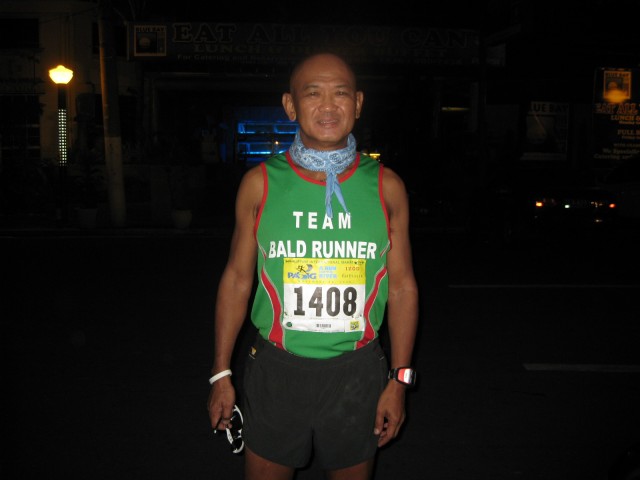
The Usual Pose Before The Race

 After shaving, shower, and preparing my running kit, I went to bed at 8:00 PM on the night before Race Day and had my alarm clock set at 3:00 AM. I arrived at the Luneta/Quirino Grandstand area at 3:45 AM and did my stretching & slow jogging immediately. Before entering the Starting Line Area, I was able to talk to the ABS-CBN Foundation officials, Finishers of the 1st BDM 102, my friends & supporters of my road races, runner-bloggers, runners from other Running Clubs, and readers of this blog.

The race started at 2 minutes before the scheduled time of 4:30 AM, a sign that the Race Director is Mr Rudy Biscocho. I went with the flow of the runners beside and infront of me. My GF 305 registered an average pace of  5:56 mpk for the 1st kilometer and I was comfortable with the pace. I was trying to expect a Water Aid Station in between 2K & 3K mark but I was surprised that the first Water Station was located on top of Del Pan Bridge which is at the 4+K mark. I took a cup of water and made a sip after taking my first GU Power Gel for the Race. I continued the race and relied with the assistance of the Race Marshals positioned in intersections as the traffic was building up on the surrounding street of Luneta Park. I also relied on the runners infront of me in order to be in the right track of the course. For the past Pasig River Marathon editions, I became one of the “lost runners” along the streets surrounding the Luneta Park due to lack of race marshals on the early part of the race.

Crossing the bridges were memorable during the race because each of the Water Aid Stations was located on top of the bridge and at the same time the location of the Relay Stations for the Relay Race runners. I was feeling okey and comfortable passing along the Jones Bridge and McArthur Bridge where I was running at an average pace of 5:30-5:40 kpm . It was at the approach of the Ayala Bridge that my support team met me and started giving me water and Gatorade drinks in ice candy plastic bags. Gerald Sabal, one of the early relay team members who finished his 2-kilometer run joined me and paced me from this point.

IMG_2855
Focused On Racing Before The 10K Mark

 After crossing the Nagtahan Bridge, at the Km-15 mark, I started to feel a pain on my left calf muscle, the very same muscle that I had problems after the SIM and ADIDAS KOTR runs. I tried to slow down at first to find out if the pain will subside as what I’ve experienced in my previous long runs before the race. However, the pain would not disappear and I tried to keep my pace faster thinking that the pain would completely cease. I don’t advise this “technique” to the “newbies”! Even after a few yards of talking to my left leg, the pain would stay! I started to limp and slow down with my pace. As soon as I saw my support staff and vehicle, I stopped and asked one of my elite athletes to apply pressure and massage to the affected area and it gave me relief from the pain.

So, I continued to run and forced the pain to go away from my legs by running as fast as I could. After passing the Lambingan Bridge, I felt that the pain started to spread on the side of my lower leg and no longer at my left calf muscle. As my left foot would strike the ground, it caused an unbearable pain for the whole of my left leg that I have to take a light footstrike to the ground. The pain was still there and my left leg could no longer force my body to move forward. I decided to stop in one of the Waiting Sheds and had my lower left muscles massaged by my Elite Team runners. After a brief massage, I tried to alternately jog and walk until I saw my support vehicle and I was offered my usual Instant Oatmeal at the halfway mark. At this point, my GF 305 registered a distance of 19.63 kilometers with a time of 1:58+ hours!

IMG_2866
My Pit Stop Along Pasig River @ 19.6K Mark

 As my leg-in-pain was being massaged, I saw a lot of runners passing me and asked what is happening. I answered them that I have a strained muscle and told them to continue their running. Some offered help, sports drinks, water and food. Thanks, guys for the show of concern and offers of assistance. I will never forget your faces!

After finishing my Oatmeal snack, a decision must be made! Do I have to DNF or Finish the Race? In my entire running career and adventures, I never experienced a DNF. I told my Elite runners who were assisting me that I really “walk the talk” because I always tell them to finish every race they have started and don’t want them to be dropping their race once they know that they could no longer place on standings where there are no cash prizes to receive. So, I made my decision to finish the race even if it will take me a longer finish time. This is the time to prove what “warriors” are made of!

IMG_2867
My Brisk Walking Started...

 I removed my wet bandana from my neck and tied it around my upper left calf muscle to relieve the pain I felt everytime my foot strike the ground. I got some relief by doing this. I took my GU Roctane Sports Gel & drank a lot of water as I started my brisk walking up to the Finish Line. I need to walk a distance of 22 kilometers from the Mandaluyong side of the Pasig River up to the Finish Line. My walking pace started at 10:30 mpk and making it fastest at 8:45 mpk along the remaining parts of the route. More of the slower runners would overtake me and I could see in their faces of their disbelief that the Bald Runner is walking briskly instead of running fast towards the Finish Line. Well, you can not win them all, as they say! There are ups and downs in running and I am trying my best not to be a DNF in a Road Race where I started. 

AIMG_2870
After crossing the Pasig River at Guadalupe Bridge

 As I passed the Guadalupe Bridge, I was thinking that Mr Amadao Castro, Jr aka Reinier6666 would pass me and I was planning to encourage him to walk with me up to the finish line as I knew he planned to end his race before he trurns right towards the Pioneer Street. But instead of him, I was overtaken by Eugene, one of my sponsors in my advocacies, and the Team Logan with lots of runners from takbo.ph. As I was about to end my walking along Pioneer Street, I was overtaken by Polo Tri athletes who were also brisk walking! And then suddenly, something went wrong with my stomach that I have to drop by the Jollibee branch at Brgy Oranbo, Pasig City to use their Comfort Room. It was my first time to experience such situation in a Marathon Race even if I took an Immodium tablet hours before the start of the race.

IMG_2876
@ Pioneer St, Brgy Oranbo, Pasig City

At the Shaw Blvd, I was able to talk to a lady runner from the ABS-CBN Foundation who is a part of a relay team. I observed that she was running with a cotton T-shirt and a thick cotton jogging pants, running with sneakers and not a running shoes and holding a hand towel. She would stop after running a few yards, taking a lot of walking breaks and I could see on her face that she is just forced to run in the said relay. She finally stopped at the Relay Station where another runner would start after the lady handed a loop-string with a big Card tied around her neck.

From Shaw Blvd, runners would turn left towards Canley Road up to the C-5 Road which is a steep downhill street. I would walk briskly and faster on downhill parts of the route but I had a hard time walking on uphill approaches as the pain on my leg would be unbearable. As I turned right at the C-5 Road, I observed that there was a designated lane for the runners and the lane was strictly guarded by the Pasig City Traffic Enforcers and other Race Marshals from vehicles. I really commend the Race Marshals and the Traffic Enforcers in every City that the runners had passed through. Everything was orderly and the runners felt that they are really the King & Queen of the Road during Road Races!

IMG_2881
@ Shaw Blvd, Pasig City With A Glass of Gatorade

 Even if the roads I was passing through are familiar with me because of my past “runabouts” and road runs, I had more time to see the details of the places and the things I see along the streets while walking. However, the heat of the sun was making its toll to a lot of the slower runners. Walking along the C-5 Road and along the streets of The Fort offers no shade to the runners and it was like my experience with the 1st BDM 102. I had to drink water and Sports Drinks alternately coming from my support staff while the water I am getting from the Water Stations would be poured to my head and body.

IMG_2885
Still Brisk Walking @ Kalayaan Flyover

 As soon as I reached The Fort area, I made another Pit Stop to eat hard-boiled eggs and had my legs massaged for the last time. I removed the Bandana tied around my left leg and used it as my cap which I have to pour cold water in every water station or when I felt I needed some cold water to cool off my head and body. While I was at the Kalayaan Flyover, I was able to talk to a runner who was wearing a Buff on his neck, CW-X tights, and arm warmers with body tattoo design, He was telling me that the heat of the sun slowed him down and I suggested to him to pour some water on his head and body every time he is in a Water Aid Station. I left him as I was going down the said Flyover towars Buendia Blvd!

While walking at the Buendia Blvd, I was able to join the group of Nickko Nolasco and Atty Red Samar who are both 1st BDM 102 Finishers and other two runners. Later, members of my Elite Team aboard on their respective motorbikes escorted us from this point. They informed me that the Team placed 1st Runner-Up (2nd Place) in the 20-Man Relay Team and I was happy! Also, walking with Nickko and Atty Red was enjoyable as we started to exchange stories about the next BDM 102 and running/training. Nickko would always have the honors of finishing last among the members of the “Team Hardcore” in every Road Race and he would like to maintain such record.

IMG_2891
Joined Nickko & Atty Red of BDM 102 Finishers @ Buendia

 Before reaching Roxas Blvd, I saw Sam, The Running Ninja and another runner at the side of Buendia and I encouraged them to join our walking group. I asked Sam to share some stories as we continued our brisk walking. In the end, I was the one sharing to him strories on how he will prepare himself for his participation in next year’s BDM 102. As I glanced my GF 305, we breached already the 5-hour elapsed time! Nothing to worry afterall after having these runners around you with only one thing in mind—to finish the race!

IMG_2894
Lots of Stories With Sam, The Running Ninja @ Roxas Blvd

 As we reached the vicinity of the Aristocrat Restaurant along Roxas Blvd, a Race Marshal with a handheld radio warned us that we still have 25 minutes to reach the Finish Line or else we will be considered DNF for the race. From here in my estimate, we still have 2.5 kilometers before reaching the finish line and I started computing if we have a chance to reach the finish line before being declared as DNF. I forced my body to finish this race up to the last 2.5 kilometers with a decision of not being DNFd for the race. Not at this point, I said to myself! So, we started to slowly jog. From a pace of 9:00 mpk while brisk walking, we managed to have a pace of 7:45 mpk pace and we maintained that pace. My escorts of my Team Elite on their motorbikes would cheer us up to make our pace faster and beat the deadline and cut-off time! I would shout at Sam & Nickko whenever they stopped and forced them to continue jogging.

IMG_2899
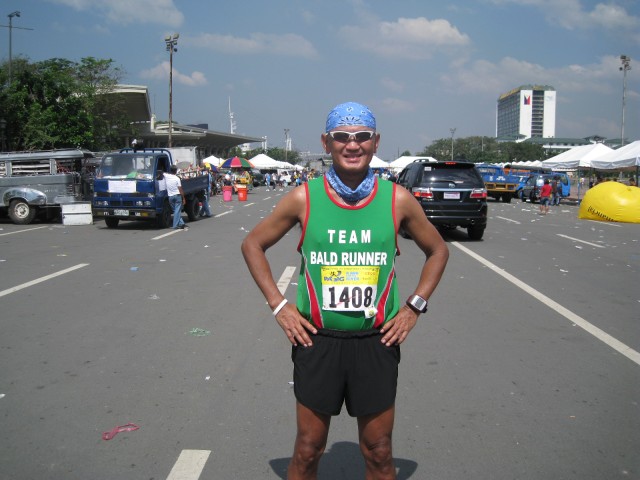
A Pose After Crossing The Finish Line

 Finally, Sam, Nickko and I finished and crossed the Finish Line at the same time with my GF 305 time of 5:52:31 hours!!! We congratulated each other and we were approached by the Race Officials to get our race stubs! More runners from the takbo.ph and the Team Hardcore would approach us and were surprised why I was walking more than one-half of the race distance. I told them that I had a strained muscle on my left calf muscle which slowly affected other muscles. I never had “muscle cramps” but a muscle-related injury because of some mistakes in my training! For the first time, “Tumirik Si BR” but the “warrior” attitude is still there—to finish a battle until the end!

IMG_2900
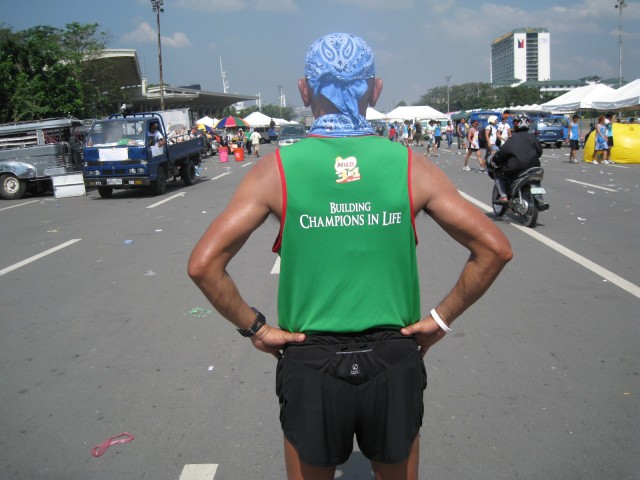
Yes, "We Are Building Champions In Life"

 If you are wondering why I am wearing a running singlet with the MILO colors, together with the Elite Members of Team Bald Runner, the explanation will be in another post. Henceforth, this will be my official racing singlet and for the Elite Team Bald Runner in the next road races to come.

IMG_2897
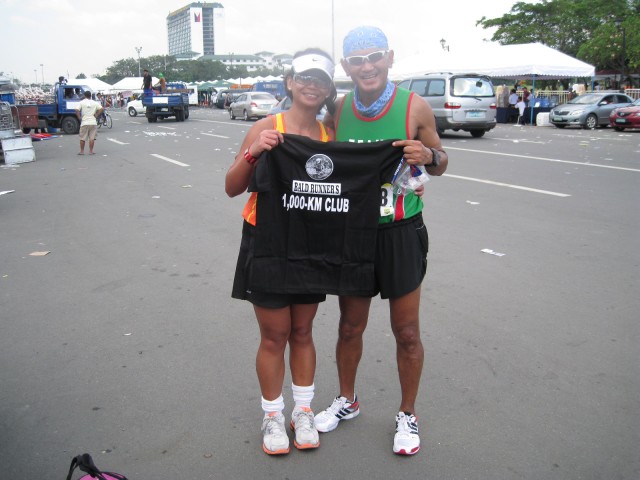
Roselle aka Running Diva Finishing Her 1st Marathon & Awarded With My "1,000-Km Club" Shirt

My personal congratulations go to the finishers of this PIM: A Run For The Pasig River, most especially to those who experienced their first Marathon Race. In comparison on the previous 8 editions of this Marathon Race, this is the most attended Road Race so far with a very noble advocacy to clean the Pasig River.

At present, I am under R-I-C-E treatment!

Finally…


I got my Race Number for the ABS-CBN Foundations’s Philippine International Marathon: Pasig River Marathon this morning at the Foundation’s Office in Quezon City. There was a long line of runners and most of them were angry that they were made to go to the Foundations’s office to retrieve their Race Packets after they were promised to get their packets from the place where they have registered.

As published by the ABS-CBN network, there are 21,000 registered runners for the 3K, 5K, 10K, 42K, 42K/20-man relay and 42K 40-man relay races. From the registered fee of P 250 per runner, the Kapit Bisig Para Sa Ilog Pasig earns an amount of P 5,250,000.

I don’t think I will wear the singlet that goes with the race packet. It is colored aqua blue and it is “heavy”!

We’ll see if the ABS-CBN “Kapamilya” Stars will be there to run with us, even for the short 3K Run.

DSC07128
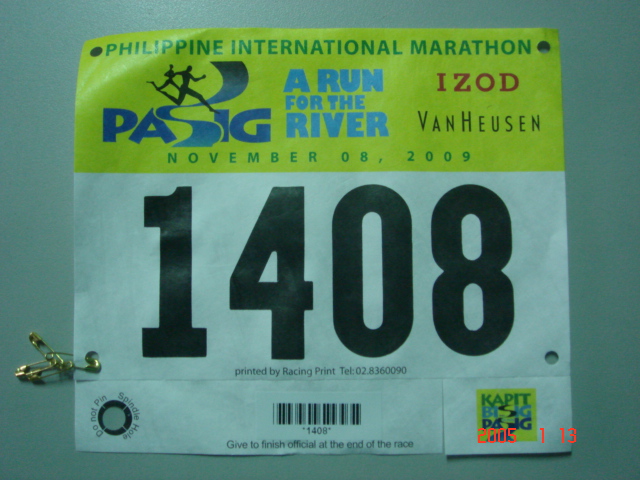
2009 PIM Race Number

The race strategy is to run comfortably and enjoy the company of other runners and be a part of this noble project to clean the Pasig River. I will give the honor to my Elite Team Bald Runner to race for me as they will compete in the 20-man relay in the 42K Race.

See you at the Starting Line!

Statement From SIM’s Race Event Manager


The following is the Official Statement of the SIM’s Race Event Manager which I think, is also speaking in behalf of Chief Supt. Samuel Tucay PNP (Ret.) in order to explain the complaints of most of the runners during the counduct of the Marathon Race:

Feedback, Assessment, and Areas of Improvement of  the Subic International Marathon 

Despite the threat of an impending typhoon “Ramil” , the just concluded Subic International Marathon attracted a record number of participants. Fortunately, Typhoon “Ramil” spared all our marathon runners from a deluge.  The sun even shone brightly the next day to warm thousands who participated in the other running events.

The feedback has been mixed. Some gave praises while others gave certainly valid criticism. We take all feedback at heart because we want to constantly improve the conduct of the Subic International Marathon (SIM) until it is at par with the prestige of the Tokyo Marathon, an event similarly recognized by the Association of International Marathons and Long-Distance Runs (AIMS) of which the SIM is a listed and accredited member.

There were several firsts in the conduct of the SIM. First  of all it was conducted on the newly constructed Subic-Clark- Tarlac Expressway  (SCTEX). A four lane portion of the road was closed for public access for the first time to allow runners a breath-taking view and a pollution free environment for their Marathon. Studies have shown how detrimental it is for the health of the runners to breath polluted air when their need for oxygen is greater.

Expectedly, the closing of these lanes created pressure for the lanes for motor traffic. What was not expected was support vehicles carrying water for water stations traveling along the lanes for the motor traffic being prevented by the Expressway patrols from crossing the expressway to supply the stations.

The Expressway patrols correctly pointed out the safety issue of support vehicles doing a counterflow and the danger of being sideswiped by physically bringing jugs of water across the metal barriers between the lanes.

There was water for the runners. More than enough water was  inside the supply trucks and vans traveling during the run. Water was supplied by Pocari, Dr. Pi, and even locally bought purified water. Chuck Crisanto closely coordinated with Dr. Lim to repeatedly send vehicles laden with Dr.Pi water to supply the stations. However, the assiduous manner by which the expressway police held on to their duties may perhaps explain why some designated water stations had no water for the runners, or if they had, they were not resupplied  after the lead packs had used them.

Starting at the half-way mark there was a plan to make boiled bananas available on the stations to provide a needed boost. The bananas were actually cooked in the morning and were loaded in the vehicles of the hydration teams. Few , however, reached their intended destination.

When the Chief of the Expressway police was informed in the evening of the situation, he gave the order for his patrols to allow the hydration teams through.

For some water stations, they were resupplied when the expressway patrols bent their orders.

There are important lessons which we had to learn the hard way. One is better coordination with the Expressway patrols who also have the duty of looking after the safety of motorists affected by the marathon’s closing of several lanes. Another is a better water resupply plan for runners not in the lead pack. Earlier prepositioning of water especially after the half-marathon mark seems crucial. 

Another first of the Marathon was its late afternoon start. This was to avoid having the runners run under the burning heat of the sun, and to finish off during the cool evening. Lighting the way after dark was estimated to be supplied by the standing lights of the expressway, and where the expressway ended, by the Subic Bay Metropolitan Authority (SBMA). During the day, electricians of the SBMA placed lights inside the tunnel which they  estimated to be pitch dark after seven p.m.

It still is unclear why along the route why some of the standing lights of the expressway had no power. The lights were tested in the morning of the run. We are still checking if the generators encountered any mechanical trouble.

Emergency measures were actually conducted. Volunteer support vehicles and race marshals parked their cars by the shoulders and opened their head lamps to serve as light beams. The tail pack benefited from the lights of the vehicles which served as the sweepers. However, the widely spaced distribution of the runners along the route ensured many would not benefit from the emergency lighting scheme.

The darkness was more pronounced when the runners ran beside the forest or on roads where even village lights were absent. It is not beyond us to conclude that the hydration teams missed seeing some of their water stations in the dark. As the runners entered Remy field, we noticed few held torch lamps or head attached flashlights. Many came unprepared for a night run. One New Yorker who has been an 18 time Ironman finisher said this experience was totally wild!

Running a Marathon is challenging enough, running a night marathon is an extra challenge which we feel  we can quickly gain competence with the lessons hard-earned.

For one thing, we feel it is necessary to have many small stand-by generators at hand. Markers should be in neon or reflective paint. Blinking cones could help, as well. The route can be lit. The lesson is to be redundant in the lighting fixtures.

For those who ran the Marathon, they may have not been aware that we had in place many safety measures.

Volunteers from REACT provided radio communication regarding the status of the run and of the runners themselves. Personnel of sponsors strewn along the route gave text updates. SBMA Ambulances  were at hand. In fact, they picked up an exhausted Kenyan female runner who collapsed along the way (She got up the next day and won in another race).  A Korean medic even attended to finishers who had cramps or hamstring problems by massaging their legs.

Volunteer Cyclists from the various cycling associations of Subic were on the road to serve as monitors. The Philippine National Police and the SBMA police enforcers sent their mobile units for escort. Perhaps, in the next conduct of the Marathon, we could borrow a helicopter from the armed forces to provide a bird’s eye view of the runners.

Despite the difficulties experienced by all of the runners, none of them was exposed to the danger of being sideswiped by a vehicle. All finishers were properly documented , their time recorded and quickly given their medals upon crossing the finish line. The recognition of the top winners in the male and female division were promptly held at 9:00 p.m. in the evening.

 The Subic International Marathon is about the runner and not the sponsors. Our sponsors allow us to have the means to create a running event which otherwise simple runners cannot afford. The low entry fee of the runners was subsidized. Gen. Sam Tucay did not want the entry fee as a barrier for anyone who wants to run. 

More importantly , the Subic International Marathon story is about the people who volunteered their resources and efforts in so many ways. No runner has the means to repay their generosity.

One criticism we had this year was that the free beer for all finishers was missing. Mea Culpa. Anyone who finishes a Marathon is a winner who truly deserves a cold beer or drink to celebrate.

We profusely apologize for all those who have been inconvenienced in one way or another in the birth pains of the Subic International Marathon.

This year we counted 100 foreign participants. Next year,  running clubs from Korea, Sri Lanka, and the U.S. West Coast will send their teams. Part of the success of the run is the friendship it creates among all who are interested in sports, health, fitness, and love of our country.

We thank all who have sent their comments, feedbacks, and gave both solicited and unsolicited pieces of advise. We promise to do better.

Adi de los Reyes (sgd)

Events Manager

Thanks, Adi for having the “balls” to come up with this statement. I hope my readers will understand your predicament and limitations. However, let me have the following suggestions to the Race Event Manager and to the Race Director:

1. Rehearse, rehearse, and rehearse—I told to Adi De Los Reyes about this suggestion to conduct a “test run” or “rehearsal run” with a group of runners, at least one or two months before the D-Day in order to apply what is in the written plan and find out and anticipate problems to occur during the race. All the personnel involved, to include the highway patrols and the volunteers, should be present. If you want excellence in whatever you do, you have to rehearse and practice to perfection. We, as runners, also train for excellence and perfection in the way we run on race day and there is no reason why the RO and the Race Event Manager could not practice also their services to the runners.

2. Lots of PNP Personnel—I suggest you use one-half of the strength of the police cadets and police personnel as your “work force” to act as your route marshals, water aid personnel, assistance to the highway patrol, light dome operators, or people manning the generators along the way or maybe “holders” of lanterns along the route or maybe “chearers”. There is no need to make “hakot” to the PNP personnel to show that you have a lot of runners for your Marathon Race. There is no need to make “paporma” to your sponsors at the Starting Line showing that you have a record-breaking number of starters but along the way, you have “cheaters” and “whiners’ and worst, you have “thieves” of runners’ supply of water, food, and other “freebies”. If you have prepared boiled bananas, water supply, and chocolate bites on the road, how come most of the runners did not see these items being given by the volunteers. It’s either they were purposely not given or simply “stolen” by unscrupulous people.

3. Unfunded “Cash Prize” Checks—Not because somebody among the winners received the wrong amount of check, it does not mean that you have to direct the bank to suspend all the encashment of the issued checks. If there is a problem with a single check, do not make a “sweeping” directive for the bank to stale all the checks given as prizes to all the winners. The bottomline is, don’t issue a bank check without any fund because it reflects on the image of the Major Sponsor of the Event.

4. Ask the “Hardcore” Team—If you want a truckload of ice cold beer, better ask the “Hardcore” Team. If you are lucky, the “Hings” group would also support you with Ice Cream that goes with the Ice Cold Beer! You can only have this combination of “goodies” at the Finish Line of the MASTERS Run.

5. Start Planning NOW!—For an International Marathon to perform well in all its administrative and operational aspects, you have to start planning NOW for the 2010 edition. Written Plans with Nice Drawings and Powerpoint Presentations are nothing if there is Lack of Implementation. I am also a Race Director and I know what I am talking about. Let us give what the runners should deserve in a road race.

2009 Adidas KOTR Half-Marathon


2009 ADIDAS “King of the Road” Half-Marathon Race; 5:30 AM 25 October 2009

In last year’s edition of the ADIDAS “KOTR” Half-Marathon, I had a 13+K running workout on the day before the race. I was able to finish the race with a time of 1:48:55 hours. It was a fast time for me at that time and I was lucky to be wearing a Race Bib with the numbers “888”. Instead of wearing the nice blue singlet provided with the race kit, I was wearing my all-green Patagonia Trail Shorts & Shirt and started to wear my signature “Bandana” wrapped around my neck.

For this year, it was filled with more challenging feats in my running experience. On the day before the race, I joined my first early evening Marathon Race at the SMART 2nd Subic International Marathon along the SCTEX Highway. I was able to finish the race with a blistering pace at 3:58:09 hours. After having my dinner in Subic Freeport, I was on my way back to Manila, arriving in my place at almost 1:00 AM of Sunday.

With barely 3 hours of sleep, I was already prepraring for my next race which is the ADIDAS “King of the Road” Half-Marathon at The Fort. Thirty minutes before the start of the race, I was already inside the coral at the Starting Area. I was surprised to see runners who finished the Subic International Marathon who were raring to run the said race. Other runners from Subic had only 30 minutes of sleep as they went directly to the Starting Line at The Fort after coming from Subic. Hey, this is what I call “hardcore & crazy” runners like me!

I was undecided on what to do during the race. I thought that this race would be my recover run and try my best to finish the race. But on the other hand, I was thinking if I could do a multi-day stage run with barely 8-9 hours in between two runs. Running on the first day for 42 kilometers and then another 21 kilometers for the next and then another number of kilometers for the next day until I reach my destination. And that was what I did on this weekend of October. Who knows one of these days, I will start to run from Manila to Baguio City as my first personal multi-day stage run in my running experience & journey. And maybe after the 2nd BDM 102, I could run a farther distance with more days on the road.

In the true tradition of Mr Rudy Biscocho, after some problems and complaints with the claiming of Race Packets for the early registrants at the SM Megatrade and the announced Race Expo, the race started on time or I rather say earlier than the scheduled time! As the starting gun was fired, I immediately started to jog and then run at my comfortable pace. It could be the “rush of adrenaline” that I did not feel any soreness or pain on my legs during the first few kilometers of the race. I think I was fast on my first 10 kilometers that I was running with a pace of 5:30 minutes per kilometer!

However, on the second half of the race, my legs just went too heavy and I started to slow down. The feeling was like running the 1st BDM 102 on the last 10 kilometers before the Finish Line. I brought out all those “tricks” I could think of to maintain my pace and rythym. I even silently talked to my legs to keep on running and be able to finish the race. Then, I started to “shuffle” and swing my arms as fast as I could. I was thinking of finishing the race below 2 hours that I kept on looking on my GF 305 and trying to calculate my finish time. But my legs were not responding to what my brain was thinking of doing. I did not have any cramps or any “issues” during the race but it came to my mind that a half-marathon was a distance too far to be finished.

Many runners that I met and overtook me would greet me and it gave me some boost to increase my pace but my speed was not improving as I gleaned the data in my watch. When I reached the last 2 kilometers of the route, I was already on “cruise control” and kept my feet moving and pounding on the ground, one foot infront at a time. Finally, I reached the Finish Line in 2:01:30 hours with an average pace of 5:45+ minutes per kilometer which was almost the same pace that I had during the Subic International Marathon!

It was a slow finish time as compared with my past half-marathon finish times but I was able to prove that I could run and survive in a multi-day stage running event. It could be a solo 100-Mile run or a straight 4-5 days run with complete rest in between each day.

DSC07097
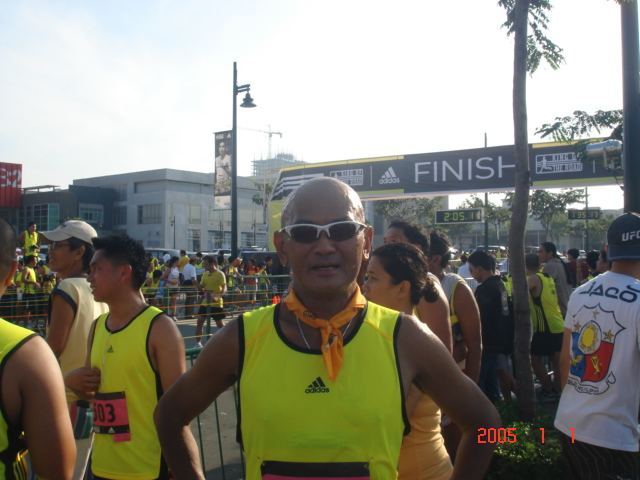
My Picture After Finishing The Race

 There was nothing to complain in the conduct of the race. The basic needs of the runners were met and given by the Race Organizers. Lastly, the singlet was NICE. My congratulations to Mr Rudy Biscocho on the conduct of the race but he has to improve in the registration system/process for all the runners. Congratulations also to ADIDAS who is really consistent and dependable in conducting this famous race every year.

After a back to back road race in one weekend, I decided to have a 3-day rest & recovery period. The next run would be the Philippine International Marathon: Run For Pasig River.

See you at the Starting Line.