The following is an article that I copied from a trail running book which I want to share to my readers, whether you are a newbie runner or an accomplished/competitive ultra runner. You can share also your answer to the said question on the title.
Do We Love Pain?
Not long ago, I posted the question on a blog site: “Are we endurance athletes driven by the solipsistic need for self-validation, as in, ‘we hurt, therefore we are’; or is it that we love the pain and exertion and, therefore, more is better?”
The answers were quite edifying so I thought I’d share them:
–Personally, I love it–the pain, I mean. But most importantly, I view the pain as the engine to drive me to reach my goals. In other words, I know I’m hurting because I’m on hour four of a six-hour effort and that I’m that much closer to seeing nature in full effect. Or, that the pain is getting me through a technical uphill section. The pain is an indication that I’m do-ing!
–I train so I don’t hurt any more.
–I tend to agree; when I was most prepared to race, pain wasn’t much of a factor. The validation came in competing against others.
–I was getting massage last night, and the therapist asked, “You do work your body hard, don’t you? What is your motivation?” I didn’t know what to say, mainly because my face was being shoved into the hole as he stretched my calf and it was hard to talk anyway…but he made me think. I don’t know that I have a good answer, but I agree that training is to avoid future pain, I also know that I absolutely love being out in the wilderness, and the harder I train, the more time I am able to spend in that environment.
–It’s all about the balance. You feel so good afterwards because you suffered through the pain during it. The sweetness of completing something wouldn’t be the same if it was easy to do. Being in pain, working through it, and finishing bring the accomplishment more meaning.
–I say it’s like most things in life: combo platter.
–I don’t love pain…but it makes me stronger, and in that way it helps me achieve my goals. I think the key to the answer lies within our personal goals.
–Balance. For me it’s all about the three-part teeter totter: sport, family, work. Each causes (good) pain the harder you try at it, and all must be in balance to make each truly meaningful.
–Maybe we like the pain. Maybe we’re wired that way. Because without it, I don’t know, maybe we just wouldn’t feel real. What’s that saying? “Why do I keep hitting myself with a hammer? Because it feels so good when I stop.” I can’t take credit for the qoute, but it seems somewhat appropriate.
–I love it and think that more is fun but moderation is the key to longevity and health. I’m enjoying my Boston Marathon hangover. Pain is relative. I just wish I could recover quicker!
–If pain feels good, if pain = pleasure, then is it really pain? But I am proud to be one of the finish-line crossers so maybe pain = proud.
–It’s not the pain that’s enjoyable, it’s the feeling of accomplishment and daily reinforcement that your body is adapting—getting stronger and/or faster. Pain is a reminder that you pushed hard. We need to be more aware about the weakest point in our body, as that seems to break first. Strengthen the weakest part to keep the rest in balance.
–So many times I’ve been asked if I love pain. Or, why do I put myself through all this “insane training and criminal early (very early) morning runs?” And I have questioned myself, too: why? I love pain, I do, it make me feel alive! It makes me feel I trained, I paid my dues, I have a right to be where I am. Too crazy? Maybe.
(Source: The Ultimate Guide To Trail Running: 2nd Edition by Adam Chase & Nancy Hobbs. Guilford, Connecticut: 2010; pages 71-73)
1. Registration—Every runner must apply and register at Ultra SignUp, at least 8 months before Race Day. The deadline of application is approximately 6 months before Race Day. (Note: It is a good motivation to follow a 24-week training program for this ultra trail event). The last day of application was on December 1, 2010. All runner-applicants must go through a lottery to be able to cover the maximum number of runners allowed for the race to 446 only. The final list of accepted runners (through lottery) are published at Ultra SignUp effective on December 10, 2010. The registration fee of $ 155.00 is immediately credited from the runner’s Credit Card once he/she is accepted . Few weeks from race day, each runner is designated with a Race Number. Most of the runners can redeem their Race Packet/Bib within the period of at least one hour before the Start of the race.
2. Maturity of the Race—The 2011 Race is the 16th edition of the event as it started in 1996. I am sure through the years, the Race Management, to include the Prizes and “give-aways”/schwag, had improved with the presence of corporate sponsors. According to Rick Gaston, Miwok 100 had built its reputation as the “prime” ultra trail run at the Marin Headlands during the spring season. The other trail race that is also popular and has one of the best reputation in terms of race management and attendance of top elite athletes in the Marin Headlands is the TNF 50-Mile Championship on the 1st weekend of December every year. Maturity goes with the proper planning and preparation of the event as seen by the favorable feedback from the runners after the race. As one of the volunteers, I was impressed on the cooperation and unity among the members of the group.
3. Volunteer System—The involvement of the volunteers was impressive. The leadership of the Race Director in orchestrating all the jobs of all the committees involved speaks well of the excellent organization, planning, and professionalism of everybody. I was able to feel the “bayanihan” atmosphere among the volunteers. Each of the volunteers had specific job to perform and they are expert and knowledgeable of what to do. I am not surprised about this because all the volunteers are ultra marathoners themselves! The volunteers at the different Aid Stations made sure that each runner was attended through all their needs, from cheering, filling their hydration bottles, serving them with food and even locating and giving them their drop bags.
4. Prizes, Schwag, and Montrail Cup Series—If I joined the race, finishing the distance within the prescribed cut-off time would be the most defining “prize” for me. Those schwag/give-aways are just souvenirs or evidence to prove that I was part of the race. However, for the top elite runners, what is important to them was to earn points as this race was part of the annual Montrail Cup Series where a runner joins at least four (4) ultra trail races of the said series and the runner with the highest points will be awarded a cash prize of $ 5,000.00. For this year, the Miwok Race started to award $ 500.00 for the Champion.
5. Simplicity—Trail Running events are not evaluated in terms of bright lights, lots of tarpaulins and banners, loud speakers with blaring disco music, Emcees with nice English pronunciation, leading a prayer and singing the National Anthem, arches, marshals and security personnel at the Start/Assembly Area. They are evaluated by the simplicity of the event. Trail running is the purest form of running event where the scenery, degree of difficulty, and the camaraderie of the participants and the volunteers count most. The event lacked the things that I mentioned previously. Also, there are no distance markers along the route as the location of the Aid Stations serves as the distance markers for everybody. I did not even see water cups filled with water or sports drinks on the tables available in the different aid stations. What I saw were water pitchers being used to fill-up the hydration bladders and bottles of runners who need water or sports drinks. The route was marked with pink-colored ribbons tied on the shrubs, trees, grasses, and trail posts; and the paved road had pink-colored adhesive tape with an arrow-directional sign. What impressed me most was the fact that the race started on time!
On the Runners
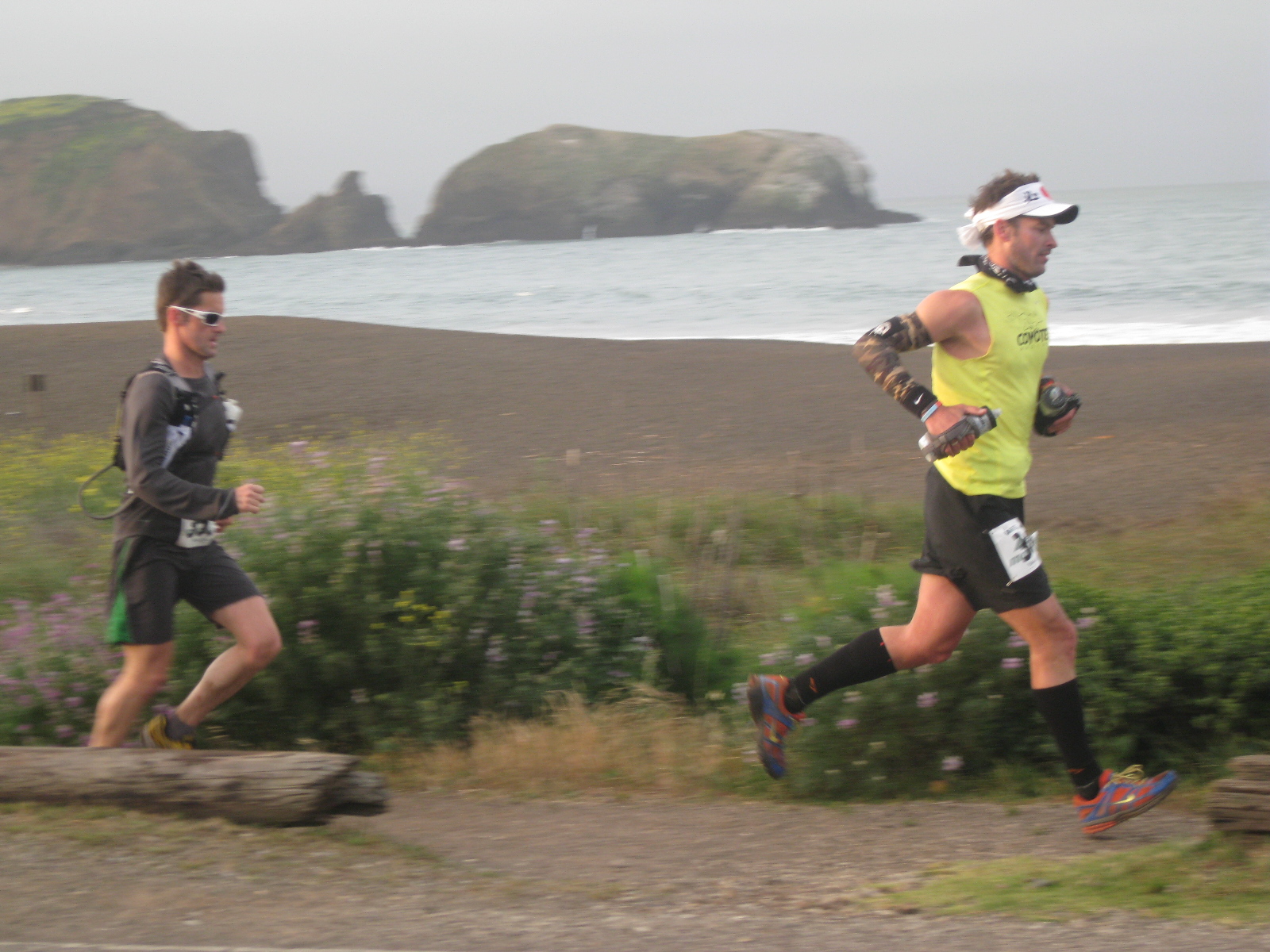
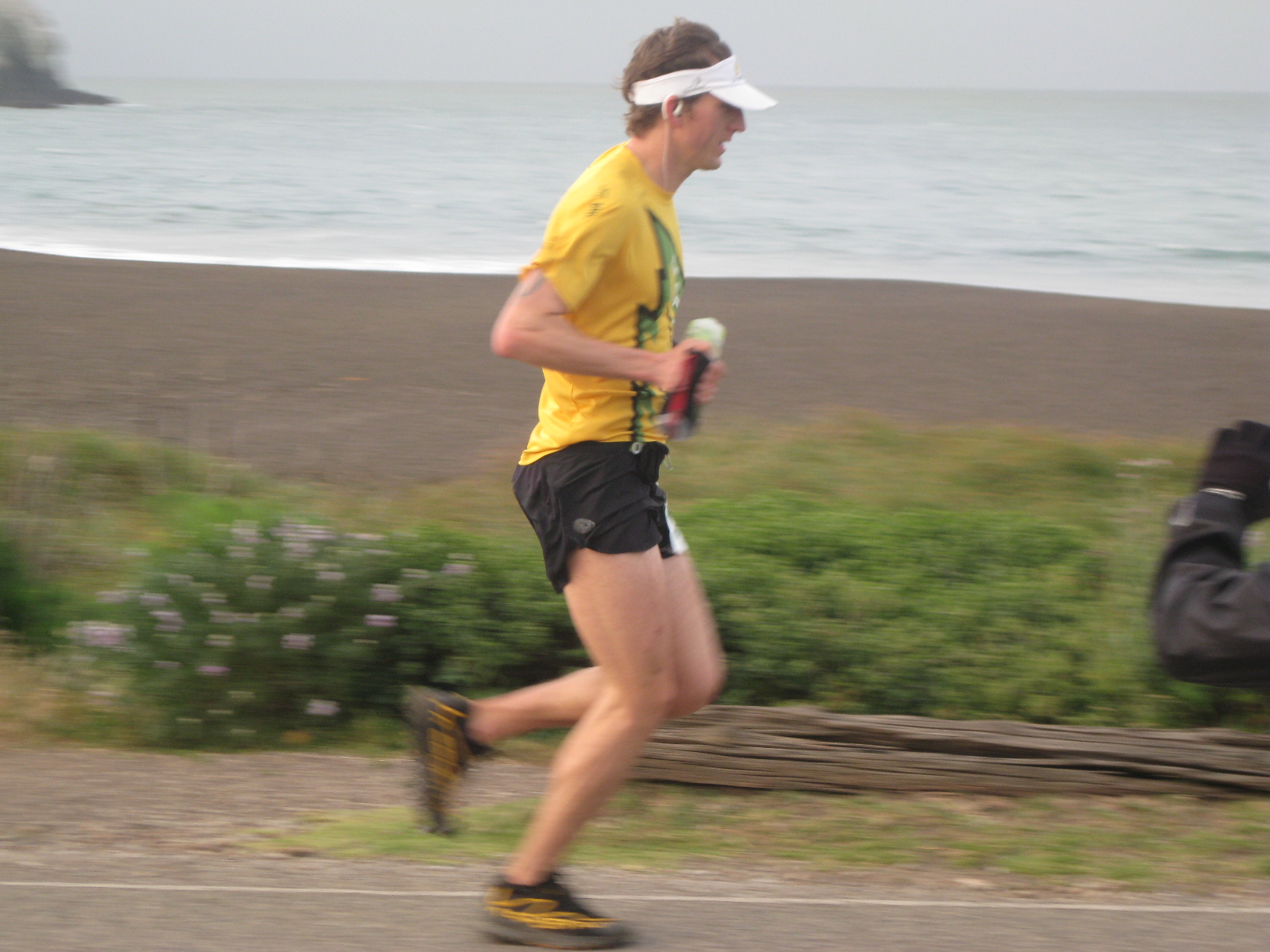
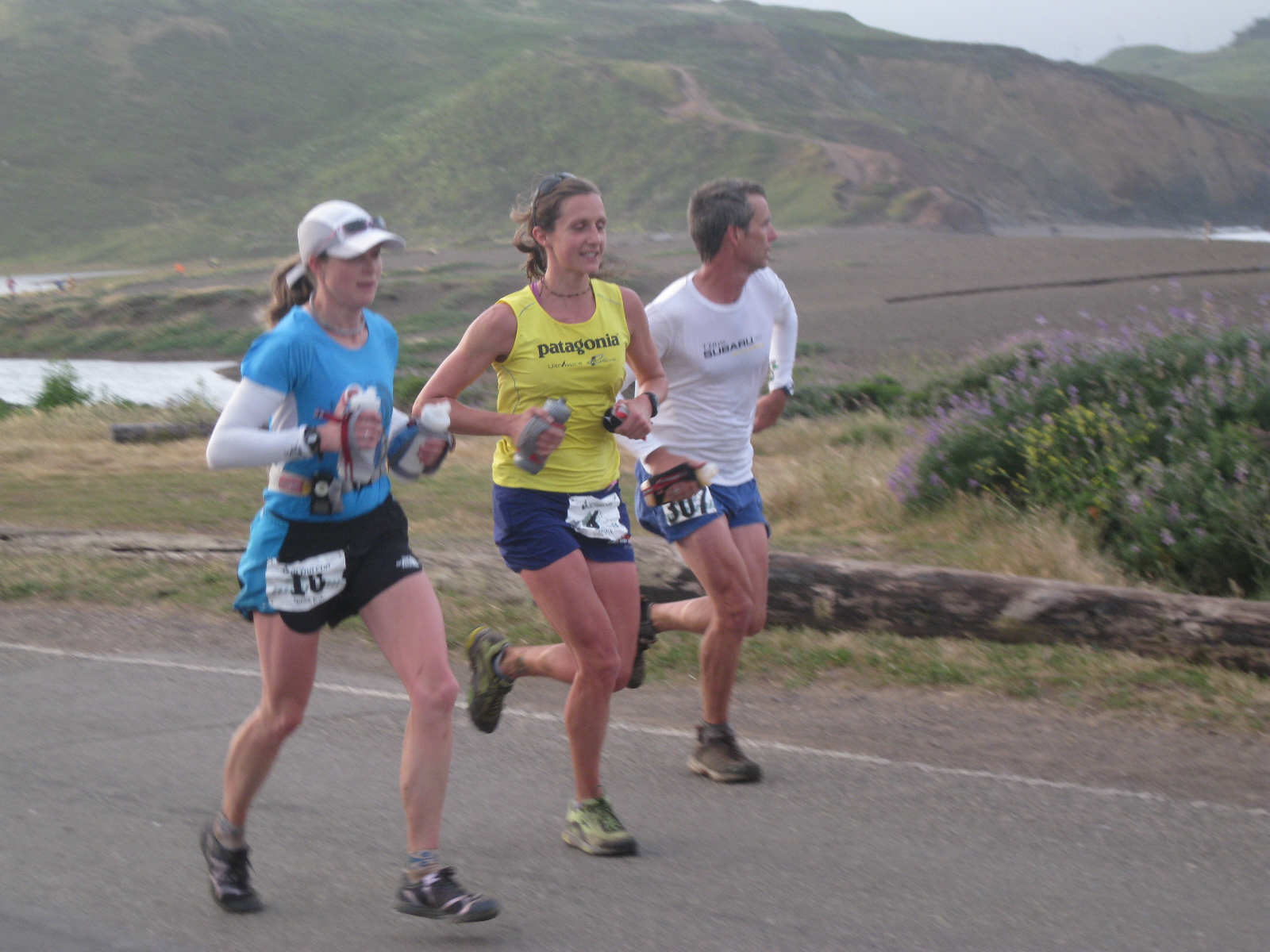
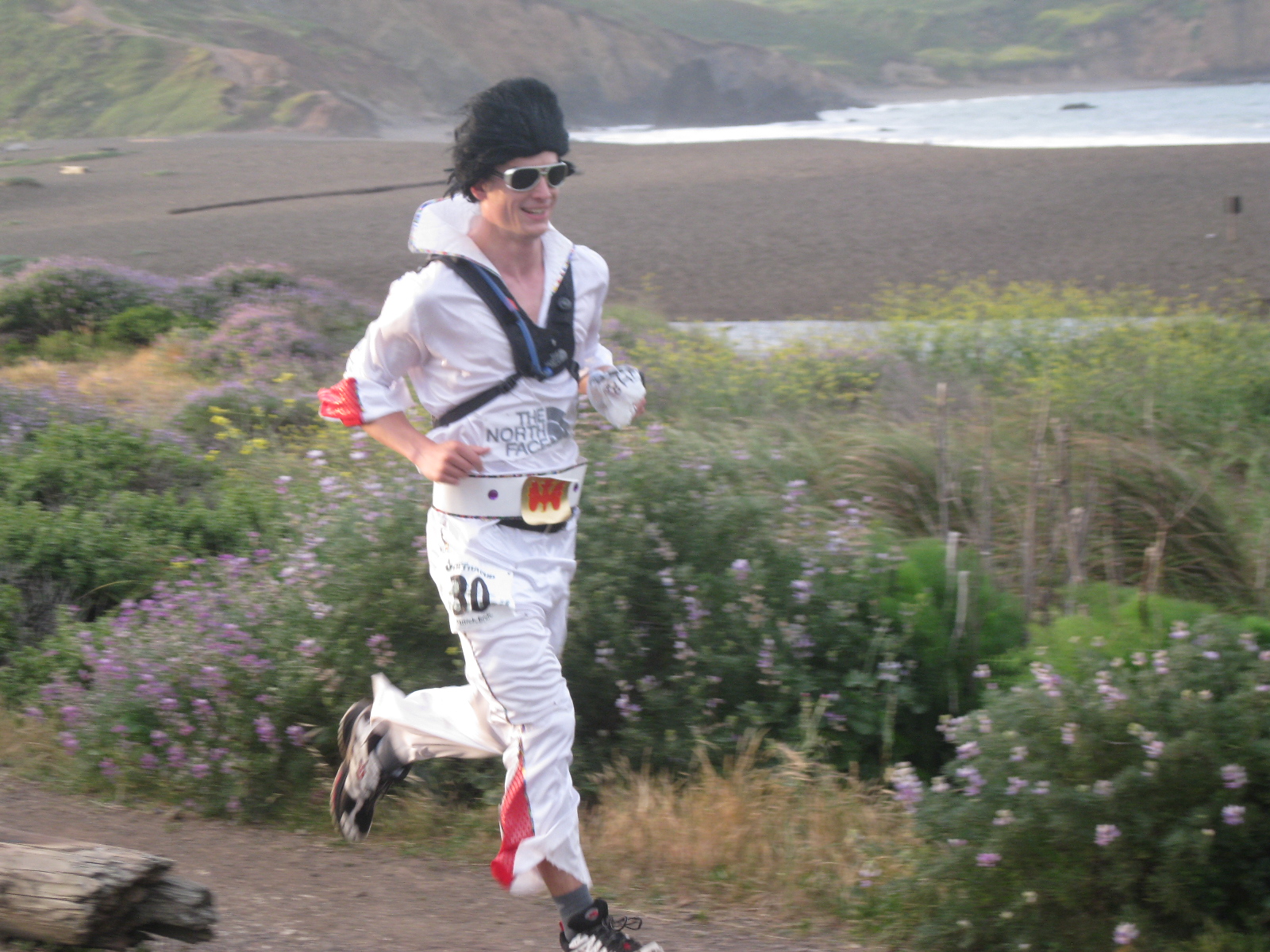
1. Hydration System—Out of the top ten finishers whom I personally observed at the Starting Line up to the Pan Toll Aid Station and at the finish line, it was only Ian Sharman aka Elvis Presley (#10) who was running with a shoulder hydration pack (TNF Enduro BOA Hydration Tack). I did not see Hal Koerner holding or sporting a hydration system throughout the race. All the remaining top 8 runners were holding a hydration bottle on either one of their hands during the race. On the mid-pack and the sweeper groups, most of them use hydration backpacks (Camelbak & Nathan) and some with hydration belts with at least two bottles of 20-ounces each in liquid capacity.
2. Running Shorts—It was only Hal Koerner who was using a compression shorts and the rest of the top 8 runners were using the regular running shorts which are the split and v-notch type. I would suspect that their running shorts must have a lot of pockets where they can stow their gels, endurance powders, Vitamin I, and Clif Bloks. Or else, they have their respective support crew waiting for them in every Aid Station to provide them with their necessary nutrition and hydration needs. I did not recall if I saw any of the men among the participants using long compression tights.
3. Body Structure—Dave Mackey, Mike Wolfe, Hal Koerner, and Dakota Jones are tall and have muscular bodies. Which is translated to longer legs and ultimately, longer strides when they run. Their longer and strong legs could withstand their momentum in maintaining a running form on the inclines/uphills of the route. With such body structures, you could just imagine how fast these guys would run on the downhills. As for Ian Sharman, he has an average body size of a runner who happens to be an inch or two taller than me and leaner than the top 4 runners but I was able to discover why he was able to beat Tony Krupicka at this year’s Rocky Raccoon—he has a very fast, quick and light leg turn-over in an ultra race! Personally, I can predict that Ian Sharman will be this year’s Champion in the Western States 100-Mile Endurance Run even with the presence of Kilian Jornet Burgada.
4. Running Shoes—I was surprised to see Dave Mackey using a weird-looking trail shoes (Hoka One One) which he used in his past 1st place trail running events. This is an opposite view of the minimalist approach of some of the elite trail running athletes. I was more surprised when I saw Mike Wolfe, a TNF model & endorser, to be using a New Balance MT 101 Trail Shoes! On the other hand, Hal Koerner was using a NIKE Lunaracer which is considered a road racing flat shoes!
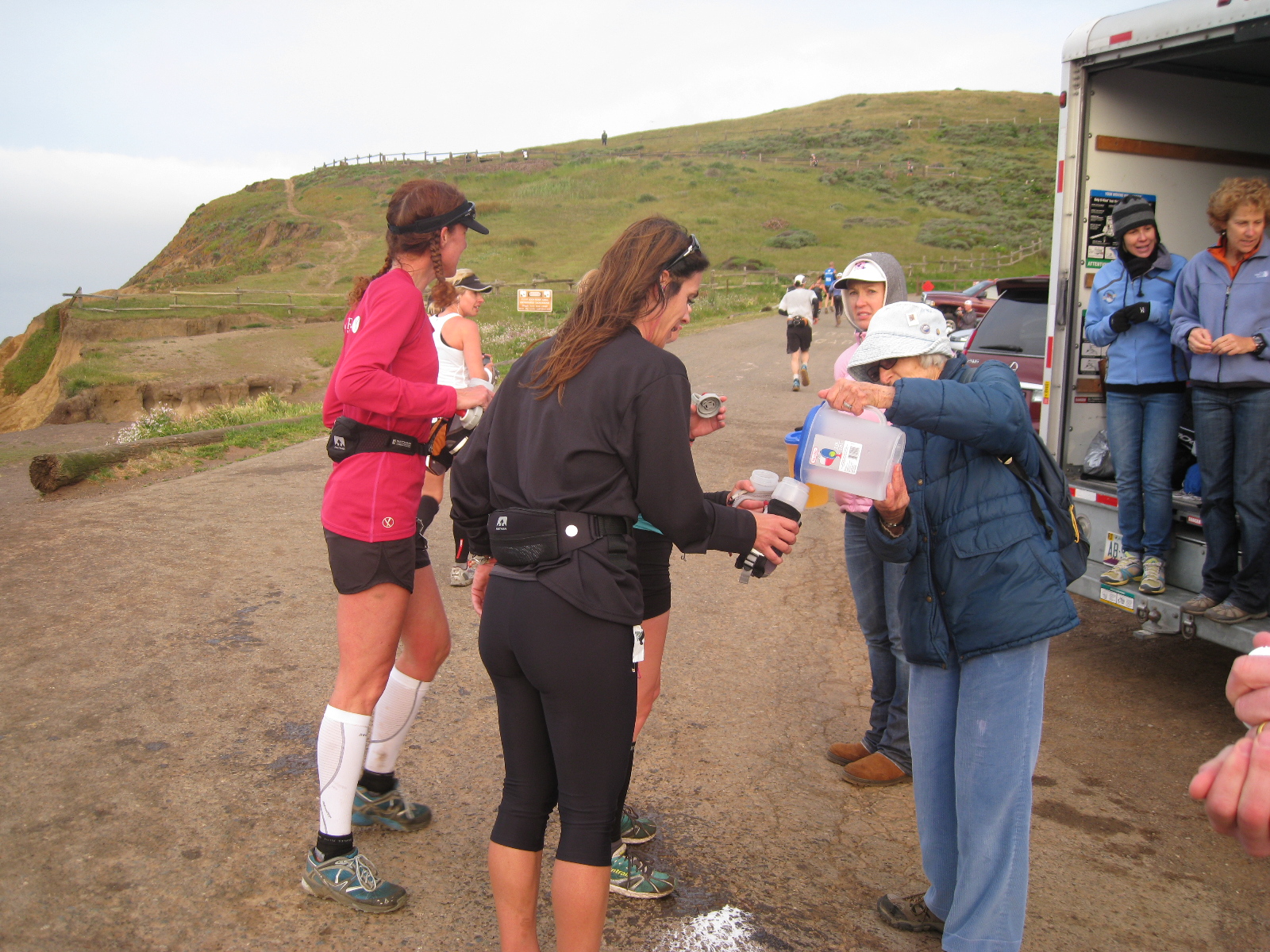
5. Stop or Pass On Aid Stations—Elite athletes do not stop at Aid Stations if they have support crew waiting for them to hand them what they need from one Aid Station to another. For those who who don’t have any support crew, they stop to refill their hydration bottle/s or packs with the needed fluids and grab some gels or foods offered on the tables. A few yards from the Aid Station, the runners would remove the lid/cover of their bottles and as soon as they reach the Aid Station, the runner would simply extend his/her arm to the volunteers who would refill such bottle using a water pitcher. Sometimes, they just grab canned soda drinks and drink the contents while they are running. You will be surprised how they would stow their empty cans and empty gel packs in their running shorts up to the next aid station where trash bins are located. Runners are strictly following the rule of not littering their trash on the trails or else they will be disqualified. As for the mid-pack and sweepers, stopping on the Aid Station is a must for re-supply and rest purposes as long as they are within the cut-off time of arrival on such Aid Station.
Runners With Open Bottles Few Yards From the Aid StationVolunteers With Water Pitcher Refilling Hand-Held Bottles @ Aid Station
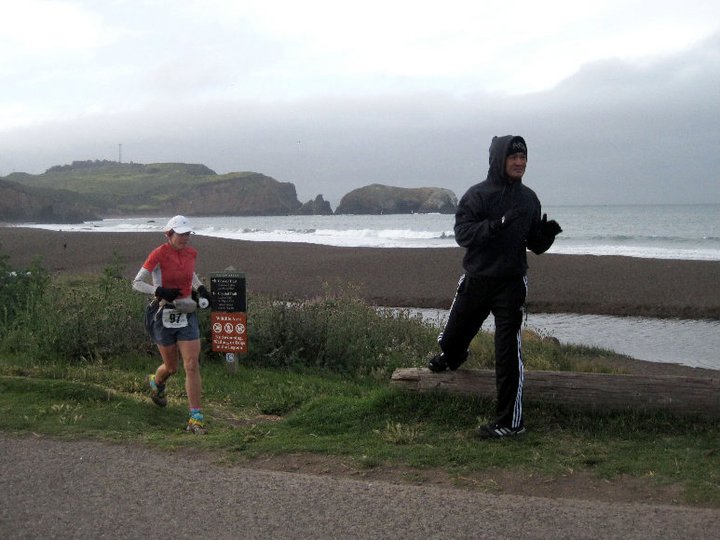
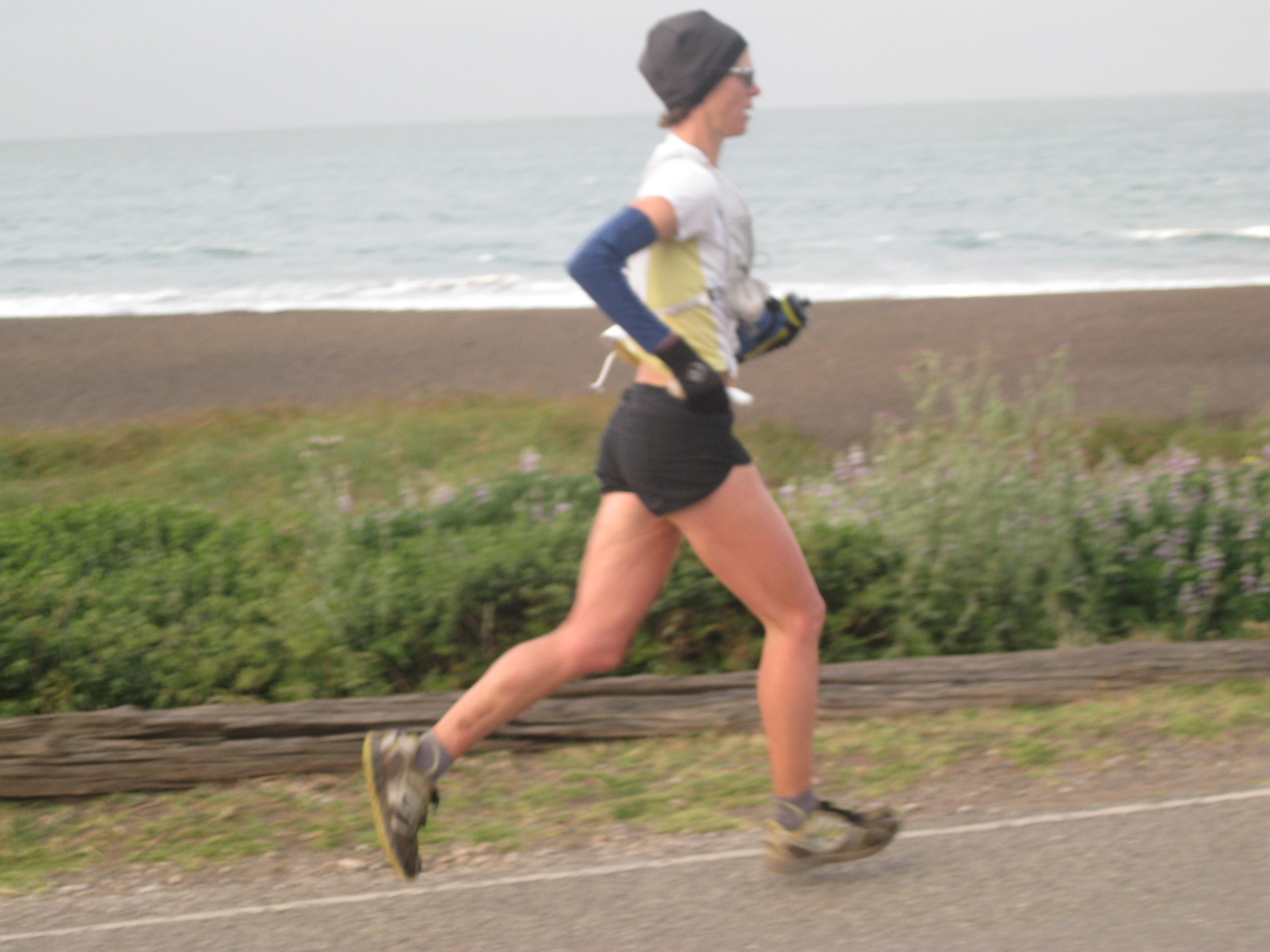
6. “Fanny” Packs or Belt Bags—These bags worn as belt could be seen on the picture above where the two lady runners are using. If a runner is using hand-held water bottles and using running shorts with small pockets, these “fanny” belt packs which are light, flat and snugged to the body are good running accessory for an ultra trail runner where he/she could stow a cellphone/camera, cash, keys, sports gels, sports mix, salt tablets, Vitamin I, and sports bars/food.
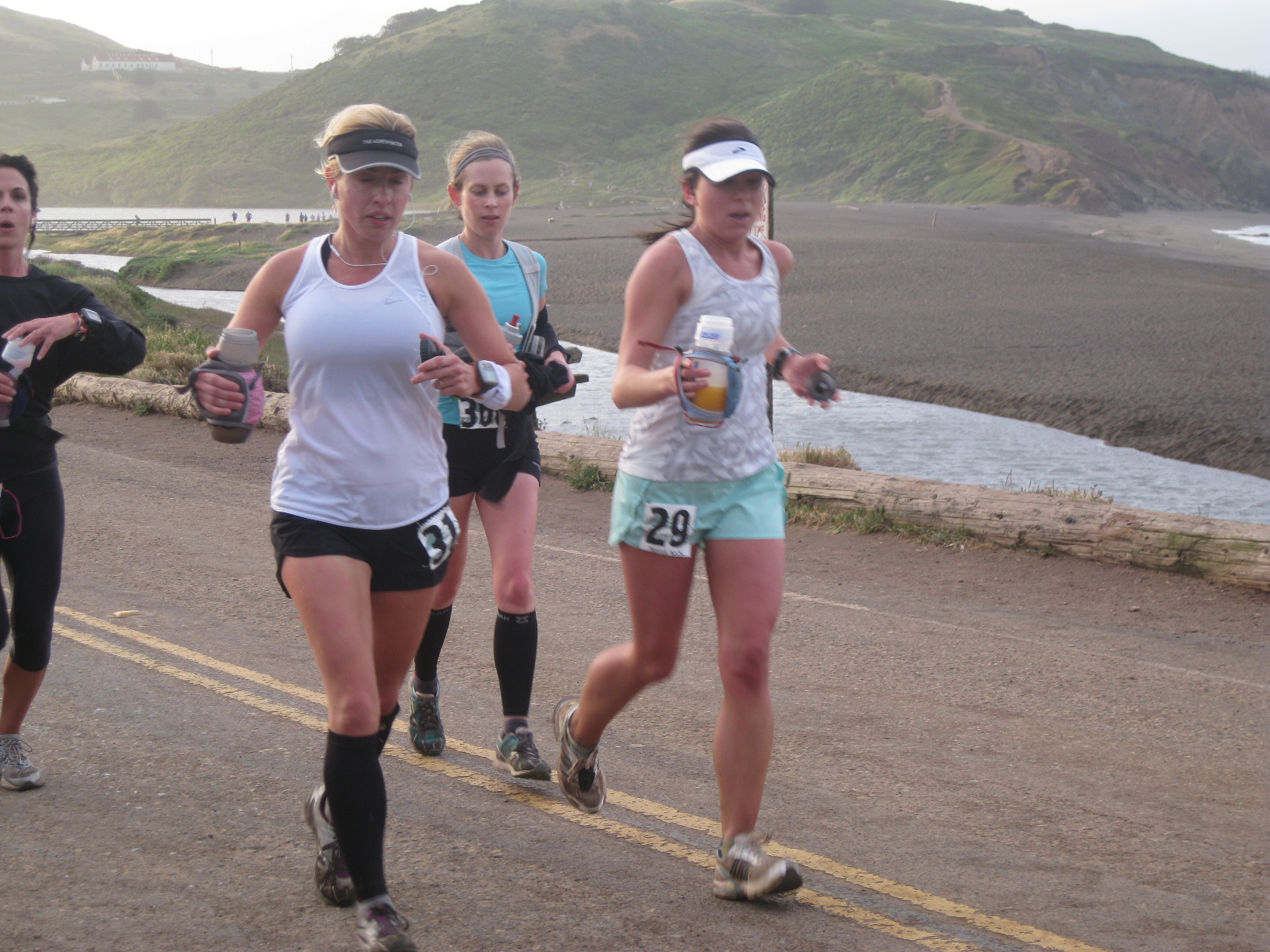
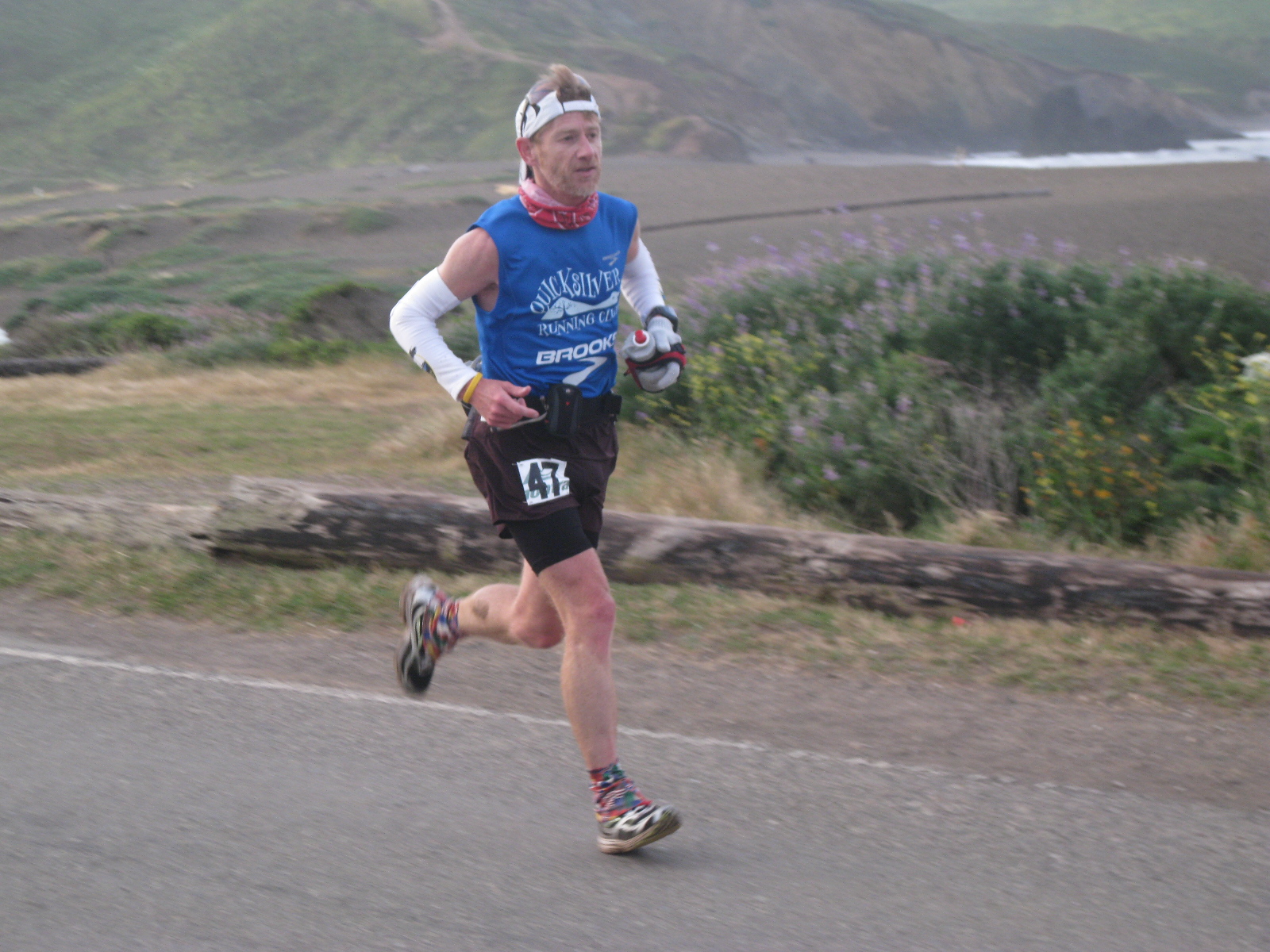
7. Arm Sleeves & Calf Sleeves—It is reasonable that the runners would use arm sleeves because of the cold temperature but I could see that most of the runners were using calf sleeves, to include the lady runners. In my experience, I believe in the use of these calf sleeves during my workout and during my recovery. I am presently using the Zensha Compression Calf Sleeves during my long runs while a tighter 2XU Compression Calf Sleeves are used during my recovery periods.
One of the top runners (Freedman) with Arm & Calf Sleeves
8. Using of “Wires”—The top 4 male and female runners were not using any “wires” to their ears. I believe that these elite runners are well-focused and sharp on the task at hand during the race. In the Race Reports of these elite athletes, they could hear the steps, breathing, and sounds of the environment. These top runners would maintain conversation among themselves on wider trails. Instead of listening to music, these runners listen to their footsteps on the trails; they listen how their competitors’ breathing in order to find out if they are still strong or exhausted; and listen to the steps of the runner ahead and behind them. On single-track trails, there is a need to communicate to the runner ahead of you if you intend to pass and it would be inappropriate if a runner to be passed is using some “wires” with some loud music being played on his earphones and could hardly hear the verbal warning from the runner behind him.
Lastly, Tia Bodington (RD) sent me an e-mail 2 days after the event expressing her thanks for being a part of the Volunteer Group of the event. She called me as one of the members of the “Miwok 100 Traffic Czars”. Sweet!
This is the video of the frontrunners during the 2011 Miwok 100 Trail Run.
This video was copied from “you tube” which was posted by the Endurables.
Looking at the video, the recording or filming of this event was done by one of the runner-participants who leapfrogs from one section of the course to another by taking the adjacent paved road that is parallel to the direction of the trail. He could be using a car from one entry-access to the trail to another. It is just my suspicion but I might be wrong since I did not see any cyclist mounted on a mountain bike trying to film the event.
The first few seconds of the video shows the top 3 finishers who were sitting and conversing with one another. Hal Koerner in blue upper shirt, black compression shorts, and blue calf sleeves; Dave Mackey wearing a sun visor; and Mike Wolfe.
I am familiar with the 1st 7 miles of the course as some of it are on the paved roads of the Marin Headlands. After their early start at the Rodeo Lagoon Beach, all the runners go to the Rodeo Trail until they reach the paved Conzelman Road which is located south of the Rodeo Lagoon until they reach the Coastal Trail that leads the runners back to where they started. After the runners cross the small bridge at the Rodeo Lagoon, it is now the start of their climb towards the Townsley Battery and northward direction to Mt Tamalpais Park.
It was my first time to enter the Pantoll Station which is 13 miles away from the Rodeo Lagoon. I’ve seen and ran on the trails all the way up to Muir Beach after passing the Wolfe Ridge Trail, Miwok Trail, Old Springs Trail, and towards the Tennessee Valley. But from Muir Beach, I could say that it is a continuous uphill towards the Pantoll Station by looking at the overall contour of the area.
The next portion of the video where there is a muddy area along the curve portion of the trail is that part which is approaching the Tennessee Valley Aid Station. At this point, the runners had covered 11 miles and on their way back, this will be the last Aid Station before they reach the Finish Line.
The portion where you see the runners in single file is the trail on the ridge of the mountain facing the Pacific Ocean. By looking at the movement of the grasses surrounding the runners, you could conclude how strong was the wind coming from the ocean.
Looking at the video, the race was contested between the top 4 runners—Dave Mackey, Mike Wolfe, Hal Koerner, and Dakota Jones as the “real” race started after the turn-around. The first 3 runners are veterans of ultra trail running competitions and they had been running this route and part of the Miwok 100 past editions. Dave Mackey is the holder of the course record in 7:53+ hours. It was Dakota Jones first race at the Miwok 100. After the turn-around and on their way back to Pantoll Station, Dakota Jones took the lead with Dave Mackey behind him. But, before reaching the Pantoll Station, it was a competition between Mike Wolfe and Dave Mackey. Dakota explained in his blog what happened to him during the race.
I had finished with my job as a volunteer when Dave Mackey was approaching the Point Bonita YMCA as the first runner of the race. He finished in 8:03:22 hours, followed by Mike Wolfe in 8:06:00 hours and then Hal Koerner in 8:06:55 hours. Dakota Jones arrived almost 11 minutes behind Hal Koerner.
My next post on this race will deal on my personal observations on the race and its runners.
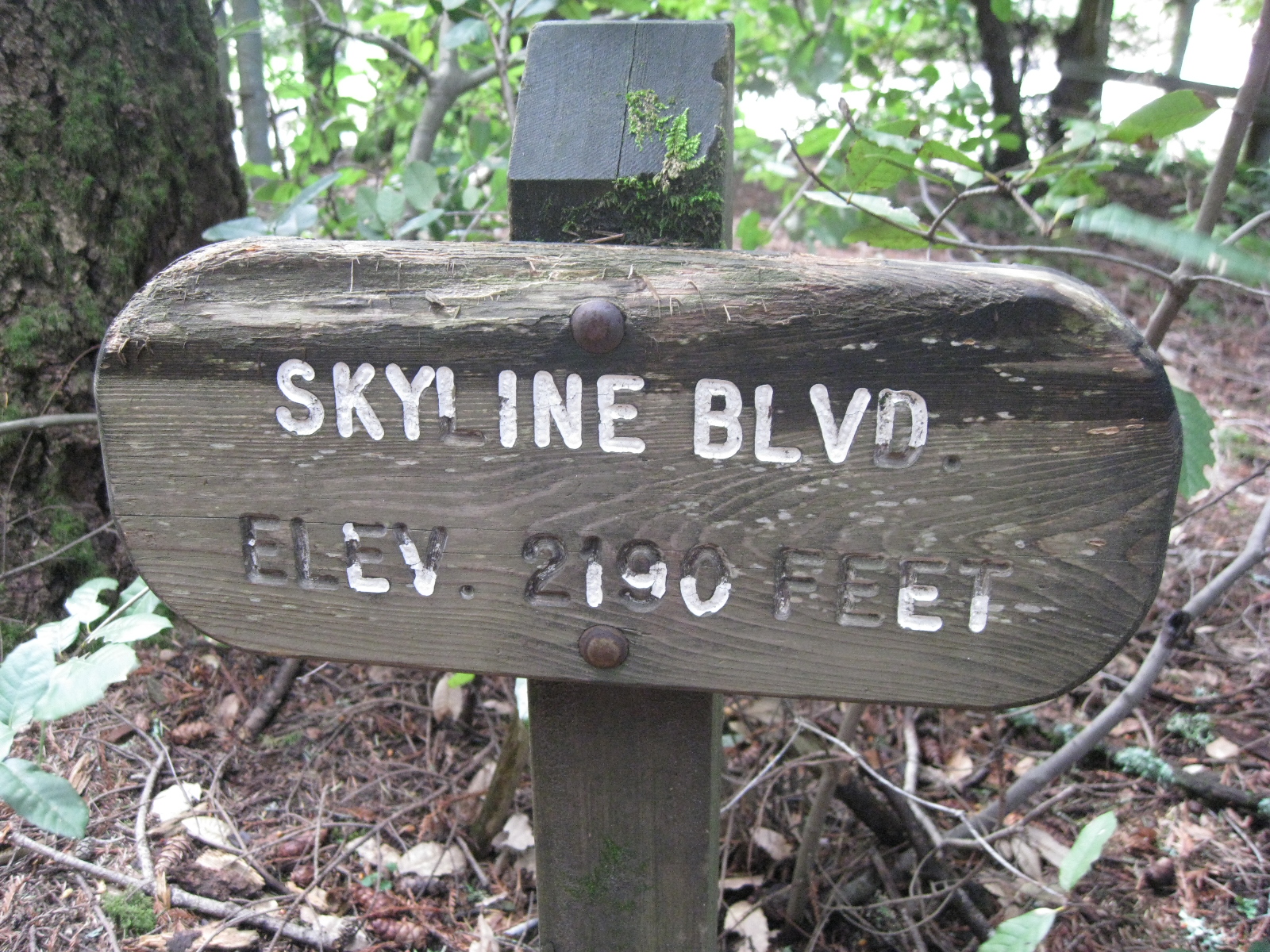
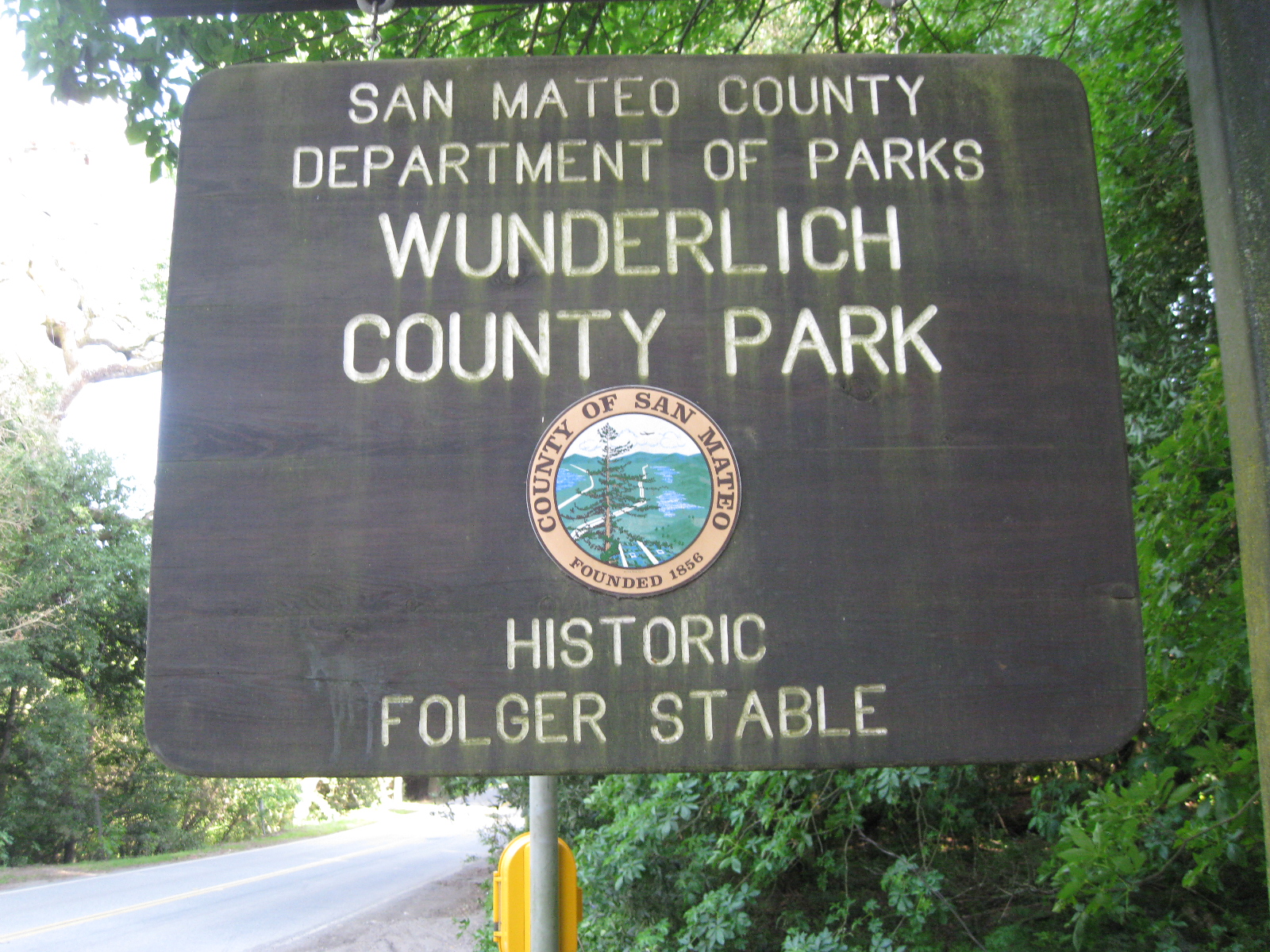
DNS…In Running Protocol, it means “Did Not Start”! My running injury from my latest Adventure Run on my lower left quads which turned out later to be an injury on my left knee did not heal even if I rested for so many weeks. After my LSD trail run for more than 6 hours at the Wunderlich State Park in Redwood City, California 4 weeks before Race Day, it gave me an assessment that finishing a 100K ultra trail run with a total ascent of more than 10,000 feet will be an impossible feat to accomplish.
Despite such assessment on my part, I tried my best to remedy the situation by taking all the necessary treatment I could gather from the different running resources in the Internet, running books, magazines and personal journals of famous trail/marathon runners. I even went to the extent of soaking my legs regularly on warm water mixed with Epsom Salt; regular massages; and even taking Alaxan FR capsules. I am glad that my cross-training in the gym kept me busy from the lack of more prolonged time of running on the road. One week before Race Day, I made my decision to DNS the race.
Instead of joining the race, I thought of offering my presence on Race Day as one of the Volunteers of the Race to the Race Director, Tia Bodington. After a brief exchange of e-mails with the RD, I was accepted as a Volunteer at the Starting/Assembly Area and at the Aid Station #1 which happen to be at the same location.
The motivation to do a volunteer work for Miwok 100 was due to the following as stated at the event’s Website—Eight hours of volunteer work at Miwok fulfills the Western States 100 service requirement. Eight hours of volunteer work at the Miwok 100K also gets you an extra ticket in the following year’s entry lottery. Hopefully, my injury will heal soon so that I will prepare specifically for the next year’s edition of this race.
DNS…Did (A) Nice Spectating…by Volunteering!
As a Volunteer at the Starting Area/Aid Station #1 @ 7.1 Mile, I was able to witness every minute how the Race was managed by the Race Director.
I arrived at the Assembly Area at the same time with the arrival of the RD who was driving a U-Haul Truck at 3:45 AM last Saturday. Tia Bodington was alone. The beach of Marin Headlands was dark, cold and windy on the early morning and I was prepared for the weather. I immediately approached the RD and introduced myself. The two of us started to bring out the necessary things needed for the processing of the runners from the truck and I even shared my flashlight to her as she was trying to locate some traffic/reflectorized vests and other flashlights needed for the volunteers.
The U-Haul Truck was filled with containers filled with water, timing device, foods, and other stuffs needed for the race to include the “loot” for every finisher of the race which trail runners call “schwag”. I was smiling as I recall myself on the shoes of the RD whenever I start the races for the BDM and PAU Races.
After a few minutes, another runner/volunteer arrived with a casted/bandaged right wrist & hand. The guy, Charlie, was supposed to run the race also but he met an accident (slipped while running along rocky trail) on training and opted also as a volunteer for the race. The guy was given a reflectorized vest and a flashlight and he was asked by the RD to act as the Parking Attendant at the Authorized Parking Area for the Runners. In a few minutes, I was asked also by the RD to act as the Checkpoint at a point that is 200 yards from the Parking Area for the Runners. My job was to ask the drivers/passengers of each vehicle approaching the Assembly Area if they are runners or volunteers. If they are runners, I simply advised them to proceed to the “dirt” Parking Area. If they are volunteers or dropping their passengers for the race, I simply advised them to proceed to the paved Parking Area. Just imagine a Police/Military Personnel/Traffic Enforcer stopping your car/vehicle with a flashlight and the other hand signalling you to stop. Yes, that was my job as a volunteer for almost 2 hours!
As the lone personnel at the Checkpoint, I was able to see the faces of the runners! It is unfortunate that I was not able to glimpse on the faces of Anton Krupicka, Scott Jurek, and Geoff Roes! They opted to DNS, too!
At 5:30 AM, I was approached by Tia telling me that I was doing my job well and she informed me that my volunteer job was done. However, I asked her that I could still be of help in any of the Aid Stations or at the Finish Line as I wanted to see the Front Runners cross the Finish Line. She accepted my offer and I started to observe how the race would start.
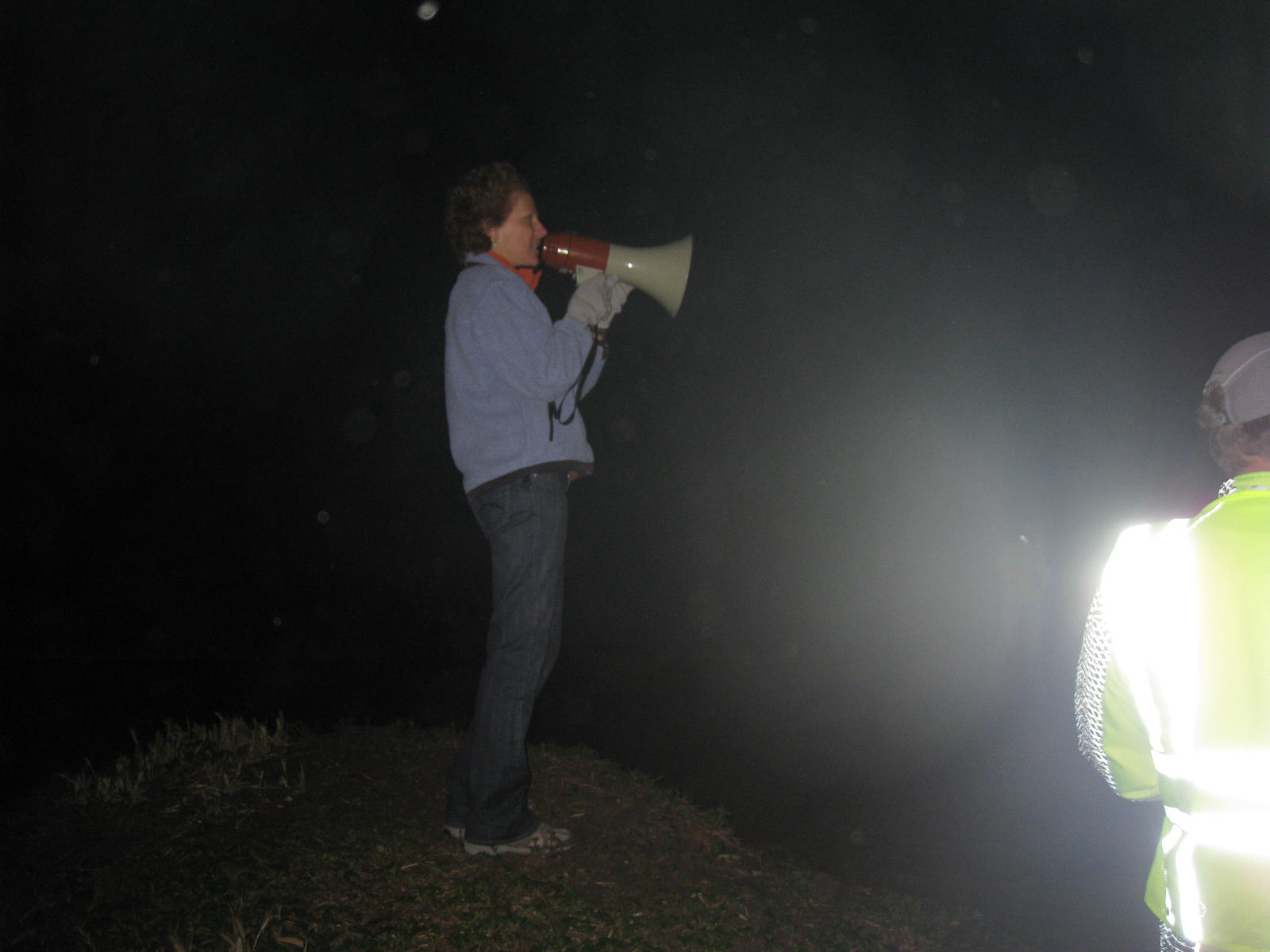
Runners Crossing The Bridge To Rodeo Beach LagoonTia Bodington, RD, Announcing To The Runners On Her Final InstructionsNo Arch, No Lights, No Starting Line...Just Runners Who Want To Have Fun & Enjoy The Trails
The processing of runners was very simple. Each runner simply got his/her race bib from one of the volunteers and that’s it! Ten minutes before the scheduled start time at 5:40 AM, all the runners were led to the beach near the Rodeo Lagoon which is about 300 meters from the Assembly Area. There were no intricate START Arch/Tarpaulins; no sound system; no music; no lights; no invocation/prayer; and no singing of the National Anthem. The RD positioned herself on top of a little mound on the beach while the runners lined up before an invisible starting line listening to the final instructions from her. Tia’s final instructions were about RESPECT. If I can recall them right, she said something like—“Respect the trails”; “Respect the Volunteers & Marshals”; “Respect the other Runners”; “Respect the Race & the Distance”; “Respect your Goal”; and “Respect Yourself”. After a few seconds, the RD simply shouted “GO” and the runners started the race along the sands of Rodeo Lagoon.
The Runners Were Off From The Starting Area
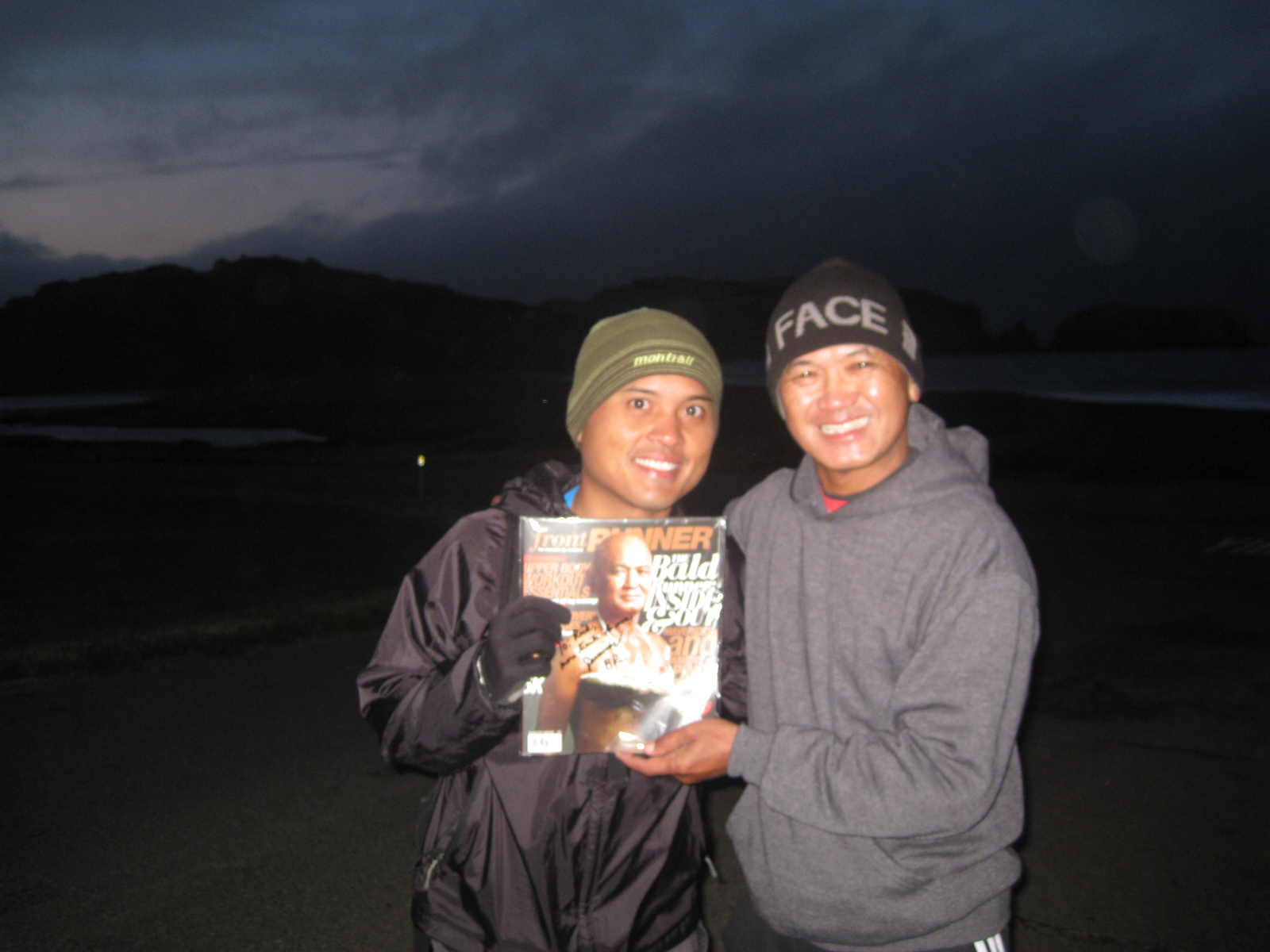
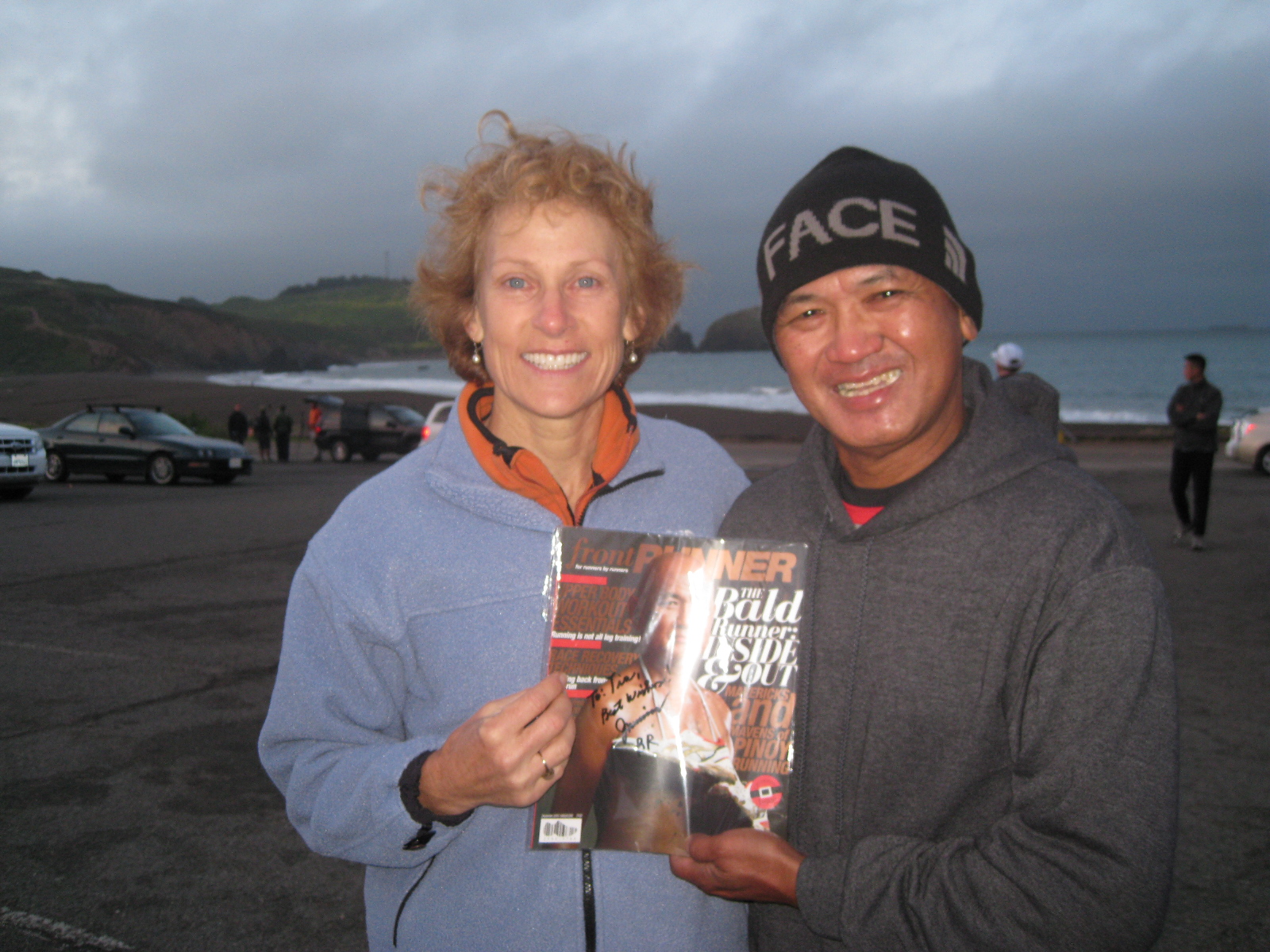
After the race had started, Rick Gaston and I were able to talk while the rest of the volunteers and spectators went back to the Assembly Area. This is where all the volunteers (to include myself) helped in loading the “drop bags” of the runners to be transported to the Finish Line which is about 3 kilometers away. After this job, I was able to engage more conversation with Tia and had a chance to give her a copy of the frontRunner Magazine. It was a good chance for me to have a picture with her.
Rick Gaston in Montrail & BR in TNF Skull CapsWith Tia Bodington, RD of Miwok 100 & Editor-In-Chief of Ultrarunning MagazineU-Haul Truck & Drop Bags To Be Loaded
While waiting for the lead runners to pass at the Aid Station #1, I was introduced by Rick to Brett Rivers who is also an elite ultrarunner, got to talk to Mark Gilligan of UltraSignUp, and the rest of his ultrarunning friends whom I could not recall their names. Finally, I was able to back-up my e-mail messages to Matt for the possible inclusion of the BDM Races to UltraSignUp through a longer conversation and personal interaction. We had a longer discussion about the matter/issue when we had a chance to meet again at the Starbucks at Mill Valley.
With Mark Gilligan of Ultra SignUpShouting The Runner's Race Bib Number to Mark Gilligan
At the Aid Station #1, Rick and I became instant volunteers for Mark Gilligan’s Live Update in his Website by posting each runner’s split time. We were requested by Mark to shout to him the Race Bib Number of each of the runner approaching our place. It was a good chance to stretch my vocal chords! After the last runner had passed our station, I found out from Matt that there were 345 starters out of the 416 accepted/registered runners.
At Mile 7.1, Dave Mackey (Right) & Mike Wolfe (Center)Nathan YankoLook At That Stride!!! Leading Runner Meghan ArbogastJean Pommier (Another Ultra Blogger) @ http://www.fartherfaster.blogspot.comKristin Moehl at the MiddlePam Smith (Lady Champion of the Race)Ian Sharman aka ELVIS, The King!
At the Pantoll Aid Station (Mile #20 & 41)
Rick brought me to Pantoll Aid Station to observe and spectate to the runners passing. The top runners just passed the area when we were looking for a parking space. It was nice to observe the other fast runners on how they re-supply themselves with their hydration packs; how and what they eat at the Aid Station; and how lively the cheerers to the incoming runners.
Don't Try To Imitate This Guy!The Legendary Ultrarunner Scott Mills @ 59 Years Old (Ranked #49)Cheering The Runners at The Old Mine Trail
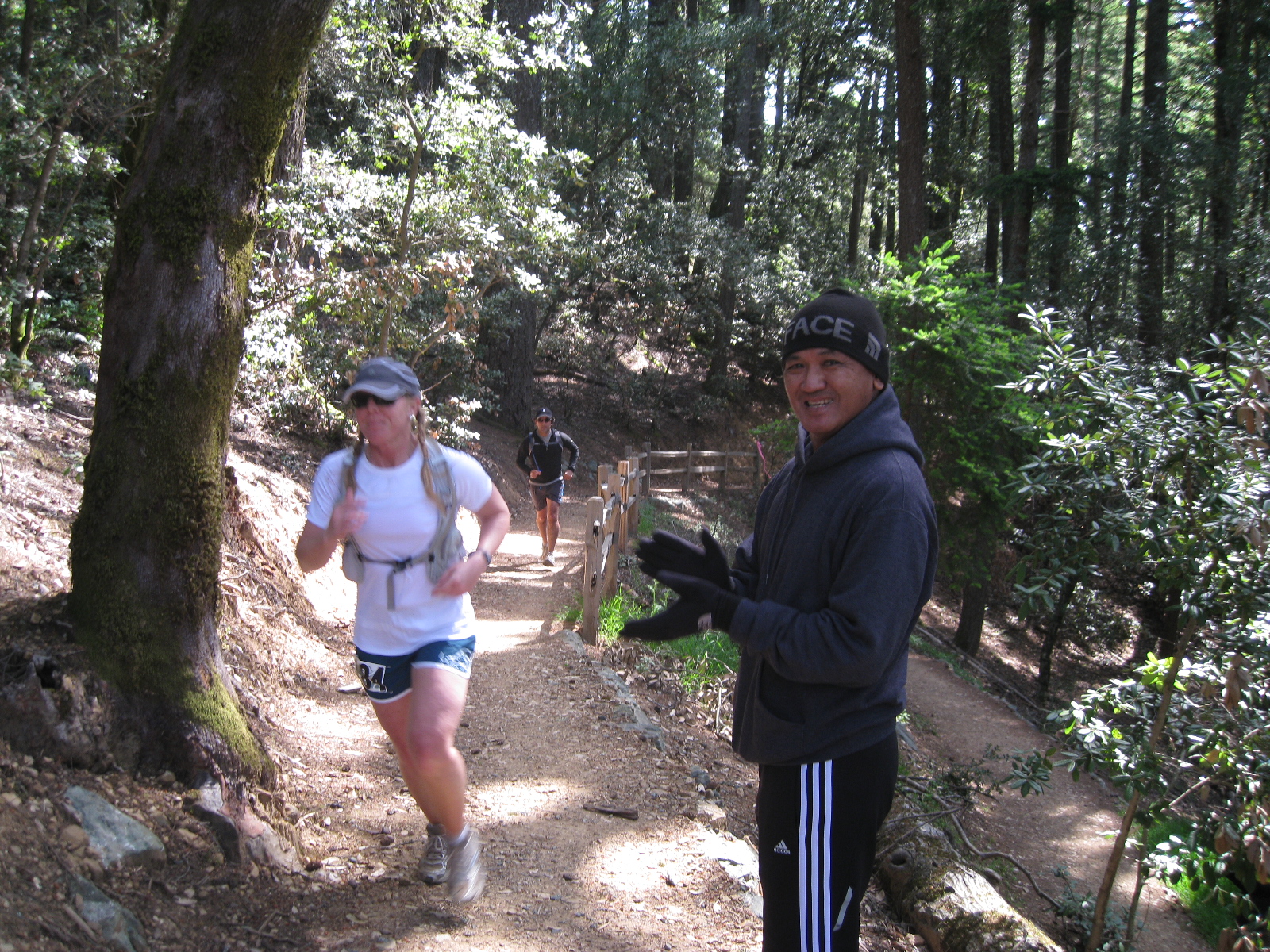
Later, I positioned myself about 30 meters along the trail before runners would reach the Aid Station. The trail is called Old Mine Trail. As the runners would approach my position, I would shout encouraging words while clapping my hands. The words, “Looking Good”; “Good Job”; “You Can Make It” and other positive ones shouted to the approaching runners would boost the runners to jog at a faster pace. As a response, the runners would say, “Thank you for being here” with a smile on their faces!
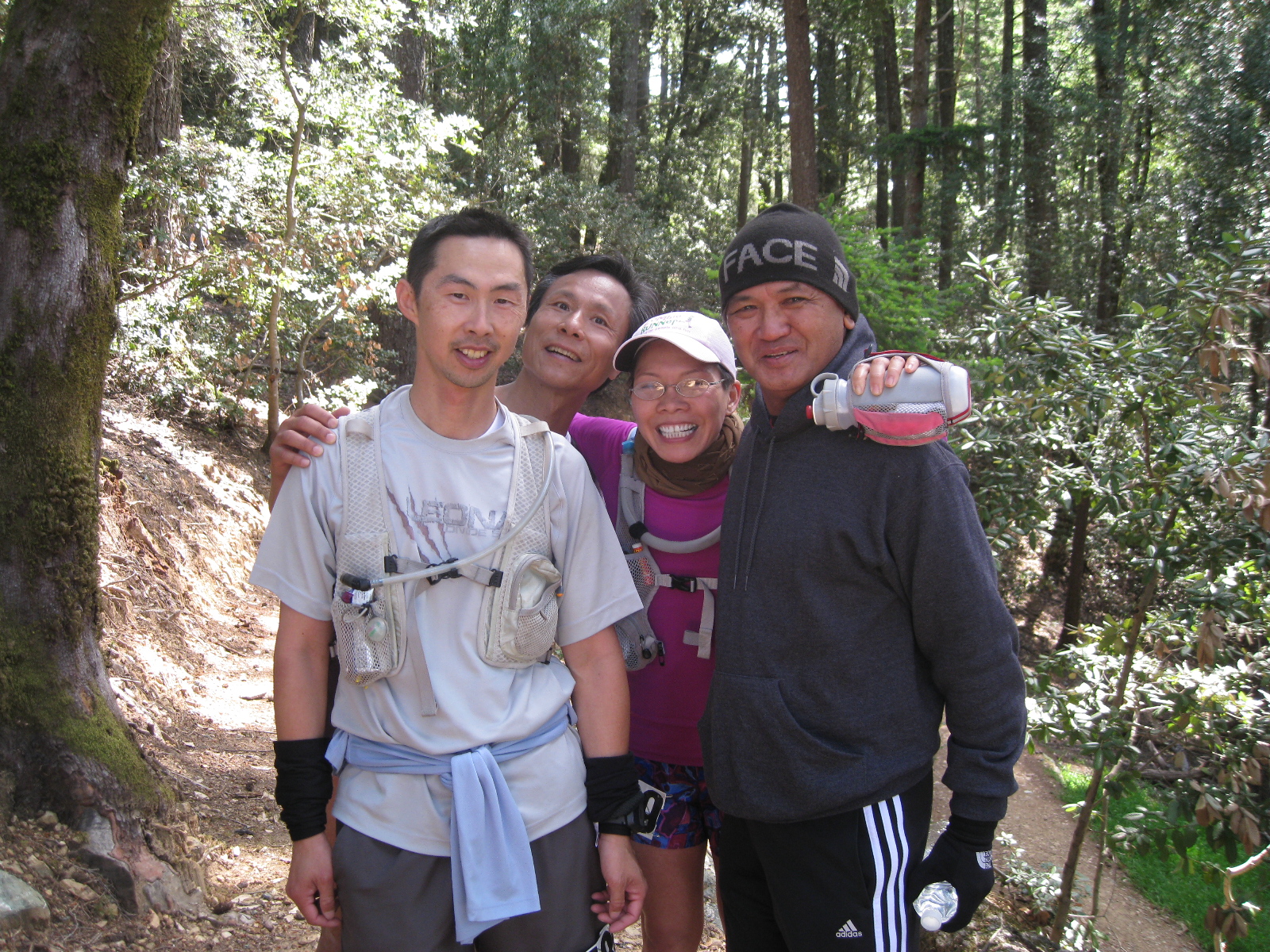
This is where I was able to meet Geraline Harvey, a Filipina runner from Ontario, Canada who greeted me with the words “Kumusta kayo?” After a few seconds, Carmela Layson and her group approached me as I was cheering them! At last, Carmela and I met in person. Actually, if ever I decided to push through with this race, it was my strategy in this race to stick to her all the way to the finish line. Carmela had been a veteran of Miwok 100! If ever I would have a chance to run in this race in the future, my race strategy would remain the same, I’ll stick on her tail. Carmela had been an active contributor of my Project Donate-A-Shoe! (Congrats, Carmela & Geraline for a successful finish!)
With Carmela and Friends at the Old Mine TrailWith Geraline of Ontario, Canada
Finish Line @ YMCA Point Bonita
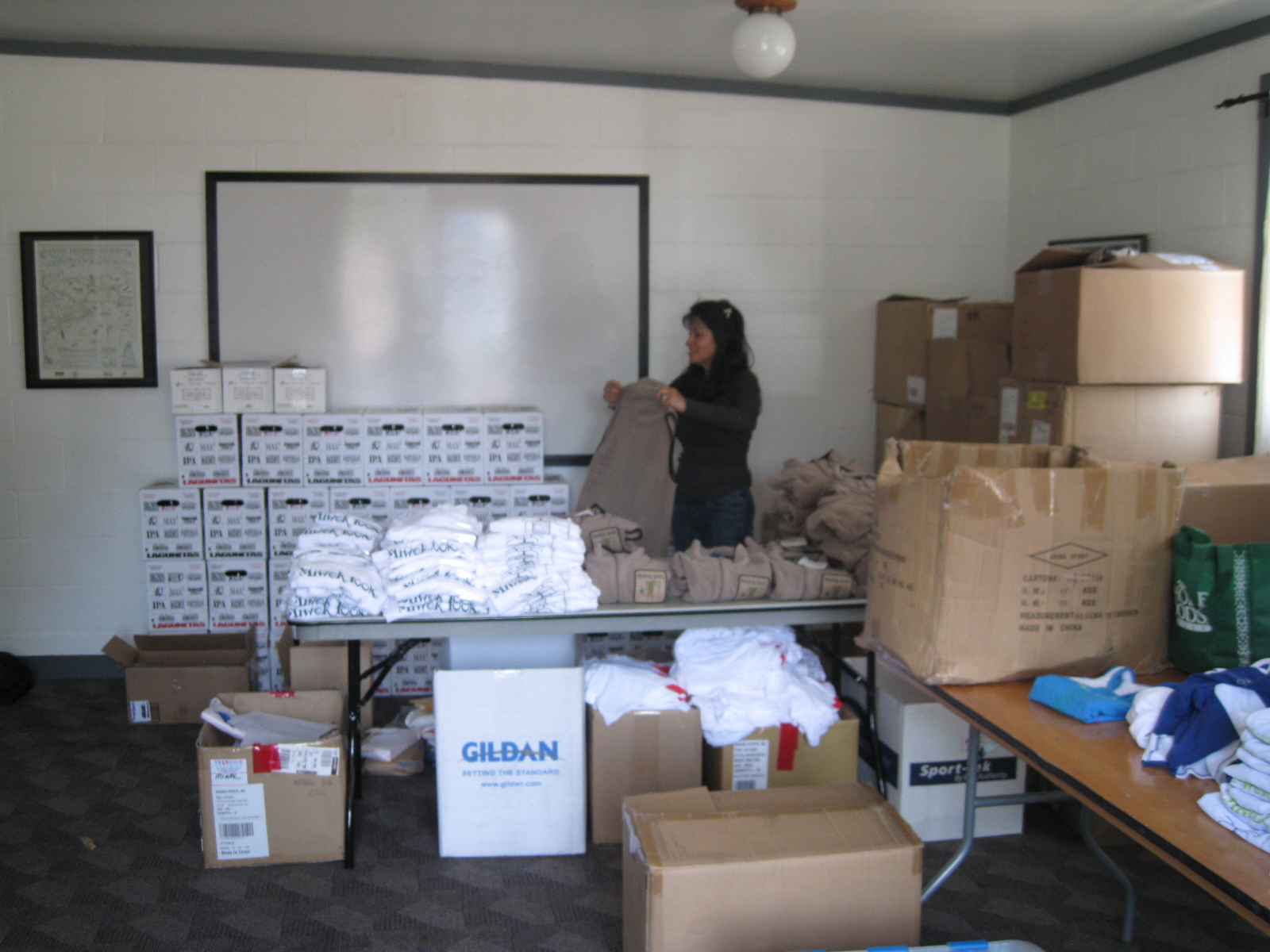
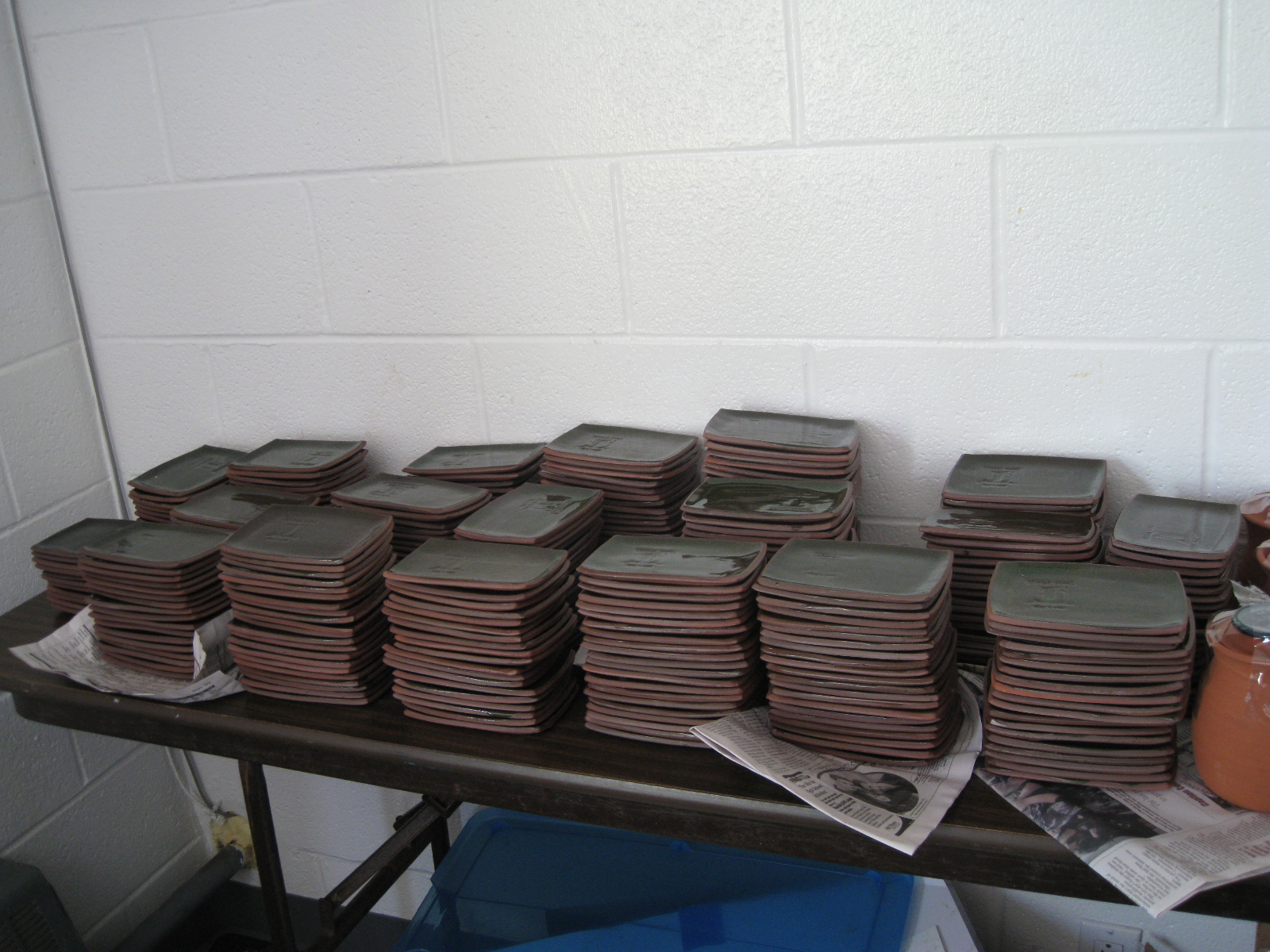
From this point, it was time to go to the Finish Area and try to help the other volunteers. I was able to meet Jorge and Rich (with ages in their late 20s) who are also ultra runners planning to earn their entry through the lottery for next year’s edition of the race. There was another lady runner who was supposed to run but due to stress fracture on her legs, she opted also to volunteer. We helped in organizing the different “schwag” for the runners and preparing for the BBQ Party venue after the race for all the finishers. It was worth the fun and time to be working and volunteering with the rest of the other senior and younger ultra runners.
Helping This Lady Runner Who Became One of the Volunteers For The SchwagFinisher's Shirts & Fleece Vests & Beers in White BoxesFinisher's Commemorative Plates
At 1:30 PM when the lead runner was a few miles away from the Finish Area, all the schwag were properly organized and packed. The job was done and the next job for me was to watch each of the lead runners cross the Finish Line. The plan was to wait for the arrival of Ian Sharman who was running the whole race as ELVIS before leaving San Francisco in order to catch up with the Pacquiao-Mosley Boxing Fight in Las Vegas!
Champion Dave Mackey Approaching The Finish LineHal Koerner At The Last Turn Before The Finish LineELVIS Approaching The Finish Line
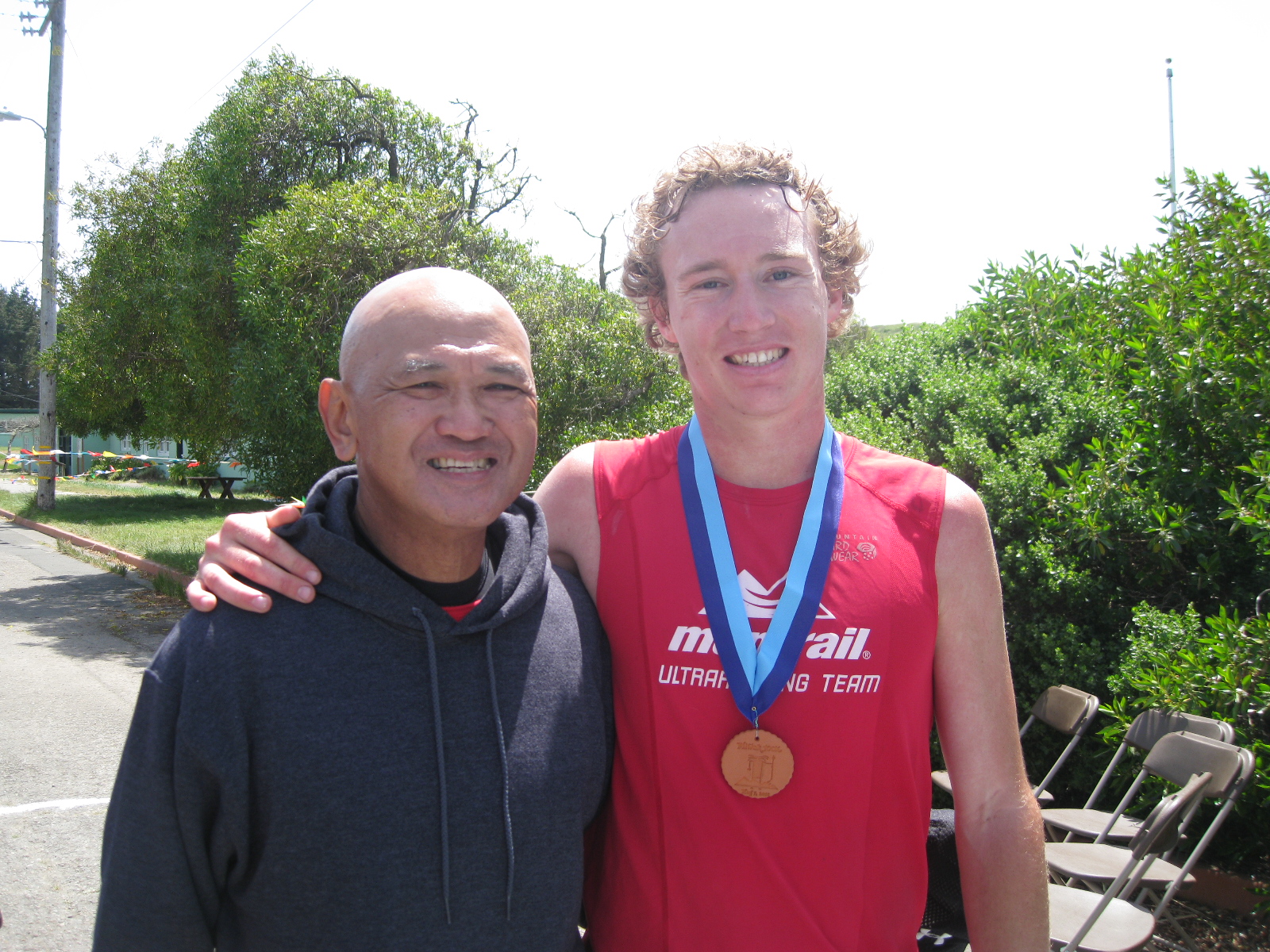
While waiting for ELVIS to cross the finish line, I was able to talk to the Front Runners/Top Finishers of the Race. It was nice talking to these wonderful guys in ultra trail running which ended with a brief pose with them.
Congratulating & Talking To Dave Mackey & Mike WolfeA Pose With The Champion Dave Mackey & Mike Wolfe, 1st Runner-UpHal Koerner, Champion of 2009 & 2007 Western States 100-Mile Endurance RunTalking To Dakota Jones, 4th Placer in the 2011 Miwok 100A Pose With The KidTalking With The ELVIS in UltrarunningIan Sharman Finished in 10th Place & Bound For Comrades Ultramarathon This Month
After about 10 hours of volunteer work at the 2011 Miwok 100K Ultra Trail Race, I really enjoyed and had fun for being a part of the race as one of the volunteers. As an spectator, I was able to interact with the top runners in ultra trail running in the United States which I could not have a chance to do such if I finished the race in 15-16 hours. For sure, they are already sleeping in their houses as I cross the Finish Line!
Before I left the Finish Line area, I talked and thanked Tia for being a part of the Volunteer Group for the event and told her about my early departure to catch a flight to watch the Pacquiao-Mosley Fight in Las Vegas. In return, she thanked me also for being a part of the Volunteer Group for the event . She assured me also that I will be coming back to run the 2012 Miwok 100!
The results of the 2011 Miwok 100 are published here.
I never learn my past mistakes and heed to the lessons learned I have been repeatedly writing on this blog. I am simply stubborn!
I should have recovered from my latest adventure run for at least 4-6 weeks due to the injury I incurred on my left knee. But I was not able to control my urge to run on this particular place.
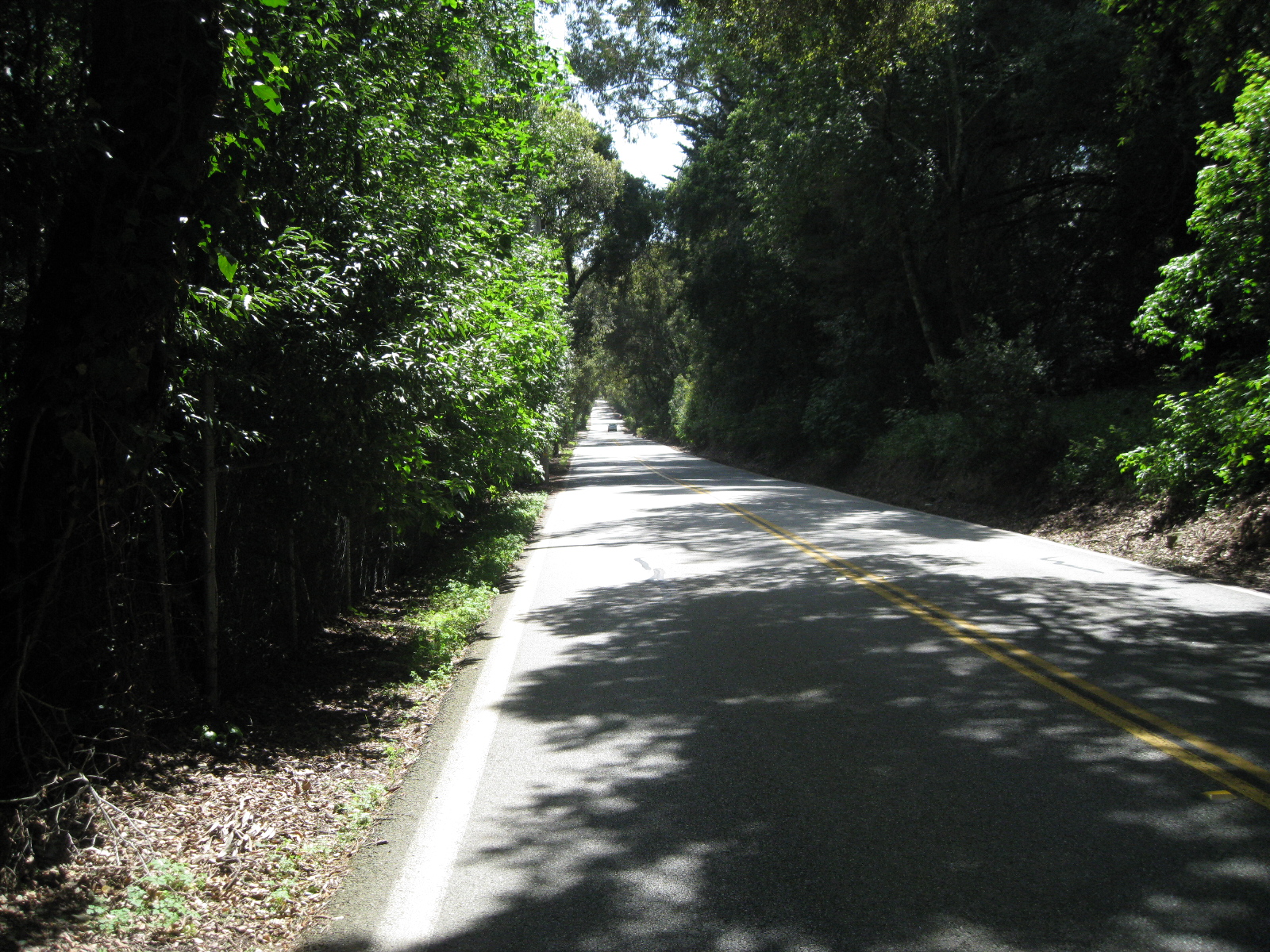
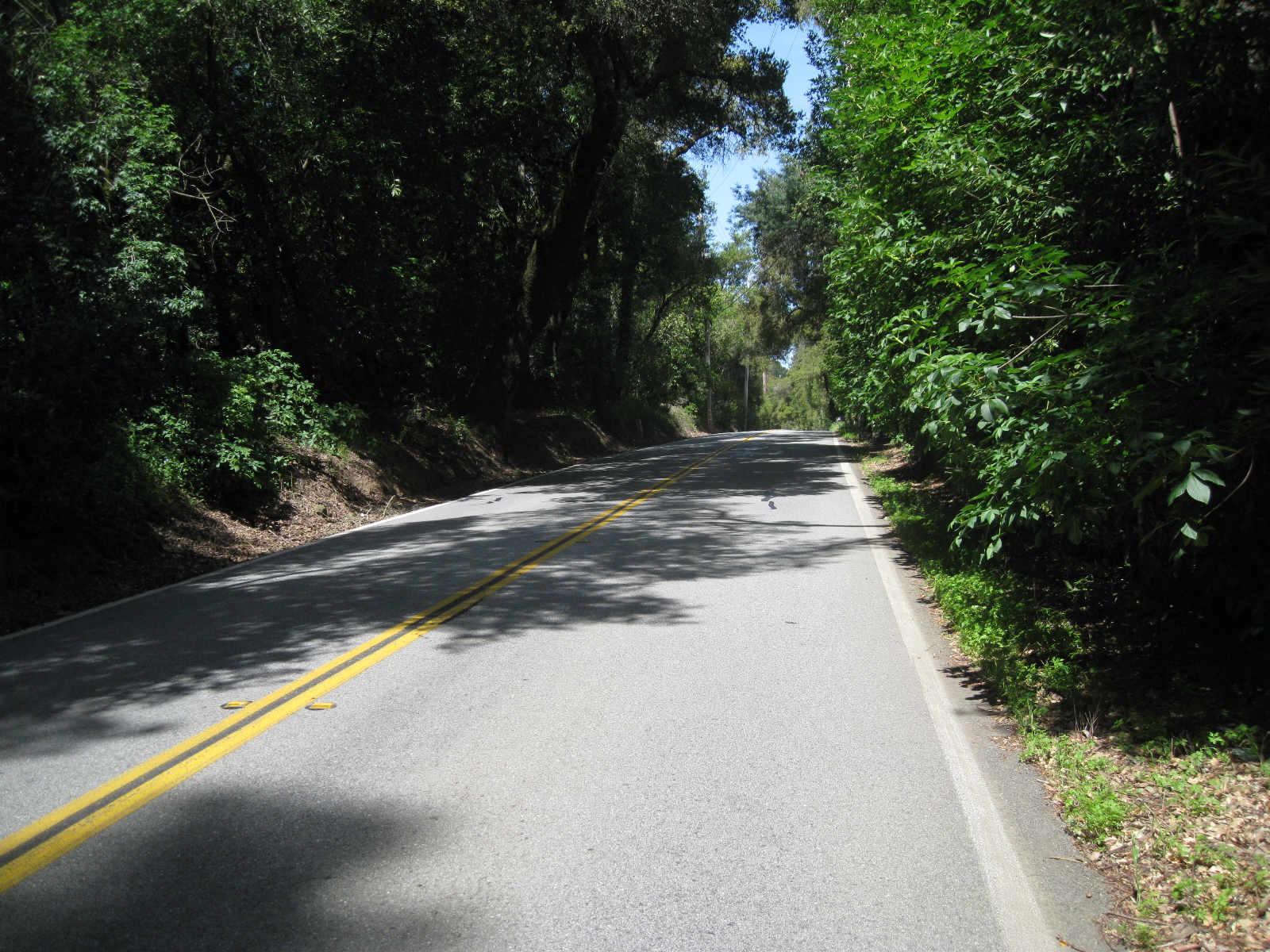
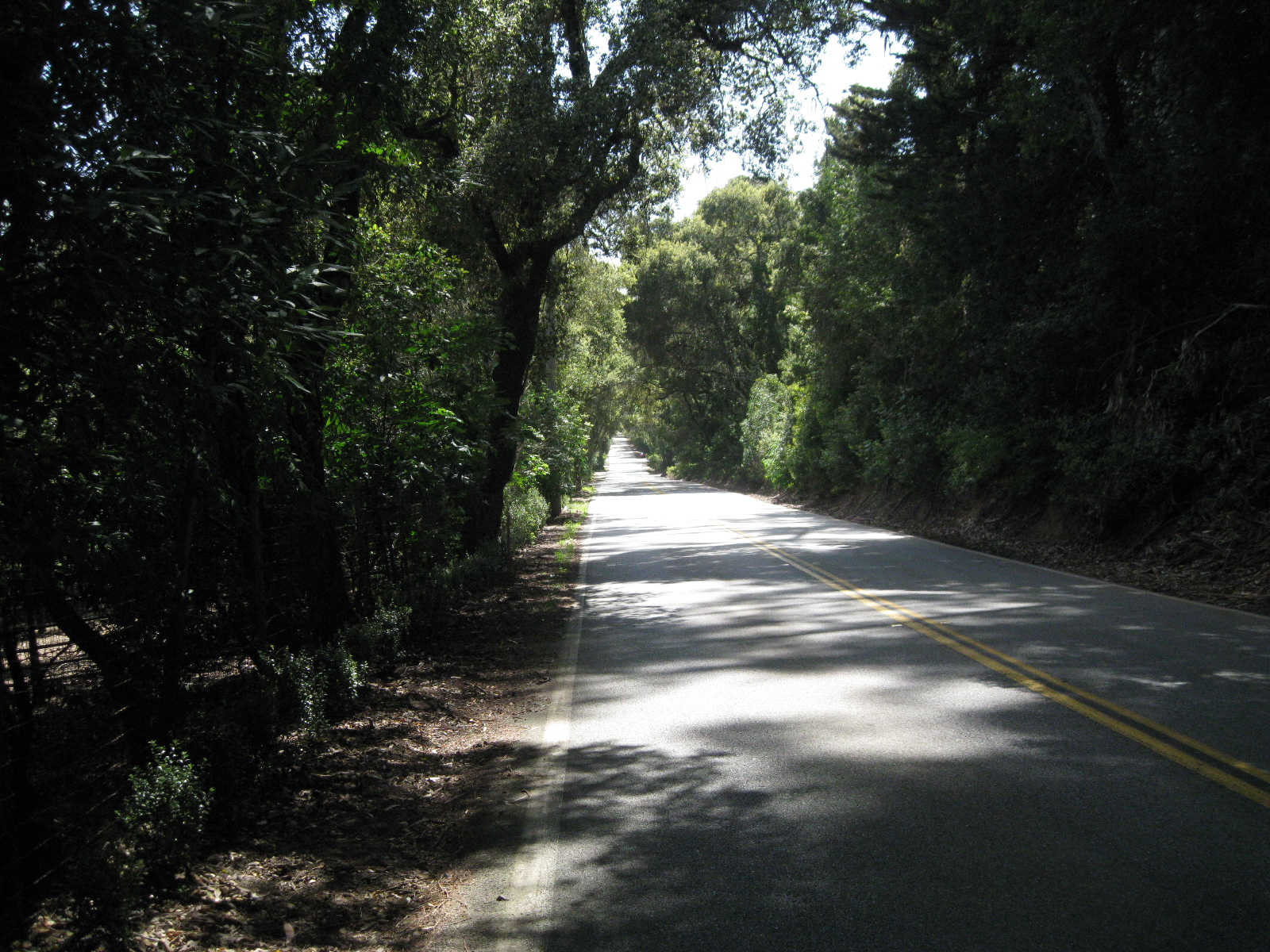
Paved Road Covered With Big TreesNot Much Traffic From VehiclesBut I Was Able To See A Lot of CyclistsIn A Place Called "Meadow" After Running 5K Uphill On A TrailTrail Covered With TreesRedwood Trees All Around The PlaceTrail Running Is Fun!!!Highest Peak of the TrailThis is the Place Where "Folger's Coffee" Started Its Production
A distance of 40 kilometers, 20K on paved road and 20K on mountain trail, for six hours made me limped towards the end of the run. Because of this run, my recovery was disrupted and I am back to square one! However, I am back to my rehab activities.
The race starts at 5:00 AM of October 9, 2010 (Saturday) at the vicinity of the Barangay Hall of Sta. Juliana, Capas, Tarlac.
This race is a solo run and the distance is 50 kilometers. The distance from the Starting Line to the Mt Pinatubo Crater Lake (turn-around) is 25 kilometers. From the turn-around point, the runner has to go back to the Starting Line which will serve also as the Finish Line. Pacers are not allowed.
The cut-off time for the race is ten (10) hours. Runners must be able to reach the turn-around point in 4:30 hours. Runners who will reach the turn-around point in more than 4:30 hours will be advised to ride on the available 4X4 vehicle in going back to the Starting Line. Such runners will be declared as DNF. However, they will receive a special certificate for finishing 25 kilometers.
Each runner must be able to have their respective hydration system/belt. The runner’s hydration system must be able to carry liquid/water needed to cover a distance of at least 7-8 kilometers. There will be Aid Station at Km#7; Km#14; and Km#21 and these same Aid Stations will serve at Km# 29; Km#36; and Km#43 (on the way back). These Aid Stations will be 4X4 vehicles manned by Race Marshals.
The Aid Stations will have water, sports drinks, cola drinks and limited food supply. The foods served will be chocolate bites, salted biscuits, boiled eggs, boiled banana & sweet potatoes.
Runners are encouraged to prepare their own “drop bags” which will be carried/transported by the 4X4 Vehicle-Aid Stations. Drop Bags should be properly marked with the runner’s name, race number, and Aid Station Number/Km Point where it will be available.
Runner has the option to provide his/her own support vehicle from the 4X4 vehicles for rent available through the Barangay Officials at the Barangay Hall of Sta Juliana. The rent/cost of one vehicle is P 2,500.00. The fee for a guide is P 500.00 (optional). However, such individual support vehicle should not “shadow” the runner. It is advisable that support vehicles must “leap-frog” from the runner.
The exact turn-around point is at the edge of the Crater Lake. Each runner must be able to register to the marshal-recorder upon his/her arrival.
Runners are advised not to ride on their respective support vehicle even for a short distance or while crossing the river. Riding on the vehicle is tantamount to “cheating” during the race.
Since most of the route towards the Mt Pinatubo has no established or designated trail or path due to changing landscape as a result water & earth movements, the runner can improvise or have his/her own personal choice in establishing his/her direction towards the crater.
It is advisable to run with somebody or with a group with the same pace. If not, each runner must be able to have a sight on the runner in front and runner at his back.
This is a trail run which is considered as a RACE. However, it is advisable to help each other on matters of emergency and occurrence of accidents along the route. Any casualty or runner who needs medical attention should be brought to the nearest Aid Station.
Each runner must carry with them basic First Aid Kit. This is a MUST and it is a ground for Disqualification if a runner is without this basic requirement. The First Aid Kit should consist enough cotton, sanitary gauze, medical adhesive tape, betadyne/iodine, and anti-biotic ointment.
Runners must be extra careful in stepping those big rocks along the route. Most of the rocks are slippery and some are not stable. It is safer to walk rather than run on these rocks. Always think safety when you encounter rocks along the way.
There will be a lot of river crossing. Find time to be deliberate in crossing such flowing rivers, most especially where there are a lot of rocks. There are some places where the current of the river are strong, take time in establishing a firm and balance footing as you cross such rivers.
Basically, you will have damp/wet running shoes throughout the run. It is advisable for each runner to apply petroleum jelly to their feet before the run to prevent blisters.
Walking sticks are allowed on this run.
At the Crater Lake, if you are not a swimmer, please do not attempt to swim at the lake. We don’t have any Lifeguards for this race.
If in case there will be typhoon or continuous raining on race day, the event will be cancelled and it will be postponed to a later date when weather is favorable for the safety of the participants.
Top 3 Men and Ladies will receive trophies. Every Finisher will receive Individual Trophy/Memento; Finisher’s T-Shirt; and a Certificate of Achievement. This trail run is included in the Ranking of PAU Runners for the year.
Parking Areas will be available on one side of the Road at Barangay Sta Juliana and at the area near the banks of the river (500 meters from the Barangay Hall). Barangay Tanods will serve as the security/”look-out” to your parked vehicles. Be prepared to pay P 50.00 as Parking Fee for each vehicle to the Barangay Tanods.
The RD and Race Marshals will be conducting random checks on each runner’s hydration system and the mandatory First Aid Kit along the route. It is mandatory for each runner to show their First Aid Kit as he/she checks-in at the Starting Area.
Lastly, please maintain the Integrity of this Race. (Do I have to tell and remind you about this every time we have a PAU race?)
After one month, I am back to “Brown Mountain” for my mountain trail training. I really miss the place which is totally different from the hills & mountains of Marin Headlands. BM trails has a lot to offer aside from the fact that the uphill climbs and trail texture & condition are more challenging. As for comparison with the Headlands trails, the terrain at BM is more abrupt on its uphill climbs which is good for short & fast “surges” as you go up to the mountain. Seldom did I see many abrupt uphill/downhill terrain at the Marin Headlands.
Back To "Brown Mountain""Django", the Father of 5 OFW Children
My run towards the mountain ended at the place or hut of the guy whom I named as “Django”, the man who was riding on a horse when he led us to one-track trail into the mountain. His hut is exactly 6.3 kilometers from the place I started my usual run. I always stop in his hut to greet him and his wife. While taking a sip of water from my Camelbak, we had a brief conversation. He asked me why I was absent for the past one month and I told him about having a rest and recovery while the place was often visited with rains almost everyday.
I observed that his vegetable farm/plots of ampalaya, string beans, okra, and corn were bountiful. I made some remarks about his vegetables and he invited me for the time he will harvest his corn. He wants to share a part of his harvest. In our conversation, I found out later that he has five (5) children and all of them are presently working in key cities in the Middle East countries. His children are all OFWs and I assume that he and his wife has a decent house at the center of the barangay which is along the National Highway. He and his wife told me that they seldom stay in their concrete house as they are healthier, livelier, and stronger when they stay in their bamboo hut in the said mountain. They want a simple life without any TV, Radio, and noise & pollution along the Highway and they enjoy eating fresh vegetables and fruits taken directly from their farm!
Bushwhacking Along The Trail
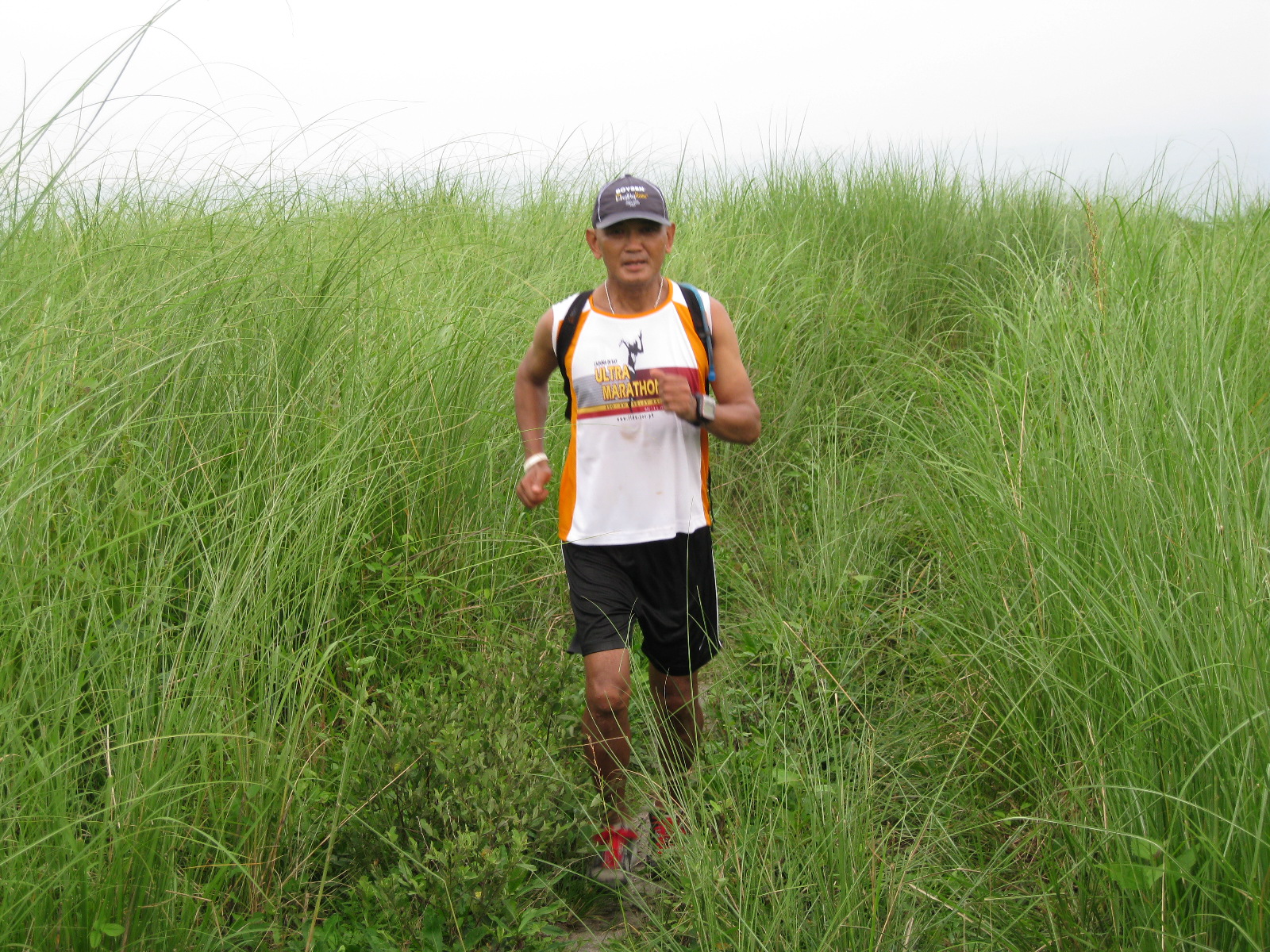
The single-track trail into the mountain has been slightly covered with tall grasses and bushes. Due to the rainy season, the cogon grasses and bushes had crept to the sides of the trail that I was constantly hitting the sharp blades of the cogon on my arms and face while the bushes would brush on my legs. I enjoyed bushwhacking on the dense foliage of some parts of the trail. It is a pure experience on mountain trail running.
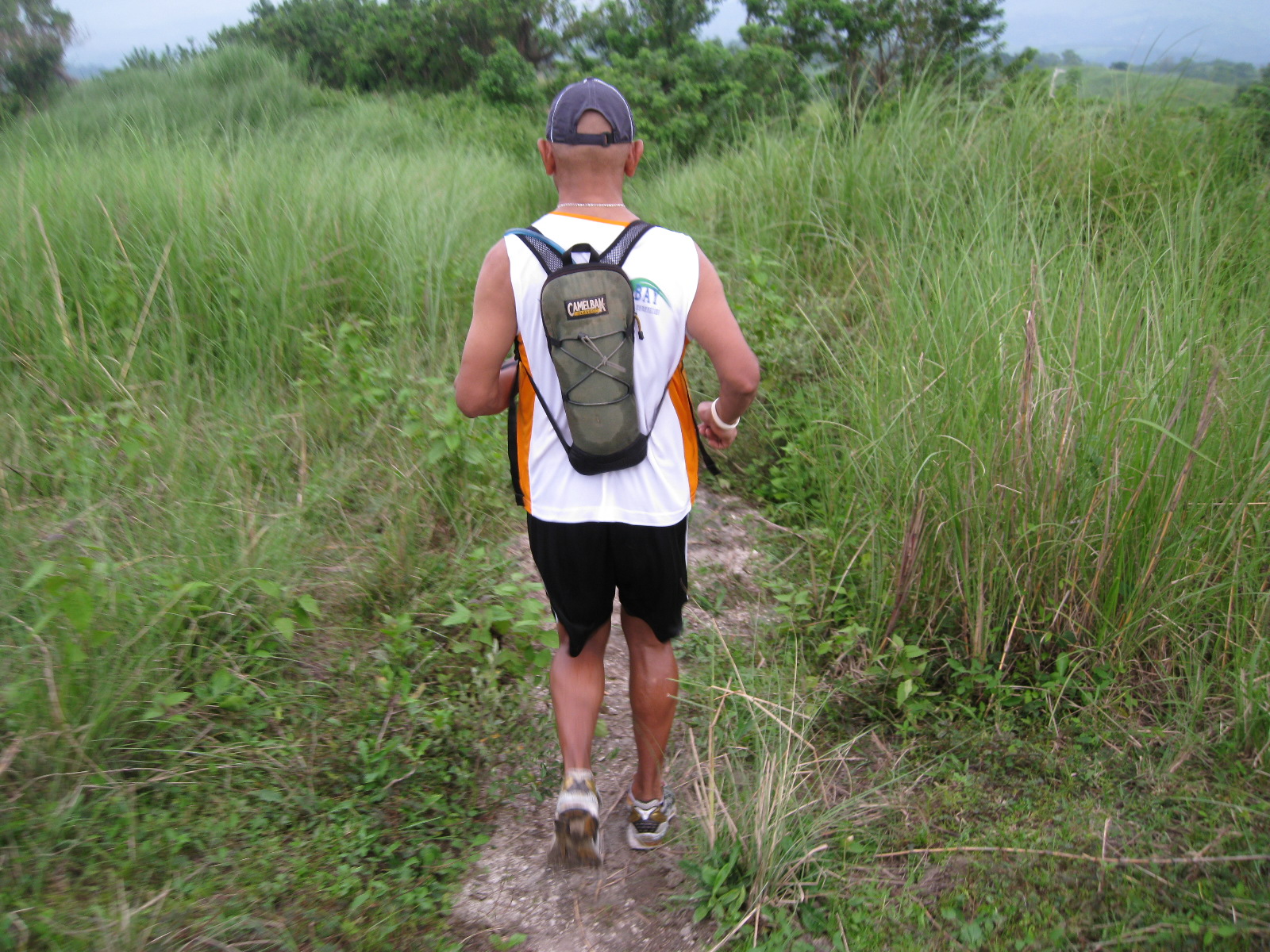
With My 20-Year Old Camelbak!
From the turn-around point, I increased my pace as most of the trail is going downhill. However, due to the thick grass and bushes on the side of the trail, I tried to control my pace as I could not see exactly where my feet were landing on the ground. There are parts which are covered with bushes, muddy, sandy, and full of small rocks/pebbles. If I am not careful during my downhill run, I might end up having a sprained ankle or having another bad fall on the ground, again!
I finished my comeback visit to BM in 1:36+ hours covering a distance of 12.6 kilometers. I am back and ready for my training for another ultra mountain trail run in the future!
This is a personal story of Gerald Moore, a friend of July Oconer, on his 3-day stay in the Philippines.
I have some photos and a story now- hope you enjoy!
I checked out of one of the nicest hotels I’ve ever stayed in the Shangri-la – after a buffet breakfast so wide in scope it could easily have covered lunch, dinner, barbecue, gourmet, France, Italy, Hong Kong, Mexico and of course, Manila!
July and I got our last minute supplies in a big supermarket next door, cases of water and boxes of granola bars. I bought a couple ‘Coach’ designer shirts – for about $10 each! Every salesperson called out to me SIR, SIR (sounds like ‘sah’) Almost everyone speaks English well.
Manila is sprawling and impromptu. The central city is clean and pretty Security is everywhere, rifles, dogs and Xray machines. The people don’t seem to care and they don’t know of any threat – that’s just the way it is.
Decorated and sparkling WWII “Jeepneys” and motorcycle sidecar taxis are everywhere. And they have Shakey’s Pizza – haven’t seen that since I was 11 years old. I rode through Bataan Death March country in the back seat of July’s well-customized turquoise Honda Civic northward out of the city of 10 Million bound for Mount Pinatubo.
In 1991, Mt Pinatubo exploded in a climactic strato-eruption that lasted 12 days hours, during that time it ejected enough ash, smoke and sulphur to decrease the entire earth’s atmosphere by 1/2 a degree Fahrenheit. On the same day, Typhoon Yunya struck the island, passing about 75 km north of the volcano. The most violent phase of the eruption, lasted about three hours. Typhoon rains mixed with the ash deposits and caused massive lahars. For 3 years ash circled the globe. If not for close geological monitoring and widespread warning, tens of thousands would have perished. This eruption forced the closure of Clark Air Force Base which had operated continuously as a beneficial, respected and locally valued United States military station since World War II.
On the straight, flat roads around July’s hometown people walk perilously close to speeding traffic late at night, motorcycle sidecar taxis are the primary transportation. Signs say ‘vulcanizing’ (tire re-treading) and ‘Junk Shop open 24 hours’. Beyond the row of buildings and houses that line the road endlessly are soaking wet rice fields.
July found me a comfortable country inn while He and his Fiancé went further into the country to visit and stay with his parents.
We left for Mt Pinatubo at 130am and met people at a couple places along the way traveling through the dark straight roads with flashers on as a convoy of ultramarathoners.
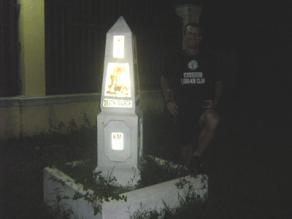
As we neared the starting point we passed the concentration camp where 11000 US and Philippine soldiers were killed at the hands of the Japanese, and at every kilometer along the way, a stone marker memorializing those killed on the march. To this day they find gravesites amongst the rice fields. All these ultramarathoners devote their effort and struggle to the soldiers killed here in many ways. That I knew of the march, had met survivors and ran the Death March at White Sands Missile Range made me an instant family member: Sir Gerald.
The starting point was a small village schoolyard’s covered bandstand with bare light bulbs hanging. Our little convoy filled the yard and runners were getting their gear together on the stage there. The 3 Toyota Landcruisers arrived driven by the Pinatubo Guides and parked facing out. Supplies were being stacked inside – bags and ice chests. I added my case of water to the community chest.
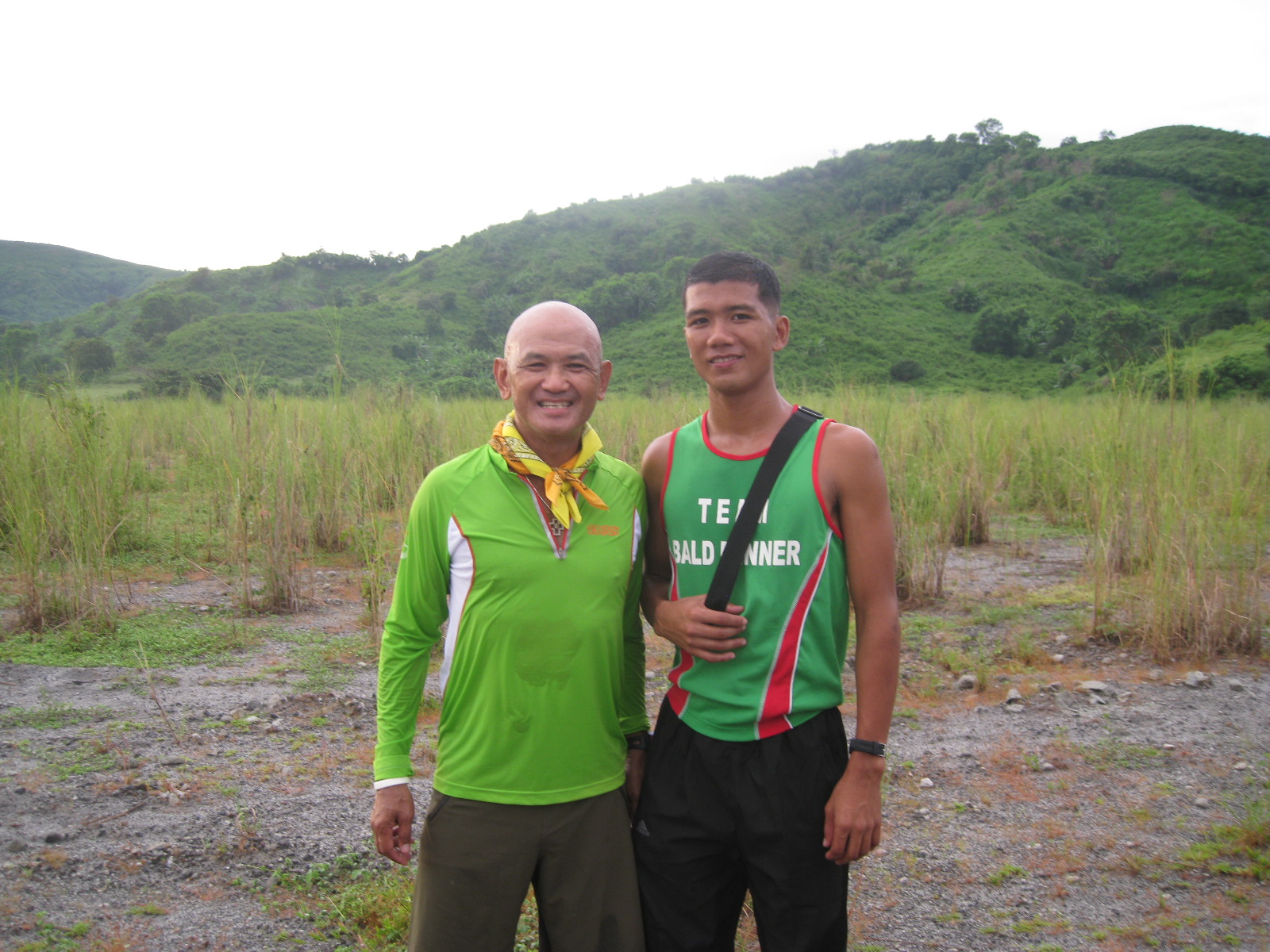
Then the Great Baldheaded Runner arrived in shiny Prius to a round of applause. This is Retired General Jovie Narcise of the Philippine Army whose base includes the area we’d be running in. He’s has nice gear, and is very fit and totally bald. Jonel, the race director, participant and magazine publisher (also bald) gave some cut-off times and last minute advice and then said a very short prayer. Everyone crossed themselves before and after, twice.
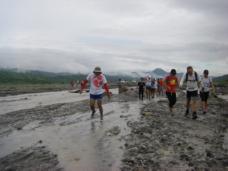
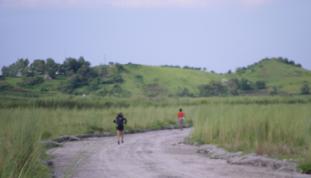
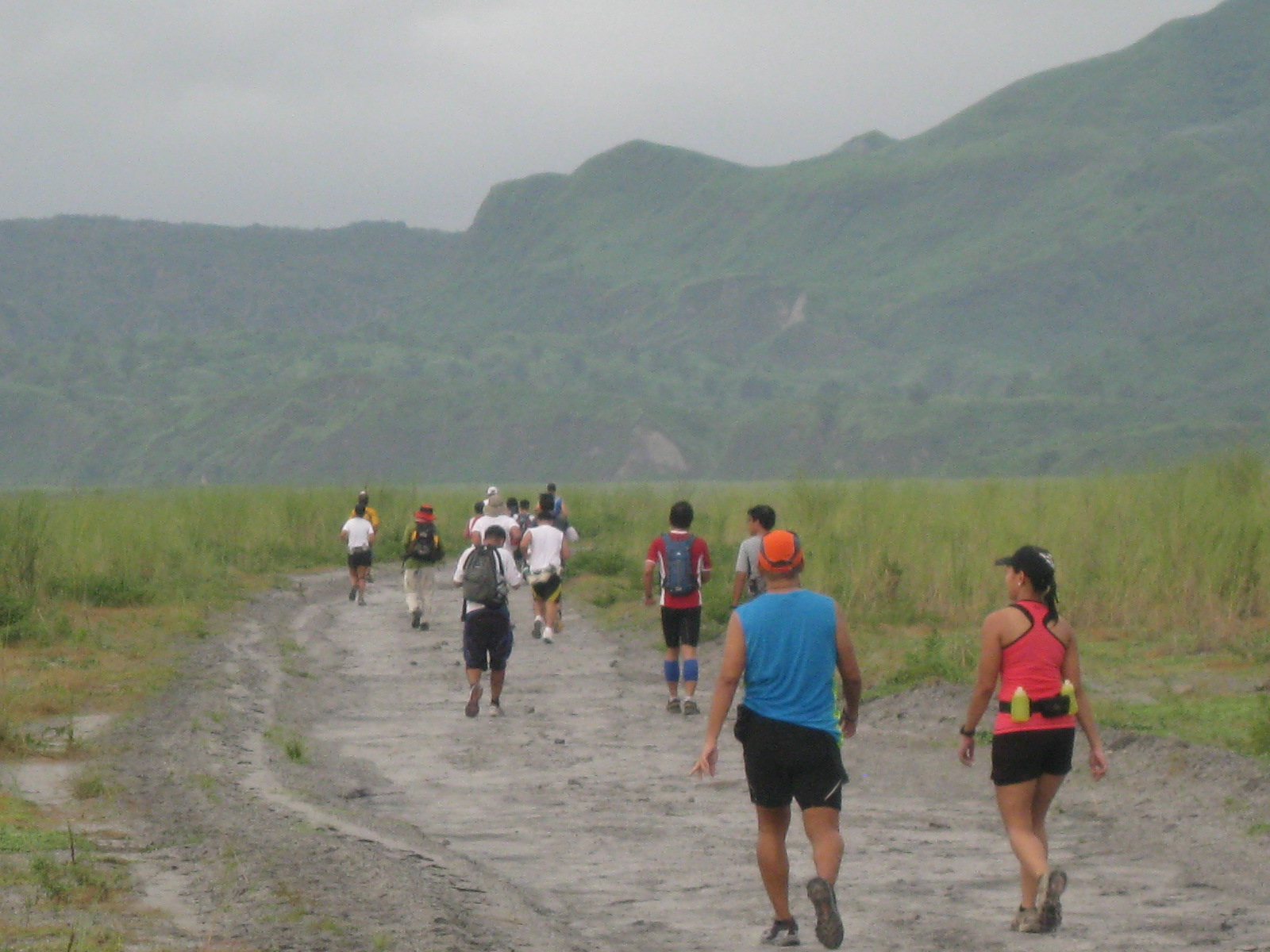
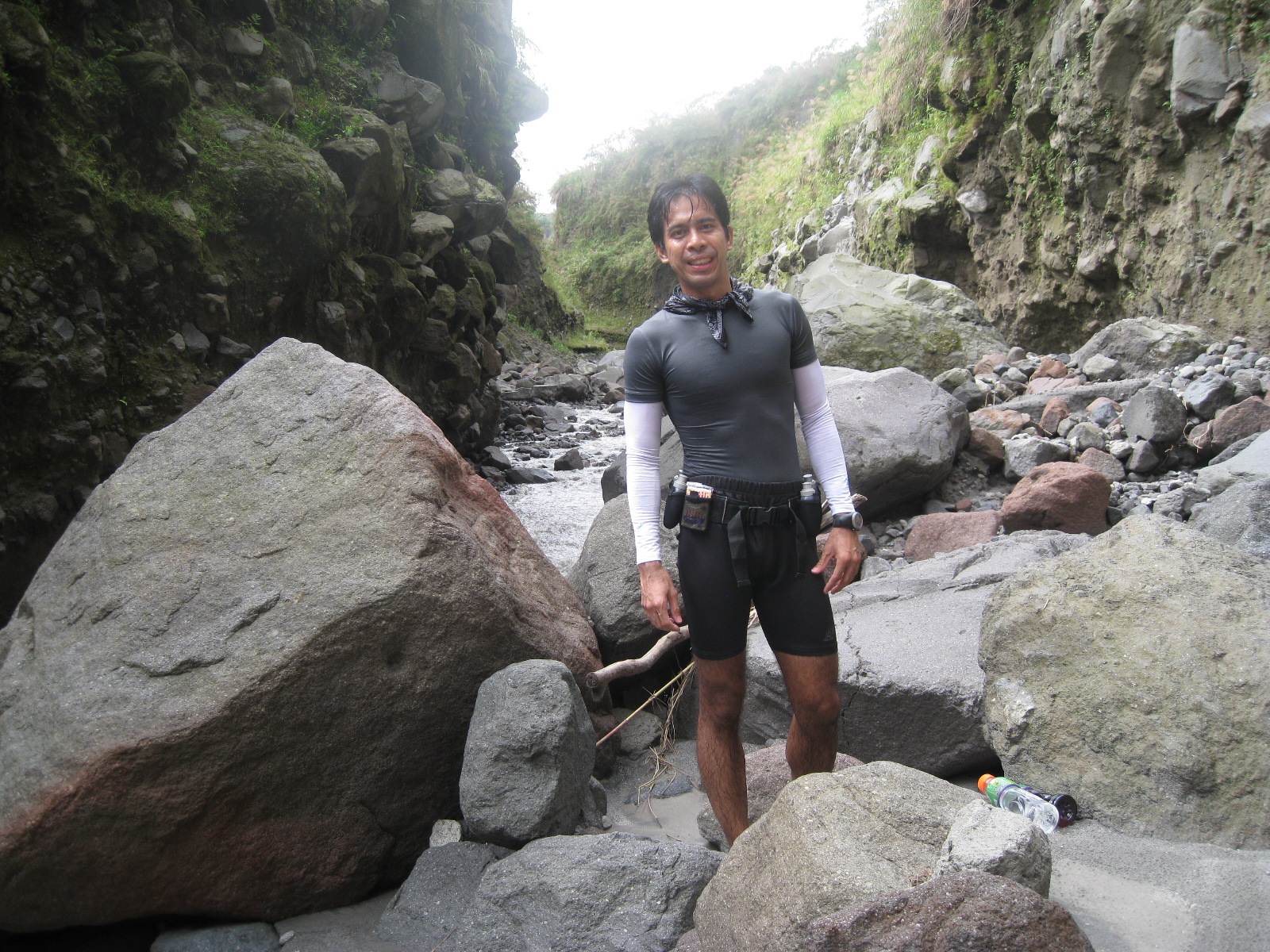
We take off walking as the dawn begins to break and the little group of 35 or so streams out of the school yard and up the main road. The road immediately goes into innumerable creek crossings and every single runners’ feet are totally wet throughout the entire 55K. The course is one continuous lahar – a valley that had been filled in by the eroded ash and cinder rock moved by water ejected from the cooling volcano. All the water is warm, a murky tan-grey and running fast in wide shallow sheets. Some of the rocks are so light they actually float with the current.
Most of the surfaces were very similar to running in Calabacillas or Los Montoyas arroyo, except the whole thing is wet and well compacted. We pass poor farmers bringing banana blossoms to market on their ox-drawn carts. For all their squalor they sit their animals nobly and from them they spectate with interest. As we ascend into the lahar, we stop to regroup one last time with the guides to re-supply before going past 20K, because the Land Cruisers can no longer keep up with the runners. The area looks like a barren moonscape inlaid on an emerald forest. Aborigines from a local village gather on the edge of the lahar to wave and shout as we run below them.
The gap in green narrows and becomes deeper and more rocky but we keep a steady brisk pace. The grade becomes steeper and at about 25K, we arrive a several thatched huts, the water flow slows down to a trickle and the trail becomes a narrow cut through dense bush thick with green vines and covered completely in places by umbrella trees joining branches overhead.
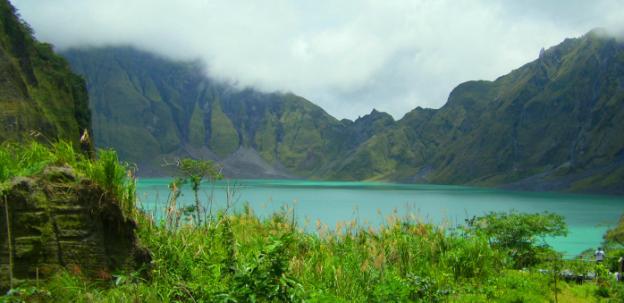
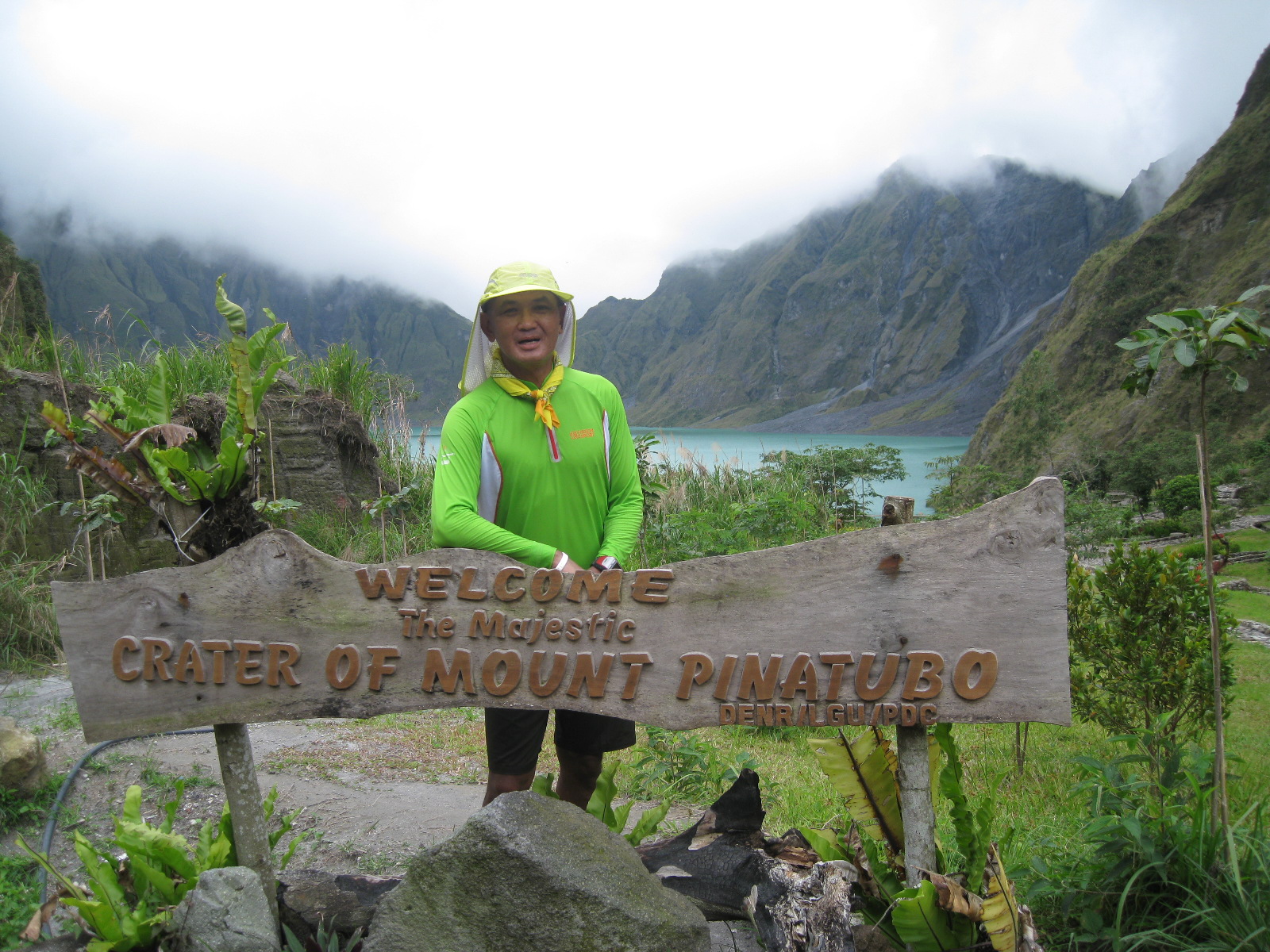
Finally we reach a summit and the walls of the lahar open to the tremendous open maw of the crater, steep, jagged and green all around and a great lake fills the bowl with turquoise water – a mile across. Transfixed by the vista, July and I stand in awe – then we quickly descend to the edge of lake and start removing sweat-drenched shoes, shirts, water bags and swim in the warm copper-rich lake. Some of the other runners start showing up and doing the same. We rinse rocks out our shoes.
Rejuvenated and cleansed, we begin the descent, meeting our support crew at the summit. They had come the long way around in Jeeps for re-supply and photos. We split up again as the lahar again becomes mostly water and the runners pick up the pace on the descent. At 42K the sun comes out and we meet our support convoy again – everyone needs water, shade and fuel for the final 13K. We quit praying for sun and start praying for rain. A flood of mixed emotions wells up in me. I’m thoroughly fatigued, constantly measuring the remaining distance and yet elated and energized and wishing it would never end.
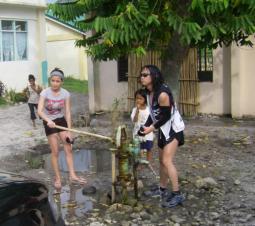
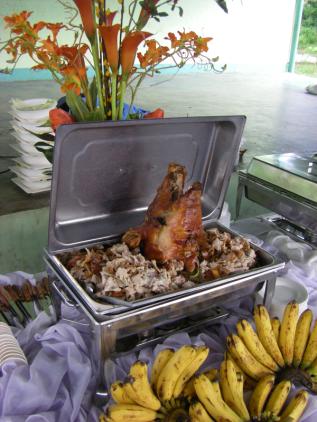
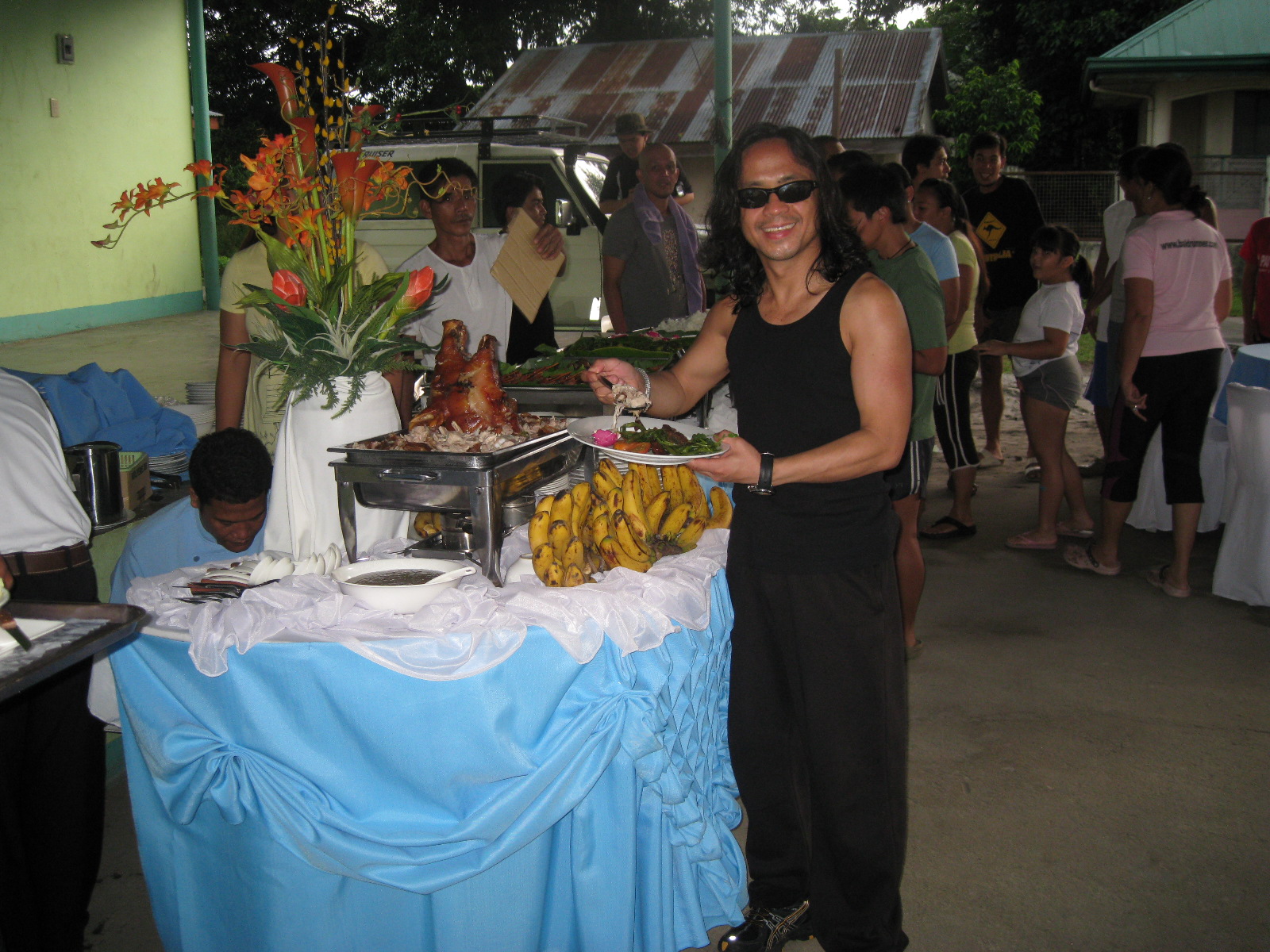
At the finish we’re treated to a cold, hand-pumped shower (after which I smell slightly like sulphur – an improvement!) and a regal buffet – in honor of July’s August 1, 40th Birthday. The Philipino Barbecue spread traverses the stage and is crowned by a bouquet of flowers, bananas and Roast Pork replete with the pig’s head, hearty beef skewers, school fish, spinach, lovely rice, halved tomatoes with salted eggs and shrimp paste. Also a special beef stew with rich broth and Oso Buco-style chunks of meat and marrow!
I’m honored to be seated between July and the General and by watching them I learn the technique for eating the stew. For dessert the General brings us each a tree-ripe banana which we peel and eat with a fork.
Getting late, it rains and people start saying goodbye. I grab my gear and again am treated to a seat of honor, riding shotgun in Jonel’s Montero with 4 squished into the back seat. I’m dropped off again in Manila at the foyer of another stunning beautiful and welcoming Hotel.
I’m still feeling good! In fact I’m still on a runner’s high!
Also wondering how to appropriately thank all the people at this special and challenging event.
During the Awarding Ceremony of the 2010 BDM 102 last March of this year, July Oconer, 4th placer in the 2010 BDM 102 and a consistent participant & sponsor of the said race, requested me if I can organize a Trail Run to Mt Pinatubo. Jonel aka Bugo-bugo also approached me if I can conduct a race from the Barangay Hall of Sta. Juliana, Capas, Tarlac to the Crater of Mt Pinatubo and back to the starting area. I told July and Jonel that the preparations and logistics will have to be well-planned and coordinated. Due to the National & Local Elections last May and the impending change of leadership in the Armed Forces of the Philippines, it was impossible to prepare for an ultra race and implement it in a limited period available in a place where the runners could be only supported by 4 X 4 motor vehicles. In addition, an additional security arrangements with the military elements in the area must be coordinated after coordination is made with the local government of Capas, Tarlac.
Instead of having a race, Jonel and July came up with a fun run and posted the event as “Mt Pinatubo Express” at Facebook which drew a positive response from a lot of interested runners. The 2010 BDM 102 finishers and “veterans”, PAU finishers, and other runners were invited to this event which happens to be conducted on the birthday of July. Preparations and coordination were made by Jonel and updates of the event were posted at Facebook. And there was no reason for us to postpone the event, except if there is a threat of an incoming typhoon or weather disturbance.
Charlie, My Support Crew & Pacer
At 5:00 AM of August 1, 2010, a group of almost 50 runners, support crew, and guides assembled at the Barangay Hall of Sta. Juliana, Capas, Tarlac. After one hour of logistics preparation, briefing, attending to personal necessities, and a brief prayer for everybody, the fun run started at 6:00 AM.
Runners would run in groups and have initially positioned our 4 X 4 vehicles at the front, middle, and rear. These vehicles served as our mobile Aid Stations where the individual support and supplies of each runner became a general support for everybody. We had our first “pit stop” at Km #6 to refill our hydration belts and systems. We waited for the arrival of the last runner and resumed our run once we account the presence of everybody. Our next stop would be at Km #10.3 and the same “ritual” was done. The group basically re-grouped in every 5 kilometers until we reached the “baseline” at Km #20.
Km #2 of the Run On A Wet Lahar Ground
Food and water were abundant. Our support crew who were riding on those 4 X 4 motor vehicles did an excellent job of giving us food along the way and in our “pit stops”. Jonel of FrontRunner Magazine brought with him a professional photographer who took pictures of us during our runs (in action), “re-grouping”, and during our brief stay at the crater. Jonel informed us that the story and pictures of the event will be one of the main features of the magazine’s September-October issue.
Junrox Poses With The Rocks
After one kilometer of slow run from the Starting Area, we immediately crossed the widest part of the river and we started running the 2nd kilometer with wet running shoes. As soon as our shoes would shed off the water that had been absorbed by the shoes, it was time again to cross another river and this occurrence was repeated. It is possible that we crossed a river for a hundred times during this run. Aside from the lahar/sand and the river crossing, running, walking and jumping on small/big/ boulders of rocks would be our next task before finally reaching the crater of Mt Pinatubo.
Junrox, BR & The Rocks
Jonel, Nickko, and I were the only “veterans” on this trek to Mt Pinatubo as we joined our first run and trek with the Pinoy Ultra Runners last November 2008. Although the guides walked and ran with us, we were confident that nobody will get lost along the way. Nickko, being the slowest runner among us, became our official “sweeper” and ably supported by one of our 4 X 4 vehicles. After almost two years since we first visited Mt Pinatubo, the landscape had tremendously changed where there are more rocks and big boulders along the river and inclined path towards the crater. We were surprised that the 7-km walk from the “baseline” up to the crater are now full with more rocks and that you need to have more time to select your footing on top of these rocks.
Jerome's River Crossing In Action
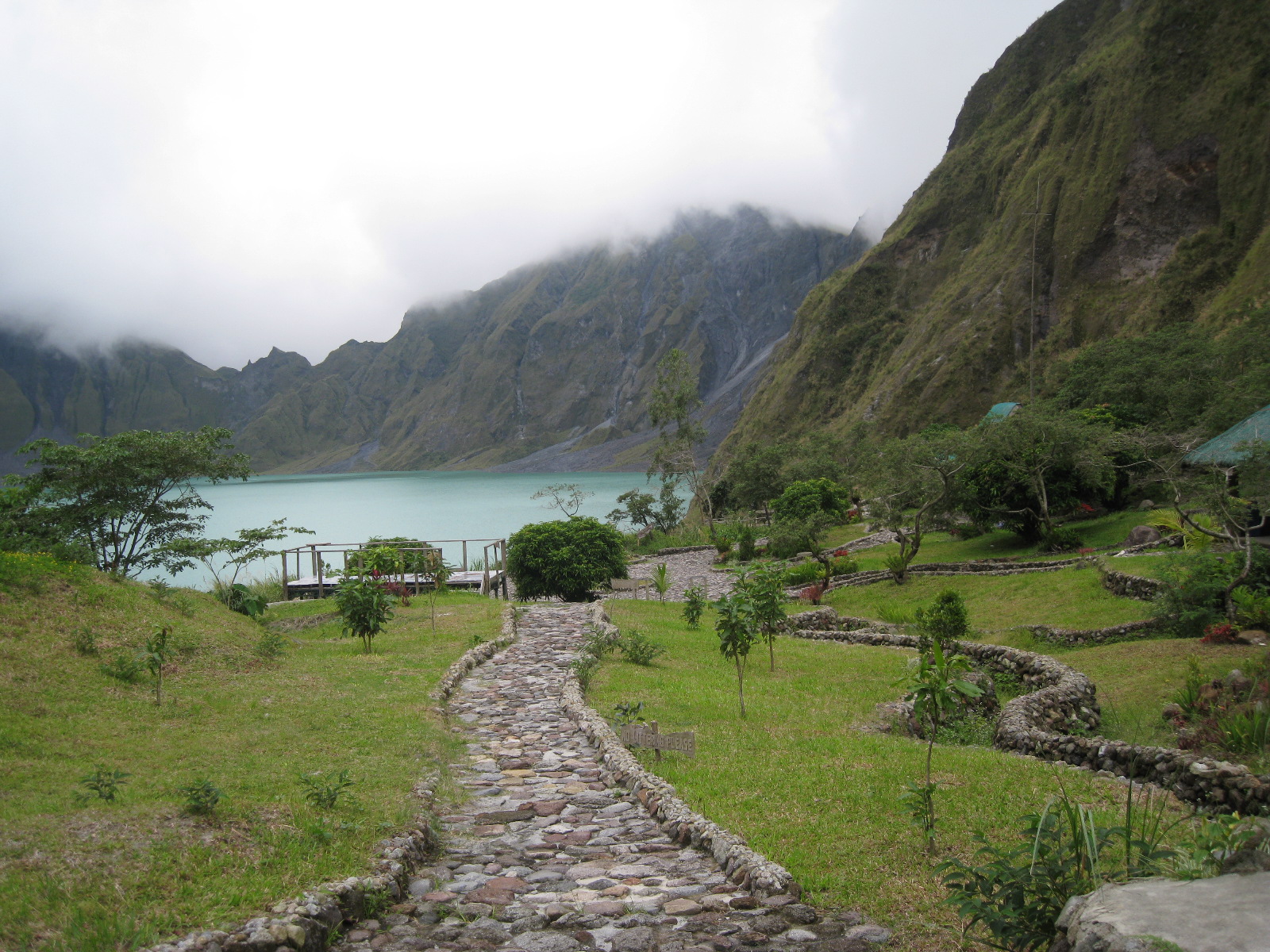
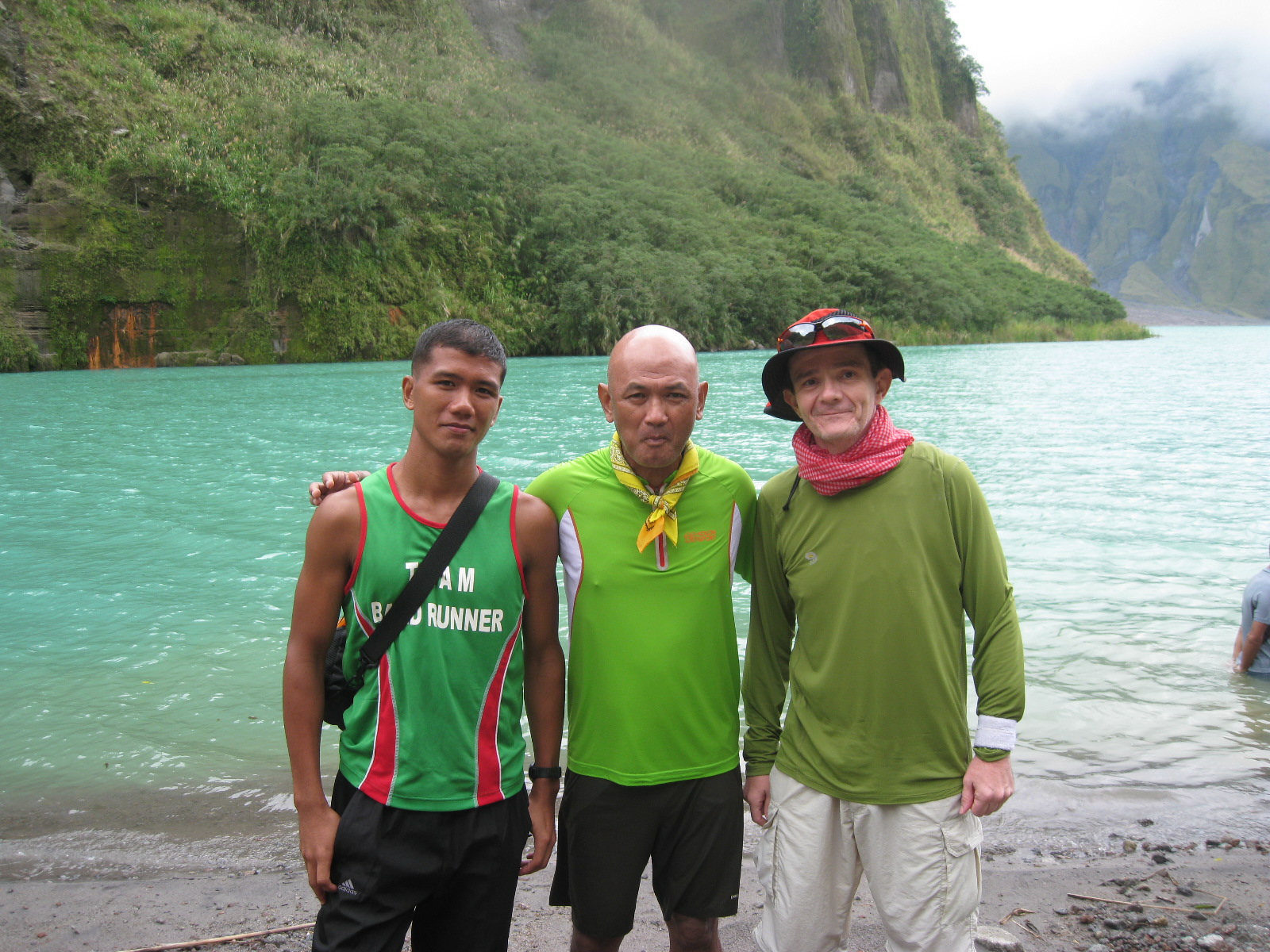
The whole group of runners & support crew reached the crater of Mt Pinatubo at 11:30 AM. We stayed at the crater for a limited period of one hour only. It was enough time for almost everybody to swim or soak their tired bodies in the sulphuric water of the Mt Pinatubo Lake. It was also a time to wash our socks and running shoes from the lahar that entered into them. I was surprised there is a lot of improvement done on the park overlooking the lake. The place is better for the tourists to see and a nice background for photo-ops. The stairs or pathwalk that goes to the lake had been made wider and more-forgiving for older ones, like me! In November 2008 trek, I counted the number of steps to be 125 from the top of the park towards the ground of the lake. Now, they made it into 181 steps!
Amazing Scenery!Big & Small Rocks All Over The Place. Make Your Own TrailBetter & More Improved Park
The view and scenery all around the Mt Pinatubo Park was amazing. The people managing this park did a good job to improve the facilities and structures of the place. This is a park that we should be proud of. I hope this park will be maintained and made a good example of eco-tourism in the local government level.
Aside from cleaning our socks and running shoes from lahar/sand and small rocks, we had a simple picnic where we shared each other food brought by each runner. Our packs became lighter as we started to prepare back to where we started. Before we left the Park, we had some group pictures taken by our official photographer!
At exactly 12:30 PM, we started leaving the Park/Crater of Mt Pinatubo. It was a slow descent for the first 2 kilometers as the trail is full of big rocks where it passes along the stream of water coming from the crater. Once we hit the wider portion of the trail, everybody started to run in groups again.
Perfect BackgroundWith Jerome & Charlie At The Crater Lake
The run from the crater to the starting area is slightly downhill. My GF 305 recorded a data of 6,600+ feet accumulated ascent/descent and this is the reason why it took us more time to go to the crater than our time when running towards the finish line. The only thing or factor that slowed us in our way back was the heat of the sun during the early afternoon. It was good that we still had barely enough water supply for everybody. There was no danger of any casualty for heatstroke among the runners as I know that the runners had been “veterans” of BDM and PAU races. Plus the fact that we are surrounded with a flowing river where anybody could easily soak his body just in case a runner needs to cool off his body. Actually, I usually dip my running cap on the flowing water and have it wet and wear it on my head during the run towards the Finish area.
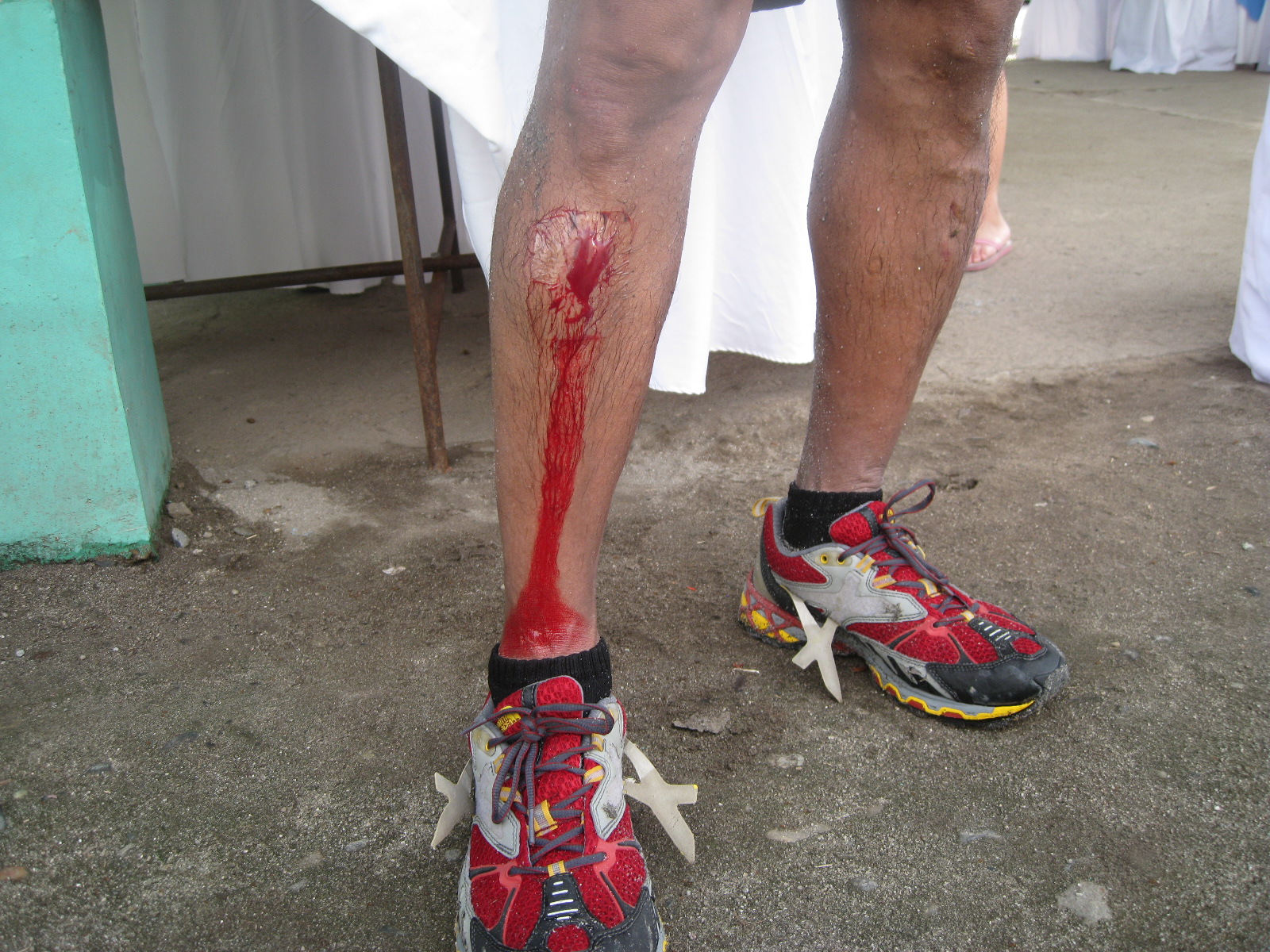
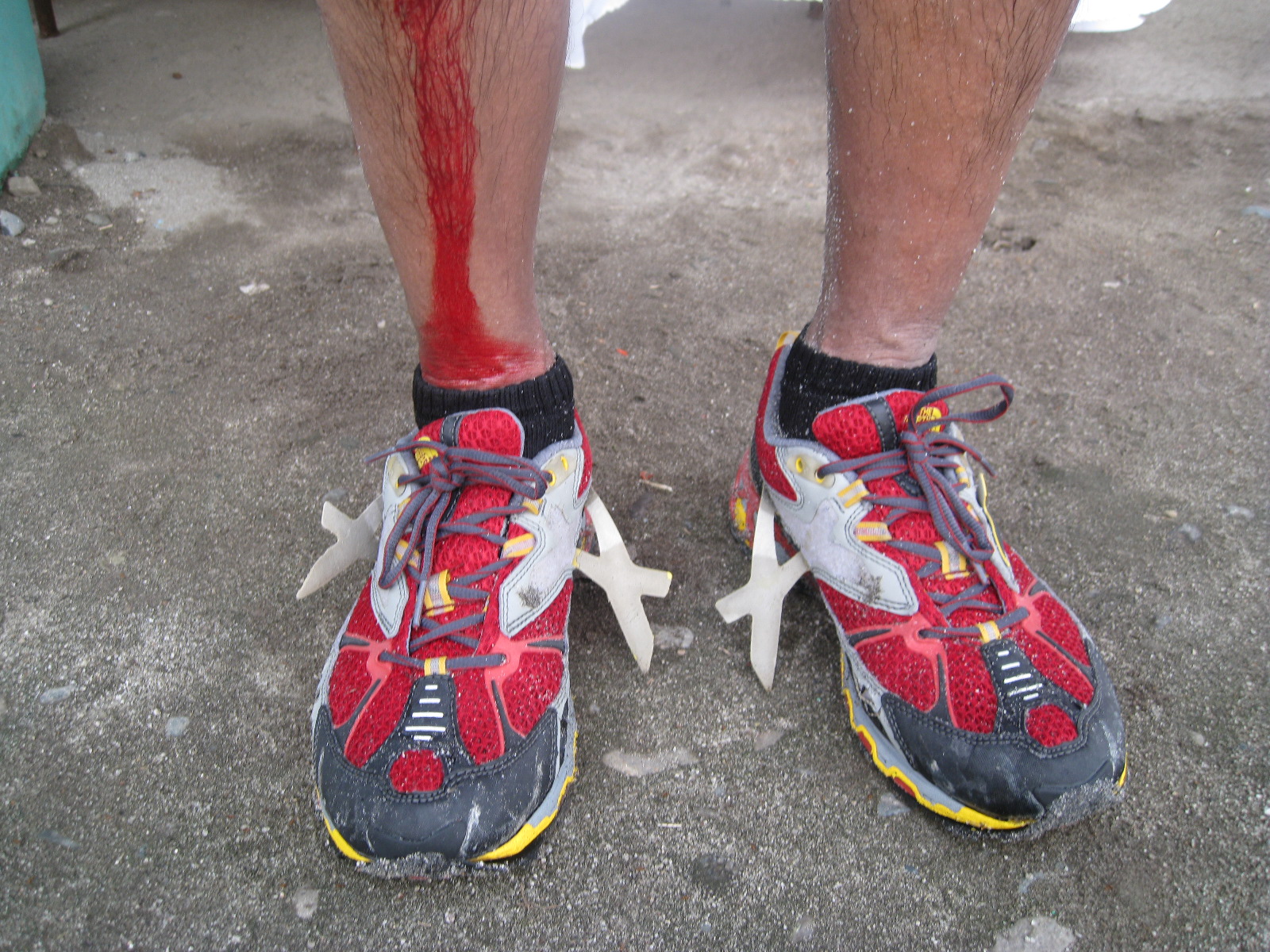
And then an accident happened. Along Km #35, I tripped my right foot with rocks along the lahar ground while running at a faster pace and I fell forward on my belly. The fall is really a “big time” experience for me, my first in my running adventures! My right shin bone hit a rock as big as my palm and my skin was cut! I immediately inspected my cut by rubbing my hand on my shin in order to determine if I have a bone fracture. None! My cut was simply bleeding with blood. No cuts on my arms but only bruises. My long-sleeved shirt protected my arms from any wounds. And nothing happened to my face. I walked a few meters towards a stream with clean water flowing on it and cleaned my wound from the blood and sand. I was thinking that I should have worn my compression socks or calf support socks to protect my legs from being wounded by the rocks. I learned a lesson on this event—“bushwacking” is also applicable to rocks and there is a need to wear shin or calf support sock as a protection from wounds due to accidents or falls.
Jerome Cartieller, a BDM 102 veteran and Rey Jimenez, my running partner along Kennon Road during my Adventure Run to Baguio City, came to me to assist and assess my wound. Jerome was an “angel” sent from heaven! He has a complete gear in his pack to include a First Aid Kit! Jerome & Rey cleaned my wound with Betadine and simply covered the wound with a gauze and transparent medical tape. After cleaning and treating the wound, my mind was thinking of getting a ride back to the finish area while I was walking and tried to observe if there was an unbearable pain while moving my legs. I decided to jog a little, felt that there is no pain and resumed my running.
Wounded In Action
I never quit in any runs or races even if I am injured. I never had any case of DNF in my running career and this particular running event will not be recorded as a DNF for me. So, I ran and brisk walked all the way to the Finish Area. I won over my negative thoughts, the heat of the afternoon sun, and my wound which was bleeding with more blood as I run. It never came into my mind that I am casualty of “Wounded In Action” (WIA) in my running career. But it is better than to be a recipient of the Purple Heart Medal (Wounded In Action Medal) in military operations against the enemies of the state/country. WIA in a military operation is far worse as you’ll never know if your body is still complete or not; or if you can still walk or run after your recovery. What an irony in life!
I reached the Finish Area with an elapsed time of 10:30+ hours to include the one-hour stay at the crater, those numerous “pit stops” & photo-ops along the route, and the time to treat my wound. After two weeks of finishing the Headlands 50-Mile Run, my body was prepared again for this run. I did not feel any soreness and pain on my legs due to the trail running except for the slight pain on my wound and bruises. I think my wound is “telling” me to rest and recover for the whole week this time!
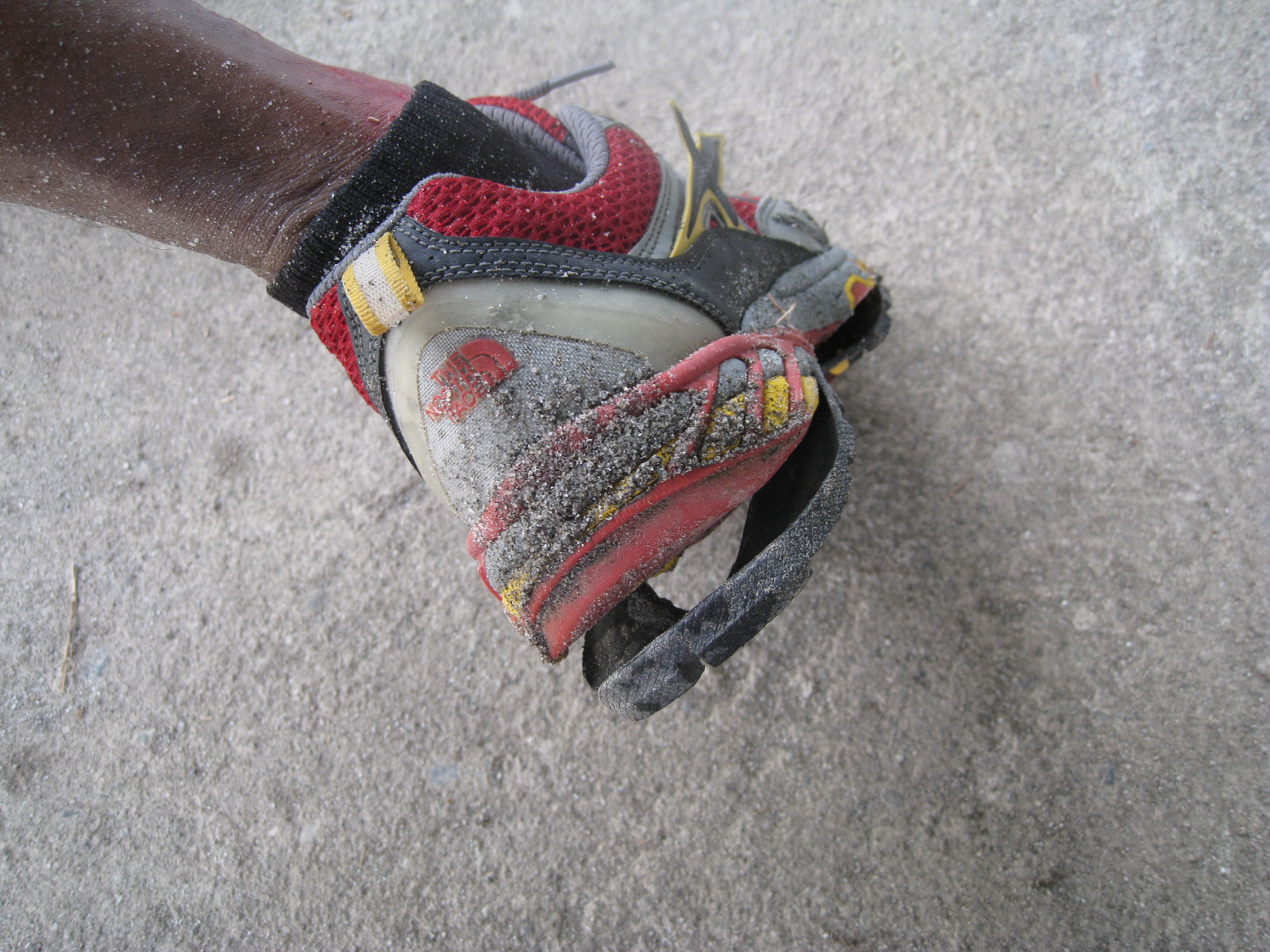
The North Face Rucky Chucky Trail Shoes Sucks!!!
Before taking off my running shoes, I inspected The North Face Rucky Chucky Trail Shoes and it is wrecked! The logos on each of the shoe just fell down while I was still at the Km #18 and the soles began to separate from the shoe while I was walking towards the crater of Mt Pinatubo. The shoes’ model name is taken from the Rucky Chucky River of the Western States 100-Mile Endurance Run which is specifically located at Mile #78 of the trail route. The name itself symbolizes the WS 100 which is most prestigious 100-mile trail race in the United States and the shoes should carry the same prestige in terms of durability and endurance. I am not saying that the shoes was one of the reasons why I got tripped and fell on the ground during my run. But with the condition of the shoes after a 50K trail run to Mt Pinatubo, I think TNF Philippines should know about this as a feedback from their customer.
Catered "Buffet" Party After The Run With The Host, July Oconer
After waiting for the last runner to arrive, the group was treated to a catered “buffet” dinner courtesy of the host and birthday celebrant for the day, July Oconer. (Note: It is becoming a tradition to serve a “lechon” during BDM “veterans” get-together party!) In this party, we celebrated also the birthday celebrants (Wilnar Iglesia & Rhodora Cartieller) for the week. It was really a nice carbo-protein-fat recovery meal for all the runners, support crew, and guides.
During the dinner, I was able to talk and entertain Gerald who came all the way from Dalian, China and purposely joined us in this trail run. He stayed here in the country for 3 days. Gerald is a running partner of July in China and hails from New Mexico, USA. He is a competitive runner and had finished the Bataan Death March Memorial Marathon held in White Sands, New Mexico every third Sunday of March. He has already made his intentions to bring his wife, relatives and friends for them to experience the next edition of the BDM 102.
With Gerald from New Mexico, USA
Lastly, I would like to convey my sincerest thanks to July being the generous host & main celebrant of the event; to Jonel for the “snappy” preparations, coordination, and documentation (pictorial); to all the support crew who served us with our food and hydration; and to our “guides” & drivers. And most of all to the Almighty God who gave us a “perfect” weather during the run, protected us from any harm, and for giving us the strength to finish the 50K trail run.
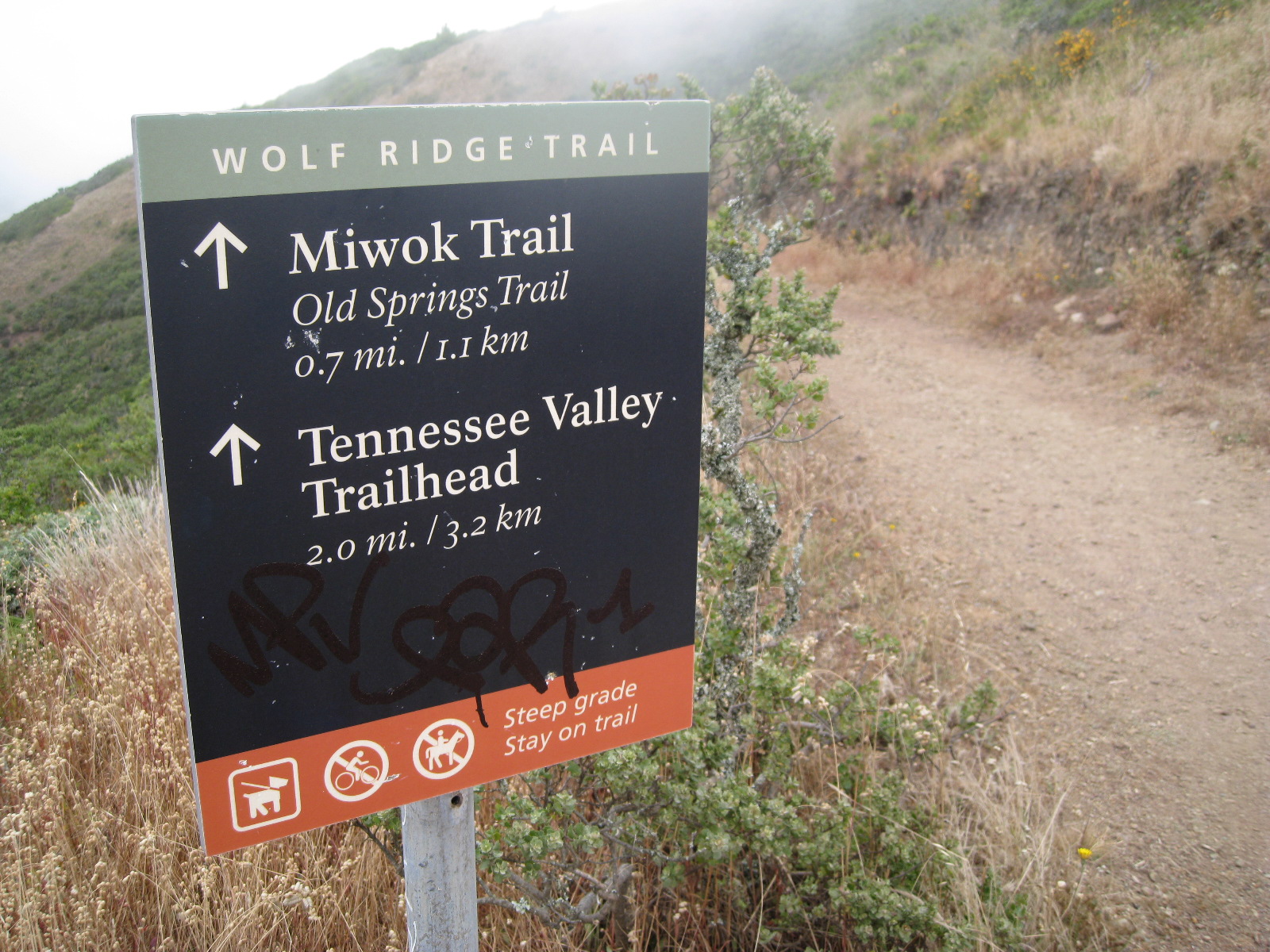
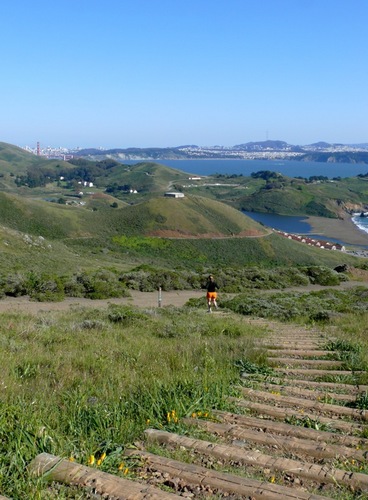
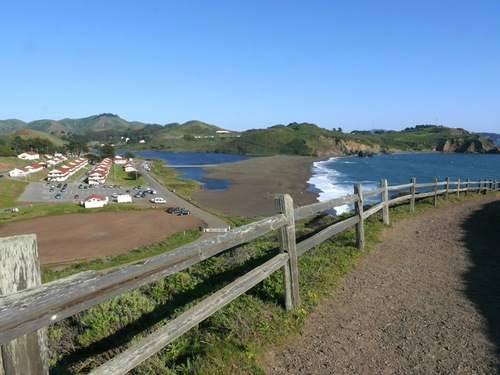
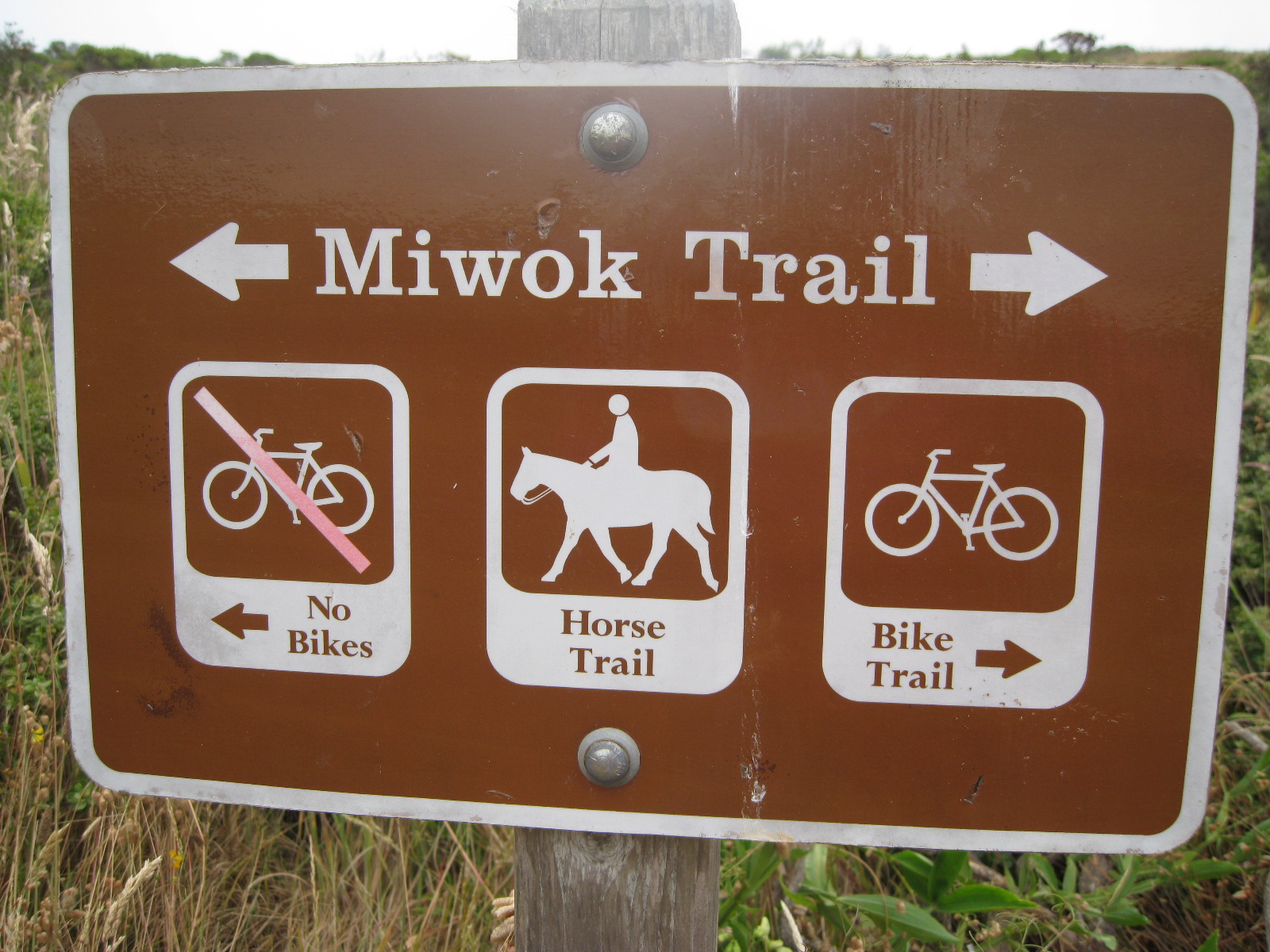
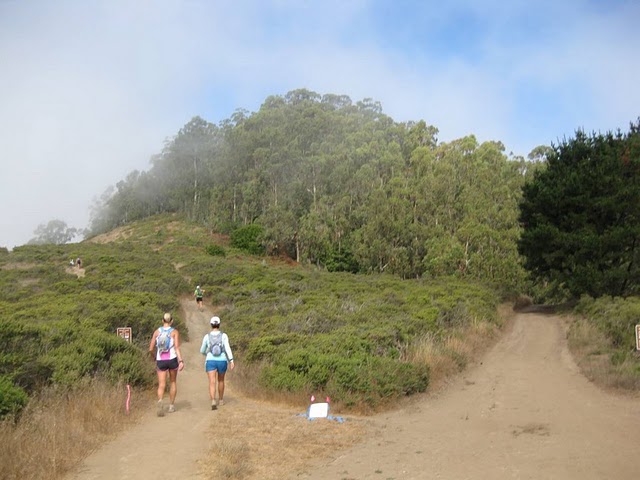
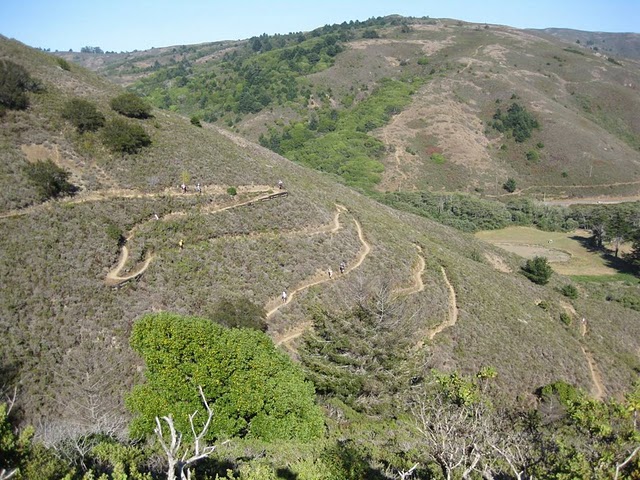
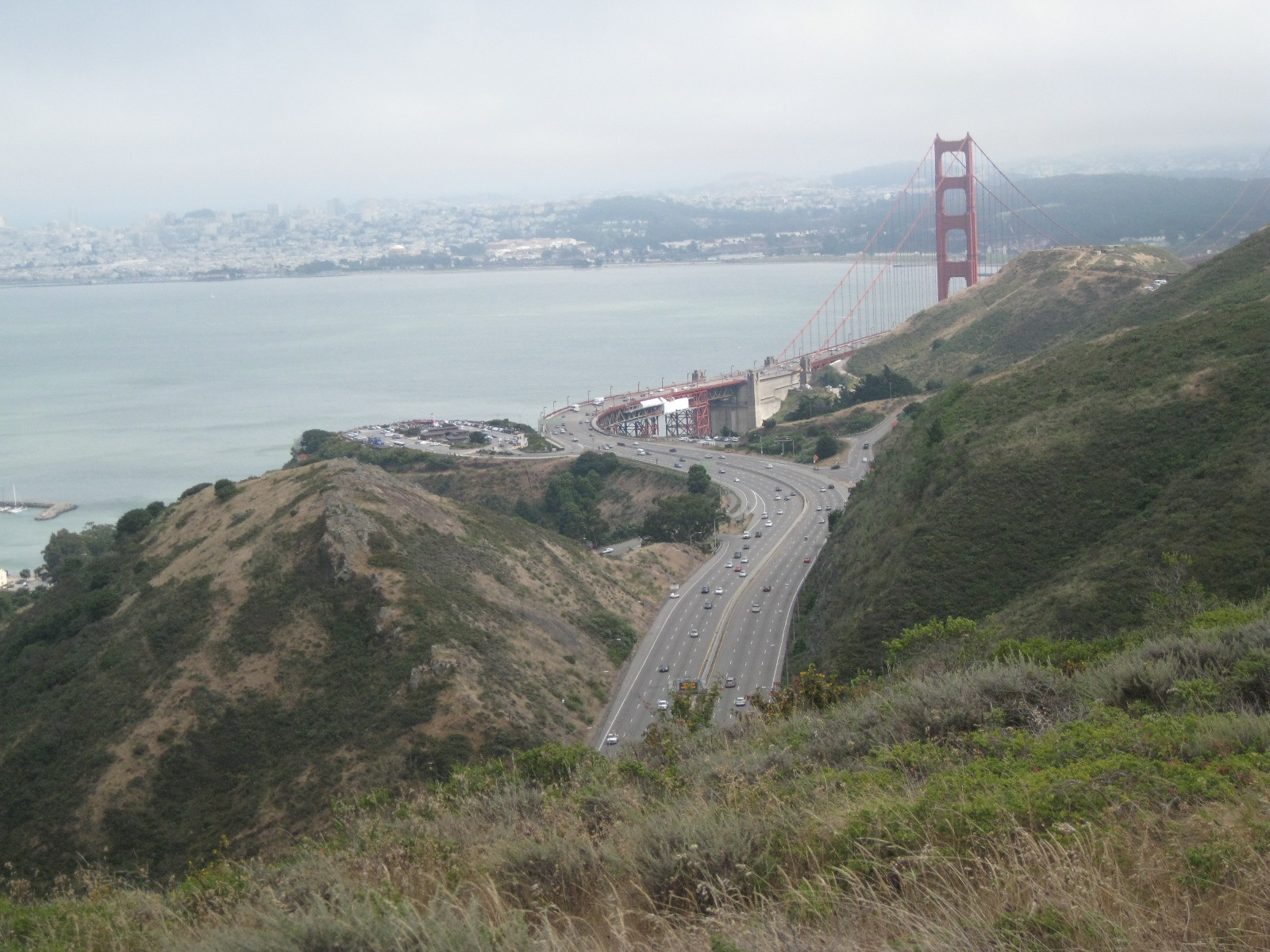
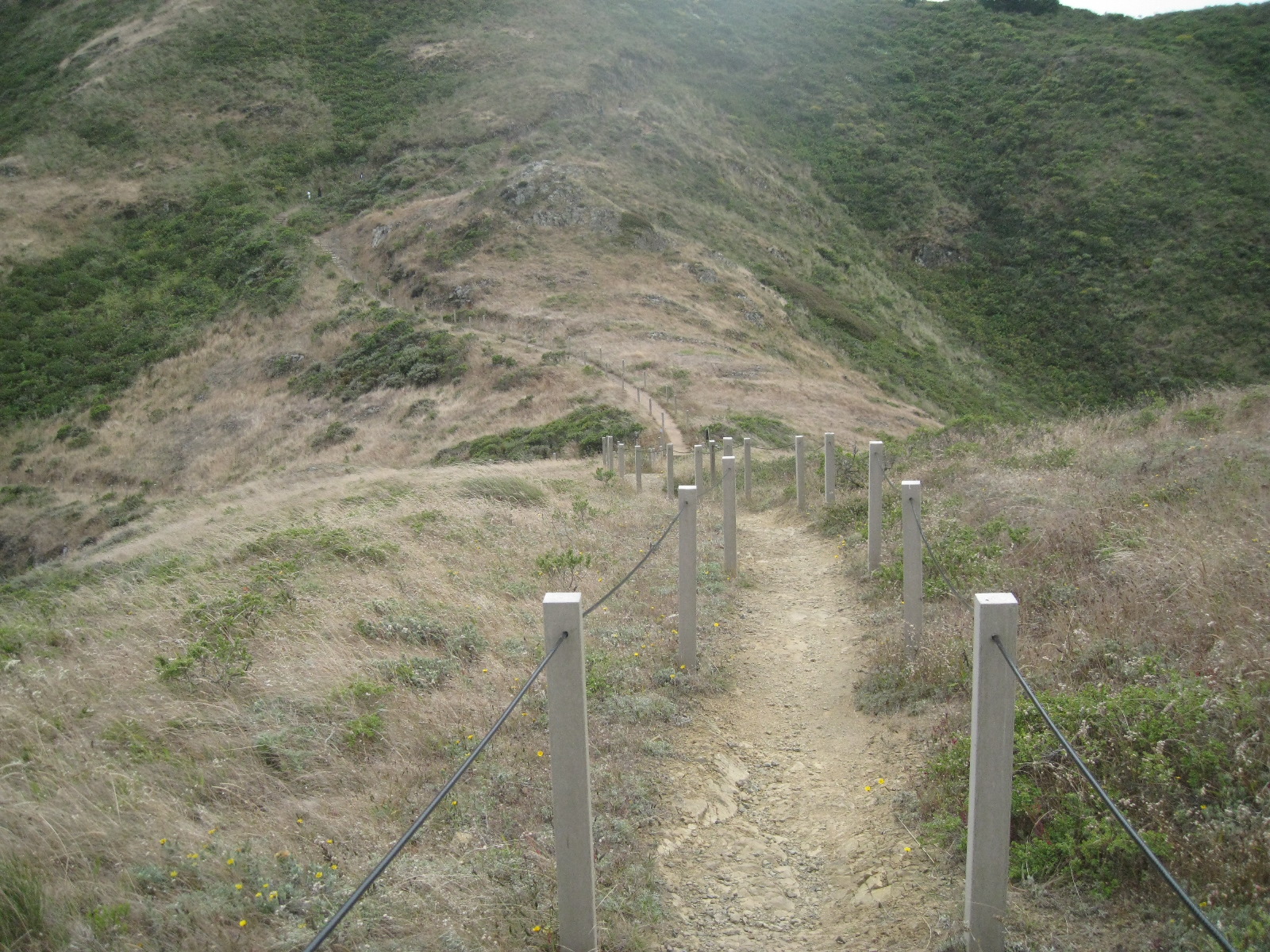
The following pictures were taken from Frank’s Photos at PCT Trail Runs Website (www.pctrailruns.com) and Ingrid Taylar’s Photos at www.sanfrancisco.about.com @ Marin Headlands Trails Website.
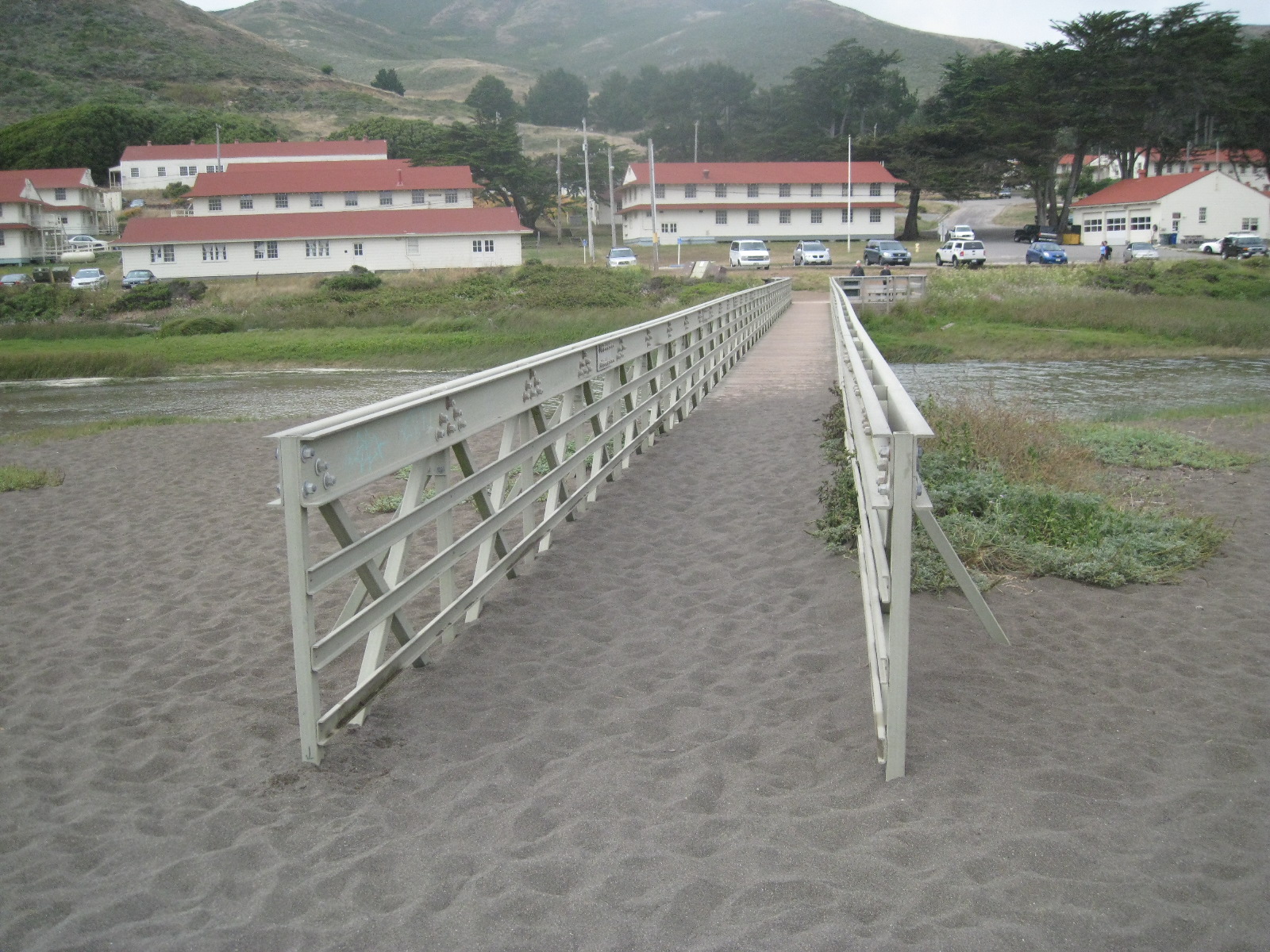
Wolf Ridge Trail(Rocky) Road Stairs Leading to Coastal TrailA View of the Start/Finish Area @ Vicinity Camp Cronkhite BarracksMiwok Trail SignageDon't Get Lost Here!Watch Your Front & Back!!!A View of the Vista Point & Golden Gate Bridge at SCA TrailCoastal Trail. Hold the Wires Or Else You Will Be Thrown By Strong Winds!"The Bridge" @ Rodeo Beach
The Miwok 100K and Headlands Hundred-Mile Runs are the most popular mountain trail ultra runs being done on these trails at the Golden Gate National Recreation Area. These are ultra trail races which are good entry-level for ultra trail runs that would qualify you for the next year’s Western States 100-Mile Endurance Run.











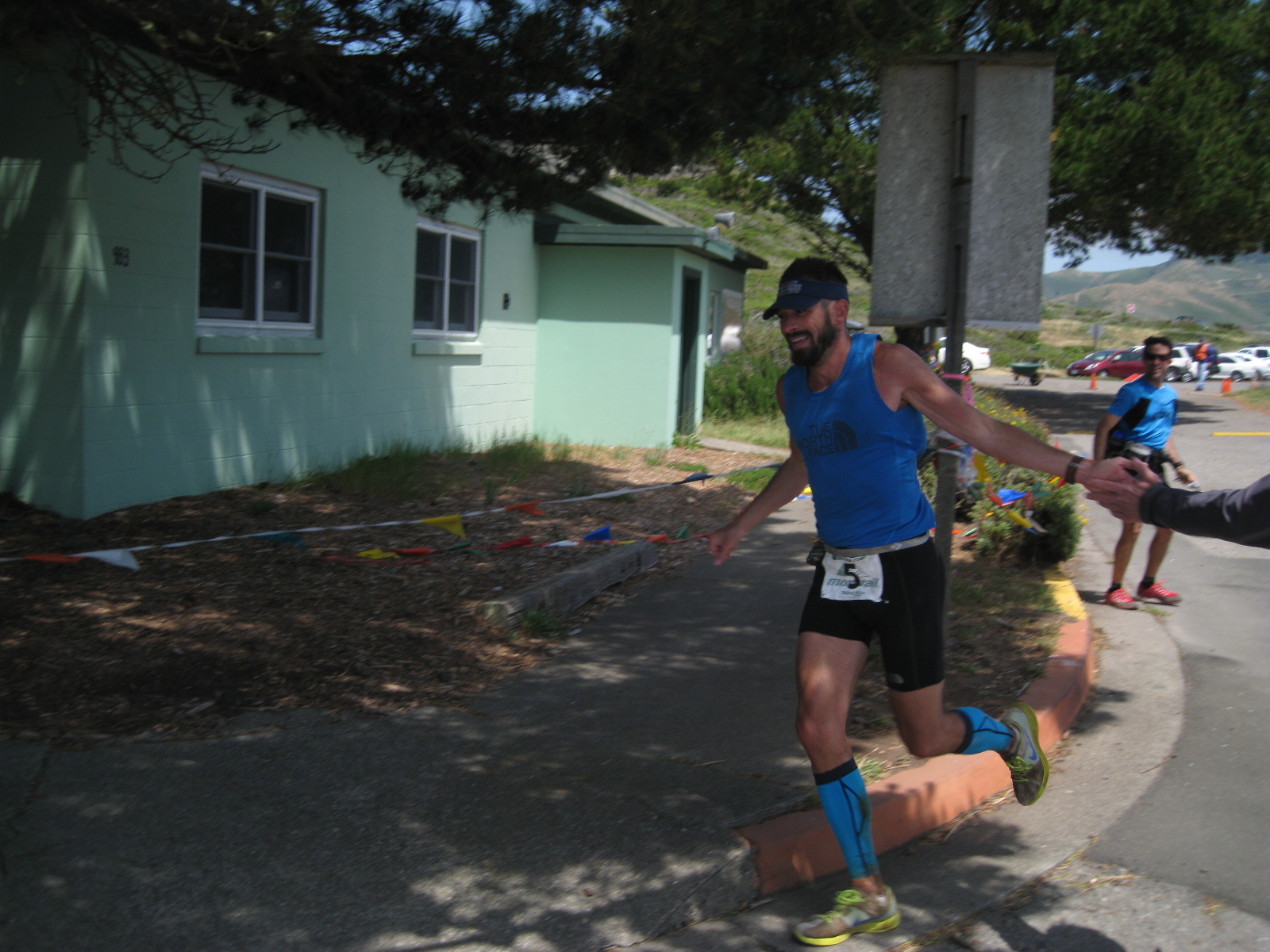
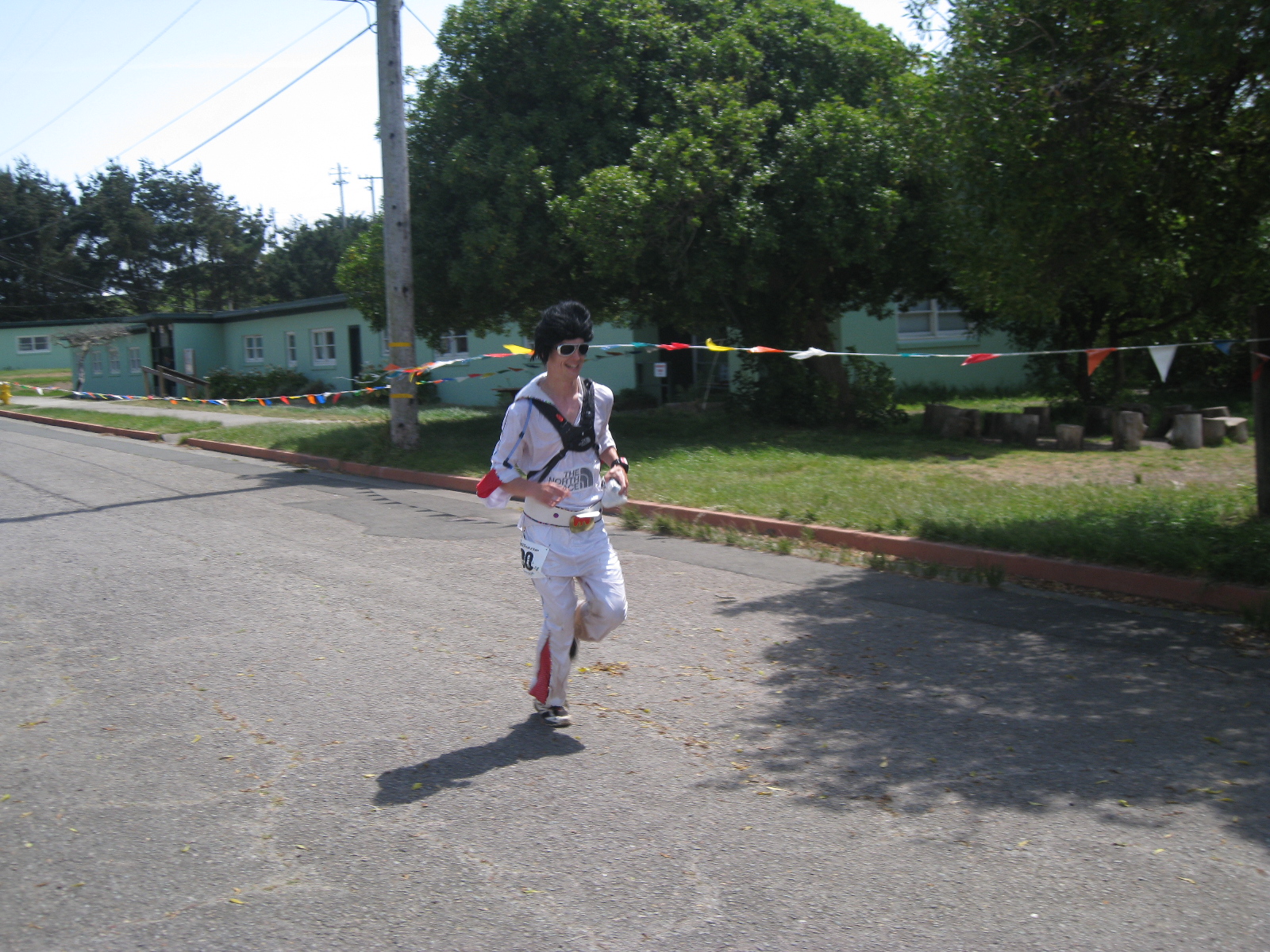


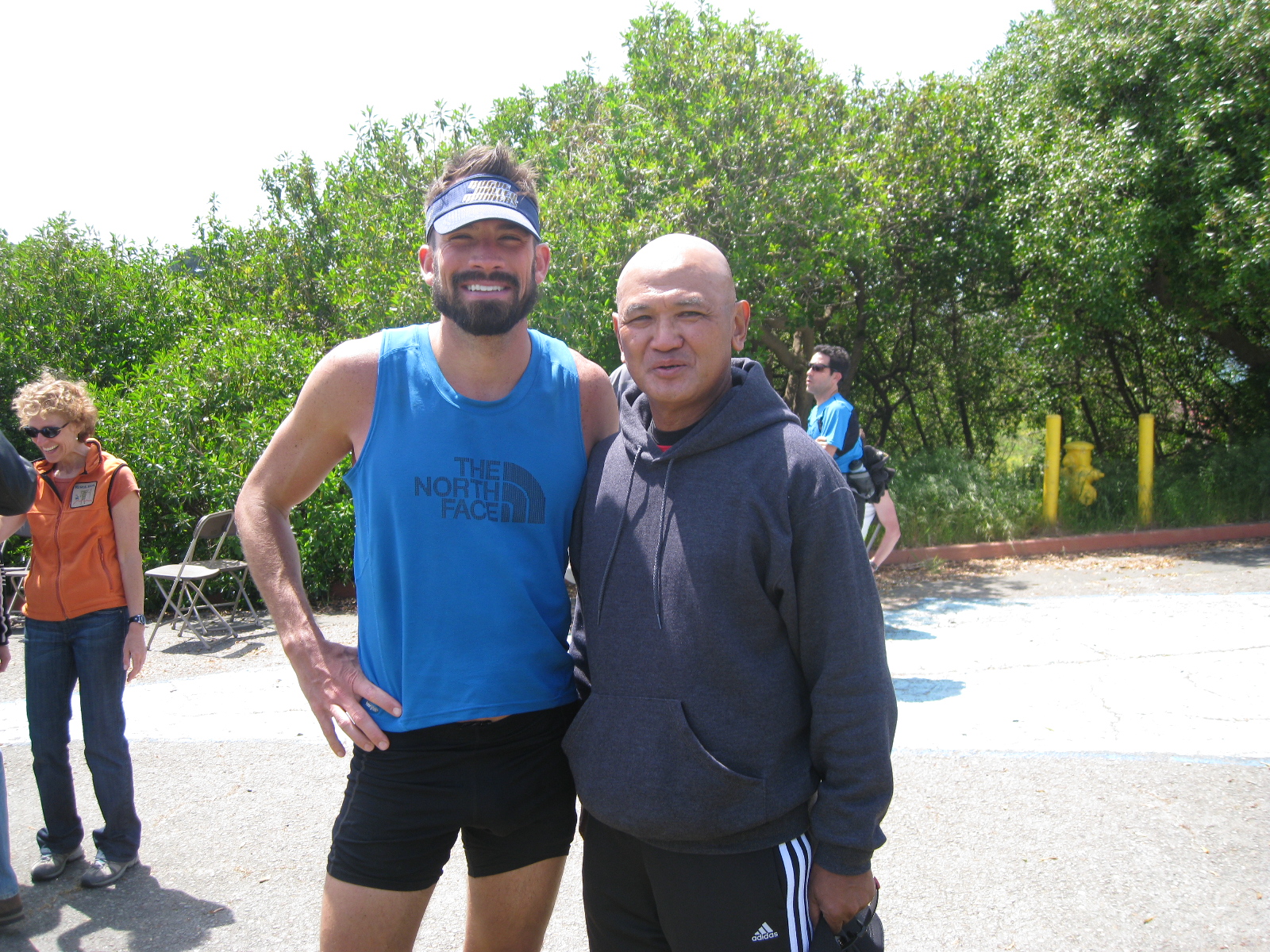
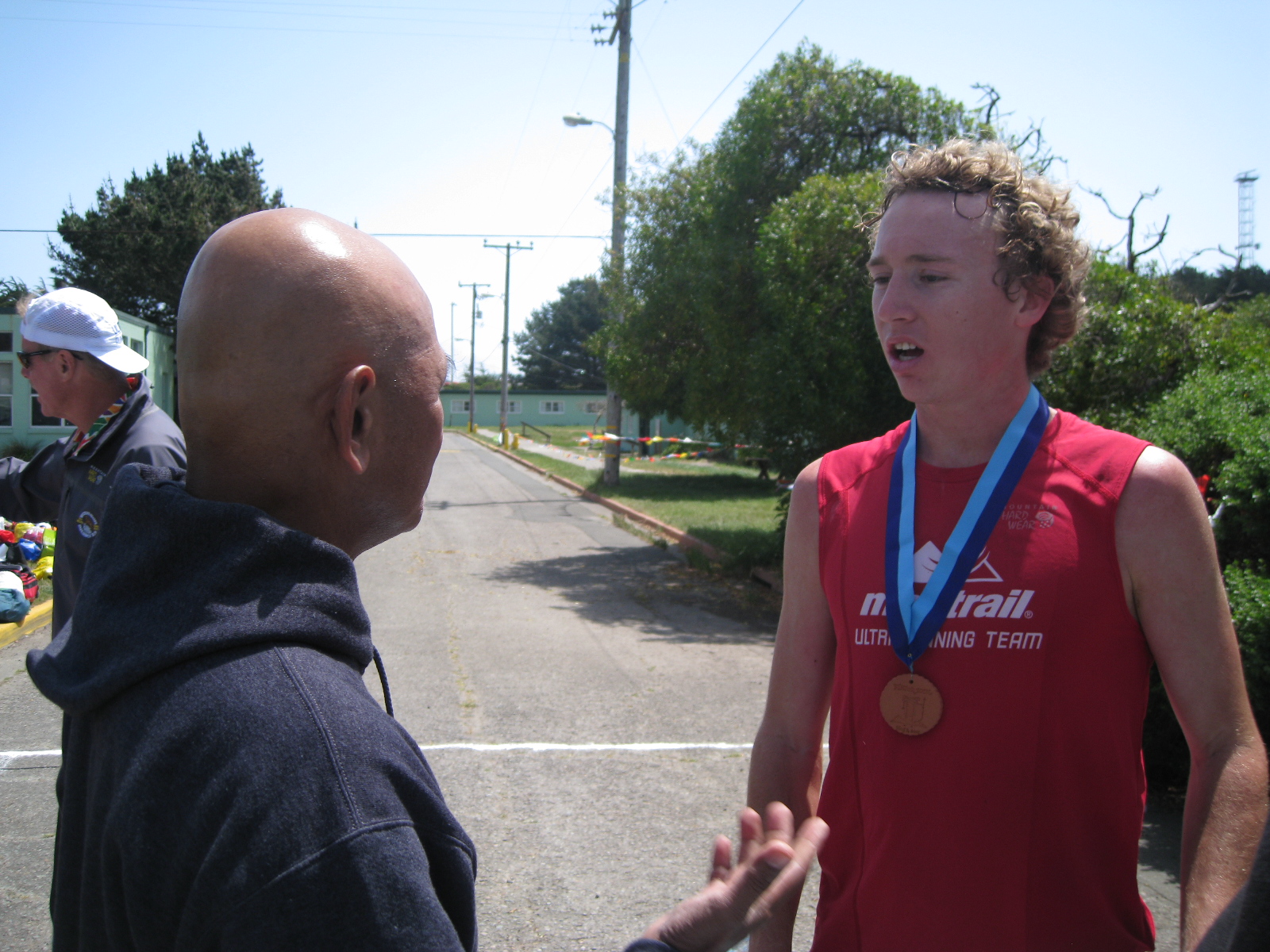


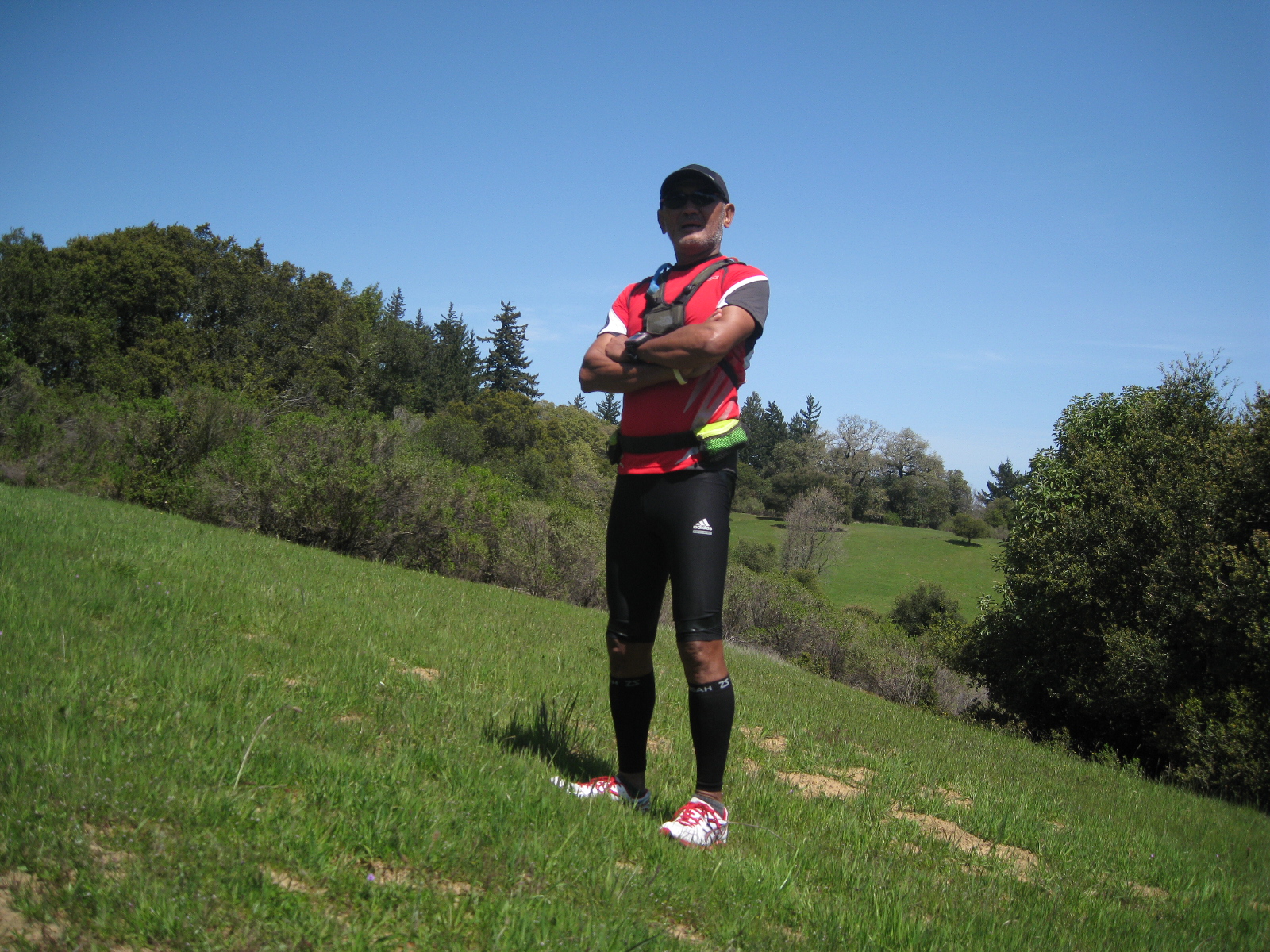
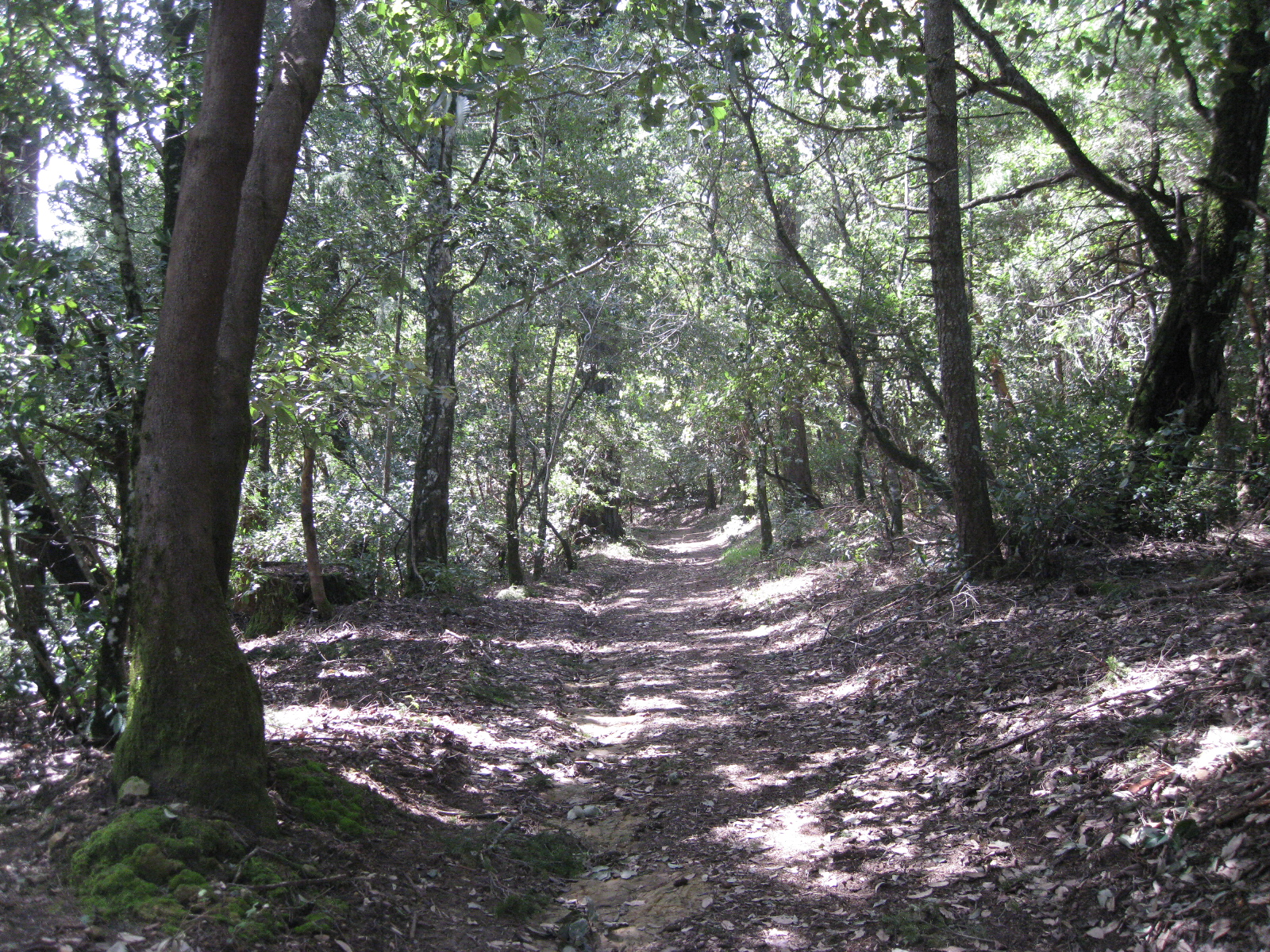
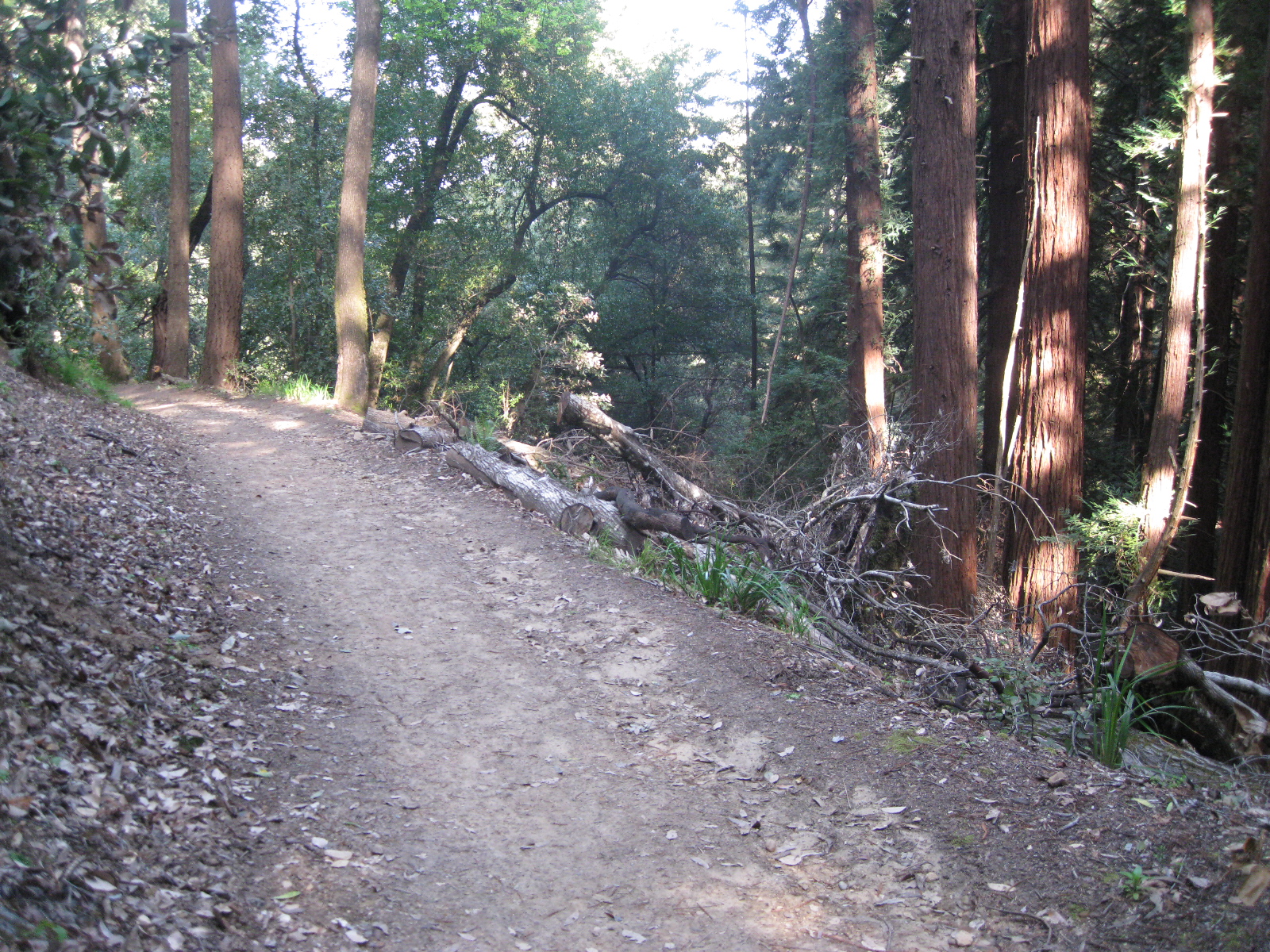
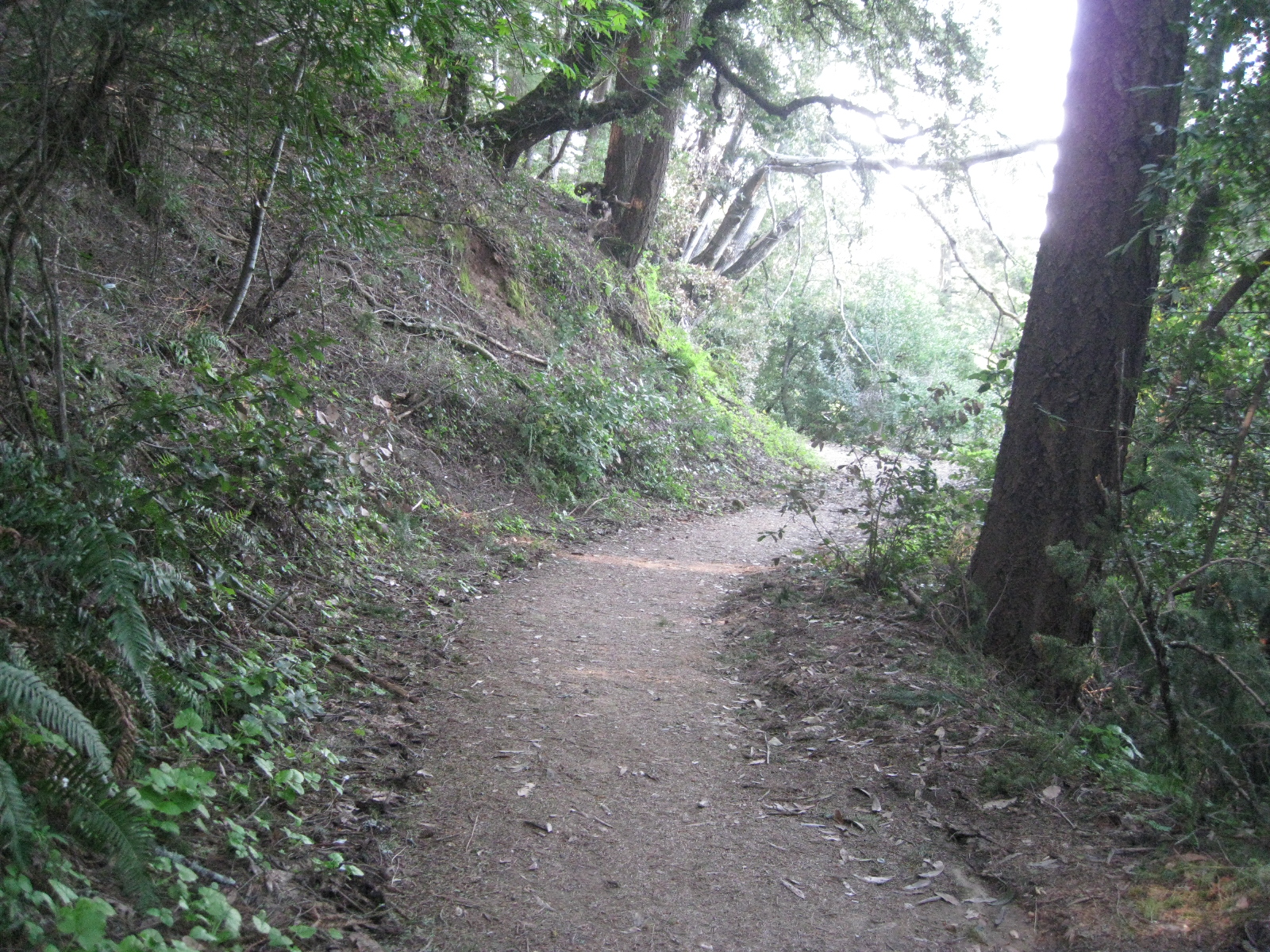
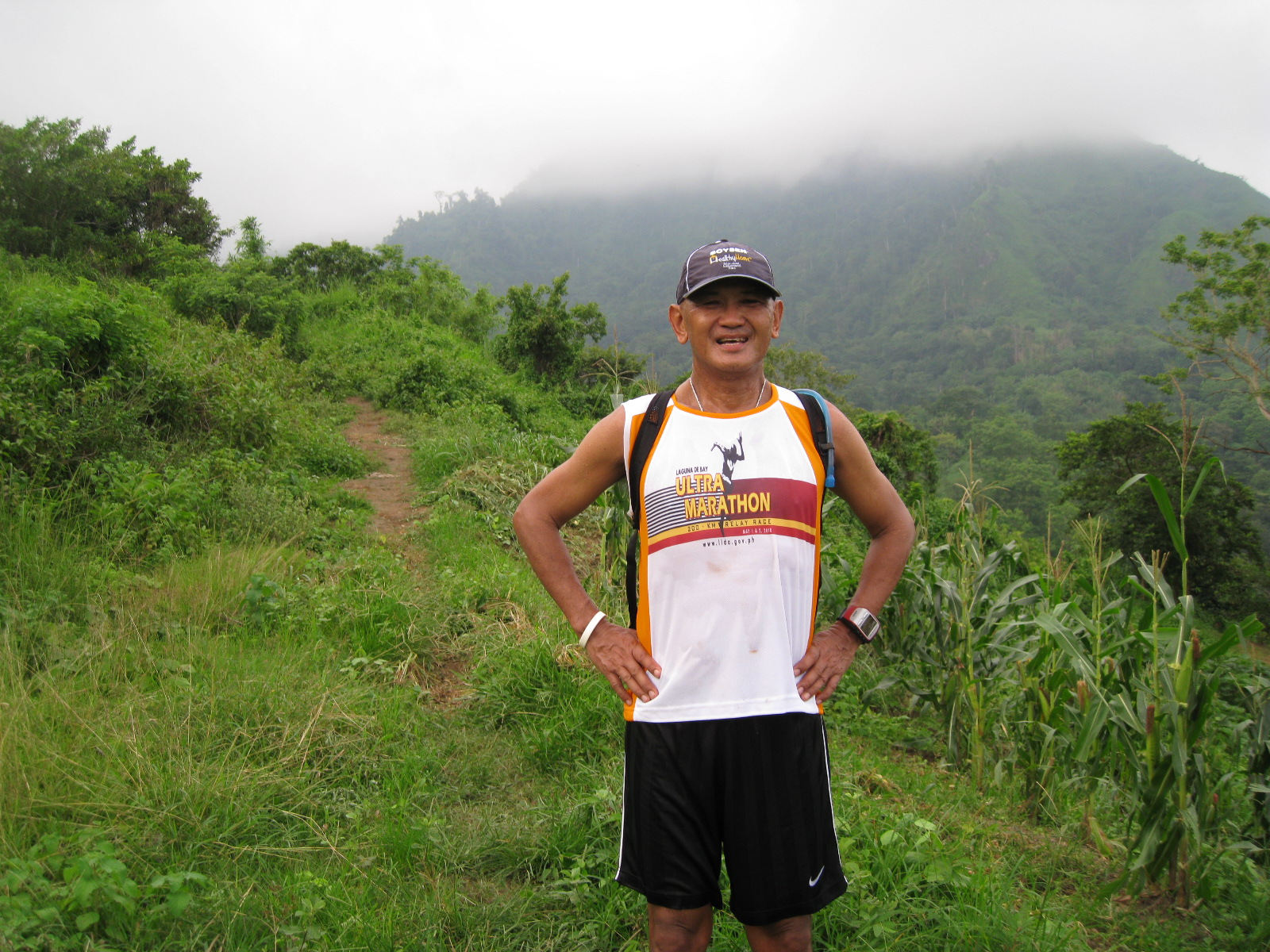
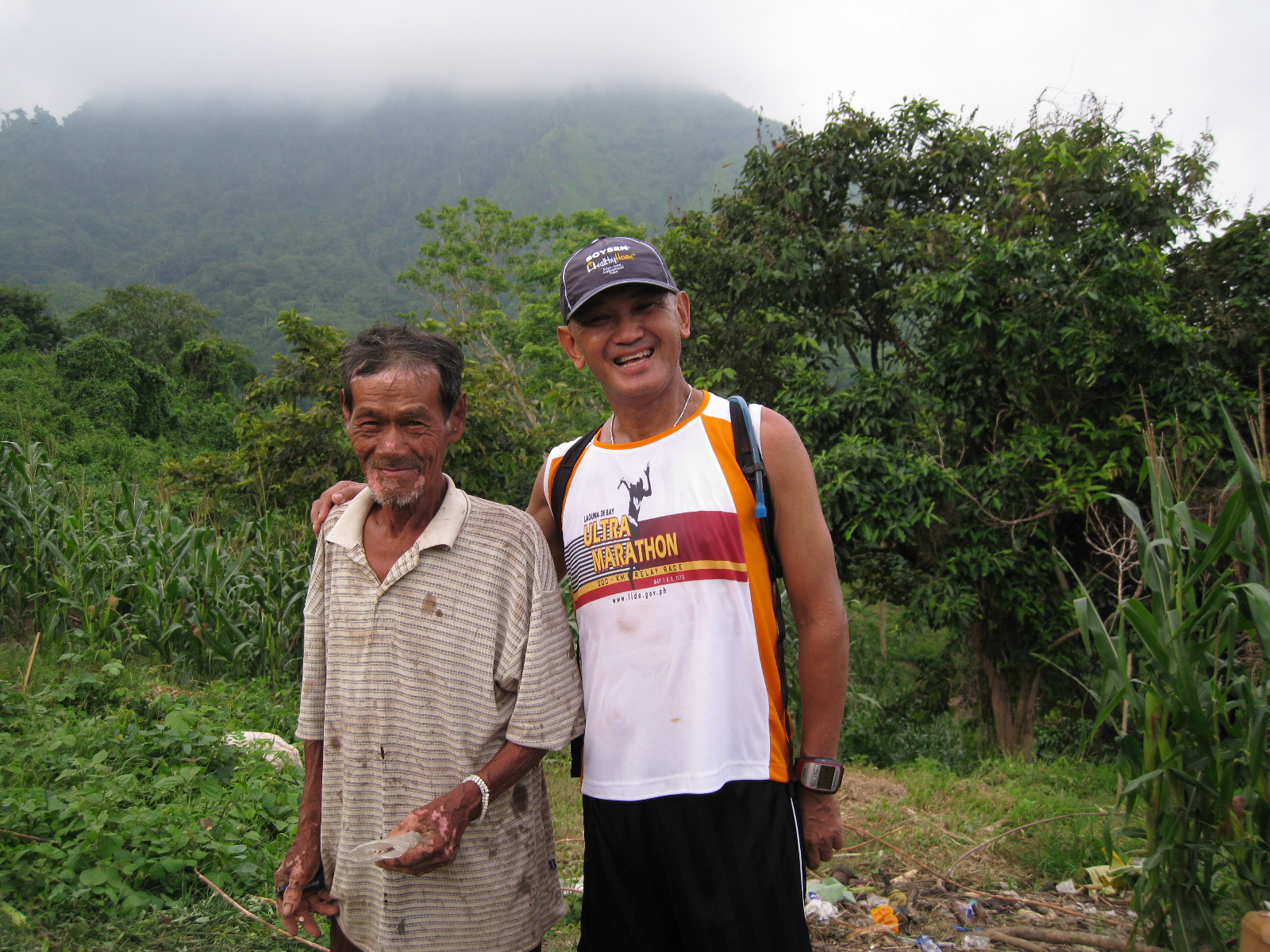




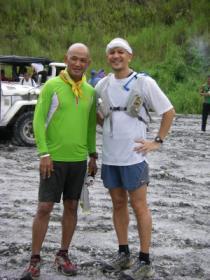

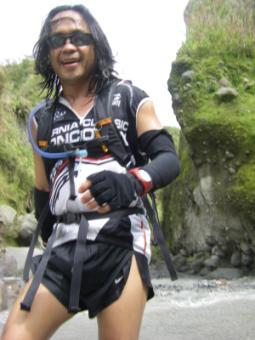



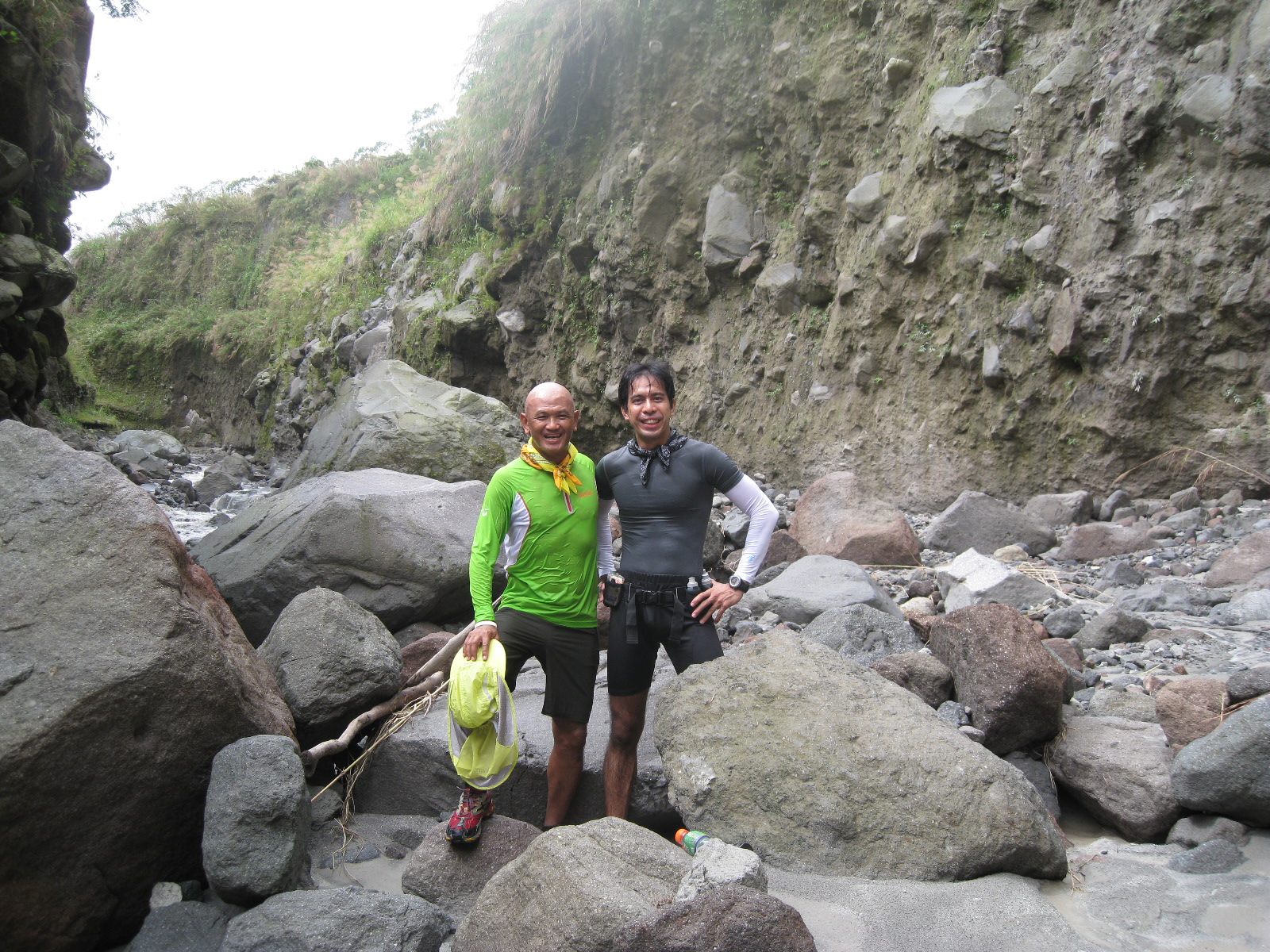
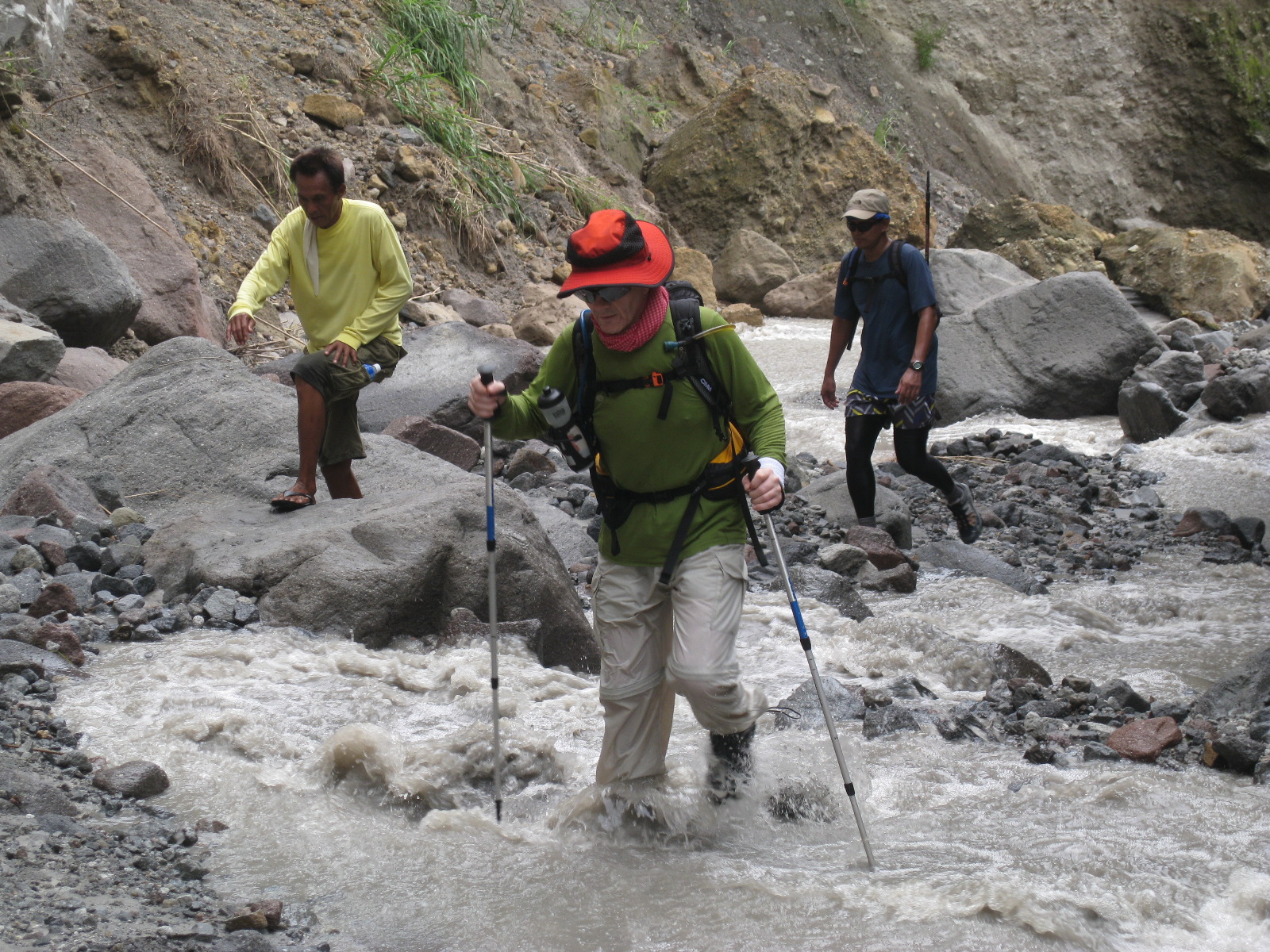
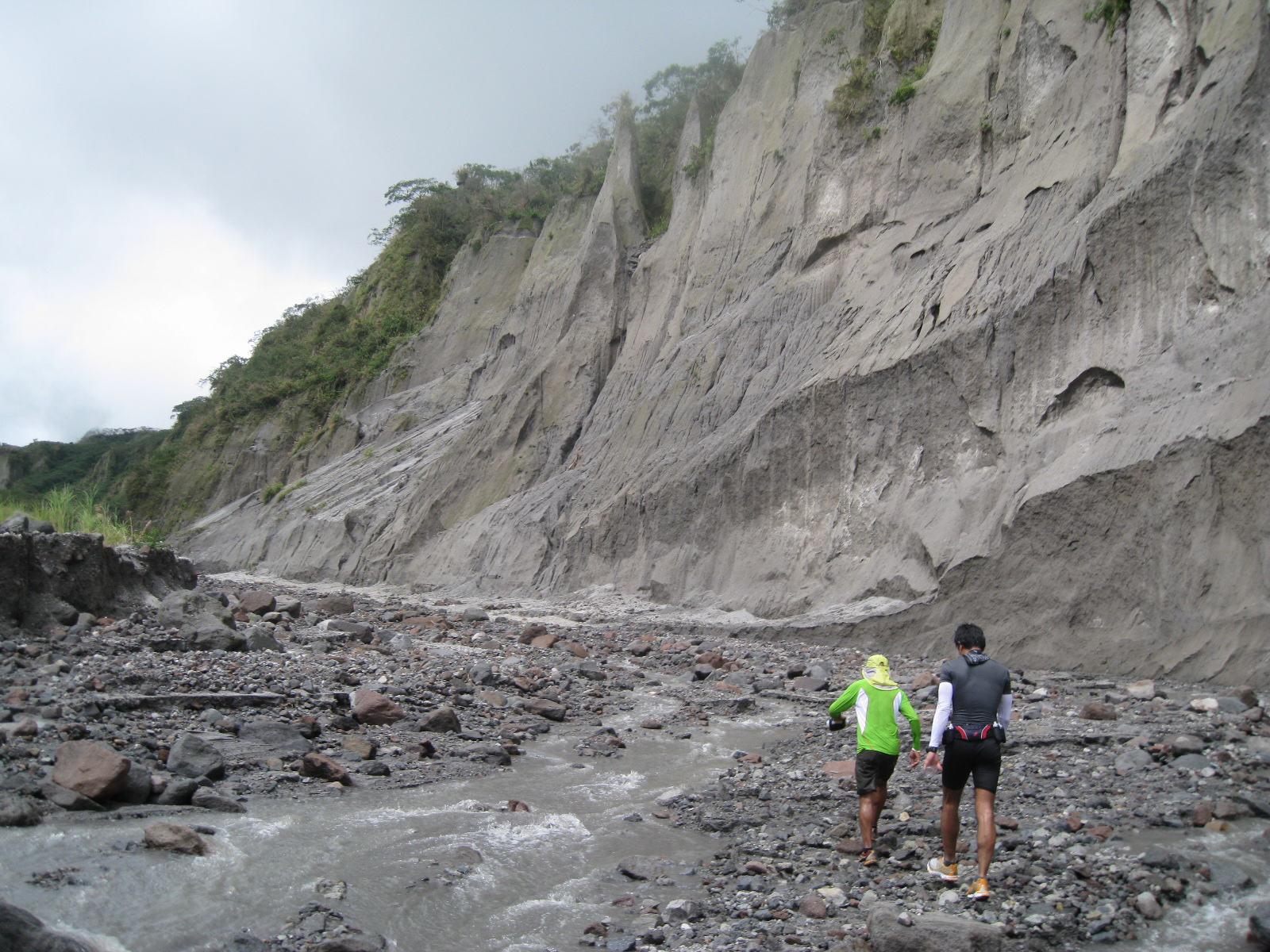
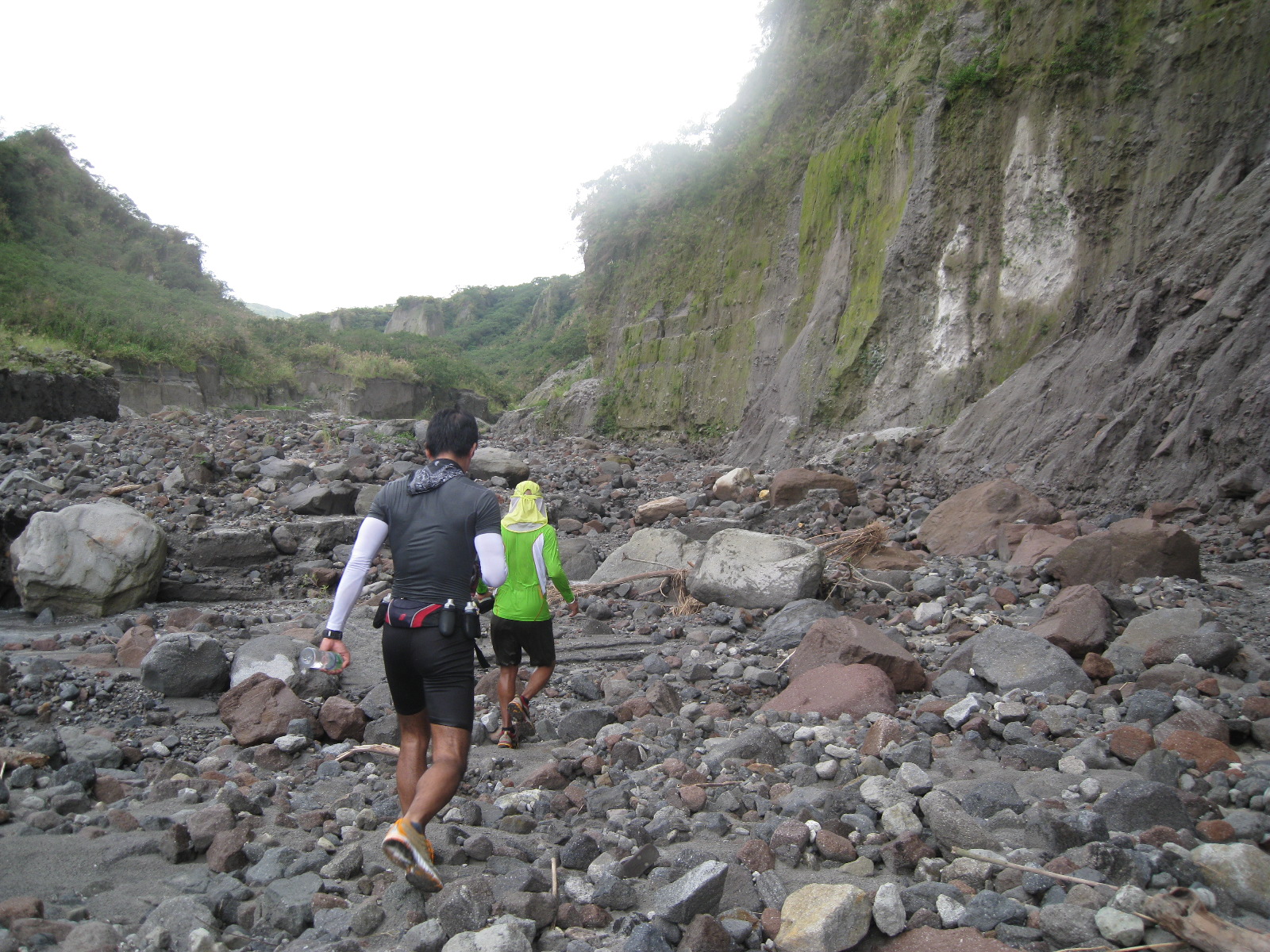
 Bald Runner
You must be logged in to post a comment.