Review: Hoka One One Bondi B


It has been awhile that I posted a shoe review for the past months. So, this new pair of shoes that hit the market early this year is making a lot of “noise” in the Internet among ultra trail runners. This is the reason why I was able to know beforehand about the existence of this “weird-looking” running shoes.

HOKA ONE ONE Bondi B

Two of the top US ultra trail runners, Dave Mackey and Karl Meltzer, had been using this kind of shoes in their runs and races as they are the primary and top endorsers of this shoes even if these shoes were invented and conceptualized by two French ultrarunners. These guys had been winning their races using these shoes. I’ve seen with my own eyes how Dave Mackey ran and glided on those shoes during this year’s MIWOK 100K Trail Run in Marin Headlands which he won easily from other top US ultra runners. Looking at Dave Mackey (with a height of more than 6 feet), the Hoka One One looks like an ordinary trail shoes and it is not noticeable as a clunky & thick soled shoes.

My observation brought an interest to have one of this pair of shoes just to find out what is special in them as each of them carry a higher price as compared with other trail shoes. The initial price was $ 179+ which has almost the same level price with the ASICS’ top end Gel-Kinsei series. However, the price has now gone down to $ 159+ as per my latest research in the Internet.

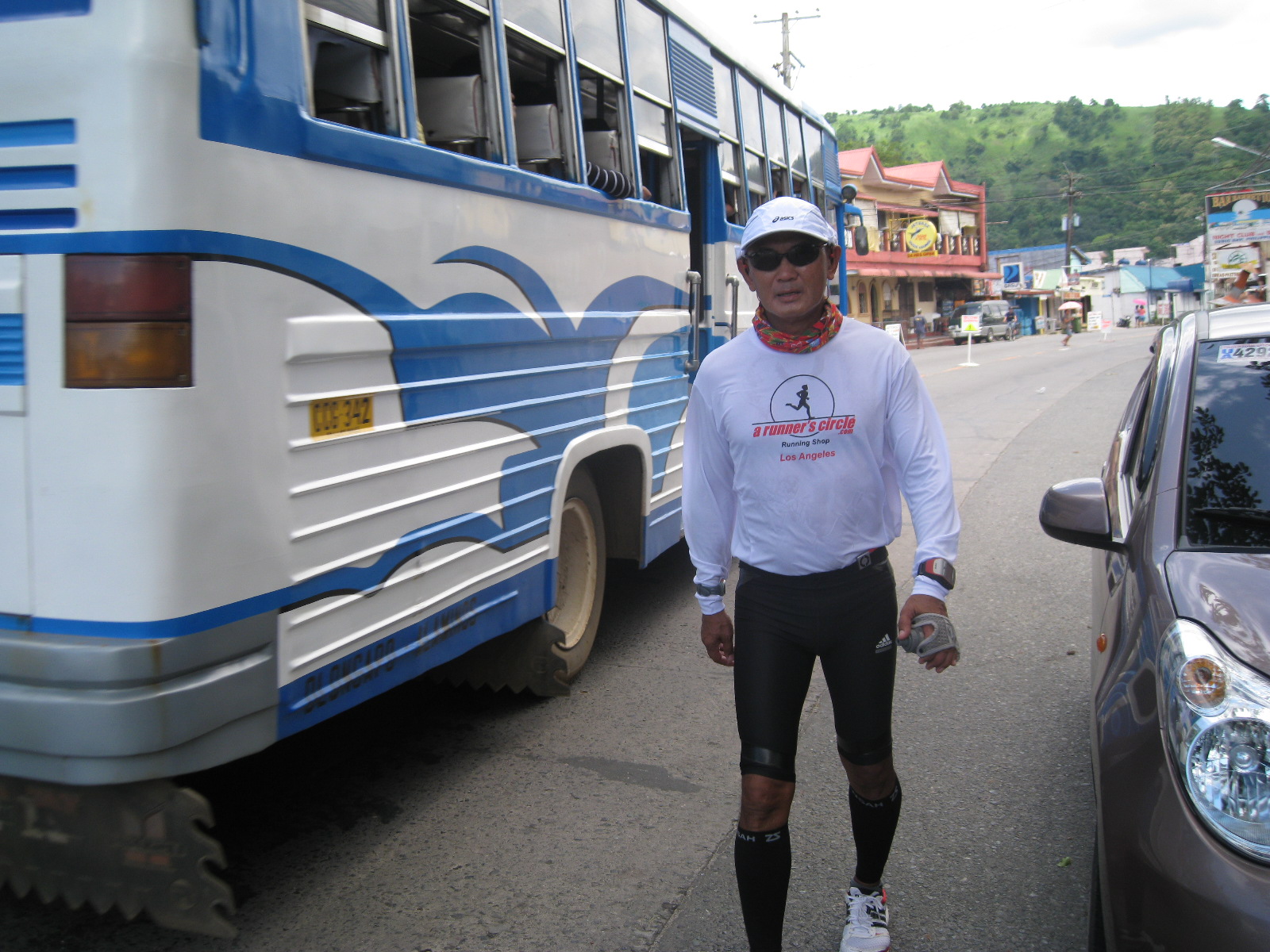
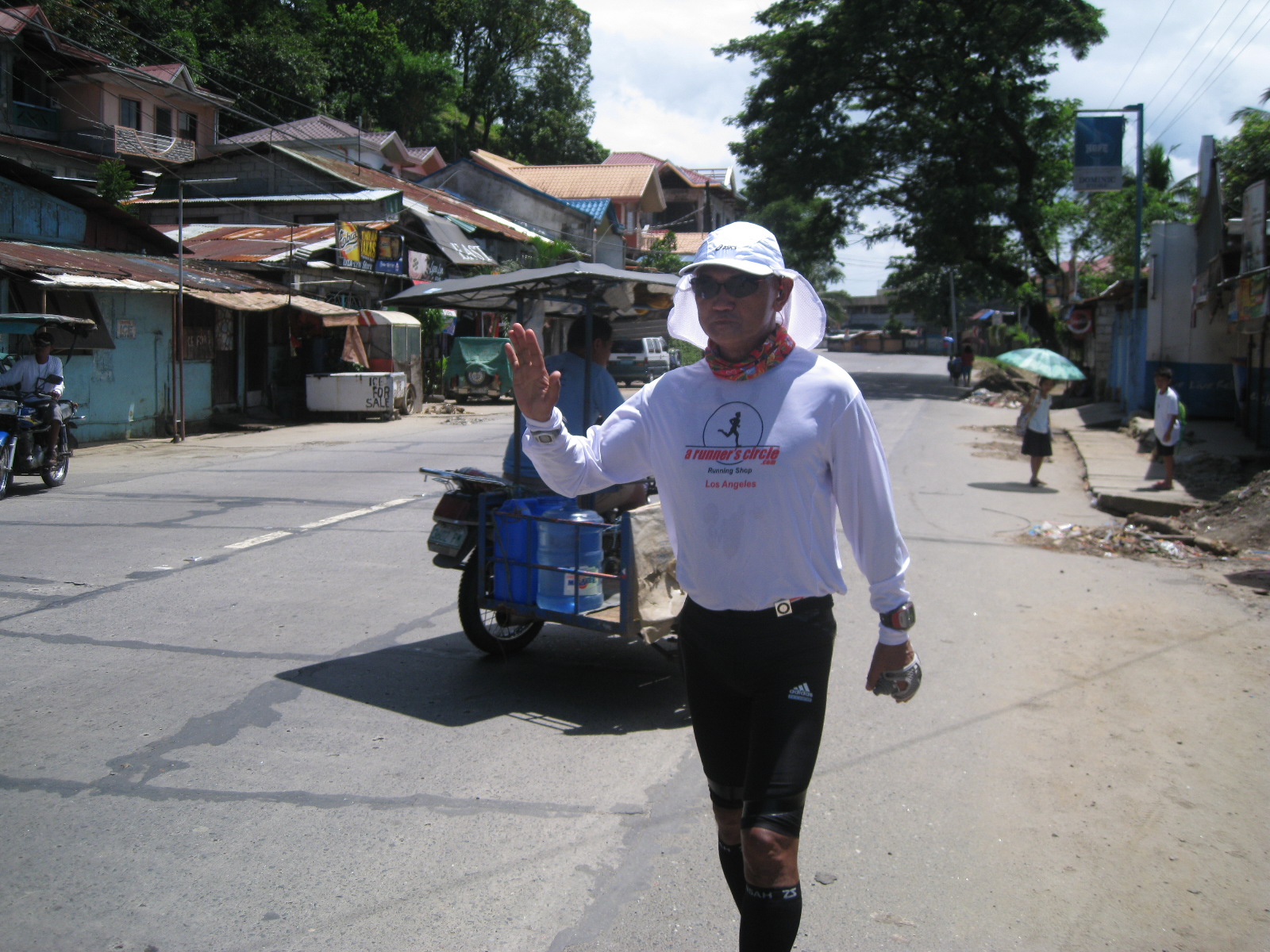
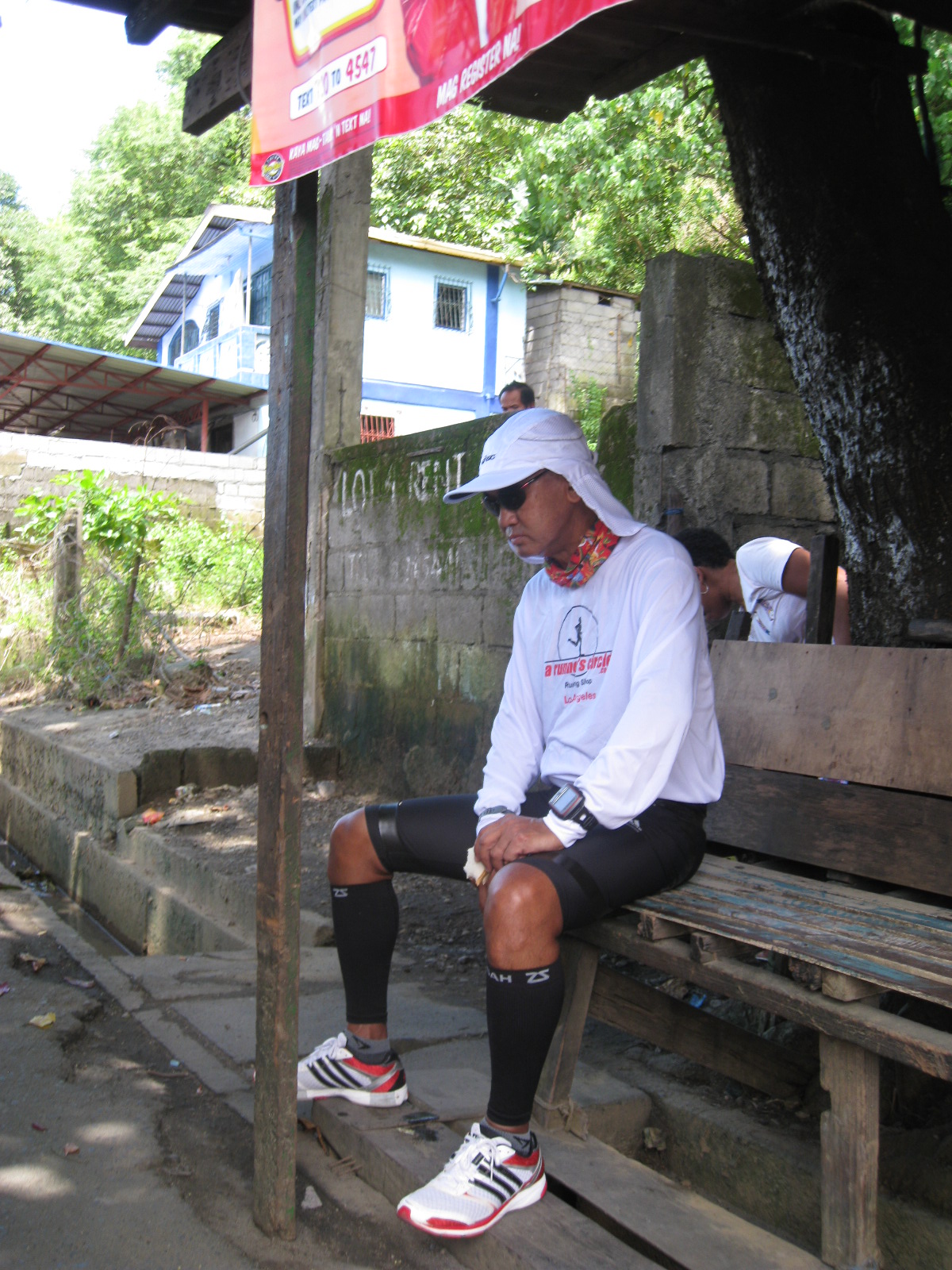
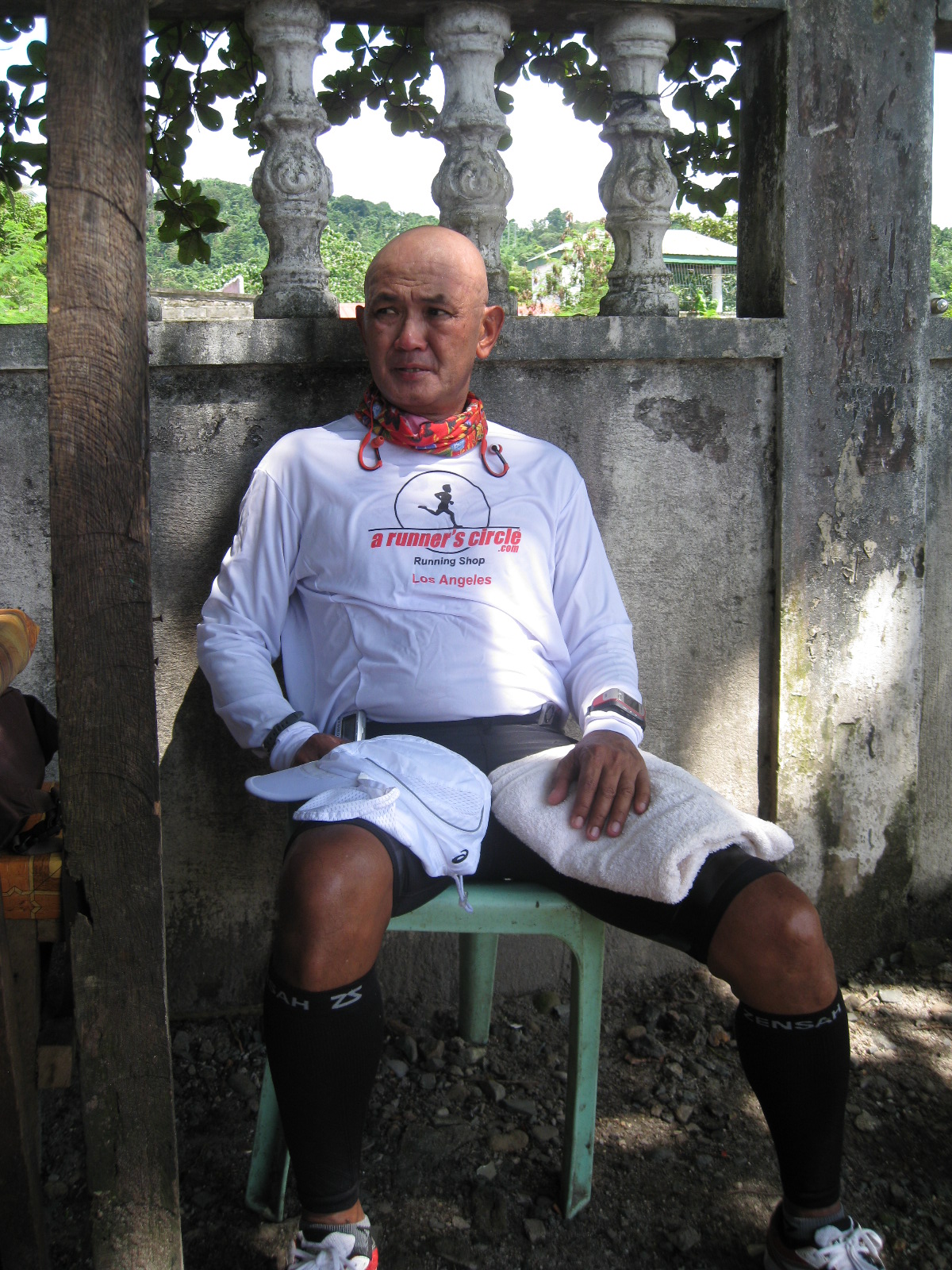
Last June, a simple question to the ARC Los Angeles owner, Joe Matias, if their store carry such shoes led me to have a new pair of Hoka One One Bondi B. He even posted on Facebook that the Bald Runner is ready to experience a “Time To Fly” with the new pair of shoes with the appropriate pictures. Thanks, Joe!

First thing that I’ve observed when I tried to wear them was that their sizing is one-half size smaller. Which means that if I am size 9 1/2 in my regualr running shoes, I should have ordered size 10 for the Hoka One One. I tried to compensate this little issue by using thinner running socks. Second, I found the shoe string to be bulky as it uses those stiff round-type shoe laces which tend to put more pressure on the top of my feet when I tie my shoes tightly. I changed the shoe laces with those flat and lighter shoe laces and I observed a great improvement on the comfortability of the shoes.

For one month, I’ve used them everyday in my runs along the paved streets and they are very soft to the feet because of the thick and spongy sole. It was very comfortable to run with as I was recovering from my knee injury. The pain on my left knee would go away as soon as I ran with them. The spongy and bouncy feeling as my feet hit the ground is totally different from using my other running shoes.

I tried to use them in my trail runs and the shoes forced me to run at a faster speed and pace on the downhill which I was trying to avoid and minimize because I was still recovering from my knee injury. If only I was not being safety and conservative conscious on my trail workouts, I could have experienced the full potentials of this shoes in my downhill runs which most of the users have liked about using them.

However, I would reveal that the thick sole gave some problems with the way I run. Since I am a “shuffler” who could barely lift my knees during my “push-off” at a higher level, my tendency is to trip with the shoes on the ground. It does not happen all the time but there are times that my rythym would be disturbed. Sometimes, my leading shoes would hit the other one when my legs are showing that they are getting tired and weary.
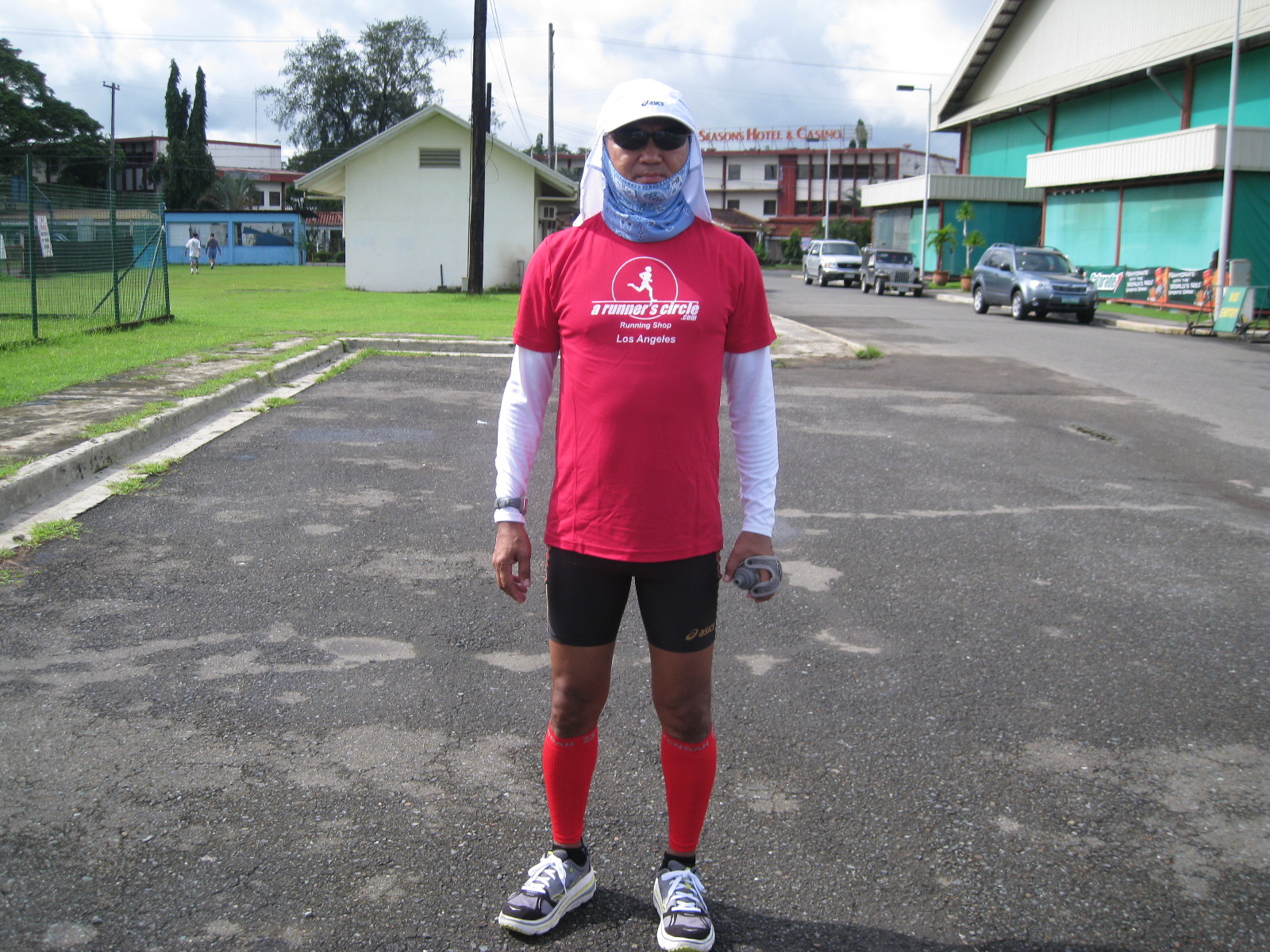
Shoes More Noticeable With Average-Height Runners

I used them during my WC 200 run lately and they were nice shoes to start with my daily runs but after 30+ kilometers, I have to use the thinner-soled shoes for faster leg turn-overs. I am not saying that these shoes are not light, they are lighter than the ASICS Gel-Kayano & Kinsei but they simply don’t suit to my style of running on paved roads.

My Hoka One One, for the meantime, is being used as my recovery workout shoes and it is still waiting to be used in an ultra trail run or in a road race.

Now, if you ask me if I am recommending this one for you. Of course! Get one pair of this shoe and experience what is like to wear a different one and be a standout from the rest. Just take note of the shoe sizing and the price. I really don’t know yet if they are available in the local running stores. However, I’ll give you a tip. Ask Raul, Perkins, and Mario of ARC Manila if you can have it ordered from Joe Matias of ARC Los Angeles. I know Joe will give you a nice deal on these shoes.
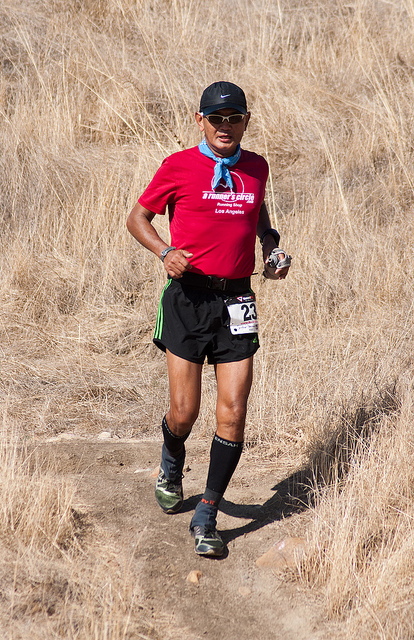
1st BUMM 32-Mile Trail Run


November 12, 2011: 1st Bakersfield Ultra Marathon Madness (BUMM) 32-Mile Trail Run

(Note: Photo By Lissa Fudge)

Something Was Wrong!


WC 200: First Attempt

As you all know, I stopped this run after covering the distance of 40 kilometers after being bitten by an astray dog at the Poblacion of San Narciso, Zambales at around 7:40 PM of September 14, 2011, Wednesday. However, I would like to relate what transpired, in detail, from the time before I started the run up to the time when I reached the Poblacion of San Narciso.

The day before I started this first attempt, I was having some problem with my stomach as I’ve been having a LBM for the past days and I was taking Loperamide tablets on a daily basis but to no avail, my condition did not improve. I was wondering if I had a stomach virus that was keeping me from being cured from such predicament. The solution that I could think of was to take a Loperamide tablet every time I have to eat and drink something few hours before I took off. Such move relieved me somehow.

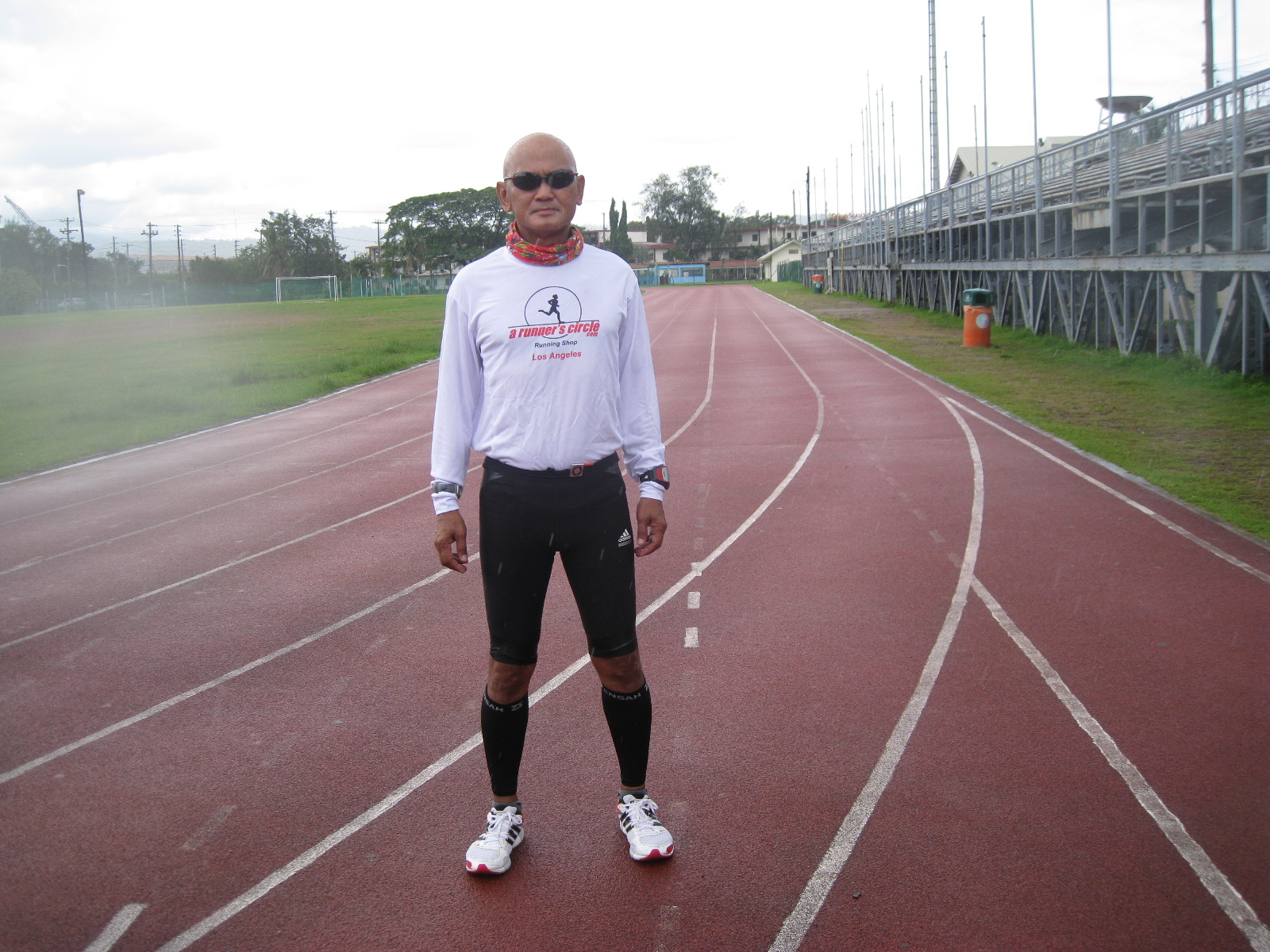
Not Smiling While It Was Raining

However, my aggressive drive was not there when I started for my “photo-ops” inside the Remy Field’s Oval Track at the Subic Freeport. You can’t see a smile on my face and for the first time in my adventure runs, I was nervous of the uncertainty of the challenge I was going to face. I guess, my biorythm was not synchronized with what was in my mind. But it suddenly rained while I was about to finish one lap on the oval track and my mood changed a little with the fact that this could be a “blessing” from heaven that it was a “GO” for me to continue this run. I finally started my run at 9:50 AM which is barely 10 minutes earlier from the usual 10:00 AM Elite runner’s realease for the Badwater Ultramarathon. (Note: If ever this will be an official running event, the race will start at exactly 10:00 AM)

I purposely walked while I was leaving the oval track and making my way to the Kalaklan Gate which is located on the northern end of the former US Navy Base of Subic. As I passed the Gate, I waved to the Security Police that was guarding the gate, he responded with a smile and I was out of the base. As I passed the bridge and turned left towards the Olongapo-Bugallon Highway, I was still walking and I was on the ascending portion that goes to the Gate of the Olongapo City Public Cemetery. I came to realize that the whole portion of the hill occupies the

Once I reached the peak, I started my slow run in the descending portion. I was always on the left side of the road making sure that I can see what is infront of me. The road to Olongapo City was a busy one and I was very careful of the incoming traffic because the road was wet due to the brief rain in the area.

Busy Road On The Stretch of Olongapo To Subic

My support vehicle was prepositioned in front of me in every 3 kilometers and I had to stop and cross the road to the other side in a careful matter in order to refill my handy Nathan “Sprint” Bottle and eat some solid foods. I was fortunate enough that the sun was covered with clouds for the first hour of my run. The first 4-5 kilometers was a “roller-coaster” where I strictly followed walking on the ascending portions and then running the descending ones. However, I have to regularly check on my Heart Rate Monitor Watch to be able to maintain a certain range of beats per minute. I made 135 bpm as my upper limit on my first 10 kilometers of the run.

Along the stretch from Olongapo City to the town of Subic (actually I was surprised that there is a town named after the former US Naval Base/Facility) which is a distance of about 10 kilometers, I could see only two things along the road—entrance to the beach resorts and bold & colored names of night clubs/bars. There are also commercial establishments and cafes where you can see “senior white” guys drinking their coffee and smoking their cigar (not cigarettes!). A typical “Cool”-look of retired US servicemen who knew their way around in the country and in Subic/Olongapo area. They are good contributors to the economy of the place. You could just imagine how they could spend their monthly retirement pay with a business to manage, a young wife/partner, a nice house with maids, a nice car, and a beach/sea where they could relax. Such kind of life way back to their country of origin would be a fortune and luxury only for the rich and famous!
Waving To A "White" Guy Who Was Hiking On The Other Side Of The Road

It is along this stretch where I made my first status on Facebook, telling something about being “horny” while running on the hot and humid stretch of the Olongapo-Bugallon Highway and I received a lot of comments immediately after I posted it. Actually my feeling during the run was the complete opposite of what I’ve posted. I was trying to entertain myself and taking some positive vibes as the sun was already hot and it was noon time already. My hydration and nutrition strategy was strictly followed in order to last for the distance and I was feeling fine and strong.

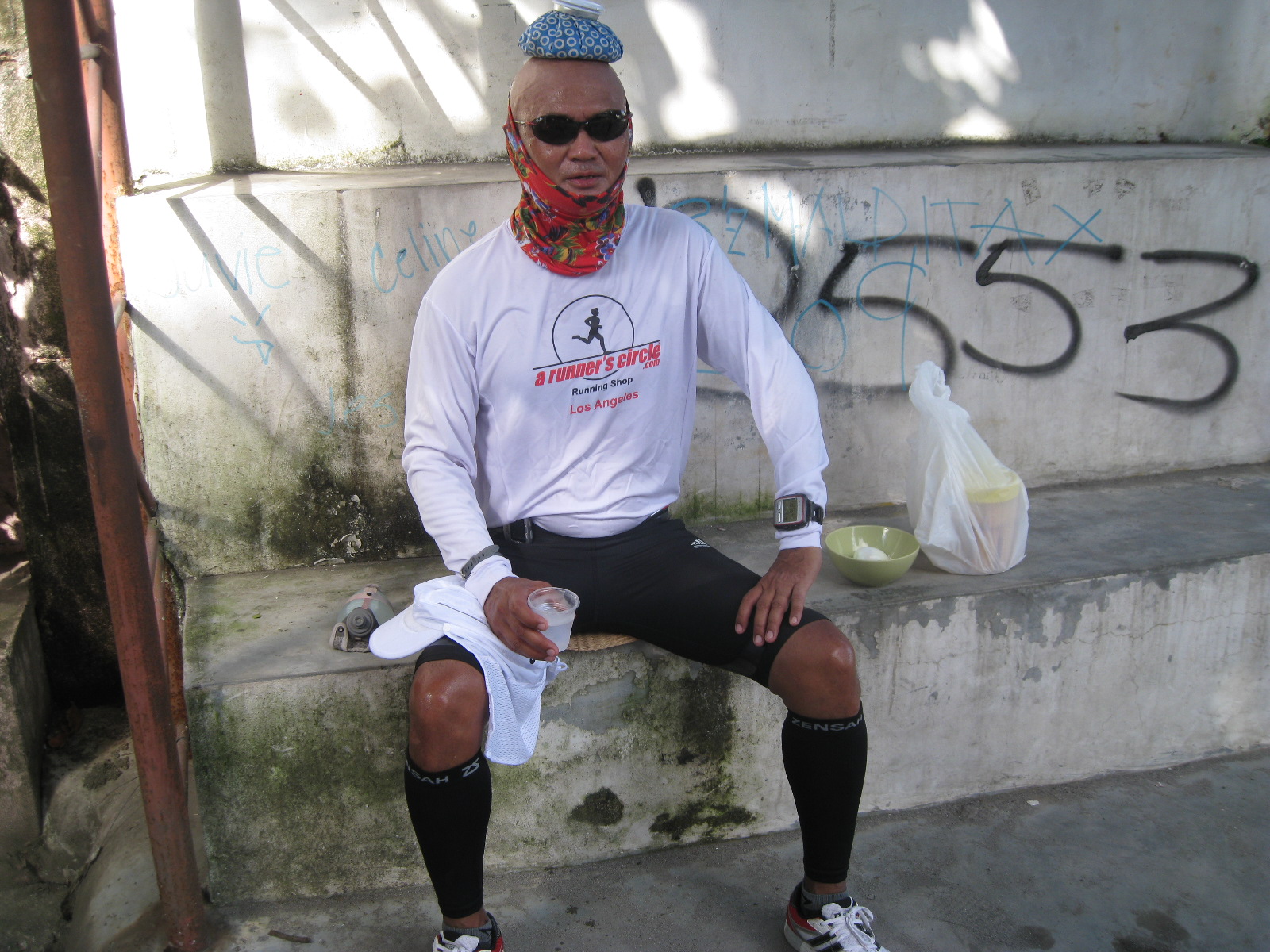
No Need To Explain..I Was Simply Tired Due To The Heat

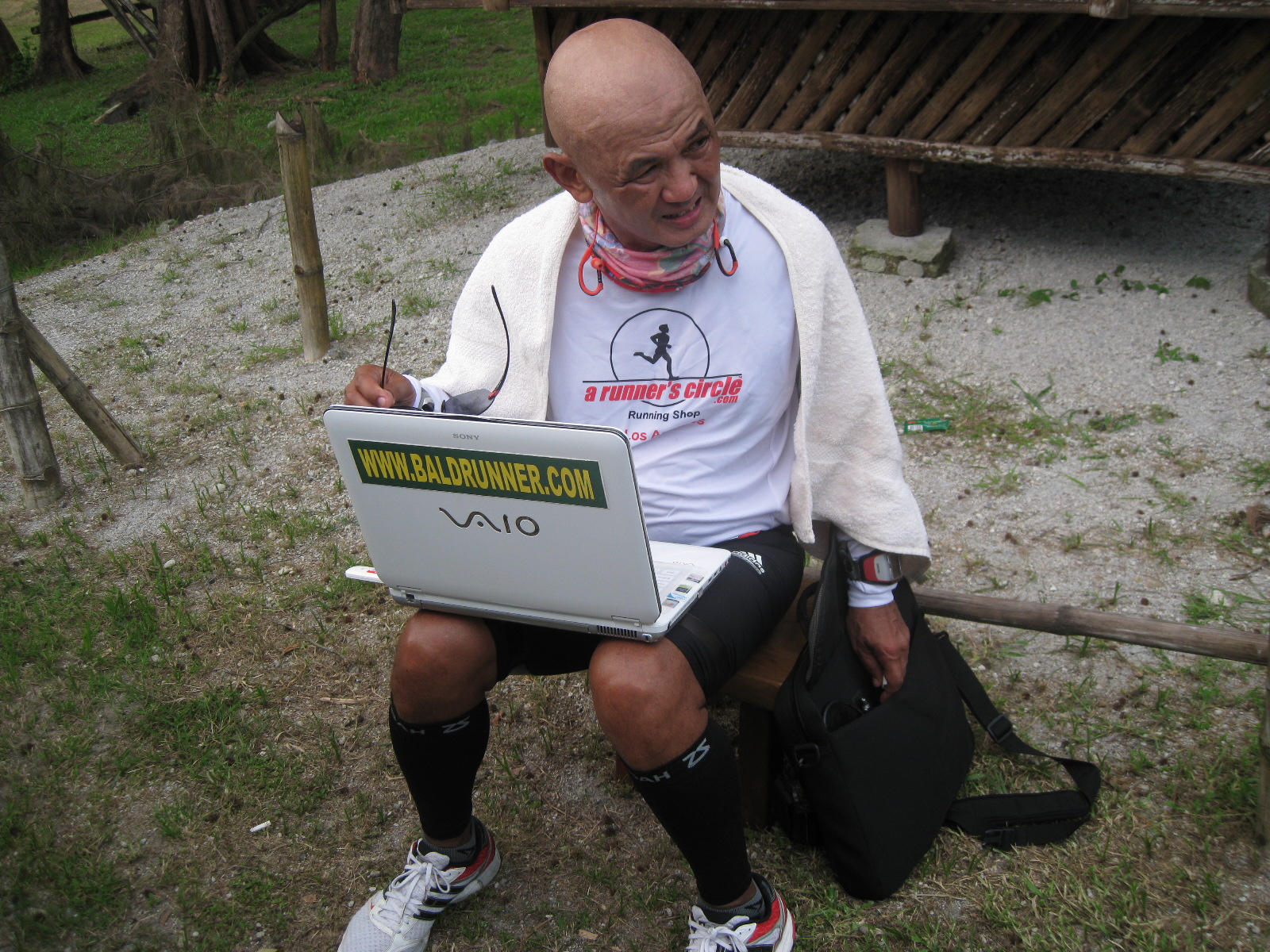
I have to rest in waiting sheds along the road and most of them are located on my right. After eating and hydrating myself, I have to open my laptop computer to find out if my Internet connection is strong. I was glad I was able to post a brief summary and some pictures about my run where the signal is strong. It took me at least 30-35 minutes for these “pit stops” and had only a few remaining minutes to complete my targetted number of kilometers in every hour of my run. At least, I would be able to run or cover a distance of 5-6 kilometers per hour to include my rests/”pit stops”. For the next hours, this ritual had been repeated all the way as I covered more towns of Zambales. But I did not meet the required targetted mileage as hours passed by.

Resting Outside A Cemetery!!!!

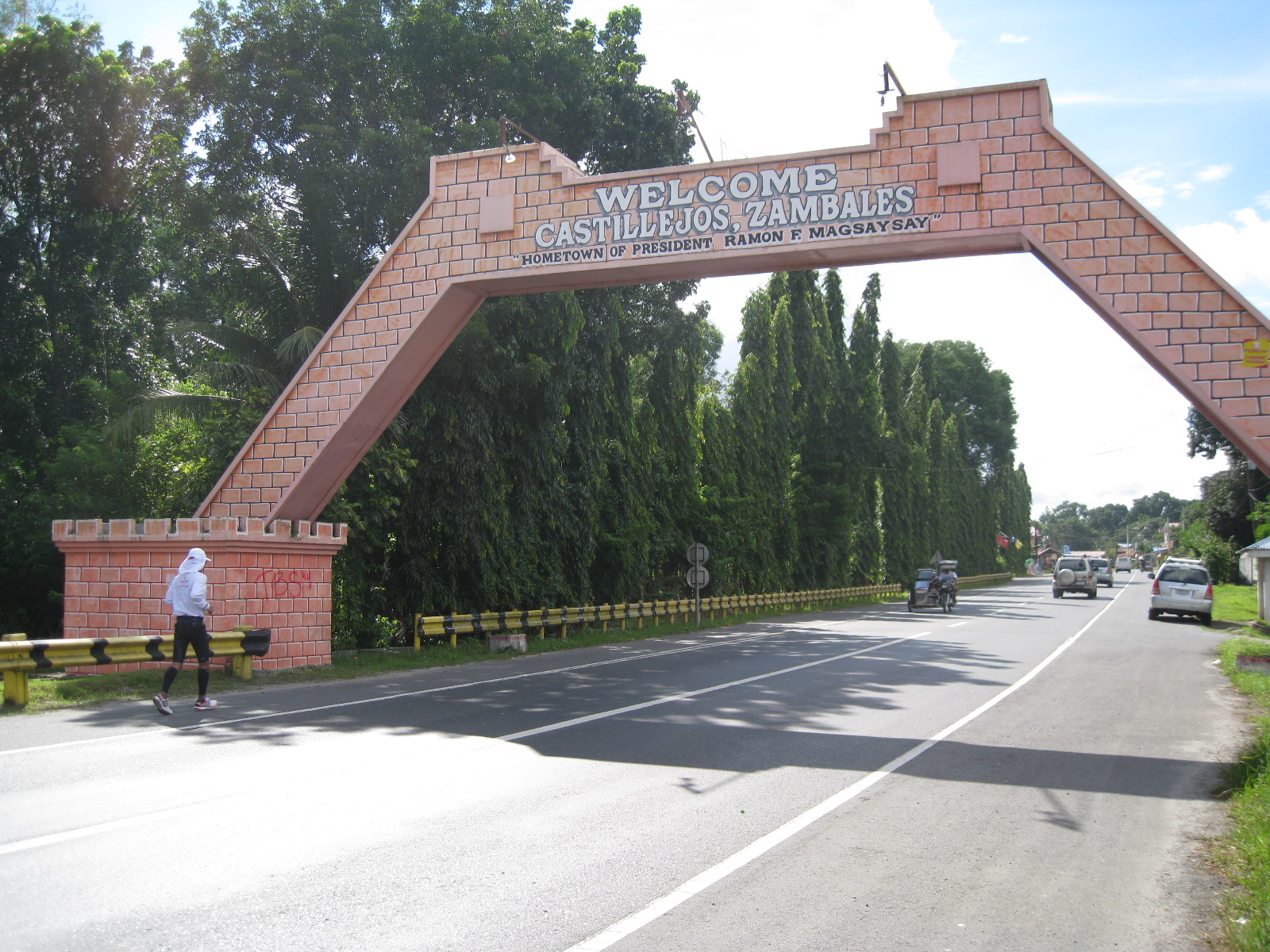
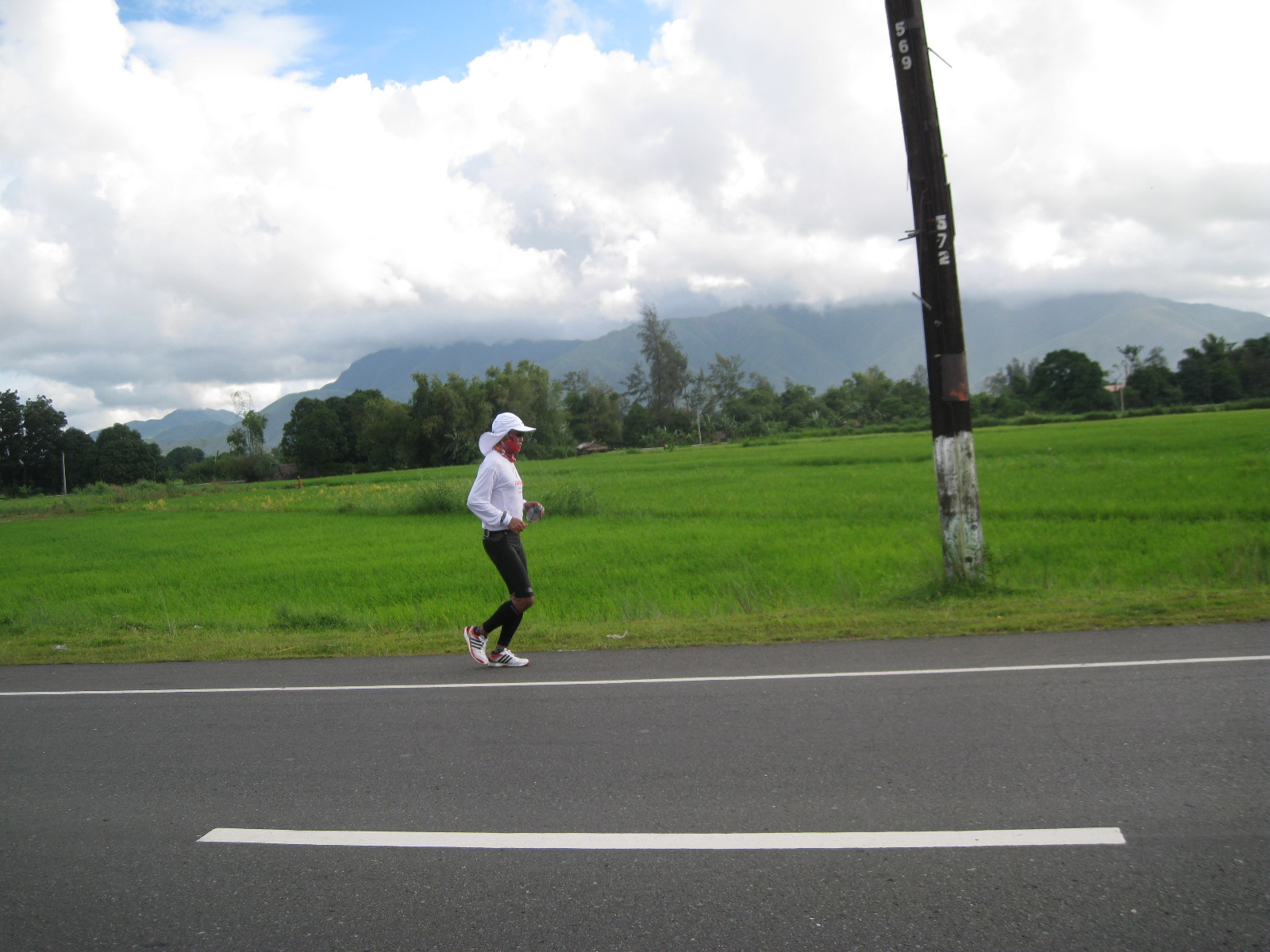
After Subic, the next place to go was the town of Castillejos, the birthplace of the Former President Ramon Magsaysay. The place is clean and it has paved sidewalks. I did not bother to pay attention that the preserved old house of the former President was on my side which I learned later on my next attempt. The next town would be San Marcelino, a big towm which serves as the meeting point/junction for the towns of San Antonio and San Narciso. If you turn left from the junction of the town near its Municipal Hall and Public Market, you would go along the Old Route that goes to the town of San Antonio but if you go straight, it will lead you to the new highway which is a “shortcut” to the town of San Narciso. This stretch of the Highway is wide, flat and with lesser traffic but the view of the ricefields on both sides of the road was very refreshing. On the east you would see the Zambales-Tarlac Mountains and the west would be endless sight of ricefields and some hills.

The Entrance To Castillejos, Zambales
Favorite Picture Of The Day

After my hourly “pit stops”, I was already on the boundary of San Narciso but I need at least 6 kilometers more to reach the Poblacion and it was starting to get dark. I had to use my Eddie Bauer Headlamp and hand-held flashlight to illuminate the ground about 2 meters ahead of me and I was comfortable with my run. As I slowly reached the Poblacion of San Narciso, I told my support crew that we need to have a decent and “hot” dinner along the first eatery (carinderia) that we could reach. That would be my first complete meal for the day. I decided to pass on the first one because there was a loud Karaoke with an out-of-tune and out-of-beat singer/performer. The place is crowded, too! So, I have to stop on the next eatery where there is no customer.

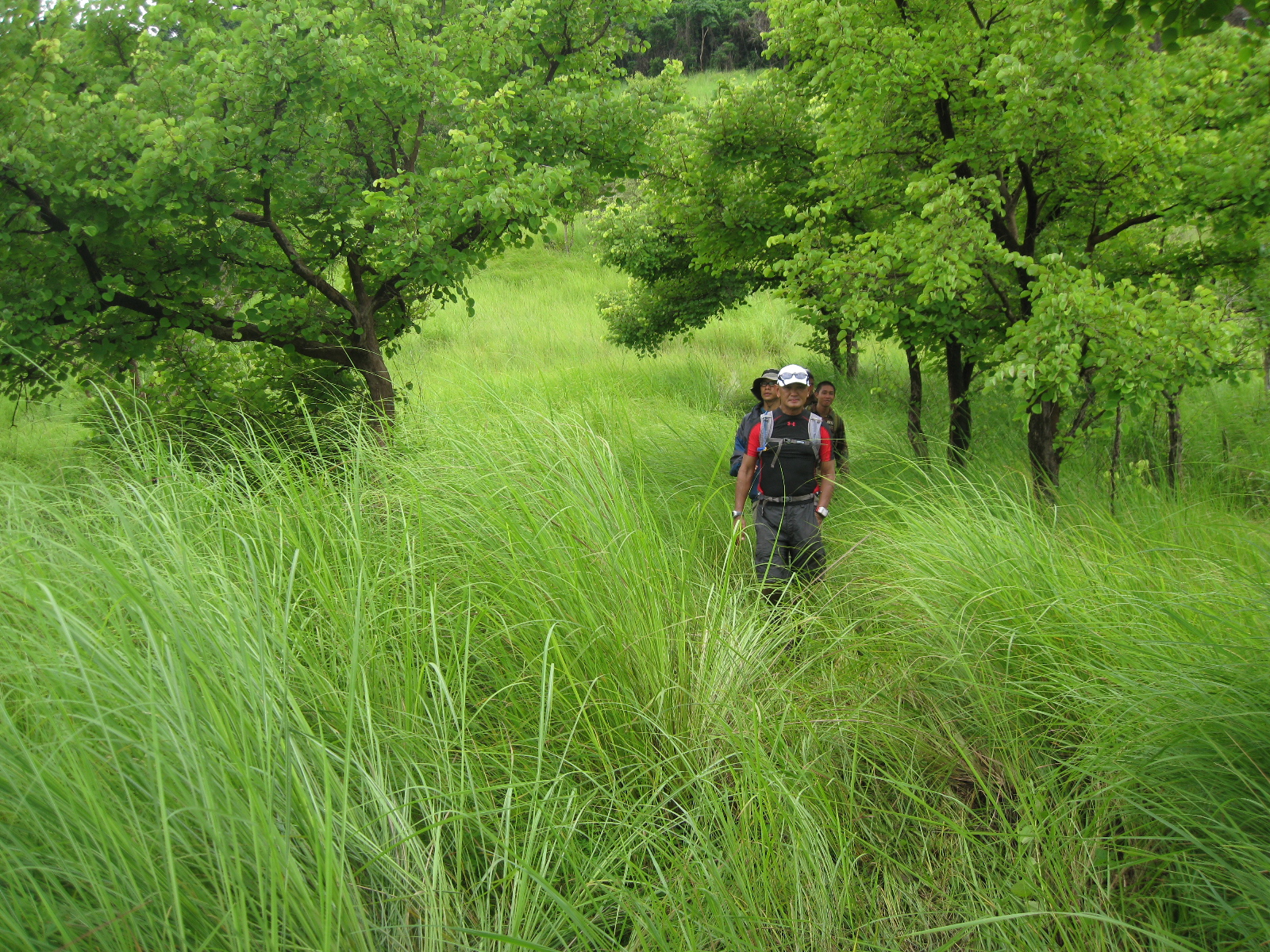
Scenery Refreshing To The Eyes
Time To Update My Blog & Post Status On Facebook
Getting Dark Approaching San Narciso

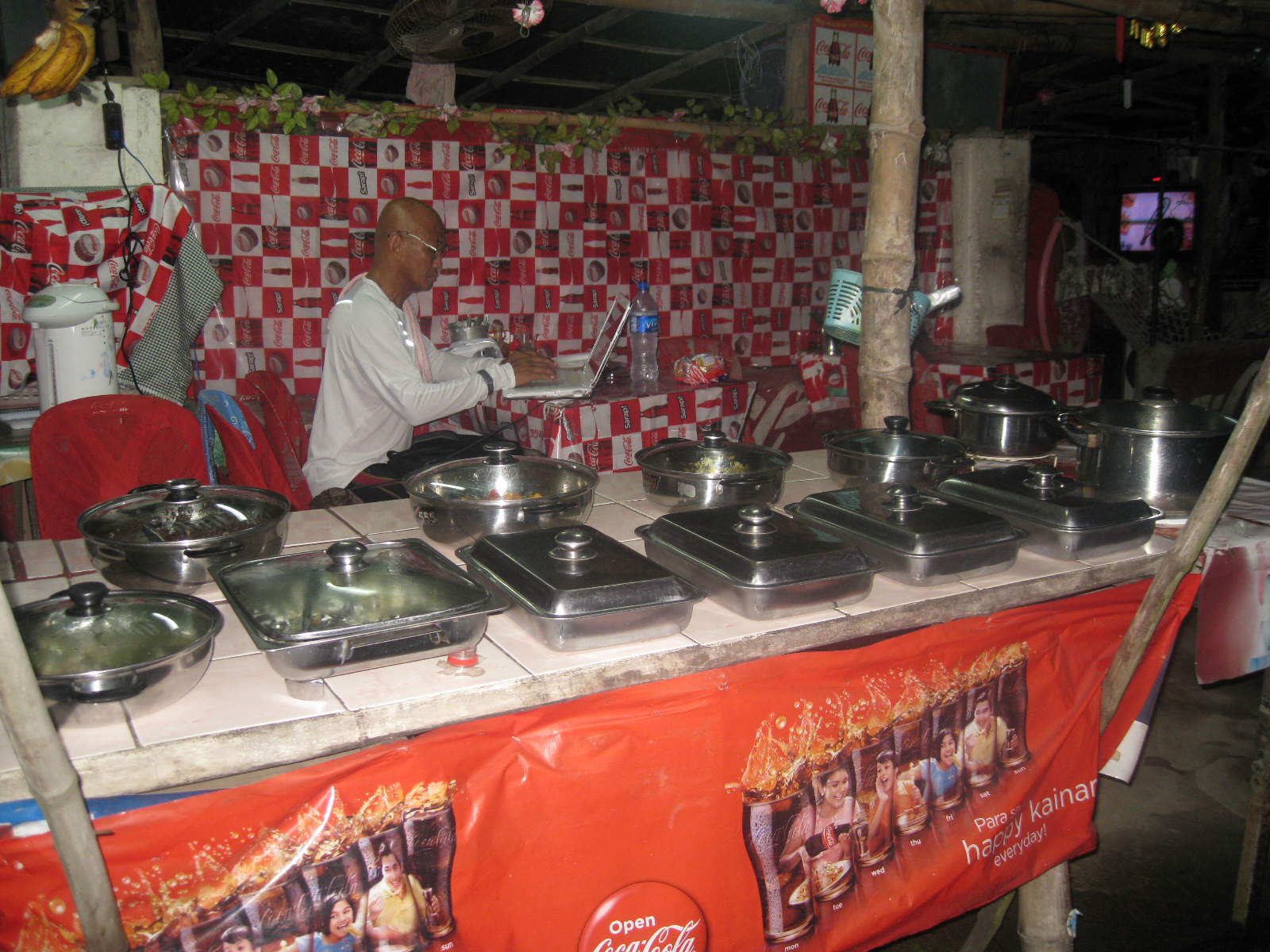
The owner of the carinderia was generous and kind that she allowed us to charge my laptop and heat up our electric thermos. For meals that cost us P 120.00 (rice and pork sinigang) and free use of their electricity for about an hour, it was something to cherish when you are in the province. I took some time to update my blog in this carinderia while talking to the owner and to the waitresses who happen to be the nieces of the owner. From our conversation, they were informed that I was running from Subic all the way to their place and hopefully end up in Iba, Zambales. (I did not tell them that I’ll be running further north from their province and end up in Alaminos, Pangasinan!).

Inside The Roadside Carinderia

Fresh from a decent meal and after changing my wet ARC shirt to a dry one, I was ready to continue my run. After almost one kilometer from this carinderia, I was attacked and bitten by an stray dog along a dark portion of the highway, barely 500 meters from the Municipal Hall and Public Plaza of San Narciso. “Houston, we have a problem!”

My first instinct was to stop on a lighted part of the road and see the wound clearly with my hand-held flashlight. I asked for some wet wipes from my support crew and immediately cleaned the wound as there was no blood coming out from the wound. One thing that I failed to prepare and bring was my basic first aid kit. This could be one of the reasons why there was something wrong in me! We had to rely on the services of an open drug store where we bought Betadine, Cotton and Bandage. After buying such medical needs, I walked to the Public Plaza where the park lights are stronger. I just sit on the steps that lead to the park while treating and cleaning my wounds.

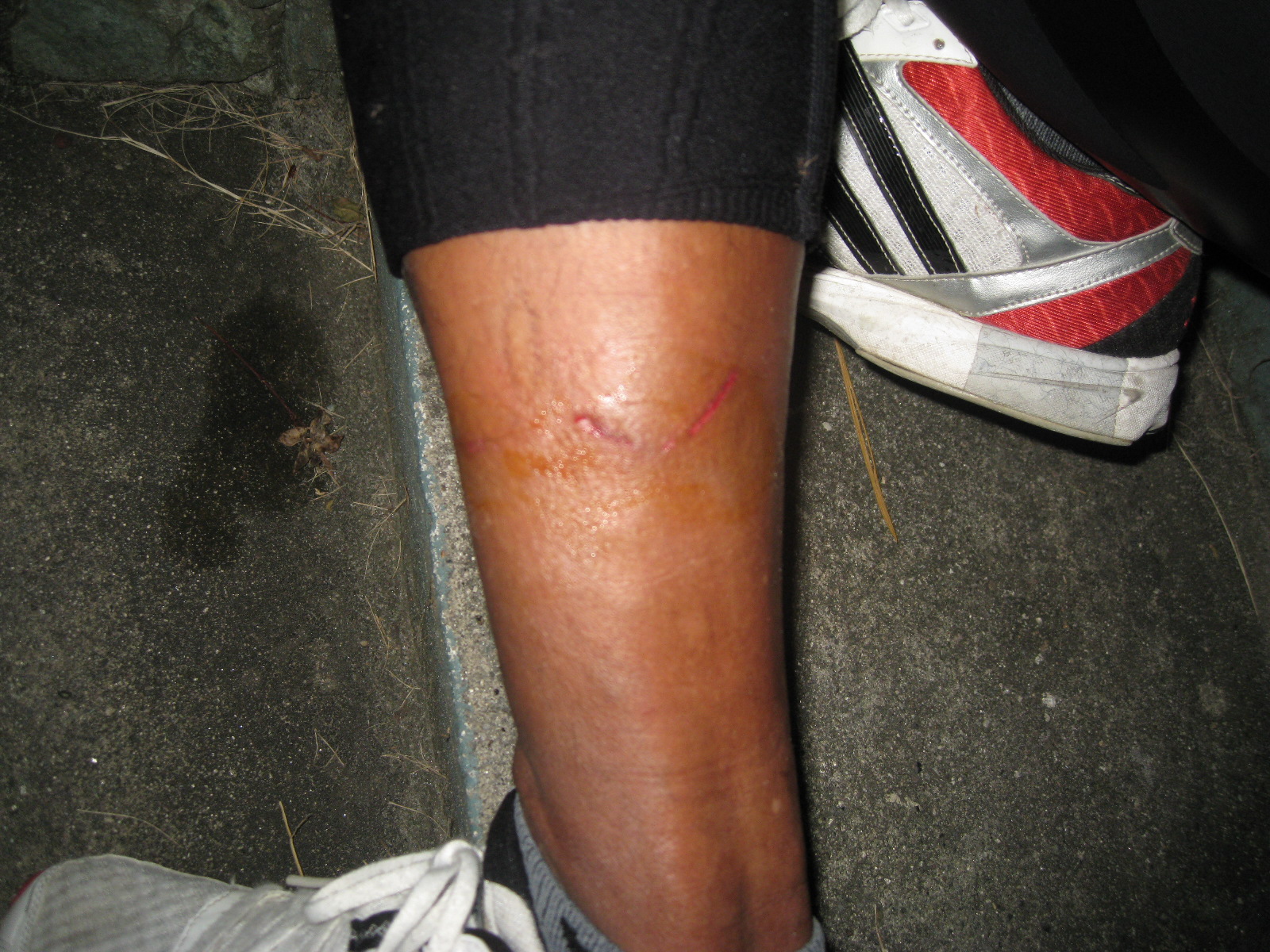
My Souvenir On My 1st Attempt

It was time to call the doctors whom I know. Not only one but three of them and they gave me identical recommendations and procedures to follow. After I dropped my phone, I immediately decided to stop the run and go back immediately to Manila for my immediate treatment. In less than 18 hours, I had my anti-tetanus shots first and then my first anti-rabies shots, not after going in 3 different branches of Mercury Drug Store. The anti-rabies shot is not being carried by all Mercury Drug Stores and they are very expensive! For a 1/2 cc of injectable drug that costs P 1,630.00, the company that manufactures it would be making a lot of profit.

As of this writing, I was able to complete the required number of shots within 14 days after the 1st injection and the scars of the dog’s bite leave as a memory/souvenir of my first attempt to run the WC 200.

Stupid as it may seem, I put the blame on me for deciding to use the Ipod Shuffle during this run. For years, I’ve stopped using any wires on my runs but I brough it back last June of this year. (Reading Phil Maffetone’s training influenced me to go back to hearing music during my runs). As I said in previous post, using some kind of music on one’s ears disrupts ones depth of perception on his/her surroundings and it brought me to be complacent on the threat of the barking dogs. Thanks to the late Steve Jobs for inventing the Ipod as I owned a lot in the past and gave them as “gifts” to those who would like to have one when it came to the point that I finally decided to stop having wires during my runs. (It’s amazing that this post ends up to the visionary Steve Jobs! May he rest in peace.)

To be continued.

8-Hour Run @ TD 100 Route


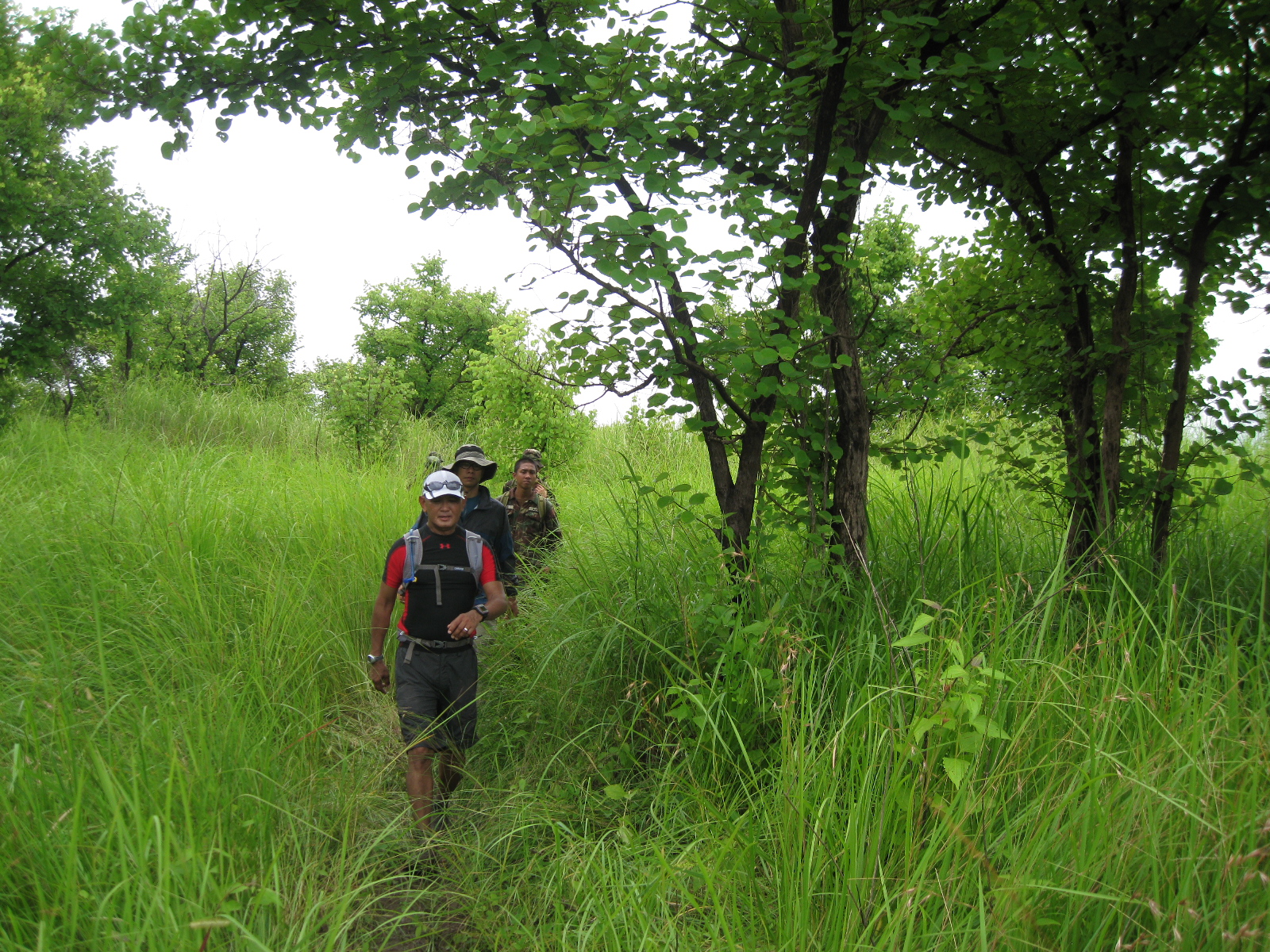
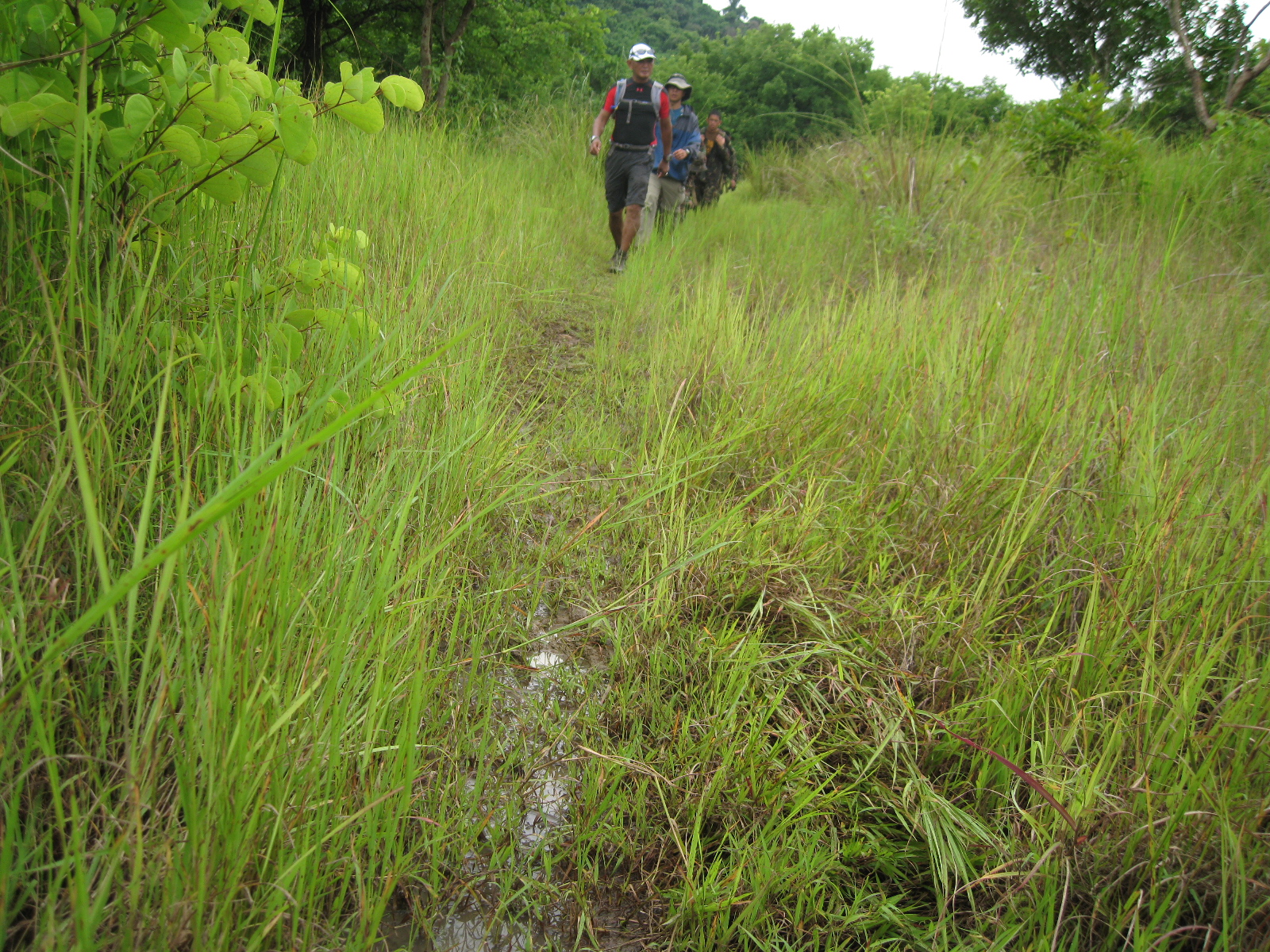
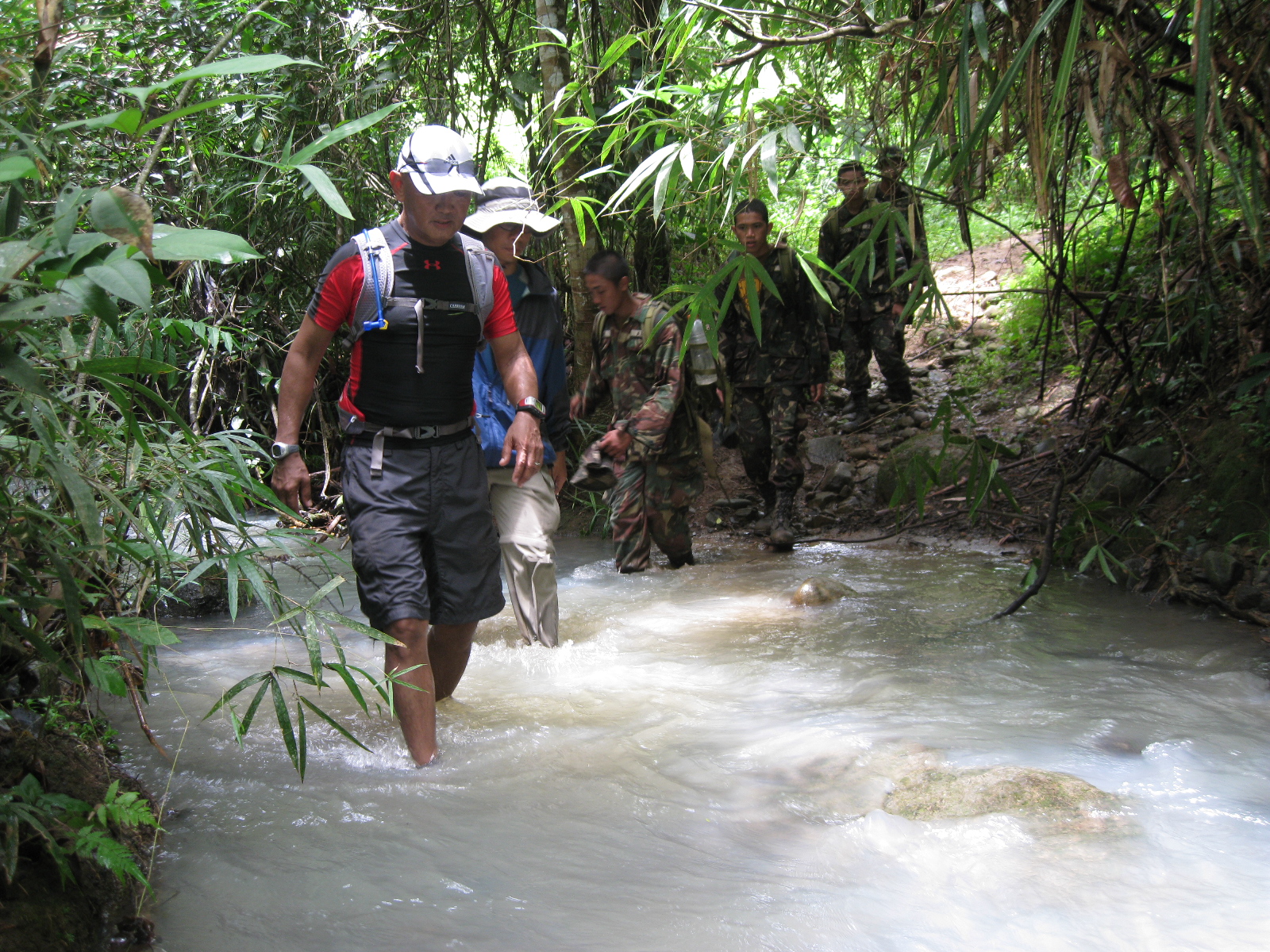
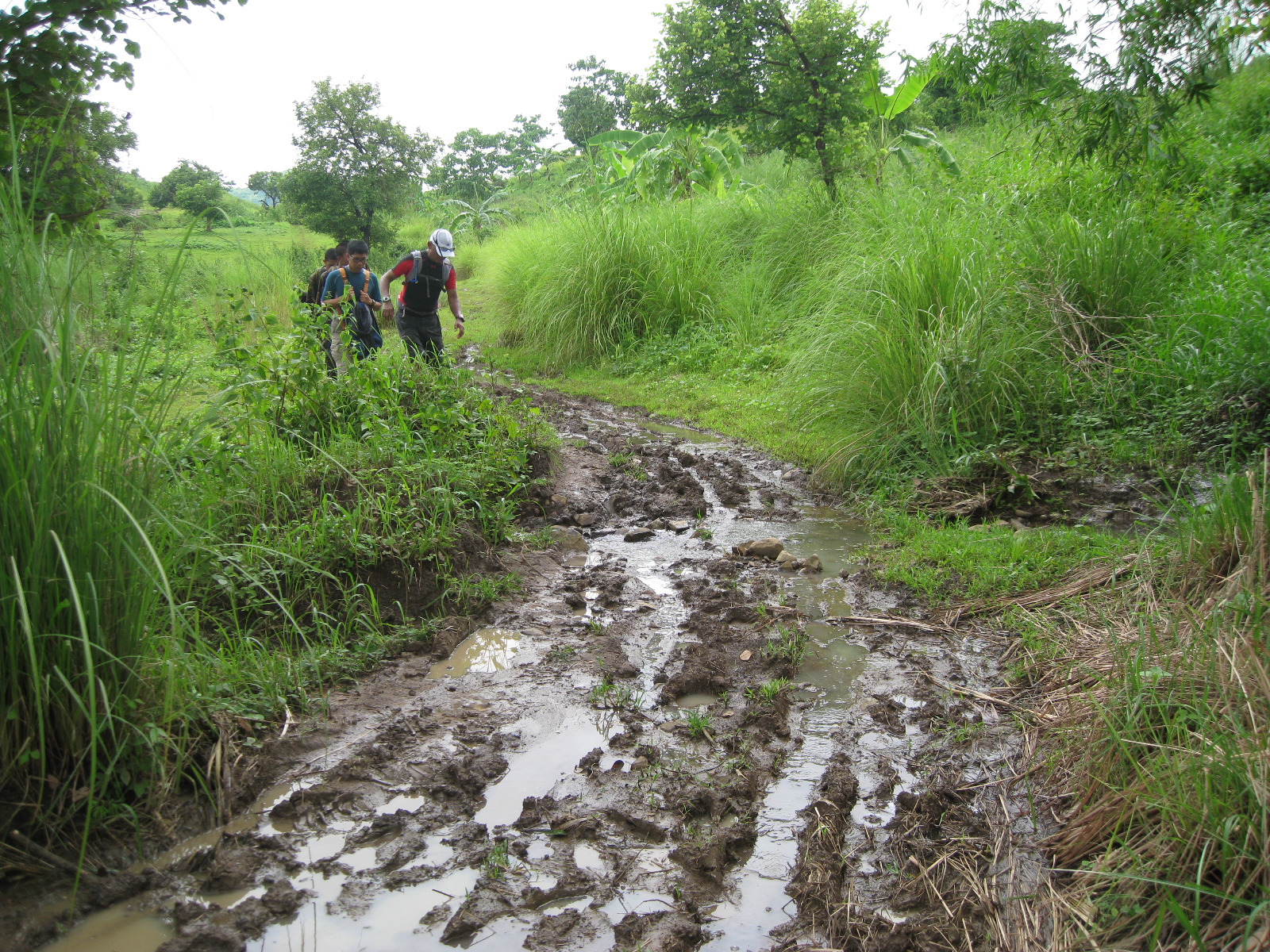
On the last week of July, I went to Fort Magsaysay and make a recon on the trail route surrounding the Taklang Damulag Mountain. I mentioned in one of my previous posts about my trek towards the peak of the said mountain where I timed 52:37 minutes to reach its peak from Fernandez Hill, a distance of 2.7 kilometers. The trek to the peak was only a part of the 25-kilometer distance that I run & walked/hiked during that day and the trail loop towards the mountain peak from Fernandez Hill and around as it covers a distance of 13 kilometers. It took us 5+ hours to cover the distance (25K) as most of were hiking and brisk walking. If we tried to jog and run the flat portions of the route, we could have made it in 3+ hours. This part of the Taklang Damulag 100-mile run consists of the “inner loop” of the course.

The following were the pictures taken during my recon run at the “inner loop” on the last week of July:

Descending From The Peak Of Mt Taklang Damulag
Lots of Single-Track Trail Around Mt Taklang Damulag
Muddy & Slippery Trail
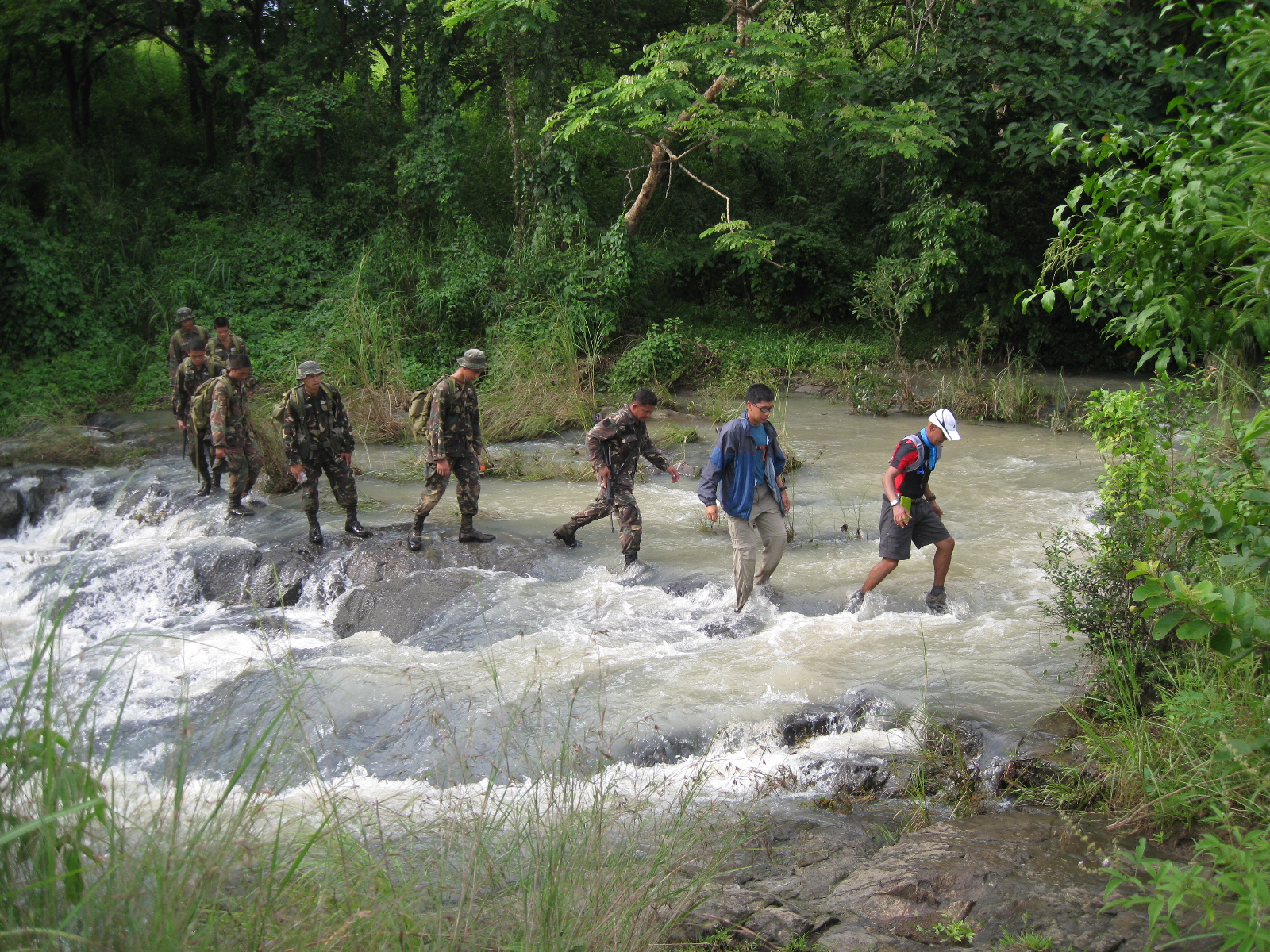
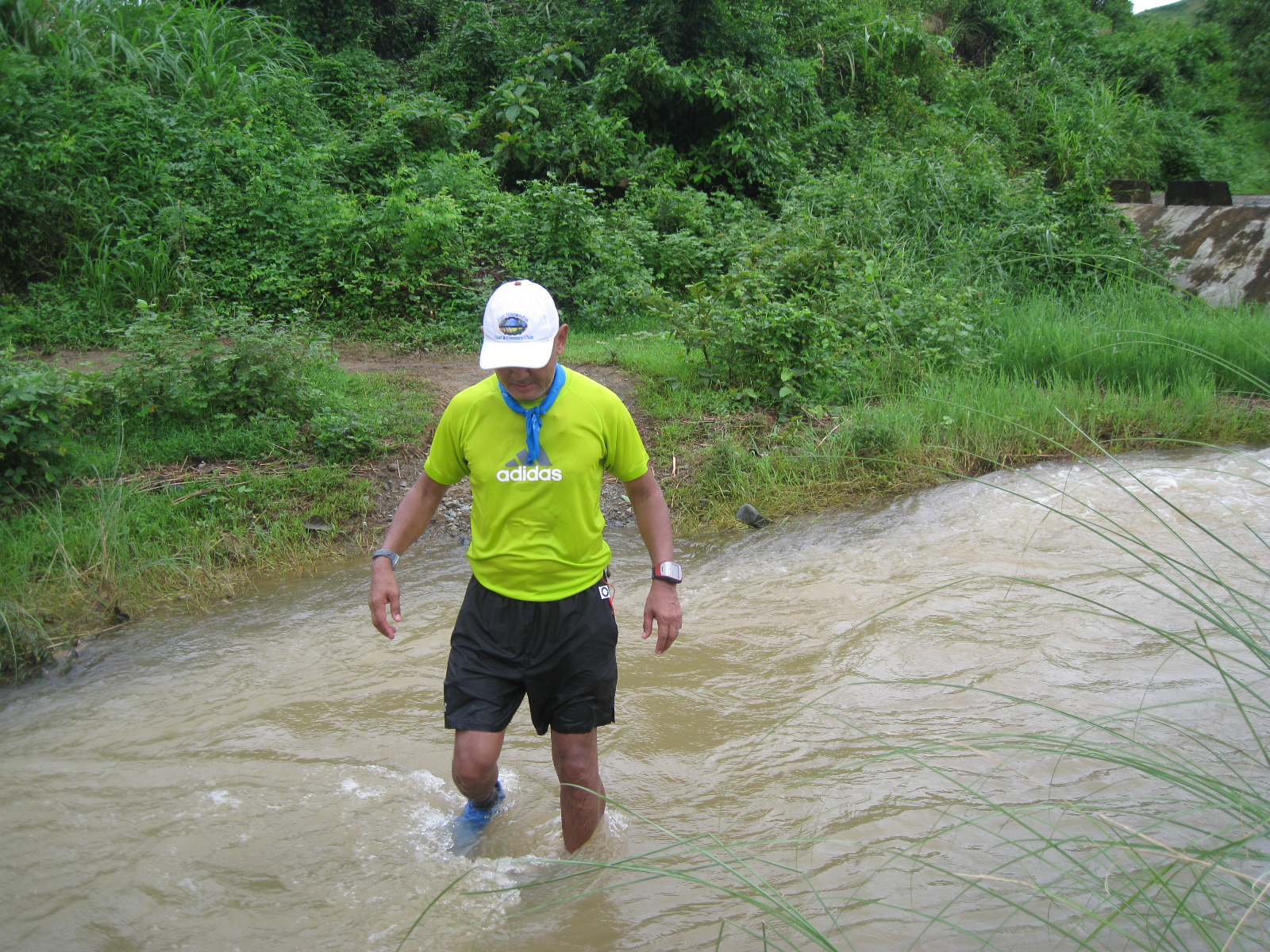
Lots of Stream Crossings!
More Muddy Trail
....and Wider Streams To Cross!!

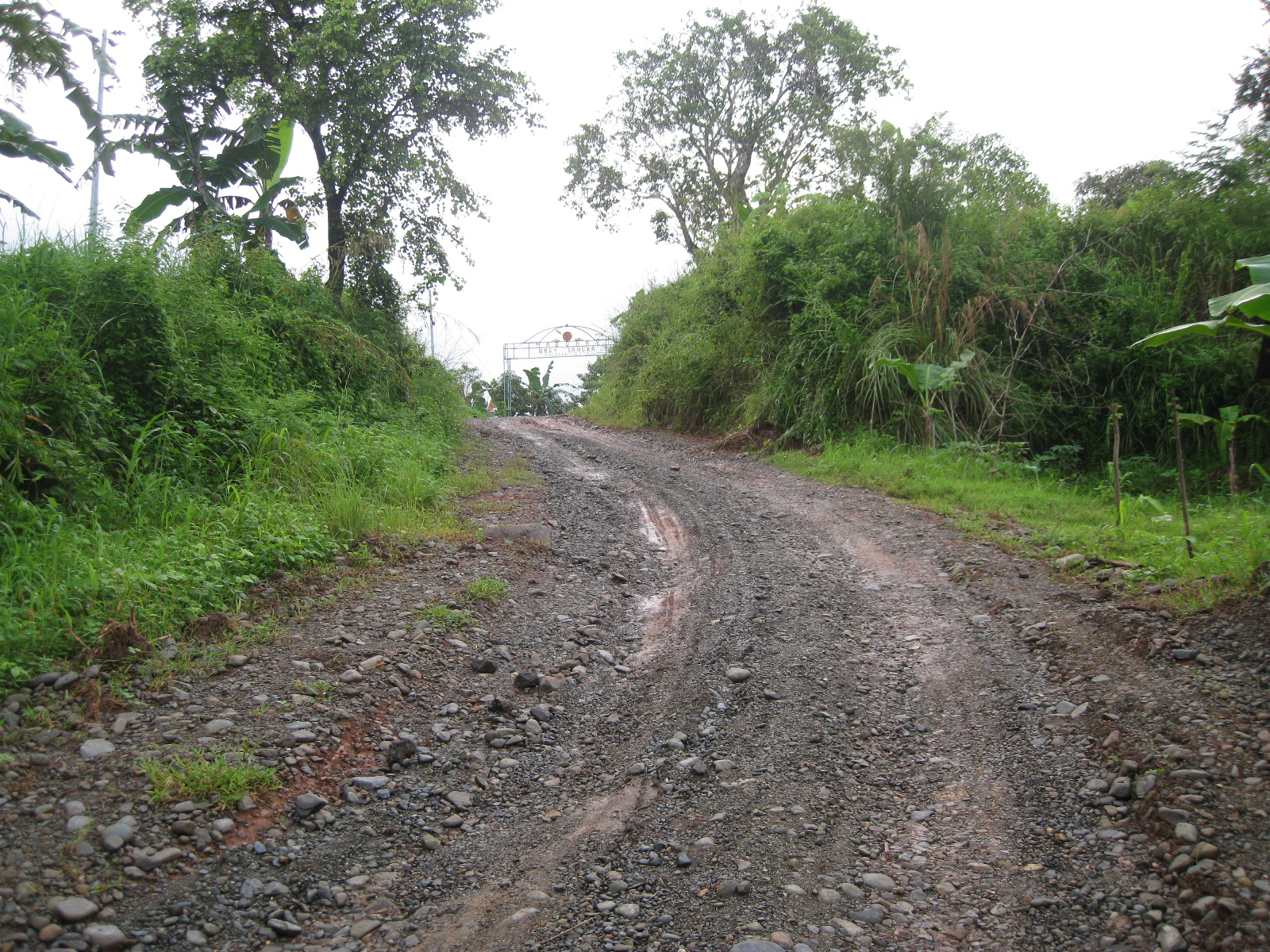
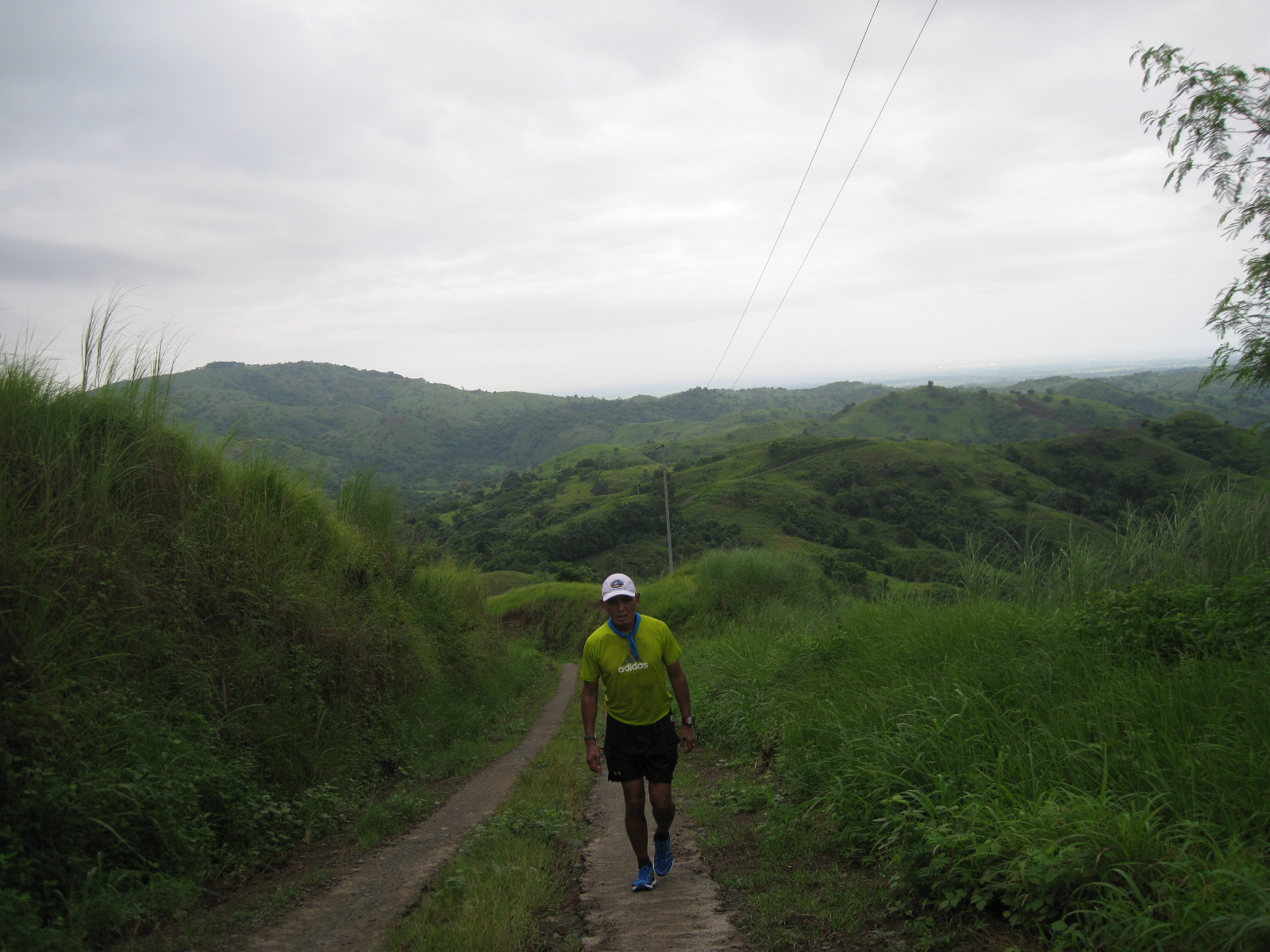
Last Thursday afternoon, together with one of my elite athletes, Jack Espana, I went to Fort Magsaysay and slept overnight in one of the transient facilities. We were already in bed at 9:30 PM and woke up at 4:30 AM of Friday. At 5:30 AM, we started our run from the Starting Area of the Race by hiking the first 2 kilometers as our warm-up. The purpose of the run is to recon the first 40K distance of the route which is considered as the “outer loop” of the TD 100 route. The trail route is located outside the cantonment area of Fort Magsaysay passing through Barangays Pag-asa, Dona Josefa, Bacao, Langka 1 & 2, Palale, Cattle Stock Farm, and Nazareth.

@ Km #6 in Barangay Dona Josefa
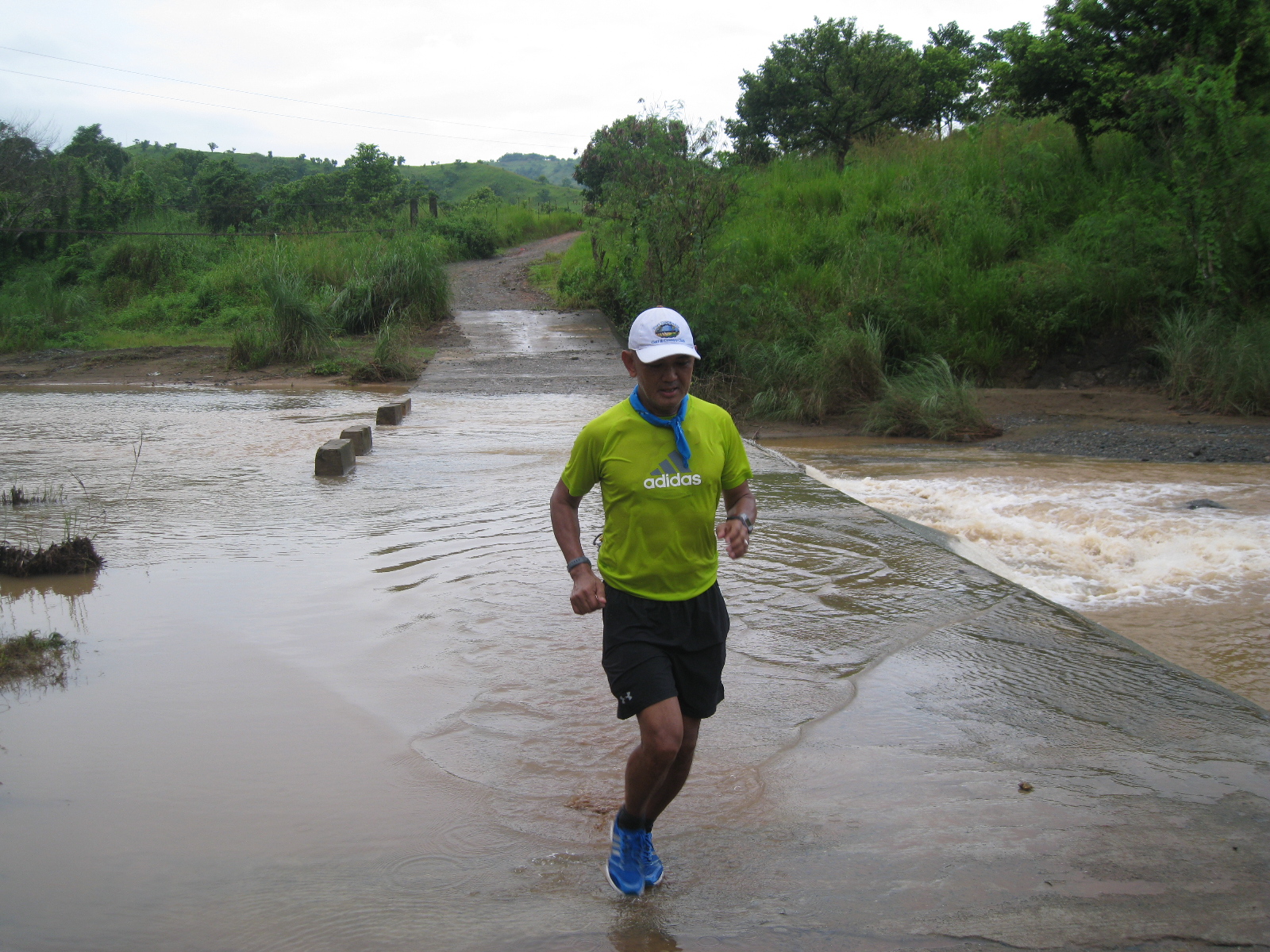
First of So Many Spillways To Cross
Am I Floating Above the Water?
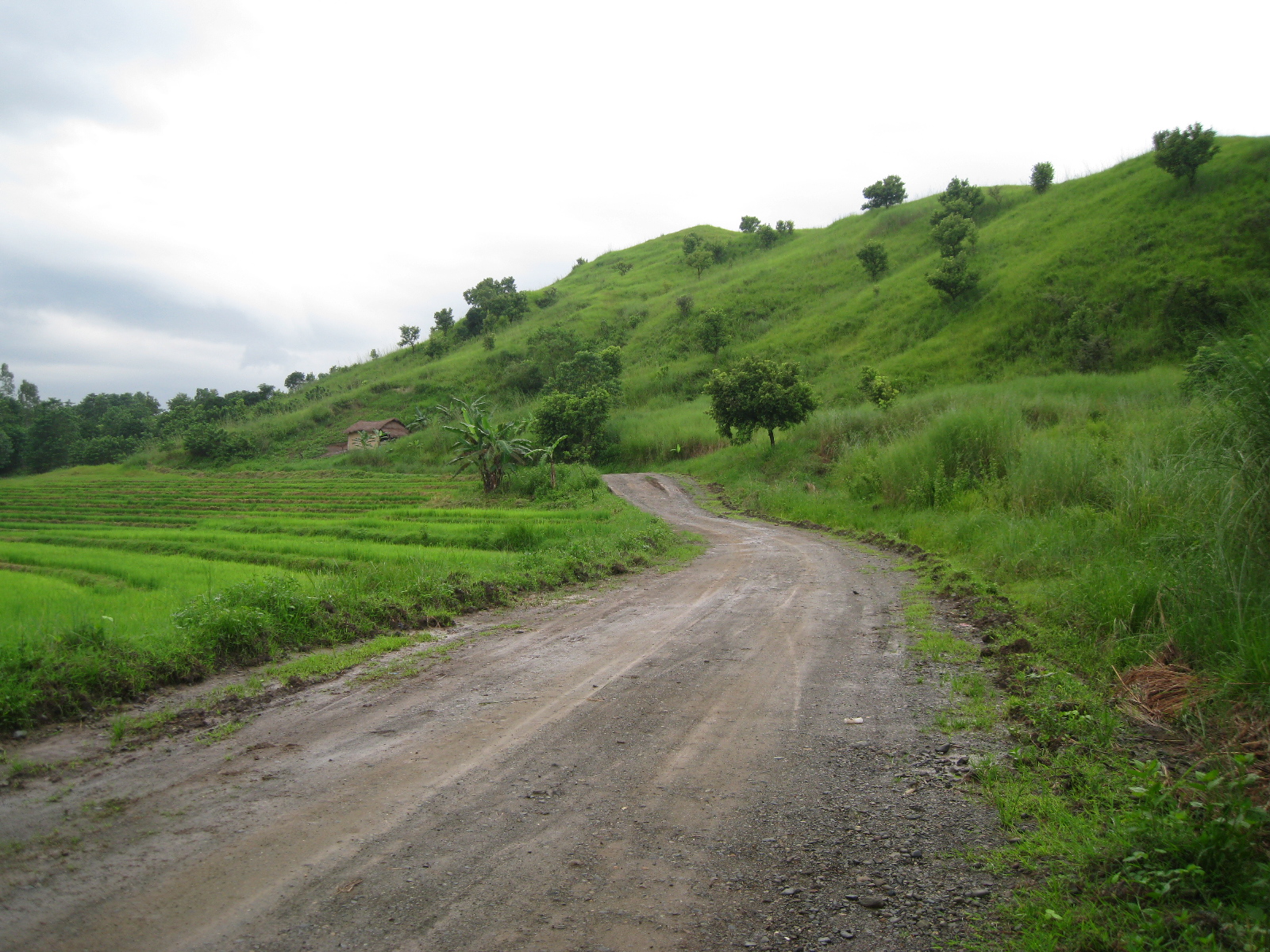
Detailed "Looks" of the Trail Route
One of the Paths Towards The Peak of a Mountain
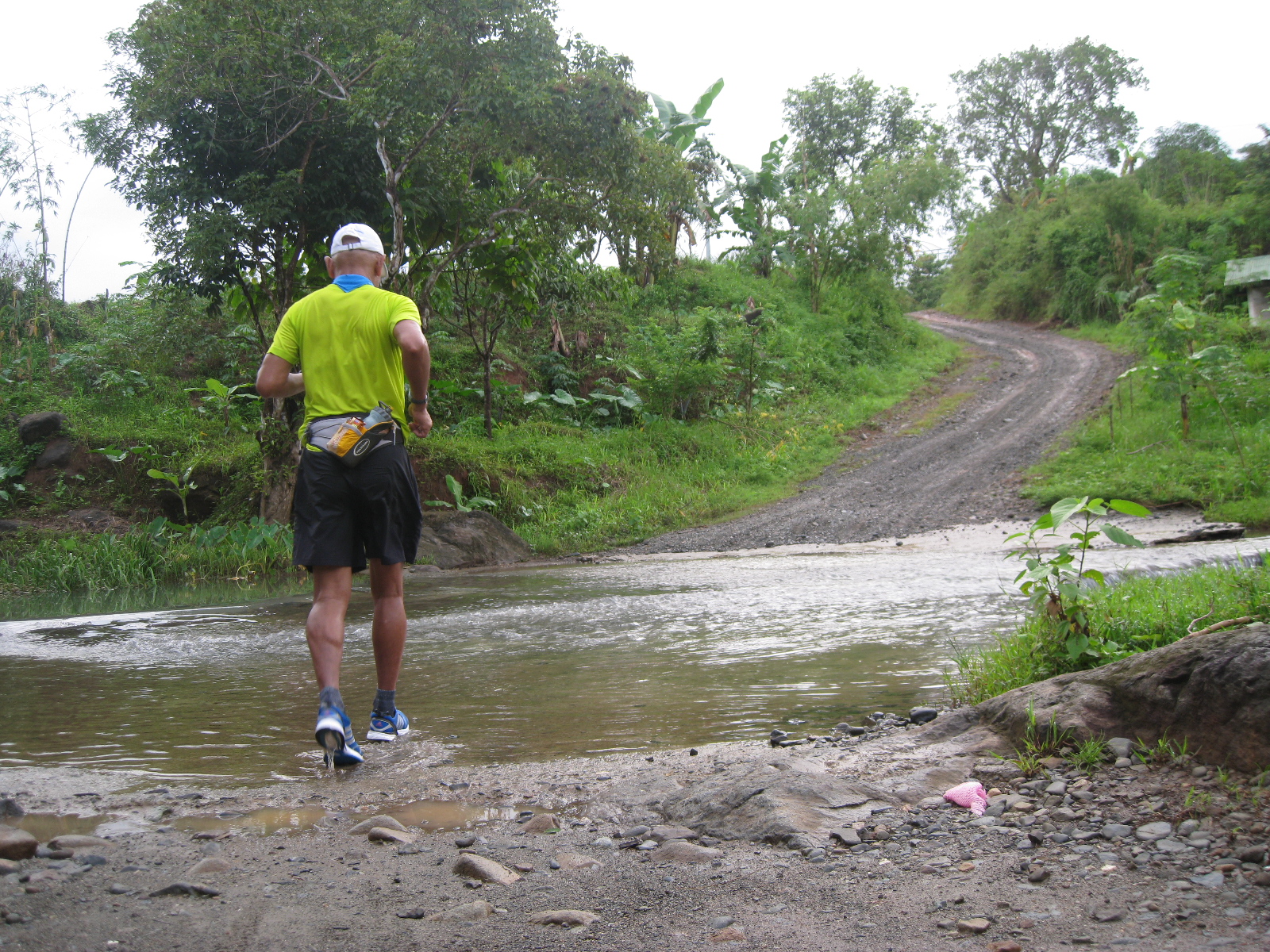
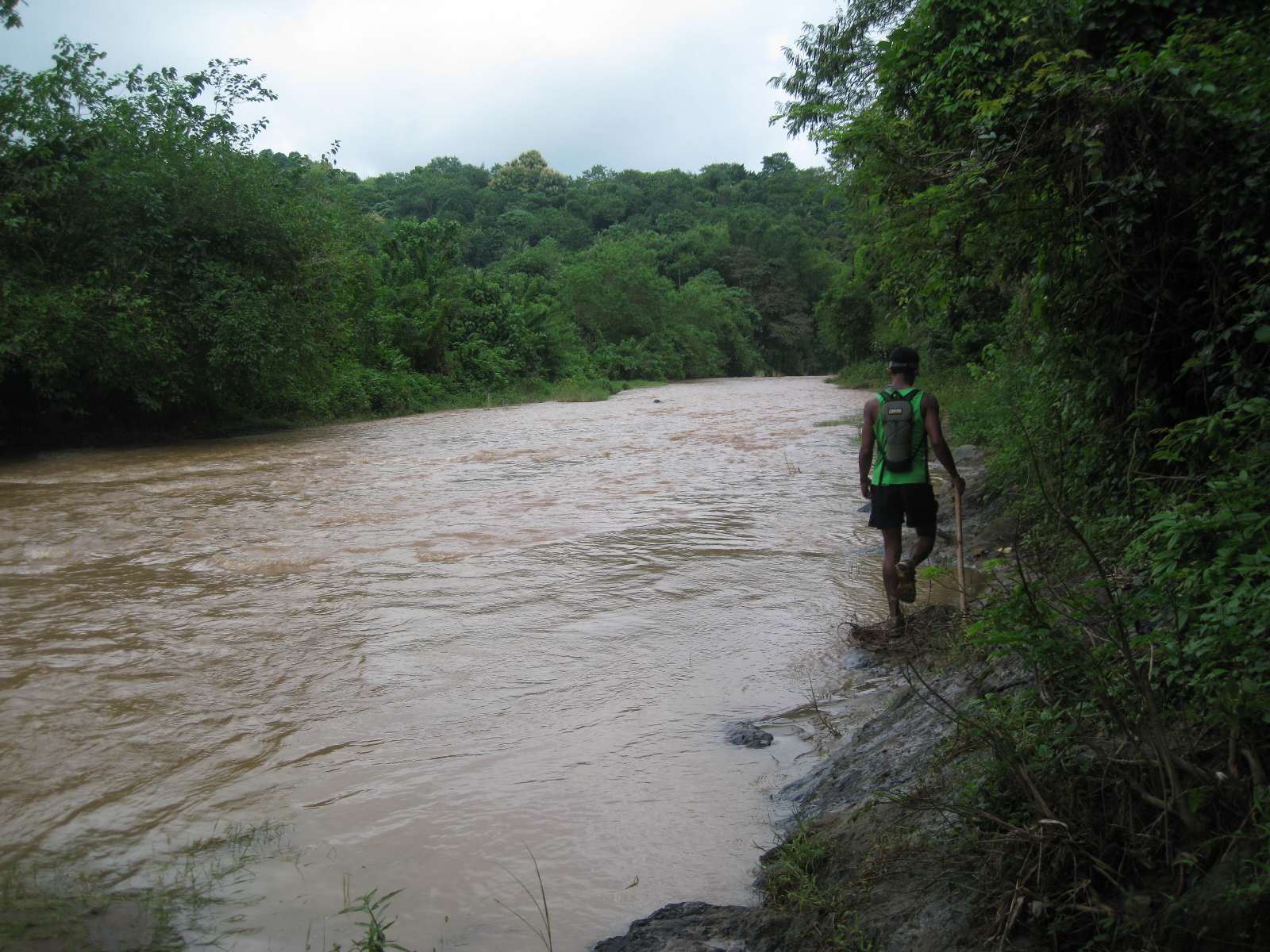
One of The River Crossings
Jack Was Infront Of Me Trying To Look For A Trail
Nice REMINDER Along The Route!
Typical Condition of the Route @ Cattle Stock Farm (Km #30)
Another Nice Reminder Along The Cattle Stock Farm
Watchout For This AlongThe Route!!! It's The Real "Taklang Damulag"!!!

Practically, we left on the northern side of the camp and run through the trails on the eastern side of the camp and then re-entered the camp from the south direction. The route traverses through rolling hills and mountains with maximum elevation of 375 meters with lots of stream crossings through spillways and river crossings. What made the run very relaxing was the scenery, clean air, overcast sky, rain & showers on mid-day, and some conversations with the residents along the route.

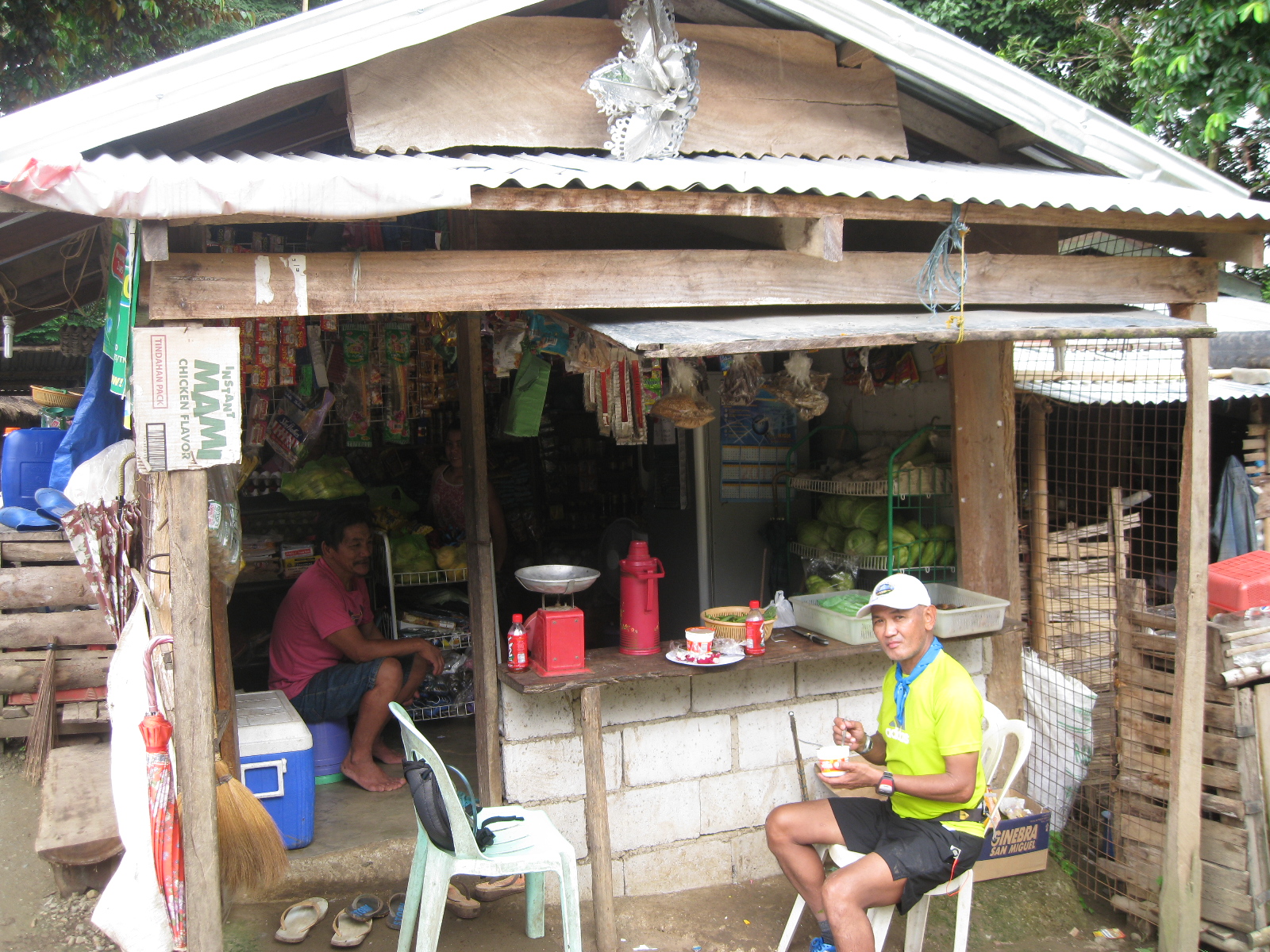
We had two “pit stops” along the route. These “pit stops” are sari-sari stores that sell anything from assorted bread & chips to drinks. We took some time to eat solid foods on these stores and were able to talk to the owners. The people were surprised as they always asked us where are our bicycles as we tell them where we came from. Bicycles? What bicycles are they talking about? They told us that a group of cyclists on mountain bikes would usually pass along the said route. Well, we told them that we were running, jogging and walking along the said route. It appeared that we were the first ones whom they see (as outsiders/visitors) to be running & hiking the said route.

Our "Pit Stop" @ Barangay Palale. Km #26
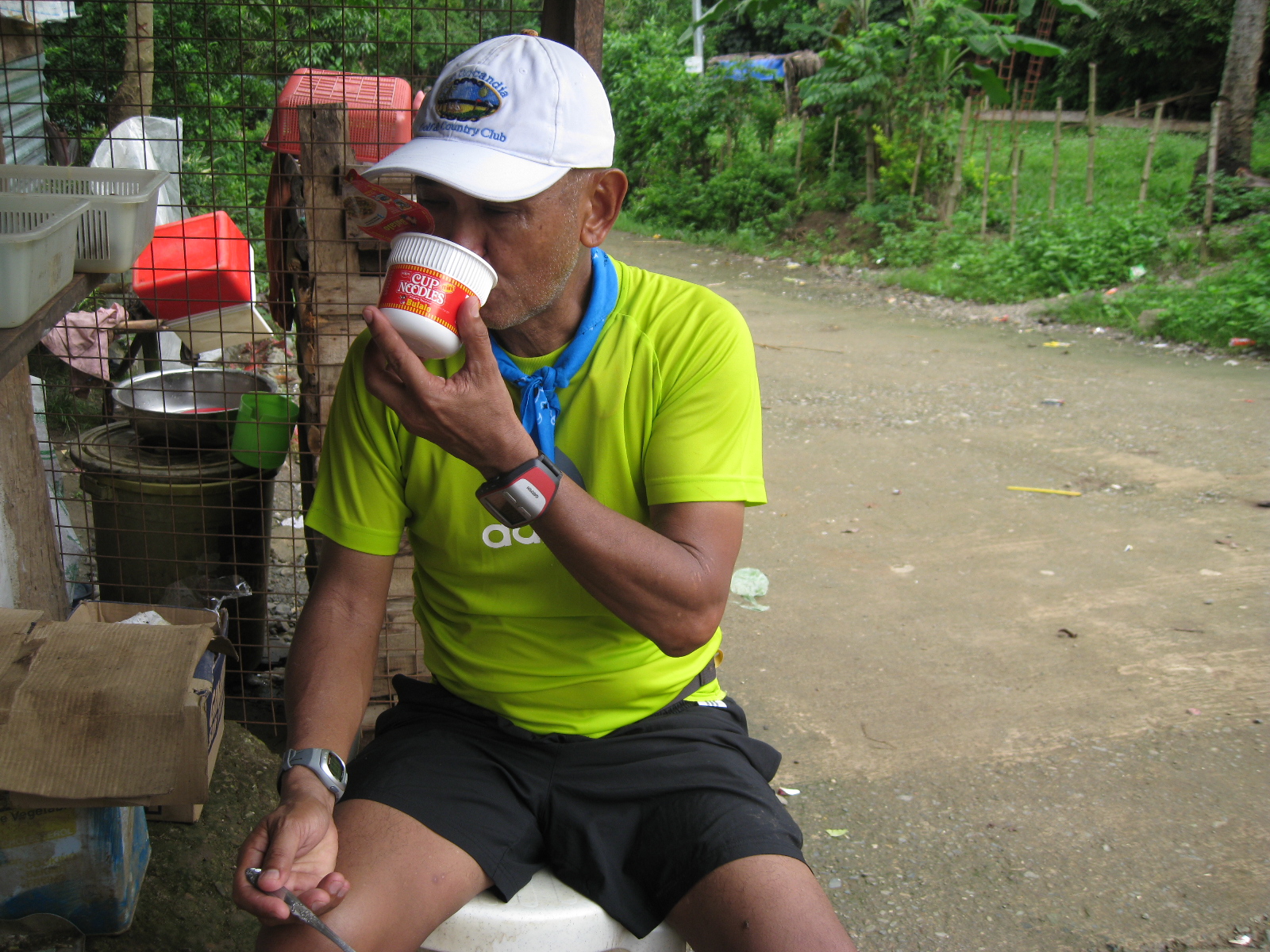
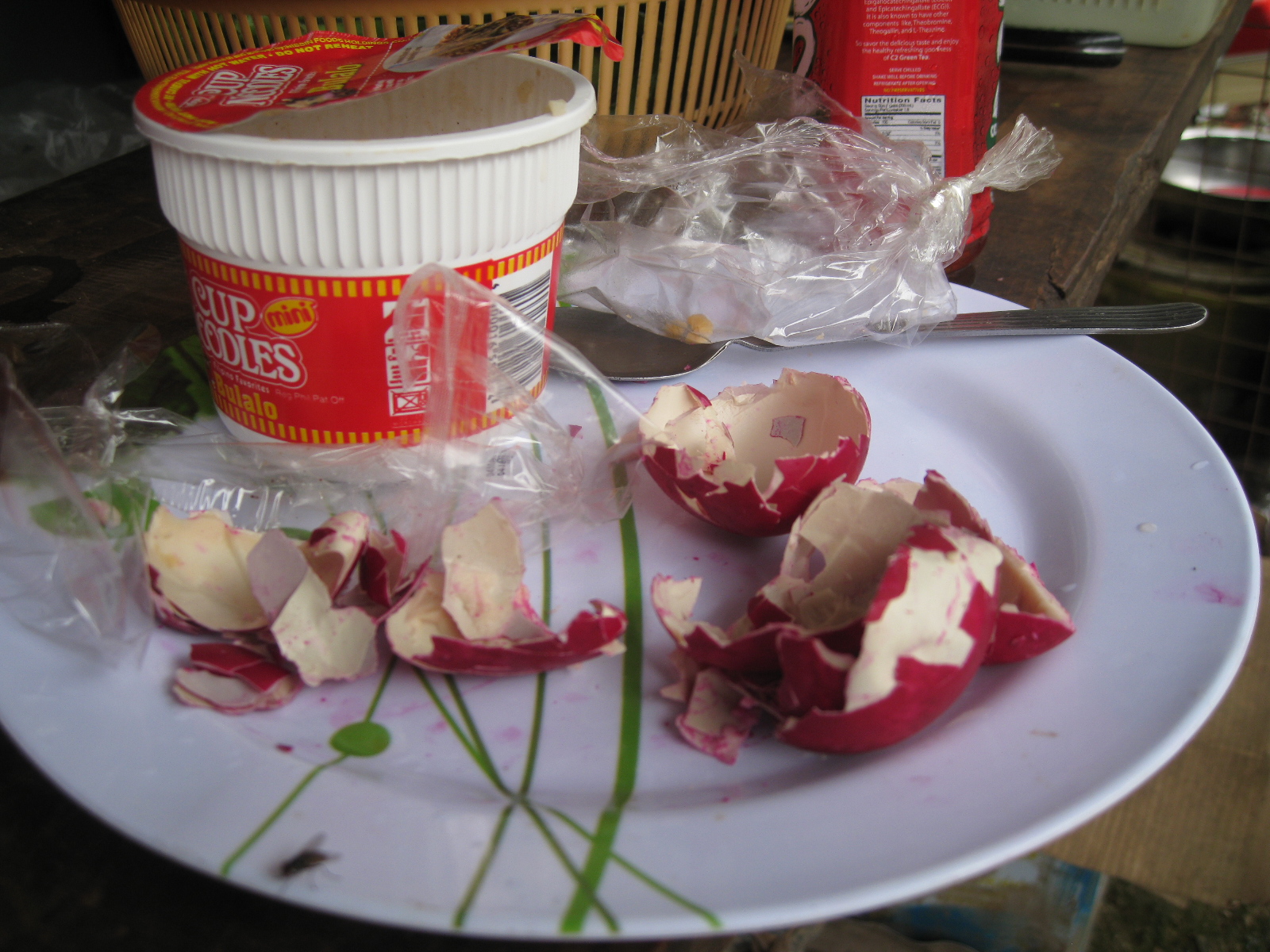
The People Does Not Know "Mami", They Call It "Noodles"
Our "Brunch" For The Day To Include Bread/Pandesal

We finished our recon run before 3:00 PM as we reached our Starting Area. After a quick shower, we were out of Fort Magsaysay as we headed towards Eva’s Restaurant near the boundary of Zaragoza, Nueva Ecija and La Paz, Tarlac where the best and very hot Bulalo is being served.

Getting back from the result of our recon run on the TD 100 route. So far, I have run through a distance of 65 kilometers from the 80K-loop of the trail route with an aggregate total time of 13+ hours. And since the remaining 15K route is on an easy rolling and flat terrain, it could be covered in another 2.5 hours. Adding these times would total to 15-16 hours to cover one loop of the course! However, my recon runs had averaged a pace of 12-15 minutes per kilometer which was basically a “hiking” pace! So, from these data, an average ultra runner could finish one loop in less than 15 hours.

The actual measurement of the course is done! The next thing to do is to finalize the administrative and operational needs for the race!

Guys, I only need 25 “brave and hardcore” runners for this another historic FIRST 100-mile trail endurance running event in the country. Let us help one another in putting our country in the world’s map of ultra trail running.

Official Result: 2nd Mt Pinatubo 50K Trail Challenge


2nd Mt Pinatubo 50K Trail Challenge

5:00 AM September 4, 2011

Sta Juliana, Capas to Crater Lake & Back

Rank Name Time
1 Alfredo Ocampo 6:29:03
2 Rodel Gajol 6:29:05
3 Rayman Delos Angeles 6:34:10
4 Roel Olimba 6:43:07
5 Jerome Lagumbay 7:12:09
6 Jonel Mendoza 8:04:19
7 Godfrey Gozo 8:07:43
8 Ariel Briones 8:15:33
9 Ronel Mondedo 8:19:32
10 Joel Korea 8:20:30
11 Graciano Santos 8:22:10
12 Vergilio Leona 8:32:48
13 Edwin Gajol 8:39:06
14 Randy Rubio 8:40:45
15 Meljohn Tezon 8:50:53
16 Alexander Cenzon 8:55:42
17 Ian Esquilong 8:56:06
18 Angelo Lagumbay 8:57:15
19 Paolo Osmena 8:57:26
20 Andrew Balaaldia 9:13:28
21 Frederick Quitiquit 9:27:14
22 Jay Sabido 9:27:23
23 Samson Ocampo 9:28:28
24 Keshia Fule (F) 9:29:07
25 Toots Moratillo 9:33:33
26 Mark Villafuerte 9:35:38
27 Jael Wenceslao 9:36:15
28 Ronald Yllana 9:44:34
29 Arlito Masamoc 9:52:03
30 Jake Pescador 9:52:04
31 Benedick Meneses 9:59:02
32 Chito Carreon 10:00:51
33 Jazz Paringit 10:04:52
34 Mel Severino 10:10:05
35 Lester Jerome Chuayap 10:10:06
36 Chips Dayrit 10:16:47
37 Gil Ocampo 10:28:00
38 Raul Roco 10:28:24
39 Luke Mark Odon 10:41:19
40 Carl Ocampo 10:41:24
41 Ronaldo Sulapas 10:42:39
42 Ronnel Go 10:49:05
43 Nelson Mallillin 10:49:58
44 Emiliano Burgos 11:07:27
45 Audi Samar 11:09:18
46 Bong Alindada 11:13:49
47 Arman Garcia 11:15:28
48 Sherwin Botabara 11:23:54
49 Ray Batino 11:25:24
50 Robert Reyes 11:28:36
51 Maria Angela Stefanie Hefti (F) 11:28:38
52 Conrado Teodoro 11:28:45
53 Orlando Ylana 11:46:35
54 Philippe Arenillo 11:55:42
55 Bien Soberano 12:04:43
56 Zaldy Santillan 12:09:27
57 Garry Garcia 12:39:49

A total of 66 trail runners started the race with 9 participants declared as DNF. Congratulations to everybody for having the courage to join this trail running event. The stories and experiences of the runners will prove that this event is considered as the “toughest and most challenging” trail run in the country today. That is why it will remain as a CHALLENGE to everybody.

Congratulations to the Podium Finishers and to all the runners who braved the “sudden landslides” of lahar mountains; scorching heat of the sun in the early morning; heat from the lahar sand at mid-noon and early afternoon; more number of water crossings from wider rivers with flowing sands; strong downpour of rain in the afternoon; bigger and slippery rocks along the route; quicksands; and “flush flood” from the rivers.

For those who DNFed and got “temporarily lost” during the race, you still have a chance to redeem and improve your times for the next edition of the race.

See you next year!!!

2nd Mt Pinatubo 50K Trail Challenge


Note: The pictures above were taken last July 31, 2010 during the Birthday Run of July Oconer to Mount Pinatubo.

Rules and Regulations: 2nd Mt Pinatubo 50K Trail Challenge

  1. The race starts at 5:00 AM of September 4, 2011 (Sunday) at the vicinity of the Barangay Hall of Sta. Juliana, Capas, Tarlac.
  2. This race is a solo run and the distance is 50 kilometers. The distance from the Starting Line to the Mt Pinatubo Crater Lake (turn-around) is 25 kilometers. From the turn-around point, the runner has to go back to the Starting Line which will serve also as the Finish Line. Pacers are not allowed.
  3. The cut-off time for the race is twelve (12) hours. Runners must be able to reach the turn-around point in 5:30 hours. Runners who will reach the turn-around point in more than 5:30 hours will be advised to ride on the available 4X4 vehicle in going back to the Starting Line. Such runners will be declared as DNF.
  4. Each runner must be able to have their respective hydration system/belt. The runner’s hydration system must be able to carry liquid/water needed to cover a distance of at least 15 kilometers. There will be Aid Station at Km#8-9 & Km#16-17 and these same Aid Stations will serve as Stations at Km# 33-34 and Km # 42-43 (on the way back). These Aid Stations will be 4X4 vehicles manned by Race Marshals. Be sure to carry some food for you to eat at the Crater/turn-around point (Km #25). The park at the Crater has faucets where you can fill water for your hydration system.
  5. The Aid Stations will have water, cola drinks and limited food supply. The foods served will be chocolate bites, salted biscuits, boiled eggs, and boiled bananas.
  6. Runners are encouraged to prepare their own “drop bags” which will be carried/transported by the 4X4 Vehicle-Aid Stations. Drop Bags should be properly marked with the runner’s name, race number, and Aid Station Number/Km Point where it will be available.
  7. Runner has the option to provide his/her own support vehicle from the 4X4 vehicles for rent available through the Barangay Officials at the Barangay Hall of Sta Juliana. The rent/cost of one vehicle is P 2,500.00 (last year’s price). The fee for a guide is P 500.00 (optional for the runner to get one). However, such individual support vehicle should not “shadow” the runner. It is advisable that support vehicles must “leap-frog” from the runner.
  8. The exact turn-around point is at the edge of the Crater Lake. Runners should go down the stairs as each runner must be able to register to the marshal-recorder upon his/her arrival thereat. Runners shall be properly “marked” at the turn-around point by the Race Marshal thereat.
  9. Runners are advised not to ride on their respective support vehicle even for a short distance or while crossing the river. Riding on the vehicle is tantamount to “cheating” during the race.
  10. Since most of the route towards the Mt Pinatubo has no established or designated trail or path due to changing landscape as a result water & earth movements, the runner can improvise or have his/her own personal choice in establishing his/her direction towards the crater. The rule of thumb for the direction towards the crater is ALWAYS STAY ON THE LEFT PART OF THE EXPOSED AREA going southerly direction.
  11. It is advisable to run with somebody or with a group with the same pace. If not, each runner must be able to have a sight on the runner in front and runner at his back.
  12. This is a trail run which is considered as a RACE. However, it is advisable to help each other on matters of emergency and occurrence of accidents along the route. Any casualty or runner who needs medical attention should be brought to the nearest Aid Station.
  13. Each runner must carry with them basic First Aid Kit. This is a MUST and it is a ground for Disqualification if a runner is without this basic requirement. The First Aid Kit should consist enough cotton, sanitary gauze, medical adhesive tape, betadyne/iodine, and anti-biotic ointment.
  14. Runners must be extra careful in stepping those big rocks along the route. Most of the rocks are slippery and some are not stable. It is safer to walk rather than run on these rocks. Always think safety when you encounter rocks along the way.
  15. There will be a lot of river crossing. Find time to be deliberate in crossing such flowing rivers, most especially where there are a lot of rocks. There are some places where the current of the river are strong, take time in establishing a firm and balance footing as you cross such rivers.
  16. Basically, you will have damp/wet running shoes throughout the run. It is advisable for each runner to apply petroleum jelly to their feet before the run to prevent blisters.
  17. Walking sticks or Trekking Poles are allowed on this run.
  18. At the Crater Lake, if you are not a swimmer, please do not attempt to swim at the lake. We don’t have any Lifeguards for this race.
  19. If in case there will be typhoon or continuous raining on race day, the event will be cancelled and it will be postponed to a later date when weather is favorable for the safety of the participants. Please check on the recent race updates on the Event Page on my Wall at Facebook.
  20. Top 3 Overall and Ladies will receive trophies. Every Finisher will receive Individual PAU’s Finisher’s Medal; Finisher’s T-Shirt; and a Certificate of Achievement (to be given later). This trail run is included in the Ranking of PAU Runners for the Year.
  21. Parking Areas will be available on one side of the Road at Barangay Sta Juliana and at the area near the banks of the river (500 meters from the Barangay Hall). Barangay Tanods will serve as the security/”look-out” to your parked vehicles. Be prepared to pay P 50.00 as Parking Fee for each vehicle to the Barangay Tanods.
  22. The RD and Race Marshals will be conducting random checks on each runner’s hydration system and the mandatory First Aid Kit along the route. It is mandatory for each runner to show their First Aid Kit as he/she checks-in at the Starting Area.
  23. Lastly, please maintain the Integrity of this Race.
  24. For those who paid/deposited their registration fee at LANDBANK, please bring your deposit slip/receipt at the Starting Line for verification.
  25. No bandits to be allowed on this event. Insisting to be a Bandit? Go ahead, make our day!!!

Good luck and Have FUN!!!!

Mt Pinatubo 50K Trail Challenge Elevation Profile (Courtesy of Mark Hernandez)

MAF Test


It was hard for me to adjust to the Maffetone Training by following 180 Formula during the 1st week of my training. I had mentioned in my previous posts that I “cheated” on strictly following the 180 Formula where my Maximum Aerobic Function’s (MAF) Heart Rate shoud be 121 beats per minute. I started with 142-145 beats per minute for the first 2-3 days until I was able to adjust to 138 beats per minute. After a few days, I was comfortably running, slow jogging and walking at 132 beats per minute.

After another 2-3 days, I was able to bring down my maximum aerobic heart rate to 121 beats per minute. After 3 weeks of running and walking within my MAF of 121 beats per minute based from my 180 Formula, I did my first MAF Test. As suggested by Dr. Phil Maffetone, a runner must first warm-up by gradually increasing the heart rate from a resting rate to a range of maximum aerobic rate, from the lowest range of 111 beats per minute to my maximum rate of 121 beats per minute. Warm-up is being done by slow walking up to brisk walking for almost 15-16 minutes which is equivalent to 4 laps at the oval track. It is notable in my running workouts that I don’t perform any stretching exercises before and after my runs. However, a 10-minute squat after my running workout had been a “must” and later became a habit.

Once my max aerobic rate range of 111-121 bpm is reached, I start jogging/running and complete 4 laps on the oval track  which is equivalent to one mile. The time is recorded and written on a paper. After a short recovery by walking of at least 30 seconds, I do my second set of one mile run until I complete five repetitions of one mile run. The time of each mile repetition is being recorded. After the 5th mile, I have to cool-down by walking another 4 laps until my heart beat rate would gradually go down to the rate that was registered before I started my workout. After 3-4 weeks, another MAF Test has to be done.

So far, I just completed my 3rd MAF Test last week. The results are shown in a tabulation below:

JUNE JULY AUGUST
16:50 16:27 16:10
17:32 17:18 16:56
18:10 17:41 17:27
18:55 18:39 17:35
19:28 19:08 17:52

The tabulation would show that I am gaining my “aerobic speed” which means that I am getting faster with a constant HR of 121 beats per minute. When I started to strictly follow the 180 Formula, the distance (as registered by GF 305) I could cover for a hour was 5.6 kilometers. After one week of max HR of 121 bpm, I could cover 5.66 kilometers per hour. After 3 months of 180 Formula/MAF training, my distance covered for one hour is 5.88 kilometers per hour!

Sometimes I vary my method of determining my improvement. I would run/jog for a distance of 8 kilometers (5 miles) continouosly at the oval track by maintaining an average HR of 119-121 beats per minute and try to record the time elapsed to cover the distance. On my first try, I registered a time of 1:31:20 hours. After a few days, I registered a time of 1:30:04 hours. At present, I was able to register my fastest time in 1:25:48 hours for the said distance.

My typical weekly workout would consist of “doubles” during the day—1.5 hours in the morning and another 1.5 hours in the late afternoon. Such workout would include 15 minutes of warm-up, 15 minutes of cool-down, and running for one hour at an average HR of 121 bpm. On the next day, I do 2.5 hours with 2 hours of actual running and the rest for my warm-up and cool down. I do this kind of workout in the morning only which is also considered as my “heat training” under the sun as I start my workout at 8:00 or 9:00 AM. On the next day, I go back to my daily “doubles”. And the cycle continues throughout the week. My long runs during weekends would last up to 3 hours of running & walking, making sure that my average HR would not be more than 121 bpm. The last MILO Elimination Run was my longest LSD for almost 6 hours, covering a distance of 32 kilometers.

It is very evident that I measure my running workouts by the TIME that my feet are on the ground! The distance covered during these timed workouts is just a data that provides a good feedback and evaluation of my improvement in this kind of training. At least, the minimum of hours per week in my training is 12 hours.

It is worthy to note that within this 3-month of strictly following the max aerobic HR of 121 bpm, I was able to try and complete my “Two-Week Test” to determine my carbohydrate intolerance, a situation when the body has more carbohydrates stored in the body system. This “Test” greatly improved my resting HR, lowering and sustaining my MAF’s max aerobic HR to 121 bpm during my workouts, reduced my weight to 135 pounds, and no longer have sleepy feeling after lunch or after a heavy meal. The best result is that I can control my urge to eat foods rich in carbohydrates.

I hope there would be good results in my endurance capabilities as soon I start my anaerobic/speed training in the weeks to come.

180 Formula


Click on the link below on the article by Dr Phil Maffetone on his Maximum Aerobic Function (MAF) which is a detailed explanation on his training philosophy following one’s Heart Rate and the use of a Heart Rate Monitor.

Want_Speed_Slow_Down_2007

Lately, one of my “friends” from Facebook who had been a triathlete for 17 years had called my attention when he read one of my posts that I am presently training using the Heart Rate Monitor. After his retirement from triathlon, he is pursuing his first ultra marathon run this coming December as he thinks that ultra running is “deeper” and more challenging than his past triathlon feats. I am sure this guy is a “purist” IRONMAN and one of the bests in the 90s or in his younger years. He even predicted that if I continued my plans to get into triathlon in the mid-80s, I could be a sure podium winner in my age category. (Note: I could be fighting it out with my brother Retired General Samuel and Retired Colonel Brigilio Balaba of the Philippine Constabulary for the top honors for our age group).

In one of his e-mails, he shared to me the following updated version of the MAF’s 180 Formula.

Here is the formula:

1. Take 180

2. Subtract your age

3. Take this number and correct it by the following:

-If you do not workout, subtract another 5 beats.

-If you workout only 1-2 days a week, only subtract 2 or 3 beats.

-If you workout 3-4 times a week keep the number where it is.

-If you workout 5-6 times a week keep the number where it is.

-If you workout 7 or more times a week and have done so for over a year, add 5 beats to the number.

-If you are over about 55 years old or younger than about 25 years old, add another 5 beats to whatever number you now have.

-If you are about 60 years old or older OR if you are about 20 years old or younger, add an additional 5 beats to the corrected number you now  have.

You now have your maximum aerobic heart rate, which again is the maximum heart rate that you can workout at and still burn  mostly fat for fuel. Now go out and do ALL of your cardiovascular  training at or below this heart rate and see how your pace improves.  After just a few weeks you should start to see a dramatic improvement in the speed you can go at these lower heart rates.

The details of his e-mail is properly explained in the link below:

http://www.markallenonline.com/maoArticles.aspx?AID=2

Based from the updated version, my Maximum Aerobic Function’s Heart Rate is supposed to be 126 beats per minute (180-59 = 121 + 5 for being above 55 years old). However, since I’ve started with my first MAF Test with a Maximum Aerobic Heart Rate of 121 beats per minute, I will maintain 121 bpm as my training’s MAF heart rate.

Good luck to my ultra running “friends” and BDM “veterans” who will be competing on this weekend’s CAMSUR Cobra Ironman 70.3 Triathlon Competition. Take it “easy” on the swimming event. Make sure to get a “spot” for the KONA IRONMAN this coming October in Hawaii, USA!!! Have fun and be the best to yourself!

For those who have started to train for the 1st Taklang Damulag 100-Mile Endurance Run and for the yearly BDM Races, I highly recommend you to try the Maffetone’s Training on the use of Heart Rate Monitor/MAF Test.

Record Time: 52:37 Minutes


This was the elapsed time it took me to reach the peak of Mt Taklang Damulag as I started from the Fernandez Hill of the Special Forces Regiment’s Camp and Training Area inside Fort Magsaysay. The place is also popularly known as “Molave Complex”.

The plan was to recon and hike a segment of the 100-mile endurance run route that includes the Fernandez Hill-Taklang Damulag- Cordero Dam-Special Forces Training Area and back to Fernandez Hill. This a trail loop which has a distance of 13 kilometers. However, at the back of my mind, I was thinking of coming up with a first attempt with a record time for a trek to the famous Mt Taklang Damulag’s peak with the Fernandez Hill as the starting area.

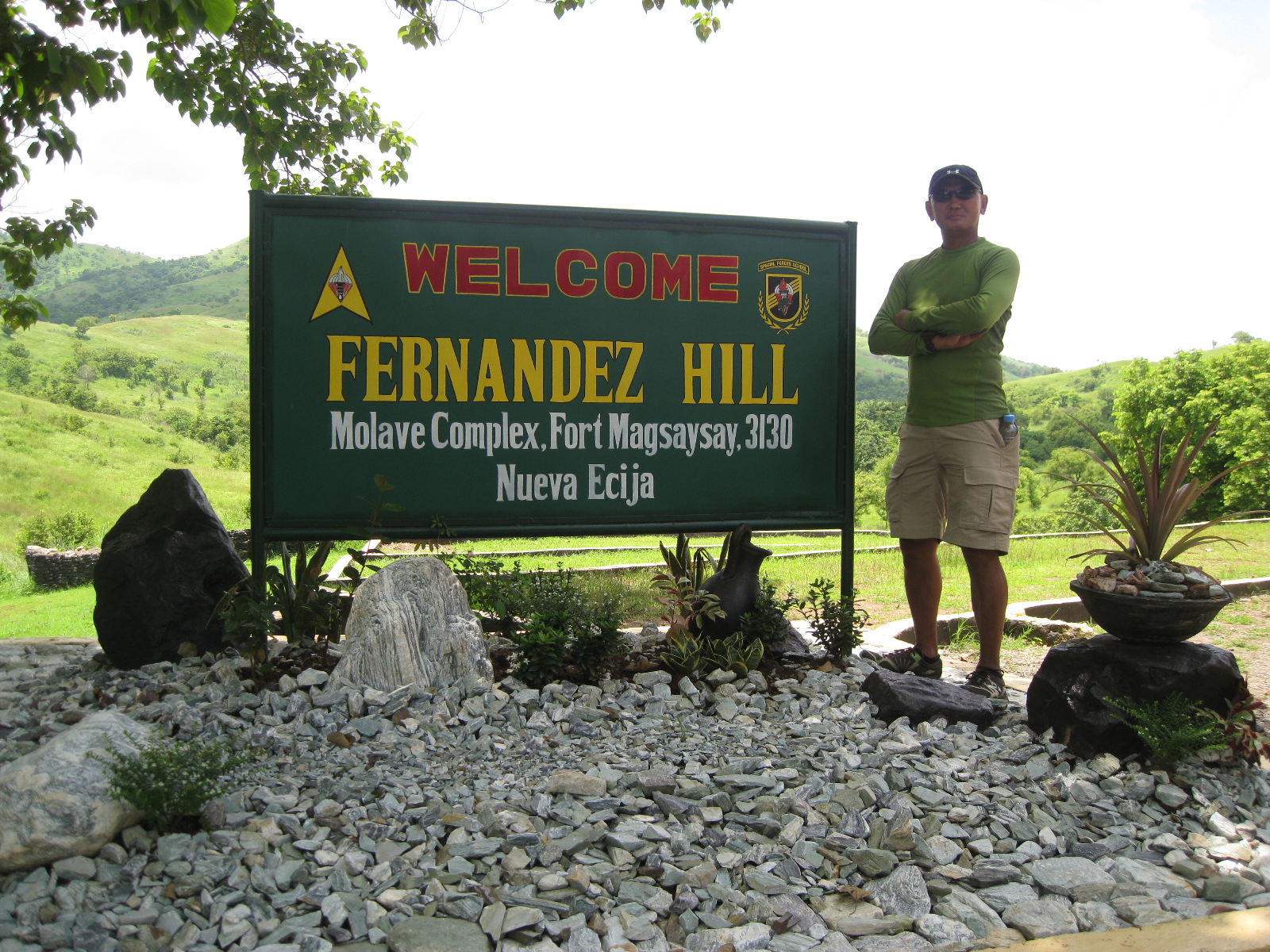
Fernandez Hill Marker Serves As My Starting Line/Area
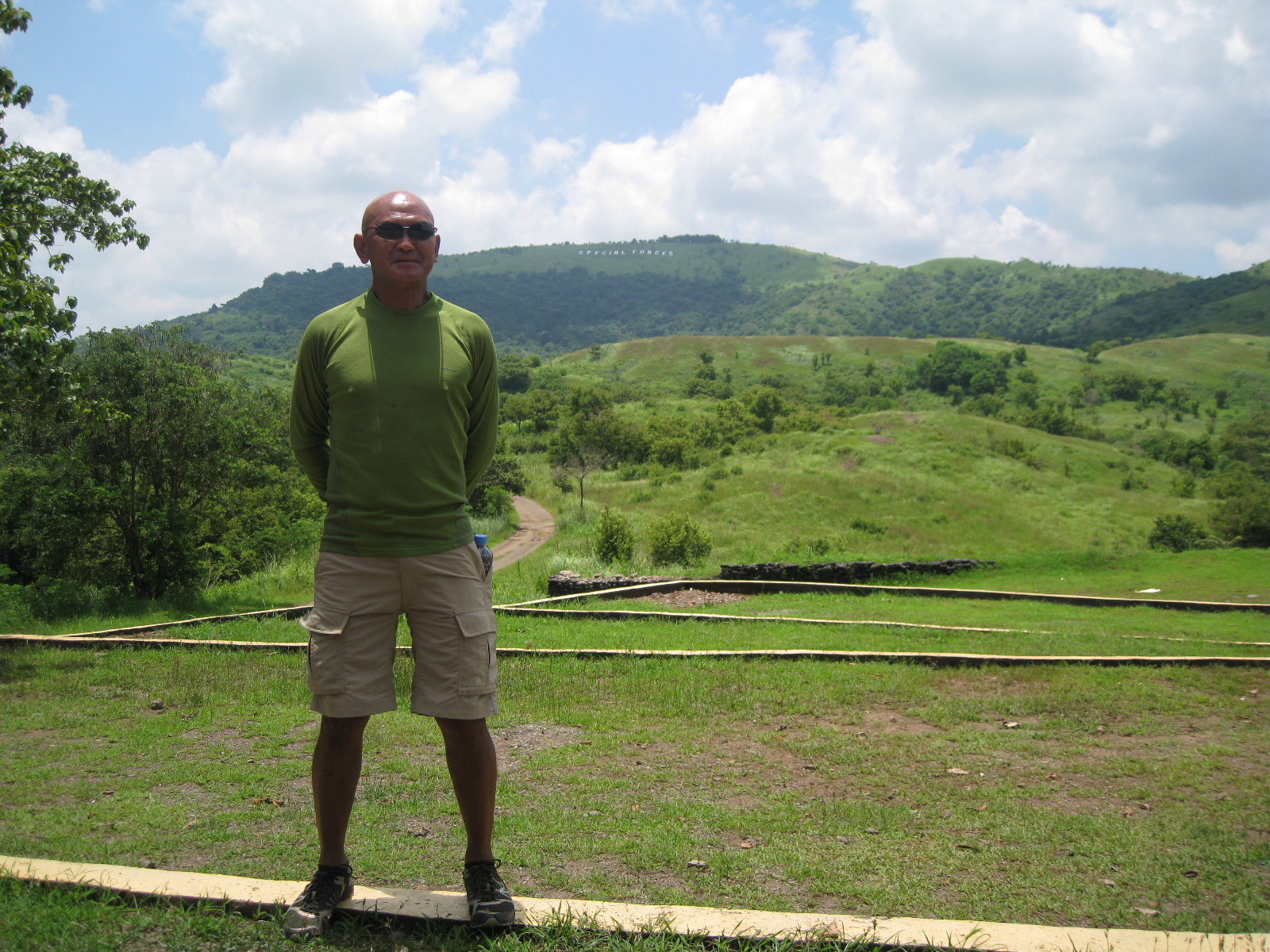
Mt Taklang Damulag On The Background

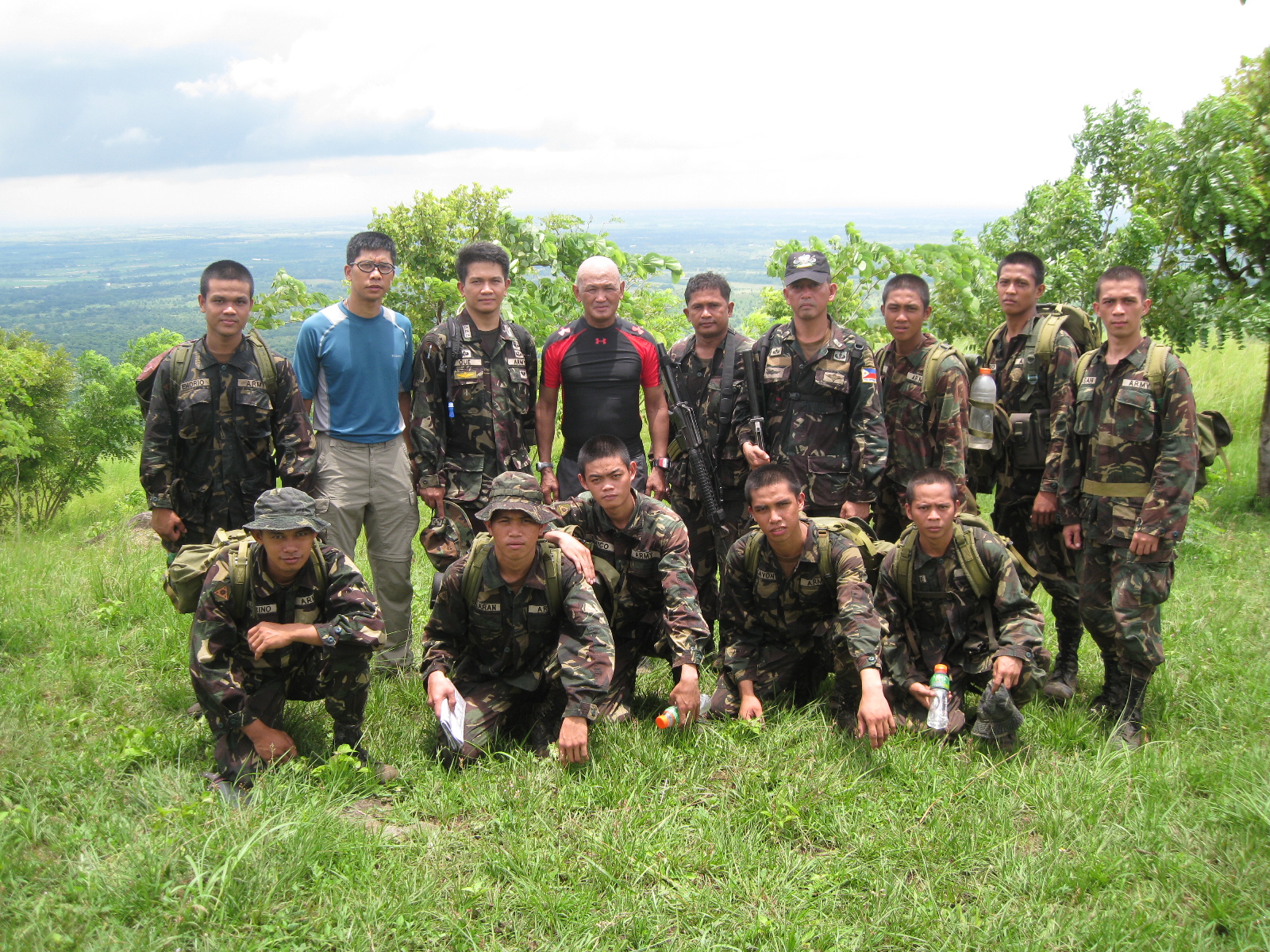
I was accompanied by Lt Col Dennis Pacis, the Chief Operations Officer of the 7th Infantry Division who is a triathlete and an ultrarunner; Captain Jason Que who is the Chief of the Training Department of the Special Forces School; Jack, a member of the Elite Team Bald Runner; two NCOs of the Special Forces who are both runners in the PA Battalion Run Team where I was the Commander; and nine (9) soldiers who are presently on training to become members of the Special Forces Regiment. I personally named this group as the “Ultra Recon Team Six” (based from the famous and popular US Navy Seal’s Team Six).

We started at 10:45 AM with overcast sky from the Fernandez Hill in line formation with at least 6 soldiers in front of me. As I was strictly following my HR training to include this trek, I maintained an HR of 135 about 100 meters from the start with LtCol Pacis and Capt Que behind me. However, our hiking started to increase its pace as we started to climb the mountain.

The trail leading to the peak of the mountain was a combination of crossing at least 3 streams where our feet/shoes have to thread on the water current; sticky, slippery and muddy soil; rocks; and single-track trail covered with grasses. My TNF trail shoes were no match to the combat boots of the soldiers in crossing the streams and walking along sticky and slippery mud along the route. My advantage to these soldiers was that my shoes were lighter than their combat boots.

As we started to climb the mountain, I started to think of coming up with a record time for a Military General, retired at that, to ever climb and reach the peak of the said mountain. Although I am not sure if the past Commanders of the Special Forces and Special Operations Command had undergone this record timing process, I thought that I might as well start coming up with a “trivia” as to who and what is the fastest time for a General (retired or active) to reach the peak of Mt Taklang Damulag.

In less than 400 meters from the start line, my HR started to spike to 145 bpm from my training max of 135 as a result of my excitement to reach the peak with a record time. And my HR steadily increased as I got higher towards the peak of the mountain.

I was wearing my GF 305 on my left wrist (to measure the distance and elevation) and my TIMEX HR Watch on my right wrist. From time to time as I moved upwards, I had to glance of these two watches for the distance covered and my prevailing HR.

From 145 bpm, my HR spiked to 165 and later to a maximum of 183 bpm when I reached the 2.4K mark on the uphill climb to the mountain. I decided to take a rest/breather for about 2 minutes just to be able to adjust to my breathing and to be able to look around on the lower plains of Nueva Ecija. I felt like I was going on a “blackout” or pass out as I started to feel dazed and exhausted but the scenery and the beauty below made me happy and satisfied. A lot of “deep breathing” repetitions made me recover and kept on glancing my HR watch as my bpm was decreasing. As soon as my HR watch reached and indicated 155 bpm, I continued my hike on the last 400 meters to the peak of the said mountain.

I simply tapped the white cross at the peak of the mountain with my right palm to signify that I reached and conquered the very peak of the mountain. My time was 52:37 minutes and I asked Capt Que to make a record/journal of it as part of the trivia of the Special Forces Regiment.

BR With the Special Forces' "Ultra Recon Team Six" On Top of Mt Taklang Damulag

The two Special Forces NCOs were surprised and gave me two “thumbs-up” for being the fastest hiker (whether in my age category or being a General of the Philippine Army, retired or active) to reach the peak. I just smiled to them while I was gasping for air! I wanted to tell them that I was not yet running and it was all hiking. In due time, I will try to run it and improve my time on my next trek to the mountain.

Resting and Looking Around the Scenery On Top of Mt Taklang Damulag

As per gathered by my GF 305, the highest peak has an elevation of 409 meters with a route distance of 2.7 kilometers from Fernandez Hill. It is a short course and a very low mountain but if you think of going up to this mountain for four times in a single event, then you have a very high mountain!

Now, I am thinking of a short trail running event which is dubbed as “Mt Taklang Damulag 5.4K Challenge” !

Conversation With A Champion


One hour before the first runner to arrive at the Finish Line of the 2011 Western States 100-Mile Endurance Race, I was already on the gallery/grandstand area of the Placer High School Oval Track which is a few feet away from the finish arc. Volunteers for the race were mixed with lots of spectators whom I believed were family, friends, and other ultra runners from all over the neighboring States in USA and from other countries around the world.

As soon as the Emcee, John Medinger, publisher & editor-in-chief of Ultrarunning Magazine, announced that Kilian Jornet was a few meters aways from the entrance of the Oval Track, I purposely went down to the sides of the Finish Arc and positioned myself on the left side of the gallery.

I was standing on the gallery and on my left was a guy who was wearing a Hawaiian Shirt and denim pants. There was no way that I could see his frontal appearance as we were standing side by side. As soon as Kilian Jornet crossed the Finish Line, I must have said something about the physical description of the Champion. In my recollection, I might have said, “He’s small as an ultrarunner”! And then the guy on my left said something and our conversation started.

I will mention him in our conversation as the Hawaiian Guy and our conversation went this way. (Actually, he did almost all the talking and I could hardly comprehend/understand some lines that he said. I hope I can accurately relate what transpired in that brief talk with this guy).

Hawaiian Guy: Kilian Jornet is a kind and sweet person. We had been “twitting” with each other months before this race. I knew what he went through in his training and preparation.

Bald Runner: He’s too small and light to be an ultrarunner. He came prepared for this year!

HG: Kilian Jornet is a honest man and he was very transparent on his preparations towards this prestigious event.

BR: Yes, I’ve seen his Kilian Quest Videos in the Internet and he is really good. And he has the full support of Salomon.

Our conversation was interrupted with the announcements of the Emcee and some moments of taking some pictures of the Champion. As the second runner, Mike Wolfe, crossed the finish line, we continued our conversation.

The guy kept on talking about the challenges and the hardships that the elite and the average runners had gone through in their training and most of all, to come up with their respective goal in finishing the race on hand. I just kept nodding my head and sending the message to the guy that I understood all the things that he was teling me.

And suddenly, I’ve asked the following questions:

BR: Did you have the chance to participate in this race? Are you waiting for a particular runner to arrive at the Finish Line?

HG: I finished this race for THREE times! And this is the only time I came to be an spectator in this race for the past 22 years. I was the CHAMPION in the 1989 Edition and my name is Mark Brotherton! This is the old WS 100 Belt Buckle that I won as the Champion then. (Showing me his BIG Champion SILVER WS100 Belt Buckle as he turned his body to his right!)

BR: Ohhh…Wow!!! Awesome!!! (Surprised with BIG eyes!!!) I am Jovie and I am from Manila, Philippines. This is my first time to watch this event and see the terrain of the route. I came here to run for MIWOK 100 but I was injured and I extended my stay here to see the real action of the top ultra trail runners in this event.

Mark Brotherton: Very nice! I have friends who are Filipinos and they are the “best” Registered Nurses in the whole world. As a Medical Doctor, I’ve worked with them. They are kind, loyal and industrious. Do you have plans of participating in this race in the future?

BR: Thanks for that nice compliment to our nurses. Well…I hope I am still strong to finish a 100-mile run in 30 hours with my age of 60 years old by next year. I have to qualify first. I have to improve my 50-mile finish time.

MB: You can finish it. Just prepare and train for it. Wait…I think there is a famous ultramarathon race in the Philippines which I discovered while I was browsing the Internet 2-3 nights ago. I think…it’s the BATAAN DEATH MARCH!!!!

BR: (Surprised…Smiling…with both Eyes wide-open!) Oh, yes…we have that race in the Philippines and I am the Creator and Race Director of the said event and we had this year’s 3rd edition last March. This year, we did the first BDM 100-Mile Run where the finish line is the very same place where the POWs Concentration Camp was located in Camp ODonnell, Tarlac.

MB: Wow! It’s a honor to meet you!

BR: It’s my pleasure also to meet and talk to a Legend and Champion of the Western States 100!

MB: We have to look where Kilian Jornet is right now and I have to meet him.

BR: OK, I have to look for my wife, too! And then try to have a picture with Kilian.

As we were going on a separate direction, Mark said something which I could vaguely understand…but there were words which I could understand.

Mark Brotherton: Jovie, thanks for the conversation. I hope you will not say I am “Mr GAGO” if you relate this story to your friends.

Bald Runner: No! I will not do that! Bye..Thanks! (At the back of my mind, I was thinking that Mark B must be fluent in Tagalog as he is associated with Filipino nurses in the hospital. Well, I just said to myself…if there is “LADY GAGA”, why not for a “GENTLEMAN GAGO” as a name of a male singer? hahaha! I am sure, he should be a Pinoy!)

As soon as I was back at the Hotel, I immediately opened my laptop and browsed the Internet to find out more about Mark Brotherton. This is what the results are: 1985 WS 100; 1987 WS 100; and 1989 WS 100.

As the Champion in the 1989 edition of the Western States 100-Mile Endurance Race, his finish time was 16:53:39 hours. In this year’s edition, his time would land on the 13th position which is still considered as solid, heroic, fast, and strong finish.

He is now one of my “friends” on Facebook and we exchange “comments” with one another. I know he will be the first one who will read this post as soon as I publish it.

With his permission, I am posting some of his pictures that I “grabbed” from his Profile at Facebook.

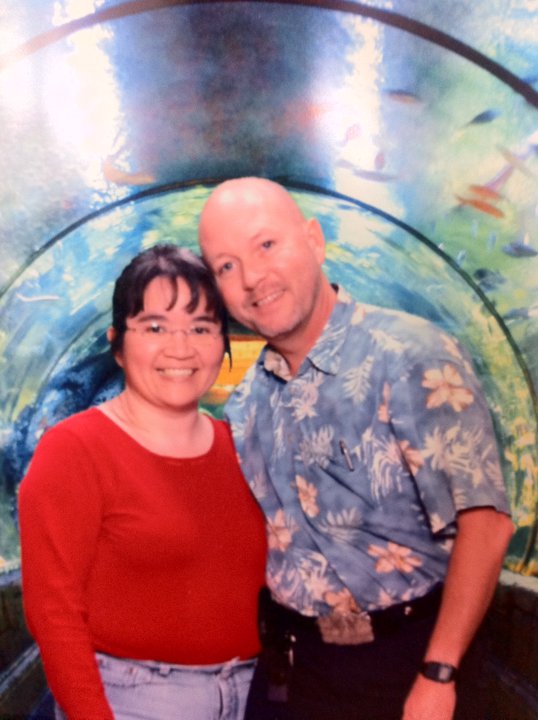
Janelle & Mark Brotherton (Note: The Hawaiian Shirt & WS100 Silver Buckle)
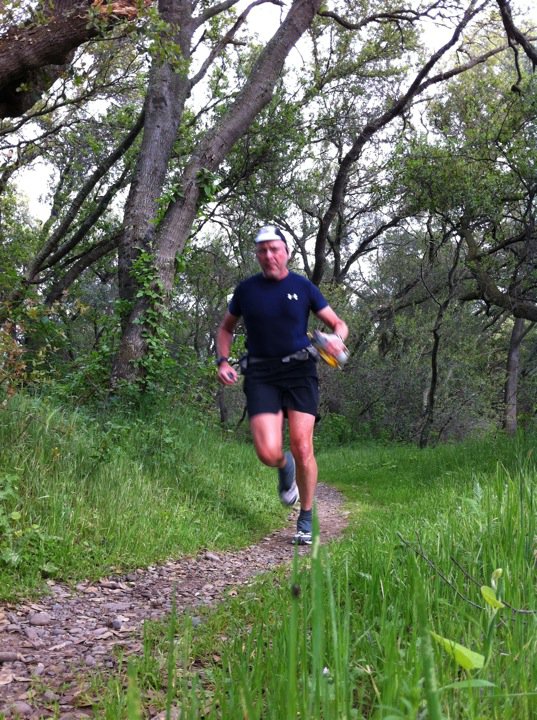
WS 100 Champion Mark Brotherton In Action

Yes, he is also sporting a “Bald” look!!!

This confirms my theory (again??) that “Bald Runners” are the best Ultra Runners!!!! (Joke!)