Result: 2nd BR’s BareFoot 5K Run


2nd BR’s Barefoot 5K Run

Philippine Army Grandstand & Parade Ground

4:00 PM, September 10, 2011

Rank Name Time
1 Randy Bumahit 19:24
2 Michael Mendoza 19:28
3 Peter Edmund Carranzo 20:00
4 Fernando Cabanero 20:42
5 Jonathan Ronquillo 20:44
6 Erik Talagtag 21:46
7 Leoncio Genon 22:04
8 Enrique Sundiang 22:15
9 Tom Soliven 22:47
10 Angelo Lagumbay 22:53
11 Mac Millan 23:01
12 Graciano Santos 23:06
13 Jun Javier 24:13
14 Kokoy Delmo 25:01
15 John Cuestas 25:58
16 William Jalimao 26:40
17 Jesus Tolentino 27:00
18 Kim Flores 27:09
19 Ronnel Go 27:16
20 Chaley Lazaro Jr 27:19
21 Nicolas De Leon 27:28
22 Jennybave Dela Cruz (F) 27:30
23 Mike Logico 27:37
24 Alex Jones 27:39
25 Jarold Lorete 27:50
26 Aileen Manat (F) 27:56
27 Ruther Angeles 28:02
28 Jose Llaneta 28:23
29 Mark Viesca 28:24
30 Ronaldo Salupas 29:01
31 Roy Ocharo 29:11
32 Irhys Piacos (F) 29:12
33 Jessie Llanera 29:29
34 Larry Abulencia 29:37
35 Ryan Cardenas 29:48
36 Roger Abarico 29:49
37 Gerda Summerian Cuestas (F) 29:58
38 Christian Analupa 30:00
39 Benedict De Jesus 30:21
40 Mark Alano 30:39
41 Philip Ellazo 30:55
42 Lloyd Lopez 31:15
43 Aileen Piacos (F) 31:17
44 Roque Lorenzo 31:22
45 Minnie Beth Tomas (F) 31:52
46 Ed Mar Galocgoc 33:16
47 Joseph Cuizon 33:16
48 Mark Obligado 33:19
49 Edrick Ang 33:44
50 Errol Rafalle 34:09
51 Pjong Dela Paz 34:19
52 Nancy Brazil (F) 34:31
53 Gerald Austria 34:43
54 Anna De Chavez (F) 34:47
55 Cherry Tamayo (F) 35:25
56 Pamela Mangampo 35:26
57 Darwin Del Valle 35:52
58 Dina Odo 36:40
59 Jan Micheal Yu 36:41
60 Takumi Reyes 37:10
61 Francis Chua 37:20
62 Dianne Alano (F) 38:26
63 Rexie Saldivar 39:12
64 Vannz Flores (F) 39:37
65 Violeta Flores (F) 39:43
66 Chino Atayde 40:14

Result: BR’s 1st “Minimalist” 5K Run


1st “Minimalist” 5K Run

Philippine Army Grandstand & Parade Ground

4:00 PM, September 10, 2011

Rank Name Time
1 Ryan Moral 21:09
2 Ben Silva 21:30
3 Mark Arroyo 21:30
4 Hale Vankonghnett 21:32
5 Jun Javier 22:44
6 Francis Coles 22:50
7 Julito Pauley 24:19
8 Alfredo Vedarozaga 24:57
9 Timothy Taburico 25:09
10 Jun Arganda 26:24
11 Aladdin Cordero 27:03
12 Irish Rivera (F) 27:19
13 Wesley Orana 27:24
14 Celito Macachor 27:45
15 Ronaldo Salupas 27:56
16 Dado Perlas 28:10
17 Jeric Estabillo 28:27
18 Pancho Samonte Jr 29:05
19 Beth Rosal (F) 30:25
20 Carmeli Ortega (F) 30:42
21 Garry Chua 31:43
22 Bien Soberano 32:15
23 Arnel Cupon 33:44
24 Ceres Nido 36:29
25 Glo Labao (F) 38:26

8-Hour Run @ TD 100 Route


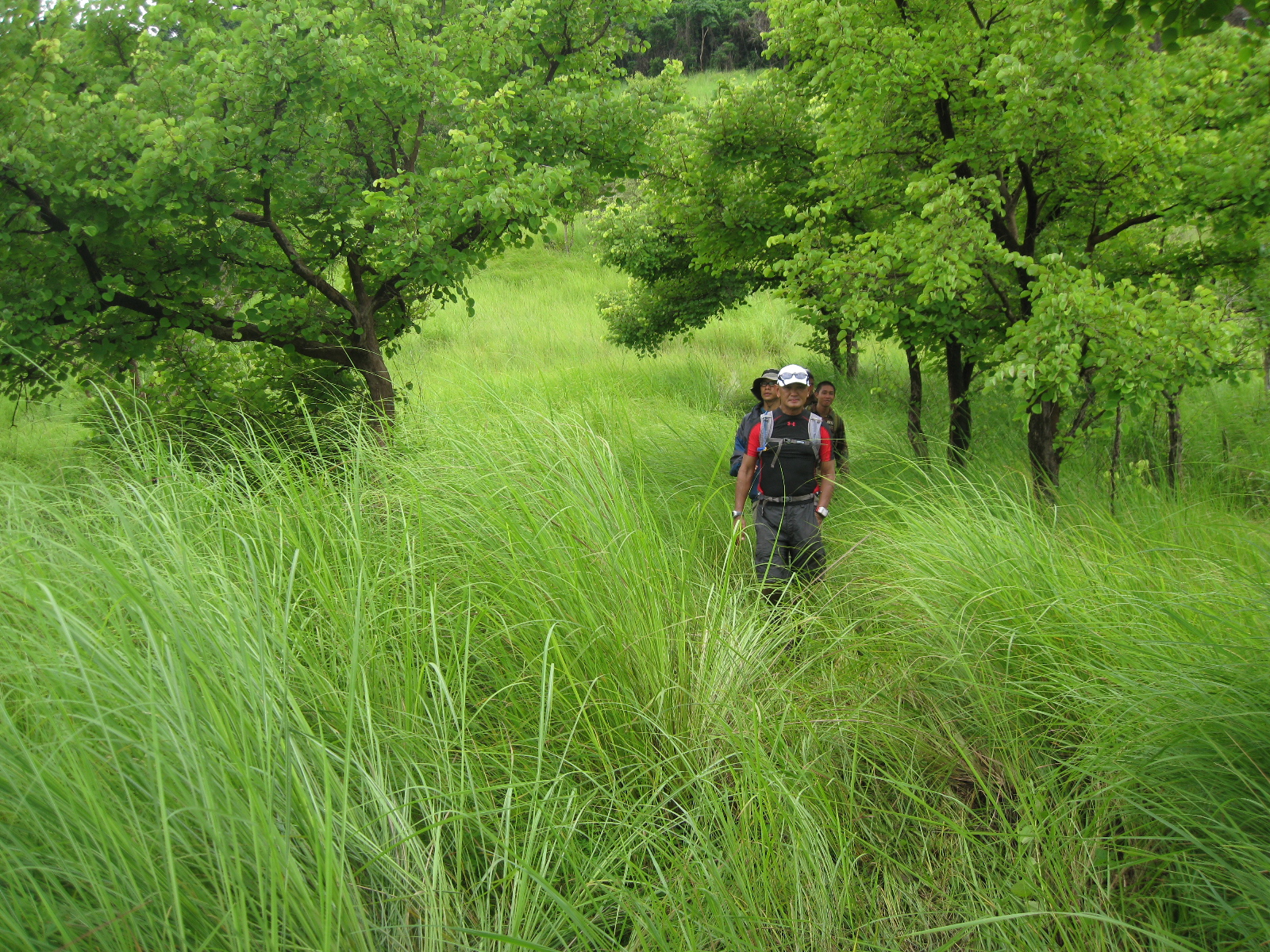
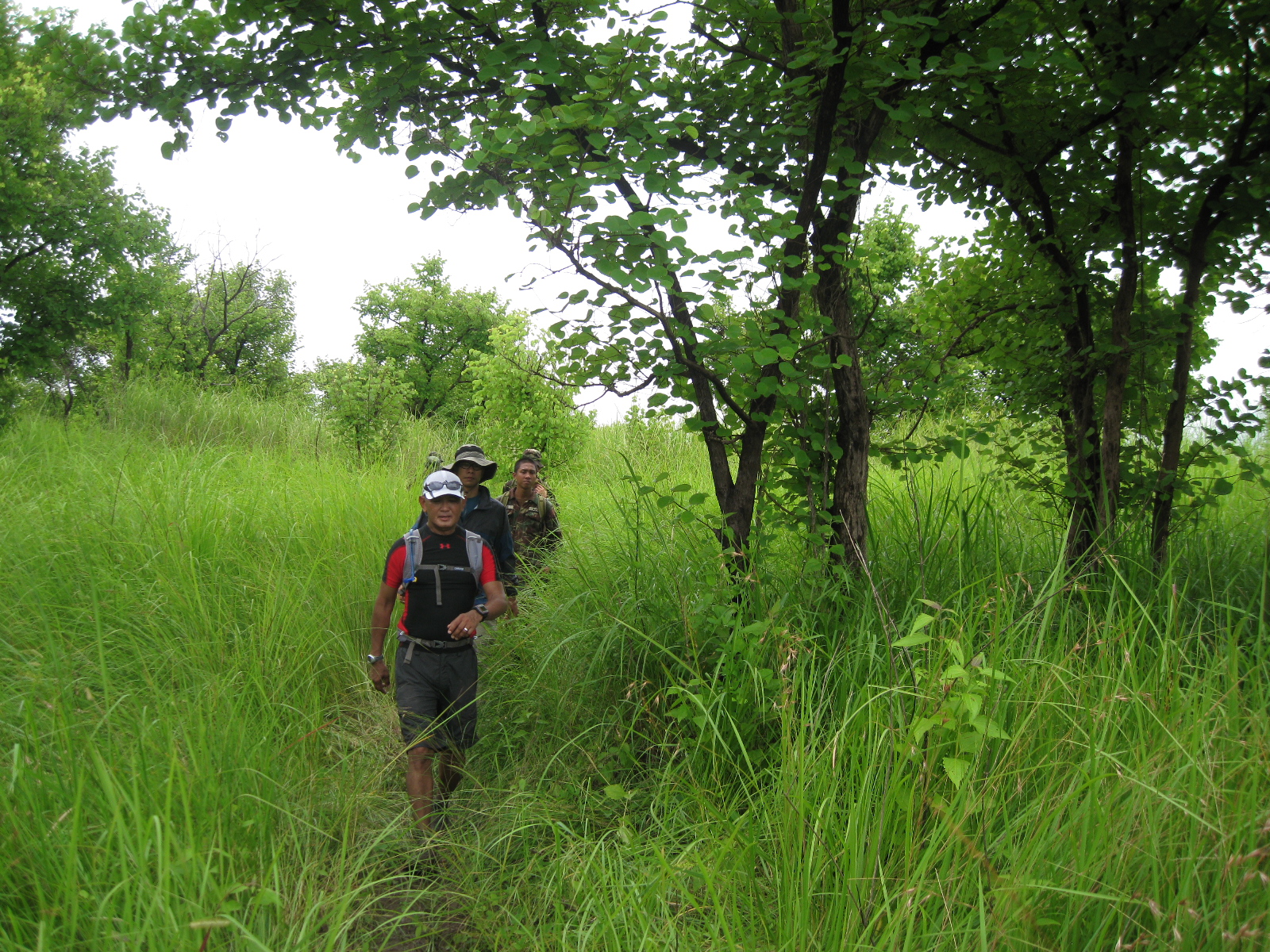
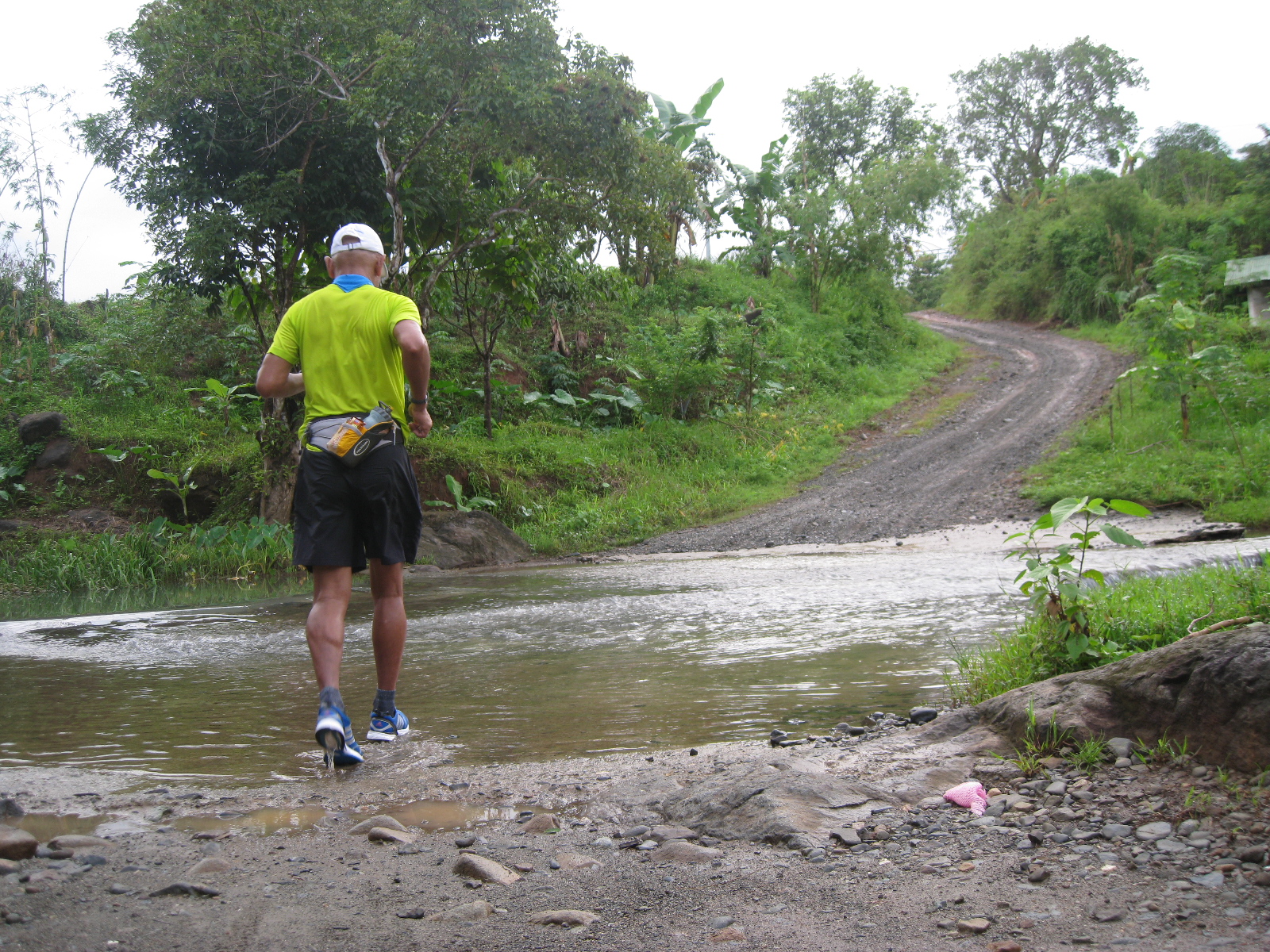
On the last week of July, I went to Fort Magsaysay and make a recon on the trail route surrounding the Taklang Damulag Mountain. I mentioned in one of my previous posts about my trek towards the peak of the said mountain where I timed 52:37 minutes to reach its peak from Fernandez Hill, a distance of 2.7 kilometers. The trek to the peak was only a part of the 25-kilometer distance that I run & walked/hiked during that day and the trail loop towards the mountain peak from Fernandez Hill and around as it covers a distance of 13 kilometers. It took us 5+ hours to cover the distance (25K) as most of were hiking and brisk walking. If we tried to jog and run the flat portions of the route, we could have made it in 3+ hours. This part of the Taklang Damulag 100-mile run consists of the “inner loop” of the course.

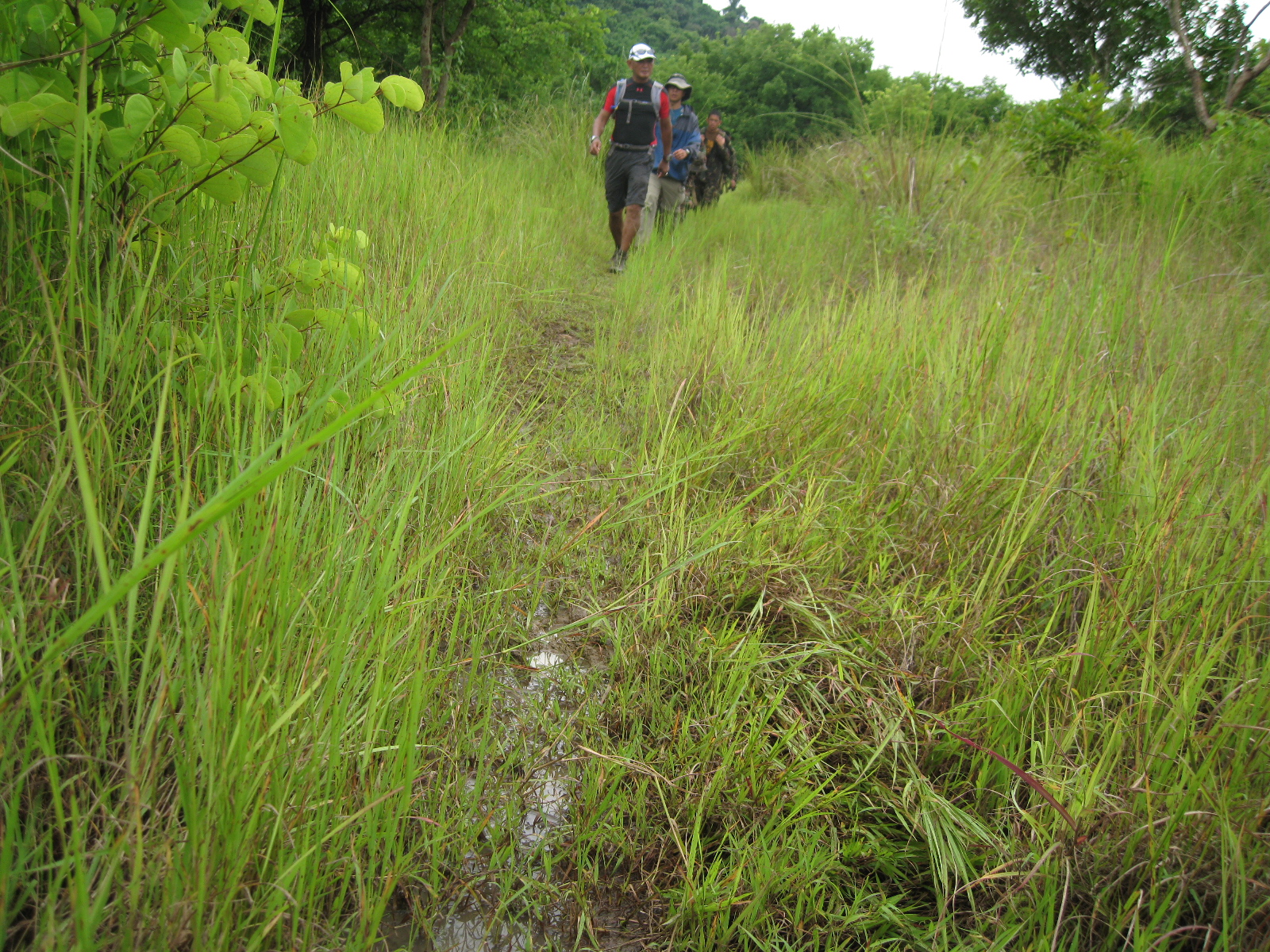
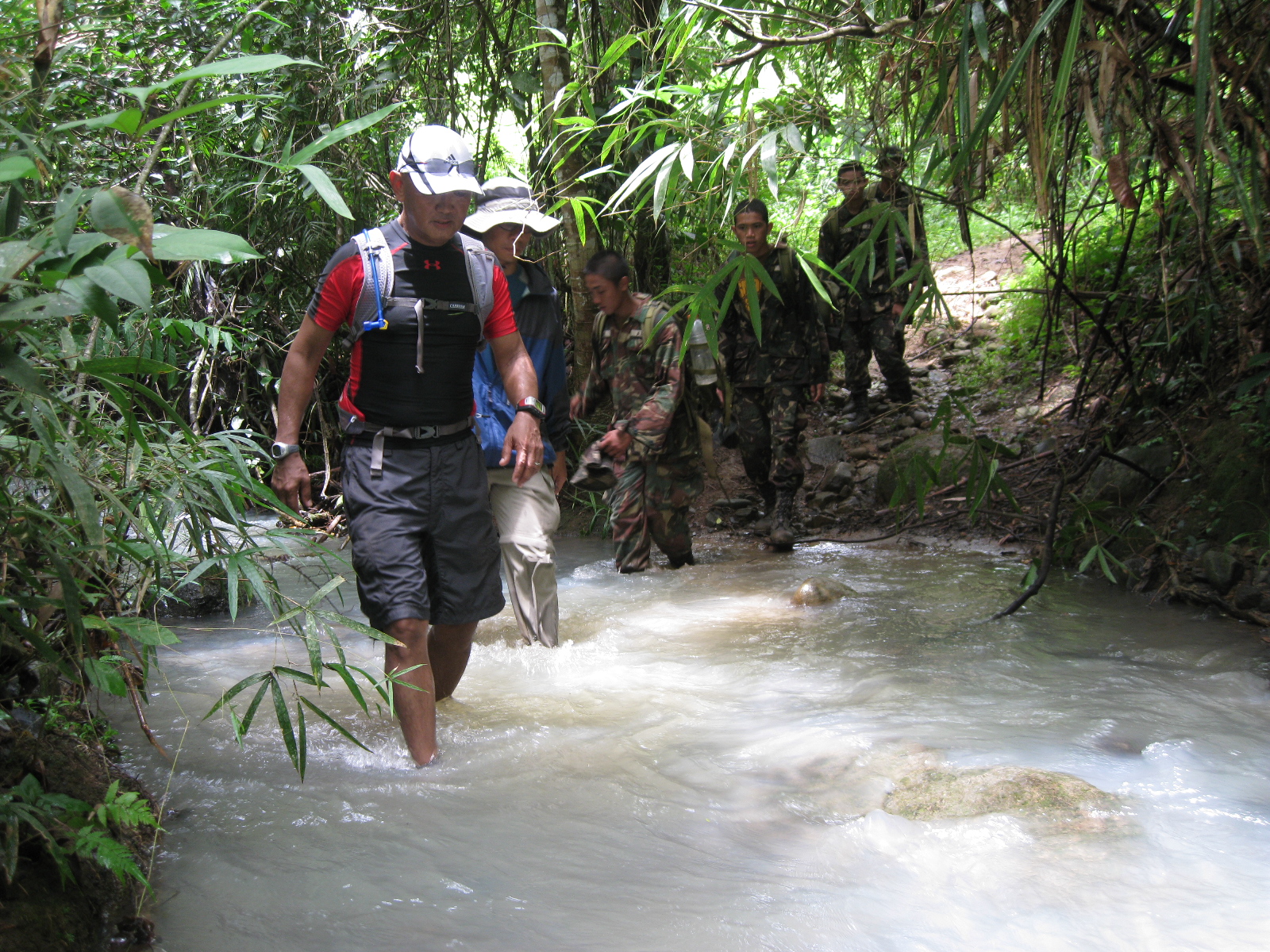
The following were the pictures taken during my recon run at the “inner loop” on the last week of July:

Descending From The Peak Of Mt Taklang Damulag
Lots of Single-Track Trail Around Mt Taklang Damulag
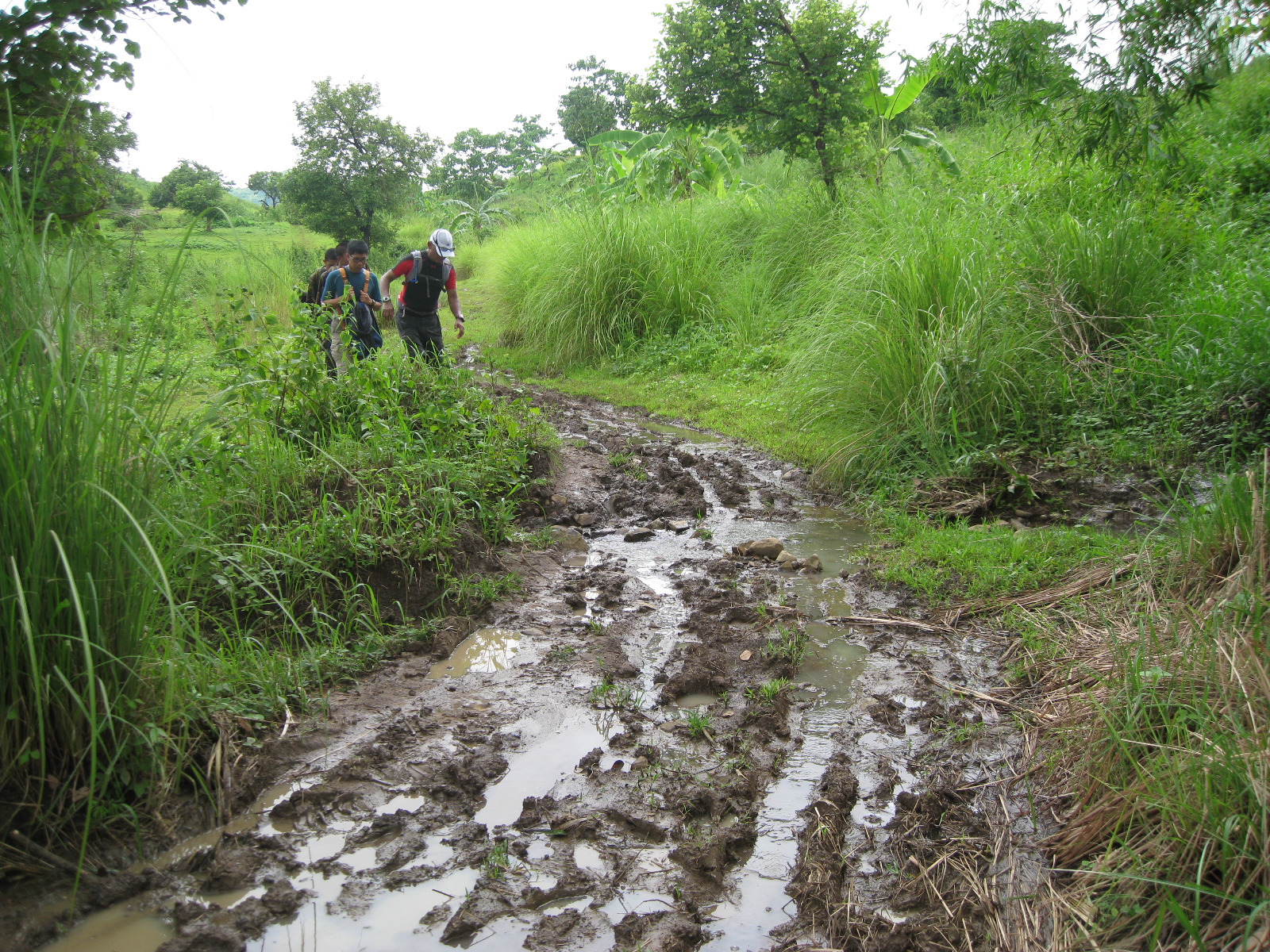
Muddy & Slippery Trail
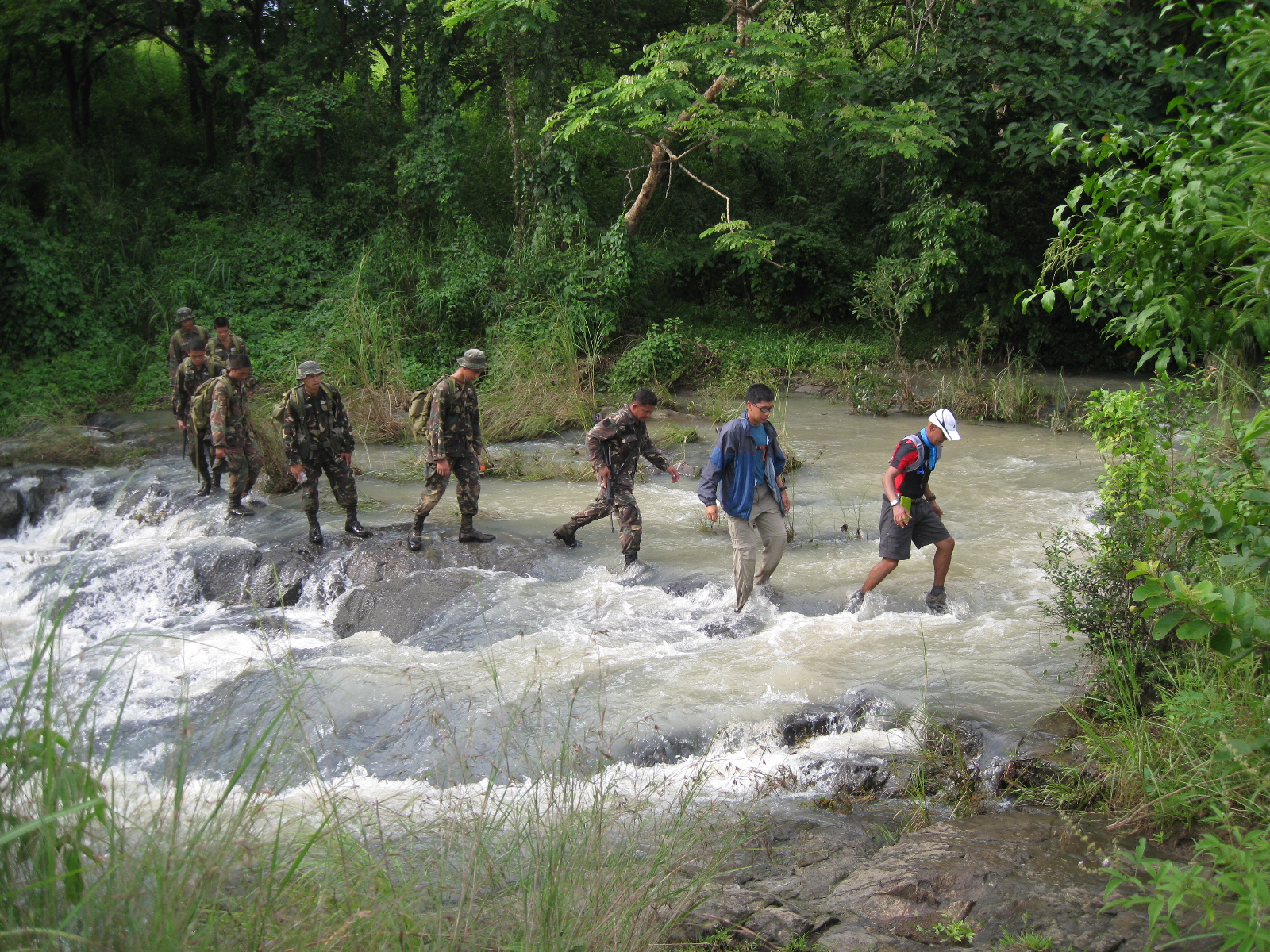
Lots of Stream Crossings!
More Muddy Trail
....and Wider Streams To Cross!!

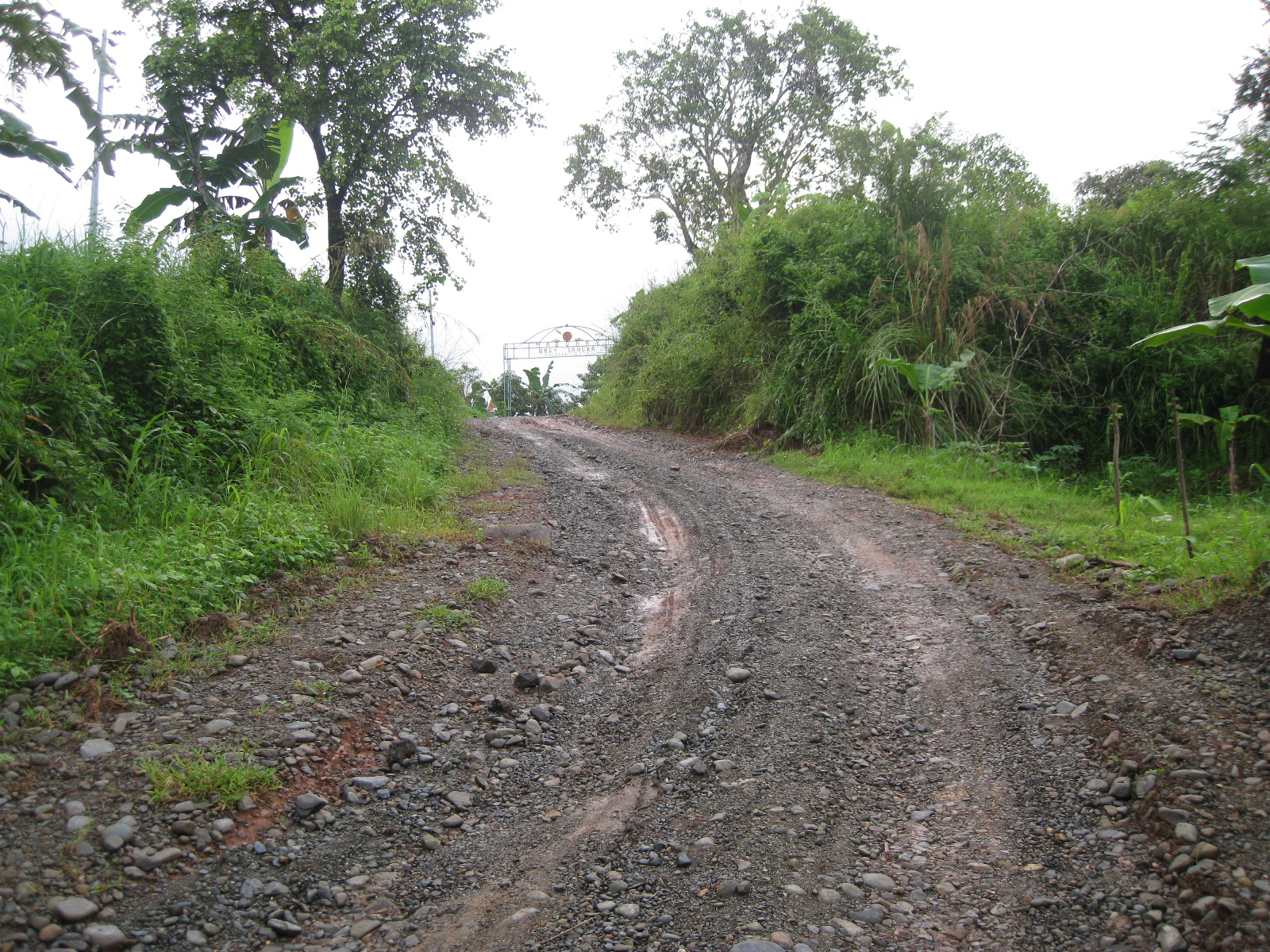
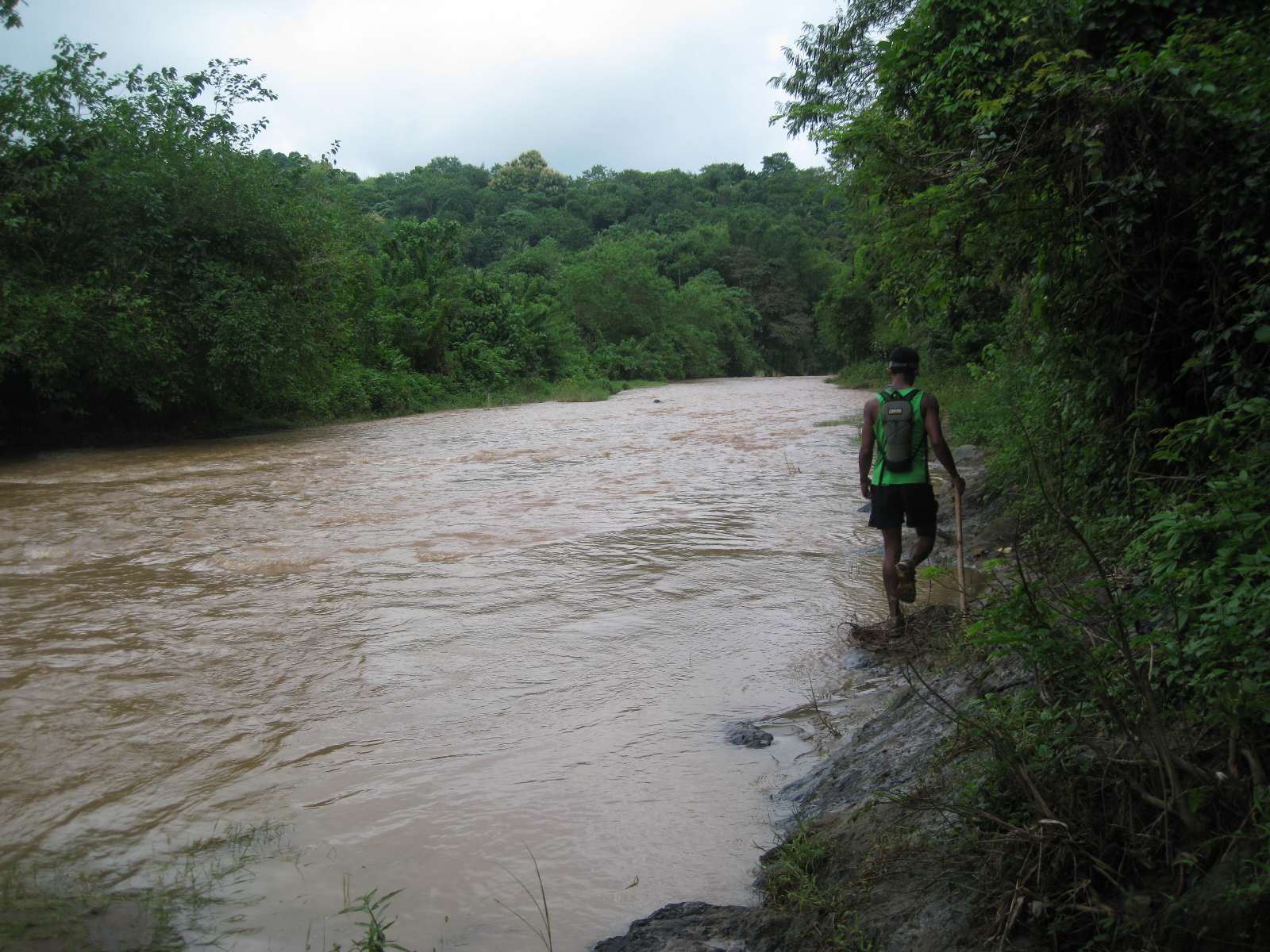
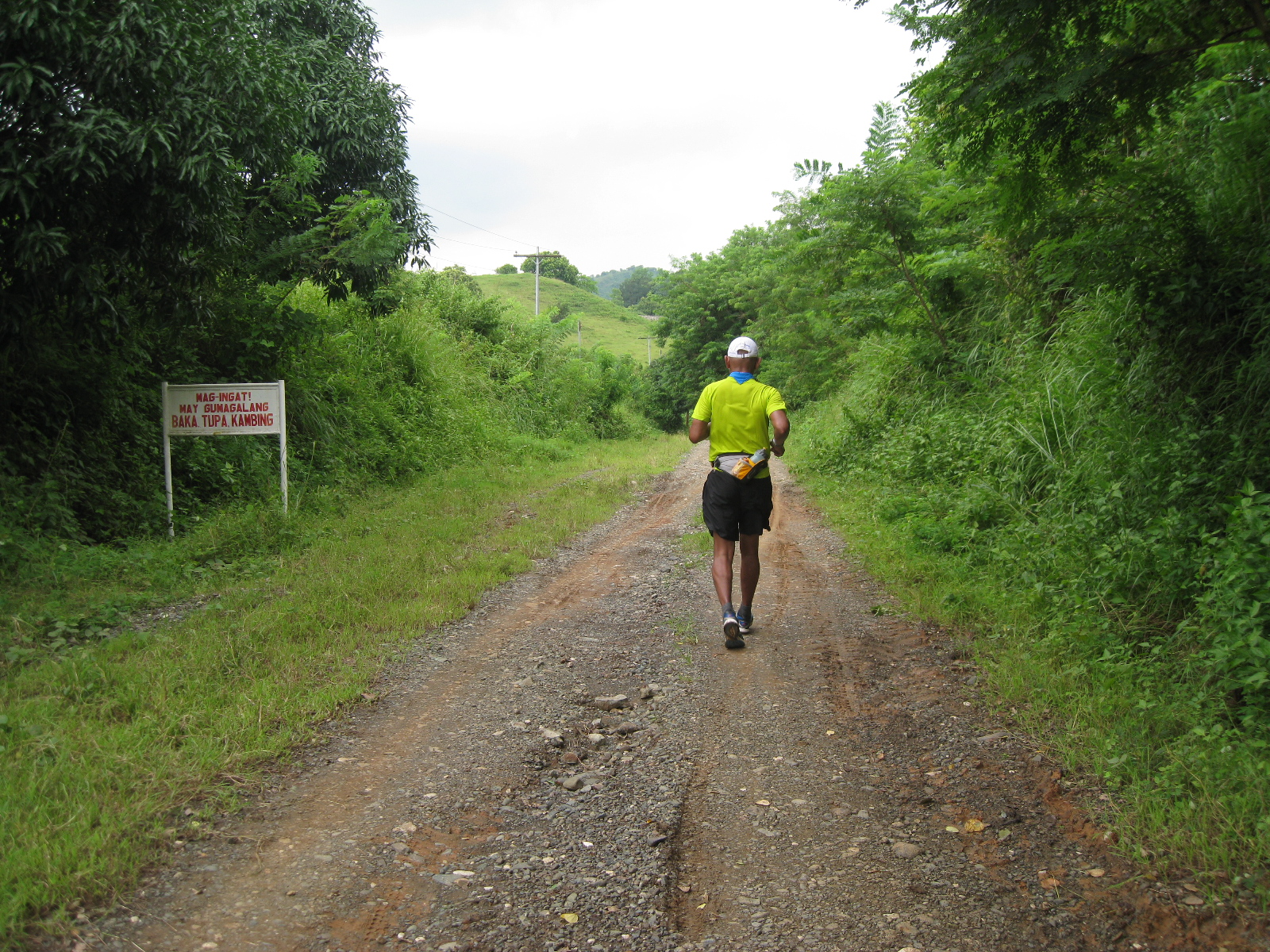
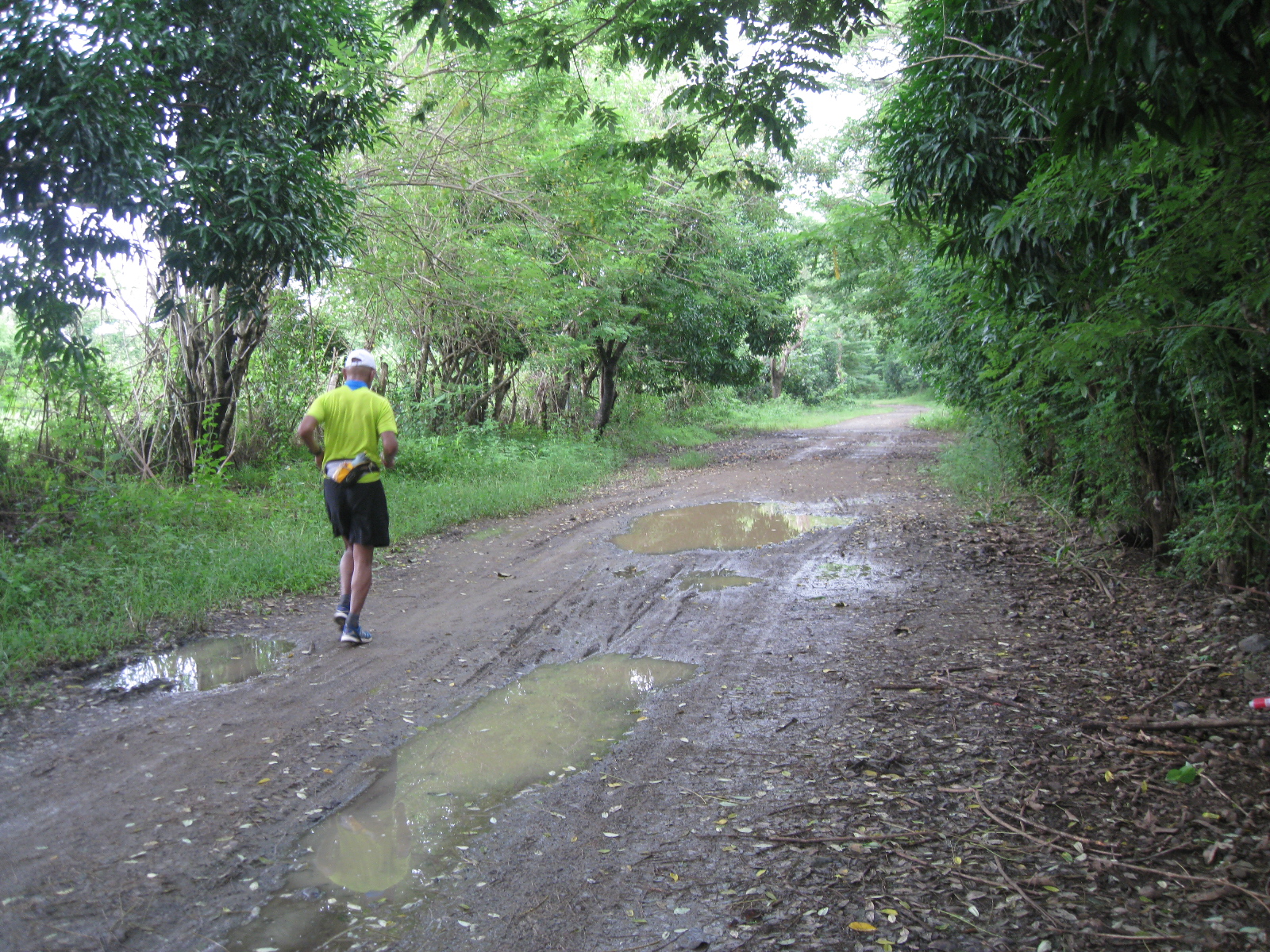
Last Thursday afternoon, together with one of my elite athletes, Jack Espana, I went to Fort Magsaysay and slept overnight in one of the transient facilities. We were already in bed at 9:30 PM and woke up at 4:30 AM of Friday. At 5:30 AM, we started our run from the Starting Area of the Race by hiking the first 2 kilometers as our warm-up. The purpose of the run is to recon the first 40K distance of the route which is considered as the “outer loop” of the TD 100 route. The trail route is located outside the cantonment area of Fort Magsaysay passing through Barangays Pag-asa, Dona Josefa, Bacao, Langka 1 & 2, Palale, Cattle Stock Farm, and Nazareth.

@ Km #6 in Barangay Dona Josefa
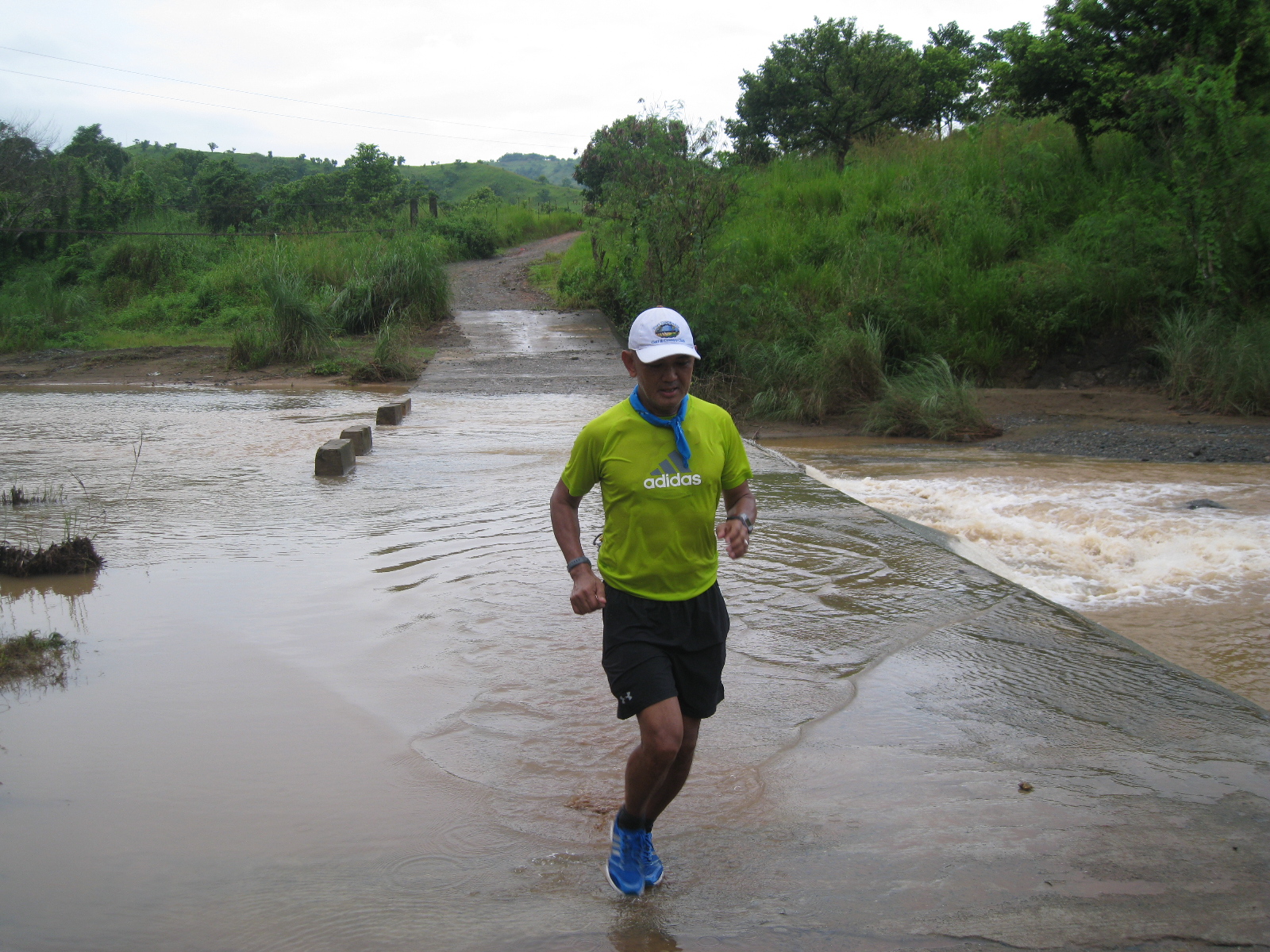
First of So Many Spillways To Cross
Am I Floating Above the Water?
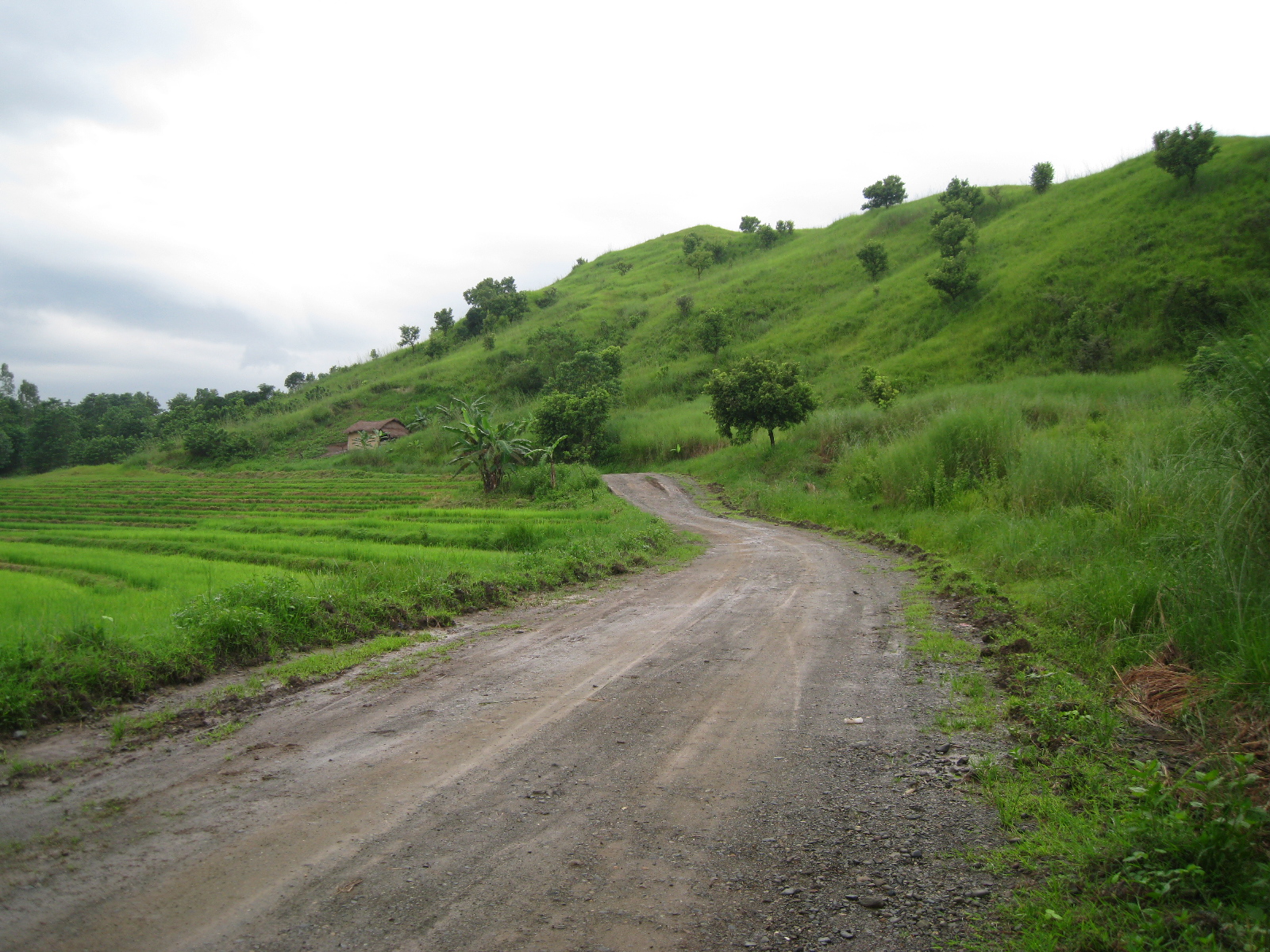
Detailed "Looks" of the Trail Route
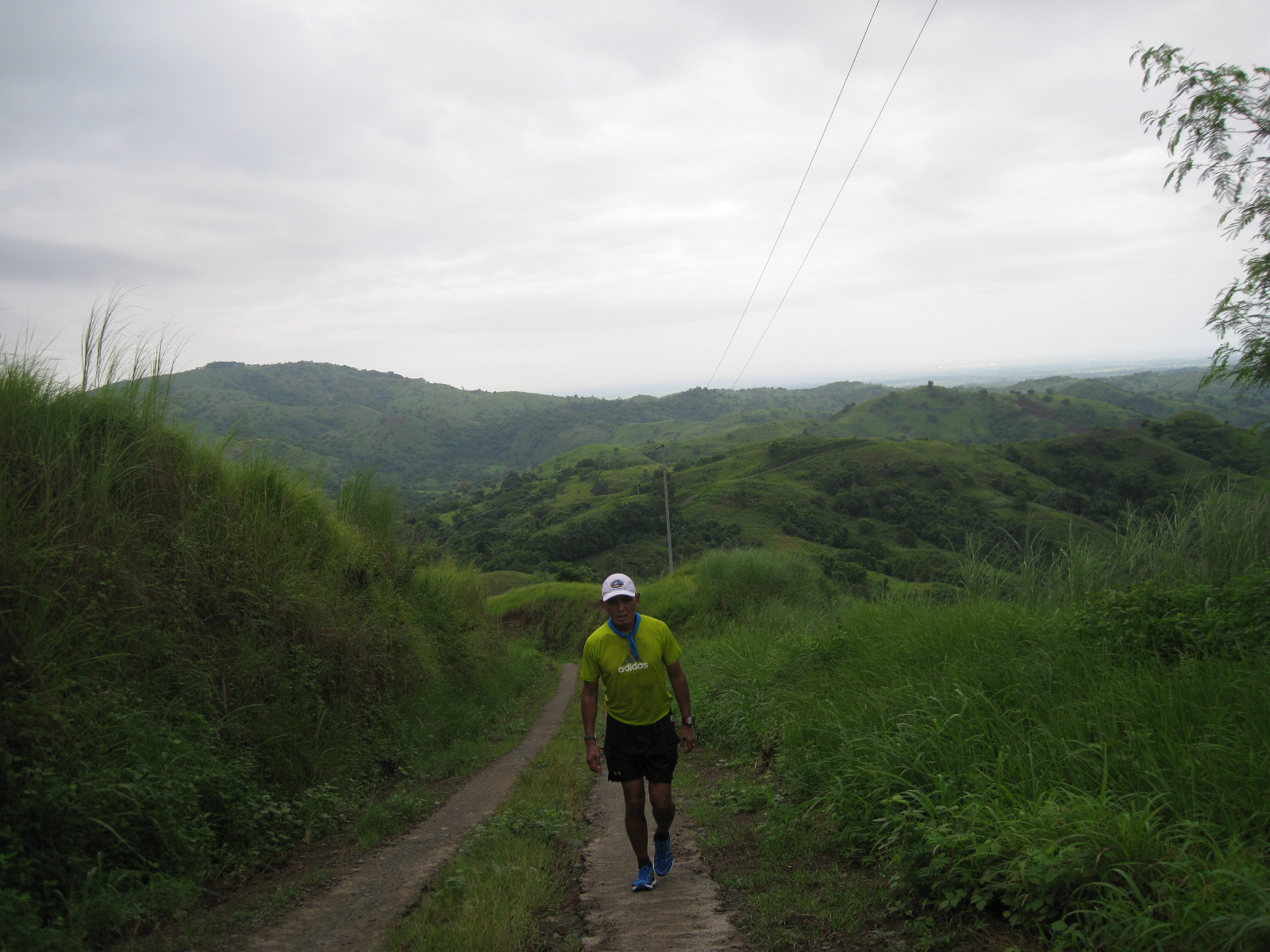
One of the Paths Towards The Peak of a Mountain
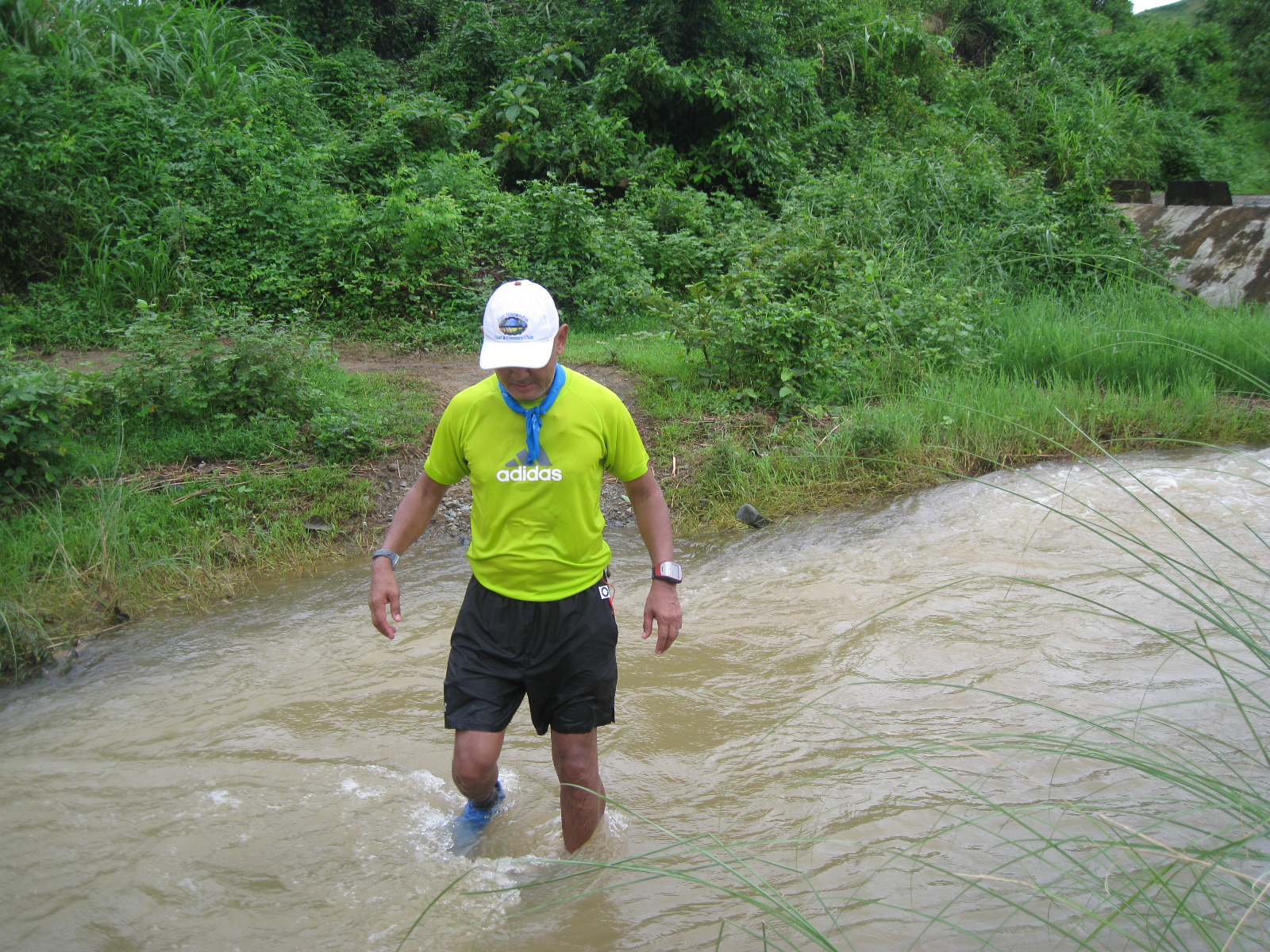
One of The River Crossings
Jack Was Infront Of Me Trying To Look For A Trail
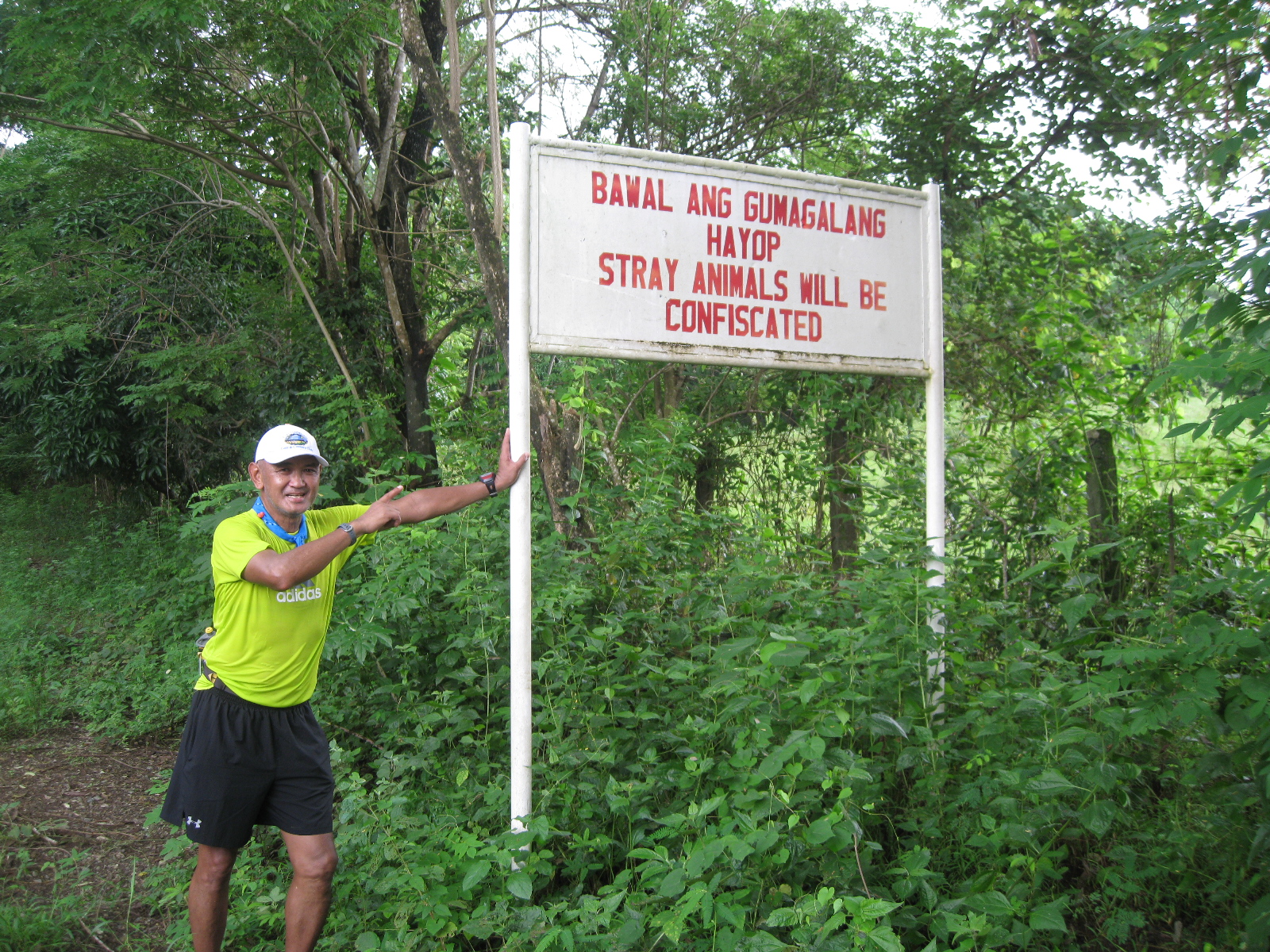
Nice REMINDER Along The Route!
Typical Condition of the Route @ Cattle Stock Farm (Km #30)
Another Nice Reminder Along The Cattle Stock Farm
Watchout For This AlongThe Route!!! It's The Real "Taklang Damulag"!!!

Practically, we left on the northern side of the camp and run through the trails on the eastern side of the camp and then re-entered the camp from the south direction. The route traverses through rolling hills and mountains with maximum elevation of 375 meters with lots of stream crossings through spillways and river crossings. What made the run very relaxing was the scenery, clean air, overcast sky, rain & showers on mid-day, and some conversations with the residents along the route.

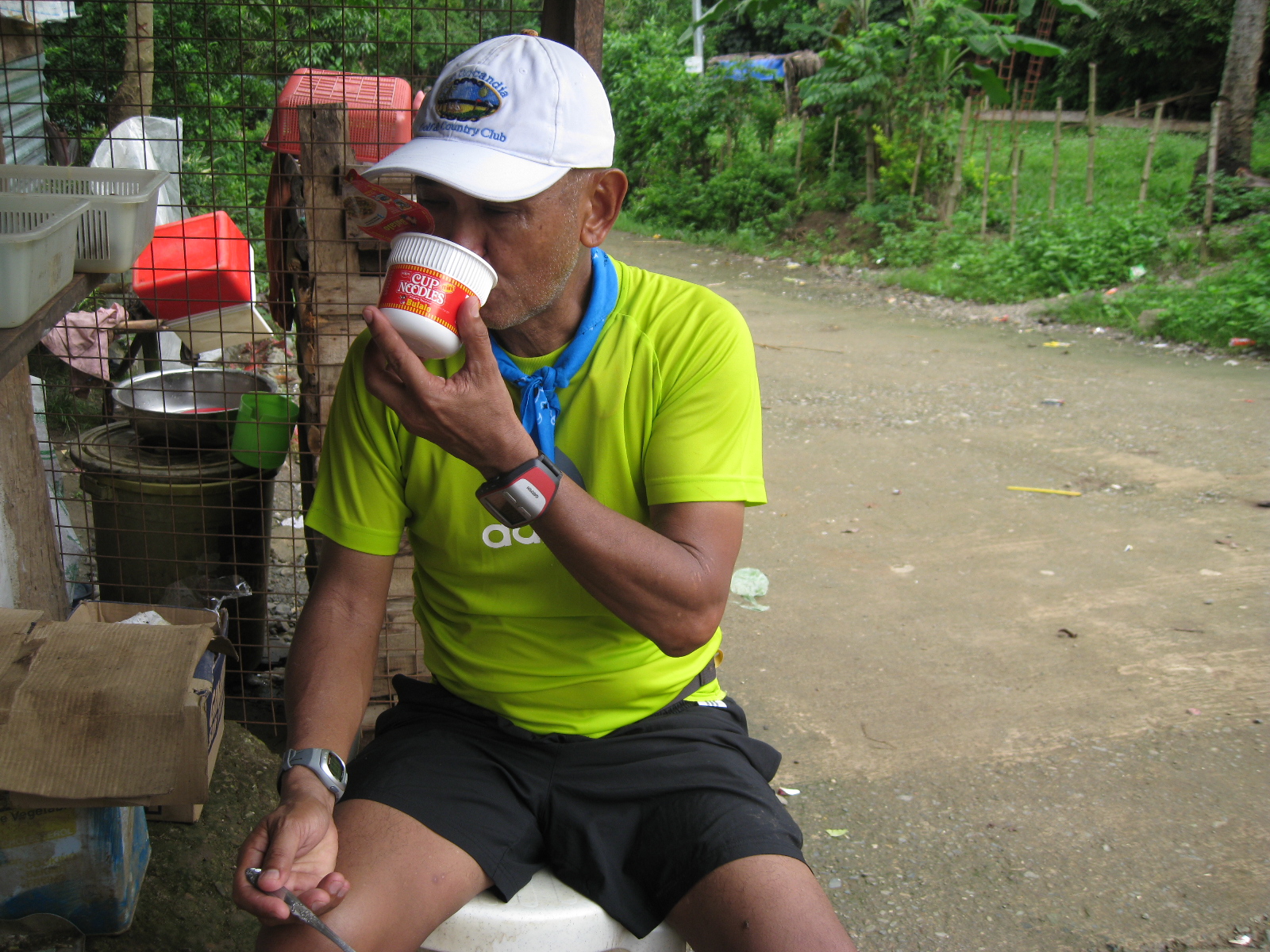
We had two “pit stops” along the route. These “pit stops” are sari-sari stores that sell anything from assorted bread & chips to drinks. We took some time to eat solid foods on these stores and were able to talk to the owners. The people were surprised as they always asked us where are our bicycles as we tell them where we came from. Bicycles? What bicycles are they talking about? They told us that a group of cyclists on mountain bikes would usually pass along the said route. Well, we told them that we were running, jogging and walking along the said route. It appeared that we were the first ones whom they see (as outsiders/visitors) to be running & hiking the said route.

Our "Pit Stop" @ Barangay Palale. Km #26
The People Does Not Know "Mami", They Call It "Noodles"
Our "Brunch" For The Day To Include Bread/Pandesal

We finished our recon run before 3:00 PM as we reached our Starting Area. After a quick shower, we were out of Fort Magsaysay as we headed towards Eva’s Restaurant near the boundary of Zaragoza, Nueva Ecija and La Paz, Tarlac where the best and very hot Bulalo is being served.

Getting back from the result of our recon run on the TD 100 route. So far, I have run through a distance of 65 kilometers from the 80K-loop of the trail route with an aggregate total time of 13+ hours. And since the remaining 15K route is on an easy rolling and flat terrain, it could be covered in another 2.5 hours. Adding these times would total to 15-16 hours to cover one loop of the course! However, my recon runs had averaged a pace of 12-15 minutes per kilometer which was basically a “hiking” pace! So, from these data, an average ultra runner could finish one loop in less than 15 hours.

The actual measurement of the course is done! The next thing to do is to finalize the administrative and operational needs for the race!

Guys, I only need 25 “brave and hardcore” runners for this another historic FIRST 100-mile trail endurance running event in the country. Let us help one another in putting our country in the world’s map of ultra trail running.

Finding My MAX HR


Last Friday, I started my anaerobic training after more than 3 months of my MAF training. The purpose of the anaerobic training/speed running workout was to find out my Maximum Heart Rate (Max HR). This activity was done at the ULTRA Oval Track on the early evening of Friday.

After 4 laps of brisk walking, I did five (5) repetitons of 800-meter run or Yasso 800 where I averaged 3:54 minutes. Each repetition was followed with one lap of slow jog. My Average HR for the workout was 168 beats per minute with a MAX HR registered at 178 beats per minute. After the Yasso 800 workout, I did 4 laps of brisk walking as my cool-down workout until my HR registered to 112 beats per minute.

As suggested by Dr Maffetone, there are two ways to find out one’s MAX HR. One is to run at one’s best effort within 3-4 minutes and record one’s highest HR. The other one is to use the suggested formula—208 minus the result of one’s Age multiplied by 0.7.

Based from my first anaerobic workout, I registered a Max HR of 178 beats per minute while my supposed to be Max HR by following the suggested formula is approximately 167 bpm. There is a difference of 11 beats per minute. I hope I’ll be able to adjust my desired Max HR as I do more of my anaerobic workouts.

What was notably good after my first anaerobic workout was that I did not feel any soreness or pain on my legs despite my practice of not doing any stretching or speed drills before my Yasso 800 repeats! I simply do my 10-minute squats after my workout. The 2nd advantage of such workout is that it was quick and short. After 1 1/2 hours, I was out of the ULTRA Oval Track.

There is a need of more anaerobic workouts to really find out my Max HR. One way to do this is to join a 10K run this morning! To prepare for the 10K run, I completely rested the whole day of Saturday.

I joined the Run Doctor Run 10K which was organized by my good friend Eric Pasion of Run For Change. It was a simple race which was held inside the Dasmarinas Village. The last time that I went inside this place was in the mid-90s when I was still active in cycling. The streets are wide and there is no traffic plus they are shaded with tall trees on both sides.

Hanging Out With BDM "Veterans" Mark & Bea Before The Start of the Race

The race started at 6:30 AM with the 10K run being released ahead of the shorter races. I started a very conservative pace of 5:45+ minutes per kilometer making sure that my HR will steadily and gradually increase. It started at 121 bpm until it reached at 160 bpm after running for 3 kilometers. I started to increase my pace for the next 3 kilometers where my Max HR registered at 178 bpm. At the 7th Kilometer, my HR went down to 170 until it peaked again to 175-177 from Kilometer 8 all the way to the Finish Line.

Look Who's Smiling At My Back (Thanks, Jonel for the Accommodation!)

All the amenities you need in a road race were all there. Eric has already perfected the conduct of a road racing event. Everything was perfect, to include the weather!

I finished the race in 55:27 minutes with an average pace of 5:39 mins per kilometer. My HR Monitor registered an average HR of 168 bpm and a Max HR of 178 bpm which is consistent to what I’ve recorded on my first anaerobic workout last Friday at the Oval Track. It seems that I am starting all over again and trying to regain my speed through more aerobic workouts/LSD runs.

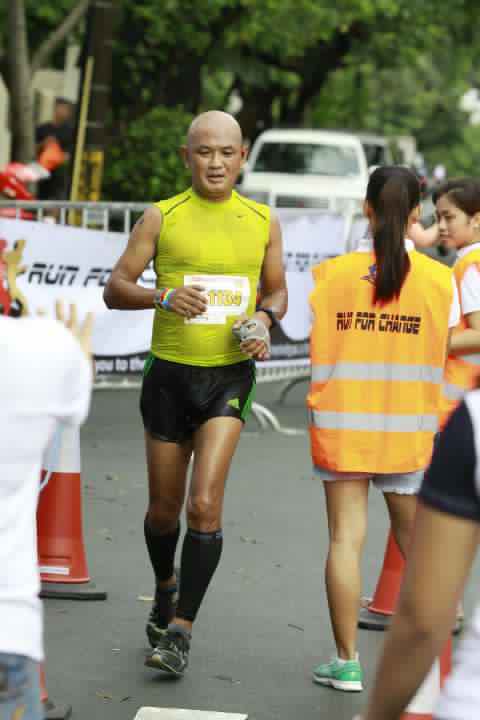
Smiling As I Crossed The Finish Line

I know it will take weeks and months and even years for me to improve my performance using the HR monitor as a form of biofeedback on the intensity of my training and running workouts. I am no longer young to do all those high mileage of training but I am still guided with the basic principles of training for endurance sports—consistency, specificity of training, rest & recovery, and extended goals. My primary goal now is to prevent myself from being injured and have fun in all my running adventures.

Finally, I am back to my regular training!

Thanks to John Avellanosa for the pictures and Jonel of FrontRUNNER Magazine & Eric Pasion for the accommodation.

MAF Test


It was hard for me to adjust to the Maffetone Training by following 180 Formula during the 1st week of my training. I had mentioned in my previous posts that I “cheated” on strictly following the 180 Formula where my Maximum Aerobic Function’s (MAF) Heart Rate shoud be 121 beats per minute. I started with 142-145 beats per minute for the first 2-3 days until I was able to adjust to 138 beats per minute. After a few days, I was comfortably running, slow jogging and walking at 132 beats per minute.

After another 2-3 days, I was able to bring down my maximum aerobic heart rate to 121 beats per minute. After 3 weeks of running and walking within my MAF of 121 beats per minute based from my 180 Formula, I did my first MAF Test. As suggested by Dr. Phil Maffetone, a runner must first warm-up by gradually increasing the heart rate from a resting rate to a range of maximum aerobic rate, from the lowest range of 111 beats per minute to my maximum rate of 121 beats per minute. Warm-up is being done by slow walking up to brisk walking for almost 15-16 minutes which is equivalent to 4 laps at the oval track. It is notable in my running workouts that I don’t perform any stretching exercises before and after my runs. However, a 10-minute squat after my running workout had been a “must” and later became a habit.

Once my max aerobic rate range of 111-121 bpm is reached, I start jogging/running and complete 4 laps on the oval track  which is equivalent to one mile. The time is recorded and written on a paper. After a short recovery by walking of at least 30 seconds, I do my second set of one mile run until I complete five repetitions of one mile run. The time of each mile repetition is being recorded. After the 5th mile, I have to cool-down by walking another 4 laps until my heart beat rate would gradually go down to the rate that was registered before I started my workout. After 3-4 weeks, another MAF Test has to be done.

So far, I just completed my 3rd MAF Test last week. The results are shown in a tabulation below:

JUNE JULY AUGUST
16:50 16:27 16:10
17:32 17:18 16:56
18:10 17:41 17:27
18:55 18:39 17:35
19:28 19:08 17:52

The tabulation would show that I am gaining my “aerobic speed” which means that I am getting faster with a constant HR of 121 beats per minute. When I started to strictly follow the 180 Formula, the distance (as registered by GF 305) I could cover for a hour was 5.6 kilometers. After one week of max HR of 121 bpm, I could cover 5.66 kilometers per hour. After 3 months of 180 Formula/MAF training, my distance covered for one hour is 5.88 kilometers per hour!

Sometimes I vary my method of determining my improvement. I would run/jog for a distance of 8 kilometers (5 miles) continouosly at the oval track by maintaining an average HR of 119-121 beats per minute and try to record the time elapsed to cover the distance. On my first try, I registered a time of 1:31:20 hours. After a few days, I registered a time of 1:30:04 hours. At present, I was able to register my fastest time in 1:25:48 hours for the said distance.

My typical weekly workout would consist of “doubles” during the day—1.5 hours in the morning and another 1.5 hours in the late afternoon. Such workout would include 15 minutes of warm-up, 15 minutes of cool-down, and running for one hour at an average HR of 121 bpm. On the next day, I do 2.5 hours with 2 hours of actual running and the rest for my warm-up and cool down. I do this kind of workout in the morning only which is also considered as my “heat training” under the sun as I start my workout at 8:00 or 9:00 AM. On the next day, I go back to my daily “doubles”. And the cycle continues throughout the week. My long runs during weekends would last up to 3 hours of running & walking, making sure that my average HR would not be more than 121 bpm. The last MILO Elimination Run was my longest LSD for almost 6 hours, covering a distance of 32 kilometers.

It is very evident that I measure my running workouts by the TIME that my feet are on the ground! The distance covered during these timed workouts is just a data that provides a good feedback and evaluation of my improvement in this kind of training. At least, the minimum of hours per week in my training is 12 hours.

It is worthy to note that within this 3-month of strictly following the max aerobic HR of 121 bpm, I was able to try and complete my “Two-Week Test” to determine my carbohydrate intolerance, a situation when the body has more carbohydrates stored in the body system. This “Test” greatly improved my resting HR, lowering and sustaining my MAF’s max aerobic HR to 121 bpm during my workouts, reduced my weight to 135 pounds, and no longer have sleepy feeling after lunch or after a heavy meal. The best result is that I can control my urge to eat foods rich in carbohydrates.

I hope there would be good results in my endurance capabilities as soon I start my anaerobic/speed training in the weeks to come.

Stress


Stress is defined by the Webster Online Dictionary as “a physical, chemical, or emotional factor that causes bodily or mental tension and maybe a factor in disease causation; a state resulting from a stress; especially: one of bodily or mental tension resulting from factors that tend to alter an existing equilibrium”. This definition is based from its use in the medical field as there are more definitions of the word as applied in other fields of endeavor. For the sake of this post, the stress I am describing is all about its application to the medical field as it is related to the human body.

One of the reasons why we should run or involve ourselves in any physical activity or exercise is to be able to relieve the stress brought about our daily lives or lifestyle. This means that the stress we are trying to relieve from our body system is something bad or not beneficial to our health and sound body.

On the other hand, we need stress or extra effort to our body system in order to be a better person or athlete or gain positive results in our improvement to a certain field of sports or physical activity. For example, if we want to have bigger muscles and well-toned body, we have to put some “stress” to our muscles by carrying heavy weights or lifting light weights in lots of sets or repetitions. If we want to be a faster sprinter or enduring long distance runner, we have to put more “stress” to our body by doing fast interval repetitions or tempo runs or LSDs so that our muscles, bones, and other body organs are conditioned to react if needed during races and other forms of competitions. In simple terms, this kind of stress is good for the body.

As for the stress we are trying to relieve from our body system through running, walking, cycling, swimming, and other forms of sports and physical activities, this kind of stress are the bad ones which should be removed immediately from our body system. If not, this kind of bad stress will greatly affect the proper functioning of our body organs and worst is that, it would ultimately cause our untimely death!

There had been so many surveys and scientific studies that show that the main cause of death of mankind in our present generation is STRESS. But such stress is the bad one!

For a person to have a positive attitude in life, he should be able to eliminate stress and have a healthy life. As for an athlete, whether you are an elite or average sports person, if he/she wants to improve and develop his/her potentials in a given or selected sports discipline, he/she should be able to eliminate stress in his body system. It is simply termed as “stress management”.

How do we manage stress? I mean, the “BAD” stress?

Following the suggested technique of Dr Phil Maffetone in managing bad stress to the body system, first, you should be able to identify and make a list of your “stressors” on a piece of paper and you can take your time in making such list. Maybe, thinking and writing such list within a period of 3-4 days or one week would be an ample time for you to have a complete/comprehensive one. From the master list of stressors, you may now categorize/classify them into two—stressors which you don’t have any control and stressors which you can have control.

Examples for stressors which you don’t have any control—traffic, weather, rains, flooding, criminality, terrorism, air quality and pollution, pressures related to work, paying of taxes, politics, national economy, family, accidents, deaths, and others!

Examples of stressors which you can have control—news, TV series/shows, debts, social activities, pressure/s from friends, extra-curricular activities not related to your sports or physical activity, eating foods high in sugar and carbohydrates, living beyond your means (shopping using your credit cards), higher bills (electricity, Internet access, telephone, water and other utilities), higher
costs of registration fees of road races & high costs of “bragging rights”, reacting to unruly drivers on the road, listening and reacting to “gossips”/blind items and other things.

Depending on your kind of work or profession, you have a better appreciation on your stressors, controllable or not. Make a honest list of your stressors and you’ll be surprised on how easily you’ll be able to find solution on how to eliminate such stressors.

You can’t do anything to stressors that you don’t have any control. Forget most of them and simply focus to your work which is the source of your income and livelihood. Your responsibility to your family is foremost and that’s the reason why you are working to have an income. If you have work-related stressors, then make another list of controllable and non-controllable ones, and start from there! Pay your taxes and live a simple life.

You will be surprised that if you are matured enough and have a good judgement on things that are happening around you, those stressors which you can have control can be easily eliminated by following the best option—IGNORE or say “NO”! On financial matters, it means, “cost-cutting” and simply living within your means!

For the past six weeks, I ignored reading the news, no watching of the TV, no shopping, refused invitations for running lectures, easily driving my car at 45KPH on the main streets (EDSA, The Fort, Buendia, Roxas, MOA vicinity, and others), listening to classical music and old songs (Beatles, Queen, Spiral Staircase, Montovani/Beethoven/Peter Nero/James Last, and Eagles but sometimes listening to Lady Gaga and Bruno Mars would be nice “extra” tunes to hear!), no blowing of horns, staying in one lane on busy roads and never competing for space/lane with taxis, trucks, and jeepneys, never “pissed off” by tricycles on the main
highway, no coffees and sodas to “spike” my calorie and carbo intake, simply no pressure on things that I do, just listen to “bad” news that happened to friends and relatives, no more “hot temper” moods but more on smiles and positive reaction on things…and regularly updating my status at Facebook!

Well, this is the life of a retiree and a long distance runner! As a Race Organizer and Director, I have also “stressors” but I will make a separate post on this matter on my Race Director’s Reports. (Note: Forget thinking of being a triathlete and finish an IRONMAN at the age of 60—that’s a lot of (bad) stress! Hopefully, I will be able to publish a separate post on this topic)

In summary, everybody can manage stress in their life. The lesser number of (bad) stressors, the better for you to develop your potentials in endurance sports or in any physical activity which will lead you to a better and healthier life.  Manage your stress for a sound body and a sound mind!

180 Formula


Click on the link below on the article by Dr Phil Maffetone on his Maximum Aerobic Function (MAF) which is a detailed explanation on his training philosophy following one’s Heart Rate and the use of a Heart Rate Monitor.

Want_Speed_Slow_Down_2007

Lately, one of my “friends” from Facebook who had been a triathlete for 17 years had called my attention when he read one of my posts that I am presently training using the Heart Rate Monitor. After his retirement from triathlon, he is pursuing his first ultra marathon run this coming December as he thinks that ultra running is “deeper” and more challenging than his past triathlon feats. I am sure this guy is a “purist” IRONMAN and one of the bests in the 90s or in his younger years. He even predicted that if I continued my plans to get into triathlon in the mid-80s, I could be a sure podium winner in my age category. (Note: I could be fighting it out with my brother Retired General Samuel and Retired Colonel Brigilio Balaba of the Philippine Constabulary for the top honors for our age group).

In one of his e-mails, he shared to me the following updated version of the MAF’s 180 Formula.

Here is the formula:

1. Take 180

2. Subtract your age

3. Take this number and correct it by the following:

-If you do not workout, subtract another 5 beats.

-If you workout only 1-2 days a week, only subtract 2 or 3 beats.

-If you workout 3-4 times a week keep the number where it is.

-If you workout 5-6 times a week keep the number where it is.

-If you workout 7 or more times a week and have done so for over a year, add 5 beats to the number.

-If you are over about 55 years old or younger than about 25 years old, add another 5 beats to whatever number you now have.

-If you are about 60 years old or older OR if you are about 20 years old or younger, add an additional 5 beats to the corrected number you now  have.

You now have your maximum aerobic heart rate, which again is the maximum heart rate that you can workout at and still burn  mostly fat for fuel. Now go out and do ALL of your cardiovascular  training at or below this heart rate and see how your pace improves.  After just a few weeks you should start to see a dramatic improvement in the speed you can go at these lower heart rates.

The details of his e-mail is properly explained in the link below:

http://www.markallenonline.com/maoArticles.aspx?AID=2

Based from the updated version, my Maximum Aerobic Function’s Heart Rate is supposed to be 126 beats per minute (180-59 = 121 + 5 for being above 55 years old). However, since I’ve started with my first MAF Test with a Maximum Aerobic Heart Rate of 121 beats per minute, I will maintain 121 bpm as my training’s MAF heart rate.

Good luck to my ultra running “friends” and BDM “veterans” who will be competing on this weekend’s CAMSUR Cobra Ironman 70.3 Triathlon Competition. Take it “easy” on the swimming event. Make sure to get a “spot” for the KONA IRONMAN this coming October in Hawaii, USA!!! Have fun and be the best to yourself!

For those who have started to train for the 1st Taklang Damulag 100-Mile Endurance Run and for the yearly BDM Races, I highly recommend you to try the Maffetone’s Training on the use of Heart Rate Monitor/MAF Test.

“Two-Week Test”


The “Two-Week Test” is one of the salient parts of Dr Phil Maffetone’s training for endurance athletes. It is something to do with one’s ability to balance the presence of carbohydrates in the body with the other nutrients like protein and fats.

According to Dr Maffetone, there are signs and symptoms that you have more carbohydrates stored in the body when you are overweight, easily exhausted in simple exercises, and sleepy after every meal. There are more signs and symptoms stated in his books and articles but these are the things that I tried to experiment and be able to improve as my reasons in trying this “test”.

This is not a diet program but a simple test that will last for two weeks. This is a test of discipline, patience, focus and determination. All you have to do is to refrain from taking any drinks and food with SUGAR for 14 days. This is to include fresh fruits and some vegetables. Of course, coffee with sugar & cream is a no-no! Not even alcoholic drinks,beer, sodas, and Gatorade/Energy Drinks. It also means not eating rice during your meal. Forget your “hot pandesal”, pancakes, doughnuts, bagels, chips, cookies, oatmeal, ice cream, chocolates and cakes!

It is a challenge but it is worth trying if you want to improve on your training and endurance races.

As a start, you have to record your weight before you start this test and come up with a journal or daily diary. You have to record also what you observe to your body for signs of too much carbohydrate in the body like: easily exhausted in simple exercises; high rate of heart pulse/hear beat; easily irritated; moody; feeling too-stressed all the time; feeling sleepy after meal; and lack of focus.

As soon as you start with the test, put in your journal the things that you observe in your body; your daily weight; morning pulse rate; and the food/s you ingested. Be sure to maintain your journal on a daily basis. Just remember NOT to eat any kind of carbohydrate foods! If you feel hungry, just eat anything that is rich in protein and healthy fats!

During my test, I ate lots of eggs, omelettes, fish, meat (pork & beef), and other seafood. I could hardly count the number of egg trays that I consumed during the duration of the test. In one of the birthday parties I was invited, I finished more than one-half order of “Crispy Pata” and one order of Squid Platter Steak and broiled Tilapia without any rice! On ordinary days, I ate lots of pork barbecue, fried chicken, native chicken tinola, pork adobo, longganiza, fish (Salmon, Tilapia, Bangus and Lapu-Lapu), shrimps & prawns (from Pangasinan)  and our ever famous, “Laoag Bagnet”.

I just finished my “Two-Week Test” last Sunday. And here are the results:

  1. I was able to reduce my weight by 12 pounds. I was 150 pounds when I started the test and last Sunday’s weighing on the scale resulted to 138 pounds!  Since Dr Maffetone advises its athlete to take the “two-week test” during the aerobic phase when observing his MAF (Maximum Aerobic Function) by following his 180 Formula of HR Monitor, the body tends to use its fats during workouts. So, in my experience, I was able to burn some of my body fats while doing my HR Monitor workouts. Thus, I was able to reduce my weight within a limited number of days!
  2.  I did not feel any exhaustion, soreness, and pain during and the days after the last MILO Marathon Elimination. I did not even experience any muscle cramps even if my longest run before the MILO Marathon was only 16 kilometers. Although I ran only 32 kilometers in the MILO Marathon by following the MAF Heart Rate of 132 beats per minute, it was surprising that I was able to run the distance without taking any solid food before and during the run. Moreso, I did not have any “carbo-loading” to speak of, days before the run.
  3. Before I started following Dr Maffetone’s training, my tendency is to be sleepy after my breakfast in the morning, with or without any runs before breakfast. What is worse is that I always go for a nap after my lunch almost every day. As a result of the “two-week test”, I am now fully awake and don’t feel sleepy at all after breakfast and lunch.

If you think this is a “big” challenge to undertake, I think it’s not. If you have some signs and symptoms like I had before I did this
test, then it is worth trying it. However, if you want to have better results on your training and in your endurance races, I think this is best “test” that I can recommend to everybody!

Good luck! Think DISCIPLINE!!!

Maffetone’s Training


If you ask any of the local triathletes if they know such “Maffetone’s Training” and if they tell you, NO, it’s either they are ignorant or they don’t want to share their training “secret” to you. If an average or competitive triathlete does not know about this kind of training, I guess, he/she is not training properly to develop what the training calls, “aerobic speed”! In the truer sense of the word, the “holistic approach in endurance training and racing”

I bought the Kindle version of the Dr. Phil Maffetone’s “The Big Book On Endurance Training and Racing” two months ago and started to follow his Training by adhering to the 180 Formula as my Maximum Aerobic Function by monitoring my Heart Rate. With a purchase of the simplest and most basic HR Monitor watch, I started to follow such training for the past weeks. 180 Formula would simply mean subtracting your age to 180 as your maximum aerobic heart rate during your aerobic phase workouts.

On my first week of the training, I could hardly bring down my HR to 121 beats per minute while on a slow jog. I started with 142 beats per minute on the first days of my 1st week and then gradually bringing it down to 138 bpm. Later, I could easily jog at an HR rate of 135 bpm. During the Takbo Runfest 16K and MILO Marathon Eliminations, I was able to bring my average HR to 130-132 beats per minute. This is the very reason why I am always on the tail end in the past road races. Actually, I was trying to “cheat” on the 180 Formula as my desired training HR could had been 121 beats per minute which translated to a brisk walking activity.

But on my 1st MAF Test on an oval track lately, I was able to constantly follow the desired Maximum Heart Rate of 121 beats per minute throughout the workout. And the results follow what the Maffetone Training intends to advocate. We will see what will be the result on my 2nd MAF Test after 3-4 weeks.

It is also surprising to most of the runners (in these past road races) that they observed me to be using some “wires”. Yes, I renewed my love to music during my workouts and road races by sporting an Ipod Shuffle which is light and easy to clip! Maffetone’s training includes music and some form of cadence and beats through selected kinds of music as part of one’s playlist.

What are the initial observations and benefits I got from this kind of training? First of all, I can have a workout that lasts for hours and hours without any pain or sorenes. After running for almost 5 hours at the MILO, I could walk straight and without any limp after the race, moreso, on the following day there were no pains on my legs. On the nutrition side, by following a “no carbo”diet one week before the MILO run, I did not feel hungry during the duration of the run and maintained my constant hydration through water and my Gatorade G2 mix. I did not mind getting and eating those ripe bananas in the Aid Stations. The best result? I did not have any kind of muscle cramps on any part of my legs and body! I was amazed and surprised about such result. No “bonking” and no “wall” to speak of even if my past training long runs would last for only 2 1/2 hours with an average HR of 130-132 beats per minute!

Last week, I discovered that Dr Phil Maffetone has a website which is very informative and updated as compared to the book I purchased. I am going to share his website to my readers with the hope that they will be able to follow the training and its philosophy with patience and positive attitude.

The following is the website: http://philmaffetone.com. For those who are joining the 1st BR Barefoot Run, it would be an interesting one for them to read his article “GAIT–Why Every Runner Is Different, and How You can Go Faster……, and other related running articles.

To my ultra running friends, I suggest you take a look at this training and try it. Patience and Positive attitude play a great role if you want to adhere to this kind of training philosophy.

Enjoy and have fun reading the articles and essays of Dr Phil Maffetone. Happy weekend!

1st BR’s Barefoot 3.2K (2-Mile) Run


I am not a fan and practitioner of Barefoot Running. And I am not a member of any group or asssociation that promotes barefoot running in the country.

I read the book “Born To Run” by Christopher McDougall upon its release to the public when I was in the United States almost 3 years ago but it was just a part of my reading activities. I was amused by the dedication and passion of Caballo Blanco to live with the Tarahumara tribe in North Central Mexico’s Copper Canyon Mountains by coming up with a yearly ultra trail race within the community and at the same time being able to help on the welfare of the said tribe.

However, I was surprised that because of this book, it created a “niche” of minimalist shoes production from popular brands and influenced a lot of runners to shift to “minimalist” running or barefoot running. I am not yet into this but I was already using road racing shoes which technically considered as “minimalist” running shoes.

After experiencing injuries which most often occur on my calf muscles/lower leg, I slowly included barefoot running as part of my recovery process with the hope to strengthen my lower legs’ muscles and ligaments, most especially for those ones which are not reached by “cross-friction” manipulations through massage/therapy. After a 25-lap run on an oval track, I usually run/jog/walk on barefoot for four laps as my cool-down workout. In some instances, I would simply walk on the ground for about 15 minutes every day. These simple “after workout/cool-down” barefoot “stuff” could be the reason why my recovery from my lower leg injury was faster than what I’ve expected. But I never tried running barefoot on asphalt or cemented road.

So, what made me think of coming up with this running event called, “1st BR’s Barefoot 3.2K (2-Mile) Run” to the running community of the Philippines? The answer is very simple…Because NOBODY is doing anything about it.

I thought of this event while I was starting to adopt to my new training workout based on my heart rate during the last days of my stay in the US. While waiting for my connecting flight in San Francisco International Airport back to the Manila on July 9, I created an Event Page on my Facebook Wall and turned off my laptop computer. As soon as I arrived in Manila, I was surprised to see a very positive response from the runners as soon as I saw the update on my Event Page and the rest is history!

However, for the past weeks and days, I don’t see any positive response from the so-called “minimalist” shoe brand “corporates” who are promoting this kind of running. I simply asked them for me to meet their “Big Boss” in person! “Big Boss” would mean their CEO, President, or Regional Brand Manager. I don’t need to meet their mid-level/department heads due to unfavorable experiences in the past. (I don’t want to recall and post in this blog how these people would transact some arrangements with me on matters about running)

With or without corporate sponsorship, the event will go on. Fortunately, a group called “Barefoot Running Philippines” came forward to support and help in the conduct of this event. Lt Col Mike Logico of the Philippine Army, one of the Administrators of the Barefoot Running Philippines and a “hardcore” barefoot runner, volunteered to assist me in the administrative and logistics needs as the event will be conducted at the Philippine Army’s Grandstand and Parade Ground on August 6 at 4:00 PM.

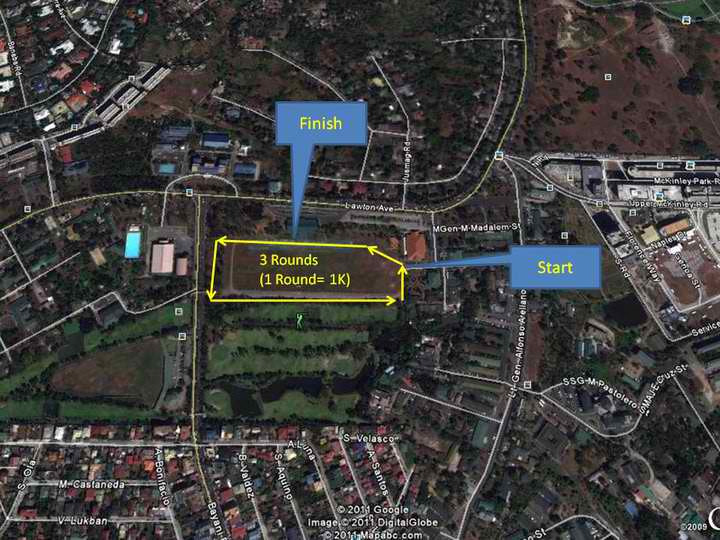
The registration is on site until 30 minutes before the start of the 3.2K run. The registration fee is Fifty Pesos Only (P 50.00). Runners will run 3 times along the 1-K loop on the said facility/area which has a mixture of asphalted and cemented road. Top 3 in the Overall (Open) Category and Top 3 in the Ladies Category will receive the BR’s Medallion.

This event will be done on a monthly basis with the next event to be conducted inside Camp Aguinaldo. We hope to come up with a 5K Barefoot Run/Walk.

In making this event as part in the history of running in the Philippines, I would like to thank and express my gratitude to Lt Col Mike Logico; the Philippine Army’s Headquarters & Headquarters Service Group and ASCOM’s Special Service Unit; and to the Barefoot Running Philippines.

See you this coming Saturday afternoon. Have fun! Kick off your running shoes and let us “tickle and burn” our feet on the paved ground! Walking barefoot is allowed, too!

BR's Barefoot 3.2K (2-Mile) Run Route (Courtesy of Lt Col Mike Logico)