The following are the Rules & Regulations and Additional Information on the conduct of the West Coast 200K Ultra Marathon Run on November 1-4, 2012:
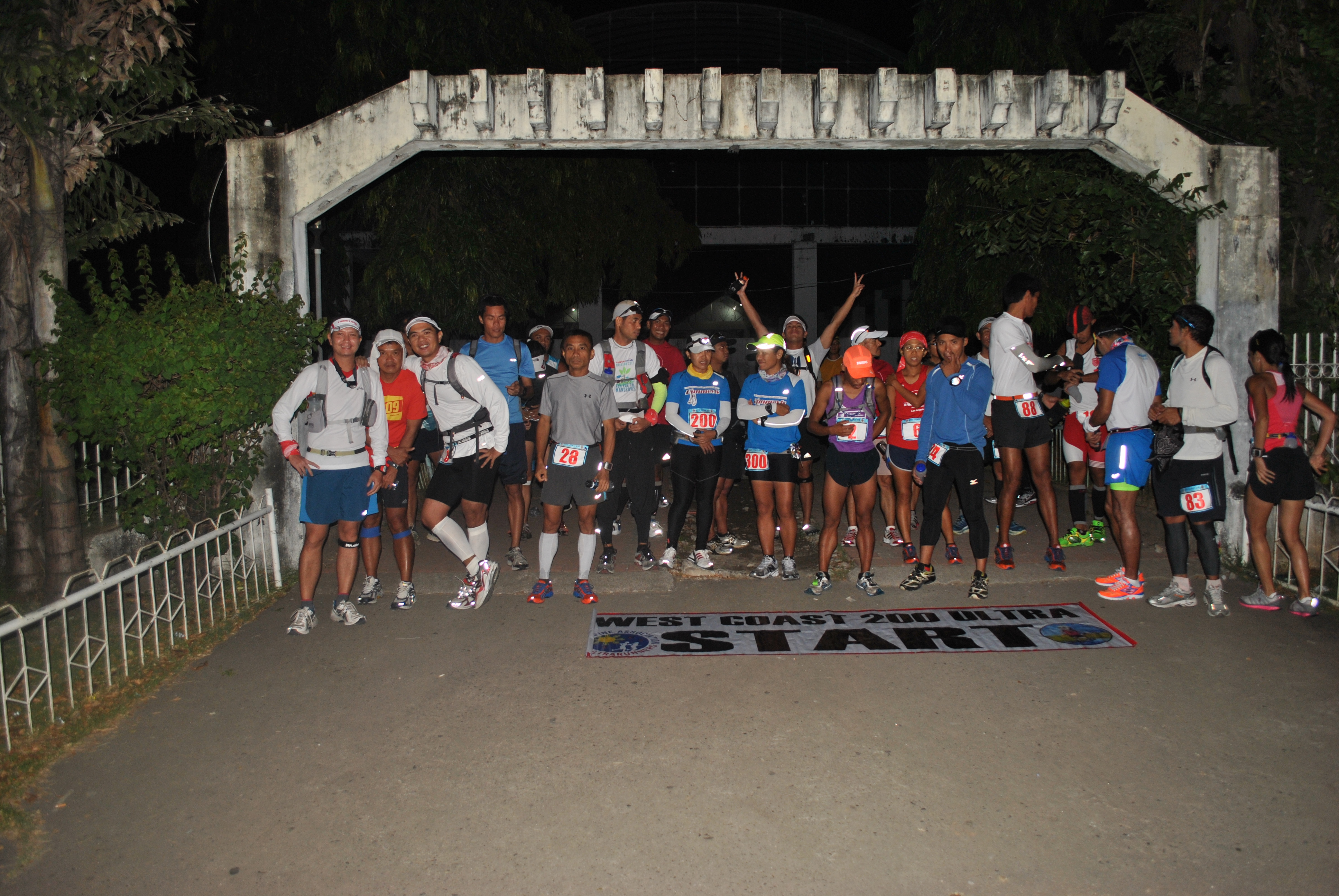
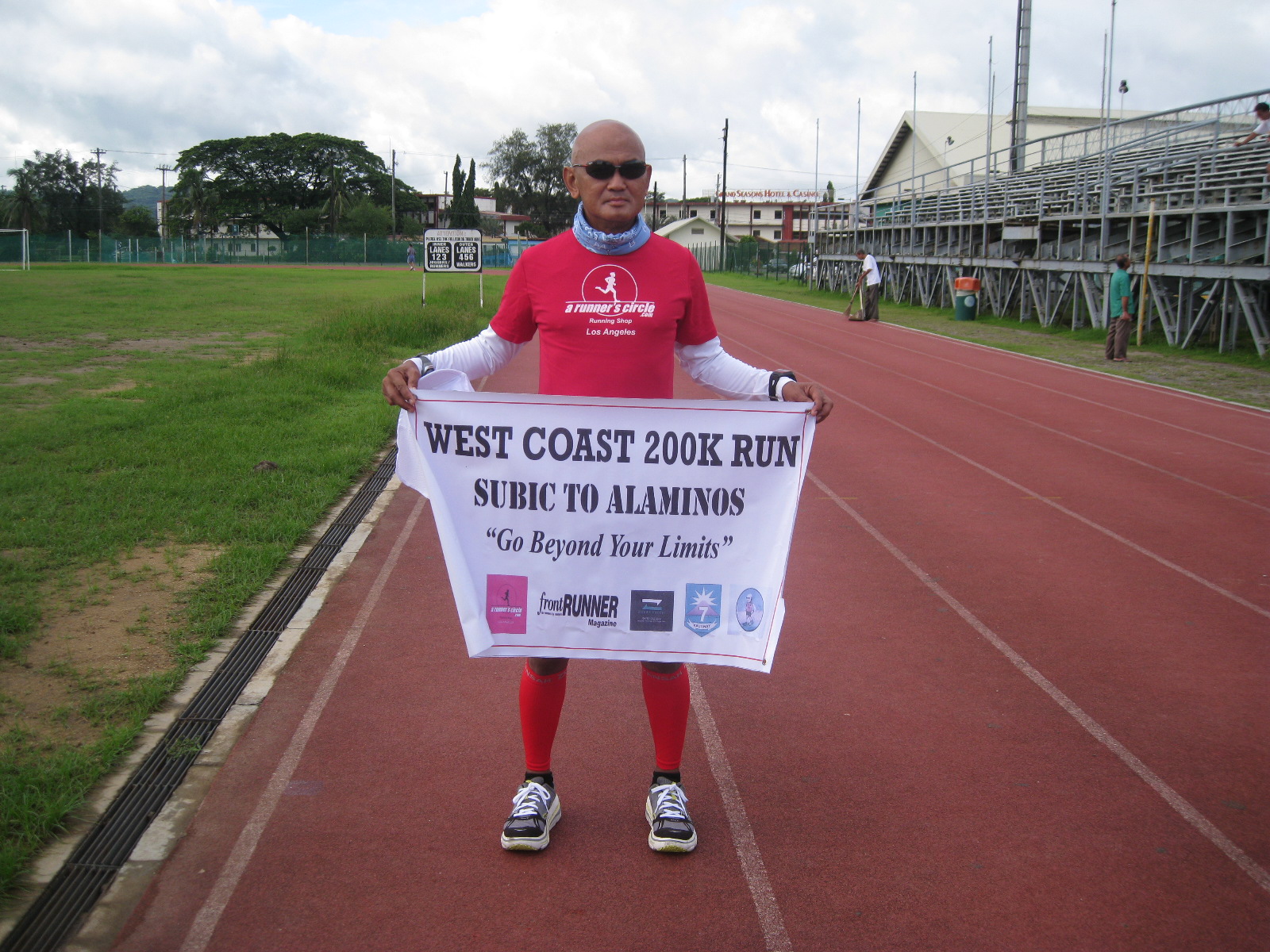
1. WEST COAST 200K (WC200) is multi-day stage run, a run of three (3) consecutive days which will start o/a 5:00 AM of November 1, 2012 at the Remy Field Oval Track at Subic Freeport (Olongapo City) and ends o/a 5:00 AM of November 4, 2012 at the Port of Barangay Lucap, Alaminos, Pangasinan.
2. This is a SOLO run. Runners will run along the Olongapo-Alaminos Highway covering a distance of 200 kilometers. A runner-participant has the option to join as an unsupported or supported. A supported runner can avail of a support vehicle and support crew. An unsupported runner will be on his own as he/she can avail of convenience stores & eateries along the route.
3. Pacer/s are not allowed.
4. Runners should always stay on the left side facing the incoming traffic. The race route is an Open Road and the runners shall share the road with other vehicles.
5. Support vehicles should always park on the far RIGHT side of the Highway. A runner will be disqualified if his/her support vehicle is parked on the Left side of the Highway. Support Vehicles shall not be allowed to “shadow” their runner. Only four-wheeled vehicles are allowed as support vehicles.
6. Runners will run or cover a distance of 70 kilometers on the FIRST Day. Runners shall assemble at the Remy Field Oval Track in Subic Freeport and the race shall start at 5:00 AM of November 1, 2012. The Finish Line/Area will be the Municipal Plaza of Botolan, Zambales. The cut-off time is 12 hours.
Remy Field Oval Track, Subic Freeport
7. On the 2nd day, runners will run/cover a distance of 70 kilometers. Participants should be at the Starting Area (Municipal Plaza of Botolan, Zambales) before 5:00 AM of November 2, 2012. The race shall start at 5:00 AM and the Finish Line will be at the Municipal Plaza of Infanta, Pangasinan. The cut-off time is 14 hours.
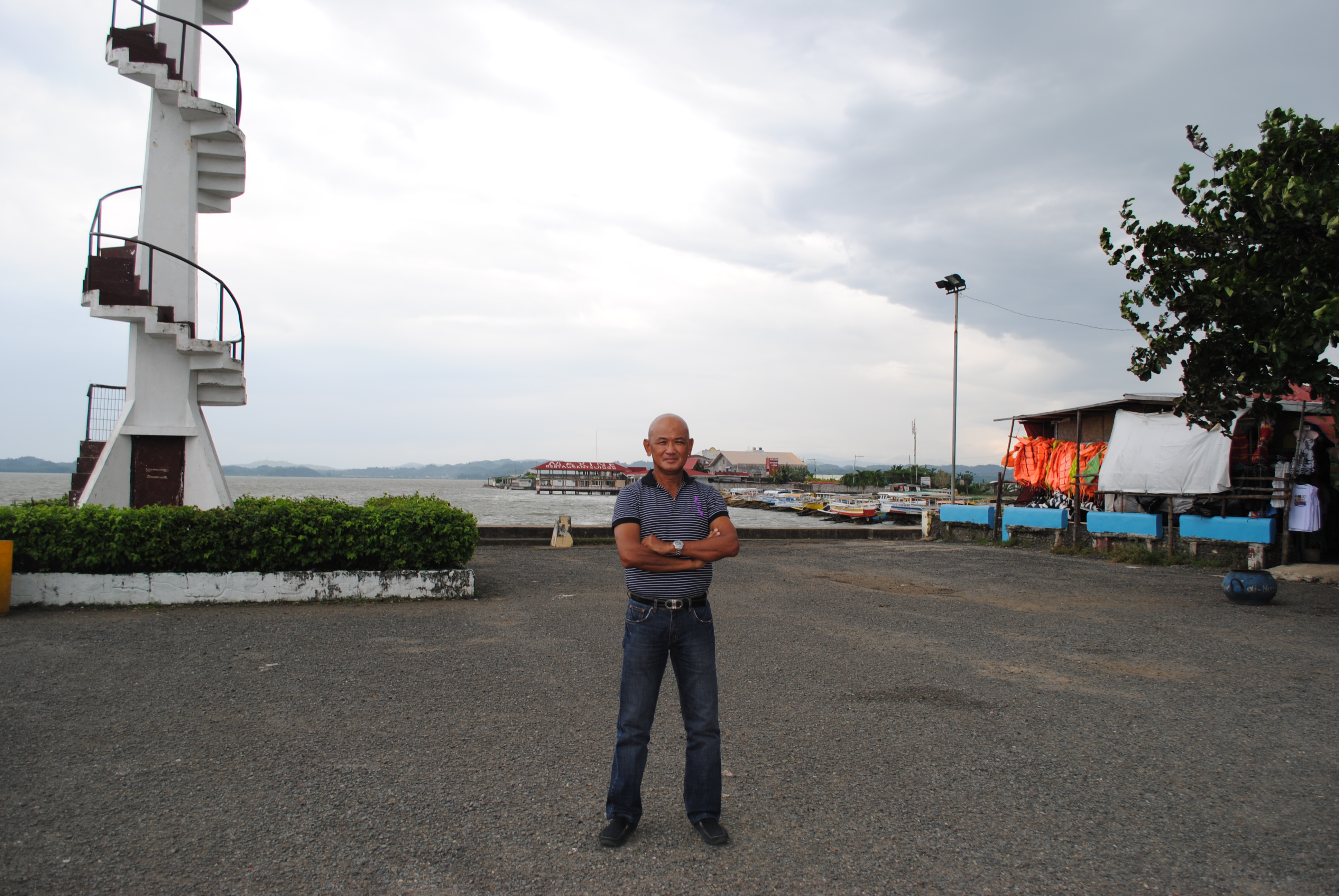
8. On the 3rd day, runners will run/cover a distance of 60 kilometers and it will be a NIGHT Run. Runners should be at the Starting Line (Municipal Plaza of Infanta, Pangasinan) before 7:00 PM of November 3, 2012. The race shall start at 7:00 PM and the Finish Line will be at the Port of Barangay Lucap in Alaminos, Pangasinan. The cut-off time is 10 hours.
Finish Line @ Vicinity of Lighthouse in Baranhay Lucap, Alaminos, Pangasinan
9. Podium Finishers’ Awards/Trophies will be given to the Top 3 Male & Top 3 Female. Finish Times for the 3 stages will be added and Finishers will be ranked from the fastest total of finish time to the slowest. Official Finishers (Finishers within the Cut-off time) will be awarded with a Finisher’s Medal, Finisher’s T-Shirt, and Certificate. Points for the PAU Runner of the Year will also be awarded.
10. A runner is declared DNF once he/she could NOT meet or finish the stage within the prescribed cut-off time. The runner will not be allowed to run in the remaining stages of the race.
11. There will be NO Aid Stations along the route. NO Drop Bags will be allowed.
12. It is mandatory for every runner to have his/her hydration system; headlight/lighting system; reflectorized vest; and first-aid kit.
13. Unsupported runners could bring their camping tents and their extra clothes to be deposited at the RD’s vehicle which will be brought directly to the Finish Line of each stage.
14. Each of the Municipal Plaza in Botolan, Zambales & Infanta, Pangasinan has a Covered Court (with Comfort/Bath Rooms) and Lawn Area where runners could sleep/rest and take a bath. Please don’t litter on these areas.
15. Runners will be responsible for their meals and accommodation if they prefer to be housed in hotels/pension inns/resorts/homestays. There will be no curfews as it will be the personal responsibility of each runner to have his recovery and rest every after stage. There will be NO “socials” in every stage of the run.
16. This is the FIRST Multi-Day Stage Run to be held in the country. Let us maintain the INTEGRITY of this run and be proud to be a participant and much more if you intend to finish the event.
Additional Information:
The following are the recommended Resorts & Restaurants in Botolan, Zambales as suggested by the Botolan Tourism Office: (Note: Runners can directly contact these establishments through their respective contact numbers/websites)
1. C & J Sunset View Beach Resort. Contact Person: Mr Zaldy B. Yap. Contact Number(s): 0949-775-5082/0917-607-9207. Website: www.cjsunsetview.com
In Infanta, Pangasinan, there are NO resorts. hotels, or pension inns. There are restaurants in the nearby town of Sta Cruz, Zambales. Additional information on hotels/pension inns in Sta Cruz, Zambales will be posted soon on my Facebook Wall’s Event Page.
When I started joining road races in the early 80s, you can only receive a Finisher’s Medal if you finish a FULL Marathon Race. As for the lesser distance races, like 5K, 10K and Half-Marathon/21K, a finisher received then a Finisher’s Certificate and that was it! Joining a road race then was purely very simple and easy—pay your registration fee and you immediately get your race bib, instructions of the race, and a simple drawing/sketch of the route! Once you cross the finish line, you get your medal and/or Finisher’s Certificate and you go home happy and fulfilled.
It is also in FULL Marathon Race that you get a Finisher’s T-Shirt or Race Singlet. But in the lesser distance races, you seldom get any finisher’s t-shirts.
Only the Podium Finihers (1,2, & 3 runners) received Medals for the lesser distance races. Sometimes, there are prizes, cash or gift certificates, for the winners.
Nowadays, even 3K and 5K runners try to find out if there is a finisher’s medal before they join/register in a certain road race. Some of the finishers would also demand for a finisher’s medal for these short distance races.
I think we should bring back those days when only FULL Marathon Race Finishers deserve to be given a Finisher’s Medal.
What is the significance of a finisher’s medal in running? It is your badge of accomplishment and your prize/reward for finishing the race.
PAU Events’ Finisher’s Medal
When I was in elementary, high school and college, ONLY the top 3 in the class received Medals and all the rest of the graduates received a rolled piece of paper tied with a ribbon which we call the Diploma. If I relate this observation during my learning days to a road race, it is best to consider also bringing back this tradition to the awarding of the best top 3 runners with medals and the rest of the runners with a “rolled” Finisher’s Certificate.
But for the FULL Marathon Races, it is a must that all Finishers be awarded with Finisher’s Medal and let the Podium Finishers be awarded with appropriate trophies.
If Race Organizers would follow this suggestion (going back to the old days of running), I think runners will have to pay less amount of money for their registration fees.
This will bring my topic to the “economics” of finisher’s medal and the runner’s responsibility to know the details of how they are ordered and where our finisher’s medals are manufactured.
Today, we have 5-digit numbers of runners from all the distances, from Marathon to the short 3K Race, and our Race Organizers would attract more runners by offering finisher’s medals to everybody.
It’s a big money! But the money to be used to purchase the medal is coming from the registration fee! But there are corporate entities that would subsidize the cost of the medal resulting to a cheaper registration fees from the runner. MILO/Nestle Philippines is noted in this blog as the only corporate entity that subsidizes the cost of its Finisher’s Medals in its yearly nationwide road races.
The size of the medal is directly proportional to the cost of the product. Which means that, the bigger the medal, the more expensive it is. You should be happy that you have the biggest medal for finishing a race. Your money was used to order and buy that item…and you really wanted that medal to show to the world that you have accomplished something which others have yet to do. It is fine and fair because you earned it by honestly finishing the race.
But for me, I am sad if these Finisher’s Medals are ordered and manufactured from another country. Oh, yes! Most of the Finisher’s Medals nowadays are ordered and manufactured in another country. You might say that the art work is better and the price is cheaper but your money which you paid for the purchase of this medal as part of the registration fee is going to improve the economy of another country. Not for the economy of our country, my friend!
I would not mention “big ticket” road races here in the country that order their Finisher’s Medal in another country which happens to be saturating our markets with consumer goods which are very cheap. And even saturating our markets with fake & cheap versions of any Popular/Signature Brand from jewelries, clothing, accessories, and even tools and equipments. I would say that this country is robbing us with the economy that is supposed to be ours!
If you are patriotic/nationalistic and have that duty to help the economy of our country, and as a paying and registered runner, you have the RIGHT to ask from the Race Organizers where your Finisher’s Medals are ordered and made. You can even ask how much is the production cost for the Finisher’s Medal you are going to receive once you cross the finish line. I am not telling you to refrain from joining such races where the finisher’s medal is made outside the country but I just want you to be aware where your hard-earned money is going to end up to.
By the way, all BR Events’ and PAU Races’ Finisher’s Medals and Buckles are made by Bernal’s Metalcraft & Engravers in Pasig City and Suarez Brothers in Cebu City, respectively.
In my small way, I am helping the economy of our country!
The BIGGEST Finisher’s Medal Exclusively For the Finishers of the 1st WC200
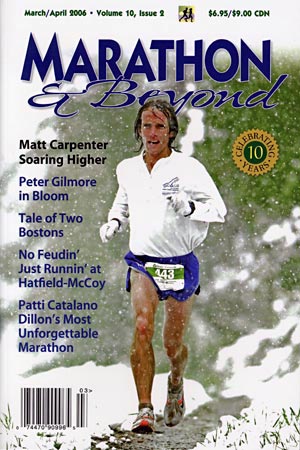
I was bitten by the Leadville bug while pacing a friend to a 22:28:26 14th place finish in 1990. I was used to races that dealt in hours and minutes—not days and nights. I was drawn in by the pre-race planning, the in-race suffering and the post-race feeling that somehow the runners were a little different than when they started. Someone explained that you don’t know who you are until you run 100 miles. I knew that someday I would run the “Race Across the Sky.” I set 2003 as the year because it seemed so far off and would allow me to concentrate on the shorter stuff for quite a few more years. It would also be a great race to do the year before I turned 40.
I paced Leadville 5 more times through 1998. I viewed each one as an opportunity to learn the course and the tricks of the trade. On some of the slower years what I saw scared me. People sleeping next to rocks on Sugarloaf Pass, others shaking uncontrollably at aid stations and almost everyone looking a few shades of pale on the wrong side of healthy. Then there was the almost sick ritual of cutting wristbands from runners—some of whom begged for more time while others were just as adamant that they had had enough. I was glad I had a few more years.
Matt Carpenter (Photo Taken From Marathon & Beyond Magazine)
As always, the years flew by and before I knew it I was blowing out candles on cakes that were more candle than cake. I had spent 8 years as a sponsored runner—dare I say a professional runner—whose job was to travel the world and run up mountains. It was the best gig in the world but it came to an end for various reasons but mostly because I had done what I had set out to do. Soon I started a family. Just as soon my running languished in “no man’s land.” I was not as fast as I used to be—but unwilling to admit it—and not as dedicated as I needed to be—but more than willing to justify it. A Pikes Peak Double victory in 2001 left me with a back injury that crippled me to the point that I was crying during most of my runs. It seemed like a good time to call it a career. Then, I remembered my goal of running Leadville.
As if hit by lightning my fading spark was turned into a flame. An almost unhealthy fear of the unknown would have me training like I had not trained in years. Leadville ’03 was out of the question because of my back. I set a new goal of having Leadville be my first race as a master. I reincorporated sit-ups and other core specific exercises into my training. In a matter of weeks I healed an injury that had plagued me for two years. Even more amazing was that most of the speed that I thought age had stolen returned to my legs and I felt stronger than ever! I picked the 2004 Lake City 50 miler as my first 50 because it had terrain and altitude similar to Leadville.
Lake City unfolded like a dream and other than some spoiled fuel I had no real issues. Indeed, I took 43 minutes off the course record. I have a race report here: http://www.skyrunner.com/story/2004lc50.htm. Soon after the race my family began the almost weekly ritual of driving the two plus hours to Leadville to train on the course. Things immediately took a turn for the worse. I found that I could no longer run much more than an hour without getting sore quads and if downhill running was involved I would end up sore for 3-4 days. I cut back on my training and as Leadville approached things were shaping up. Unfortunately, the writing was on the wall.
I will again take the easy way out with regard to writing much here about the 2004 LT100. If you want some of the gory details head to http://www.skyrunner.com/story/2004lt100.htm Suffice it to say that after I finished I was reminded of a scene from Rocky where he tells his wife that he thinks he broke something deep down inside. For me it was my pride. Paul DeWitt, Scott Jurek, 10 other guys and yes, even a female, had run by me while I was doing a 30 plus mile walk of shame. For a year I would be “that guy whose wheels came off at Leadville.” I took comfort only in the fact that I did not quit.
The day after the race I began implementing a plan for redemption. It started with three weeks off because I could not walk. With the 2005 LT100 now history it may seem a cop-out to say that it all went to plan but the simple fact is that for the most part it did! I went under 16 hours, broke the record, finished before dark and most importantly to me I did not walk a single step of the race other than the creek crossings. Instead of writing a more traditional race report I thought I would share the answers to some of the questions I am getting about the race.
Focus
The most frequent question is what I did different between 2004 and 2005. Fact is I pretty much used the same plan both years with one major difference—I took doing another Ultra out of the equation! You don’t hear from the best marathoners very often but when you do it is often fairly spectacular. It only stands to reason that the same principle should apply to Ultrarunning—if not more so. I left my Leadville in Lake City last year and learned the hard way that one Ultra was all my body could take in such a short timeframe.
Training Philosophy
The main reason I had put off doing an Ultra for so long was because everyone said they make you slow. I now believe that is bunk! Instead, I think it is the way people train for them that makes them slow. I found that I could not do 30-50 mile long runs like most Ultrarunners and still be able to do quality speedwork. One of my other goals was to win the US 10K Trail Running Championships in Vail, CO two months before Leadville. The only way I could pull that off was to run fast. I decided if I was going to error, I would error on the side of speed!
In place of super long runs, I did back to back long runs. Both days I ran faster than I could had I just done one longer run. I also felt the second day better simulated the later stages of an Ultra because I was already tired. I took this concept even further in my day in/day out running. Heading into Leadville I went five months running 2 hours or more every single day and then another two months where the only days under 2 were the few days before my shorter races. All the while I was putting in two quality speed workouts a week—one in the flats and one in the hills.
In short, just like on the roads and in the mountains, there is a direct correlation in how fast we can go in an Ultra and how fast we are. Sure, food and other issues come into play, but there is no hiding from the clock when it comes to speed. That’s why I set Vail as a goal—it kept me from turning my back on my speed. For more on this concept check out Ultra legend Buzz Burrell’s piece at http://www.trailrunner.com/trail_times/2005_trail_times_spring.htm.
Strength
I hit the weights this year concentrating on my quadriceps and hamstrings. To build up the strength in my feet I ran about an hour a week barefoot on grass so they would not get as sore after 50 miles like last year.
Strategy
I had a list of Leadville runners who had also run Lake City. Most run Leadville right at 2X their Lake City time. This let me know that a sub 16 was possible. I also compiled a spreadsheet of split times for Leadville runners who had gone under 20. All but one had second half times an hour or more slower than the first half. I felt that running the two halves more evenly would result in a better time. I knew there would be some slowdown however, as those that know Leadville can attest things get nasty heading up Sugarloaf at 78 miles. The final three miles are all uphill as well.
MQ
13.5 Split
13.5 FH
23.5 Split
10 HM
30.5 Split
7 TL
39.5 Split
9 HP
44.5 Split
5 WF
50 Split
5.5
Carpenter 2005 1:41 1:41 3:07 1:26 4:02 0:55 5:21 1:19 6:33 1:12 7:35 1:02
Old Record 2004 1:41 1:41 3:07 1:26 4:03 0:56 5:35 1:32 6:59 1:24 8:06 1:07
HP
55.5 Split
5.5 TL
60.5 Split
5 HM
69.5 Split
9 FH
76.5 Split
7 MQ
86.5 Split
10 FIN
100 Split
13.5 2nd
50 50
Diff
Carpenter 8:52 1:17 9:39 0:47 11:06 1:27 12:00 0:54 13:45 1:45 15:42:59 1:57 8:07 (0:32)
Old Record 9:36 1:30 10:22 0:46 11:59 1:37 12:59 1:00 14:56 1:57 17:16:19 2:20 9:10 (1:04)
For splits of other past winners or runners who broke 20 hours go to: http://www.skyrunner.com/story/lt100splits.xls Pacers
While I had quite a bit of experience as a pacer I had none at being paced. Last year I outran one of my pacers and another was not at the transition area on time. More importantly, I noticed that for the first 50 miles I was internalizing and concentrating on me. After I picked up my pacers I started externalizing and worrying about them. This year I only had myself to worry about. When the second half came and it was time to dig down I was able to do so without any distractions.
Fuel
This is the number two question I am getting as it seems the number one Ultra issue for most people is fuel. Note: I call it fuel, not food! True, we are all different but I believe there is a misconception that an Ultra can’t be done on energy gels and sports drinks alone and that we have to eat solid food. However, those gels and drinks are designed for easy and rapid absorption which is just what we need! The key is to practice in training what we will do in the race.
I practiced my fuel regime about five times a week almost year round right down to the number of sips I take per hour. Yes—18 sips an hour is what I need to stay hydrated. More if it is hot, less if it is cool. I get those 18 sips by taking 3 sips every 10 minutes. Further, I dump Carb-BOOM energy gel and Gatorade Endurance Formula right into my bottle or CamelBak so that I get about 50 calories every 10 minutes. My energy levels stay constant and I am never shocking my system like what would happen if I ran an hour or more and tried to take in the same number of calories at one time. As an added bonus, I can minimize the weight I carry based on the time it takes to get from one aid station to the next. Fish Hatchery to May Queen? 24 sips…
To come up with these numbers I had to experiment with what works for me. If I lost weight, I added sips. If I peed too much, less sips. Etc. But the point is I spent a good deal of my training time working on my fuel systems because I think it is the biggest factor between success and failure in an Ultra.
Aid Stations
In reviewing tapes of previous LT100s (the 1994 race with Herrera and Trason is an epic on par with any Hollywood production) I was amazed by the amount of time runners of all abilities spent in the aid stations. Bottom line, 5 minutes at an aid station means having to run 30 seconds a mile faster over the next 10 miles just to break even. Impossible! Since I was getting my fuel with every sip, the aid stations became nothing more than exchanging empty CamelBaks or bottles with full ones. This year most of my transitions were 30 seconds or less with a few done without breaking stride.
Mind Games
The hardest part of the race for me was the mental aspect. Countless times before the race I thought about how much easier it would be to go for another win on Pikes Peak—especially since it was celebrating its 50th running. However, when it came right down to it the reason I was doing Leadville was because it was not easy. It terrified me, gave me butterflies and caused me to lose sleep. At the same time it made me feel alive! Thinking about it also got me out the door on many cold winter mornings. Something that Pikes had long stopped doing.
Physically I never even had what I would consider a bad patch. While on the edge, I felt in control the whole way. But I am not used to pushing so hard for so long and by 60 miles my mind was fighting bouts of paranoia. I was feeling so awesome and yet I was scared that things could hit the fan at any moment. I was actually thinking, “This is great but people blow up in a marathon and I have 40 miles to go!!!” It was almost getting to the point of being paralyzing so I did something I have never done in a race before. I cranked up the tunes!
I had put together a playlist of music to keep me going. Mostly hard-edged rap—Eminem. I had a song for the road, one for the climb up Sugarloaf and even one for when I crossed the railroad tracks. I had picked them over the course of the year based on their “stand-my-neck-hairs-on-end” factor. I was not using them to escape but to keep me in the here and now. They allowed me to concentrate on things like my breathing, my cadence, my footstrike and not worry about time or distance. One song I played six times in a row because it kept me in the zone.
My crew and others who saw me in the last 40 miles said I was “somewhere else.” This is true in that I was somewhere between fear and euphoria. I did not dare crack a smile until the final aid station when I knew that the deed was all but done. Then I just ran while the song in my ear asked, “Look, if you had one shot, one opportunity, to seize everything you ever wanted, in one moment, would you capture it, or just let it slip?” I had captured it four minutes into the race when I took the lead and started running for more than a win and more than a record. I was running for redemption.
Finish line
Like the 2004 Lake City 50, the 2005 Leadville Trail 100 unfolded like a dream and there is very little I would change. I have the awesome feeling of inner peace that comes from obtaining a long-term goal that did not come easy. I am trying to enjoy it before the inevitable post race “what’s next” crash comes. Other than recovery, I do not know where my running will take me. I was so focused on Leadville that I literally did not even plan on there being a Sunday!
Finally, I am not saying what I have outlined above is the best way or the only way! Indeed, there are many ways to get to the same finish line. That being said, I do believe that the sport of Ultrarunning is undergoing a transition and things like the Montrail Ultra Cup have made some of the races more competitive and on some levels more professional. Sure, there will always be those whose only goal is to finish. There is nothing wrong with that! I know I was greatly inspired by the last runner at Leadville who crossed the line with only one second to spare. But for those of us that want to go as fast as we can go I believe that better planning and focused training is the key—no matter the distance!
(Note: Matt Carpenter’s CR Time of 15:42:59 hours in this event still holds up to the present. For more information about the past results of this event, you can click here. For more Biodata about the runner, you can click here.)
A guy in white compression long-sleeved shirt and black compression shorts entered the race processing area and tried to look around and see if the people around are familiar to him. Our eyes met and he smiled.
He approached me while I was waiting for the other runners to arrive in the designated area for the processing of participants in the 1st PAU National Championships in Guimaras. He reached out with his hand and we had a handshake. And we immediately went on a conversation mode as we got to sit on our own chairs.
Our conversation went this way (Note: The conversation was in Pilipino/Tagalog and I have it translated to English):
Runner: So, I’ve finally met in person the Bald Runner
BR: Oh, thank you! Nice to meet you, too!
Runner: I am Demosthenes Limbaga and a resident of Guimaras. I am the contact person of runners and cyclists from neighboring islands who would like to do their workouts here in Guimaras.
BR: So, you must be very popular here! You are also a photographer and a fit athlete? (I’ve seen him sporting a SLR Camera with a pair of sports sunglasses)
Runner: Yes, I try to document the athletes who are practicing their sports here in Guimaras.
BR: How long have you been running? Also an ultrarunner?
Runner: I’ve been an athlete of the Project Gintong Alay during the time of former President Marcos and I was a middle distance runner then. Through the years, I continued to be a long distance runner and I am proud that I am only the ultra runner who is from this island.
BR: That’s good! So, maybe we are at the same age.
Runner: I am 57 years old
BR: Oh? I am 60 years old and a Senior Citizen. But I think you are a stronger runner than me.
Runner: I am glad you brought the Ultrarunning National Championship here in Guimaras so that the “Babies” will have a taste of the REAL long distance running.
BR: What “Babies” are you talking about?
Runner: “Babies” are those runners who would be asking and looking for Water Aid Station every one or two kilometers during the race.
BR: Ah..you mean “newbie” runners?
Runner: No, these are the runners who have not yet experienced finishing an ultra distance race.
BR: Ha! Ha! Ha! So, you are a bad ass ultra runner and a hardcore one!
Runner: Yes, you can call me anything as long as I am not a “baby” in long distance running.
BR: (Change Topic!) It seems you have all your toe nails painted with nice, dark & shiny nail polish.
Runner: Oh, yes! I’ve painted them all with nail polish to hide my dead toe nails!
BR: Very impressive. I might as well adopt your style so that I can hide also my dead toe nails! Oh, can I have your bank deposit slip so that my staff can process you already.
Runner: (He gave me his receipt). Please mention my name to the Governor that I am only the runner from Guimaras joining this ultra race.
BR: Of course! I will see to it that your name will be mentioned to the good Governor!




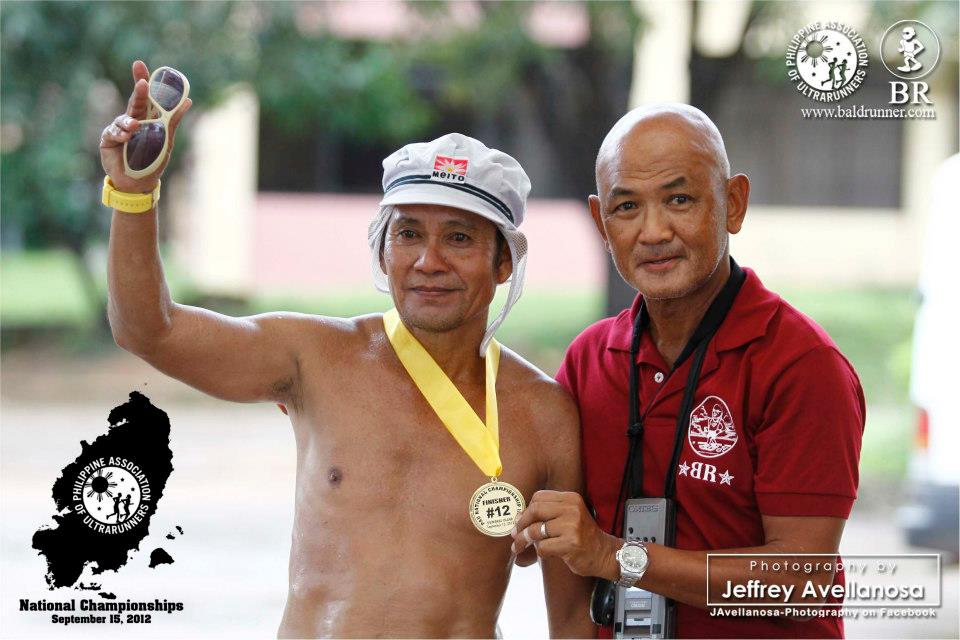
 Bald Runner
You must be logged in to post a comment.