Race Report On West Coast 200K Ultra Marathon Race By Bobby Go


The 2013 West Coast 200-Km Ultra Marathon Race: A Special Kind Of Hurt By Bobby Go
WC200-1

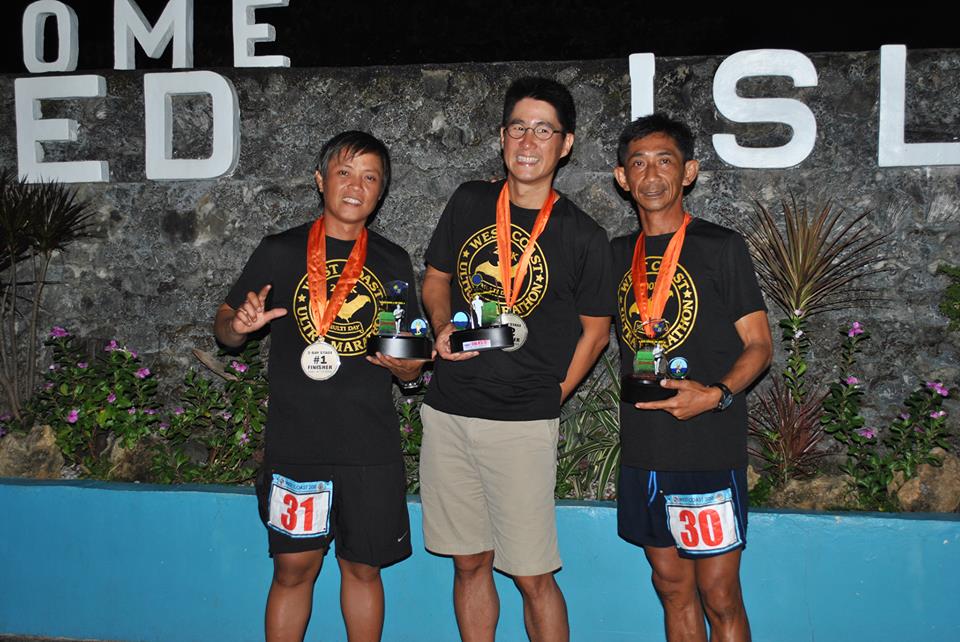
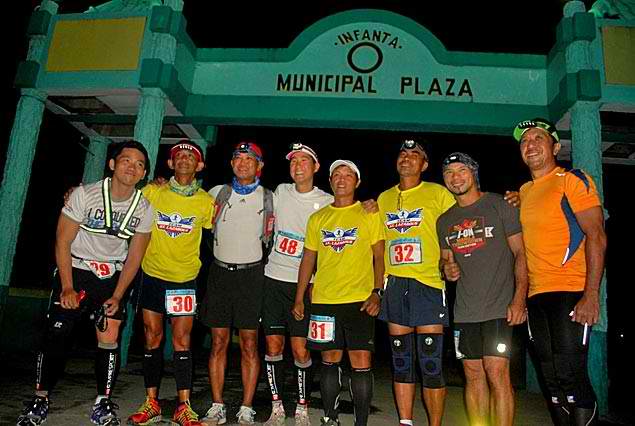
The multi-stage participants of the 2nd West Coast 200Km assemble for a group picture (from left to right): Carlito, Edwin, Race Director Jovie Narcise, Me, Bong, Ruben V, Merwin and Ruben H.

BOOKENDED holidays have become commonplace in the last few years – quite a treat for students and slackers, and for endurance junkies who crave additional training and/or racing days – but obvious productivity killers for companies looking for some momentum. I suppose there’s some pretzel logic in declaring special holidays that give the working class a rest, the retail and tourism industry a boost, and netizens even more time to stream/surf/chat without fear of retribution. Extended weekends are ideal for races that require more preparation or time to conduct or complete.

Enter the ultra marathon.

I decided to join the second West Coast 200km Ultra Marathon (WC 200, for short), after completing the Bataan Death March 160km Ultra Marathon in January early this year.  A few friends had joined the previous year’s multi-stage race, and the stories they shared were enough to convince me to hit the road, which spreads the 200-kilometer course over three days; each day with a different cut-off time, and a total cut-off time of 36 hours. This year’s edition of the WC 200 would feature an additional format, the single-stage race, with the same starting date and time as the existing multi-stage race. The single-stage calls for a continuous start-to-finish run with a cut-off of 48 hours.
WC200-2

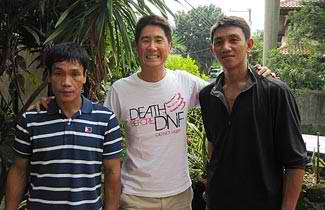
Bobby with his support team, Rey and Jilbert

With a race calendar that hasn’t let up, the challenge lay in physically preparing for a distance that was unlike any I had ever done, but one that I was mentally prepared to do.  Okay, one of two wasn’t so bad when I thought about it; and since my training program included weekends comprised of a long ride (120-140 km) on a Saturday followed by a long run (50-60 km) the following day, I had to admit that was preparation enough. Still, there was THE distance to cover come race day. In the end, my longest run (technically, it wasn’t a run, since I utilized a run-walk strategy that I planned to employ for all three race days) was 50 kilometers done on a hot and humid Sunday morning in October. I felt fine throughout that long slow distance (LSD, to running folk) and practiced my nutrition/hydration plan to make sure I would sustain my energy levels throughout the duration of each run day.

Day One: Subic to Botolan

With a 5 a.m. gun start, there was little chance I was going to get any sleep if I was making the trip from Manila to Subic; so I decided on a relaxed dinner at home with the family and watched some television while waiting for midnight. Two light snacks before leaving and upon reaching Subic, and I was filled, chilled, and ready to toe the start line for another amazing road journey.
WC200-3

What surprised me the most at the beginning of the race was the number of single-stage entrants: there were 44 brave souls who signed up. In sharp contrast, only eight, myself included, were listed for the multi-stage run. Apparently, the number of deranged ultra-runners had grown considerably and this inequitable ratio between single-stagers and multi-stagers was a clear indication. Some of my friends doing the single stage were even trying to convince me to ‘upgrade’ and join them, justifying their choice as less painful since it will be one, continuous expedition into agony instead of three, when compared to the multi-stage.

At gun start, the herd made two loops around the Remy track oval and proceeded onto the road leading to the exit gate.  From there, we followed a gradual climb up the still-dark road leading into town, running against an oncoming traffic of trucks, tricycles, and assorted passenger vehicles with our trusty support vehicles leap-frogging us to agreed points/distances ahead. Daylight began to break just as I reached the bottom of the rolling route, as the rapidly illuminating sky bathed me with more confidence to pick up my pace.

Stay with the (run-walk) plan, I had to remind myself, each time I got passed by a fellow runner during the walk portion of the interval. The temptation to run and not give up the lead was never a factor when I was training — but, of course, since there was no one else running with me. I had/have always viewed this attitude (of not giving up the lead) as ‘more of a guy thing.’ From my personal observation during fun runs, triathlons, duathlons, and marathons, male competitors do not savor the idea of being passed (at least at the beginning of a race) by: a) females; b) fat people; and c) old(er) people. I wasn’t about to fall into this mindset. I had fallen for it in the early years of active competition, until I realized that just trying to keep up with Sheila, Tubby, or Grandpa Moses did nothing but wear me out or make me look really stupid – often, both.

Everything went well, and though I began to experience a little fatigue past Km 50, my spirits were buoyed by the smiles and waves of the friendly town folk, and the urging of the other runners who passed me or whom I passed. At around Km 55, a small support team from the local government handed me an energy drink and a banana, which I gratefully accepted. While engaging them in small talk about the weather, one of the team mentioned that I was probably the sixth overall runner who had reached their station.  Sixth, I asked in a skeptical tone, totally unaware of my place in the standings. Yes, came the reply, we didn’t count any more than five since you arrived. Talk about morale boosters. Learning that I was even among the top 10 that day would have been reward enough, but this was over the top. And I most certainly did not expect it.

I ran-walked with more lightness in my step and strangely, with more ease. My standing would not change anything, and I didn’t bother to ever look behind me to see if anyone was catching up. I ran-walked until I reached the municipal arch of Botolan, just as a gentle rain began to fall (which developed into a heavy downpour as my support team and I rode off in search of our quarters for the night). The race director greeted me with a handshake and recommended I get out of the rain soonest for rest and recovery.

My team of two (Jilbert and Rey) and I found a modest hotel five kilometers away, which featured a three story walk up to reach the reception area, perfect for ultra marathoners who had just run more hours than a normal workday. After a quick check-in at around four in the afternoon, we drove to the nearest fast food place for our first solid meal for the day. We had dinner at yet another quick service joint three hours later and retired for the night, as we would be up roughly eight hours later for another 5 a.m. gun start.

Day Two:  Botolan to Infanta

Waking at half past three from a surprisingly restful sleep, there was more than enough time to do a bit of stretching and loosening up in between bites of my take home siopao and sips of my 3-in-1 coffee. Big breakfasts before runs never work for me, and for another 70 km of running, I chose to ‘eat as needed’ since this has always been my nutrition strategy. We got to the start area to find the other participants sitting around engaged in casual conversation.

After taking a seat on the curb and snacking on a couple of pieces of freshly baked pan de sal, I learned that the lone female runner, Jean, would not be joining the rest of us due to an ankle injury sustained the day before. We were down to seven, and with that feeble number of participants, it made sense (to me, at least) to acquaint myself with everyone with whom I would share the same road. After a short briefing by the race director and a couple of photos, we began our second leg running single file towards a crisp and cool Saturday morning that promised more adventure and surprise than the day before.
WC200-4

Except for a little soreness here and there, I felt generally good during the first 15 or so kilometers. And just as it had been the previous days, I fell behind from most of the group because of my chosen strategy, but managed to catch up after nearing the 30 km point. However, before even reaching my scheduled extended stop at 35 km, I had to deal with a couple of issues that would plague me throughout the rest of the day: one was a urinary tract problem which carried over from the day before; the other was an impending bout of plantar fasciitis (PF) that was a result (I think) of switching from my preferred minimalist shoes to neutral shoes. I had never experienced PF, and though I’ve always been one to embrace first-time experiences, this didn’t qualify as one I was looking forward to adding to my ‘top 10 list of best experiences in a race.’

So aside from feeling the urge to go every half hour and expelling nothing more than a trickle, the sensation of having my right foot perpetually pinched in a vise with every other step made the rest of the run sheer torture. This second day also brought changes in the weather that went from breezy to sweltering, and shifting from a cloudless, scorching day to one heavy drencher. By the time I tinkled on the side of the road for the nth time, my urine was coffee-colored and this pushed me to reassess my hydration strategy.

Together with Jilbert who diligently took notes on my hydration and nutrition throughout the run, I had judiciously monitored my hydration, making sure that I had generous sips of water, buko, and energy drink every 1.5 to 2 kilometers – so I couldn’t be dehydrated. I wasn’t at all dizzy or disoriented, even under the extreme heat that accompanied me most of the way. Instead of mulling over a change in strategy and telling anyone (including my support, who was in constant contact with the missus via text messaging) about my java-tinted discharge, I remained focused on getting through to the finish despite this minor distraction.

The pain in my right foot continued to hound me and I took more than the planned walking rest breaks in between runs, hoping to ease the pressure on my aching arch. I had lost quite a lot of time with the extended breaks and decided to try something else: make a run for it. I picked up my feet and ran at a faster clip, ignoring the invisible metal jaws that clamped hard on either side of my right foot. I managed to pass two fellow participants, and kept my pace until I felt I had put in enough time to compensate for all the walking that came before. But the unrelenting twinge kept up the pressure and my run ground to a halt as I reached a town center undergoing major roadwork. Here, I pulled to the side and sat myself on a store bench, removed my shoes, and massaged my sore arch, wishing I had the magical hands of a reflexologist who might have the means to alleviate this nagging pain.

By the time I tried to have a wee again, there came a better flow, but this time with a red tinge. Whoa! I am definitely not telling anyone about this. Yet. Let me survive this and I’ll have a good story to tell. My mind insisted that something wasn’t consistent with my conventional knowledge of dehydration, so I kept on. I did take more fluids with each swig of my water bottles, but that was about it. The road still looked straight to me, and I didn’t feel like I was running on clouds, although I wish I did. My next pee stop half an hour later couldn’t have made me happier:  An extended, steady, and clear stream of fluid that could probably fool anyone into drinking it, had I discharged it into a plastic bottle of mineral water. That development perked me up, and left me lighter by a few ounces, as I pushed forward with just the aching arch of my right foot and blisters on both feet to contend with.

One important lesson I learned during this second leg: Never ask for directions involving distance. Sure, you can ask about the nearest gas station or where the police outpost is, since that’s a basic ‘go left at the first corner then turn right when you reach the end of the street’ kind of response that you’re bound to get. But under no circumstance should you ever ask how far they are. I learned that people have such disparate perceptions of distance that one man’s inch is another man’s kilometer. And I learned never to ask this when you think you’re near your destination. The previous day’s experience should have clued me in already – I had asked a couple of people along the course how far the municipal center (read: the finish) was, and the estimates they provided got me believing that I would get to there by the time I finished crooning My Way. Little did I know that I would have to sing all the versions of the song before I reached the arc of the municipal building.

Battered and nearly broken by the agony of the feet, I knew the end of this run day would leave me ruminating whether or not I would survive the third day. Since I chose to bear the plantar pain fest through most of the run, the payback came swiftly when I crossed the finish and got into the support vehicle. My feet and legs were so banged up, I was supremely tempted to actually take a pain killer. Worse, we still had to find a place to stay, and it took us close to an hour to find the only decent hotel for miles. By the time I settled into my room and had taken a cold shower (no hot water here, folks), I seriously considered the possibility of dropping out of the next day’s race if I couldn’t repair myself in time. Even walking up and down the two flights of steps from the lobby to my room was agonizing.

Of course, that bloody urine episode couldn’t be ignored so I did the most sensible thing anyone would have done: I Googled the damn thing.

Hematuria. That’s the medical term for my scarlet seeping. The Mayo Clinic reference page I pulled up cites strenuous exercise as a possible cause, and proposes ‘It’s not quite clear why exercise causes gross hematuria. It may be trauma to the bladder, dehydration or the breakdown of red blood cells that occurs with sustained aerobic exercise. Runners are most often affected, although almost any athlete can develop visible urinary bleeding after an intense workout.’ It also listed urinary tract infection, kidney disease, and cancer as other causes. Just my luck. But I was over that adventure, and had to focus on the task at hand:  rest, repair, recover, and run again.

I had take out barbeque chicken with extra rice for dinner, which seemed to disappear in seconds the moment I plopped down on my bed to eat. What followed was a series of hot compress treatment for my blisters, gliding my foot on the foot roller for my plantar, and intimate quad and hamstring crushing passes over the foam roller. This sequence went on for a while; at least until I felt my dinner was halfway through my digestive tract. Then it was lights out, and the utmost wish that the next day would bring better things, like a brand new pair of legs and feet.

Day Three:  Infanta to Alaminos

I awoke to the sound of my neighbors/co-participants bantering on the porch just outside our second floor corridor. They sounded like they were in much better shape than I was.  My legs were better rested, but my feet still hurt, though not as much. Propping them up on the foam roller and wearing full leg compression while I slept helped push the pooled blood back toward my ticker. I wasn’t perfect, but I was better. Save for breakfast at the hotel dining area, I spent practically the entire day in my room, running through the same hot compress-foot roller-foam roller routine, napping a bit in between, then starting over.  Of course there were the text messages, Face Time, Instagram, and Facebook to keep me company. Two Facebook posts by the race director indicating my position as the race leader at the end of the second day put some pressure on me, though I chose not to think about it. I was exceedingly concerned about whether I would even finish the run.

And as I continued to apply more hot compresses and skim my arch over the foot roller, I felt the blisters shrink to a manageable size, while the vise that gripped the sides of my foot seemed to ease. Lunch was barbeque chicken again, with mandarin oranges for dessert, and a mid-afternoon snack of cup noodles. By late afternoon, my feet, which were my biggest concern, were not as sore. My confidence began to grow as I prepared my race must-haves and laid out my (tadah!) outfit of the day. Dinner was barbeque pork for a change, and I kept it light, knowing I would be eating constantly during the run, as evening runs, without fail, always bring out hunger pangs more often than daytime runs.

‘Bobby, where are you?’ read the text message from the race director (RD). My support and I were still en route to the start area, which was about 5 km away. Jolted by mild panic, I texted back ‘Isn’t gun start at nine yet, sir?’ hoping that I heard correctly the previous days. Turns out there was a footnote to the scheduled gun start:  If all participants are assembled earlier, the race can begin before the pre-announced time. Profuse with apologies toward the RD and my co-participants, I took my place among The Magnificent Seven in a semi-circle huddled around the RD as he gave us final tips and directions on navigating the third and final run. Oh, and he announced as well that I had an eleven minute lead going into this last leg. Mantra for the moment: I will not be pressured.

Minutes before nine o’clock, Edwin, Bong, Ruben V, Carlito, Merwin, Ruben H, and I set out into the enveloping darkness of a nippy Sunday evening, eager to notch this last leg with composure and add a new chapter to our respective endurance race histories. Edwin, Bong, and Ruben V took off faster than you could say ‘Alaminos’ and were not to be seen or heard of until much later. I ‘middled’ it and stayed with my run-walk interval plan, aiming to allay my plantar woes the best I could. The beginning of my run went smoothly, until I got to my third interval, where the road started to climb towards the ebony evening sky. The hurt was back, and there was no denying it would be there for the rest of the fifty or so clicks left to cover. I thought it best to try to ignore the pain and take advantage of the cool weather.

You’re going to be surprised at your pace on the last leg. Jonel, he of the ‘no frills, all thrills’ ultra road and trail races, texted me that prophetic message earlier that day. As I shuffled my way up the dark, desolate road, I secretly hoped that the surprise would be a positive one; that we would all somehow run faster than the previous days even on tired legs and worn-out bodies.

I can’t quite explain what really happened as I crossed somewhere between Km 20 and 21.  Second wind. Being in the zone. Total focus. Perhaps I wanted to finish with aplomb, or maybe my body just finally said “F—k it, if we’re going to finish, we’re going to finish strong.” Whatever it was, the plantar fasciitis that was dogging me since the previous day turned from painful to numb, enabling me to clock my fastest pace — and uphill at that. I’d never seen the course before, and running uphill at night can somehow take the edge off because of two basic factors: one, the cooler ambient temperature, and two, the perceived (or unperceived) degree of the incline. As far as the latter was concerned, I later described the gradient and running up it to my cycling teammates as akin to our bike rides up Amadeo, the Cavite municipality just before Tagaytay city, which features a series of long gradual climbs interspersed with short, rolling hills — except that you did this on foot.
WC200-5

Jilbert and Rey were surprised that I wasn’t stopping as often for hydration and nutrition as the previous days, despite the inclined course; so I told them that the cooperative weather had a lot to do with it. And it did. Aside from the cool temperature, the heavens were filled with stars and littered with wisps of clouds, inspiring enough to make me break into song.  Okay, so I sang Don McClean’s ‘Vincent’ in its entirety at the top of my lungs — but if a tree falls in the forest with no one to hear it, does it make a sound?

Apart from the hostile dogs that seemed to work in packs, calling out to the next group ahead as if to say ‘He’s coming your way. Get him!’ the only other unfriendly critters we met along the course were a couple of drunkards packing wooden clubs (dos for dos, in the vernacular) who had threatened to use Bong for hitting practice. As Rey (Muay Thai practitioner) and Jilbert (trained in hand-to-hand combat) alighted from our support vehicle, Wino No. 1 hastily retreated into the darkness while Wino No. 2 sat meek and unarmed on the side rails. Bong was relieved that the cavalry had arrived, since he had been held up for some time in that spot, unable to pass. Bong and I ran and walked side by side for about three intervals before he excused himself and continued running, quietly disappearing into the night as I continued to walk whenever my watch signaled it was time to recover.

As I reached Km 50, I couldn’t help but look back at the events of the previous days, and how contrasting my thoughts and feelings were at the end of each race day. I had roughly eight more kilometers to go (since the earlier stages featured distances over the declared 70 km/day), and I knew this race was in the bag. I was talking to myself and humming songs, excitedly telling Jilbert and Rey at each hydration stop that the finish line was close and that we could all finally eat a decent meal.

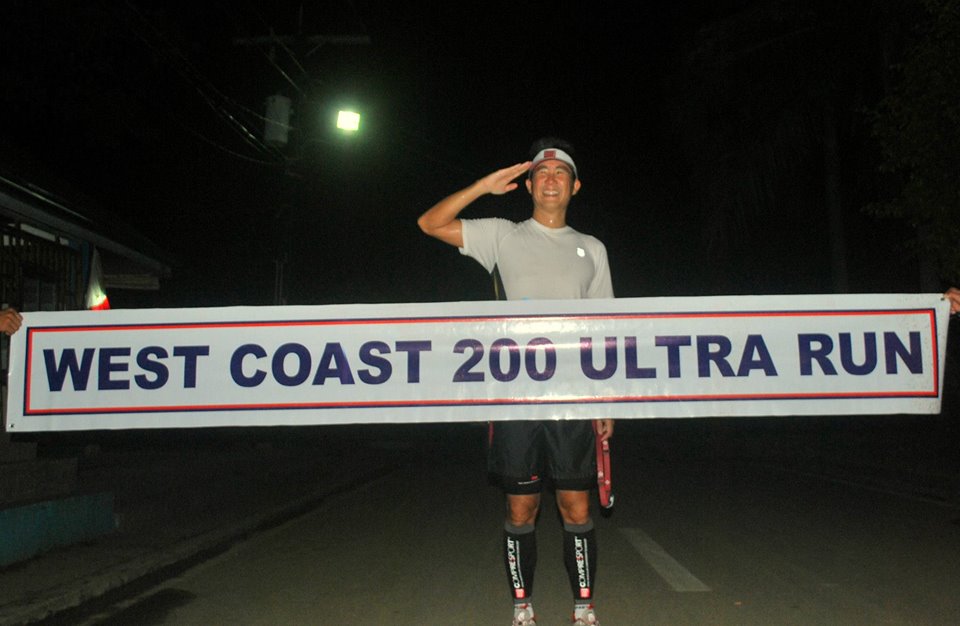
This was my best day. I wish I had the pictures to prove it, because I was practically smiling throughout the run. I was grateful for the opportunity to race such an incredible distance, thankful for having decided to join the race, and thoroughly satisfied at the way things had turned out, difficulties and all.

The thing about these types of races is that even before you’ve reached the finish line, you’re already thinking about the next race (you want to do). I remember dismissing any possibility of doing races with distances exceeding this one. But that was just before I started the WC 200. It’s a totally different story now.

Sometimes, all you need is a leap of faith — and once you take it, there’ll be less than 200 kilometers left to cover.
WC200-6

Official Result: 2nd WEST COAST 200K (Multi-Day Stage) Ultra Marathon Race


FINAL RESULT AFTER 3 DAYS:

Starting Time & Place: 5:00 AM November 1, 2013/Remy Field Oval Track, Subic Freeport, Olangapo City

Finish Line: Barangay Lucap, Alaminos, Pangasinan

Distance: 200 Kilometers

Cut-Off Time: 36 Hours (3-Day Stage)

Number of Starters: 8 Runners

Number of Finishers: 7 Runners

RANK

NAME

TIME (HRS)
1 Rosauro Dizon (Champion) 28:55:20
2 Bobby Go (1st Runner-Up) 28:57:17
3 Edwin Clemente (2nd Runner-Up) 29:34:10
4 Ruben Veran 31:30:00
5 Merwin Torres 32:51:20
6 Ruben Herrera 32:51:26
7 Carlito Buenaventura 33:08:03

ooooOOOOOoooo

RESULT: FIRST DAY

Starting Time & Place: 5:00 AM November 1, 2013/Remy Field Oval Track, Subic Freeport, Olongapo City

Finish Line: Municipal Plaza, Botolan, Zambales

Distance: 72 Kilometers

Cut-Off Time: 12 Hours

Number of Starters: 7 Runners

Number of Finishers: 7 Runners

RANK

NAME

TIME (HRS)
1 Bobby Go 9:44:36
2 Rosauro Dizon 10:42:32
3 Carlito Buenaventura 10:44:30
4 Ruben Veran 10:59:52
5 Edwin Clemente 11:00:06
6 Merwin Torres 11:22:21
7 Jean Lim (Female) 11:22:59
8 Ruben Herrera 11:23:05

ooo0OOOOoooo

RESULT: SECOND DAY

Starting Time & Place: 5:00 AM November 2, 2013/Municipal Plaza, Botolan, Zambales

Finish Line: Municipal Plaza, Infanta, Pangasinan

Distance: 72 Kilometers

Cut-Off Time: 14 Hours

Number of Starters: 7 Runners

Number of Finishers: 7 Finishers

RANK NAME TIME (HRS)
1 Rosauro Dizon 11:12:10
2 Ruben Veran 11:44:02
3 Edwin Clemente 11:44:04
4 Bobby Go 11:59:13
5 Merwin Torres 12:13:40
6 Ruben Herrera 12:13:45
7 Carlito Buenaventura 13:47:10
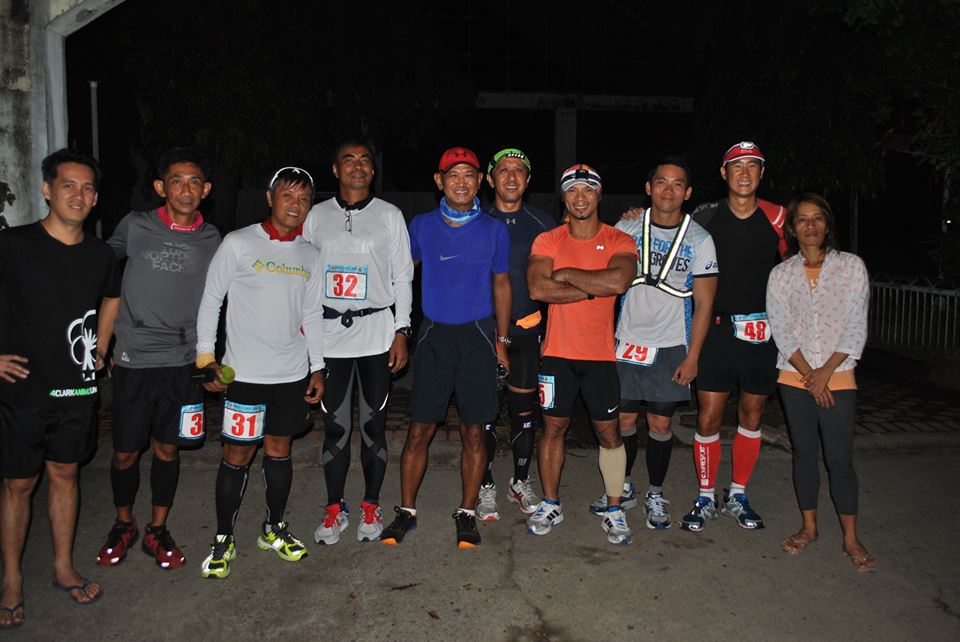
Runners Before The Start Of The 2nd Stage In Botolan, Zambales

RESULT: THIRD DAY

Starting Time & Place: 8:30 PM November 3, 2013/Municipal Plaza, Infanta, Pangasinan

Finish Line: Barangay Lucap, Alaminos, Pangasinan

Distance: 56 Kilometers

Cut-Off Time: 10 Hours

Number of Starters: 7 Runners

Number of Finishers: 7 Runners

RANK NAME TIME (HRS)
1 Edwin Clemente 6:50:00
2 Rosauro Dizon 7:00:38
3 Bobby Go 7:13:28
4 Ruben Veran 8:46:16
5 Carlito Buenaventura 8:56:23
6 Ruben Herrera 9:14:42
7 Merwin Torres 9:15:19
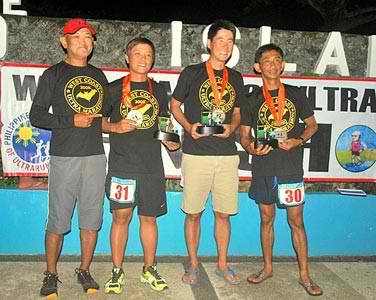
Podium Finishers
Podium Finishers

Congratulations To All The Finishers & Their Support Crew!

Official Result: 1st WEST COAST 200K (Single Stage) Ultra Marathon Race


5:00 AM November 1, 2013 To 5:00 AM November 3, 2013

Starting Area: Remy Field Oval Track, Subic Freeport, Olongapo City 

Finish Line: Barangay Lucap’s Port & Lighthouse, Alaminos, Pangasinan

Number of Starters: 44 Runners

Number of Finishers: 41 Runners

Cut-Off Time: 48 Hours

RANK

NAME

TIME (HRS)
1 Roberto Abad (Champion, Course Record) 31:05:34
2 Alfred Delos Reyes (1st Runner-Up) 32:52:07
3 Wilnar Iglesia (2nd Runner-Up) 32:52:08
4 Henry Laron 33:12:59
5 Bob Castilla 33:13:00
6 Joseph Pineda 34:00:28
7 Graciano Santos 35:34:47
8 Elmar Bob Tolete 35:47:29
9 Carlo Gonzales 35:53:59
10 Simon Pavel Miranda 36:38:18
11 Nicolas De Leon 37:44:01
12 Calvin John Escandor 38:54:42
13 Alex Jones 39:14:20
14 Dante Sagayap 39:14:30
15 Ronnel Go 39:21:59
16 Glairold Recilla 39:27:30
17 Bong Alindada 39:42:35
18 Raffy Gabotero 40:02:29
19 Meljohn Tezon 40:07:39
20 Chito Carreon 41:35:57
21 Gilbert Anama 43:20:24
22 Roger Villareal 44:48:09
23 Jonathan Moleta 44:48:23
24 Benedict Meneses 45:02:03
25 Mark Sigue 45:08:22
26 Joseph Sibal 45:26:12
27 Marlon Zarate 46:05:58
28 Carl Balagot 46:08:25
29 Allain Cuchas Llagono 46:11:40
30 Yob Red 46:13:39
31 Kharl Ocampo 46:14:13
32 Mel Severino 46:23:21
33 Larry Daliwag 46:23:22
34 Sherwin Botabara 46:47:42
35 Randy Rubio 46:48:55
36 Luzel Franco Tibo-oc (Champion, Lady) 46:58:57
37 Mark Anthony Tibo-oc 46:58:58
38 Noel Ko 47:12:56
39 Joel Sison 47:30:49
40 Robert Watson 47:38:29
41 Jinky Yray (1st Runner-Up, Lady) 47:58:49
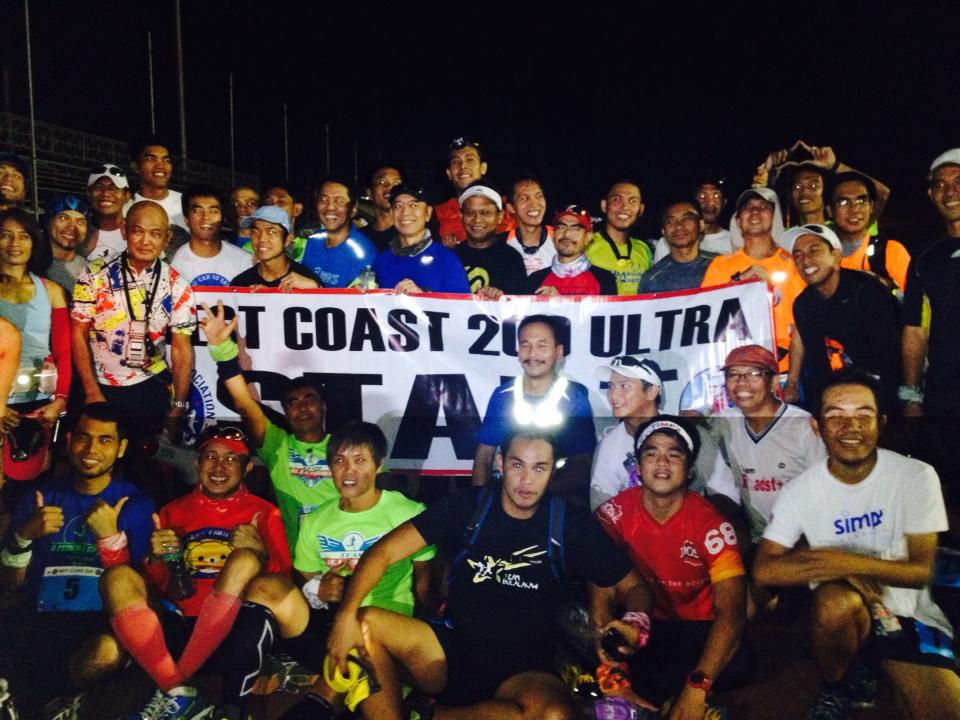
WEST COAST 200K Runners (Photo By Elaine Botabara)

Congratulations To Everybody!

Rules & Regulations: 1st West Coast 200K Single Stage (WC200SS) Ultra Marathon Race


The following are the Rules & Regulations and Additional Information on the conduct of the 1st West Coast 200K Single Stage Ultra Marathon Race on November 1-3, 2013:

1. WEST COAST 200K Single Stage (WC200SS) is a single-stage solo run which will start o/a 5:00 AM of November 1, 2013 at the Remy Field Oval Track in Subic Freeport (Olongapo City) and ends o/a 5:00 AM of November 3, 2013 at the Port of Barangay Lucap, Alaminos, Pangasinan.

2. This is a SOLO run. Runners will run along the Olongapo-Alaminos Highway covering a distance of 200 kilometers. All runner-participants has the option to join as an unsupported or supported. A supported runner can avail of a support vehicle and support crew. An unsupported runner will be on his own as he/she can avail of convenience stores & eateries along the route.

3. Pacer/s are not allowed.

4. Runners should ALWAYS run on SINGLE FILE. Running abreast with other runner-participants will not be allowed. This is a cause for disqualification.

5. Runners should always stay on the farthest left side of the road facing the incoming traffic. The race route is an Open Road and the runners shall share the road with other vehicles. Be always vigilant on your surroundings and be alert on the vehicles in front and behind each runner.

6. A runner-participant is limited to only ONE support vehicle. However, a support vehicle can support a maximum of three (3) runner-participants.

7. Support vehicles should always park on the far RIGHT side of the Highway/Road. A runner will be disqualified if his/her support vehicle is parked on the Left side of the Highway. Support Vehicles shall not be allowed to “shadow” their runner. Only four-wheeled vehicles are allowed as support vehicles.

8. Runners will not be allowed to enter their parked Support Vehicle once the Race starts. Runners should bring a stool or portable chair or folding bed positioned outside their support vehicle (within the view of other runners & roving marshals) if they intend to sit or lie down. Runners will not be allowed to sit or lie on any part of their support vehicle.

9. Runners are required to display a piece of tarpaulin with the words “RACE IN PROGRESS” on any side of their Support Vehicle. Race Organizer will not provide such tarpaulin.

10. Only the NAME of Running Group or Team’s Name of the Runner will be displayed on the runner’s Support Vehicle.

11. Corporate Brands will not be allowed to be displayed on the runner’s Support Vehicle.

12. Runners with Support Vehicle must submit to the Race Secretariat the Type & Make/Model of Vehicle; Color; Number of Support Crew and Plate Number.

13. The prescribed cut-off time for the race is 48 hours. However, there will be intermediate cut-off times along the route on the following checkpoints:

Kilometer #40——7 Hours

Kilometer #80——15 Hours

Kilometer #100—–22 Hours

Kilometer #140—–32 Hours

Kilometer #180—–42 Hours

Kilometer #200—–48 Hours

14. Podium Finishers’ Awards/Trophies will be given to the Top 3 Male & Top 3 Female. Official Finishers (Finishers within the Cut-off time) will be awarded with a Finisher’s Belt Buckle, Finisher’s Medal, Finisher’s T-Shirt, and Certificate. Corresponding Award Points for the 2013 PAU Runner of the Year will also be awarded.

15. A runner is declared DNF once he/she could NOT cross each checkpoint within the prescribed cut-off time. The runner will not be allowed to run the course once he/she is declared DNF in the race.

16. In case of emergency and/or reports of DNF, the runner or support crew should contact Cellphone # 0918-965-9895 and provide the following information: Name of the Runner; Race Bib Number; Location of the Runner; and Nature of Emergency or Reason For Declaring as DNF.

17. There will be NO Aid Stations along the route. NO Drop Bags will be allowed.

18. It is mandatory for every runner to have his/her hydration system; headlight/lighting system; reflectorized vest; and first-aid kit. These items will be inspected before the start of the race. Unsupported runners must bring with them a cellphone.

19. Registered runners are advised to bring their BPI Deposit Slip to the Starting Area on Race Day and this will be used to redeem their Race Packet/Race Bib.

20. Each of the Municipal Plaza in Botolan, Zambales (Km #70) & Infanta, Pangasinan  (Km #140) has a Covered Court (with Comfort/Bath Rooms) and Lawn Area where runners could sleep/rest and take a bath. Please don’t litter on these areas.

21. This is the FIRST 200K Run under the auspices of the Philippine Association of Ultrarunners (PAU) to be held in the country. Let us maintain the INTEGRITY of this run and be proud to be a participant and much more if you intend to finish the event.

22. It is the responsibility of the runner-participant to inform, advise, and instruct his/her designated support vehicle DRIVER and SUPPORT CREW on the Rules & Regulations of this Event.

23. Runners are reminded of the presence of dogs along the course. Take precautionary measures in dealing with them.

24. Runners are also reminded to talk politely to the locals and greet them as you pass them. There will be a lot of people and vehicles on the cemeteries along the road as the days of the event are declared as “Public Holidays” to honor the dead.

Good luck and have fun!

Finisher's Belt Buckle
Finisher’s Belt Buckle

RD’s Report: 4th Mt Pinatubo 50K Trail Challenge


Five years ago, I went to Mt Pinatubo together with a group of ultra runners where five of us were training for the 1st BDM 102. While the 5 of us were having our “pit stop” at the edge of crater lake, I started to discuss with the group about my plans in promoting ultra marathon events in the country. And the rest is history. The ultra runner’s group whom we asked to join in our trek to Mt Pinatubo just completely “vanished”. I wonder why.

Every edition of the Mt Pinatubo 50K Trail Challenge has a unique story and experiences to every runner as the landscape of the route would completely change every year. In short, there is a different story for every runner every year. And the challenges brought about by the landscape, the river, the lahar, the rocks, the elevation, the heat and the rains make this event totally different from the other trail running events in the country. This is a trail running event where you need agility, quick thinking, smart running strategy and orienteering skills in order to run safely back to the finish line.

If you look closely on the elevation profile of the race route, this could be the first ultra “FKT” (Fastest Known Time) event held in the country. The fastest recorded time was 5:35:09 hours by Marcelo Bautista while the Lady’s Course Record is 8:00:59 by Majo Liao. These course records stand up to the present.

Mt Pinatubo Elevation Profile

For this year, the event was held after a day when Typhoon Santi’s strong winds had devastated the towns of Tarlac, Pampanga, Bataan and Zambales. The roads to the starting area, Barangay Santa Juliana in Capas, Tarlac had been filled with fallen trees and debris but with the immediate response from the Local Government Disaster Committee, the roads were cleared for traffic.

Much to my desire to personally recon the route on the day before Race Day, I was advised by the local authorities that It would be best to wait for the river’s depth to subside and start the race when there would be natural lighting as the sun arises.

I was expecting only 52 runners to join this race. I guess, 3 of the runners who requested to be included in the list of registered runners decided not to join the race as a result of the typhoon. I decided to run the race as the “sweeper” and safety marshal for the last runners.

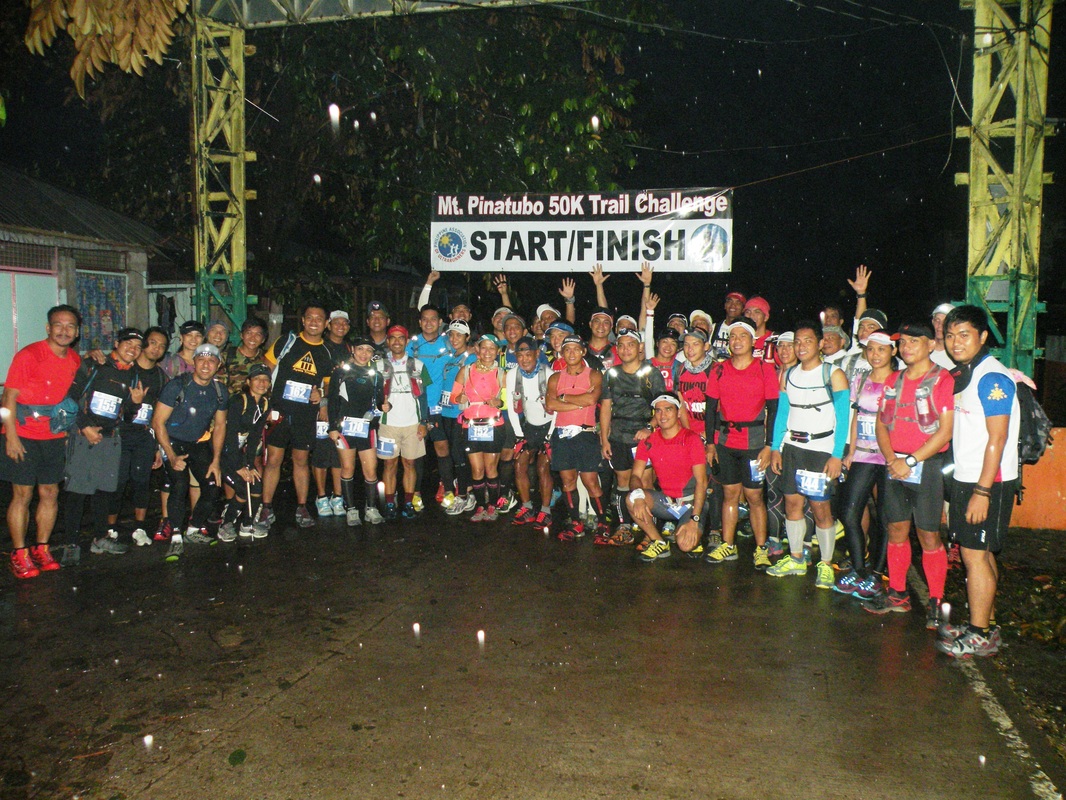
Most of the runners arrived at the assembly area few hours before the start of the race and they were surprised to see the devastation brought about by Typhoon Santi. I made clear to all the runners that the race start would be delayed for us to wait for the day’s sunlight to appear. At exactly 5:35 AM, the race started in front of the Barangay Hall of Santa Juliana, Capas, Tarlac with 49 runner-starters. My salute goes to these runners who braved to be at the starting area.

Runners who had their first time to join the race are always surprised with the first river crossing which is about 1.3 kilometers from the starting area. It is always the same feeling and apprehension for all the runners. The river had been wider and some portions are deep and the current is strong. Runners would cross the river deliberately in groups trying to test the depth and current of the flowing river. At a distance, every runner would see the road that leads to the cogon/tall grasses and that was the target of all the runners.

Due to the loose and unstable ground brought about by the typhoon, the first 4 X 4 vehicle to serve the runners as the Aid Station had been stalled at Km 8. The 2nd 4 X 4 vehicle move on to about a few kilometers.

I started to run the race after 5 minutes from the Gun Start time. I purposely made myself as the “sweeper” and safety runner for the runners at the rear. After one hour of hiking and running, I was able to spot the stalled 4X4 vehicle and the last runners leaving the Aid Station. I immediately called my staff at the Starting Area to send another 4X4 vehicle to reach Kilometer 17, if possible.

I have to wait for about 45 minutes for the replacement 4X4 vehicle to arrive at the stalled vehicle. Once it arrived, I continued my run with the instruction for the replacement vehicle to move forward closer to Km 17 if the condition of the ground and the river permit. The replacement vehicle passed me somewhere in Km 10 and I could still see the last runners in front of me with a distance of about 500 meters. However, the driver of the replacement 4X4 vehicle had to stop the vehicle about 1-2 kilometers ahead of me due to loose ground and deeper parts of the river.

The race marshals and volunteer that I requested to be positioned at the Crater Lake had to walk for about 6 kilometers but decided not push through to the peak of Mt Pinatubo due to the lack of time. With this situation, the runners who will be reaching the turn-around at the Crater Lake will not be able to see my Race Marshals.

I was amazed and surprised to see the landscape to have completely changed after a year! Gone are the temporary trail where the 4X4 vehicle would run through. Another landscape of rocks and lahar had appeared. The temporary waiting area for the 4X4 vehicle at a place called “GMA” is completely gone. Most of the runners at the rear were lost at this portion but with the presence of the Race Marshals and Volunteer, they were advised to go to their position and were able to get their proper direction.

When I reached the “GMA” area, I was able to catch up with the last runner. The distance to the peak is still 7-8 kilometers from this point. From here, I pushed the last runner to continue the race and be able to reach the turn-around point. The first runner going back to the finish just dropped by at the “GMA” as we started our trek to the peak. After about 500 meters, we met the 2nd runner, Robert Watson and the third runner, July Oconer was 200-300 meters behind. After 15 minutes of hiking, we met the 4th runner, Graciano Santos. As we reached the Waiting Sheds at the foot of Mt Pinatubo, we were able to meet a group of 5 runners coming from the peak. More runners would be going down from the peak as we were trying to trek the last 2 kilometers to the peak of the mountain.

As we reached the peak of Mt Pinatubo, we were able to catch up with the last 4 runners who just came from the Crater Lake. After a brief “pit stop” at the Crater Lake, we were ready to move on for the last half of the course.

Coming from the peak and going back to the finish line could had been very easy if not for the numerous rocks to step on, more time spent on looking for open ground to land your feet, and the river to cross. After a few kilometers, the last runner, Joel and I were able to catch up with the 4 last runners.

It was already noon time and the sun was already on top of us as the sky went clear from clouds. It became hotter and we tried to conserve the water we had in our hydration bottles and tried our best to reach the Aid Station at Km #11/49. Three of the runners of the last 4 runners went ahead of us and the 4th runner, Allenstein joined us as the last 3 runners.

After hiking, jogging and telling some “running” stories with my companions, we were able to reach the Aid Station. This is where we ate boiled eggs and bananas; refilled our hydration bottles; and drank lots of soda drinks sponsored/provided by our ultra runner and friend, Jun Padilla.

I was surprised to see that the river had subsided and became narrow. More lahar grounds were exposed as a result of few hours of sunshine but some were not stable as our feet would sink for a few inches when walking. At one point, I would remove my shoes and clean them from the accumulated lahar/sand with the flowing river. The flowing river carries a lot of sand/lahar and they ultimately gets inside the shoes and accumulate on the toe box/sole portion of the shoes.

After a few kilometers, we reached the last Aid Station and we were able to catch up with the rest of the runners as some would eat, refill their bottles and wash their shoes from the lahar/sand. It was the last 8 kilometers to the finish line but some runners have the tendency to be lost on this part of the route.

I was with another runner-friend, Many Ocampo, from this point as I tried to encourage him to run with a faster pace and by taking the shortest route/trail to the last river crossing. After some “hit and miss” and “bushwacking” on tall grasses, we were able to reach the 2nd to the last river crossing that would lead us to the trail to the last river crossing.

At this point, I became the “guide” for the rest of the runners at the rear on the last 3 kilometers of the course. I felt strong and faster with my pace from this point. It is just a matter of time and I know I would be able to finish the race in less than 12 hours!

The following were the observations made and some adjustments to be implemented on the next edition of this race:

  1. Despite the more challenging situation of this year’s edition, all the starters were able to finish the race. I could see that our runners are becoming braver, stronger and smarter.
  2. Runners attempting to join this race must have some knowledge on orienteering. Some skills on tracking would also be needed. A runner is smart if he/she tries to look for marks/foot prints or signs of runner’s track along the rocks and trails.
  3. Most of the runners are “repeaters” in this event and I am glad they were able to act as guide/pacers to other runners. This is the essence of trail running—everybody helps each other to overcome the challenges along the route and be able to finish the race safely.
  4. Integrity of the race was maintained and the runners went down to the crater lake despite the presence of eroded portion of the stairs. Next time, I would advise that handheld digital camera will be required for each runner and for them to submit a “selfie” picture of themselves with the Crater Lake as the background as an evidence that they reached the turn-around point. This is an “out of the box” way just in case the Race Marshals would not be able to reach the Crater Lake.
  5. Since I included a First Aid Kit as a required equipment carry-on for each runner, this will be thoroughly inspected before the race. I am glad there were no serious accidents during the race.
  6. Runners must be always vigilant and observant with the course features that they would pass on their way to the peak. These land and river features would be needed for the runner to guide him/her back to the finish line. There are steel towers along the left side of the open space/river as the runner would run towards the peak. The same towers would be seen on the right side of the runners as they go back to the finish line.
  7. Last year, we had time to prepare for ribbons tied on bamboo sticks but on race day, most of the sticks were taken by Aeta kids and made as souvenirs. What is worse was that most of the runners were not able to see these ribbons that we placed along the route on the first 5 kilometers as most of the runners followed the trails. For this year, we were not able to place those ribbons but runners were smart to follow the river and made their run with due direction towards the South.
  8. The Aetas/local tribe in the area were very helpful that they made some access trails on the steep banks of the river for the runners. They even see to it that they give instructions on where to go to avoid the deeper parts of the river. Nobody from the tribe asked for any food or money from the runners.
  9. If not for the typhoon, we could have pushed the 4X4 vehicles to reach “GMA” where runners would be able to replenish their hydration before their final trek to the peak of the mountain. I know that some runners were asking for some water after coming from the peak but they persevered until they reach the stalled 4X4 vehicle on the last 12 kilometers. On the next edition, we will see to it that every runner must be able to carry at least 2 liters of water on the last Aid Station before their trek to the peak or before reaching the turn-around point.
  10. All Finishers were able to receive new versions of the Finisher’s T-Shirt and Finisher’s Medal.
  11. On the next edition of this race, we have to add some amount for the registration fee in order for us to offer Cash Prizes to the podium finishers. We will adopt what we will do with the next edition of the Tagaytay To Nasugbu 50K Ultra Marathon Race.
  12. We will continue to announce the details of the next year’s edition through our Facebook Event Page.
  13. Every year, we have Foreigners in this race and we hope to continue accommodating them in our next editions.

Official Results can be seen here:

https://baldrunner.com/2013/10/15/result-3rd-mt-pinatubo-50k-trail-challenge/

Pictures of the Event Can Be seen Here:

https://www.facebook.com/kampuger/media_set?set=a.10153349894720585.1073741891.718340584&type=3

https://www.facebook.com/kampuger/media_set?set=a.10153349934690585.1073741892.718340584&type=3

Pictures at the Start & Finish Can Be Seen Here:

https://www.facebook.com/baldrunner/media_set?set=a.10201638082527538.1073741860.1043179758&type=1

Mt Pinatubo's Peak & Crater Lake
Mt Pinatubo’s Peak & Crater Lake

“Spoon Feeding”


One of the reasons why I require a Marathon Finish for the participants of my Ultra Events is that he/she would have gone through the “mill” of starting from being a 5K runner to Half-Marathoner for a certain period of time. The period could be a number of months of continuous training or a year of dedicated preparation for the 42K distance.

It is assumed that the Marathon Finisher had experienced what it is like and what it takes to finish the distance.

If a Marathon Finisher takes the plunge to Ultra Marathon, he/she looks for an entry-level distance ultra race which is the 50K distance. Depending on his/her choice, it could be a road or a trail ultra event. But for easier transition to ultra events, I highly recommend for a runner to do a road ultra.

Starting this year, a runner has already a choice of 50K road ultras as compared to the past 3-4 years. However, what stands out as the number one choice of marathon runners who would like to be “baptized” as ultra runner/ultra marathoner is the famous Tagaytay To Nasugbu 50K Ultra Marathon Race, simply called as “T2N”.

For the past months, weeks and days, I have been receiving a lot of questions from runners who would like to run in my Ultra Events. Some of the runners have already finished ultra events from other Race Organizers and they would like also to try my Ultra Events. I have no problem allowing or accepting their intention to run in my races. However, I have the following conditions for them to follow and satisfy:

  1. Strictly follow my Events’ Rules and Regulations.
  2. Runner must know the meaning of the words: Honesty & Integrity.
  3. I don’t “spoon feed” information to runners about my Ultra Events.
  4. Go to my blog at www.baldrunner.com and type the name of the Ultra Event in the SEARCH “slot”. My blog serves as the website of my Ultra Events.
  5. If you don’t know my blog, simply “google” the title of the Ultra Event.
  6. Except for my new Ultra Events which I introduced this year, most of the Ultra Events’ Rules and Regulations, Official Results, Race Report/s, and RD’s Reports had been posted/published in my blog.
  7. Even if I posted an Event Page on Facebook with details/information, it is best to visit and browse on my blog about such Event.

I hope I am very clear on these conditions.

Lace up, get out of the door and run!

Assembly/Starting Area of T2N

Cash Prizes For 6th T2N


This is an “Out of the Box” idea. However, there are races in other countries that adopt this kind of arrangement.

Since there are no corporate sponsors for our entry-level road ultras like the Tagaytay To Nasugbu 50K Ultra Marathon Race, I would like to “float” the idea of awarding Cash Prizes to the Top Runners which will be taken from the Registration Fee of each runner.

In order to come up with such Cash Prizes, I would like to increase the registration fee for this race/ultra run (6th T2N) from P 1,500 to P 2,000, where the additional P 500 will be considered as a share of each runner for the Cash Prize. Depending on the number of registered runners in this event, the Cash Prize will be a considerable amount for the Podium Finishers or it could be made to spread up to the top 10 finishers for the Male & Female Categories.

If this event will reach 100 registered runners, then P 50,000 will be allocated for the Cash Prize of the Top Runners. It will be the sole decision of the Race Director on how the Cash Prize shall be divided among the Top Runners. Just like in many races where there are Cash Prizes, the amounts shall be staggered with the fastest receiving a bigger amount of money from the faster, fast and the rest of the top runners.

We will be transparent on how this accumulated Cash Prize will be utilized and distributed to the Top Runners.

Let us support our runners who have the potential to join and excel in ultra running events in the country and soon, for extended exposure to our neighboring countries.

Five Hundred Pesos (Image/Picture From Google)

Thank you for your support.

Lace up, get out of the door and run!

Result: 4th Mt Pinatubo 50K Trail Challenge


4th Mt Pinatubo 50K Trail Challenge

5:30 AM-5:30 PM October 13, 2013

Barangay Sta Juliana, Capas, Tarlac To Crater Lake, Mt Pinatubo and Back

Number Of Starters: 50

Number Of Finishers: 50

Cut-Off Time: 12 Hours

Rayman delos Angeles 6:48:39 Champion (Men)    
Robert Watson 7:15:59 1st Runner Up (Men)    
July Oconner 7:29:27 2nd Runner Up (Men)    
Graciano Santos 7:47:35      
Arnold Eming 9:07:34      
Nicolas de Leon 9:08:16      
Andro Garcia 9:10:34      
Jon Borbon 9:10:40      
Richelle Perez 9:28:05 Champion (Women)    
Meljohn Tezon 9:28:06      
Benj Termulo 9:34:02      
Goldy dela Cruz 9:53:59 1st Runner Up (Women)    
Arnold Banaay 10:01:20      
Michael Dauz 10:01:36      
Junar Layug 10:01:40      
May Santos 10:02:49 2nd Runner Up (Women)    
Januarius Padilla 10:11:23      
Dexter Tabaug 10:17:37      
Randy Bierso 10:17:52      
Allan Bulos 10:27:41      
Mon Iti 10:27:43      
Orlando Ylaya 10:29:31      
Rochelle Sumagang 10:31:28      
Ruben Herrera 10:31:36      
Merwin Torres 10:31:37      
Mish Miravilla 10:34:25      
Wesley Oraña 10:34:26      
Mark Sigue 10:36:58      
Rexie Jane Saldivar 10:37:31      
Timothy John Tiburcio 10:37:32      
Gringo Aquino 10:40:16      
Paul Ian Japay 10:40:17      
Christian Almendrala 10:54:16      
Doodsie Mallari 10:55:30      
Alfred delos Reyes 10:55:39      
Simon Pavel Miranda 10:55:40      
Jean Lim 10:55:41      
Mark Banatlao 10:57:11      
Michael Flores 10:58:14      
Jovenal Narcise 11:15:37      
Kathleen Fresnido 11:17:53      
Ian Mabilangan 11:22:27      
Gerson Yuson 11:23:59      
Kelly Lim 11:24:02      
Jonathan Moleta 11:24:03      
Mark Capistrano 11:24:04      
Marlon Saracho 11:24:32      
Manny Ocampo 11:36:14      
Joel Sison 11:41:12      
Allenstein Co 11:44:00      

Pinatubo Run 2013

Pictures of the event can be seen here:

https://www.facebook.com/kampuger/media_set?set=a.10153349894720585.1073741891.718340584&type=3

https://www.facebook.com/kampuger/media_set?set=a.10153349934690585.1073741892.718340584&type=3

Pictures of Start & Finish of the Event can be seen here:

https://www.facebook.com/baldrunner/media_set?set=a.10201638082527538.1073741860.1043179758&type=1

Congratulations to the “Warriors of Mt Pinatubo”.

My special thanks to the Northern Luzon Command (NOLCOM), AFP, Philippine Air Force, Tarlac and Capas PNP, Light Armor Division (LAD) of the Philippine Army, Barangay Sta Juliana Personnel, Jun Padilla for the Pepsi Products & Drinks, Ronnel Go for the Photo Coverage, Volunteers, and Staff of Bald Runner’s Events for their untiring efforts to make this event safe for the runners and for the success of this event.

See you again next year!

Lace up, go out of the door and run!

RD’s Report: 1st ANTIQUE 100-Mile & 50-Mile Ultra Marathon Race


Race Director’s Report: 1st Antique 100-Mile & 50-Mile Ultra Marathon Race

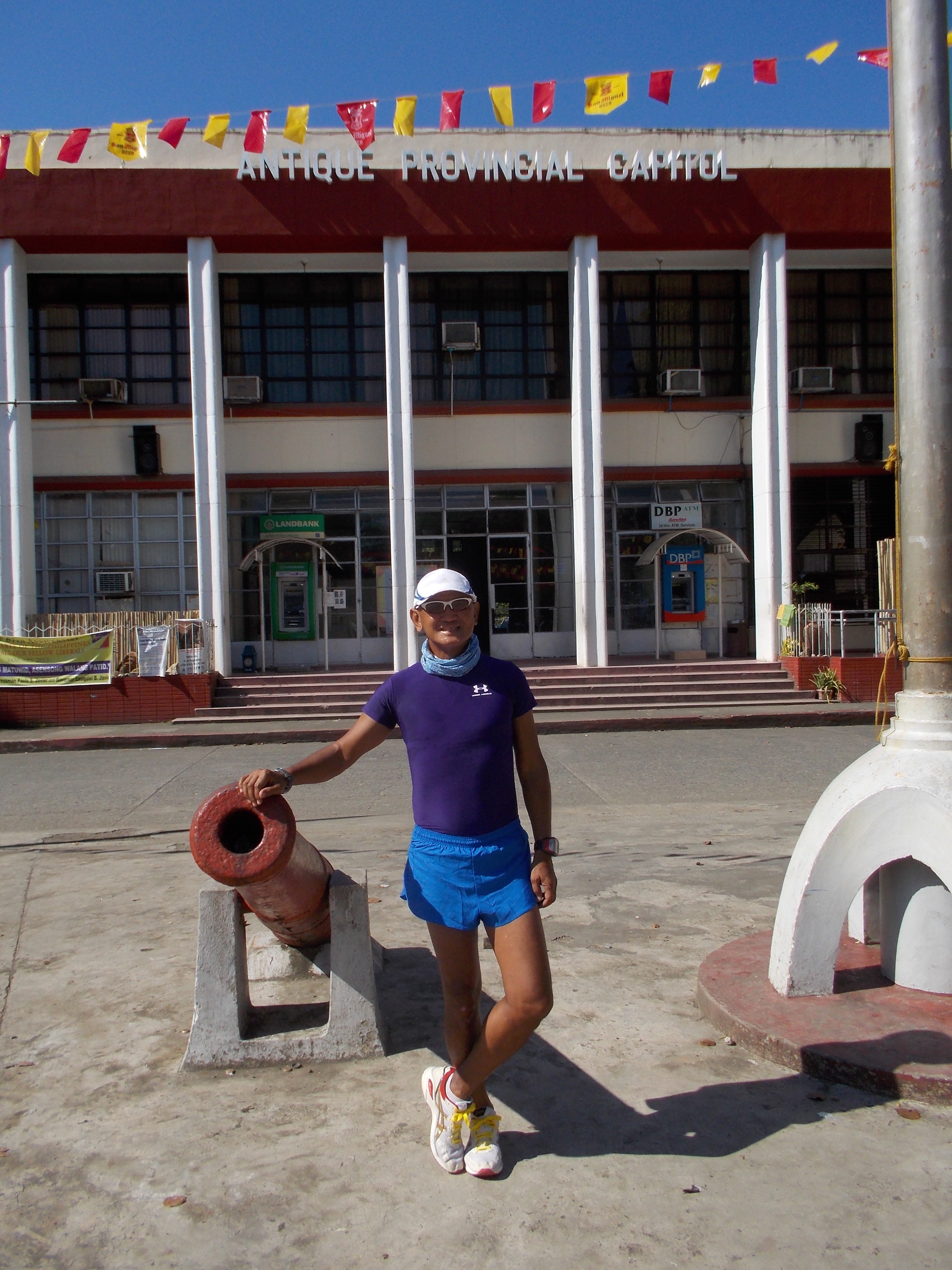
Before The Run In Front Of Antique Provincial Capitol

On the first week of May this year, I decided to run from San Jose De Buenavista, Antique to Barangay Caticlan, Malay, Aklan via Nabas, Aklan along the Antique-Aklan Highway. I started my run at 9:00 AM  May 6, 2013 in front of the Provincial Capitol in San Jose De Buenavista and was able to reach the town of Tibiao, Aklan in 14 hours and it was already 11:00 PM. I rested and slept for awhile and then continued my run and was able to reach my destination, through walking and slow jogging on the last half, at the Army Transient Facility (ATF) in Barangay Caticlan, Malay, Aklan on or about 5:00 PM of May 7, 2013. I was able to run the distance of 166 kilometers in 32 hours with more “pit stops” on the last 86 kilometers of the route.

Very Hot & Sunny Run

Since it was Summer when I did this adventure run, it was too hot during daytime and it became colder during nighttime as I felt the cold wind coming from the sea. But on the following day, I was totally tired and drained due to the heat of the sun from Pandan, Antique to Barangay Caticlan, Malay, Aklan. I was forced to walk on populated areas because of the presence of dogs. And from Nabas, Aklan to my destination, there was a lot of traffic of vehicles coming from Caticlan and Kalibo, Aklan as most of the tourist were going and coming from Boracay Island. It was practically a “Death March” for me on my last 20K to the Finish Line.

From my experience of this adventure run, I came up with an Ultra Marathon Race with the same route that I’ve ran and placed intermediate cut-off times along the way so that runners will be forced to maintain their pace and could cover the distance with a faster time than what I’ve recorded. The following intermediate cut-off times were announced and included in the rules and regulations:

Kilometer #40—–6:30 Hours

Kilometer #80—–14 Hours

Kilometer #100—-18 Hours

Kilometer #120—–23 Hours

Kilometer #160/Finish Line—–30 Hours

However, with the “bonus” (additional) 6 kilometers of the route, I decided to give an additional “bonus” time for all the runners as a surprise news/gift to them once they arrive at the Finish Line.

It was raining on the night of the starting day of the event. The weather forecast indicated a rainy weather and thunderstorm for the whole weekend and it was a good sign that the runners will experience a cooler temperature as compared when I did this run last May. It will also deter or prevent the runners from being exposed to the stray dogs staying along the road. But it was expected that runners will be battling with the rains and cold winds.

After a short briefing and photo-ops at the Starting Area, the race started at exactly 11:00 PM in front of the Provincial Capitol in San Jose De Buenavista, Antique with 29 runners for the 100-Mile Race and 3 runners for the 50-Mile Race. It rained hard after the runners left the Provincial Capitol.

After giving final instructions to my staff and security detail for the event, I started to run and acted as the official “sweeper” of the race. After 7 kilometers of running, I was able to see the last runner and was able to maintain at least 10 meters behind the runner. After running for 12 kilometers (1:20 hours), I boarded my support vehicle and started to monitor the running condition of each of the runner on the road.

All the runners were doing fine and they were seen running at their comfortable pace. The leaders, Tenny and Ilmar, from Iloilo were leading the group after 20 kilometers with Wilnar Iglesia and Alfred Delos Reyes trailing them from a distance of about 100 meters. Some were running in pairs and some were in groups of three and four. The leaders were running at an average of 10 kilometers per hour and a stretch of 2-3 kilometers covered the distance of the first runner to the last runner.

Despite the strong rains and some flooded areas along the route, the runners kept their respective pace and determined to arrive at designated checkpoint within the prescribed cut-off times. However, most of the runners were so fast that they arrived at the initial checkpoint 2 hours ahead of time! At Km #40, one lady runner barely missed the cut-off time by 15 minutes but the last runner was unable to reach the first checkpoint in 6.5 hours. Two runners were declared as DNF due to injury and inability to reach at Km #40 in 6.5 hours.

At Km #81, at Tibiao Bridge in Tibiao, Antique, I established the Finish Line for 50-Mile Race and all of the runners were able to beat the cut-off time of 14 hours. It was already daytime when the leading runners passed by this checkpoint but the sky was overcast and cloudy. The runners were still enjoying the cooler weather brought about by the rains and overcast sky. Three of the registered runners for the 50-mile race arrived within the cut-off time of 14 hours and I immediately awarded their “loot” to each of them. Two were males and one was a female runner.

From Km #81, I moved to Km #100 and I was able to watch and see the runners that passed the previous checkpoint and they were still strong. The top runners were trying to maintain their pace while the mid-pack runners were power walking and the rest of the runners were on their respective “pit stops”. At Km #100, 7 runners were able to pass the checkpoint and they were building up more gap from the rest of the runners. At this point, I could sense that some of the runners at the back would not be able to cross the checkpoint within the prescribed cut-off time of 18 hours as the sun started to shine at noon up to the early afternoon. However, they braved on and were able to cross the checkpoint on the designated cut-off time except for the last runner who was at least 2-3 kilometers away but I allowed the runner to run through the checkpoint.

At Km #120, I changed to my running attire and alighted from my support vehicle and started my workout for the day—I have to run at least 35 kilometers for the day! On the day the race started (Friday), I was scheduled to run 10 kilometers but I was able to cover a distance of 12 kilometers. While running on the last 46 kilometers of the route, I was being informed by my staff about the condition/status of the runners. I started to receive reports of DNFs and telephone calls from runners asking if they are on the right direction/route. Some of the callers would show symptoms of hallucinations as they thought they are lost or “going on circle” along the route. I just told them to keep/stay calm and try to look for the DPWH Kilometer Posts (colored yellow) located on the right side of the road. If the number below the letter M (Malay) is descending/decreasing as they move forward along the road, then they are nearing the Finish Line!

I actually ran 38 kilometers and started to ride my support vehicle when I was informed that the leading runner was about 7-8 kilometers behind me. It was already almost 9:00 PM when I entered Caticlan, Malay and I went directly to the area where the Finish Line is located. I knew that the runners will curse me as the final and last 500 meters of the course will be a steep climb to the top of a hill which is an unpaved road with lots of grasses.

After waiting for about an hour, the first runner arrived at the Finish Line and it was Wilnar Iglesia, the Course record Holder of the BDM 160 Ultra Marathon Race. The following the is the result of the race:

Out of the 29 runners who started at the Starting Area in San Jose De Buenavista, Antique, 18 runners crossed the finish line in 31 hours and they received the Finisher’s Buckle. And the rest is history.

Out of the 18 runners who crossed the finish line in 31 hours, 85% of them arrived at the 29th hour of the race or within the last hour of the original cut-off time of 30 hours. The answer to this observation/data could be explained with the following:

1. Most of the runners did not have appropriate training and relied much on “brute force” to finish the race. Most of the finishers had experienced finishing 100-milers and barely to finish within the prescribed cut-off time is their ultimate goal. It’s the Finisher’s Buckle that counts most, not the Finish Time!

2. Those who trained properly for this race could move easily and walk properly after they have taken their shower and short sleep. The rest of the runners were sluggish and could hardly move their legs and feet after taking a bath.

3. Those who prepared and trained properly for this event wore their shoes from start to finish. The rest of the runners shifted to shoes then to sandals and some would start with running sandals and then shifted to running shoes. If you are not born in the Copper Canyon in Northern Mexico, then don’t think that you can finish a 100-miler race with sandals!

4. All my ultra races are held whether it is raining or when there is a typhoon or not. Most of the runners were not prepared to have extra socks with them. I have always prescribed the brand DRYMAX to all the ultra runners who have delicate skin on their feet but some are still using local brands of socks. Blisters became a big challenge to almost all the runners.

5. Aside from blisters, chafing is the second most challenging problem to the runners. It was my problem also when I ran this distance last May of this year! I had to change my running shorts to compression shorts when I started to feel that I was developing some chafing on my groin area caused by my wet shorts.

6. Except for the local runners (from Iloilo/Panay), the rest of the runners are new to the area and did not have any chance to recon or run through the area. Some of the runners are also “first-timers” to Boracay Island and some had been in the area but they seem to be lost while they are on foot under the cover of darkness on the route from Kalibo to Caticlan!

7. Runners take so much time in their “pit stops”! In one occasion, I recorded the time on how long a runner would stay in his “pit stop” to hydrate, eat, and rest. I was surprised to find out that the runner stayed for 20 minutes on a chair! You can do the math if this runner made his “pit stop” for about ten times during the event!

8. Some runners would bring a lot of food or grocery in their support vehicle. When they need something to eat, it would take a lot of time to locate where they stashed the particular food that they want/need while having their “pit stops”.

9. Some runners would sleep in waiting sheds along the road; another runner would drop by for a hot coffee in a wake of a dead person; and some would start conversation with the people along the highway. Such additional activities of the runners on the road are added to the time being spent by the runners.

10. Some of the runners would share the services of one support vehicle. Such vehicle would shuttle from the fastest to the slowest runner who shared for the cost of the support vehicle. If a runner would like to have a good performance in terms of finish time, he/she would have a dedicated support vehicle.

I am stating these observations as a “mirror” to our ultra runners. I am not complaining about their actuations but I am trying to point out on things where they can improve in their performance in future races. In due time, these runners would have the intention of joining international ultra road races in the future and as early as possible these observations should be corrected.

Most of the runners proceeded to Boracay for the much-needed rest and recovery and a chance to visit the place. A “Boodle Fight”  & “fast food hopping” was held in Boracay as part of the “body fuel” recovery while the “beach and sea” body immersion was part of the sore muscles and chafing treatment for all the runners.

Pictures of the event can be seen on the following links:

Pictures During The Run: https://www.facebook.com/baldrunner/media_set?set=a.10201564579490008.1073741855.1043179758&type=1

Pictures At The Finish Line: https://www.facebook.com/baldrunner/media_set?set=a.10201588960619521.1073741857.1043179758&type=1

Pictures During The Boodle Fight: https://www.facebook.com/baldrunner/media_set?set=a.10201582512898332.1073741856.1043179758&type=1

Official Results of this event can be seen on the previous blog’s post.

The next year’s edition of this race will be on September 5-7, 2014.

Lace up, get out of the door and run!

Official Results: 1st ANTIQUE 100-Mile & 50-Mile Ultra Marathon Race


1st Antique 100-Mile & 50-Mile Ultra Marathon Race (Road)

October 4-6, 2013

San Jose De Buenavista, Antique To Barangay Caticlan, Malay, Aklan (Tibiao, Antique For 50-Mile Race)

Number Of Starters (100-Mile Race): 29

Number Of Starters (50-Mile): 3

Cut-Off Time (100-Mile Race): 31 Hours

Cut-Off Time (50-Mile Race): 14 Hours

RANK

NAME

TIME (Hrs)
1 Wilnar Iglesia (Champion, Course Record) 23:11:18
2 Alfred Delos Reyes (1st Runner-Up) 23:59:58
3 Elmar Bob Tolete (2nd Runner-Up) 25:12:23
4 Raffy Gabotero 25:15:52
5 Graciano Santos 26:43:01
6 Ilmar Philip Elardo 27:11:01
7 Calvin John Escandor 29:01:31
8 Joseph Pineda 29:02:41
9 Glairold Recella 29:21:18
10 Bong Alindada 29:22:41
11 Yob Red 29:25:24
12 Ronnel Go 29:32:37
13 Benedick Meneses 29:37:48
14 Dante Sagayap 29:43:21
15 Ernie Abanco 29:46:09
16 Meljohn Tezon 29:50:20
17 Roger Villareal 29:59:15
18 Vanz Camannong 30:49:01
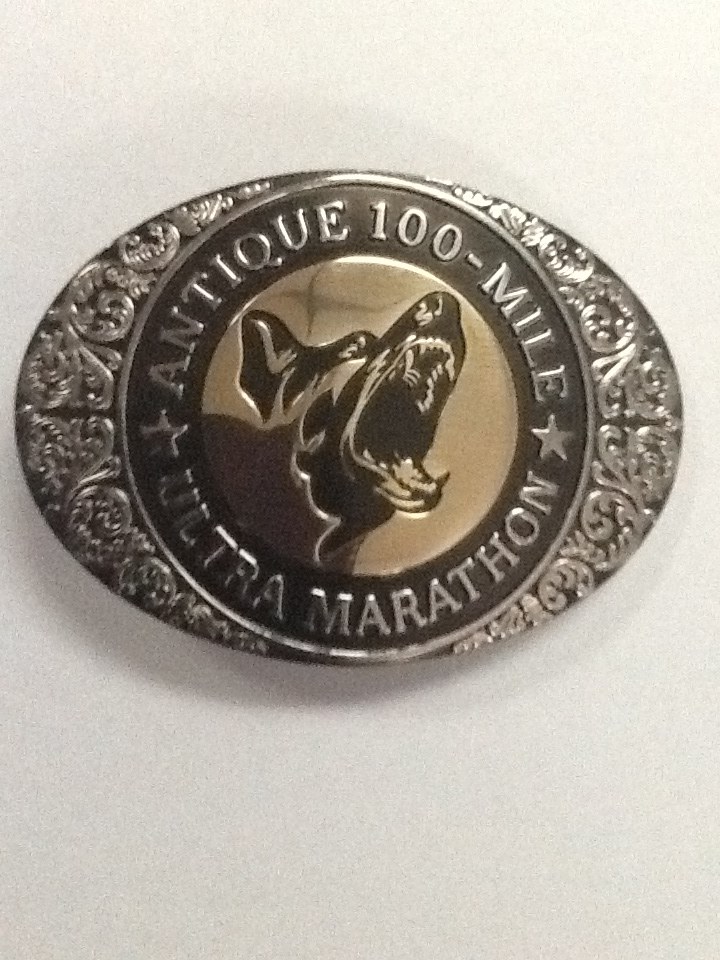
ANTIQUE 100-Mile Finisher's Buckle
ANTIQUE 100-Mile Finisher’s Buckle

 Official Result: 1st Antique 50-Mile Ultra Marathon Race

RANK

NAME

TIME(Hrs)
1 Mannie Magbanua (Champion, Course Record) 12:54:30
2 Edrick Nicdao (1st Runner-Up) 13:04:59
3 Jinky Yray (Champion, Lady Division/Course Record 13:41:32

 Congratulations To The “Pioneers”!