Steps In “Peak Bagging” & Suggested “Tips”


The following are my personal suggestions if you want to experience “peak bagging” in any of our mountain peaks. It is assumed that you are already a seasoned runner, being a trail runner is one of the qualifications for such an experience, and it is better if you are a marathon runner. However, it is best if you are already a seasoned mountain trekker, hiker or camper.

1. Have a Plan. If you have a steady job or work where you earn a living, planning for a “peak bagging” experience takes a lot of consideration. You need ample time, scheduling, financial support and lots of positive motivation to push through with your plan. Once a quarter (every 3 months) would be a nice schedule or every time there is a long weekend (3-day vacation). The location of target mountain should also be considered in terms of its accessability from your place of origin. Of course, it will be more expensive if the location is farther from your place.

If you have a family, bring your family with you and share your passion to your wife and to your kids. If they are not interested with your outdoor activity, you can bring them with you to your destination and have them stay in a resort or place where there are other alternative outdoor activities to be experienced.

If you are a retiree, like me, enjoying your time and have a love for sports and outdoor adventures, then going out of the city and looking for different places, “peak bagging” is better than reading the news dailies, watching the TV or letting the days passed by in shopping malls/coffee shops or spending a lot of time in your car due to traffic in the metropolis.
2. Make your own research. There are lots of mountaineering resources in the Internet for your mountain destination. There are also mountaineering groups on Facebook where one can get information direct from the person you want to contact. At least, you must have a FB account to have access on these groups.

My favorite mountaineering resource in the Internet is our very own Gideon Lasco at http://pinoymountaineer.comas he categorized each mountain peak by regions and he recommends an ITINERARY for each mountain visit. However, other important data for a runner to know are not stated in his description of each mountain. Mountaineers don’t usually measure their trek to the mountain peak in terms of distance (number of kilometers/miles) but in the number of hours it would take the hikers to reach the summit. So, if they say that a hiker/camper could reach a certain peak in 5-6 hours, an average trail runner could run to the peak in 2.5-3 hours, one-half less the time for a camper/hiker to reach his destination. Faster runners could do it 1/3 of the time a hiker can do to reach the summit. However, other detailed data and information can be gathered from the comments of the his readers in every post in his website.

3. Train for Hill Running. In “peak bagging”, you need to run when the trail is flat or when you are descending along the trail and brisk walk when the trail is uphill or steep incline. For you to be consistent and faster in reaching the summit, your legs must be strong. Strong legs are developed by hill repeats as it mimics your leg turn-over during trail running. As an alternative to hill repeats, one can do strengthening exercises in the gym or at home. One can do some leg squats, lunges, stair walking and core exercises anytime of the day!

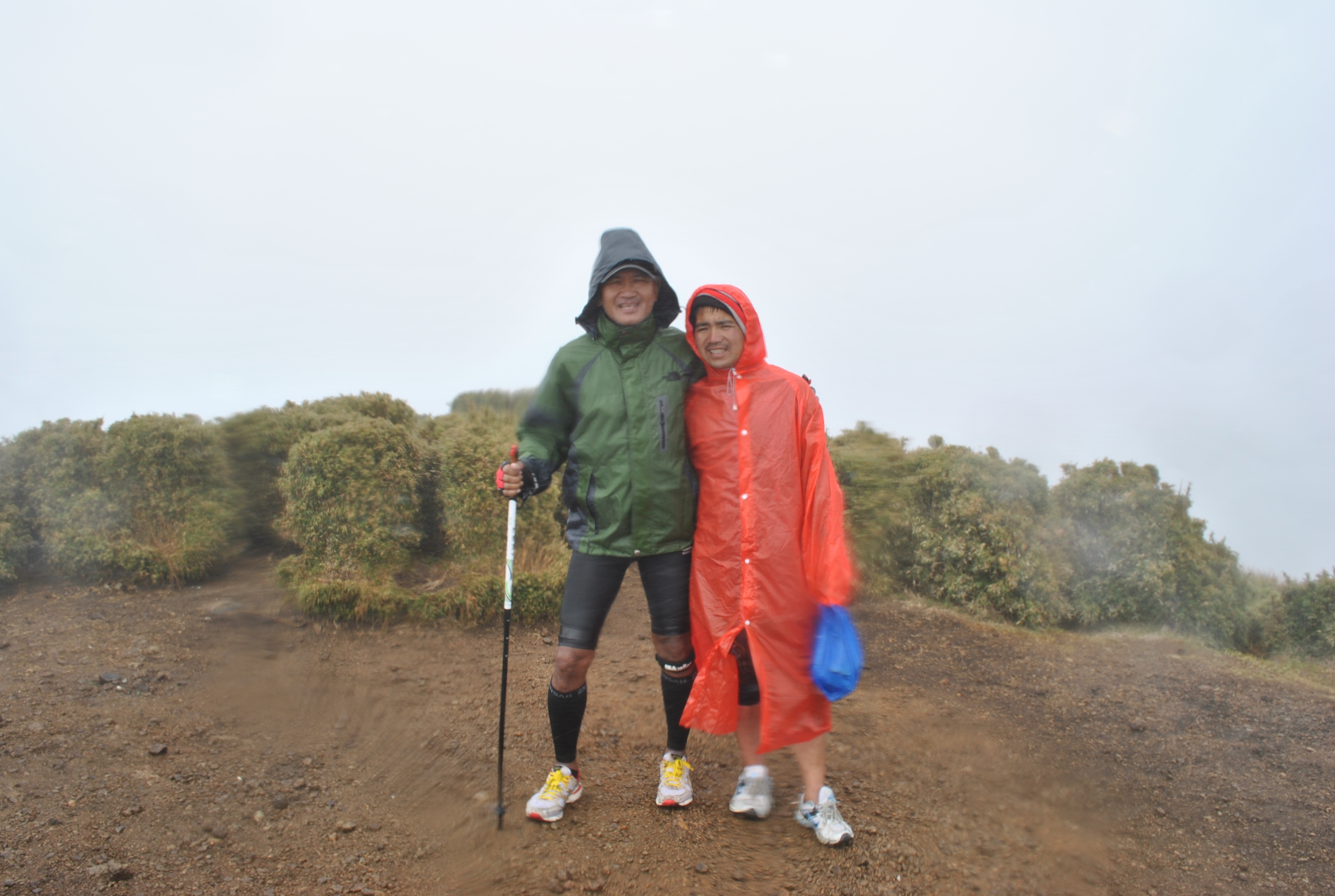
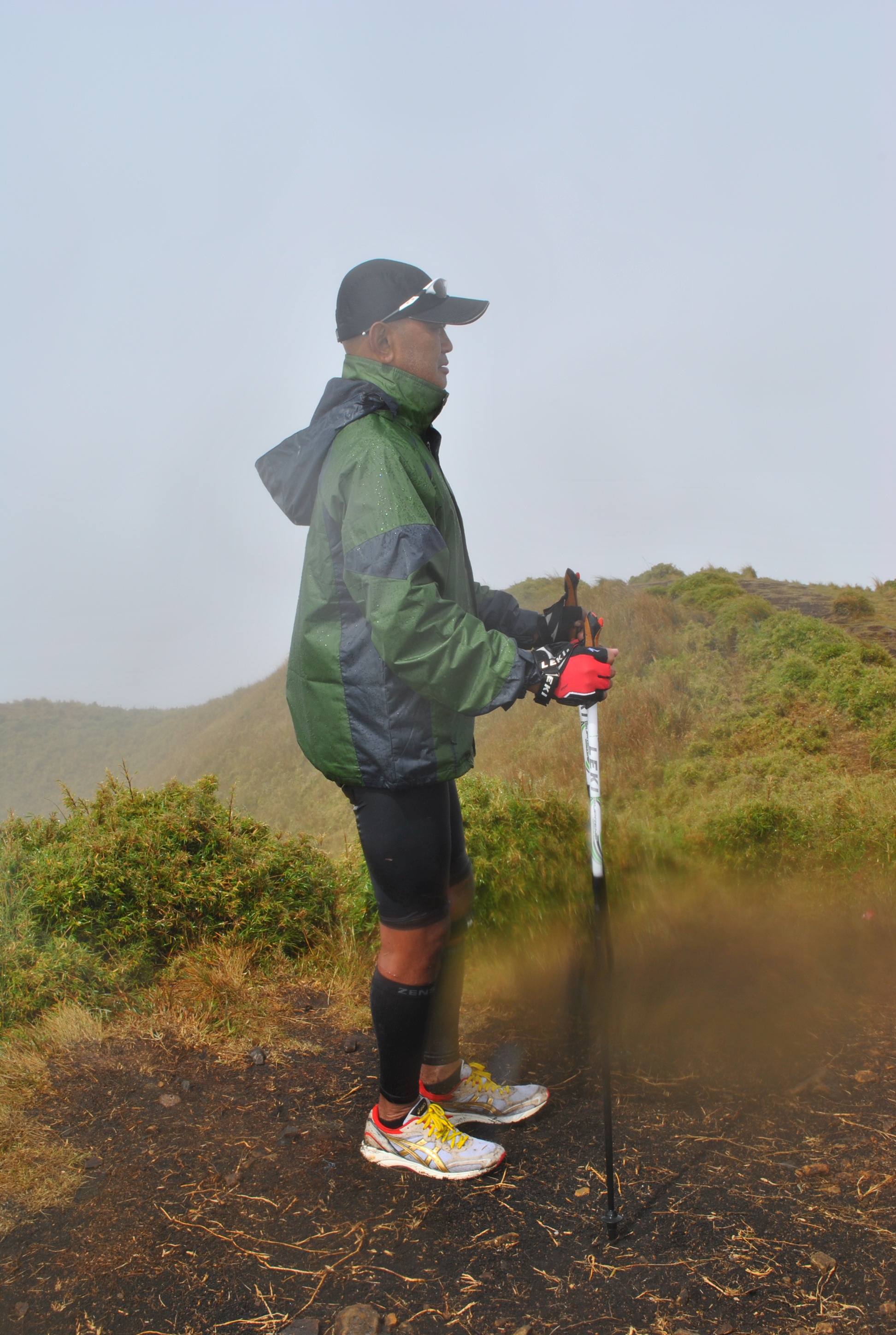
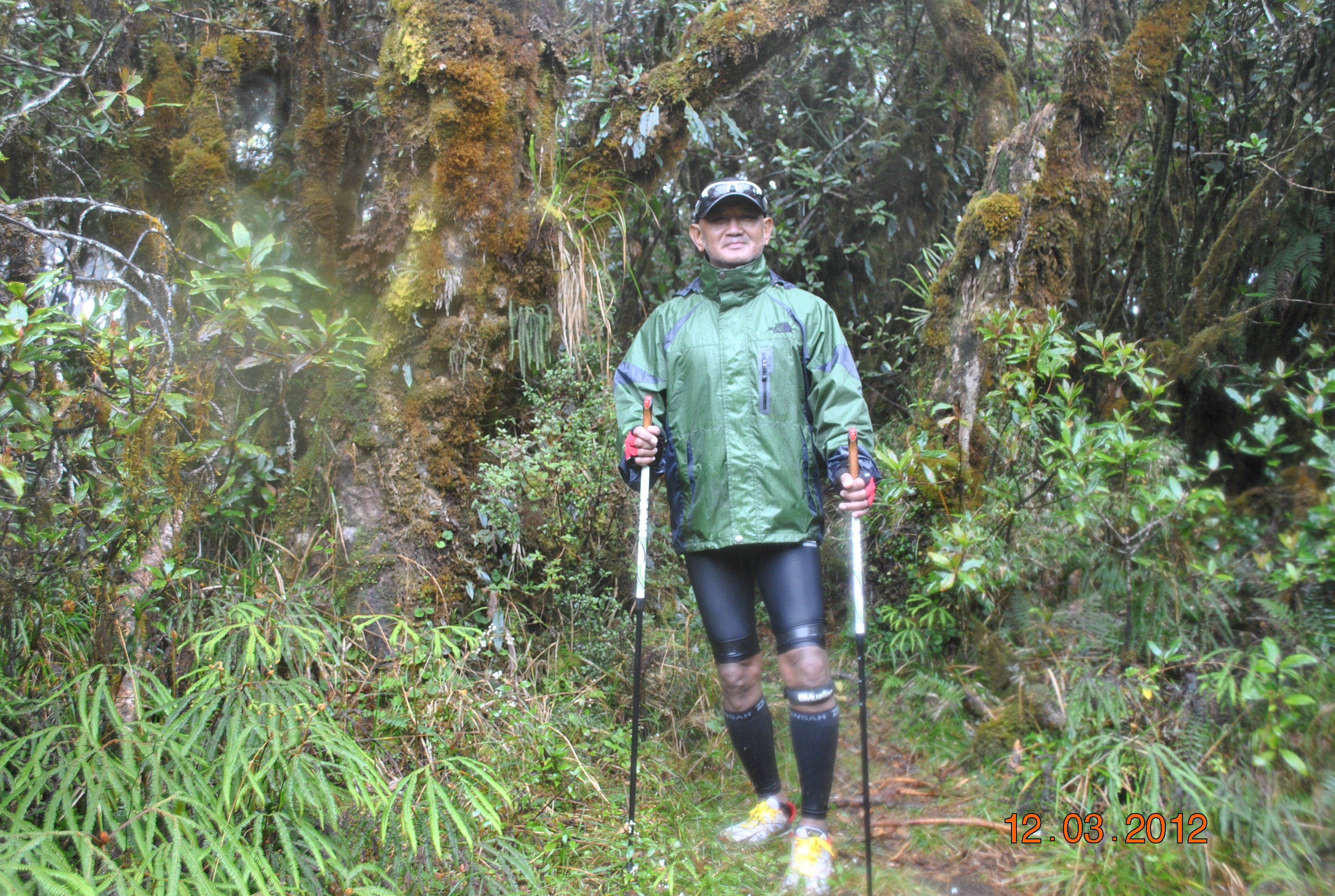
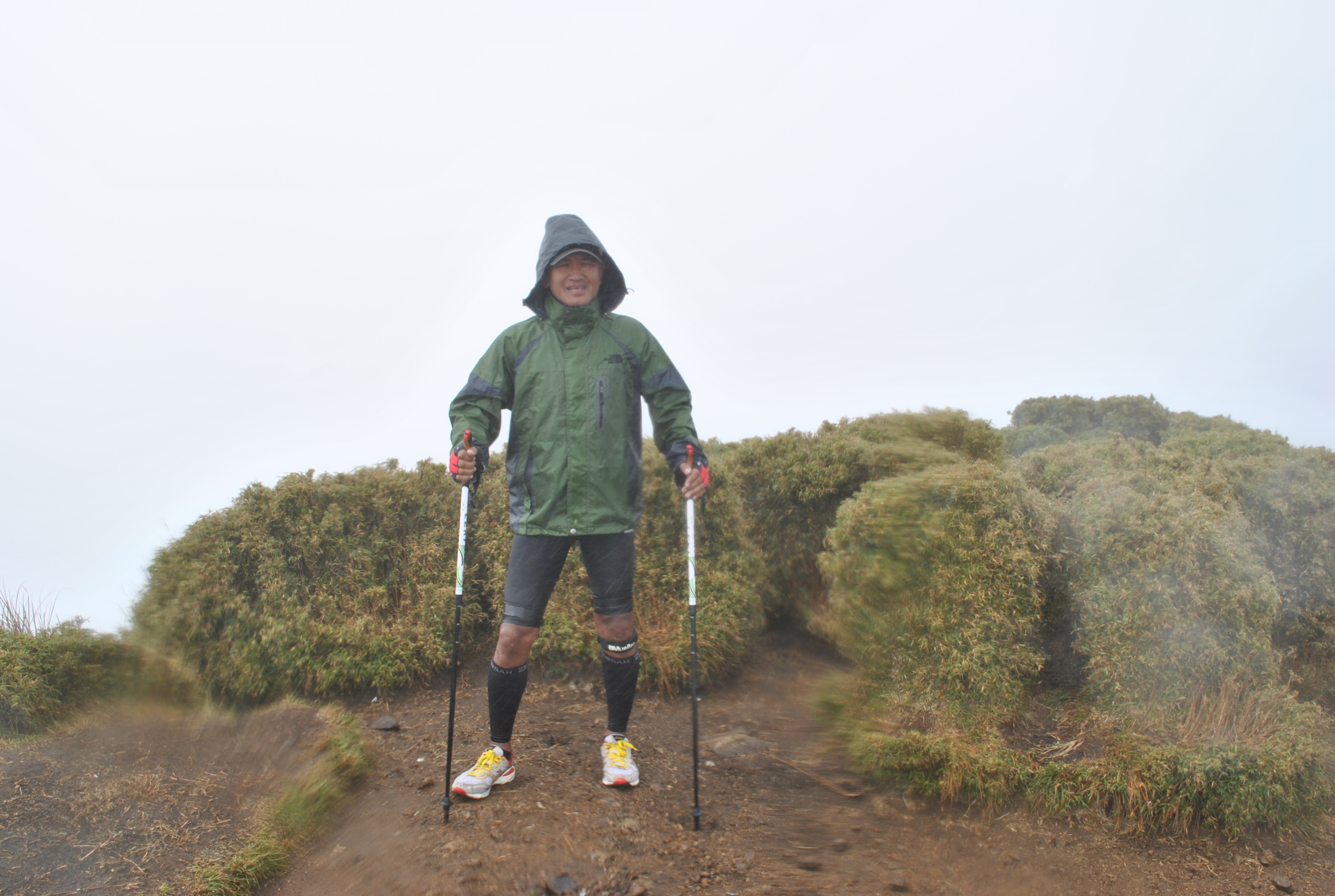
4. Prepare your apparel & equipment. Your normal running kit would suffice but as you go higher in elevation, the temperature would become colder. It is a must that you bring a light jacket stowed on your backpack/camelbak which you can use when you are freezing cold. Hand gloves are also advisable as the temperature would be freezing on top of the mountain. If your hands are starting to be numb and cold, it is a signal that you must start your descent from the mountain. Water-proof jacket is also helpful as most of the higher mountains would receive some rains usually when they are covered with clouds. Runners cap is also mandatory as it keeps the escape of heat from your body and at the same time protect your head from accidental “head-butts” from fallen trees and some branches as you pass underneath them. Hydration pack is a must! If you want to stay longer in higher summits, prepare to bring a bonnet that would cover your head and ears.

5. Prepare For Your Hydration/Nutrition. I usually bring water only in my hydration system. I was surprised that my Nathan bottle filled with water was the only water supply that I brought when I “peak bagged” Mt Pulag for a distance of 15 kilometers. Maybe its the cold weather on the higher altitude and the raining prevented my body from losing more perspiration. I usually bring “power bars” and gels in my “peak bagging” activities. They are lighter and my stomach is already used to them. At the Mt Ugo Trail Marathon, I brought my Nathan “Sprint” Handheld Bottle for my Gatorade Mix even if I was holding trekking poles. Gatorade was my extra source of electrolyte if my “peak bagging” activity is a race/competition.
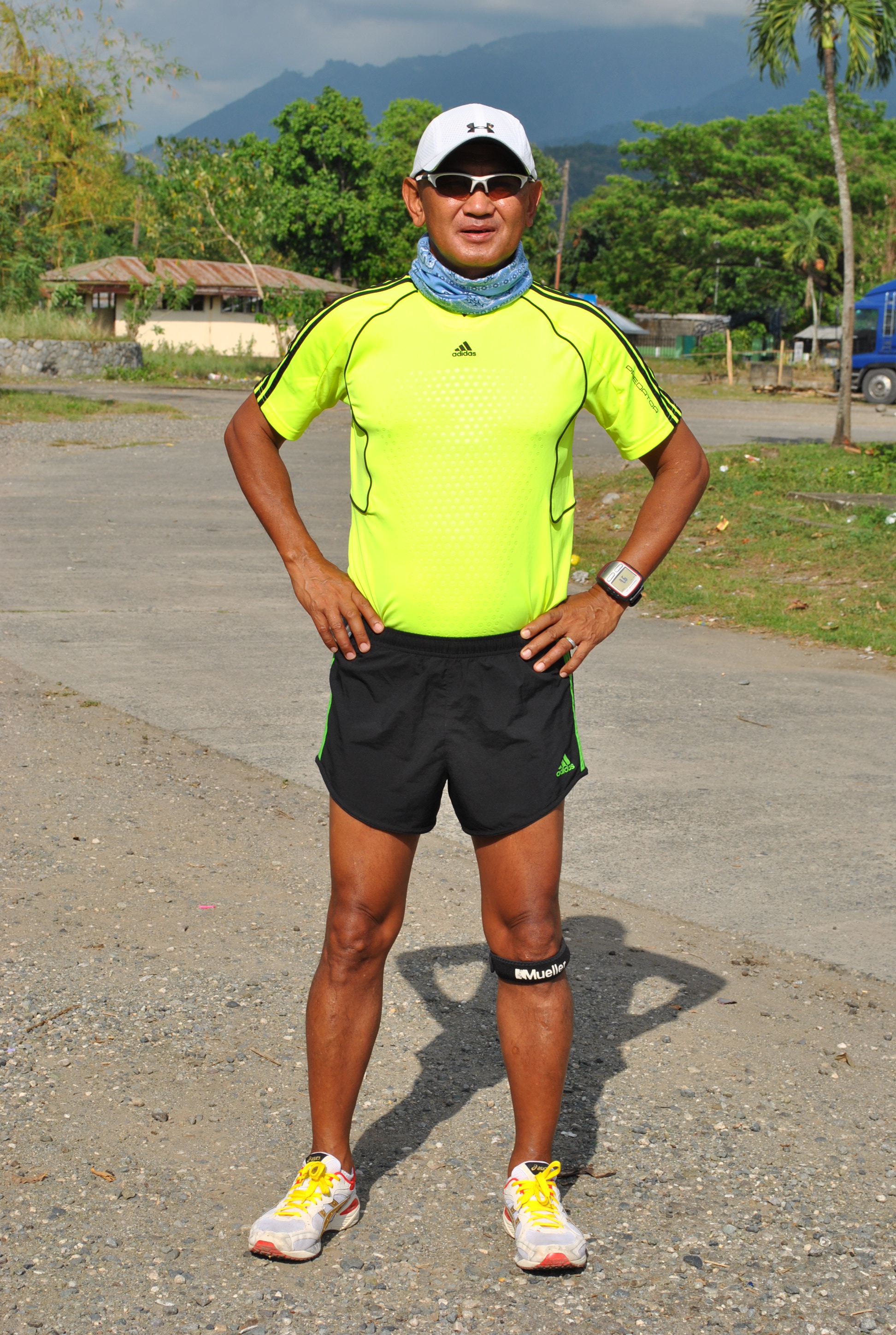
6. Travel Light. I use racing flats/minimalist shoes (NB MT 101) and compression shorts & shirts on my mountain running. If I use Camelbak Hydration Pack, I only fill 1/2 up to 3/4 full of water in its bladder. I only carry minimal number of gels, power bars and Gatorade mix in my pack. Sometimes, I would pack the lightest windbreaker to my pack instead of those heavier outdoor technical jackets. My ASICS Windbreaker which I bought in Jeju, South Korea could be the lightest windbreaker that I have among my running kit. Hopefully, I would be able to buy the Patagonia Nano Jacket, my “dream jacket” for higher altitude “peak bagging”, in the near future. It can be folded and stowed in your packet.

The cheapest version of a jacket/windbreaker/poncho which you can bring is the black commercial trash bags that are available in the supermarket. Get the largest size of trash bags in the market. Simply make a hole on the closed end of the bag where you can insert you head, thus, you have a raincoat for your body and backpack. It is a must to carry at least 2-3 pieces of these black trash bags in your daypack as they serve also as trash bags for the litter you could see along the trail, camping areas or at the peak of the mountain.

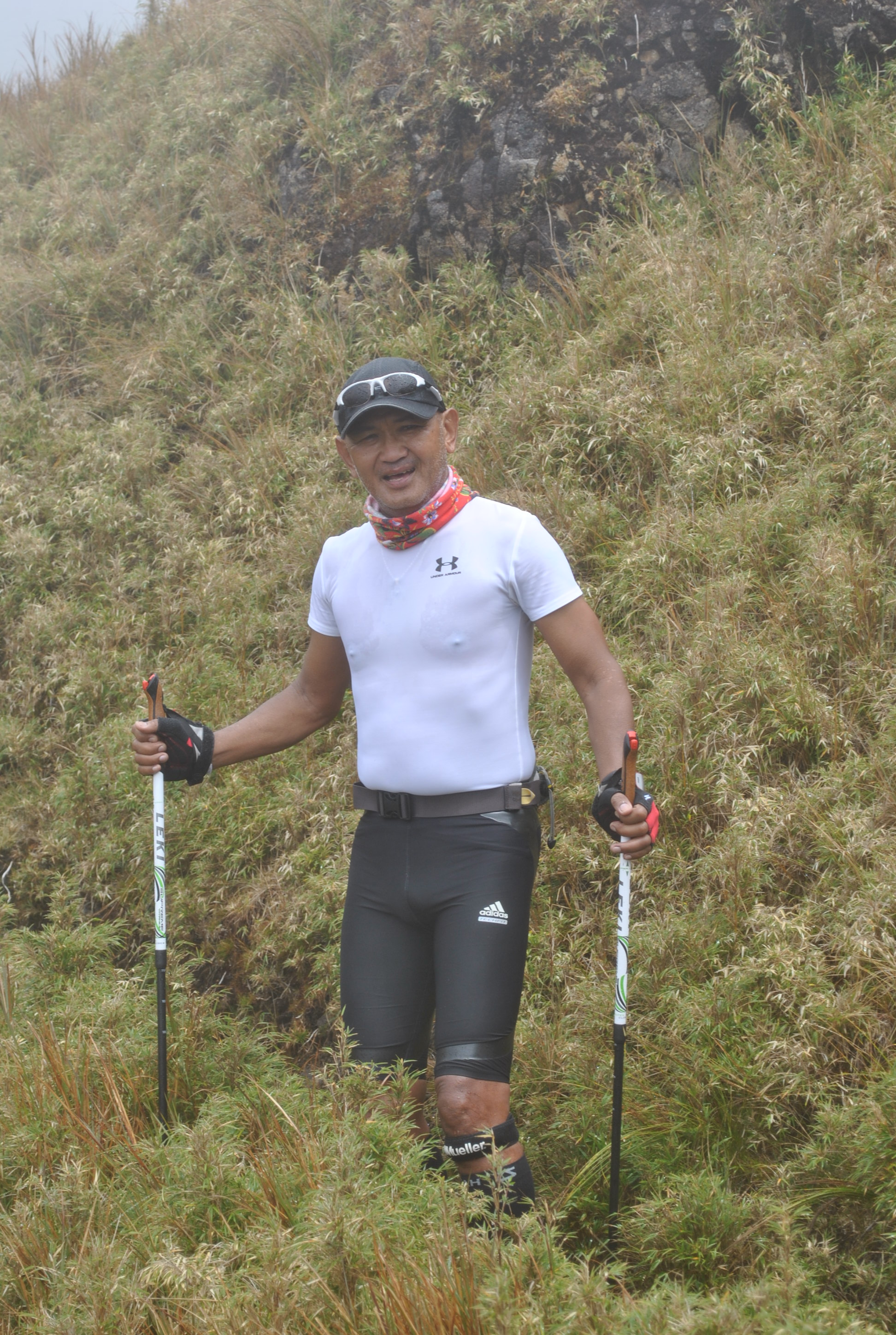
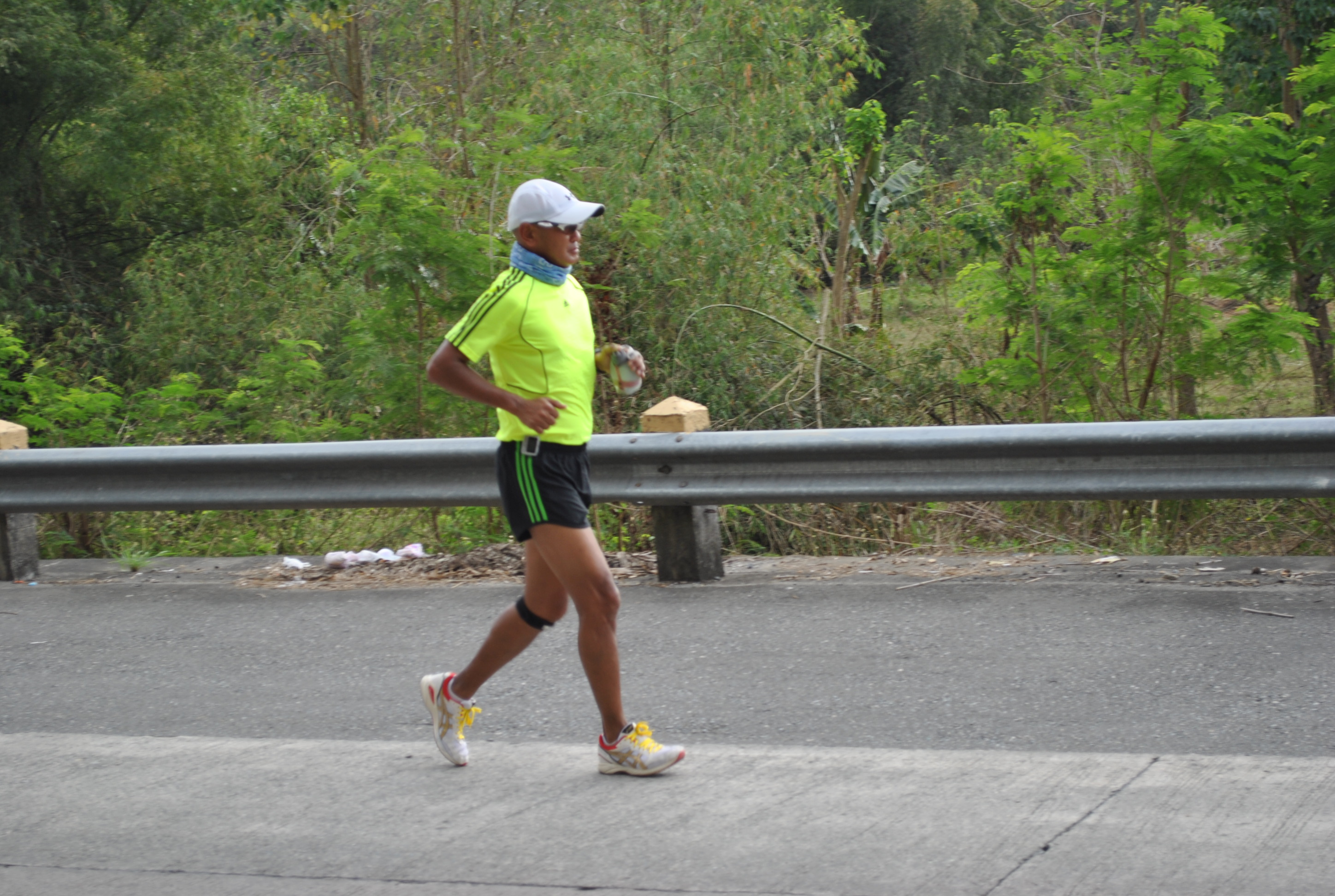
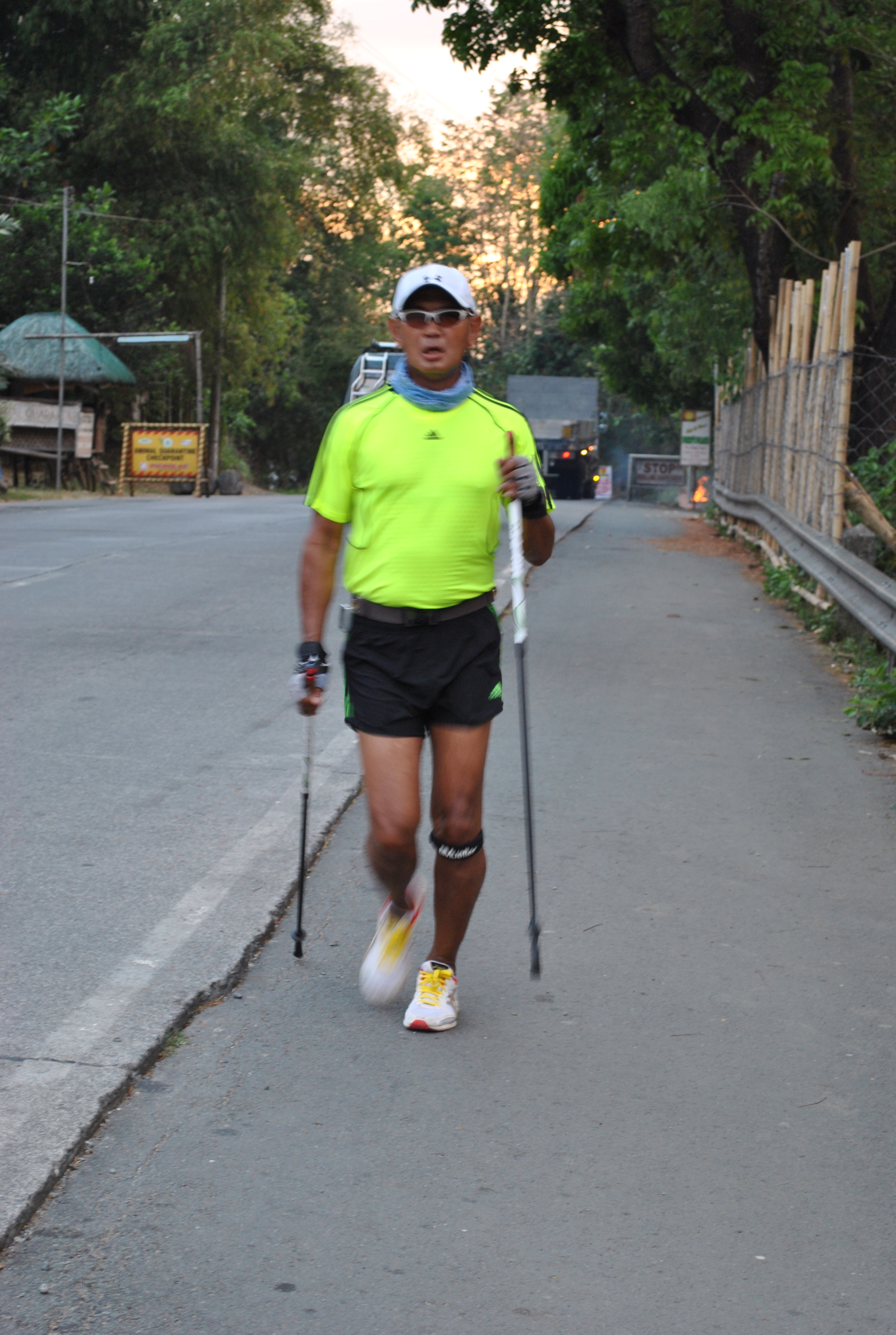
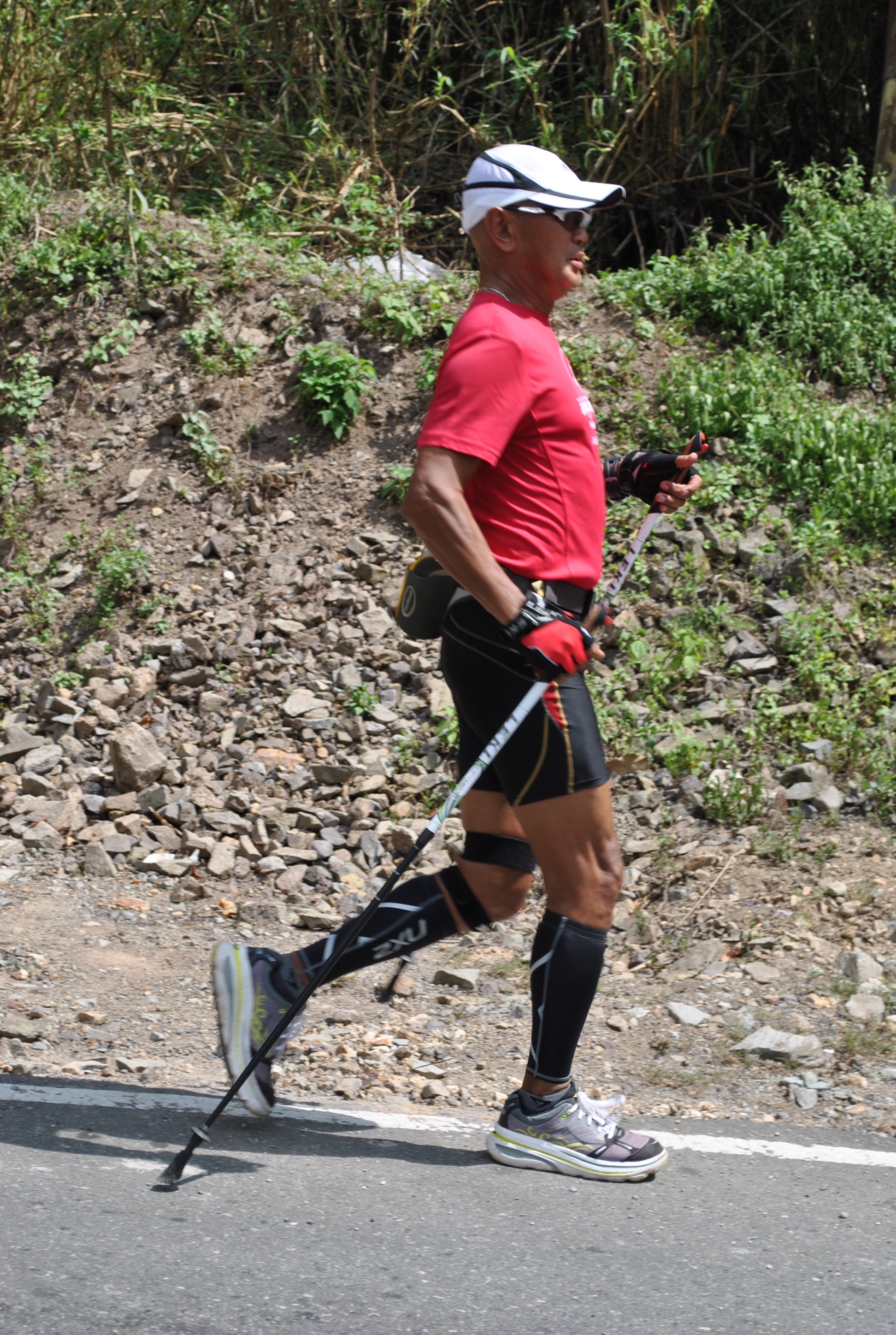
7. Trekking Poles. A pair of trekking pole is an invaluable equipment for an old trekker/hiker like me. They are useful in crossing streams and rivers; keep you balanced on uneven and slippery grounds; provide anchor and support for stronger lifting of the body on steep ascending parts of the mountain; and lessen the impact of ones feet on the ground. It takes a simple time to practice to use these trekking poles. It is advisable to use those “bike gloves” (half of the fingers are exposed) when using trekking poles to avoid blisters on your hands. On descending and flat parts of the trail route, I would carry them as if they are my batons in a running relay.
8. Prepare For Contingencies. In trekking/peak bagging, you should always “respect the weather”. If the weather would not allow you to reach the peak, it is best to retreat and make another attempt on a day with good weather. The mountain will always be there, it will never leave from his location. In a good weather, if you start your “peak bagging” in the morning, expect to reach the peak when the sun is already on top of you which means that it is already noon time. The heat of the sun would make you perspire some more and you must be able to hydrate yourself regularly. In case of any encounter with the wildlife, like snakes, deer, wild pigs, cows, or bats, just ignore them and don’t disturb them. Your main mission is to reach the peak of the mountain and not as a hunter.

9. Invest On A Light & Reliable DayPack. A DayPack can store your hydration needs (water bottles + 1.5-liter bladder), additional clothing apparel, first aid kit, food, electrolyte tabs/mix, lighting equipment, and trekking poles.

10. Know Some Protocols/Etiquette/Culture of the People

a. In popular mountains which are being visited by most campers/mountaineers, you need to pay a permit fee and attend an orientation lecture from the personnel of DENR. It is best to register yourself to the barangay hall/barangay officials where the mountain/trailhead is located or to the nearest police or military unit/detatchment in the area before pursuing your activity. On the same manner, inform them on your departure from the place. There are some barangays that would ask P 20.00-P 40.00 as permit fee per person in lower elevation mountains.

b. Be prepared to get a “guide” for a fee. The guide must be requested from the Barangay Officials so that there is accountability in case of any complaints from the hikers. In Mt Apo, I paid P 350.00 for my guide but I paid him an extra tip of P 150.00. In the Ambangeg-Pulag Trail, I paid P 500.00 for my guide which is good up to 5 persons. But for the longer and harder Akiki-Pulag Trail, a guide will cost you P 1,800.00. Even if I don’t need the services of a porter, it is worthy to note that each porter is being paid a minimum of P 500.00 for every 15 kilos of weight. I always see to it that I have a guide in all my “peak bagging” feats.

c. LNT or Leave No Trace. This is the number ONE Rule in any outdoor activity which is “common sense”. Except for Mt Pulag, all the other mountain trails and peaks that I bagged have trashes. I really don’t know if the locals are the one’s littering their trash along the trails and on the peaks or the visitors.

d. Silence Means Good Weather. There is no point why hikers/trekkers would shout on the top of their voice if they see nice scenery and vistas along the mountain trail or while they are at the peak of the mountain. There are also groups of campers that would bring intoxicating liqour on the peak of the mountain and drink to their hearts content and noisy as a result before retiring to their respective tents. Other would mimic or answer the sounds from the birds through their loud voices or involve themselves in loud conversations and laughter while hiking along the mountain trail. All of these are “toxic or pollutants” on the peaceful environment of the forests and the mountains. Local people would predict unfavorabe weather a day or two after such “noise” are done in the mountain!

e. Smile & Greet Everybody you meet along the trail. Find time to talk to them even for a few seconds. Your message should be clear that you are there to simply have a quick look of the place or just passing through. Always be positive on your comments and observation of the place.

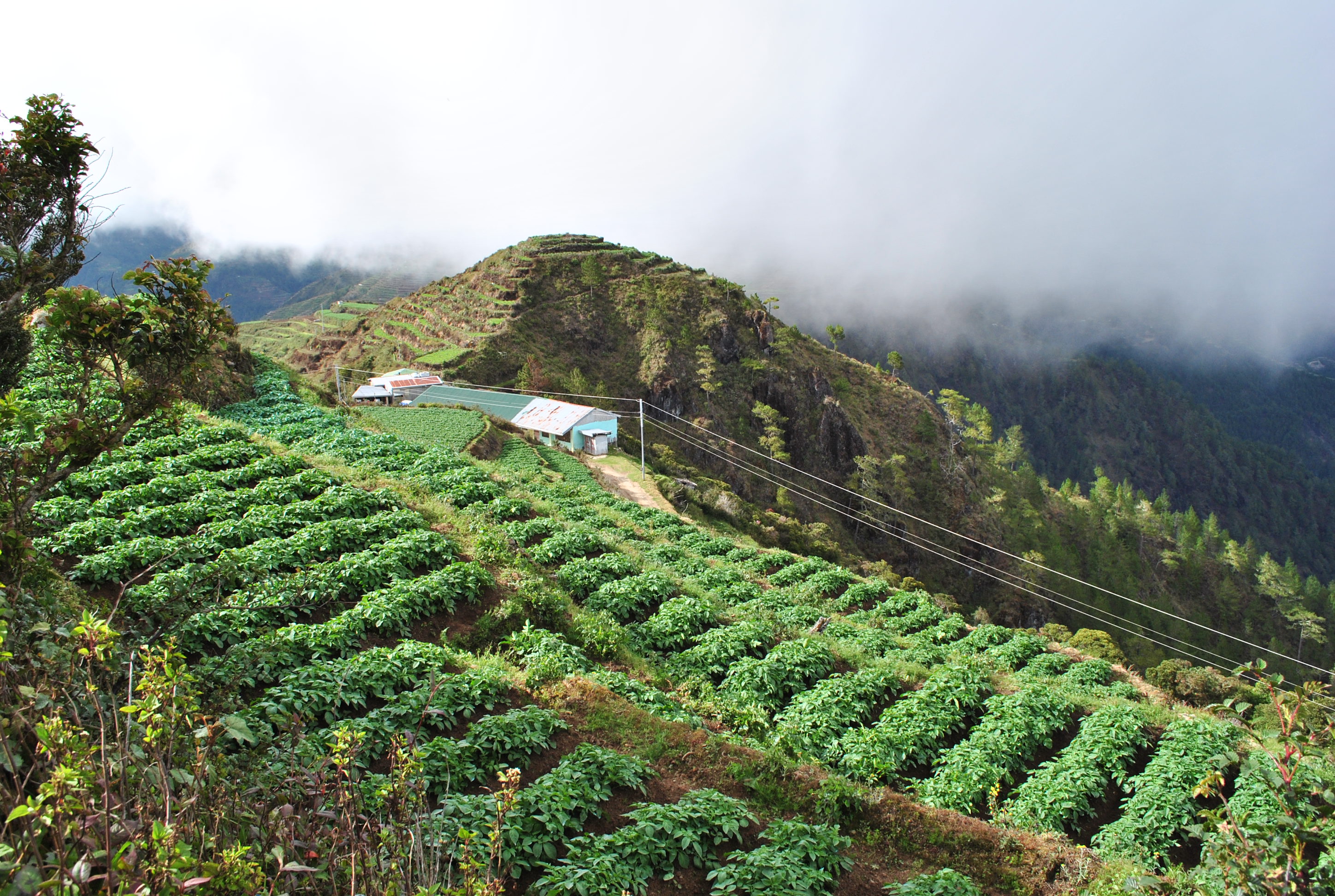
f. Most of the mountains in the Cordillera Region & along the Bansalan Trail to Mt Apo have vegetable farms on the foot and slopes of the mountain. You should not mess up or step on the growing plants on these garden/vegetable farms. Never try to harvest or pick any of the vegetables or root crops as you pass by these farms. Most of the farms have cabbage, carrots and potatoes.
11. As much as possible, make a journal or document of your peak bagging activity in every mountain that you visit or attempt to make in reaching a summit. There is no shame if you could not make the grabbing in your first attempt as the mountain will always be there waiting for you. If you have a Garmin/GPS Watch, it would be nice to get the following data: Duration of Peak Bagging Activity from your specific Starting Point to the Peak and back; Distance recorded; Altitude of the Peak; Profile Elevation; Average HR; and other data taken from the equipment. Your personal experience will somehow inspire others to go to the outdoors and be interested in “peak bagging” activity.

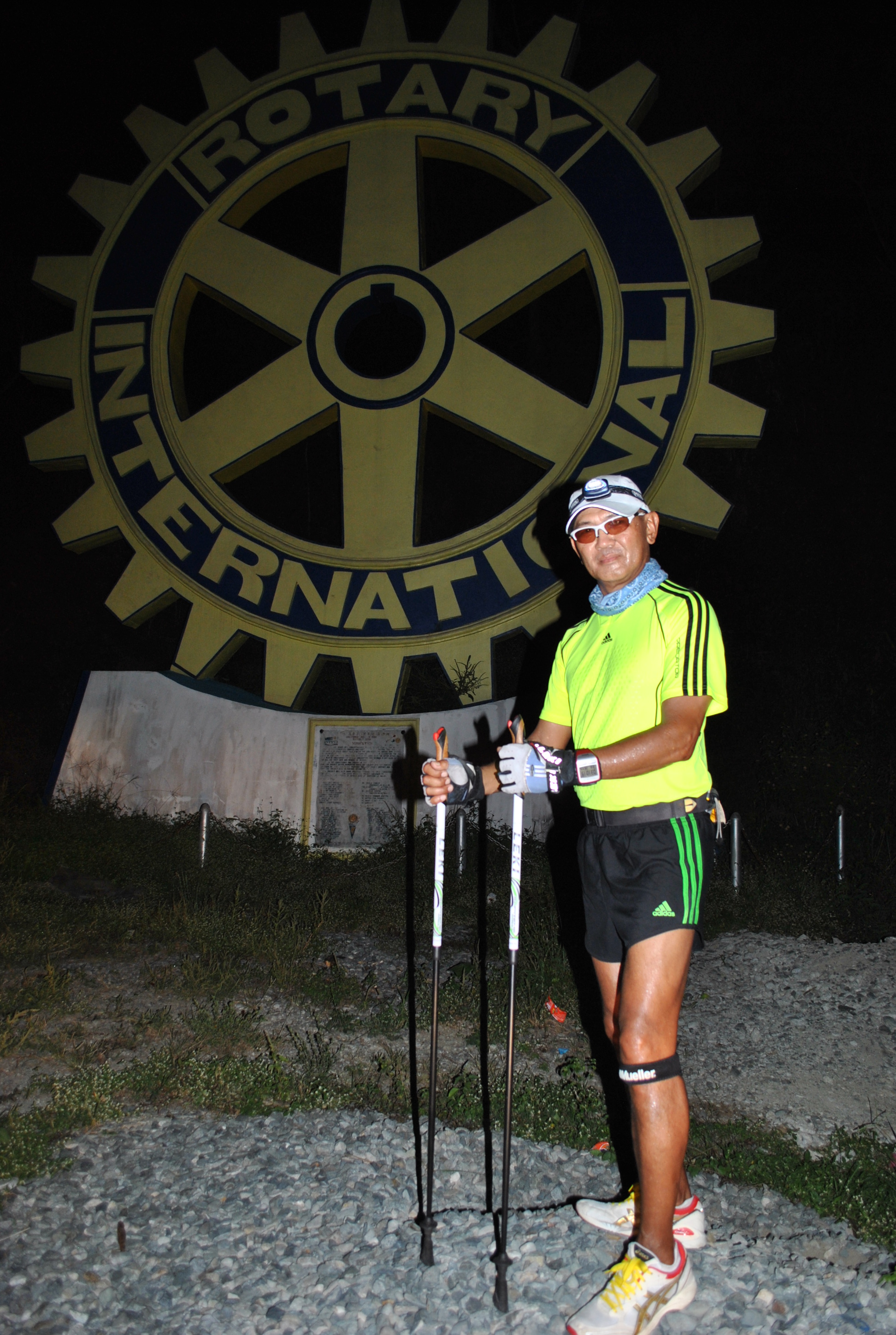
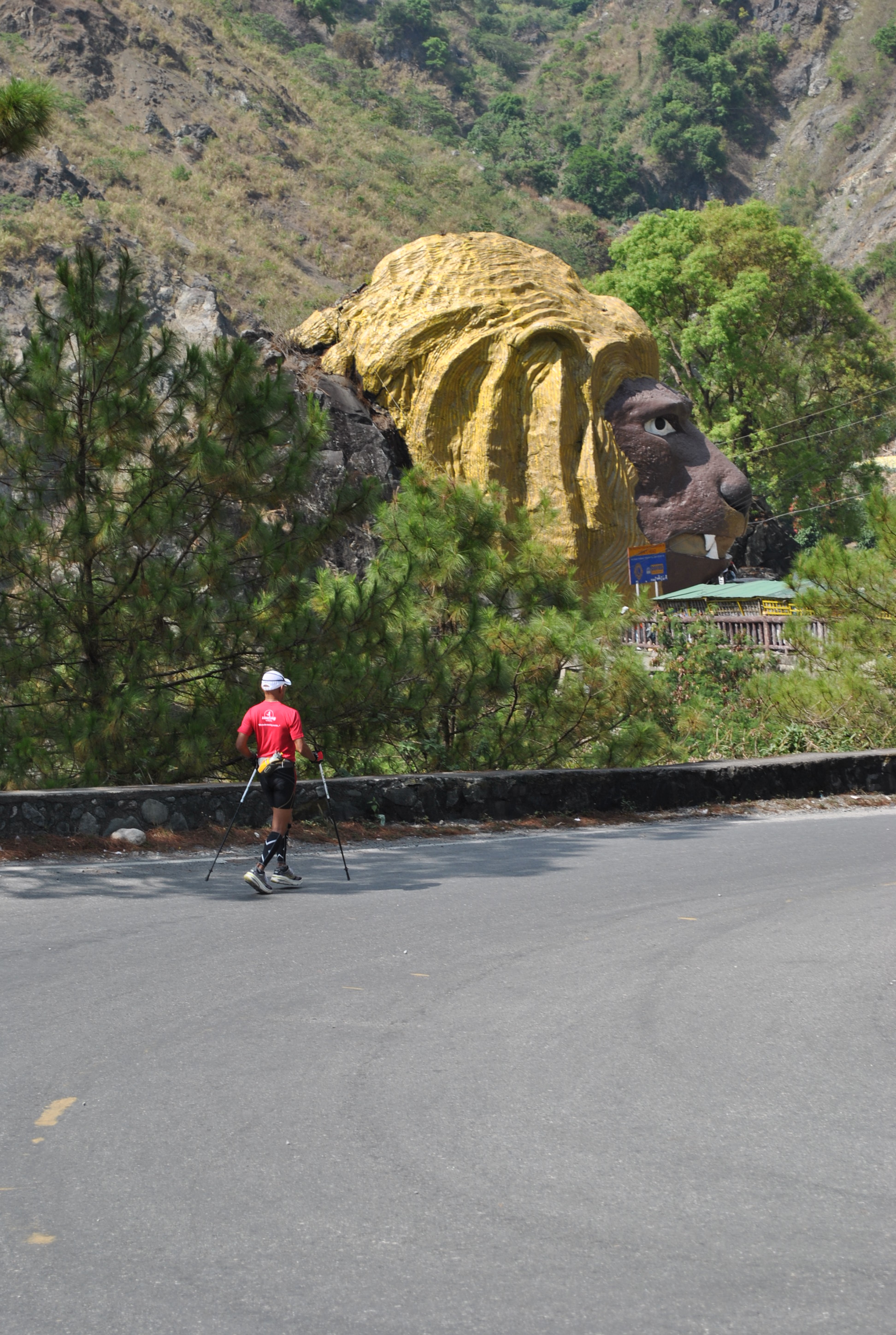
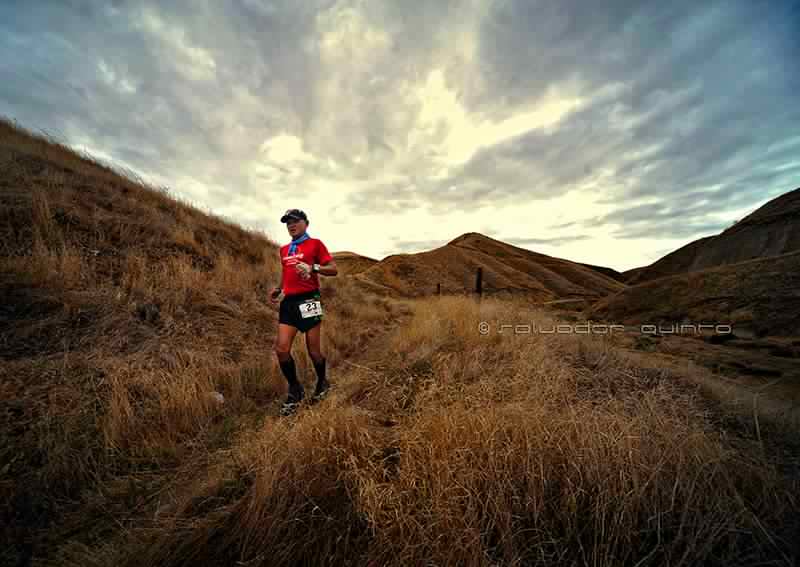
(Note: Pictures from Mt Pulag, Mt Natib, Mt Ugo, and Mt Timbac)
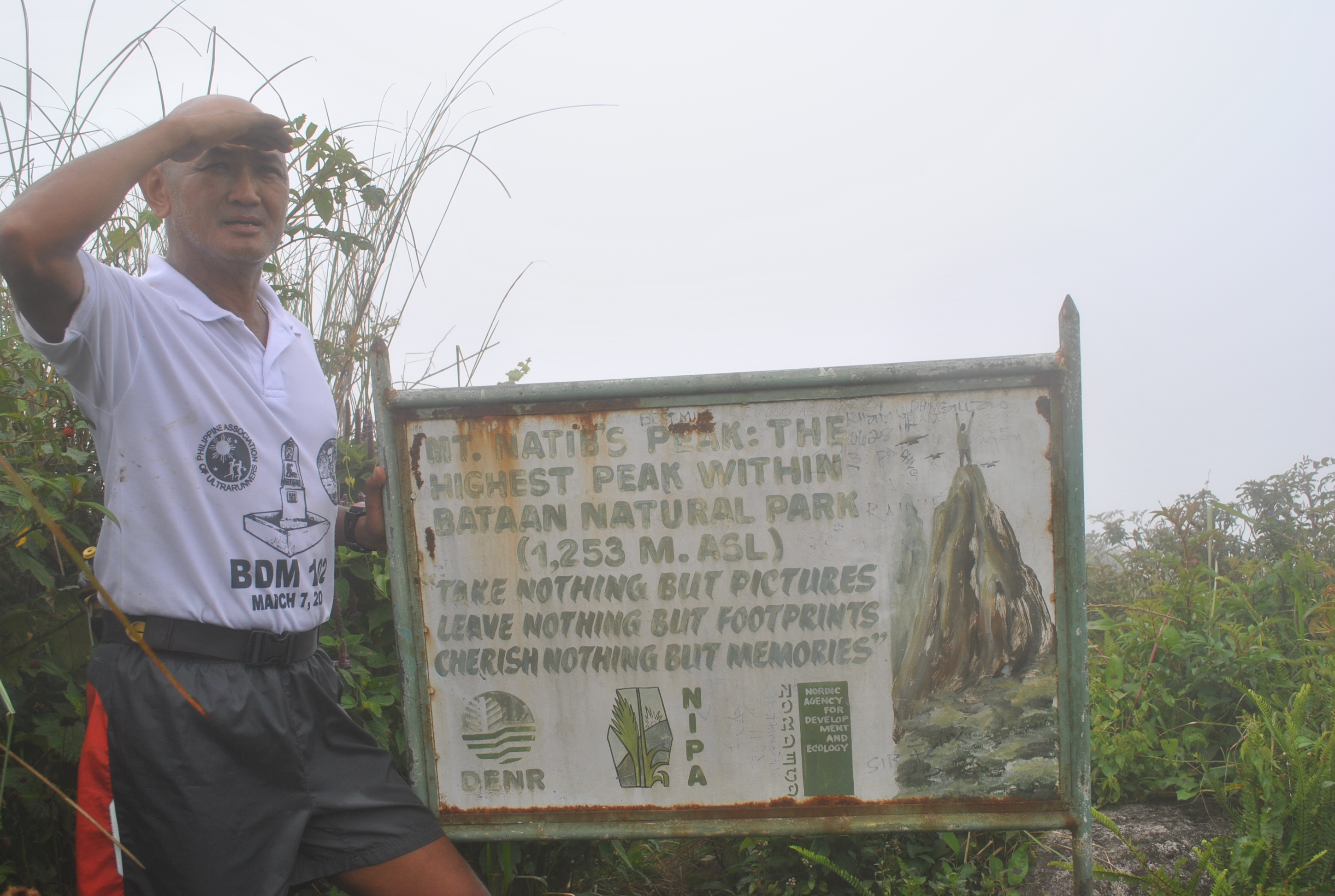
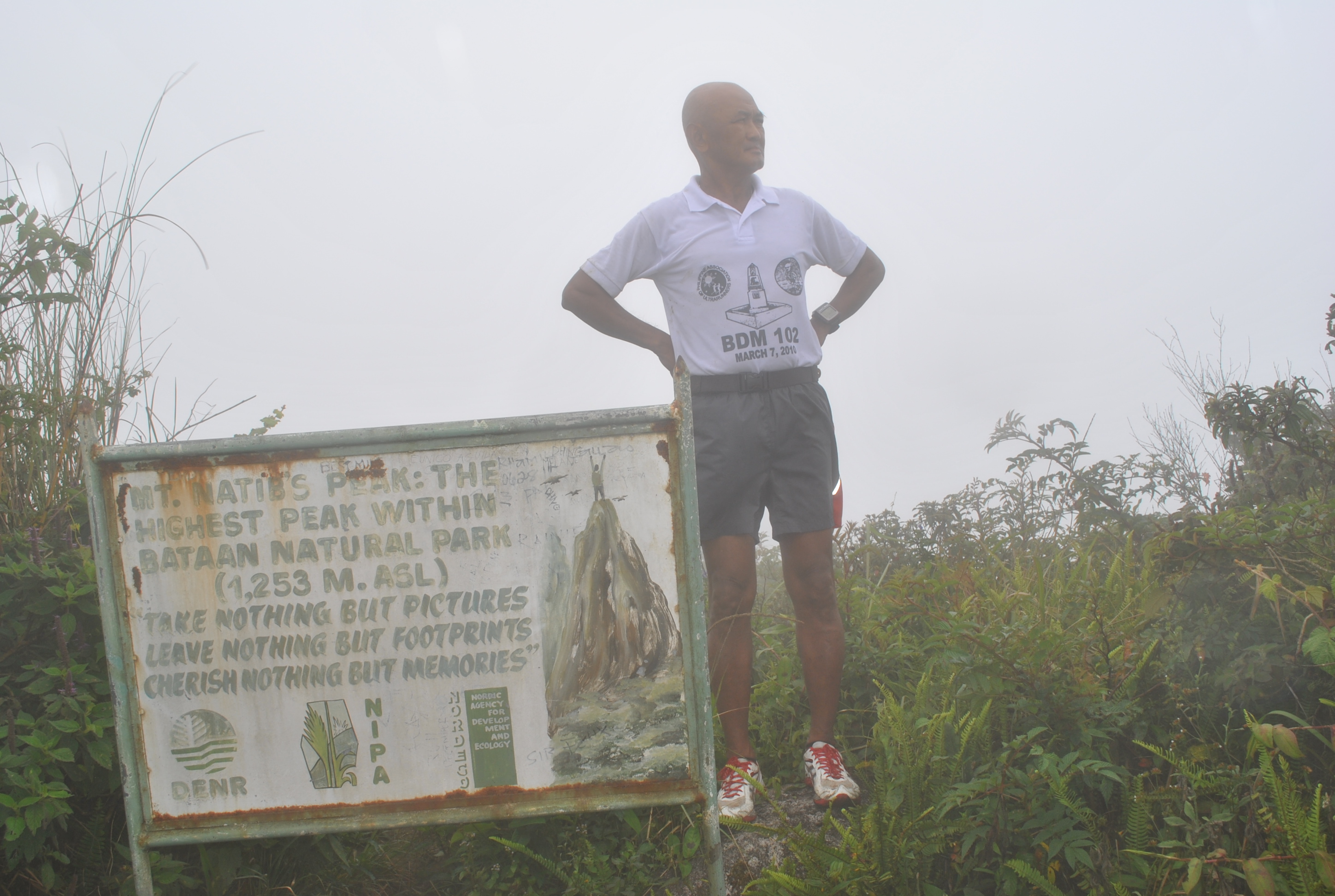
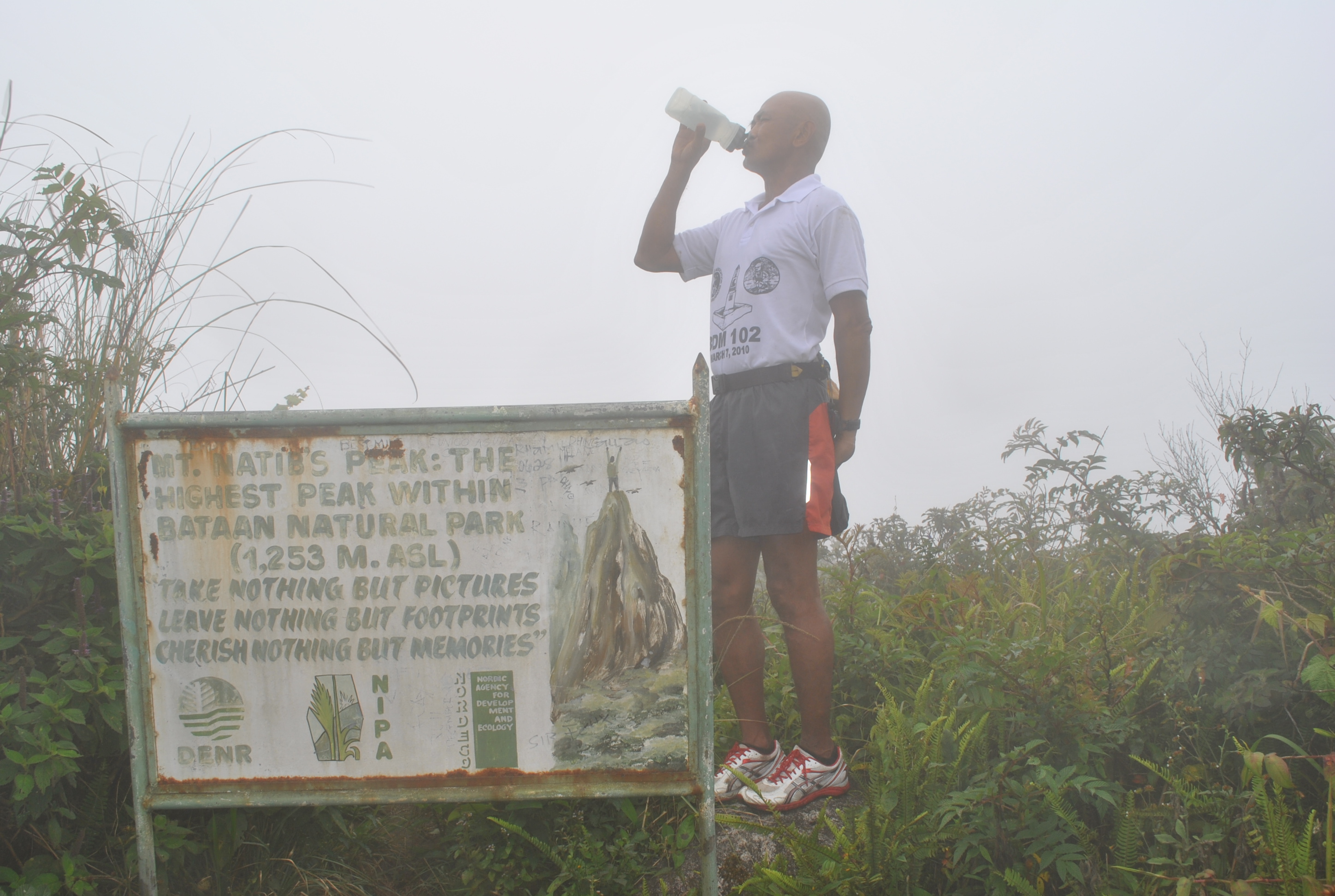
#2 “Peak Bagging” @ Mt Natib, Bataan (1,287+ MASL)

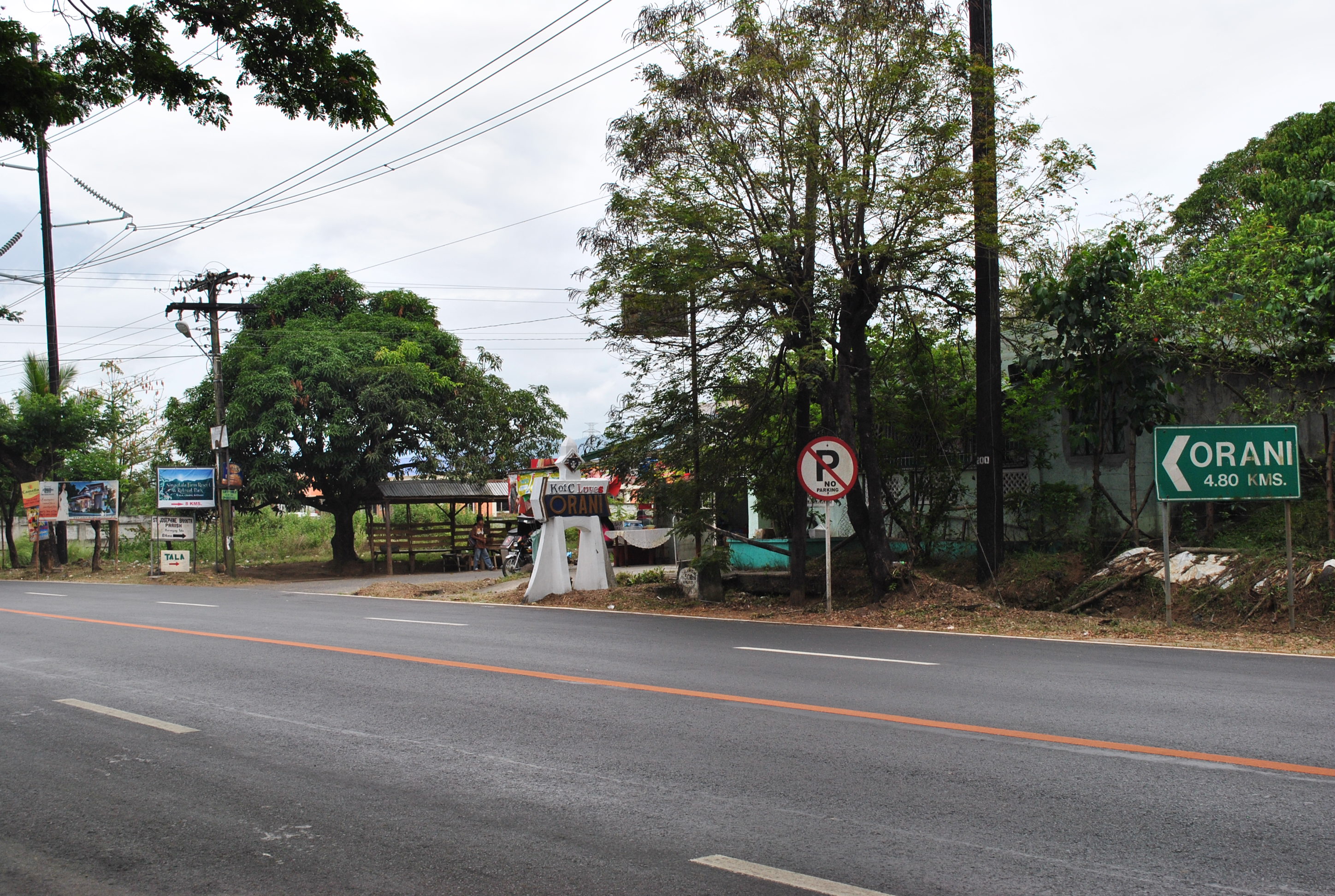
March 29, 2012 @ Mt Natib, Barangay Tala, Orani, Bataan

Mt Pulag is more than twice as high as Mt Natib in Barangay Tala, Orani, Bataan.

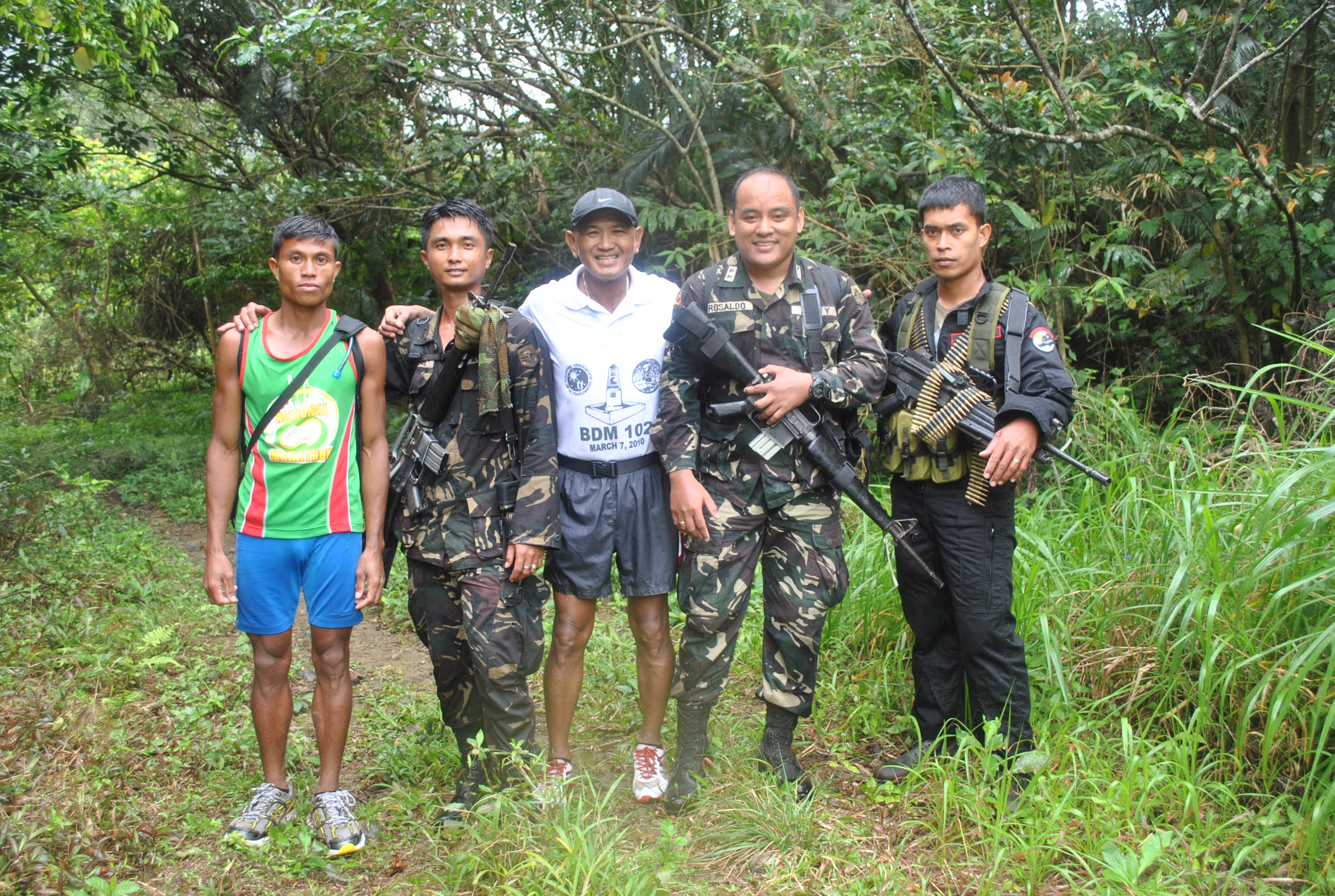
Exactly 14 days after Mt Pulag’s “peak bagging”, I was on my way to Bataan and try find out if I can reach the peak of Mt Natib within half day. It started with a simple Personal Message on Facebook with a “friend” who happens to be the Military Commander of the Northern & Central Luzon Areas and then later with telephone calls to two subordinate commanders whose areas are within Bataan and other provinces in Central Luzon. After 12 hours from the time I sent a PM on Facebook, everything was set and I could run and hike up to the peak of the famous Mt Natib the following day.

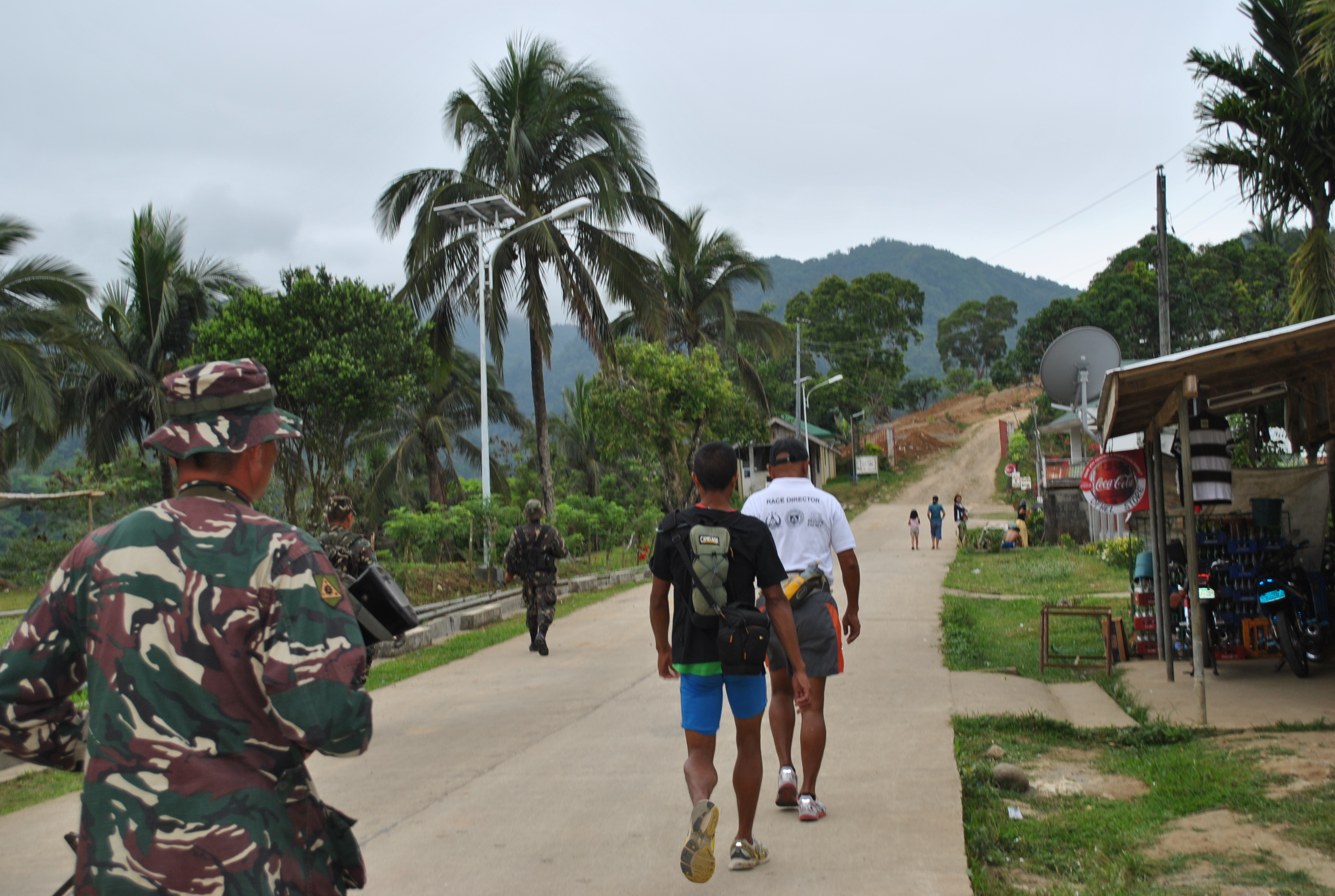
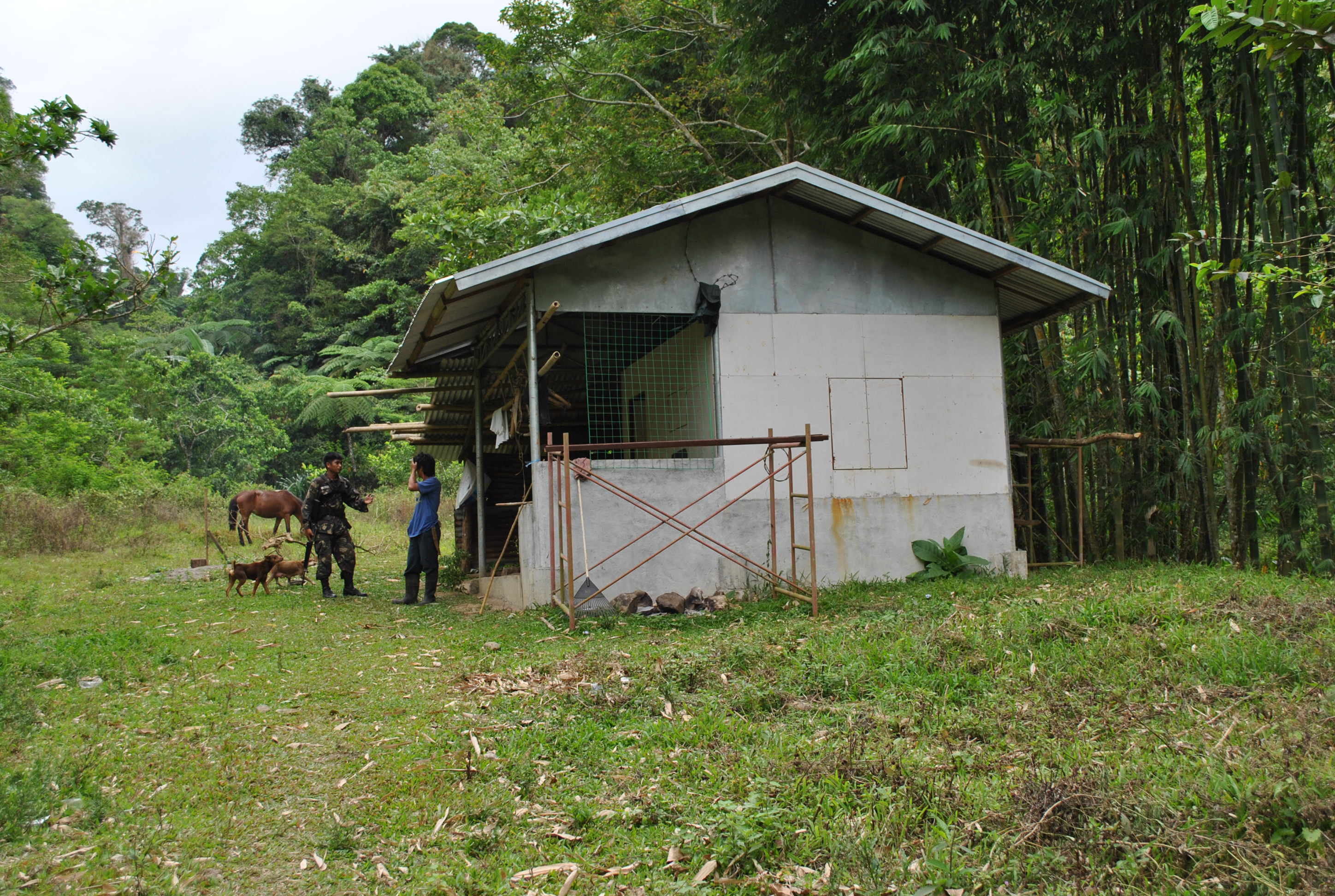
Two days before joining the 1st King of the Mountain Mt Ugo Trail Marathon, I was on my way to Balanga, Bataan to visit the Commander of the 7th CMO (GWAPO) Battalion, Colonel Benny Doniego, who gladly received and escorted me to the 73rd DRC Detachment in Barangay Tala, Orani, Bataan where I would start my run & trek to the peak of Mt Natib. I was surprised that he prepared a breakfast for me and my staff! It was nice to see Col Doniego after I’ve retired from the military service for the past almost 5 years. He happens to have served under me when I was assigned at the 7th Infantry Division in Fort Magsaysay.

Not only did Colonel Doniego prepared a breakfast for me, he even went to the extent of providing me with one officer and one team/squad of soldiers (9 soldiers) as my escorts. His parting words for me was that there will be fresh coconut juice and my favorite dish of “sinampalokang native na manok” waiting for me as soon as I arrive running/trekking from Mt Natib for lunch! Wow! What a nice incentive to finish the activity in a faster mode!

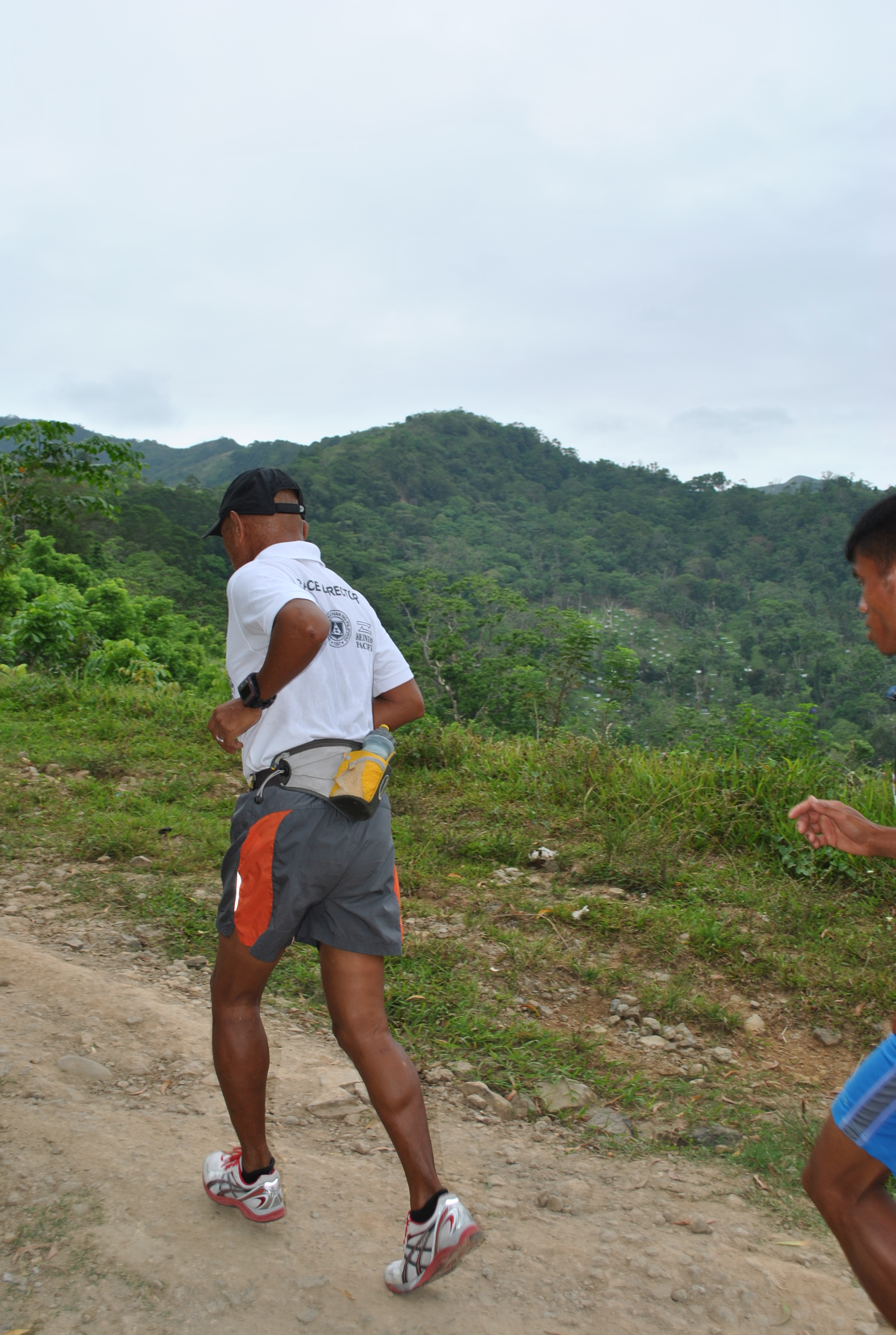
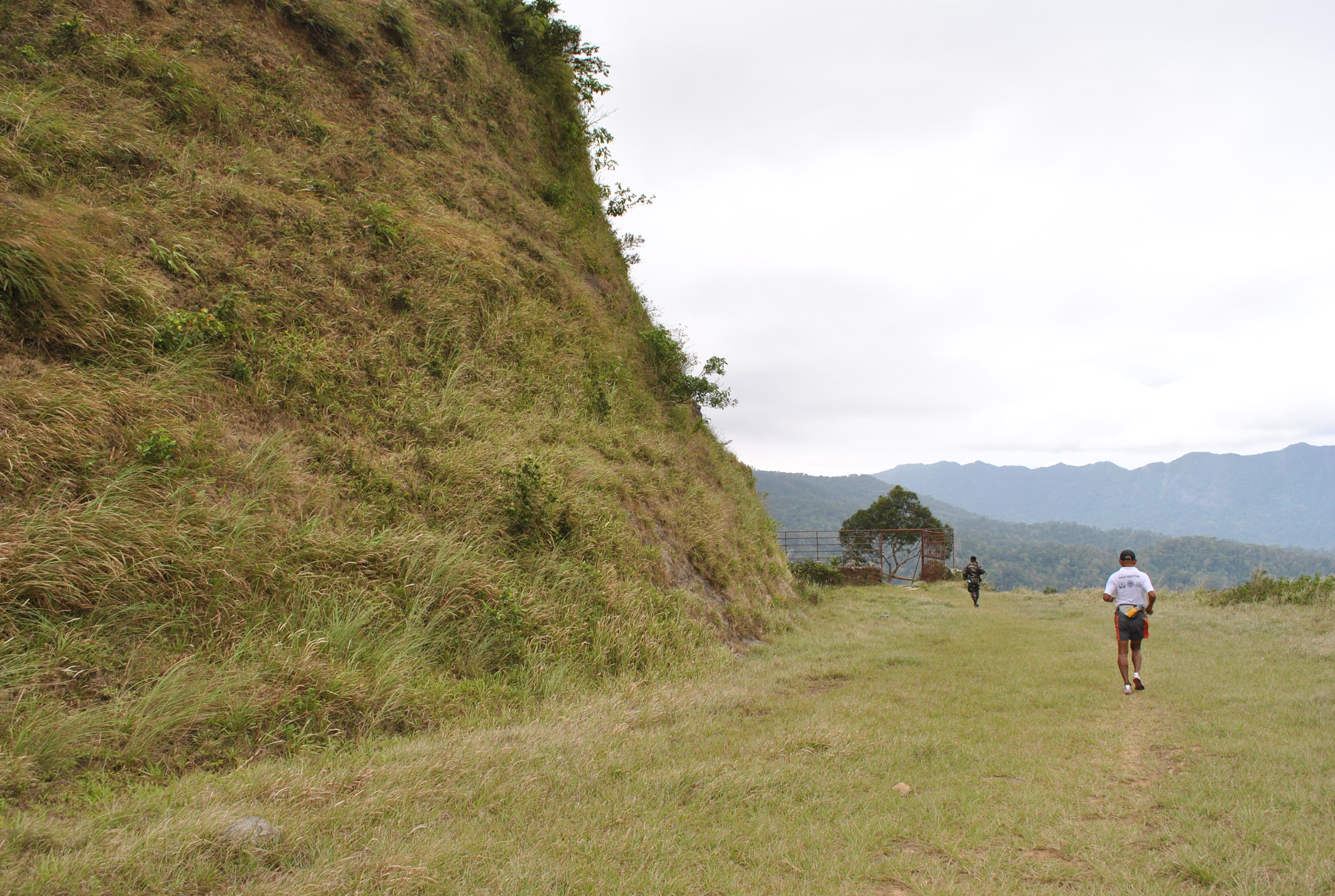
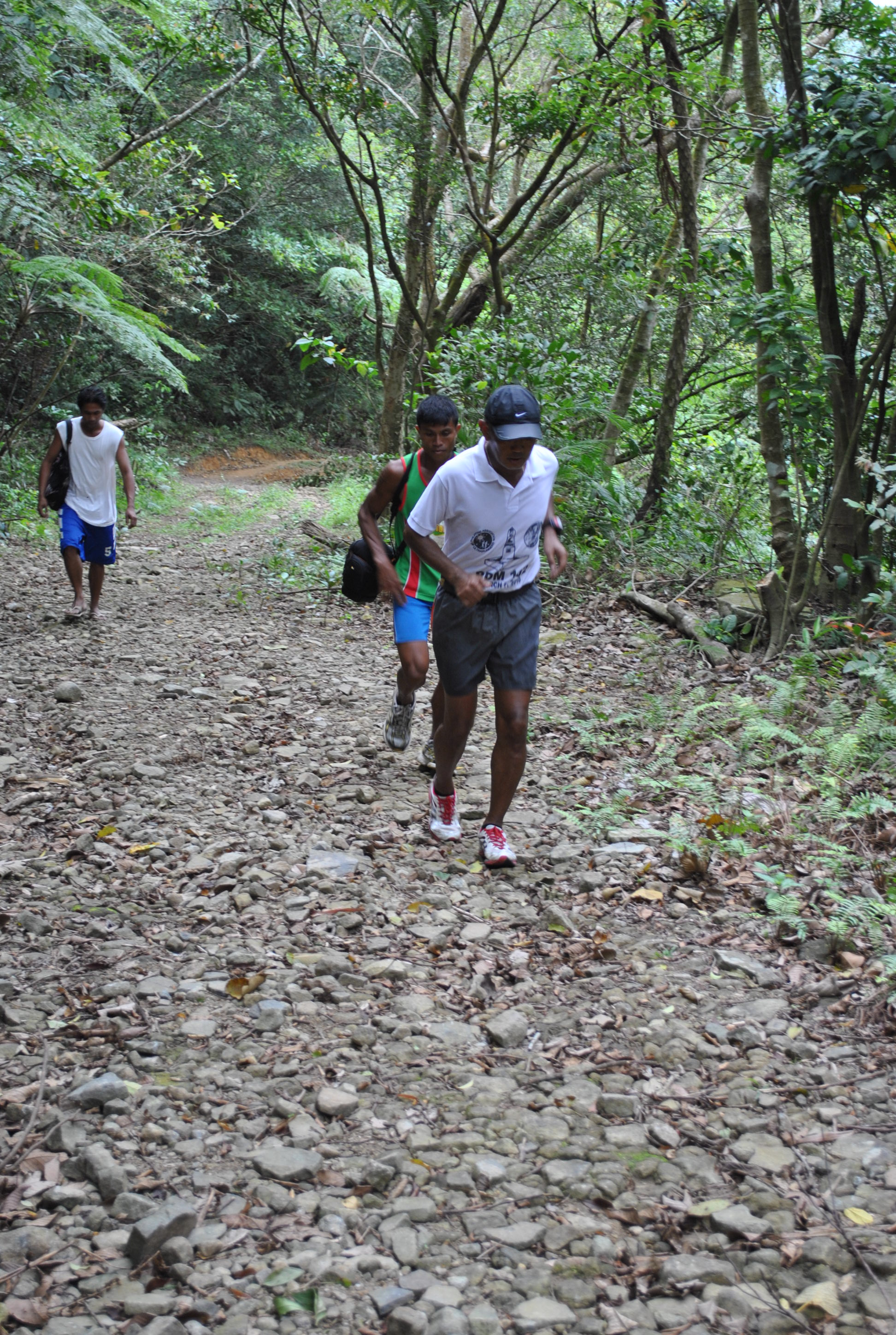
With military escorts infront and on my back, I started my run/hike from the Philippine Army Detachment at 9:30 AM. From the starting point, everything was going uphill until I reached the place which they call “Pinagbutasan” which happens to be a wide man-made “pass” or “breakthrough” on a mountain so that a trail was made on the other side of the mountain. There is a steel gate/fence that protects the unnecessary use of the trail from 4-wheeled vehicles. From this point, you could see the nice vista and mountains/ridges overlooking the towns of Morong and parts of the Subic cove.

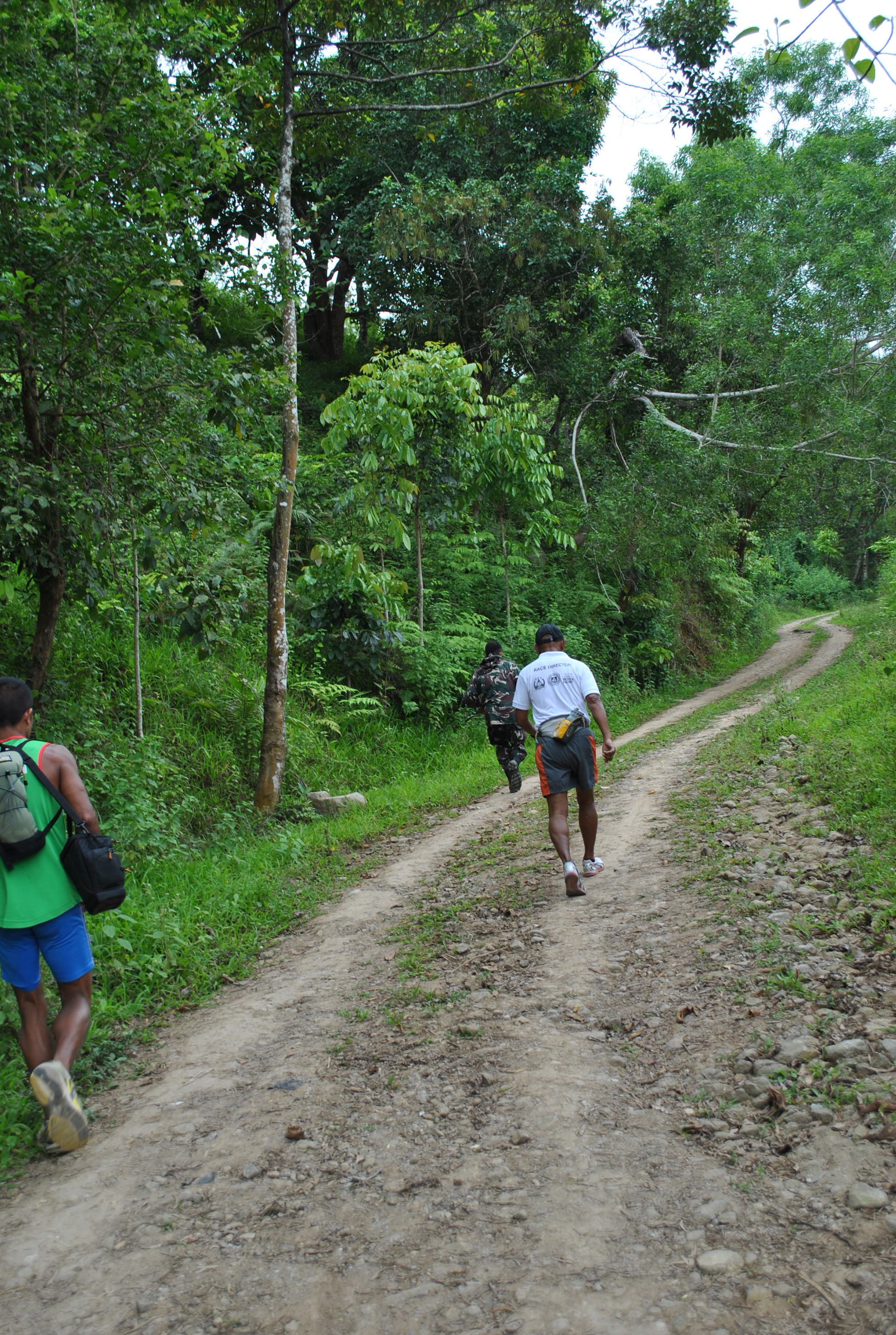
The trail is wide with hardened soil/earth on the first part of the route from “Pinagbutasan” and then it transforms to a trail that has lots of stones and rocks. I was informed that the trail was made/constructed by PNOC on their digging explorations on the said mountain years ago. It is worthy to note that Mt Natib is considered as a dormant volcano and I have the suspicion that PNOC was looking for a geothermal source on the said mountain due to its nature as a volcano. Geothermal is one of the alternative sources of power energy. Unluckily, PNOC was not able to find any geothermal source in the said mountain as evidenced by their exploration diggings covered with concrete cement. You can ask your guide if you are interested to find out where these diggings are located.

On this rocky & stony portion of the trail, it is mostly covered with trees and plants. The terrain is not steep and I was able to jog on most parts of this shaded portion of the trail.

It was cloudy and cold during the day that I had my trek on this mountain and I could hardly see its peak. What went into my mind was to be able to reach its peak, take some pictures, and then descend from the mountain peak for my warm and tasty lunch!

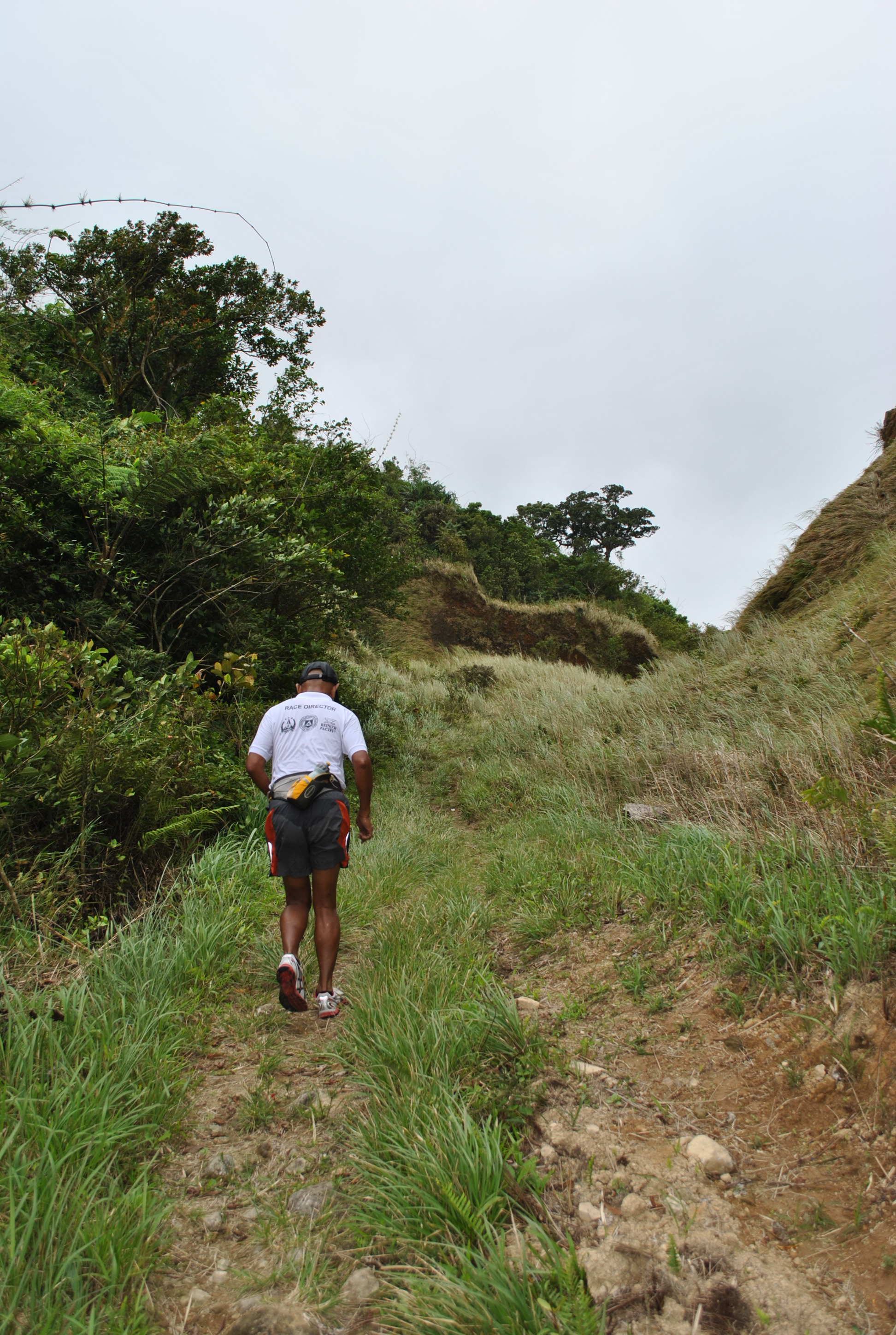
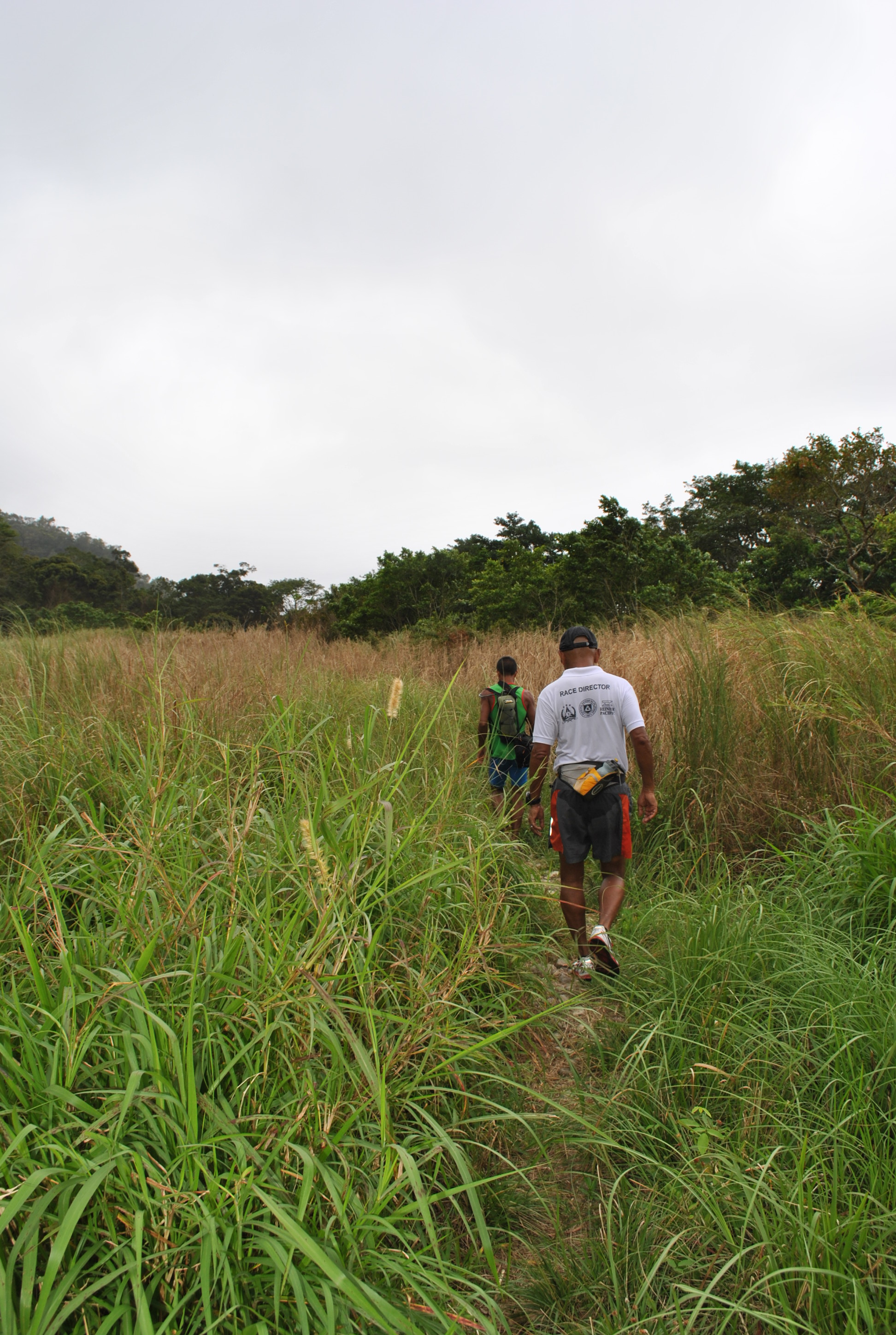
After the shaded portion of the trail, an opening of two small hills beckons with tall grasses with the trail on the middle. I could only see the clouds that cover the mountain and the tall grasses as I proceeded with my power hike. More tall grasses on both sides of the single-track trail and then I was told by our guide to turn left towards a clearing.

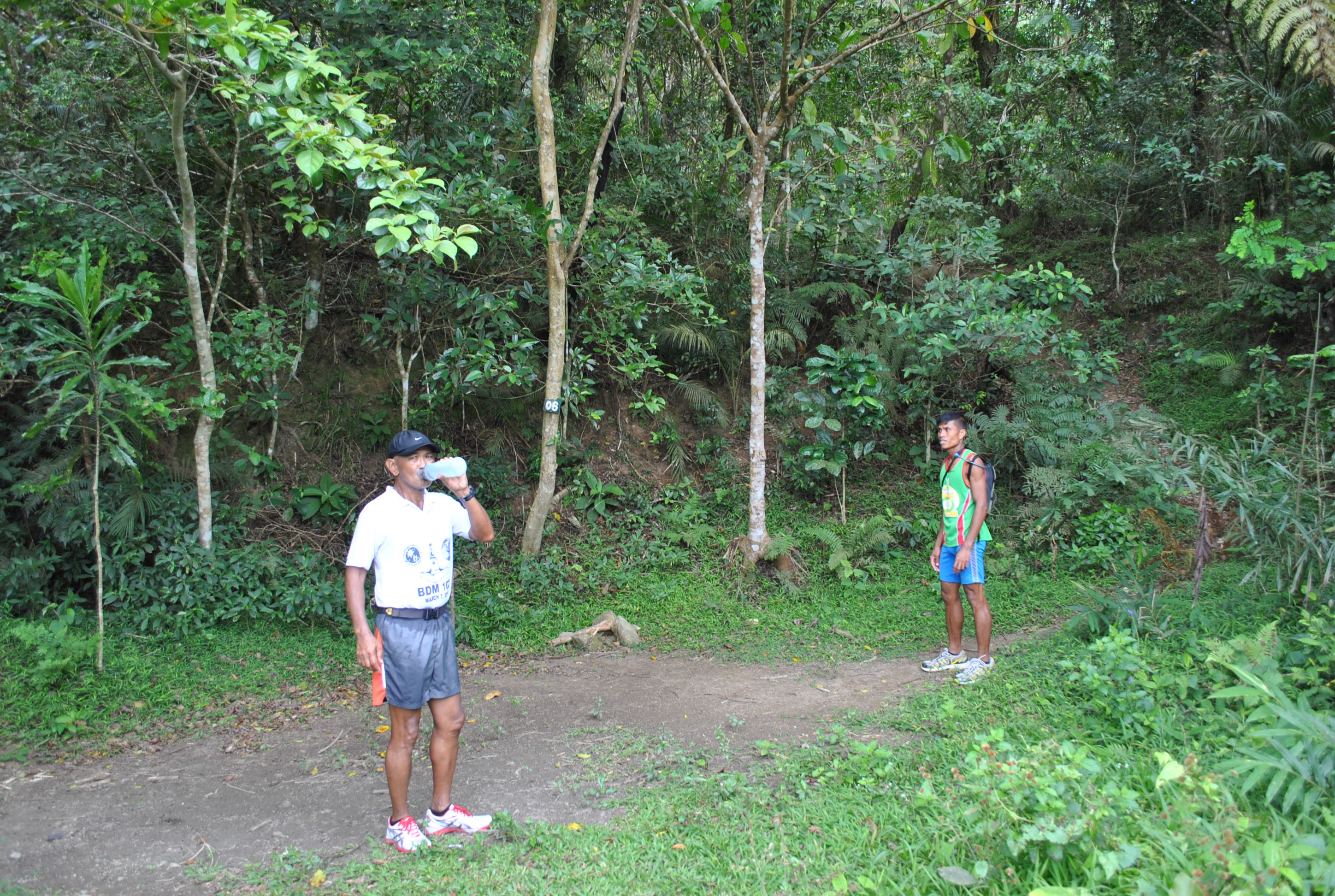
There was a clearing which they call “Area 1”. It is actually a camping site which is good for 3-4 tents and located on the very base of the peak of Mt Natib. There is a number “06” marker on one of the trees around the campsite. This site is the start of the “final assualt” to the peak of the mountain!

Aside from the soldiers as my escorts, I had with me two of my elite runners who were there as my personal photographer and assistant. We started our final climb towards the peak with me located in between my two runners on single file. The runner in front of me would clear the way for branches and twigs/thorny vines and the other on my back was there to make sure that I will not roll down from the mountain if I tripped or slipped on the rocks. It was raining then and the trail was slippery. It was more slippery on the rocks that we have to use extra effort to push our feet up to the trail.

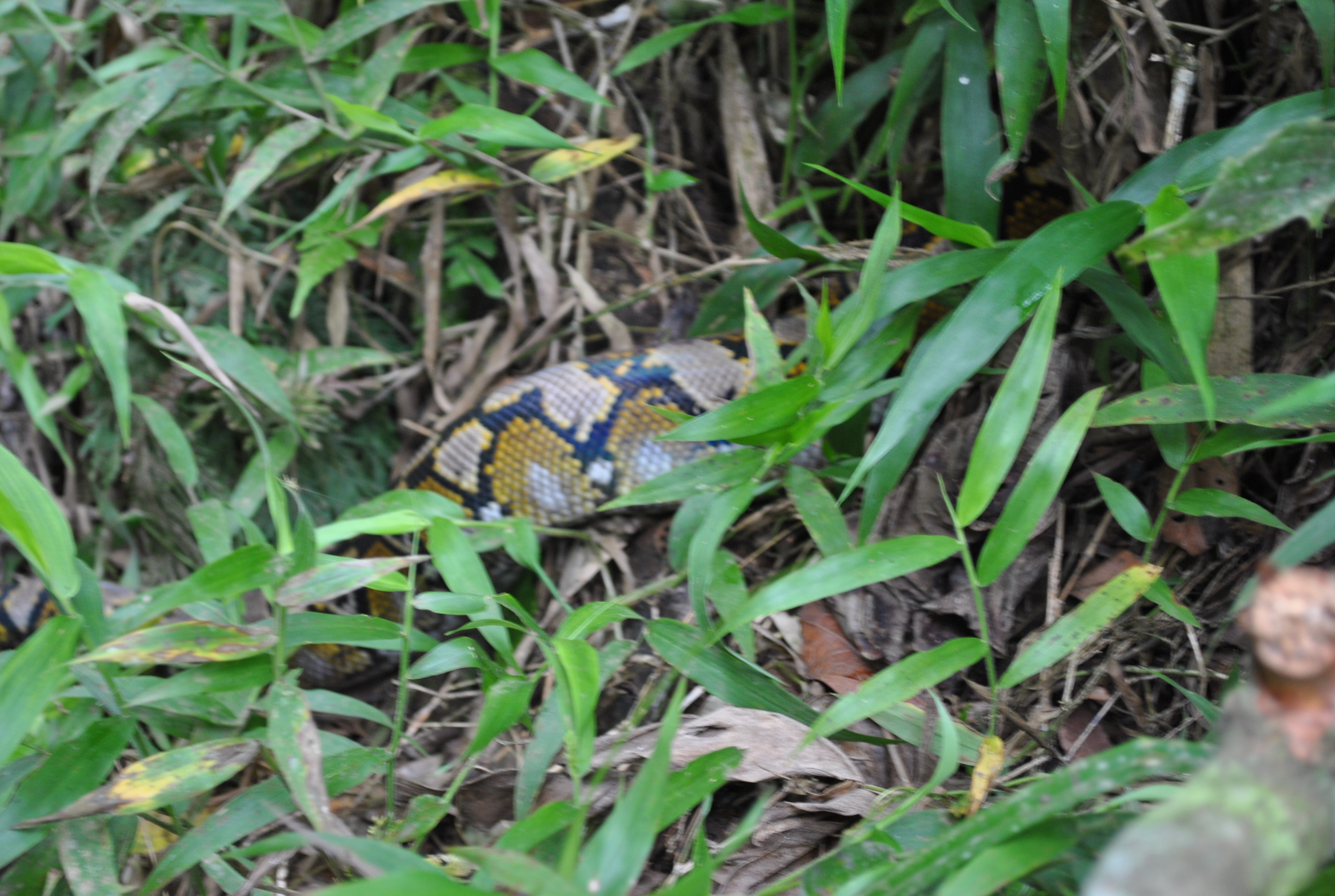
After 50 meters on the trail, the first runner suddenly stopped and started to retrace his footings backwards. He told me that there is a snake infront of us crossing our path. I told him to get nearer to it and find out where the head is located! He hesitated! I was the one that went nearer to the snake and it was really big but we could hardly see its head! I was about to hold its tail and yanked the whole body out of the thick foliage but I thought that it was not my main “mission” to look for snakes. I am not a hunter and I am not looking for food or for a pet! I am after the peak of Mt Natib, stick and stay focus to the very simple mission! In a split of a second, I instructed my runner on my back to give me my camera and I was able to get a close-up picture of its tail portion as the snake went to the thicker foliage part on the side of the trail.

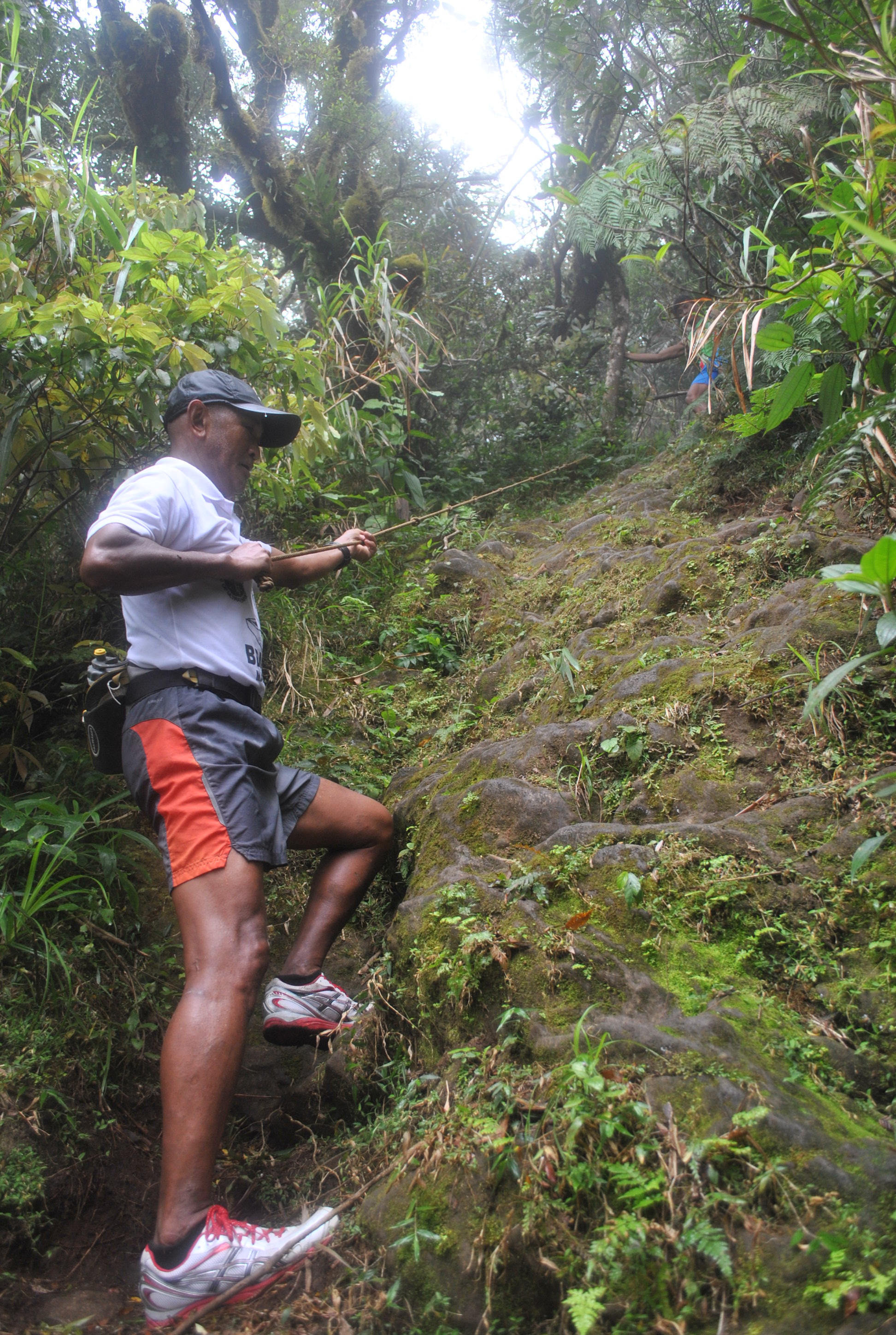
After the snake encounter, we went higher and higher with more caution. Then, we were faced with a “vertical wall” which is about 10 meters! It’s good there is a nylon rope where one could hold for a nice rapelling experience! However, the challenge was for the the foot anchor to be firm on every leg push and strong arms pull on the rope towards the top of the wall so that there would be no slipping or sliding due to the slippery wet rocks brought by the drizzle. Going up on top of the wall was very slow and deliberate. There is no point of making it fast to reach the top of the wall. Patience is needed in this kind of situation.

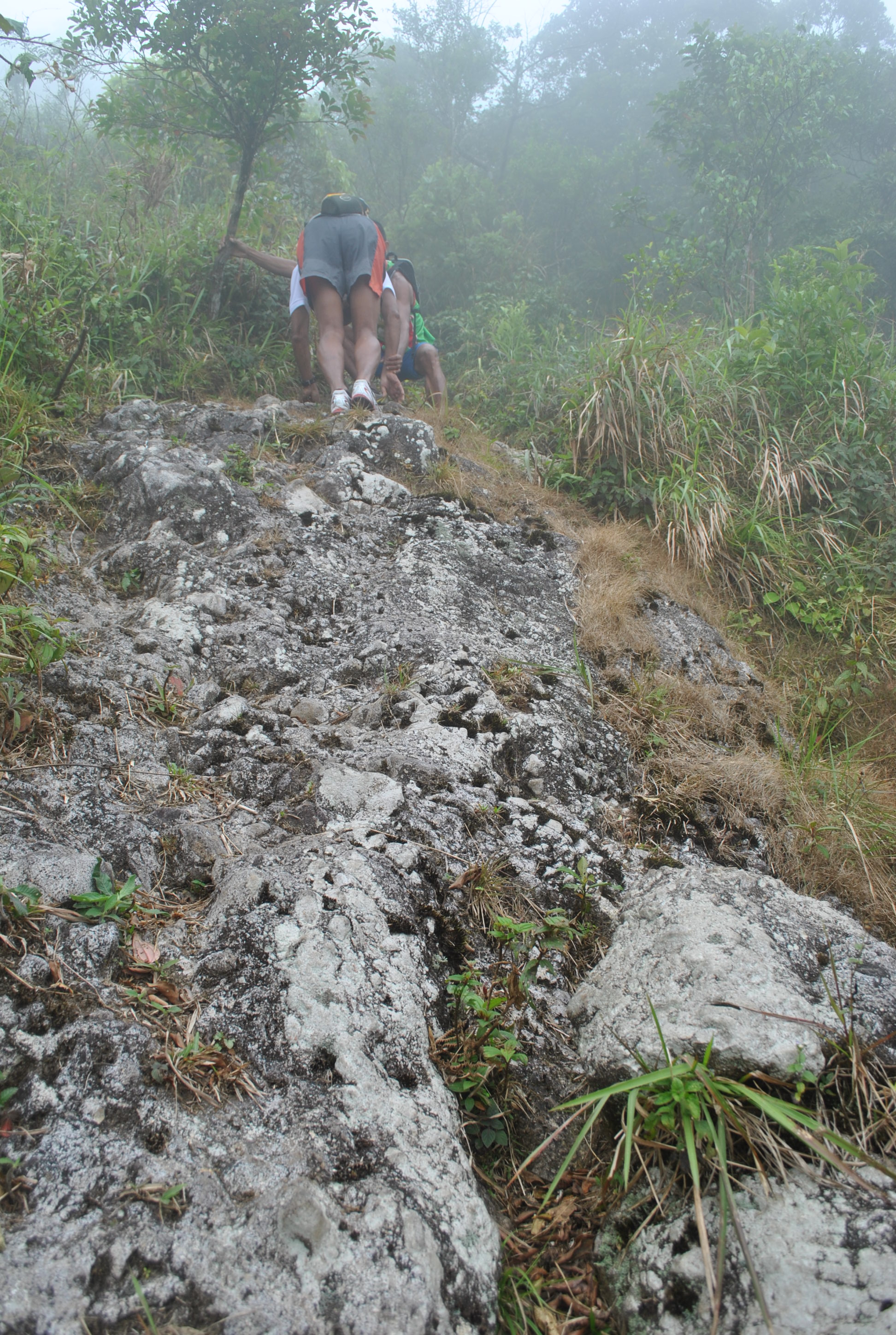
After the first wall, there are rocks as part of the trail that I had to crawl just to be sure that I would not slip. Patience paid off. But there was another mini-wall (about 5 meters) with a rope (again!) to be climbed to its top. After passing this last wall, everything was a smooth uphill and in about 50 meters, I was greeted with the Peak/Summit Marker of Mt Natib! Finally, I was able to “peak bagged” Mt Natib!

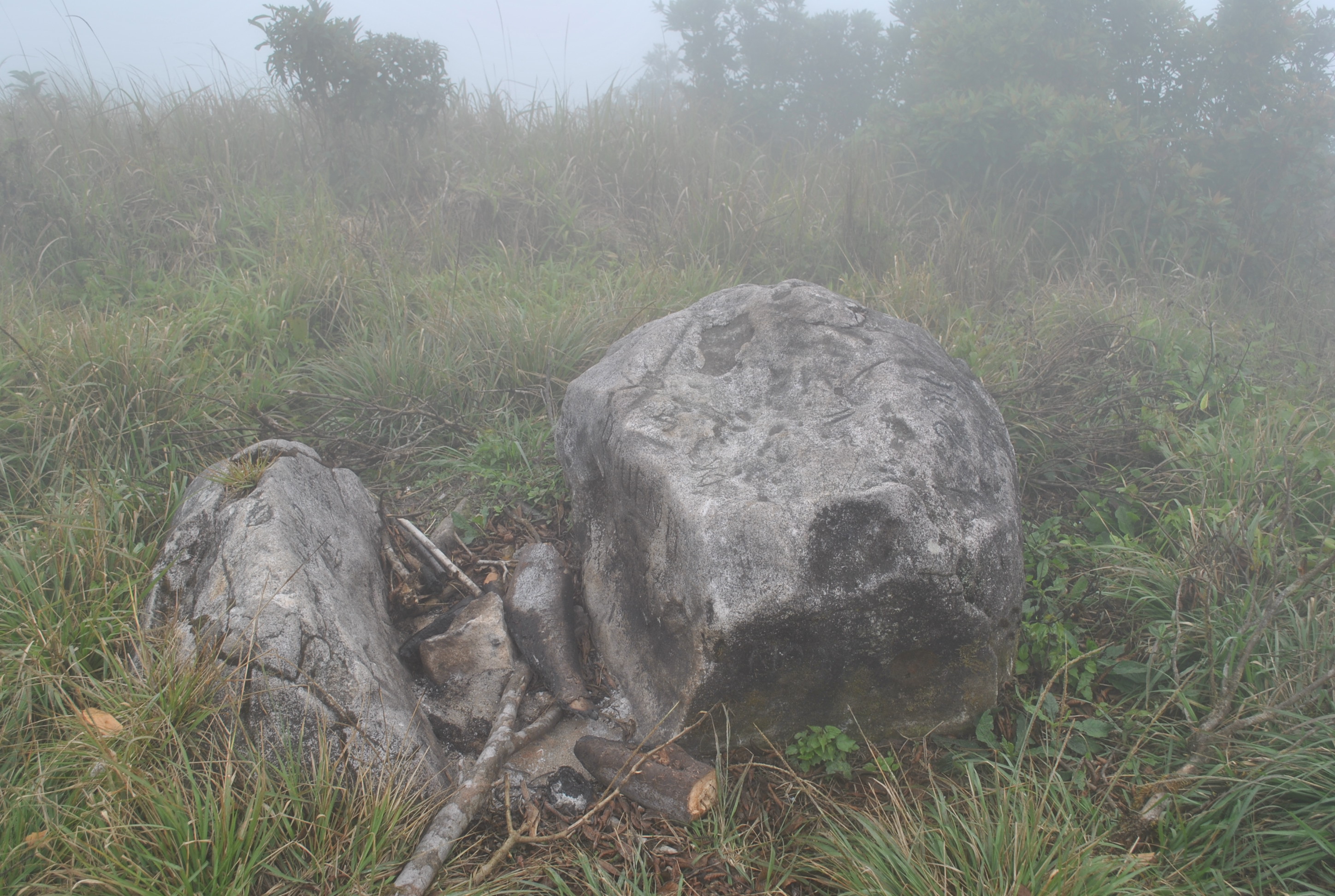
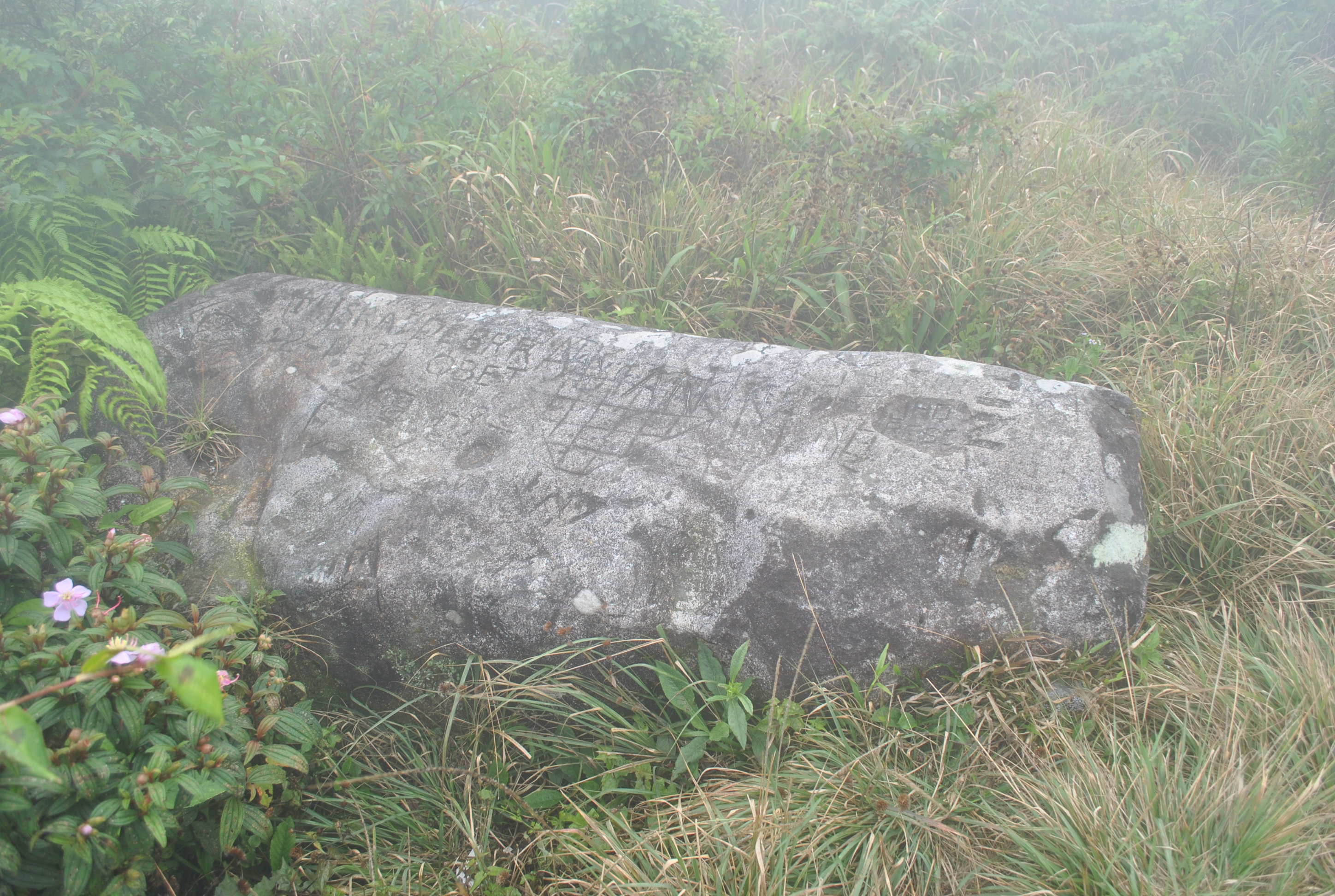
Three of us, my two runners and I, were the only one who reached the peak. Our escorts were not able to make it! We spent our almost 20 minutes taking pictures and trying to survey the whole area of the peak. There was no view to be seen from the top of the mountain as it was raining and we were covered with clouds. However, I was able to take note of the trashes being scattered on the different places on top of the mountain. In my estimate, the peak can acommodate at least 8-10 tents (solo or double) and there seems to be no attempt to clean and maintain the area. I said to myself, I will be back to clean the mess here on the peak of Mt Natib in the days to come!

We reached the peak in 3 hours. And we were all in a hurry to go back to where we started at the Philippine Army Detachment. However, we needed more patience and more deliberate footing as we went down the two “walls” and rope rapelling. We spent more time in going down on the “final assualt” portion of the mountain. As soon as we reached “Area 1”, we started to jog and brisked walked. Since we did more on jogging and power walking as almost parts of the trail were descending, we made our way to the detachment in almost 2 hours. My GF 305 recorded an elevation data of 1,296 meters at the peak of Mt Natib!

The trip was concluded with a sumptous late lunch at the Battalion Headquarters with Colonel Doniego and I told him of my plan of going back to the peak of Mt Natib during a day with a nicer weather in the company of my running friends. I also told him of my plan to conduct Operation Linis on the said mountain with an specificied date. It will be April 15, Sunday! His answer was affirmative!

Well, this proves that I am already addicted to “Peak Bagging”!

Next….Mt Ugo…in the 1st King of the Mountain Trail (42K) Marathon…after two days!

“Peak Bagging” & Mt. Pulag


March 12, 2012 @ Ambangeg, Bokod, Benguet

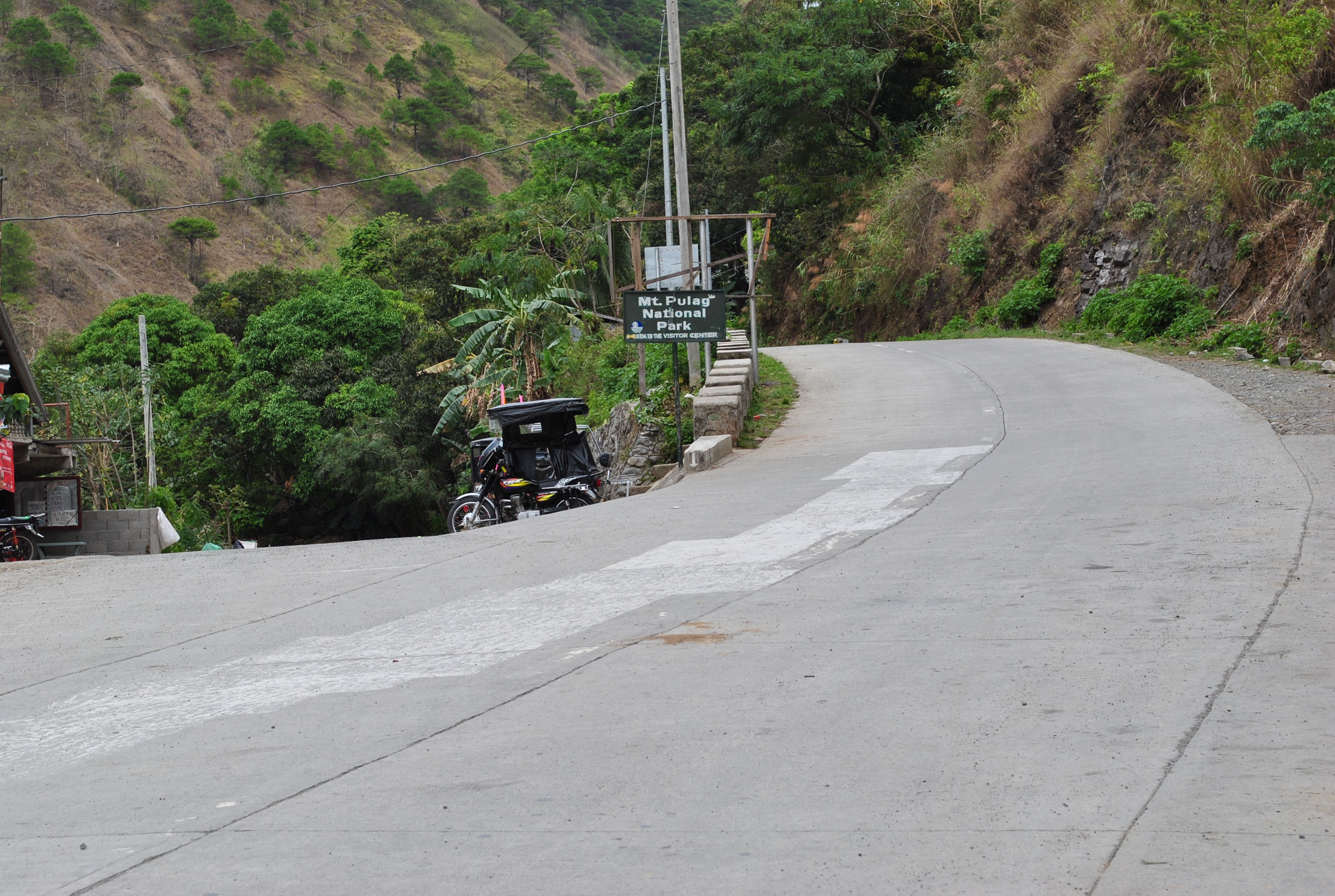
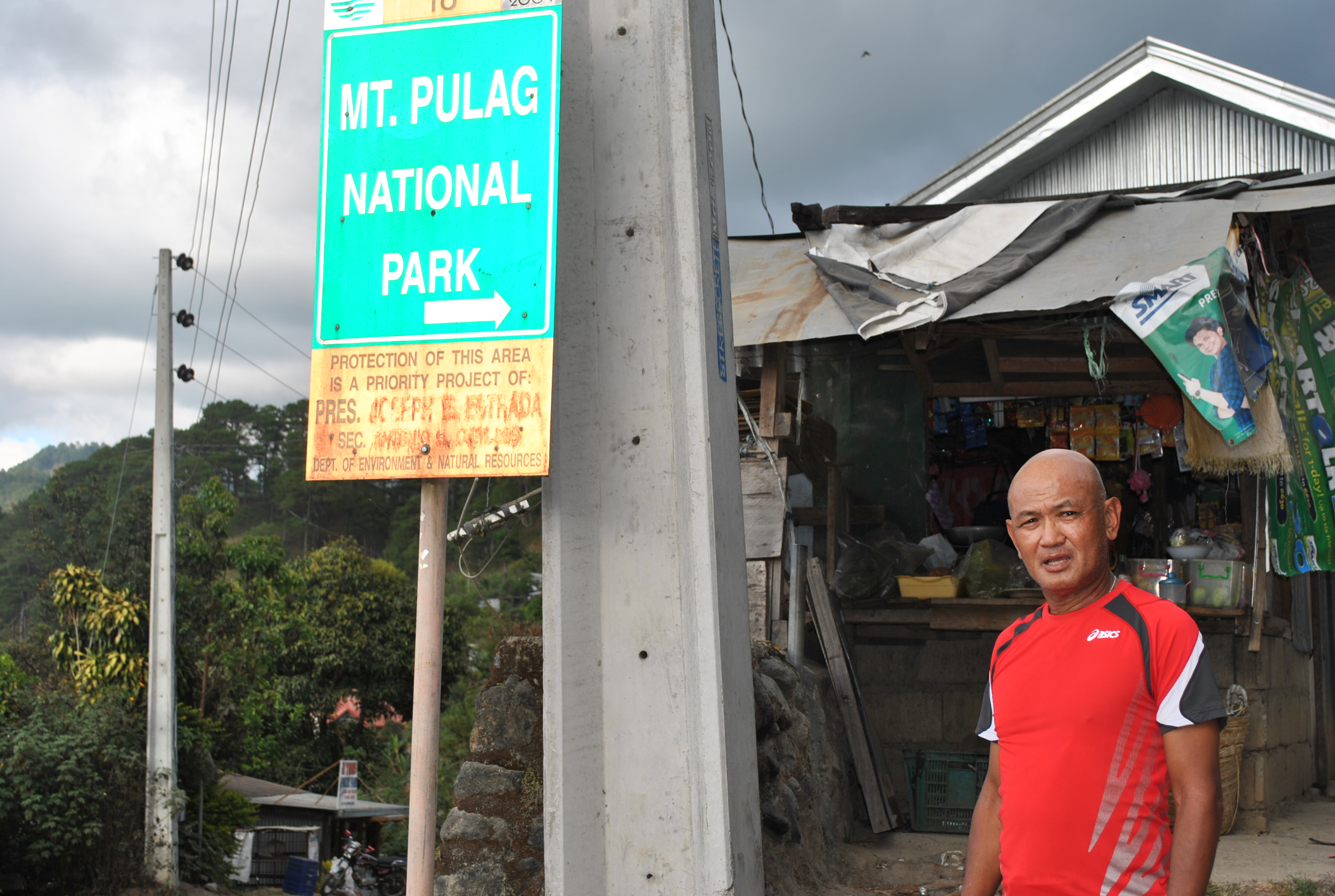
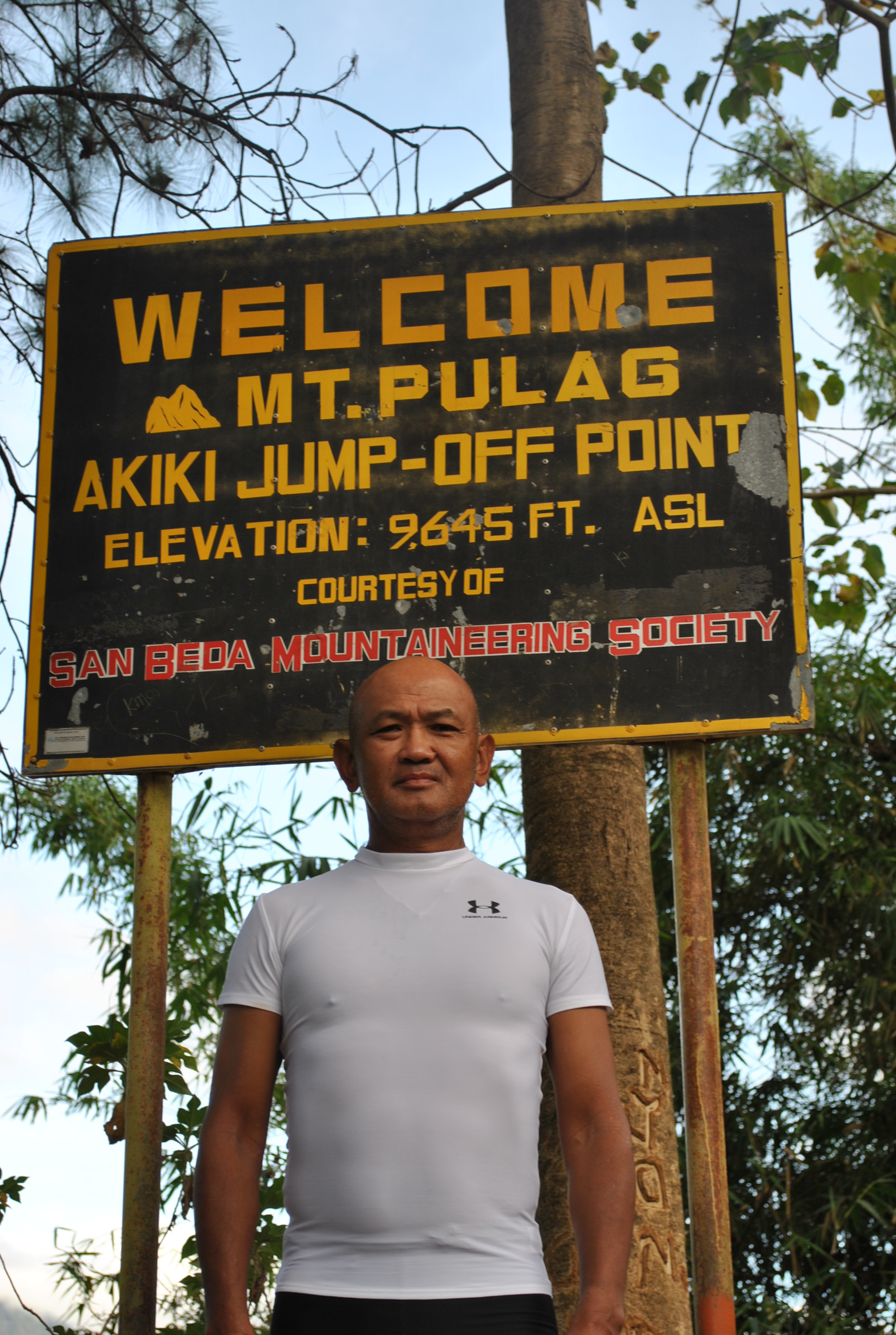
On my way to Kayapa, Nueva Vizcaya along the Benguet-Nueva Vizcaya Highway, I saw a directional sign that points to the Mt Pulag National Park. It was at the PNP Station in Barangay Gurel, Bokod, Benguet that changed my intention of going to Mt Ugo in order to recon the Marathon Route of Jonel’s race.

I said to myself, “Mt Pulag is the highest peak in Luzon and I am already here, maybe, I’ll drop by first on this mountan and then proceed later to Mt Ugo!” As I turned left at the intersection, there is no point of turning back. I am back again to my habit of being a “risk-taker”!

The road from the Gurel Junction to Barangay Ambangeg, Bokod is almost completely paved as some parts are still on road cementing construction. The road is winding and uphill and I did not notice that I traveled 9 kilometers up to the DENR Office/Police Detachment.

I am not a trained mountaineer and I am ignorant on the protocol of climbing peaks and mountains in the country. What I needed was the guts to ask questions and have the patience to listen…and listen intently! This thing was entirely new to me but I guess, I quickly learned some of the basic protocol in mountaineering. Everything boils down to “common sense” and respect to the culture and beliefs of the people in the community.

Although it was already almost 4:30 PM when I was given the usual briefing presentation by the DENR about the mountain I am going to visit, the sun was still shining brightly and I have to deal with the fact that I am taking my time from taking one step of the process at a time. There is no point to worry if my trek to Mt Pulag’s peak will be realized the following day.

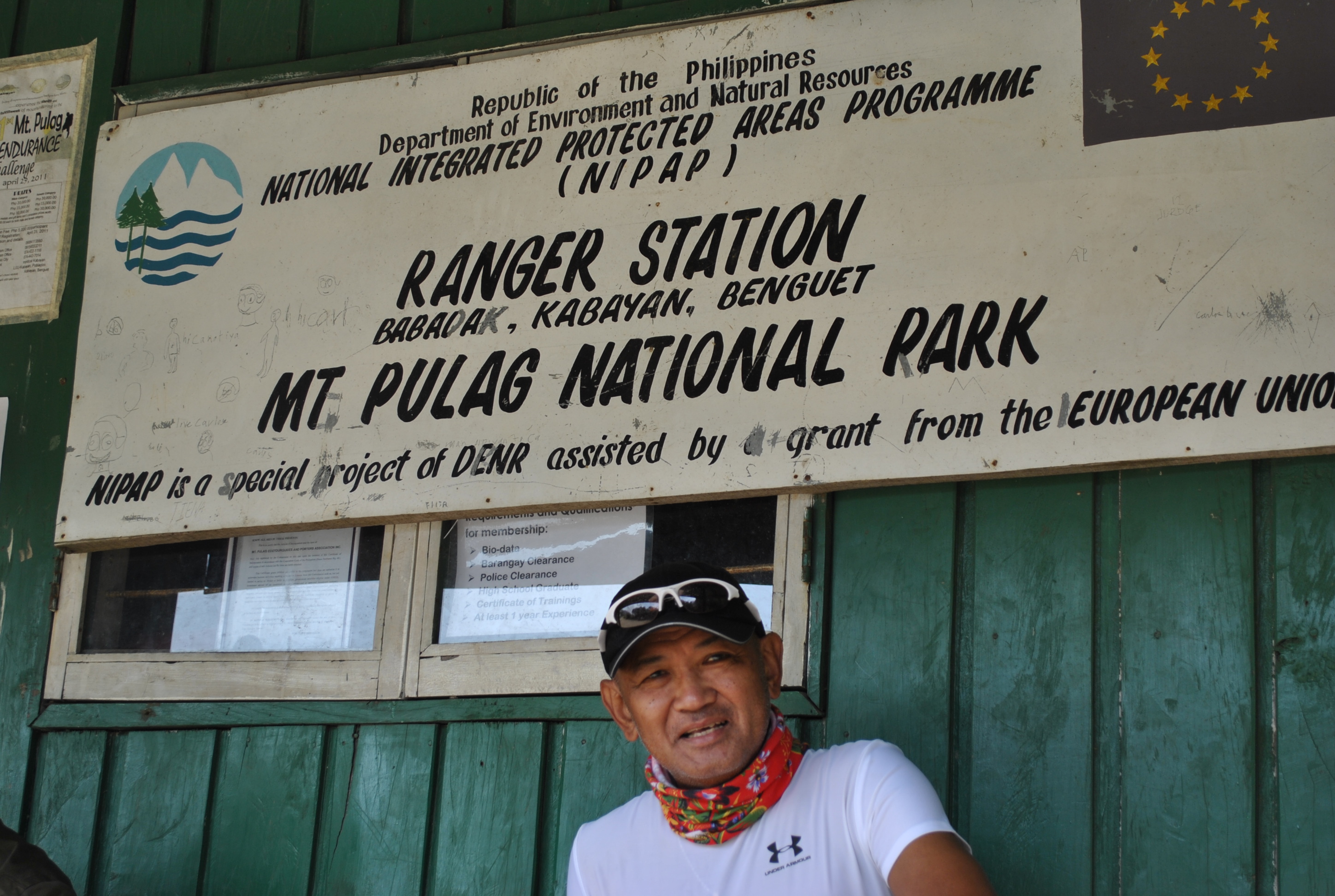
After the usual briefing and payment of permit fee, additional information was provided by the people assigned in the said office. Permit fee per person is P 200.00 but you will be issued two receipts from the Bureau of Treasury. Since I am not with a group of mountaineers on a group tour, the office personnel advised me to contact a certain “Julius” to bring me to the Ranger Station in Ambangeg aboard a motorcycle. The fee for one-way is P 300.00 per person.

I was also advised to get a guide at the Badadak Ranger Station, the place where I am going to start my trek to the peak of Mt Pulag. The guide’s fee at the Ambangeg Trail is P 500.00. I found out later that the guide’s fee is more expensive if the entry point is from the Akiki Trail which is obviously a longer route to the peak. It can cost you P 1,800.00 but one guide may be good for a group of 6-7 hikers. It is a “must” to get a guide in trekking in most of our mountains in order to avoid of being lost.

The problem with Barangay Ambangeg is that there is no place to stay for the night! The nearest place where there is a dormitory-type of accommodation is at the Poblacion of Kabayan—a good 1 1/2 to 2 hours drive of unpaved road! There was no other choice but to go to Kabayan. The adventure continues and it is a part of touring and knowing the place for the first time.

It was already nighttime when I entered the quiet town of Kabayan. Only one establishment was still open with food to be cooked and ordered at 7:00 PM. Our overnight stay in the one and only dormitory in town cost us P 200.00 per person! One has to sleep on two-deck beds with basic mattress and pillow. The dormitory has a communal bathroom and toilet with separate bathroom for the ladies. There was no hot water or shower but the ever-reliable pail and “tabo” were there!

On that night that we stayed in the said dormitory, two European couples were with us and four males working with a company that delivers and sells bulbs and lighting fixtures to every barangay in the towns of Benguet. A simple greetings and smile was enough for the foreiners but for the people I’ve met along the trip, being an Ilocano was already an  asset during my trip as the people in every place in Benguet could easily understand my dialect. I could easily communicate with them!

We left Kabayan after a simple breakfast and we arrived in Ambangeg, Bokod after almost 2 hours of slow driving and taking pictures along the way. I saw the entrance to the Akiki Trail along the road and I found out that this is the harder entry towards the peak of Mt Pulag. I took some pictures of the place and promised myself to be back and make an assault to the peak using this entry.

“One-time deal” parking fee in Ambangeg cost me P 100.00 from 10:00 AM up to the time we left the place. I think, it was already 7:00 PM. I left my car and I was in tandem with Julius on his motorcycle on our way going higher to the foot of Mt Pulag. It was my first time to be riding in tandem on a motorcycle ride and Julius was complaining that I was doing some unnnecessary movements with my butt. He didn’t know that the bumpy road made me fly a few inches from the saddle/seat and the continous butt-jumps made me nervous that I might fall off from the motorcycle! My light weight made me unstable riding on a motorcycle on rocky/bumpy road!

Wow! That was the most horrible ride I’ve experienced! The 9+ kilometers with rocks and slippery mud on the uphill path could be the longest 40 minutes of my life! Finally, we arrived at the Ranger Station in Sitio Badadak, Ambangeg. The Ranger assigned in the station was having his Lunch Break at 11:30 AM and there was no person to whom I would show the receipt that I paid as my permit fee. I just thought that I would see the Ranger once I’ll be back from the peak of the mountain.

After 15 minutes of waiting for a guide, Edgar came forward and signed up to guide me in my trek to the peak of Mt Pulag. I told Julius and company to return to the Ranger Station to pick us and bring us to where my car was parked at exactly 5:30 PM. Julius was surprised and made a statement that with the limited time, I might not be able to reach the peak of the mountain with such time. I just smiled at him and told him that I’ll be waiting for him at the Ranger Station on the said time.

Mountaineers (with packs) usually reach the peak in 4-5 hours from the Badadak/Ambangeg Ranger Station. Well, Julius and the rest of the people at the Ranger Station didn’t know that I will be running, jogging, trotting and brisk walking to and from the peak of the mountain! And so I did!

At 4:30 PM, I was back at the Ranger Station! I was able to reach the peak of Mt Pulag by “assualting” it through its steepest approach trail (last 50 meters) in 2 hours! Spent 15-20 minutes on the peak for picture taking and moving around the topmost portion and admiring the damp brown dwarf bamboos. The temperature at the peak was freezing as it was raining and the peak was covered with clouds! In a few minutes, my fingers were numb and my body started to feel the cold temperature. I kept on walking on the open space of the peak but the freezing temperature would make my body shiver.

On my way to the peak after passing Camp 1 and before entering to the “Mossy Part”, I was able to meet a couple, a male foreigner and a Filipina, and I greeted them while I was jogging. As soon as I reached the place they call “Grassland”, I met a group of 18 campers/mountaineers with their guide and porter. This is the same group that I would catch up at Camp 1 on my way back to the Badadak Ranger Station. This group is from Lufthansa Airline Company. I would found out later that these campers whom I met along the Ambangeg Trail had been on the trail for 2 days as they have started their climb from the Akiki Trail and they had camped at a placed called “Saddle or Camp 3” before reaching the peak of Mt Pulag.

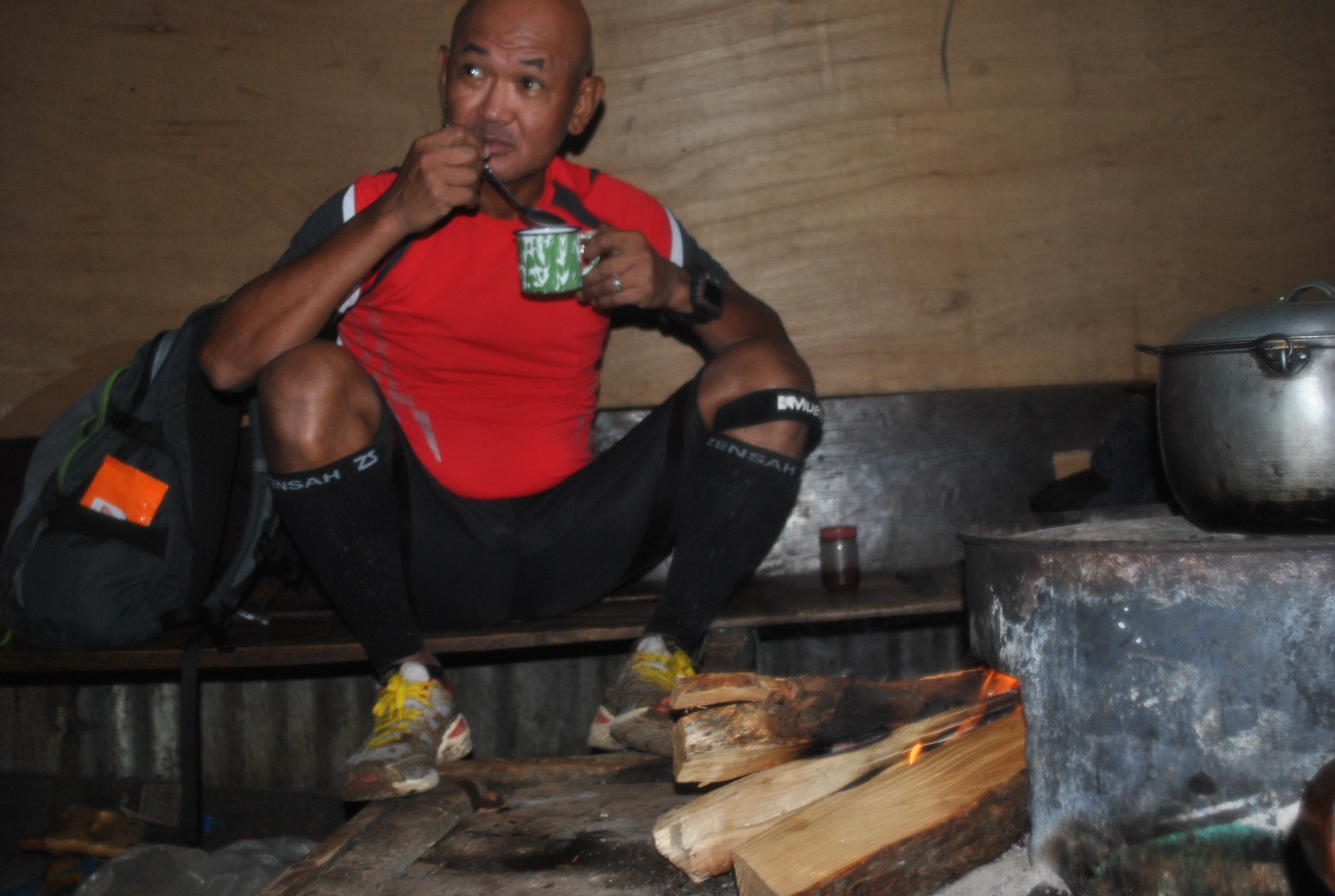
While waiting for Julius and his motorbiking friends to arrive at the Badadak Ranger Station, I asked Edgar, my guide, where I could buy some snacks—native hot coffee and some local bread. Edgar invited me to his parent’s house and I enjoyed sitting at a place where it is near their stove. Julius and company arrived with a delay of almost one hour. It was okey with me since I had a nice time talking to Edgar’s folks and brothers. The 30-minute downhill ride to the center of Ambangeg took a longer time due to faulty brakes on the motorcycle I was riding. After some stops and quick-repair/disassembly & assembly of rear brakes & tire, I was able to reach my parked vehicle. It was already nighttime.

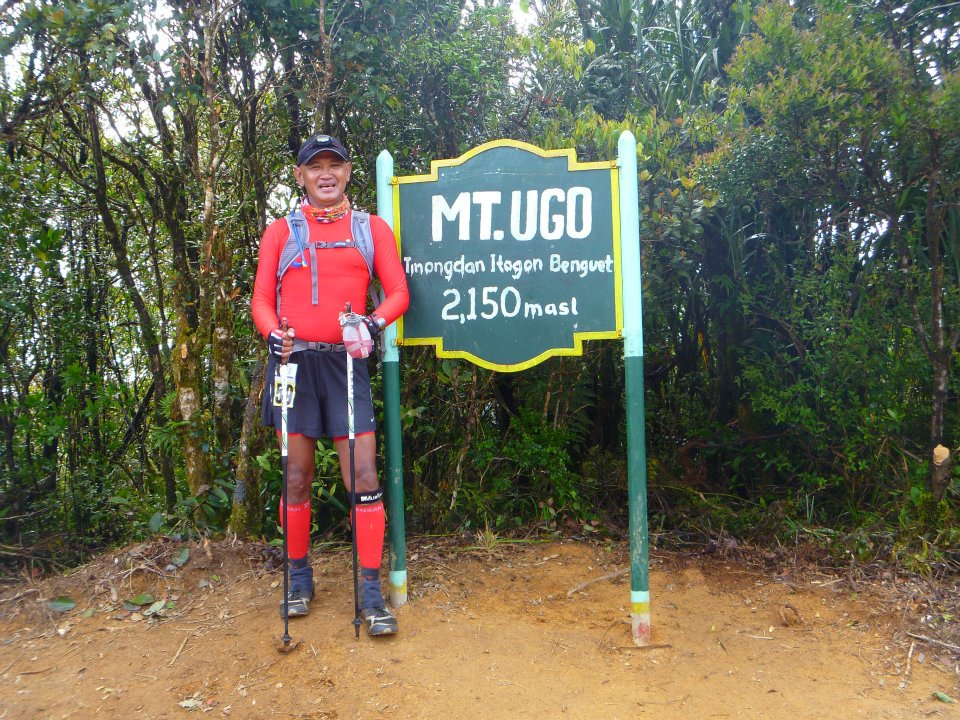
My trip to Kayapa, Nueva Vizcaya has to be postponed and I decided to do my “peak bagging” to Mt Ugo on Race Day itself for the 1st King of the Mountain Mt Ugo Trail Marathon. I was already tired. I need the comfort of a nice bed in Baguio City. After a 2 1/2 drive to Baguio City, I was able to take my late dinner and I was in my favorite hotel room in Baguio City—taking an ice-cooled bath and sleeping under soft and clean linens!

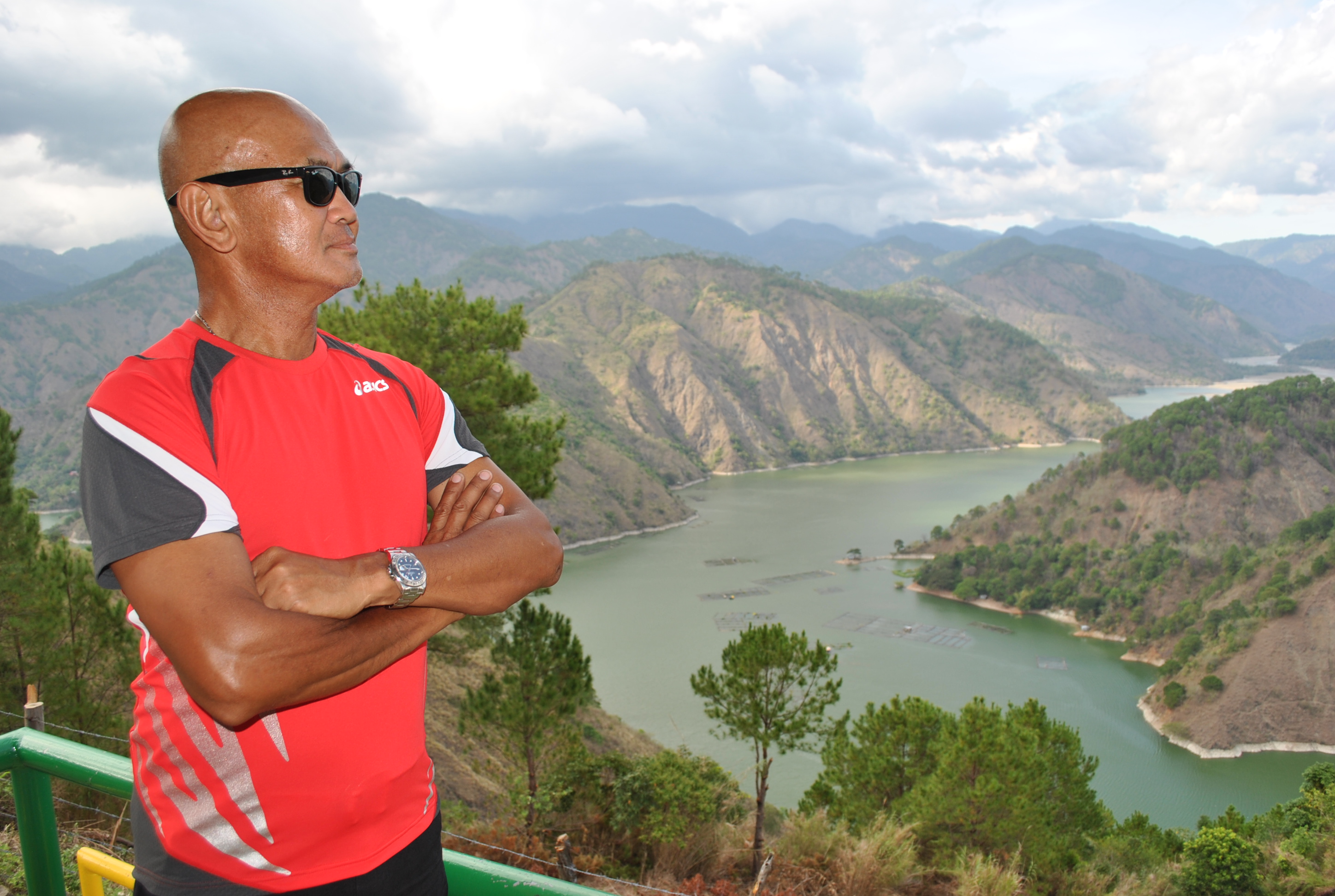
This was my first experience of “peak bagging” on the highest mountain peak in Luzon and 3rd highest in the country! For the round-trip distance of 15K from the Badadak Ranger Station to the peak of Mt Pulag and back, I was able to register a time of 5 hours to include my stay at the peak and “pit stops” in every Camp that I reached. I started from an estimated elevation of 2,400 meters and was able to reach the peak of the mountain where my GF 305 registered an elevation of 2,940 meters!

After some research in the Internet and other blogs, I found out that there are events in Europe, particularly in England where mountain trail runs are called “fell running”. And there are also trail running events that would last for 24 hours or more where the number of mountain peaks are considered and counted to be reached as part of the route. Reaching those peaks is called “Peak Bagging”!

This is my own way of applying such event that I’ve learned from “fell running”. The procedure is so simple. Target one mountain peak at a time, run and walk through it, take some pictures at the peak, and run/jog downhill to where one has started. This is the “travel lite” of mountain trekking or climbing without the intention of camping overnight on each mountain. With my first experience of “peak bagging” at the highest mountain peak of Luzon, I guess, a new frontier and form of trail/road running is born!

Now, if you ask me if I enjoyed my experience? You bet! “Peak Bagging” is addictive!!!

Surprisingly, the road distance from the Gurel Junction along the Benguet-Nueva Vizcaya Highway up to the peak of Mt Pulag through the Ambangeg Trail is exactly 25 kilometers! And if you double the distance by going back from the peak of Mt Pulag to the Gurel Junction, the total distance would be a good 50 kilometers!

This could be the most challenging 50-Kilometer Ultra Run in the country!

Birth Of Another Ultra Route


March 9-10, 2012

After the Awarding Ceremony & Get Together Party for the 2012 BDM and PAU Races, I had already a plan in my mind to try the initial King of the Mountain Road Race envisioned by Jonel two years ago. This is the Road Race which he dubbed as the Baguio To Baguio Route which is popular among professional cyclists and the popular cycling lap that determines who would eventually  win in the yearly Professional Cycling Event in the Country.

However, the main reason and goal of this running trip/adventure run was to be able to recon the King of the Mountain Mt Ugo Trail Marathon route which I was planning to join. Running along the Marcos Highway, Kennon Road, and Naguilian Road would serve as my easy long runs as part of the training before going to Kayapa, Nueva Vizcaya.

Coming from Manila after breakfast of Friday, March 9, I drove my car without any target time for me to start my run as I planned to start at the Saitan Junction in Rosario, La Union once I reach the place and after wearing my running shoes. At exactly 3:00 PM, I arrived at the planned starting area and I was surprised to see that the structure on the said place is already abandoned and left to rot and decay. I wonder who is supposed to be responsible for its upkeep and cleanliness. Anyway, I parked the car and started to eat some cooked foods which we brought for my adventure run. We had cooked rice, pork and chicken adobo and fried fish. After my full meal, I changed to my running attire and I was ready to start my run.

My route has to take the Maharlika Highway going to the town/poblacion of Rosario, La Union and then turn right at the Junction which is the start of the Marcos Highway which is now called, “Ben Palispis Highway”. I wonder who is this guy who replaced the name of the former President of the country! From the Junction, the Marcos Highway would lead me to Baguio City. I finally started my run at 3:30 PM.

Strictly following my run-walk method of 3 minutes of run & 45 seconds brisk walk, I was able to progress my ascent to the summer capital of the country. My support vehicle would be able to “leap-frog” every 3 kilometers which is the estimated time that I would consume the water or Gatorade mix on my “Sprint” Nathan hand-held bottle. The last 5 kilometers climb to Baguio City would be the most challenging part of the route as I had to brisk walk most of the distance. I was able to run and walk the Marcos Highway going to Baguio City, a distance of 47 kilometers with a total gain of more than 6,000+ feet from the place where I started, at Barangay Saitan, Rosario, La Union. I did it in 8:20+ hours. I stopped my run infront of the Baguio General Hospital.

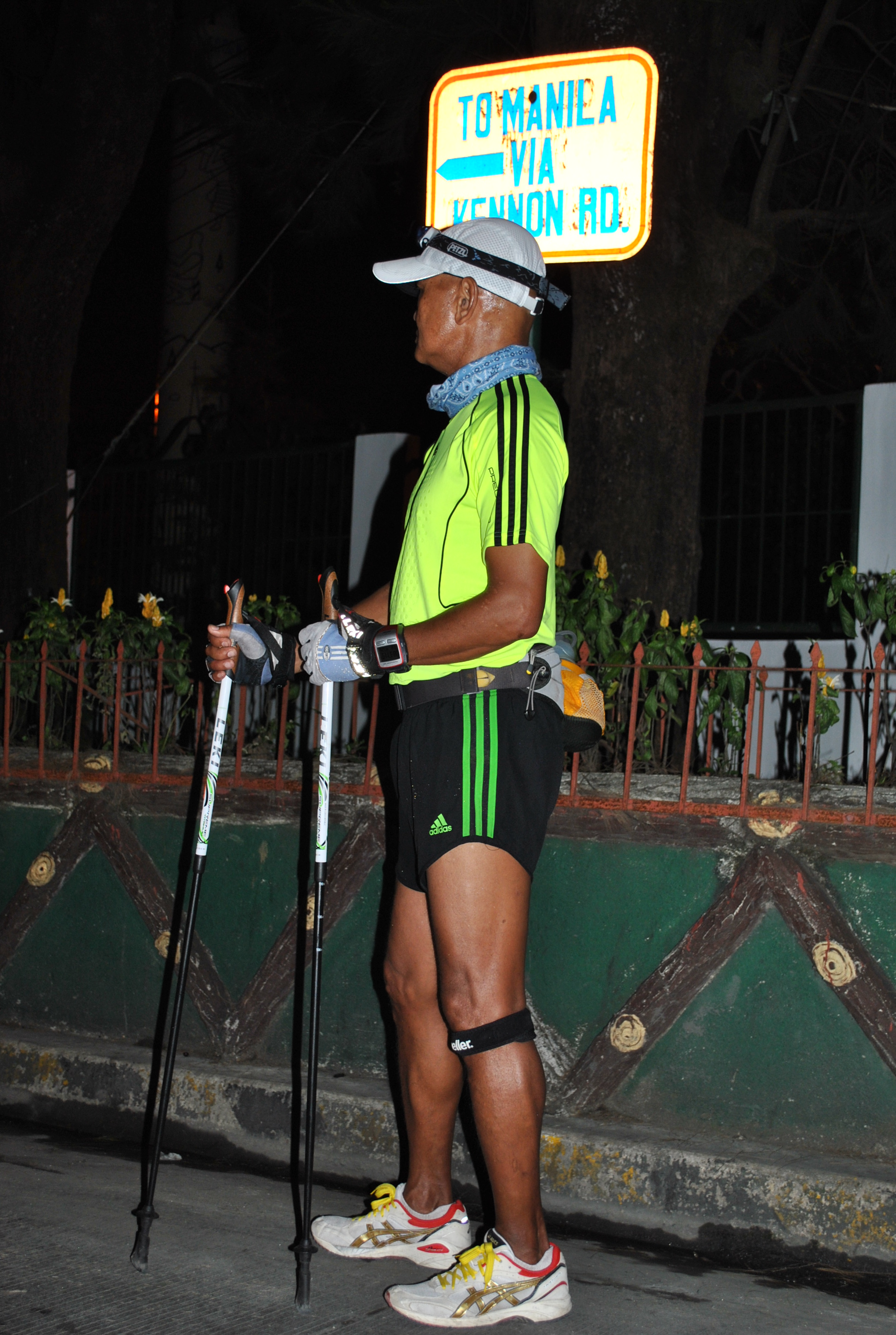
After an overnight rest in one of the decent hotels in Baguio City, I continued my run the following day from where I stopped and run through the famous Kennon Road going back to where I started. It was all downhill but I had to be cautious because I don’t want my quads and knees to suffer for the pounding with the distance of 33 kilometers. My trekking poles provided me with much comfort on those steep downhill portions of the route. With longer “pit stops”, I was able to reach my destination in 6:00+ hours.

After completing the 2-day running feat, I would discover that the total distance would result to 80 kilometers which is a good 50-miler route for an ultrarunning event. Thus, I decided to dubbed the event on this route as the “Marcos-Kennon 50-Mile Ultra Road Classic”. A status posted at FB gave some commitments from running-friends to help and support in the conduct of this event. Thanks to my ultra running friends!

I’ve decided not to run the Saitan, Rosario to Bauang, La Union route along the Maharlika Highway and instead, measured the distance aboard my car using my GF 305 watch. The distance registered at 53 Kilometers. Stayed overnight in Bauang, La Union. Enjoyed the food, beach and sea breeze of the place and I enjoyed my much-needed rest. From the Bauang, La Union Junction to Baguio City, the distance is 44 Kilometers up to Burnham Park. I did not run through the route but I simply observed the terrain closely as I drove towards Baguio City.

In summary, adding up all the routes of the Baguio-Baguio, the Original King of the Mountain Road Ultra of Jonel, it has a total distance of 224 Kilometers and it can be depicted on the following measured legs:

Baguio City To Saitan, Rosario via Kennon Road—33 Kilometers

Saitan, Rosario To Baguio City via Marcos Highway—47 Kilometers

Baguio City To Bauang, La Union via Nagulian Rd—44 Kilometers

Bauang, La Union To Saitan, Rosario via Maharlika—53 Kilometers

Saitan, Rosario To Baguio City via Marcos Highway—47 Kilometers

I will let Jonel push through with his plan Baguio-Baguio Route to be implimented. However, I will just take a portion of the said route as another challenging race route for interested ultrarunners to experience. Thus, the “Marcos-Kennon 50-Mile Ultra Road Classic” is born. Planning for this race route is not complete if I don’t share to you what are the detailed expenses incurred in order to discover and plan a certain ultrarunning route.

The following were my expenses incurred in the said trip:

Gasoline Expenses (Round Trip From Manila-Baguio & Back)—P 5,000

Food Expenses For 3 Days (For 2 Persons)—P 4,000

Hotel Accommodations—P 4,500

Miscellaneous Expenses—P 1,000

Hydration & Nutrition Needs For My Recon Runs—P 3,000

T   o   t   a    l ————-P 17,500

This is excluding for the Payment for the Wear & Tear/Service for the Car that I am using in my Recon Runs. And since this is my passion, I don’t give a price or costing on the time and effort/services I have to provide in order to create a safe road race for everybody. In addition, the daily salaries of my driver and assistant/support crew are not yet included in the above costs!

I hope in the future, Jonel would be able to stage a multi-day running event on his original Baguio-Baguio Route.

The Ultra Race along this route will come sooner than you think! Keep on running!

Running Is “Hard and Easy”


One of the time-tested principles of running is “Hard and Easy”.

“Hard” means running with much more intensity and more speed. The following are considered as “Hard” workouts for running—interval training on the Oval Track or on a measured distance on the road; tempo runs; hill repeats; and “fartlek” sessions. I would also consider some “cross-training” workouts as “hard” if they are done with much more intensity like lifting of heavier weights; interval workouts in cycling and swimming; and the likes of Crossfit and P90X or its derevatives.

“Easy” means running on a more relaxed and easy pace. Your “30-minute” a day run and LSD/easy run for at least one hour are considered as “easy” workouts. Yoga, Pilates, Stretching, easy and relaxed swimming and cycling, hiking/walking, and rest/sleep are considered as your “easy” workouts.

If your training is to run everyday to prepare a certain event, you don’t have to run the “hard” way everyday. You have to alternate “hard and easy” workouts throughout the week. Let your body rest and recover and you will be stronger on your next workout. If there is pain or soreness on your leg muscles, it’s time to rest and/or take the “easy” workout the following day.

Running the “hard and easy” ways is common sense!

Technicality


(Warning: This post is not meant to offend/embarass or question one’s running activity or capability. Whatever is written in this post is a personal opinion/impression of the writer)

When a runner says that he/she will run the entire Island of Luzon, that means, the runner starts in some place and continuously run the course with breaks like resting, eating, and sleeping along the way. After the runner’s break or pit stop, he/she would continue on the course. He/She repeats the process everyday until he/she reaches his/her destination. This is what I understand about what I call “adventure runs” or multi-day stage runs.

However, if a runner started somewhere in Luzon and then makes a “break” on his run by going to Manila to rest and visit his family, friends, and attend to his business or office, and then after a few days, he returns where he stopped and then resume his run, then this is not considered as a continuous run. I think this kind of practice or technicality is not what an ordinary runner would expect as the definition of an “adventure run”. If a runner started in Vigan City (Ilocos Sur) and plans to go around Luzon in a clockwise direction, he/she should be in the direction towards Ilocos Norte, then to the Cagayan Valley Provinces and so on and so forth. The runner does not need to go to Manila by bus, car, or airplane to take a rest for few days and then return again to where he stopped after his/her break somewhere else. An adventure run is a continuous journey from Point A to Point B or from the Starting to the Finish Area!

Let me tell you about my experience. On my first day of the West Coast 200 (Subic Freeport to Alaminos, Pangasinan), I was unluckily bitten by a dog in San Narciso, Zambales, a 40-kilometer distance from where I started. Because I wanted an immediate medical attention from people whom I know, I had to immediately go back to Manila. After 3 weeks of treatment, I continued my adventure run, not from the place where I stopped (San Narciso, Zambales) but from the place I started (Remy Field, Subic Freeport). It’s common sense!

I heard and read from news accounts that a lady Pinoy runner ran across America but at some point along the way, she had some injury and decided to go back to where she started (Los Angeles) for her to be treated and be able to rest. After few weeks, she recovered from her injury and she went back from where she stopped and resumed her run. She declared herself to have ran across America. If I am going to follow my impression and understanding about “adventure runs”, the runner is disqualified for the feat.

My good friend, retired Police Director Sam Tucay and his running buddy priest, had been running along the Maharlika Highway (from Aparri, Cagayan to Jolo, Sulo) for the past months with a commendable advocacy with the PNP and the civilian sector but there are instances that I see them in Metro Manila and I have the belief that they are having their running “breaks” in Metro Manila. This practice is considered as technicality in giving the impression to the public that these two persons have been continously running around the country with the much-needed breaks along the route (but in reality, they are having their running breaks in Metro Manila).

For a runner who declares himself to be running around the globe, he/she should be running from one country to another. Not for the runner to run in one country and then goes back to his home country for a week or two to rest and then fly out to the next adjoining country to continue his run around the globe.

I sincerely salute and respect our local adventure runner, Father Amado “Picx” Picardal, who is a “no-nonsense” and honest runner who had been keeping and posting his daily experiences in his adventure runs in his blog. This is the guy who really deserves to be the best example of an adventure runner. You can browse his running diary in his adventure runs at his blog at www.amadopicardal.blogspot.com.

The bottom line in an adventure run is an strict observance of integrity and transparency!

Please feel free to post your comment/s and impressions about such technicality in adventure runs or multi-day stage runs.

See you at the Starting Line.

Reminders: 2012 BDM 102 “50K Test Run”


To All BDM 102 Runners:

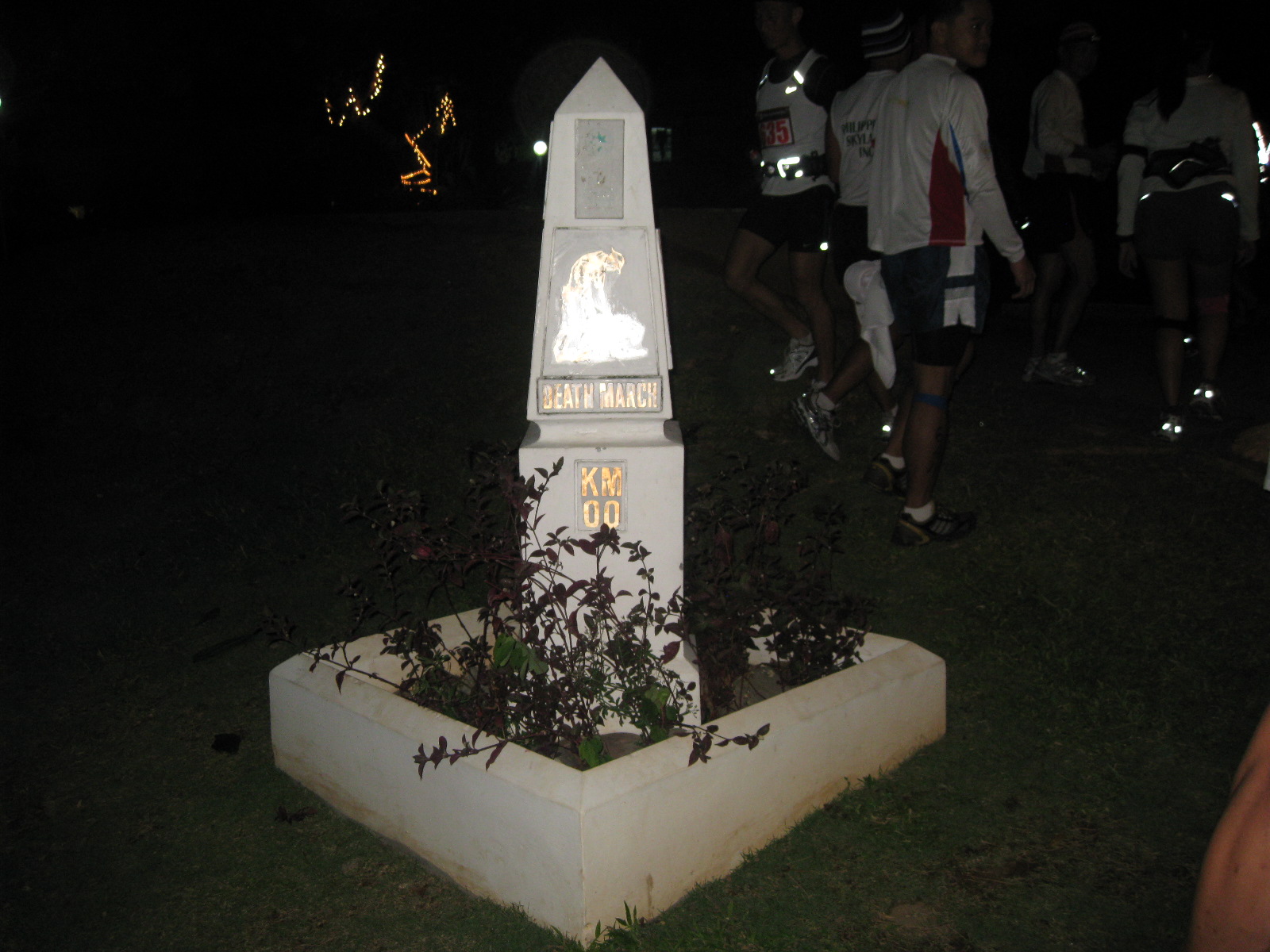
This “test run” will simulate your run on Race Day, on March 3-4, 2012. This test run will be held tomorrow, January 14, 2012, which will start at the Bataan Death March (BDM) Shrine in Mariveles, Bataan where the BDM Kilometer Post/Obelisk #00 is located. The Assembly Time is 9:00 PM as most of the participants had signified their intention to register On Site. The Registration Fee is P 500.00 as this event will be properly timed and recorded.

BDM Shrine Kilometer Post #00 In Mariveles, Bataan

The Gun Start is at 10:00 PM (the same time for the Race Day). The “test run” has a cut-off time of nine (9) hours for the runners to reach/cross the Finish Line at the BDM Kilometer Post #50 which is located within the vicinity of the Abucay Public Market in Abucay, Bataan.

Participants have to take note of the following BDM Kilometer Posts where critical intersections are located: Kilometer Posts #14; #23; and #32. Once the runners see these posts, they have to TURN RIGHT on the road intersection in order for them to be on the actual route of the Bataan Death March.

As the runners would be staying on the left side of the road, facing the incoming traffic, the BDM Kilometer Posts are located on the right side of the road throughout the route of the event.

Runners are reminded to test the following during the run: wearing of reflectorized vest; race strategy; hydration & nutrition strategy; the positioning of one’s support vehicle & crew; running shoes & kit; use of first aid kit for blisters & other running-related injuries; and the use of one’s choice of lighting system.

Runners should be aware that the road will be dark during the run and there is a possiblity of rain showers and windy environment on the first 20 kilometers of the run. Practically, you will be running on top of a mountain with the wind coming from the sea/coast.

There is a lot of stray dogs on populated areas along the road. Make sure that your Ipod/MP3s volume are not too loud for you to determine the distance of the barking dogs from you. Take necessary precautions for these barking dogs.

There is a lot night spots/karaoke bars along the route and some of the customers could be drunk or surprised to see runners on nighttime. Find time to greet, wave or smile at them before they could say anything. Be friendly and smart.

For safety purposes, try to find somebody who has the same pace with you and at least, you have a companion during the run. Better if you can run with a group. However, remember to run on single file on the left side of the road. If the shoulder of the road is wide enough for two runners abreast, then it is allowed with care and vigilance.

When crossing the road to the other side to approach your respective support vehicle, be sure to stop, listen, and look around for any incoming vehicle before crossing. Support vehicles are also advised to stay on the right side shoulder of the road when on stop.

Remember, the starting area is in MARIVELES (not in Bagac, Bataan where another BDM Km Post #00 is located). The BDM Shrine in Mariveles, Bataan is located beside the JOLLIBEE. You will never get lost once you see the sign of the fastfood establishment.

(Note: For those who are joining this test run without support vehicle, you can take the Genesis Bus or Bataan Transit from their Cubao Terminal. Allocate at least 5 Hours as Travel Time)

Good luck! See you at the Starting Line!

Running Is Patience


This is the most important virtue that a runner must have, whether he/she is a beginner, average, or competitive one.

Patience is having more time to wait for things to unfold, as a result of your training program, before being reckless and do things the wrong way. As a result, you will regret for the things you have done. Your actions in running should be deliberate as there are NO “magic bullets” or “quick fix” in the sports we love.

In training, you need patience for you to develop your aerobic endurance and overall, improve on all the aspects of running. It does not take days or weeks to happen, but it would take months and years to develop your maximum potentials in the said sports. There are “ladders and steps” to overcome from one level to another level. Patience means you don’t have to go through a marathon (42K) training without experiencing what it takes to finish a simple 3K run. If you think you are good in 3K distance, you can go to the next step of trying a 5K run and so forth. However, there are training programs that you must follow in order to get the full potentials of your body’s capabilities if you want to excel in the distance you want. If you want to finish a marathon race, you need patience. Believe me if I tell you that I prepared for one year to experience what it takes to finish my first marathon. More patience is needed, if you desire to finish your first ultra marathon race.

Not adhering to patience by trying to do so much too soon in one’s mileage have always been the number one problem among runners. Not following the time-tested 10% rule of increasing one’s mileage on a weekly basis always brings runners to being injured and stale in their improvement. As a result, patience will always be the solution of this problem—patience to let the injury heals itself.

In races, runners would always forget what it takes to be patient. The tendency of most runners is to go out too fast once the gun is fired only to realize that mistake had been done when he/she is “crawling” to reach and cross the finish line. We always don’t have the patience to remember and stick to our race strategy and the training we have done in preparation for the race.

We need also patience in choosing our first running shoes and running attire. We have the tendency to look like the elite runners who are featured in “glossy” international runner’s magazine with the thought that we look “cool” and better runners than others. We have also the tendency to buy what we see for the first time not knowing that there are better fitting shoes with less cost if we waited and had time to look around. It is not the brand, color-combination, and the weight of the shoes that count most, but the proper fit to our feet. As for the running attire, you need patience to find out what is more comfortable for you considering our weather and humidity.

We need also patience in trying to find out what food and drinks that are good and work best for our performance.  Depending on the distance you want to race or run, you can experiment on what nutritional needs for your training, pre-race, during race, and recovery period.

We need patience to find out what races we want to join in the future and patience to prepare for these races.

We need patience to finish what we have started. Because finishing a race is what matters most!

Like life itself, we need patience. There are lots of options but we need to have smart choices and decisions.

In running and in the race called “Life”, always think and remember…PATIENCE.

See you at the Starting Line!

"Running Is Patience" (Photo By Ding Quinto/The Frontrunner Magazine)

3rd RIZAL Day 32K Run Guidelines


I can’t believe we are on our 3rd edition of the RIZAL Day 32K Run in Camp Aguinaldo, Quezon City. Since it is always the first road race after the Christmas celebrations, it is a “must run” event for runners who are preparing for the Fat Ass Run; Cebu City Marathon, Bataan Death March Ultra Races; Condura Skyway Marathon; 3rd TBR Dream Marathon and the SC Hongkong Marathon.

As in the past editions, the run will start infront of the GHQ Grandstand at 5:30 AM on Friday, December 30, 2011. For those who opted to register on site on race day, they should be at the Assembly Area at 4:00 AM for processing. The registration fee is P 850.00 as it will be the first time that we will be giving a Special Rizal Day 32K Finisher’s Medallion (with pink Finisher’s T-Shirt) and whatever proceeds we raise from this event will go to the fund allocated to support our Elite Team Bald Runner to international competitions.

Runners will have to run 4 & 3/4 loops on the 7K-loop course inside Camp Aguinaldo. There will be two (2) Aid Station on the 7K-loop which will provide hydration (water, Gatorade mix, RC Cola/Sarsi) and selected foods (hot noodles, boiled eggs, biscuits & choco bites). The 1st Aid Station is located at the Camp’s Fire Station and the 2nd Aid Station is located at the Enlisted Personnel’s Condominium/Housing Area.

Please refer to the last edition’s guidelines (entrance to the camp; parking; toilets; baggage area; etc.) for more detailed information about the event.

I hope the runners will be treated with “surprise donations” to be served at the Finish Line from our usual “friends and donors”.

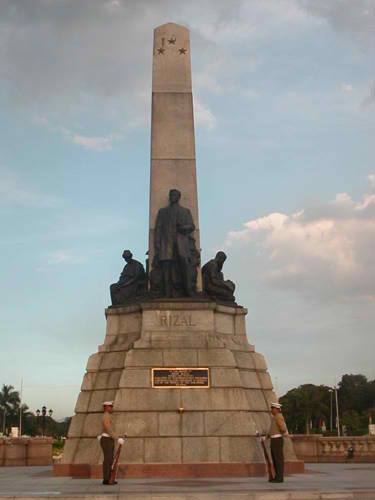
Rizal Monument Replica As Trophies To Podium Finishers (Except The Two Phil Marines!)

For those who are seriously considering to break the course record and for those who have goals to improve their PRs & PBs in this run, you can check the last year’s results.

See you at the Starting Line!

(Note: Please NO Bandits!!!)

Running Is Discipline


Depending on your goals why you want to engage in running, the first requisite to be successful in running is to have a discipline.

It is an attitude that plays within the confines of what is in between one’s ears! It’s all in your brain!

Whether you are following a training program to finish a certain distance of a road race or not, discipline plays the greatest role in one’s ability to accomplish and attain such objective.

How does anybody develop a discipline in running? Start with your goal. Make a “personal contract” to this goal. Visit your family doctor to find out if you are healthy to do some endurance activity that affects the functioning of your heart, lungs and other parts of your body. If you have the “go” signal from your doctor, go out from your “comfort zone” and take those “baby steps” towards running.

Make sure to allocate at least 30 minutes out of the 24 hours in a day to keep your body moving. That is only 2% of the whole day and it is a “piece of cake” and a very short time spent as compared from one’s time reading your friends’ status on Facebook. You can start by walking at a leisurely pace in any place until you are comfortable in including short jogs within the span of 30 minutes. If this ritual is done everyday, your body will be able to adapt and you should be able to maintain the momentum.

It is not important on how far you can walk/run in 30 minutes, what is most important is your attitude to go out and have those 30 minutes spent on moving your legs & feet on the ground.

Everyone should be able to include walking/running in one’s activity on a daily basis and if you can do this, it is a very good example on the application of discipline.

Remember, discipline is the key and the most important aspect in any kind of endeavor, sports, and, of course, to running.

Good luck and have fun!