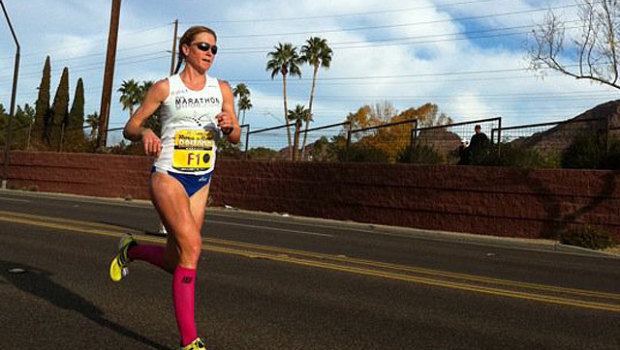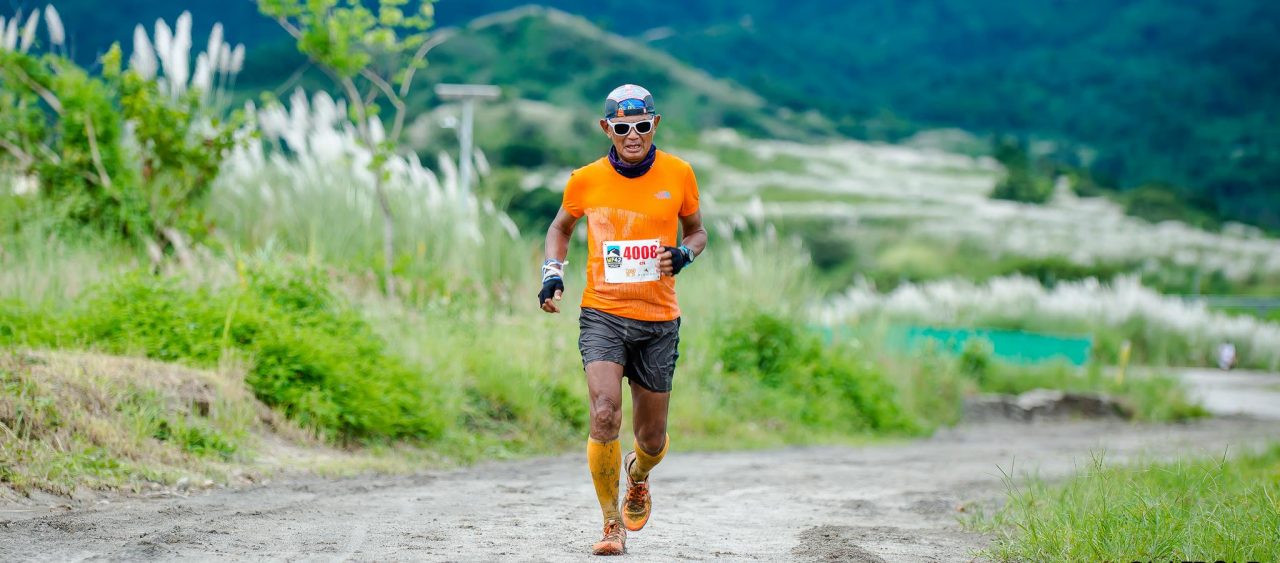
DNS @ 2011 Miwok 100

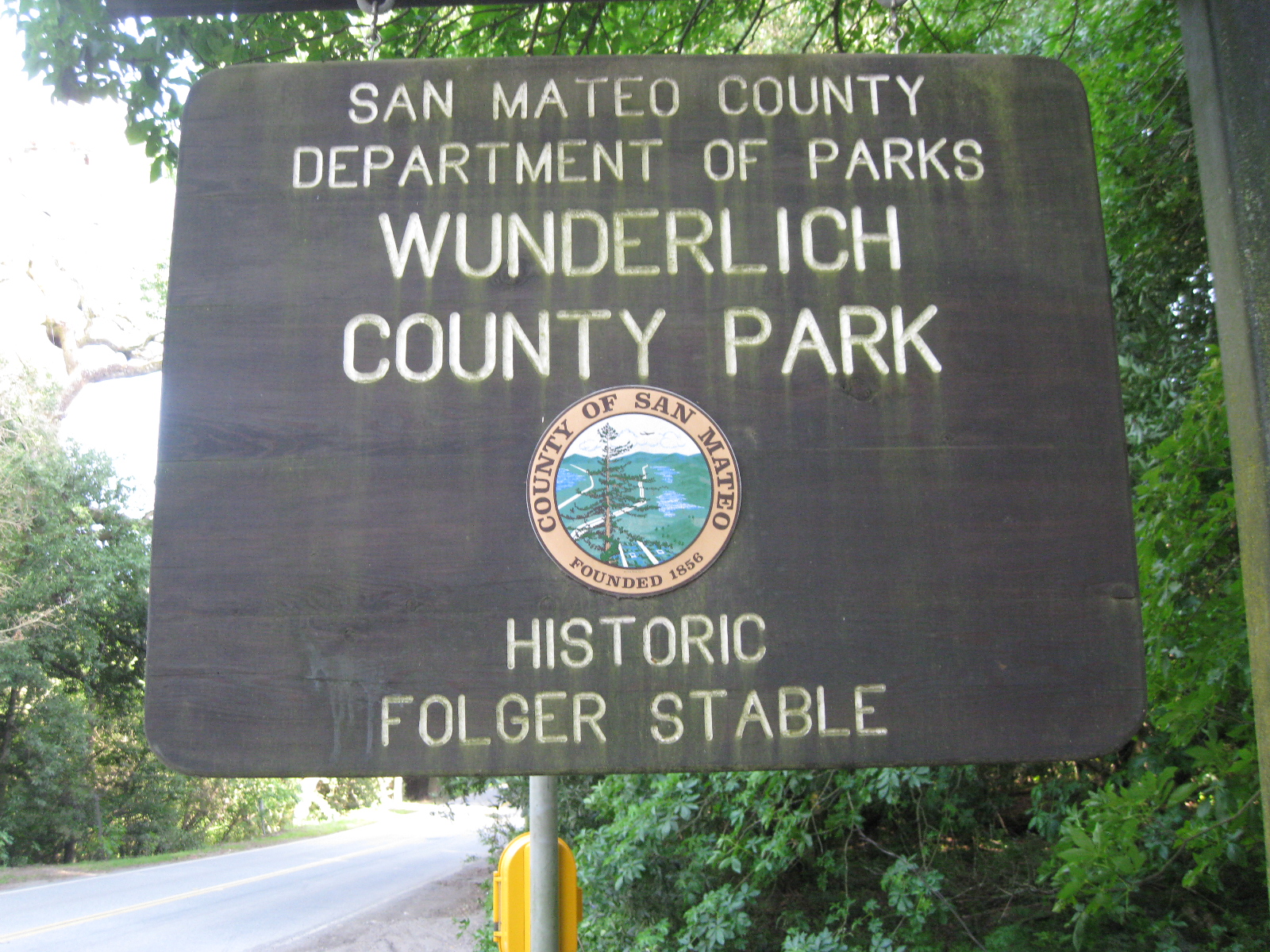
DNS…In Running Protocol, it means “Did Not Start”! My running injury from my latest Adventure Run on my lower left quads which turned out later to be an injury on my left knee did not heal even if I rested for so many weeks. After my LSD trail run for more than 6 hours at the Wunderlich State Park in Redwood City, California 4 weeks before Race Day, it gave me an assessment that finishing a 100K ultra trail run with a total ascent of more than 10,000 feet will be an impossible feat to accomplish.

Despite such assessment on my part, I tried my best to remedy the situation by taking all the necessary treatment I could gather from the different running resources in the Internet, running books, magazines and personal journals of famous trail/marathon runners. I even went to the extent of soaking my legs regularly on warm water mixed with Epsom Salt; regular massages; and even taking Alaxan FR capsules. I am glad that my cross-training in the gym kept me busy from the lack of more prolonged time of running on the road. One week before Race Day, I made my decision to DNS the race.

Miwok 100K Guy & Logo

Instead of joining the race, I thought of offering my presence on Race Day as one of the Volunteers of the Race to the Race Director, Tia Bodington. After a brief exchange of e-mails with the RD, I was accepted as a Volunteer at the Starting/Assembly Area and at the Aid Station #1 which happen to be at the same location.

The motivation to do a volunteer work for Miwok 100 was due to the following as stated at the event’s WebsiteEight hours of volunteer work at Miwok fulfills the Western States 100 service requirement. Eight hours of volunteer work at the Miwok 100K also gets you an extra ticket in the following year’s entry lottery. Hopefully, my injury will heal soon so that I will prepare specifically for the next year’s edition of this race.

DNS…Did (A) Nice Spectating…by Volunteering!

As a Volunteer at the Starting Area/Aid Station #1 @ 7.1 Mile, I was able to witness every minute how the Race was managed by the Race Director.

I arrived at the Assembly Area at the same time with the arrival of the RD who was driving a U-Haul Truck at 3:45 AM last Saturday. Tia Bodington was alone. The beach of Marin Headlands was dark, cold and windy on the early morning and I was prepared for the weather. I immediately approached the RD and introduced myself. The two of us started to bring out the necessary things needed for the processing of the runners from the truck and I even shared my flashlight to her as she was trying to locate some traffic/reflectorized vests and other flashlights needed for the volunteers.

The U-Haul Truck was filled with containers filled with water, timing device, foods, and other stuffs needed for the race to include the “loot” for every finisher of the race which trail runners call “schwag”. I was smiling as I recall myself on the shoes of the RD whenever I start the races for the BDM and PAU Races.

After a few minutes, another runner/volunteer arrived with a casted/bandaged right wrist & hand. The guy, Charlie, was supposed to run the race also but he met an accident (slipped while running along rocky trail) on training and opted also as a volunteer for the race. The guy was given a reflectorized vest and a flashlight and he was asked by the RD to act as the Parking Attendant at the Authorized Parking Area for the Runners. In a few minutes, I was asked also by the RD to act as the Checkpoint at a point that is 200 yards from the Parking Area for the Runners. My job was to ask the drivers/passengers of each vehicle approaching the Assembly Area if they are runners or volunteers. If they are runners, I simply advised them to proceed to the “dirt” Parking Area. If they are volunteers or dropping their passengers for the race, I simply advised them to proceed to the paved Parking Area. Just imagine a Police/Military Personnel/Traffic Enforcer stopping your car/vehicle with a flashlight and the other hand signalling you to stop. Yes, that was my job as a volunteer for almost 2 hours!

As the lone personnel at the Checkpoint, I was able to see the faces of the runners! It is unfortunate that I was not able to glimpse on the faces of Anton Krupicka, Scott Jurek, and Geoff Roes! They opted to DNS, too!

At 5:30 AM, I was approached by Tia telling me that I was doing my job well and she informed me that my volunteer job was done. However, I asked her that I could still be of help in any of the Aid Stations or at the Finish Line as I wanted to see the Front Runners cross the Finish Line. She accepted my offer and I started to observe how the race would start.

Runners Crossing The Bridge To Rodeo Beach Lagoon
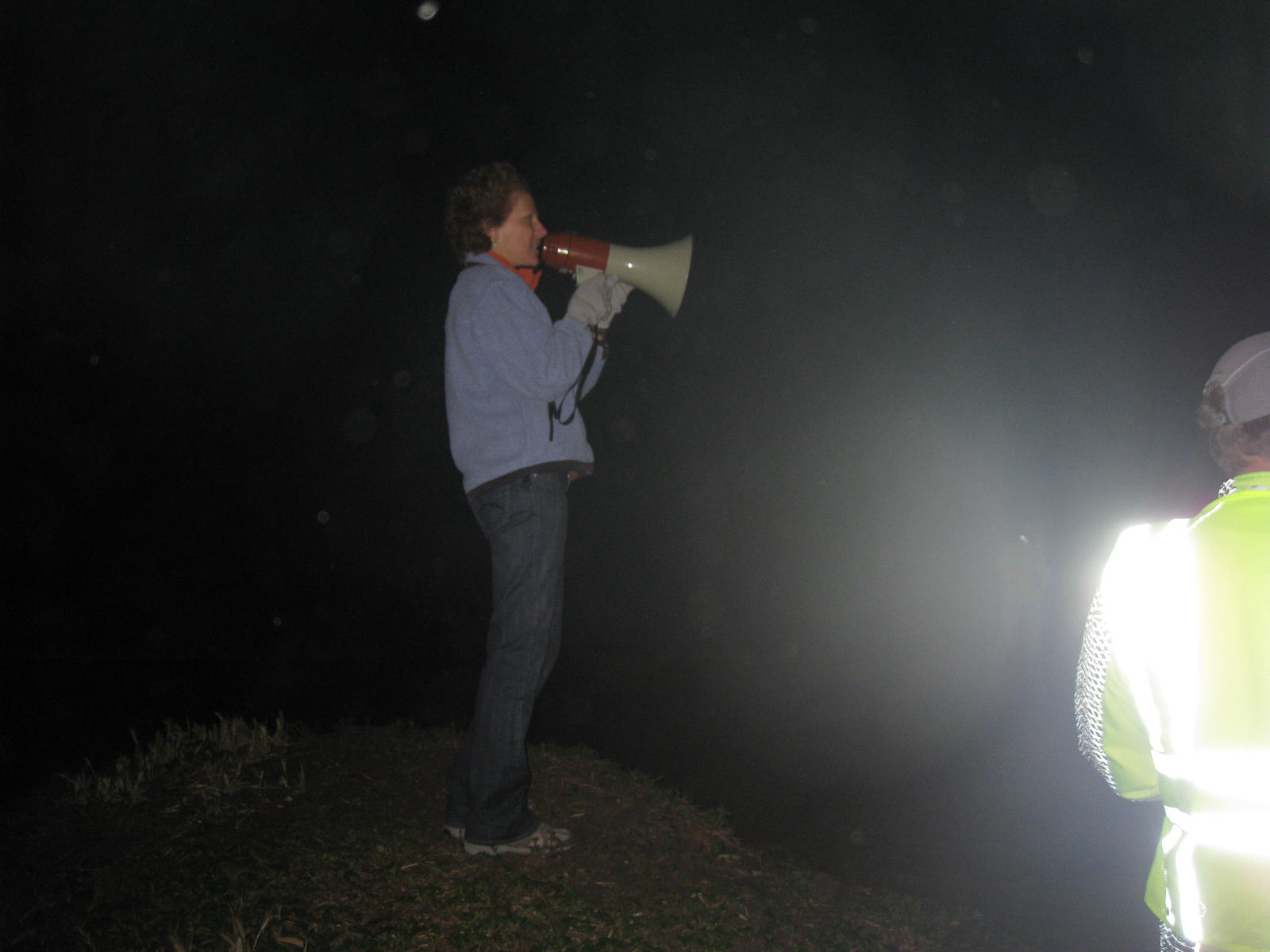
Tia Bodington, RD, Announcing To The Runners On Her Final Instructions
No Arch, No Lights, No Starting Line...Just Runners Who Want To Have Fun & Enjoy The Trails

The processing of runners was very simple. Each runner simply got his/her race bib from one of the volunteers and that’s it! Ten minutes before the scheduled start time at 5:40 AM, all the runners were led to the beach near the Rodeo Lagoon which is about 300 meters from the Assembly Area. There were no intricate START Arch/Tarpaulins; no sound system; no music; no lights; no invocation/prayer; and no singing of the National Anthem. The RD positioned herself on top of a little mound on the beach while the runners lined up before an invisible starting line listening to the final instructions from her. Tia’s final instructions were about RESPECT. If I can recall them right, she said something like—“Respect the trails”; “Respect the Volunteers & Marshals”; “Respect the other Runners”; “Respect the Race & the Distance”; “Respect your Goal”; and “Respect Yourself”. After a few seconds, the RD simply shouted “GO” and the runners started the race along the sands  of Rodeo Lagoon.

The Runners Were Off From The Starting Area

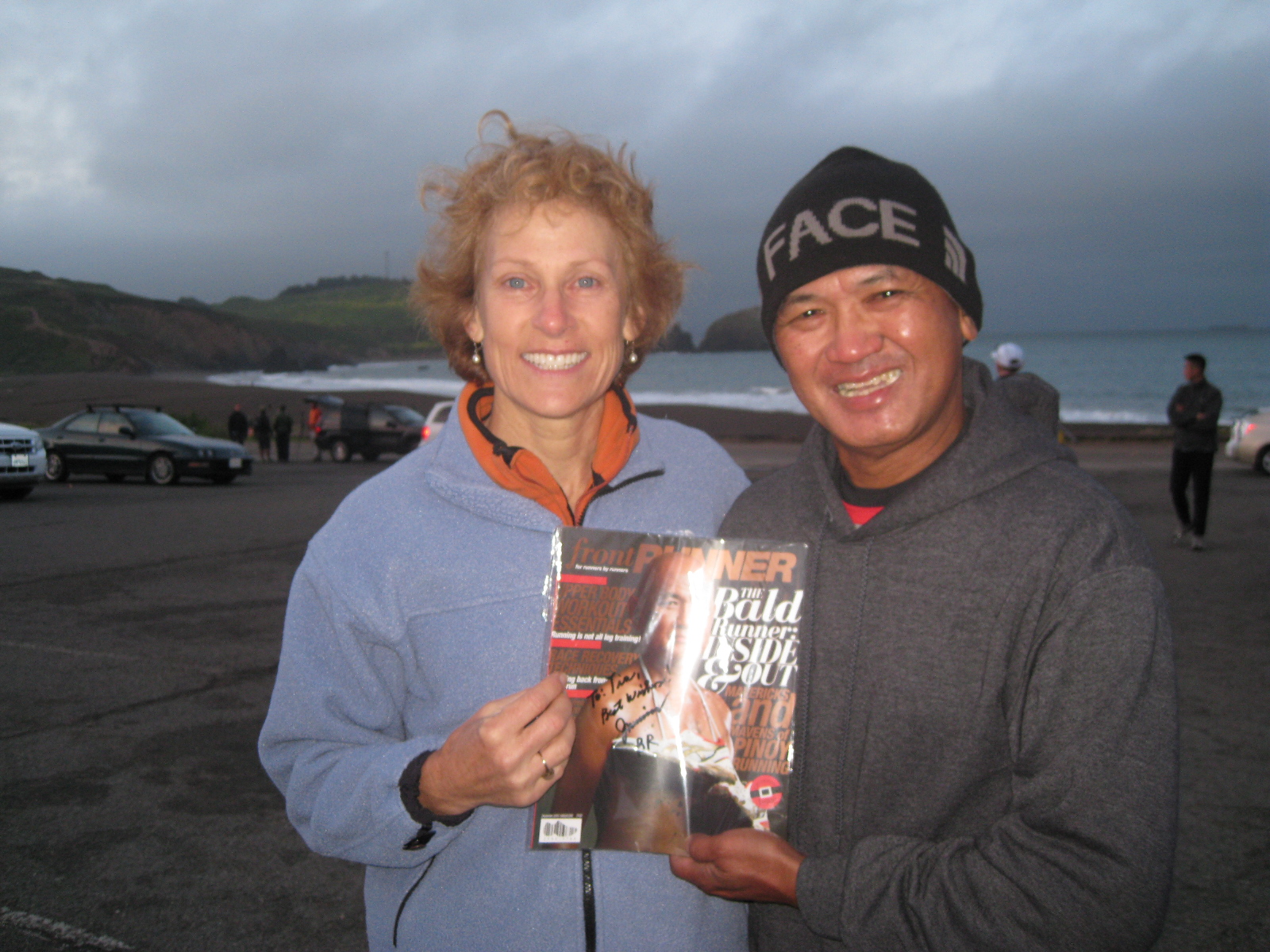
After the race had started, Rick Gaston and I were able to talk while the rest of the volunteers and spectators went back to the Assembly Area. This is where all the volunteers (to include myself) helped in loading the “drop bags” of the runners to be transported to the Finish Line which is about 3 kilometers away. After this job, I was able to engage more conversation with Tia and had a chance to give her a copy of the frontRunner Magazine. It was a good chance for me to have a picture with her.
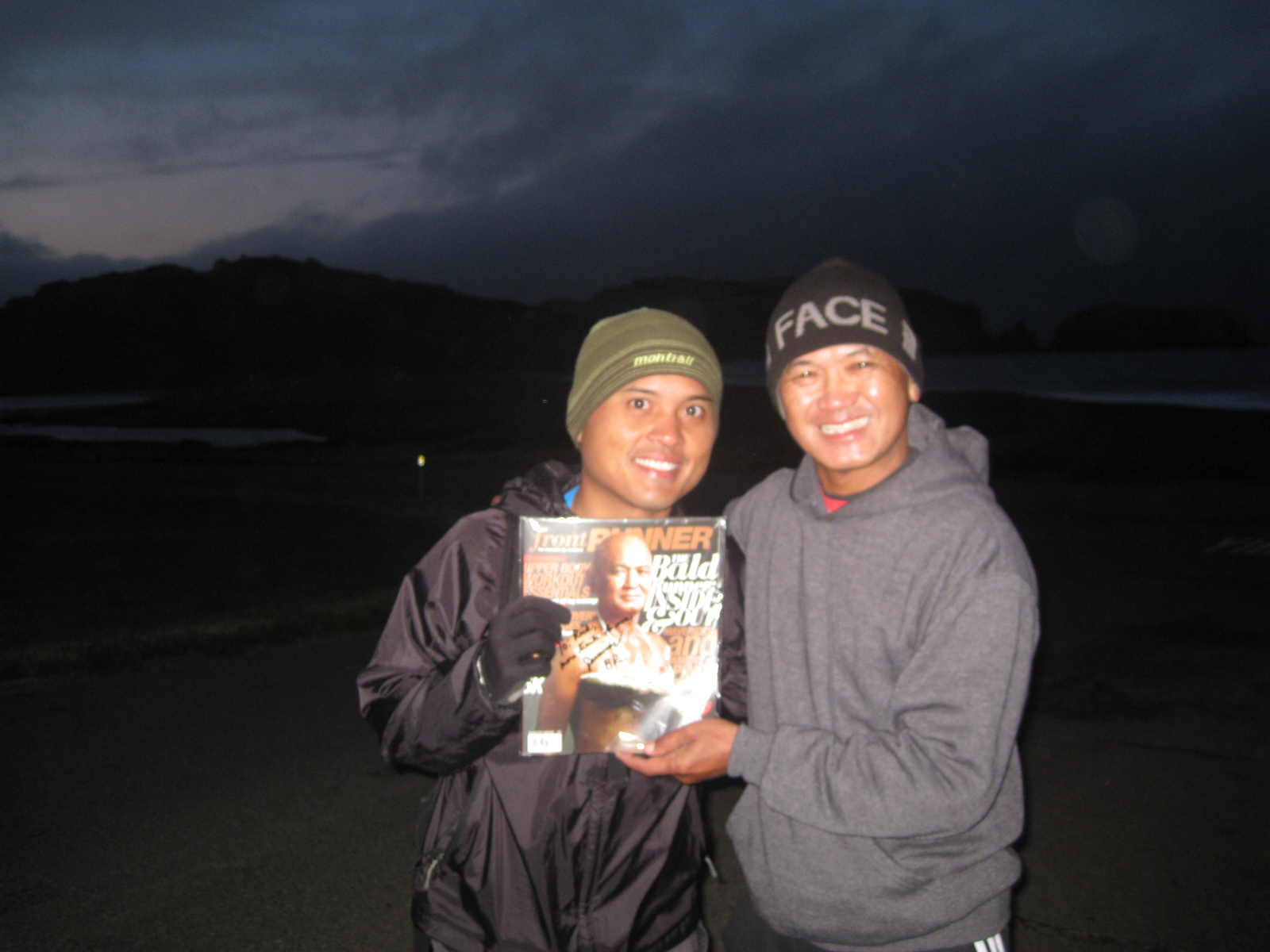
Rick Gaston in Montrail & BR in TNF Skull Caps
With Tia Bodington, RD of Miwok 100 & Editor-In-Chief of Ultrarunning Magazine
U-Haul Truck & Drop Bags To Be Loaded

While waiting for the lead runners to pass at the Aid Station #1, I was introduced by Rick to Brett Rivers who is also an elite ultrarunner, got to talk to Mark Gilligan of UltraSignUp, and the rest of his ultrarunning friends whom I could not recall their names. Finally, I was able to back-up my e-mail messages to Matt for the possible inclusion of the BDM Races to UltraSignUp through a longer conversation and personal interaction. We had a longer discussion about the matter/issue when we had a chance to meet again at the Starbucks at Mill Valley.

With Mark Gilligan of Ultra SignUp
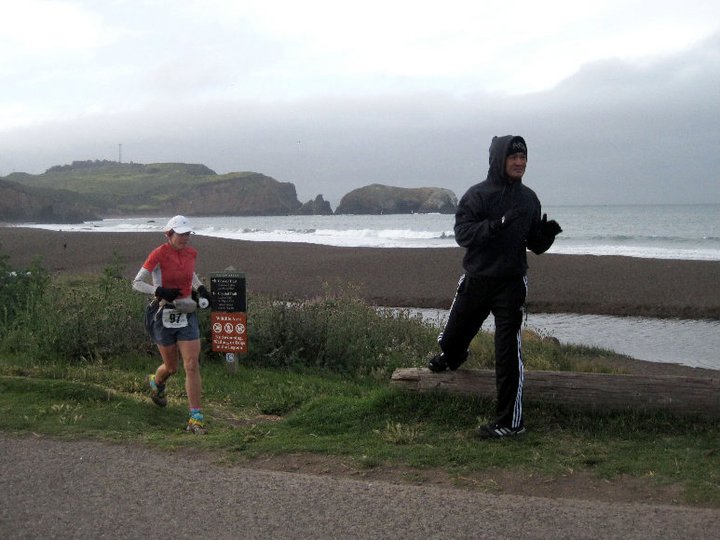
Shouting The Runner's Race Bib Number to Mark Gilligan

At the Aid Station #1, Rick and I became instant volunteers for Mark Gilligan’s Live Update in his Website by posting each runner’s split time. We were requested by Mark to shout to him the Race Bib Number of each of the runner approaching our place. It was a good chance to stretch my vocal chords! After the last runner had passed our station, I found out from Matt that there were 345 starters out of the 416 accepted/registered runners.

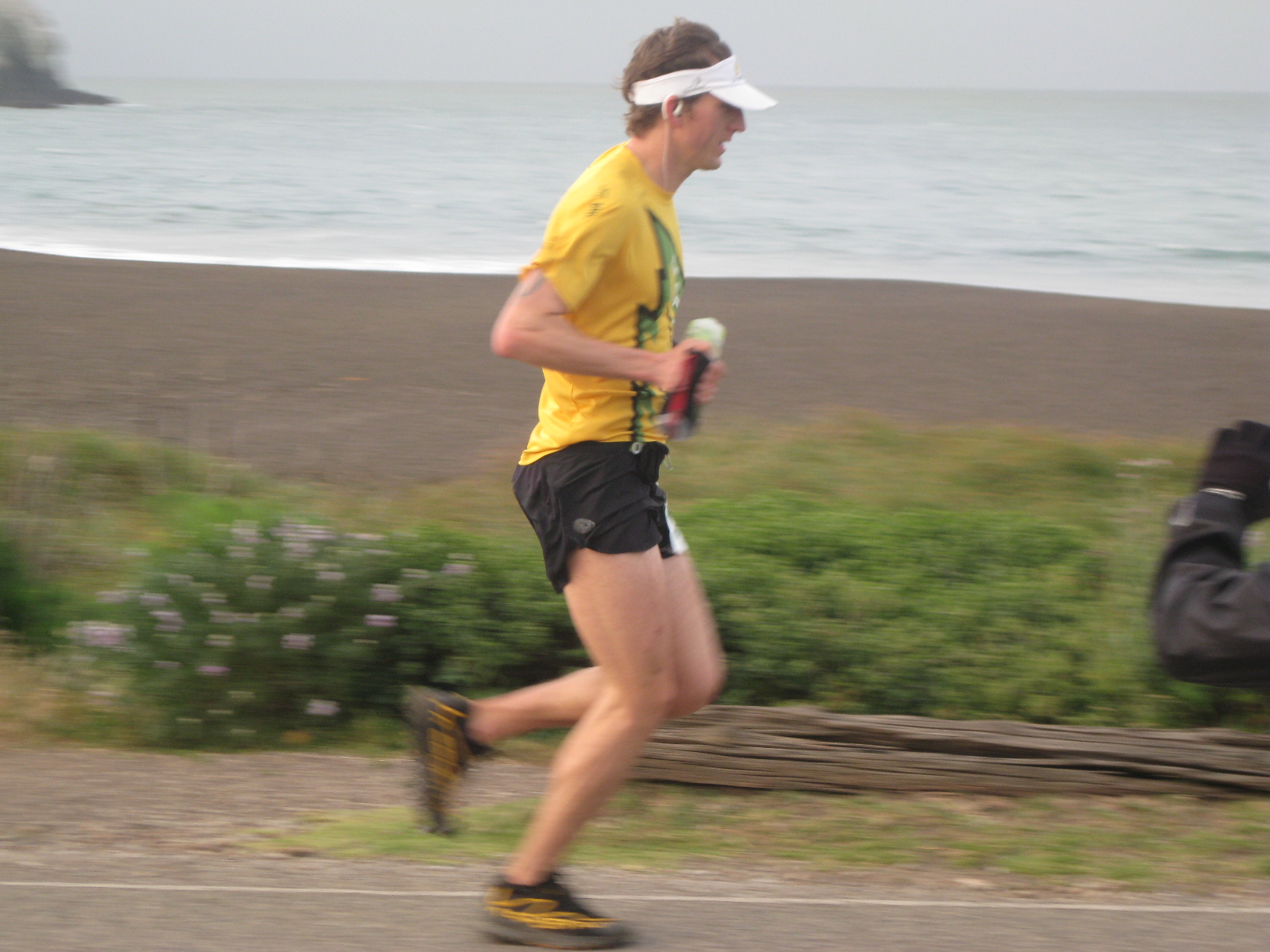
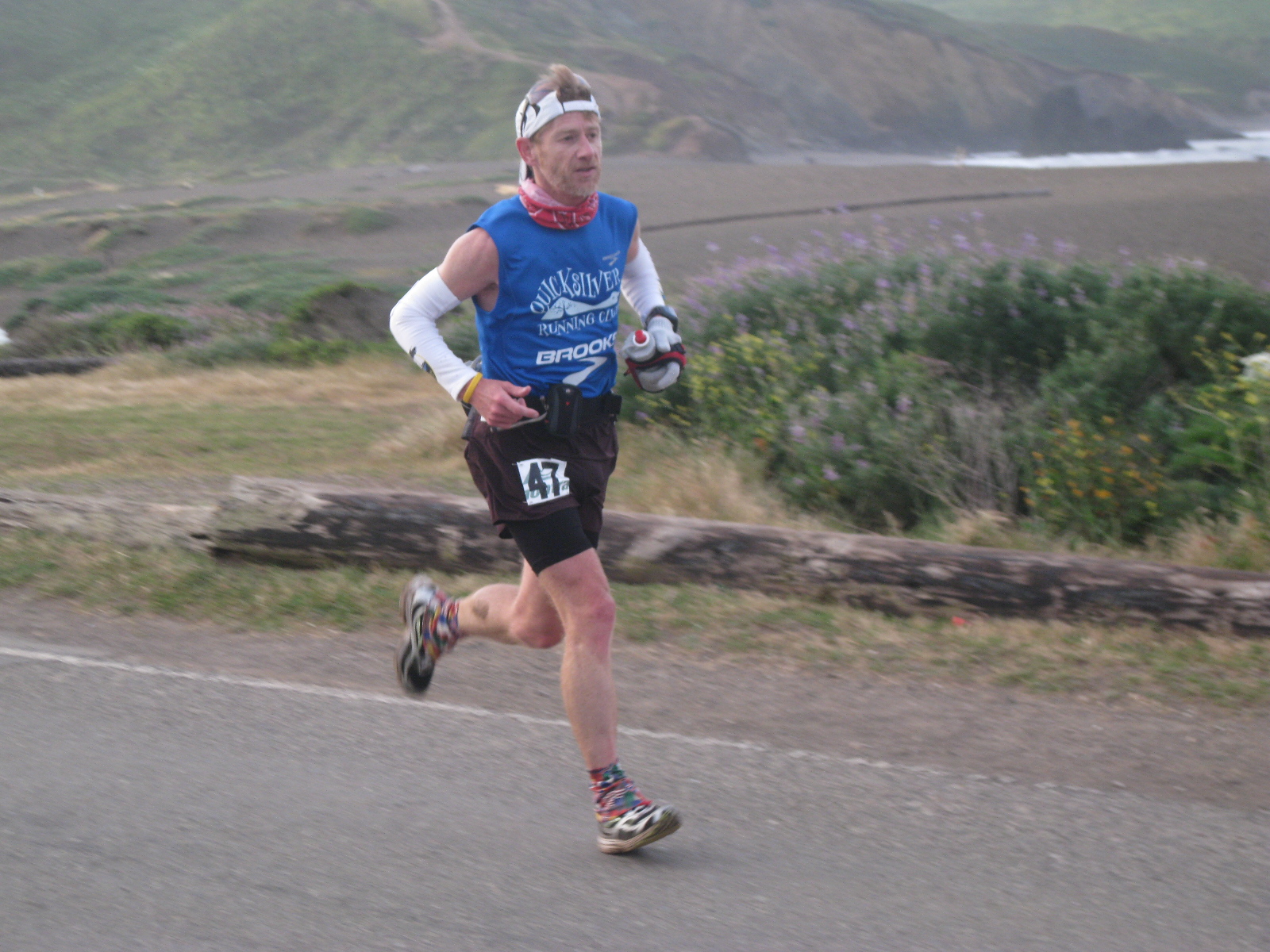
At Mile 7.1, Dave Mackey (Right) & Mike Wolfe (Center)
Nathan Yanko
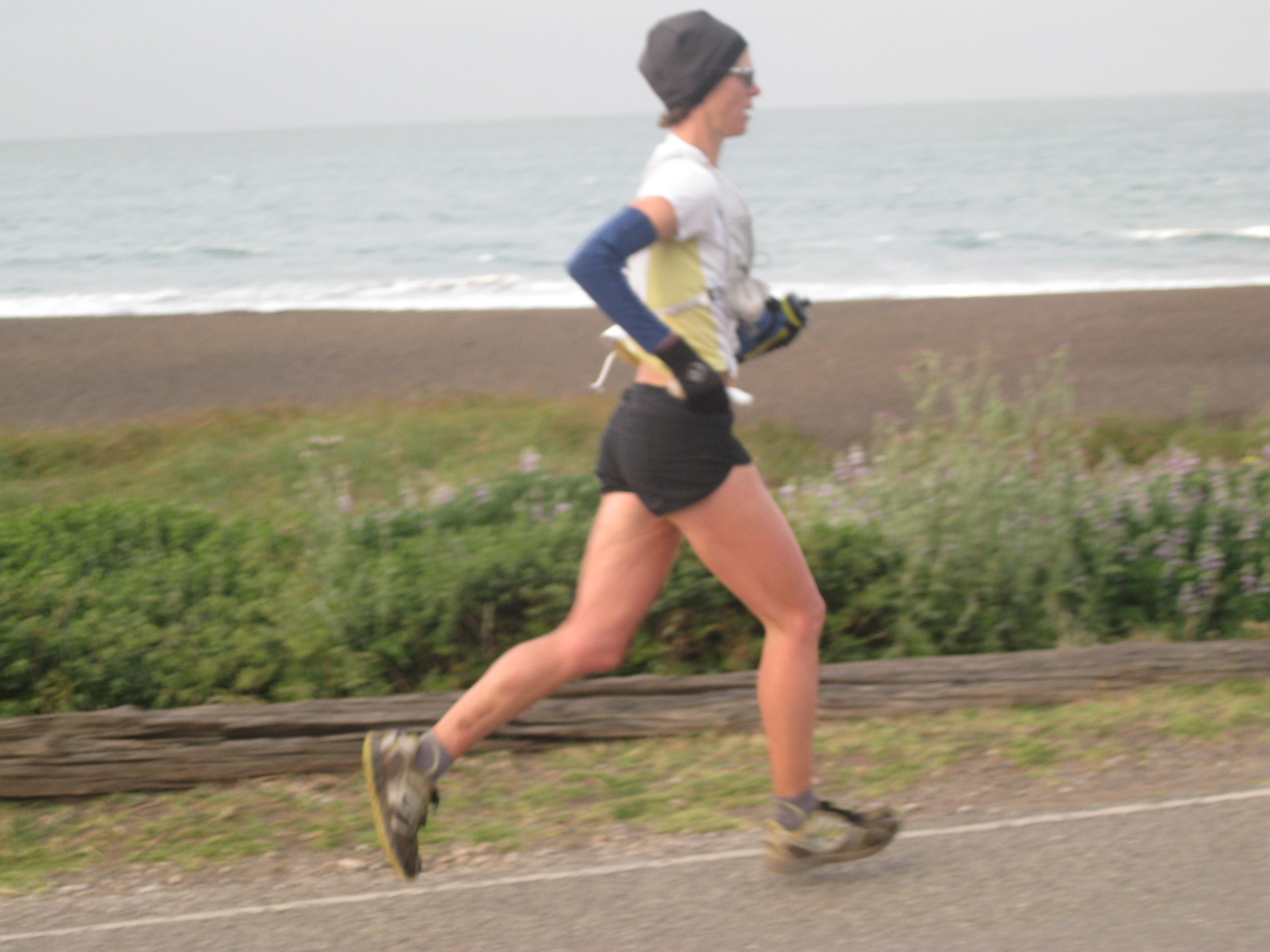
Look At That Stride!!! Leading Runner Meghan Arbogast
Jean Pommier (Another Ultra Blogger) @ http://www.fartherfaster.blogspot.com
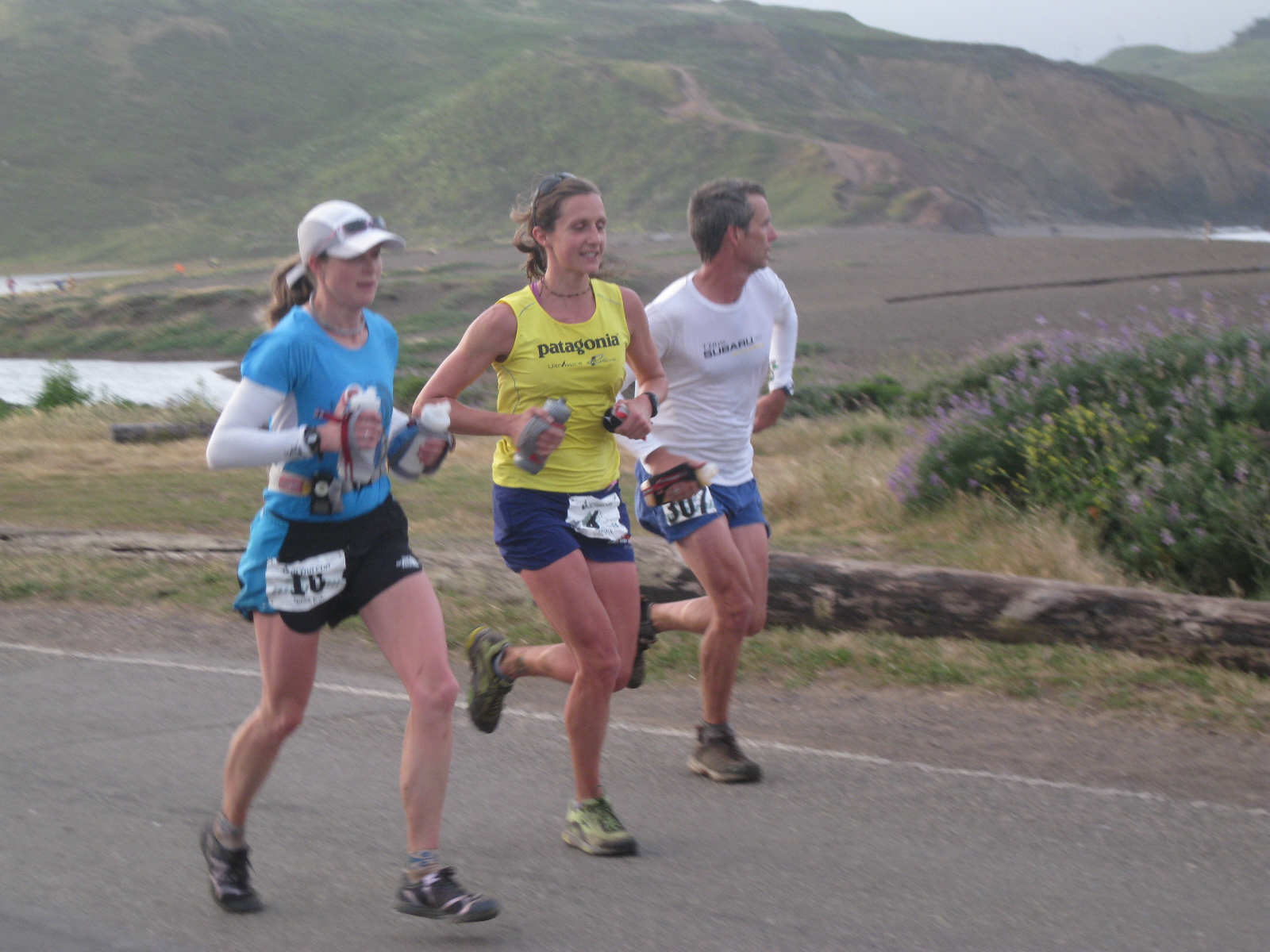
Kristin Moehl at the Middle
Pam Smith (Lady Champion of the Race)
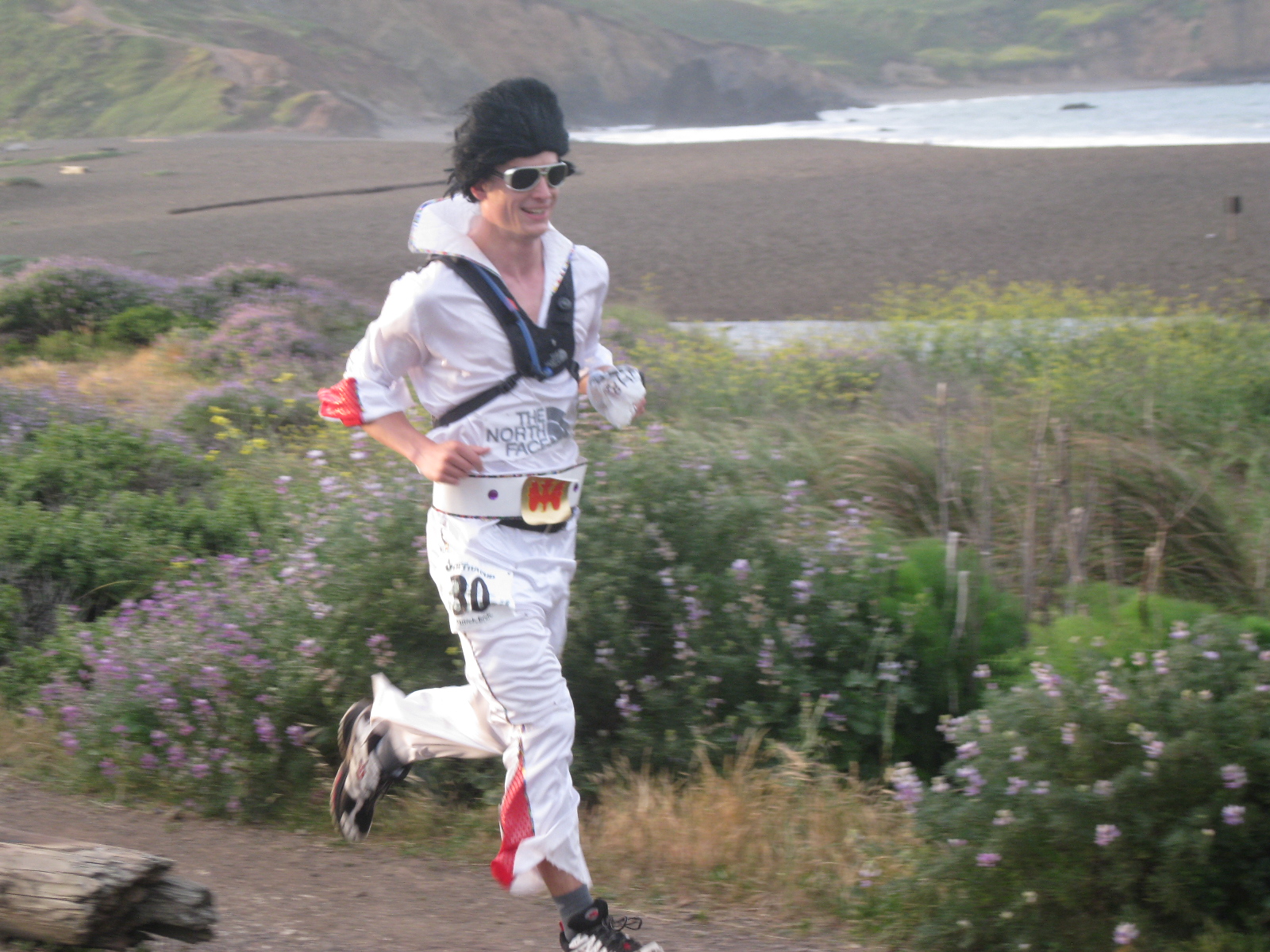
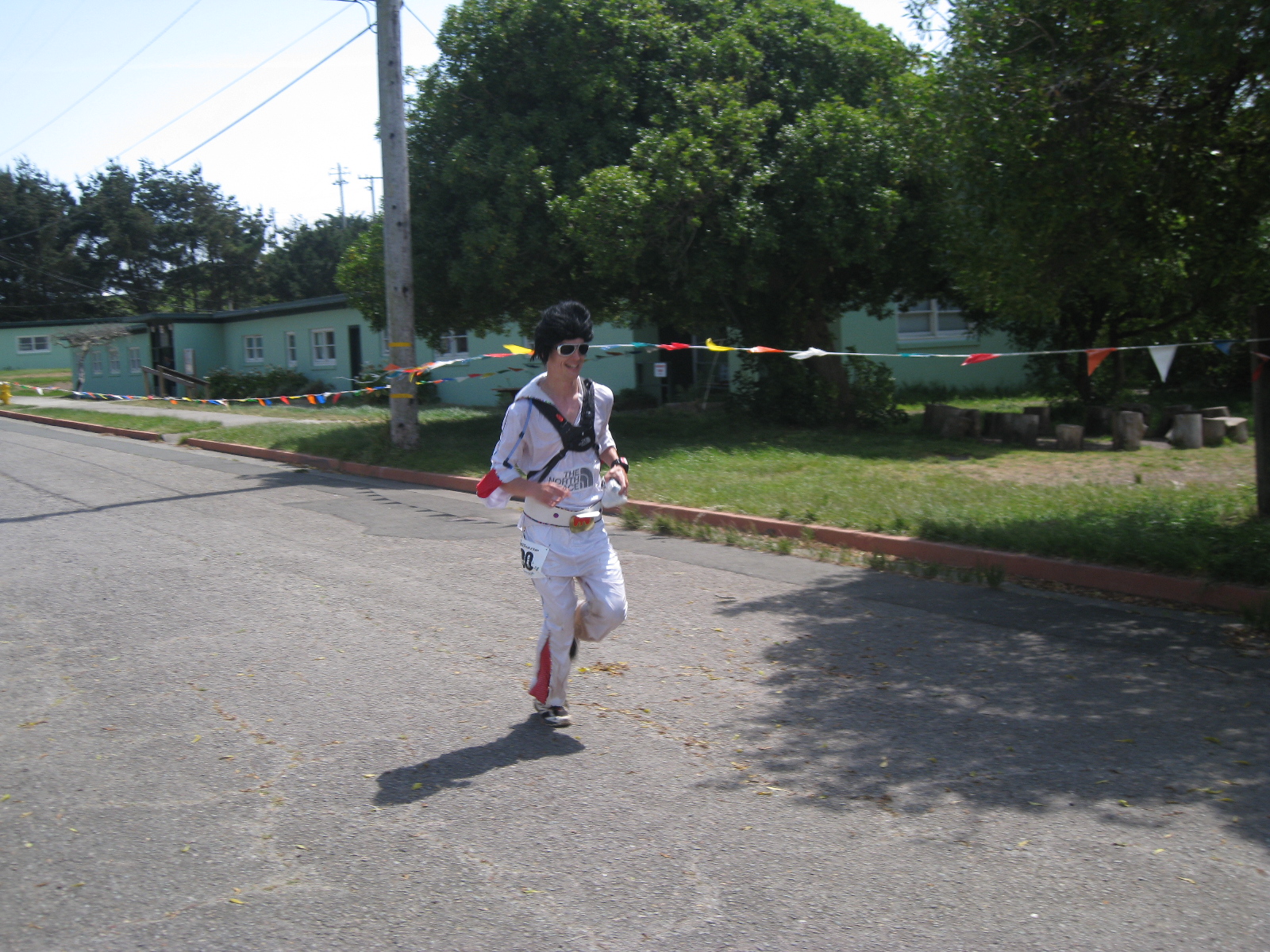
Ian Sharman aka ELVIS, The King!

At the Pantoll Aid Station (Mile #20 & 41)

Rick brought me to Pantoll Aid Station to observe and spectate to the runners passing. The top runners just passed the area when we were looking for a parking space. It was nice to observe the other fast runners on how they re-supply themselves with their hydration packs; how and what they eat at the Aid Station; and how lively the cheerers to the incoming runners.
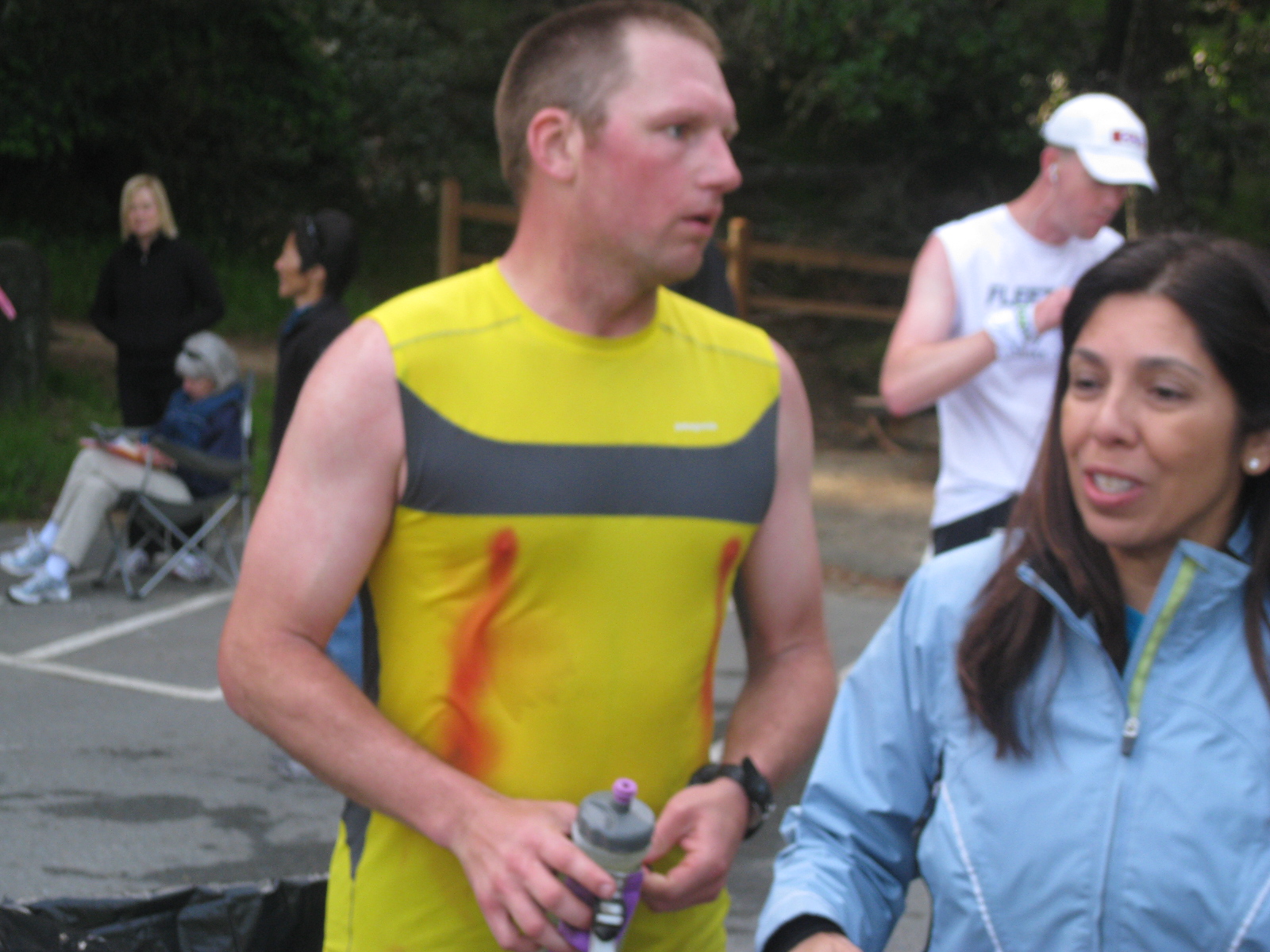
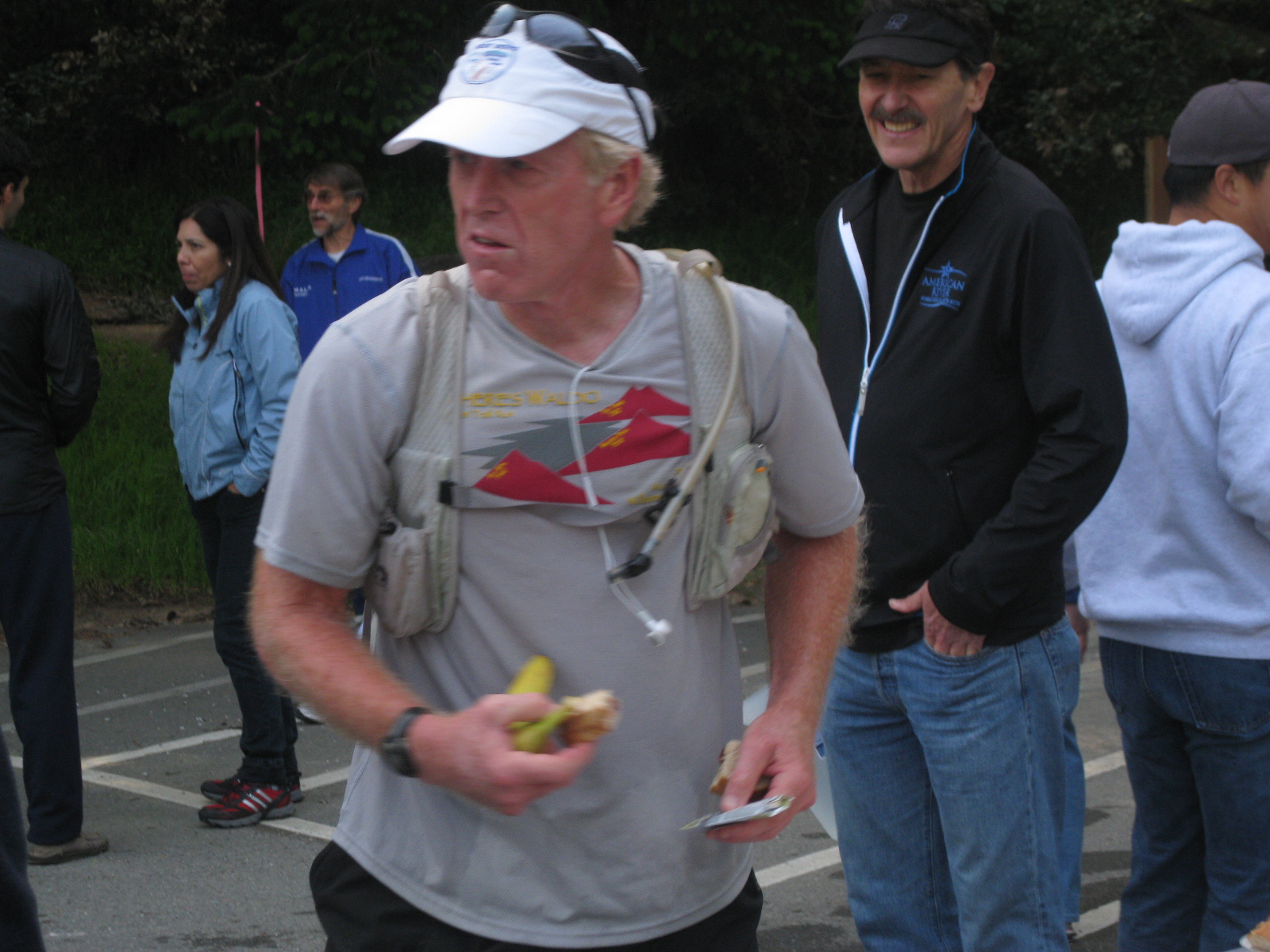
Don't Try To Imitate This Guy!
The Legendary Ultrarunner Scott Mills @ 59 Years Old (Ranked #49)
Cheering The Runners at The Old Mine Trail

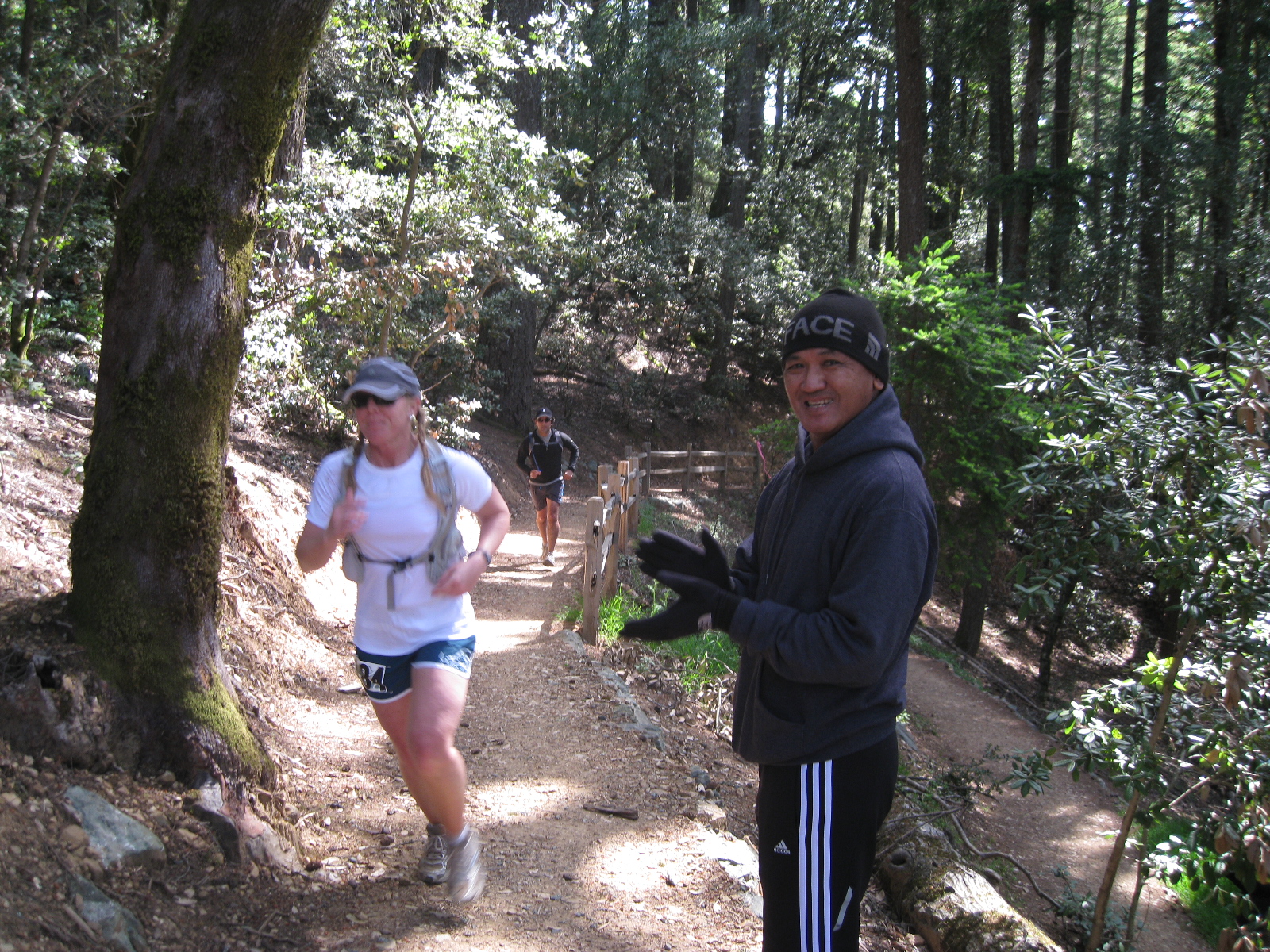
Later, I positioned myself about 30 meters along the trail before runners would reach the Aid Station. The trail is called Old Mine Trail. As the runners would approach my position, I would shout encouraging words while clapping my hands. The words, “Looking Good”; “Good Job”; “You Can Make It” and other positive ones shouted to the approaching runners would boost the runners to jog at a faster pace. As a response, the runners would say, “Thank you for being here” with a smile on their faces!

This is where I was able to meet Geraline Harvey, a Filipina runner from Ontario, Canada who greeted me with the words “Kumusta kayo?” After a few seconds, Carmela Layson and her group approached me as I was cheering them! At last, Carmela and I met in person. Actually, if ever I decided to push through with this race, it was my strategy in this race to stick to her all the way to the finish line. Carmela had been a veteran of Miwok 100! If ever I would have a chance to run in this race in the future, my race strategy would remain the same, I’ll stick on her tail. Carmela had been an active contributor of my Project Donate-A-Shoe! (Congrats, Carmela & Geraline for a successful finish!)
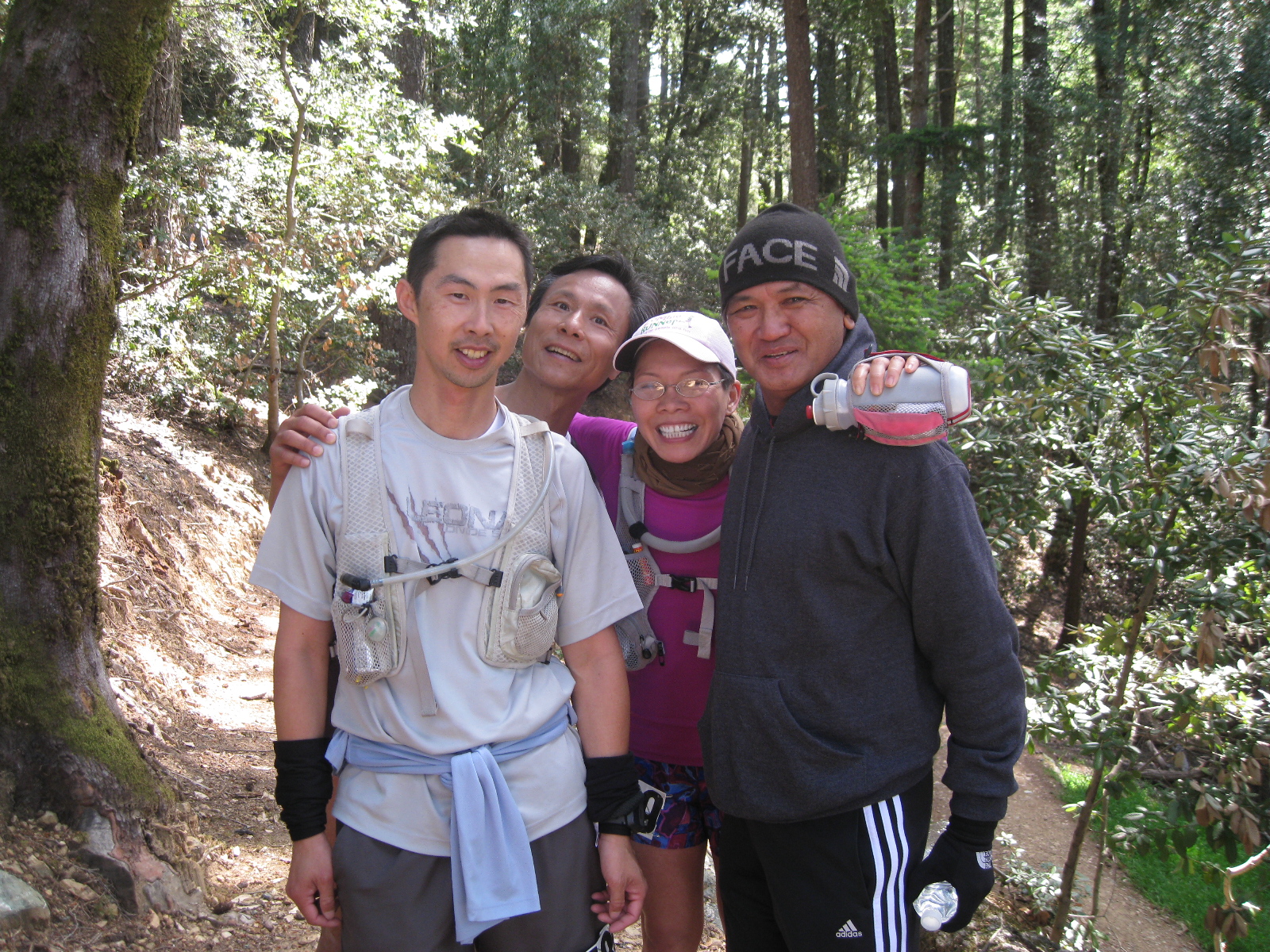
With Carmela and Friends at the Old Mine Trail
With Geraline of Ontario, Canada

Finish Line @ YMCA Point Bonita

From this point, it was time to go to the Finish Area and try to help the other volunteers. I was able to meet Jorge and Rich (with ages in their late 20s) who are also ultra runners planning to earn their entry through the lottery for next year’s edition of the race. There was another lady runner who was supposed to run but due to stress fracture on her legs, she opted also to volunteer. We helped in organizing the different “schwag” for the runners and preparing for the BBQ Party venue after the race for all the finishers. It was worth the fun and time to be working and volunteering with the rest of the other senior and younger ultra runners.

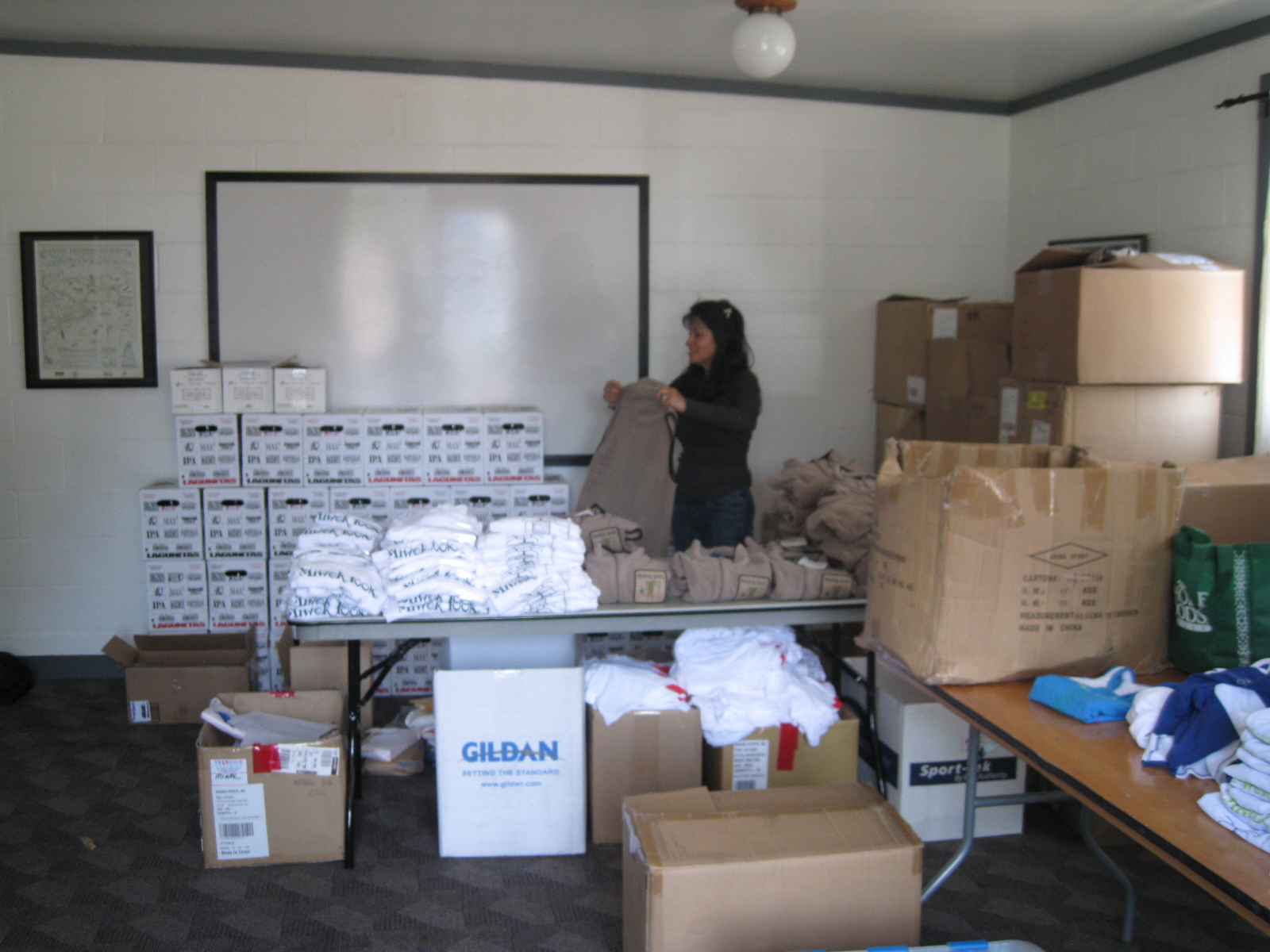
Helping This Lady Runner Who Became One of the Volunteers For The Schwag
Finisher's Shirts & Fleece Vests & Beers in White Boxes
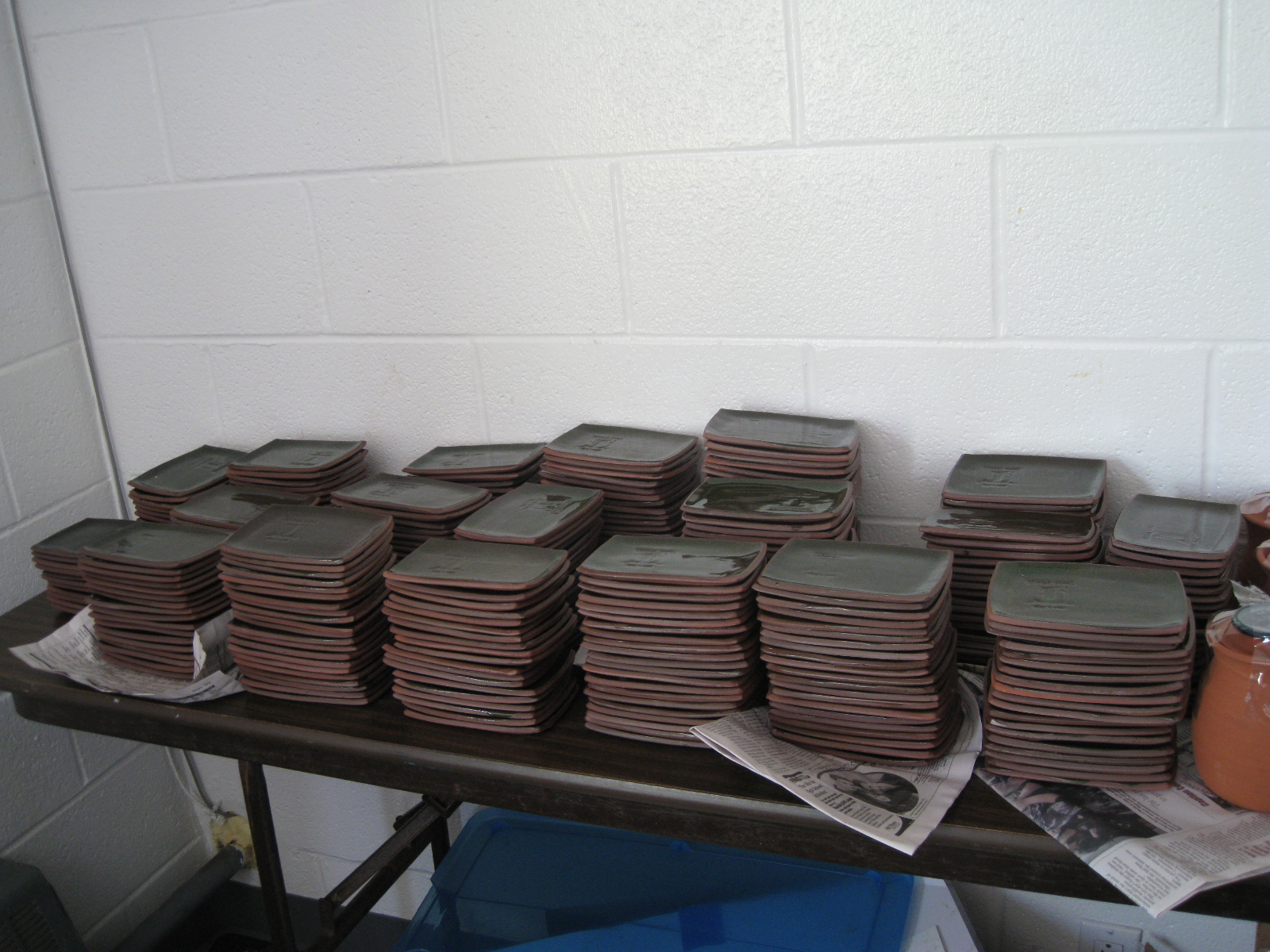
Finisher's Commemorative Plates

At 1:30 PM when the lead runner was a few miles away from the Finish Area, all the schwag were properly organized and packed. The job was done and the next job for me was to watch each of the lead runners cross the Finish Line. The plan was to wait for the arrival of Ian Sharman who was running the whole race as ELVIS before leaving San Francisco in order to catch up with the Pacquiao-Mosley Boxing Fight in Las Vegas!

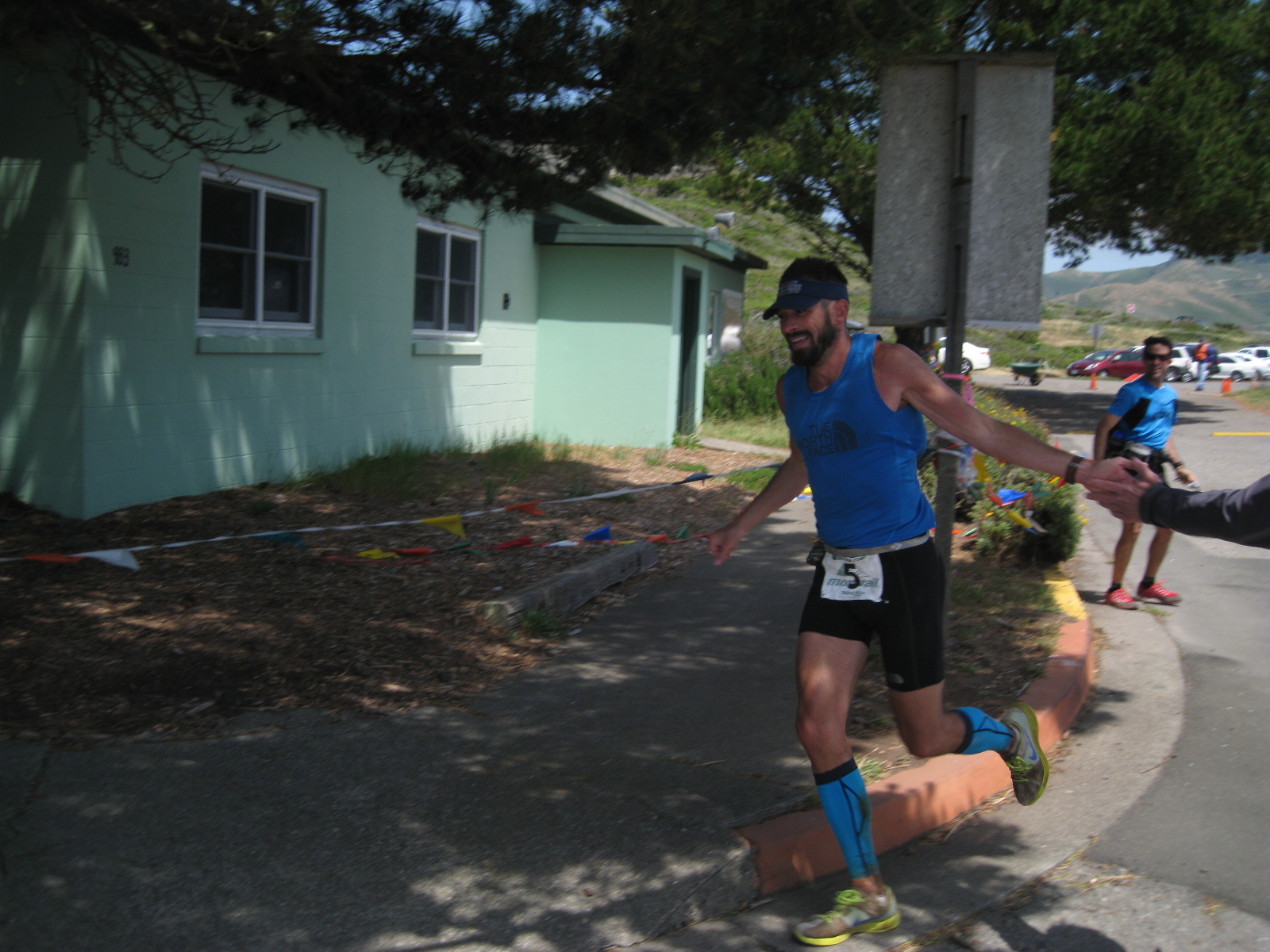
Champion Dave Mackey Approaching The Finish Line
Hal Koerner At The Last Turn Before The Finish Line
ELVIS Approaching The Finish Line

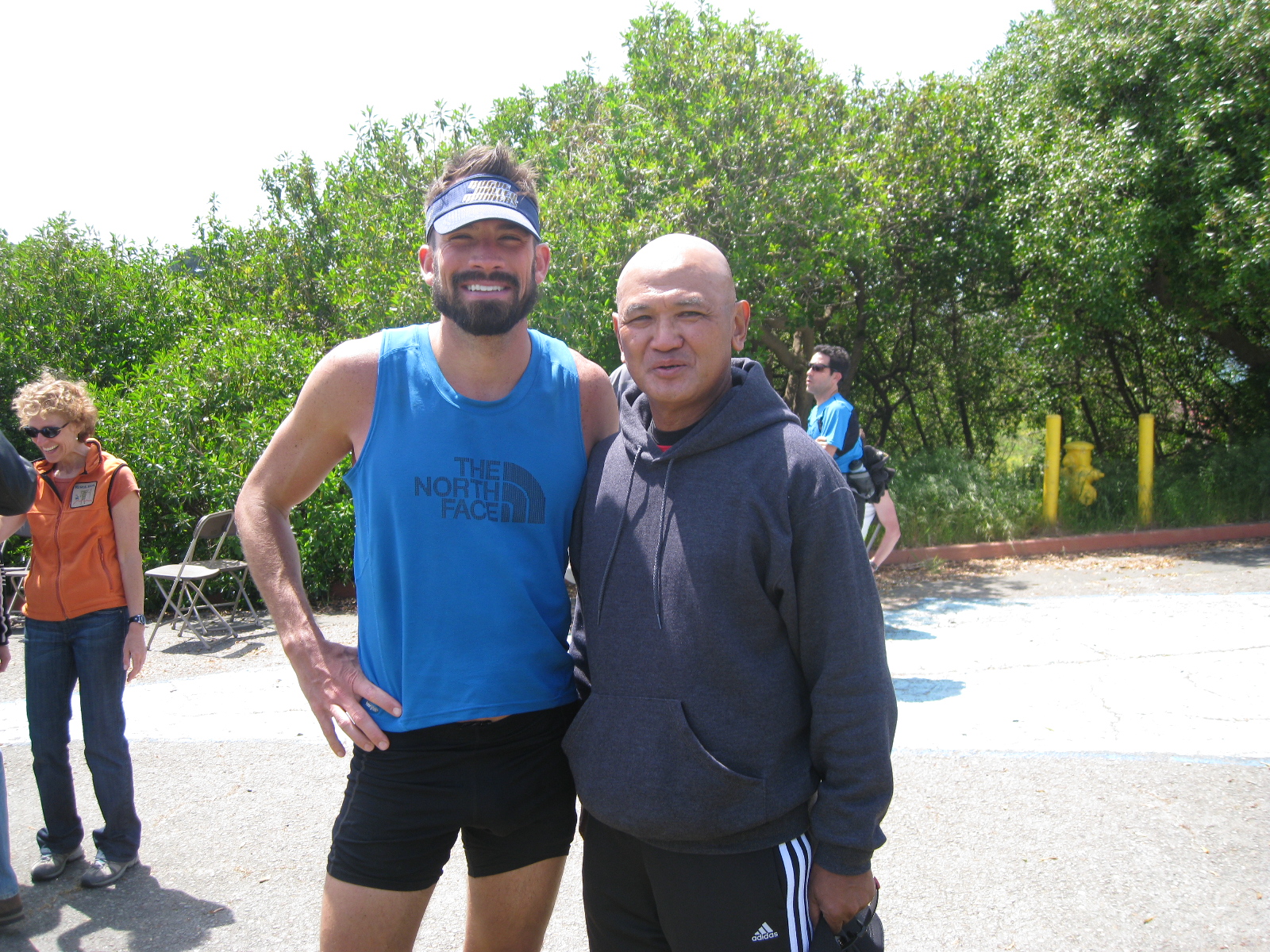
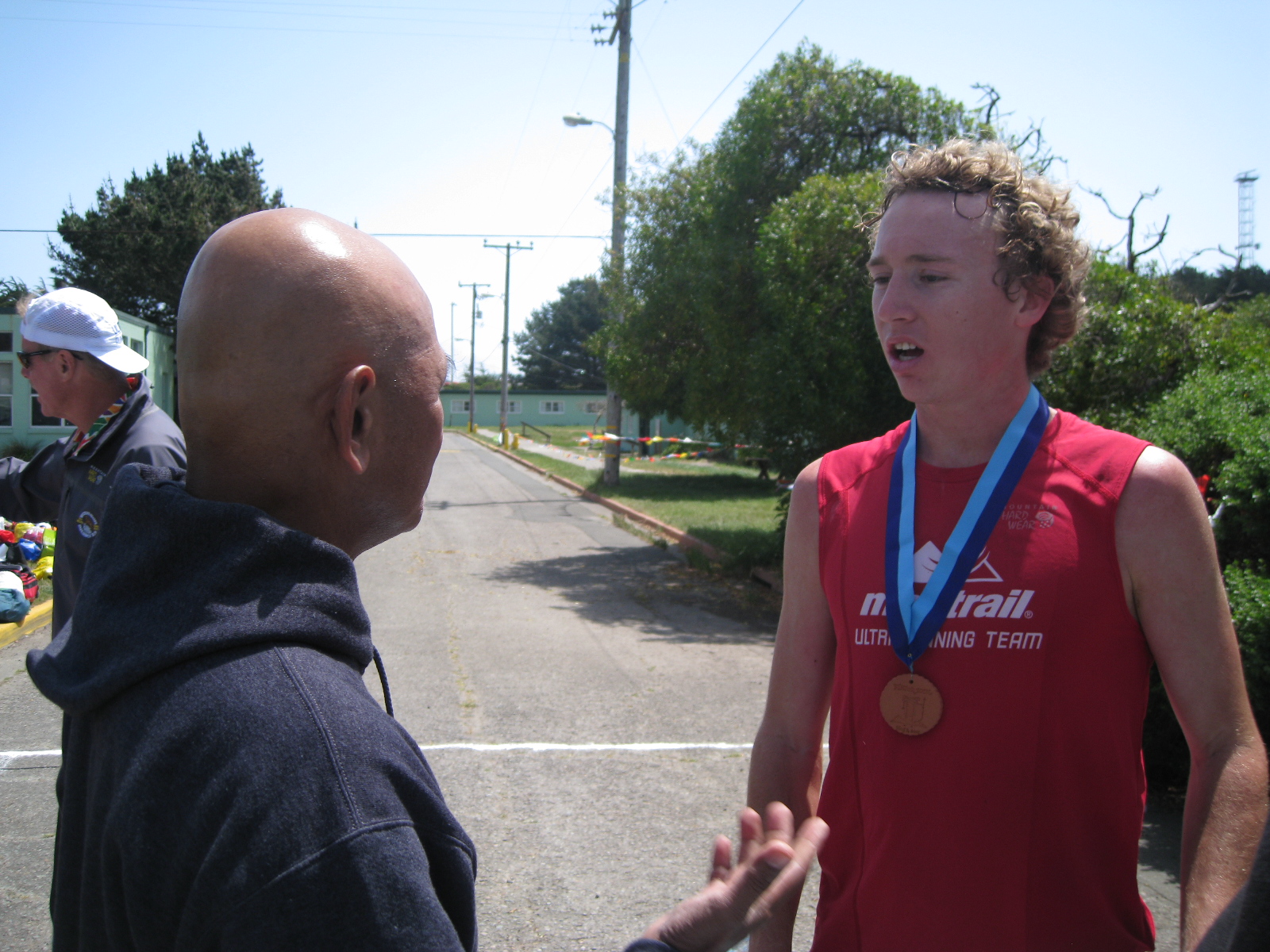
While waiting for ELVIS to cross the finish line, I was able to talk to the Front Runners/Top Finishers of the Race. It was nice talking to these wonderful guys in ultra trail running which ended with a brief pose with them.

Congratulating & Talking To Dave Mackey & Mike Wolfe
A Pose With The Champion Dave Mackey & Mike Wolfe, 1st Runner-Up
Hal Koerner, Champion of 2009 & 2007 Western States 100-Mile Endurance Run
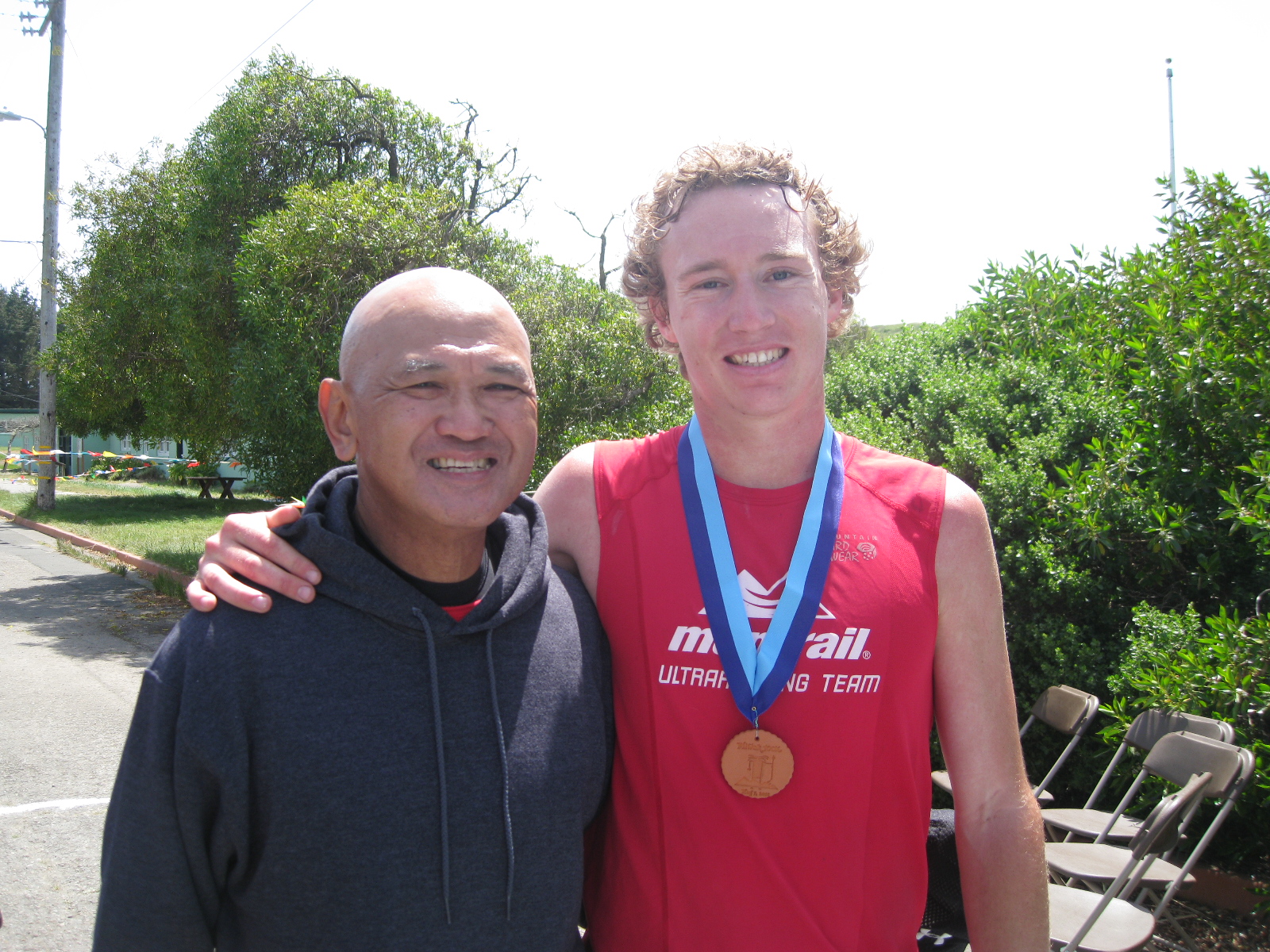
Talking To Dakota Jones, 4th Placer in the 2011 Miwok 100
A Pose With The Kid
Talking With The ELVIS in Ultrarunning
Ian Sharman Finished in 10th Place & Bound For Comrades Ultramarathon This Month

After about 10 hours of volunteer work at the 2011 Miwok 100K Ultra Trail Race, I really enjoyed and had fun for being a part of the race as one of the volunteers. As an spectator, I was able to interact with the top runners in ultra trail running in the United States which I could not have a chance to do such if I finished the race in 15-16 hours. For sure, they are already sleeping in their houses as I cross the Finish Line!

Before I left the Finish Line area, I talked and thanked Tia for being a part of the Volunteer Group for the event and told her about my early departure to catch a flight to watch the Pacquiao-Mosley Fight in Las Vegas. In return, she thanked me also for being a part of the Volunteer Group for the event . She assured me also that I will be coming back to run the 2012 Miwok 100!

The results of the 2011 Miwok 100 are published here.
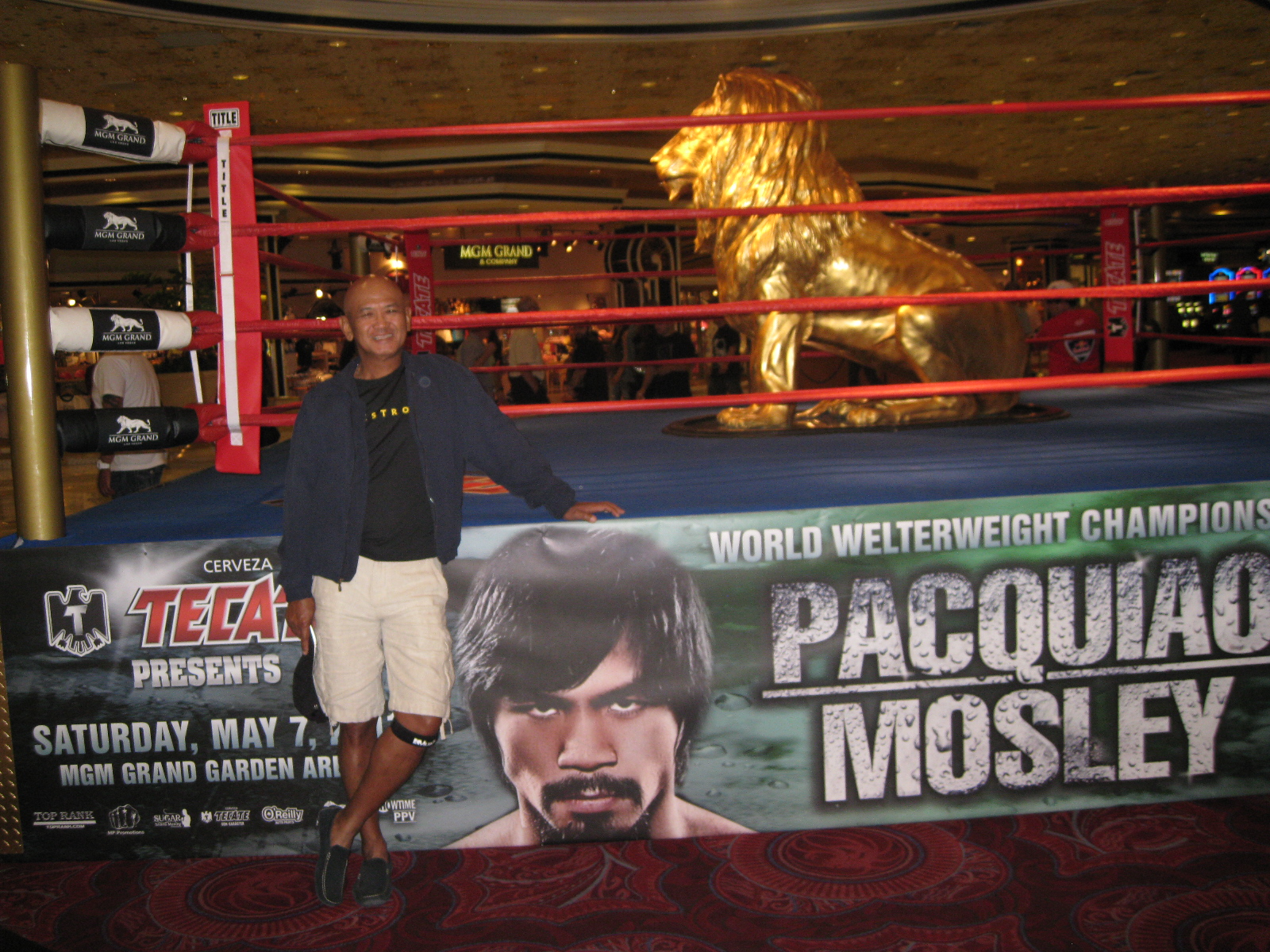
Running Around “The Ring”

My running injury did not heal for the race I’ve been preparing for this year. Instead of forcing the issue to run the race and be able to finish the prescribed finish time of 16:30 hours for the Miwok 100K Ultra Trail Race at the Marin Headlands in San Francisco, California last Saturday, I have opted to watch how Manny Pacquiao and Shane Mosley “run around” the boxing ring at the MGM’s Grand Garden Arena.

Congratulations to Congressman Manny Pacquiao for another impressive show and for “entertaining” the whole world through boxing!

At The MGM Hotel, Las Vegas, Nevada

Nordic Running?

Raul and Perkins of A Runner’s Circle in Manila asked me to watch the movie on DVD entitled “Running America”, when I visited the store before the Mayon 360 50-Mile Run. They lend to me the DVD of the said film and returned it after I saw the entire film. The film “Running America” is about the documentation of the Trans-Continental Run Across the United States of America by two famous ultramarathon runners, Charlie Engle and Marshall Ulrich, which was held sometime before the US Presidential Election in 2008 with Marshall Ulrich finishing the run by himself.

What impressed me about the film is the portion where Marshall Ulrich was gracefully using the use of trekking poles while he was running. Actually, it was my first time to see a runner using the trekking poles while he is in the act of running on a paved road. I usually see the use of such poles when I watch downhill slalom, biathlon and other cross-country ski sports events on the TV. Lately, I saw some runners at the UTMB (Mont Blanc Ultra Marathon) using such trekking poles as part of their equipment to finish the race. Films on UTMB with runners using and carrying trekking poles could be seen at You Tube.

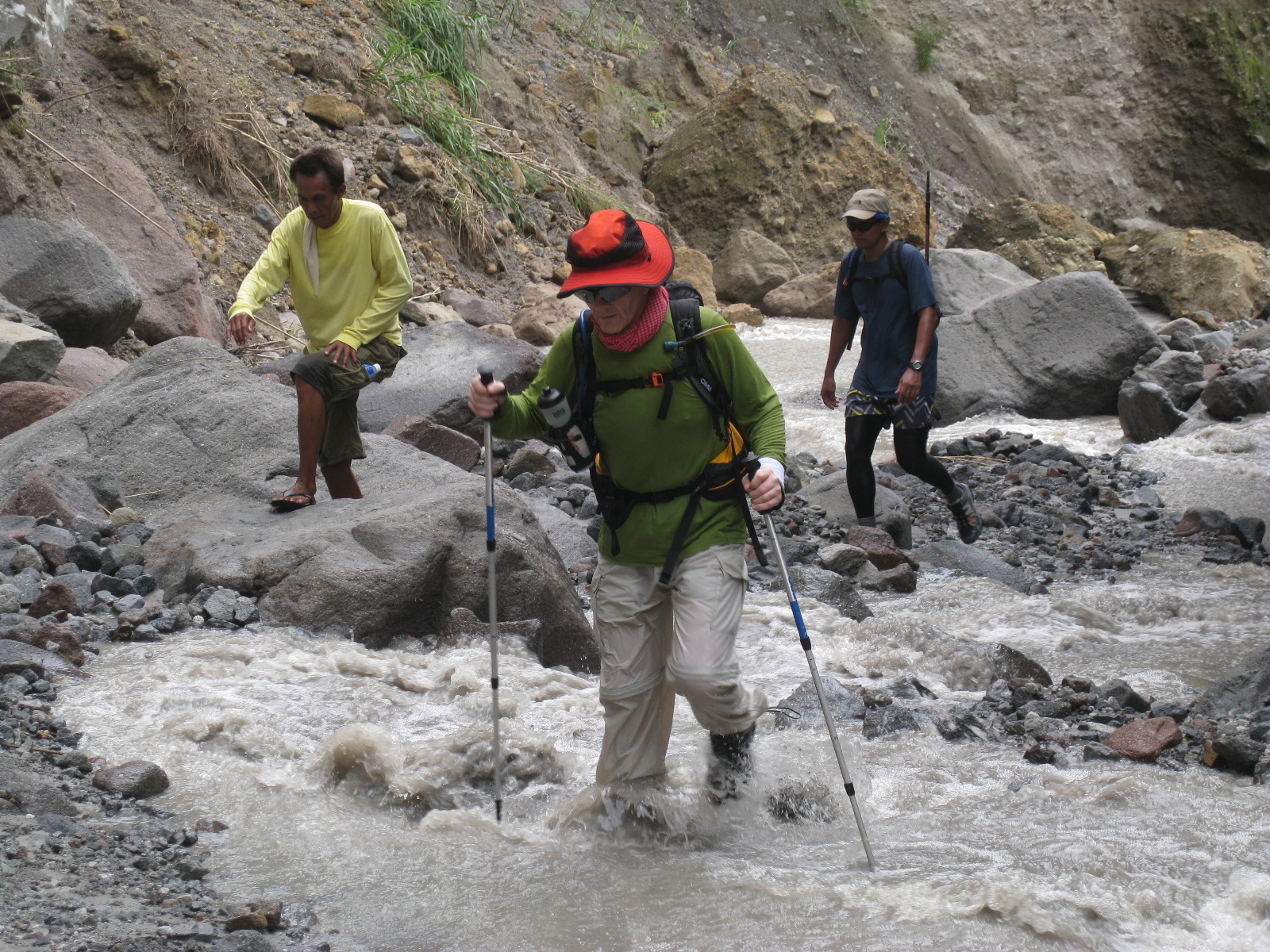
In the Philippines, I saw only two (2) ultra runners who had been using these trekking poles on a trail run. The first one was Doc Punzalan of Pinoy Ultra Runners (PUR) in 2008 when I joined his group for my first trail run to Mount Pinatubo. The second guy whom I observed to be using these poles was Jerome Cartailler during my second run to the same area, Mt Pinatubo in July 2010. I saw these guys how they used such trekking poles while they brisked/power walked along the rocky portions of the trail and when they balanced themselves in crossing the river and other water crossings. I was not surprised that these good ultra runners had the appreciation to use these poles. Doc Punzalan had experienced running the UTMB and Jerome is from France, one the countries where the UTMB course would pass.

Jerome Cartailler Using His Trekking Poles To Mt Pinatubo

After those observations (years ago), I’ve tried to look for those trekking poles in the local market and it was at ROX where I found a pair that costs about P 6,000 (?). I was surprised to see the price and opted just to hold them. And I forgot all those trekking poles!

I know that most of the Pinoy mountain trekkers/hikers know the value of these poles and to some of the TNF 100 trail run participants. However, I have yet to see one of them using these trekking poles in action.

But, running with trekking poles on paved roads? It is something that is unthinkable and out of the norm. But I was intrigued when I saw that part of the film where Marshall Ulrich was using these poles on the paved roads across America. So, I made some research on the Internet.

I was able to find out the following through some research on the Internet:

1. Nordic walking which was known before as “ski walking” using ski poles was a good off-season workout for elite Finland/Scandinavian ski athletes to maintain their consistency in their sports. Ski coaches concluded that the use of trekking/ski poles during summer contributed to the success of world-class ski athletes. Ski athletes would train the whole year round using the trekking poles.

One of the Pictures Taken From The Internet On Nordic Walking

2. The use of trekking poles on power walking or running would lessen the impact of the feet on the ground as the weight of the body would be supported by the trekking poles. This form of running/walking is suggested as cross-training for those athletes who are recovering from knee injury or those who are under leg-injury rehabilitation.

3. There are lots of instructional films on the Internet/You Tube on Nordic Walking/Running. All you have to do is google the word “Nordic Walking”.

4. There are a Sports Federations for Nordic Walking in the United States and other European countries which had been in existence for the past 10-14 years.

5. There is a Marathon (42K) Race on Nordic Walking at the Portland Marathon which is on its 5th edition this year. Rules and Regulations are posted in their website. In Europe, there are already existing Nordic Walking Championship Events.

6. There are blogs and websites about Nordic Walking/Running. You can check one of them at http://nordicwalkingusa.blogspot.com

7. Almost all the ultra trail races in Europe allow the use of trekking poles. In the most prestigious UMTB, most of the runners have in their packs a pair of folded trekking poles.

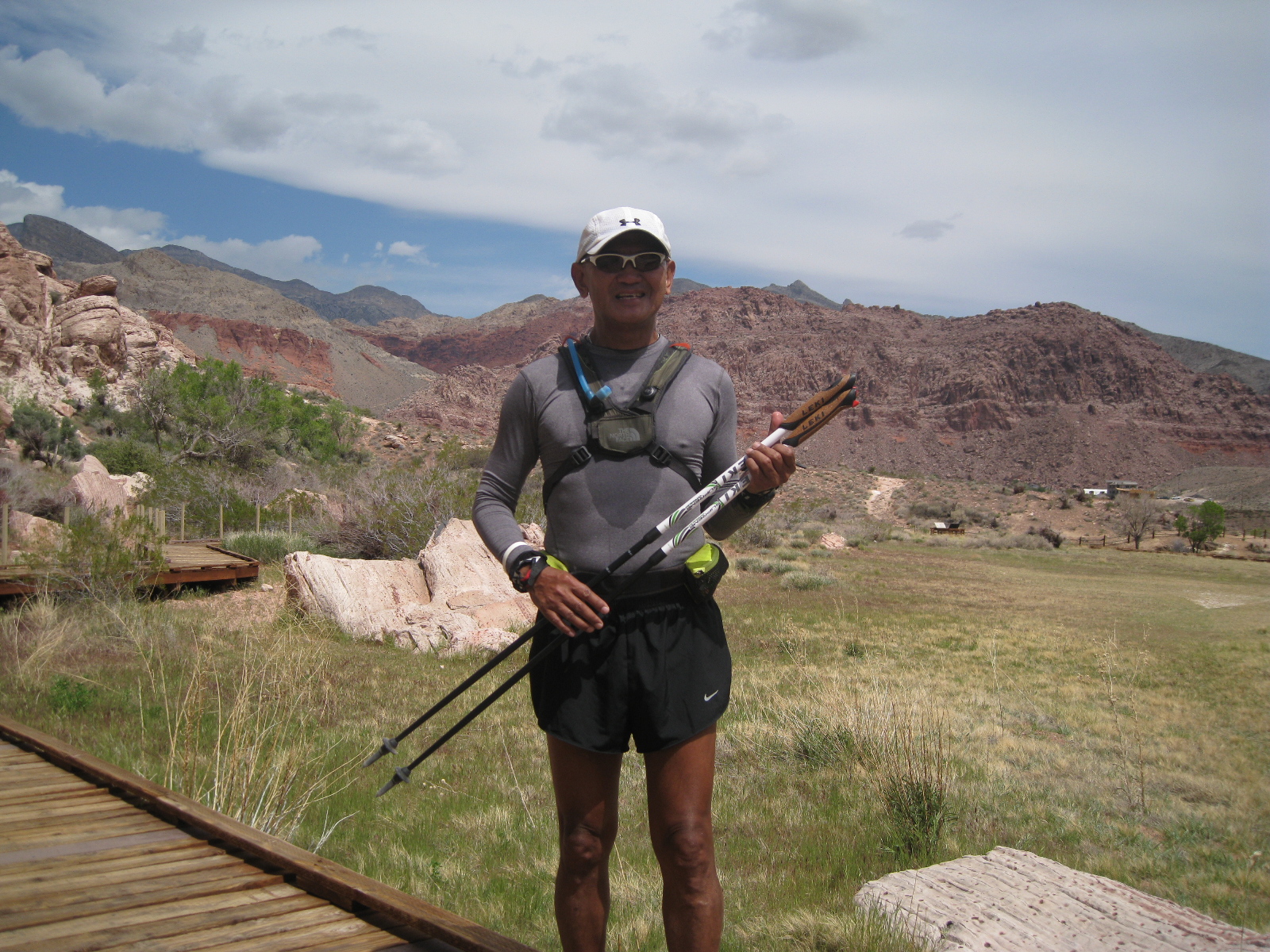
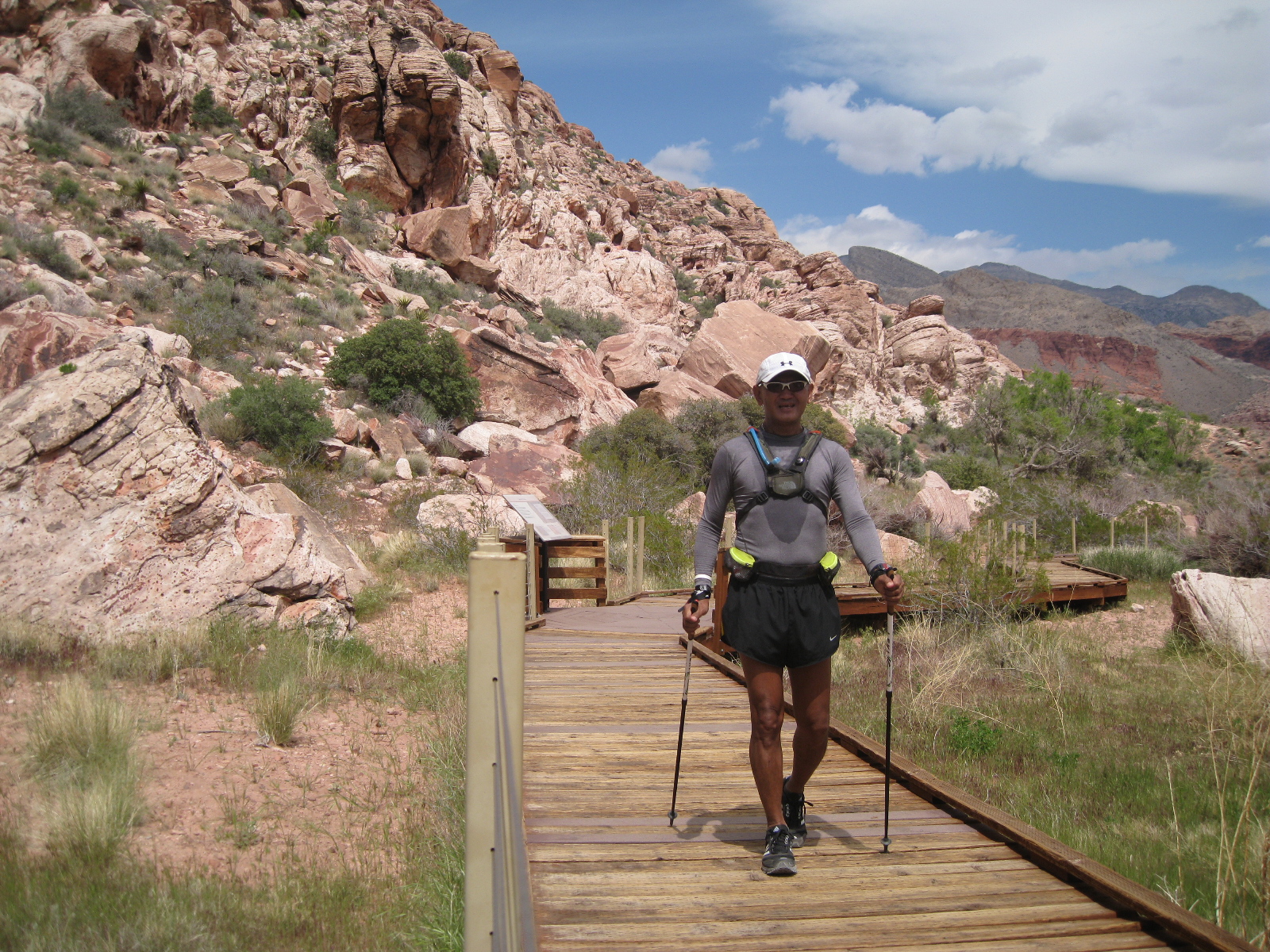
For the past two weeks, I’ve been using a pair of LEKI Titanium Trekking Poles during my regular power walking and I even went to the extent of running with them for 3 hours along the rocky Calico Hills Trail of the Red Rock Canyon Park in Las Vegas, Nevada.

With My LEKI Titanium Trekking Poles
Easy Effort On Nordic Walking

I could say that the use of trekking poles on technical trails would lessen the impact of my feet on the ground, making my knees less sore and painful after my run on the trails. With regards to running on the paved roads with the trekking poles, I am confident that I can already run with the same ease and grace like Marshall Ulrich! (Note: It is purely coincidental that I bought LEKI trekking poles, the same trekking pole brand that Marshall Ulrich used in all his adventure runs to include his feat in “Running America”)

Running and/or walking with trekking poles is a great cross-training activity for me as an old and under rehab average competitive runner.

With my present exposure and training with the trekking poles, I am thinking of allowing their use in the incoming PAU’s Pinatubo 100 to all the participants.

I will be glad to know about your comments on this.

Something To Read & Think About

Before you read the following article which I copied from the website of Marathon Guide (http://marathonguide.com), I would like to mention my insights about the New York City Marathon which is true to the other Marathon Races in the different cities in the USA and to other countries around the world:

1. It takes an avid or regular runner who has the passion in it to create, organize, and implement  a Marathon Race, no matter how small the number of runners on its first edition. What it needs is a good leader and a vision for the event. Fred Lebow, founder of the New York Marathon and later President of the New York Road Runners, was neither a natural-born American nor an elite & fast runner but through his dedication to the event, the race had become as one of the World’s Championship Marathon Races.

2. The need to be backed-up by an organization that shares your vision and purpose. The New York Road Runners had been the running club/organization that is behind the event. Of course, the club has membership fees and such fees have corresponding privileges.

3. Partnership with the City Government and Sponsors.  I am sure the City Government had the strategic thinking/view that the event will become bigger as the years come. With more participants to this race, it will increase the number of visitors, and income to the different establishments, thereby making the economy of the city more vibrant and active. The bottom line is that the city government receives more revenues from the taxes being paid  by such establishments.

4. Involvement of the Community. Like the Los Angeles Marathon, San Francisco Marathon and other city marathons, they are very memorable to runners because of the involvement of the community as volunteers and cheerers along the ENTIRE route of the event. By reading the experiences of runners in their marathon experiences, you could find out that almost the whole route is lined up with musicians; volunteers with water, beverages, sports drinks, and even beer; acrobats; dancers; rock bands; loud stereo music from big speakers; and simply people cheering you loudly and even stating your name.

5. Lastly, the runner-participants. The more the runners participating the event, the better for the event and the city. It is stated in the report below that the runners contribute much in the economy for the city from their brief stay in terms of hotel accommodations, foods, tours and shopping. On the other hand, the taxes being paid by the Race Organizer, the New York Road Runners, to the City Government come from the registration fee paid by the runner. So, if you are wondering why you are paying much for the registration fee as compared from other Marathon Races in some of the key cities in the USA, it’s because you are in New York!!!

Enjoy reading this one.

2010 ING New York City Marathon Generates $340M for NYC

Race Raised $30.8M for Charities

Total Economic Impact Increased 25% Since 2006

New York, NY—The ING NYC Marathon generated a new high of approximately

$340 million in total economic impact for New York City last year, a New

York Road Runners (NYRR) commissioned study released today found. In

addition, the study showed that the Marathon generates more than $30

million for charities, and a record number of visitors, participants and TV

viewers were involved in last year’s race.

The study is based on a survey of over 1,000 participants in the Marathon,

and assesses their spending in categories such as hotel, travel,

entertainment and retail, in addition to their direct expenditures on the

race itself.  In addition, the study includes other metrics such as total

charitable donations captures, visitor estimates and number of total race

participants.

“This study demonstrates the crucial role the ING NYC Marathon plays in

bringing benefits to our whole city and making it more vibrant every year,”

said New York Road Runners CEO and President Mary Wittenberg. “In addition

to the hundreds of schools we help with health and fitness programs and

hundreds of thousands who participate in the races, this race has clearly

become a cornerstone of positive economic activity for New York that the

city can count on year in and year out.”

“The New York Road Runners impact our economy by bringing in millions of

dollars through programs that benefit our overall city’s health including

hundreds of thousands of students in public schools,” said Council Member

Robert Jackson, Chair of the New York City Council Education Committee. “I

look forward to continue participating in races to come and supporting its

initiatives to improve the health and daily lives of our children.”

“Running the ING NYC Marathon is a feat of willpower – but it’s also a

testament to the economic power of the 2 million spectators, the runners

and their guests, the sponsors, the vendors, and the New York Road

Runners,” said New York City Economic Development Corp. Chief Operating

Office Josh Wallack. “Not only does the marathon raise money for charity,

it results in real contributions to the City’s booming tourism economy.”

The study showed two ranges of total economic impact.  The “conservative”

range showed $304 million in impact and the “baseline” range $378 million.

The conservative range includes only those impacts that would not have

occurred within New York City without the Marathon, and the baseline

includes all expenditures associated with Marathon participants and their

guests.

The full report can be requested by emailing ahowe@globalstrategygroup.com

Other key findings from the report include:

  • Total economic impact from visitor and guest spending is 25% greater in

2010 than in 2006

  • Tax revenues to New York City from the ING NYC Marathon ranged from

$10.8 to $11.2 million.

  • 2010 ING NYC Marathon drew 45,350 participants, 2 million spectators,

and a television reach of 315M worldwide

  • The race raised $30.8M for charities, $24.3M of that went to charities

in NYC

  • The total number participants and their guests was about 290,250 people
  • Participants spend a total of close to $1,800 each during their visit

The 2010 ING NYC Marathon made an unprecedented charitable impact, raising

$30.8 million overall, $24.3 million of which went to NYC based charities.

NYRR provides a number of charities with entries to the event, each of

which recruits runners to raise at least $2,500 per participant and then

provides the runner with guaranteed entry into the race.  NYRR receives a

fee for the entries, all of which is dedicated to NYRR’s non-profit

mission.

More than 2 million spectators came to watch the 45,350 runners in person

and total direct spending was approximately $153.2 million from

participants and their guests.

The first phases of findings were based off an electronic survey of

approximately 1,000 participants in 2010 ING New York City Marathon. In

addition NYRR collected data concerning spending by Marathon sponsors and

vendors as well as charity fundraising. The final estimates were based off

ING NYC Marathon participants and their guests, the NYRR organization

itself, Marathon sponsors, vendors at ING Health and Fitness Expo, and

associated charity fundraising.

The analysis does not include spending and impacts generated by

unaffiliated spectators because many of them are likely NYC residents who

would be spending money anyway, even though this does not account for the

many others who are likely non-NYC residents who traveled into the city for

the race but were not associated with a participant.

Expenditures by Marathon sponsors, vendors at the ING Health and Fitness

Expo, and charity revenues generated by fundraising are also considered in

the impact analysis. Sponsor and vendor expenditures as well as NYC-based

charity revenues are assumed to be either directly or indirectly associated

with the Marathon.

Expenditures by media organizations for providing televised coverage of the

event, public costs of staging the event (security, street closures etc)

and media and branding value from extensive world-wide television exposure

for NYC were not considered.

NYRR retained AECOM to estimate the economic and fiscal impacts of the ING

New York City Marathon 2010. AECOM was retained on similar occasions by

NYRR to conduct a similar analysis.

New York Road Runners

Headquartered in New York City, New York Road Runners is dedicated to

growing the sport of running, enhancing health and fitness for all, and

meeting our community’s needs. Our goal is to leverage the expertise

acquired in our 50+ year history to empower all people of all ages to live

fitter, healthier lives through participation in our races, community

events, instruction and training resources, and youth programs. Our races

and other fitness programs draw upwards of 300,000 people annually. The ING

New York City Marathon, NYRR’s premier event, is the largest and most

inclusive marathon in the world, attracting the world’s top professional

runners and raising over $20 million for charity annually. NYRR’s

running-based youth programs, which currently serve nearly 100,000 children

in hundreds of schools and community centers, promote children’s physical

fitness, character development, and personal achievement in underserved

communities.

So, after reading this report from the New York Road Runners, it is deplorable and sad to remember that we had then a Manila International Marathon; PAL International Marathon; and Pasig River Heritage Marathon since the early 80’s but all of these just disappeared.

Sayang!…What a waste!!!

I rest my case.

(Source: http://www.marathonguide.com)

2012 Olympic Games Qualifying Standards For Athletics

Sculptor Art For the London Olympic Park (From http://www.london2012.com)
In a meeting last April 11-12, 2011 in Daegu, South Korea among the members of the IAAF Council, it was approved that  there are 47 Medals (Men & Women) to be contested which are categorized as the following:
IAAF Qualification System Athletics 2011. In addition to the list of events, a qualification system is also discussed and stated.
Running/Walking/Track Events—29 Medals
Field (Throwing & Jumping)—16 Medals
Combined Events (Decathlon & Heptathlon)—2 Medals
Total Medals In Athletics—47 Medals
With the list above, it is in Athletics where you have the most number of Medals in contention in the Olympic Games. The next sports which has the most number of medals would be Swimming. I think the 3rd medal earner would be Gymnastics. And the last would be a tie for boxing, taekwando, and other combat/contact sports like wrestling and judo.  It could be noted that these sports are all DOABLE for the Pinoys and we could excel in them! Basing from our physical features, average height and weight, we are not different from the Chinese, Japanese and Koreans who had been among the top medal earners in the Olympic Games.
I will not deal on how we would be able to excel and become Olympic qualifiers on these sports because our Sports Officials and NSA Coaches have better ideas and have the necessary resources to attain such objective/goal.
The following are the qualifying times and distances for the different track/running and field events for the 2012 London Olympic Games:
The following are the list of Marathon Races which are considered as Olympic Games Qualifying Races for the 2012 London Olympics’ Marathon Race. It is well noted in the list that the 2011 CAMSUR Marathon Race is the qualifying Marathon Race in the Philippines. I hope our National Pool of Athletes for the Marathon Race will be able to attain their qualifying time for the 2012 London Olympics.
On Racewalking, the following are the published races which are considered as Official Qualifying Races for the 2012 London Olympic Games.
I hope the above documents will be a good reference to our NSA in Athletics, to their Coaches, our National Pool of Athletes and to the upcoming elite athletes in athletics.

Hardheaded

I never learn my past mistakes and heed to the lessons learned I have been repeatedly writing on this blog. I am simply stubborn!

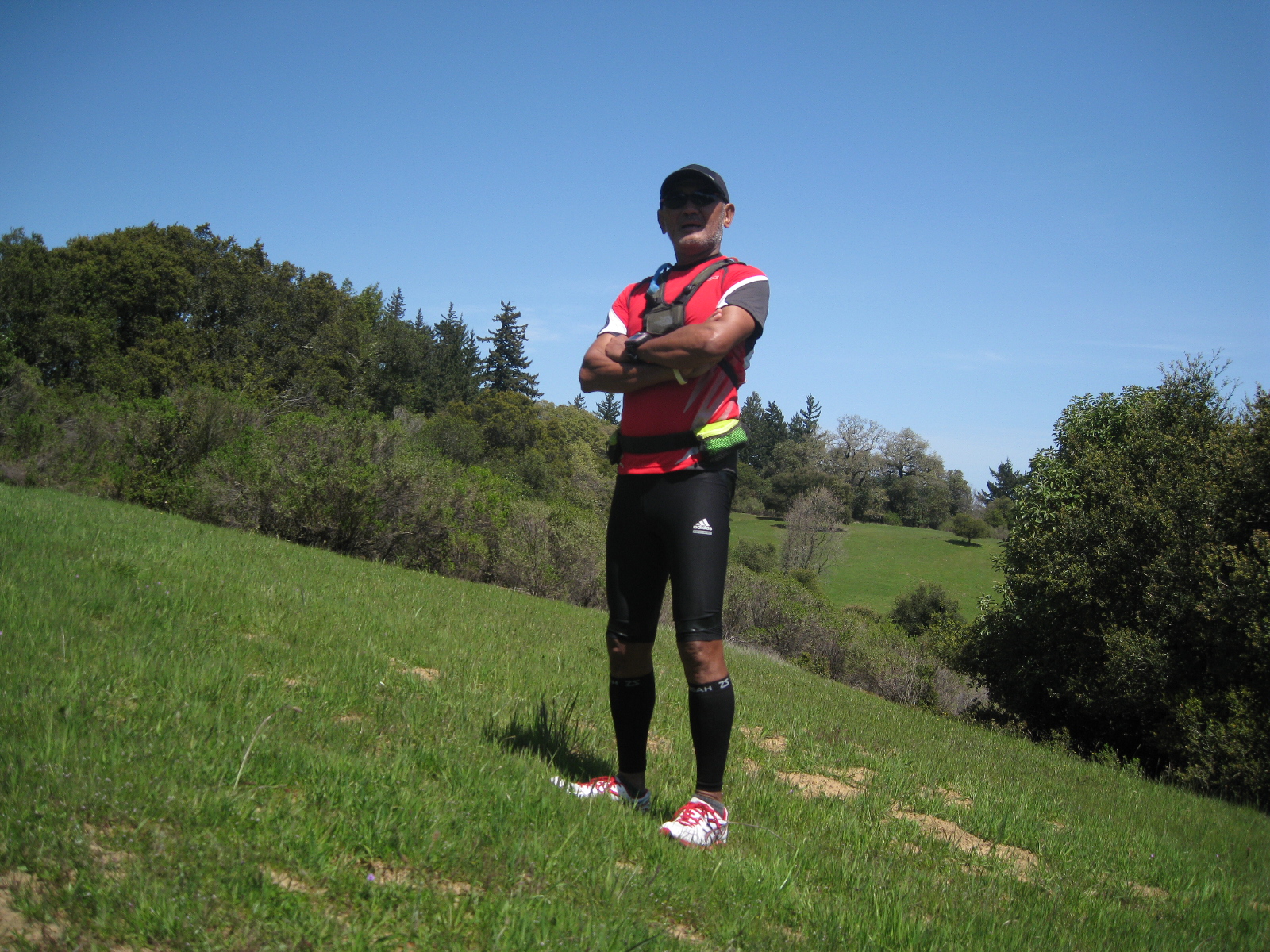
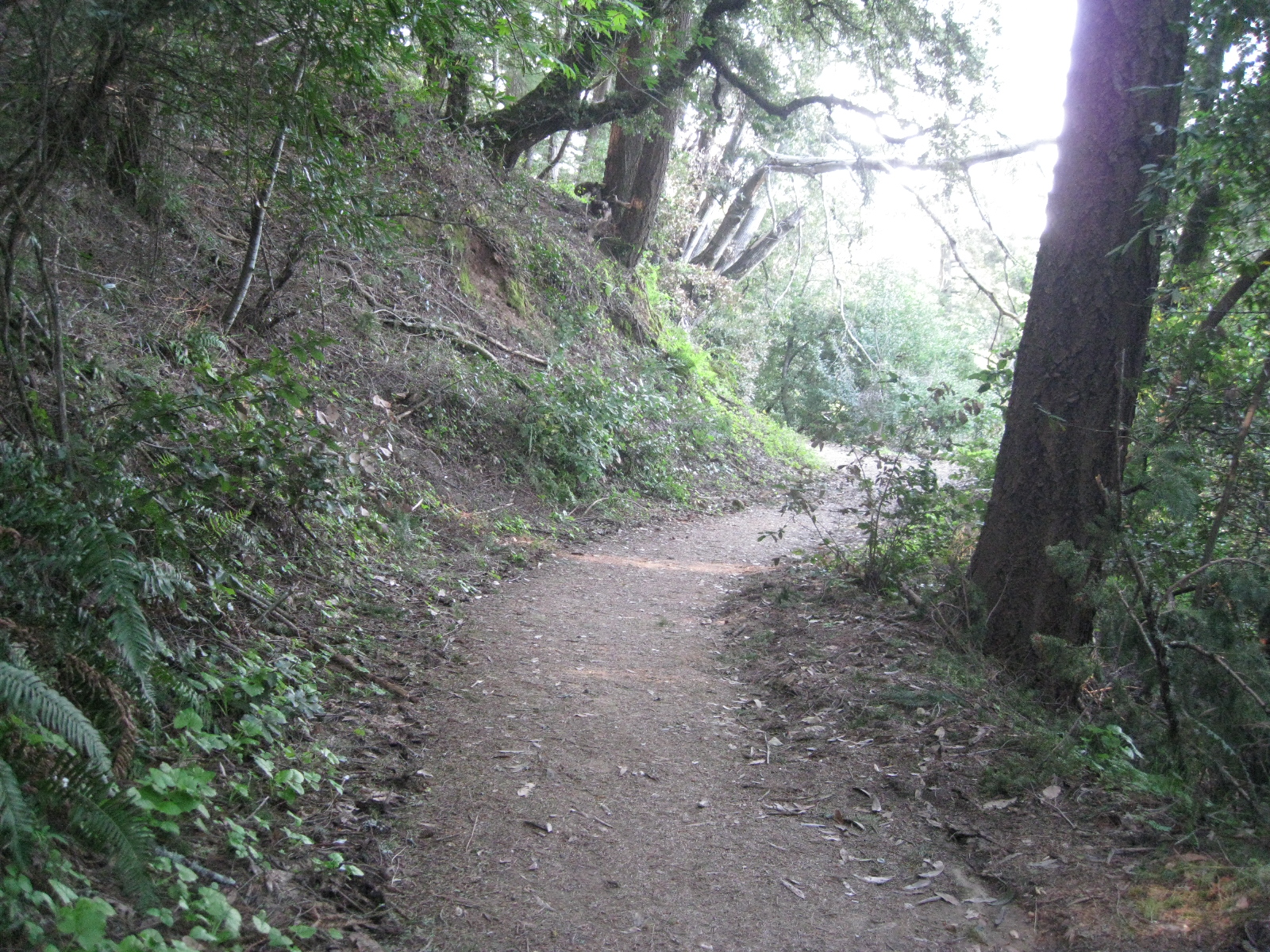
I should have recovered from my latest adventure run for at least 4-6 weeks due to the injury I incurred on my left knee. But I was not able to control my urge to run on this particular place.

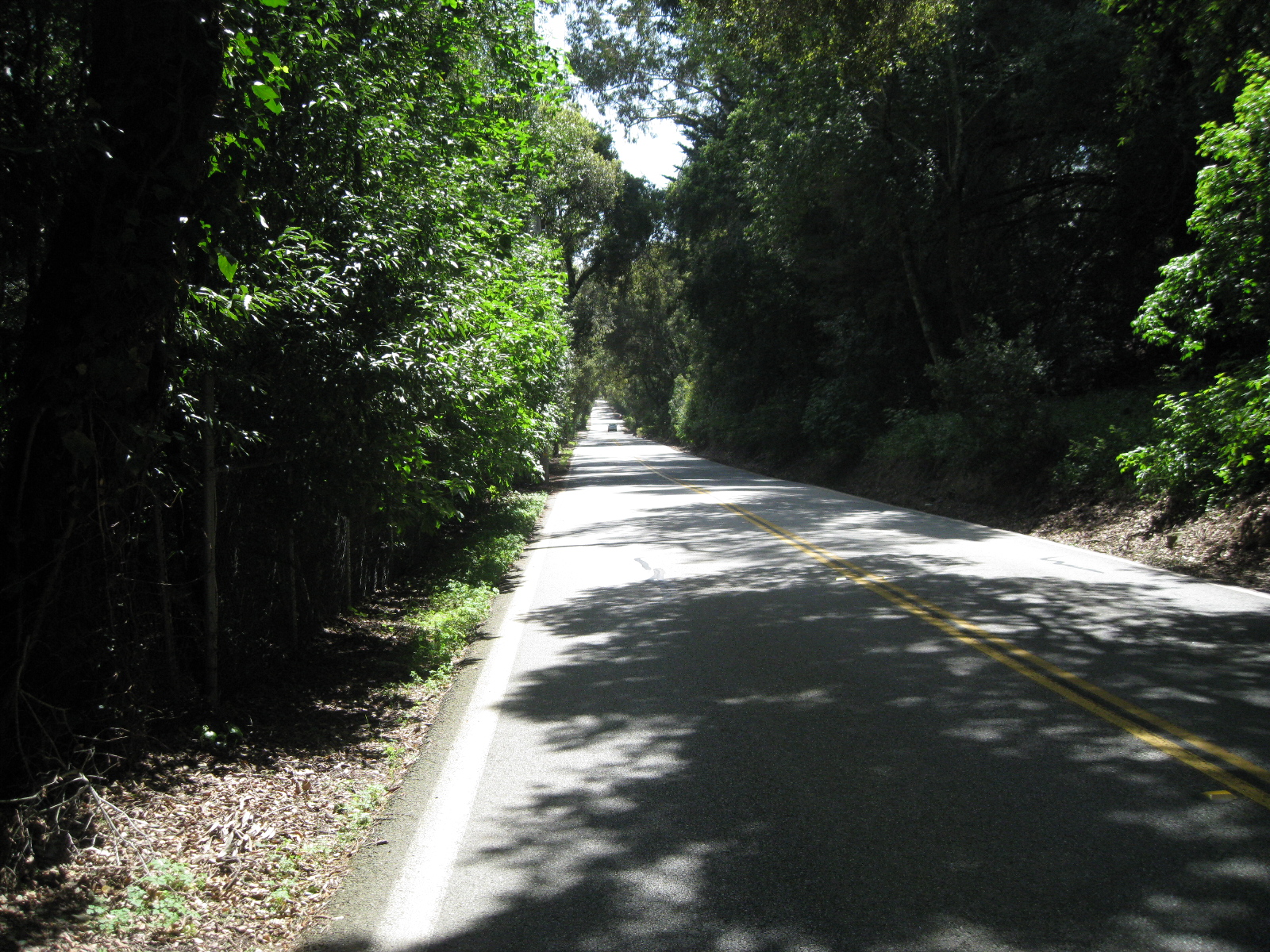
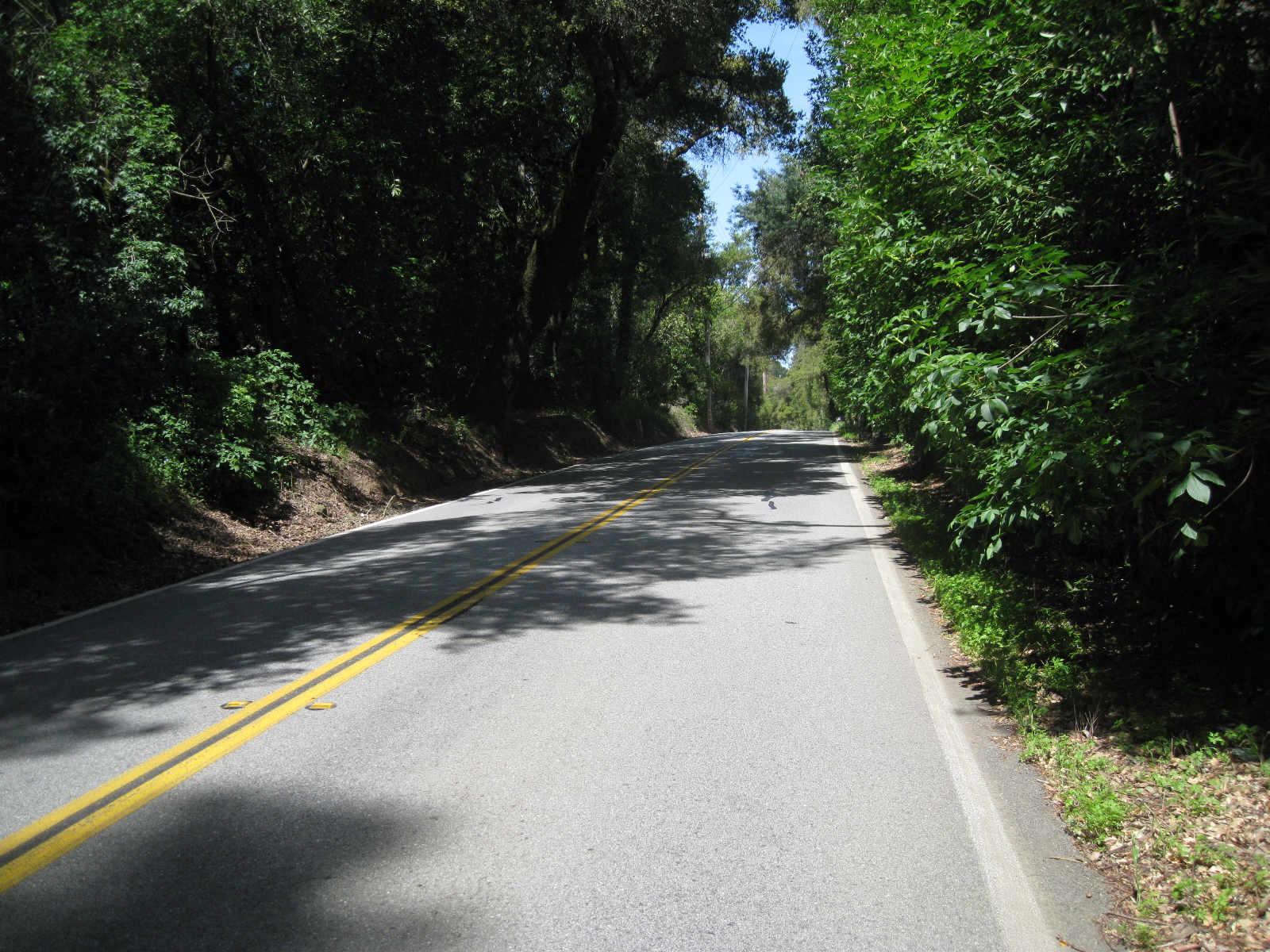
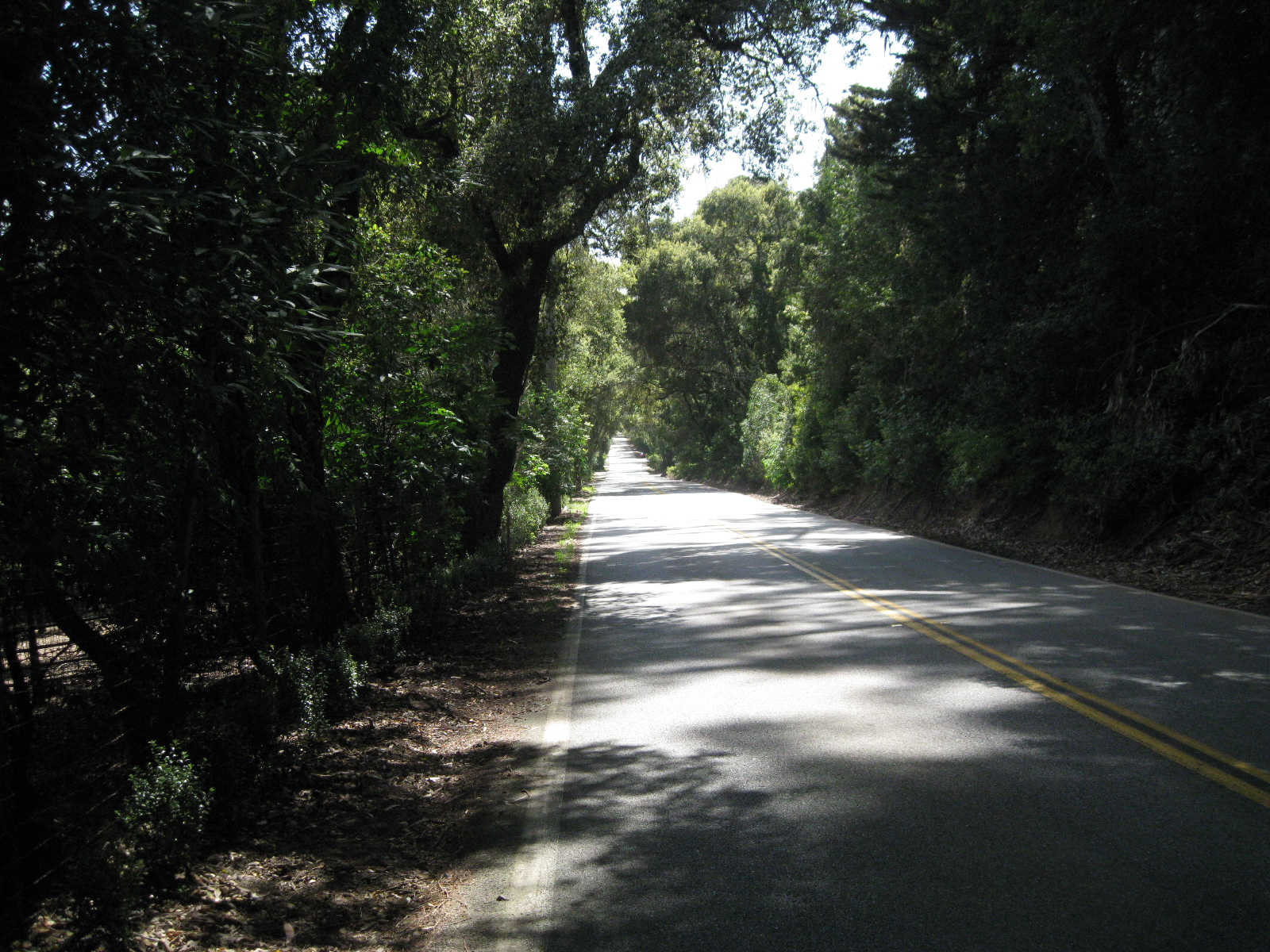
Paved Road Covered With Big Trees
Not Much Traffic From Vehicles
But I Was Able To See A Lot of Cyclists
In A Place Called "Meadow" After Running 5K Uphill On A Trail
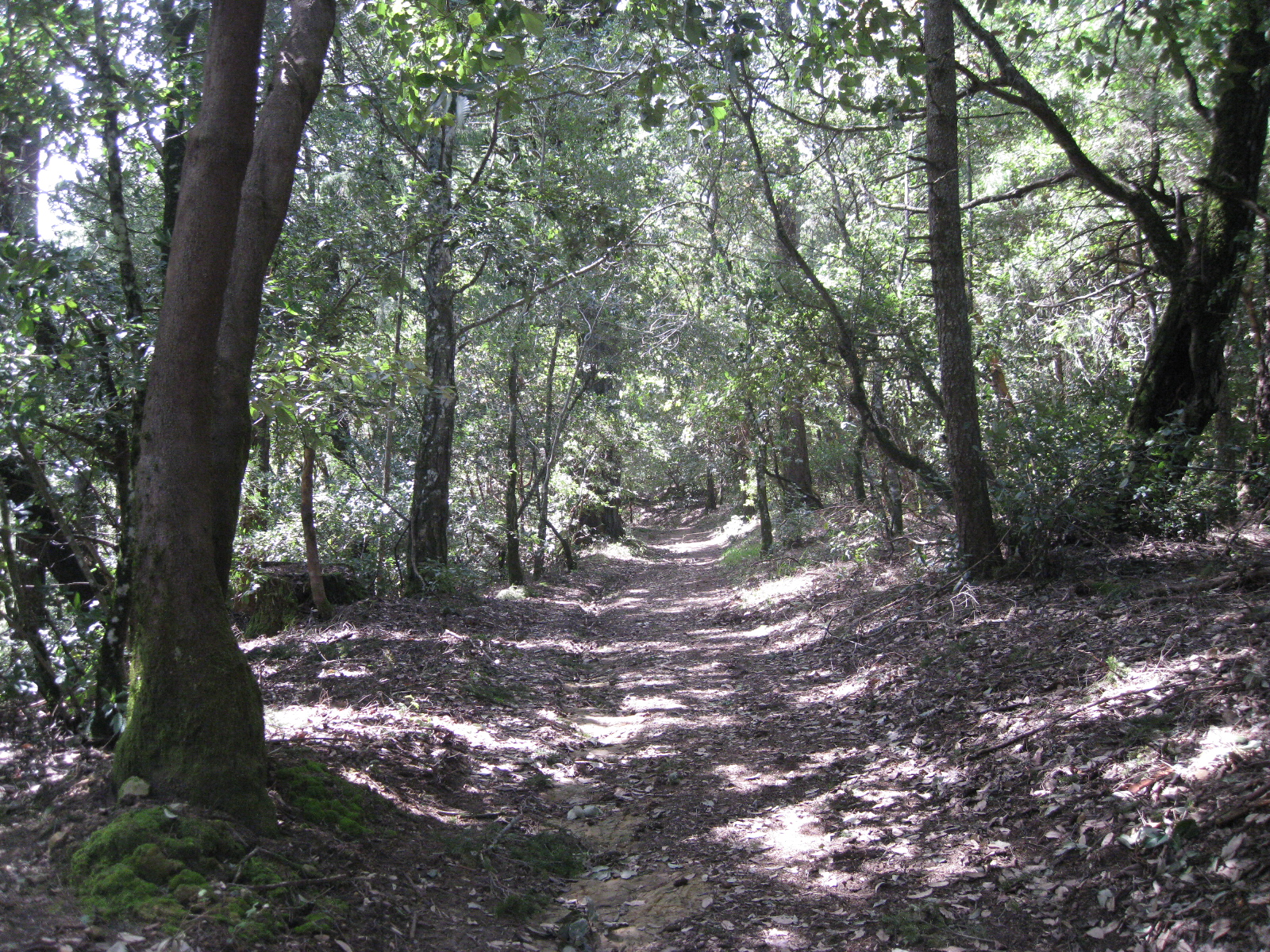
Trail Covered With Trees
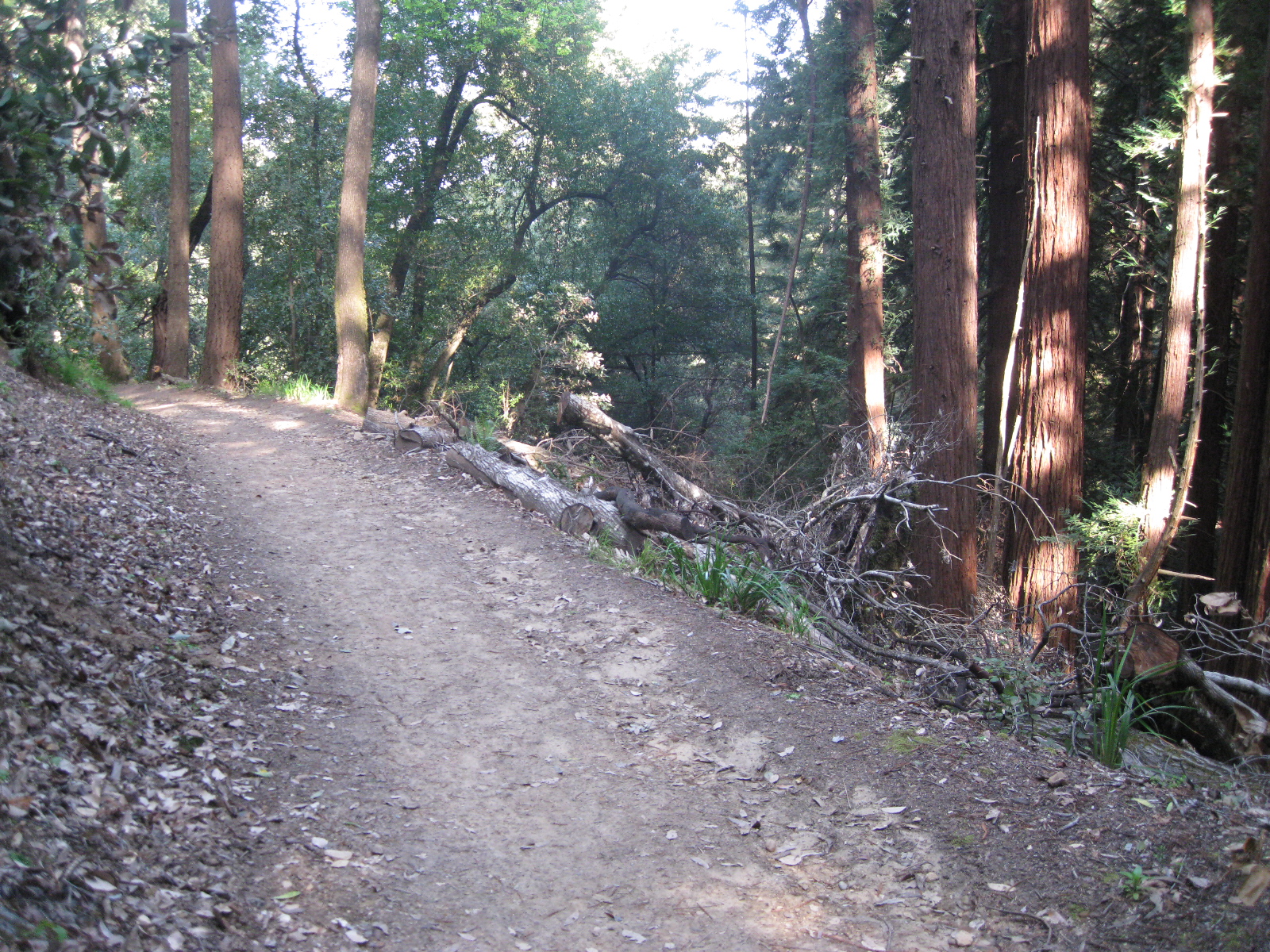
Redwood Trees All Around The Place
Trail Running Is Fun!!!
Highest Peak of the Trail
This is the Place Where "Folger's Coffee" Started Its Production

For a clear description of the trail and park, please visit Leor Pantilat’s blog.

A distance of 40 kilometers, 20K on paved road and 20K on mountain trail, for six hours made me limped towards the end of the run. Because of this run, my recovery was disrupted and I am back to square one! However, I am back to my rehab activities.

My mantra during the rehab period is PATIENCE!!!

TNF (Phil) Sucks!

Reasons Why I Don’t Run The North Face (Phil) Races

You can see in my profile that I never participated in any of the local TNF Races and I have personal reasons for it. Although I finished my first taste of an Ultra Trail Run at the Bulldog 50K in 2008 in Malibu, California in 2008, I was happy to know that the Main Sponsor for such race was The North Face. By chance, I finished this first ultra trail run using a TNF Arnuva 50 BOA Trail Shoes! Since then, I’ve been using various TNF Trail Shoes and apparel/equipment for my trail runs here and abroad to include my training runs up to the point that I feature them in this blog!

Let me go directly to the reasons why I don’t run on TNF local races. These are my personal reasons and I don’t want that my readers will be influenced by these reasons.

  1. TNF Philippines did not act on my request for sponsorship for the 1st BDM 102K in 2009 with the reason that it was not an ultra trail run. However, I saw TNF Logos being displayed on the Support Vehicles of Pinoy Ultra Runner (PUR) members who participated in the 1st BDM 102K which simply means that these runners were “sponsored” by TNF. I really did not understand why TNF would sponsor PUR runners/participants in my race when in fact they did not favourably act on my request for sponsorship for the event. (Note: I wonder what happened to the elite ultra runners who called themselves as “Pinoy Ultra Runners”)
  2. TNF Philippines gave a TNF Trail Running Shoes to a runner-blogger who have not yet experienced running on a trail running race event for the simple reason that the runner-blogger was going to participate a TNF 10K Trail Run along the lahar grounds of Clark-Sacobia area. I called the attention of TNF Philippines about this and complained why they are not giving “something” for the Bald Runner as he was fielding a team of runners from the Elite Team Bald Runner for the past two editions and had been a loyal user of TNF apparel and products. Moreso, that I finished already an ultra trail running event. TNF Phil promised to give a new pair of TNF shoes to me as a result of my complaint but up to now I have yet to receive the shoes. It was a simple case of being envious but it was not fair on my part as I’ve endorsed their products way ahead than the other runner-bloggers.  Fortunately, it was one of my BDM 102 finishers who gave me a brand new TNF shoes but he is not in any way connected with TNF. Thanks to July Oconer for the “gift” and generosity. July is also a TNF “loyalist” like me.
  3. I complained about the condition of my TNF Rocky Chucky Trail Shoes after a 50K Trail Run at Mt Pinatubo and TNF did not replace it. Instead, TNF Phil repaired the shoes by using glue to the detached parts and I got the repaired shoes after 5 weeks (that’s a long time to repair a pair of shoes!). After using the repaired shoes for one running workout, the glued parts were separated again. For once, I praised the customer service of TNF Phil when they replaced my non-operating BOA lock & wire for my TNF Arnuva 50 BOA shoes with a new pair of TNF trail shoes but in this case, their customer service was simply poor and deplorable.
  4. It came to my attention of a complaint made by a runner who joined the TNF Baguio about his lost drop bags who got an unsatisfactory feedback from the Race Organizers but the bottom line here is that TNF Phil did not give a satisfactory reason why the runner’s drop bags lost during the conduct of the race. BDM 102 “veteran” Eric Socrates would attest to this information.
  5. On technical matters about the local TNF races. In their 100K trail runs, the prescribed cut-off time is 30 hours. I think this is a very easy requirement to finish an ultra trail run with such distance. You can practically walk all the way up to the finish line even if the terrain is very challenging. The thing that I don’t understand is that the TNF Phil races has the same “point equivalent” with that of a ultra trail running event in the USA which is more challenging and longer in distance. Such accumulated points are needed if you want to qualify for the TNF Mont Blanc 100-Mile Endurance Run (UTMB) in Chamonix, France. So, if you have plans of participating in future UTMB Races, then joining the TNF Phil races will give you the “points” needed for you to be qualified for the race.
  6. For this year, TNF Phil has scheduled a Trail Run in Camarines Sur on April 30-May 1 as part of the 2011 TNF Pacific-Asia Ultra Trail Run Series. Up to this time, TNF Phil is silent about the details of the race but there is only one mountain that is prominent in the province and that is the Mt Isarog. While I was in Camarines Sur for the Marathon Race last year, I had the chance to talk to the Philippine Army’s Intelligence Officer based thereat. In our conversation, I asked him about the security condition of Mt Isarog and he told me that it is not yet declared as “cleared” from the NPA/insurgent forces operating in the area. I hope and wish that from the time I had a conversation with the said Intelligence Officer up to this time, the Mount Isarog is already declared as “cleared” from the armed insurgents! (Note: I wrote this post 2 months ago and I hope that by this time the security forces in the area had “cleared” the place and they will be there to provide the necessary security for the said event)
  7. I created a sports federation for ultra running in the country which is the Philippine Association of Ultrarunners (PAU) under the auspices of the PATAFA and the International Association of Ultrarunners (IAU). PAU embraces and covers all running events that are considered farther than a Marathon Distance which is 42.195 kilometers, whether they are ultra trail runs, ultra road races, or multi-day/multi-stage runs. What I don’t understand is that the Race Organizers of TNF Phil are not coordinating with me or with PAU with regards to their races. If these people are professionals, they should have, at least, the respect and courtesy to coordinate with the sports federation on ultra running. A simple e-mail or SMS would satisfy me on this matter. (Note: This observation goes also to those Race Organizers/Directors who are coming up with ultra marathon races in the different parts of the country who do not coordinate with me/PAU in coming up with their scheduled events. I don’t want that the sports federation for ultrarunning will become like our cycling, basketball, shooting & other sports who have two or more associations/federations under each sports!)
  8. This could be a petty reason but I would like to repeat it (all over again!) as I stated in my previous posts. When will TNF Phil sponsor the visit of Dean Karnazes to the Philippines? I think you know that DK is one of the most prominent athlete endorsers of TNF, if not, the most prominent in the world. I admit that I was strongly influenced by the first book of this guy to get into ultra trail running and eventually come up with the 1st BDM 102K Ultramarathon Race. To describe how crazy I was to meet this guy, I went to Badwater, California for the start of the Badwater Ultramarathon in 2008 (a trip with my wife for 5 hours from Los Angeles where I drove a car) just to personally meet and have a photo-ops with this guy and it later resulted to meeting and talking to him again in two separate events. I hope TNF Phil will not wait till the time when DK is within the age of Jeff Galloway (age of 66) to visit the country.

Now, if you ask me if I will join in this year’s TNF Phil? No way, Pedro! I’d rather run in the San Francisco’s 50-Mile TNF Endurance Ultra Trail Run this December!

Good luck to all the TNF 100 CamSur trail runners & trekkers! Have fun and stay safe!

By the way, does TNF Phil allow the use of trekking poles? Just asking!

Deaths

Grete Waitz of Oslo, Norway died last Tuesday, April 19 due to cancer. She was 57 years old. She was considered as the fastest lady marathon runner from 1978 to 1988, except in 1981 when she DNFd the New York Marathon due to shin splints and when she placed 2nd and earned the Silver Medal in the 1984 Olympic Games’ Marathon Race. Nobody among the lady marathoners had broken her record of winning the Ladies New York Marathon for 9 times! She won also the Ladies Category in the London Marathon in 1983 and 1986. She was one of my marathon idols when I started to train and run for my marathons races in the 80’s. May she rest in peace!

Grete Waitz, A Consistent ADIDAS Endorser & Sponsored Athlete

In contrast, a young athlete, Sally Meyerhoff, a runner and a triathlete, died last March 7, 2011 due to cycling accident as she was bumped by a fast pick-up truck wile she was crossing a road intersection. She died on the spot. She was still young at the age of 27 and had the potentials to be a future Olympic Games athlete. What makes her more memorable is that she maintained a blog at http://runsal3.blogspot.com where she wrote her latest post entry a day before she died.

According to the Centers for Disease Control and Prevention, each year, there are more than 500,000 people in the US are treated in emergency department, and more than 700 people die due to cycling-related accidents.

In the Philippines, I have yet to find out the statistics of cycling-related accidents.

Sally Meyerhoff, A "MararthonGuide.Com" Endorser

Unbelievable!!!

There is only one word to describe what happened at the 115th edition of the Boston Marathon which was held last Monday—Unbelievable!

For the past years, I was not interested  in trying to monitor what is happening “live” during the race due to the fact that the elite runners were not so much known to me as most of them were from East Africa—Kenya and Ethiopia. After Toshihiko Sato of Japan won the race in 1987 for the 2nd time, the succeeding years up to now had been won by either from Kenya or Ethiopia, except in 1990 when it was won by Gelindo Bordin of Italy and in 2001 when Lee Bong-ju of South Korea won the race. On the women’s division, after Rosa Mota of Portugal won the race in 1990, those elite runners from Poland, Germany, Russia, and of course, Kenya & Ethiopia did not “ring” a bell in my ears. It could be that the winners’ names were hard to memorize or it could be my non-interest then of running because my sensitive assignments or it could be that I did not mind updating myself on what was happening in the running world’s events by not subscribing or buying the latest editions then of the popular running magazines.

But what caught my attention again in this year’s edition of the Boston Marathon was the fact that Ryan Hall and Kara Goucher of the USA had been featured in the runners’ magazines and other running news of their desire to win in the said race. Of course, who would not be excited to see an American/US citizen who will win this year’s edition when the last American winner (Greg Meyer) was in 1983 (almost 3 decades ago). And this is the reason why there is a lot of euphoria and expectations on the result of this year’s edition as being played by the press releases, articles published in running magazines, and other media pronouncements.

But the results in last Monday’s race proved that the Kenyans would steal the show from the rest of the elite runners. Geoffrey Mutai of Kenya won the race in the fastest ever recorded Marathon Finish of 2:03:02 hours. In the Ladies Division, Catherine Kilel of Kenya won the Championship with a time of 2:22:36 hours. Geoffrey Mutai and Moses Mosop are definitely the fastest marathoners whose times were faster than the existing record time of 2:03:59 hours by Haile Gebrselassie at the 2008 Berlin Marathon. Whether Mutai’s time was not considered as an official Marathon World Record, it is considered as a New Course Record for the Boston Marathon. In my opinion, Mutai will not be affected with such decision as he is more interested in cashing in the Cash Prize he received for his efforts. A cash prize of $ 200,000 is a lot of money for a Kenyan runner!

Ryan Hall, Desiree Davila and Kara Goucher of the USA had also unbelievable results in their efforts where each of them improved their respective PRs. But there was another unbelievable show during the race which was 53-year old Joan Benoit Samuelson’s finish time of 2:51:29 hours making her the record holder for the fastest finish time in the ladies age group of 50-54 years old.

Lastly, the most unbelievable of them all is the decision of the BAA last February of this year to reduce the qualifying time for each age category for the Boston Marathon by 5 minutes. This means that I have to finish a marathon race in 3:55:00 hours by next year (as I will turn to be a 60-year old!) if I need to include joining the Boston Marathon in my “bucket list”. At this point in time, a decision to join or qualify for the Boston Marathon in the future will entail a lot of focus, patience, determination, and resources. There is a need to completely dedicate my time in this life-defining quest for excellence in running.

But, for the Bald Runner to finish the Boston Marathon that would definitely be…UNBELIEVABLE!!!!

For 2013, these are the new qualifying times for the Boston Marathon

Age Group Men Women
18-34 3:05:00 3:35:00
35-39 3:10:00 3:40:00
40-44 3:15:00 3:45:00
45-49 3:25:00 3:55:00
50-54 3:30:00 4:00:00
55-59 3:40:00 4:10:00
60-64 3:55:00 4:25:00
65-69 4:10:00 4:40:00
70-74 4:25:00 4:55:00
75-79 4:40:00 5:10:00
80+ 4:55:00 5:25:00

Creed For The Ancient Marathoner

For those who are about to reach their “half-century” age and “senior citizen” status, the following “creed” is nice to read and as a good reference. The complete article where this excerpt was taken can be browsed at Marathon and Beyond Magazine. This creed applies to me!

Creed for the Ancient Marathoner

1.  Honor the run. Train enough, but not too much. Don’t rely on yesterday’s experience for today’s challenge. Be true to the task. Know
that you are the torchbearer for those younger. You show them not just what you can do but what they will be able to do. You show
them their future.

2.  Don’t be surprised. Train in the heat and in the cold. Know how todrink and eat. Know where each step is taking you.

3.  Don’t take any extra weight along with you; be spare.

4.  Be rested, be fresh, and arrive at the start ready for a full go. Know that each part of you is ready to go the full course.

5.  Age is not an excuse. It is an advantage. Each of us has been up our personal hill more often than the younger runners. We are older, we have experienced more, we have more to give—and we understand more.

6.  Don’t make excuses. Don’t rely on someone else. You are in charge. You alone can crest the rise, fight the fatigue, master the moment.

7.  Although you are in charge of yourself, you are not alone. Your number increases. You run in the footsteps you have made—but also in the paths of Emil, Frank, Johnny, Grete, Clarence, George, and others. You tie your shoes with their laces. You are one with the heroes and heroines.

8.  Don’t compete with your yesterday. No one can defeat you. Be the best that you can be this day. By being your best today, you will
prepare for being your best tomorrow.

9.  Listen to the wisdom of your body. It is older. It has been tested. It knows how. Pay respect and learn from its teachings.

10.  Have fun, don’t take the run too seriously, be confident. 

Bortz’s Law: “It is never too late to start, but it is too soon to stop”

(Source: Running, Aging, and Human Potential by Dr Walter Bortz, Marathon And Beyond Magazine, Sep/Oct 2009)