Books, Movies, Running, & Cooking


These are the things that I do whenever I am on vacation/break in Los Angeles, California. Shopping will come later. Ha!Ha!Ha!

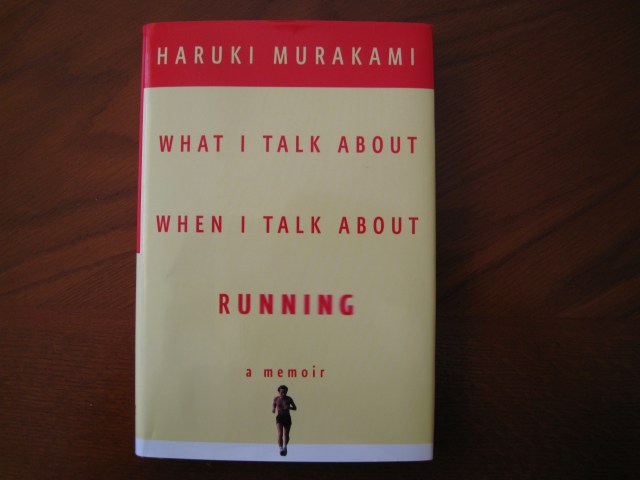
On my first day in the City of Los Angeles, the first thing that I did was to visit the “Barnes & Noble” Bookstore. From our place, such bookstore is located at Americana Shopping Complex at Brand St, Glendale, California. I bought two books on running, namely: “What I Talk About When I Talk About Running” by Haruki Murakami and  “Daniel’s Running Formula” by Jack Daniels, PhD. I bought another book about Website Creation and Design.

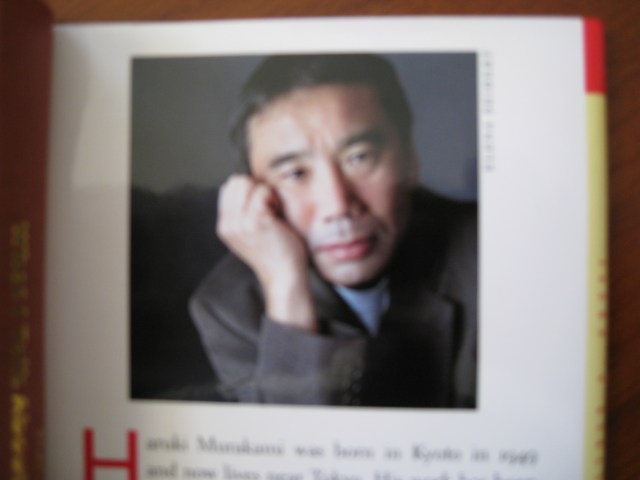
Murakami's Book
Murakami's Book
This Guy Is Fast At His Age of 57
This Guy Is Fast In Marathon At His Age of 57
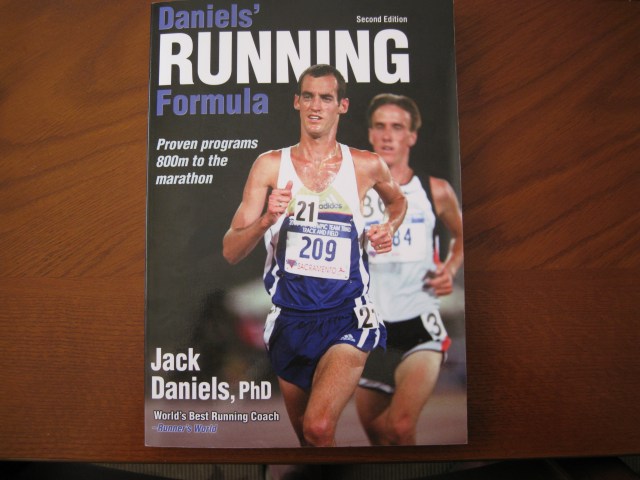
VO2Max; VDOT; Lactate Threshold & Altitude Training Book

I finished reading Murakami’s book in two days with some breaks in between. After reading the book, I conclude that I could write a book about running, too! He wrote the book when he was 57 years old and I just turned 57 years old last Sunday. Hmmm, I think this is a good idea!

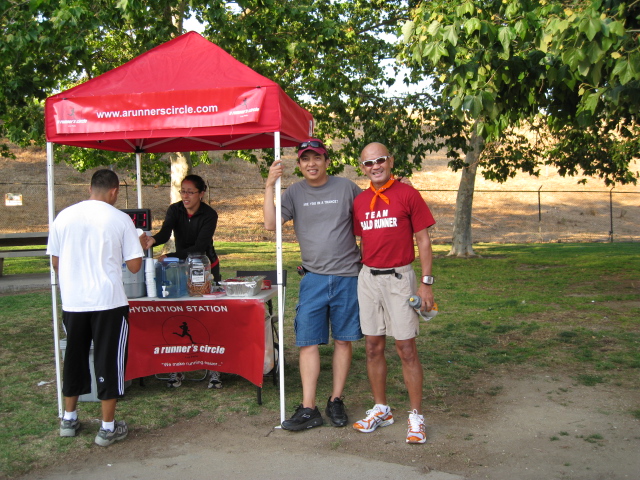
On my second day, I watched the movie “Angels & Demons” at the Americana Cinemas and then ate at Red Robbin with their Grilled Chicken Hamburger (It was big!). And later at 6:00 PM, I had a 3-loop run at the Silverlake Reservoir which is equivalent to 10.2 Kms (one loop is 3.4 kms). Before my run, I dropped by the Hydration Station of Joe Matias aka The Running Shoe Guru and owner of the A Runners Circle (ARC) Store at the park within the Lake and we had a lengthy conversation. It was a chance to personally thank him for the Balikbayan Box with donated used shoes he sent to me to the Philippines.

Hydration Station & Joe Matias aka The Running Shoe Guru/ARC
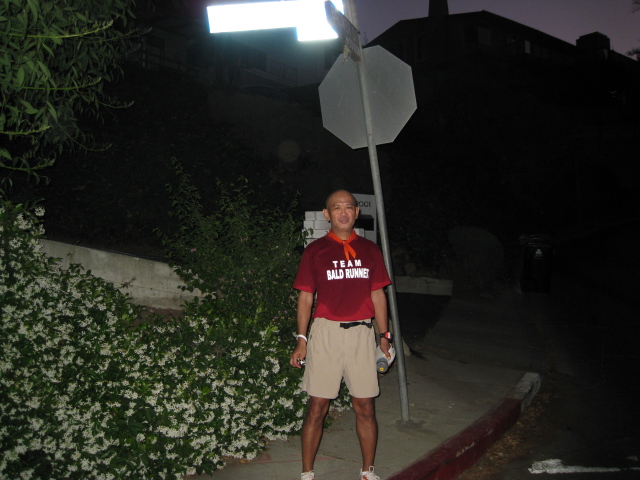
Runners I Met Along The Road Would Smile At My Team BR Shirt

I did also some cooking! Have you tasted and tried a Sinigang Beef with Broccoli? Well, I cooked it. It tastes good according to my kids! Nothing was left from this particular food that I cooked for dinner! Next time, I’ll post the pictures of the food I prepare during my cooking adventures!

This morning, I did another 10-Km run around the Echo Park Lake which I did in 55 minutes. It is a slow to moderate run as I tried to concentrate on the number of strides/steps I make in every minute. I forced myself to run 180 steps per minute or count at least 90 steps every time my left foot strikes the ground. As I was doing this, I observed that I was registering an everage pace within the range of 4:50-5:15 minutes per kilometer. I was able to sustain such stride frequency within the middle 5-km portion of my workout. For a change, it was a nice mantra to be counting 1 up to 90 while running. 

Guys, till next post and good luck again to the TNF 100 Solo & Relay runners who are on their way to Clark Freeport today.

“Specific-Endurance Test”


If there is “Physical Fitness Test” for the Officers and Soldiers of any Armed Forces of any country in order to determine the level of their fitness and endurance based from military standards, there is also some sort of “fitness test” for runners based from the distance of the road race they are going to participate or compete.

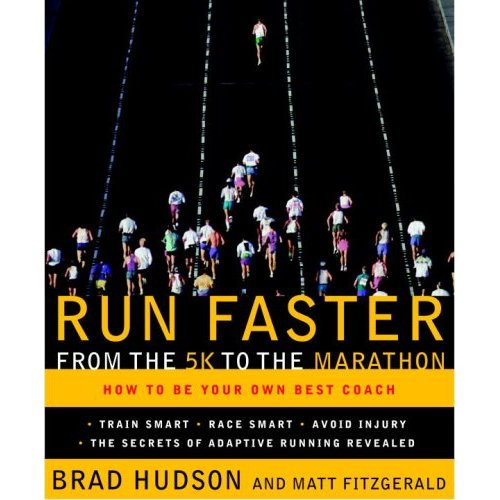
In the book, “Run Faster: From 5K To The Marathon” by Brad Hudson, he suggests that if a runner is following a training plan for a certain race, he/she has to schedule a “specific-endurance” test (spec test) in order to assess if there is an improvement towards his/her desired goal depending on his/her target finish time to an specific road race. To some coaches and runners, such term is also called as “time trials” which are usually done in an oval track or in a road race.  Such test should be done at least every 5-6 weeks. However, running in a road race is a practical option for 5K and 10K runners who can run such distances every few weeks without overtaxing their bodies. As for the half-marathon and marathon distances, the only option for the runners to test their endurance and speed is to perform a very “race-specific” workout. Continue reading ““Specific-Endurance Test””

Book: “Run Faster” By Brad Hudson


The complete title of this book is “Run Faster: From 5K To The Marathon”. This is the latest book published for this year regarding running and portion/part of this book was featured in the Running Times Magazine for October 2008 issue. The author advocates “adaptive running” as his training philosophy and aside from developing runners to run faster, the author teaches and guides the reader to be his/her own coach.

“Adaptive Running” simply means that there is no single training formula that works perfectly for every runner. Every runner must be able to stimulate the precise set of physical adaptations (aerobic/anaerobic) that are needed to achieve maximum performance in a peak race. Training programs must be adapted to the individual strengths, weaknesses, needs, and goals of each runner. Individual training programs must be adapted daily, based on the runner’s response to recent training. The runner must adapt his/her training from year to year in response to the effects of the most recently completed cycle to stimulate further positive adaptations. Moreover, the author listed his recommended Adaptive Training Plans for 5K, 10K, Half-Marathon and Marathon distances according to your level of fitness at the last chapter of the book to include training plans for the Youths and Masters runners.

As I reach my one-year running comeback this weekend, I find the author’s questions to assess one’s running experience for the past year very beneficial to me as I try to improve my performance in the 10K, Half-Marathon, and Marathon distances.

If you want to improve your running performance and want to be your own coach, I highly recommend this book for every runner.

Motivation On Running


The following excerpt was taken from the book, 50/50: Secrets I Learned Running 50 Marathons in 50 Days–and How You Too Can Achieve Super Endurance! by Dean Karnazes on page 156:

“The key to keeping your passion for running strong over the long haul is to ensure that it remains a journey and never becomes a routine. Lots of runners, myself included, use running to test and redefine various physical and mental limits, which brings endless fulfillment. Others pursue intellectual development through running, learning ever more about the art and science of effective running, how nutrition affects performance, and so forth. The possibilities are endless. The only wrong to move is to miss out on all of them and make running something it’s not: boring. Because the simple act of putting one foot infront of the other and moving forward at an accelerated rate can be one of life’s greatest–and simplest–pleasures”

Book Signing With Karno


Almost two weeks ago, Eric aka E-rod posted in his blog the scheduled signing of the 2nd book of Dean Karnazes entitled 50/50: Secrets I Learned Running 50 Marathons In 50 Days–and How You Too Can Achieve Super Endurance! at the Barnes & Noble Store in Costa Mesa, California last 16 August 2008.

And so, together with my wife and son, we went to the said store and bought the said book and bought also Karno’s first book for him to sign. The signing activity started on time at 2:00 PM with about 80-100 people where Dean Karnazes started the activity with a brief talk about the background of his new book and later there was open forum where he answered some interesting questions about his running capabilities and ultramarathon events from the audience. Continue reading “Book Signing With Karno”

Dean Karnazes: UltraMarathon Man


Dean Karnazes is the author of the book, “UltraMarathon Man: Confessions Of An All-Night Runner”. This book was published in 2005 but it was only when QuickSilver Runner mentioned his name in his blog last December 2007 that I knew and heard the name of this famous ultra runner. The second time that I read about this guy was in the book of Pam Reed entitled, “The Extra Mile” who was the strongest contender for the Champion Runner in the Badwater Ultramarathon in 2003, only to be defeated by Pam Reed in few minutes.

The book of Dean Karnazes is a very inspiring one for runners, most especially to those who would like to run farther than the marathon in order to test their endurance and accomplish more than running a marathon race. Through this book, I was able to appreciate and find out that there is a group of extraordinary endurance runners who are dedicated in their training, preparation, diet, health and other technical aspects for ultrarunning.

Dean Karnazes had finished so many ultra running events like: the annual Western States 100-Mile Runs, Badwater Ultramarathons, South Pole Marathon, and The Relay, a 199-mile footrace which is participated by teams with 12 member-runners but he ran the distance alone. He was a team of one in the said The Relay Ultra Running Event finishing the distance in 46 hours and 17 minutes! Since then Dean Karnazes had been a popular figure in endurance runs and his participation in such races were tied with charity works to help children who are in need of medical treatment.

Dean K ran the famous 50 marathons in 50 States in 50 days finishing this feat at the New York Marathon last November 2006. Last March of this year, he won the Atacama Crossing in Chile which is a 250-kilometer race in 6 stages at Atacama Desert. Last month, he finished the Gobi March in 4th place held at the Gobi Desert, China which is also a 250-kilometer footrace in 6 stages. Next Monday, he is expected to join the 82 runners who will participate in the 2008 Badwater Ultramarathon.

Here are some tips from Dean in preparing for Ultra running events:

1) When preparing for an ultra running event, he runs at least 70-100 miles per week. Wakes up at 4:00AM and run 3 hours before bringing the kids to school and going to his office. He takes another 45 minutes to one hour quick run after office work. On Saturday mornings, he runs 30-40 miles.

2) For a 50K or 50-mile event, he suggests doing at least one eight-hour training run. For 100-miler, he recommends doing an all-night run to simulate race condition without sleeping.

3) An ultrarunner should be properly hydrated with water and energy drinks with electrolytes. In his early ultra running events in the 90s, he was using Oral Pedialyte for his electrolyte replacements.

4) His daily diet consists of 40% Carbohydrates; 30% of Protein & 30% of Fats. He eats salmon 4-5 days a week and lots of organic salads.

5) He trains half and half for the roads and trails. But he prefers more time running on the roads.

6) He goes to the gym for muscle strengthening workouts. If he can not make it to the gym, he does 4 sets of 50 push-ups and 4 sets of 90 push-ups—once in the morning and once in the evening.

In 2004, Dean Karnazes won the Badwater Ultramarathon covering 135 miles in 120-degree Fahrenheit temperature in 27 hours and 22 minutes of non-stop running.

He is a columnist for “Men’s Health Magazine” and the President of Good Health Natural Foods. He lives with his wife and their two children in San Francisco. To know more about him and his schedule of ultramarathon races, visit www.ultramarathonman.com.

I hope I will be able to watch his movie, “The Ultramarathon Man”, on 31 July 2008 (in the USA) and buy a copy of his new book, “50/50”.

I recommend this book (“Ultra Marathon Man”) to every runner. Happy reading!

Extreme Running: The Book


“Extreme Running” is a book written by Kym McConnell and Dave Horsley. Both of the authors are well-respected ultramarathoners and had been going from one continent to another to participate to these extreme running events, all for their passion to test their body limits and challenge the environment. This book was published in London, UK last year, 2007.

I found and bought this book at PowerBooks (Glorietta) two months ago after failing to locate or buy the book, “The Ultramarathon Man” by Dean Karnasez.

This book takes the reader on a world tour of ultramarathon races. The book is divided into seven chapters looking at each continent’s ultra foot races. Each ultra race has its own history, pecularities, preparations, challenges, strategies, experiences/adventures and the characters/personalities involved in each race. Pictures, maps, race course routes, and other informative notes were included in each page of the book.

To mention some of the extreme running events, the following is the list of some ultramarathon races in every continent in the world:

Europe:

1) The North Face Ultra-Trail Du Tour DU MONT-BLANC (UTMB)—101-mile race (163 Km) in Mount Blanc trails that passes through France, Italy & Switzerland held in the later part of August. Cut-off time: 46 hours. Limited to 2,000 runners.

2) Spartathlon—Athens to Sparta Road Race which has a distance of 152 miles (245.3 Kms). This is the original ultramarathon from Athens to Sparta which the Greek messenger, Pheidippides, took in 490 BC to deliver Athen’s request for reinforcements to resist the Persian invaders. Cut-off time—36 hours. Regular number of participants—300 runners. It is being conducted during the month of September.

Africa:

1) Marathon Des Sables—In Sahara Dessert, East Morocco during the month of March or April. It is a 6-stage course which has a total distance of 220-240 Kms (135-150 miles). Number of participants—700 runners.

2) Comrades Marathon—It is a single stage race in South Africa, covering a distance of 56 miles or 90 kms being held in June. Number of Participants—11,000 runners.

3) Trans 333—It is a single stage race in a desert location which is being held in a different host country each year. It has a distance of 333 Kms (206 miles). This is considered as the “World’s Longest Single Stage Desert Race”. Number of Regular Participants—20 runners. Maximum Time Permitted to complete the race—108 hours

North America:

1) Badwater Ultramarathon—It’s a single stage race from Badwater, Death Valley to Mt Whitney in California covering a distance of 135 miles (217 Kms) which is done in mid/late July. Number of Participants is limited to 90 runners (by invitation only). Time Lite to Finish the race is 60 hours.

2) Wasatch Front 100 Miler—Single stage race in Kaysville, Utah, USA which is done in the month of September. Number of Regular Participants—225. Time Limit to Finish—36 hours.

3) Yukon Arctic Ultra—In Whitehorse, Yukon, Canada which is held in February. Distances are: 42K, 160K, 480K & 736K (26.2, 100, 300 & 460 miles).

South America:

1) Jungle Marathon—In The Amazon Jungle in Brazil. It is a 6-stage, 200-Km (125 miles) road race in October and participated by 80 participants.

2) Atacama Crossing—In Atacama Desert in Chile. It is a 6-stage, 250-Km (150 miles) road race which is participated by by 150-200 runners which is conducted in March/August (alternate by year).

Asia:

1) Everest Marathon—In Nepal; 42.2 km, single stage with approximately 75 participants with 10 Nepalese runners. It is conducted during the month of November.

2) Gobi March—In Xinjang Province, China. The course is 6-stage foot race with a distance of 250 kms (150 miles). It is now on-going this week. Check out at www.thenorthface.com with Dean Karnazes participating in the said race. Number of participants—200 runners.

3) Lake Baikal International Marathon—In Lake Baikal, Listvyanka, Russia. 42.2 kms, single stage with approximately 30 participants during the month of March.

Oceania:

1) Kepler Challenge—In Te Anau, South Island, New Zealand. It is a single stage 60-km run (37 miles) done in December with limited participants of 400 runners.

2) Te Houtaewa Challenge—In 90 Mile Beach in Kaitaia, New Zealand. It is running along the beach with a distance of 60 kms (38 miles), single stage held during the month of March. Approximate number of participants—30 runners.

3) Bogong To Hotham Trail Run—In Mount Bogong, Victoria, Australia. It is a single stage run with a distance of 64 kms (40 miles) held in the month of January. The race is limited to 60 runners.

Polar:

1) Antarctica Marathon—In King George Island, Antarctica. It is a single stage 42.2-km run held in February. It has a limited number of participants to 180 runners.

2) Antarctic Ice Marathon (South Pole Marathon)—In the foothils of Ellsworth Mountains, Antarctica. It is a single stage race with distances of 42.2 kms and 100 kms. It is held in December with a limited number of participants to 25 runners.

3) North Pole Marathon—It is located in 89N-90N, Arctic Ice Cap. It is a singlke stage race with a distance of 42.2 kms held in April. The number of participants is limited to 24 runners.

Thoughts of Dr George Sheehan #1


I just thought of copying and posting one of the writings of Dr George Sheehan whom I adore up to this time and who inspired me when I started to learn the scientific way of running in the early 80s. I was then in my early 30s and I was reading the “thoughts” about running of a doctor twice my age who had been passionate in running. He was popularly known as the “Philosopher Of Running” in the modern times. Way back in the 80s, it became a habit to read first the page of Dr Sheehan whenever I have a copy of the RW Magazine, whether old or new, and this gave me the inspiration to run and train some more. Since I revived my running last October last year, my day is not complete if I don’t read an essay or two from the writings of Dr Geoge Sheehan which I usually read before going to bed. Here is one of his essays:

Running Into Old Game

“What I have lost I can afford to lose. What I have gained is something I cannot do without.”

           I first came upon the aging process in a race.
           I felt no sense of advancing years in my day-to-day activity. My work week was unchanged: I wrote, I traveled, I lectured. Some people marveled at my energy and endurance. It was my weekend race that finally told me I was no longer young.
           The changes that come with age are subtle-but not to a runner. My 10-K time measures me quite accurately. Any change in performance dictated by age is precisely recorded in minutes or seconds on the digital clock at the finish line.
           “Crumbling is not an instant’s Act,” wrote Emily Dickinson. And the physician in me knows that almost 90 percent of my liver has to be damaged before its impairment is apparent. The body has enormous reserves to call upon. But in the race, I call on all my reserves. I am operating at full throttle. The least diminution in function becomes evident.
           The race, therefore, is the litmus test for aging. Long before anything else goes, race times signal the approach of the last stage of life. A look at my weekly race results will tell you bluntly that I am no longer middle-aged. I am now a full-fledged citizen of the country of the aged.
           Three years ago when this happened, I refused to believe it. Running had been my fountain of youth. For years I thought it was inexhaustible, like the never-empty cup of coffee some restaurants offer. After I began running in my 40’s, I quickly became 32 years old and stayed that way. Decades came and went, and I was still in my prime.
           When my 10-K times slowed down and I began to run personal worsts instead of personal bests, I took stock. It was not age, I told myself. I had been 32 years old for the previous 20 years and did not intend to get older. All I needed was more training, some hills and speedwork, and I would be back to my best.
           I took up arms against age. I increased my training and within a single Thanksgiving holiday ran four races. Each race I ran a little faster than the previous one, but never near the times I had registered the year before. And I was no longer in the top third of the field-now, I was well back in the second half of the pack.
           How did I feel about all this? Terrible. And don’t remind me that most people my age have run up the white flag. Do not tell me I can still outrun the average person twenty years younger than me. Do not point out that age has compensations that will more than pay for the lost few minutes in the race.
           I am rebuilding my life on those thoughts. But first, help me bury the runner I once was, and then we can talk about what the future holds.
           Apparently, it still holds plenty. My initial depression has receded. I realize now that there are more things at stake than setting a personal best in a road race. I can even answer truthfully (and this is the most difficult part) when someone asks me, “What was your time, Doc?”
           My times continue to get slower and slower. And, therefore, the “me” that I am is different. But the me that I am has developed insights and wisdom that I did not have before. What I have lost I can afford to lose. What I have gained is something I cannot do without.
           The race, however slow my times, remains an ever-changing learning experience. Whenever I race, I learn something new about myself and those who race with me. I will never be 32 years-old again, but it no longer matters, because I’ve learned that winning doesn’t matter, it’s running that counts. And when I push to the limit, I am a boy again-an untried youth listening to the wisdom of my body.

Copyright © The George Sheehan Trust


Two Days Rest


For this week, I have two days rest from my running training last Monday & Tuesday.

I met my staff and officers after the Monday Flag Raising Ceremony in the camp. We discussed about the progress of our mission and projects in our area of responsibility. Our daily combat and non-combat operations did not affect the “disturbance” in Makati City last 29 November 2007.

On that day, my “boys” were able to recover two (2) high-powered firearms (M16 rifles) and ammunition from two members of the CPP/NPA operating in Negros Island who eventually surrendered and fed up being “Red Fighters” of the insurgent movement. These insurgents told to the authorities that they don’t have food to eat in the mountains and the populace are no longer supporting them.

It was raining continuously here in the mountains of Jamindan last Monday & Tuesday. I am glad the one hectare that I have newly planted with Jatropha Curcas had been nourished with the rains. We planted 2,500 Jatropha plants as a pilot project in our search for alternative source of oil. Another one hectare is being prepared for our demonstration/pilot project for sweet sorghum production.

I had more time to read, alternately, the two books I bought from National Book Store, Iloilo City—“Become a Better You: 7 Keys to Improving Your Life Every Day” by Joel Osteen and “The Golden Compass: His Dark Materials; Book I” by Philip Pullman. Both books are nice to read, but Joel Osteen’s book inspires me a lot and brings out the best in me every day.