Running 101: The 8 Basic Types of Runs


Once again, I am featuring this article which I copied from www.running.competitor.com and posted it in my blog to make it a permanent reference to my readers.

If you want to run your best, you’ve got to do a variety of workouts. Here’s how. 

There are eight basic types of runs that are practiced by runners of all levels everywhere. These formats evolved through a global trial-and-error process over many decades. They survived because they work. If you want to get the most out of the time you devote to training, you will need to learn and practice them too. You can add all kinds of wrinkles to these formats (for example by combining two of them within a single session), but even in their most basic form these workouts will take you far. 

Recovery Run 

A recovery run is a relatively short run performed at a steady, slow pace. Recovery runs serve to add a little mileage to a runner’s training without taking away from performance in the harder, more important workouts that precede and follow them. Recovery runs are best done as the next run after a hard workout such as an interval run. Do your recovery runs as slowly as necessary to feel relatively comfortable despite lingering fatigue from your previous run. 

Example: 4 miles easy 

Base Run 

A base run is a relatively short to moderate-length run undertaken at a runner’s natural pace. While individual base runs are not meant to be challenging, they are meant to be done frequently, and in the aggregate they stimulate big improvements in aerobic capacity, endurance, and running economy. 

Example: 6 miles at natural pace 

Long Run 

Generally, a long run is simply a base run that lasts long enough to leave a runner moderately to severely fatigued.  The function of a long run is to increase raw endurance. The distance or duration required to achieve this effect depends, of course, on your current level of endurance. As a general rule, your longest run should be long enough to give you confidence that raw endurance will not limit you in races. 

Example: 15 miles at natural pace 

Progression Run 

A progression run is a run that begins at a runner’s natural pace and ends with a faster segment at anywhere from marathon to 10K pace.  These runs are generally intended to be moderately challenging—harder than base runs but easier than most threshold and interval runs. 

Example: 5 miles at natural pace + 1 mile at half-marathon pace 

Fartlek Run 

A fartlek run is a base run sprinkled with short, fast intervals. You can think of a fartlek run as a gentle interval session.  It’s a good way to begin the process of developing efficiency and fatigue resistance at faster speeds in the early phases of the training cycle, or to get a moderate dose of fast running later in the training cycle in addition to the larger doses provided by tempo/threshold and interval workouts. 

Example: 6 miles at natural pace with 6 x 30 seconds at 5K race pace scattered throughout 

Hill Repetitions 

Hill repetitions are repeated short segments of hard uphill running. They increase aerobic power, high-intensity fatigue resistance, pain tolerance, and run-specific strength. The ideal hill on which to run hill repetitions features a steady, moderate gradient (4-6 percent). Hill repetitions are typically done at the end of the base-building period as a relatively safe way to introduce harder high-intensity training into the program. 

Example: 2 miles of easy jogging (warm-up) + 10 x 1 minute uphill at roughly 1500m race effort with 2.5-minute jogging recoveries + 2 miles easy jogging (cool-down) 

Tempo Run 

A tempo run is a workout that features one or two sustained efforts somewhere in the range of lactate threshold intensity, which is the fastest pace that can be sustained for one hour in highly fit runners and the fastest pace that can be sustained for 20 minutes in less fit runners.  Tempo/threshold runs serve to increase the speed you can sustain for a prolonged period of time and to increase the time you can sustain a relatively fast pace. 

Example: 1 mile of easy jogging (warm-up) + 4 miles at lactate threshold pace + 1 mile of easy jogging (cool-down) 

There is a special type of tempo run that is known as a marathon-pace run. A prolonged run at marathon pace is a good workout to perform at a very challenging level in the final weeks of preparation for a marathon, after you’ve established adequate raw endurance with long runs and longer progression runs featuring smaller amounts of marathon-pace running. 

Example: 2 miles at natural pace + 13.1 miles at marathon pace 

Intervals 

Interval workouts consist of repeated shorter segments of fast running separated by slow jogging “recoveries”. This format enables a runner to pack more fast running into a single workout than he or she could with a single prolonged fast effort to exhaustion. 

Interval workouts are typically subcategorized as short intervals and long intervals. Long intervals are 600-1200m segments run in the range of 5K race pace with easy jogging recoveries between them.  They’re an excellent means of progressively developing efficiency and fatigue resistance at fast running speeds. 

Example: 1 mile of easy jogging (warm-up) + 5 x 1 km at 5K race pace with 400m jogging recoveries + 1 mile of easy jogging (cool-down) 

Short intervals are 100-400m segments run at roughly 1,500m race pace or faster. They boost speed, running economy, fatigue resistance at fast speeds and pain tolerance. Distance runners typically use shorter, faster intervals earlier in the training cycle to increase their pure speed and then move to slightly longer, slower (but still very fast) speed intervals to add fatigue resistance to their speed. 

Example: 1 mile of easy jogging (warm-up) + 10 x 300m at 800m race pace with 400m jogging recoveries + 1 mile of easy jogging (cool-down)
Sardines


4:00 PM Friday May 28, 2010 @ “Brown Mountain” 16.5K 2:17:31 hrs (Adidas Adizero Mana)

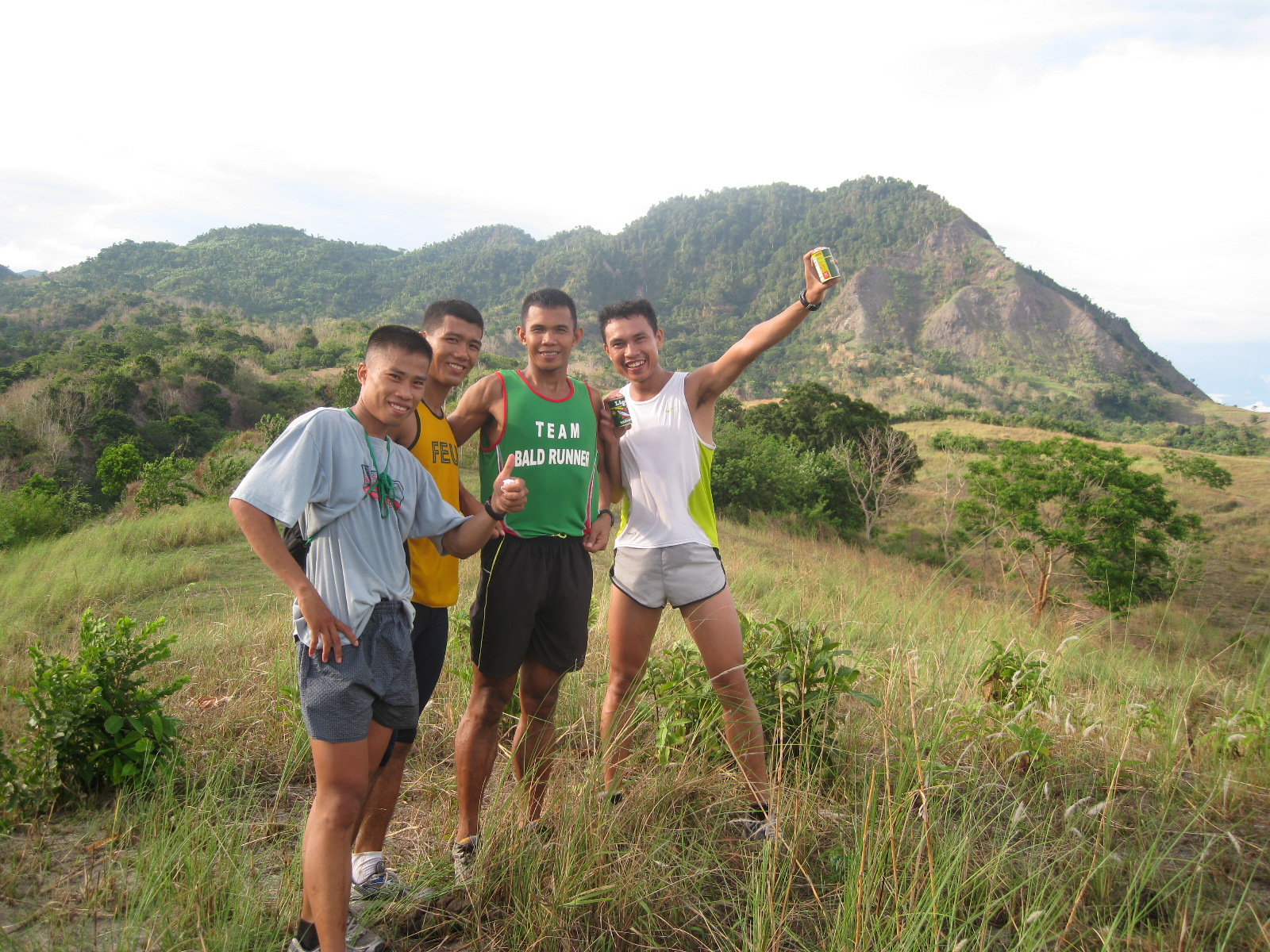
This was our second time to run towards the “Brown Mountain” and we started earlier at 4:00 PM. Having seen a nipa hut with a family staying at the Km-7 point of the trail, I directed my elite athletes to carry with them at least three (3) cans of sardines. In the Army, we call them as “M-203” as the size fits well like the ammunition of a M-203 Grenade Launcher. Sometimes, these sardines are called by their names as “Ligo” or “555”.

For the people living in the mountains, sardines are the most sought after food for them. It is a luxury food that you can exchange one can of sardine for a live native chicken raised by the mountain people! For the Army soldier, sardines is the most important ingredient for his ready-to-eat meal. He can make a gourmet or concoction of food taken from edible plants in the forest garnished with sardines.

Frank Indapan Was Holding A Can of Sardines!

The 3 cans of sardines were intended to be given to the only family that resides along the mountain trail as a “gift” as we intend to request from them to guide us along the trails of the mountain in our future adventure runs. As soon as we reached their hut, we gave them the sardines and asked them for some information about the mountains and the trails. The family appreciated our gesture and they started giving us important information about the mountain/s, the location of springs, and how long and far the trails are in the mountains.

From the nipa hut, we ran another 1.5 kilometers until we reached the first spring. I took some pictures and we tasted the water and it did not affect our stomach. This was our turn-around point and resumed our run back where we started.

Due to our early start, we arrived at the starting area with the sun about to set in the horizon. We finished the run in 2:17+ hours. My legs were stiff and hard but I was happy that we had gone farther from the point we reached the previous day.

Two consecutive days of mountain trail runs for the week were done and I plan to do more next week. My dead-tired legs and body were relieved with a 2-hour massage in the evening.

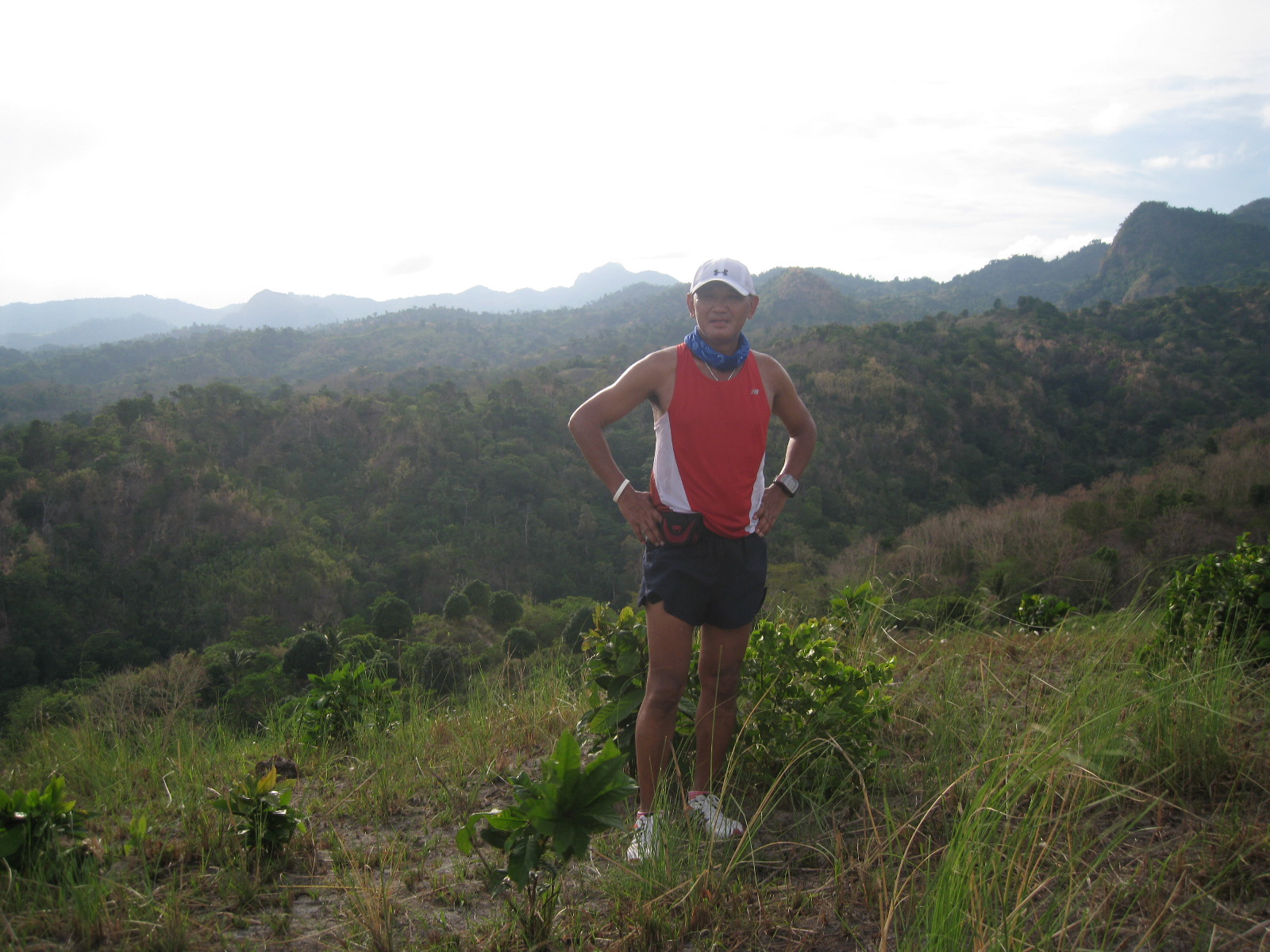
Mountains All Around The Place

Running & Organic Foods


Or should I say, Running & Farming!

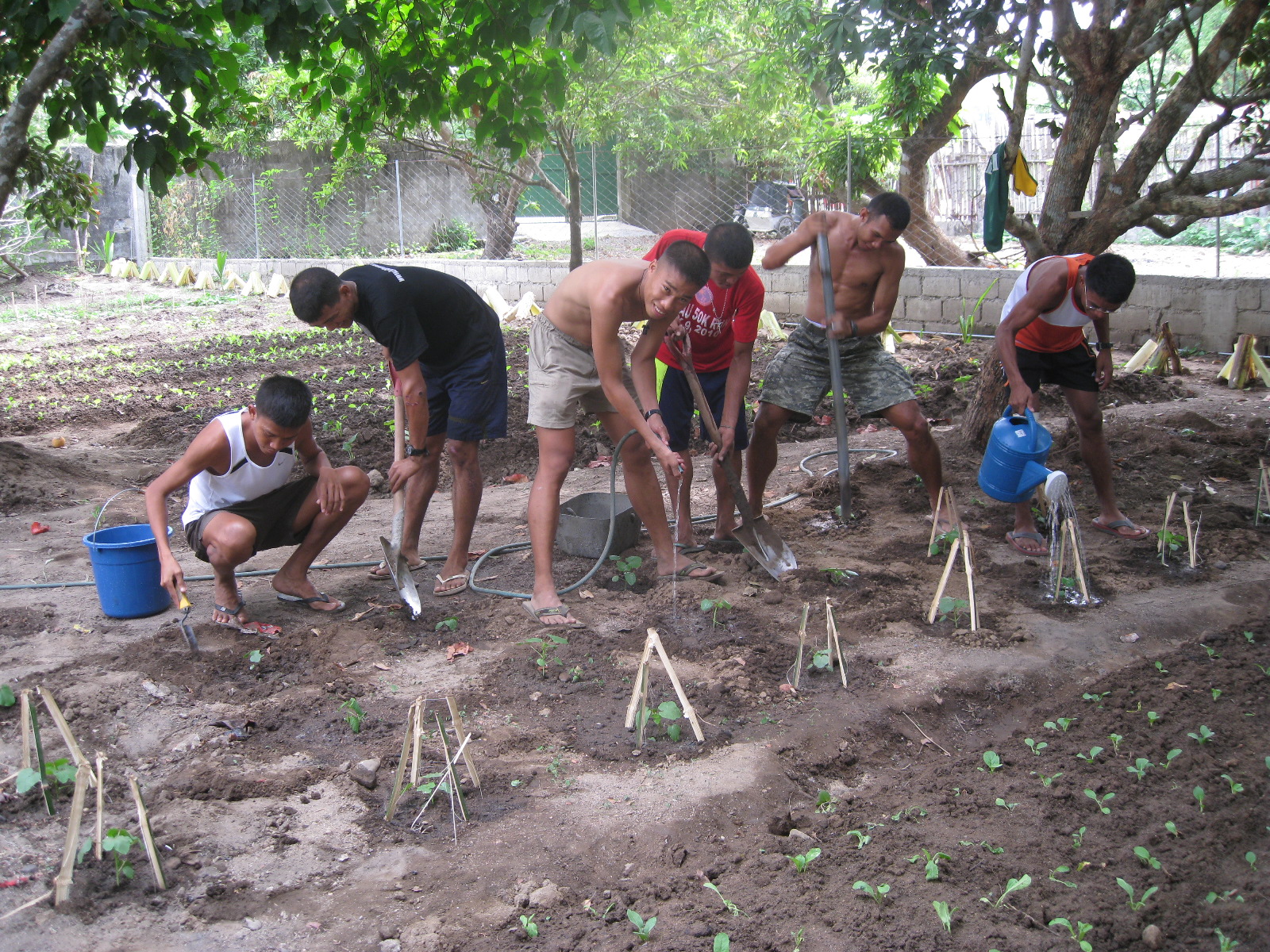
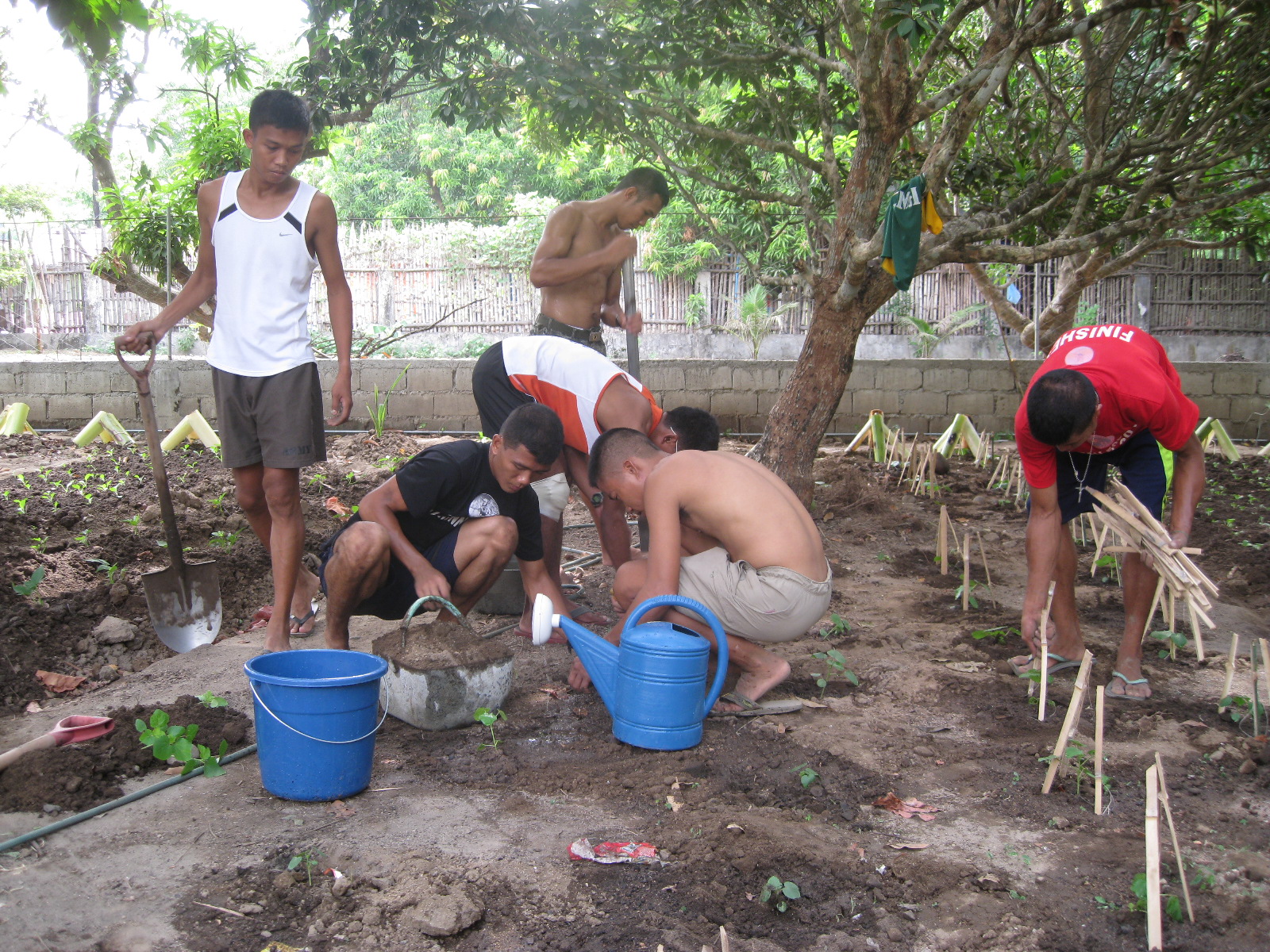
At least, 7 kilometers from the “Brown” Mountain, our new playground, there is a place which I call “The Farm” where we rest and relax in between our running workouts. “The Farm” has a lot of land space to offer and we started to raise vegetables as our source of organic foods. 

Farmers In Between Running Workouts

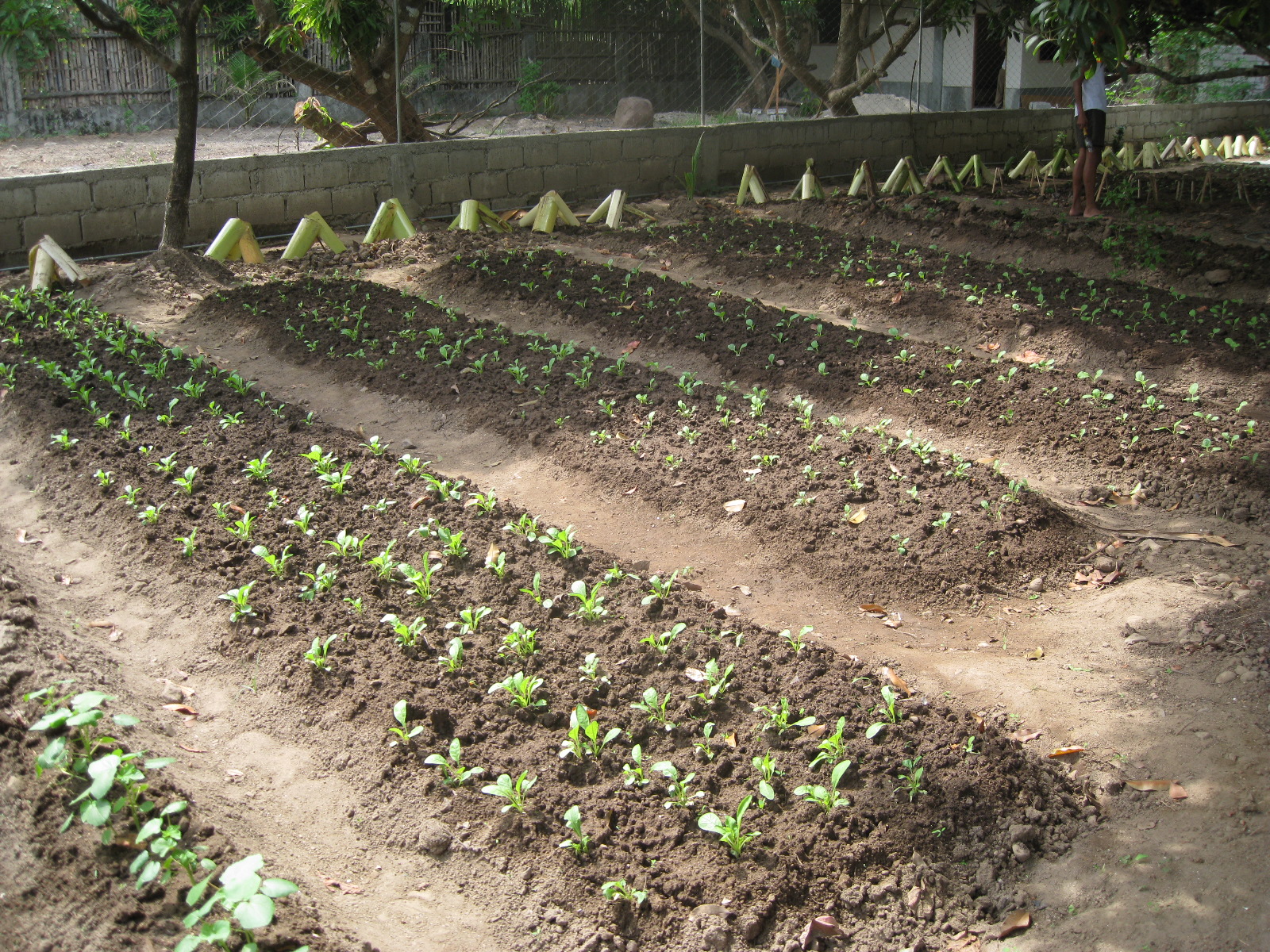
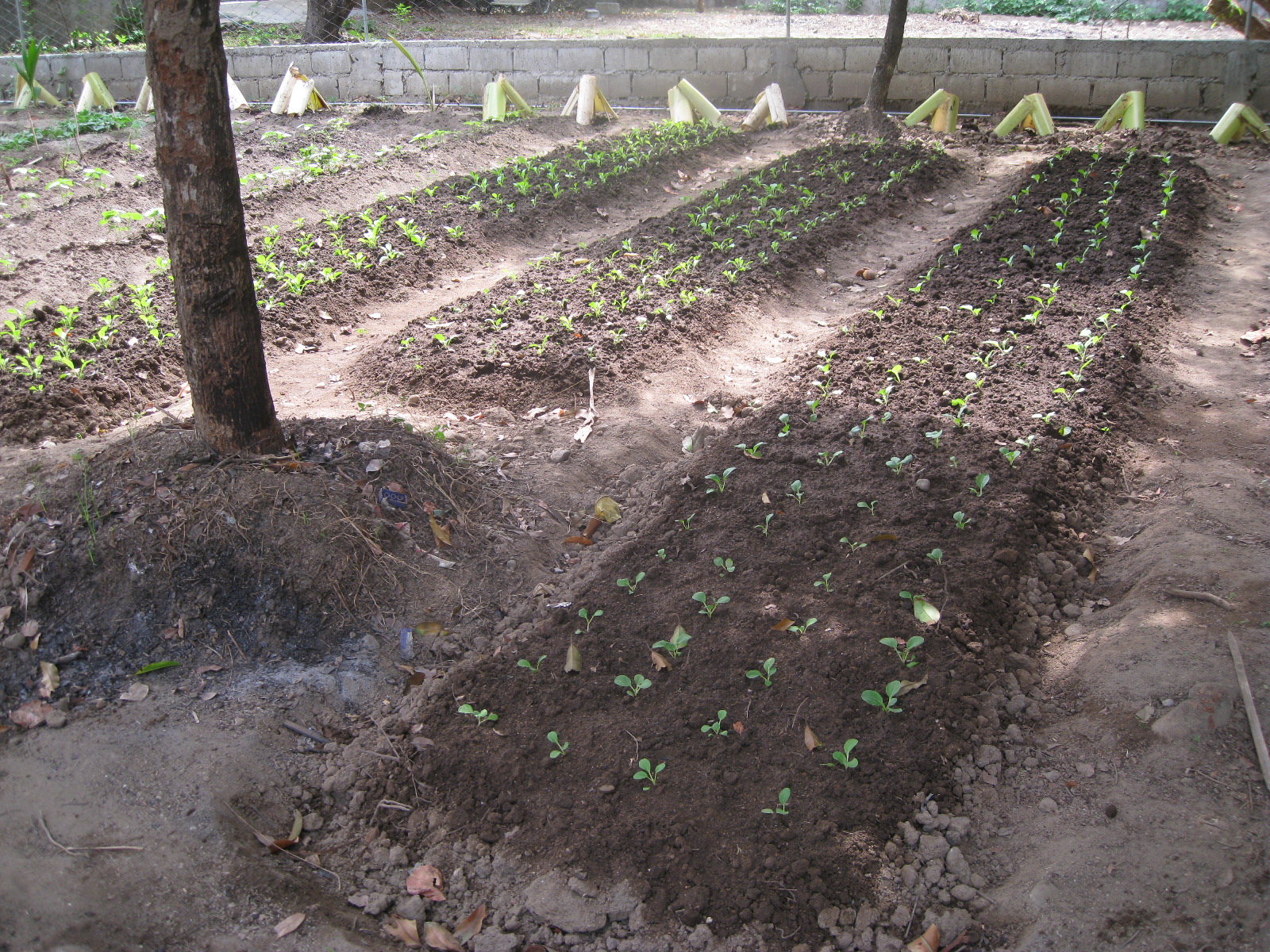
 We have propagated pechay, radish, okra, ampalaya, pepper, malunggay, papaya, chinese/upland kangkong, camote/sweet potato, cassava and lots of saluyot. The pictures depict that we have transplanted such plants to garden plots and in-between our workouts, we water and cultivate them. The members of the Elite Team Bald Runner had been transformed to Farmers for them to produce organic foods for their sustenance.

Organic Vegetables Planted By Team BR

 I could still remember the reason why the Kenyans and the Japanese are the world’s top long distance runners is because their food nutrition are fresh from the source. Not seen in these pictures are the native chicken, goats and hog/pigs being raised inside “The Farm”. Hopefully, the mountains nearby would give us a taste of fresh wild pig/boar and deer meat!!!

Pechay, Radish, Okra, Upland Kangkong, Ampalaya & Others

Inside “The Farm” is an orchard with 150+ mango trees; coconut trees; santol; pomelo; chico; atis; rambutan; mabolo; duhat; guava and other fruits rich in Vitamin C.

Gardening/Farming As Cross-Training Activity For Runners

If you are a runner and you have a place where you could start propagating your own source of organic food, you can be a “farmer”, too! If you are staying in those high-rise condos in Metro Manila, you can buy those inexpensive plastic pots where you can plant your vegetables. If you are serious, buy a book on vegetable raising, buy those seeds at the ACE, and then plant the seedlings in those pots! You will be surprised that taking care of your plants/vegetables will give you relaxation and at the same time a cross-training activity for your running.

Joy


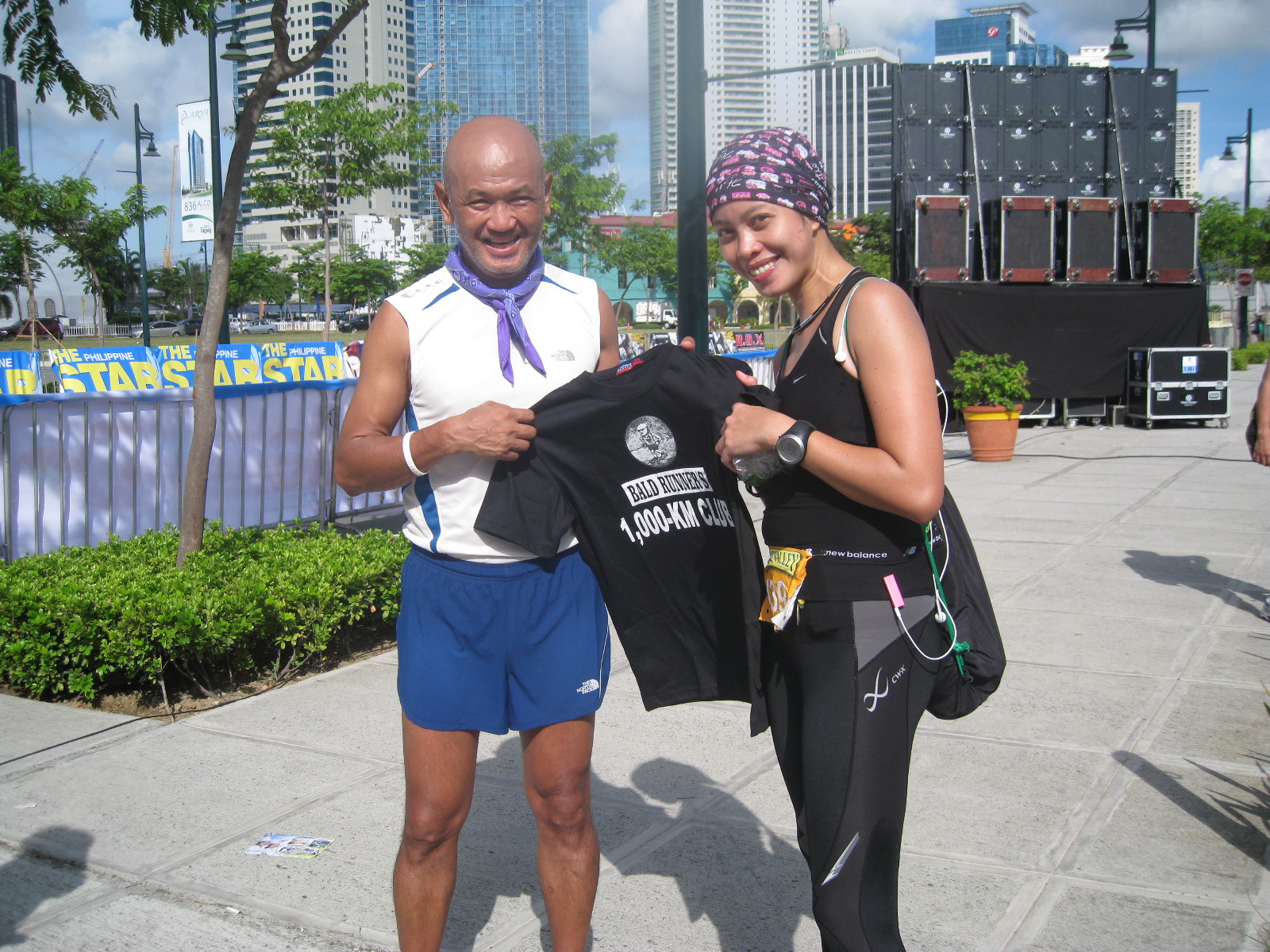
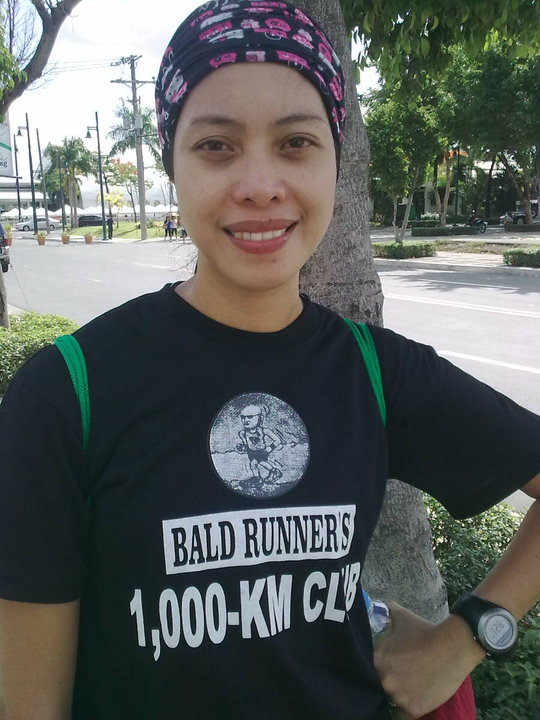
The runner’s name is “Joy”. I first came to know her as one of my “friends” on Facebook without even seeing her personally. And suddenly last week, she sent me a message on my account telling me that she just completed her first 1,000-km total mileage since she started running. So, I told her that she is entitled to the “BR’s 1,000-Km Club” Finisher’s Shirt and asked her t-shirt size.

Last Sunday after the Nature’s Valley Run at The Fort, she approached the BR’s temporary booth (Parking Attendant’s Booth at the BHS) and she introduced herself to me. I knew that she just finished the Half-Marathon as she was proudly wearing her Finisher’s Medal.

As I presented to her the BR’s 1,000-Km Club Finisher’s T-Shirt, she handed me 1,000 pesos for her support to the Elite Team Bald Runner. She told me that she had allocated One Peso Per Kilometer for the 1,000 kilometers that she was able to run since the time she started counting on her mileage. And decided to give such earnings to support my elite team. I was surprised and touched by the gesture of this lady runner. I could only say “Thank your for your support” and asked her for a picture with me handing her the t-shirt. 

I just learned that she finished her first marathon run with The Bull Runner’s Dream Marathon and after a week, she ran the Nature’s Valley Half-Marathon!  A very strong lady runner! Congratulations!

To Joy, thank you very much for your support. May God bless you always.

Photo-Ops With Joy & 1,000-Km Club Shirt
Joy Aguilar: Latest Member of "BR's 1,000-Km Club"

Shoulders Relaxed


5:00 PM Thursday May 27, 2010 @ “Brown” Mountain 15K 1:58:07 hrs (Adidas Osweego)

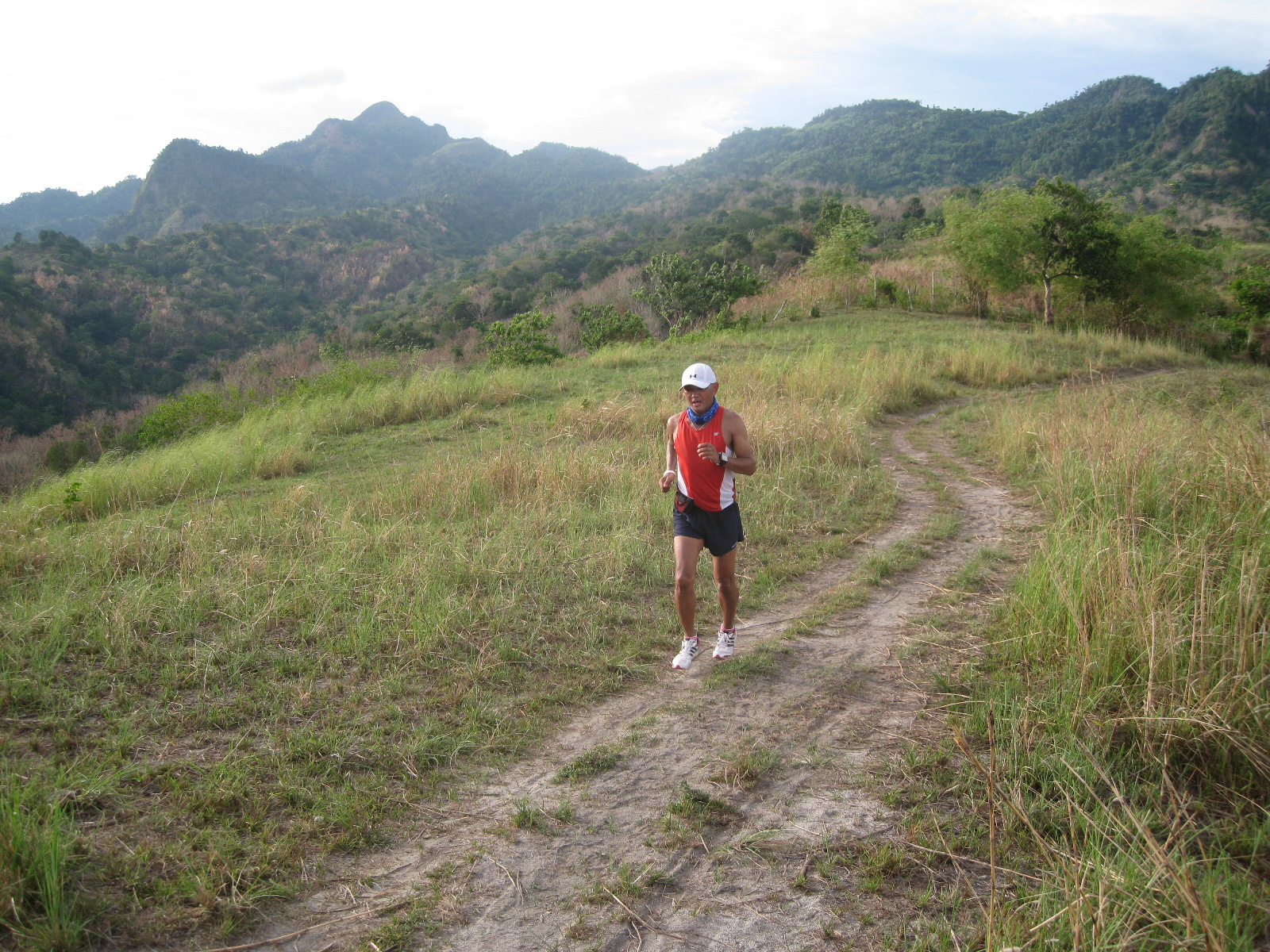
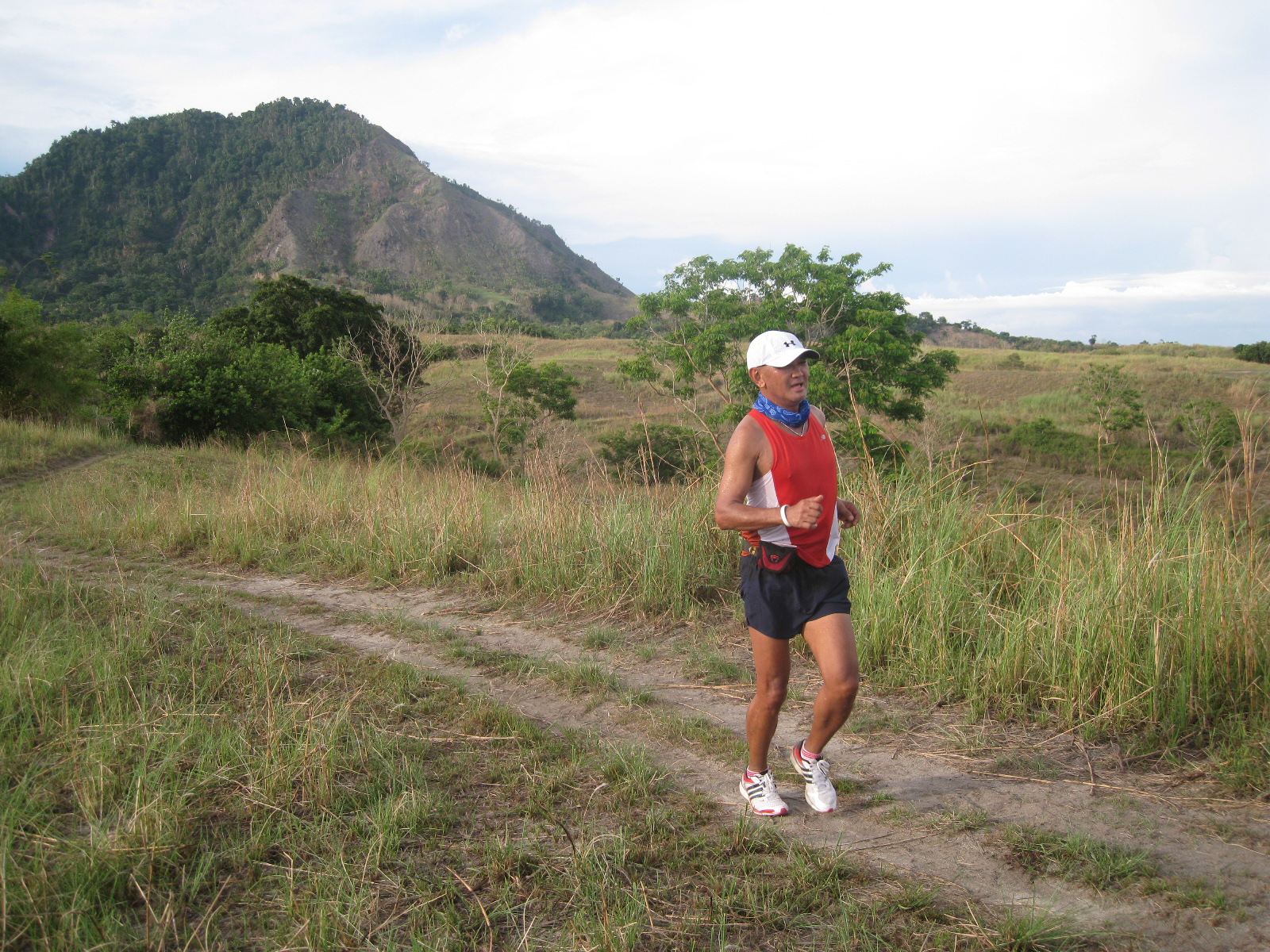
This was the first time that my elite athletes brought me to the periphery of BM. The elites usually do their runs to this mountain for their one hour to 1 1/2-hour workouts. We started our run at 5:00 PM. After a slow run for about 500 meters, we had our first uphill climb for about 200 meters of gravel road that ended to a left turn of about 10 meters of flat before another uphill climb of 100 meters. This pattern was repeated for about three times and I started to perspire. We started to experience a level road trail when we reached the 3K point. It was a hard slow uphill run but I kept on remembering to take short strides; lifting my knees higher; swing my arms more; and above all, keep my shoulders relaxed. For every 3-4 minutes during the run, I had to be reminded and always aware with my running form with my shoulders relaxed.

The gravel road slowly turned to a trail road with dust and I was comfortable with my Adidas Osweego which is lighter than the ASICS training shoes that I’ve been using in my road runs. We ran more uphill climbs along one-track trail with tall cogon grasses on both sides. There are also wild plants that keep on brushing on our legs as we trekked uphill. On this portion of the trail, the seven runners in us were lined up on a single file as we went upward towards the mountain.

More Mountains (at the Background) To Explore

As we went deeper to the vegetated part on the side of the mountain, a herd of cattles would immediately approach us and the elites would think that they were going to attack us. We had to run faster and tried to evade the cattles. I was laughing when I saw one of my elites removed his shirt and was seen running naked as his shirt was colored red. As we ran, I realized that I was also wearing a red Mizuno running shirt! Later, I told them that these cattles would approach us thinking that we were there to feed them and I laughed with my theory!

After running for 7K, we saw a hut at the side of the mountain and a family of Aeta resides in it. We stopped for awhile and talked to the family. After a few seconds, we resumed our run towards another uphill trail until we reached a place where my GF 305 registered a distance of 7.5K. It was already getting dark and we decided to turn-around to our starting line.

On our way back for another 7.5K to the starting line, it was a race to beat the coming of darkness on those single-track trails. Actually, it was already dark when we still had 3K more to go and we had to slow down because the trail was uneven. Once again, on the downhill run, I alternately took longer strides and shorter strides depending on the steepness of the trail but I always maintain my shoulders relaxed. It was almost 7:00 in the evening when we reached our starting area.

On our way up to the mountain, I averaged a pace of 7:40 mins/km while our fastest average pace in going down was 6:08 mins/km. These numbers would indicate a very slow pace but I am sure this visit to the BM will make me a faster and stronger runner in my incoming road and trail races.

Always remember to run with your shoulders relaxed. Let them drop and swing your arms naturally!

Running Lectures (Accenture & SIL)


Accenture @ Robinsons Cybergate: April 20, 2010 (7:00-9:00 PM)

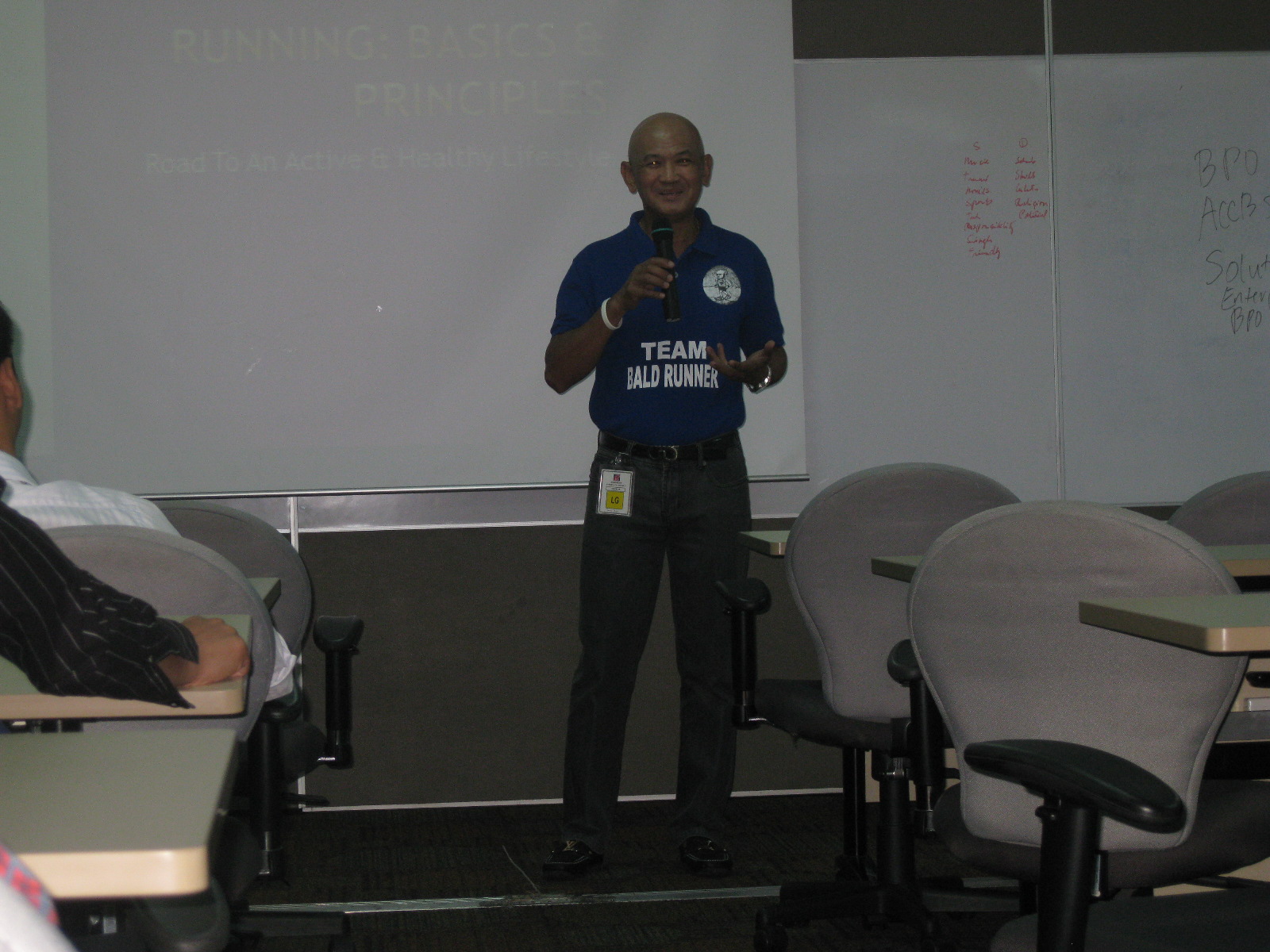
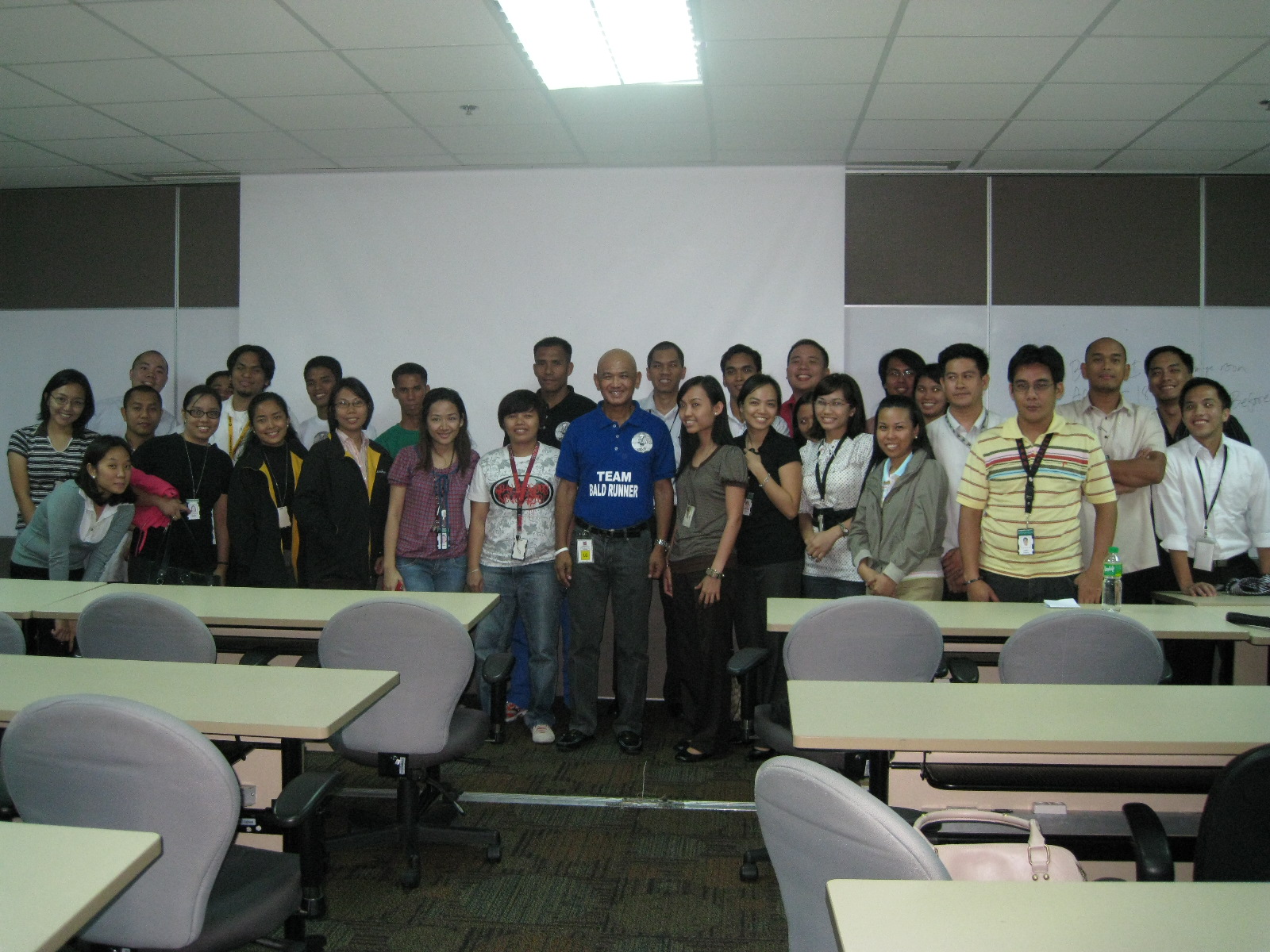
A group of almost 50 participants attended my running lecture and I was surprised to see a big crowd of “newbie” runners willing to gain information on the proper way to train and participate in weekend road races. It is unfortunate that this company was so strict on its security protocol—no laptop of visitors to the building and no camera/picture shoot from my personal camera during the event.

Runner & Lecturer

After 2 1/2 hours of lecture and demonstration of stretching exercises and correct form of running, we had a brief open forum where I was able to answer the questions of the participants. I was informed during the dinner tendered to us after the lecture that their company was able to muster 350 runners to participate in one of the weekend road races at The Fort.

Group Picture After The Lecture

I would like to thank Bernadette San Miguel, Ilo Trinidad and to the rest of the organizers of the Accenture Running Club for the hospitality and warm reception they have given to our team.

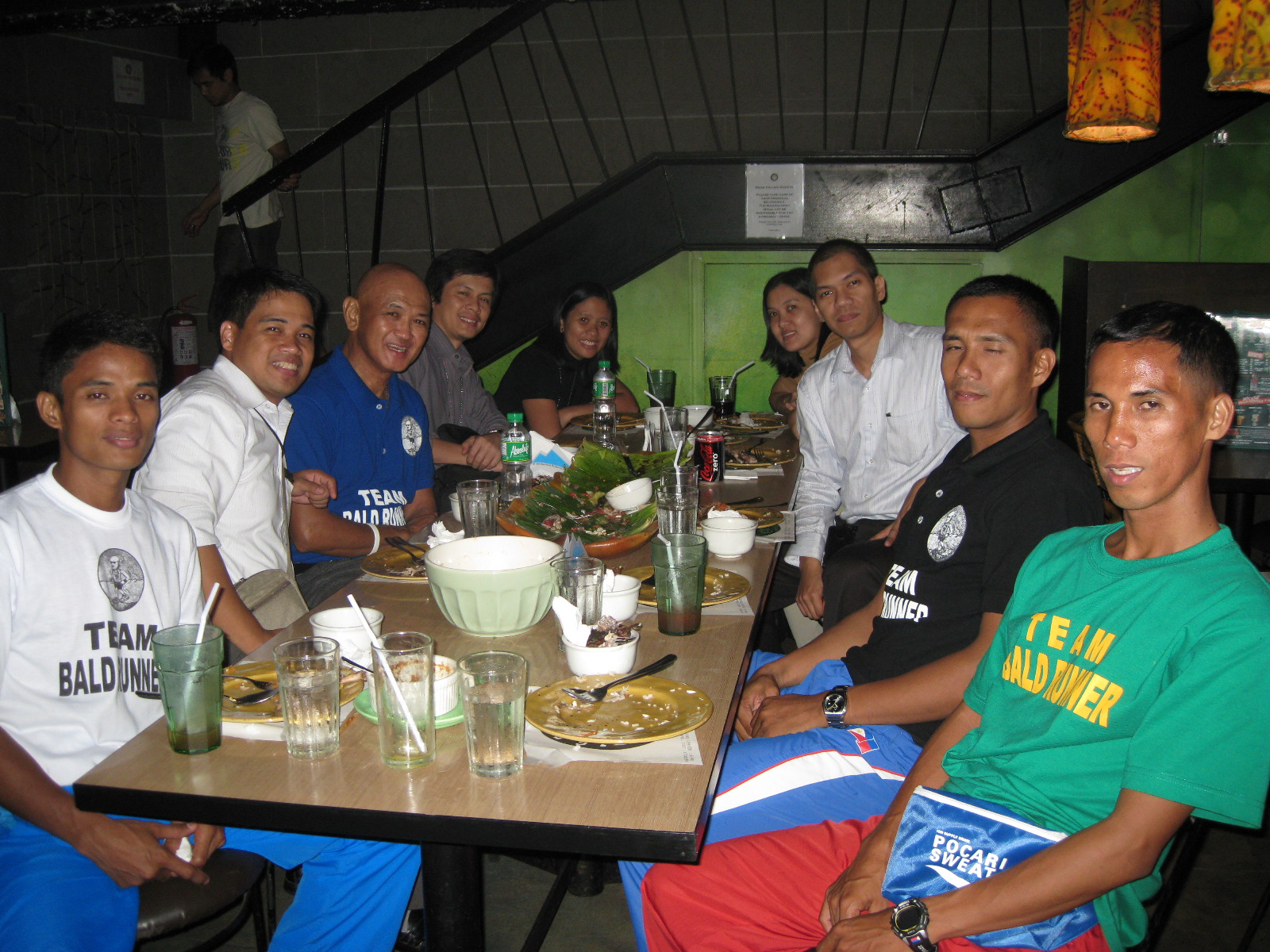
Dinner After The Lecture

SIL @ Mandaluyong on May 12, 2010 (12:00 NN-1:30 PM)

This is the second time that I did this kind of arrangement for my running lecture—lunch meeting/lecture. I did this kind of lecture-meeting with the Officers & Staff of G-7, Philippine Army through the invitation of Colonel Dan Lucero who heads the office. A group of about15 officers were at the Office’s Mess Hall as the participants of my lecture. I delivered an improntu lecture while we were eating our lunch. After we finished our luch, it was time for the Open Forum. Since this lecture-meeting, I’ve been receiving positive feedbacks about their improvements in their weekend road races.

Through the invitation of Joey Carreon whom I met at the ULTRA Oval Track a few days before this activity, I had the same lecture format at the company where he is working. While having lunch with the rest of the Heads and Staff of SIL, I was able to lecture them on the General Principles of Training of Running; Tips on Running; and the Do’s & Dont’s for a “Newbie” Runner. The lecture was not complete without answering the questions and concerns of the participants. In my estimate, there were at least 20 participants during the lunch-meeting/lecture. The lecture-lunch was finished at exactly 1:30 PM just in time for everybody to be back in their respective offices/cubicles.

I was surprised to learn that there is an outfit called SIL which is located at the 2nd Floor of Metrobank Building at the corner of Julia Varga and San Miguel Streets. This company had been continously discovering the different native/ethnic dialects in the country and the whole world! And they are translating important books to every dialect. The heads and staff are multi-nationals and I was able to talk to a retired US AirForce Officer/Pilot who had a chance to rub elbows with the AFP leaderships and there was this Chinese-Canadian who was also attentive during the lecture.

Through these running lectures & clinics, I was able to meet a lot of people and with the hope that more of our countrymen will be motivated to walk, jog, and run towards adherence to an active healthy lifestyle.

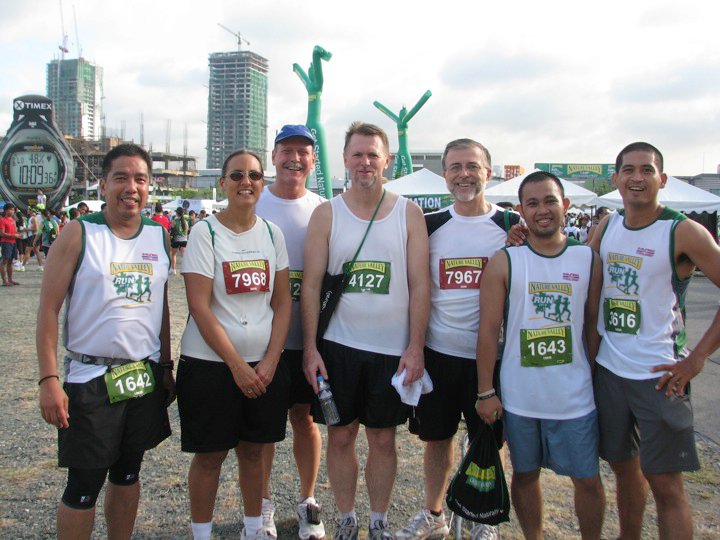
Joey Carreon & SIL Runners @ Natures Valley Run

(Note: The picture above was taken from Joey Carreon’s Facebook’s Photo Album)

New Playground


I personally named this place as the “Brown Mountain” (BM) for purposes of describing my running workouts. This is my “new” playground for my hill workouts and mountain trail runs.

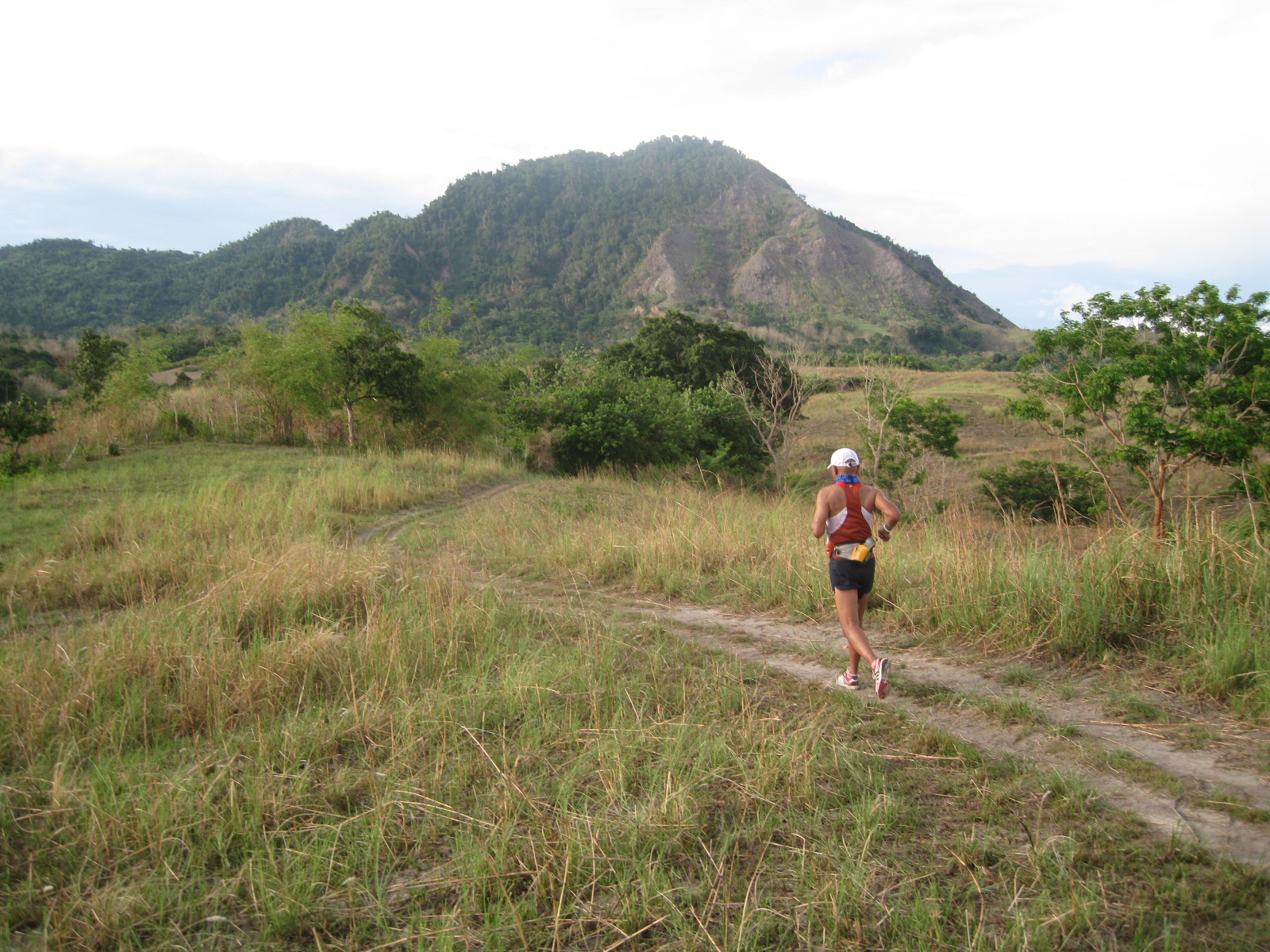
Trail Running Towards "Brown" Mountain

From this point, my GF 305 registered a distance of 6.5K from the place where I started with the rest of my elite runners. I was already gasping for air to breath and about to surrender when I reached this point on my first time to run this trail. But the elite runners kept on pushing me as they paced me throughout the run. This particular place has an elevation of 700+ meters!

A Nice 8.5K Trail Towards The Mountain & Endless Trails

After turning at 8.5K mark, I had another almost 6.5K downhill trail towards the Starting area. You might have observed that I am using a racing flat shoes (Adidas Adizero Mana) on this trail run. Well, I am trying to experiment if my old legs’ feet cartilages, muscles, and knees could withstand the impact on the soft & hard trails of this mountain! So far, for two running workouts up to BM, my legs and knees are fine.

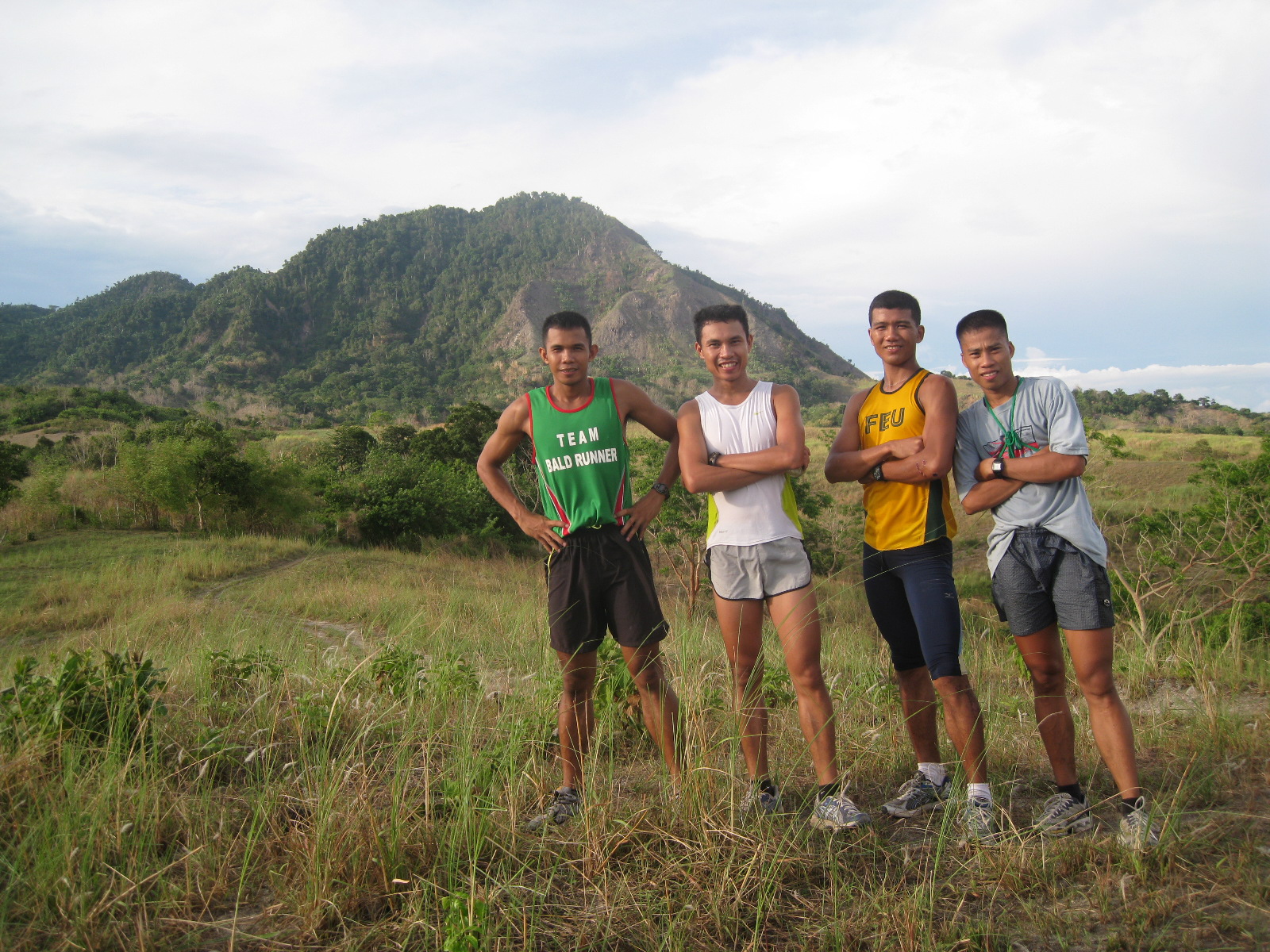
My "Guides", Escorts & Pacers!

These elite runners had been doing their workouts here for the past weeks and months in preparation for the 34th MILO Marathon Manila Elimination and this coming September’s CAMSUR Marathon.

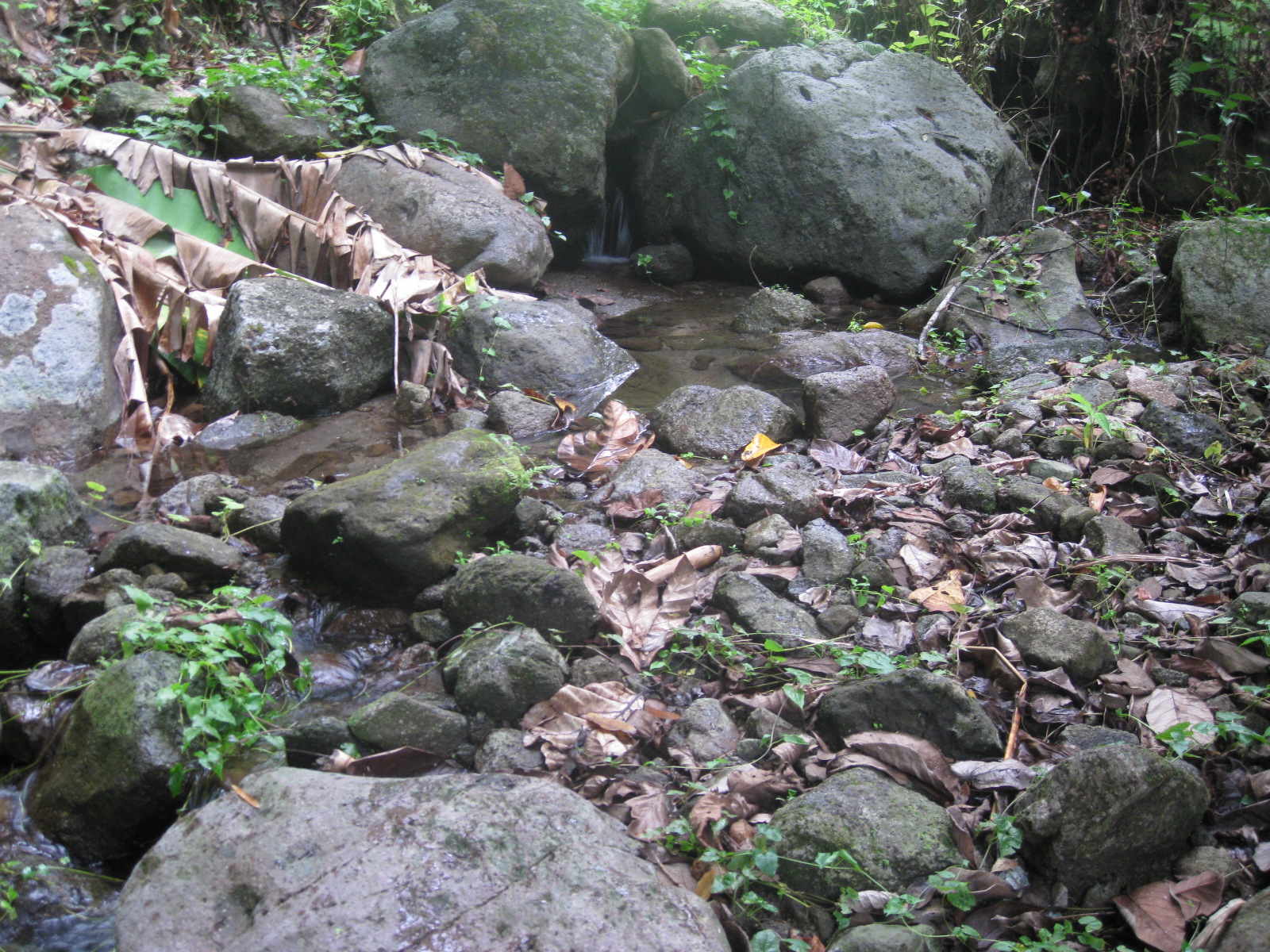
A Clear Spring @ 8.3K Mark/Point

This is where we usually turn-around and the farthest our feet could reach (so far!) along an endless trail from the “Brown Mountain” to the other adjacent mountains. There are signs that this spring is being visited by wild pig/boar and deer. I’ve observed that the trail at the side of the BM (Brown Mountain) is covered with dried leaves that give additional cushion to the impact of my feet to the ground. Some parts of the trail are one-track carved on the side of the forested areas by water rushing from the top of the mountain due to rains.

We found some time to drink the water on this spring, wash and pour the cold water on our faces, nape, head, legs and arms. The water was so refreshing! The Aeta family that lives nearby the place said that there are more of these kind of springs along the endless trail and their water are potable. What can I say, this could be a nice playground for mountain trail runners and “serious” runners!

Planning On Your 1st Marathon Race?


 While browsing on my earlier posts about the Arthur Lydiard Training System in Marathon Running, I found out that the link I made about the said training system is nowhere to be found. I tried to Google “Arthur Lydiard” and I was able to locate everything about the training, speeches, books written, and the training philosophy of the guy.

In the course of going back to the “basics” of marathon running through the writings and speeches of Mr Arthur Lydiard, I came upon the following article which I copied from www.hillrunner.com which I am going to post in my blog so that it will stay permanently on this site for reference purposes.

Enjoy reading the said article.

When Should I Run My First Marathon?

This is a question posed by many new runners. It seems like such a straightforward question. Unfortunately, the answer is not as straightforward and, honestly, not what most beginning runners want to hear.

First, there is the question of what your goals in running are and may be in the future. Very few people run a marathon in their first few years of running and go on to reach their ultimate racing potential. Second, age is a factor. There are countless stories of people running marathons in their teenage years, just to not keep improving beyond their early 20s. Considering the fact that many marathoners don’t reach their peak until their mid 30s, this doesn’t seem to be ideal. Finally, there is previous exercise levels. Someone who never got off the couch before taking up running is going to take longer to become prepared for a marathon than someone who came from an athletic background, especially if that athletic background was in endurance sports.

As I stated, the first question is of your goals. If you are not interested in trying to reach your racing potential and instead “just want to finish” a marathon, that is quite different than if you want to race marathons or other distances and want to try to reach your potential. People who reach their full potential tend to build up to the marathon. They start with shorter races, like 5k and 10k, develop a good ability in those distances, then build up to 10 mile and half marathon type races, eventually possibly even working up to 25k, 30k, or 20 mile races. Once they have reached a high level in the shorter distances, they step up to the marathon. For many runners, their first marathon may come 10 or more years after they began running. Personally, my first marathon came after I had been running for nearly 12.5 years. On the other hand, not everyone has goals like these. I still think it is a wise idea for anyone, regardless of goals, to build up to the marathon. I would love to say that nobody should run a marathon on less than 3 years of running but I know a lot of people don’t want to accept that. What I will say, and some people don’t even like this, is that you are not ready to run a marathon unless you have been consistently running for at least a year and have been building up for a marathon for at least 6 months.

Age is a much debated factor. Some people will tell you that a person should never run a marathon before the age of 25. Others will give stories about themselves or people they know who ran a marathon at 16 or 17 years old. Personally, I fall more toward the first group, although I won’t give a definite age. To put it simply, I think a teenager has more to lose than gain by running a marathon. You have your whole life ahead of you to run marathons and you will be better prepared to run marathons if you wait a few more years. As I said above, if you want to race marathons and push for your full potential, by all means, take your time. Many elite marathoners don’t run their first until they are in their late 20s or even early 30s. Even if you don’t want to race, your body will be more ready to handle the stress a marathon puts on it if you give it more time training. Also, you shouldn’t look past the mental aspect. As a teenager, you are still mentally and physically maturing. The longer you give that mental and physical maturity to develop, the better your first marathon experience will be.

Finally, the experience factor. A lot of experienced marathoners take heat on this topic, in large part because of training groups that advertise that a person can go from inactive to running a marathon in 6 months. Sorry to inform you but the large majority of people who try this do not come out of it without a bad experience in the closing miles. Sure, maybe they say it was the accomplishment of a lifetime but ask them how the last few miles felt. I’ve heard many torture stories. Marathoning doesn’t have to hurt that badly if you give yourself adequate time for training. My suggestion is to not even think about running a marathon on less than a year of consistent running. I would love to say more but I know most people will just ignore my suggestions if I do. You need to give your body time to adapt to the stresses of running. Going from 0 to 26.2 in even a year’s time is a tall order for anyone. Doing so in 6 months time is playing with fire. Once again, if your goal is racing or trying to become the fastest you can become, consider taking much longer.

In the end, only you can decide what time is right for you to do your first marathon. I stated my feelings on it here and I hope you will consider what I have to say. Weigh all the advice you are given, who it is coming from, what they stand to gain or lose by your following their advice, and make an informed decision.

Tuesday May 25, 2010


AM: ULTRA/5.6K @ 29 mins/Average Pace: 5:08 mpk (Adidas Adizero Mana)

It was a hot day as I decided to start the week with a short run at the ULTRA/Philsport Oval Track at 8:00 AM of this day. I purposely had the day before, Monday, as my rest day after running back-to-back last Saturday & Sunday. I ran 10.1 K in the morning of Saturday at the MOA-PICC-Cultural Center-MOA Route and another 10.2K run in the evening at the The Fort. Last Sunday, I was about to run in the morning at the MOA Grounds but instead, I just stayed on the sidelines to watch the San Mig Coffee Run. However, at 7:30 PM, I returned to the MOA Complex to run another 12.1K before the start of the Call Center’s Night Fun Run.

I really needed those easy long runs on weekends for my endurance in order to back up my body strength in preparation for my speed runs during the week.

On this day, even if it was too hot, I did my usual warm-up run  for 4 laps at Lane #8. My GF 305 registered a distance of 2.33K with a time of 11:50 minutes; average pace of 5:04 mpk. After a brief water break, I did 2 X 400 at Lane #1 with an interval rest of  1 minute. My first rep was timed at 1:43 mins with an average pace of 4:08 mpk. My 2nd rep was timed at 1:41 mins with an average pace of 4:00 mpk. I could hardly breath after doing two reps because of the heat of the sun. It was too hot that I had to take water break in-between my speed reps. Finally, I decided to stop my 400 meter runs and ended doing an easy run for another 4 laps at Lane #8. I had a time of 12:49 minutes and my legs became heavier as I ended my last 2 laps.

PM: ULTRA/8.8K @ 44 mins/Average Pace: 5:00 mpk (Adidas Adizero Mana)

I joined the BR Speed Training at the ULTRA Oval Track at 6:30 PM with the rest of my elite athletes and the Professionals. I ran the usual 4 laps at the outer lane of the oval track as my warm-up before I did my stretching exercises, brief drills, and core workout. After my water break, I did 4 X 1,600 with an interval rest recovery of 2-3 minutes. The following were the data taken from the GF 305:

1st rep: 7:46 mins; average pace of 4:42 mpk

2nd rep: 7:45 mins; average pace of 4:38 mpk

3rd rep: 7:45 mins; average pace of 4:39 mpk

4th rep: 8:10 mins; average pace of 4:50 mpk

I finished my workout with another easy and relaxing 4 laps at the oval track for my cool down run/jog before doing my post stretching exercises. My body and legs are in shape as I did not feel any pain or issues during my workout. The only problem was the heat and humidity plus the number of runners & walkers using the Oval Track during Tuesday evenings. How I wish the Coaches teaching and supervising the different running clinics at the Oval Track should teach their students on the proper use/etiquette to be observed while running or walking at the oval track. 

After the workout, it was nice to hear the stories and experiences of the Team BR Professionals who participated in the latest “The Bull Runner Dream Marathon” held in the early morning of Saturday. You did great, guys! It was nice also to congratulate Mari Javier of Team BR Professionals who got the Champion Award for the RUNNEX 1oK Run held last Sunday morning at the UP Campus and another Champion Award for the Call Center’s 10K Night Fun Run held in the evening of the same day at the MOA Complex.

The BR Speed Training Staff & Elites are really proud of you! Congratulations!!!

Sun Tzu’s “The Art of War” In Running


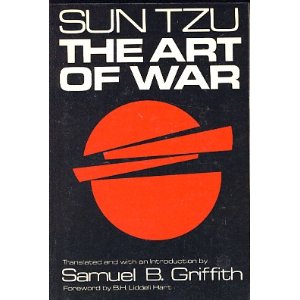
When I was in the military service, this was my “Bible” and had read this book for a hundred times. This compilation of essays written by Sun Tzu (a Chinese General & Philosopher) was translated by Samuel B Griffith in 1960 and they were written more than 2,400 years ago. It is considered as the oldest writings on the conduct of warfare. In all my military trainings, from a young officer to the generalship, the treatise in this book had been repeatedly discussed and explained to us. Being a former Commander of different units in the Philippine Army, from the squad-level (leading 9-men team) up to a Division-size Command (with almost 10,000 soldiers under me), the “treatise” of this book had been very effective in leadership; winning the “hearts & minds” of the people and at the same time in subduing the enemy.

The Book: Sun Tzu: The Art Of War

Lately, there had been books that were published in adopting the different treatise of Sun Tzu’s “The Art of War”  in relation to Business and Politics but I have yet to read these books.

I have the assumption that some selected “treatise” of the book, “Sun Tzu: The Art Of War” are very useful to all the runners. My favorite passage in this book is the following:

“Know the enemy and know yourself; in a hundred battles you will never be in peril.

When you are ignorant of the enemy but know yourself, your chances of winning or losing are equal.

If ignorant both of your enemy and yourself, you are certain in every battle to be in peril.”

Translating these passages into running, it would be like this:

“Know the race route and train yourself properly; in a hundred races you will always finish the race.

When you are ignorant of the race route but you trained yourself properly, your chances of finishing the race or DNF are equal.

If ignorant both of the race route and proper training, you are certain that in every race you are DNF.”

On a grand scale, of which could be directed and understood by our Sports leaders and authorities in our quest for Sports Excellence and our First Olympic Gold Medal, my favorite passage of Sun Tzu’s “The Art Of War” would be very relevant and appropriate. I guess, there is no need for further explanation on this.

It is no wonder that the Chinese today are on top of the Olympic Medal Standing in the latest 2008 Summer Olympic Games!