“I need the money…I need to buy vitamins”


“Yes, I’m a candidate for ejection from the Philippine team,” said the four-time champion Martes, the youngest Milo winner at 21 years old in 1999. “I’ll just talk to them and explain. I need the money. I’m having laser therapy for my old injuries and I need to buy vitamins.” (Note: Copied from news report at www.inquirer.net)

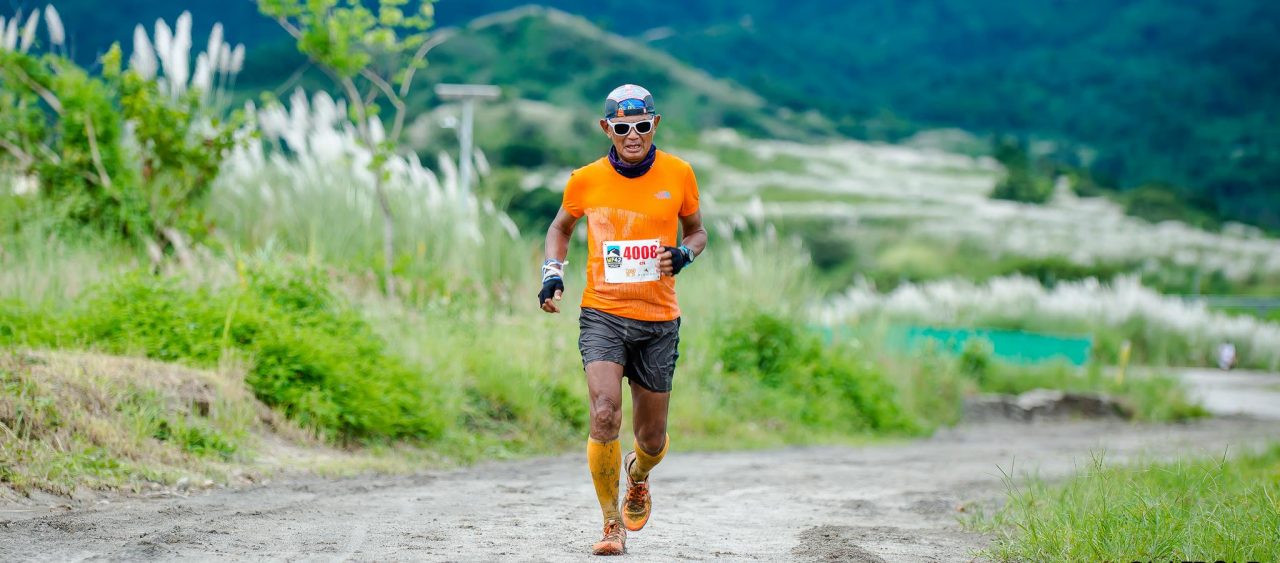
These were the exact words from the mouth of Christabel Martes, Lady Champion of the 33rd MILO Marathon FINALS held last Sunday, for her reason why she ran and finished the race despite an strict memorandum from PATAFA (Philippine Amateur Track & Field Assosiation) that National Pool Athletes are restricted from running more than a distance of 10K competitive Road Races at least 3 months before an International Games/Competition Meet. The reason for this memo is to make sure that our National Athletes do not divert themselves to their training program in order for them to “peak” during the competition period/date and at the same time, prevent them from becoming injured.

In the reaction of the PATAFA officials, as published in the news, Martes will be definitely removed from the list of National Athletes slated to be included in this coming Southeast Asian Games which will be held on the first week of December 2009 in Laos. For winning a cash prize of Seventy-Five Thousand Pesos (P 75,000)  or equivalent to $ 1,595.00 in the MILO Marathon FINALS, her chance of winning the Gold Medal in Marathon in the ASEAN Games is gone!

 Money versus Pride For the Country? Present Reality of our Athletes versus Present Situation of our Sports Excellence Program?

Now, let us try to discuss the present condition of our National Athletes basing from the title of this post/comments from Christabel Martes.

It appears that our National Athletes are not properly or adequately supported by our Sports Federation or the Philippine Sports Commission (PSC). As per PSC’s guidance, for an Athlete who won Medal/s (Gold, Silver, or Bronze) in the previous ASEAN Games and other International Competition Events and presently training to compete in an International Games, he/she receives a monthly support of   Fifteen Thousand Pesos (P 15,000)  or $ 320.00 inclusive of food, vitamins, training needs, and stipend. While on training, with the guidance of their coach, they are left on their own and stay/live in Sports Facilities being managed by PSC. It is also concluded that the athletes had to deal with their own injuries and have to get the services of professionals to cure them for a considerable fee. Which means that our Sports Support Services (Sports Medicine, Nutrition, Sports Psychology, etc) are lacking! In short, 15K Pesos is nothing if we want our athletes to be “world-class”. The same amount of money is equivalent to a ONE-DAY MEAL for Michael Phelps, I guess!

For a potential medal placer and a “newbie” in the National Pool of Athletes, he/she receives a monthly stipend of Six Thousand Pesos (P 6,000) or $ 128.00. This is translated to P 200.00 per day meal for the athlete and he/she could not even buy vitamins and sports drinks for his hydration & electrolyte resplenishment needs during his training. And if he/she wants to compete in weekend road races, he/she is selective as to where he/she will compete because the registration fee will be deducted from this amount of money. But our athletes are “brave warriors” because they have to risk in investing their training money to weekend road races that have Cash as Major Prizes for the Top Finishers! If they loss and don’t get any cash prize, the more that they will train harder but their training money is now draining and they are forced to spend their money to their barest needs. In essence, our athletes are on “survival” mode!

This situation is not only applicable to our runners but to all our athletes in other sports!

Now, you know already why our runners in our National Pool of Athletes are only good for our local Road Races with Cash Prizes, not for the ASEAN Games, not for the ASIAN Games, and never for the OLYMPIC Games!
33rd MILO Marathon Finals: “We Are All Warriors”!


4:29 AM 11 October 2009 @ Luneta Park

In last year’s MILO Marathon Finals, I was able to peak for my marathon training and I was able to register a finish time of 3:48:32 hours. I was not able to join the Marathon elimination run last year but I was able to make some arrangements with the Race Director for me to join the Finals, hence, I was able to participate in the said race.

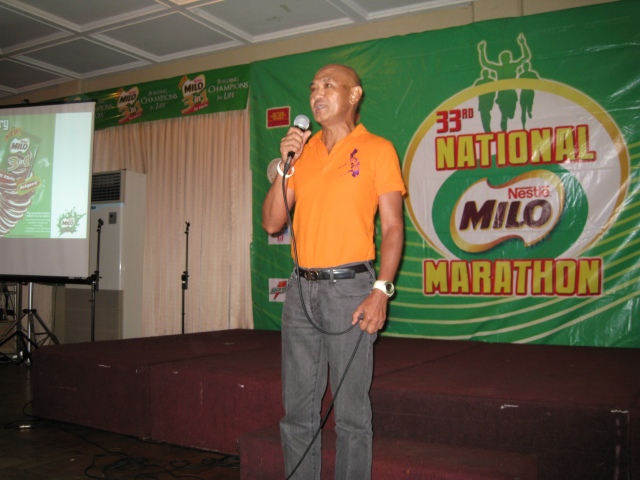
This year, I was able to participate in the MILO Marathon Eliminations but I was not able to qualify because I finished the race in 4:20:45 hours. This was due to the fact that I participated in the 2009 Los Angeles Marathon five weeks in between two marathon races. However, with the popularity of this running blog, I was able to make some arrangements (again!) to run the FINALS as a “guest runner”. But I have to “pay back” for such request as I was requested by the Race Organizer, my friend, Mr Rudy Biscocho to deliver an inspirational message to the Finalists of the Marathon Race during its Carbo-loading Party last Thursday evening at North Greenhills Clubhouse.  The gist of my Inspirational Message speaks well of the title of this post.

Inspirational Talk @ MILO Carbo-Loading Party

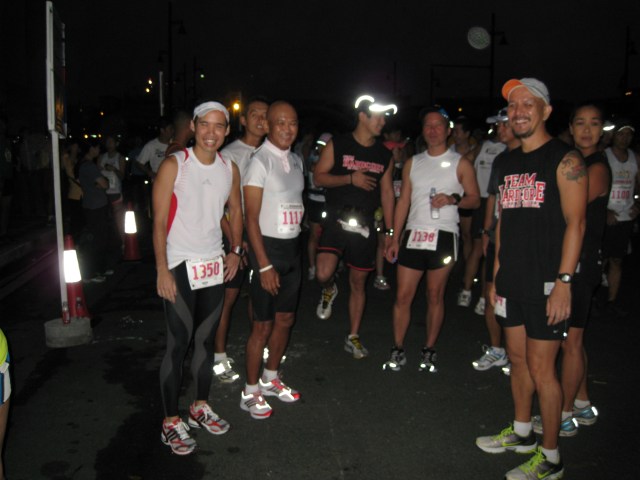
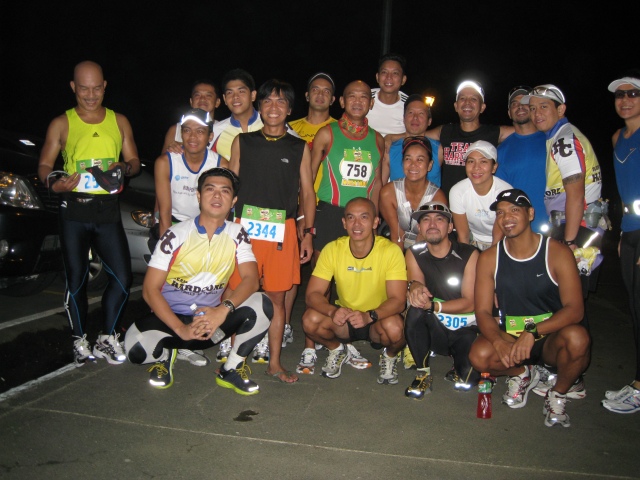
I arrived at the Luneta Park at 4:00 AM and I immediately set my GF 305 and made a slow jog in order to warm-up. After a few minutes, I joined the members Team Hardcore and Finishers of 1st BDM 102. We had “photo-ops” and brief chat with one another. From there, we proceeded to the Starting Line. At the Starting Line, I was able to meet the other runners and Executives of NESTLE/MILO who are joining the 42K Race.

Group Picture With Team Hardcore & 1st BDM 102 Finishers

At exactly 4:29 AM, the starting gun went off and I placed myself at the back of the runners. I planned to run with an easy even pace for the whole race and I was hoping to have an extra strength at the last 10 kilometers to have a finish time of less than 4 hours.

After running through this course for so many times, I was already confident to finish the race right from the very start and did not mind about the terrain of the route. The thing that kept me worried was at what point or distance where I will encounter my first “muscle cramps”? Three weeks before this race, I did a 40K long steady run as part of my preparation for this race and I never had any cramps during this workout. As compared during the last Elimination Race, I had my muscle cramps at Km #16 and it affected my finish time.

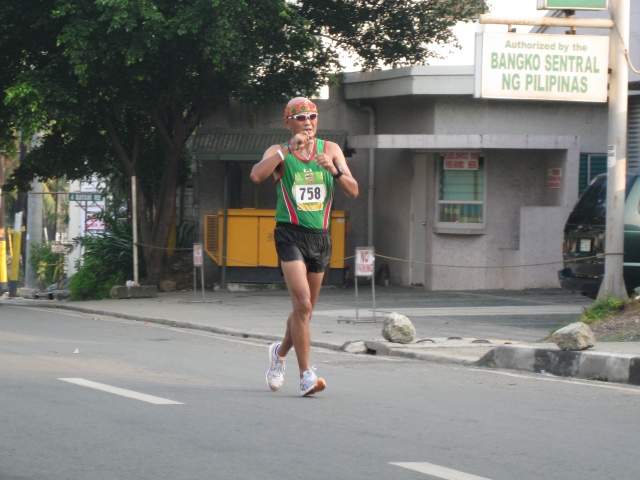
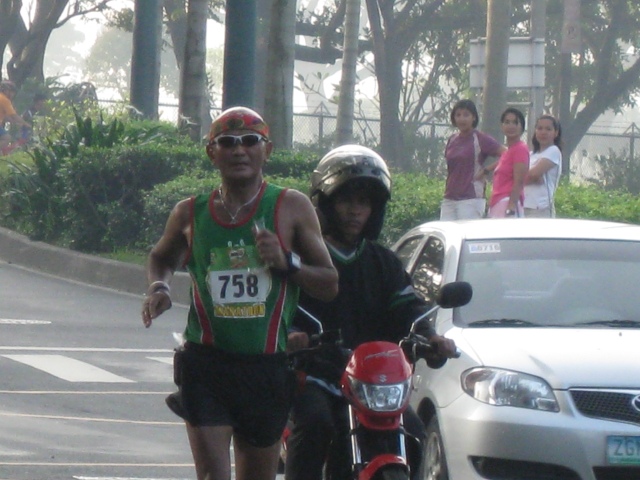
@ Bayani Road
@ Bayani Road

I finished the 1st 10K in 56:15 minutes and I was confident that I could meet my objective for this race. After running 20K, I was still within my planned finish time but I started to slow down while I was on my way back to the Finish Line. The heat of the sun and the humidity made me slower but I was able to maintain a sub-6-minute per kilometer pace on the last 10K. It was only at Km # 36 that I checked on my GF 305 and my time registered at 3:22+ hours. I started to panick and tried to increase my pace. At this point, I knew I could make it but every time I increased my pace, my legs would act otherwise and they became heavier. I did not feel any cramps but I could not simply lift my knees higher and drive my arms faster.

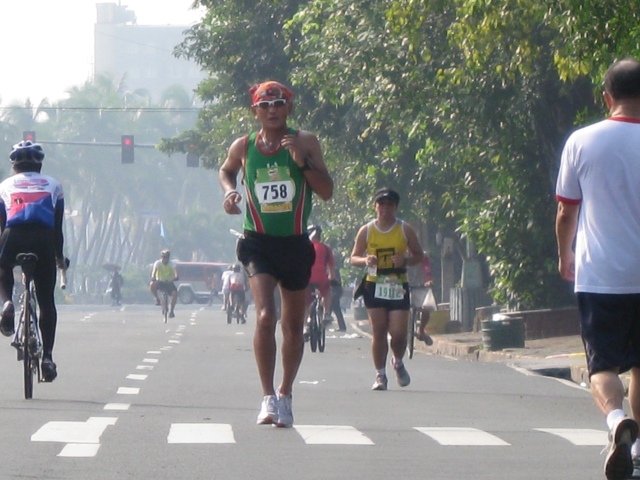
@Lawton Avenue-Essensa Area ( See the Background!)
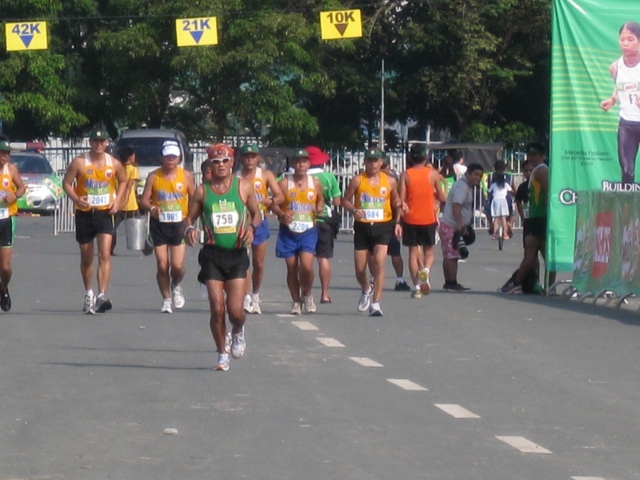
@ Roxas Boulevard/2K to the Finish Line

Along the last 3K before the Finish Line, I was distracted by a number of cyclists who were going on counter-flow right where the exact direction of my run. I could not understand why these cyclists would meet head-on with the runners while the road is too wide for them on my right side. I had to shout at these cyclists and told them to clear the path for the runners. I even dared one of them to collide with me! But, on the last few feet, they had to avoid me. It was a better option for them to avoid me rather than the cyclist falling to the ground.

@The Luneta Near The Finish Line

Except for this negative observation/experience during the race, the MILO Marathon Finals have improved a lot. At last, I was able to see long tables filled with lots of water cups up to the last water station before the Finish Line. There were lots of route marshals and Traffic Enforcers of each City were properly briefed on what they have to do in order to give way for the runners and at the same time decongest the traffic brought about by the Marathon Race. The presence of Reinier Pacific & Takbo.ph Volunteers and Aid Station at Gil Puyat Avenue (Buendia) was very helpful to all the runners which offered chopped fresh fruits (apples & oranges) and efficascent oil spray for the muscles. My sincerest thanks to Mr Amado Castro, Jr for having the initiative to bring to the country what he had observed and experienced when he “racewalked” the 2009 Los Angeles Marathon last May. How I wish that those “more influential” runners who have experienced running Marathon Races in other countries would also take the initiative to offer support to runners in Marathon Races. “Mayayabang kayong sabihin sa mga “media releases” ninyo na natapos ninyong tumakbo ng Marathon Races sa Europe at America, pero wala naman kayong ginagawa para tulungan kaming mga mahihirap na mananakbo para pagandahin natin ang Marathon Races dito sa Pilipinas”.

Not only the presence of abundant water stations, MILO’s Race Organizer made good in making it standard to have “Gatorade Stations” along the route which were located in between the Water Stations. I also appreciate the presence of a Fruit Stand/Station at the corner of Lawton Avenue and Bayani Road.

Gone are those Maynilad Water Lorry Trucks that we always see parked beside the Water Stations! Instead, I was able to see lots of Nestle Bottled Water containers and I assumed that we were drinking bottled water during the race as briefed by the Executives of MILO during the Carbo-Loading Party. This was a nice improvement!

So far, the most commendable innovation in this edition of MILO Marathon Finals is the RFID Timing Chip! I was happy to see the “sad faces” of identified consistent cheaters of this marathon race as I met them near the turn-around points along the route. However, I got an information that one of the top 15 finishers in the 42K race was “caught” cheating (by making the race as a relay run of two runners).

IMG_2714

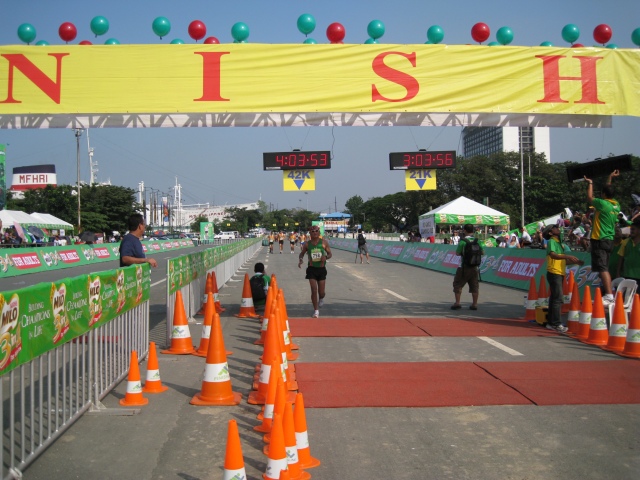
I finished the race in 4:03:54 hours (based from my GF 305), a few minutes from my target finish time of sub-4 hours! I did not encounter any muscle cramps during the run and I was fully satisfied with my performance. My average pace was 5:44 minutes per kilometer with an average HR of 152 bpm. However, I don’t complain this time that my GF 305 registered a distance of 42.46 kilometers.

Congratulations to Mr Rudy Biscocho, to the NESTLE, Philippines and to the Volunteers for a “world-class” marathon race in the country. MILO Marathon Race proved it once again that it is the most prestigious and well-represented marathon race in the country today. I just hope that NESTLE/MILO would bring back those times when the Champion/s of the Marathon Finals were sent to Marathon Races in key cities in the United States/Europe. Who knows another Manny Pacquiao or Efren “Bata” Reyes would emerge as Marathon Champion in one of these International Marathon Races. This is a dream but it could be done!

See you at the Starting Line in the next Marathon Race for this month of October!

i am surprised with my latest race


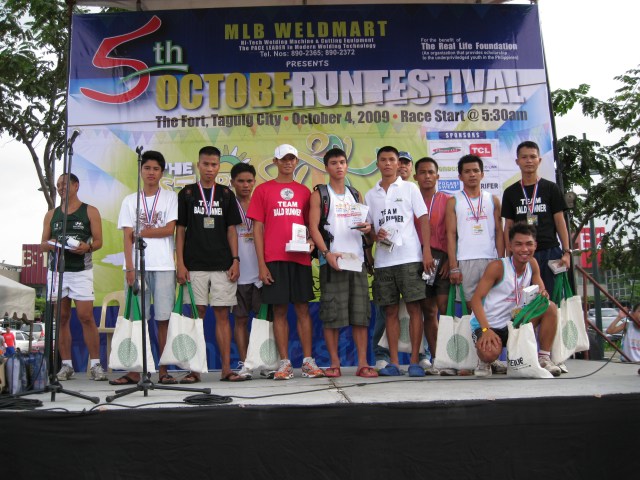
Last Sunday was the 5th edition of the Octoberun which is a yearly road racing event organized/managed by the members of the Fort Striders Running Club. My high respect goes to this running group as it had been consistently holding their running practices and workouts with their members at The Fort for the past years since the place started to have wider streets and vertical constructions.

Few days before the staging of the race, I asked Felsie from the Fort Striders if the race will push through because of the threat that Typhoon “Pepeng” would hit Central Luzon and she answered positively. I had predicted that this race will push through because I know the people who are behind this running group—they are dedicated & “hardcore” runners who are serious and know what & how it takes to manage a good road race.

Runners who decided to join the race were surprised to see that the weather was perfect for a road race. The atmosphere at the starting line was very personal and casual as runners would flock with their respective running club members and involve themselves with conversation about running, the typhoon/flooding, and the incoming races.

After a short prayer, singing of the National Anthem, and brief instructions from the Race Organizer, the 16K race started and we were off. Feeling from the way I lifted my knees and saw how my feet hit the ground, I knew I was starting with a fast pace. I tried to maintain my pace all the way along the streets of The Fort until I started to run uphill towards Essensa. Knowing the course, I tried my best to maintain a pace below 5:00 minutes per kilometer along the Lawton Avenue and towards to the turn-around point at C-5.

While running along the route, I’ve observed that the race was well-managed—long tables for the water stations, presence of route marshals, and the traffic of vehicles was not bad at all when the race is done as scheduled. It was good also to see the faster runners on the other side of the road for two times because the route has two turn-around points. I had the pleasure to see the members of the Elite Team Bald Runner battling it out on the lead pack. It was my chance to assess how these athletes/runners carry themselves and maintain their running forms and their ranking as compared with the other fast runners. By looking at their running forms and facial expressions, I could already assess if they are running with confidence or not.

Stronger and younger runners would overtake me along the route but I just maintained my pace as I knew where I could speed up and recover on the road. I would consider this race as tune-up race for the longer road races in the coming weeks and maintained a “tempo run” pace for this race. After all those positive thinking, counting of pace/strides, and mental “mantras”, I was already nearing the finish line and I found out that I still have extra energy to propel myself to the Finish Line.

I finish the race in 1:14:20 hours with an average pace of 4:52 minutes per kilometer (or 7:50 minutes per mile) but my GF 305 registered a distance of 15.3 kilometers instead of 16 kilometers. Being dismayed about the lack of distance, I did not mind or thought of comparing my finish time with my past races. After a few days, I realized that I was able to improve my time after comparing it with my past races in the 15K and 16K (10-mile Race) distance races. In fact, I was able to improve my time by 2 minutes for the 15K or 16K distance. I would attribute my improvement with my longer distance speed runs at the Oval Track ( 3 X 2,000 meters up to 3 X 5,000 meters) and my weekend long runs.

Team BR & Team Hardcore @ The Start
Picking Up My Pace Towards The Finish Line
Podium Finish For Elite Team Bald Runner
Podium Finish For Elite Team Bald Runner (5K)
Podium Finish For the 16K Runners & Elite Team Bald Runner

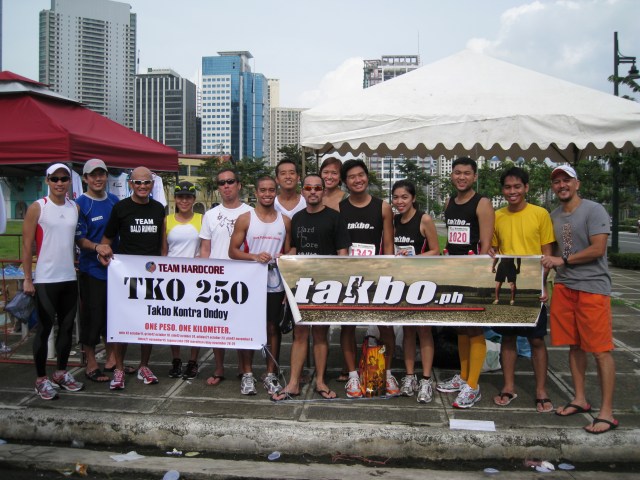
After the race, I took some time to chat with Jonel aka Bugobugo and the members of Team Hardcore at the TKO 250 booth. I was able to meet also the Jinoe, Quennie, and the rest of the takbo.ph people who are also involved in the TKO 250 project for the victims of Project Ondoy. I promised to myself that I will be putting in Ten Pesos (P 10.00) for each kilometer that I will run in road races starting with the 5th Octoberun 16K for the said project. So, on this road race, I was able to donate Two Hundred Pesos (P 200.00).

Before the team left at the venue of the road race, I was able to award the “1,000-Km Club” Finisher’s T-shirt to Junrox aka Tiger Boy. Congratulations, Jun! I hope this program was able to make you a stronger and faster runner!

@TKO250 With Team HC, Takbo.ph, & Team BR
Junrox aka Tiger Boy Receiving his 1,000-Km Club Finisher's Shirt

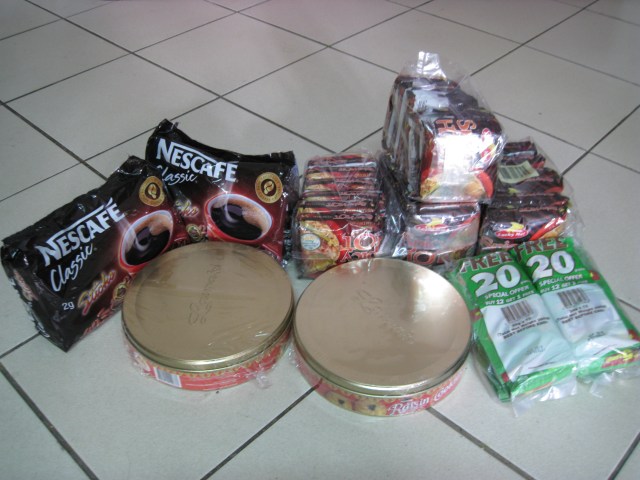
I was doubly surprised when Carrey, my favorite supporter/sponsor of Elite Team Bald Runner handed to me bags of groceries for my runners. Thanks for supporting my elite runners! Yes, we are also victims of Typhoon Ondoy!

Thanks, Carrey!
Thanks, Carrey!

Masters In Marathon (M.I.M)


While reading the back issue of the magazine “Running Times” dated November 2003, I came upon an article entitled “A Master’s in Marathoning: Choosing the Education of Running” by Mike Tymn. The article stated that running a marathon race is in itself a post-graduate education degree that has a curriculum and subjects to be attended to. For a student who enrolls in this Graduate Studies on Marathon Running, it would take years before he/she could complete or graduate depending on the goal/objective to be attained—to simply finish or finish within a desired time or improve one’s PR or qualify for the Boston Marathon! The following is some of the excerpts from the said article:

The marathon curriculum begins with courses in anotomy, physiology, and medicine. We learn about cardiovascular endurance, anaerobic threshold, oxygen debt, target heart rate, maximal oxygen uptake, running injuries, pronation, supination, to name just a few. The curriculum continues with courses in Physical Education as we are schooled in the principles of adaptation, overload, progression, specificity of training, recovery and rest. We are exposed to interval training, fartlek, LSD, circuit training, stretching, tapering, pacing, peaking and overtraining. We learn about diet and nutrition, finding out what to eat and what not to eat. We are introduced to carbohydrate loading, electrolyte replacement, and proper hydration.

The marathon curriculum includes lessons in psychology, as we must better understand how to deal with problems in goal setting, self-motivation, mood swings, errors in anticipation, regression under stress, and fear of failure. We learn about such things as mental rehearsal, visualization, and self-reward reinforcement.

There are also lessons in planning, time management, and conflict resolution, especially for the runner who is attempting to balance family and occupational responsibilities with the demands of training.

I see the marathon as a microcosmic lesson in life. We learn to commit ourselves to a goal, to discipline ourselves to the demands of that goal, to develop, adapt and evolve, to pace ourselves for both the short and the long haul, to cruise, to struggle, to overcome, to struggle again, to push on, to slowly “die”, (as oxygen is depleted), then to be “reborn” (as we cross the finish line).

There are so many lessons.

We learn that we can work a lot harder than we had ever realized possible, but we also learn that we can work too hard and set ourselves back.

We learn that we can start too fast and never finish, and we can go out slow and never catch up.

We learn that winning or achieving our goals can be fun and fulfilling, but we also learn that winning can bring unwanted pressures and harmful stresses.

We learn that being a poor loser is better than being a poor winner.

We learn that our fiercest rivals can be our best friends.

We learn that success can instill pride, but it can also bring an abundance of humility.

We learn that we can get slower with age but faster with adaptation and experience.

We learn that there are a lot of contradictions in running, just as there are in life, and the key is a balance mixed with just the right amount of patience, persistence and perseverance.

More than anything, marathon running is a course in philosophy, an attempt to answer the essential questions of life. To what end? At what price? The questions and answers are endless.

Whether you are an elite athlete who makes running as your source of income or a competitor who finds challenge in trying to find your body limits or a runner who wants to engage in an active healthy lifestyle, running in itself is a way of life.

So, if you want to graduate in this course of Masters in Marathon, you have to “pay your dues/fees”, study your lessons, do your assignments/homeworks, and above all, pass your quizzes and comprehensive examinations!

(Source: A Master’s in Marathoning: Choosing the Education of Running by Mike Tymn. Running Times Magazine. November 2003. pp. 29-30)

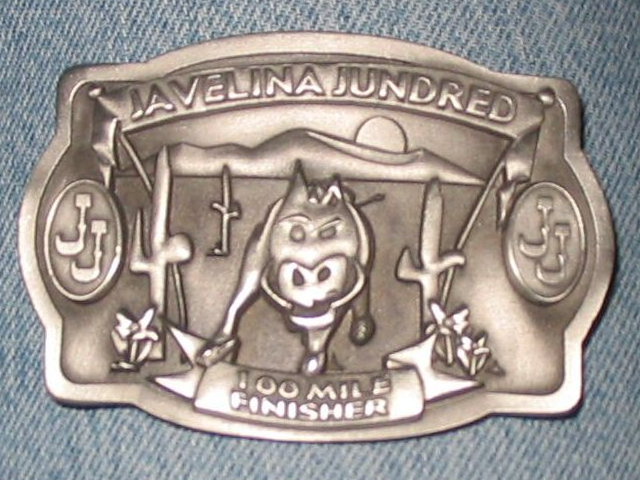
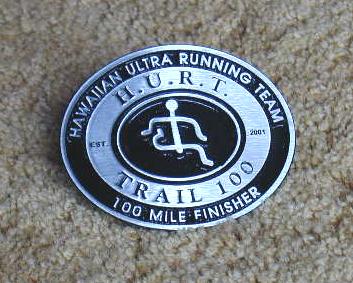
100-Mile Trail Run Belt Buckles


You might wonder why ultra trail runners would run for one to two days to finish a 100-mile mountain trail run within the prescribed cut-off time and receive a Finisher’s Belt Buckle at the Finish Line and the “bragging rights” to have finished such endurance running event. My ultratrail runner-friends Ben Gaetos, Rick Gaston, Eric Lumba, Carmela Layson and Jose San Gabriel would know the answer! 

I am posting the following Finisher’s Belt Buckle as an “inspiration” to finish one of these popular 100-Mile Mountain Trail Runs. 

San Diego 100-Mile Run Finisher's Buckle
Javelina Jundred 100-Mile Finisher's Buckle
HURT 100-Mile Run Finisher's Buckle
Western States 100-Mile Run Buckle Award

If there is somebody among my readers who knows a company/business outfit in the country who can make or produce these “big” belt buckles, please leave a comment.

It is my plan and vision to extend the BDM 102 into a 100-Mile run from Mariveles, Bataan (Km 00) up to Camp O’Donnell, Capas, Tarlac and a Finisher’s Buckle will be awarded in addition to the Finisher’s Individual Trophy and Medal. Not for the next edition (next year) but it could be in its future editions.

Runners will have the option to finish BDM 102 or go all the way to BDM 160.

Never Stop Testing Your Limits!

Things I See Around The “Training Camp”


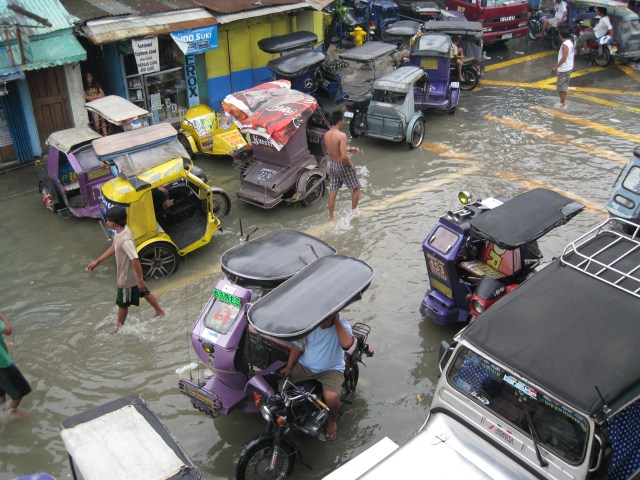
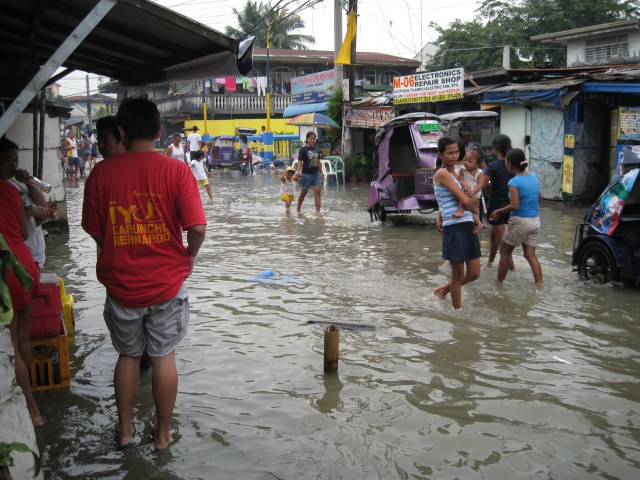
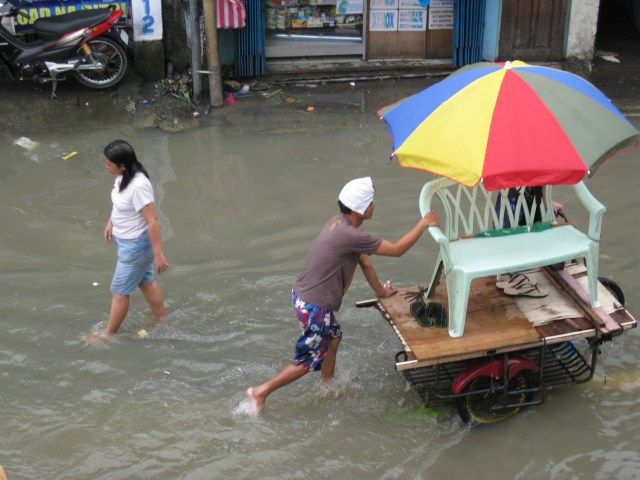
After 6 days since the rains of Typhoon Ondoy flooded the entire Metro Manila, I finally thought of bringing out my camera and took some pictures this morning around and within the premises of our “training camp” in Pasig City. Here are the pictures I took.

Water On The Streets After 6 Days
Another View of The Flooded Street
Elite Team Members On Their Way To Relief Center
Getting In Line At The Relief Distribution Center
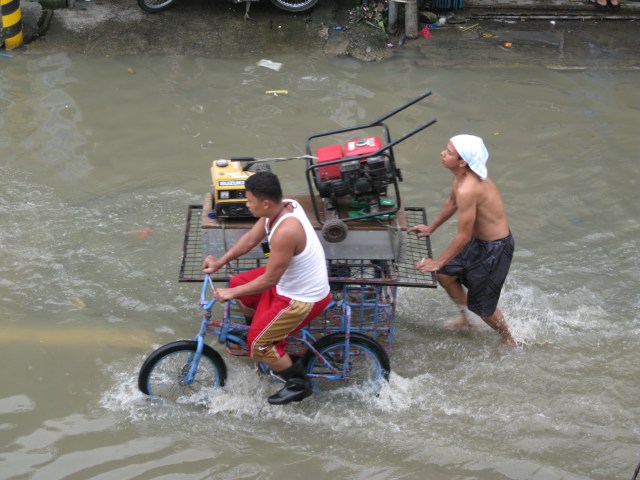
"Amphibian Transport Vehicle" (ATV)
"Personnel Amphibian Vehicle" (PAV)
Waiting For A Passenger
Trashes Everywhere, Collected Everyday But Still Clogged The Creeks
Thrash Everywhere, Collected Everyday But More Still Clogged The Creeks
Contents of One Bag of Relief Goods
Another Set of Goods In Another Relief Bag

Out of the four members of my Elite athletes who lined up for the distribution of relief goods, only two of them were able to receive bags and the pictures above indicate the contents of each bag given. There is still a lack of relief goods for the people affected with the floods.

With the rains brought by the incoming Typhoon Pepeng since last night, the water on the streets had gone higher by few inches. But what is good is that, electricity had been restored in our “training camp” a few hours ago! My Internet connection is back!

See you tomorrow at the Starting Line!

Running Must Go On!


Life must go on! In one way or another, everybody is affected by the onslaught of Typhoon Ondoy.

Our “training camp” in Pasig City is still surrounded with flooded streets and we don’t have electricity (after 5 days). One of my staff and her family had evacuated her house to a higher place due to flooding and my running coach’s house/residential area is still submerged in water that after four days, he had to evacuate his family due to lack of relief/help coming from the local government and from non-government organizations involved in the relief operations. His family could not withstand the stench of bad smell and the lack of potable water in their place. I am glad my staff and their families are all safe. On the other hand, some of my athletes (due to their duties with the Philippine Army) had been involved in the relief and rehabilitation efforts in Marikina City as part of the manpower that had been “shovelling” and collecting the mud and dirt in the streets for disposal.

Despite all these concerns and activities, we still have to “squeeze” some time to maintain the level of competitive performance of our elite  athletes and conduct our “speed training” sessions at the Oval Track without any miss in order to attend to the Team Bald Runner-Professional Group. Yes, we are involved in helping the victims of Typhoon Ondoy but we have to help and attend first to our staff who are also victims of the flooding and at the same time help other runners to keep them focused in their training for the “big” marathon races in the coming weeks! This holds true also to our Elite athletes.

I am overwhelmed by the simultaneous efforts of our runners in coming up with charity and donation efforts to the victims of the floods and Typhoon Ondoy. I really salute and highly commend your efforts with the hope that you continue doing such act even if the victims are in the Visayas, Mindanao, and Batanes. Silently, I’ve been donating some cash and goods for the past year and months to charitable institutions whenever there were typhoons and floods in other parts of the country. And I’ve continously maintained my Project Donate A Shoe and Project Donate A Shirt up to this date with the hope that more donors will contribute in these projects.

Now I know where I will donate those shoes and shirts/singlets that are stocked in our “training camp” and for those which we will receive in the future. After all these relief/rehabilitation activities and “news overload” about distribution of relief goods, I will “silently” go to some places (which are not yet being reached by the relief agencies after 4 days!) near our “training camp” to distribute such donated shoes and shirts/singlets from our friends.

Life and Running must go on! See you at the Starting Line!

(Note: How I wish I could post an article about my insights & observations about the onslaught of Typhoon Ondoy but that would be inconsistent with the advocacy of this blog. Let this blog be devoted to only running)