10:00 PM January 15, 2011 @ BDM Shrine Km Post #00, Mariveles, Bataan
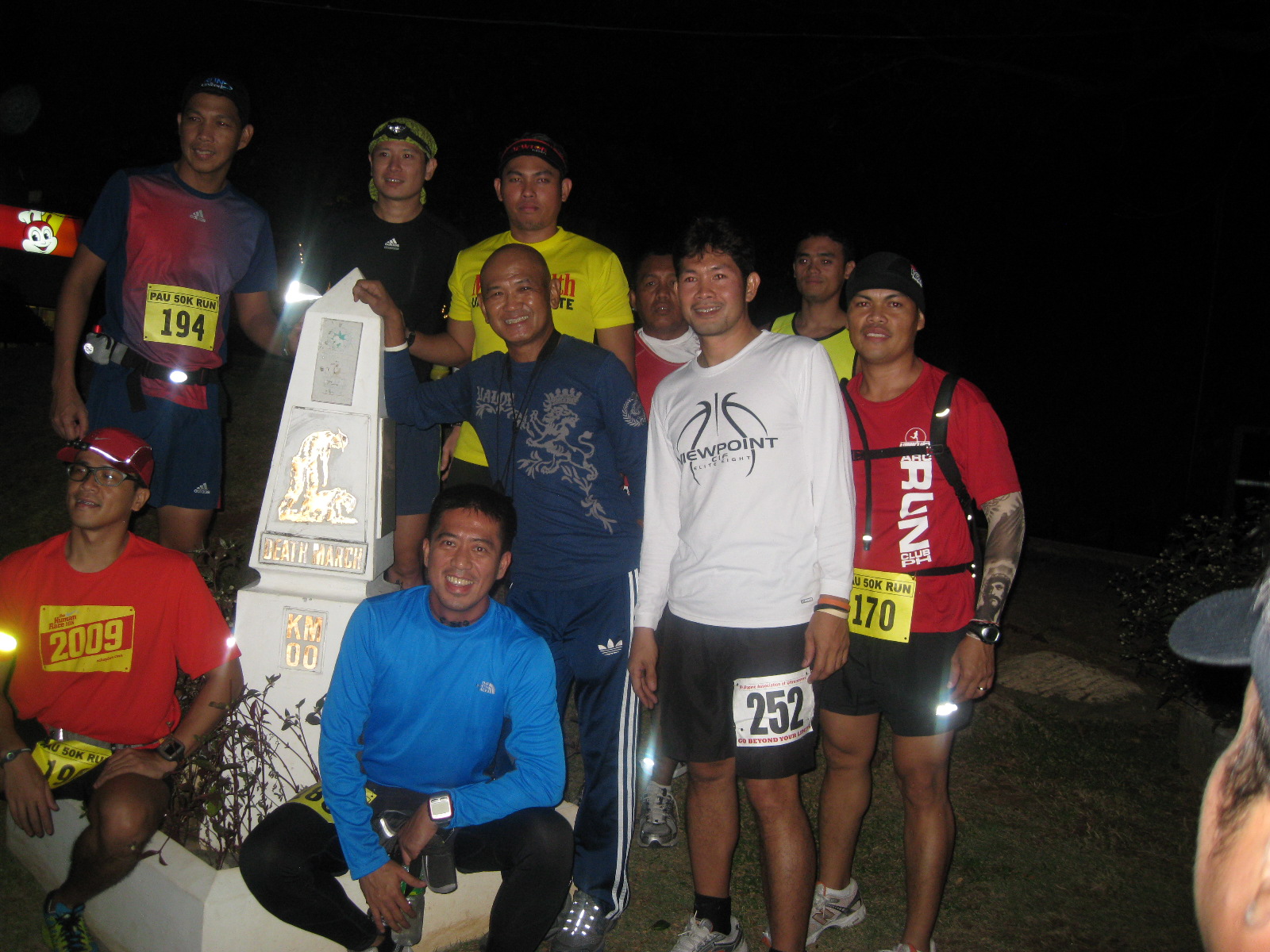
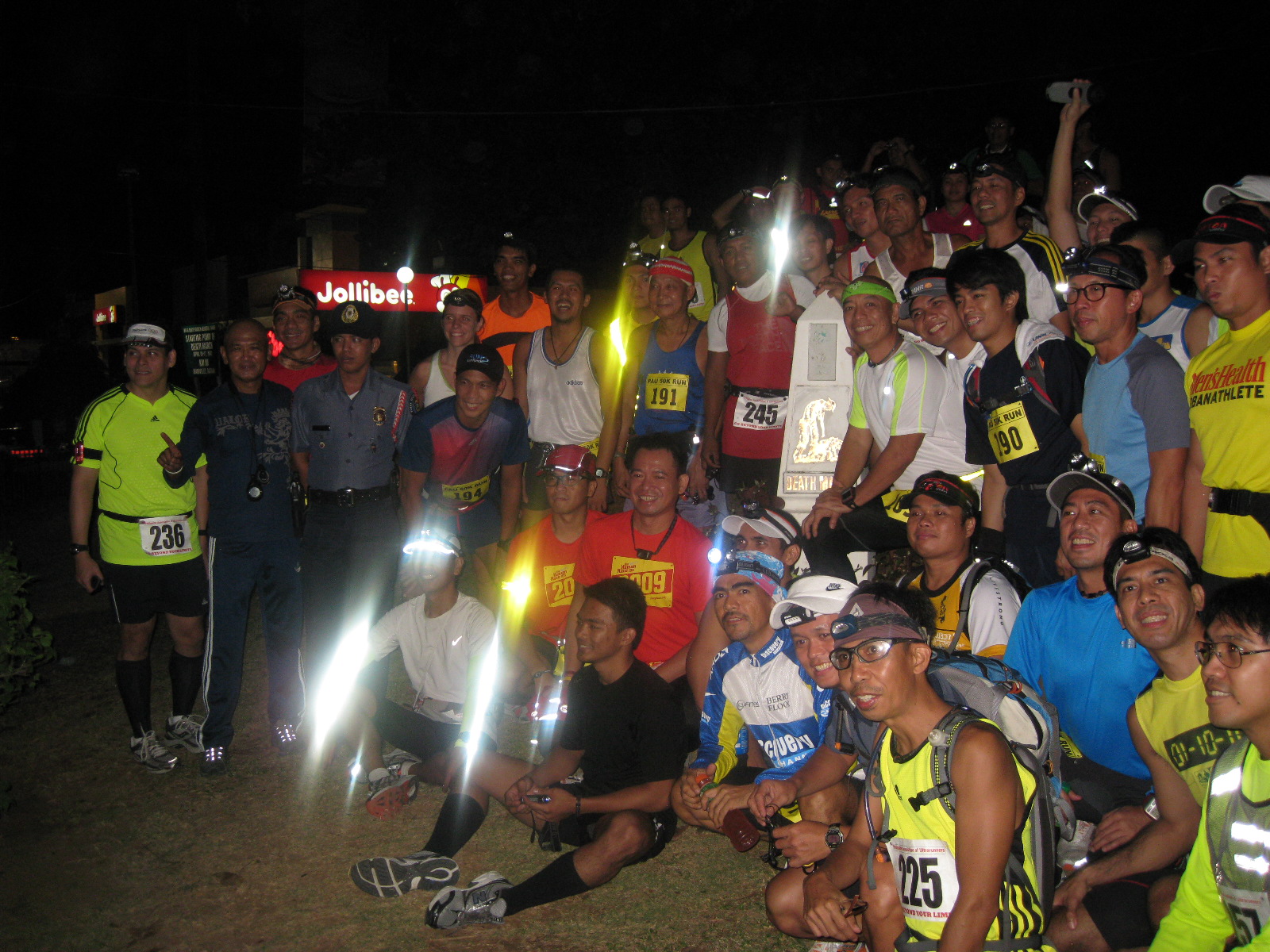
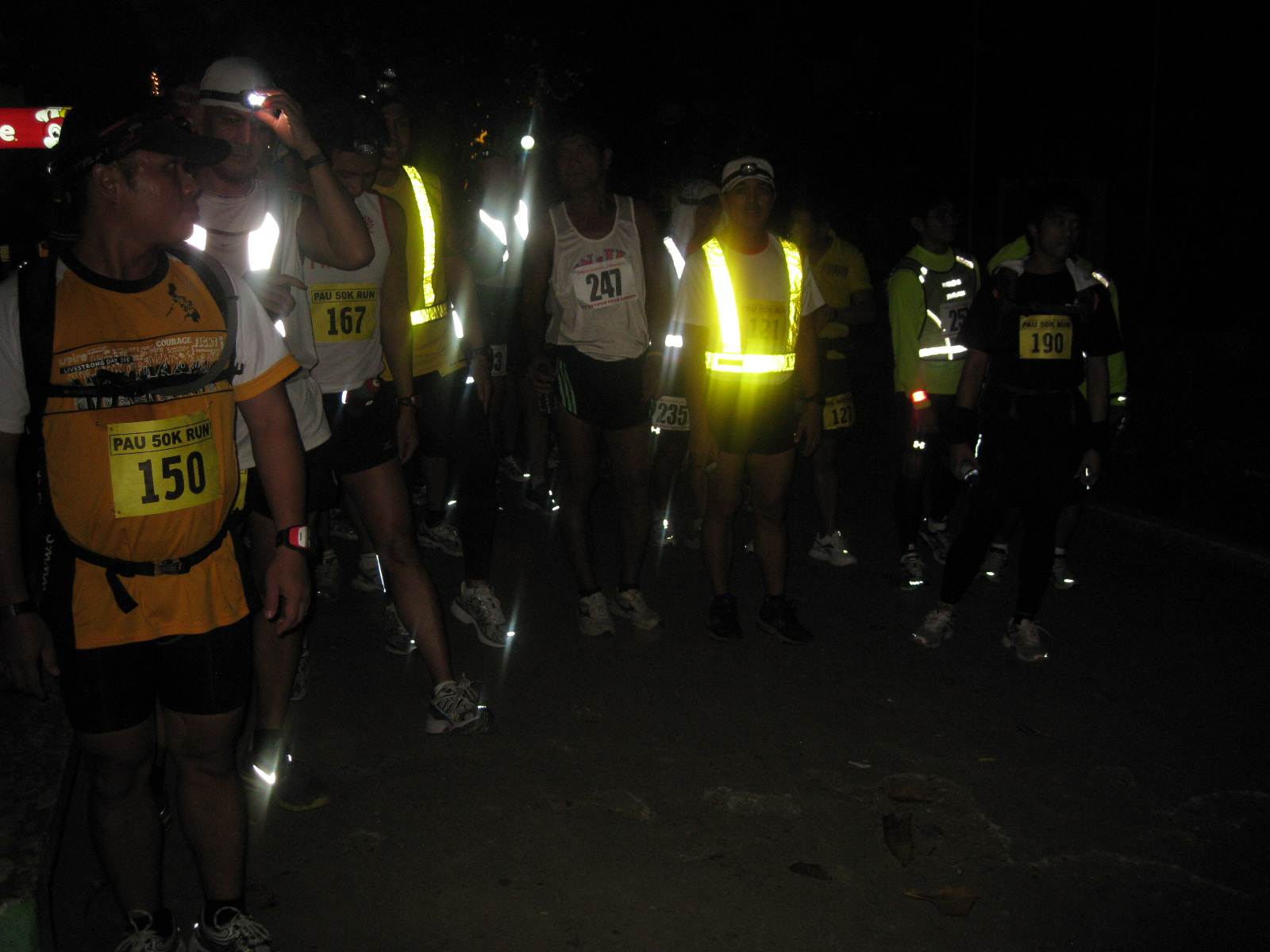

See you this Saturday, 5:00 PM January 29, 2011 @ BDM Km Post #102. Good luck and train well.
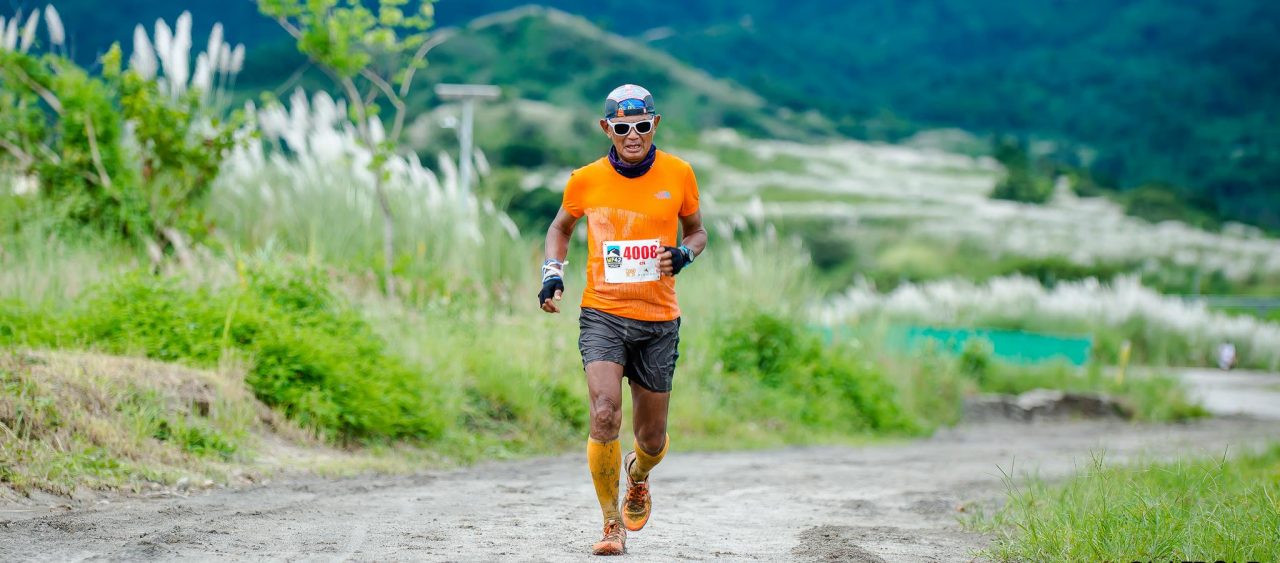
10:00 PM January 15, 2011 @ BDM Shrine Km Post #00, Mariveles, Bataan
See you this Saturday, 5:00 PM January 29, 2011 @ BDM Km Post #102. Good luck and train well.
Last year, I joined a “Midnight To Sunrise” Run with the rest of the 1st BDM 102 participants through the invitation of Albert Salazar aka Run2DMoon. My account on this running experience with 20+ other runners could be reviewed in my post last year.
For this year, the running experience was initiated by Jonel aka Bugobugo85/FrontRunner Magazine with the UP Diliman Loop as the venue. A group of 30+ runners joined the said run as part of their preparation for the 2nd BDM 102 which will be held on March 7, 2010. The run started at 12:08 AM after a briefing and photo-ops courtesy of FrontRunner Magazine.
Although I will be the full-time Race Organizer and Race Director for the 2nd BDM 102, I joined this run because of the following reasons:
1) My last LSD before the Condura Marathon—Yes, I am joining the Condura Marathon this coming Sunday. I am not thinking of any PR this time as I will treat this Marathon Race as another LSD run.
2) To Assess My Recovery From Injury—As part of my recovery from my injury, I’ve been building-up my endurance base and sthrengthening my legs. My running workouts are limited to long runs and tempo runs. I only did one session of interval training since I recovered from my injury. In this run, I was able to prove that my legs are in good condition.
3) To Assess The Need of Supplementary Weight Training—During my recovery, I renewed my regular visits to the Gym. My workout at the Gym were geared towards strengthening of the leg muscles, core muscles, and my upper body. After two weeks, I could feel I am becoming stronger.
4) Preparation for an “Adventure” Run—This run is a part of my planning/preparation to an “adventure run” which will start after finishing the Condura Marathon. I would be running a distance of a full Marathon Race everyday which I think is “doable”.
At 6:08 AM today, I was able to run 43 kilometers and my running time was 5:07+ hours. The rest of the time was spent for “pit stops” to eat, hydrate, and attend to the “call of nature”. I strictly followed my strategy for a slow steady pace, drink water/Gatorade every loop (2.2 kilometers), and eat solid food (boiled eggs, boiled bananas, and bread) every 12-15 kilometers.
Now, I need a “cross-friction” massage and sleep!
1. I received a very early X’mas gift from Jay Nacino aka Prometheus Cometh two weeks ago and it was delivered through courier system. The gift was a compilation of running films/movies recorded in two (2) CDs. Thanks, Jay for the gift. God bless.
2. The following films were recorded in those two CDs: Chariots of Fire; Without Limits; 50/50; and Running The Sahara. Having seen the first two films mentioned in widescreen, I was very interested to watch 50/50 and Running The Sahara because they deal more on ultramarathon and multi-day stage runs. Both of these running events were filmed sometime in 2006.
3. I will not deal with the whole story of these films as every reader of this blog could easily browse or “google” the title of the films and they could get the details of these running events. 50/50 was made as a film and at the same time published as a book to document Dean Karnazes’ 50 marathon races, in 50 States in the US, in 50 days. Running The Sahara is a film about three (3) ultrarunners from the USA, Canada, and Taiwan traversing the African continent by passing through the Sahara Desert in 111 days.
4. What I like to point out and emphasize in these running events is the tremendous PLANNING involved to undertake such feats. Dean Karnazes took at least 3 years to convince The North Face in appreciating his plan to run 50 marathons, in 50 different States, in 50 days and another year to finally coordinate and arrange for the implementation of the said project. It was only when his book “The Ultramarathon Man” became a No. 1 Top Seller and his being a top contender in the 100-Mile Western States and Winner in one of the Badwater Ultramarathon editions that he became popular.
5. The planning and preparation for the three (3) ultra runners in 3 different countries in the Running The Sahara took also years. Moreso, with the logistics; production/film crew; and other administrative requirements preparations for the event. This film/event also tested the endurance of the support staff and film crew in order to finish the running event.
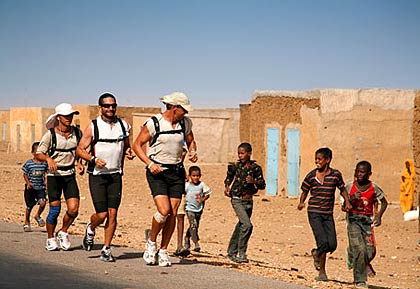
6. These two running epic events were well-planned and documented. These films really inspire other people to seek their endurance limits and at the same time promoting some advocacies/charities to help less-fortunate people. So, if ever you plan to do such endurance run, whether an ultramarathon event or multi-stage/day run, you have to document it so that the INTEGRITY of the event is intact. A simple blog (with pictures) would do or inexpensive tracker/GPS device to record your event should be with you all the time during your run.
An Ulramarathon Trail Run somewhere in the Sierra Madre Mountains!!!
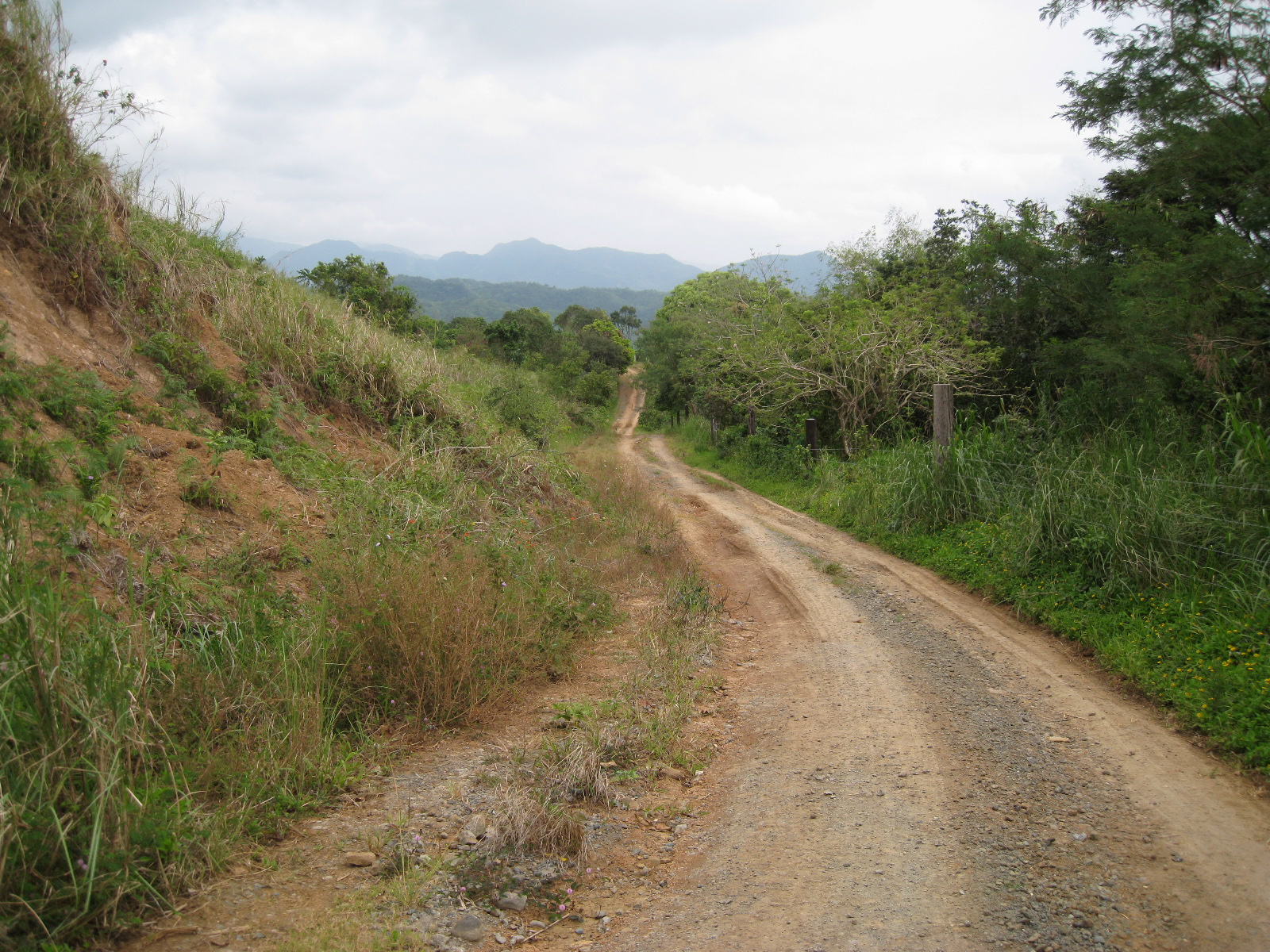
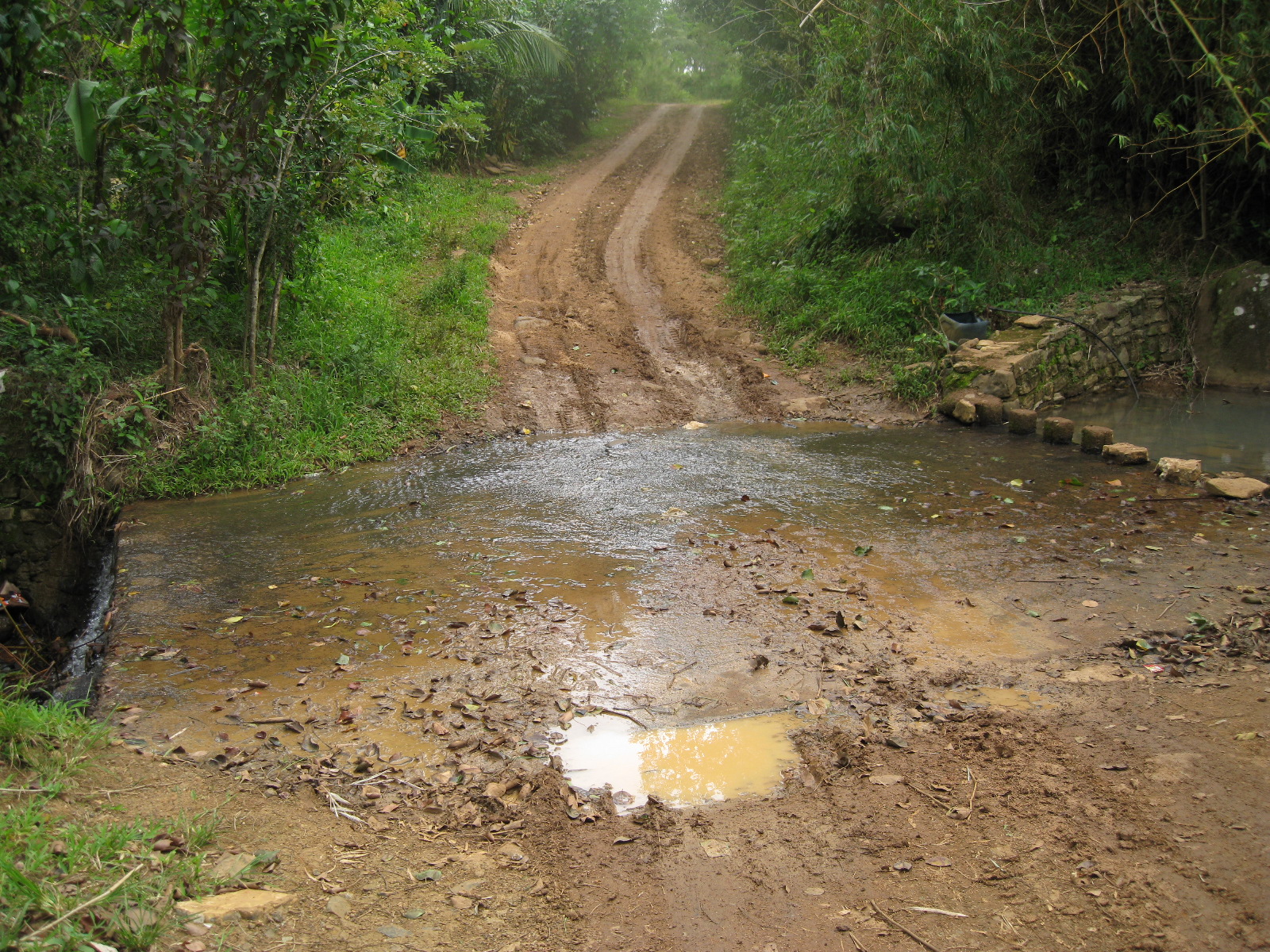
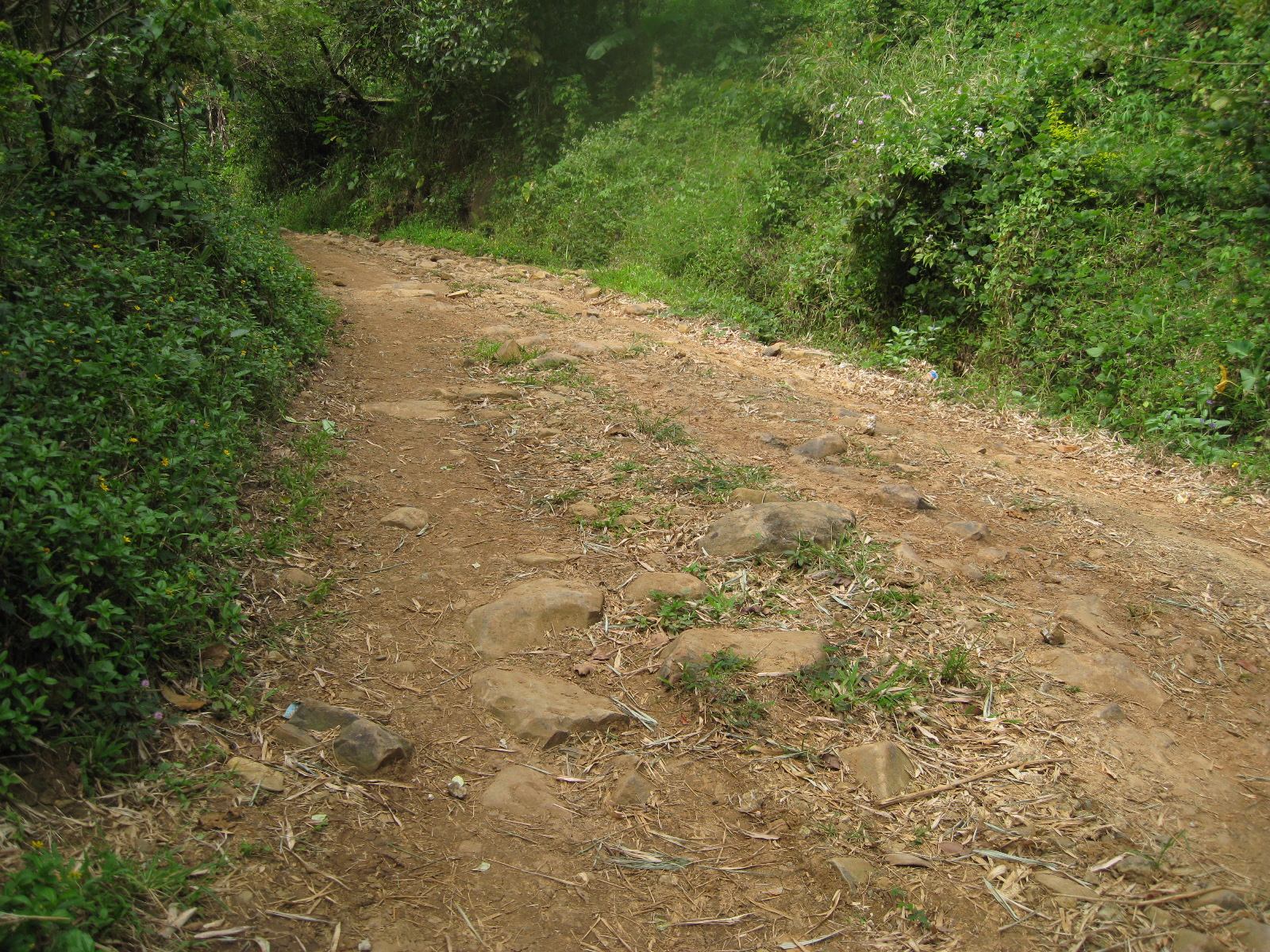
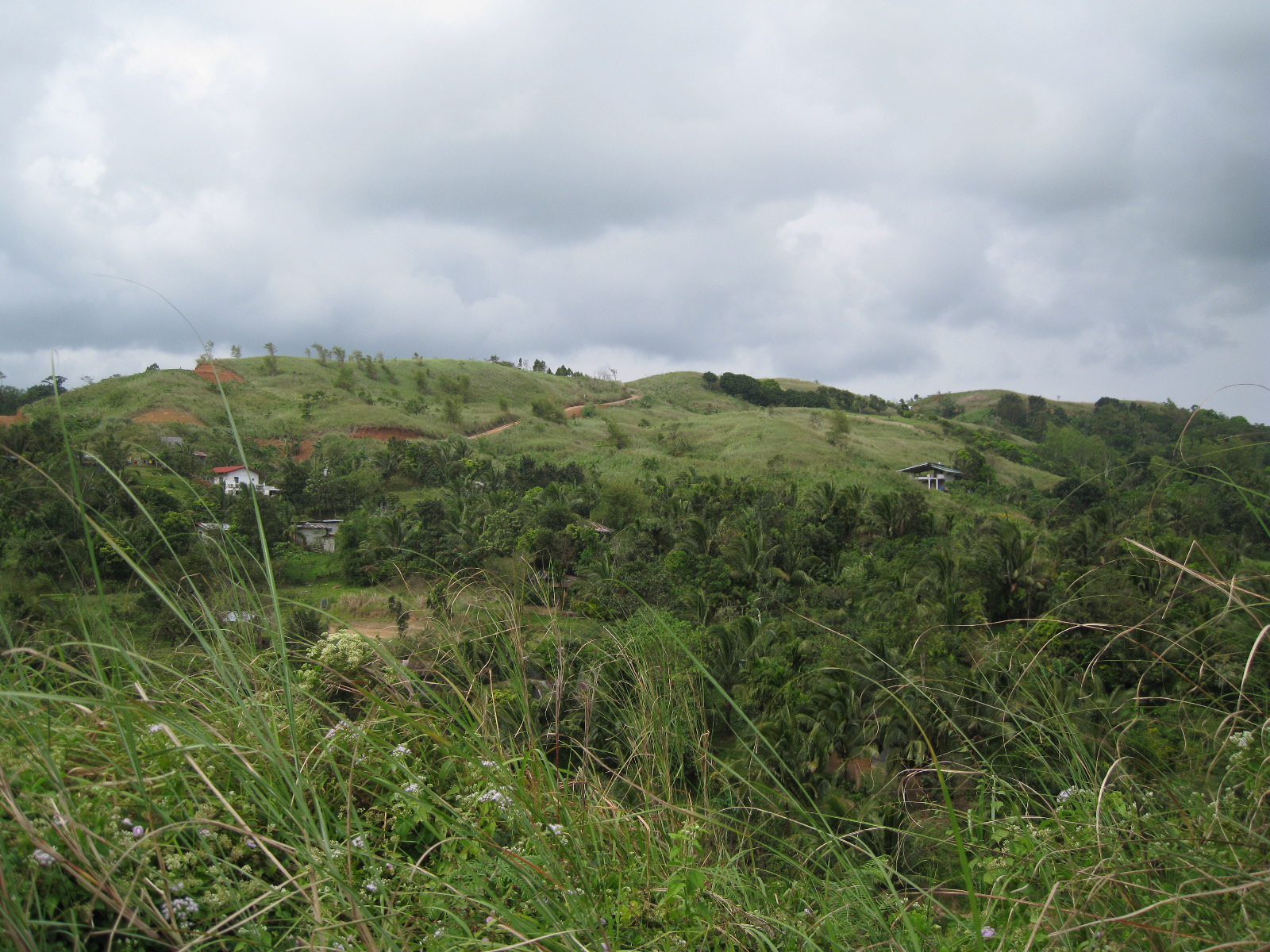
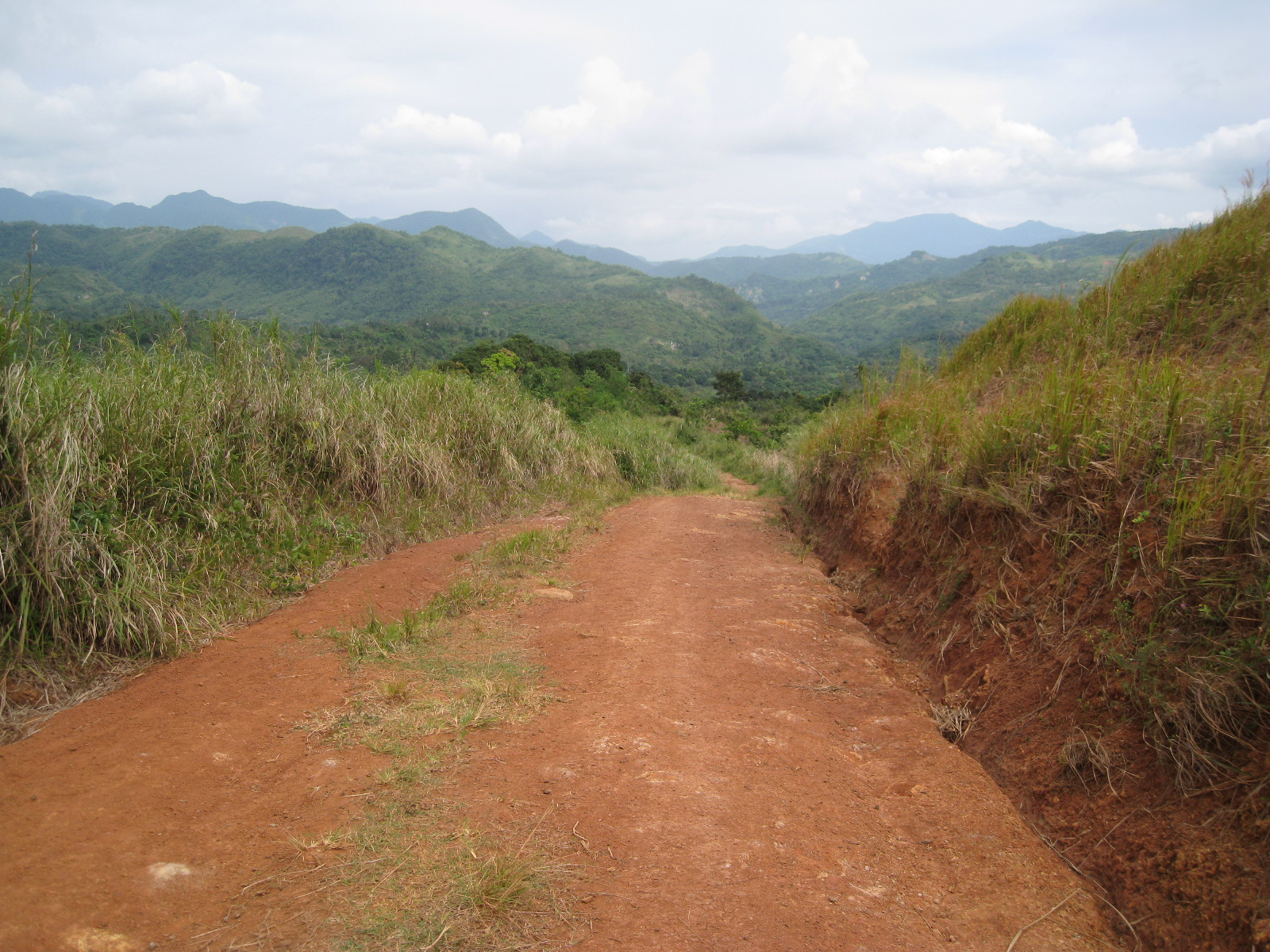
If you are interested, you have four (4) months to train and prepare. Good luck!
The Birth of the Philippine Association of Ultrarunners (PAU); Our National Sports Federation On Ultrarunning
Since I started this blogsite two years ago, I was wondering what PATAFA had been doing about the sports on running, most especially on road racing. It took me some time to observe and ask people who are connected with our Athletics Sports Federation on what could PATAFA do in order to have a “control and supervision” on the conduct of road races in the country. It was during the past two years that there were so many complaints from the runners about how road races were being conducted month after month with the same complaints.
Last year, I had the opportunity to pay a courtesy call to the President of PATAFA, Mr Go Teng Kok, who had been in this position for the past 18 years. I briefed him on my observations on the conduct of road races in the country and told him that PATAFA should come into the picture as Road Racing is one of the principal components of the Athletics Sports Federation. He did not forget our conversation.
On January of this year, Mr Go Teng Kok invited me to attend the Elections of Officers of the PATAFA. I was an observer of that elections but I was frustrated on how the process of elections was done. It was not an election but it was a simple designation of officers. Mr Go Teng Kok easily got the President’s position and he will be in that position up to the end of 2012. However, it was on that “designation” day that I was designated as the Director For Road Races which, in addition to my duties, has now the power to vote for the next group of officers for PATAFA after the 2012 London Olympics. Will it take me to wait this long to become the President of PATAFA?
I am not proud of being designated as the PATAFA’s Director For Road Races because I don’t have any powers to command & decide as I could only recommend to the President of the things that I would observe in the conduct of the road races. And my duty ends there! Through this blog I was able to observe and took note of the good and bad points of the different road races in Metro Manila. However, there should be stricter measures to follow so that PATAFA’s influence be felt in road races.
In the course of preparing for the conduct of the 1st Bataan Death March 102K Ultramarathon Race (BDM 102), I discovered that there is such an international sports federation on ultrarunning called the “International Association of Ultrarunners” (IAU) which is under the IAAF and I conceived a plan and course of action to undertake to come up with a National Sports Federation for the country in the Sports of Ultrarunning or Ultramarathon. This plan was laid and put to action after the conduct of the 1st BDM 102 last April of this year.

I created the Philippine Association of Ultrarunners, Inc (PAU) with some of the Finishers of the 1st BDM 102 and have this registered at the Securities Exchange Commission (SEC) and it was approved on May 18 of this year. Immediately, I sent a letter of application for membership to the IAU through the Asian Representative of the IAU’s Executive Council in the person of Mr Lee Yongsik of South Korea and he provided me with the procedure to follow and requirements to produce in order that the bid for membership of PAU will be elevated to the Executive Council of the IAU for Approval. Mr Lee gave me a positive note and encouragement that the Philippines will be the 6th country in ASIA to be a member federation in the IAU.
I have to get an endorsement and accreditation from PATAFA and fill-up some forms from the Executive Council of the IAU and they were sent to the IAU immediately. No less than the President of the IAU who was sending me things that need to be submitted for the country to be represented to the international body. PATAFA and I even wrote some letters to the Executive Director of IAAF, Mr Peter Weize to show that PAU is an accredited organization under the PATAFA.
After deliberations, I finally received a letter from the Executive Director of IAU, Hilary Walker, that the Philippines through the Philippine Association of Ultrarunners (PAU) is now a voting member for the election of the incoming Asian Representative for the Executive Council of IAU and my vote should reach their Headquarters not later than November 22! In the said letter, I was informed that I should check on the latest E-publications of the IAU on its website on the announcement that the Philippines bid for membership to the IAU was accepted and approved. It showed that our membership to the IAU was approved last July this year and published in their October’s E-Publications (Welcome Members), the Philippines/PAU is the 47th member-federation/nation of the IAU and the 6th Asian member! As of the present, there are only 48 member-federations/nations of the IAU.
Ms Walker’s letter also gave me an advance information that the IAU will be sending a formal invitation for the Philippines/PAU to send our best ultrarunners to the 1st IAU Asian 100K Championship which will be held on March 2010. The place of competition might be in Japan or South Korea.
Since I created the Philippine Association of Ultrarunners (PAU), I am automatically designating myself as the President of this Sports Federation for Ultrarunning for the country. Are there any objections? I hope the sports of ultrarunning/ultramarathon will be developed and enhanced among the members of the running community through this Federation with the end-view of sending our best ultrarunners to international competitions sponsored and sanctioned by the International Association of Ultrarunners. With the plan to introduce the 50K or 100K Ultramarathon Race as “demonstration sports” in the 2012 London Olympic Games, I can positively say that the Philippines would be able to produce its Olympic Athletes to compete in this event in the next Olympic Games and later to the 2016 Rio De Janeiro’s Olympic Games.
There is no need to become the President of PATAFA afterall!!! However, in the end, I still need the support and unity of the runners for us to give pride to our country to be among the world’s best in ultrarunning/ultramarathon, if not, the best!
Now, for starters, I need somebody to design the Official Logo of the PAU. Whoever will submit the selected one, he/she will be awarded a 5-Year Free Membership to PAU. (Note: Please send your entries at my e-mail address at jovie75@hotmail.com)
PAU’s blogsite is at www.philippineassociationofultrarunners.blogspot.com.
As I mentioned in my previous posts, I’ve been reading the book, “Getting To The Point: In A Dozen Pairs of Shoes” by Brian Stark who did his 5,000-mile solo trail run for 238 days from March to November 2008 along the newly designed American Discovery Trail from Cape Henlopen, Delaware to Point Reyes, California.
Since the activity was a solo run, he did not have any support crew or pacer during the run. He just carried with him a 10-pound pack which included his water hydration system, making sure to run along the trails across America.
What I admire with this guy was that he really prepared for the said run. It took him one year to coordinate with the organizations that maintain the American Discovery Trail; compile at least 500 maps; arranged for logistics drop-off point in selected Post Offices of towns & cities along the way; created his personal website for the event; and saved $ 10,000 cash to finance his trip. He even arranged for his shoe sponsor making sure that a brand-new shoes as replacement would be picked-up in a pre-designated Post Office along the way. Even media outlets (newspapers, radio and TV) were coordinated and informed about his running event.
Brian Stark, in his daily runs along the trails, would be able to finish at least 30-40 miles and then look for a decent place to stay if a trail is located near a town or city at the end of the day. Sometimes, he would sleep in parks, Fire Stations, churches, schools, and in the homes of strangers who are willing to offer dinner & breakfast, bed and shower.
To update his website and reply to messages in his e-mail address, he would go to Public Libraries along the way to use their computer. The following excerpts was taken from a post from the Internet describing the feats of Brian Stark:
After driving back from the Boston Marathon, where his dad had run, Brian Stark, then 7, got out to use the bathroom during a stop for gas somewhere in Pennsylvania. No one took note, not even when Stark ran up and banged on the family van as it pulled away. “When my parents stopped for breakfast 300 miles away, they noticed I was missing,” he says. These days, Stark could have just kept running until he caught up with them. In 1998, he ran 4,800 miles across the country on the American Discovery Trail, which runs along America’s trails and back roads. It began in a sleet storm in Delaware and ended 238 days later at the Golden Gate Bridge — followed by a drive to L.A. and an appearance on “The Price Is Right.” “I won eight stuffed teddy bears and two trips, one to Hawaii, one to Canada,” says Stark, 36, who frequently pulls experiences from his trek while teaching gifted language arts at Corona Foothills Middle School in the Vail School District. And yes, he sometimes jogs to school, all 35 miles. “I have to get up at 1:30 a.m.,” says Stark, who is married and a father to two little girls, ages 2 and 3. He kept a journal while on his run and afterward wrote a book about the experience, “Getting to the Point: In a Dozen Pairs of Shoes.” “I picked out 12 pairs of running shoes and mailed them to 12 post offices 400 miles apart,” says Stark. When he arrived at each post office — each about three weeks apart — a new pair of shoes would be there to replace his worn-out ones. Along the way, local newspapers and TV stations chronicled his trek through their towns and CBS “Sunday Morning” broadcast a brief telephone interview. Sometimes he slept in motels. Other times he slept under bridges, in barns, even in outhouses. More than once, he’d just knock on a door. More often than not, he’d be invited in for a meal, and maybe a bed. Not once, he says, did anyone slam a door in his face. “No one ever threw anything at me, or tried to run me off the road.” Eight policemen, however, did inquire as to what he was doing, the first in Kansas. “I was sitting on a guardrail looking at a map and he pulled up in his squad car. He asked me what I was doing in the middle of Kansas without a car. I said, ‘I’m running to California.’ ” Even though he handed the cop a card explaining his circumstances, “He still checked me out.” Born in Indiana, Stark ran cross-country in middle school, continuing through high school and then at Hanover College in southern Indiana. After graduating in 1995, he rewarded himself with a five-month, 2,000-mile hike from Maine to Georgia along the Appalachian Trail. In Massachusetts, he met a man who hiked nude every Tuesday. Naturally, it was a Tuesday. Even so, Stark continued on. For the next three years, he lived as a caretaker in a primitive cabin in southern Indiana. “There was no running water and the only heat came from a fireplace,” he says. “After that, I thought I needed a break.” The “break,” of course, would be running across the country. “I’d never been west,” he says. A brother dropped him off at the edge of the Atlantic Ocean on the morning of March 8, 1998. It was 43 degrees and sleeting. Stark was carrying a 10-pound backpack filled with a sleeping bag, jacket, water bottle, cheese crackers, credit card, maps and “one Band-Aid, just in case.” As his brother rolled away, he cracked the window and told him to call if he wanted to quit. Stark never did, aiming to get to the Rocky Mountains after most of the snow had melted. He mostly ran and sometimes walked about 10 hours a day, trying to space it about 25 to 35 miles between towns. That proved impossible in Nevada, where the towns were more than 100 miles apart and he had 37 mountain ranges to cross.
In 2001, Stark did the Arizona Trail between Mexico and Utah in 39 days. In 2004, he ran across Iowa.
While reading this book, the following thoughts came to my mind:
1) Did Cesar Guarin of BOTAK come up with a book or a written account of his Run Across America in the 80s? I knew that he is one of the consultants of Joy Rojas and Mat Macabe during their planning preparation for the Takbong Pangarap Run Across America. A running experience as big as Running the Continental USA is worth to be printed in a book.
2) I thought of Joy Rojas and I tried to find out from the Internet if there is any word about the progress of her Takbong Pangarap. Since I could not see any information after she started her run in Eagle Rock, California almost 60 days ago, I posted the question in my Twitter as to where she is right now. Ben Gaetos had the initiative to answer my question by sending an e-mail to Joy Rojas and it led to Mat Macabe’s call to him.
3) Why did Joy Rojas thought of not creating a blog or website on her own instead of relying to the website of www.thepoc.net? After leaving Eagle Rock, California, POC had never updated her running activities. Being a news editor and news writer, she would have known the importance of the Internet in order to “journalize” her daily runs and let her readers know where she is and her daily experiences. In the book, Brian Stark would update his running journal in his website at the end of the day if he had an access to the Internet, if not, he would write his journal in a notebook and later wrote his updates whenever he had an access to the Internet. As compared now and the time when Brian Stark did his run across America’s trails, every town or city has its own public library with a computer, if not, there are so many Internet Cafes in every commercial establishment, even Motels now have Wi-Fi connections in every room with a very minimal additional cost. Access to the Internet right now is very common, cheap, and accessible. I am sure that every house in every big town or city has an Internet connection. Even cellphones nowadays have access to the Internet to include social networking sites like Facebook and Twitter.
4) One of my readers made a comment in my post about Joy Rojas and he/she has doubts about her running adventure to the point that she is suspected to be riding and running along the way. There goes the another “controversy” again! The following is the comment from cutierunner about Joy Rojas’ run from Las Vegas, Nevada to Denver, Colorado:
i too wondered where she was after she reached las vegas on may 23 and then silence until she pops out in denver for the western union shindig on june 23/ is she running or riding part of the way? google maps say that from las vegas to denver is a good 844 miles / from reports she says she takes a break every six days that leaves her with only 25 running days going from the desert to the state with the highest mean elevation in my country/ that’s uphill all the way to Colorado (during a season when flash thunderstorms occur), at 30 miles a day which is more than a marathon a day, she would still be short by 94 miles, so she must do something like 20% more to be statistically in denver by the date/ To set records, it would have been better if she wore one of these tracker gps items available here so that we do not have to rely on the word of her trainer who i hear is her boyfriend anyway and guess whether she is actually running or riding part of the way – also strange is having a crew of one
(Note: In my previous post on the pictures of Joy Rojas, I did not notice if she is wearing a Garmin watch, have you?)
I strongly believe that Joy Rojas could also do ala-Brian Stark running adventure across America if she has the necessary preparations, contacts along the way, and updated information about her daily activities.
5) In one of the Ultrarunning Magazines that Rick Gaston gave me, I read about Dean Karnazes plan to run across America using the American Discovery Trail from San Francisco to the East Coast and it is presently on the “drawing boards”. I guess, this will be fully supported by sponsors, marketing stuffs, and good PR support. What I like about Brian Stark is that he did it on his own without any “gimmicks” or marketing stuffs and even without any crew or support and pacer along the way, most especially while he was running the winding roads and trails of Colorado’s Rocky Mountains reaching an altitude of 12,000 feet above sea level.
6) Brian Stark did not set a deadline for him to finish his run and he did not pressure himself to reach a designated place. He had to take a lot of rest for his body to recover during the early part of his run and as the days and weeks have passed, he became stronger. He would find time to visit museums, tourist attractions, historical places and even enjoy the food distinct to every place he stayed while recovering from his rigorous runs. This a good example of a running adventure where you have enough time to explore the places you are passing through by visiting their tourist attractions, museums, and other historical places. Hence, he was able to write a book with all the pictures and clippings of newspaper accounts on his run.
If you have plans of running a multi-stage/multi-day running adventure, Brian Stark and his book is a good inspiration and source of experiences and a guide to a successful running adventure. I am highly recommending every runner to read this book.
1st Bataan Death March 102K Ultramarathon Race: April 5, 2009 (Mariveles, Bataan to San Fernando, Pampanga)
After reviewing my past posts, I found out that I did not post the usual “Lesson Learned” from my participation in the 1st Bataan Death March 102K Ultramarathon Race. What I posted in my blog immediately days after the conduct of the race was the lessons I’ve learned as the Race Director/Race Organizer of the said Road Race.
In view of the incoming BOTAK 100K Paa-Tagalan Ultra Race this coming Sunday, I am posting this “Lessons Learned” from the BDM 102K to guide the “first-timers” in ultramarathon race with the hope of helping these runners join the ranks of ultra runners in the country.
The following are the lessons learned in the said race:
1) Think always “the end-goal”—Finish The Race. Ultramarathon race is an endurance sports, just like a marathon race but the distance is longer which usually covers the standard distances of 50K, 50 Miles, 100K, or 100 Miles. For a runner who have finished his first marathon race and jumping in to the ultramarathon distance, he knows what to expect and what he has to do to last up to the finish line. As a runner, I always believe that if you run a marathon race, it is a “sin” to walk within the said distance and you can not afford to hit and experience the dreaded “Wall”. But in ultramarathon distance running, walking during the race is a good strategy in order to conserve your energy and have the enough endurance to finish the race. The “Wall” to me is just a word and it does not hit a well-trained ultra runner. At this advance age of running technology and research, the “Wall” should be removed from the articles and stories of runners. If a runner knows his training, hydration, food, and possesses the right equipment, there is no chance that a runner would experience such. If you are trained for the ultramarathon distance, you should have experienced in your training at least running for about 6-8 hours under the heat of the sun. In my training for the BDM 102K, I had to experience running for a maximum of at least 8-9 hours at my easy pace which is 70% of my total effort. If I can not run, I saw to it that I would walk around Metro Manila during day time for a maximum of another 8 hours just to train the body to be exposed under the heat of the sun. Remember, speed is not considered and what counts most is a proper & positive attitude for you to finish the race.
2) Don’t ever think of quitting—Most of those runners who quitted after running more than 50, 60, 70 kilometers in the BDM 102 could hardly slept, ate, and focused their minds few days and weeks after the race because they committed the gravest mistake in their running careers—to quit the race! It is easy to say that there will be another ultra running event in the future where you could redeem yourself but the damaged had been done because you are already branded as a “quitter”. Don’t ever, ever, do this…don’t quit. You must remember that ultra running is NOT a battle in between you and the other runners or the course, but it is a battle between you and yourself! So, if you quit in an ultra running race, don’t whine and blame the weather, the race organizer, your shoes, your blisters, your body “issues” and others reasons, but instead, you should be blaming yourself ALONE. In the BDM 102, I prepared for this race not to quit but to finish the race and be an “example” to everybody with the saying/idea, “If I can do it, you can do it, too!”
3) Be prepared and have the necessary “equipment/tools“—Think and prepare for your needed equipment for your hydration system, food support, lighting system. running apparel (to include night running attire), shoes, socks, medicines, salt tablets, and other miscellaneous needs like cash, communication device, & sunblock. The number one mistake that I committed during the BDM 102K was my hard-headedness to use only one running shoes for the whole duration of the race and using only one pair of socks! (I used my ASICS Gel-Kinsei 2, Eddie Bauer Coolmax Running Socks, Patagonia Trail Shorts & BDM 102 Long-sleeved race shirt)Though I did not have any blisters or any foot-related “issues”, using a fresh and dry running shoes and socks every 50 kilometers or 35 kilometers would be highly recommended to ease some numbness or pain on the feet. Wearing a fresh pair of socks and running shoes along the race has a psychological effect. You think that you are just about to start another race if you wear a new set of running shoes and socks. I also consider wearing another fresh set of running apparel once you change your shoes and socks as highly recommendable to ultra runners. In the use of medicines, please refer to my earlier post on the “dirty secrets” of ultra trail running.
4) Recon, recon, & recon the route—The “test run” for the BDM 102, which was conducted almost two months before the day of the race, had greatly helped most of the finishers and participants. Aside from knowing the general terrain of the last 52 kilometers of the course, they also experience what to expect on the weather and the intense heat of the sun during daytime in Bataan and Pampanga. However, I still advised the participants to find time to, at least, conduct a “windshield” tour aboard a vehicle on the the first 50K of the course just for them to know what to expect during the race. Knowing the overall terrain and actual walk-through of the race route will enable the runner to come up with his race, hydration and food intake strategy. This item or lesson learned guidance is always my number 1 advise to runners who are participating their ultramarathon distance races, whether it is road race or mountain trail run…run or walk-through the course!
5) Drink, drink, drink & eat, eat, eat—In one of the ultrarunning books that I have read for the past weeks, ultra running is best described as a running event with lots of food to eat and fluids to drink and lots of miles to finish. I think, it’s true! But the very essence of running an ultramarathon distance is for you to determine the limits of your body’s endurance and capability and after finishing the said race, you will determine and find out of what you are capable of. For you to finish the race, you have to replenish your body sweats and body minerals by drinking water and sports drinks. Your body would be able to use your muscles and you burn some calories in your body. These burned calories should be replaced immediately by eating some solid foods or else you will be exhausted and tired, thereby, making yourself quit from the race or making your pace slower. During the BDM 102, I had to alternately drink water and sports drinks every two kilometers, making sure that my sweating is continous. If my sweating stopped, it was a sign that I need more water to my body. What is good about my body is that I sweat a lot and that is a good barometer if I am fully hydrated or not. Since the course, have an Aid Station every 20 kilometers and at the 50-Km point where solid foods are served, I had to take in a considerable amount of food to provide fuel to my body aside from the GU Roctance Sport Gel I’ve taken every 10 kilometers. These rtiuals of hydration and eating of solid foods along the way helped my a lot to finish the race. By the way, while running, I have to wear my Nathan (Small on The Back) Water Belt and a Hand-held Water Bottle. The Nathan container held my sports drinks while my hand-held container held my water supply. Since there was a “Roving Aid Station” during the race, these containers were easily replenished with their contents along the way in-between Aid Stations. I just hope BOTAK 100K Race Organizers will be deploying these “Roving Aid Stations” during the race. Anyway, since most of the roads will be wide, it is wiser to have your own support vehicle tagging along with you or “leap-frog” along the course. Correct hydration does not only mean drinking water and sports drinks. It also means lowering your body temperature when running under the heat of the sun. Unable to maintain your normal body temperature would result to dizziness, hallucinations, cramps, shortness in breathing, and “heat stroke” or even death to a runner. Maintaining your normal body temperature takes a lot of ingenuity—some runners would pour cold water on their head/runner’s cap regularly, some would place water sponges on their napes and backs, some would use wet bandanas on their wrists and necks, some would regularly pour cold water on their groin area, some would wear two runner’s caps on their head and in between them, they place crushed or tube ice, to provide coolness on their heads and some would simply shower cold water to their body. All of these, I’ve done them in the BDM 102K in order to finish the race. Scott Jurek, at one time in his Badwater Ultramarathon Race where he won, he totally immersed his whole body to a big ice chest filled with ice in order to stabilize his normal body temperature when he started having some “issues” with regards to the effect of high temperature in the desert of Death Valley to his body.
6) If you think you can’t make it & don’t want to quit, then do not cheat!—My experience and observations as a runner-participant during the conduct of the 1st BDM 102K confiirmed reports of cheating of some of the runners. Some took advantage of riding in their support vehicles under the cover of darkness in the early stages of the race and some also missed or lacked with them the correct number of bands as a “sign” that the runners passed on a certain checkpoint which means that they took a ride in their support vehicles on the last few kilometers before the finish line. I could not believe what I’ve observed among these runners whom I considered as “cheaters” in the said race. One case of cheating was for a runner infront of me for about 100 meters in Hermosa, Bataan to just simply “vanished” along the stretch of Dinalupihan-Lubao Highway (where I could see the back of the runner infront of me for about one kilometer) and seeing his back again inside a poblacion, 12 kilometers from the finish line. Another case of cheating during the race was for a certain runner who was checked on the last station as number 29 runner and this runner was able to overtake another runner along the way on the last 9 kilometers to the finish. Instead of this runner finishing # 28, he finally finished # 30 without any runner overtaking him on the last 9 kilometers. Somebody had overtaken this runner by riding in his support vehicle and alighting from his vehicle at least 2-3 kilometers from the finish line. Another case of cheating is with a runner who could hardly cope up with our regular “runabouts” in Metro Manila and even practically did not finish our “test run”. It was a surprise that he was able to develop an aerobic stamina/endurance and strength on his legs for a period of one month before the race for him to finish it. This guy was so Amazing! Some of the runners made also a “shortcut” on the route on the first 50 kilometers and even went to the extent of questioning or correcting the Road Marshals’ instructions to the runners on intersection along the highway. In the end, these “cheaters” did not win any awards but they seem to be legitimate “finishers” of the said race. Why am I telling all these things? Because in any group of 13 people, there is always a “Judas Escariote” who will undermine or betray the very noble intention or mission of the group or activity. No amount of “safeguards” and “ways and means” to deter these cheaters in road races but they are always there taking the risks. If you are reading this post, make sure to be honest with yourself and to others. Please respect the route and the Race Organizers because it took them a lot of time, money, and effort to plan and prepare for a certain road race. In the first place, you run and compete in a road race because you want to enjoy the fun and savor/celebrate the experience. This is just a GAME and this is not a BATTLE where you want to SURVIVE and let the losers DIE on the road! By the way, if you cheat in a road race, whom do you think you are cheating?
Good luck to all the BOTAK 100K Runners and “soon-to-be” ultra runners! Wishing you the best of luck & my prayers will be with you!
Just “shut up & no whining” and by all means finish the race!!!…but please, don’t cheat!
The following are my running plans and “dream” runs until I am still strong to run:
1) Boston Marathon—They say that you are not an ultimate marathoner or runner if you don’t experience the “Holy Grail” of Marathon Running on Earth. First, I have to look and join for a fast marathon race which is Boston qualifier for me to have a finish time of 3:45 hours in my age category.
2) Manila to Baguio City Run—I made this announcement during the Awarding Ceremony of the 1st BDM 102K Ultramarathon Race. This will be a 3 to 4 -day multi-stage run along the McArthur Highway. There is no registration fee as each runner must have his own support system.
3) Mt Arayat Traverse Run—With the approval of the security forces within the area, this will be a one-day affair. There will be no registration fees. Each runner will have his own support system with him during the run.
4) Mt Tirad Trek & Tirad Pass Run—The run will start infront of the Candon Elementary School in Candon, Ilocos Sur and runners will go to Salcedo, Ilocos Sur up to the peak of Mt Tirad, where General Gregorio del Pilar died, and then back to the starting area. The distance is approximately 80-90 kilometers. No registration fee. Provide your own support.
5) Ilocos Norte Sand Dunes & Beach Run—From as far as the boundary of Ilocos Sur & Ilocos Norte (Badoc, Ilocos Norte) to Pagudpud, Ilocos Norte, running along the sand dunes and the coastal beach of Ilocos Norte. There is no need to participate in the Marathon Des Sables and spend $5,000 for registration fees for each runner. Instead, runners will run the sands of the Ilocos region, from South to North direction and end with a beach party in Pagudpud’s Blue Lagoon. No registration fee. Provide your own support.
6) Fort Magsaysay to Dingalan, Aurora Run—This is entirely a trail run that starts from Fort Magsaysay, Palayan City (Nueva Ecija) to the shores of Dingalan, Aurora with the Pacific Ocean. This trail has been used for the training of the Philippine Army’s Scout Rangers and Special Forces. No registration fee. Provide your own support.
7) A 100-Mile Trail Run in California—I hope this will be the ultimate test in my running career.
Any takers? These running adventures will ultimately make our Metro Manila “runabouts” as part of our past. You can signify your intentions by making your comments. Have fun and we’ll keep on exploring through running!
Seoul, South Korea was the host of the International Association of Ultrarunners (IAU) 24-Hour World Championship held last 18-19 October 2008. In this event, at least 23 country-members of the IAU participated in this competition where every runner has to run a loop of about 920 meters of flat paved road starting/ending at the Seoul Olympic Stadium for the duration of 24 hours, starting at 10:00 AM on the 18th October up to 10:00 AM on the following day.
Japan’s Ryoichi Sekiya won in the Men’s Overall Category with a distance run of 169.29 miles (272.44 kms) for 24 hours while France’s Anne-Mare Vernet won in the Women’s Overall Category with a distance of 148.35 miles (238.76 kms) covered in 24 hours.
For more results, click http://www.ultrarunning.com/ultra/features/news/japans-sekiya-shines-at-i.shtml
Dean Karnazes and Jamie Donaldson competed and represented Team USA Ultrarunners.
Philippines is not yet a member of the International Association of Ultrarunners (IAU).
 Bald Runner
You must be logged in to post a comment.