I just created a PAGE on this blog for all the scheduled Ultra Marathon Events in the country and other selected international ultra running events for the year 2014. I listed some of the yearly PAU Races and BR’s Events; and also the Ultra Races of Jonel Mendoza/Frontrunner Magazine.
I would like to invite all Ultra Race Organizers/Directors to post their events and respective details/links on the Comment section of this PAGE. Events posted on the Comment section shall be included in the list of events for easy reference to interested runners.
I hope that this PAGE will serve its purpose as the repository of scheduled ultra marathon events in any part of the country for the year 2014.
In the past years, I’ve been buying GU Gels by pieces, depending on the distance of the race that I would join. I’ve been conditioned to use GU Gels in half-marathon and full marathon races, taking one gel every hour of the race. I’ve never used gels in my training runs because they are very expensive and it was hard to be accustomed with the best tasting one.
When I started to join ultra marathon races, I was sparingly using the GU Roctance until I completely shifted to solid foods. Since then, I forgot to use these Gels in my training and races.
One Box Of GU Gel (The Thing You Could See On Top Of The Box)
With my new training program which started three months ago, I re-introduced the use of GU Gels in my body system during my weekend long runs but only when I am in the verge of bonking on the second half of my workout. The Espresso Love Flavor is presently my most preferable tasting GU Gel and it gives me the desired energy on the last 1-2 hours of my long runs.
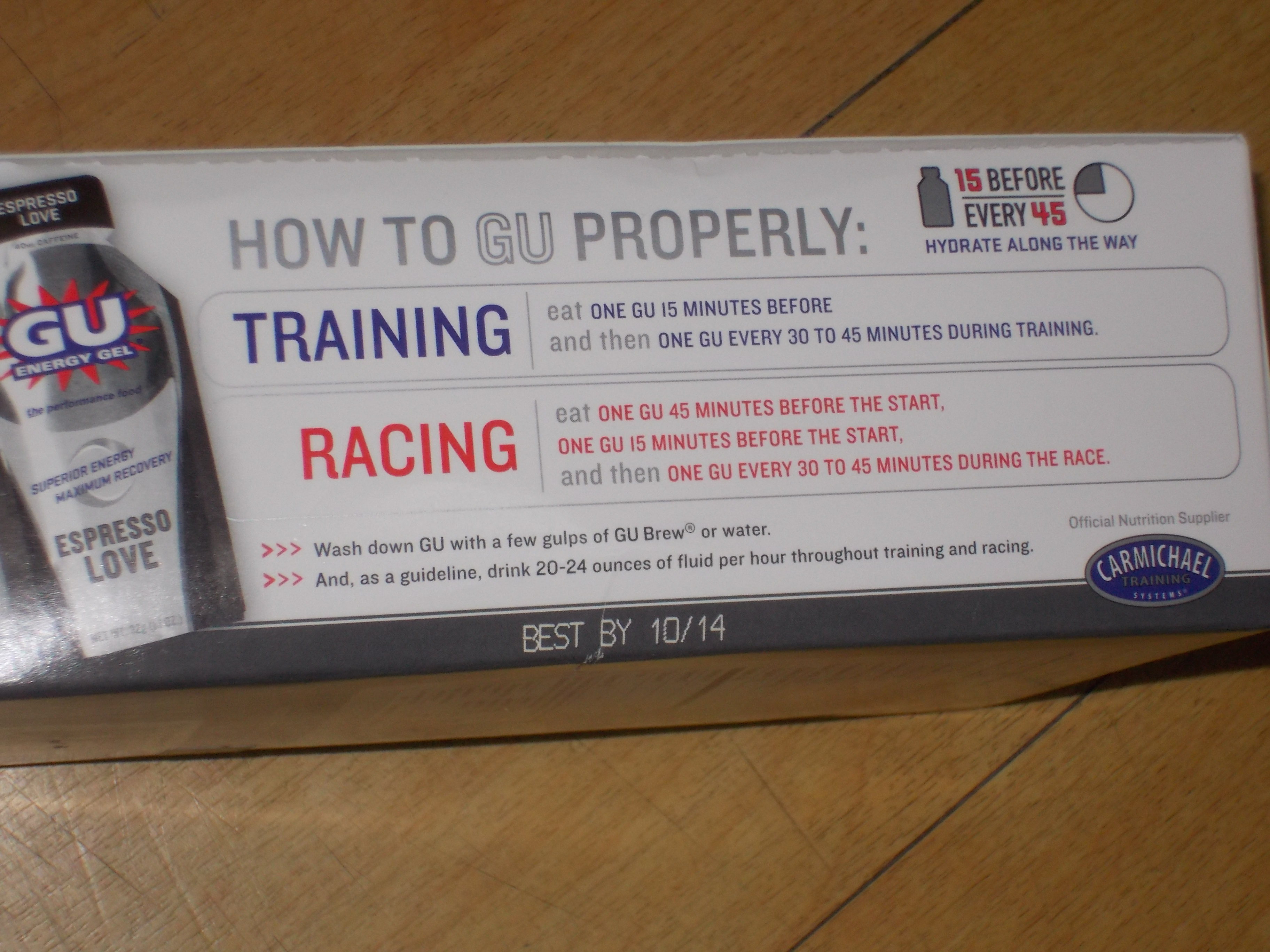
What Is Written On The Side Of The Box
It was only when I bought this preferred flavor in boxes when I read the printed instructions on the side of the box on how to use GU properly.
It states that in one’s training workout/run, the runner must ingest ONE GU 15 minutes before starting the run and then ingesting ONE GU every 30-45 minutes during the run. In order to save my stash of GU gels, I eat solid foods before I start my run and during the first half of my workout. On the second half of my workout, if I feel that I am losing my energy, I would ingest at least ONE GU in order to maintain a strong finish.
The instructions also states that when a runner is going to join a race, he/she has to ingest ONE GU 45 minutes before the start of the race and to be followed by another GU 15 minutes before the start of the race. During the race, the runner must be able to ingest ONE GU every 30-45 minutes.
In my latest ultra road race last Sunday, I made some adjustments with the suggested instructions since I had prepared some Perpetuem Mix and additional solid foods for my additional nutrition. I ingested ONE GU 15 minutes before the start of the race and then ingested ONE GU every hour during the race. I think my regular intake of GU Gels with solid foods and liquid/water provided me the much needed energy to finish strong in the said race.
ONE GU Gel (Espresso Love) has 100 calories in one sachet. If it is taken every 30 minutes, the runner has 200 calories for his energy to burn in one hour which is enough to maintain for a consistent energy for the body.
It took me sometime to experiment on the use of GU Gels for the past months. It is costly but very effective but if you have the desire to finish a race, the costs will be worthy.
Finally, it should be noted and highly suggested that the empty sachets of these GU Gels should not be littered along the course. Make sure to return the empty sachets to the pocket or hydration belt/vest where you stashed them before the start of the race and dispose them later in trash bags/bins at the Finish Line.
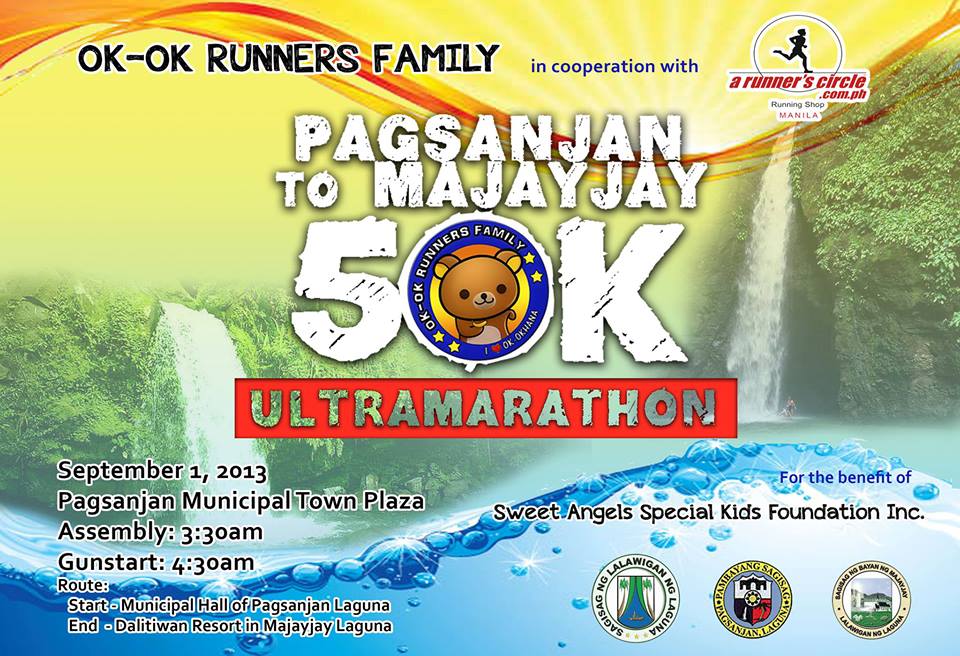
I have high respect and appreciation to the members of the OK-OK Runners Family who are very consistent in joining my Ultra Events and it was a personal decision to join their 2nd Anniversary Run which happens to be a 50K Road Race in the province of Laguna, south of Metro Manila. Although I have opted not to join road races for the past months due to my trail running training, it was time to repay this running group/club for their “loyalty” and good friendship and of course, a good opportunity to meet and “engage” with new ultra runners.
Event’s Ads On Facebook
I was supposed to run 17 miles/27.2 kilometers on Saturday and then 14 miles/22.4 kilometers on Sunday as part of my training program on the trails but I had to make some adjustments last weekend. I ran for 6:30 hours covering a distance of 28 kilometers of trails last Friday; rested the whole day of Saturday; and then joined this 50K road ultra race yesterday, Sunday.
What I like with the race was that the organization and race management were outstanding. They followed my Race Rules and Regulations; they have Aid Stations manned by members of Running Clubs who are Ultra Runners; very punctual with the Start Time; and fast publication of Official Result. How I wish all the other Ultra Road Races in the future will follow their “style” and efficiency.
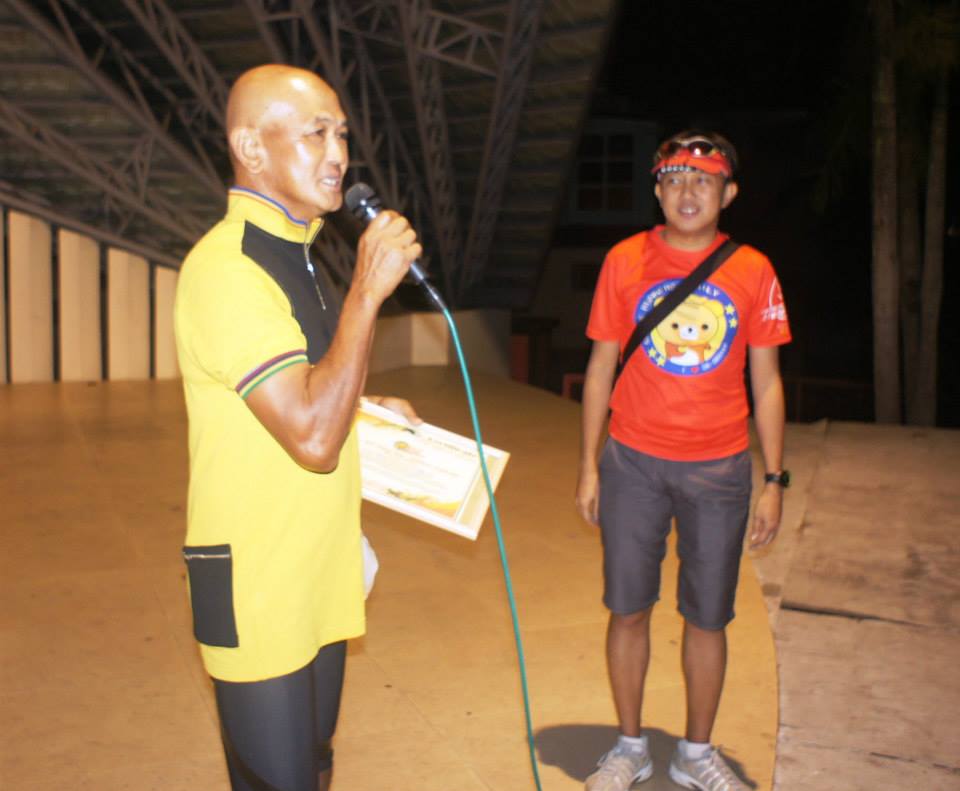
Delivering A Short Remarks After Giving Me A Certificate Of Appreciation (With OK OK Head, Joseph Pineda)
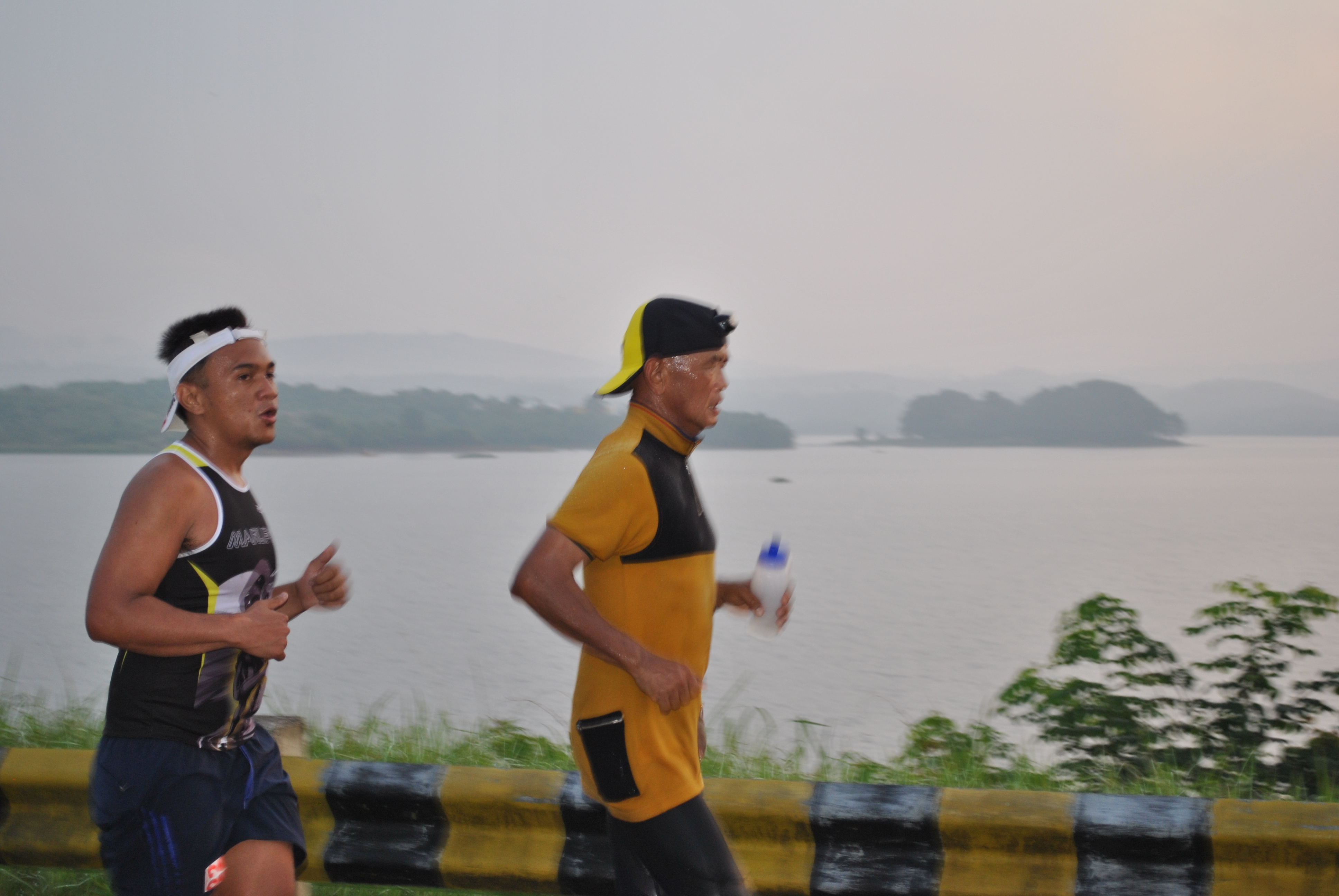
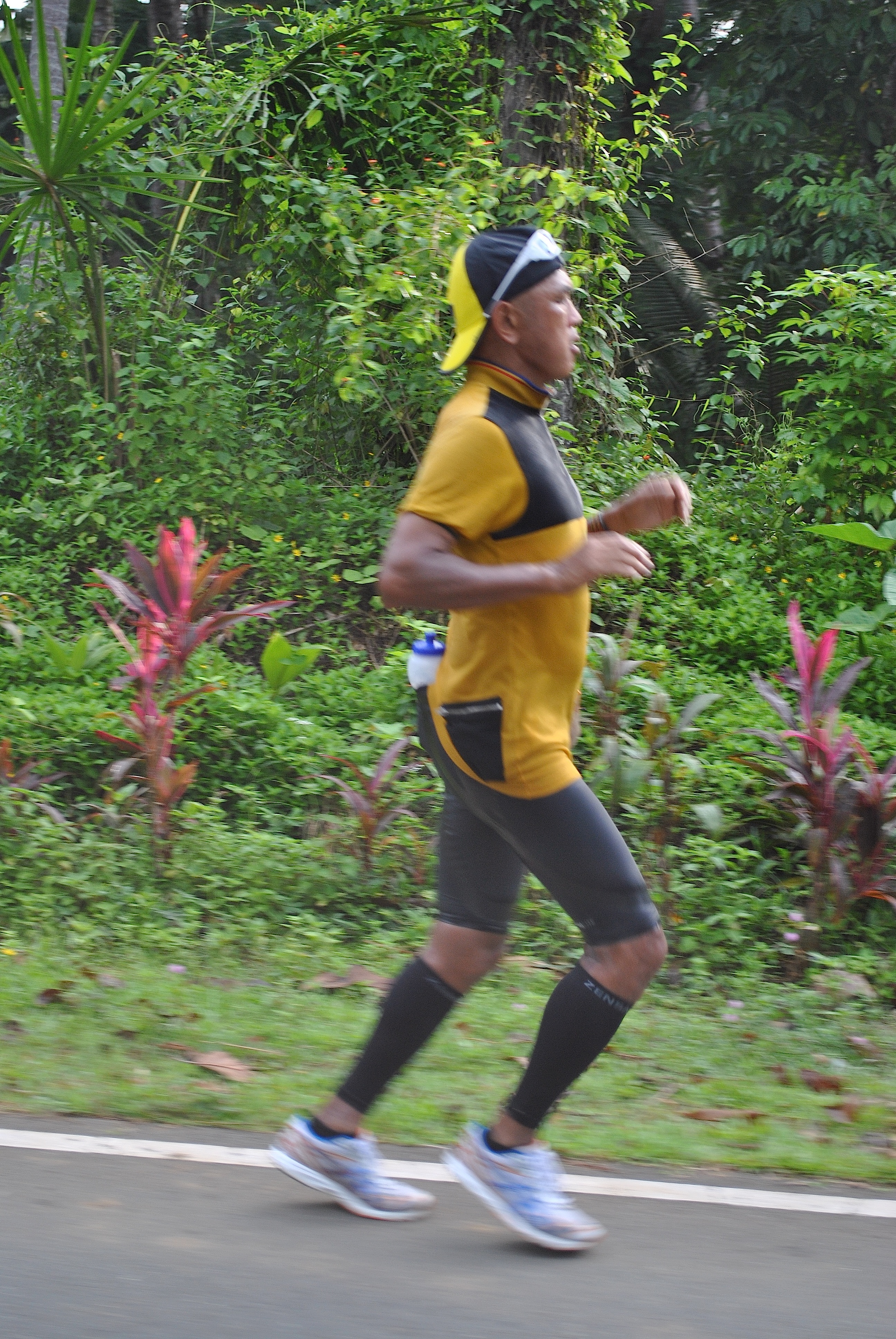
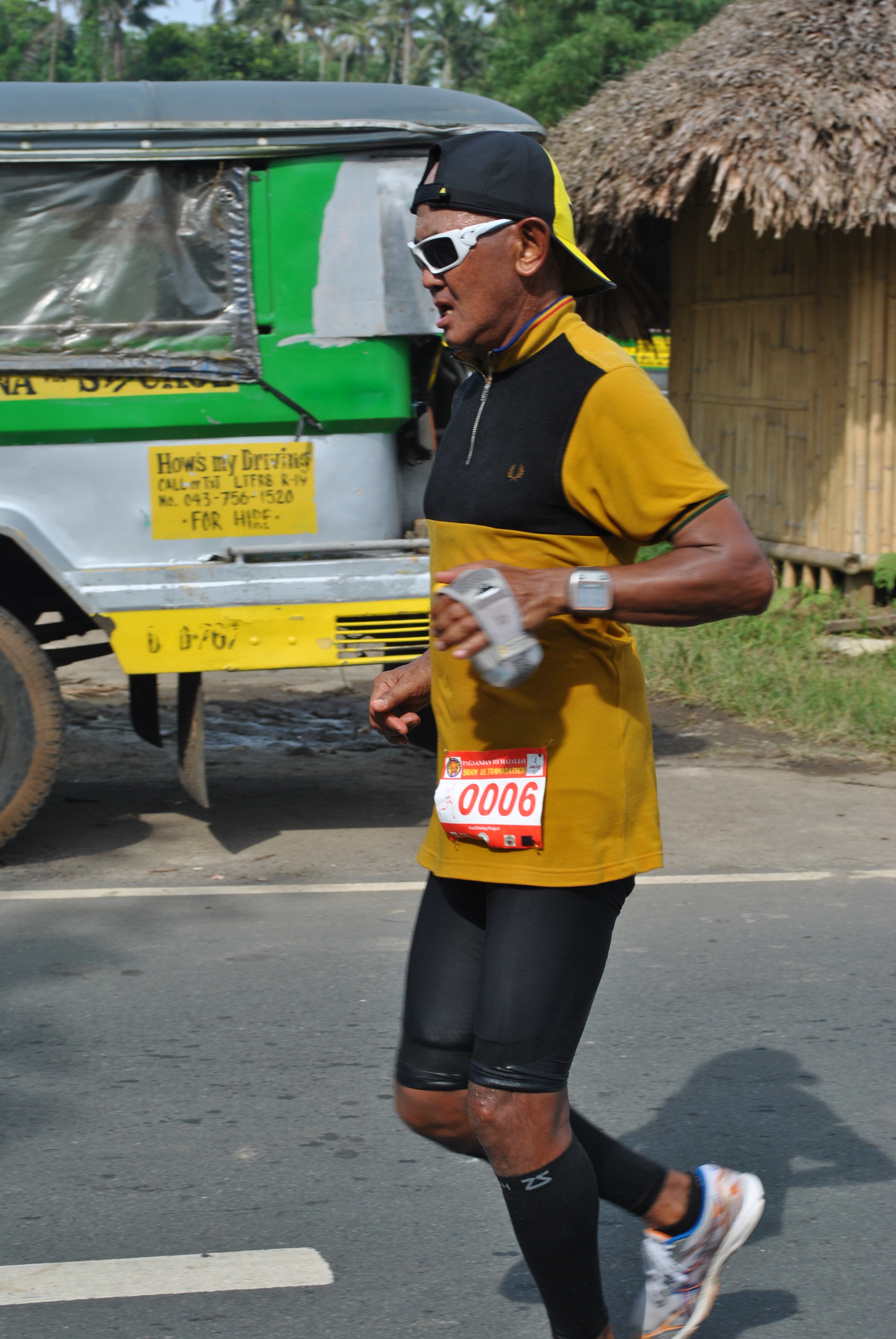
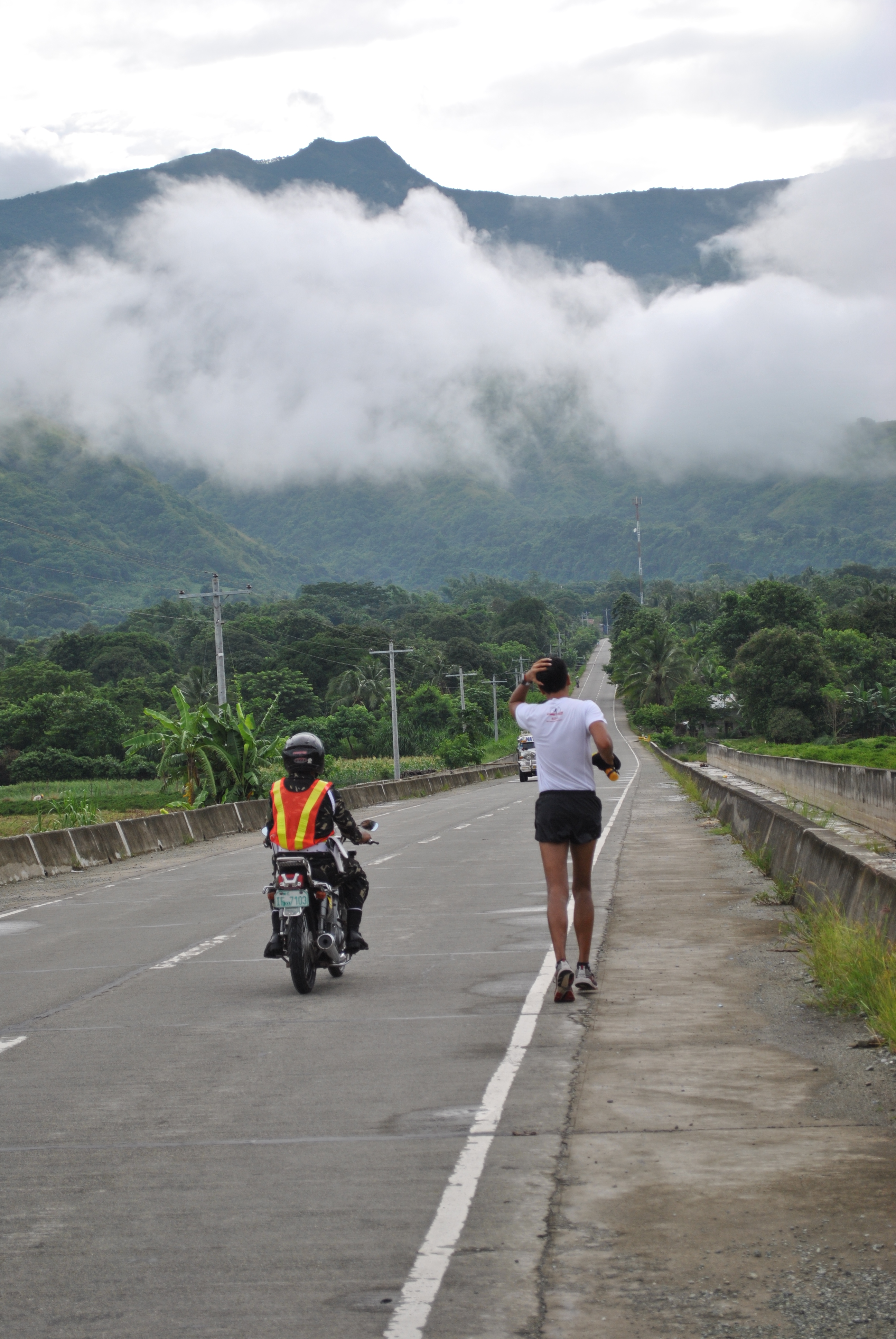
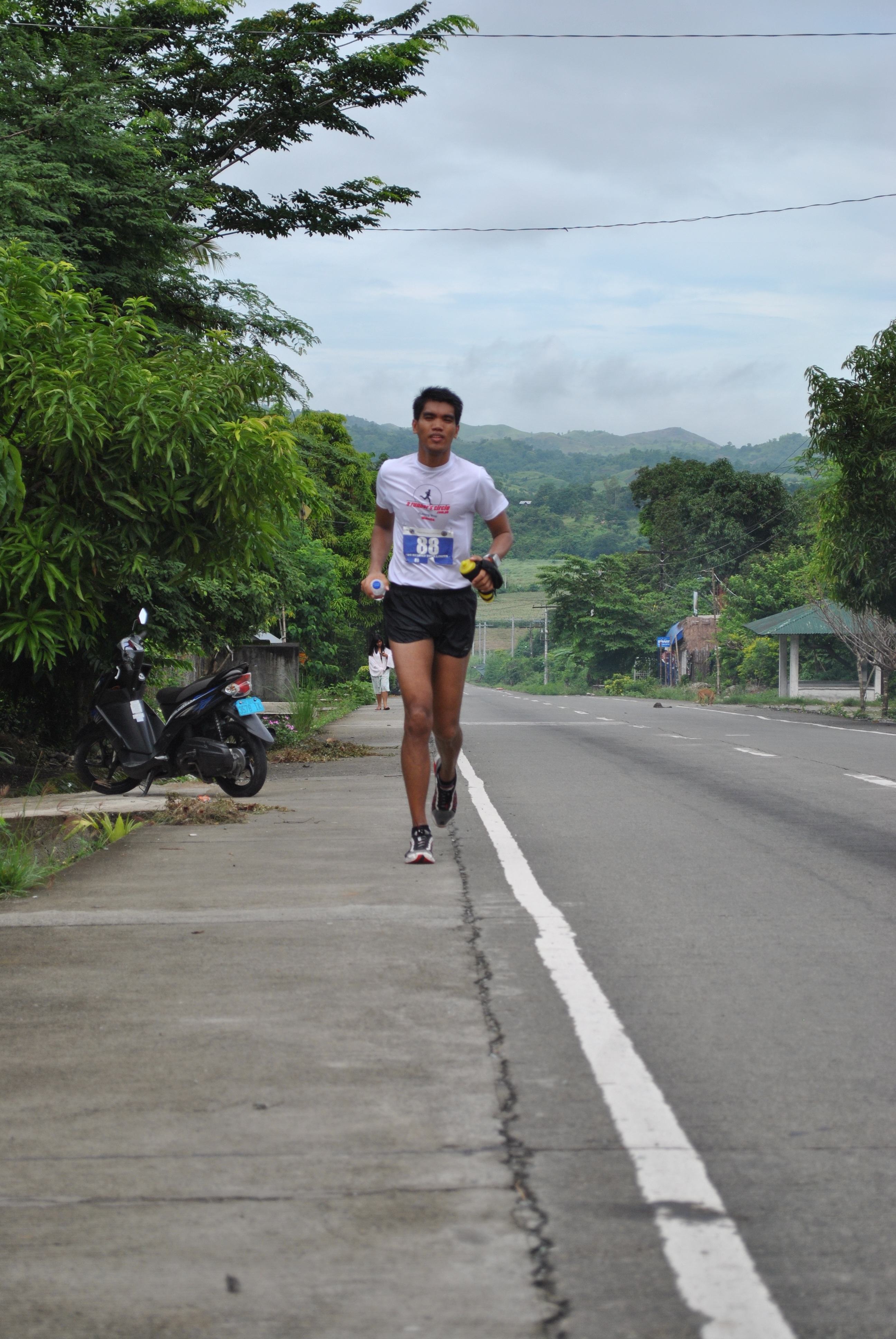
After a short program before the race where the group requested me to have an opening remarks and race briefing by Joseph Pineda aka OK OK Otek, the race started at 4:30 AM at the Municipal Plaza of Pagsanjan. I positioned myself at the back of the pack trying to maintain a slow pace for the first 3 kilometers. Meljohn Tezon, an ultra runner, paced with me but we were silent and did not talk to one another. We were exchanging the sounds of our breaths as we overtook runners along the way. It was a non-stop run/jog except when I would approach my support vehicle to replace my empty water bottle for a new one. At Km #28, Meljohn “surrendered” to my pace and I was running alone trying to catch other runners ahead of me.
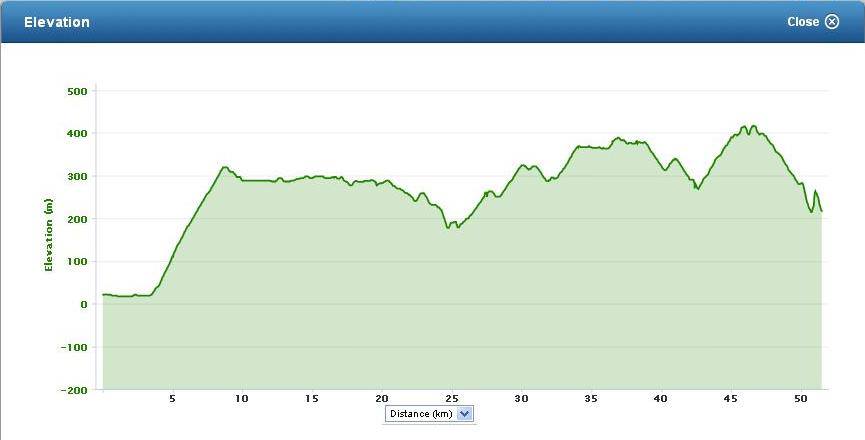
A Very Intense Pace With Meljohn (Lake Caliraya On The Background)Elevation Profile (From Joanne Raquel)
I was actually attacking the uphills and maintaining my running form on the downhills. I did not stop on any of the Aid Stations except for the last one on the last 8K of the course. Support vehicles were not allowed to enter on the said stretch. I started to run and walk from Km 43-47 due to the uphills and intense heat from the sun but I tried my best to reach the turn-around point. From the turn-around point, 2-3 kilometers were downhill to the finish line but I need to fill-up my water bottle on the last Aid Station for my last push.
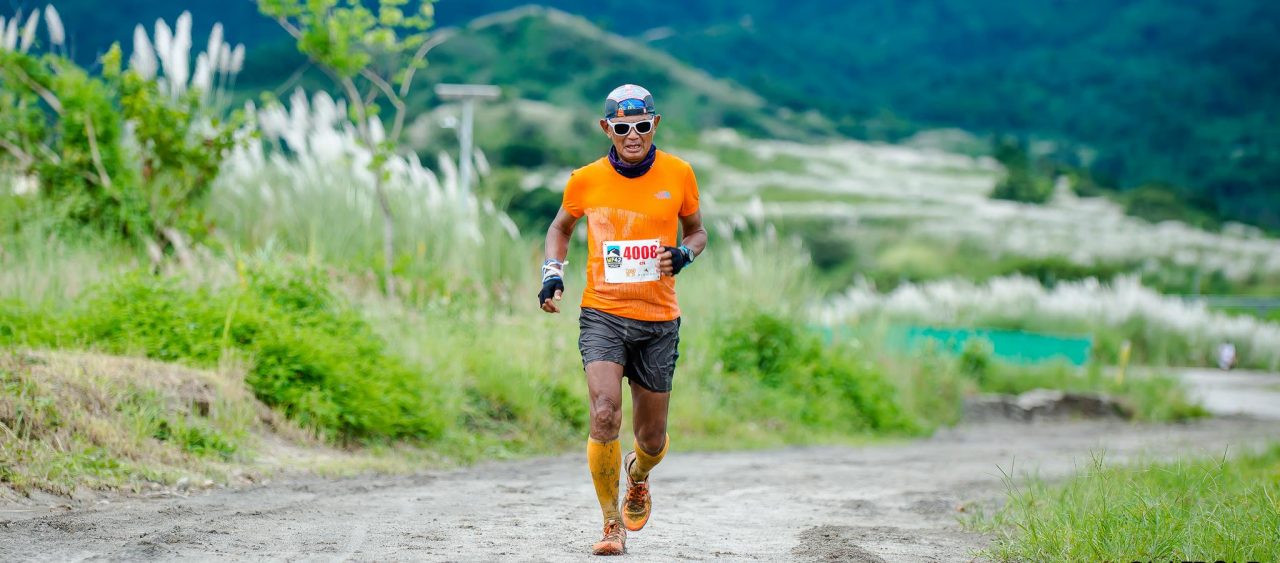
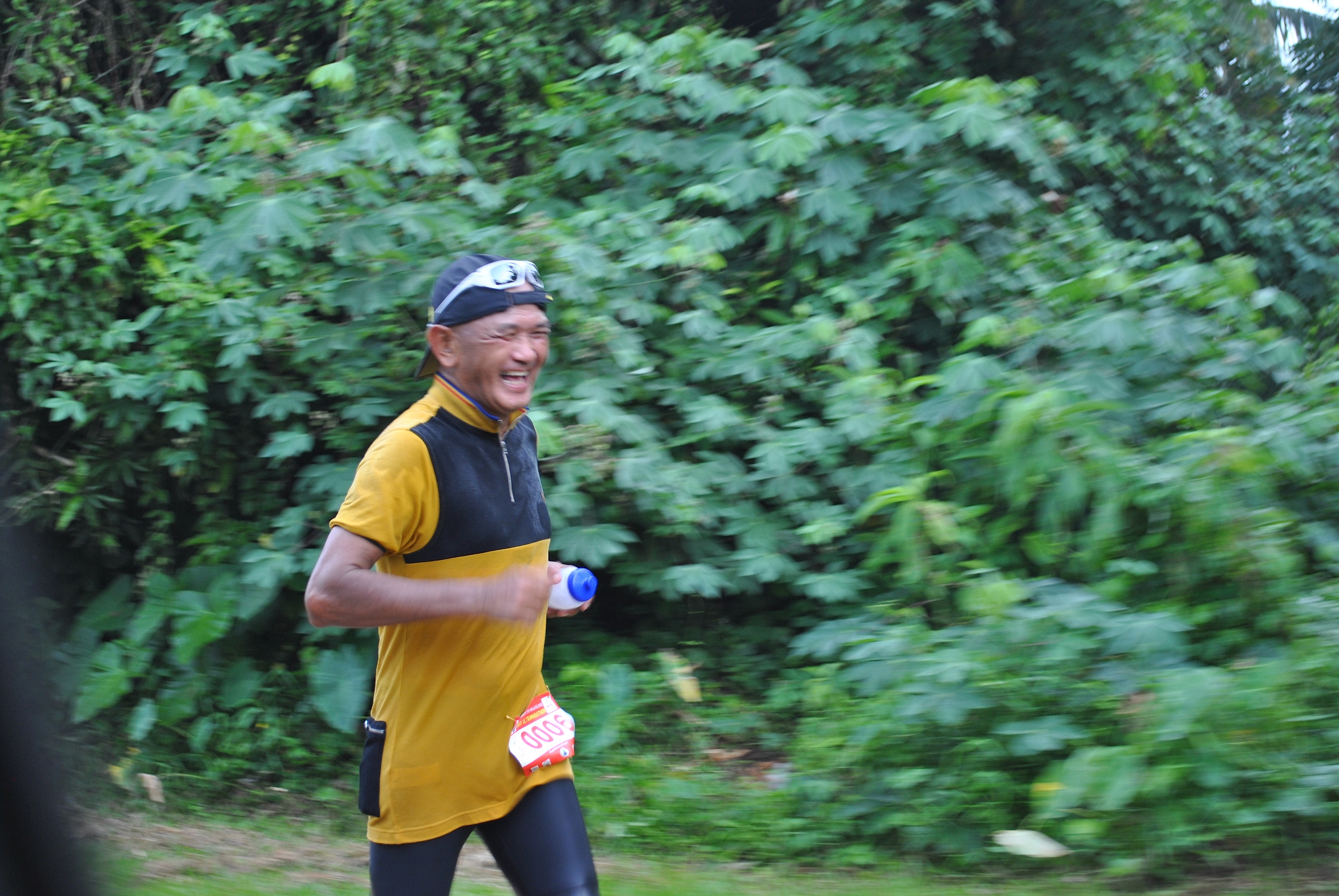
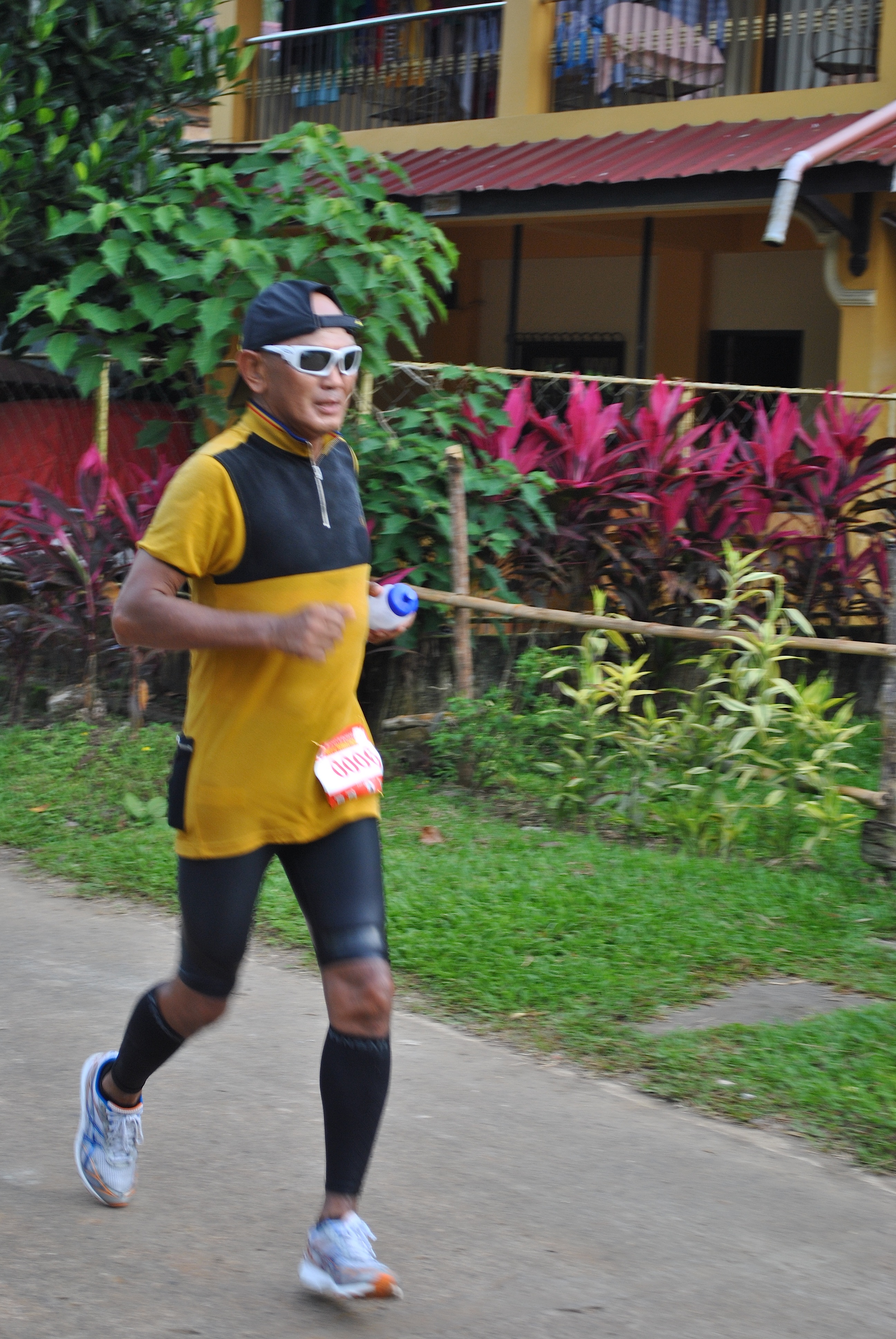
Smile & Laugh…This Is A Training Run!Run Efficiently & Maintaining One’s Running FormTip: Try To Eat Solid Foods While RunningWho Says That You Can’t Wear A Cotton Shirt In An Ultra?
At Km #42, I was ranked as the 12th runner and I was surprised to know about it. On the last 4K of the course, I was overtaken by two runners and I tried to maintain my pace up to the Finish Line. I finished the race in 6:23:21 hours, with the rank as the 14th runner to finish, improving my Tagaytay To Nasugbu 50K Run last May 2013 by 12 minutes. If not for the more challenging elevation profile of this race, I would have targeted a sub-6 hours finish time.
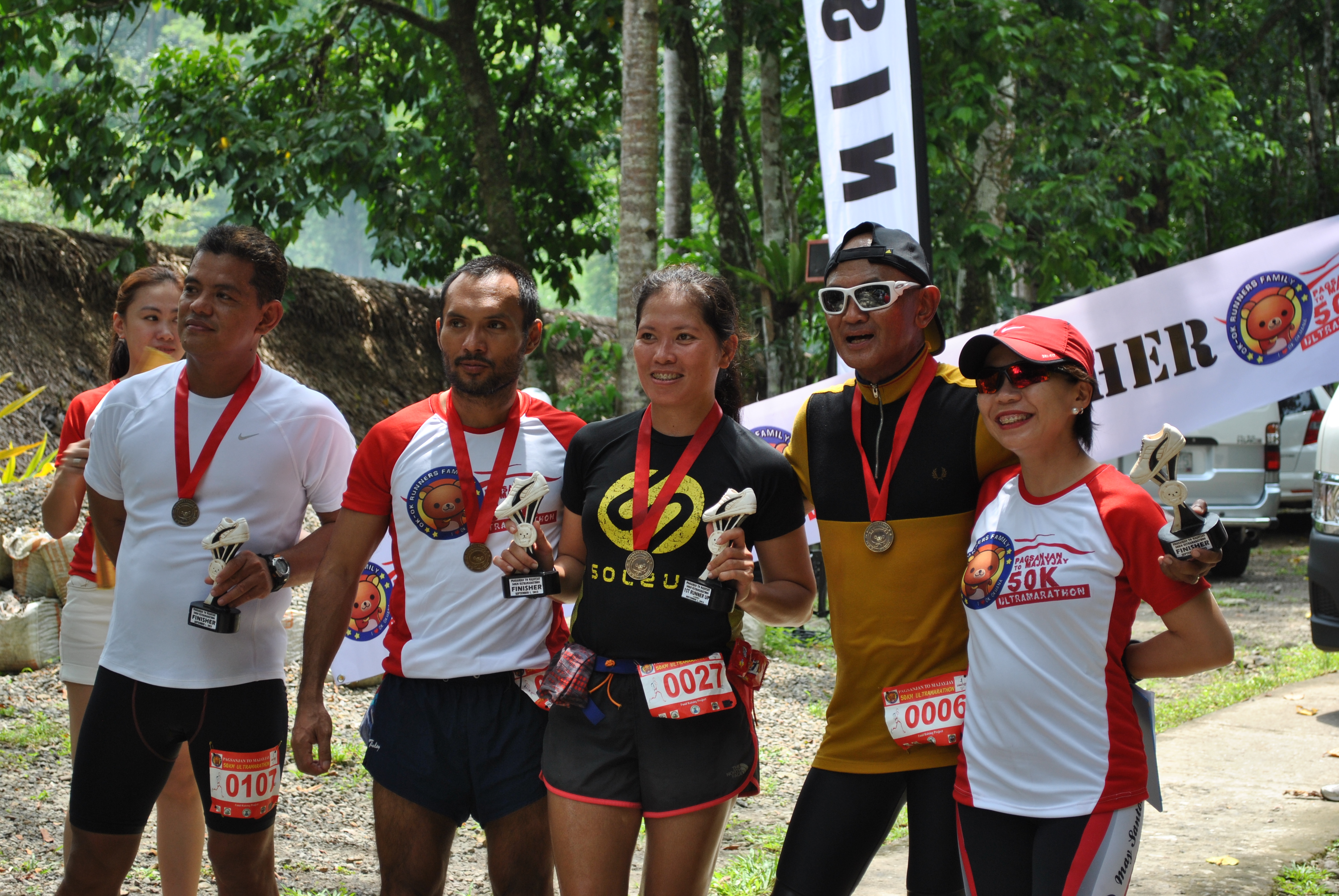
At The Finish Line With The Podium Finishers
I would attribute this improvement with the following:
1. Good nutrition and hydration strategy during the race. Consumed two 20-oz. bottles of Perpetuem Mix; 6 pieces of GU Gel Espresso Love (one GU taken 15 minutes before start time); 4 pieces of Ube Hopia; 1 Liter of Fresh Coconut Juice; 1 Liter of Coke; and 16-oz. of water every 3 kilometers.
2. Slower pace on the first half and then stronger and more consistent pace on the second half of the course.
3. Not dropping by the Aid Stations (except for the last one) and spending not more than 15 seconds in getting what I wanted from my support vehicle and attending to my personal necessity (urinating).
4. Consistent running workouts with at least one day of recovery/rest every week. I was thinking of this race as a validation on the progress of my training program.
5. Running and hiking in the mountain trails as part of my running workout. My finish time for this 50K Race is equivalent to my time to finish my trail running workout in my “playground” with a distance of 28 kilometers.
6. Core workouts and stretching exercises, at least, 2-3 times a week.
At the age of 61, I am happy that I have the speed and strength to finish this race. But my salute goes to the 67-year old ultra runner who finished ahead of me and placed #9 among the 119 runners who finished the race. How I wish I could run that strong and fast when I reach such age.
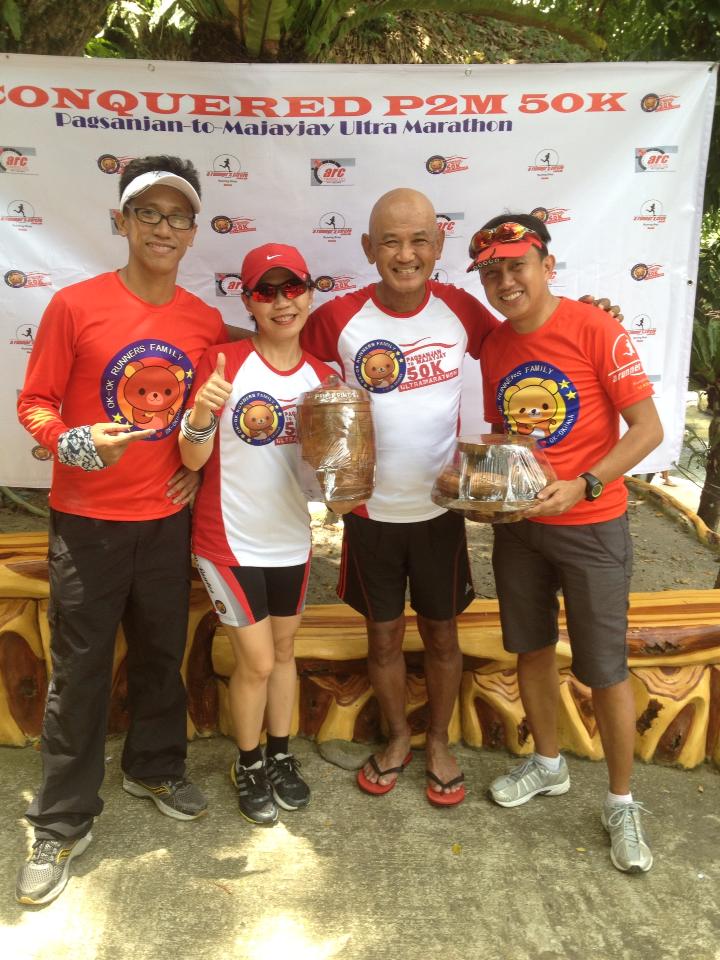
Congratulations To OK OK Runners Family! Good Job!
Congratulations to the OK OK Runners Family and the Volunteers for an splendid race management and organization. My salute also goes to all the Finishers who endured the challenging route and braving the heat of the sun. And for those who were “baptized” to the ultra running family, I personally welcome you to this noble sports of honest outdoor athletes.
Almost 3 years ago during the Race Briefing of the 1st Taklang Damulag 100-Mile Endurance Run (TD 100) in Fort Magsaysay, I mentioned about having a choice of preference in ultra marathon distance race for a runner. I intimated that a runner must be able to experience a road and a trail ultra race but I went further to suggest that at a certain point in one’s running career, an ultra runner or ultra marathoner must be able to specialize and concentrate in only ONE kind of an ultra event.
This is the very reason why I started to organize the first TD 100 in Fort Magsaysay and the rest is history. For the past two years, only 10 runners have earned the most-coveted TD100 Silver-Gold Buckle.
Going back on my topic. I recalled that I was “baptized” into the world of ultra running with my first ultra race which was the Bulldog 50K Trail Run in Malibu, California. Much to my delight to come up with a trail run in the Philippines, I had some reservations in trying to discover some trails in our mountains and outside Metro Manila. Instead, I took comfort in the conduct of an ultra marathon race on the road. Thus, the Bataan Death March 102K Ultra came into being.
However, my love for the trails was still in my mind and being assigned in Fort Magsaysay during my military days, I made some meetings and coordination with my former Command/Unit which is based in the said camp which resulted with the 1st TD100 Endurance Run.
It was a satisfaction on my part after the first TD100 event was conducted. Local runners have now a choice of being an ultra runner and be able to test his/her limits of endurance in running. For a road ultra, the BDM 160 serves as the goal. For a trail ultra, the TD 100 serves also as a goal.
I firmly believe that these ultra events serve as “jumping boards” for the local runners to prepare them for more challenging ultras abroad. They are more accessible and more economical rather than having your first “hundred” in another country.
As an advise to the younger runners, you have to try what it takes to be a road and trail runner. But in your later part of your running career when you have the speed and strength, I highly suggest for you to go outdoors and into the mountains and concentrate on the trails.
You have been running and hiking for almost 6 hours along the mountain trails and then suddenly you made a wrong turn to a trail that is not a part of the course and then after running for about 400-500 meters or a few minutes from the turn, you realize that you are lost. You begin to panic and feel frustrated. You make a decision and you seem to be confused. In reality, you don’t know what to do!
Such situation always happen in a training run in the mountains which could be easily corrected and solved by other runners within the group. It is also a situation that happens in mountain or ultra trail races.
I always say that it is a normal occurrence when a runner gets lost on a trail during a race and there is no need to complain to the Race Director/Organizer, most specially in ultra distances. In truth, the runner himself/herself should be blamed for his mistake of being lost on the trail.
In my experience as a trail runner, I have followed “common sense” practices for me not to get lost along the trail and if ever I would be lost, there are also suggested things that should be done.
The following are the “preventive measures” to avoid being lost on the trails and suggestions to correct the situation:
1. Don’t attempt to go alone on a trail that you are not familiar with. Register in the Barangay Hall and get a “guide” if you are new to the place.
2. Run with a group and make sure that somebody in the group is familiar with the trails in the area.
3. Inform your family, relatives, and friends about your activity and always make sure that you bring your cell phone with you.
4. You should orient yourself in the place by knowing where are the North, South, East & West directions. Look around and find structures or key terrain features (hill peaks, mountain peaks, forested areas, grassy areas, water falls, creeks, rivers, sea shore, fences, highway or main roads) in relation to the directions. In short, you should know basic orienteering & map reading.
5. If you are in a training run with a group, make sure that you can keep up with the pace with the runner in front of you. Keeping pace with the runner in front of you means that you could see his/her back every turn of the trail.
6. If ever you don’t see the back of the runner in front of you, you can start shouting at the said runner to warn him that you are lost or tell him to slow down. Don’t be ashamed to shout the guy in front of you or to the rest of the group. It would be a smart idea to always bring a whistle in your trail runs.
7. If you are in a middle of a pack and you took a wrong turn and notice that you are lost, you have to re-trace you way back to the exact point or place where you made the wrong turn. Stay calm and don’t panic. Take a deep breath, rest, hydrate and take some food while waiting for the other runners who are running way behind you.
8. If you can not wait for the other runners behind you to arrive, observe your surroundings and try to find out the right trail by looking on the marks of soles of running shoes on the trail. If you can’t see any marks of shoes because the trail is covered with grass, follow such trail for a few meters and you might be surprised that it could be the trail that would lead you to the rest of the runners.
9. In an “out and back” and “loop” courses, find time to observe your surroundings on the first half of the course even if it will make you slower in your pace. Find time to appreciate the beauty of the outdoors and try to absorb them to your mind. On your way back to where you have started, the things that you observed on the first half will come in handy if in case you think you are lost on the trails.
10. If you are joining an ultra trail race, it is highly recommended to conduct a recon of the course by simply walking/hiking through it. Take some pictures of places where there are turns or physical and/or natural features which you can see along the route like streams, rivers, waterfalls, bridges, unusual plants/trees, grasslands, big rocks, rock formations, huts/houses, uphill & downhill sections of the course and most importantly, establish your own “marker” every 10K of the route.
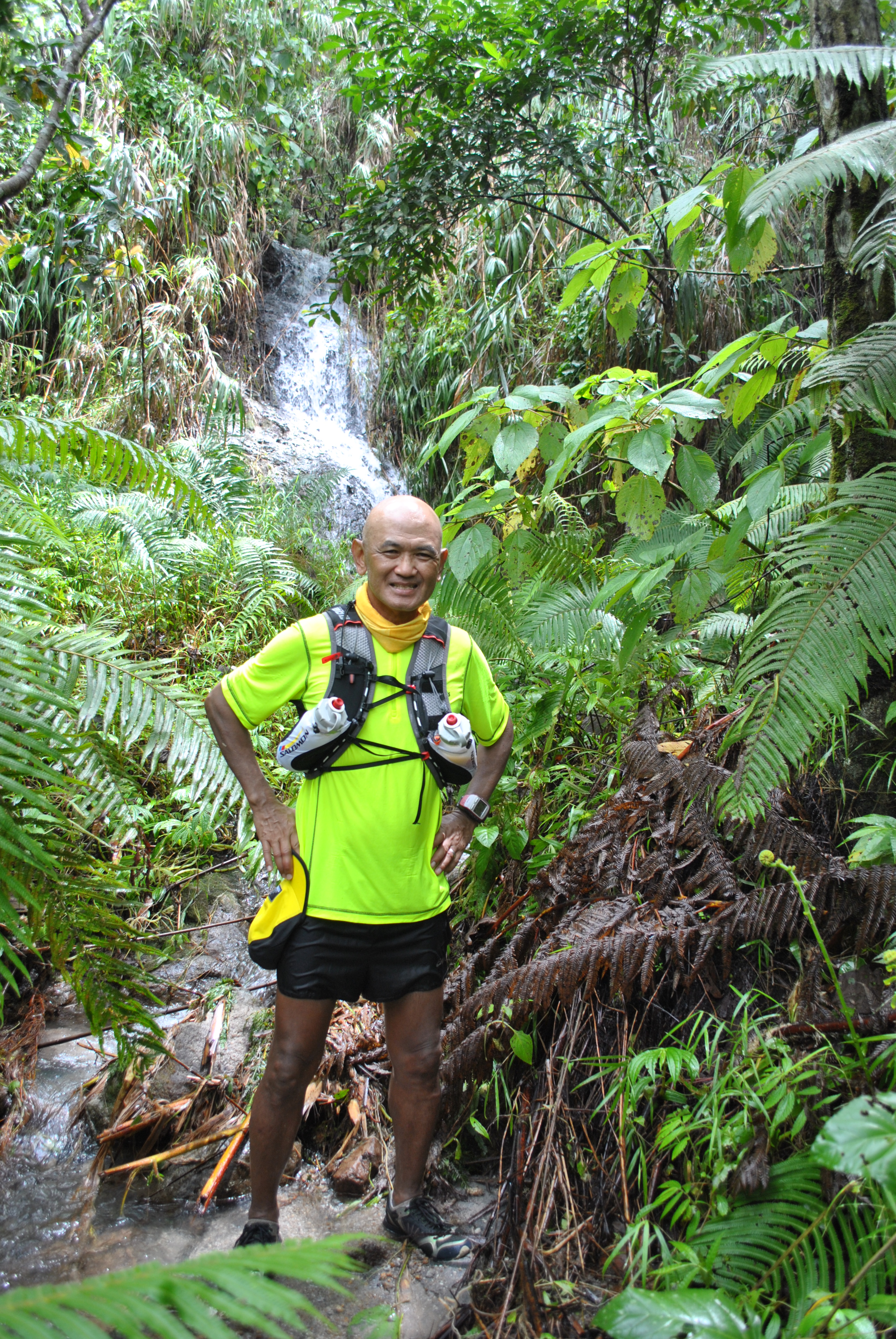
Take Note Of Waterfalls, Whether They Are Small Or Not, Along The Trails
11. In a well-marked trail race or run, shit happens. Surprisingly, markers or ribbons are altered or stolen by locals or people within the neighborhood, mostly by kids who make fun or play with them. Sometimes, there are also (front) runners who would remove them as part of their “collection of souvenirs”. There are instances also that markers are improperly placed along the route. The worst scenario is when these markers become wet due to rains or inclement weather that the color becomes the same with the surroundings, most especially during nighttime.
12. If there is a website of the ultra trail event, study the details posted and confirm/validate them in your recon/walk-through along the course. Some runners would laminate the data of the trail course printed on a piece of paper and had it handy in their pockets or in their hydration vest.
13. If you don’t have the luxury of time to conduct your recon, look for blogs of finishers of this race and you will find a lot of information that would help you to familiarize yourself with the course and event.
14. If you have friends who have finished this race, try to talk to them or contact them through e-mail or through the Social Media platforms. Ultra runners are very helpful to “newbies” when it comes to getting their experiences in finishing the race.
15. You might also consider joining a friend who trains with you in an ultra race to be a participant of the event. Having a partner in training and in a race is more comforting than running alone.
16. Lastly, if you are not well-trained or prepared for an ultra trail race, don’t make an attempt. You will be wasting your hard-earned money and effort.
How do you measure or quantify your running workouts? Is it by the time that had elapsed covering the period you started your run up to the time you stop or by the distance or the number of kilometers or miles that you have covered?
When I started to train for my first 10K road race, I followed the first training program that I could read and it recommended running and walking by the number of minutes and later by the hours. As I progressed to train for the full marathon distance, I became aware to count the number of kilometers every running workout that I finish for the day.
When I started to train and run in ultra distances, I became aware of both the time that my feet were on the ground and the distance I would be able to cover within such period of time. I would later determine the average of mileage or number of kilometers that I would be able to cover within an hour or two.
It appears that I could cover an average distance of 7-8 kilometers per hour in my easy long runs; cover 10 kilometers for 65 minutes in my tempo runs; and I could finish the same distance of 10K in flat 60 minutes in my progression runs. These workouts are all done on paved roads with an easy elevation profile.
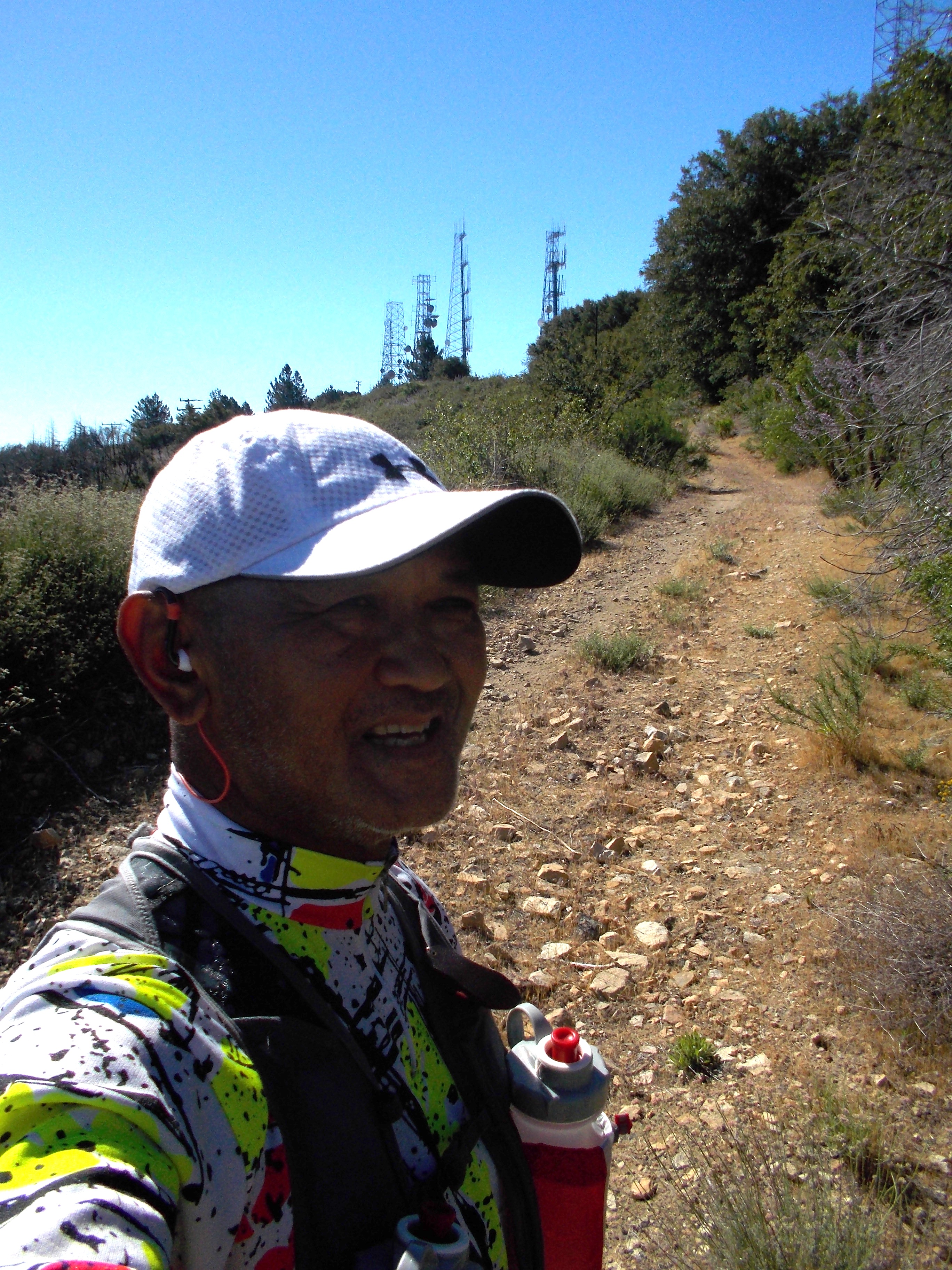
Trail @ Mt Lukens, Los Angeles, California
However, when I run on the trails, it is an entirely different story and the outcome seems that I am slower. On the trails in my playground in Los Angeles, California, I could cover an average distance of 7 kilometers in one hour because the ground is clean and my foot placement is even on the ground due to the absence of rocks or stones.
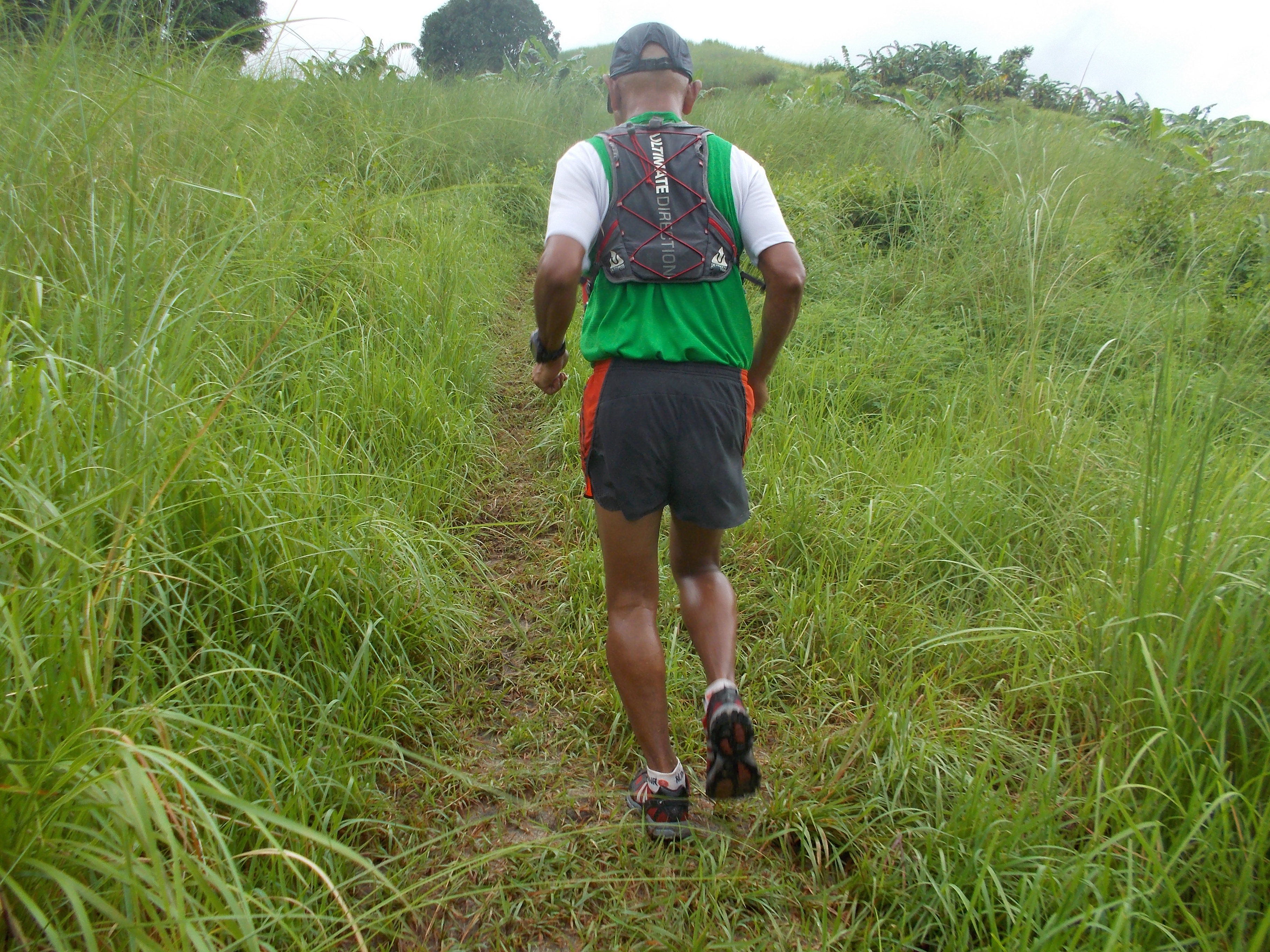
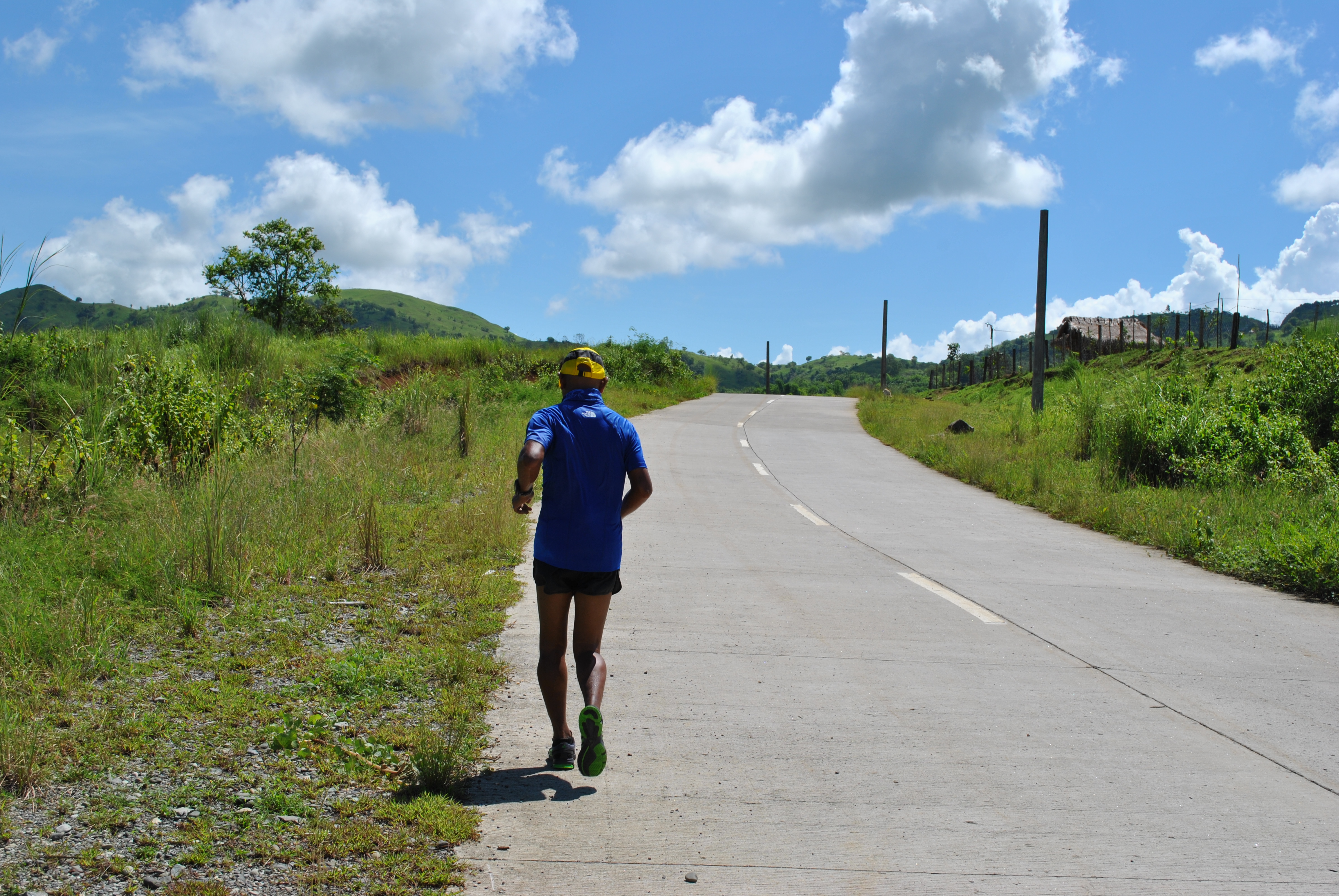
As compared with my running in my playground in the Philippines, I could cover an average distance of 6 kilometers in 70 minutes/1:10 hours due to river crossing, varying elevation profile, and technical single-track trail (uneven foot placement on the ground and muddy/wet grounds with grasses). On a regular basis, I’ve been running a trail route that covers a distance of 28 kilometers and I would be happy if I could finish the distance in 6 hours.
Typical Trail In My Playground In The Philippines
With this new training, I have been concentrating on my running workouts by counting the number of hours that I spent along the trails whether I am just hiking, crossing a river, resting for a taste of a fresh coconut juice or running those downhills along the route.
If you are training to become an ultra runner, whether on the road or trail, I highly suggest that you count the number of hours that your feet are on the ground rather than counting the number of kilometers that you have covered. For sure, you will be able to determine if you could finish your targeted ultra race within the prescribed cut-off time.
Good luck on your next ultra race and keep on running!
I have been reviewing my earlier posts in this blog and it appears that I was using this blog as my personal diary of my daily runs; running events where I participated and other activities related to my job before. However, it was after few years that started telling my readers about my job.
I also used this blog to repost articles that are related to running in any place of the world. I also mentioned top finishers of running events that would interest me and thought of sharing it to other people.
This blog’s posts slowly transformed to specific kind of running which is ultra marathon/ultra running when I started to think about the conduct of the Bataan Death March 102K Ultra Marathon Race (BDM 102). This race leads to the creation of the Philippine Association of Ultrarunners (PAU) which is the National Sports Federation for Ultra Running in the Philippines, the 46th member country among the 76 member-nations under the International Association of Ultrarunners (IAU).
The conduct of the first two editions of the BDM 102 gave rise to the conduct of ultra marathon races in the country and this blog became a platform to promote PAU Races. PAU, in turn, promoted awareness on ultrarunning events to interested runners from 50K, 60K, 80K, 100K, 160K distances and later to multi-stage ultra events.
More Race Directors/Organizers came into the picture, creating more choices to every runner and the rest is history.
This blog became an “all-around website” for PAU Races, as well as, races/events of the Bald Runner and I now seldom post about my daily runs and my personal thoughts about running.
With the advent of Facebook and other social media platforms, the more that I could not make a regular update with this blog.
Facebook became my “daily blog” where I make some sort of a diary with my regular runs and my thoughts about running. I even mix it up about my thoughts on politics and sports excellence program of the government. My “status” and comments on Facebook would generate an immediate feedback from my “friends”. And in the end, Facebook became my daily blog.
However, if there is something that I would like to be known to most of the ultra runners and “friends” about the details of my races and their results, I would make a link on my FB status so that they could read my post in my blog.
I would like to go back to my blogging days again on this site. I wish I could recall those adventure runs that I’ve done for the past months of this year and post them here. I will try my best to post them as I am preparing again for another adventure run in the near future. If this means a lesser exposure on Facebook or in any of the social media platforms, this blog will be updated on a regular basis.
This is now my commitment. Write and publish more posts on this blog and let those “good old times” be back and make this blog as my personal diary in running and repository of my personal thoughts on different issues and concerns that affect my daily life.
1. Active and Retired Members of the Armed Forces of the Philippines and other Armed/Uniformed Services of the Government to include the Philippine National Police (PNP), Philippine Coast Guard, and Bureau of Jail Management & Penology (BJMP) are entitled to special discounts in the 2014 BDM Races’ registration fees. This is to include Cadets of Service Academies of the AFP & PNP (Philippine Military Academy & Philippine National Police Academy), provided they are qualified to join the event. The following are the discounted rates:
2014 BDM 102—-P 3,000
2014 BDM 160—-P 5,500
2. Elite runners who registered a finish time of Sub-3 hours for a Marathon Race (42K) for the years 2012 & 2013 will have Special Rates on their 2014 BDM 102 Registration Fee. They have a discounted rate of P 2,000 as Registration Fee. If the elite runner is an active member of the AFP/PNP and other Uniform Services who has a Marathon Time of sub-3 hours, he/she will pay the lower amount of P 2,000.
3. Course Record Holders of past editions of BDM 102 are automatically FREE from paying their registration fee in the said race if they intend to defend or improve their finish times. The same will apply to the Course Record Holder of the past BDM 160 Race.
4. An additional 50 slots will be allocated to these members of the armed/uniformed services; elite runners and course record holders in the 2014 BDM 102 Ultra Marathon Race. This will make a total of 300 runners for the said event. BDM 160 Ultra Race will maintain a maximum of 100 runners.
5. Finally, Senior Citizens can avail of their 20% discount on the registration fees.


 Bald Runner
You must be logged in to post a comment.