First thing that a person should learn and keep in mind if he/she plans to engage in any activity or sports is to know the rules, regulations and the etiquette that go with it. Rules and Regulations are there to ensure orderliness and safety for everyone. Etiquette, whether they are written or not, are accepted norms which translate to good manners and courtesy among a group of individuals which encourages discipline and respect to one another.
In trail running or hiking the trail, a person’s etiquette gives some impact to himself, to others who are using the trail, and in general, to the preservation of the beauty of nature, the outdoors and our surroundings. If you know and apply etiquette on the trails, it is a reflection of who you are and the attitude you show to other persons and to the nature around you. In a broader aspect, you also try to maintain or preserve the nature around you.
For the past days, I’ve been reviewing my blog posts and trying to see if I was able to post a list of etiquette for persons using the trails. I found out that I simply made a link to a website where a Trail Etiquette was listed but that link is no longer available nowadays. So, it gave me the idea to come up with a list of Good Manners to observe while enjoying the trails so that anybody would have a reference or as a reminder. Most of the list of etiquette I will be posting are generally accepted practices but there will be some which are also emphasized for the local (Pinoy trail runners/hikers) to ponder and apply due to our culture and traditions in the locality/area.
Strictly adhere to “Leave No Trace” Principle——This is the “umbrella” practice that should be strictly observed which covers almost all the detailed etiquette in the outdoors. It does not simply mean that you should dispose your waste properly but it should also mean that one should plan ahead and prepare properly before hitting the trails; do your running/hiking on established and durable surfaces; leave whatever thing/s you see or find along the route; respect the wildlife, whether they are plants or animals; and always be considerate and courteous of other visitors or co-users of the trail. In essence, do not alter or disturb the “cycle of nature” in the mountains, forests, and outdoors. Always consider yourself as a “guest or visitor” of the outdoors and you should stop the practice of getting “pasalubong” or gift for your friends or souvenirs for your collection or getting a physical evidence to brag about. A “selfie” picture with nature speaks a thousand words of appreciation or envy from your friends!
2. Stay On Marked And Established Trails——In the Philippines, most of the established trails were made by our tribal ancestors which they repeatedly used in “foraging” or hunting for food. Later, these trails were extended when they explore and expand their reach to other territories and lands or when they transfer from one place to another due to survival from the elements, wildlife, or from other tribes or factions. Except for the established communities and villages of our Mountain People/Tribes, most of these trails are single-track that became deeper and wider due to “flash floods” or raging waters coming from the peak of the mountains during the rainy season. These trails were used during those times when our forefathers were fighting against our foreign invaders during the Spanish, American and Japanese occupation periods. Now, insurgents, bandits, and illegal settlers/loggers/miners are the ones using these trails in the unexplored mountains, deep forests, and some of the known trails in the country. It is sad to observe that most of the trails do not have any names or any markings. There is no initiative from the central government as well as from the local government to establish these trail markings. Maybe, it will take another one or two generations for these trails to be properly marked. In short, in the Philippines, it is safer to run or hike on trails which are often and usually used by the locals and tourists. If one has to make some exploration, a runner/hiker must have an appropriate land navigation/map reading skills.
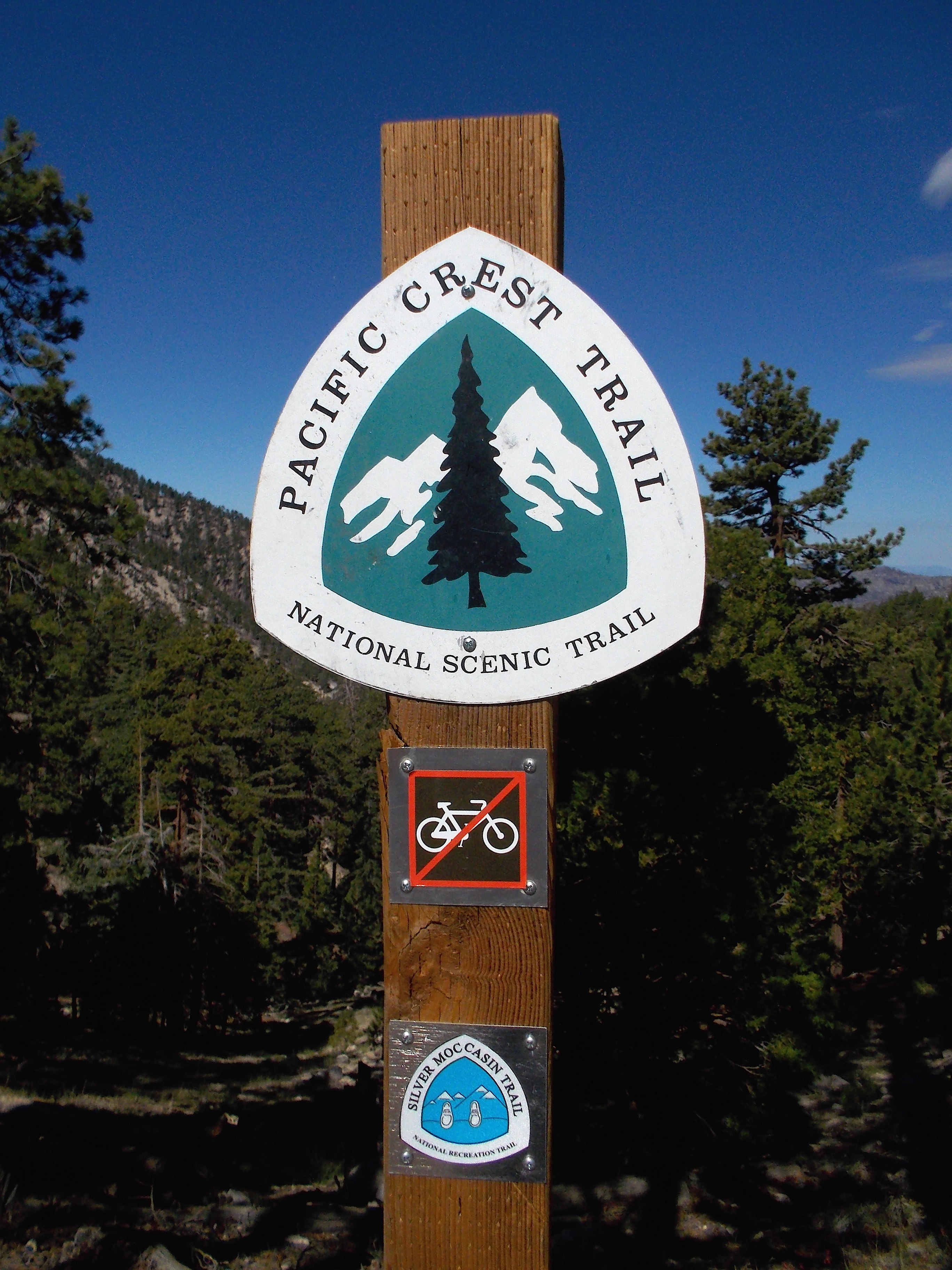
Pacific Crest Trail Marking (Cycling NOT Allowed)
3. Leave Your Itinerary To Your Parents, Relatives Or Friends——Whether you are going to the trails alone or with a friend or group of group of friends, make sure that somebody who is left behind in your home/house knows your itinerary. Let him/her know how many hours or days you will be in the outdoors and if possible, provide an information on the expected time of the day that you will be arriving back in your house. In this age of Internet and fast communication or GPS technology, it would be easy to communicate to your loved ones through mobile cellphone connections or through the Social Media. In a group of hikers/runners, it is mandatory that at least one among the group is very familiar on the trail systems in the area who will be automatically designated as the official guide of the group. If not, get a local guide at the nearest barangay where the trailhead is located. In the Philippines, it is mandatory to inform the Barangay Captain or village chief or his/her designated representative of your presence in the area. Most of the barangays have a registry or logbook/journal where each of the visitors are required to sign in upon their entry to any of the trail system in the area. It is also a part of the protocol to inform the Barangay upon your exit from the area.
4. Weather Forecast Means Everything——Whether it is sunny or with a chance of rain or thunderstorms, one must be able to prepare for any eventuality or contingency that may arise as a result of the situation. When it is sunny or dry, one has to prepare for hydration and appropriate nutrition. Depending on your rate of sweating (as per experience) you can determine the volume of water that you will be bringing with you. If you have planned for your route and know of sources of potable along the way, you can at least arrange for the proper re-supply of your hydration needs. In case of chance of thunderstorm, decide properly if you intend to push through or not with your outdoor activity, most specially if the place where you are heading is under the Area of Influence of the rain or thunderstorm. In crossing rivers and streams during thunderstorm, it is better not to cross the river and decide to look for a higher ground and establish your camp or look for a nearby village where you can rest and wait for a better weather condition. If you are with a group of trekkers/backpackers, make sure to always bring a considerable length of rope which could be used in crossing rivers. If you plan to be in a place where there is an occurrence of daily rain or thunderstorm, a water-proof jacket is a must in ones pack. Bottomline, do not fight with nature, it always win in the end!
5. Stay On Switchbacks——This is related to #2. It is with ease, comfort and feeling of being relaxed to be running and hiking a switchback towards the top/peak of a mountain. It is more energy-sapping and mind-breaking to be slogging it out on a direct, assault and steep trail towards the peak as compared to going along a switchback. However, on the way back from the peak to the foot of the mountain, it is very tempting to cut the switchbacks and take the direct route down the mountain taking advantage of one’s gravity/weight and this is where most of the violations occur. Aside from altering the landscape of the mountain and creating a footpath for others to follow, it will also have a great impact on one’s knees and quads to be overworked and stressed due to heavier load on the downward motion of the body. These additional paths due to making shortcuts on switchbacks will ultimately become another trail in due time and ultimately, the starting point of erosions during flash floods or heavy rains.
6. Warn & Say Something Before Passing A Runner/Hiker——If you intend to pass a slower runner or hiker on the trail, make a distinct sound to warn that you are behind the person. The sound could be a “fake cough”, a “tweet” sound from your lips, or a sound from the pounding of your feet on the ground. or a simple clapping of your hands. Once you are few feet or “hearing distance” from the back of the person, you can say that you are passing him/her on the left or right. Simply say, “On Your Left” if you are passing him/her on the left or “On Your Right” if you are passing on the right. If the person would stand aside or give way for you to pass, don’t forget to say “Thank You” or “See You Later On The Trail” just to be polite and very encouraging to the runner that somewhere along the trail, the person whom you passed will be able to catch you. If you are meeting somebody head on along the trail, the slower one should step aside from the trail and give way to the faster runner. This is best exemplified if the faster runner is going downhill on a single-track trail while the slower person is going uphill. Don’t try to impede or distract the speed and momentum of a faster runner you meet on a trail. Also, It is customary to greet anybody whom you meet along the trail with simple greetings of “Good Morning”, “Good Afternoon”, “You’re looking great”, or simply say, “Good Job”. It is best if you say such greetings with a smile! If you can’t speak, just simply nod or wave your hand with a smile to the other runner/hiker.
7. Know The Capacity Of The Trail——If you are a Race Organizer, you should know the Capacity of the Trail or the number of persons that could pass or use the trail without causing any damage, erosion, or that will cause the widening of the trail or establishing another new parallel trail from the old one. If the trail is single-track, make sure that the runners are spaced on a single file in running/hiking through it. Have a good judgement in conducting a trail running event if the trail can accommodate more than 100-300 runners without endangering the original condition of the trail. In my observation in the Philippines, trail running events shorter than a marathon distance with hundreds of participants is not “healthy” to the preservation of our trails, most specially of the event is held during the rainy season/months.
8. Expect To Be A Dirty Trail Runner——Expect a lot of dirt, dust, mud, debris, and skin scratches in a trail running event. It is a given fact that a clean runner at the start will become the dirtiest and most obnoxious runner at the finish line. This is true in the country due to our extended rainy season/monsoon rains and the presence of stream and river crossings. To add to the dirt & mud, we have a lot of leeches, snakes, mosquitoes, ants, ticks/biting insects and sharp grasses & thorny bushes in our mountains and forests. If you are a victim of leech-attacks, expect to have your blood to be flowing on your body. If you fall on slippery and muddy trails, expect your shorts and shirts to be dirty and your butt to be full of bruises. However, there is always a chance to come out clean if the trail passes through a flowing stream or river where one would have a dip and a chance to wash the dirt and mud from ones apparel or body.
10. Unload Your Body Wastes Properly——I am already an expert in urinating while I am trotting or jogging on the trail provided nobody is around to see me doing it. As for the ladies, it takes a lot of guts for them to pee on their tights while running. As practiced by many, a person would look for a place where he/she could hide while urinating in about some distance from the trail and this is a good practice for everybody. However, if the time on how fast one can do it will be considered, there are a lot of techniques that one could follow to pee efficiently. These techniques are efficiently done if one is using the traditional running shorts. For men, one way to do it is to pull down the front waistband of the shorts and bring out ones “thing” and let the urine flow. The other way is to pull the inseams of the shorts (bottom of the shorts) inward and let ones “thing” out of the panty-liner of the shorts and allow the urine to flow. If you want to be nearer to the ground, you can take a “lunge” position or kneel to the ground while peeing. For the ladies, it is fast for them to bring down their shorts as they squat nearer to the ground and once the shorts is clear from the flow of urine, their problem is solved. The other way is for them is to grab and stretch the inseam of their shorts while they squat nearer to the ground until there is no impediment as to the flow of their urine. If these techniques are put into practice during training, there will be lesser time to be wasted during the race. For the more difficult task of taking a crap on the trail, it is either you do it in the Aid Station (if there is a facility) or do it along the route but it should be far enough that the smell of your crap & fart would not affect the breathing of the other runners passing the place where you take your crap. You can prepare a shallow hole or depression on the ground where you can “shoot” your crap and then cover it with soil, debris, dry leaves, or anything that you could see on the ground. Make sure to bring your toilet paper or used “wet wipes” with you for disposal at the next Aid Station. If there is a stream or river along the trail or near the trail, it is the best option to relieve yourself on the water and let the flowing water clean your butt!
11. Of Burps, Farts, and Vomits——Whether you are a casual or serious trail runner, hiker or outdoors lover, you will not miss having some GI (gastro-intestinal issues) due to what we are eating or drinking during our activity. Drinking carbonated liquid or sodas results in burping, as always. Last year after one of the many treks to the peak of Mt Baden-Powell in Wrightwood, California, I immediately drank one can of ice cold Coca-Cola from my Ice Chest at the back of my car parked at Vincent Gap and took a sit at the baggage compartment. In a few seconds, I had the loudest burp in my life that it created an echo within the parking area. A lady who was fixing her things in her car after coming from the mountain had an immediate reply to the sound by saying, “I heard that!” I immediately replied, “I am sorry!”. She was laughing and brought out her arm with a thumb’s-up sign! If you are in a company of other runner or hikers, you can burp while covering your mouth with your buff or hands and if you can not control the sound, just release the sound and then say that you are sorry. Farts or farting on the other hand are totally different matter or situation that could be dealt with properly with “class” or proper demeanor. Whether your fart has sound or not, you must step aside from the group or go behind the group but make sure that nobody is behind you when you release the air! If you can not control the release of the air, you can alert the group that a “good fart” is coming! It is best to accept that you are the source of the “bad air” if you are the “silent-type” of hiker/trail runner. You can also jokingly say that you stepped on a frog or you can create a loud sound while doing your fart. As for vomits, simply step aside from the group and the trail and let your “food burst” come out of your stomach and mouth. There is no harm with nature if you just leave what you vomit on the trail, the liquid form will be absorbed by the ground while your digested food will be devoured by the insects and/or animals around the forest/mountain.
12. Be Courteous To Others——In the country, while in the mountains, you will encounter locals in the area who are involved in farming/“kaingin”; illegal loggers; charcoal makers; hunters; other hikers/backpackers; firewood gatherers; armed security guards in private areas; patrolling soldiers or policemen; or if you are lucky, you can meet also armed insurgents or bandits. It is for this reason why one has to register at the nearest barangay hall (local government unit in the area) where the trailhead is located upon arrival and then upon departure from the area. The best way to deal with these people is to greet them and communicate with them briefly by telling them that you are a visitor in the area and that you want to share the use of the said trail. Talk to them nicely with respect and good intention. In other countries, you could meet bird watchers; painters; photographers; equestrians; shepherds; mountain bikers/cyclists; hikers/backpackers/campers; rock climbers; and other outdoorsmen. Simply greet them if they are on your way or pass them with “Good Morning”, “Good Afternoon”, “Have a good day”, or “Good Job”.
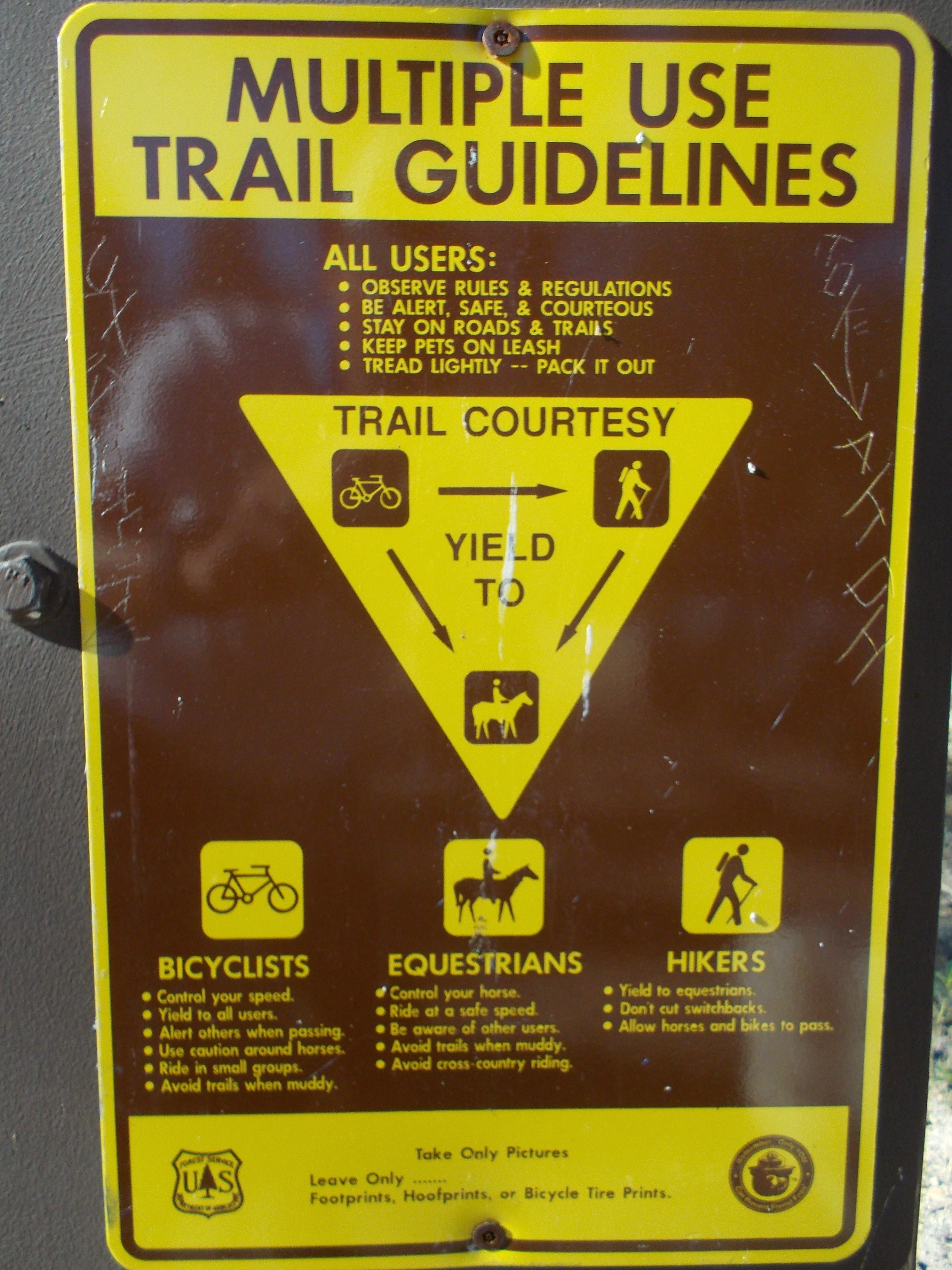
13. Right Of Way——In other countries, there are trail markings that states who has the right of way. These trail markings could be seen in most of the Parks in the United States and in other countries which is depicted in a triangle which says that a Hiker gives way to an Equestrian; a Cyclist gives way to a Hiker and an Equestrian. However, there are also trails that are exclusively for Hikers Only.
Trail Markings (USA)
14. Follow The Rules——In countries where I have visited, like Hongkong, Taiwan, Singapore, and the United States, the use of the trails is FREE but each user is responsible to strictly follow the rules stated in the trailheads. If there are no rules/regulations posted in the trailheads or in the Park Stations, “common sense” and good manners is the way to go for you to enjoy the outdoors. In the United States, there are Parks within the City and populated areas which are FREE but one should be able to park his/her car on designated parking areas or street curbs without red or yellow paint (No Parking areas). In Mountain Parks, there is a need for a Permit or Pass which is displayed on the Dashboard if one needs to park his/her car/vehicle in the trailhead/Park Station. Such permit/pass is called “Adventure Pass” (California) which is worth $5.00 for a single day-use or $35.00 for One Year to any of these Mountain Parks. In higher elevation mountain parks, one has to make a request for a schedule of visit in the park through On Line or e-mail on the Park’s Website. Such request is efficiently answered if your request is approved or denied. Just the same, always bring with you your Adventure Pass.
15. Help & Give Back Something To Others-—In my exposure to trail races abroad and in the company of trail runners, I have observed that they stop and ask the condition of a runner who is on the side of the trail resting or simply sitting. In one of my races abroad, I have experienced tripping with my knees and arms landing on the ground. The runner behind me immediately stopped behind me and asked if I am okey and if I am hurt. I immediately forced myself to stand with his help and answered him that I was alright. Whenever I stop at the Aid Stations, I would be greeted by my FB/Ultra running friends and ask what I need to eat or ask if I need a refill to my hydration bottles. If I am being passed along the route, they would leave me with encouraging words like, “You got this!”, “See you at the next Aid Station”, “You are looking good and still strong”, or “See you at the Finish Line”. One time in a mountain race, I saw a pack of unused Amino Acid Liquid Mix and a Power Bar on the ground which I think was dropped from the pack of a runner ahead of me. Since there was no runner within my sight, I picked it up with the intention of leaving it in the next Aid Station. However, after trotting for about 15 minutes, I saw a runner ahead of me and asked him if he dropped the said liquid mix and he said “No”. So, I offered him to have the liquid pack and the energy bar since I observed that he was walking along the trail. He accepted the offer and thanked me. He said, “This is why I love this sports, runners take care with each other!” And I replied, “You are right, my friend!” There are so many ways for these ultra runners to give back something to the community. They volunteer as support crew and/or pacer to other runners new to the sports; they serve as marshals or personnel in the Aid Stations in Races; they help in the marking of the trail as well as in collecting these trail markings after the race; they also act “sweepers” for the last runner and race; they also provide HAM Radio Communication for the event; and volunteer as “cooks” for the food served at the Finish Line. What is good about these ultra runners is that they BLOG about their detailed experiences whenever they finish or do not finish their race. I think this is the only sports where the elite, average, and “back of the pack” runners SHARE their experiences through a blog on their training, nutrition, racing strategy & techniques, and racing experiences.
Always remember, be good to nature and nature, in return, will be good to you! Everything about etiquette is COURTESY & COMMON SENSE.
I did not realize that I’ve been through with four weeks of my training since I’ve started for the 2015-16 Ultra Trail Running Season. I started my training on August 3, 2015 and the first day was a Rest Day with some stretching exercises.
I am still following a training schedule program which I’ve been using for the past two years with a little adjustment on my weekly training volume which I’ve increased within the range of 5-10 miles per week which are mostly done in my weekend LSDs. Before, I was doing an average of 50-55 miles per week but for the past weeks, I’ve have reached a peak of 66-67 miles per week. I feel okey, healthy, and pain-free from my knees and legs and had no bouts of leg cramps or “bonking”. I guess, there must a lot of good reasons why at my age of 63, my knees are still holding up and I could still hike some steep mountains.
Surprisingly, the bottle of Aleve that I bought lately have not been opened yet and for the past four months, I’ve never taken any pain-killer tablet in my races and trail running workouts.
My past failures to finish a 100-mile mountain trail run were caused by nutritional and hydration problems on my part. It took me two or more years to experiment what is good for my body. I really don’t have any problems with 50Ks, 50-milers, and 100K trail races with regards to nutrition but when I join 100-milers in higher elevations, my nutrition just put me down on the last 30 miles of the race. Following my experiences in the 100Ks that I’ve finished, I would only take in Energy Gels and Water and some solid foods offered at the Aid Stations and I would finish the course without any problem. I bought some nutrition books for endurance athletes and made some researches on the Internet. In addition, I was able to get some suggestions and advise from the Filipino veteran ultra runners residing in the United States. These suggestions from them confirms the studies and researches that I’ve read on books and on the Internet.
On this new training season, I’ve concentrated on my nutrition, not only before during, after my workout, but completely observed my daily nutritional intake to my body. I don’t count the calories of the food that I ingest but I make sure that I have Carbohydrates, Fats, Proteins, and Vegetables/Fruits in my 3 meals a day. Snacks in between meals would be anything, whether it is a fruit juice, milk, fruits, yogurt, or snack bars. I’ve never drink milk when I was in the military up to 2 months ago. Lately, by accident, I found out that Organic Fresh Milk does not give me stomach trouble caused by lactose intolerance. I’ve indulged myself in eating avocado as part of my meal or snacks and ate more foods rich in fats.
On my nutrition before my runs, I would have a breakfast of coffee, oatmeal or cereal with milk, avocado with milk & sugar, yogurt or fruit juice.
During my runs, I would hydrate every time my GPS watch would beep to indicate that I’ve covered a mile and have to strictly do the said “drill” every time I hear a beep. For my runs less than 8-9 miles, I would just drink water and ingest one 1 capsule of S’Cap every hour and after the workout. But for my LSDs on weekends which are more than 9 miles, I would carry with me a Tailwind Mixed with water in two bottles and purely Water in my 1.5-liter hydrapak on my backpack. I would alternately, drink Tailwind and water every other mile. I would also ingest 1 capsule of S’Caps every hour. At the turn-around or after finishing the first half of my run, I would eat any solid food I brought with me like, boiled potatoes, power bars, dried fruits, and some baby foods (fruit/vegetable).
I’ve stopped using Energy Gels in my runs since the start of this training but I still carry at least two packs just in case of emergency. I’ve have observed in my past races that Gels, after ingesting about 10 pieces, I would end up throwing up even if I use different flavors and flavors that I liked that didn’t give nauseated feeling in my past ultra runs.
My post-nutrition intake would be immediately after the workout——lots of water, one can of coke or one bottle of Ensure and a Power Bar. Once I arrive home, I would eat a complete meal. For the rest of the day, I would continuously hydrate myself with water, sometime consuming 1.5 gallons of water, and strictly adhering to my complete meals—carbohydrates, fats, protein, vegetable and fruits.
I have also incorporated “speed” workouts in my weekly program. Wednesday is usually my “speed” day where I do it on a flatter ground and paved road. This is the only time that I don’t go to the trails and mountains. Since there is no oval track near my place, I would go to a Public Park (Echo Lake Park) where the streets that surround it has a total loop distance of exactly one mile. I would do 1 mile X 5-6 repetitions or 2 miles X 3 repetitions with at least 5-6 minutes rest/jog intervals in between repetitions. In the mountains/trails, I usually do some “strides” or fast & quick leg-turn-overs on flatter portions within a distance of 50-100 meters just to give some “wake-up” drill to my tired leg muscles.
Once or twice a week, I would go to a mountain which has an “up and down” route where I have measured on each way (2.5 miles up & 2.5 miles down). I would wear my hydration vest full of 2 water bottles and 1.5-liter of hydra pack on my back with solid foods. I would practice “power-hiking” on the UP portion of the course and never attempt to do any run or jog. I would register the time from the start up to the time I reach the peak of the mountain. I have observed that I had been improving my time to reach the peak every week. The 2.5-mile distance has a vertical distance of 1,280 feet and my best time so far is 43 minutes for the power hiking in the UP direction.
On the ridge of the mountain, I would continue jogging and hiking for about 2 to 3 miles. On my way back, I would start my fast “downhill run” on the measured portion where I had my “power-hiking” workout. My attitude here in the fast downhill run is a “go for broke” one! A fast and continuous downhill hill run for 2.5 miles would “thrash” my legs! I am surprised that my old knees can still withstand the hard pounding of my feet on the ground. Every week, I would improve on my time on this downhill run! My fastest time for the downhill run is 20 minutes!
Power Hiking and Fast Downhill Running made me register a faster pace and speed for my daily runs!
Two years ago when I shifted to trail running, I did not give any attention to the vertical distance (total ascent/descent) in my workouts but it was later last year that I have concentrated more on the vertical distance of the trails I’ve been into. However, since I’ve started this new training season, I made sure that my weekly totals on the vertical distance will not be lower than 6,000 feet.
On Mondays and Fridays, I would do some stretching and calisthenics/core strengthening exercises. I would also do “foam rolling” to my legs for about an hour with more concentration to my calves, hamstrings, quads, and butt muscles. I stopped my lap swimming for the past weeks and by the end of the 7th or 8th week, I would incorporate (stationary) cycling in my weekly workouts.
On my weekend LSDs, I don’t eat a heavy breakfast (ingesting only coffee) as I want to simulate how I would apply my nutrition and hydration strategy when I am about to reach my “bonking” period which is about 1-2 hours after the start of my run. This is where I would observe how my body would react to any food or fluids that I take in, whether it is water, Tailwind, S’Caps, solid foods (power bars/baby foods/power bars/dried fruits), electrolyte mix, or Clif Bloks. So far, my maximum LSD distance was 20 miles in 6 hours, carrying a heavy load of water in my hydration vest (2-20 oz of water bottle & 1.5-liter hydrapak on my backpack + solid foods). However, if I use my 2-16 oz Simple Hydration bottles (tucked in my race belt with power bars) and one hand-held 12 oz handheld water, that same distance of 20 miles is usually done in 5 hours or less!
On the technical aspect and the monitoring of my body’s feedback on my performance every workout, my Suunto Ambit 3 Peak GPS Watch, had been very useful in monitoring my Heart Rate, VO2, Cadence, Calories Consumed/Burned, and Recovery Period. From these data, I would be able to know on what to do for my rest and recovery for the next workout. My daily workouts are properly recorded in a notebook/journal that I would religiously write every time I finish a workout, to include, what I feel before, during , and after the workout.
In summary, I attribute my faster and better performance in my 4 weeks of trail running due to the following: (1) Better nutrition before, during , and after every workout; (2) Constant hydration with water every mile with Tailwind every other mile; (3) Speed workouts on Wednesdays and incorporation of “strides” in my daily runs; (4) Adapting my body to ingest S’Caps/Salt Sticks during the run on hotter days without any negative reaction to my body; (5) More vertical distance and higher altitude hiking/downhill running would acclimatize my respiratory system; and (6) “Foam Rolling” & Stretching with Core Exercises twice a week.
I’ve been using my Hoka One One “Speedgoat” Trail Shoes for my LSDs and most of my daily runs while my Inov-8 Race Ultra 270 Trail Shoes and Hoka One One Challenger ATR would be used in my recovery and tempo runs.
Monthly Mileage (August 2015): 238.65 Miles or 381.84 Kilometers
Whether you like it not, being robbed by somebody is a part of ones life. If you have not experienced being robbed, then you are an insignificant person. Try to remember your childhood days; your schooling years, from elementary to college/university days; at work; and your relationships with your own family, siblings, relatives and friends, and you will know what I really mean.
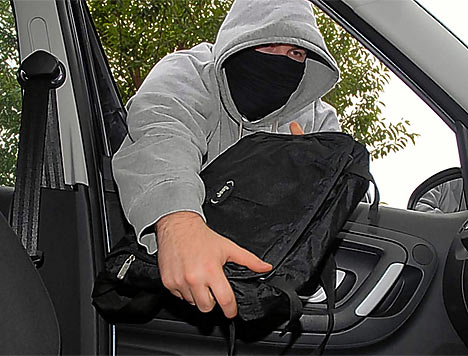
Robberies in Sports Events had been very rampant in the past years. And most of these robberies are done in cars/vehicles being parked in Parking Areas near the Venue of the activity. In running events in Metro Manila, there had been many reports of robberies for the past years and these incidents were not openly discussed by the Race Organizers to the Running Community. Whether you are parked in Bonifacio High Street, MOA, McKinley Complex or at the CCP Complex or Luneta Park, the cars of runners parked on designated parking lots are not safe from these thieves. There had been an instance when a trail running event outside Metro Manila with few runners was marred with reports of robbery of things left in cars of some of the runners/support staff of the event. Up to the present, I have not yet received any progress report or information as to what happened to these robbery reports in the past running events.
Lately, I just received a report from one of my runners that he and together with some of my running friends were victimized by these robbers in a running event that was held in one of the neighboring provinces from Metro Manila. Their car was parked in a designated parking lot for the runners in the said event and when they returned to the car to change their attire after finishing their race, they found out that their things were gone! I have yet to know the progress of the investigation being done by the local police in the area if they have already arrested or have identified probable suspects to this incident.
A Thief Trying To Open A Locked Car (Picture From Google)
Why do we have such robberies in our running events? Why do thieves “disguise” themselves as legit runners and do their business of stealing one’s property left in their cars in running events? I think the answer is very simple, “It’s the economy, stupid!” The more we have running events and more runners, the more we have dumb runners who don’t think about “security” and become super excited to toe the line and be together with friends at the Starting Area! They eventually become the targets of these thieves in running events. Of course, everybody is excited to show to everybody their individual fashion statement in running——new shoes, new tights, new compression shirt, new compression socks/calf sleeves & arm sleeves, new GPS watch, iPhone 6 with BOSE earbuds, new Head Visor, and Oakley Sunglasses. Wow! That is an impeccable form of a runner ready to be posted on Facebook! Most often, this is the reason why we are very lax in terms of securing what we left behind in our respective vehicles when we run. In short, the more runners in running events, the more targets of opportunities for the thieves!
Other sporting events and outdoor activities are not spared from these thieves. In the past, I’ve received reports of stealing/robbery incidents in Duathlon, Triathlon, MTB rides and even in Camping/Backpacking/Mountaineering events.
What should we do to solve or prevent these robberies from happening in our running events? I have the following suggestions/advise and I would like to entertain your comments if you have additional advise or suggestion to what I will mention in this post:
Prevention Starts With Us, The Runners!——If you are using your car/vehicle in going to the running event, make sure that there is NOTHING seen inside the car from the outside. Hide your things in the trunk/baggage compartment! Better yet to hide your things in the compartment before you leave your house or place of residence. Thieves (among your co-runners) would observe your move in transferring your things from your car’s seats to your compartment if you do it in the designated parking area for the running event. Make sure also that you have parked your car in the designated parking area for the running event. If you have the luxury of a driver, let him stay in the car if you have “diamonds and gold bars” stashed in side your car. Remember that your Finisher’s Medal and Shirt purchasing costs would be cheaper than the salary of your driver per hour!
Nothing Should Be Seen Inside Your Car (Picture From Google)
Carpool——It is nice to see public transport vehicles, like Jeepneys, SUV Express and buses being used by running teams coming from other provinces and cities/suburbs around Metro Manila area. Since these transport vehicles have drivers, instruct these drivers to secure and look for the things of his passengers instead of going to the Start/Finish Area as an spectator. If you belong to a Running Team or group, it would be wise and practical to carpool to the venue of the running event, provided there is a driver to look for your things.
Multi-Event vs. Single Event——There were suspicions in the past robbery incidents that these thieves are also legit runners but they join the shorter distance events, like 3K or 5K races. After they finished their race, they go back to the designated parking areas or any parking area with their running attire, race bib, finisher’s medal and shirt and then take the opportunity to do their acts to the cars of those who are running longer distances like, half-marathon or full marathon. If you are 4-hour finisher or more of a full marathon and these runner-thieves would finish their 5K race in 30 minutes, then they have enough time to select their targets and do their acts. In selecting a running event to join, one of the factors to consider if you want to eliminate the possibility of being robbed with your properties in your car is to select a single event race. However, this is not a 100% solution or prevention technique because the runner-thieves could also “drop or DNF” on the first few miles and then go back and have access to the parking areas while the rest of the runners are still out there on the road. Actually, these runner-thieves do not train to improve their endurance capability but they would rather train better on how fast they can open your car and run faster carrying their loot towards their vehicle. In road ultras, there are no cases of robberies because the runner’s car is used as support vehicle with a driver and support crew in it. As far as I can remember, I have not yet received any reports of robberies in road ultra marathon events in the country.
Get A Driver/Personal Assistant——If the Parking Area of the event is not guarded, then get a designated Driver or a Personal Assistant to guard or stay in your car. Before you register to a running event, make sure to make the necessary planning as to who would be your driver/assistant. Better safe than sorry!
Commute or “Walk Instead”——If you reside 3K radius distance from the Event Venue, you can walk or jog and make it as your warm-up exercise to get yourself to the Starting Area before the start of the race. Take the Bus, Taxi, or Uber in going to the Event Area. Sleep early the night before the race and wake up early making sure you have a buffer time for adjustments in case of some traffic delays.
Belt Bag & Other Related Running Bag Accessories——I remember my ultra running friend, the late Cesar Abarrientos with regards to using such running bag accessories. He usually comes to a race (coming from his work) in his running attire with a “drop bag” used as a mini-backpack where his things are stashed. He would run with the said backpack throughout the race. What was good about it was that the bag that he was always using was the “drop bag” that I gave to all the “pioneer” participants of the 1st Edition of the Bataan Death March 102K Ultra Marathon Race. At present, there are running shorts with multi-pockets, runner’s belts with pockets/slots, compression apparel with pockets, and even hand-held bottles with zippered pockets where one can stash his things during the run.
Operational Security On Social Media——Most of the runners are in the Social Media for so many reasons. Obviously, the runner-thieves are also there to find out their probable targets. Without you knowing it, these thieves would be able to know your personal profile, your lifestyle, your race schedules, running times, and other “bits & pieces” about your daily life, to include the plate number, model and type of your personal vehicle. In a matter of time, even if it will take them years to follow your posts, there will be a time that you will regret what you had posted in your Social Media’s personal account. Believe me, they are out there lurking every move and status you post on your FB Wall. So, always think Operational Security, keep to yourself about your activities, plans and schedules!
Race Organizer’s Security Responsibility——Do we still have a lot of “bouncers” with big muscles dressed in tight-fitting black T-shirts in our BIG Running Events? If so, then I suggest that Race Organizers would redeploy them to our Parking Areas and patrol in tandem or in addition to the thinly spread force of the Security Guards. They need to walk around at the Parking Areas and not just to stand at the Starting Line/Starting Arc as a “fence/wall” as if the runners are there to make a stampede before waiting for the Race to start. In big running events, additional marshals should be deployed to patrol the designated Parking Areas for the event to deter these thieves from doing their acts. They should be trained also to detect and make a quick profile to runners who just finished the race. They should know the signs and body language of a runner who just finished a race even if he/she is wearing a finisher’s medal and/or shirt. And they should be ready to ask questions to these runners as to what happened along the way or ask about the route just to test if they really joined the race.
Simplify——Be simple. Do not brag. Do not announce to the world about your running achievements and plans, not unless, you are an elite and sponsored athlete of a big corporation or establishment.
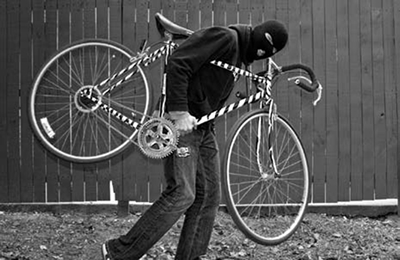
Not The Best Way To Steal A Bike (Picture From Google)
Let this post serves as a wake-up call or warning to every runner, athlete, or outdoorsmen & women to be security-conscious and aware of their surroundings and their actions.
Griffith Park is the Pride and Most Popular Outdoor Park of Los Angeles City. It is one of the world’s biggest city parks with a total area of 4,467 acres, about five times bigger than the size of the New York’s City Central Park, and considered as the biggest municipal park completely surrounded by urban areas.
There are so many access roads/streets that lead to the park depending on your purpose of visit or activity. There is Greek Theater which is a popular venue for music concerts and stage plays; an 18-hole Golf Course & Driving Range; a Museum; The Griffith Observatory; The HOLLYWOOD Sign; a Horse Back Riding Facility; Carousel/”Merry-Go-Round”; Old Train & Railroad Museum; more than 50 miles of Fire Roads & Trails; and 20+ miles of paved roads for cycling. Griffith Park is the city’s “People’s Park” where its residents would enjoy the outdoor and its trails for free. The Fire Roads and Trails are strictly for hiking; running; and horse-back riding as MTBs or mountain trail cycling is not allowed.
The “Merry-Go-Round” Parking Lot #1 to Dante’s View/Peak Trail Route is my favorite trail running route which has a “one-way” distance of 4.5 miles, making it a total of 9 miles in going back to the Parking Lot retracing the route on the first half.
In order to go to Griffith Park and to experience running or hiking this trail route, one has to take the Golden State Freeway 5 North and Exit at Crystal Spring Drive (Exit 141B), turn Right at Crystal Spring Drive and after 1/4 mile turn left on the first intersection. The ascending paved road goes to the “Merry-Go-Round” Parking Lot #1. The toilet is located near the Merry-Go-Round facility.
“Merry-Go-Round” Parking Lot #1
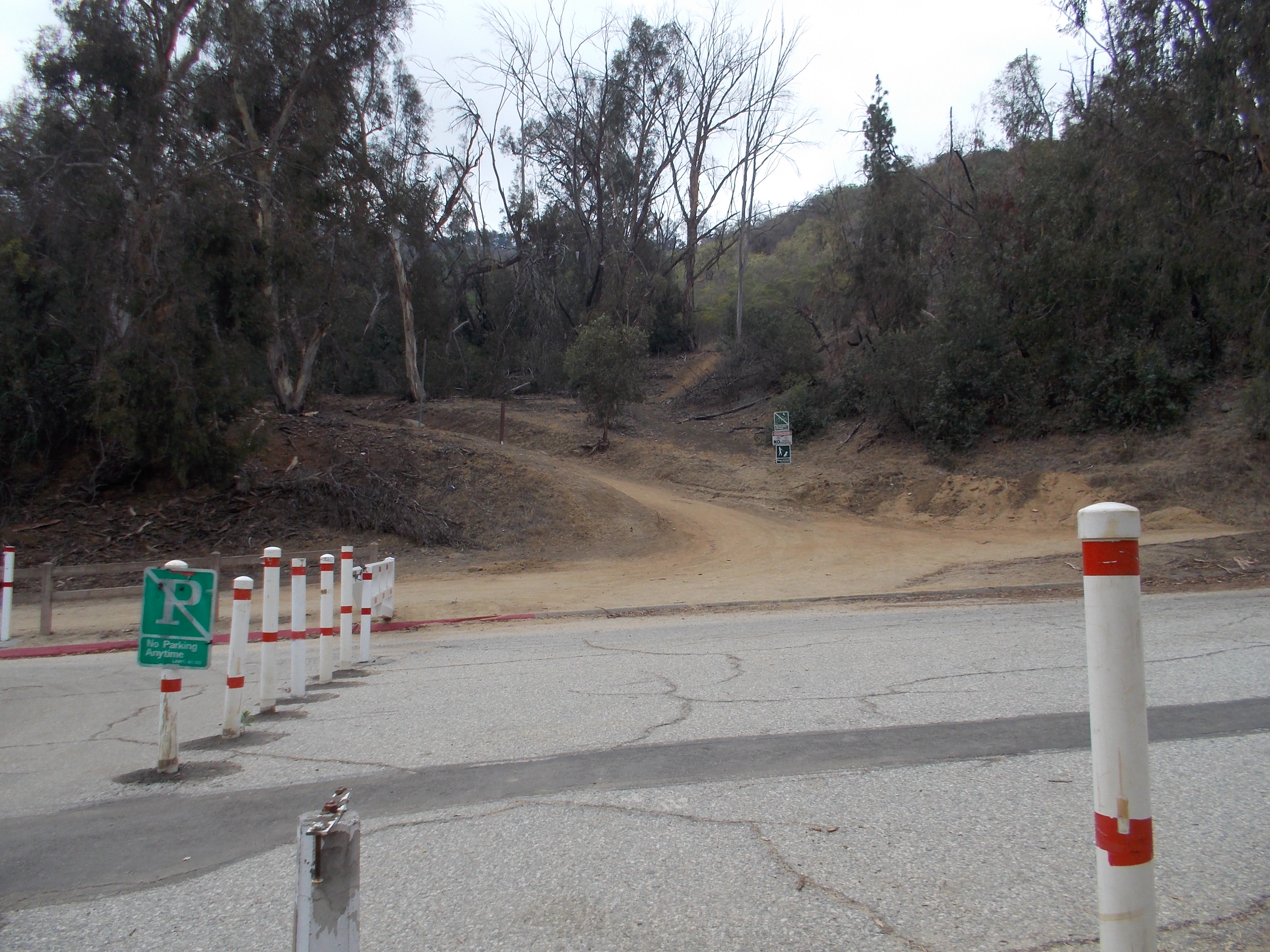
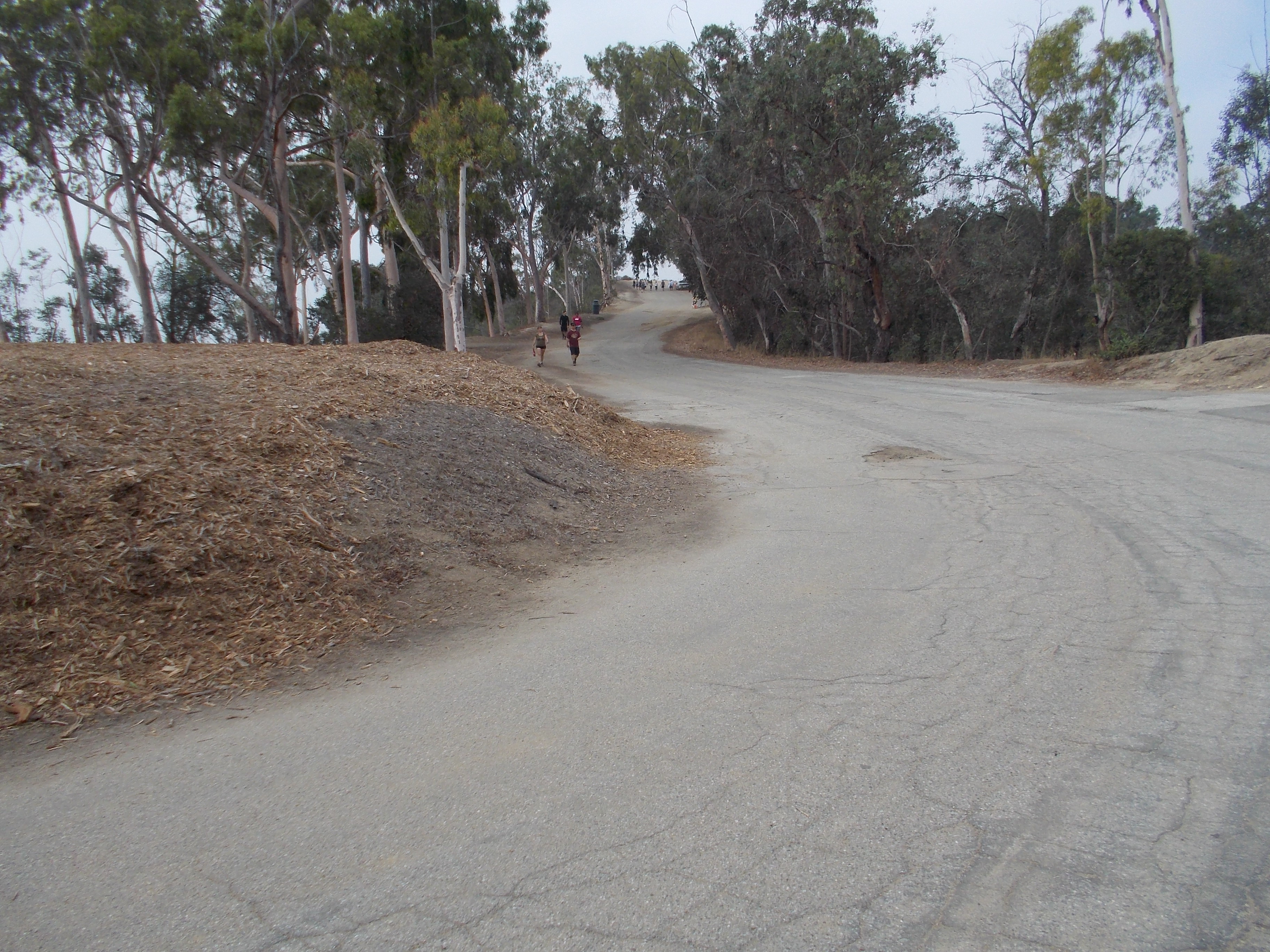
I usually start from the place where I park my car. Across the paved road from the Parking Lot #1 are two fire roads; one that goes south and the other that goes east. I usually take the fire road that goes to the east (it’s called the Coolidge Trail) that has an abrupt ascent until it levels up for about 15 yards. Follow this fire road as it goes up immediately after a right turn. From this trail you would see on your left shoulder the Crystal Spring Road and the Golden State Freeway 5 and this will be the sight on your first mile with the uphill and winding trail ahead of you. The 2nd mile will be a gradual uphill climb where one will be passing a Golf Driving Range on your left. Do not turn left on the fire trail that goes back to Crystal Spring Road. One should be turning RIGHT on every trail intersection along this 2nd mile section. There is only way but UP to the peak of the hill.
Trailhead. Take the Trail On The Left (Coolidge Trail)Golf Academy’s Driving Range5-Way Trail IntersectionBeacon Hill
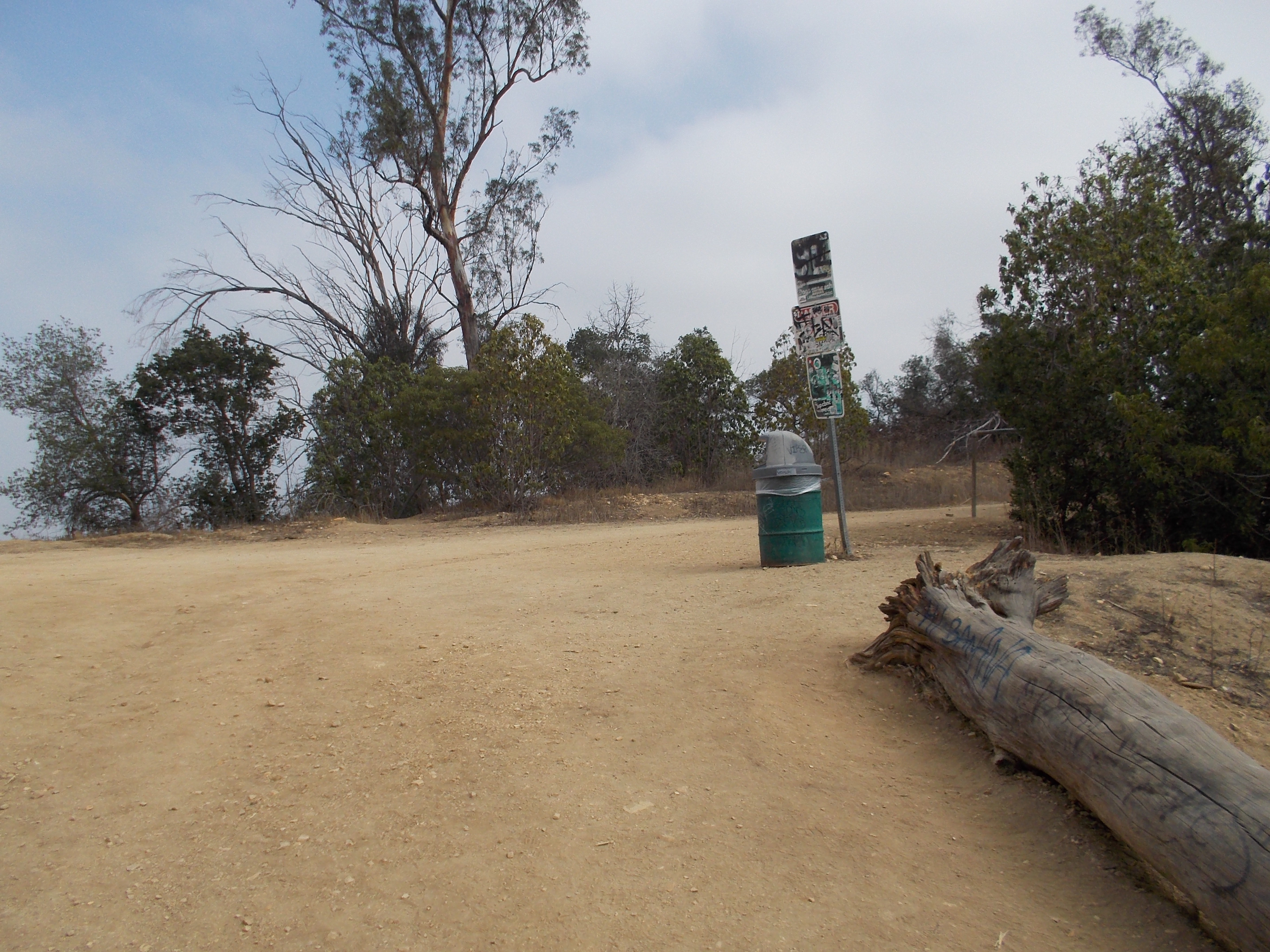
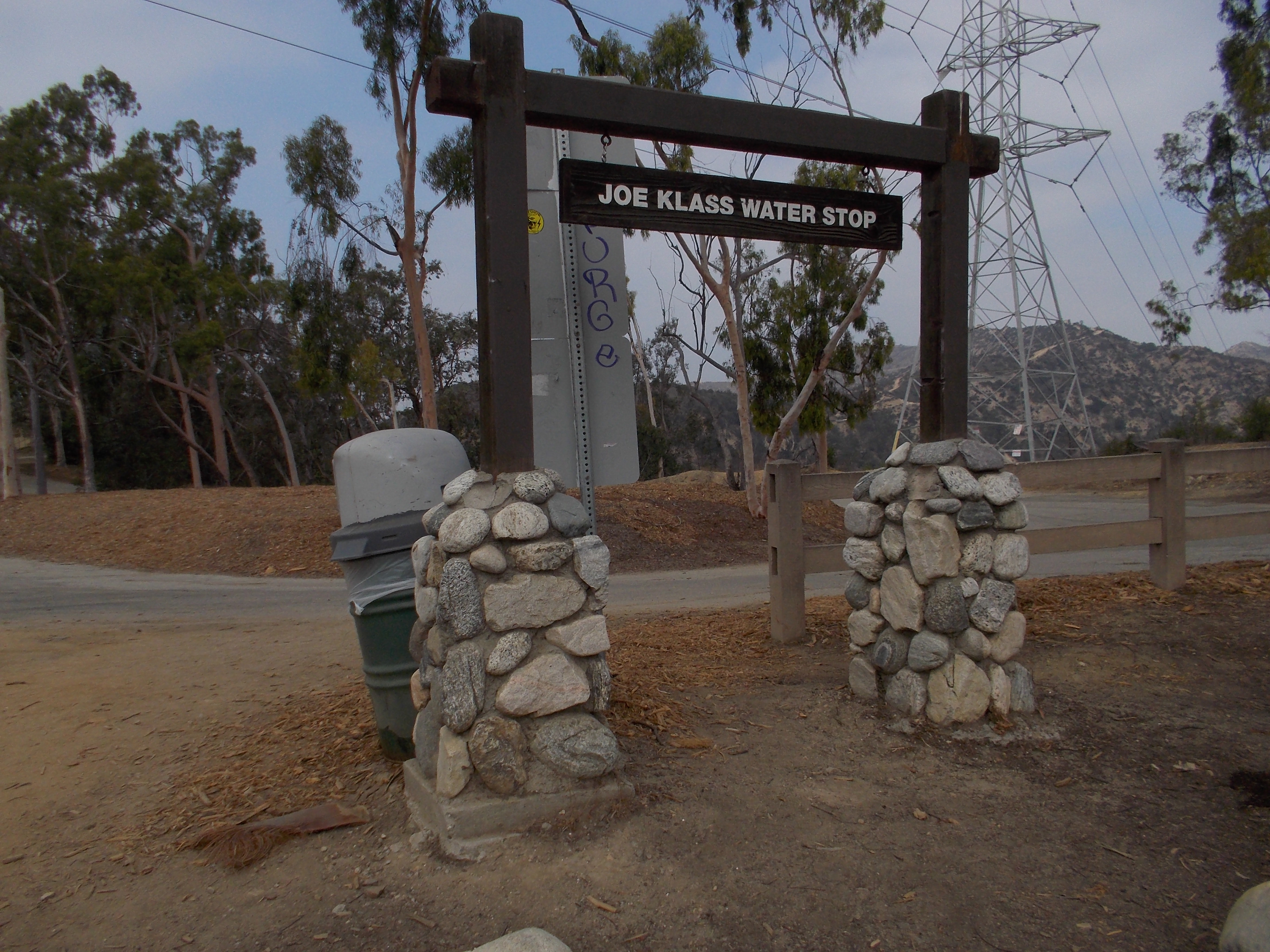
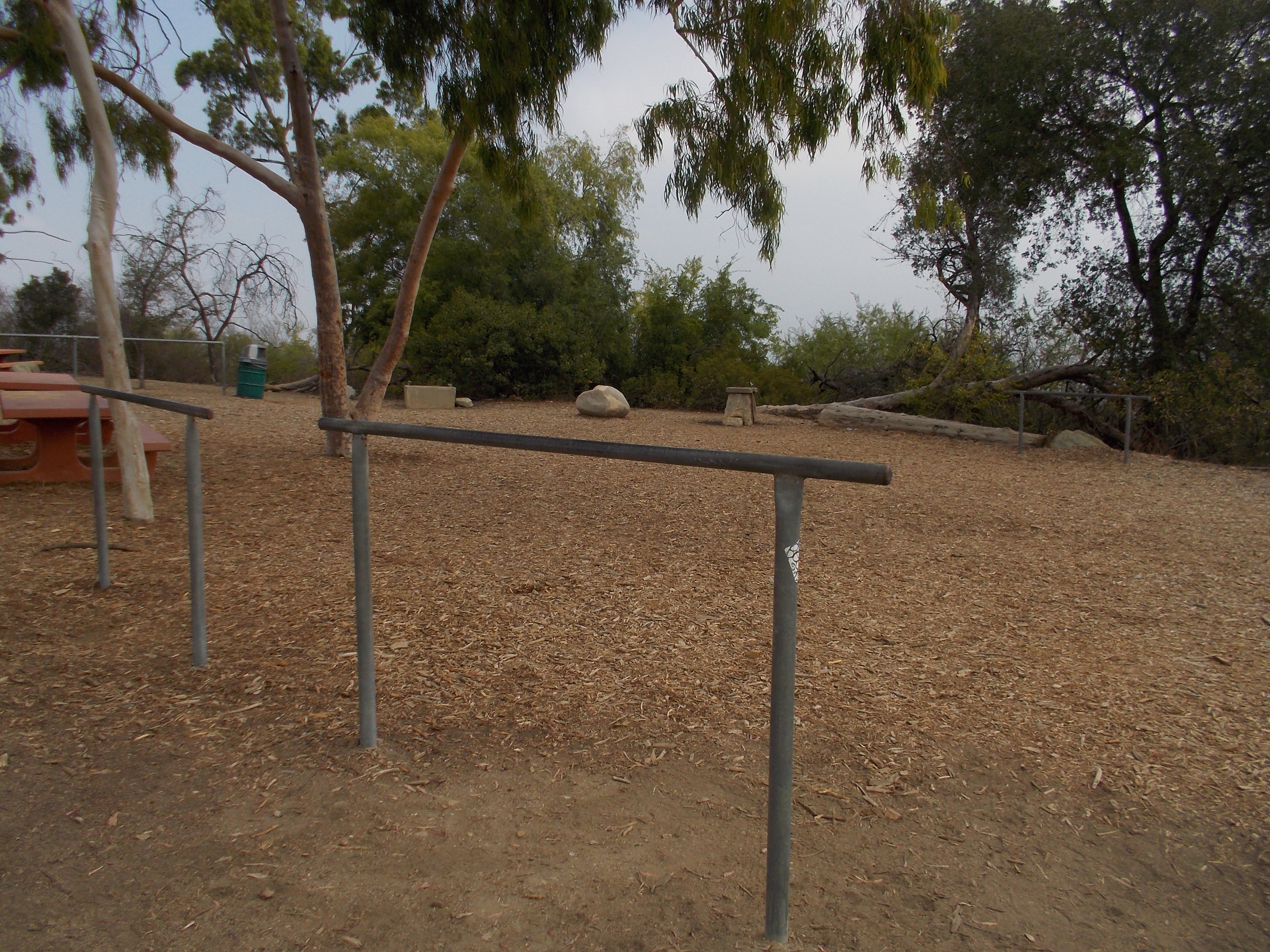
At the 2.5-mile point, the route shall level off and one will encounter a 5-way trail intersection. I usually turn right from this point and go to a peak which is popularly known before as Beacon Hill. As I reached the peak, I would turn around and back to the 5-way intersection. I would continue my run by going to the fire road that goes up and there is only one fire road that leads you to a ascending direction. After about 50-60 meters of uphill climb, you will see a marker that says, “Joe Klass Water Stop”. The water fountain is located on a clearing on your right. Don’t pay attention to the bees that “guard” the said fountain, they are always there the whole year round. If you need to drink, just drink or refill your bottles and then immediately leave the place. Don’t mess up with those bees!
Signage Of The Joe Klass Water StopThe Water Fountain (Bees Are Not Visible In The Picture)Vista Del Valle Drive
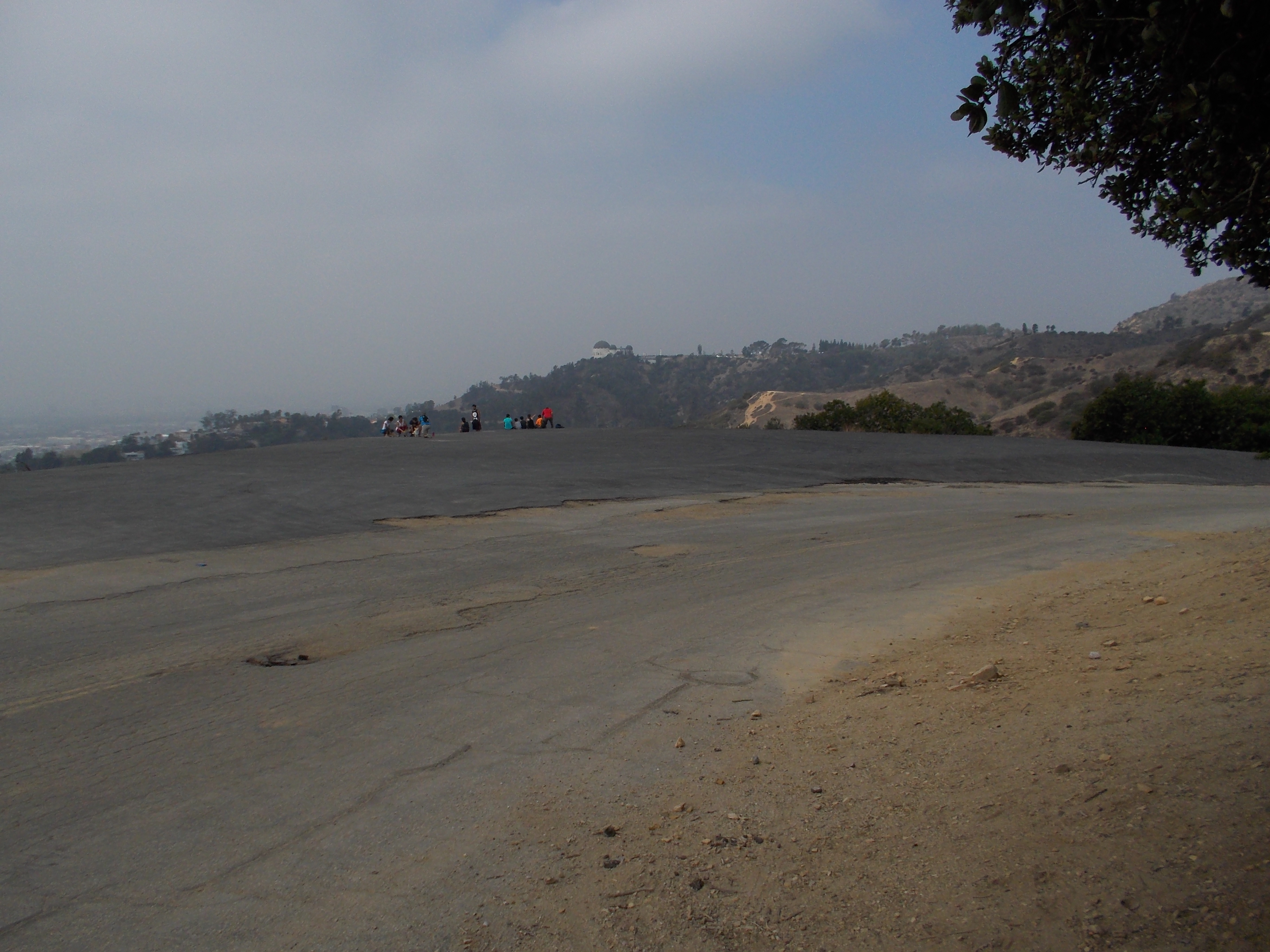
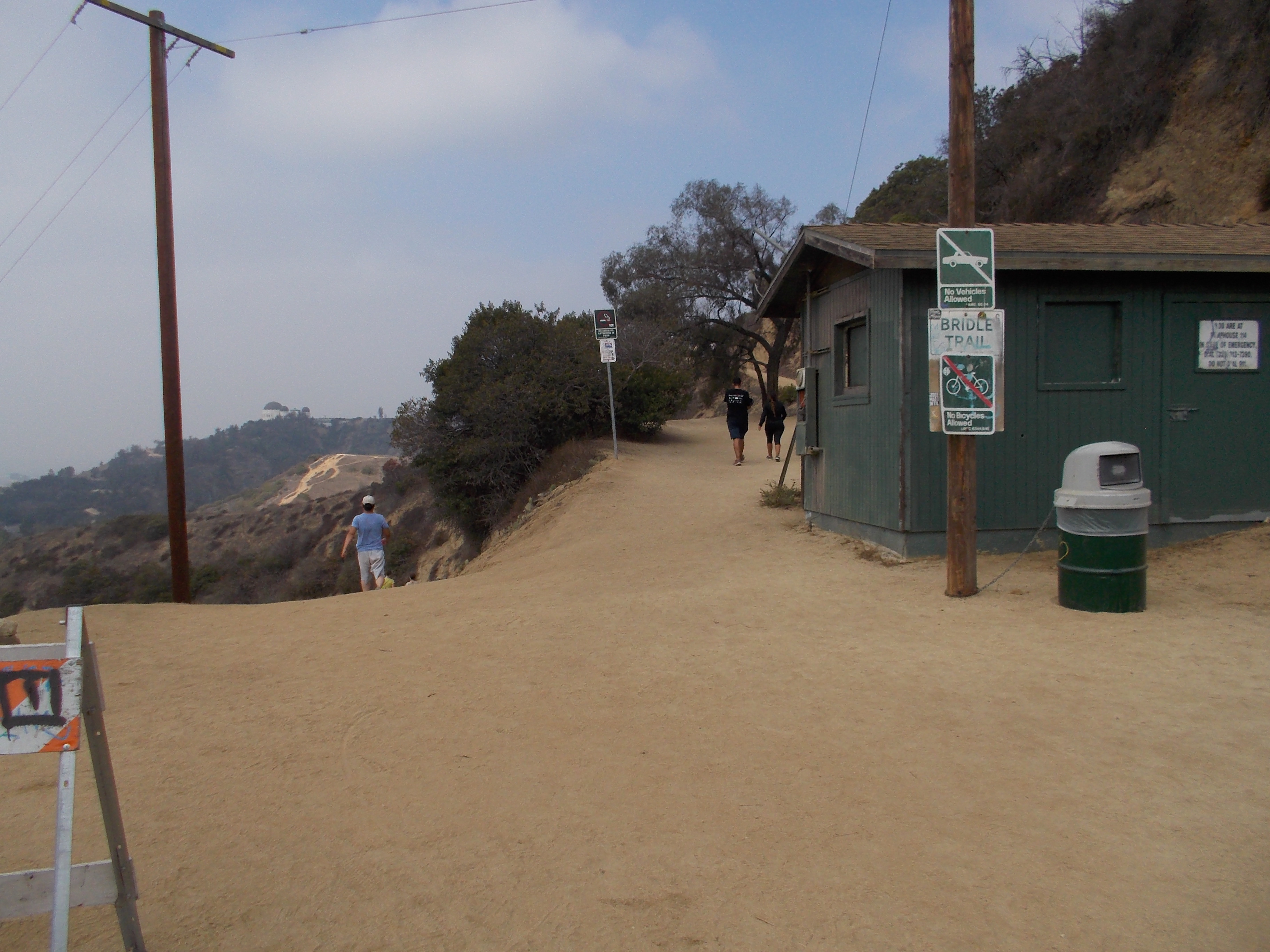
Once you get out from the water fountain clearing, you will hit a paved road (it’s called Vista Del Valle Drive). After about 50 meters running on this paved road, you have covered already 3 miles! Follow this road and on your left is a paved flat area which is a popular site for photo-ops overlooking the city and sometimes, it is being used as a helipad or location for movie shootings. As you passed this flat paved area, you can see ahead of you two fire roads on your left: one that goes down and one that goes up. Go to the fire road that goes up! This fire road splits from Vista Del Valle Drive and it has a closed wooden hut beside the start of the trail.
Griffith Park Helipad AreaUphill Trail Beside The Hut (Left Side Of The Hut)
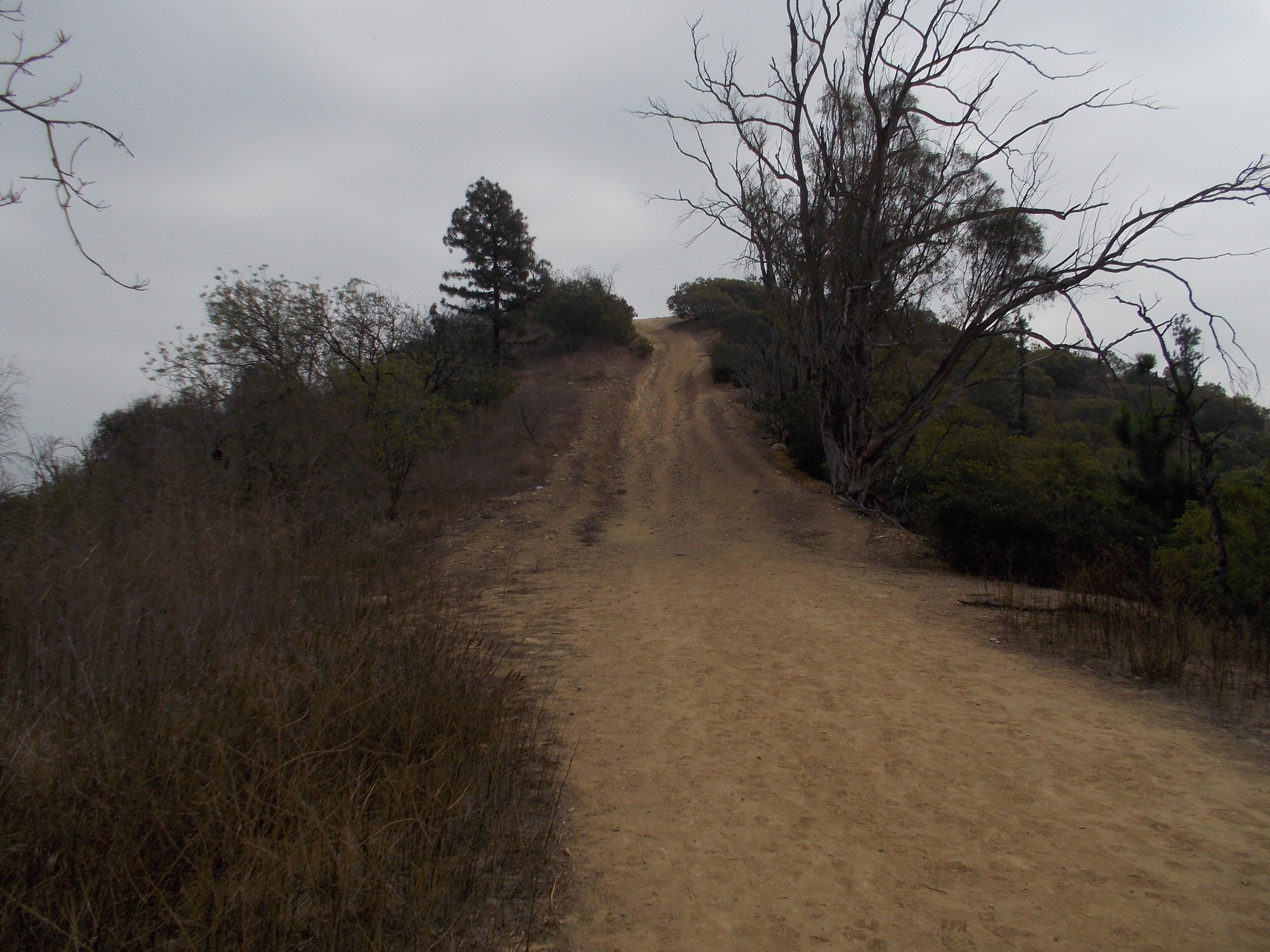
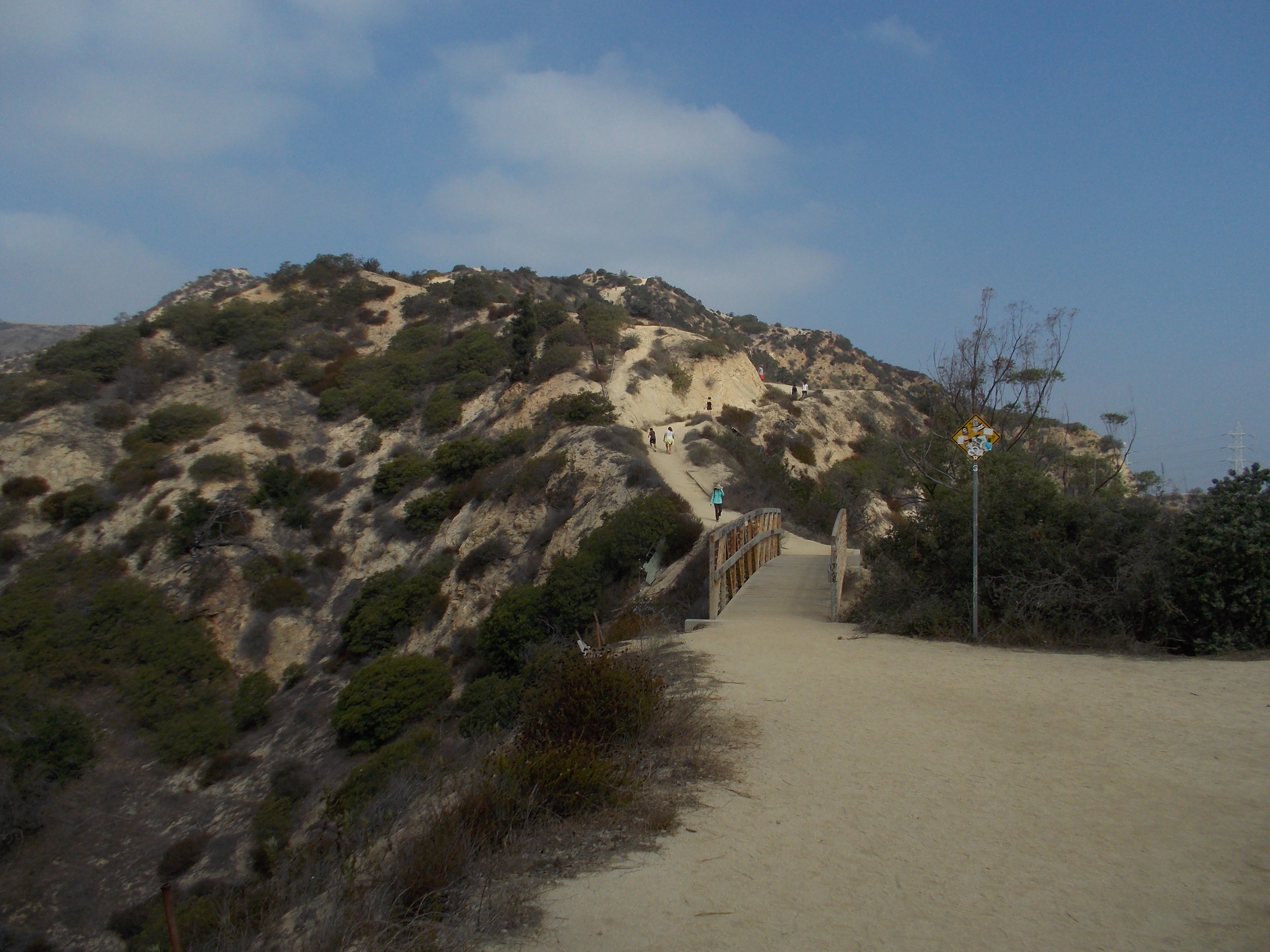
After two or three turns, you will see a wooden bridge and a higher hill where the fire road is leading to. You are now approaching the dreaded Hogback Trail. This trail is too steep on some sections and make sure that you have a good traction on your trail running shoes. Before the last climb of this trail, you must have covered 4 miles. I always have the urge to drink a lot of water from my hydration bottle before the last climb. Once you finish the last climb on the Hogback Trail, there is a water source (a water fountain and a faucet) and you can make your water refill here.
Wooden Bridge & Hogback Trail
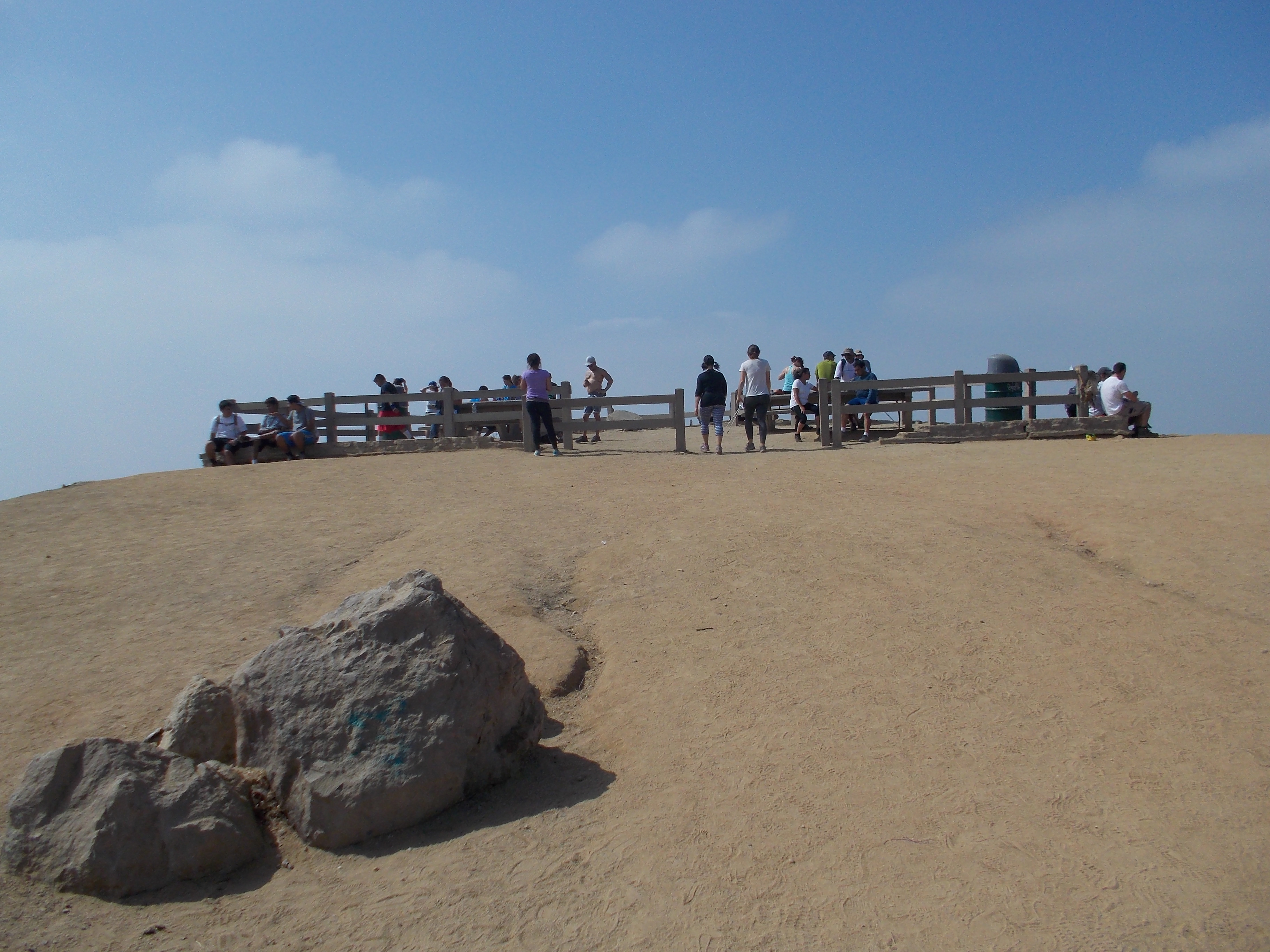
From the water source, follow the fire road as it continuously go on a higher elevation (don’t turn left on the trail that goes down after the faucet/water source). In about 30 meters from the faucet, there is a three-way intersection, turn left on the fire road and in about 100 meters, you can now see some concrete tables and benches inside a corral on the Dante’s View/Peak and the Hollywood Sign can be seen on your right. The Dante’s View/Peak is usually the resting place of those who hike and jog. One could see the City, the Griffith Observatory, the Hollywood Sign and the trails/fire roads that snake within the perimeter of the park. But for me, I just get inside the corral and touch the biggest rock where the Survey Marker is located and immediately turn-around. The distance covered is 4.5 miles at this point!
Dante’s View/Peak
From the turn-around, I retrace my route as I go back to where I started, to include going to the peak of the Beacon Hill. One has to be very careful in going down along the Hogback Trail as there is great possibility that one makes a mistake of slipping from the trail which is purely a rock.
My Fastest Time to complete this trail running route is 2 hours. It has a total ascent of 1,857 feet and total descent of 1,837 feet. Dante’s Peak/View has an elevation of 1,608 feet above sea level. Allocate at least 3 hours for an average hiking with picture/hydration stops for this route.
A Runner’s Circle (ARC) Specialty Store is only 1 Mile away from the “Merry-Go-Round” Parking Lot. From the Parking Lot, turn right to Crystal Spring Road towards the Los Feliz Avenue Entrance to Griffith Park. Turn Left on Los Feliz Avenue and immediately after crossing the bridge, the ARC Store will be on your Right.
More trail routes to come within Griffith Park and other parts in the Los Angeles Area and its Suburbs in my future posts.
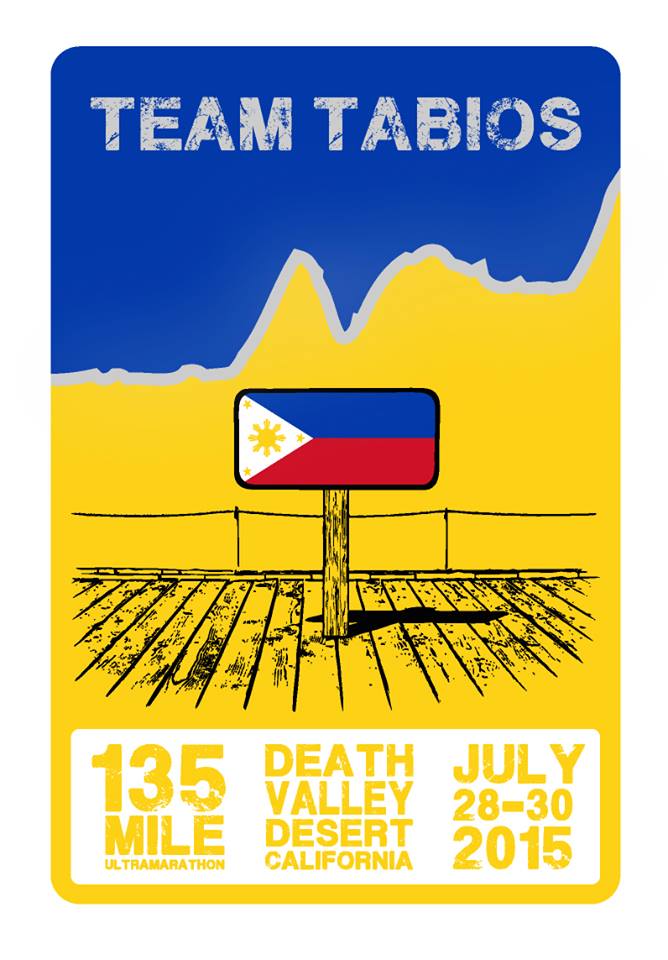
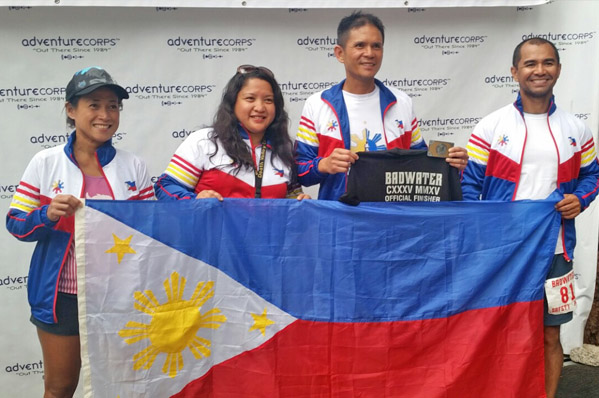
Team Tabios Logo Of Badwater 135-Mile Race. Shirt Was Designed By Bryan Calo of San Diego, California (Photo From Facebook)
This year, 2015, Gerald surprised us again for his feat to run and finish the actual/original route of the race. As a result of a thorough study on the safety of athletes in the conduct of sports activities in the Death Valley Park which resulted to its closure to sports events for almost two (2) years, the Superintendent of the Park allowed the conduct of the Badwater Ultra Marathon Race on its original route, from Badwater, Death Valley Park, California to Mt Whitney Portal, Lone Pine, California with a very strict start in the evening, instead of a morning start. The race was held on July 28-30, 2015, on the hottest time of the year in the Death Valley Park.
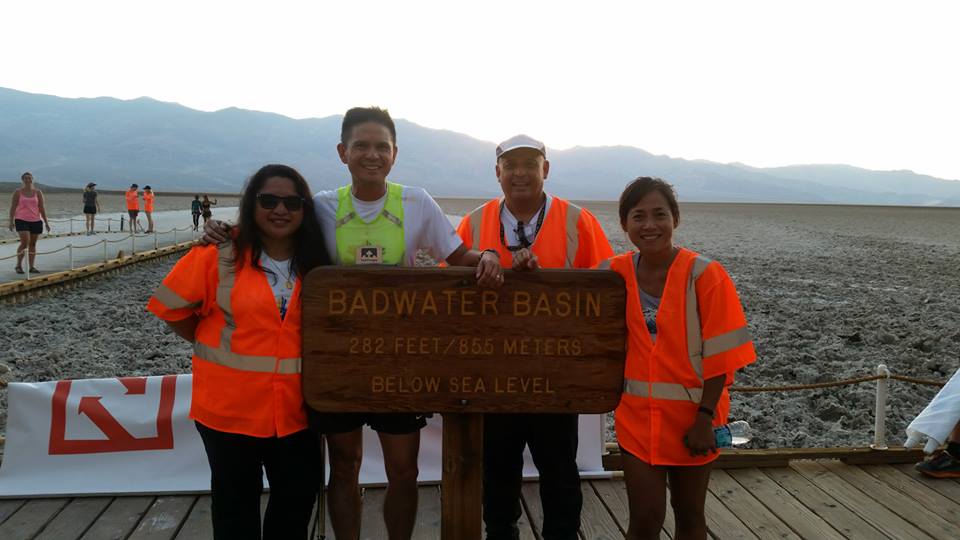
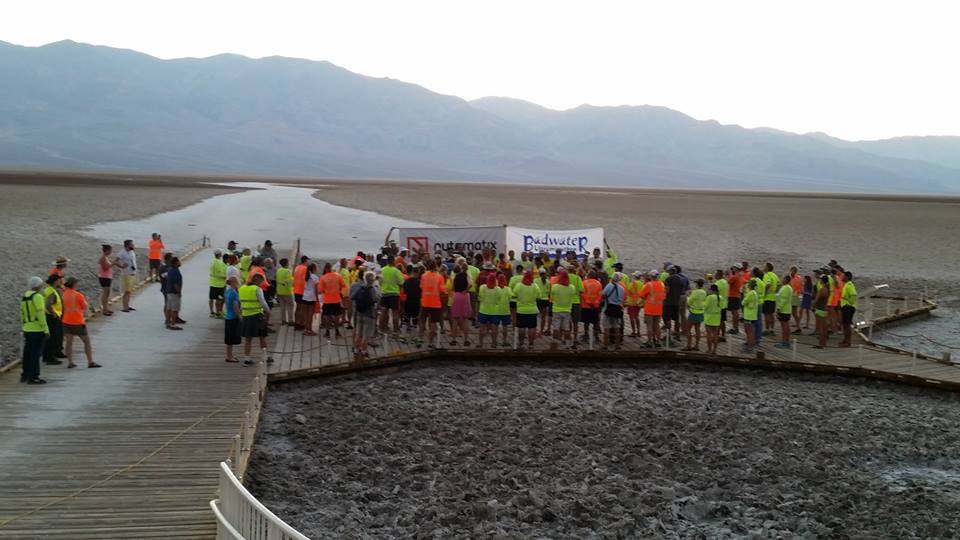
Team Tabios @ The Starting Area (With Wife Donna, Robert Rizon, Kat Bermudez, Luis Miguel Callao Is Not In The Picture) Photo From Facebook
This is the brief description of the race as taken from the Badwater 135 Website:
“The World’s Toughest Foot Race”
“Covering 135 miles (217km) non-stop from Death Valley to Mt. Whitney, CA, the Nutrimatix Badwater® 135 is the most demanding and extreme running race offered anywhere on the planet. The start line is at Badwater, Death Valley, which marks the lowest elevation in North America at 280’ (85m) below sea level. The race finishes at Whitney Portal at 8,300’ (2530m). The Badwater 135 course covers three mountain ranges for a total of 14,600’ (4450m) of cumulative vertical ascent and 6,100’ (1859m) of cumulative descent. Whitney Portal is the trailhead to the Mt. Whitney summit, the highest point in the contiguous United States. Competitors travel through places or landmarks with names like Mushroom Rock, Furnace Creek, Salt Creek, Devil’s Cornfield, Devil’s Golf Course, Stovepipe Wells, Panamint Springs, Keeler, Alabama Hills, and Lone Pine.”
For this year, Gerald Tabios is one of the 97 starters who represented runners coming from 23 countries, including USA and Canada. With a cut-off time of 48 hours to finish the race, the runners have to endure the hottest temperature in the area, reaching to a high of 130 degrees Fahrenheit (air temperature) and another 200 degrees Fahrenheit heat coming from the pavement , gusty winds in the desert and mountains, the challenging vertical ascents of three (3) mountain ranges, and the sight of never-ending paved highway on the horizon. These are the challenges that each of the runners would experience before they reach the Finish Line. Each runner is ably supported by his team, consisting of a Support Vehicle, driver, pacer, and a medical/logistic aide, but most of the time, each member of the team are doing multi-tasks just to be able to bring their runner to the Finish Line, safe and without any injuries. Each runner would bring with him his logistical support and emergency medical/first-aid aboard his/her Support Vehicle, “leap-frogging” the runner from one point to another along the route. Gerald was supported by Team Tabios consisting of his wife, Donna Tabios, Kat Bermudez (wife of Bigfoot 200-Miler Finisher Jun Bermudez), Luis Miguel Callao (a Pinoy Ultra Runner), and Robert Rizon.
Luis Miguel “Nonong” Callao and Gerald Tabios are very close childhood friends and classmates since kindergarten!
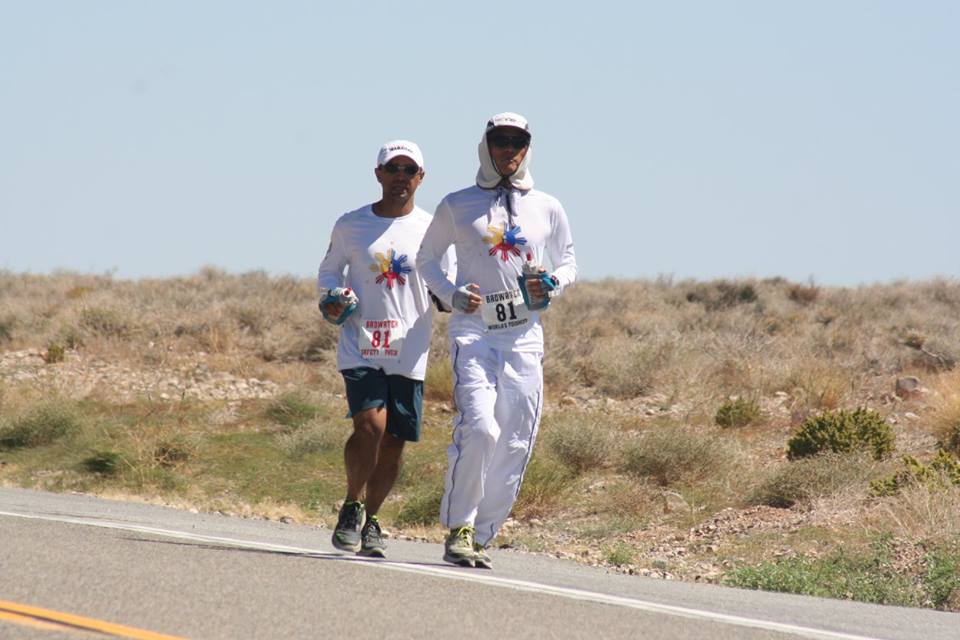
Starting Area: Badwater Basin @ Death Valley Park (Photo from Facebook)Gerald In Action With Luis Miguel Callao As Pacer (Photo From Facebook)
Considering that the “original” course is harder and more challenging than last year’s “alternate/new” Badwater 135 route, Gerald improved on his performance. Gerald finished this year’s edition with a time of 42 hours, 52 minutes and 9 seconds, making him as the 65th overall finisher out of the 97 starters. Out of the 97 runners who started, 18 runners did not finish the race. Such DNF record for this year is higher than of last year’s edition. Despite such situation, Gerald was able to improve his performance chipping off almost 2 hours of his time last year and improving his ranking among the finishers.
To make his accomplishment more significant, he is the ONLY Filipino to have been qualified and invited by the Race Organizer to join in this year’s edition. And he is now in the history of this race as the FIRST Pinoy Ultra Runner to have finished the Badwater 135-Mile Race in two consecutive years!
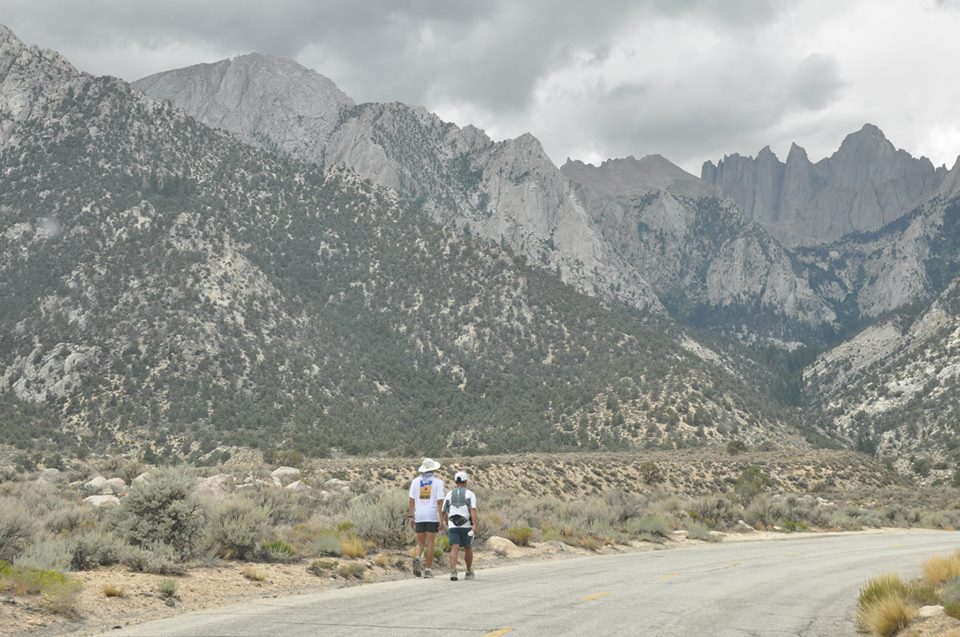
Approaching Mt Whitney @ Lone Pine, California (Photo From Facebook)
The Overall Champion of the 2015 Badwater 135-Mile Race is Pete Kostelnick of Lincoln, Nebraska, USA with a finish time of 23:27:10 hours. The Lady Champion, Nikki Wynd of Australia, finished the race with a time of 27:23:27 hours, making her as the 4th Overall Finisher of the Race. Race results can be seen here:
The Race Organizer of the Badwater 135-Mile Race is very selective in accepting its participants every year. Even if you have the financial resources to register; support the logistical needs in this race; or have the physical and mental prowess to undertake and run this course, every Runner must convince the Race Organizer on his/her advocacy to help the community or to the world for a better place to live in. As in last year, Gerald ran for a Charity to help the Victims of Typhoon Yolanda in the Philippines. And since his successful finish in last year’s edition, Gerald had continuously channeled whatever amount of money he had raised to this advocacy/charity for the past two years.
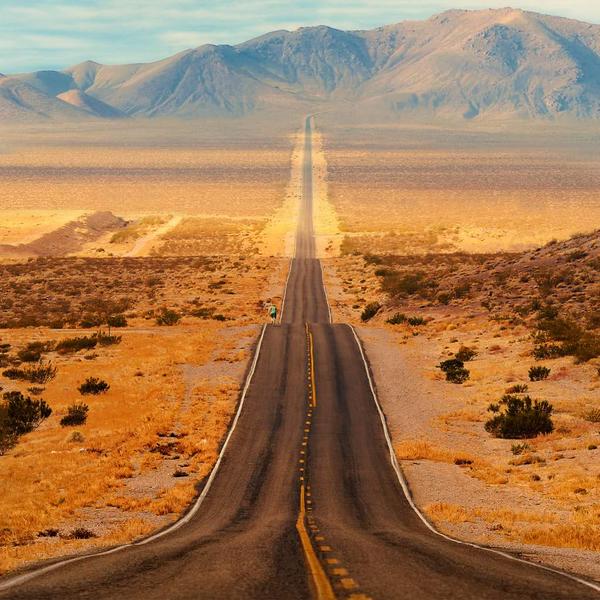
Never-Ending Highway @ Death Valley Park (Photo From Twitter/Badwater.Com)
In a brief interview with him, I asked if he is joining in the next year’s Badwater 135-Mile Race. He immediately replied, “Yes, I will be joining this race as long as I can run. This is a significant way that I can help my country, most specially, to those who are still suffering due to the effects brought about by Typhoon Yolanda.” Not only does Gerald is firm in his stand on his advocacy, he is also a good example of a fit, healthy, and hard-working father of a family.
Mabuhay ka, Gerald! You make us proud to be a Filipino! Congratulations to you and to Team Tabios!!!:
Proud To Be Pinoy! (Kat Bermudez, Donna Tabios, Gerald Tabios & Luis Miguel Callao (Photo From Facebook)
My friends and contemporaries would always tell me that I am CRAZY to be running ultra marathon distances in the mountains in the country as well as in Asia and the United States. I just smile because that is the best description we (as ultra runners) could get to those who have not yet experienced our sports. But now, more ultra runners have extended their body limits and endurance by introducing a 200-mile endurance mountain trail event which has doubled the famous 100-mile distance which is now being accepted as the NEW Marathon Distance in Ultra Running. The runners of this new event could be the CRAZIEST of them all and since it was introduced only last year in the first edition of the Lake Tahoe 200-Mile Endurance Run, three of these events had been scheduled for this year and called the Grand Slam of 200-Milers (it was supposed to be 4 races: Colorado 200; Arizona 200; Lake Tahoe 200; and Bigfoot 200 but the Arizona 200 was cancelled).
Let me introduce to you the CRAZIEST Ultra Runner who just recently finished the 1st edition of the Bigfoot 200-Mile Endurance Run——Conrado Bermudez Jr! Being the FIRST Pinoy to have finished this mountain ultra trail running event, it would be proper and fitting to have his story in running to be published here as one of the main highlights of this blog with the hope of inspiring others and telling to the world that we, Filipinos, are very strong and resilient in nature.
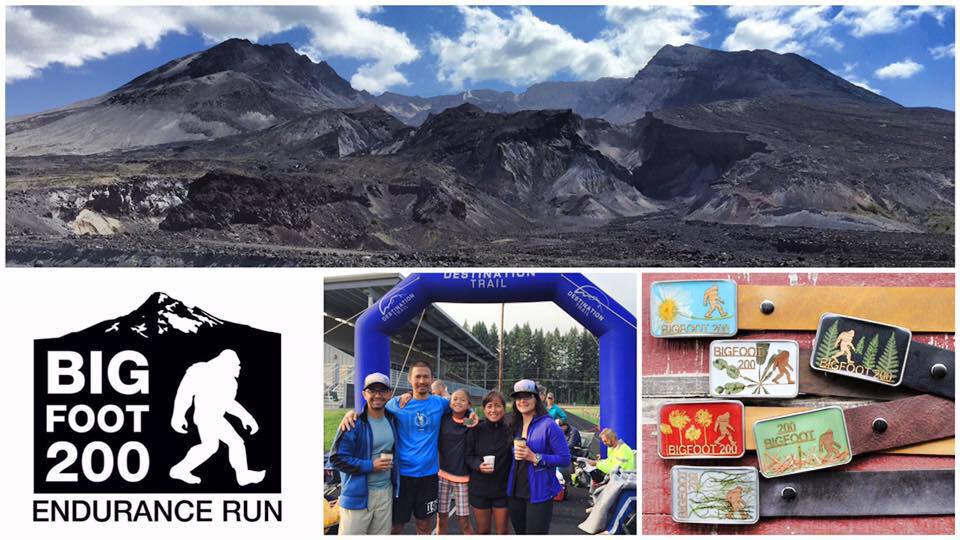
Bigfoot 200-Mile Endurance Race Picture Collage
Conrado Bermudez Jr, or fondly called as “Jun”, finished the 200-Mile Race in 94 hours, 26 minutes, and 30 seconds, placing himself as #40 among the 59 finishers where 80 runners started in the morning of Friday, August 7, 2015 at the Mt Helens National Monument in Washington State. The race has a cut-off time of 108 hours which is equivalent to 4 1/2 days, forcing the runners to complete 45 miles per day during the race. The following is the general description of the race as taken from its Website:
“The Bigfoot 200 is a trail running event in the Washington State that seeks to give back to the trails by inspiring preservation of the wild lands and donating money to trail building in the Pacific Northwest. The race is a point to point traverse of some of the most stunning, wild, and scenic trails in the Cascade Mountain range of Washington State. The Race ends in Randle, WA after traversing the Cascade Mountains from Mt St Helens to Mt Adams and along ridge lines with views of Mt Rainier, Mt Hood, and more!
The race will bring together people from all over the world to tackle this incredible challenge. With over 50,000 feet of ascent and more than 96,000 feet of elevation change in 2015 miles, this non-stop event is one of a kind in both its enormous challenge and unparalleled scenery. The race is not a stage race nor it is a relay. Athletes will complete the route solo in 108 hours or less, some without sleeping.”
Jun finished the race with barely 6 hours of sleep during the race! He was supported by his wife, Kat, their daughter and running friends who would meet him in Aid Stations where there is vehicular access. For more details of the race, one can visit the following link:
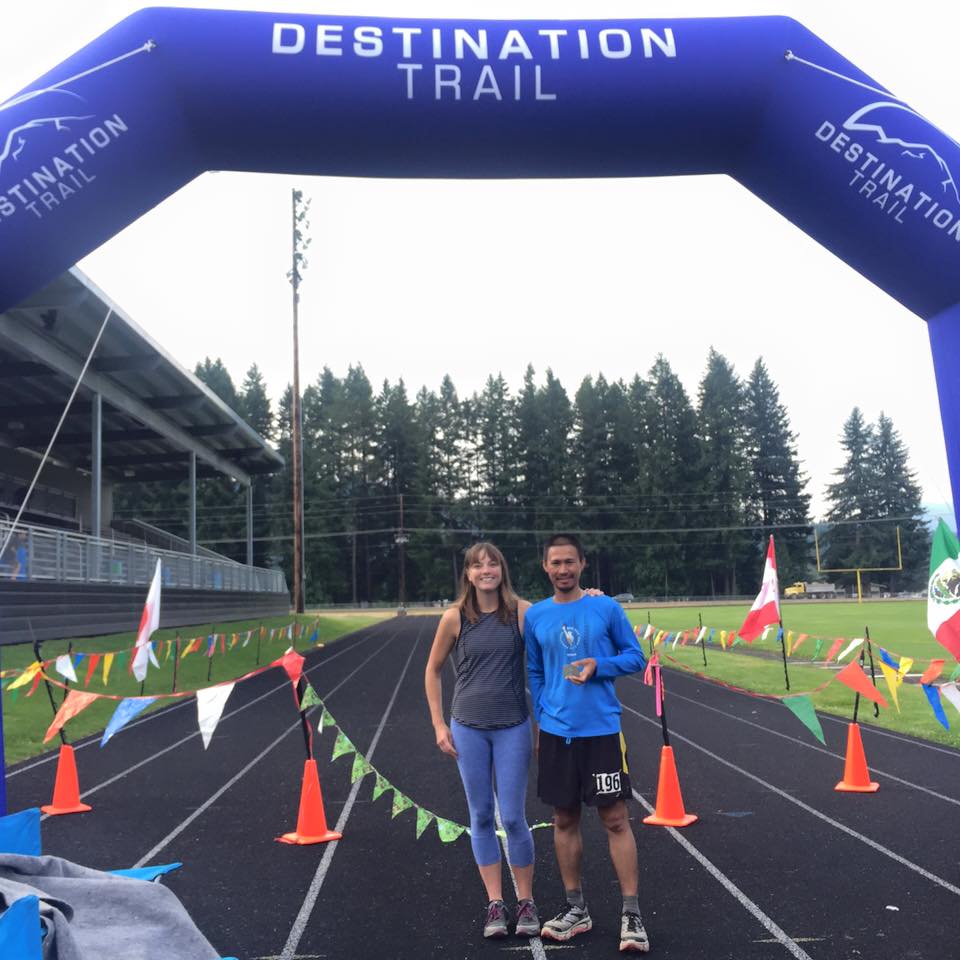
Finish Line Of The Bigfoot 200-Mile Race With The Race Director (Photo From Facebook)
Jun is a native of General Santos City, graduate of the Philippine Military Academy belonging to Class 1996, a Special Forces Airborne, and Scout Ranger of the Philippine Army before his family migrated to the United States.
In my interview with him on the later part of last year after he finished the other 3 100-Milers in the Grand Slam of Ultrarunning (except Western States 100); he recollected that he first personally met me when he was the Aide-De-Camp of the Commander of the Southern Command in Zamboanga City and I was then the Commander of the Task Force Zamboanga. The year was 2000 and he was barely 4 years in the military service. He went further to tell me that he got inspired by my blogs and photo running galore through my posts in our PMA Bugo-bugo Facebook Page.
Jun finished the prestigious Boston Marathon Race in 3:11:14 hours.
The following are the some of the data about Jun and the answer to the questions I’ve asked him:
1. Home Province-Gen. Santos City; Age-42 ; Height- 5’9″; Present Body Weight-146 lbs ; Schools Attended (Elementary to Graduate Schools)-Notre Dame of Mlang, Noth Cotabato (Elem), Notre Dame of Dadiangas College-High School Dept; PMA Class-1996 and Special Training in the Military-Scout Ranger, Airborne.
2. Places of Assignments and Positions held in the Military/Philippine Army:
Platoon Leader- Alpha Coy, 25IB, PA as Ready Deployment Force (striker battalion) of 6ID in Maguindanao, Sultan Kudarat, Cotabato Province. My platoon was also involved in capturing Camp Rajamuda in Pikit, Cotabato Province in 1997.
Company Commander- Bravo Coy, 25IB, PA , mostly deployed in Maguindanao. My company was also deployed in the front lines of Matanog and Buldon and was very instrumental in capturing Camp Abubakar.
3. Present Job & Working Hours-Security Officer in the United Nations Headquarters in NYC and works on day shift; City of Residence in the US-Jersey City, New Jersey; Wife’s Job- ER Nurse; Gender & Number of Children- one daughter
4. Brief Background of Running (during Childhood up to College and as Cadet of the PMA)
I started running when I was 7 years old. I grew-up in a farm and the only playground we had was an open field and trails where we would run and tag each other. In elementary and high school, I was so engrossed on soccer games than any other ballgames. This is why when I joined the PMA, I discovered that I was a decent runner because I was always in the lead pack when we had our 2-mile run as part of our physical fitness test. I also represented my company (PMA) in various races but most of the time I bonked because I usually go all out at the start and faint halfway through, which resulted to my ER visits. My style of running then was with a “do or die” mentality; no technique, no proper hydration and nutrition. It was just a plain “old-school” way and lots of brute force.
5. Best time in 5K- 19:22; 10K-42:08 ; Half-Marathon-1:26:52 ; and Marathon-3:11:14 All were done in 2013.
6. Brief story on your exposure to ultra distance running events—-first 50K; first 50-miler; first 100K; and first 100-miler.
I started joining races in 2012. That year I only finished 2 marathons. I was following your blogs and postings about the Bataan Death March 102 and 160 and the other races you directed and I got inspired by the spirit of the running community, and it was that I got curious about ultrarunning, especially the 100-mile distance.
To start my ultrarunning quest, I signed-up for a local flat, out-and-back, looped course. Thinking that 50km was just over a marathon, and 50 miles was just 2 marathons, I signed-up for a 100k, which was held in March 2013 in New Jersey. I’m glad that I met some new good friends there, who are now like a family. I was so proud that I finished in that muddy, swampy, and cold course third place. My wife and daughter were there for my first ultra. As a solitary person, running alone for a day was not such a big deal. The feeling of finishing a long distance further boosted my spirit… I got hooked. Then I signed-up for my first 100 miler scheduled three months after. It was in June in the inaugural Trail Animal Running Club (TARC) 100-Mile Endurance Run and the first 100-mile run in Massachusetts. The race started at 7 pm Friday with a cut-off of 30 hours. The course was in a 25-mile flat trails with some creeks spread along the way. I was very enthusiastic to train knowing that some of my friends are also running the race. As part of my preparation, I was reading some blogs and race reports, and I even asked your advice on how to deal with the distance. You discussed to me the proper nutrition and hydration and also incorporating hike into running. The course got indescribably muddy, with most sections in knee-deep mud in every mile, but with my grit and determination, I was able to finish despite a big number of DNF in the race. I felt reborn and my spirit was so high. It took me a week to recover from the pain.
In November, I did my first 50-mile race as a finale for the year. The JFK 50 Mile is the oldest and the largest ultramarathon in the US. The course is a combination of road and trail. It passes through the Appalachian Trail and C&O Canal Towpath then ends in an 8-mile paved road in Maryland. The course was pretty easy and fast. This is where I met some new hardcore ultrarunners from the Virginia Happy Trails Club.
After running all long distances, I signed-up for my first 50k as part of my back-to-back training for my incoming six 100’s. The Febapple Fifty was held on Saturday of February 2014. Then the next day, I ran the Central Park Marathon. The Febapple race was fun. The course was filled mostly with knee-high ice and snow in a rolling hills of South Mountain Reservation in New Jersey. It was quite a tough race because the ice turned slushy and it was a bit hard to run. I still managed to finish in the top ten.
All of my first attempts of these distances were mostly to get me into groove to venture and discover ultrarunning. I realized the 100-mile distance is my favorite.
7. Training Preparation in your 100-Miler Races and Nutrition Strategy in your Races. How do you balance your training with your work and family? (*I will discuss my training in item # 9).
In short ultra races, I carry a handheld bottle or belt hydration system. They are lighter that I could run faster. I take one salt tablet every hour but if I sweat a lot, I take two every hour and nothing at night when it’s cold. In aid stations, I eat potato, banana, watermelon, and PB & J aside from the Ensure that I carry as my basic load. I make sure I take more nutrition at the early stage of the race. I also drink ginger ale and Coke/Pepsi to refresh my mind from the lows.
I come home from work around 8pm and do my chores and help my daughter do her homework. If all is done, I relax for awhile and train. It usually takes me an hour or two to finish my training. I sleep around midnight and wake-up at 6am. I am fortunate that my wife is also supportive of my passion as she herself is an ultrarunner. And our daughter is also our number one cheerer. So far, everyone is in sync in the family.
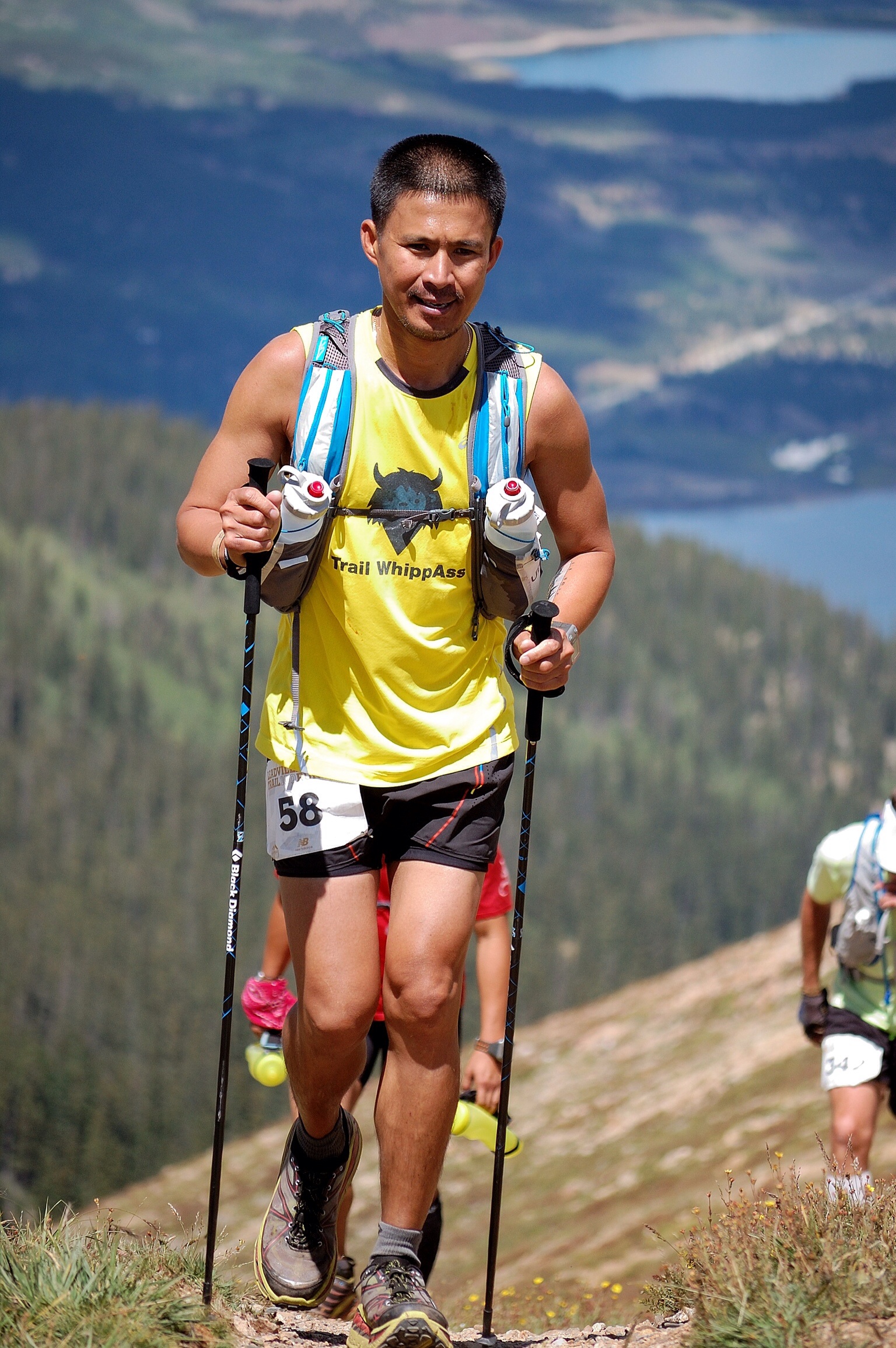
Jun Bermudez @ Leadville 100-Mile Race (Photo From UltraSignUp)
8. Were you aware of the US Grand Slam of Ultrarunning? Since you missed the Western States 100 this year, do you intend to take a shot on the 2015 US Grand Slam of Ultrarunning?
I did not have my qualifier for Western States last year. I was already aware of the Grand Slam of Ultrarunning, so to get the feel of it, I tried to sign-up for six 100-mile races. I put my name in Massanutten Mountain Trail 100 and Wasatch Front 100 for lottery and fortunately, I was accepted. Since I have proven that I could finish multiple races in a gap of 3-5 weeks, I have more confidence now to challenge myself in GS in the future. There’s only a slim chance for me to get into Western States with one ticket but I will make sure I will apply every year to increase my chances. If not, I am planning to do more challenging 100-mile mountain races next year. It just sank-in that what I did was insane. Every time I finished, I cursed myself for signing-up and promised myself not to do 100’s anymore. But a couple of days after, I feel that I am ready to go again. Thus, if ever I am accepted in Western States in the future, I won’t hesitate to join the Grand Slam.
9. Knowing that you are a “lowlander”, how did you train for the 100-mile mountain races that you finished? How did you cope up with the possibility of encountering “high altitude” sickness in your latest two 100-milers?
My training was focused in strengthening my legs, ankles, and feet in battling the rigorous technical terrain. But 90% of my training was indoor because of my busy schedule, and I have a child to watch that I could not leave at home if my wife is working or training for her ultra events. I usually do stairs workout, climbing up and down, up to 250 floors without rest every two weeks, which is a great way to improve my VO2max and giving me more mountain legs. Most of the time, I abuse my incline trainer/treadmill, which goes to 40%. I use it for incline hike/run with 10-15 lbs of rucksack together with my 2.5 pounder ankle weights. Although I hated speed workout, I still do my 5k in treadmill and this keeps my pace honest. Sometimes I do my trail long runs in the weekends with my friends but most of the time, I am stuck on my treadmill. Treadmill running is boring but it gives me more mental conditioning to tackle the distance. Aside from that, it also preserves my feet from the hard pounding of the pavement. I don’t really track my weekly mileage because I don’t have a proper training plan that I follow. I just listen to my body and do whatever I feel I need to work on. And to avoid injury, I do strength and core workout twice a week.
In an attempt to combat altitude sickness, I was taking iron, B complex, and vitamin C supplements. But these didn’t really help much. I still got more vomitting in Leadville (12,600 ft highest altitude) after mile 60 and had some also after mile 70 in Wasatch.
10. How did you balance recovery and preparation in between those 100-milers for the 6-month duration of your ultra events?
I treat every race as my long run. After the race, I relax, stretch, and foam roll for 3-4 days to get rid of the pain. I also come back to work 2 days after the race. At work, I stand for 6 hours. I think standing at work and walking from home to train station and to work helps my fast recovery. At the end of the week, I start doing easy runs again. Then the next week, I go back to my usual training routine. My taper starts 2 weeks before the next race. I did this routine in my last four 100 milers. In fact, I was feeling fresh every time I start the next race and my spirit gets stronger. I was amazed that I was able to do sub 20 hours in 3 100 milers. Although I did not achieve my goal of finishing Leadville 100 in sub 25 and Wasatch Front 100 in sub 30, I am still ecstatic that I finished those races SOLO (no pacer, no crew) and without getting injured. When I finished Leadville 100, I focused more on recovery by just doing stretching, hiking and easy runs. It was in Leadville that I suffered much because of the altitude and my mistake of not hydrating properly. I had nausea and I threw up every time I ate and drank after mile 60, and I was also suffering from a bad stomach issue. Wasatch is harder than Leadville. But due to my proper hyrdation and nutrition, I felt better and stronger although I still had gastrointestinal issues around mile 70, but later I managed to cope with them by slowing down and taking my time at aid stations to recover.
11. What are your tips and advise to those who would venture to mountain ultra trail running events. What would be the things that you have to improve upon if ever you want to improve your performance in your previous 100-milers?
It takes a lot of discipline. Training involves time away from your family and it is important that no matter what, family comes first. It is helpful if your family is supportive, so that is paramount in your quest for ultrarunning and paramount in the list of things you have to make sure you obtain, foremost.
Never be afraid of the adventure. It is not always about the destination (aka finishing) but the journey. That is my advice to other runners.
Personally, I think I need to improve on certain strategies like hydration and nutrition. Also, not just to eliminate issues like GI problems that come with certain races, but— more importantly— how to perform well regardless of these problems because, lets face it, problems encountered during races MAY NOT ever go away. So it is a matter of pushing past these issues and finishing strong. Thats what I need to work on.
12. Aside from the 2015 US Grand Slam of Ultrarunning plan, what is in store for you in the coming ultra running years?
I want to venture into other Ultra races. The challenging ones, in particular. There are many races out there to explore with challenging course and beautiful sceneries. When they go hand in hand, they become priceless experiences, especially when you finish them. Like I said, mountain 100-milers are my favorite, but that is not to say I will not try to explore on distances beyond that. We’ll wait and see.
Jun could not stop wanting for more and he is now one of the few mountain ultra trail 200-mile single stage finishers entire the world. For the past two years, he has the following 100-miler mountain trail races with their corresponding finish time in his belt :
TARC 100-Miler in Westwood, Massachusetts (June 14, 2013) —-25:19:27 hours
New Jersey Ultra Trail Festival 100-Miler in Augusta, New Jersey (November 23, 2013)—-18:53:31 hours
Massanutten 100-Miler in Front Royal, Virginia (May 17, 2014)—-28:05:55 hours
Great New York City 100-Miler (June 21, 2014)—-19:33:14 hours
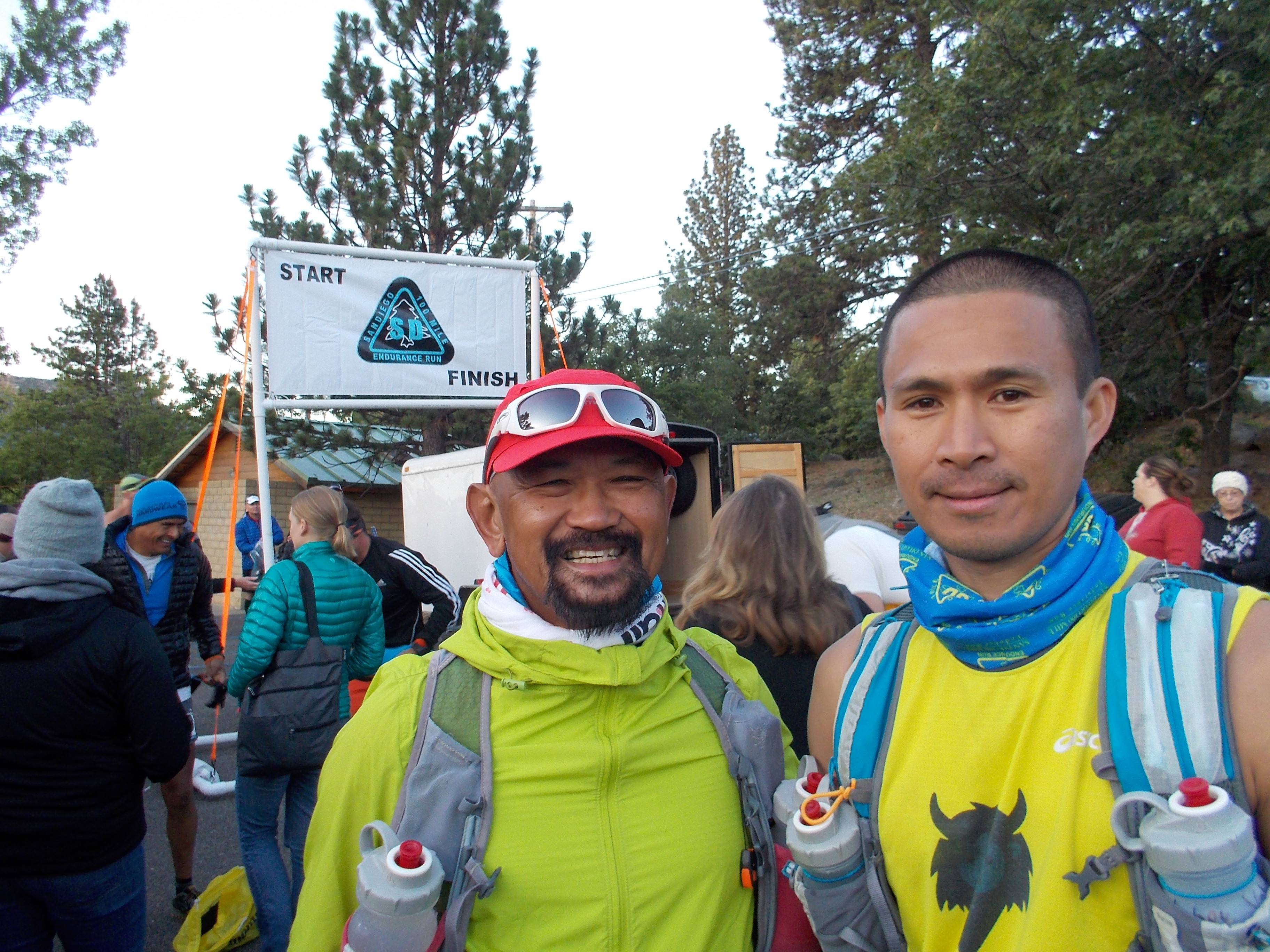
San Diego (California) 100-Miler (June 6, 2015)—-22:16:27 hours
After his sub-24 hour finish at the San Diego 100-Mile Endurance Race, I told him that he has to rest and recover in between his races to let his body free from injuries brought about by over racing or over training in ultra distances. I even told him that he has to prepare for the possibility of being selected in the lottery for the Western States 100-Mile Endurance Race if ever he registers to join the race. I emphasized that I am betting on him that he will be the FIRST Pinoy Ultra Runner to be awarded the “One Day-24 Hour” Silver Buckle in the said race and I am sure that it will take another generation of Pinoy Ultra Runners to surpass such accomplishment.
My prediction on his ultra running career brought not a single word from his mouth but instead responded to me with a smile. Jun is a silent type guy and does not openly brag about his ultra running finishes on the Social Media and he does not even have a blog or journal where he can relate and share his stories in his ultra races. However, my interview with him has a lot of tips and advise for those who would like to embark on mountain ultra trail running, most specially to those who are in the lowlands and for those who don’t have access to the mountains or simply lazy to be in the outdoors.
BR & Jun @ Lake Cuyamaca
Before we parted ways in Lake Cuyamaca in Mt Laguna, San Diego, California, he intimated to me that his ultra running career is not complete if he will not be able to finish the Grand Slam of the Bataan Death March 102/160 Ultra Marathon Race! Hopefully, that will be the day that Jun will be able to meet the whole Pinoy Ultra Running Community in his homeland.
This is what I said to Jun, “Get your Western States 100-Mile Silver Buckle first before coming home, Cavalier!”
(Note: Jun had been using HOKA ONE ONE Shoes in all his trail running races and training)



 Bald Runner
You must be logged in to post a comment.