Stay Calm…Don’t Panic!


You have been running and hiking for almost 6 hours along the mountain trails and then suddenly you made a wrong turn to a trail that is not a part of the course and then after running for about 400-500 meters or a few minutes from the turn, you realize that you are lost. You begin to panic and feel frustrated. You make a decision and you seem to be confused. In reality, you don’t know what to do!

Such situation always happen in a training run in the mountains which could be easily corrected and solved by other runners within the group. It is also a situation that happens in mountain or ultra trail races.

I always say that it is a normal occurrence when a runner gets lost on a trail during a race and there is no need to complain to the Race Director/Organizer, most specially in ultra distances. In truth, the runner himself/herself should be blamed for his mistake of being lost on the trail.

In my experience as a trail runner, I have followed “common sense” practices for me not to get lost along the trail and if ever I would be lost, there are also suggested things that should be done.

The following are the “preventive measures” to avoid being lost on the trails and suggestions to correct the situation:

1. Don’t attempt to go alone on a trail that you are not familiar with. Register in the Barangay Hall and get a “guide” if you are new to the place.

2. Run with a group and make sure that somebody in the group is familiar with the trails in the area.

3. Inform your family, relatives, and friends about your activity and always make sure that you bring your cell phone with you.

4. You should orient yourself in the place by knowing where are the North, South, East & West directions. Look around and find structures or key terrain features (hill peaks, mountain peaks, forested areas, grassy areas, water falls, creeks, rivers, sea shore, fences, highway or main roads) in relation to the directions. In short, you should know basic orienteering & map reading.

5. If you are in a training run with a group, make sure that you can keep up with the pace with the runner in front of you. Keeping pace with the runner in front of you means that you could see his/her back every turn of the trail.

6. If ever you don’t see the back of the runner in front of you, you can start shouting at the said runner to warn him that you are lost or tell him to slow down. Don’t be ashamed to shout the guy in front of you or to the rest of the group. It would be a smart idea to always bring a whistle in your trail runs.

7. If you are in a middle of a pack and you took a wrong turn and notice that you are lost, you have to re-trace you way back to the exact point or place where you made the wrong turn. Stay calm and don’t panic. Take a deep breath, rest, hydrate and take some food while waiting for the other runners who are running way behind you.

8. If you can not wait for the other runners behind you to arrive, observe your surroundings and try to find out the right trail by looking on the marks of soles of running shoes on the trail. If you can’t see any marks of shoes because the trail is covered with grass, follow such trail for a few meters and you might be surprised that it could be the trail that would lead you to the rest of the runners.

9. In an “out and back” and “loop” courses, find time to observe your surroundings on the first half of the course even if it will make you slower in your pace. Find time to appreciate the beauty of the outdoors and try to absorb them to your mind. On your way back to where you have started, the things that you observed on the first half will come in handy if in case you think you are lost on the trails.

10. If you are joining an ultra trail race, it is highly recommended to conduct a recon of the course by simply walking/hiking through it. Take some pictures of places where there are turns or physical and/or natural features which you can see along the route like streams, rivers, waterfalls, bridges, unusual plants/trees, grasslands, big rocks, rock formations, huts/houses, uphill & downhill sections of the course and most importantly, establish your own “marker” every 10K of the route.

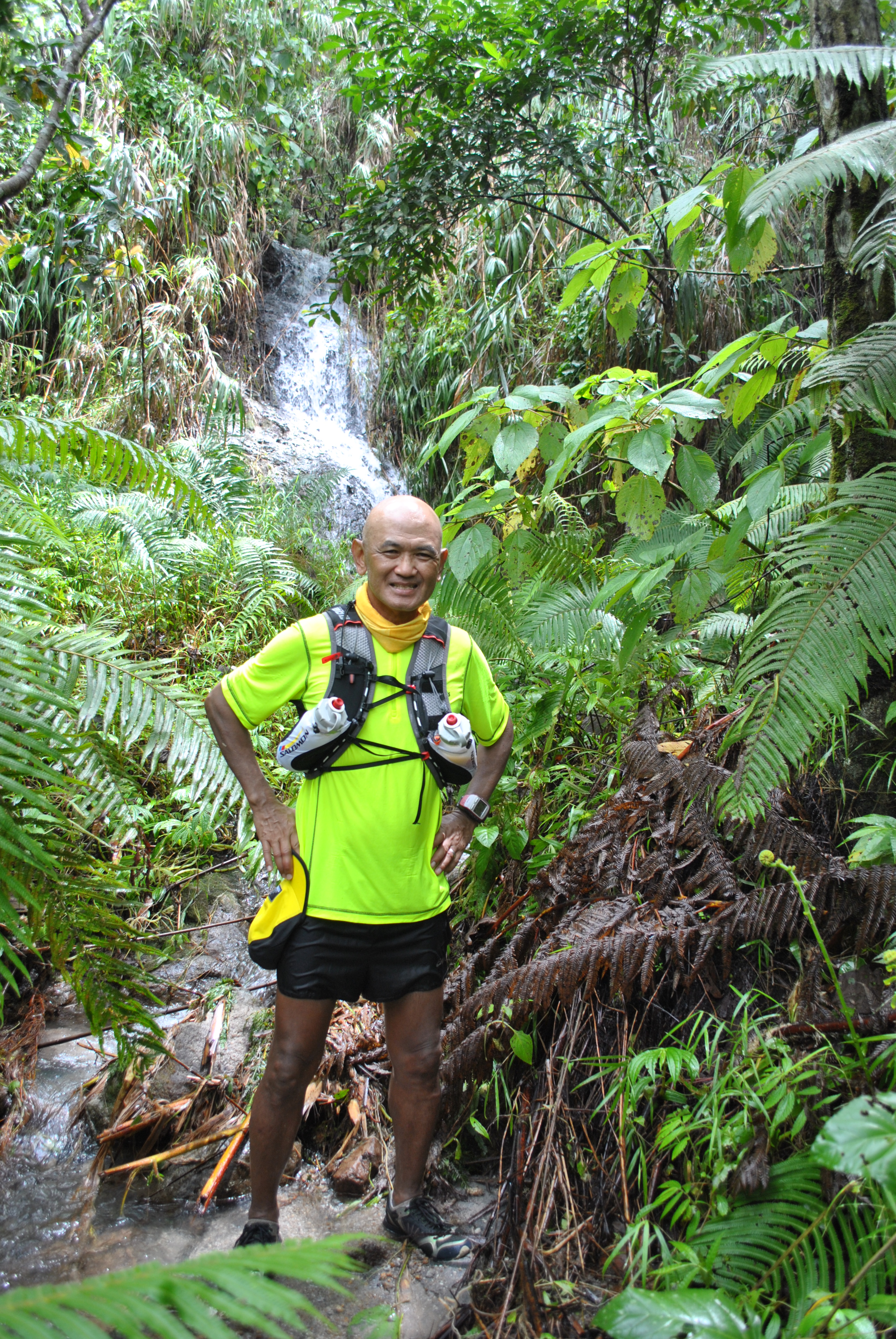
Take Note Of Waterfalls, Whether They Are Small Or Not, Along The Trails

11. In a well-marked trail race or run, shit happens. Surprisingly, markers or ribbons are altered or stolen by locals or people within the neighborhood, mostly by kids who make fun or play with them. Sometimes, there are also (front) runners who would remove them as part of their “collection of souvenirs”. There are instances also that markers are improperly placed along the route. The worst scenario is when these markers become wet due to rains or inclement weather that the color becomes the same with the surroundings, most especially during nighttime.

12. If there is a website of the ultra trail event, study the details posted and confirm/validate them in your recon/walk-through along the course. Some runners would laminate the data of the trail course printed on a piece of paper and had it handy in their pockets or in their hydration vest.

13. If you don’t have the luxury of time to conduct your recon, look for blogs of finishers of this race and you will find a lot of information that would help you to familiarize yourself with the course and event.

14. If you have friends who have finished this race, try to talk to them or contact them through e-mail or through the Social Media platforms. Ultra runners are very helpful to “newbies” when it comes to getting their experiences in finishing the race.

15. You might also consider joining a friend who trains with you in an ultra race to be a participant of the event. Having a partner in training and in a race is more comforting than running alone.

16. Lastly, if you are not well-trained or prepared for an ultra trail race, don’t make an attempt. You will be wasting your hard-earned money and effort.

Keep on running!

Picture From Dennis Uy

Time vs Distance


How do you measure or quantify your running workouts? Is it by the time that had elapsed covering the period you started your run up to the time you stop or by the distance or the number of kilometers or miles that you have covered?

When I started to train for my first 10K road race, I followed the first training program that I could read and it recommended running and walking by the number of minutes and later by the hours. As I progressed to train for the full marathon distance, I became aware to count the number of kilometers every running workout that I finish for the day.

When I started to train and run in ultra distances, I became aware of both the time that my feet were on the ground and the distance I would be able to cover within such period of time. I would later determine the average of mileage or number of kilometers that I would be able to cover within an hour or two.

It appears that I could cover an average distance of 7-8 kilometers per hour in my easy long runs; cover 10 kilometers for 65 minutes in my tempo runs; and I could finish the same distance of 10K in flat 60 minutes in my progression runs. These workouts are all done on paved roads with an easy elevation profile.

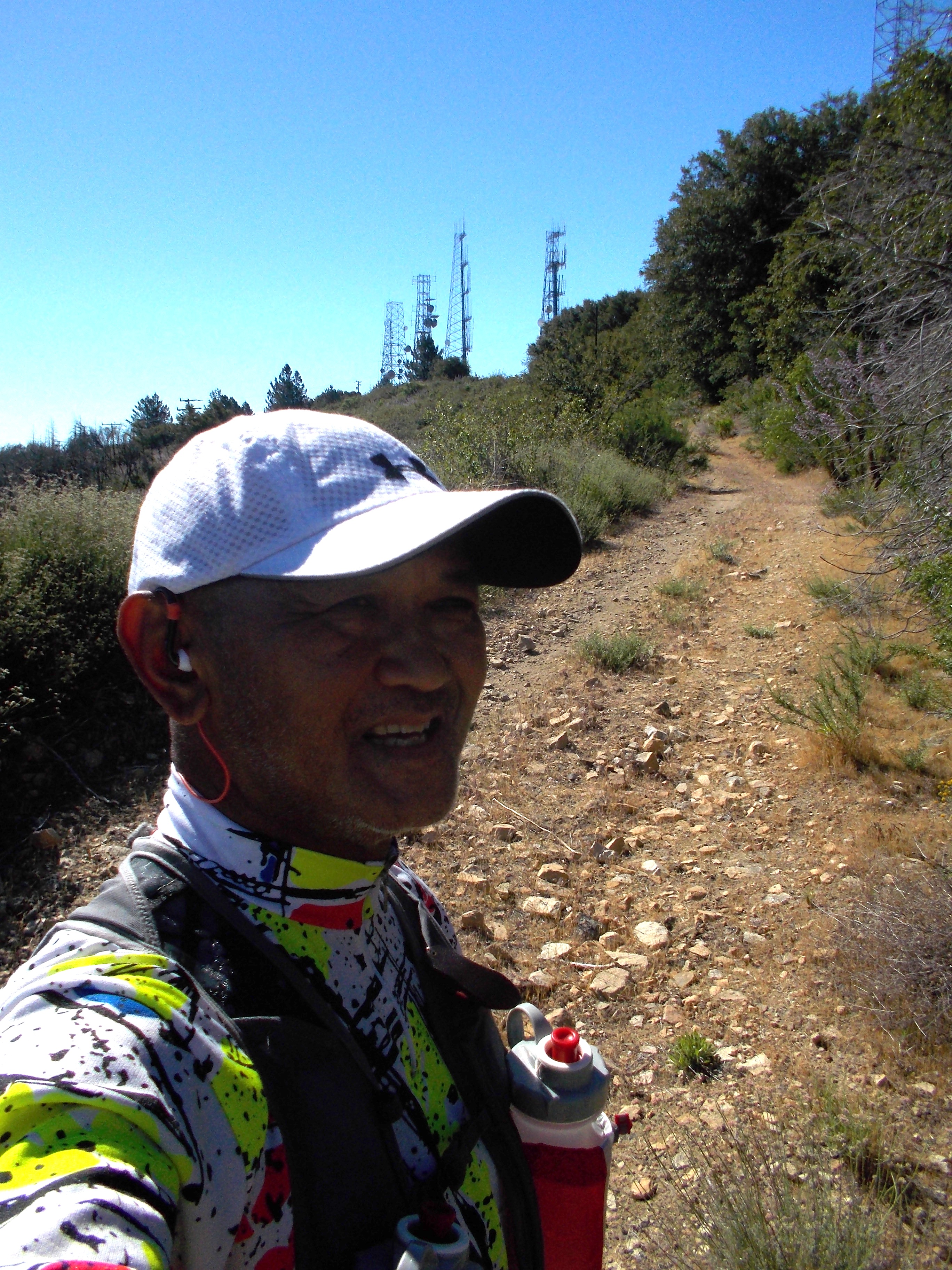
Trail @ Mt Lukens, Los Angeles, California

However, when I run on the trails, it is an entirely different story and the outcome seems that I am slower. On the trails in my playground in Los Angeles, California, I could cover an average  distance of 7 kilometers in one hour because the ground is clean and my foot placement is even on the ground due to the absence of rocks or stones.

As compared with my running in my playground in the Philippines, I could cover an average distance of 6 kilometers in 70 minutes/1:10 hours due to river crossing, varying elevation profile, and technical single-track trail (uneven foot placement on the ground and muddy/wet grounds with grasses). On a regular basis, I’ve been running a trail route that covers a distance of 28 kilometers and I would be happy if I could finish the distance in 6 hours.

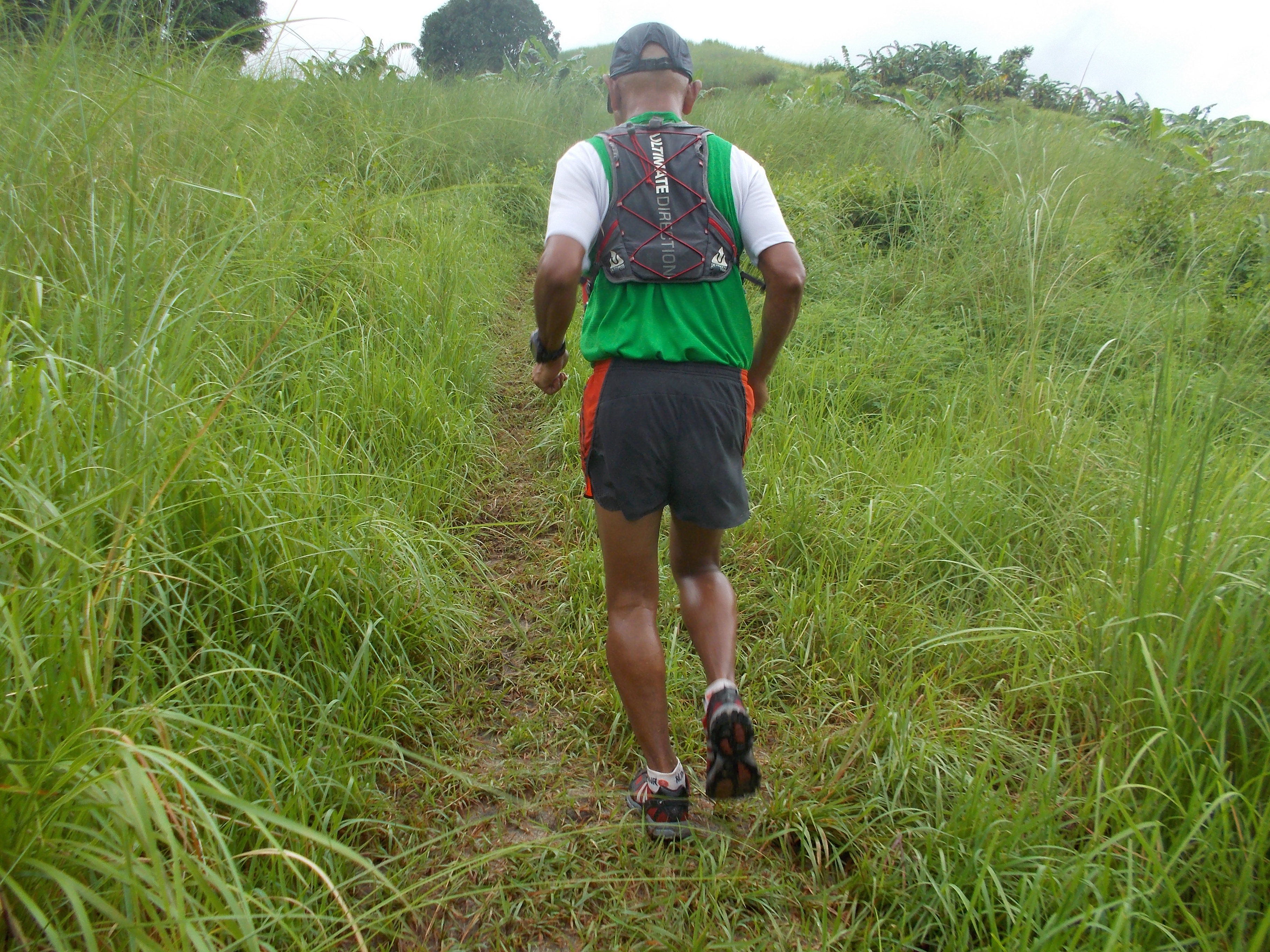
Typical Trail In My Playground In The Philippines

With this new training, I have been concentrating on my running workouts by counting the number of hours that I spent along the trails whether I am just hiking, crossing a river, resting for a taste of a fresh coconut juice or running those downhills along the route.

If you are training to become an ultra runner, whether on the road or trail, I highly suggest that you count the number of hours that your feet are on the ground rather than counting the number of kilometers that you have covered. For sure, you will be able to determine if you could finish your targeted ultra race within the prescribed cut-off time.

Good luck on your next ultra race and keep on running!

See The Difference!


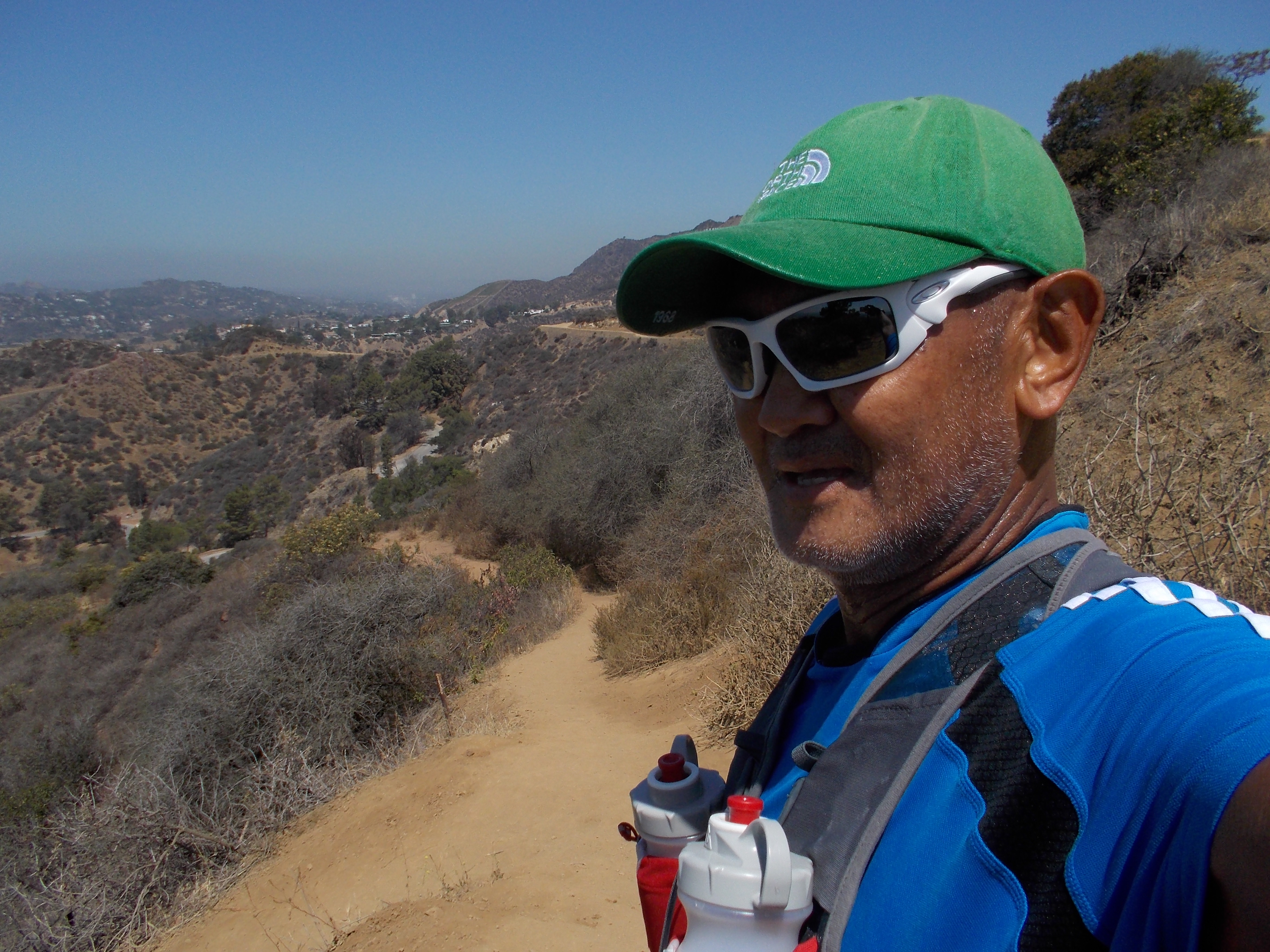
During my stay with my family in Los Angeles, California, my “playground” for my trail running are the mountain trails of Griffith Park; Verdugo Mountains; Echo Mountain, and Mt Lukens Trails. My daily runs vary from 7 miles (11K) up to 15 miles (24K).

Typical Trail In My Playground In California
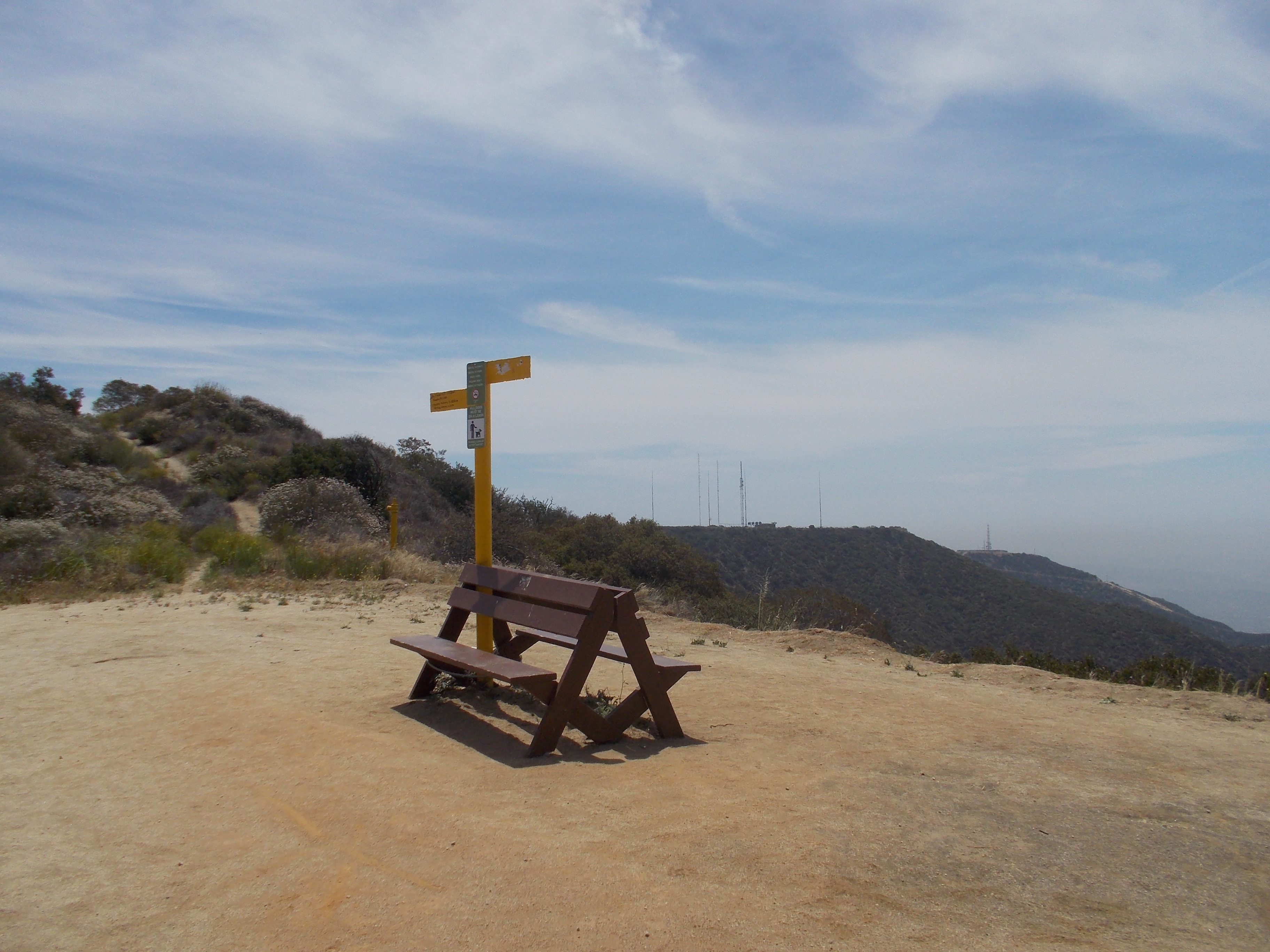
Clean Trails With Bench

The trails are usually wide, clean and dusty. I usually meet hikers and daily cyclists on their mountain bikes on these mountain trails. The elevation varies and very challenging but you don’t have any problems of big rocks, river/stream crossing, or big stones paved along the trails. But because of the nature of the landscape which is considered as desert environment, the place is hot during their summer season and I usually bring a lot of water for my hydration needs. Seldom you could see any streams or rivers or any natural feature where there is free-flowing of water.

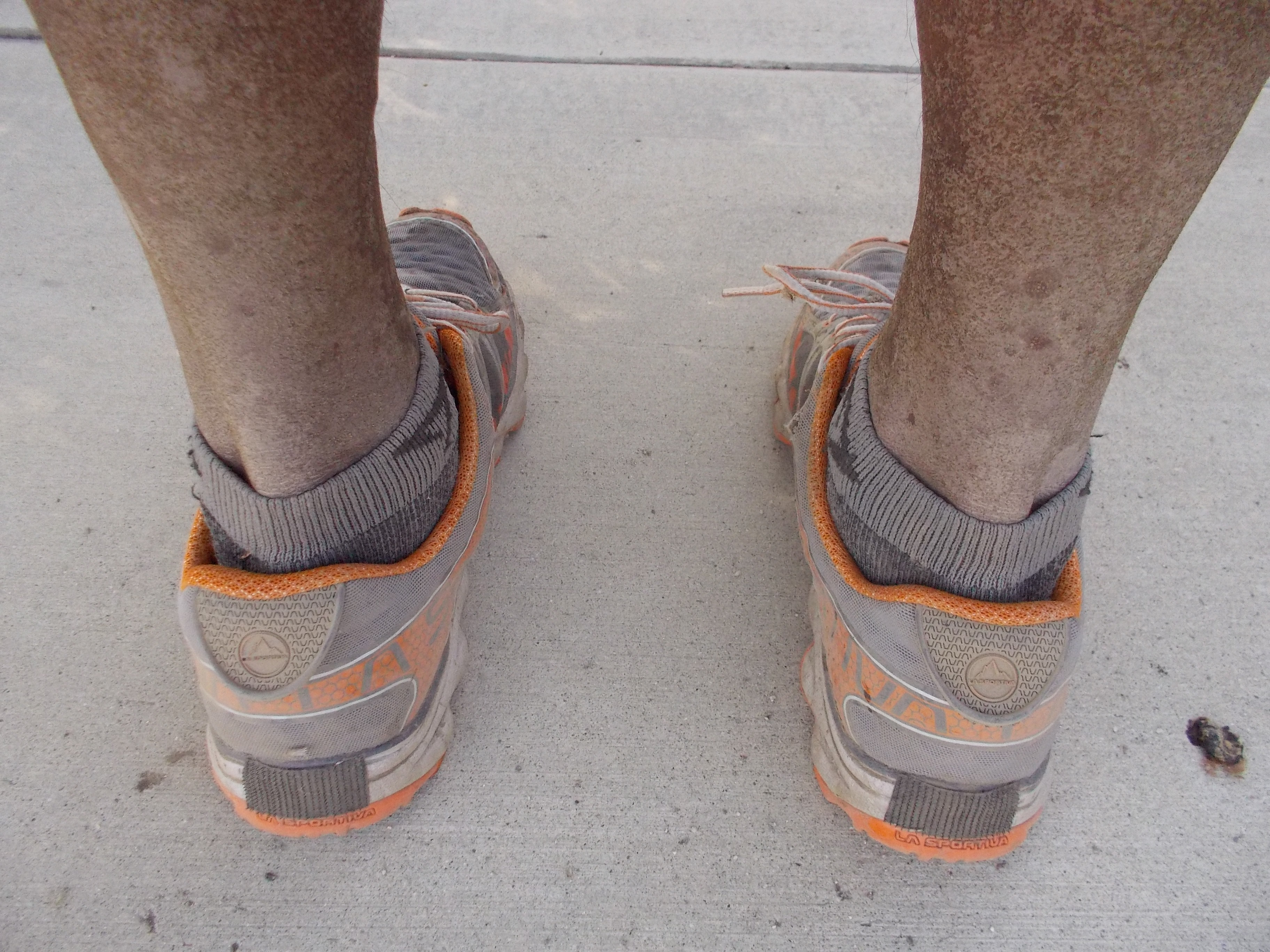
Photo Of My Legs On California Trails

There is no advantage of using a specific trail shoes on these mountain trails. I have observed on most hikers/runners on these trails that they are using road running shoes. Sometimes, I use road shoes on these trails and they give me the much needed traction on these trails.

The picture above shows the accumulation of dust that would stick on the back of my legs after my daily workouts on these trails.

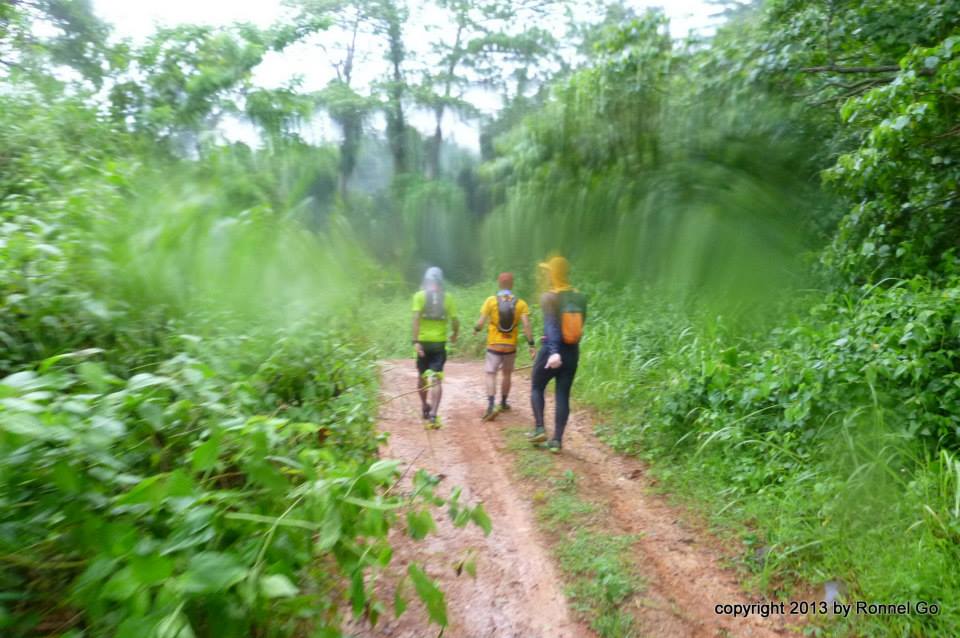
As compared to my “playground” in the Philippines, the trails are usually mixture of single-track and slightly wider ones that could accommodate our local wooden sled pulled by carabaos and sometimes, the popularly known “All-Terrain Vehicles” (ATV). The single trails are the results of carabao’s and cow’s established route to the hills and mountains where they could eat grass and some trails would lead to water sources where they could drink or submerged their bodies during hot weather. There are also trails that are established due to the movement or flow of water from the peak of the mountain or hill during the rainy season.

Seldom you could see a well-maintained and well-established trails where the ground is flat, clean and dusty. Single track trails are sometimes covered with grasses and most of them cut through in the middle of tall grasses or what we call “cogon” grasses on the sides of the mountains.

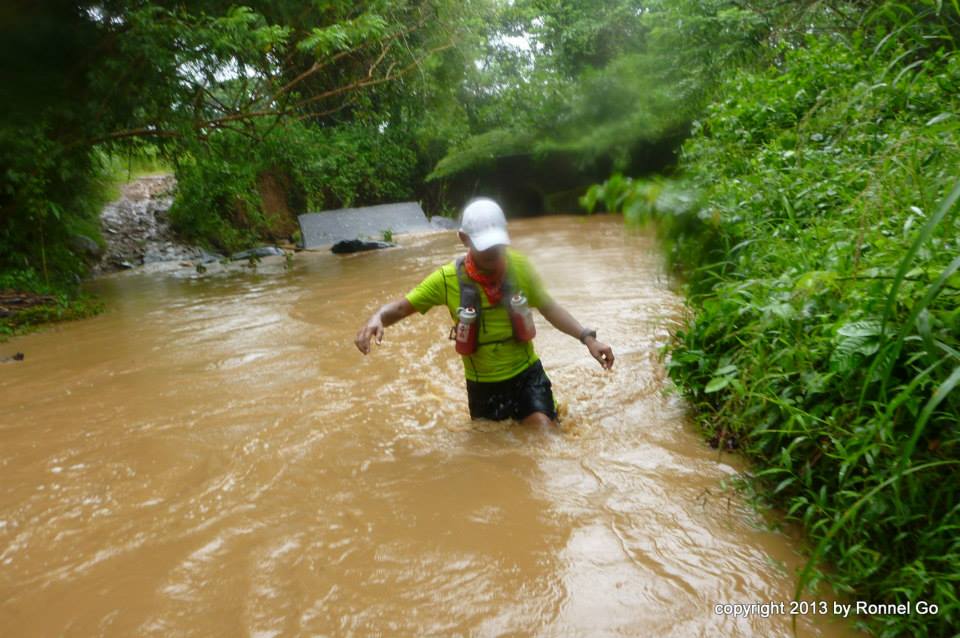
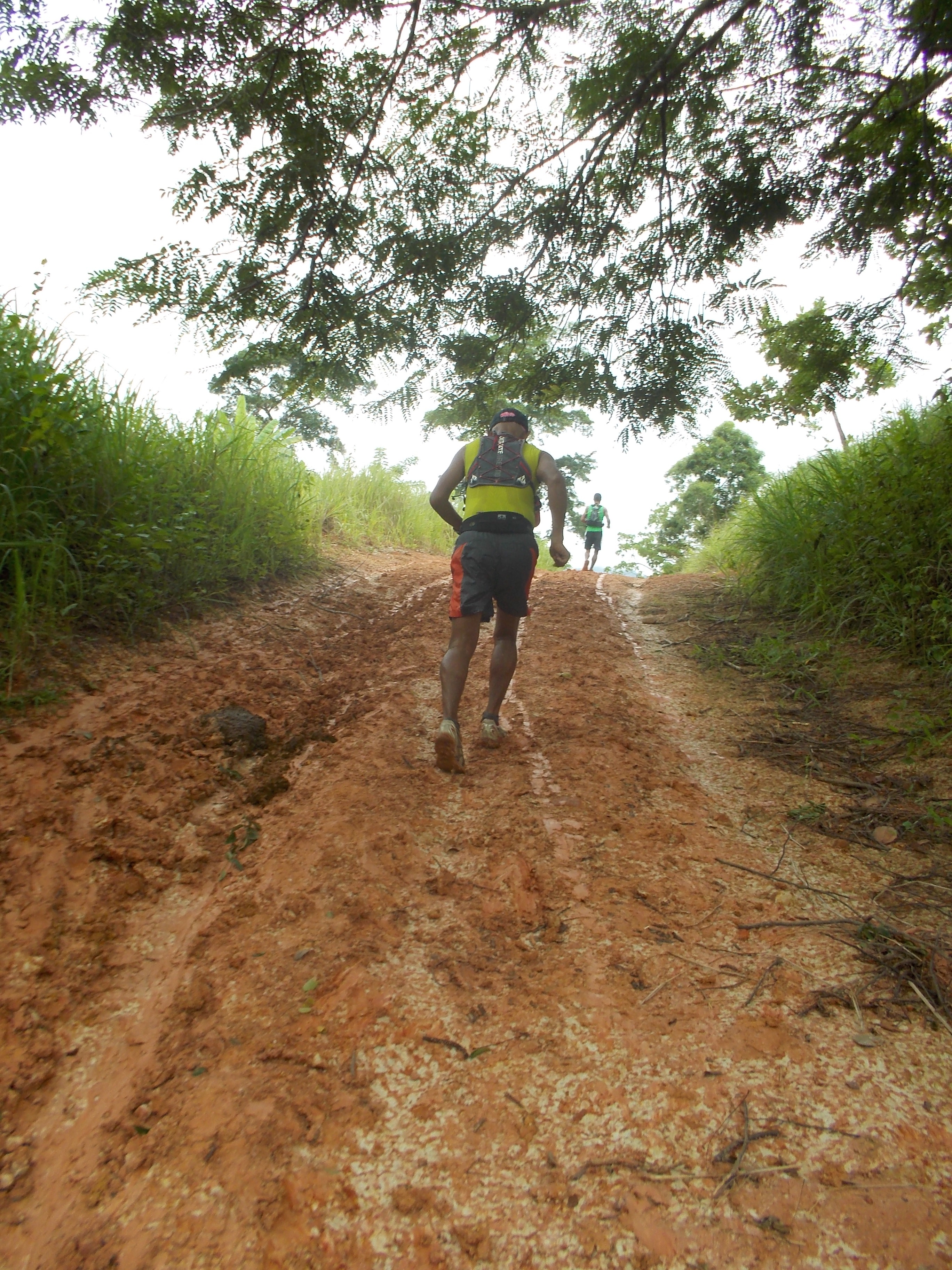
Sticky, Slippery & Muddy Trails Of The Philippines
And Lots Of River/Stream Crossings
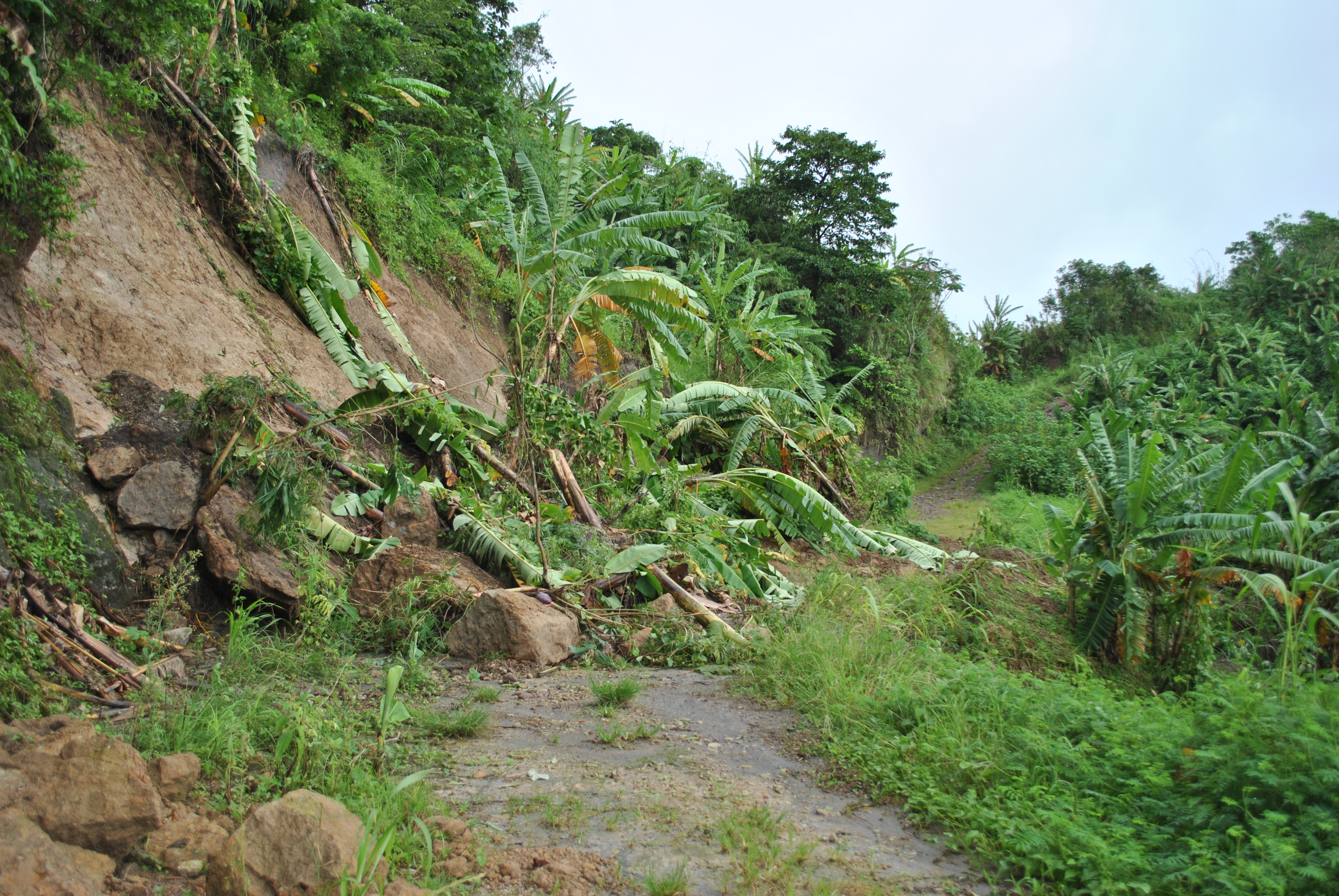
Worst Scenario....Landslides!
Worst Scenario….Landslides!
Muddy Trail
Muddy Trail

During the rainy season (June-October/November), these trails are muddy, slippery, and sticky. It is very appropriate to use trail shoes to prevent one from sliding forward or worse, falling on the ground with your butt.

Streams would suddenly become a river with a strong current during rainy season. It is necessary to run with a companion or bring a rope which can be tied from the point of entry to the river to the other side and used as a “bridge rail” where one could hold so that one will not be swept by the strong current of the water.

It is expected that the muddy soil on the trail would stick on the soles of one’s shoes and would cause you to slow down in running. The added weight of the mud on your shoes would replicate your workout in the gym where your legs would be lifting an addition weight of about 3 pounds. This is one of reasons why I love to run on sticky/muddy trails—it will slow you down but your legs will benefit added weight as if you are doing your strength training in the gym.

There are lots of water streams where one could cool-off their tired legs or simply a good source of water for hydration needs.

But during the dry season, expect these muddy trails to be as hard as an asphalt/paved road but the unevenness of the ground would be very much beneficial in strengthening the smallest up to biggest muscles, tendons, and ligaments of your legs.

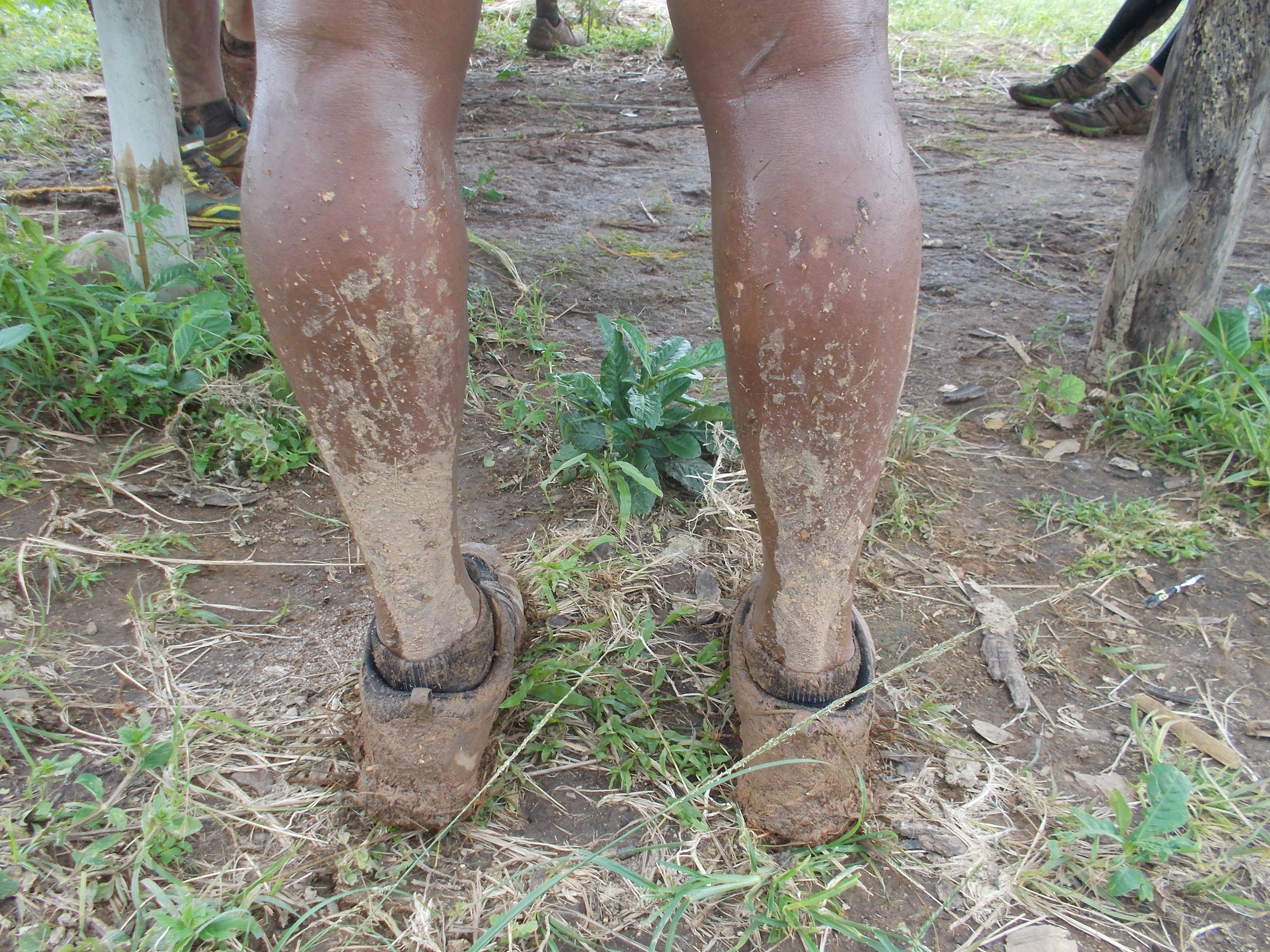
Back Of My Legs After Running A Mountain Trail In The Philippines

Thanks to the streams/rivers that I have to cross as I would easily wash my legs before I finally end up with my daily workout.

Now, if you ask me, which one is better—-running in my “playground” in California or in the Philippines? Both are good and the variety of trails  works well with me. I would run on the trails in California with a faster time in covering a certain distance but definitely, running the trails in the Philippines would take me a much longer time in covering the same distance.

The most important thing in trail running is one’s ability to appreciate the outdoors, breath unpolluted air, enjoy the scenery and beauty of the surroundings, the challenge of unevenness of the trail, the variation of elevation, “engagement”/talking with the locals, and the joy of running with friends.

Keep on running!


“State of the Nation Address (SONA)” On Ultrarunning


“Walang matuwid na daan sa ultramarathon. Matutuwid na tao lang ang  mayroon at sila ang mga mararangal na nakakatapos ng ultramarathon” (There are no straight roads/trails in ultras. You have “straight people” in ultras who honorably finish their races)

Good day to all Ultra Runners!

Let me first congratulate our friend and ultra mentor Benjamin Gaetos for being the FIRST Filipino Ultrarunner to have successfully finished the Badwater Ultramarathon which is considered as the “toughest foot race on Earth”. Let me take this opportunity also to greet and congratulate Simon Sandoval who have greatly improved on the two successive two years of performance of Local Ultrarunners at the prestigious Western States 100-Mile Endurance Race.

From the day the first 82 “tough and brave warriors” finished and shared their stories on their experiences for finishing the 1st Bataan Death March 102K Ultra Marathon Race four years ago, it was a “leap and bound” phenomenon on the rise of the number of ultra runners or ultra marathoners in our country. It gave rise also to different and unique ultra running Race Directors in this country. With more ultra runners and Race Directors, it gave us the opportunity to join a never-ending list of ultra running races almost every month. More races are being held and organized in the different regions in the country.

Not only we have monthly races, the distance of our ultra running events are getting LONGER, too! Our Race Organizers/Directors and our Ultra Runners have breached the 100-mile single stage/solo run distance and reached up to the 250-Kilometer distance with a cut-off time of 48 hours. And soon, more multi-day stage running events on the roads and trails will be held in the coming years!

Whether it is good or bad, you can say that it is only in the Philippines where there is ultra running season all-year round! More Ultra Running Races, More Fun In The Philippines!

There is nothing fancy about such races. Whether it is a trail ultra or road ultra, everything is kept to its simplicity. It is simply a race between the runner and the ground where his/her feet would land from the starting line up to the finish line. Simplicity, that our races are not sponsored by big corporate companies; the government; or any private foundation. Simplicity where we don’t broadcast or print them on the mass media publications and broadcast networks. We simply want our races to be known through the “words of mouth” from one ultra runner to another.

Do not complain if the registration fees in joining ultra events are rising. You have a choice and we are not forcing you to join our races. The Race Organizers are happier if they can manage only a handful of runners because Ultra Race Event Management is a “bad and losing” business. It is only the dedication and passion of each Race Director that keep the race being held every year.

We adhere to the highest standards for the safety of our runners. We make sure that our “first-timers” would be able to finish a Full Marathon Race (42K) and submit to us their respective Medical Reports/Clearances. And participants must be able to strictly follow our Rules and Regulations. Fortunately, we don’t have any record of death/s in our races. It is good that we only receive reports on dead toe nails; dead skin; and blisters!

Forty-Five years ago when I was in College, I would go to the University Library to research on a Subject or Topic that would interest me. Today, you can simply research on anything in the comfort of your bedroom by just simply having a cellphone or a tablet/laptop connected to the Internet. We started as ultra runners through the World Wide Web or the Internet and we learned from the experiences of ultra runners here and abroad through their personal websites; on line publications; and blogs. The knowledge and vast of information within the grasp of runners are endless and readily available.

On this age of high-technology, all you have to remember, when you want to research or get information on subject/topics you are interested in, are the words, “google it”! Or simply register and get a Facebook account and then ask anybody from the members of the Pinoy Ultra Marathoners Group (PUMAG)! Members of this Facebook Group are the Ambassadors of Ultra Running in the country.

We have a great and promising future for our ultra runners to be known worldwide. Let us discover more “talents” in the country side/”grassroots” level through our regional and provincial ultra racing events “sorties”. Strictly guided “younger talents” are needed if we want better performance in our participation in ultra running events abroad. We need “young yet matured, dedicated, and passionate” ultra runners for our quest to perform our best and be able to place our country among the best of ultra running nations.

Discovering and training for these “talents” for a “high profile” international ultra running event is just one-half of the story. The support and resources needed to send and support such runner is the more complicated second/last-half of the story. But with the generosity of our ultra runners and friends, everything will push through as planned. We were able to send and bring our elite ultra runners in international events in the past through this scheme. And we will continue to do so.

We need to exert more diligence and determination in our effort to attract and motivate private corporate entities as well as the government to support our sports and our future participation to international ultra running events. Let us send our “best, fastest, and strongest” ultra runners to such events.

If we have a hard time getting the support of the broadcast and printed media, we have to continuously support our FrontRunner Magazine as well as our local Runners World Magazine. These published Magazines had been instrumental in spreading our sports of running and ultra running.

After Ben Gaetos’ finish at the Badwater Ultramarathon, I have received a reminder of commitment from Joe Matias of A Runners Circle Specialty Store in Los Angeles, California that he is willing to support any of our local elite ultra runner once he/she arrives in the USA to participate in any ultra running event in any part of USA. Thank you, Joe for that commitment of support to our elite runners.

As my parting words to this SONA, let me go back to my introductory statement.

Once again, we warn you that we abhor “Bandits and Cheaters” in our Ultra Races! We will continue to expose these shenanigans in our races and disqualify them in our future race races.

True Ultra Runners are those that are silent, simple, calm, kind, supportive, and always see to it that their feet are always pounding on the ground, whether it is a trail or a paved road!

Mabuhay ang mga Pinoy Ultra Marathoners dito sa Bansa at sa Buong Mundo!

Salamat po sa lahat at Pagpalain sana kayo ng Diyos Maykapal!

Support Your Ultrarunning National Federation

Simon Sandoval: Pinoy Ultra Runner Sets A New Course Record At The Western States 100-Mile Endurance Run


(Note: This post is intended for Media Release. If there is anybody who would like to make a NEWS on printed or broadcast media about this post, you are encouraged to use, copy or make this one as your reference. Please SHARE this post to any of the Social Media outlets and platforms. Thank you!)

Simon Sandoval of Makati City, Metro Manila sets a New Course Record for a Local Pinoy Ultra Runner at the 40th Edition of the Western States 100-Mile Endurance Race (WS100), considered as the oldest and most prestigious ultra marathon mountain trail race in the world. He finished the race in 27 hours 9 minutes 53 seconds with a ranking of 156th out of 277 finishers in the second hottest edition in the history of the race where the temperature registered triple digits as high as 110 degrees Fahrenheit in the mountain canyons of the Sierra Nevada Mountain Ranges & Western States Trails. Sandoval was the lone representative of the country out of the 22 countries and 40 states in the US that were represented in the said race in this year’s edition.

Simon @ Rocky Chucky Mile #78 (Photo Courtesy of Rick Gaston)
Simon @ Rucky Chucky Mile #78 (Photo Courtesy of Rick Gaston)

Last year, Jonnifer Lacanlale, a lawyer from the Clark Freeport Authority in Angeles City, was the first representative of the country in the history of this prestigious race when he joined last year with a finish time of 29 hours 50 minutes 33 seconds, landing at 309th  place with 316 runners who finished the race. He was later awarded with a Special Recognition Award/Plaque from the Philippine Association of Ultrarunners  (PAU) as the First Local Pinoy Runner to have finished the prestigious trail race.

Simon Sandoval performance had greatly improved from Lacanlale’s performance last year due to the advise and guidance of the latter’s lessons learned during the race. Simon and Jonnifer had been together in finishing the Mt Blanc Ultra Marathon Race (UTMB), a 100-mile trail running race around the famous mountain, in France in 2011, passing through the countries of France, Italy and Switzerland.

Sandoval qualified for the Western States 100-Mile Endurance Run after his name was picked in the lottery among thousands of qualified applicants. He was among the 417 runners who got into the lottery from qualified applicants throughout the world. A qualified applicant must have finished a 100-mile mountain trail race within the prescribed cut-off time or have finished a 50-mile trail race in less than 11 hours or have registered a finish time in a 100K trail run in less than 15 hours. Sandoval is qualified to run the race as he finished both a 100-mile trail race and registered a finish time of 9 hours in a 50-mile trail race in the United States.

Timothy Olson of Ashland, Oregon won the Championship Award in this year’s event for the second year in a row with a time of 15 hours 17 minutes 27 seconds. He holds the Course Record in 14 hours 46 minutes in the last year’s edition. The ladies champion went to Pam Smith of Salem, Oregon finishing the race as 9th Overall with a time of 18 hours 37 minutes 21 seconds. Olson works in a Special Running Store while Smith is a full-time physician.

Timothy Olson & Pam Smith With The WS100 Championship Cougar Trophy (Photo Courtesy of IRunFar.com)
Timothy Olson & Pam Smith With The WS100 Championship Trophy (Photo Courtesy of IRunFar.com)

Out of the 383 runners who started the race at 5:00 AM of June 29, Saturday, at the 1960 Winter Olympic Games Site in Squaw Valley, California, 277 runners finished the race with 72% Finish Rate. 95 runners finished the race in less than 24 hours and awarded with the WS100 Silver Buckle and the rest of the 185 finishers were awarded with the Bronze Buckle finishing the race within the cut-off time of 30 hours.

Simon Sandoval said, “I really prepared for this race and all my training workouts were specific for the challenges to be expected from this running event. I have to allot ample time for me to familiarize the course as I arrived in the USA few weeks before the race.”

Simon must had been able to acclimatize with the weather and been able to adjust on the altitude and elevation of the course. Runners would climb and descend a total of about 40,000 feet or 12,120 meters through the wilderness of the mountains and into the deep and hot/humid canyons of the historic California Gold Country.

Simon was all smiles when he received his WS 100 Bronze Buckle during the Awarding Ceremony in the presence of his relatives, friends, support crew, and other Pinoy Ultra Runners based in California.

Retired Major General Jovenal D Narcise, President of the Philippine Association of Ultrarunners (PAU) had extended his congratulations to Simon Sandoval for an exemplary performance in the 40th edition of the Western States 100-Mile Endurance Run. He said, “The outstanding performance of Simon Sandoval shows that our local Pinoy Ultrarunners are at par with the best ultrarunners in the world. We have to strive some more to send our best local runners and be able to represent our country in this prestigious ultra trail event. With the help and support of the running community and the private sector, our efforts shall be geared towards sending our next Pinoy Ultra Runner who would be able get the much-coveted WS100 “Silver Buckle”.

If there is any significant record-breaking fact in the 40th edition of the race aside from Timothy Olson’s winning the race for the second year in a row and the second highest registered “hottest day in the 40-year history” of the race, it is the performance of the former 1997 Western States 100 Champion Mike Morton, 41 years old, as the New Male Master’s Course Record Holder with a time of 15 hours 45 minutes earning him as the 3rd Overall Finisher in the race.

Mike Morton had been stationed in Subic Bay Naval Base when he was with the US Navy during his younger years as a Naval Diver. He is presently a Master Sargent of the US Special Operations Command based in Florida, USA.

Result: 2013 TNF 100 Phil (Baguio-Benguet)


I have observed that the last year’s TNF 100 Phil (2012) results were nowhere to be found in the TNF 100 Phil website. I wonder why there is no data on the past editions of the TNF 100 with regards to its results.

I will now post the TNF 100 Phil result in my blog as a reference for those who finished in this year’s event/edition, as well as, a reference for future participants in the said event.

Rank Bib # Name Gun Time
       
1 1282 Arnold Luzano 15:51:42
2 1097 Julius Bay-An 16:53:11
3 1142 Marcelo Bautista 16:53:31
4 1274 James Tellias 17:06:30
5 1136 David Munro 17:42:10
6 1148 Aldean Philip Lim 17:56:55
7 1107 Mark Carlo Villafuerte 17:57:09
8 1280 Miguel Lopez 18:01:55
9 1261 Roland Wangwang 18:20:10
10 1281 Andrew Chinalpan 18:20:16
11 1106 Geralden Sealza 18:45:52
12 1117 Edge Madronio 19:33:48
13 1015 Yusuke Tateno 19:42:21
14 1102 Juanito Caballero 20:45:12
15 1103 Danilo Macairap 20:45:14
16 1114 George Killo 21:31:21
17 1115 Agustin Lan – Aoan 21:31:24
18 1096 Arne Buere 21:40:01
19 1145 Yee Chuan Te 21:41:24
20 1188 Felix Abuel 21:48:45
21 1276 Aristedes Matibag 22:04:53
22 1259 Dianne Van Deren 22:17:07
23 1057 Al Jasmin 22:17:29
24 1098 Jane Canggat 22:17:29
25 1204 Mark Bryan Grey 23:13:07
26 1262 Jonnifer Lacanlale 23:13:08
27 1137 Kian Vicera 23:33:29
28 1275 Jonathan Navalta 23:42:48
29 1111 Jojo Dela Cruz 24:36:26
30 1005 Mel John Tezon 24:49:45
31 1201 Maria Josephine Liao 24:49:45
32 1155 Fernando Cabanero 24:49:46
33 1198 Jonlas Bruce 24:49:48
34 1071 Sherwin Diesta 25:00:29
35 1268 Eugenio Boquio 25:24:44
36 1194 Raffy Gabotero 25:25:34
37 1161 Jessie Llarena 25:25:58
38 1296 Dax Ang 25:26:17
39 1089 Jake Liarta 26:05:18
40 1247 Henry Laron 26:06:29
41 1152 George Javier 26:24:26
42 1271 Jefferson Niwane 26:40:37
43 1250 Dante Sagayap 26:43:16
44 1185 Graciano Santos 26:53:37
45 1199 Kirk Patrick Ang 26:55:06
46 1246 Melchor Jr Azanes 26:55:06
47 1001 Jaysie Batan 26:56:09
48 1210 Bernadette Tan 26:56:41
49 1131 Pepito Deaperi 26:56:58
50 1283 Name For Verification 26:57:19
51 1301 Earl Warren Navor 27:12:59
52 1146 Chips Dayrit 27:13:00
53 1195 Albert Salazar 27:20:24
54 1064 Jinky Garcia 27:35:51
55 1175 Alain Llaguno 27:36:21
56 1088 Rocky Go 27:37:50
57 1200 Danilo Varias 27:59:11
58 1236 Allan Palomares 28:08:56
59 1108 Nick Pasiken 28:09:15
60 1092 Ryan Jucutan 28:09:16
61 1095 Jonel Mendoza 28:09:17
62 1303 Name For Verification 28:11:25
63 1174 George Dolores 28:13:36
64 1221 Romulo Doctolero 28:23:49
65 1230 Andrew Aquino 28:24:02
66 1286 Jessel Basanta 28:24:55
67 1242 Clyde Imperio 28:26:29
68 1014 Razif Yahaya 28:27:49
69 1085 Romualdo Galbes 28:29:36
70 1119 Khristian Ray Sobejana 28:29:42
71 1203 Mirko Suzara 28:30:12
72 1313 Alban Alen 28:38:48
73 1182 Allan Ordaniel 28:40:33
74 1164 Alvin Remo 28:40:37
75 1256 Ronald Illana 28:41:11
76 1279 Mark Tandoyog 28:41:13
77 1006 Leo Ano 28:43:42
78 1113 Name For Verification 28:44:23
79 1176 Jocelyn Lañas 28:45:02
80 1291 Edward Uy 28:47:52
81 1270 Sonny Lamsis 28:47:55
82 1075 Benedict Ngo 28:50:35
83 1073 Name For Verification 28:54:16
84 1197 Calvin John Escandor 28:55:56
85 1306 Alfred Luzuriaga 29:00:08
86 1009 Marc Conrad Molina 29:00:21
87 1222 Chin Ann Tan 29:03:49
88 1193 Daryl Sevilla 29:07:24
89 1158 Michael Lafuente 29:07:51
90 1215 Ricardo Jr Cabusao 29:11:19
91 1147 Ronaldo Sulapas 29:11:29
92 1219 Alvin Afan 29:18:13
93 1241 Gerzon Patriana 29:19:59
94 1228 Ariel Aquino 29:21:53
95 1050 Adrian Lim 29:22:19
96 1007 Sitor Torsina Situmorang 29:24:02
97 1187 Anver Sarraga 29:26:28
98 1134 Jared Baliguat 29:28:13
99 1002 Karlo Borromeo 29:32:38
100 1208 Cheryl Bihag 29:37:20
101 1189 Christian Pioquinto 29:38:26
102 1078 Michael Reuben Calunsod 29:39:14
103 1157 Amos Adalin 29:43:47
104 1128 Jeffrey Diaz 29:44:29
105 1165 Ronald Vere 29:47:28
106 1180 Umberto Morales 29:49:19
107 1177 Kenneth Sarabia 29:49:36
108 1062 Lyra Valles 29:51:01

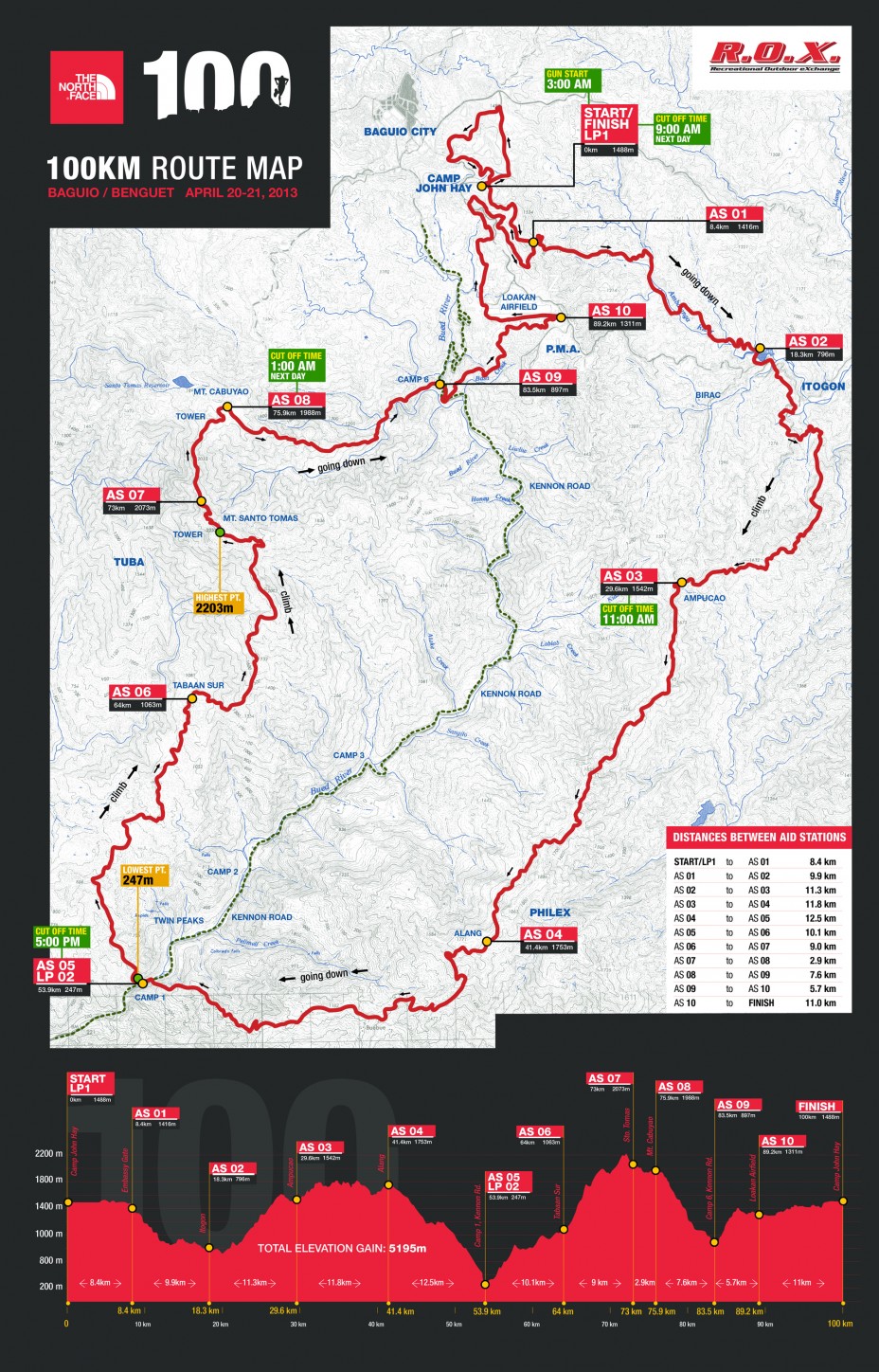
TNF-100-poster-2013-baguio-1024x709

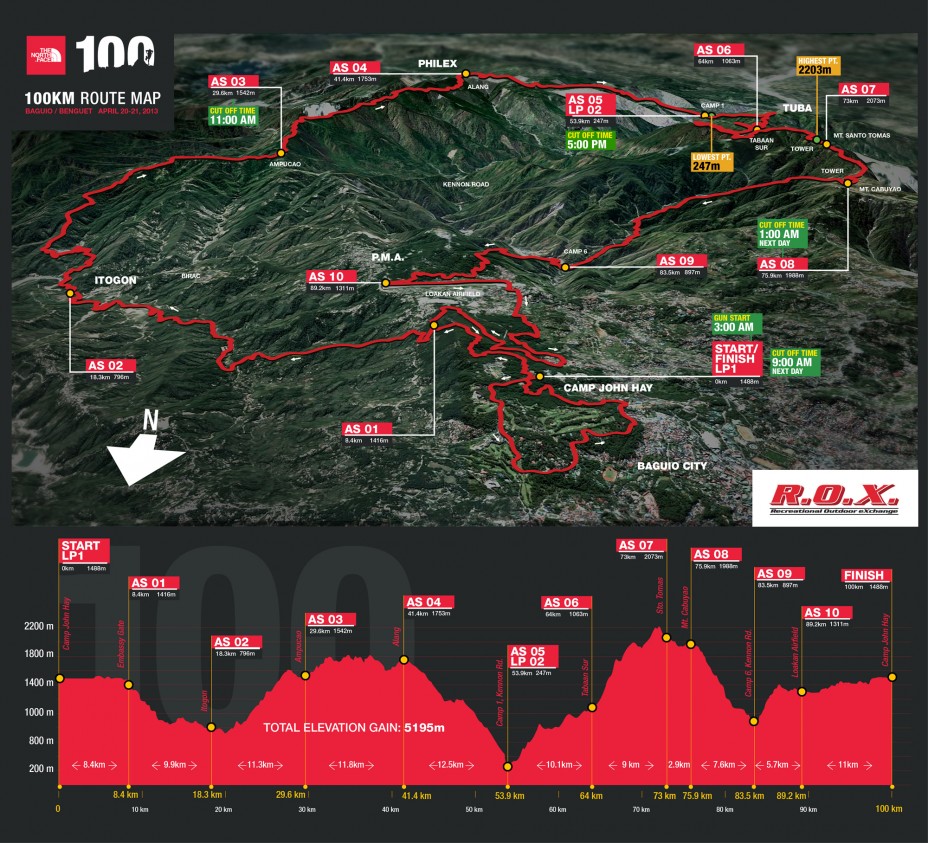
2013 TNF 100 Race Route

Pictures @ 2013 TNF 100 Phil


PAU & BR's Events Ultra Runners
PAU & BR’s Events Ultra Runners
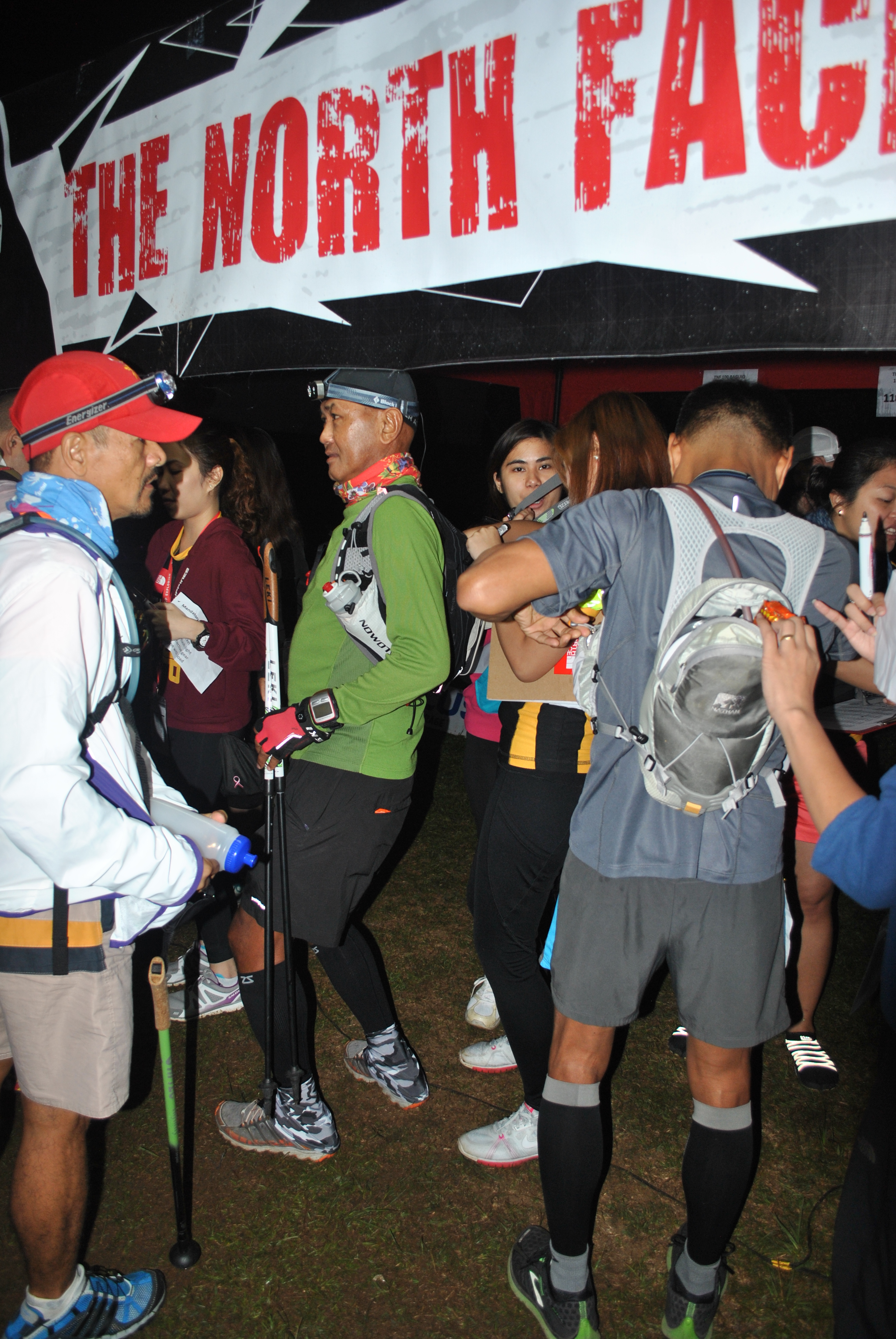
Inspection Of Mandatory Items For The Race
Running With The Younger Active AFP Officers
Start Of The Race
Start Of The Race
Arriving @ AS3 (Ampucao)
Checking The Time & Distance
Leaving AS3 With Bong Alindada
Last 100 Meters To AS5 (Bridal Veil Falls)
Go Or No Go?
Go Or No Go?

Race Report: 2013 TNF 100 Phil (Part 3)


Dreaming…

For the benefit of those readers and newbie participants in this race who do not know what is in store for them in the next 46 kilometers of the race from the AS5 @ the Bridal Veil Falls in Camp 1, Tuba, Benguet up to the Finish Line, I will continue with this Race Report and transform it as a Recon Report of such part of the course.

Arriving @ AS6, Camp 1, Tuba, Benguet
Arriving @ AS6, Camp 1, Tuba, Benguet (Photo By Dan Sagayap)

AS5 To AS6 (Camp 1 To Barangay Tabaan Sur)

Crossing the Hanging Bridge at the Bridal Veil Fall in Camp 1, Tuba, Benguet along Kennon Road officially starts another challenging uphill climb which is considered as the most challenging part of the course. Based from my capabilities, I considered the AS4 to AS5, 12-Kilometer downhill route, from Barangay Alang to Camp 1 as the most difficult and hardest part of the course due to the downhill nature of the route and the heat of the sun in the early afternoon.

I am really weak in downhill running as I try to shorten my strides and put more braking efforts to my feet once they land on the ground for the simple reason that I don’t want to put more pressure to my aching and old knees and quad muscles. I have not yet fully strengthen my leg muscles since I was injured on my left knee two years ago. But I’ve started going to the gym for the past months but it became inconsistent after I had my tripping accidents.

However, my strength lies more on power hiking on uphill climbs and could keep up with the pace of younger trail runners. But after coming down from Barangay Alang, my strength just simply dwindled down and I knew it will take some more time and power-enhancing calories to regain my strength.

So let’s go back to the description of the route. After crossing the hanging bridge at the Bridal Veil Falls, it is a single track trail that is continuously uphill until it reaches a wider dirt road where you can see a house directly across such road. Turn right on the wider road until the road ends on the backyard of a house. There is a single track road on the left of the house that goes uphill that leads to a building structure which is a Chapel. On the left side of the chapel is a single-track trail that leads to another continuous uphill climb which is about 2-3 kilometers. Some of the trails are located on the edge of vegetable gardens being maintained by the locals.

The single track uphill trail leads to a wider dirt road where you have to turn right. My HR usually reaches to almost 200 beats per minute before I would reach this wide dirt road. This wider dirt road is a downhill where one could easily jog until you reach a wooden gate and a house with a store. Follow this road and always take the left turn if there is a Y-road/intersection. If you turn right, most likely you will be going back to Kennon Road. Those left turn intersection will lead you to another uphill climb—the direction you have to take to reach the summit/peak of Mount Santo Tomas.

There will be a concrete uphill road that will finally bring you to the Barangay Hall of Tabaan Sur, Tuba, Benguet. At this point, you have reached AS6 which has a distance of 10 kilometers from the Bridal Veil Falls. If you ask me, it would take me 3-4 hours to cover such distance with pure hiking.

AS6 To AS7 (Brgy Tabaan Sur To Mt Santo Tomas)

This is the route from the Barangay Hall of Tabaan Sur to the road that leads to the peak of Mount Santo Tomas which is few meters from the Power Antenna located at the peak of the mountain. The road leads to the 2nd Chapel and later to a Citrus Plantation. After the Citrus Plantation, it is a continuous assault on a single-track trail to the peak of Mount Santo Tomas and one has to pass the last Vegetable Garden before the uphill assault. However, there are flatter parts of the course but the trail is too narrow that every runner should be careful for any missteps. It will be dark and nighttime on this part of the course that a runner must have a very strong headlight to be able to see the different TNF markers stapled on the trees and inserted on the blades of the grasses on both sides of the trail.

Once a runner reached a remnant of cable wires used in the transport of logs from the mountain, one has to turn right to a steep and short switchback downhill trail. Once you are down to a flatter trail, this trail will lead you to a wider trail and you are about one kilometer from the peak of Mt Santo Tomas

A runner would barely notice the old and abandoned PLDT relay station building after going through an uphill climb. From this old building and group of tower/antenna, one has to be on the road that leads to the summit of the mountain and AS7 is within reach. I am not sure if I can manage to cover this part of the course in 3-4 hours which is 9 kilometers in distance.

AS7 To AS8 (Mt Santo Tomas To Cabuyao)

This is the paved road from the peak of Mount Santo Tomas to the lower nearby mountain of Cabuyao which is seen from afar as downhill but on the last kilometer to the Cabuyao Aid Station, a runner will expect a slight uphill climb which is the last one in the mountain. Don’t be fooled with the distance of 2.9 kilometers as stated in the Course Map in between these two Aid Stations. Actually, the distance is 4 kilometers. So, if you  still have 30 minutes remaining of your cut-off time before 1:00 AM, you have to run for your life as if somebody is chasing to kill you and give your 101% effort on this part of the course. Once you are safe at AS8, everything will be an easy and slow ride up to the finish line.

AS8 To AS9 (Cabuyao To Camp 6)

This is a rocky, very steep and tricky single track downhill trail for the first 4 kilometers and most of the runners will be slower and some will stumble, slide and accidentally kneel to the loose small rocks or grasses on the sides of the trail. This where you will feel your legs to be trembling from fatigue on every step you take on those rocks, small and big ones! But for the remaining parts of the trail, it will be flatter on the side of the mountain as you pass the water impounding & pumping facility and the hanging bridges in the area. The sounds of the passing vehicles along Kennon Road will be nice music to your ears and the lights from the houses at Camp 6 would be the most satisfying sight that you would see after running/jogging and hiking in the mountains for the past 9-10 hours! You will be happy if you can reach AS9 which is your entry to Kennon Road in 3-4 hours. You will cross your last hanging bridge here after crossing some hanging bridges on this leg of the course. The distance covered on this portion of the course is almost 8 kilometers.

AS9 To AS10 (Camp 6 To Airport Road)

The uphill climb at Camp 6 to the northern side of PMA/Fort Del Pilar will be the last “torture” portion of the course. The runners will be running along alleys in-between rows of houses built on the side of the mountain. Finally, concrete uphill steps outside the group of houses will officially start one’s last “torture” climb on the race course. The trails to take here are the ones that leads to a higher elevation and these trails are always turning to the right!

All the runners’ feeling here is to ask themselves if they can still make it to the finish line within the cut-off time or for them to simply declare DNF in the race but on the other side of their negative thoughts, runners would be happy that after this uphill climb, all the remaining parts of the route will be relatively flat. It is just a matter of mental toughness, patience and self-determination that will propel each runner to reach the Finish Line. They will be happy that it is already daybreak for the next day and the weather is cooler and the sights around are more refreshing.

There are two things that I like in this place. First, when I hear the barking of dogs from the quarters of the Officers assigned in PMA and, and secondly, when I reach & stop for a drink break on a hose that has a continuous flow of cold water which is few meters away from AS10. This part of the course has a distance of almost 6 kilometers with the first half as the steepest parts.

AS10 To Finish (Airport Road To Camp John Hay)

I consider this as one’s “cool down” run where you can jog and walk alternately all the way on the side road of the airport/runway and into the subdivision after leaving the airport area. After some trails and painted/numbered pine trees, you are in a slightly uphill course until you reach the periphery of Barangay Scout Barrio. From there, a tour on the different trails inside Camp John Hay will be ahead of you. No matter if the distance is 5, 6, or 7 kilometers and there is no need to complain and ask from the marshals/volunteers if the Finish Line is near or how many kilometers more to go before you reach the Finish Line. What matters most is that you are going to make it within the cut-off time of 30 hours and start to imagine that Finisher’s Medal to be awarded to you once you cross the finish line. And most of all, think of a story line and description on what will be the composition of your “status” on Facebook! You have 11 kilometers to compose your story and “status” on Facebook along this last leg of the course.

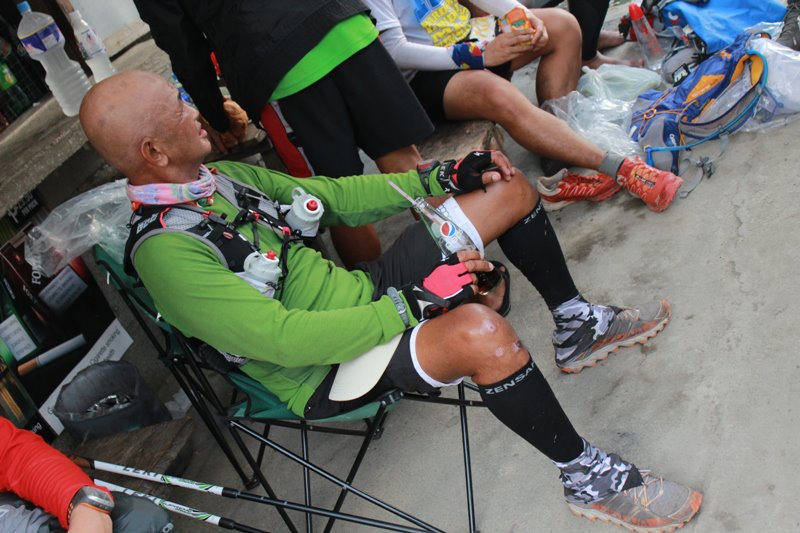
Tired & Resting!
Tired & Resting! (Photo By Dan Sagayap)

Conclusion

It is not enough to rely on this Recon Report if you want to really know the exact situation and terrain of the course. One has to actually recon the place and get familiarity of what to expect. Familiarity of the place will greatly contribute to one’s confidence to finish the race. However, one has to consider again other factors such as: physical & mental preparation; nutrition; hydration; apparel/equipment; and pacing.

I understand that on Race Day, the trail will be properly marked with TNF Logo markers and reflectorized paints and strips and there is NO need for a detailed description of the trails. But I think this description that I made in this post will be a great help for those who will start their training in a few weeks time. You might laugh but I will be ONE of those who will start such training as soon as possible!

Whether it will be the same course for next year or not, the “basics” are still the same—-uphills; downhills; “fueling” yourself; and the high altitude elevation of the course.

Keep on running!

2013 TNF 100 Phil Race Course Map

(Next—Part 4: Lessons Learned; Observations; and Things To Be Improved)

Race Report: 2013 TNF 100 Phil (Part 2)


I arrived in Baguio City on Thursday afternoon and went directly to PMA/Fort del Pilar where the PMA Alumni House: Nakar Hall is located. This place had been my official place to stay whenever I am in Baguio City in preparation and training for the 2013 TNF 100. It is a special privilege to be always booked in Room #1 of the said Hall.

On Friday morning, I was able to prepare for my drop bag and the things I will be needing for the race. Everything was set and I was excited to attend my first TNF 100 Final Briefng and Carbo Loading Party at the Azelea Residences in Baguio City which starts at 3:00 PM of the said day.

Race Briefing & CLP

Five minutes before 3:00 PM, I was already inside the venue with lots of new faces and few of the ultra runners that I know of. I observed that TNF 100 is more of a mountaineering event because of the presence of more mountaineers. I have the impression that more mountaineers were inside the venue than the number of ultra runners that I know of based from their attendance of the ultra races that I organize and direct.

It came immediately into my mind that TNF does not screen their runners for the ultra distances (50K & 100K) as compared to my screening requirements before a newbie would run his/her first ultra marathon race which is the 50K. My events usually ask the runner if he/she finished an official Marathon Race (42K) and that a Medical Certificate is mandatory to be submitted to me before he/she can join an ultra marathon event. So, obviously, TNF does not care if you are a mountaineer and could only finish a half-marathon race and you are registered as one of the 50K or 100K runners. But in the West/USA, TNF Races are heavily attended by trail ultra runners.

I hate when the scheduled time of the event is not followed as announced. For me, joining races is about discipline and observation of good manners and right conduct (GMRC). If I announce that the time of the briefing is on this particular time, I usually start the briefing on the said time of the briefing with or without the participants. There should be no reason for a schedule to be delayed or for the participants/audience to be late for the said activity. Well, after 45 minutes from the scheduled time of start, the briefing started with the introduction of the people in front and seated on the stage.

The Regional Director of the Department of Tourism; a TNF Lady Ambassador; Baguio City Sports Representative; Neville Manaois (Technical Race Director); and Jundell Llagas were the people at the stage. Jundell acted as the Emcee and each of them delivered their piece—a Prayer/Invocation from The TNF Lady Ambassador; a Race Route Briefing was delivered by a guy whom I think does not know what he was talking about; and later Neville Manaois for the technical details of the race.

During the Open Forum, I was the first one to ask some concerns—clerical errors in the cellphone numbers on their Powerpoint Presentation; protocol on the use of trekking poles; how many drop bags are allowed; and what to expect once a Finisher crosses the Finish Line for the 50K & 100K races. I still had one more question to ask but I opted not to ask it. I really wanted to know if the “Big Boss” of the Primer Group was there to witness the event on Race Day and during the Awarding Ceremony.

 Race Day (3:00 AM, April 20, 2013)

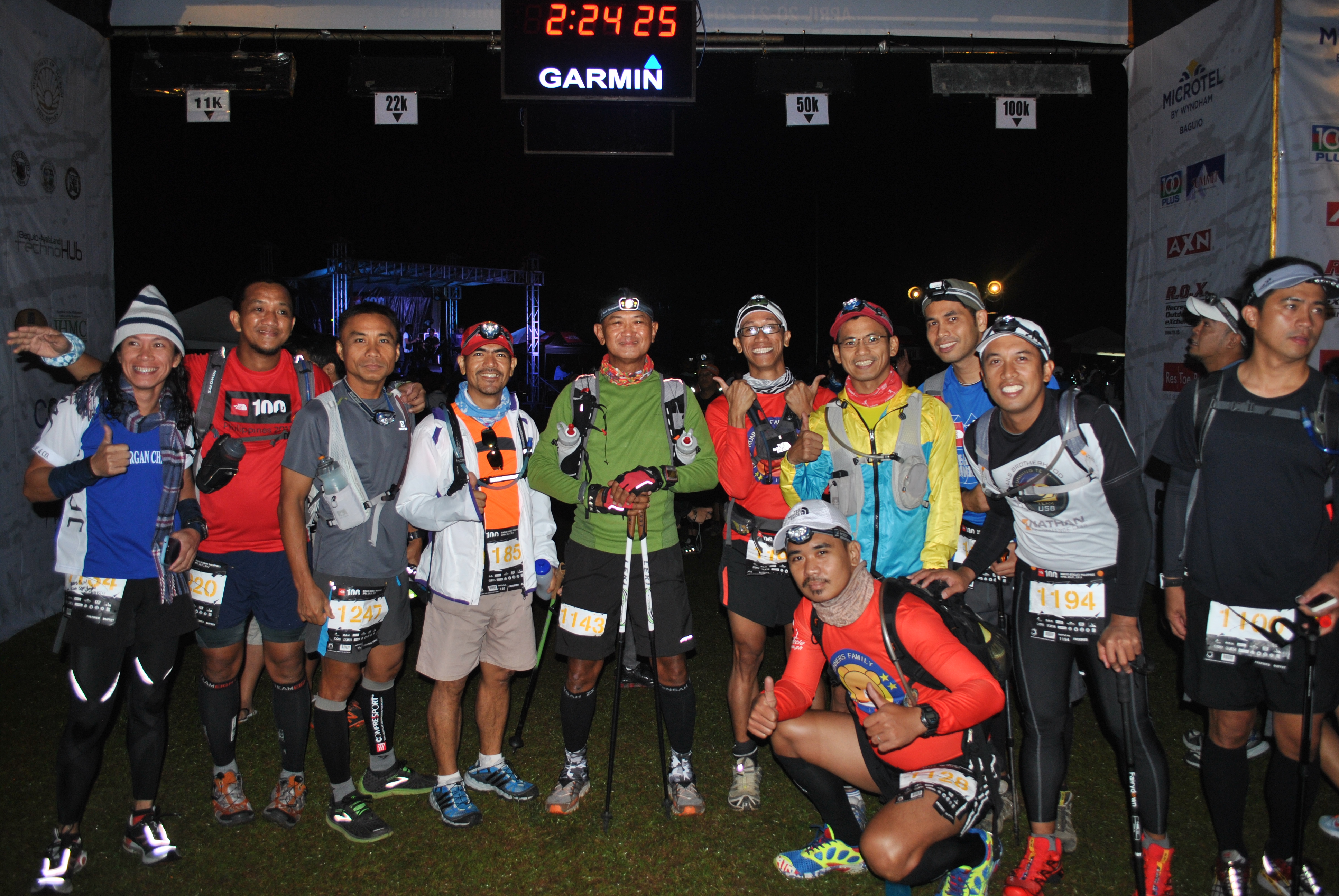
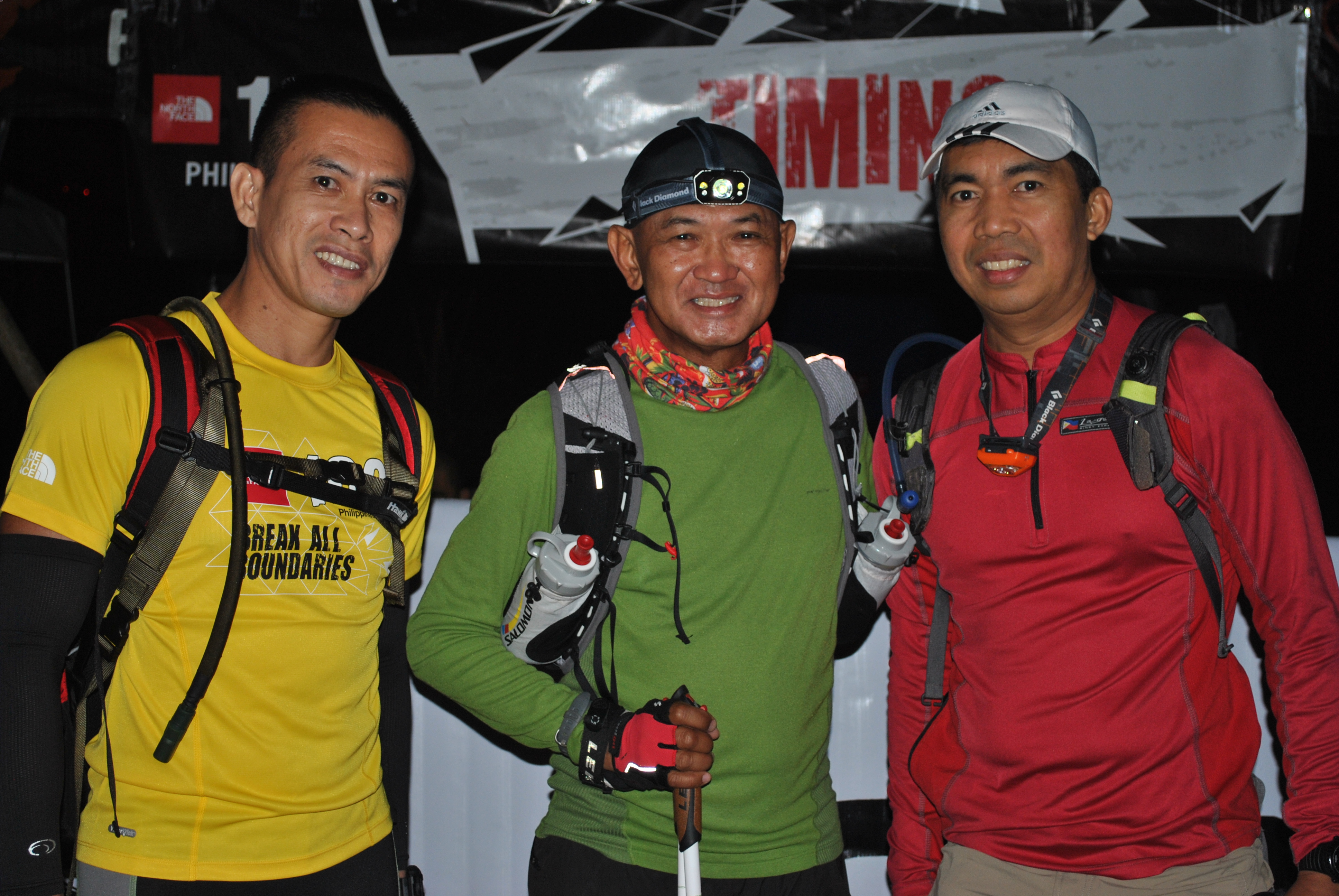
Together with my ultra friends, we arrived at the Assembly Area, 45 minutes before the Gun Start. There was Live Band on a stage; photographers; runners (100K & 50K); and spectators who happen to be family and friends of the runners. All runners were advised to register to the Marshals and have a check-up on the mandatory items to be brought by each runner during the race.  In a few seconds, my things were checked and recorded to be complete.

I saw some of the active officers of the Philippine Army joining the race and I had some conversations with them. Other runners would ask for picture/pose with me and I accepted their request. More runners from the Visayas and Mindanao approached me for some pictures. They said that it was their first time to meet me in person and they wanted to have a picture with me.

Fifteen minutes before the start, I went to my usual position at the Starting Area—the rear portion of the pack! This is where I saw the “usual suspects” in ultra running in the country and we had some greetings and short conversation with each other. At least, we know each other’s capabilities and we respect each other. As for me, I just tell them verbally and through my body language that I was there not to compete with them but to compete with myself and the race course. I just hope that most of the “usual suspects” will still be running and competing in ultras with the same age as mine today—-next month i will be 61 years old!

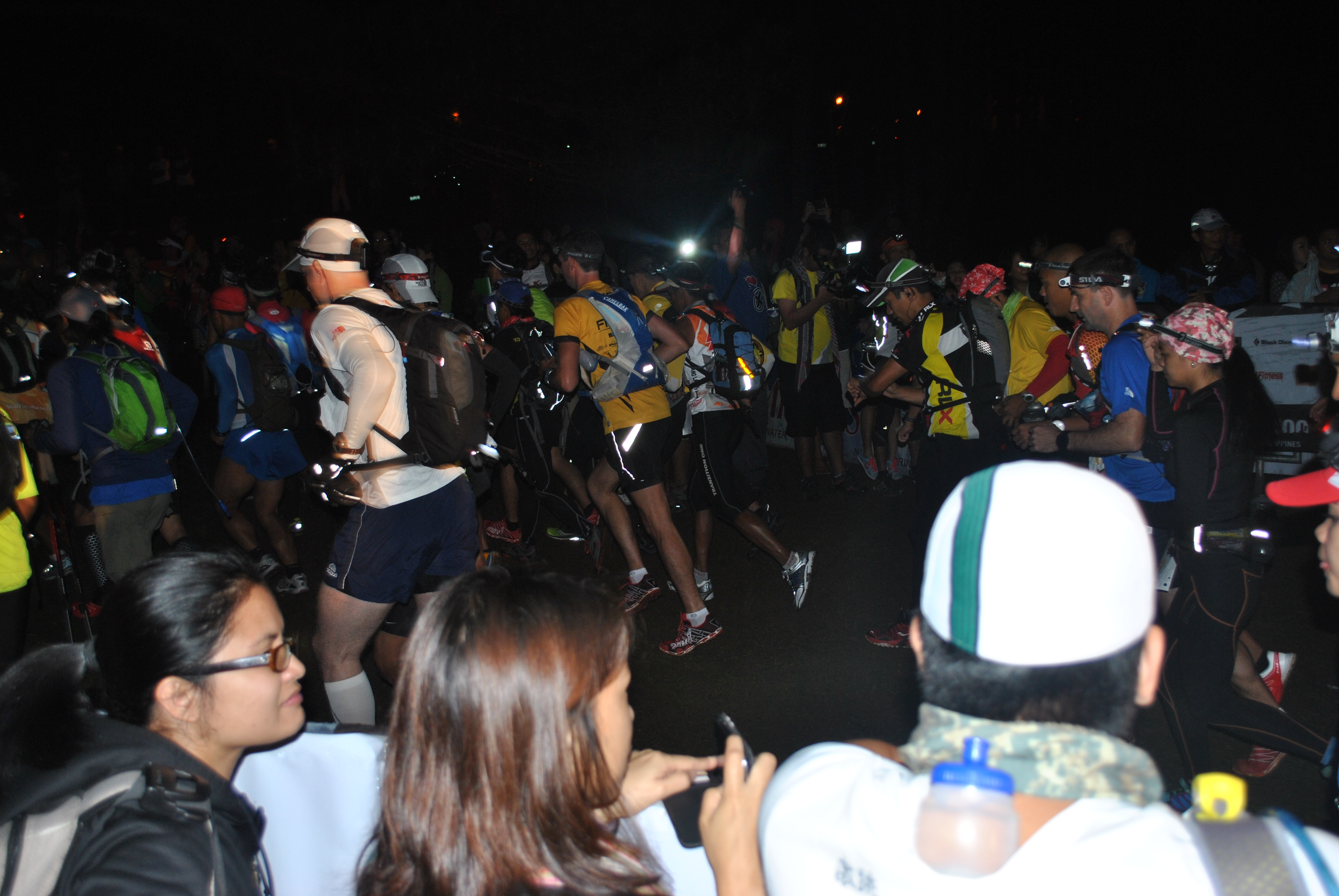
After a simple countdown from 10 to “Go”, the race started at exactly 3:00 AM and I started to walk to cross the starting line from the rear. Everything was asphalt for the first 4-5 kilometers where runners ran towards the Gate at the Baguio Country Club and then taking those roads on residential areas that lead to South Drive. From South Drive, the runners would enter the Old Gate 1 of Camp John Hay which is now called the Pinagbenga Park. After a few meters, runners would veer off right from the asphalted road towards the trail. I was power walking for the first 5 kilometers and I was happy that I registered one hour for the effort. With simple math, I expect to reach AS3 in Ampucao in 6 hours, my target for the race for the distance of 30 kilometers.

Before I reached the AS1, the lead runners of the 50K race were already behind me and overtaking me with a very fast pace. After about 10 runners of the 50K had passed me, I observed that these runners don’t have the simple manners of warning the runner in front of them before they pass such runner. So, I shouted that if they should pass a runner in front of them, they should say, “On Your Left” or “On your Right”. These runners should be taught first on trail running manners/protocol before they could run such trail running events. It would be embarassing for a Pinoy ultra trail runner if he competes in international trail races without him/her knowing these basics!

Finally, I reached AS1 and I observed the runners in front of me to have stopped to eat their food. I just took a small bottle with water and drank the remaining water in the bottle and resumed my run & walk. Ed Escalante, an ultra runner in my races, was behind me and told me that he will be on my back on the whole stretch of the race. So, I had somebody to talk to during the early part of the race until we reached AS2. Both of us would run if I started to run and walk if I started to walk. I told him that we should eat while walking and just refill our bottles in the Aid Stations and leave the place immediately. Ed was a good companion along the course.

After I made my refill at AS2, one of the volunteers approached me and asked about my age! I told him I was 61. At this point, I suspected already that I am the oldest participant in the said event! At this point, I registered as Runner #181 out of the 240 runners that started the race. So far, so good. I could still manage an average speed of 5 kilometers per hour and my target of 6 hours to reach Ampucao was still on schedule.

When I entered the gate of Sangilo Mines, Ed Escalante is nowhere on my back. He just completely disappeared from my sight and the other runners in front of me for about hundreds of meters were within my sight and about to overtake them.

While I was power walking on the incline portions inside the said mining area, I saw the ABS-CBN Sports Unlimited staff trying to take a photo/film coverage of me and as I passed their position, one of the cameramen, approached me and conducted an interview while walking. It was a brief one but it would be great if it will be shown in the said program one of these days!

As we started for more incline trails, I was able to pass more runners but on the downhill parts, I would be overtaken by these younger kids whom I think were so serious in the race. They don’t bother to look at you, greet you, smile at you, or simply say something that they notice you. Except for those ultra runners that I know, others were too serious during the race. Maybe, they are mad at me or maybe their ego were affected when they saw me overtaking them on the incline portions of the route. They could not accept that an old man was there easily overtaking them on the trails.

One thing that I was proud of doing in this race from start up to the time I declared myself as DNF was to greet and say “Thank You For Being Here” to each of the Volunteers and Marshals that I saw and passed along the route, to include those who were stationed in the Aid Stations. I would even start a conversation by asking “What is your appetizer with alcoholic drinks (“pulutan”) for the day/tonight?” Most of the volunteers/marshals would start to smile and laugh and answer my question. Those interactions with the marshals and their smiles made me stronger during the race.

On my way down towards a populated area before AS2, I saw an international runner who happens to be from Indonesia who was “crawling”/using his hands to hold the ground as he descended from a higher ground along the trail. I asked him if he has any problem with his sight/vision or his headlight why he was “crawling”. He said he was okey and he allowed us (with Ed Escalante) to pass him. I told him that he should not be shy to tell us if he has any problems as we can easily contact the marshals/volunteers along the way.

At this point, I was very religious with my nutrition strategy to ingest solid foods every two hours and I did not feel any tiredness or weakness on my body. My hydration strategy was maintained and I took some sips of Gatorade. I knew I could reach the AS3/Ampucao within 6 hours!

When I saw the concrete road on top of the last peak/mountain from Ampucao, I already knew that I was only 3 kilometers away from AS3. I reached AS3 in 9:15+ hours! I was registered as Runner #178 to arrive at AS3. I was slowly improving my ranking.

AS3 To AS4

After a 15-minute “pit stop” at AS3 where I drank Coke, ate a ripe banana and a cup full of hot noodles with soup, and ate some of the dried fruits from my stashed food in my pack, I resumed my run & walk with Bong Alindada. It was impossible to run & jog on those three (3) successive peaks before reaching the Philex Ridge and the entrance to the “mossy forest”. It was more impossible to run after these three peaks as the trail was too narrow and full of rocks and most of them were on steep downhill portions of the mountain.

I started to walk and hike slower when I reached the rocky portions of the Philex Ridge. Bong Alindada would ultimately became my unofficial pacer as he positioned himself behind me and I considered him as my “phantom” chaser on my back which worked for me. As soon as I saw his figure on my back, I would make my pace faster but such effort made me perspire some more and I was starting to consume the two bottles that I filled up at AS3.

I did not realize that the next AS4 would be as far as almost 12 kilometers, where the next water station is located. I tried to minimize the intake of water and made sure that the two bottles will be enough for me up to AS4.

Before we entered the “mossy forest”, Bong told me that we have to reach AS4 by 1:00 PM and my watch flashed that it was already 11:45 AM. We had to cover a distance of 7 kilometers inside the “mossy forest” in 1:15 hours which was a tall order to accomplish with two rope rapelling areas to pass through and loose and slippery/tricky trails inside the forest. I knew, it would take us 1:30 hours to travel along the forest and get out from it.

After those two rope rapelling stations, I was already in need of water but I tried my best to maintain the pace as I lead at least 4 runners along the trail inside the forest. At least, we reached the house where Bong told me where a water hose was located but only to find out that the water is contaminated with dirt and debris. With my frustration, Bong assured me that it will take us only 500 meters more before we reach the AS4.

I was already dehydrated while brisk walking on the last 500 meters and I thought the actual distance was becoming more than a kilometer. I tried to control my anger for not bringing more water and underestimated the distance from AS3 to AS4. At this point, I forgot everything about my nutrition strategy as I didn’t have enough water to flush the food in my mouth through my throat. Relentless forward and patience did the trick until a final clearing was seen at the end of the forest.

@ AS4/Barangay Alang, Tuba, Benguet

Finally, we were approaching AS4 in Barangay Alang. I took one big bottle of water and drank as much water as I could and made some refill in my two bottles. I think I was able to ingest three pieces of Pan De Coco (Coconut Bread) which was the only food offered in the said station. I forgot to take out my stashed solid foods in my pack for the added nutrition as I glanced my watch with a time of 1:15 PM. Bong said that we were late by 15 minutes to reach the said AS4 but he was very positive that we can regain our lost time if we start to jog all the way to AS5. I forced myself to smile but I knew from the stories of past runners that this stretch is the longest and hardest part of the course and I was wondering what could had been the reason of difficulty for this part of the route.

At this point, I could be Runner #172 to arrive at AS4 based from the runners that I counted from the Philex Ridge to the “mossy forest”. I was happy that I was still passing other runners along the route.

As Bong and I jogged and walked along the rocky trail, I realized that the incline of the road was very steep where the legs would put some “braking” pressure and put more tension to my knees and quads. After walking for about 30 minutes, I started to run/jog/walk on this portion but the heat of the sun at 1:30 to 2:30 PM was so intense that I started to perspire profusely. I think I ran continuously  for about 3 kilometers and then power walk for the rest of the way. I panicked when I saw in my watch that it was already 3:00 PM, my target arrival at AS5. Looking at the horizon, I could see my eye level to be within the level of the mountain in front of me and I knew I was still far from my destination.

I started to slow down because of the heat of the sun and tried to dip my Patagonia Cap into a flowing water along the road but I was surprised to find out that the cap is made of water-proof material. Instead of making the  cap to be wet and give coldness to my head, It scooped some water to be poured to my head! The heat of the sun, heat of the paved road, and steep downhill incline of the road sapped the strength on my quads, legs and knees!

Not following my nutrition strategy to eat every two hours; the heat around me; and the steep downhill construction of the road contributed my body to get weaker and weaker as I reached AS5. It was too late when I brought down my pack, took a brief rest on the side of the road, and ate dried fruits and some bite foods at least 2 kilometers from AS5. Finally, I reached AS5 at 4:20 PM, more than 1 hour & 20 minutes from my target time of arrival. I covered the downhill route with a distance of almost 12.5 kilometers in 2 hours and 5 minutes! I was back as Runner #178 to reach AS5!

My entire body was hot and I was exhausted! I just wanted to drink an ice cold Coke and completely forget everything on how to deal with a hot body in a race. Why is it that I was NOT able to recall what I did when Gilbert Gray instructed me to place an ice-soaked towel on my nape,head and face during the last 3 kilometers of the Bandit 50K Trail Run? I could have rubbed the same ice-soaked towel to my aching quads and knees and wait for the pain to subside even for a few minutes.

I was not prepared for the heat on that day! The PAGASA weather forecast predicted some moderate and slight rains in the late morning up to the early afternoon on Race Day and because of this forecast, I prepared for the rain to come!

I could still withstand the pain on my right knee where I had my abrasions/wounds due to my double tripping incident but I felt the weakness in my body after 20 minutes when I crossed the hanging bridge at the Bridal Veil Falls with the hope to reach AS8 (Cabuyao) in 8 hours. I knew that my legs were already wasted at this point that I have to make the final decision to call my staff to return to AS6 and end the race with a DNF.

I did not want myself to be limping with my right leg as useless and inutile for the next weeks to come. I have more adventure runs to finish and experience in the next weeks to come. There will be some other day or days to accomplish and finish the TNF 100 Phil and if that time will come, I guess, it will still have the same honor and privilege to be the ONLY OLDEST ULTRA RUNNER (which means the ONLY SENIOR CITIZEN) to have finished the said event. And for sure, it will take a lot of more years before such accomplishment would be broken!

Part 3: Lessons Learned; Suggestions; Things To Be Improved.

(Note: Pictures To Be Inserted Soon!)
Race Report: 2013 TNF 100 Phil (Part 1)


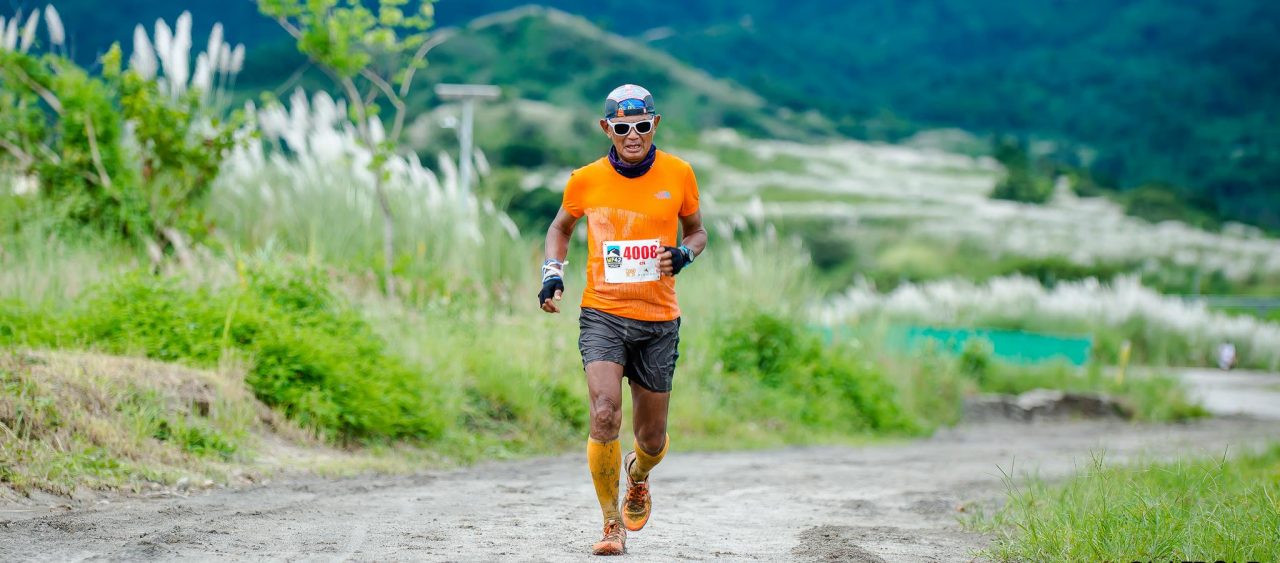
I did not finish this race and I declared myself as Did Not Finish at Km 55. But as I promised in my past post where I mentioned my purpose in joining the race, I am here to make a Race Report and officially make a journal of what transpired before, during and after the race.

Start of Training & Preparation

I’ve never joined a TNF100 Phil event for the past five years but I have sponsored and sent my Elite Team Bald Runner to join the yearly event. Except for last year which was the first TNF 100 in Benguet-Baguio area, my elite runners had won the Team as well as the Individual Championship Awards.

Now, it is my turn to join this race as part of my preparation and training for another event. And since February of this year, I started to build-up my mileage and I enjoyed my “peak bagging” activities but these runs were less than the half-marathon distances.

The following significant races or runs were part of the mileage build-up for this race:

  1. Bandit 50K Trail Run In Simi Valley, California on February 16, 2013 where I finished in 8:07+ hours
  2. 2013 BDM 102: Ran the first 50K in 8:20+ hours as the 50K Cut-Off Marshal.
  3. Siquijor 75K Run last March 2013 where I was able to register a time of 13:23+ hours
  4. Mt Ugo Trail 42K Marathon where I finished the race in 8:23+ hours

I was logging at least 10-12 kilometers every day and I had my trail runs on weekends that would last up to 6 hours.

For the months of March and April (2 weeks), I went up to Baguio City for five (5) times to recon the race route with ultra running friends. These recon activities were purely hiking in nature and some picture taking on what will be expected along the race route. On these recon hikes, I was able to test my nutrition, hydration, apparel, and race strategy depending on the terrain of a certain portion of the route.

Except for the portion where past runners would call the “mossy area” and the downhill route from Barangay Alang to the Bridal Veil or Aid Station #5 (AS5), I had already a familiarity of what to expect once I will be in the race. This part or portion of the course covers an estimated distance of 20 kilometers. The remaining 80 kilometers were part of my recon hikes on those days and weekends that I went up to Baguio City.

 Tripping Accident

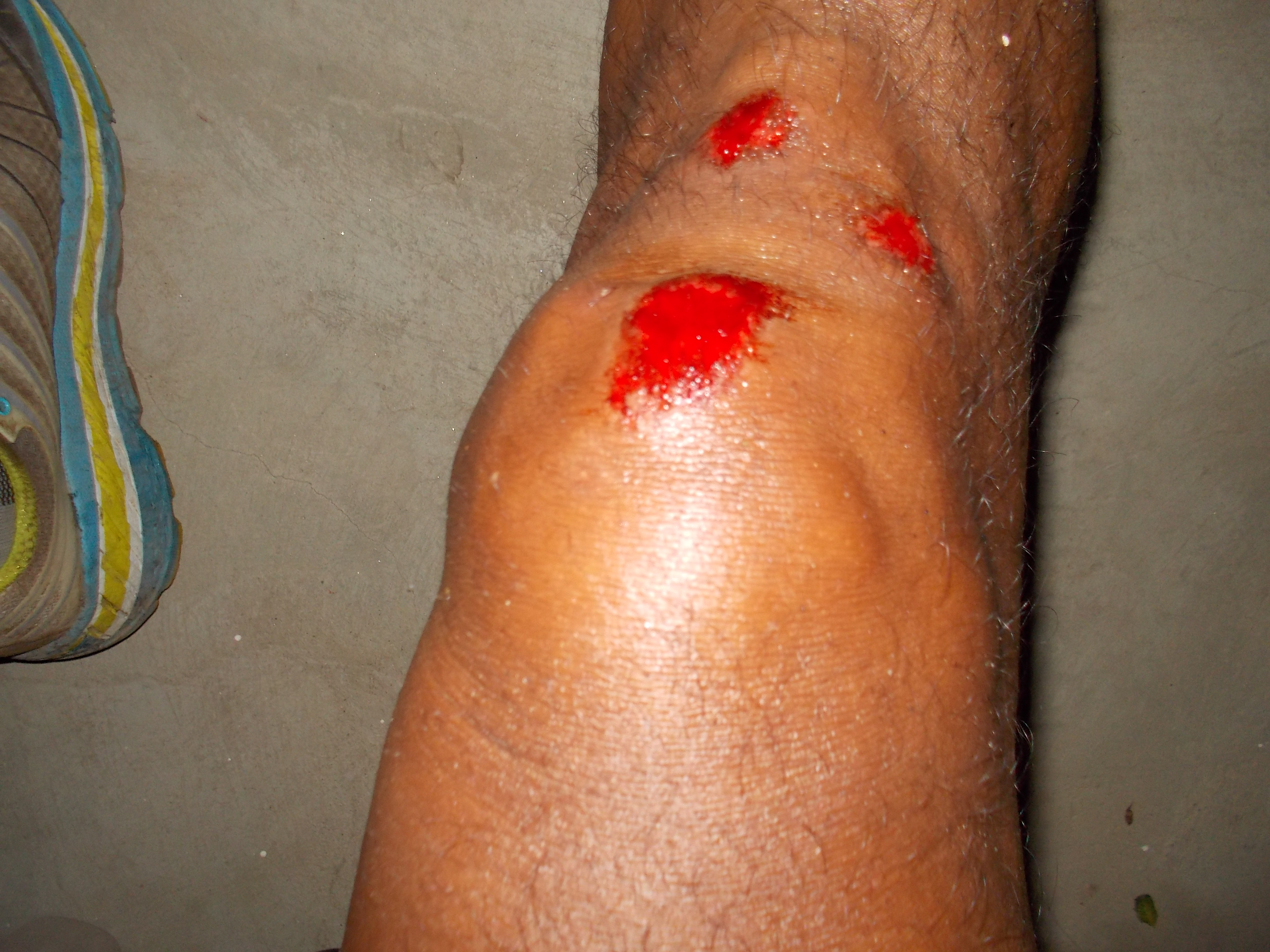
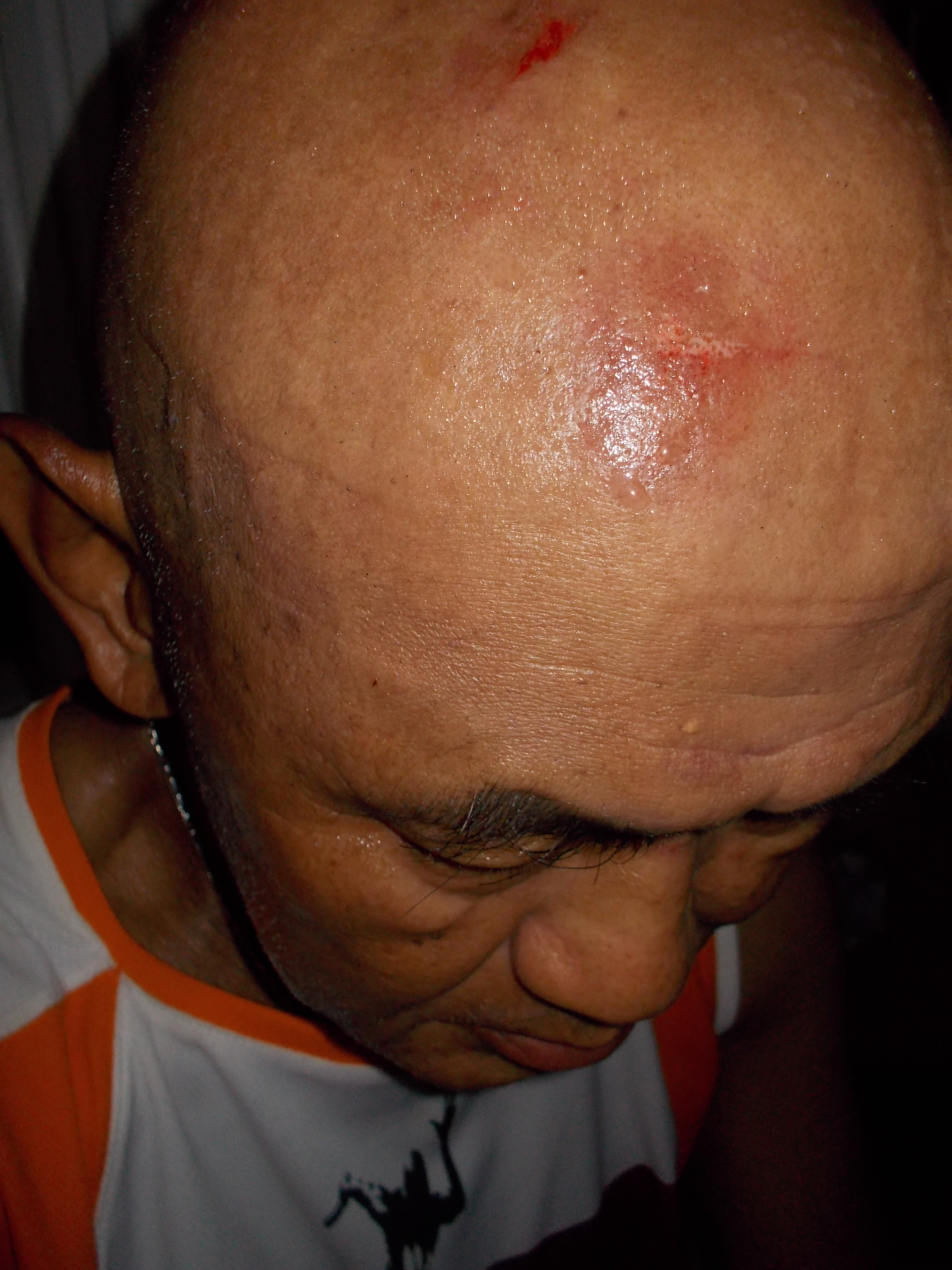
In the middle of March and two weeks before the Mt Ugo 42K Trail Marathon, I had a tripping accident which happened after running 14 kilometers of trails in the mountain of Bataan. It was already in the early evening and I was using my old headlight. I was already running on a paved road when I accidentally tripped a water hose  laid across the road which was covered with a wood. I was not able to retain my balance and my right knee hit the ground first, my right arm was used to prevent my upper body from dropping to the ground but my arm collapsed and my head went crushing on the cemented road. I had 3 scrape wounds on my right knee and at least 3 scrape abrasions on the right side of my head.

I was able to recover immediately from the fall and tried to stand with the help of one of my elite runners who was with me in the run. We had to take a break by dropping by one of the “sari-sari” stores at the foot of the mountain and took a Coca-Cola drink and some biscuits as food. After 10 minutes of rest, together with my elite runner, we continued our run for the last 6 kilometers until we reached our training base camp.

On the following day, I could barely walked because of the infection brought by the wounds. For almost 2 weeks prior to the Mt Ugo Trail Marathon, I did not have any running workouts. However, I still managed to join the race in Kayapa, Nueva Ecija despite my lack of specific preparation for the race and the presence of pain on my right knee as a result of the tripping accident.

Shit Happens!
Shit Happens!
Not On My Face!
Not On My Face!

Another Tripping Accident!

I really could not explain. Am I really getting old or something up above is telling me to stop running or am I simply hard-headed and crazy? Another tripping accident happened again barely one week to go before Race Day for the 2013 TNF 100. It happened during a night run where I was testing my new Headlight and new HOKA shoes. My right foot stepped on a shallow hole and my shoes front end hit the edge of the hole and it took away my balance. The healing wounds on my first tripping accident were the ones that hit the ground but I was able to use my right hand to prevent my whole upper body to hit the pavement. Yes, there was blood again on my legs and I was limping when I reached my place.

I still managed to have my last recon hike, one week before race day, despite my limp on my right leg. The last recon hike would cover the first 30K of the race on a Saturday and the last 25K on the following day, Sunday.

Race Strategy

Since I am not confident on my running capability for the race because of the lack of long runs, tempo runs, and speed runs due to injuries brought about my tripping accidents, my target for the race was to try my best to finish within the cut-off time of 30 hours by following these time targets: (Note: Please refer to my previous post on the location of these places I am going to mention here. Thanks.)

Start To AS3 (Ampucao)—-Finish In 6 Hours

AS3 To AS5 (Camp 1/Bridal Veil)—-Finish In 6 Hours

AS5 To Cabuyao—-Finish In 9 Hours

Cabuyao To Camp 6—-Finish In 3 Hours

Camp 6 To Finish—-5-6 Hours

My estimates were based from the recon hikes that I’ve conducted. Except for the portion, AS3 To AS5, I know where I could run and jog and be able to shave off some of my time of running.

In my recon hikes, I had at least 12 hours of getting lost on the first 30K of the course and I knew that if I could run at least 5 kilometers every hour, I could reach Ampucao in 6 Hours. From Bridal Veil to Cabuyao, it took me almost 8 hours on pure hiking with rests. From Cabuyao To Camp 6, it took me 2:45 Hours during the day and I am confident to jog on the flatter trails with 3+ Hours as time to finish the portion. My recon hike from Camp 6 to the Finish Line (without those additional mileage inside the Camp John Hay Area) took me almost 4 Hours.

I took the risk of not knowing about the terrain in the “mossy forest” and the road from Barangay Alang to Camp 1/Bridal Veil due to the following reasons: (1) The trail inside the “mossy forest” was not yet available during those days when I had my recon hikes. The trail was newly cleaned few days before the race. (2) No available past runner/s or “guide” for the said part of the route join me in my attempted recon hike in the said place.

This part of the course proved to be my “waterloo” during the race but there are other more significant factors that simply sapped my strength during the race.

The bottomline of the Race Strategy was to run/jog the flatter sections, do power walking/hiking on the uphills, and keep the knees and quads from hurting on the downhills. I had to use my trekking poles to the maximum in order to be consistent on my pace.

Nutrition Strategy

Take a meal before the race and I did take a full breakfast meal of fried eggs, fried SPAM, and rice with coffee.

Eat while on power walking and never stop in-between AS just to eat. Ingest something that is solid every two hours. Eat while walking! At the AS, if you want to eat, make it fast and then take something to eat while on the road

Hydration Strategy

Drink if you think you are sweating a lot. Drink while chewing your food. If there are sources of water along the route, drink 1/2 full of hydration bottle and then fill up your bottles before resuming the race. Drink alternately with Gatorade. Drink Gatorade by sips or in small amount. Never fill the water bottle to the rim.

Running Apparel

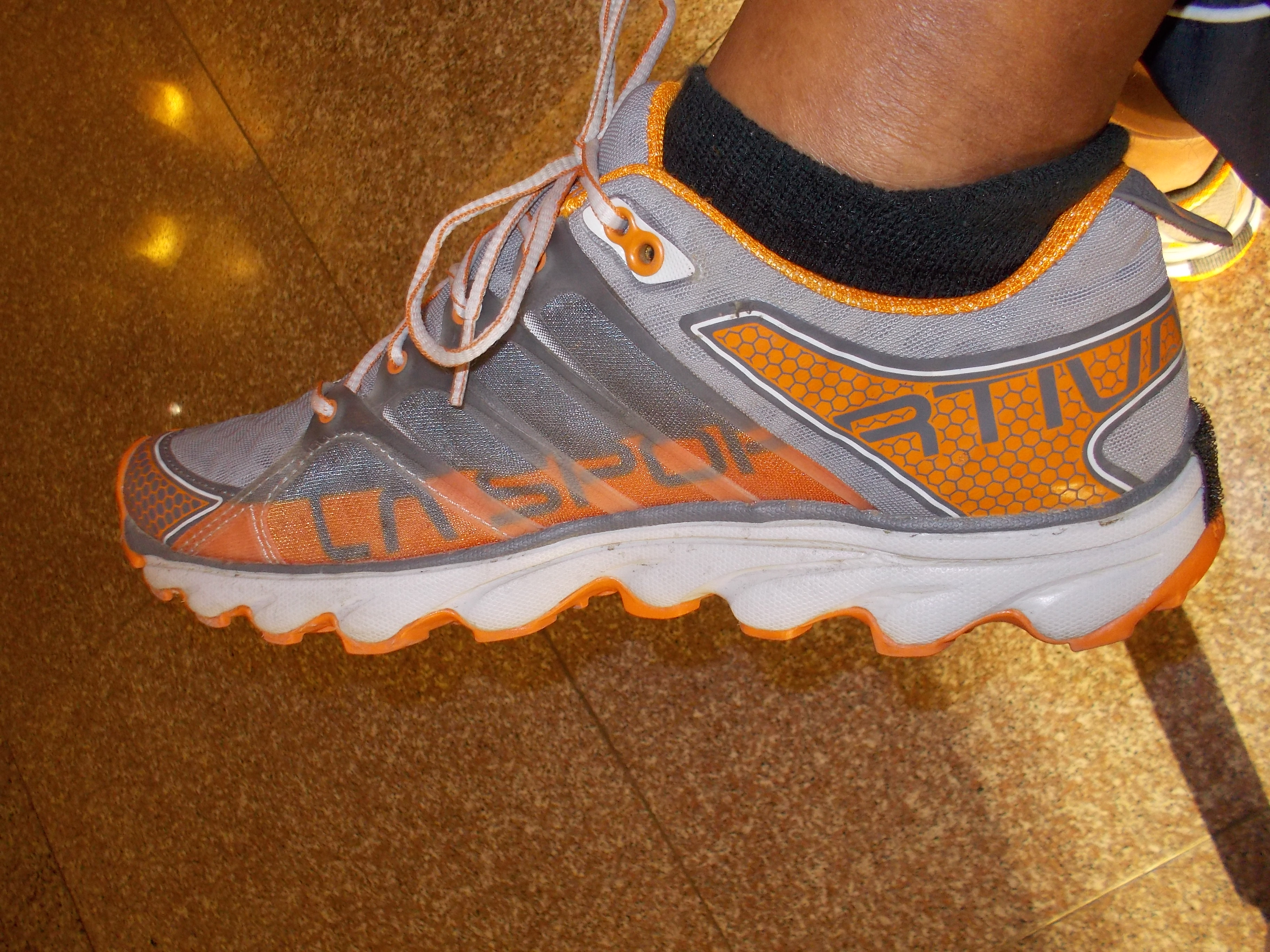
I bought my Helios/La Sportiva Shoes while I was in the USA last February for the sake of trying this Italian running shoe brand. I used them in my peak bagging workouts while I was in Los Angeles and like them. I appreciated more of its capabilities when I used them in my recon hikes most especially on the Cabuyao To Camp 6 route. While the rest of group on the hike were tripping and sliding as we went downhill, I did not experience any misstep, sliding or tripping. The structure of the sole was simply amazing as they really “gripped” on the ground and the pavement. I immediately decided to choose these shoes for the race. Drymax socks were used instead of my Eddie Bauer socks.

Helios By La Sportiva

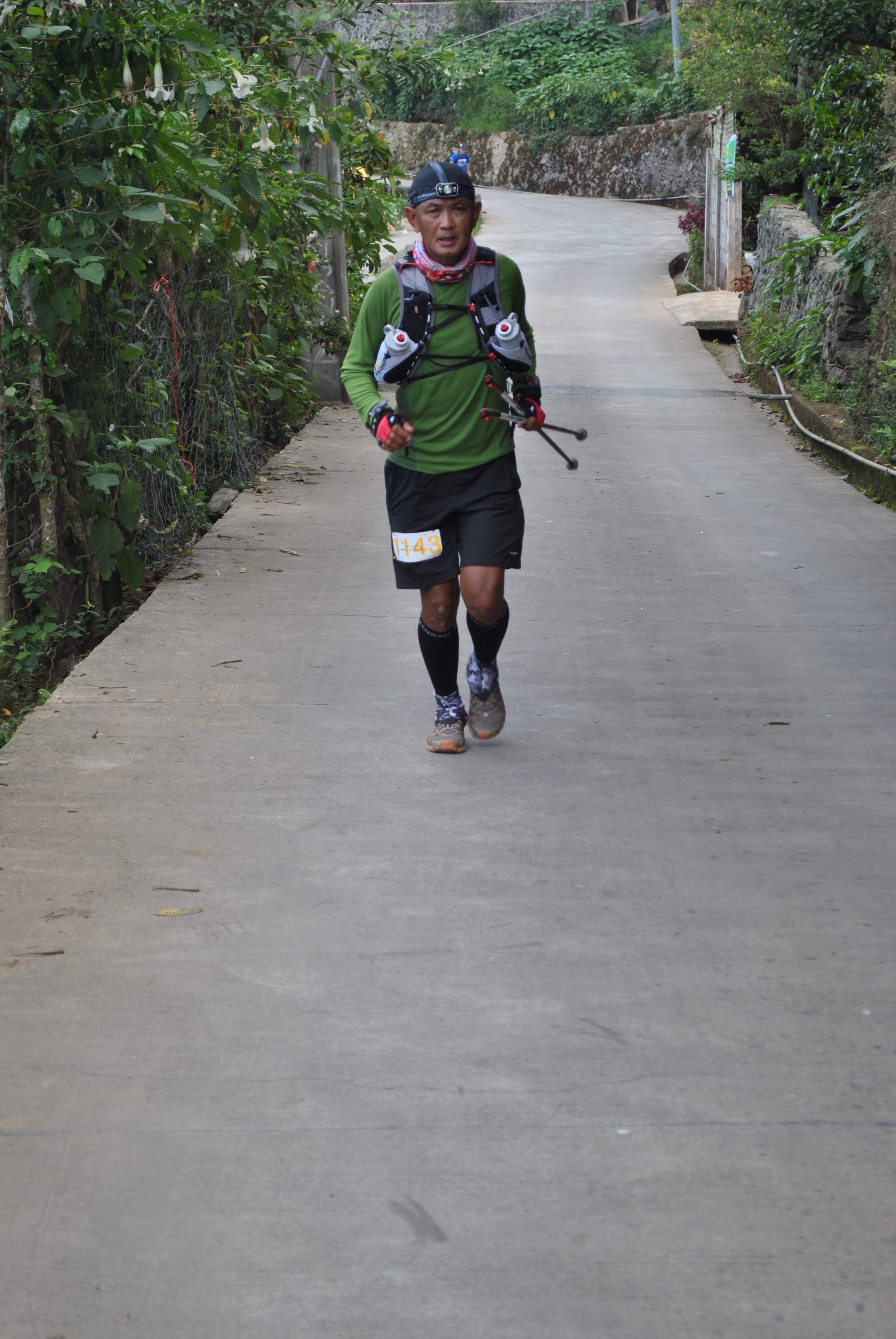
In anticipation for moderate rain during race, I used my long-sleeved Patagonia baselayer which is colored dark green. (I had a light Poncho that weighs a garbage bag tucked in one of my hydration pockets, in case of rains.) The shirt is light and could easily dry up if it becomes wet with my perspiration or by the rain. I used a Salomon EXO compression tight shorts because of its high waist line and pockets. The compression feeling on its waist portion was perfect pressure applied on my core. It also served as an absorbent for my sweat from my upper body and prevented my feet and socks to be wet during the run. On top of the compression shorts, I used my black Patagonia Trail Shorts which have 5 pockets (two at the front; two at the back; and one zippered pocket on the right upper side behind the shorts). My cellphone (IPhone4) & reading glass were on my right front pocket; trail mix food was on my left front pocket; cereal, Gatorade powder and fruit bars were evenly distributed on the pockets behind my shorts.

Although I did not use my Salomon S LAB Hydration System during my recon hikes, I opted to use it because it has a whistle (mandatory equipment), string to tie my trekking poles, and lots of zippered pockets. My rain jacket was thinly folded inside the hydration compartment where the 1.5 liter bladder is supposed to be located. (I removed the 1.5 liter bladder and water hose to lessen the load and have more space for my trail food). My Nike reflectorized vest was thinly folded on the left zippered pocket while a light poncho was also folded on the right zippered pocket together with capsules of Pharmaton. Some trail foods were also stashed in the zippered back pocket of my hydration system. My lighting systems (old and new ones) from Black Diamond were stashed on the pockets of the hydration system.

I used calf sleeves from Zhensa for whatever it can do to my calf muscles, protect my exposed legs to small shrubs and sharp leaves of grasses, and absorb whatever sweat coming from my legs. I used some gaiters to prevent debris and small rocks from getting inside my shoes and they perfectly functioned well for the race.

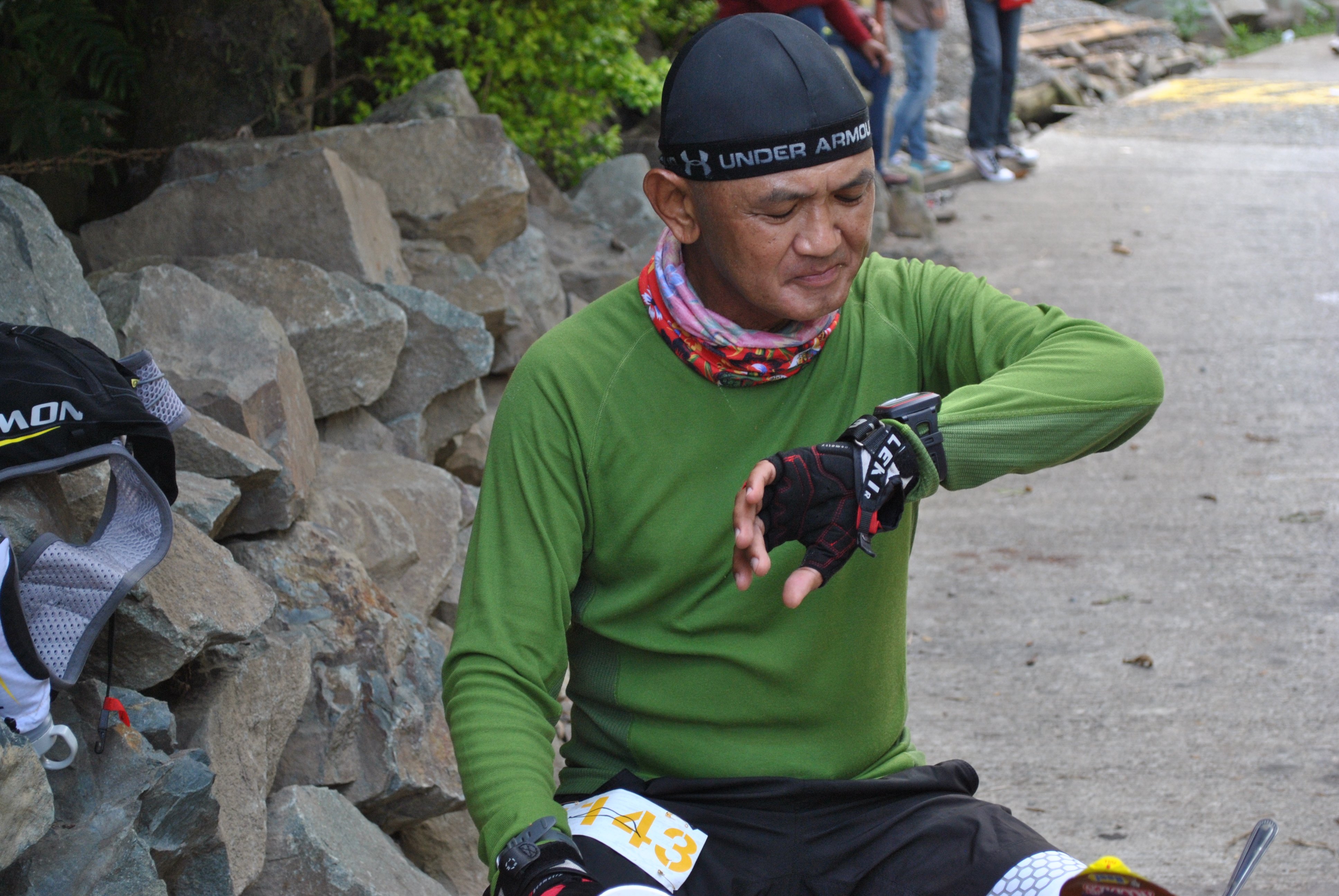
I used also my favorite Buff placed on my neck to absorb my sweat coming from my head & used it to cover my nape from the heat of the sun and used an Under Armour Skull Cap on the early part of the race which fit well with the straps of my Black Diamond headlight. It also absorbed a lot of my sweat from my head. To anticipate the heat of the sun after I reached AS3, I switched to my Patagonia Legionnaires Cap.

Headlight System

I used the latest Black Diamond’s ICON Headlamp which I bought in the USA last February and I was satisfied with its performance. It has separate battery case that can accommodate 4 AA batteries. It has a long wire and heavier in weight but the illumination was perfect for night running. It brought so much confidence in me to run in the dark through its illumination and life/power expectancy from its batteries. The separate battery pack was perfectly stowed on the main compartment of my Salomon Hydration Pack. I have another old Black Diamond headlamp in my pack just in case of any contingency.

Lastly, I brought some strips of band-aids and antiseptic as my first -aid kit which was placed in the pocket where my poncho was located.

End of Part 1. Race Briefing & Race Proper to follow. Pictures To Be Inserted Later.

2013 TNF 100 Race Route