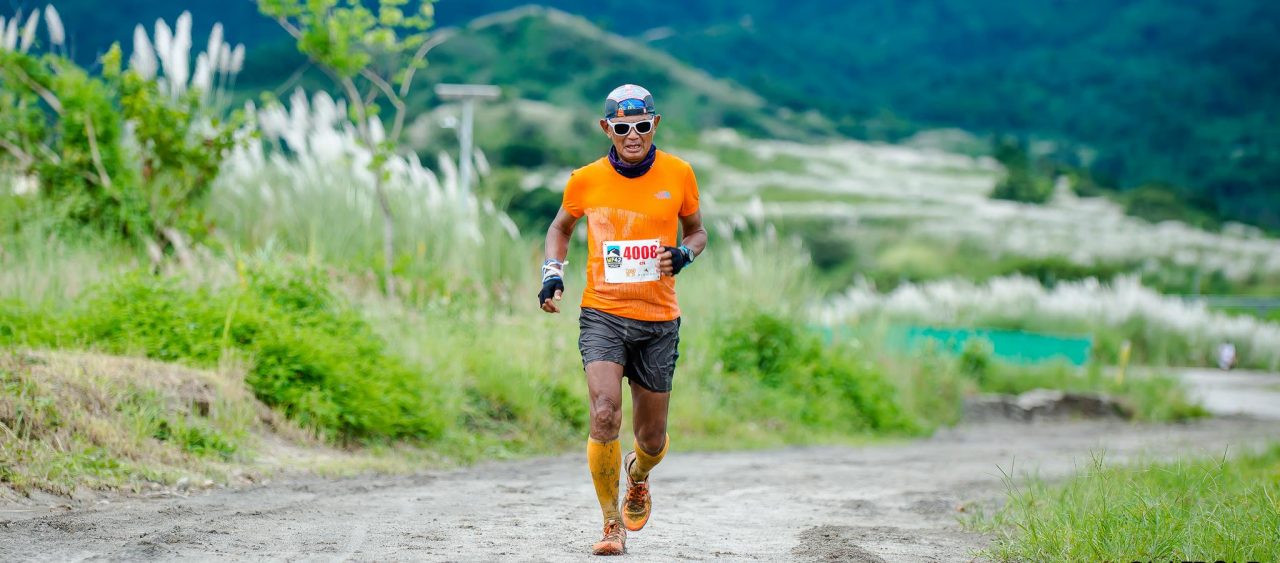
1st BR’s BEER Mile


Nobody dared yet to do this event in the country. I wonder why. Is it because we are ignorant that there is such event that is known worldwide? Is it because we are afraid that we are promoting drinking of liquor mixed with sports? Or we are just simply lazy or afraid of promoting this kind of event that promotes camaraderie among runners and friends? Or is it because there is no profit in it that race organizers would not dare to do it?

For the past weeks, I’ve posted a request on Facebook for any of my “friends” to “connect” me with anybody who is employed with any of the Corporate Beer Companies in the country. I got some positive comments and some promises to connect to this person and this person. But it ended there but I still waited for some more time if ever I would be able to link-up with the Heads of Sales of these companies. I waited but such promises ended as promises! However, I am still waiting for these Corporate entities to sponsor this event.

With or without sponsors, this event will have to push through. Who cares? I really don’t care if I don’t have any sponsor in my events. The RUNNERS are the actors/actresses in this event! The show must go on!

I wanted a “low-key” oval track for this event and I thought of the Rizal High School Oval Track in Pasig City to be an ideal place for the sake of simplicity. After a simple coordination with the right authority to give the approval for the use of the said facility, the event is now a reality!

This Beer Mile Run is FREE but runners/participants will have the distinction to be invited through this post in this blog. I will be clear on those runners to be invited for the inaugural conduct of this event. These invited runners are those who have supported me in my initial BDM & PAU Races and our ultra supportive friends. And for those who were not invited for this inaugural event, they will have the chance to experience this in the monthly conduct of this run. However, they can still come as spectators in the said event.

The following runners are invited in the Inaugural BR’s BEER Mile on June 10, 2012. The activity will start at 6:00 AM at the Rizal High School Oval Track.

1. Jonel Mendoza

2. Amado Castro Jr

3. Jonnifer Lacanlale

4. Jael Wenceslao

5. George Dolores

6. Ric Cabusao

7. Arman Fernando

8. Francisco Lapira Jr

9. Abet Henson

10. Jeffrey Abenina

11. Patrick Concepcion

12. Gene Olvis

13. Paolo Osmena

14. Christopher Montaos

15. Arturo Virata

16. Chito Carreon

17. Mel Severino

18. Sherwin Botabara

19. Cesar Abarientos

20. Graciano Santos

21. Ronnel Go

22. Mar Marilag

23. Bong Alindada

24. Ian Alacar

25. Meljohn Tezon

26. Eric Socrates

27. Jose Duenas

28. Randy Rubio

29. Junar Layug

30. Tin Ferrera (F)

31. Teresa Gangan (F)

32. Dick Balaba

33. Robert Patrimonio

34. Samuel Narcise

35. Marlo Guloy

36. Victor Ting

37. Narciso Alipio

38. Alfred Delos Reyes

39. Roberto “Beeps” De Los Santos

40. Mark Hernandez

41. Frederick  Gabriel

42. Alfredo Ocampo

43. Samson Ocampo

44. Gil Ocampo

45. Larry Daliwag

46. Tina Narvaez (F)

47. Keshia Fule (F)

48. Chips Dayrit

49. Raul Tapia

50. Carl Balagot

51. Junrox Roque

52. Wilnar Iglesia

53. David Buban

54. Dindo Diaz

55. Simon Pavel Miranda

56. Noel Hernandez

57. Charlie Chua

58. Camilla Brooks (F)

59. Lemuel Narcise

60. Jose Lorenzo Mina

61. Red Samar

62. Almar Danguilan

63. Bert Camangonan

64. Haide Acuna (F)

65. Irene Ong (F)

66. Ron Sulapas

67.  Bob Castilla

68. Julius Cervantes

69. Din Cordero

70. Wap Flores Forbes

71.  Gregorio Ocampo

72. Ruben Fajardo Jr

73. Nelson Mallillim

74. Frederick Quitiquit

75. Imelda Laron (F)

76. Benedict Meneses

77. Carlito Buenaventura

78. Lester Jerome Chuayap

79. Stephanie Hefti (F)

80. Zaldy Santillan

The following will be the procedure of the event:

1. Each Runner-Participant will have to register to the Secretariat with four (4) Beer In Cans. We are not strict on the brand of the beer as long as it has 5% alcohol content by volume. NO BEERS IN BOTTLE!

2. There will be five (5) Waves of runners. Each wave will consist of sixteen (16) runners. Composition of WAVES will depend on the order of registration for each runner—FIRST TO REGISTER, FIRST TO RUN!

3. Secretariat will be ready to accept the registration of runners at 5:30 AM and the first Wave will start at exactly 6:00 AM.

4.  Cut-off time for each Wave is 20 minutes. The next Wave will start immediately after the cut-off time have lapsed.

5. At the Starting Area, runners should be at least 5 meters behind the starting line & holding their beer in can. Start of the Race will commence once the RD says “GO”. Then runner opens the beer and drink the full content of the beer before starting his run (still behind the starting line). Runners will be disqualified if they won’t be able to finish/consume the contents of can before they start their run.

6. Before completing each lap, runner has to drink another beer before he/she crosses the starting line in order to start the 2nd lap, then the 3rd lap and then the 4th/last lap. To complete the event, each runner must have consumed 4 beer in cans and had ran 4 laps.

7. If a runner vomits, he/she is penalized for another lap around the track (4 laps + 1 lap penalty). (Note: We will not have marshals to monitor each runner during the run. So, we hope that runners would accept that they vomitted during the run and take upon themselves and run the additional lap as penalty). No matter how many times you vomit, you only have to run ONE additional lap to complete the run. PLEASE DON’T VOMIT ON THE TRACK.

8.  Results will be posted in my blog and will be sent to http://www.beermile.com to represent our country from the list countries registered in this event. “Personalized” Finisher’s Certificate for each runner will be available on a later date.
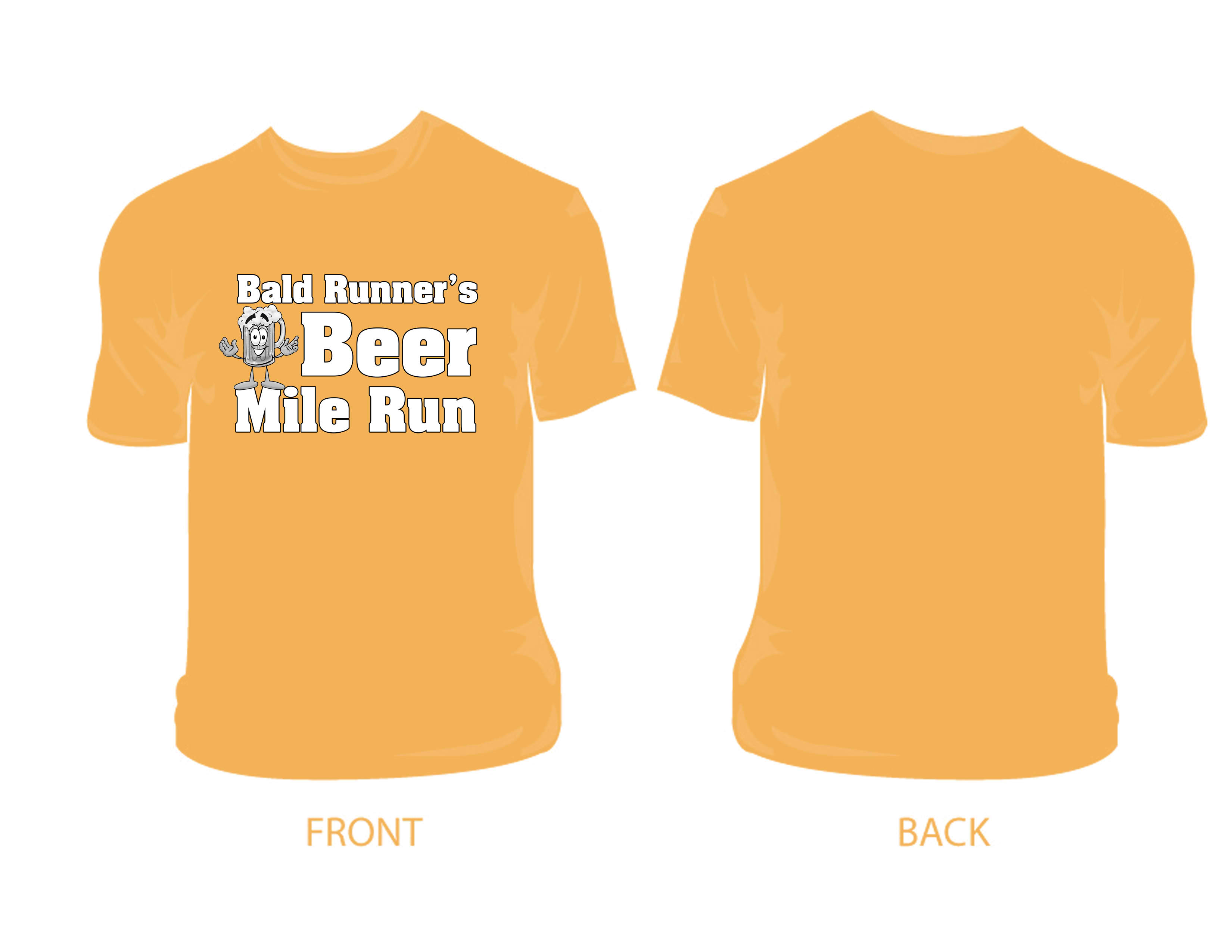
9. Commemorative T-Shirts will be available FOR SALE (P 300.00 each). The word “FINISHER” and date of the event will be printed at the back of the shirt.

10. For details on the rules and regulations, please check www.beermile.com.

Additional Notes:

1. My sincerest apology to those who were not included in this initial list. However, if you have time, you can be a spectator of this event. If there will be runners in the list who could not make it in the event, we will ask runners from the spectators to fill in the list. Make sure you bring 4 cans of beer.

2. The Parking Area at the Rizal High School is very limited. We encourage “carpooling” among running club members!

3.Donations for Additional Beer In Cans and bite foods (“pulutan”) are highly encouraged.

4. We will try our best to have this event on a monthly basis.

Good luck and Have Fun!
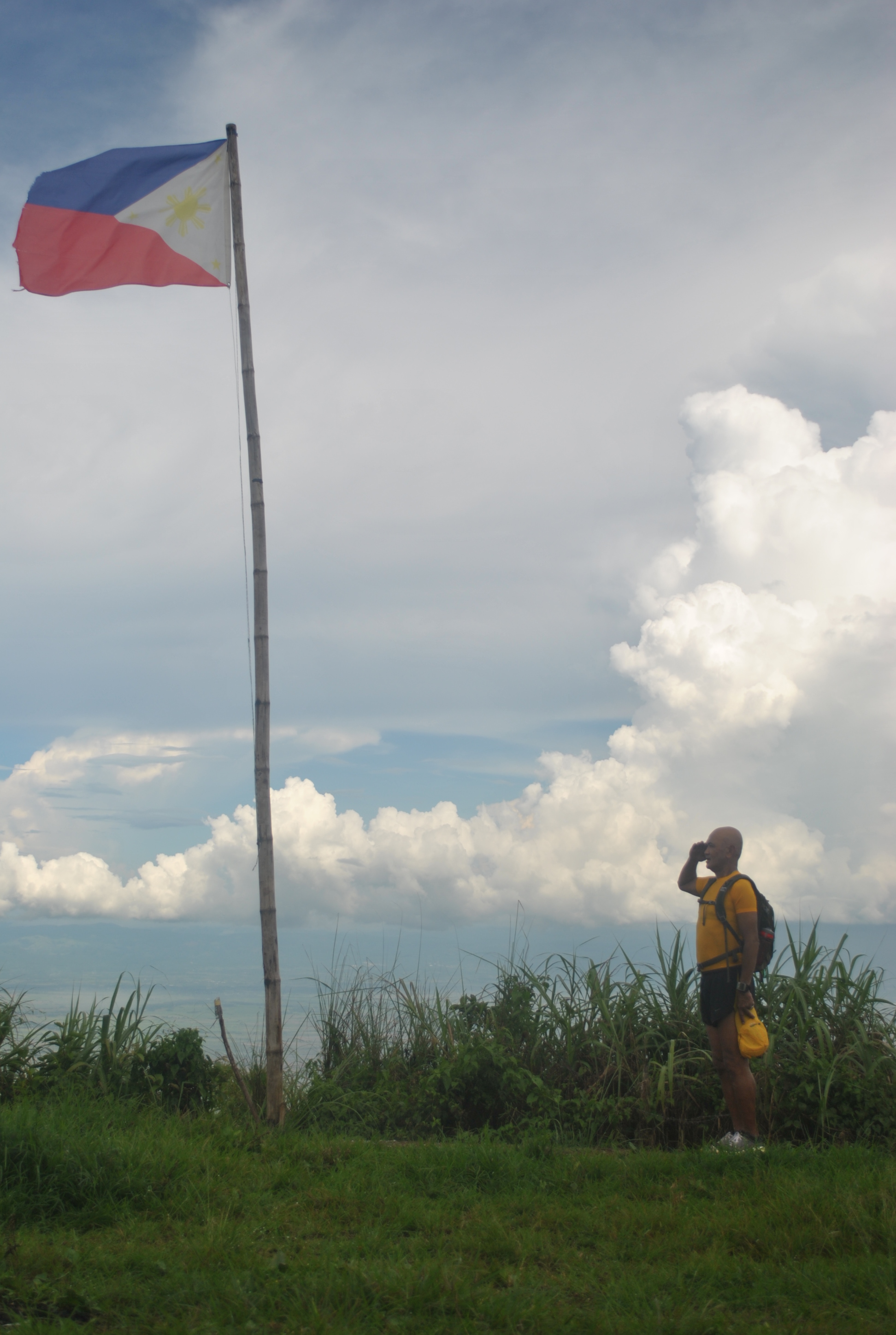
Picture Of The Week #2


@ The Peak Of Mt Arayat/May 13, 2012 

Walk @ Mt Timbac’s Peak


4th “Peak Bagging” Experience (April 2, 2012)

A day after the 1st KOTM Trail Marathon in Mt Ugo, Kayapa, Nueva Vizcaya, I was on my way to Mt Timbac, the 3rd highest mountain peak in Luzon with a registered elevation of 2,717+ meters above sea level coming from Baguio City. Mt Timbac is ranked as the #9 highest peak in the entire country.

Since the mountain is located along the Halsema Highway which is the only paved access road to Bontoc, Mountain Province, I was confident that I could reach the place in a few hours and be back to Baguio City before dinner time. If there such thing as “day hike” for a mountain peak, there is also a “day trip” where you can visit a certain place and be back to where you came from before evening.

As per my research, the intersection that goes to the trailhead towards the peak of Mt Timbac is located near the vicinity of DPWH Kilometer Post #55, which means that one has to travel 55 kilometers north of Baguio City in order to reach the place. I estimated to reach the place in 1 1/2 hours.

I was surprised to notice that there are lots of changes along the road to La Trinidad as compared during those times when I have to attend my ROTC training at the Benguet Agricultural College in La Trinidad, Benguet during the late 60’s (1968-69).

During my early years in the active military service, I had two occassions of travelling along the Halsema Highway aboard a Volkswagen “Sakbayan” with Bontoc, Mountain Province as the place of destination. I could still recall the highway to be very narrow that only single lane for vehicles were used most of the portions of the road. The road was full of sharp rocks and it was too dusty. The trip was very slow and long and our body was being “massaged” throughout the trip.

I am glad that the Halsema Highway is already paved/cemented and with two lanes. Although there are still patches of construction for repairs along the road, the trip was easy and relaxing. However, one has to prepare to see that the road you are looking ahead is getting progressively higher and higher up to the peak of the next mountain! This is where you will appreciate what the DPWH had done to this part of the country.
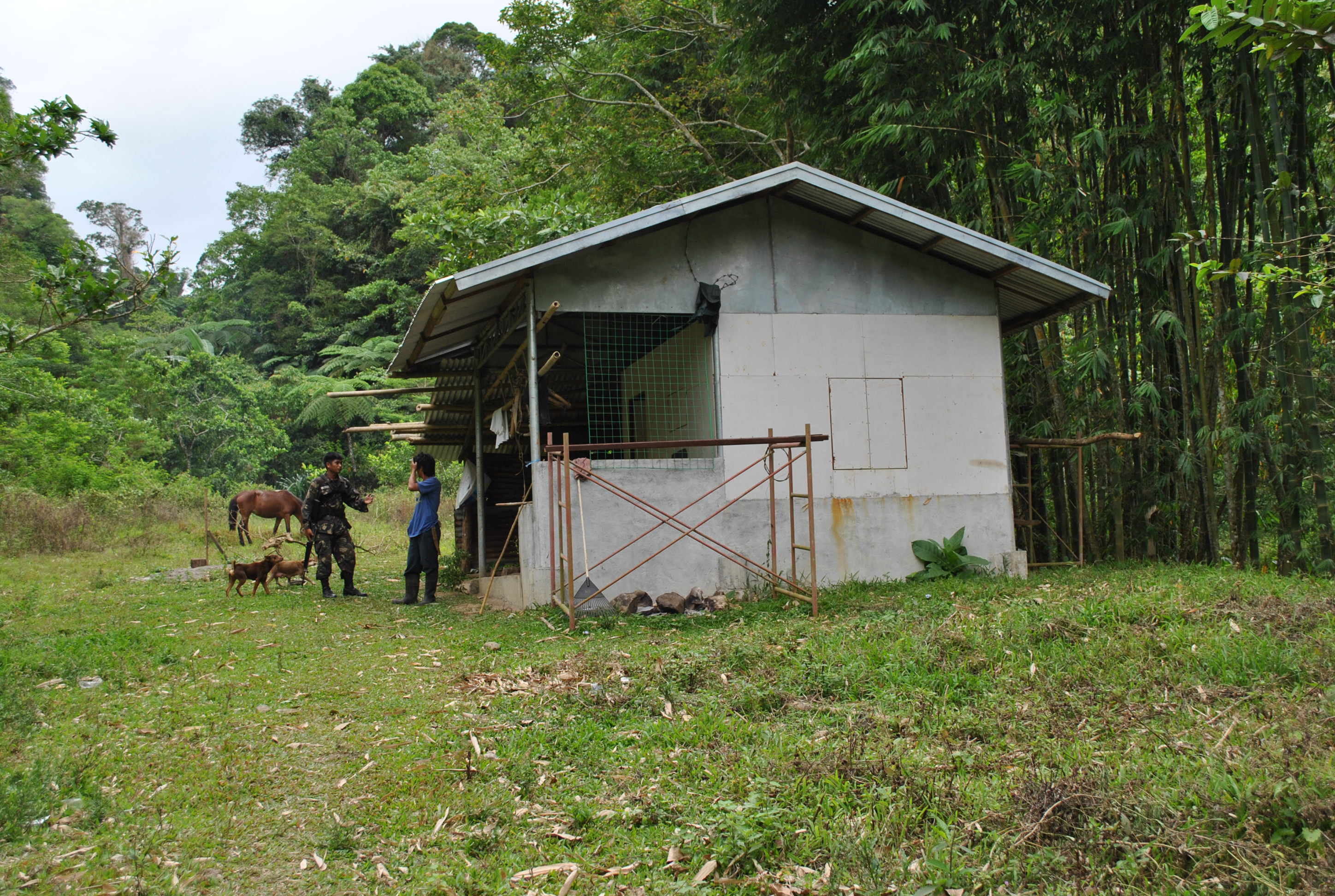
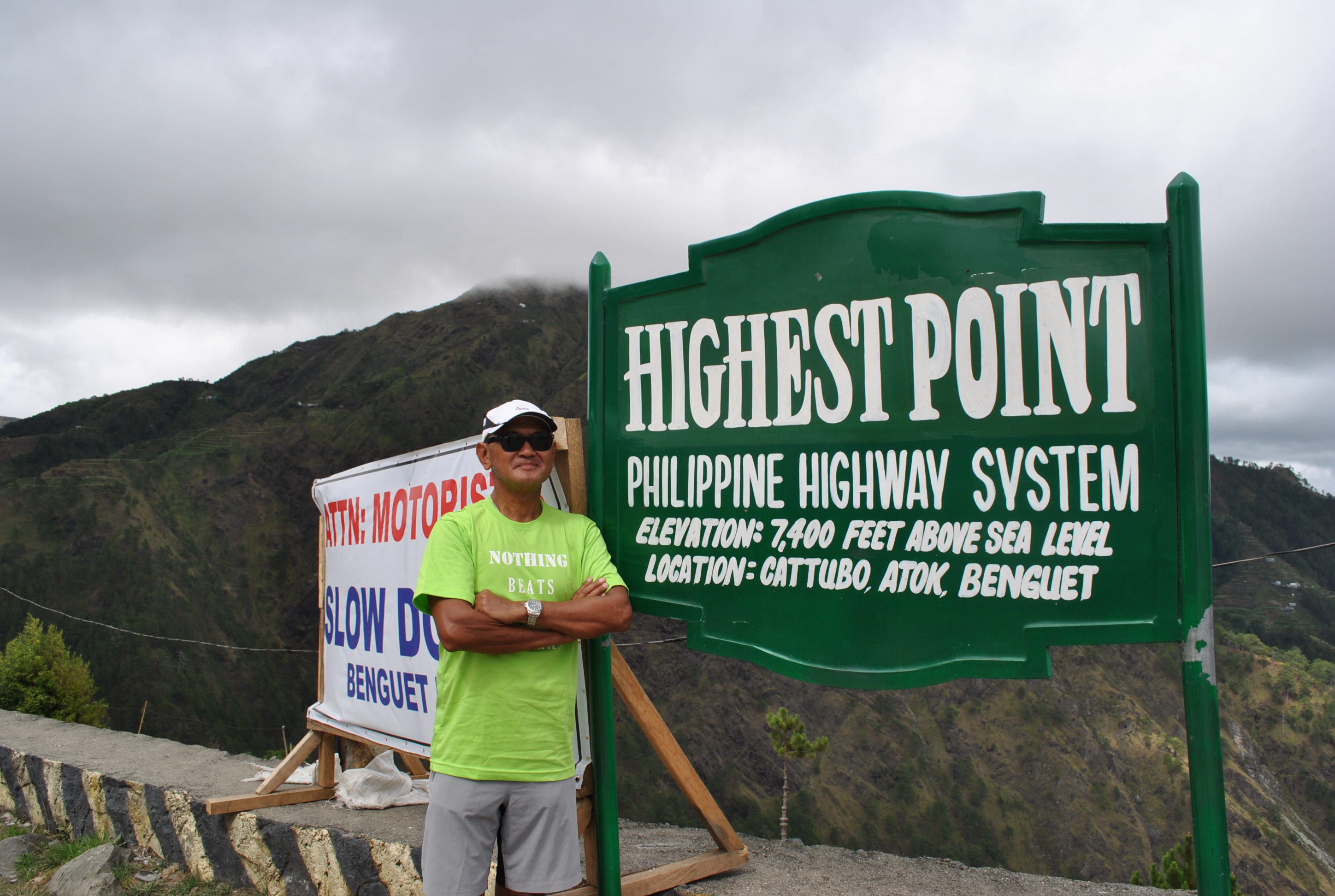
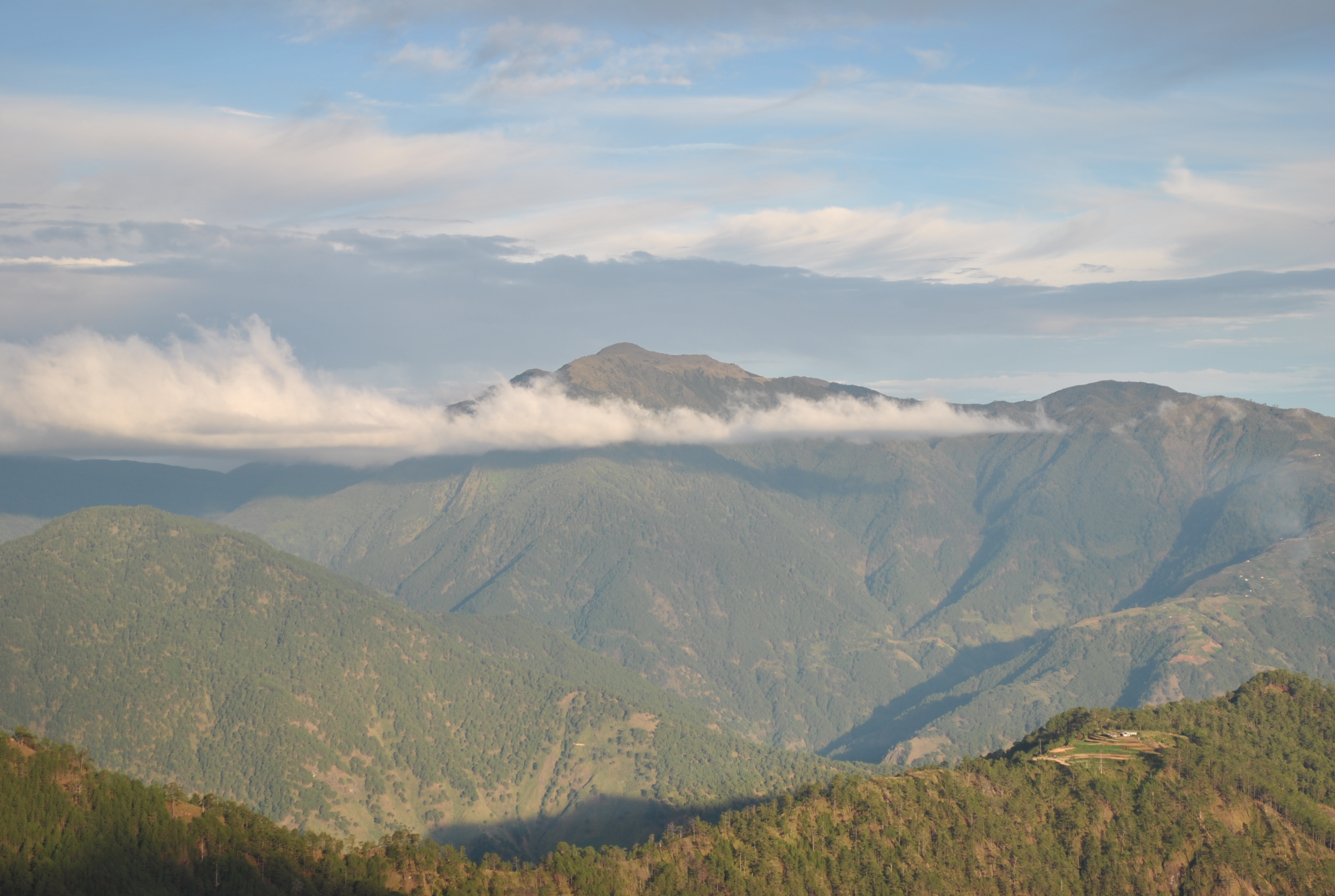
Two kilometers from Mt Timbac’s foot or road access is the View Deck which is marked as the Highest Point of the Highway System of the Country in an elevation of 7,400 feet above sea level (2,242 meters above sea level). From this view deck, you can see Mt Pulag, Mt Tabayoc, and Mt Ugo.

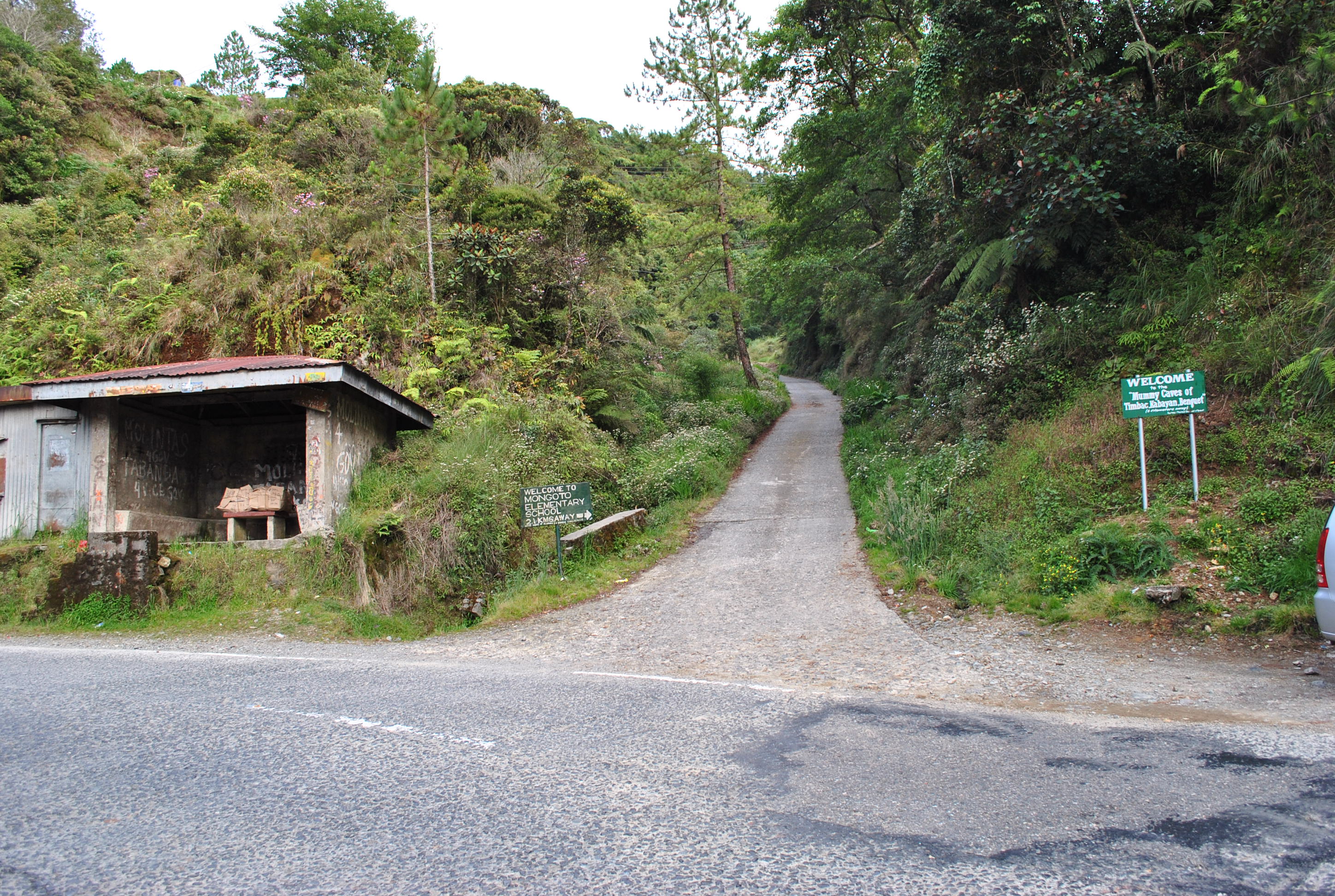
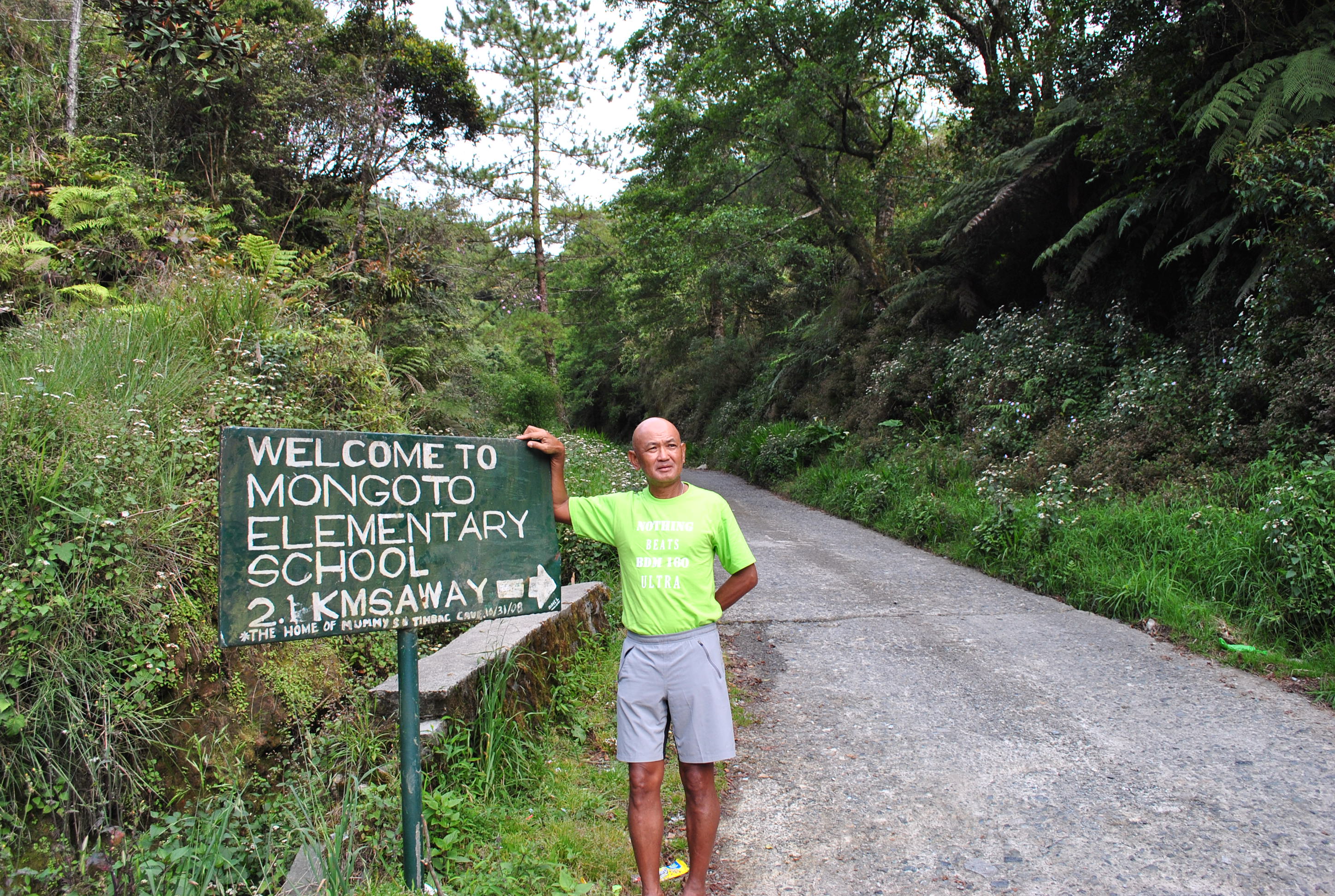
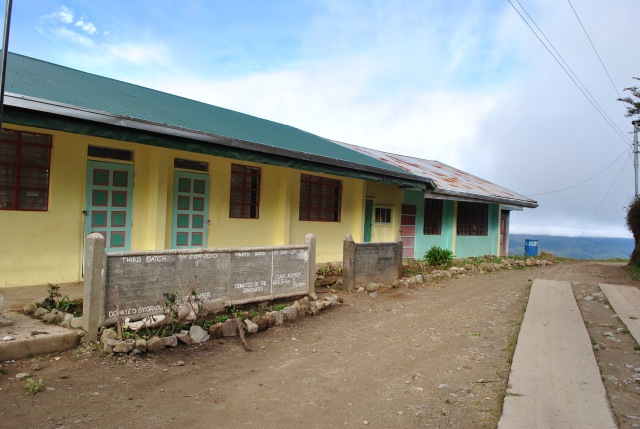
After almost 1 1/2 hours of easy driving, we reached Km Post #55 and after asking some of the locals along the road, we were able to turn right to a road that leads to the mountain’s peak. The single lane road is concrete and it leads to an elementary school where I parked my vehicle. I was able to meet Alexis Estenor hiking down along the way as he and his friends just came from the peak of the said mountain.

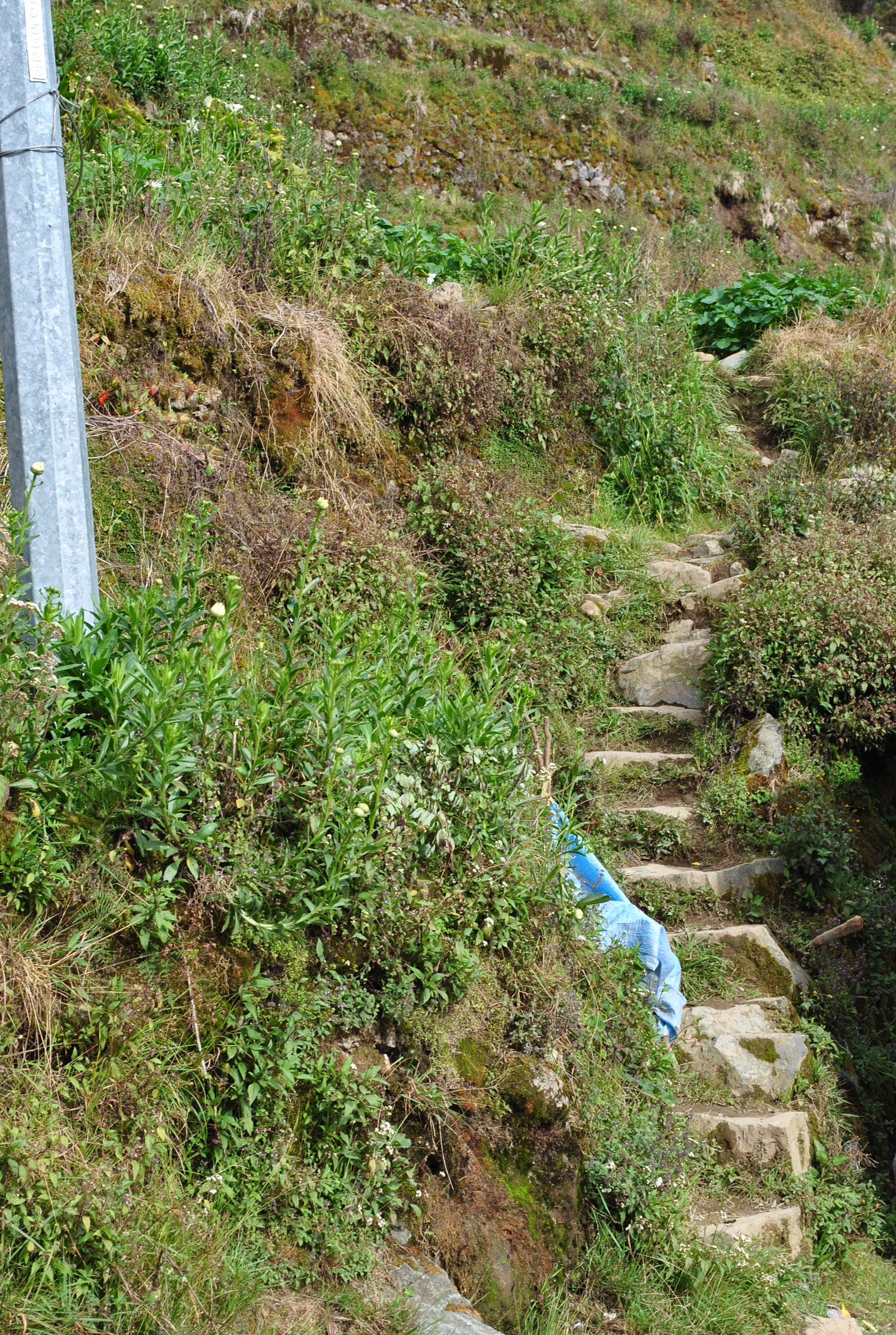
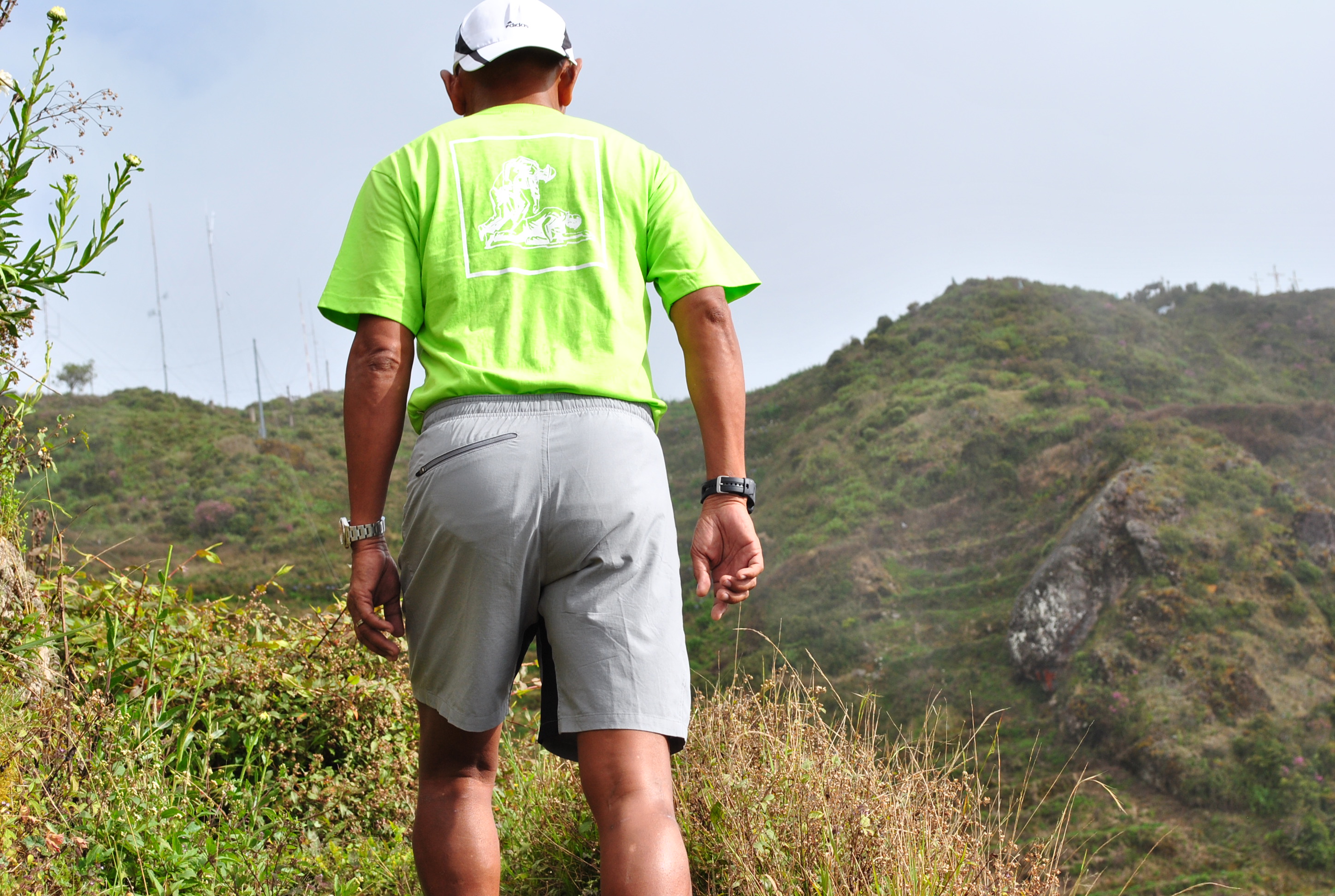
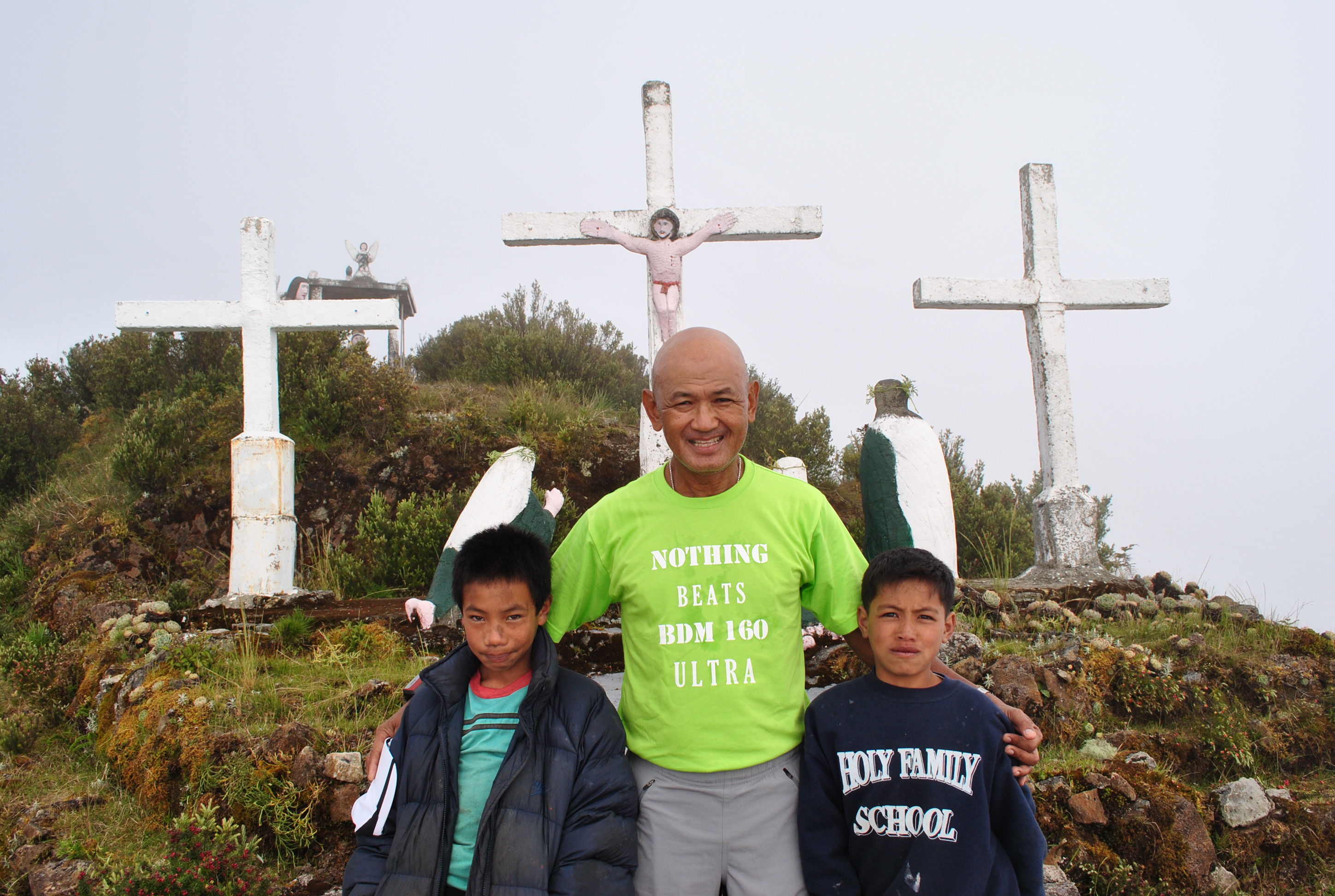
From the school, the walk to the peak was very easy as most of the 1st kilometer is paved and the other half is an uphill trail with rocks used as steps. The hike has a distance of 2.1 kilometers which took me 30 minutes to reach the peak. I was guided by two kids who belong to the families cultivating some of the vegetable gardens along the slopes of the mountain.

After taking some pictures and short conversation with the kids, I was on my way back to my parked vehicle. My GF 305 watch registered 2,737 meters above sea level as its peak elevation.

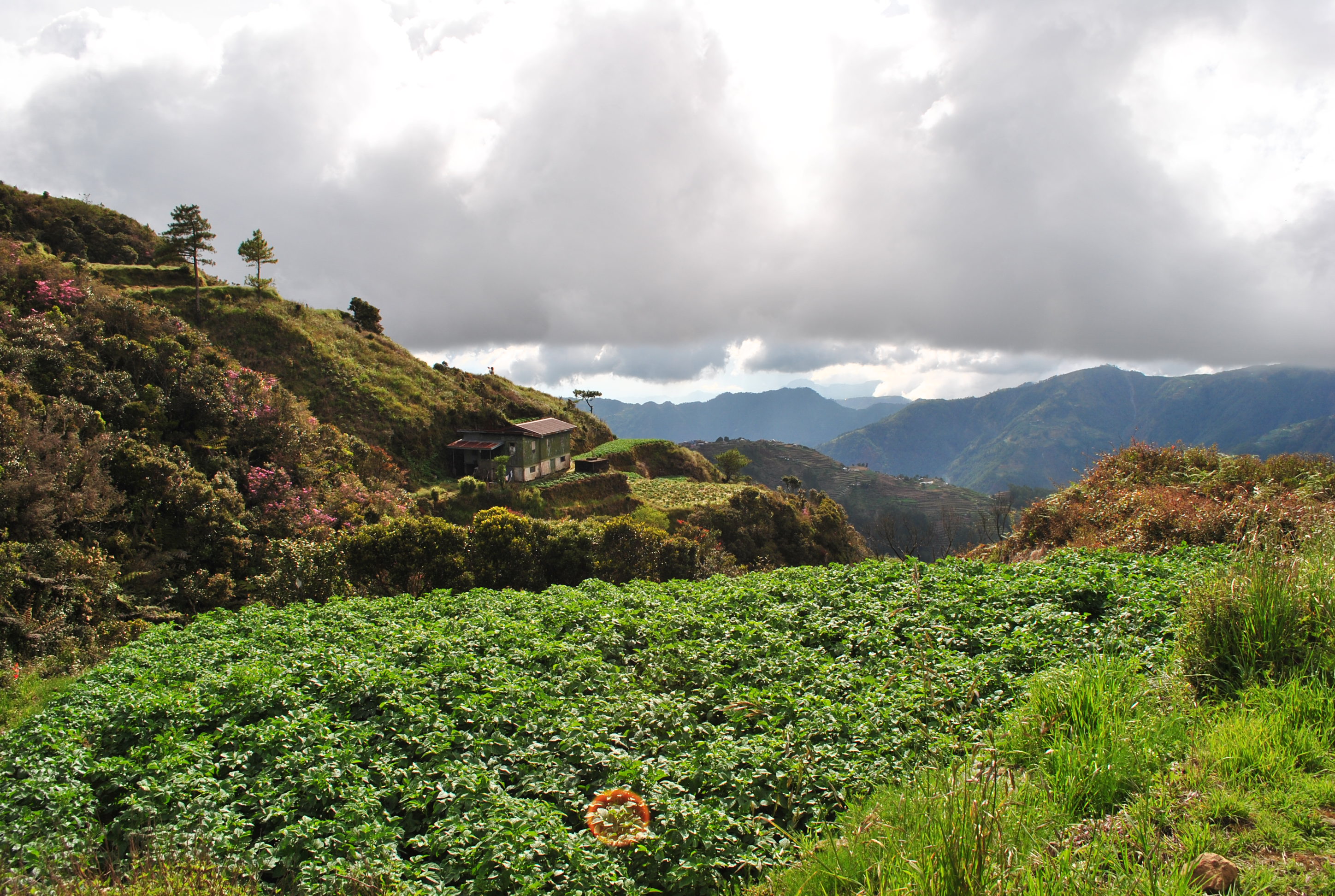
While driving down to reach the Halsema Highway, I saw a group of farmers harvesting their potato garden and I asked the owner if I can buy some. For a P 50-bill, she gave me an estimated 4-5 kilos of her potato harvest!
My trip would not be complete if I did not stop at the Halsema Highway View Deck where the Highest Point of the Country’s Highway System is located. I took some pictures of the mountain ridges all-around this place and thought of possibilities that the place could offer in terms of tourism, economy and development.

Driving back to Baguio City was an easy one. My “recovery hike” after the 1st Mt Ugo Trail Marathon and 4th “peak bagging” experience were done!

(Note: The 2nd to the last picture is the peak of Mt Timbac as seen from the Halsema Highway View Deck. Tha last picture is the peak of Mt Pulag as seen from the Halsema Highway View Deck)

Steps In “Peak Bagging” & Suggested “Tips”


The following are my personal suggestions if you want to experience “peak bagging” in any of our mountain peaks. It is assumed that you are already a seasoned runner, being a trail runner is one of the qualifications for such an experience, and it is better if you are a marathon runner. However, it is best if you are already a seasoned mountain trekker, hiker or camper.

1. Have a Plan. If you have a steady job or work where you earn a living, planning for a “peak bagging” experience takes a lot of consideration. You need ample time, scheduling, financial support and lots of positive motivation to push through with your plan. Once a quarter (every 3 months) would be a nice schedule or every time there is a long weekend (3-day vacation). The location of target mountain should also be considered in terms of its accessability from your place of origin. Of course, it will be more expensive if the location is farther from your place.

If you have a family, bring your family with you and share your passion to your wife and to your kids. If they are not interested with your outdoor activity, you can bring them with you to your destination and have them stay in a resort or place where there are other alternative outdoor activities to be experienced.

If you are a retiree, like me, enjoying your time and have a love for sports and outdoor adventures, then going out of the city and looking for different places, “peak bagging” is better than reading the news dailies, watching the TV or letting the days passed by in shopping malls/coffee shops or spending a lot of time in your car due to traffic in the metropolis.

2. Make your own research. There are lots of mountaineering resources in the Internet for your mountain destination. There are also mountaineering groups on Facebook where one can get information direct from the person you want to contact. At least, you must have a FB account to have access on these groups.

My favorite mountaineering resource in the Internet is our very own Gideon Lasco at http://pinoymountaineer.comas he categorized each mountain peak by regions and he recommends an ITINERARY for each mountain visit. However, other important data for a runner to know are not stated in his description of each mountain. Mountaineers don’t usually measure their trek to the mountain peak in terms of distance (number of kilometers/miles) but in the number of hours it would take the hikers to reach the summit. So, if they say that a hiker/camper could reach a certain peak in 5-6 hours, an average trail runner could run to the peak in 2.5-3 hours, one-half less the time for a camper/hiker to reach his destination. Faster runners could do it 1/3 of the time a hiker can do to reach the summit. However, other detailed data and information can be gathered from the comments of the his readers in every post in his website.

3. Train for Hill Running. In “peak bagging”, you need to run when the trail is flat or when you are descending along the trail and brisk walk when the trail is uphill or steep incline. For you to be consistent and faster in reaching the summit, your legs must be strong. Strong legs are developed by hill repeats as it mimics your leg turn-over during trail running. As an alternative to hill repeats, one can do strengthening exercises in the gym or at home. One can do some leg squats, lunges, stair walking and core exercises anytime of the day!

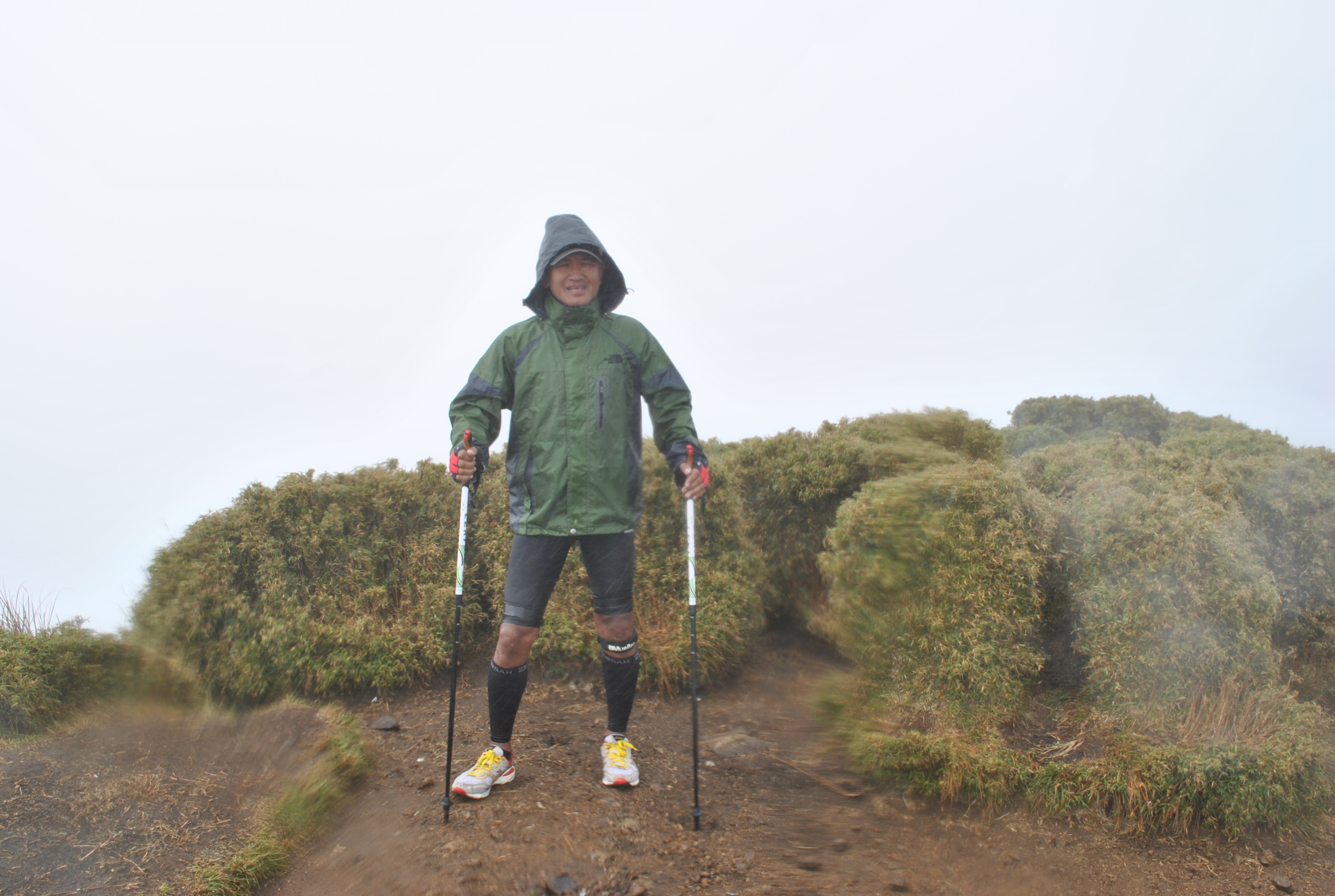
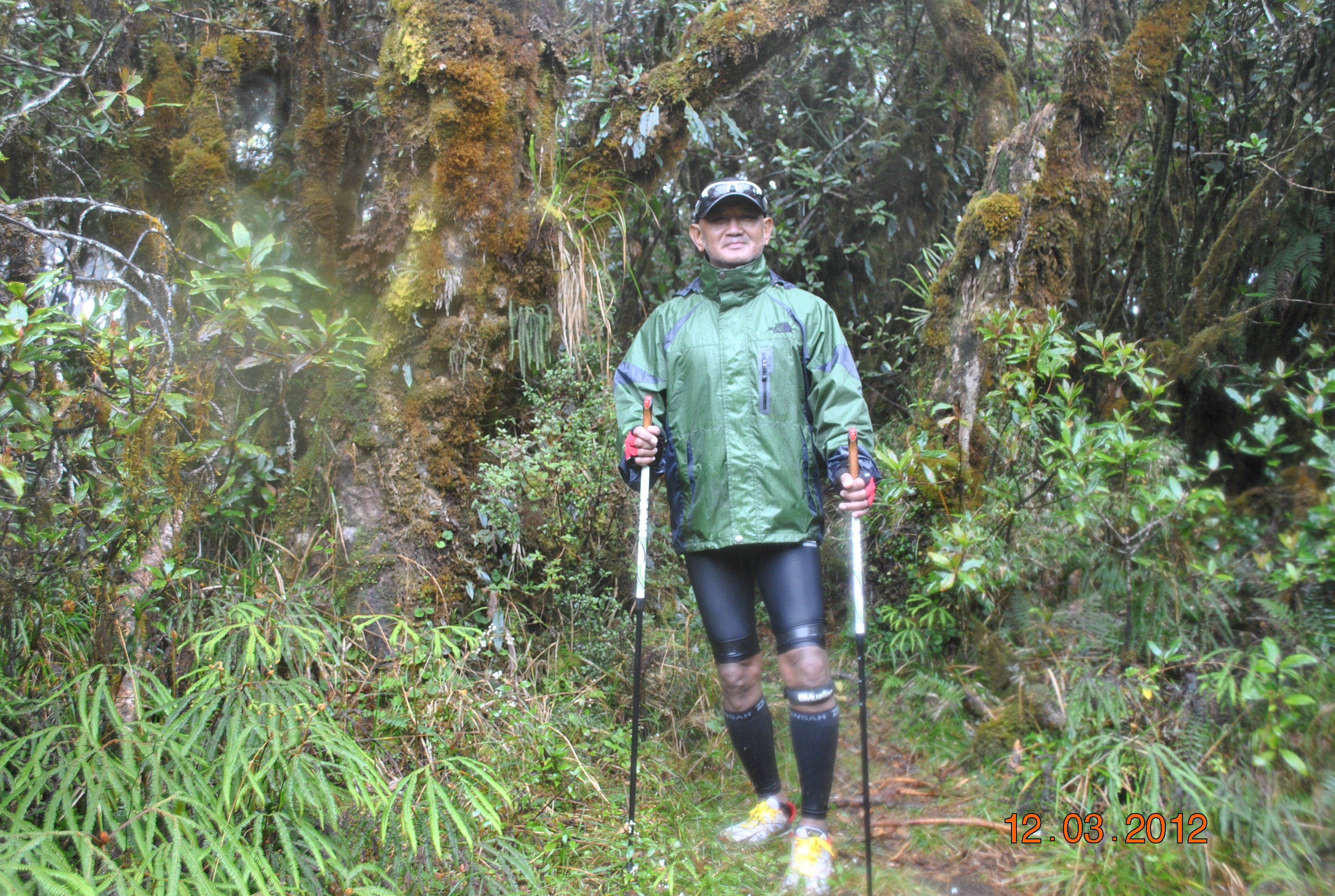
4. Prepare your apparel & equipment. Your normal running kit would suffice but as you go higher in elevation, the temperature would become colder. It is a must that you bring a light jacket stowed on your backpack/camelbak which you can use when you are freezing cold. Hand gloves are also advisable as the temperature would be freezing on top of the mountain. If your hands are starting to be numb and cold, it is a signal that you must start your descent from the mountain. Water-proof jacket is also helpful as most of the higher mountains would receive some rains usually when they are covered with clouds. Runners cap is also mandatory as it keeps the escape of heat from your body and at the same time protect your head from accidental “head-butts” from fallen trees and some branches as you pass underneath them. Hydration pack is a must! If you want to stay longer in higher summits, prepare to bring a bonnet that would cover your head and ears.

5. Prepare For Your Hydration/Nutrition. I usually bring water only in my hydration system. I was surprised that my Nathan bottle filled with water was the only water supply that I brought when I “peak bagged” Mt Pulag for a distance of 15 kilometers. Maybe its the cold weather on the higher altitude and the raining prevented my body from losing more perspiration. I usually bring “power bars” and gels in my “peak bagging” activities. They are lighter and my stomach is already used to them. At the Mt Ugo Trail Marathon, I brought my Nathan “Sprint” Handheld Bottle for my Gatorade Mix even if I was holding trekking poles. Gatorade was my extra source of electrolyte if my “peak bagging” activity is a race/competition.

6. Travel Light. I use racing flats/minimalist shoes (NB MT 101) and compression shorts & shirts on my mountain running. If I use Camelbak Hydration Pack, I only fill 1/2 up to 3/4 full of water in its bladder. I only carry minimal number of gels, power bars and Gatorade mix in my pack. Sometimes, I would pack the lightest windbreaker to my pack instead of those heavier outdoor technical jackets. My ASICS Windbreaker which I bought in Jeju, South Korea could be the lightest windbreaker that I have among my running kit. Hopefully, I would be able to buy the Patagonia Nano Jacket, my “dream jacket” for higher altitude “peak bagging”, in the near future. It can be folded and stowed in your packet.

The cheapest version of a jacket/windbreaker/poncho which you can bring is the black commercial trash bags that are available in the supermarket. Get the largest size of trash bags in the market. Simply make a hole on the closed end of the bag where you can insert you head, thus, you have a raincoat for your body and backpack. It is a must to carry at least 2-3 pieces of these black trash bags in your daypack as they serve also as trash bags for the litter you could see along the trail, camping areas or at the peak of the mountain.

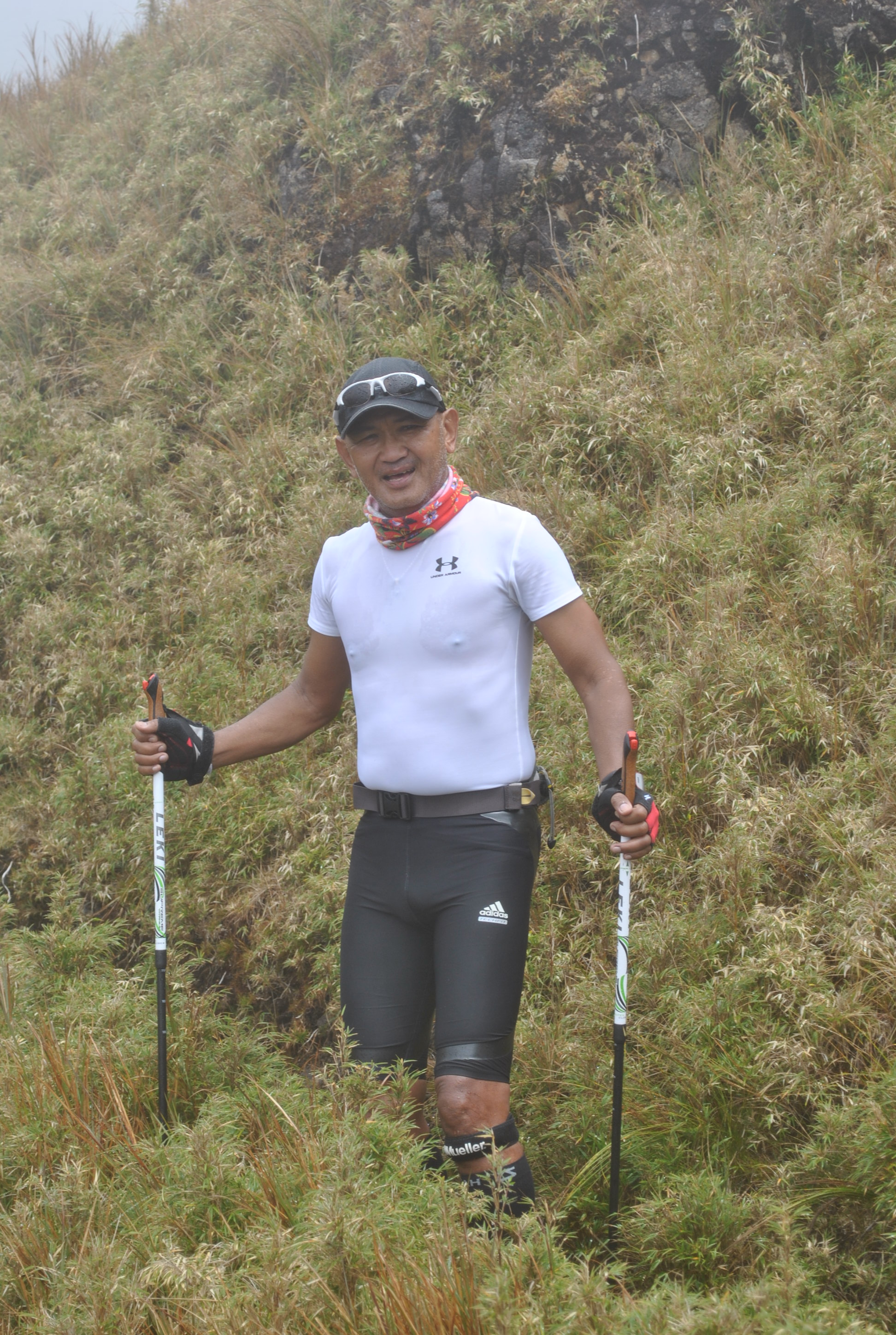
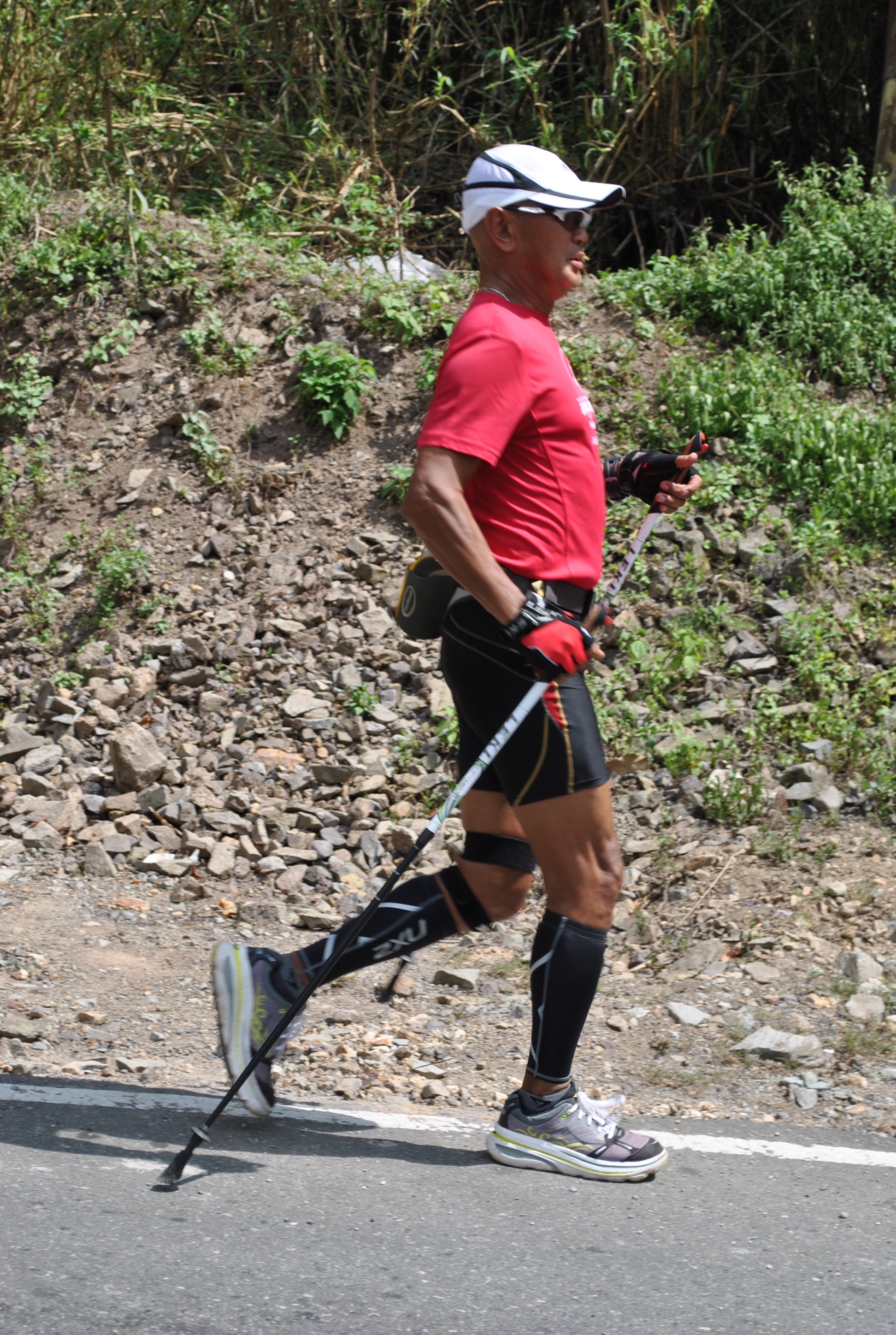
7. Trekking Poles. A pair of trekking pole is an invaluable equipment for an old trekker/hiker like me. They are useful in crossing streams and rivers; keep you balanced on uneven and slippery grounds; provide anchor and support for stronger lifting of the body on steep ascending parts of the mountain; and lessen the impact of ones feet on the ground. It takes a simple time to practice to use these trekking poles. It is advisable to use those “bike gloves” (half of the fingers are exposed) when using trekking poles to avoid blisters on your hands. On descending and flat parts of the trail route, I would carry them as if they are my batons in a running relay.

8. Prepare For Contingencies. In trekking/peak bagging, you should always “respect the weather”. If the weather would not allow you to reach the peak, it is best to retreat and make another attempt on a day with good weather. The mountain will always be there, it will never leave from his location. In a good weather, if you start your “peak bagging” in the morning, expect to reach the peak when the sun is already on top of you which means that it is already noon time. The heat of the sun would make you perspire some more and you must be able to hydrate yourself regularly. In case of any encounter with the wildlife, like snakes, deer, wild pigs, cows, or bats, just ignore them and don’t disturb them. Your main mission is to reach the peak of the mountain and not as a hunter.

9. Invest On A Light & Reliable DayPack. A DayPack can store your hydration needs (water bottles + 1.5-liter bladder), additional clothing apparel, first aid kit, food, electrolyte tabs/mix, lighting equipment, and trekking poles.

10. Know Some Protocols/Etiquette/Culture of the People

a. In popular mountains which are being visited by most campers/mountaineers, you need to pay a permit fee and attend an orientation lecture from the personnel of DENR. It is best to register yourself to the barangay hall/barangay officials where the mountain/trailhead is located or to the nearest police or military unit/detatchment in the area before pursuing your activity. On the same manner, inform them on your departure from the place. There are some barangays that would ask P 20.00-P 40.00 as permit fee per person in lower elevation mountains.

b. Be prepared to get a “guide” for a fee. The guide must be requested from the Barangay Officials so that there is accountability in case of any complaints from the hikers. In Mt Apo, I paid P 350.00 for my guide but I paid him an extra tip of P 150.00. In the Ambangeg-Pulag Trail, I paid P 500.00 for my guide which is good up to 5 persons. But for the longer and harder Akiki-Pulag Trail, a guide will cost you P 1,800.00. Even if I don’t need the services of a porter, it is worthy to note that each porter is being paid a minimum of P 500.00 for every 15 kilos of weight. I always see to it that I have a guide in all my “peak bagging” feats.

c. LNT or Leave No Trace. This is the number ONE Rule in any outdoor activity which is “common sense”. Except for Mt Pulag, all the other mountain trails and peaks that I bagged have trashes. I really don’t know if the locals are the one’s littering their trash along the trails and on the peaks or the visitors.

d. Silence Means Good Weather. There is no point why hikers/trekkers would shout on the top of their voice if they see nice scenery and vistas along the mountain trail or while they are at the peak of the mountain. There are also groups of campers that would bring intoxicating liqour on the peak of the mountain and drink to their hearts content and noisy as a result before retiring to their respective tents. Other would mimic or answer the sounds from the birds through their loud voices or involve themselves in loud conversations and laughter while hiking along the mountain trail. All of these are “toxic or pollutants” on the peaceful environment of the forests and the mountains. Local people would predict unfavorabe weather a day or two after such “noise” are done in the mountain!

e. Smile & Greet Everybody you meet along the trail. Find time to talk to them even for a few seconds. Your message should be clear that you are there to simply have a quick look of the place or just passing through. Always be positive on your comments and observation of the place.

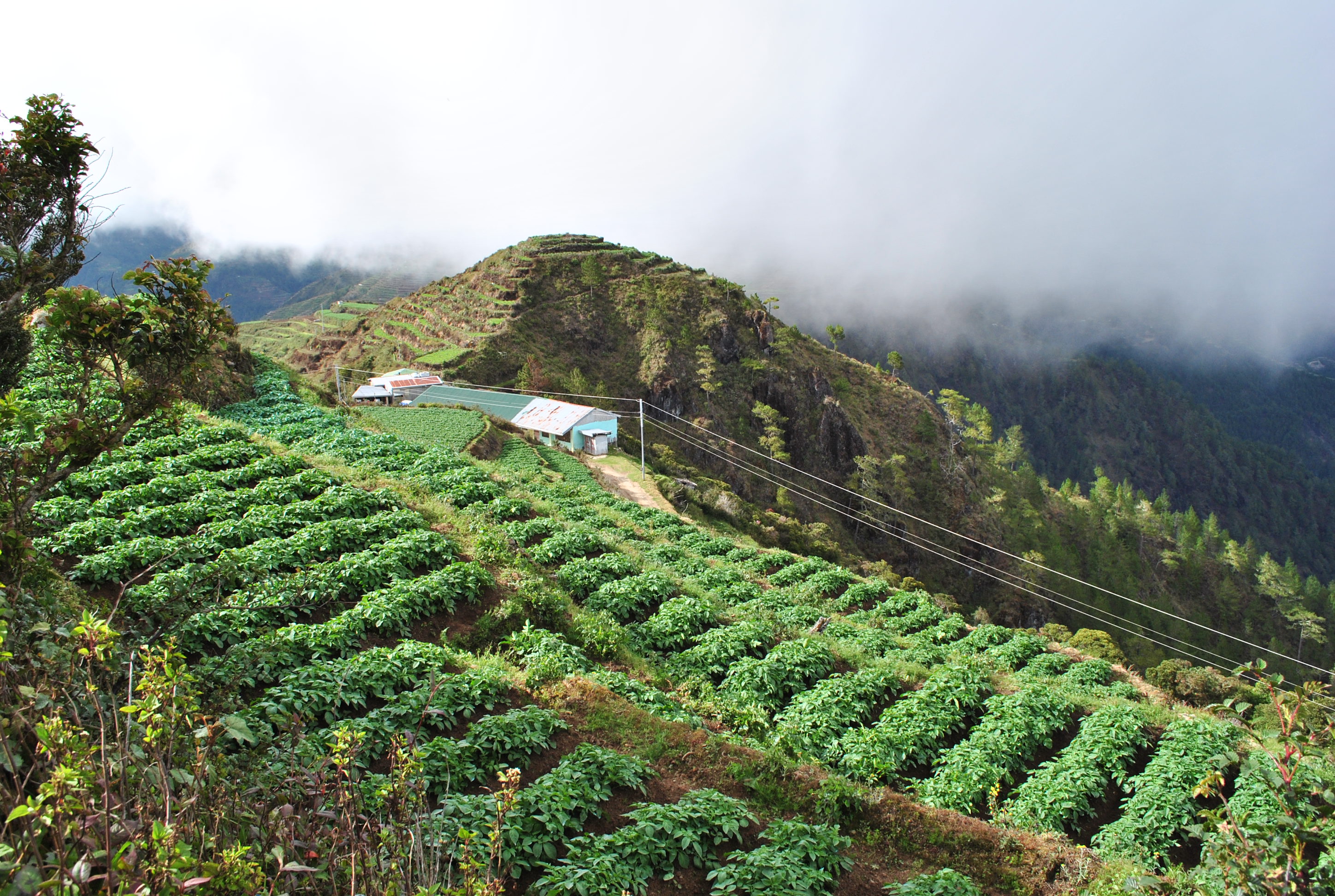
f. Most of the mountains in the Cordillera Region & along the Bansalan Trail to Mt Apo have vegetable farms on the foot and slopes of the mountain. You should not mess up or step on the growing plants on these garden/vegetable farms. Never try to harvest or pick any of the vegetables or root crops as you pass by these farms. Most of the farms have cabbage, carrots and potatoes.

11. As much as possible, make a journal or document of your peak bagging activity in every mountain that you visit or attempt to make in reaching a summit. There is no shame if you could not make the grabbing in your first attempt as the mountain will always be there waiting for you. If you have a Garmin/GPS Watch, it would be nice to get the following data: Duration of Peak Bagging Activity from your specific Starting Point to the Peak and back; Distance recorded; Altitude of the Peak; Profile Elevation; Average HR; and other data taken from the equipment. Your personal experience will somehow inspire others to go to the outdoors and be interested in “peak bagging” activity.

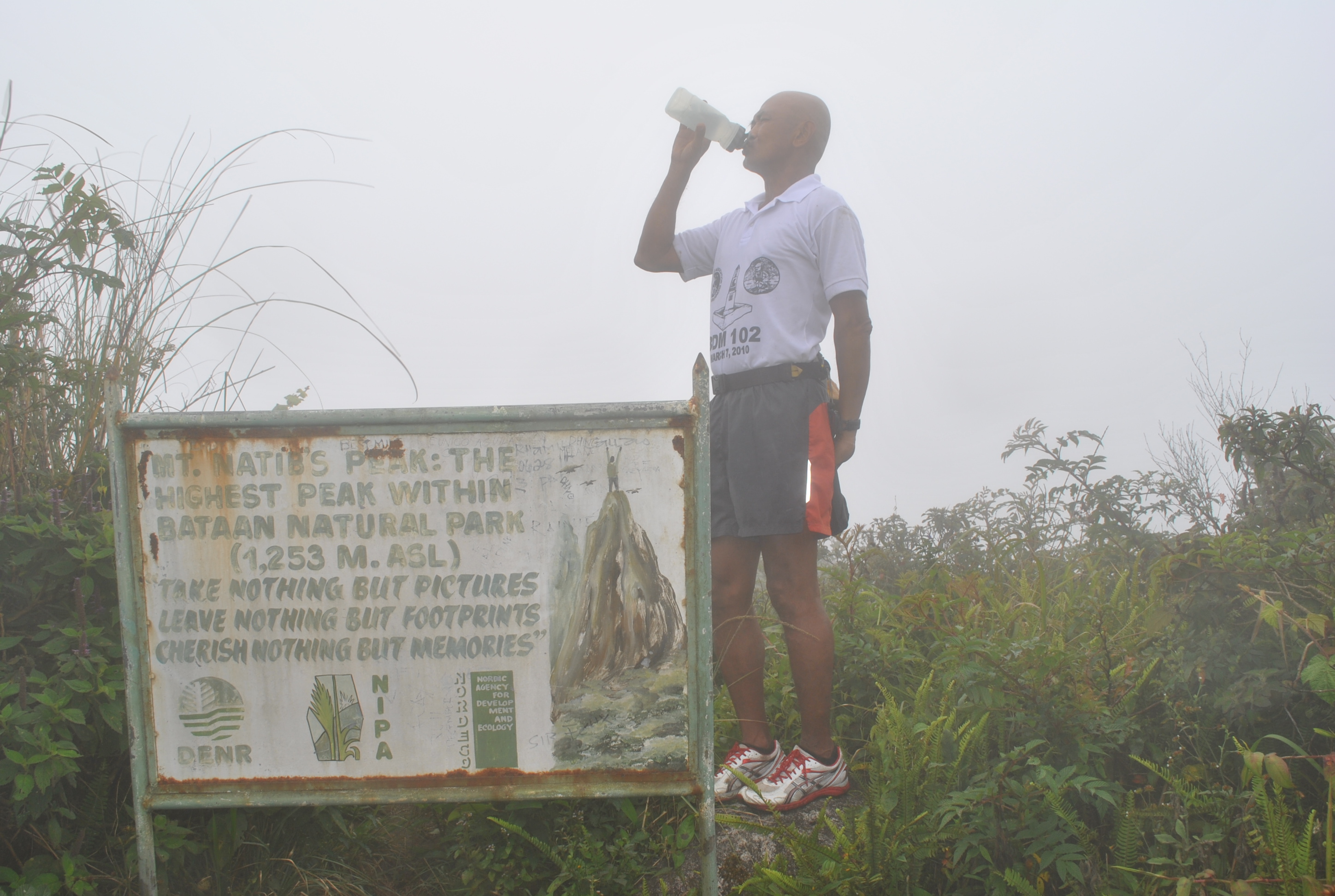
(Note: Pictures from Mt Pulag, Mt Natib, Mt Ugo, and Mt Timbac)

2nd International Mt Apo Boulder Face Challenge


This is the 5th Edition of this Adventure Race being held in Sta. Cruz, Davao Del Sur and at the same time the 2nd International Edition of this race which was held last April 28, 2012.

I came to know about this race when I asked the members of the Elite Team Bald Runner if they are interested to join in this year’s TNF 100 in Baguio City. The answer that I got was that they had been preparing for an adventure race to be held in Mt Apo/Davao Del Sur. It was my first time to hear such event and later found out that the Cash Prizes are simply not to be ignored. (Note: My Elite Team Bald Runner had been past Champions in the TNF 100 since 2008). I heard for the second time about this event from mountaineers when I had my “peak bagging” feat at Mt Apo during the Holy Week. After a thorough research on the mechanics of the event on their website, I was hoping that my elite runners would make it to the podium finish.

Due to its “low-profile” exposure among the ultrarunners in the country and its mechanics, trying to form teams among the “usual suspects” would be a hard proposition. Plus the consideration on the logistics and financial resources needed to join the race is very expensive. However, if you are good in mountain trail running and have the capability to land among the podium finishers, the Cash Prizes would replace ones investment in joining this race.

I was surprised to see a picture of Gerald Sabal posted on Facebook with the boulders of Mt Apo as the background with a note that he is featured as one of the Champions of the event. I immediately called Gerald to congratulate him and found out that his brother Cresenciano, was his team mate!

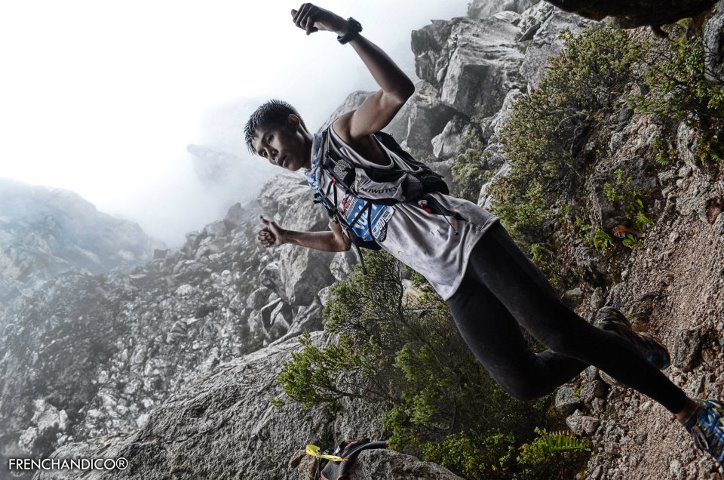
Cresenciano and Gerald Sabal won as the Team Champion in the 2nd edition of the International Boulder Face Challenge and won the purse of P 150,000. The team of Alquin Bolivar and Raul Lamprea landed as the 7th Finisher with a purse of P 10,000.

Cris and Gerald established a Course Record with a time of 15:38:33 hours, breaking the old course record by more than 7 hours! Awesome!

Read the result and related story on Dabaw Pinoy.

Congratulations Cris & Gerald and to all the Finishers!

Taklang Damulag 50K/50M (TD 50/50) Ultra Trail Run & Half-Marathon


In connection with the celebration of the 50th Founding Anniversary of the Special Forces Regiment of the Philippine Army in June of this year, the Philippine Association of Ultrarunners (PAU) & Bald Runner’s Events had scheduled the conduct of three (3) trail races inside Fort Magsaysay in Palayan City, Nueva Ecija on June 2, 2012.

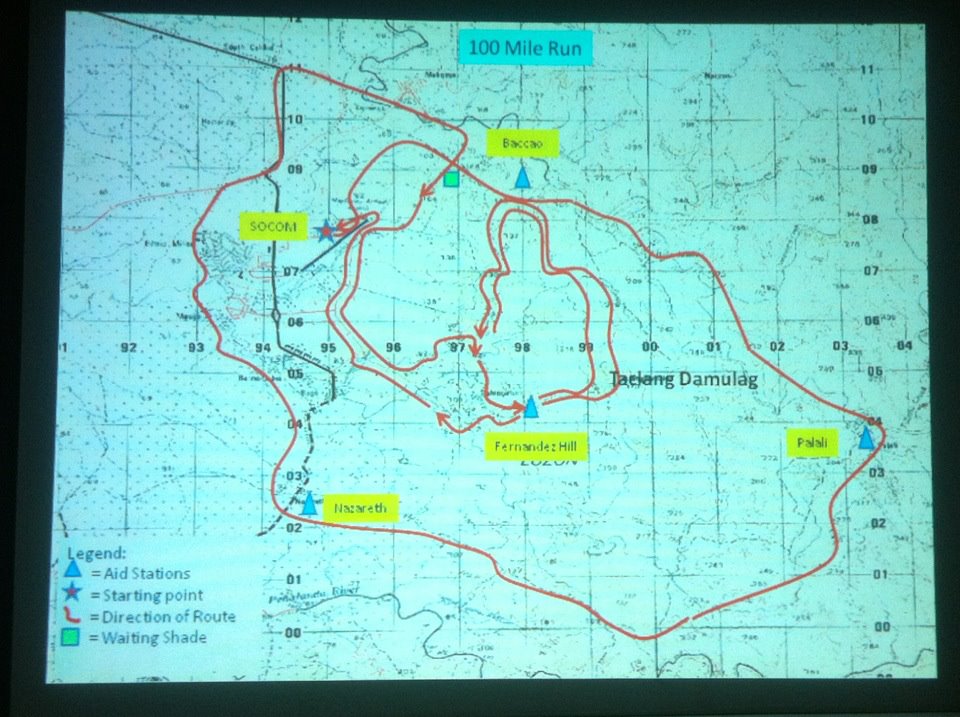
These races will serve as a “recon or test run” for those who are intending to join in this year’s 2nd edition of the Taklang Damulag 100-Mile Trail Endurance Run which is scheduled on December 15, 2012.

The following are the details of the races:

Date of Race: June 2, 2012

Place of Assembly and Starting Area: Infront of the SOCOM Headquarters, Fort Magsaysay, Palayan City

Assembly Time for 50K & 50M Races: 3:30 AM June 2, 2012

Assembly Time For 21K Run: 4:30 AM June 2, 2012

Gunstart For 50K & 50-Mile Runs: 4:00 AM

Gunstart For Half-Marathon: 5:00 AM

Cut-Off Time For 50-Mile Run: 16 Hours

Cut-Off Time For 50K Run: 10 Hours

Cut-Off Time For 21K: 4 Hours

Registration Fee For 50-Mile Run: P 2,000.00

Registration Fee For 50K Run: P 1,500.00

Registration Fee For 21K Run: P 1,000.00

***Included in the Registration Fee: Dinner & Accommodation Inside Fort Magsaysay on Friday night, June 1, 2012.

Registration Period: May 2, 2012 to June 1, 2012

Registration Center/Area: ARC Running Store OR Deposit the Registration Fee at BPI Savings Account #0296-0673-22 in favor of Jovenal Narcise OR at the Dinner/CLP & Race Briefing on or about 6:30 PM of June 1, 2012 at the SOCOM Headquarters. (Note: Please bring your validated deposit slip to the CLP/Race Briefing)

Good luck & see you at the starting line!

Race Report: 1st King Of The Mountain (KOTM) Mt. Ugo Trail Marathon


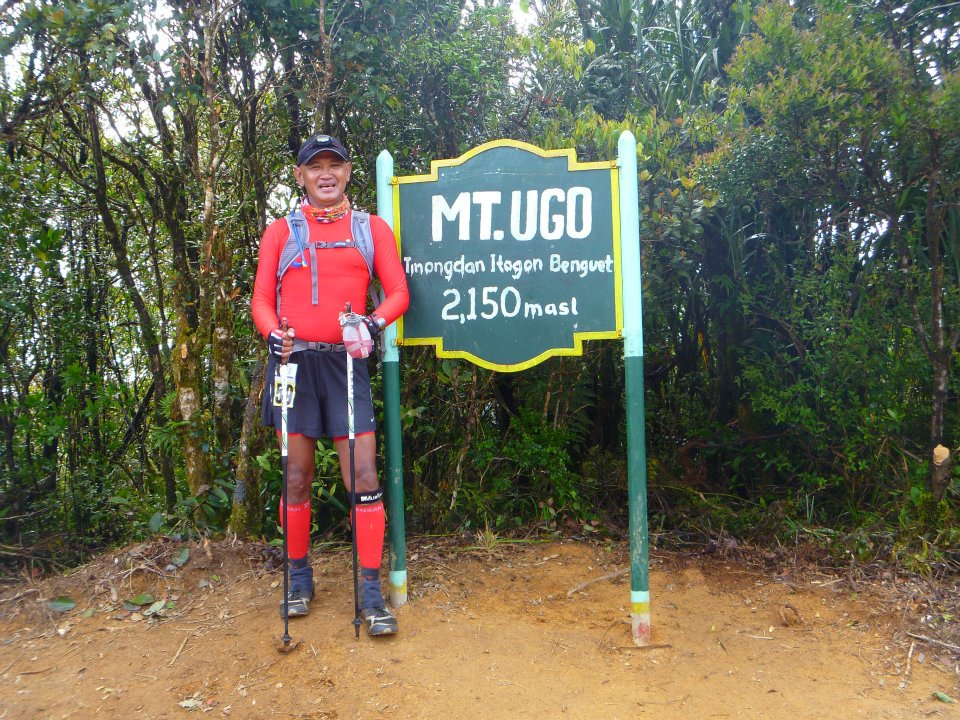
#3 “Peak Bagging” @ Mt Ugo, Itogon, Benguet via Kayapa, Nueva Vizcaya (2,150 MASL)

4:30 AM April 1, 2012/Kayapa, Nueva Vizcaya

This mountain trail run was the very reason why I started my “peak bagging” feats. On my way to Kayapa, Nueva Vizcaya to recon the route of this marathon race, the road to the Mt Pulag National Park was there nearer from the Ambuklao Dam and the attraction of the said mountain due to its popularity was hard to resist. My trip to the peak of Mt Pulag gave me much confidence to reach the peak of Mt Ugo which is 800 meters lower. And my previous trek to the peak of Mt Natib, two days before race day, gave me a general impression on what to expect in climbing mountains.

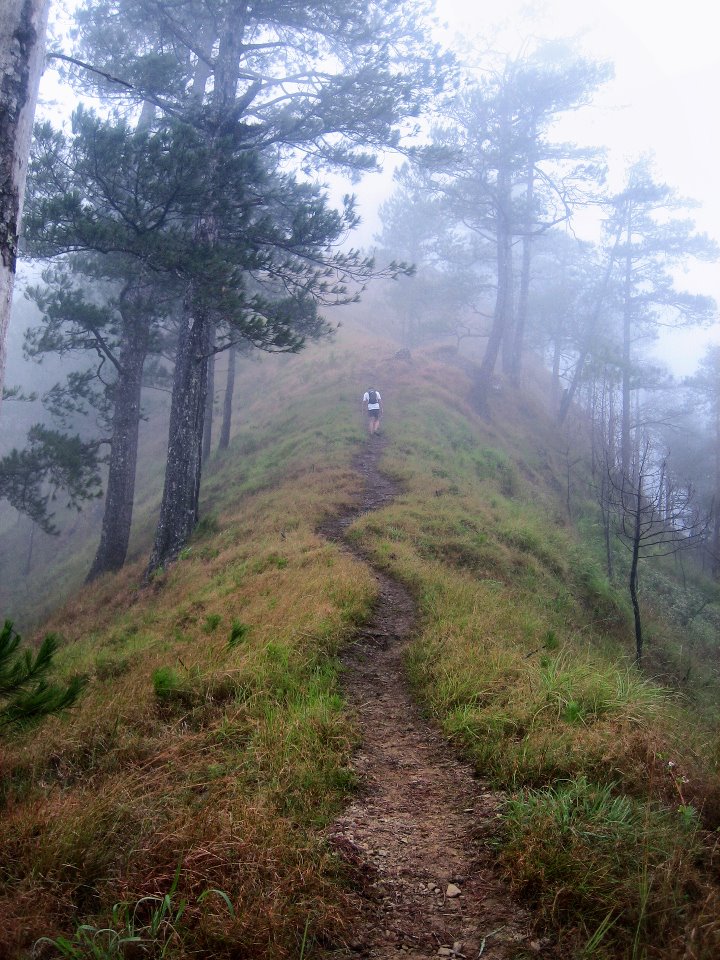
If you are climbing to the peak of a mountain, expect a slightly ascending and winding path with so many switchbacks from the base of the mountain or from the trailhead until you reach the base of the peak. The trail is wide and well-maintained where one has to expect more ascending portions than descending ones. From the base of the peak, expect a single-track trail that is very steep on only one side of the peak. I usually call this as the “assault” trail to the peak/summit. Due to steep incline of every step of the trail and the thin oxygen in higher altitudes, one has to experience hardness of breathing and faster heart rate, thus, making one perspire some more. In a race, it is very hard to jog on the steep trail on the side of the peak of the mountain. Walking moderately would be a good option to adopt while on this final assault to the peak.

Depending on the kind or nature of the mountain, every trail is different. If a mountain is a volcano, dormant or active, expect some hardened lava and big rocks as part of the trail. If it is an ordinary mountain, expect a lot of changes on the vegetation or biodiversity of plants in every range of elevation and the trail ground can sometimes be pure earth without any rocks.

I arrived in Kayapa, Nueva Vizcaya after lunch of Saturday, March 31 and my friend, Jonel was at the Municipal Hall & Plaza giving intructions to his staff and at the same time receiving runners who just arrived in the area. Since I gave him the notice weeks ago of my intention to join this event, he designated the only “home stay” facility in the town as my place of accommodation. Kayapa is a small town and there are no commercialized tourist facilities in the area. Just like in Kabayan, Benguet, they have also a “dormitory-type” transient house where the rate is very cheap—P 200.00 per night in double-decked beds. Some of the runners were accommodated in the transient facility of the different barangays of the town. However, there is a big space for campers if runners would decide to pitch their tents infront of the municipal church.

At 4:00 PM, Jonel as the RO/RD of the race event, conducted the race briefing at the Municipal Plaza, infront of the Municipal Hall. It was nice to meet the “usual suspects” in ultra races as well as the local runners from Baguio City and Region 1. I was happy to see runners who came all the way from the Ilocos Provinces, Central Luzon (Region 3) and Metro Manila.

After the briefing, some had their “carboloading” in the local eateries located in the Public Market of the town which is just across the road from the Municipal Hall. It was time to taste the local foods! The pork stew with the local’s native pig is always a winner! And there is also a bonus dish which is the “adobong inasinan na baboy” (preserved salted pork cooked with soy sauce & garlic). The eatery where I ate have also pancit (noodles)!

After dinner, I had a brief talk with some of the runners and everybody was in a relaxed mood. Nobody talked about the race and what to expect during the race. On my end, I told them about my experiences in my new passion of “peak bagging” where Mt Ugo will be my 3rd mountain peak to conquer!

At 9:30 PM, I was already sleeping. However, I was awaken by the movements of the other runners staying in the same place who started to have their shower as early as 1:30 AM. There is no point of forcing myself to sleep some more. I slowly prepared my things and took a shower.

At 4:00 AM, I was already with the rest of the runners at the Starting Line/Municipal Hall which is located across the road from the place I was staying. It was nice to greet more friends and everybody were all smiles. I didn’t see any tense looks or faces among the runners. We were there to enjoy the outdoors and have fun in experiencing the 1st Mountain Trail Marathon in the country.

In a simple ceremony, Jonel led the Invocation/Prayers and I was the one who led the singing of the National Anthem. After a simple welcome and reminders about the critical areas in the race from Jonel, we were ready to go. At the schedule start time, 4:30 AM, the race started with a simple countdown from the count of 10 to 1 & “GO!” from the Race Director.

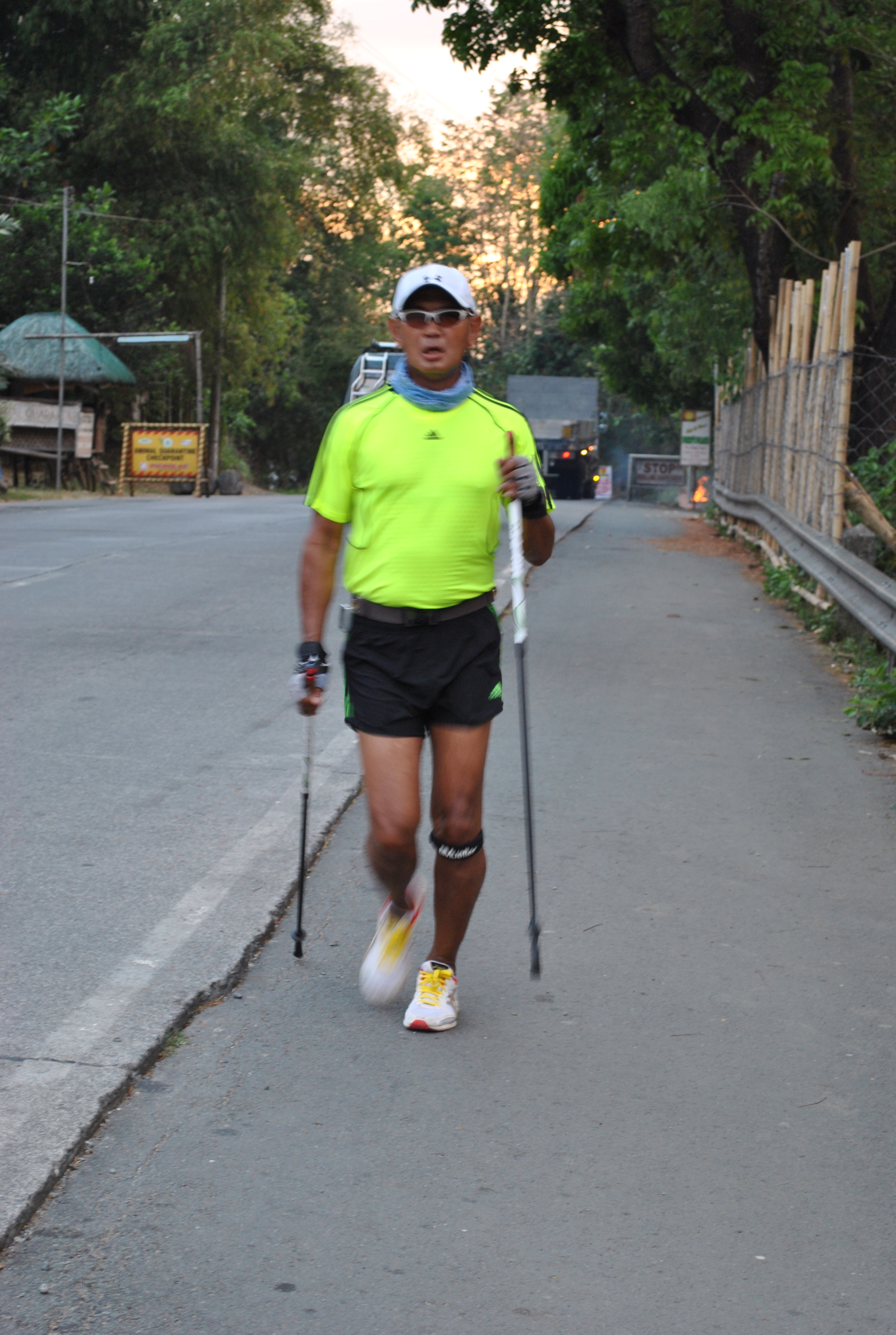
The first 5 kilometers was an uphill/ascending route along the Benguet-Nueva Vizcaya. I did not run or jog on this part. I just simply brisked walked with the aid of my trekking poles. After 2 kilometers of this winding uphill road, I knew I was one of the last runners of the more than 150 runners who joined the half-marathon and the marathon distances. There was nothing to worry as I knew there will be more ascending portions as the race progresses.

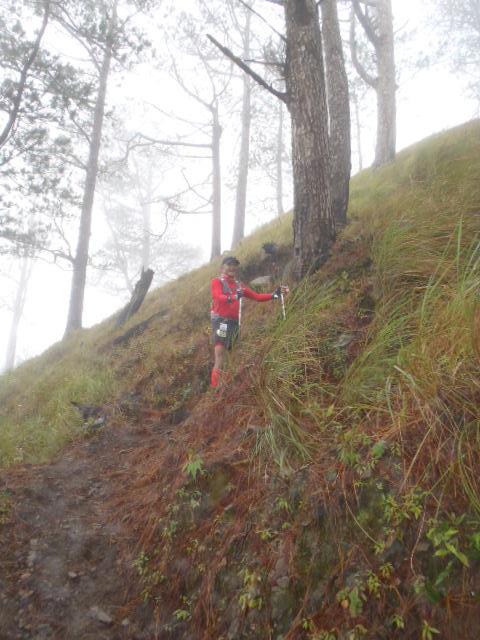
As I reached the trailhead, I started to jog along the unpaved road leading to a narrower trail. It had been raining for the past days and I knew that most of the route will be slippery and muddy on portions with loose soil. I would run on flat and descending portions and then brisk walk on steep inclines. This ritual had been repeated through the race. I would be very careful on portions where there are slippery rocks and muddy portions of the trail. I was very confident on my footings due to the trekking poles I was using.

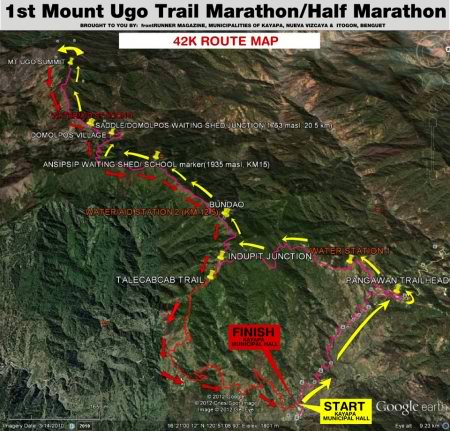
In less than 1 1/2 hours, I was able to reach the turn-around point of those who were participating in the half-marathon at Bundao and I was able to meet the lead runners who were under way to the finish line. I said to myself, the half-marathon distance did not offer much challenge and nice scenery for the runners. I just envy the runners that they are through with the day!

I could say that the trail from Kayapa side is well-maintained and I could see lots of vegetable farms on the sides of the mountains all around. Well, there are animals also that you could meet along the trail. I observed cows and wild/native pig on the sides of the trail.

After almost 17 kilometers, I met incoming runners who were telling me that I was on a wrong trail and I had to retrace myself to the nearest trail intersection. It was good, I was lost for only about 50 meters!

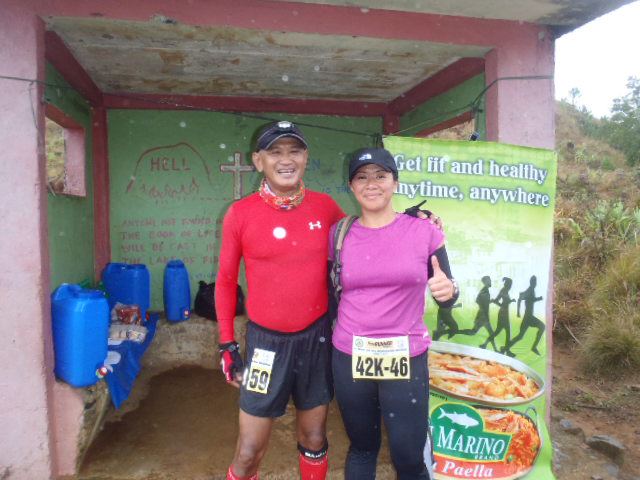
I memorized the word “Domolpos” as the place of the last Aid Station towards the peak of the mountain and it was my target to reach where I could take my first food through my power bars and gels and Gatorade mix. I was with a group of runners (Ed Yonzon, Chito Carreon, Vener Roldan and Gay Baniwas, a lady runner from Baguio who finished 1st Runner-Up in the Ladies Category) when I reached this place. Gay asked me to have a picture with her and later on,  I remained in the Aid Station as they left one by one. I took a pee, ate my energy bar, took a gel, and mixed my Gatorade powder. I guess, I spent almost 3-4 minutes in the process.

When I was back on the trail, I could no longer see the rest of the runners who were with me at the Aid Station. I kept on pushing myself until I saw the back of Gay and I was relieved. Gay became as my “guide’ towards the peak of the mountain. We would have another and more photo-ops along the steepest portions of the “assault” trail towards the peak. I passed her when she stopped to take some more snapshots of the scenery around the trail.

I kept on pushing and digging more of my trekking poles on the steepest parts of the peak and regularly looking for the bright light to appear in between the plants and bushes that cover the peak. If I could see a brighter light source in between the trees and plants ahead of me as I look up to the direction of the “assault” trail, it means that the peak is within my grasps!

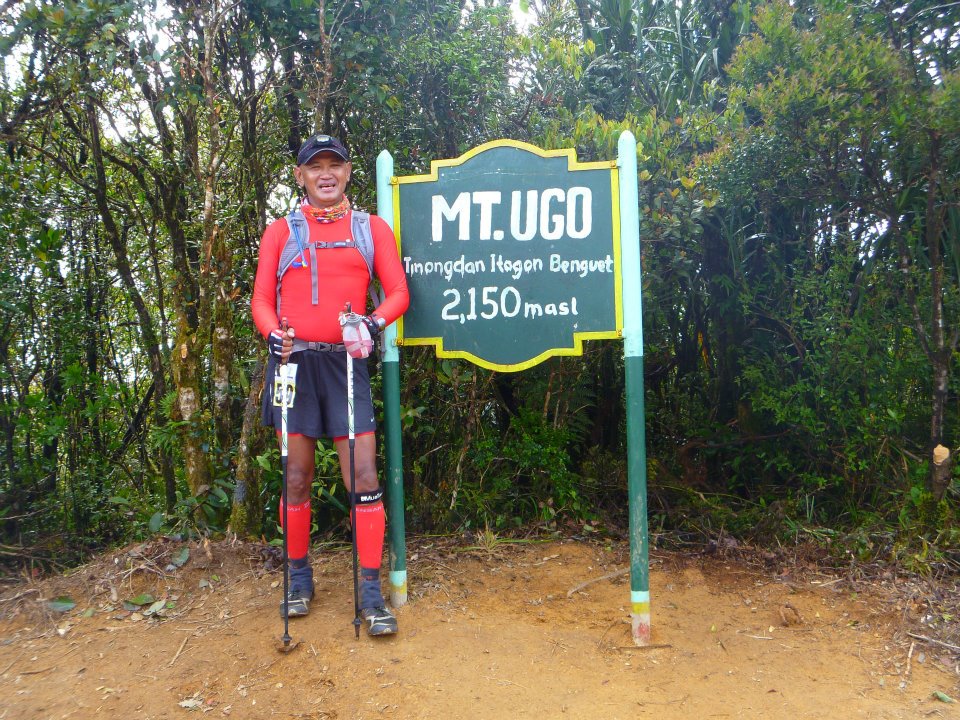
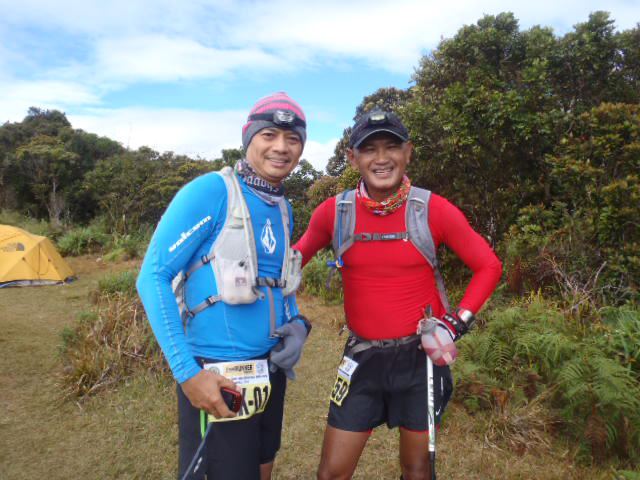
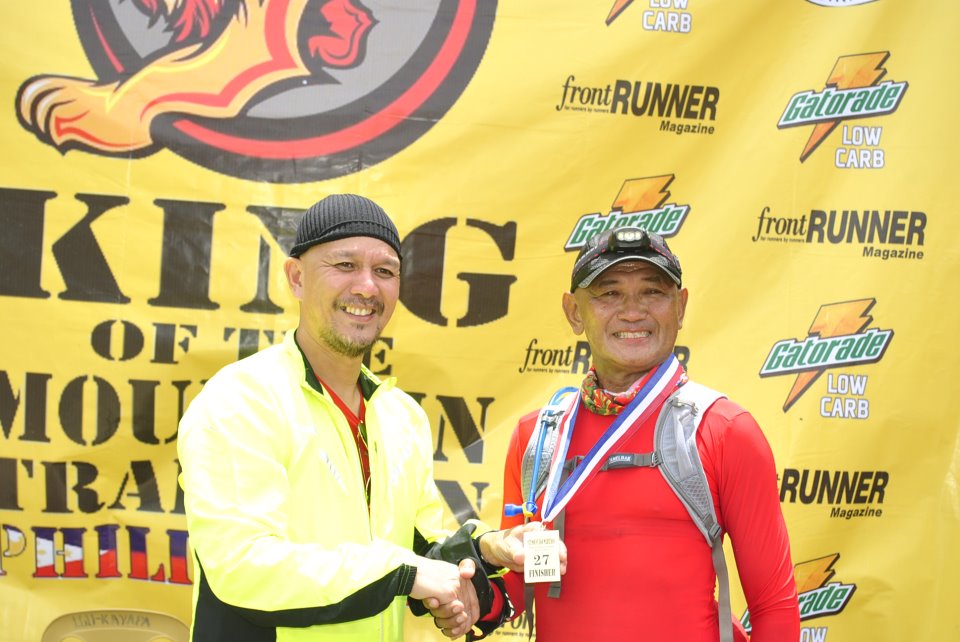
After 4:25 hours, I reached the peak and I was able to meet again Chito, Vener, and Ed Yonzon who just happened to be having their photo-ops near the peak’s marker. I congratulated Koi Lapira for a nice route as he prepared to take a picture of me at the peak marker as a proof that I reached the turn-around point. My GF 305 registered a distance of 23.1 kilometers and an elevation of 2, 165 MASL. After my photo-ops with Koi Lapira, I joined the rest of the runners for another pose.

After my photo-ops with Koi Lapira (the evidence that I reached the turn-around point), I joined the rest of the runners for another picture pose. On our descent to the Domolpos Aid Station, I led the runners at a fast & decent pace.

At the Aid Station, I did the usual ritual—pee, eat, and mix my drinks while the rest of my companion started to resume their run. At the Domolpos Elementary School, I was able to catch up with their tail but I needed to slow down my pace as I approached a very steep trail as I left the school. As I reached the top of the trail, I could no longer see them on the flatter portions until I was able to pass one runner.

When I was about to approach the next Aid Station (Ansipsip), I saw 3 runners who just left the station. I saw Philippe Arenillo, a Pinoy runner, and the French guy whom I met the day before the race running in a single file. I stopped at the Aid Station and drank some Mountain Dew and asked from the Marshall what is my ranking/position among the runners who just passed. The marshal said that I was #30. I became excited as I have some “targets” to follow. However, I was still trying my best to catch up with the group of Chito, Vener and Ed.

Few meters from the Ansipsip Aid Station, I was able to pass the Pinoy runner and the French guy and ultimately joined Philippe. Philippe and I brisked walked and jog together on those descending portions of the route along Telecabcab Trail. I could not speed up on those steep descending trails because I was trying to protect my painful knees! My quads were already burning while the trail was very slippery. More fences to overcome until Philippe asked me for him to go ahead after having a conversation with him for about 2 kilometers.

Philippe became my “target” as I could see him infront of me. Switchback after switchback, I could still see him until I saw another runner who was walking and later overtaken by Philippe. At this moment, I was #28 runner! When I approached the runner, it was Ron Sulapas and I engaged a conversation with him and encouraged him to join me to catch up with Philippe. He joined me in my jog but later after a few minutes he slowed down and I continued my run. I could still see Philippe about 10 meters infront of me but he started to increase his pace until I lost him. I said to myself, #27 finisher would be a good accomplishment already!

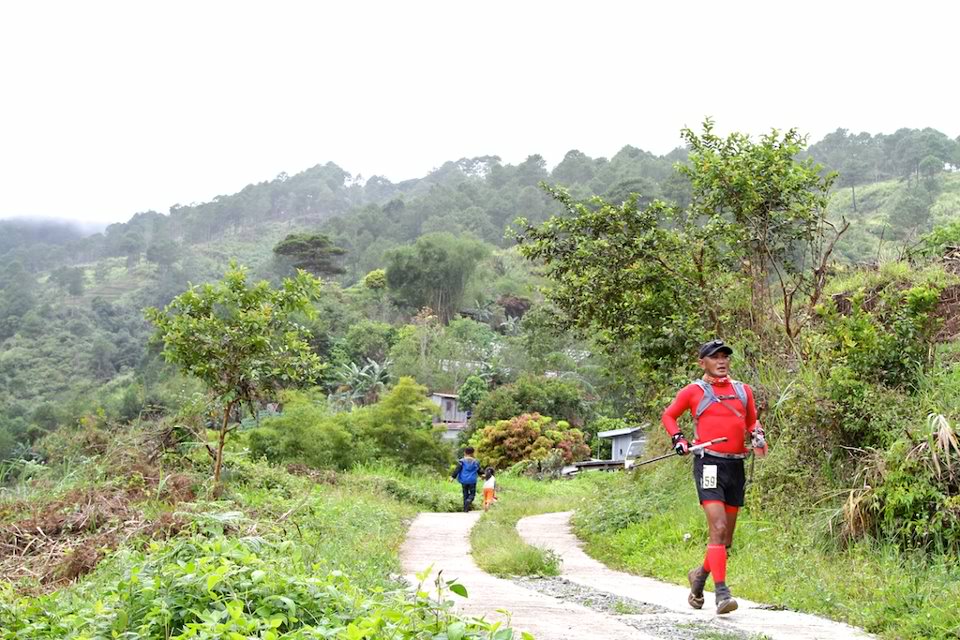
As soon as I reached the last incline of the route/trail, I was back on the main road and the last 50 meters of the race was very fulfilling. I could here the banging of a gong, the ringing of cowbells, and the cheers of those who finished ahead of me from the finish line. I was all smile on those last 50 meters as I carried my trekking poles as if they are my batons! I crossed the finish line in 7:56:57 hours. Officially, I am ranked as #27 out of 69 finishers. Not bad for a 59-year (& 11 months) old runner.

The following were the data downloaded/recorded by my Garmin Forerunner 305:

Distance: 42.06K

Average Pace: 11:20 minutes per kilometer

Average Speed: 5.3 Km/hr

Maximum Speed: 12.5 Km/hr

Average HR: 150 bpm

Max HR: 171 bpm

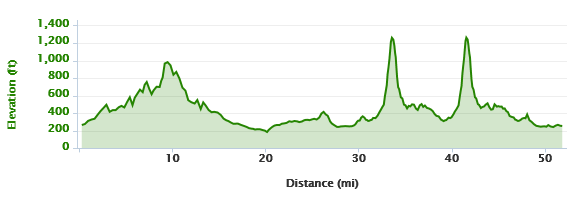
Total Ascent: 2,751 meters

Total Descent: 2,794 meters

Highest Peak Elevation: 2,169 meters above sea level

Distance From Start to Peak: 23K

If you want to become an all-season trail runner, this is a Marathon Trail Race which you should not miss. I highly recommend this trail run. However, you should find time to make a reservation on your accommodation in the town of Kayapa weeks before the event and if possible, conduct a recon on the said mountain.

Congratulation to Jonel, his FrontRunner Magazine staff, and to all the Finishers for a job well done!

See you on May 26-27, 2012 for the 1st KOTM Mt Ugo Trail Ultra Marathon Race!

(Note: Pictures Courtesy of Jake Manzano, Gay Baniwas, Ed Jonson & Ismael Ilagan)

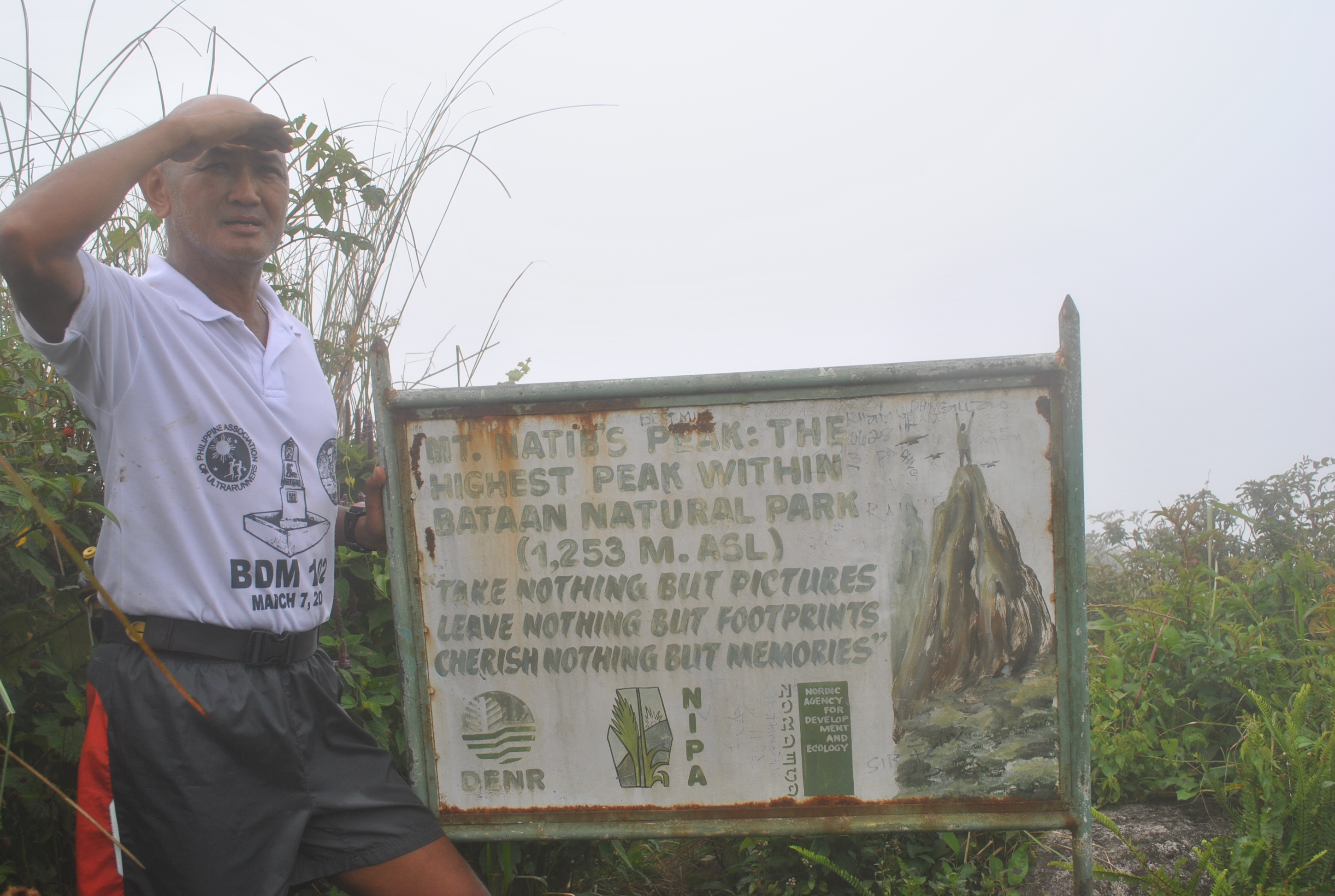
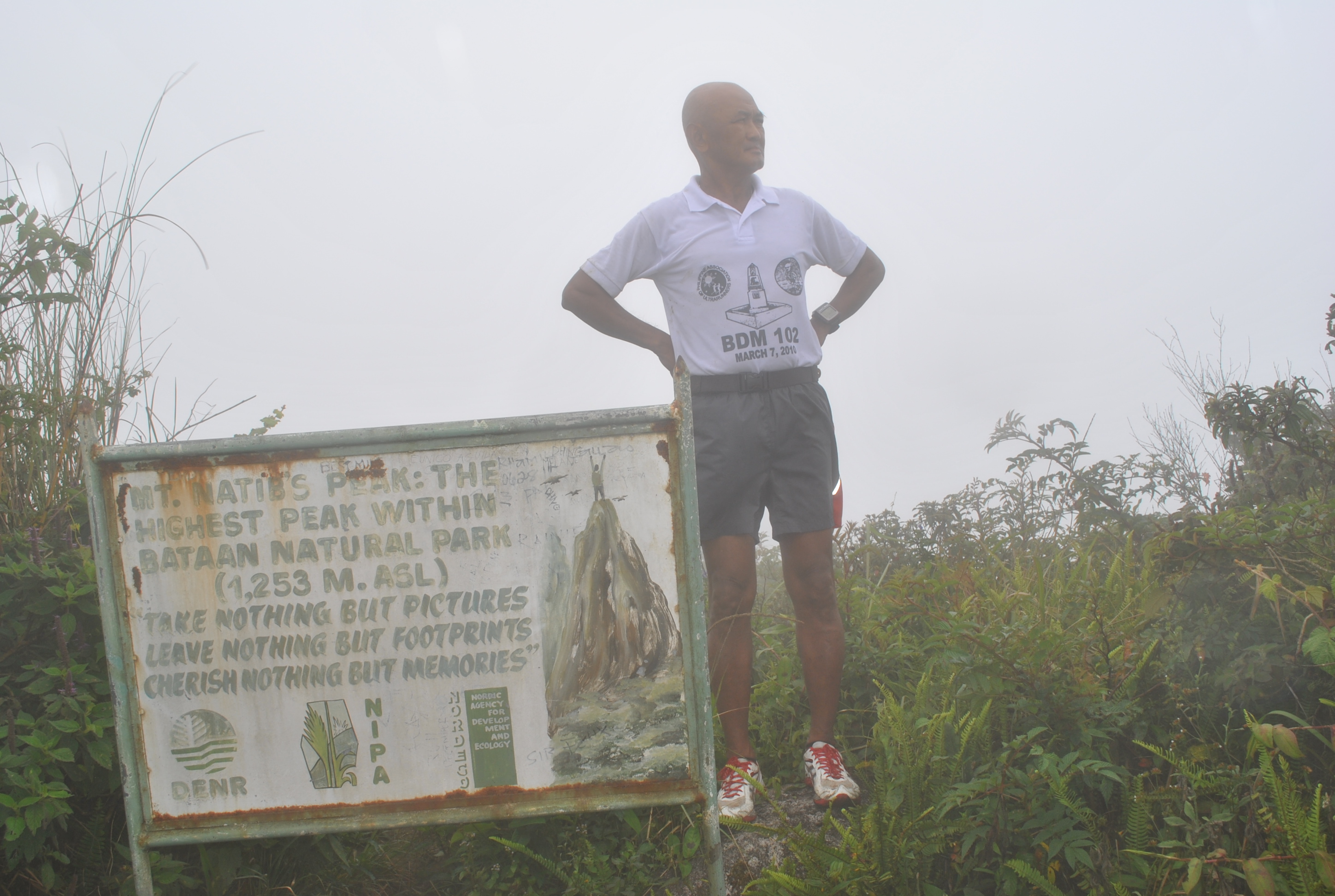
#2 “Peak Bagging” @ Mt Natib, Bataan (1,287+ MASL)


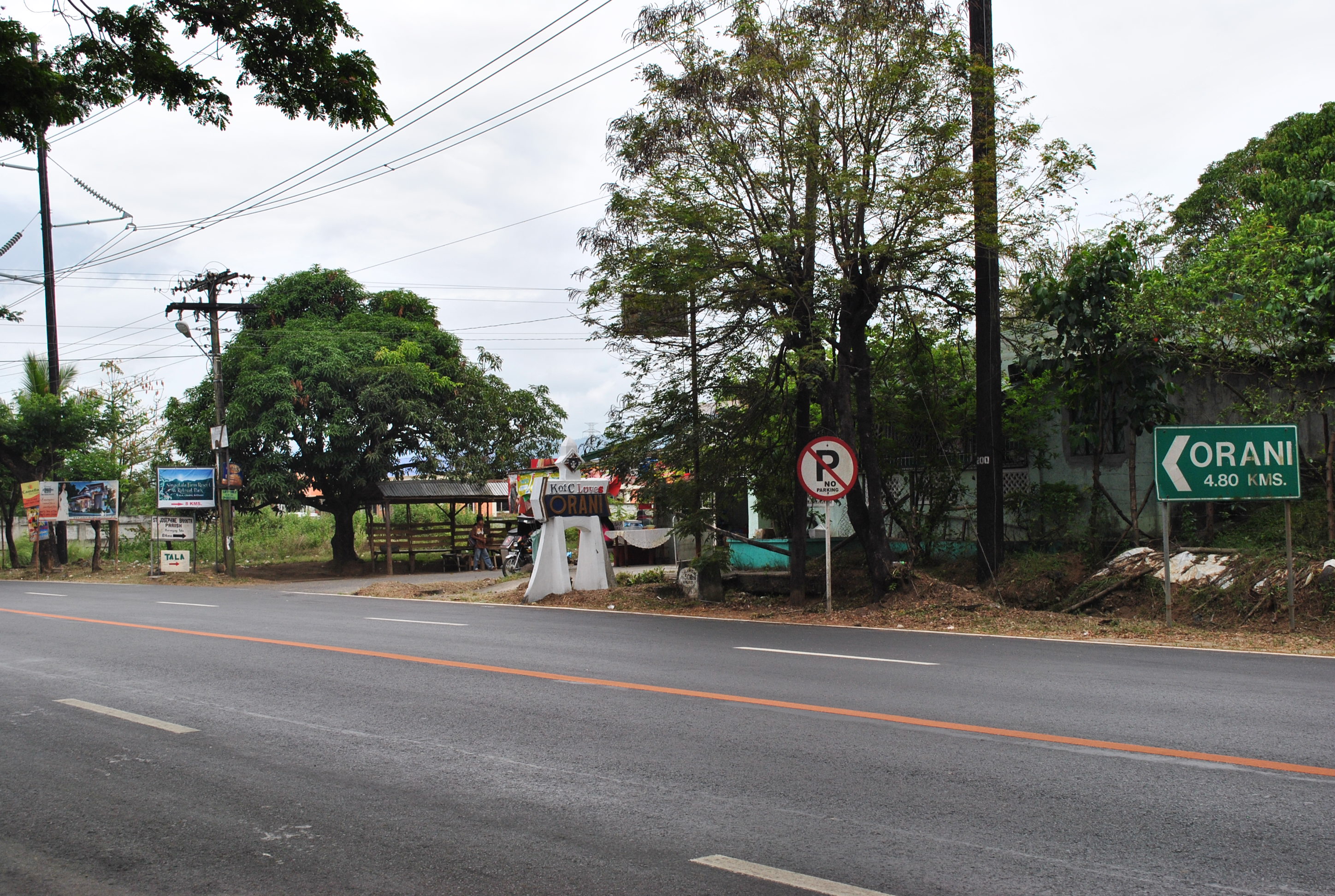
March 29, 2012 @ Mt Natib, Barangay Tala, Orani, Bataan

Mt Pulag is more than twice as high as Mt Natib in Barangay Tala, Orani, Bataan.

Exactly 14 days after Mt Pulag’s “peak bagging”, I was on my way to Bataan and try find out if I can reach the peak of Mt Natib within half day. It started with a simple Personal Message on Facebook with a “friend” who happens to be the Military Commander of the Northern & Central Luzon Areas and then later with telephone calls to two subordinate commanders whose areas are within Bataan and other provinces in Central Luzon. After 12 hours from the time I sent a PM on Facebook, everything was set and I could run and hike up to the peak of the famous Mt Natib the following day.

Two days before joining the 1st King of the Mountain Mt Ugo Trail Marathon, I was on my way to Balanga, Bataan to visit the Commander of the 7th CMO (GWAPO) Battalion, Colonel Benny Doniego, who gladly received and escorted me to the 73rd DRC Detachment in Barangay Tala, Orani, Bataan where I would start my run & trek to the peak of Mt Natib. I was surprised that he prepared a breakfast for me and my staff! It was nice to see Col Doniego after I’ve retired from the military service for the past almost 5 years. He happens to have served under me when I was assigned at the 7th Infantry Division in Fort Magsaysay.

Not only did Colonel Doniego prepared a breakfast for me, he even went to the extent of providing me with one officer and one team/squad of soldiers (9 soldiers) as my escorts. His parting words for me was that there will be fresh coconut juice and my favorite dish of “sinampalokang native na manok” waiting for me as soon as I arrive running/trekking from Mt Natib for lunch! Wow! What a nice incentive to finish the activity in a faster mode!

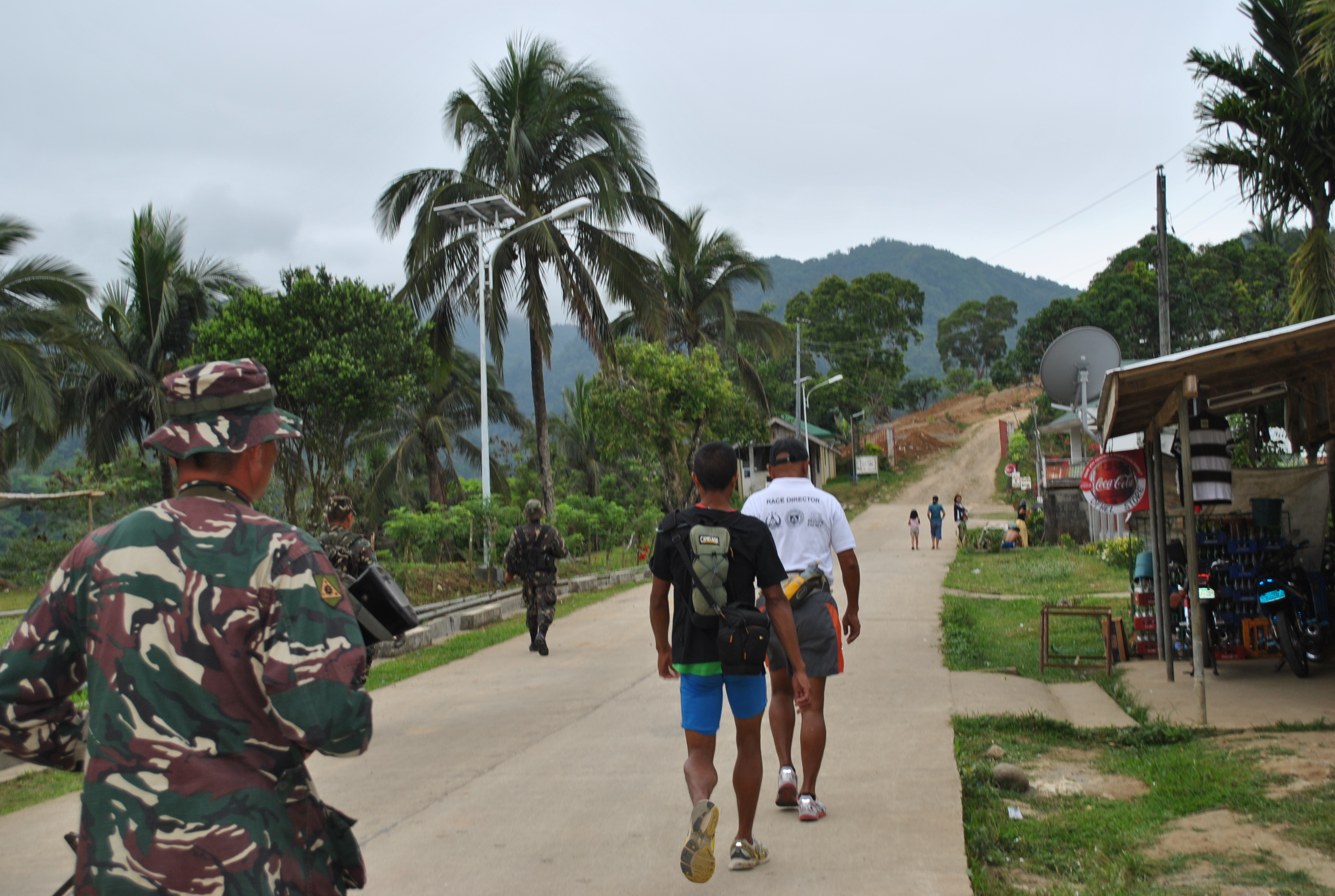
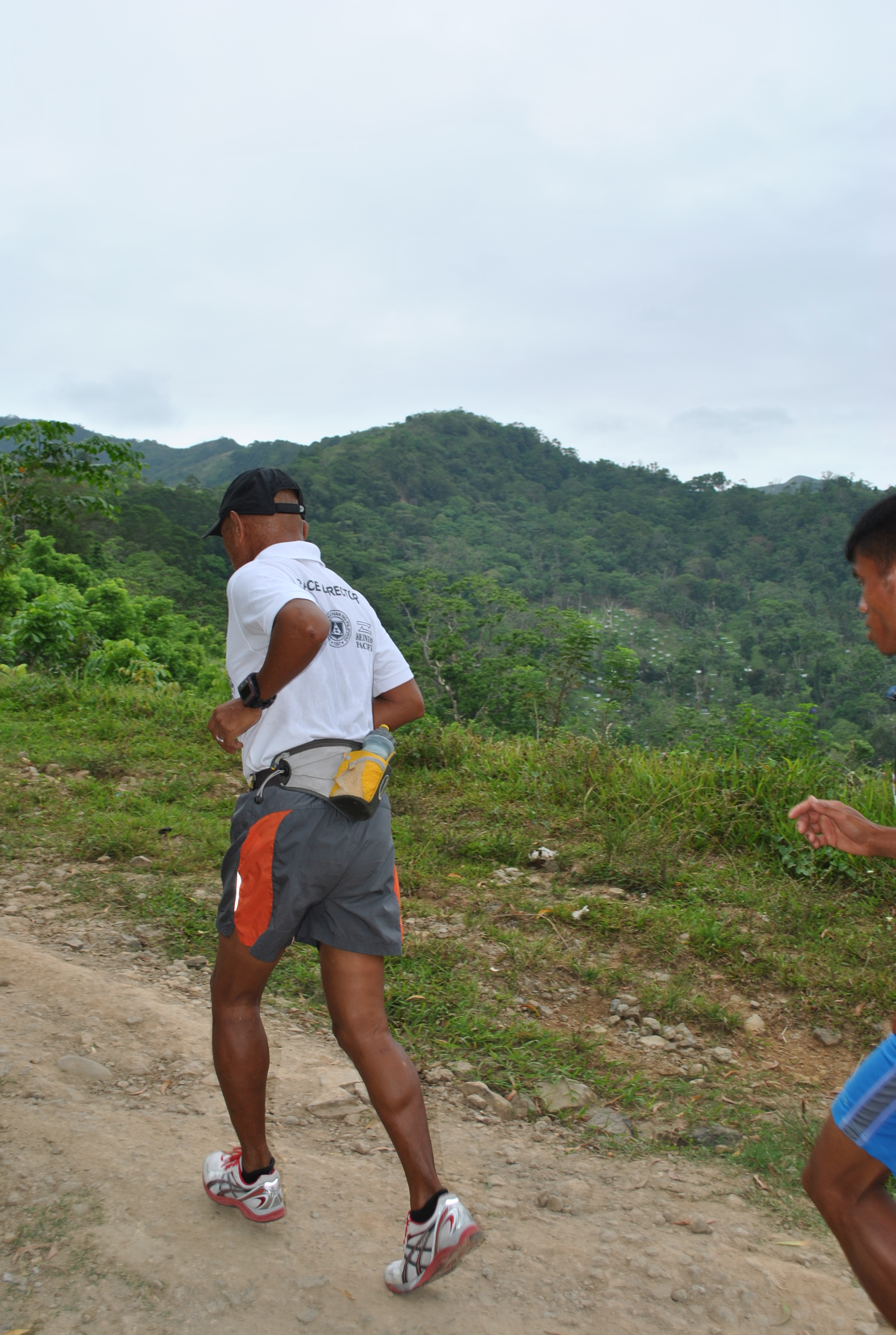
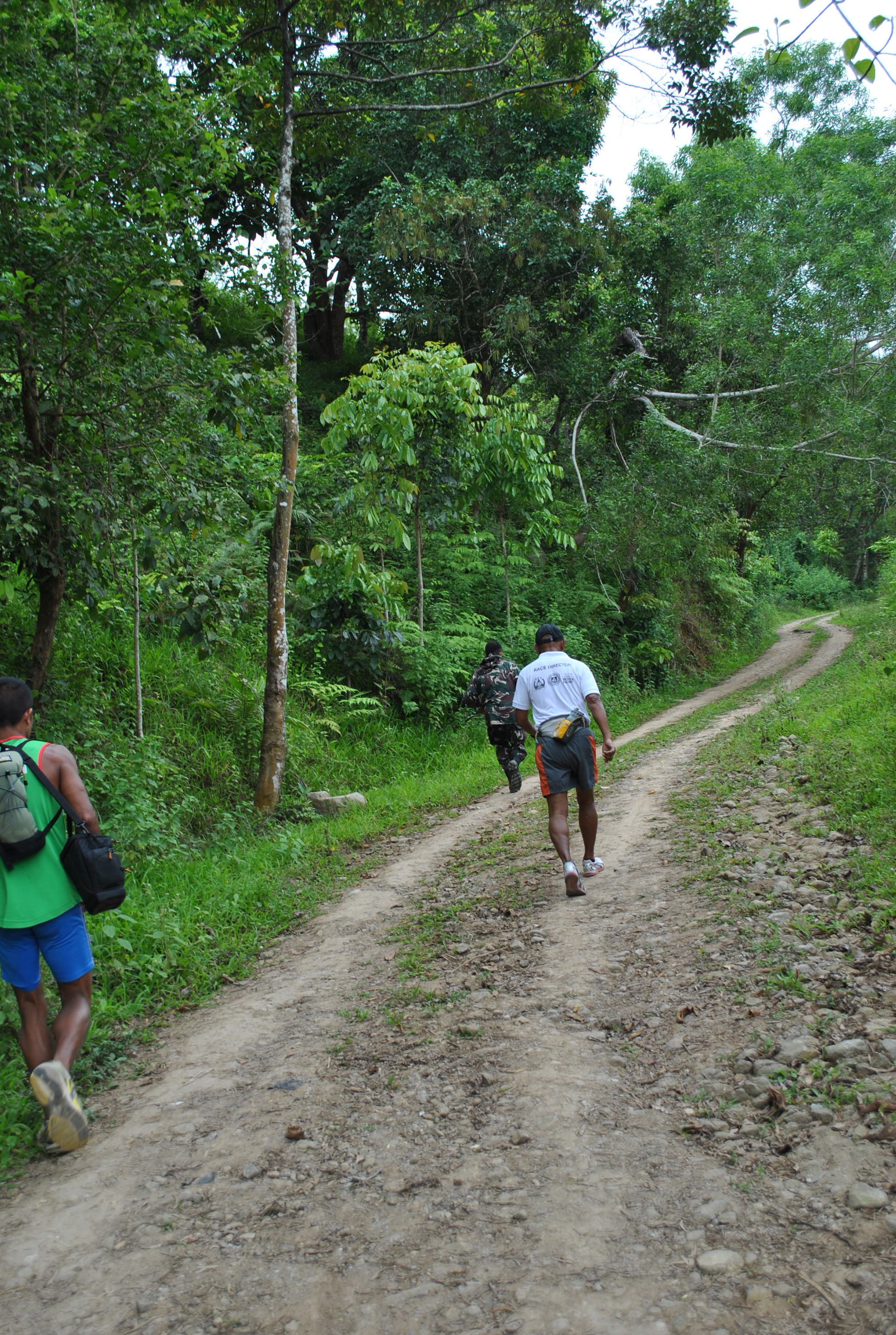
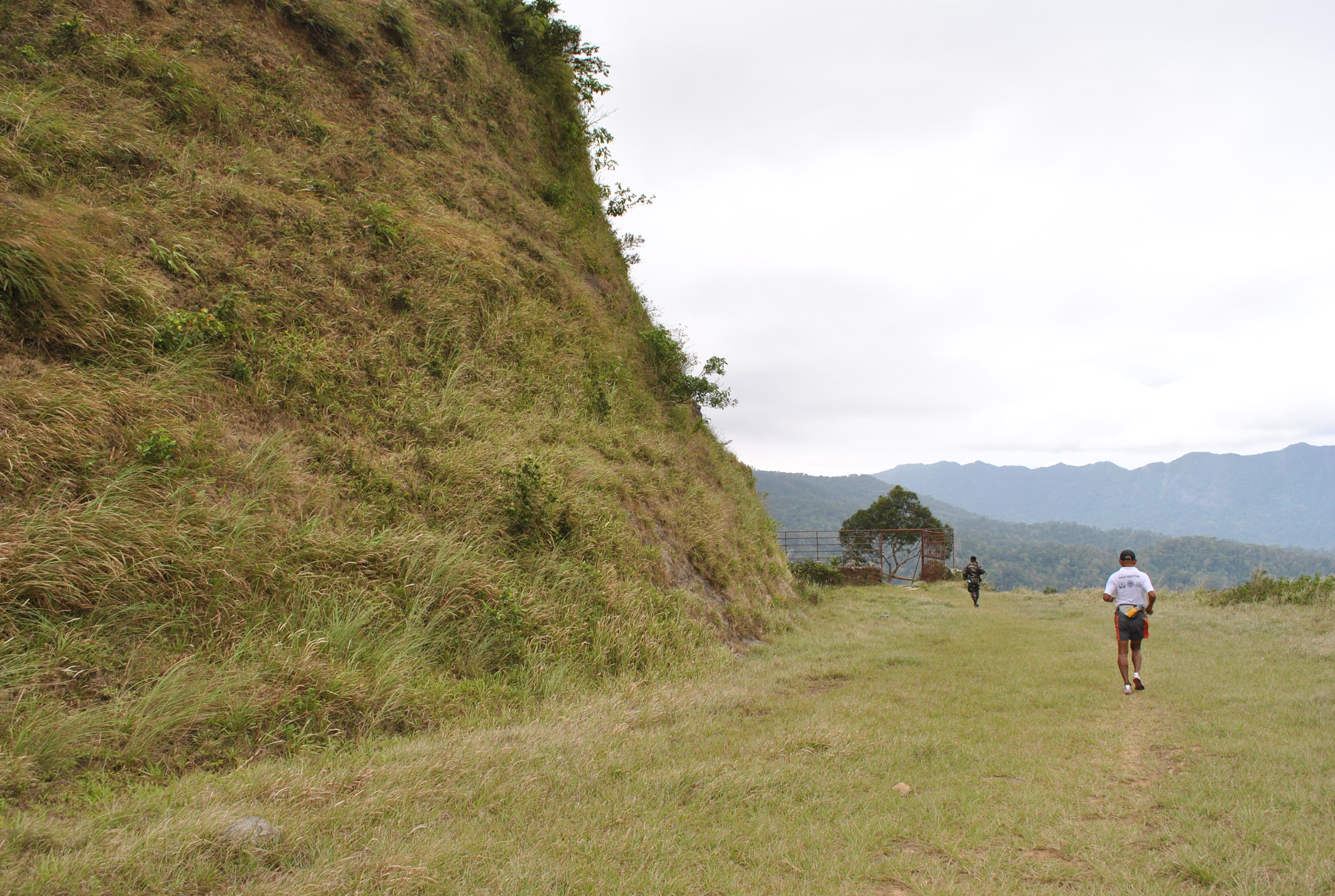
With military escorts infront and on my back, I started my run/hike from the Philippine Army Detachment at 9:30 AM. From the starting point, everything was going uphill until I reached the place which they call “Pinagbutasan” which happens to be a wide man-made “pass” or “breakthrough” on a mountain so that a trail was made on the other side of the mountain. There is a steel gate/fence that protects the unnecessary use of the trail from 4-wheeled vehicles. From this point, you could see the nice vista and mountains/ridges overlooking the towns of Morong and parts of the Subic cove.

The trail is wide with hardened soil/earth on the first part of the route from “Pinagbutasan” and then it transforms to a trail that has lots of stones and rocks. I was informed that the trail was made/constructed by PNOC on their digging explorations on the said mountain years ago. It is worthy to note that Mt Natib is considered as a dormant volcano and I have the suspicion that PNOC was looking for a geothermal source on the said mountain due to its nature as a volcano. Geothermal is one of the alternative sources of power energy. Unluckily, PNOC was not able to find any geothermal source in the said mountain as evidenced by their exploration diggings covered with concrete cement. You can ask your guide if you are interested to find out where these diggings are located.

On this rocky & stony portion of the trail, it is mostly covered with trees and plants. The terrain is not steep and I was able to jog on most parts of this shaded portion of the trail.

It was cloudy and cold during the day that I had my trek on this mountain and I could hardly see its peak. What went into my mind was to be able to reach its peak, take some pictures, and then descend from the mountain peak for my warm and tasty lunch!

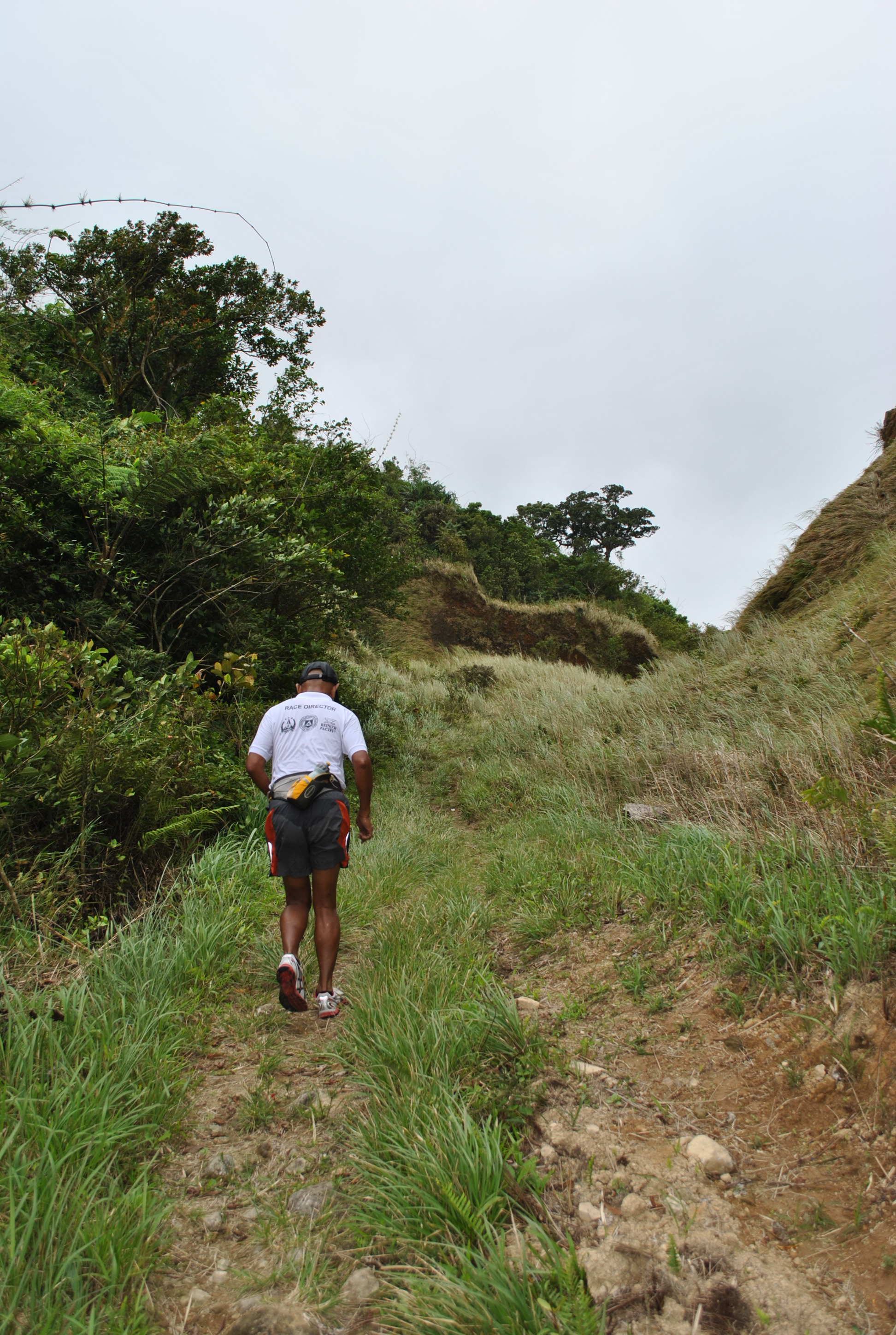
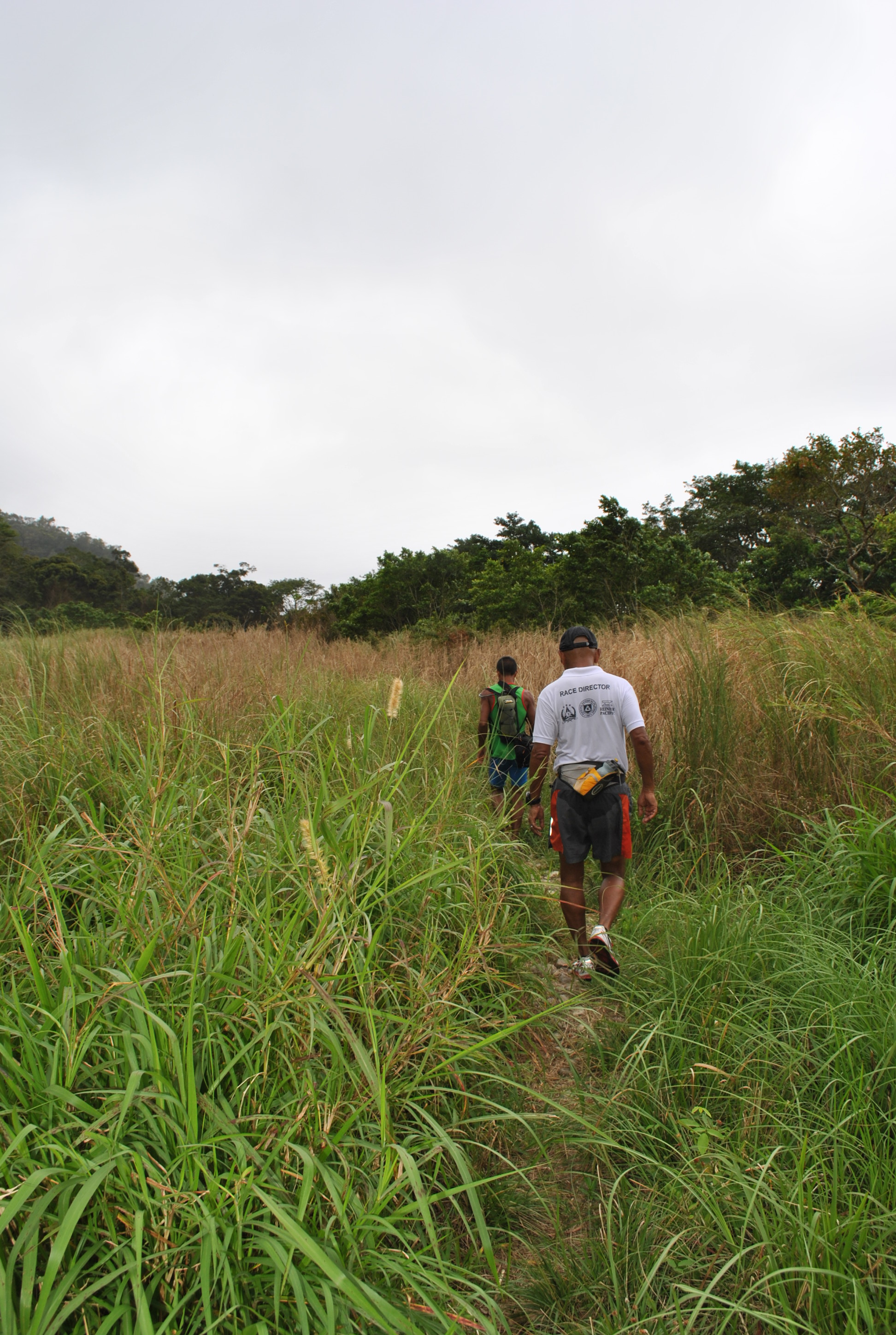
After the shaded portion of the trail, an opening of two small hills beckons with tall grasses with the trail on the middle. I could only see the clouds that cover the mountain and the tall grasses as I proceeded with my power hike. More tall grasses on both sides of the single-track trail and then I was told by our guide to turn left towards a clearing.

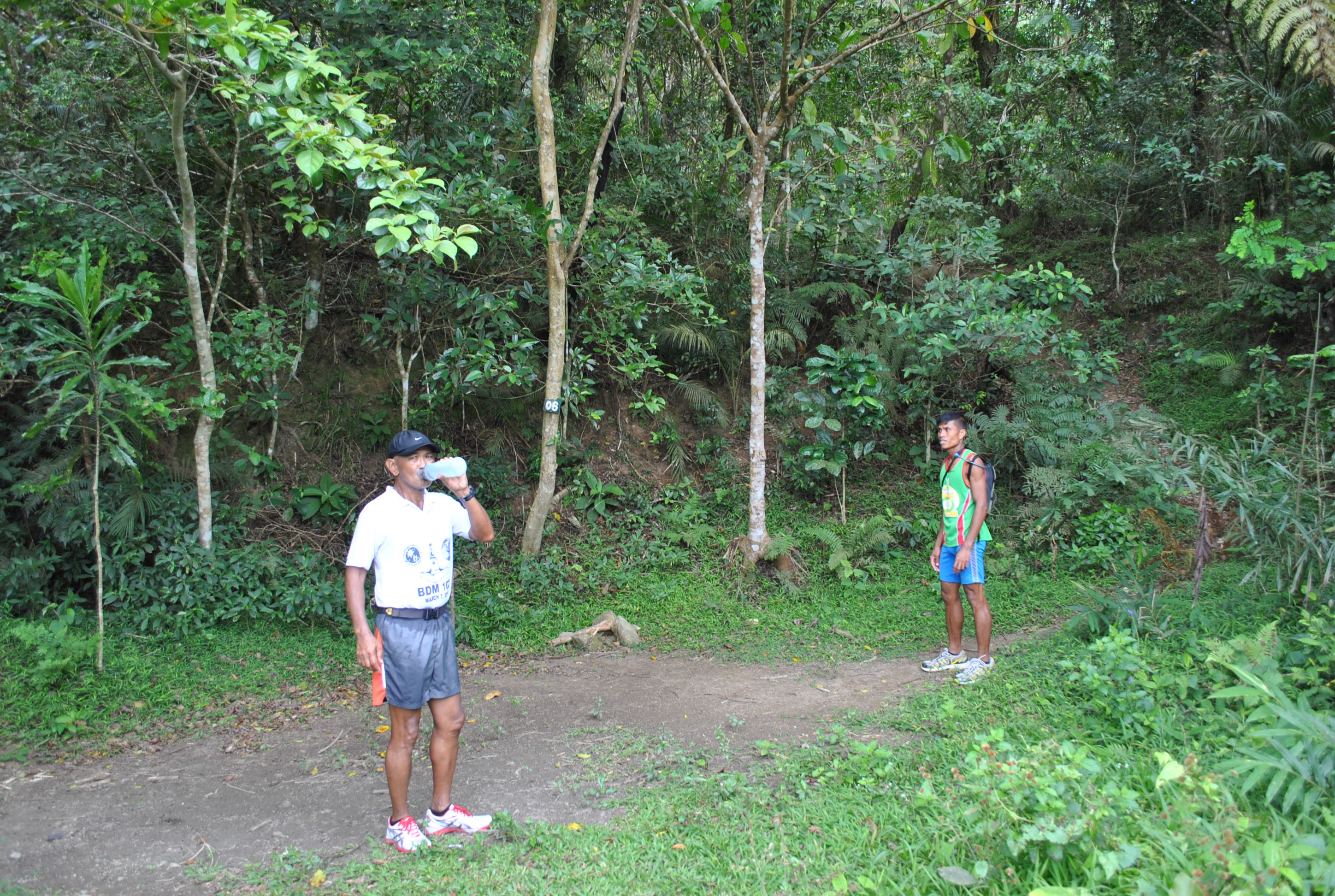
There was a clearing which they call “Area 1”. It is actually a camping site which is good for 3-4 tents and located on the very base of the peak of Mt Natib. There is a number “06” marker on one of the trees around the campsite. This site is the start of the “final assualt” to the peak of the mountain!

Aside from the soldiers as my escorts, I had with me two of my elite runners who were there as my personal photographer and assistant. We started our final climb towards the peak with me located in between my two runners on single file. The runner in front of me would clear the way for branches and twigs/thorny vines and the other on my back was there to make sure that I will not roll down from the mountain if I tripped or slipped on the rocks. It was raining then and the trail was slippery. It was more slippery on the rocks that we have to use extra effort to push our feet up to the trail.

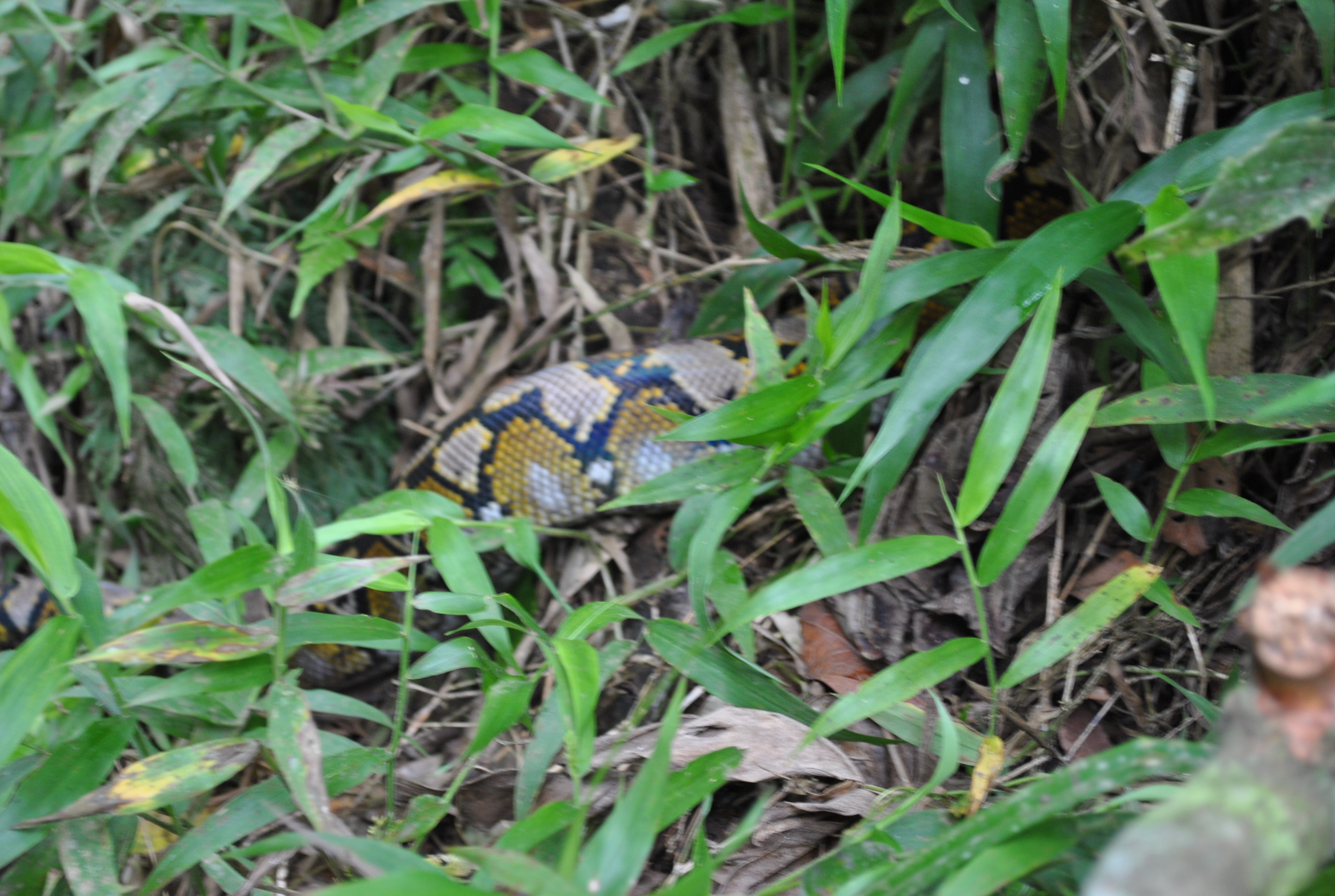
After 50 meters on the trail, the first runner suddenly stopped and started to retrace his footings backwards. He told me that there is a snake infront of us crossing our path. I told him to get nearer to it and find out where the head is located! He hesitated! I was the one that went nearer to the snake and it was really big but we could hardly see its head! I was about to hold its tail and yanked the whole body out of the thick foliage but I thought that it was not my main “mission” to look for snakes. I am not a hunter and I am not looking for food or for a pet! I am after the peak of Mt Natib, stick and stay focus to the very simple mission! In a split of a second, I instructed my runner on my back to give me my camera and I was able to get a close-up picture of its tail portion as the snake went to the thicker foliage part on the side of the trail.

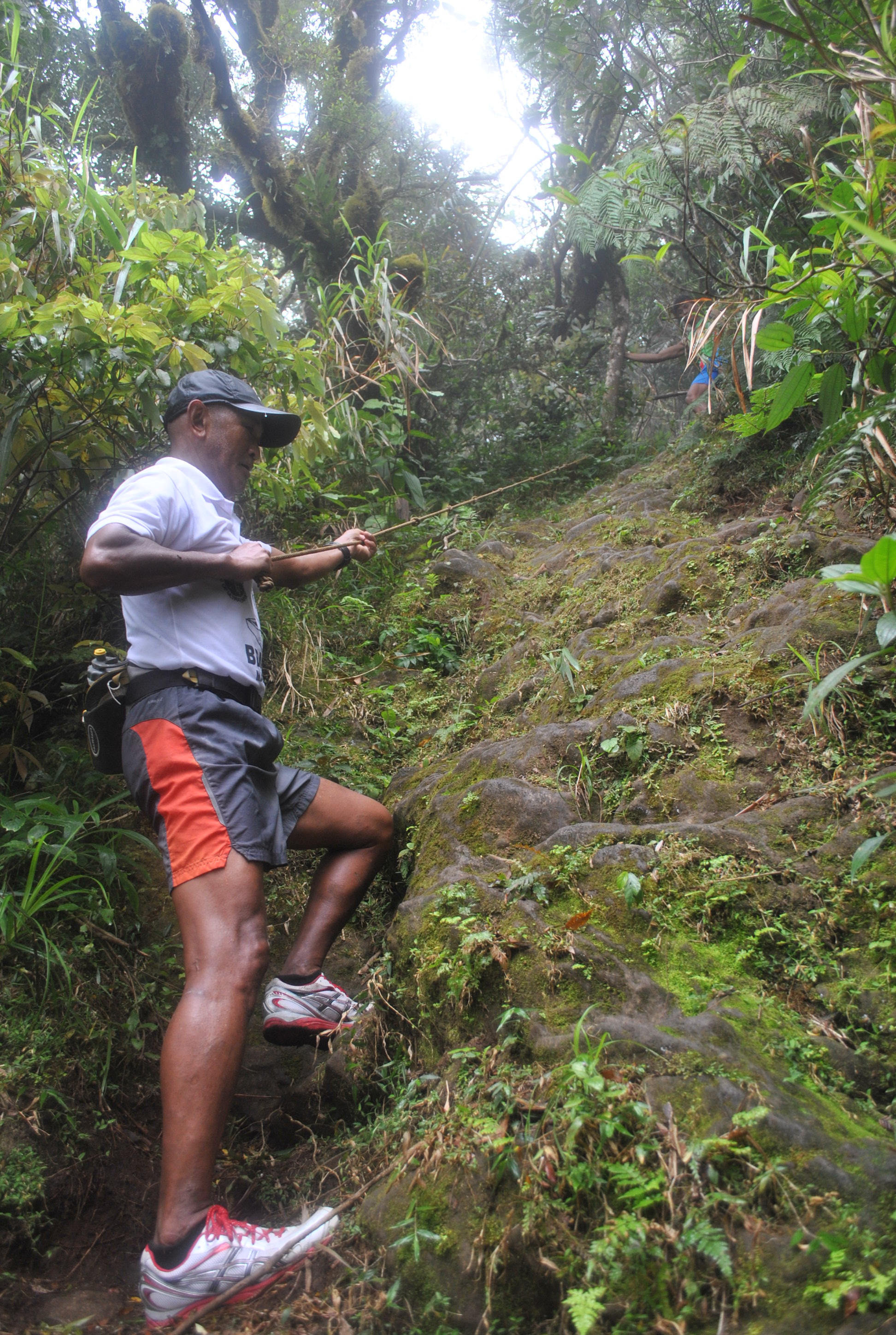
After the snake encounter, we went higher and higher with more caution. Then, we were faced with a “vertical wall” which is about 10 meters! It’s good there is a nylon rope where one could hold for a nice rapelling experience! However, the challenge was for the the foot anchor to be firm on every leg push and strong arms pull on the rope towards the top of the wall so that there would be no slipping or sliding due to the slippery wet rocks brought by the drizzle. Going up on top of the wall was very slow and deliberate. There is no point of making it fast to reach the top of the wall. Patience is needed in this kind of situation.

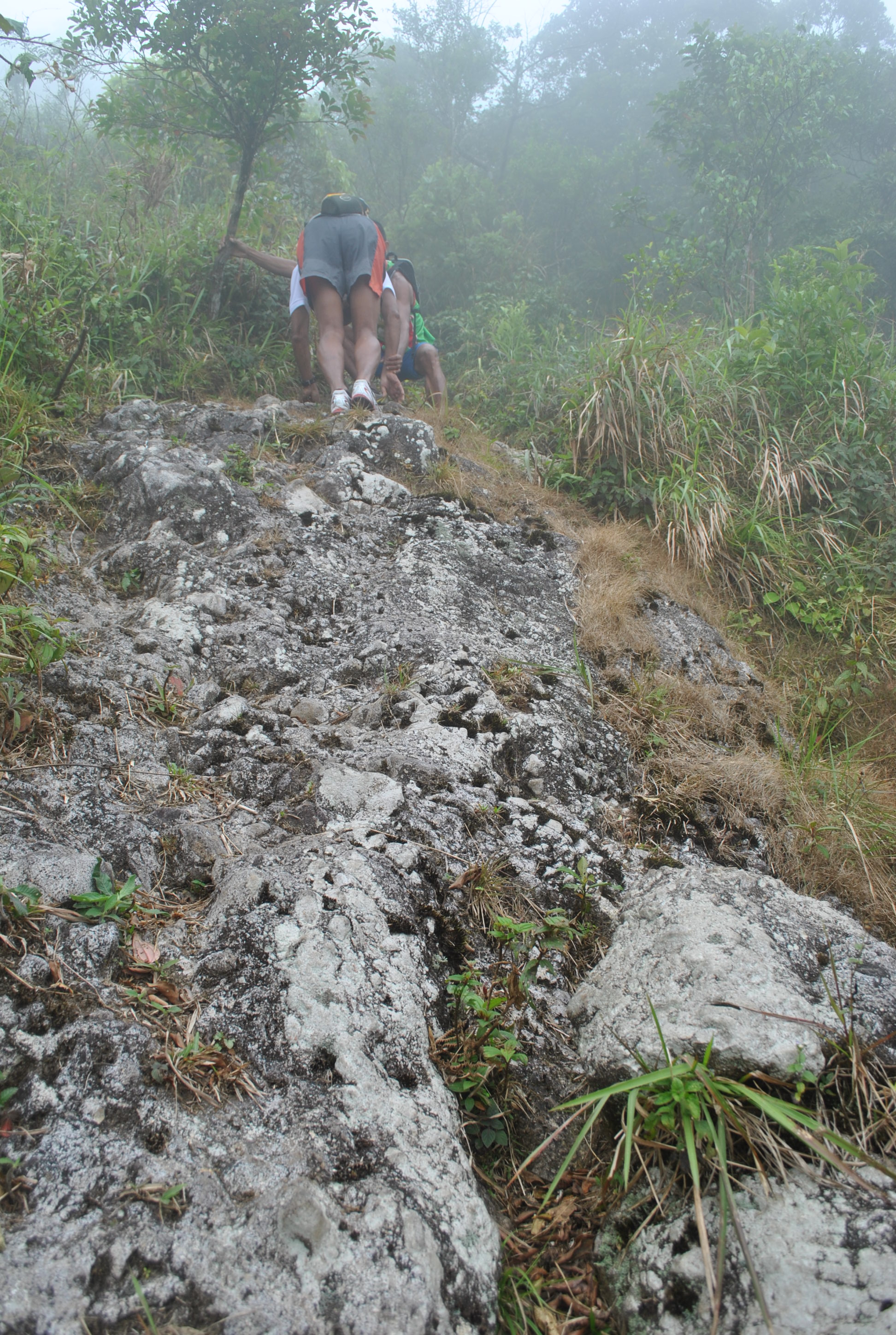
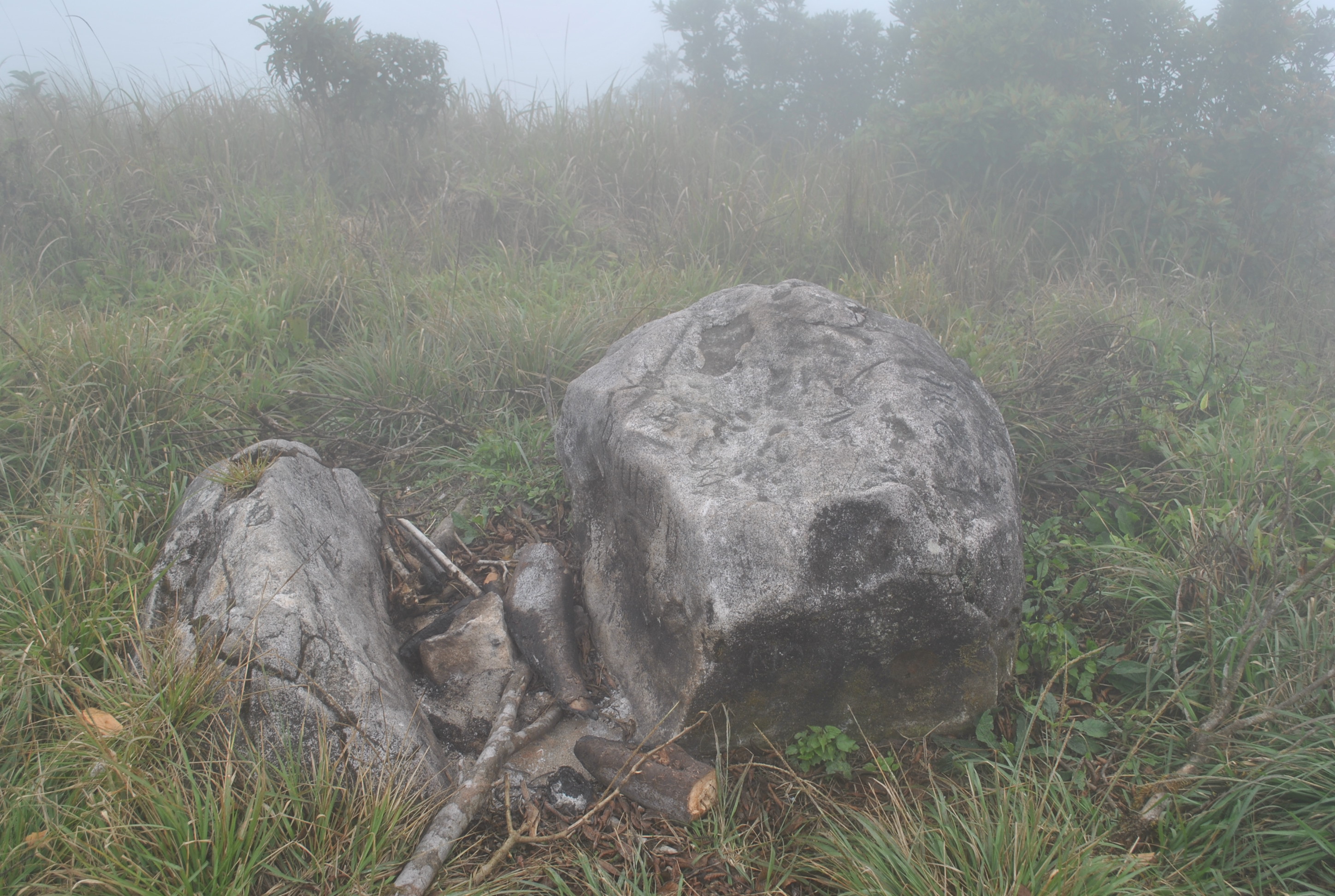
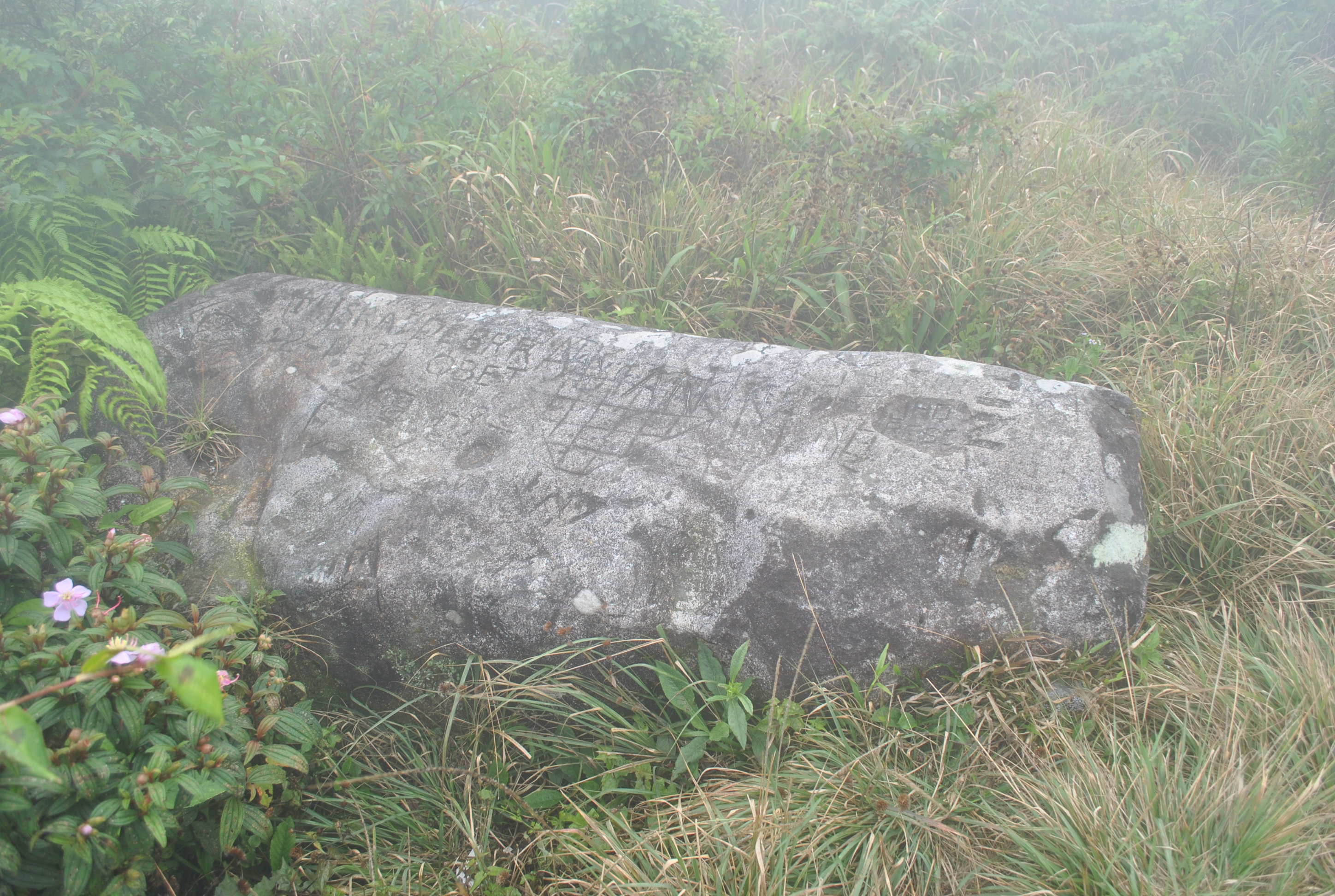
After the first wall, there are rocks as part of the trail that I had to crawl just to be sure that I would not slip. Patience paid off. But there was another mini-wall (about 5 meters) with a rope (again!) to be climbed to its top. After passing this last wall, everything was a smooth uphill and in about 50 meters, I was greeted with the Peak/Summit Marker of Mt Natib! Finally, I was able to “peak bagged” Mt Natib!

Three of us, my two runners and I, were the only one who reached the peak. Our escorts were not able to make it! We spent our almost 20 minutes taking pictures and trying to survey the whole area of the peak. There was no view to be seen from the top of the mountain as it was raining and we were covered with clouds. However, I was able to take note of the trashes being scattered on the different places on top of the mountain. In my estimate, the peak can acommodate at least 8-10 tents (solo or double) and there seems to be no attempt to clean and maintain the area. I said to myself, I will be back to clean the mess here on the peak of Mt Natib in the days to come!

We reached the peak in 3 hours. And we were all in a hurry to go back to where we started at the Philippine Army Detachment. However, we needed more patience and more deliberate footing as we went down the two “walls” and rope rapelling. We spent more time in going down on the “final assualt” portion of the mountain. As soon as we reached “Area 1”, we started to jog and brisked walked. Since we did more on jogging and power walking as almost parts of the trail were descending, we made our way to the detachment in almost 2 hours. My GF 305 recorded an elevation data of 1,296 meters at the peak of Mt Natib!

The trip was concluded with a sumptous late lunch at the Battalion Headquarters with Colonel Doniego and I told him of my plan of going back to the peak of Mt Natib during a day with a nicer weather in the company of my running friends. I also told him of my plan to conduct Operation Linis on the said mountain with an specificied date. It will be April 15, Sunday! His answer was affirmative!

Well, this proves that I am already addicted to “Peak Bagging”!

Next….Mt Ugo…in the 1st King of the Mountain Trail (42K) Marathon…after two days!

“Peak Bagging” & Mt. Pulag


March 12, 2012 @ Ambangeg, Bokod, Benguet

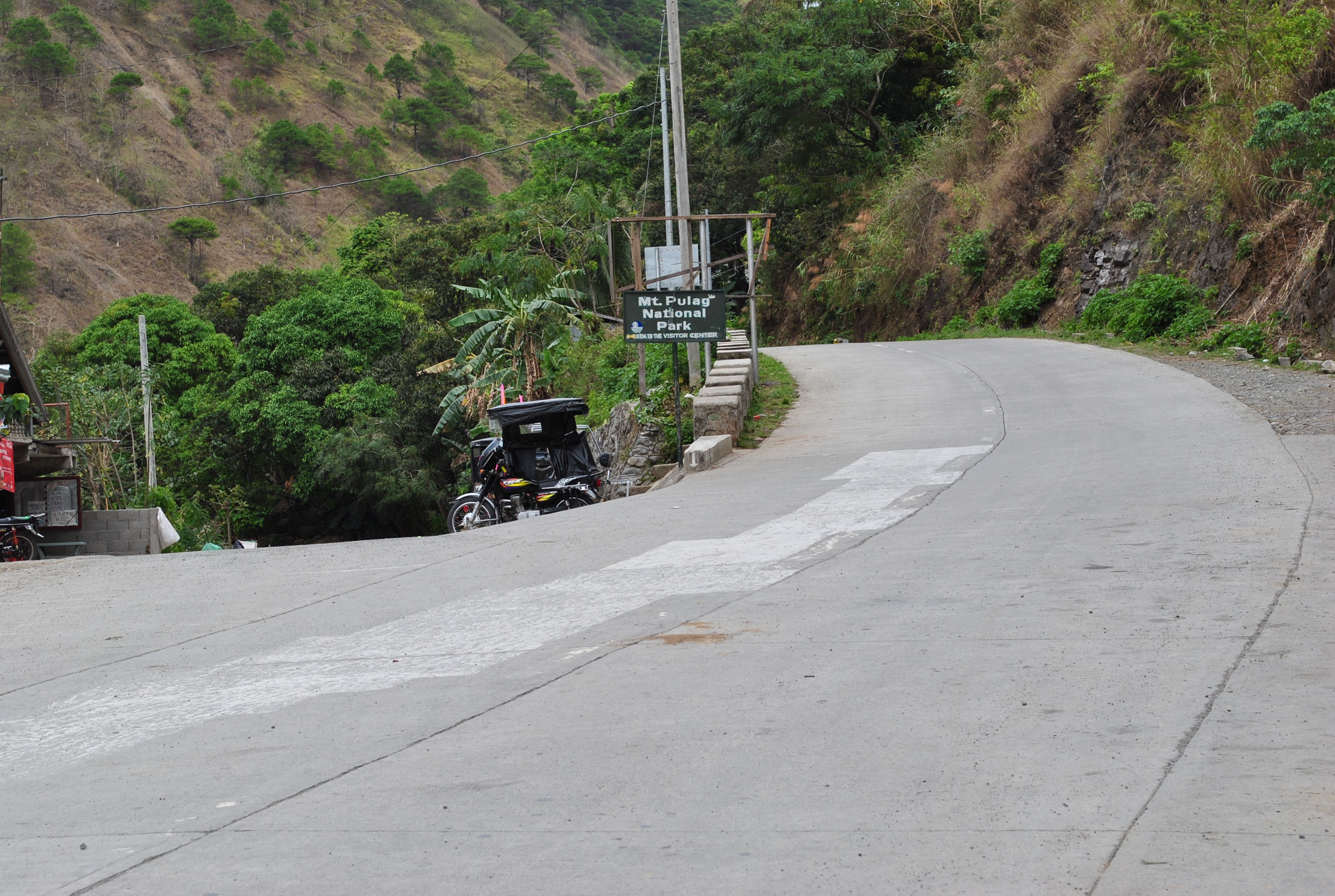
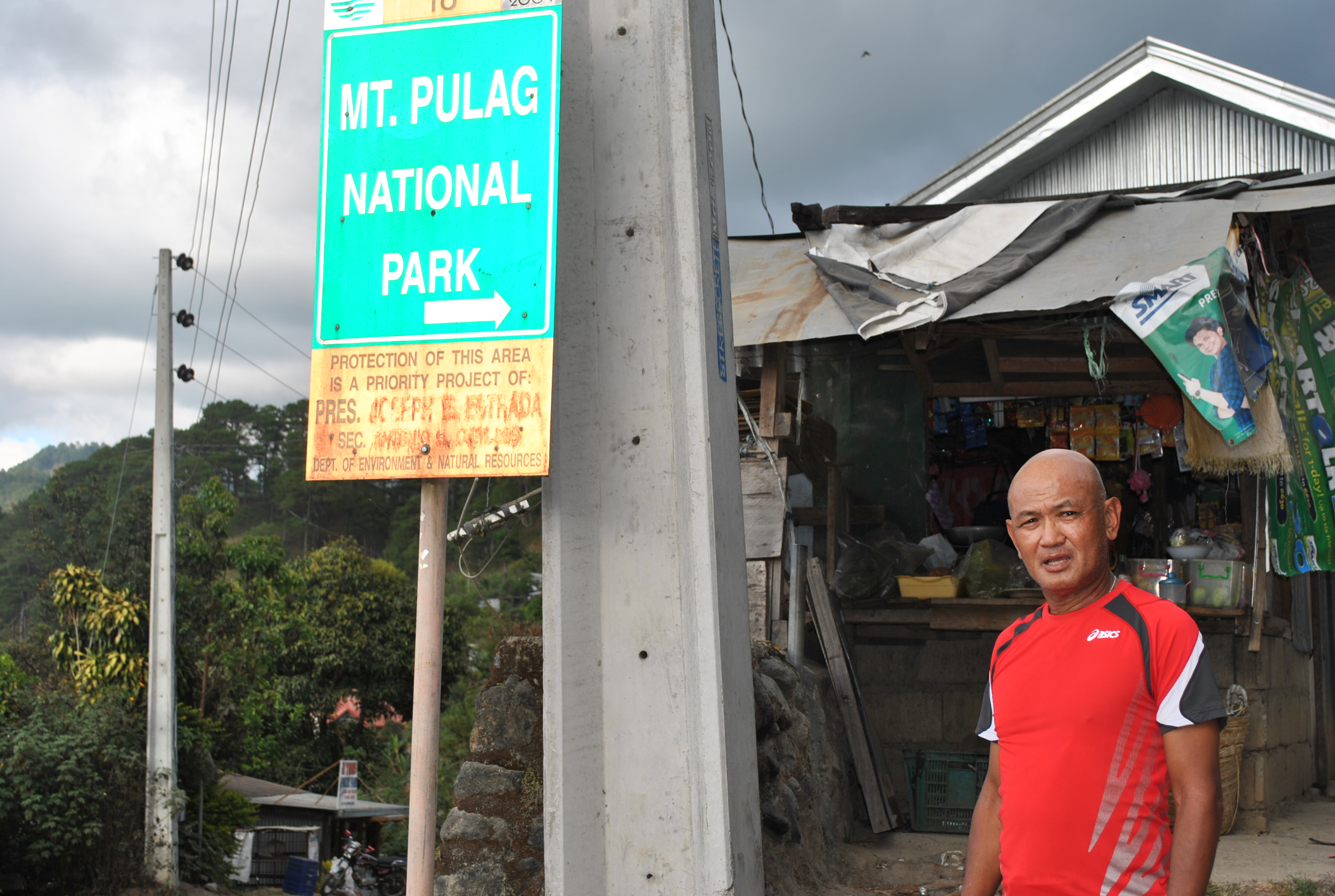
On my way to Kayapa, Nueva Vizcaya along the Benguet-Nueva Vizcaya Highway, I saw a directional sign that points to the Mt Pulag National Park. It was at the PNP Station in Barangay Gurel, Bokod, Benguet that changed my intention of going to Mt Ugo in order to recon the Marathon Route of Jonel’s race.

I said to myself, “Mt Pulag is the highest peak in Luzon and I am already here, maybe, I’ll drop by first on this mountan and then proceed later to Mt Ugo!” As I turned left at the intersection, there is no point of turning back. I am back again to my habit of being a “risk-taker”!

The road from the Gurel Junction to Barangay Ambangeg, Bokod is almost completely paved as some parts are still on road cementing construction. The road is winding and uphill and I did not notice that I traveled 9 kilometers up to the DENR Office/Police Detachment.

I am not a trained mountaineer and I am ignorant on the protocol of climbing peaks and mountains in the country. What I needed was the guts to ask questions and have the patience to listen…and listen intently! This thing was entirely new to me but I guess, I quickly learned some of the basic protocol in mountaineering. Everything boils down to “common sense” and respect to the culture and beliefs of the people in the community.

Although it was already almost 4:30 PM when I was given the usual briefing presentation by the DENR about the mountain I am going to visit, the sun was still shining brightly and I have to deal with the fact that I am taking my time from taking one step of the process at a time. There is no point to worry if my trek to Mt Pulag’s peak will be realized the following day.

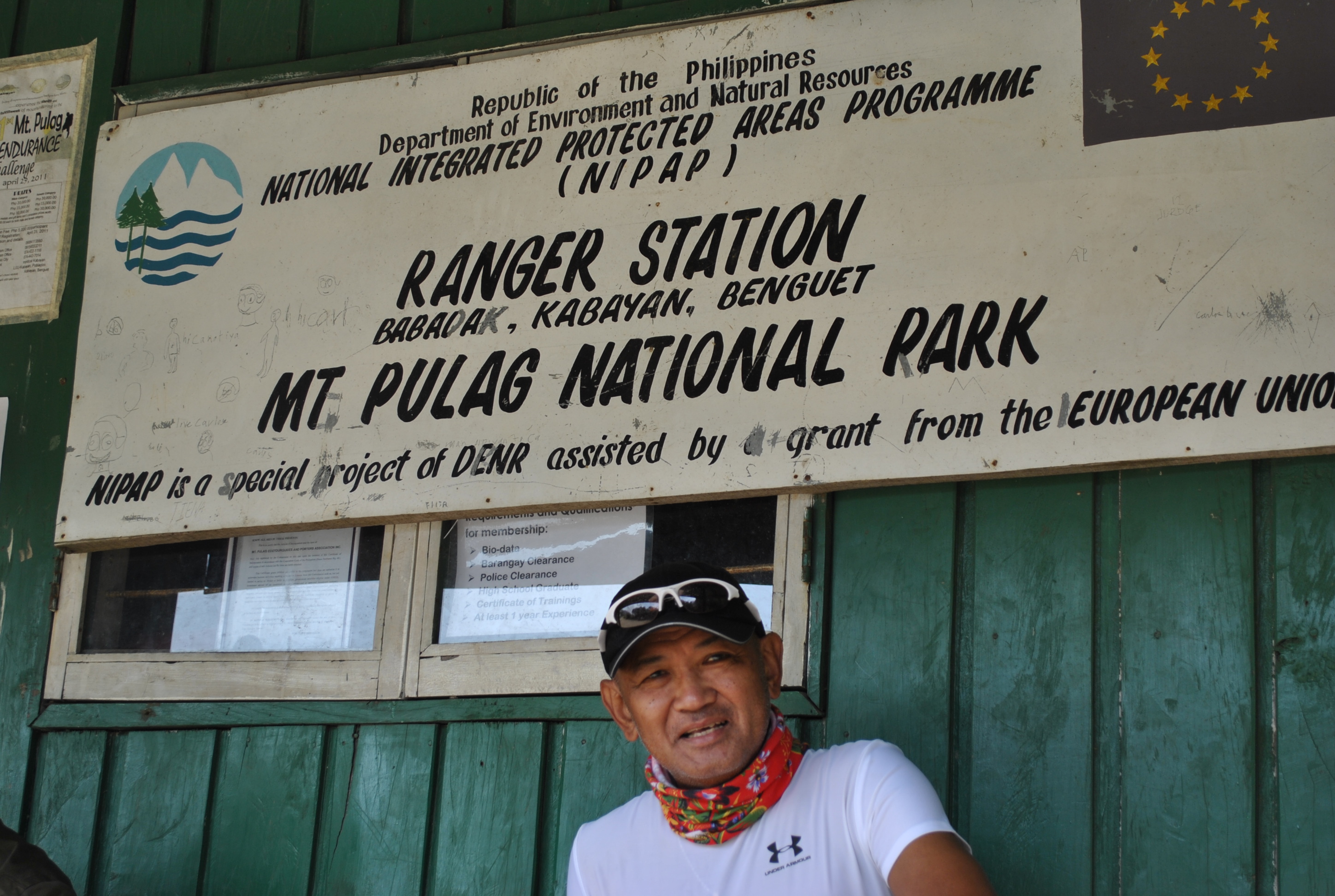
After the usual briefing and payment of permit fee, additional information was provided by the people assigned in the said office. Permit fee per person is P 200.00 but you will be issued two receipts from the Bureau of Treasury. Since I am not with a group of mountaineers on a group tour, the office personnel advised me to contact a certain “Julius” to bring me to the Ranger Station in Ambangeg aboard a motorcycle. The fee for one-way is P 300.00 per person.

I was also advised to get a guide at the Badadak Ranger Station, the place where I am going to start my trek to the peak of Mt Pulag. The guide’s fee at the Ambangeg Trail is P 500.00. I found out later that the guide’s fee is more expensive if the entry point is from the Akiki Trail which is obviously a longer route to the peak. It can cost you P 1,800.00 but one guide may be good for a group of 6-7 hikers. It is a “must” to get a guide in trekking in most of our mountains in order to avoid of being lost.

The problem with Barangay Ambangeg is that there is no place to stay for the night! The nearest place where there is a dormitory-type of accommodation is at the Poblacion of Kabayan—a good 1 1/2 to 2 hours drive of unpaved road! There was no other choice but to go to Kabayan. The adventure continues and it is a part of touring and knowing the place for the first time.

It was already nighttime when I entered the quiet town of Kabayan. Only one establishment was still open with food to be cooked and ordered at 7:00 PM. Our overnight stay in the one and only dormitory in town cost us P 200.00 per person! One has to sleep on two-deck beds with basic mattress and pillow. The dormitory has a communal bathroom and toilet with separate bathroom for the ladies. There was no hot water or shower but the ever-reliable pail and “tabo” were there!

On that night that we stayed in the said dormitory, two European couples were with us and four males working with a company that delivers and sells bulbs and lighting fixtures to every barangay in the towns of Benguet. A simple greetings and smile was enough for the foreiners but for the people I’ve met along the trip, being an Ilocano was already an  asset during my trip as the people in every place in Benguet could easily understand my dialect. I could easily communicate with them!

We left Kabayan after a simple breakfast and we arrived in Ambangeg, Bokod after almost 2 hours of slow driving and taking pictures along the way. I saw the entrance to the Akiki Trail along the road and I found out that this is the harder entry towards the peak of Mt Pulag. I took some pictures of the place and promised myself to be back and make an assault to the peak using this entry.

“One-time deal” parking fee in Ambangeg cost me P 100.00 from 10:00 AM up to the time we left the place. I think, it was already 7:00 PM. I left my car and I was in tandem with Julius on his motorcycle on our way going higher to the foot of Mt Pulag. It was my first time to be riding in tandem on a motorcycle ride and Julius was complaining that I was doing some unnnecessary movements with my butt. He didn’t know that the bumpy road made me fly a few inches from the saddle/seat and the continous butt-jumps made me nervous that I might fall off from the motorcycle! My light weight made me unstable riding on a motorcycle on rocky/bumpy road!

Wow! That was the most horrible ride I’ve experienced! The 9+ kilometers with rocks and slippery mud on the uphill path could be the longest 40 minutes of my life! Finally, we arrived at the Ranger Station in Sitio Badadak, Ambangeg. The Ranger assigned in the station was having his Lunch Break at 11:30 AM and there was no person to whom I would show the receipt that I paid as my permit fee. I just thought that I would see the Ranger once I’ll be back from the peak of the mountain.

After 15 minutes of waiting for a guide, Edgar came forward and signed up to guide me in my trek to the peak of Mt Pulag. I told Julius and company to return to the Ranger Station to pick us and bring us to where my car was parked at exactly 5:30 PM. Julius was surprised and made a statement that with the limited time, I might not be able to reach the peak of the mountain with such time. I just smiled at him and told him that I’ll be waiting for him at the Ranger Station on the said time.

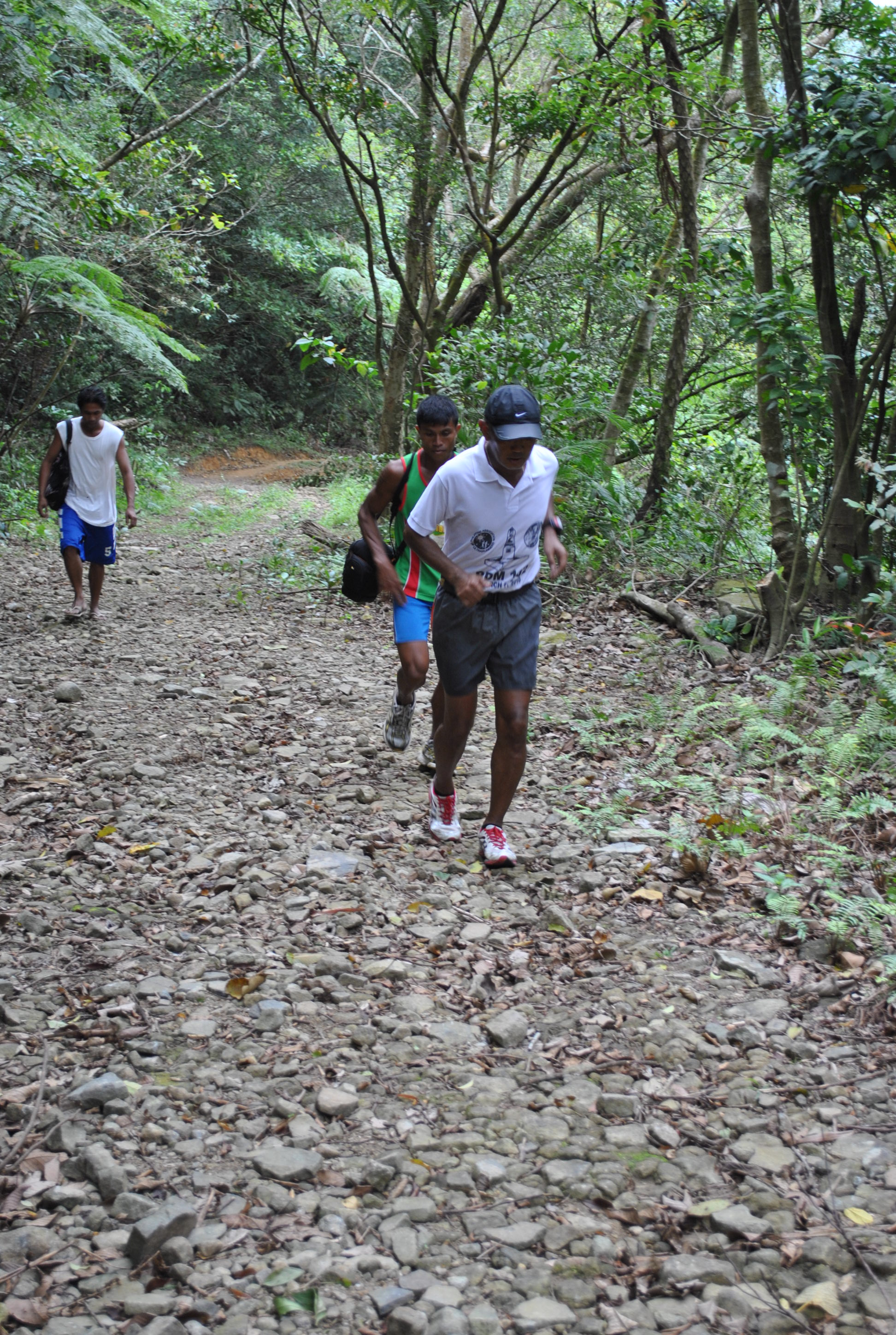
Mountaineers (with packs) usually reach the peak in 4-5 hours from the Badadak/Ambangeg Ranger Station. Well, Julius and the rest of the people at the Ranger Station didn’t know that I will be running, jogging, trotting and brisk walking to and from the peak of the mountain! And so I did!

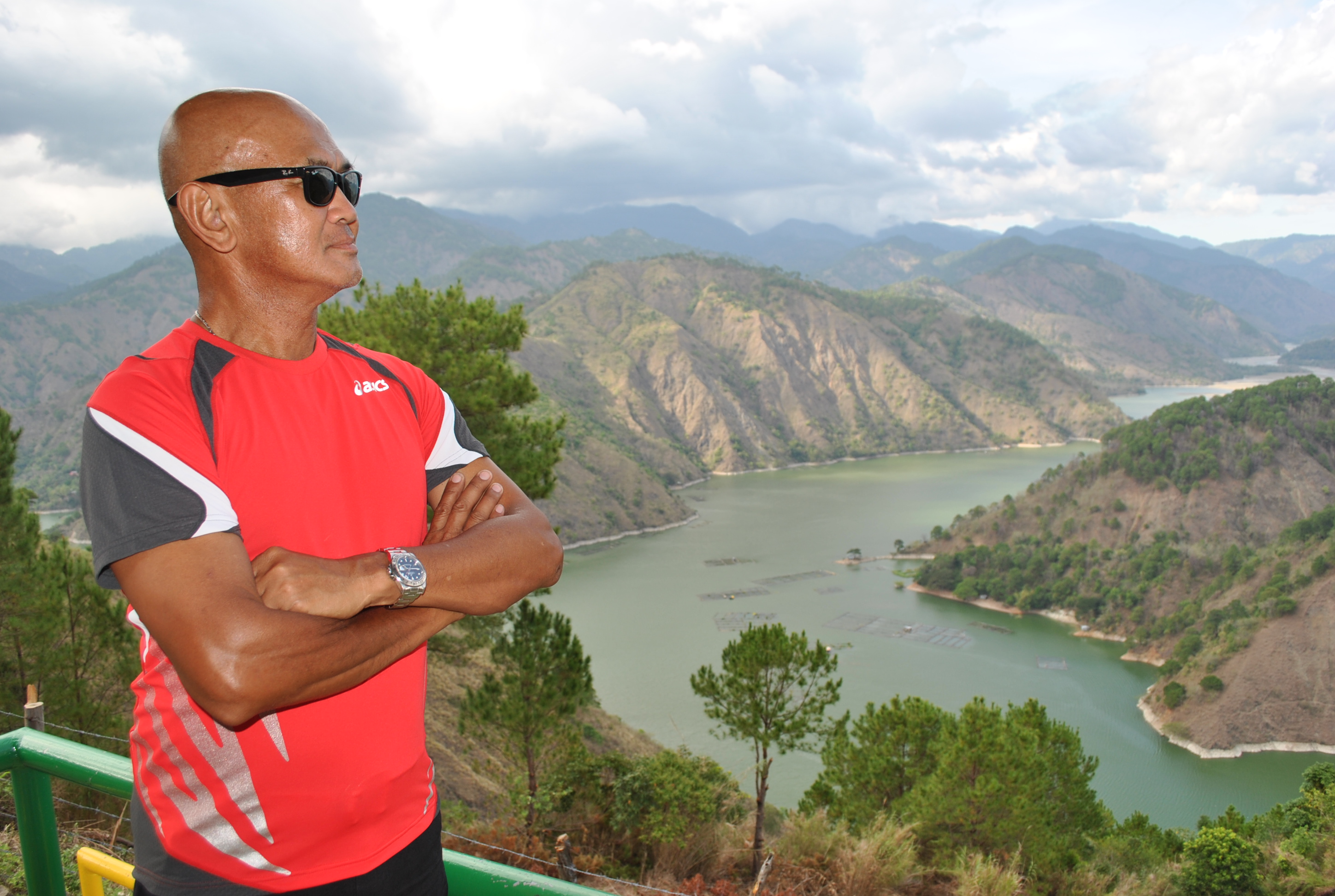
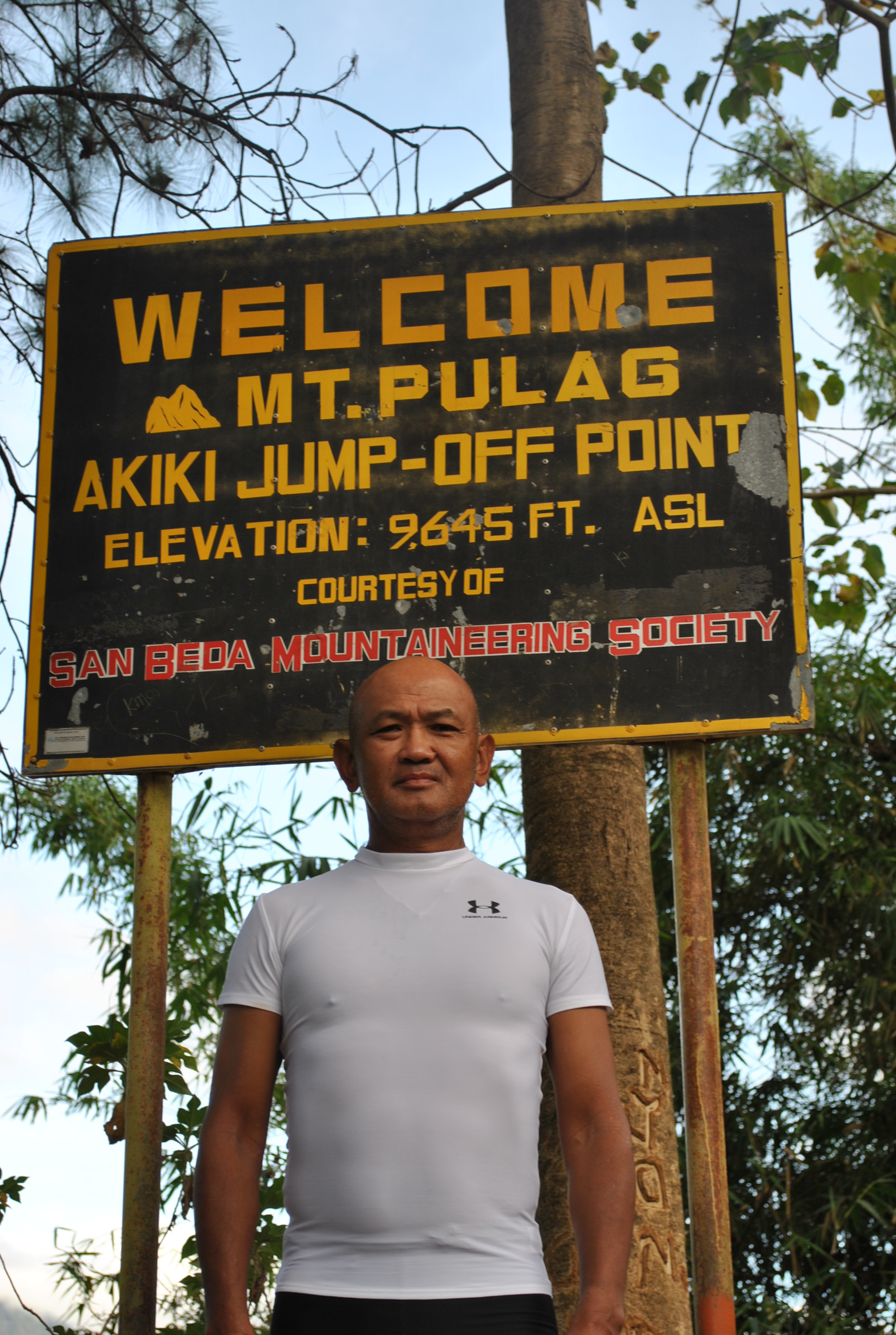
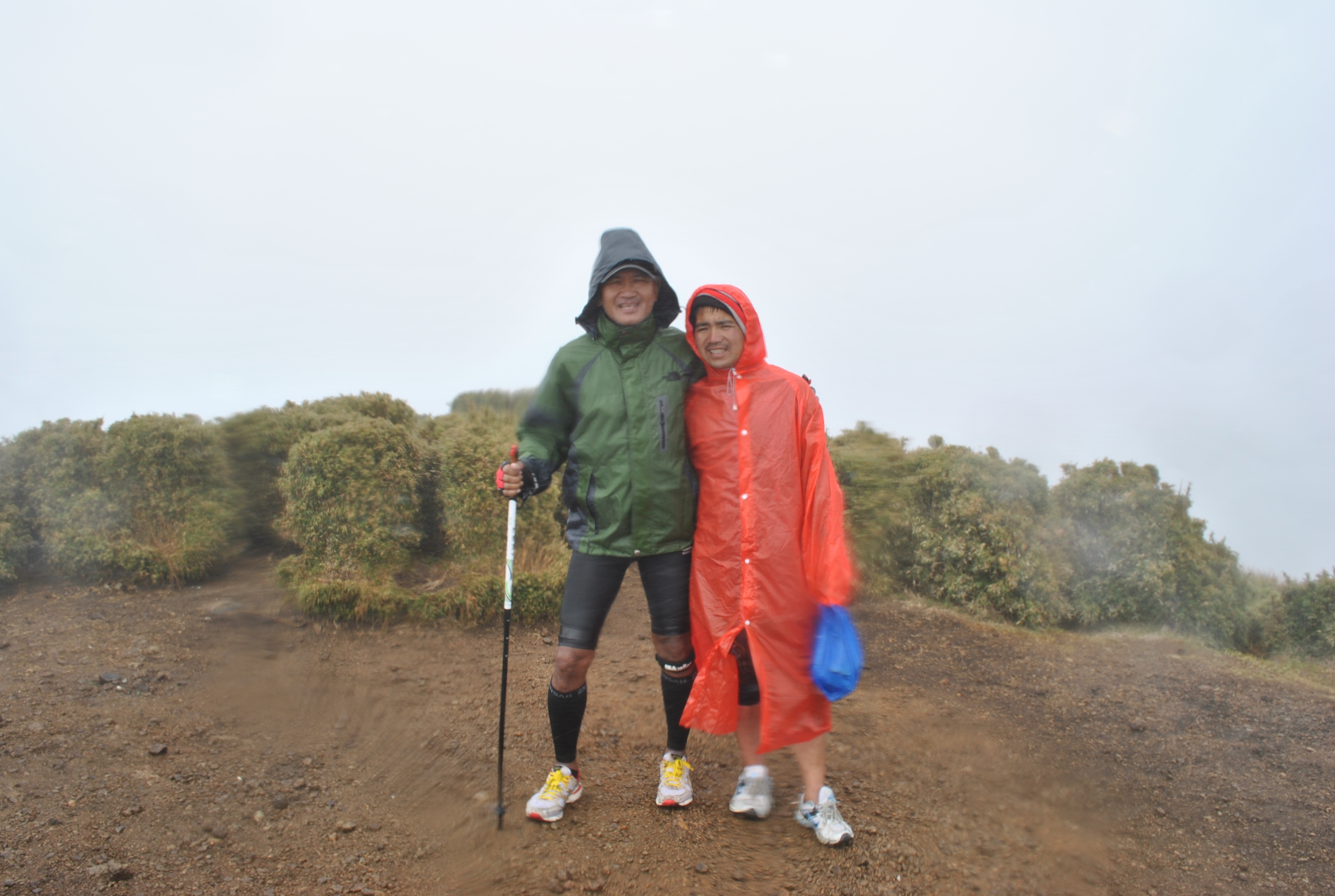
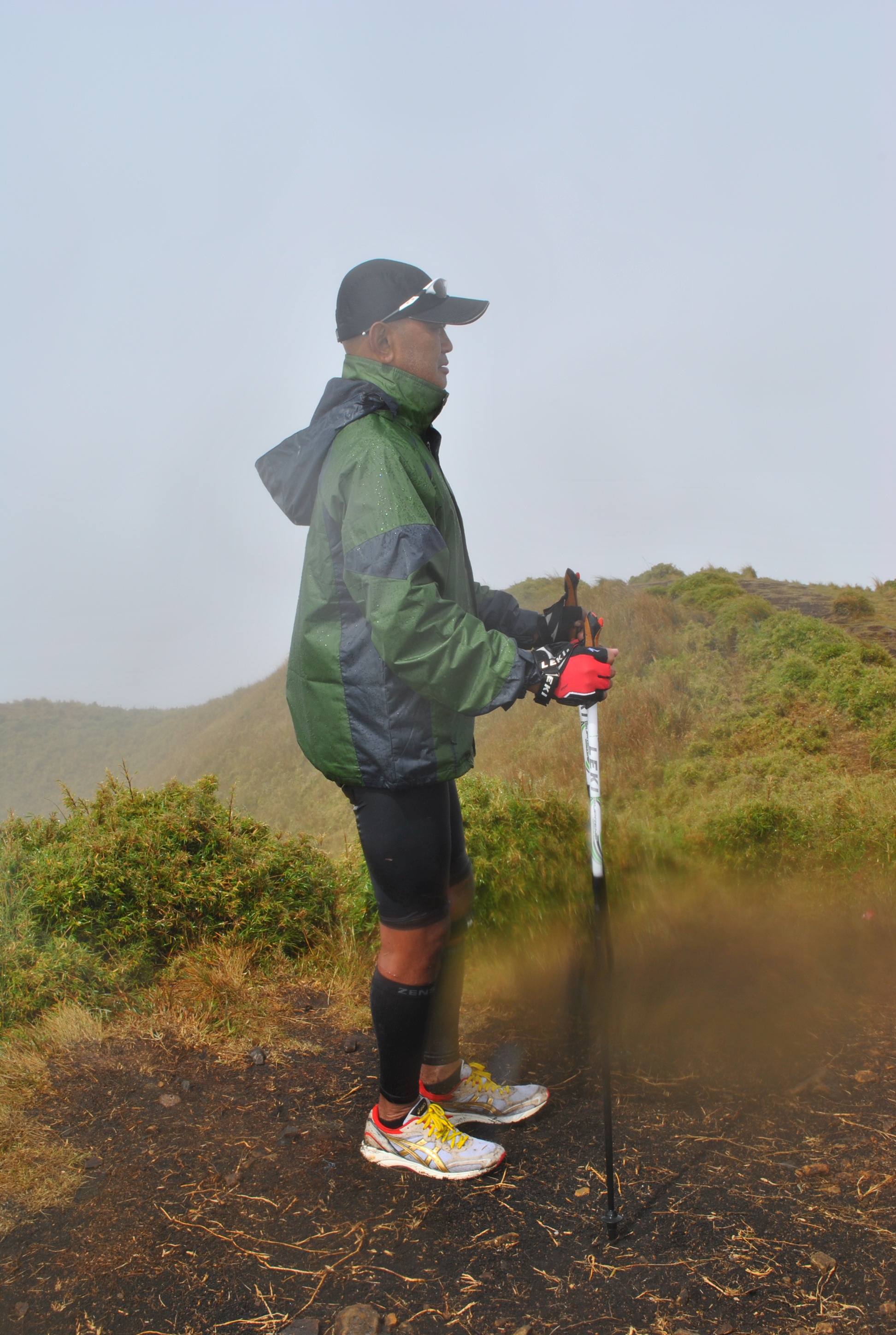
At 4:30 PM, I was back at the Ranger Station! I was able to reach the peak of Mt Pulag by “assualting” it through its steepest approach trail (last 50 meters) in 2 hours! Spent 15-20 minutes on the peak for picture taking and moving around the topmost portion and admiring the damp brown dwarf bamboos. The temperature at the peak was freezing as it was raining and the peak was covered with clouds! In a few minutes, my fingers were numb and my body started to feel the cold temperature. I kept on walking on the open space of the peak but the freezing temperature would make my body shiver.

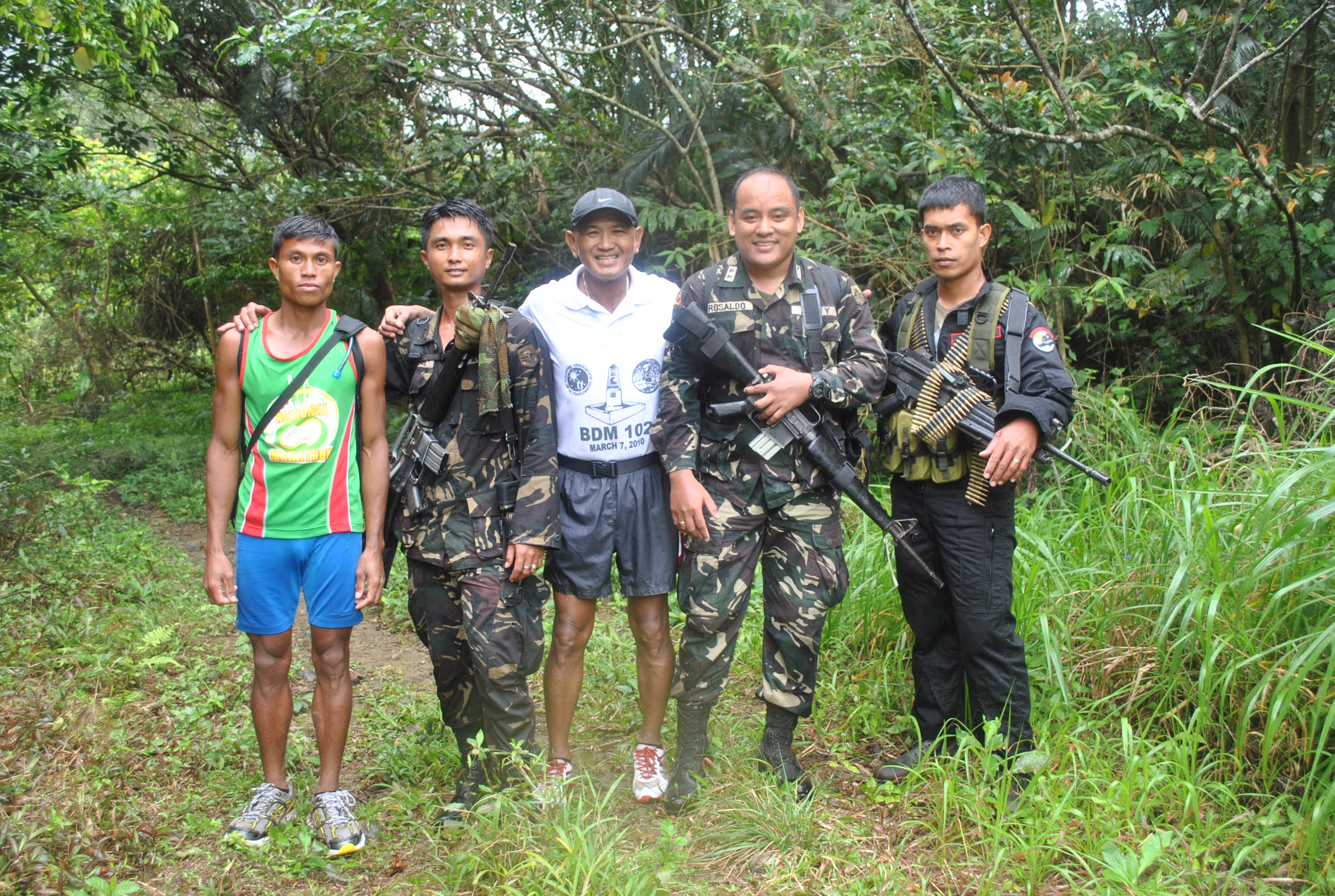
On my way to the peak after passing Camp 1 and before entering to the “Mossy Part”, I was able to meet a couple, a male foreigner and a Filipina, and I greeted them while I was jogging. As soon as I reached the place they call “Grassland”, I met a group of 18 campers/mountaineers with their guide and porter. This is the same group that I would catch up at Camp 1 on my way back to the Badadak Ranger Station. This group is from Lufthansa Airline Company. I would found out later that these campers whom I met along the Ambangeg Trail had been on the trail for 2 days as they have started their climb from the Akiki Trail and they had camped at a placed called “Saddle or Camp 3” before reaching the peak of Mt Pulag.

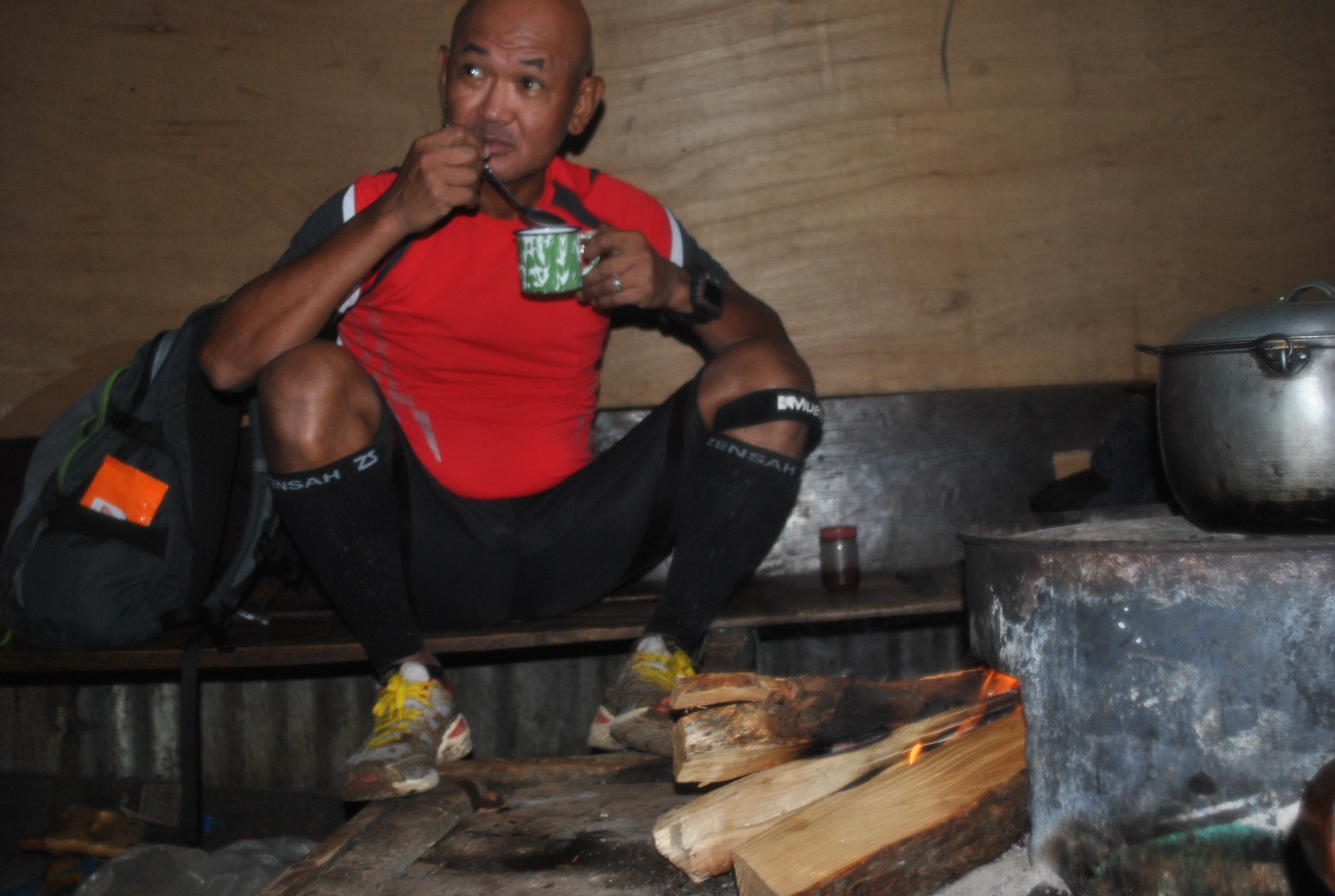
While waiting for Julius and his motorbiking friends to arrive at the Badadak Ranger Station, I asked Edgar, my guide, where I could buy some snacks—native hot coffee and some local bread. Edgar invited me to his parent’s house and I enjoyed sitting at a place where it is near their stove. Julius and company arrived with a delay of almost one hour. It was okey with me since I had a nice time talking to Edgar’s folks and brothers. The 30-minute downhill ride to the center of Ambangeg took a longer time due to faulty brakes on the motorcycle I was riding. After some stops and quick-repair/disassembly & assembly of rear brakes & tire, I was able to reach my parked vehicle. It was already nighttime.

My trip to Kayapa, Nueva Vizcaya has to be postponed and I decided to do my “peak bagging” to Mt Ugo on Race Day itself for the 1st King of the Mountain Mt Ugo Trail Marathon. I was already tired. I need the comfort of a nice bed in Baguio City. After a 2 1/2 drive to Baguio City, I was able to take my late dinner and I was in my favorite hotel room in Baguio City—taking an ice-cooled bath and sleeping under soft and clean linens!

This was my first experience of “peak bagging” on the highest mountain peak in Luzon and 3rd highest in the country! For the round-trip distance of 15K from the Badadak Ranger Station to the peak of Mt Pulag and back, I was able to register a time of 5 hours to include my stay at the peak and “pit stops” in every Camp that I reached. I started from an estimated elevation of 2,400 meters and was able to reach the peak of the mountain where my GF 305 registered an elevation of 2,940 meters!

After some research in the Internet and other blogs, I found out that there are events in Europe, particularly in England where mountain trail runs are called “fell running”. And there are also trail running events that would last for 24 hours or more where the number of mountain peaks are considered and counted to be reached as part of the route. Reaching those peaks is called “Peak Bagging”!

This is my own way of applying such event that I’ve learned from “fell running”. The procedure is so simple. Target one mountain peak at a time, run and walk through it, take some pictures at the peak, and run/jog downhill to where one has started. This is the “travel lite” of mountain trekking or climbing without the intention of camping overnight on each mountain. With my first experience of “peak bagging” at the highest mountain peak of Luzon, I guess, a new frontier and form of trail/road running is born!

Now, if you ask me if I enjoyed my experience? You bet! “Peak Bagging” is addictive!!!

Surprisingly, the road distance from the Gurel Junction along the Benguet-Nueva Vizcaya Highway up to the peak of Mt Pulag through the Ambangeg Trail is exactly 25 kilometers! And if you double the distance by going back from the peak of Mt Pulag to the Gurel Junction, the total distance would be a good 50 kilometers!

This could be the most challenging 50-Kilometer Ultra Run in the country!

Birth Of Another Ultra Route


March 9-10, 2012

After the Awarding Ceremony & Get Together Party for the 2012 BDM and PAU Races, I had already a plan in my mind to try the initial King of the Mountain Road Race envisioned by Jonel two years ago. This is the Road Race which he dubbed as the Baguio To Baguio Route which is popular among professional cyclists and the popular cycling lap that determines who would eventually  win in the yearly Professional Cycling Event in the Country.

However, the main reason and goal of this running trip/adventure run was to be able to recon the King of the Mountain Mt Ugo Trail Marathon route which I was planning to join. Running along the Marcos Highway, Kennon Road, and Naguilian Road would serve as my easy long runs as part of the training before going to Kayapa, Nueva Vizcaya.

Coming from Manila after breakfast of Friday, March 9, I drove my car without any target time for me to start my run as I planned to start at the Saitan Junction in Rosario, La Union once I reach the place and after wearing my running shoes. At exactly 3:00 PM, I arrived at the planned starting area and I was surprised to see that the structure on the said place is already abandoned and left to rot and decay. I wonder who is supposed to be responsible for its upkeep and cleanliness. Anyway, I parked the car and started to eat some cooked foods which we brought for my adventure run. We had cooked rice, pork and chicken adobo and fried fish. After my full meal, I changed to my running attire and I was ready to start my run.

My route has to take the Maharlika Highway going to the town/poblacion of Rosario, La Union and then turn right at the Junction which is the start of the Marcos Highway which is now called, “Ben Palispis Highway”. I wonder who is this guy who replaced the name of the former President of the country! From the Junction, the Marcos Highway would lead me to Baguio City. I finally started my run at 3:30 PM.

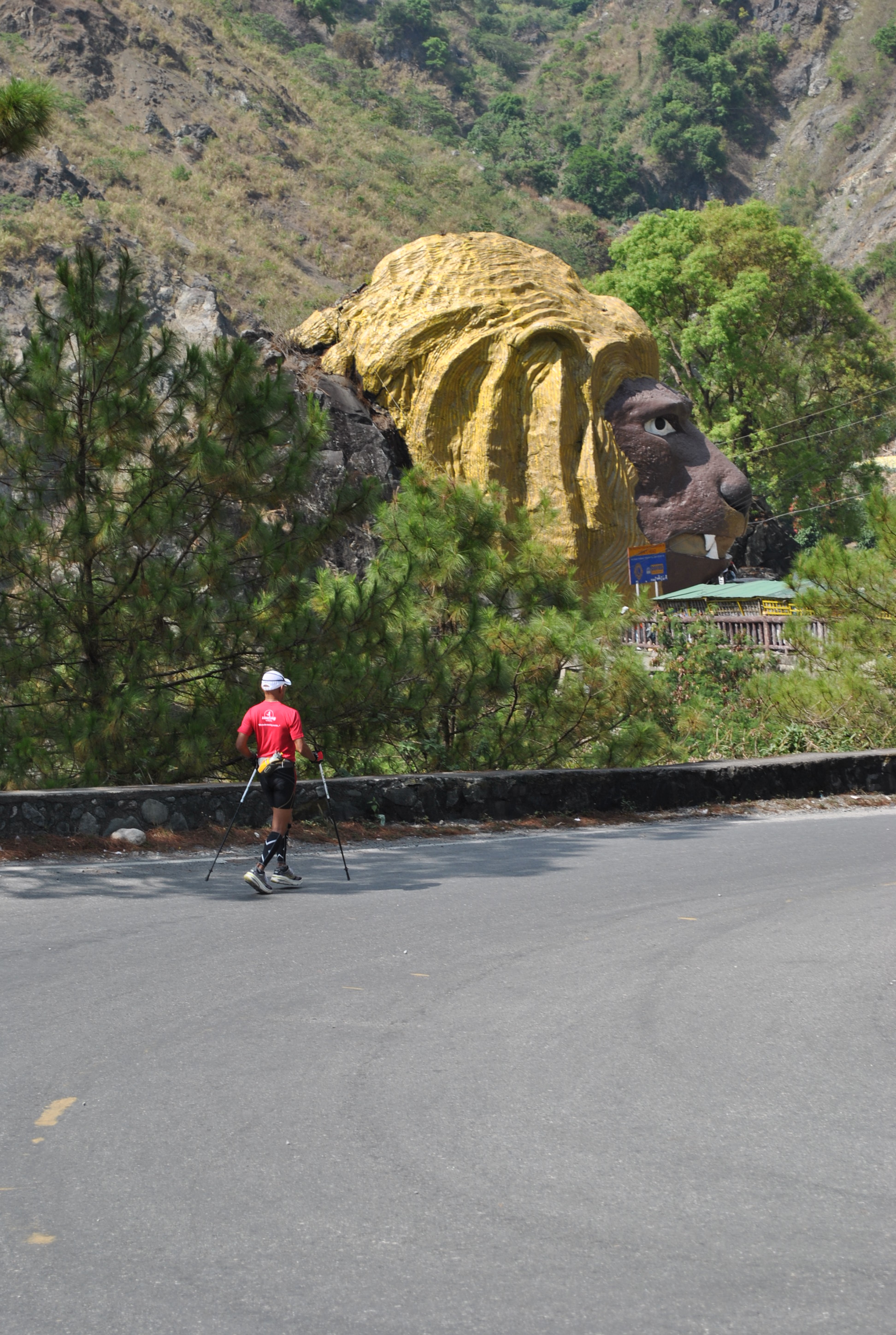
Strictly following my run-walk method of 3 minutes of run & 45 seconds brisk walk, I was able to progress my ascent to the summer capital of the country. My support vehicle would be able to “leap-frog” every 3 kilometers which is the estimated time that I would consume the water or Gatorade mix on my “Sprint” Nathan hand-held bottle. The last 5 kilometers climb to Baguio City would be the most challenging part of the route as I had to brisk walk most of the distance. I was able to run and walk the Marcos Highway going to Baguio City, a distance of 47 kilometers with a total gain of more than 6,000+ feet from the place where I started, at Barangay Saitan, Rosario, La Union. I did it in 8:20+ hours. I stopped my run infront of the Baguio General Hospital.

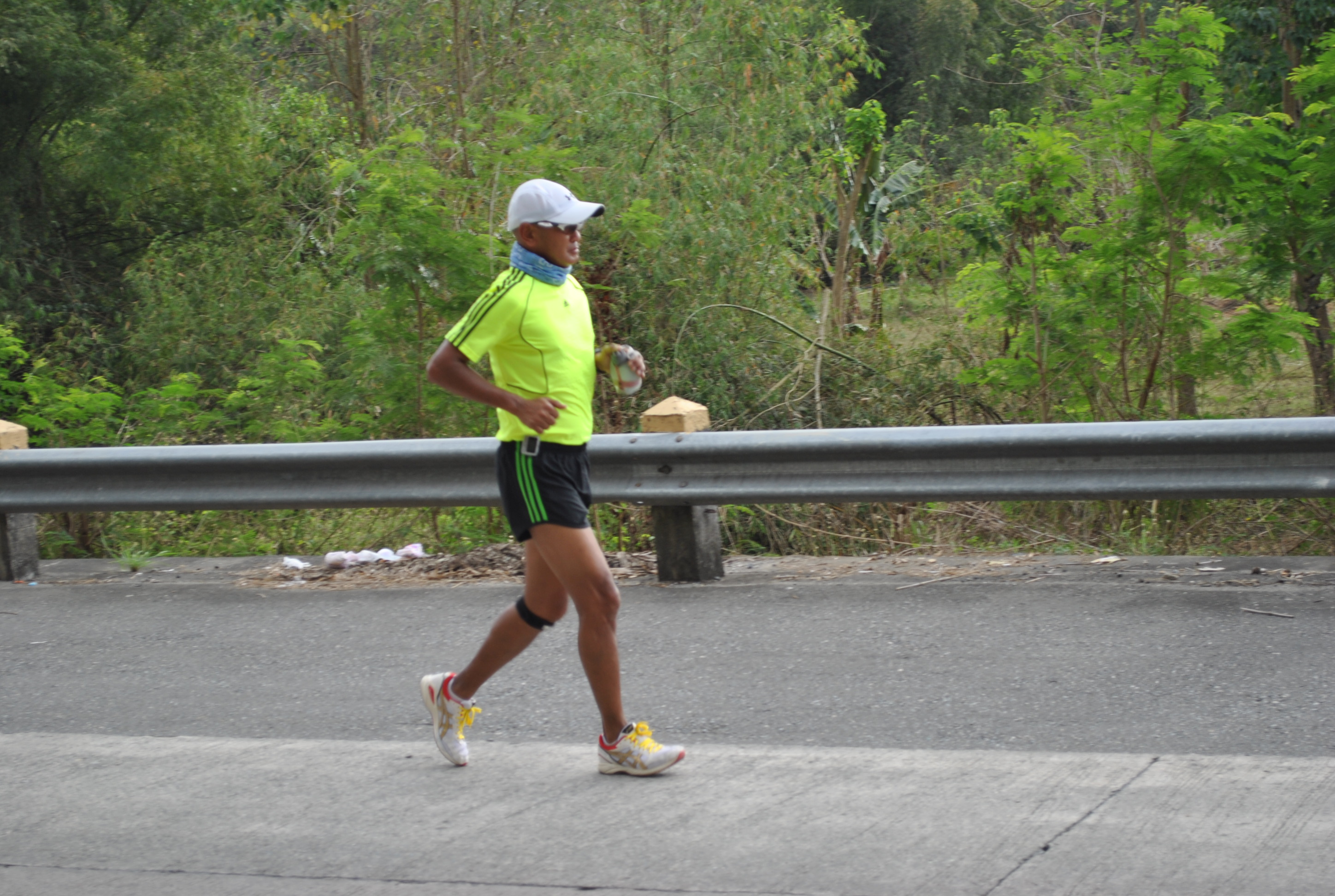
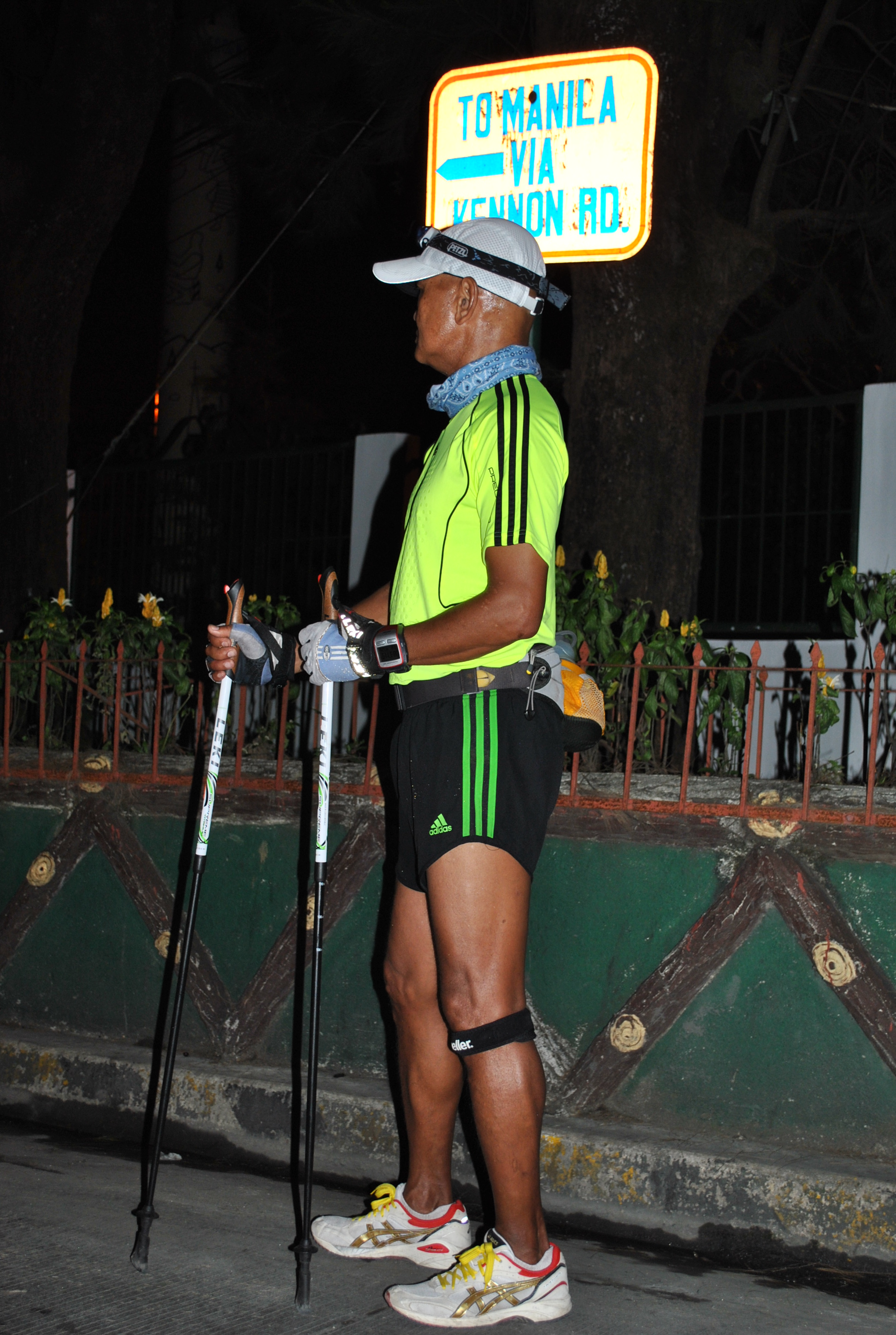
After an overnight rest in one of the decent hotels in Baguio City, I continued my run the following day from where I stopped and run through the famous Kennon Road going back to where I started. It was all downhill but I had to be cautious because I don’t want my quads and knees to suffer for the pounding with the distance of 33 kilometers. My trekking poles provided me with much comfort on those steep downhill portions of the route. With longer “pit stops”, I was able to reach my destination in 6:00+ hours.

After completing the 2-day running feat, I would discover that the total distance would result to 80 kilometers which is a good 50-miler route for an ultrarunning event. Thus, I decided to dubbed the event on this route as the “Marcos-Kennon 50-Mile Ultra Road Classic”. A status posted at FB gave some commitments from running-friends to help and support in the conduct of this event. Thanks to my ultra running friends!

I’ve decided not to run the Saitan, Rosario to Bauang, La Union route along the Maharlika Highway and instead, measured the distance aboard my car using my GF 305 watch. The distance registered at 53 Kilometers. Stayed overnight in Bauang, La Union. Enjoyed the food, beach and sea breeze of the place and I enjoyed my much-needed rest. From the Bauang, La Union Junction to Baguio City, the distance is 44 Kilometers up to Burnham Park. I did not run through the route but I simply observed the terrain closely as I drove towards Baguio City.

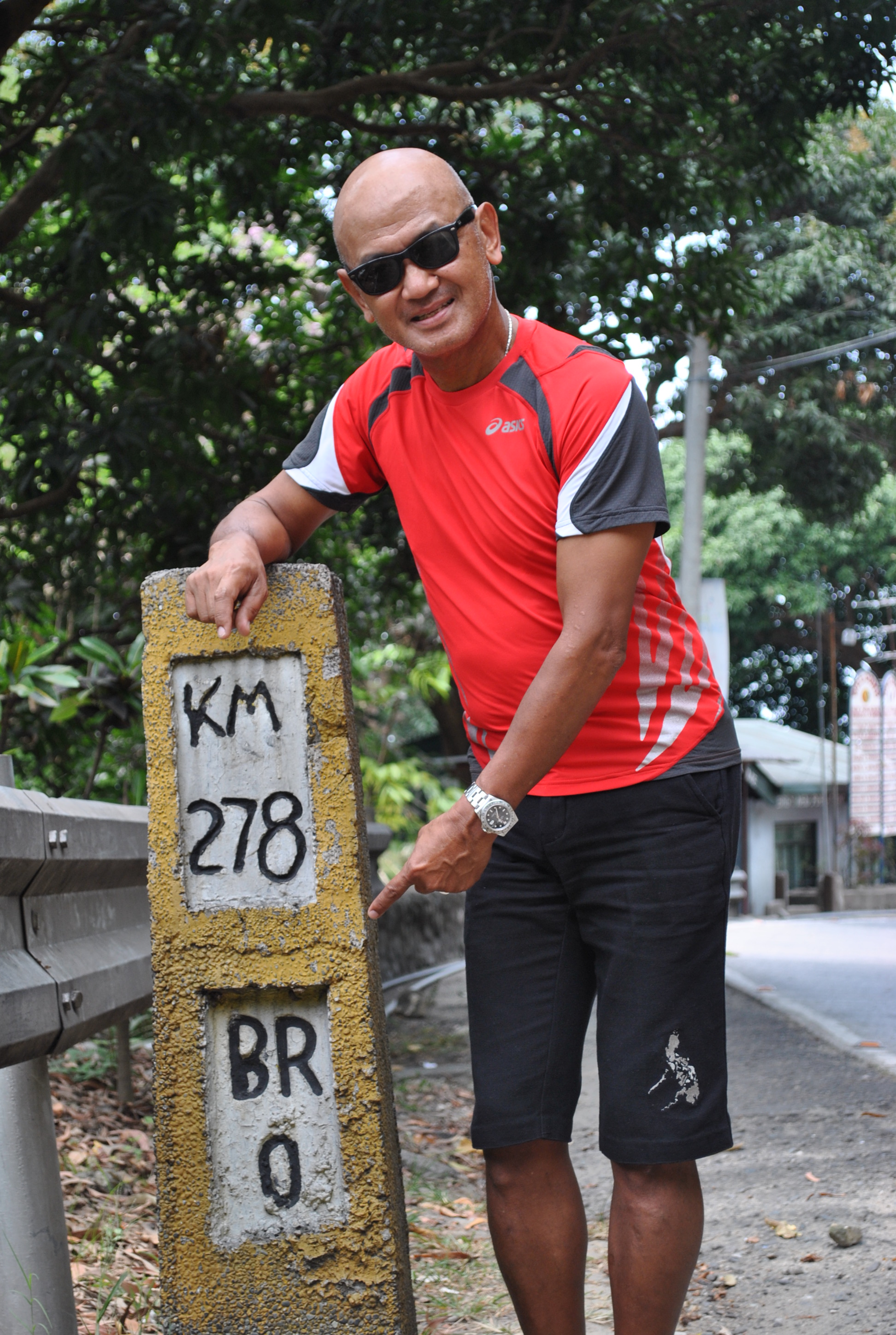
In summary, adding up all the routes of the Baguio-Baguio, the Original King of the Mountain Road Ultra of Jonel, it has a total distance of 224 Kilometers and it can be depicted on the following measured legs:

Baguio City To Saitan, Rosario via Kennon Road—33 Kilometers

Saitan, Rosario To Baguio City via Marcos Highway—47 Kilometers

Baguio City To Bauang, La Union via Nagulian Rd—44 Kilometers

Bauang, La Union To Saitan, Rosario via Maharlika—53 Kilometers

Saitan, Rosario To Baguio City via Marcos Highway—47 Kilometers

I will let Jonel push through with his plan Baguio-Baguio Route to be implimented. However, I will just take a portion of the said route as another challenging race route for interested ultrarunners to experience. Thus, the “Marcos-Kennon 50-Mile Ultra Road Classic” is born. Planning for this race route is not complete if I don’t share to you what are the detailed expenses incurred in order to discover and plan a certain ultrarunning route.

The following were my expenses incurred in the said trip:

Gasoline Expenses (Round Trip From Manila-Baguio & Back)—P 5,000

Food Expenses For 3 Days (For 2 Persons)—P 4,000

Hotel Accommodations—P 4,500

Miscellaneous Expenses—P 1,000

Hydration & Nutrition Needs For My Recon Runs—P 3,000

T   o   t   a    l ————-P 17,500

This is excluding for the Payment for the Wear & Tear/Service for the Car that I am using in my Recon Runs. And since this is my passion, I don’t give a price or costing on the time and effort/services I have to provide in order to create a safe road race for everybody. In addition, the daily salaries of my driver and assistant/support crew are not yet included in the above costs!

I hope in the future, Jonel would be able to stage a multi-day running event on his original Baguio-Baguio Route.

The Ultra Race along this route will come sooner than you think! Keep on running!