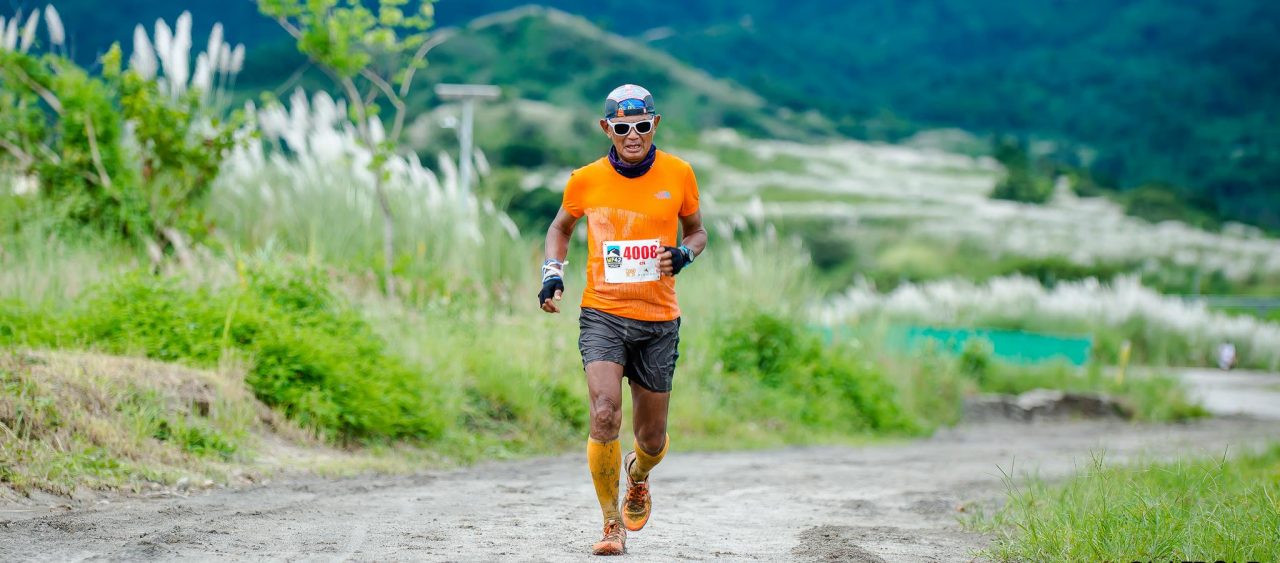
When I was in the active service, we have a sports competition event which was called “AFP Olympics” which was a competition among the Major Services of the Armed Forces of the Philippines (AFP), to include the Philippine National Police. This is one of the Sports Programs of the AFP to help the country hone its talents towards Sports Excellence. Most of our elite athletes in our Sports’ National Pool are enlisted as soldiers and this a way where their training is supported through their Pay & Allowances coming from the AFP. But they also perform duties as soldiers and sometimes assigned outside the Metro Manila area. Thus, these soldiers/elite athletes are not concentrated/focused on their training to be the “best of the best”! Continue reading ““AFP Challenge” & Fun Run”
Category: Military
1st Cebu Ultramarathon Race
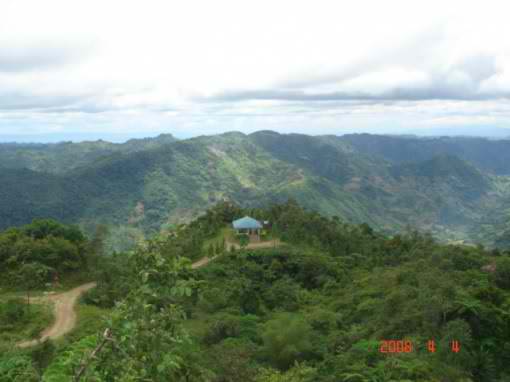
1. Six weeks before I retired from the military service, I visited the exact place where former President Ramon Magsaysay’s plane crashed on the early morning of March 17, 1957. If you don’t know your history, you can search “Mt Manunggal” in my blog and read my story about this visit to the said place.
2. Being the Bald Runner after retirement from the service, I had plans of visiting again to this place and thought of coming up with road/trail race to commemorate the death of our former President Magsaysay as I wanted my runs to be connected with the history of our country. In one of our conversations with my friend Jonel Mendoza, he asked me a place where a good ultra run route in Cebu which can be used in the future and I answered him that Mt Manunggal Crash Site would be highly recommended because of its significance in our history. And the rest is history.
3. Since I don’t announce in my blog where my next race is, the Race Organizers were surprised to see me in Cebu/Ayala Center on the night before the race. I was given the opportunity by Jonel aka FrontRunner Magazine to speak before the runners on their magazine’s running clinic. It was a nice experience seeing a lot of runners from Cebu City during the said clinic. It really shows that the running community in cities outside Metro Manila is growing in numbers by “leaps and bounds”.
4. Most of the runners in the 1st Cebu Ultramarathon Race were already at the assembly area at 4:00 AM as most of them “camped” in the area. I could see different moods on the faces of the runners which is very common among runners who are about to experience their first ultramarathon run. I was able to see some of the “usual suspects” in ultra runs in Luzon and I had a brief chat with them. I know, most of them came here to challenge the route. However, I came here to test and evaluate my training.
5. After a short program and photo-ops at the “bust monument” of President Magsaysay, the race started at 5:52 AM with 180+ starters. The faster and “excited” runners went ahead from the rest of the group as they forced themselves to attack the uphill climbs and downhill parts of the route that goes to the National Highway. I think I was on the last half of the whole group of starters on the first 3 kilometers of the run.
6. In a very challenging route which has steep uphills and fast downhills, the race strategy in an ultra run (50K and above) is to be able to apply “brisk walking” on the uphills, fast recovery run on the downhills, and steady run on the plain parts of the route. So, in most parts of the route, I consistently applied this strategy making sure that I hydrate myself regularly (every 2-3K) and eat solid foods every 5 -7 kilometers. My solid foods consisted of Nature Valley Sports Bar, fresh banana, fresh apple, Cloud 9 Chocolate Bites, and boiled sweet corn (bought along the way). I think most of the runners that I passed on the uphills were able to see me with my “brisk walking” form! I am highly recommending that “form” as I learned it from my experience at the Marin Headlands 50-Mile Trail Run.
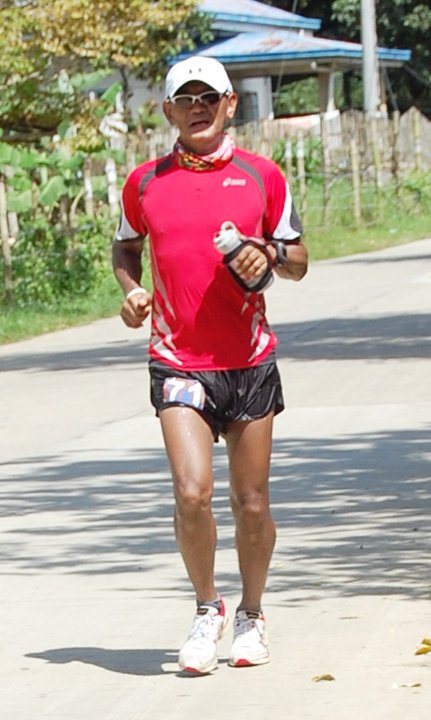
7. The last 20K of the race was a “battle of will and determination” as the heat of the sun was upon us and I’ve been running and brisk walking for almost 4 hours. The more that I have to bring out those “tips” and lessons learned that I gathered in my past ultraruns. At this point, everything was a “mind game” and consistency of doing what I planned for during my training was the focus in this race. I did not veered away from my race strategy most especially on my hydration/nutrition. On my last 15K, I started to take “salt tablets” and drowned them in my throat with ice cold Mountain Dew or Classic Coke. This gave me more strength and consistency with my pacing in my runs and brisk walking!
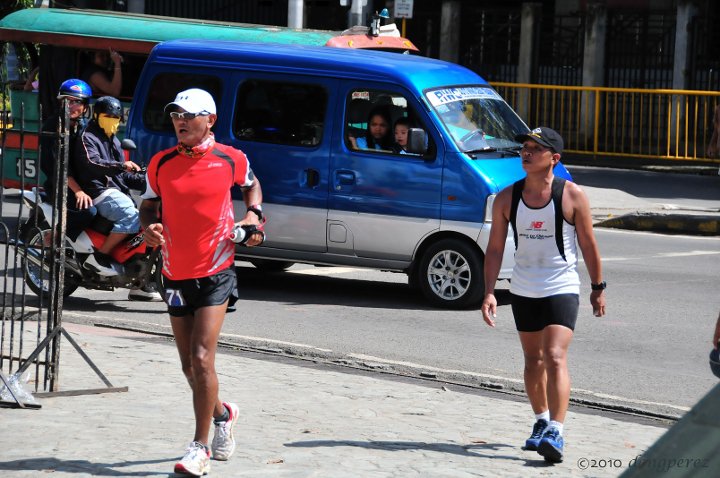
8. I finally reached the Finish Line, in front of the Cebu Provincial Capitol Building, with a time of 6:42:20 hours (Official Time). I finished with a ranking of #38 out of the 162 finishers. Based from my GF 305 data, the total distance is 50.23K; an average pace was 8:00 minutes per kilometer; a total ascent of 1,860 meters and a total descent of 2,695 meters.
9. I consider this race as a mountain trail run because of the profile/elevation of the whole course. I am satisfied with the result of my training since I finished the 1st CAMSUR Marathon wherein I started to incorporate more intensity to my training runs and making my selected weekend races as my performance evaluation/test runs. In conclusion, I was able to attain what I have aimed for in this ultra run.
10. And talking about going “hardcore” and going up to a higher level of ultrarunning, I advise that for those who have future plans in joining ultra trail runs in the “WEST”, I highly recommend you to follow and train for the following finishing times in the following ultra distances races:
50K—-sub-7 hours
50 miles/80K—-sub-11 hours
100K—–sub-14 hours
100 miles/160K—-sub-30 hours
11. Thanks, Jonel, FrontRunner Magazine, CERC & Cebu Runners, Volunteers, and the CENTCOM, AFP Officers & Staff for the experience and hospitality. Congratulations to all the Finishers and Race Organizers for a job well done!
(Note: Thanks for those who posted the above pictures at Facebook)
Thinking Aloud
- I really don’t know if you have seen the Billboard wishing our National Athletes to the on-going ASIAN Games displayed along the NLEX Viaduct (south bound). It has a banner that states, “Quest For Glory”. How I wish that the said Billboard could have been displayed along EDSA. At present, we have garnered two (2) gold medals for Billiards and Bowling. With Athletics Events to start tomorrow, I hope our team Philippines would be able to add more gold medals on the track and field events.
- Is it true that our National Dragon Boat Team was not allowed to join the Team Philippines in the ASIAN Games because of an allegation of a top POC official that our team is using sports-banned substances or doping? I wonder if our athletes were clinically tested to determine if the allegation is true. Our boys, being consistently winning world competitions, missed an opportunity to win Gold Medals for the Dragon Boat events as it went to the Indonesian Dragon Boat Team. I hope this is not a case of the so-called, “crab mentality” among us. “Sayang yong tatlong Gold Medals!” Continue reading “Thinking Aloud”
Mile
Have you ever tried to run a mile on your best effort on an oval track and find out what is your best time?
A mile is a length of a distance which is equivalent to 1,600 meters. It is the English system in measuring a distance. Its counterpart in the Metric System is the Kilometer. A Kilometer is equivalent to 1,000 meters. Obviously, a mile is longer than a kilometer by 600 meters.
In the sports of Athletics, a Mile Run is one of the most popular running events done on an Oval Track. A mile run is equivalent to four (4) laps on an oval track. However, in the Olympic Games and in IAAF sanctioned events, the metric equivalent of the mile run which is the 1,500-meter run is the one which is considered as sport event.
Many books had been written about athletes who have run the mile in less than 4 minutes. But I’ve never read any of these books except for the book, “Lore of Running” by Dr Tim Noakes where all the significant runners who broke the 4-minute barrier in the mile run had been mentioned.
At present, the standing world record for the mile run is 3:43.13 minutes by Hicham El Guerrouj of Morocco on July 7, 1999 in Rome, Italy. For the past 11 years, such record time had never been broken. I am sure some Filipino runners had broken the 4-minute barrier for the mile but I have yet to know the National Record time for such distance by our local runners.
To answer the question that I mentioned above, I have to admit that I’ve been running on the oval track for so many times for the past years but I never thought of trying to set my personal best time on the said distance. Since I’ve set my GF 305 on the metric system, I usually measure the distance I could run in kilometers.
When I was still active in the military service, a 2-mile run was a part of our regular Physical Fitness Test. My best time for the 2-mile run was when I had my military schooling in Fort Benning, Georgia, USA when I timed 12:00 minutes for the said distance. I was then 32 years old. The 2-mile route at the US Infantry School was a flat trail surface. I would safely say that I ran my best one mile in 6 minutes. I wonder what would be my time if I’ve done the 2-mile run on an oval track with a tartan surface during that time.
On my last Physical Fitness Test before I retired from the military service (4 years ago), my time was 14:20 minutes done at the Headquarters Philippine Army Grandstand running/jogging area, which is translated to a 7:10-minute mile.
Three days ago during my 5K tempo run on the oval track, I was able to register a time of 7:40 minutes as I finished my first 4 laps at the oval track. I really don’t consider this as my legitimate best time for the mile because I started with a slow pace on my first lap and started to increase my pace on the 2nd lap and finally maintaining my fastest pace when I was already on my third lap. I wonder how will I perform if start on a racing mode from the very start up to the finish line in a mile run?
I asked my elite athletes if they have timed their best one mile run since they started running and all of them said “Not yet, Sir!”. I am surprised to know that these elite athletes do not mind knowing what their best mile run is. Is this the normal behaviour of our elite runners? Is this an indication that they are not coached and trained properly? No wonder we could not excel in other long distance running events as we could not even excel on the very most basic distance where the training standards in long distance running is based. Coaches would base every training program for his/her athletes from the best time they could finish a mile or 1,500-meter run.
Having said this, I am going back to the “basics” of training the best of my one mile run as part of my aerobic training for the half-marathon, marathon, and ultramarathon training. It’s a crazy thing to do but it is nice to know what your body is capable when you run at your best effort in a 4-lap run on the oval track.
Now, I ask you, “Have you tried running your best one mile run lately?” You can write your comments and I would like to know your best time on the said distance.
Official Result: 1st Mt Pinatubo 50K Trail Challenge
The following is the Official Result of the 1st Mt Pinatubo Challenge (MPC) 50K Trail Run.
I would like to specifically mention that the Northern Luzon Command (NOLCOM) of the Armed Forces of the Philippines gave me the “GO” signal to push through with the trail run as the Balikatan Exercise (Proper) is scheduled to start yet on October 14, 2010 with the AFP components and the US Armed Forces Counterpart. I did not want that the race would be cancelled, re-scheduled, or terminated when most of the runners are still on the trail. I have the impression that the Philippine Air Force scheduled a practice run on the events/activities that they will be performing during the said military exercise with our US counterparts on the prescribed scheduled dates.
However, the top runners who were fast and strong were not affected with the practice runs of our Philippine Air Force and I have decided that their Finish Times will be upheld as the prevailing record for a solo run finish time from Sta. Juliana, Capas, Tarlac up to the Crater Lake of Mt Pinatubo and back. As I could not determine the exact elapsed time for each runner who were directed to stop in one of the Aid Stations due to the helicopter-airborne firing from a MG helicopter, the finish times reflected below will be considered as the official time. Guys, you will have your chance to redeem yourselves and improve your finish times on the next edition of this trail race!
Due to this predicament, I decided to remove the prescribed cut-off time of 10 hours and allowed everybody to finish and awarded each one who crossed the finish line with their “finisher’s trophy” and Finisher’s T-shirt.
My congratulations to all who started and finished the race. You have finished what I consider as the “hardest and most challenging 50K trail race” in the country.
| 1st PAU Mt. Pinatubo 50K Trail Challenge | |||
| October 09, 2010 | |||
| NAME | TIME | ||
| 1 | Hermogines Olvis | 6:33:36 | Champion (Male) |
| 2 | Jonel Mendoza | 6:45:56 | 1st Runner-up (Male) |
| 3 | Moses Moreno | 6:46:18 | 2nd Runner-up (Male) |
| 4 | Chito Vegim | 7:05:13 | |
| 5 | Graciano Santos | 7:10:13 | |
| 6 | Noel Hernandez | 7:43:20 | |
| 7 | Marcos Lontoc | 7:47:13 | |
| 8 | George Dolores | 7:47:57 | |
| 9 | Mon Marchan | 7:57:20 | |
| 10 | Dindo Diaz | 8:34:47 | |
| 11 | Camilla Brooks | 8:37:46 | Champion (Ladies) |
| 12 | Rufino Morimonte | 8:37:58 | |
| 13 | Melvin Pangan | 8:38:06 | |
| 14 | Don Ubaldo | 8:49:21 | |
| 15 | Earl Warren Navor | 8:50:54 | |
| 16 | Christian Oting | 8:53:45 | |
| 17 | Ian Colendra | 8:54:53 | |
| 18 | Allan Bandiola | 8:55:52 | |
| 19 | Christian Neil Pioquinto | 8:55:52 | |
| 20 | Paolo Osmeña | 8:55:52 | |
| 21 | Saturnino Camamongan | 8:57:51 | |
| 22 | Gil Brazil | 9:01:41 | |
| 23 | Mark Adrian Hernandez | 9:04:39 | |
| 24 | Simon Pavel Miranda | 9:06:35 | |
| 25 | Dennis Ravanzo | 9:22:05 | |
| 26 | Vicky Ras | 9:22:05 | 1st Runner-up (Ladies) |
| 27 | Grimaldo Anecito | 9:26:10 | |
| 28 | Marie Anne Constantino | 9:29:29 | 2nd Runner-up (Ladies) |
| 29 | Joey Baladad | 9:30:54 | |
| 30 | Ronnel Go | 10:52:09 | |
| 31 | Raul Tapia | 10:57:27 | |
| 32 | Allen Gaspar | 11:01:05 | |
| 33 | Jose Lorenzo Mina | 11:03:55 | |
| 34 | Marcelino Tomas | 11:04:19 | |
| 35 | Bong Bernadez | 11:04:54 | |
| 36 | Ed Yonzon | 11:05:09 | |
| 37 | John Jeffrey Avellanosa | 11:05:15 | |
| 38 | Precy Hernandez | 11:08:42 | |
| 39 | Emma Alvarez | 11:14:39 | |
| 40 | Kian Vicera | 11:05:08 | |
| 41 | Wellington Yao | 11:05:10 | |
| 42 | Carlos Nobleza | 11:18:44 | |
| 43 | Christian Paul Forbes | 11:18:48 | |
| 44 | Roberto delos Santos, Jr | 11:18:52 | |
| 45 | Greg Mana-ay | 11:24:32 | |
| 46 | Sherwin Tommy Botabara | 11:25:02 | |
| 47 | Vans Camanong | 11:27:59 | |
| 48 | Leigh Arnel Biscarra | 11:34:15 | |
| 49 | Larry Daliwag | 11:38:18 | |
| 50 | John Allan Maigue | 11:51:20 | |
| 51 | Ian Ferrer | 12:20:50 | |
| 52 | Mark Fer Castillo | 13:06:59 | |
| 53 | Ruben Acebelo | 13:10:52 | |
| 54 | Jinkee Guerrero | 13:10:52 | |
| 55 | Norberto Mortel | 13:14:58 | |
| 56 | Marco Christopher Montaos | 13:15:06 | |
1st CAMSUR Marathon
CAMSUR Marathon/Pili, Camarines Sur/4:00 AM September 26, 2010
1. This is my 3rd Marathon Race for the year and I prepared this race without any training plan or program. Everything was done by “feel” and “instinct”. All my runs after the 34th MILO Manila Marathon Elimination were easy long runs; mountain trail runs; and a limited once a week tempo runs. Basically, I did not train for “speed” on this marathon race. I concentrated more on my “back-to-back” weekend easy long runs and decided to have the CAMSUR Marathon Race as part of my easy long run in preparation for another “epic” running experience in the future.
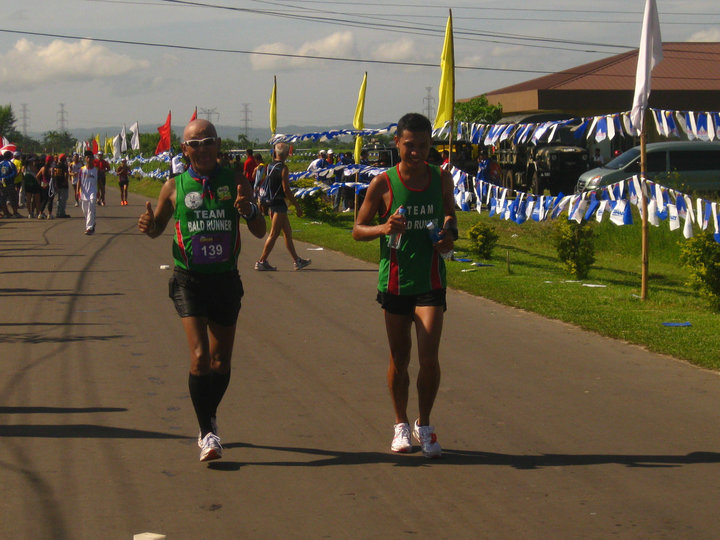
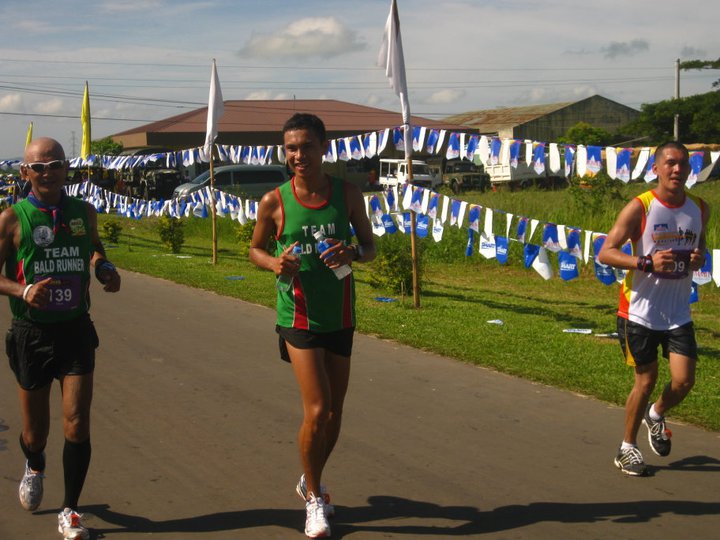
2. I finished the race in 4:39:33 hours (unofficial) as recorded in my GF 305. It is not a “shabby” finish time but I was able to learn a lot of what my body is capable of with my age of 58. Comparing myself with my friend and BDM 102 “veteran” Victor Ting who is already 62 years old, he was faster in reaching the Finish Line and I think he was ahead of me by 3 kilometers, I think I still have the chance to reach his age and run as fast as he can. But I think Victor is getting faster as he grows older. But for now, speed will remain at the back burner up to the end of this year and I will slowly introduce it again in my workouts at the start of the new year.

3. So far, this Marathon Race is the third major running event in the country that is fully sponsored and supported by a local government unit. The City Government of Quezon City came first with its own version of an International Marathon Race on the later part of last year and it was followed by the Cebu City Marathon last January 10 of this year and now it’s the Provincial Government of Camarines Sur. These local government executives in these cities and province are commendable for promoting the sports of running with their own resources without the support of the national government. How I wish more of these kind of local executives should come up with such sports events in their respective provinces and cities in order to promote their place through sports tourism. With cash prizes at stake on these running events provided through the efforts of the local executives, it will give more incentives to our elite athletes to train some more and at the the same time inspire the local folks and “grassroots” to develop themselves as competitive runners in the future. My salute and congratulations to the good leadership of these “pioneers” in promoting international running events in their own cities and provinces.
4. Camarines Sur Marathon is showing an example of the trend of marathon races in the country. It is no longer possible to have an ideal environment for a marathon race within the confines of Metro Manila and its immediate environs because of the problem of vehicular traffic, pollution, poor quality of air and the “no concern attitude” of the residents to people who are competing in a road race. It is only in the province and cities outside Metro Manila where you see spectators cheering and saying best wishes and good greetings to runners along the route of the race. Moreso, you can feel the hospitality when you see the barangay officials and folks manning the different Aid Stations offereing some food and water to the runners as Volunteers. I was informed that the Race Organizer had fielded almost 1,500 volunteers for this running event.
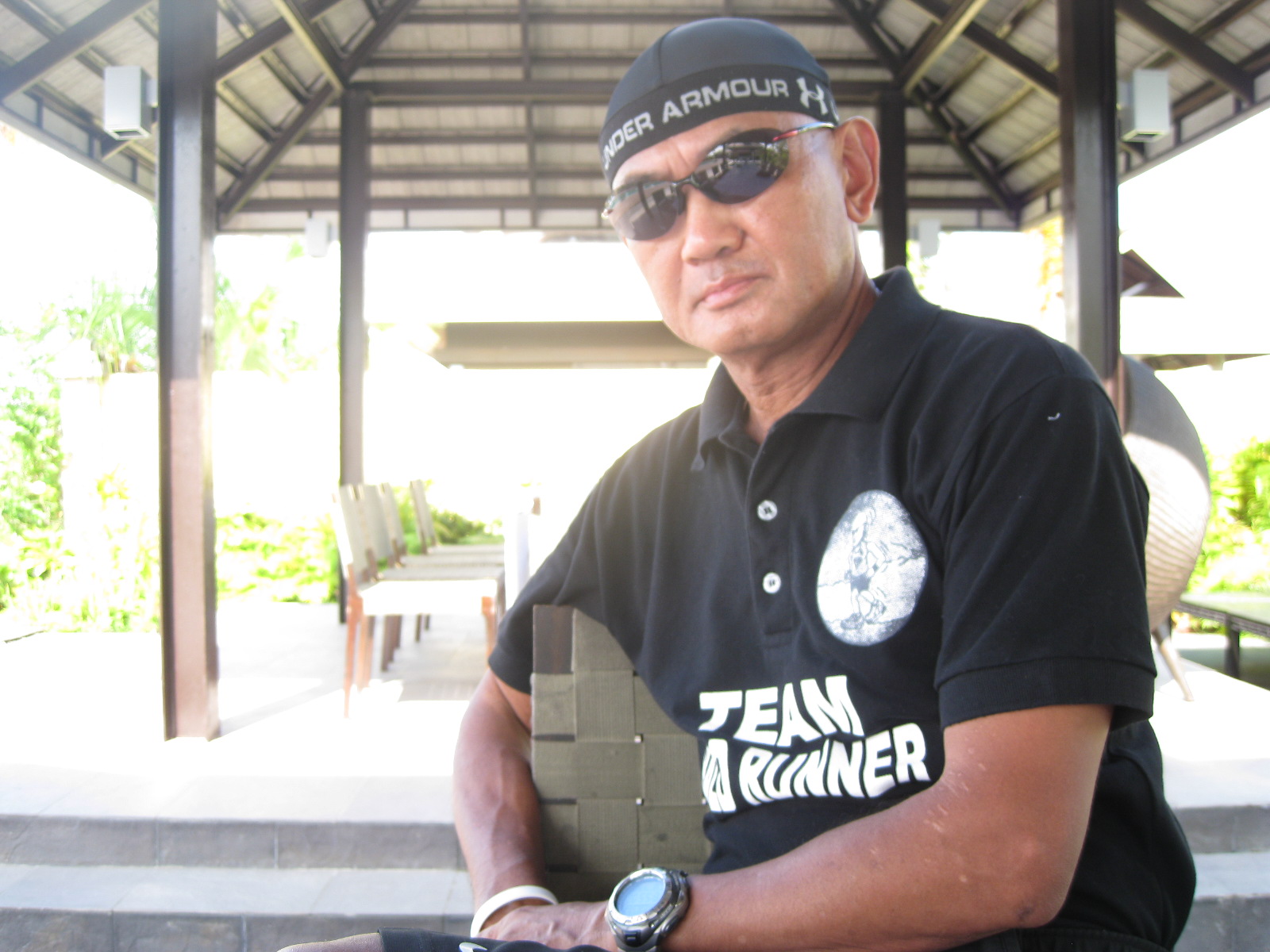
5. Going to Naga City and Ipil by land and air from Manila was so easy. By land on our own vehicle, it took us an easy 8-hour ride on the late evening from Manila and arriving at Naga City on daybreak. Travelling by bus, I heard it was more comfortable by sitting on “Lazy Boy” seats with a Comfort Room inside. And by plane, after a short 45-minute ride, you are already in Naga City.
6. Having registered to run the Marathon Race last June, I had a lot of time to plan for the trip and for the accommodation for my Elite Team. I was lucky to know that one of my officers assigned as one of the General Staff of my Command when I was the Division Commander in Panay Island is now assigned with the 9th Infantry Division of the Philippine Army based at Pili, Camarines Sur. Col Ace De Asis took upon himself to look for a place for us to stay. I was surprised to find out that another officer who served as my Camp Engineer in Panay Island is also assigned in the said place. Through the transient facilities of the Philippine Army, my team and I were “billeted” at the VIP Transient Facility of the 565th Engineer Battalion of the Philippine Army for almost 3 days.
7. We arrived in Pili, Camarines Sur on the early morning of Friday and went around the facilities of the CWC and later proceeded at Camp Martillana where our the Philippine Army’s Transient Facility is located. We were received by our host, Lt Col Tony Celoso ( my Command Engineer in Panay Island) and led us to their Battalion’s VIP Transient Facility. The facility has two big bedrooms with two bathrooms; a big living room with TV and cable connection; and dining area. We were able to buy fresh foods at the Pili Market and cooked them in the facility’s kitchen. My elite team’s members were the cooks, dishwashers, and the ones going to the market to choose what food to eat for the day.
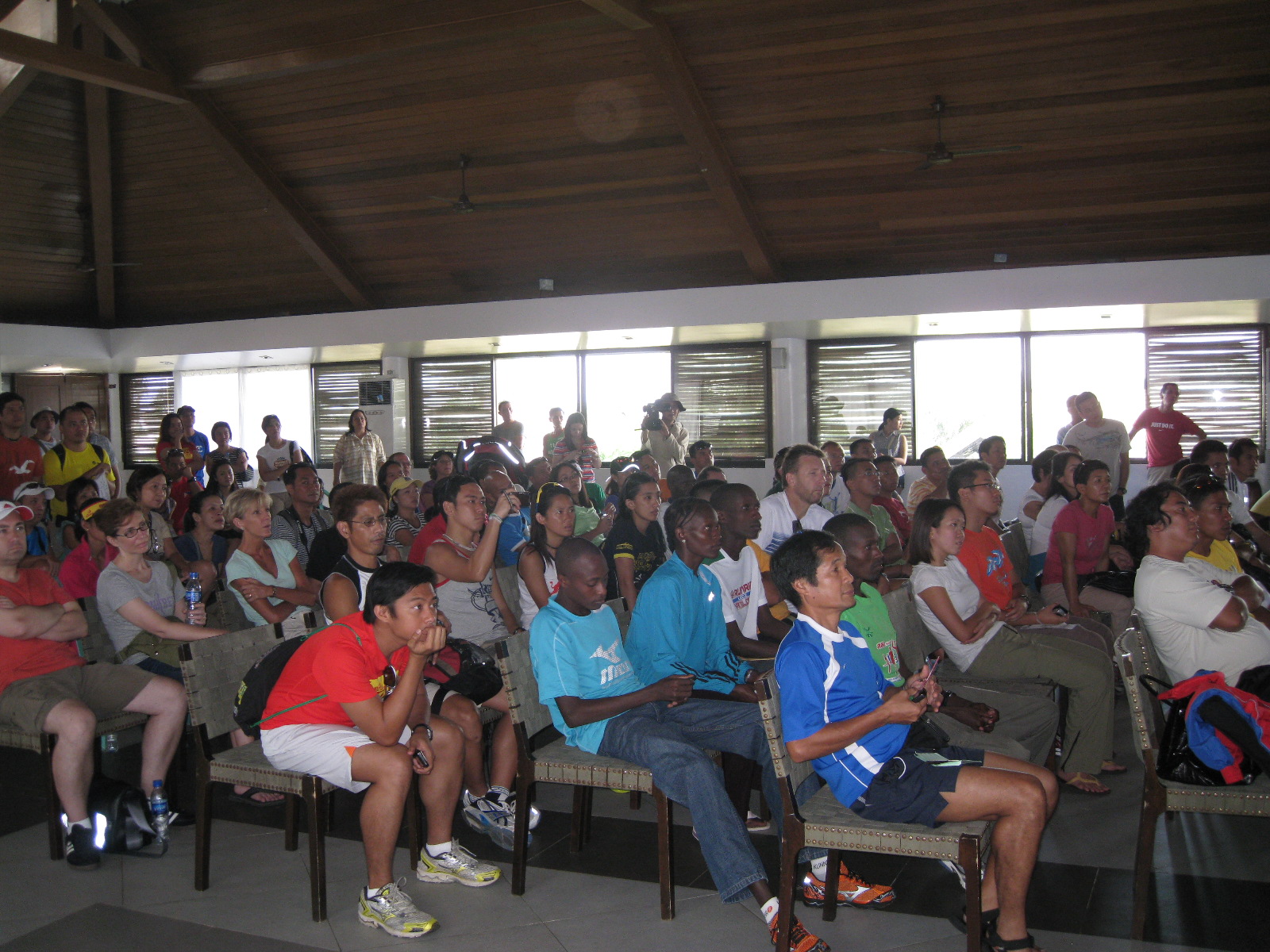
8. My elite team and I attended the scheduled briefing on Saturday morning at the CWC and I was impressed on the preparations made to make this running event a success. I observed that a lot of international runners attended the briefing and I saw new faces from the Kenyans. I even saw athletes whom I was informed to be from Russia. I was able to meet other runners who are regular participants of my PAU races as well as runners who came all the way from the Visayas and Mindanao. Definitely, this running event was a meeting place of the avid and passionate runners from all over the country.
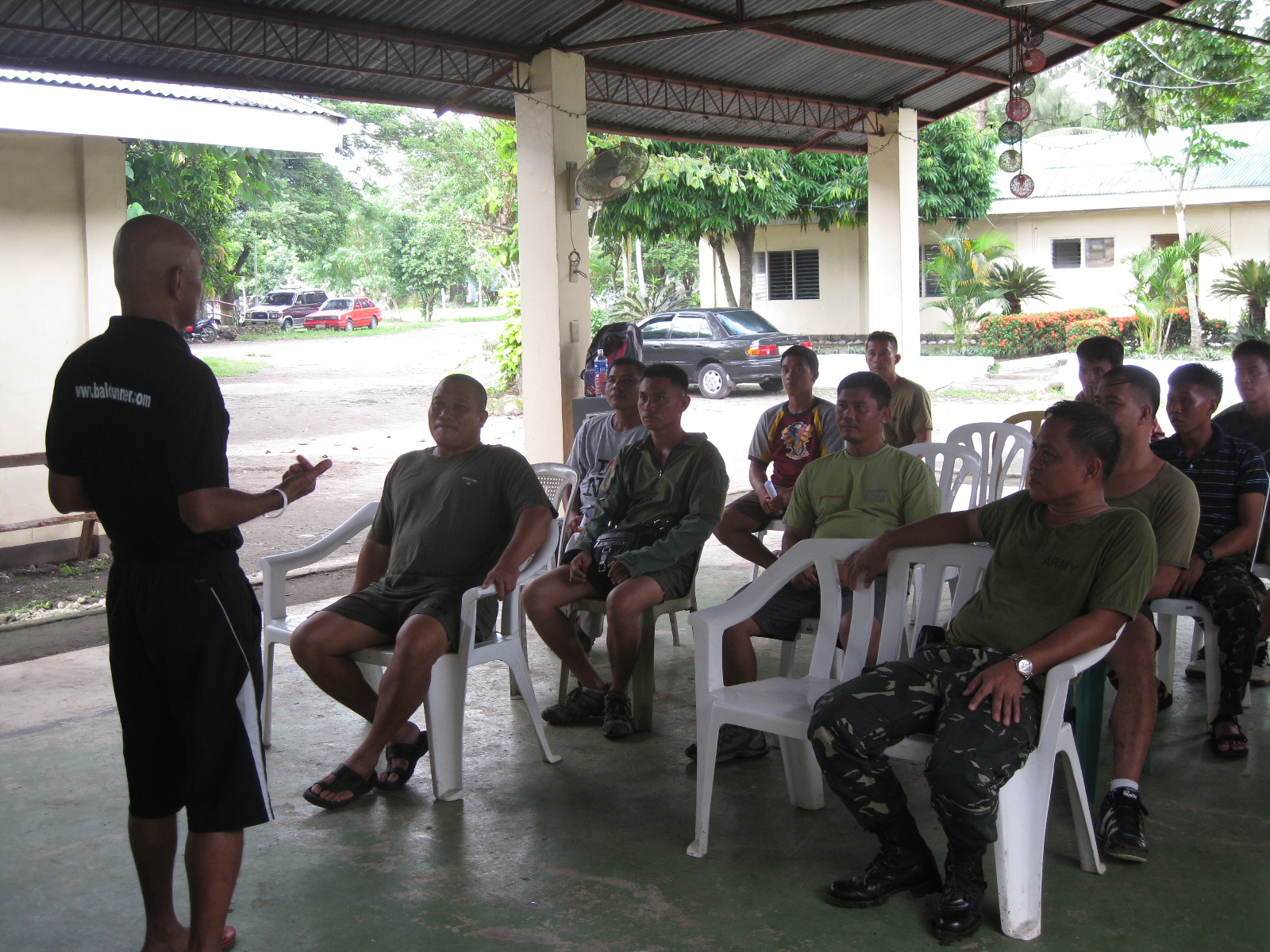
9. A day before the Marathon Race, I requested the Battalion Commander of the 565th Engineer Battalion to assemble his officers and men for an “impromtu” Running Lecture which will guide them to a more scientific way of training in preparation for a running event. The running lecture was done after one hour with the hope that the soldiers of this unit would be able to train properly. I gave them the challenge for them to join the next year’s half-marathon race after imparting to them the basic principles in training as well as tips in running. I told them that they are lucky and fortunate to have the Provincial Oval Track located just in front of their camp. In conclusion, the most important thing that I emphasized to them are the good values each one of them to develop while they are preparing for a running event.
10. The race was conducted perfectly as the race started promptly at 4:00 AM; there was a “festive” mood at the starting line which was highlighted with fireworks; lots of photo-ops with runners; greetings from the “usual suspects” in marathon races; lots of hydration points; proper markings along the road; presence of volunteers and marshals along the route; fresh bananas, sports bars & sports gels (although some were “expired”) were available to the runners at the 2nd half of the marathon route; and most of all, the presence of spectators who were cheering and greeting the runners!
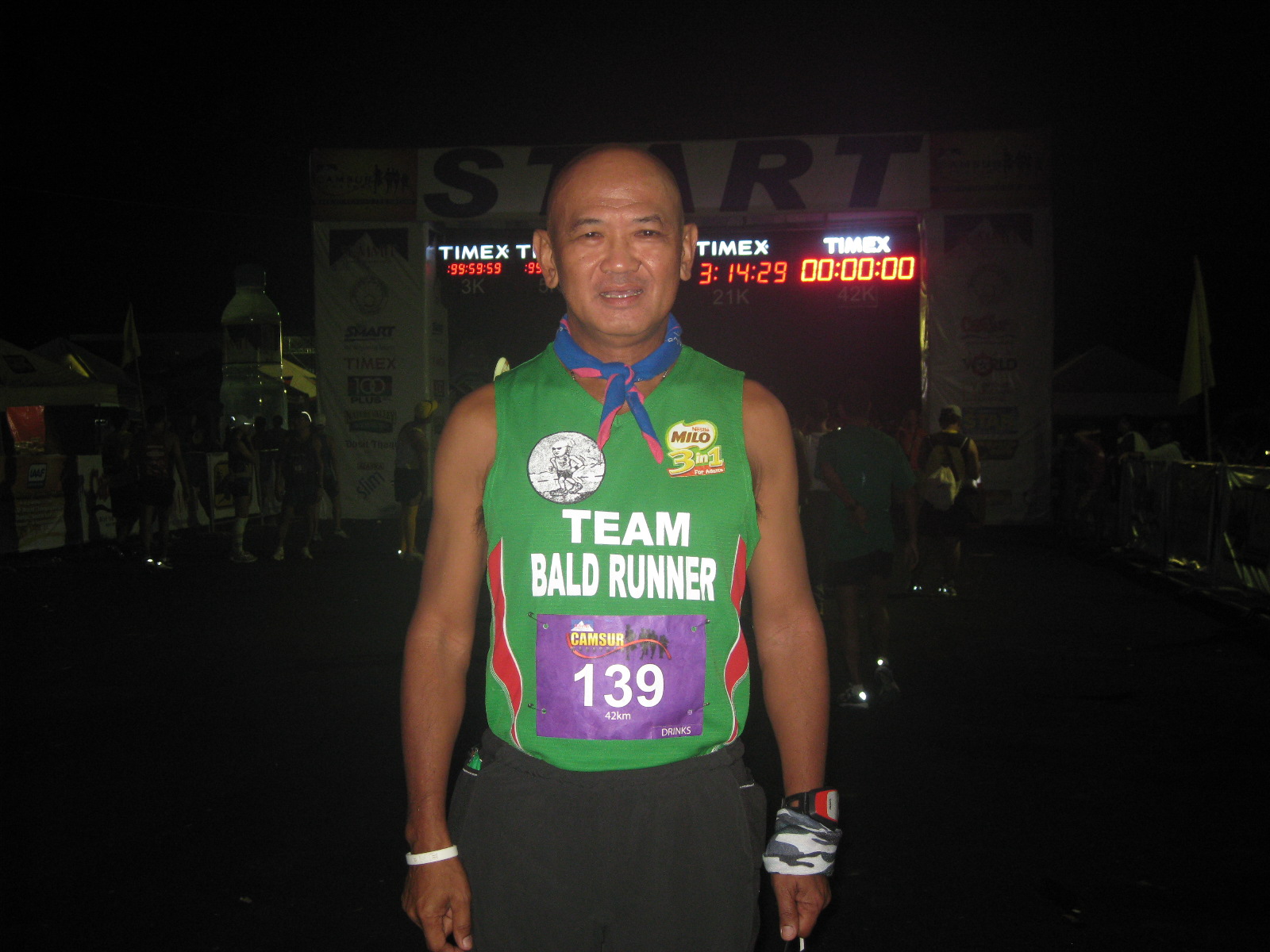
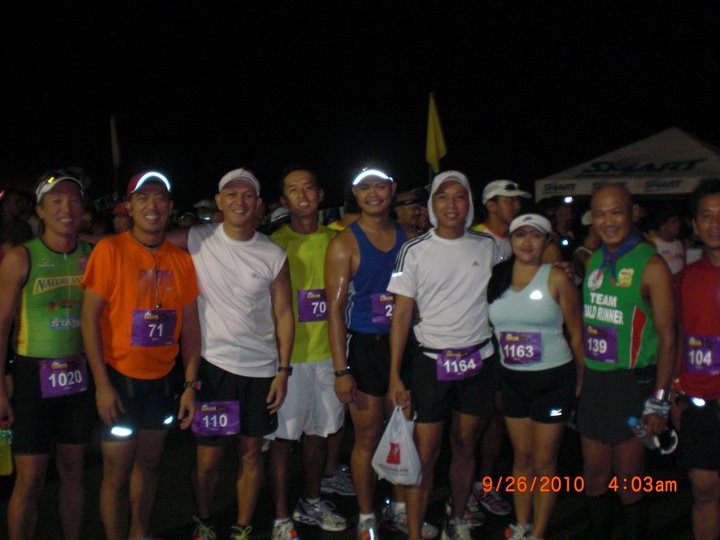
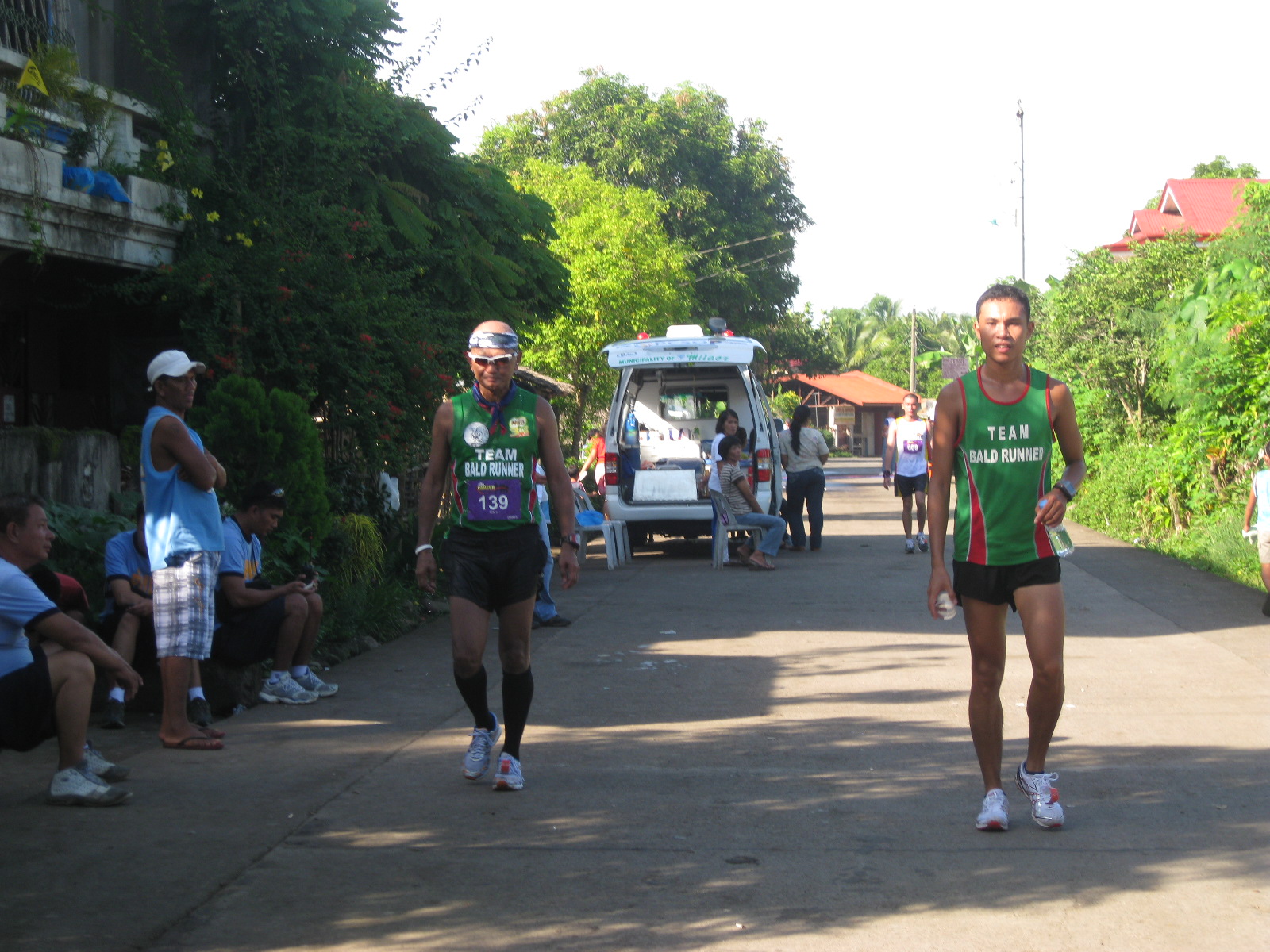
11. Kenyan runner Richard Kemeli Kemboi won the Marathon Race with a time of 2:19:40 hours. In the women’s category, Ethiopian Ayelu Lemma Geda won the race in 2:40:05 hours. The Champion received a Cash Prize of $ 7,000. This could be the highest paying marathon race for this year in the country. My Elite Team managed to win First Place & Third Place (Local Category) for the Half-Marathon Race with a Cash Prize of P 20,000 and P 10,000, respectively and 3rd Place (Local Category) for the 10K Race. My team did not make good in this running event due to sickness and flu weeks before this race.
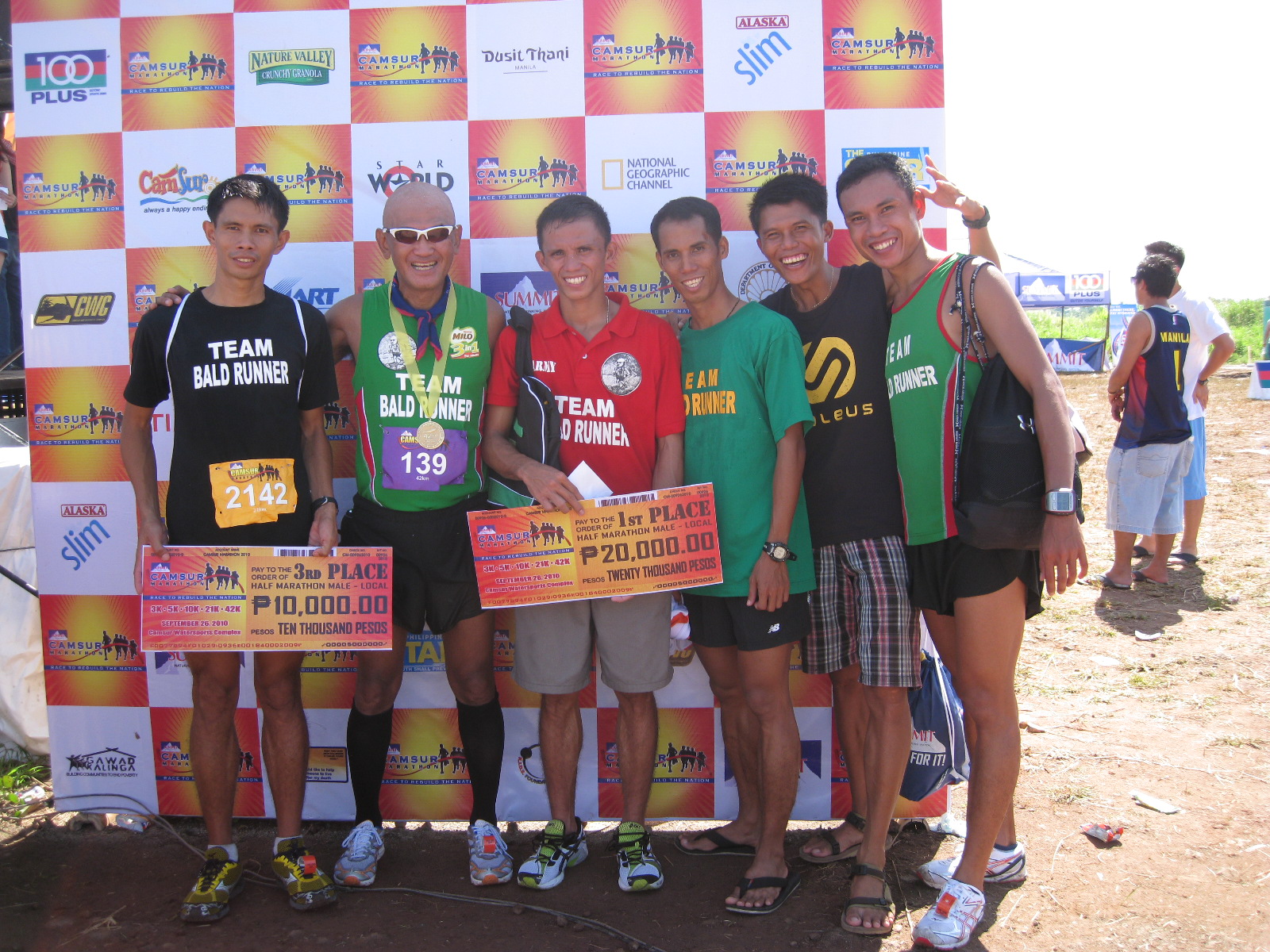
12. Successfully finishing a Marathon Race this year is becoming a “trigger” mechanism for me to do something more challenging in the coming days. Few days after my Condura Marathon last February, I did my 5-day multi-day run from Manila to Baguio City covering a distance of 240 kilometers. Two weeks after my July 4th MILO Manila Marathon, I ran the Headlands 50-Mile Mountain Trail Run in San Francisco, California. And now that I’ve finished the CAMSUR Marathon, I am supposed to run the Dick Collin’s Firetrails 50-Mile Mountain Trail Run on October 9 in California but I had to cancel it due to some commitment which I could not refuse. But instead of the Firetrails 50-Mile Run, I am coming up again with another multi-day run in the coming days (with the message that you can “journalize” your multi-day runs on near “real-time”!)
See you on the roads and trails!!!
Lecture & Clinic @ UP Vanguard
7:00 AM June 26, 2010/UP Vanguard, UP Diliman Campus
After the June 12 Independence Day Half-Marathon Race, I had the chance to chat and have some photo-ops with the members of the UP Vanguard Running Club where four (4) of its members are “veterans” of BDM 102. Lt Colonel Roland Rodil of the Philippine Army, Commandant of the UP Vanguard and one of the few senior officers who is a competitive runner, requested me to conduct a running lecture and clinic to his cadets and “reservists” at the UP Campus. I immediately approved his request and with a few exchanges of e-mails and text messages, the activity was finally scheduled last Saturday, June 26, 2010 at the UP Vanguard Building.
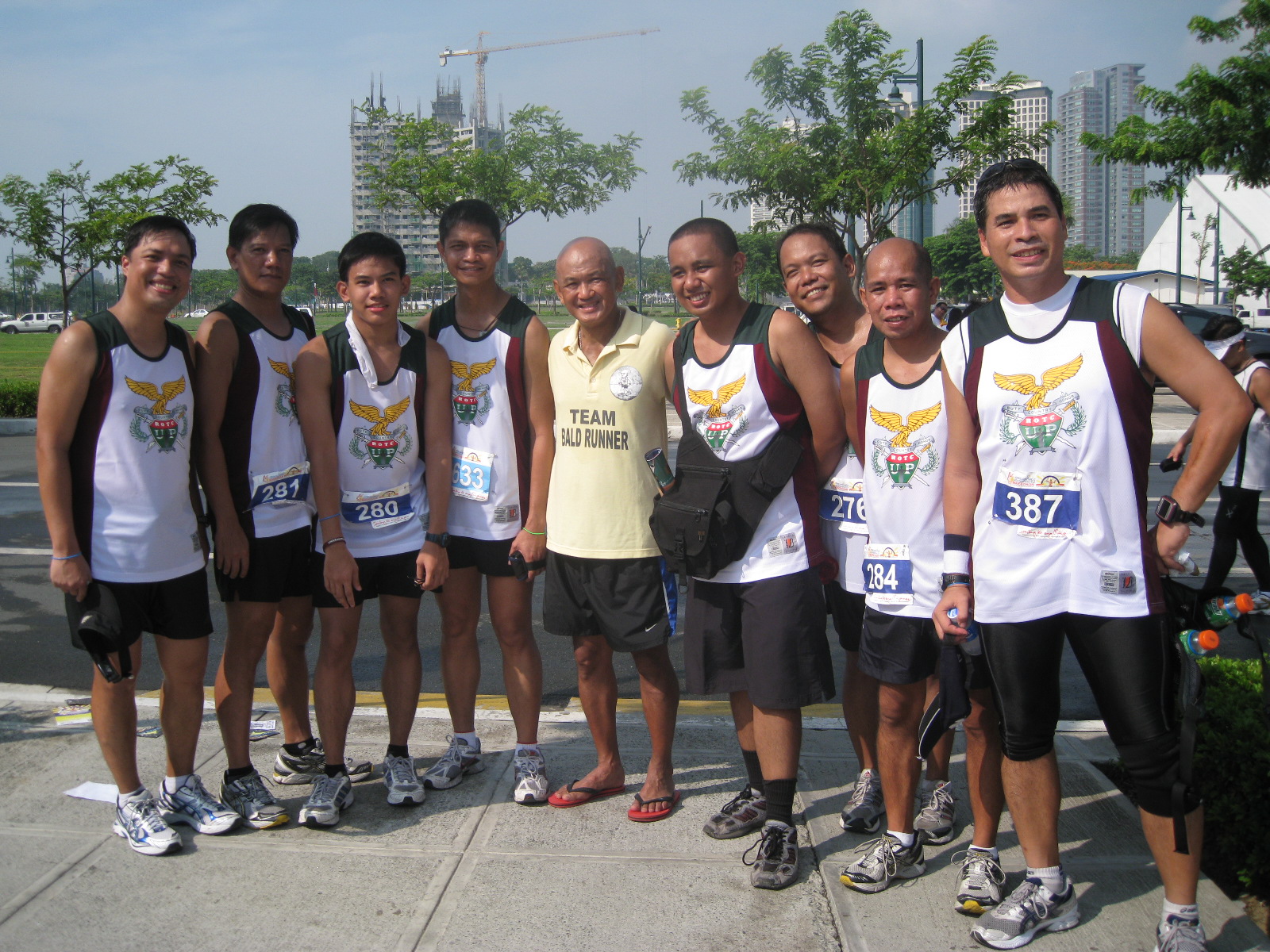
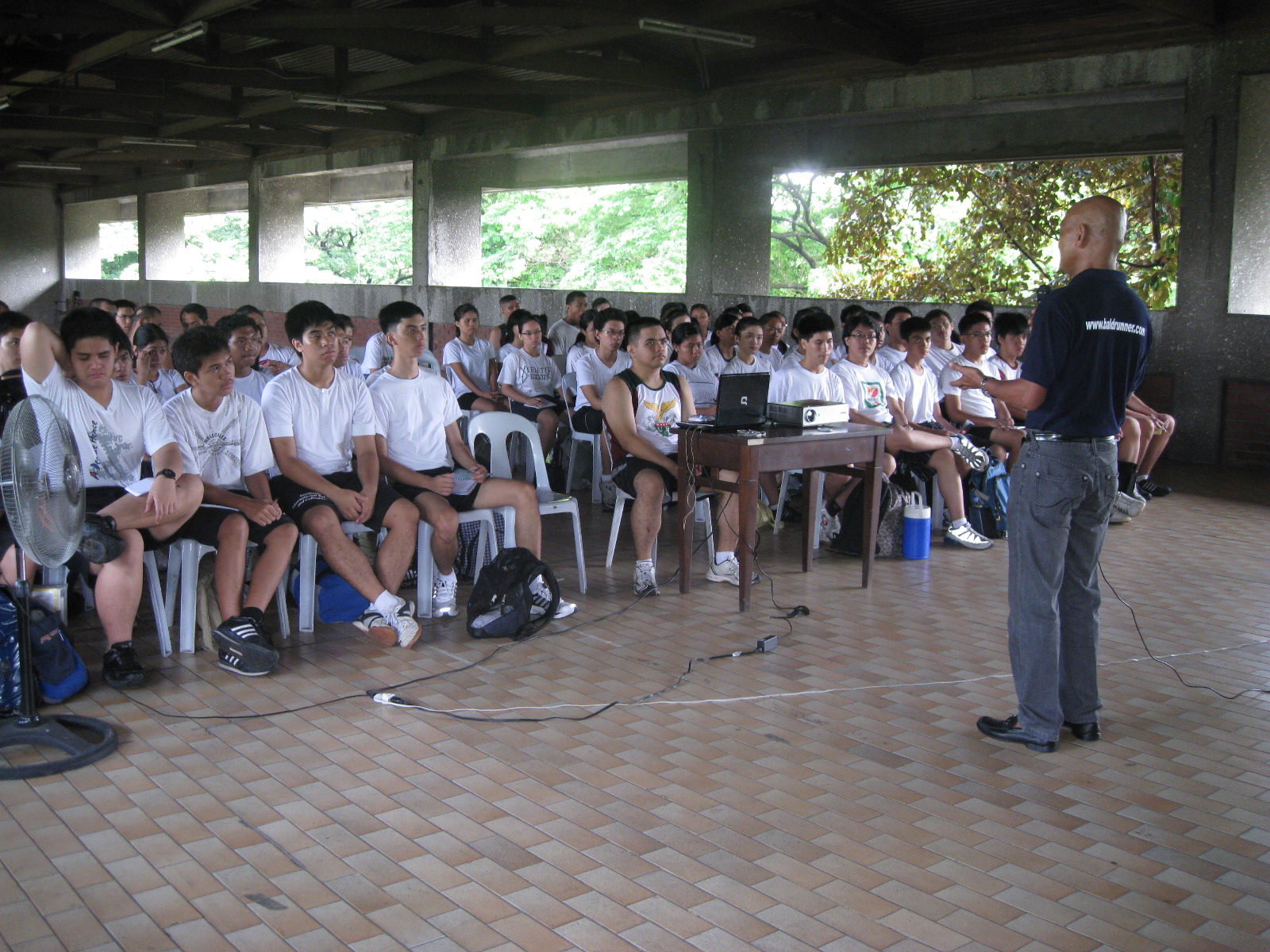
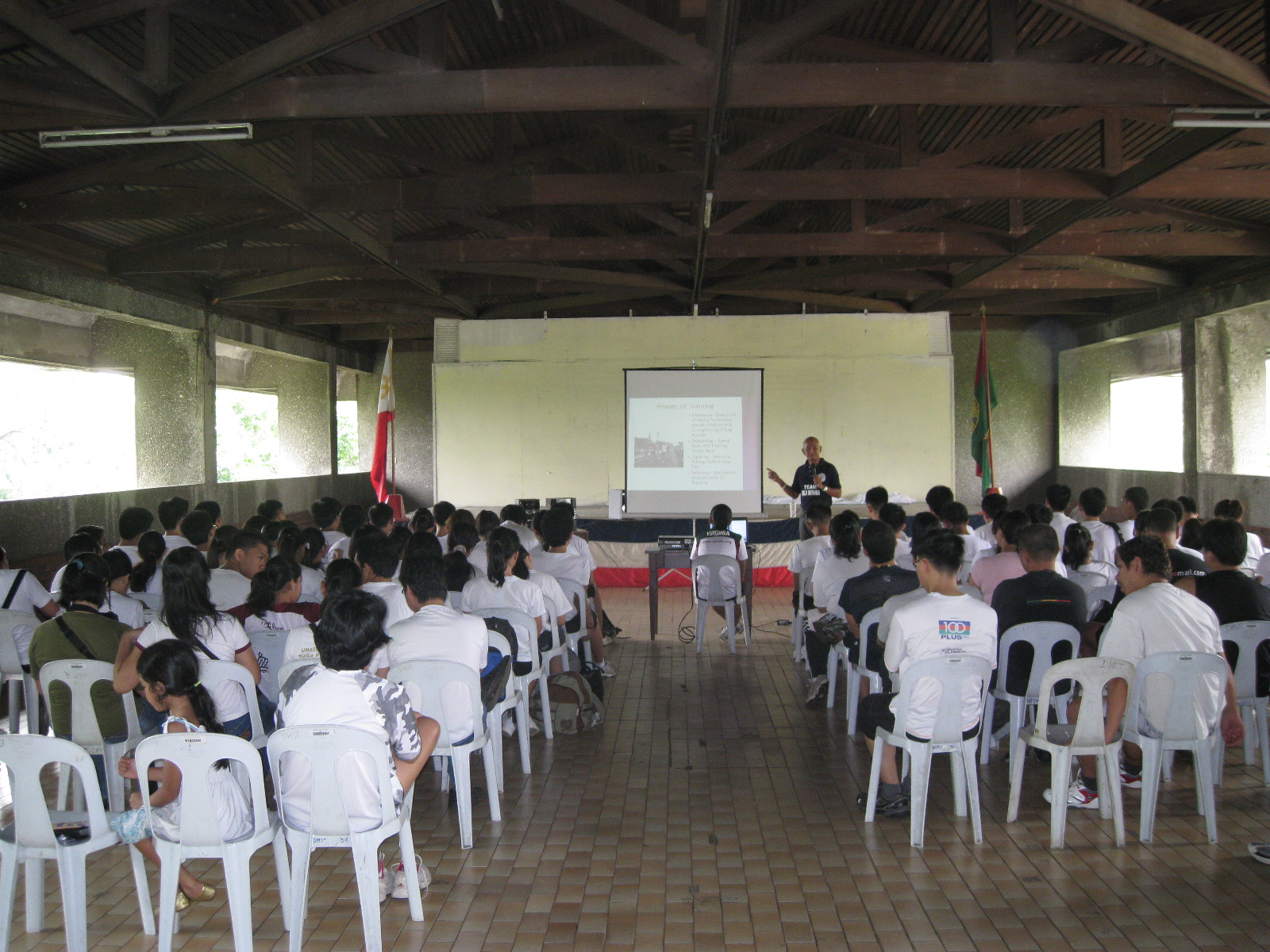
I was received at the UP Vanguard Campus by Lt Col Roland Rodil and his staff on the early morning of Saturday, June 26, 2010. After breakfast and chat with the staff of the UP Vanguard, I was led to the lecture hall which is the top floor of the UP Vanguard Building with more than a hundred of ROTC Cadets and PA Reservists waiting for the start of the activity.
The lecture started at 7:30 AM with a brief message and introduction for me by Lt Col Roland Rodil. The lecture was too detailed for the younger audience to be aware of the basics and principles in running. After a two-hour lecture and Open Forum, the audience was led to the streets of the campus for the practical portion of the clinic.
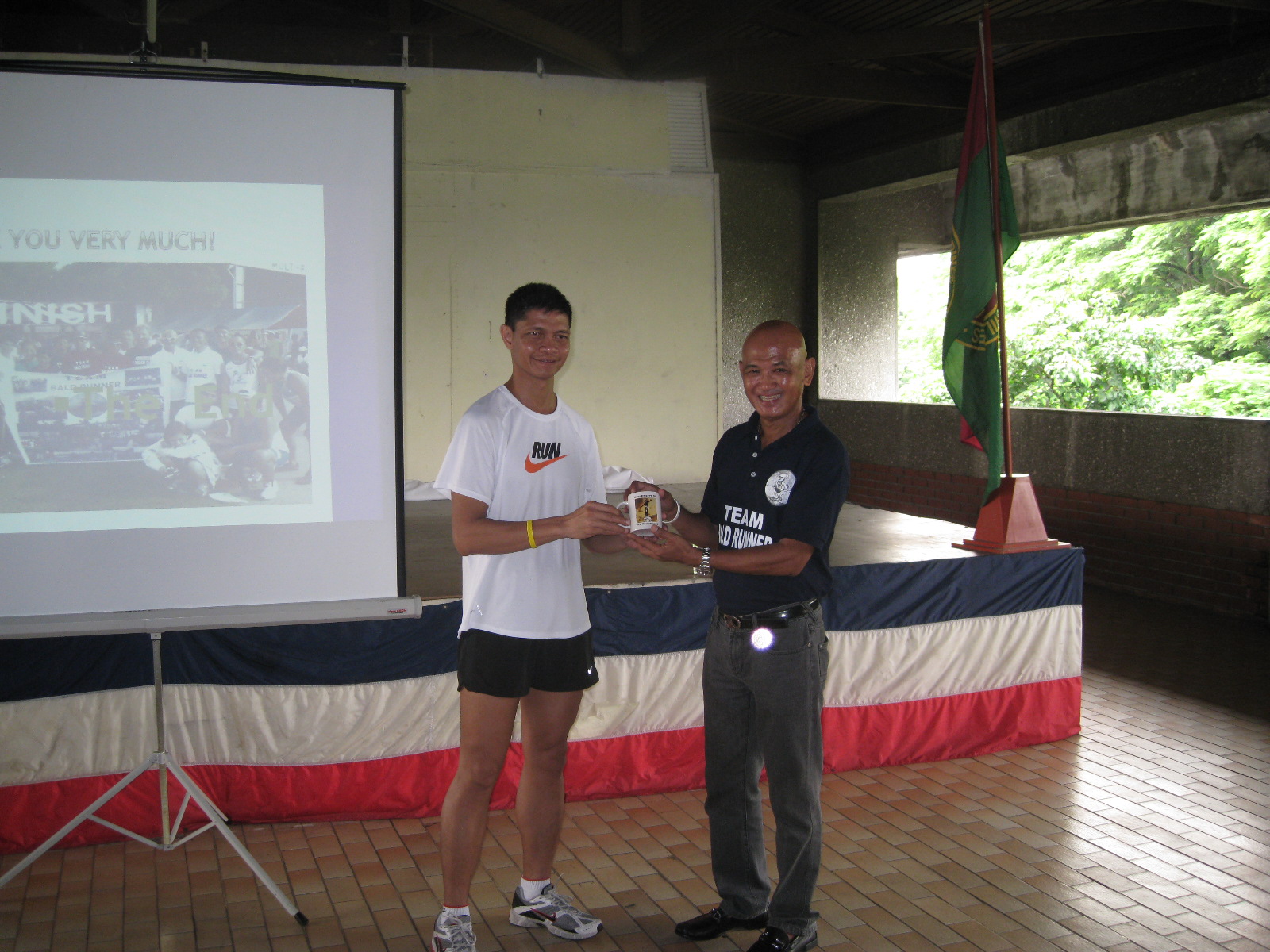
The practical and actual demonstration was led by the members of the Elite Team Bald Runner. The clinic started with the different stretching exercises, running “drills”, and a 2-Km easy run around the campus. Another 1 1/2 hours were devoted to this part of the event.
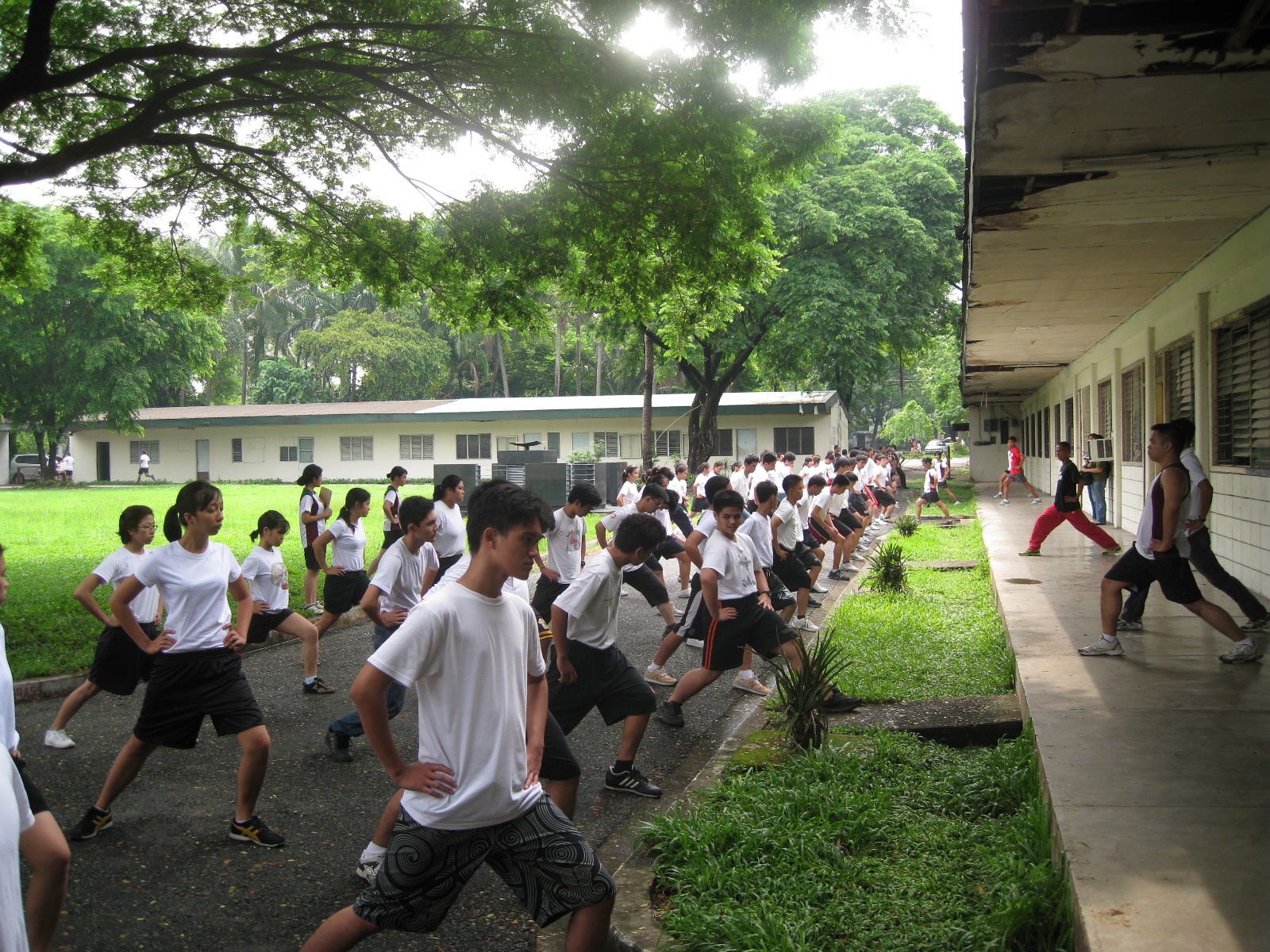
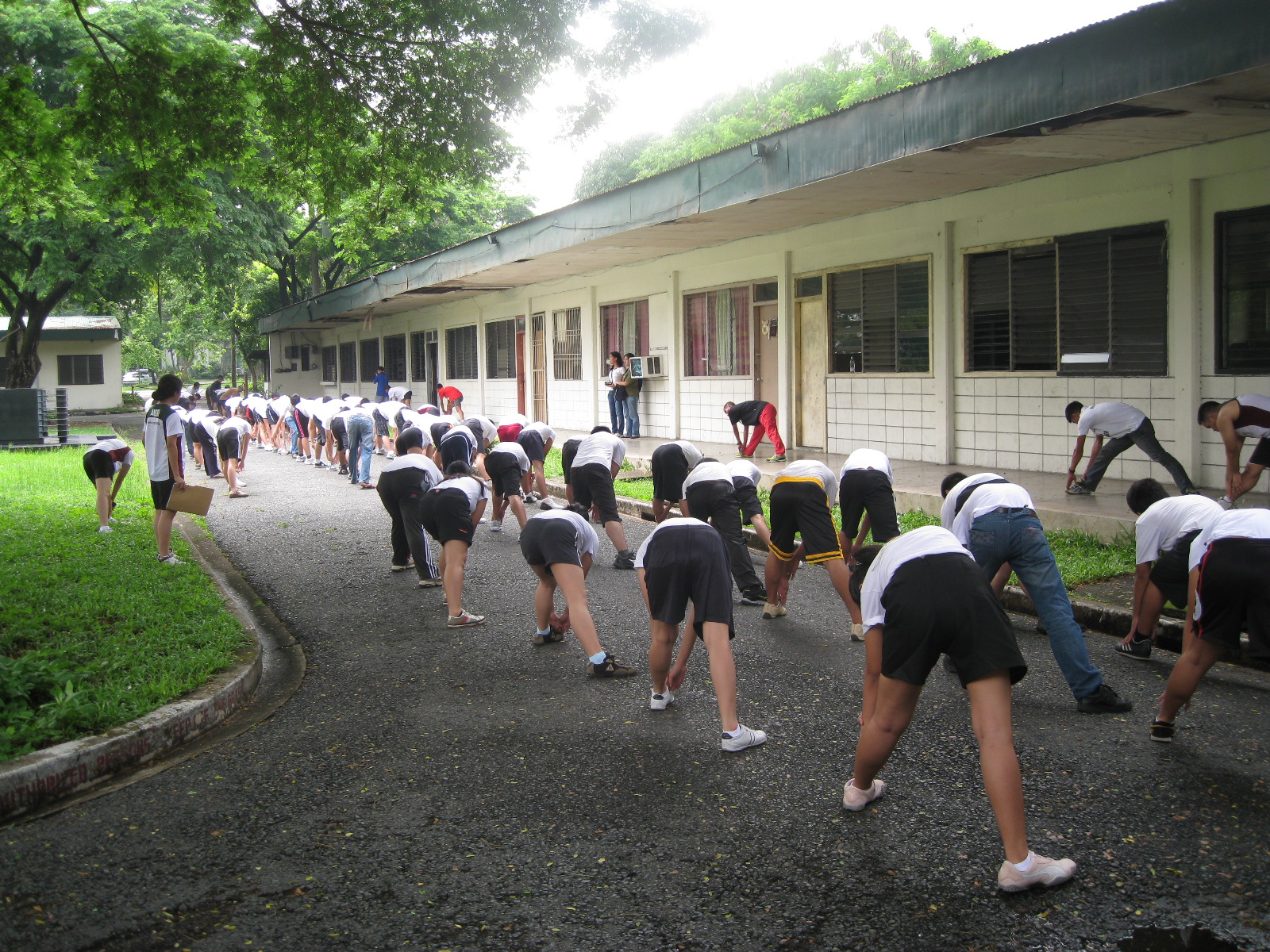
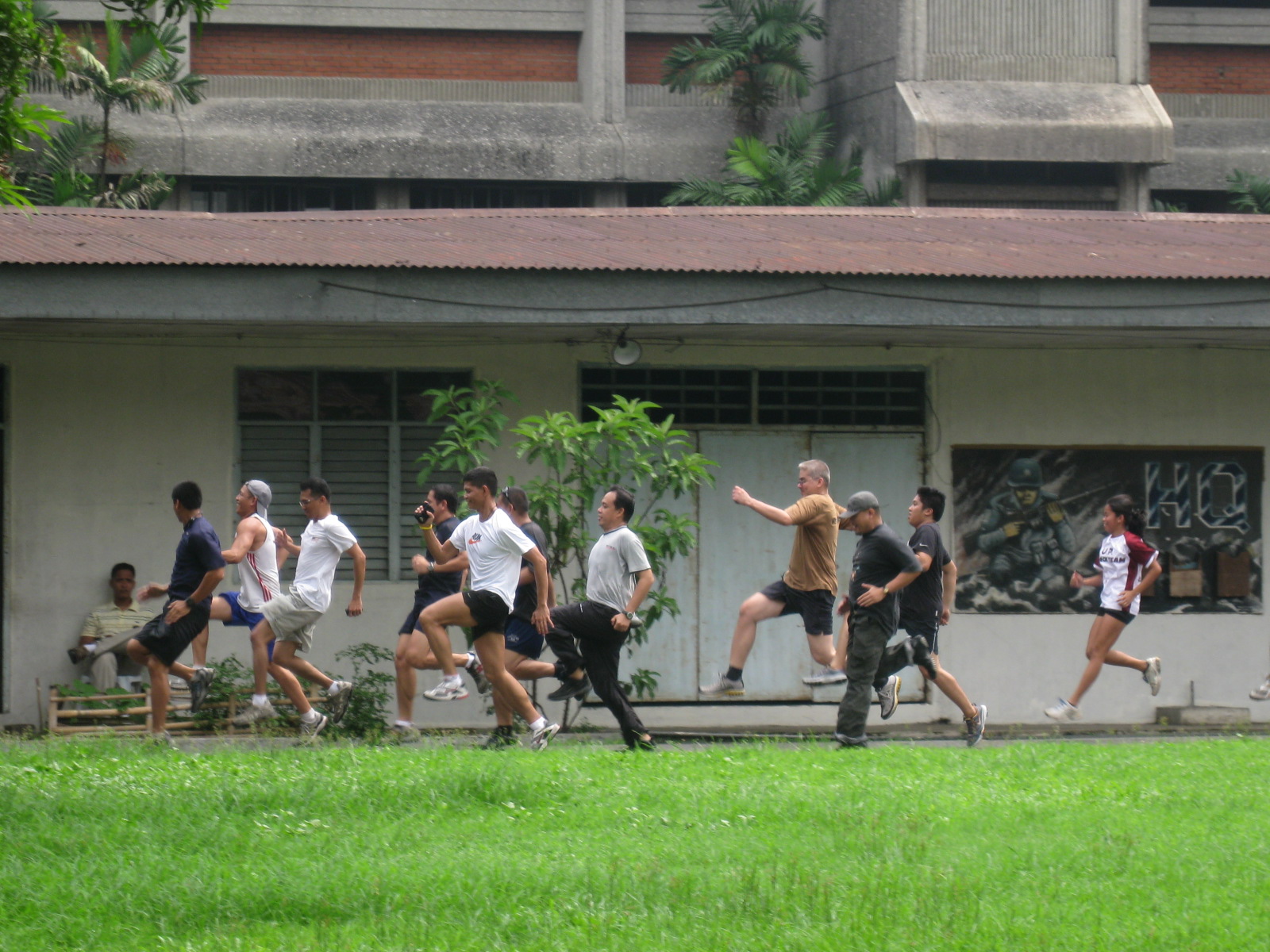
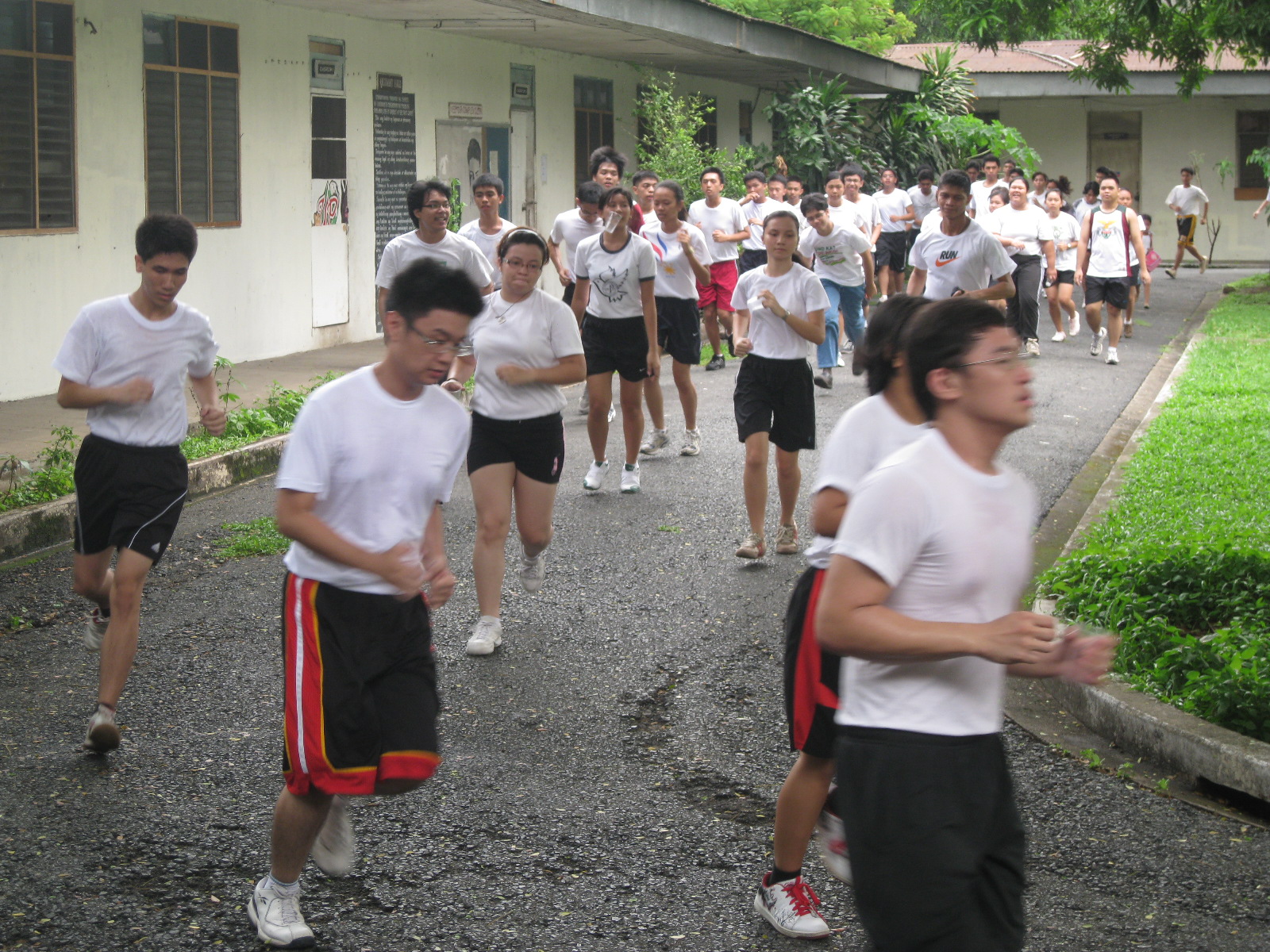
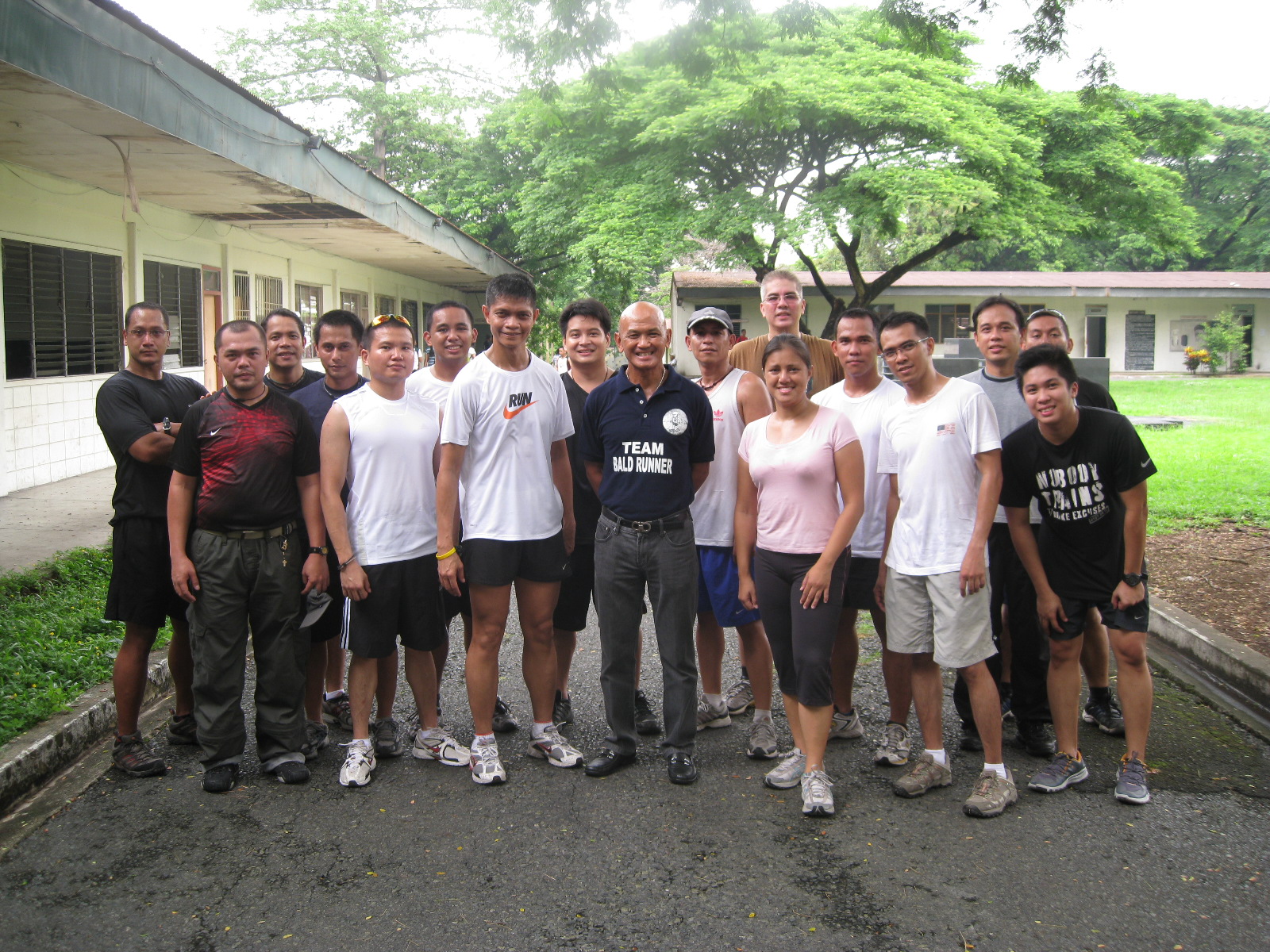
Lt Col Rodil’s initiative in this activity is very commendable. Teaching these college students on the benefits of running is a good move to expose them on the benefits of adhering to an active and healthy lifestyle through running. I would be very much happy that at least 10-20 of these ROTC cadets will pursue running as part of their way of life.
Through the ROTC program and the Philippine Army’s Reserve Force Development, my advocacy to spread the basics of running had taken off in tandem with my running clinics with the corporate world. Hopefully, this will increase the number of runners who will be guided with proper basics and training principles.
Mabuhay kayo, Lt Col Rodil, UP Vanguard and PA Reservists!
Sardines
4:00 PM Friday May 28, 2010 @ “Brown Mountain” 16.5K 2:17:31 hrs (Adidas Adizero Mana)
This was our second time to run towards the “Brown Mountain” and we started earlier at 4:00 PM. Having seen a nipa hut with a family staying at the Km-7 point of the trail, I directed my elite athletes to carry with them at least three (3) cans of sardines. In the Army, we call them as “M-203” as the size fits well like the ammunition of a M-203 Grenade Launcher. Sometimes, these sardines are called by their names as “Ligo” or “555”.
For the people living in the mountains, sardines are the most sought after food for them. It is a luxury food that you can exchange one can of sardine for a live native chicken raised by the mountain people! For the Army soldier, sardines is the most important ingredient for his ready-to-eat meal. He can make a gourmet or concoction of food taken from edible plants in the forest garnished with sardines.
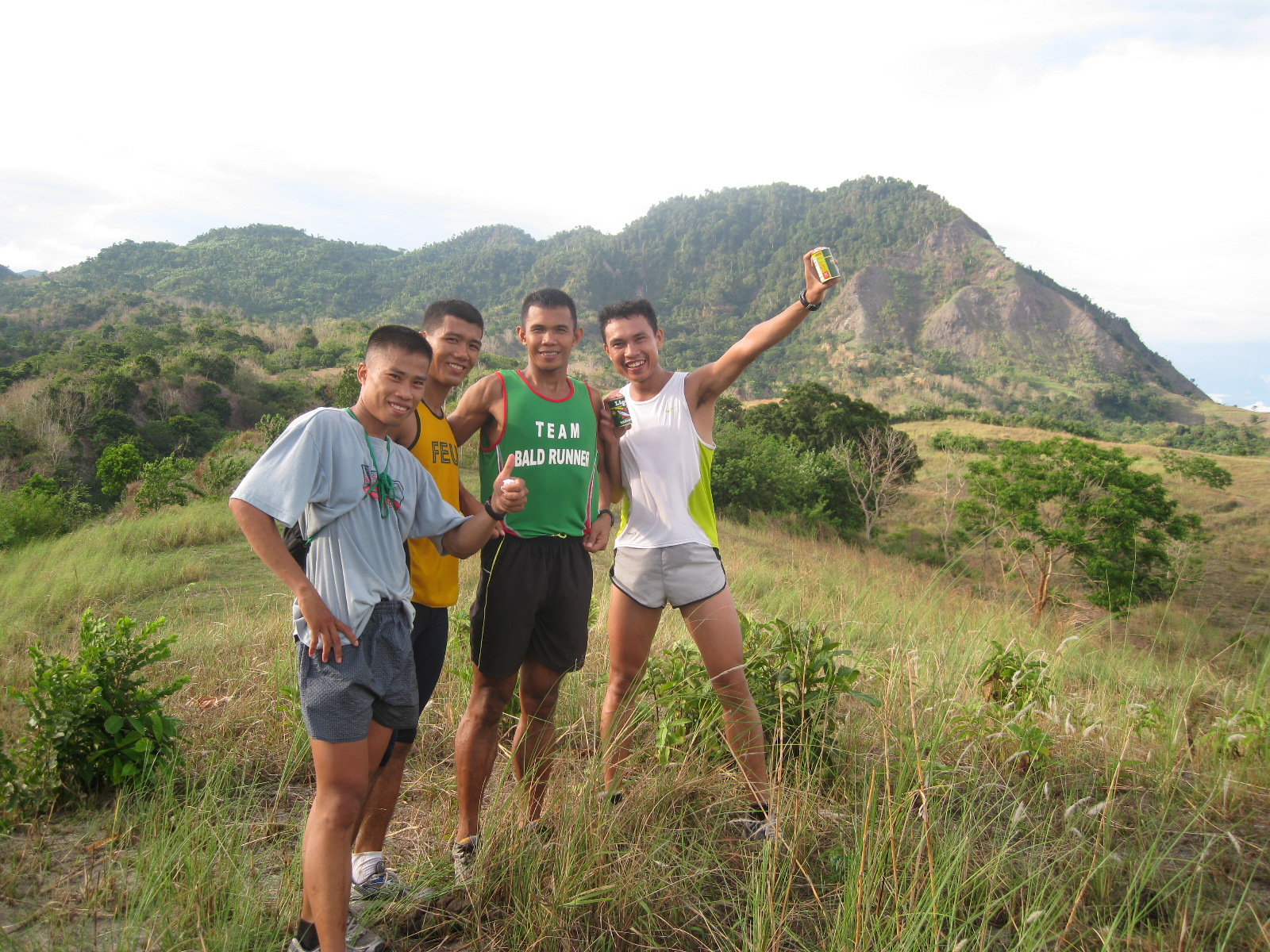
The 3 cans of sardines were intended to be given to the only family that resides along the mountain trail as a “gift” as we intend to request from them to guide us along the trails of the mountain in our future adventure runs. As soon as we reached their hut, we gave them the sardines and asked them for some information about the mountains and the trails. The family appreciated our gesture and they started giving us important information about the mountain/s, the location of springs, and how long and far the trails are in the mountains.
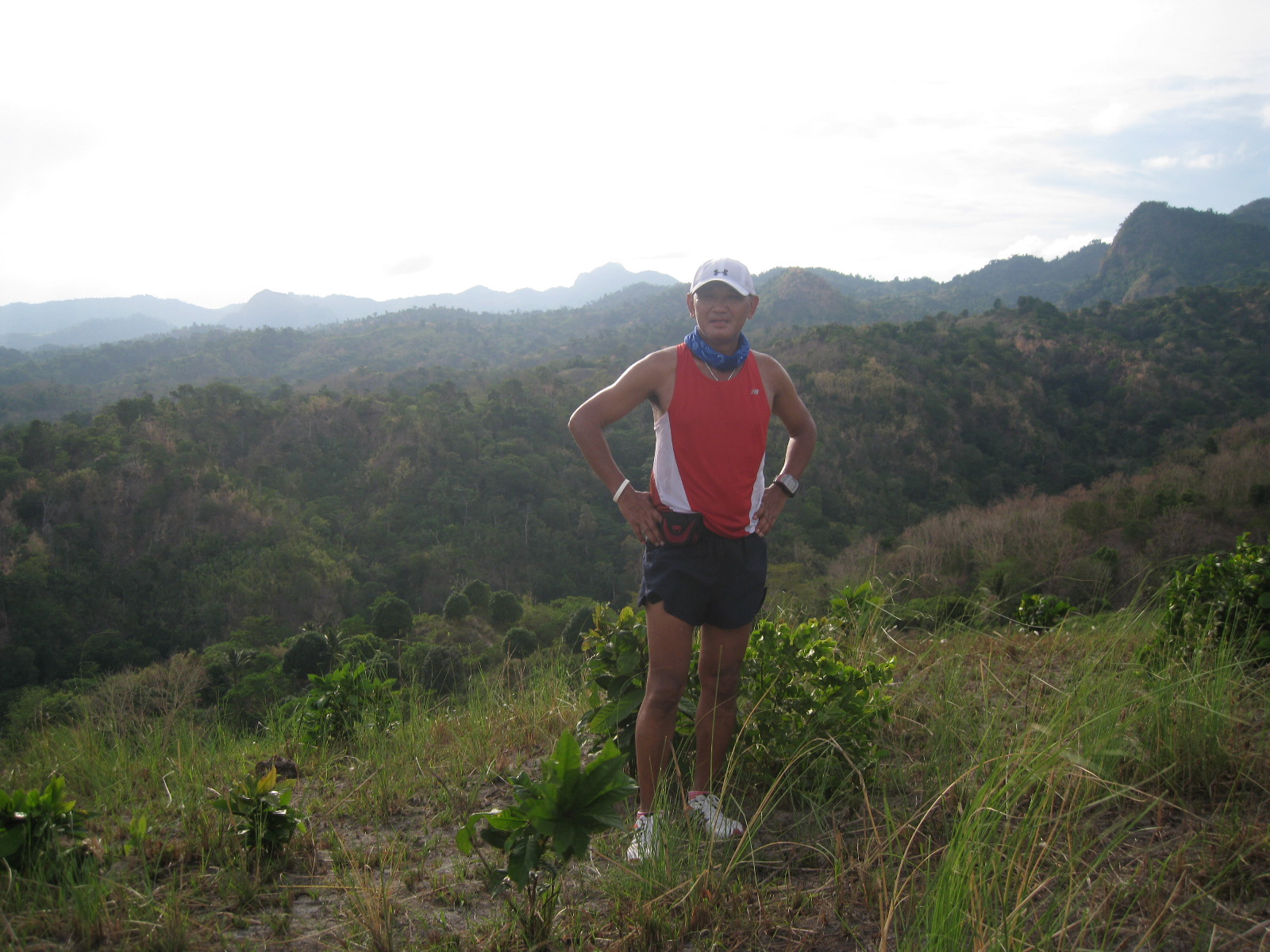
From the nipa hut, we ran another 1.5 kilometers until we reached the first spring. I took some pictures and we tasted the water and it did not affect our stomach. This was our turn-around point and resumed our run back where we started.
Due to our early start, we arrived at the starting area with the sun about to set in the horizon. We finished the run in 2:17+ hours. My legs were stiff and hard but I was happy that we had gone farther from the point we reached the previous day.
Two consecutive days of mountain trail runs for the week were done and I plan to do more next week. My dead-tired legs and body were relieved with a 2-hour massage in the evening.
BDM 102 @ Ultrarunning Magazine
Months before the publication of the April 2010 issue of the Ultrarunning Magazine, Ben Gaetos, a BDM 102 veteran and ultrarunner from Los Angeles, California, sent me an e-mail informing me that the article I sent to Tia Bodington of the Ultrarunning Magazine last year will be published in the April 2010 issue of the said magazine.
I was so excited about this information as this will serve as a venue for the ultrarunners in the United States and other countries to be aware of the presence of an ultrarunning event at the very same place where history happened in the last World War II.
My reply to Ben Gaetos was to request him to buy one copy for me as I thought that the said magazine is available in the newsstands, magazine stores and bookstores in the United States. I found out later that the said magazine is only available to subscribers.
Last week, I was surprised when I received a copy of the said magazine from Ben Gaetos which he sent through First Class on the US Postal Service. Thanks, Ben for sending to me your subscription copy of the Ultrarunning Magazine. I hope you will send also your personal Race Report for the 2010 BDM 102 to Tia Bodington this time. We’ll expect that to be published on the April 2011 issue of the said magazine.
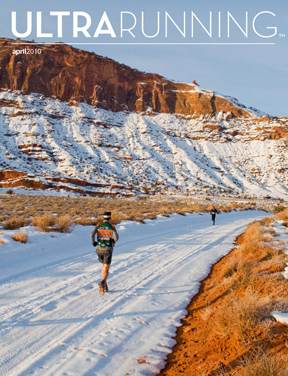
The following article can be seen on page 44, under the Adventure Run Section of the Ultrarunning Magazine:
REMEMBERING OUR HEROES: BATAAN DEATH MARCH 102K ULTRAMARATHON RACE
By Jovenal Narcise, RD
It started as a dream and it became a reality.
Having been a retired Two-Star General from the Armed Forces of the Philippines last year and a passionate runner, I thought of conducting an ultramarathon road race by adopting the actual route of the infamous Bataan Death March that happened on April 6-15, 1942 after the US and Philippine Forces surrendered to the invading Japanese Imperial Military Forces. This March resulted in the deaths of almost 700 US soldiers and 20,000 Philippine troops and Auxiliary members due to the atrocities of the Japanese soldiers, lack of water & food, weak bodies due to diseases, and the scorching heat of the sun during the day being April as the peak of summer hot weather in the country.
In memory of our heroes, this ultramarathon race was dedicated to them in celebration of the country’s National Heroes Day. The other purpose was to promote ultra running events in the country and develop future ultra runners for international exposure. Lastly, I would like to make this celebration as an annual running event to raise funds for the living survivors of the Bataan Death March in the country who are few and proud to have served to defend the country in the name of freedom and democracy.
A total of 82 runners, consisting of 8 runners from other countries (US, Japan, France, Indonesia, and Singapore) and 5 lady runners, became part of history of this ultra road running event as they started the race at 30 minutes passed midnight of April 4, 2009.
The event followed the actual route where our heroes had to walk from the coastal town of Mariveles, Bataan up to the Old Train Station in the City of San Fernando, Pampanga covering a distance of 102 kilometers. Runners started their uphill climb after 3 kilometers from the Starting Line, traversing the first mountain along the route. The next 35 kilometers would be a roller-coaster run with uphill and downhill as more towns would be reached and passed by the runners. The next 60 kilometers and down to the final stretch of the race are all plain but the heat of the sun would be the most important concern among runners in order to have the strength and endurance to reach the Finish Line.
Each runner was encouraged to bring with them their hydration belt, at least, one container for water and another one for their sports drinks for mineral replacements. The Aid Stations were located every 20 kilometers while 3 Roving Aid Stations aboard vehicles were constantly in touched with the runners, giving bottled water and sports/energy drinks and food along the way. At the Halfway mark (Km Post 50), an Aid Station was available to serve breakfast to all the runners and it became a recovery point for Drop Bags of the runners. Three (3) Ambulance Vehicles were available moving with the runners and One Ambulance was dedicated to follow the last runner of the event up to the Finish Line.
The first half of the race was a test of patience for all the runners. But the second half was a test of endurance as the heat of the sun would reach up to 100-110 degrees Fahrenheit and this condition would slow down most of the runners. Due to proper information and previous “test run” along the second half of the route two months before the race and long runs along the main streets in Metro Manila during daytime, runners knew how to deal with the early signs of “heatstroke” and the finishers were proud to have overcome such condition and challenge along the way by applying those preventive measures they have learned from their past long runs and training.
Out of the 82 starters, 63 runners were declared Finishers beating the cut-off time of 18 hours. Out of the 5 lady runners, 2 of them finished the race within the prescribed time. Each finisher was immediately awarded with a Finisher’s Medal, Finisher’s Trophy, and Certificate of Finish immediately after passing the Finish Line. To top it all, a separate Awarding Ceremony Dinner Party was held at the Philippine Army’s Officers Club with all the participants and sponsors celebrating as a community of ultra runners, a week after the running event.
The race was a successful one and more runners had already signified their intentions to join in the next year’s edition of this ultra road race. The 2nd edition of the race will be held on the midnight of March 6, 2010.
The 3rd edition of the BDM 102 is now listed among the Ultra Running Events in the Calendar Link of Ultrarunning Magazine. However, an additional calendar entry will be requested for the 1st BDM 151 soon. Please check at www.ultrarunning.com.
3-Day Stay in Cebu
02-04 April 2008
I attended a one-day Command Conference on Legal Matters and a two-day seminar on Media Relations at the Central Command Headquarters in Cebu City from Wednesday up to Friday with our Unit Commanders. I was the Guest of Honor and Speaker during the Opening Ceremony of the Media Relations Seminar last Thursday morning. I also visited my troops deployed in Balamban, Cebu on Friday morning as part of my regular visits and assessment of our troops in the area. On my way back to Cebu, I visited the crash site of the plane of former President Ramon Magsaysay in Mount Manunggal.
I stayed at the Marco Polo Plaza Hotel during the duration of my stay in Cebu. I was able to use their gym on a daily basis.

The lobby of the Marco Polo Plaza Hotel in Cebu City.

A picture during my speech as the Guest of Honor and Speaker during the Opening Ceremony of the Media Relations Seminar with all the Philippine Army Brigade and Battalion Commanders in Central Visayas.

A regular visit and talk with to men in the field is one of the basic duties of a Commander and a Leader in the Philippine Army.
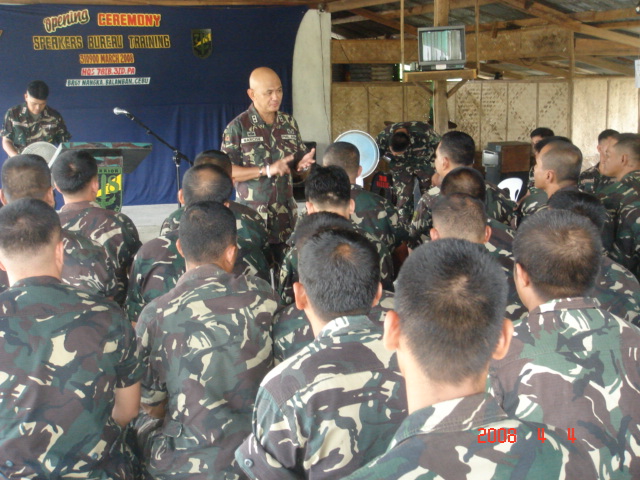
There are so many things you have to explain and inform to the men about the policies of Higher Headquarters and the overall Campaign Plan of the Command for Central Visayas in solving the problem of insurgency and serving as a “partner” of development in the area.

The National Historic Institute’s Marker in Mt Manunggal, Cebu where the plane, Mt Pinatubo, the President Ramon Magsaysay boarded with 26 other people on the fateful early morning of 17 March 1957, crashed. I will be writing a separate post on my visit to this very important and historic place.
 Bald Runner
You must be logged in to post a comment.