Running form refers to the study of the mechanisms of movement of running. Most studies and researches in running proved that there are some runners who run more efficiently than others and improving on one’s running form will definitely improve his or her running results/finish time. There are four things to consider to improve one’s running form—footstrike, forward stride, body angle, and arm movement.
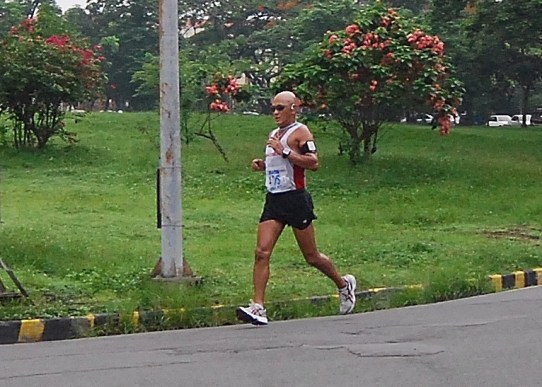
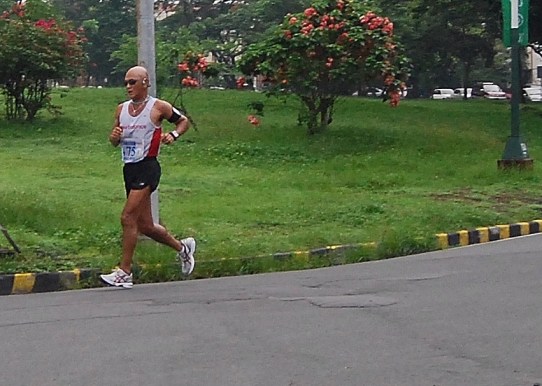
On footstrike, I am basically a flat-footed and ball-heel footstriker and I am comfortable running with it in 10K up to marathon races. My footstrike with the ball-heel method makes the part behind ball of my foot touches the ground first and my knee bends slightly to absord the shock and simultaneously my heel slightly touches the ground so the entire sole of my running shoe makes contact with the ground. Then I roll up to the ball of the foot for a “power” lift off by pushing off the big toe.
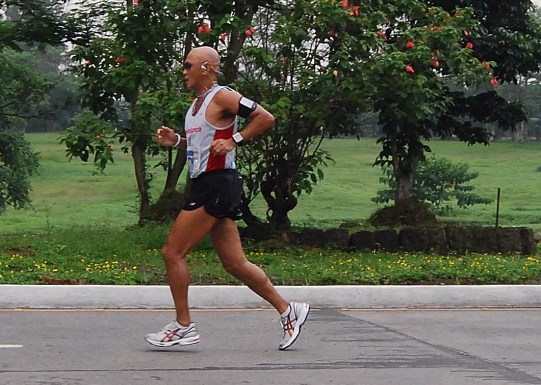
On forward stride, I am a “shuffler” who runs very low to the ground with little lift with my knees and no or little exaggerated back kick but sometimes I could increase the length of my stride if I lift my knees a little higher and increase the frequency of my strides. I usually shift to this form when I am running over hills and sprints towards the finish line.
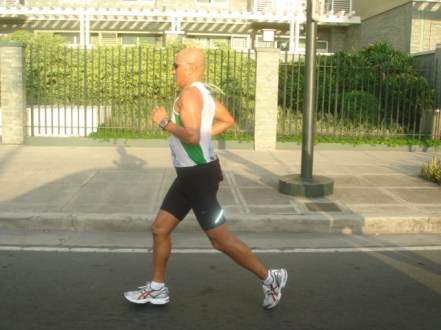
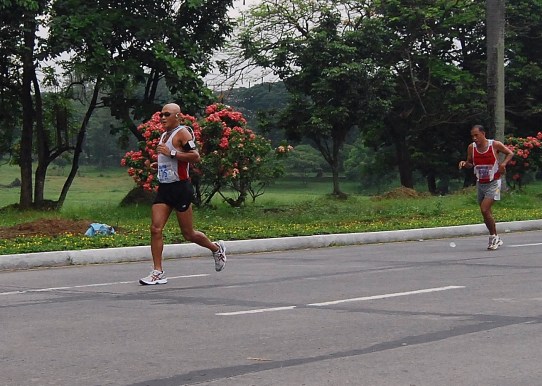
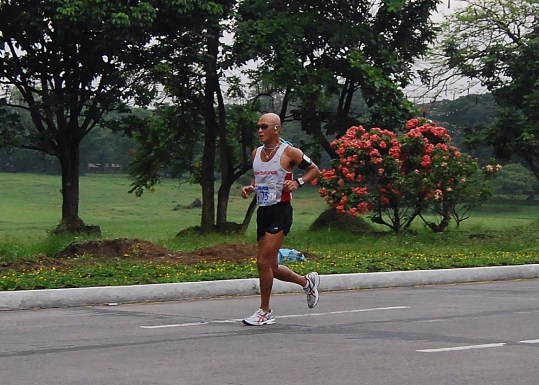
This is my running form as taken from one of my pictures during the 7th DND-AFP Gintong Pangarap Half-Marathon last 09 March 2008
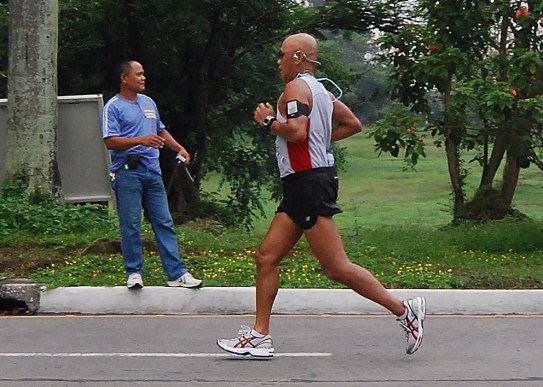
On body angle, I usually run relaxed and comfortable with my head and body erect looking about 20 meters infront of me. My pictures show my body as erect and relaxed as possible but sometimes there are times when I lean backwards and exaggerate my “breast out” appearance. I should be running with a slight forward lean as shown in my picture below during my oval track runs.
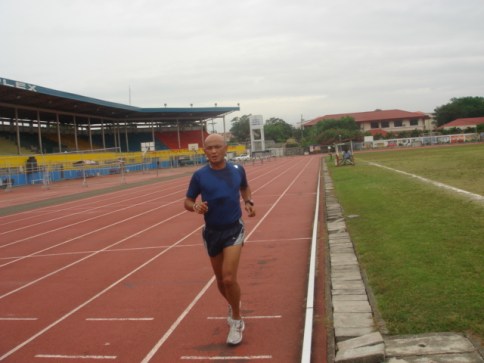
This is the front view of my running form when I had my oval/track run in Iloilo City Sports Complex.
On the Arms movement, it is the Arm Action that I am practicing in my running workouts for the past days. According to my readings and research, the arms should be driven downwards in a vertical plane from the elbow in short, quick strokes, with the shoulders down and relaxed. It is not recommended to run and swing the arms from the shoulders, locking your arms at the elbow. I am slowly fixing this problem and exaggerate in swinging my arms from my elbow and don’t allow my elbow to move backward during my running workout.
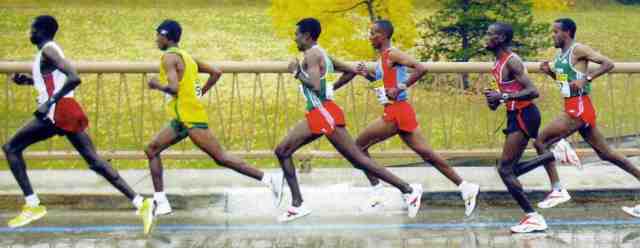
At my age, I may not be able to attain the “perfect” running form as I recall how I saw Waldemar Cierpinski in person or the fluid motion of Frank Shorter and seeing the way elite runners are seen in the Runners World Magazine but I am sure these information would greatly improve one’s ability to run faster and more efficient.
 Bald Runner
You must be logged in to post a comment.