I met Weeler Orogo in one of my mountain runs as the trail cuts through his property/farm. His farm registered a distance of 15 kilometers from the place I started my trail running workout. My running companion had a chance to talk with Weeler few days had passed and he was the one who gave directions on the exact trail route that goes all the way to Barangay Tala, Orani, Bataan which is the trailhead in going to Mt Natib.
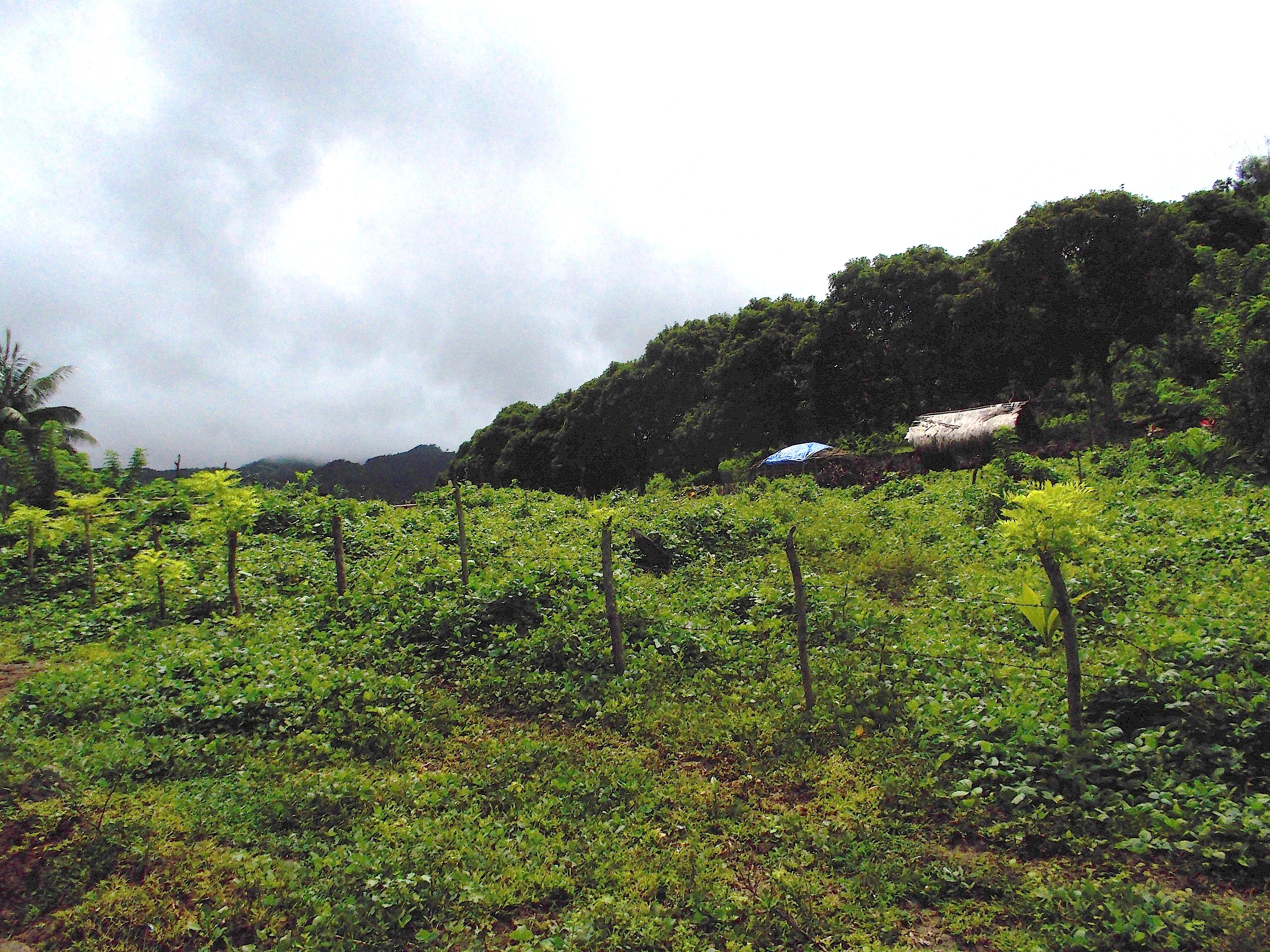
House & Farm
In my conversation with Weeler, he told me that he is a native of Guinobatan, Albay and he came to the area of Bataan to follow his brother who worked for a businessman in the early 90s. One thing leads to another and eventually, he liked the place and decided to permanently stay in the province with his wife and children.
He said that he bought a 15-hectare area in the mountains which is his present location with the amount of P 18,000 in 1992 which is I think the purchase of the Declaration of Rights of the said land. He immediately started planting coconut, mango, kasoy trees when he acquired the land and cultivated the land with vegetables and root crops for his daily needs. I saw one of his mango trees cut into pieces ready for burning to be transformed to charcoal. I asked him why he has to cut his mango tree and he said that the trunk had been rotten and it is already unproductive.
He has 9 children, 8 sons and one daughter. All the son’s names start with the letter “W”. I jokingly asked if one of them is named as “Wonka or Waldo” and he said he did not know such names exist. He has 33 grandchildren which include few grand grandchildren. He named his only daughter as “Coronacion”, the Crown of their family!
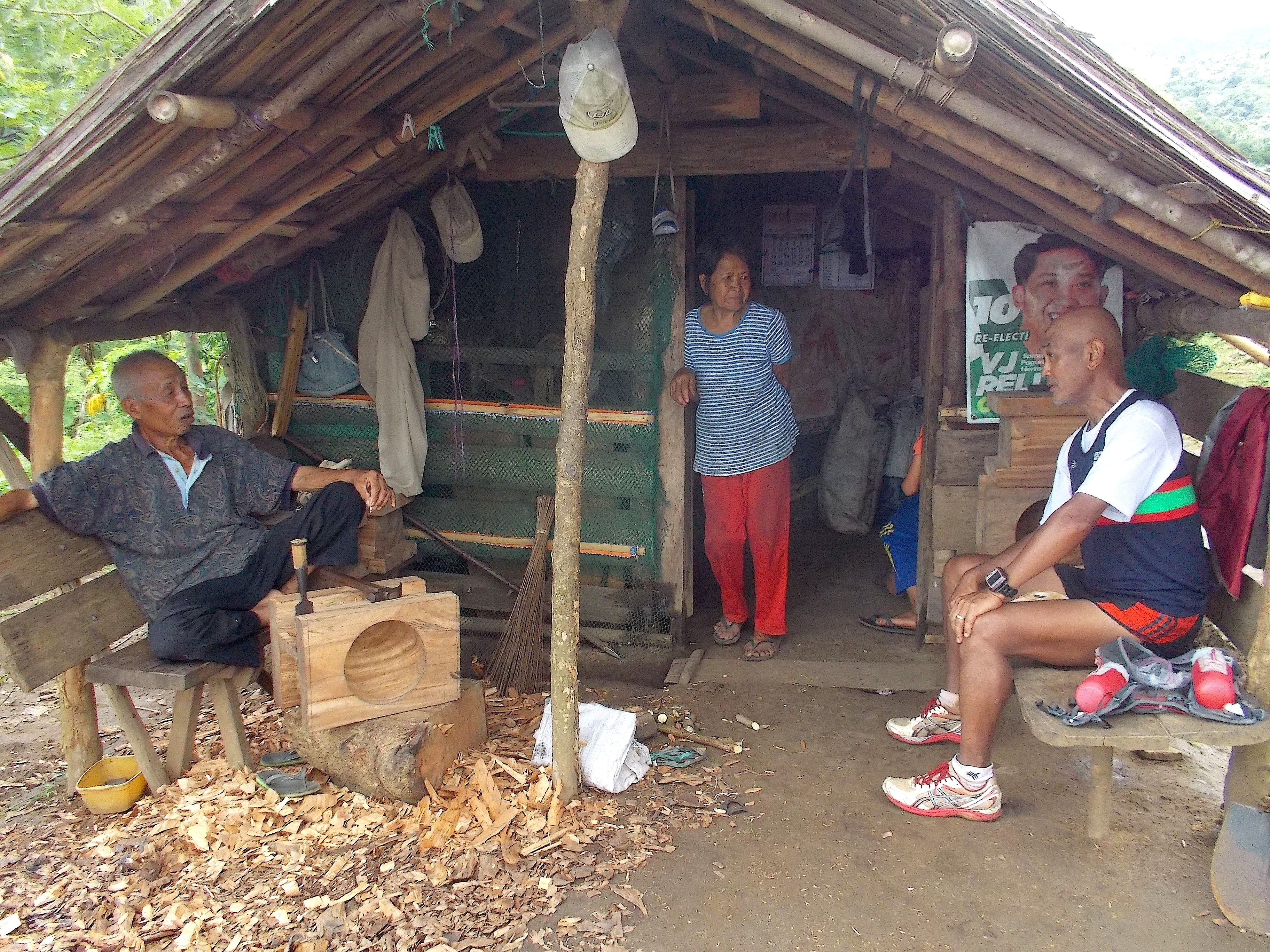
Talking With Weeler & His Wife
He is 73 years old and I would assume that he was in his early 50s when he decided to permanently stay in Bataan and bought his mountain property/farm. As part of my interview to evaluate mountain people’s knowledge on current events, I usually ask “Who is now the President of the Philippines?” Well, I got the right answer from him and his wife. They have a transistor radio inside their house made of bamboo and cogon grass as their roof!
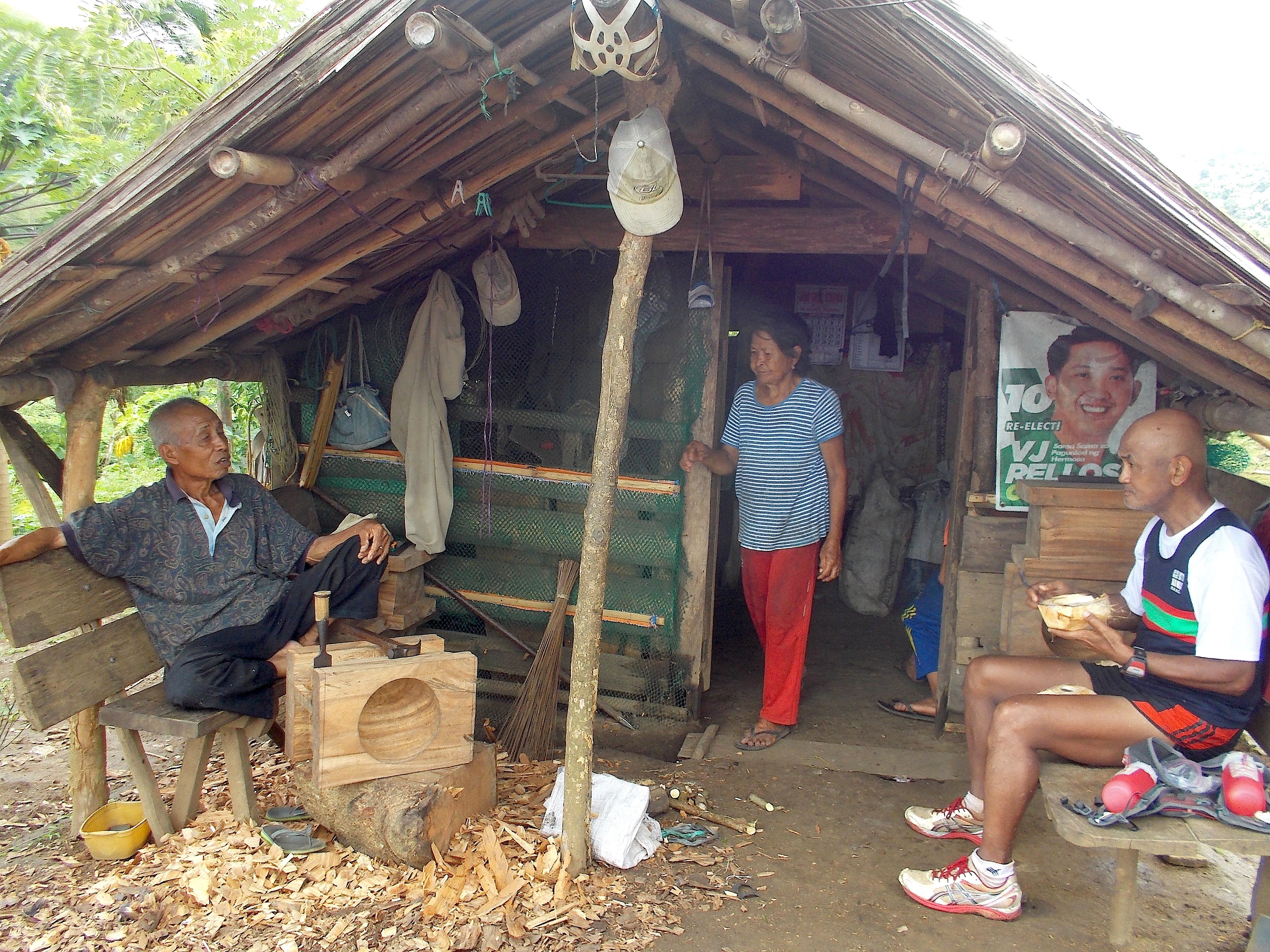
Fresh Coconut From Weeler’s Farm
As we went further with our conversation, I found out that he was once a Barangay Councilman somewhere in Quezon Province in his younger years and has a cousin who was a Colonel in the Philippine Constabulary way back in the 60s/70s. He admitted that armed insurgents would drop and pass by his farm when they were still active in the province. However, he assured me that there are no longer armed insurgents in the area since a wide trail road reached his property as more neighboring lots had been sold/bought as pasture land and orchard for mangoes and coconuts.
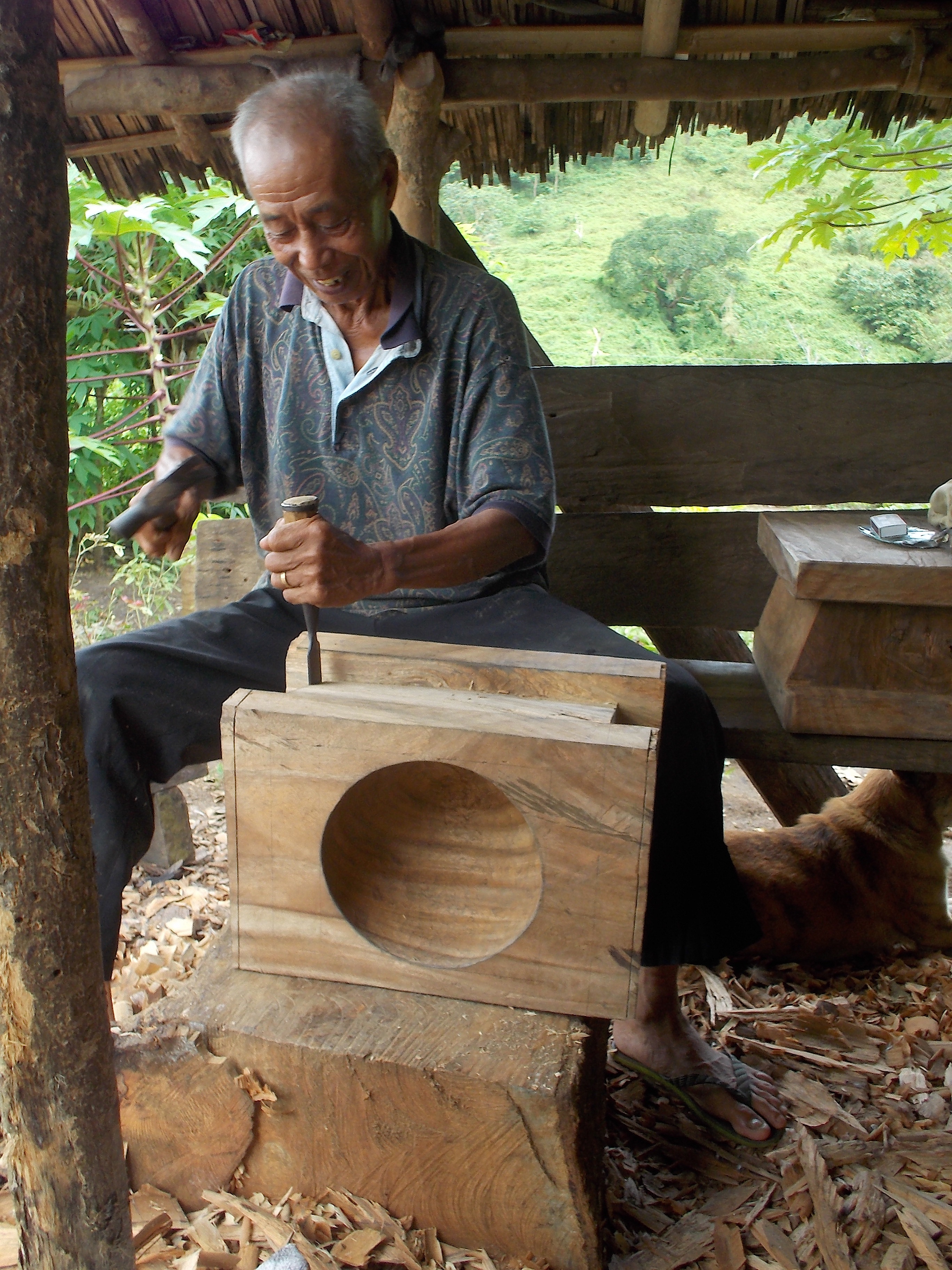
Weeler Doing His Hobby
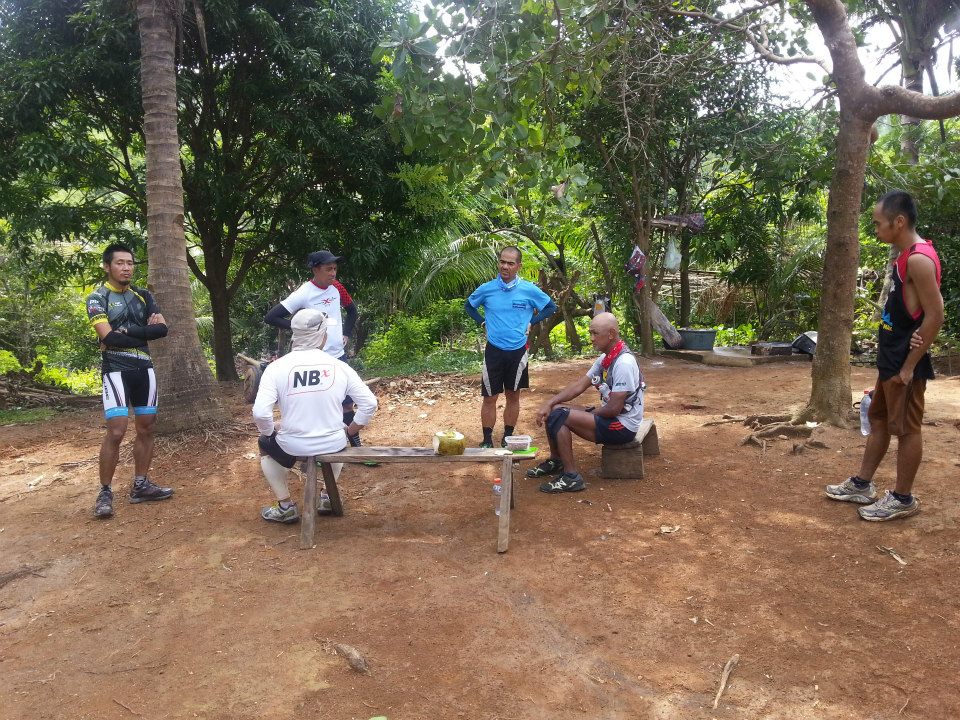
Nowadays, his exercise is his hobby, making wooden mortars & pestle for his relatives. The mortars are made from acacia wood and they are heavy. I asked him to make one piece for me and he said affirmatively, subject to the availability of acacia wood. He was generous to share us his fresh coconuts and declined my offer to pay for them. He even went to the extent of asking the contact number of one of my boys so that he can immediately inform me if there is a wild boar’s meat from his hunting trips in the area!
Well, it was a nice feeling talking to such person who enjoys living in the mountains. For me, he is a rich man who enjoys his life to the fullest without any pressure or stress—-no bills to pay, no processed food to eat, zero crimes in his locality, no traffic, no pollution and above all, no politics & Facebook!
These are the two most popular potential “enemies” of ultra marathon runners in the country.
On the roads, the famous street dogs or what we fondly call as “askals” (Asong Kalye) are the number one “attackers” of runners. These dogs usually bark and run after you on daytime or nighttime. If you are not alert and don’t do some immediate measures to thwart their attack, most likely they will bite your legs.
I had been a victim of a dog bite when I was running at nighttime during one of my adventure runs in San Narciso, Zambales. I am glad I was using a calf sleeve that the bite did not puncture my calf muscle. It was a wound and scratch but I still need to have the dog bite treated immediately. I cancelled my run and went back to Manila for the much-needed medical attention on the next day.
On the mountain trails, the snakes are the most popular creature that you can see crossing your path or even meeting you head-on while one is running. They are even seen hibernating on the branches of big trees in the forest. As always, whenever I go on my daily trail runs, I always see a snake at least once a week or the most, two times a week crossing a few meters in front of me. However, my latest encounter was a snake that was coming head-on directly to my legs! I had to immediately jump from the trail and stopped. The snake’s body diameter could be at least 1 1/2 inches, about one meter long and it is colored black. I am not sure what kind of snake it was but I was glad it did not bite my leg.
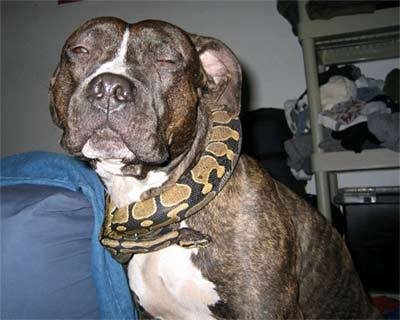
Snake On Dog (Picture From Google)
Since the time I’ve been bitten by a dog, I stopped using my iPod and headphone. I became smarter in dealing with astray dogs along the streets that I have to stop, walk and try to avoid getting nearer to a dog few meters before the location of the dog. I also prepare to hold my water bottle and be able throw it to the dog if there is imminent act of attack or just simply pick up a stone on the side of the road.
Treatment on dog bites are very expensive but they are also readily available in hospitals and famous drugstores. You need injections for anti-rabies and anti-infection and such injections are being administered on scheduled dates or interval of days. There are also vaccines that would prevent one from being infected by rabies.
I’ve never been bitten by a snake but there are preventive measures to undertake. Expect snakes to be present in cooler and thick vegetation. Do not attempt to thread on thick vegetation without any trail. Always keep your feet on the cleared trail. Be alert when hiking/running on thickly shaded trails, most specially in forested areas or virgin forests. Be alert also for snake encounters on the early morning or early evening as these are the times when I usually encounter them in my “playground”. In case of snake bite, this could be helpful—http://www.wikihow.com/Treat-a-Snake-Bite
I may not be superstitious but I usually consider my encounters with snakes as my “lucky” moments. And most of the time, I regard the snakes as the “gods” that guard the mountains and the nature thereat. So, if I see a snake crossing or heading to my direction, I don’t have the intention of catching it or playing with it. These creatures deserve some respect from us.
Dogs are considered as the men’s/women’s best friends and snakes are mysterious and beautiful but when you are in the outdoors always stay alert and show some respect to these creatures.
I usually prefer to run an “out and back” route in trying to look for trail routes in the mountains. I start with a comfortable distance of 5K (or One Hour ) from the point where I start my run. With the use of my GF305 GPS watch, once the watch registers a distance of 5 kilometers (or one hour), I would immediately turn-around and go back to where I started. In total, I was able to run a distance of 10 kilometers or two hours of running & hiking.
If my training program would call for 11-12 kilometers for my daily runs, I would try to run one-half of the said distance and then immediately turn-around to go back to where I started. I would do this for a couple of weeks and try to average the amount of time I would finish the said distance.
Once I am comfortable running the “out and back” distance, I would increase the distance with a minimum total distance of 5 kilometers and do the cycle of making myself comfortable in running the distance in a couple of weeks. I would then register the average time that I would finish the distance and try to find out if I am getting faster as I am getting comfortable with the said distance.
@My First Turn-Around Point
My present 28K (17.5 Miles) “out and back” course where I would do my trail long runs had been traced and explored for months! It was only when I became comfortable; measured the distance; and got the average time I would finish the course that I posted on Facebook about my “Playground”.
It is in this 28K “out and back” course where I do my long runs; speed play/”fartlek”, tempo runs, and progression runs. It is also on this course where I experiment on my hydration and nutrition. This is also the place where I test and evaluate my running kits and stuffs.
This is also the same course where I would bring my ultra running friends who want to train with me in my “playground”.
If you need to look for a place to run, just follow an “out and back” course. Whether it is the time or distance which you will consider on your first half of the run, turning around and going back to where you started will guaranty you a successful running workout. Make sure to increase the distance and time of your running workout after you are comfortable with your first “out and back” course in about 2-3 weeks duration. This is how you should increase your total weekly mileage.
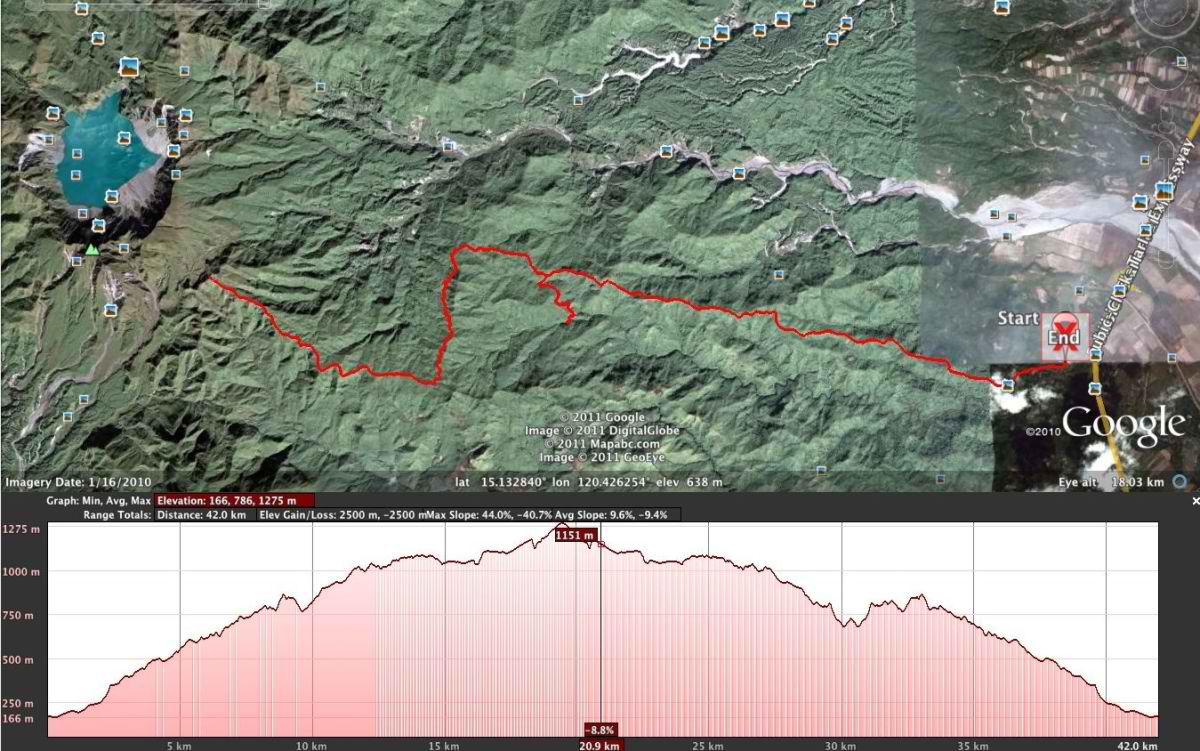
Are you joining this Sunday’s Clark-Miyamit 42K or 22K Trail Run? If you trained on the roads and not on the trails with the same elevation profile with that on the race course, I bet you will have a hard time catching your breath as you go up to the peak of Mt Miyamit and/or complete the course with more strength to reach the finish line. Moreso, if it will be your first time to visit the place on race day.
The course is basically an “up and down” course. Ultra trail runners usually call this kind of mountain running as “Fastest Known Time” or “FKT”. The faster you reach the peak of the mountain and then going back to where you started, the better and is the way to gauge your speed and strength in mountain trail running.
Start & Finish Area @ Ayala Construction Site
Last month, at the height of the latest typhoon that hit the area, I had a chance to run through the course for the nth time except for the last 4 kilometers before the peak of Mt Miyamit or turn-around point of the race course. My companions and I were not able to go through the trail due to thick vegetation that covered the trail and strong water on the streams that we have to cross.
We ran through the course for almost 34 kilometers in distance which took us 9 hours, to include our “pit stops” along the way and late lunch at the foot of Miyamit Falls. We also went to the View Deck for “photo-ops” and rest.
I was surprised that there are already “movements” and construction projects at Barangay Sapang Uwak, the trailhead of the road/trail going to Mt Miyamit. I had to park my vehicle at the Ayala Construction Headquarters where I was able to talk to the Security Guards and requested for my vehicle to park thereat. The construction area is just near the Porac Exit along the SCTEX.
The first kilometer is flat and downhill and as soon as we reached my usual parking area near the small bridge before reaching Sapang Uwak, we had to go through a checkpoint which is being controlled and administered by another company. I was received by a former Philippine Army Officer who is now the designated Officer-In-Charge of the Security Guards manning the said construction area. After a brief conversation, we continued our run to the center of the barangay. The OIC knows me personally as we had been together in one unit in the Philippine Army.
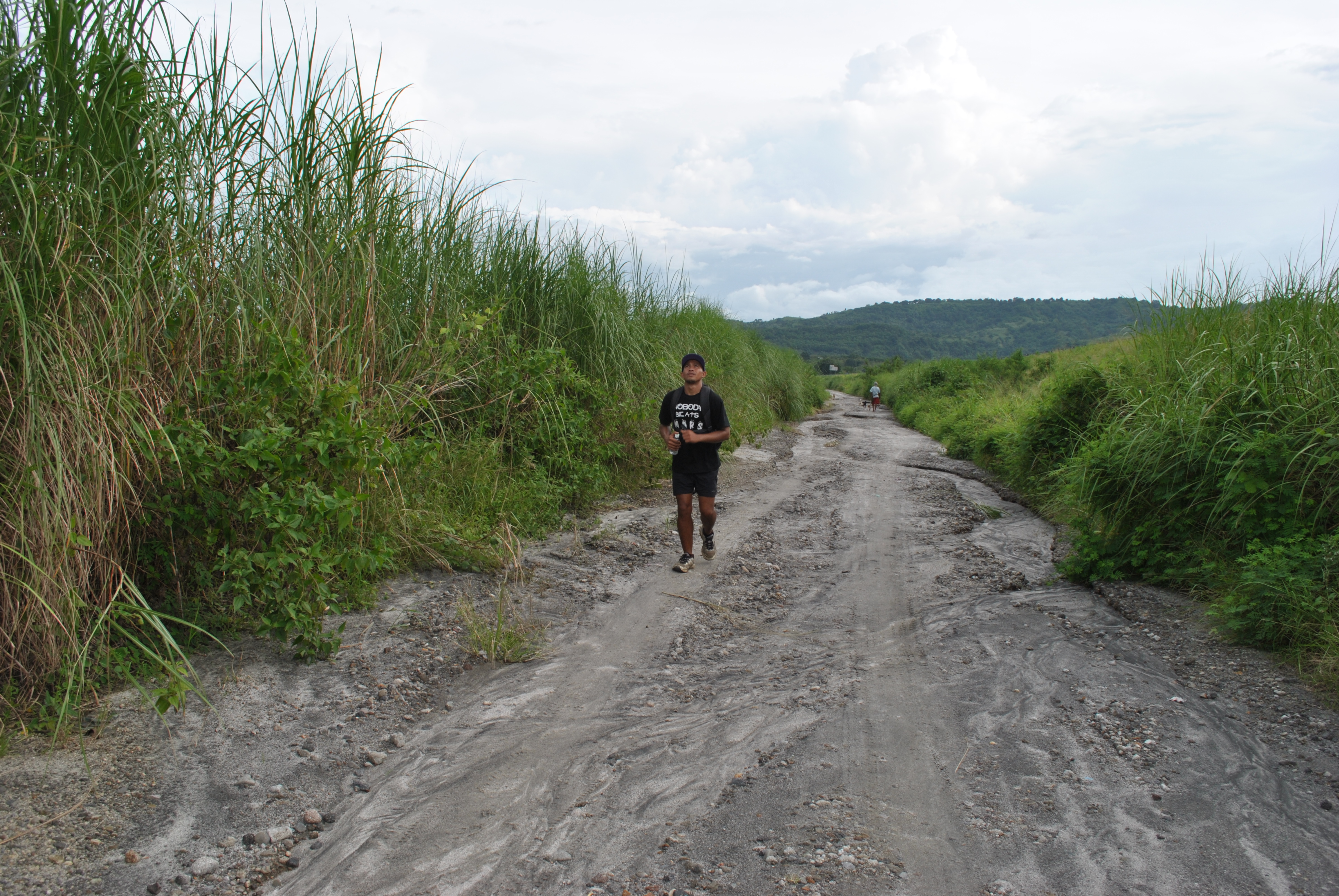
First & Last Kilometer Of The Course/Run
From the center and populated area of Barangay Sapang Uwak, we run, jogged and hike all the way to the View Deck; after some rest, photo-ops, and eating some snacks, we continued our run to the peak of Mt Miyamit hoping that we could reach the turn-around point which is 10 kilometers from the View Deck. We did not reach the turn-around point and we need about 4.5 kilometers more. We have to turn-around when we could no longer see any trail due to thick vegetation. From that point, we went to the Falls and had our brief lunch and photo-ops. After our lunch, we went back to where we started.
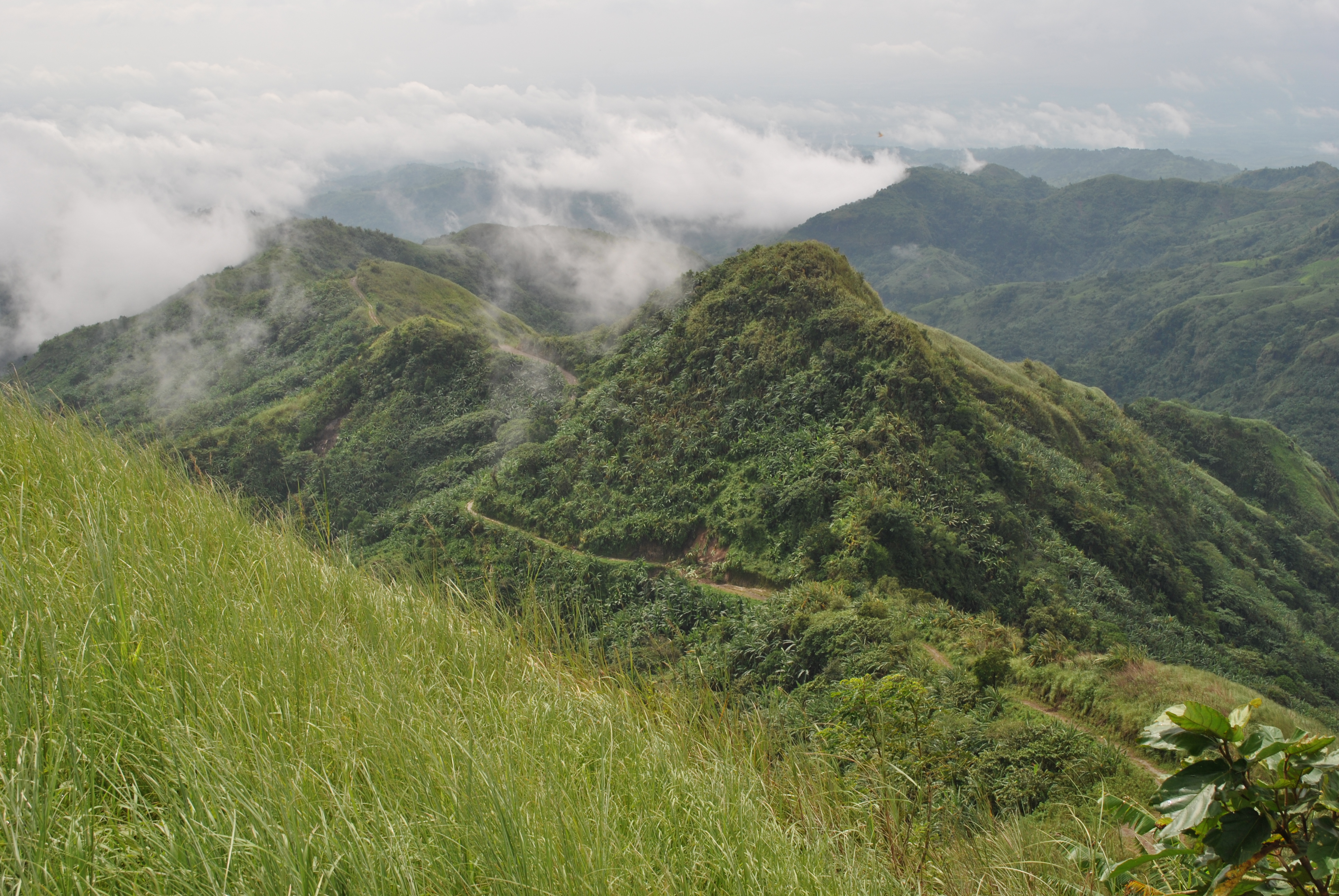
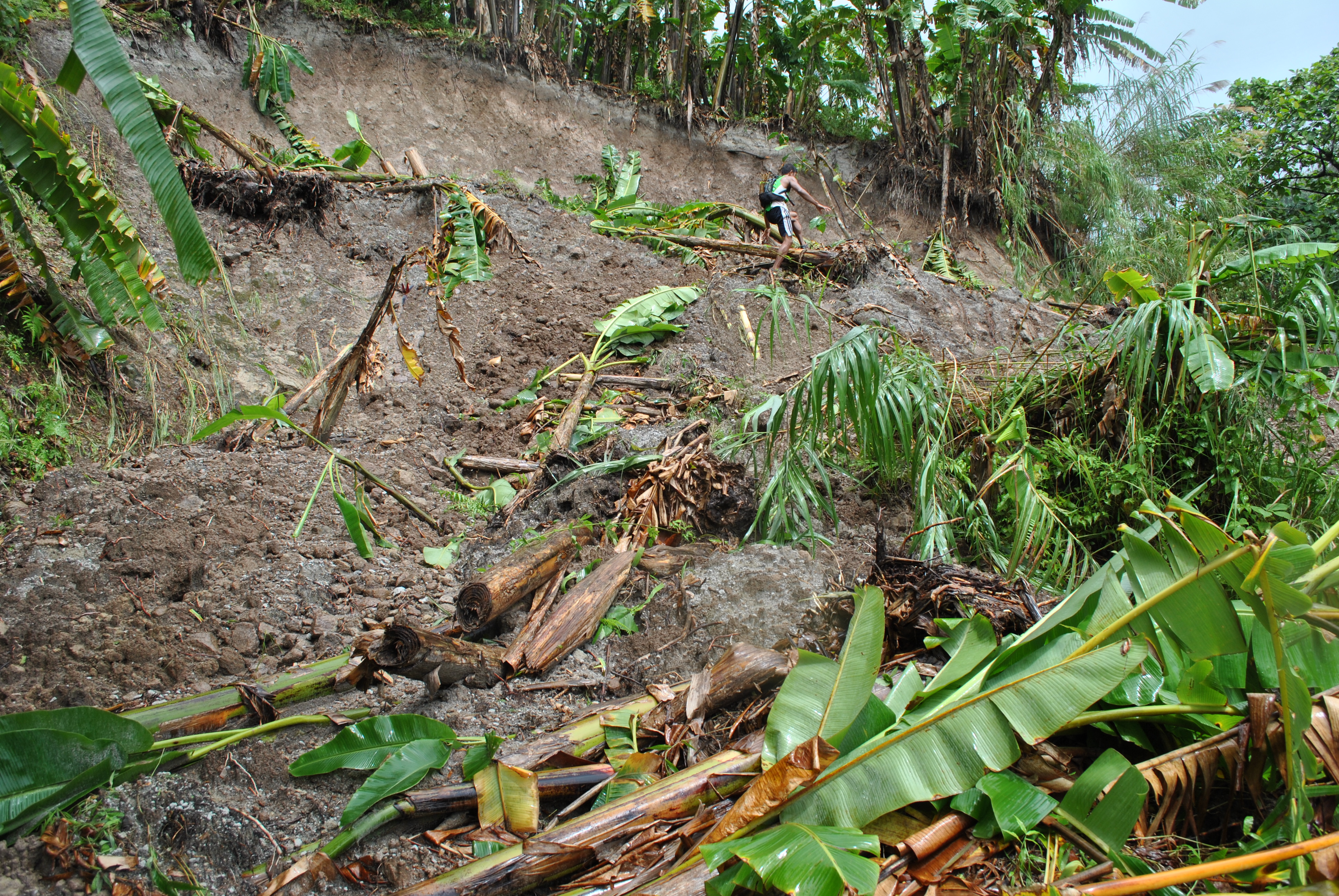
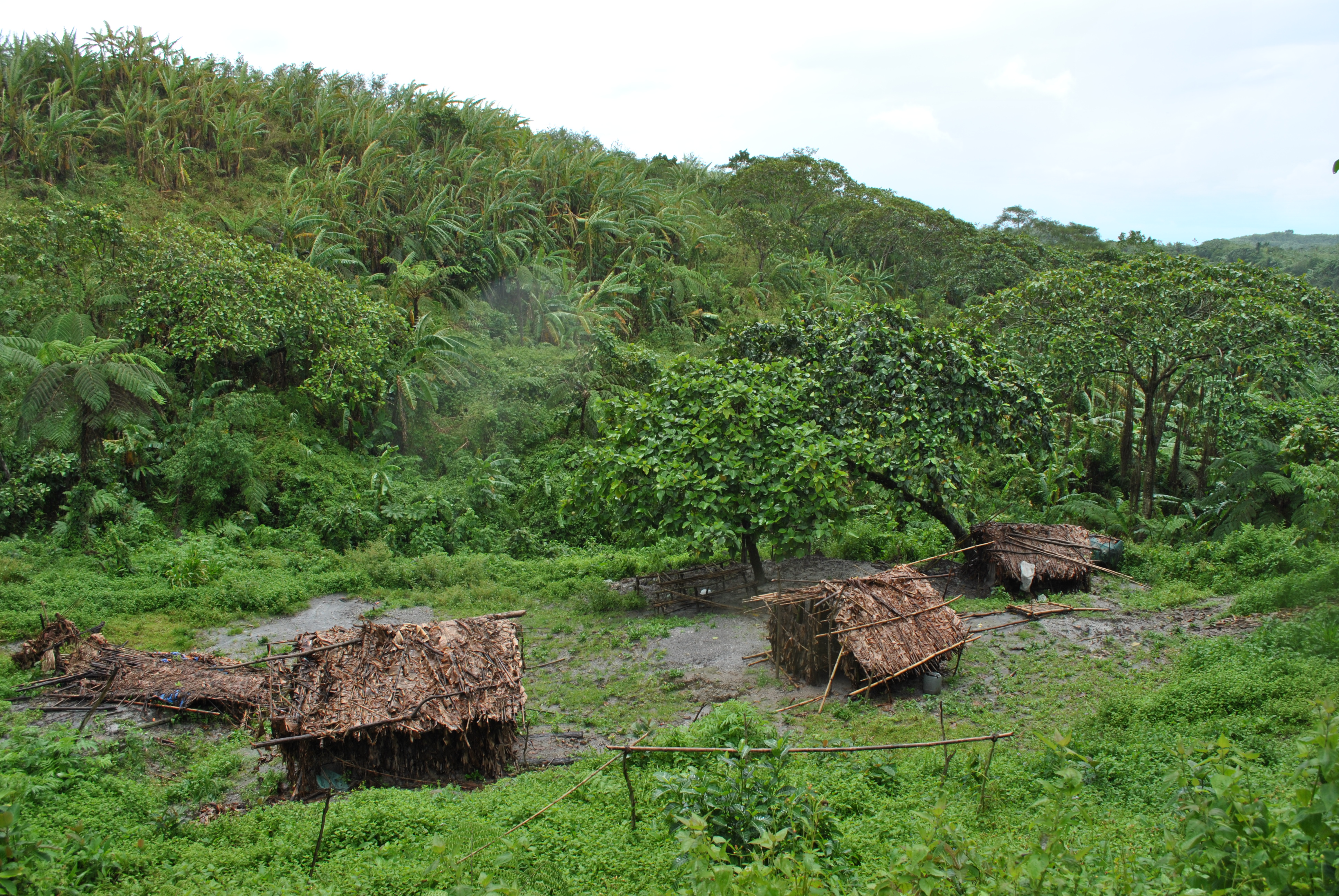
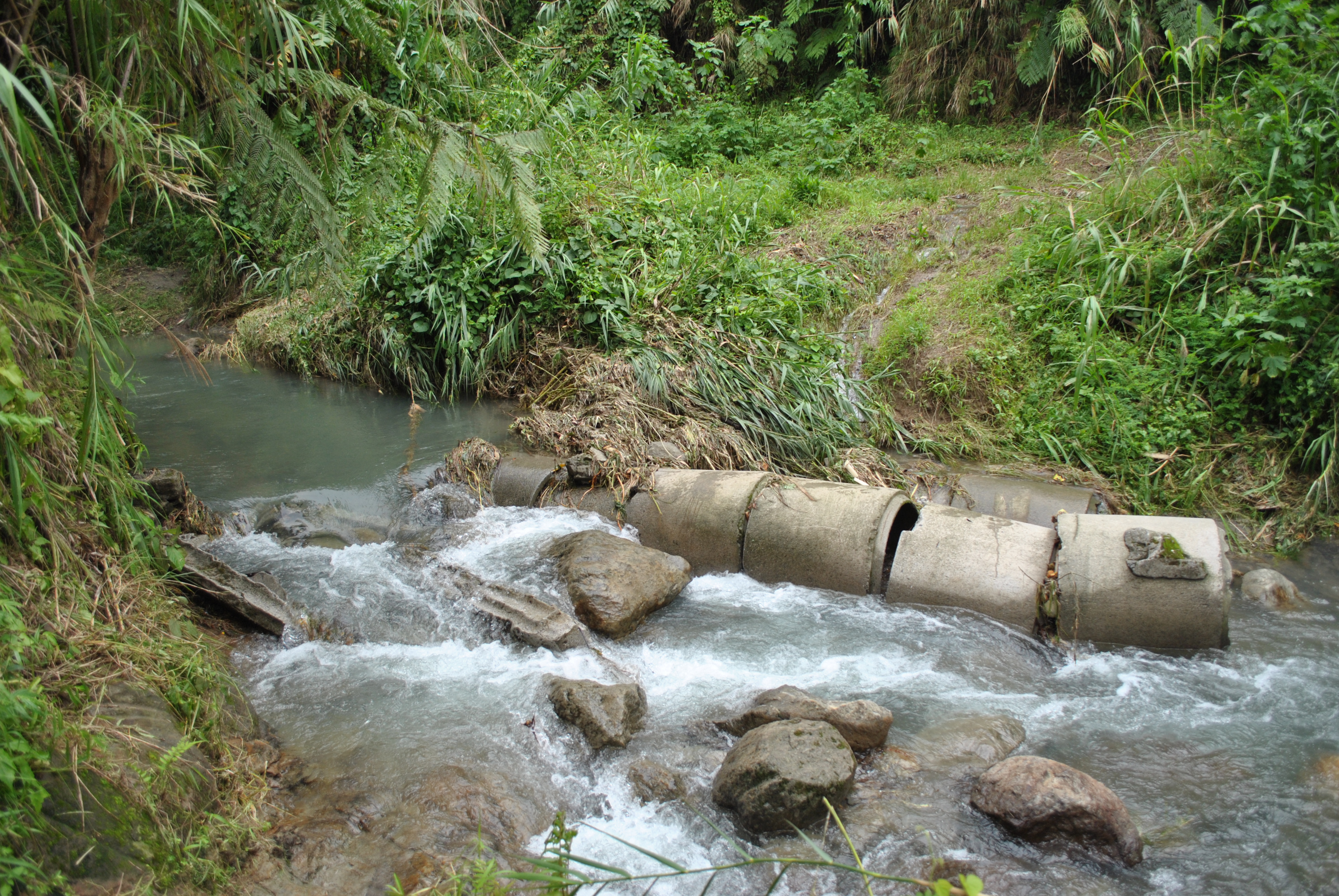
Patience Is The Key To Reach The TopTop View Of The Route/Trail Taken From The View DeckWhere Is Danin? Be Careful With This LandslideHuts Made Of Banana LeavesSlippery Part To & From Miyamit FallsTrio Los Bandidos @ Miyamit Falls
For the benefit of those who will be joining this Sunday’s 1st edition of the Clark-Miyamit Trail Marathon & 22K Trail Run who have not visited or recon the place/route, I have the following insights:
Looking at the Elevation Profile, whether you are joining the 42K or 22K race, it is an “up and down” or “FKT” run/race.
Depending on your training and preparation of this race, take it easy on the uphills and make-up for the slower time that you register on the first half by running stronger on the last half.
Always think safety during your run. There are places where the ground is slippery along the course/trails. Take time to hike instead of running along these slippery portions of the trail.
This event is NOT a Picnic or Hiking/Outing for you to socialize with other runners. This is a RACE. However, in case of emergency or accident where a runner is involved, find time to assist or help the victim.
Runners have a bad practice of consuming the whole cut-off time to finish the race. If you can finish the race faster than the prescribed cut-off time, please do so with all your remaining effort. The marshals and volunteers would like to go home as early as possible also.
The tribe/locals residing on this mountainous location are “notorious” in asking money, food, or anything from visitors in the area. Be aware and know what to do.
Apply trail etiquette and the time-tested “Leave No Trace” doctrine in this event.
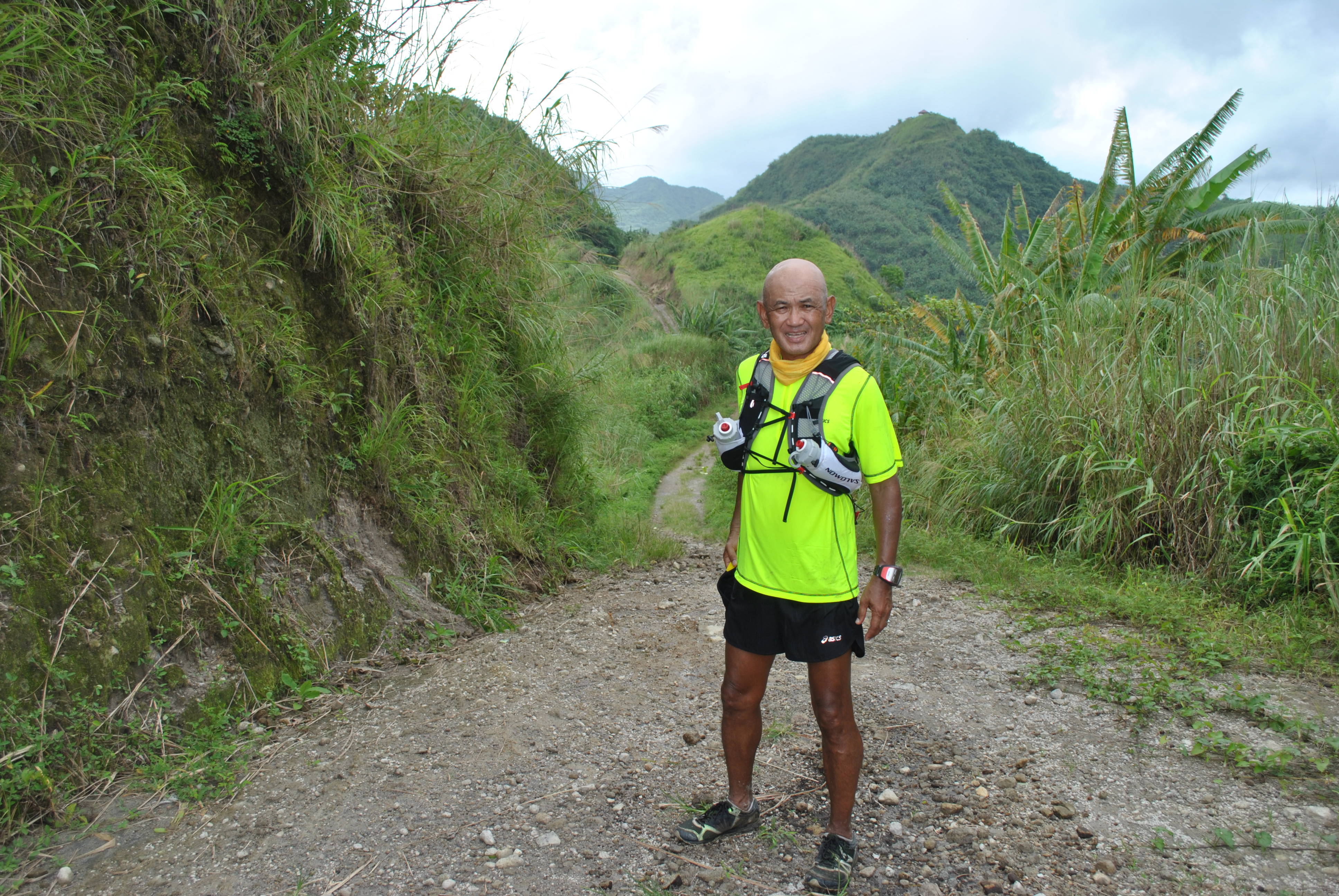
Still Fresh & Strong As We Approached The Finish Line
I will be joining this race and I will be on a Race Mode. It means that socializing with other runners will be limited at the start and finish areas only. I will not engage in a lengthy conversation with any runner if one decides to run side by side with me. My feet and pace will do the talking, the same strategy that I applied when I joined the Pagsanjan To Majayjay 50K Road Ultra Race last September 1, 2013.
This race will again be a test and evaluation for my new training. My modest goal is to finish within the upper 50% of the total runners without any injury or “issues” during the race.
Good luck to all the CM42K & 22K runners! By joining this trail race, you are already a winner to me!
The primary objective of the Philippine Association of Ultrarunners (PAU) is to promote the sports of ultrarunning/ultra marathon races, whether they are on roads or trails. It is also a way of bringing the sports closer to the grassroots with the hope to discover new and younger talents and potentials as elite runners. It also serves as a contribution in the Sports Tourism Program in the locality where the event is being held. Such events and presence of runners from other regions and countries would bring added income and economy to the local establishments and at the same time for the runners to explore the site of the event.
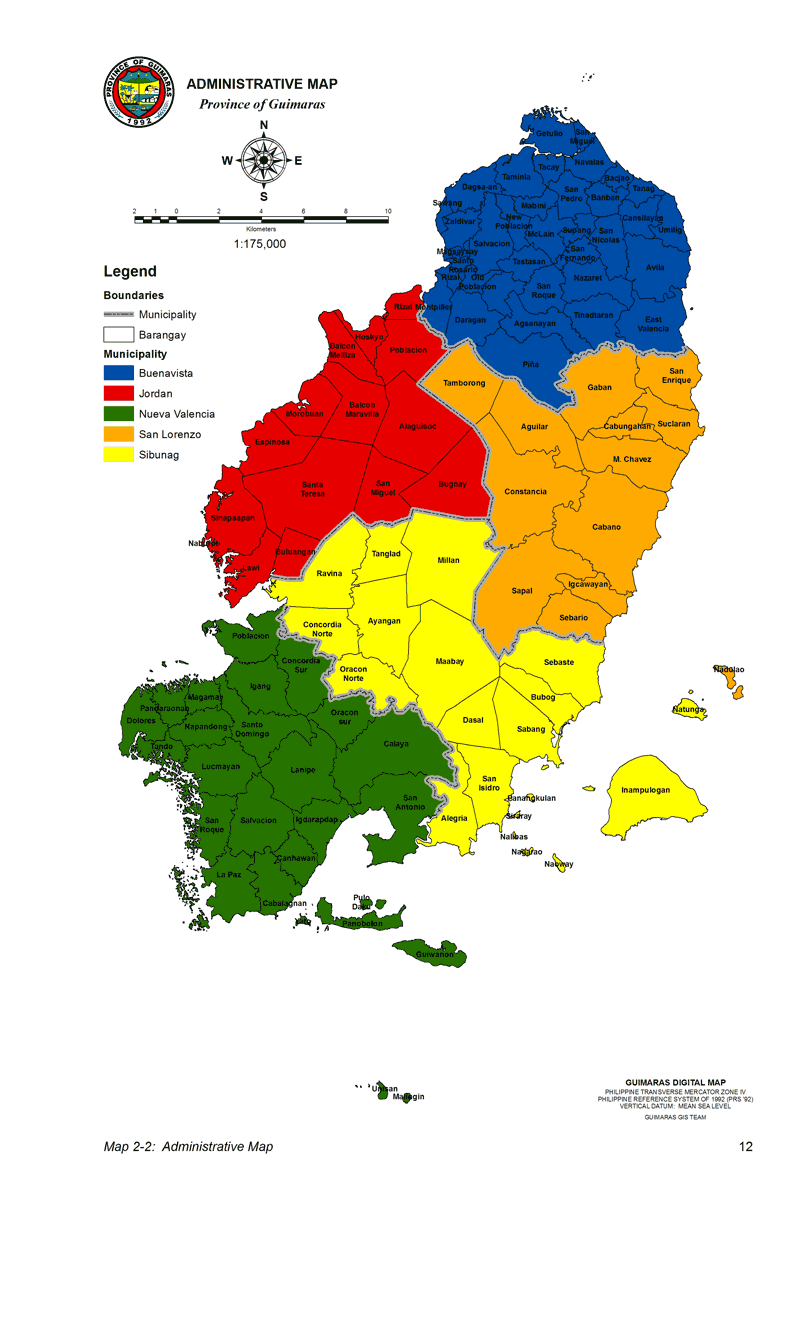
The PAU Nationals, for the second year, had been held in Guimaras Island Province which has a 125-Kilometer Circumferential Highway on the outer edges of the island. It is accessible from the long distance runners from the islands of Panay and Negros, where potential elite runners are residing. Rene Herrera, our Olympian 5,000-meter and 10,000-meter runner, hails from the Province of Guimaras.
Through the help of Dick Balaba, PAU Runner of the Year 2011, who is presently assigned in the 3rd Infantry Division of the Philippine Army whose Area of Responsibility covers the Island Provinces of Western Visayas, my trip arrangements and courtesy call to the new Provincial Governor, Honorable Samuel Gamurin, were scheduled and implemented without any problem.
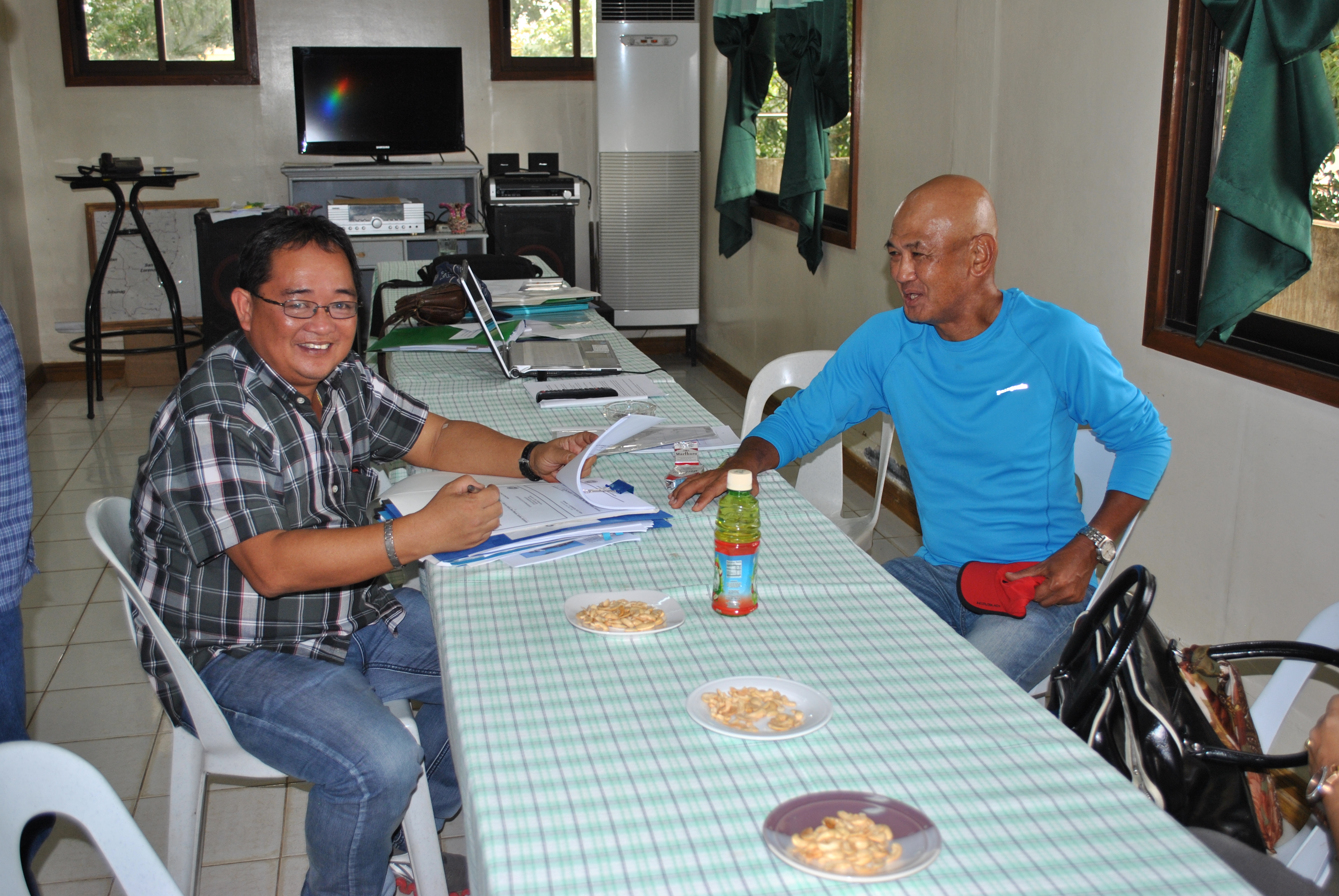
Courtesy Call/Meeting With Governor Gumarin
My staff and I were received by Governor Gamurin in his office and immediately gave instructions to his Provincial Administrator, Provincial Tourism Officer, and the Provincial Risk Reduction Management Administrator who was the Action Officer during the conduct of the 1st PAU Nationals in the province. With a short notice, the 5 Municipal Tourism Officers were called for a meeting with the Governor giving instructions for the support for the event, to include the PNP and the Philippine Army Reservist/Reserve Force in the province.
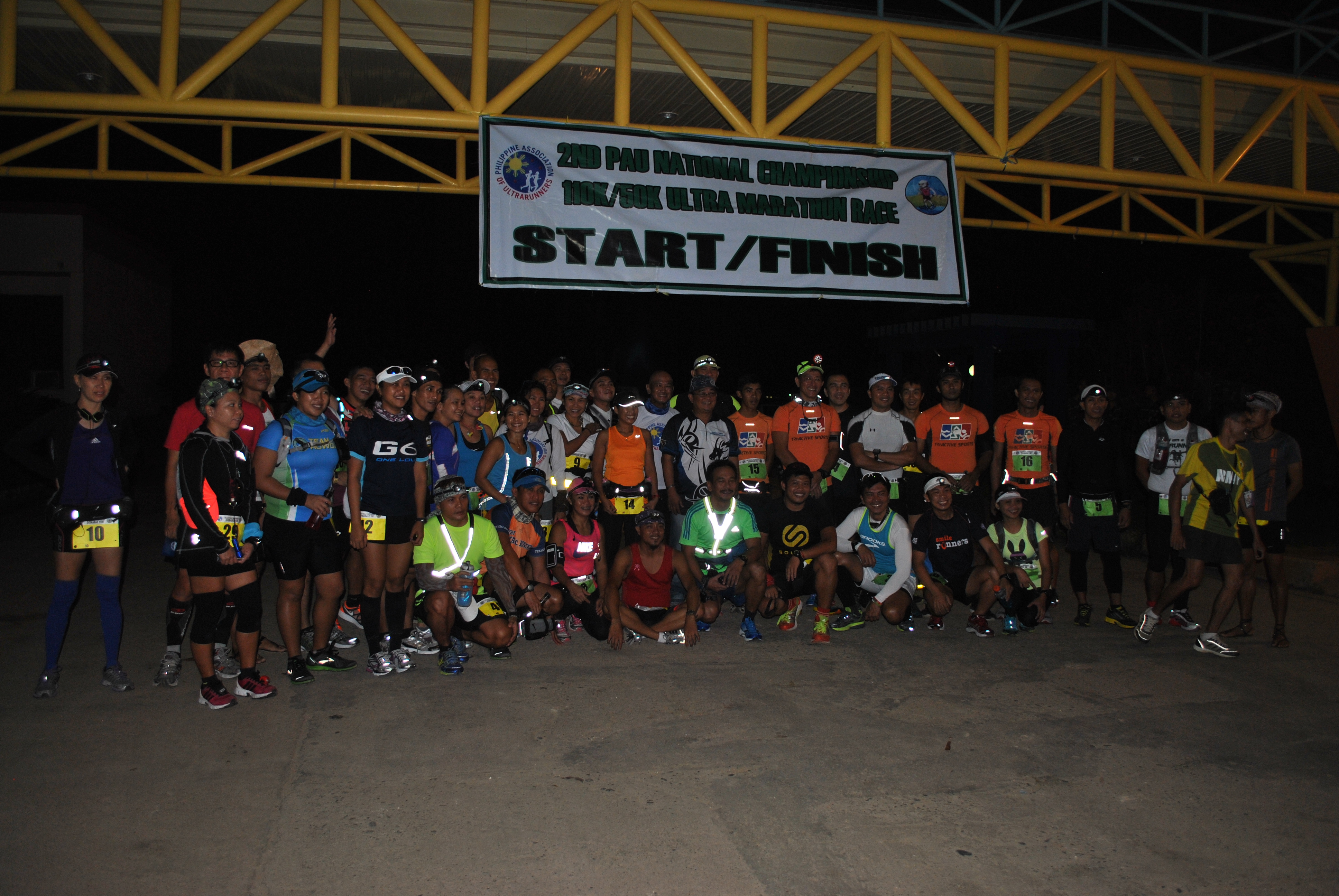
Governor Gamurin fired the Starting Gun at Midnight of Friday in front of the Provincial Capitol and he event went to the extent of manning the first Aid Station at Km #10, asking and giving food to the runners, and later inspecting the rest of the Aid Stations along the route.
Starting Area & Runners
The Barangay Captains in places where Aid Stations were located were properly supervised by the Barangay Captains themselves and their Councilors. PNP elements were also stationed in the Aid Stations and some selected points along the route. Critical intersections were covered by the Philippine Army Reservists and they served as Marshals. Roving patrols and checkpoints were also manned by the PA Reservists.
The 50K runners were ferried from the 50K Finish Line back to the Provincial Capitol aboard specially-built vehicles for tourists along the rest of the circumferential road of the island. This is an improvement from last year’s experience for the 50K runners where they were ferried by military 6 X 6 trucks!
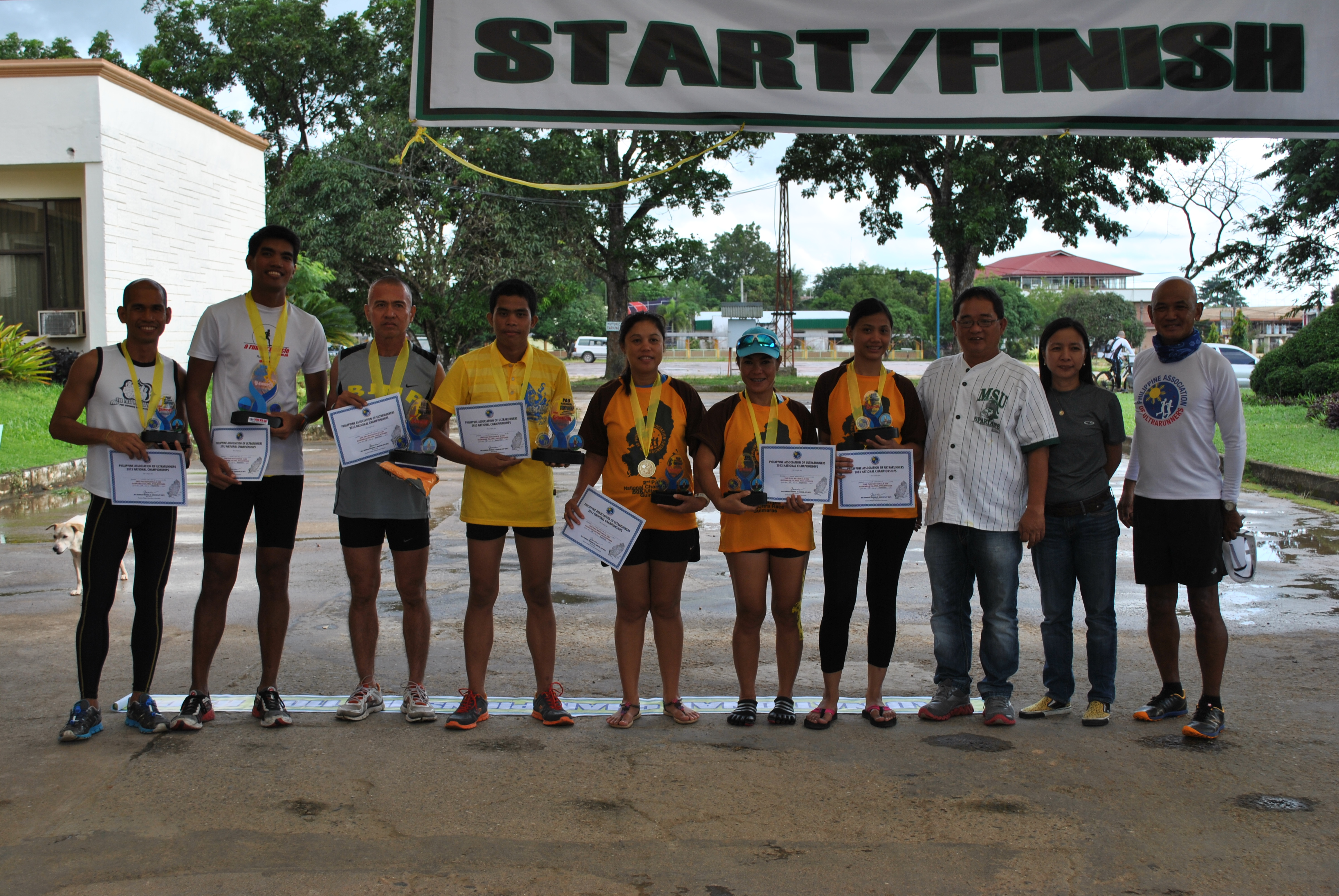
The Governor and First Lady, Vice-Mayor Cecille Gumarin of Buenavista, Guimaras awarded the Trophies, Medals, Finisher’s Shirts and Certificates to the Podium Finishers of the 50K and the Overall Top 3 Runners for the 110K Race.
Podium Finishers With The Governor & First Lady
Even if I prepared packed lunch/dinner for all the runners, the Provincial Government prepared also another set of packed lunch/dinner with one ripe Guimaras Mango for all the Finishers!
Before the Governor left the Finish Area, he promised to fully support the next edition of the race where he suggested that the event will be a part of the Octoberfest in the province. He said that there will be lots of beer for the runners and Rock Bands on Stage near the Provincial Capitol. This is something that ultra runners would like to experience after finishing the race.
There was a 100% finish rate for the 50K runners while 3 runners declared themselves as “Dropped/DNF” among the 27 starters for the 110K race. A total of 50 runners started in front of the Provincial Capitol of Guimaras.
The Course Record in the 50K Race was broken by Marianito “Jun” Ramirez, Jr of Iloilo City with a time of 5:03:28 hours , improving the time by 7 minutes.
I would say that the mission/objectives of PAU were satisfied with the conduct of this event. New potentials/talents were discovered among the runners in the area. Sports Tourism for Guimaras was promoted and the presence of the runners and their family & friends had greatly contributed to the economy in the area.
I just created a PAGE on this blog for all the scheduled Ultra Marathon Events in the country and other selected international ultra running events for the year 2014. I listed some of the yearly PAU Races and BR’s Events; and also the Ultra Races of Jonel Mendoza/Frontrunner Magazine.
I would like to invite all Ultra Race Organizers/Directors to post their events and respective details/links on the Comment section of this PAGE. Events posted on the Comment section shall be included in the list of events for easy reference to interested runners.
I hope that this PAGE will serve its purpose as the repository of scheduled ultra marathon events in any part of the country for the year 2014.
The following are the meanings of the word “engage” taken from the Free Online Dictionary:
en·gage (n-gj)
v.en·gaged, en·gag·ing, en·gag·es
v.tr.
1. To obtain or contract for the services of; employ: engage a carpenter.
2. To arrange for the use of; reserve: engage a room. See Synonyms at book.
3. To pledge or promise, especially to marry.
4. To attract and hold the attention of; engross: a hobby that engaged her for hours at a time.
5. To win over or attract: His smile engages everyone he meets.
6. To draw into; involve: engage a shy person in conversation.
7. To require the use of; occupy: Studying engages most of my time.
8. To enter or bring into conflict with: We have engaged the enemy.
9. To interlock or cause to interlock; mesh: engage the automobile’s clutch.
10. To give or take as security.
v.intr.
1. To involve oneself or become occupied; participate: engage in conversation.
2. To assume an obligation; agree.
3. To enter into conflict or battle: The armies engaged at dawn.
4. To become meshed or interlocked: The gears engaged.
In my trail running’s “playground” and in other mountain trails that I run and visit, I always make it a point to greet the people that I pass, meet, and see along the route. It could be a simple greetings of “Good Morning or Good Afternoon” in the local dialect or ask the question “How are you?” (Kumusta kayo?). Saying such greetings must go with a smile on my face. Most of the time, the people I see along the trail would reply positively and I think something is being planted on the minds of this people about me and my companions.
In places where there is a house/hut and family living along the trail, I would make such place as my “pit stop” where I could eat, sit and rest, and refill my hydration bottles from their source of drinking water. I would use and apply the “sardines approach” of building some friendship to such family. I usually talk to the head of the family and tell him about our activity in the mountains, tell him where we came from, request him for a brief stay for some rest and ask if they have a natural source of potable water. After eating our trail foods and refilling our water bottles and bladders, I would give “two cans of sardines” before leaving the place.
Ligo Canned Sardines @ P13.00 Per Can
A can of sardines is like a most treasured “pork ham” for these mountain people, of which I learned during my younger years as a combat officer of the Philippine Army scouring in the forests and mountains in Luzon and Mindanao. And sardines were also our most convenient food ration when we spent weeks in the deep forests and mountains. Sardines is also a form of currency when people in the mountains would prepare and butcher one of their livestocks for me and the rest of my men but such thing happens “once in a blue moon”!
On my next visit to the place of the family during my runs, everything would be automatic and my group would be attended as royal visitors! However, sometimes sardines are too heavy for the next outings and we instead give the family some cash for whatever we would like to eat or harvest from their farm. A fresh coconut juice and soft meat would be a heavenly pleasure for me and my running friends.
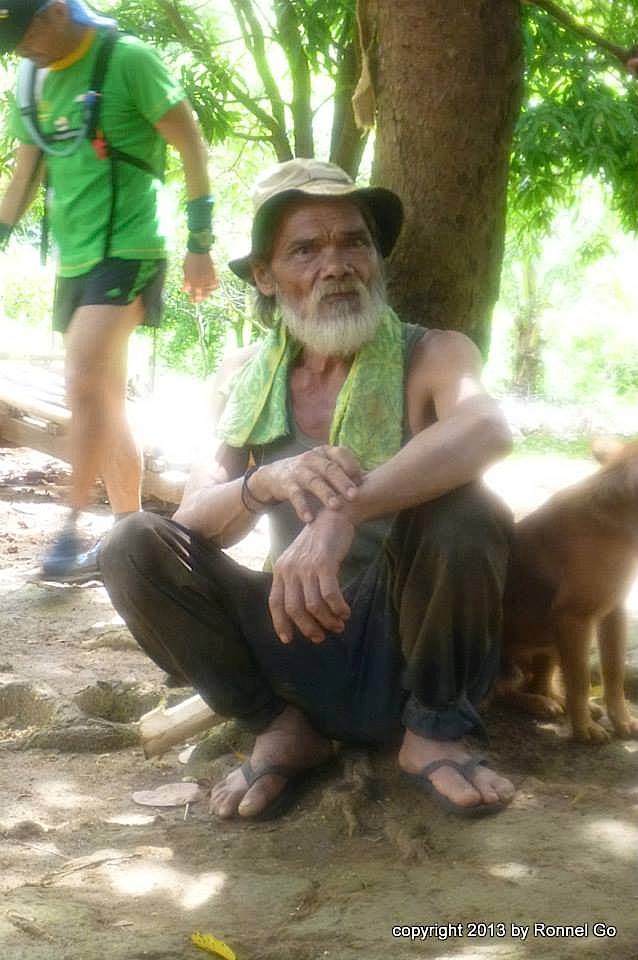
Mang Mario, The Farmer
In contrast with the other mountains and trails that I ran and visited, the people that I would meet, pass, and see would be the one who would take the initiative to “engage” me in a conversation! It is either they would ask for money or ask something from me. They would tell me that they have not taken their breakfast or at least, ask from me some loose change/bills for their subsistence. I am surprised why these people would be so brave to ask something to me and my companions. I would guess, it is the fault of the other people who would give something to these people whenever they are being visited in their own locality. In doing so, this mountain tribe would assume that visitors going or passing through their places have the means or cash or food to share to them.
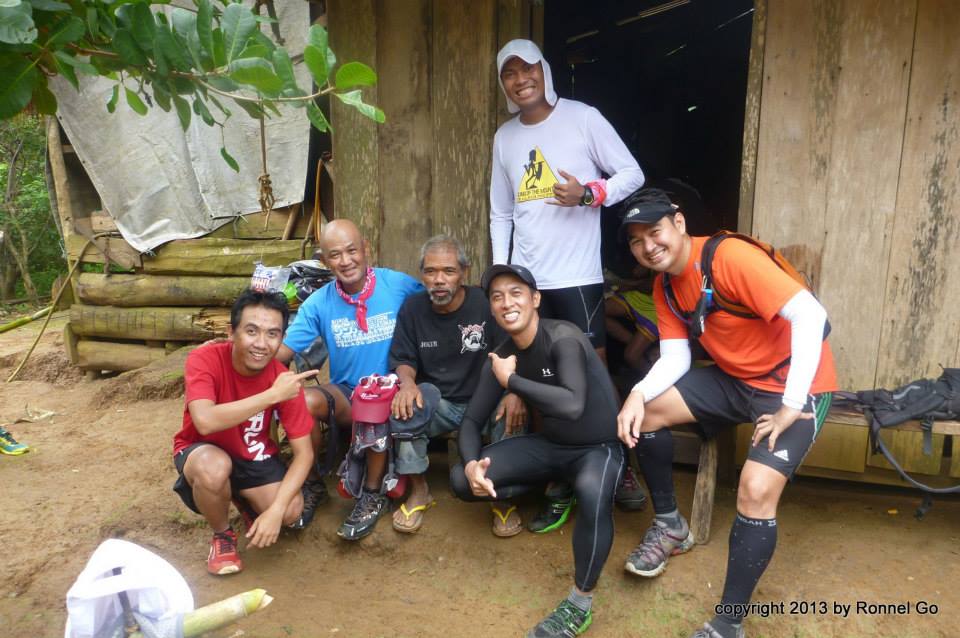
Mang Diego Garcia, The Jungle Survivor Expert (In Black Shirt & Sandals)
If you are a regular trail runner who would pass through the “farm”/orchard/property of the people or locals in the area, you have to respect and befriend them. You can apply my “sardines” approach and pay for whatever you eat and ask from the family. However, if you engage with some tribes who ask for something from you, it is either you ignore their request or give a little from what you have.
In my road runs, I find it more relaxing and comforting when running alone enjoying the scenery of the things that I could see along the road. I would concentrate on my running form and let my legs and feet land on the ground as if they are well-oiled machine pumping until I need to slow down my pace or just simply have my walking breaks. In the comfort of road running, everything is automatic and I could cruise along with my comfortable pace.
In my trail runs, I always have the company of one or two of my athletes/”trainees” as my safety runners or pacers. I don’t run along the mountain trails alone and it is my number one rule in trail running. You may never know when shit happens!
Some of my friends started to ask about my “playground” in trail running when I started posting my pictures on Facebook and they showed some interest in trying to find out about the place and experience what it is like to run in such place. Anybody can go to this place as it is open to the public but one needs to inform the barangay or the village that you are there to run or hike.
It took me some time to figure out and discover a trail loop that ends up to a distance of 18 miles or 28+kilometers which could be extended up to 50 kilometers. But the 18-mile loop is already a very challenging route that would take me 6 to 6 1/2 hours of pure trail running. How I wish I could get the correct cumulative ascent descent in meters/feet on this course.
I really do not invite runners or my running friends to this place. I let my friends do the initiative to personally contact me through Facebook (Personal/Private Message) or simply send me a SMS if they are interested to join me in my weekend trail runs in this place.
Last Saturday, one of the “usual suspects” in my Ultra Races decided to have his Birthday Run in the company of his friends and some of my ultra friends also contacted me that they would like to join me in my weekend runs. So, on that day, our group consisted of seven runners with one pacer and one sweeper, nine runners in all.
We started the run after breakfast at around 7:00 AM. The first 200 meters of the course is an uphill where nobody would dare to run and I usually use this uphill climb as my warm-up hike. After the first kilometer, everybody would cross a river and all our shoes would be soaked and wet. After crossing the river and with a heavier shoes, the group would start to jog and run for a slight uphill within a single-track trail covered with grass.
The trail is a semi-technical trail where you need to keep your sight on the ground and decide quickly where you would want your feet to land. There are streams to cross and muddy portions where you must avoid or let your shoes be buried in deep mud. There are some dogs and there are some herd of cows and carabaos. The cows, even if they are tied with a rope, would run after us during our runs. The carabaos are more calm when their bodies are completely soaked in some mud pools along the route. Just don’t mind the smell when you pass these mud pools!
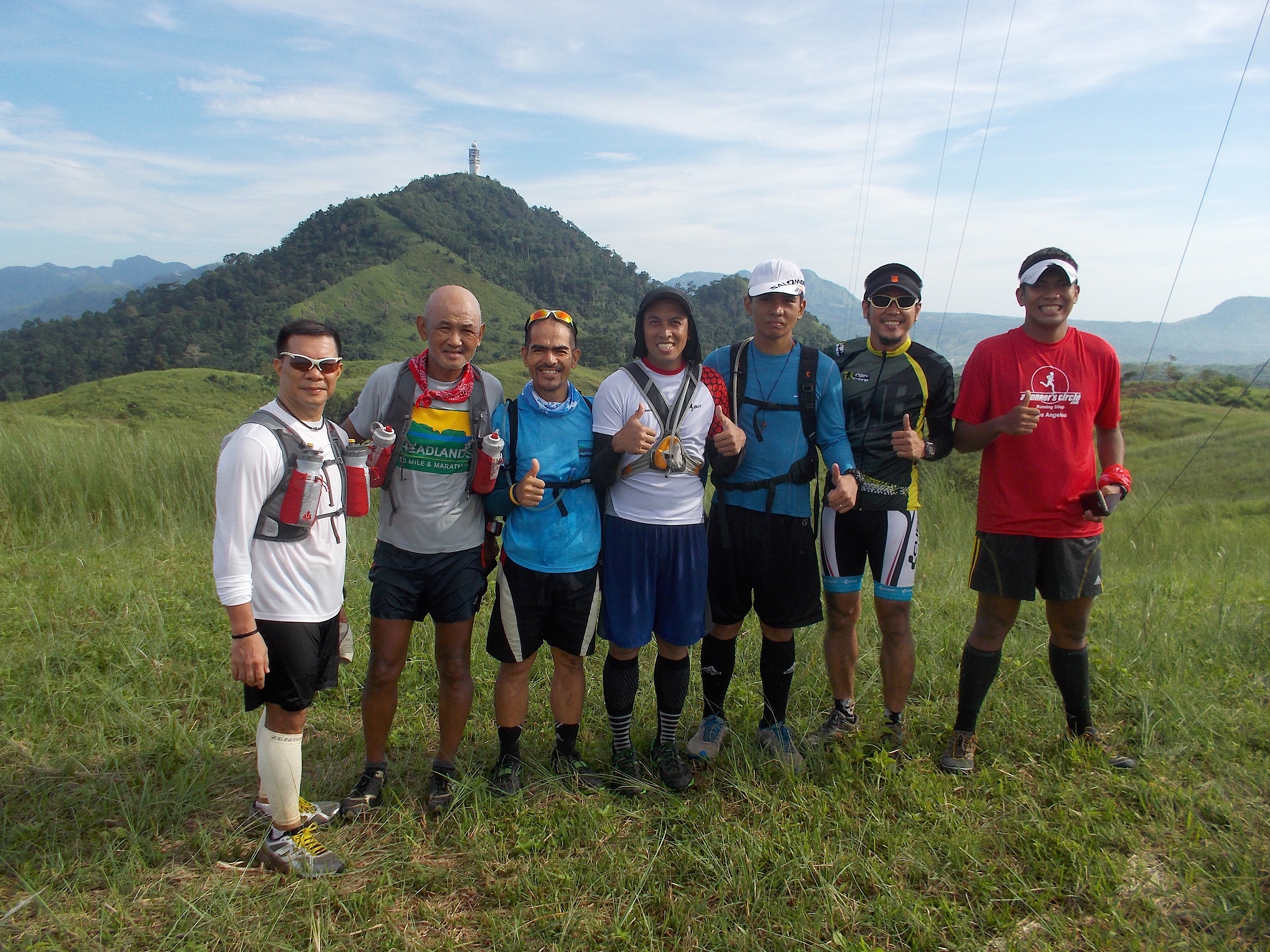
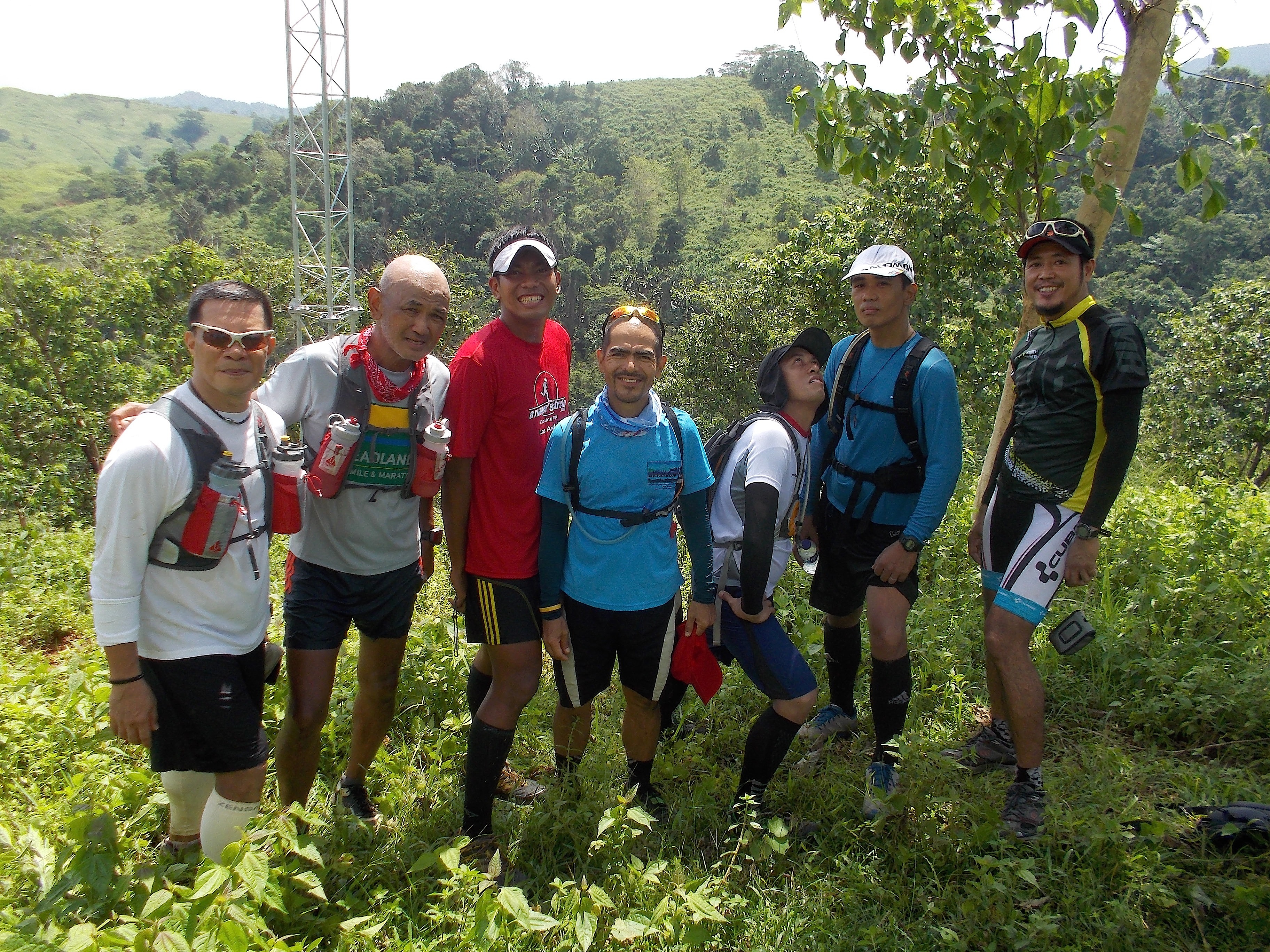
Seven Runners @ The First Antenna
We usually reach our first stop after 1:10-1:15 hours of running in a nipa shed/hut with benches around it and the registered distance in our GPS watch is 6.2 kilometers. An antenna (weather or radio signal purpose) is located near the hut. We usually have our first picture taking in this place and spend at least 5 minutes of stay in this place.
From this 1st antenna, we go downhill towards another river and after crossing the said river, it is all uphill again. Once we reach a wider trail road, our next goal to reach is the other antenna which is located 7 kilometers away from the first one which is located in a higher elevation. Hence, I call this trail loop as “Two-Antenna” Trail Loop.
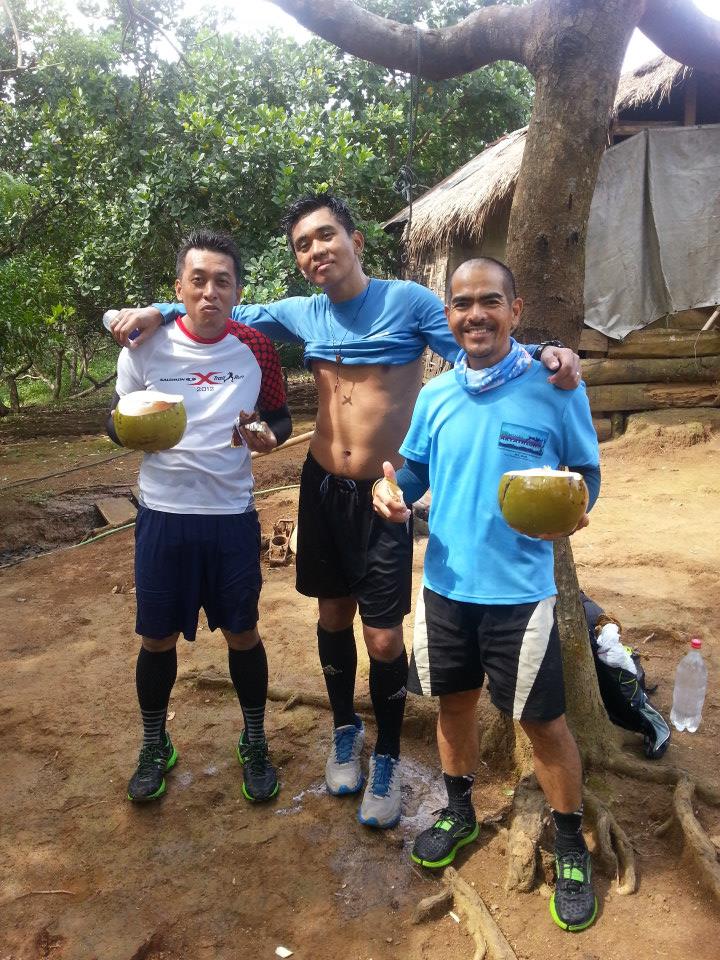
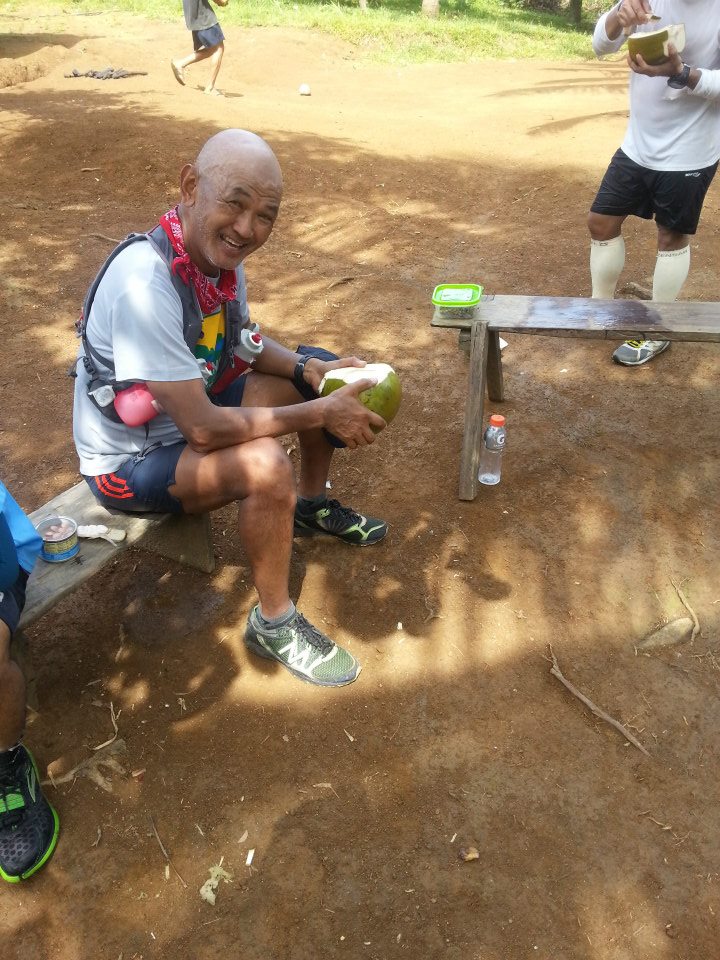
Fresh Coconut Juice In Mang Mario’s Farm (Photo By Ronnel Go)Somebody Is Telling Me Some Jokes! (Photo By Ronnel Go)
After the uphills, downhills and some flat areas, we would cross two big streams until we reach the farm of one of the locals, Mang Mario. This is where we refill our bottles with water; have a taste of fresh coconut juice direct from the tree; hydrate & eat some snack food we carried and another chance to take pictures. I usually talk to Mang Mario and his wife and later give him some packs of “Pentagon” Cigarettes, his favorite brand, and some cash to pay for our coconut fruits before we leave his farm. Well, for the past 2 months that I’ve been dropping by in his farm in my runs, Mang Mario and I became friends and he knows what runners would need when we stop in his place. He would offer his benches for us to sit and order his son to pick some coconuts immediately. This is a result of my “sardines approach” in winning some of my friends in the mountains.
Serious Discussions On Trail Running & Ultras (Photo By Ronnel Go)
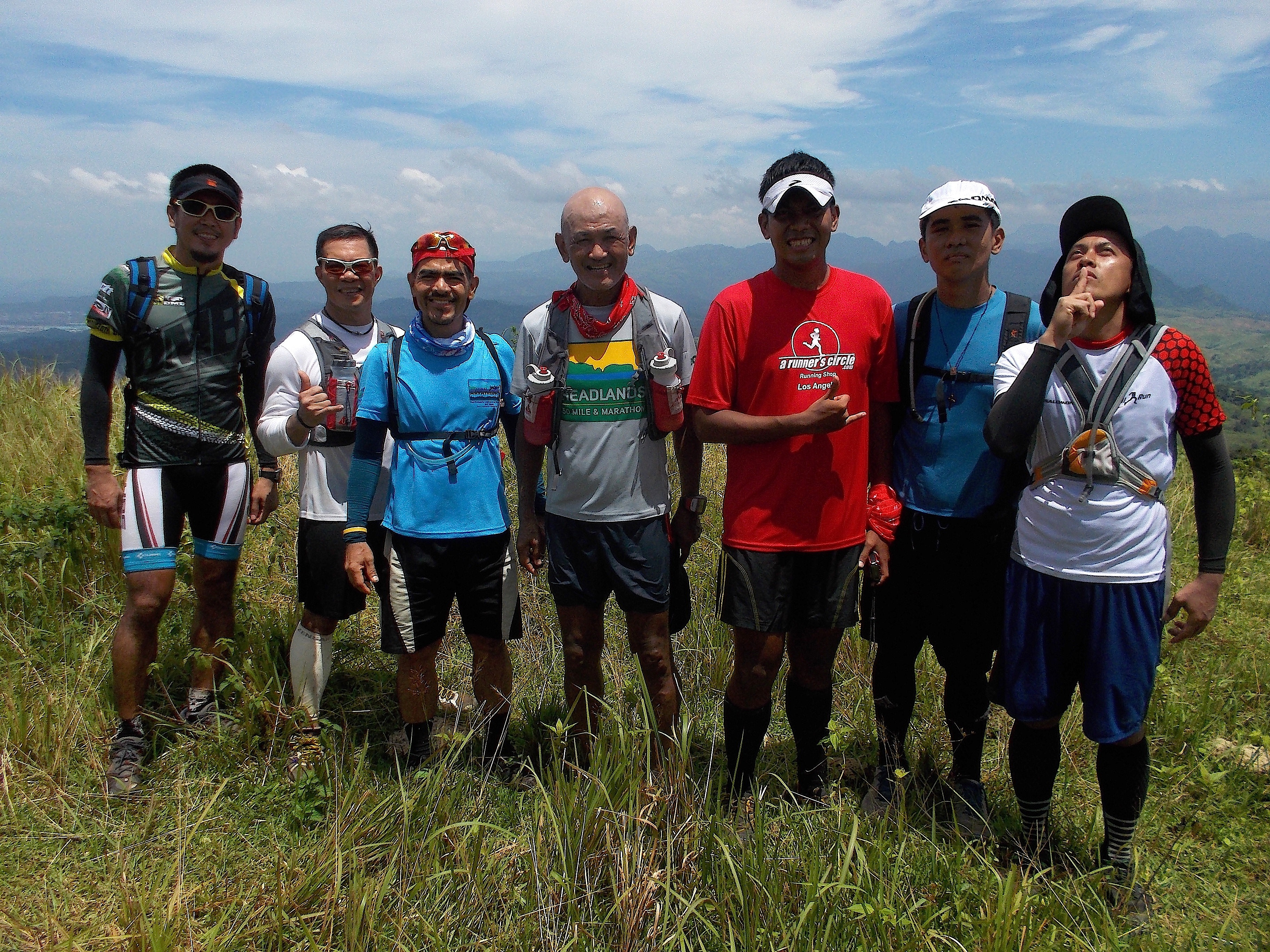
After one kilometer of uphill climb from Mang Mario’s place, we would reach the 2nd antenna and the scenery of the place where we came from (1st antenna) is just amazing! It calls for another group picture with the antenna and the grassland/mountains around as background!
At The Second Antenna
The next two kilometers will be steeper climbs until we reach the highest point of the course which is registered at 550 meters above sea level. I consider this place as the halfway/turn-around point of the course. The scenery is getting better as we go higher in elevation and it calls for another group picture! This is where we eat the remainder of our trail foods with some “ice drops” which we call “Joy-Joy”. They give joy for the tongue and mouth because of its sweet and cold taste. They are “life savers” when the heat of the sun is almost under our heads!
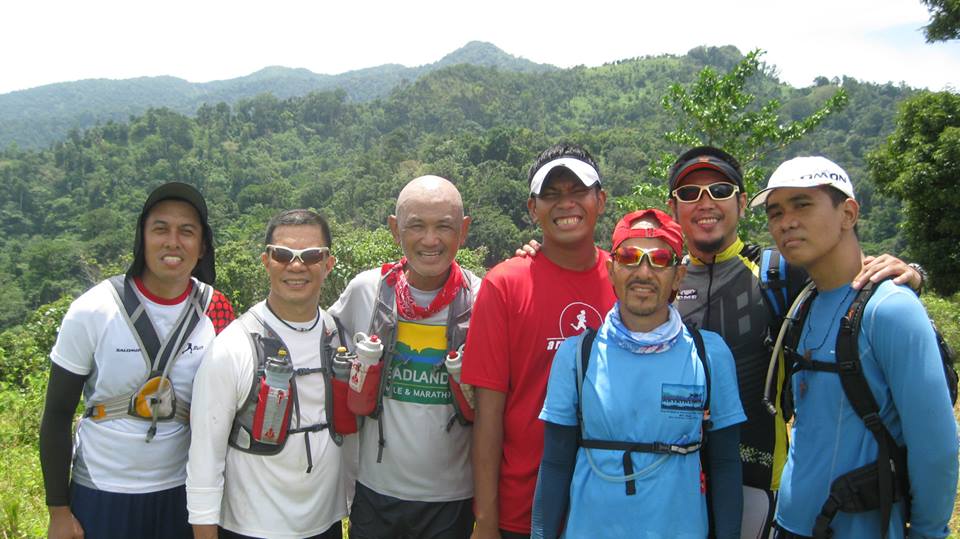
Closer View of the Runners (Photo By Roy Garcia)
After 10 minutes of rest, it’s time to go down to a “roller coaster” elevation of hills until we reach the 1st antenna but the place all around are grassland where there are no trees to provide us with cover from the heat of the sun. The distance is 7 kilometers from the turn-around point to the 1st antenna. This is where we fight it out with the heat of the sun, from the hot air and from the heat of the ground with what remains in our water/hydration bottles. This is also a stretch of the course where the runners would race with one another to reach the 1st antenna. Well, I usually position myself at the back of the pack with the “sweeper” behind me all the way to the first river/stream that we crossed! This would prevent the new ones to this course not to get lost when one could not see the runner in front of him.
At The Highest Elevation Of The Course
It is good that the house of one of the “cowboys” or cattle caretakers, which is also a friend that I came to develop and know since I started running in this area, is located near the 1st antenna. This is where we can have our re-supply of water which is enough to bring us to where we started.
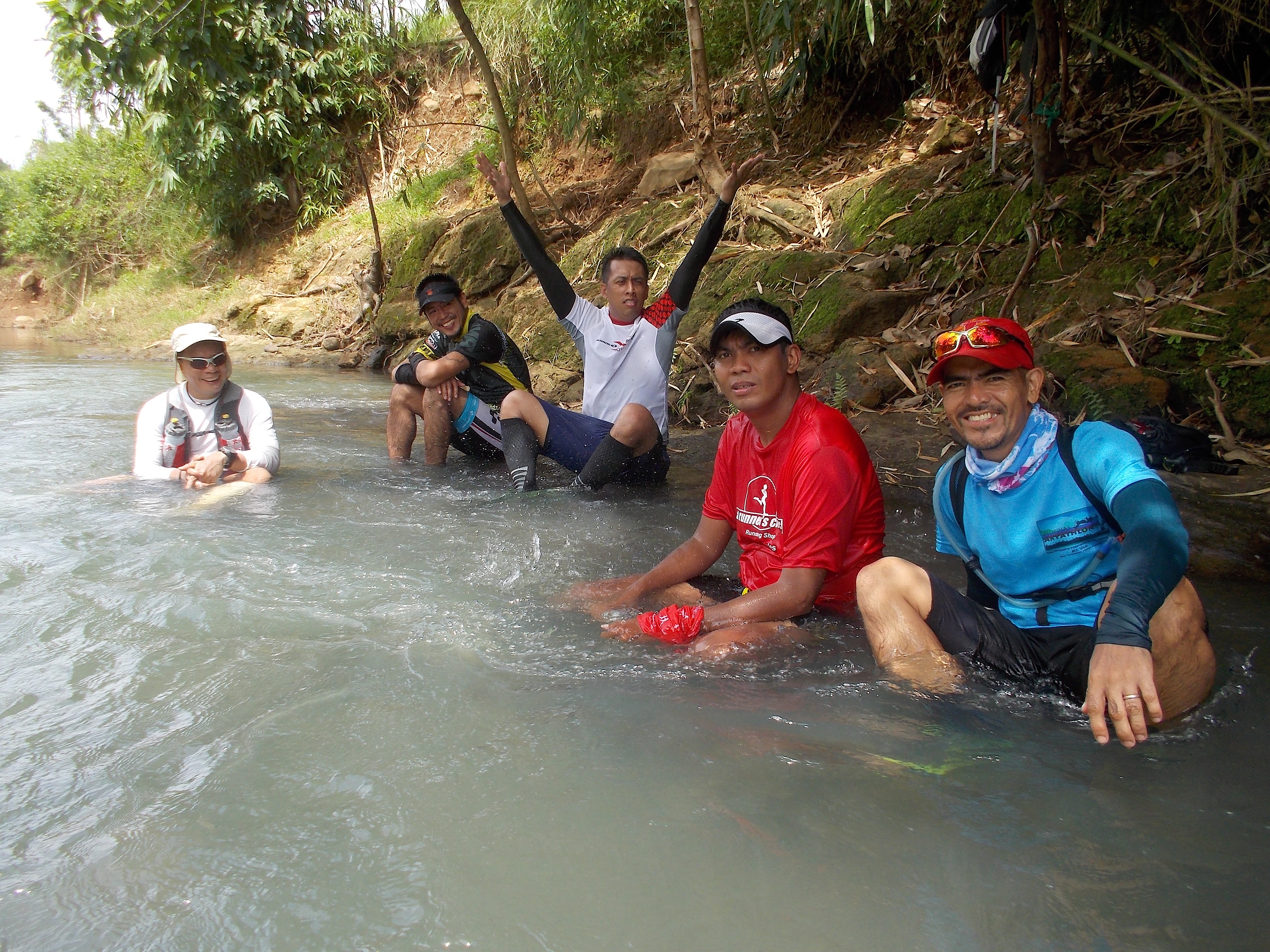
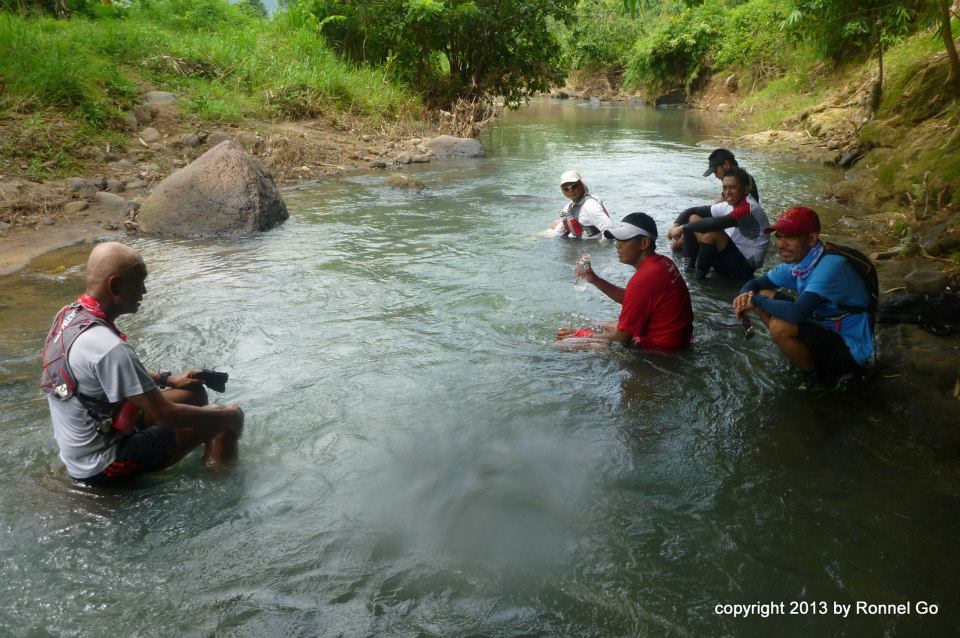
From the 1st antenna, everything will be relatively downhill and the distance to the first river is 6 kilometers. Reaching the first river is a relief for everybody. We would check our watches and we could not believe that we spent 6 1/2 hours along the course. We thought that we just spent 3-4 hours of having fun in the mountains! It is in this river that we start cleaning our shoes from the mud; cleaning our feet and legs; and simply soaking our tired legs with cold and refreshing flowing water while waiting for the last runner and “sweeper” to arrive.
Cooling Off Our Tired LegsMy Position With The Group In The River (Photo By Ronnel Go)
Ice-cold Coca Cola drinks would be our initial “prize” for finishing the run and followed with a recovery meal which would also serve as another “carbo-loading” feast for the next day’s long run!
What I like with my running friends when they are with me in my “playground” is that I could not hear any words of complaint from them even when there is an intense heat from the sun in the middle of the day or when the trails are slippery during inclement weather/rainy days where some would fall on their knees or butts.
These runners are “hardcore” and “monsters” on the trails!
If you are interested to experience what these runners went through, there will be a scheduled trail running 101 training camp for a day which is strictly limited to only 10 runners. Further announcements on this event will be made through Facebook.
(Note: This post is to make tribute to an ultrarunner who sponsored and hosted two of my Team Bald Runner’s Elite Athletes’ participation in this year’s Hongkong 100K Ultra Trail Run)
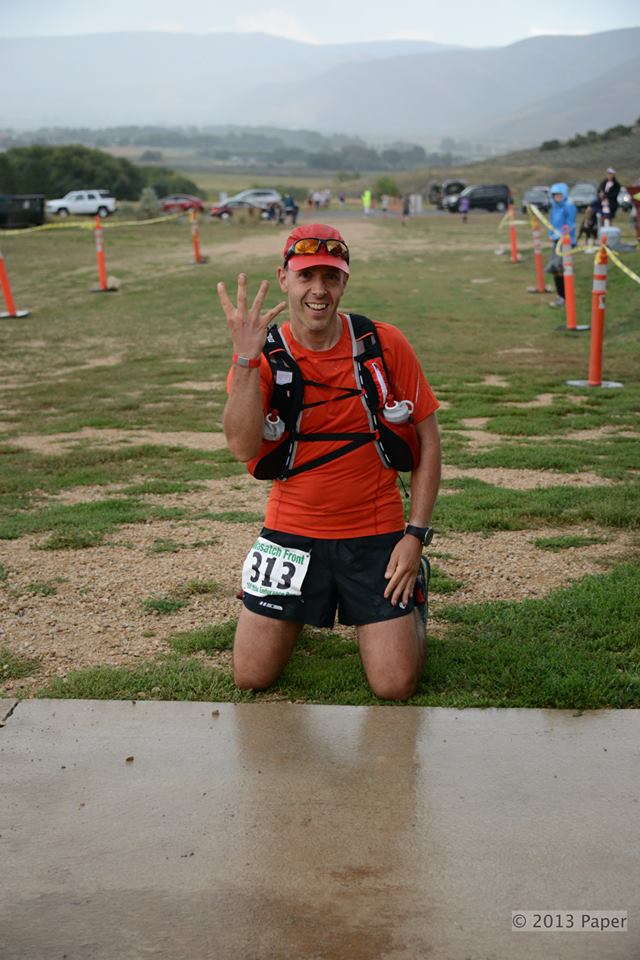
While we were having lunch in one of the hotels in Hongkong a day after the HK 100 Run last January of this year, Andre told me that his goal for this year is to participate and finish the 2013 Grand Slam of Ultrarunning in the United States. When I asked why he was going to aim for such feat where an ultrarunner has a limited time to recover in between races, he answered, “I am not getting any younger and I will try to focus my training to finish all the races”. I just replied to him that how I wished I was still young and be the same with his age. Andre is 43 years old.
The Grand Slam of Ultrarunning in the United States consists of four (4) of the oldest 100-Mile Trail Runs which one has to finish within a span of 10 weeks from the last week of June to the 1st week of September (a week after the US Labor Day). Basically, it covers the whole summer season in the United States. One has to finish the following races in the following order: First, Western States 100-Mile Endurance Run in California; Second, Vermont 100-Mile Endurance Run in Vermont; Third, Leadville Trail 100-Mile Endurance Run in Colorado; and Fourth & Last, Wasatch Front 100-Mile Endurance Run in Utah.
Andre @ The Finish Line Of Wasatch Front 100 (Photo By Paper)
This Grand Slam of Ultrarunning started in 1986 and after 28 editions, there are only 254 ultra runners who finished the said series. Andre Blumberg placed Hongkong as one of the few countries represented among the list of finishers in this series. He is the first Hongkong resident to have done it!
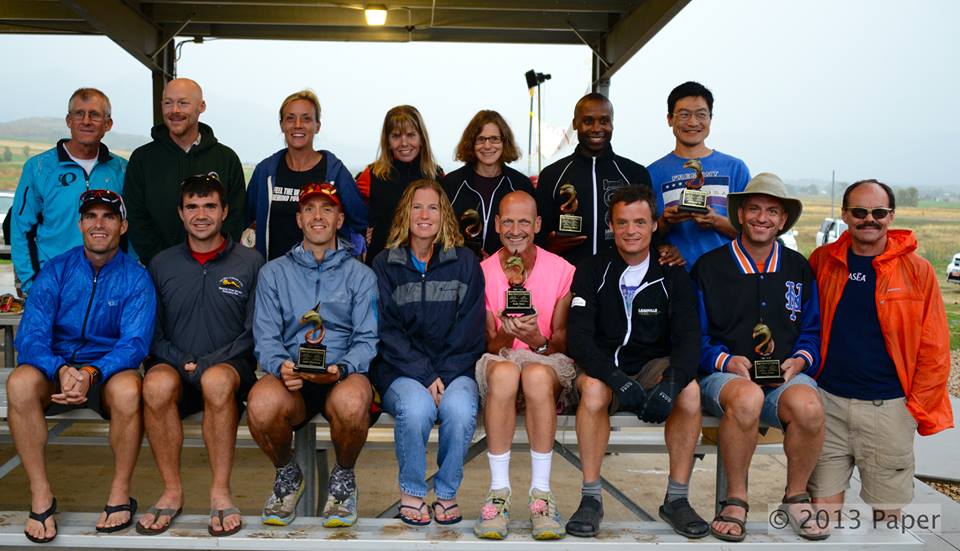
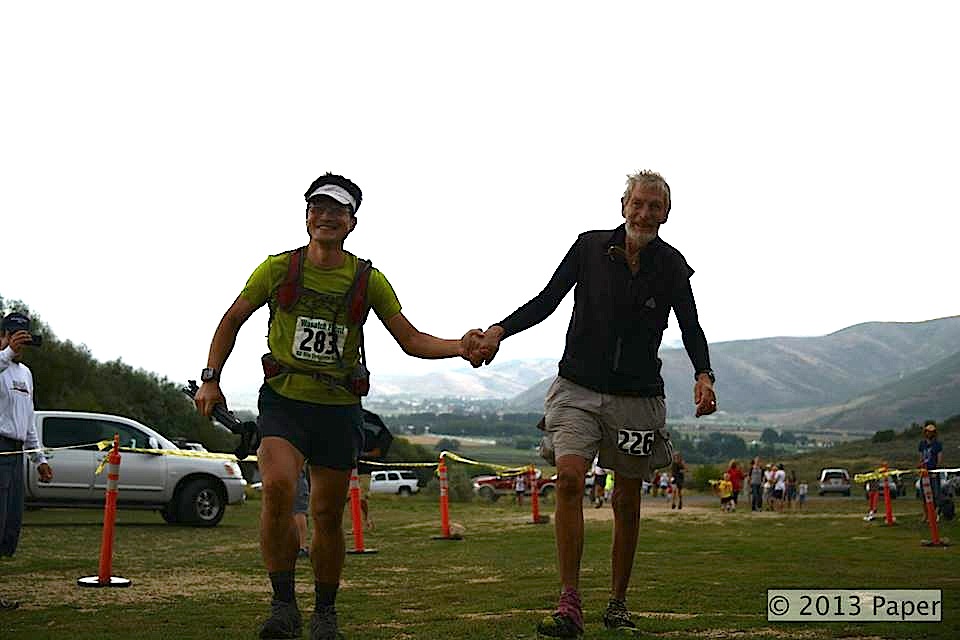
Ultra Runners Get Stronger As They Become Older (Photo By Paper)
After browsing the pictures taken by Paper, wife of Andre, on Andre’s Facebook Wall, I saw this picture of a 73-year old finisher of the Wasatch Front 100-Mile Endurance Run. The guy is Hans-Dieter Weisshaar, a German ultra legend with about 150 finishes of the 100 miles distance, also a Grand Slam Finisher in the years 2000, 2003, and 2005, at his age, I feel inspired to be able to reach this age and still running ultra marathon races! (Note: The runner beside him is Chihping Fu of California who is one of this year’s Grand Slam Finishers!)
After all, Andre was right. We, the ultra runners, are not getting any younger and we try to challenge our limits of physical endurance and spirit in our training and races. This defines our endurance sports which we dearly love and respect.




 n-g
n-g j
j )
)
 Bald Runner
You must be logged in to post a comment.