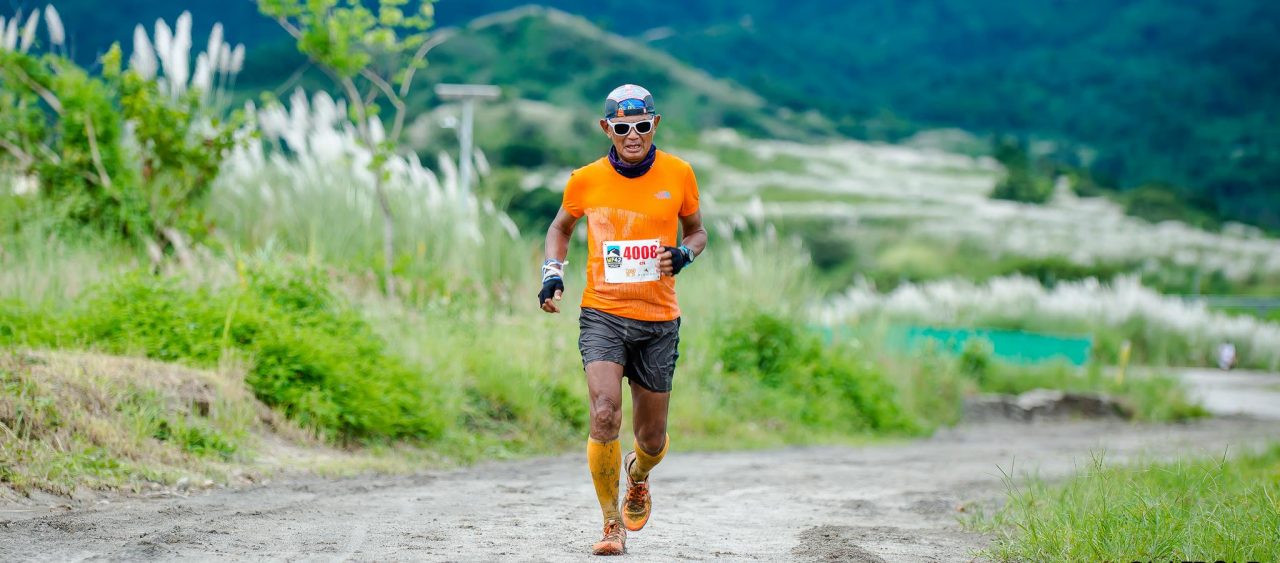
Update: PAU Fort Magsaysay 60K Run

Update: PAU Fort Magsaysay 60K Run (July 16, 2011)

This is the 2nd PAU Race for the year (2011) and it will start at the 7th Infantry Division Headquarters of the Philippine Army inside Fort Magsaysay, Palayan City (Nueva Ecija) at 5:00 AM of July 16, 2011. The Assembly Time will be at 4:00 AM and Race Bibs will be distributed to the registered runners during this period before finally starting race.

There are 223 applicants to this race as listed in the PAU Races’ site at http://pauraces.blogspot.com and acceptance of application had been CLOSED since the last week of May 2011. We are expecting 223 runners who will finally register to run the said race. If ever there are slots to be vacated (from the 223 slots) due to non-registration of applicants, such slots could be filled-up with late registrants before the start of the race.

Registration and payment of registration fee can be done at the A Runner’s Circle Store located at Aloha Hotel, Roxas Boulevard, Manila or simply deposit the registration fee of Nine Hundred Pesos Only (P 900.00) to LANDBANK Savings Account # 1686-0795-85 and keep the deposit receipt for confirmation of your payment. Bring your deposit slip and present it to our staff to claim your Race Bib on Race Day. Deadline of Registration/Payment of Registration Fee is July 13, 2011 or before the Closing Time of the ARC Store on the said date.

There will be no late registration on Race Day (if all the 223 applicants had registered and paid their registration fees).
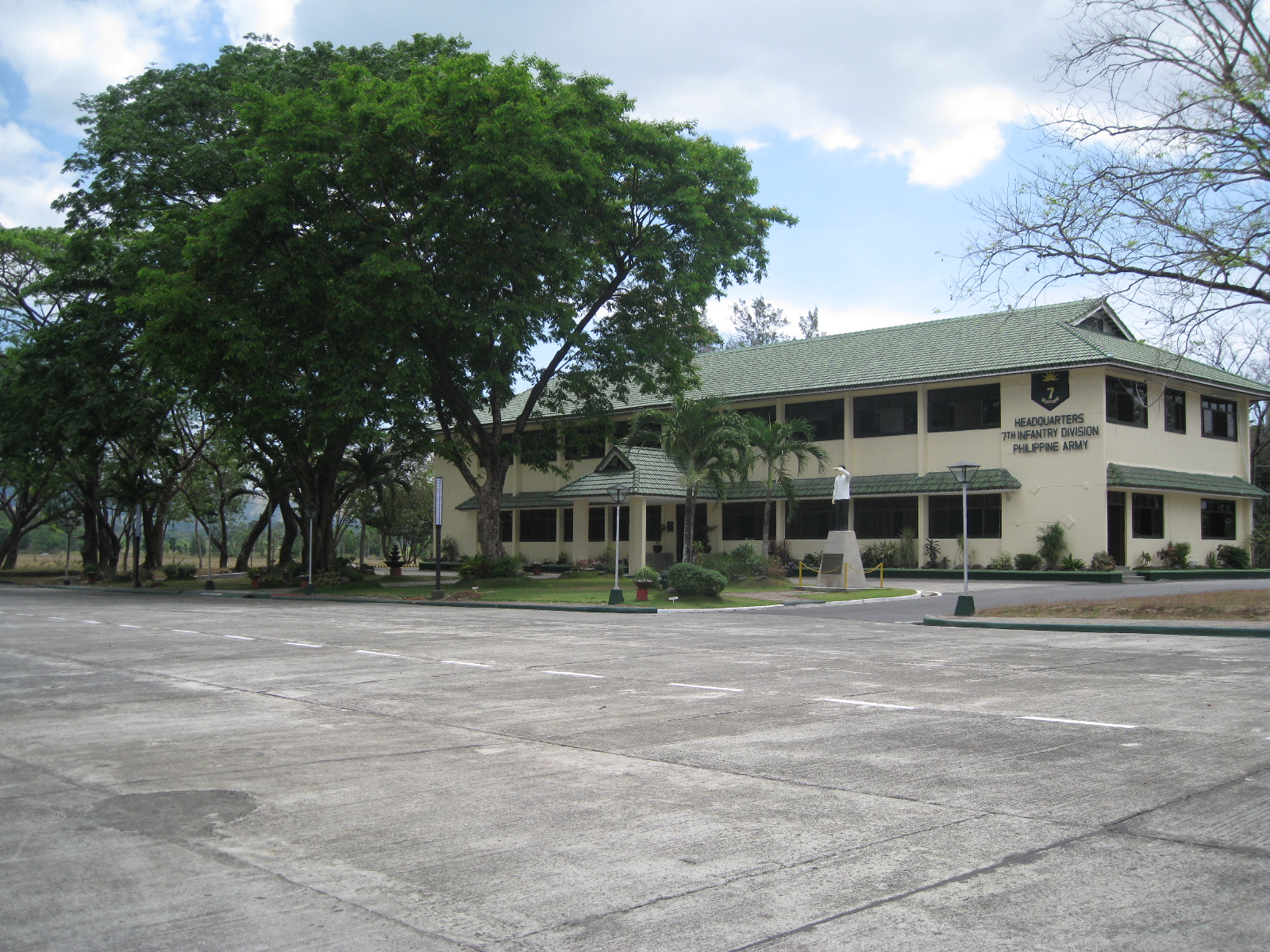
Starting Area of the 60K Run (7th ID Headquarters)

Rules and Regulations of the Race:

1. The race will start on or before 5:00 AM of July 16, 2011.

2. There will be No Aid Stations along the route. Runners are “self-supported” in this race. Runners may bring their respective support vehicle and/or support crew. Support vehicles should always “leap-frog” their runner/s. Support Vehicle shadowing their runner/s is strictly not allowed. Reports of such incident will be a ground for disqualification from the race. Support Vehicle must always park on the right shoulder of the road.

3. Pacers are not allowed in this race. Support crew will be there to simply hand in the needs of the runner-participant or help/assist on the needs of the runner. Support crew are not “mules” for the runner-participant.

4. Runners without any support vehicle can run the race on “self-support” and they are allowed to ask assistance from other runners. The route has a lot of local convenience stores and eateries but they have to pay for their own needs.

5. Runners are advised to run on the left side of the road, however, they could also have the option to run on the right side. Stay safe and be observant on your surroundings while running.

6. There will be no restrictions on the use of earphones and “wires” attached to the runner. However, the volume of such earphones should be set on a lower tone for the runner to still hear what is happening to his/her surroundings.

7. Strictly, “bandits” will not be allowed in this race.

8. Race Bib should be displayed in front of the runner’s shirt or shorts. Runners who are using race belts must be always aware that their race bib is always on the front. There will be “secret marshals” who will be listing your number on different locations along the route.

9. If possible, runners must be on “single-file” or two runners abreast, if there is no incoming traffic on the road. Personal discretion and judgement are needed on how a group of runners run along the route. Safety is the foremost consideration on this race.

10. Cut-off time for the 60K Run is 9 hours. The Official Finishers of this race should be able to cross the Finish Line on or before 2:00 PM of the same day.Finish Line will be at the View Deck at Dingalan, Aurora, specifically at the vicinity of the GINA’s Restaurant & Resort.

11. Official Finishers will receive Finisher’s Medal, Finisher’s T-Shirt, and Finisher’s Certificate.
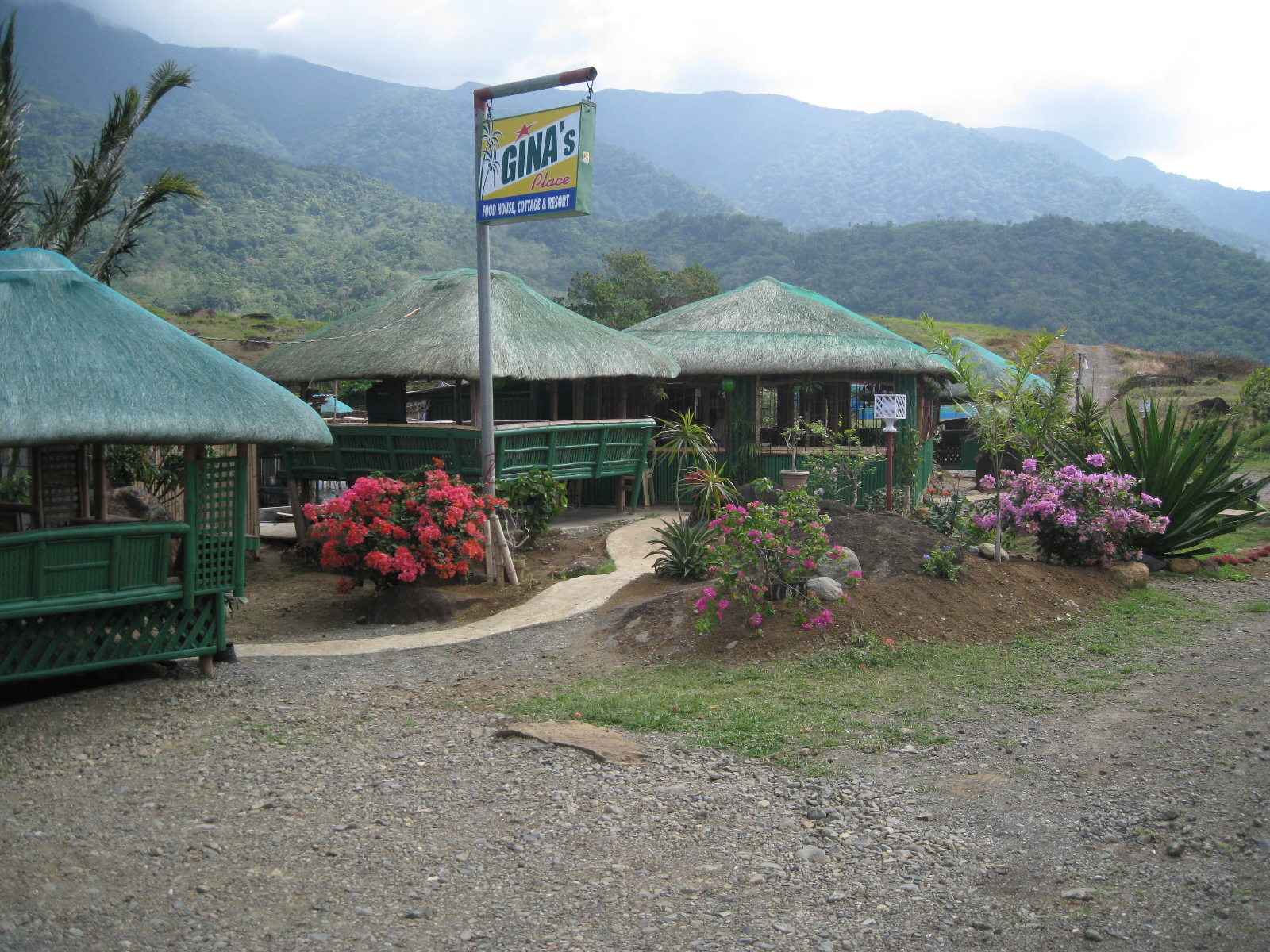
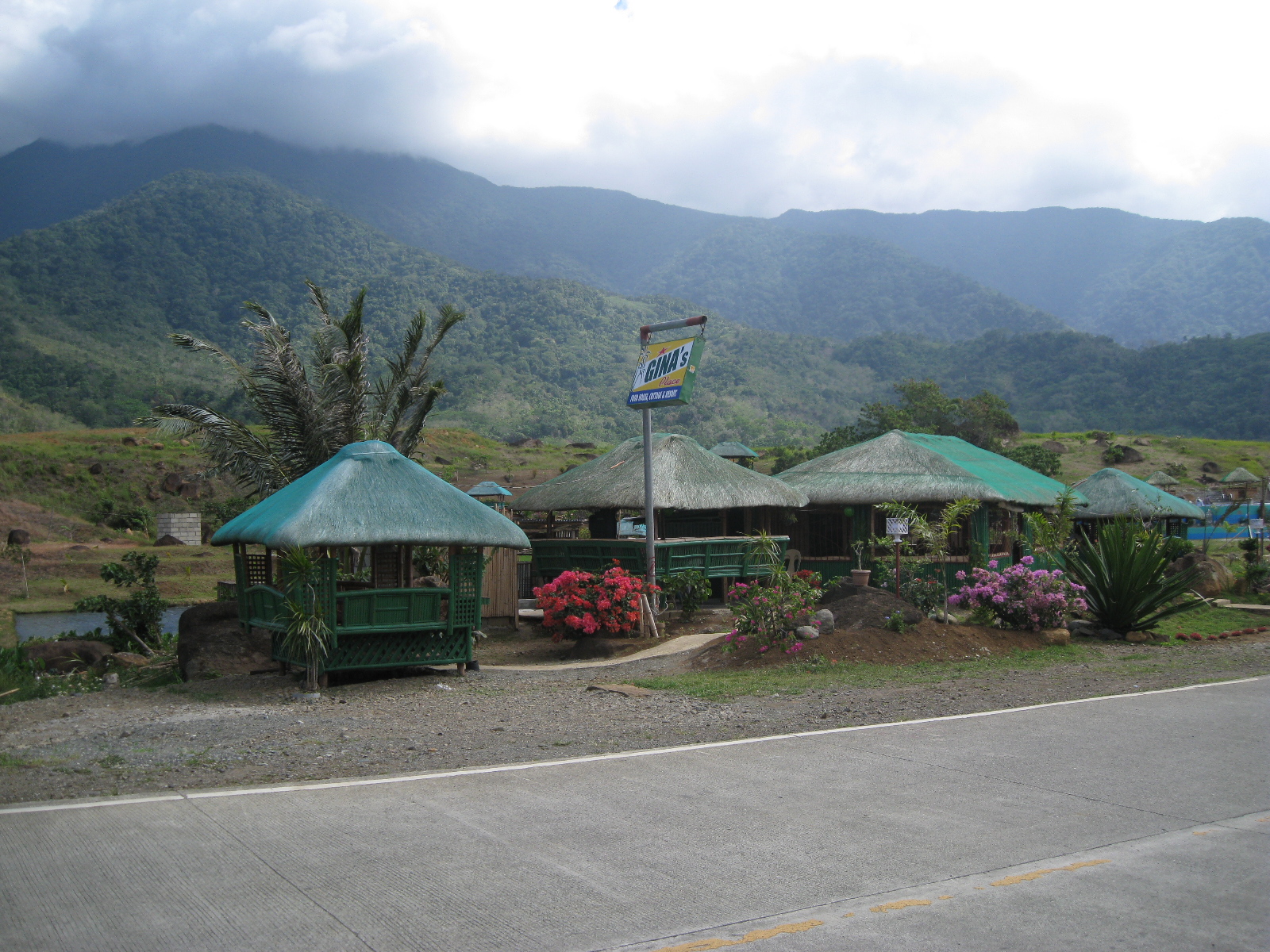
Finish Line Area in Dingalan, Aurora (GINA's Place & Resort)
Finish Line Area @ GINA's Place & Resort In Dingalan, Aurora

12. There will be Medical Team/s and Ambulance/s deployed along the route. However, runners must bring with them basic First Aid Kit as a “stop-gap” measure on the brief period before the arrival of the Medical Team.

13. Do not look for portalets along the route! There is a vast space of vegetated areas and tracts of land along the route and they need “fertilizer”. Make sure you are covered or hidden by the terrain or trees during these “spraying” and “depositing” moments.

14. In case of emergency and other incident reports to be relayed to the Race Director, calls and/or text messages shall be sent to this number—0918-910-0825. Sender must be able to identify himself/herself if message is sent through SMS.

15. The integrity of the race shall be maintained. Reports of cheating will be investigated immediately and runner/s involved shall be disqualified from the race and future races of the Bald Runner’s Events Management and PAU Races. Runners are deputized to report acts of cheating and/or violation of the race’s rules and regulations.

16. If you are new in ultra marathon and this is your first ultra road race, be prepared to submit a copy of a Medical Certificate or a Doctor’s Certificate stating therein that you are capable of participating in any endurance sports like long distance running and that you don’t have any heart-related ailments. Such Certificate shall be submitted to our Staff at the Starting Area.

17. It is the personal responsibility of each runner to arrange for his/her trip/travel arrangement or itinerary to the venue of the activity and lodging accommodation before and after the race.

Last reminder: We always maintain our signature/reputation of starting the race ON or BEFORE the scheduled start time. Arrive at the Race Venue ahead of time.

“NO WHINING IN ULTRA RACES”…GOOD LUCK AND HAVE FUN!!!!
Squat Test

Last month, I was able to get a free copy of the Competitor Magazine and one of the featured articles is about Kelly Starrett’s stretching methods and workouts which are featured in his blog at www.mobilitywod.com. In his blog, he promised his readers that he will post stretching exercises on a daily basis which started sometime in August of last year.

What impressed me most is his 10-minute “squat test” which he featured in his first “you tube” post in his blog. And for the past week and days, I’ve been dong this workout on a daily basis. On my first day, I could hardly bend my legs due to the tightness of my left lower quads, calf and knee (due to my injury). I could hardly complete a 2-minute duration of half-squat. I admit I cheated on my first day by trying to tip-toe my feet while bending my legs on half-squat. It was really painful and challenging that I have to sweat it out before finishing a duration of 2 minutes. I was not able to complete the 10-minute squat test on my first day!

Persistence and patience did it and after 10 days, I could already fully squat with my feet flat on the floor but I have to either use the wall as my anchor on my back or hold the legs or edge of a heavy table while keeping myself on a squat position for continuous duration of 10 minutes.

I am happy to say that I got positive results for the past 3 days. My tight quads and calf had loosen and I could no longer feel any pain on my left knee while walking or jogging. I would say that the daily 10-minute squat test is very effective in treating my injury.

As what Kelly Starrett has recommended, I have been strictly following his basic instructions for injured runners/athletes on their lower extremities. Aside from the daily 10-minute squat test, these are his key instructions:

1. Hydrate your body tissues. The formula is to divide your weight in pounds by two and the result is the number of fluid ounces your have to normally drink everyday. If you are involved in running or any endurance sports, you have to drink 16 fluid ounces for every hour of workout. Right now, my weight is 146 pounds, by dividing it to 2, the result is 73. That is 73 fluid ounces of water! If there are 33.8 fluid ounces in one liter, then you can do your math as to how many liters of water you have to drink every day.

2. Take some supplements. He recommends Glucosamine and Omega Oil (Fish Oil) as daily supplements for one’s nutrition needs. He says that these supplements lubricate the joints, reduce inflammation and speed recovery.

3. Follow the Mobility Workout of the Day as featured in his blog.

Desperately wanting to speed up my recovery from my injury, I’ve been a “sucker” to Kelly’s method and instructions. I’ve been following his instructions for the past two weeks (to include the supplements) and I am recovering fast. One more week of “squats” and I would be back again pounding my feet on the ground.

If you are interested to follow the Mobility Workouts of the Day of Kelly Starrett, you can click the MobilityWOD on my blogroll.

The following “you tube” clip was Kelly Starrett’s first blog post on the 10-minute “squat” test.

Bohemian Rhapsody

Do you remember this song?

It was a part of my Playlist in my Ipod and always hear this song during my running workouts and road races. And I really liked it and it brought some strength and power in me in my road races. This song really drives me to exert some more effort because of its music composition, style and some understanding of the lyrics.

But two years ago, I just simply dropped using the “wires” during my workouts and road runs and completely forgotten the song in my mind. However, lately, while recovering from my injury, the thing to do was to browse the Internet and watch/listen to “live” concerts of famous singers on You Tube. Actually, I am fond of watching Shirley Bassey’s Concerts on her younger days, watching her sing the song, Never, Never, Never and her rendition of the songs from the James Bond 007 movies in the past. You can watch her sing the rest of her songs here and here!

Well, that shows how old I am and I am pretty sure that my contemporaries (my age group) will be happy to watch and listen to these old songs which bring back good memories in the past. Guys, you know who you are!

One thing led to another until I thought of the song, Bohemian Rhapsody by Queen.

I first heard of this song during my first R & R (Rest & Recreation) as a Platoon Leader from the combat areas of Maguindanao in December 1975 (barely 10 months after graduating from the Academy). It was the same time when Disco Music was so popular on the radios then. But the song, Bohemian Rhapsody, stands out then as a Rock Song which is totally different from the standard rock songs of other bands, like the Beatles, Dave Clark 5, Herman’s Hermits, Rolling Stones, Procul Harum, Deep Purple and others. From then on, this song was one of my favorites where the CD copy is still in my collection of music.

Is this the real life?
Is this just fantasy?
Caught in a landslide
No escape from reality
Open your eyes
Look up to the skies and see
I’m just a poor boy (poor boy), I need no sympathy
Because I’m easy come, easy go
little high, little low
Anyway the wind blows, doesn’t really matter to me, to me

Well, just forget the lyrics but the music composition/arrangements, tune and the imagination on how the lead singer of Queen, Freddie Mercury, sings his solo act and the rest of the band blend their voices, give something out in me whenever I hear this song. It is so powerful that you are inspired to force yourself to do something harder, faster, and stronger! There is mystery in that song that drives me something to excel some more!

Listening to the song is like doing a tempo run or staying with your strategy during a road or trail running race! It is said that the song has three (3) distinct parts, some says there are six or four. But I would consider it in 3 distinct parts. The first part would consist of the introduction with the 4 blending voices of the members and the solo act of Freddie Mercury; the second part starts with the solo guitar rendition up to the end of the opera act singing; and the third part goes back to the slow solo performance of Freddie Mercury until the end of the song.

If you relate the song to running a race or tempo run, a runner starts with a slow pace for about 2 kilometers and then steadily progressing to a faster pace and maintaining such race pace before the last 2 kilometers of the distance and later, finishing the run with a steady slower pace before ending the run. The result is a good 10K tempo run!

In road and trail races, your performance and strategycould relate also the arrangements of the song. A runner starts the race in a easy and slower pace then picking up his pace on the middle part and sustaining his race pace while his body could sustain it. Sometimes on the middle of the race, a runner encounters some “issues” and change in pace or for some adjustments but basically, the runner would stay on to keep up his intended race pace. And at the end, the runner slows down once he/she crosses the finish line and it’s time to rest and recover.

If you are a “newbie” runner, this is a song that could gauge your workout while listening to it. Start with walking on the first part of the song, then slowly picking up a pace to jog on the middle part, and then slowly going back to walk on the last part. You can repeat the song so many times as the whole song covers an elapsed time of 6 minutes plus a few seconds. If you can repeat this song for five times, then you have a solid 30+ minutes of a good workout for the day. Why don’t you try it!

For sure, this song brings back good memories. By the way, I’ve added a Solo Ukelele rendition of the same song by Jake Shimabukuro. I hope you will like it, too!

Enjoy the show and keep on running!

(Sources: You Tube & Wikipedia)

Humble & Friendly

It could be friendly and humble. These two words simply describe a person whom I’ve met during the Miwok 100K Run at the Marin Headlands where I served as one of the volunteers.

He is Jorge Maravilla, pronounced Hor-He. I mentioned his name (first name only) in my post about my experience as spectator and volunteer during the said run. He was with another guy whose first name is Rich but I later identified him as Rich Conder. As we were doing the things we were instructed/requested to do at the Finish Line Area, Jorge was the one who was starting all the conversation among us while Rich was always silent. So, while the three of us were doing the same job, Jorge was the one who was very much engaged with some conversation with me.

As far as I can remember, these were some of the salient points about our conversation:

Jorge: You said your name is Jovenal, how will I call you? Call me Jorge (Hor-he)

Bald Runner: Call me Jovie, that’s my nickname!

Jorge: Where do you stay here?

BR: I am from Manila, Philippines. I came here to run the Miwok 100.

Jorge: What happened?

BR: I had an injury in the middle of March while doing a 7-day adventure run covering a distance of 270 kilometers and it got worse during one of my practice runs here.

Jorge: Oh, I am sorry. How is ultra marathon in the Philippines?

BR: We are trying to expose our runners in ultra distance runs. We started with a race which is called the “Bataan Death March 102K Ultra Marathon Race” three years ago but the race is done on paved roads. The race is done on the exact place where history happened during World War II.

Jorge: Great! Philippines is hot and humid, right?

BR: Yes, we train our runners as if they are running the Badwater! I am glad we don’t have any cases of “heatstroke” in our ultra races.

Jorge: That’s good.

I was trying to think of a question to ask why he is volunteering for the race with Rich but I concentrated on the task requested us to do. Jorge was later requested by Tia Bodington, the Race Director to get some stuff inside the U-Haul truck. After few minutes, Jorge was back and he started another conversation with me.

Jorge: Jovie, you must be popular in the Philippines!

BR: What? (And I just smiled. I assumed he saw the FrontRunner Magazine placed on the Driver’s Panel Board of the truck)

Jorge: I saw a Running Magazine with you as the Cover Page and I saw you autographed it for Tia.

BR: Oh..The publisher of the magazine is also an ultra runner and a friend of mine. Both of us are promoting ultra running in the country.

Jorge: Maybe, I’ll get to know you some more. Do you have a Business Card?

BR: Yes, I have. They are in my car. I will give you one later. I’ll give one also to Rich.

Jorge: Thanks!

After we finished the task requested of us to do, Jorge and Rich left the place and acted as Marshals in an intersection 500 meters away from the Finish Line.

I was not able to give my Business Card to Jorge and Rich as I left the area after the 10th overall runner crossed the Finish Line.

After one week, I read a blog of Mark Tanaka about his Race Report on the Diablo 60K Trail Run. I was surprised to find out that Jorge was the Champion in that race which was held on May 1, one week before the Miwok 100. I can conclude that he was there at the Miwok 100 as a volunteer and not as an injured participant like me! Rich Conder was also one of the top 10 finishers in the said race where Jorge won. At Athlinks.com, Jorge has a PR Marathon of 2:49+ hours which he got on the 1st quarter of this year.

What surprises me more is their voluntary act of helping another race to make it a success. Instead of resting and recovering from a previous race, Jorge and Rich, upcoming elite runners in ultra trail runs, were there at the Marin Headlands for the whole day as volunteers! I am sure these guys offered their time and services to the Race Director without any “strings attached” or renumeration. Simply, they were there to help!

Last weekend, I found out from the Race Result of the Bishop High Sierra 100K Trail Run that Jorge Maravilla won again in the said distance, breaking the course record by 55 minutes! By being humble, Jorge does not even have a blog where he can, at least, brag about his accomplishment. I wonder why.

As I gathered from reading the blogs of ultra runners, I found out that Jorge will be running his first 100-mile run at the Tahoe Rim Trail next month. I am sure this guy will make it to the top 10 in this race.

As I recall my brief meeting and conversation with Jorge and my brief conversation with the top elite runners in the Miwok 100 last month, I came to my personal conclusion that these runners are simply friendly, humble, kind, accommodating, and simple/”low-profile”. They also find time to help one another as race volunteers, pacers and support crew to other runners. Ultra running is simply a good community of runners.

How I wish some of the Pinoy ultra runners will be offering their services as volunteers in my races.

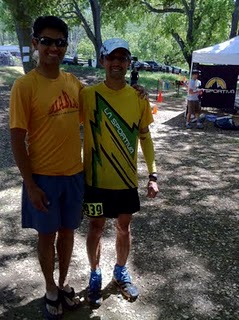
Jorge Maravilla & Mark Tanaka (Source: Mark Tanaka's Blog)
Mark Tanaka & Rich Conder (Source: Mark Tanaka's Blog)

(Source: http://ultrailnaka.blogspot.com/2011/05/sort-of-inaugural-diablo-60k.html)

86th Comrades Marathon

Comrades Marathon Logo

They call this running event as “Marathon” even if it is actually an Ultra Marathon Race with a distance of 86.96 Kilometers (52 Miles). The race route is on the paved road between Durban and Pietermaritzburg in South Africa. It is one of the oldest ultra marathon races in the world but at present, it is being dubbed as the world’s largest ultra marathon race whose runners would reach up to 23,000 with cheerers and spectators lined up throughout the course! (With the increasing number of International runners reaching up to almost 2,000, this event promotes Sports Tourism to South Africa!)

This Sunday, May 29, it will be the 86th edition of the race which started as a commemoration of the dead British & South African soldiers who were the casualties during World War I. It was created by a retired British Army Officer to honor his “comrades” who died as heroes during the World War I Campaign in South Africa, hence, it was named as the Comrades Marathon.

If they have the Comrades Marathon in the continent of AFRICA, then we have also the Bataan Death March 102K & 160K Ultra Marathon Races in ASIA. The reason and purpose of the two running events are similar but Bataan Death March attracts more interest due to its historical significance, popularity and involvement of war’s atrocities and heroism of the Filipinos and Americans.

The following link will describe in details the history of the Comrades Marathon from its origin up to its last edition last year.

http://www.southafrica.info/about/sport/comrades.htm

Due to the popularity of the Comrades Marathon in Europe and USA, I read somewhere and overheard other ultra runners saying that you are finally called as a “full pledged ultra runner” if you have finished the Comrades Marathon within the prescribed cut-off time of 12 hours. It is for this reason that I am already making my travel preparation and training for the next year’s edition of the race! God willing.

In the Philippines, a runner is not a full pledged ultra runner if he/she has not finished the BDM 102K Ultra Marathon Race within the prescribed cut-off time of 18 hours. It is my personal declaration and I will stand by it.

You can browse more about how to join the Comrades Marathon at their website at www.comrades.com.

Bands

I am not referring to Rock Bands.

These are strap bands that are very popular among athletes, most especially to runners.

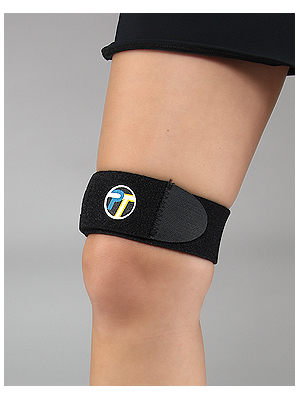
For the past weeks, I could not run without using these bands. They are simply called PT Bands or Pro-Tec Bands, their brand name.

For the first two weeks, I’ve been using the PT Runner’s Knee Band on my left leg which is the one where I’ve been injured. However, instead of placing the front of the band beneath my knee cap, I place the “hard” part of the band behind my knee in order to relieve a mild pain on it.

Pro-Tec Knee Band

After two weeks, I was able to buy a Pro-Tec IT Band Strap which I use to strap my lower left quads. The said strap was able to relieve the pain on my lower quads whenever I over exert my left leg. This strap had been a good medical aid during my runs.

Pro-Tec IT Band

I’ve been putting some miles again on the road and trails by running and hiking and these two bands (Knee and IT) had been helpful in easing the pain  on my leg.

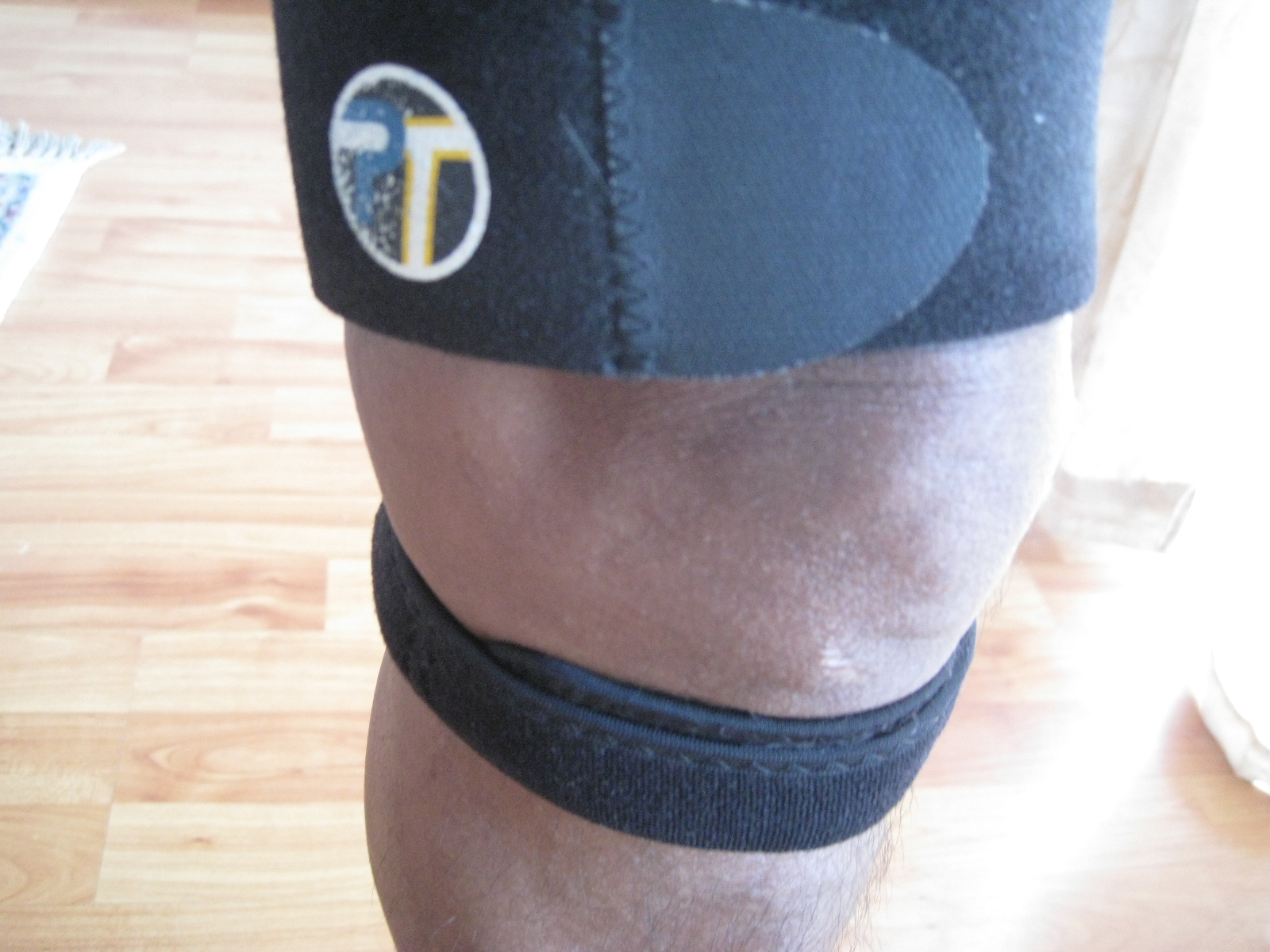
This is how it looks when they are strapped on my left leg.

My Left Leg With Straps!

I could be hard-headed again with my treatment and recovery but it makes me CRAZY & bored if I can’t run/walk at least once a day no matter what the distance is.

(Note: 1st & 2nd pictures were copied from the Pro-Tec Band’s website)

5 + 9 = 59

Don’t be confused with that simple arithmetic. I am now 59 years old, 3 years after my retirement from the military service and 4 years after I have renewed my dedication and time in serious running and be the Bald Runner.

To celebrate the day, I would have to run 59 kilometers but with my recovery from injury, I would be committing a “suicide” and make my condition worse.

It was a choice of running 59 minutes or 59 seconds or walking 59 steps or 59 meters or running 5 + 9 = 14 kilometers.

And finally…

To make the day significant, I had to run without any pit stop. I added the two numbers in my age and I was able to run 14…miles, not kilometers! That is equivalent to 22.4 kilometers with some additional yards & feet as change. I finished the distance in 2:35:20 hours with an average pace of 11:02 minutes per mile (6:51 minutes per km) and an elevation gain of 1,120 feet (342 meters). It was a slow and easy run but it was worth every pace and stride of it.

One year more and I will be a dual-citizen…Filipino + Senior Citizen. I was able to get a “tip” from Sir Amado Castro Jr aka Reinier6666 that the Senior Citizens have a lot of privileges to include free movies on Mondays; free admission at the ULTRA Oval Track; 20% discount on meals in restaurants and purchase of medicines in drugstores; and if I declare my residence in Makati City, I would be receiving medical privileges in their hospitals and one sack of rice (?) and birthday cake every time I celebrate my succeeding birthdays. Sir Amado and I made a deal to be meeting every Monday for meals and movies after “race walking” with him at the ULTRA Oval Track as soon as I will get my Senior Citizen’s Card next year!

I would like to express my sincerest thanks to those who greeted me at Facebook (400+ friends out of 1,125), through e-mail, SMS, and personal greetings.  It took me hours to reply each greetings from my Wall which I truly enjoyed. As usual, Jonel aka FrontRunner was the first to greet me and Sir Amado had the longest message. Thanks, Jonel & Sir Amado and to everybody.

So, what is next?

I will still be running but more on ultra marathon (and marathon training for a Boston Qualifier and as LSD workout) and this blog will be featuring more on ultra marathon training and activities. And I will be adding “hiking and backpacking” as my other cross-training sports activity (not necessarily posting my journal here in this blog).

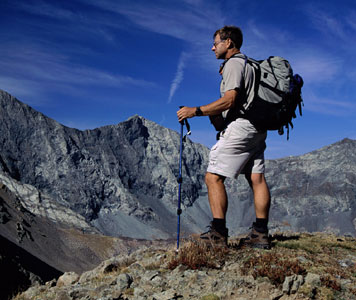
I want to be like this (excluding the hair!)….

Hiker/Backpacker (Source: Google Images)

Watch out for the Bald Packer or Bald Hiker or Bald Backpacker or Bald Ultra Walker! Any suggestion?

Cut-Off Times

I have been making a research in running books and running resources on the Internet on the basis of cut-off times of Marathon and Ultra Marathon Races. It seems that I could not see any “authority” or “regulation” in the IAAF or IAU Manuals and Protocols as to what is the accepted formula in the declaration of cut-off times in every race.

Without any basis, I have the impression that this “rule & regulation” in a running race, whether road or trail, on the prescribed cut-off time is arbitrary and based on the decision of the Race Organizer/Race Director.

On the part of a Race Organizer in a busy City Marathon Race, a six-hour cut-off time is a standard period for a 42K distance. This will minimize the time for the closure of main streets from vehicular traffic. The lesser time for the roads and streets are closed, the better for the riding public and commuters. It will also lessen the time of exposure and involvement of security, medical, marshals, and volunteers and other administrative and logistic supports for the race.

Obviously, this is true also to ultra marathon distance races but with longer and extended period of cut-off times.

Comrades Marathon (90K), the oldest ultra marathon, had an 11-hour cut-off time for so many years until it was extended to 12 hours since 2003. Aside from being the largest ultra road race, it is also the hardest in terms of elevation profile and with a very restrictive cut-off time.

The North Face Ultra Trail du Mont-Blanc (UTMB), 166K ultra trail race, has a cut-off time of 46 hours.

Western States 100-Mile Endurance Run, also a ultra trail race, has a cut-off time of 30 hours.

Jeju International Ultra Marathon 100K Race, a road ultra, has a cut-off time of 16 hours.

Miwok 100K Ultra Trail Run has a cut-off time of 16 1/2 hours. Most of the 100K ultra trail distance races in the USA has a cut-off time of 16 hours.

Singapore’s Sundowm Ultra Marathon 100K Race, a road ultra, has a cut-off time of 16 hours.

Bulldog 50K, an ultra trail race, has a cut off-time of 9 hours. Most of the 50K ultra trail races in the USA have a cut-off times of 9 hours.

Headlands 50-Mile Trail Run has a cut-off time of 14 hours and this is true to almost all the 50-milers except for the JFK 50-Mile Endurance Run which has a cut-off time of 18 hours ( based from tradition and history).

The Hardrock Ultra Marathon, the officially dubbed as the hardest ultra trail race in the USA, has a cut-off time of 48 hours.

The Barkley Marathons (100-mile trail race), the unofficial hardest ultra trail race in the USA, has a cut-off time of 60 hours, however, each loop which has a distance of 20 miles must be completed in 12 hours. It is a “lucky” year’s edition if there is a “survivor-finisher” for this race. Since its first edition in 1986, only nine (9) had finished the race up to this year.

Surprisingly for this year, the Badwater Ultramarathon has reduced the cut-off time from 60 hours to 48 hours! There was no reason in its website for the said dramatic change, however, its registration fee had increased from $ 850 to $ 995.

In my opinion, the cut-off times give an impression on the degree of difficulty of the race to the participants and at the same time provide a status of distinction for the said race.

For the runners, cut-off times serve as their lowest target time to finish. They should not be satisfied to finish the race way beyond the prescribed cut-off time. Finishing any Road or Trail Race must be defined strictly as Finishing the required Distance within the prescribed Cut-Off time. A runner is fooling himself or herself if he/she brags about finishing a race way beyond the cut-off time. For the Race Director, runners who finish the distance beyond the cut-off time are considered as DNF (Did Not Finish).

Simply stated, a runner must train and prepare to finish a race within the cut-off time.

Insights & Observations @ 2011 Miwok 100

On Race Management

1. Registration—Every runner must apply and register at Ultra SignUp, at least 8 months before Race Day. The deadline of application is approximately 6 months before Race Day. (Note: It is a good motivation to follow a 24-week training program for this ultra trail event). The last day of application was on December 1, 2010. All runner-applicants must go through a lottery to be able to cover the maximum number of runners allowed for the race to 446 only. The final list of accepted runners (through lottery) are published at Ultra SignUp effective on December 10, 2010. The registration fee of $ 155.00 is immediately credited from the runner’s Credit Card once he/she is accepted . Few weeks from race day, each runner is designated with a Race Number. Most of the runners can redeem their Race Packet/Bib within the period of at least one hour before the Start of the race.

2. Maturity of the Race—The 2011 Race is the 16th edition of the event as it started in 1996. I am sure through the years, the Race Management, to include the Prizes and “give-aways”/schwag, had improved with the presence of corporate sponsors. According to Rick Gaston, Miwok 100 had built its reputation as the “prime” ultra trail run at the Marin Headlands during the spring season. The other trail race that is also popular and has one of the best reputation in terms of race management and attendance of top elite athletes in the Marin Headlands is the TNF 50-Mile Championship on the 1st weekend of December every year. Maturity goes with the proper planning and preparation of the event as seen by the favorable feedback from the runners after the race. As one of the volunteers, I was impressed on the cooperation and unity among the members of the group.

3. Volunteer System—The involvement of the volunteers was impressive. The leadership of the Race Director in orchestrating all the jobs of all the committees involved speaks well of the excellent organization, planning, and professionalism of everybody. I was able to feel the “bayanihan” atmosphere among the volunteers. Each of the volunteers had specific job to perform and they are expert and knowledgeable of what to do. I am not surprised about this because all the volunteers are ultra marathoners themselves!  The volunteers at the different Aid Stations made sure that each runner was attended through all their needs, from cheering, filling their hydration bottles, serving them with food and even locating and giving them their drop bags.

4. Prizes, Schwag, and Montrail Cup Series—If I joined the race, finishing the distance within the prescribed cut-off time would be the most defining “prize” for me. Those schwag/give-aways are just souvenirs or evidence to prove that I was part of the race. However, for the top elite runners, what is important to them was to earn points as this race was part of the annual Montrail Cup Series where a runner joins at least four (4) ultra trail races of the said series and the runner with the highest points will be awarded a cash prize of $ 5,000.00. For this year, the Miwok Race started to award $ 500.00 for the Champion.

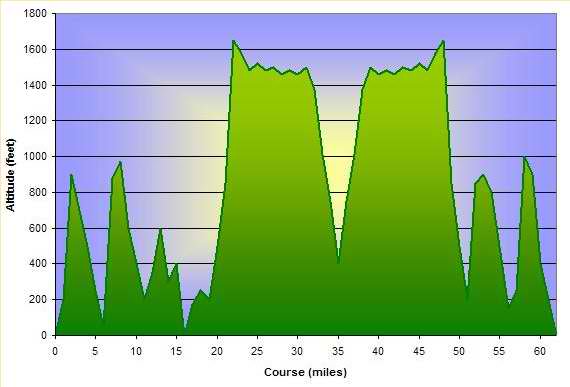
Miwok 100 Altitude Profile (Source: Miwok 100 Website)

5. Simplicity—Trail Running events are not evaluated in terms of bright lights, lots of tarpaulins and banners, loud speakers with blaring disco music, Emcees with nice English pronunciation, leading a prayer and singing the National Anthem, arches, marshals and security personnel at the Start/Assembly Area. They are evaluated by the simplicity of the event. Trail running is the purest form of running event where the scenery, degree of difficulty, and the camaraderie of the participants and the volunteers count most. The event lacked the things that I mentioned previously. Also, there are no distance markers along the route as the location of the Aid Stations serves as the distance markers for everybody. I did not even see water cups filled with water or sports drinks on the tables available in the different aid stations. What I saw were water pitchers being used to fill-up the hydration bladders and bottles of runners who need water or sports drinks. The route was marked with pink-colored ribbons tied on the shrubs, trees, grasses, and trail posts; and the paved road had pink-colored adhesive tape with an arrow-directional sign. What impressed me most was the fact that the race started on time!

On the Runners

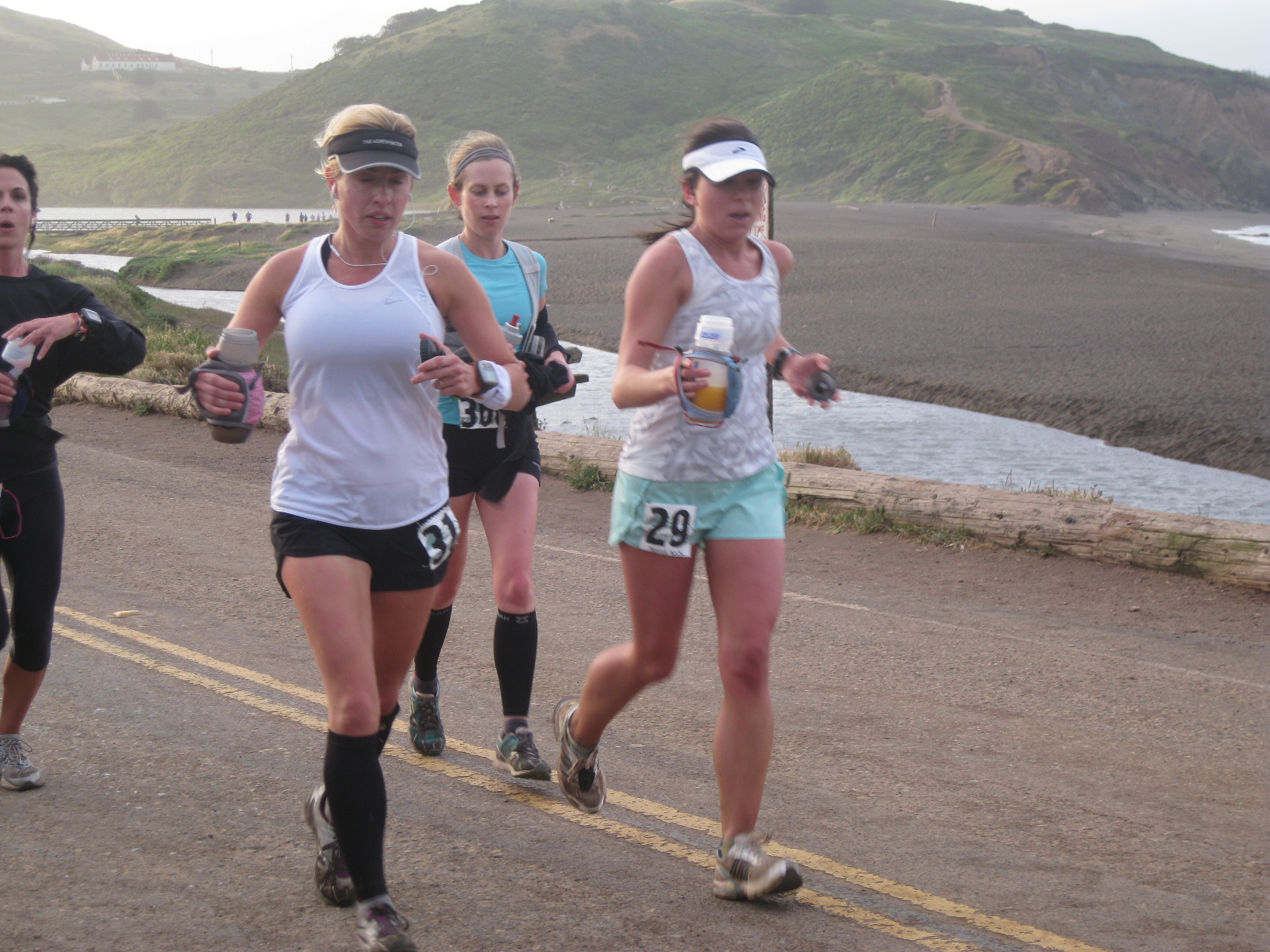
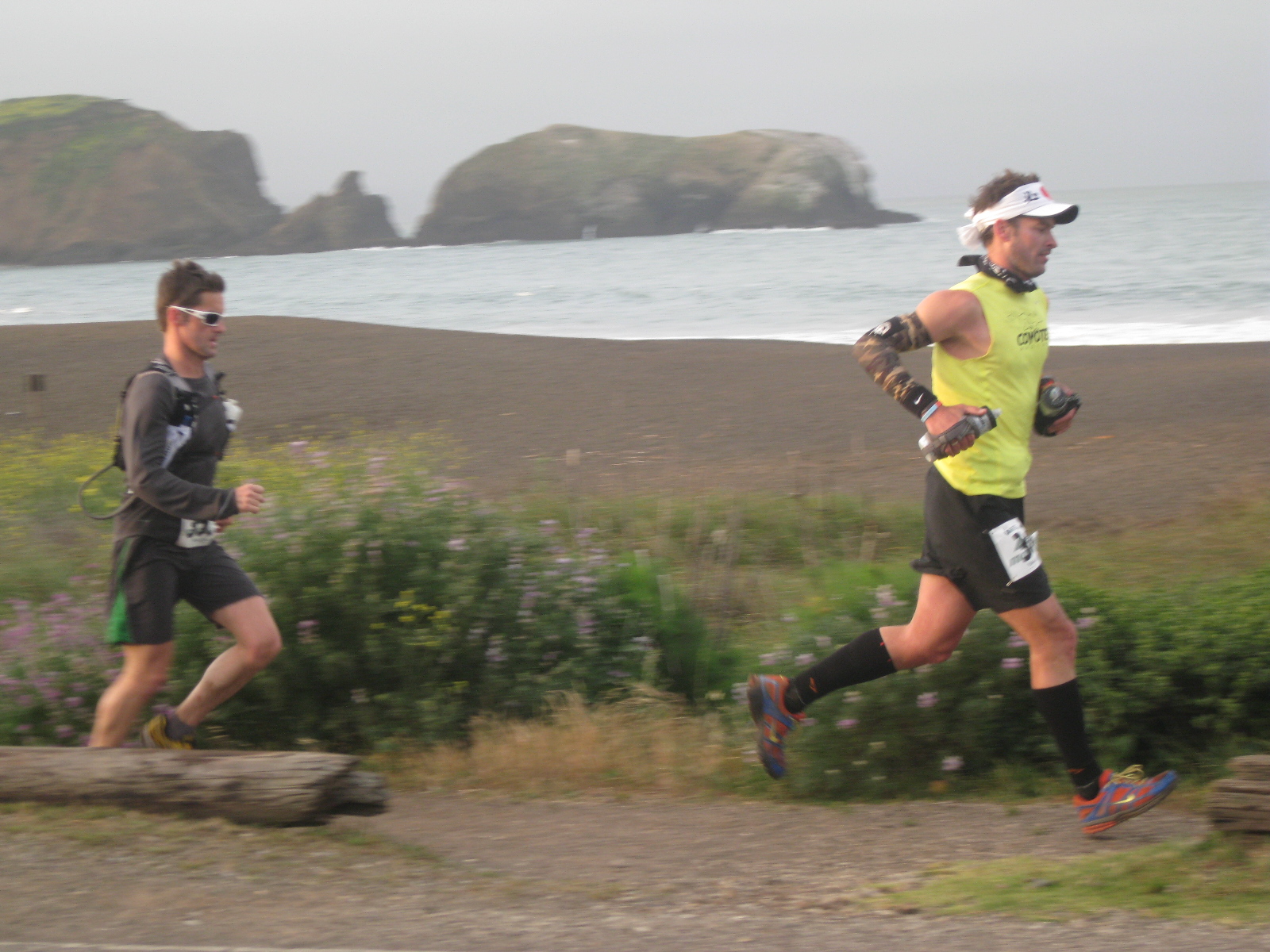
1. Hydration System—Out of the top ten finishers whom I personally observed at the Starting Line up to the Pan Toll Aid Station and at the finish line, it was only Ian Sharman aka Elvis Presley (#10) who was running with a shoulder hydration pack (TNF Enduro BOA Hydration Tack). I did not see Hal Koerner holding or sporting a hydration system throughout the race. All the remaining top 8 runners were holding a hydration bottle on either one of their hands during the race. On the mid-pack and the sweeper groups, most of them use hydration backpacks (Camelbak & Nathan) and some with hydration belts with at least two bottles of 20-ounces each in liquid capacity.

2. Running Shorts—It was only Hal Koerner who was using a compression shorts and the rest of the top 8 runners were using the regular running shorts which are the split and v-notch type. I would suspect that their running shorts must have a lot of pockets where they can stow their gels, endurance powders, Vitamin I, and Clif Bloks. Or else, they have their respective support crew waiting for them in every Aid Station to provide them with their necessary nutrition and hydration needs. I did not recall if I saw any of the men among the participants using long compression tights.

3. Body Structure—Dave Mackey, Mike Wolfe, Hal Koerner, and Dakota Jones are tall and have muscular bodies. Which is translated to longer legs and ultimately, longer strides when they run. Their longer and strong legs could withstand their momentum in maintaining a running form on the inclines/uphills of the route. With such body structures, you could just imagine how fast these guys would run on the downhills. As for Ian Sharman, he has an average body size of a runner who happens to be an inch or two taller than me and leaner than the top 4 runners but I was able to discover why he was able to beat Tony Krupicka at this year’s Rocky Raccoon—he has a very fast, quick and light leg turn-over in an ultra race! Personally, I can predict that Ian Sharman will be this year’s Champion in the Western States 100-Mile Endurance Run even with the presence of Kilian Jornet Burgada.

4. Running Shoes—I was surprised to see Dave Mackey using a weird-looking trail shoes (Hoka One One) which he used in his past 1st place trail running events. This is an opposite view of the minimalist approach of some of the elite trail running athletes. I was more surprised when I saw Mike Wolfe, a TNF model & endorser, to be using a New Balance MT 101 Trail Shoes! On the other hand, Hal Koerner was using a NIKE Lunaracer which is considered a road racing flat shoes!

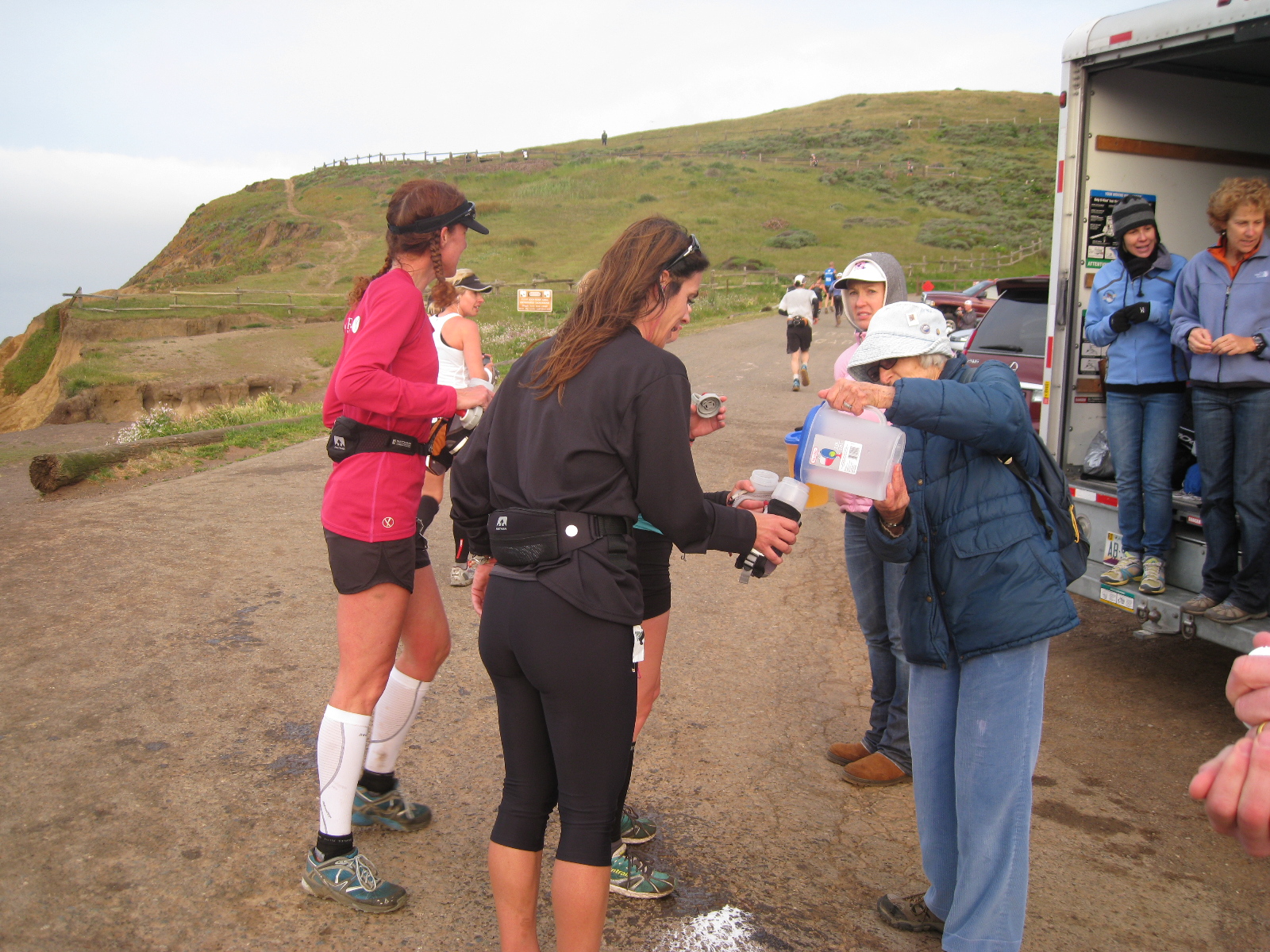
5. Stop or Pass On Aid Stations—Elite athletes do not stop at Aid Stations if they have support crew waiting for them to hand them what they need from one Aid Station to another. For those who who don’t have any support crew, they stop to refill their hydration bottle/s or packs with the needed fluids and grab some gels or foods offered on the tables. A few yards from the Aid Station, the runners would remove the lid/cover of their bottles and as soon as they reach the Aid Station, the runner would simply extend his/her arm to the volunteers who would refill such bottle using a water pitcher. Sometimes, they just grab canned soda drinks and drink the contents while they are running. You will be surprised how they would stow their empty cans and empty gel packs in their running shorts up to the next aid station where trash bins are located. Runners are strictly following the rule of not littering their trash on the trails or else they will be disqualified. As for the mid-pack and sweepers, stopping on the Aid Station is a must for re-supply and rest purposes as long as they are within the cut-off time of arrival on such Aid Station.

Runners With Open Bottles Few Yards From the Aid Station
Volunteers With Water Pitcher Refilling Hand-Held Bottles @ Aid Station

6. “Fanny” Packs or Belt Bags—These bags worn as belt could be seen on the picture above where the two lady runners are using. If a runner is using hand-held water bottles and using running shorts with small pockets, these “fanny” belt packs which are light, flat and snugged to the body are good running accessory for an ultra trail runner where he/she could stow a cellphone/camera, cash, keys, sports gels, sports mix, salt tablets, Vitamin I, and sports bars/food.

7. Arm Sleeves & Calf Sleeves—It is reasonable that the runners would use arm sleeves because of the cold temperature but I could see that most of the runners were using calf sleeves, to include the lady runners. In my experience, I believe in the use of these calf sleeves during my workout and during my recovery. I am presently using the Zensha Compression Calf Sleeves during my long runs while a tighter 2XU Compression Calf Sleeves are used during my recovery periods.

One of the top runners (Freedman) with Arm & Calf Sleeves

8. Using of “Wires”—The top 4 male and female runners were not using any “wires” to their ears. I believe that these elite runners are well-focused and sharp on the task at hand during the race. In the Race Reports of these elite athletes, they could hear the steps, breathing, and sounds of the environment. These top runners would maintain conversation among themselves on wider trails. Instead of listening to music, these runners listen to their footsteps on the trails; they listen how their competitors’ breathing in order to find out if they are still strong or exhausted; and listen to the steps of the runner ahead and behind them. On single-track trails, there is a need to communicate to the runner ahead of you if you intend to pass and it would be inappropriate if a runner to be passed is using some “wires” with some loud music being played on his earphones and could hardly hear the verbal warning from the runner behind him.

Lastly, Tia Bodington (RD) sent me an e-mail 2 days after the event expressing her thanks for being a part of the Volunteer Group of the event. She called me as one of the members of the “Miwok 100 Traffic Czars”. Sweet!

2011 Miwok 100 Video

This is the video of the frontrunners during the 2011 Miwok 100 Trail Run.

This video was copied from “you tube” which was posted by the Endurables.

Looking at the video, the recording or filming of this event was done by one of the runner-participants who leapfrogs from one section of the course to another by taking the adjacent paved road that is parallel to the direction of the trail. He could be using a car from one entry-access to the trail to another. It is just my suspicion but I might be wrong since I did not see any cyclist mounted on a mountain bike trying to film the event.

The first few seconds of the video shows the top 3 finishers who were sitting and conversing with one another. Hal Koerner in blue upper shirt, black compression shorts, and blue calf sleeves; Dave Mackey wearing a sun visor; and Mike Wolfe.

I am familiar with the 1st 7 miles of the course as some of it are on the paved roads of the Marin Headlands. After their early start at the Rodeo Lagoon Beach, all the runners go to the Rodeo Trail until they reach the paved Conzelman Road which is located south of the Rodeo Lagoon until they reach the Coastal Trail that leads the runners back to where they started. After the runners cross the small bridge at the Rodeo Lagoon, it is now the start of their climb towards the Townsley Battery and northward direction to Mt Tamalpais Park.

It was my first time to enter the Pantoll Station which is 13 miles away from the Rodeo Lagoon. I’ve seen and ran on the trails all the way up to Muir Beach after passing the Wolfe Ridge Trail, Miwok Trail, Old Springs Trail, and towards the Tennessee Valley. But from Muir Beach, I could say that it is a continuous uphill towards the Pantoll Station by looking at the overall contour of the area.

The next portion of the video where there is a muddy area along the curve portion of the trail is that part which is approaching the Tennessee Valley Aid Station. At this point, the runners had covered 11 miles and on their way back, this will be the last Aid Station before they reach the Finish Line.

The portion where you see the runners in single file is the trail on the ridge of the mountain facing the Pacific Ocean. By looking at the movement of the grasses surrounding the runners, you could conclude how strong was the wind coming from the ocean.

Looking at the video, the race was contested between the top 4 runners—Dave Mackey, Mike Wolfe, Hal Koerner, and Dakota Jones as the “real” race started after the turn-around. The first 3 runners are veterans of ultra trail running competitions and they had been running this route and part of the Miwok 100 past editions. Dave Mackey is the holder of the course record in 7:53+ hours. It was Dakota Jones first race at the Miwok 100. After the turn-around and on their way back to Pantoll Station, Dakota Jones took the lead with Dave Mackey behind him. But, before reaching the Pantoll Station, it was a competition between Mike Wolfe and Dave Mackey. Dakota explained in his blog what happened to him during the race.

I had finished with my job as a volunteer when Dave Mackey was approaching the Point Bonita YMCA as the first runner of the race. He finished in 8:03:22 hours, followed by Mike Wolfe in 8:06:00 hours and then Hal Koerner in 8:06:55 hours. Dakota Jones arrived almost 11 minutes behind Hal Koerner.

My next post on this race will deal on my personal observations on the race and its runners.