Last November 20, 2007, I made a post about Yasso 800s. It is a simple formula to guide a runner who is training for a marathon race to predict his finish time. This simple formula (?) to predict one’s finish time came out from the observation and experiences of Mr Bart Yasso who is now the Chief Running Officer of the Runner’s World Magazine as he finished and trained for more than 1,000 endurance sports/races for the past 29 years. However, in my first post about Yasso 800s, I was not able to tell or mention some important details about the said workout.
This post will now fine-tune what I’ve posted almost 21 months ago. Yasso 800s is supposed to be a “speed” running workout done at the oval track. As part of ones preparation for a marathon race, this is supposed to be done at least 5-6 weeks before the marathon race day. Which means that you were able to build-up the much needed “foundation” of mileages/kilometers in order to develop the endurance (strong legs without any injury and aerobic capability to sustain a faster pace) through your easy runs, long runs, tempo runs, speed runs, and hill repeats/workouts.
During the Yasso 800 session, one has to run at least 10 repetitions of 800 meters with 400 meters jog in between repetition. The average time of your 10 repetitions will likely be your time for the marathon race, not in minutes, but in hours. For example: if you have an average of 3:32 minutes for the 10 repetitions you have done running at a distance of 800 meters at the oval track (2 laps around the oval track at Lane #1); most likely, your finish time in the marathon race is 3 hours & 32 minutes! It is very easy, you just convert the minutes into hours. It is mandatory to have at least 10 repetitions of the Yasso 800s in order to be accurate in your prediction for your marathon finish time.
However, according to Mr Bart Yasso, the Yasso 800 is not an accurate or perfect predictor of your marathon finish time time as you need to make some adjustments depending on the terrain of the course and the prevailing weather during race day. In extreme conditions of terrain and hot weather, a runner who has 3-4 marathon finishes on his/her belt, he/she can make adjustment by adding 10 minutes; and for those competitive and experienced marathon runners who have finished more than 5 marathon races, they can add 5 minutes to their average Yasso 800s result.
If you are preparing for the MILO Marathon Eliminations on July 5, you can try this workout and hit the Lane # 1 of the ULTRA Oval Track as soon as possible. Just be sure those “walkers” and slow runners (with their Ipods) at Lane # 1 will not interfere with your Yasso 800s. Good luck!
By the way, this is my training target pace data in preparation for the MILO Marathon:
Easy Run—5:46 mins/km
Long Run—5:46-6:15 mins/km
Tempo Run—4:45 mins/km
Speed Run—4:12 mins/km
Yasso 800s—3:35 mins
So far my training had been going on for the past days since I finished the LA Marathon. We will see how this training will turn out in the coming days to come.
In my earlier posts in 2007, I mentioned about the writings of Dr George Sheehan whom I consider as the Philosopher of Running in the Modern Times. As a tribute to this old runner and prolific writer, I always mention his tips and suggestions to runners whenever I conduct lectures and running clinics to “newbies” in the sports of endurance running. Up to this day, his “tips and suggestions” are still valid which are basically explanation of the basic principles in training for runners.
I also mentioned in my previous posts of my 100% acceptance on the training methods and programs of Arthur Lydiard in running which is a result of years of experimentation and studies on himself. Up to this time, I am still a strong believer and follower of the Lydiard Method of Training in Running.
If you want to know the details of the works and written studies of these two running icons, you can easily “google” their names and you have a lot of manuscripts and books you can read in the Internet. However, these runners/writers thoughts will always boil down to the “basic principles of training for running” and other endurance sports which in my mind are the most important for everybody to remember, whether you are a beginner or a competitive or an elite athlete. The following principles are the most important and basic for everybody:
1) Build-Up Foundation—For you to become a strong and fast runner, you must be able to build-up the much needed foundation because you need to be stable and firm. It is like constructing a house or a building that you need to build a stable foundation first before you construct those rooms, walls, stairs, and others. In running, you must be able to progressively introduce stress to your body system so that you will develop strength on your legs and improve the aerobic capability of your respiratory and blood circulation system. Remember the word, progressively! It takes time for you to develop those strong legs and strong heart & lungs to run a 3K, 5K, or 10K run. It takes patience and perseverance to build-up a stable foundation in running. In my experience, the longer period I build-up my mileage and the more number of my weekly mileage is, the more I am stable and prone-free from any injury. Would you believe that I trained for my first marathon for one year by just building-up those mileages?
2) Consistency—If you want to be a good and competitive runner, you should be consistent in your training. It means that you must at least run every day or maintain a certain level of fitness in running. It means that for a certain level or classification of a runner (beginner, non-competitice, competitive, elite, or national elite), you must maintain a number of average kilometers or miles to be ran for the week. To a leisure/non-competitive runner, he/she must be able to maintain at least a weekly total of 40 kilometers to maintain a certain level of fitness. If you are a competitive runner, the more you have those weekly miles and kilometers to cover. Through consistency in running, you must also remember to apply the “hard-easy” method. It means that you must be able to “listen to your body”. Assuming that you are still building-up your foundation, if you ran 10 kilometers today, make sure you run a lesser number of kilometers the next day or on your next session, and follow this method in your training program. If you are already in the competitive level, do not do your “speed” training in two consecutive days. Let your muscles/body system recover and you will be surprised that your body will adapt to the stress and you will become stronger and faster in your next workout.
3) Specificity of Training—Simply said, if you want to be a stronger and faster runner, you must run! Do not swim, do not bike, do not develop nice muscles at the gym, do not play badminton, or do not play basketball in order to improve your running finishing times. Stretching, yoga, pilates, plyometrics, and other drills are just supplementary means to improve your performance but 99% of your effort must be in running.
Just remember these three (3) basic principles in training for running and you will enjoy the sports we love most!!!
Good luck to all the runners in the Mizuno Infinity Run! My spirit will be with you as I will be contented to have my easy run at the Elysian Park Trails and then move to the Griffith Park Trails and later end up my runs at the Silverlake Reservoir & Echo Lake Park Loops!
The lyrics of a song say that “it never rain in Southern California” but at the start of summer season here, I am surprised that the weather had been cloudy and overcast for the past days (since the LA Marathon). It is an ideal weather for running at the middle of the day as I am lazy to wake up early and dread the cooler temperature in the early morning. But the weather yesterday was different. After coming from my doctor’s appointment, it started to rain. I was surprised!
While at home, waiting for the rain/drizzle to stop, I decided to run after two days of rest and recovery. I have observed that after running easy long runs back-to-back (Saturday & Sunday) during the weekend, I need at least two days to rest and recover. It was my time do some stretching and upper-core body exercises. I wore my Nike Compression Shorts, TNF Shirt, Nike Lunaracer, Running Cap and my “cheap” arm warmers which I bought from a walking vendor along Lawton Avenue at 35 pesos a pair as compared to the more expensive Moeben arm sleeves! By the way, I got 3 pairs for the price of One Hundred Pesos Only. This is the same arm sleeves that those motorcylists and tricycle drivers use in Metro Manila.
After doing a brief stretching exercises inside the house, I went out of the house with a slow run. After running almost 3 blocks, I started to pick-up my pace and proceeded to the Echo Park running route. As I was about to reach the Park, it started to rain and I temporarily went inside a shade at the side of the street. There was this (white) guy with a road race bike (who looks like a messenger in his early 20s) who was also inside the bus stop shade and busy scanning his folded road map of LA. And the guy asked me for some directions as to where he could reach the Downtown Area. I gave him the details on what street he has to take and warn him to be careful riding on his bike as the road was slippery. When the rain temporarily stopped, the bike rider and I left the shade and I went to the Echo Park Loop.
After running for about 500 meters, I started my tempo run for about 30 minutes with an average pace of 4:48-5:00 minutes per kilometer. Three-fourths of the loop is plain and there is a slight uphill for the rest of the loop. There were not much runners/joggers at the Park because of the rains. I tried my best to maintain my pace and there are portions along the route that I could pick-up my pace up to 4:18-4:25 minutes per kilometers. I was doing some “fartlek” along the way as I counted my strides up to 90, making sure that I was running at 180 steps in every minute.
What is good when I run at Echo Park or at Silverlake Reservoir or Elysian Park trails, there are water sources or “water fountains” (I am not sure of the correct term or words) along the route where anybody could press the button and drink from it with potable water! With these permanent fixtures on the Parks here, there is no need for me to bring my hydration belt. Instead, I just bring with me some cash in case I need to buy Gatorade in one of the nearby grocery stores. So, every time I finish 3 loops of the Park, I always see to it that I hydrate myself with these water fountains! Well, in the Philippines, we are better off in terms of our “water fountains”. We can simply get inside the Starbucks Coffee or Jollibee or McDonalds and ask for an Ice-Cold Water with the proper drinking glass!!! hahaha! But we are simply lacking and poor in terms of coming up with parks where we could run. Yes, we have parks but they are Memorial Parks and Cemeteries! Very sad, indeed!
After a tempo run of 30 minutes, I slowed down my pace to 5:15-5:30 minutes per kilometer and ran another 30 minutes. It was still raining and at the same time I was sweating hard. I could hardly feel the cold temperature in the air as my body’s heat was trying to balance my body temperature and with the help of those “cheap” arm sleeves that I was wearing. Finally, I finished my run at the Park with a distance of 13.2 kilometers with a time of 1:11:06 hours, with an average pace of 5:23 mins/km. It is a matter of time that I can reach and run comfortablywith an average pace of 11.5 kms/hour, my target pace for the MILO Marathon Eliminations. For this run, I was able to register an average pace of 11.1 kms/hr.
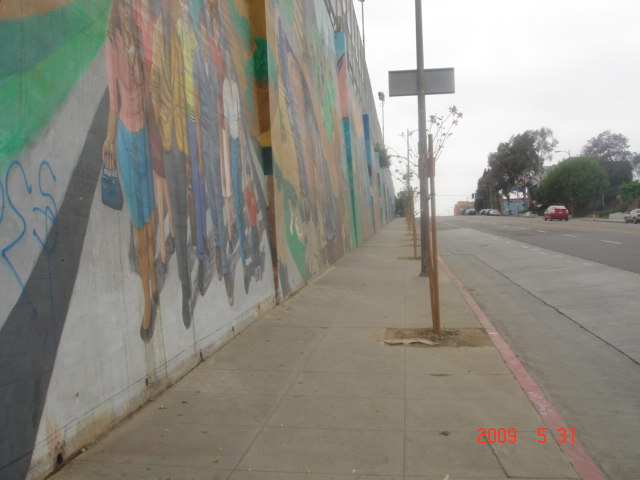
After taking my last sip of water at the Park, I made another loop at the Park and proceeded to my favorite uphill climb along the Beverly Blvd, fronting the Belmont High School. As I crossed towards the Beverly Blvd, I saw the guy who asked for directions 1 1/2 hours earlier, waiting for the red street/traffic lights to turn into green. I asked him if he was able to reach his destination and he said, “Yes, thanks! How was your run?” I replied to him, “Perfect run” as I passed him and went to his opposite direction.
The distance from the Park to the lowest part of this particular uphill climb is 1.2 kms. From the lowest portion up to the peak of the climb has a distance of 178 meters and I can estimate that it has a uphill grade of about 6-7 (just imagine that you have a setting of 6 or 7 incline on your treadmill machine). I did 5 X 178 meters where I slowly jogged going back to where I started. These were the results of my hill speed repeats taken from my average pace per run and its corresponding average HR:
1) 5:20 mins/km—153 bpm
2) 4:51 mins/km—150 bpm
3) 4:34 mins/km—153 bpm
4) 4:34 mins/km—155 bpm
5) 4:19 mins/km—155bpm
As my cool-down run, I jogged for about 1 km around the streets/blocks near my place before doing my post-stretching exercises. When I entered the house, my son was already home and just arrived from his work and he told me that I am “crazy” running in the rain!
Yes, I am “crazy”. Wait till I start training for my first “100-Mile” Trail Endurance Run! Ha! Ha! Ha!
I was able to run a total distance of 16.2 kilometers (10 miles). I nice way to celebrate the annual “The National Running Day” (For the USA). Maybe, we can also recommend to our government officials (attention goes to our physically active and athletic Senators and Congressmen) to come up with our own version of an annual National Running Day in order to promote awareness on the benefits of running and develop among us an active physical lifestyle. This will be a nation-wide activity where local government units are directed to come up with running activities and lectures/seminars among their constituents. Would you imagine if you have a running club in every town/municipality in the country?
Well, if there is no positive reaction on this suggestion, then I firmly believe that the definition of “running” among our politicians and government’s elected officials, is “running” as candidates to an elective position!!! I can easily predict that a smart politician would say that there is no need for a National Running Day for the whole country because we already have our National & Local Election Day (yon nga lang, every 3 years)!!! Ha! Ha! Ha!
P. S. Good Luck & Best Wishes to Ben Gaetos, Rick Gaston, Carmela Layson and to the rest of the Pinoy Ultra Runners living in California who will be participating (as runners and crews/pacers) in the San Diego 100-Mile Endurance Run (SD 100) this coming Saturday!!!
Meals/Food for Yesterday (June 3, 2009)
Breakfast: None (due to Medical Tests)
Lunch: Steamed Rice; Left-Overs (Sinigang na Salmon Head & Pork Adobo); Fresh Mango & Banana
Snacks: GNC’s AMP Amplified Muscle Meal with Banana (Blended with Water & Ice)
After The Run: 20 Fluid Ounces of Gatorade & Lots of Water
Dinner: Steamed Rice; Sauteed Clam (Shell) Meat with Kangkong; Fish Chips; Ripe Fresh Mango & Banana
Before Going To Bed: Vitamic C Tablet & 3 tablespoons of Organic Honey
The last time I visited my doctor here in Los Angeles was August last year before I ran the Bulldog 50K. Not that I prefer to have my annual medical check-up here abroad but I have the privilege to be included in the medical insurance of my family plus the fact that there is better service/attention and efficiency of the physicians here (no red tape and so much waiting long line and time).
It was a quick and simple visit which included an extraction of my blood sample into 2 big vials/tubes; got a sample of my urine, took my blood pressure and weight by a lady medical assistant. Finally, the doctor and I had a conversation while he updated my medical file with his laptop computer with a touch screen monitor and finally took stethoscope to hear my heart beats on my breast and back. The doctor said that I have a healthy and athletic body. Of course, the doctor, who is a Filipino, knows that I run marathons and ultras as he is also a runner. The doctor had been our family doctor for almost two decades.
The results of my blood tests will be known next week. The results will show everything to include the condition of my prostate glands. I don’t want to be in the situation of Dr George Sheehan (old runner & writer) and General Norman Schwarzkopf, Jr (Military Commander) who had cancer of the prostate gland. Well, this is an advise to the older male runners and maybe, retired generals or officers in the military service, to have a regular check-up and PSA test to their prostate glands. If the ladies have their breast and cervical cancers, the men have also a prostate cancer as an equivalent illness. As for the Hardcores, you have the option to better start having this test. There is no truth to the “hearsay” that you can get a prostate cancer if your manliness is “overused or underused”. You must be within the average or moderate user! ha! ha! ha! Seriously, you can get it through the food you eat & your kind of lifestyle, hormonal imbalance, age, and due to race (Blacks are highest victims, whites as moderate, and Asians are the lowest victims). Please don’t depend to the idea that since you are an Asian, you will be least susceptible to prostate cancer.
While I will get the results of my blood test next week, it will be my schedule also to have my X-ray examination. The visit to the doctor was done in less than 30 minutes! I went home immediately for my brunch. I did not eat any food since midnight before my visit to the doctor. Finally, I suggest that runners above the age of 40 years old should have their annual medical check-up. If you regularly change your running shoes to a new one, it would also be better to have your body for a medical check-up on a regular basis. Just think of yourself as a sleek. shiny, and fast Sports Car, its powerful V-8 turbo-charged engine is your body and the tires are your running shoes!
Yesterday, I recalled the comment of Rick Gaston aka 365Ultra in one of my posts last month when Ronnie aka Runner For Christ asked me what is inside my legs; where Rick was asking me about the food I eat. I answered Rick’s comment that I am an Ilocano who is fond of vegetables and meat recipes from the North until I had an attack with “gout”. For one year, my diet was limited to vegetables, fish & limited seafoods, chicken, eggs, tofu, pasta/noodles, and fresh fruits. However, I had to take supplementary drinks from Ensure and multi-vitamin & mineral tablets for me to sustain my training/preparation for the BDM 102K and other long distance races.
Starting today, I will be posting my daily “fuel” to support my training for my incoming running adventures. By the way, my weight before the 2009 LA Marathon was 138.6 lbs, however, at this time, my weight had increased to 140.4 lbs. I hope to maintain the 140-lb weight as my running average weight.
The following was the composition of my meals and supplements yesterday, 02 June 2009:
Breakfast: Coffee with Milk; 3 pieces of Ube Hopia; and Cereals with Milk
Snacks: Lots of Water
Lunch: Pork Adobo; Salmon’s Head Sinigang with Bitter Gourd (Ampalaya) and Steamed Rice
Snacks: Lots of Water
Dinner: Bacon & Swiss Burger with French Fries & Coca-Cola
Before Going To Bed: Vitamin C (1,000 Mg) & 3 tablespoons of Organic Honey.
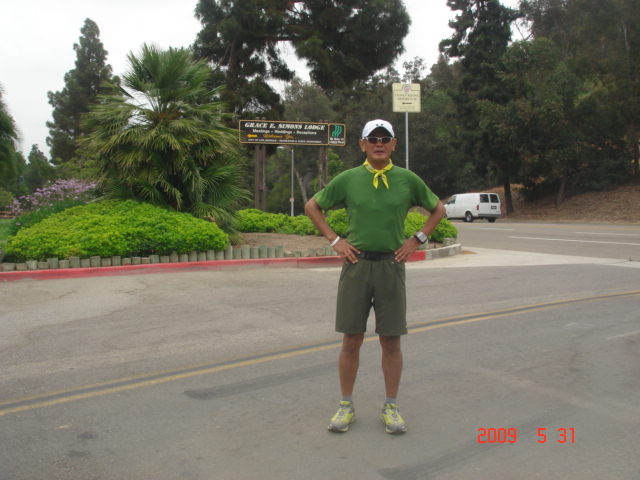
Thanks for the tip from Ben Gaetos regarding the Elysian Park Trails. I was able to make confirmation from my daughter about the said trail after she told me that she had a chance to visit the place last year. My son simply gave me the direction on what street to take to be able to reach the place. And after “googling” the place, I was able to get the details about the streets that lead to the place.
I left my place in the morning of last Saturday at about 10:30 AM as the sky was still overcast and the temperature was still in the low 60 degrees Fahrenheit. I started slow during the early part of my run until I reached the uphill road at Scott Street that leads to the Elysian Park. Running along Scott Street from Echo Park and Glendale Boulevard was already a very challenging uphill climb. I never stopped running until I reached the said park.
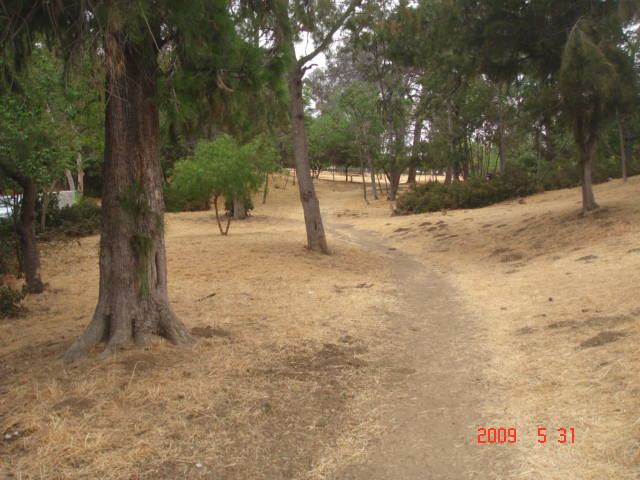
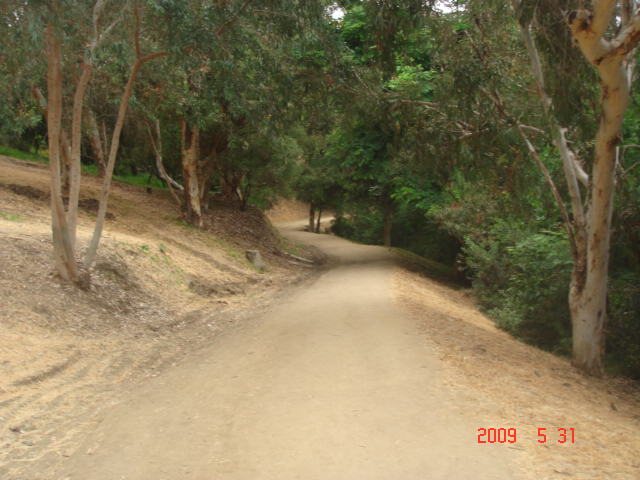
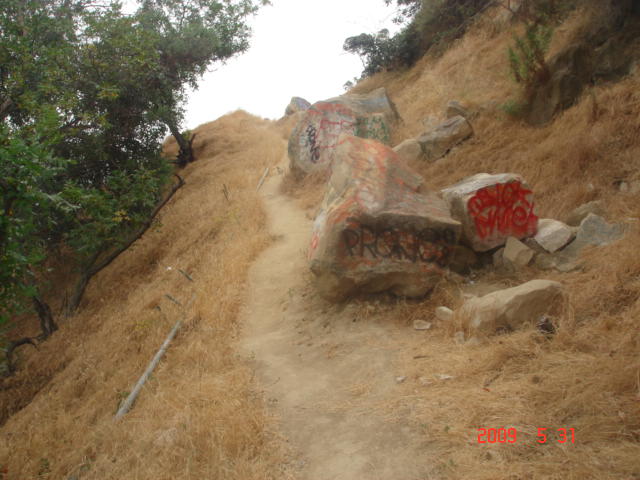
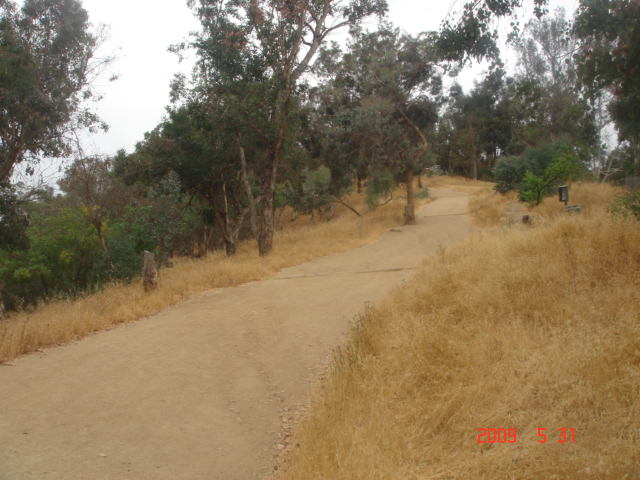
Being my first time to visit the place, I took the right road which is closed to vehicular traffic and started going uphill and tried to look for those trails. I later found a fire road and followed it to where it will end and then followed some trails good for one person. I just did a clockwise run along these trails until I was back where I started along the end of Scott Street. There was another fire road on my left and I started to run into it and I found out that this is the more popular fire road for the walkers. I would overtake a lot of walkers with their dogs, small and big, and meet also walkers on this fire road with and without their dogs. After running about one kilometer on this fire road, I observed that I was the only one running along the trails! There was this steep and winding downhill part of the trail which ends in the switchback (leading to more plain trail) with some woods buried across the road to prevent erosion every ten meters along the trail. This fire road was a rolling one and it ended near the entry to the park from Stadium Way Street. After taking some pictures of the place and drinking some water from my Nathan Hydration Belt, I decided to cross the Stadium Way Street and go for the higher part of the park.
As I crossed the street, I took the trail on my left and it was a trail which is good for one person. As I maintained my running pace on this trail, I could see Highway 5 on my left (way down below my feet!) where I could hear the noise of cars and vehicles passing along the busy National/Federal Highway. I was practically running along the edge of the mountain! I could see more walkers along the trail who gladly went to the sides, allowing me to pass as I greeted them and I kept on running until I ran more trails and finally led me to where I started after crossing the Stadium Way Street. After reaching my starting area, I had to retrace the trail I had taken and went all the way to the top again of the mountain and took the trail back.
I crossed the Stadium Way Street once again and retraced the fire road and went to that “challenging steep winding downhill” part and try to run up to the top without walking. With much determination and positive attitude, I was able to run through this part of the fire road without stopping. Later, I was able to reach Scott Street where I started. I slowly jogged around the visitor’s park and parking area and orient myself and see where the trails are located.
I knew I had 2 hours of run along the trails and it was time to go back. From the Stadium Way Street, I took Scott Street and back towards Glendale Blvd. I took another loop at Echo Park where I replenished my water supply before proceeding to my favorite uphill climb (near Belmont High School) where I do my hill repeats before proceeding at the house.
I was able to run a distance of 22.22 kilometers (almost 14 miles) in 2:30 hours with an average pace of 6:45 minutes per kilometer. I was surprised to observe that I was “sunburned” even with the overcast sky and lower temperature during my workout run! I finished the race at 1:00 PM and immediately took my lunch. It was a nice workout. This will be my alternate trail run location but I still need to go to Griffith Park Trails for a higher altitude/elevation workout. However, what is good about Elysian Park is that I can run along its trails for hours and it is very near to my place. Next time, I will bring food provisions in my backpack in my next runs and run along its trails for 3-4 hours.
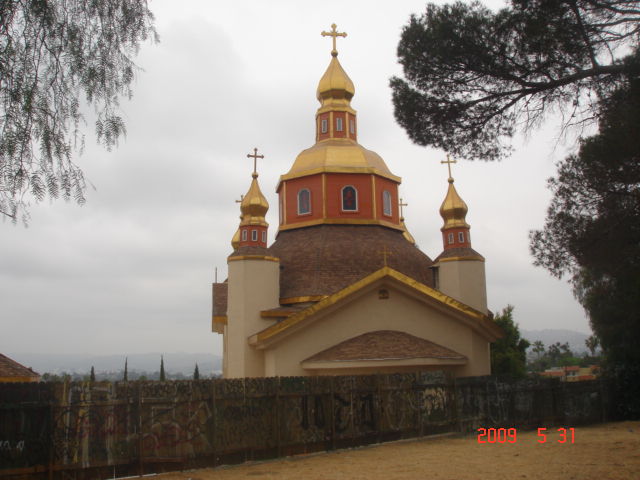
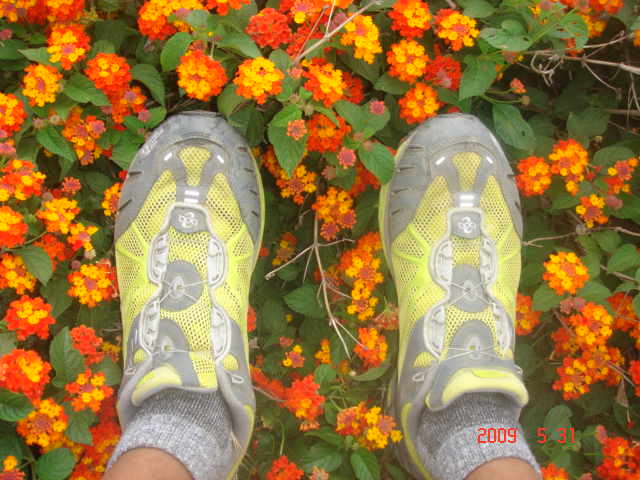
Everything Is Colored "Brown" In The Mountains of South CaliforniaIs This A House or Church?A Fire Road At The Left Side of the Park From Scott StreetEntrance Of the Park From Stadium Way StreetGraffitis On Rocks Along The Single Track TrailOh, That Uphill Climb!My TNF Arnuva 50 BOA Road/Trail ShoesVenue For My Hill Repeat Drills & Workout
9:30 AM 31 May 2009 @ Gold’s Gym
My son and I went to Gold’s Gym at Downtown LA for a 1-hour workout. I did my core muscle and upper body workouts for one hour. I was surprised to see the overall set-up of the gym to have changed for the better since I had my last visit last year. The gym had a bigger space and more equipment. There was no “traffic’ in the use of the equipment as more options had been added due to more equipment. Before going to the gym, I was already set to do my rituals for my core muscles and my upper body muscles. It was a very fast workout with easy and light weights so that I will not strain my muscles after almost three months without any weight-lifting workouts.
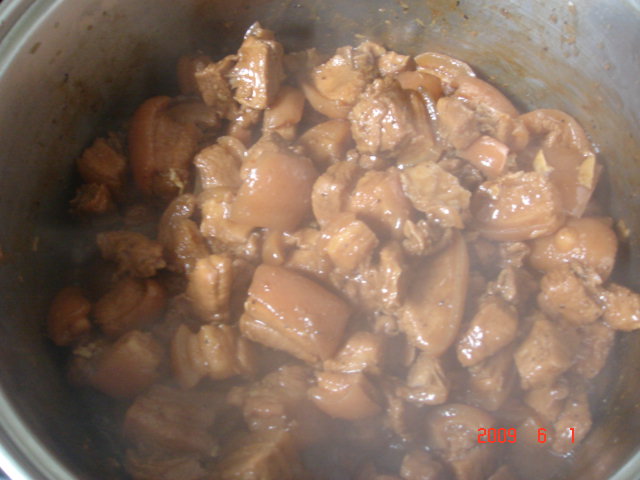
After the gym workout, we returned to the house and I cooked pork adobo for our lunch. It was rest time after lunch!
Very Hot Pork Adobo!
7:00 PM 31 May 2009 @ Echo Park & Silverlake Reservoir
At this time here, the sun is still shining and it will take another one hour for the sunset to finally arrive. I decided to have an easy long run. I had an easy and slow start as I started to jog towards the Echo Park and did one loop and finally decided to go to the Silverlake Reservoir loop. After one loop at the Silverlake Reservoir, I started to feel the urge to relieve my urinary bladder but it became problematic when I found out that the comfort rooms at the Park were closed. I tried to control my bladder until such time that it became too dark and saw to it that there were no runners/walkers who would see me going to the thick bushes to relieve myself. I did it successfully without any problems! Sometimes, you need to take the risk when emergency comes. At least, my “style” is better than the video clip of Paula Radcliffe peeing on the street while she was running a marathon race! ha! ha! ha!
I did 4 1/2 loops around the Silverlake Reservoir before going back to Echo Park and finally proceeding home. I did another loop at the Echo Park and slowly had my cool-down run a block away from the house. I did my post-stretching exercises before entering the house. My GF 305 registered a distance of 23.10 kilometers (14.4 miles) with a time of 2:29:11 hours with an average pace of 6:40 minutes per kilometer.
I will take a day-off tomorrow for my stretching and Pilates exercises. It was a nice weekend.
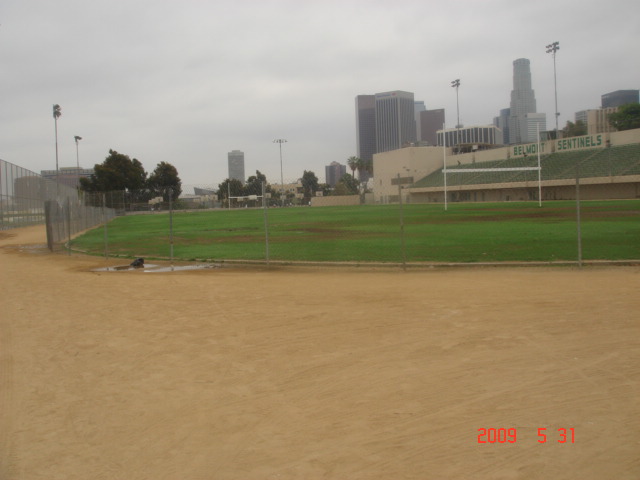
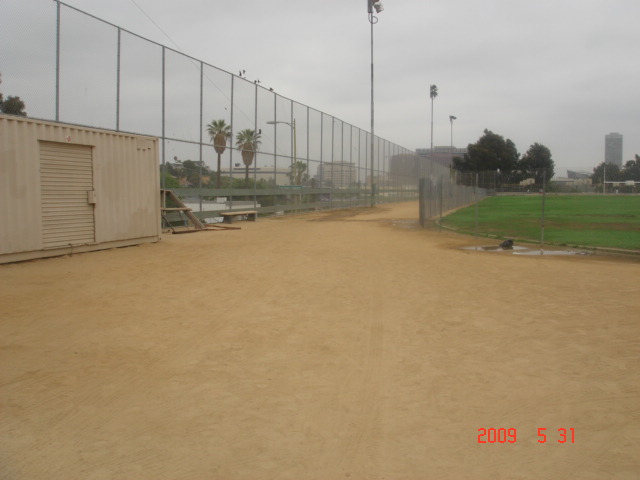
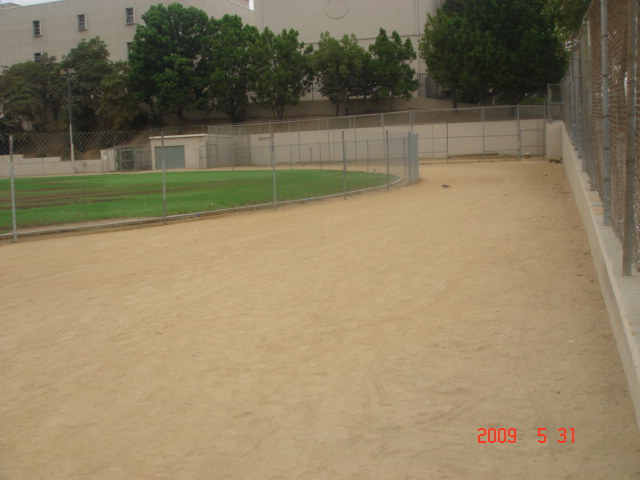
Belmont High School is two blocks away from home and this is where I do my active recovery runs and speed runs for the duration of my “rest/vacation” here in Los Angeles, and this will be my “ULTRA Oval Track”. What is good about this track is that it is made from the ordinary soil from the desert of California. It is a “dirt” oval track which is the same texture of soil that you see along the mountail trails and fire roads in the mountains here. However, it is better to run on the dirt/soil rather than running in an asphalt or concrete road. What is bad about the “dirt” track is that your shoes would easily become dirty because of the dust that stick on every part of your shoes to include the socks. I like running in this kind of track, whether I use my trail shoes or my training shoes as if I am running along the mountain trails. I usually use my TNF Arnuva 50 BOA when I run along this track because I could feel and hear the “crashing” sound of the shoes pounding on the sandy soil and my feet are more responsive to the ground.
I did a 35-minute recovery run a day after the Los Angeles Marathon and I was doing 80% of my effort with an average pace of 5:40 minutes per kilometer and an average heart rate of 144 bpm.
On the following day, I did another 30-minute slow run at my 70% of my total effort with an average pace of 6:50 minutes per kilometer and an average heart rate of 135 bpm. However, after the slow run, I tried to do some “speed” intervals every lap just to measure the distance of the oval track with a rest/recovery of one minute. I did 4 X 400 meters with an average pace of 1:52 minutes per kilometer and the oval has a distance of 408 meters at the inner edge. I had an average of heart rate of 152 bpm. The dirt oval track has no designated lane number. After the intervals, I slowly jogged to the house and did my post stretching exercises.
"Dirt" Oval Track With Water/Mud At The Inner LaneMy Running Shoes Gather Dusts While RunningHigh School Students Are Fast Runners Because of The Oval Track
I don’t know if all the runner-bloggers in the Philippines has a copy of the June 2009 issue of the Runner’s World Magazine. It would be nice if all of our runners, most expecially the beginners, has the chance to read the said magazine. In pages 65-69, the author of the article “Get On Track”, Erin Strout, has made a very good and very detailed presentation on everything a runner would know about an Oval Track from the definitions of terms on “speed” training, rules in using the oval, how to train at the oval, and workouts you can do. What is very important in this article is a pictorial/drawing of the oval with the RULES TO BE FOLLOWED. There is a Survey made with the question, “What’s your pet peeve on the track?” and the number one in the survey is, “Walkers In Lane One”. Very true! Everywhere not only at the ULTRA Oval Track!
Because of the overcast sky since Sunday and with a low temperature in the early morning, I usually do my running workouts at 10:00 AM when the clouds start to open up. I will have a one-day rest and resume my long runs this weekend.
Yes, I am preparing for the MILO Marathon Eliminations!
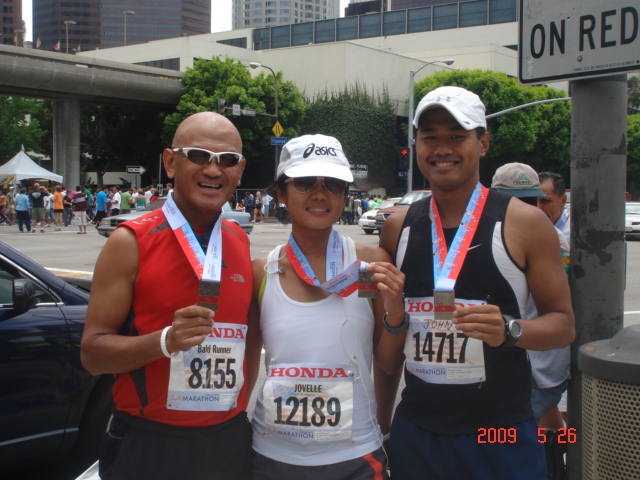
John Paul finished the 2009 LA Marathon Race in 4:40:07 hours with an average pace of 10:41.2 minutes per mile. He finished # 3,874 place among the 14, 204 Finishers; making him # 3, 087 out of the 9, 011 Male Finishers. Within his age category of 30-34 years old, he placed # 421 out of 1,006 runners. As compared from his Inaugural Pasadena Marathon, he was able to improve him finish time due to an accident that happened to him at the middle of the race where he had to walk and limp to the Finish Line. As compared to his time in the 2008 Los Angeles Marathon which was 4:55:14 hours, he was able to improve his time by 15 minutes. Although he was not able to put miles in his training due to the pressure of his work, he was able to finish the race with a decent time.
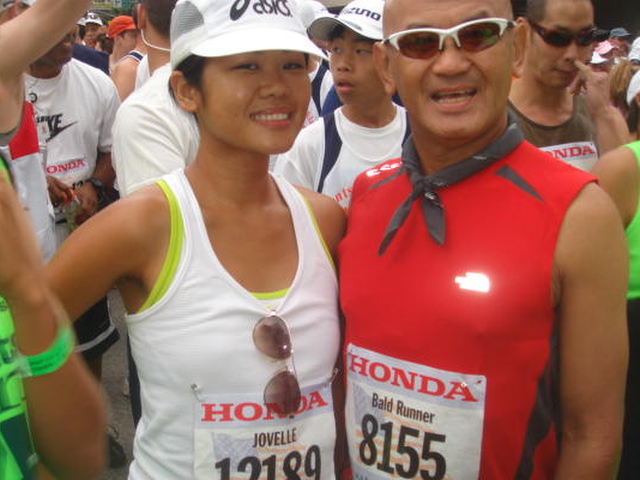
Jovelle was the happiest among us because she was able to improve her time with a faster finish time. In her previous LA Marathon Races, she would finish along the borderline of 5 & 6 hours and sometimes more than 6 hours, however, in last year’s San Francisco Marathon, she was able to finish the hilly race in 5:41:28 hours. In last Monday’s Los Angeles Marathon, she was able to finish the race in 5:03:43 hours. If only she did not stop and fall in line to use the portalet along the way…and drank some beer along the last few miles, she could have been within the sub-5 hour finish time. She attributed her improvement by almost 38 minutes with her increased weekly mileage up to 40-45 miles. I told her to strengthen her legs some more before she would introduce “speed” training to her training so that she will not experience any injury.
Jovelle’s finish time registered an average pace of 11:35.2 minutes per mile. She placed # 5,593 out of 14,203 runners who finished the race. She placed # 1,312 out of the 5,193 female finishers. In her age category of 25-29 years old, she placed # 239 out of the 716 female finishers.
John Paul & Jovelle are continously training again and they are registered to run the 2009 San Francisco Marathon which will be held on 26th July 2009. It will be their second time to join this race. Moreover, they are planning to join their first Bulldog 25K Trail Run this coming August.
I guess, I am really a “bad” influence to my kids!
What if there is death of a runner during a road/trail race in the Philippines?
During our Summer Training in Fort Magsaysay, Palayan City in 1971 while I was a first year cadet of the Philippine Military Academy (and about to become a sophomore), two of my classmates died while they were about to finish a 10-km road race. The reason for their death was due to “heat stroke” as there were no water stations along the route and worse, the race started late in the morning when the sun was up already on the horizon. The worse conditions of my classmates were compounded when the medical personnel at the camp’s hospital did not know how to cure or treat them as they showed symptoms of “heat stroke”.
I did not know if there was a thorough investigation conducted by my Tactical Officers and Commandant of Cadets at that time after the said incident. I really wanted to find out from the records of the Philippine Military Academy if there was any investigation conducted on the death of my classmates when I had the opportunity to be assigned there as the Head of the Intelligence and Security Department. But because of more pressing work that time (after the EDSA Revolt of 1986) and many security incidents that happened in the Academy, I was not able to have the time to deal on this case.
I could still relate in details what really happened to my two classmates on the day of the race as I was one of the roving “water boys” along the route. Maybe, I could write about my two classmates’ (Cadets Dollente & Llorono) ordeal as I saw them when they were suffering from “heat stroke” during the race and recall also the irresponsible acts and ignorance of the medical personnel who tried to cure and bring their body systems to normal condition. But that will be another story!
Let me go back to the topic on hand. Let me post this question and try to suggest or predict the reaction or action of everybody or the public. What if there is a death of a runner during or after a road race in the Philippines? Such death might be caused by “heat stroke”, “heart failure” of a runner, or an accident with any vehicle crossing the runners’ route, or due to anything you can think of.
The following will be my predictions of actions to be made by the Race Organizer and by the public:
1. As the Race Organizer and/or Race Director, he will see to it that he had done his best to give the outmost attention to the victim or runner by making sure that he would be brought immediately to the nearest hospital. If death to the runner occurs, he will say that he does not have any liability to the person because the runner signed a “waiver”. End of the story with regards to the responsibility of the RO/RD of the race!
2. Runner-Bloggers will have one or two weeks writing about the said incident.
3. The death incident will surely land on the Front Pages of broadsheets and not in the Sports Pages. It will also appear at TV PATROL, SAKSI, SOCO (?), and maybe, (who knows?) at ANC’s STRICTLY POLITICS & Carandang’s Reports (?).
4. A Senator or Congressman will deliver a “privilege speech” at the Senate/House of Representatives and maybe, just maybe, condeming the runner for not training properly, lambasting on the Road Organizer for not providing enough water and water cups to the runners and for the responsibility of scheduling a road race during hotter/summer months, and others..
5. This will end up with a Senate Hearing in “Aid of Legislation” and come up with a Bill to oversee the conduct of Road Races in the country. Of course, this investigation will be a nice “exposure” to those who have intentions of being elected to a higher office or for “name recall” purposes. (Note: I am not sure if I will be (again!) invited to these Senate & Congressional hearings as a Resource Person! ha! ha! ha!)
6. The running community will come up with a “Run For A Cause” to support the bereaved family of the runner. Or the running community will donate their share of some support to the family and children of the runner. Who knows his kids might be given educational scholarship and even employment by supportive corporations who have runners as their owners/executives? Better if the bereaved family will be made as guests at the noon time program “Wowowee”!
7. A “smart” Road Organizer or Corporate Sponsor might come up with a Road Race annually to honor the death of the runner and the proceeds will go to the Charity or Foundation in the name of the dead runner.
8. I am sure lesser number of runners will be joining the road races for some time but it will pick-up again after few months.
9. One of the Streets at The Fort will be named after the dead runner.
10. This incident will be a “wake-up call” to all Race Organizers to improve their services to the running community and not from the complaints, critiques and rants from the runner-bloggers.
11. A Blog will be created by a runner in the name of the dead runner to remind beginners and other runners to train properly and for the race organizers to provide the necessary logistical services and support to the running community during races.
12. Every road race will be made to have an insurance policy to cover every runner in a race or an enterprising insurance company will open an insurance policy plan exclusively for runners.
The items I mentioned above are my personal predictions or you might call my personal opinion just in case we have a death of a runner now that running is very popular in the country. I may be corny and sarcastic about this issue but we have to deal with such reality as many runners, whether they are beginners. competitors and even elite athletes have died in the past in the United States and other countries (to include an author of a running book that inspired more of the Americans to run in the 70s & 80s). Our Race Organizers/Race Directors will never learn their lessons and their logistics “lapses” to the runners not until something of catastrophic incident will happen to the running community during our weekly races.
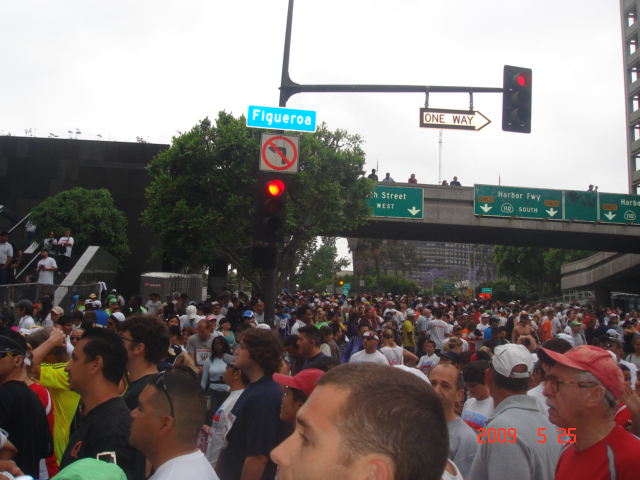
7:31 AM 25 May 2009 @ Figueroa Street & 6th Street, Los Angeles, California
Most of my friends and readers were surprised to know that I ran the BOTAK 42K Marathon Race last 10 May knowing that I have the Los Angeles Marathon scheduled on my list of Road Races to participate into after 14 days of recovery. They don’t know that I was not serious to exert much of my effort in the BOTAK Run and I treated it as my long run in preparation for the bigger event which is the Los Angeles Marathon. Aside from that reason, I had predicted that the BOTAK 42 would be a failure in its administrative, technical, and logistics support for the runners by just looking at their race route. And I was right! The race was a failure in terms of a standard and well-organized Marathon Race but I accomplished what I intended to be attained–to make this race as my “long run” before tapering off for the LA Marathon.
At my age, who would dare to run two (2) Marathon Races in one month with 14 days in between? Hmm…I think it’s only the Bald Runner! (and my Ultramarathon runner-friends) Ha! Ha! Ha! This was the reason why I did not register for the TNF 100 Solo Run—I was already registered to run the LA Marathon way back during the last week of January 2009 (when TNF was not yet decided to conduct the said race!). And this point/issue shows a big difference of the major races done in other countries as compared to the schedule of races that we have in the Philippines. Major races in the USA are scheduled one year ahead while most of our major races are “knee-jerk” running activities where you have at least 2-3 months as lead time. I am sorry but this is the reason why the 2nd Bataan 102K Ultramarathon Race is already scheduled on March 5-6 next year and it will never be postponed.
Running the LA Marathon was a dream to me since its creation, 24 years ago. A year after the 1984 Los Angeles Olympic Games, the LA Marathon was born and I had been a spectator on this event whenever I was here for a vacation. Traditionally, the LA Marathon was held on the month of March but I usually come over here during the months of June or December but there are times when my December vacation would be postponed to January or February and I would stay up to the day of the LA Marathon. So, there was no chance for me to seriously consider running this marathon. The original route of the race, to include the 1984 Olympic Marathon, was 2 street blocks away from our place and I was just contented to watch the elite runners and other competitive runners passed along Sunset Boulevard.
Due to the change of ownership of the LA Marathon last year, it was decided that the March schedule was changed to the month of May. There had been a lot of debates and arguments about such change but the owner’s decision prevailed and had it scheduled on Memorial Day to honor their dead heroes and other soldiers who died in the line of duty, most especially those who are assigned across the seas. And so, my kids and I planned to run together again in a marathon race just like what we did last August 2008 in the San Francisco Marathon as early as January this year.
After I have acclimatized for one week since I arrived last 17 May by running under the cold and hot conditions in LA, I knew I was ready for the race. We woke up at 5:00 AM this morning and I did the usual “ritual” everytime I join a marathon race (except taking the Immodium tabs)…hot coffee, instant oatmeal, cereal with milk, hard-boiled eggs, and bananas. Shaved, took a shower, apply petroleum jelly on my feet, inner upper arms, and upper inner legs/groin part, tied the D-Tag on my shoe lace, and wore my running kit with my bib. We were out of the house at 6:40 AM and walked about 2 kilometers to the Starting Line.
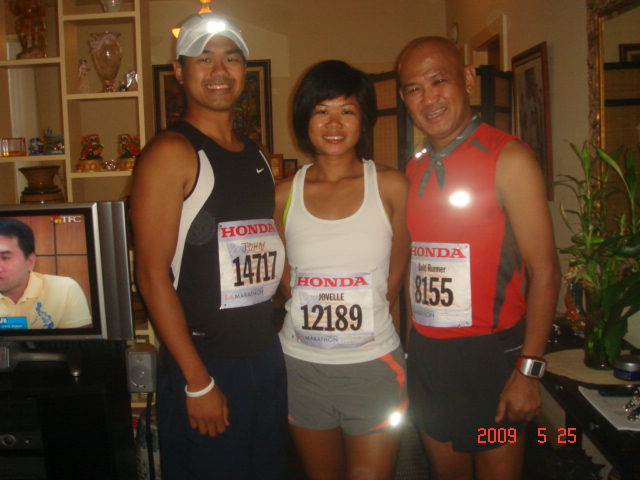
Our Picture Before Leaving The HouseThe Runners & Starting Area Crowd
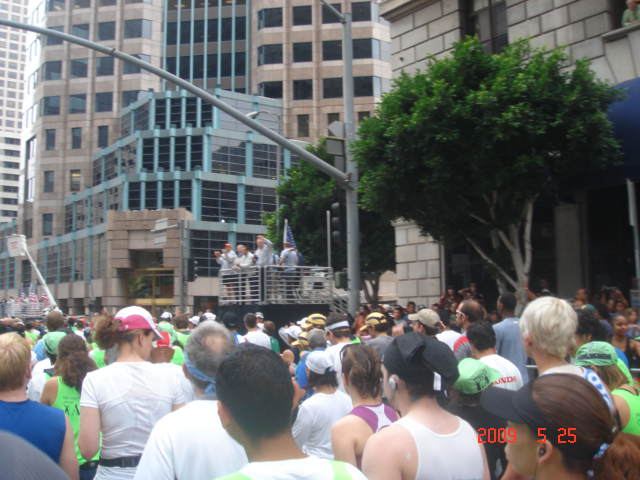
I was amazed to see a lot of runners, more than the runners I saw in last year’s San Francisco Marathon. Almost a distance of 200 meters from the Starting Line up to the back was filled with runners and walkers. We immediately positioned ourselves about 100 meters from the Starting Line as more runners were packed like sardines in the front areas. After the singing of the Star-Spangled Banner, which could hardly be heard in our position, was sang by a choir and it was followed by a Prayer. The speech of the City Mayor followed and it ended with the blowing of the horn which officially started the race. The race started at 7:31 AM, a delay of 11 minutes from the scheduled time of start.
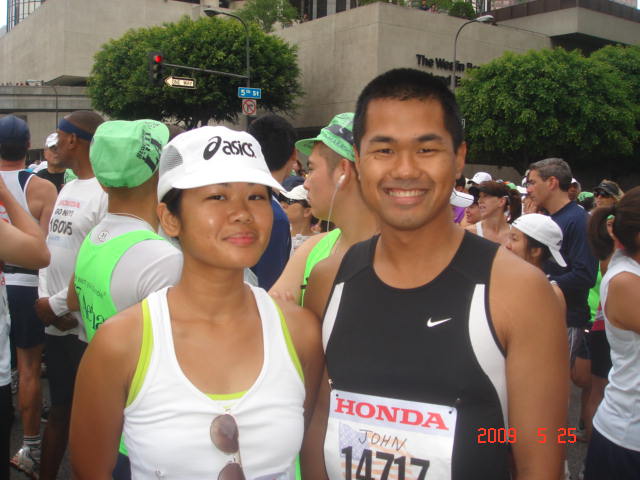
More Runners At The Cross StreetsJovelle's 4th Marathon & Jonh Paul's 7th Marathon
The weather was cool with a prevailing temperature of 60 degrees Fahrenheit and there was an overcast sky. It was a perfect weather for a marathon race! We started to walk towards the Starting Line as the runners at the front started to run and vacate the space where they were waiting before the race started. Even if we occupied the whole wide Figueroa Street, the runners were still shoulder-to-shoulder and tightly could not run or move faster. It took us almost 5 minutes and 35 seconds to finally cross the ChronoTrack Timing sensor at the Starting Line which activates our D-Tags tield on our running shoes and I simultaneously pressed the Start Button of my GF 305. My watch cooperated this time as I deleted some of the data stored in it and made sure that it was fully charged.
Finally, We Were Moving Towards The Starting Line
Mile 1
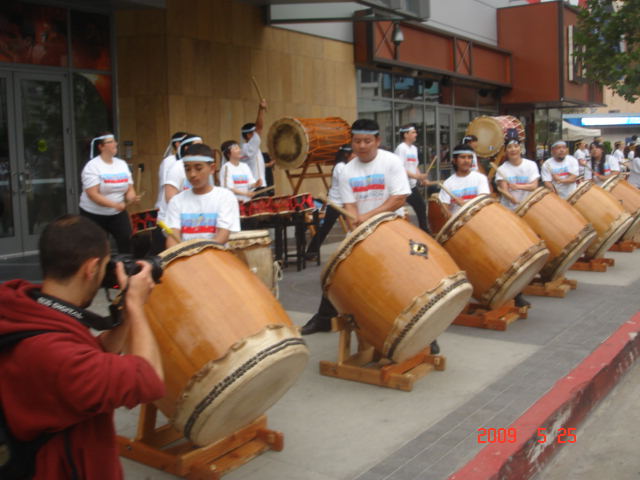
The whole stretch of Figueroa St going south covers the whole first mile and succeeding miles of the race. My pace was a slow one as the runners were still closely near with each other. I was forced to slow down because of the situation and I maintained my pace and imagined it as my warm-up run. I had to make a zigzag moves to prevent from bumping on some walkers who were mixed with the runners and who were located infront of us. I finished the first mile in 10:20 minutes and I panicked because it was a very slow pace for me. I started to calculate my finish time by making an average pace of 10 minutes per mile and I assumed that I could finish the race in 260 minutes or 4:20+ hours! I wanted to finish the race with a faster time than that! A group of Japanese drummers would fill the air with noise and rythmic beat as we reached the Staples Center. And that was the start of a festive and noisy environment along the route.
Big Drums on the 1st Mile
Mile 2
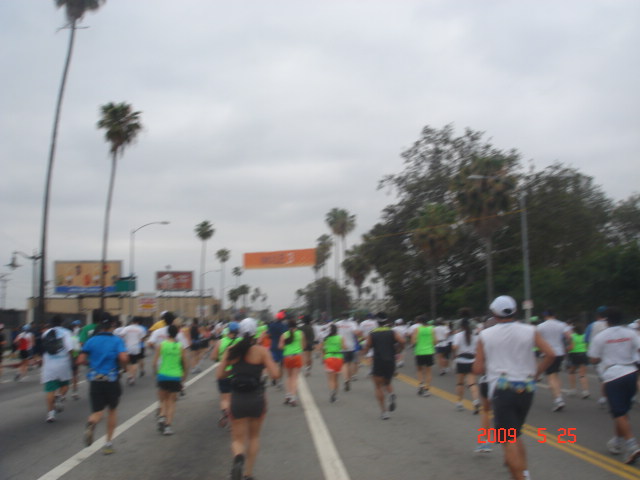
The roads along the route were completely asphalted roads and it is more comfortable to run with it than running on a concrete road. At this portion, the runners are still tight and there is a lack of space where I could overtake the runners infront of me. I just took my patience and slowly increased my pace as the road is slightly downhill and flat. You could see a lot of people along the sidewalk cheering the runners and the LA Police and other security units would be around to see to it that all runners are protected. The runners practically owned the whole street and there were no vehicular traffic crossing the street where were are. We are still along Figueroa Street and as I approached the end of mile 2, I could see that I have gained some speed and was able to shave off at least 30 seconds. I registered an average pace of 6:15 minutes per kilometer, a 9:00+ minutes per mile pace.
Mile Marker/Banner On Top Of The Runners
Mile 3
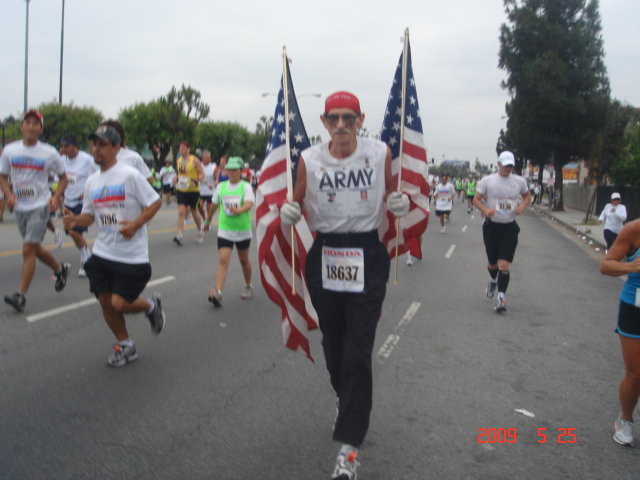
We are still along the Figueroa Street and I could see the entrance to the LA Olympic Stadium at my right and later I could see the stainless steel markings of the Exposition Park. The crowd of runners is slowly loosening and I was able to increase my pace. This is the part that I started to perspire but the cold air that is meeting us would slowly dry up my sweat. This is where I started to overtake more runners—some are teen-agers, lady runners, male runners older than my age, and US Armed Forces Veterans carrying the US Flag. Along this portion, I started to feel the urge to urinate as I drank a lot of water before leaving the house. I controlled it as the portalets along the way have a long line of runners waiting for their turn. Despite this situation, I had to drink water and Gatorade in every hydration station. I started to take in my first regular GU Sports Gel as I carried with me 2 regular GU and 3 GU Roctane and a pack of Cliff Shots (Chewable Electrolyte Source). My TNF Racing Shorts was equipped with side & back pockets where my ration was stashed. My right hand was holding my SONY Cybershot Digital Camera wrapped in a Ziplock Bag to prevent my sweat from going to the camera. I was able to shave off another 30 seconds from my average pace.
A US Armed Forces Veteran & Marathon Runner
Mile 4-6
From the wide road of Figueroa, we turned right to a narrow road where there is a construction on the opposite side of the road. Even if it was a narrow, the space in between runners became bigger and had more chance to overtake a lot of runners. And then suddenly, after a series of turns, the first uphill climb would appear infront of the runners. I didn’t panic as I increased my pace by taking shorter and faster strides as I run through the uphill climb. I had to overtake more runners along this portion. After the climb, it was downhill and I was back on my usual stride and had to make my leg turn-over faster. I was registering a faster pace this time.
Mile 7-10
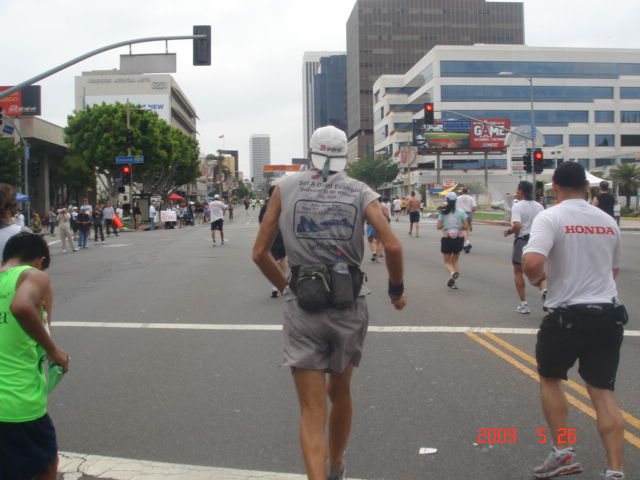
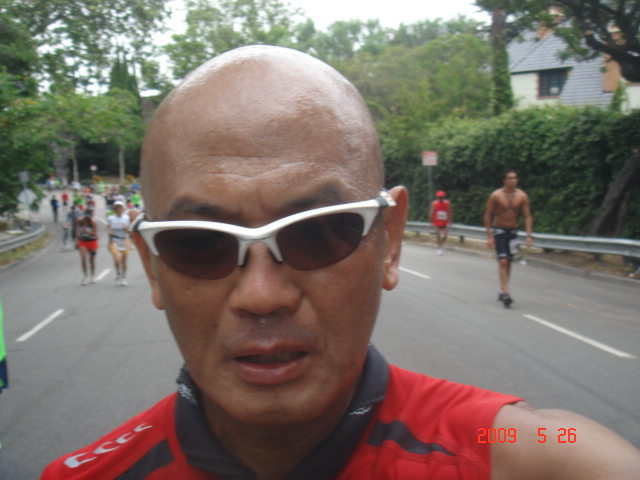
More spectators would cheer the runners by shouting, “You can do it”; “Looking good”; Runners! Go! Go! Go!; “Bald Runner, Wohoo”. Yes, a lady who was giving Gatorade drinks to the runners, saw my race bib and shouted those cheers! I guess, there were at least five people who saw my race bib and shouted “Bald Runner”. There was a mixture of Rock and Roll Bands and Mariarchis (Mexican Band) along the route and it was a delight to hear live music from these volunteers/spectators. As we passed along the Residential Areas, I saw the residents cheering and shouting to the runners. They even have banners and posters where they wrote greetings to the runners. Others would have their “coolers”/ice chests with them and gave cold bottled water and soda/sports drinks to runners who are in need. Wow, this is unbelievable. The whole community treated the Marathon Race as a festival with music, cheering, and drinks ligned up along the route and each of the resident-volunteers showed some hospitality to the runners. I had a steady pace along this portion as I passed more runners along the way.
Mile 11-14
Finally, I could no longer hold my urinary bladder and made a “bold” move on the ligned 6 portalets on the right side of the road. Instead of waiting on the line of runners standing infront of each portalet unit, I immediately went at the back of the portalets and relieved myself with my urine dropping at the grass. Another two white runners would follow me and relieved themselves, too! One guy would say, “Hey, that was a smart move’! I answered, “yes! the grass on the sidewalk needs some fertilizer” and both of us laughed. As I approached the 13.1 mile mark, there was a “carpet” for the RFID timing system that triggers my D-Tag to register my half-marathon split time and passed through it while checking at my GF 305. I saw that my watch registered a time of 2:03 hours and I panicked (again!). I wanted to have a finish time of sub-4 hours on this marathon race. I was already calculating to have a finish time of breaking the 4-hour limit but I recalled that the second half would be a harder task for me because the route is uphill up to the finish line. I tried to increase my pace by “shuffling” and counting the number of strides per minute and made the counting as my running “mantra”.
Mile 14-18
The distance in between runners would stretch at this part as some would be seen walking, other would be seen stretching their calves and legs along the sidewalk, and most of the runners would walk while drinking their water or Gatorade drinks. This part is really the hardest as more uphill climbs would challenge the runners. There was some relief for the downhill but it would take the runners for another uphill climb again. It was a roller coaster at this part. Volunteers along the route would ask each runner if they feel pain and they would spray Salonpas liquid on the parts where the runner would feel pain. Other volunteers would offer Vaseline Ointment or Petroleum Jelly for those who have problems on “chaffing”. Other volunteers would offere sliced fresh oranges and bananas, and sometimes candies. There is also a hydration point where volunteers would offer “ice cold beer” to the runners. I could just imagine if any of the volunteers in the Philippines would offer this kind of hydration to our runners. I am sure the Filipino runners would ask for the “pulutan” that goes with the “ice cold beer”! Ha! Ha! Ha! At this point, a familiar face overtook me and it was a 7-time Badwater Ultramarathon runner-finisher who was introduced to me by Joe Matias of the A Runners Circle Running Store (I forgot his name!). I would make him as my “target/benchmark” as we had a “see-saw” race on this portion of the route. He is a tall runner and he is fast.
The 7-Time Badwater Ultramarathon Finisher Infront of Me
Mile 19-22
I was surprised when one of the spectators shouted “Manny Pacquiao” when I passed him. Hmmm..I think he means that I am a Filipino! More cheers, more rock bands, more fruits and water along the way. I took my 2nd regular GU at Mile 6 and then started to take my 1st GU Roctane at Mile 10; my second Roctane at Mile 16; and my last one at Mile 22 which would carry me up to the finish line. The Cliff Shots were mostly taken from Mile 16 to Mile 24. At this point, I don’t feel any pain on my legs except for some slight pain on my left knee cap which disappears whenever I shift to my “shuffling” mode with faster frequency of strides. I really do not bend my knees when doing my “shuffling” and only lift my feet a few inches from the ground and I gain more speed and grounds by doing this and I would be relieved from the pain. It was still a slight uphill along the route. One of the volunteers would shout to the runners, “Dude, you have less than 10K run to go, the Finish Line is near”. Yes, dude, it is easy to say that if you are not running!
An Uphill Climb With The Runners Walking On mY Back
Mile 23-26
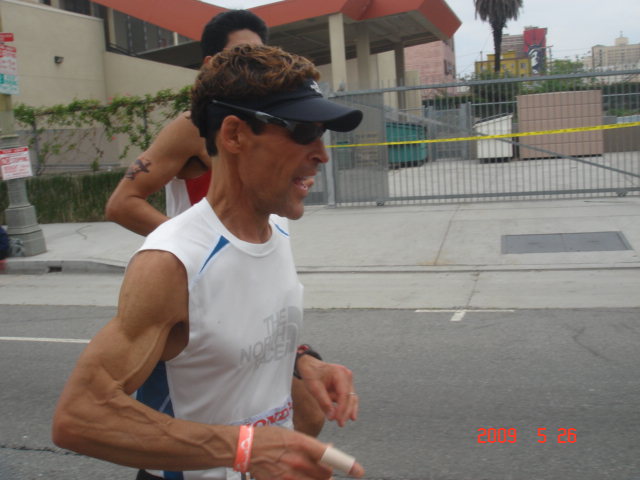
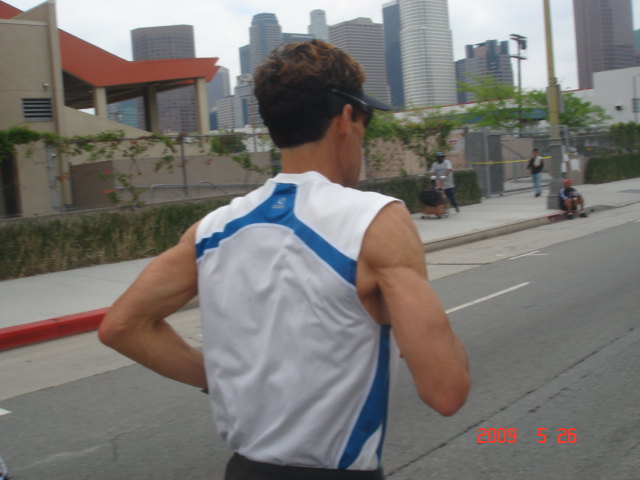
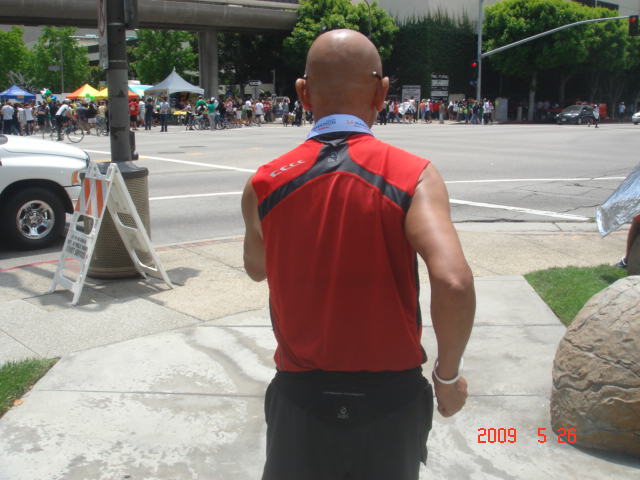
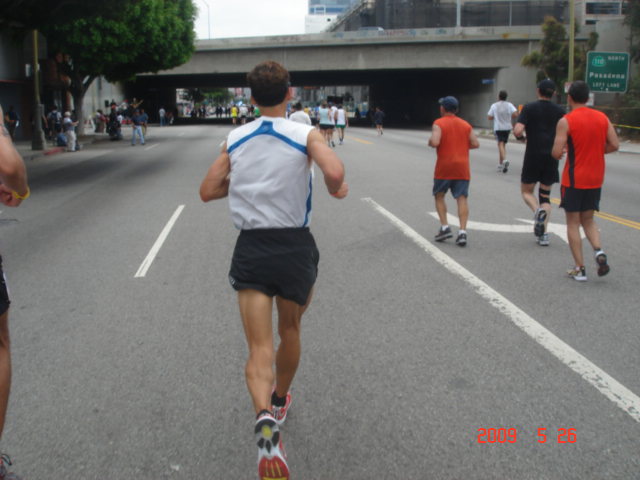
I managed to overtake more runners as these runners were positioned at the front before the start of the race. They are walking and some are having cramps. Others would run quickly to overtake and then stop and walk. The Badwater Ultramarathon runner would eventually build a considerable distance between us and he was able to position himself at least 300 meters ahead of me. He is the only runner who overtook me from the start of the marathon race at this point. As I was approaching Mile 25, I noticed a loud steps of a runner on my left who was about to overtake me and to my surprise, it was Dean Karnazes in person! I tried to keep up with his pace for about 800 meters and I greeted him and told him that I am the “Bald Runner”. He offered his hand and we had a handshake and started a conversation by asking him about his TNF 100 Australia experience. He told me that the TNF 100 was fine and challenging and I told him that the TNF 100 Philippines was held last weekend. I asked him if he is joining the upcoming San Diego 100-Mile Endurance Run and he said that he’ll not join the ultra running event as he will be running the San Diego “Rock & Roll” Marathon next Sunday. I checked on my GF 305 average pace while I was running with him and it registered a 5:00-minute per kilometer pace! I tried to keep up with his pace and I slowly faded with his blistering speed/pace as we are approaching the last 300 meters to the Mile 26 marker. It was my fourth encounter with the famous Karno since I met him at Badwater last July 2008. Dean Karnazes was the 2nd guy who overtook me during the duration of the race! In summary, those guys who overtook me were two (2) elite ultramarathon runners who are much younger than me.
Dean Karnazes While We Were Talking To Each OtherDean K's Back & TNF Muscle ShirtMy Back & My TNF Muscle Shirt (Dean K & I Were Using The Same Shirt!)
Finish Line
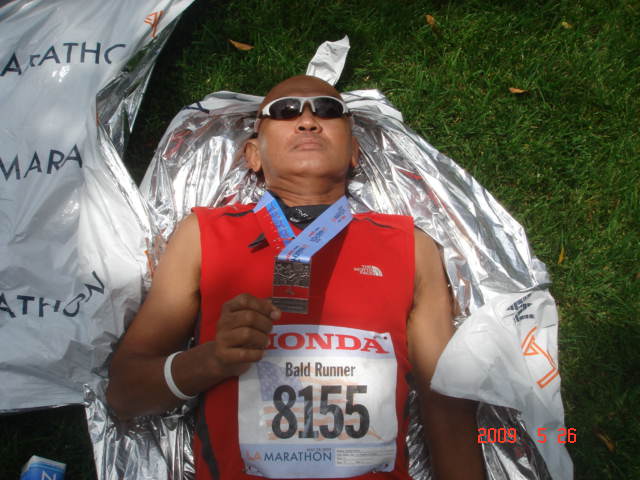
As I reached the Finish Line, I stopped my GF 305 and saw the readings on the digital clock with a time of 4:13:02 hours. My GF 305 registered a time of 4:07:35 hours and my official Finish Time (Chip time) is 4:07:33 hours as posted on the Official Results. Not bad! If not for the heavy traffic of runners at the first half and the difficulty of the terrain on the second half, I could have reached the finish line in less than 4 hours. Anyway, it will be one of my objectives to improve my finish time in the coming days in preparation for the Milo Elimination Marathon Run on the first week of July.
Based from the Official Results, I placed #1,902 out of 14,185 finishers; # 1,630 out of 9,011 Male runners; and placed #47 out of the runners in my Age Category 55-59 years old. I registered an average pace of 9:26.6 minutes per mile.
In my GF 305, I registered an average pace of 5:48 minutes per kilometer and an average heart rate of 154 beats per minute. As for the distance, my watch registered a distance of 42.68 kilometers. I could have ran an extra distance of 500 meters!
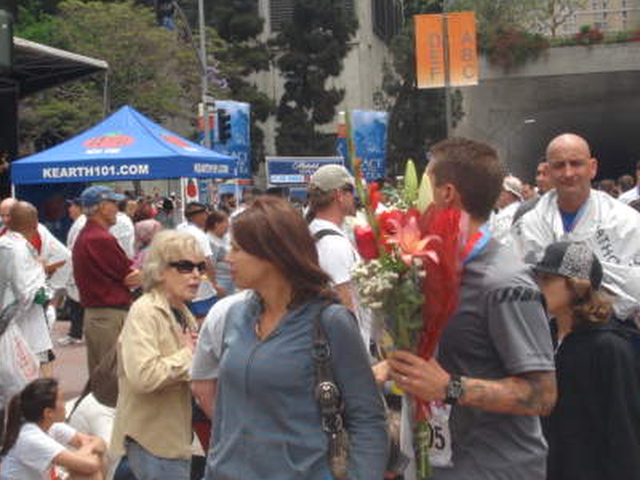
Yes, They Offer Flowers As Gift To 1st Time Marathon Finishers
Assessment & Conclusion
It was a blast and fun to experience running a marathon with almost 14,000 participants where infront and at your back is a “sea of runners”. The cooperation of the whole community and the support of the volunteers are awesome and phenomenal which is hardly experienced in the Philippines. What surprises me now is the fact that there are high-ranking influential and rich personalities in our society (they are in government service and some are in the corporate world) whose feats and finishes in international marathon races (like New York & Boston) for the past months and years had been published in the newspapers with their pictures on the front pages of our daily broad sheets but I don’t feel or see or heard from them any actions or initiatives to raise the bar or standards of helping or supporting our running events (especially an International Marathon Race in Manila) in the country which could attract international runners. You know already as to whom I am referring to. Kailan kaya tutulong ang mga ito? Kinakailangan bang maki-usap at lumuhod tayo sa kanila para tutulong at gagalaw sila?
As an advise to the hardcore runners and competitive ones who want to experience a memorable and “complaint-free” Marathon Race, save some money and travel to the United States and select one of the marathon events held in the cities along the Pacific States or in Hawaii. You can also try the New York Marathon or to any other marathon events in the USA where you are comfortable (where you have a relative who can support you in terms of accommodation and transportation). Once you experience joining one of the Marathon Races in the US, then you will know what I am talking about. Guys, forget Hongkong, Singapore, Kuala Lumpur, and other Asian city’s Marathon races, go to the USA and you will never regret it.
Lastly, I consider the XXIV Los Angeles Marathon a “perfect” marathon event.
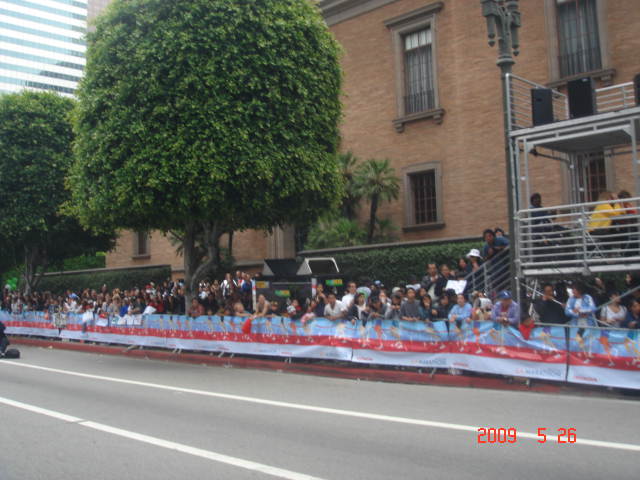
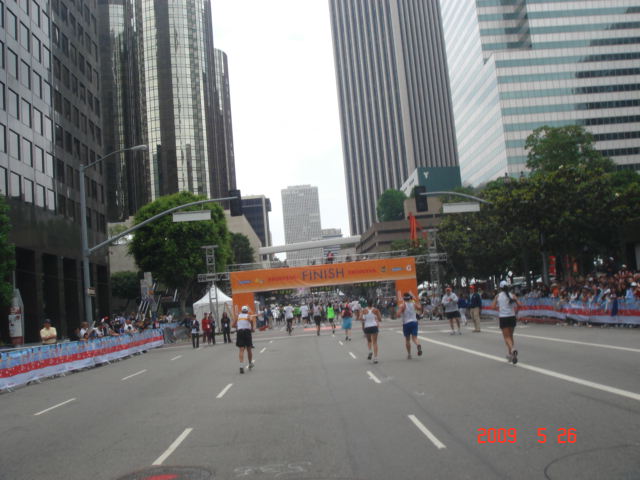
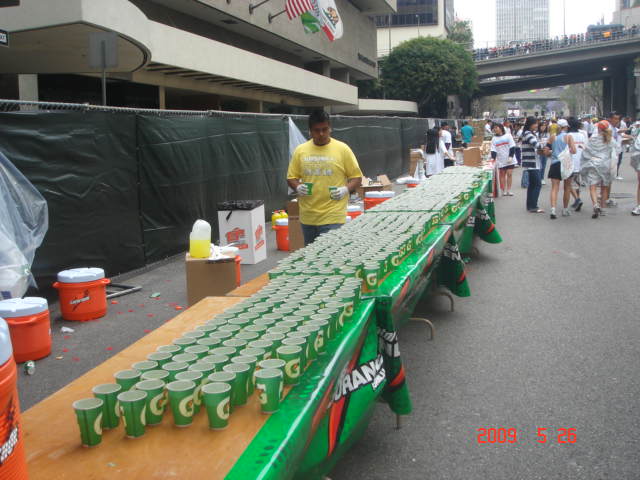
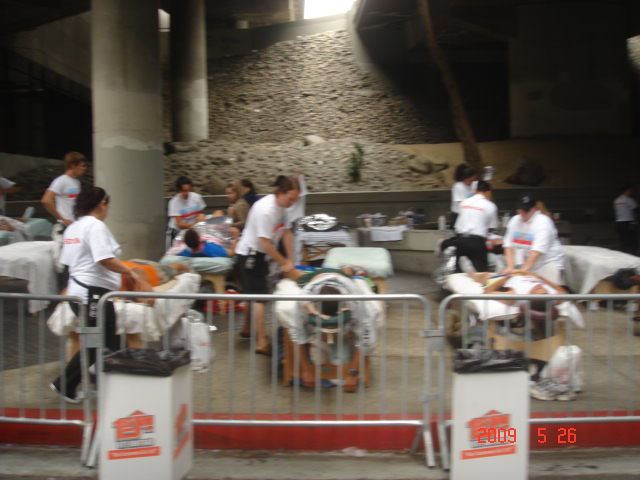
Look At The Legs Of Karno!Spectators Before The Finish LineThe Finish LineTo Our Race Organizers, This Is How Long A Water/Garorade Station Is During The Race (On Both Sides of the Road!)Free Massage After The Race But The Waiting Line Is LongResting On The Grass While Waiting For Jovelle To Arrive"Team Bald Runner-Los Angeles Group" Members With Their Finisher's MedalEat & Hydrate After The Marathon Race
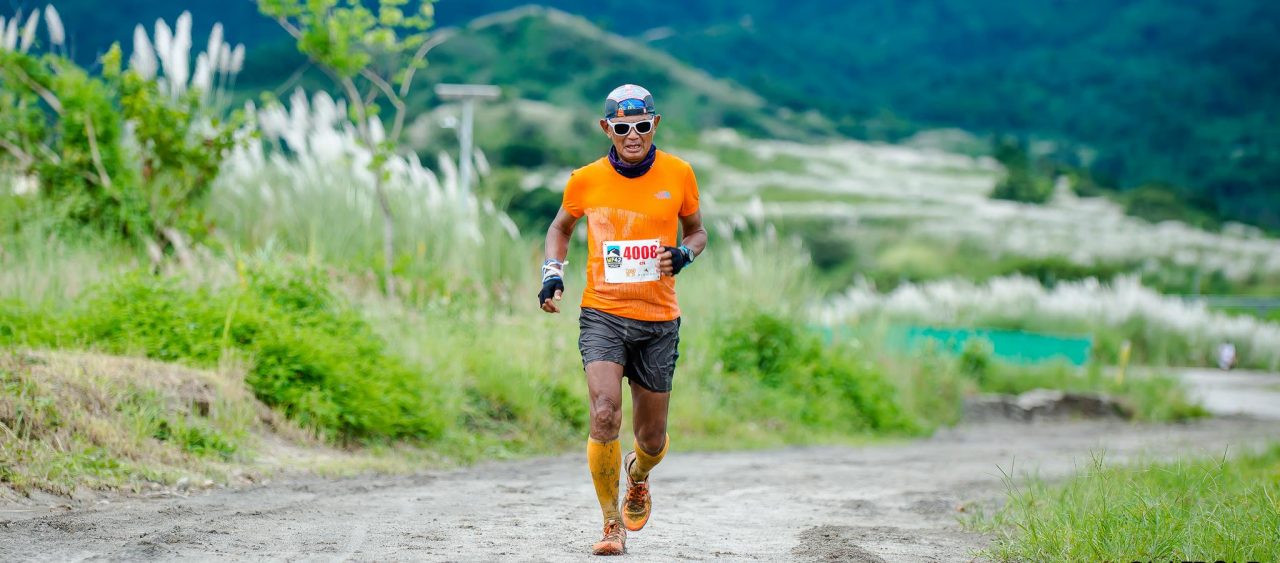



 Bald Runner
You must be logged in to post a comment.