While browsing and making a research on trail running, I was able to discover these two articles which were written/published at Runner’s World Magazine in 2002 and 2007. They are nice reading materials to those who would be interested in trail running and eventually join trail road races in the future.
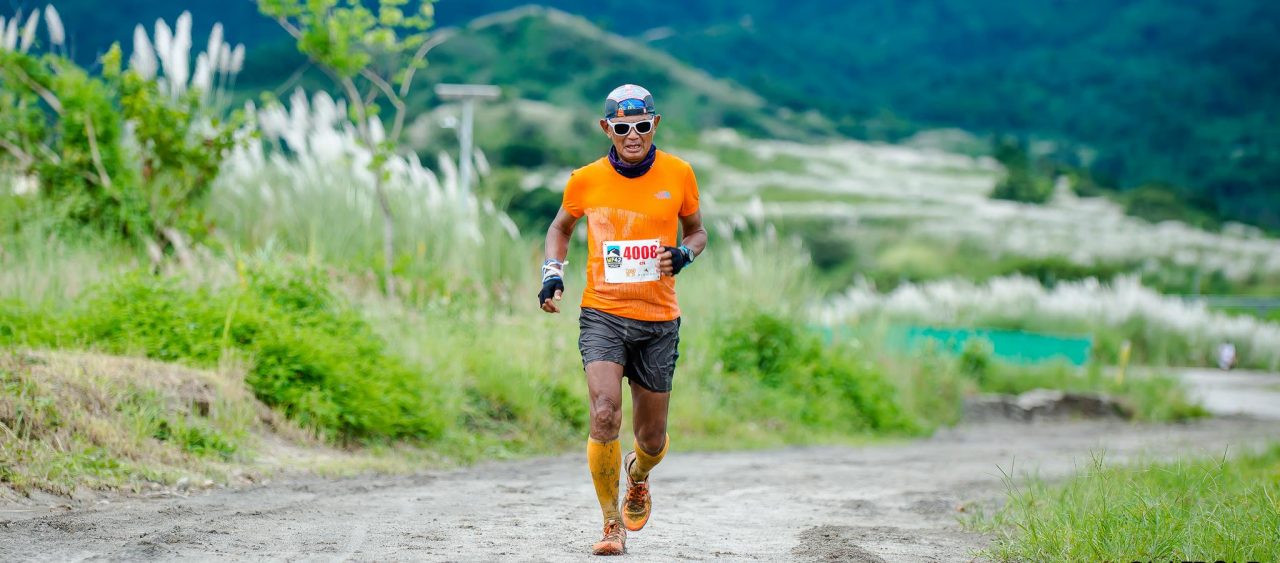
For the benefit of those of who will join the The North Face 100 run (10K, 20K, Team Relay, and Solo 100K) next weekend, these articles are nice reading materials.
To those who will be joining this race, good luck and be safe on the trails.
I will catch up with this race in October 2008 for the Singapore event. I hope by this time I will be prepared to experience the 100K run.
TRAIL RACING 101
Trail races are scenic and invigorating and different. Which makes them appealing, but also a bit intimidating. Fear not. Here’s everything you need to know.
By Martin Dugard
PUBLISHED 08/08/2002
Some researchers believe that each of us has an instinctive need called biophilia — a longing to be one with nature. Biophilia is why sitting on a park bench for 15 minutes can produce such contentment and stress release. It’s what makes us look out the window wistfully when stuck inside on a sunny day.
And it’s the only possible explanation for golf’s enormous success.
Biophilia is also a major reason why trail running has become so popular. Bounding along a woodsy trail induces calmness while improving leg strength, coordination and body awareness.
Maybe that’s why trail-race participation numbers are way up. Once synonymous with “fringe” running and high-altitude events, trail races now tend to be shorter — 5-Ks, 5-milers, sometimes 10-milers — and more accessible. The degree of difficulty has decreased, too, with many courses now looping through urban parks and along gentle nature trails. Aid stations are commonplace, and women are just as likely to compete in these events as men.
That said, trail races haven’t become so easy that you don’t need to train for them. Trail running requires more total-body fitness and a better sense of running technique than running on the roads. Trail tactics are vital, too, as is knowledge of the terrain you’re likely to encounter. Here’s everything you need to know:
Practice Makes Perfect
This much is true: If you want your inaugural trail race to feel natural (flowing over hill and dale) instead of calamitous (bouncing off trees and tripping over exposed roots), you must train on trails. Three months before your first race — after buying a good pair of trail shoes — try to spend two training sessions per week running off-road.
If you’ve never been a trail runner, you’ll notice some differences immediately. A trail surface is never perfectly smooth, so you can’t run with a perfect stride. A trail invariably undulates, which makes it harder to find a running rhythm. A trail has low branches and overgrown bushes, which means constant ducking and dodging.
At first, these differences can make trail running seem exhausting. There’s much more lateral movement (as opposed to linear), which requires greater use of peripheral muscles around the ankles and hips and in the quadriceps and glutes. While you may feel tired after only a few minutes of trail running, time and practice will improve your stamina.
Among other things, you’ll be learning where to place your feet to avoid a fall, how to take turns more efficiently, which plants to dodge and which to brush harmlessly past. It’s running in a more primal fashion than many of us are used to.
The Long and Short of It
Trail races are equal parts strength and speed. So as you build up to the big race, incorporate longer, slower runs as well as shorter, faster runs into your program.
Long run: Develop endurance and leg strength by shifting your weekly long run from roads to trails. To prepare for any race shorter than a 10-K, plan a long run that lasts around 60 minutes. For a 10-K or longer, work up to 90 minutes or more. Don’t feel discouraged if you’re running slower than you do on the roads; that’s just the nature of trails.
Speedwork: A good trail racer possesses two forms of speed: leg speed and trail speed. Alternate the following two types of speed-training sessions every week as you prepare for your trail race.
1. “Leg speed” is that flat-out turnover of your legs, and it’s best developed on the track, not the trail. You’ll increase stride efficiency, sense of pace and anaerobic threshold by doing a weekly set of 6 to 8 x 400 meters or 3 to 4 x 800 meters at slightly faster than race pace. If the track just isn’t your bag, try doing some hill work. Start with 4 to 6 repeats of a 200- to 400-meter hill, eventually working up to 8 or 10.
2. “Trail speed” is the ability to run at race pace over varying terrain. This is best accomplished with a 30- to 45-minute fartlek run on a trail that’s not too rugged. (The term fartlek, or “speed play,” was coined by the Swedes to describe speedwork on trails.)
Make it fun. Sprint from tree to tree. Run fast up a hill and jog the backside, or vice versa. There are no rules to fartlek workouts, only that one must push hard playfully. You’ll work hard, but it won’t feel like it. And you’ll learn a lot about trail running in the process.
Cross-Training
Developing your quads and glutes through weight training and cycling (either on a stationary bike or mountain bike) will give you more power when running uphill and more strength late in the race. Also, you’ll strengthen the ligaments and muscles around your knee, protecting it from torque-related injuries or sprains.
Weights: Doing sets of squats, hamstring curls, quadriceps extensions and calf raises will help you the most. If your gym has a Butt Blaster machine, try it out. I’ve found that it perfectly imitates the leg movement of uphill running by isolating the glutes and upper leg muscles.
Cycling: Mimic the running motion by standing up in the saddle when climbing hills. Mountain biking is also a great way to scout out new trails, as you’re able to stay out longer with less effort.
Tactics and Techniques
As you train, think about staying light on your feet. Run as if on eggshells. Also, resist the tendency to favor one leg over the other. A lot of runners start using one leg as the “plant” leg to land heavily on and the other as the “drive” or “push-off” leg. Each leg should do these actions interchangeably. Some other tactics to remember:
Downhills: Run on the balls of your feet, not on your heels. This means less pounding, more speed and greater control.
Uphills: Shorten your stride, and keep your head up and chest forward. Run relaxed and try to find a rhythm that will take you up and over each hill with relative ease.
Corners: To a greater extent than on the roads, trails offer the chance to round a corner and “hide.” Practice bursts of speed when turning corners. Competitors won’t see you accelerate, and will experience a mental letdown when they see you’ve “gapped” them. Include this maneuver as a regular part of your fartlek workout.
Streams: It’s possible to cross a stream while barely wetting your feet. All you have to do is high-step across as quickly as possible, allowing your feet to touch down only for a fraction of a second. Try it. And don’t be afraid to run right through a stream. Too many competitors lose time by halting at the edge of a stream midrace.
A Trails Primer
Every type of trail offers unique challenges. Here are some of the more common trail surfaces, with tips on navigating them:
Sand. Sand is never easy to run on, especially when the weather’s been hot and dry and the sand is loose. An experienced trail runner often flits down a sandy trail (as opposed to running in a straight line), always searching for the firmest footing. Typically you’ll find the hardest-packed sand — and the fastest line — on the very edge of the trail.
Mud. For all-around annoyance, nothing beats running down a muddy trail. It’s dirty, there’s a greater chance of slipping, and mud tends to stick to your shoes, making them heavy. So look closely — and react. Shiny mud is invariably wet and liable to suck you in. Mud with a dull appearance is usually firmer and faster to run on.
Rocky terrain. Step lively here, using a higher leg lift to avoid tripping. Concentrate hard and choose footing carefully to keep from twisting your ankle.
Forest paths. Deceptively beautiful, forest paths are often covered with leaves that hide tripping hazards such as rocks, roots and holes. Wooded areas also tend to retain moisture, so trails can be slick. As with rocky paths, pay close attention to foot placement.
What to Expect on Race Day
A trail race can be quite different from a road race. Some words of wisdom regarding race day:
First of all, wear those trail shoes. They’re light enough for racing, but offer the lateral support you need to keep your feet and ankles more stable. Also, a trail shoe has a heavier tread pattern than a road shoe, and offers a toe “bumper” to protect you from bruising.
Start slowly. In essence, a trail race is a whole bunch of people trying to squeeze onto a skinny trail. Which may make you want to start out fast to beat the crowds. Don’t. This will only send you into oxygen debt and sap the energy you’ll need later in the race — when everyone else is tiring.
Stay loose. As the race progresses, you’ll find a rhythm. Imagine yourself as nimble and light-footed as Fred Astaire. In this relaxed state, you’ll be less likely to fall and more apt to maintain speed.
Above all, have fun. Trail racing is the most natural form of racing. Indeed, we feel like children as we run through the forest. It’s playtime, and we’re called to it.
TRAIL RUNNING SAFETY
What you should know before hitting the trails
By Brian D. Sabin
PUBLISHED 06/06/2007
Even experienced trail runners can get into trouble on unpredictable terrain. And now that more runners are going off-road, accidents are likely to increase. Here are five tips for staying safe on the trails.
Keep in touch: When trying a new trail, go with someone who knows it–and bring a map, compass, cell phone, and whistle. If you do go solo, give someone a map of your intended route. Go to nps.gov for maps of national park trails, or plot your route at www.usatf.org.
Think time, not distance: Tough terrain and hills can double the time you need to cover a mile. So consider how long you want to be out. “Experienced trail runners cover about six miles an hour,” says Scott Jurek, seven-time winner of the Western States Endurance Run. “Less-fit runners should target four.”
Fuel up: Bring food with you, even on short runs, in case you’re in the woods longer than expected. “Energy bars and gels are good because they’re easy to carry and digest,” says Monique Ryan, author of Sports Nutrition for Endurance Athletes. The carbohydrates will help you run and concentrate. Also, stay hydrated with small, frequent sips from a water bottle or hydration pack.
Watch the weather: Especially at higher elevations, temperatures can change and storms can roll in quickly, so plan accordingly. Even in the summer, Jurek brings a winter hat and a Brooks L.S.D. jacket ($85, www.brooksrunning.com
), which is water-resistant and weighs only 3.1 ounces. Use sunscreen, but be careful not to apply too much; it can clog pores and cause you to overheat.
 Bald Runner
Hmm, sounds tailor-made for mountaineers — and sans the customary 45-pound pack loads at that! I heard TNF100 will be raced around, near, or partly up, Mount Talamitam in Nasugbu? Can anyone confirm this please? Talamitam is basicaly treeless beyond a tiny patch of forest across the river from the highway, so it would be hot if it were.
LikeLike
BR – thanks for this entry. this will surely help out newbies like me this sunday.
Cecil – read the info sheet again .. yup its Mt Talamitam.
LikeLike
cecil, i think you will beat most of the better runners in this kind of race.
bards, i am also a newbie on this kind of running and it provided me a lot information, too! good luck on your first trail racing!
LikeLike
Lupet ni bards. How I wish I could join TNF100. Malayo e.
“Think time, not distance.” My mantra as well when running. Just taking it easy. I just want to make sure I have the endurance to run for a long time. Distance is next. Then the speed. Thanks for this post.
LikeLike
baldrunner, are you gonna be around the la area after sf? i’m hoping to (finally) meet a fellow happy feet runner and show you some southern california trails.
LikeLike
jinoe, you can try the 10 or 20K run for you to experience trail running. “think time, not distance” and take one step at a time. you need patience to run this event. anyway, running an ultra race could be a nice goal after the marathon.
e-rod, i will stay in lax for some time and hope to meet you, too! i’ve visited your blog and your running accomplishments are very impressive. nice blog! thanks for the invitation.
LikeLike
asus Jinoe, pang 10K lang po ako. i was tempted to do 20K but decided to be conservative with the distance. but an ultra is always in my mind … especially after a good long run.
LikeLike
Thanks Bards, but the fine print makes my eyes hurt 🙂 Hope to see you there then. Thanks BR, but I’m out of shape ha ha
LikeLike