Thoughts of Dr George Sheehan #1


I just thought of copying and posting one of the writings of Dr George Sheehan whom I adore up to this time and who inspired me when I started to learn the scientific way of running in the early 80s. I was then in my early 30s and I was reading the “thoughts” about running of a doctor twice my age who had been passionate in running. He was popularly known as the “Philosopher Of Running” in the modern times. Way back in the 80s, it became a habit to read first the page of Dr Sheehan whenever I have a copy of the RW Magazine, whether old or new, and this gave me the inspiration to run and train some more. Since I revived my running last October last year, my day is not complete if I don’t read an essay or two from the writings of Dr Geoge Sheehan which I usually read before going to bed. Here is one of his essays:

Running Into Old Game

“What I have lost I can afford to lose. What I have gained is something I cannot do without.”

           I first came upon the aging process in a race.
           I felt no sense of advancing years in my day-to-day activity. My work week was unchanged: I wrote, I traveled, I lectured. Some people marveled at my energy and endurance. It was my weekend race that finally told me I was no longer young.
           The changes that come with age are subtle-but not to a runner. My 10-K time measures me quite accurately. Any change in performance dictated by age is precisely recorded in minutes or seconds on the digital clock at the finish line.
           “Crumbling is not an instant’s Act,” wrote Emily Dickinson. And the physician in me knows that almost 90 percent of my liver has to be damaged before its impairment is apparent. The body has enormous reserves to call upon. But in the race, I call on all my reserves. I am operating at full throttle. The least diminution in function becomes evident.
           The race, therefore, is the litmus test for aging. Long before anything else goes, race times signal the approach of the last stage of life. A look at my weekly race results will tell you bluntly that I am no longer middle-aged. I am now a full-fledged citizen of the country of the aged.
           Three years ago when this happened, I refused to believe it. Running had been my fountain of youth. For years I thought it was inexhaustible, like the never-empty cup of coffee some restaurants offer. After I began running in my 40’s, I quickly became 32 years old and stayed that way. Decades came and went, and I was still in my prime.
           When my 10-K times slowed down and I began to run personal worsts instead of personal bests, I took stock. It was not age, I told myself. I had been 32 years old for the previous 20 years and did not intend to get older. All I needed was more training, some hills and speedwork, and I would be back to my best.
           I took up arms against age. I increased my training and within a single Thanksgiving holiday ran four races. Each race I ran a little faster than the previous one, but never near the times I had registered the year before. And I was no longer in the top third of the field-now, I was well back in the second half of the pack.
           How did I feel about all this? Terrible. And don’t remind me that most people my age have run up the white flag. Do not tell me I can still outrun the average person twenty years younger than me. Do not point out that age has compensations that will more than pay for the lost few minutes in the race.
           I am rebuilding my life on those thoughts. But first, help me bury the runner I once was, and then we can talk about what the future holds.
           Apparently, it still holds plenty. My initial depression has receded. I realize now that there are more things at stake than setting a personal best in a road race. I can even answer truthfully (and this is the most difficult part) when someone asks me, “What was your time, Doc?”
           My times continue to get slower and slower. And, therefore, the “me” that I am is different. But the me that I am has developed insights and wisdom that I did not have before. What I have lost I can afford to lose. What I have gained is something I cannot do without.
           The race, however slow my times, remains an ever-changing learning experience. Whenever I race, I learn something new about myself and those who race with me. I will never be 32 years-old again, but it no longer matters, because I’ve learned that winning doesn’t matter, it’s running that counts. And when I push to the limit, I am a boy again-an untried youth listening to the wisdom of my body.

Copyright © The George Sheehan Trust
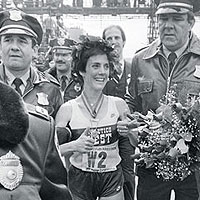
 

Women’s Marathon Idols in the ’80s


Joan Benoit Samuelson: (USA)

                  happybirthdayjoanie200x200.jpg

     1979 & 1983 Boston Women’s Marathon Champion

     1984 Winner in the US Women’s Olympic Marathon Trials     in 2:31:04, 2 1/2 weeks after arthroscopic knee surgery.

      1984 First Olympic Womens Marathon Gold Medal with a time of 2:24:52. The only American woman to win the event up to the present.

      1985 Winner in the Women’s Chicago Marathon in 2:21:21.

      2002 American Women’s Record Holder among 45-49 years old with 2:42:28 in Chicago Marathon

      2006 Running partner of Lance Armstrong in the last 16 miles of the New York Marathon

       2007 Training for the US Women’s Olympic Trials set on April 20, 2008 in Boston ( The day before the Boston Marathon). It will be her fourth Women’s Olympic Trials. Her goal is to break 2:50:00 at 50 years old!

Grete Andersen Waitz: (Norway)

                  gretewaitz.jpg

        1978-1988 Winner of the New York City Marathon for 9 times

        1983 Winner of the World Championship Women’s Marathon in Helsinki, Finland

        1983 & 1986 Winner of the Women’s London Marathon

        1984 Silver Medalist in the 1984 Olympic Games Women’s Marathon

Rosa Mota: (Portugal)

        1984 Bronze Medalist Women’s Marathon Olympic Games

        1983 & 1984 Champion Chicago Women’s Marathon

        1982, 1986, & 1990 European Women’s Marathon Champion

        1988 Gold Medalist Olympic Games Women’s Marathon

        1987 World’s Marathon Champion

        1987, 1988, & 1990 Champion Boston Women’s Marathon

Ingrid Kristiansen: (Norway) 

                   kristansen1.jpg

        1980, 1981, & 1982 Champion Stockholm Women’s Marathon

        1984, 1985, 1987, & 1989 Champion Women’s Fastest Marathon Race

         1984, 1985, 1987, & 1988 Champion London Women’s Marathon

         1986 Champion Chicago Women’s Marathon

Allison Roe: (New Zealand) 

                  allisonroe.jpg

         1981 Champion Boston Women’s Marathon

         1981 Champion New York City Women’s Marathon

Dr Arthur Lydiard


If you want to train better and more focused, race faster and smarter, and improve your running form, you should be able to read and do the Lydiard’s Method. Take note of his hill training workouts and drills!

Just some words of caution, it takes a lot of patience, perseverance, commitment and dedication to follow his training. It takes years to build-up and balance aerobic and anaerobic capabilities of the runner’s body and be able to naturally develop the most relaxed running form.

Good luck and keep on running! 

My Running Idols in the ’80s


Aside from Waldemar Cierpinski whom I featured in one of my postings, I would like also to feature my “running idols” in the ’80s until such time when I reduced my regular practice runs in the ’90s. These “champions” motivated me to be serious in running and ultimately, inspired me to run more marathon races in the ’80s and later part of the ’90s. These running idols were the “items and personalities” to read in the Runners World Magazine  and other runners’ magazines then and most readers sometimes try to emulate and copy their training programs. I was one of them!

                     seko_boston79.jpg  

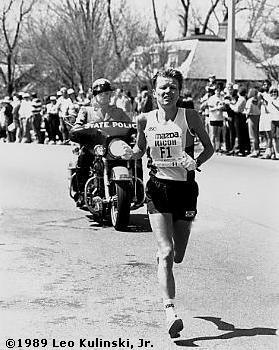
Bill Rodgers (Race # 1) of USA won the Boston Marathon for four times (1980, 1979, 1978, 1975); won the New York Marathon for four times (1979, 1978, 1977, 1976); and won the Fukuoka Marathon once (1977). 

                      sekorikumaga.jpg  

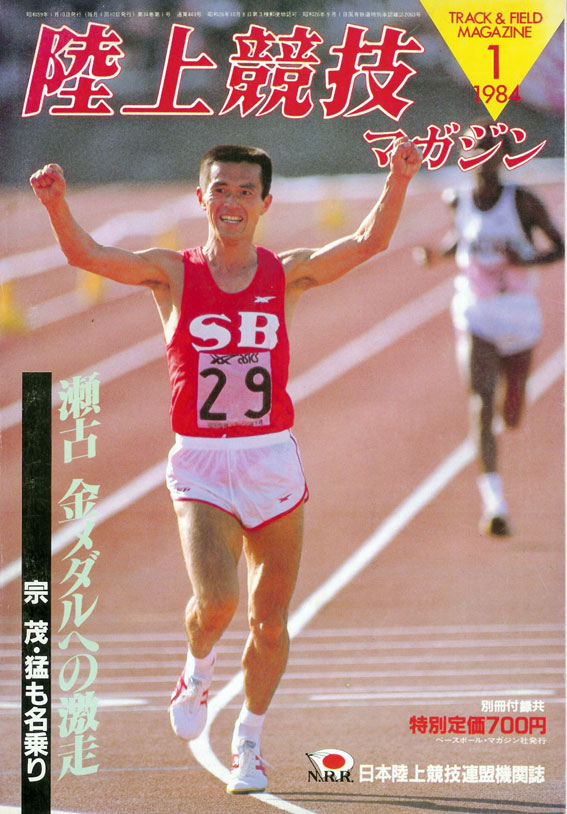
Toshihiko Seko of Japan won the Fukuoka Marathon for four times (1983, 1980, 1979, 1978); won the Boston Marathon two times (1981, 1987); and other prestigious marathon races in Japan & Europe.

                     decastella_robert.jpg  

Rob de Castella of Australia won the Marathon in the Commonwealth Games twice (1982 & 1986); won the Fukuoka Marathon in 1981; won the Rotterdam Marathon twice (1983 & 1991); won the World Championship Marathon in 1983; and the Boston Marathon in 1986.

                    p1_salazar2.jpg  

Alberto Salazar was born in Cuba but later migrated to the USA with his family. He won the New York City Marathon for three times (1980, 1981, 1982) and won the Boston Marathon in 1982. He suffered a heart attact last June 30, 2007.

                   jones84_cover.jpg   

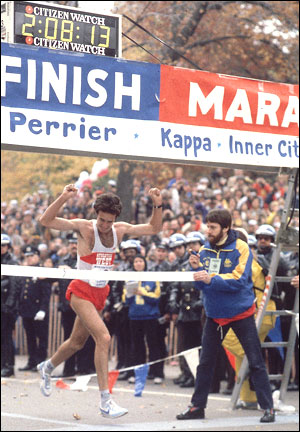
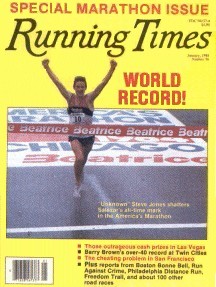
Steve Jones is a Welshman who won the Chicago Marathon for two times (1985, 1984); won the London Marathon in 1985; and later won the New York City Marathon in 1988.

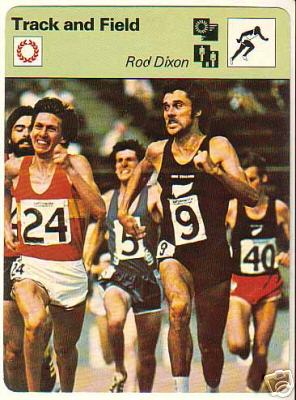
                  rodcollectorscard.jpg

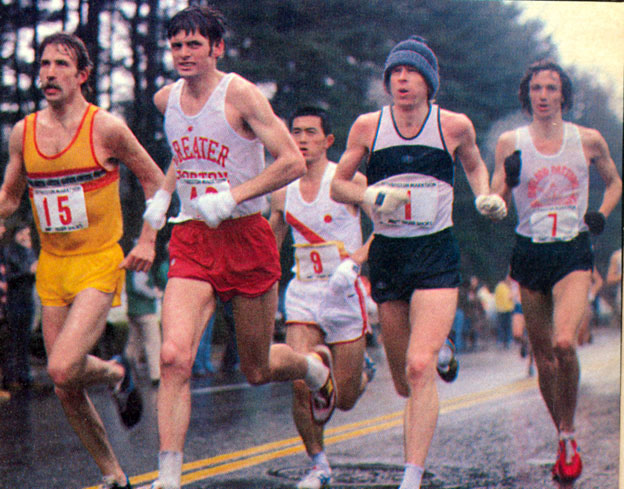
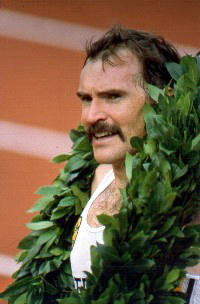
Rod Dixon of New Zealand had been the Bronze Medalist in the 1972 Munich Olympics for the 1,500-meter distance. He also won the New York City Marathon in 1983. He was a distinct runner then with his all-black running attire (official color of New Zealand uniform) and mustache in his running pictures. He now lives in Las Vegas, Nevada. 

These “marathoners” were featured in the cover pages of running magazines in the ’80s and it was nice reading articles how they won in their respective marathon races by writers who were also runners. Nowadays, seldom you could see marathon champions featured in the cover pages of popular running magazines in publication. Most of these magazines are already fond of featuring beautiful lady runners who are are not yet champions!

I wonder when will they (runners magazines) feature the top Kenyans, Ethiopians, African, European…and Asian “elite/champion” runners in their special stories and cover pages?

Pictures With My Marathon Kids


I am posting the pictures of my “marathon kids” who had been consistently joining the annual Los Angeles Marathon.

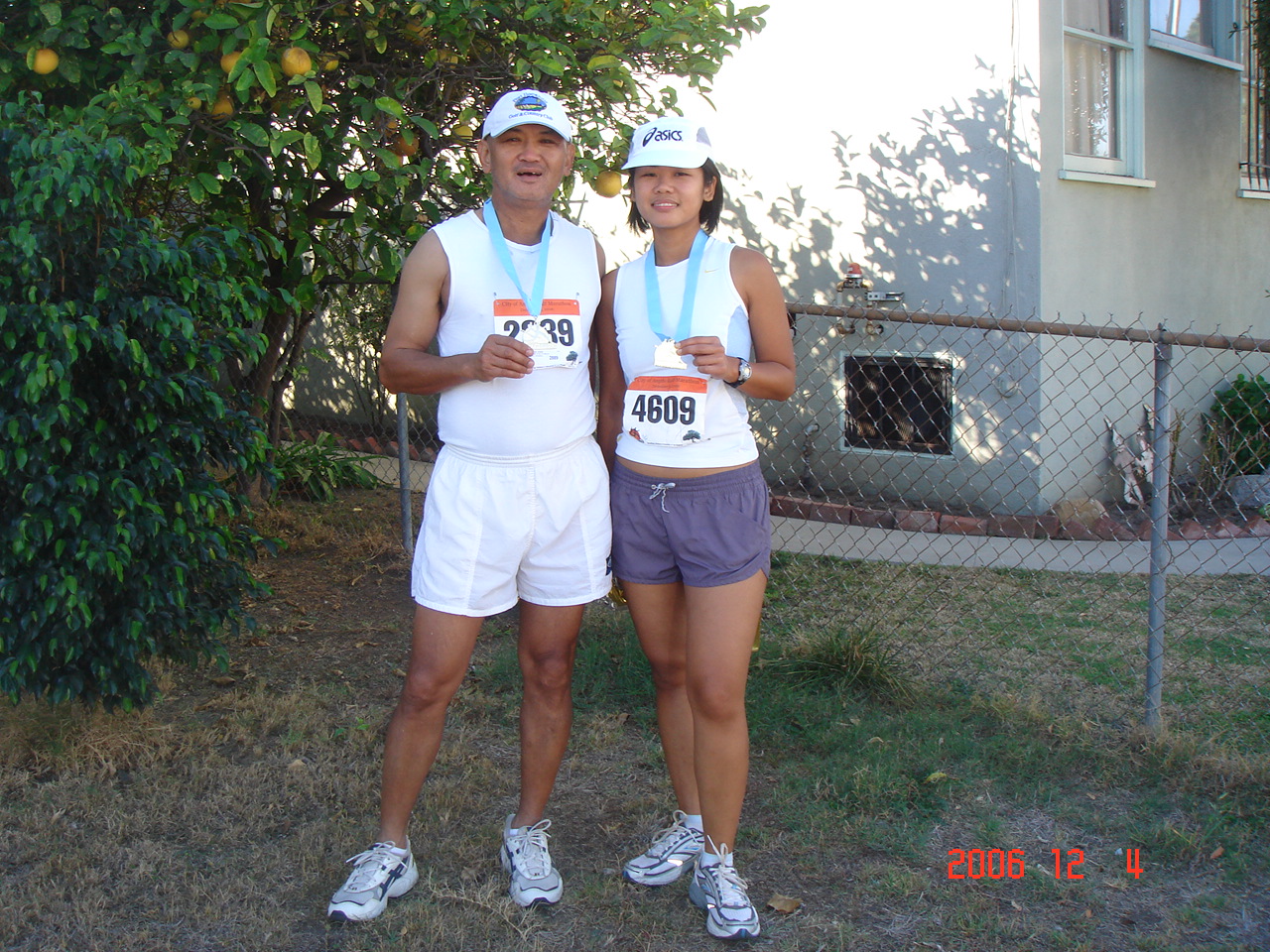
Today is the 28th Birthday of my daughter, Jovelle. This picture was taken after we arrived home from the Finish Line of the 1st City of Angels Half- Marathon held in Los Angeles last 04 December 2006. She is presentlty a Realtor at Prudential Realty Corp. You can visit her blogsite at www.jovellenarcise.com if you are interested in looking for a realty property in the Los Angeles area and knowing more about Los Angeles. He is a member of the LA Roadrunners Club and finished three consecutive LA Marathon Races. She graduated at UC Irvine, AB English in 2001.

dsc01151.jpg

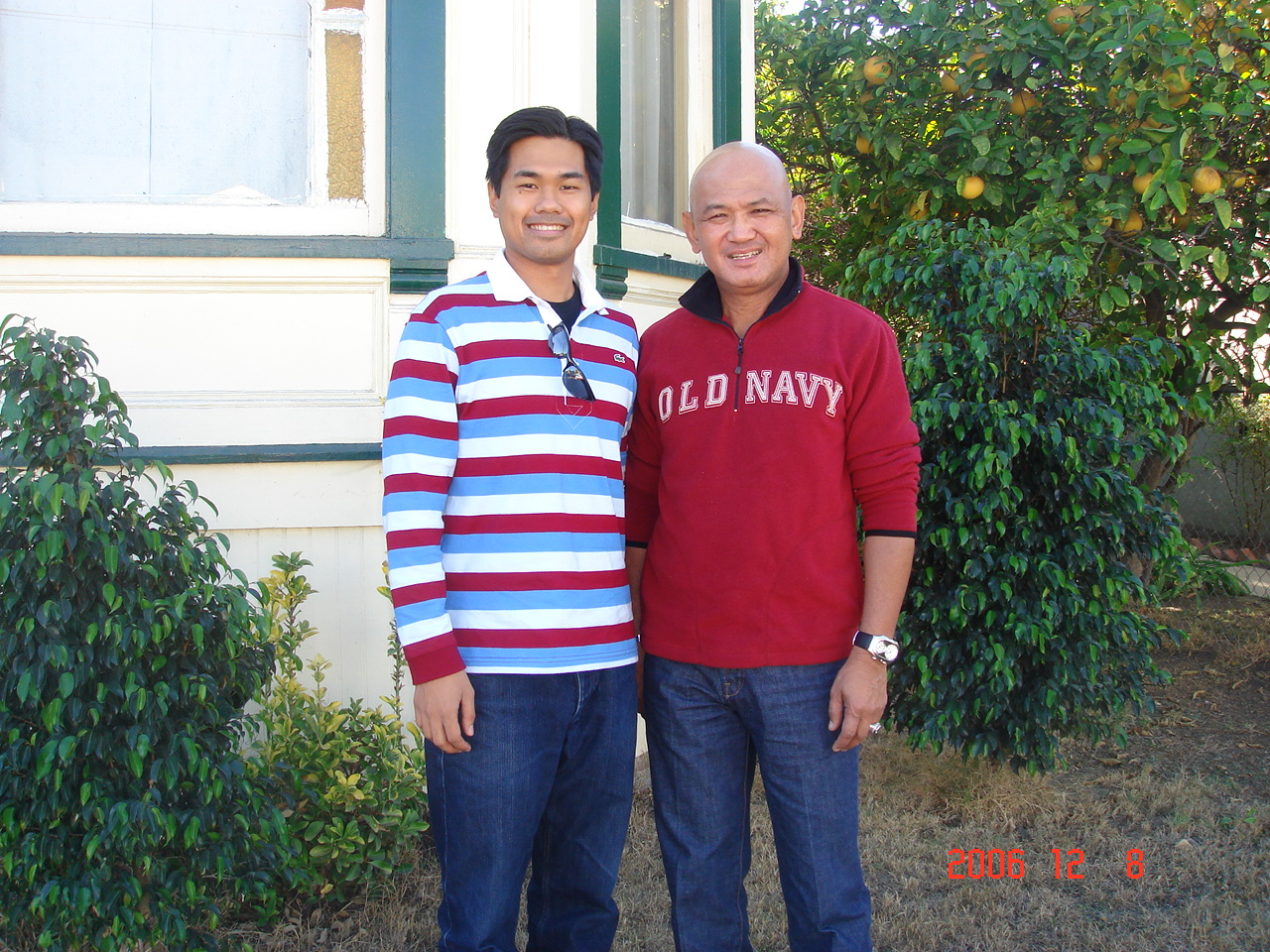
My son is also a passionate marathoner and a basketball player. After three years as a Paralegal in one of the Law Firms in Downtown Los Angeles , he decided to pursue his studies at the College Of Law. Presently, he is a second year student at Chapman University in Orange County. He graduated at UC Los Angeles, AB Political Science in 2000. He turned 29 years old last 31 August. He is a member of the LA Roadrunners Club and finished four consecutive Los Angeles Marathon Races.

dsc01229.jpg

That’s me, standing beside my daughter and son, the Bald Runner!

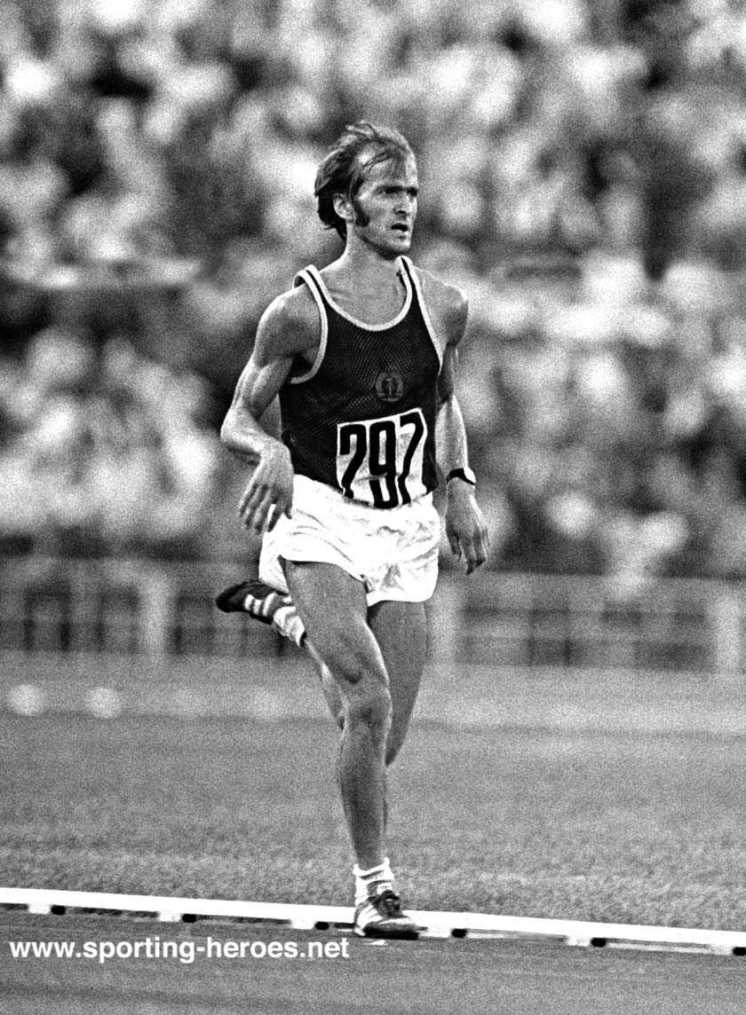
Picture: Waldemar Cierpinski


cierpinski_w_1980_gh_l.jpg

Waldemar Cierpinski in the last 200 meters of the 1980 Moscow Olympic Marathon where he won his second consecutive Gold Medal with a time of 2:11:03. (Note: Cierpinski was wearing a thin-sole Adidas Running Shoes)

How I wished I could have those strong and powerful quadriceps!!! 

Waldemar Cierpinski & My Second Marathon Race


The first world’s elite marathoner that I’ve seen in person was Waldemar Cierpinski of East Germany and I consider him as my No. 1 Olympic Champion for the Marathon up to this time.


In Montreal Olympics in 1976, he defeated Frank Shorter, the defending Gold Medalist in the Tokyo Olympics Marathon in 1972, in the last three miles of the race with a time of 2:09:55. In the Moscow Olympics in 1980, he won again after outsprinting Europe’s Marathon Champion Gerard Niboer of Netherlands in the last few miles of the race with a lead of 17 seconds. He finished the Moscow Olympics Marathon Race in 2:11:03. He duplicated the feat and record of the legendary Abebe Bikila of Ethopia for winning two consecutive Olympic Marathons. Up to this time, the record wins of these two elite marathoners are not yet erased.


Cierpinski joined the 1982 Manila International Marathon which to my experience and opinion was the “golden age” of marathon running in the country. I really don’t know how much money did the organizers or the government at that time paid for the “fees” for his attendance to the race. But looking at him at the starting line was already a strong motivation for me to run more marathons in the future. At that time, he was 32 years old as he was two years older than me. He is tall with long, lean, muscled legs with thinning hair and smiling face.


After the 1982 Manila International Marathon, I never heard of any Olympic Marathon Champion or World Marathon Champion or any Marathon Champion in any Key Cities of the World’s Marathon Race to have graced or joined/finished our Marathon Race in the country.


On February 1, 1982, I could still vividly recall the smiling face of Cierpinski when I met him alone leading the race along the Guadalupe area in EDSA, to be exact, infront of the Jollibee (now) as he goes back to Ayala Avenue then to the finish line at the Quirino Grandstand. I was then going down towards the Guadalupe Bridge,  towards the turnaround point at Ortigas-EDSA Crossing (at Robinson’s Galleria). That was how fast Cierpinski was and how far he was ahead of me! He was running then as if the race was a 400-meter dash when I saw him at that moment. His knees were kicking high infront of him and his feet/heels were almost touching his buttocks! This guy was not a “shuffler”, but a sprinter in a marathon race! Waldemar Cierpinski, the favorite to win, won easily and finished the race in 2 hours 14 minutes 27 seconds. (I did not remember the prize he received.)


In his preparation for the 1984 Los Angeles Olympics, he had participated in marathon races in Japan and in the European Marathon Races with impressive times. If not for the East Germany boycott in the Los Angeles Olympics, Cierpinski could had a chance to win for his third gold in the Olympic Marathon.


The training strategy of this elite runner is long distance but fast runs. In his training practices, his running pace in his longer but faster runs was 3:20 to 3:40 mins per kilometer with a maximum total distance up to 40 kilometers. His long slow distance runs averaged a running pace of 4:00 mins per kilometer. Well, there had been controversies and complaints against him on “blood doping” but nothing had been proven. His past accomplishments were due to hard work and focused training, pushing himself to the edge of his body’s capabilities.


By the way, I finished my second Manila International Marathon in, a slower time than my first one, 3 hours 28 minutes 49 seconds.


Waldemar Cierpinski is still my “No. 1 Hero” in the Marathon Olympics.


Running Generals


“Running Generals” are rare breed of disciplined, consistent, patient, focused and passionate officers of the Armed Forces of the Philippines and the Philippine National Police who take running seriously and part of their daily scheduled regimen. These Generals should not be misconstrued as Generals “running” away from the enemy or “running” away from the battlefield and take the comfort of their “air-con” offices in the General Headquarters or in Metro Manila. These are the real “marathoners”. Most of them finished marathon races in the past and some of them are still adding more marathon races to their personal records even if they are already retired from the service.

I would like to pay tribute to some of the officers of the Armed Forces of the Philippines who later became Star Rank Officers or Generals who had finished marathon races in the past and in the present. Most of them became my models/idols but always my running competitors in road races in the past and some running events during alumni homecomings of the Philippine Military Academy.

Brig Gen Max Bejar, retired, as the Dean of Corps of Professors and Assistant Superintendent of Philippine Military Academy from 1986-1989. In my recollections, he was the first active General who run two consecutive marathons, 1987 & 1988 Pilipinas International Marathon. He was then a Brigadier General when he ran these two marathons. He is tall and stocky guy and finished his first marathon in 5 hours +. He migrated to the United States after his retirement from the service and he is still actively connected with the corporate world.

Admiral Jorge Necesito of the Philippine Navy, retired, as the The Naval Inspector General. He was the former Chairman of the DND-AFP Gintong Pangarap for Marathon for two years until I replaced him as the Chairman almost two years ago. He is one of the few Naval Officers who started running the marathons in the early ’80s.

Brig Gen Antonio Romero of the Philippine Army, retired, as the Assistant Division Commander of the 7th Infantry Division, Philippine Army based in Fort Magsaysay, Palayan City. He finished marathons in the ’80s and a consistent member of the DND-AFP Team for the annual participation to the International Corporate International Run Competition held in Palo Alto, California in the ’80s.

Brig Gen Samuel Narcise of the Philippine Army, still active in the service, presently The Inspector General of the Philippine Army. He finished a number of marathons in the ’80s and early ’90s together with me. He later shifted to badminton and he is now considered as one of the top active Generals in the sports of Badminton.

Chief Superintendent Samuel Tucay of the Philippine National Police, still active in the service, and presently the Director of the PNP Training Command. He is an active marathoner and acts as a Chairman of one of the Federations of Running Organizations in Metro Manila. 

Lt Gen Alan  Cabalquinto of the Philippine Army, recently retired from the service, and retired as the Commander of the National Capital Region (NCR) Command in May 2006. He was my running colleague/partner in the 2005 Pasig River Heritage Marathon and some of the PAL International Races in the ’90s. We both idolize Dr George Sheehan and exchange notes on running tips, training, and running fashion.

Commodore Vic Agdamag of the Philippine Navy, still active in the service, and presently the Commander of the Philippine Naval Command-North. He finished marathon races in the ’90s and a single-handicapper in golf up to the present.

General Benjamin Defensor, Jr. of the Philipine Air Force, retired, as Four-Star General and former Chief of Staff of the Armed Forces of the Philippines. He finished marathon races in the ’80s and presently holds an Ambassador position for Global & International Counter-Terrorism under the United Nations Organization.

Among these running Generals, only Brigadier General Max Bejar and Lt Gen Alan Cabalquinto were able to run and finish marathon races while they were actively holding the ranks as Generals. Their feat and passion in running marathons were not highlighted by the AFP and the media then but this simple posting on my blogsite will surely put them as part of the history of marathon running among the senior officers of the Armed Forces of the Philippines and the Philippine National Police.

Remembering Dr George Sheehan


Old runners like me always talk about this guy who is considered as the “Guru of Runners”. The first time I saw and read his writings was when I got hold of a Runners World Magazine way back in the summer of 1980. Buying at least three editions of the monthly Runners World Magazine in Dau, Angeles City was my solution to gain more information about the science of long distance running.

Few months before that, I joined my first attendance to a long distance running competition among the alumni of the Philippine Military Academy in commemoration of its Founding Anniversary during the mid part of February. I practiced running short runs on staggered basis 2-3 months before the competition and I thought I could compete in this race and finish well. The course starts at the gate of Camp Allen (near Baguio City Hall), passing through Harrison Road, and along the road going to Fort Del Pilar and finishing infront of the Grandstand of PMA Parade Grounds. Well, I was wrong! I did not compete in this race but I barely survived finishing the race.

Surprisingly, my younger brother, who graduated a year after me from the Academy, finished outstandingly and ranked as Number 4 among the top runners. If I can remember right, I finished within the 60+ place among almost 200 runners. After that run, I said to myself to excel and improve in the next edition of this race on the following year.

Reading the articles of Dr Sheehan in those past issues of the Runners World Magazine inspired me to plan, train, and test my capabilities in running. The result? After those LSDs, “fartleks”, lots of mileage, carbo-loading, positive attitude and discipline for almost 9 months, I became the second fastest runner among the alumni for three consecutive annual renditions of this PMA Alumni Race.

Now that I am getting older, Dr George Sheehan will always be my “guiding light” in running, my No. 1 Running Hero.

I highly recommend all runners to visit his website and read his essays at: www.georgesheehan.com/essays.

Dr George Sheehan: Runner & Philosopher


Remembering George Sheehan

Runner, Writer Explored the “Why”

Published November 02, 1998, in The Post-Standard.

By Dr Kamal Jabbour, Contributing Writer

On Thursday, Dr. George Sheehan would have turned 80 years old. However, this week marks the fifth anniversary of Sheehan’s death at his home in Ocean Grove, New Jersey, four days shy of his 75th birthday.

A runner, a cardiologist and a writer, Sheehan was the philosopher of our sport. Although he wrote many books and hundreds of articles on running, Sheehan did not tell us how to run faster or further. Instead, Sheehan told us why we ran. He explained the “why,” not the “how,” of running, and earned the nickname of “running guru.”

Sheehan was born on November 5, 1918 in Brooklyn, New York, the first of George and Loretta Sheehan’s 14 children. He competed in high school and college, but stopped running in 1940 when he started medical school. He joined the US Navy as a physician in 1943. Sheehan married Mary Jane Fleming in 1944, and they had 12 children.

In 1963, Sheehan returned to running and racing. Six years later, he ran a mile in 4:47, setting an age group world record, and running the world’s first sub-five-minute mile by a 50-year old. He competed regularly, and raced often in New York’s Central Park. From 1964 to 1984, he ran 21 consecutive Boston Marathons. He ran his fastest Boston Marathon in 1979 in 3 hours 1 minute at age 60.

In 1968, Sheehan began writing a running column for the Red Bank Register, his hometown newspaper. In 1970, he wrote his first column for Runner’s World. Two years later, he published his first book, “The Encyclopedia of Athletic Medicine,” followed in 1975 by “Dr. Sheehan on Running.” The success of his writing propelled him onto the lecture circuit, and he became a popular speaker at major races.

His 1978 book “Running and Being: the total experience,” was a bestseller. In this book, Sheehan transformed running into poetry. In eighteen chapters with one-word titles, Sheehan preached about living, discovering, understanding, beginning, becoming, playing, learning, excelling, running, training, healing, racing, winning, losing, suffering, meditating, growing and seeing.

Sheehan considered himself an experiment of one. What worked for him, may or may not work for others. He saw racing as the only reason for running. He ran hard in every race, believing that a runner who could walk out of the chute did not try his best.

Philosophically, Sheehan proclaimed that the difference between a jogger and a runner was a race entry form. Therefore, when the fitness craze swept the country in the seventies, he characterized fitness enthusiasts as joggers, and competitive athletes as runners. He went on to claim that health benefits ended where competition began, and that runners raced for a goal higher than fitness.

My mentor raced against Sheehan at various venues, and watched him run and speak. He remembers him as a quiet man, a motivating speaker and a tenacious racer with a strong finishing kick.

While I never met Sheehan, he has had a lasting influence on my running and my writing. He inspired me into racing for self fullfilment, and into writing only following a run. He also gave me the courage to share those inner feelings that made every runner an experiment of one.

On a family vacation on the Jersey shore, my mentor and I ran the board walks past Sheehan’s house, partaking for a few moments in the warm sunrise over his spacious ocean. A public water fountain stood outside the house as a reminder of Sheehan’s unselfish love for fellow runners.

In his last book “Going The Distance,” Sheehan shared his fear, anger and pain, as he prepared for the ultimate peace at the end of his journey. Through life and in death, his “experiment of one” continued to touch and inspire.

Five years from now, we will celebrate the tenth anniversary of Sheehan’s death. Then, it is my hope and belief that we will also commemorate his life with the issuance of a US postal stamp.

Kamal Jabbour escapes in the writings of George Sheehan when life spawns tough challenges. His RUNNING Column appears in The Post-Standard on Mondays. He maintains The Syracuse Running Page and receives email at jabbour@syr.edu.