“Heat Can Kill” by George Sheehan


The following article was written by George Sheehan in his book, “Running To Win”. I purposely wanted this article to be reposted in this blog in order to remind and emphasize to the runners about the danger of heatstroke in running. Many have died due to heatstroke and it is upon the individual runner to take extra precaution on this. On the other hand, it also encouraged that Race Organizers should employ Medical Teams which are trained to deal with heatstroke and better yet, if they are trained as runners also as this article would show that “immediate response and ON-SITE treatment” of heatstroke will make difference on the survival of a victim.

The following is the article as copied from the book. Enjoy reading it. (Note: BDM 102/151 runners should take note on this article)

Heat Can Kill

Despite all we have learned in recent years about heatstroke, runners continue to die from the destruction it wreaks on the human body. These deaths are due to two factors: first, the failure to take the necessary precautions to avoid heatstroke; and second, incorrect management when it occurs.

Precautions against heatstroke are the responsibility of the runner. The protocol to prepare for heat stress, especially encountered in competition, is well established. It includes training in hot weather, carbo-loading, hydrating with fluids, and running at an appropriate pace. During the race, water should be taken at regular intervals as well as splashed or sprayed over the body.

When I run, I wear a painter’s cap in which I place a bag of ice cubes, and I continually soak the cap with water. I never pass a water station without stopping to drink two full glasses and pour one over my head. Wherever there is a hose, I run through the spray, and I carry a cup in the hope that I can fill it with water. And I purposely run 15 to 30 seconds per mile slower than my usual time.

These practices have become so common among runners that the number of heat injuries sustained in races declines each year. Nevertheless, there are always some runners who push too hard, don’t take time to stop for water, or cut corners in other ways. These are mainly highly motivated recreational runners or newcomers to the sport, not veterans. And they are the ones who collapse with heatstroke. Typical symptoms include dry skin, dizziness, headache, thirst, nausea, muscular cramps, and elevated body temperature.

Heatstroke can be a catastrophe, but it need not be. Despite the seriousness of the situation—it’s potentially fatal—correct medical care can and will save the day. And by correct care, I mean the type provided by disaster teams at two of the biggest races in the world run in high heat stress conditions—the Sydney City-to-Surf Race in Australia and the Atlanta Peachtree Run in Georgia, held in July.

While we continue to see random reports of people succumbing to heatstroke, the Sydney medical team has supervised 200,000 runners without a death from heatstroke. In a nine-year period, only two patients were even hospitalized.

There is good reason for this—immediate treatment. Dr. Rowland Richards thinks his Sydney group has arrived at the correct way to treat heatstroke and the correct place to do it: at the race site. Getting a heatstroke victim to a hospital wastes precious time, risking delay in diagnosis and treatment. John R. Sutton, M.D., professor of medicine at the McMaster University in Hamilton, Ontario, Canada, agrees: “Hospitalization may be the very worst approach, especially with subjects whose vital organs are cooking at 107 to 109 degrees Fahrenheit.

That, in a nutshell, is the problem. Fatal heat injury is the result of prolonged exposure to high temperatures. The Sydney physicians are able to reduce initial core body temperatures, taken rectally, of 107 to 109 degrees Fahrenheit down to 100 degrees Fahrenheit in as little as 50 minutes, on the average. This is achieved by applying instant cold packs over the neck, armpits, and groin, along with rapid intravenous rehydration, in every runner with a core temperature of over 100 degrees Fahrenheit. If low blood sugar is suspected, 50 cc’s of 50% glucose is given intravenously. “Failure to follow this routine,” says Dr. Richards, “could result in serious consequences, including death.”

Fortunately, in the one instance in which a heatstroke victim was not given this therapy (a misdirected ambulance was 40 minutes late, then took him to the hospital), the runner did survive.

The Atlanta medical team works on much the same principle. Again, the emphasis is on cooling. Joe Wilson, M.D., the physician in charge, stresses the urgency of bringing down the temperature as quickly as possible. Often this is all that need to be done. Within 30 minutes, patients are usually alert, no longer nauseated, and able to take fluids. If not, intravenous fluids are started. And as in Sydney, no runner has ever died from heatstroke at the Atlanta race.

After reading Dr. Richards and talking with Dr. Wilson, I realized that preventive measures are important, but nowhere near as important as adhering to a tried-and-true protocol aimed at rapidly reducing core body temperature. A heatstroke is a heatstroke. A runner can do everything right and still push himself or herself into a heatstroke as severe as one incurred by an untrained, unacclimatized beginner. At that point, the runner’s life may depend on on-the-spot treatment by an experienced disaster team.

“What is required,” says Dr. Sutton, “is an immediate diagnosis, followed by rapid cooling at the site of the race. Each moment’s delay may worsen the outcome. It is no longer acceptable to have some amateur “ad hoc” arrangement.”

The facts bear that statement out. When we have amateurs running in hot-weather races, we should not have amateurs treating them.

Even the presence of the best professional  on-site disaster team should not keep you from doing your homework, however.
Weakest Link


My Observations and Insights on Running and Heatstroke:

1. In the summer of 1971, two of my classmates died due to heatstroke after participating in a 10K run in Fort Magsaysay, Palayan City (Nueva Ecija) as a “fun run” with the Special Forces of the Philippine Army where you don’t see any Water Aid Station along the route. The race started late in the morning as most of my classmates finished under the heat of the sun. I saw with my own eyes while two of my classmates convulsed and crawled on the edge of the road, few kilometers from the finish line until they were picked up by the Camp Hospital’s Ambulance. Four of my classmates were evacuated at the Fort Magsaysay Hospital but the two of them were able to recover after a day of rest at the hospital. One of my classmates won the “fun run” as he had been a seasoned runner before he entered the Academy.

2. I saw how my two classmates convulsed and sedated inside the hospital. After a few hours, one of them died. On the following day, the remaining serious patient was transported to V. Luna Medical Center using the Ambulance but after his arrival in Manila, my second classmate died also. The doctors and medical staff at the hospital informed our Tactical Officers that our classmates died due to heatstroke! I don’t have any information if the said incident was fully investigated by the Philippine Military Academy and AFP authorities then. However, my deceased classmates were brought by the PMA authorities in their respective places/towns and they were buried with full military honors and their respective parents received death benefits due to a dead soldier/officer of the AFP. Case closed!

3. Two of my classmates who recovered with the case of heatstroke on that fatal day in the summer of 1971 were very lucky. One of them retired from the PNP two years ago as a two-star General/Police Director while the other one was dismissed when we were on our second year due to failure in Academics but had pursued/finished his College studies, worked in one of the telecommunication firms and now resides in the United States with his family. Both of them had never attempted to train or run in any of the road races since this incident.

4. Fast forward to the last week of January 2009 (last year). Jerry Karundeng, an Indonesian studying in the Philippines, joined the “50K test run” in preparation for the 1st edition of BDM 102. He is a strong runner but he is also a “hard-headed” runner that he did not follow my advise and “tips” while we were running on the course. He was wearing a black shirt, did not drink in every hydration station, was not carrying a hydration belt, and his pace was too fast in relation to the hot condition of the day. His mind was so conditioned to use Pocari Sweat as his sports drinks while my staff was serving Gatorade as I believed, they have the same use for hydration in endurance sports. Jerry finished the “test run” but on his way to Manila while aboard a vehicle, he started to experience “signs & symptoms” of heatstroke. Thus, he was brought immediately to a known Medical Center in Makati. According to my interview with Jerry, the Doctor/Medical Staff who attended to him did not believe that he just finished a 50K run under the heat of the sun! He was given with IV fluids immediately with the thought that he was dehydrated. Jerry was lucky that his body systems stabilized and had undergone some blood test in the said hospital. He was released on the same day that he was brought to the hospital and he was able to commute from Manila to Silang, Cavite. A day later, he consulted their resident doctor in their school and showed him the results of his blood test, the resident doctor explained to him that his blood sodium content was way below the average level. It was a conclusive evidence that Jerry was on the verge of being a victim of heatstroke. (Note: You can read more of the details of Jerry’s experience in his blog at www.highaltitude.wordpress.com)

5. On August 23, 2009 after the CAMSUR 70.3 Ironman’s last athlete reached the Finish Line, the Race Organizer admitted to media reporters that one of the participants, a Senior Executive and Owner of a Corporate entity, died during the triathlon event and he admitted also that a thorough investigation was being conducted. The news was reported on line and in the printed edition of the Philippine Daily Inquirer as soon as possible and it was featured at TV Patrol a day after the event. (Note: This is the exact opposite of Remus case where PDI reported his case on line and its printed edition exactly 14 days after the marathon event!!!). However, up to this time, nothing had been officially published if the casualty was a victim of heatstroke that resulted to a heart attack. 

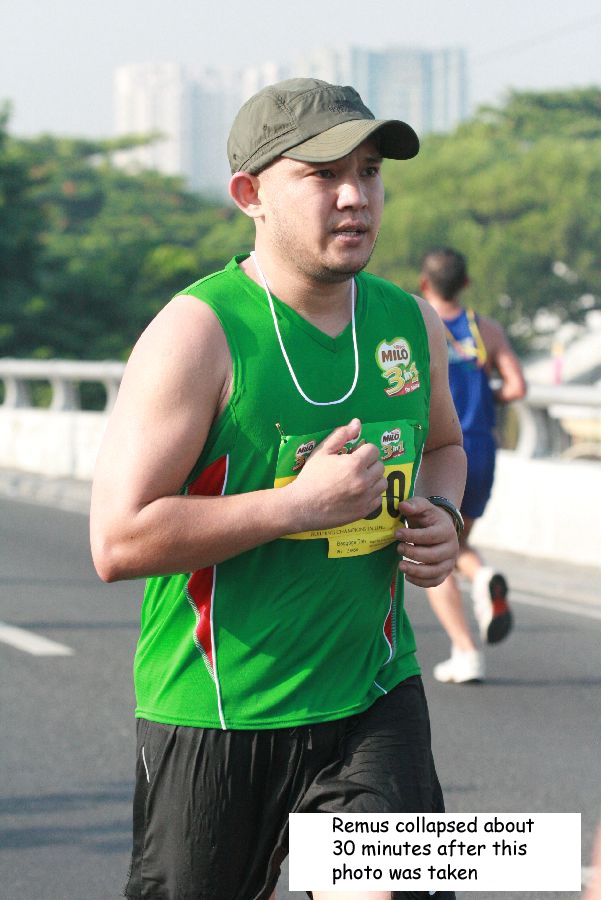
6. In the 34th MILO Marathon Manila Elimination last July 4th, Remus Fuentes died two days after he was diagnosed as a victim of heatstroke which led him to succumb to a fatal heart and organ failures that resulted to his death. After a few days, Alexander Landera from Cebu City fainted or collapsed in the middle of a road race held in the same City where the race was held in the evening. He was brought immediately to the hospital to be treated. Unfortunately, when he regained consciousness, he started to be incoherent, confused, hallucinating, and thought that he was still in the race. Due to multiple wounds and loss of blood as a result of uncontrollable actions on his part, he died. Both runners were victims on separate road races, belong to different ages and running backgrounds, races held in different locations, different race distances, different weather conditions, and different parts of the day when their respective races were conducted (Remus’ race was in the morning while Alexander’s race was in the evening) and despite such factors, both runners died due to heatstroke! However, in Remus Case, the father was able to document his observations on what the Doctors/Medical Staff had done for his son’s treatment in the Hospitals where his son was admitted.

7.  So, what am I trying to say in this post? With my observations, researches and interviews, I firmly believe that our Doctors/Medical Practitioners could not distinguish if an endurance athlete (runner, ultrarunner, cyclist, triathlete, swimmer or hiker/mountaineer) is a victim of heatstroke or dehydration. Anybody could say that he or she is a “running expert” and say to high heavens and to all the media and Internet outlets/sites all the things and advises as preventive measures from being a victim of heatstroke and dehydration but what should be addressed is on the correct and appropriate treatment of heatstroke. I think, the problem lies on how our Doctors and Medical Practitioners in Hospitals react and treat endurance athletes who are victims of such mentioned heat-related injuries. This is the “weakest link”!!! Correct me if I am wrong, our Doctors (who are not seasoned/competitive runners) do not know how to deal with such cases!

8. In the book “Lore of Running” by Dr Tim Noakes on page 235 states that, “the major factors causing heatstroke during races are: environmental conditions; the speed at which the athlete runs; and individual susceptibility, including whether or not the athlete has preacclimatized to running in the heat. If longer distances races (5K and above) have a prevailing temperature condition of greater than 28 degrees Centigrade, heat injury will occur to a significant number of competitors, regardless how much amount they drink and sponge during the race or how they are dressed. Adequate fluid replacement during racing is only one of the many factors that reduce the risk of heat injury; it is certainly not the only factor and may not even be a very important factor. Aside from “hot and humid” temperature as one of the factors that determine the rate at which an athlete loses heat, clothing is also considered because the more clothing people wear, the less heat they will lose by convection and sweating. The athlete’s state of heat acclimatization (training to heat exposure) and state of hydration (not allowing yourself to be dehydrated) also determine the rate an athlete loses heat from his body.” It could be weird but Dr Noakes believes that only certain people are prone to heatstroke and it could be hereditary, too!

9. In Dr Noakes’ book (which I consider as my “Bible” in Running), a heatstroke victim has a body temperature of more than 40 degrees Centigrade; he/she breathes heavily; and has a rapid pulse rate of 100 or more beats per minute. A heart attack victim has a weak heart beat & pulse rate and the patient does not breath. In a heatstroke patient, a rectal temperature reading should be administered first to find out the exact body temperature of the victim. If the temperature readings indicate a result of 40 degrees and higher, the victim’s torso should be submerged in a tub or container full with ice or ice-water for the duration of 3-6 minutes until the temperature decreases to the normal level of body temperature. After the body temperature has dropped to its normal condition, IV fluids and other blood tests can be administered to check if the victim is dehydrated or if there is kidney damage or organ failure.

10. In simple layman’s term, diagnosing and treating heatstroke is very simple. But according to my favorite author and strategist On War, Carl Von Clausewitz, “The simplest things are the hardest things to do”! And be always safe and careful from the dangers of the sports and way of life that we love and enjoy but always remember that, “Shit Happens” when you least expect it from happening.

MILO’s Official Statement (???)


I am not sure if this is the “real” Official Statement of Team MILO/NESTLE, Phils as a result of the death of Remus Fuentes on the July 4th MILO Marathon Manila Elimination Race. One of the BDM “veterans”, Albert Salazar, sent a comment in my previous blog stating the following statement which he indicated as taken in one of the links with MILO Philippines’ Facebook account. In the said link, the following statement had been posted in their PHOTO ALBUM Page. I really don’t know why they have to take a picture of the said statement and have it posted in their Photo Album. They could have simply sent to the e-mail addresses of the runner-bloggers and other interested parties.

I’ve been waiting for this Official Statement as I requested from Team MILO/NESTLE, Inc to send it to my e-mail address in order to give them a chance to explain their side of the incident. Up to this time, I have not yet received such copy in my e-mail address. Anyway, whether the following statement was not signed or not, the fact that it was posted at MILO, Phils Facebook Account, it needs to be posted in this blog in order to get the side of Team MILO/NESTLE, Phils and its Race Organizer. Hoping it is the real one!

After reading this statement and the side of Remus family, the runners who participated in the 21K and the Marathon (42K) Race and my readers will be the judge.

STATEMENT ON MILO MARATHON

We are deeply saddened by the passing away of Mr. Remus Fuentes, a participant of the July 4, 2010 MILO Marathon held in Luneta, Manila.

We reached out to Remus’ family as soon as we were informed. Our deepest sympathy is with his family during this most difficult time.

We assure participants that all the internationally recognized precautions had been taken by the organizer for the Manila leg of the MILO Marathon, specifically:

On hydration stations, according to the International Association of Athletics Federation (lAAF), the rule is, for a race longer than 10 km, refreshment stations shall be provided at approximately every 5 kms along the race route. For mass races in a tropical country like the Philippines, the same IAAF rule recommends to have water stations every 2.5 km, The Manila leg of the MILO Marathon had water stations installed every 2 km along the race path, and in between each water station, there were Gatorade stations to ensure every runner had the opportunity to hydrate as necessary. On average, there was a hydration station around every 1 km of the 21K race path. In total, there were 13 water stations, 10 Gatorade stations, 2 sponging stations, and 1 banana station strategically Iocated throughout the 13.5 km race loop.

On first aid, all MILO Marathons are fully equipped with first aid teams to attend to runners needing assistance. In the Manila race, for instance, there were 7 roving ambulances plying the 13.5 km race loop, 15 medical stations, 5 teams of first aiders on bicycles, and nearly 500 marshals – policemen, traffic aids, and radio communicators – manning various points of the race path. These marshals were equipped to immediately contact first aid stations and ambulances with trained crew and rescue facilities.

Like any vigorous sport, the marathon involves a certain amount of risk, especially for those who participate in longer distance events such as the 21K and the 42k. We would like to remind all runners who plan to participate in the forthcoming MILO Marathons to adequately prepare before the race, ensuring that they are properly conditioned mentally and physically. This includes undergoing the necessary training getting enough rest, properly hydrating, and eating the right food.

Our thoughts and prayers are with the family of Remus Fuentes at this very difficult time.

(Note: Copied from MILO Philippines Facebook’s Photo Album)

R.I.P. Remus Fuentes


The following is the Summary Report on the death of Remus Fuentes written by Rudy Fuentes, father of the victim, as gathered from witnesses, his personal observations, and insights. Obviously, this is just one-side of the story and I am still waiting for the Official Statement from Team MILO/NESTLE, Phils and the Race Organizers. I will reserve a post in my blog for such statement.

However, the fact & reality remain…A runner died due to running/participating in  a road race and the running community should be aware and well-informed on the effects of this sports and we have to learn some lessons from this incident and prevent this from happening in future road races.

REMUS FUENTES died of multiple organ failures as result of heatstroke secondary to severe dehydration two days after he ran the 21K in the recent 34th Milo Marathon last Sunday, July 4, 2010.

His death was the result of fatal mistakes, incompetence and negligence in the event organized by Organizing Team.

Photo Provided by Mr Rudy Fuentes

My son, 37-year-old Remus ran the 21K together with a running buddy when he collapsed at 19.9 kilometer mark. There was none of organizer’s ambulance nor marshals to respond in the incident. Policemen hailed for a taxi and they, together with his buddy, assisted in bringing him to the nearest hospital, Ospital ng Maynila. At the ER, the diagnose was suspected heart attack. My wife and me, upon being informed by his younger brother, Roy Fuentes, who also ran the 21K, rushed to the hospital and saw that Remus in coma, had seizures and struggled breathing in spite of hand-pumped oxygen and dextrose attached. His body temperature was 40 degrees C and when asked, the medical attendant told us he had fever. She introduced paracetamol intravenously twice at interval of about 15 minutes. Remus continued having seizures even until the arrival of Medical City doctor & ambulance attendants that we have arranged for his transfer. The Medical City doctor attending said his status was unstable, contrary to the earlier advice to her by the Ospital ng Maynila ER doctor. They rushed him  with the ambulance to Medical City at about 11:30 AM. There, a  series of tests were done, including blood chemistry, CT scan, etc. Cardiologist told us his heart was strong and no intervening medicine was necessary. Blood Chemistry results showed positive findings on creatinin level, an indication of  kidney failure. They suspected liver failure too. To stop his seizures, Remus was put on full sedation for 12 hours. Kidney functions further deteriorated after 36 hours. Blood pressure and heart rate went erratic. Doctors attending him in the ICU asked our permission to do dialysis and blood transfusion to stabilize his blood pressure.  Seven hours later, ICU nurse woke us up and asked us to rush to the ICU. We saw 18 medical people around him, several taking turn doing the CPR. Failing to revive him, the doctor asked our consent to stop the CPR after 15 minutes. We begged them to continue hoping for a miracle. 30 minutes further, doctor told us again that all numbers in the monitoring board “were bad” and asked again the consent to stop the CPR. Finally, we relented. Few minutes later, his heart rate monitor went flat. All these happened in front of his mother and me. We lost Remus 48 hours after he collapsed into coma which he has never recovered. His young wife and his eight-year old son took the news very badly.

About Heatstroke:

It usually happen in extreme sports like basketball, football, boxing and marathon.

Heat stroke is a life-threatening medical condition. The person’s cooling system, which is controlled by the brain, stops working and the internal body temperature rises to the point where brain damage or damage to other internal organs may result. The body temperature, usually at normal 37 C, goes up during the exertion of effort as result of the increased heart rate. When it reaches 40 C, the person is in danger of getting heatstroke. Above 40 C and mostly at about 42 C, the person can collapse into unconsciousness.  If nothing is done within few minutes, he can slip into coma and brain damage may occur. The proven first aid response for heatstroke is cooling the body rapidly in whatever means to the level of below 40 C before bringing him to a hospital.  Ice and water is the best way to do this, the same way it is done for a child having high fever who has convulsion.

Another way of understanding heatstroke is comparing it to the performance of car engine. At idling, the engine temp is low and safe. At sustained high speed, engine temperature increases rapidly but because of the cooling system, the heat is continuously dissipated in the radiator and safe temperature level is maintained. But when the water in the radiator is gone, Undissipated heat will rack up the engine temperature and ultimately exceeds the safe limits. At this condition, engine breakdown will occur in minutes starting with broken piston rings, rods, pistons, etc.

With the human body, perspiration cools down the body so hydration by drinking water is essential. Without water, perspiration stops and body temperature goes to critical level and into heatstroke and then organs and brain begin to fail.

Big obvious difference between human body and car engine is that you can always overhaul the engine but you cannot do that on the human body.

Why Heatstroke is More Dangerous in Marathon than in other Extreme Sports?

In basketball, the player exerts extreme effort only in bursts, stopping or slowing down intermittently which slows down heart rate and cools down the body. At timeout, they drink to replenish lost body water hence you always have the waterboy. Heart stroke is rare but ask any PBA player what they do when a player collapse. They don’t move the body but cool them off with water or ice before bringing him to the hospital.

The same is true in football and in many similar sports.

In boxing, in between rounds of three minutes, boxer rests and drinks water. We can only wonder what will happen if the rule of the sport is drastically changed and will only end when one is down and out.

In Marathon, the risk of heatstroke is much higher for the following reasons:

  1. The long distance runner aims for shorter time as a goal and therefore motivated to keep a sustained effort, not unlike cars at high speed in the highway.
  2. Furthermore, the target minimum time set by the organizer adds more to the motivation to run faster. The cut-off time added more pressure to the marginal marathon runner, meaning if you are used to run above the target time, the tendency is to do better time, probably at pace unproven by your body in practice. (Milo Marathon set the target for 21K medal at 2 ½ hours or less. Remus collapsed at near 20th km. with time of 2 hours 10 minutes when his previous record was 2 hours and 27 minutes. ).
  3. The more critical factor is that the hydration management is not in the control of the runner. He has to rely on water availability at the water stations provided and planned by the organizer along the route. ( In this 34th Milo Marathon, several runners including Remus brother, Roy and Remus running buddy asserted that practically there was no water to drink in the last 2~3 kilometers before the finish line, a fatal failure for Remus by the organizer when they changed the route resulting in merging and over-traffic near the finish line. There were record 28,000 runners on that day and the organizers failed to anticipate the complexity of hydration management. Milo’s last year marathon participants were well below 10,000 runners.)
  4. The correct life-saving response for heatstroke depends on few knowledgable people who may happen to be around the person. To mitigate this, the organizer deploys ambulances with water & ice for cooling heatstroke victims and is expected to respond within minutes. In addition, marshalls are provided along the route to assess runner situations continuously. (Obviously, the organizer failed again on this aspect because Remus was helped by policemen and his buddy instead. By this time, Remus is probably already brain damaged as evident by his seizure at the hospital. No Milo people knew of Remus case on that day until Roy, his brother, sent an email informing the organizer of the incident in the next morning)
  5. The Sun Factor adds to the danger in Marathon. Running under the heat of the sun in tropical country like ours cannot be underestimated. To minimize the effect of the sunheat, Marathon run is planned to finish in the early morning avoiding the heat at later time. Organizers usually take this into consideration. (Milo organized the 21K to start at 5:30 AM , a departure of common practice of  other marathons which started at 5:00 AM.  Remus collapsed at about 7:57 AM. Roy, who is a better runner than his brother Remus, complained that it was unusually hot that morning even if he was able to finish it earlier in 1 hours 45 minutes )

Clearly, Marathon is an extreme and dangerous sport even to the young, healthy and trained runners. This is not the “fun run” many people confused of.

The organizer has clear life-and-death responsibility to make sure that the conditions the runners will run under item 3, 4 and 5 above are done properly. Obviously they did not do their job properly in the 34th Milo Marathon. In my opinion, being the father of Remus, Milo Marathon Organizer have failed my son. It is their incompetence and negligence of their duty that results in the death of Remus …an unneccesary death.

About Remus:

At the time of his death, he was an IT project manager of Hewlett-Packard (HP) responsible in computerizing big companies like Unilab, Coke,  etc. including installation of hardwares (servers, etc.) and software system. He used to work for Intel for 10 years before he moved to HP 3 years ago. He graduated in Computer Engineering. He left a housewife, Takako and two children, Raphael, 8 years old and Therese, 4 years old. Raphael is enrolled at La Salle Greenhills. He played basketball with his brothers regularly on weekends. He has been running since his high school days in Lourdes School of Mandaluyong. He has run many 10Ks and two 21Ks before these, the “Freedom Run” in June 13 and “Nature Valley” in May 20 only this year. He has no history nor complaint of illness and he lived clean.

My Questions for the Marathon Organizer:

  1. How many died in the 34th Milo Marathon last July 4? Is it true that there was another runner at 42K who collapsed at 33 km and later died?
  2. How many runners collapsed in that marathon due to heatstroke who later survived but now are no longer the same person as before due to partial brain injury? At Ospital ng Maynila, we saw a 2nd runner brought in unconscious and woke up later but he can no longer recognize his family. Do the Organizers knew this? What happened to him. Are there more?
  3. Is it true that another 36 year-old runner, Fidel Camson, who ran the 42K 31st Milo Marathon in November 2007 collapsed near the finish line, brought to the Ospital ng Maynila and died later of undetermined cause? If true, what did they do to avoid a repeat which apparently did not happen in this 34th Milo Marathon? If true, why do they still keep the same Marathon organizer for 10 years until now?
  4. Do they keep tally of deaths in the 34 years of Milo Marathon? Do they study the statistics and establish how many died of heatstroke, the preventable one?
  5. What is the corporate culture of the Organizers regarding its respect of the value of life? Upon knowing the death of my son Remus, A Senior Vice President of the organizing team, who head its Beverages Business Unit went to see me and among other things, he told me that the Marathon is continuously improved and but sometimes “lapses occur and they will learn from these lapses”. Lapse is defined as  a ‘mistake’. People learn from ‘error’, a deviation from being correct but a ‘mistake’ is caused by a fault: the fault could be misjudgment or carelessness.  We learn from ‘error’ but we take action on ‘mistake’ and more drastic action when people die of this ‘mistake’. So death in my son’s case is a mere  learning process for this person? Is this the culture that pervades in their Organization? or only in him?
  6. Is the measly “humanitarian” offer to help the family shoulder medical & funeral expense to the family had become an SOP too often? Was it their expectation that as appreciation of this help, the family will keep quiet about the whole thing? Do they really think that the waiver signed by the runners protect them from being liable? Do they know that this waiver won’t apply if negligence of their duty as organizer can be established? 
  7. What did the Organizers do, if any, to keep the news of Remus death from appearing in the media even after one week? Not one news item of his death appeared in the newspaper, TV or radio. Could  the news  of “ HP Manager Died of HeatStroke during the Milo Marathon” not interesting to the public? Were they afraid that the bigger news is when the subline “Father charged Milo Marathon Organizer of Incompetence and Negligence” which may damage the public image of the company?

The answers to these questions will help enlighten the public whether Milo Marathon is safe or not for the runners. To the runners, their parents, wives and relatives…they all better ask these questions before the runners decide to run in Milo Marathon.

Last Words from Remus Father:

I am not condemning the sport but the organizer who failed to make sure runners will not die of heatstroke, when the risks can be greatly minimized with proper route planning, hydration management and quick medical response. I am condemning the contribution of the apparent culture of the sponsor of diminished value of human life as indicative of its senior executive’s attitude that my son’s death is a result of lapses. My hope is something good will come out of Remus death and as result of improved organizing of the marathon run,  few lives will be saved from heatstroke. My other hope is to get justice and for the Organizing Team to  answer for his untimely death. I am working on it.

Rudy Fuentes, Father of Remus

Death!


This post should have been published in my blog last week.

Last May 28, 2009, I posted a blog entitled “What If…?” and I made some predictions on what the public or the running community reaction would be if in case there is a case of death of a runner caused by joining a marathon or road race. Reading back at the said post, I think my predictions did not happen and will not happen now that we have a reported case of death in a road race.

A day after the 34th MILO Marathon Manila Elimination Race, I got an information/status update from Facebook that a runner died during the race. It was confirmed by other runners that there was such a case of death on the said road race.

Reading back on the posts/blogs after the MILO Marathon from takbo.ph and other runner-bloggers who participated in the said race, the topics that I’ve read were all about frustrations, cheating, injuries, lack of medals, lack of hydration needs on the last 10 kilometers of the race and prevention of heat-related injuries or cases…but nobody tried to inform the running community about the case of death during the 34th MILO Marathon Manila Elimination Race or wrote a detailed account about the death of this runner. What I’ve read is about the death of a (Malaysian) runner in the Kuala Lumpur International Marathon last month! Why do you have to blog and re-post the death of a Malaysian runner and keep silent on the death of your co-Filipino runner? I think that is not fair! 

I wonder why nobody among the Filipino runner-bloggers wrote about this Filipino runner who died at the 34th MILO Marathon Manila Eliminations? I wonder also why the traditional media outlets in our country kept “silent” about this incident. I hope one or two runners who tried to help the victim would be able to say something about this case or maybe, an officemate or co-running club member would be able to say something about the person…maybe, his name, age, number of years of running, and health condition before the run. A simple interview with the family, relatives and friends would be better to find out the background of this runner. I hope the frontRUNNER Magazine will do its work to find out the details and write about this case so that the running community will be aware of such cases in running.

Or maybe, the runner died because our Medical Support are not properly trained or well-equipped to react appropriately to running cases and injuries such as this. The same case that happened to my former classmates who died due to heat stroke.

I may not be an investigative reporter or member of the CSI but a detailed information about this case should be heard from Team MILO/NESTLE, Phils and the Race Organizers on the details to answer the questions WHAT, WHERE, WHEN, WHO, WHY, and HOW…and the ACTION TAKEN by the people responsible on the said road race.

Guys, this is NEWS! The public, especially the running community, deserves to know the TRUTH! ( This is the “overused” line you always here from the media! Right?). We have to learn something from this case with the hope that we could prevent this thing from happening again.

Cheating, Death, Frustrations, Redemptions, Happiness, Friendships, Betrayal, Power, etc….the Marathon Race offers a lot of DRAMA…like LIFE!

(Note: While trying to find details about this death and while waiting for the Official Statement from MILO/NESTLE, Inc, I happened to discover the Official Statement from Mr Rudy Fuentes, the father of the casualty, posted on the Internet. I will post the Official Statement of MILO/NESTLE, Inc. soon).

“Back To The Slope!”


1. When I was a cadet at the Philippine Military Academy, I always hear this statement or command from my Tactical Officers if they want the cadets to repeat a practice on our Parades and Ceremonies after doing one or two rounds. The start area of our parade and drills is a sloping/downhill road towards the Borromeo Field, the Parade Ground of the Academy. Figuratively, if this phrase or statement is uttered, it means that you have to repeat from the start what you have done in order to correct a mistake or error.

2. After five weeks of rest & recovery due to an injury, I am going “back to the slope!” and have started to follow a training program as a guide for my future marathon and ultramarathon races for the year 2010 and beyond.

3. The first step in my training program is to abide and recall the most basic principle in training for a running event—base training. I always say in my running clinic lectures that preparing for a running event is like constructing a building or a house where you need to have a durable and stable base/foundation. In running, base training  means building a base of aerobic endurance.

4. So, early this morning, I had my first “base training” at the ULTRA Oval Track completing a distance of 10 kilometers, running along the outer lane. I did my stretching exercises before and after the run. In addition, I did some running-related “drills” during and after the run. I finished my 10-K run in 1:09:13 hours with an average pace of 6:55 minutes per kilometer. I was so happy that I was able to breach the 7:00-minute per kilometer pace. Slowly, but surely, I could run within my base training pace.

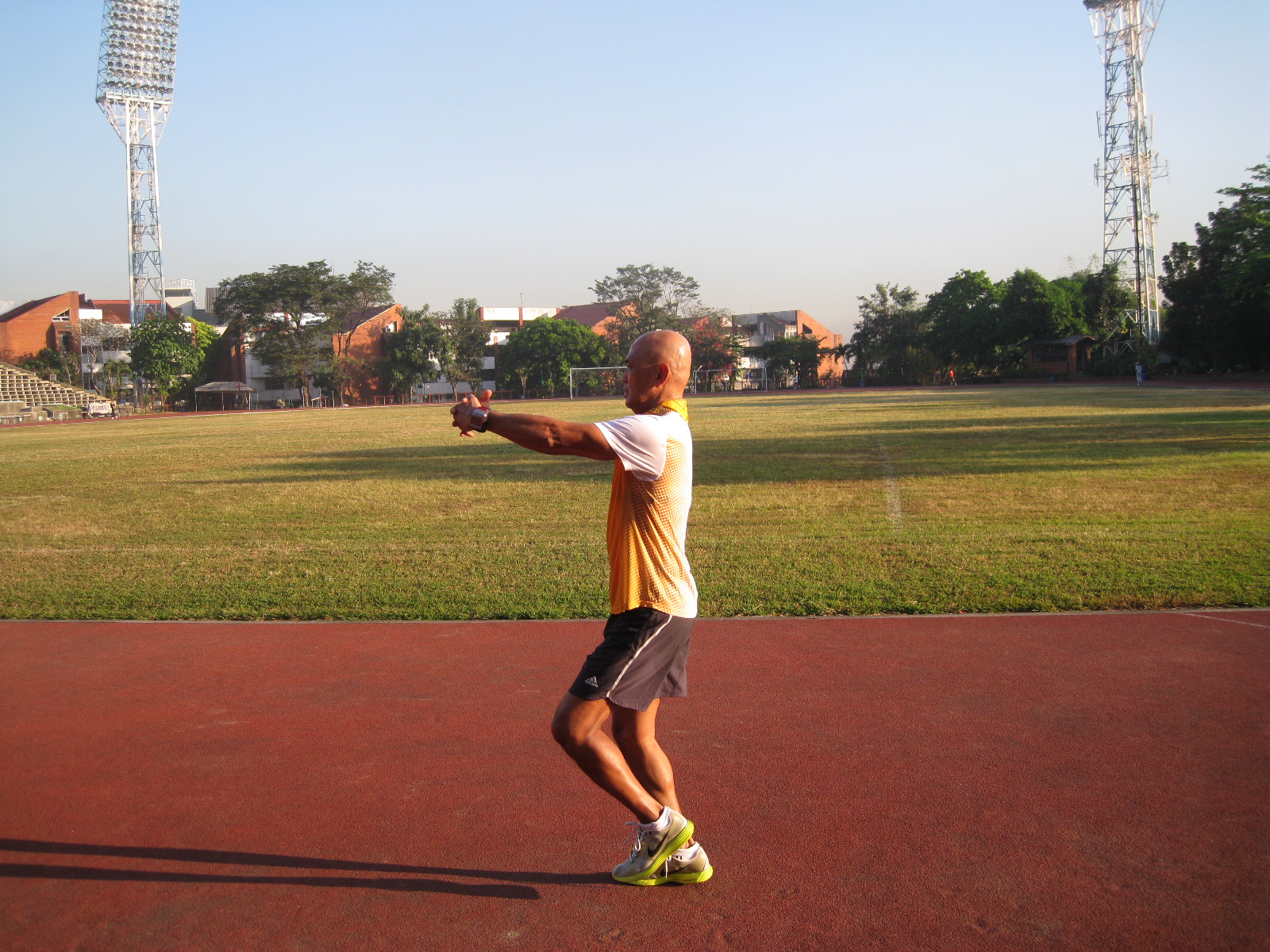
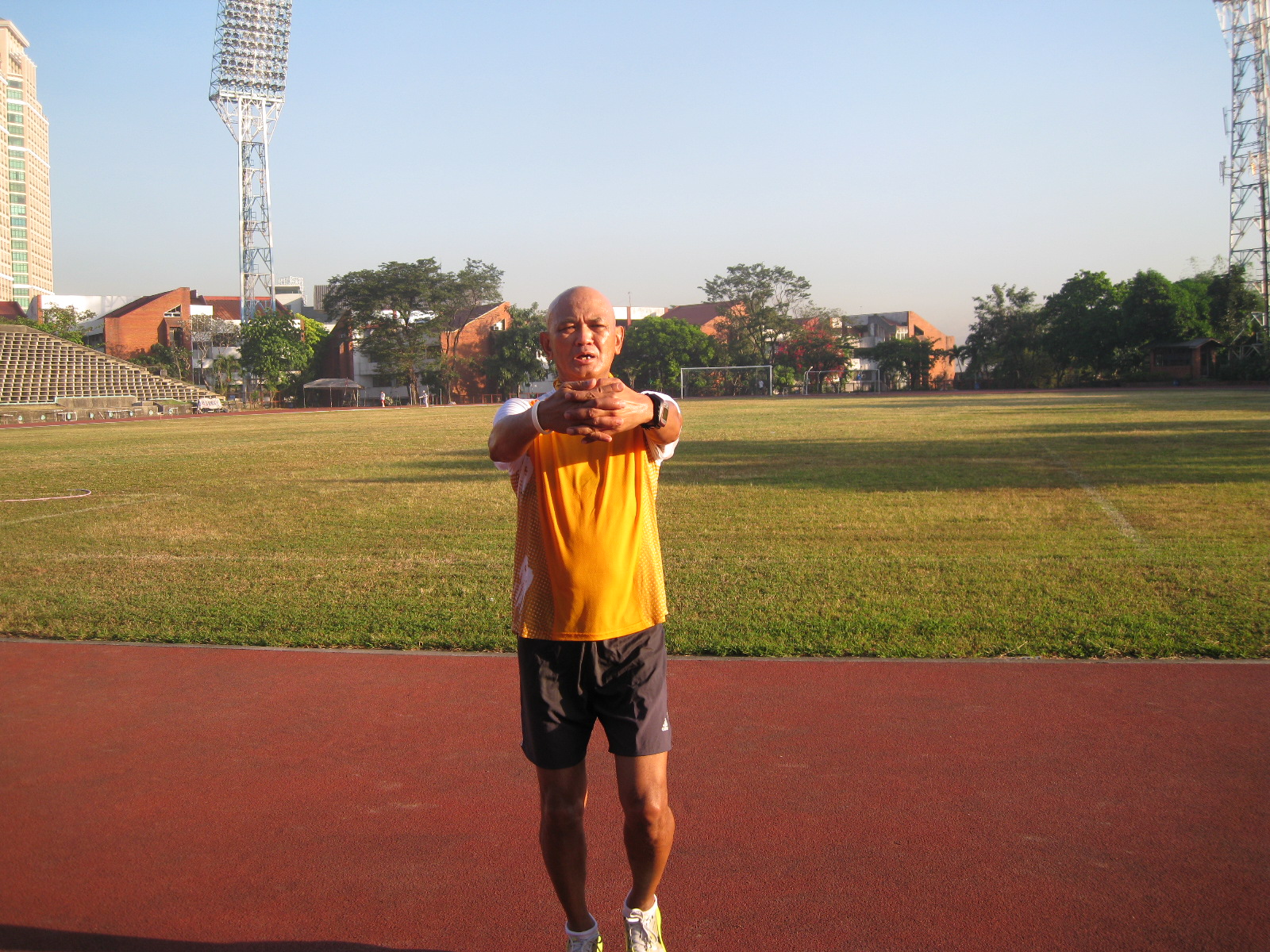
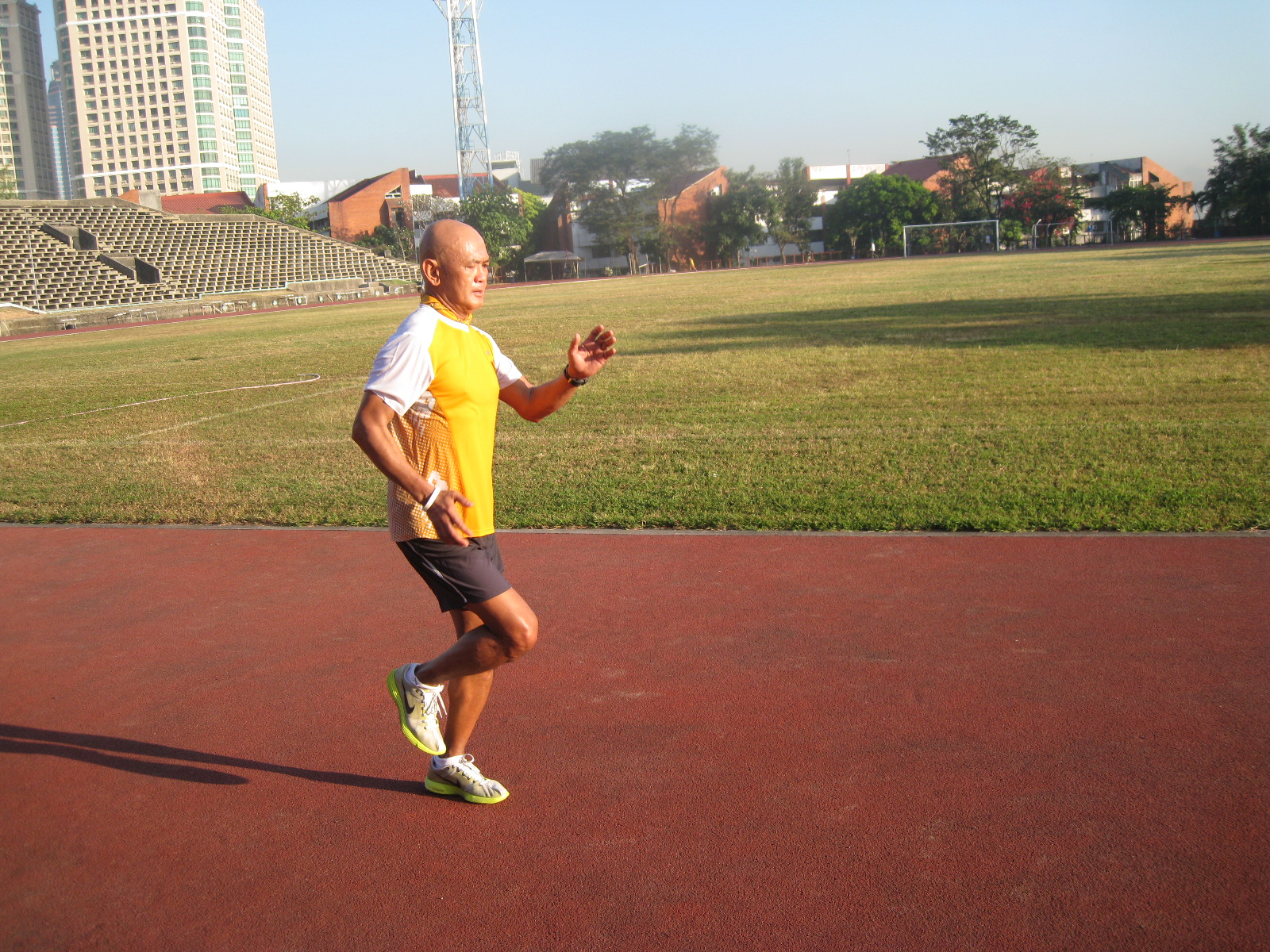
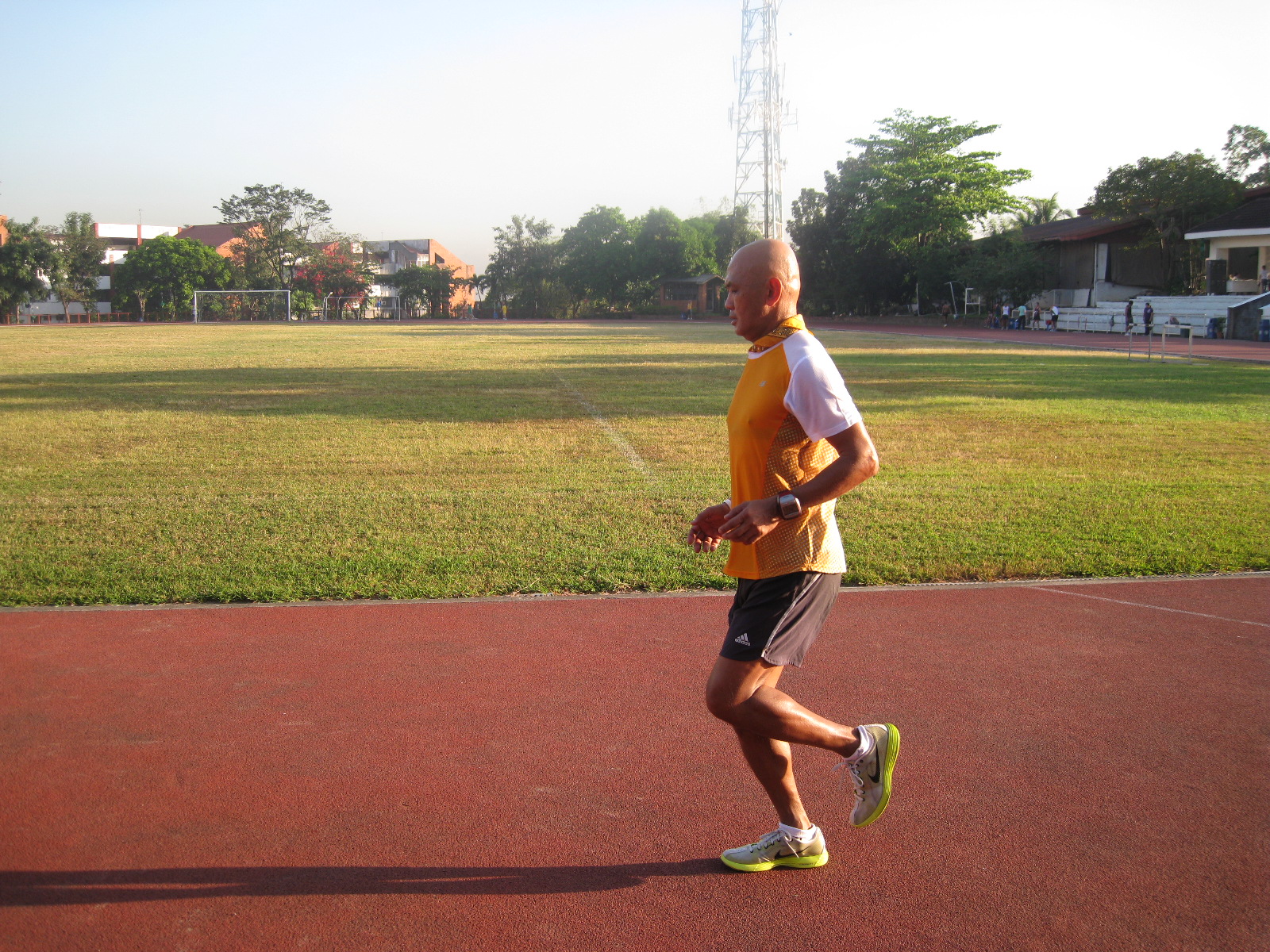
5. To give a full description of the drills I’ve done during/after my run, I am posting the following pictures with the hope that other runners would also adopt them to make them stronger and faster.

"Running No Arms"
Front View of "Running No Arms"

To do this drill, a runner must lace his fingers and form a big circle with his arms at shoulder level. Run 100 yards at moderate fast pace with arms in this position. Return to your running form after 100 yards and repeat after running another 100 yards. I did 10 times of this drill while I was running around the track.

This drill forces my inner abdominal muscles to maintain an upright posture and activates such muscles while running. It also eliminates unnecessary swaying or rotation of my shoulders from my waist while running.

"One-Leg Hop"
One-Leg At A Time

To do this drill, one has to run as fast as possible with one leg for 20 seconds or approximately 20 leaps/bounce or more. This drill will increase one’s push-off power of the feet and will enhance the stability of the hips, pelvis, lower spine and knees on impact of the foot to the ground by forcing the muscles to stabilize the joints for a short period of time.

Lesson #1: In a training cycle, first phase is to develop your aerobic endurance base.

(Source/Reference: “Brain Training For Runners” by Matt Fitzgerald)

Finally, I am Back!


1. Exactly one month after the PIM Pasig River Marathon, I was back running at the ULTRA Oval Track yesterday afternoon. I did 1-Kilometer slow run at the soccer field, another 5K at the oval track, and finished my workout with another 1K at the soccer field and 1K at the oval track. My average pace of 7:30+minutes per kilometer was enough to bring myself back to (competitive) running. An 8K run at the oval track was “heaven”!

2. Actually, I had my first attempt to run/jog last Thursday when I took pictures of the future site of the Ultra Trail Run that I am planning to implement. I was able to run/walk/jog a distance of 8.5 kilometers but I was still in pain but after this run and a deliberate and very long session of “deep-tissue” massage, all the pain was gone!

3. I had another 6K Run at the Rizal High School Oval Track last Saturday afternoon and it was a workout where I was able to run continously without any walking breaks. Even if my average pace was 8:30-9:30 minutes per km, I was happy that I could run again.

4. From the book of Tim Noakes’ “Lore of Running”, I found out that my injury is called “Chronic Muscle Tear”. “He concludes that this kind of muscle injury occurs in various muscles at specific sites that, for reasons unknown, develop eccentric muscle weakness. This weakness is exposed during faster running. When the eccentric loading exceeds the muscle’s eccentric strength, a small section of the muscle is strained and develops an inflammatory response. This initial tear is too small to cause discomfort. However, once the initial tear has occurred, a cycle of repair and reinjury and reinflammation develops that leads ultimately to the large tender knot.”

5. For the specific treatment, Tim Noakes stated “The only treatment that works is a physiotherapeutic manuever known as cross-frictions. A better term would be “crucifixions” because this is the most painful treatment a runner would experience. In simple terms, this is what I call “deep-tissue massage” or “hilot”. Ask Coach Titus Salazar of Team Bald Runner how this procedure is properly done!

6. You will see me more at the ULTRA Oval Track during the Team Bald Runner’s “Speed” Training on Tuesday, Wednesday, and Friday afternoon from 5:30 PM to 9:00 PM.

Finding The Cure


1. Simply Rest—This is the first thing that I did after the PIM Pasig River Marathon.  For one week, I ate foods rich in carbohydrates and protein, drink a lot of water, and had full-time 8-hour sleep during nighttime. I tried to walk slowly with a limp around the house. It was a painful experience walking for the first week after the race.

2. Massage—Coach Salazar’s deep-tissue massage was finally introduced to my affected muscle on the 2nd week. I think I had 2-3 sessions with him for the duration of 3 weeks. My stiff Peroneus muscles slowly loosened up but there was still some inflammation and pain to other muscle strands located in between the peroneus and calf muscle. Coach Salazar taught me how to stretch my Peroneus muscles.

3. “Water Treatment”—My regular weekly visits to the Laguna Hot Spring in Calamba, Laguna had greatly improved and maintained my endurance level of fitness without much pounding on my legs. During these visits and immersion in the hot sulphuric water for a maximum of 6-7 hours, I did “water jogging”, leg kicking, leg flipping, and then later, swimming. I’ve been to this place for four times already and my stay here were fruitful as I came to meet more people and get more “insights” from the different sectors of the society.

4. Pain Reliever, Ointment & More Protein Drinks—On the third week, I started to take Alaxan FR before going to bed. Charlie Chua, one of the BR Runners with the Professional Group, suggested an ointment, Fastum Gel (Ketoprofen), for inflammed muscles which I’ve been using for the past two weeks. I also maintained drinking milk, Ensure and MILO’s 3-in1 For Adults (2x a day). All of these contributed to my recovery.

5. Join Road Races as Photographer & Cheerer—Watching the runners at the Start and Finish Lines during Road Races and taking their pictures while cheering them gave me the feeling and urge to recover immediately. I believe that positive thinking has a lot to do when someone needs to recover at a faster rate from any setback.

6. “Brisk” Walking & “Slow” Jogging—Last Thursday, I forced myself to an 8.5-Km distance “brisk” walking and jogging even if I felt pain on my affected leg. I was able to finish the distance in almost 1 1/2 hours. My workout was done in the mountains, 70 kilometers east of Metro Manila!

7. Deep-Tissue Massage (More Deliberate)—Aside from Coach Salazar, I have another staff who had been trained as “masseur” by the members of my Elite Team. He gave me a 1 1/2-hour massage after my 8.5-Km workout and I was crying and shouting in pain. The inflammation of my Peroneus muscle had gone but there is a tiny strand of muscle beneath the Peroneus muscle which needs to be loosened and my staff just patiently did the right thing. After an overnight sleep, the pain on my left lower leg is entirely gone!

8. Rest Some More & Start With a Training Plan—My injury is a blessing in disguise as I was able to rest from the grinds of training and joining in the past marathon & half-marathon races. However, I need more time to rest and do strengthening exercises through Pilates, Yoga, and Weight Training before finally hitting the road, track and trails. I will start a training plan for a 100-Mile Run soon!

“Water Therapy” @ Laguna Hot Spring


This is not the kind of treatment wherein you have to drink a number of glasses of water after you wake up in the morning; before eating your meals; after eating your food; and before going to bed almost everyday.

After I had the strength to stand up and slowly walk on my own, I requested my staff to bring me to Brgy Bucal in Los Banos, Laguna as I remember having visited this place with the invitation of my classmates from the Philippine Constabulary/Philippine National Police when I was still a Major in the active service in one of the hot spring establishments in the area. Although the place where I was invited was an exclusive place, I found out that there are places where it is cheap and affordable. A former classmate of mine in Elementary & High School also owns a house with pool in this area. In the end, I decided to look for a cheap place where there is no reservation procedure is involved.

IMG_2908
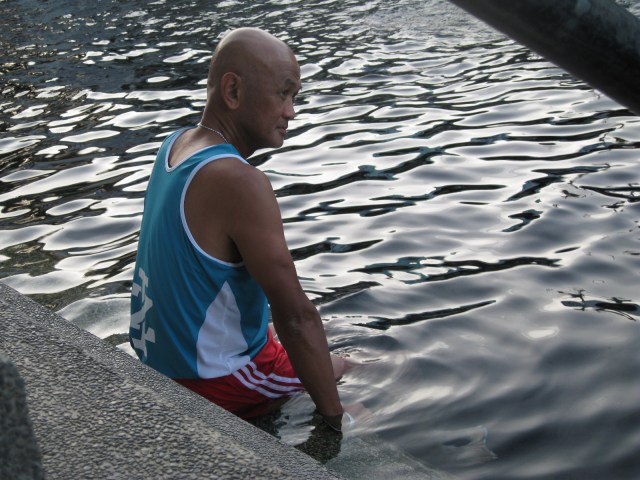
Soaking My Legs In Sulphuric Water

After lunch last Tuesday, I went to Los Banos, Laguna with the intention of soaking my legs in the hot spring water of the numerous in the said place. I wanted my leg muscles to relax and get the warmth of the sulphuric water. From 1:30 PM to 7:30 PM, my legs and whole body were soaked in the sulphuric water of the old & renowned Laguna Hot Spring which was established in the year 1949. It took me straight 6 hours to soak myself in this therapeutic waters of Los Banos. Surprisingly, after 2-3 hours in the water, I could see that I was sweating and had some snack “breaks” as I felt so hungry due to the effect of the heat from the water.

Staying on the hottest portion of the pool for 6 hours seemed to be so short because of the people who shared the area with me. There was this European guy who was in his late 60’s who was looking silently to me and to other two Filipino guys who were talking in Tagalog. All of a sudden, the European guy joined the conversation in a fluent Tagalog, too! This guy had been a constant visitor of the place. A Filipino guy in his late 30s approached me and asked if I am joining marathons/road races in Manila (he might have seen my singlet in the TV news about PIM) and we started our conversation about running until it reached about topics on politics/presidential election candidates. His purpose in going to this hot spring facility is that he has “gout”! What? A guy so young with “gout”? Unbelievable!

And then there were two “senior” couples who happened to be “Balikbayans” from Cerritos, California. The topic they were discussing was about the bad image of the country’s peace and order situation as gleaned from the TV broadcasts they see abroad. I did not join their conversation but just listened to what they were talking. Later, the conversation went to Tyhoon Ondoy and the distribution of relief goods and the accountability of the money received by ABS-CBN Foundation from the local and foreign donors. Later, it went to the pros and cons of the political figures planning to run for Presidency of the country. Well, what they said were valid and some are the usual “opinionated” remarks. Hearing all their conversations were very entertaining! 

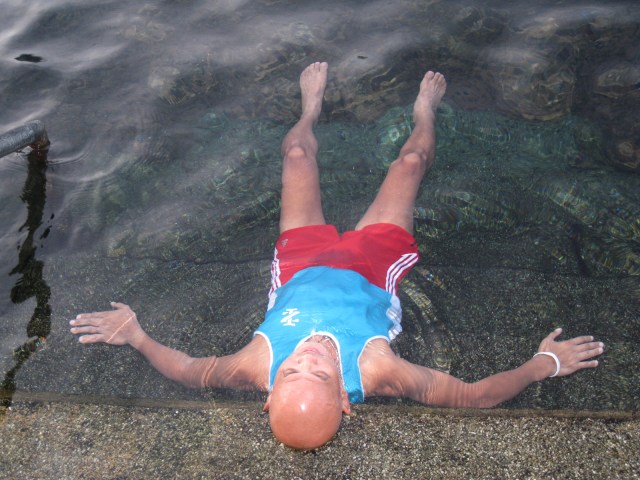
IMG_2920
Whole Body Soaked In Water

 After 3 hours in the water, I started to move my left leg by kicking it underwater and doing some leg curl exercises. After 15 minutes of leg kicking and leg curling, I started to jog slowly. I was surprised that I did not feel any pain while doing the slow jogging inside the water. The depth of the pool is 6 feet and it was very comfortable to be curling my legs under the hot water of the spring. I did a 30-minute “water jogging” and it was a nice workout that I had to sweat!

After a brief snacks/break for about 20 minutes, I returned to the “hottest” spot and did again some leg exercises—leg curls and leg scissors! A guy suddenly started talking about the therapeutic benefits of the sulphuric water where he said that he had been a constant visitor and user of the place for the past 20 years! According to him, the benifits from the water are better absorbed by the body if you do some exercises or body movements while you are soaked in the water. Well, I silently said to myself that, that was exactly what I was doing for the past 3-4 hours!  

The Laguna Hot Spring in Brgy Bucal, Los Banos is one-hour ride from Taguig City. The admission fee during daytime is P 60.00 only per person. The toll fee from Taguig City to Calamba Exit at the SLEX is only P 87.00, one way. So, if you have the time and want to experience a relaxing moment to soak your running legs and tired bodies to the sulphuric water of Los Banos, a trip to this place is highly recommended. A canteen/store is located inside the establishment where anybody could order cooked food. However, you can also bring your own food and drinks inside the place without any extra charge.

After a full night rest, my legs, most especially to my left, has slowly already regained its strength.

Post Injury Analysis & Treatment


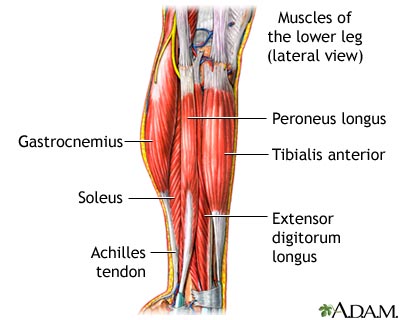
To get a full appreciation of what happened to me last Sunday’s PIM, I tried to look for charts and pictures of specific muscles of the lower leg. Having finished two years of BS Pre-Med before entering the Philippine Military Academy, I had the chance to dissect the different body organ systems of frogs and sharks in our Basic Anatomy & Physiology classes. And with the advent of the Internet, anybody could immediately research on certain topics about the human body. I downloaded and copied the following charts/diagrams of the human lower leg muscles groups from the Internet to give a full description of what happened to me last Sunday’s marathon race.

Lower Leg Muscles
Lower Leg Muscles

After a “back-to-back” Subic International Marathon on a Saturday early evening and then a Sunday early morning ADIDAS KOTR Half-Marathon, I felt a “pain” on my upper Gatrocnemius, which is about two inches below the back of my left knee. I had this part of particular muscle to be exposed to “deep-tissue” massage, every other day. After resting my legs for a day, I would do my slow long runs with a slow pace after warm-up and stretching and the pain would be manageable. More massage and rest for my legs for the two weeks in between SIM and PIM but the urge to build-up more mileage was so tempting that I had to do my long runs and a single session of tempo run. In these runs, I would observe that the pain would just disappear the longer I do my runs.

Leg Muscle Anatomy
Lower Leg Anatomy

 However, during the PIM, at Km 15, the pain at the same spot on my Gastrocnemius started to appear but I still tried to maintain my pace with the hope that it would slowly disappear. At Km 19, the pain on my Gastrocnemius started to spread to my Petronius Longus and later to my Tibialis Anterior. With the diagram/chart above, the Petronius Longus muscle is connected to a tendon that goes all the way to the ball of my foot. This was the reason why I could not force my foot to spring up from the ground and maintain my running pace/form as pain would spread to the whole left leg. There was no way that I could run continously with the unbearable pain on my lower left leg as my foot strike the ground. And the rest is history.

Few hours after finishing the race, I could no longer stand on my two legs without being helped by my staff/assistant! I could hardly walk without somebody supporting me and could not even lift my left leg for a few inches from the ground. It was the most painful experience in my life after a Marathon Race! But being a seasoned runner, I just relaxed and thought of applying the “time-tested” R-I-C-E treatment. I took a cold shower; had my left lower leg massaged lightly; elevated my affected leg with an ice bag placed on the affected muscle while sitted or lying on my back; and rested/slept well during nighttime and daytime! Drank a lot of my Ensure, Milk, Gatorade and Water and Ate a lot of Carbohydrate & Protein Foods! After 36 hours, I could walk without any support or assistant and the muscle soreness slowly disappeared. And the pain was already manageable.

I need more time to rest and recover.