Insights & Plans


I watched two movies last week, “Hitman” and “The Kingdom”. These are good movies where I can personally relate. I have a better bald head shape than “Special Agent # 47” who speaks like the young Clint Eastwood in his “Spaghetti/Italian Cowboy Movies”, which were popular when I was still in college. “The Kingdom” reminds me of my personal experiences during one of the fiercest fights in Basilan in the early 2000’s where I nearly got killed.

I bought my new “New Balance” Running Shorts last Saturday, a day before the 10K RUNNEX, with 60% discount at the New Balance Store in Shangrila Mall. The shorts was the one I used in the said road race. It matches with my New Balance 902 shoes. Unfortunately, the singlet for the shorts was already “sold-out”. I later found out that the shorts is water-resistant!

The top winners in the 10K Runnex Run are executives who are 15-20 years younger than me. When I was in their ages, I was running 10K races in 40-45 minutes. The top ten runners’ time ranges from 41-47 minutes. How I wish I could bring back those times. But with the runner’s training that I had started for the past 4-5 weeks, I could still lower my PR best time for the 10K race below 50 minutes and finish the marathon below 4 hours. These are my running target goals: 47-49 minutes for the 10K & 3:45:00-3:55:00 for the marathon.

More training & homework to be done in Jamindan. I need to do more hill running workouts along the mountain trails and faster tempo runs along the concrete roads of Capiz. I need more strengthening exercises for my upper torso & leg muscles.

I need to train in Baguio City this Holiday/X’mas season for my altitude training. I hope to go back to the “colored trails”/mountain trails at the edges of Camp John Hay and find out if they are still there.

I am planning to run the 21K Subic Marathon on 20 January 2008.

The 7th DND-AFP “Gintong Pangarap” Half-Marathon Race on 17 February 2008 is being planned to be conducted. The race will be managed by the Philippine Air Force. Tentative route: Camp Villamor-The Fort-Kalayaan Overpass-Buendia & Back to Camp Villamor. This will be a nice long run race one week prior to the 2008 Pasig River Heritage Marathon. 

My posting on the 1st City of Angels Half-Marathon in Los Angeles which shows my picture with my daughter running the said race is becoming the Nr. 1 top post in my blog due to many “hits” for the past few days prior to the conduct of the 2nd City of Angels Half-Marathon. My daughter paid $ 50.00 for a CD where all my pictures were copied and stored. It was made by professionals, “Brightroom: Professional Event Photography”.

Tempo Run In Laoag City


I had my “tempo run” at the Oval Track in Laoag City at 5:10 PM of 29 November 2007. I wanted to see how far my body could go and how I feel running at race pace, assuming that I am in a 10K race.

After stretching and a little warm-up/jog, I started my 25-lap run around the oval track in Laoag City. My average pace per lap was 2:08.5 minutes in the first 14 laps and I was able to make my pace faster on the remaining laps with an average pace of 2:05 minutes per lap. I was able to finish 25 laps at 53:20 mins.

My average pace was 5:20 minutes per kilometer/8:35 minutes per mile. My average pace per lap was 2:07 minutes.

I did not feel any pains and tiredness after the run. I am slowly improving my pace and eventually my PR best time for the 10K as a part of my preparation for the 2008 Pasig River Heritage Marathon. I think I will have to validate this on Sunday during my participation to the Executive 10K Road Run.

Improving and focusing more on my running form, footstrike, breathing rhythm and strengthening my leg muscles have positively contributed for my progressive improvement on my marathon training.

(Note: The Oval track in Laoag City is still made of the “primitive” hardened soil/earth. The newly-elected Gov Michael Keon, the former Chairman of “Gintong Alay” Program & Philippine Sports Commission, has a lot of “homework” to improve the sports infrastructure of the province)

City of Angels Half-Marathon


I just got the news that my “Marathon Kids” (son & daughter) will be running the 2nd City of Angels Half-Marathon in Los Angeles on the 2nd of December 2007, this Sunday. It will be the first run for my son and the second time for my daughter. My wife told me that my son, John, had been running regularly and trying to prepare for this race while he is busy with his studies in the College of Law. My wife is not sure whether our daughter is well-prepared and diligently trained for this race event. I hope she was regularly joining her running sessions with her club without the knowledge of her Mom. I wish them both “Good Luck and More Power”.

My daughter had a sad experience with the organizers of this race last year. The organizers lost her designated race number! Her race number was stolen by another runner. In the US, race packets to registered runners are available for pick-up in one of the Hotels in Downtown Los Angeles, a day before the scheduled race. On this particular race, my daughter and I went to LA Hilton Hotel in Downtown in the morning of Saturday (o3 Dec 2006) to get our respective racing packets. To our surprise, her race number had been taken by another runner! Her designated race number was #2888 and it was stolen! This is not supposed to happen as other race organizers in LA (LA Marathon) would look first with the identification card (Driver’s License or California ID Card) of each runner before giving his/her race packet. I had a suspicion that the guy who got her race number was a Chinese!

My daughter was given another race number and runner’s chip on the day we tried to pick-up her race packet.

We later found out from the results of the race that an unknown male runner used my daughter’s race number and started and finished way behind us. He finished the race in 2 hrs 33 minutes & 03 seconds with split time at 10K in 1 hr 06 minutes & 14 seconds. He had 10:40 minutes pace in the 10K and 11:41 minutes pace for the half-marathon. The guy did not register for the race but just simply run the race using my daughter’s original designated race number.

In the US, registration in road races are done “On Line” or through a designated Website in the Internet. Late registrations are done a day before the race on the designated place where race packets are being personally & individually picked-up by registered runners. Each race packet has  inside in it the following—runner’s race number, complimentary T-shirt or Finisher’s T-shirt or singlet, runner’s chip, route map, instructions of parking areas or drop-off point where runners are being picked-up by bus and transported to the starting line/area, and other complimentary products of sponsors. Strictly, there are no late registrations on the day of the race!

How I wish this kind of procedure in the US shall be applied here in the Philippines.

Recap: Training Journal (18-24 Nov 2007)


Total Distance: 37.625 miles/60.2 kilometers

Average Pace: 9:40-9:55 mins per mile/5:45-5:55 mins per kilometer

Predicted Time for 10K Run: 56:00 – 58:00 minutes

Predicted Time to Finish Marathon At This time: 4:30:00

Comments: I’ve increased my running mileage this week for about 20% from my previous week’s run and hope to sustain this in order to strengthen my leg muscles and my cardiovascular capability. I’ve started to do my gym workouts to tone my muscles and anticipate/prevent injuries on my leg muscles, tendons, and my knees. I’ll have do more speed runs and speed “drills” at the oval in the coming weeks. For having a nice run and injury-free week, I am going to treat myself with a Movie today and a round of Golf tomorrow afternoon!

The “Heritage” Mile


Last Wednesday morning, between 7:00 AM-9:00 AM, I had my run from my quarters in Fort Bonifacio to the Libingan ng mga Bayani grounds. I finished 2 rounds of the outer circle/outer roads of the cemetery and went out passing infront of the Heritage Park towards C-5 Road. From C-5 Road, I made my speed run up to the Bayani Road (Ft Bonifacio Gate near the Chapel). I call this stretch as the “Heritage” Mile! This is the place where I totally walked during the 2005 Pasig River Heritage Marathon which took me almost 20 to 30 minutes. I made two sets of running through this stretch from C-5 using the bermuda covered lawn of the park just to remove the “ghost” of the past. It took me at least 8 minutes to run the distance.

From the “Heritage” Mile, I went back to the Libingan grounds and ran another 1 1/2 rounds and then returned to the streets of Paoville (Officers’ Quarters area) and back to my quarters. My whole running time was 1 hour & 48 minutes. I estimate that I was able to run about 17 to 18 kilometers or 11.25 miles.

Comment: I was annoyed and irritated by the sunblock lotion I placed on my face. The lotion got mixed with my sweat and it entered to my eyes. The irritation on my both eyes practically made me blind during the first round at the Libingan. I had to stop at the outpost and asked for bath soap and water from the soldiers/guard to wash my face. I got a lesson from this experience, not to use sunblock again!

DND-AFP Gintong Pangarap For Marathon


I really don’t know if this is a Sports Project or a Sports Program which was created after the 2000 Olympic Games. But the way it was managed and run by its former Chairman and Director, it appears that this is a Sports Program which is being undertaken by the Department of National Defense and the Armed Forces of the Philippines. The vision of this program is for the country to develop future candidates/athletes for our quest towards attaining our “First Olympic Gold Medal” in the sports of Taekwando, Boxing, Shooting, and Marathon, initially, among the officers and soldiers of the AFP. Thus, it was named as “DND-AFP Gintong Pangarap” (Golden Dream).

The DND-AFP took upon itself to concentrate on these four sports as most of the officers and men of the AFP are trained, exposed, and excelled in each of these sports discipline. Most of the national athletes who excel in these sports are non-commisioned officers/Enlisted Personnel of the AFP and some of the officers also excel in Taekwando and Shooting. During President Marcos’ administration, top athletes of the country were made to be enlisted in the AFP so that they have a continuous source of income/pay & allowances. These athletes only received additional allowances and training support from their respective Sports Committees/Federations and the National Sports Commission if they are preparing for international competitions and if they win medals in prestigious competitions abroad. This program had been carried up to the present. But things had not improved in our support to our national athletes. It is sad to say that they are not properly coached, lack of facilities & sports equipment, not exposed in international competitions, “malnourished”, no scholarship/educational program for the less-privileged athletes, and worst, being exploited by politics in the country’s sports programs.

The DND-AFP took the initiative to embark on these four sports programs/discipline by assigning senior officers of the AFP who excel/have interest on these sports to lead and attain the vision of the program. However, after the Olympic Games “fever” had gone, the interest and commitment for the improvement and exposure of such sports died down, except for the Marathon Program. The main culprit of this situation was the lack of resources/financial support to sustain the program and lack of leadership. Luckily for the Marathon, the previous Chairman/Program Director initiated fund-raising programs and made the program as an organization and had it registered as an Incorporation through the Security Exchange Commission (SEC). The former Program Director was a “passionate” Marathoner/Runner. Before he retired from the service as an Admiral of the Philippine Navy, he was able to conduct an annual rendition of the DND-AFP Gintong Pangarap for Marathon during the month of December, as part of the one-month celebration of the AFP Anniversary, from November up to the anniversary day, every 21st of  December. Before the program was handed to me, the program was able to conduct three (3) annual races (combination of 5K, 10K, & 20K) where the venues were rotated among the Major Branch of Service of the AFP (Philippine Army, Philippine Navy, & Philippine Air Force). The ultimate goal then was to conduct a full Marathon for the members of the AFP.

Under my leadership, the program conducted it’s 4th race which was a “5 in 1” race event. There was a Half-Marathon, 10K, 5K, 2-Mile General’s Race, and Members of the Media 2-Mile Race.  There were lots of awards and lots of classification among the age category runners which made the awarding ceremony longer than the conduct of the Half-Marathon Race. The lesser distance races were done inside Camp Aguinaldo while the Half-Marathon covered nearby roads leading to the Green Meadows Subdivision. Most of the Generals, who attended the 2-mile race, walked! This was the first time that we exposed and included the public/civilian sector in our race/program. This event was done sometime in June 2006.

The 5th rendition of the Sports Program was the introduction of the 3 X 7K Team Relay ( 2-man & 1-woman per team) which was conducted in Fort Bonifacio, last February of this year, where the race route covered up to the grounds of the Libingan ng mga Bayani. The conduct and management of the race was very simple and it became a success. A number of teams from the civilian sector joined this event and and they received special awards for their involvement and attendance. In the AFP, this  event format was copied by other Major Branch of Service in their inter-athletic competitions.

On this 16th of December 2007, the DND-AFP Gintong Pangarap For Marathon Team Relay Race will be held at the Bonifacio Naval Station, Fort Bonifacio. There is a clamor/request from other running groups to bring back the Half-Marathon Race of this program. This request will be decided by the members of the Sports Program during their last coordinating conference on 23 November 2007.

I wanted to have more races every year but due to work-related constraints, the athletic/sports representatives from the Major Services opted to have at least two races every year with the end-view of conducting a full Marathon in the future.

At present, the financial resources turned-over to me by the previous Chairman/Director had been “doubled” (increased by 100%) as we plan to conduct more races and realize our goal to conduct a Marathon Race. May this goal of the program be attained before I retire from the service.

Runners’ Alibis


Hereunder are the famous lines or reasons every runner/marathoner says when he/she does not attain his/her goal or DNF in a marathon race:

1. I did not train hard. I ran lesser mileage in practice this time.

2. I had an injury. I was in pain.

3. I should have used my other running shoes.

4. The marathon organizer “sucks”.

5. I did not have time to practice.

6. I had stomach cramps…I have cramps on my legs

7. I did not have much “speed runs” and “fartleks”.

8. I did not have my “second wind”. My “second wind” came very late.

9. I was wearing the wrong runners outfit. My singlet keeps on rubbing my arms. My shorts keeps on rubbing my groin area.

10. I was not able to have my “carbo-loading” yesterday.

11. I was not able to have my bowel movement before the race.

12. I started with a faster pace on the first half of the marathon. I should have started slowly and then picked-up my pace on the second half.

13. The weather is hot. The race should had started earlier than what was scheduled.

14. The air is polluted. I could hardly breath. 

15. The race organizers lacked in the number of water points along the route.

16. I was not able to sleep soundly last night.

17. I joined the race not to compete, but to finish it.

18. I forgot to cut my toe nails before the race. My small toe nails are touching the edge of my shoes’ uppersole and it’s sore!

19. I just recovered from colds/flu/coughing last week/few days before the race.

20. I can’t control myself, I had sex with my wife/girlfriend or husband/boyfriend last night/two nights ago!

21. I should have my body massage two days before the race.

22. My biorythym is low this week.

23. I guess, I overtrained and was able to pass through my peak period.

24. It’s okey..this is just a preparation and part of the training for the next race. I will have a better PR time next time.

25. I need to have more strengthening workouts at the gym.

26. I should drank more energy drinks along the way.

27. My running shoes is heavy. I have to buy a lighter shoes immediately.

28. I used the wrong socks for today’s race. I got blisters on my foot.

29. I should have trained more days in altitude training or in Baguio City.

30. I forgot to use my Ipod! I was listening to a “wrong” list of songs/music.

31. I reached the “wall” too early. I reached the “wall” at mile/km #____and I started to walk.

32. The marshalls could hardly control the traffic at the intersections. I slowed down in every intersection.

33. The food at the “carbo-loading” activity was “garbage”!

34. I forgot to start my stop watch at the starting line. I did not know my exact pace every kilometer.

35. I am still heavy. I need to reduce some more pounds from my weight.

36. I should had warmed-up properly.

37. I need more stretching exercises before the race.

Running Generals


“Running Generals” are rare breed of disciplined, consistent, patient, focused and passionate officers of the Armed Forces of the Philippines and the Philippine National Police who take running seriously and part of their daily scheduled regimen. These Generals should not be misconstrued as Generals “running” away from the enemy or “running” away from the battlefield and take the comfort of their “air-con” offices in the General Headquarters or in Metro Manila. These are the real “marathoners”. Most of them finished marathon races in the past and some of them are still adding more marathon races to their personal records even if they are already retired from the service.

I would like to pay tribute to some of the officers of the Armed Forces of the Philippines who later became Star Rank Officers or Generals who had finished marathon races in the past and in the present. Most of them became my models/idols but always my running competitors in road races in the past and some running events during alumni homecomings of the Philippine Military Academy.

Brig Gen Max Bejar, retired, as the Dean of Corps of Professors and Assistant Superintendent of Philippine Military Academy from 1986-1989. In my recollections, he was the first active General who run two consecutive marathons, 1987 & 1988 Pilipinas International Marathon. He was then a Brigadier General when he ran these two marathons. He is tall and stocky guy and finished his first marathon in 5 hours +. He migrated to the United States after his retirement from the service and he is still actively connected with the corporate world.

Admiral Jorge Necesito of the Philippine Navy, retired, as the The Naval Inspector General. He was the former Chairman of the DND-AFP Gintong Pangarap for Marathon for two years until I replaced him as the Chairman almost two years ago. He is one of the few Naval Officers who started running the marathons in the early ’80s.

Brig Gen Antonio Romero of the Philippine Army, retired, as the Assistant Division Commander of the 7th Infantry Division, Philippine Army based in Fort Magsaysay, Palayan City. He finished marathons in the ’80s and a consistent member of the DND-AFP Team for the annual participation to the International Corporate International Run Competition held in Palo Alto, California in the ’80s.

Brig Gen Samuel Narcise of the Philippine Army, still active in the service, presently The Inspector General of the Philippine Army. He finished a number of marathons in the ’80s and early ’90s together with me. He later shifted to badminton and he is now considered as one of the top active Generals in the sports of Badminton.

Chief Superintendent Samuel Tucay of the Philippine National Police, still active in the service, and presently the Director of the PNP Training Command. He is an active marathoner and acts as a Chairman of one of the Federations of Running Organizations in Metro Manila. 

Lt Gen Alan  Cabalquinto of the Philippine Army, recently retired from the service, and retired as the Commander of the National Capital Region (NCR) Command in May 2006. He was my running colleague/partner in the 2005 Pasig River Heritage Marathon and some of the PAL International Races in the ’90s. We both idolize Dr George Sheehan and exchange notes on running tips, training, and running fashion.

Commodore Vic Agdamag of the Philippine Navy, still active in the service, and presently the Commander of the Philippine Naval Command-North. He finished marathon races in the ’90s and a single-handicapper in golf up to the present.

General Benjamin Defensor, Jr. of the Philipine Air Force, retired, as Four-Star General and former Chief of Staff of the Armed Forces of the Philippines. He finished marathon races in the ’80s and presently holds an Ambassador position for Global & International Counter-Terrorism under the United Nations Organization.

Among these running Generals, only Brigadier General Max Bejar and Lt Gen Alan Cabalquinto were able to run and finish marathon races while they were actively holding the ranks as Generals. Their feat and passion in running marathons were not highlighted by the AFP and the media then but this simple posting on my blogsite will surely put them as part of the history of marathon running among the senior officers of the Armed Forces of the Philippines and the Philippine National Police.

2005 Pasig River Heritage Marathon: An Experience


Prior to this marathon event, the last marathon race that I finished was the 1997 PAL Manila International Marathon. But in-between these races, I have been joining 10 to 20 K Road Races in Metro Manila.

A collegue of mine who is also a passionate runner and two years older than me, invited and urged me to join the 2005 Pasig River Heritage Marathon seven months before the D-Day (27 February 2005). Because we had been together joining marathons in previous years, I accepted the invitation even if I had a very delicate and sensitive job with hectic schedules to follow. I have to squeeze in at least one hour every day for my running practices in Metro Manila.

My practice runs and schedules were not consistent and I was not making a log/journal of my daily runs. My weekend long runs were limited up to a maximum of 25 kilometers. Basically, I did not follow strictly my past training strategy of building-up strength and resistance by running more distances and logging more miles. I did not had any speed plays/runs. I did not had the chance to run for higher altitude training in Baguio City as my practice runs were limited in Fort Bonifacio, The Fort/Global City area, Camp Aguinaldo and the Libingan ng mga Bayani Grounds.

I had to strengthen my legs and upper body muscles through daily weight training at the Gym by using free weights, Nautilus/Life Fitness Machines, and Yoga sessions. Although I did not had any Personal Trainer, I concentrated my workouts to my buttocks, legs, arms and stomach muscles. I did not use heavy weights as I did not want bulky muscles but I needed my muscles to be toned and stronger. I used lighter weights but with more sets and repetitions. Yoga sessions made me more relaxed and my muscles stretched every after gym workouts.

I know in my mind that I was not after a PR best time for a marathon at this time when I am already old and reaching the age of 53 years old, and after a long lull and absence of serious training and marathon race for the past eight years. I know then that I was courting disaster or encouraging self-inflicted pains to my body after running this marathon. Well, I just simply put in my mind that my goal to run this marathon event is to be able to finish in less than five hours and be able to recover fast without any injuries or encounter any “bad signs/problems” to my body. I just wanted to survive finishing the race with no injuries.

The following are the insights, observations, comments, experiences and recommendations during the said marathon event:

1) The registration fee was P 500.00 and it covered a “carbo-loading” event a day before the race, a Finisher’s T-shirt, and a Certificate of Finishing the Marathon. The “carbo-loading” was done at “The Tent” at The Fort which was scheduled at 5 PM the day before the race day. The “carbo-loading” was not organized and the food was so bad and disgusting that each registered runner was given a small amount of spaghetti in small styrofoam packs. The pasta/spaghetti was not well-cooked. I ended not eating the food as this was my first frustration in the said event. Instead, I went to the nearby Jollibee and ate two (2) orders of Spaghetti w/ Yum Burger Meal.

2) Before the start of the race, a prayer for the runners was led by an “activist-running priest” who was very popular in criticizing the programs and policies/pronouncements of the government and the present administration. I could not see any reason why the organizers would invite this priest to an event which is being fully endorsed and supported by the government through a Presidential Proclamation which was duly signed by the President of the country.

3) The start of the race was delayed by almost 15 minutes. It was scheduled to start at 5:00 AM.

4) The streets/route on the first three kilometers were very dark and could hardly see where your feet were landing on the ground. Some of the street portions near Intramuros were wet and the smell of the surroundings was so bad. I had to run slowly while passing through these places to avoid the slippery ground.

5) Our group and some runners ran an extra two kilometers as we were going to the wrong direction towards the Manila Hotel because we got lost along the way. This was due to the late arrival of road marshalls and no directional signs were seen within the first five kilometers of the course. This really made me angry along the way and it took so much spent energy from me, psychologically and physically. I was cursing the organizers while I was running.

6) Water stations were lacking along the route. I anticipated this problem by bringing some of my staffs to provide me with a handy water jug/s. These jugs are like the ones used by cyclists. They “leap-frogged” from one place to another along the route. There was also this runner who was asking some water from my personal water jug every kilometer that we ran. It really annoyed me while I was at the Makati area.

7) I have observed that most of the “first time” marathoners/runners were wearing belts with small pockets holding small plastic cannisters. Well, I assumed that they were carrying water or energy drinks on their waists. Later, I found out in a Nike Store that this belt is called “Hydration Belt”. I was smiling and wondering why these runners are carrying extra weight on their bodies while most of the experienced runners are trying to be light as possible by buying the lightest running shoes and the lightest running apparel/shorts & singlets..and running socks! These “hydration belts & camelbaks” are highly recommended for long distance practice runs. The weight of the water strengthens the leg muscles and provides immediate replenishment of water loss from the body during practice.

8) I started to have “muscle cramps” on my calves on both legs when I reached the 25 Km marker. I had to walk and jog, alternately from the Guadalupe Bridge going up to EDSA up to Crossing Shaw Boulevard. I reached my “wall” at the 30 Km marker and it was a fight between finishing the race against DNF which I could not accept. From the Bridge along C5 (at the intersection of Shaw & C5) up to the Finish Line at The Fort was the “longest” five kilometers of my life. It took me more than one hour to walk & jog & stretch my leg muscles to finish the last five kilometers of the course. The C5 stretch was the hardest as the heat of the sun was so hot to the skin and body and it was 9:00 AM already. I was glad that I had some members of my staff who provided me with the much needed water to drink and cold shower for my body along this last few kilometers of the course. My dark skin was burned because of the heat of the sun. I should had used and applied a Sun Block before the race.

9) I had to pray, chant, maintain my breathing rythym, think positively that I could finish the marathon, curse the organizers, curse myself for not training so hard and prepared properly as I had done when I was younger, I remember missing my altitude training in Baguio City, thinking of trying to pick up some runners ahead of me whom I could plan as targets to overtake, sometimes think why am I running the marathon…what’s the point?, why am I punishing myself.

10)  I could not remember if I was given a Finisher’s Medal after crossing the finish line. I finished and survived the race in 5 hours & 10 mins +. I was short of getting my goal of running the event in less than five hours but I was able to finish the race and to recover so fast that I could have my practice runs again after two days of rest. I had no injuries and body pains after the race. My collegue finished the race thirty minutes ahead of me.

11) This was my first experience to run and finish the Pasig River Heritage Marathon and because of the bad experiences and observations, I promised myself not to run the next edition of the race. So, for the 2007 Edition, instead of running the marathon, I ran the 10K race just to observe and see the top finishers of the Marathon.

12) I recommend that a professional and prestigious race event organizer should manage and administer the Marathon.

I just hope that for next year’s edition of the Pasig River Heritage Marathon, the overall conduct of the race will improve for the best.
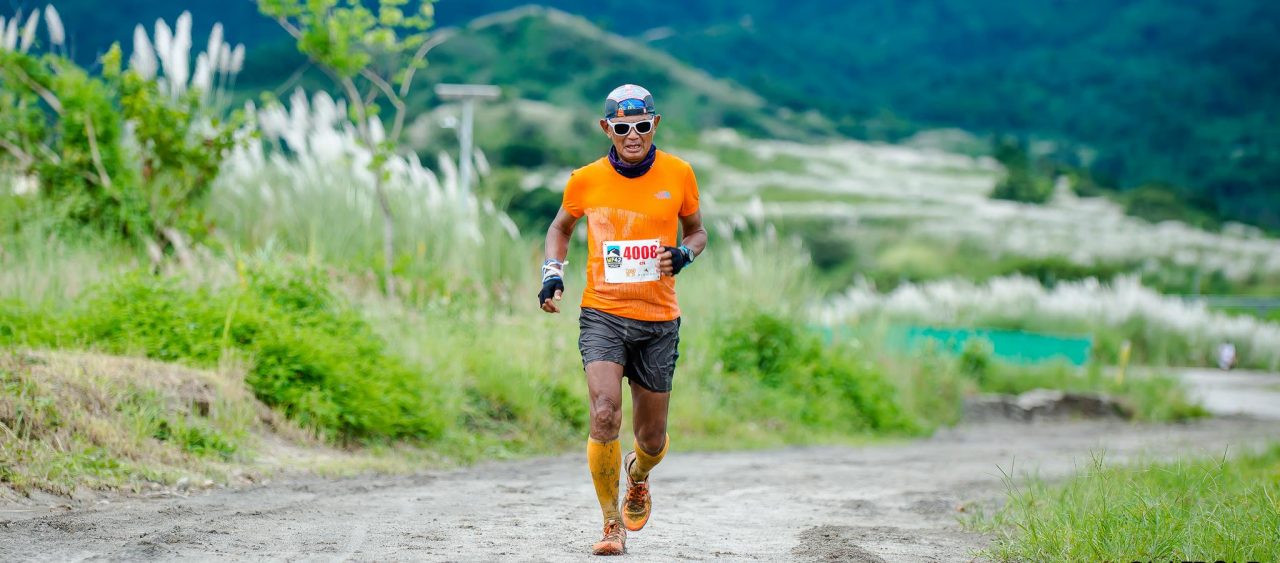
“Listen To Your Body”


I just read the news at yahoo.com that a runner died while running the Olympic Trials for the Marathon in New York yesterday, Saturday. The runner/marathoner is 26 years of age and had been an elite runner since the early 2000’s. The cause of death is not yet released/known and it will take time before the doctors and experts will find out the reason why he died while running the marathon in the early stage of the course.

I remember the writer and turned-marathoner James Fixx, which was popularly known as “Jim Fixx”, who was the author of the “The Complete Book of Running”. Jim Fixx and his book were credited to have started the “running revolution” in the United States and to the entire world. The book motivated the whole world to run and be physically active to be in good health. But at the age of fifty-tw0, he died of cardiac arrest after having his daily practice runs. His death brought questions and doubts if running is the cause of his demise and brought a wrong message to the people. However, as a result of more investigation and studies on the background and lifestyle of Jim Fixx, it appeared that he was a “chain smoker” in his younger years before he started training and running numerous marathon races. His father died of heart attack also and he was advised by doctors and experts to undergo regular treadmill tests and heart monitor tests. But he refused to heed to the advice of the experts. It appeared that cholesterol deposits had thickened in his arteries that impeded the regular flow of blood in his circulatory system, thus, causing his heart failure.

Jim Fixx was basically a writer but because of his popularity in motivating the people to run and finish/compete in marathon races, he has to “walk the talk” and do what he preaches. I really don’t know how many Boston Marathon Races and other marathons he had competed or finished but I guess, he did not listen to his body and took time to undergo a treadmill test. For me, Jim Fixx had greatly contributed my development into a passionate and determined runner.

In my experience as an old runner, I see to it that I determine my pulse rate every morning after waking up in the morning. Check my blood pressure through the latest digital blood pressure gadgets available in the market. I have also my annual “executive medical check-up” whenever I visit the United States once a year.

The practice runs for the day should depend on your pulse rate, blood pressure, the amount of rest/sleep you had the night before your run, and your “gut-feeling” about yourself and your body.

At my age, I have an average of 60-70 beats per minute for my pulse rate; blood pressure of 120/90 while in Metro Manila but it reduces to 110/70 while I am in the mountains of Jamindan, Capiz; an average of 7-8 hours of sleep the night before my daily runs; and an average of 143-145 pounds body weight. Everyday, I feel I could run better than my previous practice runs.

Always remember, listen to your body.