There Is Still A Problem!


I had my Microsoft Office installed this afternoon and I was able to read and download the results of the 8th DND-AFP Gintong Pangarap Half-Marathon Race and 5-K run last Sunday which was sent to me as an attachment to an e-mail. However, after copying the results,  which was sent through Microsoft Excel, to Microsoft Word, I could not post the results in my WordPress blog. My laptop kept on stopping its operation and could not publish the draft I was trying to post.

I tried to divide the list of participants into two parts but still I could not post the draft. I did this in my past posts and I did not encounter any problems then.

Do you have any suggestions on how to solve this problem?

No Microsoft Office


After my laptop had been attacked by a virus and later re-formatted with another operating system, I haven’t installed the Microsoft Office program. Hopefully, I will have it installed anytime today.

I received early last night the results of the 8th DND-AFP Gintong Pangarap Half-Marathon Race from Captain Ferdie Espejo through my e-mail and I could not open it because I still do not have a Microsoft Office in my laptop.

The results will be posted as soon as I have such program installed to my laptop.

Half-Marathon @ 2:00:18 Hrs


Yes, I finished this race with a slow finish time but this is the hardest route so far for a half-marathon road race. I hope most of the runners who participated in this road race would attest to this observation.

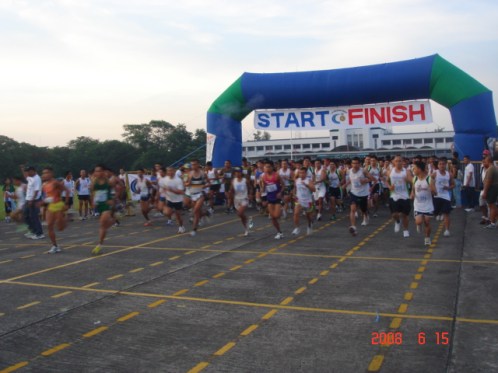
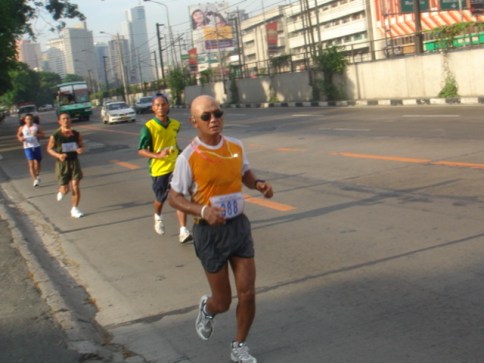
The race started 10 minutes late due to some stretching exercises led by one of our lady soldiers who won in one of the past Milo Marathon races. From the Grandstand at Camp Aguinaldo (Start & Finish Area), the half-marathon runners started the run by leaving the Grandstand towards Gate 1 and turn right towards Boni Serrano Avenue which is downhill to Katipunan Road. From Katipunan Road, the runners had pass at White Plains and later to the Seventh-Day Adventist Church going to Ortigas Avenue. From the crossing, the runners had to go uphill towards Meralco and to EDSA. From EDSA, turn right at Boni Serrano Avenue towards Gate 1. That route consists of one loop and every half-marathon runner should go around for another loop and enter Gate 6 of Camp Aguinaldo. From Gate 6, the runners would have a brief tour of the housing facilities of AFP personnel, the Golf Driving Range, the Soldier’s Mall (SM), part of the Camp Aguinaldo Golf Course, the White House (official residence of the Chief of Staff, AFP), the St Ignatius Cathedral (which I had it air-con(ed) when I was the Camp Commander of Camp Aguinaldo), and later turning right towards the Grandstand/Finish Line.

In my GF 305, the distance registered 20.7 kms which is short by 400 meters. I slowed down on the last 3 kilometers due to hunger and the heat of the sun but my legs were still strong and could hardly felt any sign of getting cramps.

I was talking to this tall guy from India (I could hardly pronounce and remember his name) who served the Indian Armed Forces for 9 years in the Infantry and proudly said that he joined in a war with Bangladesh when he was in the active military service. He is a good runner and started so fast that I was able to overtake him at the uphill portion going to MERALCO at Ortigas Avenue. Colonel Oscar Lopez of the Philippine Army was listening to the Indian guy. Col Lopez owns a brand-new GF 405 & his 1st time to use it and it looks great and it seems better than my GF 305. It functions like an IPhone with the “touch” functions!

In my estimate, we had more civilian runners than the members of the military in both the half-marathon and 5-K race. I was at the middle of the pack together with the “friends of BaldRunner”. I saw Loonyrunner, Joms, Marga, Gabriela Calma, Runmd, datc, Segovia siblings, noel lopez, officers and men assigned at Headquarters Philippine Army, and at GHQ, Camp Aguinaldo and familiar faces whom I could not memorize their names.

I was using my ASICS Gel-Kayano 13 for the first time in a road race and it felt good despite a “mild attack” on my gout after eating a Protein PowerBar last Thursday on my 31K run. On this race, I became a model of New Balance (again!) using their new line of running shorts and T-shirts which are light and well-ventilated. I saw another civilian runner wearing the same T-shirt as mine and I smiled at him. At this point, we were going downhill from the 7th-Day Adventist Church towards Ortigas Avenue. I was surprised to see a Rustan’s Mini-Mart fronting the church where I saw a number of Porsche Sports Car parked with the owners looking at the runners passing by.

I was using my Nathan Water Belt and my Sennheiser MPX 70 earphone with my Ipod Nano listening to the songs of Bee Gees, Abba, and Barry White.

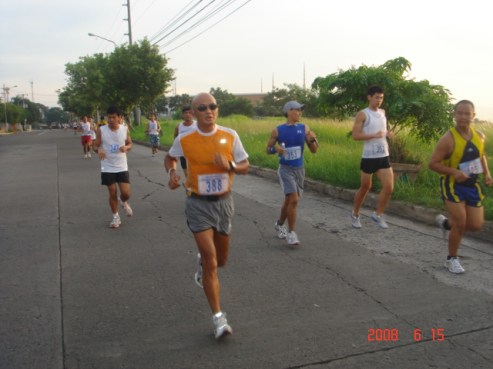
These two runners on my right were like Scout Rangers who ran together and finished together. They would overtake me but later I would overtake them at the water stations as they stopped to drink water. The curly-long haired guy would stop running & walked briskly while the other guy would wait for him. At this point, we were already going uphill at Ortigas Avenue. I left these guys on the last 3 kilometers of the course. MSgt Illut became my pacer on my second loop of the race and he was fast and strong. My thanks to MSgt Illut’s effort!

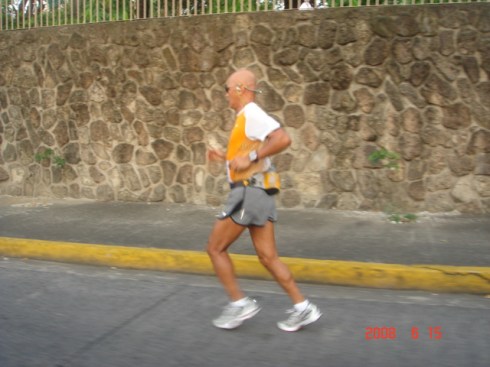
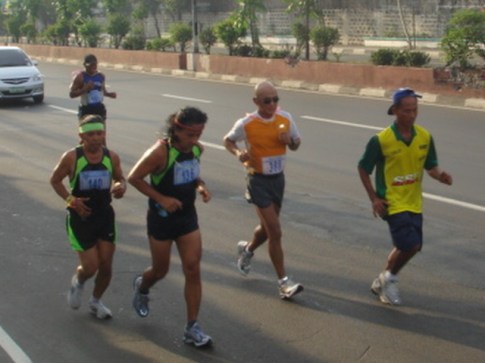
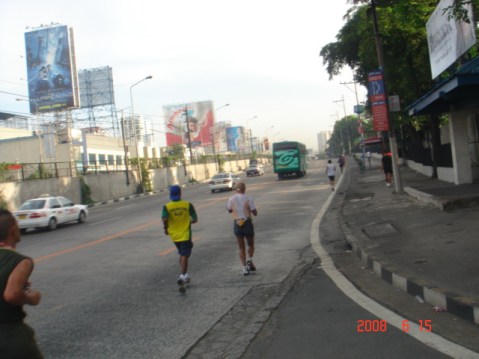
This is another view of running along Epifanio De los Santos Avenue (EDSA) on my last 4 kilometers of the race. It was unfortunate that there are some parts of EDSA that don’t have that “white paint” on the edge of the road. I had observed that such rubberized paint on the edge of the road (5-6 inches in width) added more comfort and bounce on my running shoes and I tried running consistently on the said line during the race. The next picture shows the white paint at the edge of the road. MSgt Ireneo Illut (the runner & pacer behind me) is presently assigned with the Philippine Army’s Special Service Unit administering our elite athletes assigned with the Phil Army.


Running along EDSA and going uphill towards Boni Serrano with all those smoke-belching vehicles was one of the hardest portions of the road race and we had to pass through this main road twice! It was a nice experience running uphill which could be hardly noticed if you are riding inside a vehicle or car. The smell of the gasoline and smoke from the vehicles would make each runner’s breathing hard and problematic.

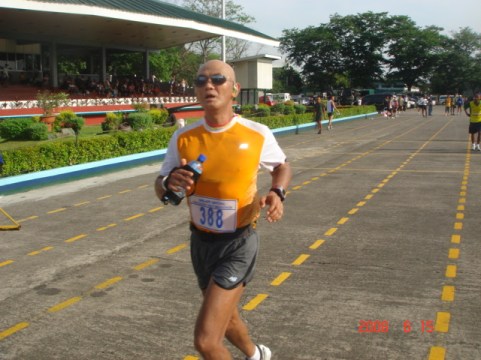
This was my last dash towards the Finish Line! On my right hand is the bottle holder/strap that I bought last week at R.O.X., Bonifacio High Street. Aside from the water on my Nathan Water Jug, I used this bottle holder with a bottle of Propel on my last 5 kilometers and it served well for its purpose. I hope to get one more of this for my other hand. At the Finish Line, I was able to meet runners from Malaysia and Indonesia who finished the race and they said nice things about the race & the challenging route and proudly said that they are my daily readers/visitors to my blog. I met also Michelle of Mizuno whom I encouraged to start running. I told her also that she has a lot of fans here and abroad because of the “picture” I posted lately. 

To all the runners, thanks for running in this race despite our problem in our water supply. To all the winners and finishers, congratulations and more power to all of you. See you at the next Mizuno Rush Infinity 15K Run.

“I’ll Take Full Responsibility”


Despite mixed reactions and support I was getting from the AFP hierarchy for the continued existence of the DND-AFP Gintong Pangarap Marathon Sports Program, as the designated Chairman, I had to push though with the 8th rendition of the Half-Marathon Road Race. The AFP leadership had never designated my replacement as I retired from the active military service one month ago. So, to fill-up the leadership, I had to make some follow-up to the different committees involved in the implementation of the race.

The only complaint that I got from the participants after the race was the lack of water along the route. Two days before the race, I personally reminded my staff to see to it that we must have a lot of water supply along the way as the runners will be passing by these water stations twice before they finish the race. And I know for a fact that at 5:30 AM, the sun is already rising on the horizon. Somebody did not do his assigned task as we had coordinated two days before the race. Anyway, as the Chairman of this Sports Program, I’ll take full responsibility for this grave mistake to the runners/participants. I am very sorry that we gave some problems on this matter to our runners. Hopefully, we did not have any serious problems with our runners. We promise that we will improve some more in our next race.

To all the AFP members and civilian runners (to include runners from other countries), thank you for running this half-marathon event. Despite our mistake, we hope to see you again in our next road race. Good luck and happy running!

My insights about this sports program will be dealt with later in my future posts.

Sand Dunes & 31K Run


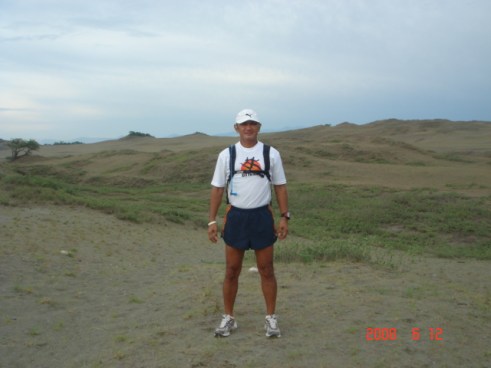
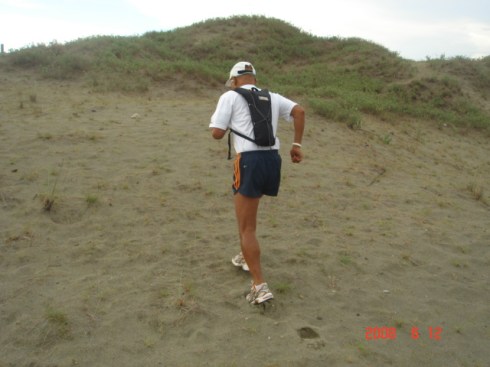
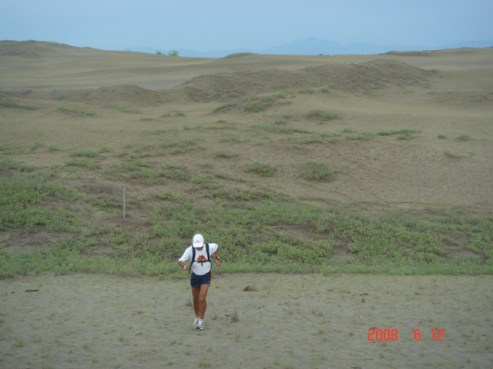
My nephew brought me to this place by car at Suba, Paoay, Ilocos Norte in the afternoon of Thursday. This place is almost 14 kilometers away from Laoag City and it is 200 meters away from the South China Sea. He was the one who took my pictures with the sand dunes as my background. This is the same place where the late actor Fernando Poe, Jr would shoot most of the fighting scenes in his “Panday Movie Series”. This is also the place where Tom Cruise’s made a film shooting of the movie “Fourth of July” in 1987 (?).

I was using a Puma Runner’s Cap, Inaugural City of Angels Half-Marathon Finisher’s T-shirt, ASICS Gel-1120 shoes, Adidas shorts, Ipod Nano, GF 305, and 2.1-liter CamelBak. 


I started my run along the sand dunes with a slow pace taking those trails I could see in the middle of the vast land area. Basing from my GF 305, I was able to cover a distance of almost 5 kilometers along these sand dunes.

I finished my run along the sand dunes at the same place where I started. From here, I followed the road going back to Laoag City. However, I did not go directly towards Laoag City, instead, I went further south going towards the town of Paoay. I was able to run almost 5 kilometers when I reached Km Post 5 before the town of Paoay. From there, I made my turn-around and proceeded north towards Laoag City.

At Km 12, I started to eat the Protein Power Bar which I bought at GNC while running.  I finished eating the Power Bar after running one kilometer and at the same time taking a sip of water from my CamelBak. It was already getting dark but I maintained my direction of running against the traffic, taking extra careful with the tricycles. Tricycles plying on the road are very deceiving during nighttime. At a distance, you could only see the single headlight of the motorcycle but you could not see any light/s coming from the “side car” attached to the motorcycle. As a rule of thumb, I have to run towards the dirt part of the sidewalk  whenever a vehicle is about 50 meters infront of me.

At the crossing of the road to Gabu Airport and Suba Road, I turned left and proceeded towards the airport and reached the place going to Barangay Bengcag which was a good 1.5-kilometer distance from the crossing. Along this road, I could see group of men drinking “basi” or GSM with pulutan but they seem not to notice me. I’ve been warned by my friends here in Laoag City not to run to places where there are “drinking men” along the road as they might make some harm to “strangers” in their place. But what I do in places where there are people on the road is to smile and wave my hand at them and tell them, “Apo/Ama, lumabasak pay” (“Sir, I am just passing through”) and most of them smile and answer back positively. Hmm..one of these days, I’ll be known as the “old runner” who goes around to the far-flung barangays in Laoag City waving his hands to people along the way with a Nathan Water Belt/CamelBak and a bottle of Propel on my hand.

How I wished I could reach the airport but it was too late already and made my turnaround at Barangay Bengcag and proceeded to Laoag City. After reaching the end of the Padsan Bridge (Laoag Bridge), near the City Hall of Laoag, I was already at Km 26 and my legs were still okey. When I reached Rizal Street going towards Barangay Dibua South, my Ipod Nano stopped and I had to reset it with another artist/album. I had to walk while trying to select the music in my Ipod. I selected Bob Marley’s music for the last leg of my non-stop run. After 200 meters of walking, I resumed my run. Bob Marley’s message in his songs and the beat of reggae made my pacing more consistent. 

On my last 4-kilometer, while about to reach the bus terminal of Partas Bus, I was tempted to take a tricycle to take me back to the house of my sister as it was about 9:00 PM already. I resisted the temptation of those tricycles lined up infront of the bus terminal waiting for arriving passengers as I didn’t feel any pain yet on my legs and body. It might be the slowest 3-4 kilometers in my running workouts but I was able to reach my destination without any severe body pains.

So far, this is the longest run I had in preparation for my next marathon. I ran a distance of 31.34 kms in 4:03:21 hours, a non-stop run (except for the 200-meter walk) to include almost 5-km run along the sand dunes of Paoay. I felt good but tired after the run. I didn’t had any signs of reaching my “wall” up to the very end of my long run.

The Camelbak I had with me during the run was an added weight (4-5 lbs with 2 PowerBars & 2 packs of SkyFlakes inside the zippered pocket) to my run but it gave me the confidence to have enough water & food along the way and be able to run non-stop from start to finish. From time to time, I had to pull the end of the shoulder straps to tighten the CamelBak’s fit to my body to prevent it from swaying from side to side. CamelBak is only advisable to long runs where you want to test your body how far it can go without any stops. The feeling of the pack hugged on my back maintained my erect posture while running (Bugobugo85 knows what I mean with this!). The 2.1 liter capacity of water was enough to hydrate me for the said distance as the air was cooler in the late afternoon and early evening.

This long run was not in preparation for my next race on this Sunday’s Half-Marathon but it was a test how far my physical endurance and mental attitude would go.

I hope to have more long runs like this in the following weeks to come. 

Extreme Running: The Book


“Extreme Running” is a book written by Kym McConnell and Dave Horsley. Both of the authors are well-respected ultramarathoners and had been going from one continent to another to participate to these extreme running events, all for their passion to test their body limits and challenge the environment. This book was published in London, UK last year, 2007.

I found and bought this book at PowerBooks (Glorietta) two months ago after failing to locate or buy the book, “The Ultramarathon Man” by Dean Karnasez.

This book takes the reader on a world tour of ultramarathon races. The book is divided into seven chapters looking at each continent’s ultra foot races. Each ultra race has its own history, pecularities, preparations, challenges, strategies, experiences/adventures and the characters/personalities involved in each race. Pictures, maps, race course routes, and other informative notes were included in each page of the book.

To mention some of the extreme running events, the following is the list of some ultramarathon races in every continent in the world:

Europe:

1) The North Face Ultra-Trail Du Tour DU MONT-BLANC (UTMB)—101-mile race (163 Km) in Mount Blanc trails that passes through France, Italy & Switzerland held in the later part of August. Cut-off time: 46 hours. Limited to 2,000 runners.

2) Spartathlon—Athens to Sparta Road Race which has a distance of 152 miles (245.3 Kms). This is the original ultramarathon from Athens to Sparta which the Greek messenger, Pheidippides, took in 490 BC to deliver Athen’s request for reinforcements to resist the Persian invaders. Cut-off time—36 hours. Regular number of participants—300 runners. It is being conducted during the month of September.

Africa:

1) Marathon Des Sables—In Sahara Dessert, East Morocco during the month of March or April. It is a 6-stage course which has a total distance of 220-240 Kms (135-150 miles). Number of participants—700 runners.

2) Comrades Marathon—It is a single stage race in South Africa, covering a distance of 56 miles or 90 kms being held in June. Number of Participants—11,000 runners.

3) Trans 333—It is a single stage race in a desert location which is being held in a different host country each year. It has a distance of 333 Kms (206 miles). This is considered as the “World’s Longest Single Stage Desert Race”. Number of Regular Participants—20 runners. Maximum Time Permitted to complete the race—108 hours

North America:

1) Badwater Ultramarathon—It’s a single stage race from Badwater, Death Valley to Mt Whitney in California covering a distance of 135 miles (217 Kms) which is done in mid/late July. Number of Participants is limited to 90 runners (by invitation only). Time Lite to Finish the race is 60 hours.

2) Wasatch Front 100 Miler—Single stage race in Kaysville, Utah, USA which is done in the month of September. Number of Regular Participants—225. Time Limit to Finish—36 hours.

3) Yukon Arctic Ultra—In Whitehorse, Yukon, Canada which is held in February. Distances are: 42K, 160K, 480K & 736K (26.2, 100, 300 & 460 miles).

South America:

1) Jungle Marathon—In The Amazon Jungle in Brazil. It is a 6-stage, 200-Km (125 miles) road race in October and participated by 80 participants.

2) Atacama Crossing—In Atacama Desert in Chile. It is a 6-stage, 250-Km (150 miles) road race which is participated by by 150-200 runners which is conducted in March/August (alternate by year).

Asia:

1) Everest Marathon—In Nepal; 42.2 km, single stage with approximately 75 participants with 10 Nepalese runners. It is conducted during the month of November.

2) Gobi March—In Xinjang Province, China. The course is 6-stage foot race with a distance of 250 kms (150 miles). It is now on-going this week. Check out at www.thenorthface.com with Dean Karnazes participating in the said race. Number of participants—200 runners.

3) Lake Baikal International Marathon—In Lake Baikal, Listvyanka, Russia. 42.2 kms, single stage with approximately 30 participants during the month of March.

Oceania:

1) Kepler Challenge—In Te Anau, South Island, New Zealand. It is a single stage 60-km run (37 miles) done in December with limited participants of 400 runners.

2) Te Houtaewa Challenge—In 90 Mile Beach in Kaitaia, New Zealand. It is running along the beach with a distance of 60 kms (38 miles), single stage held during the month of March. Approximate number of participants—30 runners.

3) Bogong To Hotham Trail Run—In Mount Bogong, Victoria, Australia. It is a single stage run with a distance of 64 kms (40 miles) held in the month of January. The race is limited to 60 runners.

Polar:

1) Antarctica Marathon—In King George Island, Antarctica. It is a single stage 42.2-km run held in February. It has a limited number of participants to 180 runners.

2) Antarctic Ice Marathon (South Pole Marathon)—In the foothils of Ellsworth Mountains, Antarctica. It is a single stage race with distances of 42.2 kms and 100 kms. It is held in December with a limited number of participants to 25 runners.

3) North Pole Marathon—It is located in 89N-90N, Arctic Ice Cap. It is a singlke stage race with a distance of 42.2 kms held in April. The number of participants is limited to 24 runners.
Robin Petrini & Donate A Shoe


Last Thursday morning, Captain Ferdie Espejo sent me a text message informing me that a box of about one cubic foot arrived at the office of the DND-AFP Gintong Pangarap at Camp Aguinaldo where the sender is a certain Robin Petrini, Head Coach, Softball Team of Pennsylvania State University, USA. I instructed Capt Espejo to open the box and he informed me that it contained four (4) pairs of slightly used running shoes.

Coach Robin Petrini sent three (3) pairs of Saucony Running Shoes and one (1) pair of Nike shoes for the Project Donate A Shoe.

My immediate instinct after I got the information that somebody from the USA sent a box full of shoes was to “google” the name of Robin Petrini. Look what I’ve found!

Coach Robin, thank you very much for your support. I hope I will be able to personally thank you for your effort of sending such shoes to the Philippines. May God bless you always. 

Hill Trails


I’ve chosen to see and run through the dirt trails near my sister’s place in Barangay Dibua South, Laoag City in the afternoon of last Wednesday (11 June). I used my ASICS Gel-1120 shoes with my Nathan Water Belt, a bottle of Propel strapped on my right palm, runner’s cap, and a Nike running kit. I was accompanied by Barry White and The Beatles.

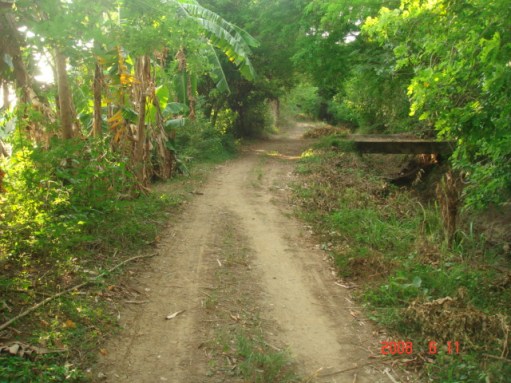
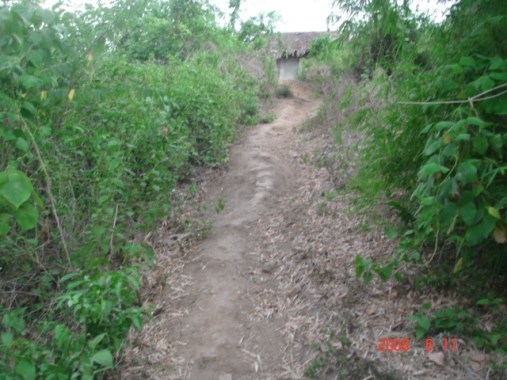
The access point to the dirt/trail road is very near my place which was only twenty meters. The dirt/trail road is beside an irrigation canal without any flowing water and followed the trail going north. It was a slow run just to be able to see, explore the place, and make sure of my foot landings. There were parts of the trail which were covered with dry leaves that fell down from the trees that are on the sides of the trail. There were parts of the trail which are used by people going up the hill to get some firewoods and most of these trails lead to some houses and rice fields.

This is the dirt road at Barangay Dibua South which is beside an irrigation canal. This point is Km-2.

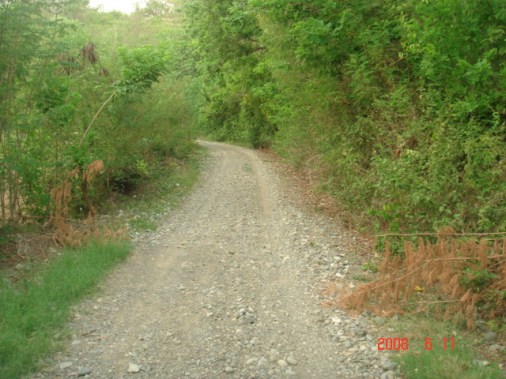
After reaching the cemented road going to Barangay Sangil, Bacarra as I jogged towards the north, I decided to go through a small cemented/paved road that goes towards the eastern direction. After twenty meters, the paved road became a sand & gravel trail, later a dirt trail, and I was surprised to see a newly-cemented road that goes to the hills. After passing through the peak of the highest hill in the area, I followed this paved road and on the lower elevation I could see on both sides of the road big concrete houses which is a sign that most of the people residing in this area are either OFWs or “Balikbayans” from the USA. At this point, it was already Km-9.

After running for almost 5 kms, I took this sand & gravel road going to the eastern direction.

After running for about 500 meters on this road with big concrete houses, I met 4 couples (at least 50 meters distance from each couple) doing brisk walking with fanny pack belts on their waists. I smiled and waved at them while I passed them. Most of the couples seen walking were fat!

This trail is going uphill to a semi-permanent house. At this point, I was already at Km-7.

It was getting dark already and opted to just follow the paved road and later surprised to see bright lights on the horizon. I could see the Provincial Sports Complex where workers are busy making repairs on the grounds/track. Hopefully, our running oval track here in Laoag City will be made of tartan.

From the Provincial Sports Complex, I have to go back to my sister’s place in Barangay Dibua to complete my run and it was another 4.5 kms distance. After running on the trails and hills in Laoag City, the cemented road and plain terrain towards the house gave relief to my tired legs.  

After almost 25 minutes from Barangay Sampaloc, I was able to reach the finish line, the house of my sister.

This run gave me the reason to see the trails in Laoag City for the first time! I was surprised to know that there are so many dirt/sand & gravel trails on the outskirts of the city which connect barangays located on the hills.

I was able to run a distance of 15.43 kms with a time of 1:50:41 hours. It was a nice run!

Treadmill Workout


I had to make a quick trip back to Manila to buy some needed parts and materials for the repair project that I am supervising here in Laoag City. I have observed that the prices of materials here in the province are too expensive as compared to the factory price in Metro Manila. After buying such materials at MC Home Depot at The Fort, I had to send them through the commercial bus going to Laoag with a minimal fee for its transport. I was able to save some money.

Last Tuesday morning, I had a quick visit at the gym and made my usual weight training using the dumbbells and the Smith machine for bench press and I was able to finish my supplementary weight training after one hour.

I shifted my workout and tried the treadmill. I had a combination of brisk walking and slow jogging with the following adjustments:

Speed—6.0                                Inclination—15 (Maximum)

Duration—1:10:00 hours          Total Calories—480 cal

Distance—6.2 kilometers         Vertical Distance—850 meters

Average HR—155 bpm              Hydration—One bottle of Propel

As much as possible, I tried to avoid holding on the vertical bar infront of me and the top of the digital display of the treadmill machine in order to simulate a hill/mountain climbing activity.

It was a nice workout that I was able to perspire a lot. I was glad there were no other users on my both sides during my treadmill workout.

After lunch, I was on my way back to Laoag City.

Sleeping 101: How To Sleep Better


I saw this article at www.sleepdex.org/tips.htm while browsing at WordPress. I hope this will be an added information for those runners who want better performance and for those who have problems getting to sleep. Remember that a serious runner must have at least 7-8 hours of sleep every night. In my experience, I strongly believe that a good night rest/sleep is one of the preventive measures in sports injuries and sickness. In the principle of rest & recovery in training simply means a complete sleep (at least 8 hours) every night.

Enjoy reading this article.

Sleep Hygiene – Best Practices

Experts recommend these to help you fall asleep, stay asleep and wake up feeling refreshed and ready to start a new day.

  • Go to bed at the same time every night and get up at the same time every morning. Set and maintain a sleep schedule. Try to stick to it even on weekends and when life gets crazy. Failure to do so can lead to insomnia. “Sleeping in” on the weekends will make it harder to wake up on Monday morning because it resets your sleep cycle.
  • Avoid drinking alcohol close to bedtime. While it may initially sedate you, alcohol keeps your brain in light sleep – you have trouble getting to the deep sleep and REM sleep phases and your sleep is less efficient. Arousals due to alcohol can cause sweating, headaches and intense dreaming.
  • In the late afternoon and evening, avoid caffeinated drinks because they act as stimulants. Caffeine sources include some soft drinks, coffee, chocolate, non-herbal teas, some pain relievers and diet drugs. Caffeine can stay in your system up to 14 hours. It increases the number of nighttime awakenings and decreases total sleep time.
  • Avoid nicotine in the evening. This includes both smoking and smoking withdrawal systems such as nicotine patches. Nicotine is a stimulant, like caffeine, so it pumps your heart up. Smokers often have trouble sleeping because the length of a good night’s sleep is more than their bodies want to go without a cigarette. They wake up early due to nicotine withdrawal.
  • Wake up with the sun, or use very bright lights in the morning. Sunlight helps the body’s internal biological clock reset itself each day. Sleep experts recommend exposure to an hour of morning sunlight for people having problems falling asleep. This is also a great treatment for jet lag.
  • Keep the bedroom quiet and dark and at a comfortable temperature. Extreme temperatures may disrupt sleep or prevent you from falling asleep. Make sure you have a good mattress and pillow.
  • Try to exercise 20 to 30 minutes a day but not right before bedtime. For maximum benefit, exercise at least three hours before going to bed, especially if you are the type of person who becomes more alert with exercise.
  • Develop a relaxing routine before bed. This may include a warm bath, light stretching, listening to soothing music, reading or other relaxing activities.
  • Don’t go to bed feeling hungry, but don’t eat a big, heavy meal right before bedtime. For a light snack before bedtime, carbohydrates or dairy products (e.g. non-chocolate cookies or crackers and milk) are best
  • Don’t lie in bed awake. If you can’t fall asleep within 30 minutes, go to another room and do something restful until you feel tired. Don’t read in bed. If you want to read, get out of bed and sit in a chair.
  • Don’t have a visible bedroom clock because “clock watching” will only help intensify the misery of insomnia. You can always turn the face of the clock away from you or put it in a drawer.
  • Reserve your bed for sleeping and sex. Keep the television, laptop, cell phone, food, etc. out of the bedroom.
  • Don’t make bedtime the time to solve your problems. Make a to do list for the next day then try to clear your mind.
  • Think about your napping policy. Naps can be great in helping some people improve performance. But for others, napping is an invitation to night-time insomnia. Figure out which category you are in. Don’t nap during the day if you have trouble sleeping at night. If you must, take a brief nap 10 to 15 minutes about eight hours after waking.
  • Try not to drink fluids at least two hours before bedtime as a full bladder can interfere with sleep.
  • If you need to get up during the night, do not expose yourself to bright light. Intense light can reset your internal clock and make it harder to get back to sleep. See circadian rhythm section.
  • Avoid sleeping with your pet because their movements or your allergies can decrease the quality of your sleep.
  • Know the side effects of your medications. Certain medications can either compound sleepiness or make falling asleep more difficult. Let your doctor know if you have sleep problems so they can do their best not to prescribe medications that worsen your sleep difficulties.
  • If sleep problems persist, see your doctor. If you have trouble falling asleep night after night or if you always wake up feeling unrefreshed, you may have a sleep disorder that needs treatment.

Medical doctors who specialize in sleep actually use the term “sleep hygiene” to describe the habits and behaviors of people before bedtime and while in bed as well as environmental condition that can affect sleep quality. Attention to sleep hygiene is often the first thing to look to when people have trouble sleeping.

The U.S. government’s National Heart, Lung and Blood Institute has produced four-page PDF files on

Check out our sleep resources page for more information.