Tendai “Marathon Monks”


July Oconer, one of the Finishers and Sponsors of the 1st Bataan Death March 102K Ultramarathon Race, posted the following article in Facebook about the Tendai “Marathon Monks” of Japan. It is a nice reading item to runners and the reason why Japan is one of the top sources of marathon runners in the world.

Tendai Marathon Monks – The Run of A Lifetime

by James Davis – The London Observer

Some of the world’s best athletes gave a very good run for their money in the London Marathon, others picked up their appearance fee and pottered round without threatening to win. The world’s top distance runners are well rewarded – the best earn one million dollars a year – and they reckon to run only two or three marathons a year.

What a comparison that is to a group of men who can claim – though they never do – to be the greatest, toughest, most committed athletes in the world. They run for no other reward than spiritual enlightenment, hoping to help themselves along the path of Buddha towards a personal awakening. They are the so-called ‘marathon monks’ of Mount Hiei, Japan.

The monks, known as Kaihigyo, are spiritual athletes from the Tendai Sect of Buddhism, based at Mount Hiei, which overlooks the ancient capital city of Kyoto.

The ultimate achievement is the completion of the 1,000-day challenge, which must surely be the most demanding physical and mental challenge in the world. Forget ultra-marathons and so-called iron-man events, this endurance challenge surpasses all others.

Only 46 men have completed the 1,000-day challenge since 1885. It takes seven years to complete, as the monks must undergo other Buddhist training in meditation and calligraphy, and perform general duties within the temple.

The first 300 days are basic training, during which the monks run 40km per day for 100 consecutive days. In the fourth and fifth years they run 40km each day for 200 consecutive days. That’s more or less a full marathon every day for more than six months.

The final two years of the 1000-day challenge are even more daunting. In the sixth year they run 60km each day for 100 consecutive days and in the seventh year they run 84km each day for 100 consecutive days. This is the equivalent of running two Olympic marathons back-to-back every day for 100 days.

Author John Stevens, in his book, The Marathon Monks of Mount Hiei describes the running style which dates back over a thousand years. ‘Eyes focused about 100 feet ahead while moving in a steady rhythm, keeping the head level, the shoulders relaxed, the back straight, and the nose aligned with the navel.’

What makes all these distances even more amazing is the manner and the conditions in which the monks run. These runs are usually begun at night and are over mountain paths that are uneven and poorly marked. During the winter months the low temperatures and snow are a great hindrance to the runners. These monks do not wear the latest in footwear and clothing, but run in straw sandals, an all-white outfit and a straw hat. They also run on a diet of vegetables, tofu and miso soup, which modern athletes and nutritionists would deem to be unsuitable for endurance events.

Not only do they wear clothes and shoes unsuited to running, but they have to carry books with directions and mantras to chant, food to offer along the way, candles for illumination, as well as a sheathed knife and a rope, known as the ‘cord of death’. These remind the monk of his duty to take his life if he fails, by hanging or self-disembowelment. The course is littered with unmarked graves, marking the spot where monks have taken their own lives. However, there have been no cases of monks’ suicides since the nineteenth century.

During these long runs the monks must make stops at temples of worship that can number up to 260. This means that the 86km run can take up to 20 hours to complete leaving the monk with very little time for recovery or rest, but as an old saying goes: ‘Ten minutes’ sleep for a marathon monk is worth five hours of ordinary rest.’ They also learn to rest sections of their body while running, such as their arms or shoulders.

And then there is the doiri, where the monk faces seven days without food, water or sleep or rest. During this time the monk will spend his entire day reciting Buddhist chants and mantras – perhaps up to 100,000 each day. The only time the monk will leave the temple is at 2am to walk the 200m to a well and return with water to make an offering. He is not allowed to drink any himself and the 200m walk can take up to two hours in the final days of the fast. During his time spent meditating there are two monks who are in constant attention to ensure that he does not fall asleep.

For several weeks before doiri, the monk will reduce his food intake so his body can cope with the fast. The first day is no problem, but there is some nausea on the second and third days. By the fourth and fifth days the hunger pangs have disappeared, but the monk has become so dehydrated that there is no saliva in his mouth and he will begin to taste blood.

The purpose of doiri is to bring the monk face-to-face with death. During this fast, the monks develop extraordinary powers of sense. They talk of being able to hear the ashes of incense sticks fall to the ground and, perhaps unsurprisingly, of the ability to smell food being prepared miles away.

Physiologists, who have examined the monks after conclusion of the rite, find many of the symptoms of a ‘dead person’. Monks talk of experiencing a feeling of transparency where everything good, bad and neutral leaves their body and existence in itself is revealed in crystal clarity. Relatives of those who undergo this rite of passage talk of the difference that the seven days makes to those who undergo it. One remarked, ‘I always dismissed Buddhism as superstitious nonsense until I saw my brother step out of Myo-o-do [the name of the temple] after doiri. He was really a living Buddha.’

When the Japanese Emperor maintained his court in Kyoto, the monks were afforded a special thanksgiving service in the Imperial Palace after completing their 1,000-day term and the ‘marathon monks’ were the only people who were allowed to wear footwear in the presence of the Emperor.

Even today thousands will turn out to watch a monk nearing completion of a 1,000-day term, as he runs the old course that now passes through Kyoto’s shopping streets and the entertainment district, complete with its bars, restaurants and strip joints. Many turn up hoping to be blessed by these special monks whom they believe have powers to heal.

Japan has the largest number of marathon runners per capita in the world. From the Arctic northern island of Hokkaido to the balmy tropical islands of Okinawa in the Pacific, each and every town will organise a number of long-distance runs and each school will have a strong running club.

There is even a corporate-sponsored running league, whose teams are even allowed to have one foreigner in their team. Jeff Schiebler, a Canadian Olympic runner, is the only non-African foreigner who competes. He described what it is like to run in Japan. ‘It is totally different from anything in North America. They have multimillion-dollar contracts, team chefs, great training facilities. That kind of thing makes Japan a power in long-distance running. They go mad for road races. Kids there grow up wanting to be the next marathon champ.’

Japan’s love of marathon running was epitomised with the incredible outpouring of emotion that followed Naoko Takahashi’s victory in the women’s Olympic marathon in Sydney last year. The race and the prize-giving attracted a massive 84 per cent TV rating as the fresh-faced girl from the mountains of Gifu became the first Japanese woman to win an Olympic gold medal.

She became an overnight superstar and her face was splashed across newspapers, magazines and on talk shows. She even received The People’s Honour (only the third woman ever to do so) from the then prime minister Yoshiro Mori, who said: ‘You have given inspiration and encouragement to youngsters as well as a whole people by crossing the finish line with a refreshing smile.’

Very few runners will cross the finish line in London with a ‘refreshing smile’ after 26 hard miles. Grimaces of exhaustion and relief will be a more common sight. However, after looking back at the 26 miles and a bit, there will be a feeling of great personal pride and achievement in their performance. Many will have achieved personal best times and others will have raised hundreds of pounds for charity. But will many of them be able to say they have gained something spiritually, as with the ‘marathon monks’ of Japan?
Dante’s Peak @ Griffith Park


This is not about the movie which was released in 19997 about the eruption of a volcano in Dante’s Peak, a small town somewhere in the USA. The movie was played by a pair of popular stars in Hollywood—Pierce Brosnan (the former James Bond actor) and Linda Hamilton (Sarah, the lady character in the Terminator movies).

For the past days, I’be been planning to run to the highest peak of Mt Hollywood at Griffith Park, starting from the house as part of my running workout. Finally, yesterday, I went out of the house bringing with me my Nathan Hydration Belt, some cash and identification card. It was 11:40 AM and the sky was covered with thick clouds and there was a 20% chance of rainfall as predicted by the Weather Report. The weather was cool at mid-60s and I wore my TNF long-sleeved technical running shirt.

From the house, I maintained an average pace of  5:45-6:00 mins/km while running along the sidewalk, facing the incoming traffic. The streets from the house to Griffith Park consisted of uphill & downhill terrain but there are times that I had to stop whenever I cross busy intersections. There are designated pedestrian crossing areas on the streets that you have to wait for that pedestrian light (a walking figure in white light) to glow while a blinking red light with a figure of a palm of the hand means that you are not allowed to cross the road yet! It is a simple street light in crossing a street but the people here follow the lights even without the presence of a police. By the way, do you wonder why there are no traffic aides or policemen here in every corner of the streets? The answers are: the traffic lights are there (very efficient) in every crossing and the citizens (drivers & pedestrians) are disciplined in terms of road rules and regulations. In the Philippines, we have those traffic lights, yet, we still have those traffic aides & PNP & Highway Patrol & LTO, but most of us do not follow those pedestrians lights and coss the streets along the pedestrian lanes!!! Very simple rule but it is hard to implement. Your answer is as good as mine.

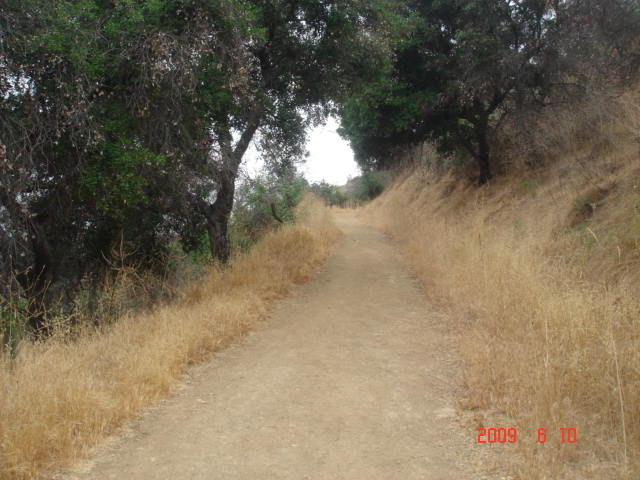
After running for almost 10 kilometers, I finally reached the foot on the northern part of the mountain at the Griffith Park. I intended not to go to the trails that I’ve been into last year and I started to explore while I was on the road that goes to the Griffith Park’s Golf Course. While running uphill along the asphalted road, I saw an opening of a trail track on my left and I immediately went to it and started to run uphill. Yes, the small trail led me to a wider trail which is a part of those many trail roads/fire roads that snake up to the peak of every ridge at Mt Hollywood.

Even with the coolness of the place, my sweat, coming from the visor of my runner’s cap, started to drip to my legs and shorts and it was continous while my legs were taking shorter strides and my arms were swinging at a moderate frequency. It was a very challenging uphill climb where I had to brisk walk along steeper climbs along the way. I have to practice what I’ve learned in ultra trail running—“brisk walk” on those steep uphill climbs and “fly” on the downhill side in order to preserve my strength for the rest of my running workout. 

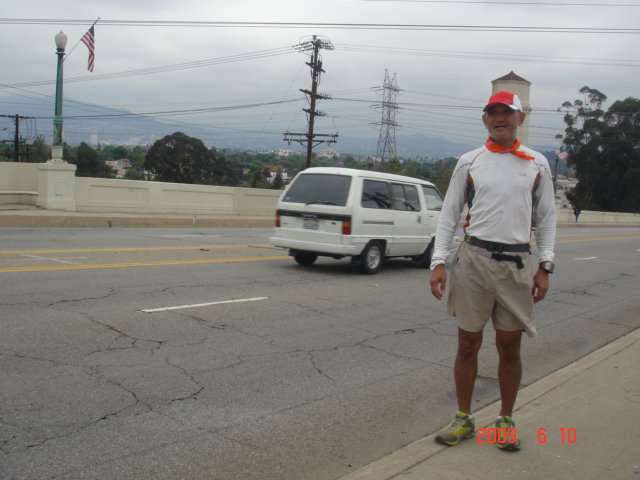
At The Hyperion Bridge where I Had A Picture of My Daughter Running The 1st City of Angels Half-Marathon
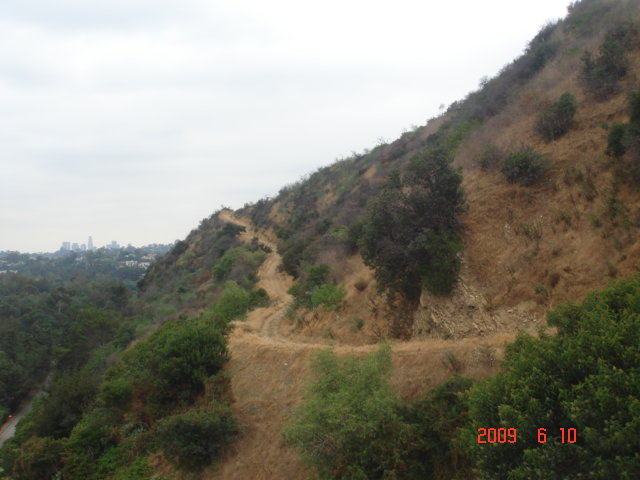
At The Hyperion Bridge where I Had A Picture With My Daughter Running The 1st City of Angels Half-Marathon (The Mountain Range on the Background Was My Destination)
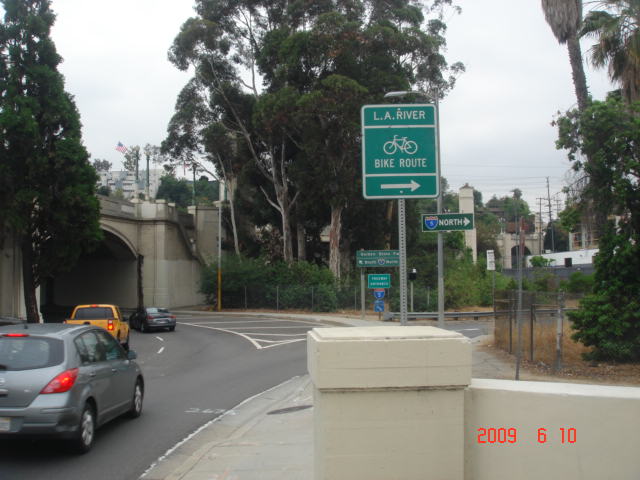
My Entry Towards Griffith Park
Finally, I Entered This Trail
Trail Running Alone Is Refreshing!

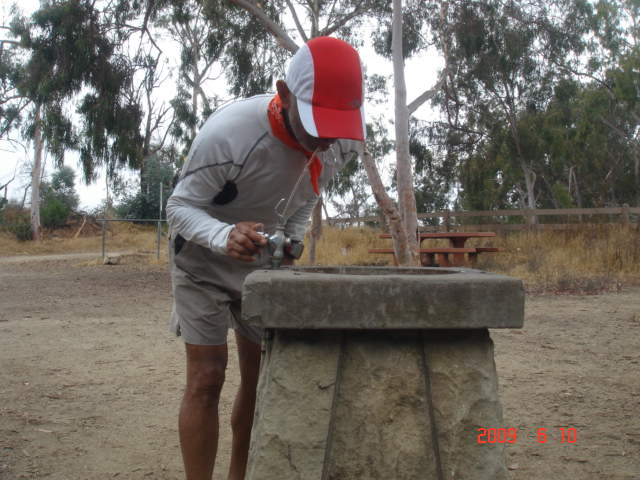
After 15-20 minutes of steady uphill climb, I came up with a water fountain! I walked towards it and drank some water and took some pictures and later I was back on my run. Later, I was running on an asphalted road but it was a short distance. At the end of the asphalted road, I saw some people who are preparing for a buffet lunch in one of the vista places along the route and I realized there was a  movie or TV “shooting” in progress within the vicinity. I did not dare to stop but just greeted the people I met along the road.

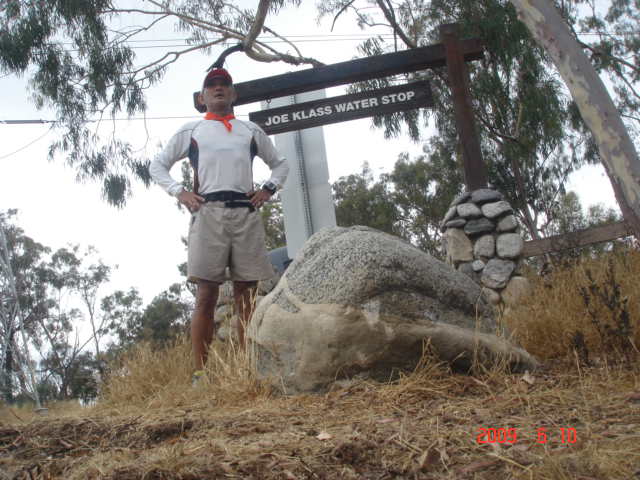
My First "Aid Station"
A Drinking Fountain On The Mountain Park

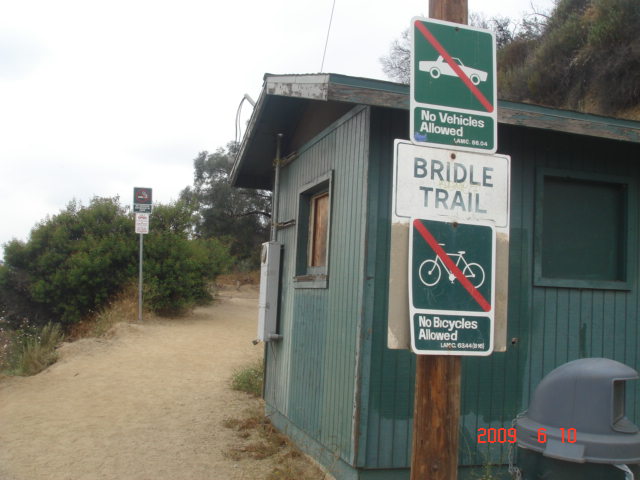
I entered Bridle Trail and that was the start (again!) of another more challenging uphill climb. Every time I reached a high part of the route, I would look up for another target to reach and study the trail that leads to it. That procedure had been repeated until I reached the highest peak of the mountain. I did not realize that the name of the highest peak is Dante’s Peak. It was my daughter who told me of the name as she already reached such place by hiking. I further “googled” it and I was able to see this website.

The Entrance To Bridle Trail
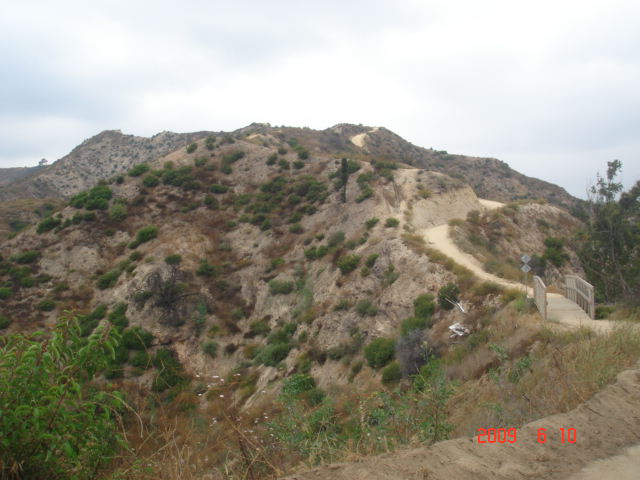
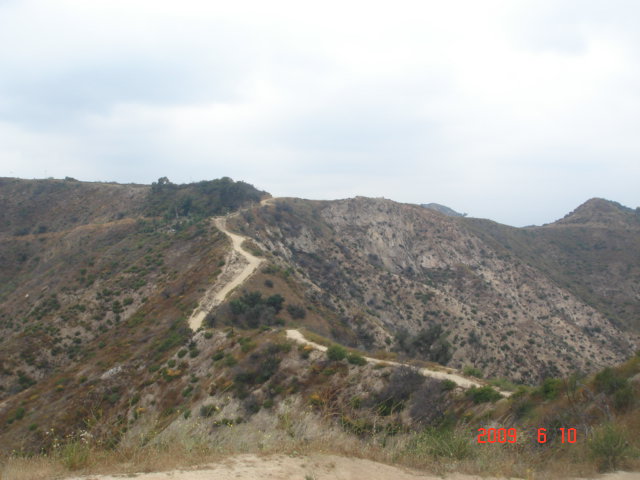
More Trails...
More Trails...
And More Uphill Climbs...
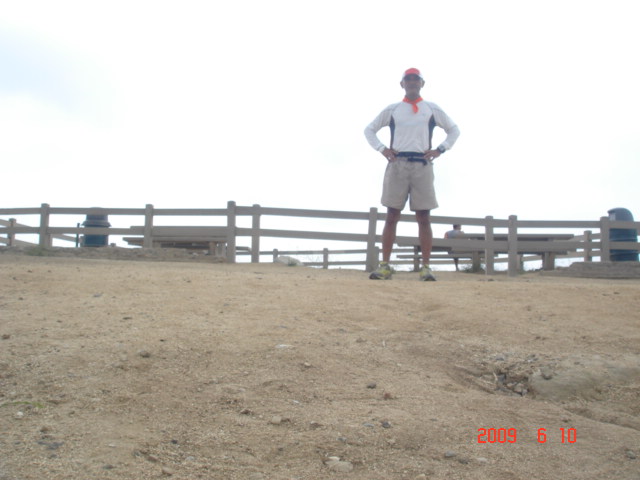
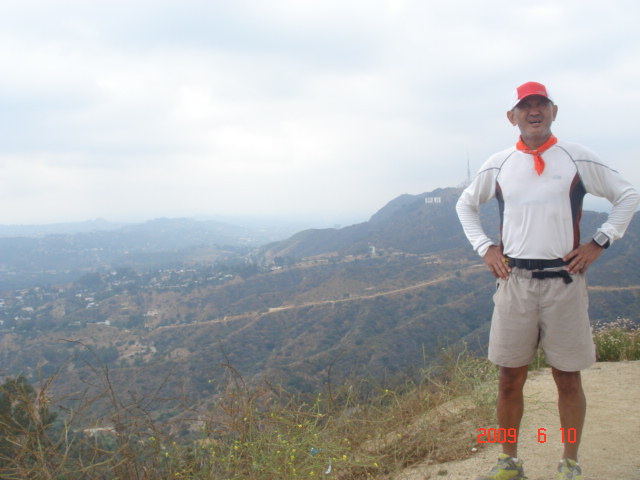
Finally, A Pose at Dante's Peak
HOLLYWOOD Sign at The Background
HOLLYWOOD Sign at The Background (My Right Elbow Pointed To It)
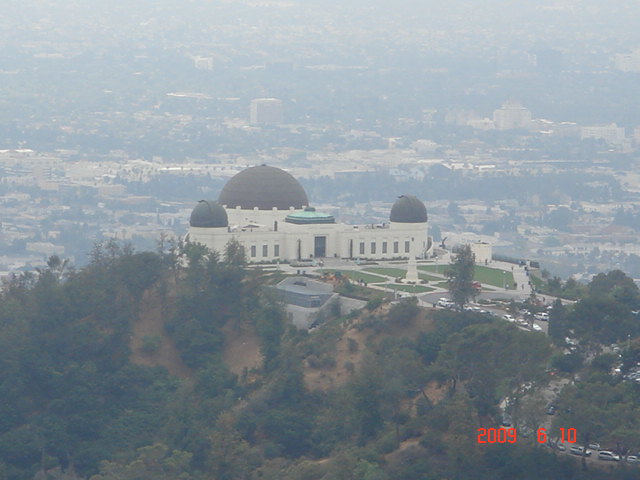
A View of the Back of the Griffith Park Observatory
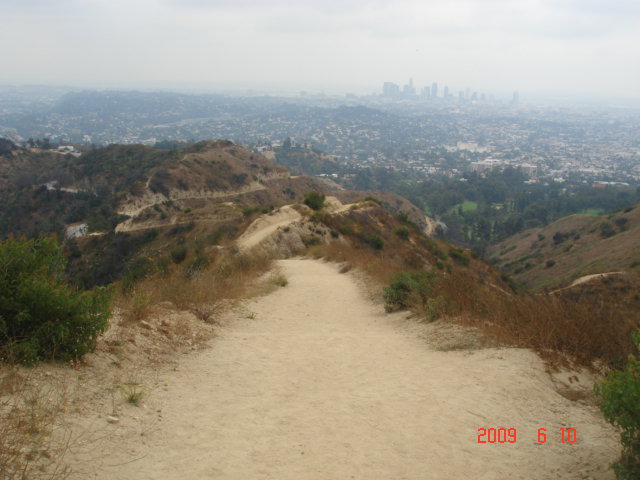
Ahh..Running Downhill

After taking some pictures at the said place, I was thinking of pushing myself to go to the HOLLYWOOD sign but after looking at my GF 305, I was already on the road for more than 2 hours! So, I decided to return here on my next running workout and be able to reach the said sign and retrace the route I’ve taken. So, Dante’s Peak became my turn-around point and I prepared for downhill run!

The traction of my TNF Arnuva 50 BOA trail shoes was very helpful on my downhill run as it gave me the needed traction on those steep portions of the route. My quads started to absorb the weight of my body and I started to feel some “burning” pain and my knees were starting to show some pain, too while trying to gain speed on those downhill runs. It was my mistake not to bring any GU/sports gels on this workout as I started to feel hungry. As I reached the water fountain, I drank more water and “peed” on the forested area. After a few minutes of running along the trails, I finally reached the place where I entered and then slowly jogged on the asphalted road until I reached the Los Feliz entrance of the park.

After running for another 3 kilometers on the streets, I entered Ralph’s Grocery Store and bought some cookies and sports drinks. I ate and drank what I bought while I was “brisk walking” along an uphill climb at Glendale Blvd. Finally, I resumed my running until I reached the house. I was able to run/jog/brisk walk a distance of 30.66 kilometers in 3:40 hours! It was a tiring “runabout” but it was refreshing to be out in the mountains and explore what I want to see. 

From the base of the mountain, I thought of coming up with a test or survey on how or what the person/s I met or passed along the trails would react if I greet them or wave my hand to them. I usually greet walkers/hikers or runners along the trail with a simple “Good Morning” or “Good Afternoon” or just simply wave my left or right hand while smiling at them. This simple courtesy was a good lesson that I’ve learned and observed when I had those trail runs at Mt Wilson with my kids last year. I was able to count 24 people whom I met or passed along those trails at Griffith Park. Out of the 24, only 12 of them greeted me back, most of them ladies and couples (husband & wife) who replied “Hi” or “Hello” and they are “white”. I saw some Asians (I really don’t know if they are Chinese or Vietnamese or Thais or Koreans or Japanese) but they did not greet me back. Unfortunately, I did not see any Filipino!

After the run, I had a shower and ate a lot of food. Later, I started to cook for dinner while watching the NBA Finals’ Game #3. As I predicted, the Magic won this time.

I’ll be back for another run to Dante’s Peak and to the HOLLYWOOD sign soon!

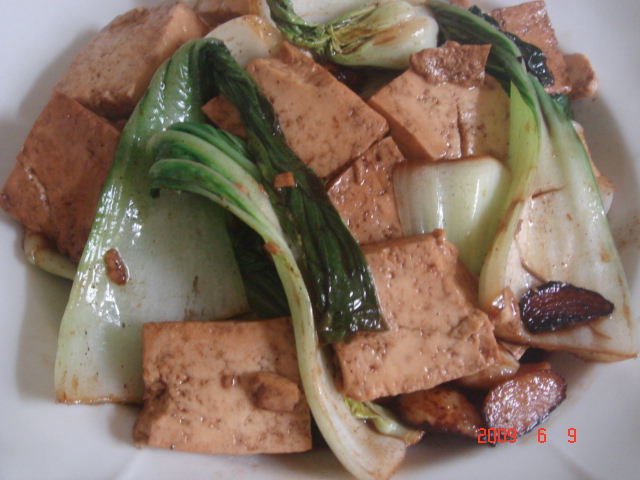
And finally, my food (yes, I cooked them!) and supplement drinks for the past days!!!

Tofu With Bochoy (Pechay)
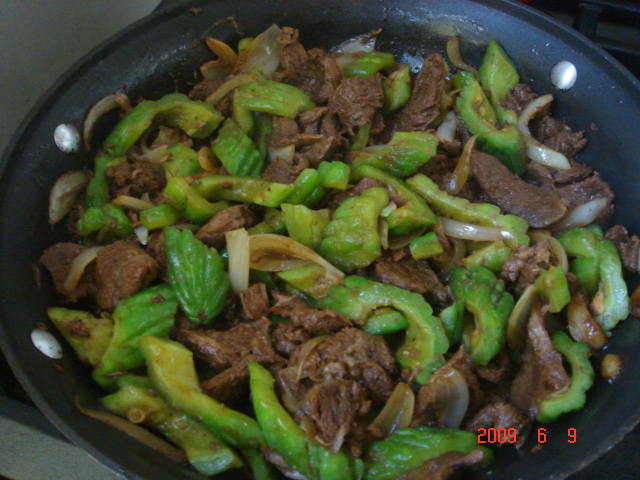
Beef With Ampalaya
Beef With Ampalaya (Bitter Gourd)
DSC06319
My Supplement Drinks
Organic Honey
Organic Honey
And...Probiotic Drinks

Yasso 800s: “Do or Try It Now”!


Last November 20, 2007, I made a post about Yasso 800s. It is a simple formula to guide a runner who is training for a marathon race to predict his finish time. This simple formula (?) to predict one’s finish time came out from the observation and experiences of Mr Bart Yasso who is now the Chief Running Officer of the Runner’s World Magazine as he finished and trained for more than 1,000 endurance sports/races for the past 29 years. However, in my first post about Yasso 800s, I was not able to tell or mention some important details about the said workout.

This post will now fine-tune what I’ve posted almost 21 months ago. Yasso 800s is supposed to be a “speed” running workout done at the oval track. As part of ones preparation for a marathon race, this is supposed to be done at least 5-6 weeks before the marathon race day. Which means that you were able to build-up the much needed “foundation” of mileages/kilometers in order to develop the endurance (strong legs without any injury and aerobic capability to sustain a faster pace) through your easy runs, long runs, tempo runs, speed runs, and hill repeats/workouts.

During the Yasso 800 session,  one has to run at least 10 repetitions of 800 meters with 400 meters jog in between repetition. The average time of your 10 repetitions will likely be your time for the marathon race, not in minutes, but in hours. For example: if you have an average of 3:32 minutes for the 10 repetitions you have done running at a distance of 800 meters at the oval track (2 laps around the oval track at Lane #1); most likely, your finish time in the marathon race is 3 hours & 32 minutes! It is very easy, you just convert the minutes into hours. It is mandatory to have at least 10 repetitions of the Yasso 800s in order to be accurate in your prediction for your marathon finish time.

However, according to Mr Bart Yasso, the Yasso 800 is not an accurate or perfect predictor of your marathon finish time time as you need to make some adjustments depending on the terrain of the course and the prevailing weather during race day. In extreme conditions of terrain and hot weather, a runner who has 3-4 marathon finishes on his/her belt, he/she can make adjustment by adding 10 minutes; and for those competitive and experienced marathon runners who have finished more than 5 marathon races, they can add 5 minutes to their average Yasso 800s result.

If you are preparing for the MILO Marathon Eliminations on July 5, you can try this workout and hit the Lane # 1 of the ULTRA Oval Track as soon as possible. Just be sure those “walkers” and slow runners (with their Ipods) at Lane # 1 will not interfere with your Yasso 800s. Good luck! 

By the way, this is my training target pace data in preparation for the MILO Marathon:

Easy Run—5:46 mins/km

Long Run—5:46-6:15 mins/km

Tempo Run—4:45 mins/km

Speed Run—4:12 mins/km

Yasso 800s—3:35 mins

So far my training had been going on for the past days since I finished the LA Marathon. We will see how this training will turn out in the coming days to come.

Simple Reminder: The “Basics” In Running


In my earlier posts in 2007, I mentioned about the writings of Dr George Sheehan whom I consider as the Philosopher of Running in the Modern Times. As a tribute to this old runner and prolific writer, I always mention his tips and suggestions to runners whenever I conduct lectures and running clinics to “newbies” in the sports of endurance running. Up to this day, his “tips and suggestions” are still valid which are basically explanation of the basic principles in training for runners.

I also mentioned in my previous posts of my 100% acceptance on the training methods and programs of Arthur Lydiard in running which is a result of years of experimentation and studies on himself. Up to this time, I am still a strong believer and follower of the Lydiard Method of Training in Running.

If you want to know the details of the works and written studies of these two running icons, you can easily “google” their names and you have a lot of manuscripts and books you can read in the Internet. However, these runners/writers thoughts will always boil down to the “basic principles of training for running” and other endurance sports which in my mind are the most important for everybody to remember, whether you are a beginner or a competitive or an elite athlete. The following principles are the most important and basic for everybody:

1) Build-Up Foundation—For you to become a strong and fast runner, you must be able to build-up the much needed foundation because you need to be stable and firm. It is like constructing a house or a building that you need to build a stable foundation first before you construct those rooms, walls, stairs, and others. In running, you must be able to progressively introduce stress to your body system so that you will develop strength on your legs and improve the aerobic capability of your respiratory and blood circulation system. Remember the word, progressively! It takes time for you to develop those strong legs and strong heart & lungs to run a 3K, 5K, or 10K run. It takes patience and perseverance to build-up a stable foundation in running. In my experience, the longer period I build-up my mileage and the more number of my weekly mileage is, the more I am stable and prone-free from any injury. Would you believe that I trained for my first marathon for one year by just building-up those mileages?

2) Consistency—If you want to be a good and competitive runner, you should be consistent in your training. It means that you must at least run every day or maintain a certain level of fitness in running. It means that for a certain level or classification of a runner (beginner, non-competitice, competitive, elite, or national elite), you must maintain a number of average kilometers or miles to be ran for the week. To a leisure/non-competitive runner, he/she must be able to maintain at least a weekly total of 40 kilometers to maintain a certain level of fitness. If you are a competitive runner, the more you have those weekly miles and kilometers to cover. Through consistency in running, you must also remember to apply the “hard-easy” method. It means that you must be able to “listen to your body”. Assuming that you are still building-up your foundation, if you ran 10 kilometers today, make sure you run a lesser number of kilometers the next day or on your next session, and follow this method in your training program. If you are already in the competitive level, do not do your “speed” training in two consecutive days. Let your muscles/body system recover and you will be surprised that your body will adapt to the stress and you will become stronger and faster in your next workout.

3) Specificity of Training—Simply said, if you want to be a stronger and faster runner, you must run! Do not swim, do not bike, do not develop nice muscles at the gym, do not play badminton, or do not play basketball in order to improve your running finishing times. Stretching, yoga, pilates, plyometrics, and other drills are just supplementary means to improve your performance but 99% of your effort must be in running.

Just remember these three (3) basic principles in training for running and you will enjoy the sports we love most!!!

Good luck to all the runners in the Mizuno Infinity Run! My spirit will be with you as I will be contented to have my easy run at the Elysian Park Trails and then move to the Griffith Park Trails and later end up my runs at the Silverlake Reservoir & Echo Lake Park Loops!

Running In The Rain, LA Style & Annual National Running Day


The lyrics of a song say that “it never rain in Southern California” but at the start of summer season here, I am surprised that the weather had been cloudy and overcast for the past days (since the LA Marathon). It is an ideal weather for running at the middle of the day as I am lazy to wake up early and dread the cooler temperature in the early morning. But the weather yesterday was different. After coming from my doctor’s appointment, it started to rain. I was surprised!

While at home, waiting for the rain/drizzle to stop, I decided to run after two days of rest and recovery. I have observed that after running easy long runs back-to-back (Saturday & Sunday) during the weekend, I need at least two days to rest and recover. It was my time do some stretching and upper-core body exercises. I wore my Nike Compression Shorts, TNF Shirt, Nike Lunaracer, Running Cap and my “cheap” arm warmers which I bought from a walking vendor along Lawton Avenue at 35 pesos a pair as compared to the more expensive Moeben arm sleeves! By the way, I got 3 pairs for the price of One Hundred Pesos Only. This is the same arm sleeves that those motorcylists and tricycle drivers use in Metro Manila.

After doing a brief stretching exercises inside the house, I went out of the house with a slow run. After running almost 3 blocks, I started to pick-up my pace and proceeded to the Echo Park running route. As I was about to reach the Park, it started to rain and I temporarily went inside a shade at the side of the street. There was this (white) guy with a road race bike (who looks like a messenger in his early 20s) who was also inside the bus stop shade and busy scanning his folded road map of LA. And the guy asked me for some directions as to where he could reach the Downtown Area. I gave him the details on what street he has to take and warn him to be careful riding on his bike as the road was slippery. When the rain temporarily stopped, the bike rider and I left the shade and I went to the Echo Park Loop.

After running for about 500 meters, I started my tempo run for about 30 minutes with an average pace of 4:48-5:00 minutes per kilometer. Three-fourths of the loop is plain and there is a slight uphill for the rest of the loop. There were not much runners/joggers at the Park because of the rains. I tried my best to maintain my pace and there are portions along the route that I could pick-up my pace up to 4:18-4:25 minutes per kilometers. I was doing some “fartlek” along the way as I counted my strides up to 90, making sure that I was running at 180 steps in every minute.

What is good when I run at Echo Park or at Silverlake Reservoir or Elysian Park trails, there are water sources or “water fountains” (I am not sure of the correct term or words) along the route where anybody could press the button and drink from it with potable water! With these permanent fixtures on the Parks here, there is no need for me to bring my hydration belt. Instead, I just bring with me some cash in case I need to buy Gatorade in one of the nearby grocery stores. So, every time I finish 3 loops of the Park, I always see to it that I hydrate myself with these water fountains! Well, in the Philippines, we are better off in terms of our “water fountains”. We can simply get inside the Starbucks Coffee or Jollibee or McDonalds and ask for an Ice-Cold Water with the proper drinking glass!!! hahaha! But we are simply lacking and poor in terms of coming up with parks where we could run. Yes, we have parks but they are Memorial Parks and Cemeteries! Very sad, indeed!

After a tempo run of 30 minutes, I slowed down my pace to 5:15-5:30 minutes per kilometer and ran another 30 minutes. It was still raining and at the same time I was sweating hard. I could hardly feel the cold temperature in the air as my body’s heat was trying to balance my body temperature and with the help of those “cheap” arm sleeves that I was wearing. Finally, I finished my run at the Park with a distance of 13.2 kilometers with a time of 1:11:06 hours, with an average pace of 5:23 mins/km. It is a matter of time that I can reach and run comfortablywith an average pace of 11.5 kms/hour, my target pace for the MILO Marathon Eliminations. For this run, I was able to register an average pace of 11.1 kms/hr.

After taking my last sip of water at the Park, I made another loop at the Park and proceeded to my favorite uphill climb along the Beverly Blvd, fronting the Belmont High School. As I crossed towards the Beverly Blvd, I saw the guy who asked for directions 1 1/2 hours earlier, waiting for the red street/traffic lights to turn into green. I asked him if he was able to reach his destination and he said, “Yes, thanks! How was your run?” I replied to him, “Perfect run” as I passed him and went to his opposite direction.

The distance from the Park to the lowest part of this particular uphill climb is 1.2 kms. From the lowest portion up to the peak of the climb has a distance of 178 meters and I can estimate that it has a uphill grade of about 6-7 (just imagine that you have a setting of 6 or 7 incline on your treadmill machine). I did 5 X 178 meters where I slowly jogged going back to where I started. These were the results of my hill speed repeats taken from my average pace per run and its corresponding average HR:

1)  5:20 mins/km—153 bpm

2)  4:51 mins/km—150 bpm

3)  4:34 mins/km—153 bpm

4)  4:34 mins/km—155 bpm

5)  4:19 mins/km—155bpm

As my cool-down run, I jogged for about 1 km around the streets/blocks near my place before doing my post-stretching exercises. When I entered the house, my son was already home and just arrived from his work and he told me that I am “crazy” running in the rain!

Yes, I am “crazy”. Wait till I start training for my first “100-Mile” Trail Endurance Run! Ha! Ha! Ha!

I was able to run a total distance of 16.2 kilometers (10 miles). I nice way to celebrate the annual “The National Running Day” (For the USA). Maybe, we can also recommend to our government officials (attention goes to our physically active and athletic Senators and Congressmen) to come up with our own version of an annual National Running Day in order to promote awareness on the benefits of running and develop among us an active physical lifestyle. This will be a nation-wide activity where local government units are directed to come up with running activities and lectures/seminars among their constituents. Would you imagine if you have a running club in every town/municipality in the country?

Well, if there is no positive reaction on this suggestion, then I firmly believe that the definition of “running” among our politicians and government’s elected officials, is “running” as candidates to an elective position!!! I can easily predict that a smart politician would say that there is no need for a National Running Day for the whole country because we already have our National & Local Election Day (yon nga lang, every 3 years)!!! Ha! Ha! Ha!

P. S. Good Luck & Best Wishes to Ben Gaetos, Rick Gaston, Carmela Layson and to the rest of the Pinoy Ultra Runners living in California who will be participating (as runners and crews/pacers) in the San Diego 100-Mile Endurance Run (SD 100) this coming Saturday!!!

Meals/Food for Yesterday (June 3, 2009)

Breakfast:  None (due to Medical Tests)

Lunch:  Steamed Rice; Left-Overs (Sinigang na Salmon Head & Pork Adobo); Fresh Mango & Banana

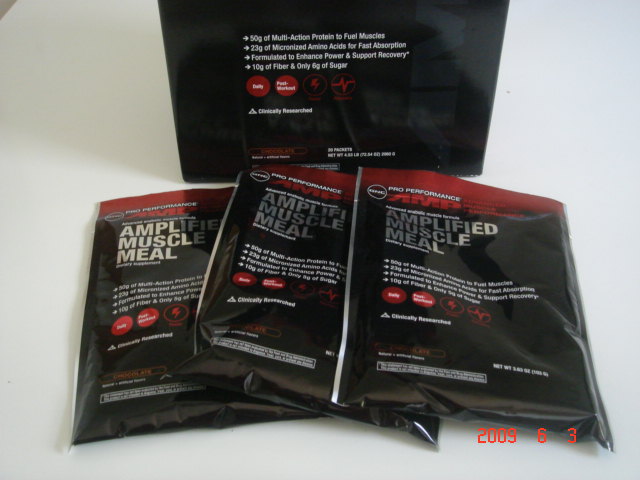
Snacks:  GNC’s AMP Amplified Muscle Meal with Banana (Blended with Water & Ice)

After The Run:  20 Fluid Ounces of Gatorade & Lots of Water

Dinner:  Steamed Rice; Sauteed Clam (Shell) Meat with Kangkong; Fish Chips; Ripe Fresh Mango & Banana

Before Going To Bed:  Vitamic C Tablet & 3 tablespoons of Organic Honey

A Visit To My Doctor


The last time I visited my doctor here in Los Angeles was August last year before I ran the Bulldog 50K. Not that I prefer to have my annual medical check-up here abroad but I have the privilege to be included in the medical insurance of my family plus the fact that there is better service/attention and efficiency of the physicians here (no red tape and so much waiting long line and time).

It was a quick and simple visit which included an extraction of my blood sample into 2 big vials/tubes; got a sample of my urine, took my blood pressure and weight by a lady medical assistant. Finally, the doctor and I had a conversation while he updated my medical file with his laptop computer with a touch screen monitor and finally took stethoscope to hear my heart beats on my breast and back. The doctor said that I have a healthy and athletic body. Of course, the doctor, who is a Filipino, knows that I run marathons and ultras as he is also a runner. The doctor had been our family doctor for almost two decades.

The results of my blood tests will be known next week. The results will show everything to include the condition of my prostate glands. I don’t want to be in the situation of Dr George Sheehan (old runner & writer) and General Norman Schwarzkopf, Jr (Military Commander) who had cancer of the prostate gland. Well, this is an advise to the older male runners and maybe, retired generals or officers in the military service, to have a regular check-up and PSA test to their prostate glands. If the ladies have their breast and cervical cancers, the men have also a prostate cancer as an equivalent illness. As for the Hardcores, you have the option to better start having this test. There is no truth to the “hearsay” that you can get a prostate cancer if your manliness is “overused or underused”.  You must be within the average or moderate user! ha! ha! ha! Seriously, you can get it through the food you eat & your kind of lifestyle, hormonal imbalance, age, and due to race (Blacks are highest victims, whites as moderate, and Asians are the lowest victims). Please don’t depend to the idea that since you are an Asian, you will be least susceptible to prostate cancer.

While I will get the results of my blood test next week, it will be my schedule also to have my X-ray examination. The visit to the doctor was done in less than 30 minutes! I went home immediately for my brunch. I did not eat any food since midnight before my visit to the doctor. Finally, I suggest that runners above the age of 40 years old should have their annual medical check-up. If you regularly change your running shoes to a new one, it would also be better to have your body for a medical check-up on a regular basis. Just think of yourself as a sleek. shiny, and fast Sports Car, its powerful V-8 turbo-charged engine is your body and the tires are your running shoes!

Yesterday, I recalled the comment of Rick Gaston aka 365Ultra in one of my posts last month when Ronnie aka Runner For Christ asked me what is inside my legs; where Rick was asking me about the food I eat. I answered Rick’s comment that I am an Ilocano who is fond of vegetables and meat recipes from the North until I had an attack with “gout”. For one year, my diet was limited to vegetables, fish & limited seafoods, chicken, eggs, tofu, pasta/noodles, and fresh fruits. However, I had to take supplementary drinks from Ensure and multi-vitamin & mineral tablets for me to sustain my training/preparation for the BDM 102K and other long distance races.

Starting today, I will be posting my daily “fuel” to support my training for my incoming running adventures. By the way, my weight before the 2009 LA Marathon was 138.6 lbs, however, at this time, my weight had increased to 140.4 lbs. I hope to maintain the 140-lb weight as my running average weight.

The following was the composition of my meals and supplements yesterday, 02 June 2009:

Breakfast: Coffee with Milk; 3 pieces of Ube Hopia; and Cereals with Milk

Snacks: Lots of Water

Lunch: Pork Adobo; Salmon’s Head Sinigang with Bitter Gourd (Ampalaya) and Steamed Rice

Snacks: Lots of Water

Dinner: Bacon & Swiss Burger with French Fries & Coca-Cola

Before Going To Bed: Vitamin C (1,000 Mg) & 3 tablespoons of Organic Honey.

Elysian Park Trail Run; Gym Workout; & Easy Long Run


10:30 AM 30 May 2009 @ Elysian Park

Thanks for the tip from Ben Gaetos regarding the Elysian Park Trails. I was able to make confirmation from my daughter about the said trail after she told me that she had a chance to visit the place last year. My son simply gave me the direction on what street to take to be able to reach the place. And after “googling” the place, I was able to get the details about the streets that lead to the place.

I left my place in the morning of last Saturday at about 10:30 AM as the sky was still overcast and the temperature was still in the low 60 degrees Fahrenheit. I started slow during the early part of my run until I reached the uphill road at Scott Street that leads to the Elysian Park. Running along Scott Street from Echo Park and Glendale Boulevard was already a very challenging uphill climb. I never stopped running until I reached the said park.

Being my first time to visit the place, I took the right road which is closed to vehicular traffic and started going uphill and tried to look for those trails. I later found a fire road and followed it to where it will end and then followed some trails good for one person. I just did a clockwise run along these trails until I was back where I started along the end of Scott Street. There was another fire road on my left and I started to run into it and I found out that this is the more popular fire road for the walkers. I would overtake a lot of walkers with their dogs, small and big, and meet also walkers on this fire road with and without their dogs. After running about one kilometer on this fire road, I observed that I was the only one running along the trails! There was this steep and winding downhill part of the trail which ends in the switchback (leading to more plain trail) with some woods buried across the road to prevent erosion every ten meters along the trail. This fire road was a rolling one and it ended near the entry to the park from Stadium Way Street. After taking some pictures of the place and drinking some water from my Nathan Hydration Belt, I decided to cross the Stadium Way Street and go for the higher part of the park.

As I crossed the street, I took the trail on my left and it was a trail which is good for one person. As I maintained my running pace on this trail, I could see Highway 5 on my left (way down below my feet!) where I could hear the noise of cars and vehicles passing along the busy National/Federal Highway. I was practically running along the edge of the mountain! I could see more walkers along the trail who gladly went to the sides, allowing me to pass as I greeted them and I kept on running until I ran more trails and finally led me to where I started after crossing the Stadium Way Street. After reaching my starting area, I had to retrace the trail I had taken and went all the way to the top again of the mountain and took the trail back.

I crossed the Stadium Way Street once again and retraced the fire road and went to that “challenging steep winding downhill” part and try to run up to the top without walking. With much determination and positive attitude, I was able to run through this part of the fire road without stopping. Later, I was able to reach Scott Street where I started. I slowly jogged around the visitor’s park and parking area and orient myself and see where the trails are located.

I knew I had 2 hours of run along the trails and it was time to go back. From the Stadium Way Street, I took Scott Street and back towards Glendale Blvd. I took another loop at Echo Park where I replenished my water supply before proceeding to my favorite uphill climb (near Belmont High School) where I do my hill repeats before proceeding at the house.

I was able to run a distance of 22.22 kilometers (almost 14 miles) in 2:30 hours with an average pace of 6:45 minutes per kilometer. I was surprised to observe that I was “sunburned” even with the overcast sky and lower temperature during my workout run! I finished the race at 1:00 PM and immediately took my lunch. It was a nice workout. This will be my alternate trail run location but I still need to go to Griffith Park Trails for a higher altitude/elevation  workout. However, what is good about Elysian Park is that I can run along its trails for hours and it is very near to my place. Next time, I will bring food provisions in my backpack in my next runs and run along its trails for 3-4 hours.

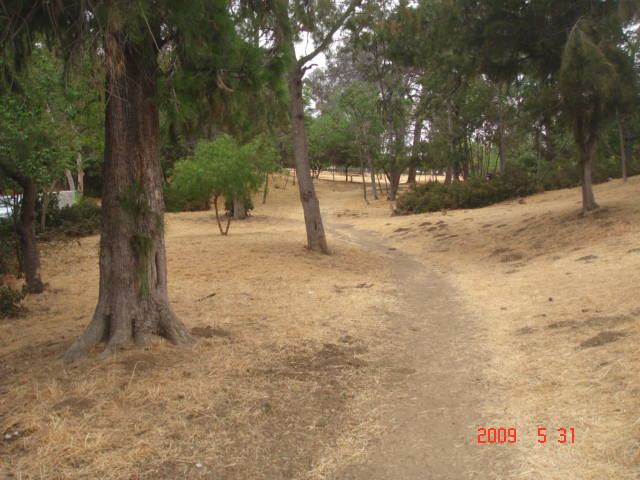
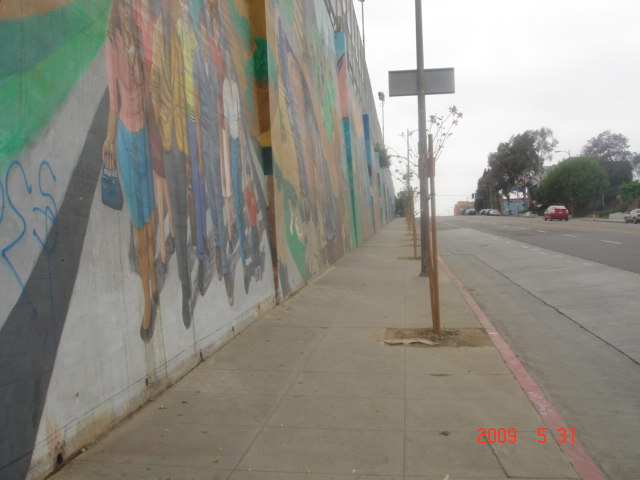
Everything Is Colored "Brown" In The Mountains of South California
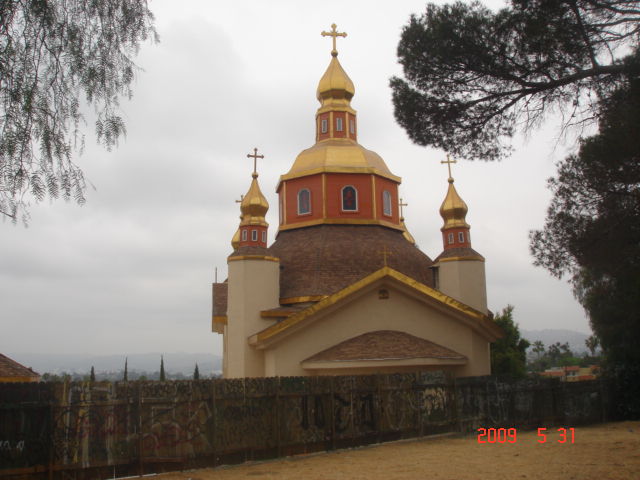
Is This A House or Church?
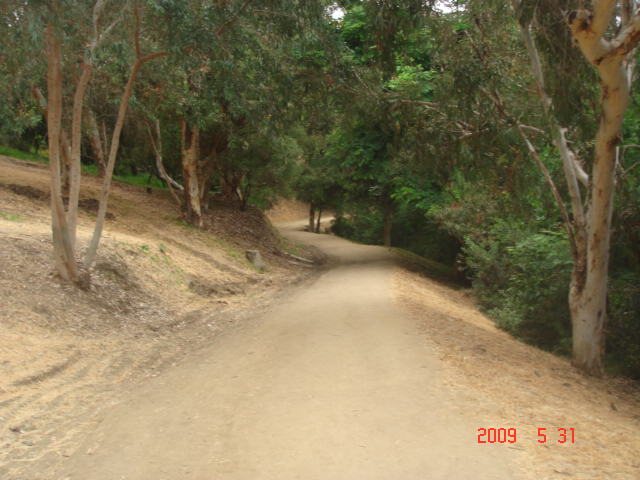
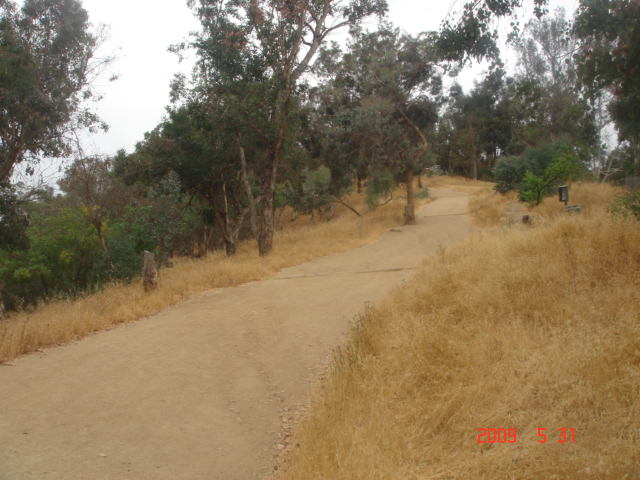
A Fire Road At The Right Side of the Park From Scott Street
A Fire Road At The Left Side of the Park From Scott Street
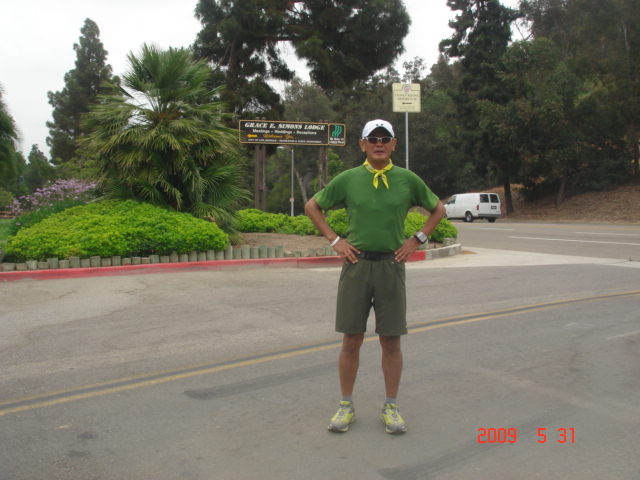
Entrance Of the Park From Stadium Way Street
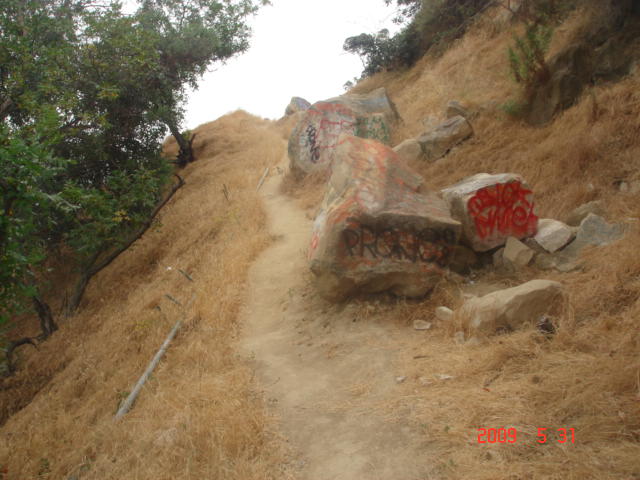
Graffitis On Rocks Along The Single Track Trail
Oh, That Uphill Climb!
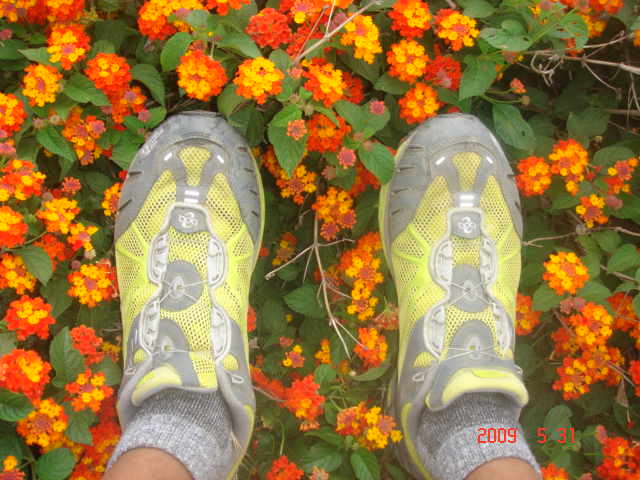
My TNF Arnuva 50 BOA Road/Trail Shoes
Venue For My Hill Repeat Drills & Workout

9:30 AM 31 May 2009 @ Gold’s Gym

My son and I went to Gold’s Gym at Downtown LA for a 1-hour workout. I did my core muscle and upper body workouts for one hour. I was surprised to see the overall set-up of the gym to have changed for the better since I had my last visit last year. The gym had a bigger space and more equipment. There was no “traffic’ in the use of the equipment as more options had been added due to more equipment. Before going to the gym, I was already set to do my rituals for my core muscles and my upper body muscles. It was a very fast workout with easy and light weights so that I will not strain my muscles after almost three months without any weight-lifting workouts.

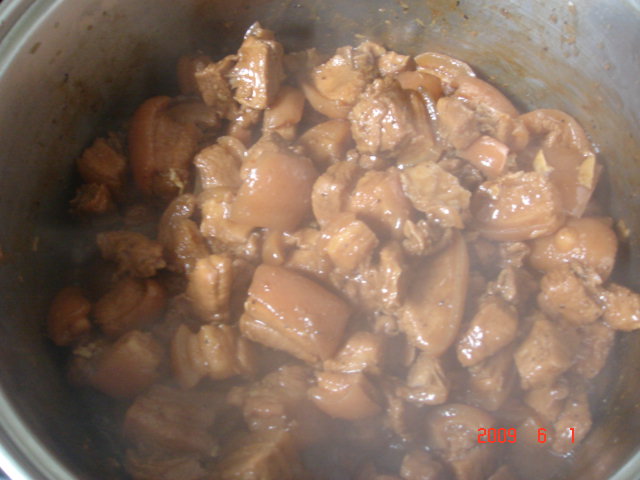
After the gym workout, we returned to the house and I cooked pork adobo for our lunch. It was rest time after lunch!

Very Hot Pork Adobo!

7:00 PM 31 May 2009 @ Echo Park & Silverlake Reservoir

At this time here, the sun is still shining and it will take another one hour for the sunset to finally arrive.  I decided to have an easy long run. I had an easy and slow start as I started to jog towards the Echo Park and did one loop and finally decided to go to the Silverlake Reservoir loop. After one loop at the Silverlake Reservoir, I started to feel the urge to relieve my urinary bladder but it became problematic when I found out that the comfort rooms at the Park were closed. I tried to control my bladder until such time that it became too dark and saw to it that there were no runners/walkers who would see me going to the thick bushes to relieve myself. I did it successfully without any problems! Sometimes, you need to take the risk when emergency comes. At least, my “style” is better than the video clip of Paula Radcliffe peeing on the street while she was running a marathon race! ha! ha! ha!

I did 4 1/2 loops around the Silverlake Reservoir before going back to Echo Park and finally proceeding home. I did another loop at the Echo Park and slowly had my cool-down run a block away from the house. I did my post-stretching exercises before entering the house. My GF 305 registered a distance of 23.10 kilometers (14.4 miles) with a time of  2:29:11 hours with an average pace of 6:40 minutes per kilometer.

I will take a day-off tomorrow for my stretching and Pilates exercises. It was a nice weekend.