Source: Association of International Marathons and Road Races (AIMS): RESULTS
26 FEBRUARY 2006: PHILIPPINE MARATHON FOR THE PASIG RIVER
Gripping drama characterized this second marathon edition in Metro Manila. In the midst of the country’s political turmoil, the marathon nevertheless started and ended without a hitch.
The top two men are in-house athletes of the Philippine Army, who, at that time, were under red alert following a Presidential Proclamation placing the entire country under a “State of National Emergency.”
On the women’s side, youth triumphed over experience when Jhoan Banayag, of the University of the East Athletics Team, won over a veteran field which included last year’s winner Maria Estela Mamac-Diaz.
This was the first time, including the first four years when the road race was known as the Pasig River Heritage Marathon, that an international-calibre runner was among the 903 starters. Robert Njoroge Wambugu flew in barely four hours before the gun with little more than a pair of training shoes. Fellow competitor Cesar Bollecer of Direct Link Running Club, showing the visitor the unique Filipino brand of hospitality, exchanged running shoes with him on the start line, but the drama did not end there.
Njoroge, benefitting from his extensive international exposure, immediately took the lead. But after two of the course’s nine bridges, jet lag, lack of sleep and the warm weather began to tell on his legs, allowing the locals to catch up and pull away. Dropping to a 10th-place finish, Wambugu vowed to be back to redeem himself in next year’s edition.
The marathon is an advocacy project of the Clean & Green Foundation Incorporated on behalf of the Philippine Government’s Pasig River Rehabilitation Commission. It seeks to harness the people’s participation in the long-running Pasig River rehabilitation program.
The Pasig River is the Philippines’ most historical and important inland waterway, which runs from east to west dividing Metropolitical Manila into north and south areas. The country’s history in the last 400 years is closely intertwined with the river, spanning Spanish, British, American and Japanese colonial occupations, revolutions, world wars, and local uprisings. Located along its banks are the Filipino’s most historical districts, buildings and sites.
MEN:
1 Cresciano SABAL PHI 2:26:13
2 Bernardo DESAMITO PHI 2:30:29
3 Memerto CORPUZ PHI 2:32:24
4 Regelio de Leon SARMIENTO PHI 2:35:28
5 Rodolfo TACADINO PHI 2:36:02
6 Allan BALLESTER PHI 2:37:00
7 Jujet DE ASIS PHI 2:37:24
8 Michael CANILLO PHI 2:38:11
9 Wilson MANINGKIL PHI 2:39:26
10 Robert WAMBUGU KEN 2:40:00
WOMEN:
1 Jhoan BANAYANG PHI 3:02:37
2 Flordeliza CARREON-CACHERO PHI 3:09:13
3 Ailene TOLENTINO PHI 3:09:28
4 Ma. Estela MAMAC DIAZ PHI 3:09:42
5 Liza DELFIN PHI 3:24:22
6 Merlita ARIAS PHI 3:34:17
7 Mila PAJE PHI 3:37:04
8 Marychiel MINAS PHI 3:41:18
9 Joanne MANANGAT PHI 3:43:58
10 Genevieve DELA PENA PHI 3:44:39
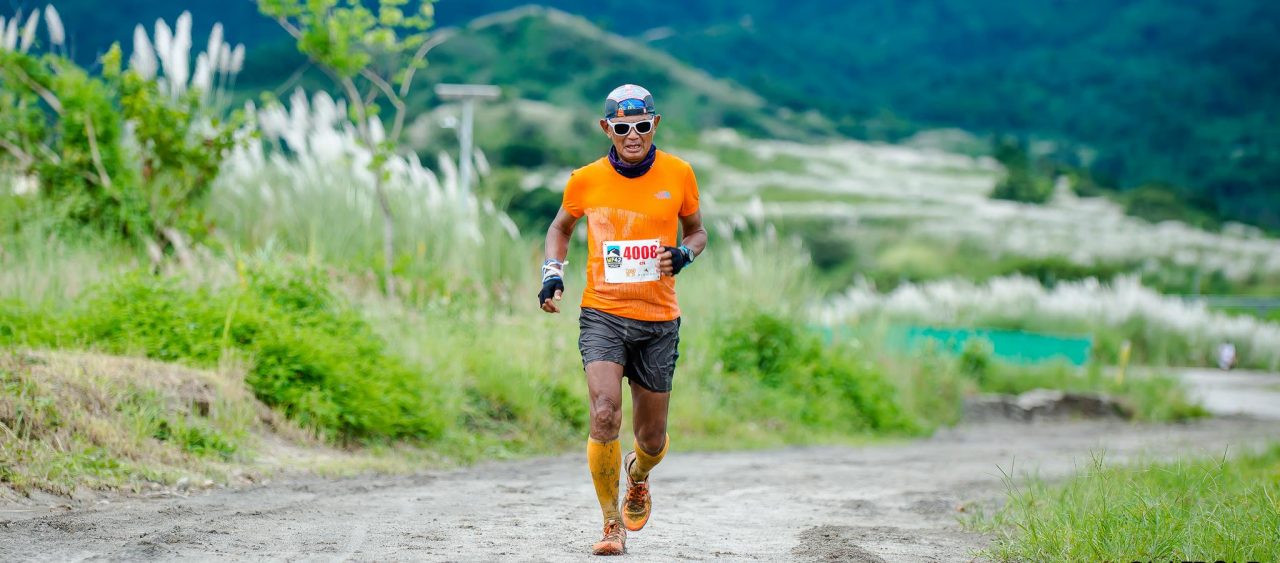
 Bald Runner